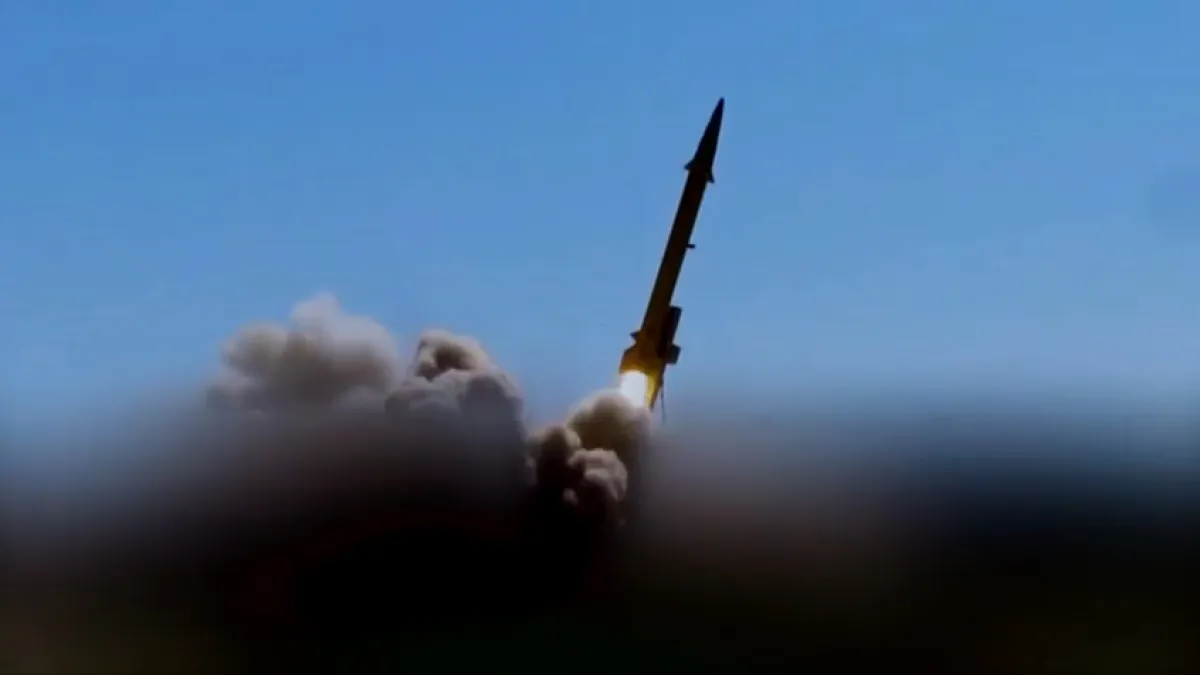
Ukraine has increased attacks on Russian energy infrastructure in bid to disrupt financing of its war.
The Ukrainian military reported that it has struck a Russian warship and a drilling rig in the Black Sea.
Kyiv’s drone forces commander Robert Brovdi said on Monday that the attack targeted the Admiral Makarov missile carrier in the port of Novorossiysk, which is Russia’s largest oil exporting outlet on the Black Sea. Ukraine has increased its attacks on Russian energy infrastructure in a bid to disrupt export revenues that feed into Moscow’s war chest.
Recommended Stories
list of 3 itemsend of list
Russian authorities said at least eight people, including two children, were injured in Novorossiysk, without specifying whether the port was struck.
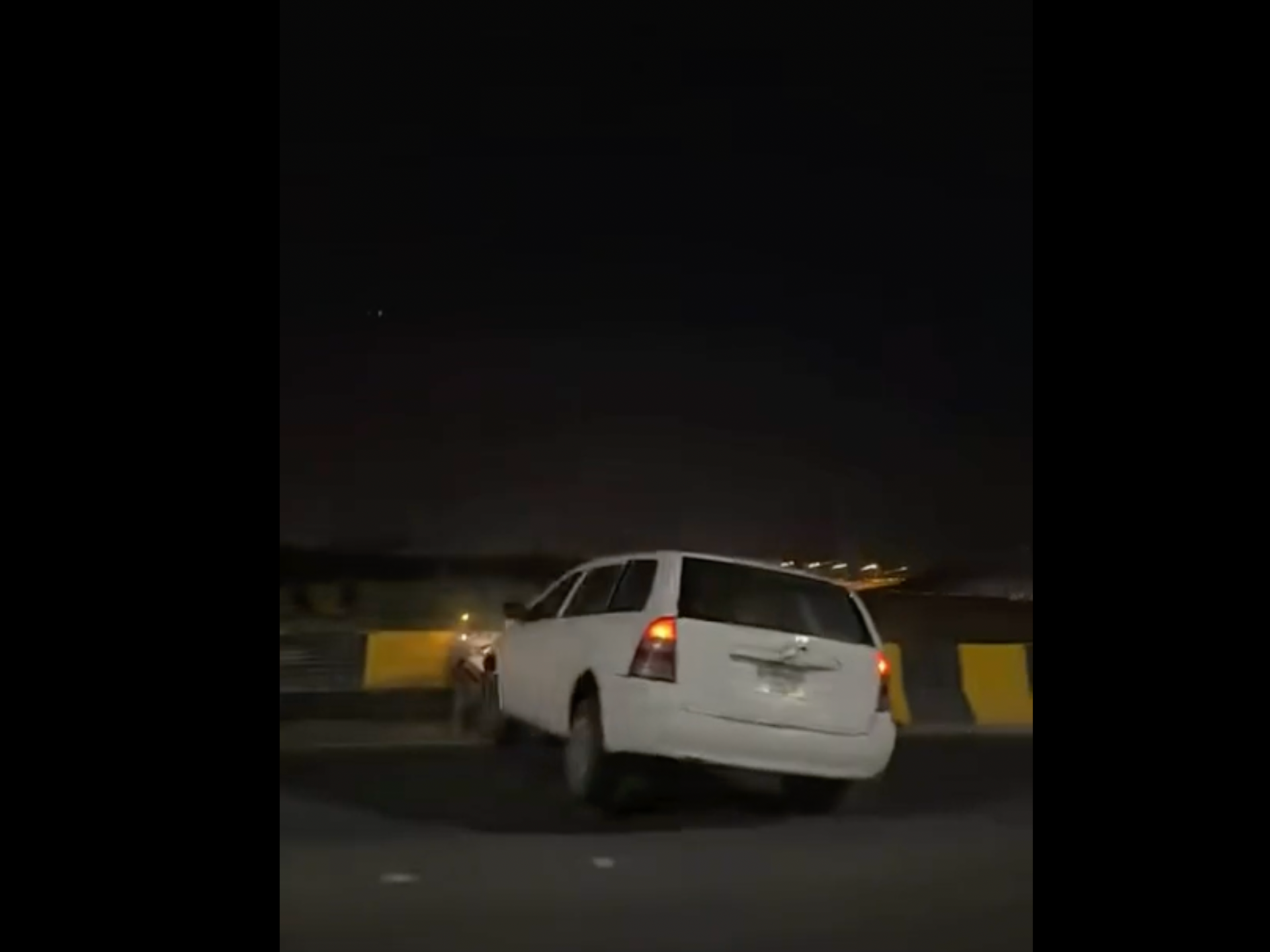
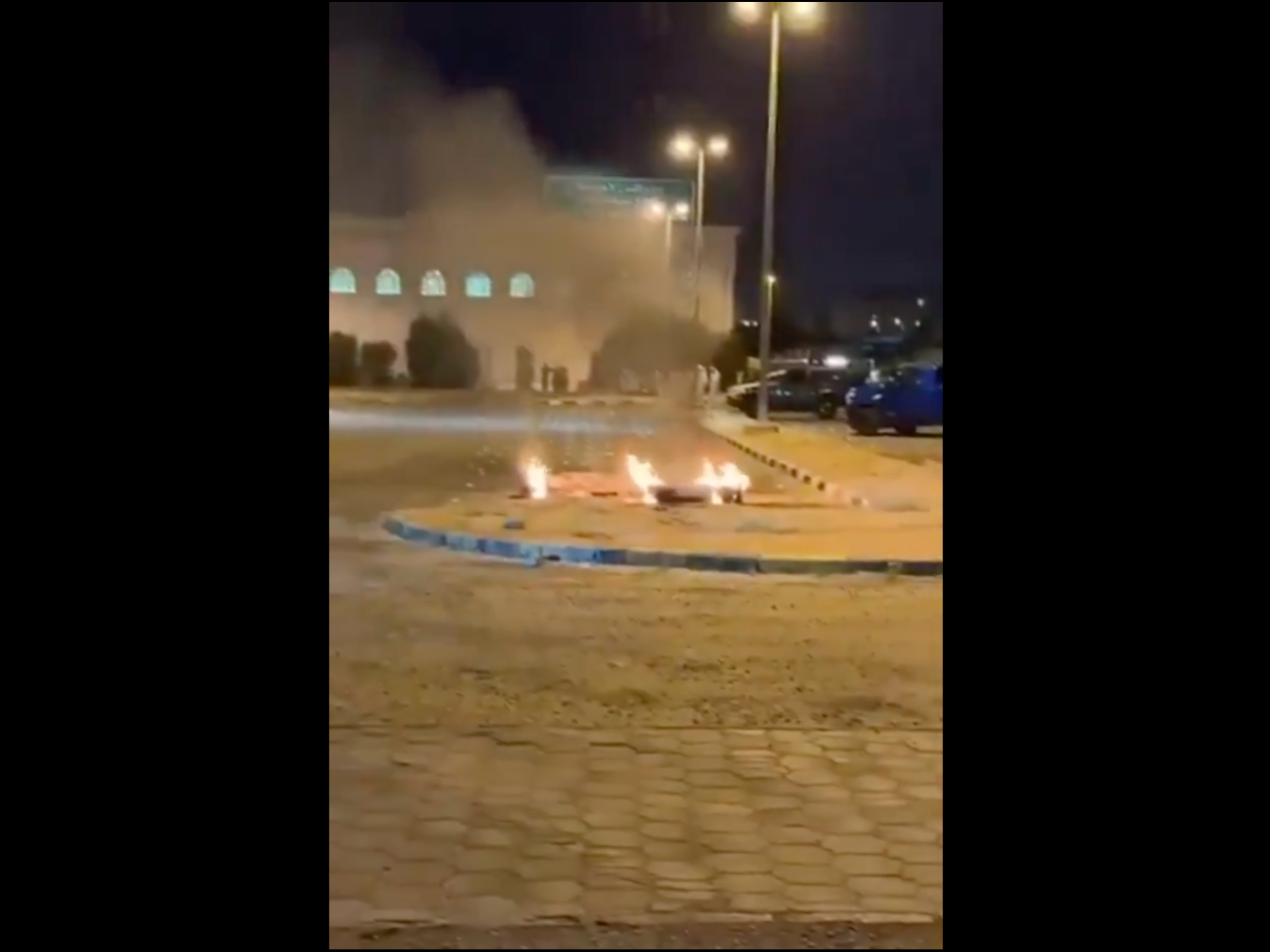
Videos posted on Telegram and verified by Al Jazeera’s verification unit showed a fire at one of the oil port’s docks in the city.
Novorossiysk’s Mayor Andrei Kravchenko said debris from drones had fallen on two locations in the city, including a residential area.
Russia’s military said in the early morning that air defence units had downed 148 Ukrainian drones over a three-hour period. It added that officials said emergency crews were restoring power to nearly half a million households in outages linked to air attacks.
Ukraine has concentrated drone attacks around the port of Novorossiysk throughout the war, but has raised its efforts to halt Russian energy exports recently (File: Reuters)
The area of the port of Novorossiysk is also a location for the Caspian Pipeline Consortium’s (CPC) terminal, which exports oil from Kazakhstan and whose shareholders include US majors such as Chevron and ExxonMobil.
Ukraine has significantly intensified attacks on Russia’s energy facilities, including the largest oil exporting hubs both on the Baltic and Black Seas, as it seeks to reduce Moscow’s revenues from the sales of oil, the lifeblood of its economy.
Kyiv officials complain that Russia will use the additional revenue on new weapons to hit Ukraine harder.
Later on Monday, Russia reported that Ukrainian drones had attacked the CPC terminal. The export facility, which handles 1.5 percent of global oil supply, reported damage to mooring, loading, and storage infrastructure, the Reuters news agency reported.
“The Kyiv regime deliberately attacked facilities of the international oil transportation company Caspian Pipeline Consortium in order to inflict maximum economic damage on its largest shareholders – energy companies from the United States and Kazakhstan,” the defence ministry said in a statement.
Alexander Drozdenko, governor of Russia’s northwestern Leningrad region, said a fuel reservoir in the Primorsk port area leaked when it was hit by shrapnel.
Odesa has been targeted numerous times by Russian strikes (EPA)
In Ukraine, a Russian overnight drone attack on the southern port city of Odesa on Monday killed two women and a toddler, authorities said.
Ukrainian President Volodymyr Zelenskyy said in a post on X that 16 people were wounded, including a pregnant woman and two children.
Russia’s overnight strikes also hit energy infrastructure in the Chernihiv, Sumy, Kharkiv and Dnipro regions, Zelenskyy said.
More than 300,000 households were without electricity in the northern Chernihiv region after distribution facilities were damaged in attacks, according to the regional power utility.
The Ukrainian leader said that over the past week, Russia launched at Ukraine more than 2,800 attack drones, nearly 1,350 powerful glide bombs and more than 40 missiles of various types.
US President Donald Trump has issued a direct ultimatum to Iran: reopen the Strait of Hormuz by 8pm Eastern Time in the United States on Tuesday, April 7 (midnight GMT on April 8), or face the destruction of national power plants and bridges.
This echoes an earlier March 21 ultimatum in which he threatened to attack Iran’s power plants – “the biggest one first” – if the strait was not fully reopened within 48 hours.
President Trump has since extended that deadline several times, citing progress in negotiations he claims the US is having with Iran to end the ongoing war. Iran denies it is holding direct talks with the US.
While Trump has made grand statements such as “they’re going to lose every power plant and every other plant they have in the whole country”, he has not mentioned specific targets.
The US president has also threatened to destroy the country’s bridges. Over the weekend, a US-Israeli strike hit the B1 bridge in the city of Karaj, west of Tehran. The major highway link, described as the tallest bridge in the Middle East, had been scheduled to be inaugurated soon. It sustained significant damage in the strike.
Legal experts say that targeting civilian sites amounts to “collective punishment”, which is prohibited under the laws of war.
Where are Iran’s power plants?
Iran operates hundreds of power plants which, together, form one of the largest electricity systems in the Middle East, supplying energy to 92 million people.
Most of the country’s power plants are close to major population centres and industrial hubs. The majority of Iran’s population lives in the western half of the country, with Tehran, Mashhad and Isfahan the three largest cities.
(Al Jazeera)
Iran has a mixture of gas, coal, hydro, nuclear and oil-fired power plants, but most are gas-fired. In the north and centre of the country, clusters of gas-fired plants supply electricity to the country’s largest population centres, including Tehran, Karaj, Isfahan and Mashhad.
Another major concentration of power plants lies along the Gulf coast. These plants sit close to major gasfields and ports, allowing large thermal stations to run on abundant natural gas.
The coast is also home to the Bushehr Nuclear Power Plant, Iran’s only nuclear power facility, which has a capacity of 1,000MW. The US and Israel have repeatedly hit this nuclear power plant, raising risks of radioactive contamination far beyond Iran’s borders, the state-run Atomic Energy Organisation of Iran (AEOI) has warned.
A satellite image shows new reactors under construction at the Bushehr site in Iran in this handout image dated January 1, 2025 [Maxar Technologies/Handout via Reuters]
Iran also operates a handful of hydropower dams concentrated along the Karun River, the country’s most important source of hydroelectric generation.
Electricity generated from all these plants is fed into a national transmission network operated by Iran Grid Management Company, which distributes power to cities, industries and homes across the country.
The map below shows all of Iran’s power stations with a capacity of 100MW or more.
A 100MW power plant can typically supply electricity to roughly 75,000 to 100,000 homes, depending on consumption patterns.
Iran’s largest power plant by capacity is the Damavand Power Plant located in the Pakdasht area, roughly 50km (31 miles) southeast of Tehran, with a capacity of some 2,900MW, enough to power more than two million homes.
Which are Iran’s most important power plants?
Iran’s largest power plants include:
Damavand (Pakdasht) Power Plant – Near Tehran. Fuel: Natural gas (combined-cycle). Capacity: 2,868MW.
Shahid Salimi Power Plant – Neka, along the Caspian Sea coast. Fuel: Natural gas. Capacity: 2,215MW.
Shahid Rajaee Power Plant – Near Qazvin. Fuel: Natural gas. Capacity: 2,043MW.
Karun-3 Dam – Khuzestan Province. Fuel: Hydropower. Capacity: 2,000MW.
Kerman Power Plant – Kerman. Fuel: Natural gas. Capacity: 1,912MW.
Other smaller but strategically important power plants include:
Ramin Power Plant – Ahvaz, Khuzestan. Fuel: Gas. Capacity: 1,903MW.
Bushehr Nuclear Power Plant – On the Gulf. Fuel: Nuclear. Capacity: 1,000MW.
Bandar Abbas Power Plant – Near the Strait of Hormuz. Fuel: Oil. Capacity: 1,330MW.
How does Iran generate its electricity?
Iran’s electricity system relies heavily on large thermal power plants fuelled by natural gas. The country has one of the world’s largest natural gas reserves, and this fuel forms the backbone of its power system.
In 2025, 86 percent of Iran’s electricity came from natural gas.
Oil-fired plants provide a smaller share, generating roughly seven percent of electricity. Some power stations switch to diesel or fuel oil when natural gas supplies are tight, especially during winter demand peaks.
(Al Jazeera)
Hydropower accounts for about five percent of electricity. Large dams on rivers such as the Karun River generate power by using flowing water to spin turbines.
Nuclear energy contributes around two percent of the country’s electricity, mainly from the Bushehr Nuclear Power Plant, Iran’s only operational nuclear reactor.
Renewables such as solar and wind play a very small role, together accounting for less than one percent of electricity generation.
Overall, more than 90 percent of Iran’s electricity comes from fossil fuels, making it one of the most gas-dependent power systems in the world.
As the US threatens to launch a ground invasion of Iran, many questions remain about its goals and geographical span. Some scenarios suggest a focus on some of the islands in the Gulf, others – joining forces with local insurgent groups.
Early on in the war, Washington seemed to toy with the idea of supporting opposition groups from Iran’s large Kurdish minority to launch a war by proxy.
According to reports in the Israeli media, initial efforts by Mossad to encourage attacks by Kurdish groups in Iran’s northwest failed due to “leaks, distrust”. Iran bolstered its defences in the area and put pressure on the authorities in Iraqi Kurdistan, where the Iranian Kurdish groups are based.
Last week, in an interview with Fox News, US President Donald Trump acknowledged that the US provided weapons to the Kurds.
Further action involving either Kurdish or other ethnic opposition groups may still be on the table as his administration seeks to put together an exit strategy from the war. Encouraging local insurgencies to weaken Tehran may seem like a good plan, but would it work?
Iran’s weak spots
Fomenting ethnic or religious tensions in the enemy camp is an old military tactic, which the US itself has used many times in the Middle East. Trump is likely looking for ways to gain leverage over the regime in Tehran and stretch its military capabilities. Iran’s internal fractures may seem to offer some opportunities for that.
In the past three decades, Tehran has failed to address the growing grievances of various minority populations in the country’s periphery. Sunni Arabs, Kurds and Balochis feel marginalised in the Shi’a majority state, while Arab and Kurdish Shia Muslims feel discriminated against by ethnic Persians.
This has led to various anti-government mobilisations, including armed ones over the past three decades.
Kurdish armed groups based in Iraq have operated for decades in northwestern Iran. Kurdish areas have also seen waves of mass protests, the most recent of which was in the autumn of 2022 following the death of a Kurdish woman at the hands of morality police in Tehran.
Other armed groups have also been active. In 2018, an attack on a military parade in the city of Ahvaz killed 29 people; an Arab separatist group claimed responsibility. In 2019, Baluchi rebels of the Jaish Al Adl group attacked a bus carrying members of the IRGC, killing at least 27. A raid by the same group on a police station in 2023 killed 11 security personnel. Then in 2024, the bombing of a mourner’s procession for the late General Qasem Sulaimani killed at least 90 people in the southeastern city of Kerman; ISIL claimed responsibility.
All of these incidents expose weaknesses in Iran’s periphery, which its enemies have long tried to exploit. If Trump decides to go down that path, he should take heed of the experiences of those who have tried to undermine the authorities in Tehran by fomenting ethno-religious insurgencies.
Past failures
Iraq’s president Saddam Hussein was one of them. When he decided to invade Iran in 1980, he saw an opportunity in the ethnic unrest among Kurds and Arabs the Islamic Republic had inherited from the monarchical regime. Saddam Hussein encouraged insurgencies among both minorities.
By the time Iraqi troops stormed onto Iranian territory, the Kurdish Democratic Party of Iran (KDP-I) had already launched a rebellion against the newly formed Islamic Republic in 1979. Iraq eventually provided arms and finances, enabling the KDP-I to take over some territory and hold it for months, but internal fighting and the brutal campaign Tehran launched through its Revolutionary Guards managed to suppress the rebellion by 1982-83.
Saddam also tried to get the Arabs in the south to revolt, some Iranian Arab separatist groups fought alongside Iraqi forces in the battle for the Iranian city of Khorramshahr in 1980. But the Sunni Arab community did not join in large numbers. Shi’a Arabs had no desire to participate in what they saw as a foreign invasion, launched by an Sunni-dominated Iraqi regime. As a result, Saddam never got the mass Arab uprising he wished for.
Twenty years later, US President George W Bush tried to use a similar playbook against Iran. He authorised the CIA and other intelligence outfits to carry out covert operations in Iran and funnel money and equipment to some opposition armed groups.
Like Saddam, Bush also failed to foment rebellions in Iran. This is not just because the Islamic Republic was able to handle security situations swifty and decisively, but also because efforts to incite uprisings never really got enough momentum. The reason for that is that parts of Iran’s minorities are well-integrated into the nation’s core and elite. Ethno-religious identities and socio-economic realities in Iran are too complex to feed into a simple black-and-white narrative about ethnic oppression by the Persian majority.
The likelihood of success today
More than a month into the war on Iran, it is by now clear that US and Israeli efforts to trigger a mass uprising in Iran by decapitating the regime have failed.
At this time, there is nothing to suggest that any efforts to foment ethnic insurgencies would be more successful. US-Israel support for separatist groups is unlikely to get anywhere further than localised acts of sabotage or small skirmishes.
This would not divert important military resources and attention away from the fight with the US and Israel, as Iran is fighting a techno-guerilla war, where its most valuable weapons are missiles and drones – not ground troops.
Furthermore, there is significant regional opposition to US support for separatist groups from major allies, including Pakistan and Turkiye. Islamabad has been dealing its own violent attacks carried out by Baluch separatists in the southwest of the country. Meanwhile, for Ankara, the issue of any support for Kurdish groups is highly sensitive given its own long history of unrest in the Kurdish regions of the country.
Iraq would also be reluctant to support such activities. The government in Baghdad, as well as the Kurdistan Regional Government, would not risk retaliation from Iran by allowing US-Israeli support for the Iranian Kurds to take place on Iraqi territory.
Inciting ethnic insurgencies may seem like a good strategy on paper, but in reality it would be another recipe for disaster for the Trump administration, which is already struggling with enough failures in its war on Iran.
The views expressed in this article are the author’s own and do not necessarily reflect Al Jazeera’s editorial stance.
United States President Donald Trump has announced that the US military has rescued a missing American fighter jet crew member in Iran.
The Air Force officer went missing in a remote part of Iran after the downing of his F-15 jet on Friday. Its two crew members ejected from the plane. The pilot was quickly rescued by US forces, but a search had to be launched for the F-15’s weapons systems officer.
In a Truth Social post on Sunday, Trump wrote that the US had rescued the second “seriously wounded, and really brave” airman from “deep inside the mountains of Iran”. It was reported that a firefight between US and Iranian forces took place in Kohgiluyeh and Boyer-Ahmad province before the rescue. Iran has not confirmed this, however.
Here is how the complicated rescue mission unfolded:
What has Trump said about the rescue?
While the identity of the rescued airman has not been made public, Trump referred to him as “a highly respected Colonel”.
He added that the type of rescue mission that recovered him “is seldom attempted because of the danger to ‘man and equipment’”.
Trump said two raids had taken place, and the pilot was rescued in “broad daylight” during the second raid. It is unclear when precisely the pilot was rescued. The US president wrote that the rescue was “unusual, spending seven hours over Iran”.
In his post, Trump said he would talk more about the rescue mission during a news conference with the US military in the Oval Office of the White House on Monday at 1pm (17:00 GMT).
Trump wrote on Truth Social: “This brave Warrior was behind enemy lines in the treacherous mountains of Iran, being hunted down by our enemies, who were getting closer and closer by the hour, but was never truly alone because his Commander in Chief, Secretary of War, Chairman of the Joint Chiefs of Staff, and fellow Warfighters were monitoring his location 24 hours a day, and diligently planning for his rescue.”
Trump added that he had ordered dozens of aircraft carrying “lethal weapons” to be sent to retrieve the airman, who had managed to evade Iranian forces for two days.
Iranian state media released on April 3, 2026, images of what they said were fragments of a downed US fighter jet found in central Iran [Handout/IRIB via Reuters]
How did the search unfold?
On Friday morning, the US confirmed that an F-15E Strike Eagle had been shot down over southern Iran. The F-15 is a tactical fighter jet used by the US Air Force that first flew in 1972. Modern variants of the jet cost more than $90m each.
State media outlets in Iran showed photos of what they said was wreckage from the F-15 and what appeared to be an ejection seat with an attached parachute.
Trump suggested that the US knew the location of the plane’s second airman and was tracking him as the rescue mission unfolded.
Iran was also racing to locate the airman. Tehran called on the public to hand over the soldier to the authorities in what appeared to be an effort to secure an American prisoner of war.
Iran’s Islamic Revolutionary Guard Corps claimed on Sunday that Iranian forces had also destroyed two C-130 aircraft and two Black Hawk helicopters during the operation to rescue the US airman in southern Isfahan province.
What do we know about the two C-130 planes that Iran says it destroyed?
The C-130 Hercules and the newer C-130J Super Hercules variant were developed by the US weapons manufacturer Lockheed Martin. They are military transport aircraft primarily used for tactical airlifts, troop transport and medical evacuations.
The Wall Street Journal reported that each C-130 costs more than $100m.
The newspaper said in a report on Sunday that the US blew up the C-130 jets on the ground during the rescue operation, quoting an unnamed person familiar with the matter. This unnamed official did not explain how the jets were downed during the rescue operation but told the outlet that it was necessary to destroy them to ensure they did not fall into enemy hands.
Has the US lost other military assets or personnel?
Yes. This conflict has killed 13 US service members and wounded more than 300, the US military’s Central Command said, but no US soldiers have been taken prisoner by Iran.
Since the start of the war on February 28, the US has lost three F-15 fighter jets in what it said was a friendly fire incident over Kuwait. A US military refuelling aircraft also went down over Iraq last month, killing all six crew members.
According to the US military, the last US fighter jet to be shot down by enemy fire before the F-15 on Friday was an A-10 Thunderbolt II during the 2003 US invasion of Iraq.
At least one Black Hawk helicopter was hit during the initial rescue operation, US officials said, but it managed to stay airborne.
An A-10 Warthog aircraft was also hit near the Strait of Hormuz a short time after the F-15E on Friday, but its pilot was able to eject before the plane crashed and was subsequently rescued. Iranian media reported this aircraft was hit by Iran’s defence systems.
Iran has not yet confirmed that a firefight took place before the F-15 airman’s rescue. Al Jazeera’s Tohid Asadi, reporting from Tehran, said a firefight appeared to have occurred in Kohgiluyeh and Boyer-Ahmad province and nine people were reported to have been killed in “strikes” there although it was unclear if this was related to the US rescue mission.
Pakistan has proposed a two-stage plan to end the US-Israel war on Iran and reopen the Strait of Hormuz, with both sides now mulling the framework, a source has told the Reuters news agency.
Esmaeil Baghaei, spokesman for Iran’s Ministry of Foreign Affairs, on Monday acknowledged diplomatic efforts by Pakistan, which has shared a plan with Iran and the United States to end hostilities, according to Reuters.
Recommended Stories
list of 3 itemsend of list
Baghaei added that Iran is focused on its security amid the latest attacks from the US and Israel.
A top university in Tehran and the South Pars Petrochemical Plant in Asaluyeh were bombed on Monday, killing at least 34 people in Iran.
Axios first reported on Sunday that the US, Iran and regional mediators were discussing a potential 45-day ceasefire as part of a “two-phased deal” that could lead to a permanent end to the war, citing US, Israeli and regional sources.
The source told Reuters that Pakistan’s army chief, Field Marshal Asim Munir, has been in contact “all night long” with US Vice President JD Vance, Special Envoy Steve Witkoff, and Iranian Foreign Minister Abbas Araghchi.
“All elements need to be agreed today,” the source said, adding the initial understanding would be structured as a memorandum of understanding finalised electronically through Pakistan, the sole communication channel in the talks.
Under the proposal, a ceasefire would take effect immediately, reopening the Strait of Hormuz, with 15 to 20 days given to finalise a broader settlement.
The deal, tentatively dubbed the “Islamabad Accord”, would include a regional framework for the strait, with final in-person talks in the capital of Pakistan.
The final agreement is expected to include Iranian commitments not to pursue nuclear weapons in exchange for sanctions relief and the release of frozen assets, the source said.
‘No reopening of Hormuz’
Tehran has responded by stating that it will not reopen the strait as part of a temporary ceasefire, a senior Iranian official told Reuters on Monday, adding that it will not accept deadlines as it reviews the proposal. Washington also lacks the readiness for a permanent ceasefire, the official said.
The US has not yet responded to Pakistan’s plan.
“Pakistan officials tell me that Islamabad is involved in ‘frantic diplomacy’, as they put it,” said Al Jazeera’s Osama Bin Javaid.
“The problem they’re facing, as one official put it, is essentially that it’s a schoolboy brawl that they are dealing with. It is egos that they have to manage, and it is also a sea of distrust over which they have to build bridges.”
One source told Javaid that Pakistan is speaking to Iran’s clergy, diplomats, and military commanders, but the level of distrust is still high.
“You heard the Iranian Foreign Ministry spokesman mention that they have come under attack multiple times by the US and Israel. And then, if there is some sort of rapprochement, if there is some sort of agreement, what are the guarantees that their leaders are not going to be targeted?” said Javaid.
US’s 15-point plan ‘illogical’, says Tehran
Baghaei, the Foreign Ministry spokesman, said on Monday that Tehran would never accept a 15-point plan put forward by the US last month. He stated that Tehran had finalised its demands amid recent proposals to end the war, but would reveal them only when appropriate.
He stressed that Iran would not bow to pressure, the IRNA news agency reported.
“A few days ago, they put forward proposals through intermediaries, and the 15-point US plan was reflected through Pakistan and some other friendly countries,” Baghaei said. “Such proposals are both extremely ambitious, unusual, and illogical.”
Baghaei underlined that Iran has its own framework.
“Based on our own interests, based on our own considerations, we codified the set of demands that we had and have,” he said.
The Foreign Ministry spokesman also rejected the idea that engaging with mediators signals weakness.
The latest diplomatic push by Pakistan comes amid escalating hostilities that have raised concerns over disruption to shipping through the Strait of Hormuz, a critical artery for global fuel supplies. More than 20 percent of the world’s oil and gas passes through the waterway, which remains under a de facto Iranian blockade.
Trump, in an expletive-laden post on Sunday, threatened to rain “hell” on Tehran if it did not make a deal by the end of Tuesday that would reopen the strait.
More than 2,000 people have been killed in Iran since the war began on February 28, according to Iranian authorities.
Israel has also invaded southern Lebanon and struck Beirut, where Lebanese authorities say 1,461 people, including at least 124 children, have been killed. More than 1.2 million Lebanese have been displaced.
Inside a hangar located near a motorway and a port, sleek fiberglass unmanned attack boats, resembling oversized canoes and painted naval grey, await engine fitting. These boats, initially built by Ukrainian special forces, have been effective in pushing the Russian Black Sea Fleet from nearby waters. If conflicts intensify in the Middle East between Israel and the U. S. and Iran, these British boats may be deployed. Such vessels are increasingly recognized as the future of naval warfare, as well as suitable for various offshore roles like search and rescue.
The manufacturing facility belongs to Kraken, a fast-expanding British defense company that has secured a contract to supply 20 small attack boats to Britain’s Royal Navy and has other agreements with U. S. Special Operations Command. Fueled by venture capital, similar companies globally are producing autonomous attack craft essential for potential conflicts, such as a Chinese invasion of Taiwan or NATO actions against Russia in the Baltic. Kraken offers various drones; the 8.5-meter Scout Medium is highly popular, though it hasn’t confirmed whether any of its boats have been used in the Middle East or Black Sea.
The U. S. military has deployed similar boats like the Global Autonomous Reconnaissance Craft in Gulf operations. U. S. Central Command has been testing unmanned vessels for years, while European nations have advanced their skills with NATO’s Task Force X-Baltic. These vessels, whether autonomous or remotely operated, can carry weapons and surveillance tools, showcasing the rapid evolution of naval warfare, as evidenced by Iranian attacks on commercial ships.
Heavy jamming in Ukraine and the Gulf has led to challenges in keeping remote human-piloted systems operational and has shifted focus towards developing autonomous systems that do not require a communication link. Reports indicate that there were several problems in last year’s tests of these autonomous systems, which is not surprising given the contested regions like the Black Sea and Baltic Sea. Currently, the British Royal Fleet Auxiliary vessel Lyme Bay is expected to load drones for potential mine clearance in the Gulf, but only when the conflict ends and it is safer to operate such craft.
If this mission proceeds, it would highlight the reduced number of functional warships in the UK’s financially constrained navy and showcase changes in military technology. However, experts do not believe that vessels built by companies like Kraken will completely replace traditional warships, despite the reminder from Trump’s “armada” of the significant power that traditional ships hold. Notably, U. S. commanders have deployed these vessels away from battle zones to reduce risks.
Kraken claims it can produce as many as 500 remote-controlled vessels within the current year, with plans to double that by 2027 through partnerships with shipyards in Germany and the Pacific region. Kraken’s founder, Mal Crease, aims to establish a leading maritime offshore systems manufacturer by applying his experiences from Formula One racing and high-performance offshore boats. He acknowledges the complexities of producing quality systems amid conflict while also striving to mass-produce boats in peaceful environments.
Kraken’s team utilizes modular construction to rapidly assemble a variety of vessels by hand, similar to how supercars are made, allowing for quick scale-up in production. However, uncertainties about military spending in the UK remain, with ongoing debates regarding the Defence Investment Plan and budget allocations between the prime minister and the Treasury.
A broader trend is evident as new defense firms such as Kraken and others emerge, differing from traditional defense contractors like Lockheed Martin and BAE Systems, which are known for long development times and high costs. Newer companies, some less than two years old, are more agile and focused on producing weapons systems quickly and affordably.
Many former military personnel are now working with these companies and engaging with clients in various countries, including Ukraine, which is both buying and manufacturing these systems. Reports suggest that missile supplies, like the Tomahawk and Patriot missiles, are dwindling, while drone manufacturers expect to produce hundreds of thousands or even millions of systems annually. Ukraine, in particular, has rapidly grasped the importance of these new technologies and has been sharing its expertise with nations in the Middle East. Conversely, Western nations outside the conflict have been slower to adapt, but some firms are already making swift advancements.
Tehran says it will respond ‘in kind’ to any attacks on its infrastructure, warns Trump threats an ‘incitement to war crimes’.
At least 34 people have been killed, including six children, as the United States and Israel carried out massive attacks across Iran, targeting a top university as well as residential areas, after US President Donald Trump set a Tuesday deadline for Tehran to fully reopen the Strait of Hormuz or face strikes on its power plants and bridges.
The Fars news agency reported on Monday that an air attack killed 23 people, including four girls and two boys aged below 10 years, in Tehran province’s Baharestan County.
Recommended Stories
list of 3 itemsend of list
At least five people were killed in an attack on a residential building in the city of Qom, according to the political and security deputy of the governor, Morteza Heydari. Six others were killed in Bandar-e Lengeh, in southern Iran, authorities said.
At least a dozen cities were hit across Iran, including Bandar Abbas, Ahvaz, Mahshahr, Shiraz, Isfahan and Karaj.
US-Israeli strikes also hit Sharif University in Tehran, one of Iran’s leading scientific universities, often compared with the US’s Massachusetts Institute of Technology (MIT). Al Jazeera’s Tohid Asadi, reporting from Tehran, said the facility was severely hit, with extensive damage reported in the compound’s mosque and laboratories.
“The Sharif area has witnessed other attacks, including one on a gas facility,” Asadi said, adding that other civil facilities, including roads, power plants and bridges were also targeted across Iran.
“Iran’s Ministry of Science and Technology told us that at least 30 universities have been hit” since the beginning of the war on February 28, he said.
Iran vows retaliatory attacks
The attacks follow Trump’s expletive-laden threat on Truth Social, demanding that Iran reopen the Strait of Hormuz or face “hell”. Iran has warned of retaliatory attacks, saying it will respond “in kind” to any attacks on its infrastructure, with senior officials condemning the president’s remarks as an “incitement to war crimes”. The strait, through which some 20 percent of global oil and gas passes, has been under effective blockade by Iran in response to the war.
Ministry of Foreign Affairs spokesman Esmaeil Baghaei said Iranians were unfazed by Trump’s threats and that they would not be forced into any unfavourable deal. He said Trump’s statements were “an indication of a criminal mindset” and amounted to an “incitement to war crimes and crimes against humanity”.
Baghaei also warned that Iran would respond to any attacks on its infrastructure by launching similar attacks in the region.
Ali Akbar Velayati, an adviser to Iran’s Supreme Leader Mojtaba Khamenei, said a single misstep by either country could severely disrupt global energy flows and international trade.
Velayati added that while the US has learned certain lessons from Iran’s history, it “has yet to understand the geography of power”.
Meanwhile, Israel also faced several missile attacks, with alarms going off in parts of the country. According to the official Israeli radio station, four volleys of Iranian missiles were launched in the early morning hours on Tuesday.
Rescue workers pulled two bodies from the rubble of a building struck in Haifa, while two residents remained missing.
Ambulance and civil defence services reported several injuries, some serious, in more than 20 locations, including Tel Aviv, Petah Tikva and Ramat Gan.
The Ynet News outlet said a 34-year-old woman was “seriously injured” by interceptor missiles in Petah Tikva.
The Channel 2 broadcaster published images of smoke rising over Gush Dan and Bnei Brak, as well as a video of minor damage to a building in Tel Aviv.
April 6 (UPI) — The United States and South Korea began a joint investigation Monday to locate the wreckage of at least three U.S. aircraft that crashed off South Korea’s northeastern coast during the Korean War, officials said.
The four-week survey of the Gangneung and Yangyang areas of northeastern Gangwon Province seeks to trace the wreckage of a fighter plane and two transport aircraft, ahead of underwater investigations scheduled for August, South Korea’s Ministry of Defense said in a statement.
The joint survey is being conducted by the Pentagon’s POW/MIA Accounting Agency and South Korea’s Ministry of National Defense Agency for KIA Recovery and Identification, which will collect materials, including information from local residents, as well as confirm the availability of medical decompression chamber facilities essential for underwater operations.
“Since 2024, I have been coming to Korea for three years to work with MAKRI to find traces of the heroes who fought in the war,” U.S. Marine Staff Sgt. Jordyn King, deputy team leader of the Pentagon’s DPAA investigation team in South Korea, said in a statement.
“During the one month given to us, we will carefully gather materials so that we can achieve good results in the future underwater investigation.”
Seoul said the survey covers three aircraft crash sites, including that of a transport plane that crashed on Nov. 15, 1952, after departing Gangneung Air Base for Pohang with nine people, including a South Korean service member, on board.
The plane suffered engine trouble mid-flight and crashed into the sea.
A second site is waters near Yangyang County, where a U.S. aircraft crashed on Feb. 21, 1952. The third is in waters near Gangneung, where a transport plane with 17 people on board crashed on Oct. 16 of that same year after suffering a mechanical problem.
“Just as we recover the remains of South Korean troops killed in action, we will spare no support in helping to find the war dead and missing of the U.S. military who helped us,” Lt. Col. Kim Seong-hwan, acting head of MAKRI, said in a statement.
The announcement comes months after the two agencies signed a memorandum of understanding in Arlington, Va., committing to the recovery and identification of remains of soldiers who were classified as missing during the Korean War of 1950-1953, which ended with an armistice.
According to a DPAA release announcing the signing in August, the agreement enhances cooperation and collaboration between the two agencies, while streamlining efforts to locate, excavate and identify the remains of fallen service members.
More than 1.8 million Americans served in the Korean War of 1950-1953, about 37,000 of whom were killed, more than 92,000 wounded and roughly 8,000 were listed as missing, according to Pentagon statistics.
Ho Chi Minh City, Vietnam – After a long day of ferrying passengers to and fro recently, e-hailing driver Nguyen was dejected to find he had spent half of his earnings on fuel.
“I drove for around seven or eight hours, making around 240,000 Vietnamese dong [$9.11] and then I paid 120,000 Vietnamese dong [$4.56] on petrol,” Nguyen, a motorcyclist who connects with passengers via the locally developed super-app Be, told Al Jazeera, asking not to be identified by his real name.
Recommended Stories
list of 4 itemsend of list
“I can’t survive with this amount of money in the city.”
In Vietnam, the ripples of the US-Israel war on Iran are hitting many gig workers hard.
The Southeast Asian country normally sources about 80 percent of its crude oil from Kuwait, but shipments have dried up amid Iran’s effective blockade of the Strait of Hormuz, driving up fuel prices.
Diesel prices have more than doubled, while petrol prices have risen almost 30 percent, making getting from point A to point B an increasingly expensive proposition in cities such as Ho Chi Minh City, home to more than 7 million motorcycles.
“Because the petrol price is so high, so many drivers are turning off the app, going home and just not working,” Nguyen said.
“After today, I will turn off the app and stop working for a few days to see if the price goes down or if the government is helping in any way.”
A Be driver picks up a passenger at Thu Duc Metro Station in Ho Chi Minh City, Vietnam, on March 30, 2026 [Govi Snell/Al Jazeera]
Vietnam’s government has rolled out a series of emergency measures to cushion the blow for citizens.
Prime Minister Pham Minh Chinh last month announced that an environmental tax on diesel, petrol, and aviation fuel would be suspended until April 15 to help stabilise prices.
Nguyen Khac Giang, a Vietnamese-born visiting fellow at the ISEAS-Yusof Ishak Institute in Singapore, said authorities had been forced to act to stave off rising disgruntlement among citizens.
“There are a lot of complaints and frustrations about rising living costs, because gas prices are everything in Vietnam,” Giang told Al Jazeera.
“It’s not only necessary in terms of making the population feel relief about the rise of gas prices, but at the same time, it will keep the macroeconomic stability intact, given the turbulence outside Vietnam.”
Despite the government sacrificing an estimated $273m in revenue via the tax cut, signs of strain are mounting across the economy.
Public transportation is stretched to capacity in major cities, while domestic carriers such as Vietnam Airlines and Vietjet Air have slashed flights.
“As a very, very open economy, Vietnam is super vulnerable to international shocks,” Giang said.
Gig workers have been particularly exposed due to the double whammy of heavy fuel consumption and minimal labour protections.
“Their income is changeable due to factors beyond their control,” Do Hai Ha, a research fellow at the University of Melbourne who has studied Vietnam’s gig platforms, told Al Jazeera.
“They have no chance to negotiate with the platforms.”
Many drivers have had no choice but to work longer hours as they are “excluded from labour protection, so there’s no guarantee in terms of minimum wages or overtime pay”, Do said.
A commuter refuels at a petrol station in Ho Chi Minh City, Vietnam, on March 27 [Govi Snell/Al Jazeera]
Companies, too, are feeling the crunch.
Anh Dao, who collects fares on Ho Chi Minh City’s bus route 13, said the bus operator has been losing money due to the surge in diesel prices, despite raising ticket prices by 3,000 Vietnamese dong ($0.11).
“As we already signed the contract, we cannot just stop running the buses,” Ahn told Al Jazeera.
For one fisherman in the coastal region of Binh Thuan, about 200km (124 miles) from Ho Chi Minh City, rising fuel costs have prompted a frantic search for cheaper options to power his basket boat.
“Now that fuel prices are rising, it’s having a big impact,” the fisherman told Al Jazeera, asking not to be identified by name. The middlemen he does business with have been citing weak demand to justify offering lower prices for his catch, he said.
“What I was usually able to sell for 800,000 Vietnamese dong [$30] is now only selling for 650,000 Vietnamese dong [$24],” he said.
Families kept apart
For some low-income families, the rising costs are reshaping daily life in other ways.
After a weeklong trip to the Mekong Delta region, Uyen Pham, a communications manager for the Saigon Children’s Charity, said she has seen the strain firsthand.
“Several parents noted that the cost of bottled cooking gas has nearly doubled,” Pham told Al Jazeera.
“Most of our beneficiary families have always relied on wood-fired stoves or a hybrid of wood and gas to save money. With the recent price hike, they are now strictly limiting their gas usage even further, relying almost entirely on wood to cut every possible expense.”
For many parents, the rising fuel costs have also meant less time with family.
“Many parents in remote areas must leave their children with grandparents to work in cities,” Pham said.
“Rising fuel prices directly increase their commuting costs, while manual labour wages remain stagnant. This pinches their take-home pay and, in some cases, reduces how often they can afford to travel home to see their children.”
For the government in Hanoi, the price volatility has intensified the focus on greater energy independence, Giang, the visiting fellow, said.
“The longer-term question this crisis has enacted is a very important question about the strategic autonomy of Vietnam in terms of energy dependencies, especially when we are a net importer of oil,” he said.
Policymakers will need to “more aggressively accelerate Vietnam’s energy independence by building more refineries,” Giang said, “because now we only have two refineries, which is not enough for the Vietnamese market.”
With long-term solutions likely to take years to come to fruition, authorities are scrambling for short-term fixes.
Commuters wait for the train at Thu Duc Metro Station, in Ho Chi Minh City, Vietnam, on March 30, 2026 [Govi Snell/Al Jazeera]
Late last month, Vietnam’s prime minister and a delegation from the Ministry of Industry and Trade visited on the Nghi Son Refinery and Petrochemical Complex, the country’s largest refinery, in Thanh Hoa, a coastal city about 1,500km (932 miles) north of Ho Chi Minh City.
During their visit, officials said the refinery, which supplies about 40 percent of Vietnam’s petrol needs, would urgently need to find alternative sources of crude, as current supplies were expected to run out by the end of May.
The war on Iran also appears to be reshaping at least some domestic investment.
Vingroup, Vietnam’s largest conglomerate, last month informed authorities that it wanted to halt plans to build the country’s largest liquefied gas-fired power plant and put the funds towards a renewable energy project instead, according to a letter reported by the Bloomberg and Reuters news agencies.
In the letter, the company cited “the significant risk of high fuel prices for LNG power projects” due to the war.
In the meantime, Duy, who works at a cafe tucked behind a Ho Chi Minh City petrol station, is feeling some relief after the government’s fuel tax cut, which authorities projected would reduce petrol prices by about one-quarter and diesel prices by about 5 percent.
“I usually pay 100,000 Vietnamese dong [$3.80] a week on gas, but at the peak of the high prices a few days ago, it was almost double that,” she told Al Jazeera.
Video captured the moment of a direct hit by an Iranian missile on a residential building in Israel’s Haifa. Multiple injuries were reported and some people are feared trapped under the rubble of the partially collapsed structure.
However, a new series will rewind the clock back to World War II and feature younger versions of beloved characters Sisters Julienne, Monica Joan, and Evangelina, originally portrayed by Jenny Agutter, Judy Parfitt, and Pam Ferris, during the London Blitz.
The three-part mini-series, called Sisters In Arms, is expected to take pride of place during the forthcoming Christmas period.
Fans will no doubt hope Dr. Turner’s character is explored in the prequel, given his previous hints of a troubled past.
The much-loved family man has been a staple of the drama since its launch, and viewers have been gripped by his professional and personal life.
Fans will remember the touching moment when Dr. Turner (Stephen McGann) found love with former nun, Shelagh Mannion (Laura Main), with the couple now raising four children together in their cosy home.
However, it hasn’t always been smooth sailing for Dr. Turner, as it was revealed that he suffered a severe mental breakdown in 1945. The horrors of World War II became too much to bear for the doctor, requiring a five-month stay in a psychiatric hospital.
During series three of the BBC show, Dr. Turner and Shelagh attended an in-depth adoption meeting where he was asked about his career break from April to December 1945.
“I was injured”, Dr. Turner protests before declining to comment further on the reason why he was discharged from the army.
He sternly added, “You must understand. It was the end of the war. I was medical Corps, trying to save lives at the front.”
It was then confirmed that Dr. Turner had been an inpatient at Northfield Military Psychiatric Hospital for five months, where he was treated for war neurosis, now known as Post-Traumatic Stress Disorder (PTSD), leaving Shelagh shocked.
“I was worn out. There was too much death. I recovered. I’m recovered”, he bravely confirmed as heartache wiped across his face.
As he failed to tell the finer details of his agonising experience, the Call the Midwife prequel should explore the trials and tribulations of Dr’Turner’s life during World War II.
The former armyman has an extraordinary medical knowledge, but how did he cope with the war? What was Dr. Turner’s experience of a psychiatric ward during the 1940s, at a time when treatment consisted of electroconvulsive shock therapy?
We are so invested in the character that we need to see how his historic experience during the conflict shaped his commitment to being a doctor, serving the gritty community in Poplar and becoming a much-loved character.
Call the Midwife is available to stream on BBC iPlayer
US political scientist John Mearsheimer argues that Israel – not Iran – is the Middle East country that is ‘highly aggressive’.
The greatest threat to stability in the Middle East is not Iran, but “the US working closely together with Israel”, argues United States political scientist John Mearsheimer.
Mearsheimer tells host Steve Clemons that the notion that the US and Israel are making a safer, more stable Middle East is “ludicrous”. And the idea that Iran is “the great destabiliser” in the region is “a myth that the US and Israel purvey”.
After US President Donald Trump insisted that “We have all the cards; they have none”, Mearsheimer says the exact opposite is true – “and that’s why we are in desperate straits”.
US president threatens to strike power plants and bridges on Tuesday in an expletive-laden social media post.
Published On 5 Apr 20265 Apr 2026
United States President Donald Trump has threatened to attack civilian infrastructure inside Iran, including bridges and power plants, if the Strait of Hormuz is not reopened by his stated deadline of Monday.
Trump made the threat in an expletive-laden social media post on Sunday, in which he repeated previous threats to pummel vital infrastructure across Iran.
Recommended Stories
list of 3 itemsend of list
“Tuesday will be Power Plant Day, and Bridge Day, all wrapped up in one, in Iran. There will be nothing like it!!! Open the F****** Strait, you crazy b*******, or you’ll be living in Hell – JUST WATCH! Praise be to Allah,” Trump said in a Truth Social post.
On March 26, Trump set a 10-day deadline for Iran to reopen the Strait of Hormuz, a key shipping route for the global energy market, where traffic has ground to a halt since the US and Israel first attacked Iran on February 28.
He told Fox News on Sunday that Iran was currently negotiating with the US and that he believed the two could reach a deal before the deadline.
The US president has frequently repeated that Iran is seeking a deal to end the war and that fighting will end soon since the conflict began. Iran has stated that it is not seeking to end the war and has vowed to step up escalation across the region if its infrastructure is targeted.
Throughout the war, US officials have threatened Iran with overwhelming violence if it does not capitulate to US demands. Last week, US Secretary of Defense Pete Hegseth threatened to send Iran “back to the Stone Age”.
US-Israeli strikes have already targeted civilian infrastructure and facilities, including bridges, schools, healthcare facilities, and universities. Experts have warned that some of those strikes could constitute war crimes.
The US president has said that he will hold a news conference in the White House on Monday.
Trump also offered additional details about the operation to locate and extract the pilot of an F-15E fighter jet that was shot down over Iran on Friday.
“We have rescued the seriously wounded, and really brave, F-15 Crew Member/Officer, from deep inside the mountains of Iran,” he said in a separate social media post on Sunday.
WASHINGTON — Merely two weeks had passed since the Iran war began when Gen. Randy George, the Army’s highest-ranking officer, began sounding an alarm.
Touring a weapons depot in North Carolina, George warned lawmakers present that the conflict’s vast and ever-growing list of targets was straining U.S. capacity — “depleting our stockpiles faster than we can replace them,” as one congressman recalled. Since assuming Army leadership, George had made it his mission to strengthen the nation’s industrial base in anticipation of precisely this moment, when the United States would be engaged in a major war with a formidable adversary.
On Thursday, in a brief phone call, Defense Secretary Pete Hegseth fired George. No reason was given, a U.S. official familiar with the matter told The Times.
The forced departure of George in the middle of a war created yet another blow to morale inside the Pentagon, where multiple officials expressed dismay over the state of the department’s leadership. Over the last year, Hegseth has fired five sitting members of the joint chiefs of staff, with only two holdovers remaining in their posts.
“Whenever you have a change in leadership, military or otherwise, there is bound to be some churn in information management,” one U.S. official said, granted anonymity to speak candidly. “So what you’re doing, in the middle of a war, as we are taking U.S. casualties, is you’re taking out the general in charge of making sure the right people and equipment are flowing into the Middle East.”
Inside the building, officials believe that Hegseth’s next target is Dan Driscoll, the Army secretary and an ally to President Trump. Driscoll has been seen by Hegseth’s aides as outshining the Defense secretary on prominent policy initiatives.
Gen. Randy George, U.S. Army chief of staff, speaks with soldiers during training exercises at Lightning Academy at Schofield Barracks in Honolulu on Nov. 10, 2025.
(Christopher Lee/Bloomberg via Getty Images)
It is a purge that Republican lawmakers on Capitol Hill fear could have tangible, detrimental effects on the war effort. Sens. Roger Wicker of Mississippi, Tom Cotton of Arkansas and Joni Ernst of Iowa, all members of the Senate Armed Services Committee, have expressed private concerns over George’s firing, a second U.S. official said.
Forcing out Army leadership responsible for training and equipping its soldiers, and for ensuring weapons stockpiles continue to meet demand, risks bureaucratic chaos and despair in the ranks at a time when the Trump administration is openly considering a ground operation in Iran.
Others in the Pentagon have raised concern over the U.S. military stockpile, including Air Force Secretary Troy Meink, who last month warned at a defense conference that munitions shortages were a concern even before the war began.
“It was something that we were concerned about even before the operation,” Meink said. “It has just been the fact that we couldn’t see the threat evolving and what we’re facing. So we definitely have to improve on that.”
Trump has denied that the United States faces weapons shortages, even after meeting with the nation’s top contractors last month in a push for them to increase — and on some products, quadruple — their output.
“What interceptors we have for Iran is because of Randy George,” the first U.S. official countered. “He continued to work that problem set up through [Thursday]. It’s a problem set he was working in real time.”
Jerry McGinn, director of the Center for the Industrial Base at the Center for Strategic and International Studies, said U.S. forces have reached a stage in the war where they can pivot away from standoff weapons systems. With Iran’s air defenses largely degraded, they can instead rely on weapons such as laser-guided bombs, helping ease pressure on stockpiles.
But Iran’s downing of two U.S. aircraft on Friday suggests that longer-range weapons may still be necessary.
“When the stockpile is stressed, as it was after Ukraine and then now with Iran, any surge in need leads to a backlog as they try to replenish,” McGinn said.
“The three things they’ve been using a whole lot of are Tomahawks, [Terminal High Altitude Area Defense] and Patriots, and those inventories were already somewhat depleted after Midnight Hammer last summer,” McGinn added. “You can’t crank those out very fast.”
Beyond his role tending to the nation’s “magazine depth” — making sure the military isn’t firing more weapons than it is able to replenish — George also led the Pentagon’s effort to set up a joint task force last year aimed at speeding up the U.S. military’s ability to counter small unmanned aircraft systems, or drones.
The program has proved critical in the war effort. Tehran now relies heavily on its Shahed drones, with its missile production and launch capacity severely diminished.
Acknowledging the Pentagon expulsions, Iran’s embassy in South Africa posted photos on social media Friday x-ing out portraits of several top U.S. military officials fired in recent months.
“Regime change happened successfully,” the Iranians wrote.
Former Iranian Foreign Minister Mohammad Javad Zarif has proposed a roadmap for ending the United States-Israeli war on Iran as tensions escalate across the Middle East.
Zarif’s plan was published by Foreign Affairs magazine on Friday and goes “beyond a temporary ceasefire”.
Recommended Stories
list of 4 itemsend of list
The war, which erupted on February 28 with US-Israeli strikes on Iran, has spread across the Middle East and convulsed the global economy as Tehran attacked its neighbours, claiming to be targeting US assets there and restricting movement of vessels in the Strait of Hormuz.
Regional hostilities showed no signs of abating on Sunday, a day after US President Donald Trump said Iran had 48 hours to cut a deal or face “all hell”.
Against this backdrop, Zarif’s roadmap said that although Iran viewed itself as successful in the war, prolonging the conflict – while potentially “psychologically satisfying” for Tehran – would only result in further loss of civilian lives and destruction of infrastructure.
Iran should, therefore, offer to “place limits on its nuclear program” under international monitoring as well as “reopen the Strait of Hormuz in exchange for an end to all sanctions”, Zarif wrote.
Since the war began, Iran has virtually blocked the key waterway, through which one-fifth of the world’s crude oil and natural gas supplies normally pass.
Nuclear limits on Iran would include a commitment to never seek nuclear weapons and to blend its entire stockpile of enriched uranium so its enrichment levels fall below 3.67 percent, Zarif said.
According to the International Atomic Energy Agency (IAEA) estimates, Iran is believed to have about 440kg (970lb) of uranium enriched to 60 percent, a level at which uranium can be quickly enriched to the 90 percent threshold needed to produce a nuclear weapon.
Zarif called Trump’s demand for zero enrichment “fanciful” thinking.
Iran should also “accept a mutual nonaggression pact with the United States” in which both countries pledge to not strike each other in the future, the former minister said.
The US should also end all sanctions and United Nations Security Council resolutions against Iran, he added.
Regional consortium
Zarif also outlined potential roles for regional and international actors.
He suggested that China and Russia along with the US could help create a regional fuel-enrichment consortium with Iran and its Gulf neighbours at West Asia’s sole enrichment facility with Iran transferring all enriched material and equipment there.
Zarif additionally proposed that Gulf states, UN Security Council powers and possibly Egypt, Pakistan and Turkiye should form a regional security framework to “ensure nonaggression, cooperation and freedom of navigation”, including arrangements to guarantee safe passage through the Strait of Hormuz.
“To further consolidate peace, Iran and the United States should initiate mutually beneficial trade, economic and technological cooperation,” Zarif added.
The Iranian politician said this roadmap would benefit Trump, offering him a “well-timed off-ramp” and an opportunity to claim peace.
“Emotions may be high, and each side is boasting about its war-front victories. But history best remembers those who make peace,” he said.
The US has presented Iran with a 15-point plan for a ceasefire as Pakistan, Turkiye and Egypt have been trying to achieve direct talks, but there has been no signs of progress on the diplomatic front.
What about the Gulf?
Officials from Gulf states have responded to Zarif’s proposal, criticising it for overlooking Tehran’s attacks against its neighbours.
“Reading M. Javad Zarif’s article in Foreign Affairs ignores one of the core flaws in Iran’s strategy: aggression against its Gulf Arab neighbors,” Anwar Gargash, the diplomatic adviser to the president of the United Arab Emirates, said on X on Saturday.
“Thousands of missiles & drones targeting infrastructure, civilians, even mediators, is not strength; it is hubris & strategic failure. The Arab world has seen this before: destruction peddled as victory,” he added.
Former Qatari Prime Minister Hamad bin Jassim Al Thani also responded to Zarif’s plan, writing on X on Sunday that he “agreed with much of it” and it took a “clever” approach.
Still, he pushed back, stating that the war has “led us all into a path that is more complicated and dangerous” and chiding Iran for its attacks on the Gulf.
“You may believe that you have achieved progress in some aspects, and perhaps temporary tactical gains, but the cost was clear: the loss of an important part of your friends in the region, and the erosion of the trust that was built over years,” he wrote.
“Today, we need a voice like yours [Zarif’s] merging from within Iran to propose solutions to this war,” he added.
The talks have focused on a ‘smooth passage’ through the Strait of Hormuz, as Tehran effectively blocks the vital waterway.
Published On 5 Apr 20265 Apr 2026
Oman and Iran have held deputy foreign minister-level talks, discussing options to ensure the smooth transit of vessels through the Strait of Hormuz, according to the Omani Foreign Ministry.
The meeting was held on Saturday “at the level of undersecretaries in the foreign ministries of the two countries”, the ministry said on Sunday in a post on X, adding that it was “attended by specialists from both sides”.
Recommended Stories
list of 3 itemsend of list
“Possible options were discussed regarding ensuring the smooth passage through the Strait of Hormuz during these circumstances witnessed in the region,” it added. “During the meeting, experts from both sides presented a number of visions and proposals that will be studied.”
On Sunday, three Omani ships appeared to be transiting the Strait of Hormuz, outside Iran’s “approved corridor” near Larak Island, according to tracking data monitored by shipping journal Lloyd’s List.
The convoy consists of two large oil supertankers and one liquefied natural gas (LNG) carrier that are sailing “unusually close to the Omani coast”, according to the United Kingdom-based outlet.
The developments come after an Iranian official said on Thursday that Iran was drafting a protocol with Oman to monitor traffic in the strait, through which about a fifth of global oil supplies travel, and which Iran has severely restricted in retaliation for the ongoing US-Israeli war on the country.
Since the war began on February 28, Iran’s Islamic Revolutionary Guard Corps (IRGC) has allowed some vessels to transit, including Pakistani, French, and Turkish-linked vessels. But about 3,000 others are stranded.
Strait effectively blocked
The waterway is a critical chokepoint for global energy shipments, especially oil and gas moving from the Gulf to Europe and Asia.
Disruptions there have injected volatility into the market and pushed oil- and gas-importing countries to seek alternative sources.
United States President Donald Trump, in a social media post over the weekend, threatened to unleash “all Hell” if it is not opened by Monday.
Egypt’s Foreign Minister Badr Abdelatty held separate calls to discuss proposals for regional de-escalation with US Special Envoy Steve Witkoff and regional counterparts, including Iranian Foreign Minister Abbas Araghchi, the Egyptian ministry said in a statement on Sunday.
Amin Saikal, a professor emeritus at the Australian National University, said an expansion of the war “is going to be hell for the whole region”. “There has to be some kind of negotiated settlement,” he told Al Jazeera on Sunday.
“But at this stage, the door for a diplomatic solution seems to be very narrow, unless President Trump decides that this conflict has caused so many problems for him domestically, as well as internationally, that it is really time to reach some compromise with the Iranians,” Saikal concluded.
A MAJOR airline has slashed the price of fares by 50% for summer as the Middle East war tumbles demand for long-haul flights.
Etihad is now offering some of the lowest ever prices seen for long-haul flights from the UK for May and June as it kicks off a price war with Gulf airlines.
Sign up for the Travel newsletter
Thank you!
Etihad has slashed the price of fares by 50% in hopes that the Middle East conflict will ease next monthCredit: Getty
Travellers can get return economy flights with the gulf airline from London to Sydney, via Abu Dhabi, from £688.
This is almost three times cheaper than flying to the Australian capital with British Airways (BA), via Singapore, on the same dates – which is £1,850 in economy.
The Foreign Office is currently advising against all but essential travel – which doesn’t include holidays – to the United Arab of Emirates amid the ongoing conflict.
But Etihad, which is the official airline of the UAE, appears to be gambling on hopes that the situation in the Middle East will have eased by next month.
An Etihad insider told The Times, which analysed the airline’s prices: “As soon as travel picks up, we want to be back to flying planes 100 per cent full in all cabins, as we were before the conflict. These prices will help.”
The airline is also offering market-leading fares to other popular destinations from the UK, including the Maldives, Tokyo and Bangkok.
Brits can get return economy flights to the Maldives with the airline in May and June from £581 – compared with £3,380 with British Airways.
Flights to Singapore are form £391, but are £980 with BA.
Emirates and Qatar Airways, the other main Gulf airlines, have not cut their prices.
Demand for long-haul flights has plunged since the war in Iran first broke out at the end of February, with flights cancelled and the Foreign Office issuing “do not travel” warnings for countries in the Middle East.
Countries in Europe including Spain have seen demand rise, as Brits look for alternative destinations to travel to.
The UK Foreign Office states: “FCDO advises against all but essential travel to United Arab Emirates.
“Your travel insurance could be invalidated if you travel against advice from the Foreign, Commonwealth & Development Office (FCDO).”
United States President Donald Trump said early on Sunday that an American soldier who went missing in Iran after the downing of his F-15E jet has been rescued following what observers called a dramatic firefight between Iranian and US rescue forces.
The US and Iran were racing to find the airman for about two days, with Tehran calling on the public to hand over the soldier to the authorities in what appeared to be attempts to capture an American prisoner of war as the US-Israel war on Iran entered its 37th day.
Recommended Stories
list of 3 itemsend of list
That scenario would have delivered a significant win to Tehran amid the ongoing pummelling of its territory, and for Washington, a stunning blow, analysts say. It could have been the moment that parts of Trump’s support base, which has so far supported the war, started to rethink their stance, they say.
“It was a major test for the American military because they really don’t want to leave any of their servicemen behind enemy lines,” Amin Saikal, a professor of Middle East and Central Asian studies at the Australian National University, told Al Jazeera.
But this rescue “also really frees up President Trump to pursue whatever strategy he has in mind”, Saikal added, referencing Trump’s 48-hour deadline for Iran to make a deal or open the Strait of Hormuz “before all Hell will reign down on them”. Trump has already threatened to bomb energy plants in Iran. Targeting of civilian infrastructure is seen as a violation of the laws of war.
At least 2,076 people have been killed, and 26,500 have been injured in Iran since February 28, when the US and Israel first launched strikes on Iran and killed Supreme Leader Ayatollah Khamenei and several other senior military and political leaders.
The conflict has since escalated into a regional war with Iran retaliating against Gulf countries hosting US military and commercial assets.
What happened to the missing airman?
The F-15E jet carrying two members was flying over southern Iran when it was shot down on Friday morning local time.
According to Tehran, the aircraft was shot down by Iran’s “new advanced air defence system”, which it said remained effective despite claims by the US that it had been destroyed.
It was the first time during the war, and the first time since the invasion of Iraq in 2003, that a US aircraft had been shot down.
Washington immediately launched a rescue mission. Although US forces rescued one crew member hours after the crash, the second pilot, believed to be a colonel-rank weapons system officer, was yet to be found.
At least one Black Hawk helicopter was hit in the initial rescue, but US officials said it managed to stay airborne.
Trump suggested that the US appeared to have the location of the airman and was tracking him as the rescue mission unfolded in an area with difficult, mountainous terrain that made physical recovery challenging.
An A-10 Warthog aircraft was also hit near the Strait of Hormuz around the same time as the F-15E, but its pilot was able to eject before the plane crashed and was subsequently rescued. Iranian media reported that this aircraft was also hit by Iran’s defence system.
How did Iran react?
Following the downing of the F-15E, Iran’s Islamic Revolutionary Guard Corps (IRGC) cordoned off some parts of the mountainous southwestern Kohgiluyeh and Boyer-Ahmad province because they believed the airman went down in the vicinity.
Iranian media also reported that parts of the southern Khuzestan region, an important energy hub, were being scrutinised. That region was the focus of heavy US-Israeli strikes on Saturday that killed at least five people and injured dozens.
Iranian authorities, in a rare move, called on the public on Friday to help find and capture the missing American soldier. State media reported that Tehran offered a $60,000 reward for the airman as clips on state TV repeatedly played footage showing the remnants of the downed US aircraft.
Nomadic tribes in the area, appearing to heed the calls, set about searching for the US airman. Footage from state media showed men carrying rifles and Iranian flags moving in between the mountains of the country’s southwest region.
Some successfully shot at two US Black Hawks that were part of the rescue mission, Iranian officials said. The BBC also verified footage appearing to show Iranian men firing their rifles at US helicopters.
Nomadic groups in Iran, and elsewhere, usually carry rifles to protect their cattle from wildlife and bandits.
The IRGC on Sunday claimed that Iranian forces destroyed two C-130 aircraft and two Black Hawk helicopters during the operation to rescue the US pilot in southern Isfahan.
What did the US do to retrieve the soldier?
Early on Sunday morning, Trump announced in a post on Truth Social that the missing soldier had been rescued in “one of the most daring Search and Rescue Operations in U.S History”.
“This brave Warrior was behind enemy lines in the treacherous mountains of Iran, being hunted down by our enemies, who were getting closer and closer by the hour, but was never truly alone because his Commander in Chief, Secretary of War, Chairman of the Joint Chiefs of Staff, and fellow Warfighters were monitoring his location 24 hours a day, and diligently planning for his rescue,” Trump said in his message.
The president revealed some details of the high-risk operation. He had ordered that dozens of aircraft carrying “lethal weapons” be sent in to retrieve the airman who had managed to evade Iranian forces for two days. All the while, the US was tracking the airman.
Although Trump did not reveal details of the firefight believed to have ensued when the US closed in on the airman and went to retrieve him, he confirmed that the officer “sustained injuries” and added that “he will be just fine”.
Al Jazeera’s John Hendren gathered that there was a “heavy firefight” as what was meant to be a “get-in and get-out” rescue operation dragged on.
While US forces had aimed to use the cover of night to conduct the rescue mission after closing in on the airman, enemy fire prolonged the mission into daylight, making it more dangerous.
“We’ve heard it described to us as a heavy firefight,” Hendren reported. “In the end, they managed to spirit that airman out of the country … and into safety, but it didn’t come without injuries, including injuries to that airman himself, but in the end, the US was allowed to avoid a situation where they would have a prisoner of war inside of Iran.”
Hendren added that the US had earlier started a disinformation campaign in Iran, according to officials, claiming the airman was already rescued, to jeopardise Iran’s search.
Iran has not yet confirmed the incident. Al Jazeera’s Tohid Asadi, reporting from Tehran, said the firefight appeared to have occurred in the Kohgiluyeh Boyer-Ahmad region, and that nine people have been reported killed in “strikes”, although it is unclear if it was related to the US rescue mission.
Meanwhile, Iranian authorities said on Sunday morning that yet another US aircraft – a Lockheed C-130 Hercules – had been downed.
The US has not responded to those claims. At least one such aircraft was spotted flying low over southwest Iran, along with two smaller refuelling helicopters, during the rescue mission effort of the last 48 hours.
Tens of thousands of Iraqi Shia leader Muqtada Sadr’s supporters rallied across Baghdad and other cities on Saturday, protesting against the US-Israel war on Iran.
Iraq has been unwillingly drawn into the regional tension, suffering attacks targeting both US interests and pro-Iranian factions within its territory.
In Baghdad’s Tahrir Square, enormous crowds, including some women, filled the streets, brandishing Iraqi flags and shouting: “No, no to Israel” and “No, no to America”.
“What America and Israel are doing in their aggression against the countries of the region is not a war of a military nature, but a senseless war,” said Dhirgham Samir, a demonstrator in his 40s.
“Today’s demonstration is an expression of rejection of aggression, arrogance, and injustice throughout the world, not just in Iraq,” he told the AFP news agency, adding that “this is a senseless war, targeting civilians”.
The ongoing war has resulted in thousands of casualties throughout the region since it began.
Sadr had issued calls for peaceful demonstrations “to condemn the Zionist-American aggression and to establish peace in the region”.
Beneath Baghdad’s Freedom Monument, which honours Iraq’s independence declaration, protesters denounced what they characterised as US and Israeli meddling in regional matters.
“They violate the rights of all the peoples of the region first, and then the world,” Muslim leader Ali al-Fartousi told AFP. “Humanity must speak out against these people and stop them. The time has come for the entire world to stand united against global Zionist-American arrogance.”
Sadr commands a loyal following of millions within Iraq’s Shia majority and has consistently demonstrated his ability to mobilise large crowds. Though he has opposed various governments over the years, his influence extends into Iraqi ministries and official institutions through his representatives.
Iran claims another US aircraft involved in the rescue of the F-15 fighter pilot has been shot down.
Published On 5 Apr 20265 Apr 2026
The United States has rescued the second crew member of a US F-15 jet shot down, President Donald Trump confirms, as Iran claims another US aircraft involved in the rescue has been downed in the province of Isfahan.
“This brave Warrior was behind enemy lines in the treacherous mountains of Iran, being hunted down by our enemies,” Trump posted on his social media platform Truth Social on Sunday. “He sustained injuries, but he will be just fine.”
Recommended Stories
list of 3 itemsend of list
The airman, who Trump said held the rank of colonel, was the second member of a two-person crew of an F-15 that Iran said on Friday had been brought down by its air defences.
“This miraculous search and rescue operation comes in addition to a successful rescue of another brave pilot yesterday, which we did not confirm because we did not want to jeopardise our second rescue operation.”
The rescue resolves a crisis for the White House with the war on Iran in its sixth week.
The first member of the crew had been rescued, triggering a high-stakes search for the remaining airman by both Iran and the US.
Al Jazeera’s Tohid Asadi, reporting from Tehran, said there had been no confirmation or denial from the Iranians on the pilot’s rescue.
“Over the past 24 hours, we have witnessed continuous air strikes on the location where the fighter jet was downed,” he said.
Another plane down?
Separately on Sunday, the Islamic Revolutionary Guard Corps (IRGC) said it shot down a US aircraft that was looking for the missing officer in the southern province of Isfahan, according to Iran’s Fars news agency.
Fars posted a photo on its Telegram channel, showing thick smoke rising from a field, and said: “Trump’s desperate attempt to cover up a huge defeat.” Fars did not provide any details on the plane that was downed.
The high-stakes US rescue effort, which involved dozens of military aircraft, encountered fierce resistance from Iran.
Before Trump’s confirmation, Al Jazeera’s Jon Hendren, reporting from Washington, DC, quoted a US official as saying that US forces had encircled and were moving in on the downed airman, who had managed to avoid Iranian units for about two days.
“And then a firefight broke out. This happened in daylight,” Hendren reported. “Generally, special operations troops would go in for a rescue operation like that, and they would try to extract someone very quickly in the darkness. This went on for hours, we were told.”
In a separate incident, an A-10 Warthog fighter crashed after being hit over Kuwait, with the pilot ejecting, officials said. The degree of any injuries among the aircraft crew remained unclear.
Still, Trump was triumphant.
“The fact that we were able to pull off both of these operations, without a single American killed, or even wounded, just proves once again that we have achieved overwhelming air dominance and superiority over the Iranian skies,” he said in his statement.