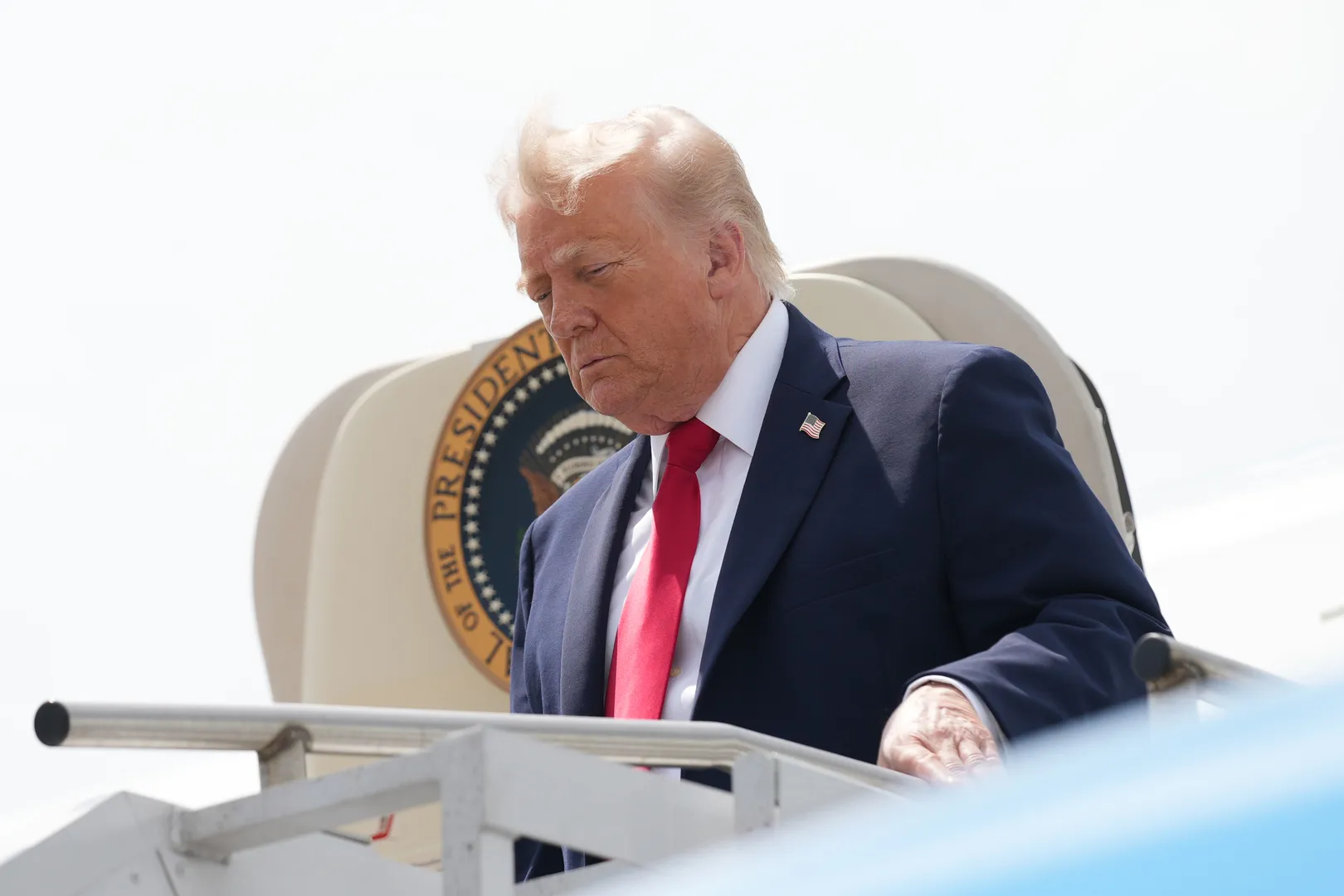
US President Donald Trump says he has agreed to extend his threatened deadline to attack Iran by two weeks, if Iran immediately re-opens the Strait of Hormuz. His Truth Social post came less than two hours before he had said Iran would face widespread attacks on civilian infrastructure.
Pakistan’s Prime Minister Shehbaz Sharif says diplomatic efforts to resolve the US-Israeli war on Iran are ‘progressing steadily’ as he urged US President Donald Trump to postpone his threatened deadline for two weeks. Al Jazeera’s Osama Bin Javaid explains Islamabad’s ‘last-ditch effort’.
Tehran, Iran – The head of Iran’s top science and engineering university believes that the United States and Israel are targeting symbols of Iran’s progress as a nation, and not merely hitting the governing establishment.
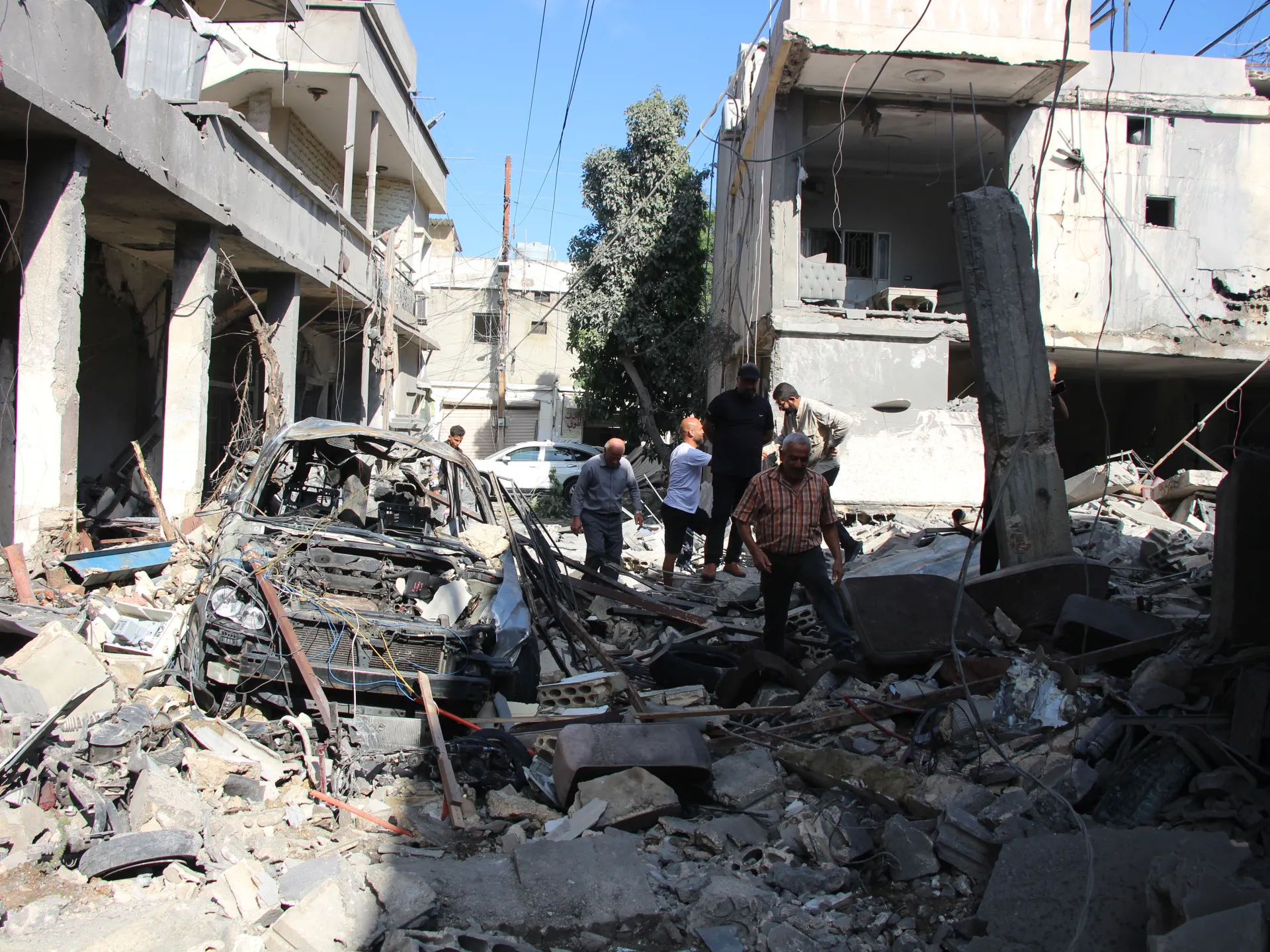
The Sharif University of Technology in Tehran was bombed on Monday, destroying and damaging multiple buildings, including what was described by the authorities as an artificial intelligence centre housing critical databases. The university’s website and other online services went dark.
Recommended Stories
list of 3 itemsend of list
“We believe the reason the enemy targeted these buildings and destroyed the entire infrastructure is that it did not want us to achieve AI technology,” university President Masoud Tajrishi said, adding that the higher education facility had been working on training AI models in Persian for two years and provided services to hundreds of companies.
“The enemy does not want us to succeed or have development and progress, but all our universities are united now by these attacks,” he said at the site of the bombing on Tuesday. Minutes later, another attack targeted the capital, with low-flying cruise missiles visible over downtown Tehran and air defence guns activated.
Tajrishi also said that no country had been prepared to provide Iran with the knowledge and know-how to work on AI technology due to US sanctions and competitive advantages, so all of the research was done domestically.
The US and Israel have not provided an official reason for targeting Iran’s main higher education hubs or cultural heritage sites, which are considered civilian infrastructure. No casualties were reported inside Sharif since all school and university classes are being taken online, but more than 2,000 people have been killed during the war.
The strike on the top university, which was founded six decades ago, came after a string of similar air raids targeting research centres inside other prominent facilities, including the century-old Pasteur Institute, a photonics lab at Shahid Beheshti University and a satellite development lab at the Science and Technology University.
More than 30 universities have been affected by US and Israeli attacks since the start of the war on February 28, Iran’s minister of science, research and technology, Hossein Simaei Saraf, told Al Jazeera last week.
The attacks prompted the Islamic Revolutionary Guard Corps (IRGC) to declare US and Israeli-affiliated universities “legitimate targets”.
Mohammad Hossein Omid, president of Tehran University, wrote a letter on behalf of 15 top university heads last week, urging the IRGC to refrain from attacking other universities in order to show that Tehran is committed to safeguarding higher education facilities anywhere as “human and global heritage” entities.
However, he has since shifted his position and demanded retaliatory attacks in kind after a huge backlash from local hardline media.
The US and Israel have continued to attack across Iran, targeting the country’s infrastructure, hours ahead of US President Donald Trump’s deadline for Iran to capitulate to his demands. The Israeli military has already on Tuesday hit Iran’s railway network, but Trump has threatened to bomb critical civilian infrastructure, such as the country’s main power plants and bridges, which would constitute a violation of international law.
Trump said “a whole civilisation will die tonight” in Iran, with the comment coming days after the country’s steel factories and petrochemical manufacturers were extensively targeted in another move that will affect all of Iran’s population of more than 90 million. He boasted that it would take 20 years for Iran to rebuild if Washington were to withdraw today, but it could take 100 years to rebuild if the war continues.
A sign in front of Tehran’s damaged Sharif University says ‘Trump’s help has arrived’ [Maziar Motamedi/Al Jazeera]
Hitting Iran or the Islamic Republic?
Inside the Sharif University on Tuesday, a mathematics professor held an online class inside the remains of a bombed building as a show of defiance and continuity.
Placards placed nearby by the authorities read, “Trump’s help has arrived.”
This was in reference to repeated claims by the US president and Israeli Prime Minister Benjamin Netanyahu that they wish to “help” the Iranian people overthrow the Islamic Republic, which came to power after a 1979 revolution but has faced nationwide protests in recent years.
But the increasing systematic targeting of civilian infrastructure has caused deep concerns among many Iranians, especially since the country was already dealing with a host of issues before the war, including economic woes and an energy crisis.
“It was a strange feeling waking up in the morning and seeing your university attacked, not to mention the terror of feeling you might not have electricity to check anything tomorrow,” said a Shahid Beheshti student, who asked to remain anonymous.
“If you can justify attacks on power plants, steel, petrochemicals, bridges, universities and science institutes, you can justify anything,” he told Al Jazeera.
The civilian infrastructure attacks have also prompted local media to lash out against foreign-based Iranians, some of whom have supported US and Israeli attacks in the hope that they would lead to the toppling of the governing establishment of military, political, and theocratic leaders.
The Fars news agency, affiliated with the IRGC, claimed on Tuesday that the attack on Sharif University could not have been possible without “betrayal” from dissidents abroad. It accused Ali Sharifi Zarchi, a top former professor-turned-dissident at Sharif, of leaking the coordinates of the bombed centre, without providing evidence.
Sharifi Zarchi pointed out in a tweet in response that the centre was marked on Google Maps, and said that while he unequivocally condemns the targeting of universities and other civilian sites, “the aim of any attacks should be the overthrow of the Islamic Republic regime, which has held the Iranian people hostage through repression, mass killings, and internet shutdowns.”
The professor circulated a letter published in a number of nongovernment student groups on Tuesday, which also condemned the US and Israeli attacks but said that the establishment was responsible for pursuing policies that put it on a collision course with the two countries and their allies.
“Our people want to work, to study, to breathe, to have access to the internet, and to build their own future,” the students wrote. “Minds that leave do not return. A girl who is detained no longer studies. A child whose school is bombed does not grow up. The cost of these losses will be paid by all of our futures – including those who benefit from this divide today.”
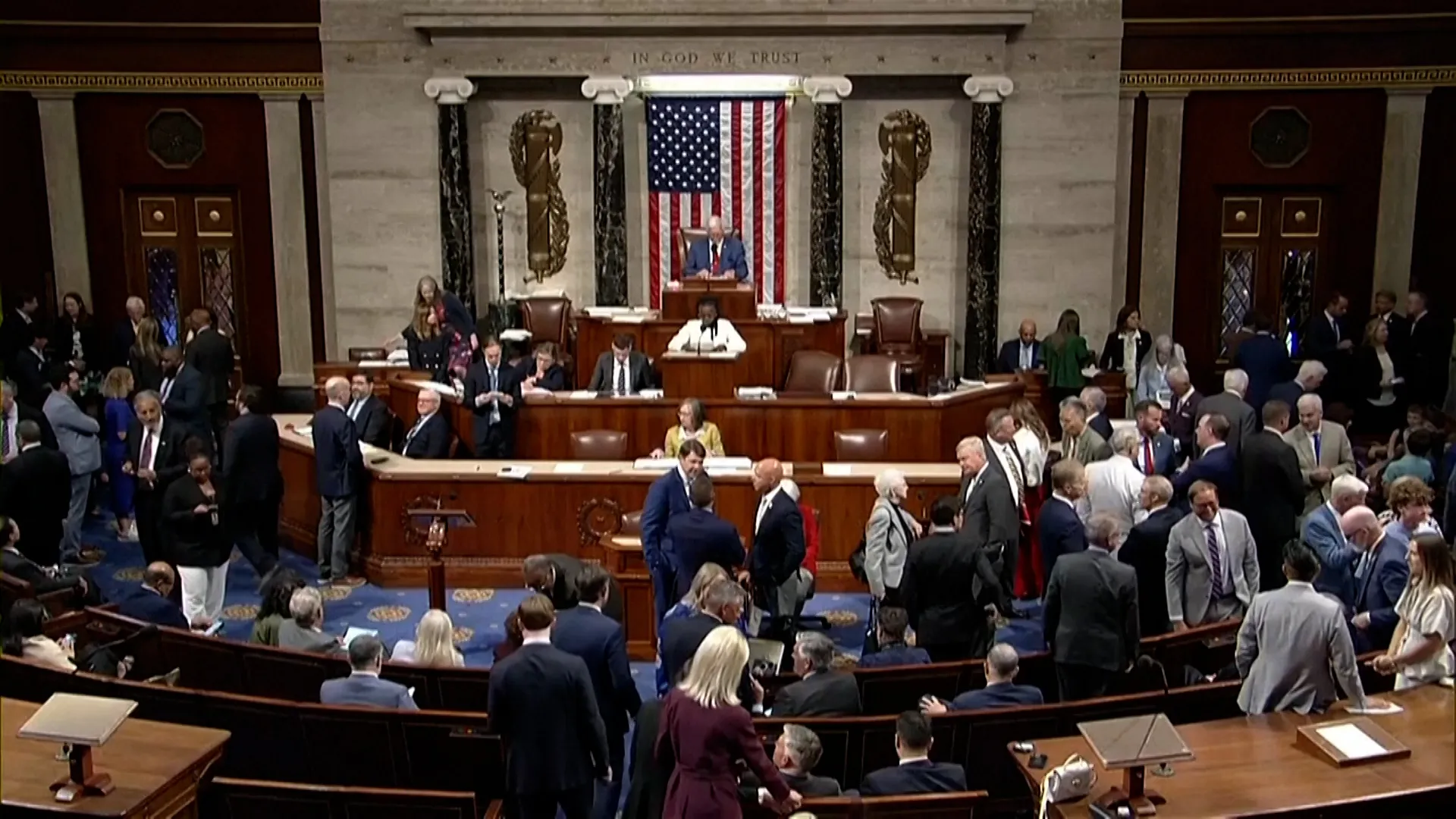
Donald Trump warned that “a whole civilisation will die tonight” if Iran does not open the Strait of Hormuz, ahead of a Tuesday night deadline for Tehran to comply. The comments follow a “pretty shocking” silence from US Congress on the US-Israeli war, Al Jazeera’s Kimberly Halkett explains.
The US-Israel war on Iran has sparked a global fuel crisis as thousands of tankers carrying crucial deliveries of oil and liquefied natural gas (LNG) remain stranded on either side of the Strait of Hormuz, currently under a blockade imposed by Iran.
On Saturday, Egypt’s government said it is among the “best-performing” countries in tackling the crisis because of the measures it has implemented to save on fuel.
Here is what we know about the steps Egypt is taking and whether other countries are doing the same.
Why has the Iran war caused an energy crisis?
Pressure on oil and gas markets is mounting due to the almost complete halt to shipping through the Strait of Hormuz as well as air strikes on and around key energy facilities in the Gulf as the United States-Israel war on Iran enters its sixth week.
One-fifth of the world’s oil and LNG is shipped from producers in the Gulf through the Strait of Hormuz in peacetime. This is the only route from the Gulf to the open ocean.
On March 2, two days after the US and Israel began strikes on Iran, Ebrahim Jabari, a senior adviser to the commander in chief of Iran’s Islamic Revolutionary Guard Corps (IRGC), announced that the strait was “closed”. If any vessels tried to pass through, he said, the IRGC and the navy would “set those ships ablaze”. Since then, traffic through the strait, carrying cargoes including 20 million barrels of oil each day, has plunged by more than 95 percent.
Now, Tehran is allowing just a handful of tankers through after reaching agreements with some countries to do so.
Besides this, energy infrastructure in the Middle East has suffered damage over the course of the war.
On March 24, QatarEnergy declared force majeure on some of its long-term LNG supply contracts after an Iranian attack on Qatar’s Ras Laffan LNG facility – the largest in the world – wiped out about 17 percent of the country’s LNG export capacity, causing an estimated $20bn in lost annual revenue and threatening supplies to Europe and Asia.
All of this disruption has sent energy prices soaring. On Tuesday, global oil benchmark Brent crude was around $109 per barrel, compared to around $65 per barrel right before the war started.
How is Egypt tackling the energy crisis?
Egypt’s Petroleum Ministry has announced rises in fuel prices ranging from 14 percent to 30 percent.
On March 28, Egyptian Prime Minister Mostafa Madbouly’s office told a press conference that the country’s energy import bill had increased from $1.2bn in January to $2.5bn in March.
Egypt is both one of the region’s largest energy importers and among its most heavily indebted economies. While domestic gas and oil account for the majority of its total energy supply, the country still relies on imported fuels, especially refined oil products and some natural gas, from Israel and the Gulf states.
Madbouly announced measures Egypt is taking to mitigate this and preserve state energy resources.
From March 28, shops, malls and restaurants are closing at 9pm (19:00 GMT) every day for one month, except Thursdays and Fridays.
On Thursdays and Fridays, the closing time will be 10pm (20:00 GMT).
Fuel allocations for government vehicles will be reduced by 30 percent.
Street lighting and street advertisement lighting will be cut by 50 percent.
From April 1, eligible employees will work remotely on Sundays, the first day of the working week. Some essential services, such as pharmacies, grocery stores and tourist facilities, will be exempted from this.
Which other countries have introduced energy conservation measures?
Besides Egypt, other countries are also taking steps to save energy.
Last week, Malaysia ordered civil servants to work from home to save energy in government offices.
In mid-March, it was revealed that government offices in the Philippines had moved to a four-day work week, officials in Thailand and Vietnam were being encouraged to work from home and limit travel, and Myanmar’s government had imposed alternating driving days.
Pakistan, which imports about 80 percent of its energy from the Gulf, announced on Monday of this week that markets and shopping malls would close at 8pm (15:00 GMT) across the country, except in Sindh province. The government’s statement added that food outlets would close at 10pm (17:00 GMT), which is also when marriage ceremonies at private properties and houses must end.
Bangladesh has reduced working hours for government and private workers and banking services hours in a bid to conserve electricity.
In Sri Lanka and Slovenia, authorities have introduced fuel rationing and purchase limits to manage shortages and soaring costs.
WASHINGTON — President Trump warned that a “whole civilization will die” on Tuesday night if Iran does not meet his deadline to fully reopen the Strait of Hormuz, escalating tensions as diplomatic talks to end the war remain underway.
“A whole civilization will die tonight, never to be brought back again,” Trump wrote Tuesday morning on Truth Social. “I don’t want that to happen, but it probably will.”
The extraordinary threat signaled Trump’s willingness to authorize U.S. military strikes on Iranian infrastructure — including bridges and power plants —- if the United States and Tehran are unable to reach a ceasefire deal by a Trump-imposed deadline of 5 p.m. PDT on Tuesday.
Trump has a history of issuing deadline in diplomatic standoffs, only to quietly walk them back when they pass without resolution. But Trump’s warning on Tuesday stood apart as it invoked apocalyptic language that goes well beyond his previous ultimatums.
The threat came a day after Trump indicated that a ceasefire proposal communicated by mediators in the Middle East ahead of the deadline was insufficient. He called the offer “not good enough,” but acknowledged it as a “significant step” in negotiations.
Trump declined to provide details on the ceasefire negotiations on Monday, but he has made clear that a core part of the negotiations hinges on the reopening of the Strait of Hormuz, a crucial waterway through which roughly a fifth of the world’s oil passes flows through daily.
On Tuesday morning, Iranian leaders remained defiant ahead of the looming deadline.
Iranian President Masoud Pezeshkian wrote on X that “more than 14 million proud Iranians have so far registered to sacrifice their lives to defend Iran.”
“I too have been, am, and will remain devoted to giving my life for Iran,” Pezeshkian wrote ahead of the looming deadline.
Trump on Monday mused about taking control of the waterway and charging tolls for passage, as well as taking control of Iranian oil.
“If it were up to me, I’d take the oil, keep the oil and make plenty of money,” Trump told reporters at the annual White House Easter Egg Roll.
Iranian officials on Monday rejected a ceasefire proposal, calling American demands “both highly excessive and unusual, as well as illogical.”
The ceasefire proposals have been communicated through mediators from Egypt, Pakistan and Turkey, according to the Associated Press.
After Iranians rejected the American proposal, Trump said at a news briefing on Monday that the U.S. military was prepared to strike Iran’s vital infrastructure if a deal cannot be reached.
The president has also dismissed questions that targets to infrastructure would amount to war crimes because it would impact civilians.
“You know what’s a war crime? Allowing a sick country with demented leadership to have a nuclear weapon,” Trump said.
South Korea has taken note of remarks by U.S. President Donald Trump, seen during a briefing Monday, that Seoul is not doing enough to support U.S. efforts in its war against Iran, a foreign ministry official said. Photo by Bonnie Cash/UPI | License Photo
South Korea has taken note of remarks by U.S. President Donald Trump that Seoul is not doing enough to support U.S. efforts in its war against Iran, an official at the foreign ministry said Tuesday.
Trump has criticized South Korea, Japan and European allies for not helping the U.S. reopen the Strait of Hormuz, such as by sending warships to escort commercial ships through the waterway, amid the conflict in the Middle East.
“We have been paying close attention to President Trump’s repeated remarks,” Park Il, foreign ministry spokesperson, said in a press briefing.
“The government will carefully review the matter and make a judgment in close coordination with the United States,” he said.
Seoul has reportedly reached out to Washington seeking to clarify Trump’s recent remarks and was told they were not directed specifically at South Korea, but rather reflected broader disappointment over U.S. allies not responding to his calls for assistance.
Both sides share the view that Trump’s comments would have no impact on the bilateral alliance, including efforts to implement trade and security commitments as agreed under the joint summit agreements, sources familiar with the matter said.
Copyright (c) Yonhap News Agency prohibits its content from being redistributed or reprinted without consent, and forbids the content from being learned and used by artificial intelligence systems.
Both European and Asian markets opened slightly lower on Tuesday as investors brace for US President Donald Trump’s deadline for Iran to either agree to a deal, or have their energy infrastructure targeted by air strikes.
ADVERTISEMENT
ADVERTISEMENT
The deadline falls at 8 pm Eastern Time (2 am CET), giving Iran until then to accept a deal that would keep the Strait of Hormuz open to all shipping or face what Trump has called the “complete demolition” of its civilian infrastructure, including every power plant and bridge in the country.
At the time of writing, Benchmark US crude is trading at $113.5 a barrel while Brent crude, the international standard, is around $111. Both prices are up around 1%.
The Euro Stoxx 50 and the broader pan-European Stoxx 600 are both up 0.5% as well.
The UK’s FTSE 100 is flat while Germany’s DAX 30 is around 0.2% higher, and France’s CAC 40 and Italy’s FTSE MIB have risen close to 1% each.
Over in Asia, there is a mixed reaction from markets in anticipation of the deadline.
South Korea’s Kospi has jumped 0.8% while Tokyo’s Nikkei 225 is effectively trading flat.
Hong Kong’s Hang Seng is down 0.8% while the Shanghai Composite is slightly higher by 0.3%. Additionally, Australia’s ASX 200 and Taiwan’s Taiex both rose 2%.
On Easter Sunday, President Trump renewed the threat publicly for the last time before the deadline stating that “Tuesday will be Power Plant Day, and Bridge Day, all wrapped up in one, in Iran. There will be nothing like it!!!”
US futures and precious metals
On Tuesday morning, US futures are all trading between 0.1% and 0.3% lower.
The moves follow a strong close on Monday as the S&P 500 rose 0.4%, coming off its first winning week in the last six. The Dow Jones Industrial Average added 165 points, or 0.4%, and the Nasdaq composite climbed 0.5%.
Monday also offered the first chance for US markets to react to a report from Friday that stated American employers hired more workers last month than economists expected.
These were encouraging signals for an economy that’s had to absorb painful leaps in costs for gasoline since the Iran war started.
The average price for a gallon of regular gasoline is nearly $4.12 across the country, according to AAA. It was below $3 a couple days before the US and Israel launched attacks to begin the war in late February.
In other trading, gold is up 0.77% at around $4,685 while silver is rose roughly 0.2% to $72.95 an ounce.
During the first month of the US-Israel war on Iran, the Houthis adopted a cautious approach, even though many expected them to move faster based on the nature of their close relationship with Tehran. This assessment is not wrong — the relationship is indeed strong — but what this view misses is that decision-making within the Yemeni group has increasingly become the product of an extended internal debate.
This debate goes back to the Houthis’ decision to launch military action in support of Gaza after Operation Al-Aqsa Flood on October 7, 2023. After the United States and Israel launched retaliatory strikes in March 2025, which lasted for two months, an agreement was brokered by Oman in May, bringing the fighting to a halt. This experience had a deep impact on the group.
Some Houthi leaders believe that the cost of that involvement over the past two years was high, not only in terms of military and leadership losses and civilian casualties, but also in terms of draining resources, damaging infrastructure and complicating the political track, especially with Saudi Arabia, which had put forward a roadmap for peace in Yemen in 2022.
This assessment did not remain at the level of abstract analysis; it became the basis for an internal discussion that produced two clear currents.
The first current leans towards caution. It seems that the previous experience proved that direct involvement does not yield strategic gains, but it does open costly fronts. This camp pushes for avoiding open confrontation, preserving existing understandings — especially with Saudi Arabia — and limiting action to political support or small, contained operations that do not drag the group into a large-scale escalation.
In contrast, there is another current that believes the present moment is crucial for the so-called “axis of resistance” created by Iran, and that absence or hesitation could cost the group its place in the post-war equation. For this current, this is a decisive moment to assert the Houthis’ presence, especially amid an expanding conflict and the likelihood of a reshuffling of the regional balance of power.
Two currents have shaped the Houthis’ decision-making over recent weeks. As a result, today the group has embraced neither full-scale engagement nor total absence. This was evident first in the escalation of political rhetoric during the first month of the war, then in the execution of limited, carefully calculated operations that began on March 27. There was a clear declaration of gradual intervention, close monitoring of developments, and a deliberate effort not to cross the red lines identified by the group’s military spokesperson, particularly those related to the Bab al-Mandeb Strait.
However, the balance between the two currents may become unstable at some point as the war escalates and widens regionally, and as Iranian and Houthi talk of a “unity of fronts” intensifies. The longer the conflict lasts, the less able the group will be to remain in this grey zone, and the stronger the pressure will be for deeper involvement.
With each new development on the ground, this internal debate may edge closer to a moment of decision: either entrenching caution as a long-term strategic choice, or shifting to broader involvement that may not be as gradual as was declared in Houthi statements.
What remains constant, however, is that the group has entered this phase with the accumulated experience of past years — a record that has taught it the cost of involvement and made it aware that entering a war is not merely a military decision, but an open-ended political, security, and economic trajectory. It has already paid that price in its previous confrontations with the US and Israel.
Thus, the question is no longer whether the Houthis will enter the war, but how they will enter and at what cost. Will they be able to set and maintain limits on their involvement? Will their calibrated entry avoid paying the full price? The answers to these questions will be made clear in the weeks to come.
The views expressed in this article are the author’s own and do not necessarily reflect Al Jazeera’s editorial stance.
A US-Israeli strike has caused extensive damage to a synagogue in Tehran, according to a video published by Iran’s semi-official Mehr News Agency. Footage shows civil defence workers amid the rubble, with Hebrew-language books scattered on the ground.
Arrest comes after Roberts-Smith lost case against journalists who said he was involved in murders of unarmed Afghan men.
Published On 7 Apr 20267 Apr 2026
Former Australian special forces soldier Ben Roberts-Smith has been arrested at Sydney airport and is expected to face charges for alleged war crimes committed in Afghanistan, according to the Australian Broadcasting Corporation (ABC).
The 47-year-old was expected to appear in a court in New South Wales later on Tuesday over five counts of the war crime of murder, related to unarmed Afghan nationals who “were not taking part in hostilities at the time of their alleged murder”, Australian Federal Police Commissioner Krissy Barrett told reporters in Sydney on Tuesday, according to the ABC.
Recommended Stories
list of 4 itemsend of list
Barrett said the charges followed a “complex” investigation by the AFP news agency and the Office of the Special Investigator (OSI) dating back to 2021.
The arrest comes after Roberts-Smith lost defamation proceedings he brought against journalists who had reported he was “complicit in and responsible for the murder” of three Afghan men.
An Australian judge found in 2023 that those journalists had not defamed Roberts-Smith, a ruling that was upheld by the Full Court of the Federal Court of Australia in May last year.
Rawan Arraf, the executive director of the Australian Centre for International Justice, said the arrest was a “significant and long-awaited step for victims and affected communities” in Afghanistan, where Roberts-Smith was deployed multiple times.
“The proper investigation and prosecution of alleged war crimes by members of the Australian special forces in Afghanistan are essential to ensuring justice for Afghan victims and to Australia meeting its obligations under international law,” Arraf said in a statement.
About 39,000 Australian soldiers were deployed to Afghanistan as part of the United States and NATO-led operations against the Taliban and other armed groups over two decades.
Roberts-Smith’s case has drawn considerable scrutiny in Australia, including because prior to the charges, he had received the Victoria Cross medal for his fifth tour of Afghanistan, and was reportedly the most-decorated living Australian war veteran.
Meanwhile, former Australian army lawyer David McBride remains imprisoned in Australia over his role in revealing information about alleged Australian war crimes in Afghanistan.
Australian Senator David Shoebridge responded to the news of Roberts-Smith’s arrest by saying “Release David McBride” in a short post on X.
US President Donald Trump said ‘Tuesday will be power plant day’ in a vulgar post on social media. He says the US plans to start bombing electricity infrastructure unless Iran opens the Strait of Hormuz. Al Jazeera’s Hala Al Shami looks at Iran’s power plants and the dangers of potential attacks.
Political analyst Trita Parsi says no one should be surprised that Iran has rejected the idea of a ceasefire deal with the US and Israel, given their history of violating previous agreements.
Around two dozen protesters gathered outside the US embassy in Tel Aviv, calling for an end to the war with Iran and Lebanon. Police ordered the protest to disperse within minutes as tensions rose and members of the public confronted demonstrators.
Weekly insights and analysis on the latest developments in military technology, strategy, and foreign policy.
Last month, images hit the internet showing a very stealthy, extremely long-endurance, very high-altitude intelligence, surveillance, and reconnaissance drone commonly (and unofficially) referred to as the RQ-180, or an evolution thereof, landing at a base in Greece. Many questions remain about the uncrewed aircraft and why it might be operating from Larissa Air Base.
However, as we noted in our initial reporting, the current conflict with Iran would be a very relevant fit for what the RQ-180 was likely designed to do. Furthermore, a secretive late Cold War-era drone program known as Quartz, intended to persistently monitor mobile nuclear-tipped ballistic missiles deep within the Soviet Union, offers a window into exactly why the RQ-180 could be in high demand in the Middle East now. There is no higher-priority standing mission for Operation Epic Fury at this time than finding and destroying Iranian launchers.
In many ways, the shadowy Quartz program from decades ago was a progenitor for what became a very large flying wing uncrewed aircraft that shares the planform of the B-21 (and the original B-2 design) and is likely at least part of the RQ-180’s origin story.
Strange arrival over Greece
To recap quickly, on March 18, local Greek news website onlarissa.gr first published pictures of what it misidentified as a B-2 bomber landing at Larissa Air Base, also known as Larissa National Airport. The base, which belongs to the Hellenic Air Force, but is also known to host U.S. Air Force MQ-9 Reaper drones, is situated in the city of the same name.
This aircraft seen over Larissa, Greece is not a B-2 like the local Greek news reported or an RQ-170, but is in fact best imagery ever published of the RQ-180, an undisclosed low observable drone used by the USAF. Location suggests use in the Iran conflict https://t.co/Pa9whNlQSVpic.twitter.com/UsDxy9Tc4n
Onlarissa.gr outlet followed up its initial reporting by posting a video of the drone, seen below. Additional and increasingly more detailed imagery has subsequently emerged.
Το αμερικανικό βομβαρδιστικό Β-2 πάνω από τον ουρανό της Λάρισας
Per onlarissa.gr, the highly exotic aircraft had landed at Larissa after experiencing some kind of technical issue, citing unnamed sources. This remains unconfirmed, but it would explain why the drone touched down in broad daylight, rather than coming in under the cover of darkness. It could also have diverted there with an emergency, while operating out of another location, even one in the continental United States. It is worth noting that Larissa Air Base appears to have unique facilities built in recent years that seem to be very well suited for housing an aircraft like this.
TWZ previously reached out to U.S. Air Forces in Europe (USAFE) and the Pentagon for comment, but has not received any responses as of the time of writing. In a story published on March 24, Air & Space Forces Magazine said U.S. Central Command (CENTCOM) also declined to comment.
Attention was also subsequently called to U.S. Air Force cargo planes having been tracked making unusual flights from Edwards Air Force Base in California to Larissa recently. One of those flights came on February 25, while another one occurred on March 9. A C-5M also flew to Larissa from Tinker Air Force Base in Oklahoma on February 25, according to Aviation Week. Whether there is any connection between these flights and the drone spotted at the base has not been confirmed at this time. Edwards is the Air Force’s main hub for aviation test and evaluation efforts, and flight testing of the RQ-180 was reportedly at least managed from there in the 2010s. The Air Force could also have moved other assets to Larissa via Edwards.
These photos are really interesting as they explain the two C-17s which flew from Edwards Air Force Base to Larissa Air Base in Greece in early March and late February.
The current state of the RQ-180, or any designs that have evolved from it, on a programmatic level, is very murky. In addition to testing at Edwards, past reports have said that a unit at Beale Air Force Base in California began flying the drones operationally, at least on a limited level, by 2019. There has been talk of a large flying wing aircraft similar in configuration to the B-21 Raider bomber flying out of Plant 42 in Palmdale, also in California, under the cover of darkness for years.
There are very strong indications that a photograph that appeared on Instagram in October 2020 of an unmanned aircraft flying in the skies over California’s Mojave Desert near Edwards Air Force Base was the first sighting of an RQ-180. That picture also notably showed a drone with an overall white paint scheme. That aligned with a report from Aviation Week that the design had gained the nicknames “Great White Bat” and “Shikaka.” The latter of these is the name of a fictional sacred white bat that is at the center of the plot of the 1995 Jim Carrey comedy Ace Ventura 2. The drone seen recently flying over Larissa has an overall black or otherwise dark-colored paint job. TWZ has noted previously that an overall white/cream/light pastel color scheme could help the drone to hide better at high altitudes during the day, but that a dark scheme would be more relevant at night. It is very possible, if not probable, that multiple schemes have been tested for a drone expected to fly sorties lasting multiple days.
A notional rendering of the Northrop Grumman drone commonly referred to as the RQ-180. Hangar B Productions
There certainly has been no clear evidence, at Beale or anywhere else, of the establishment of the kind of infrastructure that one would associate with the RQ-180 reaching a more advanced operational state and serial production. It is possible that the drone could share facilities with the B-21 under the larger umbrella of the Long Range Strike (LRS) family of systems. The RQ-180 is very likely intended, in part, to work in concert with the Raider, and there may even be some commonality between the two aircraft. The RQ-180 and/or related designs very likely played a direct role in risk reduction efforts that helped sell the Long Range Strike-Bomber (LRS-B) concept, and possibly the win by Northrop Grumman of that contract.
B-21 Takeoff and Landing
So, where the RQ-180 stands in terms of its overall capacity and its future remains unclear, but they are clearly being used on operational sorties, at least in a limited manner.
Iranian missile threats persist
After more than five weeks of fighting, the conflict with Iran is still grinding on. Despite the United States and Israel having substantially degraded the ability of Iranian forces to launch retaliatory missile and drone strikes, they have not stopped entirely. Iran has been digging out underground missile bases struck by American and Israeli forces and getting them back into operation, sometimes within hours, The New York Times reported just last Friday, citing U.S. intelligence reports. That followed other reports stating that Iran still retains a vast arsenal of missiles and drones, as well as a significant number of launchers to fire them.
U.S. forces drop precision munitions on underground military targets deep inside Iran to further degrade the Iranian regime’s ability to project power in meaningful ways beyond its borders. pic.twitter.com/ciQRbE0KFM
In recent weeks, publicly available data from multiple sources has, at times, shown relatively small, but noticeable upticks in Iran’s launches. There are also signs that more of those threats are evading interception, though whether this has translated to more damage and/or casualties from impacts is unclear.
Iran’s missile and drone arsenal has taken a hit, but what remains is being used more efficiently. Tehran continues fire an average of 21 missiles per week — with an uptick in its hit rate and ability to impose costs.
The talking point of “launches are down 90% since day 1” is true but so is “launches are up since last week”. The latter is the more important indicator at the moment. https://t.co/Oa4sZPOgWx
When it comes to launchers, Iran has invested heavily over the years in road mobile designs for firing ballistic and cruise missiles, as well as drones. This includes types that can be hard to distinguish from normal civilian trucks, especially those used for launching short-range ballistic missiles.
✈️🎯60+ strike flights: The IAF completed additional waves of strikes in western Iran targeting the Iranian regime’s missile launchers, defense systems, and live-fire arrays. pic.twitter.com/I1rRLBJlUR
Iran also has extensive underground ‘missile cities’ and other hardened sites that launchers can sprint to and from, and even fire from within in some cases. Beyond the main missile storage and launch sites, Iranian authorities have clearly had plans to disperse these weapons across the country. Reports have said that more authority to employ them has been delegated to lower echelons of command to minimize the impacts of separate U.S. and Israeli strikes on command and control nodes, as well.
On top of all this, Iran still has longer-ranged ballistic missiles that it can fire from areas further to the east, where the volume of U.S. and Israeli strikes has only more recently begun to grow. What’s left of Iran’s air defenses, which presents a real threat, is therefore likely to be more intact in those regions. In general, many of Iran’s air defense systems are also road mobile and can pop-up suddenly. All of this creates challenges for finding and fixing Iran’s remaining launch capacity, let alone neutralizing it.
Three weeks of Operation Epic Fury.
The Joint Force owns the skies, but Tehran holds the Strait. Additional U.S. fighter aircraft and naval assets arrived in both theaters, and Marine expeditionary forces are en route.
The Israeli Air Force has dropped over 16,000 bombs in Iran since the start of the war, in over 800 waves of strikes, the military says.
According to the IDF, over 10,000 separate strikes have been carried out on 4,000 targets. pic.twitter.com/gkU4rW4s8T
— Emanuel (Mannie) Fabian (@manniefabian) April 1, 2026
In this context, there is a clear need to be able to readily detect launchers, which can pop out suddenly and unexpectedly from cover, across vast areas. Known missile storage sites and launch areas around them also need to be persistently surveilled. The ability to find launchers faster opens up new options for striking them. Just tracking and recording their typical movements would also help further refine interdiction and intelligence-gathering strategies going forward.
As TWZ has previously explored in great depth, the RQ-180 is best understood as a very high-flying, very long-endurance, and very stealthy intelligence, surveillance, reconnaissance platform that is capable of penetrating and persisting deep into enemy airspace. Its primary means of achieving that mission would be a radar with ground moving target indicator (GMTI) and synthetic aperture radar (SAR) capabilities, but radar would be just the primary component of a larger sensor package, which would likely include powerful electro-optical sensors and passive radiofrequency ones.
At its most basic, GMTI allows battle managers to see the enemy’s ground movements in real-time and then quickly adapt their game plan to counter those enemy forces before they can ever attack, or even pose a threat to friendly forces. GMTI is also a critical capability for detecting changes in force posture, establishing patterns of enemy movements over time, and identifying new targets of interest. Modern GMTI products can also be looped into a ‘kill web’ for rapid targeting purposes.
Some of this is also achieved through the aforementioned SAR mode, which basically provides a satellite-like image of a target area using radar. It also has the ability to see some things optical systems cannot, and, like GMTI, it can work under nearly all atmospheric conditions, day or night. When paired with GMTI, SAR can be used to help positively identify targets, as well as gain better situational awareness about the targets being tracked.
A generic example of GMTI tracks overlaid on top of a SAR image. Public Domain
Passive electronic intelligence collection that allows for radiofrequency-emitters to be quickly detected and geolocated via onboard antennas and interferometry-based computing is another part of the equation. Long-range optical sensors can also provide higher-fidelity intelligence and spot movements of infrared signatures over large areas. You can imagine how fuzing all these capabilities together, combined with advanced networking, on a single platform could be incredibly potent. Basically, detecting a target or target group of interest, and then training advanced sensors on it to rapidly build up a high-quality understanding of what is going on and even to provide real-time targeting data to ‘shooters’ would be this aircraft’s bread and butter.
All of these are capabilities that would be ideally suited to the very high-priority task at hand of searching for Iranian launchers across the country’s vast terrain.
This all brings us back to Quartz and the very specific mission set that drove that program. Quartz is the best-known codename for a drone conceived as part of what was officially dubbed the Advanced Airborne Reconnaissance System, or AARS program.
The lead-up to Quartz
AARS/Quartz was itself born out of a succession of earlier developments. Proving that using a stealth platform to penetrate enemy air defenses and to stay over contested territory for hours on end while transmitting data collected without being detected is one of the biggest revolutions in warfare of the 20th Century. This capability was demonstrated on the tactical side at the dawn of stealth technology by Northrop’s Tacit Blue. That aircraft was developed as part of the Defense Advanced Research Projects Agency’s (DARPA) highly classified Battlefield Surveillance Aircraft-Experimental (BSAX) program, which began in the late 1970s.
The Tacit Blue demonstrator. Northrop Grumman
Tacit Blue notably served as a periphery risk reduction effort for the Advanced Technology Bomber (ATB) program that would result in the B-2. However, its reason for being was to show that a stealthy aircraft carrying a huge radar can penetrate enemy air defenses and loiter for prolonged periods of time, collecting GMTI radar data and other intelligence information.
The radar for BSAX was a low probability of intercept design that had come from Pave Mover, another DARPA effort. Pave Mover ultimately led to the non-stealthy and now-retired E-8 Joint Surveillance Target Attack Radar System (JSTARS) aircraft, but offshoots of that radar technology did end up elsewhere, including on the B-2. Low probability of intercept/low probability of detection (LPI/LPD) radars and communications suites are now key tenets of stealth aircraft design, in general. Keeping signal emissions, which an enemy can use to spot and track threats, to a minimum is critical for low-observable (stealthy) aircraft designs. Pave Mover was also tied into DARPA’s Assault Breaker program, which focused on proving out various technologies to enable standoff targeting of enemy forces, especially large Soviet armored formations on the move, deep behind the front lines.
An E-8C JSTARS aircraft. USAF/Senior Airman Jared Lovett
The famously ugly Tacit Blue, also nicknamed the “Whale,” produced results that were revolutionary, as you can read more about here. Even the most capable existing penetrating intelligence, surveillance, and reconnaissance (ISR) aircraft available at the time, like the SR-71 Blackbird, could only take a snapshot in time of the enemy and its posture. Satellites were far more predictable and could only provide the same ‘moment in time’ intelligence, and in a much less flexible manner. Tacit Blue could watch for hours with the enemy not even knowing it was there.
An SR-71 Blackbird. Courtesy photo via USAF
This meant the quality of intelligence Tacit Blue was capable of collecting was of far greater value. Metaphorically speaking, the SR-71 was like documenting a wedding by loudly running through a crowd and snapping a few photos. Tacit Blue was like rolling hours of videotape at the same wedding by an invisible cameraman. It was an absolute game-changer. The information was also transmitted securely using a LPI data link in near-real-time so that it could be rapidly exploited, not once the aircraft returned to base.
A drone to hunt Soviet mobile ballistic missiles
AARS/Quartz can be seen as something of a strategic parallel to the more tactically-minded BSAX effort and the Tacit Blue demonstrator. It was conceived as a cooperative effort between the U.S. Air Force, the National Reconnaissance Office (NRO), and the Central Intelligence Agency (CIA). NRO, the very existence of which was only declassified in 1992, is and has historically been responsible primarily for intelligence-gathering via satellite. However, it was also involved in ISR drone operations in the 1960s and 1970s.
The supersonic D-21 drone, seen here atop an M-21 mothership aircraft during a test, is one of the uncrewed aircraft programs NRO was involved in during the 1960s and 1970s. USAF
In the 1980s, the Reagan Administration grew concerned about a gap in reconnaissance assets, in the air and in space, to persistently track and monitor Soviet mobile nuclear-armed intermediate-range and intercontinental ballistic missiles.
“As spy satellite systems came on line in the 1960s, they shared the same fundamental operational scheme as the SR-71. Both conducted reconnaissance with relative impunity but were so fast that they only provided episodic coverage. The Soviet system of fixed air bases, missile silos, and command centers of the Cold War’s first 30 years favored ‘fast pass’ reconnaissance, however, so its weaknesses were not evident until the strategic equation shifted in the late 1970s,” Thomas Ehrhard wrote in a monograph, titled Air Force UAVs: The Secret History, which the Mitchell Institute for Airpower Studies published in 2010. “Soviet mobile missiles (both nuclear and air-to-air) and the advance of aviation technology opened the door for a true loitering surveillance UAV called AARS.”
Ehrhard pointed to three missiles as particular drivers behind the AARS program. The first of these was the road-mobile RSD-10 Pioneer, known in the West as the SS-20 Saber, a nuclear-armed intermediate-range ballistic missile (IRBM) with three warheads in a multiple independently targetable reentry vehicle (MIRV) configuration. The SS-20 had an immensely destabilizing impact on the security environment in Europe. Its appearance was a central factor in the United States and the Soviet Union ultimately signing the Intermediate-Range Nuclear Forces (INF) Treaty in 1987.
A Soviet RSD-10 Pioneer/SS-20 Saber IRBM, at left, alongside a U.S. Pershing II medium-range ballistic missile (MRBM), at right, on display at the National Air and Space Museum. The INF treaty allowed for the preservation of a small number of demilitarized RSD-10/SS-20s and Pershing IIs, but the rest were destroyed. National Air and Space Museum
The other Soviet missiles that helped make the case for AARS/Quartz were two ICBMs, the rail-mobile RT-23 Molodets (SS-24 Scalpel) and the road-mobile RT-2PM/RS-12M Topol (SS-25 Sickle).
RT-23/SS-24 SCALPEL MOD 1 ICBM
RT-2PM/SS-25 SICKLE ICBM
In his 2010 monograph, Ehrhard describes the Reagan-era view of the resulting problem set as follows:
“The technological problem of holding these mobile missiles at risk, one that NATO had never solved with the SS-20, now became vastly more complex [with the inclusion of the SS-24 and SS-25]. U.S. forces had to constantly monitor their movement and electronic emissions, something neither fast-pass satellites, U-2s, nor the SR-71 could accomplish. The mission also entailed breaking the over two decade-long declaratory policy of not overflying the Soviet Union, a prospect the Reagan Administration apparently felt was worth the gain. To complicate matters further, they needed a platform that could track those missiles in a nuclear detonation environment while flying from remote bases in the continental US. Operating and receiving imagery from such a craft beyond line-of-sight using space relays would prove daunting. The political and design challenges loomed large, but in the end the Air Force/NRO/CIA consortium opted for a leap-ahead system.”
With all this in mind, AARS/Quartz was seen as a national imperative. The very long-endurance drone, penetrating deep into Soviet airspace, would be able to locate many of these threats, allowing them to be targeted during the opening throes of a potential apocalypse – something we will come back to later on.
By the mid-1980s, contracts were doled out to Lockheed and Boeing to develop what at the time could be seen as the most ambitious ‘silver bullet’ aerospace program of its time, albeit one that had very few eyes on it as it was deeply buried in the classified realm. Ehrhard writes:
“To accomplish the loitering surveillance mission, this UAV needed autonomous (i.e., not remote controlled), highly reliable flight controls, and a design capable of intercontinental ranges from bases in the US zone of the interior with extreme high altitude capability (long wingspan with sailplane-type lift and multi-engine propulsion to reach altitudes more than 70,000 feet). Moreover, it had to carry an array of high-resolution sensors, high-capacity satellite communications capabilities, and various antennas—all in a package that was stealthy to the point of being covert. The cost of developing each technology piece alone would be staggering, but integrating them presented an even greater challenge – thus the project became a magnet for the best and most starry-eyed technologists in the black world. As one CIA engineer said in an anonymous interview, this project was ‘the cat’s pajamas,’ and ‘the single most fun project I ever worked on’ because it stretched every conceivable technology area.”
Ehrhard does not elaborate on the expected sensor package, but an LPI/LPD radar with GMTI and SAR modes, as well as other sensors, would have been needed for a stealthy platform tasked with this mission set. As noted earlier, electronic emissions, which can be detected passively, were also seen at this time as a key way to spot and track mobile missile launchers.
A highly ambitious undertaking
By all indications, AARS/Quartz was seen as a very ambitious effort from the start, but one that could yield impressive capabilities needed to address a mission requirement critical to national security. It should be noted that the U.S. military was pursuing a host of advanced stealth aviation technology programs at around the same time. Many of the efforts would go on to produce real results, if they hadn’t already by the mid-1980s, and this is just based on what is known publicly. Northrop’s stealthy Tacit Blue demonstrator flew for the first time in 1982. Lockheed’s F-117 Nighthawk reached an initial operational capability the following year. The Advanced Technology Bomber (ATB) program that would lead to the B-2 was well underway by this time, too.
Another look at the Tacit Blue demonstrator, as viewed from below. Northrop Grumman
In the end, AARS/Quartz did not fare as well as many of its contemporaries, at least from what we know. The program ran through the end of the Reagan years and into the 1990s under the administration of President George H.W. Bush. It morphed and changed hands considerably from a smaller ‘bleeding-edge’ NRO-led program into one that was integrated into a new national unmanned aircraft strategy. This, in turn, caused its mission set to balloon as a maelstrom of stakeholders demanded many capabilities out of a single platform that was already beyond the available technology of the era.
Ehrhard’s 2010 monograph sums up just how bloated AARS became by the 1990s:
“[David A.] Kier[, NRO’s Deputy Director from 1997 to 2001] said the large version of AARS, which according to some reports had a wingspan of 250 feet, cost less than a B-2, but more than $1 billion a copy. Reportedly, the production plan called for only eight vehicles at a cost of $10 billion, each of the vehicles capable of an amazing 40 hours on station after flying to the area of interest.”
“Air Force officials were so leery of the UAV’s autonomous flight concept (no pilot had moment-to-moment control) that they reportedly insisted the flying prototype carry a pilot to handle in-flight anomalies and that the final design include a modular, two-place cockpit insert to make it optionally piloted. ‘By the time everyone got their wishes included,’ Kier said, ‘it [AARS] had to do everything but milk the cow and communicate with the world while doing it.’”
“With all of AARS’s leading-edge sensors and communications links, each of which posed substantial technical challenges in its own right, flight reliability quickly became the biggest design hurdle, according to Kier. The technologies were so secret, and the value of the payload and the air vehicle was so great that its loss over unfriendly territory was unthinkable. One defense official remarked, ‘If one had crashed, it would have been so classified we would have had to bomb it to ensure it was destroyed.’”
“Sailing along on the glut of black money in the late 1980s, AARS kept moving forward despite its continually expanding, problematic requirements list. As happened with [the] D-21 and Compass Arrow [drone programs] in the early 1970s, however, AARS was about to have its most vital mission curtailed.”
A D-21 reconnaissance drone, also known by the codename Tagboard. USAF
“The end of the Cold War brought the expensive program to a halt. An Air Force general familiar with the project said: ‘When AARS was invented, there was more money than they [the NRO] could spend. After the Cold War, the money went away and projects like that could not possibly survive.’ Like predators stalking a wounded animal, manned alternatives to AARS emerged. One proposal would put a sophisticated target acquisition system on the B-2 stealth bomber –the so-called RB-2 configuration. The proposal had value as a terminal tracking system, but the RB-2 lacked a method of off-board cueing to direct it to a search area.”
…
“As it turned out, none of the alternative programs made the cut, for not only was the Cold War officially over with the dissolution of the Soviet Union, but the venerable Strategic Air Command was disbanded in June 1992. With that move, AARS lost its primary military constituent and the AARS alliance began to crumble.”
“…The Air Force pulled funding on AARS, and it was terminated in December 1992 by the intelligence community hierarchy just as it was to enter full scale development. AARS was, in the final analysis, a misfit. It was a major aircraft program backed by a satellite organization (the NRO), and a risky unmanned surveillance platform slated for a combat pilot-led Air Force—hardly an edifice solid enough to survive the removal of its strategic underpinnings. No one organization provided focus or advocacy for the program. As a result, the “perfect” surveillance UAV faded away even as the ultimate Cold War satellite system, Milstar, and the equally exotic B-2 stealth bomber managed to survive, backed as they were by one service, and powerful sub-groups within that service, who were culturally and operationally attuned to those configurations.”
A view of the official rollout ceremony for the B-2 bomber in 1988. USAF
Kier, who Ehrhard also identifies as the last AARS program manager, says the drone’s design ultimately evolved into something that “resembled a substantially scaled-up version of DARPA’s DarkStar.” Lockheed’s DarkStar, which eventually received the designation RQ-3, was a stealthy tailless design with an ovoid central fuselage and with very long, slender, and straight main wings. Boeing was also a major subcontractor for the RQ-3.
The RQ-3 DarkStar. USAF
DarkStar was also referred to as “Tier III-minus,” a moniker that reflected the requirements for the drone, which were truncated compared to a planned Tier III type. Tier III was a more direct follow-on to AARS, but was already envisioned as a smaller and less capable, and one would imagine less expensive, uncrewed aircraft. There were also additional lower capability tiers, one of which ultimately led to the RQ-4 Global Hawk. Ehrhard says some members of Congress and of industry did attempt to drum up support for a true successor to AARS/Quartz, unofficially referred to as Tier IV, but without success.
With regard to the RQ-3, at least two flying examples were built, the first of which crashed in 1996 after suffering a control system malfunction. DarkStar had vanished completely from the public eye by 1999, but it has since emerged that a direct line can be traced between it and the stealthy RQ-170 Sentinel via another secretive drone called the X-44A, which TWZ was first to report on back in 2019.
An RQ-170 Sentinel at Andersen Air Force Base on Guam. USAF via FOIA
When it comes to AARS/Quartz, the full scale and scope of what exactly came out of the hundreds of millions, and possibly billions, spent on the program over at least a decade, remains unclear. Clearly, major leaps were made in the critical communications, command and control, structural, and sensor technologies needed to make the system a reality. There are rumors that sub-scale risk-reduction test articles were flown, but details surrounding the program remain highly secretive.
A mission requirement that rhymes
As we noted earlier, many questions remain about the RQ-180, as well as the overall status of that program. At the same time, fast forward some three decades or so from the end of AARS (and its immediate successors), and there are now echoes of the Cold War mission requirements that prompted that program, including in the current conflict with Iran.
The Iranian arsenal of conventionally-armed missiles is not anywhere near the same kind of threat as Soviet nuclear-tipped IRBMs and ICBMs. Still, they do present very real threats, especially for strikes on large critical infrastructure targets and as terror weapons when loaded with cluster munition payloads. The current conflict has demonstrated that strategy also puts immense strain on Israeli missile defenses, which could have broader ramifications, as you can read more about here. Iran’s short-range ballistic missiles offer additional flexibility against targets on land or at sea. In addition, it has been clear for years now that Iran is very willing to launch conventional ballistic missile attacks.
As already noted, the launchers for these missiles are mobile, and some are configured to look like typical civilian-style trucks at a casual glance. Some operate from hardened and underground bases. A number of those facilities were even built with ports that allow missiles to be fired from within, though it is unclear how extensively Iran has made use of that capability in the current conflict. These apertures have likely been repeatedly struck by the U.S. and Israel.
The underlying challenge of finding Iran’s ballistic missiles, and doing so with enough time to attempt to strike them before they launch, has clear similarities to the mission that drove AARS/Quartz. The Iranian case is perhaps more complex in certain respects, given the larger number of smaller missiles, many of which could be dispersed over a broad area. Still, the long-range weapons that threaten Israel are clearly the top priority and would be the easiest to spot for an asset like the RQ-180.
CENTCOM:
The Iranian regime is using mobile launchers to indiscriminately fire missiles in an attempt to inflict maximum harm across the region.
U.S. forces are hunting these threats down and without apology or hesitation, we are taking them out.pic.twitter.com/l4lxbTlAf4
🚨 WATCH: CENTCOM releases footage of strikes on fortified missile bases in southern Iran. The first footage includes hits on tunnel entrances and on mobile and stationary launchers at the missile base in Hajjiabad, Iran. pic.twitter.com/wuoi5GEhqp
— Major Sammer Pal Toorr (Infantry Combat Veteran) (@samartoor3086) March 22, 2026
Iran is responding to external threats by releasing a new video showcasing one of its underground missile tunnel systems, packed with missile engines, mobile launchers, and a range of advanced weaponry. The footage prominently features the Paveh cruise missile, the Ghadr-380… pic.twitter.com/ILsdlrPtQy
Furthermore, Iran’s air defenses have been significantly degraded after some five weeks of U.S. and Israeli strikes, on top of the losses during the 12 Day War last year, but threats remain. As noted, the northeastern end of the country has seen fewer strikes compared to other areas, overall. Total air supremacy over Iran has yet to be achieved.
This is not a hypothetical assessment either, as underscored by the recent loss of a U.S. Air Force F-15E Strike Eagle. In the ensuing efforts to recover the F-15E’s crew, an A-10 Warthog crashed after being hit by hostile fire and two rescue helicopters were also damaged. American forces deliberately destroyed additional aircraft – reportedly two MC-130J special operations tanker transports and four Little Bird helicopters – inside Iran to prevent the capture of sensitive material. This came after the MC-130Js had become disabled after touching down at an austere operating location during the final mission to retrieve the downed Strike Eagle’s Weapon System Officer.
A picture showing a destroyed Little Bird, on the right, and the hulk of a C-130, to the left. via X
This is exactly the environment where a very high-flying, extremely long-endurance, and very stealthy drone, like the RQ-180, would be valuable, if not critical, to perform the aforementioned mission. The drone would simply fly outside the range of Iranian defenses if need be and likely fly nearly directly over most of them without fear of being shot down. From that perch, which could be far above where normal jet aircraft fly (60,000-70,000+ feet is possible) it would be able to monitor massive swathes of Iranian territory for movement of launchers and indications of launches, especially around known launch areas and storage sites.
AARS/Quartz was never intended to exist in a vacuum. It was explicitly seen as a part of an ecosystem that also included the B-2 bomber (to strike the targets the drone found) and the Milstar communications satellite constellation (to help transmit relevant data). The B-2 and Milstar did enter service, although the former did so on a very truncated level due to post-Cold War drawdowns. The U.S. military has made further investments since then in advanced networking capabilities as part of integrated kill web architectures. The B-2 and other relevant capabilities that could directly tie in with the RQ-180 are being employed publicly in the current conflict with Iran. It is possible, if not highly plausible, that this integration has already existed for years, in part as a result of the development of the LRS family of systems.
Another rendering of a notional ‘RQ-180’ design. Hangar B Productions
There is a degree of precedent here already, with regard to Iran specifically, with the RQ-170 Sentinel. RQ-170s are understood to have conducted extensive flights over Iran in the 2000s and into the very early 2010s, particularly to provide persistent monitoring of nuclear sites. Those missions were thrust into the public eye in 2011, when an RQ-170 went down in Iran and was captured largely intact.
The fact that the Sentinel has been flying operationally for nearly two decades, at least, also just underscores the degree to which stealthy, persistent drone surveillance capabilities had already advanced decades ago. That being said, the RQ-170 is a medium-altitude platform that was developed as a more tactical-level asset for surveillance of smaller areas. It does not fulfill the continued requirements for something like the RQ-180, able to fly at much higher altitudes over far greater distances for much longer periods of time, while carrying huge sensors, and was never intended to do so.
It’s also worth noting here that any decision to employ a highly secretive and sensitive asset like the RQ-180 over Iran would still carry major risks. Stealth aircraft aren’t invisible or completely immune to threats, and accidents do happen. As noted earlier, a technical issue of some kind may well be the only reason why we got a clear look at the drone during the day at Larissa in Greece, to begin with. At the same time, there is something of a precedent for taking these kinds of risks with regard to Iran, specifically, even outside of the demands of open conflict. After the RQ-170 went down in Iran, it is very likely that Russia and China had opportunities to analyze the drone in detail. But the technologies in the RQ-170, and its very design, are understood to be far less exquisite than what would be found in the RQ-180.
But even as an RQ-180 would have an even more pressing use case against a peer competitor like China, which is drastically expanding its nuclear arsenal and has thousands of road-mobile ballistic missiles, risking such a sensitive asset over Iran is paired with the high stakes involved with this operation, especially in regard to Israel. Iran’s massive and rapidly growing number of long-range missiles were a stated reason Trump decided he had to act now. The administration has said that soon Iran would be able to oversaturate any defenses if action wasn’t taken. It is this same threat that would be a major factor in using such a prized asset for Epic Fury, to do whatever possible to limit the damage to Israel, and to America’s Arab allies as well.
When the secretive drone first emerged at Larissa, comparisons were also drawn to an Israeli design referred to as the RA-01. That uncrewed stealth aircraft has a roughly similar planform, but is a smaller overall design that likely falls between the RQ-170 and the RQ-180. It has been very active during the conflict, being seen in videos. It would be of no surprise if it were tasked with hunting Iranian missile launchers, as well.
It should be stressed that we still do not know for sure why the secretive drone is at Larissa and what operations it might have been conducting, or still is, from the Greek base. As mentioned at the start of this piece, U.S. authorities have, so far, declined to comment on the uncrewed aircraft’s presence there at all.
At the same time, its emergence does come at a time when the capabilities of the RQ-180, or an evolution thereof, would be in extremely high demand to support current operations over Iran, and specifically to address the urgent need to counter Iran’s long-range weapons, just as the progenitor of the concept was meant to do nearly four decades ago.
The WHO has warned of ‘catastrophic’ risks if radioactive release occurs.
Iran’s Bushehr Nuclear Power Plant has been targeted four times since the United States-Israel war on Iran began more than a month ago.
And the World Health Organization (WHO has warned of “catastrophic” risks if a radioactive release occurs.
Recommended Stories
list of 3 itemsend of list
Tehran has accused the United Nations’ nuclear watchdog of inaction – an allegation that the International Atomic Energy Agency (IAEA) rejects. But it does acknowledge that the situation is of deep concern.
Why are the attacks happening, and what risks do they pose?
Presenter: James Bays
Guests:
Tariq Rauf – Former head of verification and security policy coordination at the IAEA
Abas Aslani – Senior research fellow at the Center for Middle East Strategic Studies
Alicia Sanders-Zakre – Head of policy at the International Campaign to Abolish Nuclear Weapons
US president says Washington, as the ‘winner’ of the war, has a ‘concept’ for charging a toll in strategic waterway.
Published On 6 Apr 20266 Apr 2026
President Donald Trump has suggested the United States may be looking to charge a toll in the Strait of Hormuz after the war, a move that would likely require direct US military control over the strategic waterway.
Asked on Monday whether he would accept a deal that would allow Iran to take fees from ships to traverse the strait, the US president said: “What about us charging tolls? I’d rather do that than let them have them. Why shouldn’t we? We’re the winner. We won.”
Recommended Stories
list of 3 itemsend of list
Trump reiterated that Iran has been militarily defeated, a claim that he has been making since the early days of the war, despite Iran’s sustained drone and missile attacks across the region and its continuing blockade of Hormuz.
“The only thing they have is the psychology of, ‘Oh, we’re going to drop a couple of mines in the water.’ All right, no, I mean, we have a concept where we’ll charge tolls,” Trump told reporters.
Hormuz, which connects the Gulf to the Indian Ocean, lies mostly within Omani and Iranian territorial waters. About 20 percent of the world’s oil and liquefied natural gas (LNG) passed through the strait before the war.
Trump’s latest comments came as he issued what he called a “final” ultimatum to Tehran to reopen the strait and agree to Washington’s terms or face attacks against Iran’s civilian infrastructure, including bridges and power plants.
The US president told reporters on Monday that any deal with Iran must include reopening the Strait of Hormuz.
“We have to have a deal that’s acceptable to me, and part of that deal is going to be, we want free traffic of oil,” he said.
Reports have suggested that Iran is already charging a toll for some of the few ships it is allowing to pass through the strait.
“The Strait of Hormuz situation won’t return to its pre-war status,” Iranian Parliament Speaker Mohammad Bagher Ghalibaf wrote on X last month.
Iran’s Foreign Minister Abbas Araghchi has also called for “new arrangements” to manage the waterway after the war, ensuring safe passage for ships and protecting Iran’s interests.
“I believe that after the war, the first step should be drafting a new protocol for the Strait of Hormuz,” he told Al Jazeera in March. “Naturally, this should be done between the countries that lie on both sides of the strait.”
The White House said last week that Trump is considering asking Arab countries to pay for Washington’s expenses in its war on Iran.
US Secretary of Defense Pete Hegseth said Monday will be the “largest volume of strikes” on Iran since the US-Israeli war began, adding that tomorrow could be even worse if Iran does not reopen the Strait of Hormuz.
Seoul says Pyongyang has not been supplying Iran with weapons in the hopes of being able to reopen diplomatic dialogue with the US.
Published On 6 Apr 20266 Apr 2026
North Korea appears to be distancing itself from longtime partner Iran in the hopes of forming a new relationship with the United States, South Korean intelligence believes.
Seoul’s National Intelligence Service (NIS) sees no signs that North Korea has sent weapons or supplies to Tehran since the US-Israel war on Iran began at the end of February, lawmaker Park Sun-won, who attended a closed-door briefing held by the NIS, said on Sunday.
Recommended Stories
list of 3 itemsend of list
While Iran’s other allies China and Russia have frequently issued statements on the US-Israel war on Iran, North Korea’s Foreign Ministry has only issued two toned-down statements so far, said the NIS.
While Pyongyang did condemn the US and Israeli attacks on Iran as illegal, it did not issue public condolences after Supreme Leader Ayatollah Ali Khamenei’s death or send a congratulatory message when Khamenei’s son, Mojtaba Khamenei, succeeded him.
The spy agency said Pyongyang is likely adopting this cautious approach to position it for a new diplomatic chapter with the US once the Middle East conflict subsides, said Park.
The NIS also told lawmakers that it now believes Supreme Leader Kim Jong Un is grooming his teenage daughter as his successor, citing a recent public display of her driving a tank.
The NIS said the imagery was intended to highlight the supposed military aptitude of the youngster, who is believed to be around 13 and named Ju Ae.
Such scenes are intended to pay “homage” to Kim’s own public military appearances during the early 2010s, when he was being prepared to succeed his father, Park said.
Kim’s powerful sister, Kim Yo Jong, was earlier thought to be a leading candidate to succeed her brother.
On Monday, she was in North Korean headlines as she welcomed an apology issued by South Korean President Lee Jae Myung on Sunday over a January drone incursion.
“The ROK [Republic of Korea] president personally expressed regret and talked about a measure for preventing recurrence. Our government appreciated it as very fortunate and wise behaviour for its own sake,” Kim Yo Jong said in a statement carried by the official Korean Central News Agency.
Seoul initially denied any official role in the January drone incursion, with authorities suggesting it was the work of civilians, but Lee said a probe had revealed government officials had been involved.
“We express regret to the North over the unnecessary military tensions caused by the irresponsible and reckless actions of some individuals,” Lee said.
Lee has sought to repair ties with North Korea since taking office last year, criticising his predecessor for allegedly sending drones to scatter propaganda over Pyongyang.
His repeated overtures, however, have gone unanswered by the North until now.
Lee’s expression of regret follows Kim’s labelling of Seoul as the “most hostile state” in a policy address in March in which he vowed to “thoroughly reject and disregard it”.
The killing of Ayatollah Ali Khamenei in the opening phase of the US-Israeli war against Iran has generated a striking argument in strategic and theological circles alike: that the killing may have removed not merely a political leader but a normative brake on Iran’s possible march toward nuclear weapons. Reports indicate that Iranian decision-making has since hardened under intense military pressure and an increasingly securitised internal environment.
What gives Khamenei’s death a particular doctrinal significance is that he had, over more than two decades, publicly framed weapons of mass destruction—including nuclear and chemical weapons—as contrary to Islam. If that position represented a genuine religious constraint rather than mere diplomatic rhetoric, then his death may have removed more than a leader: it may have weakened the doctrinal restraint that helped keep Iran a threshold nuclear state.
What gives Khamenei’s death a particular doctrinal significance is that he had, over more than two decades, publicly framed weapons of mass destruction—including nuclear and chemical weapons—as contrary to Islam.
Islamic just war theory places moral constraints on indiscriminate violence, constraints that Khamenei appeared to project onto state policy. With that authority now gone, the central question is whether a moral tradition can discipline a state that increasingly experiences its insecurity as existential. Whether the next supreme leader can impose doctrinal restraint on a system drifting toward hard security logic.
The Islamic just war theory
The Islamic conception of war begins from a premise different from the caricatures often projected onto it. Classical Islamic thought does not treat war as an unbounded field of religious violence. Rather, it regulates warfare through a moral-legal framework derived from the Qur’an, the practice of the Prophet, and the juristic traditions that developed in subsequent centuries. The foundational Qur’anic injunction is taken from verse 2:190: “Fight in the way of God those who fight you, but do not transgress. Indeed, God does not love transgressors.” The verse both permits fighting and limits it: war is accepted as a political reality, but not treated as morally autonomous.
The Islamic conception of war begins from a premise different from the caricatures often projected onto it. Classical Islamic thought does not treat war as an unbounded field of religious violence.
The duality of permission and restraint thus runs through the Islamic just war tradition. War may be legitimate in cases of defence, resistance to aggression, or protection of the community. But even a just cause does not license unlimited means. Islamic jurists emphasised proportionality, legitimate authority, fidelity to agreements, and the protection of non-combatants—including women, children, the elderly, monks, and peasants— developing a norm of discrimination that restricted violence to active combatants.
It is from this perspective that nuclear weapons become especially difficult to reconcile with Islamic ethics. A weapon whose essence is mass, uncontrolled devastation, sits uneasily with any tradition that treats non-combatant immunity as morally central. In Islamic terms, the problem is not simply the scale of destruction, but the very structure of the act: the means themselves are transgressive.
The fatwa: Genuine constraint or strategic cover?
Ayatollah Ruhollah Khomeini’s reputed opposition to chemical weapons during the Iran-Iraq War established an early precedent for this kind of doctrinal restraint. Iraq used chemical agents extensively, and Iran suffered enormously—some 20,000 Iranians were killed and over 100,000 severely injured. Yet the Islamic Republic did not respond in kind on a comparable scale. Whether that restraint was entirely theological or also strategic remains debated. Recent evidence suggests limited Iranian chemical weapons development during the war. Still, the episode reinforced the notion that certain weapons lay beyond the moral threshold that Iran’s clerical leadership was prepared to cross openly.
Khamenei extended this logic to the nuclear realm. He first issued an oral fatwa in October 2003 declaring nuclear weapons as forbidden (haram) in Islam, and repeated this position in an official statement at the emergency meeting of the International Atomic Energy Agency in August 2005. Over subsequent years, Iranian officials repeatedly invoked his religious decree as evidence of the Islamic Republic’s peaceful nuclear intentions.
Khamenei extended this logic to the nuclear realm. He first issued an oral fatwa in October 2003 declaring nuclear weapons as forbidden (haram) in Islam, and repeated this position in an official statement at the emergency meeting of the International Atomic Energy Agency in August 2005.
But the fatwa’s authenticity and legal weight have always been contested. Some have argued that no formal written fatwa was ever issued and that what Iran marketed as a religious ruling was, in origin, merely the closing paragraph of a message to a 2010 nuclear disarmament conference, later retroactively framed by Iranian diplomats as a fatwa. Others have documented that Khamenei’s pronouncements on nuclear weapons were inconsistent: at times he categorically forbade development, stockpiling, and use; at other times he appeared to permit development and stockpiling while forbidding use.
None of this entirely strips the fatwa of significance. In political systems where legitimacy is partly theological, a public prohibition articulated by the supreme jurist, even if ambiguous in its legal form, raises the political and doctrinal cost of reversal. As one scholar observes, such declarations make it costly for the Islamic Republic to overturn the publicly stated position even if they do not constitute binding juridical rulings in the formal sense.
Succession and the question of doctrinal inheritance
The critical question of whether Khamenei’s successor would inherit his political and moral authority looms large. On March 9, 2026, the Assembly of Experts named Mojtaba Khamenei, the 56-year-old son of Ali Khamenei as Iran’s third supreme leader. Whether he would inherit his father’s doctrinal commitments, especially on nuclear weapons, is far from clear. Not known as a jurist of comparable standing to his father, Mojtaba’s authority derives primarily from his revolutionary and security credentials rather than from the depth of his theological learning, a fact noted critically within Iran’s clerical establishment, which has historically resisted father-to-son succession as uncomfortably monarchical.
Khamenei’s nuclear prohibition carried weight because it came from the state’s highest religious authority. Mojtaba’s standing is far more contested, which means that any comparable prohibition would likely carry less doctrinal force—while any tacit relaxation would accelerate the erosion of the barrier his father maintained. The IRGC commanders who manoeuvred his appointment to power have long been among those pressing for a reassessment of Iran’s nuclear posture.
Islamic restraint vs strategic realism
This leads to the final and perhaps hardest question: would Iran, if acting as a pure realist state, pursue nuclear weapons regardless of the Islamic just war tradition? The realist answer is straightforward. States seek survival in an anarchic international system. When a state faces stronger adversaries, recurring coercion, and the credible prospect of regime-change violence, it has every incentive to pursue the ultimate deterrent. From this perspective, the logic of nuclear acquisition is not theological but strategic: a bomb would promise not battlefield utility but regime survival, deterrence, and insulation from future attack.
Khamenei’s nuclear prohibition carried weight because it came from the state’s highest religious authority. Mojtaba’s standing is far more contested, which means that any comparable prohibition would likely carry less doctrinal force—while any tacit relaxation would accelerate the erosion of the barrier his father maintained.
And yet Iran is not a pure realist state in the abstract. It is a political order where ideology, clerical authority, national security, and regime survival have long coexisted in uneasy combination. The more interesting possibility, therefore, is not that realism simply replaces theology, but that realism gradually colonises it. In that scenario, doctrine is not openly discarded; it is reinterpreted and subordinated to necessity, allowing the state to retain Islamic language while moving toward a posture that the older Khamenei publicly resisted.
The greater danger is that the Islamic Republic’s language of restraint may cease to anchor policy and instead begin to trail behind it. If so, Iran’s nuclear future will be decided not only in centrifuge halls or command bunkers, but in the struggle between theological limits and strategic fear.
The views expressed in this article belong to the author and do not necessarily reflect the editorial policy of Middle East Monitor.