


The Strait of Hormuz, which links the Gulf to the Gulf of Oman, has held global attention since Israel and the US began their war on Iran in February.
Until fighting began, the narrow channel, through which 20 per cent of the world’s oil and liquefied natural gas (LNG) supplies are shipped from Gulf producers in peacetime, remained toll-free and safe for vessels. The strait is shared by Iran and Oman and does not fall into the category of international waters.
Recommended Stories
list of 4 itemsend of list
After the US and Israel began strikes, Iran retaliated by attacking “enemy” merchant ships in the strait, effectively halting passage for all, stranding shipping, and creating one of the worst-ever global energy distribution crises.
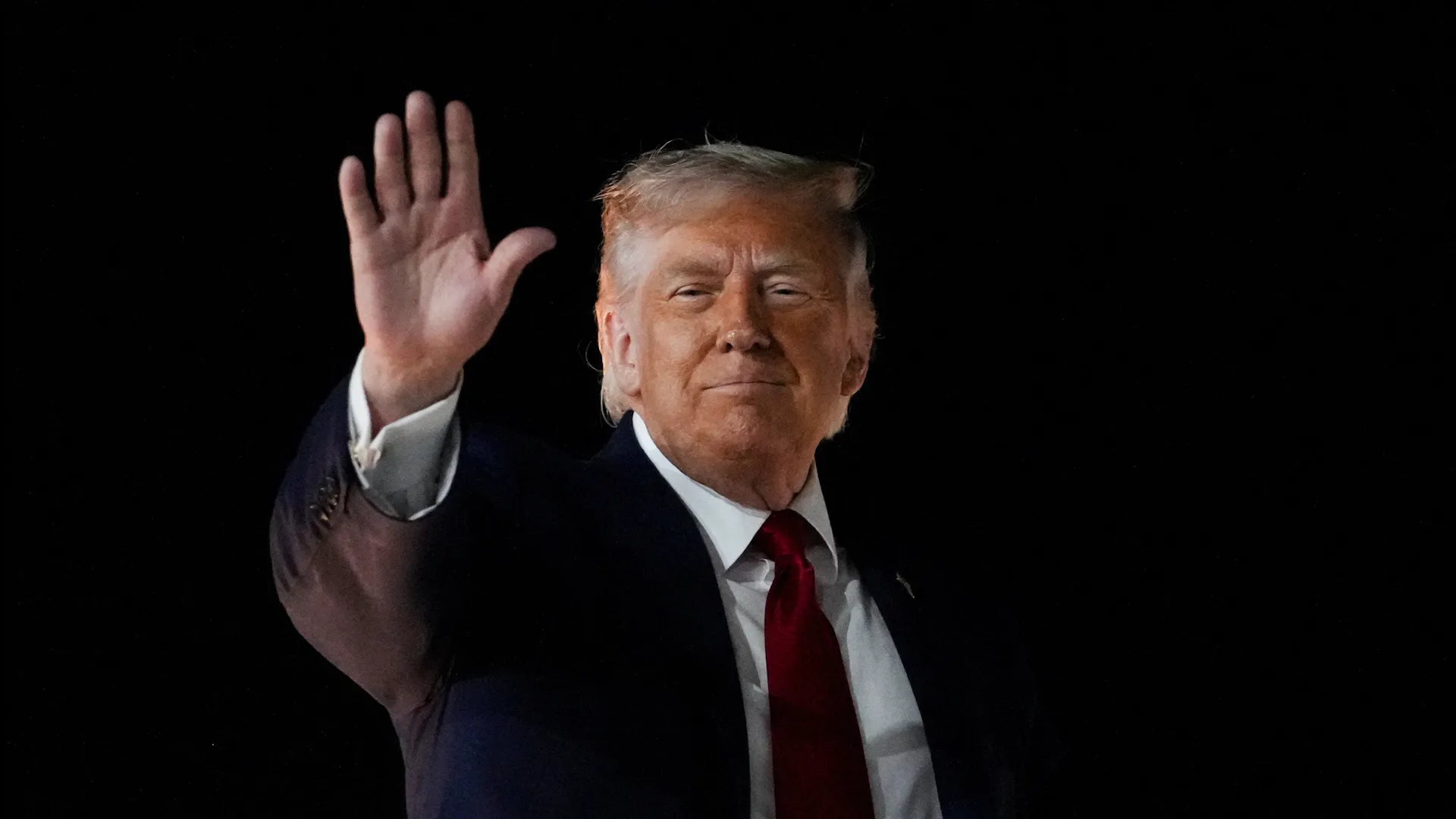
Tehran continued to refuse to re-open the strait to all traffic at the start of this week, despite US President Donald Trump’s threats to bomb Iran’s power plants and bridges if it did not relent. Trump backed away from his threat on Tuesday night when a two-week ceasefire, brokered by Pakistan, was declared.
That followed a 10-point peace proposal from Iran that Trump described as a “workable” basis on which to negotiate a permanent end to hostilities.
As part of the truce, Tehran has now issued official terms it says will guide its control of the Strait going forward. The US has not directly acknowledged the terms ahead of talks set to begin in Islamabad on Friday. However, analysts say Tehran’s continued control will be unpopular with Washington, as well as other countries.
During the crisis, only a few ships from specific countries deemed friendly to Iran and those which pay a toll have been granted safe passage. At least two tolls for ships are believed to have been paid in Chinese yuan, in what appears to be a strategy to weaken the US dollar, but also to avoid US sanctions. China, which buys 80 percent of Iran’s oil, already pays Tehran in yuan.
Here’s what we know about how shipments will work from now on:
(Al Jazeera)
Who is controlling the strait now?
On Tuesday, Iran’s Foreign Minister Abbas Aragchi said Iran would grant safe passage through the strait during the ceasefire in “coordination with Iran’s Armed Forces and with due consideration of technical limitations”.
On Wednesday, the Islamic Revolutionary Guard Corps (IRGC) released a map of the strait showing a safe route for ships to follow. The map appears to direct ships further north towards the Iranian coast and away from the traditional route closer to the coast of Oman.
In a statement, the IRGC said all vessels must use the new map for navigation due to “the likelihood of the presence of various types of anti-ship mines in the main traffic zone”.
Alternative routes through the Strait of Hormuz have been announced by Iran’s Islamic Revolutionary Guard Corps (IRGC), providing new entry and exit pathways for maritime traffic [Screen grab/ Al Jazeera]
It is unclear whether Iran is collecting toll fees during the ceasefire period.
However, Trump said on Tuesday the US would be “helping with the traffic buildup” in the strait and that the US army would be “hanging around” as the negotiations go on.
The Strait will be “OPEN & SAFE” he posted on his Truth Social media site on Thursday, adding that US troops would not leave the area, and threatening to resume attacks if the talks don’t go well.
It’s not known to what extent US troops are directing what happens in the strait now.
Delhi-based maritime analyst C Uday Bhaskar told Al Jazeera that there is a lot of “uncertainty” about who can sail through the strait, and that only between three and five ships have transited since the war was paused.
How does Iran’s 10-point plan affect the Strait?
Among Tehran’s main demands listed on its 10-point plan are that the US and Israel permanently cease all attacks on Iran and its allies – particularly Lebanon – lift all sanctions, and allow Iran to retain control over Hormuz. The plan has not been fully published but is understood to be a starting point for talks.
Iranian media say Iran is considering a plan to charge up to $2m per vessel to be shared with Oman on the opposite side of the strait. Other reports suggest Iran could charge $1 per barrel of oil being shipped.
Revenues raised would be used to rebuild military and civilian infrastructure damaged by US-Israeli strikes, Tehran said.
Oman has rejected the idea. Transport minister Said Al-Maawali said on Wednesday that the Omanis previously “signed all international maritime transport agreements” which bar taking fees.
What does international law say about tolls on shipping?
Critics of Iran’s plan to charge tolls say it violates international law guiding safe maritime passage, and should not be part of a final ceasefire agreement.
The United Nations Convention on the Law of the Sea (UNCLOS) says levies cannot be charged on ships sailing through international straits or territorial seas.
The law allows coastal states to collect fees for services rendered, such as navigation assistance or port use, but not for passage itself.
Neither the US nor Iran has ratified that particular convention, however.
Even if they had, there could be ways to get around this law anyway. Analyst Bhaskar told Al Jazeera that if Iran instead charged fees to de-mine the strait and make it safe for passage again, that could be allowable under maritime laws.
There is no precedent in recent history of countries officially taxing passage through international straits or waterways.
In October 2024, a United Nations Security Council report alleged that the Iran-backed Houthis in Yemen were collecting “illegal fees” from shipping companies to allow vessels to pass through the Red Sea and the Bab-el-Mandeb strait, where it was targeting ships linked to Israel during the Gaza war.
Last week, a top adviser to Supreme Leader Mojtaba Khamenei suggested the Houthis could shut the Bab al-Mandeb shipping route again in light of the war on Iran.
(Al Jazeera)
How might countries react to a Hormuz toll?
Tolls for passage through the Strait of Hormuz would likely most affect oil and gas-producing countries in the Gulf, but ripple effects will spread to others as well, as the current supply shocks have shown.
Gulf countries, which issued statements calling for the reopening of the passage and praising the ceasefire on Wednesday, would also face a continuing degree of uncertainty, analysts say, as Iran could again disrupt flows in the future.
Before the ceasefire was announced, Bahrain had already proposed a resolution at the UN Security Council calling on member states to coordinate and jointly reopen the passage by “all necessary means”. It was backed by Qatar, the UAE, Saudi Arabia, Kuwait and Jordan. On April 7, 11 of 15 UNSC members voted in favour of that resolution.
But Russia and China vetoed the resolution, saying it was biased against Iran and did not address the initial strikes on Iran by the US and Israel.
Beyond the region, observers say the US is unlikely to accept indefinite toll demands by Iran as part of the negotiations expected to begin on Friday.
A toll to pass through the Strait of Hormuz “is not going to go down well with President Trump and his expectations that the strait should be open for everyone”, Amin Saikal, a professor at the Australian National University, said.
Other major powers have also voiced opposition. Ahead of the ceasefire, Britain had begun discussions with 40 other countries to find a way to reopen the strait.
Practical realities in the strait might see a different scenario play out with ship owners losing millions each day their vessels remain stranded seeking to get them out quickly and undamaged experts say. They are more likely to comply with Iran, at least for now.
“If I were the owner of a VLCC [very large crude carrier] which weighs about 300,000 tonnes, whose value could be a quarter billion dollars…I would believe the Iranians if they said we have laid mines,” Bhaskar said.
Amid all the alarming and unhinged comments of the president of the United States in recent days threatening Iran with genocide — remarks beyond even the usual cray-cray blather from Donald Trump — it was a statement from his spokesperson on Tuesday that really put the madness in the White House in perspective.
“Only the President knows where things stand and what he will do,” Karoline Leavitt said.
She issued those words just hours before Trump’s 8 p.m. Tuesday deadline for Iran to either reopen the Strait of Hormuz to international shipping or face Armageddon — that is, war crimes by the United States. The statement from the White House press secretary was as clear a description as Americans could get of governance under Trump these days: A mad king reigns, virtually unchecked.
And as a practical matter, there is nothing under the Constitution, neither impeachment nor removal under the 25th Amendment, that can be done about him. There’s only voters’ opportunity to eject the complicit Republican majorities in the House and Senate in November’s midterm elections, to install a Democratic — and democratic — check on Trump for the remaining two years of his term.
By now we know that, just before Trump’s deadline to Iran warning “a whole civilization will die tonight,” he announced a fragile two-week ceasefire for negotiations. The commander in chief declared victory, natch. But so did Iran. And it had the better of the argument: Iran continued to control and monetize passage through the strait, unlike before Trump’s war began Feb. 28, and already on Wednesday it flexed that power by closing the route in retaliation for Israeli strikes. The ceasefire also lets Iran retain possession of its enriched, nearly bomb-grade uranium, and the nation won Trump’s offer of possible tariff and sanctions relief.
So much for the “UNCONDITIONAL SURRENDER!” he demanded in a post a month ago.
I’m writing these words on Wednesday. Who knows where things will stand by the time you’re reading this? “Only the president knows.”
Trump has fluctuated, reversed and contradicted himself repeatedly — even within a single social-media screed or chest-thumping performance for the press — since he ordered war against Iran nearly six weeks ago, without notice to Congress, let alone its authorization. Since Sunday, he’s variously called Iran’s leaders “crazy bastards” and “animals” and taken credit for “Total Regime Change, where different, smarter, and less radicalized minds prevail.”
Presidential rule by fiat and whim would be wrong in any case under the Constitution’s checks and balances of power, and specifically of war power. But in Trump’s case, America has a president who lately has piled on the evidence that he is mentally unstable, unfit for the office.
And spare us the cheerleaders’ claimson Fox News about how he’s playing multidimensional chess. When even Alex Jones likens Trump to “crazy King Lear” and calls for invoking the 25th Amendment to remove him from power — echoing former Trump promoters including Marjorie Taylor Greene and Candace Owens, among others — you know he’s crossed a line by his unilateral war-making and profane threats (on Easter Sunday!) of genocidal apocalypse.
The evidence of Trump’s dangerous instability has been there from his political genesis. In his first term, he warned he’d unleash “fire and fury like the world has never seen” against nuclear-armed North Korea then declared that he “fell in love” with dictator Kim Jong-un (without achieving any diminution in Kim’s arsenal). He celebrates the deaths of political enemies and prosecutes those still living. He repeatedly interrupts himself on some policy question to bloviate about his ballroom plans.
He’s ordered armed agents into American neighborhoods on immigration raids, then expressed neither responsibility nor remorse when citizens died and legal residents got deported. The national security leaders of his first term let it be known that they’d prevented him from acting on his worst impulses, but there’s no chance of that from Defense Secretary Pete Hegseth. Retired Gen. Mark Milley, former chair of the Joint Chiefs of Staff, in 2021 described first-term Trump as being in mental decline and “fascist to the core.”
You’d be hard-pressed to find anyone who thinks Trump has gotten better in the intervening five years.
The country “can’t be a therapy session for … a troubled man like this,” Trump’s first-term attorney general, William P. Barr, told CBS in 2023 as Trump campaigned to return to office.
If only the presidency were therapy for Trump. Instead he’s like a power addict in the world’s most powerful job, mainlining its intoxicants, and no one will stop him. Only people with extraordinary egos seek the White House in the first place, but when an actual egomaniac inhabits that warping bubble of butter-uppers, there’s danger. I remain haunted by the words of retired Gen. John F. Kelly, Trump’s first-term Homeland Security secretary and then White House chief of staff, who in 2023 said of Trump’s potential reelection: “God help us.”
Having failed twice to convict and remove Trump in his first term, Democrats have shied from a third attempt, until now. Scores in Congress have called for impeachment or invocation of the 25th Amendment to oust him. There’s some value in sending a message. But Democrats are offering supporters false hope. A Republican-led Congress and a Cabinet of clownish sycophants will not exercise the powers they have, even against a mad king.
The authors of the Constitution, having thrown off a king, debated at length how to guard against a power-crazed president. But they didn’t anticipate political parties that put tribal loyalty over the country. That partisanship has rendered the high bars to a president’s removal — a vote of two-thirds of the Senate for conviction after impeachment, or, under the 25th Amendment, action by the vice president and a Cabinet majority — all but insurmountable.
That leaves the voters, who in special and off-year elections as recently as Tuesday have shown their zeal to punish Trump’s party. We can hope that a new Congress will check him come January.
We are Iranians, witnessing the failure of a thuggish logic practised by the United States and Israel, which operates on a single, crude premise: that enough pain can bend any nation to their imperial designs.
The US-Israel axis has long believed that force and coercion would eventually compel Iranians to abandon their sovereignty and accept the leash. It has failed. By refusing to surrender, Iranians have turned a lonely struggle for survival into a universal symbol of resistance — a testament to the endurance of the human spirit.
For weeks, we have watched the predictable mechanics of an empire trying to drain a people’s will. We have seen the familiar script of demonisation followed by the machinery of industrial slaughter. Then, we saw America’s “commander-in-chief” issue a threat that defied decency and defiled statecraft.
US President Donald Trump did not just threaten a government or a military. He threatened to end “civilisation” in Iran.
It was a monstrous decree. It was also a transparent one. This was the desperate act of a desperate man. It was the foul howl of a leader who knew he had lost a war.
So, Trump resorted to the “madman theory” of diplomacy, hoping that by appearing unhinged and capable of infinite destruction, he could scare a proud country into capitulation.
He failed. The prospect of annihilation was meant to trigger a collapse. It was meant to prompt the surviving leadership in Tehran to flee and panicked Iranians to yield.
The American-Israeli axis has made a fatal miscalculation. It remains wedded to the discredited conceit that resolve is a commodity to be bought or broken.
Instead, Iran and Iranians stood fast. The “madman” in the White House was obliged to negotiate with an adversary he claimed had already been defeated.
The moving measure of Iran’s success is found in that defiance. The Iranian people could have wilted, succumbed under the burden of such military, economic and psychological terror.
But Iranians fought back. They proved that you cannot bomb a civilisation into oblivion, nor can you erase a history that spans five millennia with a venomous post on social media.
Iran is prevailing. It is winning a war of attrition militarily, strategically, politically and diplomatically. Iran is winning because it understood its enemies’ limits better than they understood themselves.
Iran is winning strategically since it refuses to fight the war its enemies prepared for. It does not try to match the axis ship for ship or jet for jet. Rather, it stretches the battlefield across borders, allies and time.
It absorbs blows and keeps moving. Its doctrine is simple: survive, retaliate, prolong. In doing so, it raises the price of every strike against it. The axis is now trapped in a reactive crouch — bogged down, bleeding money and credibility, while Iran moves its pieces with precision.
Analysts now warn that the war meant to weaken Tehran may leave it stronger. Iran is winning because it adapts. It uses drones, proxies and patience. It does not need air superiority to impose pressure. It needs endurance. Its “mosaic” strategy — layers of command and decentralised power — means leaders can be killed, but the system survives. It turns vulnerability into resilience. It turns time into a weapon.
Of course, Iran’s control over the Strait of Hormuz serves as a masterclass in “asymmetric leverage”. By sitting atop a chokepoint through which approximately one-fifth of the world’s liquid petroleum passes, Iran effectively holds a “kill switch” for the global economy.
This geographic reality transforms a narrow waterway into a powerful diplomatic shield. For Iran, “winning” isn’t necessarily about permanently closing the strait — which would hurt its own fragile economy — but about maintaining the credible capability to do so.
This creates a permanent state of strategic caution among Western powers and energy-dependent Asian economies, ensuring that Tehran continues to be an indispensable architect of Middle Eastern security.
Politically, the win is even more stark. The axis has not achieved its paramount goal: “regime change.” The war was launched to fracture the Iranian state. It did the opposite. It appears to have fused the people and the state together against an external existential threat. The American-Israeli axis is not viewed as a force of liberation. It is seen as a collection of would-be occupiers. That perception matters more than any missile.
While Washington is paralysed by chaos and tribalism and Israel is consumed by a descent into blatant, corrosive authoritarianism, Iran — although damaged — is sturdy and intact.
Diplomatically, the United States has never been more isolated. Trump’s ignorance, incoherence, bluster and erratic behaviour have alienated America’s closest allies. Europe, once a reliable partner in so-called “containment,” looks at the bizarre cacophony on display day after dizzying day in Washington and turns away.
Iran, meanwhile, has deepened its ties with the East. It secured its flank with China and Russia. It played the long game while Trump played for the next news cycle.
The world is moving towards Beijing and Brussels, while Washington shouts into the void of its own fading relevance. Iran has turned the “maximum pressure” campaign into a “maximum cost” reality for the West.
The axis can no longer move in the Middle East without accounting for Iranian influence. The hunter has become the hunted.
Still, we must be clear. Iran’s success is not a sterile “win” on a geopolitical scoreboard. It is not a triumph of flags and parades. Its survival is born of fire and bone. It is draped in black and soaked in grief.
The halting human costs and trauma of this war of choice will last for generations. We must remember the thousands who have been killed and maimed. We must remember the schoolchildren whose lives were extinguished by “precision” munitions. The axis failed to break Iran’s back, but it has broken Iranian hearts. That is the nature of war: the winners are merely those who inherit the ruins.
The views expressed in this article are the author’s own and do not necessarily reflect Al Jazeera’s editorial stance.
Protesters have blocked roads outside the Israeli embassy in London, condemning Israel’s violent strikes on Lebanon which killed hundreds across the country on the day the US-Iran ceasefire was announced. Many demonstrators also expressed solidarity with Iranians and Palestinians who have all suffered under Israeli bombardment.
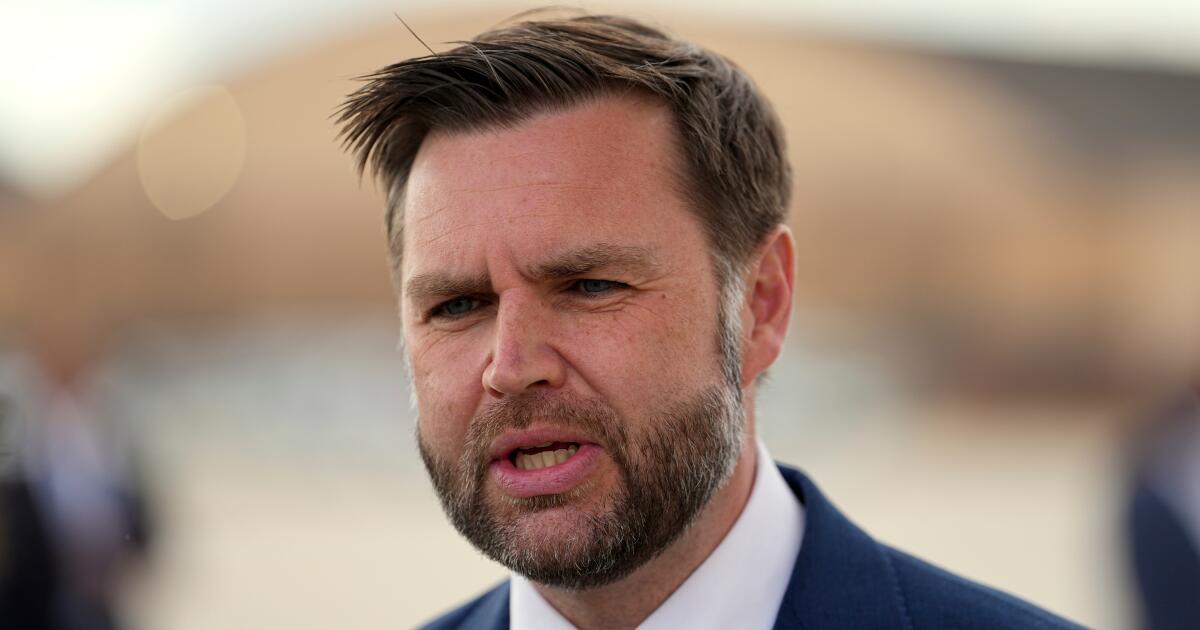
US Vice President JD Vance says Lebanon is not part of the US-Iran ceasefire, stressing that neither Washington nor Israel agreed to that. After Pakistan said Lebanon was included, Israel killed hundreds of people when it carried out around 100 strikes across Lebanon in just 10 minutes.
The US president has lashed out at European partners for declining to contribute military forces to the war on Iran.
United States President Donald Trump has reportedly discussed withdrawing from NATO, the transatlantic alliance that has been a central pillar of Western security for decades.
At a news briefing on Wednesday, White House Press Secretary Karoline Leavitt framed the US and Israel’s war on Iran as a “test” that the alliance had failed.
Recommended Stories
list of 3 itemsend of list
Despite Trump’s pressure, NATO allies had declined to contribute military forces to the war, outside of defensive manoeuvres.
Leavitt’s comments came shortly before Trump met with NATO Secretary-General Mark Rutte at the White House.
“I have a direct quote from the president of the United States on NATO, and I will share it with all of you. They were tested, and they failed,” Leavitt said.
“I would add, it’s quite sad that NATO turned their backs on the American people over the course of the last six weeks, when it’s the American people who have been funding their defence.”
Trump, she continued, was preparing to have “a very frank and candid conversation” with Rutte that afternoon.
In an interview with the news outlet CNN after their meeting, Rutte likewise described the encounter as “frank and open”. He reiterated his support for Trump, but added that NATO allies had offered support through logistics and access to bases.
“Did the president say he was going to try withdraw from NATO or, at the very least, not support NATO as much as other presidents have,” CNN host Jake Tapper asked Rutte.
“There is a disappointment, clearly. But at the same time he was also listening careful to my arguments of what is happening,” Rutte replied, before pivoting to praise of Trump’s leadership.
The US president has had a mixed relationship with NATO, sometimes threatening to pull US support and, at other times, reassuring allies of the US’s continued commitment to the alliance.
Since returning to the presidency in 2025, Trump has renewed his pressure campaign for NATO’s European partners to step up their defence spending.
Last June, at the 2025 NATO summit, he largely succeeded. The NATO members agreed to nonbinding commitments to increase their defence budgets to 5 percent of their gross domestic product (GDP) by 2035.
But Spain sought an exemption, leading Trump to denounce the country repeatedly over the past year.
Tensions between the US and its European allies were further strained last year when Trump threatened to use military force to seize the self-governing Danish territory of Greenland, claiming that its ownership was essential for national security.
The US has eased away from those threats. But Trump has continued to assert that US ownership of Greenland is necessary, despite strong protests from the territory’s residents and European leaders.
After the US and Israel unilaterally launched a war against Iran on February 28, Trump lashed out at European countries for their lack of interest in contributing to the campaign.
Many legal scholars consider the war an act of aggression, in violation of international law.
The Wall Street Journal reported on Wednesday that the Trump administration is considering whether to close US bases or move troops out of countries such as Spain and Germany as punishment for their stance on the war.
When asked by reporters if Trump was considering leaving NATO, Leavitt said it was something the president “has discussed” and could address after his meeting with Rutte.
Trump and Rutte are considered to have a close relationship. Rutte has visited the White House multiple times during Trump’s second term, including in March, July, August and October of last year.
In the past, Rutte has warned that NATO “will not work” without US support.
Americans are split on whether to trust Donald Trump’s instinct-driven approach to the Iran conflict. The range of opinions reflects a deeper unease about a president bypassing his cabinet and Congress in favour of gut decisions. Al Jazeera’s Heidi Zhou-Castro speaks with US citizens at the White House.
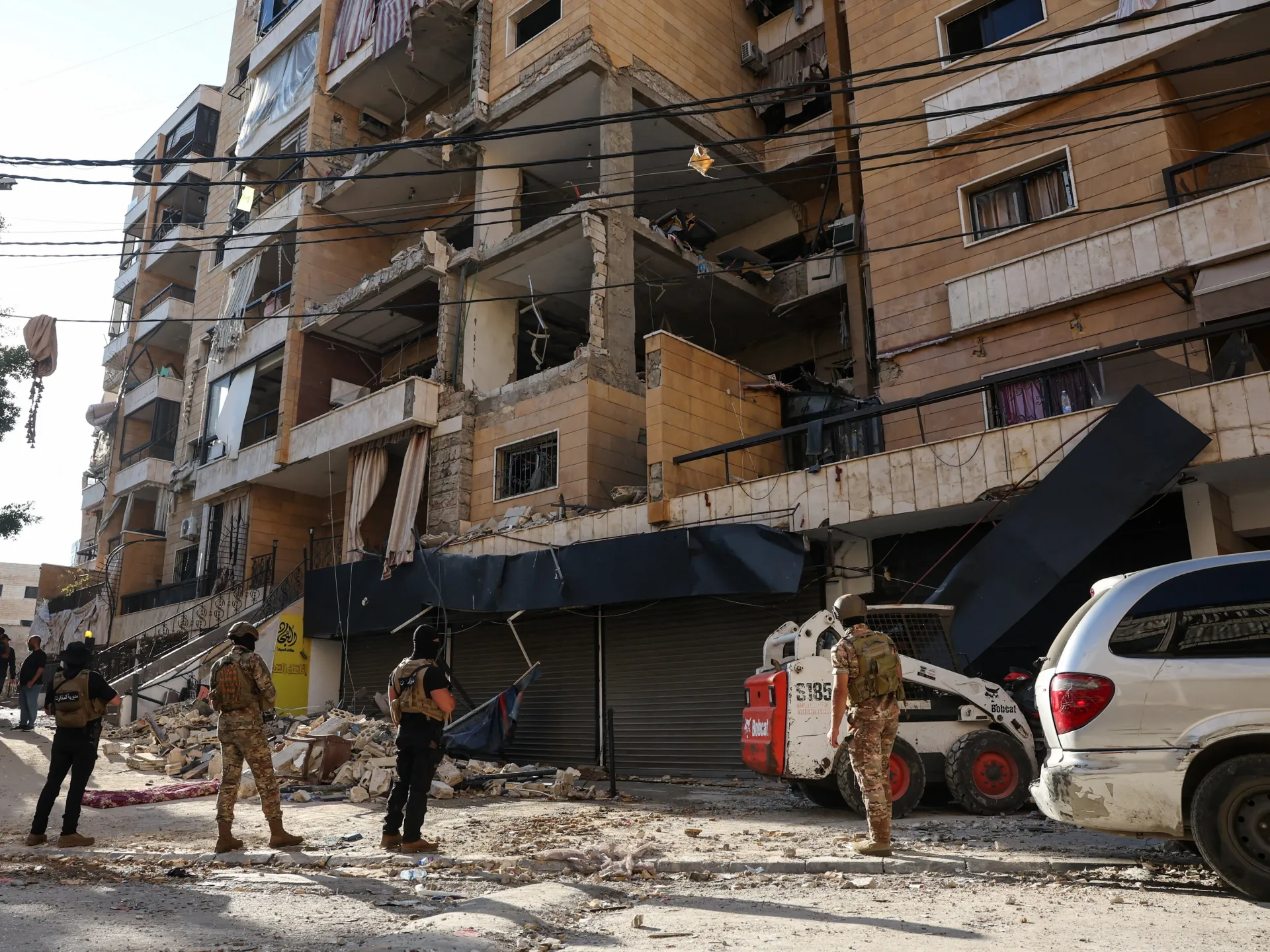
Israeli forces have launched an intense bombardment across Lebanon, killing hundreds of people, hours after a two-week ceasefire was announced in the United States-Iran war.
Lebanon’s Civil Defence said at least 254 people were killed and 1,165 others were wounded in air strikes that targeted areas in Beirut, the Bekaa Valley, Mount Lebanon, Sidon, and several villages in southern Lebanon.
Recommended Stories
list of 3 itemsend of list
The Israeli military said that the attack was its largest coordinated assault on Lebanon since it started a new military operation in the country on March 2, “targeting more than 100 Hezbollah command centres and military sites”.
In a written statement, the head of Lebanon’s syndicate of doctors, Elias Chlela, urgently called for “all physicians from all specialities” to head to any hospital they could to offer help, with one of Beirut’s biggest hospitals saying it needed donations of all blood types.
Parliament Speaker Nabih Berri called the attacks on densely populated areas a “full-fledged war crime.”
“Today’s crime, coinciding with the ceasefire agreement declared in the region — an agreement that Israel and its political and security apparatus have failed to uphold — is a serious test for the international community and a blatant challenge to all international laws, norms, and conventions, which Israel violates daily through its unprecedented campaign of human assassination in modern history,” Berri said.
“It is also a test for all Lebanese — political, religious, and civil leaders — to unite in solidarity with the martyrs. May God have mercy on the martyrs, grant a speedy recovery to the wounded, and protect Lebanon,” he added.
Hezbollah
The Lebanese armed group said it had a “right” to respond to the attacks.
“We affirm that the blood of the martyrs and the wounded will not be shed in vain, and that today’s massacres, like all acts of aggression and savage crimes, confirm our natural and legal right to resist the occupation and respond to its aggression,” Hezbollah said in a statement.
Hezbollah lawmaker Hassan Fadlallah told the news agency Reuters that the Israeli strikes were “a grave violation of the ceasefire”, adding there would be “repercussions for the entire agreement” if they continued.
Israel
Defence Minister Israel Katz said Israel “insisted on separating the war with Iran with the fighting in Lebanon in order to change the reality in Lebanon”.
Prime Minister Benjamin Netanyahu also told a news conference that Israel would “continue to strike” Lebanon as the US-Iran ceasefire did not apply to Hezbollah.
First responders and residents gather at the site of an Israeli air strike in Beirut’s Tallet al-Khayyat neighbourhood [AFP]
Iran
The Iranian Revolutionary Guard Corps (IRGC) warned that it will respond to the attacks on Lebanon if Israel does not stop the assault.
“We issue a firm warning to the United States, which violates treaties, and to its Zionist ally, its executioner: if the aggression against beloved Lebanon does not cease immediately, we will fulfil our duty and deliver a response,” the IRGC said in a statement carried on Iran’s state-owned TV channel, using a reference to Israel.
In a post on X, Foreign Minister Abbas Araghchi said the terms of the ceasefire were “clear and explicit: the US must choose — ceasefire or continued war via Israel. It cannot have both.”
“The world sees the massacres in Lebanon. The ball is in the US court, and the world is watching whether it will act on its commitments,” he added.
Qatar
The foreign ministry condemned the “brutal series” of Israeli attacks on Lebanon that had killed hundreds of people, calling the attacks a “dangerous escalation and a flagrant violation of the sovereignty of the sister Lebanese Republic, the rules of international humanitarian law, and United Nations Security Council Resolution (1701).”
“The Ministry of Foreign Affairs calls on the international community to fulfill its responsibilities by compelling the Israeli occupation authorities to halt their barbaric massacres and repeated attacks on Lebanon, and to hold them accountable for respecting international covenants and laws,” a statement posted on X read.
It added that Qatar was in “full solidarity” with Lebanon.
Egypt
The Ministry of Foreign Affiars called Israel’s attacks on Lebanon had a “premediatated intent” to undermine regional and international efforts to reduce escalation.
The ministry added that the attacks were an attempt by Israel to drag the region into “total chaos”.
Spain
In a post on X, Prime Minister Pedro Sanchez said Netanyahu’s “contempt for life and international law is intolerable” in light of the attacks.
“It’s time to speak clearly: – Lebanon must be included in the ceasefire. – The international community must condemn this new violation of international law. – The European Union must suspend its Association Agreement with Israel. – And there must be no impunity for these criminal acts,” Sanchez said.
Italy
Foreign Minister Antonio Tajani said he spoke to the Lebanese President Joseph Aoun and expressed solidarity for the “unjustified and unacceptable attacks he is suffering from Israel.”
“We want to avoid there being a second Gaza. We will reiterate this concept to the Israeli Ambassador as well, whom I have summoned to the Farnesina. We condemn the bombings on the Lebanese civilian population, including the gunfire incidents suffered by our UNIFIL [UN Interim Force in Lebanon] troops, for which we continue to demand guarantees of total safety. We must absolutely avoid any further expansion of the conflict that would jeopardise the ceasefire in Iran and the reopening of the Strait of Hormuz,” Tajani added.
United Nations
The deputy spokesperson for United Nations Secretary-General Antonio Guterres, Farhan Haq, said the UN “strongly condemns” Israel’s attacks on Lebanon.
“The United Nations strongly condemns the strikes by Israel across Lebanon that resulted in significant civilian casualties,” said Haq.
“We continue to call on all sides to avail themselves of diplomatic channels, cease hostilities”, and use the new US-Iran ceasefire as an opportunity to prevent further loss of life,” he added.
Before a single term has been negotiated, Trump is claiming total victory over Iran, but with leadership intact, enrichment continuing, and a new Strait of Hormuz toll that didn’t exist before the conflict, is this really a win? Al Jazeera’s Kimberly Halkett explains.
Islamabad, Pakistan – Just under 90 minutes remained until United States President Donald Trump’s deadline to destroy Iran’s “civilisation” late on Tuesday in Washington, DC, when he took to his favourite social media platform, Truth Social, again.
He said he had agreed to a two-week ceasefire with Iran after almost six weeks of bombing.
Recommended Stories
list of 4 itemsend of list
Soon after, Iranian Foreign Minister Abbas Araghchi confirmed the ceasefire on X, giving a world on edge a chance to breathe again.
Beyond the fact of the ceasefire, much remains unclear. Trump claimed Iran would allow unimpeded transit through the Strait of Hormuz while Araghchi said passage through the waterway would need to be done under the auspices of the Iranian armed forces. Other key differences quickly emerged: Was Lebanon included in the ceasefire? Has the US agreed to allow Iran to pursue uranium enrichment? Has Trump agreed to a 10-point Iranian list of demands or accepted that merely as a conversation starter?
But there also was a common glue that bound both Trump’s statement and Araghchi’s assertions: acknowledgement of Pakistan’s central role as the mediator that managed to persuade warring nations deeply distrustful of each other back to the negotiating table.
Trump said he agreed to the ceasefire “based on conversations with Prime Minister Shehbaz Sharif and Field Marshal Asim Munir, of Pakistan”, adding that they had “requested that I hold off the destructive force being sent tonight to Iran”.
Araghchi was even more profuse in his praise for Pakistan. “On behalf of the Islamic Republic of Iran, I express gratitude and appreciation for his dear brothers HE Prime Minister of Pakistan Sharif and HE Field Marshal Munir for their tireless efforts to end the war in the region,” he said in a statement, adding that Iran had accepted the ceasefire “in response to the brotherly request of PM Sharif”.
Sharif, who had publicly called on the US and Iran to accept a ceasefire a short time before, posted again 90 minutes later, highlighting what may be Pakistan’s most significant diplomatic achievement in years.
“With the greatest humility, I am pleased to announce that the Islamic Republic of Iran and the United States of America, along with their allies, have agreed to an immediate ceasefire everywhere including Lebanon and elsewhere, EFFECTIVE IMMEDIATELY,” he wrote, inviting both delegations to Islamabad on Friday “to further negotiate for a conclusive agreement to settle all disputes”.
By Wednesday afternoon, Sharif had spoken directly with Iranian President Masoud Pezeshkian too. Formal talks were expected to begin in Islamabad on Friday with a US delegation that could potentially be led by Vice President JD Vance, accompanied by Trump’s envoy Steve Witkoff and son-in-law Jared Kushner, who had previously been engaged in dialogue with Iran before the war.
The war, which began on February 28 when the US and Israel launched coordinated strikes that killed Supreme Leader Ali Khamenei and struck Iran’s military and nuclear infrastructure, has killed more than 2,000 people in Iran in five weeks, disrupted roughly a fifth of the world’s oil supplies and threatened to draw in regional powers.
That it has been paused, even temporarily, is the result of weeks of painstaking diplomacy that few believed Pakistan could deliver.
Early moves and a balancing act
Pakistan’s diplomatic engagement began almost immediately after the first US-Israeli attacks of the war, largely behind the scenes.
When the first strikes hit Tehran, Foreign Minister Ishaq Dar, who is also deputy prime minister, was in Saudi Arabia, attending a meeting of the Organisation of Islamic Cooperation. Within hours, Pakistan’s Ministry of Foreign Affairs issued a statement, and Dar called Araghchi to convey solidarity.
By March 3, Dar was addressing the country’s Senate, outlining Pakistan’s position. “Pakistan is ready to facilitate dialogue between Washington and Tehran in Islamabad,” he told lawmakers.
At home, meanwhile, protests erupted. In Karachi, demonstrators tried to storm the US consulate on March 1, leaving at least 10 people dead.
Pakistan’s Shia Muslim population, estimated at 15 to 20 percent of the country’s roughly 250 million people, was watching closely. As sectarian tensions rose, Munir summoned Shia clerics to Rawalpindi and warned that violence inside Pakistan would not be tolerated.
Violence breaks out in Karachi on March 1, 2026, when police try to disperse a protest called to condemn the killing of Iranian Supreme Leader Ali Khamenei [Ali Raza/AP Photo]
At the same time, Islamabad was dealing with multiple pressures. It remained engaged in what officials described as an “open war” against the Afghan Taliban. It was also grappling with rising fuel costs due to disruptions to shipping in the Strait of Hormuz and concerns over remittances from Pakistani workers in Gulf states.
On March 12, Sharif travelled to Jeddah with Munir to meet Saudi Crown Prince Mohammed bin Salman, expressing “full solidarity” while urging restraint against mounting Iranian attacks against Gulf countries.
It was a delicate balancing act. Pakistan had to maintain its mutual defence pact with Riyadh, signed in September, without being drawn into a direct confrontation with Iran, its southwesterly neighbour with which it shares a nearly 1,000km (620-mile) border.
Qamar Cheema, executive director of the Islamabad-based Sanober Institute, said Pakistan’s early condemnation of the US-Israeli strikes proved crucial.
“When Pakistan condemned American strikes,” he told Al Jazeera, “that was where Pakistan won over the Iranians as well. This role as a global peacemaker is the result of personal diplomatic investment in Iran and the protection of international law.”
Masood Khan, a former Pakistan ambassador to the United Nations and the US, said regional actors were looking for “reliability, impartiality, consistency, restraint and deliverables”.
“We fit the bill and delivered on all counts,” Khan told Al Jazeera. “We did not seek strategic opportunism. We earned their trust.”
War escalates as diplomacy deepens
On the night of March 16-17, Israeli strikes killed Ali Larijani, secretary of Iran’s Supreme National Security Council, and, since Khamenei’s death, one of the most powerful figures in Tehran.
On March 18, Israeli jets struck South Pars, the world’s largest natural gasfield, which Iran shares with Qatar and which accounts for roughly 70 percent of Iran’s domestic gas production.
The attack triggered a new wave of Iranian retaliation on Gulf energy infrastructure, sending oil and gas prices soaring.
Against this backdrop, Dar arrived in Riyadh on March 18 for a meeting of 12 foreign ministers convened by Saudi Arabia.
The gathering produced a joint statement condemning Israeli actions. Turkiye and Pakistan resisted harsher language that could have undermined Islamabad’s credibility with Tehran, according to officials aware of the deliberations in Riyadh.
It was in Riyadh that a quadrilateral mechanism also took shape, bringing together Pakistan, Saudi Arabia, Turkiye and Egypt.
Betul Dogan-Akkas, assistant professor of international relations at Ankara University, said the format emerged partly from divisions within Gulf diplomacy. While some Gulf countries, such as the United Arab Emirates, were by late March increasingly losing patience with Iran’s attacks and raising the prospects of hitting back, others, while also upset with Iran, were still pushing for de-escalation.
“The intra-GCC [Gulf Cooperation Council] disagreements over a ceasefire and a diplomatic dialogue with Iran created the need for exactly that kind of actor,” Dogan-Akkas told Al Jazeera, adding that Pakistan’s ties with both sides made it a natural choice for a mediator.
From March 22 to 23, officials confirmed that Munir spoke directly to Trump. The US president had already announced a five-day pause on strikes targeting Iranian energy infrastructure by then, signalling he was open to a diplomatic exit.
The foreign ministers of Pakistan, Turkiye, Egypt and Saudi Arabia gather in Islamabad on March 29, 2026, their second such meeting in 10 days [Handout/Pakistan’s Ministry of Foreign Affairs]
On March 23, Pakistan formally offered to host talks. Sharif echoed the offer publicly hours later on X, tagging Trump, Araghchi and Witkoff.
Initial reactions were mixed. Reports suggested talks could take place in Islamabad within days with Vance, Witkoff and Kushner named as possible members of a US delegation.
Iran, however, denied that negotiations were under way while the White House sought to dampen speculation. “The US will not negotiate through the press,” White House spokeswoman Karoline Leavitt said.
On March 26, Dar confirmed that the US had shared a 15-point proposal with Iran via Pakistan. It demanded commitments on Iran’s nuclear programme, limits on its ballistic missiles and the reopening of the Strait of Hormuz.
Tehran rejected the proposal and responded with a 10-point counteroffer, demanding an end to hostilities, sanctions relief, reparations, recognition of its sovereignty over the strait and the withdrawal of US forces from the region.
The positions remained far apart. But the fact that both proposals passed through Islamabad underscored Pakistan’s central role.
On March 29, the foreign ministers of Pakistan, Saudi Arabia, Turkiye and Egypt reconvened in Islamabad. Before the meeting, Sharif held a lengthy call with Pezeshkian, his second in five days.
After the talks, Dar travelled to Beijing, reflecting China’s growing involvement. He met Chinese Foreign Minister Wang Yi, and the two sides outlined a five-point initiative that included a ceasefire, early dialogue, civilian protection, restoration of shipping through the Strait of Hormuz and a larger UN role. On Tuesday, Trump confirmed that China appeared to have played a role in pushing Iran towards talks.
Some critics have described Pakistan’s role as that of a messenger, but Ishtiaq Ahmad, professor emeritus of international relations at Quaid-i-Azam University in Islamabad, rejected that notion.
“A messenger transmits, but Pakistan shaped the sequencing, timing and framing of proposals,” he told Al Jazeera. “It had leverage with all sides.”
Dogan-Akkas said Tehran’s choice of Pakistan as mediator was deliberate.
“I believe it is a strategic choice to not project a powerful middle power with a US military base as the mediator but to have another regional country convey the message,” she said.
The Munir factor
Central to Pakistan’s role was its army chief, Munir.
His relationship with Trump dates back to early last year when Pakistan arrested the alleged perpetrator of the Abbey Gate bombing in Kabul in 2021, which occurred as thousands of Afghans tried to flee after the Taliban takeover. Thirteen American service members were killed in that attack.
But their relationship truly took root after the brief conflict between Pakistan and India in May when Trump publicly claimed credit for brokering a ceasefire, a claim acknowledged by Pakistan but rejected by India.
General Asim Munir became Pakistan’s army chief in November 2022, and after the four-day conflict with India in May 2025, he was promoted to the rank of field marshal [Handout/Inter-Services Public Relations]
That episode opened a direct channel between Munir and the White House. He has since visited Washington, DC, twice, and Trump has publicly praised him on several occasions.
Pakistan also maintained connections with figures close to the Trump administration, including through business engagements involving Witkoff’s family.
Trump himself acknowledged Pakistan’s ties with Iran, telling reporters that Pakistanis “know Iran very well, better than most,” after hosting Munir for an unprecedented lunch in June.
However, Ahmad cautioned against overstating the personal dimension.
“The personal equation helped accelerate decision-making at a critical moment, but the mediation was not built on personalities alone,” he told Al Jazeera.
“It rested on institutional alignment between Pakistan’s civil and military leadership and on sustained engagement with Washington over the past year. Even if personalities shift, the channel Pakistan has built is now institutionalised,” he said.
Cheema argued that the calculus was also structural.
“Trump understands that in the entire Muslim world, this is the only nuclear-capable country, and it can change the course of history,” he told Al Jazeera, referring to Pakistan.
Countdown to a ceasefire
It was on Sunday on the Christian holiday of Easter when tensions peaked. As Pope Leo XIV called for peace from the Vatican, Trump issued a stark warning on Truth Social.
“Tuesday will be Power Plant Day, and Bridge Day, all wrapped up in one, in Iran,” he wrote, threatening to blow up all of Iran’s bridges and power facilities if it did not reopen the Strait of Hormuz.
Iran dismissed the remarks, but behind the scenes, Pakistani officials intensified their diplomatic efforts.
By Monday, Pakistan had put forward a two-phase ceasefire proposal with Munir in contact with Vance, Witkoff and Araghchi.
Trump initially rejected the plan. He set a final deadline of 8pm Washington, DC, time on Tuesday (midnight GMT) and, hours before it expired, warned of catastrophic consequences.
“A whole civilization will die tonight, never to be brought back again,” he posted. “I don’t want that to happen, but it probably will.”
According to officials, Munir continued engaging both sides in the final hours, even as much of the diplomacy remained out of public view, until Sharif’s public appeal came with about five hours remaining.
The breakthrough followed shortly after.
As Trump announced the ceasefire and Iran confirmed it, the immediate impact was visible.
Oil prices dropped by 16 percent. The Strait of Hormuz was set to reopen for the first time in five weeks. And Islamabad was ready to become the centre of diplomatic activity.
What comes next?
The temporary ceasefire is not a peace deal. Iran’s Supreme National Security Council described it as a victory while warning that “our hands are on the trigger.”
Key differences remained unresolved, and expectations for the upcoming talks are cautious.
Despite Sharif’s claim that Lebanon was included, Israeli Prime Minister Benjamin Netanyahu’s office said the arrangement does not cover Lebanon, and Israeli attacks there on Wednesday killed dozens of people and wounded hundreds.
Still, analysts said Pakistan’s role marks a significant shift.
A country that was not at the table for talks that resulted in the 2015 Iran nuclear deal or the Abraham Accords has now positioned itself at the centre of a major diplomatic effort.
“This is the first time Pakistan has simultaneously managed active conflict mediation between two adversaries under ongoing military escalation without direct contact between them,” Ahmad said.
Dogan-Akkas offered a more cautious assessment, noting that Pakistan does not have a long history of mediation compared with countries such as Kuwait, Oman or Qatar.
The outcome, she said, reflects Pakistan’s ties in the Gulf and its improving relationship with Washington rather than a deeply institutionalised mediation role.
When Pakistan quietly facilitated US Secretary of State Henry Kissinger’s secret trip to Beijing in 1971, its role remained unacknowledged for years.
This time, recognition came almost immediately, from both Washington and Tehran.
“Our effort this year is a continuation of the facilitation we undertook between the US and Iran in 2025,” Khan, the former envoy, said.
“But the stakes this time were very high. We did not want to see the richest bloc of the Muslim world decimated nor the world pushed towards a wider war.”
He added a note of caution.
“No relationships are, however, assured in perpetuity. Look at the Trump-Modi bonhomie in the first Trump administration and its unravelling now,” he said, referring to the warm friendship between the US president and Indian Prime Minister Narendra Modi, which appears to have cooled during Trump’s second term.
Even so, he argued, Pakistan has already secured a lasting gain.
“While ultimate success will depend on the outcome of the process, however, even at this preliminary stage, Pakistan has already carved a niche for itself in diplomatic chronicles,” Khan said.
The multi-discipline event scheduled for May 8 will now be held on June 19 should conditions allow, organisers say.
Published On 8 Apr 20268 Apr 2026
World Athletics has postponed its season-opening event in Qatar’s capital, Doha, due to concerns for “player and spectator safety” as the US-Israel war on Iran continues to affect the Middle East.
The Doha Diamond League has been rescheduled from May 8 to June 19, conditional on the safety and security situation in the region, World Athletics said in a statement on Wednesday.
Recommended Stories
list of 4 itemsend of list
“In the interests of athlete and spectator safety, a decision has been taken to postpone the meeting,” the global governing body for athletics said, adding that the event will go ahead on the new date “should conditions allow”.
The Diamond League said it had been “monitoring the situation in Doha” in recent weeks and was “working in close coordination with meeting organisers, Qatari authorities and other stakeholders”.
While Iran and the United States accepted a two-week ceasefire deal – mediated by Pakistan – Gulf states continued to intercept missile and drone attacks on their territories.
Qatar’s Ministry of Defence said on Wednesday that it intercepted a missile attack in the hours leading up to the ceasefire announcement, and the UAE, Kuwait and Bahrain reported strikes after news of the ceasefire was confirmed.
The organisers said they would continue to monitor developments in the Middle East in the coming weeks to deliver “the highest level of safe and secure competition for athletes, media and spectators”.
The Doha meeting was originally scheduled to take place at the Qatar Sports Club as the opening event of the 2026 Wanda Diamond League season, but will now be held at the Khalifa International Stadium, a temperature-regulated venue with air cooling vents.
The stadium hosted the World Athletics Championships in 2019 and was one of the FIFA World Cup 2022 venues in Qatar.
Olympic gold medallist from Botswana, Letsile Tebogo, headlined the 2025 event, winning the 200m race, while Jamaica’s Tia Clayton won the women’s 100m event.
Indian javelin star Neeraj Chopra was the crowd favourite for the field event but finished behind Julian Weber of Germany.
Chopra, Olympic gold medallist in 2021 and silver winner in 2024, has finished on the Doha Diamond League podium on five occasions.
The new date of the Doha Diamond League will fall between the Bislett Games in Oslo on June 10 and the Meeting de Paris on June 28, making it the eighth leg of the 2026 season.
The series will begin in Shanghai on May 16 and end at the Diamond League final in Brussels on September 5.
Countries in the region welcome the temporary truce and urge negotiations for the war’s permanent end.
Iran and the United States have agreed to a two-week ceasefire and allow safe transit through the Strait of Hormuz.
The warring sides agreed to suspend attacks as the war entered its 40th day, with hopes now pinned on a peace deal through talks set to begin in Pakistan on Friday.
Recommended Stories
list of 4 itemsend of list
The truce in the early hours of Wednesday came after US President Donald Trump said he would suspend attacks, subject to Tehran agreeing to fully reopen the crucial Strait of Hormuz, through which 20 percent of global oil flows.
Iran’s foreign ministry said a safe passage through the vital waterway will be possible for a period of two weeks through coordination with the country’s armed forces.
The weeks-long fighting had embroiled nearly the entire Middle East. Iran launched retaliatory attacks by claiming to target US assets in Gulf Cooperation Council (GCC) countries. Gulf states alleged the Iranian attacks targeted civilian infrastructure as well.
Lebanon was also drawn into the war on March 2 after Tehran-aligned Hezbollah launched attacks on Israel. Israel has backed the two-week ceasefire with Iran, but has said it does not include Lebanon, despite Pakistan first announcing that the truce does.
Against this backdrop, here is how the Gulf and other Middle Eastern nations are reacting to the ceasefire announcement:
Saudi Arabia
The kingdom’s foreign ministry said it “welcomes” the ceasefire announcement. It urged an end to attacks on countries in the region and said that the Strait of Hormuz should be opened.
Saudi Arabia also hopes the ceasefire will “lead to a comprehensive sustainable pacification”, the foreign ministry said in a statement.
United Arab Emirates
Anwar Gargash, the diplomatic adviser to the UAE President, said the “UAE triumphed in a war we sincerely sought to avoid”.
“We prevailed through an epic national defense that safeguarded sovereignty and dignity and protected our achievements in the face of treacherous aggression,” Gragash said in a post on X.
“Today, we move forward to manage a complex regional landscape with greater leverage, sharper insight, and a more solid capacity to influence and shape the future”, he added, hailing “the UAE’s renaissance model”.
Oman
Oman’s foreign ministry said in a statement published on X that it welcomes the announcement of a ceasefire between Iran and the US and appreciates “the efforts of Pakistan and all parties calling for an end to the war”.
“We affirm the importance of intensifying efforts now to find solutions that can end the crisis from its roots and achieve a permanent cessation of the state of war and hostilities in the region,” the ministry said.
Iraq
Iraq’s foreign ministry said it “welcomes” the ceasefire but called for “serious and sustainable dialogue” between the US and Iran.
The ministry “calls for building upon this positive step by launching serious and sustainable dialogue tracks that address the root causes of the disputes and strengthen mutual trust,” it said on X.
Iraq has been drawn into the US-Israeli war on Iran, with Tehran-backed armed groups and US forces trading fire in an escalating cycle of violence.
Egypt
The Egyptian foreign ministry said the ceasefire “represents a very important opportunity that must be seized to make room for negotiations, diplomacy, and constructive dialogue”.
The ministry said in a statement on Facebook that a truce must be built upon with a full commitment to “stopping military operations and respecting freedom of international navigation”.
The post also said that Egypt will continue efforts with Pakistan and Turkiye “to promote security and stability in the region”, and that the talks between the US and Iran “must take into account the legitimate security concerns” of Gulf nations.
Turkiye
Turkiye welcomed a ceasefire in the Iran war and said it would support negotiations set to take place in Islamabad, the Turkish foreign ministry said on Wednesday.
It stressed the need for the ceasefire to be fully implemented on the ground and said all parties must adhere to the agreement.
The United States and Iran have agreed to a two-week ceasefire, with talks to finalise a peace deal set to begin in Pakistan’s Islamabad on Friday.
The truce, announced by US President Donald Trump on Tuesday, will see Iran reopen the Strait of Hormuz, a vital maritime corridor through which a fifth of the world’s oil supply passes.
Recommended Stories
list of 4 itemsend of list
Countries around the world have welcomed the development.
Here’s a roundup of the reaction:
Israel
Israeli Prime Minister Benjamin Netanyahu said on X that he supports Trump’s decision to suspend strikes on Iran, and the “US effort to ensure that Iran no longer poses a nuclear, missile and terror threat to America, Israel, Iran’s Arab neighbours and the world”.
Netanyahu said, however, that the ceasefire does “not include Lebanon“, where Israeli forces have launched a ground invasion and are fighting with the Iran-aligned Hezbollah.
Iraq
Iraq’s Ministry of Foreign Affairs welcomed the news of the ceasefire but said that both the US and Iran must commit to the deal to achieve a lasting resolution.
“As the ministry asserts its support for regional and international efforts to contain crises and prioritise the language of dialogue and diplomacy, it stresses the need for full commitment to the ceasefire and refraining from any escalations,” the ministry said.
Iraq has been drawn into the US-Israeli war on Iran, with Tehran-backed armed groups and US forces trading fire in an escalating cycle of violence.
Egypt
The Egyptian Ministry of Foreign Affairs said the ceasefire “represents a very important opportunity that must be seized to make room for negotiations, diplomacy, and constructive dialogue”.
The ministry said in a statement on Facebook that a truce must be built upon with a full commitment to “stopping military operations and respecting freedom of international navigation”.
The post also said that Egypt will continue efforts with Pakistan and Turkiye “to promote security and stability in the region”, and that the talks between the US and Iran “must take into account the legitimate security concerns” of Gulf nations.
United Nations
UN Secretary-General Antonio Guterres welcomed the announcement and called on all parties to abide by the terms of the ceasefire “in order to pave the way toward a lasting and comprehensive peace in the region”, according to his spokesperson.
Guterres underscored “that an end to hostilities is urgently needed to protect civilian lives and alleviate human suffering”, and thanked Pakistan and other nations involved in facilitating the truce.
Japan
Japan’s Chief Cabinet Secretary Minoru Kihara told reporters that Tokyo welcomes the news of a two-week ceasefire between the US and Iran as a “positive move” as it awaits a “final agreement”.
Minoru said the de-escalation of hostilities in the Middle East remains a top priority, according to the Kyodo News Agency.
Indonesia
Indonesia’s Foreign Ministry Yvonne Mewengkang said Jakarta welcomes a ceasefire deal and called on Iran and the US to respect the “sovereignty, territorial integrity and diplomacy” of each side, according to the Reuters news agency.
Mewengkang also called for a thorough investigation into the deaths of three Indonesian UN peacekeepers killed by explosions in Lebanon in late March amid fighting between Israeli forces and Hezbollah fighters.
Malaysia
Malaysia’s Ministry of Foreign Affairs said the ceasefire marks a “significant development [and] serves as a crucial step towards de-escalating tensions and restoring much-needed peace and stability” to the Middle East.
It also urged “all parties to fully respect and implement all terms of the ceasefire in good faith to prevent any return to hostilities”, while also avoiding any “provocative actions or unilateral measures that could negatively impact the fragile stability of the region or jeopardise global economic and energy security”.
Australia
Australian Prime Minister Anthony Albanese and Minister for Foreign Affairs Penny Wong issued a joint statement welcoming the news and expressing their hopes that the deal will lead to a long-lasting resolution.
“Iran’s de facto closure of the Strait of Hormuz, coupled with its attacks on commercial vessels, civilian infrastructure, and oil and gas facilities, is causing unprecedented energy supply shocks and impacting oil and fuel prices,” they said.
“We have been clear that the longer the war goes on, the more significant the impact on the global economy will be, and the greater the human cost.”
Albanese and Wong thanked Pakistan, Egypt, Turkiye, and Saudi Arabia for their work as negotiators.
New Zealand
New Zealand Minister of Foreign Affairs Winston Peters said his government welcomes the news of a ceasefire, although many concerns remain.
“While this is encouraging news, there remains significant important work to be done in the coming days to secure a lasting ceasefire”, as the war has had “wide-ranging impacts and disruptions” on the Middle East and beyond, he wrote in a post on X.
Peters praised countries like Pakistan, Turkiye, and Egypt for their work negotiating a deal.
Donald Trump’s announcement of a two-week ceasefire paves the way for negotiations on a 10-point plan proposed by Tehran to end the war, which the US president called ‘workable’. Here’s what it involves.
Iranians have commemorated the victims of the US strike on a girls school in Minab, that killed 168 people on the first day of the US-Israeli war on Iran. The vigil was held hours before the US and Iran agreed to a two-week ceasefire.
Israeli prime minister’s office welcomes US decision to suspend attacks on Iran, but says the two-week truce does not apply to Lebanon.
Published On 8 Apr 20268 Apr 2026
Prime Minister Benjamin Netanyahu’s office has announced that Israel backs the United States’s decision to suspend strikes against Iran for two weeks, but said the truce “does not include Lebanon”.
In a statement on X on Wednesday, Netanyahu said Israel supported US President Donald Trump’s efforts to ensure “Iran no longer poses a nuclear, missile and terror threat to America, Israel, Iran’s Arab neighbors and the world”.
He said the US has told Israel that it is committed to achieving these goals in the upcoming negotiations in Pakistan’s Islamabad on Friday.
But the two-week ceasefire “does not include Lebanon”, he added.
Netanyahu’s statement comes after Pakistani Prime Minister Shehbaz Sharif announced that the US, Iran and their allies “have agreed to an immediate ceasefire everywhere including Lebanon and elsewhere”.
Sharif said the move was “effective immediately”.
Lebanon was drawn into the war on March 2 after Iran-aligned Hezbollah launched attacks on Israel.
Hezbollah said the attacks were in retaliation for Israel’s killing of Iran’s Supreme Leader Ayatollah Ali Khamenei on February 28 as well as its near-daily violations of a ceasefire it agreed in Lebanon in November of 2024.
Israeli attacks on Lebanon have since killed more than 1,500 people and displaced more than 1 million people. The Israeli military has also launched an invasion of southern Lebanon and said it aims to seize more territory for what it calls a buffer zone.
There’s been no immediate comment from Hezbollah or Lebanon.
Celebrations have erupted in Iraq’s capital, Baghdad, following the announcement of a two-week ceasefire between Iran and the United States. Iraq had been pulled into the war with pro-Iran armed groups and US forces carrying out attacks on each other.
Iran’s Foreign Minister Abbas Araghchi says ‘if attacks against Iran are halted,’ then Iran agrees to the terms of the two-week ceasefire with the US, announced by Donald Trump. Al Jazeera’s Mohamed Vall explains the response from Tehran and how the Strait of Hormuz will be opened.
Al Jazeera’s Mike Hanna reports that the White House has confirmed the US has agreed to suspend all bombing and military attacks on Iran for two weeks, provided the Strait of Hormuz re-opens for safe passage. Trump’s announcement came close to an hour before an original threatened deadline, signalling a breakthrough towards diplomacy.