Donald Trump has denied being dragged into war with Iran by Israel, as the United States president faces increasing criticism over the conflict, including from segments of his own base.
“Israel never talked me into the war with Iran, the results of Oct. 7th, added to my lifelong opinion that IRAN CAN NEVER HAVE A NUCLEAR WEAPON, did,” Trump wrote in a social media post on Monday.
Recommended Stories
list of 3 itemsend of list
There is no public evidence linking Iran directly to Hamas’s October 7, 2023 attack against Israel. Trump’s own intelligence chief Tulsi Gabbard also testified to Congress in March that Iran is not building a nuclear weapon.
For eight months prior to the war, Trump had been saying repeatedly that the June 2025 US strikes on Iranian facilities “obliterated” the country’s nuclear programme.
Many of Trump’s critics have argued that Iran did not pose an imminent threat to the US, and that the war only advances the interests of Israel at the expense of the safety and prosperity of Americans.
Iran responded to the joint US-Israeli strikes – which killed the country’s Supreme Leader Ali Khamenei, other top officials and hundreds of civilians on February 28 – by blocking the Strait of Hormuz, sending oil prices soaring.
In the US, energy costs have skyrocketed, fuelling inflation. The price of one gallon (3.8 liters) of petrol has remained over $4 – up from less than $3 before the war, more than a week after the truce between Washington and Tehran came into effect.
A recent poll by NBC News suggested that two-thirds of Americans disapprove of Trump’s handling of the war.
With dissatisfaction growing, many of the president’s critics have pointed to Israel as the real power behind the war – portraying Trump as a weak leader following Israeli Prime Minister Benjamin Netanyahu.
“He entered a war – got pulled into it by Bibi Netanyahu, let’s be clear about that – entered a war that the American people do not want,” Kamala Harris, Trump’s 2024 Democratic opponent, said last week.
Harris served as vice president in the Joe Biden administration, which provided diplomatic and military support for Israel’s genocidal war on Gaza for more than two years.
During the 2024 campaign, Trump presented himself as the “peace” candidate, promising to end wars that were started under the Biden administration.
Trump’s National Security Strategy, released last year, also said that Washington would pivot its foreign policy and military resources from the Middle East to the Western Hemisphere.
But Netanyahu, who has visited Trump in the US six times in one year, has continued to push for a hardline against Iran. The most vocal supporters of the war in Washington have also been Israel’s closest allies.
On Monday, Trump renewed his attacks on the mainstream media for its coverage of the war with Iran.
“I watch and read the FAKE NEWS Pundits and Polls in total disbelief. 90% of what they say are lies and made-up stories, and the polls are rigged, much as the 2020 Presidential Election was rigged,” the US president wrote.
He also touted his policies in Venezuela, where the country has remained stable and become more friendly to Washington after US forces abducted President Nicolas Maduro in January.
In Iran, however, the US-Israeli strikes led to the closure of Hormuz and sustained Iranian attacks across the region for nearly six weeks.
The conflict is now paused, and further talks between US and Iranian officials could take place in Pakistan this week. But both sides have threatened to renew the fighting if a deal is not reached.
“Just like the results in Venezuela, which the media doesn’t like talking about, the results in Iran will be amazing – And if Iran’s new leaders (Regime Change!) are smart, Iran can have a great and prosperous future!” Trump wrote.
US forces have released video appearing to show the capture of an Iranian-flagged ship near the Strait of Hormuz, which President Donald Trump says was attempting to breach its naval blockade. Iran has condemned the operation as ‘maritime piracy,’ warned of retaliation, and cast doubt on new talks with the US. Here’s what we know.
New video from the US military is said to show an operation by its forces to seize an Iranian-flagged ship which attempted to bypass the US blockade of Iranian ports. The US says the cargo ship Touska was linked to a sanctioned company, while Iran condemned the move as ‘piracy’ and a violation of the ceasefire.
Islamabad, Pakistan – Pakistan is gearing up to host the second round of talks between the United States and Iran aimed at ending their war, but rising tensions in recent hours have cast uncertainty over Tehran’s participation, as the deadline nears for the end of the two-week ceasefire.
Unlike the first round of talks held in Islamabad on April 11, the upcoming negotiations could last for multiple days until a temporary deal – mediators are calling it a memorandum of understanding – is signed, effectively extending the ceasefire, sources close to these efforts have told Al Jazeera. If the MoU is agreed, it would give negotiators a longer window – even up to 60 days – to secure a longer peace deal.
Recommended Stories
list of 4 itemsend of list
But all of that hinges on the participation of Iran, which – as of Monday morning – has not confirmed that it will be sending its negotiators to Islamabad. That follows a rapid escalation in tensions over the past 24 hours.
US President Donald Trump announced on Sunday that his representatives were heading to Pakistan for a second round of negotiations with Iran, as a fragile ceasefire, due to expire on Wednesday, edges towards its deadline. But Trump accompanied his announcement with a revival of earlier pre-ceasefire threats to bomb Iran’s energy and power facilities.
“My Representatives are going to Islamabad, Pakistan. They will be there tomorrow evening, for Negotiations,” Trump wrote on Truth Social. He accused Iran of a “Total Violation of our Ceasefire Agreement” after Iranian gunboats fired on vessels in the Strait of Hormuz on Saturday, hitting ships including a French vessel and a British freighter.
“We’re offering a very fair and reasonable DEAL, and I hope they take it because, if they don’t, the United States is going to knock out every single Power Plant, and every single Bridge, in Iran,” Trump wrote. “NO MORE MR. NICE GUY!”
The tensions did not ease overnight. In the early hours of Monday, Trump announced on Truth Social that the US Navy guided missile destroyer USS Spruance had intercepted an Iranian-flagged cargo ship, the Touska, nearly 900 feet (274 metres) long, in the Gulf of Oman after its crew refused to heed warnings to stop.
“Our Navy ship stopped them right in their tracks by blowing a hole in the engine room,” Trump wrote. US Marines have now taken charge of the vessel, which Trump alleged was under US Treasury sanctions for prior illegal activity.
Iran has described the seizure of the ship as “piracy”.
The Serena Hotel is scheduled to host the anticipated next round of talks between the US and Iran. [Sohail Shahzad/EPA]
Pakistan’s preparations
Amid those military and social media exchanges between Iran and the United States, Pakistan has been busy getting ready to host talks that it – as the principal mediator between Washington and Tehran – hopes will yield a deal to end the war, now into its eighth week.
Islamabad’s Marriott Hotel asked guests to vacate by Sunday afternoon. The Serena Hotel, just a few kilometres away and the venue for the first round of talks a week earlier, soon issued the same order and stopped taking reservations.
Roads into the Red Zone, the capital’s most heavily fortified area, were sealed. The district houses key government buildings, including the National Assembly, foreign embassies and both five-star hotels. Thousands of additional police and paramilitary personnel arrived from across the country.
Barbed wire and barricades lined the streets, and most access routes were shut.
But even before Trump’s latest threat to blow up Iranian energy and power facilities, and the subsequent hijacking of the Iranian ship, Tehran was unclear about whether it would join the talks.
Minutes before Trump’s Truth Social message, Iran’s ambassador to Pakistan, Reza Amiri Moghadam wrote on his social media that violations of international law, the continuation of the US naval blockade of the Strait of Hormuz, threats of further strikes, and what he described as unreasonable demands could not be reconciled with a genuine pursuit of peace.
“As long as the naval blockade remains, faultlines remain,” he added.
The negotiators: The US and Iranian teams
Trump first said on Sunday that Vice President JD Vance, who had led the US team in the first round of Islamabad talks, would not visit the Pakistani capital this time around, because of security concerns.
But White House Press Secretary Karoline Leavitt later said that Vance would join the US delegation, alongside special envoy Steve Witkoff and Trump’s son-in-law, Jared Kushner, the same team that led the first round.
Flight tracking data showed at least four US government aircraft carrying communications equipment and motorcade support landed on Sunday at PAF Base Nur Khan in Rawalpindi, the primary VIP entry point for Islamabad.
However, by late night, sources close to mediators told Al Jazeera that it was once again unclear whether Vance would travel to Islamabad on Monday. They said that the US might now send Witkoff and Kushner to Islamabad first, and if the talks actually happen, Vance might join them.
Amid Iranian hesitation over whether to join the Islamabad talks, Pakistani Prime Minister Shehbaz Sharif spoke with Iranian President Masoud Pezeshkian. The call lasted about 45 minutes, the Pakistan PM’s office said.
Sharif briefed Pezeshkian on his recent visits to Saudi Arabia, Qatar and Turkiye, where he met with their leaders, describing those engagements as helpful in “building consensus in support of a sustained process of dialogue and diplomacy”.
But by early Monday morning, Trump’s revived threats and the capture of the Iranian cargo ship have left the prospects of talks in Islamabad even more on edge than before.
Iran pushes back
Tehran pushed back sharply against Trump’s flurry of social media posts on Sunday.
Iran’s state news agency IRNA said reports of a second round of talks in Islamabad were “not correct”, and blamed the lack of progress on what it described as American “greed”, unreasonable demands, shifting positions and “continuous contradictions”.
According to IRNA, the naval blockade – imposed by Trump last Monday, two days after the first round of Islamabad talks – violated the ceasefire understanding and had “so far prevented progress in negotiations”.
It added that “no clear prospect for productive negotiations is foreseen” under current conditions and dismissed US statements on talks as “a media game”, aimed at pressuring Iran through a “blame game”.
A satellite image shows shipping movement in the Strait of Hormuz on April 17, 2026, in Space. [Handout/ European Union/Copernicus Sentinel via Reuters]
In a post on X, foreign ministry spokesman Esmaeil Baghaei went further, describing the US naval blockade as “unlawful and criminal” and saying it amounted to “war crime and crime against humanity”.
Despite the public denials, Iranian sources earlier on Sunday indicated a delegation was expected in Pakistan on Tuesday. It could include Parliamentary Speaker Mohammad Bagher Ghalibaf, who led Tehran’s team in the first round, and Foreign Minister Abbas Araghchi, who had joined him then.
Pakistan’s foreign ministry said Araghchi and his Pakistani counterpart Ishaq Dar spoke by phone on Sunday and discussed “the need for continued dialogue and engagement as essential to resolving the current issues as soon as possible”.
Analysts say the gap between Iran’s public stance and private signalling reflects a deliberate strategy.
“This gap reflects a dual-track negotiation strategy,” Seyed Mojtaba Jalalzadeh, an international relations analyst based in Tehran, told Al Jazeera. “At the public level, Iran maintains a hardline position to preserve domestic legitimacy and increase its leverage; at the non-public level, by dispatching a team to Islamabad, it signals that it has not abandoned diplomacy but is instead testing its conditions.”
Fahd Humayun, an assistant professor of political science at Tufts University, agreed.
“When warring parties come to the table to negotiate, they come with the understanding that there is occasionally a gap between public posturing and private positions,” he told Al Jazeera. “My sense is that they will pick up from where they left off, rather than getting too caught up in the rhetoric that has emerged since”.
That divergence extends to the pace of negotiations.
Washington has pushed for a rapid resolution, with Trump repeatedly declaring the war “close to over” even as fighting continues. Tehran, by contrast, has shown little inclination to be rushed.
A diplomat in Islamabad, who has followed the talks closely, described the contrast.
“The previous round of talks is a great example. It appeared as if the Americans brought a stop-watch, whereas the Iranians came armed with a calendar,” the diplomat said on condition of anonymity.
What is achievable?
Officials do not expect a final deal this week.
The immediate goal is likely to be a ceasefire extension, with both sides in Islamabad working towards a limited understanding.
Pakistani officials expressed cautious optimism, saying the process was moving in a positive direction while stressing that a final agreement would require sustained engagement and compromise.
Unlike the first round, talks could run for several days, with the aim of agreeing on a framework for broader negotiations in the coming weeks and months.
Pakistan’s Prime Minister Shehbaz Sharif with Iranian Parliament Speaker Mohammad Bagher Ghalibaf before anticipated peace talks in Islamabad, April 11, 2026. [Handout/Office of the Iranian Parliament Speaker via Reuters]
Humayun cautioned against viewing the first round as a failure.
“I wouldn’t characterise the first round as having failed, that assumes expectations of resolving the most difficult issues early on, which is unlikely in talks of this nature where the issues are so complex,” he said.
For this round, a ceasefire extension would be “a meaningful outcome in itself”, while both sides would likely be “probing for any shifts or flexibility in positions since they last spoke”.
It is that movement, he added, that would allow both sides to “politically sanction an extension of the ceasefire”.
“A ceasefire extension could represent the most minimal form of agreement achievable in this round,” Jalalzadeh said, adding that the deal Washington seeks is “far broader in scope and is rooted in a history stretching back 47 years”.
Iran’s Deputy Foreign Minister Saeed Khatibzadeh, speaking on the sidelines of the Antalya Diplomacy Forum in Turkiye over the weekend, said “significant progress” had been made in the previous round but stressed that a framework must be agreed upon before talks could advance.
He described US demands on Iran’s nuclear programme as “maximalist”.
Ghalibaf was more direct. “There are many gaps and some fundamental points remain,” he said in televised remarks on Saturday night. “We are still far from the final discussion”.
The core sticking points, Iran’s nuclear programme and control of the Strait of Hormuz, remain unresolved since the first round, held on April 11, which lasted 21 hours and ended without agreement.
A separate Israel-Lebanon ceasefire is now in place, removing one of Tehran’s stated conditions for talks.
But Jalalzadeh said the ceasefire fell well short of satisfying Iran’s demands. “The current Israel-Lebanon ceasefire is temporary, fragile, and incomplete,” he told Al Jazeera, noting that Hezbollah – Tehran’s most powerful regional ally – was absent from the agreement, which the Lebanese government negotiated with Israel.
“This ceasefire is a tactical palliative, not a substitute for Iran’s strategic demand,” he said, adding that Tehran’s insistence on Lebanon being part of any broader deal, rather than handled through a separate arrangement, remained unchanged.
Humayun said Iran would want the Israel-Lebanon truce to hold and ideally include “some form of assurance against violations”.
US Vice President JD Vance with Pakistan’s Prime Minister Shehbaz Sharif for talks about Iran in Islamabad, April 11, 2026. [Jacquelyn Martin/Pool via Reuters]
The broader question, he said, is “whether Iran can secure at least some degree of US pressure on Israel to adhere to the ceasefire and to refrain from further escalation”.
The Sharif-Pezeshkian call capped an intensive week of Pakistani diplomacy.
Field Marshal Asim Munir travelled to Tehran last Wednesday, carrying what officials described as a new message from Washington.
Iranian Ambassador Reza Amiri Moghadam said last week in Islamabad that Tehran would “do talks in Pakistan and nowhere else, because we trust Pakistan”.
Analysts say Pakistan’s value as a mediator lies in the rare credibility it holds with both sides.
Humayun said that even if this round produces no breakthrough, it would not necessarily erode trust in Islamabad.
“All parties understand how difficult these issues are and that, without Pakistan’s facilitation, they may not have reached this point at all,” he said.
Jalalzadeh offered a more cautious assessment, saying Pakistan’s role ultimately depends on results.
“If this round also fails, its standing as an effective mediator will be weakened, even if it continues to function as a minimal communication channel,” he said.
Still, he noted, Islamabad has already distinguished itself among countries that have attempted mediation, filling a gap left by others and establishing itself as a credible host.
Trump, however, insisted a deal would come regardless.
“It will happen. One way or another. The nice way or the hard way,” he told ABC News. “You can quote me.”
Brent crude rises more than 7 percent as Washington and Tehran offer conflicting accounts on ceasefire negotiations.
Published On 20 Apr 202620 Apr 2026
Oil prices have risen sharply following attacks on commercial vessels in the Strait of Hormuz and conflicting messages about the prospect of renewed negotiations between the United States and Iran.
Brent crude futures, the primary benchmark for global prices, jumped more than 7 percent in Asia on Monday as the outlook for peace between Washington and Tehran darkened.
Recommended Stories
list of 4 itemsend of list
Prices eased somewhat later in the morning, with the benchmark at $94.69 a barrel as of 02:05 GMT, up from just under $90.40 on Friday.
The latest price surge came after US President Donald Trump said US forces seized an Iranian-flagged cargo vessel that had attempted to evade the US blockade of Iran’s ports.
Trump’s announcement followed reports by the United Kingdom Maritime Trade Operations (UKMTO) Centre over the weekend that two vessels came under attack while transiting the strait.
Iranian gunboats fired on a tanker, while an “unknown projectile” struck a container ship, according to the UKMTO.
After declaring the strait “completely open” on Friday, Tehran reversed course less than 24 hours later, citing the ongoing US blockade.
Earlier on Sunday, Trump said that a US delegation would travel to Pakistan on Monday to hold a second round of ceasefire talks with Iranian officials.
Iranian state news outlet IRNA later reported that Tehran would not participate in the talks, citing the US blockade and Washington’s “excessive demands” and “unrealistic expectations”.
A two-week ceasefire between Washington and Tehran is set to expire on Wednesday if the sides cannot agree on an extension.
An initial round of talks held in Islamabad earlier this month broke down without any agreement between the sides.
Iran’s effective closure of the strait, which usually carries about one-fifth of global oil and natural gas supplies, has driven a surge in fuel prices worldwide, forcing governments to tap emergency supplies and roll out energy-saving measures.
Nineteen vessels crossed the strait on Saturday, up from 10 the previous day, but far below the historical average of 138 daily transits, according to the UKMTO.
Asia’s main stock markets opened higher on Monday despite the dimming prospects of de-escalation.
Japan’s Nikkei 225 rose more than 1 percent in morning trading, while South Korea’s KOSPI gained about 1.3 percent.
Hong Kong’s Hang Seng Index rose about 0.5 percent, while the SSE Composite Index in Shanghai gained more than 0.4 percent.
US Central Command has published a video said to show a guided-missile destroyer firing at an Iranian-flagged cargo ship near the Strait of Hormuz. The USS Spruance fired several rounds into the Touska’s engine room for ‘violating the US blockade’, before marines boarded it.
Israel and the US have been at war with Iran since February 28th. The impact of the conflict has become global and all sides have suffered casualties, but it wasn’t always this way.
Al Jazeera’s Ruby Zaman explains how Iran and Israel once had a very different kind of relationship.
Top negotiator Mohammad Bagher Ghalibaf says US naval blockade of Iran’s ports is ‘a clumsy and ignorant decision’.
Published On 18 Apr 202618 Apr 2026
Iran’s Islamic Revolutionary Guard Corps Navy (IRGC) says the Strait of Hormuz is closed and that any ship that attempts to pass through the waterway will be targeted, a dramatic reversal less than 24 hours after the critical shipping lane was reopened.
In a statement carried by Iran’s Student News Agency, the IRGC navy said on Saturday the strait will be closed until the United States lifts its naval blockade on Iranian vessels and ports. It said the blockade was a violation of the ongoing ceasefire agreement in the US-Israel war on Iran.
Recommended Stories
list of 4 itemsend of list
“We warn that no vessel of any kind should move from its anchorage in the Persian Gulf and the Sea of Oman, and approaching the Strait of Hormuz will be considered cooperation with the enemy, and the offending vessel will be targeted,” it said.
Mohammad Bagher Ghalibaf, Iran’s parliament speaker and a senior negotiator in talks between Washington and Tehran on ending the war, said in a television interview that “the Strait of Hormuz is under the control of the Islamic Republic”.
“The Americans have been declaring a blockade for several days now. This is a clumsy and ignorant decision,” he added.
The reassertion of control came just hours after Iran had briefly reopened the strait, in line with a 10-day ceasefire between Israel and Lebanon. Oil prices dropped on global markets after Iranian Foreign Minister Abbas Araghchi said on Friday that the waterway was “completely open for all commercial vessels.”
More than a dozen commercial ships passed through the waterway before the IRGC reversed course.
Iranian gunboats reportedly fired on two commercial ships on Saturday, according to United Kingdom Maritime Trade Operations (UKMTO). India’s Ministry of External Affairs also said that two Indian-flagged ships were involved in a “shooting incident” in the strait.
Some merchant vessels in the region received radio messages from the IRGC Navy, warning that no ships were being allowed through the strait.
US President Donald Trump said Tehran could not blackmail Washington by closing the waterway and warned that he would put an end to the ceasefire if a deal before its expiry on Wednesday is not reached. Trump added that the naval blockade would “remain in full force”.
Iranian Supreme Leader Mojtaba Khamenei, meanwhile, said the navy was ready to inflict “new bitter defeats” on its enemies.
‘Two competing blockades’
Al Jazeera correspondent Zein Basravi said that Iran and the US are back where they were the previous day.
“Less than 24 hours ago, world leaders were praising what they thought was a breakthrough in this conflict, hoping Iran was signalling a confidence-building measure by opening the Strait of Hormuz, potentially leading to a ceasefire deal and a permanent end to the war,” he said.
“As disappointed as people may be, this isn’t entirely surprising. What we’re seeing now is a return to square one,” he added, saying there are now “two competing blockades in place”.
Al Jazeera’s Ali Hashem, reporting from Tehran, said Iran was using the strait to send a message.
“It’s clear that Iran is dealing with a situation in which they are not sure what’s on the table. So the Strait of Hormuz is once again the only space for engagement, even if it’s a negative engagement. And it’s the space where they are sending and conveying messages to the Americans, showing their leverage,” he said.
Tehran, Iran – United States President Donald Trump’s announcements about securing major concessions from Tehran have riled supporters of the Iranian establishment, prompting rejections and clarifications from the authorities.
Several current and former senior officials, state media and the Islamic Republic’s hardcore backers expressed anger, frustration, and confusion after the US leader made a series of claims, with days left on a two-week ceasefire reached on April 8.
Recommended Stories
list of 4 itemsend of list
Trump on Friday said Iran and the US would jointly dig up the enriched uranium buried under the rubble of bombed Iranian nuclear sites, and transfer it to the US. He claimed Iran had agreed to stop enriching uranium on its soil.
He also said the Strait of Hormuz had been opened and would never be closed again, while the US naval blockade of Iran’s ports remained in place, and sea mines were removed or were in the process of being removed.
Trump also emphasised that Iran would not receive billions of dollars of its own frozen assets abroad due to US sanctions, and that the 10-day ceasefire between Israel and Lebanon was completely unrelated to Iran.
Amid Pakistan’s ongoing efforts to mediate another round of negotiations, Iran’s Parliament Speaker Mohammad Bagher Ghalibaf, who led the Iranian delegation to the Islamabad talks earlier this month, rejected all of Trump’s claims.
“With these lies, they did not win the war, and they certainly will not get anywhere in negotiations either,” he posted on X early on Saturday.
By Saturday noon, the Khatam al-Anbiya Central Headquarters of the Islamic Revolutionary Guard Corps (IRGC) released a statement, saying the Strait of Hormuz is once again heavily restricted and under “strict management” of the armed forces. It cited continued “acts of piracy and maritime theft under the so-called label of a blockade” by Washington as the reason.
‘Haze of confusion’
In the hours it took between Trump’s flurry of announcements on Friday and official responses from Iranian authorities, supporters of the establishment voiced serious concerns about any major concessions.
“Is there no Muslim out there to talk to the people a bit about what is happening?!” Ezzatollah Zarghami, a former state television chief and current member of the Supreme Cyberspace Council that controls the heavily restricted internet in Iran, wrote on X.
Alireza Zakani, the hardline mayor of Tehran, said if any of Trump’s claims are true, then the Iranian establishment must beware “not to gift the vile enemy in negotiations what it failed to achieve in the field”.
A fan account on X for Saeed Jalili, an ultrahardline member of the Supreme National Security Council who has opposed any deals with the US for decades, said “dissent” may be at play. It said Supreme Leader Mojtaba Khamenei, who has not been seen or heard from outside of several written statements attributed to him, must release a voice or video message to confirm what is happening.
Jalili’s main account distanced itself from the comment, saying the fan account – which was subsequently deleted – was a sign of “infiltration” by enemies of Iran who were trying to sow discord.
Iranian state media released another written statement attributed to Khamenei on Saturday to mark Army Day, but made no mention of the political drama unfolding hours earlier, or the negotiations with the US.
The dissonance was clearly on display on state television and other state-linked media on Friday, especially those affiliated with the IRGC.
Multiple state television hosts and analysts harshly attacked Foreign Minister Abbas Araghchi because he tweeted on Friday that the Strait of Hormuz was “declared completely open for the remaining period of ceasefire, on the coordinated route as already announced by Ports and Maritime Organisation”.
One of the hosts demanded Araghchi must immediately clarify. Another said the top diplomat’s tweet was in English, and since the Iranian people do not have access to X due to the state-imposed near-total internet shutdown for seven weeks, the message was not directed at the people.
With a huge Hezbollah flag in the background, a furious presenter on state television’s Channel 3 claimed that Araghchi was somehow “the representative of the people of Lebanon, Yemen and Iraq” because they are a part of Iran’s “axis of resistance” of armed forces, so he should demand concessions on their behalf from Trump.
Morteza Mahmoudvand, a representative for Tehran in the Iranian parliament, went as far as saying Araghchi would have been impeached had it not been for “the excuse of war”.
The Fars and Tasnim news sites, which are affiliated with the IRGC, also heavily criticised Araghchi and called for further explanations on Friday evening, with Fars arguing that “Iranian society was plunged into a haze of confusion.”
Armed supporters in the streets
Critical comments from supporters of the Iranian government also flooded social media, including local messaging applications and the comments section of state-run sites.
“We took to the streets every night with clear demands, but you shook hands with the killer of our supreme leader and handed our strait to the Zionists,” one user wrote on Friday in the local app Baleh, in reference to Israel.
“After all these years of sanctions and war and costs imposed on the people, if you are to give up the uranium and the strait, then why did you play with the people’s livelihoods and the blood of the martyrs for so long?” another user wrote.
A large number of analysts and media personalities, including Hossein Shariatmadar, the head of the Kayhan newspaper, who was appointed by late Supreme Leader Ayatollah Ali Khamenei, also voiced criticism and demanded answers on Fars and other outlets.
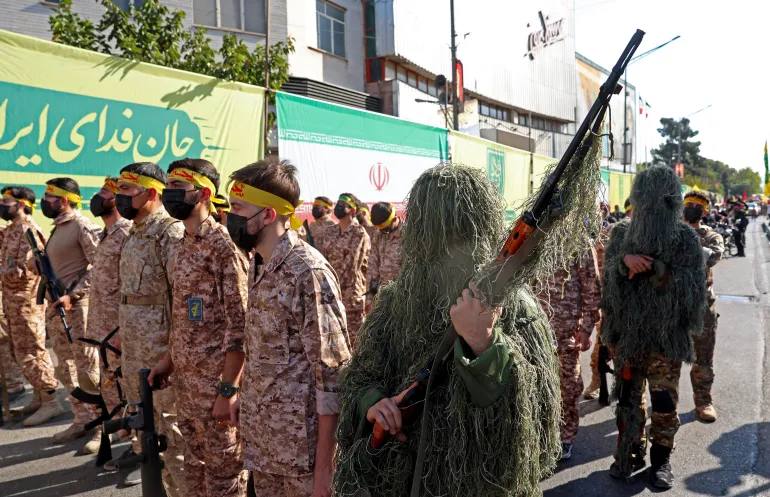
Regardless of whether there will be more mediated negotiations in Pakistan or whether the war will continue, Iran continues to encourage and arm backers to take to the streets to maintain control.
State media on Friday aired footage of more armed convoys moving through the streets of Tehran while waving the flags of Lebanon’s Hezbollah, Iraq’s Hashd al-Shaabi and other groups. The video below shows women and children crewing heavy machineguns mounted on the back of pick-up trucks during a rally in downtown Tehran.
With no end in sight to the state-imposed internet shutdown that has wiped out millions of jobs in Iran, in addition to steel factories and other infrastructure that were destroyed, the Iranian economy continues to suffer.
The timing of the back-and-forth between Trump and the Iranian officials meant that oil prices dropped before Western markets closed on Friday, and the Iranian currency experienced more volatility.
The rial was priced at about 1.46 million against the US dollar on Saturday morning, the first day of the working week in Iran. But it shot back up to about 1.51 million after the IRGC announced the repeated closure of the Strait of Hormuz.
A maritime agency reported that a tanker was fired on by gunboats in the Strait of Hormuz. The United Kingdom Maritime Trade Operations agency says it received a report of a tanker being fired upon by what it said were two gunboats linked to Iran’s Revolutionary Guard Corps. The vessel and its crew were reported safe.
Reports of Iranian gunboats opening fire on a tanker in strait, after Tehran said it is closing the waterway until the US lifts the blockade of its ports.
Published On 18 Apr 202618 Apr 2026
Iran says it has closed the Strait of Hormuz again, calling the decision a response to a continued blockade of its ports by the United States.
The Iranian military on Saturday said control of the strategic waterway, through which 20 percent of the global oil flows, has “returned to its previous state”, with reports saying Iranian gunboats fired at a merchant vessel as it attempted to cross.
Recommended Stories
list of 4 itemsend of list
The closure of the strait came hours after it was reopened, with more than a dozen commercial ships passing through the waterway, after a US-mediated 10-day ceasefire deal was reached between Israel and Lebanon.
The Islamic Revolutionary Guard Corps (IRGC) on Saturday said in a statement, cited by the Iranian media, that the ongoing US blockade of Iranian ports represented “acts of piracy and maritime theft”, adding that the control over Hormuz is “under the strict management and control of the armed forces”.
“Until the US restores full freedom of navigation for vessels travelling from Iran to their destinations and back, the status of the Strait of Hormuz will remain tightly controlled and in its previous condition,” it said.
By 10:30 GMT on Saturday, no fewer than eight oil and gas tankers had crossed the strait, but at least as many ships appeared to have turned back, having begun to exit the Gulf, the AFP news agency reported.
The toing and froing over the strait cast doubt on US President Donald Trump’s optimism the day before, that a peace deal to end the US-Israel war on Iran was “very close”.
Trump had celebrated the reopening of the strait on Friday, but warned the US attacks would resume until Iran agreed to a deal, which included its nuclear programme.
“Maybe I won’t extend it,” Trump told reporters on board Air Force One about the temporary ceasefire agreement in place. “So you’ll have a blockade, and unfortunately we’ll have to start dropping bombs again.”
Asked whether a potential deal could be made in this short timeframe, Trump said: “I think it’s going to happen.”
But Iran says no date has been agreed for another round of peace talks, accusing the US of “betraying” diplomacy in all negotiations.
The conflicting and changing reports about the strait and how much freedom ships have to transit through it have deterred many vessels from crossing, according to John-Paul Rodrigue, a maritime shipping specialist at Texas A&M University.
“Ships have been attempting transit since the announcement, but it looks like many of them are heading back because the situation is unclear,” Rodrigue told Al Jazeera. “There is contradictory information being issued by all parties.”
Reporting from Tehran, Al Jazeera’s Tohid Asadi said “uncertainty is the name of the game” as far as the Strait of Hormuz is concerned.
“Iran is looking for a comprehensive end to the war across the region, security assurances, sanctions relief, the unfreezing of frozen assets, regional relations – and on top of all of that – the nuclear dossier and Iran’s stockpile of highly enriched uranium,” he said.
“But right now, uncertainty is the name of the game. The fragile situation makes it hard to talk about the possibility of successful negotiations down the road.”
Michael Shoebridge, Director of Strategic Analysis Australia, says the US may be forced to end its blockade of Iran in order to see the full reopening of the Strait of Hormuz.
Field Marshal Asim Munir leaves Tehran while premier Shehbaz Sharif heads home from Turkiye amid hopes of another round of US-Iran talks.
Published On 18 Apr 202618 Apr 2026
Pakistan’s army chief and the prime minister have wrapped up separate diplomatic visits aimed at advancing efforts to end the United States-Iran conflict, with Field Marshal Asim Munir leaving Tehran and Prime Minister Shehbaz Sharif returning from Turkiye.
Munir met Iran’s leadership and peace negotiators during a three-day visit to Tehran, a Pakistani military statement said on Saturday.
Recommended Stories
list of 4 itemsend of list
The visit demonstrated Pakistan’s “unwavering resolve to facilitate a negotiated settlement… and to promote peace, stability and prosperity,” the military said ahead of expected US-Iran talks in Islamabad in the coming days.
Munir held talks with the country’s president, foreign minister, parliament speaker and head of Iran’s military central command centre.
Parliament Speaker, Mohammad Bagher Ghalibaf, and Foreign Minister, Abbas Araghchi, led the Iranian delegation to Islamabad for peace talks with the US last week, the highest level face-to-face contact between Washington and Tehran in decades.
Those talks ended without agreement, and a ceasefire is due to expire on April 22.
But diplomacy has continued, with Pakistan’s Prime Minister, Shehbaz Sharif, visiting Saudi Arabia, Qatar and Turkiye to push the peace process.
His three-country trip concluded on Saturday, with Sharif and Foreign Minister Ishaq Dar departing a diplomacy forum in Antalya, according to statements from both officials.
“I leave Antalya [Turkish city] with fond memories and a renewed commitment to further strengthening the enduring fraternal bonds between our two nations, and to continuing our close cooperation to advance dialogue and diplomacy for lasting peace and stability in the region,” Sharif posted on X.
The flurry of diplomacy comes as further negotiations are expected in Pakistan in the coming days as Islamabad intensifies contacts with regional and global leaders in an effort to sustain momentum towards a US-Iran deal.
Pressure for a deal between the two countries has grown after Iran reimposed restrictions on the Strait of Hormuz, hours after its reopening following the start of a ceasefire in Lebanon. Tehran accused the US of violating a deal to reopen the strategically important waterway.
Donald Trump has said a second round of talks with Iran could be held in Pakistan in the coming days. The New York Post reported that Trump praised Munir, saying he was “doing a great job”.
Reporting from Islamabad, Al Jazeera’s Kamal Hyder said Munir landed back home on Saturday as Pakistan prepared for another round of US-Iran talks expected “within the next few days”.
“We have also seen a lot of praise from the Trump administration on social media, praising the Pakistani leadership. So all eyes are on Islamabad. Serious differences remain, but there is a flurry of diplomatic activity and a hope and expectation that some sort of breakthrough may happen,” he said.
Iran’s Foreign Minister Abbas Araghchi and United States President Donald Trump have said that the Strait of Hormuz is open to commercial vessels.
Araghchi declared on Friday that the strategic waterwat was “completely open” in line with the ceasefire between Israel and Lebanon that took effect the previous day.
Recommended Stories
list of 3 itemsend of list
Trump affirmed on social media that the strait was open, later claiming that Iran had agreed to “never close the Strait of Hormuz again”. However, he also posted that the US naval blockade on Iranian ports would “remain in full force”.
In parallel, France and the United Kingdom hosted a meeting in Paris involving about 40 countries, which agreed to play a role in restoring freedom of navigation in the Strait of Hormuz once the US-Israeli war on Iran stops.
The blocking of tankers from using the strait, through which about 20 percent of the world’s crude flows on a typical day, has led to a global surge in fuel prices.
World leaders have welcomed the news with cautious optimism amid mixed messages from the US and Iran:
United States
“The Strait of Hormuz is completely open and ready for business and full passage, but the naval blockade will remain in full force and effect as it pertains to Iran, only, until such time as our transaction with Iran is 100% complete,” Trump wrote on Truth Social.
Minutes later, he issued another post saying the US Navy’s blockade on Iranian ships and ports “will remain in full force” until Tehran reaches a deal with the US, including on its nuclear programme.
Later, Trump told the news agency AFP that a deal to end the war on Iran was “close”, saying there were “no sticking points” left between Washington and Tehran.
Iran
Foreign Minister Abbas Araghchi posted on X that the strait was “declared completely open” and would remain open for the remaining period of the 10-day Israel-Lebanon ceasefire, which took effect overnight Thursday into Friday.
Some Iranian state media reports later appeared to contradict Araghchi’s announcement, with a senior military official telling state media that only nonmilitary vessels would be allowed to transit with permission from the Iranian Islamic Revolutionary Guard Corps (IRGC) Navy.
The Fars news agency, which is close to the IRGC, noted a “strange silence from the Supreme National Security Council”, the de facto top decision-making body in the country, as the status of the new supreme leader, Mojtaba Khamenei, remains unknown.
United Kingdom
UK Prime Minister Keir Starmer cohosted a summit on a potential military mission to secure the Hormuz Strait with French President Emmanuel Macron in Paris on Friday, with about 30 to 40 countries participating in person or by video conference.
On the sidelines, Starmer cautiously welcomed news of the strait’s reopening but said it must become “both lasting and a workable proposal”.
He said the UK and France would lead a “strictly peaceful and defensive” multinational mission to protect freedom of navigation as soon as conditions allow.
France
Speaking after the gathering, Macron said, “We all demand the full, immediate and unconditional reopening of the Strait of Hormuz by all parties.”
“We all oppose any restrictions or system of agreements that would, in effect, amount to an attempt to privatise the strait – and, of course, any toll system,” he added.
Macron’s office said roles for members of the international coalition working to reopen the strait could include “intelligence, mine-clearing capabilities, military escorts [and] communication procedures with coastal states”.
Germany
Chancellor Friedrich Merz said Germany could contribute mine clearance and intelligence capabilities to the international mission, but would need parliamentary support and a ″secure legal basis″ such as a UN Security Council resolution.
He said he wanted US involvement in the international mission to secure shipping through the Strait of Hormuz. “We believe this would be desirable,″ he said.
Trump later appeared to rebuff his overtures, saying on social media that he had received a call from NATO, but declined its assistance in no uncertain terms.
Finland
Finnish President Alexander Stubb, who participated in the Paris summit, said on X, “We welcome Iran’s announcement on opening the Strait. Lasting solutions require diplomacy,”
United Nations
United Nations Secretary-General Antonio Guterres on Friday welcomed the opening of Strait of Hormuz by Iran and said it was “a step in the right direction”.
International Maritime Organisation
Arsenio Dominguez, secretary-general of the UN shipping agency said, “We are currently verifying the recent announcement related to the reopening of the Strait of Hormuz, in terms of its compliance with freedom of navigation for all merchant vessels and secure passage.”
Shipping companies
The Norwegian Shipowners’ Association said several things had to be clarified before any ships can transit the strait, including the presence of mines, Iranian conditions and practical implementation.
“If this represents a step towards an opening, it is a welcome development,” said Knut Arild Hareide, CEO of the association, which represents 130 companies with some 1,500 vessels.
A spokesperson for Germany’s Hapag-Lloyd Shipping Company said, “We are now beginning to assess the new situation and the risks involved … For the time being, therefore, we are still refraining from passing through the strait.”
In a statement, Denmark’s Maersk said: “We have noted the announcement. The safety of our crew, vessels and customers’ cargo remains our priority. Since the outbreak of the conflict, we have followed the guidance of our security partners in the region, and the recommendation so far has been to avoid transiting the Strait of Hormuz.
“Any decision to transit the strait will be based on risk assessments and close monitoring of the security situation, with the latest developments also included in the ongoing assessments.”
Markets
Oil prices plunged after Iran’s announcement that passage for commercial vessels would remain “completely open” for the duration of a 10-day ceasefire in Lebanon.
“This news is having an immediate impact on markets,” said Kathleen Brooks, research director at XTB. “This is the biggest development so far during the ceasefire, and it gives hope that the war will end soon, and supply chains will return to some normality.”
Shipping companies said several things had to be clarified, including the presence of mines, Iranian conditions, practical implementations.
Published On 17 Apr 202617 Apr 2026
Shipping companies have cautiously welcomed Iran’s announcement that the Strait of Hormuz is open but said they would require clarifications, including about the risk of mines, before vessels move through the entry point to the Gulf.
Iran’s Foreign Minister Abbas Araghchi said on Friday that the Strait of Hormuz was open to all commercial vessels during a 10-day Lebanon ceasefire accord, prompting a fall in oil and other commodity prices while stock markets rose.
Recommended Stories
list of 4 itemsend of list
All commercial ships, including United States vessels, can sail through the strait, although their plans need to be coordinated with Iran’s Islamic Revolutionary Guard Corps, a senior Iranian official told the Reuters news agency.
Transit would be restricted to lanes which Iran deemed safe, adding that military vessels were still prohibited, the official said.
“We are currently verifying the recent announcement related to the reopening of the Strait of Hormuz, in terms of its compliance with freedom of navigation for all merchant vessels and secure passage,” said Arsenio Dominguez, secretary-general of the United Nations shipping agency, the International Maritime Organization.
The Norwegian Shipowners’ Association said several things had to be clarified before any ships could transit the strait, including the presence of mines, Iranian conditions and practical implementation.
“If this represents a step towards an opening, it is a welcome development,” said Knut Arild Hareide, CEO of the association which represents 130 companies with some 1,500 vessels.
Shipping association BIMCO cautioned members on returning to the strait.
“The status of mine threats… is unclear and BIMCO believes shipping companies should consider avoiding the area,” said Jakob Larsen, BIMCO’s chief safety and security officer.
The threat posed by mines in parts of the strait is not fully understood, and avoidance of the area by ships should be considered, a US Navy advisory on Friday, seen by Reuters, also said.
German shipping group Hapag-Lloyd on Friday said it was working for its ships to sail through the strait “as soon as possible”, but added that several questions remained.
“Our crisis committee is in session and will try to resolve all open items with the relevant parties within the next 24-36 hours,” it added.
Its Danish peer Maersk said it was closely monitoring the security situation and would act based on its risk assessment.
France’s CMA CGM and Norwegian oil tanker group Frontline declined to comment.
A recent route imposed by Tehran through its territorial waters near Larak Island would present navigational challenges even if vessels were not required to pay a toll, and would raise questions regarding compliance and insurance, said Matt Wright, lead freight analyst at data intelligence firm Kpler.
US President Donald Trump on Friday said Iran had agreed to never close the strait again, and that it was removing sea mines from it.
One of the world’s most important maritime chokepoints, disruption in the strait has forced shipping companies to suspend sailings, reroute cargo and rely on costly workarounds to keep goods moving in and out of the Gulf.
Iran says ‘passage for all commercial vessels through Strait of Hormuz’ open during the Israel-Lebanon ceasefire.
Published On 17 Apr 202617 Apr 2026
The Strait of Hormuz is “completely open” for all commercial vessels and will remain so during the Israel-Lebanon ceasefire, Iran’s foreign minister has said.
“In line with the ceasefire in Lebanon, the passage for all commercial vessels through Strait of Hormuz is declared completely open for the remaining period of ceasefire,” Abbas Araghchi said in a post on X on Friday.
Recommended Stories
list of 3 itemsend of list
A 10-day ceasefire was agreed between Israel and Lebanon late on Thursday.
The passage of vessels through the strait will be on the coordinated route as already announced by Ports and Maritime Organisation of Iran, Araghchi added.
United States President Donald Trump confirmed in a social media post that the strait was “completely open and ready for business and full passage”.
Al Jazeera’s Tohid Asadi discusses the prospect that the ceasefire between Israel and Hezbollah in Lebanon could lead to a comprehensive deal between the US and Iran to end regional hostilities.
Islamabad, Pakistan – Pakistan’s Foreign Ministry on Thursday confirmed that the United States and Iran were in discussions – through Islamabad – to hold a second meeting between their negotiators to end their now nearly seven-week war, with a fragile ceasefire announced on April 8 days away from expiring.
But it added that no date had been set for that next round of negotiations, even as Islamabad stepped up a parallel diplomatic push to keep the process alive.
Recommended Stories
list of 4 itemsend of list
“Who will come, how big the delegation will be, who will stay, and who will go is for the parties to decide,” Foreign Ministry spokesperson Tahir Andrabi told reporters in Islamabad, referring to what upcoming talks might look like. “As a mediator, it’s important for us to keep the talks confidential. We had the details and information of the talks entrusted to us by the negotiating parties.”
Speaking of the first round of talks on April 12 in Islamabad, which concluded without a deal, Andrabi said: “There was neither a breakthrough nor a breakdown.”
The spokesperson confirmed that nuclear issues remained among the key subjects under discussion, but declined to elaborate.
His comments came as Pakistan’s civil and military leadership is travelling across the region in what some observers have begun calling the “Islamabad Process”, reflecting the government’s attempt to frame negotiations as an ongoing diplomatic effort rather than a one-off engagement.
Parallel diplomatic tracks
Pakistan’s Prime Minister Shehbaz Sharif arrived in Doha on Thursday, the second stop of a four-day regional tour that began with Jeddah on Wednesday, and will see him visiting Antalya next.
Meanwhile, Pakistan’s Chief of Defence Forces (CDF) Asim Munir arrived in Tehran on Wednesday with a delegation that included Interior Minister Mohsin Naqvi.
Munir was received at the airport with a warm hug from Iranian Foreign Minister Abbas Araghchi, who said he was “delighted” to welcome the field marshal and expressed gratitude for Pakistan’s “gracious hosting of dialogue”.
On Thursday, Iranian Parliamentary Speaker Mohammad Bagher Ghalibaf, who led Tehran’s delegation at the Islamabad talks, also met Munir.
Reza Amiri Moghadam, Iran’s ambassador to Pakistan, said at an event in Islamabad that Tehran would not consider any venue other than Pakistan for talks with Washington.
“We will do talks in Pakistan and nowhere else, because we trust Pakistan,” he said.
Muhammad Faisal, a Pakistani security analyst and scholar at the University of Technology Sydney, said the parallel outreach reflected a deliberate division of labour.
“Pakistan’s strategy appears to be dual-tracked: PM Sharif is reassuring Gulf allies and attempting to build a broader support coalition, while CDF Munir is engaged in hard negotiations between the two sides to narrow gaps between Iran and the US, with an eye on extending the ceasefire and reaching a broader understanding,” he told Al Jazeera.
Reports that Munir might travel to Washington, DC after Tehran were denied by security officials, who called them “speculative”. Andrabi said he was not aware of any such development.
Saudi Arabia’s Crown Prince Mohammed bin Salman (right) greeting Pakistan’s Prime Minister Shehbaz Sharif prior to their meeting in Jeddah, Saudi Arabia on Wednesday [Handout/Prime Minister’s Office via AFP]
In Jeddah on Wednesday, Sharif met Saudi Crown Prince Mohammed bin Salman and expressed “full solidarity and support” for the kingdom following regional escalation, according to Pakistan’s Foreign Ministry. The crown prince praised what Riyadh described as the “constructive role” played by both Sharif and Munir.
In Doha, Sharif met Qatar’s Emir Sheikh Tamim bin Hamad Al Thani and discussed “the regional situation, particularly in the Gulf region”, underscoring “the importance of de-escalation, dialogue and close international coordination to ensure peace and stability”, the prime minister’s office said.
From Doha, Sharif heads to Antalya with Deputy Prime Minister and Foreign Minister Ishaq Dar. They are expected to meet counterparts from Saudi Arabia, Turkiye and potentially Egypt on the sidelines of the Antalya Diplomacy Forum on April 17.
Regional security push
The Antalya meeting is part of a broader diplomatic effort. Turkiye is preparing to host talks on a regional security platform involving Pakistan, Saudi Arabia and possibly Egypt, according to officials familiar with the discussions.
It would be the third such meeting in a month, following earlier rounds of talks in Riyadh and Islamabad.
The goal is to establish a platform for regular, structured cooperation on regional security issues, the officials said, stressing the discussions are distinct from current efforts to end the Iran war.
Turkish Foreign Minister Hakan Fidan confirmed that discussions were under way, but said no agreement had been finalised.
“This pact is necessary so that countries can be assured of one another,” he told the state-run Anadolu Agency on Monday.
Turkiye also reaffirmed support for the US-Iran peace process on Thursday.
“We will continue to provide the necessary support for the ongoing ceasefire to turn into a permanent truce and eventually lasting peace, without becoming more complex and difficult to manage,” the Defence Ministry said, adding that it expected “the parties will be constructive in the ongoing negotiation process”.
Pakistan’s Foreign Ministry said senior officials from the four countries had also met in Islamabad earlier this week to prepare recommendations for Antalya.
Ceasefire under strain
The two-week ceasefire brokered by Pakistan on April 8, which halted attacks in Iran and the Gulf, is due to expire on April 22. While still holding, it is under increasing strain.
A US naval blockade on Iranian ports remains in place, with the US Central Command saying its forces had turned away nine ships as of Wednesday.
Kamran Yousuf, an Islamabad-based journalist and expert on diplomatic affairs, said he expected the ceasefire to be extended.
“I would be really surprised if the current ceasefire is not extended. There is little appetite on both sides to go back to war. There are enough signs on the ground that if there is no deal before the truce expires, the ceasefire will be extended,” he told Al Jazeera.
Faisal offered a more cautious assessment, warning that failure to secure a second round would shift Pakistan’s role.
“Pakistan’s mediation will not collapse immediately, but Islamabad’s role will change from mediator to crisis manager. If hostilities resume, Pakistan will focus again on brokering a ceasefire,” he said.
Despite uncertainty, signals from both Washington and Tehran have remained cautiously optimistic.
White House press secretary Karoline Leavitt said further talks would “very likely” take place in Islamabad, adding, “We feel good about the prospects of a deal.”
Iran’s Foreign Ministry spokesperson Esmaeil Baghaei said multiple messages had been exchanged with Washington through Pakistan since April 12.
US President Donald Trump said on Tuesday that talks could resume within two days and that Washington was “more inclined to go” to Pakistan.
Sticking points remain
The path to a second round remains complicated by unresolved disputes.
Iran has insisted that Lebanon be included in any agreement, arguing that ongoing Israeli strikes there, which have killed more than 2,000 people and displaced 1.2 million, cannot be separated from the wider conflict.
On April 14, the United States convened a trilateral meeting in Washington with the ambassadors of Israel and Lebanon, the first direct engagement between the two sides since 1993.
US Secretary of State Marco Rubio mediated the talks, which both sides described as “productive”, but no ceasefire or follow-up meeting was agreed.
Washington has maintained that any Lebanon deal must remain separate from US-Iran negotiations, rejecting Tehran’s position. On Thursday, Israel said its Prime Minister Benjamin Netanyahu would speak on the phone with Lebanese President Joseph Aoun — but Beirut had not confirmed any plans for a telephone conversation. The two countries do not have formal diplomatic relations.
At Thursday’s briefing, Andrabi aligned Pakistan with Iran on this issue.
“Peace in Lebanon is essential for US-Iran peace talks,” he said, adding that “signs of improvement on the Israel-Lebanon front over the past two days are encouraging.”
Yousuf said a Lebanon ceasefire would send an important signal to Iran.
“Extending the ceasefire to Lebanon will be an important confidence-building measure, a signal from the US that it is serious about a second round. It will also give Tehran good reason to return to the table,” he said.
But he added that the deeper challenge remained Iran’s nuclear programme.
“The nuclear issue is at the heart of the real problem. The flurry of shuttle diplomacy initiated by Pakistan is aimed at bridging the gap between the two sides,” he said.
Grace Wermenbol, a former US national security official and senior visiting fellow at the German Marshall Fund, said Washington’s approach to Lebanon would hinge on Trump’s willingness to pressure Israel.
“A clear pathway to a cessation of hostilities in Lebanon exists,” she told Al Jazeera. “The question is whether Trump will be willing to apply the pressure necessary on Israel to halt its military offensive and allow the Lebanese government to continue its military disarmament efforts. So far, and this is also true for the months preceding the latest escalation between Israel and Hezbollah, we have not seen this pressure materialise.”
The Strait of Hormuz remains another major obstacle.
The waterway, through which roughly a fifth of the world’s oil passes during peacetime, has effectively been blocked by Iran since early in the war, except for ships belonging to countries that have struck individual deals with Tehran.
Starting Monday, the US imposed its own naval blockade on the strait, to prevent any Iran-linked vessel from passing through.
“Iran’s effective closure of the Strait of Hormuz has emerged as the primary issue in US-Iranian negotiations. Opening it is crucial to easing upward pressure on oil prices and instilling confidence in global markets,” Wermenbol said.
She added that Tehran appeared to be betting Washington would eventually back down.
“There is no easy military option here,” she said. “The only way to resolve this issue and remove the threat to maritime traffic will need to involve a diplomatic deal.”
The developments following the 12-day war between Iran and Israel did not lead to de-escalation, but rather to a redefinition of the conflict on a much broader scale. While volatile negotiations between Tehran and Washington continued, the gap between the two sides’ expectations deepened. Ultimately, this gap led to a decision at the White House based on an optimistic assessment: To enter a limited conflict and force Iran into a rapid retreat.
But the battlefield quickly shattered that assumption. The war that was meant to be short, controlled, and manageable turned into a 40-day war of attrition, one that not only failed to achieve the initial objectives of the United States but imposed heavy military, economic, and political costs.
The key question is: What caused this deep disconnect between initial assessments and reality? To answer that question, this article focuses on pre-war miscalculations and decisive variables during the conflict.
1- Incorrect generalisation of the 12-day war experience
Washington assumed Iran’s behavioural pattern from the short war with Israel would repeat, but this time the level of direct US involvement was far higher. Iran adjusted its response accordingly, most notably by playing the Strait of Hormuz card. According to published reports from a US situation room meeting on February 12, General Keane, chairman of the Joint Chiefs of Staff, warned of the risks of closing the strait, but Trump rejected the general’s assessment and assumed Iran would surrender before reaching that point. On the ground, however, the Strait of Hormuz became a decisive factor in disrupting both economic and military calculations.
2- Neglecting Iran’s strategic shift
The US still assumed Iran’s main target would be Israel, but this time Tehran focused on US bases across the region. The UAE, Bahrain, Kuwait, Qatar, Saudi Arabia and Jordan were placed directly on Iran’s target list.
3- Miscalculating Iran’s military and defensive capabilities
Iran’s gradual advances in missile technology, operational precision and air defence systems were not sufficiently accounted for in Washington’s calculations. The US did not believe Iran’s air defences could down its fighter jets or that Iranian missiles could disable the advanced radars at Gulf Arab states’ bases. Battlefield developments revealed a real leap in Iran’s offensive and defensive capabilities, imposing high costs on the US Air Force and seriously challenging its air superiority.
4- Wrong predictions about Iran’s domestic situation
One of Washington’s key assumptions was the outbreak of instability or internal collapse. Intelligence reports from December led them astray, convincing Trump that with widespread assassinations and the activation of public protests, Iran lacked the necessary resilience. In practice, however, a state of war led to social cohesion and strengthened the spirit of resistance. The reason lies in the “civilisational variable”, the role of historical identity and behavioural patterns within Iranian society, which, in times of crisis, through modern activism and mass street presence, shape national resistance. Washington mistook a “battle for national survival” for “political protests”.
5- Underestimating the cohesion of the “axis of resistance”
The US expected Iran-aligned groups to play a marginal role, but their operational coordination drastically increased battlefield complexity. The “axis of resistance” lined up in a unified front against the US, while NATO failed to provide effective support for Washington, revealing fractures in Washington’s traditional alliances when faced with costly crises.
6- Growing domestic and international pressure
The continuation of the war was met with opposition inside the US – from media criticism by former Trump supporters and figures like Tucker Carlson to human rights protests over attacks on civilians, particularly the Minab school tragedy, which quickly eroded the moral legitimacy of the operation in global public opinion, including within the US.
Meanwhile, the expansion of the war into the region caused oil prices to surge past $120, raising serious concerns and analyses about $200 oil, placing heavy economic pressure on US households.
On the international stage, the veto of Bahrain’s proposed resolution by Russia and China, along with the independent stances of some Western allies, dramatically increased the political cost of the war for Washington.
7 – Signs of fractures within US military decision-making structures
Command disagreements grew increasingly severe. The widespread dismissal of senior generals – including the army chief of staff and several other commanders – in the middle of the war was like a major earthquake at the Pentagon. This was no simple administrative reshuffle; it reflected a deadlock in modern military doctrine, which negatively impacted operational continuity.
Taken together, these errors – from misreading Iran’s behaviour and strategic evolution to ignoring simultaneous domestic and international pressures – placed the US in a position where accepting Iran’s terms after 40 days to begin negotiations became the only realistic option.
In the end, this war stands as a clear example of strategic deadlock: Where the gap between optimistic initial estimates and battlefield realities fundamentally alters the course of events.
It is an experience that will likely be discussed and revisited for years to come in Washington’s strategic circles.
The views expressed in this article are the author’s own and do not necessarily reflect Al Jazeera’s editorial stance.