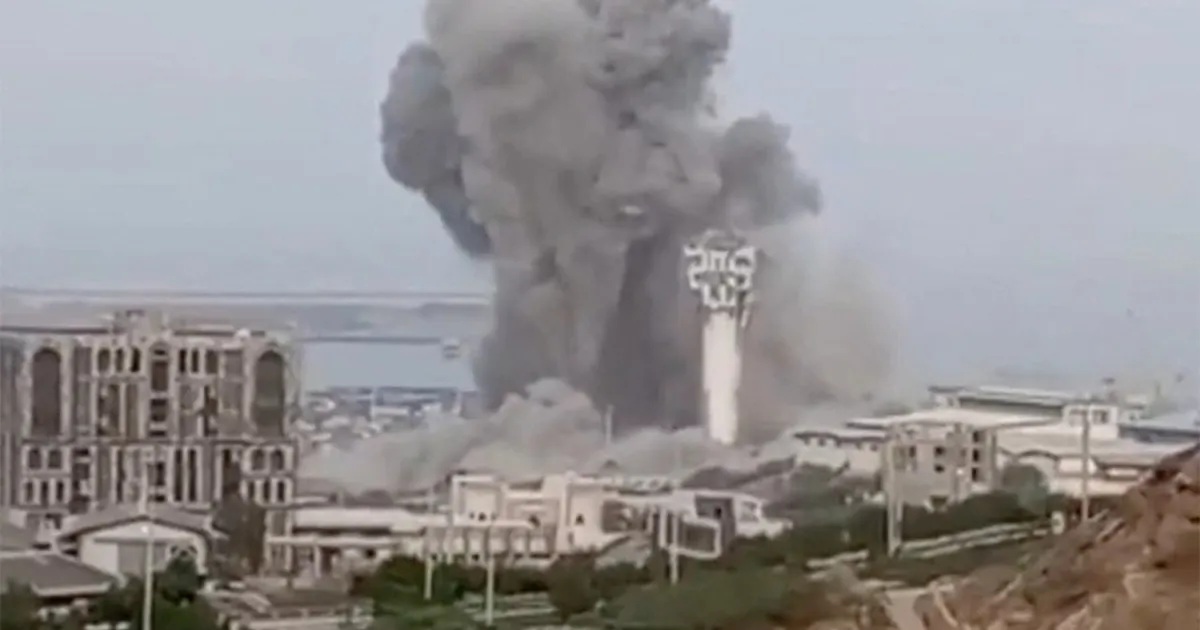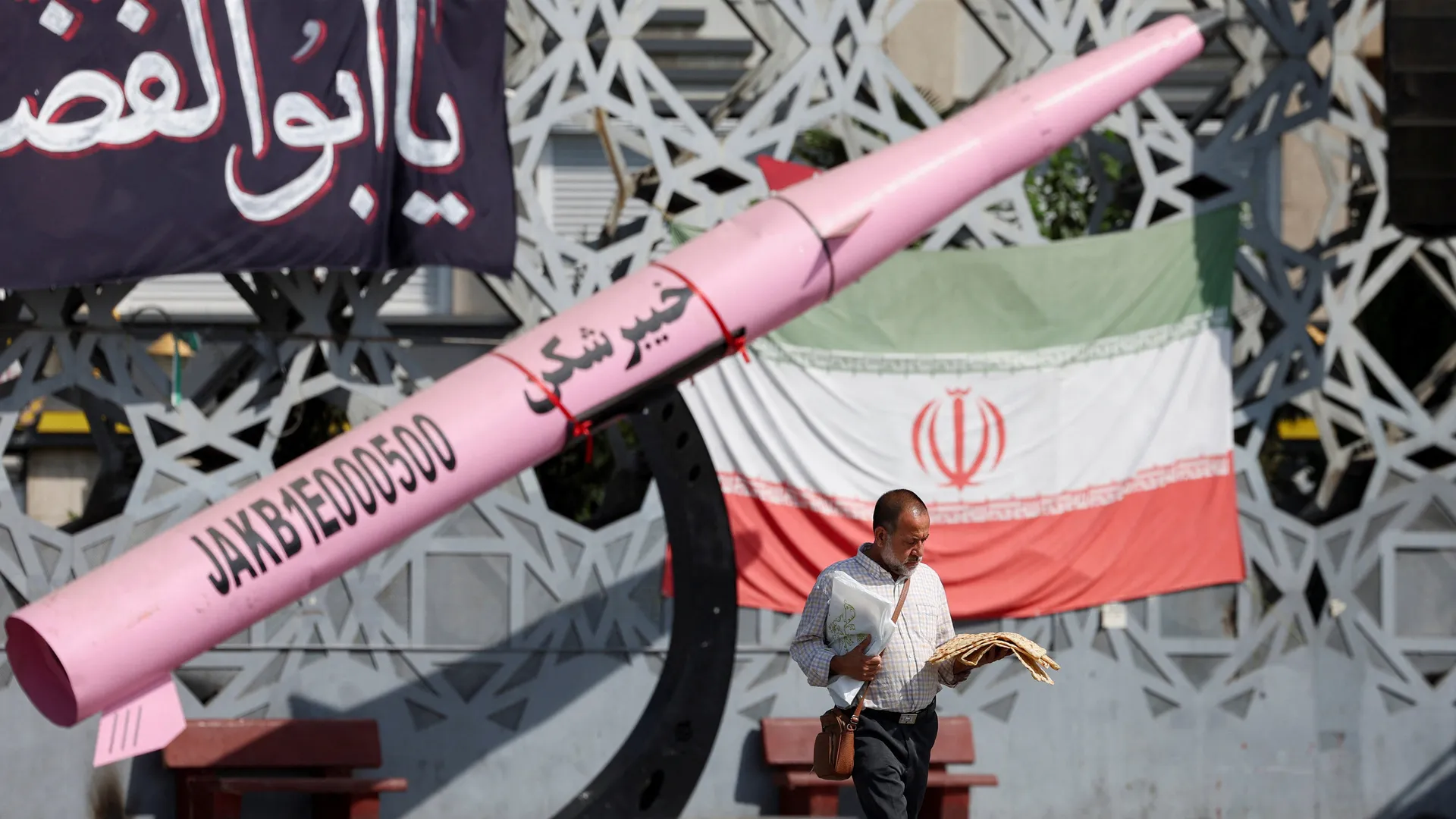
The Iran war has deepened the damage to its sanctions-hit economy, but oil revenues have provided a crucial cushion.
The US has spent decades trying to squeeze Iran economically. Six weeks into the Middle East conflict, Tehran is still standing. US and Israeli attacks on infrastructure, industry and trade have damaged Iran’s sanctioned economy even further.
But oil revenues have kept flowing, giving the regime a financial cushion.
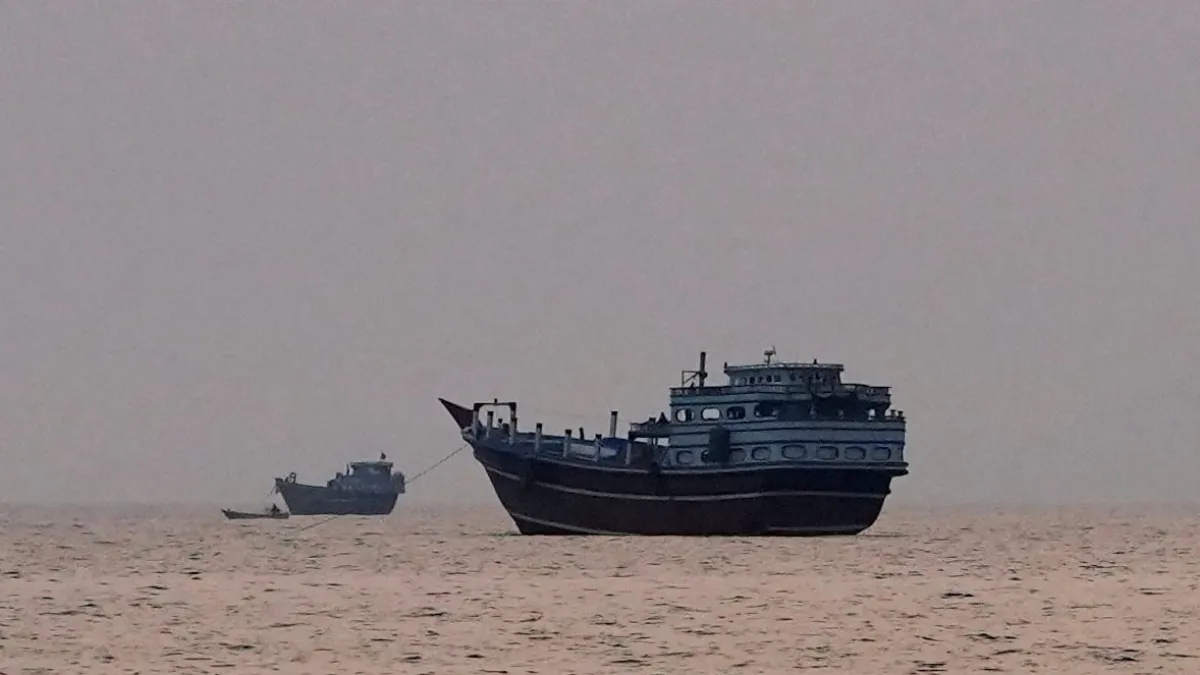
The Strait of Hormuz is now at the centre of this economic battle; whoever controls it controls the pressure.
At the negotiating table, sanctions relief, billions in frozen assets and war reparations are all at stake.
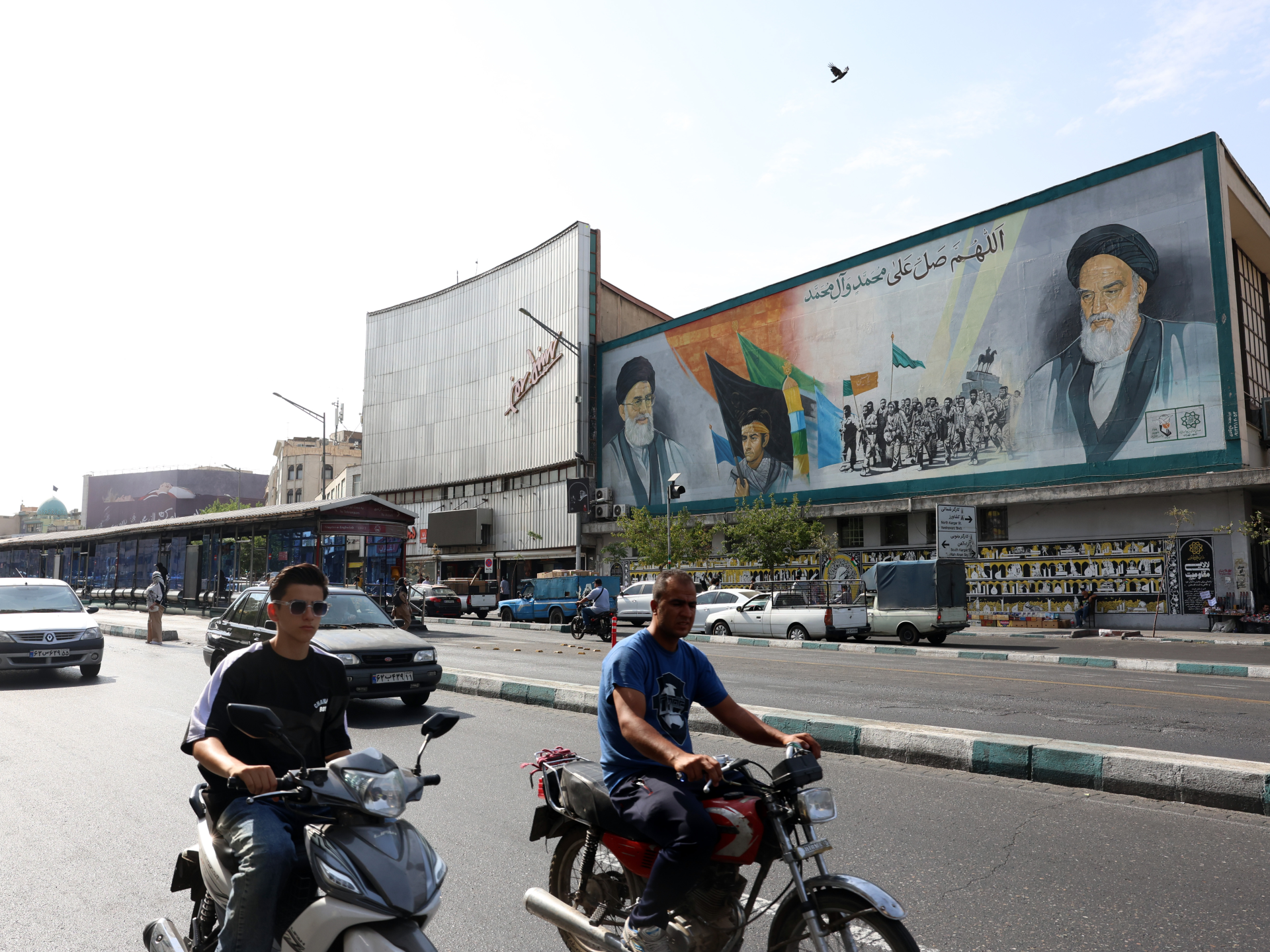
Meanwhile, millions of Iranians are bearing the brunt of inflation, shortages and a collapsing currency.
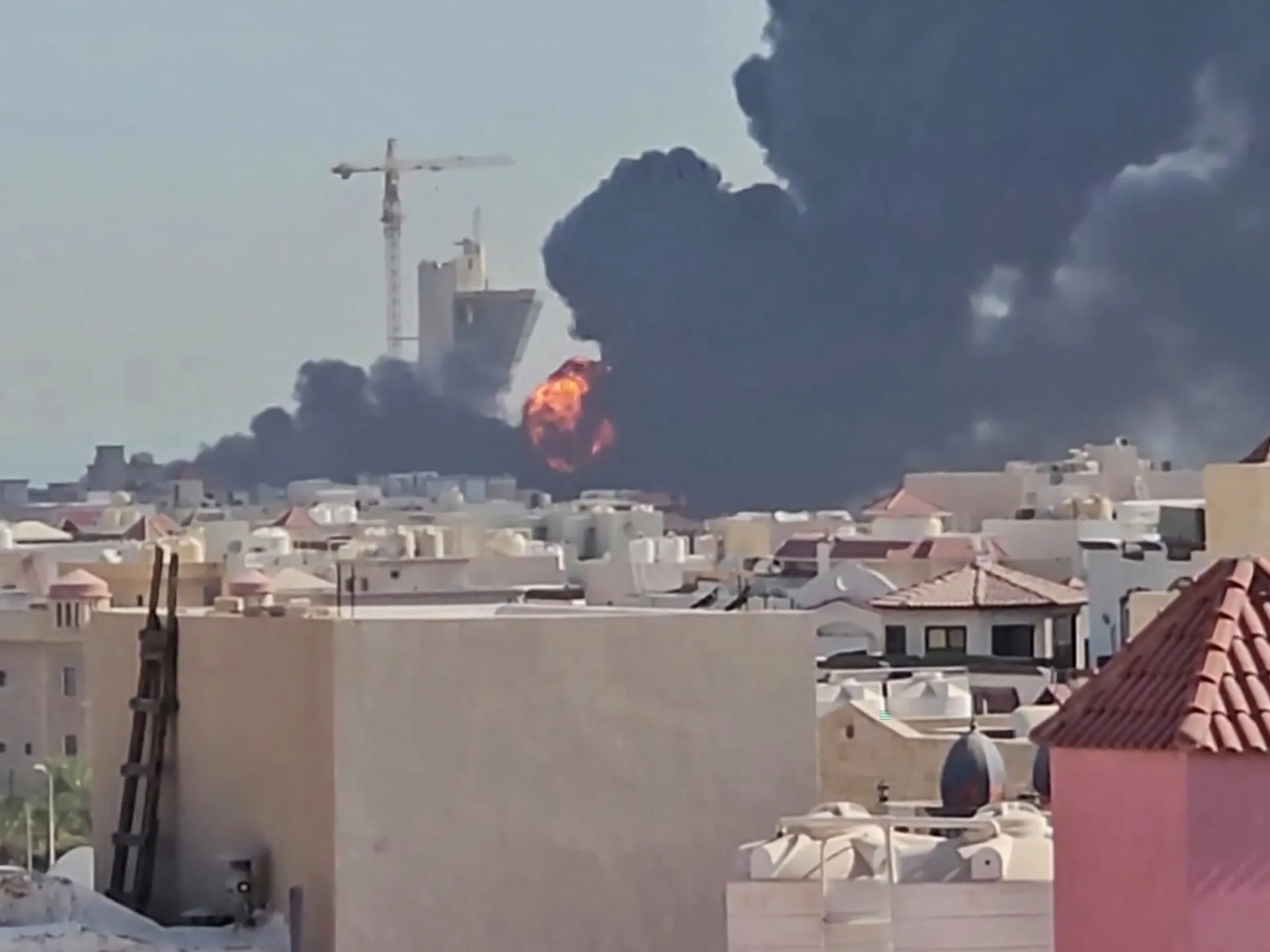
A major fire at a key refinery in Australia refinery has disrupted fuel production, raising fears of shortages as supplies are already strained by the Iran war.
US–Iran talks gain pace as Pakistan mediates, with fresh optimism for a new round of talks in Islamabad.
Published On 16 Apr 202616 Apr 2026
Efforts to revive US-Iran negotiations are gathering pace, with Pakistan again having an important mediating role as its leaders hold high-level talks in Tehran and the Gulf.
Amid a renewed push to end the war, a Pakistani delegation, led by army chief Field Marshal Asim Munir is in Tehran. He is expected to relay messages from the United States, while Pakistan’s Prime Minister, Shehbaz Sharif, arrived in Saudi Arabia as part of a regional tour that includes Qatar and Turkiye.
Recommended Stories
list of 4 itemsend of list
Iran’s Foreign Ministry spokesman, Esmael Baghaei, said Tehran and Washington have remained in contact since talks in Islamabad ended on Sunday. On Wednesday, Washington signalled optimism about a new round of talks in the Pakistani capital.
But the diplomatic push comes amid increasing tension, as Iran warns it could expand its response to the US naval blockade beyond its own waters.
Divisions in Washington persist, with the US Senate rejecting a measure to limit the war without congressional approval.
Here is what we know:
In Iran
Hormuz tensions remain high: Adviser Mohsen Rezaei warned that Iran could target US ships, if Washington continues to enforce its naval blockade in the Strait of Hormuz. The warning comes as the US tightens restrictions on vessels linked to Iranian ports, with ships already being turned back amid the standoff.
Nuclear issue shows potential breakthrough: Analyst Abas Aslani says Tehran is open to nuclear transparency if Washington is serious about a deal, but new US sanctions and the blockade of Iranian ports are fuelling distrust.
“There is a sense of distrust, and at the moment, Iran is ready for every possible scenario, either progress in the negotiations or returning to the military conflict,” he told Al Jazeera.
Iran’s Foreign Minister Abbas Araghchi warned of consequences over US “provocative actions” in the Gulf and the Strait of Hormuz during a call with his Chinese counterpart Wang Yi.
War diplomacy
Round two of talks: The US is discussing holding a second round of peace talks with Iran and is optimistic about reaching a deal, the White House said.
China supports ‘momentum’ of peace talks: China’s Foreign Minister, Wang Yi, told his Iranian counterpart that Beijing “supports maintaining the momentum of the ceasefire and peace talks”.
Saudi crown prince, Pakistan PM meet: Crown Prince Mohammed bin Salman and Shehbaz Sharif met in Jeddah to discuss regional issues, including US-Iran negotiations. Talks hosted by Pakistan were a key focus, said the Saudi Press Agency.
US and Qatar: US President Trump discussed regional developments and energy concerns, specifically regarding the oil market and gas prices, with Qatari Emir Sheikh Tamim bin Hamad Al Thani.
Saudi Crown Prince Mohammed bin Salman and Pakistan’s Prime Minister Shehbaz Sharif in Jeddah, Saudi Arabia [Saudi Press Agency/Reuters]
In the US
US President Donald Trump has announced that Israeli and Lebanese leaders will hold direct talks later today – their first such contact in 34 years.
New oil sanctions: US officials targeted more than two dozen individuals, along with companies and vessels linked to the oil transport network of Iranian shipping magnate Mohammad Hossein Shamkhani.
US says 10 vessels blocked from Iranian ports: The US military’s Middle East command (CENTCOM) said 10 ships were stopped or redirected within the first 48 hours of a naval blockade, with none leaving Iranian ports.
US Congress divisions: The Senate rejected efforts to limit US involvement in the war and blocked measures targeting arms sales to Israel, though growing opposition signals shifting political pressure.
In Israel
‘Identical’ goals: Israeli Prime Minister Benjamin Netanyahu said that Israel and the US are fully aligned in their objectives to contain Iran.
Ceasefire pressure, no halt in fighting: Despite pressure, Netanyahu said Israel would continue military operations.
End of Hezbollah: The Israeli prime minister said the country’s top priority in Lebanon was to secure the “dismantling” of Hezbollah, in its first direct talks with the country in decades.
“There are two central objectives: first, the dismantling of Hezbollah; second, a sustainable peace… achieved through strength,” he said.
In Lebanon
Relentless strikes continue: Air raids and shelling hit southern and eastern Lebanon, including Kafr Sir and Nabatieh, while a “triple-tap” strike in Mayfadoun killed four paramedics. Israeli vehicles and bulldozers remain active.
Lebanon’s Minister for Administrative Reform Fadi Makki said an Israeli attack that killed four paramedics in southern Lebanon was “a new war crime”.
Rising toll: Israeli strikes have killed at least 2,167 and injured more than 7,000 people, according to the Lebanese Health Ministry. About 1.2 million people have been displaced since March 2. Israel has been accused of destroying homes in southern Lebanon, as happened in Gaza.
‘Homes that no longer exist’: “Even if a ceasefire is reached, the reality on the ground is devastating.. entire communities along the border have been destroyed,” Al Jazeera’s Malcolm Webb reported from Beirut. He added that Israel has yet to secure its objective of controlling territory up to the Litani River.
Balakrishnan Rajagopal, the UN special rapporteur on the right to housing, has joined other UN human rights experts, calling for Israel to immediately stop its bombing of Lebanon. Rajagopal wrote on social media that the Israeli military is using the “same strategy” in southern Lebanon as in Gaza or the occupied West Bank.
Diplomatic tensions grow: Hezbollah has condemned US-hosted Israel-Lebanon talks as “shameful,” while a failed Senate vote to block bulldozer sales to Israel highlights increasing concern over civilian harm.
An armoured Israeli military vehicle near the Lebanon border [Florion Goga/Reuters]
Global economy
Growing hunger fears: The war could push millions more towards hunger as its economic fallout reverberates around the globe, the World Bank’s chief economist told AFP.
“You have about 300 million people who suffer from acute food insecurity already,” Indermit Gill said. “That’ll go up by about 20 percent very, very quickly,” as knock-on effects grow.
Wall Street records: Major Wall Street stock indices finished at record highs on Wednesday following optimism about an accord in the US-Iran conflict.
Srinagar, Indian-administered Kashmir — The gold earrings were a gift from her father on her birthday just months earlier. But on March 21, as South Asia marked Eid‑ul‑Fitr, Masrat Mukhtar handed them over to an aid collection effort to help civilians in Iran trying to survive the US-Israel war on the country.
She was one of many in Indian-administered Kashmir who paused their customary rituals and celebrations on the auspicious day to contribute cash, household items, and personal assets for a people more than 1,000 miles away.
Her cousins followed, each bringing items of personal value. Families offered copper utensils, livestock, bicycles, and portions of savings. Children broke their piggy banks, sharing savings they had carefully collected over several years. Shopkeepers and traders handed over parts of their earnings.
“We give what we love. This brings us closer to them,” said Mukhtar, a 55-year-old woman from Budgam in the central part of Indian-administered Kashmir, before referring to a name by which the region has historically also been known. “This is what Little Iran does for its namesake. The bond persists through time and conflict.”
That bond, rooted in more than six centuries of historical connections, has taken on a much more overt presence during the war – drawing recognition from Iranian authorities, and concerns over some fund collection methods from Indian officials.
Cash donated for Iran at a collection drive in Indian-administered Kashmir [Junaid Bhat/Al Jazeera]
One daughter’s wealth, to another daughter
In Zadibal, a Shia-majority area of Srinagar – the biggest city in Indian-administered Kashmir – 73-year-old Tahera Jan watched neighbours contribute copper pots.
“Kashmiris traditionally collect these utensils for their daughters’ weddings. We chose to give them instead to daughters who lost mothers and sisters in the attacks,” Jan said.
Sadakat Ali Mir, a 24-year-old mini-truck driver, contributed one of the two vehicles he drives for his livelihood. Other contributors offered bicycles, scooters, and other essential items. Children, including nine-year-old Zainab Jan, handed over piggy banks.
To be sure, that Shia constitute between 10 to 15 percent of Indian-administered Kashmir’s population is a factor in why the war in Iran resonates so deeply in the region. But donations for Iran have extended well beyond Shia. Several Sunni families observed simpler Eid meals, redirecting household resources towards Iranian relief. Some shopkeepers closed early, while families adjusted daily routines to contribute.
Political and religious figures also participated. Budgam lawmaker Aga Syed Muntazir Mehdi donated a month’s salary to the relief effort. Imran Reza Ansari, a Shia scholar and leader of the People’s Conference party, noted public participation across communities.
Similar donation campaigns in support of Iranians have also been reported from Pakistan, Iraq and other countries.
But at the heart of this outpouring of support for Iran in Indian-administered Kashmir – which also witnessed large rallies after the killing of Iranian Supreme Leader Ayatollah Ali Khamenei on February 28 – are rare cultural ties that Kashmir and what was then Persia have shared for centuries.
Women arrive carrying kitchenware to donate at a relief drive for Iran in Budgam, Indian-administered Kashmir, Monday, March 23, 2026 [Mukhtar Khan/ AP Photo]
‘Little Iran’
Sufi scholar Mir Sayyid Ali Hamadani arrived in Kashmir from Hamadan in Iran in the 14th century, introducing religious practices, art forms, and Persian literary traditions. Persian architectural influences appear in historical mosques, and the Persian language has shaped local literature.
Irshad Ahmad, a scholar of Central Asian studies, said donation drives drew on this historical reservoir, with prayers, rituals, and art forms reflecting longstanding ties. Kashmir has historically been referred to as Iran-e-Sagheer, or Little Iran.
The donations carry personal and cultural meaning beyond financial value, said experts. “People are not only parting with objects; they are sharing emotional continuity,” Sakina Hassan, a lecturer on humanitarian practices in New Delhi, said.
More than 2,000 people have been killed in Iran during the war, which is on pause at the moment amid a fragile ceasefire brokered by Pakistan. The first round of direct talks between the United States and Iran in Islamabad last week broke down without a deal, and mediators are working on pushing the two sides towards new talks. The ceasefire is set to expire next Wednesday.
A volunteer auctions a donated copper vessel to raise cash for a relief drive for Iran in Budgam, Indian-administered Kashmir, Monday, March 23, 2026 [Mukhtar Khan/AP Photo]
Millions in donations
The scope of donations from Kashmir is significant. Estimates from local authorities place the value of contributions at up to six billion rupees ($64m), including cash, gold, jewellery, household items, livestock, and vehicles.
Collection points in Srinagar, Budgam, Baramulla – another major city – and the region’s northern districts were staffed by volunteers documenting donations.
Small contributions, including coins, piggy banks, and utensils, make up a large portion of total aid in terms of volume. Syed Asifi, a volunteer managing central Srinagar collections, said even individuals with limited means brought what they could.
Medical kits were assembled by local doctors, and supply drives were organised by students and educational institutions based on assessed needs in Iran.
The Iranian embassy in New Delhi acknowledged contributions in a post on X: “We sincerely thank the kind people of Kashmir for standing with the people of Iran through their humanitarian support and heartfelt solidarity; this kindness endures.” A video shared by the embassy showed a widow donating gold she had kept as a memento of her husband, who died 28 years ago.
That post was subsequently pulled down by the embassy, though the mission later posted again, thanking the people of India and Kashmir.
The embassy added that Kashmir’s contributions constitute a substantial portion of donations from India, with local sources estimating the Valley’s share at more than 40 percent of the total.
Jewellery donated by women for an Iran aid drive in Indian-administered Kashmir [Junaid Bhat/Al Jazeera]
Security concerns
But while the majority of donations are directed towards humanitarian purposes, Indian authorities have raised concerns about potential misuse. Jammu and Kashmir Police and the State Investigative Agency (SIA) have said some funds collected through door-to-door drives by unverified individuals could be diverted to local networks of separatists and armed groups.
“People depositing money directly to the Iranian embassy should not be worried,” said a senior official, speaking on condition of anonymity. “Collections by middlemen without transparent monitoring may not reach the intended recipients.”
Authorities have also asked volunteers to maintain records to ensure compliance with fundraising regulations.
There’s a reason for this concern, say Indian authorities.
They point to the example of 2023, where funds collected in southern Kashmir – ostensibly for humanitarian purposes – were allegedly instead funnelled towards rebel groups. Organisers of the Kashmir drives for Iran maintain that all efforts are humanitarian.
Pakistani officials are expecting a “major breakthrough” in talks between Iran and the United States on Tehran’s nuclear programme, sources have told Al Jazeera, as Islamabad steps up diplomatic efforts to end a war that has killed thousands of people.
The optimism on Wednesday came as a high-level Pakistani delegation, headed by Army Chief Asim Munir, arrived in Tehran to deliver a message from the US to the Iranian leadership, according to Iran’s Press TV broadcaster.
Recommended Stories
list of 4 itemsend of list
He was received by Iran’s Foreign Minister Abbas Araghchi, who expressed gratitude for Pakistan’s “gracious hosting of dialogue”. According to Press TV, Munir is also seeking to lay the groundwork for a second round of talks between the US and Iran.
Al Jazeera’s Osama Bin Javaid, who has been covering the US-Iran talks, said Pakistani officials were expecting “a major breakthrough on the nuclear front” and that the delegates were continuing to relay messages back and forth between Washington and Tehran.
The central sticking point remains the duration of any enrichment freeze by Iran and the country’s stockpile of 440 kilogrammes of highly enriched uranium.
“We know that both sides are essentially stuck on between five years of no enrichment to 20 years of no enrichment. And there is a solution in the middle,” Bin Javaid said.
“There’s also talk about what Iran will do with the 440kg of nuclear-enriched material that it has in the country. There are multiple options – whether sending it abroad to a third party or bringing it down to either uranium in its natural form or up to 3 percent,” he said.
“According to these sources, there’s major headway that has been made, and they’re expecting that the Pakistanis are going to be able to convince Tehran,” he added.
Shuttle diplomacy
The shuttle diplomacy by Pakistan came after talks between the US and Iran in Islamabad ended over the weekend without an agreement to end the war. Mediators are pressing for a compromise on three main issues: Iran’s nuclear programme, control of the Strait of Hormuz – which Tehran has effectively closed, causing a surge in global oil prices – and compensation for wartime damages.
The conflict, launched by the US and Israel on February 28, has killed more than 3,000 people in Iran and triggered retaliatory attacks by Tehran on Gulf countries. It has also reignited a conflict between Israel and Hezbollah in Lebanon, where Israeli forces have killed more than 2,000 people since March 2.
A ceasefire between Tehran and Washington on April 8 has halted attacks in Iran and the Gulf, but strikes by Israeli forces on Lebanon have continued.
Separately on Wednesday, Pakistan’s Prime Minister Shehbaz Sharif also travelled to Saudi Arabia as part of a regional tour that also includes stops in Qatar and Turkiye. Al Jazeera’s Bin Javaid said Sharif’s tour was part of a “double-pronged strategy”.
“While the Iranians are speaking to the Pakistani military chief, the Pakistani prime minister and foreign minister are talking to the Saudis and the Qataris. The day after, they go to Turkiye,” he said, with the aim of neutralising any detractors to a deal
Bin Javaid said the detractors include elements in Tehran, in Washington, DC, and most of all, Israel, “which does not want a peace deal and wants a perpetual war in the region”.
‘Very close to over’
The diplomatic push appears bolstered by optimistic comments from US President Donald Trump, who said late on Tuesday that the world should brace for an “amazing two days” and the war on Iran is “very close to over”.
White House Press Secretary Karoline Leavitt later said that further negotiations would likely be held in Islamabad, calling Pakistan-mediated discussions “productive and ongoing”.
“We feel good about the prospects of a deal,” she said on Wednesday.
In Tehran, Iran’s Ministry of Foreign Affairs confirmed that exchanges with the US have continued since the end of the talks in Islamabad. Spokesman Esmaeil Baghaei said “several messages have been exchanged through Pakistan” and that Iranian “positions have been expressed in those exchanges”.
Tensions remain, however.
A US Navy blockade on Iranian ports – which began following the end of the talks – remains in effect in the Strait of Hormuz. The US Central Command claimed it has turned back nine vessels as of Wednesday.
Iran’s military has denounced the blockade as a violation of the April 8 ceasefire. Iran’s Fars News Agency separately reported that a sanctioned Iranian supertanker had crossed the Strait of Hormuz despite the blockade, though it gave no further details.
Ali Abdollahi, the commander of Iran’s joint military command, has also threatened to halt trade in the region if the US does not lift its blockade. He warned that Iran would retaliate by blocking trade through the Red Sea, along with the Gulf and the Sea of Oman.
A source has told Al Jazeera that Pakistan is expecting a breakthrough tied to Iran’s nuclear programme as Islamabad helps negotiate an end the US-Israeli war on Iran. Pakistani military and government officials met with Iranian and Saudi leaders on Wednesday.
Watch the moment a Democratic congresswoman tells the US Energy Secretary he is ‘living in a different world’ after his response to whether he’d adequately warned the White House that a war on Iran would have global consequences.
Sources tell Al Jazeera that Pakistani mediators are hopeful about a breakthrough on Iran’s nuclear programme.
A high-level Pakistani delegation has travelled to Iran to hold talks focused on arranging a fresh round of negotiations between Iran and the United States, a week before their fragile truce is due to expire.
Pakistan Army Chief Asim Munir is heading the delegation that arrived in Tehran on Wednesday evening, according to Iranian state media. It said he came with a new message from the US and plans to coordinate a second round of US-Iran talks, after an initial round in Islamabad ended on Sunday without a deal to end the war.
Recommended Stories
list of 3 itemsend of list
Pakistan’s Interior Minister Mohsin Naqvi is also joining mediation efforts in Tehran, while Pakistan’s Prime Minister Shehbaz Sharif is in Saudi Arabia for the first stop in a four-day Gulf tour.
Pakistan’s diplomatic blitz comes as competing US and Iranian sea blockades strain tensions – and the global economy – but amid indications of progress towards a deal to end the war, which has killed 3,000 people in Iran and spiralled across the Middle East.
“The urgency is being driven by the ceasefire expiring on April 22, and Pakistani officials are hoping they can get that extended,” said Al Jazeera’s Kimberly Halkett from Islamabad. “Sharif will try and convince regional partners to also use their leverage to convince the US to participate in new talks with Iran and make sure there is no diplomatic line-crossing.”
Washington ‘feels good’ about potential deal
The latest mediation appears bolstered by optimistic comments from US President Donald Trump, who said the world should brace for an “amazing two days” as the war with Iran is close to over.
Trump also said his negotiators were likely to return to Pakistan, thanks largely to the “great job” Munir was doing to moderate the talks.
White House press secretary Karoline Leavitt later reiterated that additional talks with Iran would likely go forward in Islamabad. “We feel good about the prospects of a deal,” she told reporters on Wednesday.
Nevertheless, the US military said its naval blockade on all Iranian ports was still in effect, with US forces “present, vigilant and ready to ensure compliance”.
The blockade, which Iran’s military slammed as a violation of the ceasefire, turned nine ships away as of Wednesday, according to US Central Command.
The commander of Iran’s joint military command, Ali Abdollahi, threatened to halt trade in the region if the US did not lift its blockade. He also warned Iran would retaliate by blocking trade through the Red Sea along with the Gulf and Sea of Oman.
‘Detractors on all sides’
Mediators in the conflict are pushing for a compromise on three main sticking points – Iran’s nuclear programme, control of the Strait of Hormuz, and compensation for wartime damages.
Iran’s Foreign Minister spokesman Esmaeil Baghaei has said Iran is open to discussing the type and level of its uranium enrichment, but his country “based on its needs, must be able to continue enrichment”, according to Iranian state media.
Sources told Al Jazeera that Pakistani mediators are optimistic about a potential major breakthrough on the nuclear front, which is the reason for Munir’s rare diplomatic trip.
“It looks like there is some agreement in the making, but we’ve been cautioned by sources [close to the mediation effort] that there are detractors on all sides,” said Al Jazeera’s Osama Bin Javaid from Doha.
He said the detractors include elements “in Tehran, in Washington, DC, and biggest of them all, according to Pakistani sources, is Israel, which does not want a peace deal and wants a perpetual war in the region”.
Italy’s decision to suspend a defence agreement with Israel has more symbolic value than concrete consequences, but it is an unprecedented move by the Italian government and reflects deep unease over its longtime ally’s actions in the Middle East, analysts say.
On Monday, Prime Minister Giorgia Meloni said Italy would not renew a memorandum of understanding – signed in 2003 and ratified in 2005 – between the two countries’ ministries of defence. The accord provided a framework for cooperation in “defence industry and procurement policy” and “import, export and transit of defence and military equipment”, among other things.
Recommended Stories
list of 3 itemsend of list
The memorandum was set to automatically renew every five years “unless a written notice of intention to denounce is given” by one of the two countries to the other.
That notice arrived on Monday in a letter written by Italian Defence Minister Guido Crosetto to his Israeli counterpart, Israel Katz.
The Israeli government has downplayed the move. Foreign Minister Gideon Saar said it was a deal that “never materialised” and did not have “substantial content”. “Israel’s security will not be harmed,” he wrote on X.
It is true that the Italy-Israel agreement constituted more of a political framework than a series of operational commitments between the two countries. Furthermore, the Italian government’s decision does not cancel it outright, as opposition parties and human rights advocates have long demanded, but merely suspends it.
Still, the move is a sharp reversal for a right-wing government that has been one of Europe’s staunchest allies of Israel.
Along with Germany, Italy has been one of the strongest opponents of calls to suspend a trade agreement between Israel and the European Union. Italy has largely supported Israel’s war on Gaza, which a United Nations inquiry says amounts to genocide, and it has refused to recognise Palestinian statehood.
But relations between Israel and Italy have soured recently.
On Monday, the Italian ambassador to Tel Aviv, Luca Ferrari, was summoned after Italy’s Foreign Minister Antonio Tajani condemned Israel for its “unacceptable attacks against the civilian population” in Lebanon during a visit there. And last week, the Italian government accused Israeli forces of firing warning shots at a convoy of Italian peacekeepers in southern Lebanon, prompting Tajani to summon the Israeli ambassador.
Israel also launched a massive attack across Lebanon last week, bombing 100 targets in 10 minutes on Wednesday, shortly after a two-week truce between Iran and the US was called. That series of strikes killed hundreds of people in one of the country’s worst mass slaughters since the end of the country’s civil war in 1990. Observers say the attack on Lebanon was an unwelcome disruptor to efforts to de-escalate tensions in the region.
De-escalating Middle East tensions
The Italian government’s decision to suspend its defence agreement with Israel “must be seen within a broader effort to progressively stabilise the region, including by reducing tensions in Lebanon”, said Michele Valensise, president of the Institute for International Affairs and former secretary-general of Italy’s Ministry of Foreign Affairs.
“Israel’s military operation there objectively constitutes an irritant, complicating negotiations with the Iranians,” said Valensise. “If the Lebanese front can be part of a deal with Iran, then everyone has an interest in de-escalation there.”
European governments, including Italy, have been watching nervously as the United States-Israeli war on Iran has unfolded. Following initial joint Israel-US strikes on Tehran on February 28, Iranian forces brought shipping traffic in the Strait of Hormuz to a near-total halt, causing the paralysis of the one-fifth of global oil and liquefied natural gas (LNG) exports that pass through the narrow waterway in peacetime.
Following a first failed round of high-stakes Iran-US talks in Islamabad last weekend – amid a fragile two-week truce – Washington imposed a naval blockade on Iranian ports, further aggravating fears of a protracted energy crisis. Italy heavily relies on gas imports.
‘Stop the genocide’
Possibly more importantly, Italy’s government and prime minister are preparing for elections next year.
“There is a general discontent over the war in Iran and the crisis in the Strait of Hormuz – a crisis that’s impacting Italian growth and, if it continues, could have a significant impact on citizens, something Meloni worries about in a pre-election year,” said Arturo Varvelli, a political scientist and senior policy fellow at the European Council on Foreign Relations.
Italian public opinion also has a strong pro-Palestinian component. Last October, more than two million Italians took to the streets as part of a general strike in solidarity with the Global Sumud Flotilla, which was intercepted by Israel while trying to bring aid to Palestinians in Gaza. The flotilla had been carrying 40 Italians among its passengers, calling on Israel to “stop the genocide”.
“There’s a concern that this will be a long agony, between an increasingly unmanageable Trump and the economic problems he and Netanyahu have caused with the war in the Middle East,” Varvelli said.
After years of efforts to emerge as US President Donald Trump’s “whisperer” in Europe, Meloni has been pushed by the war in Iran to put some distance between herself and Trump. Rome refused the US president’s request to join a naval coalition to force the opening of the Strait of Hormuz and to allow US bombers to refuel at a military base in southern Italy.
Trump had not commented on those decisions until yesterday, when, in an interview with Italian newspaper Corriere della Sera, he took aim at Meloni. The Italian PM had leapt to defend Pope Leo XIV after he became embroiled in a feud with Trump. Pope Leo had condemned the US president’s threat that Iran’s “civilisation will die” if it didn’t re-open the Strait of Hormuz. In response to that, Trump unleashed a storm of criticism at Leo, calling him “weak on crime” and “terrible for foreign policy”. He said he does not “want a Pope who criticises the President of the United States”.
Trump also posted a bizarre image of himself as a Christ-like figure healing the sick on social media. He has since claimed it was meant to depict him as a doctor, following widespread criticism.
Of Meloni, who he once affectionately called “a real live wire”, Trump said, “I’m shocked at her” during an interview with Corriere della Sera on Tuesday.
“Do people like her? I can’t believe it,” he said in the interview, adding, “I thought she had courage. I was wrong.”
Draw for the 24-team 2027 AFC Asian Cup, originally set for Saturday, moved to May 9.
Published On 15 Apr 202615 Apr 2026
The draw for the 2027 Asian Cup in Saudi Arabia has been rescheduled for May 9 in Riyadh as the United States-Israel war on Iran disrupts regional sporting events.
The draw, originally scheduled for last Saturday, will be held at the historic At-Turaif District in Diriyah. The Asian Football Confederation (AFC) said on Wednesday that the postponement was made to ensure the full participation of all key stakeholders and member associations.
Recommended Stories
list of 4 itemsend of list
A number of sporting events across the region have been postponed or cancelled due to the war, which began on February 28.
Saudi Arabia is set to host the 24-team, quadrennial continental championship for the first time from January 7 to February 5. With 23 of the 24 teams already confirmed, the draw will divide the qualified nations into six groups of four.
The final qualification place will be decided on June 4 when Lebanon face Yemen in a playoff.
Defending champions Qatar have already secured their place at the finals along with four-time winners Japan and fellow World Cup qualifiers South Korea, Iran, Jordan, Australia and Uzbekistan.
Supply of humanitarian aid for people displaced by the conflict has been complicated by air and sea route closures.
Published On 14 Apr 202614 Apr 2026
Aid groups have said they’re seeking to boost humanitarian relief shipments into Iran as the effects of the United States-Israeli war hit the population.
The International Federation of Red Cross and Red Crescent Societies (IFRC) said on Tuesday that it had delivered “life-saving” aid and medical supplies, marking one of the first humanitarian shipments since the war began.
Recommended Stories
list of 4 itemsend of list
The shipment entered the country through Turkiye on Sunday, IFRC spokesman Tommaso Della Longa said in a statement. Iran faces a deepening humanitarian crisis after nearly six weeks of conflict that has killed more than 3,000 people, according to Iranian authorities, and displaced up to 3.2 million, he stressed.
“The operation is critical as humanitarian supply chains into Iran have been severely disrupted in recent weeks due to the conflict, making it increasingly difficult and more costly for essential medical and relief items to reach those in need,” the spokesman said.
The convoy, which departed from the Turkish capital Ankara on Friday, carried around 200 trauma kits containing emergency medical supplies along with tents and blankets.
A residential building that was hit by a strike in Iran’s capital, Tehran [Abedin Taherkenareh/EPA]
‘Needs are high’
The Turkish Red Crescent Society also dispatched four trucks separately carrying 48 tonnes of aid, including emergency shelters, hygiene kits and first-aid supplies.
“Needs are high, medical needs in particular, but also the psychological toll on people is immense,” Della Longa said.
He noted the toll on the Iranian Red Crescent Society has been high, confirming that the organisation had lost four relief workers in the line of duty.
The effort to respond to humanitarian needs in Iran is growing.
The International Committee of the Red Cross (ICRC) said on Tuesday that it had dispatched 14 trucks from Jordan carrying household supplies for around 25,000 people, including mattresses, jerry cans, kitchen sets and solar lamps.
In addition, ICRC said, 200 generators and 100 motor pumps purchased locally had been donated to the Iranian Red Crescent Society to support relief and rescue operations
Air and sea routes have been blocked by the conflict, it said, making overland crossings through Turkiye and Jordan critical for aid delivery.
The relief comes amid a fragile two-week ceasefire between the United States and Iran.
According to the Turkish Red Crescent Society’s president, Fatma Meric Yilmaz, around 3.6 percent of Iran’s 90 million people have been displaced, while 62,000 homes and more than 20,000 businesses have been destroyed.
CENTCOM contradicts reports on ships breaking blockade as Trump says US-Iran talks could resume in the next two days.
Published On 14 Apr 202614 Apr 2026
The Pentagon says no ships “made it past” the United States military blockade in the Strait of Hormuz in its first 24 hours and six merchant ships followed orders to turn around.
The statement on Tuesday from the US military’s Central Command (CENTCOM) was the first update since US President Donald Trump announced the blockade of the waterway after US-Iran talks over the weekend in Pakistan failed to yield an agreement on ending the war the US and Israel launched on February 28.
Recommended Stories
list of 3 itemsend of list
CENTCOM said the blockade applies only to vessels “entering and exiting Iranian ports” and other vessels remain free to transit the waterway.
It added: “US forces are supporting freedom of navigation for vessels transiting the Strait of Hormuz to and from non-Iranian ports.”
The Reuters news agency reported at least three vessels transited the strait during the first 24 hours of the blockade, citing shipping data. They included two tankers sanctioned by the US. The three ships were not heading to Iranian ports, according to Reuters.
However, the AFP news agency and several US media outlets, citing data from the maritime tracker Kpler, reported two ships had transited the waterway after leaving Iranian ports on Monday.
CENTCOM said 10,000 US sailors, Marines and airmen were involved in the operation, along with more than a dozen US warships and dozens of aircraft.
Military observers have widely said US forces have the capability to maintain the blockade for the foreseeable future but the continued pressure increases the likelihood of Iranian attacks. That in turn could see a two-week ceasefire that began on Wednesday collapse.
Meanwhile, any efforts to intercept vessels from strategic foes, including China, could create new escalations. The strategy is also likely to continue to roil global oil markets.
Iran has decried the US approach as “piracy” while Trump on Monday promised to “eliminate” any Iranian ships that seek to break the blockade.
Trump says more talks are possible
The update on Tuesday came as both sides signalled they would be open to further talks after failing to reach a breakthrough during 21 hours of negotiations between a US delegation led by Vice President JD Vance and an Iranian delegation led by parliamentary Speaker Mohammad Bagher Ghalibaf.
The talks were the highest-level face-to-face contact between the two countries since the 1979 Islamic revolution.
Key unresolved sticking points include control of the Strait of Hormuz, the future of Iran’s nuclear programme and whether the ceasefire extended to Israel’s ongoing invasion and bombardment of Lebanon.
In an interview with the New York Post newspaper on Tuesday, Trump said “something could be happening over the next two days” in Islamabad as he hailed Pakistani Field Marshal Asim Munir, who has been among the officials shepherding the negotiations.
Reporting from Tehran, Al Jazeera’s Ali Hashem said sources stated there are already messages being exchanged regarding what both sides consider to be “bridgeable issues”.
“Iran is open to talks, and it showed that from last week when it went to Islamabad. The main hurdle always is the mistrust, distrust between both sides,” Hashem said.
“For the Iranians, they’ve been repeating that they’re open. If the Americans want to fight, they’re going to fight. And if they want to talk, they can talk.”
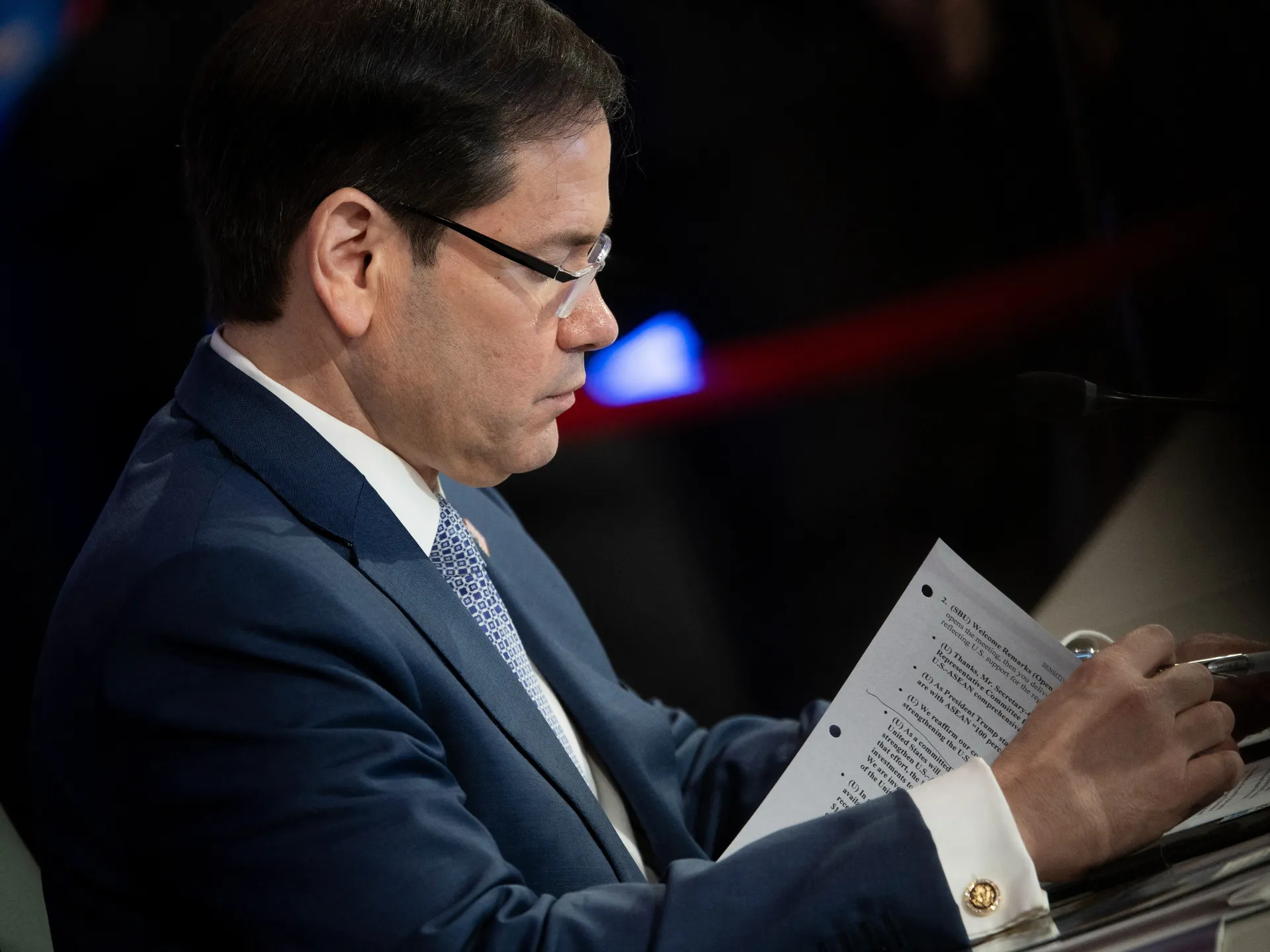
The Lebanese and Israeli ambassadors to the United States arrived at the State Department in Washington for their countries’ first direct talks in decades. US Secretary of State Marco Rubio is hosting the discussions.
A US move to block the strait has intensified a broader struggle over who controls access and under what terms.
Now, the United States is the one shutting the Strait of Hormuz, even as President Donald Trump was calling for it to reopen just a few days ago. He said ships entering or leaving Iranian ports would be stopped by the navy after talks between Tehran and Washington fell apart.
However, this is not just about a blockade. Iran is tightening its grip on the strait, demanding the right to impose tolls on ships passing through it.
The ripple effects could go beyond energy and trade flows, challenging the dominance of the US dollar in global shipping.
Russian Foreign Minister Sergey Lavrov has arrived in Beijing as the United States blocks the Strait of Hormuz, through which China imports about a third of its oil supplies.
Lavrov received a red-carpet welcome on Tuesday, according to photos shared by Russia’s Ministry of Foreign Affairs.
Recommended Stories
list of 4 itemsend of list
Beijing and Moscow have condemned the US and Israel over their war on Iran, with China also being economically affected by the energy crisis it has caused.
China, a big importer of Iranian oil, also slammed a recently imposed US scheme to blockade vessels entering or departing Iranian ports and coastal areas, including in the Gulf and the Gulf of Oman.
“The Strait of Hormuz is an important international trade route for goods and energy, and maintaining its security, stability, and unimpeded flow is in the common interest of the international community,” China’s Ministry of Foreign Affairs spokesman Guo Jiakun said on Monday.
Lavrov speaks to Araghchi
Al Jazeera’s Alan Fisher, reporting from Washington, DC, said the US’s goal is to choke Iran off by blocking everything coming in and out of Iranian ports.
“What the US hopes is that there’ll be pressure on Iran from some of its main business partners, including China,” he said, adding that Beijing imports about a third of its oil from Iran. “The United States is hoping that pressure on China will mean China putting pressure on Iran and forcing Iran to get back to the negotiating table.”
On Monday, Lavrov held a telephone conversation with his Iranian counterpart, Abbas Araghchi.
The top Russian diplomat told Araghchi it was important to guard against any resumption of hostilities in the Middle East, and said Russia stood ready to help with a settlement, according to a statement by the Russian Foreign Ministry.
“S Lavrov emphasised the importance of preventing a recurrence of armed confrontation and once again confirmed Russia’s unwavering readiness to assist in resolving the crisis, which has no military solution,” the ministry said.
It added Araghchi related to Lavrov details of US-Iran talks in Pakistan at the weekend, which failed to reach a breakthrough.
Beijing and Moscow are close economic and political partners, and the relationship has deepened further since Russia’s full-scale invasion of Ukraine in 2022.
Wang also held a call with Lavrov on April 5, when they agreed that Beijing and Moscow would work together to de-escalate tensions in the Middle East.
Diplomacy traffic in Beijing
China welcomed a string of leaders of countries that have been affected by the war and its economic fallout this week, including Spanish Prime Minister Pedro Sanchez and United Arab Emirates President Mohamed bin Zayed Al Nahyan, also known as MBZ.
Chinese President Xi Jinping met MBZ and Sanchez on Tuesday morning, and Vietnamese President To Lam is expected in China for a four-day trip.
“I think what this really speaks to is that many people around the world have been surprised that China has not played a more active role in the Iran war, given it has such strong ties with Tehran, including as Iran’s largest trading partner and buyer of crude oil,” Al Jazeera’s Katrina Yu, reporting from Beijing, said.
“But what China has been doing, besides calling for restraint and more negotiation, is taking advantage of this moment to really look at states that may be a little disenchanted with the US or looking to diversify from reliance on Washington,” Yu said.
“China has presented itself as the opposite of Washington – a reliable, stable and predictable partner. For many states, that message really appeals.”
Trump’s threats after ‘fabricated’ reports
Trump, who is scheduled to visit Beijing next month for talks with Xi, said on Sunday he would hit China’s goods with a 50 percent tariff if it provided military assistance to Tehran.
His comments came the same day CNN reported that US intelligence indicated China was preparing to deliver new air defence systems to Iran within the next few weeks, quoting three people familiar with the assessments.
On Tuesday, Chinese Foreign Ministry spokesman Guo said those reports were “completely fabricated”.
“If the US insists on using this as an excuse to impose additional tariffs on China, China will definitely take resolute countermeasures,” he said.
The US started a blockade on Iranian ports, but Trump said there is still a chance for Tehran to reach a deal.
Published On 14 Apr 202614 Apr 2026
President Donald Trump said there is still room for Iran to strike a deal, despite the US blockade of Iranian ports, as Israel intensified its invasion of southern Lebanon.
Iran has accused Washington of “piracy” as thousands rally in Tehran against the move, which targets shipping through the Strait of Hormuz.
Recommended Stories
list of 1 itemend of list
The Associated Press news agency reported on Tuesday that diplomatic efforts to revive US-Iran talks are continuing, with Pakistan offering to host a second round of negotiations in Islamabad this week.
Here is what we know:
In Iran
US blockade and protests: The US measures are now being enforced, prompting Iranian accusations of “piracy” and demonstrations in Tehran against the restrictions on maritime traffic.
Tehran calls blockade ‘illegal’: Iran’s armed forces condemned the move as unlawful, warning that targeting its ports could put shipping across the Gulf at risk.
IRGC warns of escalation: A Revolutionary Guard spokesperson said Iran still has “unused capabilities” and could deploy new tactics if the conflict deepens.
Tehran backs pope: Iran’s Parliament Speaker Mohammad Bagher Ghalibaf praised Pope Leo XIV for condemning the war, calling his stance “fearless”.
Russia withdraws nuclear staff: Russia has pulled most of its personnel from Iran’s only nuclear power plant, built with Moscow’s support, according to the head of the country’s atomic energy agency.
War diplomacy
Qatar urges mediation: Qatar’s Foreign Minister Sheikh Mohammed bin Abdulrahman bin Jassim Al Thani urged Iran and the US to engage constructively in mediation efforts.
Pakistan says truce ‘holding’: Prime Minister Shehbaz Sharif said the ceasefire between the US and Iran was “holding”, with efforts ongoing to reach a deal after weekend talks failed.
Shipping disruption grows: A UN spokesperson said there is “no military solution”, warning that instability in the Strait of Hormuz is worsening global economic fragility. About 20,000 vessels are reported stranded, with supply chains, including fertiliser, under strain.
Push to include Lebanon: The United Kingdom urged Lebanon’s inclusion in a broader US-Iran ceasefire framework, which currently excludes fighting involving Hezbollah.
Talks planned with Lebanon despite fighting: Israeli and Lebanese ambassadors will hold talks on Tuesday in Washington, DC, aimed at halting the war.
Hezbollah rejects negotiations: Hezbollah leader Naim Qassem on Monday urged Lebanon to cancel the planned meeting in Washington, reiterating his group’s opposition to any direct engagement with Israel.
Russia to accept Iran’s uranium: The Kremlin has repeated an offer to accept Iran’s enriched uranium as part of a potential agreement with the US. In comments carried by Russia’s state-owned RIA Novosti news agency, Kremlin spokesman Dmitry Peskov said the proposal “was voiced by President [Vladimir] Putin in contacts with both the United States and regional states”.
In the US
Iran ‘wants a deal’: Trump said Iranian representatives had reached out to pursue a peace agreement after talks in Pakistan ended without a breakthrough. “They’d like to make a deal. Very badly,” he told reporters, without specifying who made contact.
No apology over pope remarks: Trump said he had “nothing to apologise for” after criticising Pope Leo XIV for calling for an end to the conflict. He described the pope as “weak” on key issues, including Iran.
Warning over Iranian vessels: Trump said US forces would destroy any Iranian “fast attack ships” approaching the naval blockade now in effect.
Domestic politics and war powers: Senate Democrats, led by Chuck Schumer, are pushing for another vote to curb Trump’s authority to wage war on Iran. Schumer criticised the campaign as an “epic fail”, citing rising US fuel prices, while previous efforts have been blocked by Republicans.
Arrests of protesters: Police in New York City have arrested about 90 protesters in Manhattan as they stopped traffic to protest against the war on Iran and the US’s arms sales to Israel. Jewish Voice for Peace, the group leading the protest, said those taken into custody included whistleblower Chelsea Manning, actor Hari Nef and New York City Council Member Alexa Aviles.
Trump rails at pope: Trump has doubled down on his criticism of Pope Leo XIV, saying the pontiff’s opposition to the war in Iran was “wrong” and accusing him of being “weak on crime”.
In Israel
Israel pushes ‘buffer zone’: Israel’s military is continuing ground operations and air raids across southern Lebanon, bulldozing buildings in border towns such as Naqoura as part of efforts to create a “buffer zone”.
Hezbollah steps up attacks: Fighters have launched rockets and drones at Israeli troops and vehicles in areas including Bint Jbeil and Biyyada.
Accusations against Israel: Hezbollah chief Qassem accused Israeli Prime Minister Benjamin Netanyahu of pursuing a “Greater Israel” agenda with US backing.
Tensions with Italy: Israel summoned Italy’s ambassador after Foreign Minister Antonio Tajani condemned attacks on Beirut as “unacceptable”, following reports of more than 300 deaths.
The Israeli military said one soldier has been killed and three others have been wounded during battle in southern Lebanon.
In Lebanon
Israel continues to attack Lebanon: Israel has intensified its invasion of southern Lebanon, as the death toll from Israeli attacks since March 2 rises to at least 2,089.
An Israeli drone attack has hit a car travelling near southern Lebanon’s Nabatieh, killing at least two people, the National News Agency reported on Tuesday. Our colleagues at Al Jazeera Arabic say Israeli forces have launched two raids on the towns of Machgharah and Sohmor in the eastern Bekaa Valley.
Public opinion divided: Lebanese citizens appear split about negotiations, with some expressing fatigue from the war and hoping for a diplomatic breakthrough, while others remain sceptical of Israel’s intentions and doubt any deal will hold.
Canadian Foreign Minister Anita Anand confirmed in a statement posted on X that a Canadian national has died in southern Lebanon. The minister did not provide details on the events that led to the Canadian’s death.
Strait of Hormuz and energy crisis
The Reuters news agency is reporting that a Chinese tanker sanctioned by Washington has passed through the Strait of Hormuz despite a US blockade on the waterway. The tanker and its owner, Shanghai Xuanrun Shipping Co Ltd, were previously sanctioned by the US for dealing with Iran.
US Energy Secretary Chris Wright said oil prices could keep rising until “we get meaningful ship traffic through the Strait of Hormuz”.
Police in New York have arrested around 100 anti-war protesters who were staging a sit-in outside the offices of Senators Chuck Schumer and Kirsten Gillibrand, demanding an end to US weapons sales to Israel. The demonstration comes as Senator Bernie Sanders pushes to block more than $600m worth of bombs bound for Israel’s military.
US President Donald Trump says Iran wants to make a peace deal “very badly” after talks in Islamabad ended without agreement, insisting any framework hinges on Tehran agreeing never to develop a nuclear weapon.
UK Prime Minister Kier Starmer has announced talks to be held this week and co-hosted with France, aiming at a diplomatic end to the war on Iran and securing safe passage in the Gulf shipping afterwards.
Move reflects regional alarm over attacks by pro-Iranian groups based in Iraq, which continue despite ceasefire.
Published On 13 Apr 202613 Apr 2026
Bahrain has summoned an Iraqi envoy over drone attacks launched at the kingdom and other states in the region, which persist despite the US-Iran ceasefire.
The summoning of the diplomat on Monday followed similar action by Saudi Arabia the previous day, signalling growing regional concern over the activities of pro-Iranian groups based in Iraq and complicating Baghdad’s efforts to rebuild ties with its Arab neighbours.
Recommended Stories
list of 4 itemsend of list
Bahrain’s Ministry of Foreign Affairs strongly condemned the “continued malicious drone attacks” launched from Iraq towards Bahrain and several Gulf Cooperation Council countries, the state news agency BNA reported.
The ministry said Abdullah bin Ali Al Khalifa, director general of bilateral relations, had delivered an official protest note during the meeting with the Iraqi charge d’affaires, Ahmed Ismail al-Karawi.
The diplomatic missive called on Baghdad to address “these threats and attacks urgently and responsibly”.
Launchpad
During the United States-Israel war on Iran, Iraq has become a staging ground for a secondary conflict as drones and missiles are launched by Iran-aligned armed groups repeatedly targeting the Gulf states and Jordan.
US interests in Iraq also have been targeted, particularly the embassy in Baghdad.
Last month, several Gulf countries and Jordan demanded in a joint statement that Baghdad act immediately to stop attacks from its territory by Iran-aligned groups.
The statement was signed by Bahrain, Jordan, Kuwait, Qatar, Saudi Arabia and the United Arab Emirates.
Baghdad has categorically rejected the use of its territory to target Gulf states or Jordan, adding that it is taking necessary measures “in accordance with the constitution and the law”.
The attacks are severely testing Iraq’s painstakingly rebuilt ties with its Arab neighbours, leading Baghdad to issue a statement in which it offered “full readiness” to receive any information or evidence regarding the attacks to address them “responsibly and swiftly”.
Iran-aligned groups in Iraq had announced their commitment to a two-week Iran-US ceasefire that has been in place since dawn on Wednesday, and said they were suspending their actions towards the Gulf countries.
However, just hours after the ceasefire was announced, several Gulf nations reported missile and drone attacks on their territories.
What does Donald Trump’s naval blockade of Iranian ports look like and can it achieve what the US president wants? It is hard to know when the planning appears to have been done on the fly, according to war studies lecturer Samir Puri.