Israeli prime minister’s office welcomes US decision to suspend attacks on Iran, but says the two-week truce does not apply to Lebanon.
Published On 8 Apr 20268 Apr 2026
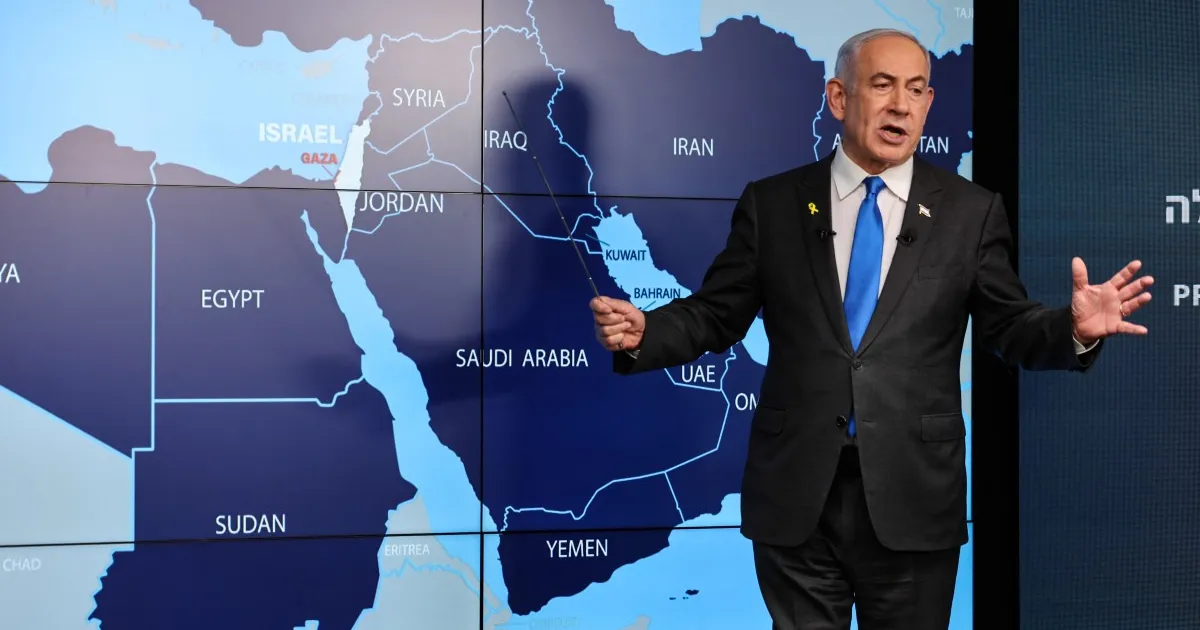
Prime Minister Benjamin Netanyahu’s office has announced that Israel backs the United States’s decision to suspend strikes against Iran for two weeks, but said the truce “does not include Lebanon”.
In a statement on X on Wednesday, Netanyahu said Israel supported US President Donald Trump’s efforts to ensure “Iran no longer poses a nuclear, missile and terror threat to America, Israel, Iran’s Arab neighbors and the world”.
He said the US has told Israel that it is committed to achieving these goals in the upcoming negotiations in Pakistan’s Islamabad on Friday.
But the two-week ceasefire “does not include Lebanon”, he added.
Netanyahu’s statement comes after Pakistani Prime Minister Shehbaz Sharif announced that the US, Iran and their allies “have agreed to an immediate ceasefire everywhere including Lebanon and elsewhere”.
Sharif said the move was “effective immediately”.
Lebanon was drawn into the war on March 2 after Iran-aligned Hezbollah launched attacks on Israel.
Hezbollah said the attacks were in retaliation for Israel’s killing of Iran’s Supreme Leader Ayatollah Ali Khamenei on February 28 as well as its near-daily violations of a ceasefire it agreed in Lebanon in November of 2024.
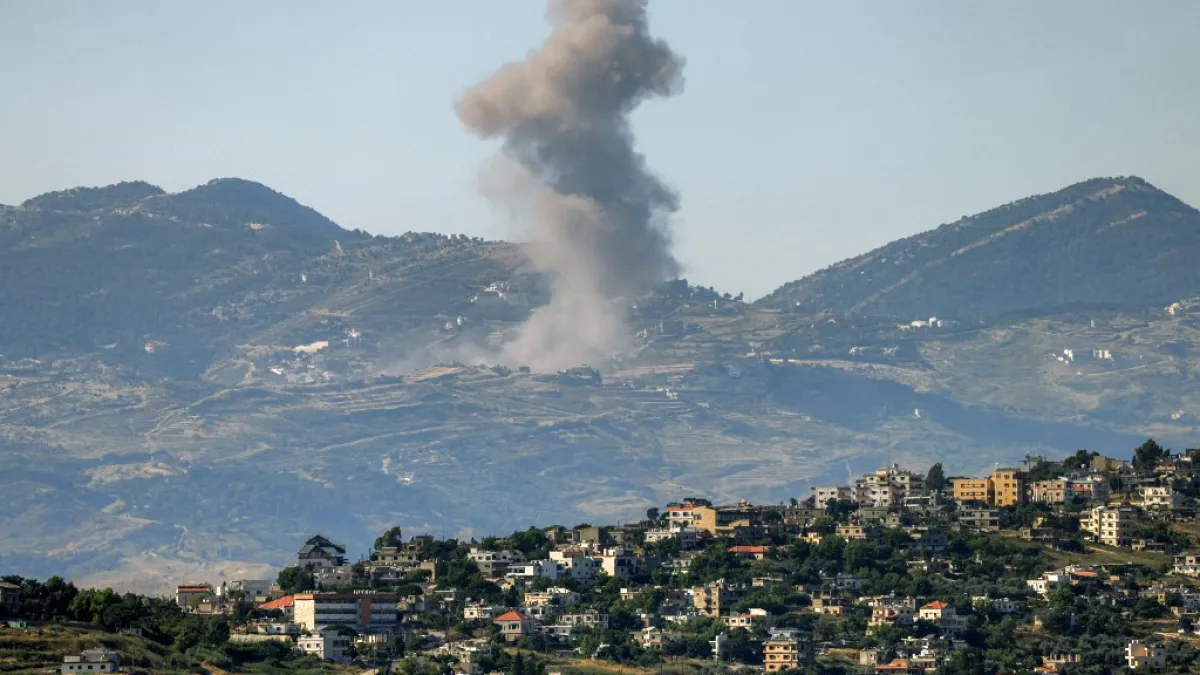
Israeli attacks on Lebanon have since killed more than 1,500 people and displaced more than 1 million people. The Israeli military has also launched an invasion of southern Lebanon and said it aims to seize more territory for what it calls a buffer zone.
There’s been no immediate comment from Hezbollah or Lebanon.
Celebrations have erupted in Iraq’s capital, Baghdad, following the announcement of a two-week ceasefire between Iran and the United States. Iraq had been pulled into the war with pro-Iran armed groups and US forces carrying out attacks on each other.
Iran’s Foreign Minister Abbas Araghchi says ‘if attacks against Iran are halted,’ then Iran agrees to the terms of the two-week ceasefire with the US, announced by Donald Trump. Al Jazeera’s Mohamed Vall explains the response from Tehran and how the Strait of Hormuz will be opened.
Al Jazeera’s Mike Hanna reports that the White House has confirmed the US has agreed to suspend all bombing and military attacks on Iran for two weeks, provided the Strait of Hormuz re-opens for safe passage. Trump’s announcement came close to an hour before an original threatened deadline, signalling a breakthrough towards diplomacy.
US President Donald Trump says he has agreed to extend his threatened deadline to attack Iran by two weeks, if Iran immediately re-opens the Strait of Hormuz. His Truth Social post came less than two hours before he had said Iran would face widespread attacks on civilian infrastructure.
Pakistan’s Prime Minister Shehbaz Sharif says diplomatic efforts to resolve the US-Israeli war on Iran are ‘progressing steadily’ as he urged US President Donald Trump to postpone his threatened deadline for two weeks. Al Jazeera’s Osama Bin Javaid explains Islamabad’s ‘last-ditch effort’.
Tehran, Iran – The head of Iran’s top science and engineering university believes that the United States and Israel are targeting symbols of Iran’s progress as a nation, and not merely hitting the governing establishment.
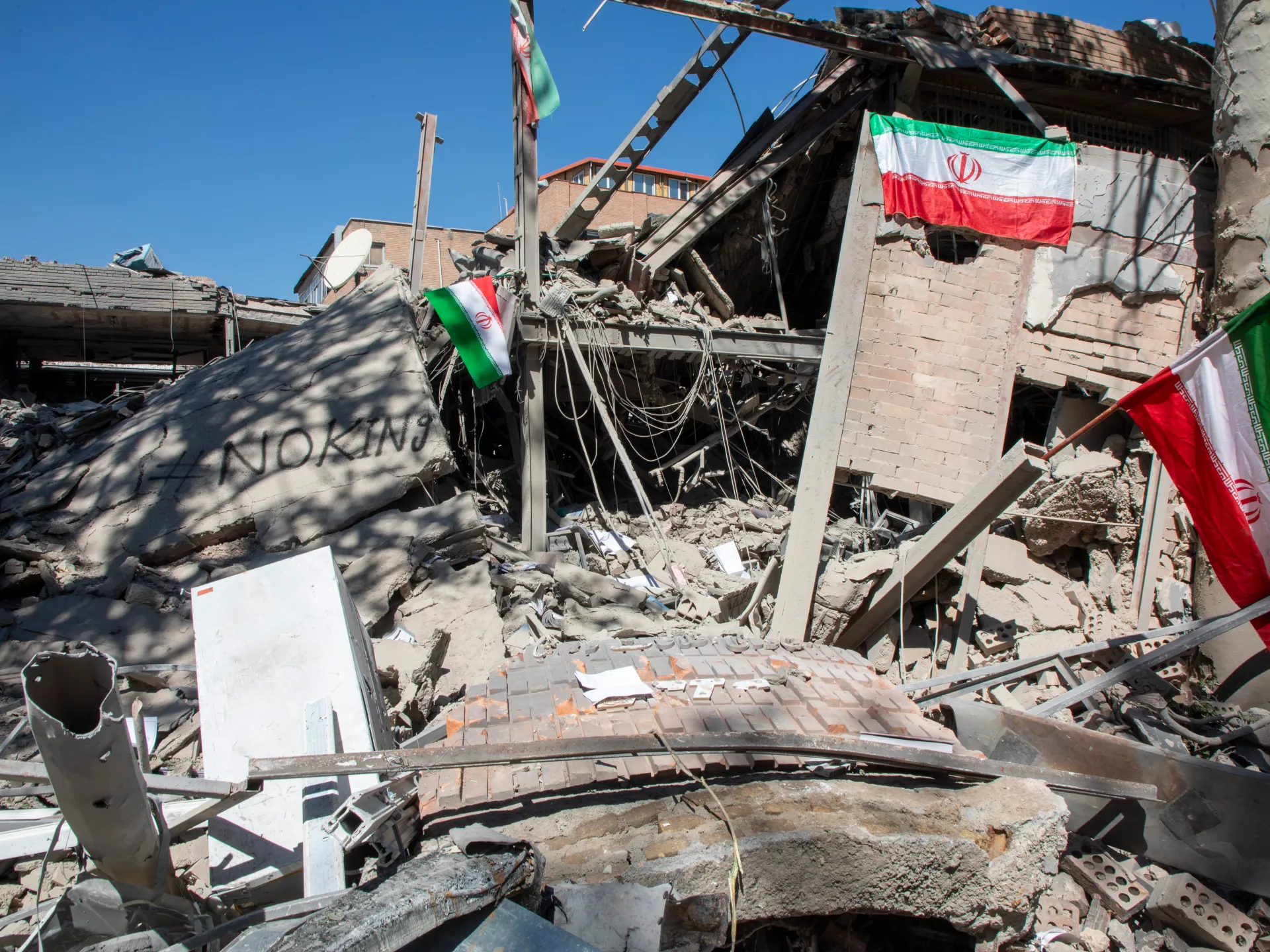
The Sharif University of Technology in Tehran was bombed on Monday, destroying and damaging multiple buildings, including what was described by the authorities as an artificial intelligence centre housing critical databases. The university’s website and other online services went dark.
Recommended Stories
list of 3 itemsend of list
“We believe the reason the enemy targeted these buildings and destroyed the entire infrastructure is that it did not want us to achieve AI technology,” university President Masoud Tajrishi said, adding that the higher education facility had been working on training AI models in Persian for two years and provided services to hundreds of companies.
“The enemy does not want us to succeed or have development and progress, but all our universities are united now by these attacks,” he said at the site of the bombing on Tuesday. Minutes later, another attack targeted the capital, with low-flying cruise missiles visible over downtown Tehran and air defence guns activated.
Tajrishi also said that no country had been prepared to provide Iran with the knowledge and know-how to work on AI technology due to US sanctions and competitive advantages, so all of the research was done domestically.
The US and Israel have not provided an official reason for targeting Iran’s main higher education hubs or cultural heritage sites, which are considered civilian infrastructure. No casualties were reported inside Sharif since all school and university classes are being taken online, but more than 2,000 people have been killed during the war.
The strike on the top university, which was founded six decades ago, came after a string of similar air raids targeting research centres inside other prominent facilities, including the century-old Pasteur Institute, a photonics lab at Shahid Beheshti University and a satellite development lab at the Science and Technology University.
More than 30 universities have been affected by US and Israeli attacks since the start of the war on February 28, Iran’s minister of science, research and technology, Hossein Simaei Saraf, told Al Jazeera last week.
The attacks prompted the Islamic Revolutionary Guard Corps (IRGC) to declare US and Israeli-affiliated universities “legitimate targets”.
Mohammad Hossein Omid, president of Tehran University, wrote a letter on behalf of 15 top university heads last week, urging the IRGC to refrain from attacking other universities in order to show that Tehran is committed to safeguarding higher education facilities anywhere as “human and global heritage” entities.
However, he has since shifted his position and demanded retaliatory attacks in kind after a huge backlash from local hardline media.
The US and Israel have continued to attack across Iran, targeting the country’s infrastructure, hours ahead of US President Donald Trump’s deadline for Iran to capitulate to his demands. The Israeli military has already on Tuesday hit Iran’s railway network, but Trump has threatened to bomb critical civilian infrastructure, such as the country’s main power plants and bridges, which would constitute a violation of international law.
Trump said “a whole civilisation will die tonight” in Iran, with the comment coming days after the country’s steel factories and petrochemical manufacturers were extensively targeted in another move that will affect all of Iran’s population of more than 90 million. He boasted that it would take 20 years for Iran to rebuild if Washington were to withdraw today, but it could take 100 years to rebuild if the war continues.
A sign in front of Tehran’s damaged Sharif University says ‘Trump’s help has arrived’ [Maziar Motamedi/Al Jazeera]
Hitting Iran or the Islamic Republic?
Inside the Sharif University on Tuesday, a mathematics professor held an online class inside the remains of a bombed building as a show of defiance and continuity.
Placards placed nearby by the authorities read, “Trump’s help has arrived.”
This was in reference to repeated claims by the US president and Israeli Prime Minister Benjamin Netanyahu that they wish to “help” the Iranian people overthrow the Islamic Republic, which came to power after a 1979 revolution but has faced nationwide protests in recent years.
But the increasing systematic targeting of civilian infrastructure has caused deep concerns among many Iranians, especially since the country was already dealing with a host of issues before the war, including economic woes and an energy crisis.
“It was a strange feeling waking up in the morning and seeing your university attacked, not to mention the terror of feeling you might not have electricity to check anything tomorrow,” said a Shahid Beheshti student, who asked to remain anonymous.
“If you can justify attacks on power plants, steel, petrochemicals, bridges, universities and science institutes, you can justify anything,” he told Al Jazeera.
The civilian infrastructure attacks have also prompted local media to lash out against foreign-based Iranians, some of whom have supported US and Israeli attacks in the hope that they would lead to the toppling of the governing establishment of military, political, and theocratic leaders.
The Fars news agency, affiliated with the IRGC, claimed on Tuesday that the attack on Sharif University could not have been possible without “betrayal” from dissidents abroad. It accused Ali Sharifi Zarchi, a top former professor-turned-dissident at Sharif, of leaking the coordinates of the bombed centre, without providing evidence.
Sharifi Zarchi pointed out in a tweet in response that the centre was marked on Google Maps, and said that while he unequivocally condemns the targeting of universities and other civilian sites, “the aim of any attacks should be the overthrow of the Islamic Republic regime, which has held the Iranian people hostage through repression, mass killings, and internet shutdowns.”
The professor circulated a letter published in a number of nongovernment student groups on Tuesday, which also condemned the US and Israeli attacks but said that the establishment was responsible for pursuing policies that put it on a collision course with the two countries and their allies.
“Our people want to work, to study, to breathe, to have access to the internet, and to build their own future,” the students wrote. “Minds that leave do not return. A girl who is detained no longer studies. A child whose school is bombed does not grow up. The cost of these losses will be paid by all of our futures – including those who benefit from this divide today.”
Donald Trump warned that “a whole civilisation will die tonight” if Iran does not open the Strait of Hormuz, ahead of a Tuesday night deadline for Tehran to comply. The comments follow a “pretty shocking” silence from US Congress on the US-Israeli war, Al Jazeera’s Kimberly Halkett explains.
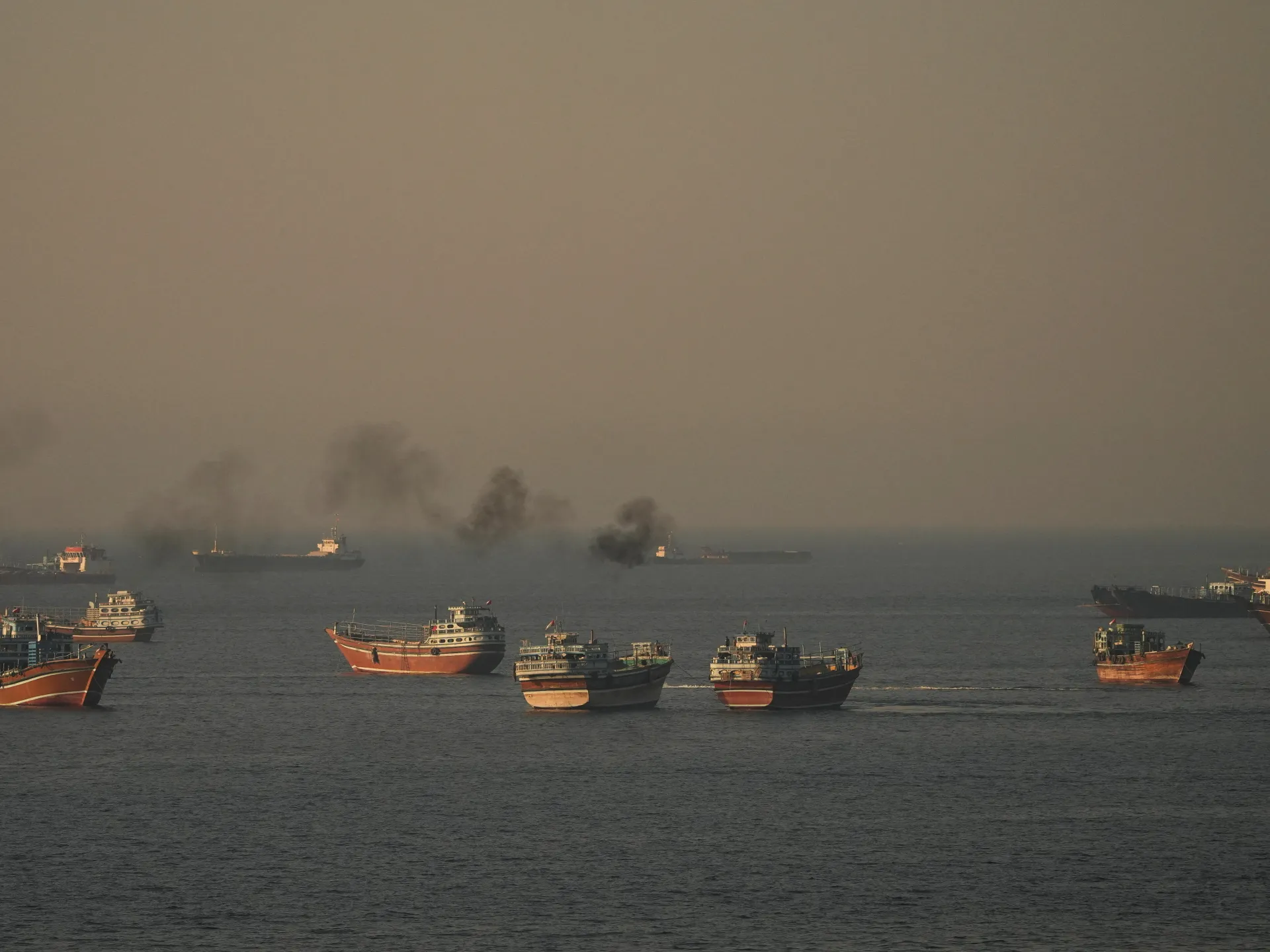
The US-Israel war on Iran has sparked a global fuel crisis as thousands of tankers carrying crucial deliveries of oil and liquefied natural gas (LNG) remain stranded on either side of the Strait of Hormuz, currently under a blockade imposed by Iran.
On Saturday, Egypt’s government said it is among the “best-performing” countries in tackling the crisis because of the measures it has implemented to save on fuel.
Here is what we know about the steps Egypt is taking and whether other countries are doing the same.
Why has the Iran war caused an energy crisis?
Pressure on oil and gas markets is mounting due to the almost complete halt to shipping through the Strait of Hormuz as well as air strikes on and around key energy facilities in the Gulf as the United States-Israel war on Iran enters its sixth week.
One-fifth of the world’s oil and LNG is shipped from producers in the Gulf through the Strait of Hormuz in peacetime. This is the only route from the Gulf to the open ocean.
On March 2, two days after the US and Israel began strikes on Iran, Ebrahim Jabari, a senior adviser to the commander in chief of Iran’s Islamic Revolutionary Guard Corps (IRGC), announced that the strait was “closed”. If any vessels tried to pass through, he said, the IRGC and the navy would “set those ships ablaze”. Since then, traffic through the strait, carrying cargoes including 20 million barrels of oil each day, has plunged by more than 95 percent.
Now, Tehran is allowing just a handful of tankers through after reaching agreements with some countries to do so.
Besides this, energy infrastructure in the Middle East has suffered damage over the course of the war.
On March 24, QatarEnergy declared force majeure on some of its long-term LNG supply contracts after an Iranian attack on Qatar’s Ras Laffan LNG facility – the largest in the world – wiped out about 17 percent of the country’s LNG export capacity, causing an estimated $20bn in lost annual revenue and threatening supplies to Europe and Asia.
All of this disruption has sent energy prices soaring. On Tuesday, global oil benchmark Brent crude was around $109 per barrel, compared to around $65 per barrel right before the war started.
How is Egypt tackling the energy crisis?
Egypt’s Petroleum Ministry has announced rises in fuel prices ranging from 14 percent to 30 percent.
On March 28, Egyptian Prime Minister Mostafa Madbouly’s office told a press conference that the country’s energy import bill had increased from $1.2bn in January to $2.5bn in March.
Egypt is both one of the region’s largest energy importers and among its most heavily indebted economies. While domestic gas and oil account for the majority of its total energy supply, the country still relies on imported fuels, especially refined oil products and some natural gas, from Israel and the Gulf states.
Madbouly announced measures Egypt is taking to mitigate this and preserve state energy resources.
From March 28, shops, malls and restaurants are closing at 9pm (19:00 GMT) every day for one month, except Thursdays and Fridays.
On Thursdays and Fridays, the closing time will be 10pm (20:00 GMT).
Fuel allocations for government vehicles will be reduced by 30 percent.
Street lighting and street advertisement lighting will be cut by 50 percent.
From April 1, eligible employees will work remotely on Sundays, the first day of the working week. Some essential services, such as pharmacies, grocery stores and tourist facilities, will be exempted from this.
Which other countries have introduced energy conservation measures?
Besides Egypt, other countries are also taking steps to save energy.
Last week, Malaysia ordered civil servants to work from home to save energy in government offices.
In mid-March, it was revealed that government offices in the Philippines had moved to a four-day work week, officials in Thailand and Vietnam were being encouraged to work from home and limit travel, and Myanmar’s government had imposed alternating driving days.
Pakistan, which imports about 80 percent of its energy from the Gulf, announced on Monday of this week that markets and shopping malls would close at 8pm (15:00 GMT) across the country, except in Sindh province. The government’s statement added that food outlets would close at 10pm (17:00 GMT), which is also when marriage ceremonies at private properties and houses must end.
Bangladesh has reduced working hours for government and private workers and banking services hours in a bid to conserve electricity.
In Sri Lanka and Slovenia, authorities have introduced fuel rationing and purchase limits to manage shortages and soaring costs.
Abas Aslani of the Center for Middle East Strategic Studies argues that the US and Israel are playing “Russian roulette” with the Gulf’s environmental security following strikes near Iran’s Bushehr nuclear plant.
During the first month of the US-Israel war on Iran, the Houthis adopted a cautious approach, even though many expected them to move faster based on the nature of their close relationship with Tehran. This assessment is not wrong — the relationship is indeed strong — but what this view misses is that decision-making within the Yemeni group has increasingly become the product of an extended internal debate.
This debate goes back to the Houthis’ decision to launch military action in support of Gaza after Operation Al-Aqsa Flood on October 7, 2023. After the United States and Israel launched retaliatory strikes in March 2025, which lasted for two months, an agreement was brokered by Oman in May, bringing the fighting to a halt. This experience had a deep impact on the group.
Some Houthi leaders believe that the cost of that involvement over the past two years was high, not only in terms of military and leadership losses and civilian casualties, but also in terms of draining resources, damaging infrastructure and complicating the political track, especially with Saudi Arabia, which had put forward a roadmap for peace in Yemen in 2022.
This assessment did not remain at the level of abstract analysis; it became the basis for an internal discussion that produced two clear currents.
The first current leans towards caution. It seems that the previous experience proved that direct involvement does not yield strategic gains, but it does open costly fronts. This camp pushes for avoiding open confrontation, preserving existing understandings — especially with Saudi Arabia — and limiting action to political support or small, contained operations that do not drag the group into a large-scale escalation.
In contrast, there is another current that believes the present moment is crucial for the so-called “axis of resistance” created by Iran, and that absence or hesitation could cost the group its place in the post-war equation. For this current, this is a decisive moment to assert the Houthis’ presence, especially amid an expanding conflict and the likelihood of a reshuffling of the regional balance of power.
Two currents have shaped the Houthis’ decision-making over recent weeks. As a result, today the group has embraced neither full-scale engagement nor total absence. This was evident first in the escalation of political rhetoric during the first month of the war, then in the execution of limited, carefully calculated operations that began on March 27. There was a clear declaration of gradual intervention, close monitoring of developments, and a deliberate effort not to cross the red lines identified by the group’s military spokesperson, particularly those related to the Bab al-Mandeb Strait.
However, the balance between the two currents may become unstable at some point as the war escalates and widens regionally, and as Iranian and Houthi talk of a “unity of fronts” intensifies. The longer the conflict lasts, the less able the group will be to remain in this grey zone, and the stronger the pressure will be for deeper involvement.
With each new development on the ground, this internal debate may edge closer to a moment of decision: either entrenching caution as a long-term strategic choice, or shifting to broader involvement that may not be as gradual as was declared in Houthi statements.
What remains constant, however, is that the group has entered this phase with the accumulated experience of past years — a record that has taught it the cost of involvement and made it aware that entering a war is not merely a military decision, but an open-ended political, security, and economic trajectory. It has already paid that price in its previous confrontations with the US and Israel.
Thus, the question is no longer whether the Houthis will enter the war, but how they will enter and at what cost. Will they be able to set and maintain limits on their involvement? Will their calibrated entry avoid paying the full price? The answers to these questions will be made clear in the weeks to come.
The views expressed in this article are the author’s own and do not necessarily reflect Al Jazeera’s editorial stance.
A US-Israeli strike has caused extensive damage to a synagogue in Tehran, according to a video published by Iran’s semi-official Mehr News Agency. Footage shows civil defence workers amid the rubble, with Hebrew-language books scattered on the ground.
US President Donald Trump said ‘Tuesday will be power plant day’ in a vulgar post on social media. He says the US plans to start bombing electricity infrastructure unless Iran opens the Strait of Hormuz. Al Jazeera’s Hala Al Shami looks at Iran’s power plants and the dangers of potential attacks.
Political analyst Trita Parsi says no one should be surprised that Iran has rejected the idea of a ceasefire deal with the US and Israel, given their history of violating previous agreements.
Around two dozen protesters gathered outside the US embassy in Tel Aviv, calling for an end to the war with Iran and Lebanon. Police ordered the protest to disperse within minutes as tensions rose and members of the public confronted demonstrators.
The WHO has warned of ‘catastrophic’ risks if radioactive release occurs.
Iran’s Bushehr Nuclear Power Plant has been targeted four times since the United States-Israel war on Iran began more than a month ago.
And the World Health Organization (WHO has warned of “catastrophic” risks if a radioactive release occurs.
Recommended Stories
list of 3 itemsend of list
Tehran has accused the United Nations’ nuclear watchdog of inaction – an allegation that the International Atomic Energy Agency (IAEA) rejects. But it does acknowledge that the situation is of deep concern.
Why are the attacks happening, and what risks do they pose?
Presenter: James Bays
Guests:
Tariq Rauf – Former head of verification and security policy coordination at the IAEA
Abas Aslani – Senior research fellow at the Center for Middle East Strategic Studies
Alicia Sanders-Zakre – Head of policy at the International Campaign to Abolish Nuclear Weapons
US Secretary of Defense Pete Hegseth said Monday will be the “largest volume of strikes” on Iran since the US-Israeli war began, adding that tomorrow could be even worse if Iran does not reopen the Strait of Hormuz.
Seoul says Pyongyang has not been supplying Iran with weapons in the hopes of being able to reopen diplomatic dialogue with the US.
Published On 6 Apr 20266 Apr 2026
North Korea appears to be distancing itself from longtime partner Iran in the hopes of forming a new relationship with the United States, South Korean intelligence believes.
Seoul’s National Intelligence Service (NIS) sees no signs that North Korea has sent weapons or supplies to Tehran since the US-Israel war on Iran began at the end of February, lawmaker Park Sun-won, who attended a closed-door briefing held by the NIS, said on Sunday.
Recommended Stories
list of 3 itemsend of list
While Iran’s other allies China and Russia have frequently issued statements on the US-Israel war on Iran, North Korea’s Foreign Ministry has only issued two toned-down statements so far, said the NIS.
While Pyongyang did condemn the US and Israeli attacks on Iran as illegal, it did not issue public condolences after Supreme Leader Ayatollah Ali Khamenei’s death or send a congratulatory message when Khamenei’s son, Mojtaba Khamenei, succeeded him.
The spy agency said Pyongyang is likely adopting this cautious approach to position it for a new diplomatic chapter with the US once the Middle East conflict subsides, said Park.
The NIS also told lawmakers that it now believes Supreme Leader Kim Jong Un is grooming his teenage daughter as his successor, citing a recent public display of her driving a tank.
The NIS said the imagery was intended to highlight the supposed military aptitude of the youngster, who is believed to be around 13 and named Ju Ae.
Such scenes are intended to pay “homage” to Kim’s own public military appearances during the early 2010s, when he was being prepared to succeed his father, Park said.
Kim’s powerful sister, Kim Yo Jong, was earlier thought to be a leading candidate to succeed her brother.
On Monday, she was in North Korean headlines as she welcomed an apology issued by South Korean President Lee Jae Myung on Sunday over a January drone incursion.
“The ROK [Republic of Korea] president personally expressed regret and talked about a measure for preventing recurrence. Our government appreciated it as very fortunate and wise behaviour for its own sake,” Kim Yo Jong said in a statement carried by the official Korean Central News Agency.
Seoul initially denied any official role in the January drone incursion, with authorities suggesting it was the work of civilians, but Lee said a probe had revealed government officials had been involved.
“We express regret to the North over the unnecessary military tensions caused by the irresponsible and reckless actions of some individuals,” Lee said.
Lee has sought to repair ties with North Korea since taking office last year, criticising his predecessor for allegedly sending drones to scatter propaganda over Pyongyang.
His repeated overtures, however, have gone unanswered by the North until now.
Lee’s expression of regret follows Kim’s labelling of Seoul as the “most hostile state” in a policy address in March in which he vowed to “thoroughly reject and disregard it”.
US President Donald Trump has issued a direct ultimatum to Iran: reopen the Strait of Hormuz by 8pm Eastern Time in the United States on Tuesday, April 7 (midnight GMT on April 8), or face the destruction of national power plants and bridges.
This echoes an earlier March 21 ultimatum in which he threatened to attack Iran’s power plants – “the biggest one first” – if the strait was not fully reopened within 48 hours.
President Trump has since extended that deadline several times, citing progress in negotiations he claims the US is having with Iran to end the ongoing war. Iran denies it is holding direct talks with the US.
While Trump has made grand statements such as “they’re going to lose every power plant and every other plant they have in the whole country”, he has not mentioned specific targets.
The US president has also threatened to destroy the country’s bridges. Over the weekend, a US-Israeli strike hit the B1 bridge in the city of Karaj, west of Tehran. The major highway link, described as the tallest bridge in the Middle East, had been scheduled to be inaugurated soon. It sustained significant damage in the strike.
Legal experts say that targeting civilian sites amounts to “collective punishment”, which is prohibited under the laws of war.
Where are Iran’s power plants?
Iran operates hundreds of power plants which, together, form one of the largest electricity systems in the Middle East, supplying energy to 92 million people.
Most of the country’s power plants are close to major population centres and industrial hubs. The majority of Iran’s population lives in the western half of the country, with Tehran, Mashhad and Isfahan the three largest cities.
(Al Jazeera)
Iran has a mixture of gas, coal, hydro, nuclear and oil-fired power plants, but most are gas-fired. In the north and centre of the country, clusters of gas-fired plants supply electricity to the country’s largest population centres, including Tehran, Karaj, Isfahan and Mashhad.
Another major concentration of power plants lies along the Gulf coast. These plants sit close to major gasfields and ports, allowing large thermal stations to run on abundant natural gas.
The coast is also home to the Bushehr Nuclear Power Plant, Iran’s only nuclear power facility, which has a capacity of 1,000MW. The US and Israel have repeatedly hit this nuclear power plant, raising risks of radioactive contamination far beyond Iran’s borders, the state-run Atomic Energy Organisation of Iran (AEOI) has warned.
A satellite image shows new reactors under construction at the Bushehr site in Iran in this handout image dated January 1, 2025 [Maxar Technologies/Handout via Reuters]
Iran also operates a handful of hydropower dams concentrated along the Karun River, the country’s most important source of hydroelectric generation.
Electricity generated from all these plants is fed into a national transmission network operated by Iran Grid Management Company, which distributes power to cities, industries and homes across the country.
The map below shows all of Iran’s power stations with a capacity of 100MW or more.
A 100MW power plant can typically supply electricity to roughly 75,000 to 100,000 homes, depending on consumption patterns.
Iran’s largest power plant by capacity is the Damavand Power Plant located in the Pakdasht area, roughly 50km (31 miles) southeast of Tehran, with a capacity of some 2,900MW, enough to power more than two million homes.
Which are Iran’s most important power plants?
Iran’s largest power plants include:
Damavand (Pakdasht) Power Plant – Near Tehran. Fuel: Natural gas (combined-cycle). Capacity: 2,868MW.
Shahid Salimi Power Plant – Neka, along the Caspian Sea coast. Fuel: Natural gas. Capacity: 2,215MW.
Shahid Rajaee Power Plant – Near Qazvin. Fuel: Natural gas. Capacity: 2,043MW.
Karun-3 Dam – Khuzestan Province. Fuel: Hydropower. Capacity: 2,000MW.
Kerman Power Plant – Kerman. Fuel: Natural gas. Capacity: 1,912MW.
Other smaller but strategically important power plants include:
Ramin Power Plant – Ahvaz, Khuzestan. Fuel: Gas. Capacity: 1,903MW.
Bushehr Nuclear Power Plant – On the Gulf. Fuel: Nuclear. Capacity: 1,000MW.
Bandar Abbas Power Plant – Near the Strait of Hormuz. Fuel: Oil. Capacity: 1,330MW.
How does Iran generate its electricity?
Iran’s electricity system relies heavily on large thermal power plants fuelled by natural gas. The country has one of the world’s largest natural gas reserves, and this fuel forms the backbone of its power system.
In 2025, 86 percent of Iran’s electricity came from natural gas.
Oil-fired plants provide a smaller share, generating roughly seven percent of electricity. Some power stations switch to diesel or fuel oil when natural gas supplies are tight, especially during winter demand peaks.
(Al Jazeera)
Hydropower accounts for about five percent of electricity. Large dams on rivers such as the Karun River generate power by using flowing water to spin turbines.
Nuclear energy contributes around two percent of the country’s electricity, mainly from the Bushehr Nuclear Power Plant, Iran’s only operational nuclear reactor.
Renewables such as solar and wind play a very small role, together accounting for less than one percent of electricity generation.
Overall, more than 90 percent of Iran’s electricity comes from fossil fuels, making it one of the most gas-dependent power systems in the world.
As the US threatens to launch a ground invasion of Iran, many questions remain about its goals and geographical span. Some scenarios suggest a focus on some of the islands in the Gulf, others – joining forces with local insurgent groups.
Early on in the war, Washington seemed to toy with the idea of supporting opposition groups from Iran’s large Kurdish minority to launch a war by proxy.
According to reports in the Israeli media, initial efforts by Mossad to encourage attacks by Kurdish groups in Iran’s northwest failed due to “leaks, distrust”. Iran bolstered its defences in the area and put pressure on the authorities in Iraqi Kurdistan, where the Iranian Kurdish groups are based.
Last week, in an interview with Fox News, US President Donald Trump acknowledged that the US provided weapons to the Kurds.
Further action involving either Kurdish or other ethnic opposition groups may still be on the table as his administration seeks to put together an exit strategy from the war. Encouraging local insurgencies to weaken Tehran may seem like a good plan, but would it work?
Iran’s weak spots
Fomenting ethnic or religious tensions in the enemy camp is an old military tactic, which the US itself has used many times in the Middle East. Trump is likely looking for ways to gain leverage over the regime in Tehran and stretch its military capabilities. Iran’s internal fractures may seem to offer some opportunities for that.
In the past three decades, Tehran has failed to address the growing grievances of various minority populations in the country’s periphery. Sunni Arabs, Kurds and Balochis feel marginalised in the Shi’a majority state, while Arab and Kurdish Shia Muslims feel discriminated against by ethnic Persians.
This has led to various anti-government mobilisations, including armed ones over the past three decades.
Kurdish armed groups based in Iraq have operated for decades in northwestern Iran. Kurdish areas have also seen waves of mass protests, the most recent of which was in the autumn of 2022 following the death of a Kurdish woman at the hands of morality police in Tehran.
Other armed groups have also been active. In 2018, an attack on a military parade in the city of Ahvaz killed 29 people; an Arab separatist group claimed responsibility. In 2019, Baluchi rebels of the Jaish Al Adl group attacked a bus carrying members of the IRGC, killing at least 27. A raid by the same group on a police station in 2023 killed 11 security personnel. Then in 2024, the bombing of a mourner’s procession for the late General Qasem Sulaimani killed at least 90 people in the southeastern city of Kerman; ISIL claimed responsibility.
All of these incidents expose weaknesses in Iran’s periphery, which its enemies have long tried to exploit. If Trump decides to go down that path, he should take heed of the experiences of those who have tried to undermine the authorities in Tehran by fomenting ethno-religious insurgencies.
Past failures
Iraq’s president Saddam Hussein was one of them. When he decided to invade Iran in 1980, he saw an opportunity in the ethnic unrest among Kurds and Arabs the Islamic Republic had inherited from the monarchical regime. Saddam Hussein encouraged insurgencies among both minorities.
By the time Iraqi troops stormed onto Iranian territory, the Kurdish Democratic Party of Iran (KDP-I) had already launched a rebellion against the newly formed Islamic Republic in 1979. Iraq eventually provided arms and finances, enabling the KDP-I to take over some territory and hold it for months, but internal fighting and the brutal campaign Tehran launched through its Revolutionary Guards managed to suppress the rebellion by 1982-83.
Saddam also tried to get the Arabs in the south to revolt, some Iranian Arab separatist groups fought alongside Iraqi forces in the battle for the Iranian city of Khorramshahr in 1980. But the Sunni Arab community did not join in large numbers. Shi’a Arabs had no desire to participate in what they saw as a foreign invasion, launched by an Sunni-dominated Iraqi regime. As a result, Saddam never got the mass Arab uprising he wished for.
Twenty years later, US President George W Bush tried to use a similar playbook against Iran. He authorised the CIA and other intelligence outfits to carry out covert operations in Iran and funnel money and equipment to some opposition armed groups.
Like Saddam, Bush also failed to foment rebellions in Iran. This is not just because the Islamic Republic was able to handle security situations swifty and decisively, but also because efforts to incite uprisings never really got enough momentum. The reason for that is that parts of Iran’s minorities are well-integrated into the nation’s core and elite. Ethno-religious identities and socio-economic realities in Iran are too complex to feed into a simple black-and-white narrative about ethnic oppression by the Persian majority.
The likelihood of success today
More than a month into the war on Iran, it is by now clear that US and Israeli efforts to trigger a mass uprising in Iran by decapitating the regime have failed.
At this time, there is nothing to suggest that any efforts to foment ethnic insurgencies would be more successful. US-Israel support for separatist groups is unlikely to get anywhere further than localised acts of sabotage or small skirmishes.
This would not divert important military resources and attention away from the fight with the US and Israel, as Iran is fighting a techno-guerilla war, where its most valuable weapons are missiles and drones – not ground troops.
Furthermore, there is significant regional opposition to US support for separatist groups from major allies, including Pakistan and Turkiye. Islamabad has been dealing its own violent attacks carried out by Baluch separatists in the southwest of the country. Meanwhile, for Ankara, the issue of any support for Kurdish groups is highly sensitive given its own long history of unrest in the Kurdish regions of the country.
Iraq would also be reluctant to support such activities. The government in Baghdad, as well as the Kurdistan Regional Government, would not risk retaliation from Iran by allowing US-Israeli support for the Iranian Kurds to take place on Iraqi territory.
Inciting ethnic insurgencies may seem like a good strategy on paper, but in reality it would be another recipe for disaster for the Trump administration, which is already struggling with enough failures in its war on Iran.
The views expressed in this article are the author’s own and do not necessarily reflect Al Jazeera’s editorial stance.