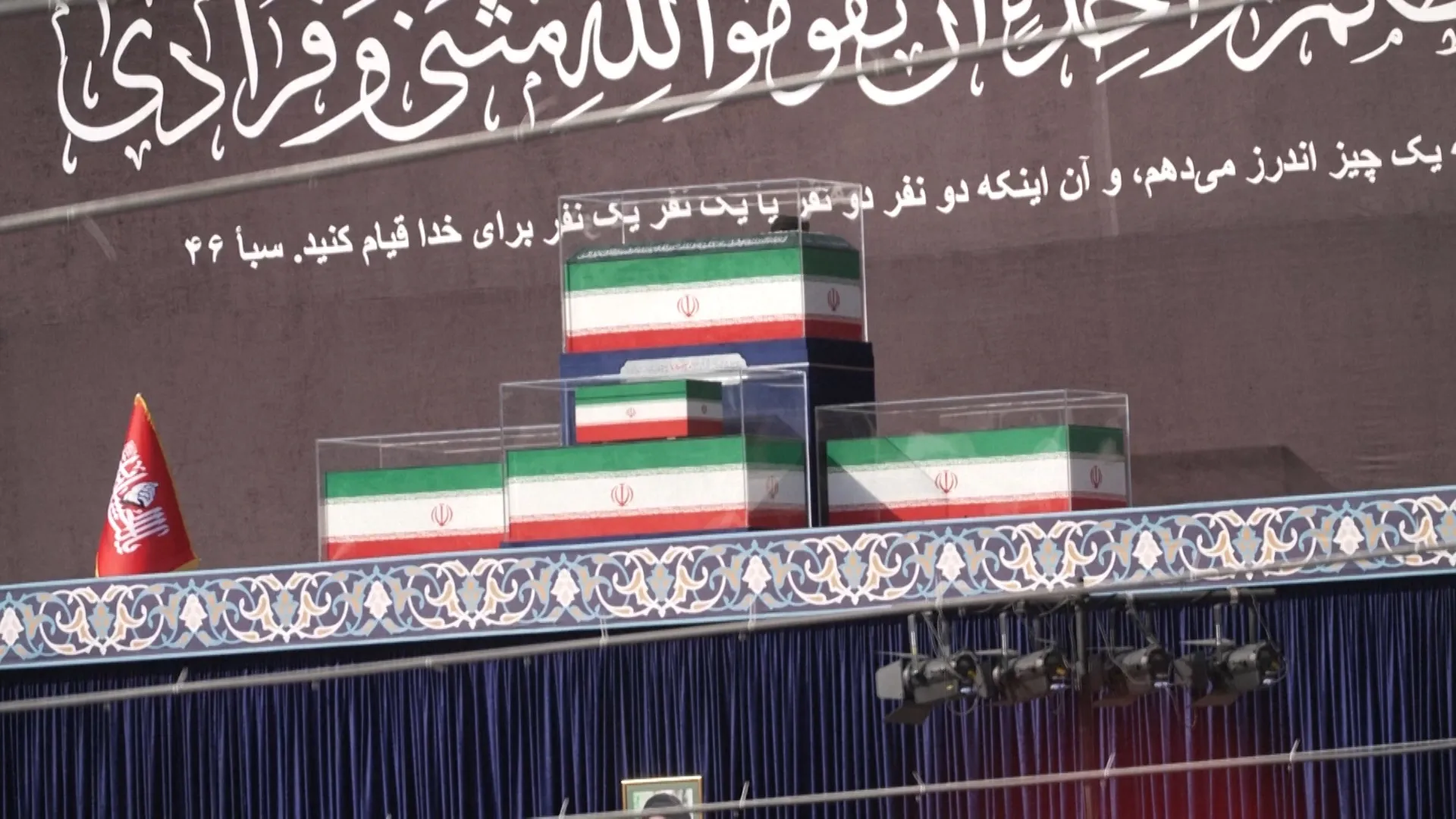
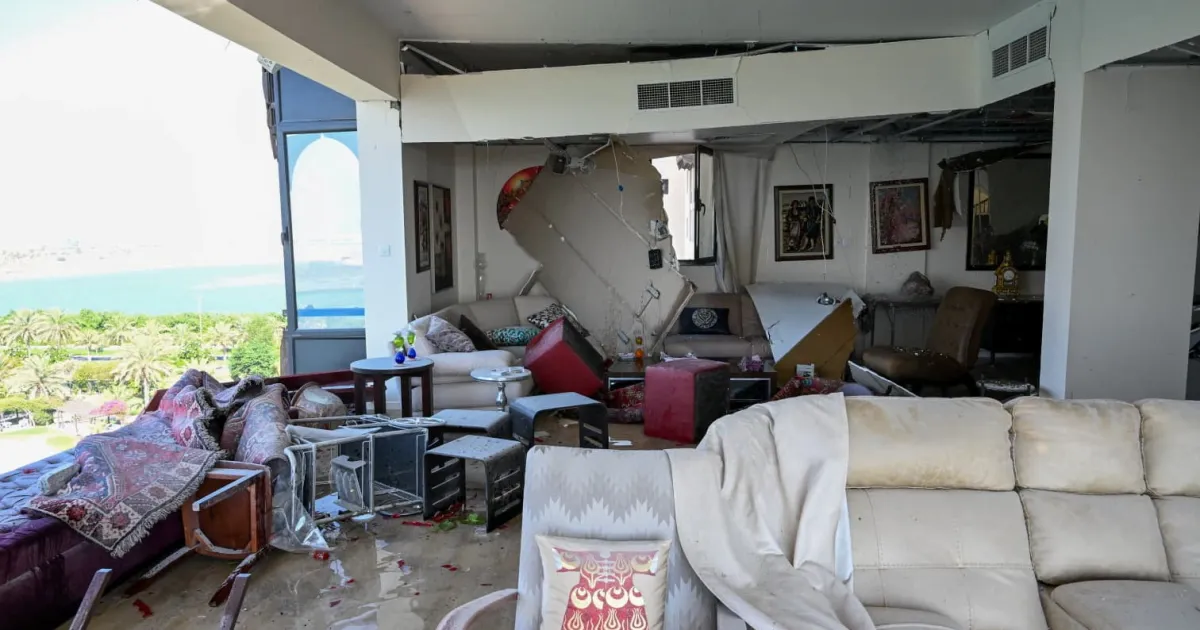
Iran has marked the second day of funeral processions for its late Supreme Leader Ali Khamenei. Masses of supporters came to view his body despite a sweltering heatwave, with water misters installed at Tehran’s Grand Mosalla Hall and volunteers distributing cold drinks to mourners.
Military command issues threat a day after Qatari mediators hailed ‘positive progress’ in indirect US-Iranian talks.
Published On 3 Jul 20263 Jul 2026
Iran’s military command has threatened ships that attempt to cross the Strait of Hormuz using unapproved routes with a “forceful response,” casting new doubt over trade flows in the critical conduit for global energy supplies.
Iran’s Khatam al-Anbiya Central Headquarters issued the threat on Thursday, a day after Qatari mediators hailed indirect negotiations between US and Iranian officials as making “positive progress” towards a peace deal.
Recommended Stories
list of 4 itemsend of list
“Any failure to comply with and depart from the designated route or disregard for the navigation protocols of the Islamic Republic of Iran in the Strait of Hormuz will be met with an immediate and forceful response from the armed forces, and will endanger the security of the offending vessels,” the military command said in a statement carried by the country’s semi-official Tasnim news agency.
While Tehran did not specify what prompted the warning, it came after US Central Command (CENTCOM) on Wednesday said it had presided over a security dialogue in Bahrain during which regional leaders expressed their commitment to the “free flow of commerce” in the strait.
Iranian Deputy Minister of Foreign Affairs Kazem Gharibabadi hit out at CENTCOM’s statement on Thursday, saying the forum “cannot establish legal order and security for the Persian Gulf”.
“The region’s security will be ensured through the end of interventions and the US withdrawal from the area, respect for countries’ sovereignty, and acceptance of new geopolitical realities – not under the military umbrella of America,” Gharibabadi said in a post on X.
The Strait of Hormuz, which facilitated about one-fifth of the global trade in oil and liquefied natural gas before the US-Israel war on Iran began in late February, has become a major sticking point in Washington and Tehran’s talks aimed at turning their fragile ceasefire into a lasting peace.
While Iran agreed to make its “best efforts” to arrange the safe passage of ships in the strait in the memorandum of understanding it signed with the US on June 17, Tehran has repeatedly threatened to attack ships that do not use its preferred route close to the Iranian shoreline.
At least 49 attacks on commercial vessels have been recorded in the strait since the start of the war on February 28, according to MarineTraffic.
Most of those incidents, including drone attacks on a Singapore-flagged cargo ship and Panama-flagged merchant vessel on Thursday and Saturday, respectively, have been blamed on Tehran.
While transits through the waterway have risen since US President Donald Trump and Iranian President Masoud Pezeshkian signed their MoU on June 17, they remain far below the roughly 130 daily crossings that took place before the conflict.
At least 45 vessels crossed the strait on Wednesday, up from 34 on Tuesday, according to MarineTraffic data.
After dropping to pre-war levels on Thursday on reports of productive talks in Doha, oil prices largely held steady as markets opened in Asia on Friday.
Brent futures for August delivery stood at $72.07 per barrel as of 02:30 GMT, after dropping below $71 for the first time since the war the previous day.
Brent falls below $71 a barrel amid reports of progress in talks to end the war.
Published On 2 Jul 20262 Jul 2026
Oil prices have fallen to levels not seen since the start of the US-Israel war on Iran amid rising hopes for a breakthrough in negotiations aimed at sealing a permanent peace deal.
Brent crude fell more than 1 percent on Thursday to below $71 a barrel, returning the international benchmark to pre-war prices.
Recommended Stories
list of 4 itemsend of list
Brent futures for August delivery stood at $70.82 per barrel as of 04:30 GMT, lower than at any point since February 27.
Following the latest drop, Brent prices are down more than 38 percent from their post-war peak of more than $126 a barrel on April 30.
The slide came after Qatar, a key mediator between Washington and Tehran, said that US and Iranian officials had made “positive progress” in indirect talks aimed at resolving issues related to their memorandum of understanding (MoU) on ending the war.
US President Donald Trump also cast a positive light on the talks on Wednesday, saying the “denuclearisation of Iran is moving along well”.
Vandana Hari, the founder of the Singapore-based oil market analysis provider Vanda Insights, said a steady uptick in oil flows out of the Gulf and “cautiously optimistic geopolitical sentiment” had driven prices lower.
“Several key issues in the MoU remain unresolved, but the two sides appear to have backed off confrontation on the issue of the interim Hormuz transit regime, at least for the time being,” Hari told Al Jazeera.
“I expect crude to continue grinding lower until the backlog of stranded barrels has cleared, and prices could even swing into oversold territory,” she said.
“The real test of normalisation of Persian Gulf supply will come after that, necessitating fresh supply-demand balance recalibration.”
Shipping in the Strait of Hormuz, a conduit for one-fifth of the global trade in oil and liquefied natural gas in peacetime, has shown tentative signs of recovery in recent days after a sharp decline following attacks on two commercial vessels in the waterway on Thursday and Saturday.
At least 40 vessels transited the strait on Tuesday, according to data from MarineTraffic, up from 27 crossings on Monday and 22 on Sunday.
Maritime traffic nonetheless remains far below its pre-war level of roughly 130 daily crossings amid persistent concerns about safety in the waterway.
While Iran agreed to make its “best efforts” to arrange the safe passage of vessels in the MoU it signed with the US on June 17, Tehran has since repeatedly claimed the sole right to control movement through the strait.
At least 49 attacks on commercial vessels have been recorded in the strait since the start of the war, according to MarineTraffic, most of which were claimed by Tehran or blamed on its forces.
US president says talks will take place on Tuesday, but Tehran has not confirmed the negotiations in Doha.
President Donald Trump says a meeting will take place between Iran and the United States in Qatar on Tuesday, suggesting that diplomacy is still on track despite the recent military skirmishes in the Gulf.
Trump’s announcement on Monday came less than two hours after a top Iranian official said that technical talks over the memorandum of understanding (MoU) between Washington and Tehran “are not planned” for this week.
Recommended Stories
list of 3 itemsend of list
“IRAN HAS REQUESTED A MEETING. IT WILL TAKE PLACE TOMORROW IN DOHA!” Trump wrote in a social media post.
Iranian Deputy Foreign Minister Kazem Gharibabadi said the meeting would take place after conditions are met, without providing details.
“Although consultations with Qatar, including regarding the follow-up of the implementation of the other party’s commitments, are ongoing as usual, the news from some media outlets that technical talks of the working groups will be held in Doha cannot be confirmed,” Gharibabadi told Tasnim news agency.
The two statements from Washington and Tehran appear to contradict each other, but it is possible that a breakthrough finalising the meeting occurred after Gharibabadi’s comment.
Iran, however, has not confirmed that talks have been scheduled.
White House spokeswoman Karoline Leavitt said special envoy Steve Witkoff and Trump’s son-in-law, Jared Kushner, will lead the US negotiating team in Doha.
“Special Envoy Witkoff and Jared Kushner will be flying to Doha for high-level meetings this week as we continue to discuss the memorandum of understanding,” she told Fox News.
Leavitt added that technical talks will take place on the sidelines of the high-level negotiations.
The US and Iran reached a deal to end the war earlier this month, kicking off a 60-day period of negotiations over the thorniest issues in the relationship – Tehran’s nuclear programme.
But the deal has been tested by Israel’s continuing attacks in Lebanon and Iran’s assertion of control over the Strait of Hormuz.
The first sentence of the 14-point MoU calls for a full ceasefire in Lebanon, “ensuring the territorial integrity and sovereignty” of the country.
But the US has sponsored a separate agreement between the Lebanese government and Israel that conditions Israeli withdrawal on the disarmament of Hezbollah across the country.
Hormuz has been another sticking point. Iran has rejected routes through the strait outside of its control and fired at ships passing through lanes not designated by Tehran.
The US has struck Iranian positions near the waterway, to which Iran responded with missile and drone attacks against American bases in Bahrain and Kuwait.
But diplomatic and de-escalation efforts appear to continue, despite the trading of attacks.
“As far as we’re concerned, we’re holding up our end of the ceasefire,” Leavitt said on Monday, but she warned that “violence will be met with violence” if Iran attacks commercial ships or US interests.
On Monday, Trump hailed the drop in oil prices that followed the deal, which lifted Tehran’s blockade on Hormuz and eased US sanctions on Iran’s energy products.
“GAS PRICES COMING DOWN, FAST! REPORT ANY ABUSES AT RETAIL LEVEL,” the US president wrote on his Truth Social platform.
The average price of one gallon (3.8 litres) of gasoline in the US has dropped to $3.86, down from a peak of $4.56 in May. It was less than $3 before the war.
The memorandum of understanding (MoU) the United States and Iran have signed is not a peace treaty. It is not even a credible framework for one. A vocal chorus of critics has rushed to portray it as a humiliation – evidence that President Donald Trump was manoeuvred into negotiations and extracted a poor deal from a regime that outplayed him.
That reading mistakes a mirage for reality. The Trump administration entered these talks with a precise understanding of what the Iranian regime is, what it wants and what any agreement with it is actually worth. No one in that negotiating team harbours the illusion that Tehran intends to honour commitments that constrain its core ambitions. The MоU is not a peace settlement. It is a mutually understood pause – a tactical intermission chosen by both sides for reasons that have nothing to do with trust and everything to do with time.
To grasp why, one needs only consult Iran’s unbroken record. That record is not a matter of interpretation or political dispute. It is a documented history of agreements made, commitments given and obligations systematically abandoned whenever honouring them conflicted with the regime’s objectives.
The pattern is consistent enough to constitute a doctrine: Iran negotiates under pressure, signs what is necessary to relieve that pressure and resumes its course once the immediate threat has passed.
The deeply flawed 2015 Joint Comprehensive Plan of Action (JCPOA) was the most prominent recent demonstration of this cycle. Presented as a landmark of multilateral diplomacy, it was in practice a subsidised intermission – a breathing space Iran used to consolidate resources, sustain its proxy networks and continue advancing its strategic programme. The JCPOA did not change Iranian behaviour. It funded and protected it.
The Trump administration’s “maximum pressure” campaign was a direct response to that lesson: A regime of this kind cannot be managed through diplomatic lifelines. It can only be constrained by pressure severe enough to leave it no viable alternative to compliance.
The new MoU does not signal that Iran has changed. Its calculus remains what it has always been – survival and expansion, pursued through whatever tactical posture the moment requires. When pressure mounts, Iran negotiates. When pressure eases, Iran advances. Its negotiators are, by all available evidence, prepared to offer assurances they have no intention of keeping. This is not a failure of diplomatic craftsmanship. This is simply the nature of any negotiation with a regime like Iran’s.
Nowhere is this more apparent than in the Iranian nuclear programme. As a signatory to the Non-Proliferation Treaty, Iran has repeatedly committed to transparent cooperation with the International Atomic Energy Agency. It has repeatedly broken those commitments, blocking inspections, constructing clandestine enrichment facilities, destroying evidence and systematically deceiving the international community. The pattern is not one of occasional noncompliance. It is deliberate, sustained deception in pursuit of a single unwavering objective: the acquisition of a nuclear weapon.
A state genuinely committed to civilian nuclear energy has no need for a vast and enormously expensive domestic enrichment programme. Nuclear fuel can be purchased – from Russia, among others – at a fraction of the cost and without the international confrontation such a programme inevitably provokes.
Iran has chosen the far more costly and dangerous path for one reason: Enrichment is not a means to an end, but the end itself. Its rulers are committed to a nuclear weapon, and that commitment has survived changes in personnel, shifts in rhetoric and decades of pressure.
It will not be bargained away – and here lies the critical point that no amount of diplomatic optimism can paper over. Iran’s rulers are not pragmatic actors engaged in a conventional cost-benefit calculation. Their goals are theological and strategic in a way that places them beyond the reach of ordinary negotiation.
They do not govern in the interests of the Iranian people. The sanctions they have endured have devastated ordinary Iranians – driven up poverty, hollowed out the middle class, denied the population access to medicines and opportunity. None of that has moved the regime one degree from its course.
This is a regime that could, if it chose, transform its position entirely. It could make peace with its neighbours, normalise relations with the international community, shed the sanctions that have devastated its economy and dramatically improve the lives of Iranians. The price is not beyond reach: abandon the nuclear weapons programme, cease development of offensive ballistic missiles and end the sponsorship of terrorist proxies. Iran’s rulers have refused that bargain consistently and completely.
That is the essential context for understanding what the Trump administration is actually doing. It would be a serious misjudgement to read this MoU as evidence of American weakness or strategic confusion. The team that designed and executed the most effective pressure campaign against Iran in recent memory is not naive about this adversary.
Trump enters this pause knowing that Iran will not honour commitments that genuinely constrain it. He is not expecting otherwise. Neither side, in all likelihood, operates under any such illusion – which is precisely what makes the critics’ alarm about a “bad deal” somewhat beside the point.
You cannot be cheated by an agreement you never expected the other party to keep.
What this MoU represents is a mutually understood strategic pause, a breathing space both parties have chosen, for entirely different reasons, over immediate confrontation. Iran needs economic relief. A regime facing internal decay and a depleted treasury has strong incentives to buy time, replenish its resources and wait out what it calculates to be a finite window.
Tehran is acutely aware that Trump has roughly two and a half years remaining in office. From its perspective, survival through that period is itself a form of victory.
Washington’s calculus is different in kind. Keeping the Strait of Hormuz open is an immediate, non-negotiable goal – a choked strait means an energy price shock with global consequences. Beyond that, the US has its own repositioning to accomplish. Military inventories drawn down through recent operations are being restocked. Strategic options are being preserved and expanded.
A pause that enables that rebuilding, while avoiding a premature confrontation on unfavourable terms, is not a concession. It is preparation.
Trump has never wavered in his commitment to eliminating Iran as a strategic threat – not through wishful diplomacy, but through the kind of pressure that forecloses options. That commitment did not expire with the signing of this MoU. The question for Tehran is not whether American resolve exists but whether it can be outlasted. That is a wager the Iranian regime has made before and lost.
The international community will, as usual, observe from a careful distance. Many nations will urge Iran to be stopped while taking few steps to stop it, criticising US action and inaction with equal facility.
Trump understands this dynamic. It is the foundation of his approach to alliances – the insistence that partners bear proportionate burdens rather than simply drawing on American resolve while contributing little of their own.
The MoU will not resolve the Iranian problem. It was not designed to. When its terms expire or when Iran decides it has served its purpose, the nuclear programme will resume its advance, the proxies will be better resourced, and the Strait of Hormuz will once again become a flashpoint.
That outcome is not a possibility. Given Iran’s record, it is a near-certainty. The only consequential variable is whether the US and those willing to stand alongside it will be better positioned to act decisively when that moment arrives. Far from a mirage, the evidence suggests that is precisely what this administration is working to ensure.
The views expressed in this article are the author’s own and do not necessarily reflect Al Jazeera’s editorial policy.
Tehran, Iran– The memorandum of understanding (MoU) signed last week between Iran and the United States appears to be in jeopardy after a second day of military strikes, as well as the a framework agreement that entrenches Israeli forces on Lebanese soil.
The Islamic Revolutionary Guard Corps (IRGC) on Sunday released video showing the launch of ballistic missiles overnight, with a message written on them in English and Persian saying US President Donald Trump was insisting on a “defeated war”.
Recommended Stories
list of 3 itemsend of list
The IRGC said it had fired missiles and drones towards the US Ali Al Salem airbase in Kuwait and the US Fifth Naval Fleet in Bahrain in retaliation for a second day of US strikes. It threatened more attacks if the deal is violated again by the “deceitful” US, which, along with Israel launched air attacks across Iran on February 28.
The exchanges of fire come after the US coordinated the transit of vessels out of the Strait of Hormuz in cooperation with Oman and the International Maritime Organization.
Many ships were being directed through Oman’s waters, which prompted the IRGC to hit a container ship and a tanker with explosive-laden drones in an attempt to force traffic to pass through Iranian waters instead.
Speaking to reporters in neighbouring Iraq on Sunday, Foreign Minister Abbas Araghchi said Iran will exercise sole management and oversight of the critical waterway for the next 30 days before allowing full traffic to resume.
He also emphasised the first clause of the June 17 MoU, which says military operations must immediately and permanently end on all fronts, including Lebanon, and urged Washington to exert pressure on Israel to stop attacking southern Lebanon.
The governments of Israel and Lebanon reached a US-brokered framework deal on Friday that allows Israeli forces to remain in southern Lebanon, until Tehran-backed Hezbollah is fully disarmed. That appears to contradict the MoU signed with Iran.
Hezbollah swiftly rejected the agreement, calling it “humiliating, shameful and a surrender” of Lebanon’s sovereignty.
Negar Mortazavi, a senior fellow at the Center for International Policy, said she expected the Lebanon issue to negatively impact the MoU because Hezbollah was not on board and the Lebanese government’s previous ceasefire deals with Israel have been repeatedly violated.
She also told Al Jazeera that Iran has found tremendous leverage with the Strait of Hormuz, treating it as a “golden card”, as the disruption to oil exports has heavily impacted markets and made the war unpopular among many, including in the US.
“They are using that leverage to the max and not going back to the status before the war, pretending like no war happened,” she said, adding that Iranian authorities and the IRGC have sought to centre themselves in the process of coordinating transit through the strait.
“They’re saying they want traffic to go through in coordination with them, and I think they will be able to exert that kind of power,” she said.
On Saturday, Iran’s President Masoud Pezeshkian, Speaker and chief negotiator Mohammad Bagher Ghalibaf and judiciary chief Gholam-Hossein Mohseni-Ejei released an image of their first publicised trilateral meeting since the start of the war more than four months ago.
Supreme Leader Mojtaba Khamenei has not been seen or heard from since succeeding his father, Ayatollah Ali Khamenei, who was killed in a US-Israeli attack on the first day of the war. But a new written text message attributed to him on Sunday said: “What is certain is that the criminals must be seized by the collar and made to face the punishment for their criminal acts”.
Supporters of the Islamic Republic cheered on the latest IRGC attacks against US interests as they continued demonstrating on the streets overnight into Sunday as hardline politicians and analysts called for further attacks until Iran gets better concessions.
On the state-linked talk show, Tamam Rokh, political analysts said Tehran should significantly strengthen its ties with Moscow and Beijing.
“We could do many things with help from Russia and China to damage US strategic equipment in the region like vessels, refuelling aircraft and electronic warfare,” pro-state analyst Ali Samadzadeh said on the programme on Saturday.
“There was no movement in Tehran to tie Beijing and Moscow to the war, and this major flaw exists in the form of the negotiations and the text of the MoU as well,” he said.
More than 60 hardline legislators on Sunday postponed plans to protest against the closure of parliament since the start of the war after its presiding board said it would meet to reconvene the assembly, following Ali Khamenei’s burial next month.
Many others say demands for extracting major concessions from the US and Israel do not correspond with the reality of the situation after months of war.
“In terms of military power, we couldn’t do anything about the US blockade and we didn’t think the crisis would get so serious,” pro-state commentator Vahid Ashtari told crowds at a street event in Tehran.
“I think a type of blind idealism has emerged that believes we are on top and at the peak, so we shouldn’t make a deal. But there are facts on the ground. We have some missiles and drones to carry out an asymmetric defence, but we have no fighter jets to fly to the US and hit Trump. Not only could we not avenge [Khamenei], we could not avenge Haj Qassem either,” he added, in reference to General Qassem Soleimani, who was assassinated by the US in 2020.
After two nights of attacks, Iran’s financial markets also reacted poorly, with the national currency losing gains since the signing of the MoU to trade at about 1.7 million rials against the dollar in Tehran’s open market on Sunday.
The main index of the Tehran Stock Exchange also lost more than 100,000 points to stand at just over five million points at the end of trading on Sunday, the second day of the working week in Iran.
Vahid, a 37-year-old mechanic who also deals in car parts in Tehran’s Grand Bazaar, told Al Jazeera that while the market has marginally improved since the signing of the deal with the US, it is still treading on thin ice.
He said parts for foreign cars are becoming harder to find, while prices have been rising rapidly for both domestic and foreign vehicle parts.
“I think the war will start again over the coming months and some in the bazaar think the same,” he said.
Bahrain and Kuwait have condemned Iran’s retaliatory attacks after a second day of US strikes on Iran. Tehran University academic Hassan Ahmadian argues the US is trying to find its way out of the Memorandum of Understanding that Trump signed 10 days ago, ending the war.
Iran has launched attacks on Bahrain and Kuwait after the United States struck five Iranian targets, escalating tensions and threatening the fragile ceasefire agreed by the two sides earlier this month.
The Islamic Revolutionary Guard Corps (IRGC) confirmed the attacks on Sunday, saying it launched ballistic missiles and drones at the US Ali Al Salem airbase in Kuwait and the US Fifth Naval Fleet at Port Salman in Bahrain.
Recommended Stories
list of 3 itemsend of list
Bahrain condemned the attacks, saying they violated its sovereignty and undermined “opportunities for de-escalation and stability in the region”, while Kuwait described the “repeated heinous Iranian aggressions” as a “flagrant violation of its sovereignty”.
The US military hit Iran’s Sirik, Bandar-e Lengeh and Qeshm Island on Saturday. US Central Command (CENTCOM) said its navy and air force “conducted strikes tonight on 10 Iranian military targets at multiple locations in and near the Strait of Hormuz”, saying the attacks were a response to an Iranian drone attack on the Kiku oil tanker.
It said the Panama-flagged vessel was carrying more than two million barrels of crude oil when it was attacked as it transited near the strait early on Saturday.
Britain’s UKMTO maritime security agency said the tanker hit on Saturday had sustained damage to its bridge, with all crew reported safe.
Strait of Hormuz
The weekend attacks come after the US struck Iran on Friday following drone attacks on vessels near the Strait of Hormuz.
The Singapore-registered Ever Lovely container ship was hit by a drone on Thursday. No injuries were reported. The US responded by hitting locations near Sirik, while Iran responded by attacking US military locations in the region.
Iran has said vessels transiting the strait can only use its designated route and warned that ships using any other routes would be violating the ceasefire agreement.
The International Maritime Organization suspended its plan to evacuate ships stranded in the strait on Thursday after the attack on the Ever Lovely.
President Donald Trump said late on Saturday that Tehran had violated the ceasefire agreement, which was signed on June 17.
“There may come a point when we are no longer able to be reasonable, and will be forced to militarily complete the job that we very successfully started,” he posted on social media. “If that happens, the Islamic Republic of Iran will no longer exist!”
Iran’s Ministry of Foreign Affairs condemned the US strikes on its monitoring and surveillance facilities on its southern coast. It said the “brutal attacks” were in violation of the Memorandum of Understanding (MoU) and the United Nations charter.
It added that they showed the US “does not place the slightest value and credibility on its commitments” and said Iran would defend its sovereignty and territorial integrity against “US military aggression”.
Agreement under strain
The MoU signed by the US and Iran extended a ceasefire in their war that began with US-Israeli attacks on Iran on February 28, giving both sides 60 days to negotiate an end to the fighting.
Access through the Strait of Hormuz is a key element of the MoU. During the war, Iran blocked the waterway through which about 20 percent of the world’s oil passes, triggering a global energy crisis.
Article 5 of the MoU states that Iran will “make arrangements using its best efforts for the safe passage of commercial vessels” through the strait during the 60 days. It states that Iran and Oman, along with other Gulf states, will discuss the future administration of the strait.
Wolfgang Pusztai, a defence analyst, told Al Jazeera that while neither the US nor Iran have an interest in a bigger escalation, “there is a risk that this might happen unintentionally.”
“If there are some hits in residential areas, if a larger number of civilians are getting killed in the Arab Gulf states, if an American base is hit severely so that the American soldiers are killed, this might easily get out of control,” he said.
For a second day in a row, the United States has launched strikes on Iran, once again citing an attack against a commercial vessel as a motivation.
Saturday’s renewed attacks are the latest indication that a Middle East ceasefire, established as part of a June 17 memorandum of understanding between the US and Iran, might be at breaking point.
Recommended Stories
list of 3 itemsend of list
In a statement, US Central Command (CENTCOM), which directs military action in the Middle East, explained that the latest attacks came “at the Commander in Chief’s direction”.
“CENTCOM forces launched strikes today in direct response to continued Iranian aggression against commercial shipping,” the command centre wrote.
“U.S. military aircraft targeted Iranian military surveillance infrastructure, communication systems, air defense sites, drone storage facilities, and minelayer capabilities.”
Explosions were reported in southern Iran, around the village of Tahrui, near the port of Sirik, which was also the focal point of Friday’s US attacks. State media also indicated that Qeshm Island had been hit.
Responses to cargo ship strikes
Saturday’s strikes against Iran followed a similar playbook to Friday’s.
Early on Saturday morning, at about 4:30am Eastern US time (08:00 GMT), the Panama-flagged tanker Kiku was travelling through the Strait of Hormuz when it was reportedly hit by an unidentified projectile.
No crew members were injured, and no leakage was reported from its cargo.
CENTCOM said the ship had been carrying more than 2 million barrels of crude oil when it was hit by a “one-way attack drone”.
The website MarineTraffic.com indicates that the tanker left the Al Shaheen oilfield on Thursday and is due to dock in Fujairah, in the United Arab Emirates, on Sunday.
A similar sequence of events prompted Friday’s volley of US attacks.
In that case, a Singapore-registered container ship, the Ever Lovely, was struck by a drone as it sailed through the Strait of Hormuz on Thursday. No one on board was injured, and the boat continued on its travels.
But US President Donald Trump denounced the drone strike on Friday as a “foolish violation” of the June 17 memorandum.
By that evening, the US and Iran had exchanged fire, with the US targeting the area around Sirik, and Iran hitting US military installations in the Middle East.
CENTCOM referenced Friday’s actions in announcing the latest round of strikes.
“After yesterday’s U.S. strikes in response to the Iranian attack on M/V Ever Lovely, Iran was given a chance to honor the ceasefire agreement,” CENTCOM wrote.
Iran “elected not to”, it added, citing the Kiku drone strike. CENTCOM also maintained that commercial traffic through the Strait of Hormuz, a sticking point in ceasefire negotiations, would continue, with US military backing.
“U.S. forces remain vigilant, lethal, and ready,” CENTCOM said in its statement.
Controlling the strait
Central to the latest round of fighting is control over the Strait of Hormuz, a key artery for maritime traffic. Nearly 20 percent of the world oil supply passed through the narrow waterway in peacetime, as well as significant quantities of fertiliser and natural gas.
But after the US and Israel launched attacks on Iran on February 28, launching the present-day war, Tehran moved to shut down traffic through the strait, which sits between its shores and Oman’s.
Iran’s decision sent global fuel prices skyrocketing, and that generated pressure, both domestic and international, for the Trump administration.
The June 17 memorandum was designed to provide relief. Though it was a prelude to further negotiation, the deal called for the US, Iran and their allies to “declare the immediate and permanent termination of military operations on all fronts, including in Lebanon”.
It also outlined a 60-day period during which time Iran was to make its “best efforts” at allowing commercial traffic to transit through the Strait of Hormuz at no charge.
That part of the memorandum specified that Iran and Oman, the two countries that border the strait, would determine “future administration and maritime services” in the waterway.
But continued fighting in Lebanon has prompted Iran to threaten the strait’s closure once more.
Then, there is the question of the memorandum’s terms. Experts say the US and Iran have come to different understandings of how the June deal should be enforced.
Al Jazeera correspondent Resul Serdar Atas explained that Iran believes it should be allowed to restrict commercial traffic that does not have prior clearance to pass through the strait.
“Article Five of the memorandum of understanding, according to the Iranian officials, is clearly saying that any ship, whether it’s going through the Iranian territorial water or the Omani territorial water, has to be in full coordination with the Iranian authorities,” he said.
“But that is not understanding of Americans. The Americans are saying, ‘Well, if it is going through the Omani territorial waters, they do not need to coordinate with the Iranian authorities.’”
That, in turn, is leading to a disagreement over who is violating the terms of the ceasefire. The US sees Iran as violating the agreement by interfering with commercial vessels, while the Iranians perceive the US as breaking its commitment to stop fighting.
“That is the pattern,” Serdar Atas said. “For Americans, keeping the Strait of Hormuz open is quite important for the stability of the global economy. But for Iran, the Strait of Hormuz being under Iranian control is the ultimate deterrence and the biggest leverage.”
Tit-for-tat ‘could get out of hand’
Some of the hostilities are a result of the high level of distrust between Iran and the US, according Hassan Ahmadian, a professor at the University of Tehran.
He noted that Iran’s insistence that ships passing through the Strait of Hormuz receive its clearance could be read as a defensive action.
“I think the Iranians will not let go of this because obviously they want only commercial ships, according to the MoU, to pass through the strait. So any ship that doesn’t coordinate might be a military one, might carry military stuff,” Ahmadian said.
He believes that the latest flurry of US attacks may prompt Iran to halt any deliberations with the Trump administration as they seek to cement a peace deal.
The US side, meanwhile, is likely to face pressure from rising oil prices as the result of the renewed fighting, according to Harlan Ullman, a retired US naval officer and chairman of The Killowen Group, a global advisory firm.
Still, Ullman warned that the latest exchange of fire could spiral into an escalation in violence, rendering the memorandum of understanding moot.
“The agreements are very, very fragile, and this tit-for-tat could get out of hand,” Ullman said.
“If prices go up, as I suspect they will, that will be a moderating influence, and I think the United States will consider that rising oil prices are not good, and it will probably continue the negotiations. But right now, who knows?”
The United Nations’ International Maritime Organization (IMO) has suspended plans to evacuate more than 11,000 sailors stranded in the Strait of Hormuz after a cargo ship transiting the waterway was struck by a projectile.
IMO Secretary-General Arsenio Dominguez said several crews had already been evacuated, but the agency had decided to pause the operation until there were “necessary safety guarantees” for those involved.
Recommended Stories
list of 4 itemsend of list
The United Kingdom Maritime Trade Operations (UKMTO), a Royal Navy maritime security agency, said on Thursday that a cargo vessel had been struck by “an unknown projectile” about 7.5 nautical miles (14km) southeast of Dahit, Oman. No casualties were reported.
The incident comes despite a memorandum of understanding (MoU) signed by the United States and Iran last week that ended hostilities and included provisions aimed at reopening the strategic waterway. Iran had restricted passage through the strait in early March after the US and Israel attacked it on February 28. In April, the US imposed a naval blockade on Iran-linked vessels trying to pass through the waterway.
Since the MoU was signed, commercial traffic has restarted through the strait, but key disagreements remain over which shipping routes vessels should use — and whether Iran gets to charge a toll or fee.
Oman and the IMO have proposed a new shipping corridor that would partially bypass waters under Iran’s direct control. Tehran has rejected the plan, saying it was announced without consultation and raises safety concerns while demining operations are still under way. While Iran has not claimed responsibility for Thursday’s attack on the ship off Oman, it has not denied any role, either.
The latest attack has heightened concerns that tensions over navigation through the strait remain unresolved. Here’s what we know.
Why is the UN evacuating sailors?
Following the outbreak of the US-Israel war on Iran on February 28, Tehran and Washington imposed counter restrictions on the passage of ships through the Strait of Hormuz, leaving thousands of seafarers unable to leave vessels trapped in the waterway.
More than a dozen sailors have also been killed in attacks on ships — some from American missiles, others from Iranian projectiles. Most of those killed were from India.
Even with last week’s agreement between Washington and Tehran to end the conflict, more than 11,000 sailors remain stranded in the strait.
Announcing the evacuation plan on Tuesday, the IMO’s Dominguez said the operation would be conducted in “close cooperation with Iran, Oman, all other coastal states in the region, the United States and the maritime industry”.
Oman’s Ministry of Defence said the operation, which had been under discussion for months, would be carried out in phases.
Denmark also announced on Tuesday that it would join a multinational maritime mission led by France and Britain to help restore safe navigation through the strait.
Why was the ship attacked?
The Singapore-flagged cargo vessel Ever Lovely was struck by what authorities described as an “unknown projectile” while transiting the Strait of Hormuz on Thursday.
Ship-tracking data from MarineTraffic showed the vessel had been following the southern shipping route proposed by the IMO earlier that day, a corridor that passes closer to Oman’s coastline and has been rejected by Iran.
Singapore’s Maritime and Port Authority (MPA) said the vessel had since completed its transit through the strait and was continuing its voyage, adding that all 21 crew members were safe.
The authority said it was “deeply concerned” by an attack it described as “unprovoked, unjustifiable, and a breach of international law”.
“All actions affecting international shipping must fully comply with international law, in particular the United Nations Convention on the Law of the Sea, and not endanger the safety of seafarers and ships at sea,” the MPA said.
The incident prompted the IMO to suspend its planned evacuation of stranded sailors. Dominguez said the Ever Lovely “did not transit under IMO’s evacuation framework”.
“I have always reiterated that the safety of the seafarers remains paramount. Therefore, to ensure a coordinated approach and navigational safety, the evacuation plan will be paused until further clarity is obtained,” he said.
What has Iran said?
While it remains unclear if the attack was carried out by Iran, the country’s Islamic Revolutionary Guard Corps had criticised the new shipping corridor announced by Oman and the IMO, while also warning that passage through the strait, “is only possible via routes announced by Iran,” the state broadcaster IRIB reported.
Kazem Gharibabadi, Iran’s deputy foreign minister, has said safe passage through the Strait of Hormuz cannot be guaranteed for vessels transiting “with ambiguous arrangements, parallel routes, or decision-making outside of Iran’s considerations as the coastal state”.
“Any credible framework must be based on coordination with Iran and the provisions of paragraph five of the Islamabad Memorandum of Understanding,” he said in a statement on X. “Otherwise, the outcome will be the suspension of the designated parallel route.”
Iran first published its own map of approved navigation routes in April, directing ships to sail much closer to the Iranian coastline than before the conflict.
The IRGC’s latest warning came after a Liberian-flagged oil tanker transited the strait on Thursday using a route closer to Oman’s coast.
On Friday, a further three foreign oil tankers that attempted to cross the Strait of Hormuz “without authorisation” were turned back after a warning from the IRGC, Iranian state TV reported.
Analysts say control over the Strait of Hormuz has long been one of Tehran’s most important sources of strategic leverage, allowing it to exert pressure on the US, whose economy is inextricably tied to global markets.
Why was the evacuation suspended?
Reporting from Tehran, Al Jazeera’s Resul Serdar Atas said the attack appeared to show Iran was prepared to enforce its warnings over navigation through the Strait of Hormuz, after Tehran insisted vessels using either the Iranian or Omani route must coordinate with its authorities.
“Yesterday, Oman announced new routes for the passage of the ships. But then the IRGC released a statement, saying that whether the ships go through the Iranian or Omani territorial waters, they need to be in full coordination with Iranian authorities,” Atas said.
“And if they violate that, then Iran is going to act accordingly. So the question was whether Iran is going to really act or not?
“The answer is yes. Now, we have seen that a tanker has been attacked by some projectiles in the Strait of Hormuz. The Revolutionary Guards did not claim responsibility but did not deny it either.”
Atas added that Gharibabadi, Iran’s deputy foreign minister, had also warned that any shipping arrangements made without taking Iran’s position as a coastal state into account would be unacceptable.
“Perhaps, in the coming days and weeks, we are going to see that the Strait of Hormuz will be one of the main sticking points.”
What other disputes remain?
Under last week’s memorandum of understanding, Iran agreed it would “make arrangements using its best efforts for the safe passage of commercial vessels with no charge, for 60 days only, from the Persian Gulf to the Sea of Oman and vice versa”.
Although the agreement says commercial traffic should resume immediately, it also acknowledges that mines laid during the conflict must first be cleared, stating that “demining by the Islamic Republic of Iran will be instated within 30 days”.
It also provides for discussions between Iran, Oman and other Gulf states over future arrangements for managing navigation through the waterway.
However, the agreement does not specify what will happen after the initial 60-day period.
Last week, Tehran announced it would waive any transit fees during those 60 days while negotiations with the United States continue in Switzerland, raising the possibility that charges could be introduced if no broader agreement is reached.
Iran’s chief negotiator, Mohammad Bagher Ghalibaf, has also suggested Tehran does not intend to return to the pre-war status quo.
“Hormuz will never return” to how it operated before the conflict, he said. The proposal has also faced resistance from the United States and several Gulf states.
Are ships still moving through the strait?
Commercial shipping has gradually resumed, although traffic remains well below normal levels. Before the conflict, between 120 and 140 vessels typically passed through the Strait of Hormuz each day.
According to maritime analytics firm Kpler, 54 verified commercial and energy-related vessels transited the strait on Thursday, down from 70 verified crossings the previous day.
“West-to-East movements dominated, while the Omani Route accounted for the largest share of identified passages. Yet route transparency remains incomplete, with several Dark or Unknown crossings recorded.
“A reported projectile strike on a cargo vessel southeast of Dahit, Oman, adds fresh operational risk, underscoring the gap between improving physical flows and still-fragile maritime security conditions,” Kpler added.
Israeli and Lebanese delegations will continue their talks on Friday.
Published On 26 Jun 202626 Jun 2026
Israel continues to attack southern Lebanon on Friday as Israeli Prime Minister Benjamin Netanyahu pledges that the Israeli military is “not going to withdraw” from occupied areas.
Israel currently occupies about one-fifth of Lebanon.
This comes amid progress on the interim peace accord between the United States and Iran aimed at ending the US-Israel war on Iran, which began on February 28.
Here is what is happening:
In Iran
IAEA chief says inspectors to return to Iran: The interim US-Iran peace accord – also being referred to as the Memorandum of Understanding (MoU) – gives inspectors from the International Atomic Energy Agency (IAEA) access to Iran, the agency’s chief Rafael Grossi said, after Tehran indicated that key sites would remain off-limits until a final deal with Washington is reached and sanctions are lifted.
“There is an agreement and to comply with that agreement, the IAEA will have to have access and inspect,” the UN nuclear watchdog chief Grossi said at a news conference in Japan. “We hope to be there soon.”
UN halts escort of ships through Hormuz: The UN International Maritime Organization (IMO) paused its operation to escort ships through the Strait of Hormuz on Thursday after a vessel reported an attack, reigniting concerns about whether a preliminary deal to end the Iran war will hold. The cargo ship said it was hit close to Oman by a projectile, the British Navy agency UKMTO said.
On Thursday, Iran’s Islamic Revolutionary Guard Corps (IRGC) warned vessels not to attempt to pass the strait without its express permission, despite Oman and the IMO releasing details of a new safe route. In April, the IRGC released its own safe-transit route for approved ships, showing shipping lanes much closer to its own coast.
(Al Jazeera)
In the US
Trump says unfrozen Iranian assets will be used to buy US agricultural products: US President Donald Trump reiterated during an event for US farmers that unfrozen Iranian assets will be spent on buying wheat, soya beans and corn from the US. Iran has not confirmed this.
In Lebanon
Two killed in Israeli raid: Two people were killed and another person was wounded in an Israeli raid on the town of Mayfadoun, in southern Lebanon’s Nabatieh district, the National News Agency reported, citing the country’s Ministry of Public Health.
An Israeli air raid also hit the town of Nabatieh al-Fawqa, according to Al Jazeera Arabic.
Talks to continue: A US State Department official has told Al Jazeera Arabic that Israeli and Lebanese delegations will resume their meetings on Friday.
(Al Jazeera)
Global economy
India ends commercial gas restrictions: India has lifted restrictions on supplies of commercial liquefied petroleum gas (LPG) imposed during the war, when energy supplies were hit by the closure of the Strait of Hormuz, the global energy chokepoint.
Aramco resumes oil loading: Saudi Aramco, the world’s largest oil company, has resumed oil loading at its Ras Tanura terminal in the Gulf after a nearly four-month halt, shipping data showed.
Brent crude rises after cargo ship comes under attack in key waterway.
Published On 26 Jun 202626 Jun 2026
Oil prices have jumped after the United Nations maritime agency called off its planned evacuation of ships stranded around the Strait of Hormuz following an attack on a cargo vessel in the waterway.
Brent crude, the international benchmark, rose as much as 4 percent on Thursday after the International Maritime Organization paused its evacuation plan amid renewed violence in the strait.
Recommended Stories
list of 4 itemsend of list
Brent futures for August delivery stood at $74.89 per barrel as of 02:00 GMT, after earlier dropping below $72.48, their closing price the day before the United States and Israel launched their war on Iran.
After dropping sharply following the US and Iran’s signing of a memorandum of understanding on ending the war last week, the price of Brent currently stands at about 3 percent above its pre-war level.
Asian markets opened lower on Friday, with key indices in Japan, South Korea, Hong Kong and Taiwan seeing steep losses.
Tokyo’s Nikkei 225 and Seoul’s Kospi both fell more than 3 percent in morning trading, while the Taiex dropped about 1 percent.
In Hong Kong, the Hang Seng Index was down about 1 percent.
The latest attack in the strait, through which about one-fifth of global oil and liquified natural gas supplies transit in peacetime, dealt a blow to hopes for a return to normal shipping in the region after a recent resurgence in traffic.
On Wednesday, 70 vessels transited the waterway, a more than twofold increase from the previous day and the highest daily figure since March 1, according to ship tracking platforms MarineTraffic and Kpler.
The United Kingdom Maritime Trade Operations (UKMTO) centre said on Thursday that a cargo vessel reported being struck by an “unknown projectile” on its starboard side while attempting to cross the strait near the Omani coast.
Multiple media outlets, including The New York Times, CBS News and the Reuters news agency, cited unnamed US officials as saying the attack had been carried out by Iran.
Iran’s Persian Gulf Strait Authority, which claims the right to regulate shipping in the strait, said after the attack that any vessel attempting to use routes outside its designated “framework” would not be guaranteed safe passage.
“The consequences arising from passage through unauthorized routes shall be the responsibility of the owner, operator, and vessel commander,” the authority said on X.
June Goh, a senior oil market analyst at Sparta in Singapore, said the attack was a reminder to markets of the fragility of peace in the strait amid the tenuous US-Iran ceasefire.
“There is a pressing need for tankers to enter and offload the high crude stocks from onshore tanks in order for normal production to resume again,” Goh told Al Jazeera.
“Thus, security of the passageway is paramount to recover the lost supply.”
Six countries – Saudi Arabia, the United Arab Emirates (UAE), Qatar, Kuwait, Bahrain and Oman – form the Gulf Cooperation Council (GCC), which was created in 1981 following fears of the perceived expansionist ambitions of the new Iranian government.
Recommended Stories
list of 4 itemsend of list
Since the 1979 Islamic revolution, Israel has attempted to isolate Iran and its wide network of regional proxy groups. But in a twist of irony, Israeli aggression in this pursuit has pushed some Gulf states closer to Tehran.
When Israel and the US launched strikes on Iran on February 28 – and Tehran responded by attacking Gulf states – they were again forced to reassess their relationship with their neighbour.
Gulf relations with Iran, at present, appear more shaped by realism than reconciliation, but this approach could help them navigate the uncertain road ahead.
“The ongoing conflict … compelled the Gulf states to pursue a more pragmatic relationship with Tehran, one that will include enhanced dialogue to deter conflict,” Farah al-Qawasmi, a researcher at the Gulf Studies Center at Qatar University, told Al Jazeera.
Embracing de-escalation – not Iran
All six GCC member states have welcomed a memorandum of understanding (MoU) signed by Iran and the US last week. But this is shaped more by the Gulf states wanting the war to end rather than a newfound trust of Iran.
“An agreement between the two parties is being [highly] advocated by the Gulf states in [an] attempt to prevent and contain regional conflicts,” al-Qawasmi said.
Shortly after the US and Iran agreed in 2015 to the Joint Comprehensive Plan of Action (JCPOA) – putting guardrails on Tehran’s nuclear programme – Gulf states remained sceptical about their neighbour.
The current war has only heightened these suspicions, but it has also seen regional states seek diplomacy with Tehran rather than military confrontation, despite Iran directly attacking Gulf cities.
“The Gulf states still feel like diplomacy is better than using force to get a deal … to change Iran’s behaviour and to insulate them from Iran’s destabilising actions,” Rob Geist Pinfold, a lecturer on security studies at King’s College London, told Al Jazeera.
Pinfold points out that Iran closed the Strait of Hormuz via drones and missiles, not nuclear weapons, making dealing with that threat a priority for Gulf states rather than Tehran’s nuclear programme.
Gulf states will want a more comprehensive agreement between Iran and the US, rather than the nuclear-focused JCPOA, said Pinfold.
“If you talk to people in Gulf capitals, they will tell you that the nuclear programme is a tomorrow problem for them,” he said.
“The today problem is Iran’s use of drones and proxies to destabilise and undermine the sovereignty of Gulf states, but also states throughout the region.”
US Secretary of State Marco Rubio’s three-day tour of the Gulf, which ends Thursday, is seen as a way of allaying these fears and assuring the GCC that Tehran will not be strengthened by the agreement.
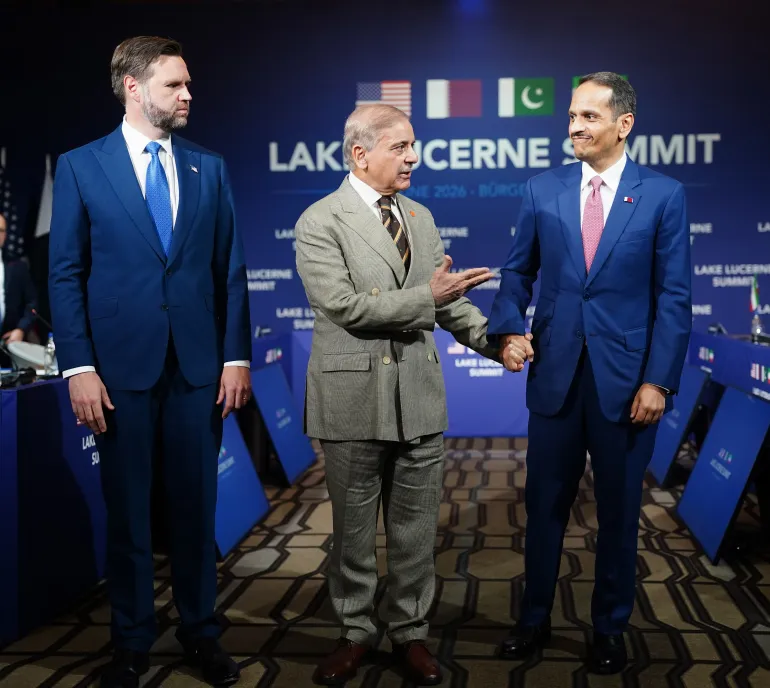
US Vice President JD Vance, left, looks on as Pakistan’s Prime Minister Shehbaz Sharif, centre, speaks and gestures towards Qatar’s Prime Minister and Minister of Foreign Affairs Sheikh Mohammed bin Abdulrahman bin Jassim Al Thani, right, at the start of a quadrilateral meeting between the US, Iran, Pakistan and Qatar [File: Nathan Howard/Pool via Getty Images]
Seat at the table
Mehran Haghirian, the director of research and programmes at the Bourse & Bazaar Foundation, believes Gulf states are in a better position to guide the outcome of the current US-Iran talks than in 2015.
“They are at the heart of the negotiations,” Haghirian said regarding the Gulf states’ role in the current talks.
In its role as a co-mediator, Qatar is essentially representing the GCC and their interests during the talks, while articles five and six of the Iran-US MoU place Gulf states at the centre of the agreement.
Among the biggest concerns for the GCC are the future of the Strait of Hormuz, with Tehran demanding tolls on shipping, and calls for the creation of a regional investment fund for Iran.
“There really cannot be any new Hormuz authority by Iran that would not include other GCC countries,” Haghirian told Al Jazeera.
US Vice President JD Vance claimed last week that the investment fund would be financed by the Gulf coalition, but Rubio said this week that regional allies would not be asked to contribute to any reconstruction fund for Iran.
Qatar’s Prime Minister Sheikh Mohammed bin Abdulrahman bin Jassim Al Thani has described the reported $300bn figure as “aspirational” in an interview with the Financial Times, while no Gulf state has yet said if it will contribute to the fund.
‘Maximum pressure era’
The analysts stress that the GCC is not a monolith – with Gulf states having contrasting and changing approaches towards Iran.
Oman, Qatar and Kuwait were broadly supportive of the JCPOA. Saudi Arabia, the UAE and Bahrain were more sceptical, but even these states publicly backed the agreement, said Haghirian.
When Trump pulled the US out of the JCPOA in 2018, Saudi Arabia, the UAE and Bahrain believed they had “found a partner in DC”.
That led to a “maximum pressure era” that brought a period of brinkmanship in the region, said Haghirian.
Suspected Iran-linked attacks on Saudi Arabia’s Abqaiq-Khurais oil facilities and vessels off the coast of Fujairah in 2019 were “the initial reaction by the Iranians to that maximum pressure” campaign, he added, but paradoxically, this also triggered a recalibration of relations.
“That was enough of a reason for Saudi Arabia [and] the UAE, particularly, to basically restructure their approach towards Iran,” Haghirian said.
The war and accelerated pragmatic rapprochement
While Israel has used war to attempt to increase its presence in the Gulf region – reportedly sending an Iron Dome battery to the UAE – other Gulf states view both Iran and Israel as unsettling forces in the region.
“Israel started the war, which was a destabilising act, and then Iran escalated by targeting the Gulf states, which was in turn a destabilising act,” Pinfold said.
Despite this, the Gulf states targeted by Iran still demonstrated patience and pragmatism in dealing with their neighbour.
Qatar, for example, has played a leading role in mediating between the US and Iran, even after being on the receiving end of Iranian drone and missile attacks.
“All six got attacked, and that’s really a level of foreign policy decision-making that is very difficult for any state to be able to really undertake, considering the fact that it was a military attack,” Haghirian said.
“But again, this pragmatism came out within this context to engage Iran and to actually speak for themselves at these negotiations. This war has really initiated a complete rebalancing of the entire region.”
Iran’s Islamic Revolutionary Guard Corps (IRGC) has warned commercial vessels to only use routes through the Strait of Hormuz approved by Tehran, reopening a point of friction in fragile negotiations between the United States and Iran over the future of the strategic waterway.
The warning came after Oman announced a new shipping transit route through the strait on Wednesday, saying it had coordinated the route with the International Maritime Organization (IMO) as maritime traffic slowly resumes following weeks of disruption.
Recommended Stories
list of 4 itemsend of list
The dispute remains one of the unresolved issues after a memorandum of understanding (MoU) was signed by the United States and Iran last week, which largely halted hostilities in the four-month US-Israel war on Iran and which launched a 60-day negotiation process aimed at reaching a broader peace agreement.
The MoU, which includes the reopening of the strait, followed months of severe disruption to shipping after Iran effectively closed it, and the US imposed a corresponding naval blockade on Iranian ports.
Both Washington and Tehran have declared the strait open to commercial shipping, but questions remain over whether Iran will seek greater control over vessel movements, whether it will impose transit or service fees on ships using the strait following the 60-day negotiating period, and whether disagreements over the waterway could derail efforts to reach a permanent agreement altogether.
Why is the Strait of Hormuz so important?
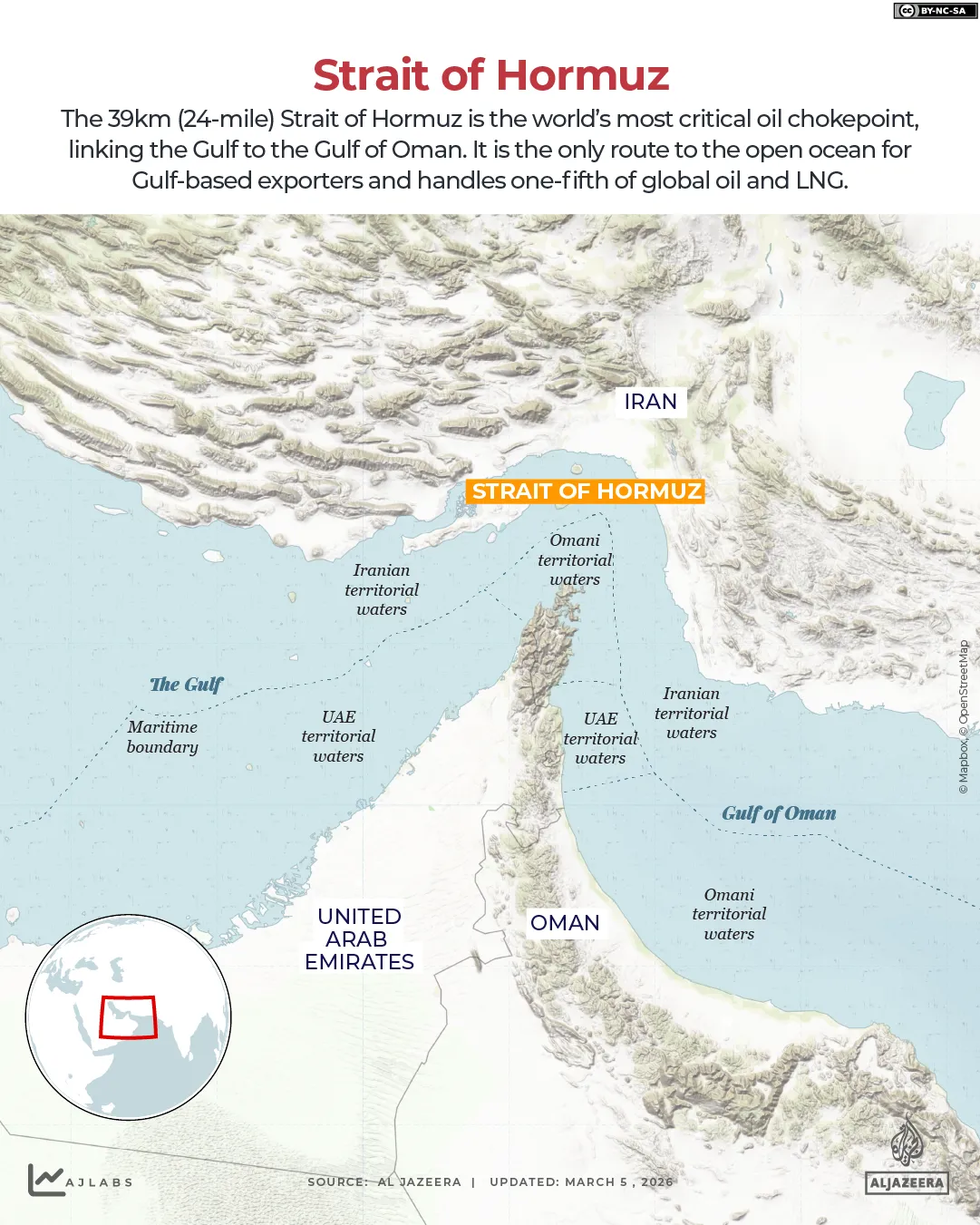
The Strait of Hormuz is one of the world’s most strategically significant waterways, with around one-fifth of global oil and liquefied natural gas (LNG) supplies normally being shipped through the narrow passage linking the Gulf to the Arabian Sea.
Bordered by Iran to the north and Oman and the United Arab Emirates (UAE) to the south, the strait is only about 50km (31 miles) wide at its entrance and exit, narrowing to about 33km (21 miles) at its tightest point. Despite its width, it is deep enough to accommodate the world’s largest oil tankers.
According to the US Energy Information Administration, about 20 million barrels of oil and petroleum products transited the strait each day in 2025, representing hundreds of billions of dollars in annual energy trade.
The route is used not only by Iran but also by Iraq, Kuwait, Qatar, Saudi Arabia and the UAE. It is also vital for global fertiliser exports, with roughly one-third of international fertiliser trade normally passing through the strait.
Because disruptions to shipping there rapidly push up global energy prices and destabilise US markets, control of the waterway has become one of Iran’s strongest sources of strategic leverage in its conflict with the US.
(Al Jazeera)
Why is Iran objecting to Oman’s new route?
The IRGC says Oman and the IMO announced the new shipping corridor without consulting Tehran. “Certain authorities have announced a new shipping route through the Strait of Hormuz without prior notification to or coordination with the Islamic Republic of Iran. The proposed route is unacceptable and poses serious safety risks,” the force said.
“The only authorised transit routes through the Strait of Hormuz are those designated by the Islamic Republic of Iran,” it said, adding that ships must maintain contact with the IRGC Navy while transiting the waterway.
Iran first issued its own map of acceptable routes through the strait in April, showing that ships should pass much closer to the Iranian coast than they had previously.
(Al Jazeera)
The IRGC’s warning came after a Liberian oil tanker passed through the strait on Thursday using a route much closer to Oman’s coastline.
Al Jazeera’s Resul Serdar, reporting from Tehran, said the IRGC appeared frustrated because the Omani route partially bypasses Iran’s direct control over shipping.
“The control of the Strait of Hormuz has been a huge leverage for Iran to put pressure on its adversaries and the global economy since the beginning of the war,” Serdar said.
Oman defended the corridor route it had announced, saying it was intended to restore safe navigation while complying with international law. Foreign Minister Badr Albusaidi said Oman remained committed to ensuring freedom of navigation through the waterway and stressed that “future arrangements related to the strait do not involve imposing any transit fees”.
What does the US-Iran agreement say about the strait?
In the MoU signed last week, Iran agreed that it would “make arrangements using its best efforts for the safe passage of commercial vessels with no charge, for 60 days only, from the Persian Gulf to the Sea of Oman and vice versa”.
While the agreement states that “the traffic of commercial vessels will immediately start”, it also acknowledges that demining operations will be required before normal shipping routes can fully resume, stating that “demining by the Islamic Republic of Iran will be instated within 30 days”. It also provides for discussions between Iran, Oman and other Gulf states on future arrangements for managing the waterway.
However, the memorandum does not specify what will happen after the initial 60-day period. Ali Vaez, Iran project director at the International Crisis Group, said the temporary rerouting of vessels had always been expected because of the mine-clearing operations outlined in the agreement.
“We always knew that if there was a deal, there would be several weeks of mine-clearing operations in the international shipping lane running through the middle of the Strait of Hormuz,” he said.
“During that period, vessels would have to transit through Iranian and Omani territorial waters instead.”
However, Vaez said the latest announcement by Iran was unexpected. “The important thing now is that the Iranians do not start taking fees or other tolls,” he said, “because that is not provided for in the memorandum of understanding.”
Asked whether the IRGC’s position differed from that of Iran’s government, Vaez said: “There is no distinction between the IRGC and the state. They are effectively one and the same. The IRGC is calling the shots.”
Can Iran charge ships fees?
International law generally protects the right of transit through international straits, including Hormuz, making it difficult for coastal states to impose unilateral transit fees on vessels simply passing through international shipping lanes, even where they are within territorial waters.
Last week, Iran announced it would waive planned fees through the strait for 60 days while talks with the US continue in Switzerland, suggesting charges may be introduced once the negotiating period expires.
Iran’s chief negotiator, Mohammad Bagher Ghalibaf, has signalled that Tehran views the post-war arrangement as fundamentally different from the status quo that existed before the conflict.
“Hormuz will never return” to its prewar status, Ghalibaf said.
The suggestion that Iran could charge fees was dismissed by US Secretary of State Marco Rubio this week. Speaking at the start of a regional tour in the United Arab Emirates, he said: “It’s an international waterway. No country is allowed to charge tolls or fees on an international waterway.”
Rubio added that he believed “all the countries in this region would agree”.
Speaking in Manama, Bahrain, after meeting with the Gulf Cooperation Council (GCC) – a bloc comprising Bahrain, Kuwait, Oman, Qatar, Saudi Arabia and the UAE – on Thursday, Rubio also told reporters: “Iranians are saying one thing, but then something else is actually happening.
“It’s now obvious to us that … the Iranian system is going to produce all sorts of maximalist rhetoric. What we’re interested in is not their press conferences. What we’re interested in is whether or not ships are moving. If ships are moving as they should be moving, then that’s what we’re going to judge.
“If, on the other hand, this rhetoric is backed up by actual ships being threatened and ships are not moving, then that’s a violation of the agreement, and we’re going to have a problem with it.”
Rubio claimed there is no regional support for Iranian transit fees, saying, “There is zero support among Gulf countries for any sort of toll or fees charged for the use of international waters … that isn’t going to happen.”
His comments came after UAE presidential adviser Anwar Gargash said that new “geopolitical facts” could not be imposed on the Arab Gulf states as a result of what he described as the “treacherous aggression against them”.
Are ships returning – and which route are they taking?
Some commercial shipping through the strait has resumed, although traffic remains well below normal levels. Before the conflict, between 120 and 140 vessels typically transited the strait each day.
According to shipping analytics company Kpler, confirmed crossings rose to 70 vessels on Wednesday as demining progressed and more operators began using the Omani route.
“The US-Iran MoU framework and apparent lifting of the US blockade appear to have supported a short-term confidence boost, although IRGC warnings against use of the Omani route could create a new source of contention,” Kpler reported.
The company added that incomplete demining, continued “dark” routing by some vessels – when ships limit or switch off their tracking transponders – and unresolved questions over inspections, sanctions and future governance meant shipping had not yet returned to prewar conditions.
This comes as oil prices drop to the lowest level since before the Iran war, with Brent crude, the global benchmark, falling to a low of $72.24 a barrel on Thursday. This remains above the prewar price of $66, however.
The chart below shows how shipping through the strait before the war compares to its status in recent weeks:
Is a peace deal achievable?
The future administration of the Strait of Hormuz is only one of several issues still to be resolved before negotiators hope to reach a comprehensive agreement within 60 days, with another major sticking point being Iran’s nuclear programme.
International Atomic Energy Agency (IAEA) Director-General Rafael Grossi has said the agreement explicitly provides for international monitoring of Iran’s nuclear activities.
However, Kazem Gharibabadi, Iran’s deputy foreign minister for legal and international affairs, has said inspectors’ access to nuclear sites damaged during the conflict will only be considered as part of a final agreement.
Questions also remain over the fate of Iran’s enriched uranium stockpile, the sequencing of sanctions relief and the release of frozen Iranian assets, while regional tensions continue to pose additional risks.
Israeli forces remain deployed in parts of southern Lebanon occupied during the conflict, according to a Lebanese military source, while Israeli strikes have continued, despite the MoU explicitly calling for “a permanent end to the war on all fronts, including Lebanon”.
Vaez said visible progress would be essential if negotiations are to survive, noting, “Both sides have to see progress, whether that’s greater access for UN nuclear inspectors, sanctions relief, or resolving the issue of Iran’s uranium stockpile.”
He cautioned against viewing the interim agreement as a series of smaller deals. “Nothing is agreed until everything is agreed,” Vaez said.
“They [the Iranians] are determined to reach a comprehensive agreement within 60 days. That’s a very ambitious timetable, but there has to be visible momentum or the process risks falling apart.”
However, Vaez said both Washington and Tehran have strong economic incentives to bring about a lasting peace. “The situation in the Strait had become one of mutually assured economic destruction,” he said.
“The United States was facing rising energy and oil prices ahead of the midterm elections … At the same time, Iran was already in a deep economic hole before this conflict began. The war only made that worse.
“It became a lose-lose dynamic, and both sides needed a way out.”
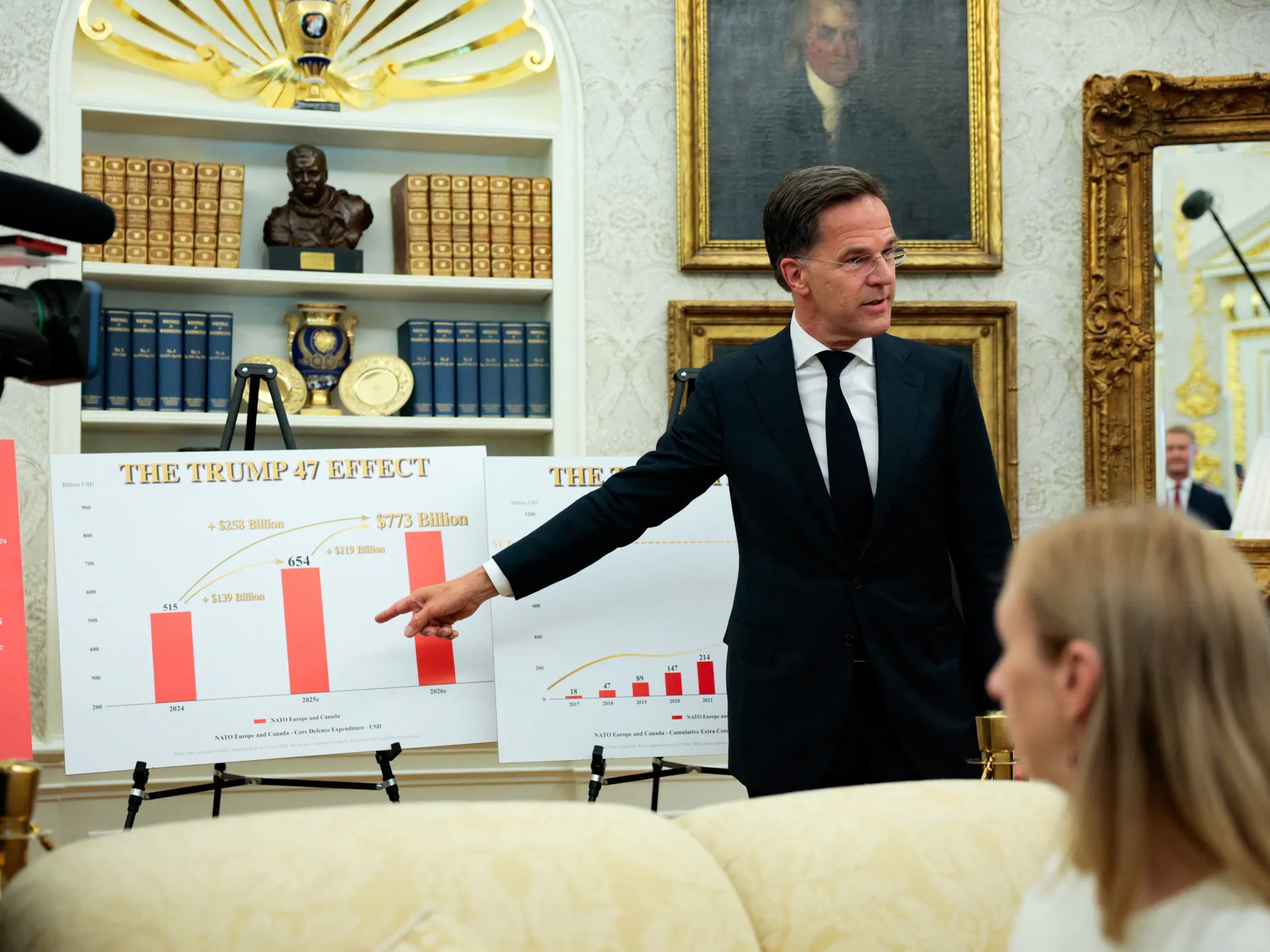
NATO chief Mark Rutte visited the White House to ease tensions with US President Trump ahead of next month’s NATO summit. Trump has said NATO isn’t doing enough, ordering a review of US forces in Europe after saying allies did not support the US war on Iran.
US Secretary of State Marco Rubio has said Iran will not be permitted to charge tolls or fees for vessels transiting the Strait of Hormuz under any final agreement with Washington, exposing one of the biggest points of friction in negotiations aimed at ending months of conflict across the Middle East.
The dispute comes after Iran announced it would waive planned transit fees through the strait that crosses through its territorial waters for 60 days while talks with the United States continue in Switzerland, suggesting charges could be introduced once the negotiating period expires.
Recommended Stories
list of 4 itemsend of list
Washington and Tehran signed a preliminary agreement in Switzerland this week to halt hostilities and launched a 60-day diplomatic process focused on sanctions relief, Iran’s nuclear programme and the future administration of the Strait of Hormuz.
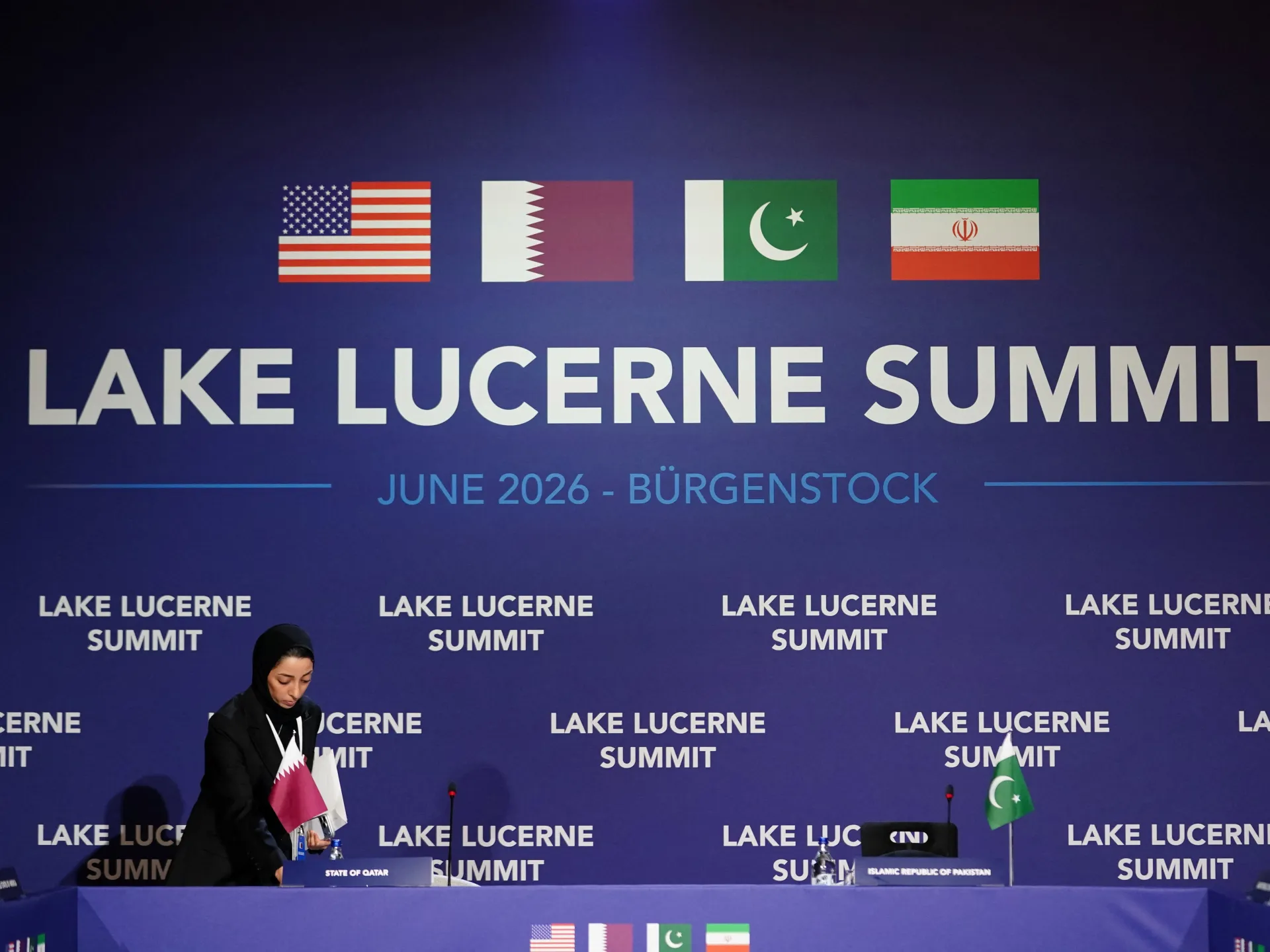
Pakistan, which helped mediate the talks alongside Qatar, has said negotiations to end the four-month US-Israel war on Iran are expected to resume early next week, likely on Tuesday.
The future of Hormuz has already emerged as a key sticking point after Iran effectively closed the waterway during the war, severely disrupting maritime traffic through one of the world’s most important energy chokepoints and causing the price of oil to soar.
In peacetime, one-fifth of the world’s oil and natural gas supplies are shipped for export by Gulf producers through the waterway.
In April, the US imposed a corresponding naval blockade on Iranian naval ports in a bid to stem Iranian oil exports.
While a number of ships have crossed through the strait since the US-Iran agreement was signed last week, uncertainty remains over whether Tehran intends to impose permanent fees or service charges on shipping operators using the route. Here’s what we know – and what else is happening in the Strait of Hormuz this week.
(Al Jazeera)
What are the US and Iran saying?
On Friday, Iran’s Persian Gulf Strait Authority (PGSA) said planned fees for ships using the waterway would be suspended during the 60-day negotiation period established under the memorandum of understanding (MoU) signed with the US.
Earlier this week, Iran and Oman said in a joint statement that they would study the future administration of the trade route as well as possible charges for services provided there, while maintaining their sovereignty claims over territorial waters bordering the strait.
Speaking at the start of a regional tour in the United Arab Emirates, Rubio rejected the idea of transit fees. “It’s an international waterway. No country is allowed to charge tolls or fees on an international waterway,” he said, adding that he believed “all the countries in this region would agree”.
Iran’s chief negotiator, Mohammad Bagher Ghalibaf, has signalled that Tehran views the post-war arrangement as fundamentally different from the status quo that existed before the conflict, however. Experts also say that Iran will not give up control of the strait, which has proved to be its greatest point of leverage in the conflict with the US.
“Hormuz will never return” to its prewar status, Ghalibaf said, despite both sides agreeing on Monday to establish “communication mechanisms” aimed at keeping the waterway open.
What does international law say?
International law protects the right of transit through strategic waterways such as the Strait of Hormuz, preventing coastal states from imposing explicit tolls simply for passage through international shipping lanes, even when they are passing solely through territorial waters.
However, countries can charge for specific services, including inspections, navigation assistance, security measures and certain insurance-related requirements, insurance experts say.
Examples include fees associated with transit through the Suez Canal and Panama Canal, as well as some services provided in Turkiye’s Bosporus and Dardanelles straits.
Mohammad Reza Farzanegan, an economist at Germany’s Philipps-Universitat Marburg, told Al Jazeera last month that Iran, like Turkiye, could justify a negotiated mechanism for transit fees or service-based contributions through natural straits as payment for maintaining a safe passageway, reducing environmental risks and providing predictability in a waterway that supports global energy, food and technology supply chains.
A key difference, however, is that while those waterways pass through the territory of a single state in each case, the Strait of Hormuz passes through the territorial waters of both Iran and Oman, while also connecting to waters used by the United Arab Emirates and other Gulf states.
“This sort of arrangement is unprecedented, and there would not be such an outcome, unless there is a complete coordination between the GCC [Gulf Cooperation Council] countries and Iran, with the approval of major international powers, such as China and the United States,” Nader Habibi, an Iranian American economist, told Al Jazeera.
How many ships are getting through the strait now?
Ship movements through the Strait of Hormuz remain well below prewar levels, when between 120 and 140 ships transited the passage each day, including tankers carrying about 20 million barrels of oil from the Gulf.
As the strait begins to open up, Oman says it is working with the United Nations’ International Maritime Organization (IMO) on temporary arrangements to facilitate safe transit through the strait, launching an operation to evacuate more than 11,000 sailors stranded in the area after the conflict left hundreds of vessels trapped for months.
Traffic through the strait has also been held back by ongoing concerns about the possible presence of sea mines in the central shipping channels used by international vessels before the war.
The Joint Maritime Information Center (JMIC), which includes representatives from the US and other maritime partners, has warned ships to avoid the area “due to the existence of mines”.
Other countries, including Japan, are currently weighing up whether to send ships to help with efforts to remove mines from the strait.
While Iran has never confirmed the presence of mines in the strait, when it first issued a map of the waterway for vessels it had approved for transit while the conflict was ongoing, it ordered ships to pass close to its coast to avoid possible mines. Ships had previously passed much closer to the coast of Oman.
The graphic below illustrates how much shipping through the strait dropped off as a result of the US-Israel war on Iran.
Could the dispute over strait fees derail a peace deal?
Mostafa Khoshcheshm, a professor at the University of Applied Sciences in Tehran, told Al Jazeera that Iran is unlikely to abandon plans to introduce long-term service fees in the strait.
“According to the MoU, Iran is not going to charge service fees for 60 days, but afterwards, Iran is definitely going to do that,” Khoshcheshm told Al Jazeera.
He said many Iranians were already unhappy that Tehran had agreed to suspend fees for the duration of the negotiating period.
“The money is not the real core of the issue,” he said. “The point here is how to impose your new protocols in the region. This is highly important for the Iranians.”
Cyrus Schayegh, professor of international history and politics at the Geneva Graduate Institute, told Al Jazeera the success of any new administrative arrangement would depend heavily on regional support.
“I think this is a very big question, and the biggest question is whether they will be able to sell it to the Emirates,” Schayegh told Al Jazeera.
“I think the Emirates will need to be involved in a really substantive way for any sort of new authority to actually work.”
More broadly, he said, the future of Hormuz forms part of a wider debate over Gulf security architecture following the war.
“It is only one piece of a much larger puzzle,” Schayegh said, adding that several regional states now accept that Iran has strengthened its deterrence capabilities following the conflict.
What other issues remain unresolved?
Hormuz is far from the only serious obstacle to a peace deal.
Questions also remain over the future of Iran’s nuclear programme, with Kazem Gharibabadi, Iran’s deputy foreign minister for legal and international affairs, saying that access for international inspectors to nuclear facilities damaged during the war would only be addressed as part of a final agreement with Washington.
His comments came after US President Donald Trump claimed Iran had agreed to “the highest level” of nuclear inspections.
Iranian officials insist no commitments were made in Switzerland regarding Tehran’s nuclear programme and say they did not meet representatives of the International Atomic Energy Agency (IAEA), including Director-General Rafael Grossi.
Regional security remains another major source of disagreement, with Israeli Defence Minister Israel Katz insisting Israeli forces will not withdraw from southern Lebanon “even if there is an American demand” to do so.
Meanwhile, Ghalibaf has identified the withdrawal of foreign military forces from the Middle East as one of Tehran’s strategic objectives in the negotiations.
The future of Iran’s frozen assets also remains a sticking point, with Trump indicating Washington is reluctant to release large sums of Iranian funds directly, arguing that money could ultimately benefit the Islamic Revolutionary Guard Corps (IRGC).
Instead, he has suggested a mechanism under which some funds would be used to purchase US goods.
“Food is desperately needed in Iran, and we will be purchasing it for them exclusively from the United States,” Trump said. Iran has not confirmed plans to do this.
The United States Senate has voted in favour of invoking its war powers to force President Donald Trump to halt his military campaign against Iran or seek congressional approval before any further action is taken.
Here is a closer look at Tuesday’s vote – the 10th attempt Congress has made to rein in the US-Israel war on Iran – and what this means for the US government.
Why did this vote take place?
A similar measure had already been approved in the House of Representatives on June 3 by a vote of 215 to 208, and on Tuesday, the Senate passed it in a 50-48 vote. Trump’s Republican Party has slim majorities in both chambers.
Speaking on the Senate floor before the vote, top Democrat Chuck Schumer advocated for the war powers resolution as he criticised Trump’s military campaign against Iran.
“For years, Trump promised to put maximum pressure on Iran, but he ended up delivering maximum confusion, maximum chaos, maximum cost to the American people with his disastrous war,” Schumer said.
“Time after time, the vast majority of Senate Republicans sided with Trump and his war instead of the American people. The American people have paid the price for Trump’s historic blunder in Iran. It’ll go down in the history books as one of the worst foreign policy forays America has ever made.”
The war against Iran has proved highly unpopular in the US. A poll released on Tuesday by the news agency Reuters and the research firm Ipsos found that 24 percent of respondents felt the war had been worth the cost.
Four Republican senators crossed party lines to vote for the resolution, and all but one of the chamber’s Democrats also voted in favour.
Tuesday’s breakaway Republicans were Bill Cassidy of Louisiana, Lisa Murkowski of Alaska, Susan Collins of Maine and Rand Paul of Kentucky. A further two Republicans did not vote: Mitch McConnell of Kentucky and Dave McCormick of Pennsylvania.
The lone Democrat to vote against the measure was Pennsylvania’s John Fetterman.
What does the resolution say?
The war powers resolution “directs the President to remove United States Armed Forces from hostilities against the Islamic Republic of Iran”.
Only if “explicitly authorised by a declaration of war or a specific congressional authorisation” would Trump be allowed to use further military force against Iran, it says.
The resolution, however, does allow for a limited military presence to remain in the Middle East to prevent any “imminent attack” against the US or its allies.
What is the significance of the vote?
The vote reflects growing unease even among some of Trump’s Republican supporters about the unpopular conflict, which began with US-Israeli air strikes on Tehran on February 28.
This is the first time both chambers of Congress have passed a resolution directing a president to remove US armed forces from a warzone under the War Powers Act although it was not immediately clear how the votes might affect the conflict.
Technically, the Trump administration should now seek explicit congressional approval for further strikes on Iran. However, previous administrations have found routes around this by securing more limited authorisations for the use of military force (AUMFs) instead.
For example, in the wake of the 9/11 attacks in 2001, Congress passed an AUMF that gave then-President George W Bush broad powers to conduct what would become the global “war on terror”.
And one year later, it passed another AUMF, allowing the use of the military against the government of Saddam Hussein in Iraq, which became the basis of the 2003 invasion.
The two authorisations remain in place, and presidents continue to rely on them to carry out strikes without first seeking congressional approval. The assassination of top Iranian General Qassem Soleimani in 2020 in Baghdad was authorised by Trump under the 2003 AUMF.
In addition, a resolution does not have the force of law. Experts said, therefore, that while the Senate vote is viewed as a rebuke to Trump, it is largely symbolic.
What effect will this have on US-Iran talks in Switzerland?
Before the vote on Tuesday, some Republican senators had warned that the war powers resolution would weaken Trump’s standing in the Switzerland negotiations.
“If this passes, the Iranians are going to simply stand up and walk away from negotiations,” Senator James Risch of Idaho told the Senate on Tuesday.
“They’re going to say: This thing’s over. The Congress has told the president of the United States, ‘Leave us alone. We can do whatever we want to do,’ and they will walk away.”
How will the Trump administration respond?
Risch also argued that the resolution is essentially useless, given its symbolic nature. “It’s going to have no effect. The president isn’t going to pay any attention to it,” he said.
The US Constitution gives Congress the sole power to declare war, but that division of power has eroded over the past 75 years as successive presidents alone have committed US forces to overseas conflicts.
Trump has pointed to that precedent to argue that he does not need congressional authorisation at all.
In an appearance on The Axios Show last week, Trump denied learning any “lesson” about the limits of his executive powers during the Iran war. “There are no limits,” he said.
The last time Congress voted to go to war was during World War II although it has passed AUMFs in the decades since, which allow for limited military engagement without congressional approval for all-out war.
During Trump’s first term, there were concerns that he could use the 2001 AUMF to strike Iran under the unfounded claim that Tehran supports al-Qaeda.
Some critics pointed out that Republicans may be more willing to confront Trump over the issue of congressional authorisation now as they defend their seats before November’s midterm elections.