USIsrael

US releases Touska container ship crew: Why it matters | US-Israel war on Iran News

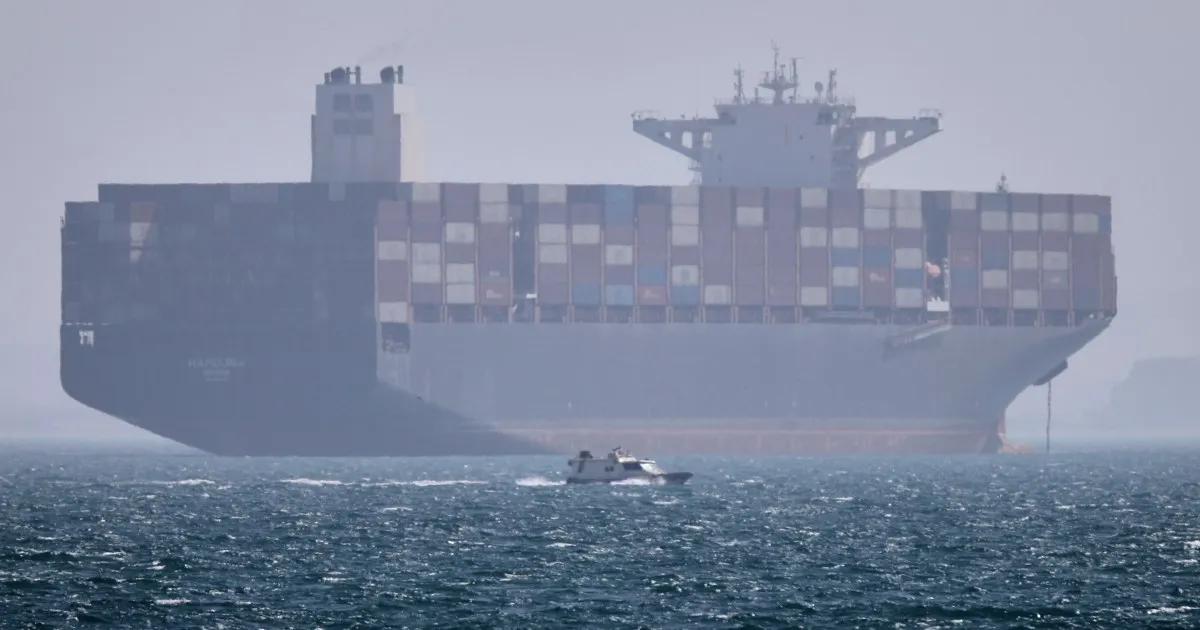
The United States has transferred 22 crew members from the Iranian container ship, the Touska, to Pakistan, in what Islamabad describes as a “confidence-building measure” during tension in the Strait of Hormuz.

US Central Command (CENTCOM) spokesman, Captain Tim Hawkins, said the crew had been handed over for repatriation. Pakistan’s foreign ministry confirmed the transfer, saying the sailors would be returned to Iranian authorities.

Recommended Stories

list of 4 itemsend of list

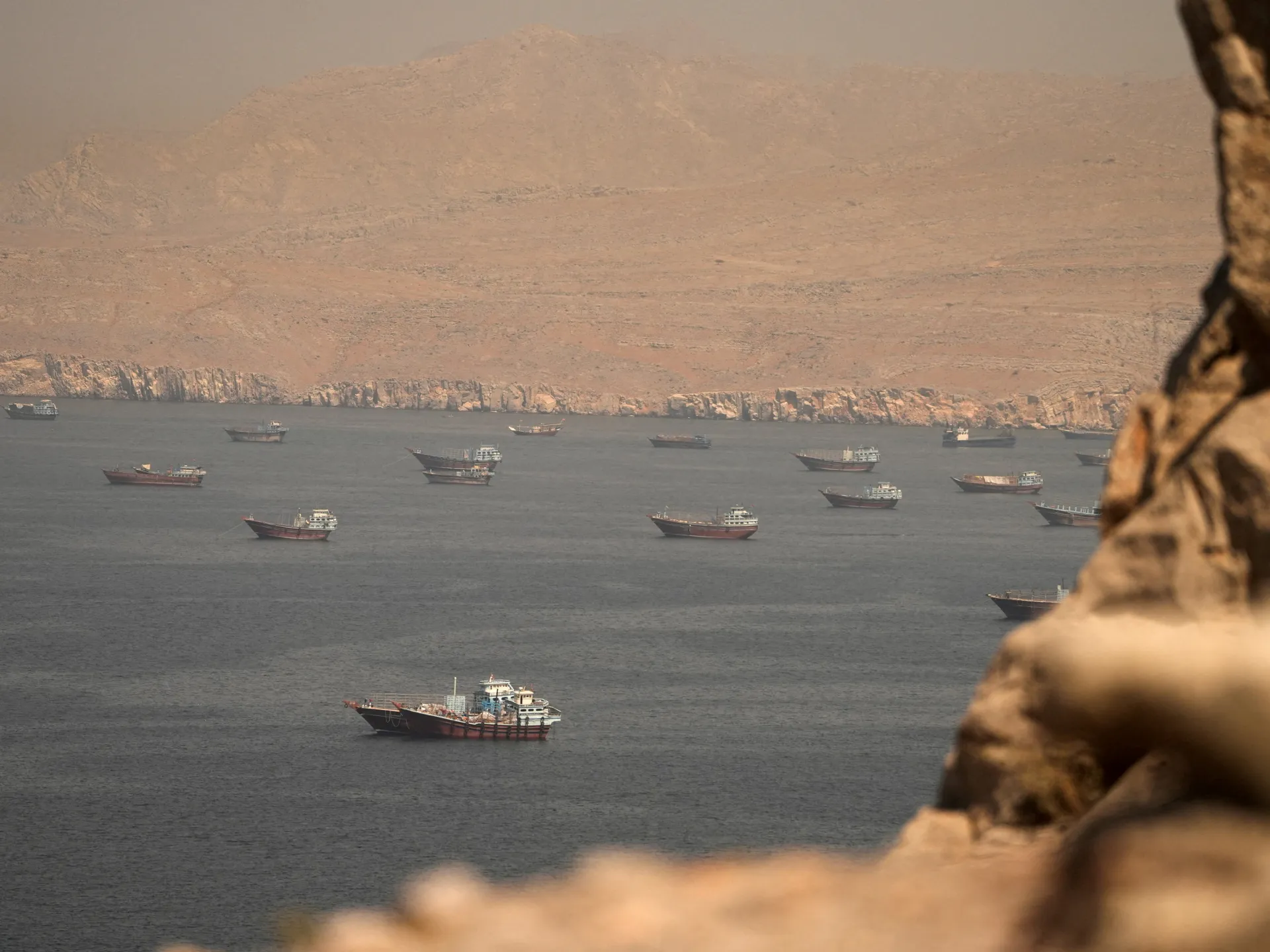
The Touska was seized by US forces in the Gulf of Oman in the early hours of April 20, in what Tehran described as an act of “piracy”, after the US declared a naval blockade of Iranian ports. Iran had effectively closed the Strait of Hormuz following the start of the US-Israeli war on Iran.

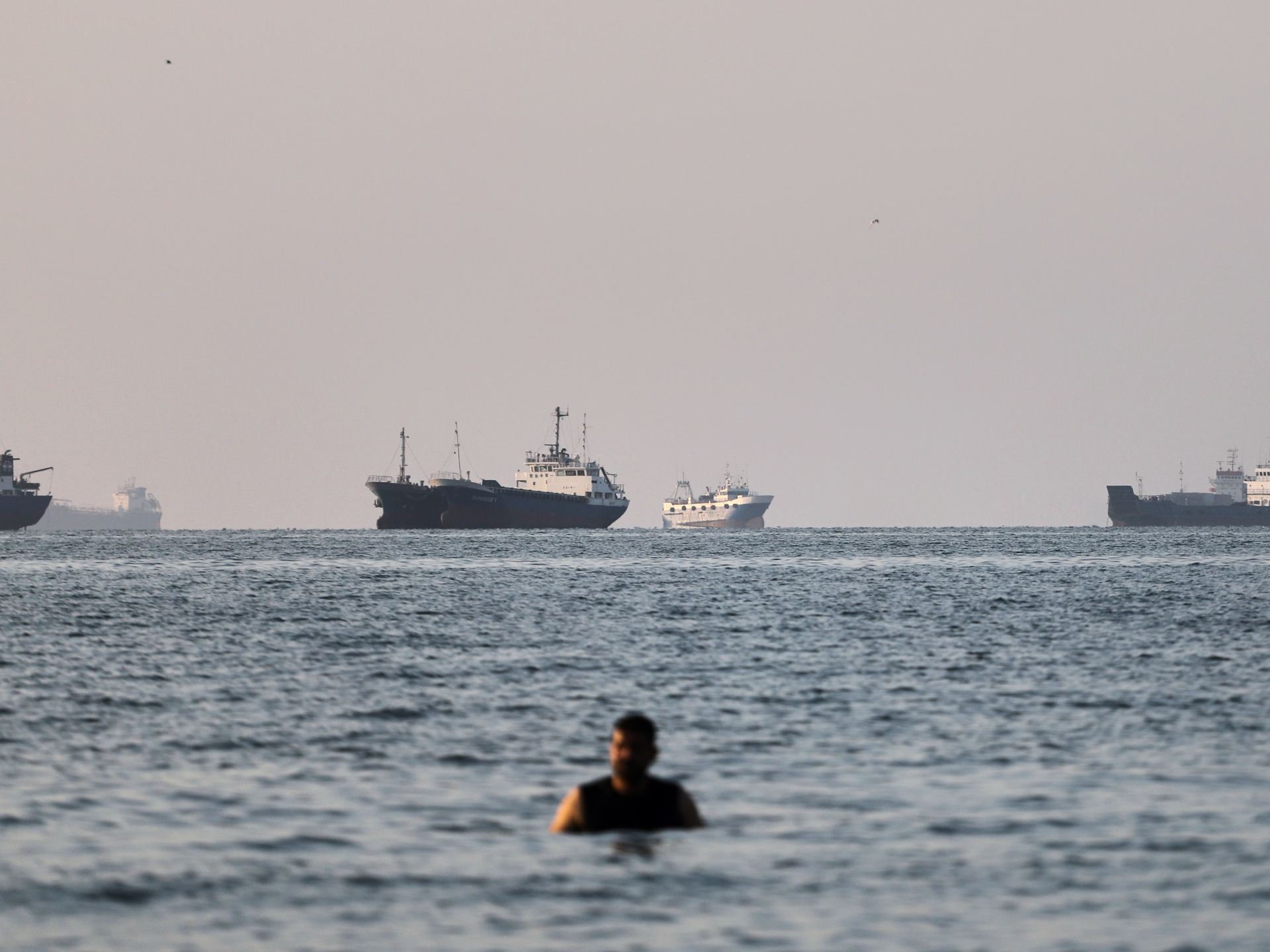
On Monday, tensions continued to escalate in and around the Strait of Hormuz.

First, US President Donald Trump announced that US naval ships would help guide stranded vessels through the strait in an operation he dubbed “Project Freedom”.

Iran issued a new map of the strait with new boundaries further to the east, and warned shipping not to attempt to pass without coordinating with the Islamic Revolutionary Guard Corps (IRGC).

Then, state media reported that two Iranian missiles struck a US naval vessel near Jask Island in the strait after ignoring warnings from the IRGC to turn back. Washington denied any attack.

Amid continued interceptions and seizures of vessels by both sides, questions remain over whether the two countries can de-escalate and reach a broader peace agreement. Pakistan has been central to these efforts, seeking to keep diplomatic channels open, but talks hosted in Islamabad last month ended without a breakthrough.

Iran’s foreign ministry says it is reviewing Washington’s response to its 14-point proposal aimed at ending the conflict sent via Pakistan on Friday. As Pakistan continues to mediate, Trump previously described Tehran’s offer as “unacceptable”.

What happened to the Touska?

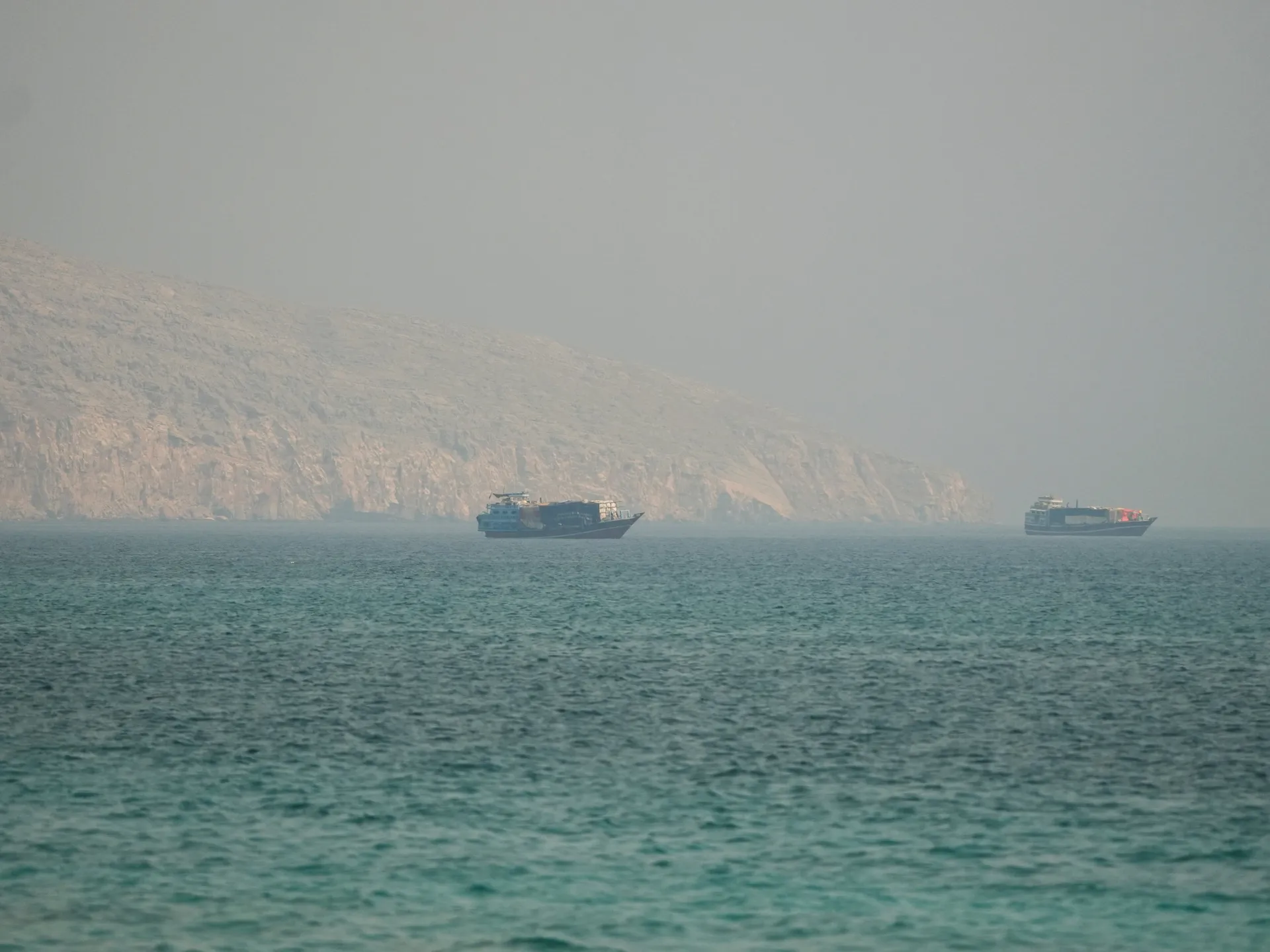
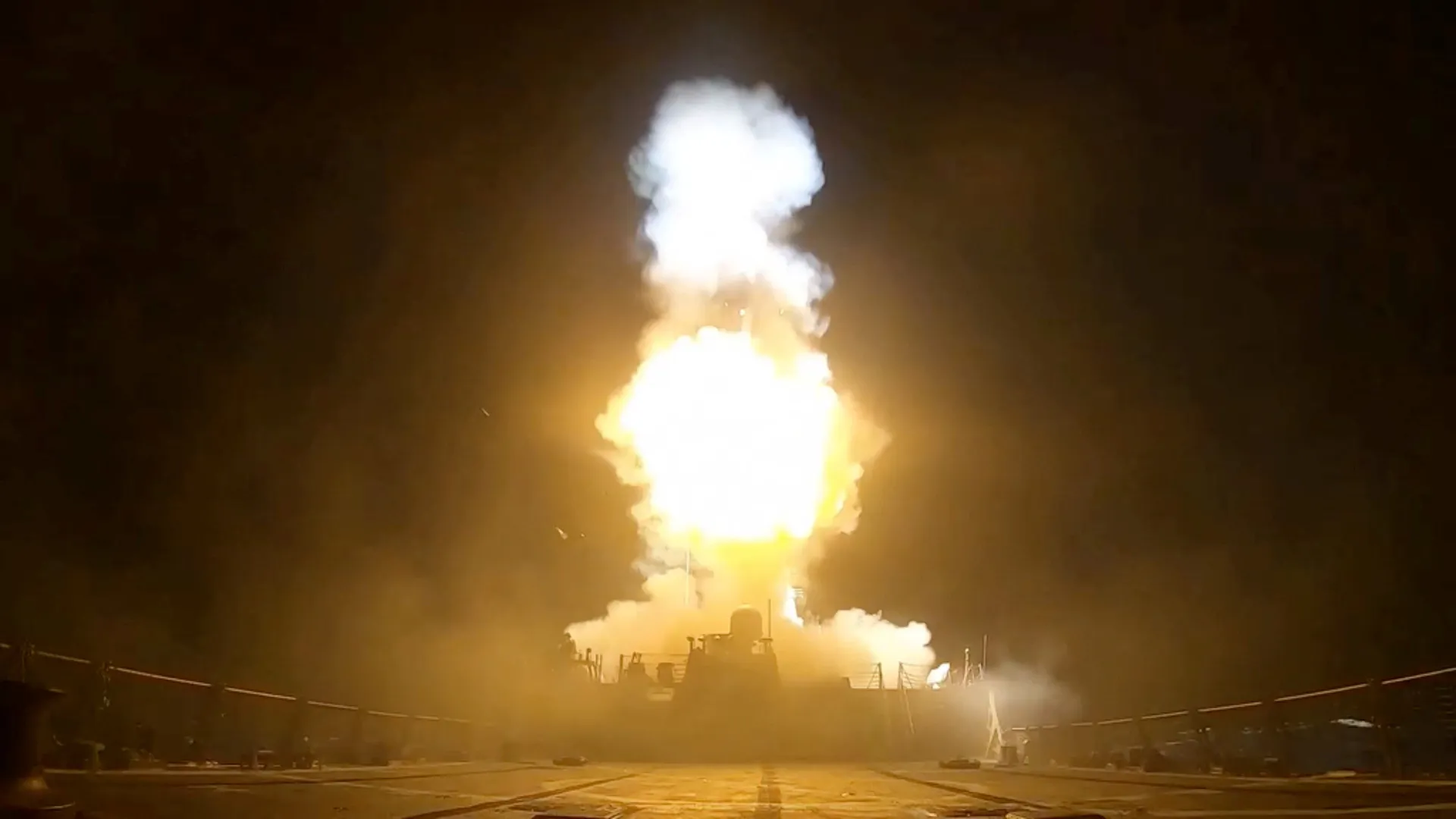
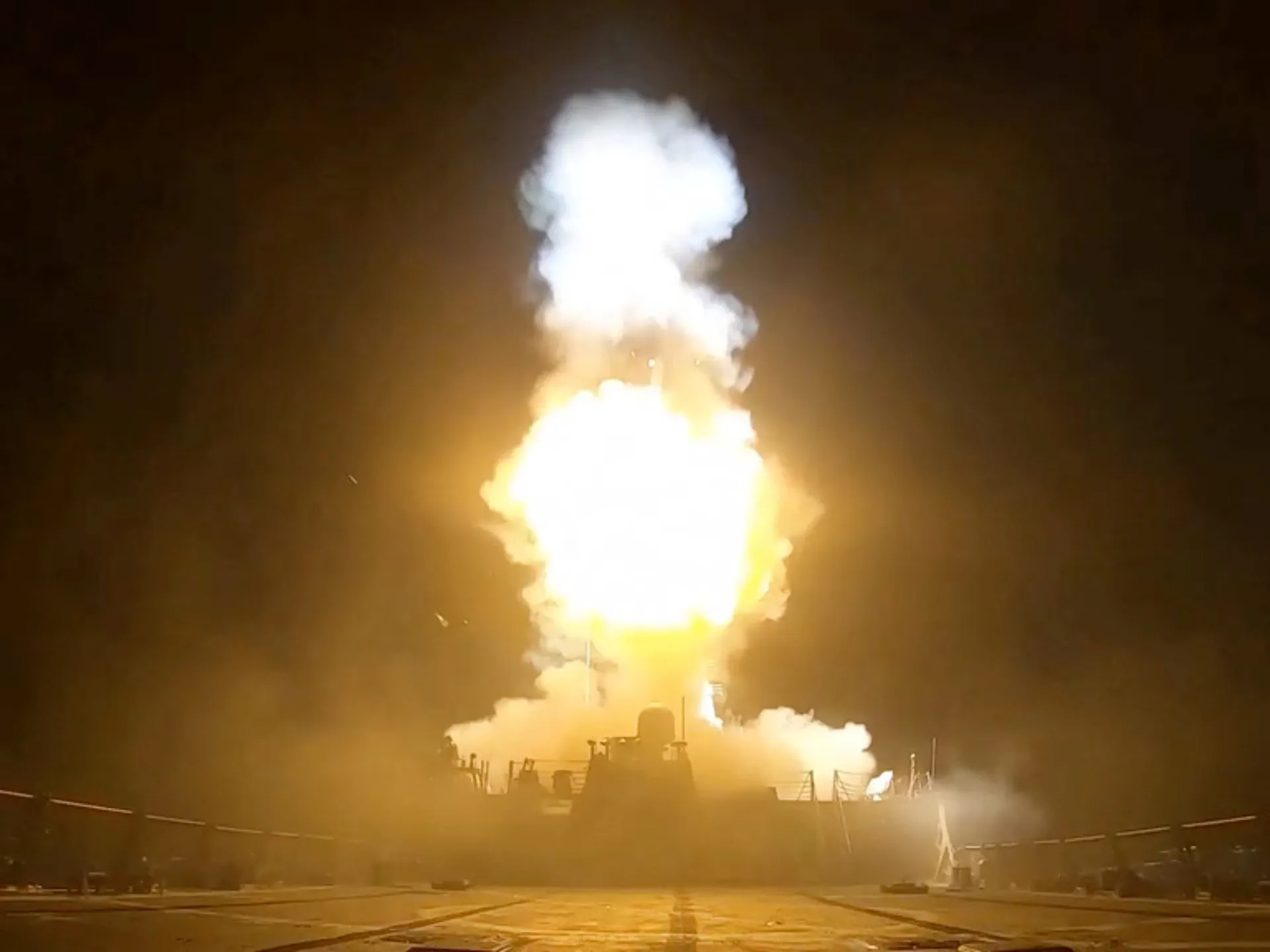
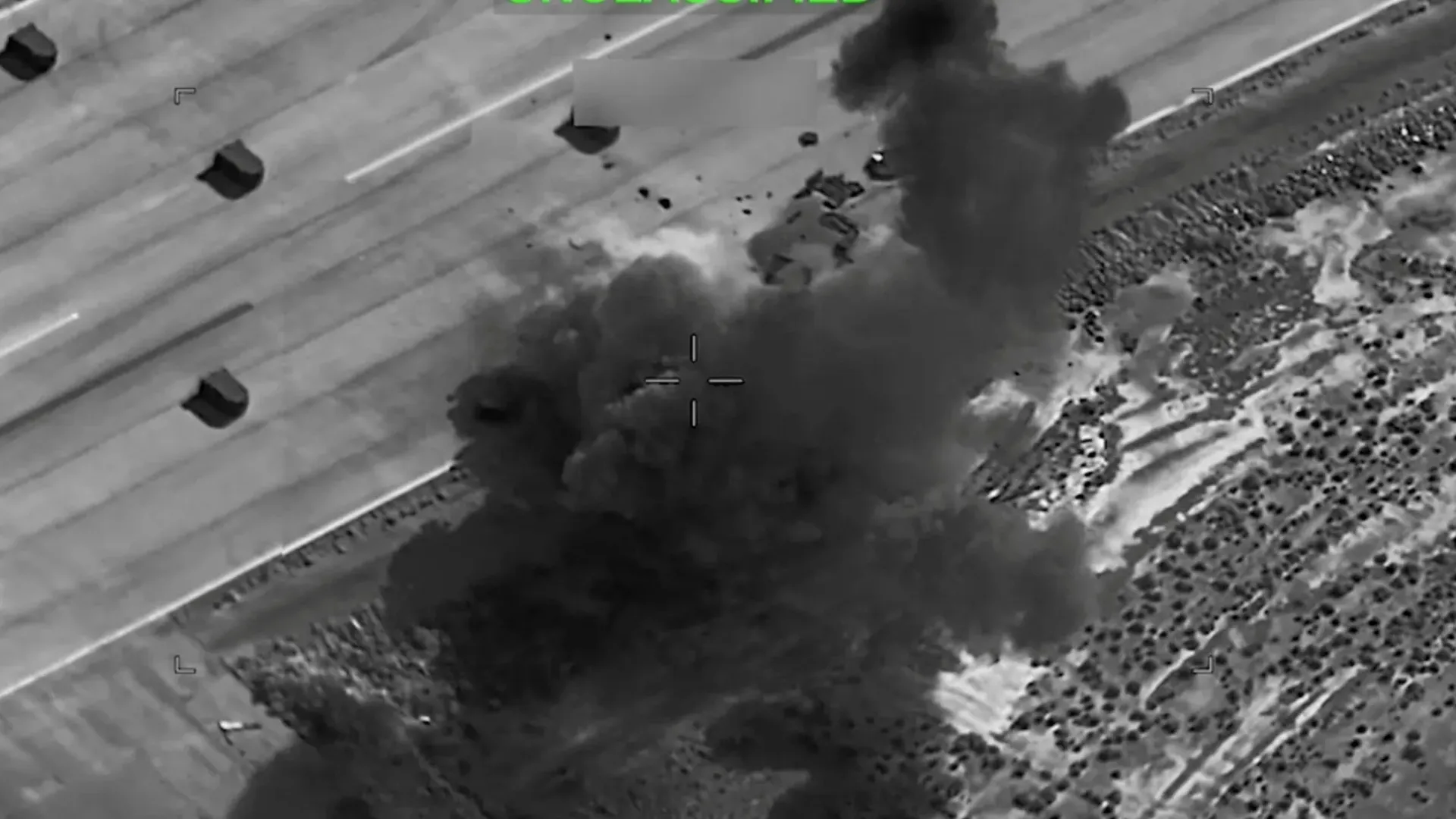
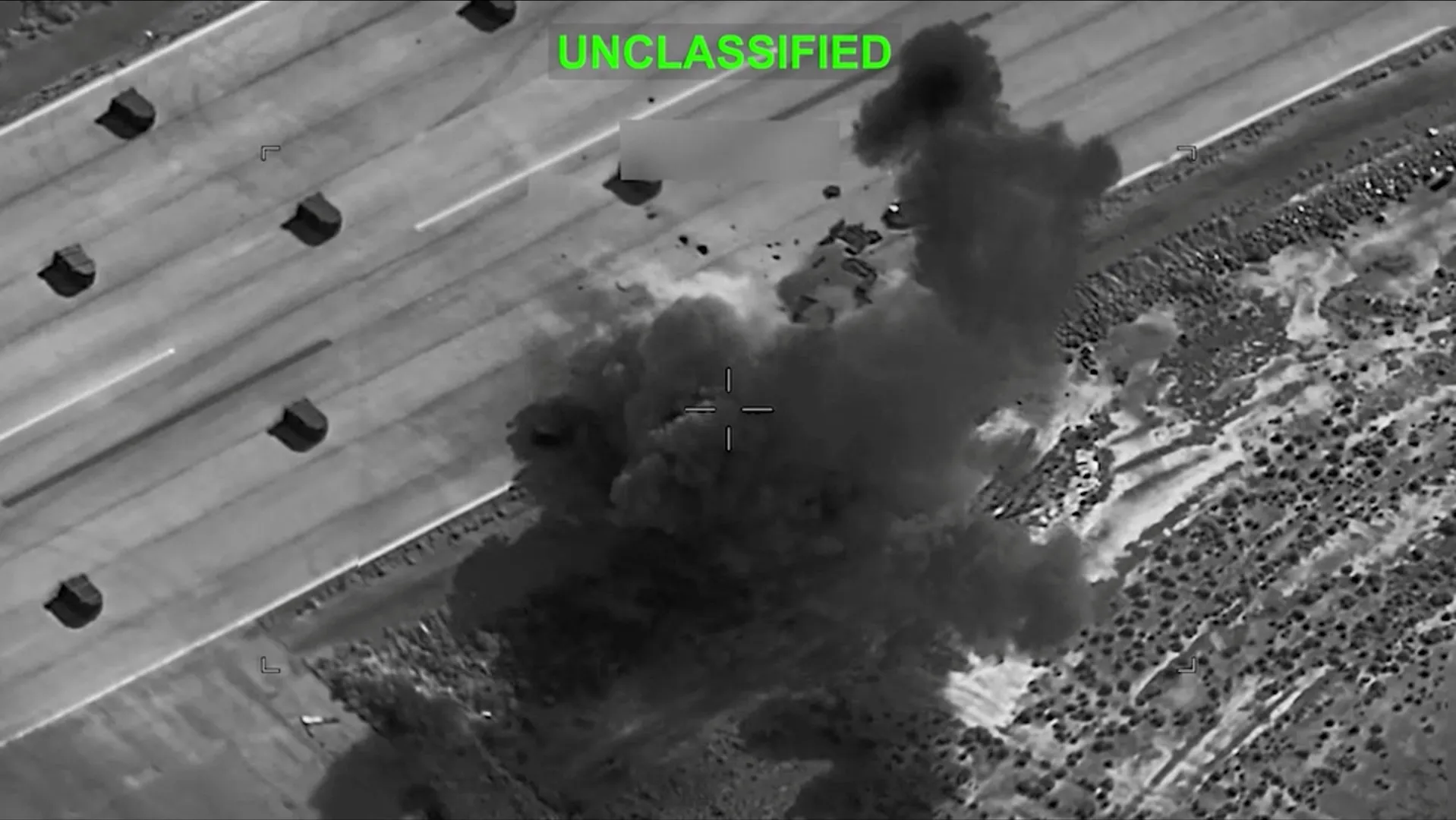
The Iran-flagged Touska was seized by US forces in the Gulf of Oman, close to the Strait of Hormuz, on April 20 after Washington accused the crew of failing to comply with the US naval blockade on Iranian ports. Shortly after midnight local time in Iran, CENTCOM said the USS Spruance fired its 5-inch (127mm) deck gun at the vessel’s engine room, disabling it.

According to the US military, the ship was attempting to transit the Strait of Hormuz en route to Iran’s main commercial port, Bandar Abbas.

The Touska, a small container ship operated by the sanctioned Islamic Republic of Iran Shipping Lines (IRISL), was boarded near Iran’s Chabahar port. US Marines from the 31st Marine Expeditionary Unit captured the vessel after what CENTCOM said were repeated warnings over six hours.

Video released by the US military showed Marines descending from helicopters launched from the USS Tripoli and securing the Tusk.

Iran condemned the capture as a violation of international law and an act of “piracy“, before demanding the immediate release of the vessel and its crew.

What does the release of the Touska’s crew mean, diplomatically?

Pakistan has positioned itself as a mediator between Washington and Tehran, and is now framing the transfer of the Touska crew as a step towards de-escalation of tensions. In a statement, the Pakistani foreign ministry said the move reflected a “confidence-building measure” and reaffirmed its commitment to facilitating dialogue.

US and Iranian delegations met in Islamabad last month for their first talks since 1979. Although negotiations ended without a deal, they marked a rare moment of direct engagement.

Pakistan has since coordinated with regional powers, including Saudi Arabia, Turkiye, Qatar and Egypt, while maintaining close communications with China, in an effort to build broader support for de-escalation.

In a call with Iran’s Foreign Minister, Seyed Abbas Araghchi, on Monday, Pakistan’s Deputy Prime Minister, Ishaq Dar, reiterated that diplomacy remains the only viable path to stability. Tehran, in turn, acknowledged Islamabad’s mediation efforts.

INTERACTIVE - Strait of Hormuz - March 2, 2026-1772714221
(Al Jazeera)

Will this de-escalate tensions in the Strait of Hormuz?

There are not many signs that it will.

Indeed, tensions in the Strait of Hormuz have continued to increase despite the release of the crew members.

Most notably, Iran’s Revolutionary Guard published a new map on Monday outlining what it claims is an expanded zone of control in the waterway, stretching from Iranian and Omani territory to include the territorial waters of the United Arab Emirates as well.

Analysts say this new claim exceeds internationally recognised boundaries. The UAE has accused Iran of launching drones at an oil tanker linked to Abu Dhabi’s national energy company, while Washington has dismissed Iranian reports of an attack on a US warship as false.

Military analyst Alexandru Hudisteanu, a maritime security expert who served 13 years in the Romanian navy, told Al Jazeera on Monday that the conflicting claims reflect a broader test of resolve. “Any attempt to open the strait will likely be met with resistance from Iran,” he said, adding that Tehran views control of Hormuz as its primary leverage in negotiations.

Hudisteanu warned that the situation carries a high risk of miscalculation, with both sides continuing to operate in close proximity. For Iran, the Strait of Hormuz is the “only leverage” it has for peace negotiations, Hudisteanu said.

Iranian analyst Foad Izadi argued that the ceasefire effectively collapsed when the US imposed its blockade, which he described as “an act of war”. He added that the targeting and seizure of ships along the Strait of Hormuz further undermined any notion of a truce.

“Attacking an Iranian ship’s engine is an act of war as well,” he added, despite the release of the Touska’s crew signalling some short-term goodwill between the US and Iran.

Source link

Does Trump hold ‘all the cards’ against Iran in the Strait of Hormuz? | US-Israel war on Iran News

“I have all the cards,” posted the White House on its X account on Sunday, alongside an image of President Donald Trump holding playing cards from the Uno game, in a message appearing to signal Washington’s confidence in its ongoing war on Iran.

Uno is a card game in which the winner is the first to get rid of all their cards.

Recommended Stories

list of 4 itemsend of list

The post came after Trump announced on his Truth Social platform that the US military would begin guiding ships stranded around the Strait of Hormuz by the war on Monday, in a sign that the conflict could further escalate, despite the near-month-long fragile ceasefire. Tehran has been effectively blocking nearly all shipping from the Gulf for more than two months, after the US and Israel attacked Iran two months ago, disrupting global energy supplies.

“We have told these countries that we will guide their ships safely out of these restricted waterways, so that they can freely and ably get on with their business,” Trump said, dubbing the campaign “Project Freedom”. “They are merely neutral and innocent bystanders!”

The president added that US negotiators were engaged in “very positive discussions” with Tehran, which could lead to “something very positive” without further elaboration.

Iran, however, reacted by insisting that the security of the waterway was in the hands of its armed forces, and warned that “any safe passage and navigation in any situation” should be “carried out in coordination with the armed forces”.

On Monday, the Iranian Fars news agency reported that a US warship had been hit by two Iranian drones, the claim was denied by US Central Command.

So what leverage do the US and Iran hold over each other, and what happens next?

In response to Trump’s “I have all the cards” social media post, Iran’s Consulate General in Hyderabad, India, posted its own image on X.

“Yes, we have less cards,” Iran’s consulate in the Indian city of Hyderabad wrote on X, together with a photo of an Iranian military spokesperson holding four Uno cards compared to Trump’s five, pointing out that usually holding all the cards means you are losing, not winning, in the game of Uno.

In response to Trump’s “Project Freedom” declaration, Iran’s Islamic Revolutionary Guard Corps (IRGC) warned that ships deemed to be in breach of its rules in the Strait of Hormuz “will be stopped by force”, while insisting there has been no change in how it manages traffic through the strategic waterway.

On Monday, it issued a new map of the Strait of Hormuz with boundaries extending further to the east than its previous one, and said any ship travelling between the two sides must coordinate with the IRGC first.

“There has been no change in the management process of the Strait of Hormuz,” spokesperson Sardar Mohebbi said, adding that vessels that comply with the “transit protocols issued by the IRGC Navy” will be “safe and secure”.

“Other maritime movements that are contrary to the declared principles of the IRGC Navy will face serious risks. Violating vessels will be stopped by force,” he said.

What leverage does the US have over Iran?

Sanctions

The United States’ most enduring source of leverage over Iran remains its sanctions regime, which was launched in 1979 when Ayatollah Ruhollah Khomeini declared Iran an Islamic Republic.

Successive US administrations over the past 47 years have hit Tehran with a series of financial restrictions targeting Iran’s banking, oil exports and access to international markets – the US says the sanctions are a response to Iran’s nuclear programme.

Sanctions have significantly constrained Iran’s economy, limiting government revenue and contributing to inflation and currency depreciation. Measures enforced through the US Treasury also deter other countries and companies from engaging with Iran, further strangling its economy.

The economic pressure has been central to US strategy towards Iran, particularly during its attempts to force Tehran back to negotiations over its nuclear programme, under both Democratic and Republican administrations.

Military power

Beyond economics, the US maintains overwhelming military superiority, especially air power. Aircraft carriers, long-range bombers and precision strike capabilities give Washington the ability to target Iranian infrastructure with relatively low risk to its own forces.

US bases across the Gulf, as well as military partnerships with regional allies – most notably Israel – reinforce this advantage.

American forces, together with the Israeli army, have killed more than 3,000 people, and struck thousands of sites across Iran in the current war, including Iran’s energy and nuclear sites.

Naval blockade

Since mid-April, the United States has enforced a widespread naval blockade of Iranian ports and ships. The operation began on April 13 after talks between Washington and Tehran collapsed, with US forces ordered to stop or divert vessels entering or leaving Iranian ports.

US forces have since intercepted or turned back dozens of ships, and seized a container ship, the Touska. On Monday, the US announced that its crew had been repatriated to Iran from Pakistan, where they were taken after their ship was captured in the Gulf of Oman last month.

According to Trump, the blockade is designed to choke Iran’s oil exports, its main revenue source.

US officials say the measures have severely disrupted Iran’s trade, which relies heavily on sea routes.

What leverage does Iran have?

Strait of Hormuz

The vital waterway is Iran’s most significant strategic asset, the narrow passage ships one-fifth of the world’s oil and liquefied natural gas (LNG) supplies in peacetime.

Tehran has effectively closed the strait since the war began on February 28, sending global oil and gas prices soaring and energy markets into turmoil. Iran has repeatedly demonstrated its ability to target shipping, seize vessels, or conduct military exercises, demonstrating its ability to close or restrict the strait.

The result is soaring energy prices globally, forcing many countries to implement severe austerity measures to soften the blow.

Last week in the US, the average price of a gallon (3.8 litres) of gasoline (petrol) rose to $4.30, according to the American Automobile Association (AAA), up from less than $3 before the war.

Surging energy costs have driven up inflation and deepened economic uncertainty in the US, compounding Trump’s political troubles amid overwhelming disapproval for the war amongst Americans.

Even if the US does begin escorting ships through safely – the threat from mines or Iranian strikes may be enough to prevent tankers from attempting to sail, experts say. Insurance companies are also unlikely to underwrite voyages.

Regional allies

Iran’s network of allied groups across the Middle East is another asset that Tehran relies on heavily. These include armed groups in Iraq and Syria, as well as Hezbollah in Lebanon and the Houthis in Yemen

Through these groups, Iran has exerted pressure indirectly, targeting US interests and allies without engaging in direct confrontation.

One critical threat Iran has previously made is for the Houthis to disrupt shipping in the Bab al-Mandeb, another vital maritime chokepoint linking the Red Sea to the Gulf of Aden.

INTERACTIVE - Bab al-Mandeb strait red sea map route shipping map-1774773769

The Houthis, an Iran-aligned group in Yemen, have previously targeted shipping in this area, most notably during Israel’s genocidal war on Gaza, further raising concerns about the security of global trade routes.

Roughly 4.2 billion barrels of crude oil and refined petroleum liquids flowed through the strait in 2014, accounting for about five percent of global supply.

Cheap drones and cluster bombs

While nowhere near the military capabilities of the US, Iran’s investment in missile and drone programmes has proven to be an effective means of deterrence. That is particularly through its ability to threaten regional US bases and impose significant costs on regional countries hosting American assets involved in military operations against Tehran.

While the US undoubtedly has a more sophisticated and powerful arsenal at its disposal, the interceptors it uses to combat Iranian drones cost around $4 million each, while Iran’s Shahed drones can be mass-produced at $20-50,000 each.

Furthermore, Iran’s ballistic missiles have proved capable of breaching Israel’s much-lauded “Iron Dome” defence system on several occasions. Iran has also dropped cluster bombs, which divide before they can be intercepted, making them much harder to stop.

So does the US really hold the most cards?

Michael Clarke, visiting professor at the Department of War Studies, King’s College London, said Trump’s overwhelming conventional military strength has failed to translate into strategic leverage on the ground.

“President Trump thinks he is a great poker player,” Clarke told Al Jazeera. “He thought America’s sheer destructive potential put all the ‘cards’ in his hand” when starting the war on Iran.

But Iranian forces have consistently disrupted US expectations through asymmetric tactics, he said.

“At every turn, the Iranians have come up with asymmetric tactics – vicious, reckless tactics – that have negated everything the Americans have tried to do,” Clarke noted, describing a pattern in which traditional US military superiority has been blunted by unconventional responses.

Despite significant American forces and assets in the region – including “no fewer than three US Carrier Strike Groups, two Marine Expeditionary Units, hundreds of combat aircraft and thousands of troops”, Clarke argued that Washington has struggled to find an effective use for its multi-billion-dollar resources at its disposal.

Moreover, he said, domestic pressure on Trump is growing. Trump “can’t find a way to use them [US forces] that will make any real difference to the current stalemate in the limited time he has before his own MAGA base concludes he has lost the game”.

Clarke also highlighted the willingness of Iran’s IRGC to escalate tensions. “Whatever this war might do to Iranian society, the IRGC is prepared to gamble with its own existence in the fight,” he added.

Source link

Iran says it fired missiles at US warship to prevent it entering Hormuz | US-Israel war on Iran

NewsFeed

Iranian state media says two missiles have struck a US navy destroyer to prevent it entering the Strait of Hormuz after the warship ignored warnings to halt. The attack comes after US President Donald Trump announced a naval mission to ‘guide’ stranded ships through the strait.

Source link

Trump says US to begin escorting ships in Strait of Hormuz | US-Israel war on Iran

NewsFeed

US President Donald Trump has announced ‘Project Freedom’, a naval mission to escort stranded ships through the Strait of Hormuz starting Monday, warning any interference will be met “forcefully”. The move comes amid a fragile US-Iran truce, with Tehran warning it would treat US intervention as a breach.

Source link

Iran lawmaker says Strait of Hormuz will not return to pre‑war state | US-Israel war on Iran

NewsFeed

Iran says the Strait of Hormuz will never return to the status quo that existed before the US and Israel launched their war. A draft Iranian law would permanently ban Israeli vessels and deny transit to nations deemed ‘hostile’ by their alliance with the US.

Source link

Was the Iran war the final blow in the collapse of Spirit Airlines? | US-Israel war on Iran News

Spirit Airlines, a budget carrier in the United States, has begun winding down operations, cancelling all flights, after talks with the Trump administration to secure a $500m bailout failed. Experts say a spike in aviation fuel prices from the US-Israel war on Iran dealt the final blow to the struggling airline that pioneered the ultralow-cost carrier model.

The airline’s shutdown after 34 years has left some 17,000 staff members unemployed, many passengers stranded, and raised doubts about the future of budget air travel.

Recommended Stories

list of 3 itemsend of list

How did Spirit Airlines reach this point? Did the US-Israel war on Iran deliver the final blow?

Here’s what we know:

What has Spirit Airlines said?

On Saturday, Spirit Aviation Holdings, the airline’s parent company, said the company had started to wind down operations.

“Spirit Aviation Holdings, Inc … today regretfully announced that the Company has started an orderly wind-down of operations, effective immediately. All Spirit flights have been cancelled, and Spirit Guests should not go to the airport,” the company said in a statement on Saturday.

The statement added that, despite its efforts, “the recent material increase in oil prices and other pressures on the business have significantly impacted Spirit’s financial outlook”.

Spirit Airlines, whose airfares were lower compared with other US airlines, had 4,119 domestic flights scheduled between May 1 and May 15, offering 809,638 seats, according to the latest data from Cirium, an aviation analytics firm.

The carrier’s parent firm started as a long-haul trucking company in 1964. It shifted to aviation around 1983. The carrier rebranded from Charter One Airlines to Spirit in 1992.

How did Spirit Airlines reach this point?

The airline had been struggling financially for years and had filed for bankruptcy twice – in November 2024 and then in August 2025 – due to continued losses, high debt, and intense competition from other airlines.

According to a May 2 report by the Reuters news agency, Spirit had recently reached a deal with its lenders that would have helped it emerge from its second bankruptcy by late spring or early summer.

But the war on Iran, which led to a significant increase in aviation turbine fuel (ATF) prices, added to Spirit’s financial struggles and complicated its bankruptcy exit.

Spirit’s restructuring plan assumed ATF costs of about $2.24 a gallon in 2026 and $2.14 in 2027, but prices had climbed to about $4.51 a gallon by the end of April, leaving the carrier unable to survive without new financing.

A Spirit board meeting ended without an agreement to rescue the company, a person close to the discussions told Reuters late on Friday.

US Transportation Secretary Sean Duffy told Reuters he tried to get many airlines to buy Spirit but found no takers. “What would someone buy?” Duffy asked. “If no one else wants to buy them, why would we buy them?”

US President Donald Trump also said he had tried to bail out the airline with a $500m financing package.

“If we can help them, we will, but we have to come first,” Trump told reporters. “If we could do it, we’d do it, but only if it’s a good deal.”

However, a creditor close to the deal told Reuters, “The Trump administration made an extraordinary effort to try and save Spirit, but you can’t breathe life into a corpse. Given that, the company should make its intentions clear for the sake of its customers and employees.”

Anita Mendiratta, special adviser to the UN Tourism secretary-general, noted that while war and geopolitical instability may not have caused Spirit’s collapse, they likely delivered the final blow.

“Surging fuel costs exposed the vulnerability of airlines operating on thin margins with little room for shock absorption,” she told Al Jazeera.

“Spirit’s weaknesses were already there – it had already gone through two bankruptcy filings in the two years prior; global instability simply accelerated the inevitable. In today’s aviation market, volatility is no longer an exception; it is the operating environment,” Mendiratta said.

Are other airlines also under pressure due to the Iran war?

The war on Iran has disrupted global oil and gas prices, with Brent crude rising above $111 a barrel on Friday. The high crude oil prices have also caused ATF prices to rise, affecting budget airlines badly.

Across the globe, airlines have been increasing prices to reflect the high ATF prices, and some have also reduced their flight operations.

German airline Lufthansa said last month it cancelled 20,000 flights in a bid to protect itself from the soaring ATF costs.

On Friday, leading Indian carrier Air India said it has increased fuel surcharges on all flights, adding that it will reduce 100 flights a day across its domestic and international routes.

Mendiratta noted that the aviation industry is on alert as airlines carrying high debt, facing fuel cost volatility, labour cost pressures, fleet constraints, and sustained pricing pressure remain exposed [to the war], especially those operating through a low-cost carrier model.

“What happens next is a defining test of aviation leadership. The rapid response from rival airlines to protect stranded passengers reflects an industry that understands its most valuable asset is not aircraft or market share, it is customer trust [both traveller and cargo],” she said.

“Just as importantly, how airlines support displaced employees, reassure markets, and reinforce operational stability will shape confidence in the sector’s long-term recovery,” she added.

Source link

What’s Iran’s 14-point proposal to end the war? And will Trump accept it? | US-Israel war on Iran News

Iran has offered a new 14-point proposal to the United States in the latest diplomatic step to reach a permanent end to the war, which has exposed the limits of US military dominance and shaken the global economy.

Responding to the new proposal on Saturday, US President Donald Trump said he is studying it but is not sure he can make a deal with Iran, a day after he voiced frustration with a previous offer from Tehran through the mediator Pakistan.

Recommended Stories

list of 3 itemsend of list

Late on Thursday, Tehran sent the proposal to Pakistan, which got the two sides to agree on the ceasefire. According to the Iranian Tasnim news agency, the 14-point plan was formulated in response to a nine-point US plan.

But weeks since the ceasefire began on April 8, Washington and Tehran have been unable to negotiate a peace deal. Tehran wants a permanent end to the war, while Trump has insisted that Iran first end the effective blockade of the Strait of Hormuz, through which a fifth of global oil and gas exports pass. The US president has also made the issue of Iran’s nuclear capability a “red line”.

Iran’s de facto blockade of the strait came in response to the US and Israel launching attacks on the country on February 28. A naval blockade of Iranian ports by the Trump administration, despite the ceasefire deal, has heightened tensions.

The US and Iran have also been continuing to attack, capture, and intercept each other’s ships, pointing to an ongoing naval war still playing out in the Strait of Hormuz.

So what’s the new proposal, and will President Trump accept it?

Here’s what we know:

INTERACTIVE_LIVETRACKER_IRAN_US_ISRAEL_MIDDLEEAST_ATTACKS_April 27_2026_GMT1645-1777299147
(Al Jazeera)

What is Iran’s 14-point proposal to end the war?

According to Iranian media reports, Tehran’s new proposal came in response to a Washington-backed nine-point peace proposal, which primarily sought a two-month ceasefire.

However, in its latest peace proposal, Iran said it wants to focus on ending the war instead of extending the truce and wants all issues resolved within 30 days.

The new proposal calls for guarantees against future attacks, a withdrawal of US forces from around Iran, the release of frozen Iranian assets worth billions of dollars and the lifting of sanctions, war reparations, ending all hostilities, including in Lebanon, and “a new mechanism for the Strait of Hormuz”.

Iran, which was also attacked by the US and Israel last June, wants a guarantee against future aggression. Israel has previously targeted Iranian nuclear scientists and run campaigns to sabotage its nuclear sites.

Tehran also wants its right to uranium enrichment guaranteed as a signatory to the Non-Proliferation of Nuclear Weapons (NPT), but Trump has made the nuclear issue a “red line”. Iran wants decades of sanctions, which have devastated its economy, to be lifted as part of any deal. The navigation through the strait and demands for war reparations are other sticking points in the talks.

According to a report by Iranian state broadcaster IRIB, after delivering the proposal, Deputy Foreign Minister Kazem Gharibabadi said, “Now the ball is in the United States’ court to choose the path of diplomacy or the continuation of a confrontational approach.”

Paul Musgrave, an associate professor of government at Georgetown University in Qatar, said Iran has “slightly softened” its proposal.

“The news reports on it indicate that there is a slight softening in the proposal, or rather a run-up to discussing the proposal, namely that the Iranian side may have given up its precondition that the US cease its distant blockade of Iranian traffic [in the Strait of Hormuz],” he told Al Jazeera.

“Beyond that, though, a lot of the things that are reportedly in the proposal include maintaining Iran’s sovereign ability to enrich uranium, its nuclear programme and, of course, what it delicately refers to as a ‘control mechanism’ over shipping in the Strait of Hormuz.”

Musgrave said on the two biggest issues – enrichment of uranium and transferring its highly enriched uranium – the US and Iran remain “far apart”.

“President Trump has been unyielding that Iran must surrender its nuclear capability,” he said.

Kenneth Katzman, a senior fellow at New York-based nonprofit Soufan Center, said Iran’s mistrust of Trump remains a bigger obstacle.

“The differences on the nuclear issues are actually … not that great a difference any more. It’s still substantial, but can be narrowed. The issue is that Iran really mistrusts Trump and the United States and does not want to move, really, into full discussion until this blockade is lifted,” he said.

“That’s a problem that could lead to US escalation. As Trump knows, he must break this Iranian control of the strait, so that’s where the issue is.”

Katzman said while both sides are “frustrated”, neither is likely to give up on the negotiations in the immediate future.

SH
The MSC Francesca captured by the Islamic Revolutionary Guard Corps in the Strait of Hormuz on April 24, 2026 [Meysam Mirzadeh/Tasnim/WANA via Reuters]

How did the US respond?

Trump has said he is reviewing Iran’s proposal, but warned that Washington could resume attacks if Tehran “misbehaves”.

Speaking to reporters in Florida before boarding Air Force One on Saturday, Trump confirmed that he had been briefed on the “concept of the deal”.

Despite the diplomatic opening, the president struck a characteristically blunt tone regarding the possibility of renewed hostilities, which have been paused since the ceasefire.

“If they do something bad, there is a possibility it could happen,” Trump said when asked if strikes would resume.

Trump added that the US was “doing very well” and claimed that Iran was desperate for a settlement because the country had been “decimated” by months of conflict and a naval blockade.

Trita Parsi from the Quincy Institute for Responsible Statecraft told Al Jazeera the economic cost of the blockade on Iranian ports has exceeded what the White House anticipated and argued that the broader strategic damage to the US was probably more significant.

“Iran has been under all kinds of economic pressure and sanctions for 47 years,” Parsi told Al Jazeera. “None of them has managed to break the Iranians or force them to capitulate,” he said.

In a post on Truth Social later on Saturday, Trump said it was difficult to imagine that the Iranian proposal would be acceptable as Tehran had “not yet paid a big enough price for what they have done to Humanity, and the World, over the last 47 years”.

Trump seems to have rejected the new Iranian proposal “without reading it or being briefed on it”, according to Musgrave from Georgetown University.

What are the previous peace proposals to end the conflict?

Iran’s latest proposal comes amid a fragile three-week truce that came into effect on April 8 and has put a pause on the US-Israel war on Iran.

A day before the ceasefire, Iran had proposed a 10-point peace plan, which included an end to conflicts in the region, a protocol for safe passage through the Strait of Hormuz, the lifting of sanctions and reconstruction, state-run news agency IRNA reported.

Trump had said Iran’s 10-point plan was a “significant proposal” but “not good enough”.

The April 7 proposal from Iran came in response to a 15-point plan drafted by the US on March 25.

Washington’s plan included a one-month ceasefire while the two sides negotiated terms to end the war, via Pakistan.

According to Israel’s Channel 12, it also included the dismantling of Iran’s nuclear facilities in Natanz, Isfahan and Fordow, a permanent commitment from Iran to never develop nuclear weapons, the handover of Iran’s stockpile of already enriched uranium to the International Atomic Energy Agency (IAEA), a commitment from Iran to allow the United Nations watchdog to monitor all elements of the country’s remaining nuclear infrastructure, reopening of the Strait of Hormuz and end of all sanctions on Iran, alongside the ending of the UN mechanism that allows sanctions to be reimposed.

Iran, however, rejected this plan and said a temporary ceasefire would give the US and Israel time to regroup and launch further attacks and in turn proposed its 10-point plan.

What is the situation on the ground now?

Despite a ceasefire, the Islamic Revolutionary Guard Corps (IRGC) said on Saturday that it remains on “full standby” for a return to hostilities, citing the US’s lack of commitment to previous treaties.

In a post on X on Sunday, the IRGC’s intelligence unit said, “There is only one way to read this: Trump must choose between an impossible military operation or a bad deal with the Islamic Republic of Iran. The room for US decision-making has narrowed.”

The impasse is further complicated by technical obstacles to reopening the Strait of Hormuz, including the presence of Iranian sea mines. Tehran has closed the strait since the war began on February 28, upending global oil and gas prices.

To pressure Iran to open the strait, the US imposed a blockade of all Iranian ports on April 13, stoking the oil and gas crisis. On Friday, Brent crude, the international benchmark, was at $111.29 per barrel at 08:08 GMT, compared with about $65 before the war.

Tensions have been further stoked by Trump’s recent characterisation of the US naval blockade as a “very profitable business”.

“We took over the cargo. Took over the oil, a very profitable business. Who would have thought, we’re sort of like pirates, but we’re not playing games,” Trump said at an event in the US state of Florida on Saturday.

Tehran’s Ministry of Foreign Affairs seized on the remarks, labelling them a “damning admission of piracy”.

Parsi from the Quincy Institute told Al Jazeera the US naval blockade of Iran has backfired on Trump and is making the situation worse.

“The negotiations were taking place and could have continued regardless of the blockade,” he said.

“The blockade has nothing to do with the Iranians being at the table. If anything, it is blocking diplomatic progress more than anything else,” Parsi noted.

He argued that Trump had actually secured his greatest advantage through diplomacy before the blockade was imposed.

“Once he managed to get the ceasefire, the primary pressure on him, the war itself and the way it was pushing up gas prices, was lifted. Had he stayed in that scenario and used time to his advantage, he would have been in a much stronger position vis-a-vis the Iranians, because the Iranians had not managed to get the key thing they wanted: sanctions relief.”

Instead, by imposing the blockade, Trump took more oil off the market.

“Oil prices are now higher during the ceasefire than they were during the war itself. All of these economic indicators show that the blockade is making the situation worse for Trump,” Parsi said.

However, Trump has been looking at options to resolve the oil crisis, including setting up a naval coalition called the Maritime Freedom Construct (MFC) to restore freedom of navigation in the Strait of Hormuz.

According to US media reports, core functions of the naval coalition would be to share intelligence among member nations, coordinate diplomatic efforts, and enforce sanctions to manage shipping traffic through the strait.

Source link

Strait of Hormuz blockade and other major naval sieges in modern times | US-Israel war on Iran News

The Strait of Hormuz, a narrow waterway once carrying roughly a fifth of the world’s oil and gas, remains effectively closed after the United States and Iran imposed competing blockades.

Naval blockades are one of the oldest weapons in warfare, requiring no ground troops or invasion, just the ability to cut off what an enemy needs to survive. These blockades have reshaped economies, societies and alliances across generations, sometimes with instant shockwaves, sometimes with effects only seen later.

Recommended Stories

list of 4 itemsend of list

From Israel’s ongoing siege of the Gaza Strip to blockades during World War I, here are some notable naval blockades in modern history:

Israel’s siege of Gaza (2007-present)

Gaza
A view of the severely damaged Gaza City port as fishermen work under difficult conditions due to Israeli attacks, March 8, 2025 [Hamza ZH Qraiqea/Anadolu]

Israel’s complete land, sea and air blockade of the Gaza Strip is one of the longest sieges in modern history.

Launched in 2007, Israel has limited the entry of goods and essential supplies, causing a prolonged humanitarian and economic crisis for the Strip’s 2.3 million people, who cannot travel freely.

Before Israel’s genocidal war on Gaza began in October 2023, fishermen were restricted to 6-15 nautical miles (11-28km) from shore, well below the 20-nautical-mile (37km) zone guaranteed by the Oslo Accords.

After 2023, with Israel’s policy of starving the population, fishermen have taken extreme measures to feed their families, leading to many being killed by Israeli fire.

Since 2008, several Freedom Flotilla vessels have attempted to break the Israeli blockade. Since 2010, all flotillas attempting to break the Gaza blockade have been intercepted or attacked by Israel in international waters.

On April 30, Israel raided 22 out of the 58 vessels in the most recent Global Sumud Flotilla campaign in international waters more than 1,000km (620 miles) from Gaza.

Blockade of Biafra (1967-70)

Biafra opinion piece
Nigerian troops entering Port Harcourt, after routing Biafran troops during the Nigerian Civil War [File: Evening Standard/Getty Images]

During the Nigerian Civil War, which began in July 1967, the Nigerian federal government imposed a land, sea and air blockade on the secessionist Republic of Biafra shortly after it declared independence.

The blockade led to widespread starvation, widely seen as a deliberate wartime strategy, transforming a territorial conflict into a global humanitarian crisis. Death tolls vary, but it is estimated that one to two million people died, the vast majority from hunger and disease rather than direct conflict.

The nearly three-year-long blockade ended with the Biafran surrender in January 1970.

Beira Patrol blockade (1966-75):

HMS Cleopatra's Wasp helicopter, No.463, encountered an engine failure at high altitude during the blockade on the Port du Beira in 1971. A crash landing occurred at sea and the aircraft was recovered. [File image.]
HMS Cleopatra’s Wasp helicopter encounters an engine failure at high altitude during the blockade on the Port du Beira in 1971; the aircraft was recovered after it crash-landed [File: 50tony Wikimedia Commons]

The Beira Patrol was a nine-year-long blockade by the British navy to prevent oil from reaching Rhodesia, present-day Zimbabwe, through the Mozambican port of Beira, enforced under United Nations sanctions following Rhodesia’s unilateral declaration of independence.

The blockade largely failed its strategic goal. Rhodesia continued receiving oil via South Africa and other Mozambican ports, which the UN resolution did not authorise the British navy to intercept.

Additionally, the cost to the United Kingdom was substantial. The operation tied up 76 naval ships over nine years, with two frigates required on station at all times.

The blockade ended in July 1975, when Mozambique’s newly gained independence from Portugal allowed it to credibly commit to blocking oil transit to Rhodesia, rendering the naval patrol redundant.

Cuban Missile Crisis ‘quarantine’ (1962)

Cuba missile crisis
A US official shows aerial views of one of the Cuban medium-range missile bases, taken in October 1962, to the members of the UN Security Council [File: AFP]

In October 1962, the US ordered a naval “quarantine” of Cuba after US U-2 spy planes discovered Soviet nuclear missile sites under construction on the island.

The US deliberately called it a “quarantine” rather than a blockade, which would have been legally an act of war, aiming to prevent the Soviets from bringing in more military supplies and to pressure them to remove the missiles already there.

The quarantine drew a line 500 nautical miles (920km) from Cuba’s coast, with US warships authorised to stop, search, and turn back any vessel carrying offensive weapons if necessary.

The crisis brought the world to the brink of nuclear war. The then-Soviet First Secretary Nikita Khrushchev called the blockade “outright piracy” and an act of aggression, and initially ordered ships to proceed. For several days, Soviet vessels steamed towards the quarantine line as the world watched.

The most dangerous phase of the standoff lasted 13 days. An agreement was reached in which the Soviets would dismantle their offensive weapons in Cuba in exchange for a US public declaration not to invade Cuba, and a secret agreement to remove US Jupiter missiles from Turkiye.

The naval quarantine was formally ended on November 20, 1962, after all offensive missiles and bombers had been withdrawn.

Blockade of Wonsan (1951-53)

Korean_War_bombing_Wonsan-1777774647
US B-26 Invaders dropped para-demolition bombs at supply warehouses and dock facilities at the Wonsan port in North Korea in 1951 [File: Wikimedia Commons]

During the Korean War, UN naval forces led by the US imposed a blockade of the North Korean port of Wonsan in February 1951, lasting nearly two and a half years.

It aimed to deny the North Korean navy access to the city, which was strategically significant for its large harbour, airfield and petroleum refinery.

The blockade was preceded by a dangerous mine-clearance operation in October 1950. North Korean forces had been well supplied by the Soviet Union and China with sea mines, and during the clearance, the sweepers USS Pledge and USS Pirate were sunk, killing 12 men and wounding dozens.

The operation successfully constrained North Korean and Chinese forces on the east coast, forcing them to divert thousands of troops and artillery pieces away from the front line. UN forces also captured several harbour islands, which strengthened the blockade’s grip on the port.

The blockade ended after 861 days with the signing of the Korean Armistice Agreement in July 1953. By that point, allied naval fire had almost levelled Wonsan.

US submarine blockade of Japan (1942-45)

Torpedoed_Japanese_destroyer_Yamakaze_sinking_on_25_June_1942-1777774700
The US sinking of the Japanese destroyer Yamakaze on June 25, 1942 [File: US Navy via Wikimedia Commons]

The US imposed a submarine blockade against Japan during the Pacific War.

The blockade began taking shape in 1942, combining US naval submarine attacks on merchant shipping with minelaying operations to cripple Japan’s war capabilities, disrupt shipping and cut off vital supplies such as food and fuel.

As an island nation, Japan was especially vulnerable, almost entirely dependent on imports of oil, rubber and raw materials. Its economy and military could not function without open sea lanes.

Over the course of the war, US submarines sank some 1,300 Japanese merchant ships and roughly 200 warships. By 1945, oil imports had effectively ceased.

Food imports collapsed, causing significant shortages and malnutrition across Japan by 1945, though the extent of civilian starvation is disputed.

After the US dropped atomic bombs on Hiroshima on August 6 and Nagasaki on August 9, 1945, Japan announced its surrender on August 15, bringing the blockade and the Pacific War to an end.

Blockade of eastern Mediterranean (1915-18)

Modern_Palestine_and_Syria_(5008479)-1777774750
World War I map shows modern Palestine and Syria, published in 1918 [File: Wikimedia Commons]

In August 1915, during World War I, the Allied forces imposed a blockade of the eastern coast of the Mediterranean to cut off military supplies and weaken the Ottoman Empire’s war effort.

The declared area ran from the intersection of the Aegean Sea and the Mediterranean Sea in the north to the Egyptian frontier in the south. The blockade was initiated by Britain and France, later assisted by Italy and other Allied powers.

The consequences were devastating. Military supplies, munitions, oil, food and medicine were all targeted. The food crisis was compounded by a locust plague in 1915 and a severe drought, contributing to severe famine across Lebanon and Greater Syria.

Reports suggest the famine led to 500,000 deaths by 1918, mostly civilians, with Mount Lebanon losing an estimated one-third of its population. Mass migration followed.

The blockade remained in place throughout the war and lifted only when Allied forces occupied Beirut and Mount Lebanon in October 1918.

Allied blockade of Germany (1914-19)

German_U-Boat,_U-35,_sinking_the_French_steamer,_Herault,_off_Spain,_1916_(32416175403)-1777774786
German U-35 submarine sinking the French steamer, Herault, in the Mediterranean, off Cabo San Antonio, Spain, June 23, 1916 [Courtesy of the Library of Congress]

The British navy began blockading Germany almost immediately after the outbreak of the war in August 1914.

The naval blockade extended from the English Channel to Norway, cutting off Germany from the oceans.

Britain mined international waters to prevent ships from entering the ocean, creating danger even for neutral vessels.

Germany responded by declaring the seas around the British Isles a “military area”, prompting Britain and France to ban all goods to and from Germany.

The blockade’s most devastating consequence was famine. The winter of 1916-17, known as the Turnip Winter, marked one of the harshest years in wartime Germany.

The blockade had cut off food and fertiliser imports, a failed potato harvest left little to fall back on, and a breakdown in food distribution compounded the crisis. It is estimated that between 424,000 and 763,000 civilians died from diseases related to hunger and malnutrition.

The blockade was not yet fully lifted until July 1919, after the Treaty of Versailles had been signed.

Source link

Iran war: What’s happening on day 65 as Trump reviews new plan to end war? | US-Israel war on Iran News

Iran has sent the US a new 14-point proposal to end the war.

United States President Donald Trump says he will review the latest Iranian proposal to end the war but has expressed doubt that the new plan will lead to a deal as the two sides have escalated their rhetoric.

Tehran has sent a 14-point plan to Washington, calling for guarantees of nonaggression, sanctions relief, the lifting of a naval blockade and an end to the war “on all fronts”, including in Lebanon. This proposal seeks to postpone nuclear talks to a later stage, an issue Trump has considered a “red line”.

Recommended Stories

list of 3 itemsend of list

Despite the diplomatic opening, the US president did not rule out the possibility of renewed hostilities. “If they do something bad, there is a possibility it could happen,” Trump said.

The Iranians have also fired back with the Islamic Revolutionary Guard Corps (IRGC) saying it is on standby for a return to war.

Here is what we know as the conflict enters day 65:

INTERACTIVE_LIVETRACKER_IRAN_US_ISRAEL_MIDDLEEAST_ATTACKS_April 27_2026_GMT1645-1777299147
(Al Jazeera)

In Iran

  • While Washington requested a two-month ceasefire, Tehran wants to focus on ending the war instead of extending the truce and wants all issues to be resolved within 30 days, according to Iran’s Tasnim News Agency.
  • The 14-point Iranian plan includes guarantees of nonaggression, the withdrawal of US forces from the vicinity of Iran, the lifting of the US naval blockade, the release of Iran’s frozen assets, the lifting of sanctions and an end to the war “on all fronts“, including in Lebanon, according to Tasnim.
  • The IRGC said it is on standby for a return to war with the US, saying a resumption of hostilities is “likely” as “evidence shows that [the US] is not committed to any agreements or treaties”.
  • Iran’s Ministry of Foreign Affairs said Trump’s description of the US capture of Iranian vessels as “piracy” is a “direct and damning admission of the criminal nature of their actions” against Tehran.
  • TankerTrackers.com said an Iranian supertanker has evaded the US blockade and reached the Asia Pacific while carrying more than 1.9 million barrels of crude oil valued at nearly $220m.

Diplomacy

  • The US has approved $8.6bn in major arms deals and military support for Qatar, Kuwait, the United Arab Emirates and Israel.
  • A convoy of 70 tanker trucks carrying Iraqi crude oil has crossed into Syria via the al-Yarubiyah border crossing as Baghdad seeks alternative export routes after the closure of the Strait of Hormuz.

In the US

  • Trump said he is studying Iran’s latest 14-point peace proposal but warned that attacks could resume if the Iranian government “misbehaves” or does “something bad”.
  • The US is seeking to form an international naval coalition called the Maritime Freedom Construct (MFC) to restore freedom of navigation in the Strait of Hormuz, which in effect has been blocked by Iran since the US-Israel war on the country began on February 28. According to US media, its core functions would be to share intelligence among member nations, coordinate diplomatic efforts and enforce sanctions to manage shipping through the strait.
  • Trump said a US troop withdrawal from Germany could far exceed 5,000 soldiers as tensions between the two allies rise over the war on Iran.

In Lebanon

  • At least 41 people have been killed as Israel launched 50 air strikes on southern Lebanon in 24 hours despite a ceasefire between Israel and Lebanon being in place since April 16. The death toll since the latest escalation in the war between Israel and Hezbollah began on March 2 has risen to 2,659 people.
  • The Israeli military issued a new warning, threatening attacks on 12 towns and villages in southern Lebanon and ordering residents to flee their homes.The towns and villages include al-Duwayr, Arab Salim, al-Sharqiya (Nabatieh), Jibshit, Braashit, Sarafand, Dounin, Briqa, Qaaqaiya al-Jisr, al-Qasiba (Nabatieh) and Kfar Sir.
  • Israel’s military has admitted to striking and damaging a Catholic “religious building” in southern Lebanon on Saturday as criticism grows over Israeli attacks on Christian sites.

Source link

Millions of jobs lost as Iranians battle ‘Operation Economic Fury’ | US-Israel war on Iran

NewsFeed

A fragile ceasefire may have paused the US-Israeli war on Iran, but the economic cost is crippling the daily lives of Iranians. The US is blockading Iranian ports, while the price of goods skyrockets and businesses struggle to keep employees.

Source link

China’s UN Envoy: Hormuz closure will dominate Trump-Xi talks | US-Israel war on Iran

NewsFeed

China’s UN Ambassador Fu Cong says maintaining the ceasefire and reopening the Strait of Hormuz are “urgent” priorities, warning the issue will be high on the agenda if it remains closed during President Donald Trump’s upcoming visit to Beijing.

Source link

Iran war: What’s happening on day 64 as Trump rejects Tehran’s proposal | US-Israel war on Iran News

US President Donald Trump says the latest Iranian peace proposal includes demands he ‘can’t agree to’.

United States President Donald Trump has voiced frustration with Iran’s latest peace proposal, saying “they’re asking for things I can’t agree to”, and cautioning against ending the conflict too early, only for tensions to resurface “in three more years”.

At the same time, Washington has warned that ships paying tolls or fees to Iran to transit the Strait of Hormuz could face US sanctions, signalling a tougher stance on maritime activity linked to Tehran.

Meanwhile, a new Washington Post-ABC News-Ipsos poll shows 61 percent of Americans believe Trump’s use of military force against Iran was a mistake.

Here is what we know:

In Iran

  • Fourteen soldiers were killed on Friday during operations to defuse unexploded ordnance in the northwestern Zanjan province, local media reported.
  • Supreme Leader Mojtaba Khamenei urged his people to wage economic battle and “disappoint” its enemies, as the war with the US and Israel and years of sanctions take a toll.
  • The Islamic Revolutionary Guard Corps (IRGC) Navy said it would enforce “new rules” over waters near its coast, aiming to turn them into a “source of security and prosperity” for the region.

War diplomacy

  • The US Department of State imposed new measures on entities linked to Iranian petroleum exports, including China-based Qingdao Haiye Oil Terminal, accusing it of importing millions of barrels of sanctioned crude and enabling billions in revenue for Tehran. Beijing rejected the move as unlawful “unilateral sanctions”.
  • The State Department said it cleared more than $8.6bn in military sales to Israel, Qatar, Kuwait and the United Arab Emirates.

In the US

  • Trump said he was unhappy with Iran’s new proposal for peace talks, which Iran’s state news agency IRNA said was delivered via mediator Pakistan. “They’re asking for things that I can’t agree to,” he said.
  • Analyst Sultan Barakat said Iran and the US are “really desperate” to end the war in a way that allows them to “save face”.
  • Trump told top US lawmakers that hostilities in Iran had ended, after coming under pressure from Congress to seek authorisation for the conflict as it headed into its third month.
  • The US Treasury Department slapped new sanctions on three Iranian foreign currency exchange firms to try to stem the flow of Tehran’s “financial lifelines”.
  • The USS Gerald R Ford left the Middle East after taking part in operations against Iran, a US official said, according to reports. Two other aircraft carriers – the USS Abraham Lincoln and USS George HW Bush – are among 20 US ships still in the region.
  • Mark Cancian of the Center for Strategic and International Studies said US military capability “has not changed” as Washington returns to its typical posture of two carrier groups.
  • “The Ford carrier group had left the United States last June, and its deployment has been extended twice. The crew and the ship are tired, so the United States is sending the group home,” he added.
epa12858426 The US Navy aircraft carrier USS Gerald R. Ford (CVN-78) sits anchored in Split, Croatia, 29 March 2026. The ship arrived for repairs following a non-combat fire during operations in the Red Sea. The world's largest carrier, which recently supported Operation Epic Fury, transitioned to the NATO-allied port after a March 12 laundry room fire injured three sailors and damaged sleeping quarters. The vessel remains a centerpiece of US naval power, housing over 5,000 crew members and 75 military aircraft. EPA/STRINGER
USS Gerald R Ford anchored in Split, Croatia, March 29, 2026 [EP]

In Lebanon

  • Lebanon’s Ministry of Public Health said 12 people were killed on Friday in Israeli strikes on the country’s south, including in a town where Israel’s army had issued a forced displacement order despite a ceasefire.
  • Lebanon’s parliament speaker, Nabih Berri, said Israel is using the ceasefire as cover to intensify attacks.

Source link

US warns shippers against paying Strait of Hormuz tolls, ‘donations’ | US-Israel war on Iran News

Latest warning comes as Iranian state media reports Tehran has presented new peace proposal to US.

The United States has warned that any shippers paying tolls or other fees to Iran for passage through the Strait of Hormuz risk being sanctioned.

The warning on Friday comes as a US naval blockade of the strait continued for its third week, amid stalled US-Iran ceasefire talks. Iranian President Masoud Pezeshkian has called the ongoing siege on the country’s ports “intolerable”.

Recommended Stories

list of 3 itemsend of list

Iran’s influence over, and ability to effectively close, the Strait of Hormuz emerged as a key point of leverage shortly after the US and Israel began launching attacks on Iran on February 28.

About one-fifth of the global crude oil and liquefied natural gas maritime shipments pass through the arterial waterway.

In its past proposals to end the war, Iran has proposed charging fees or tolls for vessels seeking to pass through the state. Washington has repeatedly rejected the prospect.

The advisory from the Department of the Treasury’s Office of Foreign Assets Control said Iran may offer shippers fiat currency, digital assets, offsets, informal swaps, or other in-kind payments.

It said those also included payments framed as charitable donations, including to the Iranian Red Crescent Society, Bonyad Mostazafan, or Iranian embassy accounts.

“OFAC is issuing ‌this alert to warn US and non-US persons about the sanctions risks of making these payments to, or soliciting ‌guarantees ‌from, the Iranian regime for safe passage,” it said.

“These risks exist regardless of payment method,” it said.

Both the government of Iran and the International Revolutionary Guard Corps (IRGC) remain under US sanctions.

The advisory on Friday came as Iranian state media reported that Tehran had sent a new proposal for a lasting ceasefire to the Trump administration.

A White House spokesperson said it does not “detail private diplomatic conversations”, declining to confirm receipt of the proposal.

The spokesperson, Anna Kelly, added that “Trump has been clear that Iran can never possess a nuclear weapon, and negotiations continue to ensure the short- and long-term national security of the United States”.

Both sides have largely halted attacks since reaching a tentative agreement to pause fighting on April 7. Trump has repeatedly threatened to resume attacks amid the stalled negotiations.

Iran’s Foreign Minister Abbas Araghchi said Friday that Tehran remains open to diplomacy with the US if Washington alters its “expansionist approach” and “threatening rhetoric”.

Source link

Poll finds 61 percent of Americans believe attacking Iran was a mistake | US-Israel war on Iran News

Poll finds that Americans are concerned about impact of the war on the cost of living and sceptical of success thus far.

A new poll has found that a large majority of people in the United States believe that the decision to take military action against Iran was a mistake, as the war roils the global economy and fuels cost-of-living concerns in the US.

A Washington Post-ABC-Ipsos poll released on Friday shows that 61 percent of respondents believe the use of military force against Iran was a mistake, with just 36 percent saying it was the right decision.

Recommended Stories

list of 3 itemsend of list

The poll is the latest to find low levels of support for the war launched against Iran by the US and Israel in late February, which has killed thousands of people across the Middle East and sent global energy prices surging.

Asked if they had changed their behaviour due to higher gas prices, 44 percent of respondents said they had cut back on driving, and 42 percent said they had done the same for household expenses. Those figures increased to 56 percent and 59 percent for respondents making less than $50,000 per year.

Those concerns come at a time when President Donald Trump’s approval ratings have dropped to new lows, with voters expressing frustration over economic issues and the cost of living.

The war has also been depicted as a contrast with Trump’s promise to keep the country out of unnecessary foreign wars, and 46 percent of respondents said the decision to attack Iran was inconsistent with the position Trump took during his presidential campaign.

Despite relatively low casualty figures among US forces, the poll found that the war on Iran is as unpopular as the Iraq War was during a period of heightened violence in 2006 and the Vietnam War was in the early 1970s.

Asked whether US military actions against Iran have been successful thus far, 39 percent said they had been unsuccessful, while 19 percent said they had been successful. A plurality of 41 percent said it was too soon to tell.

Support for the war remains robust among members of Trump’s Republican Party, however. Nearly 80 percent of Republicans said that the decision to attack Iran was the correct one, even as they were split evenly between rating operations as successful or stating that it was too soon to tell.

Source link

Greek Orthodox Church sounds alarm over attacks on Christians in Jerusalem | US-Israel war on Iran News

Warning follows Jewish man’s arrest over brutal attack in which a nun was pushed and kicked in Jerusalem this week.

The head of a Greek Orthodox Church in Jerusalem has condemned a brutal attack on a nun in the city earlier in the week and warned of growing concerns over the future for Christians living in the Holy Land.

Archbishop Atallah Hanna said on Facebook that “the attack on a nun in the city of Jerusalem comes amid escalating violations against Christian institutions in the city”.

Recommended Stories

list of 3 itemsend of list

He added that “this reflects increasing concerns about the future of the historic Christian presence in the Holy Land”.

In his post, which was accompanied by a video, he warned that such attacks “are no longer isolated incidents, but part of a recurring pattern that threatens the Christian presence,” calling for international action to stop them.

On Thursday, Israeli police released a video showing what witnesses said was an attack by a Jewish man on a French nun in Jerusalem on Tuesday.

Video footage showed the man following the nun, forcibly pushing her to the ground, causing an injury to her head, then briefly walking away before returning to kick her as she lay on the ground, before bystanders intervened.

According to The Times of Israel, police said they had arrested a Jewish man suspected of assaulting the nun in Jerusalem.

“The suspect, a 36-year-old male, was identified and subsequently arrested by police,” the police said in a statement on Wednesday, adding it viewed with “utmost severity” any violent act “driven by potentially racist motives and directed toward members of the clergy”.

Father Olivier Poquillon, director of Jerusalem’s French School of Biblical and Archaeological Research, told the AFP news agency the 48-year-old nun is a researcher at the institution and did not wish to speak publicly.

Rising attacks on Christians

Attacks on Christian communities in occupied East Jerusalem and Israel have risen in recent years, according to the Rossing Center for Education and Dialogue, which tracks such incidents.

Churches in Jerusalem have repeatedly called on Israeli authorities to act decisively to put a stop to them.

On Tuesday, Israel’s Foreign Ministry called the incident a “shameful act” in a statement on X.

“In a city sacred to Jews, Christians, and Muslims alike, we remain committed to protecting all communities and ensuring those responsible for violence are held accountable,” the ministry added.

Last month, a viral photograph showing an Israeli soldier smashing a statue of Jesus Christ in southern Lebanon with a sledgehammer caused outrage.

The military said an investigation had been opened and that “appropriate measures will be taken against those involved in accordance with the findings”.

Israel later said the soldier had been jailed for 30 days, along with another soldier who had been filming him. Six other soldiers have been summoned for questioning.

Source link

Gaza aid flotilla vessels taken to Crete after Israeli interception | US-Israel war on Iran News

Israel’s military reportedly seized 22 vessels sailing among the Global Sumud Flotilla.

More than ‌160 activists on board aid ships forming a flotilla bound for Gaza have been taken to the Greek ⁠island of Crete ⁠after Israeli forces seized their vessels in international waters near Greece earlier this week, Freedom Flotilla organisers have said.

The organisers told the Reuters news agency on Friday that 168 members of the flotilla crew had been taken to Crete while two activists remained with Israeli authorities.

Recommended Stories

list of 3 itemsend of list

According to the group’s tracker, 22 boats have been intercepted so far by Israel, while 47 others are still sailing.

On Wednesday, Israeli military forces intercepted the boats travelling with the Global Sumud Flotilla from Barcelona in Spain, using drones, communications jamming technology, and armed raiding parties to halt the humanitarian fleet in the middle of the Mediterranean as it headed to Gaza, according to organisers and Israeli media.

Israeli Foreign Minister Gideon Saar said the activists on the intercepted boats would be taken to Greece.

On Friday, an Israeli army ship transferred 168 members of the flotilla crew to Greek boats, which then took them to Crete, where buses and an ambulance car waited for them, organisers said and Reuters footage showed.

A source who asked not to be identified also told Reuters that the remaining 47 boats at sea were still sailing off southern Crete and planned to anchor there at some point before continuing onwards to Gaza.

Each ship is carrying about a tonne of food, medical supplies and other equipment, the source added.

flotilla
Security camera footage shows crew members of the flotilla that sailed from the Spanish port of Barcelona, carrying humanitarian aid to Palestinians in Gaza, raise their arms as the vessel is said to be intercepted by the Israeli army off the coast of Greece, April 30, 2026 [Handout/Global Sumud Flotilla via Reuters]

‘A straight-up attack’

In an interview with Al Jazeera on Wednesday, Gur Tsabar, a spokesperson for the Global Sumud Flotilla, described Israel’s boarding of its vessels as “a straight-up attack on unarmed civilian boats in international waters”.

“This is illegal under international law. Israel has no jurisdiction in these waters. Boarding these boats amounts to illegal detention, potentially kidnapping on the high seas,” Tsabar added.

Officials around the globe have condemned the interception of the boats bound for Gaza as a violation of international law, with Turkiye calling it an “act of piracy”.

“By targeting the Global Sumud Flotilla, whose mission is to draw attention to the humanitarian catastrophe faced by the innocent people of Gaza, Israel has also violated humanitarian principles and international law,” Turkiye’s Ministry of Foreign Affairs said in a statement.

Spain called the interception “illegal”, while Germany and Italy expressed “great concern” and called for the release of detainees.

But in a statement on Thursday, the US Department of State threatened “to impose consequences” against those who support the flotilla, which it cast as “pro-Hamas”.

Pro-Palestinian activists say Israel and the United States wrongly conflate their advocacy for Palestinian rights with support for Hamas fighters.

Last October, Israel’s military intercepted about 40 boats from the first Global Sumud Flotilla as they tried to carry aid to besieged Gaza, arresting more than 450 participants, including the grandson of South African leader Nelson Mandela, Swedish campaigner Greta Thunberg and Member of European Parliament Rima Hassan.

Detained and taken to Israel, several of the flotilla activists claimed they were subjected to physical and psychological abuse while in Israeli custody.

Israel later expelled the arrested crew members and activists.

Source link

Commercial flights from Tehran’s main airport resume amid cautious normalcy | US-Israel war on Iran News

More commercial flights have been departing from Iran’s largest airport following its reopening last week.

Iranian authorities announced the resumption of flights at Imam Khomeini international airport after approximately 58 days of suspension since the launch of the US-Israel war on Iran. Flight information boards also went offline after the closure of Iran’s airspace.

Recommended Stories

list of 4 itemsend of list

For weeks, the suspension of flights stranded many travellers, disrupted businesses, and separated families.

Air traffic gradually resumed from April 25 with flights to 15 destinations operated by eight domestic airlines, covering regional and international destinations such as Medina, Istanbul, Muscat, China and Russia. Yet the number of flights is a fraction of what it was before the war.

Maryam, a passenger who planned to go to Toronto to see her daughters, told Al Jazeera: “After a lot of stress and problems, now I’ve found a ticket with an Iranian airline — flying first to Armenia with a long layover, and then on to Canada.”

Before the war, the airport was bustling with travellers and would witness 150 flights on a typical day. Now, terminals that were packed, then empty, are slowly filling up again as flights resume.

Ramin Kashef Azar, CEO of Imam Khomeini Airport City, told Al Jazeera that the return of foreign carriers, many of which have operated in the country for years, “will depend on political stability and their own risk assessments.” According to the Iranian Civil Aviation Organization, 20 aircraft have been destroyed and are no longer operational. However, the airport infrastructure has not been damaged and is approximately 95 percent ready.

These developments come after Iran’s gradual reopening of its airspace from April 19, in four phases. It encompasses transit flights followed by domestic flights, culminating in the full resumption of operations at international airports, as stated by the Iranian aviation regulator.

Foreign companies are apprehensive about returning to operate at Iranian airports amid the uncertainty surrounding the political and negotiating landscape between Tehran and Washington.

Targeting of airports

Iran’s civil aviation sector has suffered damage as a result of the war. More than 3,300 people have been killed in Iran, and thousands have been injured, in addition to widespread destruction of civilian infrastructure.

Another airport that was subject to US-Israel attacks several times was Mehrabad airport, also in Tehran. The airport mainly handles domestic flights. Located in the west of the capital, it was the official airport for international and domestic flights before the construction of Imam Khomeini airport in 2009.

In addition to Mehrabad, airports in Kashan, Tabriz, Ahvaz, Mashhad, Khoy and Urmia were also targeted. Several civilian aircraft have been damaged.

It is not the first time Mehrabad Airport has been attacked. In June 2025, it was reported that Israel targeted Mehrabad airport during the 12-day war. Iranian authorities, however, said the airport and its runways escaped damage.

The impact of the war goes beyond airports. It has affected other businesses, causing revenue losses, layoffs and operational disruptions.

Babak, a tour guide, said he and many of his colleagues lost their jobs “because there were no incoming or outgoing tours, as flights were suspended and the war was ongoing”.

Nowruz, the Persian New Year, which comes with a peak aviation season for Iranian airports, also witnessed flight suspensions and caused major disruption. According to Bijan, a travel agent, this affected tours, charter flights, and hotel bookings. He added that they are processing refunds and had to cut staffing from 20 to just two.

Airports are coming back to life, and passengers are returning, hinting at a fragile normalcy after weeks of silence. Each departure signals renewed connection with the world, even as uncertainty on the ground endures.

Source link

Iran vows ‘long, painful’ response if US renews attacks | US-Israel war on Iran News

Iran says it will respond with “long and painful strikes” on US positions across the Gulf region if Washington renews attacks, and has restated its claim to the Strait of Hormuz, complicating the plans of the United States for a coalition to reopen the waterway.

Two months into the US-Israel war on Iran, the strait remains closed, choking off 20 percent of the world’s oil and gas supplies. That has sent global energy prices surging and heightened concerns about the risks of an economic downturn.

Recommended Stories

list of 3 itemsend of list

Pakistan-led efforts to resolve the conflict have hit an impasse. Despite a ceasefire in place since April 8, Iran continues to block the strait in response to a US naval blockade of its ports, preventing oil exports – Tehran’s economic lifeline.

Iranian Ministry of Foreign Affairs spokesman Esmaeil Baghaei defended the closure of the Strait of Hormuz. “This is because of the war and the defence of our right – that is, according to international law, it is legitimate, legal, and accepted,” he said on Thursday night, Iran’s official news agency IRNA reported.

He accused the US of “exploiting a waterway” of which Iran is the coastal state. “In such circumstances, you cannot allow this waterway to be misused,” he said.

Baghaei also justified attacks on US assets in Gulf countries.

“Unfortunately, the regional countries also truly acted unjustly; during the holy month of Ramadan, they cooperated with a foreign party in attacking an Islamic country, and this is something that will remain a permanent demand.”

On Thursday, the United Arab Emirates said it had banned its citizens from travelling to Iran, Lebanon and Iraq, and urged those currently in those countries to leave immediately and return home.

Then, on Friday, in response to Iran’s threat to hit targets in the Gulf, the adviser to the UAE’s president, Anwar Gargash, said: “No unilateral Iranian arrangements can be trusted or relied upon, following its treacherous aggression against all its neighbours.”

Bahraini King Hamad bin Isa Al Khalifa also condemned what he described as Iranian aggression against Manama and accused Tehran of threatening its security and stability and exposing internal collaborators.

In a statement, the king expressed anger at individuals and some legislators accused of siding with the attackers, warning that traitors could face imprisonment, loss of citizenship and expulsion. He stressed that loyalty to the nation is “paramount”, urging unity and accountability, and said parliament must be “cleansed” of those who support enemies.

New US strikes?

It is unclear whether the US is planning to renew its attacks on Iran.

Friday is the deadline for Congress to approve the war. Without that – or a 30-day extension, which the Trump administration must also justify by the day – the US will have to scale back its offensive significantly under the 1973 War Powers Resolution.

A senior administration official said late on Thursday that, for the resolution, hostilities had ceased with the start of the April ceasefire between Tehran and Washington, effectively resetting the clock.

President Donald Trump received a briefing from officials on Thursday on plans for a series of further military strikes to pressure Iran to negotiate an end to the conflict, US publication Axios reported, quoting sources.

US Democratic Senator Richard Blumenthal told CNN on Thursday that he had the “impression from some of the briefings”, as well as from other sources, that “an imminent military strike is very much on the table”.

He added that this prospect was “deeply disturbing” because it could “well involve American sons and daughters in harm’s way” and lead to “potential massive casualties”.

Bracing for attack

Meanwhile, Iran has been bracing itself for likely attacks. Air defence activity was heard in some areas of the capital, Tehran, late on Thursday, Iran’s semi-official Mehr news agency reported, and the Tasnim news agency said air defences were engaging small drones and unmanned surveillance aerial vehicles.

A senior official of the Islamic Revolutionary Guard Corps (IRGC) said any new US attack on Iran, even if limited, would usher in “long and painful strikes” on its regional positions. Iranian media reports, quoting the aerospace force commander, Majid Mousavi, said: “We’ve seen what happened to your regional bases, we will see the same thing happen to your warships.”

Supreme Leader Mojtaba Khamenei said in a written message to Iranians that “the enemies’ abuses of the waterway” would be eliminated under the new management of the strait, indicating that Tehran intended to maintain its hold over it.

“Foreigners who come from thousands of kilometres away … have no place there except at the bottom of its waters,” he said.

Multiple scenarios

Reporting from the White House, in Washington, DC, Al Jazeera’s Mike Hanna said: “There’s no doubt that there have been various scenarios laid out for him [Trump] by his military advisers and by his intelligence advisers as to what to do should the ceasefire no longer be extended.”

“Obviously, that would involve some form of armed action, some form of intensified economic action.”

“There’s absolutely no doubt that President Trump has all sorts of scenarios that have been laid out in front of him, but very clearly as well, it’s going to be him and him alone who will choose what to do next,” Hanna added.

Source link