United States Pentagon Chief Pete Hegseth has said the military blockade of Iran’s ports will continue “as long as it takes”, saying Washington remained “locked and loaded” to attack Iran’s energy facilities.
The US Pentagon chief spoke on Thursday as a tenuous pause in fighting agreed to last week has continued. On Monday, President Donald Trump announced the military would blockade Iran’s ports in the Strait of Hormuz and the Persian Gulf after US-Iran talks in Pakistan failed to reach a breakthrough.
Recommended Stories
list of 3 itemsend of list
Hegseth struck an aggressive tone as he maintained the US military was monitoring Iran’s military movements during the pause in fighting, which currently is meant to extend through early next week.
“We are reloading with more power than ever before…even more importantly, better intelligence than ever before,” Hegseth said.
“As you expose yourself with your movement to our watchful eye, we are locked and loaded on your critical dual-use infrastructure, on your remaining power generation and on your energy industry,” he said.
Still, the Pentagon chief said the US prefers to resolve the conflict, which began with US-Israeli attacks on Iran on February 28, through diplomacy.
“You, Iran, can choose a prosperous future, a golden bridge, and we hope that you do for the people of Iran,” he said. “In the meantime and for as long as it takes, we will maintain this blockade, successful blockade, but if Iran chooses poorly, then they will have a blockade and bombs dropping on infrastructure, power and energy.”
On Wednesday, a Pakistani delegation arrived in Tehran to coordinate a new round of talks. While both sides have indicated they remained open to further negotiations, Major-General Ali Abdollahi, the commander of the Khatam al-Anbiya Central Headquarters of the Islamic Revolutionary Guard Corps (IRGC), warned that the US blockade could end the current pause in fighting.
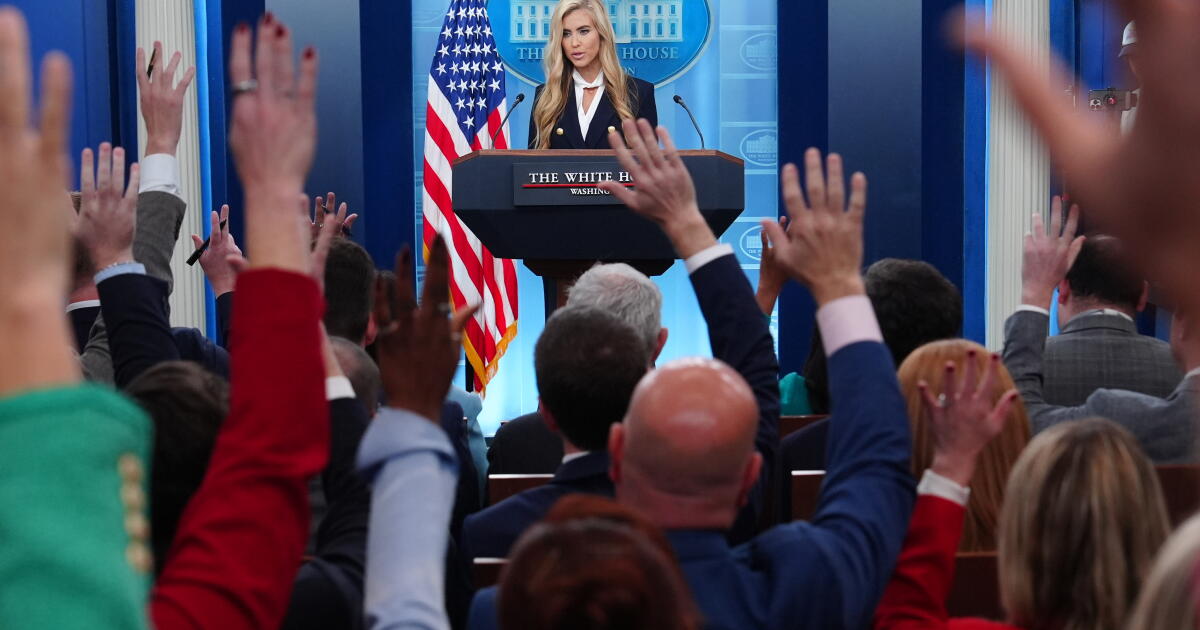
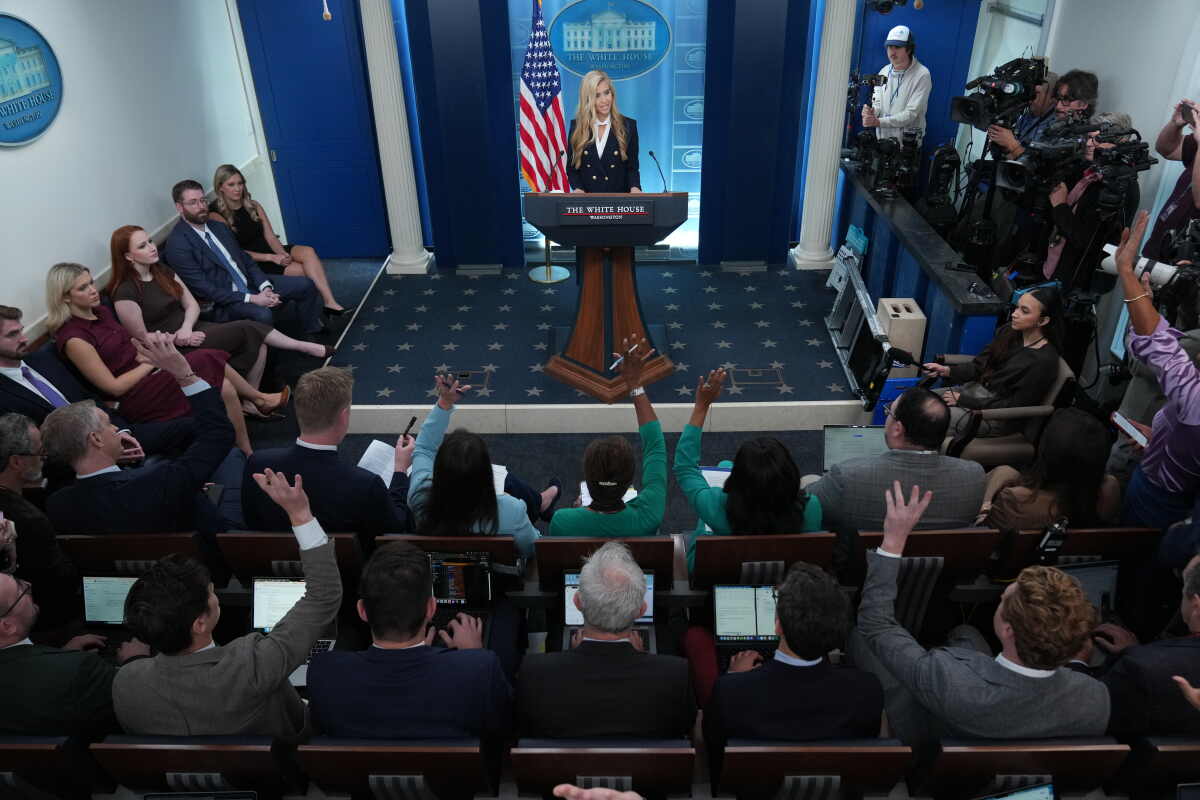
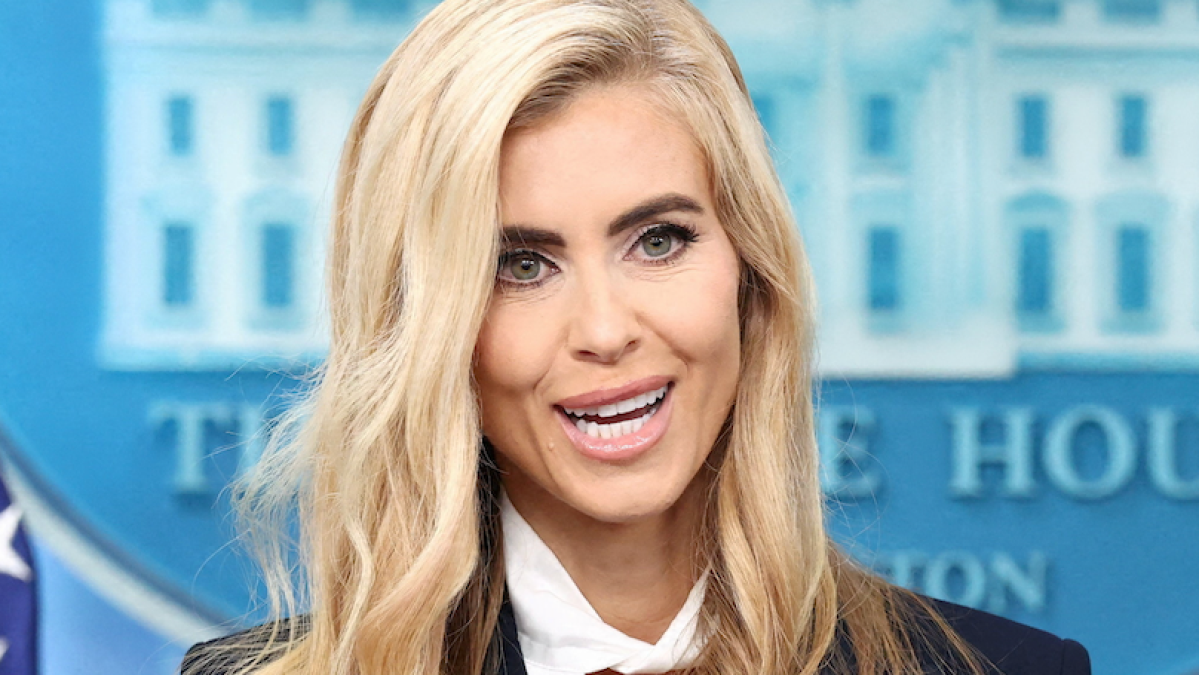
White House spokesperson Karoline Leavitt, meanwhile, indicated the US maintained a positive outlook on future talks.
“At this moment, we remain very much engaged in these negotiations, in these talks,” she said.
But reporting from Tehran on Thursday, Al Jazeera’s Ali Hashem says deep-seated distrust remains. The US under Trump twice attacked Iran amid ongoing indirect talks over Iran’s nuclear programme, a fact that has cast a long shadow over the most recent bout of diplomacy.
“Clearly, there have been several messages conveyed to the Iranians. But rather than consolidating a feeling of trust and optimism, it seems that it’s already shaken,” he said.
“We saw a platform closely associated with the foreign ministry tweeting today, quoting a source saying that whatever is being demonstrated or said in the media regarding the optimism is just hype, and this is used for PR and it’s for President Trump to use in the markets,” he said.
Iran’s speaker of parliament, Mohammad Bagher Ghalibaf, who led the Iranian delegation in the talks with Iran, told his Lebanese counterpart on Thursday that a ceasefire in Israel’s invasion and ongoing bombardment of Lebanon is “as important” as the pause in fighting in Iran.
A Lebanon ceasefire has emerged as one of the main sticking points in talks, which also include control of the Strait of Hormuz and the future of Iran’s nuclear programme.
‘We will use force’
Speaking during the news conference on Thursday, General Dan Caine, the chairman of the Joint Chiefs of Staff, said so far, 13 ships leaving Iranian ports have turned around in response to US military warnings.
“If you do not comply with this blockade, we will use force,” Caine said.
Admiral Brad Cooper, the head of US Central Command (CENTCOM), meanwhile, said the US is using the wear to rearm and reposition its forces.
“We’re rearming, we’re retooling, and we’re adjusting our tactics, techniques and procedures. There’s no military in the world that adjusts like we do, and that’s exactly what we’re doing right now during the ceasefire,” said.
During questions with reporters, Hegseth also shot down reports that China was planning to send weapons to Iran amid the pause in fighting. Hegseth said Washington had received assurances from Beijing that this was not the case.
Hegseth also used a large portion of the news conference to attack US press coverage of the war, which the Trump administration is receiving criticism for its shifting objectives and justifications for launching the conflict.
Hegseth called the coverage “incredibly unpatriotic”.
Americans could be forgiven if they’re unaware that President Trump recently performed one of his most essential tasks and sent his annual budget request to Congress, though months late and stunningly incomplete.
After all, so much else has been dominating the news lately: the Mideast war that Trump promised not to start. Price rises he’d vowed to end. His repeatedinsults of Pope Leo XIV. His portraying himself as Jesus Christ, then lying about having done so. An incompetent attorney general to fire. And the president’s actual priorities — plans for a $400-million White House ballroomand a massive “Triumphal Arch” nearby!
It’s a lot.
Once again, as in Trump’s first term, the public and press are inattentive to the nation’s fiscal health relative to past years. But that reflects the president’s own disengagement with reconciling spending and revenue — this from a president many Americans voted for based on his purported prowess as a businessman. For decades back to Ronald Reagan’s time, so-called deficit wars in Washington were a big story. Now, even Republicans in Congress complain of Trump’s absence from the fiscal fray as they struggle to belatedly finish this year’s budget work that was due last fall, and to end a weeks-old partial government shutdown, before turning to the budget for the fiscal year starting Oct. 1.
Yet it’s worth paying attention to U.S. budgets even if Trump won’t, for the sake of our children and grandchildren who’ll inherit the bills. In one document, a federal budget reflects the nation’s priorities. And these days, in the perennial guns-versus-butter debate, Trump has made his feelings all too plain.
“We’re fighting wars,” he told a group at the White House on April Fools’ Day. “We can’t take care of day care … Medicaid, Medicare, all these individual things.”
Forget that Trump swore to end wars. Or that last year, long before he went to war against Iran, he cut $1 trillion over 10 years from Medicaid and other healthcare programs in his misnamed “One Big Beautiful Bill.”
Yes, budgets can be boring, especially to a president with a famously short attention span. Trump and many of us Americans are distracted constantly by all the shiny objects he throws at the national consciousness by his words, acts and social media postings at all hours.
Yet the budgetary trend is clear to anyone bothering to look: As president, Trump is once again exacerbating the nation’s unsustainable course of piling up debt. According to the nonpartisan Congressional Budget Office, among other credible sources, debt is now approaching the highest level in U.S. history, which was reached during World War II. It already surpasses the size of the entire economy and threatens higher borrowing costs and reduced investments.
For all the achievements Trump likes to claim — ending eight wars in a year! — here’s one that’s real: He is on a path to break his own record for the most debt in a single presidential term, $8.4 trillion in Trump 1.0, which was nearly double the increase under President Biden.
Need further proof of Trump’s brazen mendacity? Of course you don’t, but here it is: In the face of the well-documented budget record, Trump declared both this year and last year to a joint session of Congress, on national television, that he would balance the federal budget —“overnight,” he said in February.
The inequitable tax cuts and big spending increases for the military and immigration crackdowns that Trump and the Republican-controlled Congress enacted last year are significantly greater than in his first term, and are driving up the debt despite Republicans’ deep healthcare cuts. Just months after Trump took office, the ratings firm Moody’s downgraded the nation’s sterling credit rating for the first time in more than a century.
And now, in his new budget request, Trump seeks to inflate military spending from under $1 trillion when he regained office to $1.5 trillion, for the biggest year-to-year increase in military budgets since World War II.
This fiscal irresponsibility is happening at the worst possible time. For the last quarter of the 20th century, presidents and Congresses of both parties annually debated how to reduce deficits and several times reached consequential multi-year deals, culminating during the second Clinton term in four straight years of surpluses. (Those surpluses ended — wait for it — with Republicans’ tax cuts and war spending during the George W. Bush administration.)
Politicians back then were moved not just by the deficits of their time — deficits that, as a share of the economy, were less than half what they are now. They also were responding to experts’ warnings of a demographic tsunami by the 2020s: With the aging of the huge baby-boomer population, spending for Social Security, Medicare and Medicaid would greatly increase even as the workforce whose payroll taxes support those programs shrank. Today the number of people 65 or older is almost three times what it was 50 years ago, and rising.
This reckoning is upon us, though you wouldn’t know it as Trump keeps calling for cutting revenue and spending more for lawless wars, immigration raids and monuments to himself. Barring bipartisan action, in 2033 Social Security’s retirement fund and Medicare’s hospital fund will no longer be able to cover beneficiaries’ full claims, according to their trustees’ annual report, necessitating reduced benefits or shifts of money from other worthy programs.
Trump did put Vice President JD Vance in charge of a “war on fraud.” But that holds about as much promise as Elon Musk’s fiscal fiasco — remember DOGE? — that cost money instead of cutting $2 trillion as promised.
Like other problems, Trump likely will leave the fiscal follies to his successor, who, should he or she win two terms, would preside as Social Security and Medicare become insolvent. I’ve yet to hear any of the early 2028 presidential aspirants — or Trump — address or be asked about that.
The California Supreme Court ordered attorney and former law school dean John Eastman disbarred on Wednesday for his role aiding the Trump administration’s attempt to overturn the 2020 election.
Eastman’s attorney, Randall A. Miller, told the Associated Press that the court’s decision “departs from long-standing United States Supreme Court precedent protecting First Amendment rights, especially in the attorney discipline context.” Miller did not immediately return an after-hours phone call seeking comment from The Times.
State Bar Chief Trial Counsel George Cardona said in a statement that the ruling “underscores that Mr. Eastman’s misconduct was incompatible with the standards of integrity required of every California attorney.”
“Today’s California Supreme Court order disbarring John Charles Eastman from the practice of law in California affirms the fundamental principle that attorneys must act with honesty and uphold the rule of law, regardless of the client they represent or the context in which that representation occurs,” said Cardona said.
The Supreme Court’s decision affirms a 2024 ruling from State Bar Judge Yvette Roland that Eastman be prohibited from practicing law.
In a marathon trial that lasted off and on from June to November 2024, the State Bar, which regulates lawyers in California, argued that Eastman was unfit to practice law for peddling bogus claims that fraud cost Trump the election and for promoting a fake-elector scheme to block the electoral count.
“It is true that an attorney has a duty to engage in zealous advocacy on behalf of a client,” Roland wrote in 2024 in a 128-page ruling. “However, Eastman’s inaccurate assertions were lies that cannot be justified as zealous advocacy.”
Roland found Eastman culpable of 10 of 11 counts of misconduct.
Eastman fomented “predictable and destructive chaos” when he stood beside fellow Trump adviser Rudolph W. Giuliani on Jan. 6, 2021, and told an enormous crowd at the Ellipse that the election had been fraudulent, the bar argued.
Eastman claimed he was acting in good faith, and as a vigorous champion of his client. But State Bar attorneys argued that “the evidence, including his often not-credible trial testimony, shows that he held — and still holds — truth and democracy in contempt.”
Despite Eastman’s repeated assertions that Joe Biden’s victory was illegal, Roland ruled, Eastman’s own words showed he knew that proof was lacking.
The judge cited an email that Eastman sent to a friend, Cleta Mitchell, on Nov. 29, 2020, acknowledging that fraud serious enough to sway the results could not be proved.
“It would be nice to have actually hard documented evidence of the fraud in the areas to which the analyses pointed,” Eastman wrote.
After the 2024 ruling Eastman responded on his Substack writing that he hoped the California Supreme Court or U.S. Supreme Court would “step in to put a stop to this lawfare that has become a serious threat to the First Amendment, the right of controversial clients and causes to legal representation, and more broadly to our adversarial system of justice.”
Eastman has a long history in California’s conservative legal circles. He was hired by Chapman’s law school in 1999 and was dean from June 2007 to January 2010, then continued to teach courses in constitutional law, property law, legal history and the 1st Amendment.
He retired in early 2021 after more than 100 Chapman faculty and others affiliated with the university signed a letter calling on the school to take action against him for his role in the Jan. 6 insurrection.
Wednesday’s decision is a bookend in a lengthy investigation into Eastman’s actions that began in 2021. In October of that year, the nonpartisan legal group States United Democracy Center filed an ethics complaint calling on the State Bar to investigate Eastman’s Jan. 6 actions.
Christine P. Sun, senior vice president of legal at the States United Democracy Center, said on Wednesday that the court’s decision is “part of a broader reckoning for those who seek to undermine the rule of law.”
“Eastman played a central role in the plot to overturn the 2020 election—pressuring state officials, advancing baseless claims in court, and promoting a fringe theory that the vice president could reject certified electoral votes,” Sun said in a statement. “His unethical actions have had real, lasting consequences for our democracy, and we applaud the California Supreme Court’s decision to disbar him.”
Staff writer Christopher Goffard contributed to this report
Rodríguez hosted US Energy Assistant Secretary Kyle Haustveit at Miraflores Palace. (Presidential Press)
Caracas, April 15, 2026 (venezuelanalysis.com) – The US Treasury Department’s Office of Foreign Assets Control (OFAC) issued two new general licenses on Tuesday facilitating transactions with Venezuelan state institutions.
for Venezuela on Tuesday: a commercial license (No. 56) and a financial license (No. 57), signaling a partial easing of restrictions while maintaining key controls.
General License 56 (GL56) authorizes US entities to negotiate and sign “contingent contracts” for future commercial operations in Venezuela. This allows firms to move forward with agreements, investments, or projects, though their final execution remains subject to separate OFAC approval.
The waiver maintains important restrictions, including a ban on payments in gold or cryptocurrencies, as well as prohibitions on transactions involving China, Russia, Iran, North Korea, and Cuba. It likewise forbids transactions involving Venezuelan debt and does not unblock currently frozen Venezuelan assets.
For its part, General License 57 (GL57) permits a broad range of financial operations with the Venezuelan Central Bank (BCV), as well as Venezuela’s public banks: Banco de Venezuela, Banco Digital de los Trabajadores, Banco del Tesoro, and entities in which these institutions hold a 50 percent or greater stake.
The allowed transactions include opening and managing accounts, conducting US dollar transfers, issuing loans, and providing banking services. The BCV was sanctioned in April 2019, effectively isolating Venezuela from international financial circuits and increasing costs for basic transactions.
The latest sanctions waivers are expected to facilitate financial flows to the Venezuelan economy, including the transfer of Venezuelan oil revenues that are currently controlled by the Trump administration. US authorities have returned a confirmed US $500 million out of an initial deal estimated at $2 billion, while US and Venezuelan officials have confirmed the purchase of US-manufactured medicines and hospital equipment using Venezuelan funds.
Analyst Hermes Pérez warned that reincorporation into the SWIFT system and establishment of US-based accounts could take several months due to security and technological requirements. Other economists argued that GL57 could allow the Central Bank to stabilize the Venezuelan foreign exchange system.
For several years, a parallel exchange rate between the US dollar and the Venezuelan bolívar has coexisted with the official one set by the Central Bank, often with a gap above 50 percent that fueled distortions in retail activities and currency speculation.
Since the January 3 military strikes and kidnapping of Venezuelan President Nicolás Maduro, the Trump administration has issued several licenses to expand US influence in the Caribbean nation, particularly in key economic sectors such as hydrocarbons and mining.
In parallel, Venezuelan authorities have promoted several pro-business reforms, while multiple Trump officials and corporate executives have come the South American country and held meetings with the acting government led by Delcy Rodríguez.
The latest waivers coincided with the visit to Caracas of a US Department of Energy delegation led by Assistant Secretary Kyle Haustveit. Rodríguez hosted the official on Wednesday in a work meeting at the presidential palace.
During a short, televised intervention, Rodríguez argued that OFAC licenses do not provide sufficient “legal certainty” and reiterated calls for Trump to lift unilateral coercive measures against the country.
“An investor requires greater legal certainty. A license does not provide long-term legal guarantees because it is subject to temporality,” she argued. Rodríguez claimed Washington and Caracas have “enough maturity” to establish “long-term” energy cooperation ties.
“We are working very hard on changes that can attract investment, and which can build an energy cooperation agenda with the United States,” she said.
Rodríguez additionally disclosed recent meetings with representatives from ExxonMobil and ConocoPhillips, stating that authorities have “taken into account recommendations” from oil majors in recent legislative overhauls. Both ExxonMobil and ConocoPhillips refused to accept hydrocarbon reforms under former President Hugo Chávez in the 2000s, later securing multi-billion-dollar arbitration awards against the Caracas as compensation for the nationalization of their assets.
Haustveit and the Energy Department delegation were also present on Monday during the signing of agreements with Chevron that granted the Texas-based conglomerate an increased stake in the Petroindependencia joint venture and awarded an additional extra-heavy crude bloc for exploration to the Petropiar mixed company. Chevron owns minority stakes in both joint enterprises with Venezuelan state oil company PDVSA.
Shell, Eni and Repsol are among the other energy giants to have recently advanced in deals with the Venezuelan government under the improved conditions of the new Hydrocarbon Law.
US Chargé d’Affaires in Venezuela Laura Dogu was also present at the Chevron deal-signing ceremony and the meeting with Haustveit’s delegation. However, the White House announced Wednesday that her post will be taken over by veteran diplomat John Barrett.
Barrett, who previously served as chargé d’affaires at the US Embassy in Guatemala since January 21, 2026, was recently accused by Guatemalan President Bernardo Arévalo of interference during judicial elections for the Constitutional Court held in March.
US president says the leaders of the two countries will speak for the first time in 34 years on Thursday.
Published On 16 Apr 202616 Apr 2026
United States President Donald Trump says the leaders of Israel and Lebanon will speak for the first time in 34 years on Thursday.
The announcement on Wednesday came a day after Israel and Lebanon’s envoys to the US held direct talks in Washington, DC, to discuss an end to Israeli attacks on its neighbour.
Recommended Stories
list of 4 itemsend of list
“Trying to get a little breathing room between Israel and Lebanon,” Trump wrote on his Truth Social platform.
“It has been a long time since the two leaders have spoken, like 34 years. It will happen tomorrow. Nice!”
The US president did not specify who will be involved in the talks.
Lebanon was drawn into the US and Israel’s war on Iran on March 2 after Tehran-aligned Hezbollah resumed attacks on Israel.
Hezbollah said the attacks were in retaliation for Israel’s killing of Iran’s Supreme Leader Ayatollah Ali Khamenei on the first day of the war, on February 28, as well as Israel’s near-daily violations of a ceasefire it agreed to in Lebanon in November 2024.
Israeli attacks since March 2 have killed more than 2,000 people in Lebanon and displaced more than 1.2 million others. The Israeli military has also launched a ground invasion in southern Lebanon, seeking to seize more territory and create what it calls a “buffer zone”.
Israeli Prime Minister Benjamin Netanyahu on Wednesday ordered the military to expand the invasion in southern Lebanon towards the east.
He said that Israel was pursuing negotiations with the Lebanese government alongside its military campaign against Hezbollah in hopes of disarming the armed group and achieving a “sustainable peace” with its northern neighbour.
The Lebanese government, which is not a party to the conflict between Israel and Hezbollah, is seeking a ceasefire and a withdrawal of Israeli troops from southern Lebanon.
WASHINGTON — With a fragile ceasefire set to expire with Iran in a matter of days, President Trump is still deciding between diplomacy and a resumption of fighting that may ultimately hinge on his definition of victory.
Negotiations have continued over the last week between the warring sides over a potential agreement that would end the conflict and curtail Iran’s nuclear ambitions, with interlocutors from Pakistan passing messages that have kept talks alive. Tehran has floated an extension of the two-week ceasefire, set to expire Tuesday, that is under active consideration by the American side.
But the Islamic Republic has simultaneously vowed retaliation over a new U.S. blockade of Iranian ports that in effect cut off Tehran’s oil sales, which make up nearly 85% of the country’s export revenue. And the Trump administration is deploying up to 10,000 additional troops to the region, on top of the 50,000 already there, both reinforcing the blockade and threatening ground operations if diplomacy fails.
Conflicting messages from the Trump administration are designed to escalate pressure on Tehran ahead of the ceasefire deadline, potentially extracting concessions at the negotiating table.
But speaking with reporters, Trump has made it clear he is seeking a way to end the war for good.
“I think it’s close to over,” Trump told Fox Business Network’s “Mornings with Maria” on Wednesday. “I view it as very close to over. If I pulled up stakes right now, it would take them 20 years to rebuild that country. And we’re not finished. We’ll see what happens. I think they want to make a deal very badly.”
Negotiations toward that end have proved more challenging than the administration initially anticipated.
Trump has said he started the war in order to eliminate Iran’s nuclear infrastructure, degrade its ballistic missile and drone programs, and destroy its navy. But in talks, the Iranians have not relented on their right to enrich uranium, to maintain conventional defensive capabilities and to police traffic through the Strait of Hormuz, one of the world’s most vital waterways.
Tehran rejected a proposal by U.S. negotiators last week for a 20-year pause on Iran’s domestic enrichment of fissile material, with the Iranians countering with a five-year moratorium, one official said.
In his interview with Fox, Trump said the talks were going so well that an extension of the ceasefire might not be necessary. Yet, speaking with the New York Post, Trump suggested he wouldn’t settle for less than an indefinite cap on Iran’s nuclear work.
“I’ve been saying they can’t have nuclear weapons,” Trump said, “so I don’t like the 20 years.”
“I don’t want them to feel like they have a win,” he added.
The U.S. ceasefire with Iran was predicated on the resumption of free navigation through the Strait of Hormuz. But Iranian threats of a new toll system and warnings of drifting mines have limited traffic, prompting the Trump administration to announce a full blockade of the strait. Despite the U.S. threat, ships have continued transiting the passage this week, suggesting the U.S. blockade has focused more specifically on Iranian ports.
Amid the impasse, global oil prices remain stubbornly high — a concern for Republicans entering this year’s midterm election season. Trump told Fox that he expected prices to drop to prewar levels by the time of the vote in November.
“There’s gonna be a hit, but it’s going to recover, I think, fully,” Trump said. “I think that we will be somewhere around where we were — maybe even lower. And when this is over, I think the stock market is going to boom.”
A second round of high-level negotiations could take place in Islamabad, Pakistan, over the next several days, Karoline Leavitt, the White House press secretary, told reporters at a news briefing Wednesday.
Pakistani officials traveled to Tehran on Wednesday to deliver a message from the U.S. delegation, potentially laying the groundwork for new, in-person talks.
“He’s made his red lines in these negotiations very clear to the other side,” Leavitt said. “We feel good about the prospects of a deal.”
All this comes as Trump has been telling media outlets that he believes the war could soon end. We’ll talk more about that later in this story.
“China is very happy that I am permanently opening the Strait of Hormuz,” the American leader proclaimed on Truth Social, even as the flow of oil from the Middle East has been drastically reduced by the war. “I am doing it for them, also – And the World. This situation will never happen again. They have agreed not to send weapons to Iran.”
“President Xi will give me a big, fat, hug when I get there in a few weeks,” he added. “We are working together smartly, and very well! Doesn’t that beat fighting??? BUT REMEMBER, we are very good at fighting, if we have to – far better than anyone else!!!”
In a pre-taped interview that aired Wednesday morning, Trump told Fox News that the war hasn’t soured his relationship with Xi, who has expressed frustration with American actions in the Middle East.
“I don’t think it does,” Trump told Fox News host Maria Bartiromo. “He’s somebody that needs oil. We don’t. He’s somebody I get along with very well. He just wrote me a beautiful letter…He responded to a letter that I wrote because I had heard that China is giving weapons to – I mean, you’re seeing it all over the place – to Iran…I wrote him a letter asking him not to do that, and he wrote me a letter saying that essentially he’s not doing that.”
Trump:
I wrote a letter to Xi. I asked him not to give Iran weapons. He wrote me a letter, and he is saying that he is essentially not doing that. pic.twitter.com/yrTT9Dwi2V
Before his Truth Social Post and the Fox interview aired, Financial Times reported that Iran “secretly acquired a Chinese spy satellite that gave the Islamic republic a powerful new capability to target US military bases across the Middle East during the recent war.”
“Leaked Iranian military documents show the satellite, known as TEE-01B, was acquired by the Islamic Revolutionary Guard Corps’ Aerospace Force in late 2024 after it was launched into space from China,” according to the outlet. “Time-stamped coordinate lists, satellite imagery and orbital analysis show that Iranian military commanders later tasked the satellite to monitor key US military sites. The images were taken in March before and after drone and missile strikes on those locations.”
Meanwhile, China continues to push back against accusations that it is helping Iran and repeated previous assertions that it will respond should Trump go through with his threat to impose a 50% tariff.
“Media reports accusing China of providing military support to Iran are purely fabricated,” Chinese Foreign Ministry spokesman Lin Jian stated on X. “If the U.S. goes ahead with tariff hikes on China on the basis of these accusations, China will respond with countermeasures.”
Lin did not offer details about those countermeasures.
Media reports accusing China of providing military support to Iran are purely fabricated.
If the U.S. goes ahead with tariff hikes on China on the basis of these accusations, China will respond with countermeasures. pic.twitter.com/QwETjpJEyY
Regardless, Iran’s use of commercial space imagery to strike U.S. and allied targets “will force the Pentagon to adjust, the head of U.S. Space Command said,” according to Defense One.
“We have to recognize that the rest of the world can now see the entire planet transparently and almost 24/7 and so we have to be able to operate in that environment successfully,” Gen. Stephen Whiting, the head of U.S. Space Command told reporters Tuesday during the Space Symposium conference.
UPDATES
UPDATE: 2:24 PM EDT –
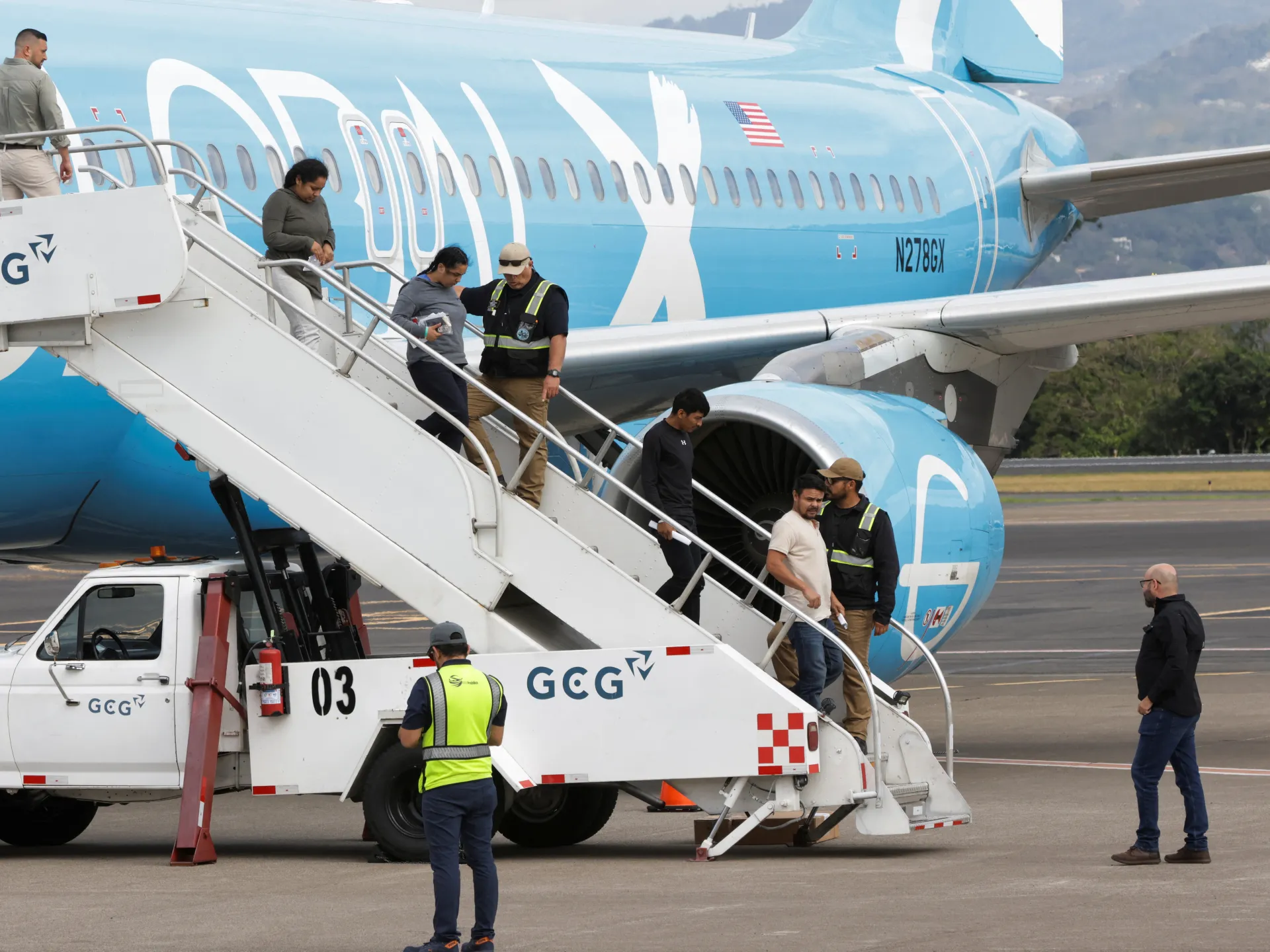
White House Press Secretary Karoline Leavitt denied the U.S. requested an extention to the ceasefire.
‘I saw some reporting that we had formally requested an extension of this ceasefire. That is not true. We remain engaged in these negotiations.’
She also thanked Pakistan for its help in the negotiations.
PRESS SEC on U.S.-Iran negotiations: The Pakistanis have been incredible mediators and we really appreciate their friendship and efforts to bring this deal to a close.
The President feels it’s important to continue to streamline this communication through the Pakistanis. pic.twitter.com/3iIeF0oUpn
Trump, as we noted earlier, is saying that he believes the war could soon be concluded.
“I think it’s close to over,” Trump posited. “I mean, I view it as very close to over. You know what? If I pulled up stakes right now, it would take them 20 years to rebuild that country. And we’re not finished. We’ll see what happens. I think they want to make a deal very badly.”
When asked by Sky whether a deal could happen before King Charles visits the U.S. at the end of the month, Trump said: “It’s possible. Very possible. They’re beaten up pretty bad.”
U.S. and Iranian negotiators made progress in talks on Tuesday, moving closer to a framework agreement to end the war, two U.S. officials said, Axios reported on Wednesday.
“U.S. officials and sources familiar with the mediation cautioned that a deal is not guaranteed, given the substantial differences between the two sides,” the news outlet noted.
“Let’s wait and see if we can get a deal. We are hopeful and accordingly trying to push with both sides,” a Pakistani official told Axios.
“U.S. officials and sources familiar with the mediation cautioned that a deal is not guaranteed, given the substantial differences between the two sides.”
“We want to make a deal. And parts of their government want to make a deal. Now the trick is to get the whole of government…
In another step toward potential future negotiations, Pakistan’s Army Chief of Staff Asim Munir arrived in Tehran today for talks.
Iran’s Foreign Minister Spokesman, Esmail Baghaei, said that during the visit, “the views of both sides are likely to be discussed in detail.”
Iran’s Foreign Minister Spokesman, Esmail Baghaei, confirms that a high-ranking Pakistani delegation will visit Tehran today to follow up on talks with the U.S. in Islamabad. “During this visit, the views of both sides are likely to be discussed in detail,” Baghaei said. pic.twitter.com/bdMnyCKUA5
— Ariel Oseran أريئل أوسيران (@ariel_oseran) April 15, 2026
Baghaei, however, said Iran would not capitulate.
“If a negotiation is based on one side imposing conditions on the other, that is not negotiation; it is dictation and imposition, and you know that the Islamic Republic of Iran and the Iranian nation will never accept such imposition,” he stated.
Iranian Foreign Ministry spokesperson:
If a negotiation is based on one side imposing conditions on the other, that is not negotiation; it is dictation and imposition, and you know that the Islamic Republic of Iran and the Iranian nation will never accept such imposition. pic.twitter.com/lnKeJT9Pow
In an X post, CENTCOM on Wednesday said that during “the first 48 hours of the U.S. blockade on ships entering and exiting Iranian ports, no vessels have made it past U.S. forces. Additionally, 9 vessels have complied with direction from U.S. forces to turn around and return toward an Iranian port or coastal area.”
During the first 48 hours of the U.S. blockade on ships entering and exiting Iranian ports, no vessels have made it past U.S. forces. Additionally, 9 vessels have complied with direction from U.S. forces to turn around and return toward an Iranian port or coastal area. pic.twitter.com/h4msgvaPTl
Late Tuesday night, Adm. Brad Cooper, commander of CENTCOM, took to X to announce that the “blockade of Iranian ports has been fully implemented as U.S. forces maintain maritime superiority in the Middle East.”
“An estimated 90% of Iran’s economy is fueled by international trade by sea,” Cooper noted. “In less than 36 hours since the blockade was implemented, U.S. forces have completely halted economic trade going into and out of Iran by sea.”
Senior IRGC commander Maj. Gen. Ali Abdollahi claimed the Islamic Republic would consider it a prelude to the breach of the ceasefire if “the aggressive and terrorist America” continues the blockade.
Abdollahi “threatened that the powerful Iranian armed forces would not allow any export and import to keep going in the Persian Gulf, the Sea of Oman, and the Red Sea region, in the face of the US maritime aggression,” the official Iranian IRNA news agency stated on Wednesday.
Meanwhile, the Malta-flagged VLCC Agios Fanourios I became the first crude carrier to head west through the Strait of Hormuz since the US blockade on Iran’s ports came into force, according to MarineTraffic.
First crude carrier heads west through Strait of Hormuz since the US blockade
The Malta-flagged VLCC Agios Fanourios I has become the first crude carrier to head west through the Strait of Hormuz since the US blockade on Iran’s ports came into force. According to #MarineTraffic… pic.twitter.com/K8syfSZtFL
Though another round of peace talks between the U.S. and Iran is being discussed, the Pentagon continues to pour resources into the Middle East, something we have been reporting about for weeks.
“The forces moving into the region include about 6,000 troops aboard the aircraft carrier USS George H.W. Bush and several warships escorting it, said current and former officials,” according to The Washington Post, citing anonymous officials. “About 4,200 others with the Boxer Amphibious Ready Group and its embarked Marine Corps task force, the 11th Marine Expeditionary Unit, are expected to arrive near the end of the month.”
The Nimitz class aircraft carrier USS George H.W. Bush. (U.S. Navy photo by Mass Communication Specialist 2nd Class Mitchell Mason) Petty Officer 2nd Class Mitchell MasonA stock picture of the Wasp class amphibious assault ship USS Boxer. USN
During the pause in fighting, Iran appears to be using the time to reopen entrances to underground missile cities damaged during the war, according to CNN. The network published footage showing engineering equipment at the Tabriz South missile base and the Khomein missile bases.
The network also noted that, according to U.S. intelligence estimates, about half of the Iranian missile launchers remained intact after a month of fighting, and that many of these launchers could have been buried in underground storage facilities as a result of strikes on the entrances.
CNN published footage showing engineering equipment making use of the ceasefire to reopen the entrances to underground facilities at missile bases that were damaged during the war.
The sites documented include the Tabriz South missile base and the Khomein missile base.
A day after negotiations took place in Washington between the U.S., Israel and Lebanon, Hezbollah issued a veiled threat to Beirut. Considered a terrorist organization by the U.S. and Israel, Hezbollah was not a party to the talks.
“The Lebanese authorities must reconsider their actions and return to the embrace of the people,” said Hezbollah MP Hassan Fadlallah in a statement. “The authorities withdrew the army from the south, leaving it vulnerable to occupation and giving the enemy [Israel] free rein.”
Meanwhile, Israel is continuing to bombard Hezbollah.
“In the past 24 hours, the IDF struck over 200 Hezbollah terror infrastructure sites in southern Lebanon,” it claimed. “Among the targets struck: terrorists, military structures, approximately 20 launchers, including those recently used to fire towards the State of Israel.”
ביממה האחרונה הותקפו יותר מ-200 מטרות של ארגון הטרור חיזבאללה בדרום לבנון. בין התשתיות שהותקפו: מחבלים, מבנים צבאיים וכ-20 משגרים, בהם משגרים ששיגרו לעבר שטח הארץ והושמדו בסגירות מעגל מהירות. pic.twitter.com/LeR2mr37Vv
WASHINGTON — Federal prosecutors made an unannounced visit this week to a construction site at Federal Reserve headquarters that is the focus of an investigation into a $2.5-billion renovation project, according to two people familiar with the visit.
Two prosecutors and an investigator from U.S. Atty. Jeanine Pirro’s office were turned away on Tuesday by a building contractor and referred to Fed attorneys, one of the people said. The two people familiar with the visit spoke on condition of anonymity because they weren’t authorized to publicly discuss an ongoing investigation.
The visit underscores that the Trump administration is not backing down from its investigation of the Fed and its chair, Jerome Powell, even though the probe has delayed the confirmation of a new chair nominated by President Trump. The investigation is focused on cost overruns and brief testimony about the project last summer by Powell. Trump confirmed in an interview that aired Wednesday on Fox Business that he wants to continue the probe.
Last month, during a closed-door hearing before a federal judge, a top deputy from Pirro’s office conceded that they hadn’t found any evidence of a crime in their investigation of the headquarters project.
Robert Hur, an attorney for the Federal Reserve board of governors, sent an email to Pirro’s prosecutors about their visit and their request for a “tour” to “check on progress” at the construction site. Hur’s email, which the Associated Press has viewed, noted that U.S. District Judge James Boasberg concluded that their interest in the Federal Reserve’s renovation project was “pretextual.”
“Should you wish to challenge that finding, the courts provide an avenue for you; it is not appropriate for you to try to circumvent it,” Hur wrote.
Republican Tillis is key vote
Sen. Thom Tillis, a North Carolina Republican who is a key member of the Senate Banking Committee, has vowed to vote against Kevin Warsh, Trump’s nominee to replace Powell as Fed chair, until the investigation is dropped. With the committee closely divided on partisan lines, Tillis’ opposition is enough to block Warsh.
The Banking panel said Tuesday that it will hold a hearing on Warsh’s nomination April 21. Powell’s term as Fed chair ends May 15, but Powell said last month he would remain as chair until a replacement is named.
Powell is serving a separate term as a member of the Fed’s governing board that lasts until January 2028. Chairs typically leave their posts as governor when their terms as chair end, but they can remain on the board if they choose.
Last month, Powell said, “I have no intention of leaving the Board until the investigation is well and truly over, with transparency and finality.” If he remains in his seat, even after Warsh is confirmed, it would deny Trump the oppotunity to fill a seat on the seven-member board.
Late Tuesday, Tillis posted a link on social media to the Wall Street Journal’s article on the visit below an image of the Three Stooges and wrote, “The U.S. Attorney’s Office for D.C. at the crime scene.”
Investigation centers on building renovations
The investigation by Pirro’s office centers on an appearance by Powell before the Senate Banking Committee last June, when he was asked about cost overruns on the Fed’s extensive building renovations. The most recent estimates from the Fed suggest the current estimated cost of $2.5 billion is about $600 million higher than a 2022 estimate of $1.9 billion.
“It is probably corrupt, but what it really is, is incompetent,” Trump said on Fox Business. “Don’t you think we have to find out what happened there?”
The president’s support for the investigation threatens a time frame set out by Sen. Tim Scott, a South Carolina Republican who chairs the Banking Committee. Scott said Tuesday on Fox Business that he believed the investigation would be “wrapped up in the next few weeks,” allowing Warsh to be confirmed soon after.
Threat to fire Powell
News of the unannounced visit by prosecutors comes as Trump has again threatened to fire Powell, if the Federal Reserve chair decides to stay on the central bank’s governing board after his term as chair expires next month.
“Well then I’ll have to fire him, OK?” Trump said when reminded that Powell has said he won’t leave the Fed while the Justice Department investigates a $2.5-billion renovation project at the bank. Powell has also said he will remain as chair of the Fed’s rate-setting committee until a replacement is confirmed by the Senate, following the precedent of previous chairs.
Trump has for months wanted to remove Powell as chair of the Fed, saying he has been too slow in orchestrating interest rate cuts that would give the U.S. economy a quick boost. Powell has said the investigation is a pretext to undermine the Fed’s independence to set rates.
Supreme Court weighing another Trump removal
Trump’s threat to fire Powell comes as the Supreme Court is weighing the president’s effort to remove another central bank governor, Lisa Cook. Lower courts have so far allowed Cook to remain in her job while her legal challenge to the firing continues. The Supreme Court also seemed likely to keep her on the Fed when the court heard arguments in January. A decision could come any time.
The issue in Cook’s case is whether allegations of mortgage fraud, which she has denied, is a sufficient reason to fire her or a mere pretext masking Trump’s desire to exert more control over U.S. interest rate policy.
The Supreme Court has allowed the firings of the heads of other governmental agencies at the president’s discretion, with no claim that they did anything wrong, while also signaling that it is approaching the independence of the nation’s central bank more cautiously, calling the Fed “a uniquely structured, quasi-private entity.”
Kunzelman and Rugaber write for the Associated Press. AP Writer Mark Sherman contributed to this report.
ATHENS, Georgia — Fresh from a marathon trip to Pakistan that failed to reach a deal for ending the war with Iran, Vice President JD Vance jetted to this Georgia college town for a campus tour organized by the conservative powerhouse Turning Point USA.
But instead of showcasing the youthful energy that the organization harnessed to return President Trump to the White House less than two years ago, there was a mostly empty arena, awkward questions and unusually sharp criticism.
The event affirmed Trump’s difficulty selling the war and how much he’s complicated his own political fortunes by assailing Pope Leo XIV and posting a social media meme that depicted himself as Jesus.
“I did vote for Trump. I am not a Trump supporter anymore,” said Joseph Bercher, a Catholic who said he was glad that Leo has expressed opposition to the war with Iran.
Bercher said the Jesus meme, which the president took down Monday after a rare conservative backlash, was a “red flag” indicating Trump’s true character.
“He sees himself as like a demagogue or someone to be worshipped,” Bercher said.
C.J. Santini, a recent graduate of Liberty University, an evangelical school in Virginia, said he didn’t have an opinion on whether Iran was truly close to manufacturing a nuclear weapon and thus needed to be attacked. But he laughed and shook his head when asked about Trump attacking Leo.
“It’s just stupid. Stupid,” he said, calling it a “distraction” from Trump’s agenda in Iran and at home.
Mostly empty arena contrasts with 2024 rallies
Many of the college-age attendees donned Turning Point attire, Trump hats and red-white-and-blue paraphernalia for the event. Yet they were outnumbered more than 2-to-1 by empty seats in what is not even the largest arena on this sprawling campus that sits about a 90-minute drive from downtown Atlanta.
A Marine veteran who served in Iraq, Vance acknowledged that not all young conservatives are enamored with another U.S. war in the Middle East.
“I’m not saying you have to agree with me on every issue,” Vance told the young crowd. “What I’m saying,” he added, “is don’t get disengaged.”
The vice president took questions from Turning Point executive Andrew Kolvet instead of Erika Kirk, who began leading the organization after the assassination of her husband Charlie Kirk. Kolvet said Erika Kirk canceled her plans to be on stage because of unspecified threats she had received.
Vance, whose presence ensured significant Secret Service and other law enforcement protection around the venue, said he’d been worried that the event would be canceled altogether.
Kolvet asked Vance directly about the war and Trump’s back-and-forth with Leo. Audience questions were more aggressive. Vance jousted with at least one heckler over the war in Gaza, and he was pressed by another person over the administration’s handling of the Jeffrey Epstein case files.
In the audience, even some of Vance’s sympathetic listeners offered caveats and critiques.
“The pope needs to stay out of politics,” said Jessie Williams, a Methodist. But he noted his mother is Catholic, and he said he understands why Catholics recoil at Trump calling the pope “weak” and suggesting that the first U.S.-born pontiff was chosen only as a counter to Trump.
Williams called Trump’s meme distasteful.
“I don’t like it, but it’s — what can we do?” Williams said. “He’s a grown man, he’s gonna do what he wants.”
Blake McCluggage, a Baptist, said he did not approve of the meme or Trump’s profane Easter Sunday message that threatened widespread destruction of Iran’s civilian infrastructure.
The threat, plus Trump’s follow up message that a “whole civilization” would die, prompted escalating criticism from Leo, with the pope calling the president’s comments “truly unacceptable.”
However, McCluggage said, “you can still be a Republican” despite disagreeing with Trump.
A day before coming to Georgia, Vance tried to laugh off the meme as a joke that “a lot of people weren’t understanding.” The vice president also seemed to echo Trump’s assertion that Leo should concentrate less on global affairs.
“It would be best for the Vatican to stick to matters of morality, to stick to matters of what’s going on in the Catholic church and let the president of the United States stick to dictating American public policy,” Vance said in a Fox News interview.
On stage in Athens, he shifted his arguments, saying he welcomes Leo’s comments even if he disagrees with them.
“At the very least, it invites conversation,” said Vance, who converted to Catholicism as an adult.
Still, Vance questioned Leo anew, pushing back specifically at the pope’s Palm Sunday assertion that God does not hear the prayers of those who make war. Leo was quoting scripture from the Old Testament book of Isaiah. Vance asked whether God was on the side of Allied forces in World War II as they liberated Jewish survivors of Nazi extermination camps.
“I certainly think the answer is yes,” Vance said. When Leo mixes global affairs and complex theology, Vance said, “it’s very important for the pope to be careful.”
Barrow and Megnien write for the Associated Press.
“Then I’ll have to fire him,” the president said on Fox Business. “If he’s not leaving on time — I’ve held back firing him. I’ve wanted to fire him, but I hate to be controversial. I want to be uncontroversial.”
Powell’s term as chair ends on May 15 and Trump does not have the authority to fire him without cause. But his nominated replacement, Kevin Warsh, hasn’t been confirmed by the Senate. If he doesn’t get confirmed, Powell could stay on as chair pro tempore.
“That’s what the law calls for. That’s what we’ve done on several occasions,” Powell said.
He said he plans to stay on the board.
“I have no intention of leaving the board until the investigation is well and truly over with transparency and finality,” Powell said.
The Senate Banking Committee is scheduled to have hearings on Warsh’s nomination on April 21.
Powell’s term as a Fed governor goes until 2028, but he said he hasn’t decided if he’ll serve out that term.
Complicating matters, the Trump administration has been trying to prosecute Powell for his role in the $2.5 billion renovation of the Fed headquarters. The building went far over budget, and Trump has implied that something illegal is happening.
U.S. attorney for the District of Columbia Jeanine Pirro tried to subpoena Powell over the renovation, but a judge denied it. Pirro admitted she had no evidence.
Sen. Thom Tillis, R-S.C., who is on the Senate Banking Committee, said he will continue to block Warsh’s confirmation until the investigation into Powell ends.
But Trump said he isn’t worried about Tillis.
Tillis “is an American; he knows what to do,” he said.
Trump said the investigation must happen.
“What they’ve done to that, so it is probably corrupt, but what it really is is incompetent, and we have to show the incompetence of that,” he said.
Trump has wanted Powell out of the Fed since he was elected to office for the second term. He has said he wants interest rates dropped, but Powell has taken a more conservative approach. Powell has lowered the rates, but not fast enough for the president.
“Does that mean we stop a probe of a building that I would have done for $25 million that’s going to cost maybe $4 billion? Don’t you think we have to find out what happened there?” Trump said in the interview at the White House. “I have to find out.”
He called Powell “a disaster.”
“Here’s a man who took this little, tiny building and a couple of other little, tiny complex, and he’s spending more than $3 billion. I want to know who the contractor is, because that contractor is making billions of dollars, perhaps.”
The Fed said the building’s cost overruns are due to “unforeseen conditions” requiring more spending, including “more asbestos than anticipated, toxic contamination in soil, and a higher-than-expected water table.”
Trump has also tried to oust Fed governor Lisa Cook on the allegation that she committed mortgage fraud.
Speaker of the House Mike Johnson, R-La., presents the family of Benjamin Ferencz with his Congressional Gold Medal during the Holocaust Memorial Museum’s Days of Remembrance ceremony at the U.S. Capitol on Tuesday. The gold medal was presented posthumously to Ferencz, who served in the Army during World War II and prosecuted Nazi war criminals during the Nuremberg Trials. Photo by Bonnie Cash/UPI | License Photo
For the second time in two weeks, President Trump used that phrase in a post about the Israel-U.S. war against Iran.
Crowing about the alleged destruction of Iran’s planes, ships and bases in a Truth Social post Saturday, he emphasized his greatest victory in the monthlong campaign: “Most importantly, their longtime ‘Leaders’ are no longer with us, praise be to Allah!”
Making sense of anything Trump says in the heat of posting is a fool’s errand, but it’s also entirely necessary. Sane wash his words we must, because no matter how unhinged or infantile, the world’s safety, fortunes and future are inextricably tied to America’s next move, and therefore to his next move.
So what is Trump trying to communicate, or provoke, by using the Arabic word for God, as Muslims do? Let’s translate.
The first and most likely explanation: “Praise be to Allah” was meant to disparage his adversaries in the Islamic Republic of Iran. They are Muslim, they refer to God as “Allah,” therefore, he will turn their phrasing against them. Word bombs to accompany the deadly ones falling in Iran and Lebanon.
All leaders deploy tough talk in times of war, but Trump’s posts read more like the feverish ramblings of mad Col. Kurtz (Marlon Brando) in “Apocalypse Now” — “You’re an errand boy sent by grocery clerks to collect a bill” — than Winston Churchill’s galvanizing call to arms against the Nazis, “We shall fight on the beaches…”
Unlike the fictional Kurtz or the real Churchill, Trump has no military experience. He avoided the Vietnam War draft with four student deferments and one medical deferment for bone spurs. An area where he is experienced? Baiting foes. Antagonizing enemies, genuine or imagined, is a Trump specialty, be it from the Oval Office, on the campaign trail, or in the before times, as a reality TV personality.
Painting Muslims as the Other is nothing new for Trump, (unless they come bearing luxury airliners as gifts — then they’re friends). The same goes for others in his party. Since the U.S. and Israel attacked Iran on Feb. 28, Rep. Andy Ogles (R-Tenn.) posted that Muslims don’t belong in American society. Rep. Randy Fine (R-Fla.) wrote, “We need more Islamophobia, not less. Fear of Islam is rational.” And Sen. Tommy Tuberville (R-Ala.) reposted an image of the Twin Towers burning side by side with an image of New York City Mayor Zohran Mamdani, with his own caption: “The enemy is inside the gates.”
The president’s first usage of “Praise be to Allah” as a middle finger to Iran landed on a Christian holy day, Easter Sunday. He posted a demand that Iran open the Strait of Hormuz: “Open the F— Strait, you crazy b—, or you’ll be living in Hell – JUST WATCH! Praise be to Allah.” Hardly messaging that brings to mind Easter egg hunts on the White House lawn.
If the idea was to humiliate Iran into submission, it’s not working. Iran doesn’t appear to be backing down, even after Trump’s week-ago threat that a “whole civilization will die tonight” if it failed to meet his deadline to reopen the strait. The critical global shipping route is still closed. Trump didn’t appear all that interested in the art of the deal, either, even as Vice President JD Vance tried and failed to negotiate with Iranian leaders in Pakistan on Saturday. The president told reporters that he didn’t “care” what happens with Iran negotiations because “regardless what happens, we win.” He also said, “Whether we make a deal or not makes no difference to me.” He was seen later in Miami at an Ultimate Fighting Championship cage match with Secretary of State Marco Rubio.
Making the Allah references all the stranger were Trump’s other religious-themed posts this past weekend. One was a lengthy screed against Pope Leo XIV, whom Trump described as too liberal and “weak on crime.” It’s worth noting that more than half of American Catholics voted for Trump in the last election, and that his vice president is Catholic, as is the secretary of State and the first lady.
The other was a stand-alone, AI-generated image of himself as a Christ-like figure. It showed the 79-year-old clad in a white robe and papal-red cape, a divine light emanating from the palm of one hand while the other hand was placed on an ailing man. The post was deleted Monday morning after a sizable backlash.
“I did post it, and I thought it was me as a doctor, and had to do with Red Cross, as a Red Cross worker there, which we support,” Trump said, responding to a reporter Monday during a presser at the White House as DoorDash delivered an order from McDonald’s to promote the president’s “no tax on tips” policy.
There was no mention of Allah during that particular event.
April 15 (UPI) — U.S. President Donald Trump said peace talks with Iran “could be happening in the next two days,” with American negotiators most likely to return to Islamabad where the first round of talks at the weekend ended without a breakthrough.
In an interview with the New York Post on Tuesday, Trump said talks between the sides were “happening, but, you know, a little bit slow,” saying a new round of direct negotiations would probably be hosted by a country in Europe.
However, around 30 minutes after the interview had concluded, Trump called back to tell the Post that it should keep its reporter covering the talks in Islamabad in place and not bring them home.
“You should stay there, really, because something could be happening over the next two days, and we’re more inclined to go there [Islamabad]. It’s more likely, you know why? Because the field marshal is doing a great job,” Trump said, referencing Pakistan’s Field Marshal Gen. Asim Munir who has a direct line of communication with the regime in Tehran and a strong relationship with Trump.
“He’s fantastic, and therefore it’s more likely that we go back there. Why should we go to some country that has nothing to do with it?” added Trump.
The Washington D.C.,-headquartered Institute for the Study of War also said a fresh round of negotiations was likely this week but said it believed Iran’s approach would be to try to buy time by spinning out the talks
“Iran likely aims to protract negotiations as long as possible in order to prepare for a potential resumption of conflict,” ISW said in a post on X.
The developments, which came as a fragile cease-fire that took effect April 7 entered its second week, followed earlier reports in which unnamed White House officials told CNBC, CNN and NBC News that in-person negotiations could restart before the truce expires on Tuesday.
Vice President JD Vance said round one of the talks in Islamabad, which ran for more than 20 hours, foundered on differences over Iran’s nuclear program — which the United States wants it to give up completely to ensure it can never develop a nuclear weapon — and control of the Strait of Hormuz.
Reports later emerged that more progress had been made than initially suggested, with the sides getting close to agreement on nuclear enrichment after Iran countered U.S. demands for a 20-year suspension with an offer to halt all enrichment for 5 years.
Trump told the Post he was unhappy with the thinking that a moratorium on enrichment, instead of terminating the program, would make the regime in Tehran more amenable to a lasting peace agreement by providing them a face-saving “success” to sell to the Iranian people.
“I’ve been saying they can’t have nuclear weapons. So I don’t like the 20 years. I don’t want them [Iran] to feel like they have a win.”
Experts concurred with Trump’s analysis, saying the only way to guarantee Iran would not be able to pursue a nuclear weapon in the future was to make sure the entire program was put beyond use, in a verifiable way, and that it needed to happen while Trump was still in office.
Under the Joint Comprehensive Plan of Action, a 2025 deal between Iran and the United States, Britain, France, Germany, Russia and China, enrichment by Tehran of its 300 Kg stockpile of uranium was capped at 3.67%, in exchange for sanctions relief.
However, that deal lapsed in October, although in practice it was long dead after Trump pulled the United States out of the agreement in May 2018, during his first term, with Iran subsequently proceeding to enrich an expanded 441 kg uranium stockpile to around 60%, not far short of weapons grade.
Speaker of the House Mike Johnson, R-La., presents the family of Benjamin Ferencz with his Congressional Gold Medal during the Holocaust Memorial Museum’s Days of Remembrance ceremony at the U.S. Capitol on Tuesday. The gold medal was presented posthumously to Ferencz, who served in the Army during World War II and prosecuted Nazi war criminals during the Nuremberg Trials. Photo by Bonnie Cash/UPI | License Photo
Roelf Meyer will replace the South African ambassador who was expelled from the US by President Donald Trump in 2025.
Published On 15 Apr 202615 Apr 2026
South Africa has appointed Roelf Meyer, who helped negotiate the end of white minority rule in his country in the 1990s, as the next ambassador to the United States, according to local media.
Meyer’s appointment is seen as a sign that Pretoria is aiming to improve its relations with Washington following a “turbulent year”, according to the South African Broadcasting Corporation.
Recommended Stories
list of 4 itemsend of list
South Africa has gone without diplomatic representation in Washington, DC, since March 2025, when US President Donald Trump expelled Ambassador Ebrahim Rasool for his criticism of the Make America Great Again (MAGA) movement.
Posting on social media at the time, US Secretary of State Marco Rubio accused Rasool of being a “race-baiting politician” who hates the US and Trump.
Rubio’s post linked to a story by US conservative news site Breitbart that reported on a talk Rasool gave on a webinar organised by a South African think tank. Rasool had spoken in academic terms of the Trump administration’s crackdown on diversity and equity programmes, as well as immigration, and mentioned the possibility of a future US where white people would no longer be in the majority.
South African President Cyril Ramaphosa, centre left, and former minister and constitutional negotiator Roelf Meyer, centre right, during the first National Convention at the University of South Africa, Pretoria, in August 2025 [File: Phill Magakoe/AFP]
Trump last year also issued an executive order freezing most foreign assistance to South Africa amid the country’s legal action at the International Court of Justice over Israel’s genocide in Gaza and the passage of a controversial South African law aimed at correcting historic racial disparities in land ownership.
Tensions escalated further when Trump then launched a refugee programme for white South Africans, whom the US president claims face government-led persecution in their home country.
Meyer, 78, is a seasoned negotiator with experience working under pressure. As a member of South Africa’s white Afrikaans minority, he once served as a minister under the apartheid Nationalist Party government.
He rose to prominence in the 1990s, during the final days of apartheid, as the Nationalist Party held talks with the African National Congress (ANC) to end segregation and white minority rule. The talks paved the way for South Africa’s first democratic elections in 1994.
As the chief negotiator, Ralph had become acquainted with South Africa’s current president, Cyril Ramaphosa, who was then an ANC negotiator.
Meyer himself later joined the ANC in 2006.
He is set to take up the post as US ambassador once all protocols are complete in Washington, DC, according to Ramaphosa’s office.
The killings mark the fourth US deadly strike in the past four days on vessels in the eastern Pacific Ocean.
Published On 15 Apr 202615 Apr 2026
The US military has killed four more people in its fourth deadly attack on vessels in the eastern Pacific Ocean over the past four days.
US Southern Command (SOUTHCOM) announced the attack in a social media post on Tuesday, alongside a video that showed a stationary boat with outboard engines being hit by a missile and exploding into a huge ball of flames.
Recommended Stories
list of 4 itemsend of list
SOUTHCOM, which is responsible for US military operations in Latin America and the Caribbean, claimed that the four people killed were “narco-terrorists”, but provided no evidence to support its claims.
Justification for the lethal attack, according to SOUTHCOM, was due to intelligence – details of which were not provided – that confirmed that “the vessel was transiting along known narco-trafficking routes in the eastern Pacific and was engaged in narco-trafficking operations”.
The latest killing of people on board vessels in international waters in the eastern Pacific Ocean and Caribbean brings the overall death toll to at least 175 since early September, when US President Donald Trump ordered the attacks to stop what the White House claims are Latin American cartels transporting drugs to the US.
Tuesday’s killings came after two people were killed in a US strike on Monday, and five people were killed in two separate strikes on Saturday, also in the eastern Pacific.
The Associated Press news agency reported that the US coastguard has suspended a search for one survivor from the two attacks reported on Saturday.
International legal experts and rights groups say the US military campaign amounts to “extrajudicial killings” in international waters and that the attacks have targeted civilian fishing boats.
Legal experts have said that if some vessels were involved in drug trafficking, those on board should face the law, rather than deadly attacks.
Critics have also questioned the effectiveness of the US military operation in part because the fentanyl behind many fatal overdoses in the US, which Trump has used to justify his campaign, is typically trafficked to the US over land from Mexico, where it is produced with chemicals imported from China and India.
President Trump has signed a bill restoring federal funding to tech startups in California and elsewhere, money that had been held up for more than six months.
The Small Business Administration money, a key source of capital for new aerospace and defense firms in the Los Angeles region, ran out in October after a Congressional impasse.
They provide more than $4 billion in seed funding to commercial startups that provide valuable services to the government and public, stimulate the economy and help maintain the country’s competitive edge.
The money is awarded by multiple agencies, including the Health and Human Services and Energy departments and NASA, with the military distributing the largest portion.
Sen. Joni Ernst (R-Iowa), chair of the Senate Committee on Small Business and Entrepreneurship, held up reauthorization over concerns some startups had become reliant on the money instead of developing commercial businesses. She proposed a bill with a $75-million lifetime funding cap for individual companies.
Sen. Ed Markey of Massachusetts, the committee’s ranking Democrat, contended the bill would crimp innovation and hurt companies.
The reauthorization includes no lifetime caps but requires departments to set limits on how many times companies can apply each year for the SBA funding, prioritizing startups .
The bill also establishes a Strategic Breakthrough Allocation program that awards up to $30 million in SBA funding to a single company provided it can bring in matching funding.
The new program is intended to assist startups to become commercially viable after they run through their SBIR or STTR funding, which are intended to fund feasibility studies and prototypes. STTR requires a partnership with a research institution.
Other provisions in the bill include new due diligence standards to prevent any tech developed by the startups from falling into the hands of adversaries such as China .
“With a bipartisan, five-year reauthorization signed into law, small businesses are once again empowered to create these innovative technologies and tackle our nation’s most pressing challenges head-on,” Markey said in a statement.
WASHINGTON — A federal judge must end his “intrusive” contempt investigation of the Trump administration for failing to comply with an order to turn around planes carrying Venezuelan migrants to El Salvador last year, a divided appeals court panel ruled Tuesday.
Chief Judge James Boasberg abused his discretion in forging ahead with criminal contempt proceedings over the March 2025 deportation flights, according to the majority opinion by a three-judge panel from U.S. Court of Appeals for the District of Columbia Circuit.
President Trump’s administration has a “clear and indisputable” right to the termination of the contempt proceedings, Circuit Judge Neomi Rao wrote in the court’s majority opinion.
“The legal error at the heart of these criminal contempt proceedings demonstrates why further investigation by the district court is an abuse of discretion,” Rao wrote. “Criminal contempt is available only for the violation of an order that is clear and specific. (Boasberg’s March 2025 order) did not clearly and specifically bar the government from transferring plaintiffs into Salvadoran custody.”
Rao was nominated by Trump, a Republican. Boasberg, chief judge of the district court in Washington, D.C., was nominated by Democratic President Barack Obama.
On March 15, 2025, two planes transporting Venezuelan migrants from the U.S. to El Salvador were in the air when Boasberg ordered the administration to turn them around.
Administration officials claim Boasberg is biased and overstepped his authority.
Boasberg has said the Trump administration may have acted in bad faith by trying to rush Venezuelan migrants out of the country in defiance of his order blocking their deportations to El Salvador. In an April 16, 2025 order, the judge said he gave the administration “ample opportunity to rectify or explain their actions” but concluded that “none of their responses has been satisfactory.”
Trump has called for impeaching Boasberg. Last year, the Justice Department filed a misconduct complaint accusing Boasberg of making improper public comments about Trump and his administration. Supreme Court Chief Justice John Roberts publicly rejected calls for Boasberg’s impeachment.
The case is assigned to Rao and Circuit Judges Justin Walker and J. Michelle Childs. Walker, also a Trump nominee, wrote a separate opinion concurring with Roa’s. Childs, who was nominated by Democratic President Joe Biden, dissented from the majority.
WASHINGTON — Most Americans still think their taxes are too high, according to recent polls, even after last year’s tax law fulfilled several of President Trump’s tax-related campaign promises.
In fact, a new Fox News poll indicates people are more upset about taxes than they were last year. The findings from the survey, which was conducted in late March, are another sign that Americans are on edge about their personal finances as the U.S. experiences a spike in inflation and sluggish economic growth. Other polling finds that frustration goes beyond personal tax obligations, with many believing that wealthy people and corporations are not paying their fair share, while others worry about government waste.
The surveys come after Trump and Republicans passed a massive tax and spending cut bill last year. The legislation enacted a range of tax breaks, including a boosted child tax credit and new tax deductions for tips and overtime. Tax refunds are up this season, and many households are expected to see more income from the Republicans’ tax legislation, but the Congressional Budget Office estimated it will ultimately give the largest benefits to the richest Americans.
Republicans have touted the law as evidence that they are making life more affordable for working families. But polling shows that many Americans may not be feeling the benefits, especially as their tax refunds get eaten up by higher prices.
Most say taxes are too high
About 7 in 10 registered voters say the taxes they pay are “too high,” according to the Fox News poll. That’s up from about 6 in 10 last year. The poll shows heightened concern among very liberal voters and Democratic men, but there has also been a sizable increase among groups that Republicans want to court ahead of the midterm elections, such as moderates, rural voters and white voters without a college degree.
Discontent about taxes has been rising for the past few years. Recent polling from Gallup, conducted in March, found about 6 in 10 U.S. adults say the amount of federal income tax they have to pay is “too high,” a finding that’s been largely consistent in the annual poll since 2023. That’s approaching the level of unhappiness found in Gallup’s polling from the 1980s through the 1990s, before President George W. Bush’s 2001 and 2003 tax cuts.
Now, about half of Democrats and about 6 in 10 Republicans say their federal income taxes are too high. Republicans tend to view their tax bill more negatively than Democrats, but Gallup’s polling shows that this gap often shrinks when a Republican is president.
Many believe the rich aren’t paying enough in taxes
Most Americans are troubled by the belief that some wealthy people and corporations don’t pay their fair share of taxes, according to a Pew Research Center poll conducted in January. About 6 in 10 Americans said each of those notions bothers them “a lot,” a measure that is largely unchanged in recent years.
By contrast, only about 4 in 10 U.S. adults in that poll said the amount they personally pay in taxes bothers them a lot.
About 8 in 10 Democrats are bothered “a lot” by the feeling that some corporations and rich people aren’t paying their fair share, the Pew survey found, compared to about 4 in 10 Republicans. Government spending is a bigger issue for Republicans, according to the Fox News poll, which found that 75% of registered voters — and a similar share of Republican voters — say “almost all” or “a great deal” of government funding is wasteful and inefficient.
That points to a perception problem for many Americans. Even if their own tax bill is manageable, the idea that the wealthy are underpaying — or that the government is wasting their dollars — bothers many. About half of Americans, 49%, in the Gallup poll say the income tax they will pay this year is “not fair,” which is in line with the record high from 2023.
Broad unhappiness with Trump’s tax approach
Americans’ tax frustration was rising before Trump re-entered the White House, but it’s still a problem for the president’s party — especially if Americans are not feeling the relief that he promised.
The Fox News poll found that about 6 in 10 registered voters, 64%, say they disapprove of how Trump is handling taxes, up from 53% last April. Disapproval has risen most sharply among independents, but also among Democrats and Republicans.
This aligns with a broader feeling that Trump isn’t doing enough to address inflation. Most Americans said Trump had hurt the cost of living “a lot” or “a little” in his second term, according to an AP-NORC poll conducted in January. Roughly 9 in 10 Democrats and about 6 in 10 independents said Trump has had a negative impact on the cost of living.
Less than half of Republicans, 43%, said Trump had helped the cost of living, while 33% said he hadn’t made a difference and only 23% said he’d helped.
Sanders writes for the Associated Press. The Fox News poll was conducted among 1,001 registered voters from March 20-23. The Gallup poll was conducted among 1,000 U.S. adults from March 2-18. The Pew Research Center poll was conducted among 8,512 U.S. adults from Jan. 20-26. The AP-NORC Poll was conducted among 1,203 U.S. adults from Jan 8-11.
With these three words Sunday morning, Pope Leo XIV offered as powerful a rebuke of President Trump and everything he has wrought on the world as anyone ever has.
Three words that mocked Trump for being the bully that he is.
Three words that undercut Trump’s self-hyped aura of invincibility.
Three words to inspire all good people to fight against Trump — because if a mild-mannered man of God such as Leo isn’t afraid, no one should be.
Pope Leo’s words thrilled me as an American but especially as a Catholic. His quiet, confident witness since becoming pontiff in May had already reignited a spiritual light in me to adhere closer to the faith I was brought up in.
Trump’s actions during his second term — war, deportations, nasty rhetoric and a love of himself above all else — have been like fuel to that fire. They stand against everything I was ever taught was good and holy.
Hearing Leo’s simple smackdown of the president, at a time when too many people insist we must sink to Trump’s lows to beat him, is like receiving a sacrament I never knew I needed.
Leo spoke a few hours after Trump trashed him on social media, calling him “WEAK on Crime, and terrible for Foreign Policy” — all because of the pope’s critiques of perpetual wars and this country’s vile treatment of undocumented immigrants, while never mentioning anyone by name.
Until now.
“I’m not afraid of the Trump administration or of speaking out loudly about the message of the Gospel, which is what the church works for,” he told reporters while traveling to Algeria to kick off a 10-day African mission. He repeated the message later, stating: “I have no fear.”
In response, Trump melted down like the Nazis at the end of “Raiders of the Lost Ark,” critiquing the pope to reporters and then posting an image on social media of himself as a robed savior healing a sick man, light emanating from his hands.
This pathetic fusillade offended even Catholic League President Bill Donohue, who has made a career of trashing liberal Catholics and who defended Trump last year after the president shared an image of himself in papal robes and mitre after the death of Pope Francis. This time, Donohue deemed Trump’s Christ-like imagery “offensive and immature.”
President Trump waves as he returns to the White House on Sunday. During a short interaction with reporters, he blasted Pope Leo XI as “very liberal.”
(Jose Luis Magana / Associated Press)
The president has a lot to fear these days, and not just because he violated most of the Ten Commandments with his bonkers Jesus post, which quickly disappeared. One of the few sane adults left in his administration must have reminded him that antagonizing Catholics is a terrible political move. About 55% of them voted for him in the 2024 election, many in swing states such as Nevada, Pennsylvania and Wisconsin that had sided with Joe Biden — a Catholic — four years before.
A Fox News poll released last week found that only 48% of Catholics nationwide approve of Trump’s overall performance. While 57% of white Catholics still support Trump, a majority of them aren’t happy with his actions in Iran — the issue that’s turning out to be a millstone around his neck.
Trump’s second term has been a nightmare that seems to worsen every day. Yet not only is this country still standing, but more and more people are waking up to the mockery he’s made of American values. One of the new warriors is Leo, who told reporters he spoke out not to sway politics in his home country, but to offer, in his role as head of the world’s 1.4 billion Catholics, a reminder of what Jesus practiced and preached.
No wonder Trump, who wants to erect idols to himself like a Canaanite king, is so upset.
May Leo’s words wake up more good people, regardless of their faith, to rise against Trump — and especially stir lapsed Catholics to return to Mother Church.
U.S. Catholics have long served as a barometer of acceptance for newcomers and the working class. But only about 20% of Americans identify as Catholic, per a Pew Research Center study released last year. And only 30% of those Catholics attend Mass weekly. Many more leave the faith than adopt it, at rates that far exceed other Christian denominations. This collapse has allowed the Catholic church’s conservative wing to take over, departing from the historic mission and instead leading us to Trump.
My lifelong commitment to social justice and my eternal skepticism of power and avarice comes from what I learned growing up at St. Boniface in Anaheim. I even had aspirations to become a priest, because I find few things more noble than dedicating your life to helping others.
I stopped attending Mass once I began covering the church’s sex abuse scandals as a journalist. I was outraged that men who held themselves up to be the custodians of God on Earth not only allowed such crimes to happen but usually covered them up and shunted off the offenders to poor parishes like mine.
I never stopped praying or considering myself a Catholic — but I couldn’t bring myself to support institutions headed by men such as L.A. Archbishop José H. Gómez and Diocese of Orange Bishop Kevin Vann, who always seem to have sharp words for progressives but never for Trump.
It’s been a long road back for me to openly write about my faith with pride — but Trump’s continued heresies have made it necessary. I still don’t know when or if I’ll start attending Mass again regularly, but the fact that I’m even thinking about it shows Leo’s impact on me.
Recently, someone I was interviewing noticed my scapular of the Santo Niño de Atocha with the word “Amor” on the other side. Last year, I tucked this simple necklace that’s a sign of devotion inside the plastic sleeve holding my Los Angeles Times badge, along with a few religious medals.
Pope Leo caused that. Trump caused that. Any chance to talk about my Catholic faith and why Trump is bad, I’m going to take.
WASHINGTON — President Trump was propelled into office in large part by support from evangelicals and Catholics, at times framing his political rise in divine terms.
But that relationship is now fraying, and, in some corners of the Catholic Church, breaking, after Trump spent the weekend maligning Pope Leo XIV — “Leo is WEAK on Crime” — and circulating a widely condemned social media post depicting himself as Jesus Christ.
Leo, meanwhile, on Monday repeated his calls for an end of hostilities between the U.S. and Iran. “I have no fear of neither the Trump administration nor of speaking out loudly about the message of the Gospel,” Leo told reporters. “Blessed are the peacemakers.”
Trump had lashed out at the pontiff in a Truth Social post on Sunday night and repeated those criticisms Monday. “I’m not a big fan of Pope Leo,” he said. “He’s a very liberal person, and he’s a man that doesn’t believe in stopping crime. He’s a man that doesn’t think we should be toying with a country that wants a nuclear weapon so they can blow up the world.”
The tirade drew swift backlash from Catholic leaders and rank-and-file believers alike, who have increasingly withdrawn support from the president since he and Israel launched attacks on Iran, according to recent polls.
Also fueling backlash was the artificial-intelligence-generated image of Trump, in a white robe and a red stole, placing his hand on the forehead of a man in a hospital bed. Trump confirmed he had posted the image but insisted he thought it portrayed him as a doctor, not Jesus healing the sick.
That’s not how many people viewed it.
“In the Christian faith, this is considered blasphemy: depicting yourself as Christ, elevating yourself to the level of Christ,” conservative commentator Alyssa Farah Griffin said on “The View.” “Our faith is bigger than our politics. That is one thing that will always trump politics for people who are practicing in their faith. He clearly doesn’t understand that.”
The Rev. Thomas Reese, who also works as an analyst at Religious News Service, called Trump’s AI-generated image “an absolute disaster and blasphemous,” adding that it appeared to unsettle even some of the president’s religious supporters. The post was later removed from Truth Social.
More broadly, Reese said the war itself, and the way it has been framed, is colliding with core church teaching.
“To invoke God for a war of choice is just wrong,” he said, noting that Catholic leaders have increasingly emphasized diplomacy and reconciliation over military action.
“The Catholics who voted for him feel betrayed,” Reese said. “I think they’re beginning to say, ‘This is not what we voted for,’ especially when you tie the war to higher gasoline prices, higher food prices.”
In his Truth Social post, Trump also took some credit for Leo’s election as pontiff last year after the death of Pope Francis, writing that Leo was chosen “because he was an American, and they thought that would be the best way to deal with President Donald J. Trump. If I wasn’t in the White House, Leo wouldn’t be in the Vatican.”
Tensions had been simmering between the two leaders for months, but boiled over after Trump issued a threat to use the U.S. military to wipe out all of Iranian civilization.
At a peace vigil at St. Peter’s Basilica on Saturday, Leo said that a “delusion of omnipotence” is fueling the war that has left thousands dead. Though he did not name Trump, the pope has repeatedly cautioned against invoking religion to justify violence.
Many Trump supporters have claimed he had a divine mandate, and Trump himself has repeatedly asserted that God saved him in the July 2024 assassination attempt so that he could lead the United States.
His administration has undertaken extraordinary efforts to infuse Christianity into government functions — establishing a White House Faith Office and holding prayer services at the Pentagon and the Labor Department.
After Iran shot down a U.S. fighter jet on April 3, Defense Secretary Pete Hegseth compared the rescue of one of the aviators to Jesus’ crucifixion and resurrection: “Shot down on a Friday, Good Friday. Hidden in a cave, a crevice, all of Saturday and rescued on Sunday. Flown out of Iran as the sun was rising on Easter Sunday. A pilot reborn, all home and accounted for, a nation rejoicing.”
A military watchdog group last month said it had received more than 200 complaints from U.S. service members reporting that military commanders were telling troops that the Iran war was part of a divine plan by God to trigger Armageddon. A group of Democratic lawmakers called for an investigation into whether military operations were being guided by “end-times prophecy.”
Catholics rallied for Trump in 2024, when 55% of voting Catholics cast their ballots for Trump, clocking in at 12 points higher than his Democratic opponent, Kamala Harris.
But he’s steadily lost their support since the onset of the war, according to new bipartisan polling. Some 52% of Catholics say they disapprove of the president’s job performance, according to one survey by Republican pollster Shaw & Co. Research and Democratic pollster Beacon Research. Another 23% say they strongly approve of the job he is doing and another 25% somewhat approve.
Consisting of about a quarter of the U.S. population, the Catholic voting bloc has long been regarded as the bellwether demographic, having historically chosen the winner of the popular vote in nearly every presidential election for the last 50 years.
Since ascending to the throne of St. Peter, Leo has frequently clashed with the administration on issues ranging from immigration to foreign policy, emphasizing humanitarian concerns and diplomacy over force.
That attitude appears to be resonating in the pews. Reese, the commentator and priest, pointed to growing frustration among Catholic voters, including some who backed Trump in 2024 expecting an end to prolonged Middle East conflicts.
Reflecting on church history, he said: “The papacy survived Attila the Hun. They survived Napoleon, they survived Mussolini and they survived Hitler. They will survive Trump.”
In AD 452, when Attila the Hun sacked city after city in his conquest of the known world, it was the Catholic Church, not the Roman military, that met him in a show of diplomacy. The pontiff of the time, who persuaded Attila to turn his army back and spare Rome, was called Pope Leo I.
U.S. President Donald Trump has nominated a former Korean American congresswoman as the United States’ top envoy to South Korea, a presidential nomination document showed Monday.
Trump tapped Michelle Park Steel, a former two-term Republican lawmaker from California, as the U.S. ambassador to South Korea — a post that has been left vacant since former Ambassador Philip Goldberg left South Korea in January last year.
The nomination came as Seoul and Washington face a series of joint tasks, including “modernizing” the bilateral alliance, addressing trade and investment issues, and cooperating on regional and global challenges, including North Korean threats and the Middle East conflict.
If confirmed by the Senate, Steel is expected to help enhance communication between the two allies following more than a yearlong vacancy in the ambassadorial post.
After Goldberg left the post, Joseph Yun, former special representative for North Korea policy, served as acting ambassador, followed by Kevin Kim, former deputy assistant secretary at the State Department’s Bureau of East Asian and Pacific Affairs.
Steel, if confirmed, would become the second Korean American to serve as U.S. ambassador to South Korea, following former Ambassador Sung Kim, who served in Seoul as ambassador from 2011-2014.
Since Trump took office in January last year, Steel has frequently been bandied about as one of the strongest candidates for the ambassador post. She has reportedly gained strong support from former and current Republican grandees, such as House Speaker Mike Johnson.
During Trump’s first term, she served as part of the President’s Advisory Commission on Asian Americans and Pacific Islanders.
She was first elected to the House in 2020 and then reelected in 2022. She lost to her Democratic rival by a small margin in the 2024 general election.
In a social media post ahead of the 2024 vote, Trump gave Steel his “complete and total” endorsement, casting her as one of the “strongest congresswomen” in the country and an “America First Patriot whose family bravely fled Communism.”
During her time in Congress, she was active in pushing for legislation to address the issue of Korean Americans who have been separated from their relatives in North Korea in the wake of the 1950-53 Korean War.
She previously served as a member of the Orange County Board of Supervisors and the California State Board of Equalization.
Her husband is Shawn Steel, an attorney who served as the California Republican Party chairman from 2001 to 2003. He has been the Republican National Committeeman from California since 2008.
Born in Seoul in June 1955, Steel is known to have grown up and studied in South Korea, Japan and the U.S. She speaks fluent Korean.
She earned a bachelor’s degree from Pepperdine University in Malibu, California, and an MBA from the University of Southern California in Los Angeles.
Copyright (c) Yonhap News Agency prohibits its content from being redistributed or reprinted without consent, and forbids the content from being learned and used by artificial intelligence systems.