WASHINGTON — U.S. District Judge Ana Reyes on Monday ordered a 24-hour halt to tree-cutting at the East Potomac Golf Course, a historic D.C. golf course that has been part of President Donald Trump’s plans to remake the city.
Reyes issued the order following a tense three-hour hearing in which she blistered the government for having deceived her with its actions over the holiday weekend.
Reyes said the 24-hour temporary order could be extended to 14 days if necessary. It was limited to one day while the government tries to find a key Trump administration official to discuss why a massive tree-cutting at the park needed to occur over the holiday weekend, with little notification to plaintiffs in a lawsuit trying to halt renovation plans or the judge.
It’s the latest example of the erosion of trust between the government and the independent judiciary, as the Trump administration tries to steamroll scrutiny of its actions, from the White House ballroom to immigration enforcement.
The hearing started with a blistering 15-minute statement from Reyes, who has declined repeated motions from the plaintiffs to halt work by the administration out of concern that its strategy has seemed to be move ahead on projects despite court actions.
“I am thoroughly unamused right now,” Reyes said. “I do not know how I could have made it any plainer that I did not want what was to happen, to happen.” The judge added: “I have given the government every single benefit of the doubt that it would not do precisely what it has done.”
She told the government’s lawyers sharply: “I wanted you all to be better than you have been.”
The emergency hearing on a holiday expanded as the judge ordered the government to get various participants in the decision-making process into the hearing remotely.
Reyes plans to hold another hearing Tuesday and wants to hear from Greg Wischer, deputy chief of staff at the Interior Department. Wischer pushed for the work to be done urgently, according to testimony from Frank Lands, deputy director of operations for the National Park Service.
Fields writes for the Associated Press.AP writer Matthew Daly contributed to this report.
President Trump has pushed Congress to pass a proof-of-citizenship law, signed an executive order seeking a national voter ID requirement and tried to limit mail voting through U.S. Postal Service changes.
None of those moves succeeded in time to affect this year’s midterm elections. It’s a different matter in the states.
More than three dozen voting laws passed in Republican-controlled states are taking effect for the first time this year, many of them containing elements of Trump’s stalled proposals. They include changes to what IDs are acceptable to register for the first time and requirements to show proof of citizenship, an issue the Republican president has tried but failed to get through Congress.
“Trump’s attacks on our elections are deeply damaging, but they are not happening in isolation,” said Sophia Lin Lakin, director of the American Civil Liberties Union’s Voting Rights Project. ”Across the country, states are also advancing restrictions that make it harder for eligible voters to cast a ballot.”
Republican lawmakers who support the tighter voting laws, especially around voter ID, describe them as common sense changes that help build trust in elections.
Trump and other Republicans have been pushing for more restrictive rules since the president’s false claims of widespread fraud in his 2020 election loss to Democrat Joe Biden. Trump’s false claims have resonated with Republican voters, a majority of whom believe Biden was not legitimately elected despite all evidence to the contrary. Trump lost dozens of court challenges, his own attorney general found no evidence of widespread fraud, and reviews, audits and recounts in the battleground states where he contested his loss all affirmed Biden’s victory.
Among the changes confronting voters as early voting gets underway: Students in New Hampshire can no longer use student IDs; Utah voters returning mail ballots must include more information on the envelope; and some voters in Mississippi might need birth certificates or passports to verify their identities.
Changes to voter ID requirements are challenged
New Hampshire state Rep. Donald McFarlane said he sponsored the bill to eliminate student IDs as acceptable for voting because colleges don’t have the same controls when issuing those cards as government agencies.
“The change removes a special exception and applies the same government-issued ID standard to all voters,” he said, adding that his bill had bipartisan support.
Students, he said, can still get state IDs free of charge.
The new requirements have not gone unchallenged.
In South Dakota, the ACLU has filed a lawsuit seeking to halt a new law that includes requiring voters registering for the first time to present the most common forms of ID — driver’s licenses, Tribal IDs and non-driver state IDs. They must be presented in person at places that accept registration.
“Proof of citizenship in itself is not terrible,” said Kathryn Johnson, president of the League of Women Voters of South Dakota.
Her concern is the requirement to present the IDs in person.
“We’re kind of a remote state, so sometimes it takes a drive, and you have to coordinate, you have to take off work, and all of these kinds of things,” she said.
Some Democrats also have expressed support for voter ID during recent debates. Pennsylvania Gov. Josh Shapiro said he was open to the idea as long as it wasn’t based on “conspiracy theories.” When legislatures change their state’s voting laws, they typically give election offices and voters time to adjust. Trump wanted federal voter ID and proof-of-citizenship legislation to take effect immediately, forcing election officials and voters to comply in the middle of the midterms.
Ohio seeks to scrub voter rolls
Ohio has a proof of citizenship requirement in effect for the first time this year for those registering to vote or updating their voter registration information at a Bureau of Motor Vehicles location. The state also eliminated its four-day grace period for mail ballots, which now must be received at local election offices by Election Day.
Yet the biggest concern for voting rights groups is an ongoing purge of the state’s voter rolls. The databases used to check citizenship against voter registration lists can be outdated, said Freda Levenson, legal director of the ACLU of Ohio, which has sued to overturn the law.
“Vast numbers of perfectly eligible voters are vulnerable to being disenfranchised,” she said.
Republican state Sen. Theresa Gavarone, one of the primary sponsors of the bill, challenged the ACLU’s legal action and said the problem it addresses is a real one.
“In the past two years, hundreds of noncitizens have been removed from Ohio’s voter rolls,” she said in an email. “Every single vote cast by a noncitizen disenfranchises a lawful Ohio voter.”
Voters have mixed views on the changes
Outside an early voting center in Wayne County, Ohio, retired steel worker Dan Walter, an independent voter, said he opposes requiring documentary proof of citizenship to vote.
“It’s to keep people from voting, it sounds to me like,” he said.
His wife, Jody, a retired aerospace executive and a Democrat, said she felt the same way about Ohio’s new requirement for registering to vote.
“A driver’s license doesn’t prove citizenship, and that’s all they ask for now,” she said. “It’s going to be an obstacle for so many people.”
Genia Fortune had a different view. A nurse, the Millersburg resident described herself as an independent and said she voted for President Barack Obama, a Democrat, and later for Trump. She believes Trump’s false claims that the 2020 election was stolen and sees requiring documentary proof of citizenship as a necessary precaution.
“I just feel like you need to be a citizen and show proof of ID,” she said.
Voting and election laws have become a regular target for legislatures
The Trump administration has pushed multiple strategies to influence this year’s midterm elections, most of them stymied by Congress or the courts.
Chris Diaz, director of legislative tracking at the Voting Rights Lab, said the group has seen several versions of the Republican president’s proposals passed by his allies in the states.
A recently released report by the group highlighted some of the key areas drawing Republican lawmakers’ attention, including mail balloting, voter ID and the hunt for noncitizens on voter rolls.
Noncitizen voting has been a focus of the Trump administration despite it being a rare problem. The U.S. Department of Justice recently announced it had brought charges in roughly 90 cases for various types of election misconduct, including 50 against people who are alleged to have voted as noncitizens. The U.S. had 227 million registered voters for the 2024 presidential election.
The Brennan Center for Justice has identified nearly 40 laws in 21 states taking effect this election season that will make it harder for eligible voters to register, stay on the rolls or cast ballots.
The report from the center, part of the New York University School of Law, found that many of the new laws target subsets of voters.
“What I want voters to take away from this is that elections are still run by the states and there are still people in many states who are trying to make it harder for you to vote,” said Sean Morales-Doyle, senior director of the center’s Voting Rights and Elections Program. “But that’s all the more reason to go make a plan to vote and participate.”
Fields and Smyth write for the Associated Press. Fields reported from Washington and Smyth reported from Wooster and Millersburg, Ohio.
In rural Modoc County, in California’s remote northeast corner, Republican gubernatorial candidate Steve Hilton donned a beige cowboy hat and climbed atop a horse.
Riding through a grassy field, with his dress shoes in the stirrups, Hilton lamented to a camera that California was “completely being ruined by killjoy bureaucrats” who put too many rules on fun stuff like beach fire pits and bars that stay open extra late.
In coastal San Luis Obispo County, Hilton boarded a bright yellow dune buggy at the Oceano Dunes State Vehicular Recreation Area and called the California Coastal Commission “idiots” for trying to end off-road beach driving.
And in the Central Valley, he waved the ceremonial green flag at a stock car race at the Madera Speedway, where he was named grand marshal of the annual Harvest Classic. (The designation caused a minor uproar, prompting the operator of the racetrack to make a fake online concession menu that offered a hot dog and soda for $6 for Republicans and $17.50 for Democrats.)
If it seems like Hilton — the British immigrant and former Fox News talk show host — is just about everywhere, taking just about every media interview that comes his way, well, that’s the point, he says.
He has logged thousands of miles on the proverbial campaign trail, visiting all 58 counties in his quest to lead the nation’s most populous state, where no Republican has been elected to statewide office in 20 years.
Meanwhile, his heavily favored — and far more staid — opponent, Democrat Xavier Becerra, has kept a comparatively low profile, agreeing to just one debate with Hilton and holding few public events, mostly in urban areas.
In a phone interview while driving through Los Angeles, Hilton said: “Whether I’m in Humboldt or Del Norte or Siskiyou County, my joke is, when people say, ‘Where do you live?’ I say I live in the Hampton Inn somewhere in California because we’re basically in a different place every night.”
The odds are against him.
Sure, California produced GOP presidents Richard Nixon and Ronald Reagan. But today, Democrats outnumber Republicans nearly 2 to 1 in the state, and the current White House occupant shares a mutual disdain with the vast majority of Golden State voters.
Hilton was endorsed during the primary by President Trump, who suggested at a campaign rally this month that Iran could “take out” Los Angeles and San Diego, drawing swift outrage from both Democrats and Republicans.
Hilton has tried to walk a fine line, appealing to the 6 million Californians who voted for the president in 2024 while simultaneously downplaying Trump’s support.
This summer, Hilton took out full-page ads in The Times and the San Francisco Chronicle asking: “Can you be anti-Trump and still vote for me?”
“Yes, I’m the Republican,” it said. “The ‘Fox News guy.’ Endorsed by Trump. But this election is not about who you hate in Washington. It’s about what you love here.”
Corrin Rankin, chairwoman of the California Republican Party, said that 16 years after the state’s last Republican governor, Arnold Schwarzenegger, left office, “it’s safe to say Democrats own all the problems in California.”
“You can’t blame Trump for what’s going on here in California,” she said. “We feel really good about Steve Hilton’s campaign. He is working so hard, up and down the state.”
Hilton has blasted California Democrats as entitled, saying they assume Becerra will cruise to victory in the race to replace termed-out Gov. Gavin Newsom simply because he has a “D” beside his name on the Nov. 3 ballot.
Hilton frequently quotes a September podcast interview by Los Angeles’ Democratic mayor, Karen Bass, who mocked his British accent and said: “The governor’s race right now is over. Our governor’s name is Xavier Becerra. You don’t need an election on Nov. 3. A Republican cannot win in this state.”
Hilton told The Times that Democrats “feel they don’t have to earn your vote. … They can deliver results that are bad as ever, and they don’t need to work hard to deliver results for people or earn their support. And I think it’s that attitude that is going to be their downfall.”
Steve Hilton has the support of 33% of likely California voters, according to a recent poll, while rival Xavier Becerra has 58%.
(Jason Armond / Los Angeles Times)
Becerra is a former member of Congress who represented Los Angeles, and he was the California attorney general and U.S. Health and Human Services secretary under President Biden. He has the backing of 58% of likely California voters, compared with 33% who support Hilton, according to a poll released late last month by the UC Berkeley Institute of Governmental Studies and co-sponsored by The Times.
The poll showed that voters’ top concern was reducing the state’s high cost of living — followed by fighting Trump administration policies.
“Hilton is trying to win an election, so he tries to frame himself as someone who can appeal to the broader electorate,” Underland said. “But at the end of the day, he has the albatross around his neck, which is Trump, who is openly hostile to California.”
Hilton cuts a colorful and pugnacious figure on the campaign trail. He eschews ties and jackets, favoring T-shirts with punchy phrases like, “$ave With Steve” and “WAKE UP” superimposed on a California license plate — a reference to his proposal to eliminate the state’s Department of Motor Vehicles and slash vehicle registration fees, which would cut billions in state revenue.
He wears one bracelet with the name of slain right-wing activist Charlie Kirk, whom he called an “incredibly close friend.” Another reads, “Save Girls’ Sports,” calling back to this spring, when he traveled to the state high school track and field championship in Clovis to protest the participation of a transgender athlete.
Republican nominee Steve Hilton protests transgender athletes’ participation in girls’ sports during a May 29 news conference in Clovis, Calif.
(Tomas Ovalle / For The Times)
Hilton, 57, was born in London to parents who fled conflict in their native Hungary during the 1956 uprising against the Soviet-controlled communist government and later anglicized their surname, Hircsák, to Hilton.
He was a senior advisor to British Prime Minister David Cameron, a member of the Conservative Party, though the men’s once-close friendship never recovered from Brexit, Britain’s withdrawal from the European Union. Hilton supported it; Cameron did not.
Hilton earned a reputation as eccentric but savvy, pushing the Conservative Party to embrace same-sex marriage and more climate-friendly policies. Dubbed “the barefoot revolutionary” for his refusal to wear shoes, Hilton was satirized on the BBC political sitcom “The Thick of It” as Stewart Pearson, the Tories’ “eco-friendly, media-savvy, blue-sky-thinking” communications director.
He and his family moved to California in 2012 after his wife, Rachel Whetstone, was promoted to lead global communications at Google. For six years, he hosted “The Next Revolution,” a weekly Fox News show from which Trump regularly tweeted clips.
In 2015, the couple purchased their home in the Silicon Valley city of Atherton, one of the wealthiest ZIP Codes in the U.S., for $12.5 million, property records show.
Whetstone now leads communications for Sierra, an AI startup founded by OpenAI board Chairman Bret Taylor and Clay Bavor, who met while working at Google. Hilton and Whetstone’s 2024 tax returns show they had a combined household income of $7.5 million, which included his reported earnings of $250,000 from Fox News and her $6.7 million from her then-employer, Netflix.
Hilton became a U.S. citizen in 2021 and last year renounced his British citizenship.
He finished second in the June 2 primary behind Becerra. Under California’s top-two primary system, the first- and second-place finishers, regardless of party, advance to the general election.
The pack of Democratic candidates was so large that party leaders initially urged struggling candidates — including Becerra — to drop out to avoid splitting the vote. Becerra shot to the top of the polls when then-Rep. Eric Swalwell, a front-runner at the time, dropped out of the race after he was accused of sexual assault and misconduct.
Republicans coalesced around Hilton after the president endorsed him over his GOP rival, Riverside County Sheriff Chad Bianco, a staunch Trump supporter who later said the endorsement made Hilton unelectable.
Kim Nalder, director of the Project for an Informed Electorate at Sacramento State, said it is exceedingly difficult for Hilton to distance himself from Trump and the Fox News brand.
“If you had a different brand of Republican they might have a shot,” given the discontent in the state over myriad issues, she said. “But Trump is so politically radioactive in California right now that it is an effective technique to tie this particular candidate to him.”
California’s population growth is stagnant after years of pandemic-era losses, with immigration lagging amid the Trump administration’s crackdown and many residents leaving the state for more affordable parts of the country.
Greg Perrone, past president of the conservative Greater Bakersfield Republican Assembly, said he was impressed with Hilton’s policy knowledge and the amount of detail in his economic plans.
Steve Hilton, right, chats with Sir Richard Branson before a White House dinner with then-British Prime Minister Cameron and President Obama in 2012. Hilton was an advisor to Cameron.
(Susan Walsh / Associated Press)
“There’s a real concern that the current state of the economy is worse than people expected,” Perrone said. “A lot of people hung their hat on Donald Trump saying he was going to bring down prices, and that just has not happened. There’s a lot of angst.”
Perrone said he remains a Trump supporter, though he has been frustrated by the frenetic roll-out of tariffs that, he said, hurt many businesses. While he has been annoyed that Becerra, in his view, has focused more on the president than laying out his own detailed economic plans, he acknowledged that the strategy plays well in blue California.
Christopher Cole, former chairman of the Lassen County Republican Party, said that in his rural corner of the state, he has seen Trump banners that have hung since 2016 start to come down because people are angry about the Iran war, the high cost of fuel and the economy.
“When Trump stupidly endorsed Hilton, it was the kiss of death for any down-ticket Republican,” said Cole, whose county voted for Trump on 76% of the ballots in 2024, the highest percentage in the state, and was the only one to support Bianco in this year’s primary.
“Hilton is a carnival barker and a very wealthy man,” said Cole, who supported Bianco. “You can’t run a multimillionaire when people are struggling to put food on the table.”
Hilton has made a slew of campaign promises to lower the cost of living, including having no taxes on income below $150,000, lowering energy bills by slashing climate-friendly regulations imposed by Democrats, and having $3 gasoline (though governors cannot directly set the price at the pump, which is driven largely by global crude oil supply and demand).
He has tried to channel the state’s discontent into persuading voters to “try something different” by voting Republican.
During the gubernatorial race debate on CNN last month, Hilton quoted a former Biden domestic policy advisor who reportedly called Becerra a “bitch-ass,” and his campaign promptly launched a website, bitchassbecerra.com, outlining alleged failures of the politician known for his calm demeanor and decades of government experience.
“I think Hilton got dealt a bad card with Becerra making the runoff,” said Rob Stutzman, a Republican strategist who was Schwarzenegger’s spokesman. “It’s difficult to get anyone outraged about Becerra because he is perfectly boring. He worked for Joe Biden — maybe that upsets some people? — but you can’t associate him with any bizarre, woke policies like you could Kamala Harris or Gavin Newsom.”
Hilton’s campaign this month released a provocative, sexually suggestive ad titled “Just Try It!” in which two young women sit on a bed in a candlelit room. An LGBTQ+ pride flag hangs on the wall, and they’re seemingly talking through one’s first romantic encounter with another female.
In a recent poll, voters rated California’s high cost of living as their top concern, followed by fighting Trump administration policies. Above, people gather in North Hollywood to watch the Sept. 30 gubernatorial debate.
(Jason Armond / Los Angeles Times)
Wearing a T-shirt that says, “RESIST,” the anti-MAGA mantra, the first-timer nervously says: “I’ve just never done anything like this before. Like, what if my dad finds out?”
The other woman holds her hand as she fills out a ballot for Hilton then says, “Now lick it,” referring to the mail ballot envelope.
Some conservatives condemned the ad, saying it promoted lesbianism. Liberals criticized it, too, saying it was insensitive to the LGBTQ+ community.
The day the ad launched, he told The Times: “I think there’s a very strong sense that things aren’t working in California, and my argument is: ‘OK, let’s try something different.’”
Later, he said he never meant to offend anyone with the risqué ad, which did, after all, do its job in racking up millions of views online — coveted and invaluable publicity for a long-shot California Republican.
President Trump must cancel any remaining television commercials paid for with millions of dollars in taxpayer money to promote his political message, a federal judge ordered Sunday night, even as the administration said the ad campaign was coming to an end.
U.S. District Judge Jennifer L. Rochon in New York sided with a coalition, including the nonpartisan watchdog Common Cause, that challenged the ads and called them an illegal misuse of funds. She told the administration to cancel any remaining ads, including any set to air Sunday night, in granting a temporary restraining order.
“Defendants shall not enter into, renew, or expand any agreement authorizing the development, creation, dissemination, placement, or airing of the challenged advertisements” during the two-week duration of her order, the judge said.
The White House did not immediately respond to an email requesting comment Sunday night. In a court filing late Saturday, the Justice Department argued that the temporary restraining order was unnecessary because “the alleged offending conduct will end tomorrow.”
The Department of Homeland Security tapped $20 million in taxpayer money for the ads. Legal experts have suggested that violated a federal statute against congressionally appropriated money being used for “publicity or propaganda” and potentially other laws.
“We are pleased the court acted swiftly to prevent more taxpayer dollars from being used for such blatantly unlawful political propaganda,” the plaintiffs said in a statement issued by Democracy Forward, the nonprofit legal organization that represents them. “There is no legal justification — and no precedent — for the president to use the machinery of the government and funds set aside by Congress for other uses to influence electoral outcomes that further his own agenda.”
In a court declaration Saturday, senior Homeland Security official Holly Mehringer wrote that the money came from funds appropriated by Congress that are “available for, among other things, ‘commemorating efforts and events related to border security.’”
The White House has defended the ads as public service announcements akin to what past administrations have done to promote various policies. But the recent ads differ from many past public service announcements in that they aren’t aimed at helping members of the public benefit from specific government programs.
The ads, which began airing in late September, glorify Trump and echo his political messaging going into the midterms. One features a clip of the president talking about the threat of communism and another is a replay of an ad from his last presidential campaign. The fifth ad in the campaign began airing Tuesday, focusing on his administration’s capture of Venezuelan leader Nicolás Maduro.
The use of public funds to pay for the ads drew heavy criticism — including from some in the GOP.
“It shouldn’t be paid for with taxpayer dollars,” Senate Majority Leader John Thune (R-S.D.) told reporters.
The Democratic National Committee has separately sued the Republican administration over the ads.
Amid the backlash, Trump said he would start paying for the ads with a campaign account. A White House official said there were no immediate plans to reimburse the government for money already spent.
Johnson writes for the Associated Press. Johnson reported from Seattle. AP reporters Collin Binkley in Washington and Ali Swenson contributed to this report.
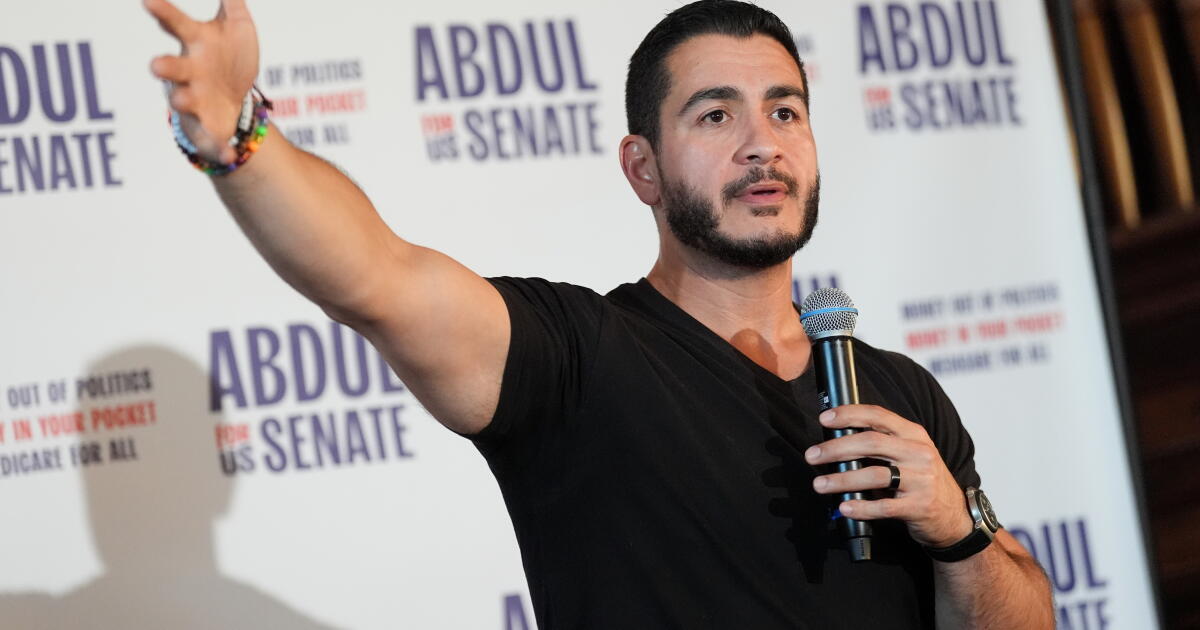
PORT HURON, Mich. — Abdul El-Sayed, holding a microphone and wearing his signature V-neck black T-shirt, slowly shook his head as a woman at his town hall described how she burned through her savings after undergoing emergency brain surgery.
“I’m really sorry for your experience, and I hope that you’re on the mend,” said El-Sayed, the Democratic nominee for U.S. Senate in Michigan, after outlining proposals for guaranteed healthcare and paid leave.
Later that night, while talking to reporters in the basement below the theater, his tone was far different. El-Sayed called his Republican opponent, Mike Rogers, a “coward” and said President Trump was “afraid” to visit the state, and he dismissed as “dumb” a question about whether Iran or Israel posed a greater threat to the United States.
The exchanges captured two sides of a candidate who is the central figure in one of the nation’s most consequential Senate races. El-Sayed would be the country’s first Muslim senator, and he’s crisscrossing the state to counter a Republican effort, fueled by tens of millions of dollars, to portray him as a dangerous radical. But he has also embraced his confrontational side by mocking and taunting Trump and Rogers.
“If they want to make me the main character in the midterms, I’m not shying away from it,” El-Sayed said in an interview. “Run against me. See how well that works out for you.”
El-Sayed’s resolute confidence rubbed some Democrats the wrong way during a divisive primary against Rep. Haley Stevens. The former public health official has shown little interest in toning it down, defending his progressive agenda and adversarial approach toward Republicans, emboldening supporters who believe he’s the right candidate for an angry electorate that has lost faith in the political establishment.
But his doubters fear he’ll cost Democrats control of the Senate by failing to unite his party’s disparate factions ahead of November.
“If you want their votes, you have to make nice with those people, and he’s not really doing that,” said Michigan political strategist Adrian Hemond, who supported Stevens. “Maybe he doesn’t have to. The entire theory of this candidacy has been he can remake what the electorate looks like.”
A Republican target
Even though Michigan backed Trump twice in his three presidential campaigns, no Republican has won a Senate race in the state since 1994.
The political landscape is no friendlier this year. Trump started an unpopular war with Iran, leading to higher gas prices and related inflation. Rogers has opted for a low-key campaign with fewer public events than El-Sayed as he tries to make the race all about his Democratic opponent.
As of Saturday, Republicans had outspent Democrats by $78 million to $63 million in the Michigan Senate race, according to AdImpact, which tracks political advertising. Around $40 million in Republican spending has gone toward negative advertisements, compared with around $20 million from Democrats.
The ads portray El-Sayed as “dangerously radical” and “too extreme,” highlighting his past calls to defund the police and relax immigration enforcement. Others tie him to Hasan Piker, a popular online streamer with whom El-Sayed has appeared and who has drawn criticism for past comments, including saying that “America deserved 9/11.”
On Friday, Rogers appeared alongside Louisiana Sen. John Kennedy, who told reporters that El-Sayed “sleeps in a Bin Laden jersey.” Rogers laughed.
Vice President JD Vance has called El-Sayed “evil.” In one social media post, Trump shared a photo of himself with First Lady Melania Trump alongside a photo of El-Sayed and his wife, who wears a hijab, with the caption: “Two VERY DIFFERENT America’s.”
Late Wednesday, Trump referred to El-Sayed as “Mohammed” and said he “goes back to the days of the Jihad.”
El-Sayed has hardly backed down. At the campaign stop in Port Huron, he taunted Trump and invited him to visit Michigan, suggesting Rogers and other Republicans were afraid the president would hurt their chances.
“Donald, if you’re watching, don’t wuss out, man,” El-Sayed said.
And he responded to Kennedy’s attack by suggesting the Republican is in the Ku Klux Klan.
“That’s rich coming from someone who wears his bed sheets out at night,” El-Sayed posted on social media.
A personal touch with voters
Before the Port Huron town hall, El-Sayed worked his way down a line of people who couldn’t fit inside the theater, shaking hands, taking photos and stopping for conversations.
Jeff Petrucella and his wife, Alice, traveled from Macomb County to see El-Sayed. They described themselves as politically “middle of the road” and said they had voted Republican in the past.
“I’m pretty done with the Republicans right now,” Jeff said.
Alice said she was “looking for a change that is better for my granddaughters,” pointing to El-Sayed’s support for Medicare for All. Nor was she put off by his more confrontational appearances on Fox News.
“I think he expresses himself well. You can tell he’s a well-spoken, educated man,” she said.
Pat Kreiner was among those who waited nearly an hour to see El-Sayed. Her children had persuaded her to support him in the Democratic primary.
“My son said to me, ‘I have been living with this trickle-down economy since the day I was born,’” Kreiner said. “‘It doesn’t work for me.’”
Kreiner also expressed anger about Trump’s trade war with Canada, just across the river from Port Huron.
“We are heartsick about our neighbors,” she said. “They used to come over a lot. We don’t see them now.”
Visiting smaller towns such as Port Huron has become central to El-Sayed’s campaign, with his team recently saying he’s held more than 500 events in over 100 cities across the state.
“Go everywhere. Talk to everyone. That’s what we do,” El-Sayed said in an interview.
The personal approach has not erased all the skepticism surrounding El-Sayed, including within his party.
His criticism of Israel and association with Piker have raised concerns among some Jewish Democrats. El-Sayed has held a series of private gatherings with undecided Jewish voters as he works to win their support.
He has also sought to strengthen his standing with Black voters. In the Democratic primary, Stevens drew more support in Wayne County, home to Detroit and its large Black population.
Ahead of Thursday’s debate, El-Sayed attended two events with Black leaders before stopping at a Black barbershop, where he moved from chair to chair talking with customers. He stopped at one point to speak with a pregnant woman, congratulating her and asking when her baby was due.
“November 8th? Make sure you vote early, huh?” the candidate joked.
A race about more than just Michigan
While El-Sayed has spent much of his campaign trying to win over Michigan voters, his candidacy has taken on significance far beyond the state. Republicans have made him a symbol of what they say is an increasingly radical Democratic Party, while progressives see his campaign as a chance to prove their politics can win in a closely divided state.
At a New York City fundraiser on Oct. 5, Rep. Alexandria Ocasio-Cortez cast his campaign as a test for progressives nationwide.
“If Abdul can win in Michigan, anybody can win anywhere,” said the New York Democrat, a potential presidential candidate.
Ocasio-Cortez plans to campaign with El-Sayed in Michigan this week, followed by former President Obama on Oct. 24.
The national stakes have also drawn renewed opposition. United Democracy Project, a super PAC affiliated with the pro-Israel group AIPAC, disclosed an initial $94,000 expenditure against El-Sayed on Friday, after spending nearly $30 million to oppose him in the Democratic primary.
And El-Sayed, while maintaining that the election should focus on Michigan voters and their economic struggles, has also embraced the larger implications of his candidacy.
“I am grateful for your support,” he told the audience at the New York fundraiser, according to remarks obtained by the Associated Press. He said he had two goals: “pick up a U.S. Senate seat” and “change the nature of our politics for the better.”
WASHINGTON — A bipartisan group of six senators — four of them Republicans — called Sunday for the Trump administration to “immediately reverse course” on a plan to purchase diesel from Russia as part of an effort to lower high fuel prices.
President Trump shocked lawmakers when he announced on social media Friday that he had struck a deal with Russian President Vladimir Putin in a phone call. He said Russia will immediately supply more than 300,000 tons of diesel to the American and global market, followed by an additional 500,000 tons in November and 1 million tons “immediately thereafter.” Russia will deliver an additional 3 million tons “within a short period of time” after that, he wrote.
Four Republican senators and two Democratic senators signed onto the statement released Sunday protesting the deal. They said the administration failed to consult with Congress or submit any explanation to justify its decision as required by statute.
“The United States should not provide Putin with a financial lifeline while Russia continues to kill Ukrainian civilians. The Administration must immediately reverse course,” they wrote.
The Republican senators who signed onto the statement are Sens. Susan Collins of Maine, Lisa Murkowski of Alaska, Thom Tillis of North Carolina and John Curtis of Utah. The Democratic senators are Sens. Jeanne Shaheen of New Hampshire and Richard Blumenthal of Connecticut.
Tillis, in an interview that aired Sunday on NBC’s “Meet the Press,” said there’s a legitimate case for saying the president is not following the law if the administration goes through with its diesel purchase plan.
“We were very clear that Russia is the aggressor. Russia is the one who can end this war by backing out of territory that they occupied,” Tillis said.
Trump’s announcement came just a few weeks after Congress passed legislation that directed Trump to impose substantial tariffs on the top importers of Russian oil or natural gas, with an exception for countries that import less than 15% of Russia’s natural gas exports and have taken significant steps to reduce those imports.
The congressional effort was aimed at cutting the flow of money Russia receives from oil and gas sales to finance its war against Ukraine.
The lawmakers also noted that Congress explicitly banned Russia energy imports in 2022 — after Russia’s full-scale invasion of Ukraine — to prevent the United States from financing the war.
“Congress was clear: the U.S. should not import oil from Russia until it ends its aggression against Ukraine and ceases threats against our NATO Allies,” the six lawmakers wrote in their statement. “President Trump’s decision to allow Russian diesel imports to the U.S. runs directly counter to that law.”
Sen. John Barrasso (R-Wyo.), when asked whether the president’s action would be in violation of U.S. law, said Trump is focused on reducing the cost of energy.
“The president is balancing and has to make tough decisions,” Barrasso said on CBS’ “Face the Nation.”
He also encouraged Trump to enforce the sanctions law that Congress passed last month.
“This is just another point of leverage for the president to use against Putin in an effort to get a long-term solution in that part of the world,” Barrasso said.
Trump has recently sought to blame record U.S. diesel prices on Ukraine rather than the U.S.-led war in Iran, which has elevated world energy prices.
Both Russia and Ukraine have stepped up attacks on infrastructure in recent months as the war between them continues into its fifth year following Russia’s full-scale invasion.
Kyiv said it is targeting places that help the revenue streams for Moscow’s war machine, and that the latest attacks could force Russia to divert its resources to repair the damage at Yandex.
Writing on Telegram, the company confirmed that its data centre in Vladimir was damaged and that operations had been “completely suspended,” although they were working to restore connectivity.
The other strikes against Yandex facilities were on Thursday in Sasovo and Friday in in Kaluga, south-west of Moscow, causing operations to be suspended.
The tech company – which also runs a food-ordering and taxi app used by tens of millions of people – said its data centres were critical for the normal operation of its services, and that it was “very difficult to predict” when they would be back online.
Meanwhile, Russian strikes on Ukraine have also continued through the weekend.
The State Emergency Service of Ukraine said six people were injured in Russian attacks overnight on four districts in its south-eastern Dnipropetrovsk region.
On Saturday, at least 20 people including four children were killed in Russian attacks on Zaporizhzhia, local officials confirmed.
At the Republican Party’s midterm convention, President Trump said he would make his crusade against transgender rights a major campaign issue ahead of the Nov. 3 election — calling the message that “men should not be playing in women’s sports” one of his party’s “great sound bites of all time.”
During a recent campaign trip, Gov. Gavin Newsom, a longtime LGBTQ+ advocate and likely Democratic contender for president in 2028, stood by his remark last year that allowing transgender athletes to compete in girls’ sports is “deeply unfair,” saying, “I haven’t been able to figure out how to make it fair from my perspective.”
For the second election cycle in a row, the rights of transgender people have taken center stage politically, despite their accounting for only about 1% of the U.S. population and many voters identifying other issues as far more important — splitting Republicans and Democrats, but also Democrats among themselves and putting the party on the defensive.
Transgender athlete AB Hernandez, third from right, sits with other athletes at the CIF State Track Championship finals in Clovis on May 30, 2026.
(Tomas Ovalle / For The Times)
The politics are part of a much broader, international battle playing out in education, sports and the law, from local California classrooms and high school sports to the Olympic stage and the U.S. Supreme Court. Polling for years has shown most Americans oppose discrimination against transgender people, but also that a majority — including a substantial portion of Democrats — oppose transgender athletes participating in girls’ sports and children receiving gender-affirming care such as surgery or puberty blockers.
Republicans are pushing a well-funded message that transgender rights should be dismantled across the board, in healthcare, education, sports, the military and public spaces such as restrooms. Conservative mega-donors such as Elon Musk have spent millions amplifying that message in competitive races from Alaska to Ohio to Texas.
And to some degree, those tactics have worked. While many Democrats have ardently defended transgender rights, particularly in California, others in the party have sided with Republicans or softened their support.
Democratic Senate candidate James Talarico appears with Jeffrey Epstein abuse survivors in Dallas on Sept. 10.
(Anja Schlein / Dallas Morning News )
James Talarico, the Democratic U.S. Senate candidate in Texas, backpedaled from past votes by saying young transgender athletes shouldn’t be allowed to play “if it risks safety or fairness,” while others including Rob Sand, a candidate for Iowa governor, and Rep. Marcy Kaptur (D-Ohio) have said they shouldn’t play.
Such messaging has dismayed transgender people and their families, as well as LGBTQ+ rights groups who have been trying to refine Democratic messaging on trans issues since Vice President Kamala Harris — another longtime LGBTQ+ advocate from California — responded to Trump’s anti-trans attacks in 2024 with a message some considered muddled.
Imara Jones, a transgender journalist and founder of TransLash Media, a platform built to spotlight trans people’s own experiences, said the party’s conflicting messaging “underscores the degree to which the Republicans have actually successfully weaponized trans issues.”
“You’re seeing a really sharp political calculus among Democrats,” Jones said, with those “in tight races, where they need to have Republican votes,” bending one way, and others who “want to make a statement about principle” and defending LGBTQ+ rights moving in the other.
Many Democrats in California say they believe the issue is a moral one and that Democrats only hurt themselves by ceding ground on human rights.
A volunteer for Toni Atkins, the former president pro tempore of the California State Senate, is silhouetted holding a Pride flag at the Harvey Milk Coachella Valley Diversity Breakfast, at the Palm Springs Convention Center in Palm Springs Thursday, May 8, 2025.
(Allen J. Schaben / Los Angeles Times)
“The solution is not to be ambiguous, but to be firm that we support basic human rights and the basic humanity of trans people,” said state Sen. Scott Wiener (D-San Francisco), a leader on pro-LGBTQ+ legislation running to replace retiring Rep. Nancy Pelosi (D-San Francisco). “Then go on to talk about the big issues facing our country, like this illegal war, like the fact that Congress has done nothing to regulate AI, like the explosive cost of energy and child care and housing.”
A national conversation
Trump has signed executive orders to bar transgender athletes from competing in girls’ sports, prohibit federal funding for gender-affirming care for youth, oust transgender service members from the military and deny recognition of transgender and nonbinary identities on critical documents such as passports.
The Justice Department has sued California and other states over their trans-inclusive sports policies, and successfully threatened large hospitals into ending gender-affirming care programs. The Centers for Medicare and Medicaid Services barred federal Medicaid spending on gender-affirming medication or surgeries for minors.
Martin Makary, commissioner of the Food and Drug Administration, speaks at Health and Human Services headquarters in Washington on Dec. 18, 2025.
(Stefani Reynolds / Bloomberg)
Trump campaigned on such policies, and he and other Republicans clearly see them as helpful in the midterms. In his convention speech, Trump said he’s been surprised more Democrats haven’t abandoned transgender rights given polling showing a majority of Americans oppose transgender athletes in girls’ sports.
“They say it’s an 80/20 issue,” Trump said, in an apparent reference to a January 2025 New York Times/Ipsos poll that found 79% of respondents believed transgender athletes should not be allowed to compete in women’s sports. More recent polls have shown a smaller majority opposed.
Demonstrators at a Rainbow Families Action march in Emeryville, Calif., on Dec. 8, 2025.
(Jessica Christian / San Francisco Chronicle )
Arne Johnson, a Bay Area father of a transgender child who helps run the advocacy group Rainbow Families Action, said being targeted by Republicans is scary, but watching Democrats “find ways to be more flexible about the rights of human beings” has been profoundly disappointing.
But he said he’s also been encouraged by some more recent polling showing Americans moving back toward the middle on transgender rights, which he believes is in part due to people being deluged with anti-trans ads getting frustrated that the political conversation isn’t focused on issues they care more about, like affordability and healthcare.
Ramiro Sarmiento, a spokesperson for the Human Rights Campaign, which has tracked at least $50 million in anti-trans political ads this cycle, agreed, saying, “MAGA wants to talk about trans kids because they’re losing the conversation voters actually care about.”
Conservative groups reject that framing. Many deny tht transgender people exist, while others say they are working to protect cisgender children or defend religious beliefs. They have also scoffed at Democrats who have changed their positions in the lead-up to the election, with the conservative American Principles Project accusing Talarico of only pretending to shift away from his “gender radicalism” on sports in order to win votes.
Allison Schuster, a White House spokesperson, said the Biden administration “spent four years pushing a radical agenda” of gender-affirming care for children, while Trump “pledged to restore common sense” and has since “delivered by consistently taking strong action to protect children from these dangerous, life-altering medical practices.”
The fight in California
In California, transgender athletes competing in youth sports has been raised as an issue in the governor’s race, where Republican hopeful Steve Hilton has rallied against their inclusion, and featured prominently in the races for the next state attorney general and the next state superintendent of public schools.
Transgender athlete AB Hernandez competes for Jurupa Valley High School at the 2025 CIF state track and field championships.
(Tomas Ovalle / For The Times)
Several Democrats running for Congress in the state have been criticized for their records on transgender rights, including San Diego City Councilmember Marni von Wilpert, who is seeking the redistricted congressional seat of departing Rep. Darrell Issa (R-Bonsall), as well as Reps. Adam Gray (D-Merced) and Derek Tran (D-Orange).
Christian Martinez, a National Republican Congressional Committee spokesperson, has accused Von Wilpert of having a “perverted agenda [that] pushes hormone treatments on kids,” and Gray of being “for they/them, not for Californians.”
Marni von Wilpert, a Democratic candidate for California’s 48th Congressional District, canvasses in a neighborhood Friday, May 29, 2026, in San Marcos, Calif.
(Gregory Bull / Associated Press)
California Atty. Gen. Rob Bonta’s office is fighting on multiple fronts to protect gender-affirming care and successfully rebuffed a Justice Department lawsuit over the state’s transgender sports policies. But pressure is coming not only from the Trump administration.
The California Interscholastic Federation, which oversees high school athletics, also revised its rules to ensure that transgender athletes in individual sports do not displace cisgender ones from rankings or medal podiums. And after local California teachers sued, the U.S. Supreme Court in March ruled against a controversial California student privacy law that precluded teachers from revealing a child’s interest in presenting in gender nonconforming ways in school to their parents if the child requested confidentiality, finding that the policy infringed on parents’ rights and the free exercise of religion.
Meanwhile, state lawmakers just passed at least a dozen measures aimed at bolstering LGBTQ+ rights, including by restoring an LGBTQ+ youth suicide and crisis hotline; helping discharged LGBTQ+ service members find housing and jobs; requiring California gender-affirming healthcare providers who are subpoenaed to inform Bonta’s office if they intend to respond; improving access to HIV prevention care and enhancing LGBTQ+ data privacy.
Newsom signed all those measures into law — his office said California “will not stand” for Trump’s “all-out assault on the LGBTQ community” — but vetoed a bill that would have barred future governors from allowing the extradition of abortion or gender-affirming care providers in California to states where such care is illegal, citing concerns about reduced executive discretion.
The 2026-27 state budget appropriated $66 million for gender-affirming care, including up to $30 million for underinsured patients in the Uncompensated Care Program, $26 million to assist organizations that provide such care and $10 million to cover care for poor children who lost it under the new Medicaid rules. Wiener called the latter a “short-term solution” that will protect kids while the state figures out a more permanent billing pathway under Medi-Cal.
A.W., a Bay Area mother of a transgender teenager who requested anonymity because she fears being targeted by the Trump administration, said her child’s gender-affirming care — a lifeline for him in recent years — was disrupted by the Medicaid rule change, and the state’s temporary fix was too little, too late.
A.W. said families like hers “shouldn’t have to make medical decisions based on politicians in Washington,” particularly for care so critical to her son and other kids. “If he had not had access to gender-affirming care, I don’t know where we would be,” she said. “It scares me to think about it.”
Times staff writer Dakota Smith contributed to this report.
“We need people in Congress who have the background, the training, the knowledge to basically hold this administration accountable,” Pan said last week on a baking 100-degree day in the Sacramento suburbs.
“I know what it’s like to be on the front lines,” said Pan, who spent a dozen years teaching and practicing pediatrics before being elected to the Assembly in 2010. “I’ve seen measles, right?”
The political organization 3.14 Action — its name a decimal approximation of pi — has recruited and helped elect hundreds of candidates from STEM backgrounds (science, technology, engineering and mathematics) and endorsed more than 500 of those running this year, including Pan in his race in Sacramento and in neighboring Placer and Yolo counties.
Dr. Richard Pan meets Dr. Teah Harris-Johnson and her daughter before participating in a roundtable discussion at Liberty Towers Church in Sacramento.
(Jose Luis Villegas / For The Times)
Shaughnessy Naughton, a chemist who worked on drug discovery and breast cancer research, founded 3.14 Action in 2016 after two unsuccessful tries for a congressional seat in the Philadelphia suburbs. When she started the organization, Naughton noted, there were more talk radio hosts on Capitol Hill than scientists and engineers. (Nearly two dozen doctors and nurses currently serve in Congress. More than 30 have run this election cycle.)
“There isn’t an issue that doesn’t benefit by having fact-based decision-makers, people that will go into office as problem-solvers,” Naughton said from Pennsylvania, which is in the throes of the nation’s worst measles outbreak in more than three decades. Health and Human Services Secretary Kennedy has downplayed the severity, even as the incidence of other vaccine-preventable diseases is rising.
“That’s essentially what scientists and physicians are,” Naughton said. “They are problem-solvers. and clearly our country is facing a lot of problems.”
Among those she cited was “the arsonist in charge of HHS.”
Like his jury-rigged political persona, Kiley seems to want it both ways on vaccines.
Before going to Congress, while serving in the Assembly, Kiley voted against Pan’s legislation cracking down on fraudulent vaccine exemptions. He’s described vaccines as a vital public health tool, but condemned government mandates and suggested vaccination should be a matter of parental choice. He claims Pan has eroded public trust by politicizing the issue.
As for Kennedy, Kiley told the San Francisco Chronicle a lot of things “that I don’t agree with,” though he’s never called out the secretary for his cuckoo-land theories — vaccines cause autism, the fluoride in public water supplies is making Americans “stupider,” and many more — or denounced his destructive policies.
That passivity, Pan said, amounts to complicity.
“It’s not just simply a talking point,” Pan said of public health policy. “It’s reality and we need to have policy based on what’s really happening, not on some ideological conspiracy theory.”
Dr. Richard Pan participates in a discussion during a Black maternal health roundtable last week at Liberty Towers Church in Sacramento.
Like most Democrats, he’s made affordability a key part of his candidacy, citing higher gas and grocery prices and, inevitably, the rising cost of healthcare and the roughly $1-trillion cut from Medicaid under last year’s Big Sop To Billionaires Bill.
The super-wealthy got tax cuts, Pan told a silver-haired audience at a 55-and-older community in Roseville, while the bill will make healthcare less accessible for millions and undermine both Medicare and Social Security. Kiley supported the legislation, the centerpiece of Trump’s second term. As a doctor and state lawmaker, Pan said, he worked to expand healthcare and address the needs of his community.
“We don’t pass laws to make lives harder,” Pan said. “That’s what he’s done.”
Later, at a forum on Black maternal health, Pan said Trump’s attacks on diversity, equity and inclusion programs and the so-called war on woke ignores glaring disparities in the treatment of Black women versus other patients. “The data is there,” said Pan, speaking before a banner decorated with purple butterflies and the proclamation, “Black Mothers Matter.”
“The facts are there,” Pan went on. “It’s a very, very real problem and it needs to be addressed and it needs to be solved.”
He brought up, somewhat sheepishly, his campaign.
“That’s why I’m running,” Pan said, to “have another person in Congress … who’s going to tell the administration we are not going to bury DEI. We’re not going to bury disparities. These are real problems.”
WASHINGTON — With the midterm elections just over three weeks away, the fight for control of the U.S. Senate is intensifying in battleground states, as Democrats push into red regions and Republicans pour money into key contests.
Campaigns are entering a crucial stretch for persuading the independent voters who will probably determine outcomes in swing races. Nearly all of the most competitive Senate races are in states with significant swaths of people unaffiliated with either major party — the “kingmakers” in these high-stakes midterms, said Jeremy Gruber, an independent-voting expert.
“Independent voters are going to be deciding this election in every respect,” said Gruber, senior vice president of Open Primaries, an organization that advocates for states to open primary elections to unaffiliated voters.
The urgency around courting nonaligned voters has been on display at recent debates, in ads flooding the airwaves and in the campaign money pouring into key states. For Republicans, it has become an effort to put distance between themselves and President Trump; for Democrats, it’s often a rhetorical shift toward the center and away from the far left.
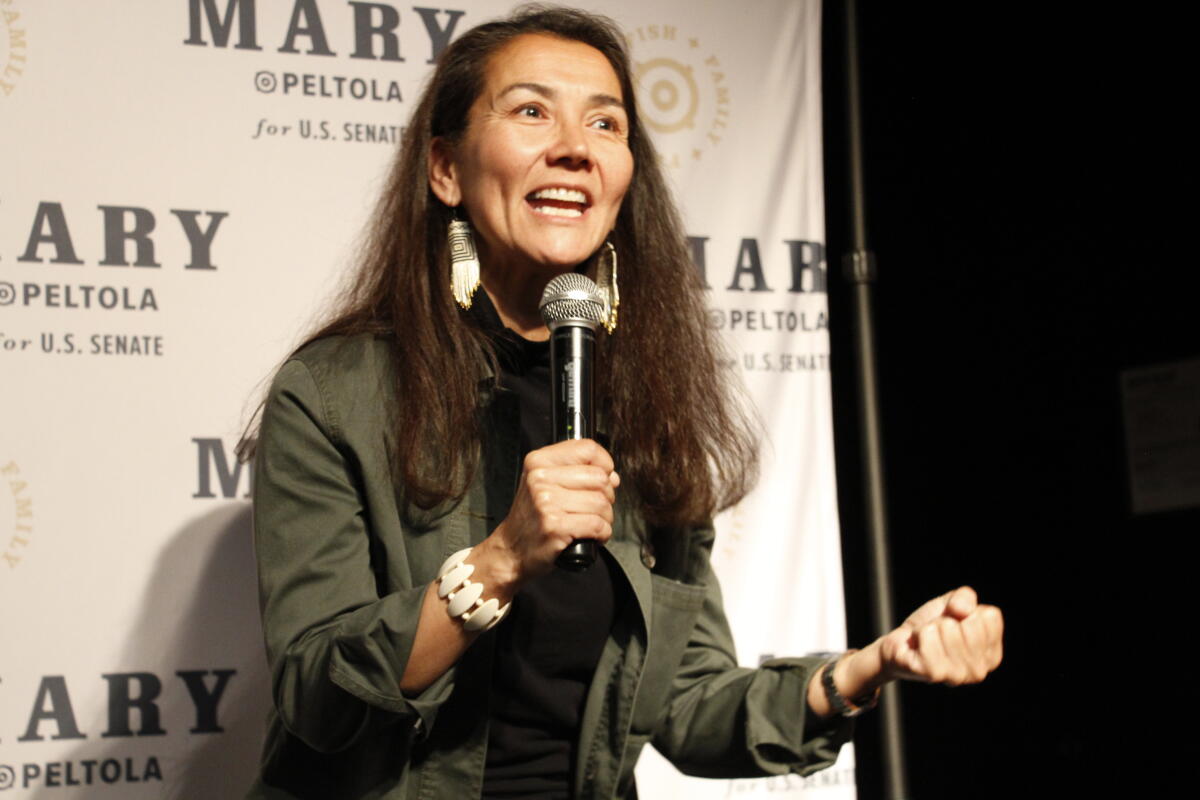
In Iowa, Republican Ashley Hinson used a Wednesday night debate to emphasize her willingness to break with Trump. In Kansas, Democrat Adam Hamilton is circulating a video in which he describes himself as both liberal and conservative. In Alaska, a GOP-backed ad blitz launched last week aims to persuade voters that Democrat Mary Peltola isn’t independent-minded.
Mary Peltola, a Democrat running for the U.S. Senate seat in Alaska, addresses supporters at an election watch party on Aug. 18 in Anchorage.
(Mark Thiessen / Associated Press)
Though many unaffiliated voters have made up their minds, those who remain undecided will begin making decisions soon, as mail ballots go out and early voting begins in some states.
“For Republicans who are running behind and are looking at a potentially devastating midterm election performance, what they really need to do is target the independents who lean Republican,” said Karen Kedrowski, an Iowa State University political scientist. “For Democrats in some place like Iowa … what they need to do is make it seem safe [to independents] to vote for a Democratic candidate.”
Unaffiliated constituents have long been key to victory in swing states, particularly where races are traditionally decided by small margins. They have been viewed as particularly persuadable this year, as public dissatisfaction with Trump’s economic policies puts the votes of swing voters who backed him in 2024 up for grabs.
Forecasters predict that Democrats are on track for the House majority and could hold a majority of gubernatorial seats for the first time since 2010. Though Senate control remains a toss-up, Democrats’ chances are viewed by forecasters to have significantly improved since the summer.
A set of New York Times/Siena polls reported last week showed Democratic candidates for the Senate ahead in Texas, Michigan, Alaska and Ohio and neck-and-neck in Kansas and Iowa — all states Trump carried in 2024. Republicans, meanwhile, are feeling increasingly bullish about their chances in Maine, New Hampshire and Minnesota, all states that went blue in the last presidential election.
Republicans hold a significant fundraising advantage, however, and party donors are pouring money into key races, hoping the spending can cut into the Democrats’ edge. By September’s end, GOP advertisers had more than doubled their spending compared with August, outstripping Democrats, according to tracker AdImpact. Among the nine Senate races considered the tightest by forecasters, Republicans have outspent Democrats in all, AdImpact reported.
But on Friday, the Cook Political Report, a leading election forecaster, moved 18 House races in Democrats’ direction, saying that heavy ad spending by Republicans has not begun to move the needle in their favor.
Democrats view themselves as in their “strongest position yet” to win the majority, Sen. Kirsten Gillibrand (D-N.Y.), who chairs the Democratic Senatorial Campaign Committee, said in a statement last week.
“In this final stretch of the election, Democrats will continue to vigorously campaign and fight for every vote across the expanded map,” Gillibrand said.
Republicans are confident about their ability to persuade voters in key states, said Bernadette Breslin, a spokesperson for the National Republican Senatorial Committee.
“Republicans will defend the Senate majority across key battlegrounds that have trended reliably red,” Breslin said, “with candidates like Mike Rogers [in Michigan] and Roger Marshall [in Kansas] winning over independents by exposing their Democratic opponents’ radical, unaffordable agendas.”
Along with the decisions of independent and swing voters, the midterm outcomes could also hinge on the level of turnout within each party, analysts say. If a portion of the party faithful stay home in a given place — for instance, disillusioned conservatives in Kansas or frustrated Black Democrats in Michigan — that could swing individual races, analysts said.
The number of independent voters reached a record high this year, with 45% of American adults identifying as political independents in Gallup polling. Equal shares identified as Republicans and Democrats, 27% for each party. The trend is partly driven by majorities of millennial and Gen Z voters choosing to be unaffiliated with either party, according to Gallup research.
Such voters make up a majority in Alaska and between 30% and 40% of all registered voters in Maine, Iowa, New Hampshire, North Carolina and Ohio. They account for about 29% in Kansas and about 16% in Texas and Michigan, according to state data compiled by the Independent Voter Project.
Across recent polls, independent voters have favored Democrats and expressed dissatisfaction with Trump. In a late September poll from Emerson College Polling, 66% of independents said Trump has done worse than expected during his second term in office.
State Rep. James Talarico, Democratic U.S. Senate candidate, listens at a food drive at the Frederick Douglass Human Services and Justice Center on Sept. 9 in Dallas.
(Julia Demaree Nikhinson / Associated Press)
In Texas, Democrat James Talarico led Republican Ken Paxton among independents by 32 points in a September poll by Texas Public Opinion Research. The Democratic candidate in Ohio, Sherrod Brown, led Republican Sen. Jon Husted by 27 points among independents in a CNN poll released Thursday.
In Kansas, where the Senate race has become unexpectedly close amid economic-driven anger with Trump, disapproval of the president’s performance among independents appears to be rubbing off on incumbent Sen. Roger Marshall, the Republican seeking reelection.
Fifty-two percent felt unfavorably toward Marshall and 62% disapproved of Trump’s performance, according to a recent Emerson College/Nexstar poll.
In those battleground red states, that creates a tough fight for both parties, analysts said. With control of the Senate hanging in the balance, candidates are duking it out in fundraising and on the campaign trail to win every last vote.
“Both campaigns are raking in ridiculous amounts of money … and they’re spending every penny because [they] have to,” said Wichita State University political science professor Alexandra Middlewood, referring to the Kansas Senate race. “We see that they’re really going to have to fight it out all the way to the end.”
Debates are another tool for candidates to reach independent voters, said Corwin Smidt, a political science professor at Michigan State University.
Democrat Abdul El-Sayed, left, and Republican Mike Rogers meet in a Michigan Senate debate Thursday night in Grand Rapids.
(Paul Sancya / Pool Photo)
In Michigan, where the Senate candidates sparred in their first debate Thursday evening, Rep. Mike Rogers, the Republican Senate nominee, has distanced himself from Trump twice in recent weeks, first calling for an end to the war in Iran and then releasing an ad last week denouncing the tariffs against Canada. Democrat Abdul El-Sayed, meanwhile, announced a rally with former President Obama, an appeal to mainstream voters.
“They’ve got to try to both win over people who have been paying attention, but also introduce themselves to the ones who haven’t been paying attention,” Smidt said.
Winning unaffiliated voters can require a tightrope walk for candidates who are faced with the dual tasks of appealing to their party base while persuading independent constituents.
In the final stretch of the campaign, candidates seeking independent votes should telegraph a willingness to admit their party’s flaws and an understanding that voters are turned off by partisan rhetoric, said Chad Peace, legal strategist at the Independent Voter Project, which advocates for open primaries.
“They have to communicate to those folks and try to meet them where they’re at,” Peace said. “[Independents] want the campaigns of persuasion, they don’t want to hear you tell me how bad the other candidate is.”
And, Gruber said, they want to be engaged with, not ignored.
“Independent voters,” he said, “are going to be responding to those candidates and parties that actually talk to them.”
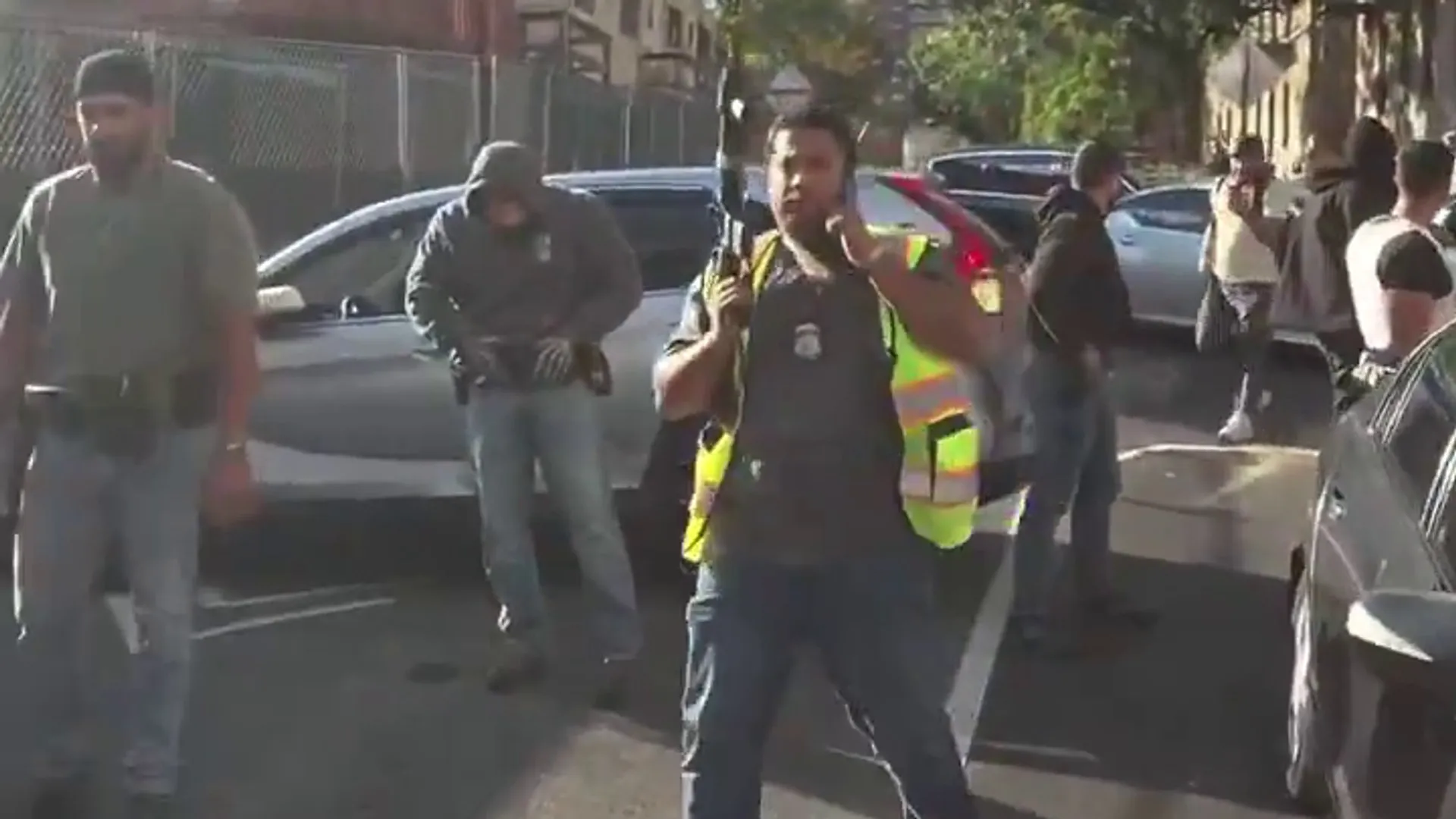
An ICE supervisor seen brandishing a rifle after the high-profile shooting in New York on Oct 8 was also involved in a controversial arrest in Minneapolis in December in which agents knelt on and dragged a pregnant woman through the street.
Department of Justice says it’s investigating whether the White House press pool’s decision violated antitrust laws.
Published On 11 Oct 202611 Oct 2026
The United States Department of Justice has opened an investigation into television networks’ decision to halt coverage of President Donald Trump last month.
A spokesperson said on Saturday that the department was investigating whether the networks violated federal antitrust laws by their boycott, which followed a White House decision to pull the credentials of reporters from three news organisations, including CNN.
Recommended Stories
list of 4 itemsend of list
The networks under investigation are ABC, CBS, CNN, NBC and Fox News, said Emily Convington, the Justice Department spokesperson.
“Group boycotts among commercial competitors can violate the Sherman Act,” she said of the antitrust legislation.
“The Antitrust Division is simply investigating to determine whether these news organizations have violated the antitrust laws.”
The investigation is the latest in a series of clashes between the Trump administration and major news organisations. Trump has repeatedly called the mainstream media “fake news” and frequently clashes with reporters during encounters with the press.
The action also puts legal and potentially financial pressure on the media to continue coverage of the president even when they disagree with how the White House handles them.
The networks did not immediately comment on the announcement.
The Justice Department’s move came after the television pool of five broadcasters last month ceased presidential coverage after the administration barred CNN, MS NOW and Politico from the White House.
The White House said on September 19 that covering the president was a “privilege – not a right”. The outlets sued the administration, alleging the exclusions violated the First Amendment and that the White House was retaliating over their coverage.
CNN is one of the five news organisations – along with ABC, CBS, Fox News and NBC – that make up the primary White House television pool.
They share the costs of covering the president, take turns organising coverage, and share the footage with outlets around the country.
All of the five television networks that cover the White House, including Fox News, suspended coverage in solidarity and refused to provide replacement coverage.
The White House reinstated the credentials on September 24 after US District Judge Timothy Kelly ruled that the ban was likely unconstitutional and ordered the administration to “immediately return, reinstate, and restore” their access.
However, disputes over access to specific presidential events and pool assignments continued.
Jose Zamora, the Committee to Protect Journalists’ Americas director, on Saturday criticised the administration’s decision to investigate.
“The government should not use antitrust investigations to intimidate news outlets defending press access,” Zamora said on X. “The public’s right to know depends on that access.”
President Donald Trump says the US ‘may’ join Saudi strikes against Yemen’s Houthis following the latest attack on Riyadh airport. Trump made the comments before Saudi authorities confirmed 12 people were killed and more than 300 were injured in that attack.
‘I think it’s time for Ukraine to get a new president’.
US President Trump criticised Ukraine’s Volodymyr Zelenskyy as he called for new leadership in Ukraine and pressed Zelenskyy to stop hitting Russian oil Refineries.
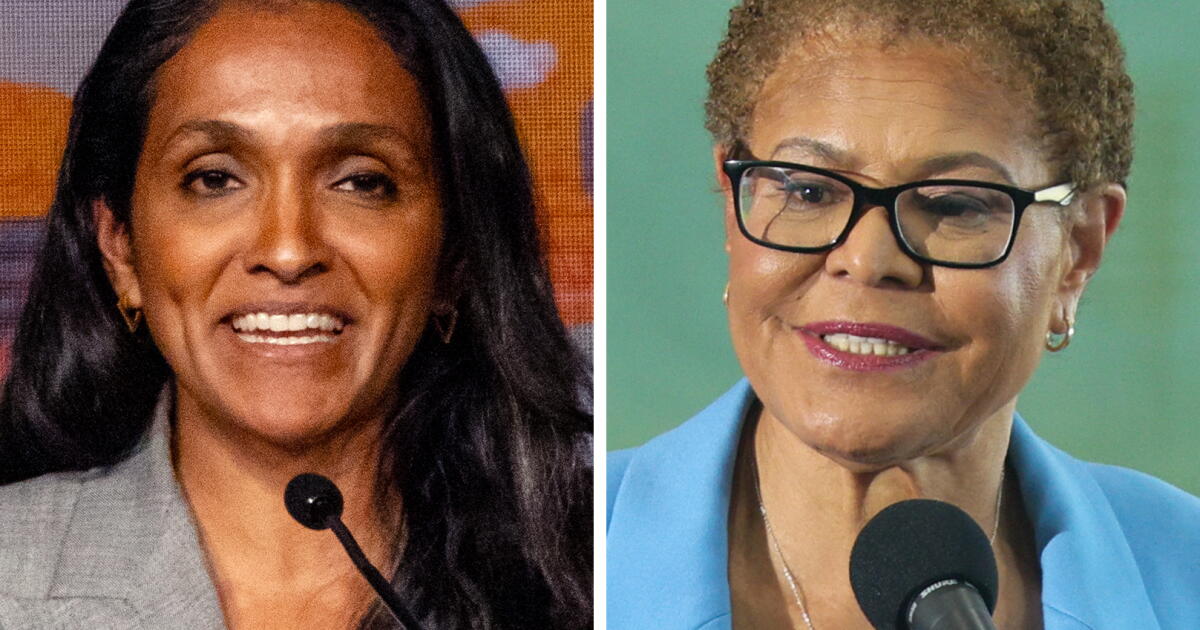
Los Angeles Mayor Karen Bass and challenger Nithya Raman will be on the same stage Tuesday night for their final debate before the Nov. 3 election, but the two mayoral candidates are expected to come in with starkly different game plans.
With recent polls showing Raman in the lead, the councilmember will likely try to avoid making any kind of flub during the in-studio debate hosted by NBC4 and Telemundo52 in Universal City.
“A successful debate for Raman is one in which not very much happens,” said Dan Schnur, a professor of politics at USC, UC Berkeley and Pepperdine.
Raman floundered at the last NBC4/Telemundo debate during the mayoral primary, when Spencer Pratt was also on stage. She got better marks after a debate with Bass before the Sherman Oaks Homeowners Assn. in August.
Along with avoiding mistakes, Raman will need to paint a positive view of the city she hopes to lead, said Sara Sadhwani, a professor of politics at Pomona College.
“She needs to able to spell out a vision for the city of Los Angeles and inspire confidence that she would be able to deliver on such a vision,” she said.
For Bass, it’s a different task entirely. The mayor was the top vote-getter in the June 2 primary, but numerous several polls now show her trailing. The Berkeley IGS / L.A. Times poll, conducted Sept. 15-20, showed Raman with an 11-point lead over the incumbent.
To gain ground, Bass needs to go on the attack and convince voters that Raman isn’t fit to lead, Schnur said.
“Bass needs to explain to voters why voting for a relatively unproven candidate would be a dangerous risk to take,” he said. “I’m curious if it will go down the road of the nasty,” Sadhwani said. The debate, being conducted in partnership with Loyola Marymount University, will run from 7 p.m. to 8 p.m. and will be moderated by NBC4 news anchor Colleen Williams, NBC4 chief political reporter Conan Nolan and Telemundo 52 news anchor Alejandra Ortiz.
The Times will have live coverage.
You’re reading the L.A. on the Record newsletter
Sign up to make sense of the often unexplained world of L.A. politics.
By continuing, you agree to our Terms of Service, which include arbitration and a class action waiver. You agree that we and our third-party vendors may collect and use your information, including through cookies, pixels and similar technologies, for the purposes set forth in our Privacy Policy such as personalizing your experience and ads.
An influencer digs in on Bass
Social media creator Ed Choi made headlines this week, posting and then removing an Instagram video showing him and Raman declaring in unison: “Only you can stop fascist liars.”
The pair used that phrase as an image of Bass appeared on the video. Raman, facing criticism for her words, said she was referring to Trump and Immigration and Customs Enforcement raids, not the mayor or Los Angeles Police Chief Jim McDonnell, and had asked for the video to be taken down.
Choi defended his messaging, saying in a subsequent Instagram video that Bass is in fact a fascist, pointing to to Bass’ decision to appoint McDonnell, a former L.A. County sheriff. He also cited the Los Angeles Police Department’s treatment of anti-ICE demonstrators as evidence that the city is “descending into fascism.
Raman voted in 2024 to support Bass’ selection of McDonnell, even as her fellow Democratic Socialists of America colleagues on the council cast opposed his appointment. On the campaign trail, she has repeatedly criticized McDonnell, saying the LAPD should not have used tear gas on anti-ICE protesters exercising their First Amendment rights.
Choi also claims in his video that Raman is committed to defunding the police. But Raman no longer supports that idea, saying in February that LAPD staffing should not get any smaller.
Banned word lawsuit
When the Los Angeles City Council considered banning the use of the N-word and C-word at its meetings last year, Stacey Segarra-Bohlinger was in attendance to give the politicians a piece of her mind.
“This is going to bring lawsuits,” said Segarra-Bohlinger, who often sings parody songs at council meetings and has been a member of the Sherman Oaks Neighborhood Council.
Segarra-Bohlinger filed suit Tuesday, represented by lawyers with the Foundation for Individual Rights and Expression. The group contends that word bans — which can lead to people who use those words getting kicked out of meetings and potentially barred from future ones — violate First Amendment protections of free speech.
“The Council has weaponized the Word Ban and Meeting Ban to silence, remove, and prospectively exclude its critics,” asserts Segarra-Bohlinger’s lawsuit, filed in U.S. District Court in Los Angeles.
Segarra-Bohlinger filed the suit after her repeated use of the C-word at two council meetings last year, once while singing a parody song of the Ghostbusters theme song in which she repeated the line “Council is afraid of the word c—” four times.
Council President Marqueece Harris-Dawson is standing by the ban.
“In a moment of very serious attacks on our basic rights in this country, it’s especially absurd that some individuals would waste the court’s time defending the right of racists and misogynists to hurl invectives at the public simply to hear their own profanity,” he said in a statement to The Times.
State of play
—MONEY, MONEY, MONEY: Hedge fund manager Aaron Sosnick dropped another $3 million into Estamos Con Nithya, the pro-Raman independent expenditure committee sponsored by Western States Regional Council of Carpenters. Sosnick, who has been pushing for an expansion of the city’s bike lane network, has now put $6 million into the committee.
— UNION KERFUFFLE: The LAPD’s officer union said Tuesday it will oppose Measure FD, the half-cent sales tax measure on the Nov. 3 ballot pushed by the city firefighters’ union — setting up a bitter and expensive clash between two of the city’s most powerful unions.
— LEFT UNREAD: Citing lingering concerns about the potential misuse of police license plate readers, the Los Angeles City Council voted Tuesday to delay an agreement that would enable the deployment of hundreds of the controversial devices until officials are satisfied that the technology will be wielded responsibly.
— LAUSD WOES: The state’s school Fiscal Crisis and Management Assistance Team concluded that the Los Angeles Unified School District is at “high risk” of insolvency — and needs to move quickly to avoid losing control over budget decisions.
— HIT THE SKIDS: Federal authorities along with local partners like LAPD made more than a dozen arrests on Skid Row during a massive drug trafficking crackdown in the troubled Downtown neighborhood.
— LAPD’S LEGAL BILLS: The city of Los Angeles has shelled out nearly $480 million over the last five and a half years to end legal disputes involving the Police Department, including claims of excessive force, litigation over traffic accidents and cases filed by employees who allegedly faced retaliation after reporting misconduct.
— POLLING UPDATE: New polling from the pro-Nithya Raman independent expenditure group that was conducted between Oct. 2 and Oct. 7 found that Raman is leading the mayor 43% to 33% with 23% undecided. The poll’s margin of error is 3.5%.
— A separate poll sponsored by the United Firefighters of Los Angeles City, Local 112 and conducted between Sept. 25 and Oct. 5 found a tighter race, within the margin of error, with Raman leading 35% to 33% with 19% undecided. That poll’s margin of error was 4%.
— A third poll conducted for the Bass independent expenditure group Unidos con Bass of 602 likely Latino voters found the incumbent ahead by 12 points, 40% to 28% for Raman. The poll, conducted between Oct. 1 and Oct. 8, has a margin of error was 4%. That’s a 36-point swing from a UC Berkeley IGS/L.A. Times poll from September that found Raman ahead with Latinos by 24 points, 45% to 21%.
QUICK HITS
Where is Inside Safe? The mayor’s signature program went to Councilmember Ysabel Jurado‘s district on Santa Fe Avenue and 23rd Street and moved 35 people indoors.
On the docket next week: Bass and Raman will square off in a debate Tuesday night at 7:00 p.m. on NBC4/KNBC and Telemundo 52/KVEA.
Stay in touch
That’s it for this week! Send your questions, comments and gossip to LAontheRecord@latimes.com. Did a friend forward you this email? Sign up here to get it in your inbox every Saturday morning.
Trump Accounts promise children a financial head start. Al Jazeera’s Emma Withrow spoke with one parent asking why he can’t opt out, or choose investments that align with his beliefs. Here’s what the rules actually say.
US President Donald Trump said that Norway’s decision to not award him a Nobel Peace Prize is disgraceful and embarrassing, and has left an ‘indelible stain’ on the country. ICJ judge Navi Pillay was awarded the prize for her efforts to prosecute genocide and war crimes.
New footage shows the moment ICE agents opened fire on a man as he drove his car with his child in the backseat. The shooting in New York has sparked outrage and protests with more demands for immigration authorities to leave the city.
Negotiators aim to present a proposal to Russia in the coming weeks, meanwhile Putin says resumption of talks unlikely.
Published On 10 Oct 202610 Oct 2026
Russian President Vladimir Putin has said an immediate resumption of peace talks with Ukraine is unlikely, citing drone attacks on Moscow during parliamentary elections last month.
In a phone call with US President Donald Trump on Friday, Putin said Moscow was ready to resume negotiations with Kyiv after the parliamentary elections. However, the drone attacks on the capital made the resumption of trilateral peace talks between Russia, Ukraine and the US unlikely.
Recommended Stories
list of 3 itemsend of list
“By launching a large-scale drone attack on Moscow, other cities and polling stations on the most important day of the elections, and by targeting some people involved in organising the elections, the Kyiv regime has, in reality, interrupted the possibility of an immediate resumption of the negotiation process,” said Kremlin foreign policy aide Yuri Ushakov about the call with Trump.
“As the president said, we will now assess when these negotiations can resume,” he added regarding the trilateral talks.
US Secretary of State Marco Rubio said on Thursday that Russia’s war in Ukraine is at a dangerous stalemate and the United States will keep working towards a deal to end the war.
Ukrainian President Volodymyr Zelenskyy said earlier this week that the country was ready to hold trilateral talks with the United States and Russia this month.
US-Russia diesel deal
Earlier on Friday, Donald Trump announced after the call with Putin that Russia agreed to deliver more than 300,000 tonnes of diesel to American and global markets.
The deal was criticised by US lawmakers, Zelenskyy and European allies.
Zelenskyy called the agreement a “gift to Putin”.
“All that money goes toward the war against people, against Ukraine, against all of us. I believe our team is simply being used as a smokescreen. And that is certainly not fair,” he said in a statement.
In response to the US-Russia diesel deal, a government spokesperson said the United Kingdom would continue to “maintain pressure on Russia through the toughest sanctions regime ever imposed by the UK.”
Iran’s IRGC says it struck a “giant LPG gas carrier named NV Sunshine” that was “attempting to pass through the illegal route” south of the Strait of Hormuz.
A federal judge ruled against the Justice Department’s use of voter data to cross-reference an immigration database.
Published On 9 Oct 20269 Oct 2026
A United States judge has ruled that the Justice Department unlawfully sought state voter rolls to cross-check against a federal immigration database and identify voters it considered ineligible.
US District Judge Sparkle Sooknanan’s decision on Friday marks another setback for President Donald Trump’s efforts to expand federal oversight of elections ahead of the midterms, as Republicans seek to retain control of Congress.
Recommended Stories
list of 3 itemsend of list
In a 78-page ruling siding with watchdog group Common Cause, Sooknanan said the administration had understated the risk of wrongly removing eligible citizens from voter rolls because of inaccuracies in the Systematic Alien Verification for Entitlements (SAVE) database.
“The challenged policy represents the federal government’s attempt to decide who gets to vote,” Sooknanan wrote, adding that Congress had left that authority to the states.
The Justice Department said it was reviewing the ruling.
Ming Cheung, a senior staff attorney with the American Civil Liberties Union’s Voting Rights Project, said the ruling made clear that the administration could not use the federal government to disrupt elections or put voters’ rights at risk.
“The Trump administration has repeatedly taken extreme measures to interfere with how elections are run, undermine confidence in the results, and create confusion,” Cheung said in a statement.
Last year, Trump directed the department to crack down on voting by ineligible people, despite research showing voter fraud is rare. The department subsequently demanded unredacted voter rolls from nearly all 50 states, including sensitive personal information.
Eighteen states, mostly Republican-led, complied. The department cross-checked their data against SAVE and flagged people identified as noncitizens for potential removal from voter rolls.
Sooknanan said the database could contain outdated citizenship records, potentially misidentifying naturalised US citizens.
The department has also sued 30 states and Washington, DC, over their refusal to provide voter data. Twenty-six cases have been dismissed.
In a separate case in June, Sooknanan blocked the expanded use of the SAVE database for voter roll checks, an order the US Supreme Court temporarily paused last month.
Federal law bars systematic voter roll purges in the 90 days before a federal election, which could limit the ruling’s practical effect before the November 3 vote.
The Pentagon said the firing squad execution of Fort Hood shooter Nidal Malik Hasan will be public and livestreamed. Hasan, an Army psychiatrist, killed 13 people and wounded more than 30 others at the Texas base in 2009. The White House hasn’t confirmed the Pentagon’s comments.