Wide skies, gentle footpaths through gold and copper wooded hills, thatched cottages, cosy pubs and quirky shops: the Lincolnshire Wolds have all the ingredients for the perfect autumnal mini break. Victorian poet Alfred Tennyson lived in the village of Somersby for most of his first three decades and the local landscapes echo through his verses. In The Lady of Shalott: “Long fields of barley and of rye / That clothe the wold and meet the sky …”
The Lincolnshire Wolds National Landscape covers an area of 216 sq miles. On its southern boundary, halfway between Lincoln and the coast, the friendly market town of Horncastle bills itself as the “gateway to the Wolds”. With handsome brick houses, great cafes, a market on Thursdays and Saturdays and decent public transport links, it’s a perfect base for exploring the area.
The market town of Horncastle is a good base for exploring the area. Photograph: Jasmine Bryan/Alamy
Horncastle overflows with antique shops. Laurence Shaw, with half a century’s knowledge of the trade, runs an elegant wholesaler on the corner of East Street. In an old chapel across the road, the Trinity Centre has all kinds of ancient treasures piled in fantastical heaps under lancets of Victorian glass: porcelain milkmaids, jelly moulds, cotton reels, teetering piles of teacups and thick vines of jewellery. Round the corner in Stanhope Antique Centre you may find anything from a wooden decoy duck to a roulette wheel between chandeliers and grandfather clocks.
By the “Ducks Crossing!” sign opposite Tesco, mallards gather on the reedy River Bain. And in the 13th-century St Mary’s church there are gold angels in the rafters and lines from Tennyson’s poem Ring out, wild bells in stained glass. The new Riverscape Walk, launched last year, will take you past the canal basin, watermill and former leather tanning warehouses.
Take a hike
There are plenty of rewarding walks nearby and you don’t always need a car to reach them. The hourly 56 bus from Lincoln to Skegness stops in Horncastle and, 10 minutes later, in Hagworthingham, a peaceful Wold-edge village. From here, a six-mile loop of undulating lanes and footpaths takes in tiny Somersby, Tennyson’s birthplace, and Bag Enderby (which sounds straight out of Tolkien), where St Margaret’s church has an intricate 15th-century font, carved with religious symbols and medieval scenes. Bag Enderby’s -by suffix comes from an Old Norse word for village.
From Hagworthingham, you can also stroll through Snipe Dales nature reserve, where a 3-metre (10ft) wooden snipe, carved by local sculptor Nigel Sardeson,has just been installed on a wooded bank. The valleys here are fragrant with late meadowsweet and water mint and the trees are full of birdsong, from tiny goldcrests in the conifers to huge buzzards over the oaks. If you have time and energy to spare, the Viking Way long-distance walk – waymarked with horned Viking helmets – runs through Horncastle and the Wolds on its 149-mile journey from Rutland Water to the Humber.
A steel sculpture along the Viking Way near Woodhall Spa. Photograph: Nick Hatton/Alamy
Don’t miss
In Horncastle, the Joseph Banks Centre multitasks as a tourist info point, local museum and natural history hub. Banks, a botanist and Horncastle’s most famous inhabitant, sailed with Captain Cook and oversaw the creation of Kew Gardens. The museum courtyard is bright with hydrangeas, which Banks helped introduce into Britain.
The Edwardian village of Woodhall Spa, six miles from Horncastle, has wide leafy avenues and smart black-and-white buildings; even the public loos next to the Tory club are half timbered. Nineteenth-century entrepreneurs, digging for coal, found instead a source of mineral-rich water, a magnet for the era’s wellness-seekers. I meander past the Dambusters memorial and mural, the thriving Kinema in the Woods, opened in 1922, the nearby Tea House and Cottage Museum, then back to Horncastle along the sculpture-dotted Viking Way.
Where to eat
Horncastle’s top lunch spots include the cafe at Myers Bakery, fragrant with spice and yeast, where you can buy Lincolnshire plum loaf. Round the corner, the spacious and welcoming bike-themed Pedal and Paws serves pizzas, salads and cakes. No 8 Coffee Shop, which opened in March 2026, is already popular for inventive hot drinks such as cinnamon-bun matcha and pistachio hot chocolate.
Montebello, in the former Angel Inn, serves home-cooked Italian food, while Magpies offers refined white linen and candlelight dining, with dishes such as Grimsby crab linguine or loin of Lincolnshire lamb. Magpies also has rooms, in cottages next to a Tardis-like guitar shop.
Coffee and cake at Pedal and Paws. Illustration: Phoebe Taplin
Where to stay
The cheerful, timeworn Admiral Rodney Hotel is right in the middle of Horncastle, with affordable rooms and details you might see in pricier places: speedy wifi, retro radio, Twinings teabags. It offers great veggie breakfast options, fresh fruit and pastries, served in a big glass-walled conservatory with peacock fanlights. Dinner dishes such as pan-fried sea bass with pickled fennel, or sticky date pudding with butterscotch sauce, chicly garnished with edible flowers and micro-herbs, make a celebratory end to days spent hiking through the Wolds.
Getting there and around
The 56 bus heads to Horncastle from Lincoln bus station hourly and takes 50 minutes. The less frequent 30 bus takes 10 minutes longer and winds through warm-stoned villages. Local buses include the new B617 from Horncastle to Woodhall Spa. The coast is 20 miles away, on a bus with top-deck views across the Wolds.
Accommodation was provided by the Admiral Rodney, doubles from around £100, room only. Train travel was provided by LNER
The work will take four months and see the airport shut over the festive period with local authorities and business owners urging the for the dates of the work to be changed
Chios Airport will be shut for four months for the upgrade
A Greek airport will close for four months as major runway upgrades are completed.
Chios Island National Airport in Greece will close between November 15, 2026 and March 15, 2027 for the work to take place.
The Hellenic Civil Aviation Authority say the project will extend the runway to 1,799 metres to accommodate larger aircraft ahead of the 2027 tourist season.
The work will see all commercial flights canceled. Emergency operations, including medical evacuations and search and rescue flights, however, will continue using helicopters operating from the parking apron.
As well as extending the runway to the north, the upgrades will also see an overall improvement of the airport’s operational infrastructure.
Originally the work was expected to take five months but it is now scheduled to only take four.
The plans have been strongly objected to by local authorities and business leaders, who see the winter closure as ‘economic strangulation’ for the small island.
They have come up with an alternative timeline that allows the airport to remain open during the Christmas and New Year Holiday.
The mayor of Chios, Giannis Malafis, said it was crucial the island’s airport remained open during the festive period.
He insisted that any decision on the future of the project should be taken in consultation with local bodies and Chios society.
Island representatives are still seeking clear answers on the duration of the shutdown and how this is expected to impact the local economy.
The contractor has pledged to make every effort to speed up the works, with the aim of getting the project done by 28 February.
However, this does not make any difference to the holiday season that is creating concerns for locals.
The HCAA notes that its goal is to limit the runway closure to the shortest possible period.
Crew of Austrian Airlines flight OS82 decides to land in Sofia after receiving bomb threat, Bulgarian authorities say.
Published On 18 Oct 202618 Oct 2026
An Airbus A320 flight from Tel Aviv to Vienna has made an emergency landing in Bulgaria following a reported bomb threat, according to the Bulgarian Ministry of Transport.
Austrian Airlines flight OS82 was near the border with Romania when the crew received a bomb threat and decided to land in the Bulgarian capital, Sofia, the Transport Ministry said in a statement on Sunday.
Recommended Stories
list of 3 itemsend of list
Bulgaria’s Ministry of Defence said an air force MiG-29 fighter jet escorted the plane to Sofia airport.
Initial information showed the aircraft carried six crew members and 51 passengers, all of whom have all since disembarked, according to the Transport Ministry’s statement.
The airline told the AFP news agency that a security search of the aircraft was conducted.
“Once the search of the aircraft is complete, the passengers will be rebooked onto alternative flights as quickly as possible,” the airline said.
A crisis response team has been set up, and relevant authorities have launched an investigation into the incident, the Bulgarian Transport Ministry said.
According to aviation and flight tracking site FlightAware, Austrian Airlines 82 left the Ben Gurion airport in Tel Aviv on Sunday at 6:46pm local time (15:46 GMT) and landed about three hours later at Vasil Levski airport in Sofia at 9:43pm (18:43 GMT).
Flightradar24 data showed it entered Romanian airspace at about 9:10pm (18:10 GMT) before turning south and heading back towards Bulgaria.
Information from the flight-tracking platform ADS-B Exchange indicates the aircraft was transmitting squawk code 7700 – a signal for a general emergency – at around the same time.
Flydubai incident
Last month, a Flydubai plane carrying 174 passengers was on its way from the United Arab Emirates to Tel Aviv when a co-pilot allegedly attacked the pilot with an axe in an attempt to crash the plane.
A plane carrying passengers who were on the Flydubai aircraft bound for Israel from the United Arab Emirates, which was diverted to Saudi Arabia following an emergency signal, arrives at the Ben Gurion airport near Tel Aviv, Israel, on September 30, 2026 [Ammar Awad/Reuters]
The aircraft plunged about 17,000 feet (5,180 metres) before it was brought back under control by other Flydubai pilots after passengers and other crew subdued the alleged attacker.
The flight was diverted and forced to make an emergency landing at Prince Sultan bin Abdulaziz International Airport in Tabuk, northwestern Saudi Arabia.
Authorities in the UAE said the co-pilot was on a “suicide” mission to crash the plane at Israel’s Ben Gurion airport in Tel Aviv.
The co-pilot, Hamam Al-Hammami, an Omani national, has since been charged with terrorism offences in the UAE.
The Israeli government responded to the incident by ordering checks on the identities of all pilots flying into the country.
This charming seaside village is just as beautiful in autumn as it is in summer
This beachside town is the perfect spot for autumn(Image: UCG, UCG/Universal Images Group via Getty Images)
Summer may be behind us, but that’s no reason to abandon a trip to the seaside. While taking a dip in the sea might not be on the cards, the British coast still has a great deal to offer.
There’s one spot in particular that locals affectionately call ‘God’s pocket’, owing to its mild microclimate that brings warmer, sunnier weather than the surrounding towns. And even if it’s simply too chilly for a swim, this gorgeous location boasts a bustling high street brimming with independent shops, cafés and pubs.
That magical place is East Wittering, tucked away along the shores of the Manhood Peninsula in West Sussex.
Ensure our latest DWP headlines always appear at the top of your Google Search by making us a Preferred Source. Click here to activate or add us as Preferred Source in your Google search settings.
While it draws the crowds during summer, it’s equally as charming during the cooler months. Take a stroll along the pebbled beach and, at low tide, wander out across the exposed stretches of soft golden sand.
After soaking up the ocean views and breathing in the fresh sea air, head into town for a spot of exploring. Kick off your morning with a coffee from Ground, just a stone’s throw from the beach on Shore Street, before making your way to The Boulevard for a proper sit-down breakfast.
With a full stomach, you can throw yourself into some serious retail therapy. One of East Wittering’s greatest draws is its remarkable array of independent shops.
From vintage clothing and fashion at Let’s Go Back, to locally handcrafted art and jewellery at The Artisan Shoppe, there truly is something to suit every taste.
For those who love the great outdoors, there’s Wittering Surf Shop, while art enthusiasts can head to V. A Design Studios.
The latter is operated by local artist Victoria and stocks everything from large-scale paintings to hand-drawn cards.
Naturally, no weekend browse would be complete without a swift pint before heading home – and East Wittering has plenty of those too.
The Shore Inn is a firm favourite, tucked right beside the main beach entrance. It’s bustling, dog friendly and boasts outdoor seating if you fancy soaking up some of the early autumn sunshine.
There’s also regularly live music to enjoy while you sip on your drink.
Slightly further afield in West Wittering (roughly a 10 minute drive away) sits The Lamb Inn – an 18th century country pub brimming with character and featuring a gorgeous beer garden.
Halloween at Kew is back for its third year and it’s even more spectacular than ever
Halloween at Kew
Kew Gardens – the world famous botanical garden nestled in West London is famed for its serene and tranquil atmosphere.
Nothing can beat whiling away the hours, meandering through the vast open space with some of the oldest, most impressive and most endangered plants, trees and flowers on the planet.
The calm that befalls people when they amble into the Palm House, soon to undergo an incredible multi-million transformation where every pane of glass will be replaced, or the Temperate House, should be bottled and sold – it would make the world a far nicer place.
The younger sibling of the botanical gardens Kew at Christmas, Halloween at Kew first burst onto the light trail scene two years ago and is so popular it’s definitely here to stay.
Running for two weeks until November 1, the trail is suitable for all ages and comes in three time slots – warning, I’m a fully grown adult and the later slot definitely sent shivers up my spine.
There are daylight sessions for little ones (or those not keen to be spooked) with the absolute bare minimum of scaries, a twilight slot between 6pm and 7.30pm where things are certainly getting a little spookier as the sun starts to disappear and the moonlight session from 7.30pm onwards, where everything is completely dark – and scarier.
Now, full disclaimer, I am an absolute wimp. I will not watch horror films because I get so frightened I start to cry and even cartoons have been known to make me jump.
With this in mind, one of the more intense Halloween experiences on offer around the country is definitely not something I want to be experiencing, but having been an avid fan of Christmas at Kew, there was no way I was passing up the chance to see what the brains behind the stunning light trails could cook up for Halloween – and it certainly didn’t disappoint.
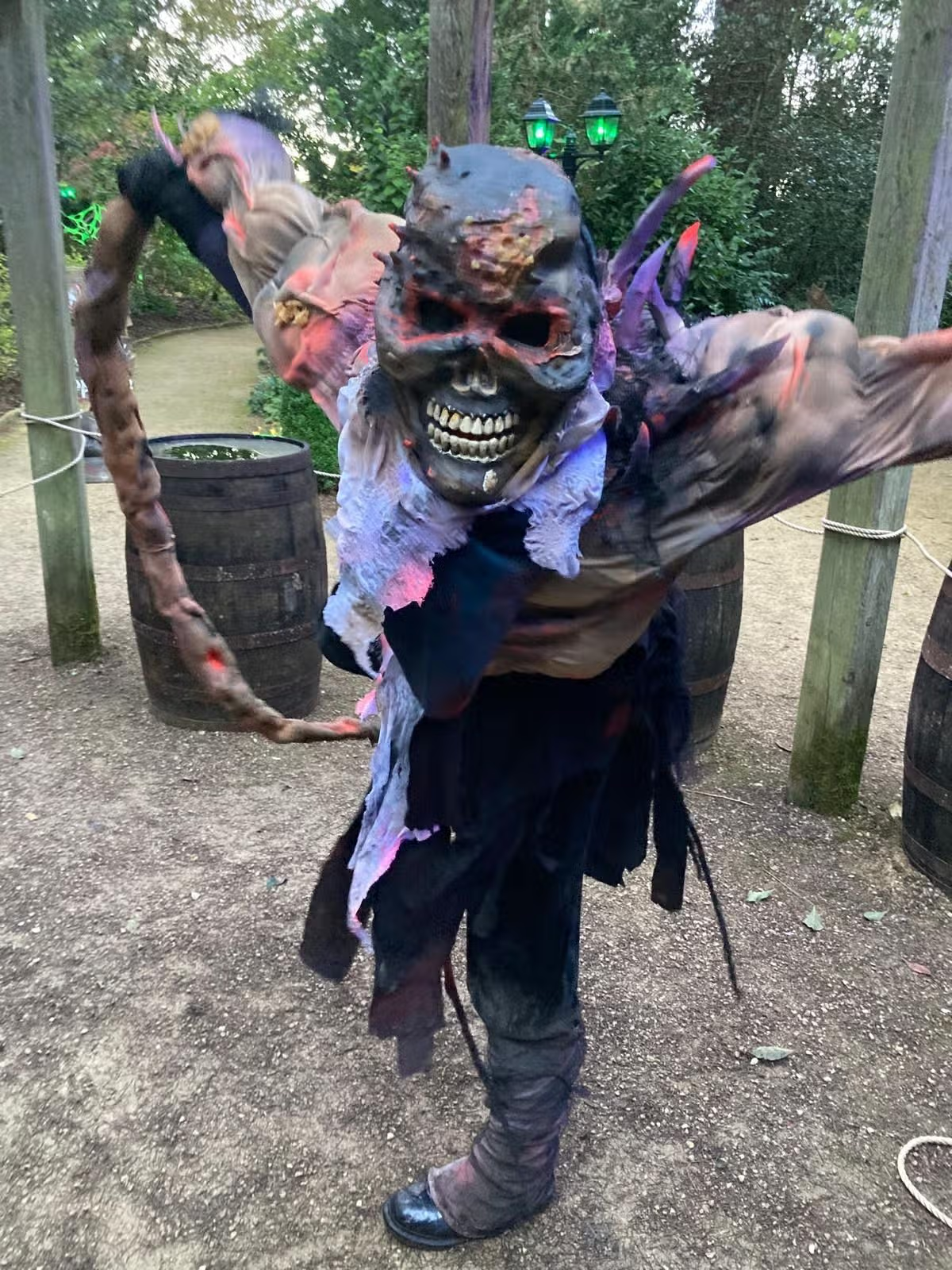
From the very off it’s both magical and just the right side of spooky – a stunning tree, bedecked in ghoulish green lights with a real cloaked horseman (with his head I must say) guarding it, onto an enchanted tunnel of pumpkins and a witch cooking up spells in the front garden of a cottage in the woods.
Next up is the Egyptian section. You are warned before entering – this light trail is very interactive – things could get a little spooky. A mummy (don’t worry, yhey don’t touch you) growls at walkers as they make their way through. Even though I knew this wasn’t real, I have to confess I jumped about six feet in the air when he popped up.
What makes Kew at Halloween so spookily magical isn’t just the huge array of lights, concepts and scary scenes before you… it’s also the music and soundtrack as you walk through the black as night garden.
From ghostly moans, to creaking doors in grave yards, to a sinister and chilling sound track as you move through woodland filled with chilling cloaked figures, you really feel totally immersed in the whole experience.
From vampires putting on shows, the pumpkin patches with a real life dancing Mr Pumpkin head and haunted tractors, from giant disco skeletons (these have to be seen to be believed) to pagan gods lining the walkways, there really is nothing that hasn’t been thought of and whoever dreamt this up is an absolute genius.
We took part in the moonlight walk and there were many moments where I was genuinely unsettled and at times really frightened. If you’re parents to younger children – and there were a few on the walk in our time slot – I would recommend taking them to an earlier one. There were plenty of tears in the pitch black spooky world.
But this really is a family friendly experience. The interactive characters along the way add enormously to the fun and there are plenty of places to stop for food, a hot chocolate, or to toast marshmallows (and even something stronger if you feel your nerves need it).
So, yes, Kew is already a magical place in daylight hours, make sure you run don’t walk to get your tickets for Halloween at Kew to see this incredible offering after dark.
Tickets for Halloween at Kew start at £19.50 and family tickets are available.
SANTA VISITS, festive pantomimes, bauble making and parties every day – these holiday parks offer the ultimate Christmas experience without the price tag.
Parkdean is opening a number of its resorts over the festive season and a whole family can stay for less than £150.
Eight Parkdean resorts are running a Winter Wonderland programme this ChristmasCredit: Parkdean ResortsThe festive breaks will have parties and there’s a special countdown show on Christmas EveCredit: Parkdean Resorts
Parkdean Resorts has officially opened its bookings for Christmas with festive getaways available across eight UK holiday parks.
These are:
Sign up for the Travel newsletter
Thank you!
Camber Sands Holiday Park, Sussex
Cayton Bay Holiday Park, Yorkshire
Vauxhall Holiday Park, Great Yarmouth
Trecco Bay Holiday Park, Wales
Ty Mawr Holiday Park, Wales
Warmwell Holiday Park, Dorset
White Cross Bay Holiday Park, Lake District (limited activities)
Fallbarrow Holiday Park, Lake District (accommodation only)
Each of the holiday parks will be open throughout December including Christmas and the New Year with a whole host of activities.
Winter Wonderland which will have over 30 Christmassy activities is available at Camber Sands, Cayton Bay, Trecco Bay, Ty Mawr, Warmwell and Vauxhall.
White Cross Bay and Fallbarrow will be open during the festive period – but these won’t hold the Winter Wonderland programme.
But for the ones that choose to enjoy Winter Wonderland, the events vary from park-to-park and some will have Search for Santa where youngsters are invited to help the elves find Santa with clues and songs.
There will be creative activities too like bauble and Christmas card making as well as festive pot painting.
Family-friendly pantomime performances will take to the stage with some famous faces like Jenny Ryan from The Chase.
There will be ice skating, Christmas parties and sing-alongs – for those there on Christmas Eve, there will be a special show to countdown to the big day.
Camber Sands in East Sussex is one of the holiday parks with the Winter Wonderland activitiesCredit: parkdean resorts camber sands
Along with the Christmas activities, the holiday parks will also have their usual offerings like swimming, adventure activities and live entertainment.
Here, he watched entertainment like a knife-throwing magician, a Taylor Swift tribute act, karaoke, bingo and stand-up comedy.
Other activities at Vauxhall include the high and low ropes course, Bear Grylls escape rooms, an inflatable bounce park, a swimming-pool obstacle course, pottery painting, off-road rangers and an adventure playground.
He added: “We’ve taken our children to Dubai, Turkey, the Netherlands and Disneyland, to name a few — but they feel they’ve hit the jackpot on this quintessential Great British caravan-park holiday here in Norfolk.”
A four-night stay at Vauxhall holiday park from December 7 in a Sandpiper/Buzzard Apartment which sleeps up to six starts from £159 – or £6.62pppn.
Vauxhall holiday park recently underwent a £5million makeoverCredit: parkdeanresorts.co.ukIt has a large swimming pool, inflatable bounce park and adventure playgroundCredit: parkdeanresorts.co.uk
If you want to stay for five-nights from December 23 in a Goose Apartment which sleeps four, this starts from £599 or £29.95pppn.
It has Pirate Crazy Golf, a high ropes course, splash pad, archery, hoover boards and bumper zorbs.
There’s also a bowling alley and the Next Level Gaming Arena which has over 25 consoles including PS5 and Xbox.
Trecco Bay is one of the biggest holiday parks in the countrCredit: Parkdean ResortsNext Level Gaming Arena which has over 25 consoles and classic gamesCredit: Parkdean Resorts
Four-night breaks from December 14 in a Bronze Caravan which sleeps up to six starts from £159 – or £6.62pppn.
The six holiday parks with the Winter Wonderland programme have all-inclusive add-ons on certain dates, so there won’t be hidden surprises.
It includes three meals a day which are served directly to the table so there are no queues either – there’s also unlimited drinks and Costa Coffee.
This starts from £100 per adult and £40 per child (under 12) per break.
Anthony Reilly, Marketing Director at Parkdean Resorts, said: “We know that the festive period can be a stressful time for families looking to plan a getaway that’s great value, feel-good and has something for everyone.
“That’s why we’re so excited to bring back festive breaks, bigger and better than ever. Booking early means families can relax knowing they have secured their festive tradition for 2026, leaving the Christmas stress behind – and start unwrapping the excitement now.”
THE spooks and the ghouls are gathering, and this half-term is gearing up to be spine-chillingly fang-tastic.
Superb Halloween events for all the family are being held across the UK, including in city centres, holiday parks, castles and lots of amazing attractions.
The spooks and the ghouls are gathering, and this half-term is gearing up to be spine-chillingly fang-tasticTeenage monsters will love screaming their way through horror mazes at Blackpool Pleasure Beach
Here, Trisha Harbord shares her selection of 13 of the most magical and monstrous activities taking place in the coming weeks.
MAZE MADNESS
DO you have teenage monsters? They’ll love screaming their way through horror mazes at Blackpool Pleasure Beach.
Sign up for the Travel newsletter
Thank you!
The attraction’s Journey To Hell features three new mazes: Eternal Abyss, a network of tunnels; The Veil, a house steeped in grief; and Deadline, with its nightmarish corridors.
Other frightening encounters include riding ICON: Into The Void blindfolded, and a ghost train.
Screamfest at Staffordshire’s National Forest Adventure Farm is celebrating 15 years with its most terrifying attraction. Cortex 17 is a psychic trial set in a 1960s hospital, featuring 20 weird actors.
It’s among seven chilling experiences with thrill rides and roaming characters until October 31, from £34pp. See screamfest.co.uk.
HOLIDAY PARK HELL
HOLIDAY parks across the UK have cut-price half-term deals. Butlin’s Spooktober is landing at Bognor Regis, Minehead and Skegness, with discounted three-night breaks from £66 per person.
Fairgrounds have become scaregrounds and there are special Halloween shows, eerie silent discos and crafts as well as Splash Waterworld, TV’s The Masked Singer and Maximum Pro Wrestling. See butlins.com.
If you’re in Scotland or the north of England, Verdant Parks has 11 sites in beautiful coastal and countryside locations where Halloween is being celebrated, with three-night family stays from £259.
You could choose Riverside, on the banks of Wooler Water in Northumberland, which has a pool, wellness area, soft play, arcade, entertainment, bar and restaurant.
Kids can get involved in pumpkin carving and zombie battles. See verdantparks.co.uk.
MONSTER MAYHEM
Manchester’s MCR Monsters are back for their tenth anniversaryCredit: Carl Sukonik
MANCHESTER’s MCR Monsters are back for their tenth anniversary. The giant, inflatable creatures will appear on famous buildings and landmarks such as The Royal Exchange and Corn Exchange from October 24 to 31.
On the first weekend, the free event features real-life characters roaming the streets, plus party games and DJs.
There’s also a new Paul Horror-wood Monster Bake-Off on New Cathedral Street, where you can win a “handshake” and pick up free party bags of sweets. Kids will love the spooky storytelling at the monsters’ library in the Arndale, too.
Dancing puppets, stilt walkers and a brass band will lead a procession to the city centre for a spectacular anniversary party.
All week, the Science And Industry Museum is holding interactive activities about Halloween aliens. See halloweenmcr.com.
GET your wellies on and hitch a ride on a tractor-trailer to pick your own pumpkin. This year, Stockeld Park near Wetherby, Yorkshire, has grown their own to add to their half-term activities from October 24 to November 1.
Enter Halloween fancy dress competitions, complete a forest trail with the help of woodland witches who will share their mischievous skills, explore the Mummy Maze, with a few surprises along the way, and battle it out in the Laser Zombie Experience.
Stockeld also has six playgrounds, a multi-storey playhouse and tree climbing. Tickets from £28pp. See stockeldpark.co.uk.
Still not had enough? There are pumpkins galore – hundreds of thousands to be precise – to be collected at Rougham Estate near Bury St Edmunds, Suffolk. You’ll also find food trucks, face painting, pedal tractors and ice cream, too! See roughamestate.com.
CHOCCIE HORROR SHOW
HALLOWEEN comes with a sweet twist at Cadbury World. The Birmingham attraction has a new gameshow-style challenge where visitors must guess the characters hiding behind a Trick Or Treat door.
And there’s Freddo’s Spooktacular, with games, songs, magic and chilling surprises, as well as chocolate pumpkins and afternoon tea. Explore 14 zones with activities and a 4D movie. Runs until November 1, tickets from £24. See cadburyworld.co.uk.
Until November 1 at Sea Life Birmingham, sea witch Serafina asks kids to become ocean defenders by following a spellbinding trail. They will tackle challenges, solve puzzles and complete Serafina’s missions to discover life under the sea.
Walk through the UK’s only 360-degree ocean tunnel to see turtles, sharks, rays and hundreds of tropical fish. From £19. See visitsealife.com.
HIGH-SPEED THRILLS
TEENS’ hearts will be racing when they get to ride their favourite rollercoasters after dark at Alton Towers.
And new scare maze Final Exhibit will have visitors running for their lives to avoid becoming part of a creepy display.
Younger thrill-seekers will prefer a visit to Trick O’ Treat Town and Amigos In The Afterlife, where they’ll meet friendlier characters.
Scarefest runs until November 1 on selected dates, and tickets cost from £37 for day entry or £80 including all four scare mazes. See altontowers.com.
If after-dark thrills are more your thing, Thorpe Park is celebrating the 25th anniversary of its Fright Nights with more spine tingles than ever before. Its new scare maze Tenement will have adrenaline junkies looking for the exit in the pitch black. Entry from £39. See thorpepark.com.
SPOOKY WOOKEY
GET your best Halloween togs on and you could win a year of magical adventures.
The show caves at Wookey Hole, near Wells in Somerset, have been transformed into a spellbinding world of pumpkins, monsters, magic and family fun.
Every family in fancy dress who take a photo there will be entered into a draw to win a year’s membership to the attraction, including access to the new Winter Wonderland.
The Halloween event, which runs until November 1, includes a journey through the caves, where immersive projections bring the story of the Witch of Wookey Hall to life.
Vampires and monsters are taking over the circus, there’s a spooky 4D film, a pumpkin trail and surprises. Adult tickets cost from £24.64, child tickets from £19.54. See wookey.co.uk.
CASTLES IN THE SCARE
STAY in a castle and seek out characters from Horrible Histories. Performers will bring the gruesome stories from the kids’ books to life at Leeds Castle near Maidstone, Kent, until November 1.
Follow a ghost-getter’s trail, uncovering tales of royal spirits, witch trials and strange superstitions. Two nights’ B&B for a family of four in a castle bedroom costs £500, including tickets and free evening meals for kids. See leeds-castle.com.
Warwick Castle will also be full of family frights, including haunted hollows and lurking goblins from October 24 to November 1. But on selected nights, the scares are turned up a notch – with spine-tingling sleepovers including three terrifying ghostly experiences, circus acts and a silent disco. B&B and tickets cost from £85pp. See warwick-castle.com.
HOWLS AND OWLS
The Welsh School Of Witchcraft And Wizardry can be found at the British Bird Of Prey Centre, in CarmarthenshireCredit: Gareth Danks
WANNABE Harry Potters can learn spells and meet some owls at The Welsh School Of Witchcraft And Wizardry.
It can be found at the British Bird Of Prey Centre, in Carmarthenshire, which has been transformed for a week of mischief from October 26.
Kids are encouraged to wear magical costumes for classes including wand-making, creating potions and spells. Then, they can try being a falconer and fly an owl or a red kite.
Tickets cost from £14 per adult and £8.50 per child. Flying sessions are from £10. See british birdofpreycentre.co.uk.
If you’re further south, a wizard school is also being held at Southampton’s Tudor House on October 26 and 27, costing £8. The house has a free Halloween open day on October 30, with crafts, facepainting, haunted tales and guided ghost tours. See visitsouthampton.co.uk.
THE HAUNTED WOODS
THINGS aren’t just going bump in the night down at BeWILDerwood outdoor family adventure parks in Norfolk, Cheshire and the Lake District.
There’s a whole host of spooky events in the daytime, too. The woodland attractions are asking young visitors to don their scariest outfits to enjoy the play trails and whoosh along zipwires.
There’s also a Twig Or Treat trail until November 1 – where youngsters will be tasked with uncovering characters and collecting letters to discover the scrambled word and claim their prize.
Then, stick around until nightfall to see the Glowing Light Trail twinkle. Tickets cost from £26.50 per adult and £24.50 per child over 92cm. Families can bag 12.5 per cent off when they book online in advance. See bewilderwood.co.uk.
CREEPY CAPITAL
Halloween characters, the stilt-wearing Peculiar Sisters, are trailing around spookily-decorated shops and houses on Kensington High Street from October 23 to 31Credit: Mark Weeks
LONDON is crawling with creepies this half-term. Halloween characters, including the stilt-wearing Peculiar Sisters, are trailing around spookily-decorated shops and houses on Kensington High Street from October 23 to 31.
And on the last day, Holland Park will be transformed into The Playful Park Of Peculiar with live entertainment. See highstreetkensington.co.uk.
London Dungeon has the three-part immersive show Curse Of The Mummy until November 1. From £29 per adult and £23.50 per child. See thedungeons.com.
The dungeon is included in National Rail’s discounted entries to attractions, saving a third off the price. Other offers include Ghosts And Legends at the Tower of London and the Haunted Halls Of Hampton Court Palace. See daysoutguide.co.uk.
BRICK OR TREAT
LEGOLAND Discovery Centres in Birmingham and Manchester have been overtaken by minifigure monsters this Halloween.
Until November 1, budding builders can join creative workshops, bringing their own creations to the Brick Or Treat mosaic boards and testing their skills with glow-in-the-dark Lego bricks.
There are also scavenger hunts, pumpkin carving and dance parties. Tickets cost £19pp or £51 per family of four. See legolanddiscoverycentre.com.
And at Legoland Windsor, half-term sees Lord Vampyre’s Creepy Crypt Trail promising treats across the park, as well as new a harbour show, Monster Rocker’s Pumpkin Trail and the Haunted House Halloween Monster Party. Tickets from £39pp at legoland.co.uk.
LORDS OF THE MANOR
Grab yourselves a bit of luxury at the five-star Celtic Manor Resort in Newport, WalesCredit: Supplied
GRAB yourselves a bit of luxury. Kids under 13 can stay at the five-star Celtic Manor Resort in Newport, Wales, for free.
It costs from £123 per night for a family of four, Monday to Thursday, until October 31 – and that includes use of the health club and spa. There are free Halloween crafts and games, while other activities, such as pottery painting and cupcake decorating, can be booked.
If you’re not into spooks, kids are still entertained – there’s archery, laser combat, high ropes, adventure golf, axe-throwing and swimming. And there’s lots of space for biking or walking. The resort has 2,000 acres of grounds and woodland trails.
Larger families can book self-catering Hunter Lodges, with hot tubs and saunas, sleeping up to eight adults and two children. See celtic-manor.com.
A HISTORIC town will host a festive wonderland with real reindeers for just one day.
The UK’s largest single-day Christmas market is returning with more than 120 stalls this December.
Beverley Festival of Christmas is branded the UK’s largest single-day Christmas marketCredit: East Riding of Yorkshire CouncilThe festive event even features a real reindeerCredit: Visit East Yorkshire
The Beverley Festival of Christmas will return on Sunday, December 13, bringing thousands of visitors to the East Yorkshire town for one of the country’s biggest festive events.
Shoppers will be able to browse more than 120 stalls selling everything from handmade gifts and Christmas decorations to jewellery, homeware and locally produced food.
Sign up for the Travel newsletter
Thank you!
The market will spread across Beverley’s historic Saturday Market, Wednesday Market and North Bar, with independent traders offering plenty of inspiration for anyone still searching for Christmas presents.
The day will kick off with a spectacular parade at 10am, setting off from Wednesday Market and travelling along Toll Gavel towards Saturday Market.
Santa Claus will lead the procession alongside his reindeer, with live music, comedy acts, Steampunks, majorettes and Bernese mountain dogs also expected to take part.
Visitors can browse through over 120 market stalls for freeCredit: East Riding of Yorkshire Council
After the parade, Father Christmas and his reindeer will remain in Saturday Market until mid-afternoon, giving families the chance to see them up close and take photographs.
Visitors can also expect traditional Victorian fairground rides, face painting, birds of prey displays and ice sculptures throughout the day.
Brass bands, carol singers and dancers will provide a festive soundtrack as shoppers explore the town centre.
The festival will be running from 10am until 4pm and the entry is free.
The event was first established in 1995 by local shop owner John Bird, who brought Beverley’s traders together to create a special day of Christmas shopping.
It has since grown into one of East Yorkshire’s best-known festive traditions, with 2026 marking its 30th year.
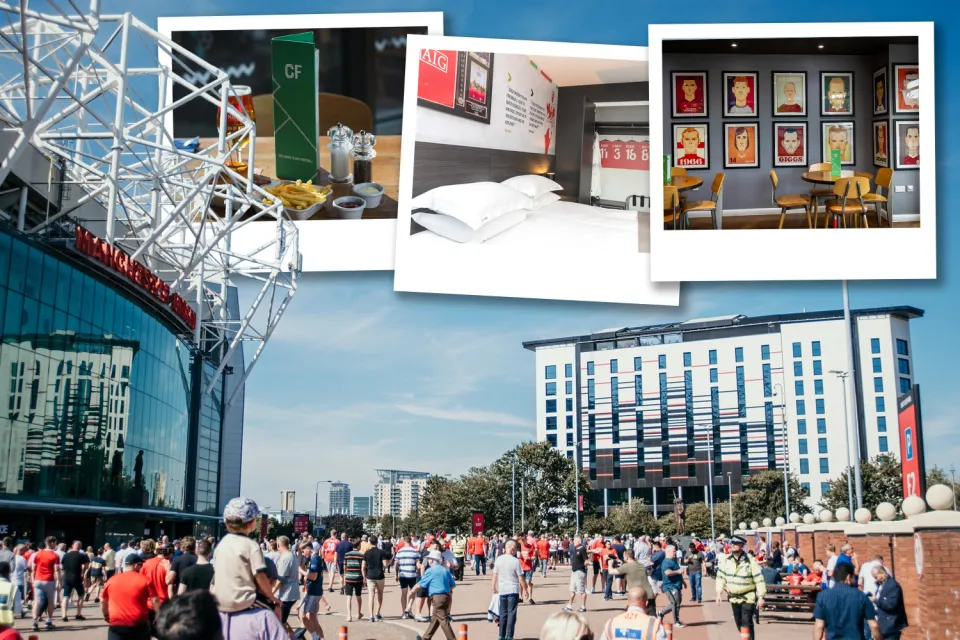
Gary Neville’s Hotel Football faces Old TraffordCredit: SuppliedThe rooms are perfectly comfortable, as befits a four-star hotel that’s part of Marriott’s Tribute PortfolioCredit: Supplied
From here I can almost reach out and touch the legendary Old Trafford, aka The Theatre of Dreams.
It’s a shivers-down-your-spine moment for me and my lad Reggie, who often make the trip to follow our team — but never in such style.
Sign up for the Travel newsletter
Thank you!
Usually, we’re forced to leg it from the stadium to be squashed into a tram in order to make the train back down south.
This weekend, we’re not in a rush as there’s no game on, but that’s why we’re here.
You can walk along the edge of the new, state-of-the-art “hybrid” pitch (96 per cent grass, four per cent artificial fibres), relaid this summer for the first time in 14 years, and sit in the dugout.
You also get access to the dressing rooms and plush directors’ box.
The guided tour lasts around 70 minutes and takes in the players’ tunnel, too.
We filled our faces back at the hotel in Cafe Football, where classic pub grub — fish n’ chips, burgers, pizzas and salads — is on the menu.
It’s decent enough to fill a hole and portions are immense (the loaded fries are enough for eleven players and a few subs).
It has a well-stocked bar where you can sink a few pints while you watch whatever game is showing.
While the theme of the hotel is football — did you guess? — it’s not limited to United.
The brightly-lit dining room — not a spot for romance — is decorated with photos of players as diverse as Peter Crouch and Kevin Keegan.
Fill your face with classic pub grub at Cafe FootballCredit: SuppliedThe footie decor is of legendsCredit: Supplied
Upstairs, the rooms are perfectly comfortable, as befits a four-star hotel that’s part of Marriott’s Tribute Portfolio.
The compact bathroom squeezed in a bath and a rainforest shower.
My only gripe was that the pillows were too big, so I woke up with a stiff neck and a new double chin.
Up on the roof is Heaven, a five-a-side pitch with views across Old Trafford and the city, which can be booked for kickabouts and parties.
And if anyone needs a break from football, the Imperial War Museum North is close by, with The Lowry arts centre just across the Manchester Ship Canal at Salford Quays.
On paper, Hotel Football looks a bit out of the way if you’re planning to be in the centre of town (it’s a 15-minute tram ride from Piccadilly).
But for us, the United faithful, it’s definitely worth a schlep.
Colin Robertson with his lad at Man United stadium, Old TraffordCredit: Supplied
GO: MANCHESTER
GETTING THERE: From Manchester Piccadilly or Victoria stations, take the Altrincham tram to Old Trafford stop, which takes around 15 minutes, then it’s a ten-minute walk to the hotel.
COMBINE fantastic campsites that feel more like holiday resorts with bargain prices, and you have Eurocamp.
With more than 400 parks in Europe, there are three brand new ones opening in the UK next year – here are the ones to book ready for summer 2027.
Camping l’Ardéchois, France
There are some very exciting new Eurocamp resorts opening next yearCredit: EurocampMost of them have huge private pools and splash zonesCredit: Eurocamp
New to Eurocamp will be Camping l’Ardéchois – Vallon-Pont-d’Arc, although the resort isn’t new itself.
This is one made for toddlers, with a massive outdoor playground and kids paddling pool, along with a kids club.
Sign up for the Travel newsletter
Thank you!
That’s not to say there isn’t enough for adults, with two huge pools and a spa area too, completely with saunas and hammams.
Otherwise expect on-site restaurants, live evening shows and even it own nautical centre.
It’s from here you can go on a ‘canoe safari’ on the riverside beach, otherwise go for some yoga, tennis and padel.
On-site are 230 pitches, making it one of the smaller, more manageable resorts.
Choose from standard two-bedroom cabins (sleeping five), or premium, three-bedroom holiday homes that are slightly bigger.
It is set to open on April 23, 2027, and will be open all summer until September. Prices start from £416 – working out to just around £11.80 each a night.
Delta Open Air Resort, Italy
Delta Open Air Resort is a brand new resort in ItalyCredit: EurocampThere are both indoor and outdoor poolsCredit: Eurocamp
A brand new resort in Italy, Delta Open Air Resort is right on the Adriatic.
You won’t want to leave – it has a huge 4,000sqm aqua park with pools and splash zones for kids.
There are two restaurants (expect fantastic Italian food) as well as a bar and gelato store. Or you can head to the supermarket to buy your own stuff.
Cycle paths along the coast are one for the sport-goers, along with loads of sports facilities on-site too.
Lots of the resort has huge floor to ceiling glass wallsCredit: EurocampPalm trees and sunloungers will transport you to tropical climesCredit: Eurocamp
Otherwise you can head straight to the nearby beach for some sunbathing time.
It is by some gorgeous Italian towns too if you want to explore the area.
This resort is considered “extra large” with a whopping 1,20 pitches ranging from cabins to premium holiday homes.
The park opens on May 22, 2027 and will be open until October. Prices start from £410, or £11.60 each a night.
hu Eraclea Mare, Italy
Hu Eraclea Mare Campsite is right by the beachCredit: EurocampThe campsite has more than enough pool space for everyoneCredit: Eurocamp
Also a brand new resort, hu Eraclea Mare is on the Venetian Coast which is expected to be one of their five-star resorts.
The on-site waterpark is the star of the show – it has 15,000sqm of lagoons, indoor pools, Olympic pools, waterslides and even a solarium.
Even outside of this, there is an insane amount of things to do, from tennis, football and volleyball to yoga, pedalos and canoeing.
How about a game of paintball, or even a few hits on the 18-hole minigolf?
Expect live shows for kidsCredit: EurocampAdults can make the most of the fitness and wellness facilitiesCredit: Eurocamp
Then there is the tree experience and zip line – which they claim is the biggest ever built at a holiday village.
Evenings come in the form of 30 food and drink spots, and a 1,500 seat outdoor theatre.
It is right on the beach, and it’s Blue Flag, to expect clean, safe sands and waters.
This is the biggest resort on the list, with 3,000 pitches ranging from two to four bedroom properties.
The resort opens May 5, 2027, and stays open until September.
Prices start from £313, which is £8.80 each – the biggest bargain on the list.
A Kalkan sunset is always a beautiful thing – the horseshoe-shaped bay deepening to azure blue against an apricot-rose sky – but, in October, when the light is low and the sun drops early, it’s almost transcendentally lovely. In some Turkish resorts, you’d be sitting watching it surrounded by quiet streets, half-empty bars and that melancholic sense that another season is over. In Kalkan, it still feels like summer; the harbourfront restaurants throng with visitors, the day gulets (wooden boats) still putter in and out of the bay and you don’t have to wait an hour to get a taxi back to your villa.
For me, the best thing about an autumn break – besides the sunsets – is that I can visit some of my favourite places that just get overrun in summer. The glittering beach at Kaputas, sandwiched into a triangular gap on the mountainous Kalkan-Kas road, has become a victim of Instagram; from May to September, it’s impossible to get near. In October, the waters are still warm and the beach – although still busy – has plenty of space for a dip and a laze.
About 20 minutes’ drive inland, the mountain village of Bezirgan, which used to serve as a summer retreat for wealthier Kalkan residents, settles back into complete peace in autumn, save for the woodpeckers battering away at the bark of the almond trees and the squirrels skittering through the leaves. The Lycian Way weaves through the village, past Ottoman-era grain stores, with the lush gardens of the Pirha Köy Sofrası restaurant a great bet for a plate of traditional manti (dumplings in yoghurt) or kofte (meatballs), before setting off for a hike (they do fantastic breakfasts too).
Back in Kalkan, it’s always cocktail hour somewhere; often on a roof terrace, with a jazz soundtrack floating out above the streets of the Old Town. This year, the Fountain Terrace Cocktail Bar has been popular, but I still love sitting in the Merkez Cafe, a Kalkan institution since the early 1990s, smack-bang in the heart of the village and a prime spot for people-watching when the evening begins.
The glittering beach at Kaputas near Kalkan. Photograph: daphnusia/Alamy
And because the season’s end is in sight, all the restaurant owners and waiters are cheerfully giddy, and the whole place swings with an end-of-term vibe. Sitting at the Blue Marlin (tucked away beneath the Pirat hotel) with a cold Efes beer and a selection of the town’s best meze, the only thing that makes me rueful is that it will be several months before I’ll be back here again.
The village of Agua Amarga, where Sexy Beast was filmed. Photograph: Juana Mari Moya/Getty Images
Along Spain’s wild Costa de Almería are a handful of exquisite little towns and villages. San José is probably the best known, put on the map by its most famous inhabitant, the late Joe Strummer, but 25 miles east is the real jewel of the Almería coast. Agua Amarga is a typical Andalucían fishing village moonlighting as a stylish low-key holiday destination, perfect for late-season sun-seekers.
Its location, on a crescent bay, makes for spectacular sunrises and sunsets over the arid headlands that bookend the 500-metre-long beach. In the narrow, whitewashed streets, a lush palm grove and splashes of pink bougainvillaea remind you that north Africa is just a short hop across the Mediterranean. In the summer, Agua Amarga’s unspoilt sands and turquoise waters attract plenty of visitors, but the vibe remains relaxed. There are a handful of restaurants and bars around the main plaza, and a few eateries on the beach, including Los Tarahis, a traditional chiringuito (beach bar) where you can enjoy dishes such as arroz negro con bogavante (black rice with lobster) with your toes in the sand. In winter, the town goes into hibernation, but in autumn the sun and sea are still warm and the bars and restaurants are still open for business.
Agua Amarga is not the place to go to party. It’s a world away from the overdeveloped costas to the west and north, but it is the perfect base to immerse yourself in nature. Hiking trails lead from the village over the cliffs to a string of isolated coves and the ruins of 18th-century forts dotted along the headlands. And if you tire of following the shimmering sea, you can strike out inland to explore the Cabo de Gata nature reserve, with its winding ramblas (dry riverbeds), prickly pears and eerie abandoned goldmines.
The sea by Agua Amarga is still warm in autumn. Photograph: Dronie_Spain/Shutterstock
This corner of Spain is famous for its movie locations, notably Sergio Leone’s spaghetti westerns and Hollywood blockbusters including Lawrence of Arabia and Conan the Barbarian. For UK cinephiles, British gangster classic Sexy Beast was filmed in Agua Amarga, and Ray Winstone’s swanky villa is available as a holiday rental (minus the boulder in the swimming pool).
The name Agua Amarga translates as “bitter water”, dating back to the 19th century and the contamination caused by mining iron ore. Those days are gone, and now Agua Amarga couldn’t be sweeter.
Cascais was once the summer retreat of Europe’s nobility. Photograph: Chunyip Wong/Getty Images
As many of Portugal’s southern resorts prepare to hibernate for winter, Cascais’s green-fingered municipal workers set to work on the town’s well-manicured flower beds, ensuring a seamless seasonal rotation. Violas, primroses and cyclamen furnish pops of purple, magenta and orange below tall palms lining a promenade punctuated with palatial homes and pockets of golden sand. Even in late autumn, the semi-tropical scene banishes the blues.
My happy place when the off-season rolls around, Cascais has enough energy and atmosphere to entertain, and is arguably at its finest after summer’s beach throngs and Lisbon day trippers (Cascais lies 20 miles west of the city, a 30- to 40-minute train ride from Cais do Sodré station) have receded.
Once the summer retreat of Europe’s nobility, Cascais is now Portugal’s year-round crowd-pleaser – and come autumn, accommodation prices are far less aristocratic. There are stately manors and spa hotels aplenty, but my pick is Casa Vela, a surprisingly spacious sidestreet bolthole. Its sauna, shrouded in tropical gardens imported by the owner and his grandfather, brings joy even on the chilliest days. And if rains do come, there are a clutch of cultural attractions in the town, including the pyramid-shaped, terracotta-hued Casa das Histórias Paula Rego, featuring works by the acclaimed Portuguese-British artist.
Still, with about 300 sunny days a year, Cascais’s main off-season pull is for those who like to be active outdoors. Blue-sky mornings see waterfront joggers pass pretty squares carpeted in black-and-white calçada portuguesa (the distinctive patterned pavement mosaics), the hulking 15th-century citadel, and a mustard-hued palace overlooking a cove. Swimming is bracing, but kayaking on the calmer waters where the Tagus River meets the Atlantic more than compensates.
Casa das Histórias Paula Rego in Cascais. Photograph: Witold Skrypczak/Alamy
Better still, hire a bicycle and trace the craggy coastline, which grows wilder as it arches north-west, with sheer cliffs appearing in the distant haze. Praia do Guincho is the star, a glorious dune-backed beach battered by winds that keep surfers of all stripes well sated.
A half-hour bus ride from Cascais, Sintra’s iconic palaces and quintas unfurl across the forest-clad mountains. Summer in the town will test your patience. But with fewer crowds in the off-season, the essence of this former elite enclave and trove of European Romantic architecture returns. Hiking the hewn stairs to the Moorish Castle in thick fog is magical, while the vibrant burgundy-and-yellow facade of the fairytale National Palace of Pena brightens the greyest of days.
As the nights start to draw in, you can chase the dwindling sunlight by heading to windswept Cabo da Roca at Portugal’s far western tip. Not only are the sunsets here spectacular, for much of autumn and winter they are the latest in mainland Europe – a sweetener for the shorter days.
Senigallia and its Velvet Beach. Photograph: Michal Szymel/Alamy
Velvet Beach (Spiaggia di Velluto) is the alluring name for the miles of fine sand that fringe the town of Senigallia, in Italy’s Marche region. But from May to September, that golden loveliness all but disappears under the umbrellas and sunbeds of beach clubs.
Italians love the place, some returning every summer for decades, but in high season it is probably best left to them. However, Senigallia has an allure beyond the beach that can be enjoyed year-round – and autumn is particularly rewarding.
It’s known in Italy as the “five-star town” for the number of Michelin stars its top two restaurants hold between them. At Uliassi (three stars) and Madonnina del Pescatore (two), ambitious locally born chefs have kept one another on their toes for decades, and their fame has encouraged other restaurateurs to up their game.
If Uliassi’s famous €280 tasting menu is beyond your budget, Senigallia has plenty of innovative, quality places that are more affordable. It’s hard to eat badly here, but fish fans will relish the exquisitely prepared raw stuff at Cuocodi Bordo (two courses from €34) on the seafront. The more rustic Rimante (two courses from €27), in the cobbled centre, offers super-friendly service, great pasta and a roast goose speciality. For pizza nights, nearby O’sarracin has superlative margheritas (€8.50) and tasty ragù-filled arancini to start.
Senigallia is renowned for seafood restaurants such as the Michelin-starred Madonnina del Pescatore. Photograph: Brambilla Serrani
Pizza al formaggio, by contrast, isn’t pizza at all, but a sort of savoury panettone, flavoured with parmesan and pecorino cheese, maybe with chunks oozing out of a warm slice. It’s usually an Easter treat, but bakery Pandefrà makes it from October until May. Autumn in Senigallia also brings amazing fresh produce (chestnuts, persimmons, grapes and pomegranates; pumpkins, greens and radicchio) to chefs and market stalls.
And, of course, it brings the olive harvest, with new oil to taste in local delis and at the Festa dell’Olio Nuovo (6-10 November) in Scapezzano, three miles inland, reached by a pleasant hour’s walk up the quiet Strada di Fontenuovo (there’s a bus back).
With so much eating, you do need to work up an appetite. Hiking the Heron Trail along the Misa River will help, and offers downy oaks in their autumn finery, but the best walk for me starts at the splendid Rotonda a Mare gallery on its 1930s pier, heads inland on quiet lanes to Gabriella and Montignano villages, then descends to the coast for a sunset stroll back along that – now peaceful – Velvet Beach.
Saint-Jean-de-Luz holds on to the warmth of summer a little longer than the rest of France’s west coast. Photograph: Mehdi33300/Alamy
Tucked away in the corner of France just before the Basque coast runs into Spain, Saint-Jean-de-Luz hangs on to the warmth of summer a little longer than the rest of the west coast. Its enticing crescent beach is sheltered by two headlands and so, as the Atlantic crashes against the rest of the coast, you can dig your toes into the golden sand as the sea gently laps the shore and truly feel as if you’ve escaped the world.
The town makes for a great introduction to the French Basque Country, with its traditional red or green timber-framed architecture, adorned in many cases with strings of the local espelette chilli pepper – its gentle heat infuses many of the local dishes. Pick up a pot at the local market hall, which is a good place to find other hero products of the local cuisine, such as Ossau-Iraty cheese and black cherry jam.
Elsewhere, the patisserie Maison Adam is the place to find the local almond macaron called the pare gabea (it means incomparable in Basque), which was first made in 1660 to celebrate the marriage of King Louis XIV and Marie-Thérèse of Spain. Their nuptials took place just round the corner at the Saint-Jean-de-Baptiste church – half-built at the time – which has an extraordinarily detailed gilt altarpiece that was installed in 1669, as well as a three-tiered gallery for the congregation. Meanwhile, a votive ship hanging from the ceiling is a nod to the town’s close relationship to the sea, with small fishing boats departing the neat harbour to fish for hake, a local speciality.
You can venture out on to the seas too, with a boat trip on the small cruiser Nivelle V (€20), which goes along the coast towards Spain, first passing the 17th-century cylindrical fort at Socoa and its sea wall that juts across the bay. As you cruise past the Flysch cliffs, which look like layers of diagonally stacked cardboard, you might spot a few silver flying fish jumping out of the steely blue Atlantic.
The neighbouring village of Ciboure. Photograph: Andia/Alamy
On arrival back at port, take the short walk across the bridge that spans the River Nivelle to the neighbouring village of Ciboure. It’s a warren of red and green Basque townhouses that overlook narrow streets winding up the hill. Between them sits the restaurant Chez Mattin (mains from €28), a local institution, where chef Michel Niquet serves his signature dish, ttorro, a fish stew that was invented by his grandfather.
Some of 16 survivors treated for suspected shark bites, US coastguard says.
Published On 18 Oct 202618 Oct 2026
The search continues for 11 people still missing after a boat capsized off Mexico’s Baja California coast on Friday, as multiple survivors have been treated for suspected shark bites, according to the US coastguard.
“Several of the individuals rescued were suffering from severe injuries consistent with shark bites, and the Coast Guard provided life-saving first aid while en route [to] San Diego,” the coastguard said in a statement on Saturday.
Recommended Stories
list of 3 itemsend of list
Sixteen Mexican nationals were rescued on Friday. Survivors told officials there were 27 people on board.
The coastguard and US Navy used multiple aircraft and boats, along with assistance from the Mexican Navy, to search the area for the remaining passengers. An additional helicopter will be deployed later on Saturday, according to the coastguard.
Coastguard officers work on a helicopter at Coast Guard Station San Diego on October 16, 2026 [Denis Poroy/AP]
A Mayday call was transmitted from someone on the boat at about 1am on Friday, coastguard Lieutenant Santiago Tamburini said on the day.
A rescue helicopter reached the site about two hours later. It took about 90 minutes for the crew, which included a rescue swimmer, to pull the 16 people from the water, he added.
The boat went down about 225km (140 miles) west of Ensenada, Mexico, an area popular with fishing and leisure boats, but that is also frequented by smugglers.
Although the incident did not happen in US waters, coastguard official Charlie Valor said on Saturday they “were able to help, and that’s why we launched our assets”.
Fatal attempts to transport refugees and migrants from Mexico to the US have occurred in the past.
In May 2025, at least three people died when a boat flipped off the coast about 56km (35 miles) north of the US-Mexico border.
In 2023, eight people were killed in one of the deadliest maritime smuggling accidents off the US coast, when two boats approached a San Diego beach in heavy fog, and one capsized in the surf.
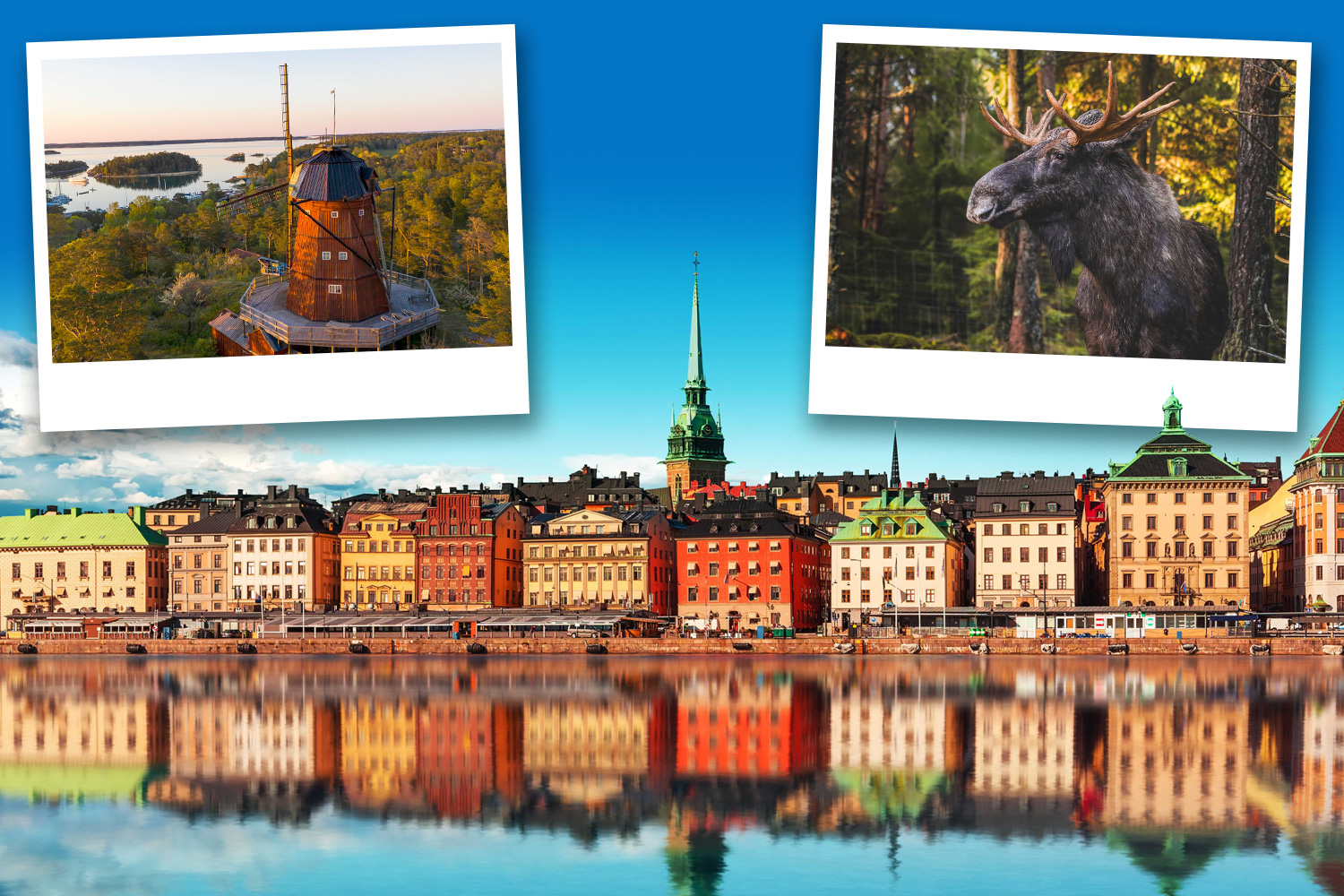
THE sound of bugles, trumpets and tubas fills the street as a parade of horses trot towards The Royal Palace.
I always thought Buckingham Palace’s changing of the guard was impressive, but shiny silver helmets off to the Swedish Army who, decked out in pristine blue uniforms, have us completely captivated for a full 45 minutes.
Stockholm’s historic old town is an incredible spectacleCredit: scanrailFab Mag’s Catherine got two unforgettable trips at onceCredit: Supplied by Catherine Bennion-Pedley
“It’s like being in a movie!” my five-year-old son Raffy shouts above the beat of kettle drums halfway through.
And he’s right. In the picturesque setting of Gamla Stan, Stockholm’s historic old town, it is an incredible spectacle. And even better – it doesn’t cost a penny. Or krona, rather.
Sign up for the Travel newsletter
Thank you!
I like big buns
Your wallets will, however, take a hit in Gamla Stan’s winding, cobbled streets, which are brimming with gift shops, such as Liten Amanda with its Nordic home decor (Litenamanda.se), plus bistros like Petit Pastis (Pastis.se) and confectioner Konfektyr & Glass offering an eye-boggling array of treats.
We search for the tiny Iron Boy statue hidden in a courtyard, before ordering a sizeable cinnamon bun, coffees and hot chocolates with lashings of cream for £28, at Kaffekoppen in Stortorget Square (Cafekaffekoppen.se), then chancing upon vintage H&M and antique glassware at charity shop Stockholms Stadsmissions nearby (Stadsmissionen.se).
Stockholm city consists of 14 islands connected by bridges. On Djurgården, we all stand in awe as we first set eyes on Vasa, a 17th-century warship that sank on its maiden voyage, its intricate carvings painstakingly restored.
A bonus for my teen self (in the temporary exhibition) is seeing Rose’s dress and Heart of the Ocean necklace from the film Titanic, while learning about director James Cameron’s 2012 deep-sea expedition 10,000 feet down to the ocean floor, and squeezing into a replica capsule. Adult entry costs £18.50, under-18s are free (Vasamuseet.se).
Mamma Mia!
The kids’ favourite outing is the neighbouring ABBA Museum. Poppy, seven, adores the greatest hits album (thanks to her Yoto music player), and despite being a tad overpriced, it’s undoubtedly a super-fun interactive space with lots of opportunities to dress up and perform like – and even alongside – the band (in hologram form), pose for an album cover, rock out in a silent disco and ogle the showstopping stage costumes.
Adult entry costs from £20.50, kids over seven from £8.50 (Abbathemuseum.com).
Escape to Utö on the archipelagoCredit: supplied by Tourist Board.Spot the wild moose on the looseCredit: Photosbypatrik
On one of our days on Djurgården, we tuck into shrimps piled atop egg mayo and syrup bread, £18, while the kids scoff pancakes with cream and jam, £7.50, bathed in sunshine on cafe Skroten’s terrace.
There’s free bread, butter and lingonberry juice on offer, too (Skrotens.se). Later, we hit Skansen, home to a farm, zoo, funfair and a historic town with glassblowers, pottery studio and bakery.
The children are wide-eyed at both the playful bears and the molten glass being transformed into chic confetti lampshades. Adult entry costs £23.50, under-12s are free (Skansen.se).
Viking vibes
At dinner that night, a roar fills the dining hall as our host announces the arrival of more guests – this time from the US – with a horn and a bellow.
I pause devouring my crawfish and prawn soup, £13.50, to join in the hollering.
We’re at Viking restaurant Aifur, and while it may be touristy, Raffy again gets all the film-set feels when he’s declared a “baby Viking” and presented with a giant sword to look after.
Thinking his night couldn’t get any better, and just as a musician begins playing the hurdy-gurdy (Google it!), the waitress presses souvenir coins into both his and Poppy’s palms (Aifur.se).
Continuing the theme, the next morning we learn how to fight and write like a warrior at the Viking Museum, which is worth a stop, even if it’s just to lunch at its restaurant Eld.
Highlights include Ukrainian gnocchi with smoked feta, £22, deer medallions with black garlic and potato gratin, £22.50, and the pretty harbour views (Thevikingmuseum.com).
Isle be back
The sweet spot for visiting Sweden with kids is balmy mid-August, just after the Swedes return to school. Keen to get a taste of the Stockholm Archipelago, home to more than 30,000 islands, we take the 43X train from Stockholm City station to Västerhaninge, catch the 846 bus to Årsta Brygga and then hop on the 21 boat to Utö.
Although it sounds complicated, it’s super-simple, and for our transport-mad kids, the hour-and-a-half journey in itself is thrilling.
But Utö, all rugged landscapes, pine forests and sparkling sea, is the real thrill. Photos really don’t capture its beauty.
Bistros like Petit Pastis offer an eye-boggling array of treatsCredit: Cafe Kaffekoppen/InstagramThe Swedish Army, decked out in pristine blue uniforms, have us completely captivated for a full 45 minutesCredit: Alamy Stock Photo
We kip in one of hotel Utö Värdshus’ sweet self-catering cottages, which cost from £101 per night, and at the restaurant that evening, we dine on buttered kingfish with potato, leek and cheese pie and crayfish broth, £29, while the kids wolf down steak with Béarnaise sauce and fries, £10.50 (Utovardshus.se).
Holidaying on the island is all about hiking, biking and the wonderfully wild beaches.
One afternoon is spent picnicking at Barnens Bad beach, not far from our cottage – its crystal-clear shallow water is perfect for kids, and we’re joined by only one other family, who stylishly arrive and depart by kayak.
The next day, we set off on a 11km bike ride (daily hire costs £15 per adult, £11 per child).
We pass colourful wooden houses and breathtaking vistas to Stora Sand, a wide expanse of white beach, which again we only have to share with one other couple.
Sandcastle building and chasing waves makes for a blissful few hours, topped off only by a wild moose deciding to clumsily gallop across our path on our ride home.
I fear that the kids’ tales of this trip may sound a little far-fetched when they get back home and share them with friends. But Sweden really has proved super (trouper).
Or try Hotel Kung Carl, set in historical buildings, for a more quaint feel, pastel decor and plants to borrow each night. Family rooms cost from £285 B&B (Kungcarl.se).
FORGET Santa in Lapland or skiing in France – when winter rolls around you’ll find me sunning myself abroad, trying to find some last-minute warmth to break up the UK’s long, grey months.
Having visited 58 countries as the Deputy Travel Editor, I’ve found some fantastic places that tick all the boxes of a winter sun break, without costing a fortune.
I’ve been to 58 countries – and I always ditch the chilly UK for somewhere hot in winterYou can find some great bargains and get some sun at the same time – if you know where to lookCredit: Alamy
By that, I mean warm weather, direct flights (keeping them under seven hours, for any long-haul flight haters) and some very big bargains when it comes to hotels and beers.
So here are my favourite winter sun spots, some of which aren’t that far – and with hotels from £35 a night.
Marrakech
One of my favourite spots for winter sun that doesn’t break the bank is Morocco.
I’ve explored the Hassan II Mosque of Casablanca, and visited the beaches of Agadir.
But I think the best bargain is found in Marrakech.
Not only is it perfect for some pre-Christmas shopping – I found fantastic dupes of expensive branded candles and curtains in the souks – but you can still get temperatures just above 20C in winter.
Food is cheap too, as you’ll pay just a few pounds for a freshly-made tagine meal.
For an affordable hotel stay, skip the big name chains and go for a local riad – small traditional Moroccan hotels – which you can find for as little as £35 on websites such as Booking.com and Airbnb.
These are usually fantastic locations, and usually with some free mint tea or breakfast thrown in.
Flights are cheap too – Ryanair fly there from £14.99.
We found a deal for a seven-night stay at Aqua Mirage Club from November 26, with return flights from Manchester, for £379pp on Loveholidays.com.
Riads are a great place to stay in Marrakech on a budgetCredit: AlamyYou can pick up some fantastic bargains in the souksCredit: Alamy
Cape Verde
African island, no jet lag and flights under seven hours – enter Cape Verde.
While lots of people head to the island of Sal, I much prefer Boa Vista.
Most of the TUI hotels are right on the beach, with swim-up bars and waterparks.
But leaving the resort is worth it too.
I found white sand beaches like Santa Monica with barely anyone on them, making me feel like I was on a Maldives private island instead.
My favourite was Praia Carlota, where you can lose the days in the hippy Morabeza beach hut with fried fish and local Strela beer.
Sand-boarding, kite-surfing, boat trips; visit in February and you can go whale-watching during humpback mating season too.
We found a deal for a seven-night stay at Hotel Pontao from November 30, with return flights from London Gatwick, for £430pp at On The Beach.
Boa Vista is a quieter alternative to the island of SalCredit: AlamyOr just stay at the hotel’s swim up bars…Credit: PR SUPPLIED
El Gouna
When it comes to Egypt, one of my favourite destinations for winter sun is El Gouna.
Flights there are around 5hr30 which go to Hurghada, with a short transfer.
The gated community means it is extremely safe as only people staying at the hotels can enter, and its still around 25C in December.
Hop on a boat to explore the man-made lagoons, or go on Sunset Desert Safaris, with hiking and stargazing with El Gouna Mountain Goats.
If you don’t mind going further afield, you can even book day trips to Luxor (just expect a very early start).
When it comes to choosing a place to stay, I highly recommend Cook’s Club.
The four-star resort has it all – fantastic restaurant, lagoon-front pool, live DJs, and rooms are super chic.
And seven night stays are as little as £509 each with your flights and breakfast with loveholidays.
We found a deal for a seven-night stay at Doubletree By Hilton Mangroovy El Gouna Resort from December 9, with return flights from London Gatwick, for £379pp at Loveholidays.
El Gouna is built on a man made lagoonCredit: AlamyCook’s Club is affordable and stylish (and has a pool right on the water)Credit: Supplied
Tenerife
If you’re keen not to go much further than Spain for your winter holiday, your best bet is to head to Tenerife which is often considered the warmest of the island (due to its location off the African coastline).
Temperatures are around 22C – not hot but warmer than the UK highs of 9C.
Holidays are a bargain – loveholidays has December seven-night stays for under £200 – but I highly recommend The Ritz-Carlton Tenerife.
The dusty pink building looks like something from a fairytale, complete with beautiful suites and a hidden beach you can get to by funicular.
Seven night holidays here can be found for £797pp with flights and breakfast thrown in.
If you can drag yourself away from the hotel, there are some fantastic outdoor adventures on the island such as whale watching and hiking.
Otherwise get ready for a night out on the town of Playa de las Américas, where you will find the best bars and restaurants.
Try Spain’s cheap chain 100 Montaditos, called the Wetherspoons of Spain where sandwiches are €1 (80p) and beers are €1.50 (£1.29).
We found a deal for a six-night stay at BLUESEA Interpalace from November 15, with return flights from London Stansted, from £349pp atLastminute.com.
The Ritz-Carlton Tenerife is a huge pink hotel that is worth the splurgeCredit: AlamyIt even has a hidden beach for guests to get to by funicularCredit: Alamy
The United Arab Emirates is currently on the safe to travel list, with Emirates still offering daily flights from the UK.
First, the hotels – I was blown away by the Premier Inns here, which are just as cheap as the UK at around £30, but some come with rooftop swimming pools. Yes, really.
Beach clubs can also be done on a budget.
Some, like DRIFT, can cost a little as £30 midweek, which can be used against your food and drink (with Ladies Days costing just £20 instead) while others like Lucky Fish are currently free to visit Monday to Thursday.
And lunch deals let you visit some of the famous restaurants without the price, like Ce La Vie offering a three-course meal for £28 rather than their dinner menu which has £30 dishes alone.
But my favourite place to go was the Grand Souk, where you’ll find breads stuffed with cheese or Nutella for £1.22, or Iranian falooda — a sorbet-like dessert made of thin rice noodles and syrup — for £1.
Return flights from the UK can currently be found for around £500.
We found a deal for a six-night stay at Ibis Styles Dubai Jumeira from November 11, with return flights from London Gatwick, from £867pp with TUI.
Dubai isn’t all expensive skyscrapers and barsCredit: AlamyEven Premier Inn hotels in Dubai have rooftop poolsCredit: Premier Inn
Doha
Similar to Dubai yet often overlooked, Doha makes for a great winter sun destination without too long of a flight.
Flights from the UK are with Qatar Airways – often being named one of the world’s best airlines – and take around 6hr40 (and around £530 return).
It is a great ‘luxury on a budget’ for some royalty without the riyal.
My favourite hotel to go for is The Ned; while not ‘cheap’ it is much cheaper than the one in the UK and feels much fancier than it costs.
As little as £102 a night (compared to London’s £330), it’s retro glamour with gorgeous interiors and an outdoor swimming pool.
If you just want a base, there are also Premier Inn hotels for around £28 a night.
Taxies are cheap, it feels very safe as a woman travelling around and one of the best attractions is affordable – go to the National Museum of Qatar (currently around £5 entry).
Otherwise head straight to the beach clubs – for example, Doha Beach Club is around £12 each (or ladies visit on Tuesday for free). What more could you want?
We found a deal for a seven-night stay at Steigenberger Hotel Doha from January 17, with return flights from London Stansted, from £705pp with On The Beach.
The Ned is luxury on a budget but much cheaper than the London hotelCredit: JOE CHUA AGDEPPAYou can also find cheap beach clubs in Doha tooCredit: Alamy
THE view from the top of the High Temple at Lamanai is one you will struggle to find anywhere else.
Most of the great Mayan sites, including Mexico’s Chichen Itza, stopped visitors climbing their pyramids years ago.
Visit Lamanai’s ruins including the Mask TempleCredit: GettyRelax by the pool at Naia Resort And SpaCredit: Supplied
Here, you can still haul yourself up the worn stone steps to the summit and look out across the treetops.
It is one of many surprises in Belize, a former British colony, squeezed between Mexico and Guatemala on the Caribbean coast.
Sign up for the Travel newsletter
Thank you!
Roughly the size of Wales, it packs in ancient ruins, thick rainforest and the second-largest barrier reef in the world. And English is the official language.
I spent a week there, starting deep in the rainforest of the north before heading south to the beach.
My first stop was Chan Chich Lodge, on the Gallon Jug Estate in the north-west of the country, which is surrounded by a 30,000-acre private reserve.
Almost everything on the menu comes from the estate’s own organic farm, and I explored the grounds and saw the free-range animals that supply the kitchen.
The estate grows its own coffee too. It was so good that I came home with a few bags stuffed in my case.
The best way to see the surrounding rainforest is on horseback, on a guided ride along the trails around the lodge.
King Lewey’s Island Resort, a quirky, pirate-themed private island 12 miles off the coastCredit: Instagram/@kingleweyislandOne of Belize’s beautiful beachesCredit: Getty
Braver guests can head out after dark on a night safari in open-top trucks, with a chance of spotting jaguars and tapirs, Belize’s shy, pig-like national animal.
Lamanai, home to that High Temple, is a day trip from the lodge. It is two hours by road, then 45 minutes by boat up the New River.
Its name means “submerged crocodile” in Yucatec Maya, a nod to the crocs that still lurk in the lagoon beside the ruins.
People lived here for more than 3,000 years, far longer than at most Mayan cities.
You wander past the Jaguar Temple and the Mask Temple, with its giant carved stone faces, before tackling the High Temple itself.
The steps are steep and worn smooth, with handrails on some stretches, but the view over the rainforest from the top is worth every puff.
Then it was time to swap the jungle for the beach. I flew south to the coast with domestic airline Tropic Air.
The little propeller plane is half the fun. As you near the coast, the Belize Barrier Reef appears beneath you.
My base for the second half of the trip was the Placencia peninsula, on Belize’s southern coast. I stayed at Naia Resort and Spa, a boutique hotel set in a 200-acre private reserve.
Its pool, a few steps from the beach, is as warm as a bath.
Come sunset, the sky turns orange and pink across the water. With a rum punch in hand, it’s hard to care about anything else.
My beachfront studio opened straight on to the sand, and came with an outdoor shower for rinsing off under the open sky after a long day out.
I ate well at 1981, the resort’s waterfront restaurant, and the cocktails were delicious too.
The real highlight was a day of island hopping and snorkelling by boat from Placencia.
First stop was Moho Caye (pronounced “key”), a speck of golden sand surrounded by clear blue water. I snorkelled alongside nurse sharks, docile bottom-feeders that pose little threat to swimmers, watched stingrays glide past and spotted hefty lobsters tucked into the reef.
Before moving on, I sat down to a seafood feast on the beach, with fresh lobster, white fish and crab — all caught the day before by my guide Akeem from Cultural Experience Belize.
Then it was on to the second stop of the day, King Lewey’s Island Resort, a quirky, pirate-themed private island 12 miles off the coast, where I jumped back in to explore more of the reef.
Back on dry land, a rum punch rounded off the day. I can confirm it’s strong enough to make any pirate proud.
On my final night, the local Garifuna community — people of African and Caribbean ancestry — laid on a beach dinner with drumming and dancing.
Watching the dancers perform, I couldn’t think of a better way to say goodbye to Belize.
GO: BELIZE
GETTING THERE: American Airlines flies from Heathrow to Belize City via the US. Return fares from £721pp. See aa.com.
STAYING THERE: Chan Chich Lodge from £107pp a night, B&B, based on two sharing for a three-night stay. See chanchich.com.
Beachfront studios at Naia Resort And Spa from £203pp a night, room-only, based on two sharing. See naiaresortandspa.com.
I’LL admit it. I’m a scaredy cat. So it was rather out of character for me to be tip-toeing through a churchyard in the pitch black, led by a stone-faced monk and the Witchfinder general.
I was on a Ghostly and Macabre tour in the quiet Suffolk town of Bury St Edmunds.
Jenna Stevens experienced a Ghostly and Macabre tour in the quiet Suffolk town of Bury St EdmundsCredit: SuppliedThe Nutshell, which claims to be the UK’s smallest pub, measuring just 15ft x 7ftCredit: Supplied
Costumed guides John and Mike had been recalling gruelling stories of local murders and the paranormal before we made our way, squelching through soggy maple leaves, to the charnel house.
“This is usually when the owls join us” said Mike. Just then, an owl hooted back, right on-cue.
Sign up for the Travel newsletter
Thank you!
The house was built to store bones when graveyards became full. And what happened when the crypt piled up? Well, that’s where ‘bonfire’ comes from (bone-fire in old English).
“Usually, no one is allowed in here” whispered Mike. “But on tours with us, you can come in.” I gulp.
I was starting to become convinced these animals were paid actors. I’ll keep it secret what I saw inside. Just know that I darted back to my hotel room in a flash afterwards.
Luckily, the ivy-clad Angel Hotel, where Charles Dickens penned The Pickwick Papers, is nothing like the eerie building I’d been exploring.
My room had a free-standing copper bathtub and plump bed, while downstairs, the kitchen was cooking up hearty dishes such as braised-beef ‘Pickwick Pie’.
The 1,000 year-old abbey ruins and gardens, where once stood one of Britain’s most powerful monasteriesCredit: SuppliedStay at the Angel Hotel, where Charles Dickens penned The Pickwick PapersCredit: Supplied
It was also perfectly positioned for exploring the rest of this quaint town and its quirky thrills.
That includes the 12th-century Moyse’s Hall Museum, which is set to open a new gallery named Crime And Superstition on Halloween this year.
The gallery explores Bury’s deep-rooted ties with witchcraft, including everything from 17th century voodoo poppets to hand-made wands.
The centrepiece is A Tryal Of Witches, the best-documented English witch trial, detailing a 1662 case in which two Suffolk women were found guilty of bewitching children.
Slightly less spooky is the 1,000 year-old abbey ruins and gardens.
Visitors enter via a huge, 14th century Abbey Gate under an imposing portcullis into the remains of what was once one of Britain’s most powerful monasteries.
Opposite here, on Abbeygate Street, you will find a truly thriving high street with boutiques including chocolatiers, tailors and antique shops.
I was visiting on a Saturday, when the local market was in full swing and the independent cafes and restaurants were packed, including Italian spot PrimaVista, where the fresh tomato spaghetti easily rivalled dishes I’ve had in Italy.
Make sure to swing by The Nutshell, which claims to be the UK’s smallest pub, measuring just 15ft x 7ft.
It’s delightfully quirky, with a 400-year-old mummified cat displayed above the bar along with a mummified rat.
“It’s to tease the cat”, flat-capped local Chris smirked.
Bury locals are fiercely proud of their brilliantly bizarre town, and after my time here I admit, I’m under its spell, too.
AS the plane circled in to land in the city of Murcia in south-eastern Spain, we caught our first glimpse of La Manga.
The 13-mile-long strip separates Europe’s largest saltwater lagoon, Mar Menor, and the Mediterranean Sea.
La Manga’s pristine golf courseCredit: SuppliedRelax by the infinity poolCredit: Supplied
It was as impressive to see from the air as it was to explore on foot, but it was what lay beneath the warm waters on either side of the sandbank that really made our trip.
The beach of Cabo de Palos on the southern cape of La Manga is widely regarded as one of Europe’s best snorkelling hotspots, with protected marine beds and crystal-clear visibility in the shallow bays.
Sign up for the Travel newsletter
Thank you!
With nothing but an old pair of goggles, my partner Owain and I saw starfish, octopus and an array of colourful reef fish in a small cove under the lighthouse.
The seagrass beds are renowned as one of the biggest breeding grounds for seahorses, and with dive shops and excursions taking off every hour from the harbour, snorkel enthusiasts will be in their element.
The beach was a ten-minute drive from our hotel, the Grand Hyatt La Manga Club Golf & Spa. And while we could have easily spent every day snorkelling around the reef beds, there was too much else to explore at the 5H resort.
With 11 restaurants on site, we struggled to decide which we enjoyed more out of the red Thai prawn curry and hand-made gyoza dumplings at Asia Restaurant or the Aberdeen Angus steak with truffle mash on The Terrace Grill Steak House.
The latter did come with sunset views over the golf course, though.
But our favourite meal of all came at the hotel’s private beach restaurant, La Cala, which you get to via an on-demand mini-bus service down to the coast via the Calblanque National Park.
Game, set and match on the tennis courtsCredit: SuppliedWander the streets of the ancient city of Cartagena, just 30 mins awayCredit: Alamy
Sharing a huge pan of squid ink paella, home-made bread and a bottle of rosé on the terrace overlooking the bay was a highlight of the trip.
Luckily, there were many activities on offer to burn off all our overindulgences.
While the hotel has the biggest and best hotel gym I’ve ever seen, as well as tennis courts, two swimming pools, a football pitch, a cricket centre, bike hire and a spa, the jewel in La Manga Club’s crown is the three 18-hole golf courses that surround it.
Before teeing off, we had a lesson with resort pro Iain Hanna, who helped us work on our swing using analytic equipment before letting us loose on the pristine fairways.
Put your feet up in a plush hotel bedroom at the Grand HyattCredit: SuppliedAmenities are plenty at this swanky resortCredit: Supplied
With 325 days of sunshine a year, the resort — which hosted the Spanish Open for five years from 1973 — is a firm favourite for golfers looking for a sunny winter escape.
But even if golf isn’t your thing, the hotel is a good base to explore the Murcia region.
The historic city of Cartagena — known as the “Port of Cultures” — is 30 minutes away.
Its Roman theatre, which was built between 5 and 1 BC and would have seated 6,000 to 7,000 people, was only discovered by accident in 1988 during construction of a new crafts centre.
The resort’s dazzling interior, featuring The Last Green barCredit: SuppliedThe beach of Cabo de Palos on the southern cape of La Manga is widely regarded as one of Europe’s best snorkelling hotspotsCredit: Getty
Entry is via the museum opposite the town hall and costs seven euros per person, and it is a must for the breathtaking views of the city alone.
At the Molinete Archaeological Park, we wandered around the ruins of an old Roman bathhouse and perused the reconstructed painted murals and some of the 300 artefacts found there.
Then it was time for cañas and tapas. We loved La Uva Jumillana, where beers and tapas cost from around 3.20 euros each.
Bodega La Fuente does good pinchos, Las Termas del Pincho is a lively stop for a drink and El Vinagrillo serves more substantial tapas to finish.
Our last stop was the National Museum of Underwater Archaeology, which is free on Sundays.
It covers the city’s maritime history — the port city of Cartagena was once the Carthaginians’ capital in Spain — and displays treasures recovered from Spanish shipwrecks around the world.
Driving back along the palm-tree-lined promenade as the sun set, I decided that with cheap flights, sunny climes and more Roman ruins and artefacts to see than most cities in Europe, this corner of Murcia should be top of any autumn sun list.
GO: LA MANGA
GETTING THERE: Ryanair flies to Murcia from Birmingham, Bournemouth, Manchester, East Midlands and Luton with fares from £16.99 one way. See ryanair.com.
STAYING THERE: Rooms at the Grand Hyatt La Manga Club Golf & Spa start from £146 per person, per night. See hyatt.com.
THE Cotswolds is one of the few places in the UK that looks even more beautiful at this time of year than during the summer months.
Gorgeous thatched-roofed cottages offer a snug escape, old pubs light up roaring fireplaces and woodlands are carpeted with fiery leaves.
The Cotswolds is one of the few places in the UK that looks even more beautiful at this time of year than in summerCredit: AFPA four-night midweek break at Kestrel Cottage is from £476.50 in January and early February (excluding half term)Credit: Supplied
I was visiting Bourton-on-the-Water, which offered all of this and more. In fact, the picture-perfect village has been dubbed the “Venice of the Cotswolds” thanks to its gorgeous scenery.
Weaving its way through the heart of the village, the River Windrush has a series of low stone bridges spanning its clear, shallow waters.
Sign up for the Travel newsletter
Thank you!
Honey-coloured homes line the grassy banks, creating a stunning backdrop that looks like the set of an English murder-mystery drama.
Its charm is magical and it comes as no surprise to learn that Kourtney Kardashian pipped me to the post, visiting the village and snapping the cottages I was lucky to call home for the weekend in her Instagram story.
Kestrel Cottage is the perfect bolthole for a weekend away. With one beautifully-decorated bedroom and a comfy sofabed, there is more than enough room for a couple, family or group of friends.
It’s one of four cottages set within an old mill and it’s bursting with character. It looked like it was straight out of an interior design magazine with fluffy carpets, a chic olive-coloured kitchen and bare-brick walls.
I loved how well equipped and homely the kitchen was, with enough facilities to whip up dinner for a cosy night in, along with all the decor you’d want to jazz up your own home.
Kourtney Kardashian has visited the Cotswolds villageCredit: GettyThe reality star posted this snap of her in Bourton onlineCredit: kourtneykardash/Instagram
My fairytale visit does come with a cautionary tale, though.
And Bourton-on-the-Water serves up the perfect picture spots, with a steady stream of visitors — although slightly less so now that summer is over (another good reason to visit in autumn).
Plus, staying in the heart of the village comes with the luxury of slipping out before the crowds for a peaceful wander in the sunshine to grab a morning coffee.
Bakery On The Water is the enemy of your waistline, but well worth it. Two cappuccinos and a side of pastry and sausage roll was the fuel we needed to explore.
We bounced from gift shop to restaurant, perusing all the lovely-looking menus, past the sweet store and ice cream parlour (making a note to return in summer), before turning the corner to find the beautiful Victorian Christmas Shop — a treasure trove for the festive-obsessed among us, myself included.
Coffees long gone, we treated ourselves to a pint or two by the fire at The Old New Inn, and wiled away the afternoon playing cards and debating where to eat that evening.
Bourton-on-the-Water leaves you completely spoilt for choice when it comes to food. With Smiths, the award-winning burger joint, two Italians, a Chinese, chippie and pizza spot, it’s almost impossible to agree.
A beautiful old mill towers above the River Eye at Lower SlaughterCredit: Getty
GO: COTSWOLDS
STAYING THERE: Save 20 per cent off all 2027 dates for all Cotswold Cottages, when booked before November 16.
A four-night midweek break at Kestrel Cottage is from £476.50 in January. For this autumn, four nights arriving November 20 is from £532 in total.
Members of Boundless – the club for public sector and civil service workers, employed and retired – can save an extra ten per cent. See boundless.co.uk.
After much debate, we opted for one of the lovely village pubs, The Willow, which has a huge garden overlooking the river.
This hostelry does pub classics properly, including a top-notch fish served with suitably crunchy chips (£19.95) and a traditional steak and mushroom pie loaded with moreish gravy (£19.50). The roast dinners looked good, too. Although those are best saved for Sundays.
Ahead of filling your belly, a Sunday in the Cotswolds is best spent strolling the scenic landscapes — and this time we decided to venture beyond the confines of the village.
A gentle, winding footpath guided us through the countryside towards the twin villages of Lower Slaughter and Upper Slaughter.
The peaceful, 1.5-mile route takes you along the banks of the River Eye, past wildflower meadows and yet more honey-coloured cottages.
The tranquillity of Lower Slaughter (despite its name) is what struck us most, especially when compared to its tourist hotspot neighbour. Crowds were minimal and all that could be heard was the chirp of birds and a gentle stream.
If you’d like to fuel here ahead of your walk back, Slaughters Country Inn is known for its excellent roasts.
Cosying up inside by the fire, we enjoyed another well-earned drink before ducking low ceilings to get to the restaurant, where we were met by giant Yorkshires, roast beef and all the trimmings.
Skip dessert, though, and end your meal at the Hawkstone Brewery instead — another gem we can thank Jeremy Clarkson for.
It’s less Aperol spritz and more traditional English pints — mine with an elderflower twist. The perfect way to toast an autumn escape.
OUR Spotlight On column suggests what to do and see in the top holiday spots as well as some lesser known regions in the UK and further afield.
This week, we’re looking at Padstow, and, as someone who visits every year, this is THE time of year to visit.
Visit Padstow in Autumn when all the crowds are goneCredit: AlamyThe seaside town is much quieter in OctoberCredit: Getty
In autumn, the heaving summer crowds have died down and you can actually enjoy the quaint harbour as it once was in its more peaceful days as a sleepy fishing town.
Famous TV chef Rick Stein moved here in his 20s, drawn to the waters from which he could pluck fresh seafood on a daily basis, and now owns four restaurants here.
Sign up for the Travel newsletter
Thank you!
Rick isn’t the only famous face to fall for Padstow, either – Fern Britton, Kate Hudson and even the royals have all openly spoken about their love for the Cornish region (I once spotted Dame Judi Dench shopping in Boots on the high street here).
The famous Camel Trail weaves through rural countryside for 18.3 miles, starting at the edge of Padstow leading all the way to Wenford Bridge on Bodmin Moor.
The most scenic stretch, in my opinion, is the 5.5 mile section between Wadebridge and Padstow which follows the Camel Estuary up to the coast.
Walk it, cycle it, run it – take your pick. Bikes can be rented from the Wadebridge end, where there is also a little cafe serving refreshments.
HIDDEN GEM
You’ll likely find a fair few tourist pottering around Padstow’s narrow streets, among the pastel-coloured houses and boutique shops and cafes, but very few make the two mile walk to Hawker’s Cove, a secluded beach with sweeping ocean views and quiet sands.
Make sure to swing by the Rest a While Tea Garden, a makeshift cafe overlooking the sands serving classic Cornish cream teas and home-baked goodies.
At this time of year, you may have the whole beach to yourself.
You can still enjoy some fantastic fresh fish on the harbourCredit: GettyExpect empty beaches tooCredit: Alamy
BEST VIEW
The gorgeous Harbour Hotel in Padstow offers glorious views of the bay from its perch, high on a hill.
Its restaurant and bar terrace is undoubtedly the best spot in summer, with seats positioned to both catch the sunshine and overlook the water.
Order yourself a grapefruit margarita made from El Jimador Tequila, Cointreau, hibiscus, pink grapefruit and lime juice with a pink Himalayan salt rim, and watch the sun set beyond the horizon, behind the town of Rock.
RATED RESTAURANT
Prawn on the Lawn has two venues within Padstow’s central harbour – one slightly larger than the other but both pack a punch.
Make sure to reserve a table in advance of your visit, especially during half terms and school holidays.
Menus of sharing style dishes showcase seafood caught fresh from local waters and prepared by top notch chefs. Porthilly oysters cost from £4.50 each, while larger plates like seared tuna, soy, mirin and chilli cost £15.50.
For coffee and a slice of one of the grandest homemade cakes you’ll ever eat, pop to Cherry Trees Coffee House, whose wondrous desserts, topped with swirls of buttercream, take pride of place behind a glass counter.
BEST BAR
For cocktails that will knock your socks off, head to Ruby’s Bar, part of the Rick Stein chain, which sits behind a rather unassuming door on Broad Street.
It serves up all the classics, but with unusual twists.
The Foraged Martini, for example, is made from Iichiko Shochu (a Japanese spirit), sweet and dry sakes, and locally-foraged gorse flowers with shiitake mushroom oil.
The Old Custom House, on the other hand, is an old-school boozer serving up foamy pints of local ales.
HOTEL PICK
The 4* Harbour Hotel may look a little weathered from the outside (as you’d expect for an old Victorian building sat so close to the sea), but the inside is tranquil and perfectly reflects its seaside location.
Rooms are decorated in cool blue tones accented by white shutters on the windows – many come with fabulous sea views.
One of Britain’s most magnificent haunts is about to be possessed by ghosts, ghouls, foul creatures and the undead. The stately home and grounds of Blenheim Palace, a Unesco World Heritage Site, are usually bywords for elegance and beauty. But an unholy horde is taking over Sir Winston Churchill’s birthplace from Thursday until November 1, for a sixth year.
They come armed with 134 gravestones, 24 coffins, 118 spiders, 100 crows, 72 skeletons, and the chilling intent of scaring the living day-lights out of people.
Some 10,000 thrillseekers are expected at the 18th century home to the Dukes of Marlborough at Woodstock, Oxfordshire for Halloween at Blenheim. Each, if they dare, will walk the near mile-long, after-dark trail with spooky lighting, sounds, and live-scare actors.
One of them is Esther McCormick, 28, who will be dressed as a pumpkin-headed scarecrow. She says: “In previous years I’ve been a weird Stranger Things-like monster with one long tentacle, another a haunted highwayman, and another a fortune-teller, reading people’s palms by the side of the road.”
Everyone is welcome, she says, from ages 0 – 99. “We tone down the jump scares for the little ones who come while it’s still light, then dial up the fear factor when the night sets in. It’s a lot of fun, people do jump out of their skin.”
Frights will come in all shapes and sizes and tap into many phobias. A gigantic spider puppet will emerge from a 20m-long web tunnel, there will be a ghostly pirate’s wreck, Dracula’s lair, vampire hunters, and a set of spine-chilling catacombs.
Simon Smalley, senior content producer at Culture Creative, says: “We have interactive neon coffins for visitors to take selfies in. There’s a sentence I never thought I’d say! It’s gorgeously ghoulish and fantastic fun. And don’t miss the monster disco, a high-energy finale featuring mirror balls and lights for the whole family to dance under.”
Planning for the trail, which took 15 people 10 days to build and has 500 lighting fixtures, took a year. Simon says: “It’s about how we can make things bigger, better, louder, scarier. Next year the spider might be 50ft tall.”
Rebecca Jenkins, 52, runs Rusticus which provided the seven actors and puppeteers for the event. She said: “There’s such an appetite for Halloween. You might assume that summer sees the biggest crowds, but it’s actually October half-term where we are the busiest.
“People want to be fully immersed. So we’re finding more and more that the whole family might come dressed up. They’re the star of their own Halloween – not just watching from afar.” A recent survey shows 36% of shoppers plan to celebrate this year, up from 27% in 2025.
*Halloween at Blenheim Palace, £19 adults, £13 a child. visit tickets.blenheimpalace.com
The UK’s Foreign, Commonwealth and Development Office (FCDO) has issued new ‘limited to two’ guidance for Thailand
More than a million Brits head to Thailand each year(Image: Chadchai Ra-ngubpai via Getty Images)
Thailand Foreign Office travel advice change – what UK holidaymakers need to know:
The Foreign Office has issued updated travel advice for British tourists heading to Thailand – here’s what you need to know.
Thailand attracts over a million British holidaymakers annually, with tens of thousands living and working in popular destinations like Bangkok, Phuket and Chiang Mai.
Your passport must have at least six months’ validity from arrival date and one blank page. The FCDO warns: “You will be denied entry if you do not have a valid travel document or try to use a passport that has been reported lost or stolen.”
British tourists can stay up to 30 days under the visa exemption scheme for tourism only. Business travellers need appropriate visas before departure.
New restrictions limit visa-exempt land border entries to twice per calendar year. Air arrivals aren’t generally affected by this rule.
All travellers must complete a digital arrival card online up to three days before arrival.
Overstaying carries hefty penalties of 500 Thai baht (around £11) per day, rising to a maximum of of 20,000 baht (around £449). You also risk potential detention, deportation and 10-year bans.

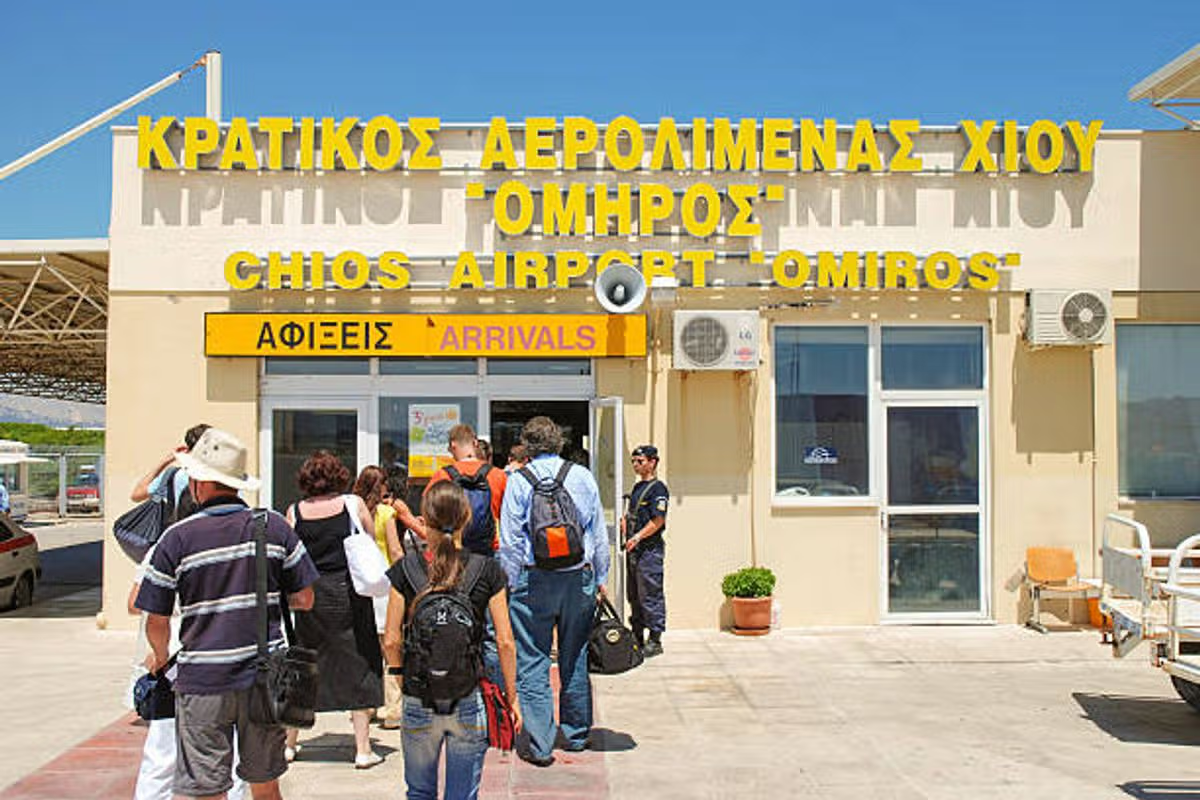


![A plane, carrying passengers who were on the FlyDubai aircraft bound for Israel from the United Arab Emirates, which was diverted to Saudi Arabia following an emergency signal, on the tarmac as it arrives at the Ben Gurion International Airport, in Lod, near Tel Aviv, Israel, September 30, 2026 [Ammar Awad/Reuters]](https://i0.wp.com/occasionaldigest.com/wp-content/uploads/2026/10/2026-10-04T143706Z_234243230_RC2RTNAGNE7D_RTRMADP_3_ISRAEL-GULF-FLIGHT-AUSTRALIA-1792361230.jpg?w=640&ssl=1)