The tupelo trees turn bright red, and one variety changes colour around ten days ahead of the rest.
By the water, swamp cypresses glow amber.
You can even arrive by steam on the Bluebell Railway, whose station is a 15-minute walk away.
Cost: £19 adults, £9.50 children — National Trust members free.
RICHMOND PARK, LONDON
BELLOWING stags are the soundtrack in October, when the red deer rut reaches its peak.
Head for the Isabella Plantation, a woodland garden where Japanese maples flare crimson and winged spindle bushes turn rosy scarlet.
Entry is free, but keep one eye on the leaves and the other on the stags, keeping at least 50m away.
Cost: Free entry and parking.
WESTONBIRT, THE NATIONAL ARBORETUM, GLOUCS
Enjoy the many varieties of trees at the National Arboretum in GloucestershireCredit: Getty
NEARLY 300 varieties of Japanese maple grow here, setting the Acer Glade ablaze.
A new trail through Silk Wood this year is themed around nine Japanese ideas about the seasons. Book ahead.
Cost: £19 weekdays or £22 weekends, children £5.
BLICKLING ESTATE, NORFOLK
BEECH, oak, lime and sweet chestnut are mirrored in the lake in front of this Jacobean mansion.
Follow the two-mile Lake Walk, then head into the Great Wood, where the beeches glow amber and a pyramid-shaped mausoleum stands among the trees.
Cost: Free entry to parkland — parking £5, NT members free.
CANNOCK CHASE, STAFFS
NOT every tree that turns gold is a broadleaf.
Larches are conifers that drop their needles in winter, and here they blaze yellow against the dark pines.
Follow the Sherbrook Valley trail to the stepping stones, with beeches adding copper along the way.
Cost: Free entry — parking from £1.20.
SHERWOOD FOREST, NOTTS
Pay your respects to the Major Oak, the giant at Sherwood Forests heartCredit: Getty
ROBIN Hood’s old stomping ground is at its best when the oaks turn russet.
Pay your respects to the Major Oak, the giant at its heart thought to be up to 1,200 years old.
Sadly, the ailing tree died this year after suffering drought and heatwaves, but it still stands as a monument.
Oaks turn late, so there’s still plenty of time.
Cost: Free entry — parking £7, RSPB members free.
HARDCASTLE CRAGS, WEST YORKS
BEECH, oak and birch cling to the sides of this steep valley, near Hebden Bridge, above the tumbling Hebden Water.
Follow the riverside path to Gibson Mill, a cotton mill built around 1800, then grab a drink from its Weaving Shed Cafe and sit out by the millpond, hemmed in by trees.
Cost: Free entry — parking £5–£8, NT members free.
LOUGHRIGG TARN AND ELTERWATER, CUMBRIA
FOR the classic Lake District postcard view, walk the easy four-mile loop from Elterwater village via Skelwith Bridge to Loughrigg Tarn.
On a still day, the Langdale Pikes, the craggy peaks at the head of the valley, are reflected in the water, framed by turning woodland.
Cost: Free entry — paid parking, NT members free.
ALLEN BANKS AND STAWARD GORGE, NORTHUMBERLAND
KEEP an eye out for elusive red squirrels in this deep gorge carved by the River Allen.
Most of its beeches were planted in the 19th century, and they spill copper and gold colours down the valley sides.
The riverside path then leads to medieval ruins and a Victorian summer house.
Cost: Free entry — parking £3–£5, NT members free.
COED Y BRENIN, SNOWDONIA
PISTYLL Cain plunges into a dark pool deep within the 9.000-acre King’s Forest.
You can reach it via a 2.2-mile walk beside the River Mawddach, leaving conifers behind for broadleaf woods and the ruins of old gold mines.
Cost: Free entry and parking at Tyddyn Gwladys.
LOCH AN EILEIN, CAIRNGORMS
A RUINED 13th-century castle on an island steals the show here.
In autumn, the birch, rowan and aspen of the ancient Rothiemurchus Forest flare gold against the dark Scots pines.
The flat 3.5-mile loop is easy for kids. Scotland turns first, so don’t hang about.
Cost: Free entry — parking £5 per car.
TOLLYMORE FOREST PARK, CO DOWN
Tollymore forest park is stunning in autumnCredit: Alamy
GAME Of Thrones fans will recognise this forest at the foot of the Mourne Mountains, which was used as a filming location.
Walk the River Trail along the River Shimna, crossing stepping stones and some of its 16 bridges beneath beech and oak.
THE highly anticipated Therme attraction coming to Manchester has just announced some big changes.
The first-of-its-kind resort in the UK, has altered its £500million design – but it will still have indoor beaches, waterslides and relaxation zones.
Therme Manchester has altered its design to become ‘more striking’Credit: UnknownThe new design will give Therme more transport links within ManchesterCredit: Trafford Council
According to reports, Therme has tweaked its layout to create a “more striking design”.
One of the new additions will be a public plaza which will link the resort and the Bridgewater Canal – and it’s adding a 53,000sq ft wellbeing garden.
Sign up for the Travel newsletter
Thank you!
In the updated plans, the two multi-storey car parks have also been removed to “create more open views”.
There will still be parking, but this has been relocated and the number of spaces has been reduced by around 100.
The new plan’s aim is to have better connections with local transport which includes the Metrolink station at the Trafford Centre.
Everything else about £500million Therme Manchester resort remains the same.
Inside the resort, visitors can expect a large-scale waterpark with more than 25 waterslides as well as a wave pool.
It will be heated to 33C and will have lots of spa and wellness facilities that will be split into three different zones these will eb called Play, Relax and Restore.
In the Play zone will be ‘next-generation’ water fun, a warm water pool, steam rooms, saunas as well as lounging and family dining experiences.
It will also add new links for public transport including rail serviceCredit: Therme Manchester
The Relax zone which will be adults-only with a focus on “premium wellbeing experiences”.
It will also have well as indoor and outdoor pools, waterfall showers, mineral baths, steam rooms, saunas and casual dining.
Finally, in the Restore Zone – the second adults-only area – there will be “industry leading health, nutrition and wellbeing therapies”, “sauna rituals”, experience showers, wellbeing consultations and dining.
In August of this year, the Therme Group announced it had reached a milestone of 12 tower cranes being built.
Inside will be an indoor beach, swimming pools and waterslides all split into three zonesCredit: Therme Manchester It recently celebrated a milestone in its constructionCredit: Therme Manchester
It said the progress marked “the start of an exciting new phase of construction for Therme Manchester.”
The Therme Group also recently announced it would be teaming up with Marriott International.
In terms of booking, Marriott Bonvoy members will be offered exclusive travel and lodging packages linked directly to Therme destinations – which when it opens will include Manchester.
Eight areas in Spain remain under lockdown as Storm Adam continues to wreak havoc
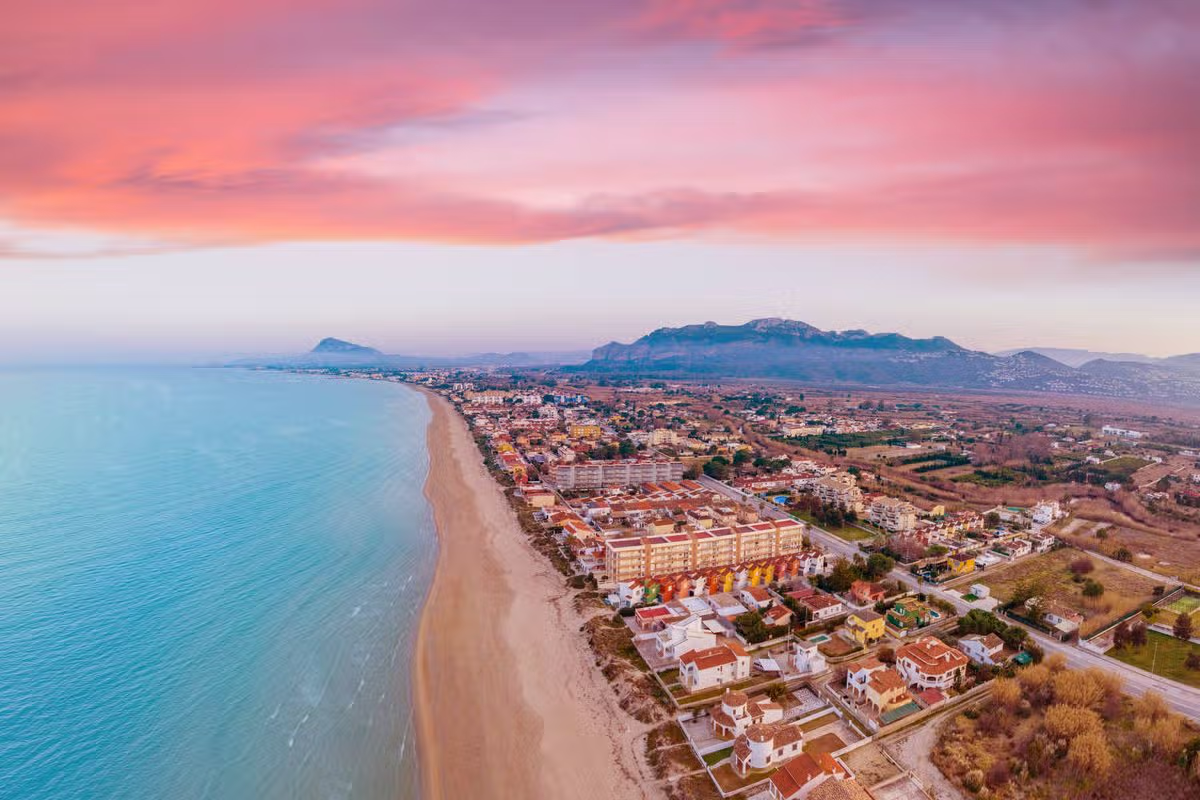
Eight Spanish areas are still in lockdown(Image: MEDITERRANEAN via Getty Images)
Eight areas in Spain remain under lockdown after restrictions were lifted for some 137 municipalities earlier on Monday, October 19.
Large swathes of the country were ordered to stay indoors as Storm Adam wreaked catastrophic havoc across eastern Spain. Initially, the emergency lockdown covered 78 municipalities in Valencia province and 67 in Alicante. However, according to the Olive Press: “Restrictions have ended for 137 of 145 municipalities, but eight towns in La Safor and La Marina Alta remain under lockdown.
“Please be aware that the following areas are still confined: Bellreguard, Daimús, Oliva, Xàbia, Pego, Miramar, Piles, and Els Poblets. Stay safe and always check local guidelines before travelling through these areas.”
Content cannot be displayed without consent
Two fatalities have been confirmed, with a third potential victim of the storm discovered on Monday afternoon when Military Emergency Unit (UME) personnel uncovered the body of an elderly woman in her flood-ravaged home in Oliva, Valencia province. Authorities are yet to officially confirm whether the death was a direct result of drowning or natural causes.
According to the Majorca Daily Bulletin, rainfall totals surpassed 600 litres per square metre, rivers burst their banks and residents were left stranded on rooftops. Helicopters were deployed to rescue those trapped as torrential downpours swept through eastern Spain on Monday, triggering devastating floods that claimed at least two lives and prompted authorities to issue shelter-in-place orders for more than 800,000 residents.
DO you love the theatre, gigs and stand-up but the prices make you wince?
You don’t need to spend a fortune though – as there are bags of secret loopholes and clever hacks to experience all sorts of culture, from Shakespearean plays to comedy gigs and arena concerts for virtually nothing.
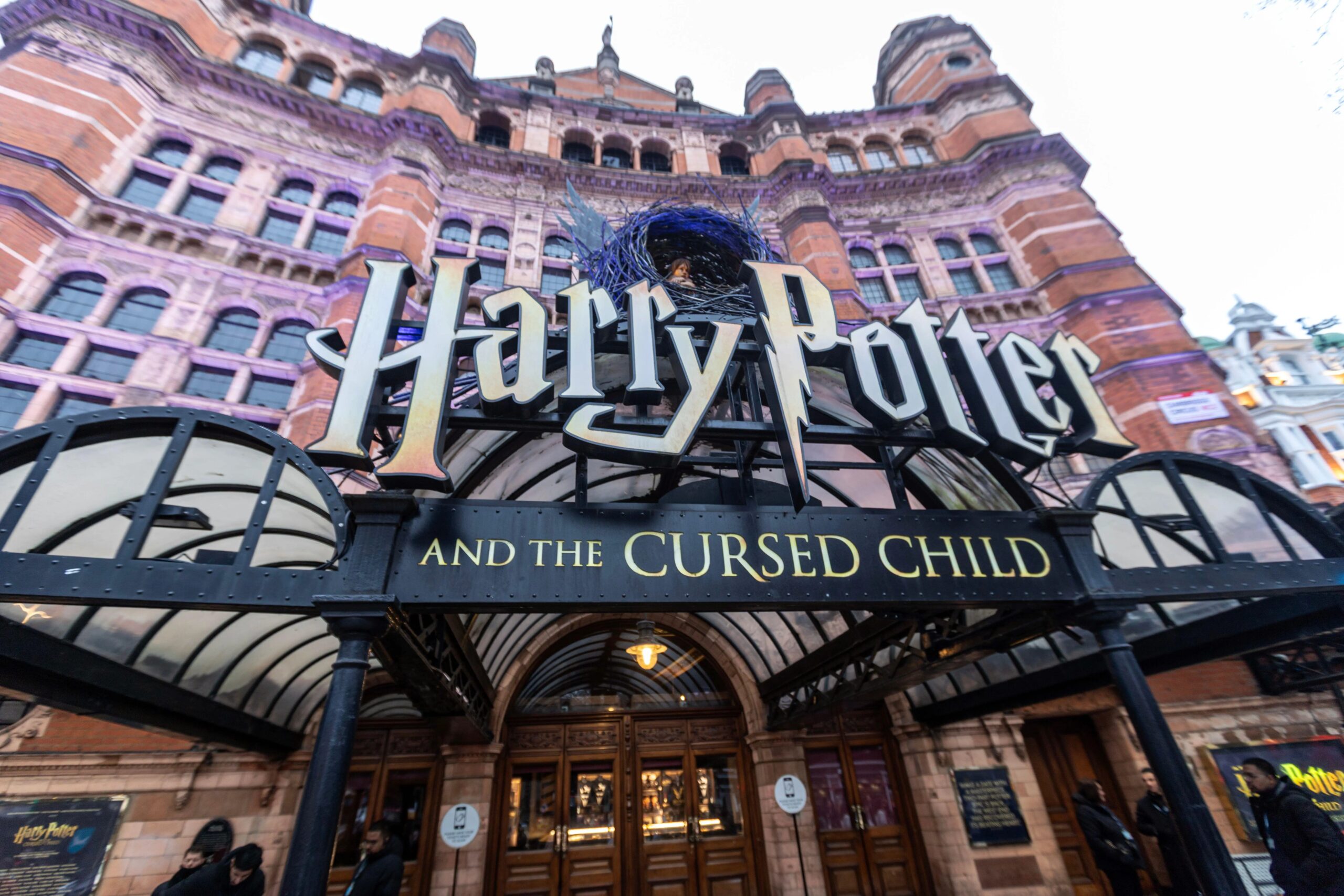
An app puts you in line for Harry Potter and The Cursed Child in LondonCredit: AlamyNoel Gallagher performed at locations across London – and nearby residents were put into a lottery, but received discounts anyway. This is similar for many gigs UK-wideCredit: Getty
Before you know it, you could be gushing to your mates about the “must-see” West End musical or cool band you saw – and you don’t even have to bankrupt yourself. Here’s how to get the best deals…
TodayTix
This app lets people book highly discounted last-minute tickets to West End and off-West End shows.
It operates worldwide, so if you are on holiday in New York you could pick up a Broadway bargain, too.
Our reporter saw the hit play The Book of Mormon for a knockdown price in the Big Apple, booking in the morning, and it was problem-free. But we’ve also taken advantage of their “rush tickets” and “digital lotteries”.
Every year the BBC offers tickets for people who want to sit in the audience – not just for Strictly but multiple showsCredit: PAPeople waited for months to see Hamilton, paying huge amounts, but a lucky few got £10 ticketsCredit: ITV Press Release
Rush tickets go on sale inside the app on the day, usually at 10am, and get you seats for a fraction of the price – typically £25 to £30.
Shows including The Devil Wears Prada and Harry Potter and the Cursed Child are included among the options.
Lottery tickets are picked from a pool – the most famous example is Hamilton, which usually sells out months in advance. People can “win” them for as little as £10.
Our reporter won £10 lottery tickets to see Orlando Bloom get his kit off in Killer Joe in the West End in 2018 via TodayTix – so it really works!
SeatFillers UK
This connects slow-filling productions and gigs with eager audience members… it’s win-win.
Called ‘papering’, it’s a technique theatre producers use to fill empty seats and create buzz.
However, while the app is free and used nationwide – you submit your county and where else you might like to watch things – we can’t actually tell you what could come up for grabs.
Because some audience members will have paid full price for tickets, you’re strictly forbidden from shouting out: “I’ve got a freebie!” so discretion is a must.
Central Tickets
If you can be discreet, then Central Tickets will be perfect for you. Like SeatFillers UK, it’s free to join and it works on the same principle.
You get tickets to gigs, the opera, dance, shows and comedy shows for between £4 and £15. It’s got a 4.9 out of 5 Trustpilot rating with more than 3,000 reviews.
The cash goes towards an admin fee – but they also raise money for NHS Charities Together.
The Audience Club
This costs £5 a year – or is free if you’re a Blue Light Card or Defence Privilege Card holder.
It’s largely London-based, but is perfect if you live in or near the capital or regularly visit and love the arts.
You can browse hundreds of shows, including West End ones. But it also offers quirky, niche plays – great if you love branching out a bit!
ShowFilmFirst
Founded in 2001, don’t let the name fool you – this isn’t just a movie seat-filler platform; they also offer theatre, comedy, music and days out.
Happily, it’s free to join and it’s not just London. You can find offers as far afield as Manchester, Birmingham, Bath, Cardiff, Glasgow, Edinburgh, Liverpool, Leeds, Bristol, Belfast, Nottingham, Brighton, Southampton and even more.
Young people can get £10 tickets to the National Theatre and there’s also a ‘friday rush’ – Killing Eve’s Jodie Comer performed there in 2023Credit: APDubious the apps work? Our reporter bagged a £10 lotto ticket to see Orlando Bloom in the buff in Killing JoeCredit: Getty
There’s only one catch – afterwards you have to fill out a quick survey… but that’s nothing for a free experience!
My Box Office
You can either choose a lifetime membership for £12.99 or an annual membership for £5. Once signed up, you’re offered seats through papering – usually paying an admin fee of around £1 to £5 per show.
They deliver access to more than 42,000 events, from burlesque to cabaret and even sports.
Tickets For Good
This initiative requires a small booking fee but gives free tickets to major events for NHS staff, contractors, students, teachers, education staff and charity staff.
It also gives tickets to volunteers and people associated with The Ticket Bank – those who might face barriers that make it trickier to access live events, for example, unpaid carers.
It operates across the UK, so people might see anything from West End musicals to stand-up comedy, and UK music festivals to live sporting events.
National Theatre Concessions
London’s National Theatre offers £10 tickets to 16–25-year-olds – and you don’t have to live in the capital. You can book online.
Additionally, every Friday the theatre issues a limited number of “friday rush” tickets for the subsequent week – even for sold-out shows!
If you’re Midlands-based, then a trip to Shakespeare’s birthplace, Stratford-upon-Avon, might be in order.
The RSC offers £10 tickets for 14–25-year-olds for shows performed there.
The discount is available on its website here. Not Bard going!
Festival ballots and free tickets
Live near a major UK festival? Then check if they run residents’ lotteries for free shows or heavily discounted tickets.
Our reporter snagged free tickets to see Skepta and The Streets thanks to a lotto win in Crystal Palace, London, and bagged cheap tickets to see Blondie, Iggy Pop and Noel Gallagher for the same reason.
But similar schemes exist if you live close in other parts of London, Sheffield, Winchester, Oxon, Dorset and Bucks.
You can similarly volunteer at many festivals and receive free tickets.
Occasionally this offer is emailed directly to local residents, as with above, but bigger charities also offer it for events like Glastonbury.
Writer Becky Pemberton told how her friend watched Glastonbury in 2022 for free, having volunteered.
Meanwhile, she enjoyed the event too as she helped out at a toasted cheese sandwich stand which she found out about through “word of mouth”.
She said: “I worked on a cheese toasty stand and got a free ticket for Glastonbury in 2022 (plus fed during shifts!).
“I did it by Pyramid Stage and saw Billie Eilish and Diana Ross. My friend also volunteered for the charity WaterAid and got in for free too. We’d meet up after our shifts and danced the night away into the early hours without having paid a penny!”
Sit in the audience at massive BBC shows like Strictly
This is all done by a random draw – but you might get lucky!
From Strictly to Bookclub, there are loads on offer and they come up all the time. Crucially, they take place all over the UK, with shows being filmed in Glasgow, Edinburgh, Cardiff, Leeds, London and Margate.
If you fancy your luck visit the Beeb’s site here.
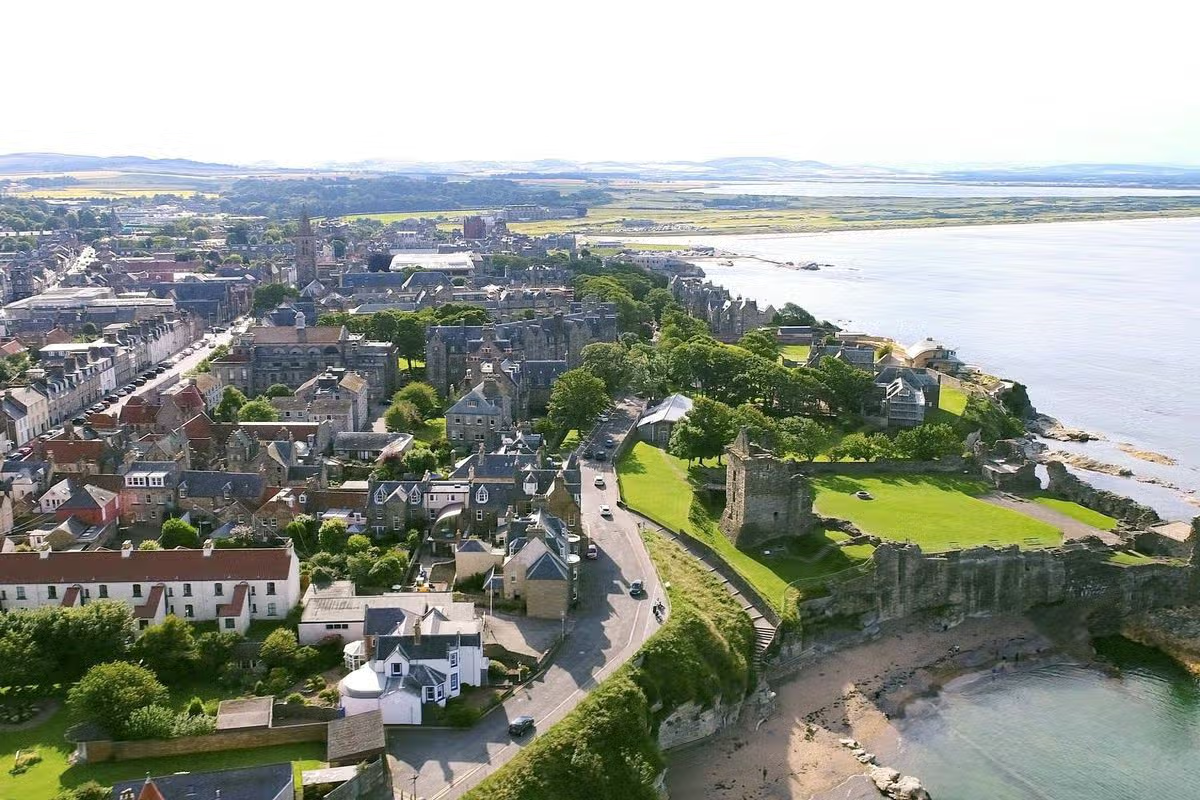
The hotel is situated just a 10-minute walk from the iconic West Sands Beach(Image: Getty)
A popular Scottish seaside town has been dealt a devastating blow following the sudden closure of a prominent hotel. The firm behind the establishment recently collapsed into liquidation, forcing its immediate shutdown, with all members of staff confirmed to have lost their jobs.
The Kinnettles Hotel, a five-star boutique property nestled in the heart of St Andrews, Scotland, shut its doors for good in September after its parent company, Kinnettles Hotel Limited, went into liquidation.
The hotel’s on-site restaurant partner, Gidi Grill, was locked out of the building on September 23, with owner Mo Adeniyi claiming “the building was taken over by someone else, but we hadn’t been told”. He confirmed he was now on the hunt for new premises to relocate his West African and Afro-Caribbean restaurant.
The closure of the Kinnettles Hotel, situated just a 10-minute walk from the iconic West Sands Beach and the historic St Andrews Old Course golf links, left all 12 members of staff without work.
The broader Kinnettles portfolio, which includes Kinnettles Mansion in Guardbridge and Kinnettles Castle near Forfar, had previously been put up for sale for £15 million.
Callum Carmichael, a partner at FRP Advisory, has been appointed as liquidator of the company. He confirmed that the challenges facing the business had become “insurmountable”, reports the Express.
Ensure our latest travel stories always appear at the top of your Google Search by making us a Preferred Source. Click here to activate or add us as a Preferred Source in your Google search settings
Mr Carmichael told The Courier: “Kinnettles Hotel has been a well-established part of St Andrews’ hospitality sector, offering boutique accommodation in the heart of the town for many years.
“Despite its established presence, the challenges facing the business and many like it in Scotland’s hospitality sector ultimately proved insurmountable. Our focus is now on safeguarding the assets of the three companies and supporting those affected.”
Nestled at 127 North Street in the heart of St Andrews town centre, the Kinnettles Hotel featured 15 spacious bedrooms, a bar, spa, and an on-site restaurant.
The hotel had garnered a string of glowing reviews on TripAdvisor, with guests heaping praise on the accommodation, spa and facilities alike.
One wrote in July: “I genuinely don’t think I’ve ever had a better spa experience in my life. From the moment I arrived until the moment I left, every single detail was absolutely perfect.”
A second reviewer wrote in May: “I had an amazing experience at Kinnettles Hotel & Spa, truly one of the best I’ve had.”
A third posted in March: “My husband and I stayed for one night and used spa facilities and got a treatment each. First of all we were made to feel very welcomed when we entered the building , staff couldn’t do enough for us.
“The breakfast next morning was lovely but the best part was the spa facilities and the treatment it was absolutely fantastic and cant wait to go back again.”
Another visitor commented in March: “I can’t praise highly enough the Kinnettles Hotel and Spa, St Andrews. We arrived as guests and departed five days later as friends.”
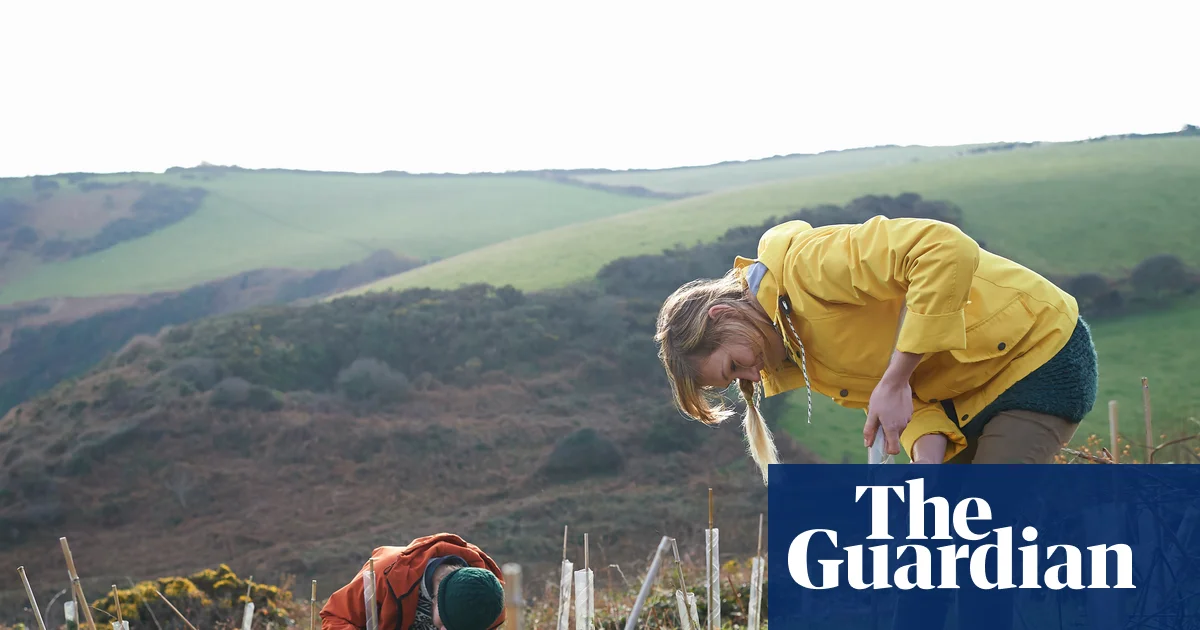
Tourism can be a force for good when done well – and we want to hear about places and projects you’ve discovered that help conserve local ecosystems and cultures. Whether it was a volunteering holiday planting trees in Scotland, a stay at an eco-hotel that helps protect local flora and fauna, or a project breathing life back into abandoned villages, tell about us your experience for the chance to win a holiday voucher.
The best tip of the week, chosen by Tom Hall of Lonely Planetwins a £200 voucher to stay at a Coolstays property – the company has more than 3,000 worldwide. The best tips will appear in the Guardian Travel section and website.
Keep your tip to about 100 words
If you have a relevant photo, do send it in – but it’s your words we will be judgingfor the competition.
We’re sorry, but for legal reasons you must be a UK resident to enter this competition.
The competition closes on Monday 26 October at 10am GMT
Your responses, which can be anonymous, are secure as the form is encrypted and only the Guardian has access to your contributions. We will only use the data you provide us for the purpose of the feature and we will delete any personal data when we no longer require it for this purpose. For alternative ways to get in touch securely please see our tips guide.
If you’re having trouble using the form click here. Read terms of service here and privacy policy here.
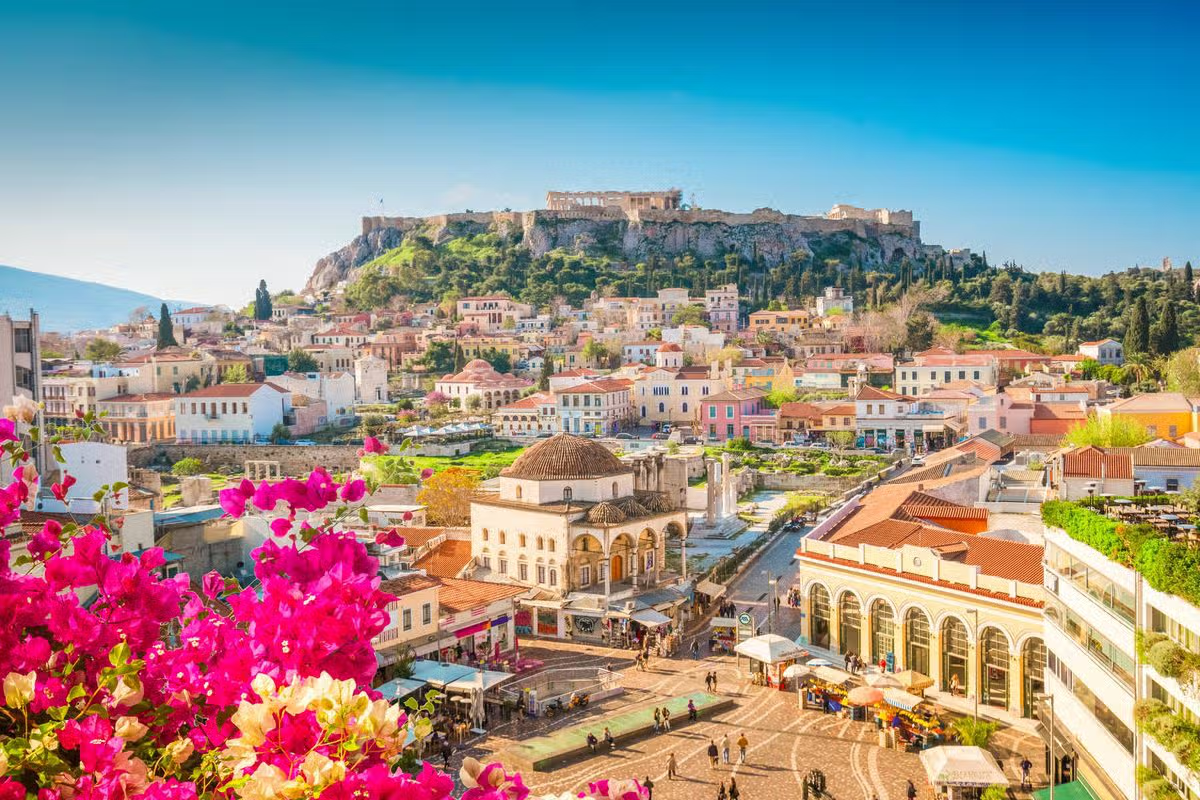
TUI is launching a new route from London Gatwick to Athens, recently named the top winter destination by Time Out, where temperatures can occasionally reach the low 20s on particularly sunny winter days.
TUI is launching a new route from London Gatwick to Athens, offering travellers a city break in a European capital that stays mild for much of the winter.
The Greek capital joins an expanded Gatwick network of 59 destinations. The German holiday company is also adding services to Palermo, Santiago de Compostela, Seville, Valencia, Tangier, Djerba and Mytilene.
Athens was recently named the top winter destination by Time Out. Writer John Ovans, who spent last winter there, said “the city never goes into full hibernation mode”.
He also suggested Athens could challenge Lisbon as Europe’s leading city for digital nomads, thanks to “cheap living, a warm lifestyle, and a gritty-glamorous vibe”.
While visitors should not expect summer heat, particularly sunny winter days can bring surprisingly mild temperatures. Ovans wrote: “On a good winter day you might get up to the high teens, or even low‐20s on rare extra sunny occasions.”
He recommended eating outdoors in the city’s squares, with awnings and gas heaters helping diners enjoy neighbourhoods such as Psirri, Plaka and Exarchia even on sunny days in January and February.
A spring visit also revealed a vibrant and exciting city, reports MyLondon. Although its iced freddo coffees and open-air cinemas are best enjoyed in warmer weather, many of Athens’ biggest attractions appeal throughout the year.
The Acropolis is worth the climb in any season, offering breathtaking views of the Parthenon and the city below.
Another highlight is the National Archaeological Museum, where exhibits include the Artemision Bronze and the Mask of Agamemnon. An extensive refurbishment is on the horizon.
For affordable lunches, Athens’ traditional workers’ canteens, historically known as inomagireia or simply magireia, serve hearty, home-style food.
These unpretentious venues dish up stews, soups and casseroles straight from heated trays or pans, making them a good option for budget-conscious visitors.
In the evenings, the city’s tavernas come alive whatever the season. Home-style dishes can be enjoyed alongside rakomelo, a warming spirit served as a digestif.
Across TUI’s wider network, the new routes will add 640,000 seats and open up previously unconnected destinations in Spain, Greece, Italy, Slovenia, Tanzania, Cape Verde and Morocco. Most services will operate two to three times a week.
TUI Airline chief commercial officer Peter Glade said: “Gatwick has played a central role in the development of Tui’s airline business in the UK for more than six decades. For generations of customers across London, the south and southwest of England, it has been the gateway to their holidays.
“Expanding our portfolio to 59 destinations is a natural next step as we continue to invest in one of the most important markets. The additional flying creates more opportunities for customers, supports continued growth in both package holiday and flight-only demand, and reinforces our long-term commitment to Gatwick.”
HAVE you been dreaming of that bucket-list Orlando holiday? Well, it’s about to get a whole lot cheaper.
AttractionTickets.com are launching a massive Black Friday sale, where you can save up to hundreds of pounds on visits to Walt Disney World, Universal Orlando Resort and more.
The mega Black Friday sale is AttractionTickets.com’s biggest of the year, with huge discounts on Disney, Universal and moreCredit: Not known, clear with picture desk
Sign up to the AttractionTickets.com Black Friday sale and receive an EXTRA discount
The sale will include theme park and attraction tickets, as well as combo tickets and holiday packages with hotel or villa stays.
And you’ll want in on these Black Friday deals, as this is the website’s biggest sale of the year.
Sign up for the Travel newsletter
Thank you!
If you pre-register for the sale ahead of time, you’ll score yourself an EXTRA discount, which will land in your inbox on November 5.
This means that those pre-registered for Black Friday will have access to the absolute cheapest holidays and attraction tickets available on the website all year long.
Click here to sign up to the Black Friday sale so you’ll be among the first to know as soon as these deals drop.
Last year’s mega Black Friday sale saw 20% off all Orlando tickets, so theme park fans are already expecting big discounts again this year.
The deals will be for 2027 holidays, with major savings to be had during the school summer holidays.
While the exact offers are tightly under wraps until the big day, Attraction Tickets have revealed that the average customer will save hundreds of pounds on their holiday, based on the website’s typical orders.
So where could you go and what could you do with a holiday booked through AttractionTickets.com?
If you’re looking for a Florida holiday, you will be able to bag discounts on Disney, Universal, the Kennedy Space Centre and more, plus hotels and villas if you want to extend the magic by staying on-site.
Save on Disney World attraction tickets or bag a hotel and attraction combo offerCredit: Not known, clear with picture desk
Sign up to the AttractionTickets.com Black Friday sale and receive an EXTRA discount
The site also offers handy combo ticket deals – which are great if you want to tick off Walt Disney World and Universal Orlando Resort in one trip, for example.
2027 is the ideal time to visit Disney World, with new upgrades including a Muppet takeover of the former Rock ‘n’ Roller Coaster as well as the brand new Magic of Disney Animation zone in the Hollywood Studios park.
At Universal Orlando Resort, new coaster Fast & Furious: Hollywood Drift is set to launch in 2027, and the previews of this coaster have excited theme park fanatics around the world.
And if you’re wanting to visit California, now’s the time to get planning. You’ll also be able to save on tickets for Disneyland Resort California and Universal Studios Hollywood in this sale.
Disneyland Resort California is home to Cars Land, which you won’t find in Orlando, plus you can tick off the world-famous studio tour at Universal Studios Hollywood.
If you prefer a Spain or Tenerife holiday, you’ll be able to bag discounts at PortAventura World, Siam Park and Loro Parque.
Just make sure to pre-register ahead of the Black Friday deal to bag an extra discount to make your trip even cheaper.
You can also save on resort hotel and villa stays in the Black Friday saleCredit: AttractionTickets.Com
Sign up to the AttractionTickets.com Black Friday sale and receive an EXTRA discount
What will be included in the Black Friday sale?
Here are some of the top attractions included in the AttractionTickets.com Black Friday sale:
BONFIRE Night is on the horizon, and the biggest celebration in the WORLD is right here in the UK.
Lewes will hold its annual event in a matter of weeks and not only is it free to visit but it will be busier than ever.
Lewes has been holding its Bonfire Night event for hundreds of yearsCredit: GettyIt has torchlit processions and bonfires followed by huge firework displaysCredit: Getty
Thousands of Brits descend on the town in East Sussex which has been holding bonfire events since 1795.
However, it isn’t the usual firework display followed by hot chocolates – this one is the world’s biggest with torchlit processions and giant effigies.
Sign up for the Travel newsletter
Thank you!
The event marks both Guy Fawkes Night and the memory of 17 martyrs from the town who were burnt at the stake.
Every year, six different bonfire societies each hold their own procession and firework displays.
In 2024, it was recorded that 40,000 people were in attendance.
The event is predicted to be even busier this year because it falls nearer the weekend on Thursday, November 5.
The majority of the event is completely free, like the bonfire at Commercial Square – but visitors will need to pay to watch at others.
This year, the processions start at around 5pm and will arrive at the individual bonfire at around 9.45pm with fireworks displays finishing around 11pm.
She said: “In the last few years, I’ve been lucky enough to attend Lewes Bonfire because a handful of my friends are from the Sussex town.”
The town gets so busy that it closes the roads and train routes in advanceCredit: Getty
“Because the town’s streets and alleyways are rather narrow, the High Street in Lewes is one of the best, and safest, places to watch the torch-lit procession.
“The processions can often be very loud because of the drums that accompany each of the societies. But the noise is all part of the electric atmosphere, as are the effigies.
“If you do want a drink in a pub, be sure to head there in the early afternoon. Several of the bonfire societies base themselves in local pubs too, which means they can be busier than usual.”
On the day of the event there will be limited rail services – trains will not stop at Lewes from 5pm until the start of the service the next day.
There will also be road closures around and in the town due to the procession and predicted number of attendees.
It’s so popular that those wanting to visit are encouraged to book hotels a year in advance.
Six different societies take part in the event which goes on for around six hoursThe pretty town of Lewes is filled with thousands of people on November 5Credit: Getty
On Booking.com there’s a one-night stay available from November 5-6, 2027 from £75 per night (for two people).
Unlike many other firework and bonfire events around the UK, the one in Lewes is not suitable for children or young families as officials warn it can be ‘overwhelming’.
Despite this, lots of visitors often rave about the event calling it an “amazing experience”.
One wrote on Tripadvisor: “The energy is superb, the friendliness of everyone involved, and a feeling of excitement throughout makes this such a memorable night out.
“Everyone should come to Lewes on November 5th at least once, you will never find a night like this anywhere else in the world.”
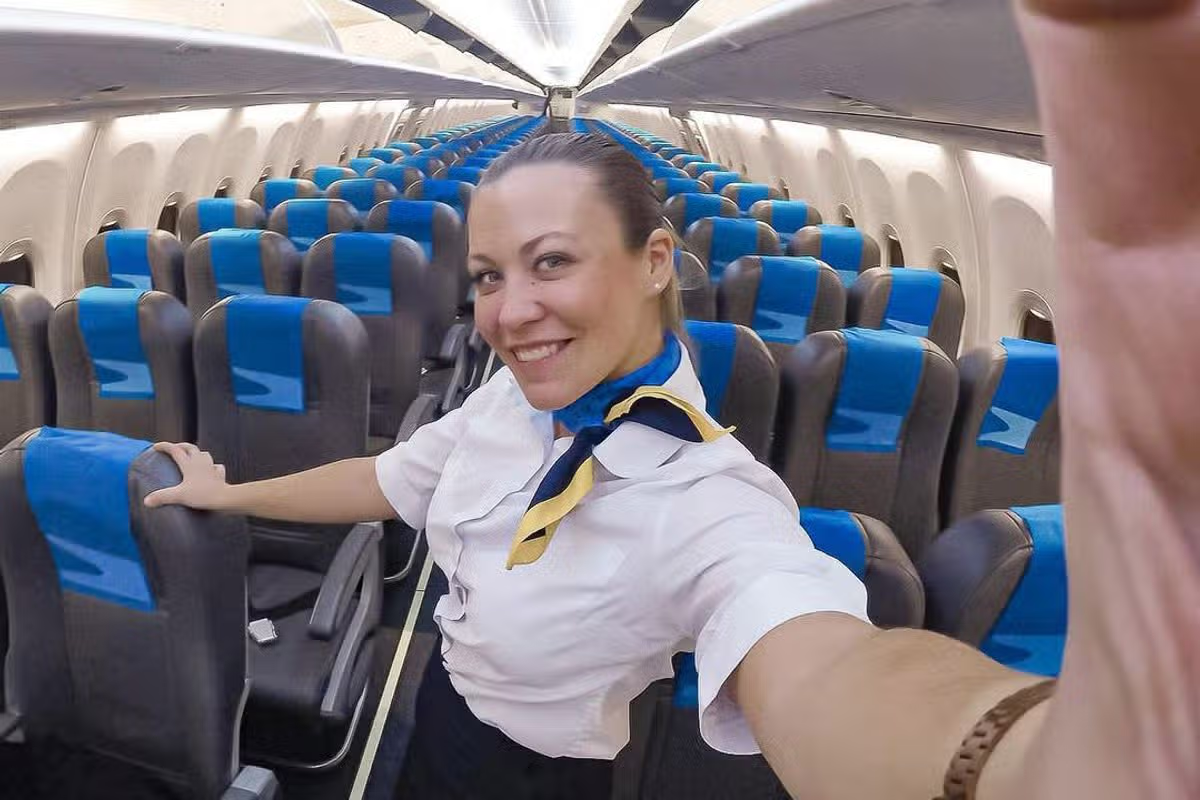
Barbara Bacilieri, who served as a flight attendant for 14 years, shares travel guidance and knowledge with her 5.1m TikTok followers and 2.9m YouTube subscribers
A flight attendant has explained why you should put your suitcase in the hotel bathtub
(Image: Jam Press/@barbiebac.ok)
A flight attendant has disclosed why holidaymakers should position their suitcase in the hotel bathtub and place a shoe on top of the safe upon checking into a room. Barbara Bacilieri, who served as a flight attendant for 14 years, shares guidance and insider knowledge with her 5.1m TikTok followers and 2.9m YouTube subscribers.
She recently urged tourists to leave their luggage in the bathtub immediately upon arrival, instead of setting it down on the bed or carpet. She told creatorzine.com: “Place your suitcase in the hotel bathtub before opening it. Leave it there, closed, while you inspect the room.”
While it may appear an odd location to keep a suitcase, the guidance aims to minimise the risk of transporting unwanted stowaways back home.
“Bed bugs are a very serious problem, and they can sneak into your luggage and come back home with you,” Barbara warned. Bedbugs can lurk in mattresses, bed frames and upholstered furniture, and may crawl into luggage positioned close by.
Placing a suitcase in the bathtub allows travellers sufficient time to examine the room before unpacking their possessions. The hard surface also prevents luggage from being placed directly on fabric-covered spots where the insects might be concealed.
Barbara, 34, recognised online as Barbie Bac, advised: “Look at the mattress seams, headboard and luggage rack. “If you find insects or suspicious signs, keep your bag closed and inform reception to request a room change.”
Another tip concerns the hotel safe, where guests typically store passports, cash, jewellery and other valuables throughout their stay. Barbara’s suggestion is to use a shoe as a prompt to remember to check the safe before departing.
“If you put your passport in the safe, put one shoe inside and leave the other right by the door. This shoe will remind you to check the safe,” she said.
The concept is to create a visual cue that’s virtually impossible to miss when it’s time to leave. A guest preparing to check out will require both shoes before exiting the room, prompting them to collect the one stashed inside the safe.
This should encourage them to open the safe and verify they’ve retrieved everything inside before heading off. Barbara also outlined a range of packing and travel tips gained from her years working as a flight attendant.
Before handing over a bag for check-in, she advises photographing it from multiple angles. “Take pictures of your bag before handing it in. A full picture of the bag, and another of the wheels, handles and corners.
“This way you will have a reference for its condition if they return it damaged,” she said. She also recommended photographing the baggage claim tag and storing the original alongside your passport.
“Upon receiving your bag, inspect it before leaving the airport. If it appears broken, take pictures, notify the airline and keep the report number,” Barbara explained.
She added that photographs can assist with documentation but offer no guarantee of compensation, and advised verifying what travel insurance covers in relation to luggage.
She emphasised the importance of identification inside the bag itself. “The outer card may tear and get lost. Leave another identification card inside the bag where it is easy to see when it is opened.
“Name, phone number with country code, and email address. A contact person you can get in touch with during the trip,” she said. When packing liquids, she advised taking extra precautions.
“Shampoo may leak even if the cap is closed, so keep it in a tightly sealed bag away from clothes. Do the same with other products that may spill. If anything leaks, the bag can contain it and save you from having to wash half the bag,” she explained.
She also proposed making use of the space inside shoes: “Put the socks inside the shoe. If you are carrying perfume, keep it tightly closed and protected inside a bag before putting it away.”
Slippers, she noted, ought to be covered with a transparent plastic cover or shower cap so they don’t come into contact with clean clothing. She takes an empty bag for practical purposes.
“This may be helpful if you encounter a problem when checking in. You may have to rearrange your bag because it is overweight. Upon returning, use it for dirty clothes,” she said.
She reuses her packing list when departing the hotel and sets a particular alarm. “Set an alarm to remind you what needs to be checked. The charger, the safe, the documents. This name is more useful to you than an alarm clock that rings but says nothing.
“Set it a few minutes before leaving the hotel. When it rings, check everything before turning it off,” she said.
Barbara, who hails from Argentina and is based in Spain, has amassed a substantial online following by sharing travel tips and offering insights into life as cabin crew.
Her videos span everything from the day-to-day realities of working aboard an aircraft to practical methods passengers can use to make their journeys smoother.
Ensure our latest travel headlines always appear at the top of your Google Search by making us a Preferred Source. Click here to activate or add us as Preferred Source in your Google search settings
WHEN you picture Wetherspoons, you probably think of cheap pints, even cheaper food, colourful carpets, and a lively Friday night.
But your night out at Spoons doesn’t have to end with an expensive taxi home – with dozens of hotels across the UK and Ireland, the budget pub chain is quietly offering some of the best value city breaks around.
Rooms at Keaven’s Port in Dublin start at £36pp based on two adults sharingCredit: Wetherspoons – Keaven’s PortYou can buy a pint of beer from €2.60 (£2.19) at Keaven’s PortCredit: Alamy
I headed to Dublin to see exactly what a night spent in a Spoons hotel really entails.
Spoiler alert: this particular Spoons hotel feels like staying overnight in a museum, and the rooms are nicer than you might think.
Sign up for the Travel newsletter
Thank you!
There are 56 Wetherspoons hotels across the UK and Ireland, so I decided to try out a stay at Keaven’s Port, a unique convent-turned-hotel in Dublin.
Keaven’s Port sits on Camden Street, which is where you’ll find crowds of locals out for drinks in Dublin – away from the expensive pints of Temple Bar.
This well-positioned pub hotel puts you on the same street as popular nightclub The Camden, which you’ll find buzzing on the weekends.
And as for daytime sightseeing, here you’re only a 20-minute walk from popular attractions like Dublin Castle and Trinity College.
Wetherspoons are known for repurposing unique historic buildings including former opera houses, corn exchanges and banks.
Not only does this guarantee some decent square footage for all those restaurant tables (as well as a prime spot in the town centre) but it makes for a pretty unique overnight stay.
This one I found to be particularly unique. Keaven’s Port hotel is made up of eight old Georgian townhouses as well as a chapel.
The collection of buildings used to belong to Ireland’s Little Sisters of the Assumption, a convent established in the 1890’s.
The collection of small lounge rooms in the hotel are packed with historyCredit: Jenna StevensYou can even dine inside the old chapel with confession booth seatingCredit: Jenna Stevens
Now, the chapel has been restored and is part of the bar and restaurant area. I must admit, sitting in a confession booth under stained glass with a bowl of chips and a pint is a tad surreal.
Getting to the rooms takes weaving through a series of corridors and lounge areas, each of which are packed with historical artefacts that made this stay feel more like a trip to the museum.
Lining the walls were old dresses and textiles, painted portraits and more belonging to historic residents of Camden Street Upper, as well as information boards telling you all about the history of the building.
One lounge area sees a giant Guinness-style harp, cosy sofas and a chessboard, while another sees antique furniture, Renaissance paintings and a collection of battered books packed with fascinating old stories.
After making your way out of the maze, you’ll reach the main bar and restaurant area (which thankfully has its own entrance, too).
Everything about the restaurant screams Spoons – tiled floors, a very long bar, plenty of high tables with stools as well as booths and larger tables for groups.
I was pleasantly surprised by the rooms in Wetherspoons’ Keaven’s Port hotelCredit: Jenna StevensThere are loads of cheap meal deals at Keaven’s Port like in UK Spoons pubs – a small fish and chips with an alcoholic drink costs €13.05 (£11.01)Credit: Alamy
Just when you think there’s more than enough space, a spiral staircase decorated with mirrors leads you down to an even larger restaurant, as well as courtyard for the summer beer garden months.
We all know Spoons pubs in the UK offer some great-value deals on food and drink, but can you get good value over in pricy Dublin?
It turns out you can. An Irish spice bag with a soft drink costs €10.50 (£8.86), and a small cooked breakfast is an unbelievable €2.95 (£2.49).
You can grab a pint of Abbott for €2.60 (£2.19), wine by the glass starts from €4.30 (£3.63), and cocktail pitchers from €9.95 (£8.39).
A hot drink will only set you back €1.70 (£1.43), and it’s free refills from then on all day.
But what are the rooms like? Once you make it out of the busy bar area through to the elevators, the noise of the bar soon disappears.
If I’m totally honest, I went in expecting a cramped room with stained furniture and some strange marks on the walls.
Thankfully, I was pleasantly surprised at what I saw when I stepped in.
First of all, these rooms are very spacious. The large double bed had crisp white sheets, and there was plenty of room surrounding it to open up your suitcase.
The spacious desk was laid with the usual tea and coffee facilities. Here you also get posh shortbread biscuits and water cartons decorated with pictures of Irish poet W.B. Yeats (I kept mine as a souvenir).
The bathrooms were pretty glam too with black marble, a large mirror and a surprisingly spacious tub and shower. All in all, not at all bad for the price point.
Inspired by the local history, I did a bit of my own research. Namely, I wanted to know, who actually was St Keaven?
The name supposedly comes from St. Kevin, a sixth-century Christian hermit and saint, with a church named after him in nearby Camden Row.
Little is known about the Irish saint, other than that he appears in Seamus Heaney’s poetry and that he is associated with the glacial valley of Glendalough in nearby County Wicklow.
If you fancy, you can actually take a day trip from Dublin city centre into Glendalough to walk beside its glacial lakes with Wild Rover Tours (from €43). If you want to see some of Ireland’s rolling green hills and sparkling lakes away from the city, I’d highly recommend giving it a try.
But if you’d rather stay in the centre and make the most of the cheap pints in the bar below your room, it’s a great place for pre-drinks before rocking up to The Camden.
Rooms start from €86 (£72) per night, or £36pp based on two sharing. Click here to book.
The spot is famed for its cobbled streets, Norman castle and stunning architecture
The town has plenty of shops, cafes and restaurants to visit(Image: Photos by R A Kearton via Getty Images)
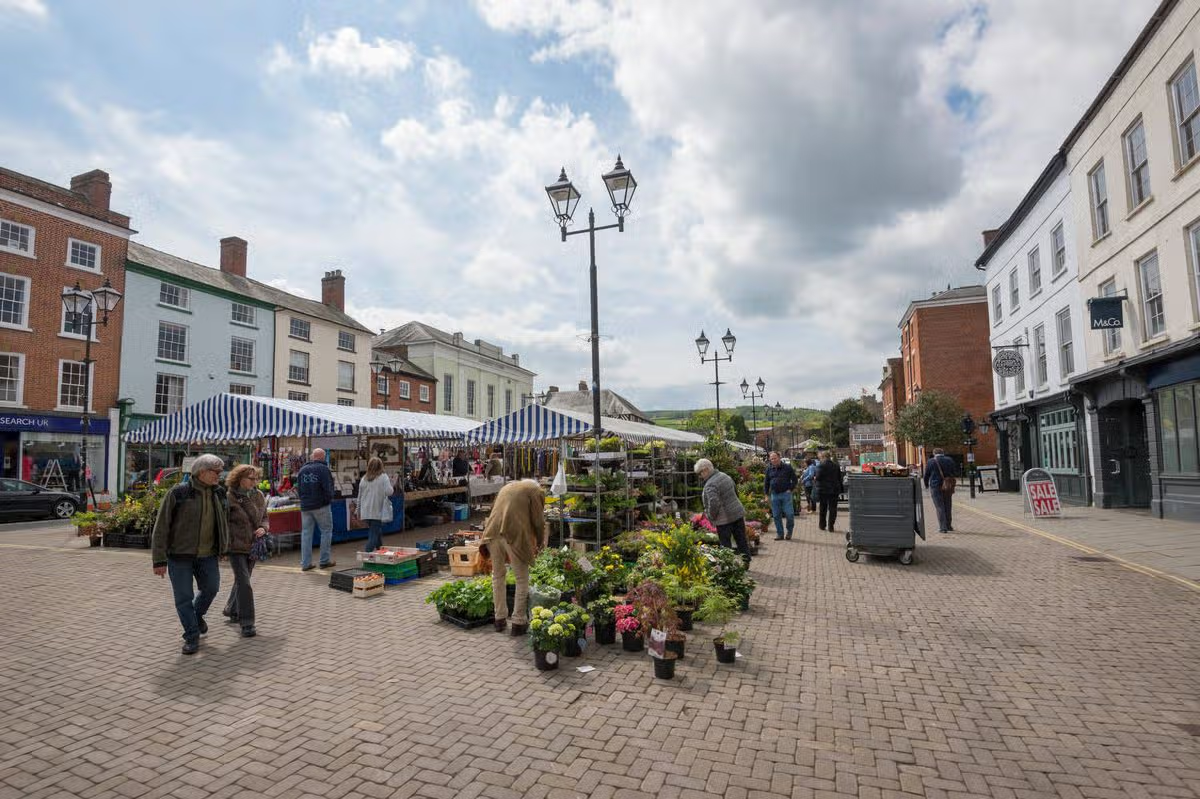
Long hailed by poet John Betjeman as “the loveliest town in England,” Ludlow has also earned a global reputation as a premier food and drink destination. With over 500 listed buildings and a skyline dominated by a Norman castle, Ludlow effortlessly blends ancient, storybook charm with a modern appeal.
Winding cobblestone streets lead visitors to delis, bakeries, welcoming pubs and acclaimed restaurants.
Frequently dubbed the “food and drink capital of the Marches”, Ludlow’s thriving hospitality scene is fuelled by its impressive variety of locally sourced produce. In 2024, a Which? Travel survey of more than 9,000 people asked respondents to rate the food and drink in their favourite inland towns and villages.
Ensure our latest travel stories always appear at the top of your Google Search by making us a Preferred Source. Click here to activate or add us as a Preferred Source in your Google search settings
As Which? Travel put it, “Instead of a handful of high-end eateries, there’s a culture of local produce as well as numerous pubs and cafes, served by people who care about the food.”
This ethos is reflected on every plate, with an emphasis on fresh, locally sourced ingredients and menus that change with the seasons.
TripAdvisor currently ranks Old Downton Lodge as Ludlow’s finest restaurant, while waterside favourite CSONS is another beloved choice for relaxed, quality dining, along with Kin Kitchen and The French Pantry for café and bistro-style fare. Pub lovers are spoilt for choice with options including The Queens and The Boot Inn, both of which are highly rated on TripAdvisor.
Experts from Ludlow Distillery note that the town’s food and drink scene benefits greatly from a thriving network of local producers, ranging from artisan cheesemakers and bakers to craft brewers and distillers.
They stated: “The strength of this offering is best seen (and tasted) by a visit to the Local to Ludlow Market in the Castle Square (where growers and makers based within 30 miles of the town sell a range of high-quality and carefully selected produce), and the award-winning Broad Bean fine food delicatessen on Broad Street.”
The town proudly champions ‘Slow Food’, a global grassroots movement with thousands of members worldwide that brings together a love of good food with a commitment to community values.
In recent years, the movement in Ludlow has gone from strength to strength.
Slow Food Ludlow Marches offers activities throughout the year, including visits, talks, demonstrations, meals and Taste Workshops at Ludlow Food Festival in September.
Ludlow Food Festival ranks among the town’s most celebrated annual events, regularly drawing around 15,000 visitors to Ludlow Castle over three days.
Both locals and visitors alike can look forward to the Winter Festival at Ludlow Castle. Taking place between 27 and 29 November 2026, the event showcases local entertainment, mulled wine, and much-loved highlights from the Ludlow Food Festival.
Head along on the second or fourth Thursday of the month to discover the Ludlow Local Produce Market, a vibrant showcase of food and drink made within a 30-mile radius.
The stalls champion sustainability and seasonality, turning an ordinary shopping trip into a thoroughly enjoyable afternoon out.
Outside of Shropshire, Wells was named runner-up for inland dining by Which? Travel.
Other destinations receiving recognition include Lavenham in Suffolk, Llangollen in Denbighshire, Stamford in Lincolnshire, and Cartmel in Cumbria. Each offers its own distinctive flavour of a foodie escape.
BUTLIN’S is continuing its all-inclusive family breaks into summer 2026 and 2027 – and absolutely everything is included.
From food and drink to waterparks and swimming pools to the adventure playgrounds – there are no hidden surprises.
Butlin’s will continue its all-inclusive bundles through to 2027Credit: Butlins
Called the ‘All Inclusive Bundles‘ these include accommodation, breakfast, dinner, and drinks, Splash Waterworld, unlimited fairground rides, live shows, playgrounds and soft play.
The price starts from £125 per person for a family of four – or £41.50pppn.
Sign up for the Travel newsletter
Thank you!
When it come to the bundle, families have four different dining plans to choose from.
There’s the Food Court Dining & Drinks which has an all-you-can-eat buffet breakfast and dinner, DineAround, which offers a choice of restaurants across each resort.
Premium Buffet Dining Plan which is the best of the buffets including live cooking stations and themed nights, and Hotel Dining Plan which has the variety of the premium plan but at your own hotel restaurant.
Meanwhile, the drinks package includes unlimited soft drinks, spirits, wines, cocktails, draught beers and ciders, as well as non-alcoholic choices and Costa Coffee.
It will be hosted by a celebrity presenter and performers will take to the stage in an attempt to get the Golden Buzzer.
During February half-term, there will be the new DreamWorks’ Madagascar – A Musical Adventure on stage.
Other new performances include K-Pop Forever! which has hits from groups like BTS and Blackpink.
Included is food and drink, fairground rides and waterpark accessCredit: Butlin’s
Animals Magnified by the Animal Guyz which is a family show perfect for anyone who loves animals from hippos to tiny insects.
A Billion Streams will be its new concert-style show where guests can hear some of the world’s biggest hits from the likes of Harry Styles and Dua Lipa.
The Skyline Gang will compete in a Battle of the Bands competition so get ready to hear incredible drum solos and guitar riffs.
The price of an all-inclusive bundle starts from £499 for a family of four – or £41.50pppn.
This is based on two adults and two children in a Comfort Room on an October Half Term three-night break with Food Court buffet breakfast and dinner, and the All Inclusive Drinks Package.
During the 2027 summer holidays, a three-night break to Skegness from August 13-16 with a Food Court Dining & Drinks bundle costs £739.98 – or £61.66pppn.
While her kids headed to all the free activities from go karting to the fairground and outdoor playground.
Jon Hendry Pickup, CEO at Butlin’s, said: “The cost of a family holiday doesn’t stop at the booking price.
“Meals and drinks can be harder to budget for in advance, so extending our All-Inclusive bundles to school holiday breaks gives families a much clearer picture of the overall cost before they arrive.”
BRITISH holidaymakers are increasingly planning their travel around music, sporting and cultural events, according to a study.
Whether considering a trip for a concert, music or food festival, exhibition or sporting fixture in 2027, 36 per cent now more likely to do so than they were this time a year ago.
This shift towards event-led travel is reshaping behaviour, with 45 per cent having already visited cities and countries they wouldn’t otherwise have considered.
Similarly, out of those who have stayed somewhere overnight for an event in the past four years, 62 per cent based their most recent travel plans entirely around it.
Sign up for the Travel newsletter
Thank you!
For sports fans, the commitment to being there for the moment can stretch well beyond a weekend.
The poll of 2,000 adults found 56 per cent would use annual leave to follow their team or country, while 31 per cent would travel abroad to see them play.
With hotels near almost every NFL stadium, MarriottBonvoy, which is an Official Sponsor of the NFL, is helping travellers create a game plan for this season’s trips by appointing Efe Obada as its Check-In Coach.
Efe Obada said: “In the NFL, preparation gives you a strong starting point, but you’ve also got to trust your team and be ready to adapt when things change.
“I approach travel in the same way. If you’ve only got a few days in a city, be tactical, adaptable and make a game plan.
“Book your hotel, know how you’re getting to the main event and ask people who know the city for advice. That’s how to make the most of every trip.”
The research found many are embracing spontaneity, as 52 per cent said an unplanned discovery has gone on to become one of the highlights of their holiday.
While 37 per cent will only book their hotel, transport, and key activities in advance, leaving the rest flexible.
NFL veteran Efe Obada is Marriott Bonvoy’s new ‘Check-In Coach’ to help travellers plan their holiday with an all-star strategyCredit: Will Ireland/PinPep
While spontaneity plays an important role, travellers still value a strong start to the day, with 52 per cent saying hotel breakfast is a non-negotiable part of their trip.
The study also uncovered four NFL-inspired travel personalities, revealing the roles travellers are most likely to play when travelling.
A quarter (25 per cent) identify as ‘The Quarterback’, the on-trip leader who brings everyone together, makes key decisions, and adapts the plan when things change.
The same number (25 per cent) see themselves as ‘The Coach’, the planner who has the logistics covered, from accommodation and transport to activities and timings.
While 24 per cent take the role of ‘Rookie’, the explorer who is experiencing a destination or event for the first time and turns to others for guidance and local recommendations.
Whereas 19 per cent were categorised as ‘The Receiver’, the spontaneous adventurer who spots opportunities, suggests unexpected detours, and helps create memorable moments.
Andrew Watson from Marriott International, said: “This research highlights what we see in our hotels, that travellers are increasingly planning trips around the things they are passionate about.
“Our partnership with the NFL is just one example of a wider commitment to helping our members pursue what they love.
Efe, who applied the strategy to his hometown, London, added: “London is one of those cities where every neighbourhood has its own personality.
“For a perfect weekend, I’d book at stay at citizenM Tower of London then grab a coffee at Qima Café in Covent Garden, walk along the Thames around Southbank or spend an afternoon at Hampstead Heath for unbeatable London views.
“For food, you can’t beat 2210 by NattyCanCook in Herne Hill or head to Passyunk Avenue in Waterloo for unmatched game-day vibes and a Philly cheese steak.”
EFE’S PLAYBOOK FOR A TACTICAL WEEKEND TRIP:
1. Do your pre-match analysis: Book your hotel early, check journey times and map out the key moments you don’t want to miss.
2. Kick off strong: Give yourself time to fuel up before heading out. A good game plan always starts with the essentials.
3. Teamwork is key: Local knowledge can make all the difference. Ask hotel staff for recommendations and insider tips.
4. Don’t be afraid to adapt: Leave room for unexpected discoveries – be that a bar, restaurant or neighbourhood. Sometimes the highlights aren’t part of the original strategy.
DEMONSTRATONS across France turned violent over the weekend with shops being looted and cars being set on fire – so is it still safe to travel to?
Here’s everything you need to know right now about travelling to Paris.
Some of the protests across France turned violent in cities like ParisCredit: GettyIn some cities, like Paris, fires were lit and shops were lootedCredit: Getty
Where are the riots?
The riots in France began on Saturday with demonstrations against rising living costs and declining public services being held across the last two days.
Some spiralled out of control resulting in fires and looting – it’s been called ‘some of the worst violence the country has witnessed for decades’.
Sign up for the Travel newsletter
Thank you!
Local authorities said that around 550,000 people took part in protests across France on Saturday, however it’s predicted there were as many as 800,000.
Over the weekend, 2,400 people were arrested for violence and looting.
In Paris, there was widespread damage to shops and businesses – protesters clashed with riot police, who turned tear gas and water cannon on the crowds.
Some groups lit fires in the street and torched vehicles.
On Sunday morning in Paris, the aftermath included smashed glass fronts of designer shops and clearing up rubbish and glass in the streets.
Other cities faced violence too like Marseille, Lille and Lyon, as well as Limoges where a 19th century town hall that survived the two World Wars was set alight and collapsed.
The French Prime Minister, Emmanuel Macron, is holding a crisis meeting today.
He said: “Those who looted will have to pay for the damage, and those who sought to bring down the Republic will be held accountable.”
Riot police were deployed to control the crowdsCredit: Getty
The FCDO does warn however that “demonstrations, political gatherings, or marches can take place with little or no warning, particularly in cities.
“Whilst most demonstrations are peaceful, if you’re near areas where they are taking place, you should remain aware of what is happening around you and follow the advice of the police and local authorities.”
Brits can continue to travel to and from Paris, but visitors should keep an eye on updates about the demonstrations and avoid large crowds.
Also allow extra time for possible road closures within the city.
Over the weekend, attractions like museums, and the Metro were limited, so check everything is open before planning visits.
President Macron said that ‘those who looted will have to pay for the damage’Credit: REUTERSThe aftermath shows burnt out bikes with rubbish and debris left on the streetsCredit: Getty
Are flights and trains still going to Paris?
Yes, flights and train travel including the Eurostar remain scheduled as usual.
If you are due to travel and have concerns, it may be worth contacting the operator to check if services are running normally.
What if I have a holiday to Paris booked?
As the Foreign Office has not warned against travel to France, there are no special circumstances in place for holidaymakers to cancel their trip and receive a full refund.
Can I cancel my trip?
If you do choose to cancel your trip, it is best to contact your airline, train operator or holiday provider.
There is no obligation for companies to refund bookings unless government advice changes.
CHRISTMAS will soon be upon us, so it’s time to get those festive dates lined up in your calendar.
You don’t need to shell out a fortune for lifetime memories though – we’ve rounded up plenty of activities full of festive cheer that won’t break the bank. From free ice skating to festive illuminations – here are the top memory-making days out for you and your family…
Hyde Park Winter Wonderland – the UK’s largest open-air ice rink is built around Hyde Park’s Victoria bandstandCredit: Alamy
Ice skating
Nothing says winter and Christmas quite like a festive ice skating rink.
Blackpool has a synthetic ice rink that stretches 20m long and is FREE to use, including free skate hire – all you have to do is show up and hand over your shoes for some boots.
Meanwhile, Caerphilly On Ice at Caerphilly Castle is selling early bird skate tickets from just £9.
Hyde Park Winter Wonderland – the UK’s largest open-air ice rink is built around Hyde Park’s Victoria bandstand and has tickets from £9.35 for kids and £12.95 for adults, off-peak.
Stockeld Park in North Yorkshire has a festive ice rink set within its adventure park from November to February, with tickets from £14.
Boxpark Liverpool is bringing back its popular ice rink, with adult tickets from £10 and kids tickets from £8.
Dalkeith Country park has a Winterfest Skating Rink, with £11 tickets for adults and £9 tickets for children.
Aviemore Ice Rink at Macdonald Highland Resort has adult ice skating tickets for £14 and kids tickets for £12.
Ice Skate Birmingham at Centenary Square has early bird adult tickets from £9.50 and kids from £8.50, rising to £14 for adults in peak times and £12 for kids.
Bath on Ice has tickets from £16.50 for adults and £14 for kids, with an outdoor rink beneath the Christmas lights in Royal Victoria Park.
Yorkshire’s Winter Wonderland – York’s original and largest open-air ice rink – returns for its 21st year, with adults tickets from £18.09 and kids from £16.99.
Skate Manchester in the city’s Cathedral Gardens has adult tickets from £16.80 and kids tickets from £15.40.
Winter lights festival in Canary Wharf London England, Christmas lights and New year celebrationCredit: Alamy
Light trails
Light trails such as RHS Glow Light Trails at Wisley cost as little as £7.50 per adult and £6 per child when booked for an off peak session in advance.
RHS Bridgewater’s celebration of light in Salford runs from 26 November to 30 December new Super Off Peak tickets starting at £9.25 for adults or £6 for RHS members, and £5.50 for kids.
Gulliver’s Theme Parks has their annual Land Of Lights running from October 24 to January 30, with early bird tickets from £12.50 for both adults and kids.
The Bay of Lights Illumination Trail returns from 28 November 2026 to 3 January 2027, with its biggest and brightest trail yet, on Torquay’s seafront.
The Winter light Trail through Trentham Gardens at Trentham Estate near Stoke On Trent is very affordable, with adult tickets from £17 and kids tickets from £12.50.
Lightwaves Salford is running from 23 November to 13 December 2026 and is free to enter, with illuminated artworks along a 2km trail around MediaCity and Salford Quays.
Alnwick Garden light trail in Northumberland runs from 20 November to 3 January and has off-peak tickets from £18.15 for adults and £11 for kids.
For a rainproof option, try Noel – a Christmas light show at Liverpool Cathedral from 27 November to 5 December, priced from £10.50 for adults and £8.50 for kids.
The Bristol Light Festival will return for its seventh edition from 18 February to 27 February 2027. It is free to attend, with no booking or ticket required.
The ‘Burning the Clocks’ parade of lanterns moves through Brighton in East Sussex as part of celebration of the Winter Solstice.Credit: Alamy
Lantern parades
For the ultimate wholesome activity, why not take part in a local lantern trail with the kids.
For example, Burning the Clocks in Brighton will return this year with thousands of people making paper lanterns and carrying them through the city before burning them on the beach.
This years theme will be ‘Magicada’ which represents a symbolic rest followed by a noisy awakening – though a date for when it will take place is yet to be revealed.
In Devon, Totnes launches its late night Christmas shopping nights on December 8 with a free Carnival Lantern Parade through the town.
There will be handcrafted lanterns with live music and street performers alongside 70 stalls and 125 independent shops remaining open into the night.
In South London, a light procession takes place through Maritime Greenwich on November 18, ahead of the annual Christmas lights switch-on that evening.
Winchester Cathedral Lantern Parade takes place on 23 November, with participants carrying recycled or homemade lanterns through the city streets – the theme this year is ‘Angel’s Message.’
Leamington Lantern Parade in Leamington Spa takes place on December 6, with participants carrying homemade lanterns to a backdrop of stilt walkers and carol singers.
Corn Exchange’s Festival of Light in Newbury town centre takes place on December 13, with lantern-making workshops available to the public in the run-up.
People eating and drinking at Birmingham’s German MarketCredit: Alamy
Christmas markets
The UK is home to some fabulous Christmas markets and most are free to visit.
Most towns have their own, and here are some of the biggest, oldest and quirkiest around the country.
Manchester’s Christmas Marketsfeature 200 wooden chalets across ten city centre locations, with a fairground and a huge Ferris wheel, craft stalls, a pop-up pub and an undercover ice skating rink.
Edinburgh’s Christmas market in Princes Street Gardens are easily some of the prettiest, with wooden chalets, fairground rides and a Ferris Wheel alongside a background of Edinburgh Castle.
York’s St Nicholas Fair looks like something from a Hallmark Christmas movie, with plenty of local traders selling local produce and crafts in wooden chalets.
Birmingham’s Frankfurt Christmas Market was named one of the best in Europe in 2024 – is the largest authentic German Christmas market outside of Austria and Germany, with traditional arts and crafts plus German food and drink.
Oxford Victorian Christmas Market takes place from November 12 – 15, with costumed traders and Victorian-style street performers, alongside 50 stalls selling decorations, food and drink.
Portmeirion Welsh Christmas Market runs from 4-6 December in Portmeirion Village, Gwynedd, North Wales, featuring 120 stalls and live performances around along the village’s unique streets.
Winter Wonderland in Hyde Park has a load of tickets for just £1 this yearCredit: Getty
The attraction returns to London’s Hyde Park on November 19 and will run until January 3, 2027.
Yes, there are plenty of activities and food stands that cost a fortune, but there are also ways to keep costs down and have a fantastic day out.
This year there are tonnes of £1 entry tickets, which are typically for weekday sessions.
Free activities once you’re inside include:
Visiting Santa’s Grotto in Santa Land is free and comes with a small gift.
Free live music at the Market Square and the Explorer’s Rest.
There’s a free Elves’ Workshop too, with interactive experiences and games for little visitors to enjoy.
Christmas day out at the National Railway Museum
In York, you can visit the National Railway Museum for free and its upcoming Christmas event is also free.
Free Christmas activities include writing a letter to Father Christmas, exploring winter science activities and designing a 2027 calendar.
You can upgrade your experience to meet Father Christmas aboard the Guard’s compartment on a train for £15 per child.
The event runs from December 2 to 23 and each child will get a small gift as well as a hot chocolate.
From your traditional Santa Grottos to storytelling sessions with Mrs Claus check out the National Trust sites nearest to you to find out what’s onCredit: Getty
National Trust Santa Visits
The National Trust is an excellent location for the annual family festive day out.
The buildings are already beautiful and look great spruced up with some decorations, they often have winter trails through the large gardens and many of them feature their own Santa’s grotto.
When booking an activity, you actually get a lot of festive fun for the price of your ticket.
For example, Father Christmas at the Farm, at Tatton Park in Cheshire, features a nativity scene, live music, festive entertainers, a grotto, make-your-own reindeer food and a Christmas pop-up cafe. Adult tickets are £12.50 and kids tickets are £14. Runs from November 21 to December 24.
Father Christmas at Sunnycroft in Telford, Shropshire lets visitors step into the world of The Wind in the Willows with a 20-minute journey through the homes of Mole, Ratty, Badger and Mr Toad, that ends with a visit to Father Christmas.
One child and one accompanying adult costs £25. Runs from December 4-13.
Storytelling with Santa at Kingston Lacy in Wimborne Minster, Dorset, lets kids enjoy a story read by by Father Christmas, plus a gift and a photo opportunity. Tickets cost £15.50 per child and includes one accompanying adult. November 28 – December 23.
Visit Father Christmas at Gibside Stables in Gateshead lets visitors join playful forest elf Happy Holly Berry and Father Christmas for a festive story, then receive a small gift and a photo opportunity. Kids tickets tickets cost £18 and the adult is included in the price. Runs from November 29 to December 23.
Find out more about the National Trust Santa visits here.
It is also worth keeping your eye out for the Coca-Cola Christmas truck datesCredit: Coca-Cola
Coca-Cola Christmas Truck
The Coca-Cola Christmas Truck tours each festive season, offering free drinks, festive photo opportunities and interactive games.
Admission is free and you don’t need to buy tickets or book in advance.
Coca-Cola usually reveals the tour schedule around mid-November, featuring around 15 stops across the UK.
The stops usually run from around midday to 8pm, between late November and Christmas.
Day Out With The Kids has their own trucktracker, which they’ll update when the 2026 dates come through.
Christmas light switch-ons and parades
Across the UK there are also a number of Christmas light switch-ons and parades that don’t cost a penny to watch.
For example, you could head to Carnaby Street’s Christmas lights switch-on in central London, which will take place on November 4, with the theme ‘Press Play on Christmas’ and neon lights inspired by 1990s nostalgia.
Neighbouring Covent Garden has its Christmas lights switch-on on November 12, featuring more than 300,000 lights and free festive entertainment around the piazza.
Also in the area is Regent Street’s Festive Spirits switch-on on November 5, with a traffic-free event, family entertainment and in-store experiences.
Darlington Town Centre Christmas switch-on takes place on November 15, hosted by radio DJs and starring pantomime characters, plus a fireworks display after the switch-on.
Rochdale Town Hall hosts Ignite Fire Festival – with a magical trail of fire, lights and sound from November 20-22 that ends with the town’s Christmas light switch-on.
Preston’s Christmas Lights Switch-On returns to the Flag Market on November 21, with East 17 headlining an evening of live music, entertainment, magic, football, pantomime and plenty of festive fun.
The Blackpool Illuminations Switch-On took place on September 4 and the lights will run nightly until january 3 – six miles of illuminations along the Promenade from Starr Gate to Red Bank Road.
So to get to the island, tourists including Brits, need to fly to Athens or Thessaloniki before taking a smaller connecting plane over to the island.
However, this is set to change as work on the runway will see it extended to be 1,799m long which means that it will be able to accommodate much larger types of aircraft.
During the works, emergency flights will be permitted to land, which includes medical evacuations, search and rescue.
However, there is some opposition to the plans.
The runway will be extended to accommodate larger aircraftCredit: AlamyCurrently the airport can only accommodate smaller aircraftCredit: Unknown
President of the Chios chamber of commerce Pantelis Legatos said: “The early closure will seriously affect the economy and society of the island, especially during the holiday season (Christmas, New Year), when people have planned trips, family visits and medical appointments.
“Chios, as a border island 5 miles from Turkey, depends on the air connection with the capital for health, entertainment and freedom reasons.”
The original plan was to close the airport on January 15 which is months later than the current schedule.
The National Geographic’s ‘Around the World by Private Jet’ trips take in some of the world’s most amazing destinations including Kyoto, Seoul, Singapore and many more places, but they come at a cost
The 23-day private jet trip is a wildlife adventure through Asia and Africa, starting with a welcome dinner in Singapore. You’ll then fly to Borneo to meet orangutans and sun bears before cruising the Kinabatangan River. In India, the journey continues to Jaipur, then Ranthambore National Park to search for tigers.
Next come safaris in Sri Lanka’s Yala and Bundala parks, then the Maldives, and jetting on to Madagascar where Nosy Be offers lemurs, chameleons and snorkelling. In South Africa, Phinda Private Game Reserve brings Big Five safaris, and in Rwanda, guests trek to see mountain gorillas. The trip concludes in Rome before guests are jetted back home.
Do you have a travel story to share? Email webtravel@reachplc.com
And all of that for the low, low price of $144,995 (£108,700) per person, or $6,304 (£4,726) a day. As well as needing more disposable cash than most people will enjoy in a lifetime, there is another big issue with the trip – which is one of five private jet itineraries Nat Geo offers.
Each passenger onboard the chartered Boeing 757, which has been modified to cut the standard 233 seats to 80 business class spots, is responsible for 7,851 kg CO2e (calculated using the Travel Impact Model). By some calculations, the annual “carbon budget” is as low as 700kg CO2e per year. The average Brit produces 8,000kg of CO2e over a year.
As this record-breaking hot and dry summer has made abundantly clear, the Earth is in a perilous position. We’re not just edging but moving closer, rapidly, to breaching and then going well past the 1.5C global warming level set out by the Paris Agreement. This doesn’t mean hot summers on the beach; it means climate breakdown, droughts, famines and heat deaths.
As the UN warns: “Exceeding 1.5°C could also trigger multiple climate tipping points, such as breakdowns of major ocean circulation systems, abrupt thawing of boreal permafrost, and collapse of tropical coral reef systems, with abrupt, irreversible, and dangerous impacts for humanity.”
The Nat Geo trip appears at odds with the company’s own corporate responsibility policy, which states: National Geographic activities, products, and services should be designed in such a way as to minimise negative environmental impacts and optimise positive environmental impacts. This commitment is reflected in the “Sustainability Guidelines” set forth in the Brand Standards Guidelines.
National Geographic did not respond to requests for comment.
Flying is a particular problem, as currently, most people don’t fly. 80% of people have never flown. As the world gets richer and more people step aboard a plane, emissions will soar. As other sectors decarbonise, aviation keeps growing and polluting more.
The independent Climate Change Committee projected that aviation’s proportion of UK greenhouse gas emissions will increase from 7% in 2022 to 9% in 2025, 11% in 2030 and 16% in 2035.
Katie Thompson, CEO and founder of environmental aviation charity Bumprints, is a former commercial jet pilot and private jet industry worker who now refuses to fly.
“I started looking at climate and everything changed. No one talks about it in the aviation industry; it’s a complete elephant in the departure lounge. You study a lot to be a pilot, but the whole time, climate was never mentioned. You know a lot about weather, but the whole topic of climate change is completely absent,” Katie told the Mirror. “It’s easier not to talk about it. You fall in love with the world by travelling in it, but then you have to protect it.”
Katie argues that the National Geographic private jet trip is at odds with the organisation’s ethos. “If you really care about wildlife, you need to think about what’s happening to their habitats. It’s 100% human-induced warming that’s causing devastation and the sixth mass extinction. Then you connect the dots between your life choices and what’s happening. If you added up the carbon of just that trip, it would blow through hundreds of people’s annual budgets,” she said.
“Booking this kind of holiday is so completely out of line with that. It’s really hard to justify this. I am jealous because I want to go on this trip, but I couldn’t. Some people are still living as if we’re in the 1970s and this felt like a future problem.”
Katie urged people to be more conscious passengers, in part by checking the predicted emissions of different services on Google Flights. These can vary considerably on the same route, with some three times lower than others.
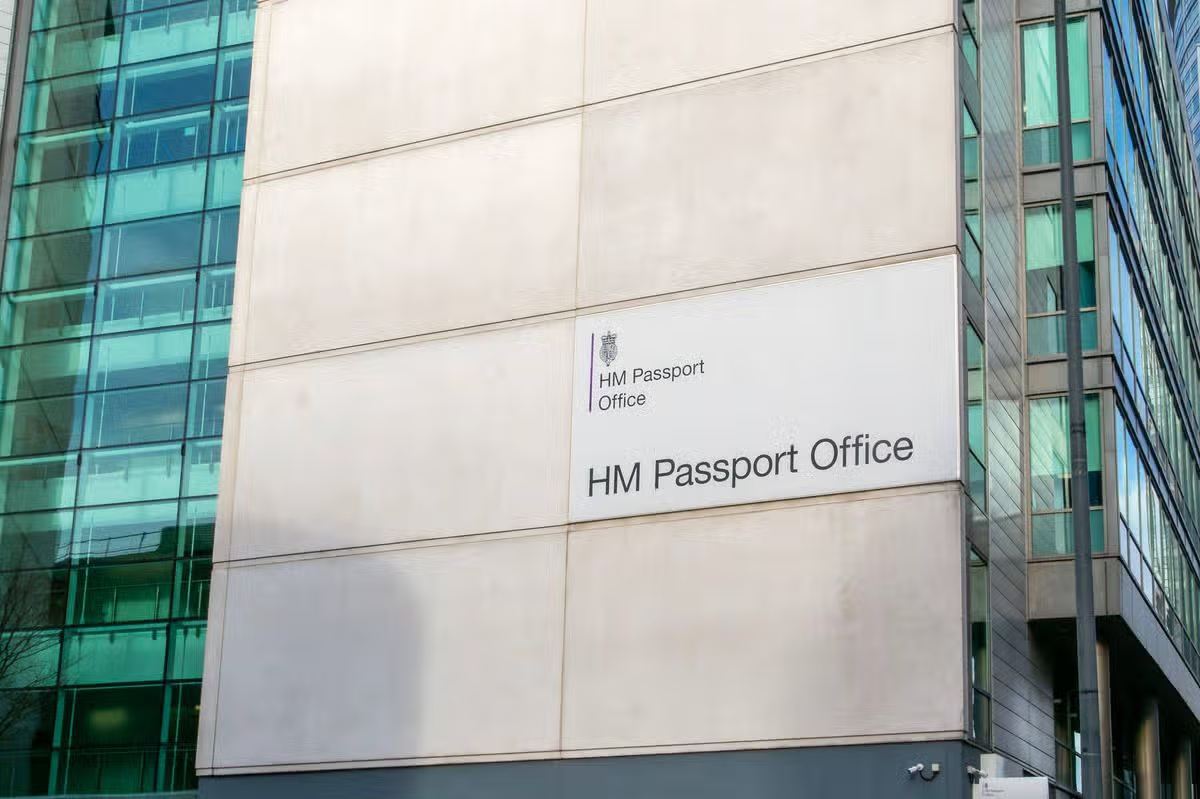
HMPO issued an update on Friday(Image: Geography Photos/Universal Images Group via Getty Images)
HM Passport Office urgent alert to UK passport holders – what you need to know:
HM Passport Office (HMPO) has issued an alert to British passport holders, urging those who have lost their passport to act “as soon as possible”.
HMPO shared the warning on X, formerly Twitter, stating: “Lost your passport? Report it as soon as possible. Doing so helps protect against misuse and allows you to apply for a replacement.” GOV.UK guidance adds that reporting a lost or stolen passport straight away will “reduce the risk of anyone else using your passport or your identity”.
It’s worth knowing that your passport never truly belongs to you. It remains government property and can be revoked or withdrawn at any point. A passport can also be withheld or confiscated if the holder is under suspicion of a serious crime, on bail, or has been repatriated to the UK at the government’s expense without repaying the sum.
For those who urgently need a replacement, a one-day service is available for adult passport renewals at a cost of £239.50, with the new passport ready to collect four hours after your appointment. Note that the earliest you can get an appointment is two days after applying, and you must surrender your old passport at the appointment.
Those who find themselves abroad without valid travel documents can apply for an emergency travel document, which will automatically cancel any existing passport as part of the process.
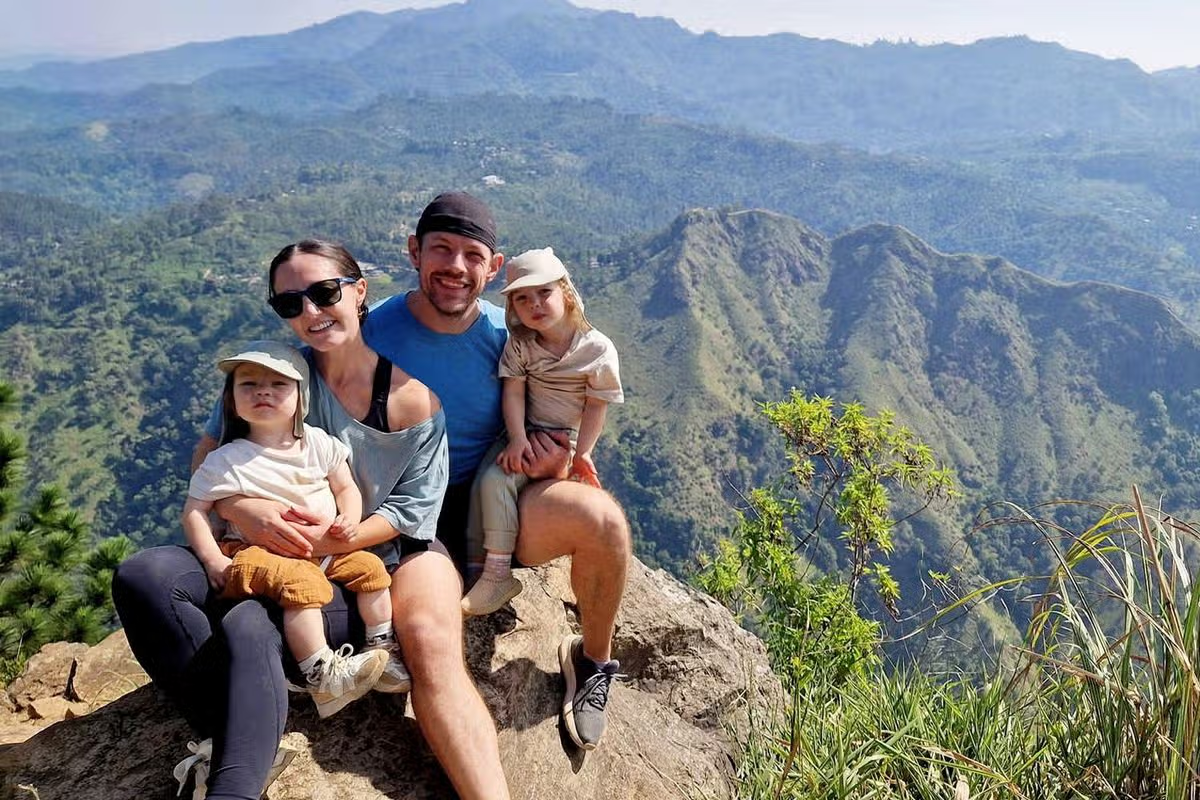
They bought a one-way ticket to Sri Lanka and have been travelling ever since
They decided to embark upon their adventure after wanting more time with their two children before they started full-time nursery(Image: Ruth Rowe/SWNS)
A couple say they have saved around £36,000 by ditching the UK to travel the world with their children while living out of two suitcases on a budget of just £30 a day.
Ruth and Steven Rowe “sold everything” they owned and bought a one-way ticket to Sri Lanka back in 2023 and have been travelling ever since. They decided to embark upon their globe-trotting adventure after wanting more time with their two children before they started nursery and school.
Ruth was also not a fan of the cold and wet British weather, so the pair are now world-schooling their kids, Aurora, four, and Atlas, three, in exotic locations instead. The family have already been to 17 different countries, ticking off bucket-list destinations such as Costa Rica, Guatemala, Ecuador, and Indonesia.
Saving thousands of pounds a year
They stay four weeks at a time in Airbnbs and have visited the likes of Thailand, Malaysia, Cyprus, USA, Colombia and Peru – all while saving around £12,000 a year. They have spent the last five months living and travelling around India and next year they plan to tour 10 more countries across Europe in a campervan.
Ruth, 34, and Steven, 35, had been renting a barn conversion in the village of Eardisley, Herefordshire, and had both children during the Covid-19 pandemic. But they had always thought about travelling full-time, so they sold “pretty much everything” on Facebook Marketplace or via car boot sales and set off with a couple of suitcases of clothes and a few toys.
They currently have no plans to return full-time and want to continue world schooling – while spending around £2,000 a month, compared to £3,000 back in the UK.
Ruth said: “We had travelled before and for us it got to the stage where we were going to put the kids into nursery and it just didn’t feel like the right time. We wanted more time with them as we know those early years are precious, so we thought, why not just do it? So we did.
“We sold pretty much everything we owned, which was an exhilarating experience – we mainly sold it through Facebook Marketplace and car boot sales. So our car, our furniture, everything but a couple of memory boxes with some of the children’s things inside and a few clothes.
“We set off at the start with two big suitcases – a medium and a small one – and a stroller. And since then we’ve downsized to just two suitcases – it is really surprising how little you really need.
“Possessions don’t make you happy, life experiences do. We bought a one-way ticket to Sri Lanka not knowing if or when we were coming back and we haven’t stopped since.
“We’ve been travelling full-time ever since, slow-exploring the world as a family, while my husband runs his coaching business remotely and we embrace world schooling on the road. It’s been beautiful, chaotic, challenging and incredibly freeing.”
Children educated along the way
The couple say their children are now educated through “life experiences” – whether that be picking up Spanish in Latin America or learning about volcanoes while hiking in Peru. They say giving the kids no screen time whatsoever on their travels has helped them to become more patient and creative.
Ruth added: “They are also learning counting through things like paying a tuk-tuk driver in different currencies and the first time Aurora ever wrote her name was in sand on a beach with a stick. We give them no screen time at all, which I think has taught them patience on their travels and to be more creative when they are bored sitting on a bus.
“They thought the TV back home was a radio, as we’d only use it for Spotify, and we think that’s allowed their imagination to flourish. I have just seen their confidence grow so much and of course there’s no way of really telling how they would have been at home, but they are just so open and talk to anyone – young and old.
“I will sit down and teach them some reading and phonics and writing, but we’re not rigid with it and it’s still very much about learning through playing. It wasn’t a case of we hated the UK – we just love the world. But I was never a fan of the cold and rain, so that is something I don’t miss. The only thing I miss is friends and family and also British chocolate.”
How they support themselves on travels
The couple also support themselves financially via Steven’s online coaching business, which he can still run wherever they are in the world.
Steven said: “These positive environments have brought such positive developments so far in our children. Atlas was swimming independently at two.
“This way, they get one-to-one without being part of the larger school system, which we have no issue with, we just see the benefits from doing it this way. We make sure the children are at the centre of what we do, we always research kids’ clubs and activities wherever we stay.
“They are loving learning about all the wildlife too – we had iguanas and sloths outside our doors in Costa Rica. Aurora had surf lessons in Bali and will be sandboarding in the Peruvian desert, it’s magical for them. We use Airbnbs mainly, but I’ve been working out of little cupboards in some places – it has been challenging at times, but we’re in a fortunate position.”
Amanda Cannon was taken ill while on holiday with her daughter
08:10, 19 Oct 2026Updated 08:16, 19 Oct 2026
Amanda Cannon is fighting for her life in Turkey(Image: Marisa White/SWNS)
A British nan is fighting for her life in Turkey after suffering a heart attack while on holiday as her family faces a £25,000 hospital bill.
Amanda Cannon, 58, was rushed to intensive care after collapsing during a trip with her daughter Marisa White on October 10. The grandmother-of-nine from Redhill, Surrey, reportedly went without oxygen for 10 minutes after suffering what doctors believe was an epileptic seizure and cardiac arrest.
She is currently on life support in a private hospital in Antalya, Turkey. Relatives say her treatment is costing around €3,500 (£3,000) a day, with the bill already reaching €30,000 (£25,000).
Hannah Cooper, the mum of Amanda’s grandchildren, flew to Turkey with her five-year-old daughter after receiving a distressing call from Marisa. She said Amanda suddenly “jolted backwards”, turned blue and stopped breathing. Marisa immediately began CPR before paramedics arrived and took over.
No travel insurance
But because she has no travel insurance, her former daughter-in-law Hannah said Turkish medics would not stop treatment for religious reasons. They fear the mounting costs could run into hundreds of thousands of pounds if her condition does not improve.
Hannah, 33, from Shoreham-by-Sea, Sussex, told Talk to the Press: “She’s now in a deep coma. She’s got kidney failure, liver failure. They said there’s a 20 per cent chance that she’ll wake up and if she does, she’ll be in a vegetative state.”
She added: “I got a phone call from her daughter saying that she just suddenly jolted backwards, went grey, purple, blue, started foaming from the mouth and stopped breathing. Her daughter gave her CPR. Then when the ambulance got there, they took over. She went without oxygen for about 10 minutes.”
Doctors later told the family Amanda had suffered what appeared to be a seizure as well as a heart attack. She was placed on life support and remains in coma.
Amanda travelled to Turkey with daughter Marisa, who Hannah said suffered from many severe physical and mental health conditions. Concerned she would struggle to deal with the crisis alone, Hannah booked flights and travelled out to support her.
She said: “She doesn’t have the mental capacity to cope with what’s going on. The language barrier is so hard. We have to keep going on Google Translate to speak to the doctor because he doesn’t understand us and we don’t understand him.”
Medical costs stacking up
As the family tried to come to terms with Amanda’s condition, they were shocked to learn of the mounting medical costs. Hannah said she received a phone call asking for £5,000 shortly after Amanda was admitted.
She said: “I said to them that I don’t have £5,000, but I’d be flying over to Turkey. Since then, I’ve had several emails asking for payment.”
Hannah later discovered Amanda’s stay in the private intensive care unit was costing around €3,500 every day. She also revealed that the hospital wouldn’t release her to a public one until they cleared half of the bill.
Hannah said: “I’ve asked for a transfer to a state hospital where it would still cost money, but not like this.”
The family launched a GoFundMe appeal with an initial target of £15,000, but now fear the total bill could be far higher. Despite no longer being with Amanda’s son, Hannah said the 58-year-old has remained a huge part of her life.
She said: “She’s been like a second mum to me for 17 years. She’s always been my biggest supporter.”
Toll on family
The ordeal has also taken a toll on Amanda’s grandchildren.
Hannah said: “My eldest is asking a lot of questions and is upset. My little girl just keeps saying she wants to see her nan.”
She said doctors would either wait until Amanda was biologically dead or keep her alive. Hannah and her daughter are set to return to the UK on Sunday, October 18, while Marisa plans to fly back to Turkey after collecting medication.
Hannah concluded: “We’re upset, shocked and confused. We just don’t know what’s going to happen next.”
Wide skies, gentle footpaths through gold and copper wooded hills, thatched cottages, cosy pubs and quirky shops: the Lincolnshire Wolds have all the ingredients for the perfect autumnal mini break. Victorian poet Alfred Tennyson lived in the village of Somersby for most of his first three decades and the local landscapes echo through his verses. In The Lady of Shalott: “Long fields of barley and of rye / That clothe the wold and meet the sky …”
The Lincolnshire Wolds National Landscape covers an area of 216 sq miles. On its southern boundary, halfway between Lincoln and the coast, the friendly market town of Horncastle bills itself as the “gateway to the Wolds”. With handsome brick houses, great cafes, a market on Thursdays and Saturdays and decent public transport links, it’s a perfect base for exploring the area.
The market town of Horncastle is a good base for exploring the area. Photograph: Jasmine Bryan/Alamy
Horncastle overflows with antique shops. Laurence Shaw, with half a century’s knowledge of the trade, runs an elegant wholesaler on the corner of East Street. In an old chapel across the road, the Trinity Centre has all kinds of ancient treasures piled in fantastical heaps under lancets of Victorian glass: porcelain milkmaids, jelly moulds, cotton reels, teetering piles of teacups and thick vines of jewellery. Round the corner in Stanhope Antique Centre you may find anything from a wooden decoy duck to a roulette wheel between chandeliers and grandfather clocks.
By the “Ducks Crossing!” sign opposite Tesco, mallards gather on the reedy River Bain. And in the 13th-century St Mary’s church there are gold angels in the rafters and lines from Tennyson’s poem Ring out, wild bells in stained glass. The new Riverscape Walk, launched last year, will take you past the canal basin, watermill and former leather tanning warehouses.
Take a hike
There are plenty of rewarding walks nearby and you don’t always need a car to reach them. The hourly 56 bus from Lincoln to Skegness stops in Horncastle and, 10 minutes later, in Hagworthingham, a peaceful Wold-edge village. From here, a six-mile loop of undulating lanes and footpaths takes in tiny Somersby, Tennyson’s birthplace, and Bag Enderby (which sounds straight out of Tolkien), where St Margaret’s church has an intricate 15th-century font, carved with religious symbols and medieval scenes. Bag Enderby’s -by suffix comes from an Old Norse word for village.
From Hagworthingham, you can also stroll through Snipe Dales nature reserve, where a 3-metre (10ft) wooden snipe, carved by local sculptor Nigel Sardeson,has just been installed on a wooded bank. The valleys here are fragrant with late meadowsweet and water mint and the trees are full of birdsong, from tiny goldcrests in the conifers to huge buzzards over the oaks. If you have time and energy to spare, the Viking Way long-distance walk – waymarked with horned Viking helmets – runs through Horncastle and the Wolds on its 149-mile journey from Rutland Water to the Humber.
A steel sculpture along the Viking Way near Woodhall Spa. Photograph: Nick Hatton/Alamy
Don’t miss
In Horncastle, the Joseph Banks Centre multitasks as a tourist info point, local museum and natural history hub. Banks, a botanist and Horncastle’s most famous inhabitant, sailed with Captain Cook and oversaw the creation of Kew Gardens. The museum courtyard is bright with hydrangeas, which Banks helped introduce into Britain.
The Edwardian village of Woodhall Spa, six miles from Horncastle, has wide leafy avenues and smart black-and-white buildings; even the public loos next to the Tory club are half timbered. Nineteenth-century entrepreneurs, digging for coal, found instead a source of mineral-rich water, a magnet for the era’s wellness-seekers. I meander past the Dambusters memorial and mural, the thriving Kinema in the Woods, opened in 1922, the nearby Tea House and Cottage Museum, then back to Horncastle along the sculpture-dotted Viking Way.
Where to eat
Horncastle’s top lunch spots include the cafe at Myers Bakery, fragrant with spice and yeast, where you can buy Lincolnshire plum loaf. Round the corner, the spacious and welcoming bike-themed Pedal and Paws serves pizzas, salads and cakes. No 8 Coffee Shop, which opened in March 2026, is already popular for inventive hot drinks such as cinnamon-bun matcha and pistachio hot chocolate.
Montebello, in the former Angel Inn, serves home-cooked Italian food, while Magpies offers refined white linen and candlelight dining, with dishes such as Grimsby crab linguine or loin of Lincolnshire lamb. Magpies also has rooms, in cottages next to a Tardis-like guitar shop.
Coffee and cake at Pedal and Paws. Illustration: Phoebe Taplin
Where to stay
The cheerful, timeworn Admiral Rodney Hotel is right in the middle of Horncastle, with affordable rooms and details you might see in pricier places: speedy wifi, retro radio, Twinings teabags. It offers great veggie breakfast options, fresh fruit and pastries, served in a big glass-walled conservatory with peacock fanlights. Dinner dishes such as pan-fried sea bass with pickled fennel, or sticky date pudding with butterscotch sauce, chicly garnished with edible flowers and micro-herbs, make a celebratory end to days spent hiking through the Wolds.
Getting there and around
The 56 bus heads to Horncastle from Lincoln bus station hourly and takes 50 minutes. The less frequent 30 bus takes 10 minutes longer and winds through warm-stoned villages. Local buses include the new B617 from Horncastle to Woodhall Spa. The coast is 20 miles away, on a bus with top-deck views across the Wolds.
Accommodation was provided by the Admiral Rodney, doubles from around £100, room only. Train travel was provided by LNER