
THE UK isn’t the first place that comes to mind when you think of beautiful beaches or interesting sea creatures.
But Emma and Gordon Taylor who have travelled all over the world diving and snorkelling say that actually, Britain’s waters are some of the very best.
Sign up for the Travel newsletter
Thank you!
The UK is home to beautiful beaches with plenty of marine life off the coastCredit: AlamyAuthors of Snorkelling Britain Emma and Gordon reveal their top spots around BritainCredit: Emma & Gordon Taylor
The couple along with their two children have travelled across Britain from the very tip of Scotland all the way down to the Isles of Scilly exploring its beaches and seas for their book Snorkelling Britain.
Talking to Sun Travel, Gordon said: “I don’t particularly aspire to diving anywhere other than Britain – there’s so much to see.
“You’ve all the shipwrecks, all the marine life, it’s as good as anywhere else in the world.”
Here are some of their favourite finds along the way…
“If you have told me that our trip to the North East of England was going to feel like the Med, I would not have believed you.”
She then revealed her second favourite spot: “It’s the Scillies, which I know is a bit of a cliche, but it’s quiet and the bright white sand is really lovely.
“You can do lots on the beach too, hire snorkel kit and paddle boards so you can go out on a proper adventure.”
Achmelvich Bay in Scotland has white sand beachesCredit: Alamy
Gordon said that there’s a misconception that you’ll find the best beaches, particularly for snorkelling, in the south.
He was impressed by Scotland, particularly in the north west which is known for its spectacular white sand beaches like Achmelvich Bay.
Gordon also added that he was pleasantly surprised by Sheringham in Norfolk.
He said: “That’s where you’ll find the longest chalk reef in the world. It’s just a couple of hundred metres from the shore so you can actually swim out to it.”
Emma continued to say one of her favourite beaches is Kimmeridge Bay on the Jurassic Coast which is backed by high cliffs with fossils, and has lots of rockpools to explore.
It even has an organised snorkelling trail for those who want the best chance of seeing something special.
Inganess Bay has ain impressive shipwreck called the JuniataCredit: Emma and Gordon Taylor
There are thousands of shipwrecks in British waters, but where should you go if you’re keen to see some of the most impressive.
Immediately, Emma recommends Orkney in Scotland which is made up of 70 islands.
Emma explained: “There’s a body of water there called Scapa Flow where between the islands they sunk a lot of ships so submarines couldn’t get in. So essentially all the gaps are full of shipwrecks.
“One in particular is called the Juniata which is on Inganess Bay and it’s fully intact. It’s not far out so you can walk to it and then swim around it.”
In the Priests Cove tidal pool there were eel, a sea scorpion and anemonesCredit: Emma and Gordon Taylor
There has been a surge in popularity for wild swimming along with the use of outdoor pools, lidos and tidal pools.
Some of the most popular are Walpole Bay in Kent, Bude Sea Pool in Cornwall and Dancing Ledge in Dorset.
When the tide goes out, the seawater remains in the rocks making it one of the safest places to swim and paddle rather than out in the ocean.
It’s not just for paddling either, when it comes to snorkelling, Emma has spotted some rare marine life.
She told us: “I was at Priests Cove in Penzance with my daughter and we saw a Conger Eel, a sea scorpion – which don’t sting, prawns and anemones.
“All of this was in the tidal pool which was like the side of a toddler’s paddling pool.
“I’d really recommend tidal pools for beginner snorkellers – there are no tides so it’s safe and they’re usually very shallow so any problems and you can just stand-up.”
Seals are regulars off the coast of BritainCredit: Alamy
The UK isn’t the Maldives, so you won’t be seeing tropical fish or sea turtles.
But you might be surprised at just how much you can see in Britain’s waters.
Emma told us: “We regularly see seals, but it’s always on their terms and we don’t go looking for them.
“If a seal wants to play they’ll just come up to you and start chewing on your fins.
“I was followed by a seal when I was in Porthkerris and I’ve seen a lot in Wales too.”
In Rôskilly, Gordon even saw an octopus swimming in the open and you’re more likely to see them in Britain’s waters now then ever before.
Gordon explained: “I’d never seen an octopus in the wild before last year. But in the southwest of the UK, there’s been a big influx.
“We think it’s because of the environmental conditions – they’ve been seen in Ireland and Scotland as well.”
It’s not all about the big creatures either, there are plenty of tiny ones to see too.
There’s still lots to see in seagrass and rockpoolsCredit: Emma and Gordon Taylor
Gordon explained: “Seagrass is a really important habitat for lots of creatures.
“It’s a type of grass that lives underwater and it’s almost like a nursery.”
Emma added: “If you find a seagrass meadow you’re likely to see small fry which are like baby fish.
“There are sea slugs which aren’t like normal slugs, they’re beautiful and usually bright orange, or purple and really cute.
The pair revealed that one of the best places for seagrass is Rhoscolyn Bay in Anglesey, St Mawes in Cornwall and Porth Dinllaen in Wales.
Emma added: “I’ve seen a seahorse while snorkelling which was amazing.
“They’re heavily protected though so you can’t go looking for them, but it just popped out in front of us.
“We had a quick look at it and we then carefully moved away to leave it in peace – that’s the beautiful thing about marine life. You just don’t know what you’re going to see.”
For more info on snorkelling, where to go and how to do it – check out Snorkelling BritainCredit: Unknown
If you want to find out more about snorkelling in Britain’s waters and where to go from Emma and Gordon, take a look at their book Snorkelling Britain.
And you can find out more details about taking to the seas including a snorkelling map on their website.
Be in the know when it comes to swim safety and snorkelling…
Emma and Gordon say definitely don’t scrimp on safety if you’re snorkelling out at sea and considered guided sessions…
A TRAVEL agent with decades of experience has revealed the ultimate throwback destination and says you can still get holidays for the retro pricing too.
Spain is a classic summer destination for Brits and one spot remains popular for good reason.
Sign up for the Travel newsletter
Thank you!
Claire Watters has been a travel agent for 40 years and still thinks Majorca in Spain is the best spotCredit: First Choice/Claire WattersShe recommends Alcudia, saying it is the best spot for familiesCredit: Alamy
But Claire Watters, a First Choice travel agent, revealed that Majorca is the island that she sold more than anywhere else in the 90s.
She said: “In the ‘90s, if a family walked in wanting guaranteed sunshine, a short flight and a holiday that wouldn’t break the bank, Majorca was usually my first recommendation.
“Thirty years later, despite how much travel has changed, my advice remains exactly the same.”
Back in the 90s, a holiday to Majorca for a family of four cost around £349, which would be about £719 now.
And holidays today could cost you the same… or even less.
A seven-night break for a family of four to Playa Moreia in Majorca, flying from London Southend on October 10 via First Choice costs £179 per person – £716 total.
The area has waterparks, nature parks and lots of hotels with family entertainmentCredit: First Choice/Claire Watters
When it comes to recommendations for travellers heading to the Spanish spot, Claire has loads.
She said: “Alcudia is the best area for families for me.
“It has a long, sandy beach with shallow water and a calm sea, which is ideal for younger children to paddle safely.
“You’ll find waterparks and plenty of watersports, boat trips, cycling routes, and nature parks, and there are also playgrounds, kids’ clubs, and family entertainment in many hotels.
“The all-inclusive options make things simple and budget-friendly, and you can walk around in a calmer resort that is more geared up for families.”
And for when it comes to discovering a beach spot, Claire recommends heading to the Blue Flag Playa de Muro.
She said: “The sea is very shallow for 50–100 metres, staying knee-deep for a long distance.
“The beach stretches nearly four miles, making it one of the longest beaches in Majorca.
Claire recommends heading to the Blue Flag Playa de MuroCredit: Alamy
“The water is calm, warm, and clear, with hardly any currents.
“Regular water testing, lifeguards, and rescue services keep standards very high. This makes it perfect for families, non-swimmers, and relaxing swims.”
For a day where you want to head off for a day trip somewhere, Claire says to head to Sóller and the historic railway, Caves of Drach tour & sunset boat trip.
She said: “Sóller and the historic railway is one of the best day trips for me.
“You can step back in time because the train dates from 1912, with original wooden carriages still in use.
“The scenery is incredible, as the route crosses the Serra de Tramuntana, which is a UNESCO World Heritage mountain area, with tunnels, viaducts, and views of orange groves.
And for a day trip head to Soller, which has a historic railwayCredit: Alamy
“It is a unique experience because it’s not just transport, it’s a slow, scenic journey through the countryside that you wouldn’t normally see.”
Another spot is the Caves of Drach tour which “allows you to explore a huge underground cave system”.
Claire added: “It features Lake Martel, one of the largest underground lakes in the world.
“The visit ends with a live classical music concert on the water, which is so lovely.”
For something a little more romantic, Claire suggests hopping on a sunset boat trip.
She said: “Sunsets over the water give clearer, more intense colours and are great for those Insta-worthy photos and stories, with golden-hour views across the ocean and coastline.
One of the hotels in the area is Alcudia Pins, which Claire says was great in the 90s and is still todayCredit: First Choice
“It often includes swimming, drinks, music, or food onboard, and it is great for families and couples wanting different scenery away from the hotel.”
Another must-visit spot for Claire is Cap de Formentor – a scenic drive with lots of different viewpoints.
“Each stop reveals a completely different view, so it’s like multiple viewpoints in one trip,” she revealed.
“It is an incredible sunrise and sunset spot, and it’s one of the most photographed spots in Majorca – I get that rare feeling of standing at the edge of the island.”
In the ’90s, two properties dominated Claire’s booking screen, and both remain icons of Majorcan tourism today: Club Mac and TUI BLUE Alcudia Pins.
“I must have sent thousands of families to Club Mac and Alcudia Pins,” Claire says.
Another spot to explore are the Caves of Drach with a huge underground lakeCredit: Alamy
“Back then, they were the gold standard for a hassle-free family holiday, and they’re still available to book on First Choice today, although I’m glad to say they’ve been updated.”
And when it comes to places to stay Claire still recommends Alcudia Pins, costing from £421 per person in October.
“Alcudia Pins is the location is hard to beat – it sits right on Playa de Muro, which is one of the best beaches in Majorca making this an ideal and great spot for families; the beachfront access alone makes a big difference,” Claire shared.
“It’s genuinely family-focused with lots of Kids’ clubs and activities, pools and entertainment and it’s close to the resort town for trips outside of the hotel.
“Also a good overall value hotel where customers can choose a self- catering or an all inclusive option giving them the choice to decide their board basis.”
Claire added: “In the ’90s, people thought Majorca was just cheap and cheerful.
“But even back then, those of us in-the-know knew it had some of the most stunning scenery in Europe.
“Today, the island has managed to preserve its traditional charm while upgrading its offering.”
The Foreign Office has issued fresh travel advice for 14 countries following the announcement of a ‘memorandum of understanding’ between the US and Iran amid Middle East tensions
15:28, 18 Jun 2026Updated 15:33, 18 Jun 2026
The Foreign Office has issued travel advice for 14 countries(Image: Getty Images/Stock Photo)
Significant travel updates have been released by the Foreign Office for 14 countries after the US and Iran revealed a ‘memorandum of understanding’, in the wake of the Middle East conflict.
The Foreign Office has now removed its travel ban to destinations including the United Arab Emirates and Qatar, while also providing additional updates for 12 other nations. The Foreign, Commonwealth & Development Office (FCDO) published new guidance on Thursday, 18 June, for the 14 countries amid “regional tensions”.
On the Foreign Office’s ‘warnings and insurance’ section for each nation, they confirmed: “The US and Iran have announced a memorandum of understanding in relation to the conflict in the Middle East.”
The complete list of nations receiving the updated guidance includes: Cyprus, Turkey, Oman, Saudi Arabia, Qatar, United Arab Emirates, Bahrain, Jordan, Yemen, Syria, Palestine, Israel, Iran and Kuwait, reports the Express.
While the FCDO has warned of regional tensions, it “no longer advises against all but essential travel to the UAE”. Since March, there had been a warning in place against all but essential travel to the UAE, but with the update today (June 18), it’s the first time it’s been waived.
In additional guidance, the FCDO outlined that should “hostilities resume”, Brits should take the following steps:
Read if you’re affected by a crisis abroad – GOV.UK. This includes guidance on “how to prepare for a crisis” with suggestions on what you might include in your emergency supplies and “what to do in a crisis”
DISNEYLAND is a place where everyone can enjoy a bit of magic, but hidden behind its world famous rides and queues of exhausted families is a top secret club that most guests have no idea exists.
Club 33 originally opened in Disneyland California, although can also be found in Disney World, Tokyo Disneyland and Shanghai Disneyland now too.
Sign up for the Travel newsletter
Thank you!
The secret club is hidden away behind rides at DisneylandCredit: AlamyClub 33 in invite-only and membership can cost thousandsCredit: .Former Playmate Holly Madison recently shared a peak inside the clubCredit: InstagramShe enjoyed an Alice in Wonderland themed afternoon teaCredit: Instagram
But don’t get too excited – the club is incredibly exclusive and the only way to join is if you receive an invite.
It’s even suggested that there is a waiting list of up to 10 years, which was reportedly closed in 2007 after it became so long, before reopening in 2012.
Found on 33 Orleans Street, the speakeasy style club can be found behind a blue door with a discreet 33 address plate at the entrance, for those in the know.
Walt Disney died a year before the club was finishedCredit: Getty – ContributorInside there’s a swanky restaurant and bar with champagne and caviarCredit: .Katy Perry was spotted inside the very exclusive barCredit: XRebel Wilson has also been spotted at the private members clubCredit: Instagram
The members-only club was founded by Walt Disney, who based the club on his travel adventures with his wife Lillian, although he died a year before the club opened in 1967.
Inside is just as lush as you’d expect, with wood-panelled private dining lounges, swanky baroque wallpaper and various Victorian curios that Walt personally collected from antique shops.
In fact, the restaurant is one of the only places visitors can bag some booze in the park.
And for film fanatics, props from classics like Mary Poppins are inside, including original drawings on the wall.
But all of this will cost you.
Initiation fees are believed to range between $25,000 (£19,200) and $50,000 (£38,000).
How many Disney locations are there around the world?
DISNEY parks are located in several countries around the world. Here’s the list of countries with Disney parks:
United States
Disneyland Resort (Anaheim, California)
Walt Disney World Resort (Orlando, Florida)
France
Disneyland Paris (Marne-la-Vallée, near Paris)
Japan
Tokyo Disney Resort (Urayasu, near Tokyo)
China
Shanghai Disney Resort (Shanghai)
Hong Kong Disneyland Resort (Hong Kong)
Then there is the annual fee, which can be as much as $30,000 (£23,000).
The membership, however, gets you some extra perks such as day passes for guests, private VIP tours, exclusive merchandise and free hotel room upgrades.
You also can’t go to more than one of the Club 33s around the world, as each membership is exclusive to each club.
There is one place in the club you can visit without your own membership, although you do need to know someone who does have one to take you.
The Salon Nouveau Lounge is known for it’s posh caviar appetizers as well as burgers and champagne, so if you know someone lucky enough to have access the club 33, you could try it out.
Meanwhile, for members only, there is Le Grande Salon which has set menu costing upwards of £100, but can reportedly include options such as scallops and steak tartare.
And for those wanting to spend the night, there’s the Disneyland Dream Suite, which sits above the next-door Pirates of the Caribbean ride.
Walt had his own apartment on Main Street in the park, but it was decided there needed to be a bigger spot to host Disney’s VIP guests, away from the hustle and bustle of the crowds.
The club is one of the only places guests can buy alcohol in the parkCredit: .The interior of the club is full of film and ride memorabiliaCredit: .
The more specific details of the elusive club are scarce, mostly because members are told not to ever share the club’s secrets.
Florida-based Disney travel experts Simon and Susan Veness previously told the Telegraph: “The level of secrecy around Club 33 is quite startling, but it has been there since the club’s earliest days, and it continues to be a Disney parks anomaly today.
“For somewhere that is never slow to promote its rides and attractions, this ultra-expensive ‘insiders’ club’ is distinctly incongruous and out of step with the general pixie dust nature of the theme parks.”
However, some guests have shared a sneak peak inside the club.
This week former Playboy star Holly Madison took to Instagram to post some snaps from the balcony of the club.
“Club 33 Alice in Wonderland tea was divine,” she captioned the alluring snaps which showed her sat a linen-covered table with Mad Hatter plates, Alice in Wonderland-themed snacks and over huge floral displays.
Bragging about having club 33 membership comes with it’s risks though as one couple even ended up taking Disney to court after losing their membership.
The couple, from the US, said they had paid as much as $124,000 (£94,000) a year to visit the theme parks, sometimes visiting as much as 80 times a year.
Celebs like Tom Hanks and Rebel Wilson are reportedly membersCredit: .Holly posed inside the club’s sun-soaked courtyardCredit: Instagram
However, they were taken off the membership list after the park claimed they had both behaved badly, being both intoxicated and swearing – something they both refute.
Back in 2015 Joseph Cosgrove allegedly lost his membership when he allowed a friend to auction off his passes.
According to Disneyland spokeswoman Suzi Brown, Joseph had “repeatedly transferred and sold their membership privileges,” which meant the park was “left with no other choice in order to preserve the integrity of membership.”
Celebrities aren’t immune to having their membership revoked either; a Pitch Perfect actress claimed she was suspended from the club for taking a secret picture in the club’s bathroom, she revealed on The Daily Show in 2023.
But all the mystery around the club has only made it more intriguing for Disney fans over the years, with thousands of social media posts on the topic of the secret spot popping up every week.
Travellers are being urged not to get caught out and ways to avoid fees
Passengers could face fees of up to £125 at the airport(Image: Getty)
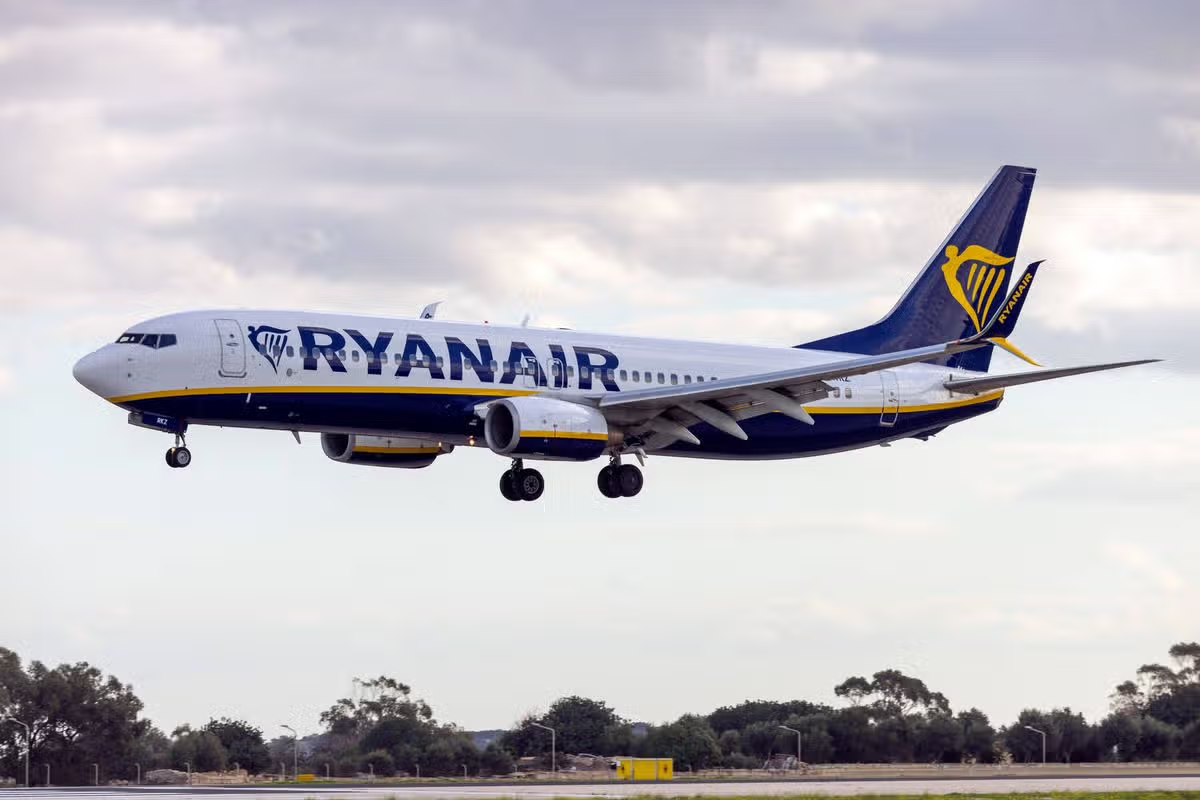
Millions of people across the UK fly with well-known airlines, such as Jet2, easyJet, Ryanair and TUI, and with the peak summer travel season mere weeks away, travellers are being issued handy luggage guidance. With Brits continuing to prioritise travel in 2026, particularly short-haul trips, city breaks and budget airline holidays, the way people pack is evolving.
More travellers are opting for hand luggage only to save time and avoid extra fees. Yet many are still being caught out by oversized cabin bags or overweight suitcases, facing charges of up to £60 at the gate or £65 for exceeding hold luggage limits, which can add up to £125.
As a result, travellers are increasingly looking for smarter, more organised ways to maximise space while staying within airline restrictions. In response to this shift, Nick Gaskin, Sales and Marketing Director at IT Luggage has shared practical advice to help travellers pack more efficiently, whether they’re travelling light with cabin bags or checking in a full suitcase.
Nick Gaskin said: “Packing well isn’t about fitting more in; it’s about travelling smarter. With more people choosing flexible, shorter trips and hand-luggage-only options, organisation and preparation can make a huge difference to the overall travel experience. A few simple habits can save time, reduce stress and help travellers feel more in control from departure to arrival.”
As hand-luggage-only travel becomes increasingly common, making every inch of space count is key. Nick recommends creating a micro essentials kit.
He explains: “Treat your cabin bag as a safety net. Include essentials like underwear, key toiletries – remembering liquid limits – medication and a charger. That way, you’re covered for delays or lost luggage without relying on airport shops.”
He added: “Pack one complete spare outfit”. Rather than throwing in random extras, pack a full outfit using crease-resistant fabrics. This ensures you stay comfortable and presentable if plans change or bags are delayed.
The specialist also suggests carrying a boarding pass backup. “Technology fails more often than people expect”, Nick explains. “Keeping a screenshot or printed boarding pass avoids stress if airport Wi-Fi or apps stop working at a critical moment.”
Keep in-flight items within reach, Nick says. Store items like headphones, snacks and lip balm in a small pouch that fits under the seat, so you don’t need to access the overhead locker mid-flight.
For longer trips or checked bags, organisation is key to avoiding overpacking and keeping belongings in good condition, Nick says. “Pack by outfit, not by item. Grouping complete outfits together — including accessories — makes getting ready easier and prevents packing combinations that don’t work,” he added.
Weigh as you go with packing cubes. “Packing cubes aren’t just for organisation — they’re great for managing weight,” says Nick. “Weigh each cube as you pack it. It’s much easier to adjust before everything goes in the suitcase than deal with excess baggage at the airport.”
Nick also recommends positioning shoes strategically. Place shoes heel-to-toe around the edges of your suitcase and fill them with socks or smaller items to maximise space and help them keep their shape, he said.
Separate clean and worn clothes. A lightweight laundry bag keeps worn clothes contained, helping maintain freshness and making unpacking simpler when you return home, Nick adds.
Combine rolling and folding. He said: “Rolling softer items like T-shirts saves space, while structured garments such as jackets should be folded to reduce creasing. A mixed approach delivers the best results.”
Photograph your packed suitcase. “Taking a quick photo before you travel is a simple but effective step,” Nick adds. “It can support insurance claims if luggage is lost and acts as a reminder of what you’ve packed.”
The Foreign Office has updated its travel advice for 14 countries including Cyprus and Turkey
14:27, 18 Jun 2026Updated 15:32, 18 Jun 2026
The Foreign Office has updated its advice for Cyprus and Turkey(Image: Getty Images/iStockphoto)
The Foreign Office has updated its travel advice for a number of countries including Cyprus and Turkey, in relation to the Middle East War.
The UK government has issued an update around ‘regional tensions’ in the two holiday hotspots, after the US and Iran announced a ‘memorandum of understanding’ this week. It also comes as a warning against travel to the UAE has been lifted, including the likes of Dubai and Abu Dhabi.
The Foreign Office hasn’t advised against travel to either Cyprus or Turkey throughout the conflict, which started earlier this year. At the time of writing, it only has one warning in place for a region in Turkey, which was unrelated to the conflict, warning against “all travel to within 10km of the border with Syria due to fighting and a heightened risk of terrorism”.
Now, the government body has issued an update for Brits planning to head to Cyprus and Turkey for holidays in time for the peak holiday season.
The updated advice explains: “The US and Iran have announced a memorandum of understanding in relation to the conflict in the Middle East. The situation remains unpredictable and attacks could resume at short notice.
“Should hostilities resume, British nationals should:
read If you’re affected by a crisis abroad – GOV.UK. This includes guidance on “how to prepare for a crisis” with suggestions on what you might include in your emergency supplies and “what to do in a crisis”
monitor local and international media for the latest information
stay away from areas around security or military facilities
keep your departure plans under review, and ensure your travel documents are up to date
if you are advised to take shelter, stay indoors or find the nearest safe building or designated shelter. An interior stairwell or a room with as few external walls or windows as possible may provide additional protection. The greatest risk is from falling debris caused by intercepts. You are safest inside a secure structure
“Before the 8 April ceasefire, the Iranian regime had stated its intention to target locations associated with the United States and Israel. This included US or Israeli-linked organisations, businesses, facilities and institutions. Iran has previously targeted civilian infrastructure across the region such as ports, hotels, roads, bridges, energy facilities, oil production sites, water systems, and airports.”
THE Big Butlin’s Sale is officially on, and there are some humongous savings to be had
Savvy holidaymakers can save up to 40% off ALL breaks in 2026 and 2027, including breaks in the school summer holidays and at Halloween and Christmas.
Sign up for the Travel newsletter
Thank you!
The MASSIVE Butlin’s Sale is on – with up to 40% off breaks, 25% off food and £1 depositsCredit: Butlin’sYou can still book a summer break for this year or get ahead and book a 2027 holidayCredit: butlins
There are discounted breaks available across all three resorts: Bognor Regis, Minehead and Skegness.
Not only can you knock nearly half the cost off your Butlin’s break, but there are even more savings to be had if you book this month.
Those who book before June 30 can bag 25% off dining during the school holidays, as well as up to 20% off all inclusive drinks packages.
So not only will you majorly save on accommodation, but food and drink will also be much cheaper once you’re there, too.
And to top it all off, you can secure your break with a super low deposit of £1pp. There are also flexible payment plans available.
The offer even applies to popular Butlin’s seasons such as Spooktober, Festive Breaks, new year celebrations and their Christmas day ‘ultimate sleigh-cation’.
Families can bag a last-minute summer staycation across dates in June, July and August at all three resorts.
These last-minute summer breaks include Showtime Midweek stays featuring a new show with Peppa Pig and Evie, as well as Showtime Weekends with a Mythical Beasts show and Snow White panto.
During Spooktober families can expect as Halloween Welcome Party, plus events like pumpkin carving and a huge game of Halloween Hide and Seek with mascot Billy Bear.
The Big Sale includes discounts of up to 40% on all holidays, as well as deposits from £1Credit: Not known, clear with picture desk
The fairgrounds will also receive a spooky makeover with giant glowing pumpkins and Halloween characters.
You could also book in for a Festive Break, with Christmas shows, festive movie nights, a Christmas party and of course, a meet and greet with the bearded man himself.
Plus the popular pantomime show Jack and the Beanstalk is making a return, which has received rave reviews for its hilarious characters.
You can book a Spooktober break from £39, or a festive break from £40.
Or you can book ahead and bag yourself a break now for 2027, securing a holiday for up to 40% off full-price.
2027 will see a new show arriving to Butlin’s: Britain’s Got Talent Live on Stage.
The new show will be hosted by a celebrity presenter and will be on during February half term, Easter, May half term, October half term and selected summer holiday dates.
The up to 40% off sale also applies to the popular adults-only Butlin’s Big Weekenders, which have themes like We Love Ibiza as well as 80’s and 90’s throwback weekends.
You could book yourself in for a Halloween break during Butlin’s’ Spooktober eventCredit: Butlin’sButlin’s have introduced a new wrestling show for 2026, hosted by Peter Andre and Chris HughesCredit: Butlin’s
The Weekenders even have famous headline acts like Fatboy Slim and Aston Merrygold, with weekend breaks starting from £59pp.
Plus there’s plenty of new and exciting events for families coming up, like The Masked Singer Live and the Peppa Pig and Evie show.
Plus, new for 2026, the Max Pro Wrestling show includes jaw-dropping stunts and nail-biting battles for the championship belt, with celeb hosts such as Peter Andre and Chris Hughes.
The Big Butlin’s Sale is on until June 30, with Butlin’s warning that dates are on track to sell out fast.
FOR years, summer holidays followed a pretty rigid formula: book a week somewhere hot, find a beach, find a pool, and spend seven days rotating between the two.
But this year, the data is showing a change that I find really interesting.
Holiday Expert Rob Brooks suggests visiting European city breaks with beaches instead of traditional beach holiday packagesCredit: Rob BrooksRob found bargain holidays to Alicante in Spain from £190ppCredit: Getty
More and more people – families included – are looking at the price tags of traditional, single-resort beach holidays and feeling like they’re being rinsed.
When a standard week in the Med easily climbs to £700, £800, or even £1,000 per person in 2026, a city beach break becomes the ultimate loophole.
You still get the sand, the sun, and the tan – but you also get proper restaurants, nightlife, and culture for a fraction of the cost.
Here are the seven city-beach crossovers I’d genuinely put my own money toward this summer.
7. Copenhagen, Denmark – from £193pp
Copenhagen has sweeping beaches to be enjoyed in the summertimeCredit: Getty
Copenhagen might sound like a massive wildcard, but it’s actually one of Europe’s best-kept summer secrets.
When the weather hits the low 20s, everyone in the city practically lives outdoors, canalside bars stay packed, and everyone is diving into the harbour clean-water swimming spots.
I found three nights at theScandic Sydhavnen flying from Edinburgh for £193pp.
Traditional beach packages charge a massive premium in August just because they have a monopoly on the coastline, but Copenhagen flips that layout – you’re paying bottom-dollar for the flight and hotel because it’s technically a city break window.
Yes, Denmark can be pricey when you’re buying a beer, but starting with a sub-£200 bill offsets the spending money before you even land.
For a proper beach day, head straight to Amager Strandpark, a massive two-mile stretch of white sand where you get a brilliant view of the Oresund Bridge while sunbathing.
6. Nice, France – from £230pp
Although the French Riviera is usually pictured as expensive, there are affordable options in NiceCredit: Getty
The French Riviera usually conjures up images of billionaires, superyachts, and remortgaging your house for a salad.
Nice, however, is the exception to the rule if you play it smart.
You still get the iconic promenades and pastel Old Town streets, all without the Saint Tropez price tag.
Plus in Nice, because it’s a living, breathing city, you can bypass the overpriced tourist traps on the front and eat like a local at the independent bakeries just two streets back.
The main beach strip is great, but walk east past the port to Plage de la Réserve – a tiny, rocky hidden cove where you can escape the crowds and swim in crystal-clear water.
5. Palermo, Sicily – from £210pp
You can stay at the Villa D’Amato in Palermo, Sicily for £210ppCredit: Getty
Italy has become notoriously expensive over the last few years, but Sicily is where the smart money goes.
Palermo gives you a beautiful mix of historic grit, world-class street food, and access to proper sandy beaches just down the road. It’s got Capri’s charm, but on a €3-a-beer budget.
You can grab three nights at Villa D’Amato flying from London Luton for £210pp, including breakfast.
Landing a hotel that throws in breakfast on an Italian island for just over £200 is a serious result.
But the real money-saver is Palermo’s legendary street food scene. You can fill up on incredible arancini and panelle for pennies in the local markets, avoiding the eye-watering sit-down dinner bills that plague the Amalfi Coast.
When you want to hit the sand, hop on a local bus out of the center to Mondello Beach, a stunning bay with shallow turquoise water sitting right under the massive cliffs of Monte Pellegrino.
4. Dubrovnik, Croatia – from £203pp
Rob recommends avoiding weekend departures to get the best holiday rates for DubrovnikCredit: Getty
Dubrovnik is usually a victim of its own success – it can get packed and it can get incredibly expensive.
But if you catch the right flight windows, the value opens right up, giving you crystal-clear Adriatic water, historic city walls, and island-hopping boat trips all in one place.
I tracked down three nights at the Marnic Apartments flying from Manchester for just £203pp.
Because Dubrovnik has a massive airport and tons of flight capacity from the UK, flight prices drop through the floor if you avoid weekend departures.
And by using a city apartment base like this instead of an all-inclusive hotel block, you skip the resort premium but still get the exact same sea views as the luxury hotels down the road.
For the best swim in the city, walk just a few hundred meters past the eastern entrance of the Old Town to find Banje Beach, a pebble-and-sand spot that gives you a surreal view of the medieval city walls from the water.
3. Valletta, Malta – from £253pp
Valletta in Malta is full of colourful bars and restaurants to exploreCredit: Getty
Malta feels like a cheat code for a summer break in 2026.
By the time late June rolls around, the limestone coast is properly baking and the coves and beaches around the capital are at their absolute best.
Valletta itself is brilliant because when you’ve had enough sun, you can wander straight into historic bars and massive waterfront restaurants.
I found three nights at the Excelsior Grand Hotel flying from Bournemouth for £253pp.
This is a proper, high-end property, so bagging a stay there alongside flights for under £300pp is unbelievable value.
Malta consistently delivers dramatically better hotel value than neighboring Italy, and because Valletta is compact, you don’t need to shell out on car rentals – the cheap local public transport will get you anywhere for pocket change.
While you’re there, take the quick ferry across the harbour to Sliema and head to Fond Ghadir to swim in the natural, rock-cut swimming pools right in the limestone coast.
2. Alicante, Spain – from £190pp
Although many land at the airport to travel further, Rob recommends staying in the city of AlicanteCredit: Getty
Alicante is often unfairly dismissed as just a gateway airport for the Costa Blanca, but the city itself is an absolute gem.
Playa del Postiguet is a massive beach that sits right on the edge of the city centre.
You can literally sunbathe all morning, shake the sand off your shoes, and step straight into a traditional tapas bar for lunch.
I found three nights at Alannia Costa Blanca flying from Bournemouth for just £190pp.
And booking Alicante completely eliminates the need for taxis, meaning your spend on transport drops to zero the second you check in.
While everyone stays on the main city beach, take the tram a few stops north to Playa de San Juan, a massive, five-kilometre stretch of wider, powdery sand that gives you plenty of space to hide away from the main city.
1. Valencia, Spain – from £165pp
Holiday Expert Rob Brooks says Valencia in Spain may be the best-value coastal city break in EuropeCredit: Getty
Valencia might be the best-value city beach crossover in Europe right now.
It has a massive, wide sandy beach, an incredible Old Town, elite-level food, and prices that make Barcelona look like a total rip-off.
I clocked three nights at the Ilunion Valencia 4 flying from London Stansted for just £165pp. That is absurdly cheap, and you aren’t compromising on anything.
What makes Valencia a financial winner is the local economy – because it hasn’t been completely overrun by mass tourism like Madrid, a proper three-course Menú del Día (including wine) will still only set you back about €12 to €15 if you step into the local neighborhoods.
For the ultimate beach day, head down to Playa de la Malvarrosa and hit the best independent beach huts for a cheap drink on the sand. Bliss.
A brand new long-distance European train service is set to launch on 25 June, running 807 miles from Frankfurt in Germany to Przemyśl in Poland
A new train route will have a duration of eighteen-and-a-half hours(Image: Alan Morris via Getty Images)
A brand new 807-mile train route across Europe is launching this month, linking Germany, Poland and the Czech Republic. Private railway company Leo Express will commence the service on June 25, with fares beginning at just €10 (£8.65).
The journey is expected to become one of Europe’s most extensive, with a projected travel duration of 18-and-a-half hours. It will operate once per day in each direction between the Polish city of Przemyl and Frankfurt in Germany.
Stops along the way include Kraków, Ostrava, Prague, Dresden, Leipzig and Erfurt.
Leo Express CEO Peter Köhler said: “At over 1,300 kilometres (807 miles), this is one of the longest direct train services in Europe.”
He went on to say that Przemyl’s closeness to the Ukrainian border meant the railway would “remove the iron curtains between western and eastern Europe”.
He said: “We are connecting important European centres and providing access to Ukraine..
“[And] in Germany, we are creating an alternative to existing operators..”
The carriages will include power sockets, wifi, onboard catering and air conditioning, reports the Express.
Meanwhile, there are various seating classes on offer, including premium, business and economy, according to The Independent.
The service departing Poland is scheduled to leave Przemyl at 1:31pm and reach Frankfurt the next morning at 7:53am.
The westbound service, meanwhile, will set off at 8:27am for a 2:23am touchdown.
Przemyl is situated approximately six miles from the Polish-Ukrainian border.
The city has acted as a key transit hub for refugees escaping the war-ravaged nation since Russia launched its invasion in 2022.
The Foreign Office has lifted its warning against travelling to the United Arab Emirates including Dubai and Abu Dhabi
14:16, 18 Jun 2026Updated 14:55, 18 Jun 2026
(Image: Getty Images/arabianEye)
The Foreign Office has lifted its travel ban to the United Arab Emirates.
The FCDO has had a warning against all but essential travel to the UAE in place since March, due to the Middle East war, but today (Thursday 18th June), it updated its advice and no longer warns against travel to the region. It has also issued updates for 14 countries including Cyprus and Turkey.
However, the government body still has a stark warning in place for Brits. As part of an update on ‘regional tensions’ it warns:
“The US and Iran have announced a memorandum of understanding in relation to the conflict in the Middle East. The situation remains unpredictable and attacks could resume at short notice.
“Should hostilities resume, British nationals should:
read If you’re affected by a crisis abroad – GOV.UK. This includes guidance on “how to prepare for a crisis” with suggestions on what you might include in your emergency supplies and “what to do in a crisis”
monitor local and international media for the latest information
stay away from areas around security or military facilities
keep your departure plans under review, and ensure your travel documents are up to date
if you are advised to take shelter, stay indoors or find the nearest safe building or designated shelter. An interior stairwell or a room with as few external walls or windows as possible may provide additional protection. The greatest risk is from falling debris caused by intercepts, and you are safest inside a secure structure
“Before the 8 April ceasefire, the Iranian regime had stated its intention to target locations in the Gulf associated with the US and Israel. This included US or Israeli-linked organisations, businesses, facilities and institutions. Iran has previously targeted civilian infrastructure across the region such as ports, hotels, roads, bridges, energy facilities, oil production sites, water systems, and airports.”
It still warns that the situation is “unpredictable and attacks could resume at short notice”.
However, the lifting of the ban means holidays can resume to the region.
A drone attack hit Dubai’s main airport back in MarchCredit: AFP
Last year, 1.4million Brits visited Dubai alone, which have since massively dropped due to the travel ban.
British Airways and Virgin Atlantic have already suspended flights to Dubai until October 2026 and winter 2027, respectively.
However, Emirates continues to operate flights between the UK and the UAE.
The travel ban being lifted also affects Abu Dhabi, where holidays can also resume.
The UK Foreign Office has lifted the travel ban for Qatar as well, which includes flights going through Doha.
In response, Qatar Airways has increased the number of flights operating between the UK and Doha, including 49 flights a week from London Heathrow and 14 a week from Edinburgh.
What does this now mean for your holiday?
The Sun’s Head of Travel Lisa Minot explains more:
It’s back!
Travel to the Middle East plummeted in the wake of the Iran war and our Foreign Office advising against all but essential travel to the UAE, Qatar, Bahrain and Kuwait.
For decades, British sun-seekers have been used to flying via the Middle Eastern hubs. Airlines like Emirates, Etihad and Qatar aggressively took on the legacy carriers like British Airways and Singapore Airlines with value flights and unbeatable service.
All that came shuddering to a halt when the war in Iran saw missiles fired at the glitzy skyscrapers of Dubai and drones were shot down over Qatar’s major hub airport in Doha.
Overnight, hotels emptied and travellers scrabbled for direct flights to destinations in the Far East and Australia, or switched to the traditional hub airports in Singapore and Hong Kong.
With the peace plan now agreed, there is light at the end of the tunnel.
It is fantastic news that the Foreign Office has moved swiftly to lift the blanket ban that threw the holiday plans of millions into chaos.
Demand to Dubai and its neighbouring emirates including Abu Dhabi will no doubt bounce back quickly.
Those tourism-dependent countries are desperate to tempt us back. Expect a wave of great holiday deals and rock bottom fares in the coming weeks to encourage us to pack our bags.
But there is still a sting in the tail – the shocking rise in oil prices due to the closure of the Hormuz Straits hit the industry hard. Airfares will have to rise as airlines attempt to balance their books after such a sustained period of unrest.
But for now, for those who loved the Dubai beach clubs or appreciated the chance to travel seamlessly across the globe via the Middle East, there’s cause for celebration.
The gateway to these sun-drenched spots is open once more.
This affects long-haul holidays to places like Sri Lanka, the Maldives and Australia, who often use these Middle East hubs as stopover destinations.
Many destinations have seen a drop in tourism because of the war – Thailand predicted as many as 11million long-haul arrivals this year, but has since dropped this to 10million.
The money-saving expert said earlier in the week that he expected energy prices to drop soon in some rare ‘good news’ for hard-pressed Brits
US and Iran sign initial deal promising to end war in 60 days
Martin Lewis says that energy deals are already becoming more affordable following an agreement between the US and Iran. The money-saving expert stated earlier this week that he anticipated prices would fall soon in some rare ‘good news’ for financially stretched British households concerning energy costs.
This followed an announcement of an accord between the US and Iran to cease hostilities and reopen the crucial Strait of Hormuz. The memorandum of understanding, which is now active, was signed on Wednesday by Donald Trump and Iranian president Masoud Pezeshkian.
This has seen the cost of oil and natural gas decline, resulting in a reduction in energy prices. At the time of writing, Brent crude has fallen by approximately $7 a barrel and UK natural gas by roughly 14 per cent.
Mr Lewis confirmed that fixed energy deals were already being made available that were around 5 per cent more affordable. He stated: “Energy fixes have started to get cheaper, now 5% below April price cap.”
Content cannot be displayed without consent
However, Mr Lewis cautioned earlier this week that people shouldn’t anticipate a substantial reduction in the next price cap, which runs from October to December.
The next price cap is expected to be announced on August 26 by energy regulator Ofgem. Approximately 60 per cent of households in England, Scotland, and Wales remain on a standard variable tariff, meaning their costs are governed by the price cap.
The current energy price cap is due to increase on July 1 by 13 per cent. This means that a home with typical energy consumption paying by direct debit will face charges of £1,862 annually.
That marks a rise of £221 compared to the previous price cap – and Mr Lewis cautioned it could climb even higher, despite the cessation of hostilities.
He stated: “The US and Iran signing a framework deal has pushed natural gas prices down. These wholesale prices are a key driver of UK gas and electricity bills. As the six-month graph shows, though, prices still have a long way to fall before returning to pre-conflict levels.
“The good news is that this could lead to slightly cheaper fixed tariffs being launched in the coming days. However, without substantial further drops the October price cap still looks likely to be significantly higher than it is today.”
He was subsequently questioned about why he believed the price cap would increase from October. He responded: “It’s the same reason the energy Price Cap HASN’T yet risen due to the Middle East crisis. It is time-lagged. So slow to rise, slow to fall.”
A SMALL airport in South Yorkshire once allowed passengers to travel to Europe – but lasted just over a decade.
Sheffield City Airport first opened in 1997, taking Brits to the likes of Belgium and the Netherlands.
Sign up for the Travel newsletter
Thank you!
Sheffield City Airport flew Brits from South Yorkshire to places like the NetherlandsCredit: AlamySheffield City Airport including the tower has been developed into officesCredit: Wikipedia
First proposed in 1968, it finally opened in the 1990s as a gateway to Europe for those in South Yorkshire.
Passenger flights began in February 1998 with airlines KLM, Sabena, British Airways and Aer Arann.
At the moment, the current longest flight in the world is Singapore Airlines’ Singapore to New York route, which takes around 19 hours.
UK tourism minister Stephanie Peacock said: “Qantas’s decision to make London the first destination for Project Sunrise is a powerful vote of confidence in the UK as a hub for global tourism, and a reflection of the deep ties between our two countries.
“This is a historic moment, not just for British aviation and tourism, but for the millions of passengers who will experience flying from Sydney to London non-stop for the first time.”
VisitBritain chief executive Patricia Yates said: “Australia is one of our most valuable inbound markets, set to reach £1.8 billion this year in visitor spending, and expanding airline connectivity and seat capacity is fantastic news for our competitive tourism offer and our welcome.”
Onboard the plane, there will be 238 seats as well as a wellbeing zoneCredit: Qantas
Onboard the plane, passengers can expect 238 seats across First Class suites, Business Class, Premium Economy and Economy seats.
The cabins will prevent jet lag through different light settings, to help passengers to adapt to the time zone of their destination.
All passengers will also be able to use a Wellbeing Zone onboard, with space to move about, listen to guided wellbeing content and grab a healthy snack or drink.
Wi-Fi and Bluetooth connectivity will also be available onboard.
Eventually there will be 12 aircraft as part of Project Sunrise.
Back in April the airline was hoping for an early 2027 launch, however this has now been pushed back to October 2027 with tickets for the first flights expected to go on sale in February 2027.
When it’s sunny outside, there’s nothing better than relaxing on a spacious rooftop overlooking the downtown skyline, Hollywood Hills or the Pacific Coast.
Recently, a spate of alfresco terraces have opened across Los Angeles, giving us new views of neighborhoods we rarely glimpse from on high, like Old Pasadena and the San Gabriel Mountains, Beverly Hills mansions and the Long Beach harbor with the historic Queen Mary glinting under the sun.
With globe-trotting menus, nightly DJs and sippable cocktails that beg one more round, these seven new L.A. rooftops are all vying for a spot in your summer rotation.
Airline passengers took to Reddit to complain about some of the most disgusting things they’d seen passengers get up to on a plane, and many agreed their habits were best left in the privacy of their homes
09:37, 18 Jun 2026Updated 09:38, 18 Jun 2026
Bare feet were a common theme in passenger complaints(Image: Getty Images/iStockphoto)
Being trapped in a metal tube at 30,000 feet seems to bring out the worst in people, and despite sharing a small space with dozens of others, some people treat the plane cabin like their personal living space.
A thread on Reddit’s AskUK titled “Worst thing you seen on a plane? What do you think is just not acceptable?” brought in over 200 responses, with holidaymakers keen to call out bad behaviour they’d seen onboard. And there were definitely some common themes among the complaints.
The original poster started the ball rolling, writing: “For me, it was that the lady sitting next to me was picking her toenails!” and many agreed lack of shoes was a huge etiquette breach. “I was sat next someone yesterday who took off their shoes and socks as soon as the opportunity allowed. They even went to the toilet barefoot.”, claimed one poster.
They added: “It wasn’t just the fact they were barefoot it was the general hygiene, e.g.: coughing and sneezing without covering, etc. They had me on edge the whole time thinking “right… I’m catching whatever disease they’ve absorbed through the soles of their gross feet.””
In a similar thread, posters complained about passengers doing tasks more suited to their private bathroom: “I don’t like it when people clip their toenails. I’ve seen it 3 times. Twice a row across from me and other time in my same row.”, said one. While another posted: “My wife and I were sitting in 1C and 1D. The guy in 1B pulled out dental floss after the meal and started going at his mouth like he was giving himself a root canal. Full on two handed flossing right in his seat.”
Another said: “I try to be kind and understanding of the difficulties and lack of facilities on this, but, a woman changed her baby’s ‘filled’ nappy in the middle of the cabin… twice. The stench roamed right through that B777.”
Content cannot be displayed without consent
Instagram account @passengershaming has amassed over 1.3 million followers thanks to its hilarious posts that highlight some of the worst behaviour on planes. In one classic reel, a woman was seen using the overhead air vent to dry the crotch of her knickers. The viral video was captioned: “PRO TRAVEL TIP: Airplane air vents aren’t for drying underwear Kthx!”
Other examples posted to the account over the years include a woman using a foot file to remove hard skin, and a man opening a can of tuna on a plane for a snack, seemingly unperturbed about the smell in a confined space.
While the examples above are mostly harmless, if disgusting, behaviour, recently there have been calls to create a national database for abusive passengers, which would allow airlines to share information on disruptive passengers and restrict their access to flights.
According to the BBC, Department for Transport officials will be meeting later this month to discuss the proposals, and the database would likely be a collaboration between the government and the airline industry.
Have a story you want to share? Email us at webtravel@reachplc.com
The airport has won a prestigious architecture award after a huge multi-billion Euro project, and it was the only European location on the list of the world’s most beautiful airports for 2026
08:58, 18 Jun 2026Updated 08:59, 18 Jun 2026
The airport was the only one in Europe to win the award(Image: Fraport AG)
The world’s most beautiful airports for 2026 have been announced, and only one European hub has made the list.
Prix Versailles published its World’s Most Beautiful; Airports List 2026, which included airports from around the world, “each one exhibiting extraordinary, distinctive architecture”, according to its press release. Among the winners on the list were Guangzhou Baiyun International Airport in China, and Pittsburgh International Airport in the US.
The sole European destination to make the cut was Frankfurt Airport, which unveiled its brand-new Terminal 3 in April, mostly for passengers taking long-haul flights. The £3.46 billion expansion took over 11 years, and became one of the continent’s largest infrastructure projects.
Sitting on 1.3 square kilometres of land, it’s around the same size as Frankfurt’s core city centre, and it includes a 2,900-square-metre culinary space, 112 check-in counters, premium lounges, and upmarket boutiques.
Content cannot be displayed without consent
The terminal is connected to the rest of the airport via a 3-mile-long Sky Line people mover, which can carry up to 4,000 passengers, with the journey taking just eight minutes. Terminal 1 has two train stations connecting the airport to passengers’ final destinations: a Regiobahnhof that takes passengers into the city centre and Fernbahnhof where you can take Germany’s high-speed ICE trains across the country.
Terminal 3 was designed by architect Christoph Mäckler, and the awards announcement said it “was contrived to be a lively urban environment”. It added: “To give travellers a smooth, familiar experience, its piers, boarding gates and lounges emulate the streets and squares of a city. Its aesthetics rely on noble materials in warm tones, like Jura limestone and travertine. Vast spaces, bathed in natural light thanks to large plate glass windows, create a soothing atmosphere while minimising the use of artificial light sources.”
Frankfurt is not generally a city break destination chosen by Brits, but it has a colourful old town with medieval houses and historic charm. Römerberg in particular is popular with tourists, and the cosy half-timbered houses make the perfect backdrop for Frankfurt’s famous Christmas market.
The Städel Museum is another must-visit for tourists, and this vast art gallery has works from the Middle Ages to the present day, as well as impressive visiting exhibitions such as a Monet show that’s on until July 5. If you don’t have much time to see the city, head for the Main Tower, which stands at 240 metres, for impressive 360-degree views.
Frankfurt is also known for being the financial capital of continental Europe, and its financial district is sometimes known as ‘Mainhattan’ after the River Main and its skyline’s resemblance to New York. Wander around and you’ll see lots of unique, contemporary architecture such as the glass-panelled Commerzbank Tower and art-deco style Messeturm.
Have a story you want to share? Email us at webtravel@reachplc.com
The abandoned village was once home to 2,000 people who worked at the nearby Quarry – but in 1927, they were all relocated to a brand new village, leaving their old home to be reclaimed by nature
The slate quarry’s decline saw the village crumble(Image: Getty)
An entire village was created after all 2,000 of its residents were forced to up sticks and relocate. All that remains of what was once a bustling community are buildings completely reclaimed by nature, smothered in moss and vegetation.
The deserted village of Talysarn, nestled in the Nantlle Valley of Gwynedd, North Wales, is a former settlement that has been slowly swallowed up by the earth as the years have passed. It was once home to workers and industrial buildings serving the nearby Dorothea Quarry slate mine.
Throughout the 19th century, these mines provided a vital source of income for thousands of people across Wales, but as the quarries expanded, the village was forced to grow alongside them. Eventually, when 1927 arrived, the decision was taken to move thousands of residents to a brand new village built from scratch.
By the 1840s, production at Dorothea had climbed to a remarkable 5,000 tonnes annually, but output would soon soar even higher. By the 1870s, that figure had surged to more than 17,000 tonnes — well over three times what had been produced just 30 years earlier.
Despite the quarry’s seemingly promising future, it was plagued by severe flooding problems. This was tragically highlighted in 1884, when several men lost their lives after the pit was overwhelmed by water while they were working on site.
In response, the river was realigned and deepened to better manage the flow, and while this resolved the issue temporarily, it would go on to cause further problems further down the line. To combat the problem, a Cornish beam engine was constructed on the site to replace the waterwheels, and it still stands there to this day.
Indeed, this is one of the abandoned village’s most impressive sights — a towering structure with its original machinery still intact.
Another focal point of the old village is its 18th-century hall, which has remained untouched since 1946 and now stands as an ivy-covered building, heavily daubed with graffiti, its brickwork slowly crumbling away.
The abandoned village as a whole has become a hugely popular destination for avid explorers and walkers eager to unearth its secrets and snap an eerie photograph of the overgrown ruins. Today, the site sits within the UNESCO Slate Landscape of Northwest Wales and is protected as a piece of history, frozen in time.
Wild Guide Wales author Daniel Start wrote about what remains of the site, likening the ruins to a Welsh Angkor Wat. He said: “Only the baboons are missing. It’s a vast, wild site with many fascinating, overgrown ruins, including a Cornish beam engine and the overgrown remains of the chapel at Plas Talysarn.”
The quarry finally closed in 1970 and has since flooded, creating a lake reportedly exceeding 100m in depth in certain areas. This too forms part of the Slate Landscape of Northwest Wales World Heritage Site.
One visitor left spellbound by the village’s remnants is photographer Tony Harnett, who runs the website Gems of Snowdonia. He previously told WalesOnline: “I’d seen photos of Plas Talysarn and knew it was an interesting place, but I thought that’s all there was.
“When I went there, I did not expect to find so many other old buildings in the area. Some I just stumbled across, others I could see in the distance but didn’t have time to visit.
“I arrived late in the day, for the golden hour for photography, so I only had two hours there. But I could easily have stayed for the whole day, there’s so much to explore.”
We rented Il Nido because we thought other people wouldn’t like it. Small and basic, without internet, the property was supposedly beside a beautiful national park famous for its coastline and migratory birds. The online picture suggested it was pressed up against one of those concrete pillars (common around Sicily) supporting a deserted and rotting motorway flyover. I was writing a thriller with mafia connections. My partner wanted to scrape off six months of fumes from her new job in London. Our daughter needed fun.
“This is a bomb,” said the hostess, opening a cupboard under the sink. “You turn it anticlockwise to go off.”
“Not bomb, bombola,” whispered my partner. “It’s the gas canister, for the stove.”
From outside in the driving rain came the sounds of traffic and sodden animals – frogs and a goose, always in that order: frog croak, goose quack; frog croak, goose quack.
We woke up on the Saturday to the first sunshine in six months. The roar we had thought was traffic was the crash of waves. The sound of a goose eating a lot of frogs in quick succession turned out, in fact, to be the call of wild flamingos. We were, just as our hostess had promised, in a tumbledown farmstead – what Sicilians call a baglio – among the shimmering lemon groves, on the edge of the Vendicari nature reserve; and it was glorious.
A baglio is more specifically a fortified group of buildings around a central courtyard, the stone barn equivalent of “circling the wagons” in America. In the 19th century, armed gangs roamed the fields of south-east Sicily. Isolated farms were attractive targets because they stored a whole year’s crop – grain, olives, wine, tools, animals. The two barns opposite our building were caved in, the stone courtyard was more a sunken boulder. In one corner, a vast cluster of poppies and marigolds billowed in merry defiance. On top of a collapsed roof was a starling with 17 voices, including one that sounded like a falling bombola, tossed over the wall by a bandit, and another that suggested a laughing computer.
Calamosche beach. Photograph: Andrea Izzotti/Getty Images/iStockphoto
Vendicari is small, but it is one of the most important wetland nature reserves in Sicily. In the 1970s, the owners of an asphalt and petroleum company wanted to build an oil refinery here. The local officials, looking across the valley from their glorious baroque buildings in Noto, approved the plan. They hadn’t reckoned on the force of Bruno Ragonese, a local eccentric who kept 20 abandoned dogs as pets, and wasn’t even Sicilian: he was an immigrant from Libya. He strode out to the site, gathered evidence on migratory birds, built local environmental groups into a powerful alliance and, brilliantly, argued that since these birds were migrating (as he had done) from Africa to Europe, this was a much bigger issue than a wallet-stuffer for the Noto politicians – it was an international scandal.
Next came the property developers. Again, the Noto councillors patted their pockets. And again the extraordinary young man swung into action. No, replacing the drained wetlands with fake ponds did not constitute “sympathetic, environmental building”. No, migratory birds wouldn’t be perfectly happy on a smaller patch of land in a cheaper sector – they weren’t social housing tenants. Yes, this is the head of Ramsar (the organisation upholding an international environmental treaty protecting wetlands) on the phone wanting to know why you plan to destroy one of Europe’s essential marshlands.
The nature reserve was established in 1984.
For a piffling €7 a day for a whole family or €3.50 for adults, the entire park is yours. After a breakfast of fresh ricotta, honey and local oranges (all from a Coop: these shops look just as plain as the UK Co-ops, but equal the best London delicatessens for good things), we started our visit on Calamosche beach. With juniper bushes, wild irises, tumbling cacti and the lilting flight of hoopoes, it is a blissful stretch of sand sloping into gentle waves. On the left, the rocks lead up to the Grotta di Calamosche, a cave with a tree growing inside. From there, the exquisite view looks almost solid, as if sealed by light.
It is easy to walk the length of Vendicari in two hours, from the ruins of Eloro, a seventh-century BC Greek colony, past the flamingos, to the eerie modern remains of a tuna-canning factory, where the oil refinery was going to be. For hundreds of years, until 1944, tuna were caught here by a brutal method of netting and trapping called mattazana, literally “the slaughter”. Now roofless, with staring windows and only a crowd of thin pillars remaining, this Colosseum for fish feels as ancient as Rome.
“Did you know flamingos are pink because they eat shrimp?” said my daughter, interrupting my pleasantly gloomy mood thinking about time, loss and tins of fish.
I did not, and I don’t believe it. There’s only so much silliness from nature that I’m prepared to accept. “And what colour are flamingos that don’t eat shrimp?” I said, in a superior tone.
“No colour. The world is full of invisible flamingos.”
Flamingos in Vendicari. Photograph: Lee Dalton/Alamy
The two lakes at the heart of the reserve were thick with these fantastical birds, gabbling and scooping at the water, and coming in to land like badly piloted pink planes.
I retorted with science. “Those tiny buildings?” I pointed towards ancient Syracuse, glimmering in the distance. “Birthplace of Archimedes, one of the greatest mathematicians of all time, inventor of … No, don’t look it up on your phone – phones are banned!”
But it was too late. She had captured another flash of internet. “Hey! There’s an H&M in Syracuse. Let’s go!”
The path around the reserve does not entirely encircle it. You set off left, walk for 5 miles (8km), then half a mile before you get to your ruined farmhouse home, your way is blocked by a private lemon grove. You must not go through it. You are not allowed through it.
We went through it. It was lovely.
In this part of Sicily, lemons are so plentiful and the trees so giving, that you feel the fruit is being forced on you by nature, Breughel fashion; it would be rude not to accept. Of course, you must not add theft to trespass. But I thoroughly recommend you buy some from the farmer: they are delicious. Organic, bloated, dazzling growths of oily yellow, I think they are the famous Femminello Siracusano lemons. Because local regulations forbid the use of wax or pesticides, every part is edible.
After the lemon grove came a path of marigolds, as tall as my shoulder, and wild fennel, above my head. We arrived home at sunset, where we cooked tagliatelle al limone rubato on the bits of the stove that did work, and ate it overlooking Syracuse and its H&M, with three invisible flamingos for company. Here’s the recipe:
Pasta al limone rubato
Lardo or bacon, as much as you want 1 lemon, zest and juice Scrubland herbs thyme, oregano or whatever you can find. Fennel is good Pasta, perhaps tagliatelle Parmesan cheese, lots
Fry the lardo, add the lemon zest, herbs, a little pasta cooking water, and stir. Add pasta. Mix in grated cheese and lemon juice until it tastes nice. Serve under cover of darkness.
From now through July 6, residents and tourists alike can download the California State Parks Historian Passport for free, allowing them access to more than 30 state historic parks across the state through the end of 2026.
Gov. Gavin Newsom announced the initiative Wednesday in honor of both Juneteenth and the the 250th anniversary of the signing of the Declaration of Independence.
“California’s state historic parks preserve some of our nation’s most powerful and meaningful stories, and I’m proud to live in a state that celebrates diversity to connect more people with those stories through this limited-time free pass,” California State Parks director Armando Quintero said in a statement. “I hope the free Historian Passport introduces more Californians to the state’s historic gems and sparks a curiosity and thirst for knowledge that leads to many return visits.”
The pass typically costs $50 and allows unlimited entry for up to four people to state historic parks and museums that charge a per-person admission fee or a vehicle day-use fee.
Historic parks in and around L.A. County that accept the Historian Passport include:
To download a free pass, visit ReserveCalifornia.com and click “Passes” in the upper main menu. From here, you’ll be prompted to either create a new account or log into your existing account. Once logged in, you can use the dropdown menu on the page to select “Special Edition Historian Passport 2026 – $0.00.” You can then check out with your pass and will quickly have it added to your list of passes within your account.
Leaders with the California State Parks Foundation and the California State Railroad Museum Foundation, which helped finance the initiative, said they hope the free Historian pass opens up access to more people to see our public lands.
“California state parks help us understand the history of California, the United States, and the ongoing work of building a more inclusive democracy,” said Rachel Norton, executive director of California State Parks Foundation. “The special edition Historian Passport is a great opportunity to explore state parks for free. We hope access to the Historian Passport encourages more Californians to visit a historic state park and learn about, and reflect on, our shared history.”
MOLLIE’S is the brand that’s making budget travel chic.
There’s only one problem with its new Manchester site… it’s so fun that you won’t want to leave. So here’s everything you need to know about staying there.
Sign up for the Travel newsletter
Thank you!
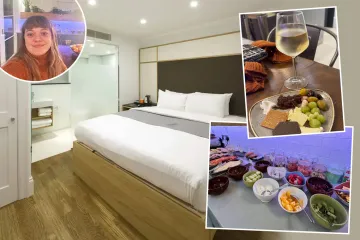
There are several room styles including bunks and doublesCredit: Unknown
Where is Mollie’s Manchester?
Unlike its two sister hotels in Oxfordshire and Bristol – both of which sit roadside and a short drive from the main hub of the city – the Manchester joint is slap bang in the city centre, close to the upmarket Deansgate area.
It’s a 15 or so minute walk from Manchester Piccadilly train station.
What’s it like?
This is the first hotel in the budget-luxe chain not to operate as a motel and has a slightly more sophisticated feel to it.
You’ll likely spot locals popping in for coffee on their way to the shops, or mooching about in the very stylish lobby-cum-cafe where the atmosphere is reminiscent of a cool, unstuffy members club.
All have the exact same Scandi-esque look no matter which county you’re staying in – think light wooden panels and eccentric lamps.
The Manchester hotel features a couple of roomier options like the Studio, which comes with a lounge and freestanding tub, and several giant suites that boast a proper kitchen and living room plus an in-room Peloton bike.
Other options include doubles, twins and four-person bunk rooms.
Mollie’s diner serves American grub including fricklesCredit: Supplied
What is there to eat and drink?
The American-style motel theme runs strong in the kitchen, with a knock-out menu of burgers, hot dogs and milkshakes at the onsite diner.
Dishes are filling so make sure to come hungry.
I tried the frickles – fried pickles – which came with a zingy dipping sauce and reminded me of the ones I ate in America’s Deep South.
Brekkie is a similar affair: pancakes stacked high and dripping in maple syrup and fry-ups that are piled with some of the best hash browns I’ve ever eaten – fluffy inside, wonderfully crispy on the outside.
What else is there to do?
The hotel has a cool, unstuffy members club feel to itCredit: Supplied
Don’t forget to book yourself into the downstairs cocktail bar where the atmosphere is sexy and sultry.
Studio IV rather accurately describes itself as a “lively living room” – plush velvet sofas are framed around a stage where DJs and jazz musicians perform.
It’s got somewhat of a secret speakeasy vibe to it, with dark corners to cosy up in and space for people to boogie.
The cocktails are very fun and staff are extremely attentive.
How much is Mollie’s Manchester?
Rooms cost from £90 per night.
Rooms are well decorated in a Scandi styleCredit: Supplied
Is it family friendly?
Yes, very much so.
There are plenty of adjoining rooms with twin and double options, as well as bunk rooms that are great for families with more than two kids.
There’s a children’s menu at the diner and games in the lobby that kids will love
Is there access for guests with disabilities?
Yes there are accessible rooms and toilets in the public areas, as well as lifts to all floors.
Passengers wait to drop their luggage while traveling during the holiday season at Ronald Reagan National Airport in Washington, D.C., on December 22. The airport is scheduled to close for most of July 4 to accommodate events celebrating Independence Day in the capital. File Photo by Bonnie Cash/UPI | License Photo
June 17 (UPI) — Officials at Ronald Reagan Washington National Airport announced Tuesday that the airport is scheduled to be closed for much of July 4 amid a predicted record-breaking week of travel for the holiday.
There are no scheduled flights to or from the airport after noon on July 4, the Metropolitan Washington Airports Authority announced in a release. The day before will also have no flights for several hours in the early afternoon.
The MWAA said the schedule disruption is to accommodate Independence Day celebrations coinciding with the country’s 250th birthday.
“Many events will include downtown flyovers or other aerial displays such as fireworks or parachute jumps, which will affect flights periodically at Reagan National,” the agency said.
Airport officials expected flight operations to return to normal July 5.
AAA projected Tuesday that a record-breaking 72.2 million Americans will travel at least 50 miles away from home to mark Independence Day between June 27 and July 5. That’s up from 71.8 million in 2025.
Stacey Barber, vice president of AAA Travel, said traveling for the July 4th holiday “is tradition.”
“The 9-day travel forecast includes travelers who are vacationing all week and people just getting away for the long holiday weekend,” Barber said. “While the overall number of Independence Day travelers appears to be plateauing, we’re still expecting record volumes this year.”
Among those traveling for the holiday, AAA projected the vast majority — 61.4 million — will do so by car, 5.85 million by air and 4.93 million by other modes of transportation such as bus, train or cruise.
The Top 10 domestic destinations for the holiday week are Seattle; Orlando, Fla.; Anchorage, Alaska; Miami; New York City; Chicago; Fort Lauderdale, Fla.; Fairbanks, Alaska; Denver; and Boston. The Top 10 international destinations are Vancouver, Canada; Rome; Dublin; Paris; London; Calgary, Canada; Reykjavik, Iceland; Amsterdam; Athens; and Barcelona, Spain.
President Donald Trump and UFC CEO Dana White stand in the octagon after the UFC Freedom 250 event on the South Lawn of the White House in Washington, on June 14, 2026. Photo by Bonnie Cash/UPI | License Photo