Set to make travel easier for thousands of families, a new rule has been launched across 13 airports today (Wednesday, 8 July) – and in perfect time ahead of the summer holidays
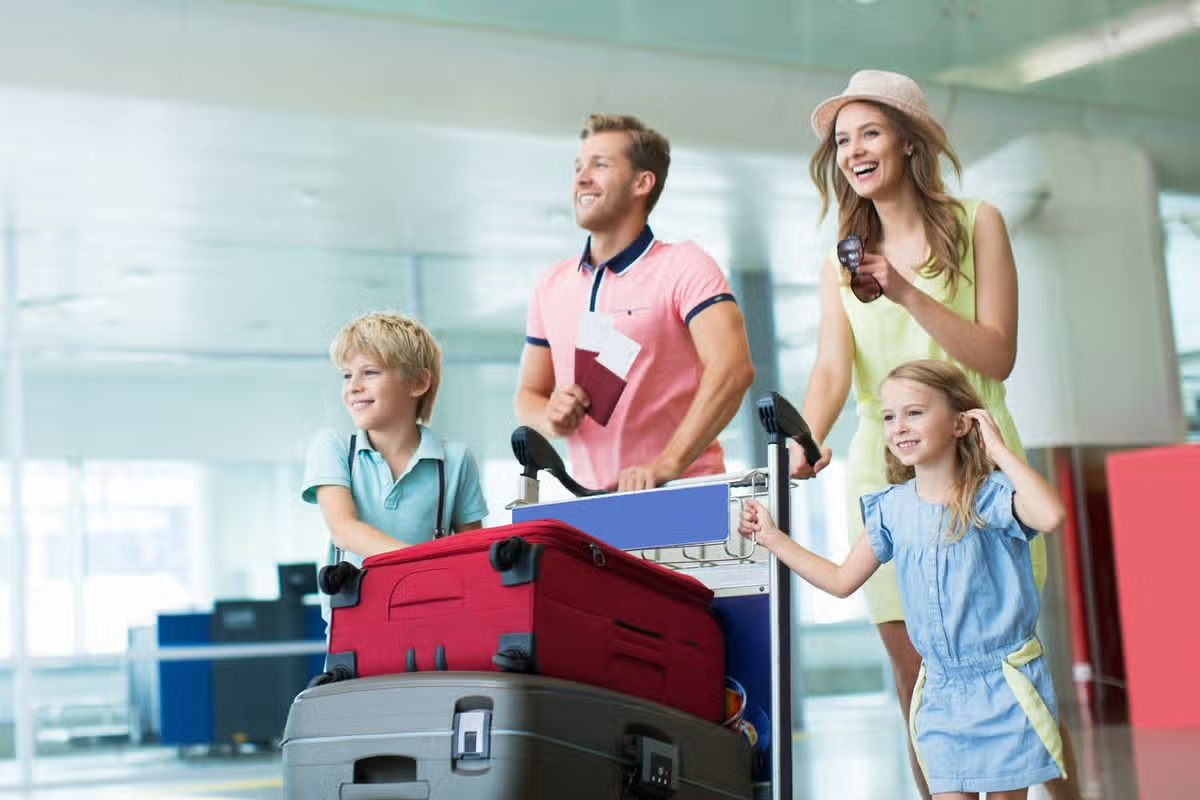
The change is set to make travel for families easier when returning to the UK(Image: Getty Images)
Families going on holiday with children this summer can benefit from a new travel rule that has been launched across UK airports.
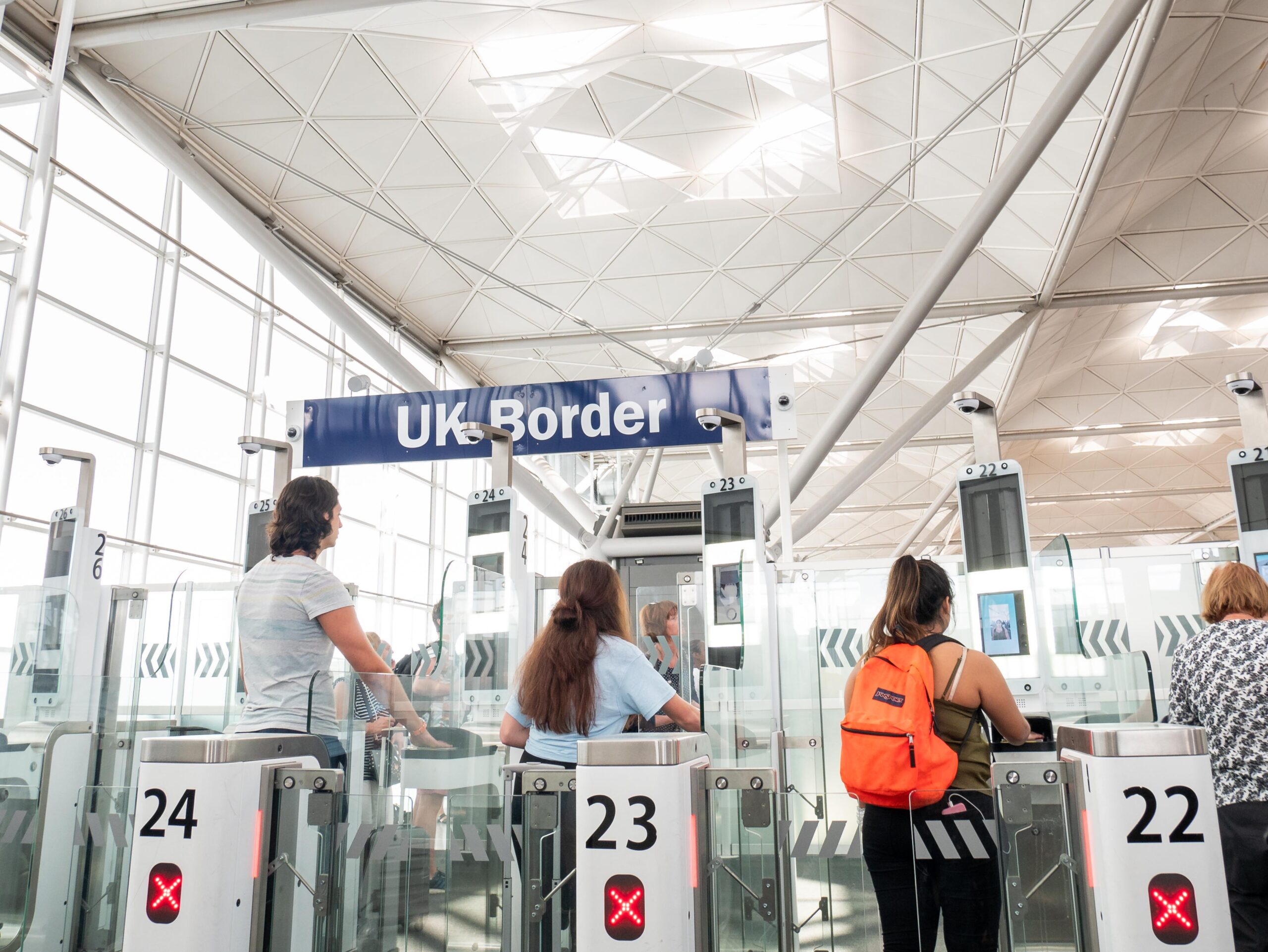
From today (Wednesday, 8 July), children aged eight or over will be able to use the eGates at 13 UK airports, offering a smoother journey home for families. Previously, the eGates were only available to travellers aged 10 and over, and those with younger children would need to join the family queue, which can take considerably longer.
Reducing the age limit is estimated to allow around 1.5 million additional children to pass through the electronic gates and other re-entry points far more quickly. While children can now be aged eight or over to use the eGates, they must also be at least 120cm (3ft 11in) tall, so they can be easily detected by the biometric scanners.
Minister for Border Security and Asylum, Alex Norris, said: “Today’s change will make journeys easier for families with small children and reduce the hassle of travelling home after a holiday. It will also free up more time for tourists to enjoy our fantastic country this summer and in the years ahead.”
Karen Dee, Chief Executive of AirportsUK, the trade body for UK airports, also said it was a “welcome development”.
She commented: “It will give more families the ability to take advantage of this technology, speeding up the border process and reducing waiting times for many. Airports work very hard with border authorities to ensure the UK’s front door is both secure and welcoming, with those coming home and visiting enjoying a smooth experience.”
In perfect time ahead of the summer holidays, the change will affect 13 major UK airports. This includes:
Birmingham
Bristol
Cardiff
East Midlands
Edinburgh
Glasgow
London City
London Gatwick
London Heathrow
London Luton
London Stansted
Manchester
Newcastle
The eGates at airports, which form part of the government’s Electronic Travel Authorisation (ETA), scan passengers’ passports and are designed to streamline the entry process. Residents in Australia, Canada, Iceland, Japan, Liechtenstein, New Zealand, Norway, Singapore, South Korea, Switzerland, and the US will also benefit from the airport change.
Travel Insurance Expert at Confused.com, Tom Vaughan, commented on the eGates rule change for children. He said: “The minimum age for UK airport e-gates drops from ten to eight today, meaning up to 1.5 million more children could clear the border automatically instead of queuing at a staffed desk. This is great news for families travelling with young children. Anyone who’s queued at border control with tired kids will know it could mean shorter waits and a smoother end to the journey home.
“It’s also a sign of where things are heading. As facial recognition technology becomes more established, it wouldn’t be surprising to see the age threshold lowered further in the coming years. But whether or not your child can use an e-gate, the basics still apply: everyone in the family needs a valid, biometric passport to travel. It’s easy to overlook this among the excitement of planning a trip.“Our research shows that confusion around passport validity is still common, with less than half (43%) of holidaymakers aware that passports for EU travel must be issued within 10 years of departure. That’s a significant number of people who could turn up at the airport only to discover their passport isn’t valid, regardless of which gate they’re heading for. With summer getaways in full swing, it’s worth taking a few minutes to check every family member’s passport now. Our passport checker can help you spot any issues early, so the only thing slowing you down at the border is the length of the queue.”
Do you have a travel story to share? Email webtravel@reachplc.com
A MASSIVE travelling attraction is set to return to a seaside hotspot next week – and it’s perfect for the whole family.
The popular spot will be open for more than a month throughout the summer.
Sign up for the Travel newsletter
Thank you!
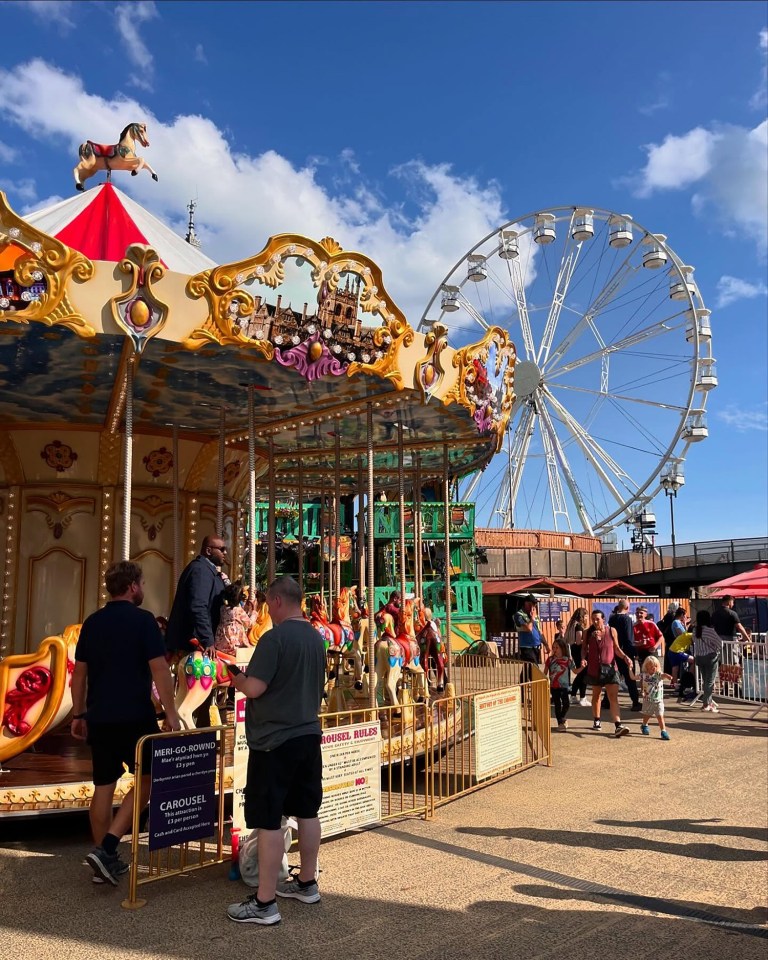
The popular fair is set to return next weekendCredit: Cardiff Bay Fun ParkThis year the site will even feature the UK’s tallest travelling towerCredit: Cardiff Bay Fun Park
Cardiff Bay Fun Park will descend on the Welsh capital once more, as the family-friendly destination is set to return to Roald Dahl Plass next weekend (July 18).
This year also marks the attraction’s newest arrival, Skyfall – the tallest travelling drop tower in the UK.
At 262 ft (80 metres) high, thrill-seekers will be treated with 360-degree panoramic views of Cardiff and the Bristol Channel, before plunging down at speeds of up to 75mph.
The tower even dwarfs the tallest roller coaster in the UK, Hyperia, which stands at 236 ft (72 metres).
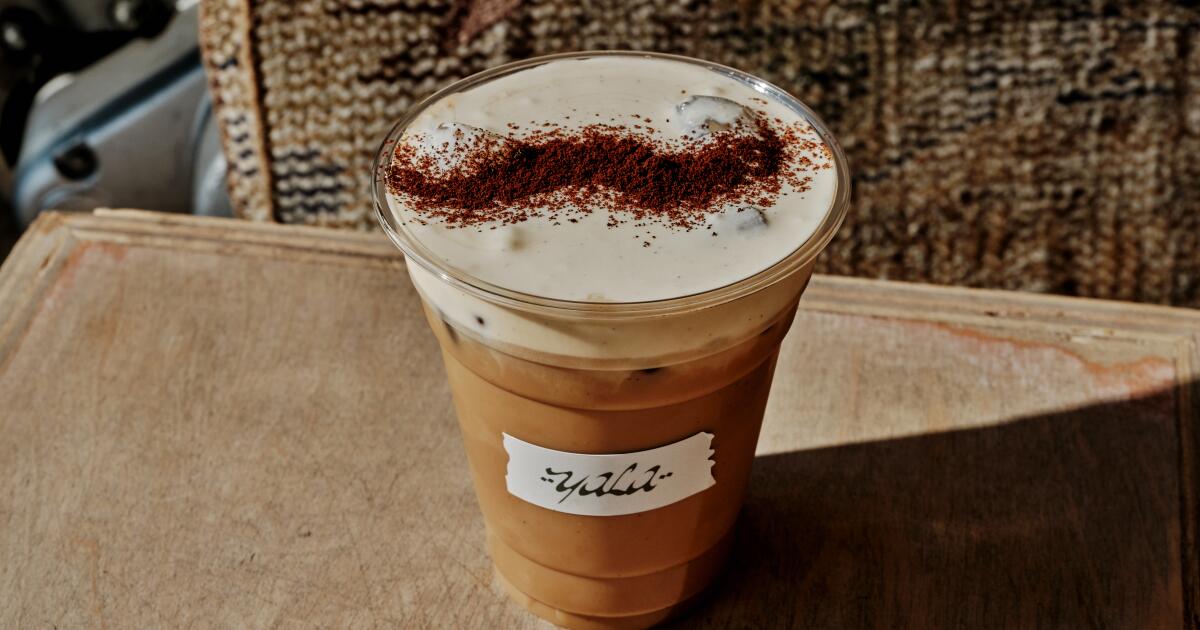
“You can’t open a coffee shop in L.A. without having a cream top, fortunately or unfortunately,” said Ryan Solomon, director of wholesale at the Little Marionette, on bringing the cafe from Sydney to L.A. in 2024.
A whipped topping typically made from condensed milk or heavy cream, fans of embellished beverages can’t get enough of the now-standard flourish that local coffee shops add to iced coffee and matcha drinks. The trend evolved from the Austrian Einspänner coffee drinks that first overtook Seoul’s coffee scene in 2016 before landing in L.A. not long afterward.
The verdict on cream tops is split among cafe owners, with some claiming that the rich, luscious topping can overpower the flavors of carefully curated coffee drinks. Last year, prominent L.A. cafes Maru Coffee and Mandarin Coffee Stand limited the add-on on their menus, with Mandarin Coffee Stand owner Sherry Gao saying that the trend went “a little bit out of control.”
About This Guide
Our journalists independently visited every spot recommended in this guide. We do not accept free meals or experiences. What should we check out next? Send ideas to guides@latimes.com.
But for Arian Behboodi and Jared Sielski, co-owners of Lynx Coffee in Sherman Oaks, the pros outweigh the cons.
“We appreciate the cream top drinkers, and we appreciate the coffee fanatics, and we really do try to have a little bit of both,” Behboodi said.
Now, local cafe menus are evolving beyond neutral cream top flavors and offering whipped toppings that pull inspiration from all parts of the world, such as an iced honey latte garnished with a Vegemite cream top at a Palms coffee shop and a cajeta cream top that recalls the gooey Mexican caramel sauce at a new cafe in Hermosa Beach.
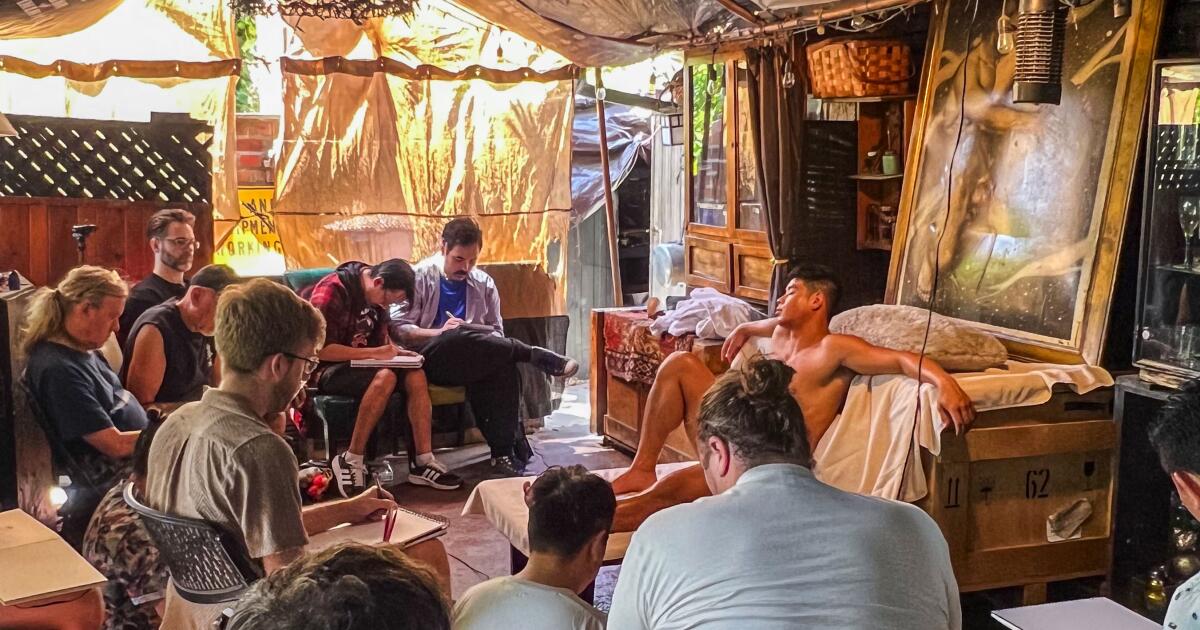
“We’re putting on social, immersive figure drawing events for neurodivergent, queer nerds,” says Jennifer Martina, the producer at Nest of Friends, the nonprofit production company that stages biweekly figure drawing at Geeky Teas & Games in Burbank.
Martina and artist Sketkh Williams, Sketch by Sketkh’s host, provide a welcoming atmosphere across identities, skill levels and nerdy interests, while also playing to their own backgrounds in theater. The sessions feature dramatic lighting, staging and soundtracks, and use professional cosplayers as models. Embodying characters from “Star Wars,” video games, anime and other IP, these pros don’t just dress the part, they take pains to hit their characters’ canonical stances for attendees to capture.
For Martina and Williams, the events are an alternative to nude or more traditional figure drawing sessions. “That just doesn’t interest us,” says Martina. “We’re both theatrical people, so for us part of putting on a show is seeing characters, some cool costume design and a theme.”
Lost luggage? Tarmac delays? Rental-car blues? No whining about measly travel headaches with the mother of all bad-trip sagas looming on the big screen.
“The Odyssey,” Christopher Nolan’s epic take on the Trojan War’s fallout, debuts July 17. Spoiler alert, if you somehow avoided Homer in community college: Nobody, save biblical Job, has had more misery hurled at them.
Outflanked by cruel and fickle gods at every turn, legendary Greek hero Odysseus outsmarted a one-eyed giant, suffered through the bewitching Sirens’ song and braved the Underworld’s dead denizens. He battled oversize cannibals, outmaneuvered a witch and lost scores of men at every turn. Then made it back to Ithaca after 10 years only to find his home overrun by suitors wooing his wife.
Hollywood has created a whole franchise around road trips gone wrong. Think of “The Hangover” or “Sideways” or “Little Miss Sunshine.” Screenwriter-director John Hughes perfected the big-screen comedic treatment of travel gone south with classics such as “Home Alone,” “National Lampoon’s Vacation” and “Planes, Trains and Automobiles.”
Let’s not even talk about the “three-hour tour” that left Gilligan and friends stranded on a deserted island for 98 episodes, or how Jack Dawson’s voyage ended aboard 1997’s “Titanic.”
A significant body of evidence even indicates that travel makes us sick. Trip-related problems are so common, in fact, that consumer advocate Christopher Elliott has stitched an entire career out of resolving them — from timeshare scams to horrible airline customer service and beyond.
Still, we keep buying tickets and packing our bags to sail into the great unknown, across Homer’s wine-dark sea. Why? Elliott attributes it to what he terms “traveler’s amnesia.”
“It amazes me that travelers are not up in arms about the way they get treated,” he said. “They take a trip, have a terrible experience, and forget about everything that went wrong and only remember what went right.”
He suggests that avoiding a bad trip starts with choosing companies noted for strong customer service. He cited some name-brand examples: Marriott for hotels,Alaska Airlines, and Enterprise Rent-A-Car. He avoids cruises as much as possible.
Which is funny, because when I think about cruising, I don’t revisit the miserable 36 hours that norovirus confined us in our cabin. I instead recall coasting past a flotilla of icebergs in Alaska’s Glacier Bay.
When I think about Mexico, I don’t wallow in memories involving Montezuma and his gastrointestinal revenge. But I do cherish thoughts of snorkeling with playful sea lion pups.
And when I consider airports, I blot the memory of the woman next to me at Gate 66 who insists on blaring a video call at maximum volume. Instead, wielding my noise-canceling earbuds, Odysseus-like, I plan to smother this screeching sound to preserve my sanity. But before I can insert them, a voice speaks to me.
To all of us, to be technically correct, since it emanates from the speakers of Los Angeles International Airport’s Terminal 6.
“It’s time to play TSA’s favorite game!” says the voice, mimicking a game-show host’s hustle. “You lost it, we found it!”
The speaker explained that someone had left a laptop computer at a checkpoint. The two were reunited moments later, which set my feet in motion, wondering whose voice it was. There at the checkpoint I met Carl Revis, a TSA supervisory officer with a penchant for comedy.
“You don’t have to be a jerk to get things done,” he told me. “I think reaching people through comedy is a lot easier than screaming and yelling at them.”
Taken together, my trip recollections probably qualify me as living proof of Elliott’s traveler’s amnesia theory. The final diagnosis should be clear soon. I’m retiring from full-time work this year, and people inevitably ask what’s next.
It’s not completely clear, I tell them. But I’ll definitely have more time to travel. Maybe sail across the Aegean … what could go wrong?
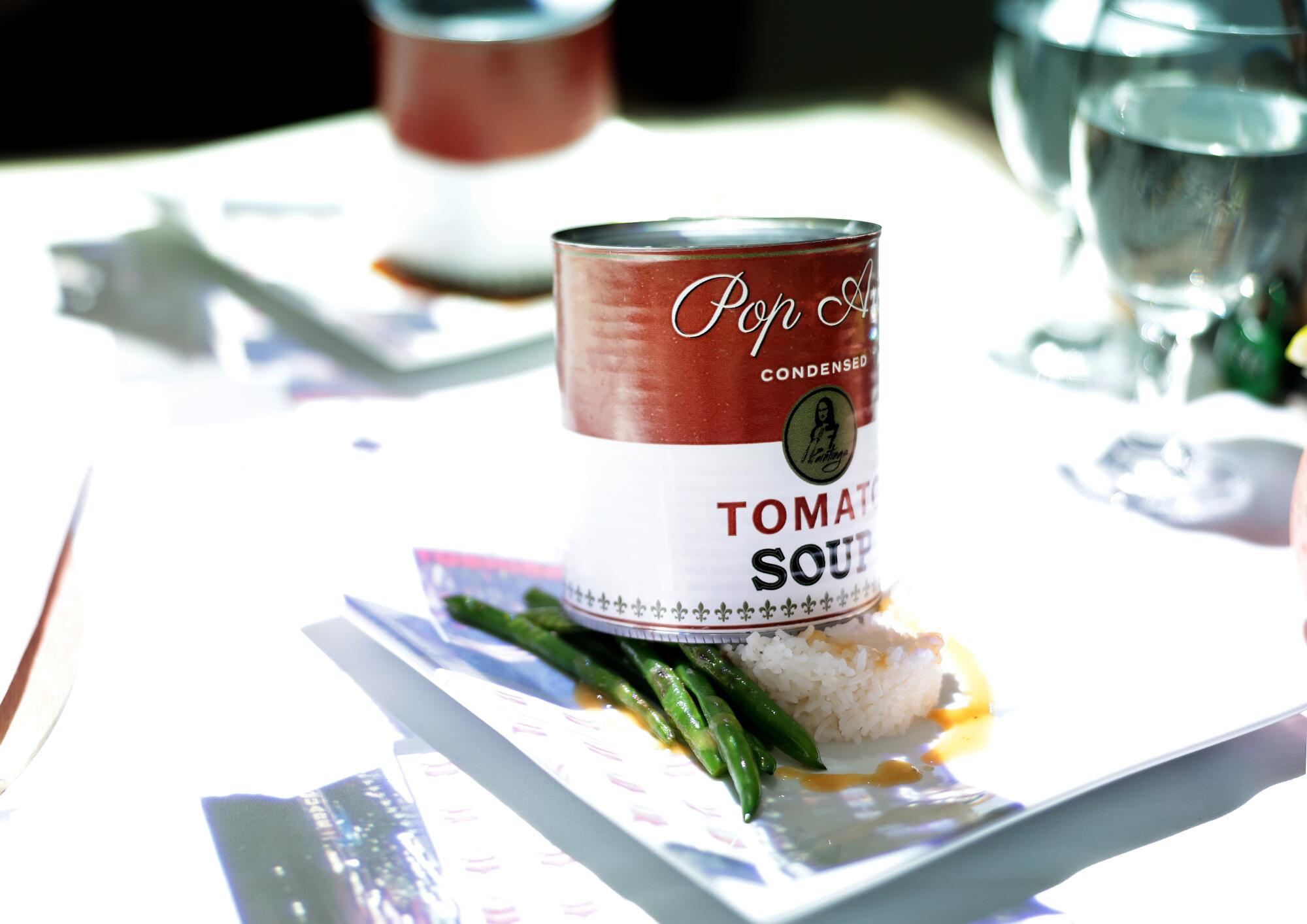
My dinner course is served. It is a Campbell’s-inspired soup can, lightly angled so strands of broccoli are peeking out. I lift the can to uncover a slow-braised short rib and mashed potatoes. An American dish to represent an American artist, here Andy Warhol.
The room is overtaken with projections, scenes of bustling New York traffic paired with bachelor-pad-like guitar riffs. Shown on a wall above a dinner table is a selection of Warhol silkscreens. It’s a Friday night in West Hollywood, and I’m surrounded by a mix of out-of-towners and those celebrating an anniversary. And while this is a special occasion, we’re urged to get a little messy with our food — to use our hands, to paint with a salad, to draw on a cookie.
The main course: A tomato soup can? “7 Paintings” is an immersive event that occasionally hides dishes in artist-inspired presentations.
(Christina House / Los Angeles Times)
Play is the primary side dish at “7 Paintings,” a tech-infused dinner theater that aims to be a crash course in fine art. That selection of veggies paired with multiple mini cups of colorful dressings? Guests are encouraged to mix and match the vinaigrettes into a mess of hues, a nod to abstractionist Jackson Pollock. And yellowfin tuna with dashes of avocado and taro chips? That’s an edible tribute to Banksy, of course. What does raw fish have to do with stenciled street art? It’s bold, heavily angled and has a short shelf life? Maybe? Perhaps don’t overthink it.
Even the paper is edible.
(Christina House / Los Angeles Times)
“Have you ever eaten a painting before?” says Nadine Beshir, the Dubai-based creator of “7 Paintings.” “We try to get people out of their comfort zones and eating paper. I want to bring out the child in them.”
“7 Paintings,” held at Sunset House L.A. through the end of August, is the latest example of immersive dining to arrive in this city. These experiences often involve guest participation and are accentuated with advanced multimedia technology and sometimes theatrical elements.
Worldwide, there have been standouts. For instance, Eatrenalin at Germany’s Europa-Park, a dining room-meets-ride where participants are whisked around the space on trackless “floating chairs,” has just received a coveted Michelin star. Ibiza’s Sublimotion has similar haute ambitions, pairing 12 diners together in a room that will come alive with otherworldly projections and performers. At times, diners will win don virtual reality headgear.
“7 Paintings” pairs food with art and music. It’s “fun dining, not fine dining,” says its founder.
(Christina House / Los Angeles Times)
Bartender Luca Famulari shakes a cocktail at the immersive dining event.
(Christina House / Los Angeles Times)
“The economics of a restaurant are not the same as the economics of theater and the challenge of combining the two lies in thinking outside the box with respect to pricing and cost structure, such that the customer perceives high value from both the food and the experience,” says the Gallery co-founder Daren Ulmer.
Entrepreneurs keep aiming for that careful balance. “Le Petit Chef and Friends” is currently running at Tangier at downtown’s Hotel Figueroa, an event in which a fully animated film is projected on our plates and tables. Long-running pop-up event Fork N’ Film leans more dinner and movie, pairing dishes directly inspired by what is happening on screen. Upcoming films include “Ratatouille” and “Lilo and Stitch.”
The field comes with challenges. “The costs are very high,” says Joanna Garner, an immersive designer and former creative director with experiential art firm Meow Wolf. Garner has been experimenting herself with communal, immersive dinner events, and her next, the flirtatious “Please Open Your Mouth,” is set for July 11. (No tech there, as Garner is after a more sensual, adult-focused gathering.) Tickets for her event are $150 and a spot in the “7 Paintings” dining room runs $175, priced on par with a number of city’s most acclaimed restaurants.
There is also the reality that all public dining is in some fashion immersive, usually requiring varying combinations of engagement, communication and presentation. And then, are all these added elements distracting?
An animated Mona Lisa sits on the wall as guests enjoy their meals. Throughout the dinner, the painting provides factoids on various artists.
(Christina House / Los Angeles Times)
Throughout “7 Paintings,” for instance, an animated Mona Lisa, situated on the wall next to the main dinner table, will provide brief biographical details of each artist represented.
“Being able to nail the food, and nail the story, those are two very difficult threads to weave,” Garner says. “I do think, ultimately, people come to a dinner table to talk to the people at the table and to have intimate experiences. To have an experience where you’re constantly being taken away from the food, I’m not so sure if that’s what people are looking for.”
Food is framed as a star of “7 Paintings” but tasting it is just one component. At one point, we must uncover a cheese course in a tiny treasure chest, the code for the lock hidden in the projections (don’t stress, it’s not a hard puzzle). Beshir highlights the Pollock-inspired salad course, which is accentuated with a jazz soundtrack, as the thesis of the evening.
1
2
1.A guest uses a silicon brush to apply sauces onto an entree, a nod to abstractionist Jackson Pollock.2.Projections fill up the dining table during meals.
“This course is really about getting people to free their minds from preconceived ideas,” Beshir says. “Like, you have to eat with a fork and knife, or the salad comes and then the dressing. No, the dressing comes and then the salad, and it’s trying with big brushes to paint the way he did. A lot of people do not understand Abstract Expressionism, and they think it’s people just splashing colors around. But when you understand the link between the rhythm of the music and painting, you live it. We give you time to paint with your salad dressing.”
In L.A., Beshir has partnered with nightlife impresario Kim Kelly, who is plotting a “Sleep No More”-inspired walk-around theatrical show for the Sunset House venue later this year. “7 Paintings,” however, is fully seated, and purposefully a little silly. Beshir and Kelly have been evolving it during its L.A. run, recently adding a stronger painting component by giving guests their own canvas to work on throughout the evening. Each night crowns a winner.
“Everyone comes over to look at their art,” Kelly says. “It just kind of changed the whole thing, to be honest. People are now being creative throughout the entire evening. Instead of just watching and occasionally painting, you’re now painting the whole time.”
As for what, perhaps, soba noodles with edamame and mushrooms have to do with Pablo Picasso, or why Salvador Dali gets an unexpected dessert course of a white chocolate potato souffle, Beshir clarifies the goal of the evening. While the animated Mona Lisa will provide backstories on each painter, this isn’t an educational night. “It’s fun dining, not fine dining,” Beshir says.
And by the end of my night, strangers were socializing, showing off their painted cookie creations, sharing Banksy tidbits and asking for recommendations on various vinaigrette combinations. Ultimately, it’s an evening of discovery, packed with surprises like finding an entire course hidden under a canvas.
Darryl Mayes of Charlotte, N.C., left, and Taylor Smith of North Hollywood, right, uncover their course.
(Christina House / Los Angeles Times)
“We try not to have too much sophistication, like fried ants or something. I’m personally very adventurous in how I eat, but if I want to have this in 100 cities around the world, I cannot be too meticulous.”
And Beshir has big goals.
“I want this be your movie and dinner thing,” Beshir says. “I want people to be waiting for our next show, and to be able to afford to come every couple months.”
And to come home not with leftovers, but perhaps a painting of their own.
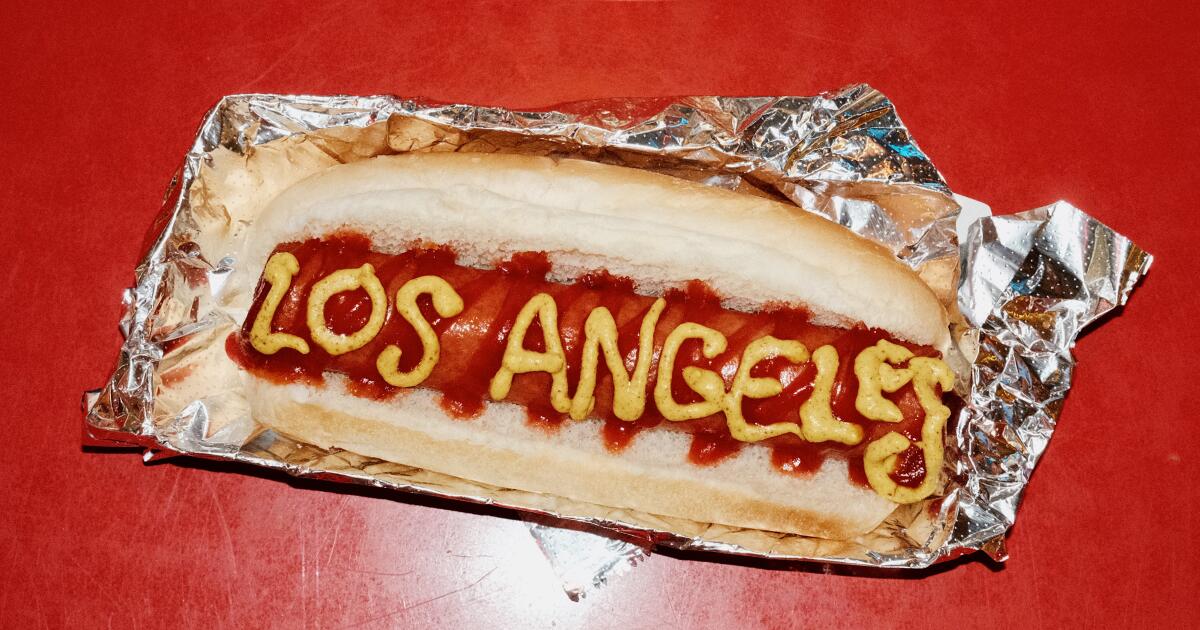
The San Fernando Valley has lost many of the great spots that made it a hot dog mecca over the years — among them, the Weiner Factory, Rubin’s Red Hot, Vicious Dogs, QT Chicago Dogs and the Infield, late home of the fried Twinkie dog. It was a relief, then, to find Fab Hot Dogs in Reseda still open and thriving. Best of all, the shop still makes an excellent Bald Eagle Ripper, the original owner’s homage to New Jersey’s Rutt’s Hut, “home of the ripper.” The dogs are deep fried just until the casing rips and on top, is a version of Rutt’s mustard relish, which at Fab is browner and said to include Hatch chile powder, shredded cabbage and carrots, garlic, oregano, onions, celery seeds, cider vinegar, and Düsseldorf mustard with sweet relish. Fab’s ripper dogs first got the attention of this paper’s late restaurant critic Jonathan Gold not long after it opened in 2008 and then Guy Fieri for a 2009 Food Network segment. Since then, Fab has become known not only for the ripper but for its many dog variations, including a very good Chicago dog with the right pickle, neon relish and sport peppers; several bacon-wrapped franks (with jalapeños and peppers on the L.A. Street dog; barbecue sauce and cheddar on the Kansas City dog, and Swiss cheese and baked beans on the Boston dog). A rotation of whiteboard specials includes a Santa Fe dog with Hatch green chiles and cotija cheese, and even a mac ‘n’ cheese dog. Together they make up what Gold once called a display of “the American frankfurter diaspora.”
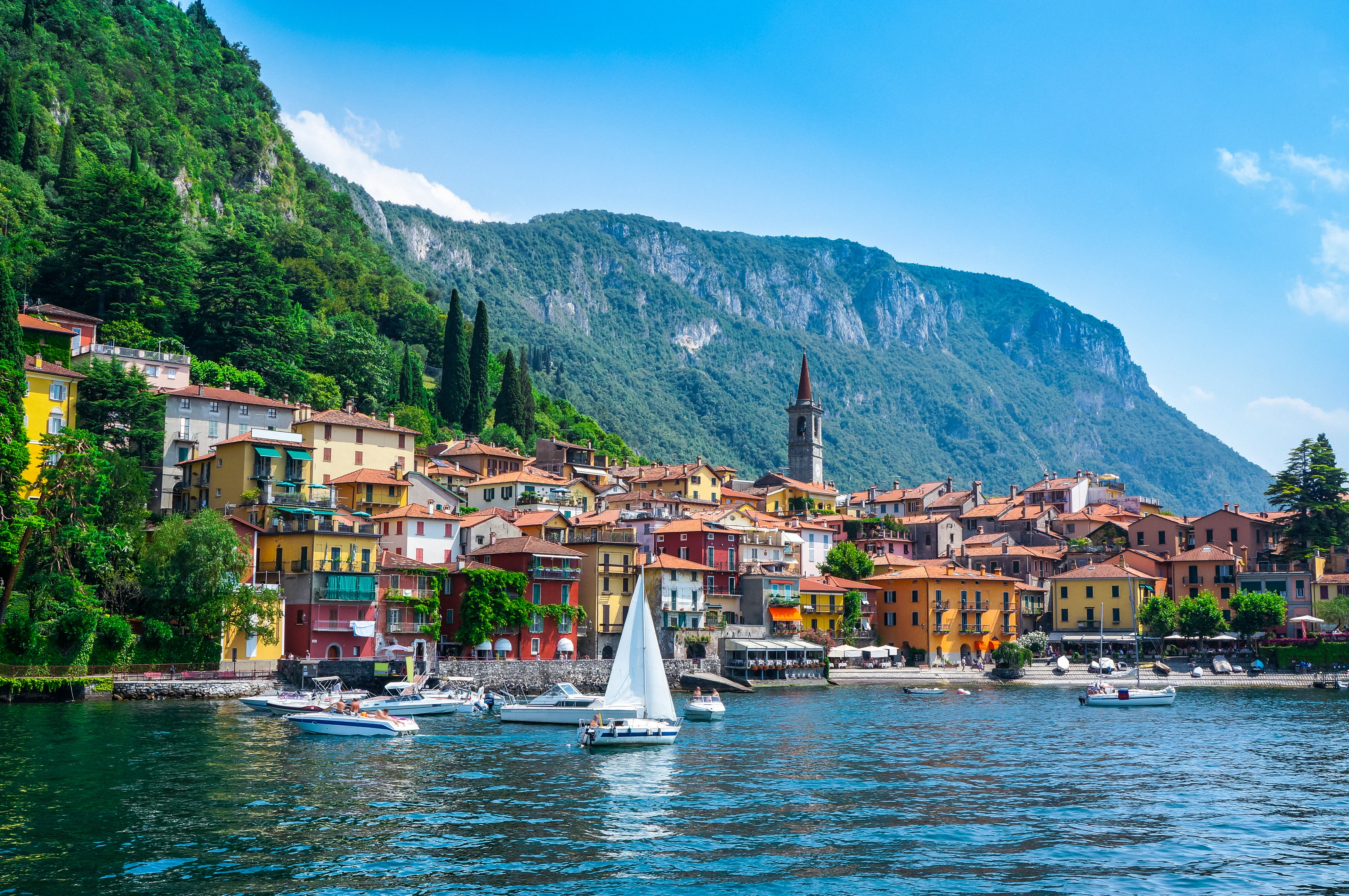
A POPULAR destination in Europe is cracking down on tourists – with fines dished out to rule-breakers.
The small village of Varenna, near Lake Como, is banning anyone from walking around its historic streets either bare-chested or wearing swimwear.
Sign up for the Travel newsletter
Thank you!
Varenna village on Lake Como is now fining people who are bare-chested or wearing swimwear in its streetsCredit: Getty
The new rules come as the village, which is home to only 650 people, is experiencing high levels of tourism each summer.
Tourists heading to the town will still be able to have a bare chest or wear their swimwear if they are at one of the lake’s beaches or if they are enjoying a boat trip on the lake itself.
However, if they are caught in the wrong place in the swimwear or with no shirt on, they could be fined between €50 (£42.74) and €200 (£170).
Varenna isn’t the only Italian spot to ban being shirtless and wearing swimwear in the town centre.
It is also banned to walk shirtless, barefoot or in a bikini in the town centres of Sorrento and the Amalfi Coast, with fines ranging from €25 (£21.37) to €500 (£427.48).
Varenna has also introduced a number of other rules impacting tourists.
There’s also a clampdown on crowds, as tour groups are now capped at 25 people.
The aim of this is so that the village’s lanes will not be blocked.
Guides have been banned from using speakers as well.
According to The Guardian, Mauro Manzoni, Varenna’s mayor, said: “Varenna is a wonderful village, and we are proud to welcome hundreds of thousands of visitors from all over the world every year.
“However, our residents’ quality of life cannot be sacrificed on the altar of mass tourism.”
ALL over the planet are incredible islands – but these ones have been declared the best in the world.
Travel + Leisure has found the very top destinations from Asia to Africa and Australia – not to mention one spot went to the UK.
Sign up for the Travel newsletter
Thank you!
Koh Samui has been named the ‘best island in the world’Credit: Alamy
The best islands were declared from reader votes of which there were hundreds of thousands.
In top spot was the Thai island of Koh Samui which got a top score of 95.64 out of 100.
The publication said: “This first-time winner in the Gulf of Thailand—with an array of elevated accommodations, luscious jungles, and roaring waterfalls—has become a leading destination for self-care.”
It was also praised for its beaches, vibrant culture and waterfalls.
“But the realThailandis in the busy beach bars flogging happy-hour deals, tiny restaurants with garish tablecloths, and the constant thump of Thai boxing promotions from crackling loudspeakers.“
In second place was the beautiful Maldives followed by the Galapagos Islands and Bali.
But in 13th place is the first and only UK island to make the list – Skye and the Hebrides.
The wild Scottish archipelago is known for mountainous landscapes, rugged coastlines and rare white-sand beaches.
Skye and the Hebrides came 13th in the list of the ‘world’s best islands’Credit: AlamyThe Greek island of Crete in Greece also made the listCredit: Alamy
She said: “Whilst there isn’t much to do on the island, it is the perfect retreat away from the modern world and the stresses of day to day life.
“The island has an endless amount of walks you can take, and a couple of mine included heading to the summit and to the opposite side of the island where I found Shoe Bay, with a white sand beach and crystal clear waters.
“And whilst exploring the island, make sure to keep an eye out for wildlife as birds of prey often circle overhead.
“In less than 24 hours I had completely fallen in love with the island.”
Other top islands close to the UK include Malta which is dubbed one of the ‘jewels of the Mediterranean’.
Its capital, Valletta, is one of the sunniest cities in all of Europe – it gets on average 3,000 hours of sunshine each year.
The Italian islands of Sardinia and Sicily which are a short flight away for Brits also got high marks.
Beautiful Sardinia in Italy achieve a mark of 91.57 out of 100Credit: AlamyThe Maldives known for overwater bungalows came in second placeCredit: Alamy
In Greece, Milos and Crete placed in the top 25 – as did Paros, which was last year’s winner, some of which are set to be the next big Greek island holiday destinations.
The ‘UK’s poshest Premier Inn’ has all of the perks of a budget stay, but there was one feature that impressed me before I’d even dropped off my bags
I spent the night at the ‘poshest Premier Inn’(Image: Premier Inn)
I checked into the ‘UK’s poshest Premier Inn’, and was impressed before I even got to my room.
As the UK’s largest hotel chain, Premier Inn promises a restful night’s stay in more than 85,000 rooms across the country in over 800 locations. Owned by Whitbread, the brand is known for its budget-friendly accommodation, plush white crisp beds, and those iconic Lenny Henry adverts that are hard to forget.
Offering even more choice to Brits, they’ve expanded even further with Zip by Premier Inn and hub by Premier, which provide smaller rooms at a lower price. While they might be more compact, they certainly don’t compromise on comfort.
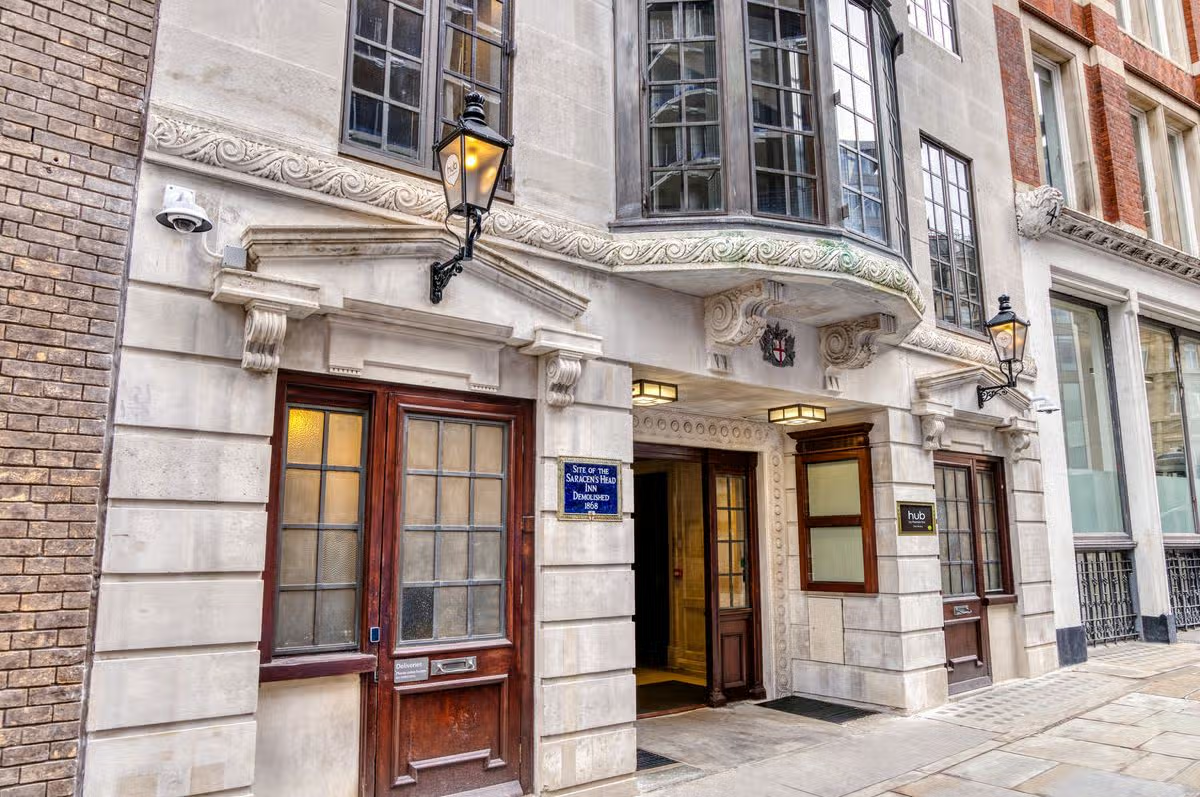
One hub has even earned a reputation as the ‘UK’s poshest Premier Inn’, despite only opening in February this year. Its location in a former Victorian Old Bailey in the heart of London might just have something to do with its label, that and its trendy interiors that could easily compare to an independent boutique, as I found out.
Finding a hotel in London can be somewhat of a minefield, with thousands to choose from, so when the hub by Premier Inn London Farringdon (Old Bailey) hotel popped up, I was intrigued. Not only was it nestled in a lively and convenient area of central London, with plenty of amenities nearby, but it also proved to be much more than a hotel.
That’s because this particular hub, or hotel, is housed inside the former Snow Hill Police Station, a 1870s Grade II-listed building that combines its original Victorian features with contemporary interiors for a unique and affordable stay. With rooms starting from £75, you can’t fault the price, and as soon as I peered up at the historic Old Bailey and walked through its grand doors, it felt far from a budget hotel.
What really stood out among its authentic features was the striking white-tiled stairway, with tall ceilings, arched windows, and a concrete floor that made me feel as though I was about to turn myself in rather than check in. It even boasted a historic blue, square police lantern that once guided residents to the station.
It genuinely felt as though I had travelled back in time as its heritage permeated every corner. It was only when I reached reception that I remembered it was a hotel, as its modern design gleamed throughout.
Just to the side of the front desk is a communal lounge where guests can unwind on one of its elegant sofas and armchairs. Beneath its white, ornate ceiling, the space is thoughtfully divided by a metal shelf adorned with vibrant cases and plants, making it feel like a home from home.
There’s also a bar serving up drinks and a dining area where breakfast is served up – I was even able to get my hands on one of their pizzas when I returned to the hotel at 1am – what more could you want?
For my stay, I checked into one of their standard rooms, boasting a double bed and en-suite. While it was compact, it certainly made full use of the 11sqm space I would call home for the night.
There was storage under the bed big enough for a large suitcase, alongside a pull-out drawer, and opposite a small desk area with even more space to keep bags out of the way, shelves and a built-in wardrobe without a door. Even the glass-door bathroom with its green tiles made use of its space, with the bin tucked neatly out of the way.
The double bed was fixed up against the wall to maximise the room, with the wall decorated in a funky London map, and the duvet neatly rolled up at the foot of the bed – perhaps to really show off its clever simplicity. There was even a small shelf beside the bed, along with plug sockets, to easily charge and store personal items.
And in its easy and efficient manner, the lighting and air conditioning are electronically controlled – so there was no need for me to wander around the room in the dark. The hub was the ideal place to spend a night in London, and I felt safely tucked away in my pod-like room, proving that you don’t have to sacrifice comfort, but perhaps just a little bit of space to secure a bargain stay.
Plus, not many people can say they’ve stayed in a former police station, or what I can now agree, is the UK’s poshest Premier Inn.
Rooms start from £75 a night. For more information or to book your stay, visit the hub by Premier Inn website.
Do you have a travel story to share? Email webtravel@reachplc.com
UK airports will now allow younger passengers to use the eGates, in a huge boost for families travelling this summer holidays.
From today, passengers aged eight and nine will be able to use the faster eGates at airports across the country.
Sign up for the Travel newsletter
Thank you!
New rules mean kids the age of eight will now be allowed to use eGates in the UKCredit: Alamy
Previous rules only allowed kids who were the age of 10 or over to use the eGates, meaning families had to wait in much longer queues at passport control.
The only other rule is that kids must be at least 120cm tall, so they can still access the screens.
The new rules are predicted to affect 1.5million kids.
There are more than 290 eGates at UK airports and ports, plus juxtaposed ports (where UK border checks take place in Europe).
This means borders like the Eurostar at London St Pancras and Eurotunnel in Folkestone.
Minister Alex Norris, Minister for Border Security and Asylum said: ”Today’s change will make journeys easier for families with small children and reduce the hassle of travelling home after a holiday.
“It will also free up more time for tourists to enjoy our fantastic country this summer and in the years ahead.”
Karen Dee, Chief Executive of AirportsUK, the trade body for UK airports, added: “This is a welcome development as it will give more families the ability to take advantage of this technology, speeding up the border process and reducing waiting times for many.”
It’s not just Brits the new rules affect either.
Non-British residents including those from the US, Australia and Japan, along with non-Schengen countries in Europe will be able to use the eGates too.
We’re sipping chestnut kir on a terrace overlooking the Tarn River in southern France when we hear excited voices from the table beside us: “Regards! C’est un castor!” Below us, a beaver the length of my leg is languidly swimming upstream. We don’t need our binoculars because the Tarn is so clean that almost every fish, frog, pebble and ribbon of weed can be seen with the naked eye, magnified by the clarity of the water. This meandering, jade-green river – which winds from its source in the Cévennes national park to Moissac, just north of Toulouse – is home to trout, perch, carp, otters, frogs, toads, kingfishers and herons. We add “beavers” to our list.
Above us, huge vultures have been drifting all day, cruising the thermals in groups of nine or 10. And when our eyes haven’t been on the river or the sky, they have been welded to the many orchids on the bank: including monkey, bee, military, butterfly, pyramidal and fragrant orchids. Later, we discover that 30 varieties have been recorded in this orchid hotspot.
Enticed by the cooler microclimate provided by the double whammy of a river and a deep gorge, we’re walking a five-day section of one of France’s newest long-distance hiking routes (April, May, early June and late September are among the best times to tackle it). The 300km GR736 officially opened in 2023 and runs from the Tarn’s source to the city of Albi. Three days of the route run directly through the Gorges du Tarn, Europe’s longest and most dramatic canyon, a 33-mile (53km) limestone gully of rock formations and towering cliffs that often rise 500 metres above the river. The gorge is also home to more than 3,000 vultures, as well as cuckoos, nightingales, red-billed choughs and owls.
Many beavers inhabit the Tarn riverbank. Photograph: Kiszon Pascal/Getty Images
Besides exceptional wildlife, a succession of medieval towns, abandoned hamlets, deserted churches, ruined castles, crumbling terraces and jaw-dropping architectural oddities are dotted along the gorge. Most must be reached on foot, via “balcon” paths often dizzyingly (albeit safely) whittled from the gorge itself.
Our walk begins in Le Pont-de-Montvert, a bustling historic town amid the expansive heathery uplands of Mont Lozère, from where the Tarn springs. For two days we traverse an unpeopled, wind-blown wilderness of menhirs, boulders, broom and heather, before descending to wildflower meadows and forests of beech and pine. We walk about 10 to 15 miles a day, unimpeded by bulky backpacks as our luggage is transported in a minivan that arrives promptly at 9am every morning.
It’s only as we descend into the gorge on day three that we begin to encounter a myriad of human-made curiosities. The first is Castelbouc, a semi-troglodytic hamlet of narrow, cobbled streets, watched over by the remnants of a castle balanced on a vertiginous spur.
Chateau and abandoned village of Castelbouc. Photograph: Michal Sikorski/Alamy
From here, we briefly cross the gorge to Sainte-Enimie, one of France’s celebrated “plus beaux villages” (its steep cobbled streets are lined with honey-coloured houses hung with pink roses), which is thriving thanks to the road that winds along the gorge’s right bank. Then it’s back to the left bank with its single-file footpath and cooling canopy of chestnut trees. We stop for the night in the restored village of Saint-Chély-du-Tarn, which has an original village bread oven, waterwheel, 12th-century church and miniature chapel carved into the rock. We dine at Auberge de la Cascade (the only place to eat in the village), feasting on Tarn-caught trout and ice-cream made from the local châtaigne, a small sweet chestnut and essential ingredient in the region’s most delicious aperitif, kir à la châtaigne – white wine with a dash of chestnut liqueur.
The following day’s gorge walk feels weirdly Jurassic, thanks to the sulphurous-yellow rocks, thickly mossed tree trunks and enormous ferns. At the hamlet of Hauterives, we spot a rigged cable-and-basket for hoisting goods over the river: someone appears to be living in this isolated spot. A couple of miles of ascending and descending brings us to the waterside town of La Malène, where we relax in a flat-bottomed boat while a professional batelier (boatman), Clément, punts us four miles downriver, pointing out the beaver families that inhabit every half-mile of riverbank, and four varieties of resident vulture (griffon, black, bearded and Egyptian), whose young will fledge throughout the summer.
Clément puts us ashore at Cirque des Baumes, where we scramble up the almost sheer bank using a series of ropes – an exhilarating experience. Here, we encounter yet another hauntingly abandoned village where miniature houses perch – precariously and mind-bogglingly – on limestone plinths. Signs of life (washing on a line) suggest that someone also lives in this ghost village – without electricity, gas or mains water.
Le Pont de Montvert, where the writer began her walk. Photograph: Hemis/Alamy
We stroll on, past miles of neglected retaining walls, which once held terraced orchards of cherry and chestnut trees; now, the place is home to deer, boar, pine martens and muskrats. After a cooling dip in the river, we walk to Les Vignes and our charming hotel, Le Parisien – pink-and-white striped walls, vintage framed photographs, antique brass beds. The chef, Amélie, tells us that she hopes the new GR736 will bring more people to the area, providing new life for these dying villages.
On our final day, the gorge slowly unfolds and flattens, opening out into a verdant valley of twisted triffid-like trees draped in luxurious moss, and glistening banks of black volcanic stone spill across our path. We follow the river to its confluence with the Jonte and spend our last evening in Peyreleau (designated “une petite cité de caractère”), strolling ancient cobbled streets and exploring medieval churches and towers with far-flung views. From the terrace of Hôtel Doussière, we watch swallows and swifts skimming the river below, and agree that Robert Louis Stevenson was right when he wrote: “If the garden of Eden exists, it’s in the valley of the Tarn …”
Annabel travelled independently. On Foot Holidays offers a week-long, self-guided trip with baggage-carrying service from £1,245pp. More information atgr-infos.com
Annabel is the author of The Walking Cure, published by Bloomsbury Tonic (£10.99).To support the Guardian buy a copy at guardianbookshop.com. Delivery charges may apply
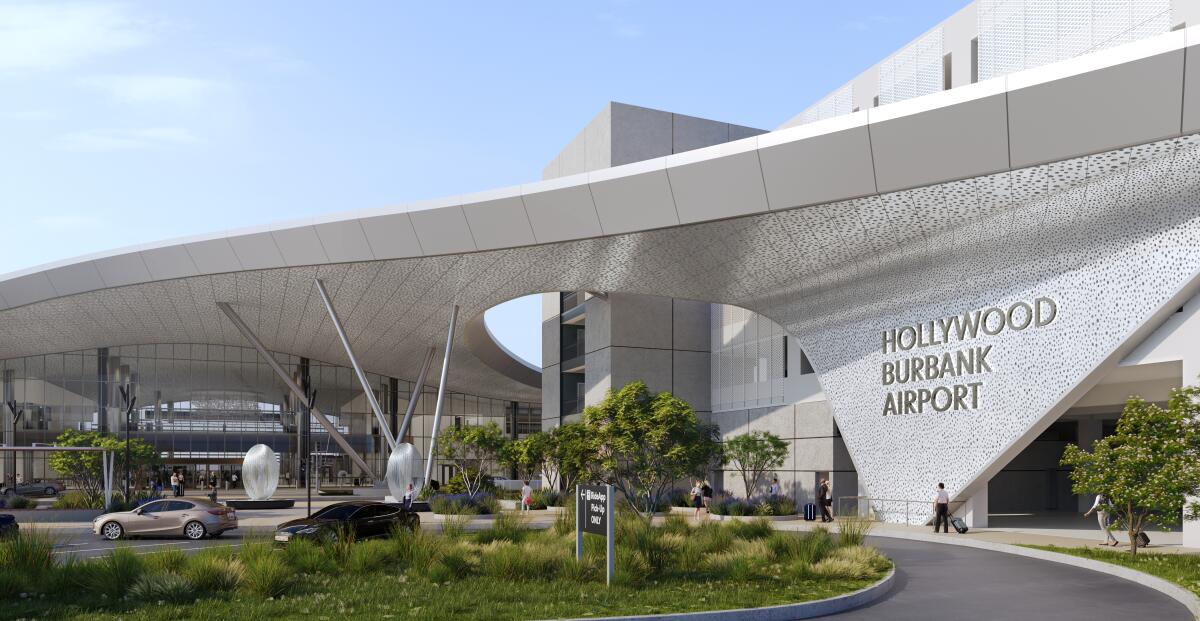
The Hollywood Burbank Airport is due to replace its two terminals with a larger new terminal on Oct. 13. The $1.3-billion project will include 14 gates — the same number the airport has now. But the new structure will be a single terminal that’s about 50% larger than the airport’s current two-terminal layout.
In moving to a 355,000-square-foot terminal, officials say, the airport can give passengers more room and better technology while meeting safety and accessibility standards.
A rendering shows how Hollywood Burbank Airport is designed to look when its new terminal opens in October.
(Hollywood Burbank Airport)
The airport, built in 1930 and run by the Burbank-Glendale-Pasadena Airport Authority, is favored by many local travelers as a simpler, faster alternative to Los Angeles International Airport. The Burbank airport’s site in the San Fernando Valley, however, has often put its leaders at odds with residents of surrounding suburban neighborhoods.
As it stands, the aged Burbank facility doesn’t meet current state seismic standards or Federal Aviation Administration design standards — which has prompted repeated safety warnings. Its nine resident airlines fly to about 30 nonstop destinations. The airport reported about 6.2 million arriving and departing passengers in 2025.
Airport officials say the new design increases the distance between the terminal and the nearest runway, currently as little as 257 feet, soon to be about 880 feet, bringing the airport into compliance with FAA standards.
Meanwhile at LAX, which reported 73.7 million passengers in 2025, the opening of a long-awaited SkyLink automated people mover (an electric train linking terminals to rail service and rental cars) has been delayed by technical and legal issues. In a June 15 report, the SkyLink contractor estimated that its public opening would need to wait until Oct. 6 or later. Asked for a revised timetable, an LAX spokesperson gave no dates, saying only that the airport is focused on “exhaustive testing of all tracks, signaling systems, and vehicles” to ensure safety and dependability.
A rendering shows how Hollywood Burbank Airport is expected to look after a new terminal opens in October.
(Hollywood Burbank Airport)
In Burbank, voters approved the airport terminal replacement project in 2016. Construction began in 2024. At the entrance, travelers will encounter a pair of 16-foot-tall sculptures, “The Two Electras,” by Cliff Garten; inside, a ceiling grid artwork by Glenn Kaino.
The new space is just north of the existing terminal, which is to be demolished. The new entrance will be at Winona Avenue and Hollywood Way. Airport officials say the change will not affect the number of flights or the airport’s operating hours, which are 7 a.m. to 10 p.m.
In the new terminal, airport officials say, the walk from the entrance to the farthest gate will be 1,285 feet, down from 1,600 feet now, with wider corridors and sidewalks and access to power plugs for devices from every seat. Baggage claim carousels will move from outdoors to indoors.
A July 7 photo shows work in progress at Hollywood Burbank Airport, where a new terminal is scheduled to open in October.
(Hollywood Burbank Airport)
The airport project, known as Elevate BUR, has been overseen by the project management company Jacobs. The Design-Build portion of the project is led by Holder, Pankow, TEC, Joint Venture. Corgan provided architectural services in association with CannonDesign.
As it does now, the airport will supply shuttle bus service between the new terminal and Burbank Airport-South Train Station (which connects with Amtrak’s Pacific Surfliner) and the Burbank Airport-North Station at San Fernando Road and Hollywood Way.
Another thing that won’t change: Passengers will continue to walk across the tarmac from terminal to stairs to planes, rather than using the enclosed jetways common in other airports, especially larger ones. It’s something travelers say they appreciate about the airport.
“The second I step onto the tarmac at Burbank, I start acting like I’m boarding a private jet,” wrote one Threads user. “And you’ll never convince me otherwise.”
Some other changes travelers can expect in Burbank:
The new terminal’s 14 food service units are tentatively set to include a Flavor Town, Spring Chicken, Farm Table Bistro, Jones Coffee, Perry’s Joint, Poquito Mas, West Coast Smash Burger, Diane’s Pizzeria, Massis Kebab, Starbucks, Border Grill, Jet Tila’s Asian Table, Santa Canela bakery and a bar with picture-window views of the runways and Verdugo mountains.
The Grand Hall of the soon-to-open terminal at Hollywood Burbank Airport awaits finishing touches on July 7.
(Hollywood Burbank Airport)
A new parking structure next to the new terminal will hold 2,007 parking spots, including 400 valet spots. (The airport’s total number of parking spaces will remain the same at 6,637.)
The distance between the new terminal and the airport’s existing rental car facility and bus stop (Regional Intermodal Transit Center) will be slightly less than a mile by shuttle bus.
America’s semiquincentennial came and went, and the Disneyland Resort marked the occasion with a transformation of its now-classic Soarin’ ride. Gone, for now, is Soarin’ Over California and Soarin’ Around the World. In their place is Soarin’ Across America, a lightly patriotic-themed journey from coast to coast.
There are flyovers of nationalistic symbols such as the Statue of Liberty, Mount Rushmore National Monument and the Washington Monument, but the majority of its dozen locations are national parks, making Soarin’ Across America a love letter to America’s natural and diverse beauty. And it felt like a four-and-a-half-minute celebration.
You’re reading Mr. Todd’s Wild Ride newsletter
Todd Martens’ newsletter delivers news and commentary on the past, present and future of theme parks, right from the theme park capital of the world — Southern California.
By continuing, you agree to our Terms of Service, which include arbitration and a class action waiver. You agree that we and our third-party vendors may collect and use your information, including through cookies, pixels and similar technologies, for the purposes set forth in our Privacy Policy such as personalizing your experience and ads.
Soarin’ Across America has the strongest scene of any of the three attraction films, which envelop riders as they ascend in the sky on a hang glider simulator. That’s its opening, a shot of a rocket launch at Florida’s Kennedy Space Center. We start level with the spacecraft, and then follow its journey into the clouds. Being this close to a liftoff, and feeling the sensation of rising with it, creates an inspiring, rousing moment. As in any Soarin’ film, we are promised the great outdoors, but here we get magnificent ingenuity.
Is it the best Soarin’? I’d still rank Soarin’ Over California as No. 1, as it has a sort of goofball charm, such as tumbling skiers or a golf ball flying toward the audience. But Soarin’ Across America is a worthy successor. It takes a more patient approach, as the ride now seems to linger longer over certain locales, allowing us to take in the majesty of the Grand Canyon West or vibrancy of the Louisiana bayou without distraction. I appreciated the tonal shift, which makes it stand on its own and doesn’t try to force itself to capture the original’s whimsy.
A coastal scene from Soarin’ Across America.
(Disney Parks)
I also enjoyed the new smells. When hovering near the Hawaii coast, for instance, the tropical fragrances that wafted over guests seemed to reflect the gummy fruitiness of a mai tai. (No, that wasn’t just me longing for an afternoon break at Trader Sam’s.)
I went in with a bit of skepticism, and I’m relieved to say my fears weren’t realized. Well, fully realized. This is a divisive time in American history, and cultural works are increasingly viewed through a political lens. When announcing the attraction, Disney did so with symbolism of the American flag, a bald eagle and the Statue of Liberty, art that was admittedly bright and welcoming, but also could be read as giving it an uncomfortable, chauvinistic sheen.
Share via
Not everyone in 2026 may be excited with a flight simulator that serves as a cheerleader for America. And I still question the inclusion of Mount Rushmore, which has a long, controversial history, and has been a fascination of President Trump’s. But aside from that scene, and some odd red, white and blue sparkler-like fireworks visible in the New York Harbor, which curiously distract from a view of the Statue of Liberty, Soarin’ Across America doesn’t lay on the jingoism. At least until the final moments, when we see an American flag in the sky above Disneyland’s Sleeping Beauty Castle.
I’ll take it. The vibe throughout is one of restraint. When we glide near a Maine lighthouse, the film seems to pause, allowing the rocky coast and long-standing structure to be the stars. A dip across the American plains takes us above a herd of bison, but by and large movement is kept to a minimum (here the scent is of grassy freshness, which I’m betting is not what a bison smells like). A train in the Ozarks, for instance, comes to us rather than the film rushing to trace its path.
Filmed primarily with helicopters and drone shots, Soarin’ Across America utilizes CGI, courtesy of Industrial Light & Magic, less than Soarin’ Around the World, and primarily on scene transitions when we appear to fly next to a bird. This is an attraction that leans more National Geographic, that is it is unobtrusive and unstaged, than past iterations of Soarin’. While some may miss more active visuals, I appreciate that each Soarin’ film takes a different approach. Long term, it will allow Soarin’ Across America to serve as a snapshot in time, of an America at a certain point in history.
Soarin’ Across America shows aerial vistas across the United States, and it’s arriving at a divisive moment in our nation’s political history.
(Disney Parks)
And that’s already true. For when the film takes us down in front of the Washington Monument, we can off in the distance ever-so-slightly glance at the Lincoln Memorial Reflecting Pool, caught before its current Trump adminstration remodeling. Depending on your point of view, it can be unintentionally uncomfortable or amusing to see a locale before it became a political lightning rod. But that’s sort of the appeal of the Soarin’ films. They’re glimpses of not just a moment in time, but of a constantly changing world.
In that sense, there’s something relatively quaint about Soarin’, especially for our fast-paced, thrill-focused world. Soarin’ was groundbreaking when it debuted in 2001, but today we have venues like Las Vegas’ Sphere and Inglewood’s Cosm, whose spherical screens are higher definition and can even create the illusion of movement. Soarin’ Across America charms — all four of my rides last week ended in audience applause — by simply being a calming, relaxed journey that stokes our sense of adventure.
This week in SoCal theme parks
Disneyland Park has now welcomed more than 1 billion guests.
(Christian Thompson / Disneyland Resort)
Disneyland: More than 1 billion served. The Disneyland Resort over the weekend welcomed its 1 billionth guest. The distinction went to 8-year-old Andres Robles, who with his family was treated to a VIP tour of the park. Disneyland has updated its population sign atop the Disneyland Railroad’s Main Street Station. To help put into context how unfathomably large 1 billion is, it’s worth noting that it took Disneyland, which in recent years has been drawing around 17 million attendees, nearly 71 years to reach that number.
The Cenobites are coming to Universal Studios Hollywood. The latest addition to this year’s Halloween Horror Nights has been revealed, and it’s a haunted house based on the “Hellraiser” franchise. Pinhead actor Doug Bradley will reprise his role for the walkthrough attraction by voicing the character’s representation in the house. Halloween Horror Nights is set to launch Sept. 3.
Don’t miss this look into Disney history. PBS SoCal will on Friday, July 17, show the documentary, “Bob Gurr: Living by Design.” It’s a revealing look into the life of a key early Disneyland designer, as Gurr created the look and feel of the Haunted Mansion “Doombuggies,” the original Autopia cars, the bobsleds of the Matterhorn and, of course, the first Disneyland Monorail. Before you watch, get to know the colorful, outspoken Disney legend.
A Disneyland deal for Anaheim residents. Good news for those who live near the Disneyland Resort. For a limited time from July 20 through Aug. 8, Anaheim residents will have access to a locals-only deal. Adult one-day tickets will start at $71, while child tickets will be $50. Park-hoppers for adults will sell for $104 while child tickets will remain $50. It’s a significant savings and a great way to see the start of the park’s Halloween season. The tickets go on sale July 16.
The best thing I ate at the parks
The al pastor pork chop at Lamplight Lounge.
(Todd Martens / Los Angeles Times)
One of Disneyland’s best dishes is currently available at Disney California Adventure’s Lamplight Lounge, its Pixar-decorated pub-like outpost. It’s a sliced al pastor pork chop served with cheese polenta, pineapple relish and a spicy red chili butter sauce ($32). The pork is soft, the polenta creamy and it carries just enough heat to give it a bit of an edge. While filling, it’s surprisingly not too heavy, and Lamplight is always a lively spot to take a break from the parks. I only wish the place had a non-hazy IPA.
Your questions answered
Disneyland’s Sleeping Beauty Castle on a crowded 2019 day.
(Jay L. Clendenin / Los Angeles Times)
Hi Todd, we went to the park [Sunday] and it was empty: walk on to Cars, walk on to Indy. Thirty minutes for Guardians. Everything else was down to about 5 [minutes] besides Tiki Room because it’s a 15 min show. Are they struggling this summer? I haven’t seen a day like that at Disney since I was a kid. — Jake from Riverside
Disneyland has been unseasonably comfortable this summer (read: less people). And the Fourth of July holiday week was kind of a breeze, with low wait times at most attractions at both parks.
But I wouldn’t says struggling, as I have seen busy days in recent weeks and Sunday was particularly unique. Mexico and England were playing a much-buzzed-about World Cup match, which no doubt kept crowds at bay. But it’s true that Disneyland this summer has, on a whole, been more pleasant, crowd-wise, than in year’s past.
Ultimately, I attribute the potentially lighter attendance to a combination of factors. One, the park has likely hit the peak price it can currently offer guests (fingers crossed this is true, as I don’t think most Disneyland fans can absorb another yearly price hike right now). Two, the aforementioned World Cup is drawing away potential attendees. And three, everything is more expensive today, forcing families to choose between, say, an afternoon at Dodger Stadium or a day at Disneyland. It’s increasingly untenable to do both.
And people are hungry for different, approachable ticket options. Last week, for instance, Disneyland unveiled a new evening ticket deal for all guests. The $59 offer allows attendees to enter either Disney California Adventure at 5 p.m. or Disneyland at 7 p.m. Available Sundays to Wednesdays through Aug. 5, all dates sold out in six days, unless Disneyland allots more tickets for the deal.
Tell us your stories. Ask us your questions.
Have a theme park tale to share? Whether it was a good day or less-than-perfect day, I would love to hear about it. Have a question? A tip? A fun photo from the parks to share? Email me at todd.martens@latimes.com. I may feature your note in an upcoming newsletter.
Ride on,
Todd Martens
P.S.
Universal Studios Hollywood first began exploring a high-speed coaster more than a decade ago.
(Todd Martens / Los Angeles Times)
Universal Studios Hollywood’s new Fast & Furious: Hollywood Drift is set to open soon, and while many are excited, I’m curious to hear from those who live near the theme park. Universal has emphasized how it has instituted a number of noise-mitigating factors, from placing pea gravel in the tracks to building sound walls and creating shields designed to capture rider screams.
Theme park rides, however, can still be loud. If you’re in one of the neighborhoods surrounding the park, drop a line at todd.martens@latimes.com and let me know if Universal’s efforts have been enough, or if the coaster is a disruptive presence.
IF you’re on the hunt for a family break that won’t break the bank this summer – we’ve got some great ones.
Sun Travel has found 10 all-inclusive breaks from Spain to Turkey, Morocco and the Balearics all under £350pp.
Sign up for the Travel newsletter
Thank you!
The El Pueblo Tamlelt in Morocco has a huge pool area and is £313pp in August
El Pueblo Tamlelt, Morocco
Make sure to laze about in the swimming pool at this hotel in MoroccoCredit: On the Beach
In Morocco, the El Pueblo Tamlelt in Agadir has plenty to offer including its two huge swimming pools.
It’s also just a short-walk away from the beach and has an 11 acre garden to explore.
All rooms have a balcony or terrace with garden or pool view and are in traditional Moroccan style.
A family of four can stay for five-nights between August 5-10 with On the Beach from £313pp – this is an all-inclusive stay including flights from Edinburgh to Agadir.
You could reach this hotel in Spain in under three hoursCredit: On the Beach
Spain is always a great choice for a family holiday as flights are short and Alicante is just two hours and 45 minutes away from the UK.
The Dynastic Rooms Apartment in Costa Blanca is in the middle of lively Benidorm, so there’s plenty of restaurants and entertainment within walking distance from the hotel.
All-inclusive guests get access to the spa facilities included in their stay too.
A family of four can stay for five-nights between August 10-15 with On the Beach from £325pp – this is an all-inclusive stay including flights from Leeds Bradford to Alicante.
Santa Susanna, Costa Brava, Spain
The Santa Susanna can be booked from just £303pp this summer – for an all-inclusive breakCredit: On the Beach
If you aren’t feeling Benidorm, how about Barcelona?
The Santa Susanna is very family-friendly with a kids’ splash park and games area as well as a swimming pool and entertainment.
Adults can laze about on sunloungers and check out the poolside bar too.
A family of four can stay for five-nights between August 17-22 with On the Beach from £303pp – this is an all-inclusive stay including flights from Bristol Airport to Barcelona.
Blue Sea Costa Teguise Gardens, Lanzarote
The Blue Sea Costa Teguise Gardens is very close to three beaches and has a poolCredit: loveholidays
The three-star Blue Sea Costa Teguise Gardens in Lanzarote is close to three local beaches.
It has a swimming pool, buffet-style restaurant serving up Spanish dishes and a snack bar too.
A family of four can stay for five-nights between August 1-6 with loveholidays from £319pp.
This is an all-inclusive stay with the outbound flight from Leeds Bradford to Lanzarote – the inbound flight returns to Liverpool Airport.
Magic Cristal Park Hotel, Costa Blanca, Spain
The Magic Cristal Park Hotel has a little children’s pool and has game experiences
This hotel is in central Benidorm and is a mere five-minute walk from the city centre, and 15-minutes from the closest beach.
The hotel has a Roman-inspired design with two buffet restaurants, and on the top floor, guests can use the outdoor heated Jacuzzi.
It has a swimming pool as well as Game Experience area with F1 simulators and dance zones.
A family of four can stay for five-nights between August 1-6 with loveholidays from £339pp – this is an all-inclusive stay including return flights from East Midlands Airport to Alicante.
Ilyssion Hotel, Rhodes, Greece
The Ilyssion Hotel is close to the beach and has plenty to do from swimming to sportsCredit: On the beach
This three-star hotel is a great find for under £350pp as it’s right on the beach front and has four swimming pools.
You can munch on Greek food at its buffet restaurant and check out the poolside snack bar for light bites, soft drinks and cocktails.
There’s plenty of sports to try out from beach volleyball to tennis and there’s an open-air playground for children.
A family of four can stay for five-nights between August 8-13 with On the Beach from £348ppp – this is an all-inclusive stay including return flights from Birmingham Airport to Rhodes.
Magic Villa Benidorm Hotel, Benidorm, Spain
The Magic Villa Benidorm Hotel has a large swimming pool and daily entertainment
This hotel near the beach in Benidorm may be no frills, but it has everything you need at your fingertips.
It has basic rooms with a large outdoor pool with a slide that’s surrounded by sunloungers and there’s entertainment throughout the day too.
A family of four can stay for five-nights between July 26-31 with loveholidays from £339ppp.
This is an all-inclusive stay including an outbound flight from Liverpool Airport to Alicante, and an inbound flight to Manchester Airport.
Arsi Hotel, Antalya, Turkey
The Aris Hotel has an outdoor pool and a spaCredit: loveholidays
In Antalya the Arsi Hotel has an outdoor swimming pool has a dedicated children’s area and waterslides.
There’s also an on-site spa with a sauna, steam bath and massage treatments on offer.
And there’s a sandy beach just a short walk away.
A family of four can stay for five-nights between July 28 – August 2 with loveholidays from £339pp – this is an all-inclusive stay including return flights from Bristol Airport to Antalya.
BLUESEA Los Fiscos, Lanzarote
In Lanzarote the BLUESEA Los Fiscos has apartment-style rooms
Lanzarote is known for being a gloriously sunny, and sometimes windy, island with unique black sand beaches.
If you want a break over the summerholidays, head to BLUESEA Los Fiscos in Puerto del Carmen.
It has apartment-style rooms that have a balcony or terrace, a swimming pool, and the Playa Grande beach is less than a mile away.
A family of four can stay for five-nights between August 20-25 with On the Beach from £318pp – this is an all-inclusive stay including flights from Newcastle Airport to Arrecife.
Galaxy Beach Hotel, Antalya, Turkey
The Galaxy Beach Hotel is a short walk away from bars, restaurants and Mahmutlar Beach
The four-star Galaxy Beach Hotel sits in the popular resort of Mahmutlar with private beach nearby.
It also has an outdoor swimming pool, kids’ club and playground on-site.
Mahmutlar Beach is a short walk away with lots of bars, restaurants and shops to see too.
A family of four can stay for five-nights between 28 July – 2 August with loveholidays from £329pp – this is an all-inclusive stay including return flights from Bristol Airport to Antalya.
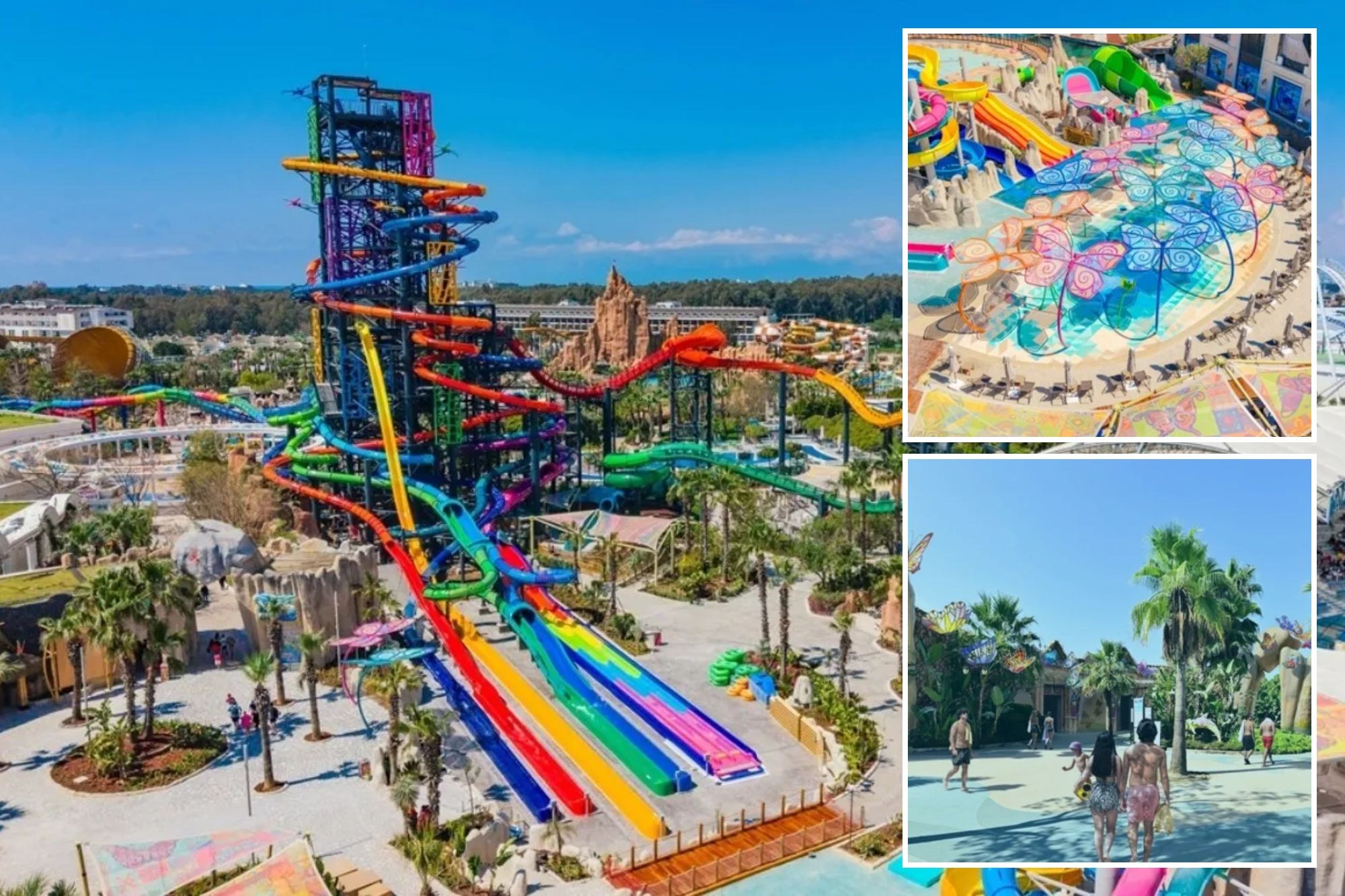
Outside of this there are two waterparks – Aqua Land and Tropic Lagoon – which have a combined 70 waterslides.
Thrill seekers can head to Aqua Land as this is where the faster rides are.
For a more relaxed visit, Tropic Lagoon is better for younger guests with pools and gentle splash parks, as well as heated pools and wave pools.
Although save time for Turtle Coaster, one of the biggest waterslides in the world which has 14mph speeds and up to four passengers at a time.
There is also a more laidback beach area for younger guestsCredit: The Land of LegendsThe new waterworlds joins the main theme park and two other waterparksCredit: The Land of Legends
The waterparks are open from April to October, during the busier summer season.
But if you want to stay onsite, it is super cheap too.
Sadly, this is just out of the waterpark season in November, so if you want to be able to access the waterparks, prices jump to £1,339pp.
Stays start from £809ppCredit: The Land of Legends
Visitors all say the same with one writing on TripAdvisor it was their “best ever family holiday” another added that it was the theme and waterpark that made it “paradise for kids”.
Also at the resort is Nickelodeon Land, Adventure Land and themed hotel rooms.
The Foreign Office’s latest France travel advice has been updated with more information for Brits as wildfires have been raging across Europe and seen thousands evacuated from high risk areas
17:03, 07 Jul 2026Updated 17:05, 07 Jul 2026
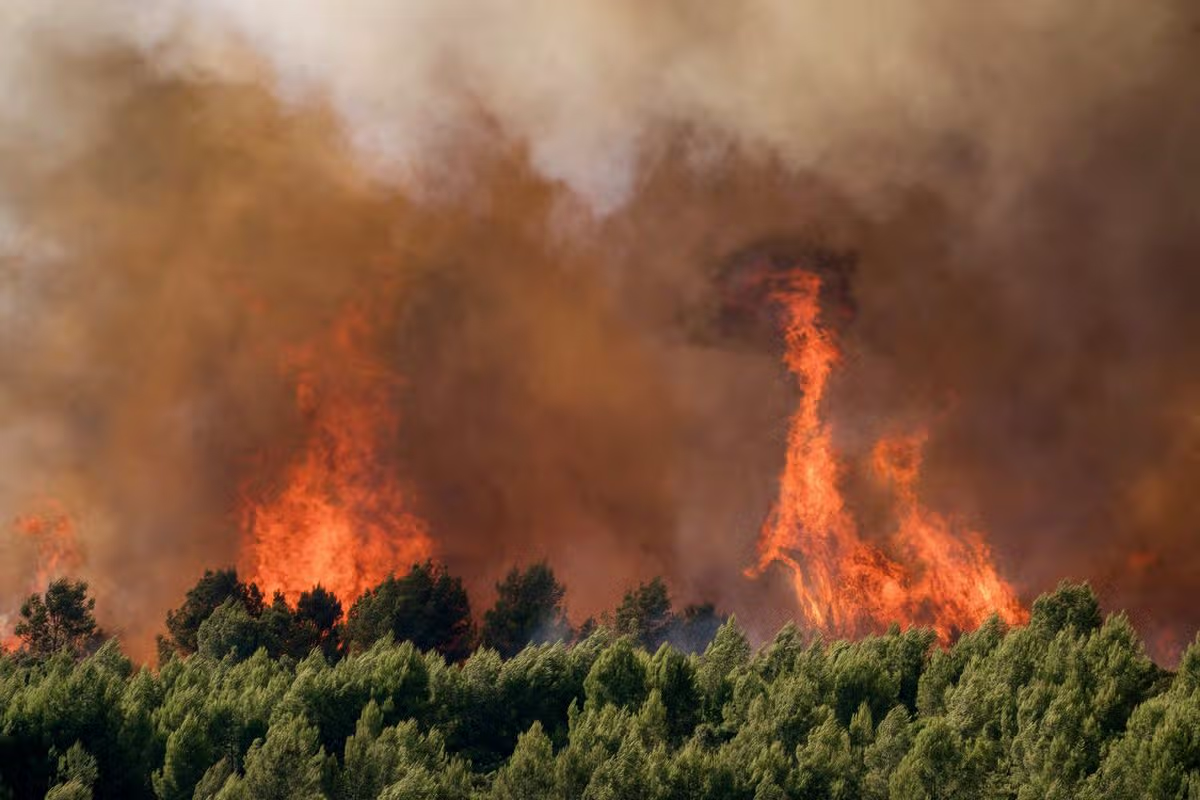
This photograph shows a wildfire raging near houses in Pouzols-Minervois on July 2(Image: AFP via Getty Images)
Wildfires have been raging across parts of Europe this week, affecting destinations including Spain, France, Portugal and Greece. Thousands have been evacuated as a result, with locals and tourists also being urged to ensure their phones can receive emergency alerts.
In southern France, over 10,000 people were evacuated from small towns and villages in the French Pyrenees, near the border with Spain, reports the BBC.
Meanwhile, spectators heading to watch the third stage of the Tour de France were urged to stay away on Monday, to make access easier for emergency vehicles in the area.
Following the wildfires, on Tuesday (July 7), the Foreign Office updated its France travel advice to warn Brits of the ‘high risk’ of fires in France over the coming months, and point to the existing advice it has on what to do if you’re staying in or near a high-risk area.
The updated advice warns: “There is a high risk of wildfires during the summer season from April to October. For advice, visit the wildfires section on the Safety and security page.”
The Foreign Office already had existing advice about the risk of wildfires in France, which always sits within its guidance. The latest update just reminds Brits that the advice exists, and where to find it.
At the time of writing, the guidance on wildfires in France reads: “Wildfires can start anywhere in France during the summer months, particularly along the Mediterranean coast and in Corsica.
“The French weather service has launched a fire alert map to help travellers stay up to date.
“Fires have become more frequent because of drought and high temperatures. French authorities may evacuate areas and close roads for safety reasons. Causing a wildfire is illegal in France, even if it is started by accident. You could get a fine or a prison sentence.
“If you’re staying in, or near, a high-risk area see advice from the French government (in English) for information about:
what to do if a wildfire breaks out
how to prevent wildfire outbreaks
protecting your home from wildfires (including mandatory bush clearance)
“If you are caught in, or witness, a wildfire, call the emergency services on 18 (fire) or 112 (emergency services).”
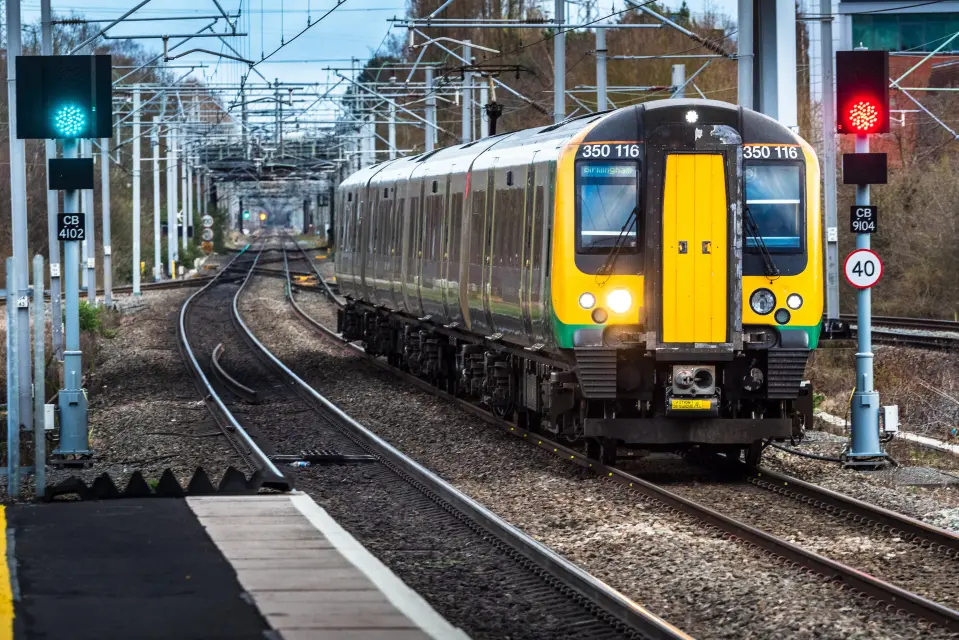
These routes include London Euston to Crewe, Birmingham to Liverpool plus Birmingham to Euston via Northampton.
The Milton Keynes to Euston and Watford Junction to St Albans Abbey routes are also expected to operate on a one train an hour basis.
LNR Train Strike: Five routes with limited service
A limited service will be in operation on the following routes only:
Birmingham – Liverpool – 1 train per hour
London Euston – Crewe – 1 train per hour
Birmingham – London Euston via Northampton – 1 train per hour
Milton Keynes – London Euston – 1 train per hour
Watford Junction – St Albans Abbey – 1 train per hour
Services will stop earlier than usual, with the last train from London to Crewe going at 3:46pm on Friday.
The last LNR service of the day from Euston will be the London to Milton Keynes Central train, departing at 5.09pm.
No LNR trains will run after 7pm on Friday, with no early morning services scheduled for Saturday and trains starting later than usual at 7am.
The Transport Salaried Staffs Association Union has called the strike amid disagreements over rest day pay.
London Northwestern Railway’s customer experience director, Jonny Wiseman, said: “We are disappointed TSSA has called further unnecessary strike action which is set to cause significant disruption for our customers. We are working hard to reach a resolution to this dispute and urge TSSA to continue talks.
“We are sorry for the inconvenience this will cause our customers and we are doing everything we can to minimise the impact as much as possible. If the strike action does go ahead we will be running a significantly reduced timetable on both dates.”
Big 7 Enjoy Travel even named it as being one of the 30 best beer gardens in the UK last year.
They wrote: “The tables are located right on the sands of the beach, making it the perfect beachside beer garden experience, ideal for the summer months.”
There’s live music as well as food and drink here all year round.
Outside is a 200-cover beer garden set across two floors – and you can enjoy a pint of Ruddles Best from £1.79.
Old Neptune, Whitstable
While not a garden per-say, the Old Neptune has the it’s own beach as a garden.
It certainly has the best views – with the sea just a few steps away and many punters constantly praise it for being one of the best spots in the area.
Newcastle’s ‘super Spoons’ has a makeover in 2024 with a two-floor gardenCredit: UnknownOld Neptune’s beer ‘garden’ is actually on the beachCredit: Alamy
Punters can enjoy a beer by the Bridgewater Canal and in the summertime there are activities like barbecues, live performances and child-friendly activities.
The Perch, Oxford
The Perch is one of Oxford‘s oldest pubs and has been dubbed a “hidden gem” by visitors.
The sweeping beer garden sits behind the 17th century inn and on hot days there is shade provided by the tall weeping willow trees.
The Wharf might be a city pub but it sits right next to a canalCredit: The WharfThe Perch is shaded by huge willow trees in OxfordCredit: The Perch
The Garden at Kentish Town, London
The Garden at Kentish Town is a massive 12,000-square-foot outdoor venue with two bars with seating for up to 950 guests.
When it’s time to eat, there are street food vendors too as well as events like comedy nights, bottomless brunches and sports screenings.
The Rising Sun, Somerset
The Rising Sun in Pensford, Somerset, might look like an ordinary pub from the outside – but it has a very impressive beer garden behind it.
It was even named thesecond-best beer garden in Englandin 2023.
The sunny spot underneath the enormous Pensford Viaduct by the River Chew with views across the countryside.
One visitor wrote on Tripadvisor: “Every so often you stumble on a hidden gem and that is what we found at the Rising Sun.”
You can watch live sporting events – like the World Cup – at The Garden at Kentish TownCredit: The Garden at Kentish TownThe Rising Sun in Pensford sits next to the enormous viaductCredit: Rising Sun
WEST Brewery Glasgow, Scotland
At WEST Brewery Glasgow, one of the biggest beer gardens in the city, visitors can enjoy a mix of Scottish and German delights with local lager and German food.
There’s no booking necessary and the Biergarten Menu that offers currywursts, hot dogs and burgers is available until 12pm.
Brewhouse & Kitchen in Pontcanna, Cardiff
This pub is popular thanks to its location next to Sophia Gardens cricket grounds – but it has a pretty beer garden too.
Outside the Brewhouse & Kitchen is room for 325 visitors – with enough sitting room for 200 with covered and shady area for when it’s particularly hot.
One visitor said it has “one of the best gardens in Cardiff.”
The craft beer is brewed on-site with a mixture of pale ales to stouts.
WEST Brewery serves up Scottish ales and German foodCredit: Willie VassThe brewhouse serves up its own ales and stoutsCredit: Brewhouse & Kitchen
Hackney Bridge, London
Although technically not a beer ‘garden’ we couldn’t leave Hackney Bridge off the list as it’s outdoor space amounts to 3,500 square feet.
It’s next to the canal with lots of seating in the lower tier gardens – not to mention space on the terraces.
Inside are plenty of bars like The Hangar, Block C and Traveling Barn to pick up drinks and enjoy them in the sunshine.
Hackney Bridge has plenty of space as it’s 3,500 square feet in totalCredit: Hackney Bridge
A travel blogger has shared her top tips for what she described as the “most underrated country in the world”, where you can get flights and five nights in a hotel for less than £500
15:55, 07 Jul 2026Updated 15:55, 07 Jul 2026
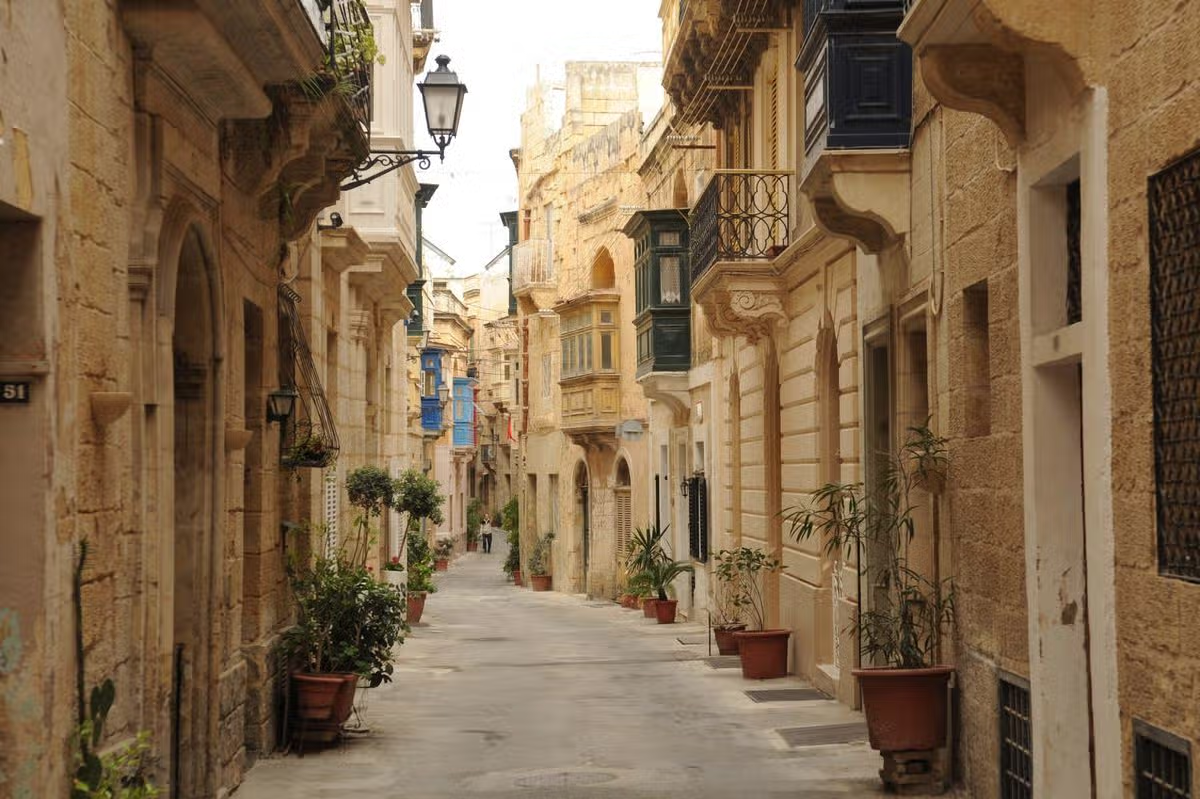
Streets in Birgu, in the south east of Malta(Image: Birmingham Mail)
A holidaymaker is encouraging travel fans to explore what she describes as the “most underrated country in the world” – offering plenty to do for less than £500 per person. Hannah, a young globe-trotter who frequently posts travel advice on her TikTok account @hannahshols, has high praise for a number of destinations – but reserves particular affection for Malta.
Situated beneath Italy and north of Tunisia, this jewel of a spot takes just three hours to fly to from the UK. During a visit to the small island nation with friends, Hannah discovered that they each paid slightly more than £400 for flights, a five-night hotel stay with rooftop pool access and breakfast included, plus baggage and transfers.
Her TikTok video documenting the trip racked up more than one million likes. She gushed: “Malta is by far the most underrated country I think I’ve ever visited.”
She added: “Even though Malta is the 10th smallest country in the world, it is definitely giving big country energy.” The clip showcases the destination’s stunning sea vistas, plentiful shops and eateries, historic sites, and beautiful gardens, reports the Mirror.
Looking back on her trip in 2024, Hannah revealed why the experience stood out. “One thing I loved about Malta was that it was like nowhere I’d ever been before,” she said. “It’s got such strong Arabic and Roman influences.”
She concluded with sincere praise: “It was just absolutely beautiful and everyone we met just seemed so proud to be Maltese.”
The travel influencer suggests a visit to the capital city of Valletta for anyone heading to Malta. Hannah and her group mainly explored the city by foot or took advantage of the bus network, which she described as “super convenient and cheap”.
She recommended: “Just spend a day in Valletta, roaming around, street dining, going to the boutique shops, wandering in and out of the gardens, seeing the cannons being fired at the saluting battery, and checking out the harbour front.”
Hannah also gave her seal of approval to the Gozo, Comino and Blue Lagoon cruise. This full-day boat trip sets off from Sliema and provides the opportunity to experience both islands in one day, alongside numerous landmarks.
According to Hannah, the price for her and her companions was “around £29 each”. Her video garnered more than 1,000 comments, with many sharing her views about the country. A local resident wrote: “I am from Malta and I am so happy that you loved our little island.”
Another user declared: “Malta is stunning, I would go back in a heartbeat,” while someone else commented: “Genuinely one of my favourite European destinations ever – never gets boring.”
“Omg I live in Malta, it’s so underrated,” another person posted.
How to get to Malta
A number of airlines, including Air Malta, Easyjet, British Airways, Ryanair, and Jet2, run direct flights from the UK to Malta. The busiest route is from London Heathrow to Malta International Airport, which sits in the island’s capital city of Valletta.
Flights are also available from Bournemouth, Liverpool, Norwich, Belfast, Manchester, Bristol, Edinburgh, Birmingham, Leeds, Nottingham, and Glasgow.
EUROSTAR is warning of delays across Europe due to an incident on a track, with some services already cancelled.
Trains heading to and from Europe are experiencing delays and cancellations “due to emergency services attending an incident near the tracks in Lille Europe”.
Sign up for the Travel newsletter
Thank you!
Eurostar services are experiencing delays and cancellations across EuropeCredit: Getty
Cancelled trains include:
3:31pm service from London to Paris
5:56pm service from Brussels to London, via Lille
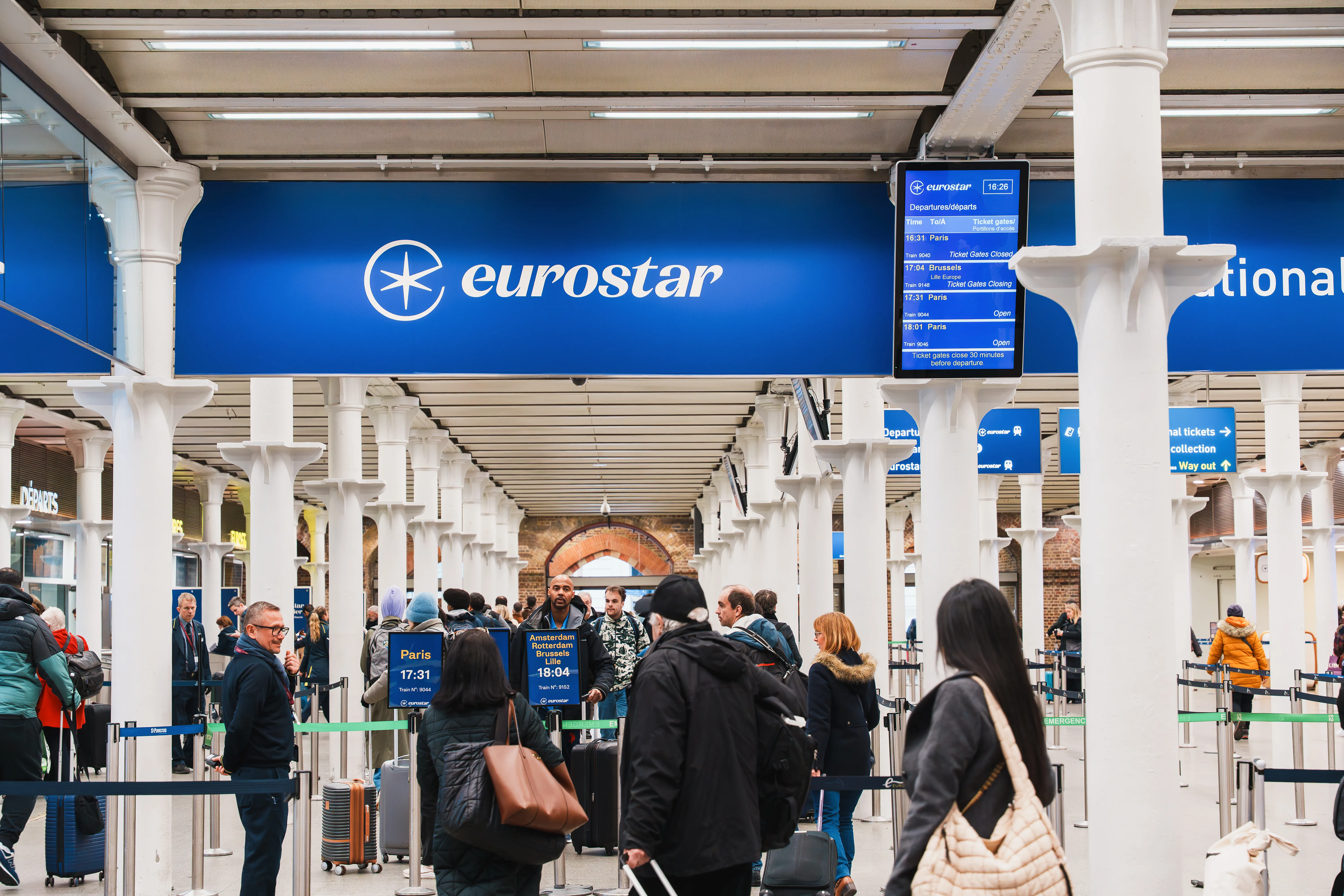
6:04pm service from London to Amsterdam, stopping at Brussels, Rotterdam and Lille
6:40pm service from Amsterdam to London, stopping at Brussels, Rotterdam and Lille
7:01pm service from London to Paris
8:02pm service from Paris to London
There are also a number of delays to services including the 2:42pm, 3:12pm, 4:12pm, 4:40pm and 5:12pm services from Paris Gare du Nord to London St Pancras.
A service from London St Pancras to Paris at 2:31pm was also delayed.
Services from Brussels to London have also been impacted including the 2:52pm and 3:52pm services.
The Eurostar website currently states: “We expect our trains between London and Lille/Brussels/Rotterdam/Amsterdam to be subject to severe delays on 07/07/2026 due to emergency services attending an incident near the tracks in Lille Europe.”
The operator is advising that if passengers would prefer to rearrange their plans, then you can change your ticket for free.
It comes as services still face disruptions following from an incident in the Netherlands last week where there was a major fire at Rotterdam Centraal.
At the time, Eurostar commented: “We’re very sorry that, due to a fire near station Rotterdam Centraal, train services across the Netherlands are currently severely disrupted and extremely limited.
“As a result, our trains are subject to significant delays and cancellations, and we’re unfortunately unable to offer alternative travel options.
“This situation will continue until 3rd July 2026. We recommend that you do not attempt to travel to or from the Netherlands until 3rd July. Instead, please cancel your journey or postpone it to a later date.”
Sun Travel has contacted Eurostar for further comment.
A SCULPTURE of David Brent has been unveiled – at a Premier Inn in Slough.
The clay creation of Ricky Gervais’ most iconic character marks 25 years since The Office UK first hit British TV screens.
Sign up for the Travel newsletter
Thank you!
David Brent impersonator Tim Oliver poses with the sculptureCredit: SWNS
Commissioned by Premier Inn, it is positioned inside its Slough Trading Estate hotel – the exact location of the original exterior shots used for ‘Wernham Hogg’ in the series’ opening credits.
The beloved TV show followed the fortunes of character David Brent from his life as a regional manager in a paper office to life on the road as a travelling salesman.
It was unveiled by Brent impersonator Tim Oliver, who re-enacted the pose as well as some of the character’s signature dance moves, which helped make Berkshire-born writer Gervais internationally famous.
The bust – which took 120 hours to put together and weighs seven kilograms – will be a permanent installation at the site.
A spokesperson for the hotel chain said: “The exact site of the world’s most famous office, Wernham Hogg, is now one of our hotels and so we’re thrilled to unveil this brilliant tribute to mark its place in British comedyhistory.
“Ricky’s iconic character truly put Slough on the map, and it’s only fitting to honour him with this memorable statue, which we hope will be particularly popular with some of the millions of business travellers who stay with us each year.
“Whilst the building itself is totally transformed – our guests are more likely to be interested in pillows than photocopiers – eagle-eyed fans will certainly spot the similarity in the footprint of the site.”
The hotel company also commissioned research of 2,000 adults which found David Brent’s unforgettable Comic Relief dance topped a list of favourite moments from the show.
It picked up 26 per cent of the vote from Office fans and was followed by Dawn returning to the Christmas party to kiss Tim in the denouement of the festive special (15 per cent).
More than one in 10 (13 per cent), meanwhile, selected Tim’s prank from the very first episode, encasing desk mate and nemesis Gareth’s stapler in lurid yellow jelly.
It emerged 72 per cent of respondents who watched the show consider it a nostalgic snapshot of what working life was like in the early 2000s.
Although 68 per cent are glad they don’t work in an environment like Wernham Hogg – the fictional working home of David Brent.
Elements of working life people believe have changed for the better include flexible working hours (39 per cent), improved office technology (28 per cent) and the business attire (27 per cent).
A fifth (20 per cent) cited an increased focus on wellbeing, and 16 per cent a greater diversity in teams, according to the OnePoll.com figures.
The spokesperson for Premier Inn said: “From tech to business attire, office life has changed drastically in the 25 years since the show aired but what hasn’t changed is the need for business travellers to know what they’re getting with a great night’s sleep in a comfortable room ready to face the day – no matter how embarrassing their boss is.”
The study also saw Ricky Gervais and Stephen Merchant, creators of The Office, named the best comedy writing duo of the 21st century (16 per cent).