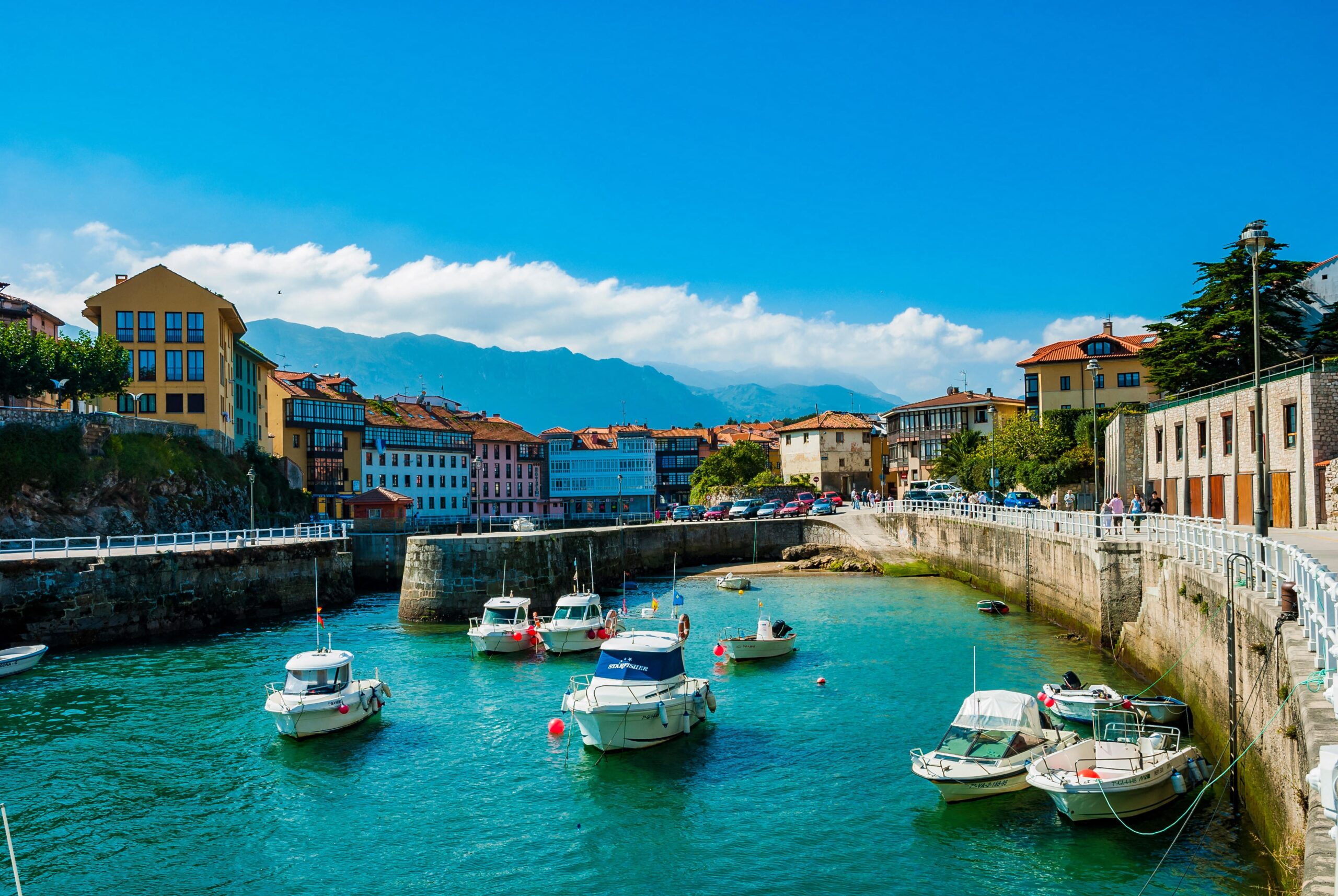
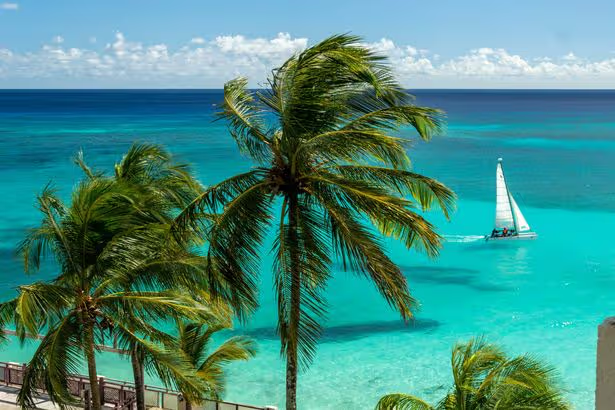
Travel experts at Slingo have put together a guide to the rules and fines for Brits travelling to Spain so that holidaymakers can enjoy the summer without stress
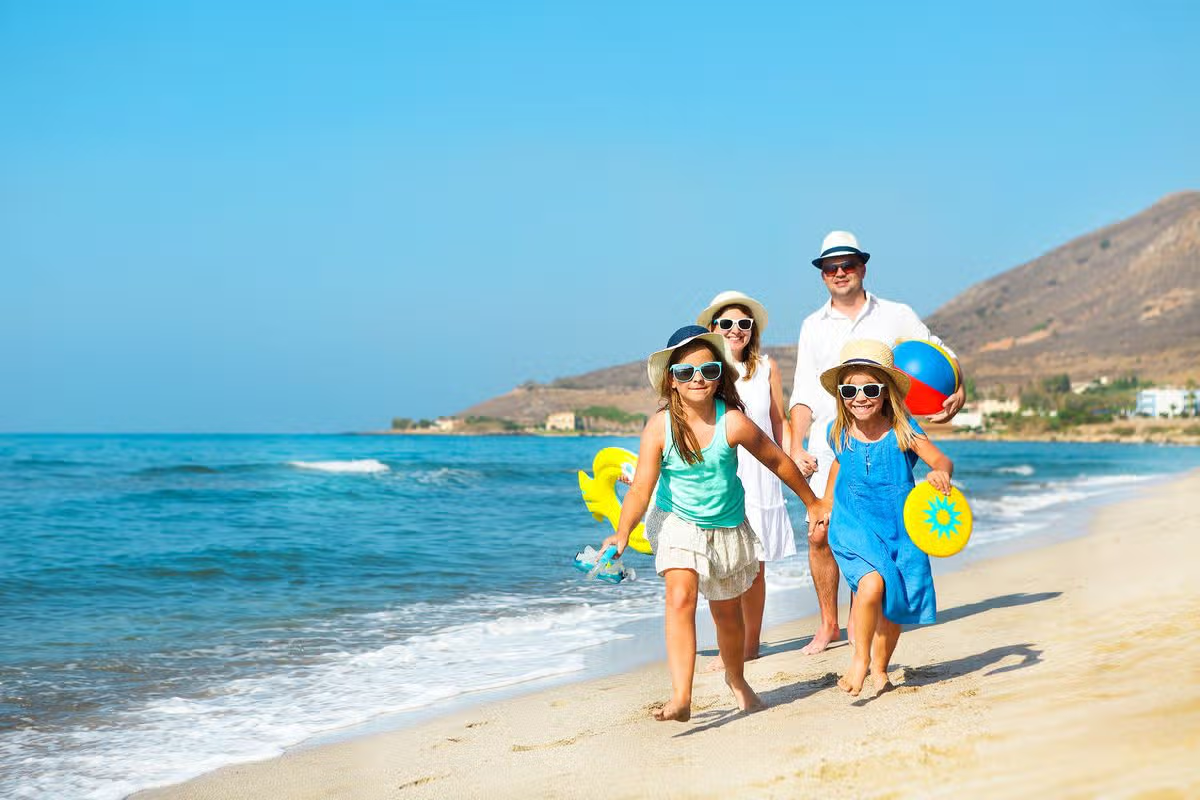
Many Brits will be getting ready to jet off to Spain this summer(Image: aire images via Getty Images)
Travel specialists at Slingo have compiled a comprehensive guide to the rules for visiting Spain in 2026, helping holidaymakers make the most of their summer break without any unwanted hassle. Dom Aldworth, brand marketing coordinator at Slingo, said: “Everyone knows that the British public love a holiday, and now that it’s nearly spring, UK tourists will be starting to think about where they want to travel to this summer.
“However, before you pack your suitcase, it’s important to educate yourself on any travel rules, especially as new regulations are announced every year. This way you can enjoy your summer holiday, whilst staying safe and being respectful to local laws.”
Night swimming
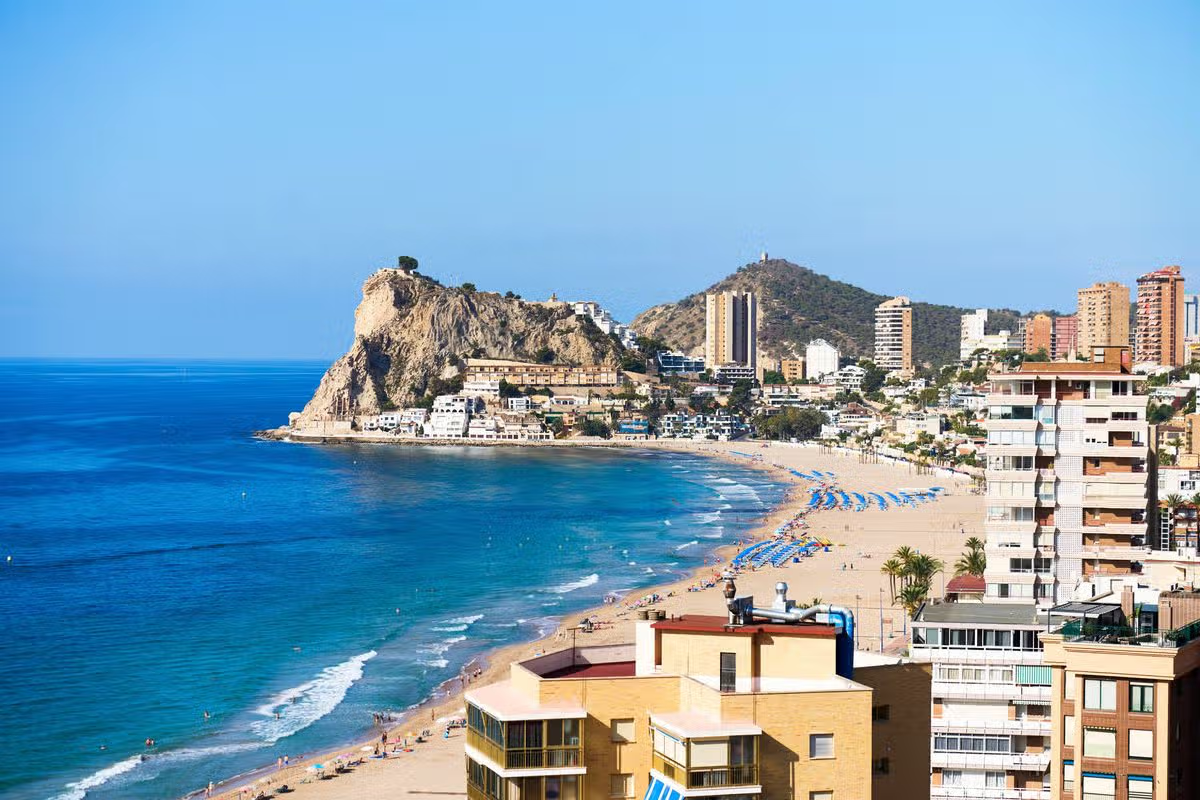
The city of Benidorm, in Costa Blanca, announced they will be charging tourists between £650 and £1,020 for going to the beach between midnight and 7am. That includes swimming in the sea or sleeping on the sand.
The specialists noted: “This rule has been introduced to reduce the risk of any swimming-related accidents during the times when lifeguards are not available. In order to not waste the resources of local emergency services, it’s best to keep your beach activities to the daytime,” reports the Express.
Mindful recreation
Stripping off on a non-nudist beach could leave tourists facing a fine of £647. Nevertheless, nudist beaches are available at most Spanish holiday hotspots, “so if you wish to sunbathe naked, there are places to do this respectfully”.
Drinking alcohol and smoking cigarettes on the beach in Benidorm is also strictly prohibited, with penalties of £550 and £1,700 respectively. This is down to littering concerns, as well as considerations for public health.
Taxis
GOV.UK has cautioned British tourists to only use registered taxis in Spain this summer, as passengers caught travelling with unlicensed taxi services could face fines of up to 600 euros (£510).
The travel experts commented: “This is due to transport risks, so make sure you book your taxi or airport transfer through a licensed firm.”
Noise pollution
Alicante, in Costa Blanca, imposed hefty fines for rowdy tourists, ranging from playing loud music on the beach to making excessive noise in your accommodation.
“These regulations are tighter versions of rules the city council implemented in March 2019, and could cost Brits up to 30,000 euros (£25,556). Everyone wants to have a good time on holiday, but you can have fun and respect others at the same time.”
Unlicensed parties
The travel experts said: “If you’re travelling to Majorca or Ibiza this summer, be wary of where you’re partying. Authorities are closing in on any unlicensed or unruly parties and will issue a fine to anyone involved in the organisation and marketing of the event, as well as attendees. This could result in a £25,000 fine.”
These gatherings are typically hosted at villas and private residences, lacking the safety provisions of emergency exits, capacity restrictions, and qualified security personnel that licensed bars possess.
Which? has released the results of its best and worst seaside towns and villages in the UK survey, with Bamburgh, Bognor Regis, Tynemouth, St Andrews and Clacton on Sea all making notable entries
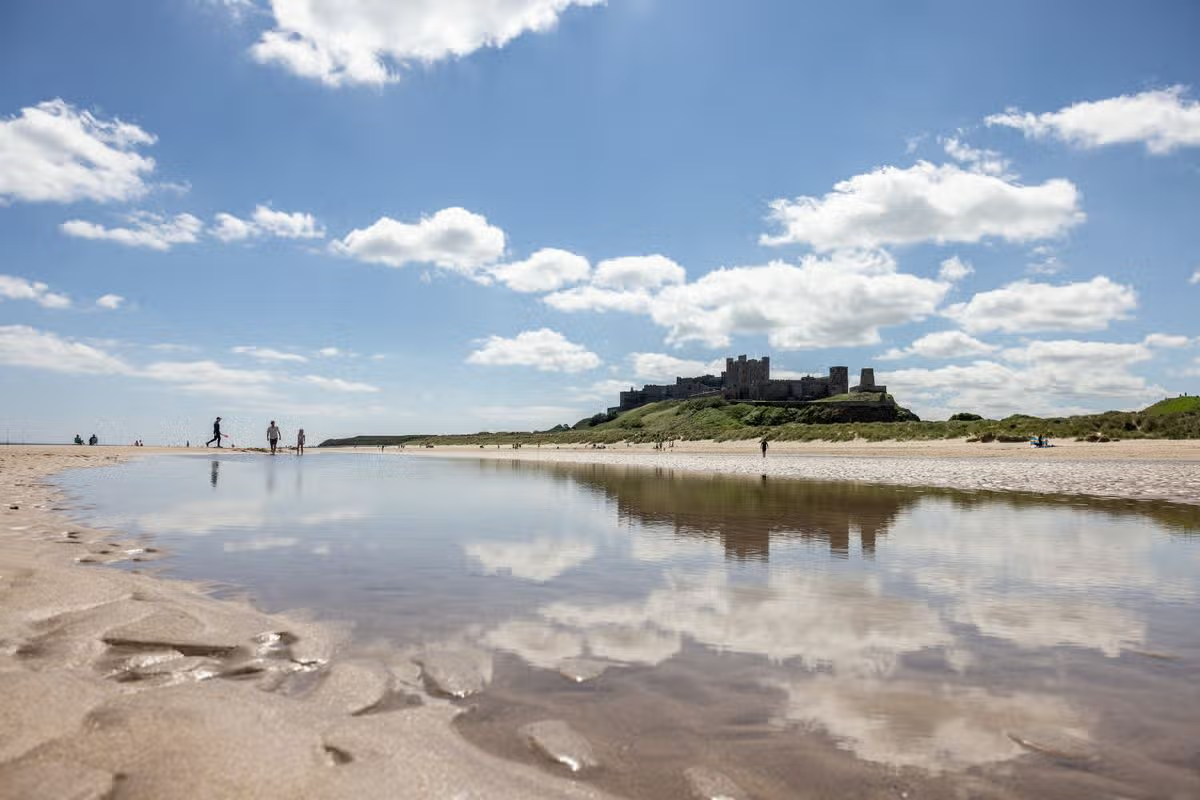
Bamburgh has triumphed, yet again(Image: Andy Commins / Daily Mirror)
The greatest and most miserable seaside towns and villages on our fair island have been named.
Once again, coastal big hitters Cornwall and Devon have found themselves some way off the top of the list, while a pretty northern village has made it to the number spot for a sixth year in a row.
At the other end of the scale, a southern town known for its Butlin’s and for being one of the sunniest destinations in the UK has been condemned as the worst of the worst.
Which? surveyed over 5,300 people about their experiences of UK seaside destinations in the last year, asking their views on a range of criteria including the quality of the beaches, scenery, food and drink, accommodation, tourist attractions, shopping and value for money.
Bamburgh in Northumberland took the top spot in Which?’s survey for the sixth year running. With an overall destination score of 84 per cent, Bamburgh was given five stars for its beach, seafront and scenery. Visitors praised the “lovely beach overlooking Bamburgh Castle” and the “spectacular coastal scenery.”
Do you agree with the rankings? Email webtravel@reachplc.com or let us know in the comments below
It’s easy to see why Bamburgh is so loved. Situated not far from the mysterious Holy Island, it’s got a village feel, replete with chippies and well-manicured lawns. At the same time, it sits in the shadows of one of the most magnificent and intact castles in the country.
The North East cleaned up at the top of the charts, with Tynemouth, Tyne and Wear coming second and scoring an impressive 82 per cent. Tynemouth scored five stars for its seafront/pier and food and drink, with one visitor praising its “wonderful fish and chips.” Another visitor praised the “magnificent” golden sand beaches.
While it may not be blessed with the same intensity of sunshine and lack of rain as other parts of the UK, Scotland also did well, claiming places in the top ten. St Andrews came third with a score of 81 percent and scored five stars for its beach, tourist attractions, scenery, and seafront/pier.
Crail, in Fife, scored the number five spot, thanks to its whitewashed walls, cobbled streets, and charming fishing harbor.
The highest scorer down south was the Essex seaside town of Frinton-on-Sea, which charmed visitors with its lovely seafront and the general peaceful vibe of the place. One visitor called it the “perfect place for those who just want a day at the seaside with no frills and no noise.”
On the other end of the spectrum, Bognor Regis was named as the UK’s worst. It’s the second year in a row that the West Sussex settlement has come in last. The Mirror’s money editor Levi Winchester grew up in the town and has seen it slowly fall apart over the years.
“I remember many happy summers playing down the beach in Bognor Regis. At low tide, you could see sand for miles, as the smell of fish and chips wafted through the air,” Levi recalled when asked for her thoughts on a town that once served as a home to George V for three months.
“The town was always buzzing with families enjoying their trip to Butlin’s—and while the seaside resort still attracts large crowds every year, the town itself has lost its heart. The promenade lacks love and is in need of a serious revamp.
“Even under the lights of the pier, it still just feels grey and miserable. Like many other UK high streets, the main town centre is empty now with hardly any shops left. I barely recognised it when I last visited.”
Having been thrust into the spotlight this week thanks to its somewhat absent MP Nigel Farage, Clacton-on-Sea found itself with a low score this year. It was judged to be the eighth worst. Despite low scores, including one star for peace and quiet and scenery, the classic seaside resort has the largest pier in Europe, and visitors praised its “excellent amusement facilities.”
In the survey, many popular seaside towns had middling scores. Despite their reputation as trendy destinations, Margate (53%) and Newquay (55%) received just one star for peace and quiet and two stars for value for money.
Visitors commented that Margate’s town centre was ‘run down’, but many praised its independent shops and famous Turner Gallery, while even Madonna has declared herself a fan of the seaside town. One visitor said: “Margate is quirky and not overly commercialised. It’s got some great events and places to eat and shop. It’s still a bit rough around the edges but it knows it.” Margate’s event space, Dreamland, is especially busy with summer events which may put people off going for a quiet break.
Popular surfing spot Newquay scored 55 per cent, receiving just one star for peace and quiet. The beach town is popular for stag and hen parties and young surfers. One visitor said it was “great for youngsters and surfers but not so good for older visitors”. Another said: “Newquay is a brash and overly busy seaside town. There are better beaches and towns nearby which are quieter.” Despite this, visitors praised the “wonderful beaches” in Newquay and they received four stars for this category.
Made famous by the TV sitcom Gavin & Stacey, Barry Island received a destination score of 54 per cent. One visitor said: “Unless you are a big Gavin and Stacey fan I’d give it a miss.” Visitors described the seafront as “a bit tacky”; however, the beach scored three stars, and one visitor said it is an “old-fashioned and lively seaside town, great beaches and interesting walks.”
TOP 30 SEASIDE TOWNS & VILLAGES
Bamburgh — 84%
Tynemouth — 82%
St Andrews — 81%
Aldeburgh — 80%
Crail — 80%
Frinton-on-Sea — 80%
Portmeirion — 80%
St Davids — 79%
Bude — 78%
Southwold — 78%
North Berwick — 77%
Plockton — 77%
St Ives — 77%
Swanage — 77%
Lyme Regis — 76%
Lytham St Annes — 76%
Portstewart — 76%
Conwy — 75%
Dornoch — 75%
Filey — 75%
Lynmouth — 75%
Sidmouth — 75%
St Mawes — 75%
Tenby — 75%
Tobermory — 75%
Wells-next-the-Sea — 75%
Whitley Bay — 75%
Broadstairs — 74%
Falmouth — 74%
Llandudno — 74%
BOTTOM 30 SEASIDE TOWNS & VILLAGES
Ilfracombe — 57%
Minehead — 57%
Bridlington — 56%
Cleethorpes — 56%
Fishguard — 56%
Seaton — 56%
Torquay — 56%
Abersoch — 55%
Colwyn Bay — 55%
Morecambe — 55%
Newquay — 55%
Barry Island — 54%
Skegness — 54%
Mablethorpe — 53%
Margate — 53%
Paignton — 53%
Southport — 53%
Herne Bay — 52%
Littlehampton — 51%
New Brighton — 51%
Weston-super-Mare — 50%
Burnham-on-Sea — 48%
Clacton-on-Sea — 48%
Southend-on-Sea — 47%
Bangor — 46%
Blackpool — 46%
Fleetwood — 46%
Great Yarmouth — 46%
Lowestoft — 46%
Bognor Regis — 41%
Results are based on an online survey conducted in January-February 2026 of 5,320 Which? Connect panel members who spoke about 11,999 experiences of visiting a UK seaside town for leisure purposes in the previous 12 months.
A woman saved £18,000 in just seven months to travel the world – by selling her wardrobe on Vinted. Rebekah Swatton, 26, has spent the past seven months aggressively saving for an open-ended trip abroad after a previous journey forced her to rethink her relationship with money and possessions.
Her outlook on life changed dramatically after the sudden death of her boyfriend from a cardiac arrest five years ago, an experience she says made her realise that “nothing in life is certain”. Last March, she embarked on a six-month backpacking adventure across Australia, Africa, and Asia, taking a sabbatical from her job at Lloyds Banking Group.
But when she returned to the UK in September, she says she was struck by how little she actually needed the possessions waiting for her at home. That realisation sparked a drastic lifestyle change.
Rebekah sold her car, worked up to 20 hours of overtime each week and cleared out the majority of her wardrobe on Vinted – ultimately building up savings of £18,000 for her next trip to South America. Rebekah, from Powick, Worcestershire, said: “I had been away for so long that when I came back I realised I had been living without any of these extra material things happier than I was living with them.”
Rebekah began saving in 2022 following the sudden death of her boyfriend of six months, who passed away from an undiagnosed underlying heart condition. Rebekah said: “It really made me wake up and I felt that nothing is certain going forwards. I’d gone straight from college into career mode without thinking.
“I’d always said I wanted to travel and this really catalysed my first trip, as I want to live my life to the fullest.”
Last March, Rebekah set off on a six-month backpacking adventure, travelling through Australia, the Philippines, Cambodia, Vietnam, Kenya, and Tanzania. When she returned, Rebekah decided to completely change the direction of her life and pursue travelling full time.
She said: “It was such an amazing time. I really enjoyed feeling free and experiencing new things each day. But once I got back and realised I wanted a change, I decided next time I left I would leave my job permanently and not return to the UK for at least a few years.”
With that commitment in mind, Rebekah knew she would need to build up substantial savings to support herself on an open-ended trip with no fixed return date. Rebekah said: “Since I’ve been back, I’ve been living with my parents, which of course helps keep outgoings down.
“I have been working my £30,000 banking job full time plus an extra 15 to 20 hours over time each week. I sold over 200 items on Vinted, from clothing to accessories to random trinkets and also sold my car for £2,500.
“This, plus working 60 hour weeks and living with my parents, meant I saved nearly £20k for the next time I leave the country.”
Rebekah has booked a flight to Guatemala for the first week of May, with plans to travel through South America from there. She said: “I’ve planned out the first couple months of my trip with flights and loose accommodation.
“But I know over the next six months I want to travel through Guatemala, Columbia, Peru, Bolivia, Brazil, Argentina, and Chile.”
Travellers have reacted with anger after the change was made to services on flights
09:38, 09 Jul 2026Updated 10:40, 09 Jul 2026
TUI passengers have been told their bookings have changed – and offered a small refund(Image: Getty)
TUI has emailed passengers telling them of an ‘important change’ to holidays already booked. Travellers have reacted with anger after the change was made to services on the flight – with alcoholic drinks off the menu.
In messages posted on Facebook pages from holiday travel companies, it emerged TUI is making the change from November 1. Anyone travelling long-haul with the company has been told that complimentary drinks will no longer be service in economy class.
Instead travellers will receive one complimentary beer or wine with the main meal. All other drinks will now have to be paid for – however, passengers travelling in Premium will continue to receive complimentary alcoholic drinks as part of their experience.
Anyone already booked is being offered a small amount of money back: “If you’ve already booked and paid for a long-haul holiday departing after 1st November, TUI has announced a £12.50 per person, each-way goodwill refund for affected customers.” Many have been sent an email with the subject in caps saying ‘IMPORTANT NEWS REGARDING A CHANGE TO YOUR HOLIDAY’.
The travel operator said: “Everyone will have their own opinion, but for some travellers this could take away a little of that ‘holiday starts on the plane’ feeling.”
Jamie thought it was a good thing: “Probably a good thing with the number of alcohol related incidents onboard these long-haul holiday flights. “ However, Nigel was taking his trade elsewhere: “Plenty saying book with another airline, good luck with that, particularly if you do not have easy access to London airports.” One user said: “That is a tiny amount of refund.”
Some have not had nice experiences. Charlotte said: “Last time we did long haul paid premium it wasn’t loads of drinks it was moderated and disappointing for the amount of money we spent and rudeness of staff.” A user added: “It would make me consider another airline first. But I’ve had issues with TUI when we were supposed to go to Jamaica last year so already not in my good books. If the £12.50 was ongoing, that’s actually reasonable, but to have to pay for drinks moving forward sucks a bit.”
Graeme added: “This is a total joke.” Olive said: ”TUI can ram that nonsense. The whole idea of long haul is getting smashed.”
June added: “The drinks were never ‘free’…they were complimentary. There’s a difference. The complimentary drinks were meant to be limited, but people just take the proverbial’ **** Not surprised it’s been pulled.”
TUI responded to one user: “Thank you for your comment. We’re sorry to hear of your disappointment with the changes to our long-haul service. This change helps us focus on the things that matter most, like keeping fares competitive, maintaining great value overall, and giving customers more flexibility in how they spend onboard.
“Soft drinks will remain free, customers will still get a complimentary beer or wine with their main meal, and there’ll be a wider range of alcoholic drinks available to buy, so people can choose exactly what they want during their flight. Thanks!”
Last month, it emerged that TUI Airways was ranked among the worst airlines for UK flight punctuality, with one route having an average delay of more than three-quarters of an hour.
The leisure carrier’s departures from UK airports were an average of 20 minutes and 24 seconds behind schedule in 2025, according to analysis of Civil Aviation Authority (CAA) data.
The least punctual of its routes with at least 100 flights was from Birmingham to the Greek island of Zante, which had an average delay of 46 minutes.
Rory Boland, editor of consumer magazine Which? Travel, said it was “unacceptable” that airline passengers “continue to face unreliable service” amid fare rises. He went on: “Airlines must do more to support travellers during delays, including clearly communicating their rights and eligibility for compensation.
“It’s worth putting in a claim with your airline if you think it’s responsible – and escalating the complaint if it refuses to pay.” TUI Airways is owned by TUI Group, which also operates the UK’s second-largest package holiday company.
Many of its holiday customers use the airline, which serves more than 20 UK airports.
The punctuality analysis took into account all scheduled and chartered departures from UK airports by the 34 airlines which operated more than 2,500 of these flights last year. Cancelled flights were not included.
Aage Dunhaupt, TUI Group’s director of communications, said: “We fully understand that for holidaymakers, every minute counts. Minimising delays remains a top priority, and our teams work continuously to improve operational performance across our network.”
Mr Dunhaupt said the airline makes “a conscious choice” to operate flights “wherever possible, even if they are delayed, rather than cancelling them”, as this ensures passengers reach their destination “rather than facing the risk of extended disruption”.
He added: “If we were to follow broader industry practices of cancelling flights more readily, our punctuality ranking would improve significantly.
“However, this would come at the expense of our customers.”
Leah Norman said many of the beds would then lie empty all day with just a towel on them
09:25, 09 Jul 2026Updated 09:28, 09 Jul 2026
Leah Norman watched tourists rush for sunbeds after waiting for two hours(Image: SWNS)
A Scottish tourist has confirmed that holidaymakers sprinted to grab a sunbed after queuing for two hours at the pool gates. Leah Norman, 37, was on holiday at the Best Oasis Hotel in Salou, Spain, when she witnessed crowds of tourists flooding through the pool gates on July 4 in what she described as “Hunger Games style”.
The holidaymakers had been waiting since 8am until the doors opened at 10am. Leah, from Ayrshire, Scotland, said she spotted a “big queue” of sunbed-hoggers every morning, all desperate to secure a seat throughout her week-long stay.
She noted that beds with towels draped over them would remain unoccupied for the entire day, leaving families without any poolside shade for their young children.
Leah, from Ayrshire, Scotland, said: “Every morning there was a big queue inside hotel full of people waiting on the doors to open at pool area. The door was locked and would open at 10am.
“People would start queuing up from around 8am and when the doors opened at 10am, everyone would start running to grab sunbeds that were stacked up to place next to the pool, like the Hunger Games had just started.”
“Some families with young children were unable to get sunbeds or parasol shades for their babies as they would be taken. Some days, beds would lie empty all day with towels lying on them.”
Watch tourists’ ‘manic race’ for sunbeds after hour-long queue
Manic tourists race for sunbeds at Spanish hotel
Having secured a spot with a towel, holidaymakers would then make their way inside for breakfast. Chris said: “It was a manic race and scramble for the sunbeds surrounding the pool at the hotel. I don’t judge but found it funny so had to film it.
“Some people just rolled out their bed, queued up, mad-dashed to secure the bed then they were seen going back to their hotel rooms or off for breakfast.
“It doesn’t leave room for those who don’t queue for an hour.”
Travel experts at Time Out have ranked the best seaside towns to visit in the UK in 2026, and a town in Wales has taken the top spot
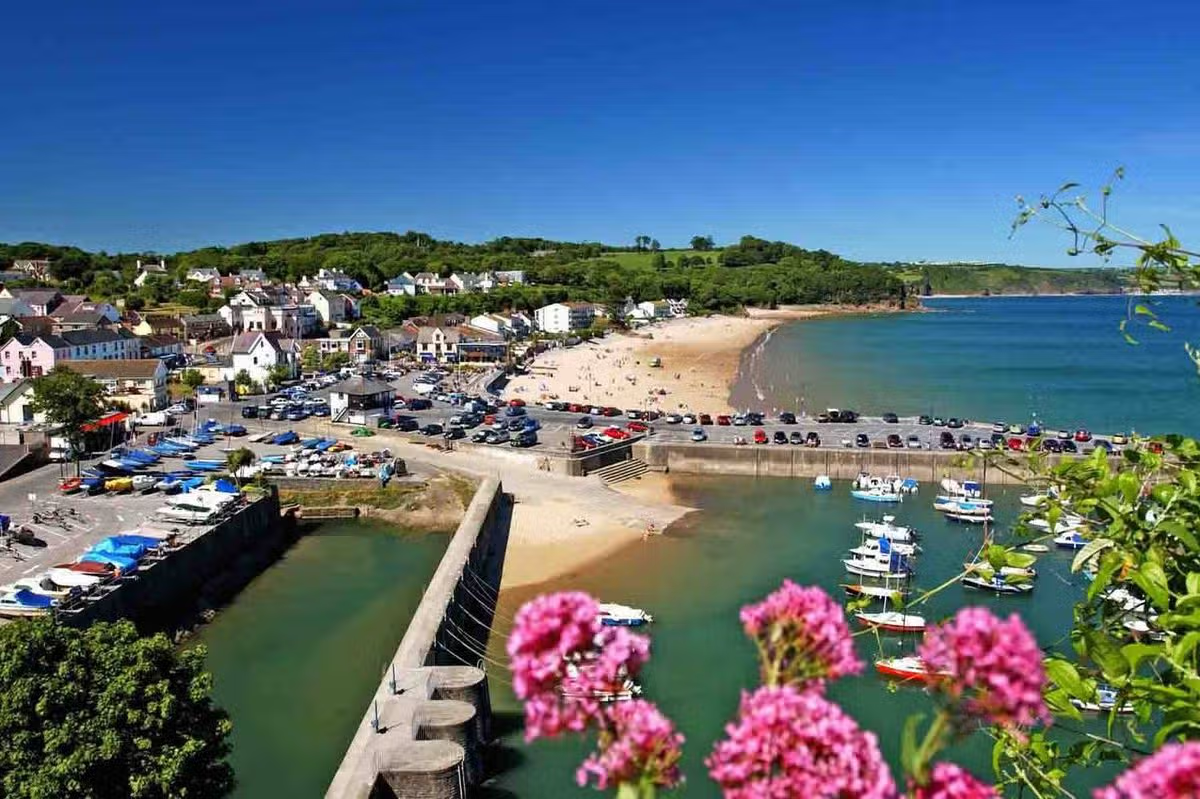
It’s often overlooked for its famous neighbour (Image: WALES NEWS SERVICE)
Wales is fast becoming one of the most sought-after staycation destinations for Brits this summer, with its long-overlooked coastal treasures finally getting the recognition they deserve.
As holidaymakers hunt for wallet-friendly breaks, the newly opened King Charles III Coastal Path has thrown open the entire UK shoreline to those keen to explore it on foot. With it comes a wave of enthusiastic walkers on the lookout for their next adventure, and it appears this Pembrokeshire town could be just the ticket.
Travel experts at Time Out have ranked what they believe, after scouring the length and breadth of the country, to be the finest UK seaside towns to visit in 2026. Topping the list is an underrated Welsh treasure, Saundersfoot in Pembrokeshire.
Pipping some of Britain’s most beloved coastal hotspots to the post — including Brighton, St Ives, and Folkestone — this charming seaside retreat is well and truly having its moment in the sun.
Nestled between the popular towns of Tenby and Amroth, Saundersfoot is loved for its sweeping beach and bustling harbour. Many visitors choose to tackle part of the Pembrokeshire Coast Path, which winds through these spots, and a straightforward 3.3-mile route with breathtaking views will bring you directly from Tenby.
Beach and harbour
As with any seaside town worth its salt, it’s the spectacular beaches that first lure people in — and everything else on offer that keeps them coming back. Saundersfoot is no different, boasting a standout stretch of shoreline that draws visitors from far and wide.
Saundersfoot Beach is the main expanse of sand, providing a level surface for families to relax and watersports enthusiasts to enjoy. TimeOut described it as “one of the most gorgeous beaches of any British seaside resort”, and its prime position near the town centre makes it even more appealing.
Its blue flag accreditation ensures a safe seaside experience for those bringing young children, and many visitors can be spotted walking their dogs along the water’s edge.
Describing Saundersfoot beach, one TripAdvisor user noted: “Lovely beach to walk on, very clean and close to the town with shops and cafes literally just a street over. It’s also very close to the harbour, so it’s nice to see the boats.”
Adding to the area’s charm is its historic harbour, originally constructed in 1829 to enable coal exports from local mines. It has since evolved into an ideal fusion of heritage and modernity with excellent amenities and activities, serving as the town’s focal point.
One review said: “On the way from Swansea to Tenby we made a short stopover at Saundersfoot Harbour. The small port is quite beautiful and worth seeing.”
Part of the harbour area features an array of eateries and drinking establishments where visitors can sit back and admire views of the peaceful coastline. Here, you can begin your morning at The Breakfast Clwb or enjoy lunch at Catch Beach Club, treat yourself to ice cream at Odley’s Gelato and sample traditional pasties at Pembrokeshire Pasty and Pie Co. From the harbour, visitors can book a variety of boat trips to explore the surrounding area, as well as hire equipment to go crabbing along the waterfront.
For those who prefer to stay put in Saundersfoot, the Welcome Centre and Coal Museum offer a fascinating insight into the town’s origins.
Free to visit, the centre shines a light on the lives of local mining families, the hardships they endured and the gruelling conditions that shaped miners’ working days. Along the way, you’ll uncover the pivotal role the harbour once played in the area’s rich coal mining history.
The East Sussex walk has been ranked among the world’s most beautiful hiking trails according to a new eye-tracking study – but be warned, it’s a strenuous 12-mile route that’ll take up to seven hours to complete
It covers a beautiful 13-mile route(Image: Getty)
New research has revealed one of the world’s most breathtaking hikes can be found right here on our doorstep in the UK, rewarding walkers with unrivalled coastal views.
An eye-tracking study has identified the most stunning hiking trails across the globe, with running shoe retailer SportsShoes.com employing cutting-edge technology to monitor the eye movements of participants as they were shown some of the most iconic routes from around the world.
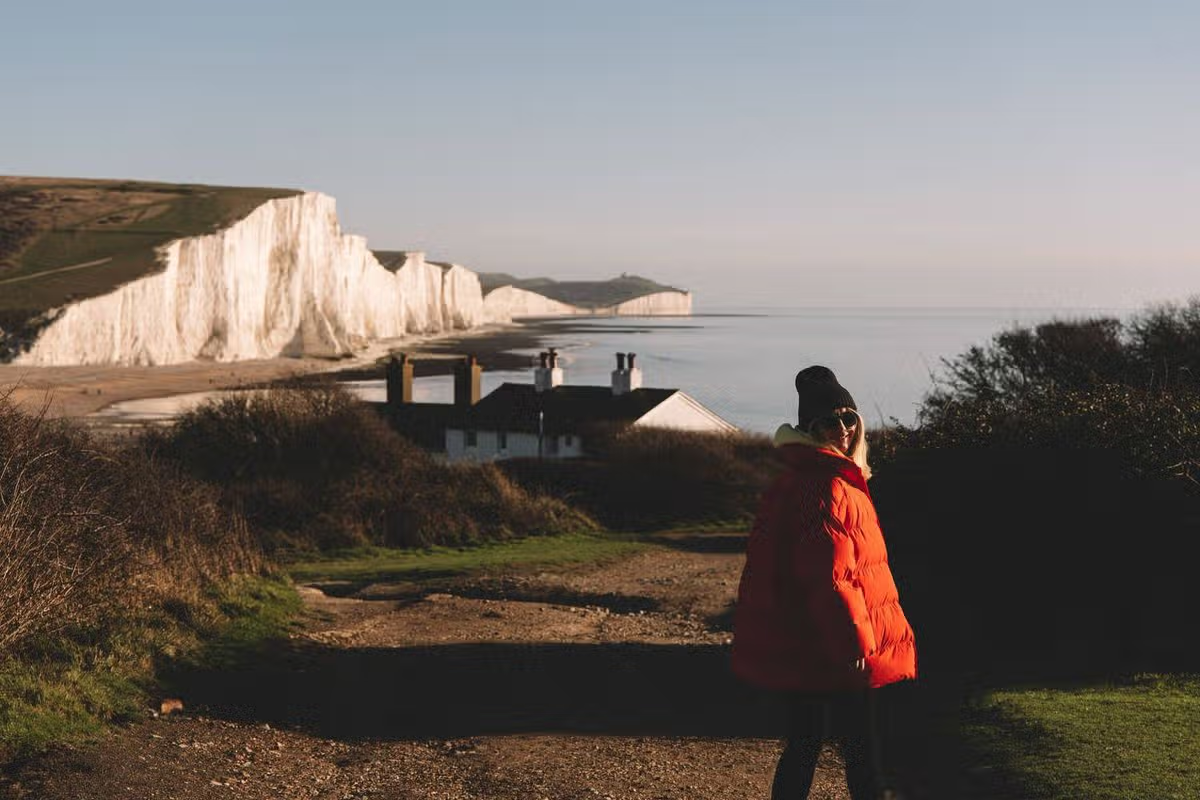
The findings assigned each location an ‘eye-catching’ score, establishing which trails were the most visually striking. As a result, the UK’s very own Seven Sisters Cliff Walk, nestled along the English coastline in East Sussex, made it into the top rankings.
It will come as little surprise to those who live nearby or have tackled the trail that it would be regarded as a top 10 hike, with its tranquil sands and azure waters framed by the most stunningly white cliff tops imaginable.
The Seven Sisters are so magnificent they have featured in some of Britain’s most beloved blockbuster films, including Atonement and Harry Potter. The iconic cliffs form a demanding route that can take anywhere between four to seven hours to complete, yet tourists appear to agree it is worth every single step.
The hike
Most walkers opt to begin the challenging trek in Seaford and finish in Eastbourne, allowing them to soak up the celebrated views of the Seven Sisters as they reach the summit. Across the 12-mile route, hikers can expect to conquer seven hills, some considerably steeper than others.
The ideal vantage point for capturing all seven cliffs in a single shot is at Hope Gap, though for the finest views from the clifftop, you’ll want to hold on until you reach the iconic Belle Tout and Beachy Head lighthouses.
Fortunately for walkers, there’s a charming little pit stop along the way where you can take a breather and enjoy a range of food and drinks at the Bearling Gap Cafe. Here you’ll also find a handy centre complete with toilet facilities, so you needn’t worry about being caught short during the journey.
Having tackled the walk themselves, one visitor wrote on Tripadvisor : “The cliffs are breathtaking from a distance, and the view from the edge, facing the open sea, is unforgettable. Heading down to the pebble beach gives you a completely different, striking perspective.”
According to the full findings, topping the list as the ultimate hike boasting the most jaw-dropping scenery is France’s Calanques de Marseille. Tucked within the Calanques National Park, nestled between Marseille and Cassis, the route is truly spectacular, featuring a stunning backdrop of white limestone cliffs plunging into turquoise coves, with a variety of trails to suit different timeframes and fitness levels.
The Top 10 list includes:
Calanques de Marseille, Marseille, France
Plitvice Lakes Trail, Plitvice Lakes National Park, Croatia
Lauterbrunnen Valley, Bernese Oberland, Switzerland
Inca Trail to Machu Picchu, Cusco, Peru
Bastei Rock Formation, Saxon Switzerland National Park, Germany
The Narrows, Zion National Park, USA
Étretat Cliff Walk, Étretat, France
The Loop, Kalbarri, Australia
Seven Sisters Cliffs Walk, East Sussex, England
Causeway Coast Way, County Antrim, Northern Ireland
A worker dumps towels and bags into a hotel trolley
Holidaymakers battling for poolside loungers may have finally met their match after a hotel worker was filmed removing towels and bags from reserved sunbeds while guests were at breakfast. The footage, filmed by Lucie Hewes, 19, from the UK, shows a member of staff making his morning rounds at a hotel in Rhodes, Greece, clearing unattended loungers despite personal belongings being left on them.
Lucie said the hotel has a clear policy banning guests from reserving sunbeds, but many holidaymakers ignored the rule by laying out towels, hats and bags before heading off to breakfast – or even back to bed. She said: “The pool man comes round at around 8 every morning and removes towels and belongings from the beds with no one sitting on them.”
According to Lucie, some guests returned looking confused when they discovered their belongings had vanished, while others were unhappy to find fellow holidaymakers already sitting on what they considered “their” sunbeds. She added: “It was funny and entertaining to watch and good to see, as the rule of no sunbed reservation is fair.”
Content cannot be displayed without consent
One woman reportedly confronted a member of the pool staff, complaining that her belongings should not have been moved because she now had nowhere to sit. Lucie said staff calmly explained the hotel’s policy, telling her sunbeds could not be reserved so that all guests had a fair chance of getting one.
“She did not agree despite getting all her stuff back,” Lucie said. The clip has reignited the annual sunbed wars debate, which has become a familiar feature of British holidays abroad.
Lucie’s video was viewed 538,000 times, had 23,000 likes and had 294 comments. One user said: “Well done wish all hotel done this.”
Another person said: “All hotels should do this.” Someone else added: “If you don’t like this, all skip breakfast and stay on your loungers.”
Jay said: “Every hotel should do this! Well done.”
Another user added: “Not all heroes wear capes.”
It comes just days after another UK holidaymaker made headlines for taking a far more controversial approach to the problem. Tom Caunce admitted secretly sprinkling itching powder onto towels left on reserved loungers during a holiday in Majorca, saying he was fed up with guests claiming the best poolside spots before sunrise and then disappearing for hours.
Checking a little-known page could help you find cheap flights, even in the six-week school holidays, and if you’re not fussy about your destination you can save on a family getaway
This article contains affiliate links, we will receive a commission on any sales we generate from it. Learn more
The page includes deals on school holiday dates(Image: Getty Images)
The school summer holidays are in full swing in Scotland, and looming for parents across England and Wales, meaning there are going to be families up and down the land looking for inexpensive ways to get away.
Unfortunately, going away with the kids during the six-week break is never going to be an inexpensive undertaking, but if you aren’t fussy about the destination and just want some sunshine, a little-known webpage could be a good place to start.
Simply enter the dates you’d like to depart, plus airports you want to fly from, and you’ll find a list of the cheapest places to take the family. The more flexible you can be, the better the deals, so midweek departures and choosing a slightly farther airport could help cut your costs.
TUI airways’ dedicated Cheap Flights page is where you’ll find inexpensive return tickets for selected routes for unbooked or returned seats. The best deals are often found on last-minute dates, as the airline looks to fill remaining capacity.
Best of all, unlike many cheap flight deals, flying with TUI Airways on a flight-only ticket gives you two pieces of hand luggage per adult and child. You can take one small personal item like a handbag or laptop bag that’s small enough to fit under the seat in front of you, with maximum dimensions 40x30x20cm, as well as a 10kg bag per passenger of maximum dimensions 55x40x20cm.
Checked-in bags and seat selection cost extra, but TUI says: “If you’re flying with TUI Airways and there’s a child under the age of 12 on your booking, we’ll make sure they’re seated with at least one adult in your party.”
It’s worth noting that this can mean they end up sitting in front of you or across an aisle, so consider whether you want to pay to select your seat.
TUI’s flights operate from more than 20 UK airports and cover over 100 destinations, so you may find a hidden gem using this tool that you might have otherwise missed. Return flights on this tool can start at as little as £30 return, and you’ll find both short-haul destinations such as Spain, Greece, and Italy, as well as long-haul routes from the Caribbean to Mexico and Thailand.
Cheap deals in the next couple of weeks from Scotland include a £70 fare from Glasgow to Reus, departing July 11 and returning July 25. While parents in England and Wales can choose from school holiday deals such as a £70 return from Bournemouth to Ibiza from July 18 to 29, just at the start of the six-week break, or London Gatwick to Split, Croatia for £128 return from July 20 to 27. However, seats for these deals are extremely limited and will sell out very quickly.
Flight search aggregator sites such as Skyscanner are also a great way to find the best deals. Simply choose ‘everywhere’ as your destination and tick ‘add nearby airports’ if you’re willing to fly from a different hub.
A family travel advisor at Lapland Famille, who plans full Arctic adventures, advised parents to consider the total cost of the journey, not just the headline fare. “A very low flight price can be a brilliant find, but families need to look at the whole trip before booking.
“If the cheapest option means difficult flight times, separate seats, extra baggage costs or a long transfer with tired children, the saving can disappear quickly. The best-value holiday is usually the one where the total cost, timing and stress level all work for the family.”
Have a story you want to share? Email us at webtravel@reachplc.com
One UK city narrowly missed out on the top ranking.
13:22, 08 Jul 2026Updated 07:15, 09 Jul 2026
Bukchon Hanok Village in Seoul, South Korea
Summer is here, and whilst many people flock to the beach for their holidays there’s just as much joy in a city break. City breaks are buzzing with excitement, and there’s so much to explore – especially if the city is walkable. According to Time Out’s 2026 global survey, Seoul in South Korea has topped the list as the world’s most walkable city.
Despite it being a huge city, Seoul has excellent infrastructure for pedestrians with almost 3,000 kilometres of pavements, wide pedestrian walkways and efficient crosswalk systems. According to Time Out’s survey, 93% of Seoul residents rated its walkability as “good” or “amazing” – the highest in the survey.
The city has some truly amazing walking paths, including the Cheonggyecheon Stream. This is a 10 km restored urban stream lined with a well-maintained walking path that links multiple metro stations and major attractions, making it the perfect place to wander and explore the city.
One visitor described the walk as an “oasis in the city” on Tripadvisor.
They wrote: “You can walk along its banks, which are below the main street, watch the ducks in the water and relax. When you get tired, you can also eat at the cafes.”
Another person said: “A stroll along the stream starting at Gwanghwamun where the stream emerges is a must do activity in Seoul.
“It is particularly vibrant in the early evening when locals take their evening exercise or simply sit alongside the steam, perhaps reading a book or talking with friends accompanied by the sound of moving water. Located below street level, sounds of the city become quickly muted.”
There’s also Seoullo 7017, a 1,074-metre elevated park converted from a former highway, that you can wander above the city. The walkway is best at night when the city lights are on, according to visitors.
One person wrote on Tripadvisor: “A pleasant walk over the hustle of the city. Markets are sometimes held at the weekend. It has a nice view of Seoul station, especially if you want to watch the sunset over the city.
“It’s also nicely lit after dark. Usually, a few people walking about and taking photos, but it never feels too busy.“
Although Seoul took the top spot, another UK city was a very close second on the ranking.
The Scottish capital of Edinburgh was ranked as the second-most walkable city in the world, with the almost same percentage of people rating the city’s walkability as “good” or excellent.
Edinburgh lost the top spot by only 0.08 percentile points.
Despite its hills and cobbled, winding streets, a lot of tourists visit Edinburgh specifically for its walks. Famous walks like Arthur’s Seat or Carlton Hill are popular choices, but the city is equally as enjoyable to walk through and dip into the many pubs and cafes on every corner.
Booming Hans Zimmer-style cinematic music reaches a crescendo, shaking my bones. Two turquoise macaws swoop within an inch of my hair and join a sky filled with nearly 250 birds. Hawks, kites, pelicans, and an owl soar and swoop around a pagan-looking wooden circle. Peacocks fuss at the makeshift river below, coaxed by two actors telling the story of humans’ relationship with nature. Grey clouds roll in, dark with rain. After all, we are risking an open-air performance in north-east England. I’m at a preview of Kynren: the Storied Lands, the latest gloriously unrestrained project in the market town of Bishop Auckland, 12 miles south of Durham.
I grew up near Bishop Auckland, which was once an important coal-mining and railway town. Last time I was here, its centre was dominated by discount stores. If, in 2003, you’d told teenage me that the high street would become an ode to art, history and culture, I would have laughed. Well, I would have grunted and turned up the Nu metal on my MP3 player.
The Spanish Gallery inside Auckland Palace features work by El Greco and Velázquez. Photograph: The Auckland Project
This madcap renaissance is down to one couple. In 2012, investment banker Jonathan Ruffer rescued Francisco de Zurbarán’s celebrated series Jacob and His Twelve Sonsfrom the sale of Auckland Palace. Needing somewhere to house the paintings, he ended up buying Auckland Palace too. He and his wife Jane Ruffer could have followed centuries of previous owners, closed the doors and kept the paintings to themselves. Instead, they set up a charity and opened up the palace and its beautiful gardens to the public. Thus began the complete renovation of Bishop Auckland.
The palace itself is a vision of grand, gothic architecture dating from the late 12th century. In St Peter’s chapel, the stone archways and a painted wooden ceiling make you feel as if you have stepped into the middle ages. The lifesized Zurbarán paintings remain on the dining room walls as a stream of visitors peruse the preserved stately rooms, guided by volunteer attendants.
“We employ 201 staff,” says Harry Sinclair, public relations officer at the Ruffers’ Auckland Project, as he guides us through the estate. “Around 80% come from a 10-mile radius, so we’re very much leading the circular economy. It’s about regenerating the town through its culture and heritage.”
After procuring the palace, the project grew arms and legs, becoming the Auckland Project, a regeneration charity dedicated to remodelling Bishop Auckland. As well as running the palace and gardens, the initiative built two art galleries and a lookout tower, and preserved a local heritage railway and Roman fort.
The galleries – one dedicated to mining art from County Durham, the other to the golden age of Spanish art – are not the ramshackle, fossil-packed local museums of my childhood school trips, but sleek galleries with ink-black walls and , boasting works by El Greco and Velázquez. Back outside, the drizzle clinging to my skin brings me back to Earth, but the striking viewing tower dominating the centre like the skeleton of a cathedral is another sight I never thought I’d see in Bishop Auckland. “Altogether we call it a slightly bonkers day out,” says Sinclair.
The setting for the new show is picturesque. Photograph: Will Walker/North News and Pictures
He tells me about the 59-bedroom hotel the project is building on the market place. He says it should increase footfall and dwell time in the town centre, with 1.5 million visitors expected each year from 2029. The hotel could create up to 95 jobs. There are already self-catering cottages in a neat line outside Auckland Palace and boutique accommodation at the Park Head Hotel.
But most ambitious of all is the jaw-dropping Kynren project. In 2013, the Ruffers bought Flatts Farm – about 100 hectares (250 acres) outside Bishop Auckland – and every summer since 2016, have hosted a glorious night show telling 2,000 years of English history to audiences of up to 8,000 people. More than 1,000 local volunteers work to create an extravaganza with horseback cavalry, sword fighting, working steam locomotives and boats gliding across a human-made lake, culminating in a dazzling firework display.
And next week, Kynren: the Storied Lands is opening during the day, too, as a live-show theme park for the first time. The arena, where my sneak peek at the new Lost Feather show takes place, is impressive. Huge wooden branches are stacked haphazardly into a circular nest so convincing I expect an eagle chick the size of a bus to emerge. During the show, birds pop out of hidden doors above the audience and swoop overhead, coaxed by handlers in medieval-style tunics.
It doesn’t always go to plan. One kestrel flies off into the nearby forest, and a tawny owl refuses to perform; its wide yellow eyes staring out at an audience delighted by its misbehaviour. Each mishap only adds to the joy of the experience. “That’s the beauty of live performance,” Anna Warnecke, CEO of Kynren, says. “There’s an electric sense of adrenaline that you don’t get from watching the same thing on a screen.” She’s right. By the end of the show, we’re holding a collective breath and there’s heartfelt applause and laughter when the kestrel returns from the distant woodland to the gloved arm of its handler.
The Auckland Tower in the heart of town. Photograph: travelibUK/Alamy
The Lost Feather is one of six live shows running throughout the day until mid-September. The other five performances are in equally elaborate auditoriums. The Legend of the Wear (a re-telling of the local Lambton Worm myth) features live action water stunts on a lakeside stage. At Land of the Vikings you walk through a working village, interacting with actors to the sound of clanging metal from the forge before distant drumming signals the start of the show in the boat-like arena. Expect big beards, the clash of shields and axes, fire, and a lot of Viking roaring.
“We wanted to create a visitor destination,” Anna says. “People aren’t going to travel that far for a single 90-minute show like Kynren. So the daytime performances give people a reason to spend all day here.” There’s certainly plenty to stay for at Bishop Auckland these days. Apart from epic bird shows and recreated Viking raids, a fascinating palace, Spanish masterworks, a Roman fort, deer park and heritage railway line, the original Kynren spectacular still runs on Fridays and Saturdays between July and September.
This is not just a “slightly bonkers day out”; it’s a testament to unbridled ambition. I think even my sulking 16-year-old self would be secretly in awe of what Bishop Auckland has achieved.
The trip was provided by Visit County Durham. Kynren: the Storied Lands day show runs from 18 July until 12 September (£30 adult, £20 child, kynren.com). Auckland Palace (£20, children under 4 free, aucklandproject.org) is open 10.30am-4pm, Wednesday to Sunday and bank holiday Mondays
YOU can step back nearly 100 years into the glamourous age of train travel, as a vintage train experience is launching this month.
The London Transport Museum is allowing people to go back in time on 1930s and 1950s carriages.
Sign up for the Travel newsletter
Thank you!
You can hop onboard vintage trains later this month – for one weekend onlyCredit: London Transport Museum
Choose from single or return journeys along the Metropolitan line which start in Amersham and go to underground stations at either Watford or Harrow-on-the-Hill.
There are two vintage trains to pick from, the first being from the 1930s.
The 1938 stock train has been restored and is made up of four cars with green and red seating and Art Deco light fittings.
This style of train served London on several deep-level tube lines for half a century.
One of the rides will go through what’s called the ‘secret’ railway line, that is rarely used called the North Curve.
It’s a section of the Metropolitan line which connects Croxley and Rickmansworth and bypasses Moor Park station, but it doesn’t feature on tube maps.
The event is across two dates only between July 25-26 with single and return journeys available.
The carriages have been restored to their former gloryCredit: AlamySome of the carriages even go through the ‘secret railway line’Credit: London Transport Museum
Single journeys start from £17 per person for adults and £7 for children.
The event is being run by the London Transport Museum which is set to undergo a £26million makeover by the end of 2030.
A 100-MILE network of floating walkways could soon debut in one of the UK’s largest cities.
Plans for the £100million project include boat jetties, cycle lanes and new signage.
Sign up for the Travel newsletter
Thank you!
The new proposal could see an entire network of floating pathways in the next 10 yearsCredit: CyanlinesThe £100million scheme was designed to bring residents closer to green spacesCredit: Cyanlines
A proposal to create a 100-mile floating network of pathways in Manchester has now made “significant” progress forward.
The concept – drawn up by CyanLines – was created with the aim “to connect Greater Manchester’s blue and green spaces into a high quality network of walking, wheeling and cycling routes” for residents and visitors.
The cyan-coloured walkways have been designed to snake along either side of the River Irwell, complete with jetties for rowing boats and cycle lanes.
The £100million scheme was first announced in September 2025 and was expected to be developed over the next 10 years.
Now, the project is now well within the first phase of co-design and agreement – including drawing up an investment case – according to co-founder, Tom Bloxham.
Backed by Manchester City Council, Labour leader Bev Craig also told Manchester Evening News that the plans are making ‘significant’ steps forward.
The project, also supported by the National Trust, is said to bring a host of benefits to the city, including better access to green spaces, more opportunities for businesses and healthier residents.
Four CyanLines pilot loops are currently being ‘proof-tested’ by the public, with more than 15 miles of paths plotted.
These routes include a trail from St Peter’s Square to Whitworth Park and the Irwell & Castlefield Loop.
Pete Swift, CyanLines project co-founder, said: “The routes will be the starting point, or spring board, for a whole plethora of CyanLines projects which will bring new opportunities for nature to thrive and to be enjoyed.”
Yvonne Moynihan, Managing Director at Wizz Air UK, said: “Spain has always been one of the UK’s favourite holiday destinations, and we’re excited to be expanding our Spanish network with three more fantastic routes from London Luton Airport.”
Simon Harley, Interim Aviation Director at London Luton Airport, added: “The addition of Málaga, Granada and Asturias to our departure boards means even more choice for passengers and follows the hugely successful launch of Wizz services to Bilbao, Barcelona and Seville earlier this year.”
The Wizz Air flights launch from October 2026Credit: AlamyDestinations include Grenada are on the listCredit: Alamy
The Sun’s Assistant Consumer Editor Lana Clements recently visited, and said: “Even if you’re not one for lying in the sun, a few days can easily be spent exploring the city’s excellent shopping scene or its old town with Roman ruins and Renaissance architecture flanking the streets.”
Granada is known for its amazing tapas culture, as well as its Moorish architecture due to its proximity to Morocco.
Otherwise Asturias is often overlooked as a destination by Brits, but is often nicknamed Costa Verde for its huge green natural landscapes.
A DREAMY holiday to the Maldives seems out of reach for most of us – but a break to the tropical destination is cheaper than ever.
Factors like the Middle East conflict has resulted in huge price drops.
Sign up for the Travel newsletter
Thank you!
Breaks to the Maldives are cheaper than ever – and you can go year-roundCredit: Levente Bodo
The average holiday to the Maldives tends to sit between £2,200 and £4,000 per person for a seven-night break.
But we’ve found deals for as little as £1,437per person.
There are lots of reasons as to why breaks to the Maldives have dropped in price – one being that there’s been an increase in flights.
With flights to other destinations being interrupted because of the Iran War, flights from Middle Eastern carriers to the Maldives has increased resulting in cheaper deals.
Deepak Booneady, CEO of Sun Siyam Group added: “We are seeing more late bookings in 2026 and people are still booking for this summer, particularly since the recent increase in flights from the Middle Eastern carriers.
“As we all know, the world’s weather patterns have changed and our British guests realise that the Maldives is both accessible and offers excellent value for money at our resorts.”
Sun Siyam Olhuveli
The Sun Siyam Olhuveli has family deals in August from £2,024ppCredit: TUI
The four-star Sun Siyam Olhuveli has it all whether you’re looking for a beach escape, or exotic family holiday.
With dates still available in August – it’s great for families as it has a kids club program and exciting beach games to keep everyone entertained.
There’s a spa with a glass bottom so you can get a massage and watch watch exotic fish swim below – or check out the three infinity pools.
A family of four can get six-nights full board for £2,024pp from August 26-Septmber 1 staying in a Grand Beach Suite with Pool with indirect flights from London Heathrow.
Equator Village Maldives
The Equator Village Maldives has ocean views – and great diving spotsCredit: TUI
An all-inclusive break at the Equator Village Maldives will set you back just £1757.68pp.
It has a swimming pool with a poolside bar, and you get ocean views from your sunlounger – there’s also a restaurant, spa, gym, and tennis courts.
The resort even has its own dive centre and is near the largest shipwreck in the Maldives – the British Loyalty.
This deal is for an all-inclusive break from September 30 – October 8 in a Double Room with Garden View and Terrace and direct return flights from Manchester Airport.
Summer Island Maldives
Summer Island resort has beautiful seaview roomsCredit: TUI
The Summer Island resort has beautiful rooms, direct beach access and it’s home to the world’s largest 3D-printed coral reef.
While it had man-made origins, it is now home eels, rays and colourful fish.
With TUI you can book an all-inclusive break from £2,084.92pp.
This is for a seven-night break from November 10-18 in a Double Room with Terrace and direct flights from Manchester Airport.
Bandos Maldives
Bandos Maldives is on a private island and has bargain prices for less than £1,500ppCredit: TUI
The Bandos Maldives is on a private island in the North Malé Atoll and you can stay there from £1,437.50pp.
The resort is known for its ocean reef which guests are welcome to explore whether they want to snorkel or paddle above it.
It also has a swimming pool, kids’ club, garden spa and gym.
This deal is for November 26 – December 3 in a Standard Beachfront with a full breakfast included and direct return flights from London Heathrow.
Sheraton Maldives Full Moon Resort and Spa
The Sheraton Maldives has pretty rooms and you can upgrade to overwater bungalowsCredit: onthebeach.co.uk
A stay at the beautiful Sheraton Maldives which is surrounded by a surrounded by a blue lagoon and palms trees starts from £1,827.50pp.
It offers diving, snorkelling, and jet skiing and has seven restaurants and bars with views of the North Malé Atoll.
Rooms here range from Deluxe all the way to swanky overwater bungalows.
This deal is for November 26 – December 3 in a Deluxe Guest Room with a full breakfast included and direct return flights from London Heathrow.
Holidaymakers are being caught out as surprise charges like currency exchange fees and data roaming and pushing them over their budget
Holidaymakers are spending an extra £100 on hidden fees(Image: Getty Images)
The average holidaymaker overspends their travel budget by more than £100 per trip, with surprise charges identified as the primary culprit. A survey of 2,000 adults who holiday abroad found that currency exchange fees and data roaming are among the most frequent unexpected charges encountered.
Despite 53% claiming they set a firm spending limit before heading off, more than four in ten (43%) say then end up over budget due to unforeseen hidden charges.
To tackle these sneaky fees, seven in ten (70%) said they rely mainly on cash while abroad, while 44% choose to use their debit card instead.
Kat Robinson, head of everyday banking at The Co-operative Bank, which conducted the research as part of its announcement to scrap foreign exchange fees on debit card spending overseas, said: “Spending abroad should be straightforward, but extra card fees can quickly catch people out.
The research also revealed that 34% of people struggle to get to grips with exchange fees. On average, 48% opt to pay in the local currency when using their card abroad which is reported to be the most cost-effective way to pay.
Kat said: “Given the option when spending abroad, always pay in the local currency. Paying in pounds might feel more familiar, but it could mean being hit with extra currency conversion charges from the retailer – a hidden cost that often only becomes clear on returning home.”
Despite the OnePoll.com study finding that the majority of holidaymakers (91%) check exchange rates, one in three admitted they were unsure or unaware that paying in pounds, rather than the local currency, would actually cost them more.
To help holidaymakers dodge unnecessary charges this summer, The Co-operative Bank is scrapping its 2.75% foreign transaction fee on debit card purchases abroad across all its personal current accounts, enabling customers to spend overseas as they would at home without fretting about additional costs.
With millions of Britons jetting off abroad each year, the move is intended to help reduce unexpected charges and better control holiday spending.
Kat added: “By removing foreign transaction fees, we’re making it more affordable for customers to use their debit card overseas and make the most of their money, whether they’re on a family holiday, a city break or exploring somewhere new.
Imagine Cruising has launched its new Americas Collection for 2027-28, featuring five luxury tailor-made holidays combining cruises with land excursions to destinations including New York, South America and Antarctica – with prices starting from £2,999 per person including flights, accommodation, transfers and tours.
Chief executive Steve Heapy said a ‘massive amount of people still want to go away’
12:11, 08 Jul 2026Updated 12:59, 08 Jul 2026
Jet2 issued an update to its customers
Airline and package holiday provider Jet2 released an update today (Wednesday, July 8), revealing that the company has experienced a surge in demand in recent weeks on the back of US-Iran peace talks.
The firm posted a pre-tax profit of £551 million for the year ending March, a 7% drop from £593 million the previous year. Summer bookings are up 7% compared with the same period last year, while the average proportion of seats filled on its flights for the four months to the end of July are 1.2 percentage points up year-on-year.
US President Donald Trump announced he signed a peace deal with Iran last month, though this has been called into question following overnight strikes.
Publishing its full-year financial results, Jet2 said: “Reduced geopolitical uncertainty has led to strong booking momentum in recent weeks.”
Speaking to reporters, chief executive Steve Heapy said demand has risen across all of Jet2’s destinations, with the biggest recoveries in percentage terms seen in those areas hardest hit by the conflict, including Turkey, Cyprus, some of the eastern Greek islands, Bulgaria and parts of north Africa.
“I think confidence has improved,” he said. “People perhaps don’t like to commit to travelling when there is a conflict, even though from one of our Turkish resorts to Tehran it was 2,000 kilometres, that’s like from Edinburgh to the Canary Islands, that’s a hell of a long way.
“But people don’t like to commit, particularly perhaps families with younger children.
“But we are seeing a bounce-back across all our destinations, and I think people are now realising ‘I feel a little more confident, we’re going to go on holiday and get away’.
“We speak to our customers a lot and try and understand their booking intentions,” he added. “A massive amount of people still want to go away.”
Jet2 announced record annual passenger figures of 20.8 million, representing a 5% rise from the previous year. The company said its performance at Gatwick Airport – where it began flights and holidays in March – is “ahead of initial expectations” and further expansion is planned for summer 2027.
Julie Palmer, partner at consultancy firm Begbies Traynor, said: “Investors will be pleased to see strong profitability has been delivered alongside evidence of investment”.
She added: “Jet2 will be hoping a peace deal holds and stabilises the market as it eyes further growth.
“Signs that this is bringing back confidence in spending for holidaymakers during the crucial summer season will be welcomed by the operator too, and it will be hoping it can continue to tempt customers into spending on holidays.”
Harry Poulton moved from Brighton and moved to Benidorm after visiting the city with his mates when he was 18 – but there are certain spots he says tourists should avoid
Harry said his decision to move to Benidorm was the best choice he’s made(Image: Jam Press/@harrytokky)
Benidorm is one of the most popular European holiday destinations among Brits and attracts approximately five million tourists annually. Harry Poulton, 24, grew fond of the resort following a visit with mates at 18 and now regards his decision to relocate there as the finest decision he’s ever made.
Nevertheless, he wishes to pass on his expertise to holidaymakers preparing to explore the seaside city on Spain’s Costa Blanca. Taking to TikTok, where he’s amassed more than 40,000 followers, he highlighted three locations in the nightlife hotspot that he believes are best avoided owing to safety concerns.
First on his list is the ‘Yellow Brick Road’, a centre of bars and eateries that represents the core of local nightlife, covering streets such as Leanto, Ibiza, and Leerida.
Harry cautioned: “The Yellow Brick Road – this little public pathway […] leads all the way up to the Rio Park. Now, it has been known for a few things, mainly small thefts like pickpocketing. Generally, during the day, it’s absolutely fine. I’d recommend avoiding it at night.”
The second spot Harry suggests swerving is Pueblo Alley, situated close to Levante Beach.
“This is one I definitely recommend avoiding, especially late at night, as you do get the pickpockets hanging around this area,” he warned. “You also get the odd lady of the night. There are plenty of other ways around”.
Topping Harry’s list of places to steer clear of is ‘Mugger’s Alley’, meanwhile.
“It is the most notorious – it’s the one we all know,” he exclaimed. “Known for pickpocketing, ladies of the night, it’s just an area I would avoid. They’re even doing these new taxi scams. It’s crazy. Save yourself the hassle and cross the road.”
Despite acknowledging these risks, Harry remains a devoted admirer of this popular holiday hotspot.
He argues that many British holidaymakers hold misconceptions about Benidorm, insisting that concerns over crafty scams and overpriced goods are often way off the mark.
What’s more, since swapping Brighton for Benidorm, Harry has watched his living expenses drop considerably, with monthly outgoings now falling between £500 and £1,000, including bills.
Harry proclaimed: “If you live here, you get it. Benidorm is paradise – and anyone who says otherwise is lying.”
AN ABANDONED building in a popular seaside city is set for a multi-million-pound transformation into a major attraction complex.
Swansea’s Civic Centre in Wales is set to be transformed into an aquarium, with a saltwater lido outside and also boast a number of restaurants, bars and cafes.
Sign up for the Travel newsletter
Thank you!
Swansea is set to get a new complex with an aquarium and saltwater lidoCredit: Swansea Council
The £22million project which be located right be the beach will be in the currently empty seafront civic centre – a 1980s Brutalist building.
As well as the aquarium, there will be a rooftop terrace, beach lido and 130 apartments.
The terrace will overlook the bay and then outside the building, pictures show garden areas with pathways.
Around the aquarium there are also plans for a number of cafes, shops, bars and workspaces.
Then visitors can head down steps onto the beach to find a saltwater lido, which would be open year-round.
There will be “areas for leisure and events” too according to Swansea Council, spanning across 5,481sqm.
Councillor Rob Stewart, Leader of Swansea Council, said: “The Civic Centre is one of the UK’s finest waterfront sites, and this is a once-in-a-generation opportunity to transform it into a destination people will be proud of.
“We’ve listened to residents, refined the plans and now want people to tell us what they think before we take the next step.”
It would be in the former civic building along the seafrontCredit: Swansea CouncilAs well as the aquarium, there would be a roof terraceCredit: Swansea Council
David Warburton, Development Director at Urban Splash – which is the company behind the project – said: “This is a big milestone for the project and an exciting moment for Swansea.
“Our vision is to celebrate the Civic Centre’s heritage while creating a thriving waterfront destination that will serve the city for generations.”
The new aquarium and lido are part of a larger £750million, 20-year regeneration plan for several sites across Swansea.
There would be beachfront shops, restaurants and cafes tooCredit: Swansea CouncilThe plans are part of a wider £750million regeneration plan for the cityCredit: Alamy
Set to be the first of its kind in Europe, the Swansea Skyline project, will have a gondola-style lift and downhill karting experience.
And plans for the world’s fastest ferry could come to Swansea, linking the Welsh city to North Devon.
It could have speeds of up to 60 knots (70mph), making it faster than HSC Francisco in 2013 with speeds of 58.1 knots (67mph).
Set to make travel easier for thousands of families, a new rule has been launched across 13 airports today (Wednesday, 8 July) – and in perfect time ahead of the summer holidays
The change is set to make travel for families easier when returning to the UK(Image: Getty Images)
Families going on holiday with children this summer can benefit from a new travel rule that has been launched across UK airports.
From today (Wednesday, 8 July), children aged eight or over will be able to use the eGates at 13 UK airports, offering a smoother journey home for families. Previously, the eGates were only available to travellers aged 10 and over, and those with younger children would need to join the family queue, which can take considerably longer.
Reducing the age limit is estimated to allow around 1.5 million additional children to pass through the electronic gates and other re-entry points far more quickly. While children can now be aged eight or over to use the eGates, they must also be at least 120cm (3ft 11in) tall, so they can be easily detected by the biometric scanners.
Minister for Border Security and Asylum, Alex Norris, said: “Today’s change will make journeys easier for families with small children and reduce the hassle of travelling home after a holiday. It will also free up more time for tourists to enjoy our fantastic country this summer and in the years ahead.”
Karen Dee, Chief Executive of AirportsUK, the trade body for UK airports, also said it was a “welcome development”.
She commented: “It will give more families the ability to take advantage of this technology, speeding up the border process and reducing waiting times for many. Airports work very hard with border authorities to ensure the UK’s front door is both secure and welcoming, with those coming home and visiting enjoying a smooth experience.”
In perfect time ahead of the summer holidays, the change will affect 13 major UK airports. This includes:
Birmingham
Bristol
Cardiff
East Midlands
Edinburgh
Glasgow
London City
London Gatwick
London Heathrow
London Luton
London Stansted
Manchester
Newcastle
The eGates at airports, which form part of the government’s Electronic Travel Authorisation (ETA), scan passengers’ passports and are designed to streamline the entry process. Residents in Australia, Canada, Iceland, Japan, Liechtenstein, New Zealand, Norway, Singapore, South Korea, Switzerland, and the US will also benefit from the airport change.
Travel Insurance Expert at Confused.com, Tom Vaughan, commented on the eGates rule change for children. He said: “The minimum age for UK airport e-gates drops from ten to eight today, meaning up to 1.5 million more children could clear the border automatically instead of queuing at a staffed desk. This is great news for families travelling with young children. Anyone who’s queued at border control with tired kids will know it could mean shorter waits and a smoother end to the journey home.
“It’s also a sign of where things are heading. As facial recognition technology becomes more established, it wouldn’t be surprising to see the age threshold lowered further in the coming years. But whether or not your child can use an e-gate, the basics still apply: everyone in the family needs a valid, biometric passport to travel. It’s easy to overlook this among the excitement of planning a trip.“Our research shows that confusion around passport validity is still common, with less than half (43%) of holidaymakers aware that passports for EU travel must be issued within 10 years of departure. That’s a significant number of people who could turn up at the airport only to discover their passport isn’t valid, regardless of which gate they’re heading for. With summer getaways in full swing, it’s worth taking a few minutes to check every family member’s passport now. Our passport checker can help you spot any issues early, so the only thing slowing you down at the border is the length of the queue.”
Do you have a travel story to share? Email webtravel@reachplc.com