
Watch World Cup Day 25: England beats Mexico; Norway eliminates Brazil
Latest match highlights, reaction and previews from the FIFA World Cup 2026 in North America.
Source link
Latest match highlights, reaction and previews from the FIFA World Cup 2026 in North America.
Source link
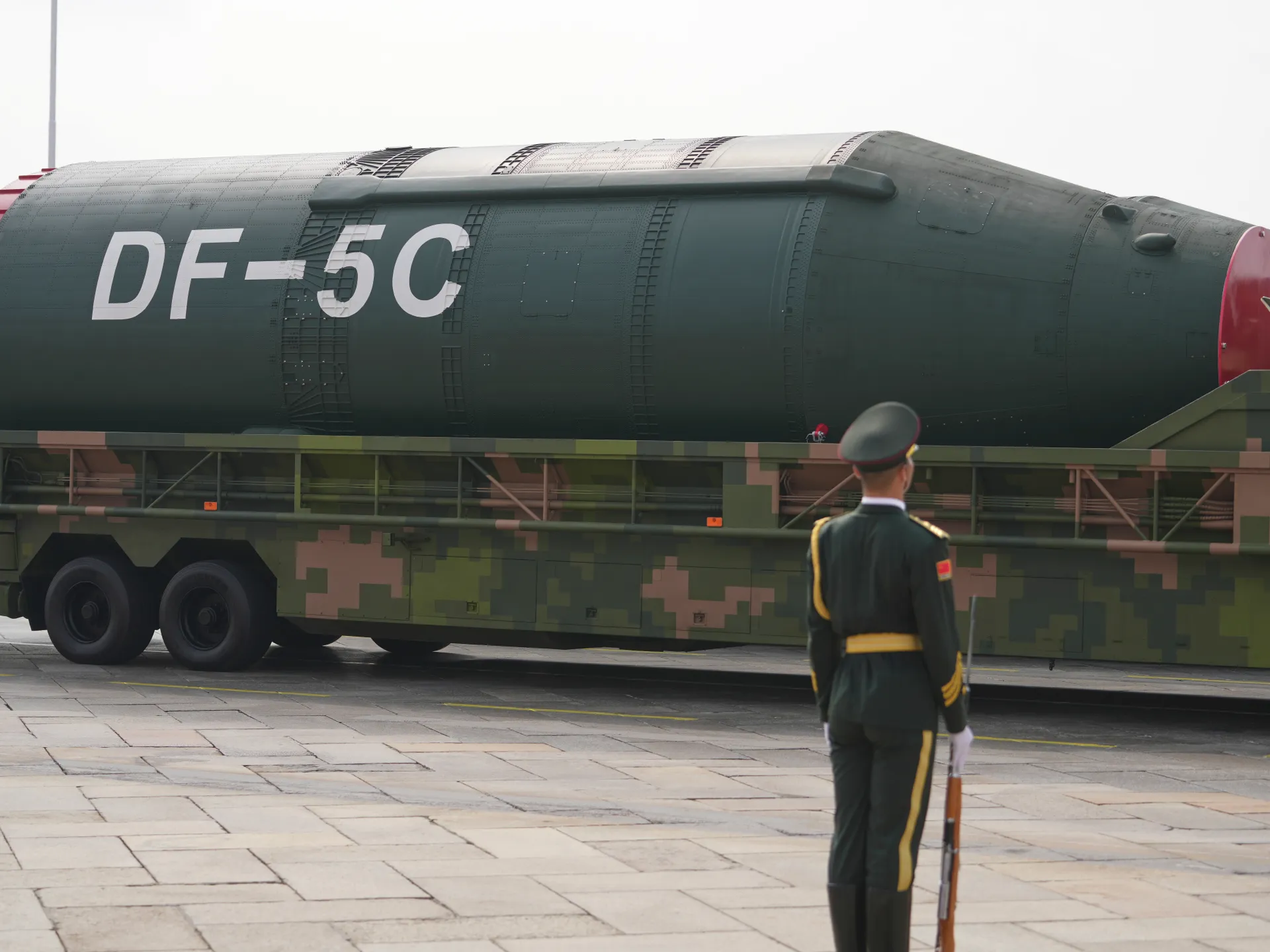
Countries raise concerns after Chinese military test-launches ballistic missile from submarine in the Pacific Ocean.
Published On 6 Jul 20266 Jul 2026
China has test-fired a missile from a nuclear submarine that landed in “designated waters” in the Pacific Ocean, state news agency Xinhua reports, drawing criticism and concerns from Japan, Australia and New Zealand.
The Chinese navy test-launched the long-range ballistic missile at 12:01pm (04:01 GMT) on Monday from one of its nuclear-powered submarines in the South Pacific, Xinhua reported.
list of 3 itemsend of list
Xinhua said the test was a “routine arrangement” of China’s annual military training and was not directed at any specific target.
Australian Foreign Minister Penny Wong confirmed that China had notified the government of plans to conduct a sea-based missile test into the Pacific but said the action was “destabilising” to the region.
“Australia has been clear that this proposed test is in the context of a rapid military build-up by China, which is lacking in the transparency and reassurance as to intent that the region expects,” Wong told reporters at a news conference in the Fijian capital, Suva.
Japan’s government said it was notified of the missile launch and had urged China to reconsider.
“We expressed our grave concern over the Chinese military’s increased activity,” the government said, adding that Japan’s coastguard had been notified on Sunday by Chinese authorities about falling space debris that could fall within Japan’s exclusive economic zone.
The New Zealand government said it was informed of the planned launch within hours of it taking place.
“New Zealand considers this an unwelcome and concerning development. We, like our neighbours in other Pacific countries, have no interest in China using the South Pacific as a testing site for missile capability,” Foreign Minister Winston Peters said in a statement.
After years of closure due to war, hospitals in the Sudanese capital are welcoming mothers again, despite lingering economic and logistical hurdles.
Published On 6 Jul 20266 Jul 2026
In the Sudanese city of Omdurman, the maternity hospital, known locally as Al-Dayat or ‘Midwives” in English, has resumed operations after a long closure caused by the war. Mothers are once again arriving at maternity wards, navigating difficult economic and logistical conditions to give birth safely.
Al-Toma Jabara, a mother from East Nile, gave birth to her daughter, Doaa, at the hospital two days ago. She told Al Jazeera that she was unable to conceive during the war years. Fighting between the Sudanese armed forces and the Rapid Support Forces (RSF) separated Jabara from her husband for two years.
She has lived under constant bombardment and clashes in her home, making a normal family life seem impossible. She described Doaa’s arrival as a “new beginning” for her family after years of fear and deprivation.
At Bahri Hospital, Fatima Abdel Rahman, a mother from Al Jazirah state, recounted her exhausting and expensive journey to the capital Khartoum. Her family had to spend a large portion of their income on transportation and temporary accommodation near the facility to monitor her condition post-delivery.
Abdel Rahman noted that medication shortages forced her to buy basic drugs from outside pharmacies at inflated prices, adding to her financial burden. However, she stressed that the functioning maternity ward provided her with a vital sense of safety, sparing her the fear of dying due to lack of medical care – a constant dread she lived with during the war.
During the conflict, the closure of specialised maternity hospitals forced many women to undergo unsafe home births or travel long distances, drastically increasing risks for both mothers and infants. An anonymous official from the Khartoum State Ministry of Health confirmed that maternal and infant complications and mortality rates surged during the war due to closures.
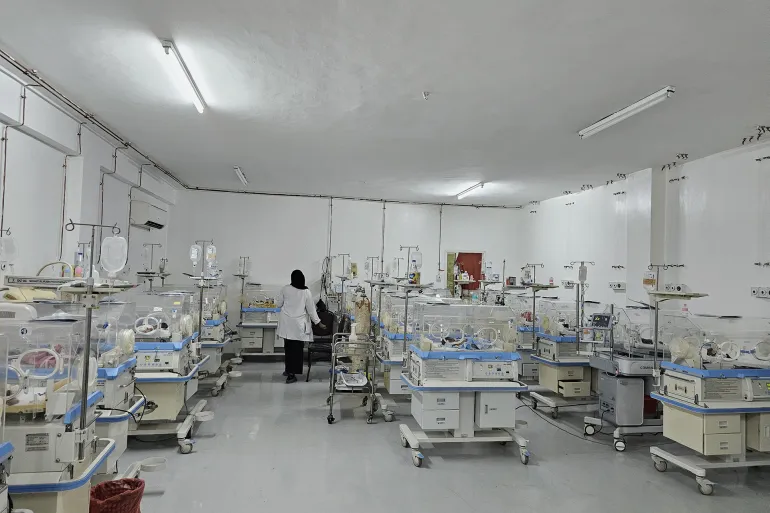
![The Neonatal Department at Omdurman Maternity Hospital is the largest of its kind in Sudan [Mohammed Mirghani/Al Jazeera]](https://i0.wp.com/occasionaldigest.com/wp-content/uploads/2026/07/Pic-855443-1783004651-1783254562.webp?w=640&ssl=1)
The official told Al Jazeera that complication rates are now gradually decreasing as services resume. The health ministry has repaired and reopened 15 maternity wards across the capital, including Al-Dayat and the Saudi Hospital. The capital’s hospitals are now recording a significant increase in births, reaching about 7,000 new deliveries per month.
Emad Abdullah, director of the Omdurman Maternity Hospital, noted that it initially received only one or two cases a day upon reopening. Today, that number has climbed to approximately 60 births per day, as services expand to meet growing demand.
The hospital has several vital departments, including a caesarean section, an intensive care unit and a neonatal department equipped with about 140 incubators, making it the largest in Sudan.
Maternity costs vary significantly depending on the facility. At government hospitals, a natural birth typically costs about 130,000 Sudanese pounds ($216), while C-sections cost around 400,000 pounds ($666). In private hospitals, the cost of a natural birth shoots up to approximately 500,000 pounds ($813) and C-sections range between 600-800,000 pounds ($999-1,322), depending on the service level.
Despite the reopening of wards in Khartoum, Omdurman and Bahri, large challenges remain with patients from distant regions such as Al Jazirah and Kordofan facing exhausting journeys and exorbitant transport costs.
In the hospitals, there is a shortage of basic medicines and emergency rooms often operate beyond their capacity. In addition, the wartime exodus of doctors and nurses has left a critical gap in qualified staff, while essential medical equipment needs regular maintenance to keep up with demand.
Amira Othman Abdel Majeed, an infection control officer at Bahri Hospital, described the war as the most challenging period for the health sector, marred by severe shortages of supplies, electricity and water. That has imposed psychological pressure on medical staff who feared losing mothers and children during treatment.
However, she said the “liberation of Khartoum” and the resumption of maternity services have dramatically changed the landscape. Staff emerged stronger and more resilient, with the ongoing medical care serving as a prime symbol of the capital’s recovering health sector.


Samsung Electronics Co. Chairman Lee Jae-yong announces an investment plan during a meeting at the presidential office Cheong Wa Dae in Seoul, South Korea, 29 June 2026, to unveil the government’s three mega projects aimed at attracting large-scale investment in semiconductors, physical AI and AI data centers. South Korea plans to develop a new semiconductor production base in the country’s southwestern region through 800 trillion won (517.9 billion US dollar) in corporate investments that will create four memory chip fabrication plants. Photo by YONHAP / EPA
July 5 (Asia Today) — Samsung Electronics and SK hynix are facing a strategic balancing act as they move ahead with major U.S. semiconductor projects while preparing to invest about 800 trillion won, or $523.7 billion, in a new chip cluster in South Korea.
The two companies announced plans last week to build a semiconductor cluster in South Korea’s southwest, part of a broader government-backed effort to strengthen the country’s position in artificial intelligence chips and advanced memory.
The project is expected to include four new fabrication plants, two each from Samsung and SK hynix. But the plan comes as the companies are also watching possible pressure from the United States, where President Donald Trump has repeatedly used tariffs and investment demands as tools of industrial policy.
In a recent securities filing, SK hynix listed U.S. tariffs and trade restrictions as a business risk.
“If major countries, including the United States, impose or strengthen trade restrictions such as tariffs on imports, including semiconductors, our business performance could deteriorate,” the company said.
The United States has imposed reciprocal tariffs and other import-related charges since 2025. Semiconductors have not been included in some measures, but Trump has previously threatened tariffs of up to 100% on memory chipmakers that do not build factories in the United States.
Samsung and SK hynix already have major U.S. investment plans.
Samsung is building semiconductor facilities in Taylor, Texas. Its U.S. investment plans have been reported at more than $37 billion through 2030, with the Taylor site expected to include advanced foundry production.
SK hynix is investing $3.87 billion in West Lafayette, Ind., to build an advanced packaging and research facility for AI memory. The Indiana plant is expected to support high-bandwidth memory products used in AI accelerators.
The U.S. projects are already large, but they are smaller than the companies’ planned domestic investment. That could draw attention from Washington as the Trump administration seeks more manufacturing commitments from global companies ahead of the U.S. midterm elections.
Industry officials say the more realistic option for Samsung and SK hynix may be to accelerate existing U.S. projects rather than announce entirely new plans, given the size of their commitments in South Korea.
Samsung could further clarify plans for a second Taylor fabrication plant. The company said in April that it was conducting an initial review of the second Taylor fab while holding discussions with global customers.
SK hynix may face closer scrutiny because its U.S. investment is smaller than Samsung’s and because it is preparing to list American depositary receipts on Nasdaq on July 10.
Both companies are highly exposed to the U.S. market. Samsung’s Americas sales accounted for 32.5% of first-quarter revenue, while SK hynix’s Americas sales accounted for 68.8%, according to their quarterly reports.
Funding will be the key question if Washington presses for faster or larger U.S. investment. Both companies have already outlined enormous capital spending plans at home and abroad.
For now, their cash generation remains strong. Brokerage estimates cited by local media project Samsung’s second-quarter operating profit at about 85 trillion won, or $55.6 billion. SK hynix’s second-quarter operating profit is projected at about 65 trillion won, or $42.6 billion.
Analysts say AI-related semiconductor demand remains in an early phase. Kevin Warsh, chairman of the U.S. Federal Reserve, recently compared the AI boom to the first or second inning of a baseball game, saying the technology shift represents a major paradigm change for economic policy and the wider economy.
Industry officials say the semiconductor cycle could last longer than the traditional three to four years because demand for AI data centers, advanced memory and high-performance computing continues to expand.
For Samsung and SK hynix, the challenge is how to satisfy U.S. expectations for local production while also carrying out South Korea’s largest semiconductor investment push.
— Reported by Asia Today; translated by UPI
© Asia Today. Unauthorized reproduction or redistribution prohibited.
Original Korean report: https://www.asiatoday.co.kr/kn/view.php?key=20260705010001617


The FIFA World Cup 2026 quarterfinals lineup as it builds, with match kickoff times and locations.

Published On 6 Jul 20266 Jul 2026
As the biggest FIFA World Cup in history enters its fourth week, fewer than half of the 48 teams that kicked off the tournament remain in contention to win the title in North America.
The quarterfinals are now under way, with four of the last eight teams confirmed on the second day of action in the round of 16.
Some nations confirmed for the third stage of the knockouts recorded comfortable victories, while others had late scares but pulled through.
Here’s what you need to know about the World Cup’s quarterfinal stage:
Fans in the US can watch every match in English on Fox and FS1, with all 104 games also available to stream on Fox One and the Fox Sports app.
Spanish-language coverage in the US is available on Telemundo and Universo, with streaming through Peacock. Cord-cutters can also watch via services that carry Fox and FS1, including Fubo, Hulu + Live TV, YouTube TV and DirecTV.
In Canada, TSN is the primary English-language broadcaster, with selected matches also shown on CTV. French-language viewers can follow the action on RDS and RDS2.
England hands Mexico their first World Cup loss at Estadio Azteca, winning 3-2 to reach the 2026 quarterfinals.
Published On 6 Jul 20266 Jul 2026
Jude Bellingham’s double inflicted a rare defeat on Mexico at their Estadio Azteca as 10-man England won a nerve-racking World Cup classic 3-2 to reach the quarterfinals.
Harry Kane also scored from the penalty spot as the Three Lions overcame Jarell Quansah’s red card, high altitude, and a fervent home support on Sunday to keep their quest for a first major tournament win in 60 years alive.
list of 4 itemsend of list
England have relied on Bellingham and Kane throughout the tournament, and the duo has carried them into a last-eight showdown with Erling Haaland’s Norway.
Bellingham struck twice in 98 seconds in the first half to condemn Mexico to just a third defeat in 90 matches at the Azteca.
Julian Quinones and Raul Jimenez reduced the Mexican arrears, but they fell short of a place in the quarterfinals.
Victory also helped to erase some of England’s nightmarish memories at the Azteca in the quarterfinals of the 1986 World Cup, when Diego Maradona scored a double for Argentina, including the infamous “Hand of God” goal.
Sunday’s match was delayed by an hour after a thunderstorm and heavy rain lashed the Mexican capital for hours before the planned 6pm (00:00 GMT) kickoff time.
Despite the sodden conditions, more than 80,000 fans crammed into the stadium to create a deafening noise.
England coach Thomas Tuchel was wary of a fast start from Mexico as his side adjusted to the altitude of 2,240 metres (7,350 feet) above sea level.
Mexico had flown out of the traps when they won a World Cup knockout game for the first time in 40 years against Ecuador 2-0 on Tuesday.
This time, England managed to keep Javier Aguirre’s side at bay, but they did need a crucial intervention from Jordan Pickford to deny Jimenez opening the scoring with a diving header that was headed for the bottom corner.
Tuchel made three changes to the side that needed a heroic performance from Kane to prevent an embarrassing early exit to DR Congo.
Quansah was forced to deputise at right-back with Reece James not fit to start for a third consecutive game, opening up Tuchel to criticism over his decision not to select more specialist cover in the position.
Anthony Gordon and Bukayo Saka also started out wide, and both made telling contributions.
Saka’s cross picked out Bellingham to power in a header for the first goal Mexico conceded in five World Cup games.
The hosts failed to compose themselves, as within two minutes, the Real Madrid midfielder had doubled England’s lead.
Kane’s ball across fell perfectly for Bellingham to power in his fourth goal of the tournament.
Yet what should have been a comfortable lead was nearly wiped out by half-time.
Quinones blasted in his fourth goal of the tournament to spark the Mexico rally after England failed to clear a free kick.
Jimenez drilled wide and saw another header saved by Pickford before Bellingham made a last-ditch intervention to deny Cesar Montes a certain equaliser.
Nico O’Reilly nearly restored England’s two-goal cushion as his deflected shot cannoned off the post.
Quansah was shown a straight red card on 54 minutes after a VAR review for a mistimed lunge on Jesus Gallardo.
But just six minutes later, the 10 men had added to their lead when Gordon was wiped out by Mexico goalkeeper Raul Rangel and Kane emphatically dispatched the penalty.
The England captain’s sixth goal of the tournament puts him just one behind Haaland, Lionel Messi and Kylian Mbappe in the race for the Golden Boot.
The game took another huge momentum swing when, this time, Kane was penalised for a foul inside his own box and Jimenez slotted home the penalty to set up a frantic final 20 minutes.
England, though, stood tall, defending at times frantically to resist the Mexican wave during 11 minutes of additional time, and have reached a third consecutive FIFA World Cup quarterfinal.
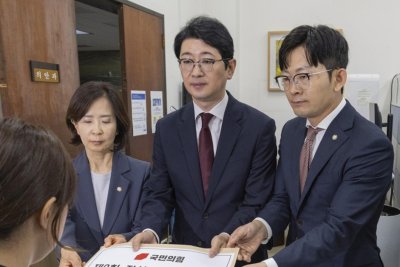

Lawmakers of the main opposition People Power Party, (from L to R) Choi Soo-jin, Joo Jin-woo, and Park Choong-kwon, submit a bill to an office of the National Assembly in Seoul, South Korea, 09 June 2026, to seek an independent counsel probe into an unprecedented shortage of ballot papers that disrupted voting in the June 3 local elections at some polling stations and, critics say, infringed upon voters’ rights. Photo by YONHAP / EPA
July 5 (Asia Today) — South Korea’s ruling and opposition parties clashed Sunday over a revised online information law set to take effect Tuesday, with the ruling Democratic Party calling it a safeguard against fake news and the main opposition People Power Party denouncing it as a threat to free speech.
The revised Information and Communications Network Act allows punitive damages of up to five times the actual damage when false or manipulated information is distributed online and causes harm. Repeat distribution can also trigger administrative fines of up to 1 billion won, or about $655,000.
The People Power Party called the measure an online “gag law” and said the standard for determining what counts as false or manipulated information is too vague.
Choi Soo-jin, the party’s chief floor spokesperson, said posts criticizing the government or raising reasonable suspicions could become targets of disputes.
“To avoid large damages and fines, platforms will have no choice but to preemptively delete posts even before illegality is clearly determined,” Choi said. “Excessive deletion and de facto prior censorship are structurally inevitable.”
People Power Party lawmaker Joo Jin-woo said he plans to file a constitutional challenge after the law takes effect.
“The law is rushed legislation that does not even have a body to determine false or manipulated information,” Joo wrote on social media. He said the measure violates constitutional protections against prior censorship as well as principles of proportionality and freedom of speech and the press.
The Democratic Party rejected the criticism and said the law is being misrepresented.
Jeon Su-mi, a party spokesperson, said the measure is not designed to silence ordinary citizens but to prevent malicious false information and so-called “cyber wreckers,” a Korean term for online personalities who profit from sensational or defamatory content.
“Not a single citizen who shares daily life, expresses legitimate political opinions or sharply criticizes power will be subject to punishment under this law,” Jeon said.
She accused the People Power Party of defending false information and online harassment by portraying basic social filtering as censorship.
The Democratic Party also criticized opposition proposals to limit regulation to already illegal information, saying such an approach would leave manipulated falsehoods unaddressed.
The dispute comes as South Korea continues to debate how to regulate online misinformation without chilling political speech. Supporters say the revised law is needed to hold malicious content creators accountable when false claims cause real harm. Critics say vague definitions could pressure platforms to over-remove content and discourage citizens from criticizing public officials.
The revised law was passed by the National Assembly in December under Democratic Party leadership.
— Reported by Asia Today; translated by UPI
© Asia Today. Unauthorized reproduction or redistribution prohibited.
Original Korean report: https://www.asiatoday.co.kr/kn/view.php?key=20260706010001674
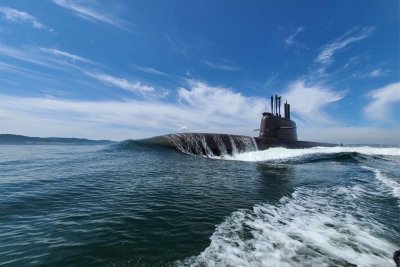

A Jangbogo-III Batch-II submarine built by Hanwha Ocean. Photo courtesy of Hanwha Ocean
July 5 (Asia Today) — Canada is nearing a decision on a major submarine program that could open the North American defense market to South Korea’s Hanwha Ocean or strengthen Germany’s naval defense ties with Ottawa.
The Canadian Patrol Submarine Project is intended to replace Canada’s aging fleet of four Victoria-class submarines with as many as 12 new conventionally powered submarines. Industry estimates put the program at as much as 60 trillion won, or about $39.3 billion, when shipbuilding and long-term maintenance are included.
Canada is expected to select a preferred bidder soon, with the timing drawing attention because Prime Minister Mark Carney is scheduled to attend the NATO summit in Ankara, Turkey, from Monday to Wednesday.
A decision near the summit could carry a political message about Canada’s defense cooperation with allies. Germany has been pressing its case through government-level support for TKMS, while Hanwha Ocean is emphasizing delivery speed, pricing and proven South Korean submarine technology.
German Vice Chancellor and Finance Minister Lars Klingbeil recently visited a TKMS site and said Berlin was making a broad push to support defense cooperation with Canada. He said Germany’s high production standards and submarine-building capacity put TKMS in a strong position.
TKMS CEO Oliver Burkhard has also expressed confidence that the company can win the contract. The German company is stressing its more than 100 years of submarine experience and interoperability with NATO navies.
Hanwha Ocean is offering a model based on the KSS-III Batch-II submarine, a 3,000-ton-class hybrid diesel-electric submarine developed for the South Korean Navy. The submarine uses fuel-cell air-independent propulsion and lithium-ion batteries, allowing it to remain submerged for more than three weeks, according to the company.
The submarine has a range of more than 7,000 nautical miles, or about 8,055 miles.
Hanwha Ocean has proposed delivering the first submarine in 2032 if a contract is signed in 2026. The company has said it could deliver four submarines by 2035 and then supply one additional submarine each year.
Delivery timing is considered a key factor because Canada’s Victoria-class submarines are expected to retire in the mid-2030s.
Hanwha Ocean is also seeking to strengthen its bid through long-term maintenance, repair and overhaul plans, as well as industrial partnerships in Canada. The company has promoted cooperation in shipbuilding, steel, artificial intelligence, space and defense technology.
If Hanwha Ocean is selected as the preferred bidder, it would mark a major breakthrough for South Korea’s shipbuilding and defense industries in North America. It would also expand South Korea’s submarine exports beyond Asia and Europe.
But TKMS remains a strong competitor because Canada may value closer defense industrial cooperation with Germany and other NATO partners at a time of heightened security concerns in the Arctic and North Atlantic.
Hanwha Ocean said no decision has been made.
— Reported by Asia Today; translated by UPI
© Asia Today. Unauthorized reproduction or redistribution prohibited.
Original Korean report: https://www.asiatoday.co.kr/kn/view.php?key=20260705010001602
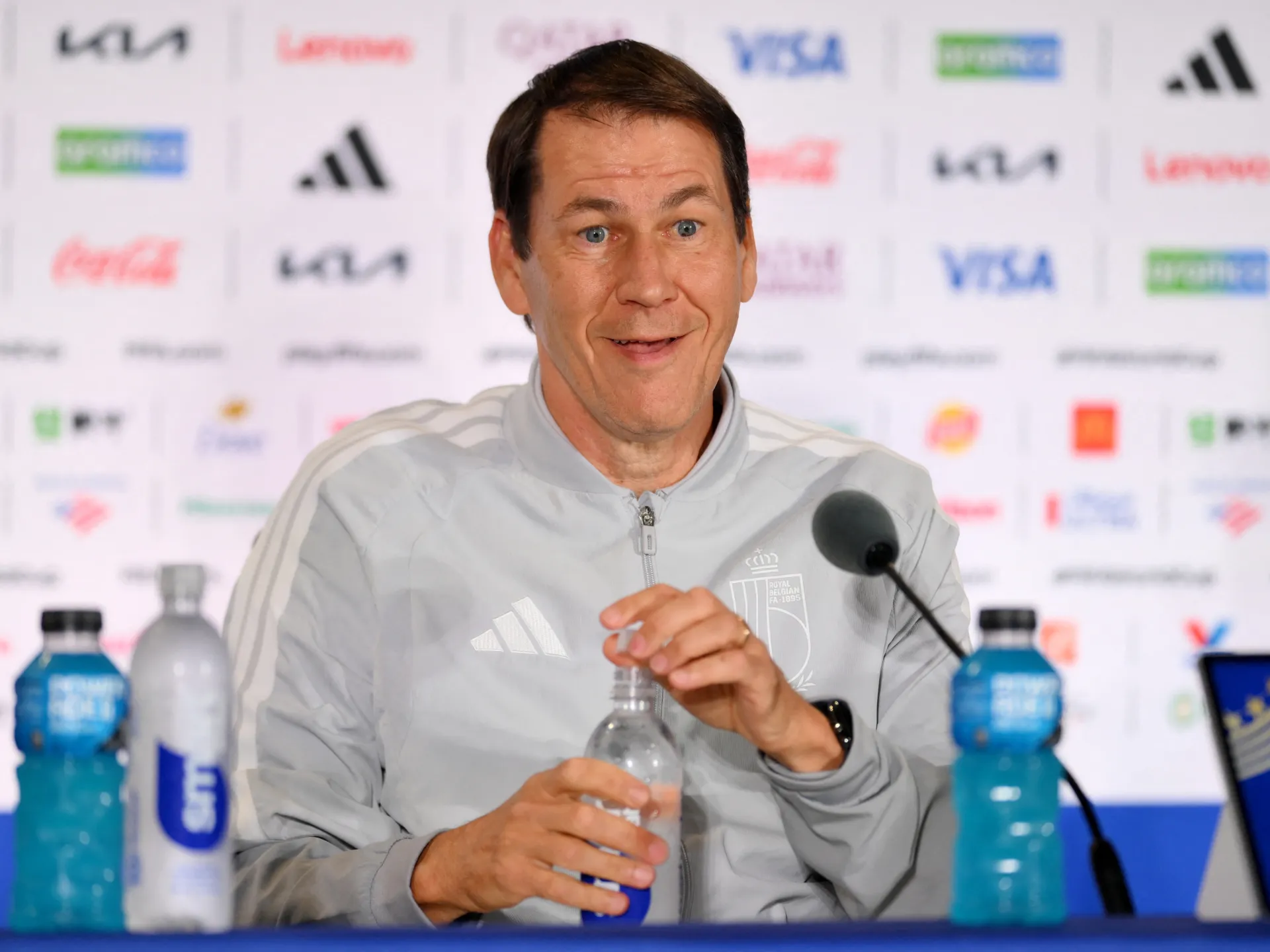
Belgium’s football federation (RBFA) says it is “astonished” by FIFA’s controversial decision to suspend the one-match red card ban on USA striker Folarin Balogun and is “investigating all potential options” to uphold integrity in the sport.
The World Cup was plunged into uproar on Sunday after FIFA suspended a red card given to Balogun ahead of the host nation’s clash with Belgium, in a bombshell move welcomed by US President Donald Trump but slammed by Belgian officials.
list of 4 itemsend of list
The extraordinary FIFA ruling means that Balogun is now free to play for the USA against Belgium on Monday in Seattle, with a place in the quarterfinals at stake.
The Royal Belgian Football Association said it is “investigating all potential options” to “safeguard the legitimate rights of all participating teams and to protect the fundamental principles of fair play in our sport”.
“I didn’t know that at the FIFA World Cup, the 5th of July is now the 1st of April, and that it’s April Fool’s Day,” added Belgium coach Rudi Garcia at a news conference.
“A lot of our thoughts and opinions are in the release,” Garcia said.
“We’re not defending the national team or the federation, we are defending football.”
Balogun had been set to miss Monday’s last-16 knockout clash with the Belgians after receiving a straight red card following a video review for stepping on the foot of a Bosnian defender in a round-of-32 clash that the US won 2-0.
Under FIFA rules, a straight red card automatically triggers a one-game ban, which cannot be appealed by the player’s team.
But FIFA said on Sunday that the ban will now be suspended for a year, in a stunning move for which no specific explanation was offered.
It is the first instance of a red-carded player being allowed to play in his team’s subsequent match since the introduction of the yellow and red card rules at the 1970 edition of the World Cup.
Top scorer Balogun has been key to the USA’s progress in the tournament, netting three times, and his absence against Belgium would have been a blow to the team in Seattle.
The stakes are huge for the cohosts, whose strong start to the tournament has raised expectations to fever-pitch levels among the American public, and they are targeting a run to at least the quarterfinals. The last time the USA reached the quarters was in 2002.
Balogun himself had said on Friday that the red card ban was “something I have to just accept”.
However, the 25-year-old celebrated FIFA’s U-turn with an Instagram post of himself in the US team jersey and Michael Jackson’s Bad attached as the audio.
USA players and officials welcomed the news, which they received on their way to training on Sunday morning.
“I think a lot of us thought it was AI at first,” defender Chris Richards said. “I think we were really excited because we found out through social media; it was cool. It was a lot of question marks, but just very, very happy and excited overall.”
“It feels right,” forward Christian Pulisic added. “Really excited for him to have this opportunity. To see the smile on his face and to be able to give us a boost tomorrow is great.”
Head coach Mauricio Pochettino said that “it’s a fair decision because it should have never been a red card”, calling the punishment “too big” for an unintentional foul.
“It’s not that we are victims, but we are not the bad men, the mean ones here,” he said.
In its statement, FIFA pointed to “article 27 of the FIFA disciplinary code”, which allows the suspension to be “suspended for a probationary period of one year”.
Balogun would serve the ban only if he commits another similar foul in the next year, it said.
There is some precedent for the decision.
Portugal superstar Cristiano Ronaldo earned a three-game ban for an elbow during qualifying last year, but had two matches of his ban suspended.
The move, which allowed Ronaldo to play in Portugal’s World Cup opener, drew criticism at the time.
Belgium goalkeeper Thibaut Courtois said it was “a bit of a surprise” that Balogun was cleared to play just a day before the match.
“Had it been done earlier, we’d have been able to be mentally more prepared, perhaps,” he said.
FIFA’s decision has stirred up a social media storm, with mixed reactions to the suspension.
DR Congo footballer Yannick Bolasie expressed his dismay at the decision by saying the reaction to FIFA’s U-turn would have been quite different had it been taken in the Africa Cup of Nations.
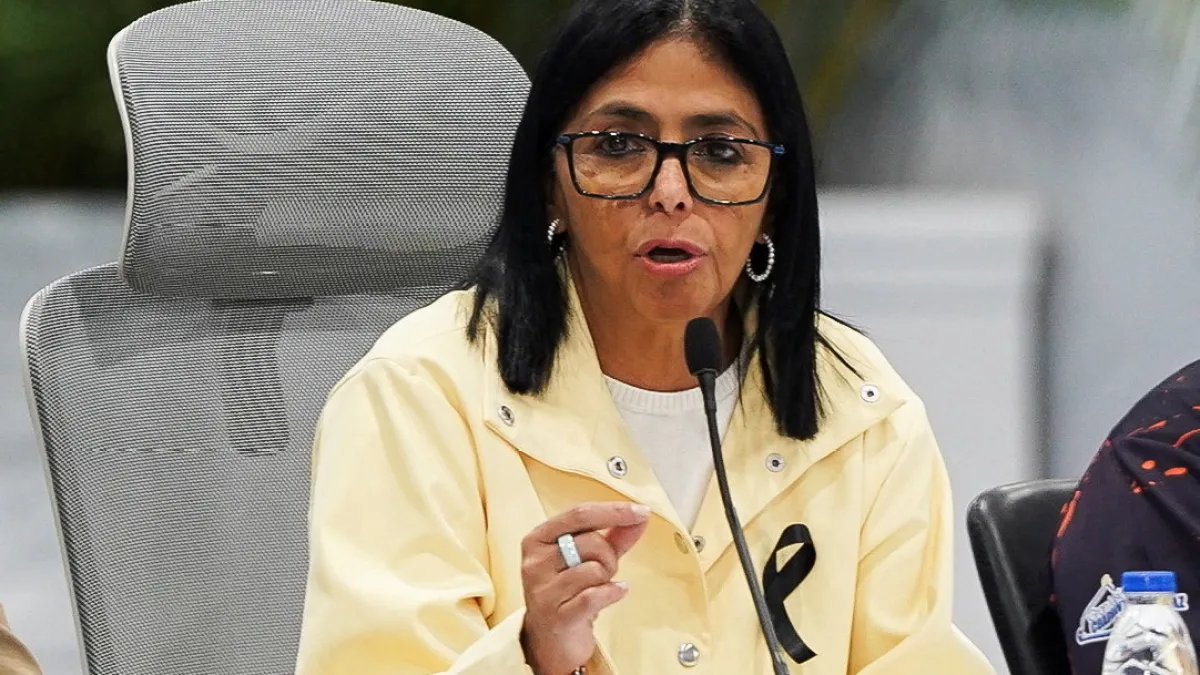
Venezuela has marked its 215th Independence Day as citizens continue to grapple with grief following a pair of deadly earthquakes on June 24.
On Sunday, interim President Delcy Rodriguez sought to project strength during a military service in honour of the annual holiday.
list of 3 itemsend of list
“There will be no social unrest here,” Rodriguez said. “What we have here is deep social solidarity.”
But Rodriguez’s government has faced backlash since the twin earthquakes struck, hitting Venezuela with magnitudes of 7.2 and 7.5, respectively.
On Sunday, Venezuela’s Ministry of Communication and Information announced that it had recorded 3,342 deaths as a result of the earthquakes, with more expected. Thousands of people remain missing.
In addition, some 16,470 people are injured, while 17,345 have been left without homes.
The powerful seismic activity levelled buildings along Venezuela’s northern coastline, damaging regions like La Guaira and the Caracas metropolitan area.
Critics have accused the United Socialist Party of Venezuela, which has led the country since 2007, of chronic mismanagement and corruption.
That, they say, has left Venezuela incapable of handling a crisis of the current scale. The June 24 earthquakes are the deadliest in a century for the country, and they represent the most catastrophic natural disaster Venezuela has weathered since the flash floods of 1999.
After the earthquakes, residents reported that government aid was slow to reach the most affected areas. Some accused the government of impeding the flow of foreign assistance.
In Sunday’s remarks, Rodriguez accused critics of seeking to stir “hatred” against the state.
“Attempts are being made today to attack Venezuelan institutions,” Rodriguez said. “There can be no room for any kind of conspiracy, internal or external, from whatever source it may come.”
The earthquakes are the first major disaster the Rodriguez government has had to contend with.
Rodriguez was sworn in as acting president in January, after serving as vice president under then-President Nicolas Maduro.
But on January 3, the United States launched a military operation to abduct and imprison Maduro on drug- and weapons-related charges. He is currently facing trial in New York.
Since taking power, Rodriguez has sought to work within the demands of US President Donald Trump. Her government has overseen reforms, for example, to its nationalised mining and fuel industries allowing more foreign investment.
The Trump administration, meanwhile, has stood by Rodriguez, even amid the outpouring of criticism following the earthquakes.
Media reports have emerged that the US has repeatedly rejected requests from Venezuela’s main opposition leader, Maria Corina Machado, to help her return to the country.
Machado had been living in hiding under Maduro for fear she would be arrested for her politics. In December, shortly before Maduro’s abduction, she secretly left Venezuela to collect a Nobel Peace Prize for promoting democracy.
But Machado has yet to return, though she has said she wants to be in the country to help with disaster relief efforts.
Her political coalition, Vente Venezuela, has been organising its own volunteer effort to collect donations and distribute supplies.
In a message to mark Venezuela’s Independence Day, Machado sought to draw a parallel between the US and her country.
“Yesterday, the people of the United States celebrated the 250th anniversary of their Declaration of Independence. Mere hours separate these commemorations, reflecting far more than a coincidence of history,” she wrote.
“They remind us that our nations are bound by the same republican ideals and by a shared commitment to the defense of the free world.”
In January, Machado presented Trump with her Nobel Peace Prize medal, in what was widely seen as an attempt to curry favour with the US president.
She has repeatedly pushed for new elections in Venezuela, claiming that her party has had a mandate to lead since the 2024 presidential race.
That election saw Maduro claim a third term as president, despite published vote tallies indicating he lost the race to the opposition candidate, Edmundo Gonzalez, an ally of Machado.
“We have built an unshakable democratic legitimacy, we have defeated the regime’s lies with the truth, and we have peacefully mobilized an entire nation that today is outraged and desperate for change,” Machado wrote in her Independence Day message.
“Enduring alliances are built on truth and trust. Now is the time to move forward with determination and to carry out, with unwavering resolve, the decisive chapter of our shared strategy.”
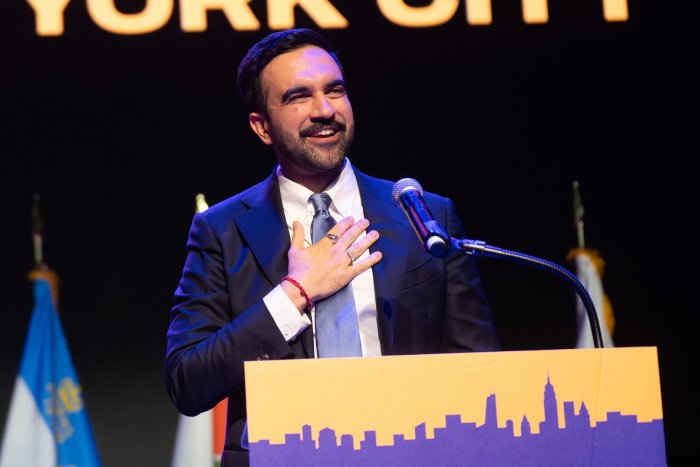
July 5 (UPI) — Mallory McMorrow, a state lawmaker who made in early splash in the race for the Democratic nod in Michigan’s key U.S. senate race, suspended her campaign on Sunday in a surprise move.
McMorrow, who positioned herself between the national party leadership favorite Rep. Haley Stevens and progressive challenger Abdul El-Sayed, said in a social media post she is pulling out of the race “with a deep, deep sense of gratitude.”
“For our thousands of volunteers, for everyone who donated what you could — building a campaign with zero corporate PAC dollars,” she said, adding that while she is suspending her campaign, “I am not leaving the fight.”
McMorrow reiterated her call for “new leadership and a better Democratic Party,” whose top voices, including Senate Minority Leader Chuck Schumer, have endorsed Stevens to take on the Republican nominee, former Rep. Mike Rogers, in November’s general election.
Her withdrawal leaves Stevens and El-Sayed as the remaining candidates for the Aug. 4 primary, which is now shaping up to be a major test of whether El-Sayed can extend progressives’ winning streak against more establishment figures in Democratic primaries.
“Whoever wins this primary on August 4th will have my full support,” she declared.
The Michigan race is seen as a key in the Democrats’ hopes of capitalizing on the unpopularity of President Donald Trump and flipping the Senate from Republican control in November. To do so, they must keep it in the “blue” column as it is being vacated by Democrat Gary Peters.
McMorrow was an early front-runner in the race and had raised more than $8.6 million by the end of March but has since fallen behind El-Sayed and Stevens in the polls, the Detroit Free Press reported.
El-Sayed, a former Detroit public health official who has the backing of progressive stalwarts Sen. Bernie Sanders and Rep. Alexandria Ocasio-Cortez, has seen a surge of support since May and last month won the endorsement of the United Auto Workers.
Four-term congresswoman Stevens, meanwhile, is picking up backing from some of McMorrow’s supporters, including Michigan Attorney General Dana Nessel, who on Sunday called Stevens “a seasoned fighter for Michigan who knows how to work in a difficult environment to get essential policies across the finish line.”

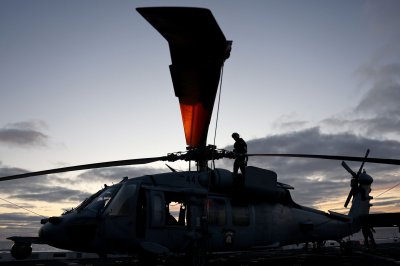

July 5 (UPI) — The U.S. military suspended its search Sunday for a missing Naval aircrewman who went missing Wednesday following an emergency landing in the Arabian Sea.
U.S. Naval Forces Central Command announced the suspension of the search in a statement on social media after more than 102 hours.
“The efforts concluded following an extensive search by the U.S. Navy and U.S. Air Force in the U.S. Central Command area of responsibility,” U.S. Naval Forces Central Command said in a statement. “The Sailor’s name is benign withheld until at least 24 hours after next-of-kin notification is complete in accordance with Navy policy.”
The search spanned more than 14,000 square miles. The military utilized multiple helicopters and other U.S. Air Force aircraft, aircraft carriers and guided-missile to canvas the region.
The missing crewman was aboard a MH-60S Sea Hawk helicopter when it crash landed at about 3:30 a.m. EDT on Wednesday. There were four people in the helicopter. The other three crewmembers were recovered and listed in stable condition.
The helicopter was on a routine patrol when it went down.
U.S. officials said the helicopter’s crash landing was not the result of hostile fire.
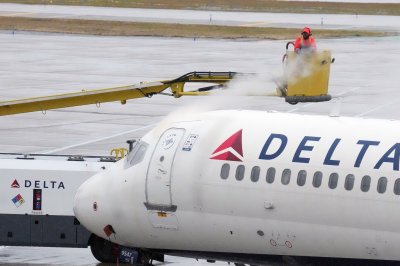
 A Delta crew member reported feeling a “big bang” after a plane was struck with a firework during its landing at Chicago Midway International.
Source link
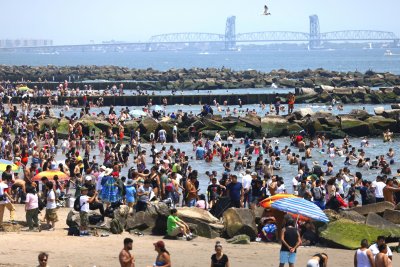

July 5 (UPI) — Eight people were shot in Coney Island, N.Y., during a Fourth of July fireworks display Saturday as four children were among the wounded.
Four boys, ages 14, 12, 7 and 6, were shot, as were a 37-year-old man, 33-year-old man, 25-year-old woman and 21-year-old woman. The identities of the victims have not been made public.
“All victims were transported by EMS to local area hospitals where seven people were listed in stable condition, the NYPD said in a statement. “The 21-year-old woman is listed in critical condition.”
The 6-year-old victim was shot in the abdomen and the 7-year-old was shot in both of his legs. Both are expected to recover.
Police responded to the call of a shooting near the Coney Island boardwalk at 10:37 p.m. EDT. They have not named a suspect and have made no arrests as of Sunday morning. The motivation behind the shooting remains unknown.


U.S. News // 16 hours ago
Nancy Pelosi’s husband likely to face charge after California crash
July 4 (UPI) — Paul Pelosi, former House Speaker Nancy Pelosi’s husband, is expected to face charges after he hit a parked car in Napa County, Calif., on Saturday.


One man was critically injured in a fire in Los Angeles Friday after illegal fireworks went off, setting two vehicles on fire in a motel parking lot. File Photo by Stuart Palley/EPA
July 5 (UPI) — One man was critically injured in a fire in Los Angeles Friday after illegal fireworks went off, setting two vehicles on fire in a motel parking lot.
The 22-room Crescent Inn motel in the Wilmington neighborhood of Los Angeles was completely evacuated from the incident. Los Angeles Fire Department Assistant Chief Carlos Calvillo said first responders discovered a wounded man near the burning BMW when they arrived on the scene.
“This is a good example of messing with illegal fireworks, fireworks in general, extremely dangerous,” he said. “This person’s body was severely traumatized from this incident.”
Investigators said commercial grade fireworks were found near the burning vehicles.
Emergency responders were called to a report of two vehicles on fire at about 8:30 p.m. PDT Friday. The Los Angeles Police Department also responded to the scene.
A single family home next to the motel was also evacuated. Twelve people, including two children, were displaced by the fire.
The cause of the fireworks going off has not been determined. Fire officials say they believe the man was smoking in the BMW.
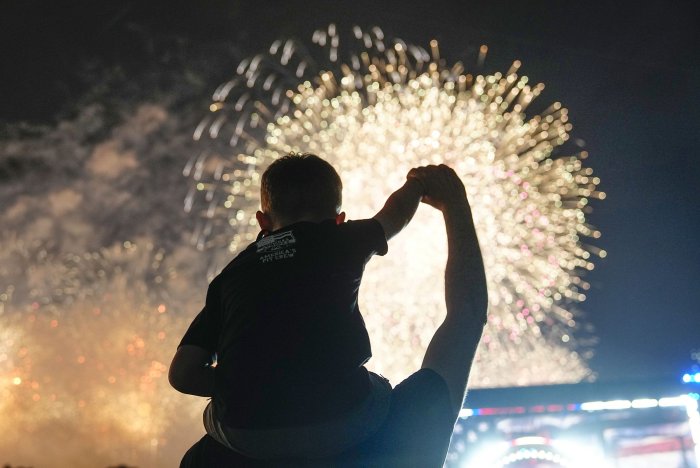
July 5 (UPI) — President Donald Trump called the United States’ 250 years an “unmatched achievement” during his Fourth of July speech in Washington, D.C., on Saturday.
Trump’s address was delayed late into the evening due to severe storms that caused a two-hour evacuation of the National Mall. The storms followed on the back of a heatwave on the east coast.
The president took to the podium at 11:15 p.m. EDT. His speech echoed his past speeches, touting the “golden age of America,” repeating unfounded claims of election fraud and calling for the passage of the SAVE Act in Congress.
“We want to keep America great, and we will do so by approving the Save America Act,” Trump said. “You won’t have cheating on the elections anymore. It’s very simple.”
As Trump listed off a series of U.S. military achievements, he included the January operation to abduct Venezuelan President Nicolas Maduro and the war in Iran, which he compared to the sinking of the Spanish Armada in the Anglo-Spanish War in 1588.
“Much like our recent victory, by sinking the entire Iranian navy,” Trump said. “One hundred and fifty-nine ships to the bottom of the sea, all done in just a moment’s time.”
Trump also focused his attention on communism, which he called a threat to the United States.
“We don’t want communists in our country,” Trump said. “It never worked and it never will work.”

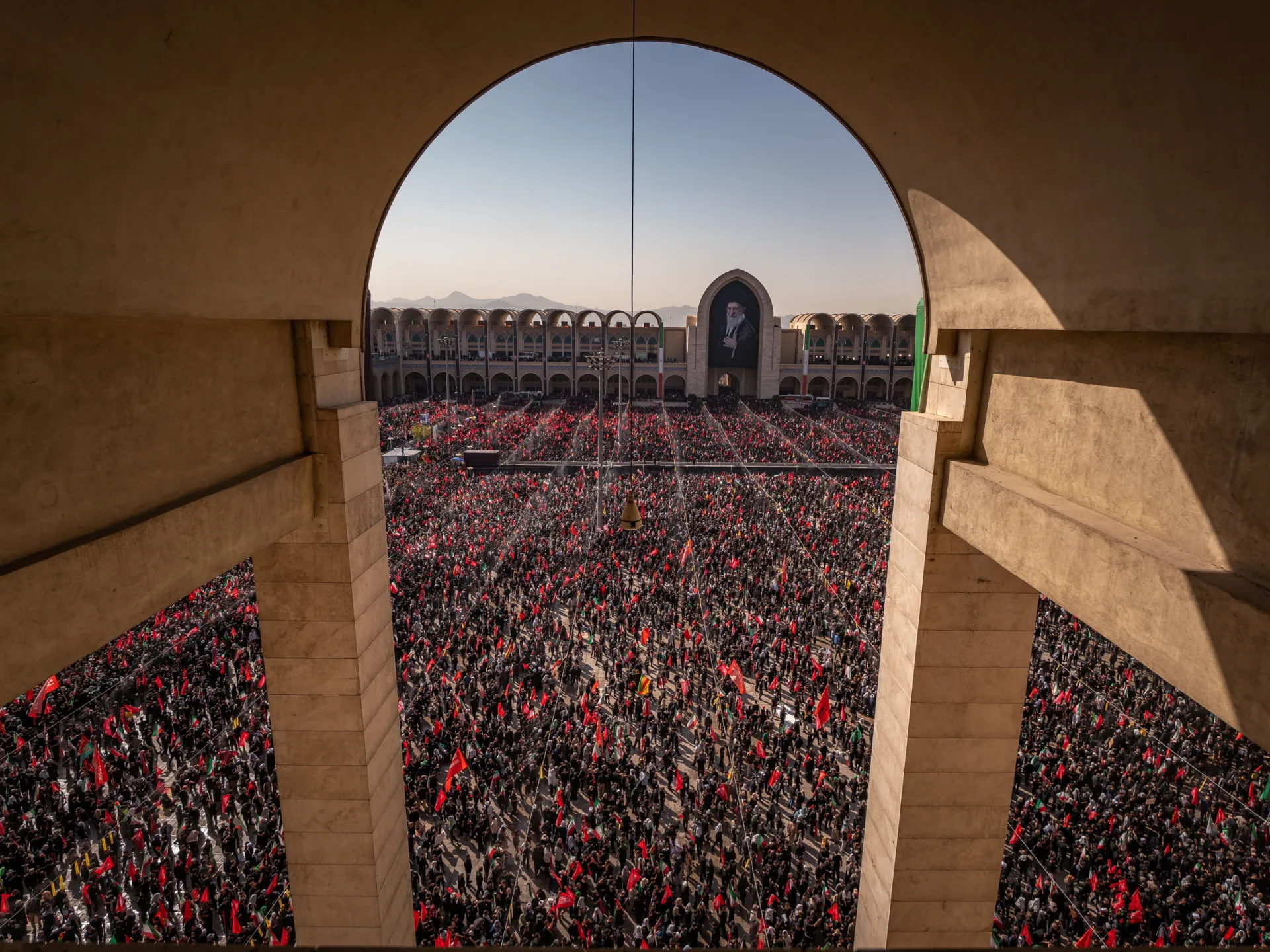
Millions of people have attended funeral prayers in Tehran for Iran’s late Supreme Leader Ayatollah Ali Khamenei who was killed in a joint US-Israeli strike on February 28. Aerial video reveals the scale of the crowd.
Published On 5 Jul 20265 Jul 2026
Share
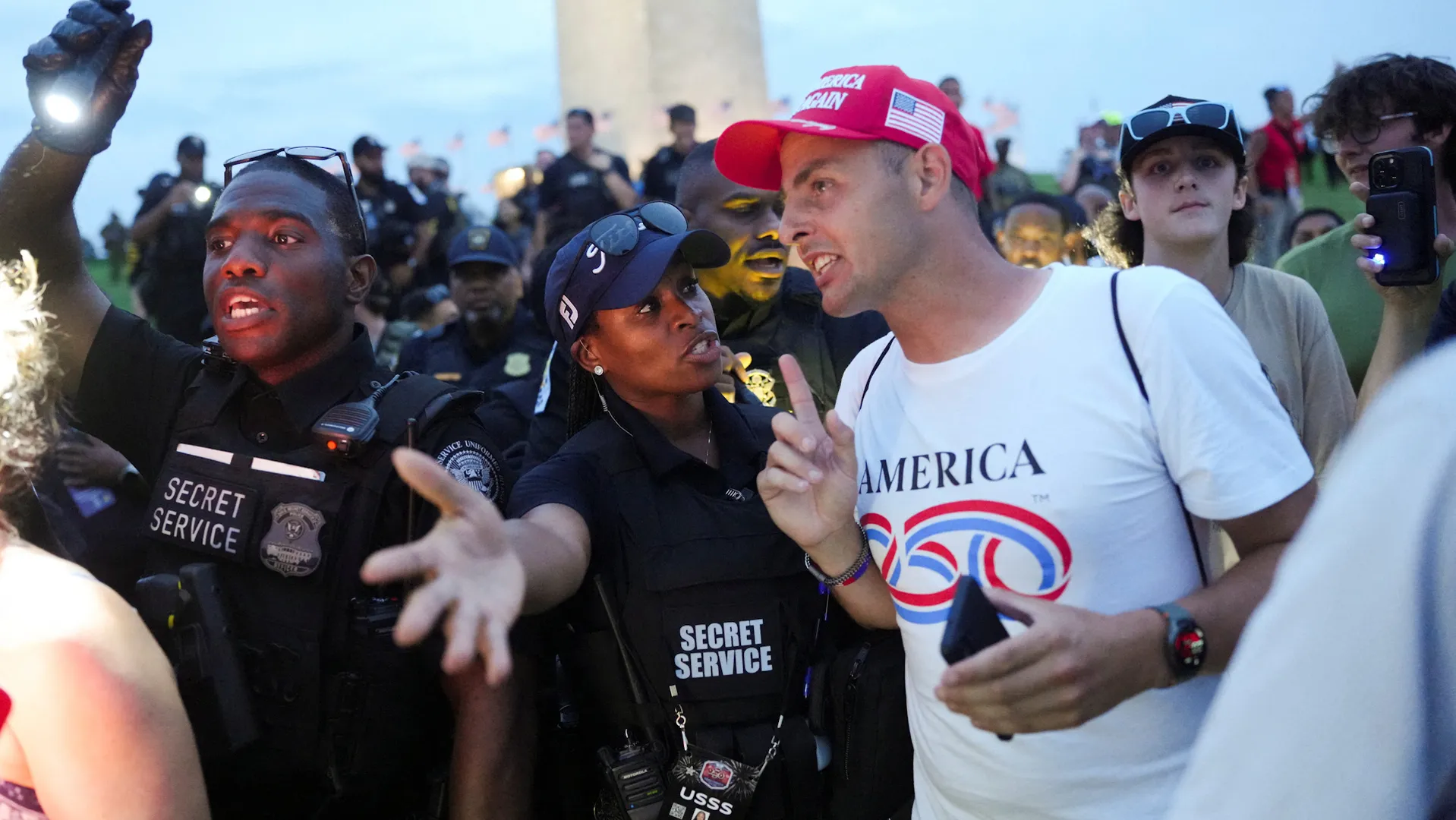
Extreme weather disrupted the US’s 250th anniversary celebrations, forcing evacuations, cancellations and delays. Despite setbacks including a National Mall evacuation and a fireworks display setting the Brooklyn Bridge on fire, Trump called the day ‘one of the most joyous and glorious’ in US history.
Published On 5 Jul 20265 Jul 2026
Share
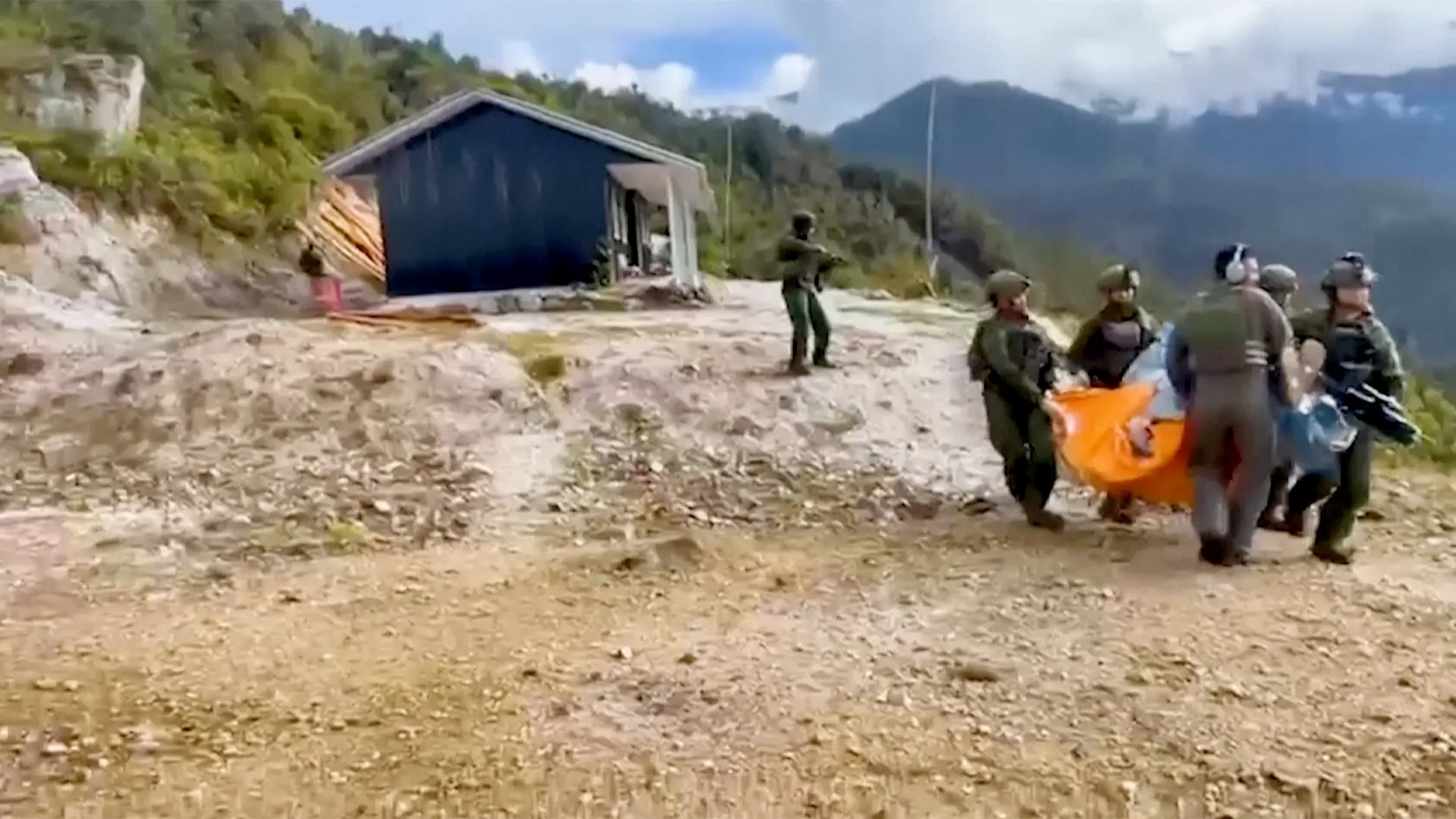
Indonesian troops have recovered the body of American pilot Nicholas Goselin from the restive Papua region after he was killed by separatist ‘Bakusip’ rebels last week. The operation involved a 10-member team and three helicopters.
Published On 5 Jul 20265 Jul 2026
Share
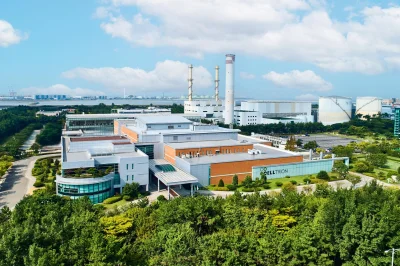

A factory of Celltrion in South Korea. The biopharmaceutical company saw its second-quarter profit surge more than 77% from a year ago. Photo by Celltrion
July 3 (UPI) — South Korea’s biopharmaceutical company Celltrion said Friday that its sales amounted to $840 million in the second quarter of this year, up 35.2% from a year earlier.
The firm noted that its operating income for the April-June period jumped 77.3% year-on-year to reach $280 million, lifting its operating profit margin to 33% from 25% a year ago.
Celltrion attributed the solid performance to an improved product mix and lower manufacturing costs. In particular, its newly launched products accounted for more than 60% of total revenue during the latest three months.
On the cost side, Celltrion said that profitability has gotbetter following the completion of post-merger integration. In late 2023, the Incheon-based company, located west of Seoul, merged with its sales affiliate, Celltrion Healthcare.
Celltrion expects growth momentum to strengthen in the second half, when the biosimilar industry typically benefits from increased government procurement deliveries and year-end inventory replenishment.
The company also plans to further broaden its pipeline of biosimilars and novel drugs beyond its current portfolio.
“This performance shows that our efforts to expand new products and improve profitability are beginning to deliver meaningful results, “Celltrion said in a statement.
“We expect stronger participation in major national tenders and continued growth from new products, which will be reflected more fully in the second half,” it added.
The share price of Celltrion rose 3.96% on the Seoul bourse on Friday, while the benchmark KOSPI gained 5.76%.
Elyas Abu Safia says his father can barely breathe or speak after more than 555 days in Israeli prison.

Published On 5 Jul 20265 Jul 2026
The son of a prominent Palestinian doctor abducted and held by Israel without charge has issued an urgent appeal for his father’s release, warning that his health has sharply deteriorated after more than 555 days in prison, as a rights group warned that his life was in danger.
Elyas Abu Safia, the son of Dr Hussam Abu Safia, said in a video message on Sunday that his father, the director of Kamal Adwan Hospital in northern Gaza, showed signs of severe abuse after Israeli authorities transferred him to solitary confinement in a maximum-security prison.
list of 3 itemsend of list
“The day before yesterday, the lawyer Nasser Odeh managed to visit my father, where he told us painful details about this visit,” said Elyas, who is also a doctor.
“My father was unable to breathe. My father was unable to speak,” he said, adding: “His face was disfigured from the marks of torture and pain, and the blood he endured inside the prison, especially after the last court session held in Jerusalem.”
Israeli forces arrested Abu Safia at work on December 27, 2024, as they intensified their attacks on northern Gaza’s healthcare system as part of the genocidal war against Palestinians in Gaza. Two months earlier, an Israeli drone attack killed another of his sons, Ibrahim, at the entrance of the hospital where he worked.
Elyas accused Arab and Muslim leaders of abandoning his father.
“You deprived us even of your voices, your solidarity and your support, which should have been there from the start of the detention,” he said.
“But sadly, your silence is a betrayal and a crime, and complicity in torturing my father and the hostages inside Israeli prisons,” he added.
Physicians for Human Rights Israel warned that Abu Safiya’s life is in immediate danger after his transfer to the Rakefet section of Nitzan prison.
The group said lawyer Nasser Odeh visited Abu Safia on July 2 and documented severe injuries, signs of assault, difficulty breathing and repeated loss of consciousness. It said guards brought him into the visit with his hands and feet bound and surrounded him with masked officers.
Odeh also saw fresh bruises and injuries on Abu Safiya’s head, around his eyes, ears and neck. The wounds were so severe that the lawyer struggled to recognise him, the group said.
“The information we received raises serious and immediate concerns for Abu Safiya’s life. The lawyer’s testimony is among the most shocking we have heard since the beginning of the war: a man detained without charge tells his lawyer that he believes they will kill him, after he arrived for the visit injured, suffering from difficulty breathing, and on the verge of losing consciousness,” Naji Abbas, director of the Prisoners and Detainees Department at Physicians for Human Rights, told the official Palestinian news agency Wafa.
Israeli authorities have not filed charges against Abu Safia. They classified him as an “unlawful combatant”, a designation Israel has used to hold Palestinians for prolonged periods without trial.
Physicians for Human Rights has demanded his release, along with other imprisoned Palestinian doctors. In March, United Nations experts also called on Israel to free Abu Safia immediately and ensure he receives medical care.
He is one of 14 Palestinian doctors from Gaza currently held by Israel without charge.