Star NBA players like LeBron James take to social media to praise the Miami player’s incredible scoring achievement.
Published On 11 Mar 202611 Mar 2026
Share
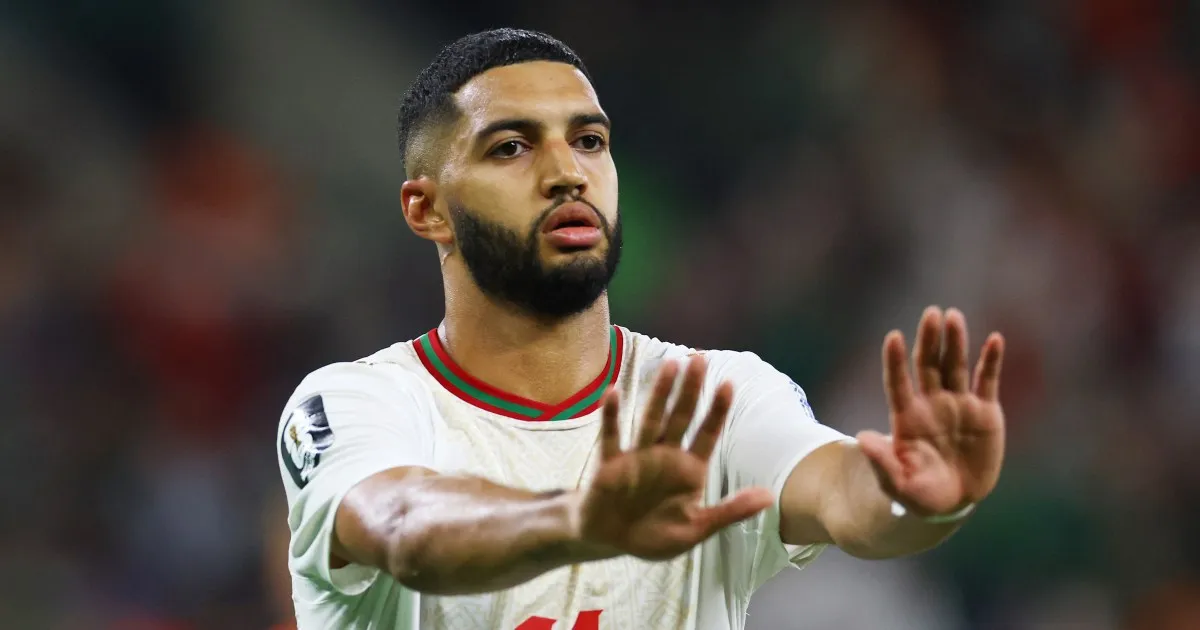
Miami Heat centre Bam Adebayo’s 83-point performance against the Washington Wizards on Tuesday – the second-highest scoring game in NBA history – was a historic statistical line no one saw coming.
The Heat star shot 20-43 from the floor and was 7-22 from beyond the three-point line. Thirty-six of his 83 points came from the free-throw line (36 of 43).
Recommended Stories
list of 4 itemsend of list
Entering the game, Adebayo was averaging just 18.9 points per night this season, placing him outside the top 40 scorers in the league.
Now, the 28-year-old only trails the legendary Wilt Chamberlain for most points scored in a single NBA game after he passed the late Kobe Bryant’s 81-point masterpiece against the Toronto Raptors, set in 2006.
Post-game, Adebayo spoke of the significance of passing Bryant, who he idolised growing up.
“To be 83 and passing [Bryant], in my mind, it’s like, what would he say to me? Because I’ve always wanted to have a conversation with him,” Adebayo said. “He’ll probably say, ‘Go do it again.’
“Just a surreal moment being in the company with somebody that you idolised growing up.”
Here is some reaction to the Miami big man’s incredible scoring feat from some of the biggest names in the NBA:
“BAM BAM BAM ,” wrote LeBron James, the NBA’s all-time career leading scorer, on X.
Former Miami Heat legend Dwayne Wade wrote: “83 for Cap”
Houston Rockets star Kevin Durant, who was asked about Adebayo’s achievement in a post-match news conference on Tuesday, said:
“I couldn’t believe it when I was hearing about it in real time. He got 30 in the first quarter … Congratulations to Bam. I know how much work he puts in.
“I looked at the statsheet, and it’s pretty crazy, 40 shots, 40 free throws, 20 threes, that takes a lot of stamina man, that takes a lot of energy to not only go out there to put those shots up, but also make them to set the record to surpass Kobe [Bryant] as the second-highest scorer in the history of the game,” Durant added.
WNBA player A’ja Wilson, left, and Adebayo embrace after he scored a career-high 83 points [Megan Briggs/Getty Images via AFP]
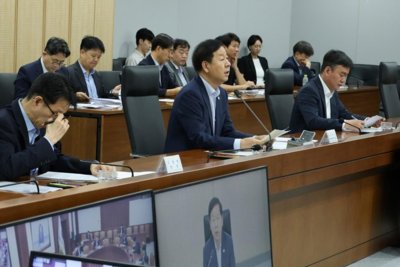
South Korean President Lee Jae Myung speaks during a Cabinet meeting at the presidential office Cheong Wa Dae in Seoul, South Korea, 10 February 2026. Photo by YONHAP / EPA
March 10 (Asia Today) — President Lee Jae-myung said Tuesday the government may prepare an early supplementary budget to cushion the economic impact of rising energy prices linked to the Middle East conflict.
Speaking at a Cabinet meeting in Seoul, Lee said additional fiscal measures could be necessary to support small businesses, struggling companies and vulnerable households if global energy shocks continue.
“To provide fiscal assistance and support for small business owners and vulnerable firms, we may inevitably need an early supplementary budget,” Lee said.
Lee also called for targeted support for lower-income households rather than a blanket reduction in fuel taxes as oil prices surge.
The president instructed officials to accelerate additional financial and fiscal measures, including a petroleum price cap system, adjustments to energy taxes and direct assistance to consumers.
“We must mobilize all national capabilities to minimize the impact of external shocks on people’s livelihoods, the economy and industry,” Lee said.
Deputy Prime Minister and Economy Minister Koo Yoon-cheol said the government could potentially finance the supplementary budget without issuing new government bonds.
He cited improving conditions in the semiconductor industry and increased fiscal resources linked to stronger activity in the stock market.
Lee also addressed concerns over reports that United States Forces Korea may remove some air defense assets from the country amid the regional conflict.
“If you ask whether this seriously undermines our deterrence strategy against North Korea, the answer is no,” Lee said.
He acknowledged that South Korea had expressed opposition to the partial withdrawal of air defense systems but noted that the United States may reposition some assets based on its broader military needs.
Foreign media have reported that systems such as the Terminal High Altitude Area Defense system and Patriot missile batteries could be redeployed.
Lee emphasized that South Korea’s defense spending remains among the highest in the world and said the country’s military readiness remains strong.
A group of Democrats in the United States Senate is demanding public hearings on the country’s war against Iran after receiving a series of classified briefings from officials in President Donald Trump’s administration.
Lawmakers say the White House has not clearly explained why the US entered the conflict, what its goals are, or how long it may last.
Republicans currently hold a narrow, 53-47 Senate majority, which gives them the power to control what legislation comes to the floor for debate.
Some Democrats have expressed frustration after the latest closed-door briefing. Trump has not ruled out sending US ground troops into Iran.
“I just came from a two-hour classified briefing on the war,” Senator Chris Murphy from the state of Connecticut said on Tuesday. “It confirmed to me that the strategy is totally incoherent.
“I think this is pretty simple: if the president did what the Constitution requires and came to Congress to seek authorisation for this war, he wouldn’t get it – because the American people would demand that their members of Congress vote no,” he added.
Here is what we know:
What has happened so far?
Since the US and Israel launched attacks on Iran on February 28, senior officials, including Secretary of State Marco Rubio and Defense Secretary Pete Hegseth, have held several closed-door meetings to brief Congress members on the military campaign and its progress.
Because the meetings are classified, lawmakers are restricted in what they can publicly disclose about the information they received.
US President Donald Trump listens to Secretary of State Marco Rubio [File: Nathan Howard/Reuters]
What are Democrats saying?
Several Democratic senators have said they left the briefings frustrated, arguing that the administration had not provided clear answers about the war’s objectives, timeline or the long-term strategy guiding their approach to the conflict.
Earlier this week, six Democratic senators also called for an investigation into a strike on a girls’ school in Minab, in southern Iran. Reports indicate the attack, which investigators say involved US forces, killed at least 170 people, most of them children.
“There seems to be no endgame,” Democratic Senator Richard Blumenthal said. “The president, almost in a single breath, says it’s almost done, and at the same time, it’s just begun. So this is kind of contradictory.”
Senator Elizabeth Warren from Massachusetts raised concerns about the cost of war.
“The one part that seems clear is that while there is no money for 15 million Americans who lost their health care, there’s a billion dollars a day to spend on bombing Iran,” Warren said on Tuesday.
“The one thing Congress has the power to do is to stop actions like this through the power of the purse,” she added.
Others seem worried that a ground deployment could take place.
“We seem to be on a path toward deploying American troops on the ground in Iran to accomplish any of the potential objectives here,” Blumenthal, of Connecticut, told reporters after Tuesday’s classified briefing.
“The American people deserve to know much more than this administration has told them about the cost of the war, the danger to our sons and daughters in uniform and the potential for further escalation and widening of this war,” he added.
Democratic Senator Richard Blumenthal of Connecticut [File: Ben Curtis/AP]
What are Republicans saying?
Republicans, who have slim majorities in both houses of Congress, have almost unanimously backed Trump’s campaign against Iran, with only a handful expressing doubt about the war.
Some Republican leaders say the strikes are necessary to curb Iran’s military capabilities, missile programme and regional influence.
They have also argued that the operation is limited in scope and designed to weaken Iran’s ability to threaten US forces and allies in the region.
Republican Representative Brian Mast of Florida, chairman of the House Foreign Affairs Committee, last week publicly thanked Trump for taking action against Iran, saying the president is using his constitutional authority to defend the US against the “imminent threat” posed by Tehran.
But some Republican members of Congress have voiced concerns.
Representative Nancy Mace from South Carolina said she did “not want to send South Carolina’s sons and daughters into war with Iran”, in a post on X.
Rand Paul, a Republican senator from Kentucky, accused the Trump administration of changing its narrative and rationale for the war on a daily basis.
“We keep hearing new reasons for war with Iran—none convincing,” he wrote on X. “‘Free the oppressed’ sounds noble, but where does it end? We’ve been told for decades Iran is weeks from a nuke. War should be a last resort, not our first move. A war of choice is not my choice.”
Why does the debate matter?
The dispute has revived a long-running debate in Washington, DC, about the limits of presidential war powers.
Under the US Constitution, Congress has the authority to declare war, but modern presidents have frequently launched military operations without formal congressional approval, often citing national security or emergency threats.
The law allows the president to deploy US forces for up to 60 days without congressional authorisation, followed by a 30-day withdrawal period if Congress does not approve the action.
Some lawmakers and legal experts say the war on Iran highlights the need for stronger congressional oversight of military action.
“In the 1970s, we adopted something called the War Powers Resolution that gives the president limited ability to do this,” said David Schultz, a professor in the political science and legal departments at Hamline University.
“And so, either you could argue that what the president is doing violates the Constitution by… not [being] a formally declared war; or b, it exceeds his authority, either as commander-in-chief or under the War Powers Act,” he added.
“And therefore, you could argue that domestically, his actions are illegal and unconstitutional,” Schutlz said.
The Trump administration has argued that the February 28 strikes were justified as a response to an “imminent threat”, a rationale often used by presidents to justify military action without prior congressional approval.
However, US intelligence agencies had themselves said before the start of the war that they had no evidence of an imminent Iranian threat to the US or its facilities across the Middle East.
March 10 (UPI) — President Donald Trump posted on social media that the United States has destroyed 10 inactive mine-laying vessels on the Strait of Hormuz while the White House cleared up a claim by another administration official.
White House press secretary Karoline Leavitt said Tuesday that the U.S. Navy did not escort an oil tanker through the Strait of Hormuz after Energy Secretary Chris Wright claimed it did on social media.
Leavitt said President Donald Trump may consider using Navy escorts for oil tankers on the strait but that has not happened yet.
“The U.S. Navy has not escorted a tanker or vessel at this time,” Leavitt told reporters during a press briefing Tuesday.
Earlier in the day, Wright posted that the U.S. Navy “successfully escorted an oil tanker through the Strait of Hormuz to ensure oil remains flowing to global markets.”
Leavitt said she was “made aware of this post,” but had not spoken with Wright about it.
The post was later taken down.
The price of crude oil fell below $80 per barrel briefly following Wright’s post. It climbed again after the post was deleted.
Iran has taken measures to close the Strait of Hormuz, a critical oil trade route, since the United States and Israel launched strikes on Feb. 28.
To combat the impact the military conflict with Iran will have on the global oil market, the United States has discussed plans to escort oil tankers through the Strait of Hormuz. However, retaliatory strikes by Iran have demanded more military resources, Wright previously said.
A new report has expressed alarm at what it describes as backsliding press freedoms across the Americas, with the United States seeing the steepest decline.
The Inter American Press Association (IAPA) released its latest press freedom index on Tuesday, ranking last year as the lowest point for freedom of expression since the report began in 2020.
Recommended Stories
list of 3 itemsend of list
Researchers found that the Americas have experienced a “dramatic deterioration” in unrestricted speech, according to the report.
“This is one of the worst years for journalism in the region, marked by murders, arbitrary arrests, exile, and rampant impunity in countries such as Mexico, Honduras, Ecuador, Nicaragua, El Salvador, Guatemala, Colombia, Cuba, and Venezuela,” the report said.
It added that enhanced restrictions on free speech have occurred in countries of various ideological persuasions, whether right-wing or left-wing.
The US, however, was singled out as an area of “alarming decline”. In a ranking of 23 countries across the hemisphere, the US dropped from fourth place to 11th, indicating that journalists operate with increased restrictions.
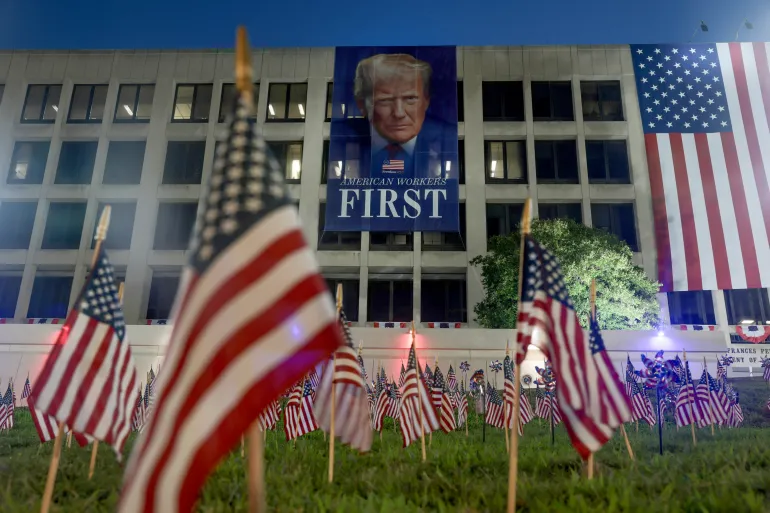
Changes under President Donald Trump, who returned to office last year, were cited as a primary factor.
“Even though journalistic practice in the United States remains protected by the Constitution and laws, last year’s events saw the erosion of safeguards,” the report explained.
Trump, it said, had contributed to the “stigmatisation of critical journalism”. The report also pointed to developments like cuts to public media funding and the closure of Voice of America, a government-funded broadcaster, as detriments to the free press.
In total, the report tallied 170 attacks against journalists in the US last year, and it cited interactions with federal immigration agents as an area of concern.
The report also noted that Nicaragua and Venezuela continue to rank as “without freedom of expression”.
In Venezuela’s case, for instance, it cited the closure of more than 400 radio stations and the detention of 25 journalists in the wake of the controversial 2024 presidential election.
On a scale of 100, the report ranked press freedom in the country at 7.02. It remains in last place on the report’s list of 23 countries.
El Salvador also dropped in the index’s latest evaluation, now in 21st position on the press freedom list, just ahead of Nicaragua and Venezuela.
In an accompanying statement, Sergio Arauz, the president of the Association of Journalists of El Salvador (APES), denounced what he called the “escalating repression” under the government of President Nayib Bukele.
Arauz noted that 50 Salvadoran journalists had been pushed into exile in the last year amid a campaign of harassment by the government.
“There are no possibilities of practicing journalism fully without facing consequences when there is an Executive branch with virtually unlimited powers and no effective legal oversight,” said Arauz.
Since 2022, Bukele and his government have placed the country under a state of emergency that suspended key civil liberties and granted wide latitude to state security forces, in the name of addressing crime.
Tuesday’s report pointed to the state of emergency as a factor in undermining free speech, and also cited El Salvador’s new Foreign Agents Law, which gives the government the power to dissolve organisations that receive funding from abroad.
El Salvador is one of eight nations categorised in the index as “high restriction”, along with Ecuador, Bolivia, Honduras, Peru, Mexico, Haiti and Cuba.
The Dominican Republic, Chile, Canada and Brazil were ranked among the highest for protecting press freedoms.