top news

How Volker Turk won new UN rights chief term despite US, Israel opposition | United Nations News

The UN General Assembly voted 144-10 to grant Turk a new four-year term, despite objections from the US, Israel and Russia.

Volker Turk has been elected as United Nations human rights chief for another four-year term, despite strong objections from the United States, Russia and Israel.

The United Nations General Assembly vote on Friday means Turk, who has served in the role since 2022, will become the first person to serve two full terms as the UN rights chief since the position was created in 1993.

Recommended Stories

list of 3 itemsend of list

Who is Turk and why has his reappointment caused controversy?

Who is Volker Turk?

Turk, an Austrian lawyer, joined the United Nations in 1999 and went on to work in the organisation’s refugee agency. This included posts in Malaysia, Kosovo, Bosnia and Herzegovina and the Democratic Republic of the Congo.

He later worked in senior roles at UN headquarters in New York, including as assistant secretary-general for strategic coordination under UN Secretary-General Antonio Guterres. The two are believed to have a close relationship.

In his role as UN rights chief, Turk has been highly critical of both Israel’s genocidal war on Gaza and Russia’s invasion of Ukraine. He has also been vocal on conflicts and rights abuses in Afghanistan, Sudan, Bangladesh, Myanmar and Nicaragua.

How was he reappointed?

The UN General Assembly overwhelmingly backed a proposal by Guterres to give Turk another four-year term with 144 votes in favour, 10 against and 13 abstentions.

Earlier, the assembly shot down a US proposal to delay the vote until the end of next week as well as a Russian bid to extend Turk’s term until the end of the year only.

How has Turk angered the US, Russia and Israel?

The role of UN human rights chief is inherently controversial because it requires public criticism of governments of UN members for alleged rights violations.

Turk’s outspoken criticism of policies in Israel, Russia and the US has put him at odds with all three countries.

Turk has repeatedly criticised Israel’s genocidal war on Gaza, its deadly assault on Lebanon, and a “shameful” lack of accountability for its rights abuses in the occupied Palestinian territory.

Turk has also described Russia’s war in Ukraine as “senseless” and a “blatant affront to the UN Charter and the whole body of international law”.

On the US, he has raised concerns about the war on Iran and the “dehumanisation” of immigrants under President Donald Trump, citing routine “abuse and denigration of migrants and refugees”.

Israel’s Ministry of Foreign Affairs criticised Turk’s record, saying that under his leadership the Office of the High Commissioner for Human Rights has “erased the atrocities of October 7, misused funds, and betrayed UN neutrality in favor of corrupt political radicalism”.

Russia’s ⁠Deputy Ambassador to the UN Dmitry Chumakov accused Turk of bias and making unfounded allegations against Russia.

What objections were raised to Turk’s reappointment?

Guterres, whose own term is due to end at the end of this year, has faced criticism for how he managed the reappointment. Critics say the vote was rushed and the selection of a rights chief should have been left to his successor.

The UN secretary-general, whose term expires in December, sent letters to regional groups at the UN earlier this month informing them of his intention to reappoint Turk, and held the vote just weeks later.

The US Department of State criticised the vote for being rushed and said it was “another example of the UN’s inherent corruption and incompetence”.

The US also accused Turk of turning “a blind eye to real atrocities and instead pursued a radical ideological agenda”. US Deputy Ambassador Jeff Bartos claimed before Friday’s vote that reappointing Turk would prove that the General Assembly “is dysfunctional”.

Israel’s Foreign Ministry called Guterres’s push for a second term for Turk a “moral failure,” saying that the choice should be left to his successor.

UN spokesperson Stephane Dujarric said Guterres had followed UN rules and engaged “in a very transparent manner” in appointing Turk, including by holding prior consultations with member states and regional groups.

What other criticism has Turk faced?

Turk’s critics say he could have done more to publicly follow up on a report issued by his predecessor, former Chilean President Michelle Bachelet, that said China’s detention of Uighurs and other mostly Muslim ethnic groups in Xinjiang may amount to crimes against humanity.

Turk also has stopped short of joining independent UN rights experts who have accused Israel of genocide against Palestinians in Gaza.

Turk’s office said he had used both private engagement with Beijing and his public advocacy to support human rights in China.

Source link

India’s youth protesters are fighting Modi with irreverent humour and memes | Social Media News

India’s young protesters are mocking their government. And the jokes are landing.

As thousands of demonstrators take to the streets in the Indian capital, they are waging a parallel campaign online, flooding social media with memes, parody videos and self-deprecating jokes.

Recommended Stories

list of 4 itemsend of list

In doing so, they are also beating Narendra Modi – the powerful but image-conscious prime minister – at his own game.

A protester holds a placard with the message "Every Joke is a Tiny Revolution" during a demonstration demanding educational reforms as part of the Cockroach Janta Party's ongoing protest movement in New Delhi, India on July 23, 2026.
A protester holds a placard during a demonstration in New Delhi, on July 23, 2026 [Verda Sabzwari/AP]

Modi built his political brand through social media. Now protesters are using that same platform to mock his administration, ridicule pro-government television news coverage, transform confrontation with police into viral content and seize control of the online narrative.

The campaign has taken the protests demanding accountability and education reforms beyond the streets, broadening its reach and intensifying pressure on a government wary of appearing to yield to a rapidly growing youth movement.

Strava streaks and Subway Surfers

The “Cockroach” movement’s digital campaign has been largely powered by humour.

Clashes with police have become viral content. Videos showed protesters joking about keeping their Strava streaks alive — a reference to the fitness tracking app used by runners — as they ran from police baton charges.

Others edited footage of themselves dodging police barricades to mimic the popular endless runner mobile game Subway Surfers.

Some women have borrowed influencer culture, posting “get ready with me” videos before marches and “fit check” posts featuring helmets, goggles and other homemade protest gear. Other protesters have created spoof videos mocking pro-government television anchors and their dramatic style of broadcasts that have labelled the protesters “anti-national” and “foreign-funded conspirators”.

A protester holds a placard with a portrait of Indian Prime Minister Narendra Modi draped in a saree, a traditional garment for women in India, during a demonstration as part of the Cockroach Janta Party's ongoing protest movement in New Delhi, India on July 23, 2026.
A protester holds a placard with a portrait of Modi draped in a saree, a traditional garment for women in India, during a demonstration in New Delhi, India on July 23, 2026 [Verda Sabzwari/AP]

Several protesters spoke to The Associated Press on the condition of anonymity for fear of reprisals from authorities.

One 25-year-old protester said the memes are more than comic relief; they are a way of coping. She sees them as a generational trait.

Unlike older generations, who learned to endure hardship, hers has little patience for “simply putting up with it,” she said.

“If our phone data runs out, we can’t even bear that. So we’re definitely not going to tolerate this,” she said, referring to Monday’s police crackdown on protesters in the capital.

‘We find speeches boring’

The street protests erupted a month ago, fuelled by anger over a string of exam scandals, including the illegal sharing of entrance exams for the national medical programme.

Young people say the scandals have jeopardised their futures and eroded trust in the education system. They blame Education Minister Dharmendra Pradhan, who resigned on Saturday.

But the demonstrations have expanded into wider anger over government accountability, spreading to other cities.

Much of that expansion has been driven by the Cockroach Janta Party (CJP), a satirical group that started the movement two months ago. Through memes, humour and satire, it has given younger Indians a new way to express their frustration with the government and helped turn a single-issue campaign into a broader youth movement.

A protester holds a placard with a portrait of Prime Minister Narendra Modi along with the text "Can't See Your Democracy, My Lashes are Too Long" during a demonstration as part of the Cockroach Janta Party's ongoing protest movement in New Delhi, India on July 23, 2026.
A protester holds a placard with a portrait of Modi along with the text “Can’t See Your Democracy, My Lashes are Too Long” during a demonstration in New Delhi, India, on July 23, 2026 [Verda Sabzwari/AP]

At the main protest site in New Delhi, that influence was hard to miss.

Some protesters marched in Spider-Man masks and Batman costumes, carrying tongue-in-cheek placards. Other protest signs echoed the irreverent tone of social media, with memes and pop culture references woven into the demonstrations.

One poster featuring the education minister asked: “When will AI take his job?” Another captured the movement’s spirit with the slogan: “Every joke is a [tiny] revolution.”

Some slogans and posters took on an overtly profane and risque tone. A 23-year-old student said the protesters were simply speaking the language of their generation.

“We find speeches boring, we are the summary generation. We have a habit of consuming things in a short span of time, so we are using the same ways to put our message across,” she said.

Jokes now target Modi

For Modi, who is entering his 13th year in office, the protests present an unusual challenge.

His image is built on strength and decisiveness, but he risks alienating young people if he responds too forcefully. Nearly half of India’s population is under 25, making young voters one of the country’s most influential electoral groups.

A protester holds a placard with a portrait of Indian Prime Minister Narendra Modi and the text loosely translated as "Open the Door Friends, I Bring Bad Times" during a demonstration demanding educational reforms as part of the Cockroach Janta Party's ongoing protest movement in Pune, India on July 24, 2026.
A protester holds a placard with a portrait of Modi and the text loosely translates as “Open the Door Friends, I Bring Bad Times”, at a protest in Pune, India on July 24, 2026 [AP]

But the protests have broken a longstanding taboo: mocking Modi himself.

Jokes about Modi were rare during earlier protests, when his government was criticised for suppressing dissent. But now, even he has become a target of taunts.

Modi’s gestures, pauses and mannerisms have been turned into viral edits that turn his own words into political jokes.

When Modi released a late-night, selfie-style video on Thursday addressing the protesters, he promised swift legal action against those responsible for leaking academic or job exams.

But many internet users edited the clip with parody voiceovers and references to his past promises they said had gone unfulfilled.

Protestors take part in a demonstration demanding educational reforms as part of the Cockroach Janta Party's ongoing protest movement in New Delhi, India on July 23, 2026. (AP Photo/Verda Sabzwari)
Protesters take part in a demonstration in New Delhi, India, on July 23, 2026 [Verda Sabzwari/AP]

One video went particularly viral.

Modi’s original address began with him referring to the protesters as “friends”. A parody video kept that opening, and abruptly cut to three young girls staring into the camera and responding: “No, we are not.”

A 21-year-old student said there is no better way to challenge Modi than by using social media that helped build his political brand.

“We are just answering him in his language,” he said.

Source link

Starship has successful flight test, splash down in Indian Ocean

1 of 3 | SpaceX’s next-generation Starship successfully launched atop the new Super Heavy V3 booster, from Starbase in Boca Chica, Texas, on Friday. Photo by SpaceX/UPI | License Photo

July 24 (UPI) — SpaceX on Friday had a successful 13th flight test of Starship, the space vessel and rocket duo that is expected to help NASA return humans to the moon.

Starship lifted off from SpaceX’s Starbase in Texas around 6:45 p.m. on a suborbital trajectory — just barely getting to space while performing a number of key maneuvers — before a soft splashdown in the Indian Ocean.

Both SpaceX and its owner, Elon Musk, said in posts on X that the test was a success, most notably because of the significant improvement in performance for the ship’s heat shield during reentry.

They also said it was notable that after mimicking the way Starship will eventually land upright, the vessel did not explode upon landing in the Indian Ocean and was still transmitting telemetry data and video.

The test of Starship’s third iteration had been pushed back several times because of weather concerns, which would have interfered in parts of the SpaceX team’s test goals.

The flight was the second for the third version of Starship and its Super Heavy V3 booster, and accomplished — with updated systems — a similar set of test objectives as the 12th flight, SpaceX said.

“A key objective for the flight test is to get clear imagery from the ground of Starship’s heatshield as it flies at a higher dynamic pressure during ascent, which won’t be possible with today’s weather conditions,” SpaceX said in an update on X after scrubbing Thursday’s launch attempt.

“Visibility is forecast to be ideal for a Friday attempt,” the company said.

SpaceX said that upgrades to Starship for the 13th flight test have included changes to the vessel’s startup sequence and adjustments to Raptor engines on both its booster section and the ship itself.

The upgrades were meant to address issues with a small number of engines during boost back and relighting in space during the 12th flight test.

Starship also will be carrying 20 Starlink V3 satellites into space during the test flight, which SpaceX said “aim to greatly expand the network’s capacity and user speeds.”

The SpaceX Falcon Heavy rocket launches the ViaSat-3 F3 satellite from Launch Complex 39A at the Kennedy Space Center in Florida on April 29, 2026. Photo by Joe Marino/UPI | License Photo

Source link

Dodging snipers, housing crisis forces Yemenis to live on front line | Conflict News

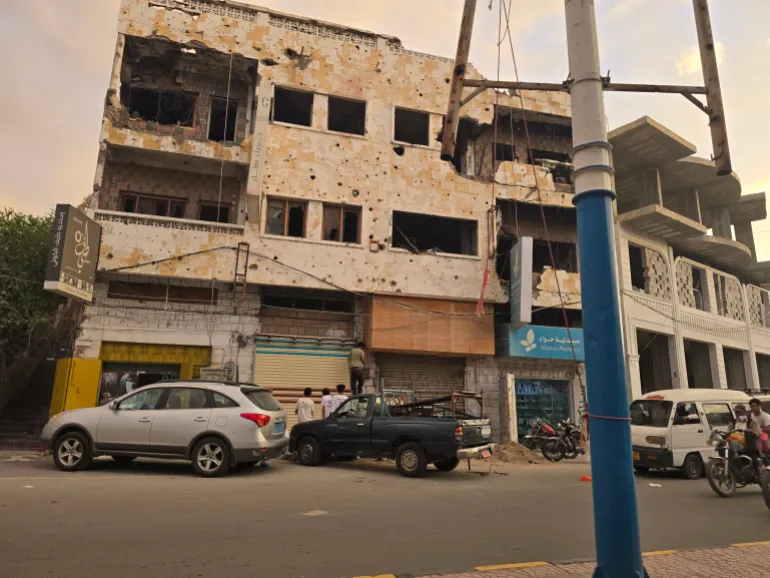
Taiz, Yemen – Um Yousef knew that living on the front line in Taiz was dangerous. The area had been quieter for the past few years thanks to a general de-escalation of the war in Yemen, but it still lay between territory controlled by Yemeni government forces and Houthi rebels.

Destroyed buildings mark the city’s front line areas, evidence of the brutal fighting that has lasted for more than a decade.

Recommended Stories

list of 3 itemsend of list

But Um Yousef felt that she didn’t have a choice. A single mother of four children in her 40s, she couldn’t afford the typical market rate of about $130 for a three-bedroom house in the central Yemeni city. Her husband died years ago while working abroad, so she was the sole breadwinner for the family in a country where poverty has increased sharply since the war began more than a decade ago.

“There is a huge demand for houses, and all my efforts failed while I was living in a single room with my children,” recalled Um Yousef, who asked to use a pseudonym for security reasons. “It was very difficult to stay in that one room.”

After eight months of moving from one area to another, and even searching on the outskirts of Taiz, she ultimately decided that her only option was a home near the front line. Yes, it was dangerous, but with little money coming in, the home she found for about $13 a month couldn’t be ignored.

In January 2025, the family made the move. Two months later, her 11-year-old son came into the house from playing outside with blood pouring out of his mouth – he’d been shot.

Sniper danger

“I couldn’t understand what happened – I didn’t hear any gunfire,” Um Yousef said.

She still doesn’t know the exact cause of the shooting, but many of the casualties near Yemen’s front lines are the result of sniper fire.

Taiz is particularly dangerous in this regard. The front line going through the city is one of the few in the country in an urban area. The city’s geography, hilly and with a mountain overlooking it, offers numerous vantage points for snipers.

A United Nations monitoring project found that 66 percent of all civilian casualties from sniper shootings in Yemen last year were in Taiz. Of the 21 cases recorded, nine were children.

Thankfully, Um Yousef’s son’s injuries were not as serious as first feared. After being immediately taken to hospital, he received medical treatment and was discharged the next day.

The incident woke Um Yousef up to the reality of where she had brought her children to. But she still can’t afford to move. Instead, she has had no choice but to stay and learn ways to reduce the risk.

“Residents here take precautions I wasn’t aware of, like turning off lights at night in rooms visible from a distance, and keeping children from playing in open areas,” she explained. “They have to play behind the houses instead. I’m aware of these things now and follow them to keep my children safe.”

Even in the safe parts of Taiz, damaged homes remain, with the pace of reconstruction in the Yemeni city slow [Al Jazeera]

Damaged homes

Taiz governorate is the most populous in Yemen, with a population of almost 4.5 million and more than 400,000 internally displaced people, according to Khalid Alwan, director of the local statistics office.

“More than 10,000 houses were completely or partially damaged by the conflict in Taiz, and there are many more we couldn’t reach to count,” Alwan told Al Jazeera. “Reconstruction is expensive, and most residents cannot afford to repair their homes even if they are in safe areas. This further worsens the housing crisis in the city.”

He noted that while some humanitarian organisations have repaired partially damaged homes in safe areas, these efforts are a drop in the ocean compared with the sheer number of affected properties.

The Nahda Makers Organisation (NMO) is one such group rehabilitating homes in several Yemeni governorates. To date, NMO has repaired 2,389 houses in Taiz, Lahj, Hodeidah, Aden and Abyan governorates – the vast majority of them in Taiz.

While this initiative has helped some families return to safe areas, the overall need remains overwhelming, with an estimated 4.8 million displaced people across the country still unable to return.

One of the partially damaged houses in Taiz rehabilitated with support from UNHCR and the Nahda Makers Organisation [Courtesy: Nahda Makers Organisation]

Housesitting

Mohammed Saeed has been living in the al-Thawrah neighbourhood of Taiz near the front line since 2023. He believes the war has taken a heavy toll on society, with soaring rents being one of its worst consequences.

“I’m not happy living here as we frequently hear the sounds of gunfire at night. Even if we aren’t targeted, just hearing it is enough to terrify us,” the 53-year-old told Al Jazeera. “In the beginning, my children couldn’t sleep when they heard the shooting, but now they’ve adapted. Adapted to what? Adapted to living in a dangerous area.”

Mohammed, who is unemployed and cannot afford rent, lives in a house for free in exchange for guarding it. Because the neighbourhood is near the front lines, many residents here do not pay rent.

“Nowadays it is calm, but if there is any escalation, we will be trapped in the crossfire,” Mohammed said. “I hope I can find a job that enables me to rent a house in a safe place and leave this one.”

Khalid Abdulhadi, 46, is one of the people who could afford to leave. He was born in the al-Kamb neighbourhood of Taiz city and owns a house there. However, he fled during the heavy fighting in 2018 and has not returned, as the proximity to the front line makes it far too unsafe.

“It is not the right decision to return and live in a dangerous area,” he told Al Jazeera. “Even though I am paying rent while owning my own home, going back could cost me my life.”

Khalid, who works as an accountant for a local company, said some of his neighbours did return and one of them lost their son, shot dead by a sniper.

He has allowed a family he knows to live in his house free of charge, knowing that they are impoverished and willing to guard the property. But he has decided to stay far away.

“I would prefer to live in a safe camp for displaced families rather than a dangerous house,” he said.

“We lost everything during this war; our lives are all we have left, so we must protect them.”

Source link

Born too soon: Premature babies fight for survival in Gaza | Gaza News

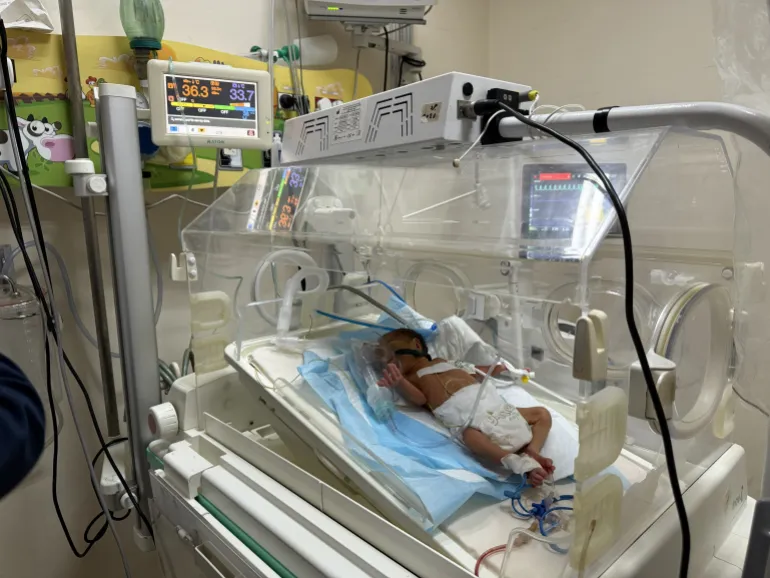
Noor Salem, 30, stands beside an incubator at a neonatal intensive care unit in central Gaza, where her baby, Yazan Al-Khalidi, lies attached to tubes and monitors.

She watches his tiny body behind a sheet of quartz glass, tracking his meagre breathing and the slightest movement he makes.

Yazan was born eight months into Noor’s pregnancy, his body appearing bluish in the first moments of life.

This required immediate transfer to the neonatal intensive care unit at Al-Aqsa Martyrs Hospital in Deir el-Balah, after it became apparent that Yazan was born with breathing issues.

Instead of being able to hold her baby in the first moments after his birth, Noor is now forced to sit by the incubator and wait for Yazan’s condition to improve.

Yazan is Noor’s second child, having lost her first baby shortly after birth during the famine in Gaza in 2025, brought about by Israel’s ongoing genocide in the enclave.

During her pregnancy with Yazan, she endured shortages of basic necessities and a constant fear of losing another child.

Yazan Al-Khalidi, born in the eighth month of pregnancy. After birth, he experienced breathing difficulties. [Eman Abu Zayed/Al Jazeera]
Yazan Al-Khalidi, born in the eighth month of pregnancy. After birth, he experienced breathing difficulties [Eman Abu Zayed/Al Jazeera]

“I was afraid throughout my pregnancy because I had already lost my baby before. I was afraid I would go through the same pain again,” she said.

“When he was born, and I saw that he was not moving or crying like other babies, I felt terrified. I did not know what would happen to him. All I wanted was for him to survive.”

Noor waits for daily updates from doctors, hoping Yazan will overcome his health difficulties and return to her arms.

Rising premature births in Gaza

There has been a sharp increase in premature births and underweight newborns, as well as stillbirths and birth defects, since the genocide in Gaza began on October 7, 2023.

UNICEF has repeatedly warned about a crisis in premature births in Gaza, with one in every five newborns requiring intensive neonatal or thermal care. Maternal malnutrition, prolonged psychological stress and declining prenatal care services have all had an impact on both mother and child.

Dr Afnan Abu Hasaballah, an obstetrician and gynecologist working with UNRWA and Al-Awda Health Hospital in Nuseirat refugee camp, has personally witnessed the impact of this on the health of pregnant women and newborns.

She says many pregnant women arrive at hospitals suffering from severe stress and exhaustion after repeated displacement, deprivation of essential goods and bombings.

“Constant fear, repeated displacement, lack of food and clean water, and limited access to prenatal care all increased the risk of premature birth,” she says.

The Israeli siege on Gaza is also leading to severe malnutrition, and one of the main issues affecting both expectant mothers and their fetuses, leading to more premature births and low birthweights for newborns and requiring intensive care.

Inadequate nutrition also increases the risk of anemia, exhaustion for expectant mothers, pregnancy complications and restricted fetal growth.

“Many pregnant women during the war were unable to access sufficient or balanced food, and this directly affected the health of mothers and newborns,” Dr Abu Hasaballah says.


Pressure on Gaza health services

Al-Aqsa Martyrs Hospital is the only hospital with a neonatal unit in the whole of central Gaza, serving thousands of expectant mothers and causing immense pressure on overstretched health workers.

“We were working under enormous pressure, with shortages of incubators, ventilators, medications and basic supplies, in addition to repeated power and fuel shortages, which posed a direct threat to babies inside the incubators,” Dr Abu Hasaballah says.

Premature babies require continuous monitoring, oxygen, respiratory support, proper nutrition and treatment, something that health workers with their limited resources and time are not always able to provide.

“When these resources become unavailable, the risk of serious complications increases, including breathing difficulties, low body temperature, infections and low blood sugar,” Dr Abu Hasaballah says.

“Unfortunately, we may lose babies who could have survived if they had received basic care.”

The separation of mothers from their babies shortly after their birth is one of the hardest experiences for mothers to endure. This abrupt separation causes immense anxiety for both mothers and babies, with the most common question doctors at neonatal units are asked is whether their children will survive. Doctors and nurses do what they can to reassure the mothers and save the children.

“Instead of holding their baby and celebrating, mothers see them transferred directly to the incubator or intensive care unit. Their fear is doubled because the war has affected everything, from medical equipment and supplies to electricity shortages and overcrowding in hospitals,” says Dr Abu Hasaballah.

“We continued working day and night without sleep, and we did everything we could to save every child, but in many cases, the babies’ needs were greater than the resources available.”

Akram Abu Jiab, head of Qutoof Al-Khair Foundation, which supports pregnant women and newborns by providing vitamins and nutritional supplements for mothers, as well as medicines and medical supplies for children. [Eman Abu Zayed/ Al Jazeera]
Akram Abu Jiab, head of Qutoof Al-Khair Foundation, which supports pregnant women and newborns by providing vitamins and nutritional supplements for mothers, as well as medicines and medical supplies for children [Eman Abu Zayed/Al Jazeera]

New challenges for mothers

Once the parents and babies are discharged, a new struggle for families begins amid a landscape where a mother’s health has been impacted by deprivations and stresses of the war. Essential baby care items, such as sterilisation kits and baby formula, are absent or unaffordable.

“Many families have lost everything because of displacement, leaving mothers without baby clothes, diapers, blankets, formula or clean water,” Dr Abu Hasaballah says.

In Nuseirat refugee camp, central Gaza, Qutoof Al-Khair Foundation supports pregnant women and newborns by providing vitamins, nutritional supplements, medicines and essential medical supplies.

Akram Abu Jiab, head of the foundation, says his staff is dealing with growing demand for their services among pregnant women and new mothers who are unable to access enough food and healthcare to sustain their babies’ health.

“Premature babies require special care and continuous medical follow-up even after being discharged from incubators,” he says.

“However, many families are facing significant challenges in securing the basic medical and nutritional needs of their children.”

Despite the foundation’s efforts to reach as many mothers and children as possible, their efforts can only go so far.

“The scale of needs far exceeds the available resources. The gap between needs and support continues to grow every day,” he says.

“Behind every baby born in Gaza is a mother trying to protect her child under exceptional circumstances. Supporting mothers and children at this stage is not a luxury; it is a necessity to protect the lives of the next generation.”

Source link

Trump: ‘I’m running for a fourth term as President of the United States’ | Donald Trump

NewsFeed

During the White House Correspondents’ Association dinner, US President Donald Trump joked about running for a fourth term, despite the Constitution barring it. The event, which celebrates press freedom and honours journalism, came three months after the first was cancelled by a shooting.

Source link

Poker, fraud and Spider-Man: Prominent lawyer gets 6 years in prison

July 24 (UPI) — A prominent Supreme Court litigator in Maryland has been sentenced to six years in federal prison for tax evasion and mortgage fraud, prosecutors said Friday.

Thomas Goldstein, who argued some 40 cases in front of the nation’s highest court, was found guilty of eight felonies in a February trial.

Prosecutors say Goldstein, an avid poker player, funneled millions from his law firm to cover gambling debts — and lied to IRS agents to hide them.

“His motivation was singular: pure, unrelenting greed,” prosecutors wrote in court documents. “Whether funneling gambling income through offshore bank accounts, shaving millions off his true law firm income, or lying to his lenders, Goldstein’s crimes always sought to advance and maintain his exorbitant lifestyle, replete with Bentleys, globe-trotting vacations, and a $200,000 watch.”

Goldstein also submitted fraudulent mortgage applications to two lenders, omitting “millions of dollars of liabilities, including more than $14 million he owed for poker-related debts, as well as taxes he owed the IRS,” officials said.

He was approved for a $1.98 million mortgage.

Goldstein, 56, cofounded the widely-popular SCOTUSblog, which follows the Supreme Court.

His trial featured an appearance by Spider-Man star Tobey Maguire, who testified Goldstein assisted him in recovering a gambling debt from a billionaire.

Goldstein was ordered to serve six years in prison, five years probation and pay more than $3.1 million in restitution.

“Thomas Goldstein built a distinguished legal career arguing that the rule of law matters,” said Kelly O. Hayes, the U.S. attorney in Maryland, in a statement. “Yet, as the evidence at trial showed, he repeatedly chose to violate that very principle for his own financial benefit.”

Source link

Funerals held for four Palestinians killed in deadly West Bank shooting | Occupied West Bank

NewsFeed

Overnight funerals were held for four Palestinians killed near Nablus. Palestinian officials blame Israeli settlers and soldiers for attacking areas in the occupied West Bank, while Israel said the violence began after an attack on Israeli civilians.

Source link

‘The show must go on’: Trump returns to rescheduled White House press gala | Donald Trump News

United States President Donald Trump returned to the White House Correspondents’ Association dinner, three months after a gunman upended the event.

“As I said three months ago, the show must go on,” Trump said at the start of his speech on Friday, after a lengthy awards ceremony, during which several journalists, including CNN’s Wolf Blitzer, spoke.

Recommended Stories

list of 3 itemsend of list

The annual – and perennially controversial – event had originally been held in April, but it was swiftly derailed after a gunman attempted to storm the proceedings in an alleged effort to assassinate Trump.

“Just like my presidency, the second time is always better and the third time will be better yet,” Trump quipped, before raising his hands at the crowd and saying, “I’m only kidding.”

The US president is limited to two terms by the Constitution, but Trump has been facetiously floating the idea of running for a third time.

The rescheduled dinner took place in the ballroom of the Waldorf Astoria hotel, with a guest list of 700 people, much smaller compared with April’s botched gathering.

“It was an assault on our democracy itself; it was a very serious situation,” Trump said of the alleged assassination attempt.

He lauded some of his aides, including Pete Hegseth, Steve Miller and Tom Holman, for showing “bravery” during the incident.

“They were standing on tables, when most of you were under the tables,” he said.

Alleged gunman Cole Tomas Allen had stormed a security gate at the gala venue, the Washington Hilton, armed with guns and knives. He was accused by prosecutors of shooting and injuring a Secret Service officer before he was stopped.

Allen is facing federal charges of attempting to assassinate the president.

“Many people yelled, ‘Get down. Get down,’ which caused Nicki Minaj to start twerking,” Trump said on Friday.

As journalists in attendance forced a muted laugh, Trump added: “She’s the only one who knew what that meant.”

Trump later used the event to rebuke political opponents, presenting his attacks as jokes. He called Democratic California Governor Gavin Newsom “newscum”, questioned Congresswoman Ilhan Omar’s intelligence, and pretended that someone in the audience was calling Illinois Governor JB Pritzker a “fat pig” to appear that he was not uttering the insult himself.

The US president also called top Democratic Senator Chuck Schumer “Palestinian” as an insult.

Earlier in the evening, Trump entered the ballroom to polite applause.

“This is the largest gathering of people with Trump derangement syndrome,” he said, referring to journalists.

The US president has had a historically caustic relationship with the dinner, but this year, he touted the celebration this year, calling it a “very good thing” and a “HOT ticket”.

White House Correspondents’ Association president Weijia Jiang of CBS News, which was acquired by pro-Israel investor David Ellison last year, thanked Trump for his support, and for showing up for the second time in three months.

“Tonight our message is this: We are back,” she said. “We will not be intimidated. We refuse to let an act of violence have the final word.”

Trump’s enthused attendance represented a sea change from his first term, beginning in 2017, when the newly elected president declared the soiree “dead” and declined to attend over the next four years.

Beyond Trump, the White House Correspondents’ Dinner has long been a lightning rod for criticism among media professionals, with some journalists arguing that reporters should not be chummy with the politicians they cover. Calls for the dinner to be abandoned entirely only grew after the April incident.

Source link

Trump orders Smithsonian to post signs about ‘inaccurate’ history

July 24 (UPI) — President Donald Trump on Friday ordered the Smithsonian’s National Museum of American History to add signage warning visitors about “ideological” views in some of its displays.

Trump issued an executive order to add the signs based on a review of the Smithsonian’s American History museum that he directed to search for ideological views related to social justice and “radical” changes to society.

The report, issued on July 4, ripped the museum for what the Trump administration claimed is practicing “extreme political activism” in its exhibits and the language it uses in them.

The report was the subject of a contentious House subcommittee meeting on Thursday, which followed Republican members of the House alleging the Smithsonian of misusing federal funds and promoting a “divisive, politically [biased] revisions of American history.”

Trump’s order directs the Department of the Interior to bear the cost of signs and changes to exhibits throughout the museum.

“The report demonstrates that the Smithsonian leadership does not present American history as a shared national inheritance to be taught and celebrated, but instead views American history as a ‘prime tool’ to advance the ideas of social justice and the radical transformation of society,” Trump said in the executive order.

White House Press Secretary Karoline Leavitt speaks during a press briefing in the James S. Brady Press Briefing Room at the White House on Thursday. Photo by Samuel Corum/UPI | License Photo

Source link

More than 200,000 people flee wildfires in France, Spain

Spanish authorities declared a national emergency as three blazes burning near Madrid merged into one, forcing some 60,000 people from their homes. In France, 141,000 people were evacuated from the regions of Gironde and Landes. Photo by Damien Rembert/EPA

July 24 (UPI) — More than 200,000 people fled their homes on Friday in fear of powerful wildfires tearing through Spain and France.

Spanish authorities declared a national emergency as three blazes burning near Madrid merged into one, forcing some 60,000 people from their homes.

In France, 141,000 people were evacuated from the regions of Gironde and Landes.

“This is the worst wildfire in our region’s history,” Madrid’s regional leader, Isabel Díaz Ayuso, told reporters.

France’s Interior Minister, Laurent Nunez, said 50 firefighters had been injured fighting the wildfire.

“We have never seen a convective fire of this magnitude,” Nunez told TF1.

“We are going to reorganize our response so we can fight it from the ground and prevent it from advancing toward Bordeaux,” he added.

In Madrid, firefighters said the blaze is beyond their control, BBC reported.

“The wildfire is at its peak and is currently beyond the capacity of firefighters to contain,” Carlos Novillo, emergency management chief in Madrid, told reporters.

“It’s not possible to attack the fire in that area, so defensive measures are being taken,” he added.

French President Emmanuel Macron said the country requested support from the European Union.

“We will soon be able to count on reinforcements from two Croatian Canadair aircraft, two Portuguese Air Tractor planes, as well as two heavy Black Hawk helicopters from the Czech Republic and Slovakia,” Macron wrote on X. “This concrete, swift, and operational solidarity is a precious strength in the ordeal.”

The president said the situation remains “under very high tension.”

“My thoughts go out to our firefighters and the rescue forces who are battling relentlessly on the fire front,” Macron added. “Their courage commands respect.”

Source link

Israeli military ups pressure in West Bank as settler violence rises

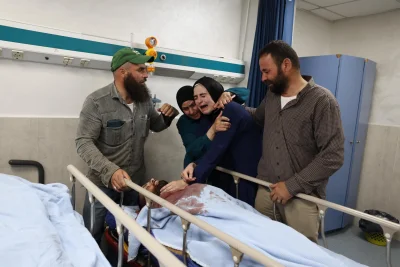
Relatives of Palestinians killed during clashes with Israeli settlers mourn at Nablus hospital in the West Bank. Photo by Alaa Badarneh/EPA

July 24 (UPI) — The Israeli military is launching a major operation in the occupied West Bank after a clash between settlers and Palestinians left six people dead on Friday.

Four Palestinian residents of the village of Tell and two Israeli soldiers were killed in the incident, after a group of settlers entered the village claiming to be on a hike.

Israeli officials said violence broke out when a Palestinian man stole a weapon from local security personnel, firing at the Israelis. Palestinian officials said the men were provoked while defending their village from armed trespassers.

The incident sparked a series of settler rampages in more than a dozen villages on Friday, the Times of Israel reported.

Hundreds of Israelis torched homes and hurled stones at Palestinians, the Times reported.

Following the Friday killings, Israeli officials said they were preparing a major “counterterrorism” operation in the West Bank, Al-Jazeera reported.

Bezalel Smotrich, the far-right Israeli finance minister, called for the demolition of Palestinian villages following the Friday killings.

“The population must be evacuated for its own protection, and these villages must be cleared of terrorist infrastructure and terrorists in order to restore deterrence and security to the area,” he told CNN.

Following the funeral for one of the Israeli soldiers killed, settlers torched buildings, homes and farms belonging to Palestinians, the Times reported.

Israeli Prime Minister Benjamin Netanyahu said he instructed Israel Defense Forces to take a “series of forceful steps against terror.”

In a statement, Netanyahu said his military would “act forcefully in villages that serve as terror hotspots” as well as “accelerate the regularization of farms and the establishment of new ones.”

Israeli settlements in the West Bank are illegal under international law.

“The Israeli government is pushing the West Bank towards explosion,” said Ayman Safadi, Jordan’s foreign minister, in a statement. “Its blatant violations of the historical and legal status quo at Jerusalem’s Holy Sites are illegal and dangerous provocations. They are pushing the region towards another disastrous conflict that will reverberate beyond the occupied Palestinian territories.”

Source link

South Korea, U.S. open shipbuilding center in Washington

The national security multi-mission vessel Lone Star State is christened at Hanwha Philly Shipyard in Philadelphia on July 17. Photo courtesy of Hanwha group

July 23 (Asia Today) — South Korea and the United States have opened a shipbuilding cooperation center in Washington, moving their partnership beyond government declarations and preliminary agreements toward developing and implementing commercial projects.

The Korea-U.S. Shipbuilding Partnership Center will serve as a base for $150 billion in planned shipbuilding investment, U.S. shipyard modernization, workforce development and joint research.

The center’s opening was accompanied by 15 agreements involving South Korea’s three largest shipbuilders, U.S. shipyards, technology companies, universities and research institutions.

The agreements give the Make American Shipbuilding Great Again initiative, known as MASGA, a more detailed framework. Its success, however, will depend on how quickly the center can generate ship orders, maintenance contracts and actual investments.

South Korea’s Ministry of Trade, Industry and Resources and the U.S. Department of Commerce jointly held the opening ceremony Thursday at the Mayflower Hotel in Washington.

About 130 government, congressional, corporate and industry officials from the two countries attended, including South Korean Trade, Industry and Resources Minister Kim Jung-kwan and U.S. Commerce Secretary Howard Lutnick.

Acting Navy Secretary Hung Cao and U.S. Ambassador to South Korea Michelle Steel also attended.

The center was established as a follow-up to the Korea-U.S. Shipbuilding Partnership Initiative signed May 8. Operations began about two months after the two governments reached the agreement.

“KUSPC is an unprecedented cooperation platform in the global shipbuilding industry and a symbol of South Korea’s firm commitment to helping rebuild the U.S. shipbuilding industry,” Kim said.

Kim said the center would help South Korean shipbuilding technology take root across U.S. coastal industrial regions.

He also said the planned $150 billion shipbuilding investment would be implemented promptly and called on the United States to provide continuing ship orders, investment incentives and regulatory relief.

‘Team Korea’ formed for U.S. market

The center will connect South Korean shipbuilders with U.S. shipyards, technology companies and research institutions.

Its work will include improving shipyard productivity, training skilled workers, developing equipment supply chains, supporting joint technology projects and identifying direct investment opportunities.

Center President Lee Jong-geon said the organization would link the two governments with shipyards, universities, research institutions and investors.

He said the center would support workforce training, productivity consulting and joint technology development to help restore the fundamental competitiveness of the U.S. shipbuilding industry.

The 15 agreements announced at the ceremony cover four areas: the creation of Team Korea, supply chain cooperation, workforce development and joint technology research.

HD Hyundai Heavy Industries, Hanwha Ocean and Samsung Heavy Industries joined the Korea Offshore & Shipbuilding Association, the Korea Research Institute of Ships and Ocean Engineering and the new center to form Team Korea for coordinated expansion in the U.S. market.

The three shipbuilders will focus on shipyard modernization and the development of equipment supply chains. The research institute will handle studies and demonstrations of future maritime technology while the center will provide local market information and business networks.

HD Korea Shipbuilding & Offshore Engineering agreed to work with Siemens Digital Industries Software on digital systems for next-generation ship design and production.

The company also plans to provide Fraser Industries with shipyard productivity assessments and support for the introduction of automation technology.

Hanwha Ocean will work with the Chamber of Commerce for Greater Philadelphia to help local manufacturers enter the shipbuilding supply chain.

South Korean marine equipment company JJ & Companies will provide equipment and vessel repair technology to Nichols Brothers Boat Builders and Everett Ship Repair to strengthen local maintenance, repair and overhaul capacity.

HD Hyundai Samho also signed a contract to supply four port cranes to Washington United Terminals at the Port of Tacoma, extending the partnership beyond shipyards to port modernization.

Workforce programs target labor shortage

The center will also support programs designed to address the shortage of skilled shipbuilding workers in the United States.

Hanwha Philly Shipyard will provide welding, painting and other technical training at Delaware County Community College in Pennsylvania. The program will connect classroom instruction with internships and employment at the shipyard.

Samsung Heavy Industries and Vigor Marine Group plan to establish a workforce training center equipped with virtual reality and augmented reality welding systems.

The Korean research institute, shipbuilding association and partnership center will also work with the American Bureau of Shipping to develop technical certification, safety training and qualification programs.

The South Korean government plans to dispatch retired engineers and production specialists to U.S. shipyards to advise on process efficiency, yard operations, quality control and environmental management.

U.S. shipyard managers and engineers will also be offered one- to two-month training placements at South Korean shipyards.

Joint research to combine Korean production and U.S. technology

South Korea plans to invest 120 billion won, or about $80.4 million, over five years in joint shipbuilding research with the United States.

Seven South Korean companies and institutions and nine U.S. organizations will carry out eight projects combining South Korean shipbuilding and production capabilities with U.S. artificial intelligence and robotics technology.

The projects include AI-based ship design optimization, 3D printing of marine components measuring up to 16 feet, autonomous welding of aluminum naval vessel panels and automated painting of large ship sections.

Other projects include autonomous transporters for large ship blocks, fully automated pipe-spool production, AI-based virtual reality training and autonomous navigation and engine controls for software-defined unmanned vessels.

HD Hyundai Heavy Industries will work with U.S. defense technology company Anduril Industries to develop and test autonomous navigation and engine automation platforms for unmanned vessels.

Samsung Heavy Industries will collaborate with Saronic Technologies on unmanned surface vessels and the application of automation systems at U.S. shipyards.

Hanwha Ocean will jointly design a global fast sealift vessel with Leidos subsidiary Gibbs & Cox.

HD Korea Shipbuilding & Offshore Engineering will also work with ABSG Consulting to develop and verify an operating platform for next-generation autonomous vessels.

The center will begin operations with 6.6 billion won, or about $4.4 million, in government funding this year.

Its initial operating period runs from 2026 through 2028 with a budget of 19.93 billion won, or about $13.4 million. It will operate as a nonprofit organization from the Korea International Trade Association’s Washington office.

The government also plans to link the center with a bilateral shipbuilding investment council established in June.

South Korea’s strategic investment corporation and state-run financial institutions, including the Export-Import Bank of Korea, Korea Development Bank and Korea Trade Insurance Corp., will provide financing for investments in U.S. shipyards and vessel construction projects.

Orders and long-term contracts remain key test

South Korean shipbuilders said the center represents a shift from government-level pledges to the development of specific commercial projects.

They said South Korean strengths in ship design, production management and smart shipyard technology could support U.S. shipyard modernization while creating opportunities in workforce training and equipment supply.

U.S. requests for information on combat vessels and military support ships have also raised expectations for future cooperation.

Industry officials cautioned, however, that the number of agreements signed will be less important than the volume of actual orders and investments they produce.

South Korean shipbuilders have begun entering the U.S. Navy maintenance, repair and overhaul market. Stable profitability will require the companies to move beyond individual repair assignments toward multiyear contracts and bundled service agreements.

The pace of shipyard investment will also depend on how the $150 billion financing package is structured and what conditions are attached to it.

Other unresolved questions include how much work can be awarded to South Korean shipbuilders, how investment responsibilities will be divided between companies and state financial institutions and whether U.S. regulations and domestic-content requirements will be eased.

Industry officials said the center must become more than a liaison office and establish itself as a business development organization connecting the U.S. government, Congress, ship purchasers and local shipyards.

They said MASGA’s performance will ultimately be judged by commercial and naval vessel orders, long-term maintenance contracts and completed shipyard investments.

— Reported by Asia Today; translated by UPI

© Asia Today. Unauthorized reproduction or redistribution prohibited.

Original Korean report: https://www.asiatoday.co.kr/kn/view.php?key=20260723010008621

Source link

Nicaragua begins constitutional reforms after Ortega’s remarks

Nicaragua’s government began the process Friday of reforming the Constitution and the legal framework governing the electoral system, File Photo by Jorge Torres/EPA

July 24 (UPI) — Nicaragua’s government began the process Friday of reforming the Constitution and the legal framework governing the electoral system, days after President Daniel Ortega said the country “will never again hold elections” that would allow the opposition to return to power.

According to an official statement released by the Government of Reconciliation and National Unity, the proposed constitutional and legal reforms were drafted by the National Assembly’s Constitutional Commission in coordination with the Supreme Electoral Council and will be submitted to the presidency for review and authorization.

Once that stage is completed, the National Assembly will open a consultation process next week on the proposed Partial Reform Law to the Political Constitution before it is debated and put to a vote in the full legislature.

According to the statement, the reforms are part of the “Nicaragua Triumphs in Peace and Unity” plan and are intended to strengthen the constitutional framework to guarantee “peace, well-being, security, stability and the continuity of the achievements of the people as president.”

The announcement came five days after Ortega declared, during the commemoration of the 47th anniversary of the Sandinista Revolution’s victory, that Nicaragua “will never again hold elections” so the opposition can “try to take over the government and power,” remarks that drew criticism from the United States, the Organization of American States and opposition organizations.

On Wednesday, National Assembly President Gustavo Porras said Ortega’s remarks did not mean elections would be eliminated, but rather the end of processes that, according to the ruling party, had been influenced by the United States.

“Those elections will never return to this country,” Porras said during a news conference.

“They will be the elections of the Nicaraguan people, national elections to choose our national authorities and our municipal authorities, with the terms established by the Nicaraguan people and with the candidates and conditions established by the Nicaraguan people.”

Porras said the reforms are intended to prevent “the terrible manipulation of the empires and their lackeys” and to guarantee, in his words, “an absolutely clean, transparent and absolutely national election.”

During the same news conference, he said the new legal framework is intended to prevent foreign interests from influencing Nicaragua’s electoral processes and reiterated that “those elections will never return to this country,” referring to what he described as processes controlled by foreign powers.

The National Assembly, controlled by the ruling Sandinista National Liberation Front, will be responsible for debating the reforms, which must follow the procedure established for constitutional amendments before taking effect.

Source link

CDC: U.S. Measles cases reach 35-year high of 2,318

A nurse administers a measles vaccine to a child at a public health center in Nejapa, El Salvador, in April. The United States just reached a record high of measles cases this year. File Photo by Javier Aparicio/EPA

July 24 (UPI) — Measles cases have hit a record high in the United States since the virus was declared eliminated in 2000, the Centers for Disease Control and Prevention said.

The CDC said there have been 2,318 confirmed cases of measles so far this year, which beats last year’s record-breaking number of 2,289. Last year, two unvaccinated children died of the disease. More measles cases have been reported in the United States in the past two years than in all the years from 2000 through 2024 combined, The New York Times reported.

In November, a panel of experts will meet to decide if the United States has lost its status as a country that has “eliminated” the disease.

“This is just going to keep happening,” Jennifer Nuzzo, director of the Pandemic Center at the Brown University School of Public Health, told The Times. “It’s going to mean living in a perpetual state of vulnerability and risk until we get vaccination levels up.”

Last year, the largest outbreak was in South Carolina, and many of this year’s cases stem from that event. It was declared to have ended in April. Now, there’s an outbreak that started last summer along the Utah-Arizona state line and has spread throughout the Beehive State. More than 100 cases have also been reported in Lancaster County, Pa., this year.

The CDC reported 35 new measles outbreaks this year.

Measles is especially good at finding pockets of people with weak immunity.

“It’s going to find people who aren’t immune,” Dr. David Kimberlin, a pediatric infectious disease expert at the University of Alabama at Birmingham, told The Times. “It’s like a heat-seeking missile.”

Funding cuts to public health are also a concern.

Dr. Farrell Tobolowsky, medical director the San Francisco Department of Public Health’s communicable disease program, said two cases this year meant activating several contract tracing investigators.

“I don’t think our department can currently handle more than one (case) without calling in additional staff,” Tobolowsky said at a briefing hosted by the Big Cities Health Coalition, CNN reported.

“It is something that we’re concerned about all the time and is on our minds all day, every day,” she said. “Not only if there’s another measles case, but if anything else comes that is of high consequence at the same time, it will be difficult to manage two things at once.”

Courtney Spencer, a spokesperson for the Department of Health and Human Services, said the department has mounted an “aggressive outbreak response,” and said it’s given $8.5 million to states to help contain outbreaks.

She added that the department has said, “[The measles, mumps and rubella] vaccination remains the best protection against measles.”

But other professionals blame the federal government for at least part of the spread.

“We have seen virtually no national messaging. We’ve seen no ad campaigns,” Dr. Jonathan Temte, a former chair of the CDC vaccine advisory committee, said of HHS. “I think that really tells us something about their priorities.”

Dr. Andrew Racine, president of the American Academy of Pediatrics, called it a failure: “This essentially is a public health failure, and it’s avoidable.”

Source link

Colt Gray changes plea to guilty in Apalachee High School shooting in Georgia

July 24 (UPI) — A Georgia teenager changed his plea to guilty Friday in the shooting deaths of four people at Apalachee High School in 2024.

Colt Gray, 16, entered a non-negotiated plea of guilty to 55 charges, including malice murder, aggravated battery and aggravated assault, CBS News reported. He was charged as an adult.

A non-negotiated plea means that though he’s changed his plea to guilty, he has not made a deal with prosecutors concerning his sentencing.

The judge in the case will determine his sentence, which ranges from life with parole to life without parole. The defense and prosecutors will each present a case for their preferred sentence, ABC News reported.

Gray is accused of fatally shooting two students — Christian Angulo and Mason Schermerhorn — and two teachers — Richard Aspinwall and Cristina Irmie — at Apalachee High School in Winder, Ga., in 2024, when he was 14 years old. He’s also accused of injuring nine others in the shooting.

Breanna Schermerhorn, Mason’s mother, presented a victim impact statement Friday in court, saying her son “was so much more than victim.”

“Mason was kind, compassionate, funny and fiercely protective of others,” she said. “As a child with exceptional needs, he understood what it felt like to struggle and be overlooked by others. Instead of becoming bitter, he became an advocate.”

Breanna Schermerhorn said Gray knew that the shooting was wrong and would impact countless lives.

“I had no doubt in my mind if Cole had actually attended school as he should have, that Mason would have befriended him,” she said.

Prosecutors said Colt Cray used an AR-style rifle his father, Colin Gray, gave to him for Christmas despite being warned by sheriff’s deputies that his son had threatened an attack at school.

In May, a jury found him guilty of 29 charges, including two counts of second-degree murder and two counts of involuntary manslaughter. Colin Gray was the first adult charged in Georgia in connection with a school shooting by their child.

White House Press Secretary Karoline Leavitt speaks during a press briefing in the James S. Brady Press Briefing Room at the White House on Thursday. Photo by Samuel Corum/UPI | License Photo

Source link

British PM Andy Burnham opens ‘No. 10 North’ office in Manchester

Police officers guard the entrance to Heron House, which will house No. 10 North while another site is under construction, in Manchester, England. The bee is the symbol of Manchester. Photo by Adam Vaughan/EPA

July 24 (UPI) — New British Prime Minister Andy Burnham held his first meeting at No. 10 North, his project to have official space in his hometown of Manchester, England, instead of keeping everything official in London.

Burnham, who was once mayor of Greater Manchester, said the new office will get “growth in every corner of the country,” the BBC reported.

The idea is to shift power from Whitehall and Westminster — the center of the British government — to other parts of the country. Manchester is about two hours by train from London.

Burnham told staff that the shift north showed he was rewiring the state.

“No 10 North is going to take that up to the next level. It’s not just a new office — through this place, power is going to flow, energy is going to flow, new ideas are going to come through,” Burnham said.

Conservative Party leader Kemi Badenoch called it a “gimmick”, and said it “does not make decision-making any better, it’s just creating another branch of the civil service in a different place.”

“It’s sending a message to everybody here who has come in to No 10 North in its early days that you’ve got the full support of government from the very top — prime minister, chancellor, first secretary of state — that’s a very powerful message that we’re sending today, that the political commitment is there,” Burnham said.

No. 10 North is at Heron House in Manchester temporarily while a new Civil Service Campus just outside of the city is being developed.

Burnham has faced some opposition to the project over costs, but he dismissed it as criticism from London.

Dai Davies, a former head of royal protection, has named Burnham’s Manchester base “Number 10A.”

“Number 10A will have to be strengthened,” he said. “And, of course, there’ll have to be a 24-hour-7 protection. So it’s going to cost us taxpayers millions in terms of technical security, surveillance, cameras,” The Guardian reported.

“Depending on where it is, it may have to have underground detection systems, it probably will have to have a safe room, and Manchester police will have to bear the burden of protection, in the uniform sense, 24-7, I suspect. So the real cost is many millions of pounds,” he said.

Burnham has pledged several progressive reforms, such as capping the cost of public transportation, cutting taxes on home electricity bills and easing the cost of living.

Opening the new Manchester center, Burnham described it as the best day of his life.

“I cannot tell you what a proud moment this is. I think this might be the best day of my life. I’m not joking either. I know you think I am, but I’m not,” Burnham said. “Things are just completely coming full circle here for me, and to be here with you all in the heart of Manchester this Friday morning, at the end of a fairly big week, is just everything to me.”

Astronaut Buzz Aldrin walks on the surface of the Moon during the Apollo 11 mission on July 20, 1969. Photo by NASA/UPI | License Photo

Source link

Yemen’s valleys and farms are full of dangerous plastic waste | Environment News

Wadi Dawan, Yemen – From above, Wadi Dawan looks untouched – a ribbon of date palms winding through towering cliffs, divided by a white wadi bed. Scattered mud‑brick homes cling to the rocky slopes, overlooking one of Yemen’s most celebrated agricultural valleys, renowned for its palm dates and quality honey.

But continuing down into the valley, a starkly different picture emerges: plastic waste litters the flood channels, while the smell of burning rubbish hangs in the air, triggering coughs and polluting the valley’s once‑clean atmosphere.

Recommended Stories

list of 3 itemsend of list

“By God, this is a very serious problem,” said Yousef Abdullah, a 65‑year‑old farmer and orchard owner, speaking angrily to Al Jazeera. “If it remains unresolved, it will cause a disaster.”

Yousef stood beneath the shade of date palms, surrounded by a blanket of plastic bags, bottles, and food wrappers.

Throughout Wadi Dawan, home to thousands of people across dozens of scattered villages in Yemen’s eastern Hadramout province, plastic bags, bottles, and other household waste litter roadsides and palm groves.

Piles of rubbish – including dead animals – are dumped into flood channels that irrigate the valley’s farms. Household waste is mixed with sewage discharged into the wadi bed, while mounds of rubbish are dumped along roadsides just metres from people’s homes.

Yousef said that floods flowing through the valley pick up the waste, blocking irrigation channels, and depriving some farms of the vital waters they need. That has forced farmers to rush to the channels whenever the floods arrive, clearing the waste that has accumulated before the water recedes.

“We move from one irrigation channel to another leading to our farms, removing plastic bags, construction debris, and trees,” Yousef said. “We have to do it carefully because broken glass hidden in the rubbish can easily cut us.”

And then, after the floodwater recedes, Yousef and other farmers return to their fields and collect the plastic bottles and bags before they can sow their seeds.

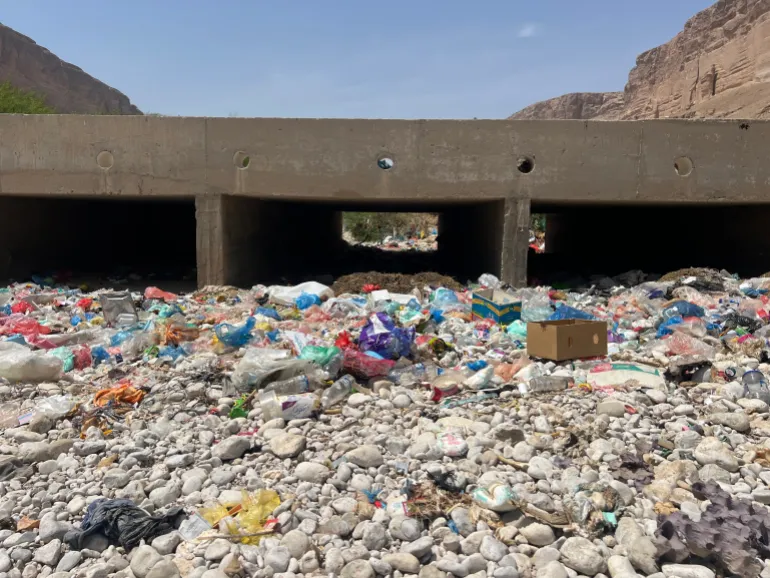
Plastic waste and household rubbish accumulate beneath a bridge in Wadi Daw’an, where residents say seasonal floods wash the debris into irrigation channels serving nearby farms. [Saeed Al-BatatiAl Jazeera]
Plastic waste and household rubbish accumulate beneath a bridge in Wadi Dawan, where residents say seasonal floods wash the debris into irrigation channels serving nearby farms [Saeed Al Batati/Al Jazeera]

Waste awareness initiative

Residents, environmental advocates, and local officials say the growing problem is driven by the lack of a proper waste collection system and limited public awareness of the environmental and health risks of indiscriminate dumping.

Large parts of the valley have no waste collection points at all. In the places that do, green rubbish bins can be seen along the roads, but are often overflowing. Garbage trucks are supposed to collect waste from the bins once a week, but the service is often disrupted because of a lack of funding and poor vehicle maintenance.

With almost no funding or resources, Salem Raji, who heads the Ministry of Agriculture’s office in Wadi Dawan and is also an agricultural researcher, launched an initiative to draw attention to the growing problem of waste dumping in his home valley. He has met with local officials, spoken to local media and used social media to warn residents about the environmental consequences of dumping rubbish into the valley’s flood channels.

“The agricultural sector is particularly affected by plastic waste, which contaminates the soil and leads to poor or even failed crop yields,” Raji said. “Waste causes numerous problems in the main irrigation canals, blocking water flow, damaging canal walls and preventing floodwater from reaching farmland. As a result, some farmers lose an entire harvest season because their fields receive no irrigation.”

The problem has worsened over the past decade as Yemen has been engulfed in a war between the Iran-backed Houthis and the Saudi-backed, internationally recognised government. The conflict has killed hundreds of thousands of people, displaced millions, and devastated state institutions, leaving local authorities, including municipalities and agricultural offices, with little funding or capacity to provide basic services.

“The problem has worsened in recent years because of the war, which has led to administrative instability and a lack of funding for local authorities,” Raji said.

Raji appeared frustrated that his efforts had yet to bear fruit and that his warnings had largely fallen on deaf ears, with residents continuing to dump waste across the valley. He called for an increase in his office’s monthly budget, currently just 8,000 Yemeni riyals, or about $5, so that staff could conduct field visits, reach more residents, and help remove rubbish from farms and flood channels.

Despite Raji’s best efforts, he has had little success with his attempts to raise awareness. “Our office’s [limited] budget leaves us unable to carry out regular field visits to educate the public or remove waste from flood channels.”

Salem Raji, an agricultural official and researcher, spoke to a local media center to raise awareness among residents about the risks of dumping waste into valleys. He was standing beside a pile of rubbish in Wadi
Salem Raji, an agricultural official and researcher, tries to raise awareness among residents about the risks of dumping waste into valleys [Saeed Al Batati/Al Jazeera]

Expanding problem

The crisis extends far beyond Wadi Dawan. Across Yemen, years of war, collapsing public services and inadequate waste management have turned rubbish dumping into a growing environmental and public health problem.

In cities such as Taiz, waste has polluted farmland, contaminated drinking wells and dams, and increased the risk of waterborne diseases, according to local officials and health experts.

Dr Yassin Abdul Malik al-Shuraihi, who heads disease surveillance in central Yemen’s Taiz governorate, told Al Jazeera by telephone that the province, home to millions of people, suffers from a severe shortage of rubbish bins and chronic delays in waste collection.

As a result, many residents have resorted to dumping rubbish into flood channels that run through agricultural areas.

“Sewage, household waste and construction debris are now being dumped directly into these channels,” al-Shuraihi said. “We record a large number of diarrhoea cases throughout the year because sewage contaminates some drinking wells, making the water unsafe.”

Environmental experts are now calling for urgent action, warning of the particular dangers the waste poses to Yemen’s rural areas and farmland.

Khaled Saleh Bawahidi, a professor and director of the Environmental Studies and Water Resources Centre at Hadramout University, said indiscriminate waste dumping poses serious long-term environmental and public health risks.

“Accumulated waste is degrading natural habitats and polluting the soil around the palms, threatening tree growth and long‑term productivity,” Bawahidi said. “Bee health is also at risk as grazing areas deteriorate and the quality of natural resources declines. This could lead to a drop in the quality of dates and honey.”

And ultimately, it will be local Yemenis who face the consequences.

“Waste dumped in valleys contaminates soil and surface water,” Bawahidi added, “and creates breeding grounds for insects and rodents that can transmit diseases to humans and livestock.”

Source link

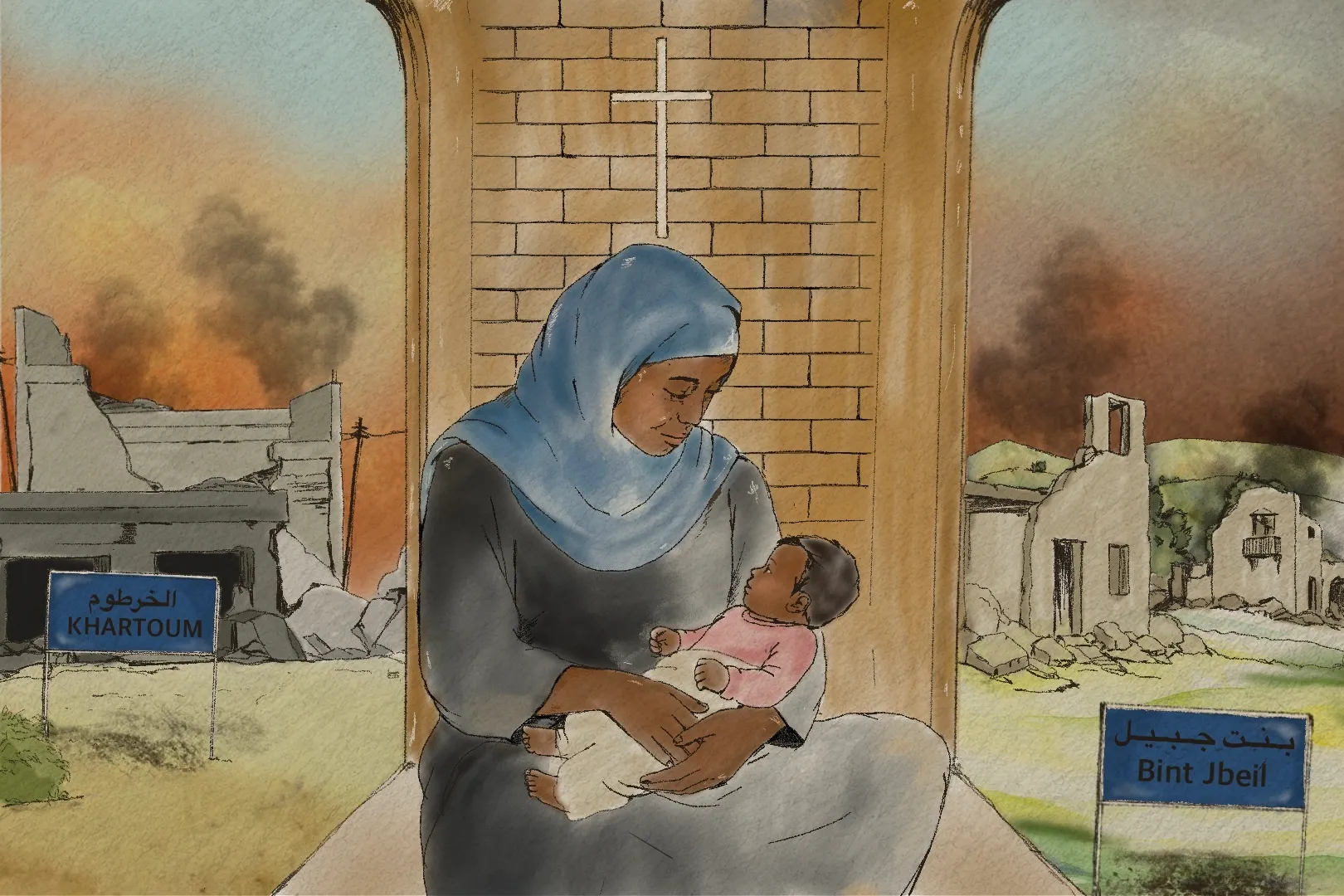
‘I lost my home twice’: Sudanese mothers caught between two wars | Human Rights

Built in 1875 and modelled on the Chapelle Saint-Marc in Lyon, the church was originally intended to be the chapel for St Joseph University, which was opened by French Jesuits as part of France’s colonial-era “civilising mission”.

Its pale stone facade rises above a busy Beirut street. Today, it remains under Jesuit stewardship, with Father Michael Petro leading the parish.

“It’s an interesting space, because it is on the edge of Ashrafieh, a predominantly Christian, francophone area, which has plenty of wealthy Lebanese people living in it. But it also has their domestic workers. From the start of the first waves of migrants in the 70s, this place became known as a place for them,” he tells Al Jazeera.

Every Sunday, during peacetime, the gravel car park is transformed into a cricket ground. Indian and Pakistani migrant workers play softball cricket while families sit on the sidelines sharing home-cooked food, catching up with friends and enjoying one of their few days away from work.

Today, the atmosphere is very different.

Instead of the crack of a plastic bat and Bollywood music spilling across the church grounds, rows of mattresses line the floors, and laundry hangs from railings. Men slouch on plastic chairs littered around the church, scrolling through their phones. Women carry blankets and washed clothes in plastic tubs. Only the children seem able to break the subdued mood, darting between adults and filling the space with bursts of laughter.

“When the war escalated, we immediately had large groups of Sudanese and South Sudanese come here,” Father Michael says. “They showed up because they would ask community leaders what to do, and were told to come here, as it is the first place they trusted.

“On one hand, that’s very beautiful, because people thought they would be welcome here, and they were.”

However, the strain of being a first port of call for so many displaced migrants is beginning to show.

Supplies are low, and tensions occasionally flare among those sheltering at the church. Father Michael says the church reached its capacity of 250 people on just the second day of the war.

“We’ve turned away more than 100 people in the last few days,” he says. “It’s a disaster.”

Mohammad says daily life has become increasingly difficult, particularly since the arrival of their son.

“We do not have enough clothes, especially now that the baby is growing. Also, my wife’s nutrition is not great. Sometimes she gets constipated, and then the baby becomes ill. We need more protein and vegetables. The diet is a huge concern.”

Living in crowded conditions, surrounded by uncertainty, has taken a toll on people’s mental wellbeing, Rufaida says.

“Because of the atmosphere and mental health problems, small problems become big ones. I said good morning to someone, and they didn’t like it. There are no big fights, but there is an underlying tension.”

Both say they understand why tempers sometimes fray. Many of those sheltering at the church have fled war, lost homes and spent months or years living with uncertainty.

Small problems become big ones.

by RUFAIDA, DISPLACED SUDANESE MOTHER

Their gratitude is rooted partly in what happened when Rufaida sought maternity care.

At Karatina Hospital, they say they were repeatedly overlooked by doctors in favour of Lebanese patients. “We were there to get papers so she could give birth in that hospital, but we were ignored, and Lebanese people were allowed into consultations first,” Mohammad says.

After waiting for three hours, a worker from the Jesuit Refugee Service (JRS), who had accompanied them to the hospital, intervened and helped ensure they were seen.

Through support coordinated by JRS and partner organisations, the entire cost of Rufaida’s pregnancy was covered, including prenatal care, the cesarean delivery and Ahmad’s vaccinations.

“It gave me comfort and peace that I was able to deliver in a safe environment,” Rufaida says.

Their experience is increasingly common among Sudanese migrants in Lebanon, many of whom have found themselves uprooted more than once — first by war in Sudan and then by conflict in Lebanon.

Rufaida’s story is far from unique. According to figures published by the International Organization for Migration (IOM) in August 2025, there are 164,097 migrants living in Lebanon, of which 14,854 are Sudanese nationals.

That number represents only a small fraction of the 4.4 million Sudanese who have fled their country since the outbreak of civil war in April 2023.

Some, like Rufaida, arrived on tourist visas. Others found jobs as concierges or domestic workers, under Lebanon’s kafala sponsorship system, which ties a migrant worker’s legal residency to their employer.

Human Rights Watch has described the system as, at its worst, a form of modern slavery.

About 3,800 Sudanese have also found asylum in Lebanon as registered refugees with the UN Refugee Agency.

For refugees in Lebanon, a UNHCR registration card can mean far more than a piece of paper. It offers a measure of protection from detention or deportation, can unlock access to aid and education where services exist, and, for many, represents their best hope of one day being resettled in another country.

Among them is 30-year-old Roudaina Mustafa.

Source link

Senegal gets CAS date for appeal to regain AFCON from Morocco | Football News

Senegal given October date by CAS for appeal to regain AFCON title won in chaotic final against Morocco in January.

Senegal’s appeal to regain the Africa Cup of Nations (AFCON) title it won in a chaotic final against host nation Morocco in January will be heard at sport’s highest court on October 8.

The Court of Arbitration for Sport (CAS) said on Friday the hearing will be held behind closed doors at its headquarters in Lausanne, with no target date set for a verdict.

Recommended Stories

list of 4 itemsend of list

CAS judges can typically take several months to announce their decision.

Preparing the appeal hearing was in process throughout the World Cup, where Morocco reached the quarterfinals and Senegal lost in the round of 32 against Belgium.

Senegal beat Morocco 1-0 after extra time in an extraordinary AFCON final in Rabat. Senegal players walked off the field and delayed play for 15 minutes when Morocco was awarded a stoppage-time penalty kick that was eventually saved.

Morocco was awarded the title several weeks later when appeal judges for the Confederation of African Football ruled Senegal had defaulted the game by leaving the field.

That ruling seemed to ignore the laws of football, which state the referee’s decision on the field of play is final.

Source link