All cattle imports from Mexico were halted by the Biden administration in November 2024, when the first cases of the flesh-eating New World screwworm were detected in the south of the country. File Photo by Matias Martin Campaya/EPA
July 25 (UPI) — The Department of Agriculture on Friday lifted a ban on cattle imports from Mexico that had been in place to contain the spread of a parasite threatening U.S. livestock.
USDA Secretary Brooke Rollins said Douglas, Ariz., would be the first port of entry to be open on Aug. 24.
All cattle imports from Mexico were halted by the Biden administration in November 2024, when the first cases of the flesh-eating New World screwworm were detected in the south of the country.
“The closure of the Southern ports of entry for the last year has been a tough but necessary action to control the spread of NWS in Mexico and protect the American livestock industry,” Rollins said in a statement.
But closing the border came at a cost, Rollins said, causing “a significant economic challenge to various sectors of our industries in Texas.”
“There is no doubt that closing the ports last May caused higher prices in beef,” the agriculture secretary told reporters last month. “We’re obviously very focused on affordability, but the president agreed when we briefed him that we had to keep our livestock producers as safe as possible with this outbreak moving through Mexico.”
In lawsuit filed Friday, plaintiffs charged that U.S. Trade Representative Jamieson Greer “failed to provide a reasoned, record-based explanation for its determinations” in a applying a fresh round of sweeping tariffs. File Photo by Bonnie Cash/UPI | License Photo
July 25 (UPI) — President Donald Trump‘s latest round of sweeping tariffs was hit with a lawsuit on Friday, just hours after going into effect.
Two small businesses challenged the newest levies, which apply 10% to 12.5% tariffs to more than 80 countries, justified under a provision to prevent goods made with forced labor from being imported.
The lawsuit was filed by a spice company in New York, Burlap and Barrel, and a California watch store, Collective Horology.
They are represented by the Liberty Justice Center, a legal nonprofit that won a Supreme Court case against the president’s previous round of tariffs.
Since the loss in court earlier this year, Trump has explored other legal authorities to support his tariffs and bypass congressional approval.
“Forced labor is morally indefensible, but an important objective does not give the government permission to ignore the law,” said Sara Albrecht, CEO of the Liberty Justice Center, in a statement. “The administration allowed one global tariff to expire and immediately replaced it with another under a different statute. Changing the statute doesn’t change the law. Every tariff authority has limits, and every administration must respect them.”
In the lawsuit, plaintiffs said the U.S. Trade Representative “failed to provide a reasoned, record-based explanation for its determinations.”
“This is the third time the administration has attempted to impose its global tariff policy without following the statutory limits,” said Jeffrey Schwab, senior counsel and director of litigation at the Liberty Justice Center, in a statement.
“Section 301 is a targeted, country-specific and practice-specific remedial authority,” Schwab added. “It is not a freestanding authorization to tax substantially all imports from substantially all countries at preestablished rates.”
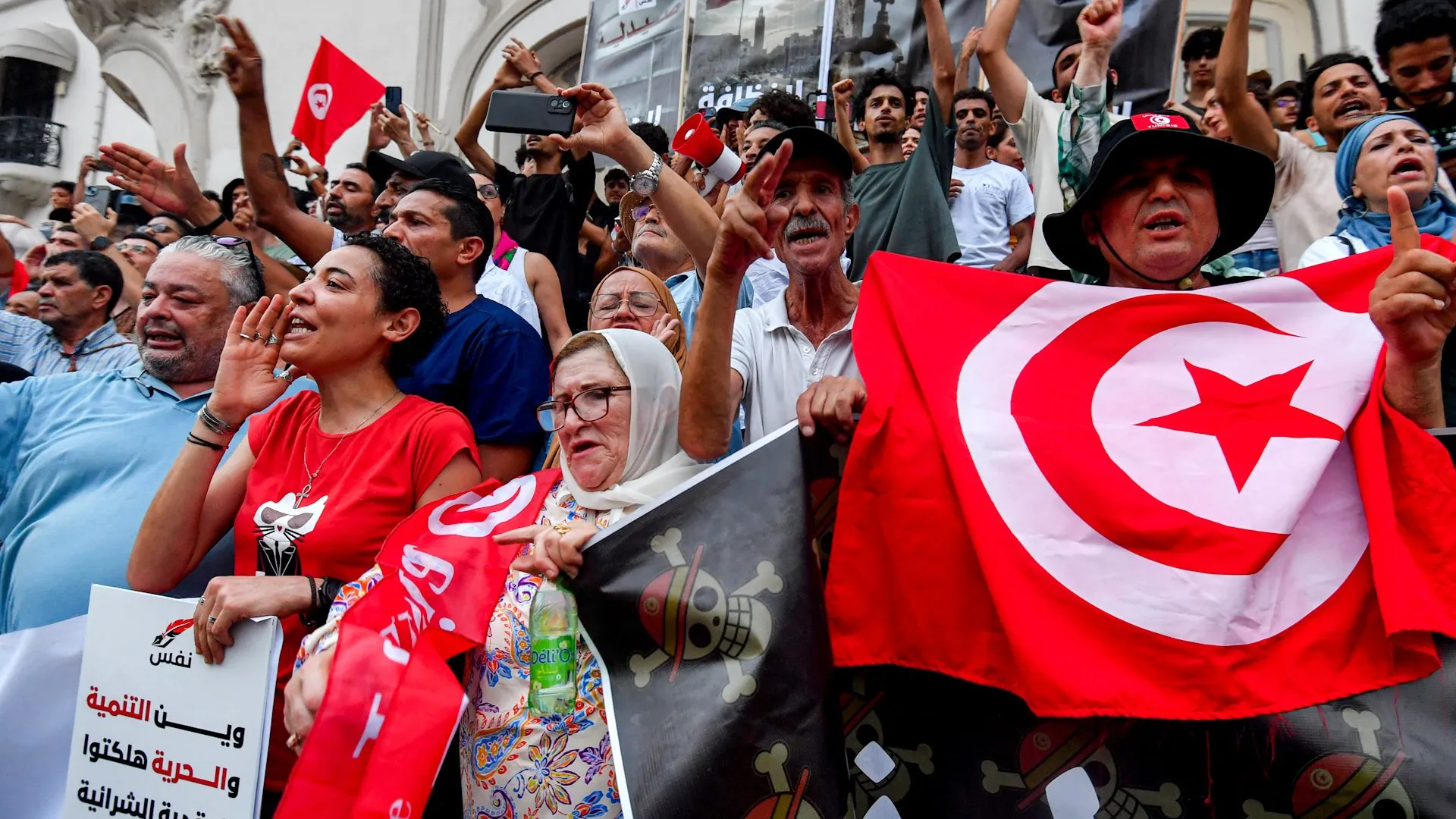
Thousands marched in Tunisia’s capital to demand the resignation of President Kais Saied five years after he suspended parliament. Protesters revived the 2011 revolution’s slogan ‘the people want the fall of the regime’ as they decried democratic backsliding, economic hardship and political repression.
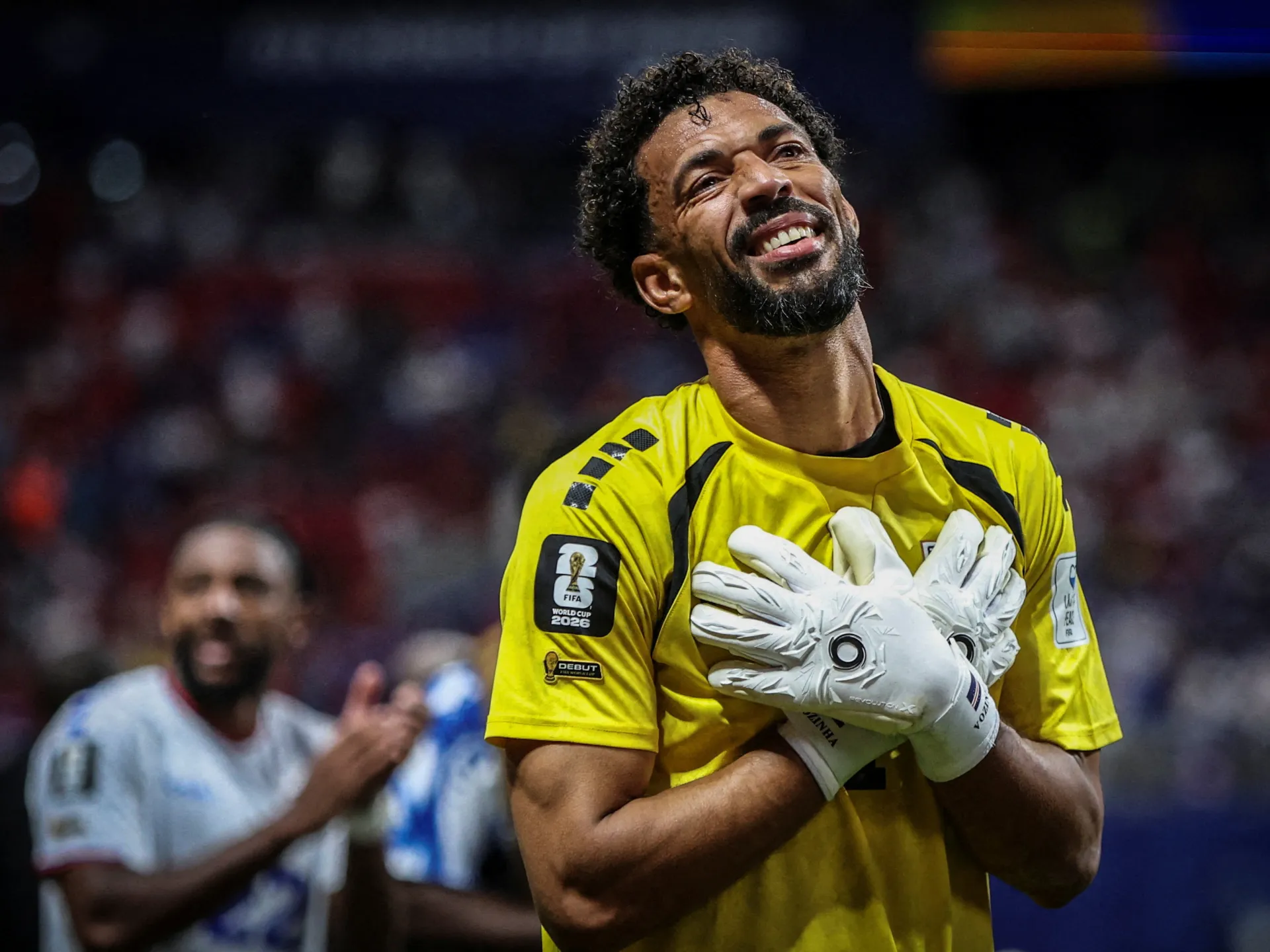
The 40-year-old goalkeeper made headlines around the world after starring in Cape Verde’s goalless draw with Spain.
By AFP, Reuters and The Associated Press
Published On 26 Jul 202626 Jul 2026
Cape Verde’s heroic World Cup goalkeeper, Vozinha, has reached an agreement to join Chilean club side Colo Colo.
The 40-year-old stopper, who made headlines around the world after starring in a goalless draw with Spain, will travel to Chile for a medical before being unveiled, Colo Colo’s president, Anibal Mosa, announced on Saturday.
Recommended Stories
list of 3 itemsend of list
Vozinha became one of the most talked-about players at the World Cup with a string of remarkable saves against top teams, including defending champions Argentina.
The goalkeeper, who left Portuguese second-tier side Chaves before the summer, was voted into FIFA’s fan-selected World Cup dream team.
“Vozinha will be a Colo Colo player. In the coming days, he will travel to Chile, undergo the usual medical examinations and then be presented here at the Estadio Monumental,” Mosa said.
He added that Vozinha’s World Cup performance showed he deserved the move, while acknowledging the signing also carried marketing appeal for the Chilean side.
Colo Colo teased the signing on social media with an image appearing to show the veteran goalkeeper’s trademark curly hair.
Vozinha, whose full name is Josimar Jose Evora Dias, has also become a social media star, with help from Brazilian influencer Casimiro. The goalkeeper’s Instagram following has soared from 50,000 to nearly 30 million.
He also made headlines after revealing that his mother, Ana Candida Evora, was unable to travel to watch her son due to the cost of a bond payment for a visa to enter the US.
In 1775, Congress establishes the U.S. postal system.
In 1847, Liberia became a republic and Africa’s first sovereign, Black-ruled democratic nation.
In 1908, the FBI was born as the Bureau of Investigation, or BOI, when a group of newly hired investigators reported to the Justice Department. The special unit officially became the FBI in 1935.
In 1931, swarms of grasshoppers decimated millions of acres of crops throughout the southwestern United States.
In 1941, Army Gen. Douglas MacArthur was named commander of U.S. forces in the Philippines.
File Photo by US Army/UPI
In 1945, voters ousted Winston Churchill as prime minister of Britain after five years in the position. His Conservative Party would be voted back into power in 1951, and he would regain his position.
In 1956, Egypt created a crisis by nationalizing the British- and French-owned Suez Canal.
In 1984, serial killer Ed Gein, the inspiration for the movie Psycho, dies of cancer.
In 1990, President George H.W. Bush signed the Americans with Disabilities Act, prohibiting discrimination against the disabled in employment, public accommodations, in telecommunications, and on public or private buses or trains.
Participants march in the Heartland Disability Rights March and Rally on July 25, 1999, to celebrate the signing of the Americans With Disabilities Act of July 26, 1994. File Photo by Bill Greenblatt/UPI
In 2010, the founder of WikiLeaks, Julian Assange, said the site decided to post more than 75,000 secret U.S. Afghan war documents on the Internet to give a more complete picture of the conflict. The White House said the deed had “a potential to be very harmful.”
In 2018, Facebook had the worst single day of trading in history, losing some $110 billion.
In 2023, soldiers in Niger said they removed President Mohamed Bazoum from office in a coup of the democratically elected government. Brigade Gen. Abdourahamane Tchiani put himself in charge of the military junta.
In 2024, Canadian diva Celine Dion delivered a stirring rendition of Edith Piaf’s French anthem, “Hymn to Love,” at the Eiffel Tower, providing a show-stopping finale to the Opening Ceremony of the Paris 2024 Olympics. It was her first public singing appearance since 2020 due to her battle with a rare neurological disease.
Noul hit southern Guangdong province and neighbouring Hong Kong, bringing strong winds and heavy rain to the region.
Published On 26 Jul 202626 Jul 2026
Typhoon Noul has hit southern China, including Hong Kong, bringing strong winds and heavy rain to the region and prompting the evacuation of hundreds of thousands of people in Guangdong province.
China’s national weather centre said Noul made landfall on the coast of Huidong county in Huizhou, southern Guangdong province, at approximately 3:50am local time on Sunday (19:50 GMT on Saturday).
Recommended Stories
list of 3 itemsend of list
China’s official Xinhua News Agency said Noul was the strongest typhoon to make landfall in China so far this year.
Hong Kong’s Observatory said Noul, with maximum sustained winds of 110 kilometres per hour (68 miles per hour) near its centre, was moving Sunday into inland Guangdong and weakening progressively, bringing strong winds and heavy rain to parts of the region.
More than 715,000 people had been relocated for safety by early Sunday in Guangdong province, according to state-owned China National Radio. On Saturday, authorities said some 340,000 people were evacuated.
China’s National Meteorological Centre expected parts of southern Guangdong and southeastern Fujian provinces to experience heavy rain and strong winds over the weekend.
Many trees were seen uprooted in Huilai county, located on the coast of Guangdong province, state broadcaster CCTV reported.
Hong Kong’s airport authority said about 350 flights were cancelled on Sunday. At least nine people were injured across the city during the typhoon period, according to Hong Kong authorities.
As Noul approached Hong Kong, parts of a large scaffolding on a high-rise building collapsed on Saturday afternoon, local police said, although initial reports indicated there were no injuries.
Taiwan’s Central Weather Administration said Noul was bringing rainfall to parts of southern and eastern Taiwan. It was passing over waters south of Taiwan and was moving away from the island Saturday.
Earlier this month, Typhoon Bavi brought strong winds and rain to eastern China, leading to the evacuation of more than two million people. It made landfall on July 11. Another, Maysak, made landfall in southern China on July 3.
The US military has released footage it says shows forces boarding one tanker and disabling another accused of attempting to breach its naval blockade of Iran. CENTCOM says 12 commercial vessels have been redirected and two disabled for failing to comply.
Harare, Zimbabwe – Zimbabwe wants to move beyond being a supplier of raw minerals and build industries that process and manufacture from its own resources. But as the government tightens restrictions on unprocessed mineral exports, smaller miners are asking whether they will share in that transformation or be left behind.
The government has restricted exports of unprocessed strategic minerals, including lithium, as part of a broader drive to increase domestic beneficiation. Authorities argue that Zimbabwe should capture more value from its mineral wealth instead of exporting raw materials and allowing other countries to profit from refining and manufacturing.
The policy has attracted more than $1bn in investment into Zimbabwe’s lithium value chain, according to government officials and industry representatives. But smaller miners warn that the cost of building processing facilities, unreliable electricity supplies and limited access to finance could make it difficult for them to participate in the country’s industrial ambitions.
Speaking during a technical media tour of Prospect Lithium Zimbabwe (PLZ) in Goromonzi, Mashonaland East, on 17 July, Minister of Mines and Mining Development Polite Kambamura said Zimbabwe’s 2022 ban on exports of unbeneficiated lithium ore had encouraged companies to invest in domestic beneficiation.
“The construction of the first lithium sulphate plant in Africa is behind me, and this was done in Zimbabwe,” Kambamura said.
He said Zimbabwe’s ambitions extended beyond lithium sulphate and lithium carbonate production, with a long-term goal of developing industries capable of manufacturing lithium batteries and solar panels locally.
Prospect Lithium Zimbabwe, owned by China’s Zhejiang Huayou Cobalt, said its lithium carbonate plant was about 90 percent complete.
PLZ public relations officer Patience Mushore said Huayou’s investments had generated more than $1.1bn in foreign exchange for Zimbabwe while expanding the country’s lithium value chain.
Policy shift
Supporters of Zimbabwe’s export restrictions argue that the country can no longer remain a supplier of raw minerals while other nations capture greater profits through refining and manufacturing.
Public policy expert Tedious Ncube said Zimbabwe’s lithium sector demonstrated why the government had prioritised beneficiation.
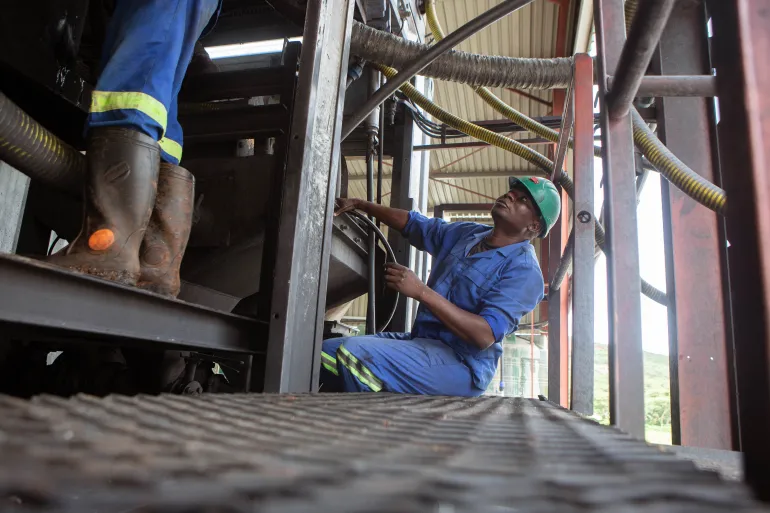
Mechanics work on a machine installed at Arcadia Lithium in Goromonzi, Zimbabwe [Tafadzwa Ufumeli/Getty Images]
He pointed to investments at Arcadia Mine and Bikita Minerals as examples of companies expanding Zimbabwe’s lithium sector.
Ncube said domestic processing could create skilled jobs, strengthen local suppliers and allow Zimbabwe to retain a greater share of the income generated from its mineral resources.
“The success of Zimbabwe’s lithium industry shows that the right policy can attract investment that builds industries, creates jobs and leaves a bigger share of mineral wealth in Zimbabwe,” he said.
Mining concerns
For smaller producers, the debate is not whether Zimbabwe should process its minerals locally, but whether they will have the infrastructure, finance, and market access needed to participate.
Shelton Lucas, business development director at Naivo Mining, said the company operates chrome, antimony and tungsten projects in Mashava, Ngezi and Kadoma but faces challenges accessing affordable processing options.
Lucas said smaller producers were struggling to access processing capacity, particularly in the chrome sector.
“For our raw chrome, we are now forced to sell to local Chinese smelters where they underpay us. For antimony, I have the resources to build the value-addition plant, but for chrome I cannot because the plant is very expensive,” he said.
He said he supported domestic processing but warned that smaller miners could be excluded if new requirements were introduced without support mechanisms.
Lucas proposed a toll-smelting system, where public institutions or industry bodies invest in shared processing facilities that miners can access at transparent rates while retaining ownership of their minerals.
“The challenge is not only building processing plants, but also ensuring smaller producers can access capacity on fair terms,” he said.
Without such measures, he warned that a small number of companies could end up controlling processing capacity and market access.
“If these companies also hold export rights, they could dictate prices to small-scale miners, creating what could become a predatory market that undermines the very people the mining sector is meant to empower,” he said.
Economic constraints
Economists say Zimbabwe’s processing ambitions will depend on whether the country can overcome longstanding challenges affecting mining and manufacturing.
United Kingdom-based Zimbabwean economist Chenayi Mutambasere told Al Jazeera that the policy faced obstacles including power shortages, expensive financing, weak transport infrastructure, foreign exchange constraints and limited access to processing technology.
“The ban should be more than a political slogan; it should be an industrial practical strategy,” she said.
A worker oversees operations at Prospect Lithium Zimbabwe’s (PLZ) three-line, single-phase lithium sulphate plant in Goromonzi, Mashonaland East [Enos Denhere/Al Jazeera]
Mutambasere said the government needed to support the policy with reliable electricity, investor incentives, skills development and clear implementation timelines.
She warned that restrictions introduced before the necessary support systems were in place could create unintended consequences.
“An abrupt ban where companies have invested in the sector may push the mining sector further underground, which could increase mineral leakage,” she said.
Government vision
Permanent Secretary in the Ministry of Information, Publicity and Broadcasting Services Nick Mangwana told Al Jazeera that the policy was intended to ensure Zimbabwe gains more from its finite mineral resources.
“The government is implementing this beneficiation policy in our minerals for the growth of our economy and to create a lasting legacy that will be witnessed by future generations,” Mangwana said.
He said the policy applied not only to lithium but also to other strategic minerals, including platinum group metals such as palladium, rhodium, ruthenium, iridium and osmium.
Zimbabwe’s push reflects a wider debate among resource-rich countries: whether restricting raw exports can build domestic industries without concentrating opportunities among a few large companies.
For smaller miners, the success of the strategy will depend not only on how much mineral processing takes place inside the country, but whether beneficiation creates broader participation or leaves only the biggest players able to compete.
Lucas said the goal should be to ensure that local processing expands opportunities across the mining sector rather than creating new barriers for smaller producers.
“Beneficiation should not become a barrier to participation. It should be an enabler of inclusive growth, industrial development and sustainable economic transformation,” Lucas said.
Protest group says at least 200 demonstrated in Israeli capital a day after major escalation of West Bank violence.
Published On 26 Jul 202626 Jul 2026
Israeli police have arrested nine people at a Tel Aviv demonstration decrying settler violence in the occupied West Bank, according to media reports and protest organisers.
Hundreds of people gathered on Kaplan Street on Saturday to demonstrate against the settler violence and Israeli military rule in the occupied Palestinian territory, according to Israeli media. The protest was organised by the left-wing Hadash party and its allies.
Recommended Stories
list of 3 itemsend of list
The Mothers Against Violence protest group said more than 200 people took part in the demonstration, and accused police of using force against demonstrators, including the nine they confirmed were arrested.
Israeli police said demonstrations had gone ahead without authorisation and had begun to “disrupt public order and block the roadway”, according to local media.
The protest came a day after Israeli forces shot dead four Palestinians in the town of Tal, near Nablus, during a settler incursion on their land. Two Israelis were also killed in the confrontation.
On Friday, about 30 settlers entered Tal, next to the illegal Israeli settlement of Havat Gilad, and tried to break into two houses on Friday, said Essam Saifi, a local Fatah official. Residents confronted them, and the settlers opened fire.
A video shows a Palestinian man seizing a rifle from a settler and shooting him before soldiers shot him dead. Three others were killed and four wounded.
Ubai al-Aboudi, a rights activist in Ramallah, told Al Jazeera that one week prior, settlers set fire to a home in Tal with the family still inside. “It was a miracle that the residents of Tal were able to get that family out of the house before they were burned alive,” he said.
In retaliation for Friday’s shooting incident, the government of Prime Minister Benjamin Netanyahu ordered a wide-scale military operation across the West Bank, and Israeli forces arrested nearly 50 Palestinians in Tal while raiding about 70 homes.
The Palestinian Prisoner’s Society said at least 80 Palestinians were held across the West Bank the day after the incident, calling it “collective punishment”.
Funerals for the four killed were held before dawn under restrictions on attendance.
Political analyst Ori Goldberg said video of the attack on Tal had made denial impossible for the Israeli public.
“They saw the Jewish terrorist come into the villages and they saw the response … I’m not expecting the public to rise in protest in response, but I do expect this might revivify the last dregs of liberal Zionism in protest,” he told Al Jazeera.
“This may be a threshold moment in what Israelis have previously termed as ‘settler violence’ in an attempt to distance it from themselves,” Goldberg added.
At least 1,182 Palestinians have been killed, 13,000 wounded and nearly 24,000 arrested in the occupied West Bank since Israel’s genocidal war on Gaza began in October 2023, according to official Palestinian figures.
July 25 (UPI) — A federal appeals court ruled that the Trump administration cannot implement tighter rules for mail-in voting in the mid-term elections this November.
The ruling, handed down by the First U.S. Circuit of Appeals on Saturday, will prevent his administration from creating a list of eligible voters and from requiring the U.S. Postal Service to refuse to deliver ballots to people who are not on the list, The Hill and Bloomberg News reported.
The three-judge panel rejected the administration’s appeal of lower court rulings in late June and early July that an executive order issued in April to expand the federal government’s role in managing elections could not be put into effect.
The April 1 executive order was condemned by critics at the time as an attempt by President Donald Trump and the administration to interfere with the mid-term elections, and led to 23 states and the District of Columbia to file suit to stop it.
The appeals court said in its ruling that the federal government failed to make its case for lifting the federal government’s injunction, which was partially based on the lower court preventing the executive order from going into effect.
“To be sure, the injunction prevents the federal Defendants from enforcing the EO in the Plaintiff states’ upcoming primary and general federal elections in September and November,” the judges wrote.
Trump, who continues to falsely claim that he won the 2020 election, signed the order under the guise of election integrity based on his also false claims of widespread voter fraud.
The fraud allegations center on ineligible people casting mail-in ballots, of which Trump and his administration have not shown happened in significant numbers during the 2020 election.
The order directs the Department of Homeland Security to build a state citizenship list based on federal date, to send the lists to state elections officials to verify mail-in ballots go to eligible voters and for the USPS not to send out absentee or mail-in ballots to people who do not appear on the lists.
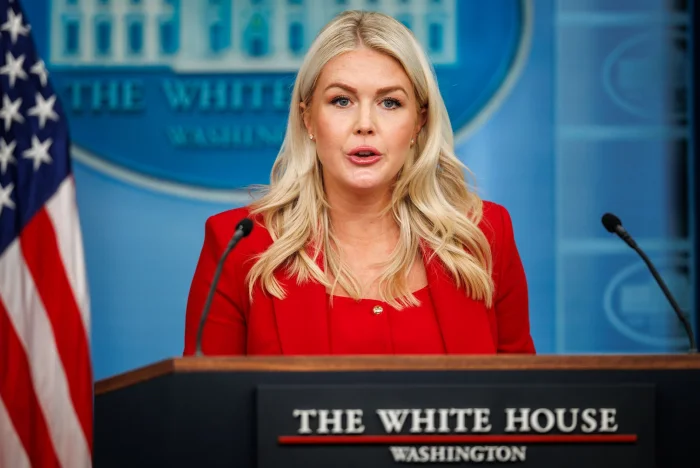
White House Press Secretary Karoline Leavitt speaks during a press briefing in the James S. Brady Press Briefing Room at the White House on Thursday. Photo by Samuel Corum/UPI | License Photo
Right-wing candidate Flavio Bolsonaro attracts foreign support, but struggles in polls ahead of matchup with President Lula.
Published On 26 Jul 202626 Jul 2026
Flavio Bolsonaro has inaugurated the official beginning of his Brazilian presidential campaign, touting support from right-wing figures such as Argentinian President Javier Milei and Israeli Prime Minister Benjamin Netanyahu.
Bolsonaro, son of former president Jair Bolsonaro and long considered the presumptive candidate of Brazil’s political right, launched his formal bid challenging President Luiz Inacio Lula da Silva on Saturday.
Recommended Stories
list of 3 itemsend of list
“This is more than a party convention,” Bolsonaro said in remarks to his father’s Liberal Party.
“This is the beginning of the toughest battles of our life. A fight between good and evil.”
Recent polls have shown Bolsonaro trailing the left-wing Lula, as his bid for the presidency struggles to right itself after a number of setbacks and scandals.
While Saturday’s event included endorsement remarks from right-wing heavyweights such as Milei and Netanyahu, few prominent Brazilian politicians were in attendance.
Centre-right parties have largely kept their distance, and Flavio’s father – currently serving a 27-year prison sentence for a coup attempt following his loss to Lula in 2022 – was present at the convention only in the form of a video made with AI.
Milei delivered a fiery speech criticising Lula and declaring that Bolsonaro can “save” Brazil from socialism.
The Argentinian president flew to Brazil the night before the event and met on Saturday with Sao Paulo Governor Tarcisio de Freitas.
“We will continue offering our testimony everywhere against the lies of socialism,” Milei said.
Netanyahu offered support via a short video message.
“Flavio, my friend, I want to congratulate you on the official launching of your campaign,” Netanyahu said in the recording, according to the Brazilian outlet Metropoles. “You’re a great champion of Brazil, you’re a great champion of the friendship between our peoples.”
Lula’s Workers Party is set to hold its own convention on August 2, confirming the 80-year-old president’s re-election bid.
Bolsonaro and his allies have also suffered from criticisms that they have tried to use their ties to the administration of US President Donald Trump to boost his campaign, inviting US intervention in a variety of issues that many Brazilians see as a form of foreign meddling.
Like his father, Flavio has also raised alarm by repeating false claims about the reliability of Brazil’s election infrastructure, seen as a pretext for possible efforts to deny the legitimacy of the voting process in the event of a loss to Lula.
The AFP news agency reported on Saturday that Brazil had denied visas to a pair of Trump administration officials who sought to meet with the country’s election authorities to discuss “freedom of expression related to the elections”.
Tehran summons Ukrainian envoy over the attack, which it says killed one sailor and wounded another.
Published On 25 Jul 202625 Jul 2026
Tehran has accused Ukraine of attacking an Iranian commercial vessel in the Caspian Sea, causing an explosion that killed one sailor and injured another.
Iran’s Ministry of Foreign Affairs summoned Ukraine’s chargé d’affaires in Tehran to protest what it described as a “hostile and criminal” attack on Saturday, state news agency IRNA reported.
Recommended Stories
list of 2 itemsend of list
The ministry claimed the attack had been acknowledged by the Ukrainian leadership and said it reflected Kyiv’s continued “irrational and hostile approach” towards Iran. It warned Iran would defend its national interests.
It also described the incident as a violation of Article 2(4) of the United Nations Charter and said it could further inflame and expand the Russia-Ukraine war.
Iranian Foreign Minister Abbas Araghchi also discussed the matter in a phone call with the European Union’s High Representative for Foreign Affairs Kaja Kallas, his office said in a statement.
Araghchi strongly condemned Ukraine’s military attack on the vessel in the Caspian Sea, and reportedly “called for a firm response from the United Nations Security Council, the European Union, and the international community, and for the perpetrators and supporters of this criminal act to be held accountable”, according to the statement shared on Telegram.
‘Pressure’
“The Iranians are not really happy with [the attack], while they’re also dealing with a US blockade on the southern coast,” said Al Jazeera’s Tohid Asadi, reporting from Tehran.
He explained that the attacks on Iran’s northern coast are “putting extra pressure” on Iran’s maritime trade.
In its condemnation, Iran’s Foreign Ministry reiterated that Tehran has never intervened in the Russia-Ukraine conflict.
The incident came as Ukrainian President Volodymyr Zelenskyy announced in a post on X that Kyiv had achieved “very strong results” with long-range strikes in the Caspian Sea, hitting “vessels used in military cargo shipments involving Iran, as well as a warship.” He did not identify the commercial vessel named by Tehran as a target.
Zelenskyy separately alleged that Russia had been passing satellite imagery of Gulf states and US military sites to Iran. He said surveillance on July 19 and 20 covered airbases in Bahrain, Jordan and Kuwait.
Iran and Ukraine have been at odds since 2022, when Iran sold Russia the Shahed drones that Moscow has since adapted and launched in their thousands at Ukrainian cities.
Kyiv says it has shot down more than 44,000 of the Iranian-designed drones since Russia’s invasion.
Ukraine has also offered its drone interceptors and expertise to governments in the Gulf that have come under Iranian attack during the US-Iran war, deploying anti-drone specialists to Qatar, the United Arab Emirates, Saudi Arabia and Kuwait.
July 25 (UPI) — The lieutenant governor of Hawaii was indicted this week for allegedly being bribed by a lobbyist aiming to help a company receive a contract for COVID-19 testing.
A grand jury on Friday indicted Hawaii Lt. Gov. Sylvia Luke, a former state representative and the lobbyist, among others, for setting up a scheme to contribute $70,000 to Luke’s campaign in exchange for the contract, the Aloha State Daily reported.
The lobbyist, Tobi Solidum, offered the to Luke to retain a contract with the state, and allegedly was looking to bribe her in the future after she accepted two $5,000 checks at the beginning of the scheme.
Hawaii Gov. Josh Green told Fox News that, in light of the indictment, Luke should depart from office.
“The attorney general announced significant developments in her department’s corruption investigation and has provided an update on their findings,” Green said.
“The lieutenant governor needs to consider formally resigning to address this matter and so that the state of Hawaii can move forward,” he said.
Luke, Solidum, former state Public Utilities Commission chair Leodoloff Asuncion Jr., and state Department of Transportation airports administrator Ford Fuchigami all were indicted for involvement in the scheme.
The indictment alleges that that Luke accepted two checks for $5,000 in January 2022 at a Morton’s Steakhouse, with the promise of two more payments of $35,000 each.
Although Luke has acknowledged accepting the $5,000 checks, she I miss that she never received additional money and never acted on what she was paid for.
White House Press Secretary Karoline Leavitt speaks during a press briefing in the James S. Brady Press Briefing Room at the White House on Thursday. Photo by Samuel Corum/UPI | License Photo
July 25 (UPI) — The Trump administration admitted that it canceled nearly $8 billion in grants slated for hundreds of clean energy projects “based solely” on whether a state voted for Kamala Harris for president, it was reported Friday.
In a recent court filing, a lawyer for the Energy Department said none of the axed projects lost their funding “based on any programmatic, statutory, cost-reduction or performance-based factor.”
The Trump administration attorney added, “The 284 terminated grants had a recipient location and/or at least one place of performance in a state that awarded its electoral votes to Kamala Harris in the 2024 election and has two Democratic-caucusing senators.”
The government’s admission, first reported by The New York Times, came out as part of a July 15 court filing in a class action lawsuit over the slashed grants.
The Department of Energy selected 600 grants for cancellation and sent the list to the Office of Management and Budget, which terminated 284 of them in October.
“Nearly $8 billion in Green New Scam funding to fuel the Left’s climate agenda is being cancelled,” OMB Director Russell Vought wrote on X.
Despite also being recommended for cancellation from energy officials, the OMB left untouched hundreds of projects in places that voted for Trump, court documents show.
“The inclusion of grants in the October notice tranche was based solely on the political identity of the grant recipient’s state, i.e., whether the recipient’s location and/or place of performance was in a Blue State or a non-Blue State,” Trump administration lawyers wrote.
Sen. Chuck Schumer, the Senate minority leader, called the move “unprecedented Trumpism and something we should never become numb to.”
“Trump admits he’s ripping the rug out from under hardworking families so he can get revenge on the Americans who didn’t vote for him,” the New York democrat added. “It’s sick and deranged. His ego is so fragile, he’ll punish families already struggling to put food on the table for a little bit of vengeance.”
Rep. Jamie Raskin, D-Md., said, “This mass partisan retribution is appalling, outrageous, dangerous, lawless, unconstitutional, unpatriotic and a massive offense against the Republic.”
“Every elected official must denounce this imbecilic deep betrayal of America,” Raskin added in a statement. “And the illegally impounded funds must be restored and released immediately to the blue states.”
Ishan Kishan and Tilak Varma sets up 90-run win over Zimbabwe as India takes 2-0 lead in T20 series.
Published On 25 Jul 202625 Jul 2026
India inflicted another heavy defeat on Zimbabwe when they won the second Twenty20 international at Harare Sports Club by 90 runs to secure their three-match series.
Ishan Kishan scored 81 and Tilak Varma an unbeaten 60 as India amassed a formidable total of 219-5 after being put into bat before dismissing Zimbabwe cheaply for 129 to secure the victory on Saturday.
Recommended Stories
list of 4 itemsend of list
Kishan, whose runs came off 44 balls, and Tilak, who took 29 balls to get to 60, accelerated the scoring in the middle overs, taking advantage of bowling that was often too full.
They put on 94 off 44 balls for the fourth wicket before Ishan was caught in the deep mistiming a slog at a wide delivery.
Zimbabwe faced a record run chase and, although opener Brian Bennett offered some early hope, they were always up against it and were dismissed in 17.5 overs.
Bennett played an array of strokes for 32 runs off 19 balls before falling to Yash Thakur, who finished with 2-30 on his T20 international debut.
Once Bennett had been dismissed, there was a steady fall of wickets, with the slow left-arm bowling of Abhishek Sharma producing the best figures of 3-17.
India won the opening match of the three-game series at the Harare Sports Club by seven wickets with 40 balls to spare.
Media freedom organisations and opposition lawmakers have criticised sweeping media reforms pushed through by Israel’s right-wing coalition as part of a legislative blitz before the parliament’s dissolution in advance of elections later this year.
The parliament, or Knesset, last week approved the bill that could give the government a far greater say in Israel’s news and broadcast sectors. The controversial measure strips away traditional oversight safeguards, eliminates requirements for minimum journalism standards and lifts longstanding limits on cross-ownership, among others.
Recommended Stories
list of 4 itemsend of list
Following the July 17 vote, watchdog groups, including the Union of Journalists in Israel, along with opposition parties, successfully petitioned the High Court of Justice to freeze parts of the legislation. They warned that some provisions that were set to take effect immediately, including the removal of limits on ownership of multiple media outlets and the stripping away of newsroom standards, could permanently distort the media landscape before the October 27 election, potentially influencing its outcome.
The government has until Sunday to respond, after which the court will decide whether to keep the freeze, widen it, or allow the provisions to take effect. Other, less contentious and immediate sections of the law were left to stand.
Israel’s Prime Minister Benjamin Netanyahu did not vote on the measure. He is currently bound by a 2020 conflict-of-interest agreement that bars him from participating in government decisions that could affect his ongoing corruption trial, where, among other charges, he stands accused of using his position to unduly influence media coverage of his administration.
Nevertheless, Communications Minister Shlomo Karhi thanked Netanyahu directly, saying: “Mr prime minister, I want to thank you and tell you that the mission you gave me four years ago – to deliver right-wing reform of the media – was today successfully completed.”
Israeli media reported that such a directive by Netanyahu could be a violation of his agreement. Neither the Prime Minister’s Office nor the Communications Ministry responded to Al Jazeera’s queries over whether Netanyahu’s role in the legislation’s passage represented a conflict of interest. However, Karhi subsequently claimed that he had secured a legal opinion determining that the prime minister was not in breach of the conflict-of-interest agreement.
“Prime Minister Benjamin Netanyahu and Communications Minister Shlomo Karhi have proven repeatedly that they are enemies of independent journalism in Israel,” Martin Roux, of the Reporters Without Borders media monitor, told Al Jazeera.
“This means they’re attacking every Israeli citizen’s right to reliable information from diverse sources. This has been true for years, and it is becoming more obvious every day as the legislative elections, set for the end of October, approach. It’s all about controlling the narrative,” he said.
In a social media post, Karhi claimed the new legislation would bring “more right-wing coverage and less regulation”.
“After a determined struggle against every possible element from the deep state, tycoons, attorneys, officials and fearmongering networks – we managed to pass the right-wing media reform.”
‘Boosting propaganda channels’
However, for many observers, there was little new in overhauling media that had grown used to toeing the government line, with critical coverage of the multiple wars that Israel has engaged in and the international outrage that many have caused typically relegated to the sidelines of the national conversation.
“The reforms are part of Netanyahu’s ongoing media overhaul – undermining the remains of critical reporting and journalistic independence in the country, while boosting Netanyahu’s propaganda channels,” London-based Israeli academic and media analyst Ayala Panievsky told Al Jazeera.
Israel’s Channel 14 has consistently pushed the ‘big lie’, that Trump won the 2020 US elections, leading some to wonder if the channel would be prepared to do the same again in Israel later this year [Chip Somodevilla/Getty Images]
She cited the far-right Channel 14, which she said emboldened Israel’s war crimes and offered unflagging support to what she described as the most right-wing government in Israel’s history.
“In 2020, they amplified ‘the Big Lie’ in the US elections, claiming Trump won the election – they might therefore act similarly following the Israeli general elections in October, if Netanyahu’s coalition indeed loses,” said Panievsky, echoing similar concerns among academics and legal analysts sparked by accusations from lawmakers within Netanyahu’s Likud party that the acting head of the Central Elections Committee, Dean Livne, was “clearly politically biased”.
Analysts and observers from across Israel have long pointed to the strongly nationalist undertone of much of Israel’s current affairs coverage and the absence of space given to Palestinians and Palestinian suffering.
When the United Nations’ Independent International Commission of Inquiry concluded in September 2025 that Israel had committed genocide in Gaza, Israel’s Foreign Ministry dismissed the findings as “distorted and false“, a framing echoed across domestic outlets rather than scrutinised.
A subsequent Molad report found only 3 percent of Channel 12’s early war coverage referenced Gaza’s humanitarian crisis, with just two of 206 visuals showing Palestinian civilian casualties. Elsewhere, allegations of Israeli war crimes, including sexual abuse, are either omitted or given pro-government framing, observers told Al Jazeera.
Thick smoke rises following an Israeli air strike on a residential area in the Al-Jalaa neighbourhood despite the ‘ceasefire’ [Saeed MMT Jaras/Anadolu]
“The Israeli media just doesn’t feature Gaza. It’s not there,” political analyst Ori Goldberg said from outside Tel Aviv. “There’s no sense of solidarity with the journalists killed there, or those they don’t let in. They’re just not mentioned.”
Similarly, discussion panels on the various wars that the Netanyahu administration had embarked upon were typically staffed by ex-generals, who had no question with the need for war, only differences over its prosecution, said Goldberg.
However, even this relative compliance was not enough for a prime minister fighting an election that had come to rely on the appearance of forward momentum and paper enemies to sustain his political project.
“Netanyahu always needs to be seen to be pushing the envelope,” Goldberg added. “He needs a media that will give barely critical coverage of his every word, but one that he can still present as the enemy within.”
July 25 (UPI) — President Donald Trump said Friday that he’s ready to continue talks with Iran or escalate fighting, but an Iranian general said it’s ready to fight.
Trump met with top advisors and cabinet members on Friday to make a decision on whether to escalate attacks on Iran, The New York Times reported. Friday night, no attacks on Iran from the United States or on U.S. military sites were reported after 13 straight nights of fighting.
The White House hasn’t said if the president decided what to do, but Trump said the military is ready for a heavier attack if Iran doesn’t want to resume talks.”Look, we’re locked and loaded,” Trump told reporters on Friday. “We’re ready to go, but we’re talking to them, so maybe there will be, maybe there won’t be a tipping point. Maybe they will cry uncle, or maybe they’ll just give up, or maybe they’ll just go into a cave and hide.”
He told reporters that Iran is getting more serious about talks to end the fighting.
“We are talking to them. I think they’re getting more and more serious as the days go by, for maybe the obvious reason, but we are talking to them right now,” Trump said Friday.
He said that Iran would “love to make a deal” but he didn’t “think they’re ready to.”
But an Iranian general pushed back Saturday, even suggesting that Tehran welcomed a ground invasion by American troops.
“Our war with the enemy is a war of attrition, one that will not end,” the official whom Iranian media named General Asadi said Saturday, CNN reported. “We ask God that the ground forces of the aggressor American army find themselves in a position where we can engage them on the ground.”
In an interview with Axios on Thursday, Trump said he was considering a “massive attack” on Iran.
“Bigger than ever before. I am close to making a decision. We are all set for it,” he said. But he said that decision would have consequences, and he hadn’t decided on it yet.
He told Axios that the Iranians “want to negotiate” but aren’t ready to make a deal.
“They haven’t received enough pain yet,” he said.
Two regional sources with knowledge of mediation efforts told Axios that Iranian leadership hasn’t accepted the latest proposal.
One of the sources said, “We are trying, but the Iranians are not being helpful.”
White House Press Secretary Karoline Leavitt speaks during a press briefing in the James S. Brady Press Briefing Room at the White House on Thursday. Photo by Samuel Corum/UPI | License Photo
Houthi military spokesman Yahya Saree delivers a televised statement in Sanaa, Yemen, Saturday. Yemen’s Houthis claimed to have launched missile and drone attacks against facilities belonging to Aramco, Saudi Arabia’s state-run oil company, in retaliation for Saudi airstrikes on the Yemeni port city of Hodeida. Photo by Yahya Arhab/EPA
July 25 (UPI) — The Iran-backed Houthi rebels in Yemen announced Saturday that they had attacked Saudi Arabia with missiles and drones in retaliation for Saudi attacks on Hodeida, Yemen.
Houthi Brig. Gen. Yahya Saree, the group’s spokesperson, posted on X that the Houthis launched two military operations “in response to this blatant and criminal aggression” from Saudi Arabia.
“The first targeted sensitive Aramco-affiliated facilities in Jizan with dozens of ballistic missiles and drones,” he said. “And the second operation targeted sensitive Aramco-affiliated facilities in Yanbu with a number of ballistic and cruise missiles and drones.”
Aramco is the Saudi Arabian state-owned oil company.
“Both operations successfully achieved their objectives thanks to Allah Almighty, with accurate and direct strikes,” Saree said.
But the Saudis claim that the attacks were intercepted by air defense systems operated by Greek military units.
It’s the latest escalation between the two countries. On Wednesday, the Houthis claimed responsibility for two attacks on Saudi oil tankers in the Red Sea with missiles and drones. They have said they have blocked the Bab al-Mandab Strait. That strait is on the other side of the Arabian Peninsula from the Strait of Hormuz. It’s the gateway between the Arabian Sea and the Red Sea, and blockades of both straits would cut off Saudi Arabian ships entirely.
The Saudis and the Houthis have been in an effective cease-fire since 2022. But tensions recently flared when the Houthis accused the Saudis of striking the airport in Yemen’s capital Sanaa. The spat came from a dispute when an Iranian plane had tried to land at the airport.
Saudi Arabia on Friday hit the Houthi-held port city of Hodeida with strikes, the Saudi-led coalition in Yemen said. The attacks were in response to the Houthi hits on oil tankers.
“The Saudi enemy’s targeting of civilian facilities in Hodeida and Kamaran Island constitutes a dangerous escalation,” the Houthis’ Ansarollah media posted on Telegram.
“We affirm that these recent crimes will not go unanswered,” the post said.
Al Masirah television, which is run by the Houthis, said Saturday that the strikes from Saudi Arabia targeted facilities that belong to the state telecommunications corporation and Kamaran Island. It said one worker in Hodeida was injured, and a woman was injured on the island, Deutsche Welle reported.
The Saudis said they would do whatever is necessary to protect their ships. They warned the Houthis that if they continued “hostile acts, then there will be no hesitation in responding.”
On Thursday, President Donald Trump said his administration would “hold Iran responsible” for any Houthi attacks on ships, The Hill reported.
“Please let this TRUTH serve to represent that if they do this again, the U.S. will hold Iran responsible, in that the Houthis are a Surrogate and/or Proxy of Iran, and major military punishment will be inflicted upon Iran and, of course, the Houthis, themselves, who I am very disappointed with in that they have, until now, acted very professionally and smart,” Trump said in a Truth Social post.
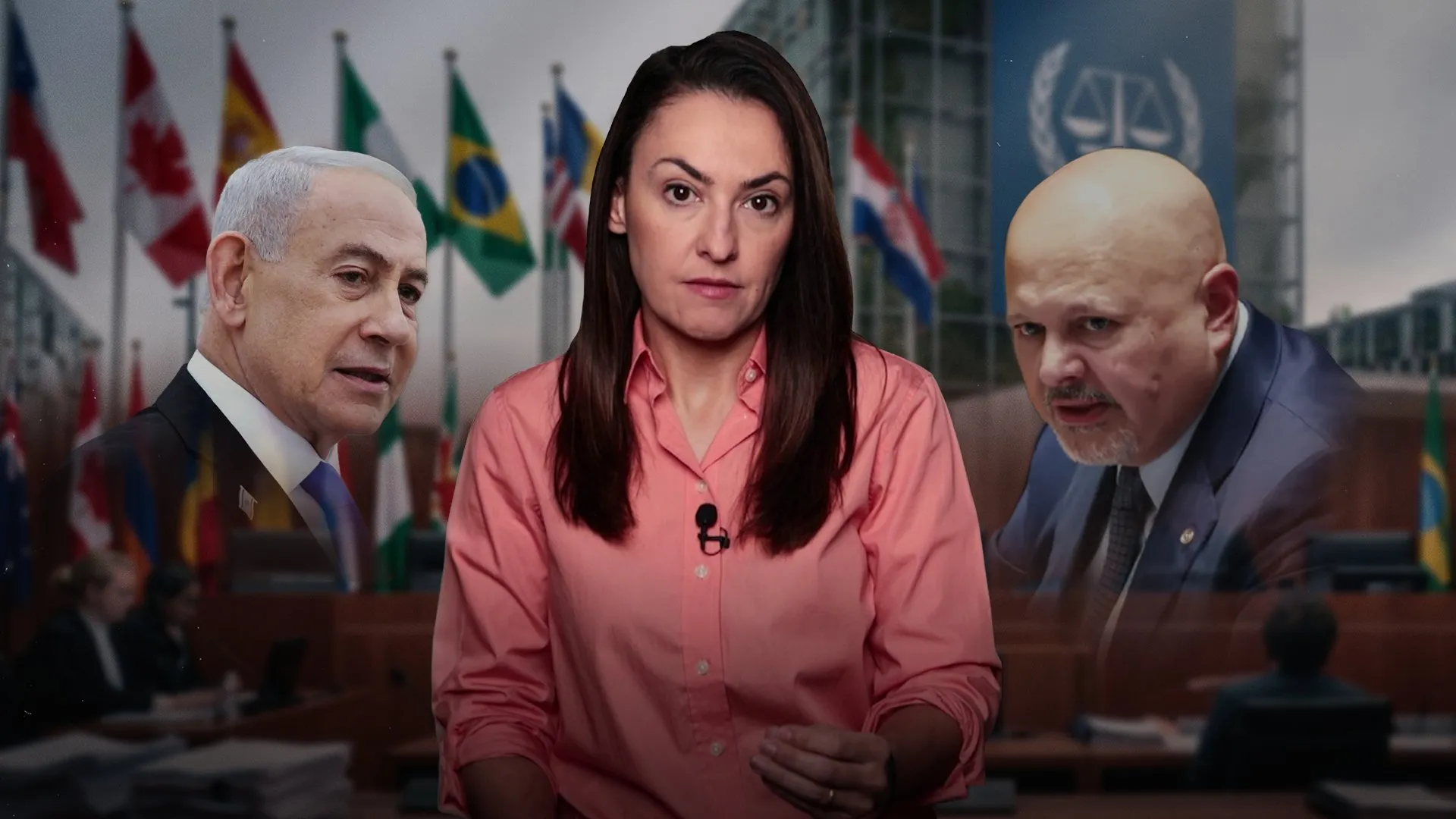
Lawyers for the ICC’s ousted Chief Prosecutor Karim Khan say he is the victim of a political witchhunt, motivated by his decision to go after Israeli leaders for war crimes. Khan was removed from office over sexual assault allegations. Soraya Lennie explains.
Lee Kang-In makes the switch to Atletico after helping Paris Saint-Germain to consecutive Champions League titles.
Published On 25 Jul 202625 Jul 2026
South Korea midfielder Lee Kang-In has agreed to join Atletico Madrid from Paris Saint-Germain, the Spanish club.
Atletico said on Saturday the player would sign a contract through June 2031. The transfer fee was undisclosed, but it is reportedly between 35 and 40 million euros ($39.8m and $45.5m).
Recommended Stories
list of 4 itemsend of list
The 25-year-old Lee played all three group-stage games at the World Cup, where South Korea failed to advance after losing twice.
Born in Incheon, Lee moved to Spain when he was 10 to join Valencia’s training academy and ended up playing 62 games for the club. After a stint with Mallorca, he joined PSG in 2023, scoring 16 goals in 124 appearances.
He will now play for an Atletico side that finished La Liga in fourth place and reached the Copa del Rey final last season. Lee will help fill the creative void left by Antoine Griezmann, who has left for the MLS as Atletico’s all-time top scorer.
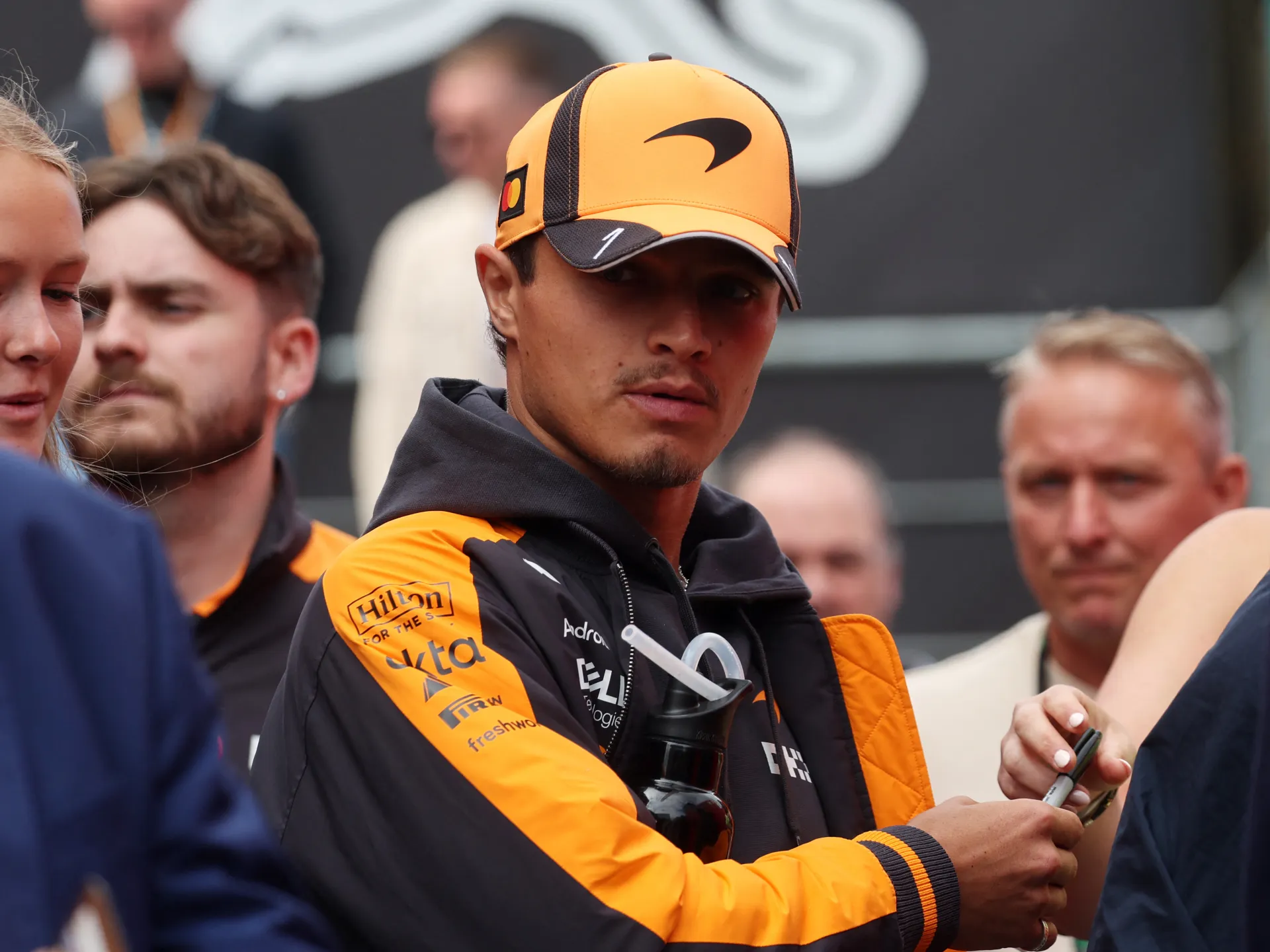
Lando Norris speaks up ahead of Hungarian Grand Prix with drivers feeling new regulations have cramped their speed.
Published On 25 Jul 202625 Jul 2026
Formula One has been driven too much by business decisions and needs to remember it is a sport, according to McLaren’s world champion Lando Norris.
With drivers chafing at new regulations that have cramped their speed, particularly at last weekend’s Belgian Grand Prix, the Briton told reporters ahead of Sunday’s Hungarian round that Formula One could do better.
Recommended Stories
list of 4 itemsend of list
“It’s a business,” said the Briton. “Everyone wants to make money, so in order for Audi and other teams to come in we had to change these things. It’s a shame. It should never have been like that. But that’s how businesses work.”
Audi have entered the sport this season after taking over Swiss-based Sauber, with the German carmaker encouraged by new rules that have increased the electrical element of the power unit to near-parity with the internal combustion engine. The rules have been tweaked for 2027 to reduce the electrical contribution.
“Formula One will always be great,” said Norris, whose car has a Mercedes engine. “It can just be better.
“Us as drivers just know it better than everyone else. The thing that’s a shame is that Formula One is too heavily led by the fact it’s a business nowadays and not how can you make the sport the best possible. It’s ‘how can you just make the most money as a business?’
“And that’s just not what it should simply be. That’s not how a sport should be run. The fact we have hybrids, 50-50 and all that, that’s just because more teams wanted to come in it and because you make more money.”
Norris said the Liberty Media-owned sport was also divided between fans who followed Formula One before the arrival of the popular Netflix docu-series “Drive to Survive” and those who have been drawn to it since.
“I think the fans you have nowadays, because they’re a lot more personality-based … and not simply of Formula One as a whole sport, I think there’s less interest in basically how the actual race goes, and more just ‘has the driver done well or not?’” he added.
“I think that’s just how the fans have changed over time, and that’s completely fine. But the biggest voice should always be ours as drivers … We have the best idea of how racing should be, how it can be, what’s possible, what’s not.
“We would just want the best for everything, the best for the fans, the best viewing, the best racing for us, the most fun to drive. And at the minute, we don’t … we have very, very little say, and a lot more of it’s done because if you can have Audi and other teams in it, it’s a bigger win than the drivers being happy.”
A Formula One spokesman responded to Norris’s comments by saying drivers were listened to more than ever.
“The sport on track is, and always will be, the priority,” he said. “Everyone has benefitted from the commercial success of Formula One, the drivers included. Decisions are made for the best strategic outcome for everyone: the fans, teams and partners.”
Norris was fastest in final practice for the Hungarian Grand Prix on Saturday.
Last year’s race winner lapped the Hungaroring circuit with a best time of 1:17.939, 0.117 seconds quicker than Ferrari’s Lewis Hamilton.
Formula One championship leader Kimi Antonelli was third fastest, 0.129 seconds off the pace and ahead of Ferrari’s Charles Leclerc, McLaren’s Oscar Piastri and Mercedes teammate George Russell.
Red Bull’s Max Verstappen was seventh on the timesheets, with teammate Isack Hadjar eighth but 1.004 off the pace.







![Mechanics work on a machine installed at Arcadia Lithium in Goromonzi, Zimbabwe [Tafadzwa Ufumeli/Getty Images]](https://i0.wp.com/occasionaldigest.com/wp-content/uploads/2026/07/1785038528_596_getty_6a44c41b85-1782891547.jpg?w=640&ssl=1)
![A worker oversees operations at Prospect Lithium Zimbabwe's (PLZ) three-line, single-phase lithium sulphate plant in Goromonzi, Mashonaland East. The facility is part of the company's investment in local mineral beneficiation and Zimbabwe's broader drive to move up the lithium value chain. [Enos Denhere/Al Jazeera]](https://i0.wp.com/occasionaldigest.com/wp-content/uploads/2026/07/worker1-1784698069.jpg?w=640&ssl=1)