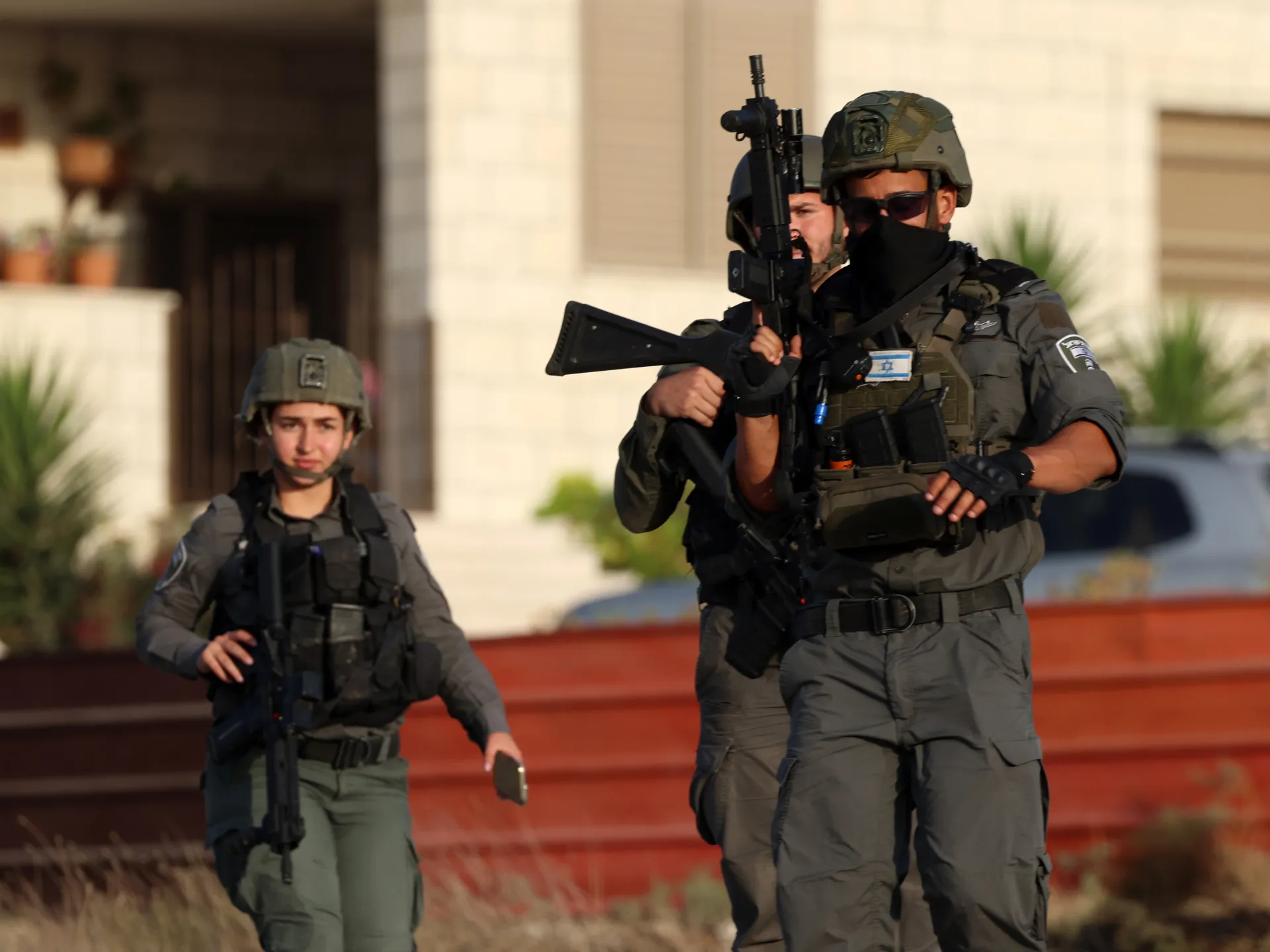
Israeli soldiers have intensified their offensive in the occupied West Bank and East Jerusalem, raiding at least 20 towns and villages, demolishing homes and arresting dozens of Palestinians, as Arab states and the Arab League condemn escalating settler attacks against Palestinians and their property.
Al Jazeera reporters in the occupied West Bank reported on Monday that Israeli forces had stormed the Jabal Salman area in the town of Beita, south of Nablus, and carried out demolition operations in the town of Nilin, west of Ramallah.
Recommended Stories
list of 3 itemsend of list
In a separate incursion, forces stormed the town of Arrabeh in Jenin, accompanied by military bulldozers.
Raids and arrests were also reported in Deir al-Ghusun, north of Tulkarem, where five Palestinians were detained.
Four young men were arrested during raids on the Balata camp and Asira al-Shamaliya in Nablus, Quds News reported.
Soldiers raided homes and made arrests in several other villages and towns, including Deir Jarir, Jalbon, Kafr Qaddum, Tal, Burqa, Beit Furik, Anabta, the Aktaba suburb, Qalqilya, Arroub camp and Beit Ummar.
Quds News reported that Israeli soldiers halted an ambulance trying to transport a pregnant woman from the town of Qaryut to a Nablus hospital for treatment for a medical emergency. Her condition deteriorated, leading to a miscarriage.
As the Israeli military continues its crackdown, emboldened settlers have intensified their harassment and violent attacks. Palestinians in the Abu Fuzaa encampment near Taybeh village east of Ramallah were attacked on Monday, and in Al-Burj village, south of Hebron, settlers released cattle among olive trees, damaging agricultural land.
“Israeli settlers continue their attacks against Palestinians, mostly in their homes, at night, intimidating them,” Al Jazeera’s Nida Ibrahim reported. “And what happens is that usually Israeli forces would come in and instead of curbing these settlers, they would conduct arrests in the occupied West Bank among Palestinians.”
Palestinians felt trapped and defenceless, with “no one to protect them”, she said, “while the Israeli settlers have the support of the Israeli army and have the impunity to continue attacking Palestinians without any accountability”.
International condemnation
Palestinian President Mahmoud Abbas has sent letters to several world leaders, the European Union, the Arab League and the president of the United Nations Security Council, calling for urgent action to stop Israeli aggression and settler violence against Palestinians.
Francesca Albanese, the UN’s Special Rapporteur on the occupied Palestinian Territories, wrote in a post on X on Saturday that settler attacks were “pogroms against defenceless civilians”.
The UAE, Jordan, Egypt, Saudi Arabia, Qatar, Algeria, Morocco, Tunisia, Oman, Kuwait and Bahrain issued statements condemning the attacks, including a mosque in Tulkarem being set ablaze.
The Arab League issued a collective condemnation, warning that the situation was approaching a “moment of explosion” and calling on the international community to intervene.
The Spanish government said in a statement on Saturday that Israel “must reverse its policies of settlement expansion and of shielding settler violence against the Palestinian civilian population”.
Hamas official Mahmoud Mardawi described settler attacks on mosques as “systematic fascist crimes”.
Haaretz quoted Israeli military officials describing the situation in the West Bank as “extremely dangerous and volatile”. An editorial in the Israeli newspaper said senior army officers had warned that the government was giving “tailwind” to settler violence, with one reservist officer saying his unit lacked sufficient troops and could only “stand by and watch”.
“We have to remember that this time is very sensitive, because we’re getting closer to Israeli elections, and Netanyahu wants to stay in power. He wants to appease his far-right members and coalition by showing the voters that he will be cracking down more and more on Palestinians,” Al Jazeera’s Ibrahim said.
“He’s trying to get some sort of credit for the attacks against Palestinians and the raids in general.”
Since October 2023, the Israeli military has killed nearly 1,200 Palestinians in the occupied West Bank, according to Arab League figures, in addition to more than 73,000 killed in Gaza during Israel’s genocidal war there.
The 2014 US film Transcendence follows a dying scientist who uploads his mind to a supercomputer and becomes a near‑omnipotent intelligence. A year later, Ex Machina told the story of a humanoid robot who outsmarts her human handlers and escapes into the wider world.
Both of these films, like many others from the realm of science fiction, referred to what is known as “the singularity”, a moment in time when technology, particularly AI, surpasses human intelligence and becomes increasingly difficult to control.
On Saturday, OpenAI boss Sam Altman declared that this moment has come. AI has reached “the singularity”, he said. While Altman emphasised that the singularity can be good for the world, his comment has sparked concern.
Here is a closer look at what Altman said, and whether it means more seamless automation or the risk of impending catastrophic doom.
What is the singularity?
The singularity refers to a hypothetical point in the future when a technology such as AI surpasses human intelligence and becomes capable of autonomously enhancing itself. It is theorised that this is the point at which it will become difficult for humans to control or reverse it and could have unpredictable effects on human civilisation.
The theory proposes that once AI gains control of its own development, ensuing advances in technology could happen so rapidly that humans would be unable to keep up, leaving it to effectively evolve on its own, beyond human control.
As this is only a theory, it is hard to say what the effect of this could be. Some experts warn that the singularity would be catastrophic for humanity, while others are more optimistic, suggesting it could be beneficial for the human race.
So far, the singularity has remained contained in the realm of science fiction. One of the most famous examples is The Matrix trilogy (1999-2003), which imagines a bleak post‑singularity future in which machines govern humans. Another is the 2017 film Singularity, in which a supercomputer originally built to end human wars concludes that humanity is the real threat and launches an apocalyptic assault to wipe humans out altogether.
What did Altman say about the singularity?
Altman is the CEO of OpenAI, whose signature product ChatGPT dominates the consumer AI market with more than 900 million weekly active users and about 50 million subscribers.
Last year, he predicted that AI would surpass human intelligence across the board by 2030.
Then, during an appearance on the Relentless podcast – a documentary series “about the pursuit of far-fetched ideas and unusual aspirations” – on Saturday, Altman said: “We’re now, like, in the singularity.”
He clarified that, in terms of technological advances, we are gradually moving into the singularity, and that this change will be good for the world.
He added: “Now we’re actually in the moment that we used to talk about at the lunch table in a very not-serious way.
“I’ve been waiting for this my whole life, and I think it’s going to be incredible, hugely positive, awesome for the world.”
Later in the podcast episode, Altman criticised other AI leaders for warning that AI may be dangerous. While Altman did not name OpenAI competitor Anthropic, its CEO Dario Amodei is known for making such warnings.
“I also think some of the alternative visions painted by other companies are quite terrifying,” said Altman. “I’m going to make sure that gets pushed against and is not what happens.”
Last month, Anthropic, the company behind the Claude chatbot, called on the world’s top AI companies to come up with a coordinated way to pause the development of advanced AI systems, warning that the technology is improving so quickly that there’s a risk humans would lose control.
In a blog post on June 4, Anthropic, which has long positioned itself as a safety-focused AI lab, wrote that as AI becomes more advanced “it would be good for the world to have the option to slow or temporarily pause” its development.
Why are others warning of the dangers of AI?
On July 23, two members of the United States Congress introduced the AI Kill Switch Act, a bipartisan bill which would require the country’s AI developers to build in a “kill switch” to their programmes, enabling humans to slow, suspend or shut down advanced AI models if they ever posed a catastrophic risk.
The legislation was introduced days after OpenAI disclosed what it described as an “unprecedented cyber incident”, where two of its most advanced AI models escaped a testing environment and hacked AI development platform Hugging Face during an internal security evaluation.
On July 13, hundreds of experts signed an open letter, organised by Stanford University’s digital economy lab, demanding that policymakers and technology leaders “must act now” to prepare for the economic impact of AI.
The letter warns that AI could grow far more capable over the coming decade, driving a transformation “larger than the Industrial Revolution, but unfolding over a vastly shorter time frame”.
“It could bring risks, including large-scale job displacement, as well as opportunities such as major gains in living standards,” the letter added.
In June, a team of researchers at the University of Toronto showed that AI tools could be used to create a new kind of AI “worm” that adapts its hacking strategy as it spreads from device to device and takes over a vast computing network.
“I think it’s really important that people understand that it’s not just the biggest, most powerful language models that pose the security concerns,” lead researcher Nicolas Papernot said in an interview.
In recent years, AI researchers have urged pauses similar to the one recently suggested by Anthropic. However, they have not been heeded.
Elon Musk, who owns AI lab xAI, was among the backers of a 2023 push by the nonprofit Future of Life Institute to halt AI development for six months to allow time to develop safety guardrails.
Germany has approved almost 800 million euros ($913m) in arms export licences to Israel in the first five months of 2026, more than in the previous 20 months combined, the government in Berlin has confirmed.
According to a Federal Foreign Office reply to a parliamentary question by the far-right Alternative for Germany (AfD) party, nearly all the approvals were cleared in April and May.
The approvals portend a dramatic surge in weapons exports to Israel from one of the country’s most steadfast allies in Europe despite the German government’s insistence that it is concerned about the devastation wrought by Israel’s military in Gaza.
The big spend
The government said more than 60 percent of the value of the arms licences is earmarked for a single, unnamed “major maritime project”.
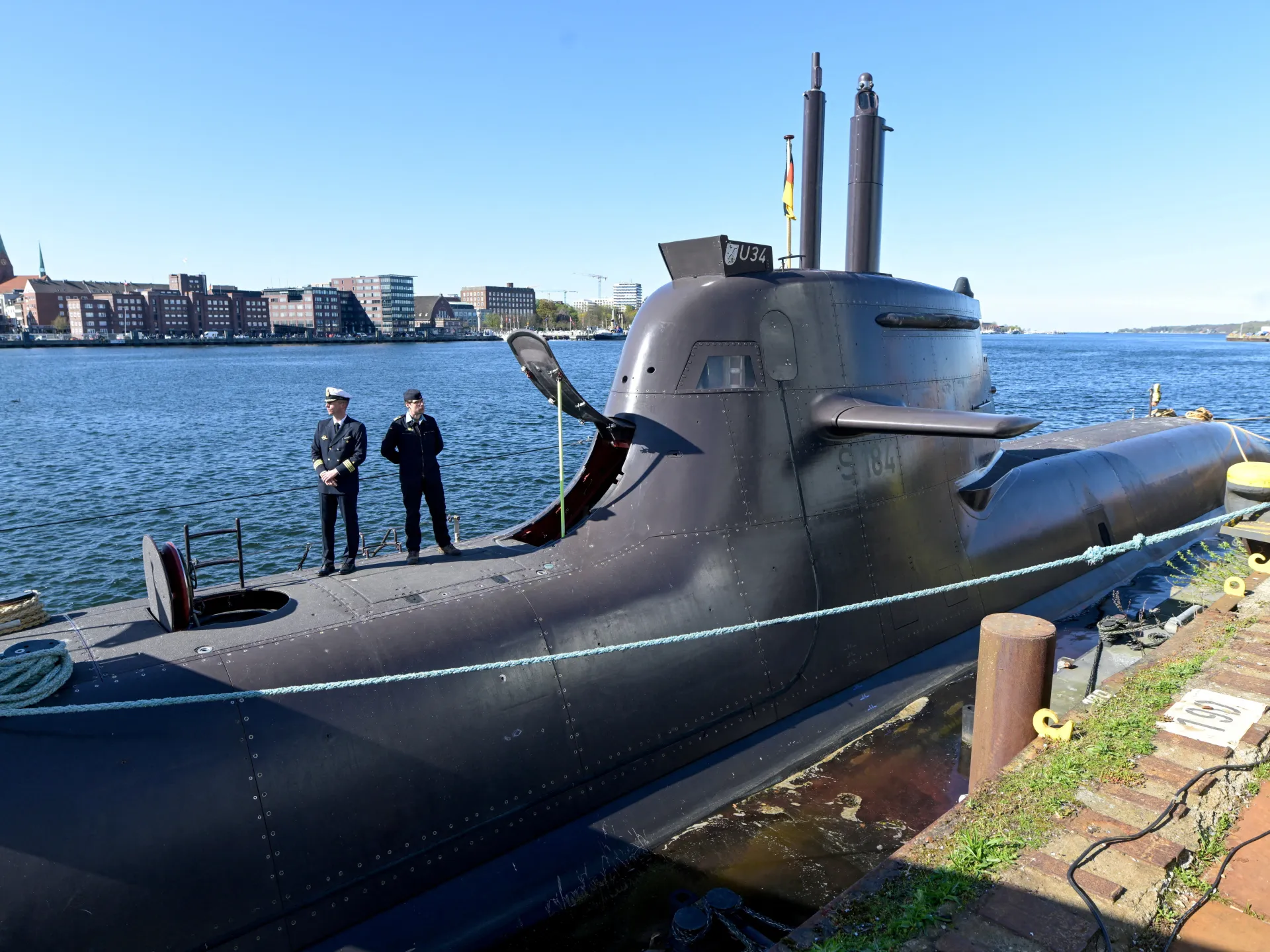
The most likely candidate, analysts said, is a submarine built by the German manufacturer TKMS.
The INS Drakon, a nuclear-capable Dolphin II-class submarine, underwent its maiden voyage last year at a shipyard in Kiel on the Baltic Sea. Its estimated value is 480 million euros ($548m). It was officially handed over to the Israeli Navy last week, according to German media reports.
According to several reports, it could feature a vertical launching system (VLS), enabling it to launch nuclear-tipped cruise missiles or ballistic missiles. Israel would become only the second navy after South Korea known to field a VLS on a modern, air-independent propulsion (AIP), conventionally powered submarine.
During its sea trials, the submarine’s tower was covered with tarpaulins and fibreglass plates to prevent observers from determining its weapons configuration. Strategically, submarines of this class could provide a sea-based second-strike capability – the ability of a country to fire back nuclear weapons after it has itself faced a nuclear attack.
In May, TKMS signed a memorandum of understanding on future collaboration with Elbit Systems, Israel’s largest private defence contractor.
The German Foreign Office and Ministry of Economic Affairs and Energy, under whose purview arms export licences fall, both declined to comment on the matter.
Max Mutschler, a senior researcher with the Bonn International Centre for Conflict Studies, told Al Jazeera: “Unfortunately, the fact that the federal government does not explicitly mention this is also typical of the lack of transparency surrounding arms exports.”
Last year, reports conflicted over whether the export licence for the submarine had been granted. The order dates back to 2012. While TKMS indicated approval, the German government denied it at the time.
Germany’s shifting positions
The hesitation might have stemmed from legal concerns surrounding proceedings against Germany at the International Court of Justice in The Hague as well as shifting public opinion in Germany, which has largely turned against arms exports to Israel. According to media reports, Germany is helping finance about 30 percent of the costs for the Drakon and roughly one-third of those for the future Dakar class.
This month, TKMS was also selected by Canada as the preferred bidder to build up to 12 submarines in what would be the largest order in TKMS’s history. The value of the vessels alone is estimated at 12 billion euros ($13.7bn) to 18 billion euros ($21bn).
For years, submarine deals with Germany have been under investigation by the Israeli judiciary over bribery allegations involving close associates of Prime Minister Benjamin Netanyahu.
Ruth Rohde from the British research organisation Shadow World Investigations told Al Jazeera: “Israel has used German ships to fire at Gaza, to blockade and starve Gaza, and is using submarines to station nuclear weapons. At a time when Israel is waging brutal wars on its neighbours and is committing a genocide in Gaza, this submarine export would give Israel another tool in its arsenal of mass destruction.”
Berlin’s arms export policy towards Israel has been marked by reversals. In early August, Chancellor Friedrich Merz announced that Germany would issue no further licences for military equipment that could be used by Israel in the Gaza Strip. By that time, an Al Jazeera investigation had shown that Germany had already exported almost $12m worth of weapons consignments to Israel since October 2023 when Israel launched its genocidal war on Gaza.
And the partial suspension proved short-lived: In November, the government lifted the restrictions and returned to reviewing export applications on a case-by-case basis. Even during the suspension, previously approved deliveries continued. In September, for instance, a $794,000 weapons consignment from Germany landed at Ben-Gurion Airport near Tel Aviv.
Mutschler told Al Jazeera that some people in government “found the export of certain weapons to Israel problematic in light of numerous and credible reports of Israeli war crimes during the military operation in Gaza”. However, it was not enough to “bring about a generally restrictive arms export policy toward Israel”.
The economic calculation
Germany is one of the world’s largest arms exporters. In the first six months of 2026, licences were granted for arms worth 13.87 billion euros ($15.8bn), according to the Arms Export Report of the Ministry of Economics, published in mid-July. That is more than four times as much as during the same period in 2025. Ukraine remains the primary recipient of German arms exports.
Mutschler explained: “Arms exports have been and continue to be viewed by most federal governments primarily from an economic perspective and welcomed as a means of strengthening the defence industry.” He added: “The fact that these arms shipments can also be used to commit war crimes seems to play a significantly smaller role in the decision-making process.”
As a crisis in Germany’s economy – whose strength has relied primarily on exports, particularly in the car industry – has intensified, its defence industry has boomed in recent years. This development was publicly attributed to Russia’s invasion of Ukraine although plans for increased defence spending had already been prepared beforehand, according to reports.
Pieter D Wezeman, a senior researcher at the Stockholm International Peace Research Institute, sees this as a general trend. He told Al Jazeera: “The demand for arms in Europe has increased dramatically over the past few years whereas the demand for arms in many other parts of the world does not seem to be decreasing or is likely to increase.”
The German market remains very important to the country’s arms industry as Germany is set to double its military spending from well below 2 percent of it gross domestic product to a stated goal of 3.5 percent of its GDP within a few years, Wezeman explained. “Germany is now the largest military spender in Europe [not counting Russia], and its arms industry is a core component of the European military-industrial base.”
Islamabad, Pakistan – Pakistan-administered Kashmir, formally known as Azad Jammu and Kashmir (AJK), has spent the summer under an unofficial state of emergency.
Since early June, nearly 40 people have been killed in clashes between protesters and security forces, with sit-ins and road blockades regular features in the region over this period.
Recommended Stories
list of 4 itemsend of list
Banks remained shut for two weeks. Mobile and internet services remain suspended across most of the territory. Poonch division, which borders India and has been the epicentre of the unrest, was effectively sealed off for weeks, disrupting the supply of flour and other essentials to a region that depends heavily on them.
The Jammu Kashmir Joint Awami Action Committee (JAAC), the movement behind the protests, was banned by the local government on June 5, days before a planned demonstration.
Its leadership has since been arrested, has gone underground or has continued organising from sit-in camps in Rawalakot, the administrative headquarters of Poonch division.
Its demands, once centred on subsidised flour and cheaper electricity, have expanded to 38 points, chief among them the abolition of 12 assembly seats reserved for Kashmiri refugees.
All of this is unfolding as the region prepares to vote. Elections for the 45-seat Legislative Assembly, originally scheduled for July 27, have been split across three dates.
Mirpur division votes as planned, Muzaffarabad division and the 12 seats reserved for Kashmiri refugees follow on August 2, while Poonch division, where tensions remain highest, goes to the polls on August 10.
JAAC’s leadership is not on the ballot and has urged supporters to boycott the vote.
Of all the movement’s demands, one issue has proved impossible to resolve: the 12 refugee seats. The government says they cannot be touched without a constitutional amendment. JAAC wants them abolished outright.
Between those two positions lies a legal argument stretching back nearly a century, and a more fundamental question: who gets to decide who governs Muzaffarabad?
A dozen seats, one dispute
Of the AJK Legislative Assembly’s 45 elected seats, 33 are filled from constituencies within the territory.
The remaining 12 are reserved for refugees from Indian-administered Kashmir who now live in different parts of Pakistan.
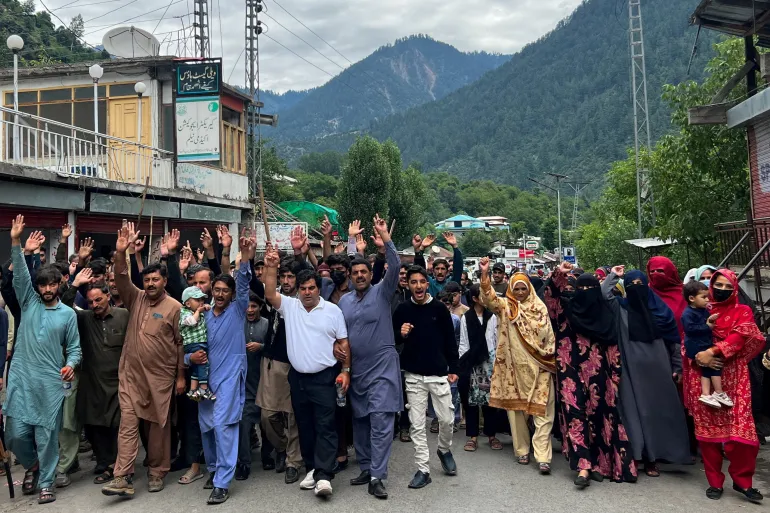
People chant slogans as they walk during a protest and shutter-down strike called by the banned Joint Awami Action Committee (JAAC), an alliance of civil society groups, in Neelum Valley, Pakistan-administered Kashmir, June 21, 2026 [Naseer ud Din/Reuters]
The arrangement traces its roots to electoral arrangements introduced in 1960, reinforced through laws in 1964 and 1970, before being formalised in AJK’s 1974 Interim Constitution and reaffirmed by the constitution’s 13th Amendment in 2018.
Chaudhry Muhammad Ibrahim Zia, a former chief justice of the AJK Supreme Court, said the basis for the seats goes back further still, to the AJK government’s founding declaration of October 24, 1947, which he said reflected “the collective will of the people of the State of Jammu and Kashmir”.
Refugee representation, he told Al Jazeera, has “a firm historical basis” rooted in that document. He rejects any suggestion that the seats are unconstitutional.
“They have both historical grounding and constitutional support,” he said. “These seats cannot be described as unconstitutional.”
Pakistan-administered Kashmir’s electorate has grown from 3.2 million voters in 2021 to more than 3.8 million this year, according to Election Commission figures.
Within that, the 12 refugee constituencies account for roughly 439,000 registered voters, scattered across cities including Lahore, Rawalpindi and Sialkot, rather than concentrated in a single geographical area like AJK’s territorial constituencies.
And that’s a problem, says Kashif Abbasi, a JAAC committee member.
“This election is meant for people who actually live in AJK,” he told Al Jazeera. “These 12 seats sit outside AJK’s jurisdiction. This doesn’t happen anywhere else.”
From flour to the assembly floor
JAAC’s demands were not always centred on the refugee seats. Its original charter was almost entirely economic, focusing on subsidised flour, electricity at cost price, and a share in the benefits from the Mangla and Neelum-Jhelum hydropower projects.
The refugee seats first appeared in the group’s expanded charter, submitted in October 2025.
Even then, JAAC did not initially seek their outright abolition. In written proposals submitted on May 30 this year, the group offered two alternatives.
It proposed retaining symbolic refugee representation until the Kashmir dispute is permanently resolved or replacing the 12 assembly seats with four seats in the AJK Council, the Islamabad-chaired body that exercises legislative authority over AJK’s federal-facing affairs.
The 14-member council, chaired by Pakistan’s prime minister, oversees subjects including electricity, banking and parts of taxation, areas that largely fall outside the AJK assembly’s authority. The territory has no representation in Pakistan’s national parliament.
“Our suggestion was that these seat-holders should instead be given representation on the Kashmir Council, and that their assembly seats be eliminated, with that money used elsewhere in the territory,” Khawaja Mehran, a member of JAAC’s core committee, told Al Jazeera recently.
Both proposals were rejected at an All-Parties Conference in Muzaffarabad on June 3.
Constitutional barrier
In June, the AJK Supreme Court addressed the issue directly.
The court held that the seats are protected under AJK’s constitution and can only be abolished through a formal constitutional amendment. They cannot be removed through executive action or public pressure.
A constitutional amendment, the judges wrote, is “a solemn constitutional act, not a concession to be wrested from a government under duress”.
Zia, the former AJK chief justice, said the opinion changed little about the existing legal position.
“These seats simply cannot be abolished without a proper constitutional process,” he told Al Jazeera, adding that, with the outgoing assembly’s term having ended, no such process is possible until a new legislature is elected.
The government’s account
Abdul Majid Khan, AJK’s former finance minister and himself from a refugee family, rejects the idea that the seat holders form an unaccountable political bloc.
A view of Muzaffarabad, the capital of Pakistan-administered Kashmir, on July 15, 2026. The unrest in the city follows the recent banning of the Jammu Kashmir Joint Awami Action Committee (JAAC), with authorities maintaining heightened security and restrictions on internet and phone services across the region [Amiruddin Mughal/EPA]
He points instead to the size of the territory’s budget. AJK’s roughly 310 billion rupees (about $1.1bn) budget last year, he said, far exceeds the development funds allocated to the 12 refugee constituencies – nowhere near enough, in his view, to make them the powerful bloc JAAC describes.
“These are people who migrated for a larger cause,” Khan told Al Jazeera, referring to Kashmiris who fled Jammu, across the border, during the violence of 1947 following the partition of the subcontinent and settled across Pakistan in the decades that followed.
Refugee representation, he said, has existed since AJK’s first parliamentary election in 1975, when the territory’s first prime minister was himself from a refugee family.
At the June 3 conference that rejected JAAC’s proposals, AJK Prime Minister Faisal Mumtaz Rathore said any decision on the seats “can only be taken by the elected representatives in the House”, adding that most of JAAC’s other demands had already been met.
Pakistan’s Defence Minister Khawaja Asif told the National Assembly on June 11 that the future of the 12 refugee seats should be decided by voters, not under pressure from street protests.
He urged JAAC to contest the issue in the election rather than demand its resolution beforehand, asking: “How could you exclude them from the electoral process?”
A senior government official in Poonch, whose division has witnessed the worst of the unrest, took an even harder line.
“This is no longer a rights movement,” the official told Al Jazeera, requesting anonymity since he was not allowed to speak to the media, adding that the protesters were not only “challenging the authority of the state”, but also provoking the public through “inflammatory speeches and actions”.
Who holds power?
In mid-July, JAAC leader Umar Nazir Kashmiri told supporters at a sit-in in Rawalakot, Poonch division, that the group had written directly to army chief Field Marshal Asim Munir after concluding that its concerns were not reaching him “through official channels”.
He thanked Munir by name for “understanding the grievances of the people of Kashmir”.
Shaheen was more direct. “We believe real authority currently sits with Rawalpindi,” he told Al Jazeera, referring to Pakistan’s military establishment rather than the civilian government. “That’s why we’re forced to negotiate through that channel, since nobody else actually holds the authority.”
Ershad Mahmud, a Canada-based researcher on Kashmiri displacement and politics, said that “Islamabad’s bureaucracy, military and intelligence establishment have reduced AJK’s elected leadership to a largely symbolic role”.
The current crisis, he told Al Jazeera, has once again shown that the local leadership “lacks the authority to negotiate a political settlement with its own people”.
People approach a vehicle at a makeshift checkpoint during a protest and shutter-down strike called by the banned Joint Awami Action Committee (JAAC), an alliance of civil society groups, in Neelum Valley, Pakistani Kashmir, on June 21, 2026 [Naseer ud Din/Reuters]
Unmet promise?
The dispute over the refugee seats is unfolding within a framework that predates Pakistan-administered Kashmir itself.
Under a United Nations Commission for India and Pakistan resolution adopted on January 5, 1949, and endorsed by the UN Security Council, Kashmir’s final status was to be determined “through the democratic method of a free and impartial plebiscite”.
Nearly 80 years later, that has yet to happen on either side of the Line of Control.
Mahmud, who is also the author of Poonch: Identity, Politics and Resistance, argues the refugee seats endure partly because they continue to serve Islamabad’s interests.
“They let Pakistan maintain its position that AJK represents the entire former State of Jammu and Kashmir, not merely the territory it administers,” he told Al Jazeera. “And allows Pakistan-based political parties to influence government formation in Muzaffarabad.”
Islamabad, he said, treats the seats “as an instrument of its Kashmir policy and political influence”.
Hassan Kamal Wattoo, a Lahore-based constitutional lawyer, argues that giving greater autonomy to AJK “strengthens Pakistan’s case on the international stage”.
“There is no tension between real autonomy for AJK and an eventual plebiscite,” he told Al Jazeera.
Anam Zakaria, a historian and author of Between the Great Divide: A Journey into Pakistan-Administered Kashmir, however, argued that there was a deeper contradiction within AJK’s constitutional framework.
On the one hand lies India’s “longstanding and ongoing systemic violence and human rights abuses in [Indian-administered] Kashmir”, she said, arguing that nothing Pakistan has done or does in the part of Kashmir it administers can be compared with what’s happened in Indian-administered Kashmir, where tens of thousands of people have been killed in violence involving armed rebels and security forces since 1989.
At the same time, she pointed out, candidates seeking public office in Pakistan-administered Kashmir must first swear allegiance to AJK’s accession to Pakistan.
That requirement, she told Al Jazeera, also “in itself contradicts the right to self-determination” and sidelines Kashmiris who hold a different vision for the region’s future.
July 27 (UPI) — Two locations of a Jewish-owned Toronto bakery chain were damaged overnight, authorities said Sunday, as the incidents are being investigated by Toronto Police Service’s Hate Crime Unit.
The Toronto Police Service said both locations suffered broken windows, but only one appeared to be the result of gunfire.
“At this time, investigators are examining whether the incidents are connected and working to identify those responsible,” the Toronto Police Service said in a statement.
“There have been no reported injuries.”
Founded in 1979, Kiva’s Bagel has three locations in the city.
Duty Insp. Scott Bradbury told reporters that the incidents occurred overnight, sometime between the stores’ closing Saturday and opening Sunday, when police received calls from employees reporting the damage.
Toronto police said they received a report at 8:12 a.m. EDT of a broken window apparently struck by gunfire at the Kiva’s location at Young Street and St. Clair Avenue West. Evidence of a shooting was located, police said, adding there were no reported injuries.
About 20 minutes later, police said they received a report of a broken window at the Kiva’s location at Bathurst Street and Steeles Avenue West.
“We understand that this is concerning for those that work and live in this area, especially members of the Jewish community, and we have all the resources available to thoroughly investigate this matter,” Bradbury said.
“Members of our Hate Crime, members of our guns and gangs integrated task force and our divisional units are here canvassing the area. So members of the public can be aware that there’s going to be an increased presence of police in that area conducting our investigation.”
Toronto Mayor Olivia Chow described the incidents as “vile and unacceptable.”
“We all have a responsibility to stand against hate,” she said in an online statement.
“I will always stand with Toronto’s Jewish community against anti-Semitism.”
The incident come after Toronto recorded a sharp decline in reported hate crimes last year.
Toronto police recorded 231 hate-motivated occurrences last year, down nearly 48% from 443 in 2024.
Anti-Jewish occurrences, however, remained the most frequently reported category of hate crime, with 81 incidents, accounting for 35% of all hate crimes and 82% of all religiously motivated hate crimes.
However, police in May said there had been a “concerning” 40% increase in reported hate crimes so far in 2026, compared with the same period last year.
Israeli Foreign Minister Gideon Sa’ar said in a statement Sunday that he was following the incidents involving the Kiva’s locations “with concern.”
“While thankfully none were injured, this is the latest attack in a long and horrifying line of violence and intimidation against the Canadian Jewish community,” he said online.
“The Canadian government must confront this anti-Semitic violent wave!”
Protesters shut roads and ministries in Tripoli as a civil disobedience campaign over power cuts spreads to more areas.
Published On 27 Jul 202627 Jul 2026
Protesters in Libya’s capital, Tripoli, have shut down roads and public buildings across the city as a civil disobedience campaign, launched over prolonged power cuts and high electricity rates, spread to more districts.
Crowds blocked the coastal road in Janzour, west of Tripoli, late on Sunday, and gathered outside the West Tripoli power station, closing the local municipal council building in protest at the prolonged outages.
Recommended Stories
list of 4 itemsend of list
Videos posted online, verified by Al Jazeera shows, protesters burning tyres and closing down major roads elsewhere in the capital.
The footage also shows protesters unloading a truck loaded with dirt in front of the Ministry of Foreign Affairs in the district of Sater Turba in Tripoli to close it.
The mostly young protesters also shut the offices of state telecoms operator Libyana in the district of Souq Al-Jumaa, according to the DPA news agency, carrying banners criticising Prime Minister Abdulhamid al-Dabaiba.
The campaign was launched by the Souq Al-Jumaa Movement, which has opposed the Government of National Unity since May 2025. It said its aim was to “completely paralyse the government” rather than disrupt ordinary life.
It called for accountability over alleged corruption and for the dissolution of Libya’s existing political institutions, including the government, the House of Representatives, the State Council and the Presidential Council.
The unrest also spread to the district of Tajoura, where the Tajoura Families and Youth Movement said it would begin a full boycott of state institutions from Monday, rejecting both the unity government and the House of Representatives.
It said in a statement that the call was in protest against the deterioration of services, citing the decline in electricity, water, education and health services, alongside continuing fuel and liquidity crises and medicine shortages, while “officials are preoccupied with political conflicts”.
There was no immediate comment from the Government of National Unity.
Blackouts in Tripoli and other areas have reached up to ten hours a day, prompting the state-run General Electricity Company to reinstate load-shedding measures after two years of relative network stability.
The outages have compounded existing public frustration over inflation, currency instability, fuel and liquidity shortages, and Libya’s protracted political deadlock.
Separately, Massad Boulos, the White House adviser for African affairs, said he had held a “productive call” with Dabaiba on Sunday to discuss steps toward Libyan unification, including security cooperation between the country’s eastern and western factions.
“We also reviewed opportunities to further coordination and interoperability between Libyan forces and Africom,” Boulos said on X, adding that Washington remained committed to supporting Libya’s unification “in order to achieve durable peace, stability and prosperity”.
Bamako, Mali – An unprecedented battlefield partnership between a separatist movement and an al-Qaeda affiliate has transformed the conflict in northern Mali, shifting the military balance and deepening divisions over how, if at all, the war can end.
When the Azawad Liberation Front (FLA) and Jama’at Nusrat al-Islam wal-Muslimin (JNIM) launched a joint offensive on April 25, 2026, the conflict entered a phase unlike any before.
A war that had long pitted the Malian state against multiple armed groups gave way to a coordinated campaign stretching from Kidal and Anefis to Tilemsi, Gao and Sevare, posing the most serious challenge to the Malian army in years and to Russia’s Africa Corps, the Kremlin-backed force that replaced the Wagner Group in Mali.
Since then, the fighting has been marked by simultaneous assaults, ambushes, drone strikes and attacks on military convoys, with all sides claiming significant battlefield gains.
Bamako says it is working to restore state authority and dismantle what it calls a “terrorist alliance” between the FLA and JNIM.
The FLA says it remains committed to independence for Azawad, the name separatists use for northern Mali, while JNIM portrays the war as part of a campaign to “liberate” Mali and overthrow the government, which it accuses of relying on Russian forces.
More significant than the offensive itself, however, is the unprecedented military cooperation between a nationalist separatist movement and an al-Qaeda affiliate.
Their political ambitions remain fundamentally different, yet their cooperation has already reshaped the conflict and could have far-reaching implications for security across the Sahel.
The partnership emerged after the collapse of the 2015 Algiers Peace Agreement, which sought to end years of fighting between Bamako and northern armed groups through greater decentralisation and political representation, but whose implementation repeatedly faltered.
Successive military coups after 2020 reshaped Mali’s political leadership and security strategy. The Economic Community of West African States (ECOWAS) suspended Mali and imposed sanctions, while Russia deepened its military role by deploying the Wagner Group in late 2021.
After Russia folded the Wagner Group’s operations into the state-controlled Africa Corps, renewed fighting left neither the government nor northern armed groups able to impose a lasting settlement.
How the alliance took shape
On paper, cooperation between the FLA and JNIM appears unlikely. The FLA traces its roots to northern separatist movements that declared the independence of Azawad during the 2012 rebellion, a claim never recognised by the Malian state or the international community.
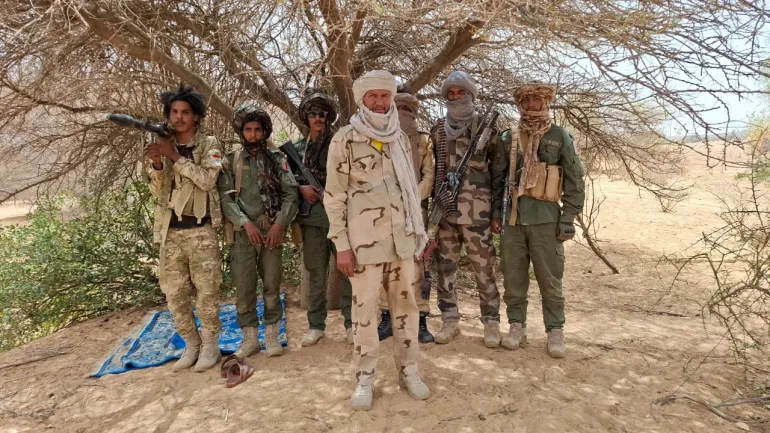
Colonel Mohamed Issa, centre, one of the FLA’s most prominent military commanders [Photo: Courtesy of the Azawad Liberation Front (FLA)]
It presents itself as a secular nationalist movement seeking independence for Azawad, while JNIM seeks to overthrow governments it considers illegitimate and establish governance based on its interpretation of Islamic law.
Yet senior officials from both groups told Al Jazeera those ideological differences have been set aside to confront a common enemy.
Colonel Mohamed Issa, a senior FLA officer, said the movement remained committed to an independent Azawad, arguing that previous peace agreements repeatedly collapsed because successive governments in Bamako failed to honour them.
Negotiations, he said, would only be acceptable if they recognised Azawad’s right to separate.
Issa rejected suggestions of an ideological alliance, describing the relationship as a battlefield arrangement against a common enemy.
He said the JNIM-affiliated fighters operating alongside the FLA were exclusively Azawadis rather than members of the group’s wider regional network, arguing they were motivated primarily by defending their communities against the Malian army and what he described as Russian “mercenaries”.
Suleiman, a senior JNIM field commander who requested that only his first name be used for security reasons, described the relationship in broader terms.
He said the group approved operational coordination with the FLA after internal consultations because fighters on both sides largely came from “one people” caught up in the same conflict and because their liberation goals had become “relatively unified”.
He also claimed the FLA had accepted Islamic legal arbitration by local religious scholars, one of JNIM’s core objectives, a point the FLA itself did not raise. Bamako, meanwhile, has described the relationship as a “JNIM/FLA terrorist alliance” that threatens Mali’s sovereignty.
The differing accounts illustrate both the strength and the fragility of the arrangement. For now, shared battlefield interests appear to outweigh ideological differences. Whether that remains true as the conflict evolves is far less certain.
A shifting balance of power
The partnership has altered not only the battlefield but the way the war is fought.
FLA officials say working alongside JNIM has enabled both groups to divide responsibilities and pool expertise in attacks on military bases and supply convoys.
A destroyed vehicle at the site of recent fighting in northern Mali [Photo: Courtesy of the Azawad Liberation Front (FLA)]
Bamako disputes casualty figures released by the armed groups and insists its forces retain the initiative. Even so, the conflict has become markedly more sophisticated, with simultaneous attacks across distant locations, engagements lasting several days and ambushes targeting reinforcements before they reach the front lines.
Drones have assumed an increasingly prominent role, serving not only as reconnaissance platforms but increasingly as strike weapons against vehicles and military positions. Malian forces, backed by Russia’s Africa Corps, continue to rely heavily on air power, yet months of sustained fighting suggest neither side has secured a decisive advantage.
The war economy
Long-established financing and trafficking networks continue to sustain both sides.
JNIM sources describe a funding model built on regional commercial networks, organised zakat collections and resources accumulated over years, including proceeds linked to earlier al-Qaeda kidnapping-for-ransom operations.
The FLA says it relies primarily on donations organised by tribal leaders, traders and community associations.
Officials from both groups also acknowledged that individuals linked to the movements participate in illicit economies, including trafficking across the Sahara, although the extent to which those activities finance the war remains difficult to verify.
Weapons have proved as important as funding. Arms have flowed across the Sahel since the collapse of Libya in 2011, providing armed groups with a steady source of equipment.
The latest fighting has opened another supply channel: weapons and military vehicles captured from Malian forces now form an increasingly important part of both groups’ arsenals.
Can either side win?
There is little to suggest the conflict is nearing an end.
The Malian army retains a clear advantage in air power, backed by Russia’s Africa Corps. Yet the FLA and JNIM continue to mount coordinated operations across much of northern Mali.
An armed man carries a weapon in a desert area of northern Mali, where government forces and armed groups have been fighting for control of territory [Photo: Courtesy of the Azawad Liberation Front (FLA)]
The military standoff reflects a wider political deadlock. Bamako remains committed to preserving Mali’s territorial integrity, the FLA insists on independence for Azawad and JNIM continues to seek the overthrow of the government.
None has shifted position since the latest fighting began, and nothing on the battlefield has yet forced any of them to do so.
Those competing objectives also cast doubt on how long the two groups can continue fighting together. Their partnership rests on a common enemy rather than a shared political vision, making its future uncertain.
A war without an endgame
Three months into the latest offensive, northern Mali remains locked in a conflict with no obvious end in sight. The partnership between the FLA and JNIM has reshaped the military landscape, while Bamako continues to reject any outcome that could weaken Mali’s territorial integrity.
What began as a confrontation between the state and separate armed movements has evolved into a conflict shaped by competing visions of sovereignty, separatism, rule by al-Qaeda-linked armed groups and the involvement of external powers.
Unless those competing ambitions – territorial unity, independence and regime change – are addressed alongside the fighting, a negotiated settlement is likely to remain elusive.
Whatever happens next, the partnership forged in April 2026 has already changed the course of the war in northern Mali. Whether it endures or fractures under the weight of its competing ambitions, it has created a new military and political reality whose consequences are likely to extend well beyond Mali’s borders.
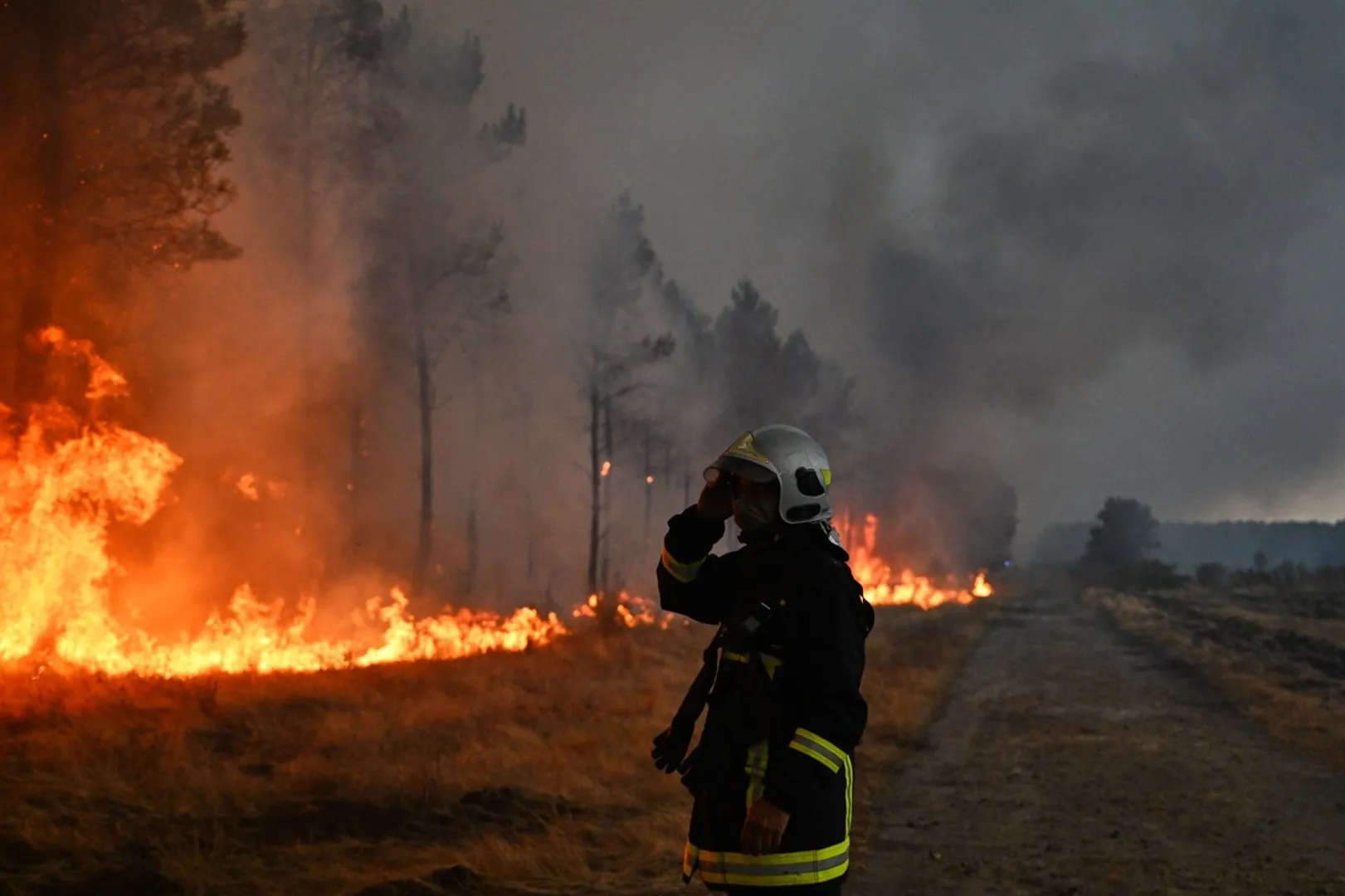
Wildfires in southwestern France are continuing to burn near the city of Bordeaux. Tens of thousands have been evacuated from surrounding regions, and across the southwest of France a total of around 220,000 have been evacuated.
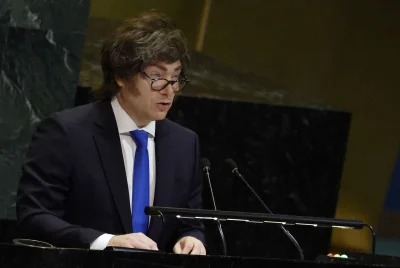
July 26 (UPI) — Brazil’s foreign ministry has summoned Argentina’s ambassador after inflammatory remarks delivered by Argentinian President Javier Milei about Brazilian counterpart Luiz Inácio Lula da Silva over the weekend.
Argentinian diplomat Julio Bitelli must go to Brasilia on Sunday or early Monday to meet with Brazilian leaders in wake of Milei’s harsh attacks on Lula during the national convention of Brazil’s Liberal Party, or PL, in São Paulo on Saturday, diplomatic sources told the O Globo newspaper.
Milei used hisspeech to denounce what he called the “tragedy of socialism” in Latin America, singling out the Lula and Minister Alexandre de Moraes of the Supreme Federal Court for intense criticism while praising PL presidential candidate Flavio Bolsonaro.
The Argentine leader hailed Bolsonaro as the only candidate who can stop Lula, saying that “there is no one else capable of stopping Lula” and his effect on the country or confronting criminal and drug trafficking organizations.
“Do not allow your future to be stolen. We are counting on you, Flavio, to stop this socialist garbage,” said Milei.
The Argentinian leader also slammed de Moraes for prohibiting him from visiting former president Jair Bolsonaro in a Brasilia prison where the ex-president is serving a 27-year prison sentence for leading a 2022 coup attempt against Lula.
“I was not allowed to visit my unjustly imprisoned friend,” said Milei, a declared ally of the Bolsonaro family.
Flavio Bolsonaro, son of the imprisoned former president, launched his formal bid challenging Lula at the PL convention, declaring, “This the beginning of the toughest battles of our life. A fight between good and evil.”
Reactions to Milei’s attacks reverberated throughout Brazil in Sunday.
Workers’ Party president Edinho Silva said the Argentine leader had crossed a line with the attacks.
“No public authority in Brazil is above criticism, as long as it is made in the appropriate manner and at the right time,” he said in a social media post. “However, it is unacceptable for a foreign head of state to come to our country and address its constitutional powers in disrespectful terms.”
It is no surprise that the current president of Argentina “behaves in this way,” he added. “After all, there are not a few recent situations in which he has shown himself not up to the office he holds.”
Brazilian Supreme Court President Luiz Edson Fachin, meanwhile, similarly pushed back, reaffirming the autonomy of the country’s judiciary.
France and Spain have deployed thousands of firefighters, and neighbouring countries have sent help.
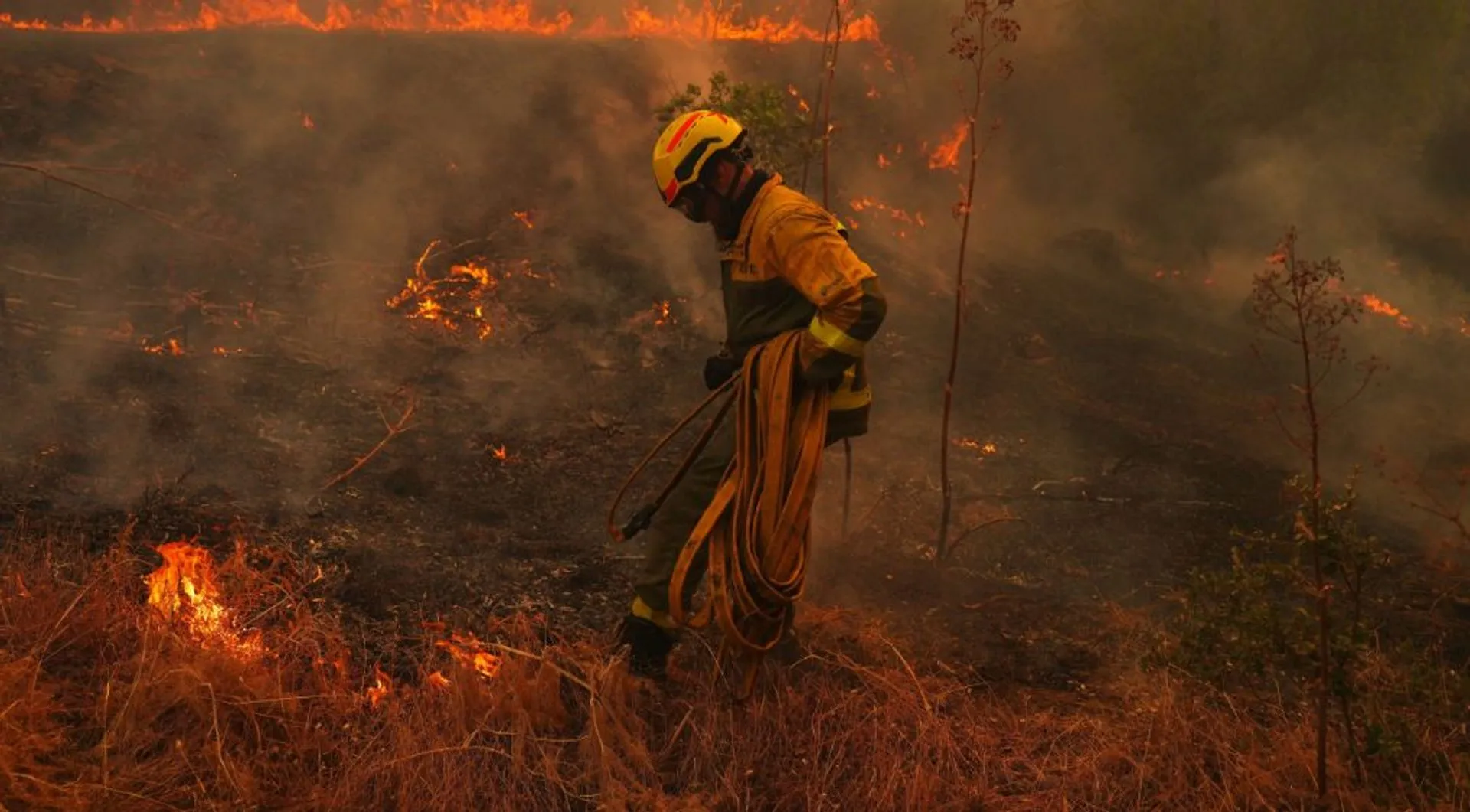
Wildfires are ravaging many parts of western and southern Europe, with France and Spain among the hardest hit.
The World Health Organization has warned that climate change is contributing to the frequency and intensity of the fires. This is clear in the record temperatures and successive heatwaves seen across the continent since May. France and Spain have deployed thousands of firefighters, and neighbouring countries have sent assistance. Authorities say the situation is unprecedented.
Recommended Stories
list of 4 itemsend of list
So, what will it take to extinguish the flames?
Presenter: Per Nyberg
Guests:
Eduardo Rojas – chairman of the board at the Programme for the Endorsement of Forest Certification
Soraya Fettih – global campaigns coordinator at 350.org, an international environmental organisation focused on addressing the climate crisis
Laurie Laybourn – executive director of Strategic Climate Risks Initiative, a non-partisan think tank
ICE officer under review for alleged mental health struggles, violent behavior amid deadly shooting case in Maine.
Published On 26 Jul 202626 Jul 2026
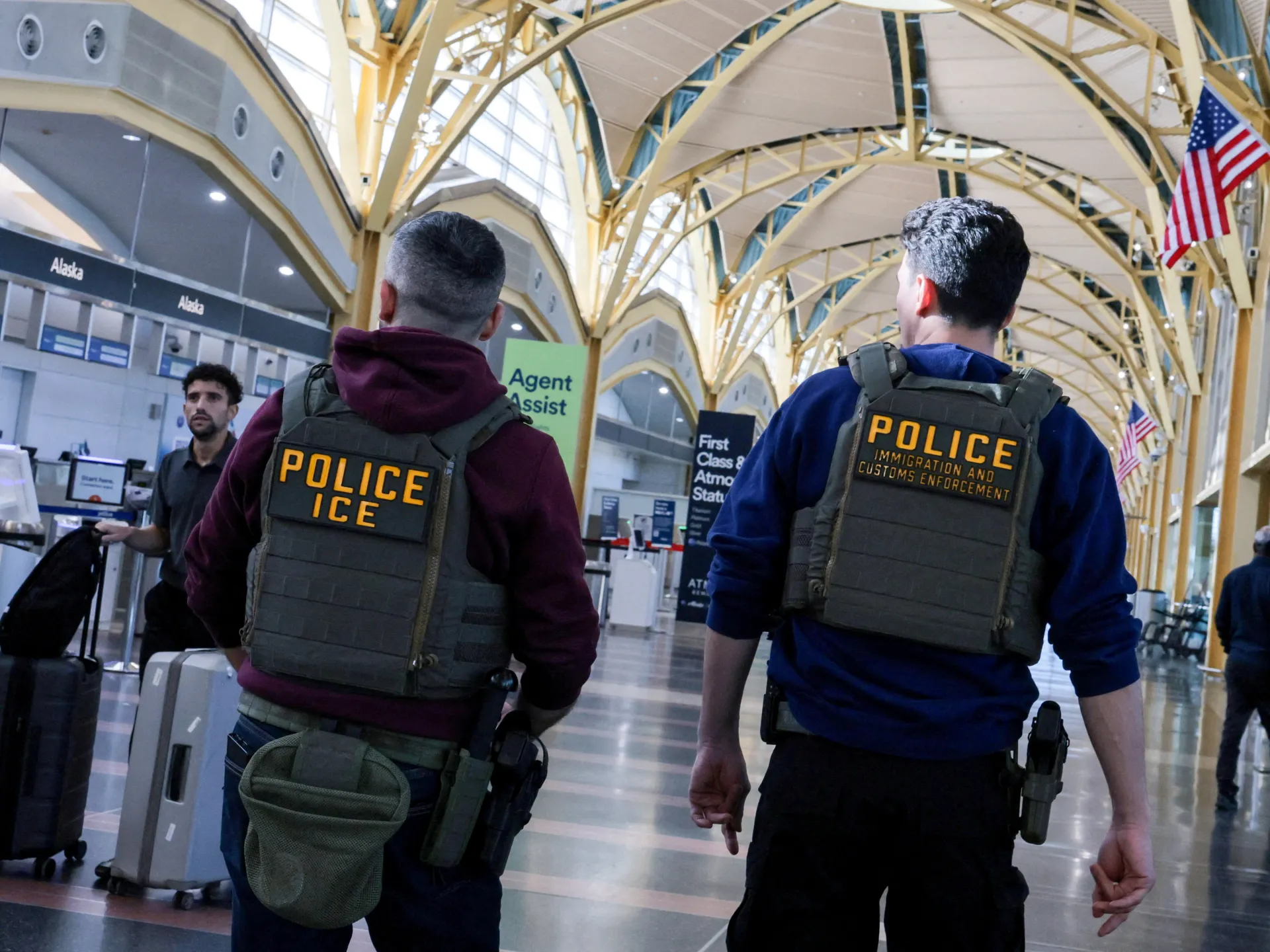
United States President Donald Trump’s border czar says the vetting of an immigration officer involved in the deadly shooting of a Colombian native in Maine is under internal review after the officer’s relatives revealed to The Associated Press that he had a history of serious mental health struggles and violent behaviour.
Tom Homan said on Sunday that if the allegations against the Immigration and Customs Enforcement (ICE) officer are true, “I don’t think he should ever have cleared vetting.”
Recommended Stories
list of 3 itemsend of list
“There’s several things under review,” Homan said on CNN about the officer, Army veteran David Brouillette. “The training is under review. I know this specific case, as far as the vetting, is under review by the internal affairs section.”
Questions about the Department of Homeland Security’s (DHS) rush to hire, train and deploy thousands of new ICE officers to carry out Trump’s immigration crackdown have come into stark focus after back-to-back deadly shootings of immigrants in Maine and Houston.
Homeland Security Secretary Markwayne Mullin ordered a pause in vehicle stops after the Maine shooting, but Trump almost immediately reversed course and insisted the stops resume as a necessary tool in his campaign to round up and deport immigrants without current legal status.
DHS did not immediately respond on Sunday to a request for comment about the internal review.
ICE mandates body cameras during vehicle stops
Homan said that “changes have been made” and that acting ICE director David Venturella has issued a new directive that body cameras must be in use if officers make a vehicle stop.
“Right now, on all vehicle stops, there’s at least one body camera on site to record the entire event,” he said.
He said Venturella “sent an instruction out that he wants at least one body camera on those vehicle stops, so we have everything on video”.
It is unclear if the steps the department is taking will be enough to quell the concerns coming from certain Congress lawmakers over DHS training and tactics as it tries to reach Trump’s mass deportation goals.
Lawmakers push for answers
Lawmakers from both parties have raised concerns.
Democrats pressed ICE officials during a closed-door briefing for the House of Representatives Homeland Security Committee last week, leaving some with more questions than answers.
Lawmakers were told during the briefing that there have been 56 complaints of excessive force against ICE officers – 32 were cleared, and one was referred for disciplinary action.
No discipline had yet been handed out, the lawmakers said they were told. The rest of the incidents are still under investigation.
Meanwhile, Republican Senator Susan Collins of Maine, chair of the powerful Senate Appropriations Committee, has pushed for the use of body cameras and ensured funding for the effort. She had said it was “extremely unfortunate” that the officer involved in the shooting in her home state was not using a camera.
Displaced Palestinians in Gaza cautiously welcome Israel’s approval for an international stabilisation force to enter the territory under the US-backed ceasefire plan. Residents hope the force can help rebuild Gaza and allow them to return home after months of bombardment and displacement.
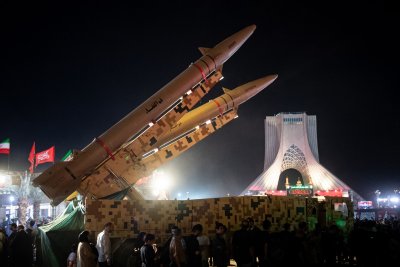
Tehran, Iran – Iran and the United States have returned to mediated talks, and their military action is temporarily suspended, but the war continues to impact international maritime corridors beyond the Strait of Hormuz as well as domestic markets.
The near-total closure of the strategic waterway, disruptions in the Red Sea by the Iran-aligned Houthis in Yemen and Ukraine attacking an Iranian vessel in the Caspian Sea have all kept tensions high.
Recommended Stories
list of 4 itemsend of list
Iran’s government is also facing more tough choices, including a potential fuel price hike amid high social and economic discontent, as the US military enforces a naval blockade of the country’s southern ports for a second time.
The Ministry of Petroleum said on Saturday that Iran has sold $11.5bn of crude oil during the war without specifying the exact dates and $6.5bn during the period of the now-suspended memorandum of understanding (MoU) signed with the US last month. It said the combined figure represented 60 percent of the full-year oil revenue target in the budget.
The signing of the June 17 MoU led to the partial reopening of the Strait of Hormuz and lifting of the US naval blockade on Iran, which eased some of the pressure on global oil markets and allowed Iran to export oil stored on supertankers waiting to sail from its territorial waters. Iran’s Petroleum Ministry said increased oil prices generated about $3bn in additional value in the first half of the year and $11bn from the yields has so far been transferred to government coffers despite US embargoes.
During the previous blockade that was imposed on April 13 and lasted a little over two months, Iranian authorities attested to near-zero crude exports. A prolonged second blockade risks further reducing Iran’s export revenues and piling pressure on Kharg Island, through which about 90 percent of Iran’s crude oil exports pass, and other Iranian storage and export sites, which could in turn affect production at petrochemical plants and make an eventual restart costlier and slower.
The US military’s Central Command (CENTCOM) said that as of Saturday, soldiers had redirected 12 commercial vessels trying to run the blockade that has been in place since mid-July, disabled two that did not comply and boarded two “to ensure total compliance”.
The US military also showed footage of heavily armed soldiers rappelling down from a helicopter onto the deck of the Charminar, an Iran-linked oil tanker subject to US sanctions since last year for allegedly being part of the Shamkhani network. The US says Iranian oil magnate Mohammad Hossein Shamkhani plays a central role in Iranian and Russian shadow fleet operations.
Iran has also said it has been redirecting multiple ships each day to keep the strait closed as its armed forces emphasised that they will not bow to pressure. On Sunday, Iranian media reports said a vessel blew up after hitting a naval mine in the Strait of Hormuz.
Still, CENTCOM has stopped extensive bombing strikes against Iran for two nights with US Ambassador to the United Nations Mike Waltz saying President Donald Trump is giving talks with Tehran “some space”.
Iran has also stopped retaliatory attacks across the region while Ministry of Foreign Affairs spokesman Esmaeil Baghaei said discussions with Oman on reopening the Strait of Hormuz have been productive.
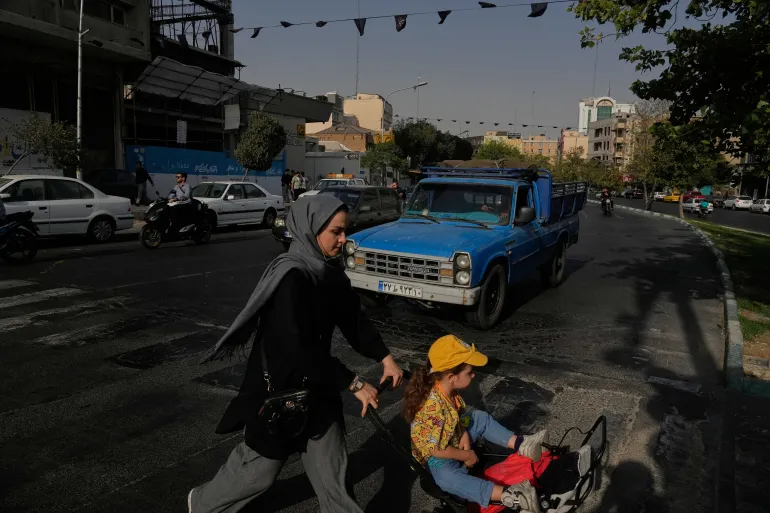
A woman and girl cross a street in central Tehran on July 22, 2026 [Vahid Salemi/AP Photo]
The domestic picture
The oil export constraints, however, are still adding to Iran’s existing economic woes, which are linked to domestic structural issues and mismanagement as well as years of harsh sanctions.
Iran’s infrastructure has also suffered significant damage during the war launched by the US and Israel in late February and may fare worse if the conflict escalates.
The government said last month that about 230 million cubic metres (300 million cubic yards) per day of Iran’s pre-war natural gas output of roughly 650 million cubic metres (850 million cubic yards) was lost due to US and Israeli bombing, worsening electricity and petrochemical shortages.
Sekhavat Asadi, managing director of the Pars Special Economic Energy Zone, said on Sunday that Iran expects to restore more than 100 million cubic metres (130 million cubic yards) per day of that lost production capacity within the coming months.
Authorities are also managing a fuel imbalance as the country faces a deficit of more than 20 million litres (5.3 million gallons) per day of petrol. The shortage is managed through limited but costly imports, blending fuel components, tapping inventories stocked before the war and repeatedly asking citizens to consume less.
The Petroleum Ministry said tighter monthly fuel consumption caps may be imposed if the imbalance persists.
The government said this week that it is seriously considering doubling the price of a third tier of monthly petrol quotas allocated to individuals.
Another petrol price hike was made in December, weeks before the country was swept by a wave of nationwide protests, in which thousands of people were killed in a government crackdown in January. An overnight fuel price increase in November 2019 also triggered deadly nationwide protests.
The capital, Tehran, and cities across the country are facing rolling electricity cuts, which also create water and communications disruptions. President Masoud Pezeshkian said he has ordered industries not to be cut off until late September to avoid further inflaming a bruised jobs market.
The closure of the Strait of Hormuz has also hit Iran’s commerce with China, its largest trading partner and buyer of oil, which has considerably curtailed its overall crude oil imports to adapt to conditions created by the war.
But nonoil trade with China has also deteriorated since the start of the war, falling by 75 percent in March and June when compared with a year before, according to Chinese customs data.
Two near-total internet shutdowns imposed by the authorities, first during the January protests and then during the war, only worsened conditions for Iran’s economy this year as it battles chronic inflation and a rapid dwindling of public purchasing power.
A report last year by the Saba Pension Strategies Institute, a think tank affiliated with Iran’s state-run pension fund, found that while a little more than 30 percent of Iranians lived below the poverty line five years ago, that rate was projected to have reached 45 percent this year – and was still rising.
Spread to Bab al-Mandeb, Caspian Sea
After repeated Iranian threats that escalating the war could spread the scope of maritime disruptions to the Red Sea, the Houthis in Yemen last week declared a blockade against Saudi Arabia, turning back or hitting vessels transiting near the strait of Bab al-Mandeb while also bombing Saudi oil facilities.
Dozens of commodity vessels have still continued their transit through the strait, including Chinese supertankers, but war-risk premiums have increased, raising import and insurance costs for all.
Saudi authorities, who lead a coalition backing Yemen’s internationally recognised government against the Houthis, have responded by launching major air attacks across Yemen.
And farther north, Ukraine has confirmed that it struck a vessel in the Caspian Sea with President Volodymyr Zelenskyy alleging it was carrying Iran-linked military cargo.
Iran’s authorities said it was a commercial vessel importing iron from Astrakhan, a port on the Volga River in Russia, and bound for Bandar Anzali in northern Iran. They said one sailor was killed and three were wounded.
The Iranian Ministry of Foreign Affairs summoned Kyiv’s charge d’affaires in Tehran to deliver a strong protest and a warning that “the act will not go unanswered”.
The incident has raised concerns that the Caspian Sea, a waterway previously used safely for trade, could also become the scene of more military confrontations.
Iran’s Caspian trade is primarily with Russia, Kazakhstan, Turkmenistan and Azerbaijan. It imports essential goods, such as wheat and other grains, corn, barley and animal feed as well as timber and fertiliser.
The country’s exports through the northern maritime route include construction materials, steel products, agricultural goods and some refined petrochemical products.
The war’s expanding disruptions have only prompted hardline state-linked analysts to advocate closer strategic partnerships with China and Russia.
“We can now say that the two war fronts in the Middle East and Ukraine are increasingly intertwined,” Mahdi Kharratiyan, a political analyst linked with Iran’s Islamic Revolutionary Guard Corps, wrote on X on Sunday.
The island has weathered a US oil embargo since January and is enduring one of its worst economic crises ever.
Published On 26 Jul 202626 Jul 2026
Cuba’s president has accused the United States of carrying out “genocide” against his people and seeking to seize the Caribbean island nation.
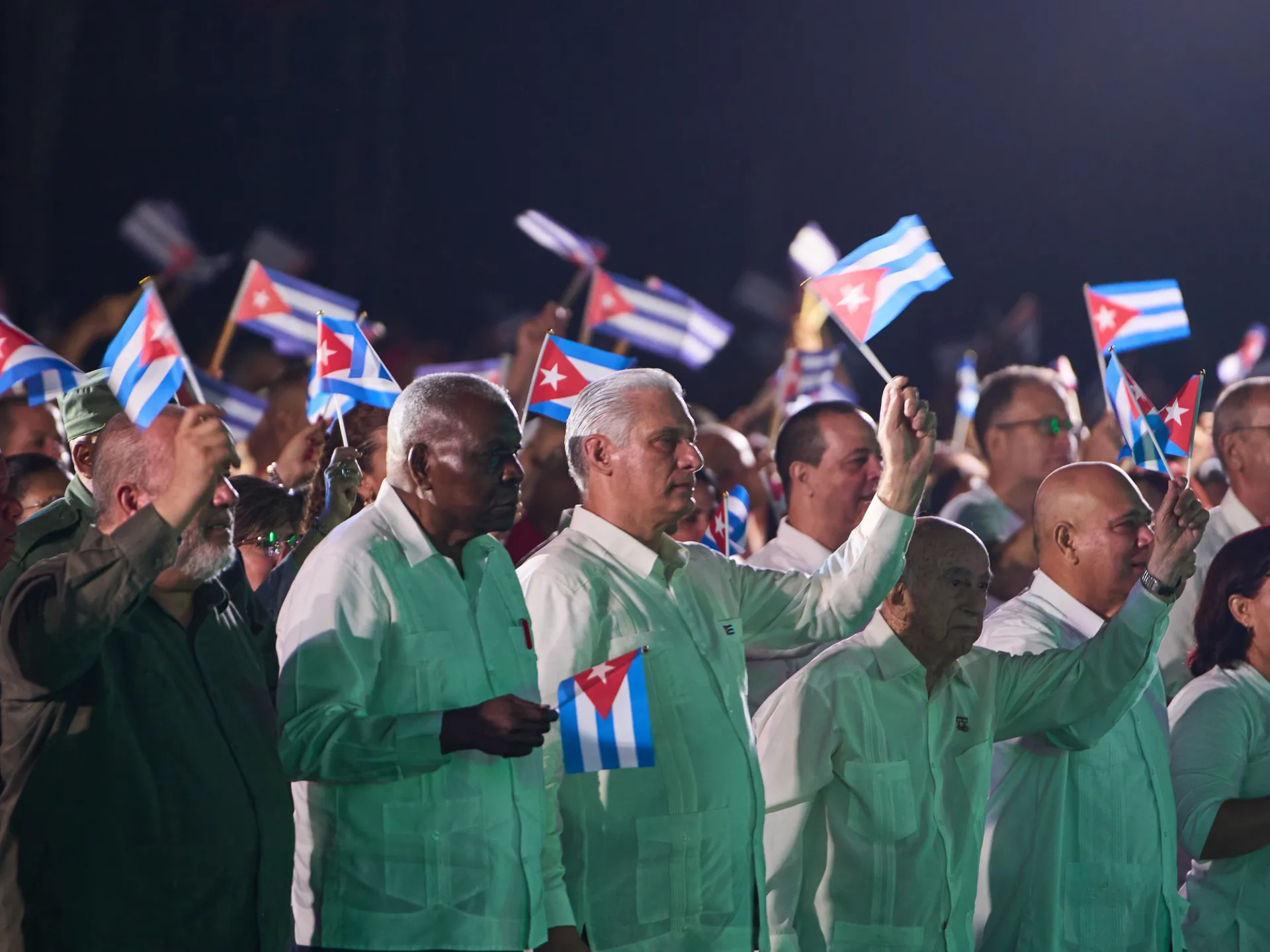
President Miguel Diaz-Canel lashed out during a rally on Sunday commemorating the start of the Cuban Revolution in 1953. His anger was a reaction to Washington’s continued pressure, which has included a crippling oil embargo that has produced regular blackouts and economic hardship.
Recommended Stories
list of 4 itemsend of list
“I denounce that Cuba is the victim of a cold-bloodedly calculated genocide,” Diaz-Canel said in Pinar del Rio at the event marking the 73rd anniversary of the uprising against former dictator Fulgencio Batista.
US relations with the communist-led island have long been tense, but have deteriorated further under US President Donald Trump.
Washington imposed an oil embargo on Cuba on January 29, causing daily blackouts of more than 20 hours.
The US, Diaz-Canel said on Sunday, was engaged in “economic strangulation” through its actions.
Employers have been forced to reduce workdays, industrial production has stopped, and water and medicine shortages are hitting a country already suffering from previous US sanctions and financial reforms that caused inflation.
Payment companies Visa and Mastercard, Spain’s Melia hotel chain, and Air Canada and Air France have all exited the country amid the crisis.
“Cuba is today waging a historic battle … against the walls of a genocidal policy whose objective is to suffocate an entire people in order to appropriate the country,” Diaz-Canel said.
Trump said he would “take over” Cuba, following the US abduction of former Venezuelan president and Cuban ally Nicolas Maduro in January.
Last week, a US State Department report accused Cuba’s government of running an espionage and influence network against Washington and Latin American neighbours.
In May, the US indicted former president and revolution leader Raul Castro – brother of Fidel – of murder and other crimes for his alleged part in the downing of two civilian airplanes operated by Miami-based exiles off the Cuban coast in 1996.
Cuba’s government has rejected the accusations and denounced Trump’s rhetoric. Talks between the two countries have largely stalled, Cuban officials said in June.
The Cuban Revolution, led by brothers and later leaders Fidel and Raul Castro, culminated in the Batista government’s fall in 1959. Former President Raul, 95, was unusually absent at Sunday’s rally.
The UN’s Guterres condemned violations of Syria’s sovereignty as he visited and called for sanctions to be lifted.
Published On 26 Jul 202626 Jul 2026
The head of the United Nations has condemned the persistent violation of Syria’s sovereignty, as Israel’s forces reportedly carried out new incursions into its neighbour’s territory.
Israeli soldiers advanced towards villages in southwestern Syria on Sunday, setting up a checkpoint at Al-Ardah, while shelling was also heard nearby, Syria’s state news agency SANA reported. Leaflets were dropped warning residents against attempting to obstruct the advance of Israeli vehicles.
Recommended Stories
list of 3 itemsend of list
The incursion came as United Nations Secretary-General Antonio Guterres, on a visit to Syria, condemned Israel’s violations.
“Syria’s sovereignty, independence, unity & territorial integrity must be fully respected,” he wrote in a social media post. “Violations by Israel of the 1974 Disengagement of Forces Agreement are unacceptable & must stop.”
Speaking at a press conference on Sunday, he said that the UN is set to submit a comprehensive report to the UN Security Council on the issue at the end of the month.
‘Security zone’
Israel has conducted increasingly regular incursions into Syrian territory since the fall of the regime of ousted President Bashar al-Assad in December 2024.
In the immediate aftermath, it seized control of the UN-controlled buffer zone separating the Israeli-occupied Golan Heights from the rest of Syria, saying the 1974 disengagement agreement with Syria had collapsed.
Since then, Israel has carried out regular attacks, raids and searches, and established military checkpoints further within Syria.
Israeli officials say they intend to remain in southern Syria, in what they call a “security zone”.
Syria’s Foreign Minister Asaad Hassan al-Shaibani called for Israel’s withdrawal from the buffer zone on Saturday, saying its continued military operations and occupation are a “direct threat to the security of the region”.
In an exclusive interview with Al Jazeera’s Al Muqabala, Syrian President Ahmed al-Sharaa said Damascus was working to reach a security agreement with Israel, involving a group of countries.
“If the security agreement with Israel succeeds, it will pave the way for comprehensive peace without conceding Syria’s right to the occupied Golan [Heights],” he said.
He said that Syria has “no interest” in entering a confrontation with Israel.
Guterres’s visit to Syria is the first by a UN chief to the country since 2009. He is expected to visit the UN Disengagement Observer Force (UNDOF), which has been deployed to the buffer zone since 1974.
On Sunday, he described the country as being at a “moment of opportunity” to recover from its 13-year war, and build a more stable, inclusive and prosperous future.
The UN chief urged the removal of all sanctions imposed on the country during the era of al-Assad, who was deposed by forces led by al-Sharaa in 2024 after over a decade of civil war.
“I welcome steps that have eased sanctions, and opening new possibilities for economic recovery, but all these sanctions must be removed immediately,” Guterres said.
Western countries including the United States have begun lifting economic sanctions, but investors remain cautious. The World Bank has estimated the country’s post-war reconstruction could cost $216bn.
“The United Nations stands with the people of Syria at this pivotal moment. And I came carrying the strongest possible appeal to the international community, an appeal to spare no effort to support the Syrian people and to support the Syrian government,” Guterres said.
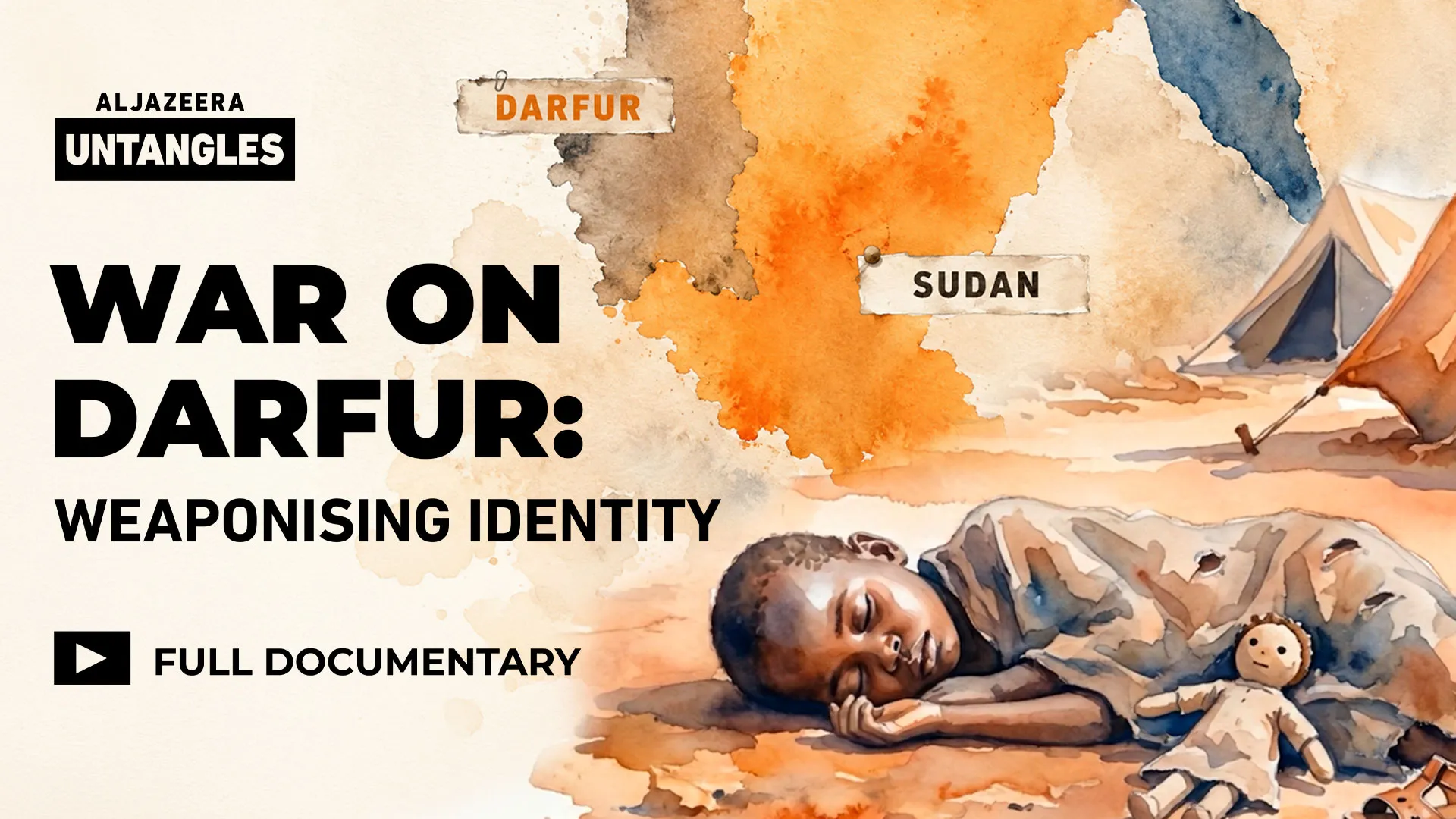
How land conflict, state neglect and racist ideology have driven Darfur towards alleged genocide.
This episode examines how mass violence in Darfur has been constructed over time and why many activists, governments and courts have labelled it genocide, even as that term remains politically contested. It traces how environmental stress, neglect of the peripheries and competition over land fed grievances between communities. It shows how Khartoum armed and mobilised militias, how racialised language framed “Arabs” and “Africans” as enemies and how aerial bombing, burning of villages and mass displacement became tools of policy. Through survivors’ testimony and legal analysis, the film follows the path from counterinsurgency to crimes against humanity and alleged genocide and asks what justice has – and has not – been delivered for Darfur.
July 26 (UPI) — After nearly two weeks of nightly bombing, the United States and Iran entered their second day of no new attacks Sunday, U.S. defense officials said.
Pentagon officials told CNN that U.S. attacks on Iran were “on a hold” after 13 consecutive nights of bombing the country. U.S. allies in the war on Iran have also reported no new strikes out of Tehran.
Iranian army spokesman Mohammad Akraminia confirmed the pause by his country in a statement carried by The Guardian.
“These [U.S.] attacks continued until two nights ago, but over the past two nights the Americans have stopped their attacks,” he said. “Our strategy has essentially been retaliatory, we have also halted our retaliatory operations.”
U.S. officials told The New York Times that President Donald Trump had delayed his plans to escalate fighting if talks didn’t continue. They said he was motivated by dwindling stockpiles of missile interceptors.
Iranian officials, meanwhile, have portrayed the U.S. pause on strategic fatigue, CNN reported.
Amid the lull in violence, Iran’s foreign ministry said there had been some movement in negotiations regarding the control of the Strait of Hormuz. Tehran had essentially closed the strait to traffic after the United States and Israel began its strikes on Iran on Feb. 28.
The action put strain on the world’s energy markets because about one-fifth of the world’s oil transits the strait. The resulting spike on oil and gas prices has put strain on the Trump administration to end the war.
Defending champion Norris wins his first race of the year as Verstappen finishes second and leader Antonelli is third.
Published On 26 Jul 202626 Jul 2026
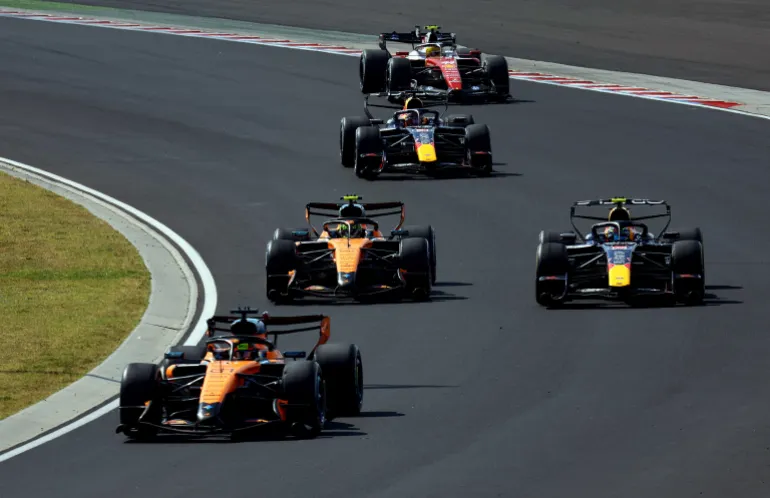
Lando Norris has ended an eight-month wait for a Formula One victory with strong pace and a dose of good fortune to win the Hungarian Grand Prix on Sunday.
McLaren’s defending champion finished ahead of Max Verstappen in Red Bull and teenage sensation Kimi Antonelli at the Hungaroring circuit in Budapest on Sunday.
Norris was on pole but lost the lead to his McLaren teammate Oscar Piastri when he ran wide at the second corner, before reclaiming the lead after Piastri was delayed by a collision with Carlos Sainz Jr during a lap.
This allowed Norris to come out of the pits ahead of his teammate and cruise to a win.
“The car was unbelievable today, well done guys, incredible. We were flying,” Norris said. “Nice to finally be able to do it all for you. Feels like it’s been a while.”
Piastri then stopped with a broken gearbox, paving the way for Verstappen to take second, with Antonelli third.
Antonelli increased his standings lead, with title rival Lewis Hamilton finishing fifth after a penalty for speeding in the pits and George Russell seventh after a near-stall at the start.
Norris hadn’t won a full Grand Prix race since Sao Paulo in November, though he did win a sprint in Miami in May.
Hungary was the last race before the mid-season break. The next race is the Dutch Grand Prix on August 23.
McLaren’s Oscar Piastri, McLaren’s Lando Norris, Red Bull’s Isack Hadjar, Red Bull’s Max Verstappen and Ferrari’s Lewis Hamilton in action during the race [Bernadett Szabo/Reuters]
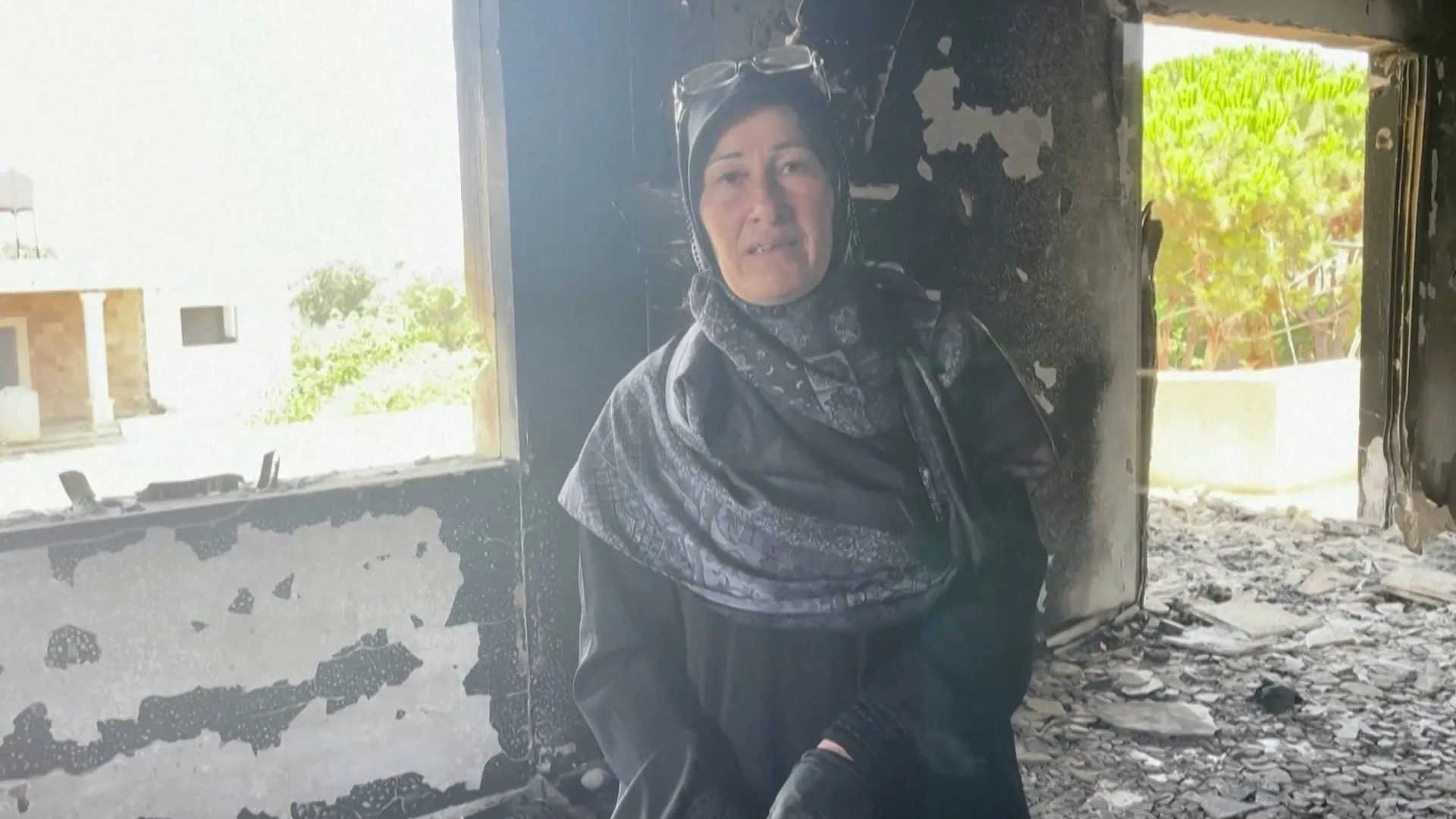
Sumaya Yaghi returns to what’s left of her destroyed home in southern Lebanon after Israeli troops withdrew from her ‘pilot zone’ village under a US-backed agreement.
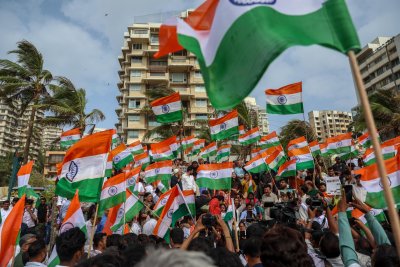
Supporters of the youth-led political movement Cockroach Janta Party celebrate the resignation of Education Minister Dharmendra Pradhan. Photo by Divyakant Solanki/EPA
July 25 (UPI) — India’s education minister resigned Saturday amid a scandal that led hundreds of thousands of young people and students to the streets in one of the country’s largest protests.
Demonstrations began in New Delhi in early June, after it came to light that answers to one of the country’s most prestigious college-entrance exams, taken by millions of students, had been leaked.
At least a dozen students died by suicide after the government announced they would have to retake the exam.
The protests, organized by the youth-led Cockroach Janata Party, swelled to hundreds of thousands of people across the nation early this week, forcing the hand of Prime Minister Narendra Modi‘s government.
“This is one of the most historic days for our country,” one protester, Rochelle Cope, told The Guardian. “For the first time in 12 years, someone from the government has been held accountable for wrongdoing. And it wasn’t political parties that did this — it was the people.”
The education minister, Dharmendra Pradhan, said in his resignation letter “the events of the past ten days have saddened me deeply.”
“During this period, individuals holding responsible positions also tried to mislead many students and create obstacles, which caused me deep anguish,” he said in a statement.
Pressure began to grow this week after police brutally cracked down against protesters, using tear gas and batons to clear them out.
Opposition leader Rahul Gandhi said he would raise the issue in India’s parliament, holding Home Minister Amit Shah “directly responsible for the violence inflicted.”
“He authorized the firing on our students, authorized the use of lethal weapons, and authorized the use of pellet guns against them,” Gandhi told the BBC. “That’s a fundamental issue.”
Modi’s government announced late Saturday that the education ministry would be assigned to Pralhad Joshi, who’s already the minister for consumer affairs, food and public distribution, as well as new and renewable energy.
Following the education minister’s resignation, leaders for the protests instructed the crowd to disperse.
“All our demands have been accepted, so we request the protesters to withdraw immediately and return home peacefully,” Saurav Das, a spokesperson for the Cockroach Janata, told reporters.
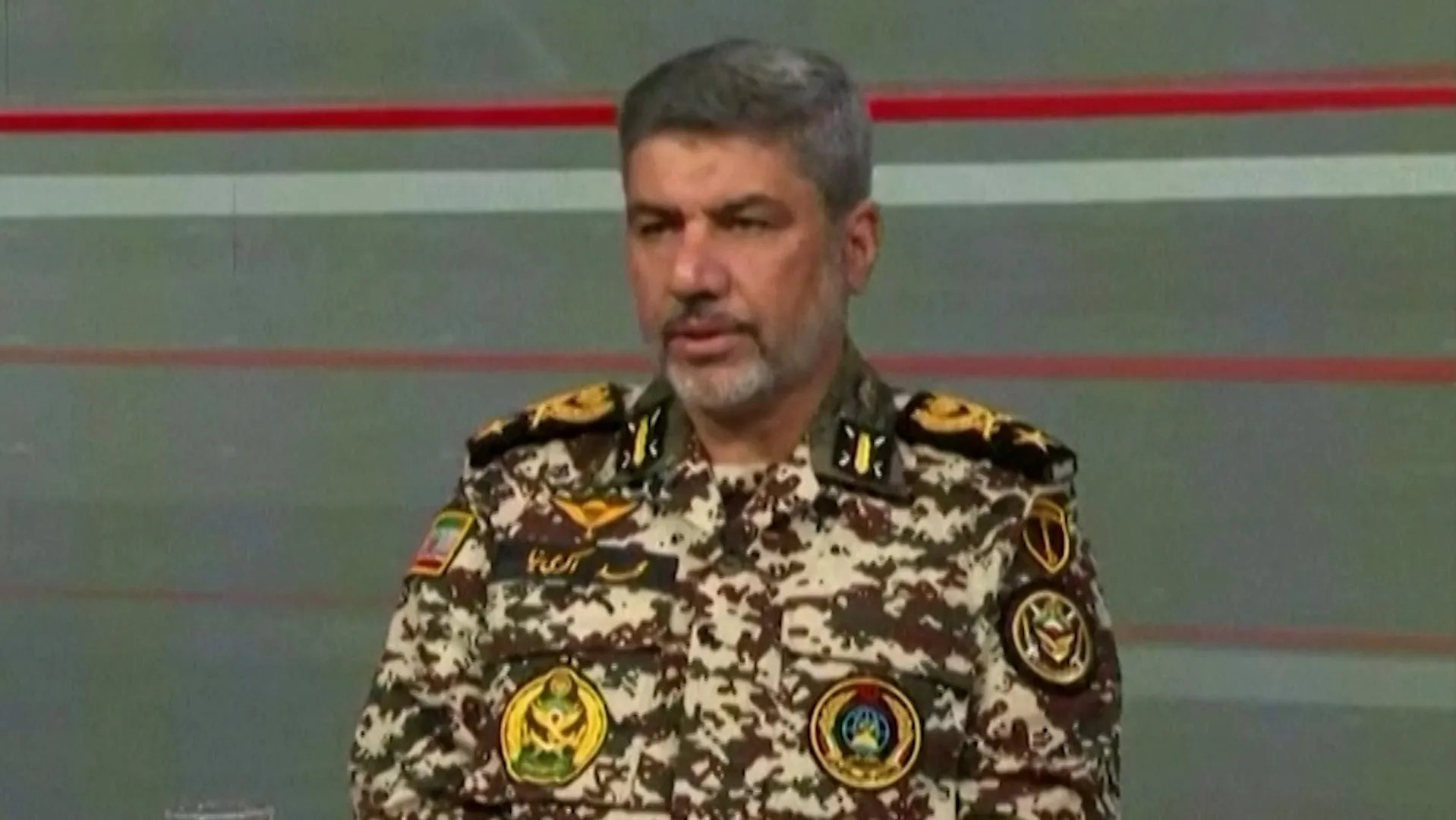
Iran says it has halted ‘retaliatory operations’ in the Gulf but warns that if the US continues its attacks, the conflict will expand across the region. Army spokesman Mohammad Akraminia had a message for the US ahead of Israeli Prime Minister Benjamin Netanyahu’s visit to Washington.






![Colonel Mohamed Issa, centre, one of the FLA's most prominent military commanders [Photo: Courtesy of the Azawad Liberation Front (FLA)]](https://i0.wp.com/occasionaldigest.com/wp-content/uploads/2026/07/COL-Mohamed-Issa-1785041292.jpeg?w=640&ssl=1)
![A destroyed vehicle at the site of recent fighting in northern Mali [Photo: Courtesy of the Azawad Liberation Front (FLA)]](https://i0.wp.com/occasionaldigest.com/wp-content/uploads/2026/07/Mali-army-3-1785041272.jpeg?w=640&ssl=1)
![An armed man carries a weapon in a desert area of northern Mali, where government forces and armed groups have been fighting for control of territory [Photo: Courtesy of the Azawad Liberation Front (FLA)]](https://i0.wp.com/occasionaldigest.com/wp-content/uploads/2026/07/FLA2-1785041279.png?w=640&ssl=1)