Ex-superstar player succeeds Didier Deschamps as France manager after the national team’s bitter semifinal exit in the United States.
Published On 28 Jul 202628 Jul 2026
Former France midfielder Zinedine Zidane will take over as national team head coach, the French Football Federation posted on X on Tuesday.
The appointment of the former Real Madrid manager comes two weeks after Didier Deschamps’ tenure as coach ended following France’s fourth-place finish at the World Cup. His final match in charge was the 6-4 defeat by England.
Recommended Stories
list of 3 itemsend of list
Zidane, 54, is expected to begin his reign with an away UEFA Nations League game against Turkiye before France host Italy at the Stade de France on October 2.
Deschamps, who left after 14 years at the helm, oversaw 185 matches and 120 victories, guiding France to the 2018 World Cup title, the 2020-21 Nations League trophy and the Euro 2016 and 2022 World Cup finals.
Both share a long association, having been teammates in the 1998 World Cup-winning side at home in France.
Zidane played a pivotal role in that triumph and won the Ballon d’Or that year.
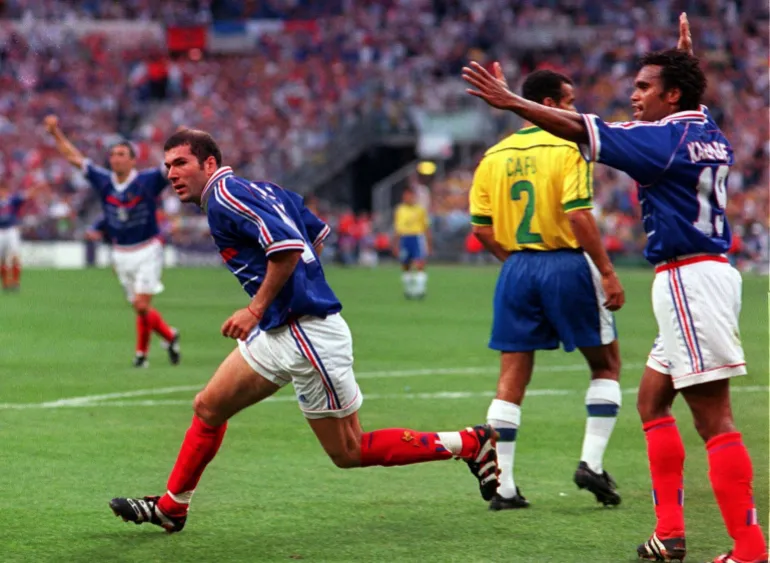
Capped 108 times, Zidane won the 1998 FIFA World Cup and scored 31 goals for France [File: John Sibley/Action Images via Reuters]
Tropical Storm Fausto was bringing dangerous surf to the Hawaii Islands on Monday night. Image courtesy NOAA
July 28 (UPI) — Fausto weakened from a hurricane to a tropical storm Monday, according to forecasters, who warned the Hawaiian Islands to expect “significant surf” over the next couple of days.
The storm was located about 415 miles east-northeast of Hilo, Hawaii, and had maximum sustained winds of 70 mph, the National Hurricane Center said in its 5 p.m. HST update.
It was moving west-northwest at a blistering 16 mph, it said.
No coastal watches or warnings were in effect.
However, the NHC said surf generated by Fausto would continue to build westward across Hawaii along east-facing shores through Tuesday as the storm approached and began to pass north of the islands.
“On the forecast track, Fausto should pass north of the Hawaiian Islands during the next few days,” it said.
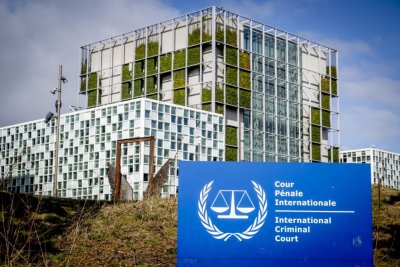
An exterior view of the International Criminal Court (ICC) in The Hague, The Netherlands, on March 11, 2025. Chad on Monday announced its formal withdrawal from The Hague. File Photo Robin Utrecht/EPA-EFE
July 28 (UPI) — Chad has announced it is withdrawing from the International Criminal Court, days after a U.S. official urged the central African nation to consider doing so and amid a concerted U.S. campaign seeking to dismantle the court.
In an official communique made public Monday, Chad’s Ministry of Foreign Affairs said it notified United Nations Secretary-General Antonio Guterres of its decision to withdraw from the Rome Statute, the treaty establishing the court, following what it described as an “in-depth examination” of its operations.
The ministry said the court’s effectiveness “has remained limited and uneven in light of the expectations that led to its creation,” alleging an anti-African bias and noting that its first nine investigations concerned situations in Africa. The ICC currently lists 17 situations under investigation.
Chad also highlighted that six of the seven people in the court’s custody are being prosecuted in connection with situations in Africa.
“Taken together, these objective factors explain the perception, widely shared among numerous states and their populations, that the court’s judicial activity has remained durably concentrated on the Global South in general and on the African continent in particular, which have consistently been victims of a form of political instrumentalization of the ICC,” the ministry said.
It called on the African Union and member stats to reconsider the future of what it called an “apparently biased system” and to strengthen the African judicial mechanisms instead.
The decision, which is to take effect in one year, comes amid an intensified U.S. campaign against the ICC following the court’s issuance of arrest warrants for Israeli Prime Minister Benjamin Netanyahu and former Defense Minister Yoav Gallant over alleged war crimes and crimes against humanity in Gaza.
Earlier this month, U.S. Secretary of State Marco Rubioannounced a campaign seeking to “dismantle the threat posed by the International Criminal Court to U.S. sovereignty.”
The United States is not a member of the ICC, and although the Trump administration has taken a more aggressive stance toward the court, the United States has long rejected the cour’s assertion of jurisdiction of U.S. nationals without Washington’s consent.
Four days before Chad announced its decision to withdraw from the ICC, Foreign Minister Abdoulaye Sabre Fadoul spoke with U.S. Under Assistant Secretary of State for African Affairs Frank Garcia Jr..
A statement from Chad said the call was made at the request of the United States. During the call, Garcia expressed the United States’ concerns about the ICC’s operation and requested that Chad review its membership, which Fadoul said Chad would.
“The United States welcomes Chad’s decision to withdraw from the ICC and join the growing number of nations reclaiming their sovereignty from this flawed institution,” the State Department’s Bureau of African Affairs said in a statement.
“The United States will never surrender its sovereignty to an unaccountable global tribunal, and we are launching a comprehensive, whole-of-government campaign to end the ICC’s illegitimate overreach. We call on all other ICC members to withdraw from the Rome Statute.”
The announcement comes days after Venezuela announced it was withdrawing from the ICC.
Burkina Faso, Mali and Niger all announced their withdrawals from the court in June 2026.
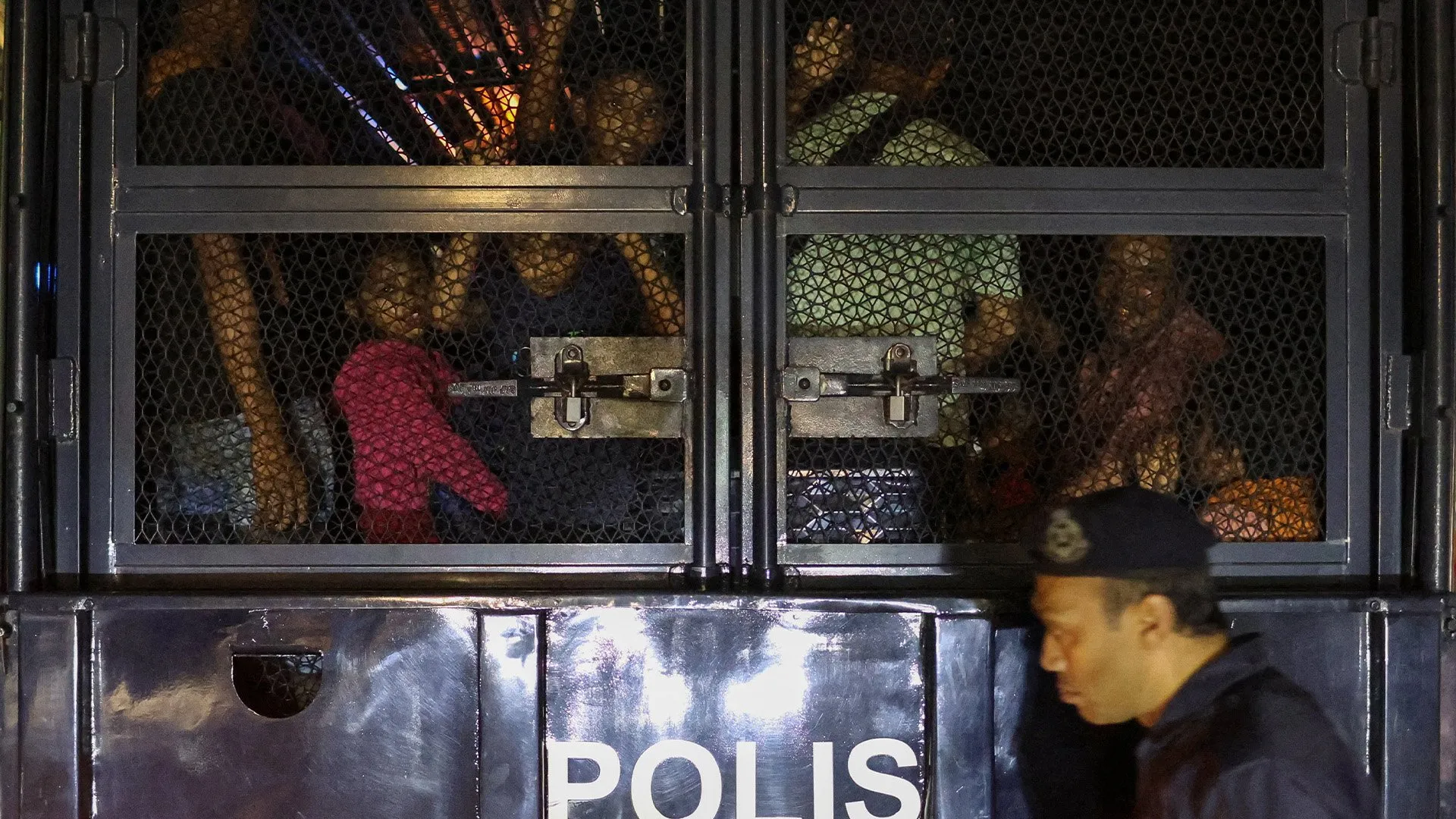
Malaysian police have detained more than 100 Rohingya refugees and asylum seekers who were seeking help from the UN after they were evicted from their homes. A rise in online hate speech and misinformation has led to more harassment of the group in Malaysia.
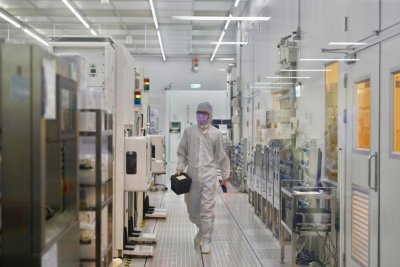
An engineer walks inside a laboratory of Taiwan Semiconductor Research Institute at a Science park in Hsinchu county, Taiwan. Photo by RITCHIE B. TONGO/ EPA
July 27 (Asia Today) — Growing artificial intelligence demand and stronger trade barriers are rapidly reshaping the production and supply chains of South Korea’s major manufacturing industries, the Bank of Korea said Monday.
The central bank said Taiwan has become South Korea’s second-largest semiconductor export destination as the AI supply chain draws Korean memory-chip producers closer to Taiwanese manufacturers.
Meanwhile, South Korean automakers are increasing production in the United States and expanding hybrid vehicle exports as tariffs and U.S. industrial policies make direct exports less competitive.
The findings were included in the Bank of Korea’s Map of Production and Supply Chains for South Korea’s Major Manufacturing Industries. The report used data from 2024 and 2025 to examine 11 industries, including semiconductors, automobiles, steel, shipbuilding and petrochemicals.
South Korean semiconductor exports to Taiwan nearly tripled from $12.78 billion in 2022 to $36.77 billion in 2025.
Taiwan’s share of South Korea’s semiconductor exports increased from 9% to 19.9%, moving it from the fourth-largest export destination to the second largest.
China remained the largest destination, but its share fell from 53.1% in 2022 to 40.3% in 2025.
The central bank attributed the change to a shift in demand from conventional dynamic random-access memory chips to graphics processing units and high-bandwidth memory used in AI systems.
The AI semiconductor supply chain generally involves U.S.-based Nvidia designing graphics processors, Taiwan Semiconductor Manufacturing Co. producing and packaging the chips and Samsung Electronics and SK hynix supplying high-bandwidth memory.
That structure has increased the volume of South Korean semiconductor products shipped to Taiwan.
Semiconductors have also become more important to South Korea’s overall manufacturing sector.
Domestic semiconductor production rose from 74 trillion won in 2014 to 210.8 trillion won in 2024 ($50.4 billion to $143.6 billion). Its share of total manufacturing production doubled from 5% to 10.1% during the same period.
Production remains heavily concentrated in the greater Seoul area, which accounted for 82.3% of the national total. The Chungcheong region accounted for another 14.7%.
Major facilities in the Seoul metropolitan region include Samsung Electronics plants in Hwaseong, Pyeongtaek and Giheung and SK hynix’s plant in Icheon.
China’s growing influence was most apparent in South Korea’s automobile import market.
The share of vehicle imports from China increased from 3.5% in 2022 to 37.2% in 2025. Chinese-made vehicles accounted for about 70% of South Korea’s electric vehicle imports by value in 2025.
The report attributed the increase to China’s price competitiveness and its extensive supply chain covering vehicles, batteries and components.
The United States remained South Korea’s largest automobile export market in 2025. Shipments were valued at $30.15 billion and accounted for 41.9% of total finished-vehicle exports.
However, the United States’ share of South Korea’s electric vehicle exports fell from 33.6% in 2022 to 5.2% in 2025.
The central bank said U.S. subsidies, local production requirements and tariff barriers had weakened the competitiveness of electric vehicles manufactured in South Korea and shipped directly to the United States.
South Korean automakers have responded by expanding U.S. factory operations while increasing exports of hybrid vehicles.
Hybrids’ share of South Korea’s finished-vehicle exports rose from 11.6% in 2022 to 20.4% in 2025.
The shift reflects automakers’ efforts to respond to slowing electric vehicle demand and insufficient charging infrastructure by offering vehicles that combine electric motors with internal combustion engines.
US President Donald Trump says talks with Iran are continuing during a pause in US military strikes, adding he believes there is ‘a good chance’ of a breakthrough but warning military action could resume if negotiations fail.
U.S. chip giant Nvidia Corp. CEO Jensen Huang (R), accompanied by Lee Hae-jin, founder and Chair of internet giant Naver Corp., acknowledge visitors during their meeting at the Naver headquarters in Seongnam, south of Seoul, South Korea, 08 June 2026. Photo by YONHAP / EPA
July 27 (Asia Today) — Nvidia plans to invest $1 billion in South Korean technology company Naver as the companies expand a partnership to build large-scale artificial intelligence infrastructure.
Naver said Monday it would issue about 7.24 million new shares to Nvidia through a private placement. The transaction would give the U.S. chipmaker a stake of about 4.5%, making it Naver’s third-largest shareholder.
Payment for the shares is scheduled for Oct. 30.
The investment would deepen a partnership announced in June to build global AI factories serving demand for sovereign AI, which refers to AI infrastructure and models operated under a country’s own laws and data controls.
The companies previously focused on supplying graphics processing units and cooperating on technology. Nvidia’s planned equity investment would broaden the relationship into a strategic partnership involving computing infrastructure, software, customers and capital.
Naver said Nvidia decided to invest because of the South Korean company’s full-stack AI capabilities, which include data centers, graphics processor clusters, cloud platforms, large language models and consumer services.
Naver operates graphics processor infrastructure at more than 20 locations across South Korea and plans to use that experience to expand its GPU-as-a-service and sovereign AI businesses.
Naver Cloud and Nvidia are also discussing an AI computing partnership that could include joint development of global AI factory projects.
The companies plan to combine Nvidia computing systems with Naver’s cloud, software and AI services rather than limiting their relationship to hardware purchases.
Nvidia said the proposed investment is subject to customary closing conditions and Naver securing at least $9 billion in committed project financing separate from Nvidia’s investment.
Brookfield has signed a nonbinding term sheet under which the global investment firm could provide up to $9 billion for computing infrastructure. The companies are discussing a structure in which Brookfield would develop or finance graphics processor systems and data centers for Naver’s use.
Naver’s own investment obligations have not been finalized.
The company plans to begin operating a 55-megawatt AI factory in the first half of 2027, expand capacity to 100 megawatts by the end of that year and reach 200 megawatts in 2028.
Its longer-term goal is to develop gigawatt-scale infrastructure.
Naver plans to begin the project at its GAK Sejong data center and later pursue sovereign AI customers in the Asia-Pacific region, Europe and the Middle East.
The company is also seeking to improve shareholder returns. Its board voted Friday to cancel about 4.9 million treasury shares valued at approximately 1.02 trillion won ($694.5 million). The shares are scheduled to be retired Aug. 3.
“The investments by Nvidia and Brookfield will be an important turning point for Naver’s future growth,” Naver Chief Executive Officer Choi Soo-yeon said.
Choi said the company would work to secure AI factory customers and establish itself as a major global AI infrastructure provider.
Naver board Chairman Lee Hae-jin said the partnership would allow the company to take its data center technology and operating expertise to the global market.
“We will actively cooperate with companies around the world to create an AI ecosystem that respects the diversity of countries and communities,” Lee said.
July 27 (UPI) — The U.S. Consulate in Toronto was shot at early Monday, according to authorities, marking the second time the facility been targeted by gunfire this year.
Deputy Chief Frank Barredo of the Toronto Police Service told reporters in a press conference that a police security detail at the consulate in downtown Toronto heard what sounded like a gunshot in the vicinity at 4:46 a.m. EDT.
The officer noticed a white late-model Honda Accord with no license plates speed away from the building and radioed the information. Additional officers noticed the suspect vehicle nearby and engaged it in a high-speed chase onto the Don Valley Parkway, heading northbound.
Barredo said the suspect vehicle was driving at speeds in excess of 87 miles per hour, prompting officers to end the chase, in accordance with police procedures because of the danger posed to the public, near the Don Mills Road and the DVP.
At the scene, police recovered a single shell casing, he said. The building’s facade also suffered damage, he added.
While no motive is known, Barredo said police suspect the shooting was premeditated.
“I don’t think it’s just a fluke that there was no license plate on the vehicle,” he said. He also described the shooting as “brazen” and “reckless” given that a police cruiser was parked outside.
Two security officers were inside the heavily fortified building at the time of the shooting, though Barredo said they would not necessarily have noticed the shot.
Toronto Mayor Olivia Chow mirrored Barredo’s description of the shooting as a “brazen attack” and vowed to work with authorities to get “the illegal American guns off our street” and to bring those responsible to justice.
“I want to say to the person or persons responsible. We will get you. We have apprehended the previous shooters, all three of them, and we will bring you to justice. You will be held accountable,” she said.
UPI has contacted the consulate for comment.
The shooting comes amid fraying relations between Canada and the United States. President Donald Trump‘s combative rhetoric and actions, including threatening to annex Canada and imposing stiff tariffs on it, have angered many across the Great White North and have compelled Ottawa to begin distancing itself economically and militarily from Washington.
In March, multiple shots were fired at the U.S. Consulate in downtown Toronto.
Last month, Toronto police arrested three people in connection with the March shooting. Constable Marc Pinizzotto was killed in a related police raid.
Police said the shooting was one of at least 27 they believe were carried out by criminals for hire. Authorities have not made public who hired them.
The second shooting at the consulate also occurred as two Jewish-owned bakeries in the city were the targets of vandalism, at least one of which was shot at.
Asked if the second shooting at the consulate was potentially another criminal-for-hire plot or connected to the bakery shootings, Barredo said it was too early to tell.
“We, obviously, would not rule that out as a possibility,” he said.
“We do know that is a phenomenon that has grown in the GTA area. Some criminals simply perform services for hire. They don’t have any personal interest in matter; they simply are hired to carry out a specific act of criminality.”
Minister of Public Safety Gary Anandasangaree said in an online statement he was “appalled by the brazen shooting” and has spoken with Chow, and offered his full support to the Toronto Police Service.
“Violence of any kind will never be tolerated in Canada,” he said.
People watch a live TV broadcast at Seoul Station as the Seoul Central District Court is holding a hearing to give the verdict in the trial of former President Yoon Suk Yeol over his alleged election law violation, in Seoul, South Korea, 27 July 2026. The court sentenced Yoon to an 18-month prison term, suspended for three years after finding him guilty of making false statements as the main opposition People Power Party’s presidential candidate ahead of the election in March 2022. Photo by YONHAP / EPA
July 27 (Asia Today) — A South Korean court sentenced former President Yoon Suk Yeol on Monday to 18 months in prison, suspended for three years, after finding him guilty of making false statements during his successful 2022 presidential campaign.
The Seoul Central District Court said Yoon’s statements concerned his relationship with Jeon Seong-bae, a shaman also known as Geonjin, and his alleged introduction of a lawyer to former tax official Yoon Woo-jin.
“The impact of a candidate publicly making false statements during a debate or other campaign event on an election is extremely significant,” the court said. It added that the seriousness of Yoon’s conduct should not be regarded as minor.
Yoon’s attorneys said the court misunderstood the facts and relevant law and accepted only the special counsel’s arguments. They said they would appeal.
If the ruling is upheld by the Supreme Court, the main opposition People Power Party could be required to return about 39.7 billion won, or $27.1 million, in campaign expenses reimbursed by the government following Yoon’s election.
It would be the largest repayment of election expenses by a political party in South Korean history.
Yoon was charged over comments he made while running for president.
During an interview at the launch of a Buddhist leaders’ forum on Jan. 17, 2022, Yoon said a party official had introduced him to Jeon and that he and his wife, former first lady Kim Keon Hee, had never met Jeon together.
Prosecutors argued that Yoon had repeatedly received advice from Jeon and falsely portrayed their relationship as a chance introduction during the campaign.
Yoon was also charged over remarks at a Kwanhun Club debate on Dec. 14, 2021. He denied introducing a former senior prosecution official as an attorney for Yoon Woo-jin, a former district tax office chief who had faced a bribery investigation.
The court said Yoon’s statement contradicted the nature of his relationship with the former tax official.
Under South Korean election law, candidates who receive at least 15% of the vote can receive full government reimbursement of eligible campaign expenses. Candidates who receive between 10% and 15% can recover half of their expenses.
A political party must return reimbursed campaign expenses and the candidate’s deposit if its presidential nominee receives a final conviction carrying a fine of at least 1 million won, or about $680, for an election-law offense. The repayment must generally be made within 30 days.
The ruling adds to Yoon’s mounting legal problems following his removal from office over his brief declaration of martial law in December 2024.
The Supreme Court this month upheld a seven-year prison sentence against Yoon for offenses that included obstructing authorities attempting to detain him and violating legal procedures surrounding the martial law declaration.
Yoon was separately sentenced to life imprisonment in February after a lower court convicted him of leading an insurrection through the martial law declaration. His appeal is pending before the Seoul High Court.
In June, a lower court sentenced him to 30 years in prison for ordering military drone flights into North Korea in an alleged attempt to escalate tensions and create a justification for martial law. Yoon has appealed that ruling.
People leave the scene Sunday night after a fatal shooting during the Bite of Seattle food festival at Seattle Center. Three people were killed and four others were injured in the shooting, according to the Seattle Police Department. Police arrested a 15-year-old in connection with the shooting Monday. Photo by Genna Martin/EPA
July 27 (UPI) — Seattle police are looking for a possible third gunman in a shootout Sunday that left three people dead and at least four others injured.
At least two people exchanged gunfire at the annual Bite of Seattle food festival at the Space Needle, Mayor Katie Wilson said at a press conference Monday. One of them is believed to be a 15-year-old boy that the police arrested Monday, and another was a 19-year-old man who died at the festival.
“Police continue to look for a third possible suspect,” Wilson said.
The mayor said the 15-year-old waived an initial appearance in court Monday and remains in custody. Investigators are reviewing bullet casings, viewing raw camera footage, interviewing people and following up on tips, Wilson said.
The 15-year-old suspect was arrested on suspicion of firearms violations and first-degree assault. Wilson said that no one has yet been arrested on suspicion of homicide, KING-TV of Seattle reported.
Court documents also show that police believe there may be a third shooter, BBC News reported.
On Monday, the King County medical examiner released the names of the three people who died in the shooting: Junior Cee Semo, 19; Carlos Villalba, 44; and Ashley Whitehead, 56.
Police believe Semo was the second gunman in the shootout. He and Villalba died at the scene Sunday, while Whitehead died later at a hospital, KING-TV reported.
Three others who were injured in the shooting have been released from the hospital, while a 2-year-old boy remains in the hospital in satisfactory condition.
At Monday’s press conference, Assistant Police Chief Nicole Powell said that the shooting may have been “gang related” but cautioned that police are not sure of that. She said the 15-year-old suspect and 19-year-old who died in the shooting are believed to be “associated with each other.”
Thousands of people were at the festival Sunday when the shootings occurred. It was the final day of the event, which draws about 350,000 people a year.
President Donald Trump speaks Friday in the Oval Office of the White House in Washington, D.C. On Monday, Trump said he paused attacks on Iran for negotiations, but Iran says no new negotiations with the United States are taking place. Photo by Bonnie Cash/UPI | License Photo
July 27 (UPI) — President Donald Trump said Monday that the United States paused attacks on Iran at Iranian leaders’ request but said he would order “strong military action” if negotiations fail.
However, there were mixed messages on what those talks entailed Monday. Iran’s Foreign Ministry said there were no new negotiations with the United States, CNN reported, though there are discussions with Oman over the Strait of Hormuz.
The United States halted attacks on Iran three days ago after 13 consecutive days of nightly bombing.
“We are in very deep talks with Iran,” Trump told Axios during an interview Monday. “If they don’t work out, we will go back to very strong military action.”
The president said in that interview that he isn’t willing to give much time to diplomacy, and that “either it goes fast or not at all.”
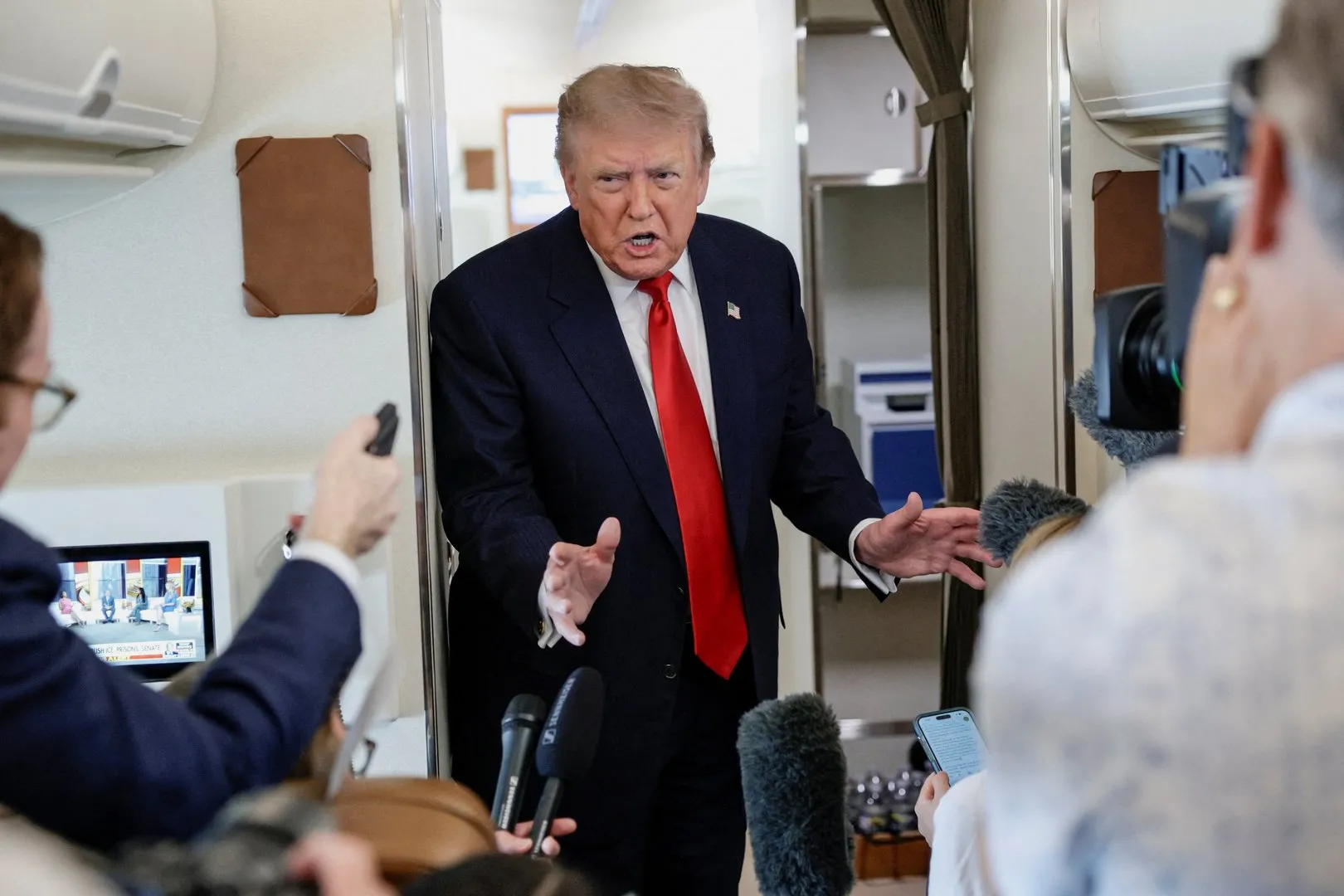
The Guardian reported that Trump later told reporters on Air Force One that, “They want to meet, and we’re meeting. Without what we did, they wouldn’t even be talking to us. … They would not have requested the meeting if we were doing poorly. The only reason they want to meet is because we’ve been hitting them very hard.”
Later yet, at a rally in Michigan, Trump said there are “very friendly negotiations” going on.
Oman’s Foreign Ministry said Foreign Minister Badr Al-Busaidi held calls with his counterparts from Iran, Saudi Arabia, Qatar, Kuwait and Egypt in a diplomatic push.
Al-Busaidi said in a statement that the talks between Iran and Oman “focused on ways to enhance the prospects for reaching practical, fair and sustainable arrangement for maritime navigation … throughthe Strait of Hormuz,” Axios reported.
Esmaeil Baghaei, a spokesman for Iran’s Foreign Ministry, said Tehran “would never allow the United States to determine the timing of war and peace.”
“Mediators may convey messages from the American side to us regarding current developments in the region,” he said, the Guardian reported. “But at present we are not engaged in any negotiations with the United States.”
Baghaei said the talks with Oman were “useful and constructive” but that they have nothing to do with the United States.
Police have previously suggested a link between anti-Jewish attacks in the city and shootings at the US consulate.
Published On 27 Jul 202627 Jul 2026
At least one shot has been fired outside the US Consulate General in Toronto, in the second such incident in just four months.
Nobody was injured in the attack, police said on Monday, adding that a shell casing was found and the building’s facade had been damaged.
Recommended Stories
list of 3 itemsend of list
A white sedan was seen fleeing the scene at about 5am local time (09:00 GMT), which police said they briefly pursued before giving up the chase over safety concerns due to its ultra-high speed.
No suspects have been arrested, and the investigation is ongoing.
A US Department of State spokesperson said Washington was working closely with Canadian authorities following the incident.
Toronto police declined to speculate on a possible motive for this weekend’s shooting and whether it was linked to previous incidents.
Ontario Premier Doug Ford said he expected “all those responsible to be found, prosecuted and punished to the fullest extent of the law”.
This is the second time in four months that shots have been fired at the US Consulate in Toronto.
On March 10, several shots were fired at the same building, and one police officer was later killed in an operation to arrest those responsible.
Toronto police claimed in June that young people in the Toronto area were being recruited via encrypted messaging apps to shoot at various targets and record the shootings for payment.
The targets the police mentioned included synagogues, Jewish schools, a waste management company, and the US Consulate.
The police did not provide evidence, only mentioning that investigations were ongoing in cooperation with the Royal Canadian Mounted Police and the US FBI.
Three women were wounded, two of them seriously, in a knife attack near Porte de Clichy in Paris. Bystanders and an off-duty police officer restrained the suspect, whose motive remains unknown.
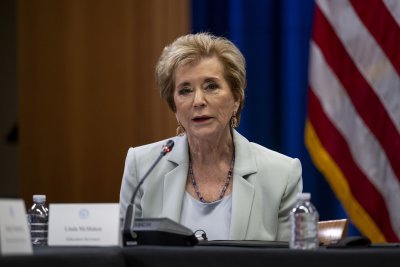
U.S. Secretary of Education Linda McMahon speaks in June during a roundtable event on at the Department of Justice in Washington, D.C. On Monday, the Departments of Education and Justice said they are targeting two school districts for policies protecting students’ gender identity. Photo by Daniel Heuer/UPI | License Photo
July 27 (UPI) — The U.S. Departments of Education and Justice said Monday that they’re taking “significant action” against school districts in Maryland and Michigan because of policies allowing school personal to protect students’ personal gender identity.
In a press release, the departments said Anne Arundel public schools in Maryland and Ann Arbor public schools in Michigan were “hiding sensitive information about children’s health well-being from their own parents.” They cited parental rights in the Federal Educational Rights and Privacy Act.
The Department of Education’s Student Privacy Policy Office received complaints from Maryland parents who said that the school was helping their child “pretend to be male.” The principal declined to give the parents information about their student, and the assistant principal refused to turn over records, the release said. It said the SPPO and the Just Department’s Civil Rights Division will start applicable judicial proceedings and the district may face the loss of federal funding.
In Michigan, the release said, SPPO has found an Ann Arbor district policy requiring school employees to protect a student’s gender identity from their parents “likely violates FERPA.” The departments have given the district until Aug. 10 to “demonstrate why ED and DOJ should not move forward with enforcement.”
“This is not only an affront to basic moral principles, but also to parents’ rights under federal law,” said U.S. Secretary of Education Linda McMahon. “Today, ED and DOJ are putting districts on notice that we will use every tool available to hold them to account for this egregious behavior.”
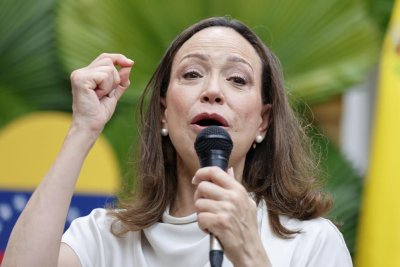
Venezuelan Nobel Peach Prize laureate Maria Corina Machado and opposition leader Edmundo González Urrutia said they will not participate a dialogue between representatives of the Venezuelan government and members of the National Assembly elected in 2015. File Photo by Bienvenido Velasco/EPA
July 27 (UPI) — Nobel Peace Prize laureate María Corina Machado and opposition leader Edmundo González Urrutia said they will not participate a dialogue between representatives of the Venezuelan government and members of the National Assembly elected in 2015.
They said, however, they will not stand in the way of any initiative that produces concrete progress toward a democratic transition.
The dialogue mechanism was announced earlier this month by representatives of the government led by Vice President Delcy Rodríguez and members of the National Assembly elected in 2015, headed by Dinorah Figuera.
Both sides said the talks will formally begin Saturday and address issues that include institutional recovery, the electoral system, guarantees for political participation and the country’s reconstruction after the June 24 dual earthquakes.
The process has the backing of the United States. The U.S. State Department described the roadmap as an important step toward Venezuela’s political reconciliation and national recovery, while the Spanish newspaper El País reported that Washington has played an active role in promoting the talks and a possible political transition.
In a joint statement addressed to the Venezuelan people and the international community, Machado and González said they did not participate in the design, creation or operation of the dialogue mechanism.
“Those promoting it must inform the country of its objectives, its methodology and its timetable,” they said.
The opposition leaders said they will assess any negotiation based on “concrete and verifiable” results, including restoration of democratic institutions, release of all political prisoners, guarantees for all political actors without exclusion, a timely timetable for presidential elections and full respect for the will of the people.
The statement opens by reaffirming the validity of the mandate that, according to both leaders, emerged from the opposition primary election held Oct. 22, 2023, and the presidential election of July 28, 2024.
“That mandate remains in force,” they said.
Machado and González also said Venezuela is facing a crisis that has accumulated over more than 25 years and was made worse the June 24 earthquakes, which they said left communities devastated and deepened the humanitarian emergency.
Against that backdrop, they alleged that citizen-led aid efforts after the earthquakes were subject to attempts to block and control the aid.
“Venezuelans saw with their own eyes how the aid organized by the people themselves was blocked, diverted and controlled to prevent it from reaching those who needed it most,” the statement said.
The opposition leaders argued that rebuilding the country requires “a new government with moral authority and managerial capacity” to guarantee freedoms, restore the institutions of the Republic and support families affected by the disaster.
Machado and González reiterated their commitment to return to Venezuela to stand alongside the public during the country’s reconstruction.
Drones launched at Saudi, Jordan and Iraq suggest Iran, or linked groups, may be testing US as it mulls new strategy.
Published On 27 Jul 202627 Jul 2026
Saudi Arabia has reported intercepting drones that targeted oil facilities in its eastern province and Riyadh.
Saudi’s Foreign Ministry said it “reserves the right to respond” to the attack, which it attributed to Iran-backed armed groups in Iraq.
Separately, Yemen’s Houthi rebels said in a statement on Monday that they had targeted Saudi crude oil transport infrastructure.
It remains unclear whether the two incidents were coordinated or separate.
The attack comes amid a lull in hostilities between the United States and Iran, with mediators suggesting the chances of a return to negotiations have risen.
Following two weeks of intense hostilities, US officials have spoken of a change in strategy, and Washington has paused strikes on Iran.
Iran has said it has also paused its attacks on US allies across the Gulf region.
However, the drone attacks on Saudi and elsewhere suggest that Tehran may be testing the new US stance, and that the armed groups believed to be linked to Iran are not ready to follow suit.
Aside from Saudi Arabia, Jordan and Iraq also reported drone attacks on Monday. Amman said it shot down two drones, while Iraqi security sources reported strikes on camps housing Iranian-Kurdish opposition fighters in the country’s north.
The officials did not identify the source of either attack, but Jordan and northern Iraq were locations in which four US service members were killed over the past fortnight of conflict.
The Houthis announced later on Monday that nine of its fighters had been killed amid escalating military confrontations with Yemeni government forces backed by the Saudi-led coalition in recent days.
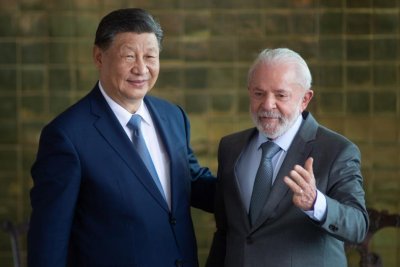
Chinese President Xi Jinping (L) and Brazilian President Luiz Inacio Lula da Silva react during a meeting in Brasilia, Brazil, in November 2024. The two leaders poke by telephone for more than an hour Monday to work on trade agreements. File Photo by Andressa Anholete/EPA
July 27 (UPI) — Brazil and China agreed Monday to speed up negotiations on a trade agreement between Mercosur and China as both countries seek to strengthen economic ties after new U.S. tariffs hit Brazilian exports.
Brazilian President Luiz Inácio Lula da Silva and Chinese President Xi Jinping spoke by telephone for more than an hour just days after the United States confirmed a 25% tariff on Brazilian exports.
Lula said on X that the two leaders reaffirmed their commitment to expanding cooperation in strategic and high-technology sectors, including artificial intelligence, satellites, critical minerals processing and fertilizer trade.
Mantive na noite deste domingo, 26 de julho, uma conversa telefônica de mais de uma hora de duração com o presidente da China, Xi Jinping.
Durante o telefonema, tratamos da implementação das sinergias entre os projetos nacionais de desenvolvimento dos dois países. Reiteramos o…— Lula (@LulaOficial) July 27, 2026
In the post, Lula highlighted the “positive results” of bilateral trade and the recent short-term visa waiver, saying the measures “will increase tourist flows and business opportunities.”
He also emphasized the need to expand cooperation in other sectors and advance negotiations on a trade agreement between Mercosur, the South American trade bloc, and China.
“I stressed that our government remains committed to diversifying markets,” Lula wrote.
The two leaders also discussed global conflicts and their impact on people’s lives, as well as global food and energy security, identifying them as key international challenges.
“While discussing the crisis in the Middle East, we agreed that restrictions on freedom of navigation through the Strait of Hormuz and the Bab el-Mandeb Strait have harmful effects on the global economy,” Lula said.
According to China’s state-run Xinhua News Agency, Xi rejected what he described as external interference in Brazil’s electoral process and expressed China’s willingness to support Lula’s government.
Xi said that under new global circumstances and challenges, China and Brazil, as leading members of the Global South, should uphold historical justice and the progress of civilization while playing a greater role in reforming and improving the global governance system and defending international fairness and justice.
According to Xi, China “highly values Brazil’s international standing and significant influence, supports the country in safeguarding its sovereignty and independence, opposes foreign interference and will contribute to maintaining regional and global peace and stability.”
Lula also said both leaders criticized the inability of the United Nations Security Council to respond effectively to current international crises and reaffirmed Brazil’s and China’s commitment to multilateralism. They agreed to maintain close coordination on international issues through forums, including the United Nations and the BRICS group.
The conversation comes as Lula has intensified his efforts to diversify Brazil’s trade relationships. In an article published Sunday in The Washington Post, he described the new U.S. tariffs on Brazilian goods as a “strategic mistake” and said Brazil would pursue alternative markets to expand investment and economic partnerships.
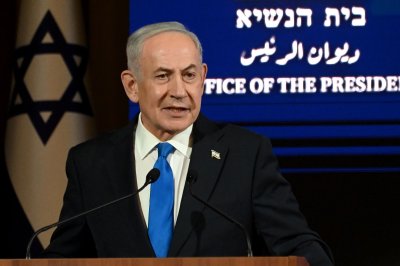
July 27 (UPI) — Israeli Prime Minister Benjamin Netanyahu was on his way to Washington, D.C., on Monday for his eighth meeting with President Donald Trump since he returned to the White House last year.
The war in Iran will be the key topic Trump and Netanyahu are expected to discuss when they meet at the White House this week. It will be their first meeting since the war began. The two leaders have expressed differing opinions about peace agreements in recent weeks.
“In these complex times, you need to act with both great determination and great wisdom,” Netanyahu said in a video statement Monday. “We will discuss all the issues on the agenda, primarily Iran. Of course, our goal is to protect our security and also to expand the circle of peace around us.”
Fighting between the United States and Iran resumed over the past two weeks after a preliminary peace agreement between both sides fell apart. The U.S. military said it paused strikes on Iran over the weekend after a series of daily attacks.
Iran’s military said it is also halting strikes against the United States as long as the United States holds off.
It is a politically significant time for both Netanyahu and Trump. On Oct. 27, Israel’s legislative election will include all 120 seats in the Knesset, determining who will lead the government. The prime minister will be determined in consultation between the Israeli president and the Knesset, through a series of coalition formations.
Meanwhile, Trump’s focus politically is on the midterm elections in November. The elections will determine the political makeup on Capitol Hill and Trump’s path toward advancing his agenda in the final two years of his term.
Nearly four years after being extradited to the United States for a drug-trafficking trial, former Honduran President Juan Orlando Hernandez returned home after a pardon by US President Donald Trump at the end of last year.
Trump claimed the trial was a “set up” orchestrated by former President Joe Biden’s administration.
Hernandez still faces corruption charges in Honduras but returned on Sunday after an arrest warrant against him was cancelled.
Human rights activists and lawyers fear a trial on home soil, where his party holds the presidency, would be a sham.
So why did Trump pardon and release the former president of Honduras despite abducting and arresting Venezuela’s Nicolas Maduro on drug and gun charges in January?
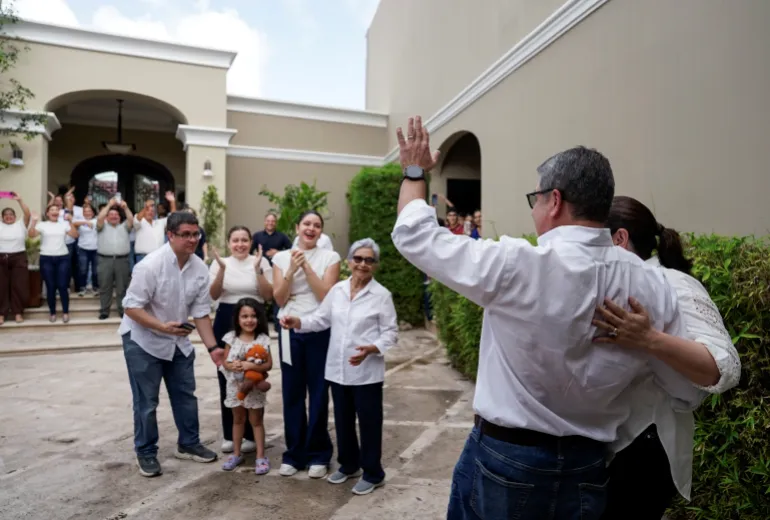
Former Honduran President Juan Orlando Hernandez is greeted by family and friends after arriving at his home in Tegucigalpa following his return to Honduras on July 26, 2026 [Leonel Estrada/Reuters]
Why did Hernandez return to Honduras?
Hernandez was able to return after being pardoned by Trump, released from a US prison and then having an arrest warrant against him suspended last month.
He arrived at Palmerola International Airport, where he was greeted by his family and supporters of his National Party.
Hernandez led his country from 2014 to 2022, during which, according to US prosecutors, he once boasted he would “shove the drugs right up the noses of the gringos”, referring to Americans.
Shortly after leaving office, he was extradited to the US, where he was found guilty by a federal jury and sentenced to 45 years in prison for involvement in a scheme to export cocaine to the US.
Prosecutors described the scheme as “one of the largest and most violent drug trafficking conspiracies in the world”. He was convicted of accepting millions of dollars in bribes from violent drug-trafficking organisations over 18 years, which he was alleged to have used to fuel his rise in politics.
“During his political career, Hernandez abused his powerful positions and authority in Honduras to facilitate the importation of over 400 tons of cocaine into the US,” the US Department of Justice said after he was sentenced last year.
During his trial, Hernandez denied taking bribes from drug dealers, arguing he in fact cracked down on the narcotics trade and citing his administration’s cooperation with the US military.
“I cannot deny the profound emotion and joy I feel in my heart to be returning home,” Hernandez wrote on social media earlier this month, saying he was counting down the days to see his family.
“It wasn’t easy. The process has been extremely difficult … and what I experienced in prison, I truly wouldn’t wish on anyone,” he added.
Hernandez is expected to appear in court on August 3 to face the Honduran corruption charges.
Hernandez shakes hands with US President Donald Trump on September 25, 2019, in New York during the signing of an agreement under which Honduras would accept more asylum seekers heading to the US [Handout/Honduran Presidential Palace via Reuters]
Why did Trump pardon him?
Under the US Constitution, a president may offer two types of clemency for federal crimes: pardons, which forgive defendants their federal charges and restore their civil liberties, and commutations, which reduce people’s punishment without addressing their convictions.
Hernandez was pardoned by Trump in December. The US president said Hernandez had not received a fair trial and had been “set up” by the Biden administration.
Trump added that Hernandez was “treated very harshly and unfairly”.
At the same time, Trump also threw his weight behind right-wing candidate Nasry “Tito” Asfura, a member of Hernandez’s party. He ran in November’s presidential election and was declared the winner a month later in the close race after delays and allegations of fraud. He took office in January.
A Pandora Papers corruption investigation also accused Hernandez of diverting nearly $11m in state funds to political campaigns from 2010 to 2013.
Venezuelan President Nicolas Maduro and his wife, Cilia Flores, are moved out of a helicopter and into a New York courthouse on January 5, 2026, for an initial appearance to face US federal charges including ‘narcoterrorism’, conspiracy, drug trafficking and money laundering shortly after US forces abducted them from Caracas [Adam Gray/Reuters]
Why a pardon for some but jail for others?
The Trump administration has faced criticism at home for pardoning the Honduran leader while at the same time abducting former President Maduro of Venezuela and his wife, Cilia Flores, in January on similar charges.
Maduro and Flores were seized in Caracas by the US military and flown to New York, where he is facing a range of guns and drugs charges and accusations of being a “narcoterrorist”.
At the time of Maduro’s abduction and since then, the Trump administration has targeted small boats in the Caribbean and eastern Pacific that it claims, without providing evidence, are involved in drug trafficking. More than 220 people have been killed in more than 60 such strikes on small boats in what many lawyers and activists have deemed extrajudicial killings.
Since taking office for a second term in January 2025, Trump has ordered more than 1,800 acts of clemency benefitting a range of personalities, including cryptocurrency billionaires, disgraced politicians and hundreds of political allies.
Some of the most controversial beneficiaries are supporters of his Make America Great Again (MAGA) movement, including hundreds of rioters who attacked the US Capitol on January 6, 2021, in a bid to prevent the certification of Biden’s electoral victory over Trump two months earlier.
Legal experts have argued that while the president’s clemency power is broad, using it for allegedly corrupt purposes, such as to protect political allies or obstruct justice, could form the basis for impeachment proceedings.
US constitutional expert Bruce Fein told Al Jazeera that the US Constitution’s framers “understood the abuse of the pardon power to shelter political or personal friends to constitute an impeachable high crime and misdemeanour justifying the removal of the president through the impeachment process”.
“If Democrats gain control of Congress in the midterm elections, Trump will be in impeachment jeopardy for pardoning Hernandez,” Fein said, referring to elections in November.
Hana Financial Group Chairman Ham Young-joo speaks during a recent industry event in Seoul. Photo by Hana Financial Group
SEOUL, July 27 (UPI) — South Korea’s Hana Financial Group said Friday it posted record earnings for the first half of this year, driven by its banking and brokerage businesses.
The Seoul-based financial conglomerate noted its net profit amounted to $1.6 billion during the first six months of 2026, up 4.4% from a year earlier. Its flagship subsidiary, Hana Bank, made the largest contribution, with a bottom line of $1.45 billion.
Non-banking affiliates also delivered robust results. Hana Securities, one of the country’s major brokerages, more than doubled its net income to $186 million year-on-year during the January-June period.
During the third quarter, Hana Financial said it would spend $171 million on share buybacks and cancellations, bringing the annual total to $478 million. It also plans to increase 2026 dividends payments by 26.5% from a year ago.
The company expects overall cash dividends for this year to reach $820 million, up more than 10% from 2025.
Hana Financial CFO Park Jong-moo said that the group would raise its target for return on equity, or ROE, to 12% from the previous goal of 10%. The group’s ROE stood at 10.62% in the first half.
ROE measures how efficiently a company generates profit from the shareholders’ equity. In other words, Hana Financial aims to earn 12 cents of yearly net profit for every dollar of shareholders’ equity.
“We will create a virtuous cycle in which higher ROE leads to greater shareholder returns and enhanced corporate value,” Park told an earnings call. “We have raised our ROE target to 12% and set our shareholder payout ratio at 50% or higher.”
Hana Financial shares rose 1.46% on the Seoul bourse Friday before falling 1.36% Monday.
British Prime Minister Andy Burnham (pictured) was due to host Ukrainian President Volodymyr Zelensky at a Royal Navy base on Monday, marking his first international visitor since replacing Keir Starmer a week ago. File photo by Henry Nicholls/EPA
July 27 (UPI) — New British Prime Minister Andy Burnham was scheduled Monday to host Ukrainian President Volodymyr Zelensky at a Royal Navy base training Ukrainian forces.
Ahead of the visit, the first of any foreign leader since he got the keys to No. 10 Downing Street on July 20, Burnham told the BBC that he fully supported Ukraine and Britain’s “unwavering — 100%” backing for its ally would continue.
Burnham said the fact Zelensky was his first international visitor “illustrates the strength of the relationship between the two nations,” vowing to emulate the personal commitment to Zelensky shown by his predecessor, Keir Starmer.
“My support for Ukraine is unwavering — it is 100%. And I will do what, in Ukraine, people think is the right thing that they need,” said Burnham.
“Britain stands with Ukraine, shoulder to shoulder, and our support remains unwavering. Russia should be in no doubt of our resolve, and we will not back down until we achieve a long-lasting and just peace for Ukraine,” he added.
He will use the visit to the naval base to announce a deal permitting Ukraine to mass-manufacture Stone Cloak electronic warfare technology, which is fitted to drones to make them invisible to air defense radar.
Downing Street said that after Ukraine begins using Stone Cloak, it will be incorporated into Britain’s next generation of long-range weapons, including from Project Brakestop, which is developing low-cost cruise missiles.
Burnham said Stone Cloak was “the best of homegrown British innovation and proven on the frontline, and it will be vital to protecting our security in both our countries.”
Burnham and Zelensky will also meet with more than 200 Ukrainian service members taking part in Exercise Sea Breeze, a maritime training deployment involving Ukraine and 14 other countries aimed at boosting warfighting capabilities and tactics to deal with mines in the Black Sea.
In a post on X, Zelensky thanked Britain, saying that Ukraine valued that it could “always count on Britain’s principled decisions, leadership, and support.”
Total British support to Ukraine since Russia’s full-scale invasion in February 2022 is $33.3 billion, $21.3 billion of it military assistance, figures put out by Downing Street show, with bipartisan consensus across the previous administrations of Boris Johnson, Liz Truss, Rishi Sunak and Keir Starmer.
Starmer’s final act as prime minister was to visit with Zelensky in Kyiv on July 17, his last official day as leader of the Labour Party.
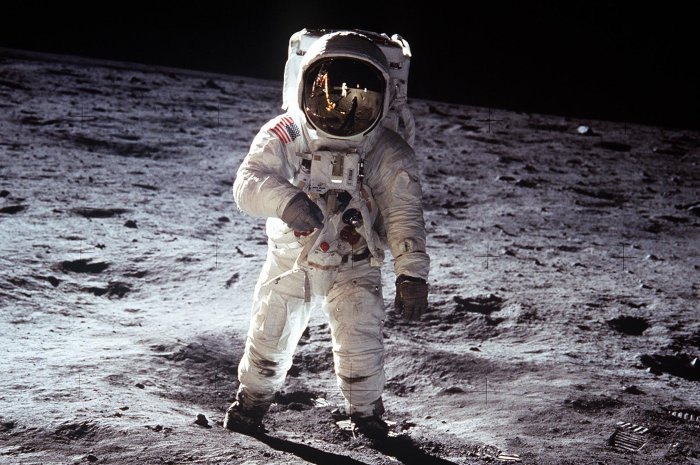
Astronaut Buzz Aldrin walks on the surface of the Moon during the Apollo 11 mission on July 20, 1969. Photo by NASA/UPI | License Photo
After a difficult start to his international career in England, teen prodigy Sooryavanshi stepped up against Zimbabwe.
Published On 27 Jul 202627 Jul 2026
India’s teenage batting sensation Vaibhav Sooryavanshi has shown remarkable maturity over the past six months, a quality that has enabled him to thrive in high-pressure matches after a rapid rise in cricket, India T20 coach VVS Laxman said.
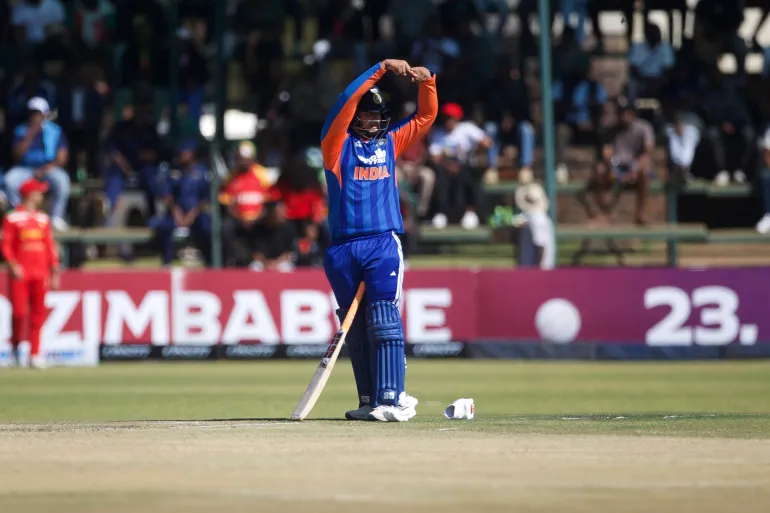
Sooryavanshi smashed an 18-ball half-century in the opening T20 against Zimbabwe before scoring 81 on Sunday as India completed a 3-0 sweep of the hosts.
Recommended Stories
list of 3 itemsend of list
The 15-year-old, who was fast-tracked into international cricket following a breakthrough Indian Premier League season, was named the player of the series after scoring two half-centuries in the three-match contest.
“Very mature. That’s what I really appreciate about Vaibhav,” Laxman told reporters in Zimbabwe.
“With every experience and every match, he understands, assesses and gets better. He reviews every practice session, not just matches.
“His maturity, understanding and awareness over the last six months have skyrocketed. That’s why he’s been able to handle tough situations and perform under pressure against the best players.”
Sooryavanshi’s success in Southern Africa came after a difficult start to his international career in England earlier this month.
The youngest player to represent India registered scores of 14, 13 and 15 in his first three T20 internationals before being left out of the fifth match.
Laxman, who has tracked Sooryavanshi’s progress from age-group cricket through the IPL and into the senior national side, said the teenager’s willingness to learn had been one of his greatest strengths, but managing his fitness remained an important area of development.
India batsman Vaibhav Sooryavanshi gestures after scoring a half-century in their third T20 win over Zimbabwe on Sunday [Wonder Mashura/AP]
“The one area we want him to improve is his overall fitness,” Laxman said.
“He’s a very young boy. He himself wants to get better in every aspect of the game.
“Even today, when he got injured, he still wanted to stay on the field”, the coach added, referring to Sooryavanshi’s effort while attempting a diving catch running in from deep square leg.
“It was our physio who asked him to come off. That’s the eagerness and earnestness he has to contribute in every possible way to the team.”
Laxman said he was not concerned by the left-hander’s struggles in England and backed him to build on his strong start to international cricket.
“I’m sure he will progress and break all the records at the international level. He’s got all the potential and ability to do that,” he added.