state

FBI raids business of Virginia state Sen. L. Louise Lucas who led redistricting efforts

May 6 (UPI) — The FBI raided the offices of and a cannabis business co-owned by L. Louise Lucas on Wednesday in Portsmouth, Va.

Lucas is a Virginia state senator, president pro tempore of the state Senate and a vocal leader of Virginia redistricting efforts.

Officials told The Washington Post that the investigation has to do with corruption and bribery allegations involving the business. Lucas was not arrested, and an FBI spokesperson said the investigation was ongoing.

Democrats called in question the motivation behind the raid; Lucas has often criticized President Donald Trump and was instrumental in the successful Virginia referendum in April to redraw the state’s congressional maps. However, The Washington Post, NBC News and The New York Times reported that sources familiar with the case claimed the investigation was opened during the Biden administration and has to do with the marijuana dispensary.

Rep. Robert C. “Bobby” Scott, D-Va., said that the raid “occurs in the broader context of President Trump’s repeated abuse of the Department of Justice to target his perceived political opponents.”

Don Scott, speaker of the Virginia House of Delegates, emphasized that Lucas has not been charged with anything.

“I am deeply concerned by today’s raid,” he said, WAVY-TV reported. “Given the politicization of this administration — an FBI led by Kash Patel and a Justice Department led by President Donald Trump’s former personal attorney — I think people should take this with a grain of salt and allow the facts to come out before jumping to conclusions,” he said.

Scott said he spoke with Lucas after the search, The New York Times reported.

“She basically said, ‘They’re not going to find anything there and I didn’t do anything wrong,’ ” he said. “She’s very upset and she’s very angry and she won’t back down.”

Lucas was elected to the Virginia General Assembly in 1991.

Source link

South Carolina joins Southern redistricting push after U.S. Supreme Court ruling on minority districts

An election-year redistricting movement has spread to South Carolina as Republicans attempt to redraw majority-Black congressional districts that have suddenly become susceptible because of a U.S. Supreme Court ruling upending protections for minority voters.

Urged on by President Trump, South Carolina Republicans are attempting to redraw a district long held by a Black Democratic lawmaker in their quest for a clean sweep of the state’s seven congressional seats.

Lawmakers already are meeting in special sessions in Alabama and Tennessee in a bid to change their U.S. House districts. And Louisiana lawmakers are making plans for new congressional districts after the Supreme Court last week struck down the state’s current map.

The stakes are high for minority voters who stand to lose their preferred representatives and for any Republican lawmakers reluctant to follow Trump’s wishes. In Republican primary elections Tuesday, Trump-endorsed challengers defeated at least five of the seven Indiana state lawmakers targeted by Trump’s allies for refusing to support a congressional redistricting effort last year.

The Supreme Court’s recent ruling said Louisiana relied too heavily on race when creating a second Black-majority House district as it attempted to comply with the Voting Rights Act. The ruling significantly altered a decades-old understanding of the law, giving Republicans grounds to try to eliminate majority-Black districts that have elected Democrats.

The ruling revved up an already intense national redistricting battle ahead of a November midterm election that will determine control of the closely divided House.

Since Trump prodded Texas to redraw its U.S. House districts last year, a total of eight states have adopted new congressional districts. From that, Republicans think they could gain as many as 13 seats while Democrats think they could gain up to 10 seats. But some of the new districts could be competitive in November, meaning the parties may not get all they sought.

South Carolina to test its will for redistricting

Democratic U.S. Rep. Jim Clyburn has represented South Carolina’s 6th Congressional District since it was redrawn to favor minority voters in 1992. He’s running for an 18th term. But it could get harder for him to win reelection if Republicans redraw his district.

Leaders in the state House and Senate said a redistricting effort needs to start with a two-thirds vote in each chamber. The issue could come up as soon as Wednesday. But if only a few Republicans aren’t on board, it can’t succeed.

Senate Majority Leader Shane Massey has warned that redistricting could backfire because of thin political margins, resulting in a second Democrat in the U.S. House. Massey told reporters Tuesday that he had a cordial conversation with Trump about redistricting, each laying out their concerns.

The state’s primaries are June 9 and early voting starts in three weeks.

Alabama looks at setting a new primary

The state House on Wednesday could debate legislation that would allow Alabama to hold a special congressional primary, if the Supreme Court clears the way for the state to change its U.S. House districts.

In light of the court’s ruling on Louisiana’s districts, Alabama officials have asked courts to set aside a judicial order to use a U.S. House map that includes two districts with a substantial number of Black voters. Republicans instead want to use a map passed in 2023 by the Legislature that could help the GOP win at least one of those two seats currently held by Democrats.

Alabama’s primaries are scheduled for May 19. If the Supreme Court grants the state’s request after or too close to the primary, the legislation under consideration would ignore the results of that primary and direct the governor to schedule a new primary under the revised districts.

Democrats denounced the legislation as a Republican power grab that harkens back to the state’s shameful history of denying Black residents equal rights and representation.

Republicans are “working to secure an electoral victory by taking Alabama back to the Jim Crow era, and we won’t go back,” Democratic U.S. Rep. Terri Sewell told a crowd gathered outside the Alabama Statehouse.

Tennessee plan targets Memphis district

Republican Gov. Bill Lee called Tennessee lawmakers into a special session to consider a plan urged by Trump that could break up the state’s lone Democratic-held U.S. House district, centered on the majority-Black city of Memphis. Republicans didn’t say much about the plan Tuesday.

But as the state Senate began work Tuesday, shouts of “shame, shame, shame” could be heard inside the chamber from protesters gathered in the hallways. On the chamber floor, state Sen. Raumesh Akbari, a Black Democrat from Memphis, called the redistricting “an act of hate.”

Martin Luther King III sent a letter to Tennessee legislative leaders expressing “grave concern” about the plan to divide Memphis, saying the move could undermine the work for voting rights carried out by his father, Martin Luther King Jr.

The candidate qualifying period in Tennessee ended in March, and the primary election is scheduled for Aug. 6.

Thousands had already voted in Louisiana

After last week’s Supreme Court decision, Republican Gov. Mike Landry postponed the state’s May 16 congressional primary to allow time for lawmakers to approve new U.S. House districts. State Sen. Caleb Kleinpeter, a Republican, said a redistricting committee he leads plans to hold a public hearing Friday.

Louisiana voters had already sent in more than 41,000 absentee ballots by last Thursday, when Landry suspended the House primaries, according to the Secretary of State’s Office. That’s about a third of all the absentee ballots sent out to voters. Around 19,000 were from registered Democrats, 17,000 from registered Republicans and the remainder belonged to neither party.

Democrats and civil rights groups have filed several lawsuits challenging the suspension of Louisiana’s congressional primary.

Collins, Loller, Chandler and Lieb write for the Associated Press. Chandler reported from Montgomery, Ala., Loller from Nashville and Lieb from Jefferson City, Mo. AP writer Jack Brook contributed to this report from New Orleans.

Source link

Standoff ends in surrender after man barricaded in car blocks streets near state Capitol

The streets near the state Capitol emptied Monday after a man barricaded himself in his parked car near the building for more than two hours, prompting fears of a possible bomb attack.

Sacramento police and the California Highway Patrol cordoned off several city blocks as SWAT officers and hostage negotiators attempted to make contact with the man, who had scrawled “cops or criminals” and “I just want justice” on his Mazda sedan and plastered the car windows with paper signs.

He voluntarily surrendered without incident just over two hours after police were called to the scene at 1:47 p.m. The Sacramento Bee identified the man as Edgar Napoles-Rodriguez, 27, of Sacramento, though the suspect’s name has not yet been released by officials.

According to court records, the former roommate of Napoles-Rodriguez was granted a temporary restraining order against him last week. The roommate alleged in a legal filing with the Sacramento County Superior Court that Napoles-Rodriguez threatened her with a baseball bat and also threatened to burn down her house.

————

FOR THE RECORD

April 20, 11 a.m.: An earlier version of this post referred to Edgar Napoles-Rodriguez’s female former roommate as a man. It also misstated Napoles-Rodriguez’s age as 28; he is 27.

————

Law enforcement snipers were spotted on the roof of the Capitol during the standoff. A police robot was used when officers attempted to contact the suspect in his car, which was parked on L Street directly in front of the Capitol building. Before surrendering, the man exited the car and began shouting, “Want to shoot me? Shoot me!”

“He may have not had the best of intentions or be the clearest of mind,” said Officer Matthew McPhail, spokesman for the Sacramento Police Department.

The Capitol was not evacuated during the incident, but one entrance was closed.

The Assembly adjourned early Monday but was scheduled to vote on several big issues, including a ban on smoking on college campuses. It wrapped up the meeting abruptly before 3 p.m.

The Senate went through its full agenda as planned and wished Sen. Jerry Hill (D-San Rafael) a happy birthday before adjourning after 3 p.m. without any announcement of the security situation going on outside the building.

Asked about the situation, Claire Conlon, a spokeswoman for the Senate President Pro Tem Kevin de León said, “It’s our policy not to discuss Capitol security details.”

The state Capitol’s security has been ramped up considerably over the last decade.

The most significant incident came late on the night of Jan. 16, 2001, when a big-rig truck smashed into the south side of the historic building during a late-night legislative session on California’s energy crisis. The driver, a 37-year-old man with a history of prison time and mental health issues, slammed his tractor-trailer into the granite portico of the building, and it erupted in flames.

That, plus the terrorist attacks in New York City and Washington, D.C., that fall, sparked a slow but steady move toward increased security around the 142-year-old building.

Now, the perimeter is surrounded by barricades that rise up from the sidewalk, and all public visitors are routed through metal detectors and bag-scanning areas on the north and south sides of the building.

Times staff writers Liam Dillon and Patrick McGreevy contributed to this report.

phil.willon@latimes.com

Follow @philwillon on Twitter for the latest news on California politics

ALSO

Are you an independent voter? You aren’t if you checked this box

Los Angeles Times wins Pulitzer for San Bernardino terrorist attack coverage

California doesn’t have enough housing, and lawmakers aren’t doing much about it


Source link

Top takeaways from fiery, at times ugly, California governor debate

Democrat Xavier Becerra’s rapid rise in California’s race for governor made him a ripe and constant target during a combative nationally televised debate Tuesday evening, his first real test in a high-stakes election that remains highly volatile.

Becerra was ripped throughout the two-hour CNN debate, primarily by his Democratic rivals, who accused him of dodging questions about his stance on single-payer healthcare, falling short as a Biden Cabinet secretary and pocketing a campaign donation from Chevron.

“I think everyone’s invoking my name. It’s nice to hear my name quite a bit,” said Becerra, who served as the U.S. secretary of Health and Human Services during the Biden administration. “I will tell you this: Distorting the facts in your quest to be governor is never good, but using Trump lies to try to damage your opponents is worse, and that’s what we see happening.”

As ballots land in California voters’ mailboxes, the state’s seven top gubernatorial candidates clashed over immigration, President Trump, tax policy, political temperament and a hodgepodge of scandals, mudslinging and other unsavory actions that have risen to the forefront of the hotly contested race.

The snarky, sometimes petulant exchanges reflect how unsettled the race to replace termed-out Gov. Gavin Newsom is, as well as California’s outsize economic and political gravitas on the national and international stage.

Shortly after the debate began, former Orange County Rep. Katie Porter chastised her fellow candidates for their unceasing attacks.

“I can’t believe [the] interrupting and bickering and name calling and shouting and disrespect for everyone up here who’s stepping into public service that anyone wants to talk about my temperament,” said the former Democratic Congress member from Irvine.

Here are the top takeaways from a two-hour debate that somehow seemed even longer:

Becerra takes his lumps

Beccera, who has surged in the weeks before the June 2 primary, faced a barrage of attacks from his Republican and Democratic rivals about his oversight of unaccompanied immigrant minors during his tenure at the Health and Human Services Department and his relationship with a longtime adviser who, along with other consultants, skimmed about $225,000 from one of Becerra’s dormant campaign accounts.

Becerra is not accused of wrongdoing and has been painted as a victim in the prosecutor’s court filings. Still, conservative commentator Steve Hilton, a Republican, suggested Becerra knew about the scheme, and former Los Angeles Mayor Antonio Villaraigosa, a Democrat, questioned why Becerra paid an unusually high fee to one of the consultants named in the indictment.

“It doesn’t pass the smell test,” Villaraigosa said.

Becerra also was accused of changing his position on single-payer healthcare, a top priority of liberal voters that aims to create a healthcare system run and funded by the federal government.

Though Becerra has long supported single-payer healthcare, he recently assured members of the California Medical Assn. — one of the most influential medical lobbyinggroups in California, which has endorsed him — that he would not support it as governor, according to a KQED report.

When asked directly about this, Becerra said “those reports were inaccurate. I continue to be for Medicare for all.”

Becerra sidestepped repeated questions from Porter about whether he supported a state-sponsored single-payer healthcare system in California, saying that he wants to cover “everyone with something like Medicare for all.”

“Covering everyone with something is not single-payer. It’s not even federal Medicare for all. But you won’t say whether you support California having its own state-run single-payer system,” Porter said.

Single-payer healthcare is a telling issue

Democratic billionaire Tom Steyer also has taken heat for changing his position on the issue. The hedge fund founder turned environmental warrior opposed single-payer healthcare during his 2020 presidential bid and now supports a statewide single-payer system called CalCare. He is endorsed by the California Nurses Assn., one of CalCare’s biggest supporters.

A recent analysis by UC researchers estimates CalCare would cost $731 billion to implement in 2027 — a price tag that’s $14 billion larger than all anticipated healthcare spending in California next year.

Villaraigosa said creating a state-sponsored single-payer healthcare system — with a price tag larger than the entire state budget — is a “pie in the sky” proposal. He said he considers healthcare a human right but said a system such as CalCare would require approval from the Trump administration — and that’s not going to happen.

As a former British citizen, Hilton said he is the only candidate who has experienced government-run healthcare.

“As a patient, it nearly killed me,” he said. “That’s another story we don’t have time for. As a policymaker, you end up with the worst patient satisfaction, costs that you can’t afford, taxes, sky-high to pay for it. It is a total disaster.”

Race remains a toss-up

The 2026 gubernatorial contest has been an undulating, unpredictable whirlwind. Unlike every governor’s race for more than a quarter of a century, there is no clear frontrunner, leading to a sprawling field of candidates with notable resumes but little recognition among California’s 23.1 million registered voters.

On Monday, the state Democratic Party released its latest voter survey, which found Hilton and Becerra tied at 18%, and Bianco with 14%. Steyer received the backing of 12%, while support for the other top Democrats in the race — Porter, San José Mayor Matt Mahan, Villaraigosa and State Supt. of Public Instruction Tony Thurmond — was in the single digits. Thurmond did not meet the polling threshold to qualify for Tuesday’s debate or an NBC/Telemundo face-off taking place on Wednesday.

Tuesday’s debate with the leading candidates took place at East Los Angeles College and was hosted by CNN, the first time national media has paid such attention to a California statewide contest since 2010.

Partisan divide on immigration

On the debate stage in Los Angeles, a city that was targeted by Trump administration immigration raids, Bianco criticized California’s sanctuary state laws, which prevent local law enforcement from assisting with federal immigration enforcement.

Villaraigosa defended the undocumented immigrants residing in California, saying they are vital to the economic success of the state. He also accused Bianco of not understanding how California’s sanctuary state policy works — with the former Los Angeles mayor telling him that California has turned over thousands of undocumented immigrants convicted of crimes to federal immigration officials.

Bianco dismissed Villaraigosa’s comment immediately.

“I want Mr. Villaraigosa to tell the mother of the 14-year-old in my county that is dead because of an illegal immigrant that had been deported three times because of DUIs that sanctuary state policy keeps us safe. I don’t think she’s going to agree with you,” Bianco said.

Democrats Porter, Steyer, Mahan and Becerra accused the Trump administration of “terrorizing” Latino communities and targeting people for deportation based on the color of their skin.

Steyer said he would prosecute ICE agents “and the people who send them,” including former Homeland Security Secretary Kristi Noem and Trump advisor Stephen Miller, for illegal racial profiling.

Agreement on need for housing

On the issue of housing, the candidates agreed that California has fallen short of providing enough homes to make the state affordable. Mahan, the mayor of San José, said he has reduced the city’s homeless population by making it easier to build ADUs in people’s backyards, and by reducing red tape for additional types of housing.

Villaraigosa said he built more market-rate, affordable and workforce housing when he was mayor of Los Angeles than anyone else on the stage.

Hilton pressed for building single-family homes in areas of the state with space, rather than forcing more housing into places where residents don’t want them.

Steyer said, “Californians can’t afford to live here,” and there has to be a greater conversation about building more housing, and faster. He also said that cities and counties “do not want new housing” because they can’t afford to pay the health and education costs associated with more residents, and he will solve that issue by closing tax loopholes for big businesses.

Still, housing, homelessness and affordability — top-of-mind issues for California voters — overall received scant attention during the debate, even though CNN debate moderators Kaitlan Collins and Los Angeles-native Elex Michaelson pressed the candidates on the state’s incessant problems with affordability.

Steyer did use the affordability issue to criticize Becerra, currently his greatest political threat, for taking a campaign contribution from Chevron.

“Being in bed with oil companies is a mistake,” Steyer said. “Xavier Becerra has taken the max amount of money from Chevron, and he has said they’re good guys that we need. The truth of the matter is the oil companies are ripping us off at the pump. They’re polluting our air and they’re burning up the climate.”

Becerra responded that it was “a rich response from a guy who made his billions investing in fossil fuels and oil companies, in coal companies.”

“Now he makes the billions, and he has spent more than every other candidate combined in this campaign, using those profits to now try to buy his seat in the governor’s office,” Becerra said.

Where they stand on the proposed billionaire tax

A notable area of policy disagreement among Democrats is a proposal to levy a one-time 5% tax on the wealth and assets of billionaires. Supporters of the measure say they have gathered enough signatures to qualify it for the November ballot.

If approved, the funds would mostly pay for healthcare cuts approved by the Trump administration last year.

Porter said that, although she wants to increase taxes on the state’s wealthiest residents, she doesn’t support the proposal because it is a “one-time tax” that won’t solve the state’s underlying budget issues.

“Yes to a progressive tax code, yes to the wealthy paying more, but this tax is about cheap political points,” Porter said.

Steyer said he would vote for the tax, but he agreed that state leaders ought to go further, including by taxing corporate interests more.

Bianco agreed with Porter that the billionaire tax is a bad idea.

Villaraigosa said California relies too much on the its wealthiest residents to fill state coffers, which leads to “feast and famine” in its budgets. He said businesses and high-earners are leaving the state, and that a plan to tax the wealthiest Americans needs to be enacted at the federal level.

Republican vs. Republican

The two Republicans on stage appeared content to spend their time blasting the Democrats rather than each other.

Bianco was asked if he thought that Republican voters could trust Hilton.

“You’ve called Hilton unethical and dishonest and said that he swindled his way into the Republican side,” Collins said, citing an article from the Atlantic.

“I would never use the word swindled, but the context — yes, I have said that,” Bianco said after some back-and-forth about the particulars of his criticisms. “Have Steve and I disagreed? Absolutely we have.”

He avoided directly criticizing Hilton but said he was the only person on the stage “that their entire existence in their job revolves around honesty, integrity.”

Hilton swerved, saying voters cannot keep voting for the same thing — Democratic leadership — if they want to see change in the state.”

Times staff writers Dakota Smith and Doug Smith contributed to this report.

Source link

Winners, losers of the CNN California gubernatorial debate

For the third time in as many weeks, the leading candidates for California governor met on the debate stage Tuesday night.

The latest installment was a two-hour session, hosted and carried live from Monterey Park by CNN. The debate marked the first time the candidates appeared before a national audience and came as mail ballots have begun arriving in homes throughout the state.

Columnists Gustavo Arellano, Mark Z. Barabak and Anita Chabria took in all 120 minutes, absorbed every zinger — scripted and otherwise — and dutifully observed each parry and thrust. Here’s what they took away:

Arellano: Antonio Villaraigosa finally rises above his gubernatorial rivals. Is it too late?

I wrote my thoughts about this debate while writing my next columna on … something, stopping to pay attention only when issues in my bailiwick like immigration and the failure of the Democratic Party were the subject of discussion. The rest of the time, what the candidates said came off as one giant shout-fest straight out of the studios of the late, great Wally George, with everyone playing true to form.

Chad Bianco raged, Steve Hilton tried to mask his MAGA-ness with his British accent. Katie Porter scolded, Tom Steyer channeled Bernie. Xavier Becerra did his best impression of the old Bunsen character from “The Muppet Show.” Matt Mahan was just … there.

You know who sounded the best? Antonio Villaraigosa.

Anyone who really knows the former L.A. mayor has always seen him as Chicano Prince Hal, someone who doesn’t take himself as seriously as he should. His infidelities effectively killed his political career after his mayoral years; his consulting for the nutritional supplement company Herbalife made Villaraigosa a walking joke among too many Latinos I know.

He has spent the last decade effectively embodying Marlon Brando’s famous quote in “On the Waterfront”: He coulda been a contender. Even his gubernatorial run, announced way before many of his opponents, has mostly had the air of a has-been — that’s one of the reasons why Villaraigosa has polled so low through most of the race to the point he was excluded from many of the early debates.

But that hangdog Villaraigosa was nowhere to be seen tonight.

His wisecracks were kept to a minimum. He stayed mostly within his time limits and didn’t interrupt much. He hammered Hilton over his refusal to admit that President Trump lost the 2020 presidential election and his dismissal of undocumented immigrants.

Villaraigosa especially went hard on his forever frenemy Xavier Becerra on everything from his time as President Biden’s health secretary to how former staffers have been charged with stealing millions of dollars from his campaign funds. (Becerra has not been accused of any wrongdoing.)

When CNN co-moderator Elex Michaelson asked Villaraigosa if he would cancel California’s much-maligned high-speed rail project, the candidate’s emphatic “No” thundered down like a Lebron James dunk. He called out the waste on the multibillion-dollar project, said he revived L.A.’s subway to the sea, and spoke with a passionate gravitas that Becerra could only dream of doing.

“When I make a mistake, I’m accountable,” Villaraigosa said at the end of the debate. This sounded like a candidate who can win — and now he has a month to make a comeback worthy of his political mentor, the late, great Gloria Molina.

Four weeks to prove them wrong, Antonio.

Barabak: It was a no-hitter.

No startling breakthrough. No game-changing moment. No candidate so irresistibly charming he or she knocked the race akimbo and stamped themselves as the far-and-away front-runner in the slowly consolidating contest.

By now, the candidates are plowing well-furrowed ground.

To anyone who has watched each of the debates — and there may not be a great many of those viewers out there — it was all quite familiar.

What is new, and what may have been the draw for those just tuning in, is a sense the race is finally taking a coherent shape, with Xavier Becerra unexpectedly emerging as the candidate to beat.

A month ago, Eric Swalwell was a leading contender in the dozy contest and Becerra was an afterthought, being urged to quit for the sake of his dignity and the good of the Democratic Party. (Fears of a Democratic shutout in the June 2 primary have greatly receded.)

When Swalwell left the race and vacated his congressional seat amid allegations of sexual assault and other potentially illegal misconduct, it was widely assumed much of his support would move to either Steyer or Porter, the two other leading Democratic contenders.

But Becerra has been the clear-cut beneficiary and his new status was evident Tuesday night as he faced repeated attacks. He didn’t particularly dazzle, but that’s not his appeal. It’s his steadiness and seeming unflappability in a time of great upheaval and stress, and that was again evident.

With less than four weeks to election day — and voting already underway — time is waning for another dramatic shake-up like the one that took place between Swalwell’s implosion in April and Becerra’s surge in May.

It seems, however, as though little to nothing will change, with Becerra steadily gaining ground, Hilton consolidating GOP support and the remainder of the field looking for something — or someone — to drastically shake up the race one more time.

Chabria: I don’t know about a winner, but the debate definitely had a biggest loser: Bianco. The Riverside County sheriff, to his credit I guess, didn’t try for a hot second to hide who he really is — a conspiracy-loving immigration hardliner with ties to an extremist group.

Bianco sort-of said he was a member of the Oath Keepers, a far-right organization best known for some of its members participating in the Jan. 6, 2021, storming of the Capitol. He threw out election fraud theories, even suggesting state Atty. Gen. Rob Bonta could be involved. He made it clear that undocumented folks are breaking the law by existing in the state.

Maybe some MAGA voters will stick by that shtick, but I’m guessing independents and more moderate Republicans will find Hilton, the Trump-endorsed Republican, even more appealing after Bianco’s ragey ramblings. Hilton may well be sending his opponent a thank-you note and a bottle of bubbly for that performance.

As for winners, a couple of the Democrats had their moments. Porter spoke with clarity and force on issues including single-payer healthcare (she supports it) and resisting Trump’s immigration policies in this state of immigrants.

But she also directly addressed the criticism of her having a bad temper in a way that I think may haunt her.

As her male opponents bickered back and forth, taking swipes at each other, Porter said that given all the “shouting” and “disrespect” onstage, she was shocked that “anyone wants to talk about my temperament.” It’s a pushback she tried out earlier in the week with a new advertisement that sought to make a punchline out of the criticism.

I get her point and I don’t think a male candidate would face the same scrutiny for yelling at a staffer as she has, but also — what’s more unappealing to voters than an angry woman? A complaining one. That moment of resistance against the narrative may not land the way she intends with voters.

I agree with Gustavo that Villaraigosa had a good night, and that Steyer had Bernie energy — which may be good.

Steyer was the most lively and direct he’s been in a debate, landing a few punches and making points with clarity (far less wonky than he’s been in the past). He’s owning his far-left politics, and labeling himself the “change-maker.”

Steyer has been trailing Becerra in the polls, but Becerra again had a steady if less-than-thrilling appearance. For fed-up Democrats, Steyer may be looking better all the time.

Source link

Justice Department seeks the names of 2020 election workers in Georgia’s Fulton County

The Department of Justice is seeking the names of every person who worked in the 2020 election in Georgia’s Fulton County, a Democratic stronghold that Donald Trump has long accused of widespread voter fraud he falsely says cost him victory against Joe Biden in the state that year.

Lawyers for the county filed a motion on Monday night to quash a grand jury subpoena that asks for the names and personal contact information of county employees and volunteer poll workers. This latest action comes after the FBI in January went to a Fulton County elections warehouse and seized ballots and other documents from the 2020 election, which Georgia’s certified totals showed Trump lost in the state to Biden by 11,779 votes out of nearly 5 million cast. Trump, a Republican, still insists the election was stolen from him even though judges and his own attorney general concluded otherwise.

Monday’s court filing says the subpoena is meant to “target, harass and punish the President’s perceived political opponents.” The request is “grossly overbroad and untethered to any reasonable need,” the county’s lawyers argue. It “cannot yield any evidence that could result in a criminal prosecution,” they wrote, arguing that the statute of limitations on any federal crime related to the 2020 election has already expired.

The Justice Department did not immediately respond to an email seeking comment Tuesday.

County Board of Commissioners Chairman Robb Pitts, in an emailed statement, called the subpoena “yet another act of outrageous federal overreach designed to intimidate and chill participation in elections.”

“Let me be crystal clear. Fulton County will not be intimidated,” said Pitts, a Democrat who’s running for reelection.

Since the 2020 election, Trump “has obsessively propagated the debunked conspiracy theory that Fulton County ‘stole’ the 2020 election from him,” the county’s lawyers wrote. “And he has made it clear that he seeks retribution against those who refuse to indulge his baseless claims.”

Trump has already targeted individual poll workers like Ruby Freeman, who was attacked by him and his supporters after the election. Freeman, who’s Black, has said she was forced to flee her home after false claims of election fraud against her led to racist threats and strangers showing up at her home.

The grand jury subpoena, dated April 17, was served on the county’s director of elections on April 20, the county’s court filing says. It seeks the “name, position/function, residential and email addresses, and personal telephone number(s)” for thousands of election workers “ranging from county employees who assisted on election day, to bus drivers who operated a mobile voting location, to volunteers and temporary poll workers,” the filing says.

The subpoena “is a chilling escalation in the campaign to terrorize Fulton County election workers,” the county’s lawyers wrote, adding that threats arising from the current political environment have caused election workers to “fear for their physical safety.” That and other stresses “including the likelihood of being scapegoated by public officials” are causing election workers to leave their jobs “in unprecedented numbers,” they wrote.

The county’s lawyers note that the subpoena directs the county to provide the records not to the grand jury but to an out-of-state Justice Department lawyer or to the FBI agent who wrote the affidavit used for the seizure of the county’s 2020 ballots in January.

The January seizure of the ballots and other records from Fulton County was one in a string of moves by Trump’s administration to obtain past election records from critical swing states. The FBI in March used a subpoena to get records related to an audit of the 2020 presidential election in Maricopa County in Arizona. And the Justice Department in April demanded that Michigan’s Wayne County turn over its ballots from the 2024 election, which Trump won against Biden’s vice president, Kamala Harris.

The Justice Department is also fighting numerous states in court for access to voter data that includes sensitive personal information. Election officials, including some Republicans, have said handing over the information would violate state and federal privacy laws.

Brumback writes for the Associated Press.

Source link

Strong security presence in Mexico’s Sinaloa state amid cartel violence | Newsfeed

NewsFeed

Security forces have intensified their presence across parts of Mexico’s Sinaloa, setting up checkpoints as rival factions of the Sinaloa Cartel battle for control. Despite the visible military deployment, more than 3,000 people have been killed in nearly two years. The conflict has deepened amid political instability following investigations and indictments linked to former officials.

Source link

Secretary of State Marco Rubio to meet with Pope Leo in Italy

May 4 (UPI) — U.S. Secretary of State Marco Rubio is scheduled to meet this week with Pope Leo XIV in Italy, with planned topics including the Middle East and Cuba.

The State Department announced Monday that Rubio will meet this week with Leo, and an official Vatican calendar notice confirmed the meeting will take place Thursday.

The Washington Post quoted the announcement as saying Rubio, a prominent Catholic in President Donald Trump‘s administration, will “discuss the situation in the Middle East and mutual interests in the Western Hemisphere.”

A USA Today report indicated Rubio and Leo are also expected to discuss Cuba, which has been subject to a U.S. oil embargo and other measures in an attempt to force the smaller country into an economic deal.

The meeting will be the first time a high-ranking administration official has met with the pope since Trump took to social media last month to brand Leo “weak on crime” and “terrible for foreign policy.”

“He wasn’t on any list to be Pope, and was only put there by the Church because he was an American, and they thought that would be the best way to deal with President Donald J. Trump,” Trump wrote in April. “If I wasn’t in the White House, Leo wouldn’t be in the Vatican.”

Rubio and Vice President JD Vance previously met with Leo during a private audience at the Vatican in May 2025, one day after the pope’s Inauguration Mass.

President Donald Trump signs a series of executive orders in the Oval Office of the White House on Thursday. Trump signed an order to expand workers’ access to retirement accounts. Trump also signed legislation ending a 75-day partial shutdown of the Department of Homeland Security after the House voted in favor of funding. Photo by Aaron Schwartz/UPI | License Photo

Source link

After Voting Rights Act setback, Black Americans brace for new fight

At 16, Edward Blackmon Jr. was arrested during a demonstration for voting rights in his Mississippi hometown. He was loaded with schoolmates into a truck once used to haul chickens and left in the summer heat before spending three nights in an overcrowded jail cell without a bed.

It was a moment that set him on a path to become a civil rights lawyer and one of the first Black lawmakers elected in the state since Reconstruction.

Blackmon was part of a generation of Black Americans across the South who fought in courtrooms and in the streets to dismantle barriers to voting and achieve political representation in a region scarred by the legacy of slavery and its aftermath.

One of the crown jewels of that struggle, the Voting Rights Act, was hollowed out by a Supreme Court ruling last week. The court’s conservative majority said states should not rely on racial demographics when drawing congressional districts, a ruling that opened the door to transforming how political power is distributed and making it harder for minorities to get elected.

The majority opinion described racism as a problem of the past. Others saw the decision as another example of its resurgence — “a defibrillator to the heart of Jim Crow,” as one Louisiana politician put it.

Blackmon’s son, Bradford, a 37-year-old state senator in Mississippi, said how the political lines are drawn “shapes who has a real chance before anyone ever votes.”

“It’s just sad that we made progress and then they are always trying to roll it back when it shows that minorities are making more progress than I would guess that those in charge think that they’re allowed to make,” he said.

The elder Blackmon, now 78, said he was resigned to the reality that the fight of his youth is not over.

“It’s just another cycle — an ongoing struggle without a foreseeable ending,” he said.

A legacy at risk

The case, involving a challenge to Louisiana’s congressional map, clarified how the Voting Rights Act can be used to contest district lines that may weaken the voting power of Black residents.

For many Black Americans, the decision was a death knell for a cherished pillar of the Civil Rights Movement. Before the Voting Rights Act of 1965, Black voters in the Deep South had no guarantee of equal access to the ballot. Within a year of its passage, more than 250,000 Black Americans had gained the right to vote. By 2024, nearly 22 million Black voters were registered nationwide, according to the U.S. Census Bureau.

The United States is now witnessing the unraveling of nearly a century of organizing, civil disobedience and personal sacrifice by ordinary people who helped build Black political power to heights unseen since Reconstruction. Veterans of the voting rights movement — people who confronted police violence alongside John Lewis on the 1965 “Bloody Sunday” march in Selma, Ala., or rallied with the Rev. Martin Luther King Jr. — are seeing those hard-won victories stripped away from their descendants.

“I’m the first generation of Americans born with equal rights,” said Jonathan Jackson, a Democratic congressman from Illinois who is the 60-year-old son of the Rev. Jesse Jackson, the late civil rights leader. He said the idea that his children could grow up with fewer protections was “surreal and devastating.”

For Charles Mauldin, who was beaten by law enforcement as a teenager on Bloody Sunday, the ruling reflects a skirmish that was never as settled as some hoped.

“I’m disappointed but not surprised,” said Mauldin, 78, of Birmingham, Ala. “They’ve been chipping away at the 1965 Voting Rights Act for the last 60 years.”

Who holds power now

In Louisiana, younger Black politicians say the high court’s ruling could reshape not just who wins elections, but whether candidates can compete at all, particularly in down-ballot races that often serve as steppingstones to higher office.

Davante Lewis, a 34-year-old Democrat who serves on the state’s utility regulatory board, said he expects districts could be redrawn in ways that make it harder for candidates like him to win.

“They can target my communities … to ensure that I can’t get to an elected office,” said Lewis, one of several plaintiffs in the Louisiana gerrymandering case that went to the Supreme Court.

Jamie Davis, a Black farmer in northeast Louisiana and a Democratic candidate for U.S. Senate, said the decision risks discouraging voters already skeptical that their voices matter.

“I want to be optimistic, but how can you be optimistic when voter turnout in the past election cycles has been really low?” Davis said.

Tennessee is among the states bracing for new redistricting efforts. State Rep. Justin Pearson, who represents Memphis and is running for Congress, said people who struggled to pass the Voting Rights Act are “shocked and devastated that they’re having to relitigate the same fights that they fought 60 years ago.”

But he also predicted that efforts to reduce Black representation could “reinvigorate a civil rights movement in the South that demands equal representation, that demands fairness, that demands justice and equality.”

Supporters of the Supreme Court ruling said it reinforces a race-neutral approach to redistricting, and they say political lines should not be drawn primarily based on race.

Democratic Mississippi state Rep. Bryant Clark said that view ignores how race and party align in the state. In Mississippi, where most Black voters are Democrats and most white voters are Republicans, he said the two are often indistinguishable.

“It’s just a roundabout way to basically legalize racially discriminatory redistricting in the state,” Clark said.

In 1967, his father, Robert Clark Jr., became the first Black lawmaker elected to the Mississippi Legislature since Reconstruction.

With Black residents making up about 38% of Mississippi’s population, Edward Blackmon Jr. said the current maps allow Black voters to elect candidates in some districts while keeping Republican majorities intact across much of the state.

He said lawmakers have little incentive to change that balance because moving Black voters into more districts would make those seats less reliably conservative and force candidates to compete for a broader electorate.

“Where do you think the population goes? They don’t just disappear,” Blackmon said. “What incumbent wants that type of district right now?”

Fight continues

Blackmon was raised in Canton, “when Jim Crow was in full bloom.”

Black children attended separate schools, and during cotton-picking season, classes let out early as rickety trucks with wooden sides arrived to take students to the fields, where they spent hours working.

At home, he watched those inequalities play out in quieter ways.

His father, a World War II veteran who left the sharecropping farm where Blackmon’s grandfather had worked, struggled to find steady work in Mississippi after returning from military service and becoming involved in civil rights organizing. He eventually left for New York to make a living — part of a generation of Black veterans who faced barriers to jobs and opportunities their white counterparts received.

Blackmon remembers sitting nearby as his father and other community leaders gathered on the porch, talking late into the night about forming a local NAACP chapter.

“It was embedded in my memory and experience that it was worth the struggle,” he said.

When the Voting Rights Act passed, it did not immediately change those realities. In places like Canton, federal officials set up registration tables on downtown streets so Black residents could sign up to vote without facing harassment or intimidation from local authorities.

In the years that followed, Blackmon and other lawyers used the law to challenge at-large election systems that prevented Black communities from electing candidates of their choice. Cities and counties were forced to redraw maps into single-member districts.

When those districts still diluted Black voting strength, activists returned to court.

“Without the Voting Rights Act, Mississippi would look so much different than it looks now,” Blackmon said.

Willingham, Brook, Bates and Amy write for the Associated Press and reported from Boston, New Orleans, Jackson and Atlanta, respectively. AP writers Kristin Hall and Travis Loller in Nashville and Safiyah Riddle and Kim Chandler in Montgomery, Ala., contributed to this report.

Source link

Iran lawmaker says Strait of Hormuz will not return to pre‑war state | US-Israel war on Iran

NewsFeed

Iran says the Strait of Hormuz will never return to the status quo that existed before the US and Israel launched their war. A draft Iranian law would permanently ban Israeli vessels and deny transit to nations deemed ‘hostile’ by their alliance with the US.

Source link

Taxes, program cuts and Newsom’s legacy on the line in budget negotiations

One of Gavin Newsom’s top goals as he winds down his final year as California governor is to leave the state with a balanced budget.

After years of the state spending more money than it brings in, it’s Newsom’s last opportunity to fix a chronic deficit or dump the problem on the next governor.

How far he goes to solve the state’s structural spending imbalance will define his legacy as a steward of trillions in taxpayer dollars. As a potential candidate for president in 2028, he could also have a political incentive to do as little as possible.

“Any cuts you make are going to cause people to scream,” said Darry Sragow, a veteran Democratic strategist. “Any increases in taxes are going to cause people to scream and in terms of what’s best for a presidential run, it would be nice if people weren’t screaming.”

As California’s 40th governor, Newsom expanded publicly funded healthcare to income-eligible undocumented immigrants, increased state-subsidized child-care slots and provided free meals for schoolchildren among a wishlist of progressive wins since he took office in 2019.

His achievements have helped struggling Californians live in an increasingly unaffordable state and given him bona fides to tout to voters if he launches a bid for the White House.

But the state could never afford to pay for existing services and the new programs that Newsom and Democratic lawmakers enacted, according to an analysis of ongoing state spending since before the pandemic released by the Legislative Analyst’s Office last week.

Spending from the state’s principal operating fund has grown about $100 billion since Newsom’s first full fiscal year in office in 2019-20, mostly due to the growing cost of existing programs that he inherited. State spending has outpaced California’s strong revenue growth by about 10%, creating a perennial budget shortfall — a structural deficit — that Newsom and the Democratic-led Legislature solve with largely temporary fixes each year.

Instead of making across-the-board program cuts or raising taxes to align spending with revenue, Democrats have tapped into reserves designed to preserve social services for the state’s most disadvantaged communities during economic downturns.

While the California economy remains stable and state revenue has increased, Newsom and lawmakers have taken $12.2 billion from the rainy day fund. Democrats have borrowed $28 billion more from other state funds to cover their spending in recent years, according to the LAO.

“Taken together, these trends raise serious concerns about the state’s fiscal sustainability,” Legislative Analyst Gabriel Petek wrote in a review of Newsom’s January budget proposal.

Fiscal watchdogs have warned that the spending trends will leave California in a precarious position if the stock market tanks and tax receipts bottom out.

Personal income taxes are driving higher-than-expected revenue now, which analysts attribute to an artificial intelligence boom on Wall Street, and suggest the state could have no deficit in the upcoming year. In January, the Newsom administration anticipated significant operating deficits in the years ahead: $27 billion in 2027-28, $22 billion in 2028-29 and $23 billion in 2029-30.

The LAO, the Legislature’s nonpartisan fiscal advisor, said the state has already solved $125 billion in budget problems over the last three years with mostly short-term solutions.

“This issue is really whether they’re going to take seriously the structural deficit that is several years in the making now, where the spending has outpaced revenue, and to address that, they’re going to either have to make some fairly deep cuts or raise revenue and or both,” said former state Controller Betty Yee, who worked as a budget aide under Gov. Gray Davis and recently dropped her own campaign for governor. “But they have to be real. I think resorting to these one-time solutions has really exacerbated the problem.”

How Newsom wants to address the state’s financial challenges will be revealed on May 14 when he is expected to present his revised budget plan in Sacramento. His January budget proposal did not include any significant reductions or cuts to programs.

H.D. Palmer, a spokesperson for the California Department of Finance, said the governor is looking to solve the budget problem with more than a temporary fix.

“Although he is still finalizing his proposal that he’ll put forth to the Legislature, as he has said, he wants those solutions to be durable, and he wants them to have an impact beyond a single fiscal year,” Palmer said.

To stabilize California’s budget, Democrats will probably have to raise taxes or fees to generate new revenue and cut programs, according to the LAO. At least 40 cents for every dollar in revenue is dedicated to education under the state Constitution, requiring policymakers to find between $30 billion and $60 billion annually in additional revenue to cover projected shortfalls in 2027-28 and beyond if relying on new taxes alone.

President Trump’s cuts to healthcare are adding to the problem.

HR 1 will add $1.4 billion in state costs to the general fund. Newsom’s January budget proposal did not include a plan to help millions of low-income Californians who are expected to lose access to healthcare under the federal cuts.

To temper those cuts in California, other groups proposed a new tax on billionaires that appears poised to qualify for the November ballot.

Spearheaded by Service Employees International Union-United Healthcare Workers West, the initiative would apply a one-time 5% tax on taxpayers with assets exceeding $1 billion. If approved by voters, the tax would generate roughly $100 billion, which would fund healthcare programs.

The measure has divided unions and Democrats at the state Capitol.

Newsom has criticized the initiative, citing concerns that increasing taxes on the wealthy will have the opposite intended effect and drive the highest earners out of California. Under a progressive tax structure, the state budget is dependent on income taxes paid by the ultra-rich on earnings largely from capital gains.

Larry Page and Sergey Brin, the co-founders of Google, have already purchased residences in Florida, along with others looking to escape the tax if it goes through in November. Billionaires launched their own ballot measure campaign to undercut the tax proposal.

State lawmakers are also considering avenues to raise revenue, which include repealing a “water’s edge” tax break. Under the change, multinational companies would no longer be allowed to shield the income of their foreign subsidiaries from state taxes. California loses about $3 billion in revenue from the tax break each year.

In its budget plan released in April, the state Senate proposed a new fee on the largest corporations in the state to provide $5 billion to $8 billion annually for Medi-Cal.

The upper house said 42% of Medi-Cal enrollees are full-time workers who are not enrolled in their company’s healthcare plan because their wages are low enough to qualify for state-subsidized healthcare. As a result, corporations aren’t paying for healthcare for many of their employees and instead taxpayers are picking up the bill through Medi-Cal.

SEIU California, the powerful state union council representing over 700,000 workers, endorsed the plan. The union said Trump’s tax policy will reduce corporate taxes by $900 billion, while 3 million Californians lose healthcare.

“In this urgent moment, California’s workers need to see our leaders show us what they’re made of,” said Tia Orr, executive director of SEIU California. “The Senate is showing the courage to demand corporations pay their fair share, rather than making working people pay with their lives.”

The change is being described as a more politically palatable “fee” and not a tax.

“We explored multiple revenue options, and this was the one that felt more narrow, it felt more focused, and it also felt like it was directly going for the subsidy that’s being lost because of the Trump HR 1 cuts,” said Senate President Pro Tem Monique Limón (D-Goleta), who leads the upper house of the Legislature.

Limón said her caucus believes it’s important to address potential revenue streams because of the depth of federal healthcare reductions.

“If we don’t address the structural deficit, we are looking at severe cuts,” she said. “You are looking at people without health insurance. You are looking at hospitals closing down. You are looking at medical providers not being able to take more patients. You are looking at our emergency rooms over capacity, with not enough medical providers. I mean, you’re looking at a place that’s really, really, really difficult, and we feel like we have to, at least, look at what are viable options that are conditional on these cuts coming.”

Newsom has not commented publicly on the Senate’s plan. As governor, he’s been reluctant to embrace new taxes and fees.

Newsom could reject all the proposals for new taxes or fees and continue what he’s done before: take advantage of higher-than-expected tax collections, shift funds around, delay program implementation and borrow money to knock the deficit down to zero, or forecast a surplus, for his last budget year that begins July 1.

If he doesn’t take on California’s larger budget imbalance, then the problem would be the next governor’s to solve. A stock market crash, or economic recession, could force his successor to make drastic cuts across the board with limited reserves to support programs.

Kicking the can again would cement Newsom’s fiscal legacy as a governor who championed bold headline-making policies that bolstered the safety net for low-income Californians, but who failed to provide a solution to pay for his agenda.

“Not only has he not come up with a plan, he has pretended we don’t need one,” said Patrick Murphy, a professor of public affairs at the University of San Francisco.

Newsom’s interest in running for president could seemingly discourage him from slashing the budget and raising attention to the state’s financial woes, Sragow said. Newsom is setting himself up as a potential front-runner for his party. He has said he remains undecided about officially launching a 2028 campaign.

As a Democrat from California, his opponents would automatically label him as financially irresponsible and tax-happy. Calling out the massive budget problem on the horizon, raising taxes and making painful cuts will give them ammunition.

“There’s a long list of things that he’s going to be charged with, and this is likely to be one more,” Sragow said. “But I guess the question is, is he going to be charged with a political misdemeanor or a political felony?”

Former state Sen. Steve Glazer said Newsom is standing on political quicksand either way. State budget projections are based on assumptions about the future that often don’t bear out, leaving his choices exposed to criticism that he went too far, didn’t do enough, and everything in between.

“Whatever the governor decides to do in his May revise and in his final budget, it’s fraught with political risks, because it can be manipulated so easily by all sides,” Glazer said.

If Newsom ignores the spending problem, his successor could blame him for California’s financial woes when they take office in January and provide their own outlook of the state’s fiscal future. At the time, Newsom could be trying to convince America to make him the nation’s next president.

Murphy said Newsom has championed major policies and been reluctant to back off them later when revenue doesn’t pencil out.

In terms of spending, he’s governed similarly to the men who led California before him, with the exception of Jerry Brown, who cut programs to reduce a deficit he inherited in his second stint in the governor’s office and left Newsom with a surplus.

“It’s not all that different than most of the governors have done, which is finding it very hard to say no and finding it very hard to take on a tough choice of going to the ballot to ask for more money or raise taxes,” Murphy said.

On taxation, Newsom is perhaps most similar to former Gov. George Deukmejian, who opposed general tax increases for most of his administration.

Deukmejian left a budget disaster for his successor, Gov. Pete Wilson. Deukmejian publicly claimed he passed a balanced budget in his final year and blamed an economic downturn for the problems Wilson encountered.

When Wilson announced a record $13-billion budget deficit early in his first year in office in 1991, he said the Persian Gulf War, an economic downturn and natural disasters added to a structural deficit in the budget.

The Legislature and Deukmejian, Wilson said, had “papered over” the problem.

Source link

Mexico’s Sinaloa state governor resigns amid US drug trafficking charges | Crime News

Ruben Rocha Moya again denies allegations he shielded cartel, says taking ‘temporary leave’ to defend self.

The governor of Mexico’s Sinaloa state has temporarily resigned days after being charged by United States authorities in a sweeping drug trafficking indictment that has further strained relations between the two countries.

In a brief video statement posted late Friday, Ruben Rocha Moya again denied any wrongdoing, but said he was taking “temporary leave” to defend himself against the US allegations.

Recommended Stories

list of 3 itemsend of list

The indictment unsealed by US prosecutors earlier this week claimed that Rocha Moya and nine other officials directly aided the Sinaloa drug cartel in its smuggling operations in exchange for political support and bribes.

That support included members of the powerful cartel kidnapping and threatening opposition candidates in the 2021 election and stealing paper ballots cast for those running against Rocha Moya, the indictment charged.

Rocha Moya is a member of President Claudia Sheinbaum’s progressive Morena party.

“My conscience is clear,” Rocha Moya said in the video message. “To my people and to my family, I can look you in the eye because I have never betrayed you, and I never will.”

Juan de Dios Gamez Mendivil, the mayor of the Sinaloa state capital Culiacan who was among the other officials charged by the US, also announced he would step down on Saturday. He has denied the allegations.

Sheinbaum has also pushed back on charges, which come at a time when she has sought to navigate tense relations with the administration of US President Donald Trump.

On Thursday, she said her government had not been provided with any concrete evidence to back up the claims, suggesting the information laid out in the indictment was insufficient.

“My position on these events is as follows: truth, justice and the defence of sovereignty,” Sheinbaum said.

She added that if “clear and irrefutable evidence” is presented, the US still must proceed “in accordance with the law under our jurisdiction”.

Sheinbaum maintained her government will not “shield anyone who has committed a crime”.

“However, if there is no clear evidence,” she added, “it is evident that the aim of these charges by the [US] Department of Justice is political.”

Tense US-Mexico relations

Since taking office in January of last year, the Trump administration has heaped pressure on Mexico to do more to address migration and drug smuggling.

The approach has included Washington imposing a host of tariffs as leverage against Mexico’s government.

The US State Department has also labelled several Latin American drug cartels as “Foreign Terrorist Organisations”, an unorthodox move in line with the administration’s more militaristic approach to Latin America.

The administration has broadly argued that the criminal groups are driven, in part, by efforts to destabilise the US, a claim rejected by many longtime experts.

Sheinbaum has walked a careful line with Trump, increasing cooperation in countering cartels while pledging to protect Mexico’s sovereignty. Notably, she has staunchly opposed the prospect of any US military action on Mexican soil.

But experts have said charging elected officials in Mexico represents a major escalation in the Trump administration’s strategy.

Speaking to Al Jazeera this week, Vanda Felbab-Brown, an expert on non-state armed groups at the Brookings Institution think tank in Washington, DC, said the approach had “long been considered a very big step, almost a ‘nuclear option’”.

She predicted more US indictments were likely to come.

Source link

California state schools superintendent election voter guide

p]:text-cms-story-body-color-text clearfix”>

Every Democrat on this list could be expected to work in general harmony with a Democratic governor and in opposition to key Trump administration policies.

There are differences in their backgrounds, but only minor policy divergences, including on the participation of trans athletes in women’s and girls’ sports.

Listed in alphabetical order, with an excerpt from their survey responses:

Richard Barrera, 59, is a longtime school board member in San Diego Unified, the state’s second-largest school system, a senior advisor to Thurmond and before that was a local labor union executive.

“The three experiences that best qualify me for this office are the ones that required me to govern a public school system, execute policy inside the state agency, and understand workforce realities in practice,” Barrera said.

Wendy Castañeda-Leal, 42, has pursued a career in more rural areas, currently serving as superintendent for the Semitropic Elementary School District, which has one TK-8 school with about 140 students off Highway 46 in Kern County. She’s also been director of whole child education for Roseland School District and a secondary alternative school principal.

“I lead districtwide efforts aligned with California’s priorities by advancing equity, strengthening academic achievement, and expanding supports for the whole child, including multilingual learners and underserved student populations,” Castañeda-Leal said. “I also bring extensive site leadership experience as a principal at the elementary, middle and high school levels, where I improved student outcomes.”

Nichelle Henderson

Nichelle Henderson

(Courtesy of Nichelle Henderson.)

Nichelle Henderson, 57, is an elected trustee of the Los Angeles Community College District. Her education career began as a teaching assistant. She later taught sixth grade math and science in Compton Unified. She’s currently a faculty advisor and clinical field supervisor in a Cal State teacher preparation program.

“What it is clear among Democratic candidates is that there are candidates that are seeking this position because they want a safe place to land after having termed out,” Henderson said. “My goal is to build the capacity of our TK-12 public schools to prepare students for higher education and to participate in the local and global workforce.”

Ainye Long, 41, a San Francisco Unified middle school math department chair, ran four years ago with no significant resources and came within less than 1 percentage point of making the runoff. It helped then that no Democrat ran against Thurmond and that Republican challengers divided the Republican vote. Long also had then — and still has — the ballot designation: “public school teacher.” She also is a past senior administrator at a charter-school group.

“One job of the [state superintendent] is to measure the effectiveness [in practice — what actually happens] of our laws, and help to find better ways to educate our body,” Long said. “The people closest to the work are closest to the problems of practice, so they’re the first to see the solution.”

Al Muratsuchi

Al Muratsuchi

(Photo courtesy of Al Muratsuchi)

Al Muratsuchi, 61, represents the 66th Assembly District, encompassing parts of the South Bay, and has been the chair of the state Assembly education committee. He taught briefly at the college level and served as an elected board member of the Torrance Unified School District.

“I am the only candidate running for State Superintendent of Public Instruction with the combined experience of statewide education policy leadership, … local school district governance as a former Torrance Unified School District board trustee, and classroom educator,” Muratsuchi said, adding that he authored 23 education-related bills that were signed into law.

Josh Newman

Josh Newman

(Josh Newman)

Josh Newman, 61, has been a state senator, including chairing the education committee, and a technology company executive. He served in the Army and taught briefly both at the college and middle school levels.

“Among the Democrats in this race, the most significant distinction is between candidates whose approach to this office is primarily organized around labor relationships and funding advocacy, and my own, which emphasizes accountability, outcomes, and the full range of students’ needs alongside continued investment,” Newman said.

Anthony Rendon

Anthony Rendon

(Photo courtesy of Rendon campaign)

Anthony Rendon, 58, was state Assembly Speaker from 2016-23, previously directed Plaza de la Raza Child Development Services and served as chief operating officer for Mexican American Opportunity Foundation.

He spoke of “the role that technology is playing in the degradation of youth mental health and happiness. The next superintendent needs to properly implement California’s ban on phones in classrooms, be ahead of the curve in establishing policies on generative AI use, and make sure teachers have the training and support they need to make sure the classroom is about learning.”

No candidate received enough votes to win the Democratic Party endorsement. The tally was as follows: Henderson: 24.75%; Muratsuchi 21.97%; Rendon 17.43%; Newman 16.82%; Barrera 12.77%.

Source link

Former U.S. envoy says Kim seeks U.S. ties as nuclear state

1 of 2 | Joseph DeTrani, right, speaks with Greg Scarlatoiu at the International Council on Korean Studies annual conference titled “Challenges of the U.S.-South Korea Alliance 2026” at the Hudson Institute in Washington on Wednesday. Photo by Asia Today

May 1 (Asia Today) — Former U.S. Six-Party Talks envoy Joseph DeTrani said North Korean leader Kim Jong Un still wants to normalize relations with the United States but is demanding that Washington recognize North Korea as a nuclear weapons state.

DeTrani said U.S. leverage in negotiations with North Korea has weakened sharply compared with the period around the 2005 Six-Party Talks joint statement, as Pyongyang has significantly expanded its nuclear and missile capabilities and China and Russia have effectively shielded the North.

He opposed calls by some Korea specialists in the United States for arms control negotiations with North Korea, saying Washington should maintain complete, verifiable denuclearization as its ultimate goal. At the same time, he said the United States should pursue interim freeze measures, including a halt to nuclear testing and production of fissile material.

DeTrani made the remarks Wednesday during a presentation and discussion with Greg Scarlatoiu, president of the Committee for Human Rights in North Korea, at the annual International Council on Korean Studies conference, “Challenges of the U.S.-South Korea Alliance 2026,” held at the Hudson Institute in Washington.

DeTrani previously served as director of the National Counterproliferation Center under the Office of the Director of National Intelligence and as U.S. representative to the Korean Peninsula Energy Development Organization. He spent 13 years handling negotiations with North Korea and participated in intelligence work that first confirmed the North’s highly enriched uranium program.

DeTrani said the Sept. 19, 2005, joint statement from the fourth round of the Six-Party Talks was meaningful because it explicitly confirmed North Korea’s commitment to abandon “all nuclear weapons and existing nuclear programs.”

The statement also committed North Korea to returning at an early date to the Nuclear Non-Proliferation Treaty and International Atomic Energy Agency safeguards. The United States affirmed that it had no nuclear weapons on the Korean Peninsula and no intention to attack or invade North Korea with nuclear or conventional weapons.

But DeTrani said North Korea refused U.S. demands during both plenary and bilateral talks to explicitly include its highly enriched uranium program in the agreement, explaining why the final text did not directly mention the program.

He said North Korea would not have agreed to the 1994 Agreed Framework if Washington had tried to explicitly include highly enriched uranium, adding that Pyongyang has consistently shown since around 2000 that it wanted to pursue such a program for nuclear weapons development.

DeTrani said the U.S. negotiating “tool kit” was relatively strong in 2005 but has lost much of its effectiveness by 2026.

He said Wang Yi, now China’s foreign minister, played an active and constructive role as chair of the Six-Party Talks at the time. Today, however, China and Russia are effectively accepting North Korea as a nuclear weapons state and blocking additional U.N. Security Council sanctions, he said.

DeTrani said China still controls about 90% of North Korea’s foreign trade and oil supply, but added that it is difficult to expect Beijing to use that leverage to move Pyongyang in the direction Washington wants.

On Russia, DeTrani said North Korea is likely receiving assistance for its satellite, nuclear and missile programs in exchange for sending more than 12,000 troops, artillery shells and ballistic missiles to support Russia’s war in Ukraine, following the June 2024 comprehensive strategic partnership treaty between Kim and Russian President Vladimir Putin.

Still, DeTrani warned against assuming that the alignment among North Korea, China and Russia is permanent. He said historical distrust between Pyongyang and Beijing, along with geopolitical competition between Moscow and Beijing, remains a source of internal friction.

DeTrani estimated North Korea now has 50 to 60 nuclear weapons based on fissile materials such as highly enriched uranium and plutonium and could expand that arsenal to 100 weapons within several years.

International Atomic Energy Agency Director General Rafael Grossi warned during a visit to South Korea on April 15 that North Korea is expanding uranium enrichment capabilities at Yongbyon and at a new facility resembling the Kangson enrichment site in satellite imagery, describing the program as having advanced to a “very serious” level.

DeTrani said North Korea recently displayed the Hwasong-20, a solid-fuel, road-mobile intercontinental ballistic missile with multiple independently targetable reentry vehicle capability and an estimated range of 15,000 kilometers, demonstrating a potential ability to reach the entire United States.

He said North Korea has more than 400 ballistic missiles, ranging from short-range systems to long-range intercontinental missiles, and is focusing on solid-fuel, road-mobile short-range systems such as the KN-23, KN-24 and KN-25.

DeTrani also said Kim recently visited the second 5,000-ton destroyer, Choe Hyon, and that North Korea aims to build a third and fourth destroyer while securing 12 nuclear-capable destroyers by 2030.

He said North Korea is constructing an 8,700-ton nuclear-powered submarine, a move he described as strengthening the second leg of a nuclear triad intended to preserve retaliatory nuclear capability even after a first strike.

DeTrani said another major change is North Korea’s nuclear doctrine, which now allows for automatic preemptive nuclear use if there is an imminent or perceived imminent threat to the leadership or command and control system.

“With satellite and imagery intelligence, I think we have verification capabilities and will not be deceived,” DeTrani said. “But North Korea remains a black hole, and there is still a great deal of information we cannot access.”

DeTrani said Kim, like his father Kim Jong Il and grandfather Kim Il Sung, understands that normalization with the United States could restore international confidence and open the door to institutions such as the International Monetary Fund and World Bank.

He said Kim’s request at the February 2019 Hanoi summit for relief from U.N. Security Council sanctions imposed since 2016, in exchange for steps related to the Yongbyon nuclear facility, reflected that calculation.

DeTrani said President Donald Trump had built a degree of trust with Kim, and that Kim has conditionally signaled a willingness to meet Trump again.

But DeTrani said in his presentation that it would not be surprising if North Korea had given up on the United States and South Korea, given the Iran conflict, tensions between the United States and NATO, and China and Russia’s de facto acceptance of North Korea’s nuclear status.

He said if Washington recognizes North Korea as a nuclear weapons state, Pyongyang would claim victory and use that recognition to extract more concessions from China and Russia.

Asked about proposals for nuclear nonproliferation or arms control talks with North Korea, DeTrani said, “I absolutely disagree.”

Such an approach, he said, would reinforce the North Korean regime’s belief that the United States will eventually accept it as a nuclear weapons state and would damage the broader nuclear nonproliferation system.

DeTrani identified North Korea’s nuclear program as the biggest challenge facing the U.S.-South Korea alliance in 2026. He also cited additional alliance issues, including debate over the possible use of about 28,500 U.S. troops stationed in South Korea in a Taiwan Strait or South China Sea contingency and support for keeping the Strait of Hormuz open.

— Reported by Asia Today; translated by UPI

© Asia Today. Unauthorized reproduction or redistribution prohibited.

Original Korean report: https://www.asiatoday.co.kr/kn/view.php?key=20260501010000029

Source link

Court restricts mifepristone access nationwide

A federal appeals court has restricted access to one of the most common means of abortion in the U.S. by blocking mailing of mifepristone prescriptions.

Friday’s unanimous ruling from a three-judge panel of the New Orleans-based 5th U.S. Circuit Court of Appeals is requiring that the abortion pill be distributed only in person and at clinics, overruling regulations set by the federal Food and Drug Administration.

The ruling, which is likely to be appealed to the U.S. Supreme Court, is the biggest jolt to abortion policy in the U.S. since the 2022 Supreme Court ruling that overturned Roe vs. Wade and allowed states to enforce abortion bans.

In the ruling, Judge Kyle Duncan, who was appointed by President Trump, agreed with the state of Louisiana’s contention that allowing the drug to be mailed there makes moot the state’s ban on abortion at all stages of pregnancy.

“Every abortion facilitated by FDA’s action cancels Louisiana’s ban on medical abortions and undermines its policy that ‘every unborn child is a human being from the moment of conception and is, therefore, a legal person,’” the ruling states.

Commonplace treatment

Mifepristone was approved in 2000 as a safe and effective way to end early pregnancies. It is typically used in combination with a second drug, misoprostol.

Surveys have found that the majority of abortions in the U.S. are provided via pills and that about 1 in 4 abortions nationally are prescribed via telehealth.

One survey of abortion providers last year estimated that more women in states where abortion is banned obtained abortions that way than by traveling to other states.

Some Democratic-led states have laws that seek to protect providers who prescribe via telehealth to patients in places with bans.

That rise in prominence is why abortion opponents have targeted the pills in legislation and litigation.

Little precedent

There is little precedent for a federal court overruling the scientific regulations of the FDA, and it wasn’t immediately clear how quickly or completely the decision would affect mailing of the drug throughout the country.

Judges have long deferred to the agency’s judgments on the safety and appropriate regulation of drugs.

FDA officials under Trump have repeatedly stated that the agency is conducting a new review of mifepristone’s safety, at the direction of the president.

The judges, all nominated by Republican presidents, noted in their ruling that the FDA “could not say when that review might be complete and admitted it was still collecting data.”

Because of rare cases of excessive bleeding, the FDA initially imposed strict limits on who could prescribe and distribute the pill — only specially certified physicians and only after an in-person appointment where the person would receive the pill.

Both requirements were dropped during the COVID-19 emergency. At the time, FDA officials under President Biden said that after more than 20 years of monitoring mifepristone use, and reviewing dozens of studies involving thousands of women, it was clear that women could safely use the pill without direct supervision.

GenBioPro, which makes generic mifepristone, said in a statement that the court’s decision “ignores the FDA’s rigorous science and decades of safe use of mifepristone in a case pursued by extremist abortion opponents.”

Broader impact

In a court filing, Louisiana’s attorney general and a woman who said she was coerced into taking abortion pills requested that the FDA rules be rolled back to when the pills were allowed to be prescribed and dispensed only in person.

A Louisiana-based federal judge last month ruled that those allowances undermined the state’s abortion ban but stopped short of undoing the regulations immediately.

Friday’s ruling is in effect as the case works its way through the courts and extends beyond Louisiana and other states with abortion bans.

Telehealth prescriptions have become common even in states where abortion is allowed — and the ruling blocks them there, too.

“This is going to affect patients’ access to abortion and miscarriage care in every state in the nation,” said Julia Kaye, an ACLU lawyer. “When telemedicine is restricted, rural communities, people with low incomes, people with disabilities, survivors of intimate partner violence and communities of color suffer the most.”

The National Right to Life Committee said the ruling “restores a critical layer of oversight” in women’s health.

“Women deserve better than an abortion-by-mail system that prioritizes ideology over safety,” said Carol Tobias, the group’s president.

Next step

Friday’s ruling sets up a likely appeal to the Supreme Court.

“I look forward to continuing to defend women and babies as this case continues,” Louisiana Atty. Gen. Liz Murrill, a Republican, said in a statement.

The conservative-majority high court overturned abortion as a nationwide right in 2022 but unanimously preserved access to mifepristone two years later.

That 2024 decision sidestepped the core issues, however, by ruling that the antiabortion doctors behind the case didn’t have legal standing to sue.

Representatives for the FDA and the U.S. Department of Justice did not immediately respond to requests for comment Friday evening.

In the meantime, antiabortion groups are celebrating Friday’s ruling. Marjorie Dannenfelser, president of Susan B. Anthony Pro-Life America, applauded the ruling as “a huge victory for victims and survivors of Biden’s reckless mail-order abortion drug regime.” She also criticized the Trump administration for taking time to conduct its own review of mifepristone, saying its slow movement has forced states to take action.

“Women and children suffer and state sovereignty is violated every day the FDA allows abortion drugs to flood the mail,” Dannenfelser said.

Mulvihill and Schoenbaum write for the Associated Press. AP writers John Hanna, Matthew Perrone and Lindsay Whitehurst contributed to this report.

Source link

Where to vote in California’s June 2026 primary election

p]:text-cms-story-body-color-text clearfix”>

Voters with disabilities have additional options, including Remote Accessible Vote-By-Mail and curbside voting. The remote system allows voters to make their ballot selections using compatible technology in the privacy of their home.

To use the system you’ll need to:

  • Download the system application
  • Mark the ballot selections on the app
  • Print the ballot
  • Sign the envelope provided with the vote-by-mail ballot or the voter’s own envelope
  • Return the printed and signed selections either by mail or by dropping it off at a voting location

Information about how to request this option can be found here.

Curbside voting allows voters to park as close as possible to the voting area, and election officials will bring you a roster to sign, a ballot and any other voting materials you may need.

All polling places and voting centers are required to be accessible to voters with disabilities and will have accessible voting machines.

More information on voting options can be found here.

Source link

Redistricting battle intensifies in states after Supreme Court ruling on Voting Rights Act

A Supreme Court decision striking down a majority Black congressional district in Louisiana has amplified an already intense national redistricting battle by providing Republican officials in several states new grounds to redraw voting districts.

Louisiana has suspended its May 16 congressional primary to allow time for lawmakers to approve new U.S. House districts. Meanwhile, President Trump is pressuring other states to redistrict — potentially still ahead of the November midterm elections that will determine whether Republicans maintain control of the closely divided House.

Trump urged Texas Republicans last year to redraw U.S. House districts to give the party an advantage. Democrats in California responded by doing the same. Then other states joined the battle. Lawmakers, commissions or courts have adopted new House districts in eight states.

That total could grow following the Supreme Court’s decision that significantly weakened a provision in the federal Voting Rights Act.

Here’s a look at how some states are responding to the Supreme Court ruling:

Louisiana

Current House map: two Democrats, four Republicans

Early in-person voting was to begin Saturday for Louisiana’s primaries. But Republican Gov. Jeff Landry moved quickly Thursday to postpone the congressional primary while allowing elections for other offices to go forward.

A federal lawsuit filed later Thursday, on behalf of a Democratic congressional candidate and voter, asked a court to block Landry’s order and allow the House primary to occur as originally scheduled. Among other things, the lawsuit asserted that tens of thousands of absentee ballots already have been mailed to people and a substantial number have been filled out and returned.

Separately, a three-judge federal court panel that heard the case that was appealed to the Supreme Court also issued an order Thursday suspending Louisiana’s congressional primary.

Republican state House and Senate leaders said they are prepared to pass new U.S. House districts — and set a new primary election date — before their legislative session ends in a month.

Alabama

Current House map: two Democrats, five Republicans

Alabama officials on Thursday filed an emergency motion with the Supreme Court seeking an expedited review of a pending appeal in a redistricting case.

A federal court in 2023 ordered the creation of a new near-majority Black district in Alabama, resulting in the election of a second Black representative to the U.S. House. Alabama is under a court order to use the new map until after the next census in 2030.

An appeal pending before the Supreme Court argues that the map is an illegal racial gerrymander, a claim similar to that made in Louisiana.

The state is seeking to lift an injunction blocking the use of the 2023 map drawn by the Republican-controlled Legislature that did not include the new district.

The state’s primaries are set for May 19. Republican Gov. Kay Ivey said Wednesday that the state is “not in position to have a special session at this time” on redistricting.

Florida

Current House map: eight Democrats, 20 Republicans

Hours after the Supreme Court’s decision, Florida’s Republican-led Legislature approved new U.S. House districts that could help the GOP win up to four additional seats in November.

Republican Gov. Ron DeSantis called a special legislative session without knowing when the Supreme Court would issue its opinion in the Louisiana case. But DeSantis expressed confidence that the court would rule as it did. Among other things, the new map reshapes a southeastern Florida district that DeSantis said was created to help elect a Black representative in an attempt to comply with the federal Voting Rights Act.

A Florida constitutional amendment approved by voters in 2010 prohibits districts from being drawn to deny or diminish the ability of racial or language minorities to elect the representatives of their choice. DeSantis said he considers that amendment a violation of the U.S. Constitution. That question is expected to be decided by the courts.

Tennessee

Current House map: one Democrat, eight Republicans

The Tennessee General Assembly recently ended its annual session. But pressure is growing to bring lawmakers back to revise the state’s congressional districts.

Trump posted on social media Thursday that he had spoken with Republican Gov. Bill Lee, who he said would work hard for a new map that could help Republicans gain an additional seat. Democrats currently hold only one seat, a district centered in Memphis, which is majority Black.

Tennessee House Speaker Cameron Sexton, a Republican, said he is in conversations with the White House and others while reviewing the court’s decision.

The state’s candidate qualifying period ended in March. The primary election is scheduled for Aug. 6.

Mississippi

Current House map: one Democrat, three Republicans

Mississippi held its U.S. House primaries in March. But the Supreme Court’s decision could affect elections for other offices.

Republican Gov. Tate Reeves announced previously that he would call a special legislative session to redraw voting districts for the state Supreme Court that would begin 21 days after the U.S. Supreme Court ruled in the Louisiana case. That would put the special session’s start at around May 20.

A federal judge last year ordered Mississippi to redraw its Supreme Court voting districts after finding that they violated the Voting Rights Act by diluting the power of Black voters. Mississippi lawmakers had been waiting on a decision in the Louisiana case before moving forward, but their legislative session ended in April.

Reeves said in his proclamation that the Supreme Court’s decision would provide guidance to lawmakers on whether “race-conscious redistricting” violates the U.S. Constitution.

Georgia

Current House map: five Democrats, nine Republicans

Early in-person voting began April 27 and continues for the next few weeks ahead of Georgia’s primary elections on May 19.

Republican Gov. Brian Kemp said it’s too late for Georgia officials to try to change congressional districts for this year’s elections, because voting already is underway. But he said the rationale in the Supreme Court’s decision “requires Georgia to adopt new electoral maps before the 2028 election cycle.”

Lieb writes for the Associated Press. AP writers Jeff Amy and Kim Chandler contributed to this report.

Source link

King Charles III wins praise for deft handling of Trump on his U.S. state visit

President Trump sang the praises of King Charles III after the monarch’s state visit this week. He even lifted some tariffs on Scotch whisky as a favor to the British monarch.

The king delivered a diplomatic master-class on the trip, mixing praise for his host with subtle criticism. It’s unclear, though, whether it will make a major difference to a trans-Atlantic relationship troubled by divisions over issues including the Iran war.

“In the short term probably yes, in the long term probably no,” said Kristofer Allerfeldt, a University of Exeter professor specializing in American history. But he said Charles had “definitely clawed back some of the prestige of the monarchy” in his homeland with his assured performance.

“He’s done us proud,” Allerfeldt said.

Like all royal visits, the four-day trip to Washington, New York and Virginia by the king and Queen Camilla was a carefully choreographed diplomatic event carried out at the request of the U.K. government. Timed to help mark the United States’ 250th birthday, it was a chance to heal rifts between the U.K. government and the Trump administration.

Trump has criticized Keir Starmer

The president has lambasted Prime Minister Keir Starmer — whom he once praised — over his unwillingness to join U.S. military attacks on Iran, dismissing Britain’s leader as “not Winston Churchill,” the World War II prime minister who coined the phrase “special relationship” for the U.K.-U.S. bond.

It’s part of a wider split between Trump and the United States’ NATO allies, whom he has called “cowards” and “useless” for not joining action against Iran.

None of that has soured Trump’s fondness for the British monarchy, which seems to have been deepened by the president’s unprecedented second state visit to the U.K. in September.

Some U.K. opposition politicians had called for the king’s reciprocal trip to be canceled, lest the president do or say something to embarrass the monarch.

In the end, there was much warmth and few awkward moments — though Trump did not always adhere to the convention that conversations with the monarch should remain private.

At a white-tie state dinner on Tuesday, Trump said “Charles agrees with me, even more than I do” that Iran must never have nuclear weapons.

Trump also said that “if that were up to him,” the king “would have followed the suggestions we made with respect to Ukraine.”

Buckingham Palace appeared relaxed about Trump’s Iran comment, noting that “the king is naturally mindful of his government’s longstanding and well-known position on the prevention of nuclear proliferation.”

The king’s speech chided Trump policies

On Ukraine, however, differences were clear. The U.K. has been one of Kyiv’s strongest supporters in its fight against Russia’s invasion, and in a speech to Congress the king underscored the importance of the need for “unyielding resolve” to support Ukraine.

It was one of several implicit rebukes to the “America first” U.S. administration in the speech, the centerpiece moment of the trip.

With regal understatement and in a cut-glass accent, Charles stressed the essential role of NATO, the importance of checks on executive power, the threat posed by climate change and the strength drawn from “vibrant, diverse and free societies.” He spoke of his pride at having served in the Royal Navy, a force Trump has disparaged.

“It’s difficult to imagine he could have gone much further in what he said and what he didn’t say,” historian Anthony Seldon told The Guardian. “He judged it incredibly well: very brave, very smart, very clever.”

Allerfeldt noted the “extraordinary” reception from both sides of the political aisle to the speech, which drew multiple standing ovations.

“Apart from the section on the natural world and the environment, both Republicans and Democrats stood up and applauded,” he said.

In a less formal speech at the state banquet, the king even drew laughs when he joked about British troops burning down the White House in 1814.

The king alluded to Epstein’s victims

The trip was judged a success despite the shadow of the king’s younger brother Andrew Mountbatten-Windsor, who has been stripped of his royal title of Prince Andrew, exiled from public life and put under police investigation over his friendship with Jeffrey Epstein. He has denied committing any crimes.

Epstein victims had urged the king to meet with them and other sexual abuse survivors. He didn’t, but he did refer obliquely to the issue in his speech to Congress, mentioning the need to “support victims of some of the ills that, so tragically, exist in both our societies today.”

Andrew Lownie, author of a biography of the former Prince Andrew called “Entitled,” praised the speech as “the best defense of the monarchy in years.”

After the royal couple left the U.S., Trump announced he was lifting certain tariffs on Scotch “in honor of the King and Queen of the United Kingdom.”

Buckingham Palace toasted the announcement, saying the king “sends his sincere gratitude for a decision that will make an important difference to the British whisky industry and the livelihoods it supports.”

Trump called the king “a phenomenal representative” for his country, before turning back to a familiar theme: criticizing Starmer.

The president told Sky News that Charles is “a much different person than your prime minister.

“Your prime minister has to learn to deal the way he deals, and he’ll do a lot better,” he said.

Lawless writes for the Associated Press.

Source link

After major enforcement operations, the Trump administration recalibrates its immigration crackdown

When Homeland Security Secretary Markwayne Mullin was questioned by senators during his confirmation hearing about his vision for implementing President Trump’s mass deportation agenda, he said his goal was to keep his department off the front pages of the news.

To some degree, he has. Gone are the social media video clips of now-retired Border Patrol commander Greg Bovino clashing with protesters. Mullin’s predecessor, Kristi Noem, made her first trip as secretary to New York City to make arrests with Immigration and Customs Enforcement. In contrast, Mullin went to North Carolina to review hurricane recovery efforts.

The Republican administration appears to be recalibrating its approach to a centerpiece policy that helped bring Trump back to the White House, moving in many ways away from aggressive, public-facing tactics toward a quieter approach to enforcement. Despite that shift, the administration insists it is not backing down from its lofty deportation goals.

“Clearly they’ve stepped back from the, for want of a better word, the Bovinoist tactics of before,” said Mark Krikorian, the president of the Center for Immigration Studies, which advocates for immigration restrictions. “But it’s not clear this means they’re actually stepping back from immigration.”

The Trump administration launched a series of immigration enforcement operations last year in mostly Democratic-led cities, which drove up arrests in large-scale sweeps. The crackdown sparked clashes between protesters and enforcement officers and led to the shooting deaths in Minneapolis of two U.S. citizens.

Since then, the president’s hard-line anti-immigration agenda has lost popularity with voters and there have been no new high-profile city-based operations launched, raising questions about the administration’s strategy.

“We’re still enforcing immigration laws. We’re still deporting illegals that shouldn’t be here. We’re still going after the worst of the worst — but we’re doing it in a more quiet way,” Mullin said in an interview April 16 with CNBC.

Immigration arrests have dropped, but deportation goals remain

ICE arrests have fallen in recent months, and the number of people in immigration detention has dropped from a high of roughly 72,000 in January to 58,000 this week, according to data obtained by The Associated Press.

But in a sign of its continued determination, ICE in budget documents says it plans to remove 1 million people this fiscal year and the next compared with roughly 442,000 people last year. The agency also has plenty of money to carry out its mission, with Congress granting the Department of Homeland Security more than $170 billion for Trump’s immigration agenda last year.

The administration aims to have enough space to detain roughly 100,000 people this fiscal year, which would more than double the average daily number held in ICE detention last year. The administration has already expanded its detention capacity with the purchase of 11 warehouses across the country.

“They are working on really building a juggernaut of a system,” said Doris Meissner, who headed the U.S. Immigration and Naturalization Service, a predecessor to ICE, during President Bill Clinton’s Democratic administration and is now a senior fellow at the Migration Policy Institute.

White House spokesperson Abigail Jackson said there had been no change to Trump’s strategy.

“President Trump’s highest priority has always been the deportation of illegal alien criminals who endanger American communities,” Jackson said.

ICE did not respond to repeated requests for comment.

Advocates for immigrants are bracing for the Trump administration to turn its attention more intently to stripping away protections for migrants with temporary legal status to remain in the U.S. while their cases are being adjudicated.

In one example of this, the number of green cards approved by U.S. Citizenship and Immigration Services dropped by half over the course of a year under the Trump administration, according to an analysis by the Cato Institute, which supports immigration into the U.S. Humanitarian visas for refugees or people who qualified for asylum saw the biggest declines.

USCIS spokesman Zach Kahler said the drop was due to increased vetting of applicants by the administration.

The Trump administration has also pushed to strip Temporary Protected Status from hundreds of thousands of people, with a key case weighing whether it’s overstepped its power to do so being heard at the Supreme Court this week.

Advocates see it as a way to send a chilling message to immigrant communities and make more people vulnerable to deportation. It also enables the department to operate without the public spectacle of workplace raids or home arrests.

ICE has also focused over the past year on creating agreements with jurisdictions around the country that allow local and state law enforcement to carry out an expanding array of immigration enforcement tasks, ranging from checking the immigration status of people in their jails to incorporating immigration checks during routine traffic stops.

These agreements, known as 287g, have grown from 135 in 20 states before Trump took office to more than 1,400 in 41 states and territories now.

Some states, most noticeably Florida and Texas, have mandated various forms of cooperation between local law enforcement and ICE.

Meissner, from MPI, said Trump’s border czar, Tom Homan, is likely to prioritize further discussions about how cities and states can cooperate with ICE.

“At the end of the day, some of this may very well succeed in increasing the numbers,” Meissner said.

Calls to enforce work restrictions

Conservatives who want more deportations say the only way to truly crack down on illegal immigration is to make it so difficult for the migrants to work that they’ll leave on their own.

The Trump administration has already taken steps to make life harder for people in the country illegally including limiting who can live in public housing by immigration status, sharing Medicaid information with ICE and requiring people in the country illegally to register with the federal government.

Krikorian, of the Center for Immigration Studies, said the Social Security Administration could send out letters alerting employers when an employee’s name doesn’t match their Social Security number. Authorities could repeatedly and consistently carry out audits of I-9 forms, which companies are supposed to fill out and submit to the federal government showing that new hires are legally able to work. And they could require banks to collect citizenship information on customers.

Whatever the strategy going forward, the administration is facing heavy pressure not to back away from its goals.

“The numbers are too low,” said Mike Howell, part of the Mass Deportation Coalition, which launched a playbook for how the administration can actually get to a million deportations a year by using tactics such as worksite enforcement.

“The deportation numbers are just too low,” Howell said, “and they need to be much higher, and they can be much higher.”

Santana writes for the Associated Press. AP writers Lisa Mascaro and Will Weissert contributed to this report.

Source link

California secretary of state election voter guide

p]:text-cms-story-body-color-text clearfix”>

Across the country, debates over voter identification laws have become a flash point in broader fights about election security and voting access.

Supporters of voter ID laws say they are needed to prevent election fraud and ensure only eligible voters cast ballots. Critics argue there is little evidence of noncitizens voting and say the requirements instead would reduce voter participation in elections.

Under California law, voters in the state are not required to show or provide identification when casting a ballot in person or by mail. The state does require ID when registering to vote, and residents must swear under penalty of perjury that they are eligible to vote and they are a U.S. citizen.

Weber has opposed proposals that would require voters to show identification in order to cast a ballot. She and many Democratic leaders argue that voter ID laws can create barriers for eligible voters, particularly those who may not have easy access to government-issued identification.
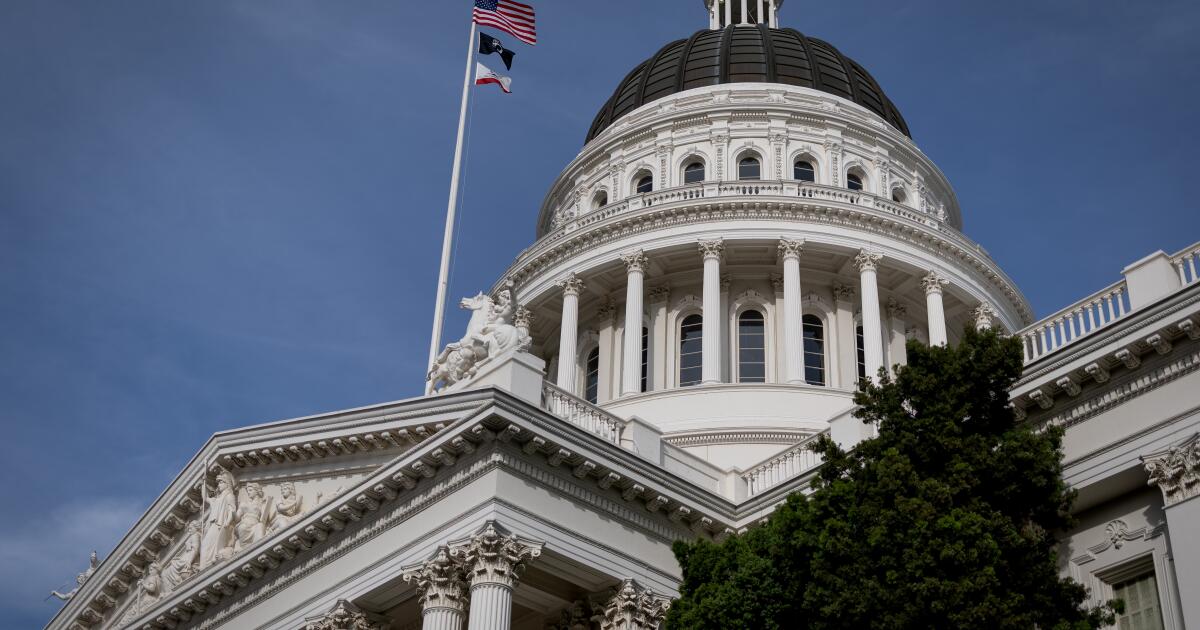

Weber believes Voter ID efforts are meant to sow doubt in the integrity of the elections system.

“When you really get to it, Voter ID is a smoke screen for trying to create the idea that this is a corrupt system,” she said.

Weber instead supports policies aimed at expanding participation among eligible voters, including vote-by-mail ballots and automatic registration.

Conversely, Wagner wants the state to require voters to show ID at the polls. He argues that requiring identification would strengthen public trust in election results and align California with practices used in many other states. He said it’s patronizing to minorities when critics argue it’s hard for them to get identification.

“You need an ID to drive,” he said. “You need an ID to fly in a plane. You need one to buy alcohol. You need it to buy tobacco.”

Wagner has been working with proponents of the Voter ID ballot measure to raise money and helped gather signatures. That statewide ballot measure would require state or local elections officials to verify that Californians registering to vote are U.S. citizens by “using government data,” which according to supporters could include information in the federal Social Security Administration database, jury summons information and other government records.

“What I’m pledging the people of California is that if they pass voter ID, I will protect it. I will sue if I have to,” Wagner said. “If I am secretary of state, I will implement it and hold the registrars accountable and hold my office and myself accountable for doing the will of the people.”

Source link

Louisiana congressional primaries are suspended as a result of Supreme Court ruling

Louisiana’s congressional primaries won’t be going forward as scheduled in May, as a result of a U.S. Supreme Court ruling that struck down a majority-Black congressional district, the state’s top elected officials said Thursday.

Gov. Jeff Landry and Atty. Gen. Liz Murrill, both Republicans, said in a joint statement that Wednesday’s high court ruling effectively prohibits the state from carrying out the primaries under the current districts. Early voting had been scheduled to begin Saturday in advance of the May 16 primary.

“The State is currently enjoined from carrying out congressional elections under the current map,” Landry and Murrill said in the statement posted to social media. “We are working together with the Legislature and the Secretary of State’s office to develop a path forward.”

That path is likely to lead to a new U.S. House map benefiting Republican candidates in Louisiana.

President Trump, in a series of social media posts Thursday, praised Landry for moving quickly to revise the state’s congressional districts and urged Republican Tennessee Gov. Bill Lee to do likewise in light of the Supreme Court’s decision.

While civil rights activists denounced the potential for diminished minority representation in Congress, top Republicans cited the Supreme Court’s decision as justification to spur an already intense national redistricting battle among states before the November elections.

“I think all states who have unconstitutional maps should look at that very carefully, and I think they should do it before the midterm,” House Speaker Mike Johnson told reporters in Washington.

Questions persist about election postponement

Louisiana’s election suspension was denounced by some Democrats and questioned by some legal experts.

“This is going to cause mass confusion among voters — Democrats, Republicans, white, Black, everybody,” said Louisiana state Sen. Royce Duplessis, a Democrat who represents the New Orleans area. “What they’re effectively doing is changing the rules of the game in the middle of the game. It’s rigging the system.”

Although Louisiana officials may legally be able to move the primary, it’s not accurate to assert that it was blocked by the Supreme Court’s decision, said Ruth Greenwood, director of the Election Law Clinic at Harvard Law School.

State Rep. Kyle Green, a former assistant state attorney general who is chair of the House Democratic caucus, also cast doubt on the legal justification for postponing the congressional primary.

“The Court’s decision does not halt the election process on its own,” Green said. “And any attempt to suspend or disrupt an ongoing election at this stage would raise serious constitutional concerns.”

Delaying an election is unusual but not unprecedented.

During the onset of the COVID-19 pandemic in 2020, several states pushed back elections because of health concerns. Democratic Gov. John Bel Edwards, who led Louisiana at the time, postponed Louisiana’s April 4 presidential primary three weeks before it was supposed to occur — then delayed it again until July 11.

Louisiana could join a national redistricting wave

Louisiana currently is represented in the U.S. House by four Republicans and two Democrats. A revised map could give Republicans a chance to pick up at least one more seat in the November midterms — adding to Republican gains elsewhere from redistricting.

Voting districts typically are redrawn once a decade, after each census. But Trump last year urged Texas Republicans to redraw House districts to give the GOP an edge in the midterms. California Democrats reciprocated, and redistricting efforts soon cascaded across states.

On Wednesday, Florida became the latest state to redraw its U.S. House districts, adopting a new map backed by Republican Gov. Ron DeSantis that could give the GOP a chance at winning several additional seats.

The Florida vote occurred just hours after the U.S. Supreme Court’s conservative majority issued a ruling that significantly weakened minority protections under the federal Voting Rights Act. The court said Louisiana officials had relied too heavily on race when drawing a congressional district that is represented by Democrat Cleo Fields.

Trump wants Tennessee to also take up redistricting in response to the court’s ruling. The president posted on social media that he had spoken with Lee, who he said would work hard for a new map that could help Republicans gain an additional seat. Democrats currently hold only one of the state’s nine House seats — a district centered in Memphis, which is majority-Black.

Tennessee House Speaker Cameron Sexton, a Republican, said he is in conversations with the White House and others while reviewing the court’s decision.

Louisiana has a history of redistricting challenges

After the 2020 census, Louisiana officials had drawn House voting district boundaries that maintained one Black-majority district and five mostly white districts, in a state with a population that is about one-third Black.

A federal judge later struck down the map for violating the Voting Rights Act. And the following year the Supreme Court found that Alabama had to create its own second majority-Black congressional district.

In response, Louisiana’s Legislature and governor adopted a new House map in 2024 that created a second Black-majority district. But that map also was subsequently challenged in court, leading to the most recent Supreme Court ruling.

After the ruling, Landry called U.S. House candidates on Wednesday and told them that primaries would probably be stalled, according to Misti Cordell, a Republican running in a crowded race to fill U.S. Rep. Julia Letlow’s vacated seat.

“It’s an inconvenience for a candidate for sure, but you know they want to do it right versus having to go through all this again,” Cordell said. She added that she appreciated the heads-up before she and other candidates began “spending their war chest” during the final weeks leading up to election day.

Republican state lawmakers are reviewing which pending bills could be used to alter primaries and reconfigure congressional maps, said Louisiana state Rep. Beau Beaullieu, chair of the House committee overseeing redistricting efforts.

Cline, Brook and Lieb write for the Associated Press. Brook reported from New Orleans and Lieb reported from Jefferson City, Mo. AP reporter Travis Loller contributed to this report from Nashville.

Source link