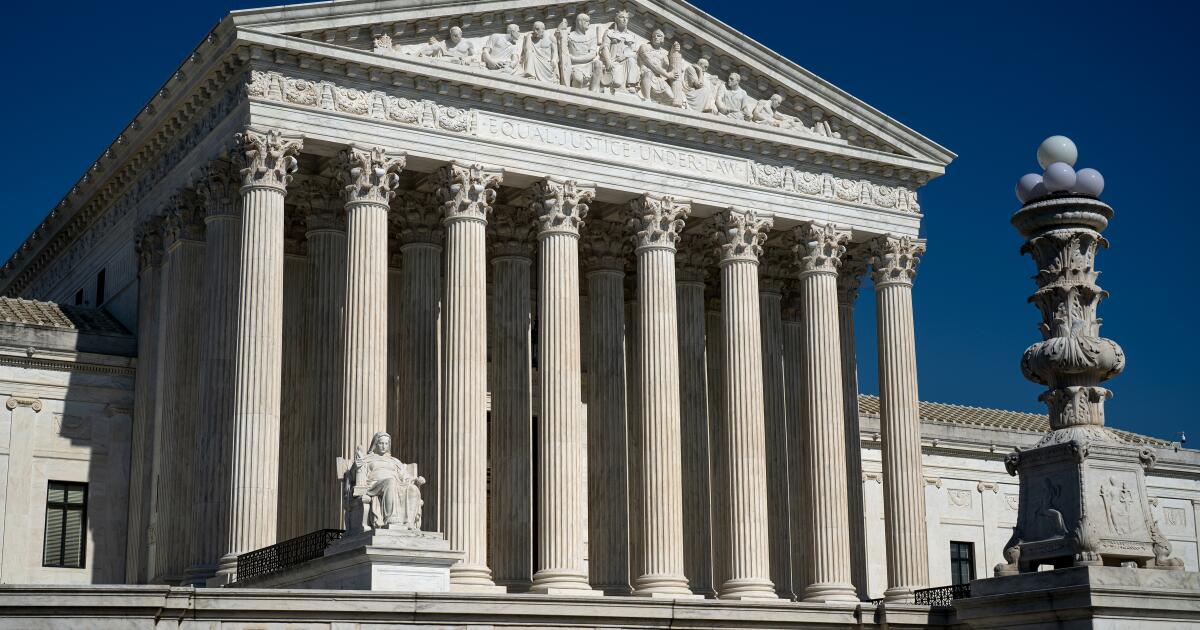
WASHINGTON — Alabama on Wednesday asked the Supreme Court to allow it to use a congressional map favoring Republicans in this year’s elections, despite a lower court’s ruling that the redistricting plan intentionally discriminates against Black people.
The state’s Republican leadership filed an emergency appeal with the justices a day after a three-judge court refused to let the state use a map it adopted three years ago that has a majority Black population in just one of its seven congressional districts.
The judges instead required Alabama to continue using a court-ordered map that was put in place for the 2024 elections that includes two districts where Black residents comprise a majority or close to it.
Atty. Gen. Steve Marshall told the court that the state did not intentionally discriminate against Black residents and should be allowed to hold elections this year under a map chosen by lawmakers, not judges.
The appeal is the latest development in the fallout from last month’s Supreme Court ruling that struck down a Black-majority district in Louisiana and weakened the federal Voting Rights Act. That ruling has led Republicans in several Southern states, including Alabama, to take steps to reshape voting districts with large minority populations that have elected Democrats.
The redistricting frenzy is part of a broader push by President Trump to try to hold on to Republicans’ slim House majority in the November elections.
The Alabama cases stretches back several years. The three-judge panel in 2023 ruled that a map drawn by Republican state lawmakers intentionally diluted the voting power of Black citizens. The court said the state, which is about 27% Black, should have two districts where Black voters are the majority or close to it. The court-selected map was used in 2024.
After the Supreme Court’s recent ruling in the Louisiana case, Alabama officials moved to implement the 2023 state-drawn map. The Supreme Court’s conservative majority agreed to lift the injunction that had blocked the map’s use and sent the case back to the three-judge panel for reconsideration in light of the Louisiana ruling.
In the meantime, voters cast ballots in Alabama’s May 19 primaries, and Republican Gov. Kay Ivey set new special primaries for Aug. 11 in four congressional districts affected by the map switch.
Upon further review, the judicial panel said it was standing behind its initial finding that there was “undisputed evidence” of intentional racial discrimination, a holding that was independent of and unaffected by the Supreme Court ruling on the Voting Rights Act.
It said the special congressional primaries should instead proceed under the previous court-approved districts.
The use of the court-ordered map led to the 2024 election of U.S. Rep. Shomari Figures, a Black Democrat. State Republicans are seeking to use a map that would give the GOP an opportunity to reclaim the south Alabama seat.
The state is asking for Supreme Court action by Monday as it makes preparations for the special vote in August.
Attention screenwriters, producers and agents: The Jonah Jeovany Vasquez story continues this weekend in Clovis, and it’s giving off Disney-like vibes.
The senior at Cathedral High is running in the 1,600 at the CIF state track and field championships on Friday at Buchanan High. He had never stepped on a “squishy” surface, otherwise known as a track, before this season.
“I never even knew what a track felt like,” he said. ”Everything was new to me.”
For three years, he attended Alliance Leichtman-Levine, a small Los Angeles charter school near his home in South Los Angeles. He ran cross country on his own with little coaching.
“They would hire a random coach off the street and we’d play flag football,” he said.
His training was jogging on a treadmill for two miles and maybe getting eight to 10 miles a week.
He finished third at the 2024 City Section Division V finals in 16:48 as the only representative from his school. In the state final, he finished 76th in Division V with a time of 16:58.60. That experience gave Vasquez motivation.
“Seeing so many people pass me bothered me,” he said. “I promised myself I was going to train hard so it wouldn’t happen again. I wanted to prove to myself I could run with the top guys.”
Jonah Jeovany Vasquez of Cathedral is on the podium after finishing second in the Division 3 1,600 at Moorpark.
(Cathedral)
He transferred to Cathedral last May, and coach Martin Farfan aggressively trained him to make up for lost time. Vasquez ran 15:35 on the state championship course in Fresno. But two weeks before the state championships, he was struck by an E-bike during a 10-mile workout running along the L.A. River. He went flying and had a gash on his knee.
“It was traumatic. I was at the peak of my power. I was super fit and faster than I had ever been,” he said.
He iced the knee and stopped training. He still ran in the CIF prelims. “I had no fitness,” he said. “I was like a deer in the headlights.”
Farfan started calling coaches telling them he had a talented runner but the recruiters were unimpressed. They took to the internet and couldn’t find a single track time for Vasquez. Farfan had a ringer about to try track for the first time.
Two weeks ago at the Southern Section divisional championships, he finished second in the Division 3 final in a personal-best 4:08.44.
Vasquez is healthy and eager to be the one passing runners with his late kick on Friday and Saturday night. He also has a scholarship waiting for him at Long Beach State.
“I’ve always had natural endurance,” he said. “I’ve been active since I was little. I honestly believe when I’m in college, I’m going to do some great things. I have that spark in me not every athlete has. I have the drive to be the best I can possibly be. Maybe not by my freshman year, but I will develop. I will not stop until reaching my goal. It’s all I want. When I sleep or do activities with my family, all I think about is running.”
His father immigrated from Nicaragua. His mother has family in Guatemala. They’ve supported Vasquez as running became his passion.
“I honestly believe I have a 4:04 or 4:05 in me,” he said.
Never doubt what can happen when a teenager finds something they love and devotes time and energy to achieving their dreams.
The number of high school baseball and softball teams in Southern California not wanting to participate in the regional playoffs next week continues to grow. The question is: Next season, when there are state championships held in the two sports, will there be fewer opt outs?
“I would think so,” said Brian Seymour, associate executive director of the CIF.
The City Section Open Division baseball champion, Birmingham, and runner-up, El Camino Real, both passed on the regional playoffs. Three of the four Division 1 semifinalists — Norco, Harvard-Westlake and Sherman Oaks Notre Dame — also opted out. In Southern Section softball, the two Division 1 finalists, JSerra and La Mirada, are ending their seasons on Friday.
These are softball opt outs for state playoffs so far:
JSerra Catholic Cathedral City Notre Dame/Sherman Oaks Lutheran/Orange Northwood La Mirada Pacifica/Garden Grove San Clemente Warren Elsinore Kennedy ML King
Travel ball begins in June, and that’s the big roadblock for softball, with many coaches and players participating. Next season, the state championships would be held the first weekend of June, the same dates as this year’s regional finals, so solving the softball dilemma remains uncertain.
The following Southern Section baseball teams have opted out for next week’s state playoffs. Trinity Classical Academy, Harvard-Westlake, Norco, Crossroads Christian, Notre Dame/Sherman Oaks, Agoura.
“We’ve heard the comment from a number of different coaches [that] once we go to a state tournament, they were more inclined to make it work,” Seymour said. “Softball may take a little longer to come around. The power of representing your community and school is a little bit more than playing for your fifth travel team.”
But players invest thousands of dollars in club softball and coaches make good summer money in travel ball.
Seymour said multiple sites are under consideration in Southern California and Northern California to host the state championships.
He’s hopeful both will catch on like swimming did when the CIF first had state championships.
“We have everybody in swimming now, where the first year was hit and miss,” he said.
This is a daily look at the positive happenings in high school sports. To submit any news, please email eric.sondheimer@latimes.com.
Several injured people have been transported to hospitals to be treated for chemical burns.
Published On 26 May 202626 May 2026
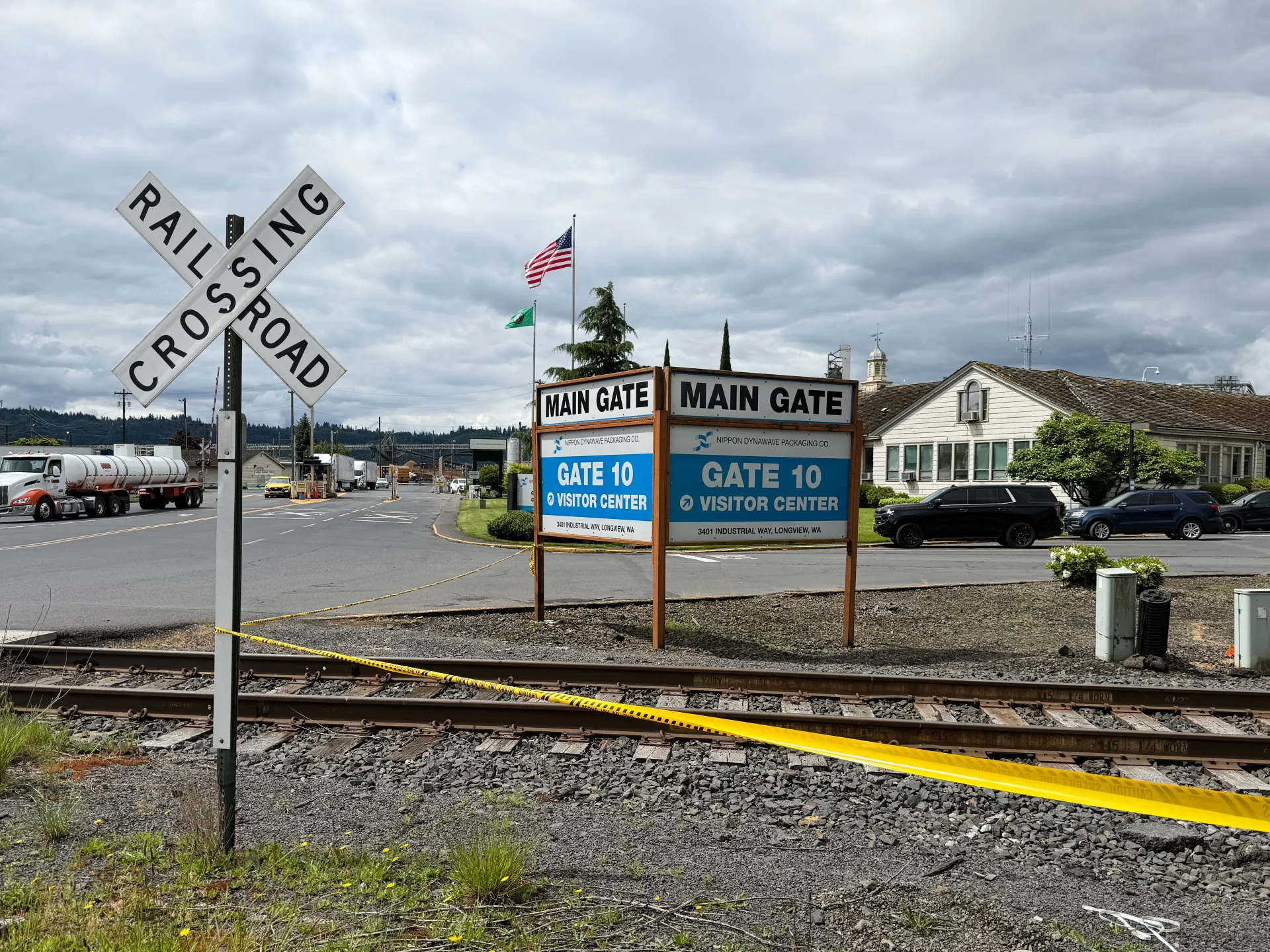
A chemical tank has imploded at a Nippon Dynawave Packaging facility in the US state of Washington, killing several people and critically injuring others, authorities said.
Emergency responders on Tuesday remained at the site in the city of Longview in Cowlitz County, about 70km (45 miles) north of Portland, Oregon, the Longview Fire Department said in a joint written statement with Nippon and the Cowlitz County Sheriff’s Department.
Recommended Stories
list of 3 itemsend of list
Multiple patients who suffered from chemical burns and other injuries were transported to nearby hospitals. Authorities said the implosion posed “no immediate threat to the surrounding community”.
The statement said that officials “can confirm fatalities related to the incident” along with “multiple critical injuries”, but did not provide figures.
At least nine workers and one firefighter were taken to hospitals from the site, said Scott Goldstein, the Cowlitz 2 Fire and Rescue chief who was among those who responded. The number of deaths was “undetermined”, he said at a news conference.
PeaceHealth St John Medical Center in Longview told ABC News it had seen nine patients related to the incident, including one who had died. Six of the patients were in fair condition, and two other patients had been transferred to other facilities, the hospital told ABC.
The joint statement said that a tank containing “white liquor”, a chemical solution of sodium hydroxide and sodium sulfide used in the production of paper pulp, had ruptured at about 7:15am local time (14:15 GMT).
Goldstein said at the news conference that the 80,000-gallon (about 300,000-litre) tank was approximately 60 percent full.
In southern California, meanwhile, authorities have been monitoring an overheating industrial tank containing methyl methacrylate, a highly flammable chemical used in the production of plastics. The worst-case possibility of an explosion was ruled out on Monday at the GKN Aerospace facility in Garden Grove after a crack relieved some of the mounting pressure, officials said.
Orange County Fire Authority spokesman Greg Barta said in an update on Tuesday morning that the temperature in the tank was holding steady and that crews were working to ensure that people evacuated could get home as soon as possible.
May 26 (UPI) — Vice President JD Vance hosted a meeting Tuesday afternoon with state attorneys general as part of his task force on fraud.
The event was largely attended by only Republican officials, however, because the task force invited attorneys general from the Democratic party with less notice than their Republican peers, Politico reported.
The Democratic attorneys general were invited to the meeting Friday, with a deadline to respond by Saturday. Republicans were invited about a week earlier. The 24 Democrats affected by this wrote Vance a letter declining the invite, CNBC reported.
“While we would appreciate the opportunity to engage in serious discussions, the invitation was provided with less than one business day’s notice with no agenda,” the letter said. “This short notice does not match the spirit of collaboration that has long defined our joint efforts with federal partners. Accordingly, we respectfully decline to attend at this time.”
When President Donald Trump announced Vance’s role as “fraud czar” in April, he said the investigations would center on Democrat-run states.
Vance on Tuesday said that in two months, the task force has “exposed billions of dollars in benefits that had been stolen from the American people.”
“We referred over $22 billion in fraudulent small business loans back to the Treasury for collection,” he said. “We deferred more than $1.3 billion in fraudulent Medicaid reimbursements that were coming from various states, particularly California. We put a six-month hold on enrollments for new hospice and home health care providers, because so many of the newer hospice providers were not actually providing hospice services but were just focused on fraud.”
In a press release, the White House said Trump and Vance are “unleashing an unrelenting, full-scale assault on the fraudsters, scammers and corrupt operators who have looted billions from American taxpayers.” The release included a list of alleged fraud cases and actions, including many instances focused on Minnesota and California. No Republican-led states were cited.
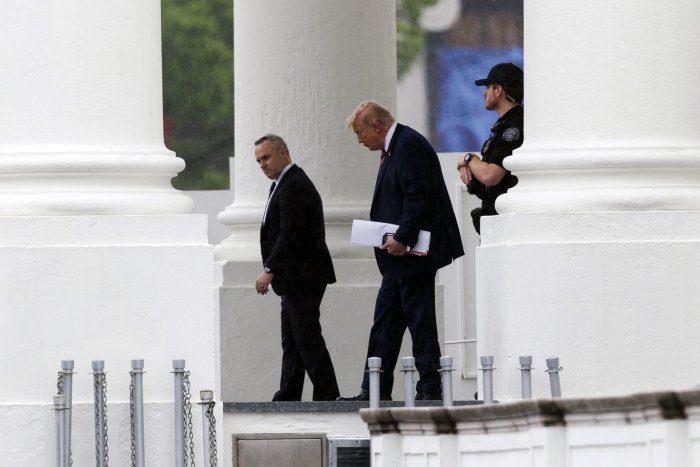
President Donald Trump leaves the White House on Tuesday. Trump is traveling to Walter Reed National Military Medical Center for his annual physical. Photo by Will Oliver/UPI | License Photo
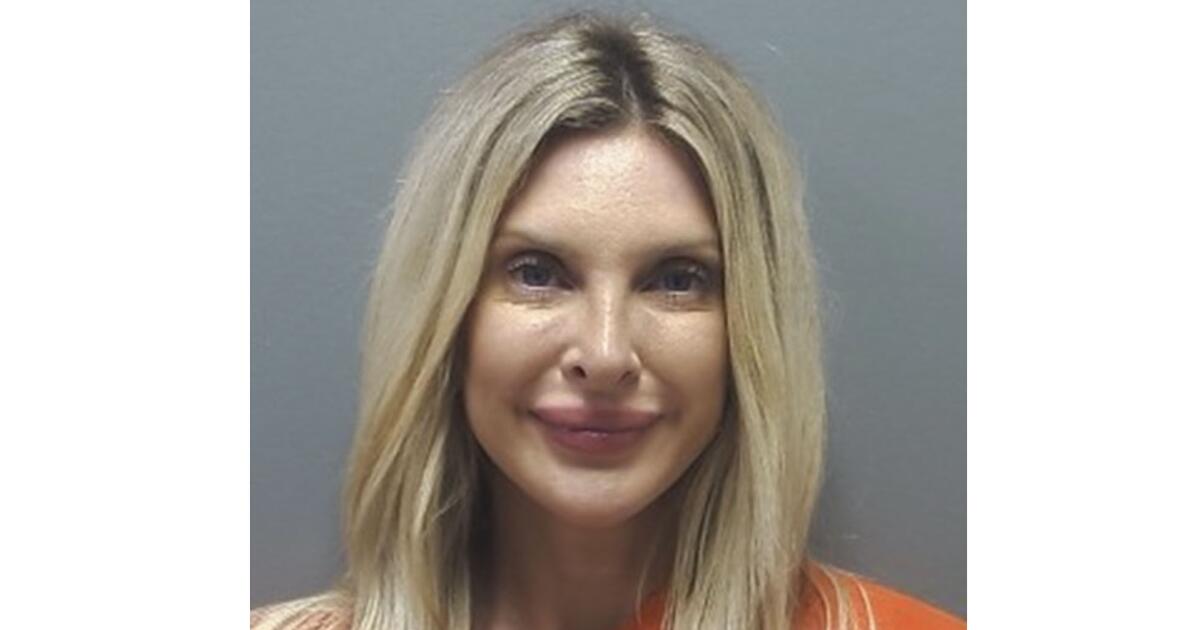
Lindsie Chrisley, one of reality star Todd Chrisley’s two children with his first wife, was arrested Saturday night on suspicion of driving under the influence in Concord, Ga.
The podcaster was booked on charges including DUI less safe — a DUI charge for those whose blood alcohol is less than 0.08% — attempting to elude police, improper passing, reckless driving and speeding, according to a police report obtained by The Times. Her bail on the five counts totaled $5,961, according to the Cherokee County Sheriff’s Office.
“I got pulled over speeding past a car on a two-lane road because they almost hit an animal,” Chrisley told TMZ, which first reported the arrest. She said she was trying to miss that car and “whatever the animal was.” She said she planned to fight the charges.
Law enforcement had a different story to tell in its report, alleging that she was pulled over for traveling 86 mph on a surface street. After the deputy activated the lights on his car and initiated the traffic stop, Chrisley allegedly passed “multiple suitable stopping locations” before finally pulling over at a Chevron station, the report said.
The sheriff’s deputy who spoke with Chrisley said in his report that her stories weren’t making sense, her speech was slurred and her breath smelled of alcohol. After she was asked to step out of the Ford Bronco, she told the officer she didn’t know why she had been pulled over, then said it was because she had swerved around another vehicle that had “almost hit a deer,” the report said. The officer asked her if that was why she was speeding and she said “that is exactly why,” according to the report, then talked about the car in front of her brake-checking her as she drove home and said she hadn’t been traveling at nearly 90 mph.
The report said she refused to participate in field sobriety tests when the deputy asked her to and she also declined a blood test. No contraband was found in the car, according to the report.
Chrisley, 36, was released from custody around 4:15 a.m. Sunday morning.
Her encounter with law enforcement comes after her then-boyfriend, David Landsman, was arrested in Cherokee County in mid-April on a felony charge of aggravated assault/strangulation and a misdemeanor charge of battery after he allegedly placed his hand around a person’s neck and told them they were “not going anywhere,” People reported.
Lindsie Chrisley, the host of “The Southern Tea” podcast, appeared in 20 episodes of “Chrisley Knows Best” from 2014 into 2017. She and brother Kyle Chrisley are the children of Teresa Terry, Todd Chrisley’s first wife.
Todd and second wife Julie Chrisley were convicted of bank fraud and tax evasion in 2022 and imprisoned at separate facilities. Todd was serving a 12-year sentence in Florida and Julie was serving seven years at a facility in Kentucky when President Trump pardoned them in 2025, clearing the convictions from their records and ending their sentences.
Lindsie was estranged from her family for years over their suspicion that she had squealed to state and federal officials. Todd and Julie sued the state of Georgia in 2019, alleging that a tax official had targeted the couple’s estranged daughter and improperly shared confidential tax information to try to elicit compromising information on the family. As a result of the official’s efforts, the Chrisleys were forced to “incur substantial personal and financial hardship,” the suit said.
Sources who said they were close to Lindsie told TMZ in October 2019 that she spoke with the state official only to get updates about when her father might be arrested, so that she could shield her young son from any drama. In 2022, she said on her podcast that she and her father got back in touch after her second filing to divorce husband Will Campbell went public in summer 2021. The family members did crossover appearances on their various podcasts.
However, the reconciliation appeared to be short-lived, with Lindsie saying on her podcast in March 2025 that she hadn’t had any contact with her dad in a year.
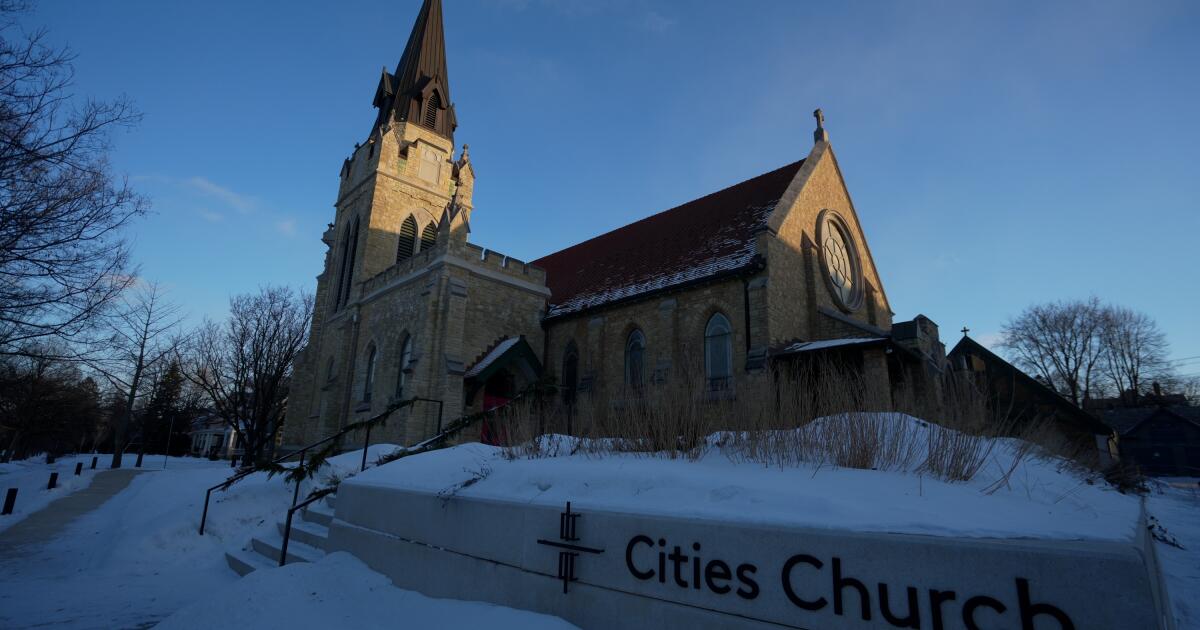
NEW ORLEANS — At least four states have adopted laws this year making it a crime to disrupt worship services, a reaction to a high-profile protest inside a Minnesota church that prompted outrage from faith leaders.
The Republican lawmakers sponsoring most of the legislation say those gathering at sacred sanctuaries deserve protection beyond what existing trespassing laws provide. They also say these new laws will prevent escalating clashes between congregants and protestors as many churches, mosques and synagogues remain on edge over recent mass shootings and acts of violence targeting religious groups.
“People should go to church to be able to sit in peace, worship as they please, without having to worry about people coming in and harassing them,” said Idaho Sen. Mark Harris, a Republican who co-sponsored legislation criminalizing protests inside places of worship. “I think the thing that happened in Minnesota was kind of a shock to some of us, that churches would be used as a place to berate people.”
Critics in both parties have warned that the laws infringe on free speech rights.
Here’s a look at the situation.
The laws make it a crime to interfere with worship
Bills have been signed into law in Republican-dominated Idaho, Louisiana and Oklahoma. In Kansas, a bill is becoming law without the signature of Democratic Gov. Laura Kelly.
Similar bills have been introduced for this year’s legislative sessions in at least seven other states and in Congress. Nassau County, New York, passed a similar measure this year. In 1994, President Bill Clinton signed a law making it a federal crime to intentionally injure or interfere with or intimidate someone entering a place of worship or a reproductive health facility.
The details in the bills differ, but they all make it a crime to interfere with religious assemblies.
Laws against trespassing already apply to disruptions on the grounds of churches or other private property. But legislators say the new laws would boost penalties and bar other protest activity like holding signs near places of worship.
The penalties could be harsher than for trespassing. In some states, people could face up to a year in prison and fines as high as $10,000 for first offenses. The laws also give the states a way to prosecute cases if local authorities decline to do so.
A protest in Minnesota touched off the call for action
Thirty-nine people, including two journalists, were charged in February for roles in a protest during a St. Paul, Minnesota, church service. The protesters had learned that one of the church pastors was also an official at U.S. Immigration and Customs Enforcement who had been overseeing an intensive Minnesota operation.
The U.S. Department of Justice charged the protesters with conspiracy against religious freedom and interfering with the right of religious freedom. The protesters and journalists have pleaded not guilty and the cases are pending in federal court.
Louisiana Rep. Gabe Firment, a Republican, said he was inspired to introduce legislation that allows protestors to be forcibly removed from churches and other places of worship after seeing videos showing the fearful expressions of children at the Minnesota church.
“The first thought that came to my mind was those poor kids,” Firment said. “You certainly have a right to protest, but just like you don’t have the right to come into someone’s home and act like that, you don’t have the right to come into private church property to do that.”
Oklahoma Sen. Todd Gollihare, a Republican, wrote his bill after anti-abortion protestors disrupted his church service last year. His law bars blocking highways within one mile of a service or approaching someone to hand them a flyer within 100 feet of a place of worship.
His Republican colleague, Sen. Kendal Sacchieri, described the law as extreme and said she was afraid of the precedent it would set.
Court challenges could await the laws
The Nassau County ordinance is already facing a court challenge from the New York Civil Liberties Union, which says there’s no history of residents facing intimidation, harassment or violence outside places of worship — and that the statute denies people their constitutionally protected rights of expression in public places.
Kevin Goldberg, vice president at Freedom Forum, which advocates for First Amendment rights, said that if the laws are challenged in courts, governments would have to show there’s a need for them. “You can’t be guessing, you can’t be speculating,” he said. “There has to be some evidence that there’s an actual threat going on — that there’s been a problem there, that you can reasonably forecast there will be a problem.”
In Louisiana, Democrats raised concerns about mandatory jail time for disrupting services and warned that the laws were too arbitrary, suggesting that they could be applied against a congregant for singing out of turn as a pastor delivers a homily.
“If the spirit just hits me and I start singing during the middle of his homily, and it disrupts his homily in a way where he’s got to say ‘Hey, take a seat’, I mean that would materially disrupt his service and now I’m going to jail for 30 days,” Rep. Edmond Jordan said during a March hearing in the Louisiana Legislature.
The law’s proponents said police officers and judges would have discretion about how to apply the law.
Brook and Mulvihill write for the Associated Press. Mulvihill reported from Haddonfield, N.J.
SACRAMENTO — The state’s biggest energy utility has made the unusual move to attack candidate Tom Steyer in the California governor’s race.
State campaign filings show that Pacific Gas & Electric has plowed at least $13.5 million into efforts to oppose Steyer. Other major utilities in the state have also donated to another committee backing the anti-Steyer effort.
Steyer, a billionaire and former hedge fund founder who became a high-profile environmental advocate, accuses the big three California utility companies — PG&E, San Diego Gas & Electric Co. and Southern California Edison — of “raking in” record profits at the expense of their customers. He blames the utilities for high consumer bills and causing deadly wildfires with their faulty utility equipment.
Though other candidates in the race are also criticizing the utilities, Steyer is the most aggressive.
“Big energy companies really piss me off,” Steyer said in one of his own campaign ads earlier this year.
In another attack, Steyer called PG&E less of an electric company and more of a “sophisticated Sacramento lobbying and influence operation that also happens to sell electricity. California needs a governor who will stand up to these monopolies, hold them accountable, and break them up.”
Lynsey Paulo, a spokesperson for PG&E, declined to answer questions about the utility’s spending, referring The Times to the committee running anti-Steyer ads.
“Tom Steyer has spent over $200 million trying to buy the Governor’s office,” the committee said in a statement.
Steyer, a Democrat who is relying on his vast fortune in the race, is seeking to advance past the June 2 primary to the November general election. Recent polls put him behind Republican Steve Hilton, a former Fox News commentator, and onetime Health and Human Services Secretary Xavier Becerra.
The utility-funded advertisements against Steyer don’t mention his position on energy policies, focusing instead on his onetime hedge fund’s investments in coal and for-profit detention centers. One ad compares him to President Trump.
“When Steyer sells himself as a different kind of billionaire, tell him where to stick it,” a voiceover says.
Another advertisement from the anti-Steyer group California is Not for Sale highlights its support for Becerra. The California Assn. of Realtors and the California Building Industry Assn. are also supporting the group.
Steyer’s campaign last week embraced the spending from PG&E and others.
“When you’re opposed by the people responsible for devastating wildfires and outrageous rate hikes, you’re doing something right,” Steyer spokesperson Sepi Esfahlani said.
Steyer has used his criticism of the California utilities and the oil industry as a shield against attacks that he made billions of dollars from fossil fuels when he ran his hedge fund, and to elevate himself as an advocate for working-class Californians.
When Democratic rival Katie Porter ripped into Steyer at a recent debate for using his riches to support his gubernatorial campaign, Steyer pointed to the attacks by PG&E and others as evidence that he’ll take on Sacramento’s powerful special interests.
“There is one person that the corporations are going after, including Big Oil, who is spending millions of dollars to stop me,” Steyer responded during the April debate at Pomona College in Claremont.
“The electric monopolies, PG&E, millions of dollars to stop me, because I’m the person on this stage who’s the change agent,” he said. “I’m the person who’s going to drive down costs for the people of California by taking on the special interests.”
PG&E CEO Patti Poppe and Steyer lauded one another in social media posts after appearing together at various conferences last year, the California Post reported.
“Loved sitting down to talk the future of energy with Tom Steyer at the Galvanize Solutions Summit,” Poppe wrote on LinkedIn in December. Steyer co-founded Galvanize, an asset management firm.
The California Chamber of Commerce’s political action committee this year collected at least $2 million each from PG&E, Sempra — the parent company of SoCalGas and San Diego Gas & Electric — and Edison. The chamber’s committee in turn has donated $9.75 million toward the anti-Steyer committee.
John Myers, a representative for the Chamber of Commerce, said the committee’s leadership, not donors, make spending decisions.
California electric rates are the nation’s second highest after Hawaii, contributing to the state’s high cost of living — one of the biggest concerns of voters.
PG&E serves Northern and Central California, while Southern California Edison is available in Central, coastal and Southern California. San Diego Gas & Electric services Southern California.
The California Public Utilities Commission sets the rate of return that the companies can make. Steyer has argued that “perverse” structure allows utilities to disregard cheaper cost-effective solutions in favor of more expensive options, such as undergrounding power lines.
Despite Steyer’s talk of “breaking up” utilities, he doesn’t propose dismantling them. Instead, he vows to put reform-focused appointees on the regulatory agency and reduce utility rates. He also wants more battery storage for renewal energy, as well as additional rooftop and community solar.
The three utilities recently opposed a bill to require that wildfire safety spending by Southern California Edison, PG&E and San Diego Gas & Electric be audited by an independent accounting firm.
The bill by Assemblywoman Tasha Boerner, an Encinitas Democrat, stalled out earlier this month. It would have required the state’s regulatory agency to consider the audits’ findings before agreeing to raise customer rates to cover even more wildfire prevention spending.
Audits of the three companies’ wildfire spending from 2019 to 2020 found that $2.5 billion could not be accounted for.
Matt Abularach-Macias, political director of Environmental Voters, said the utilities probably consider Steyer as a threat to their business. The companies plan infrastructure projects five or 10 years ahead and don’t want disruptions, he said.
Environmental Voters has endorsed Steyer and former Orange County Rep. Katie Porter. The group’s educational arm received a $500,000 donation from a Steyer-backed entity in 2013.
Leah Stokes, associate professor of political science at UC Santa Barbara, called PG&E’s outlay in the governor’s race part of a “corrupt system.”
“These are monopoly companies, you can’t choose to buy from anybody else,” Stokes said. “They take your money, turn it into profits because they are poorly regulated, and then undermine political candidates who would actually hold them accountable.”
Stokes has publicly endorsed Steyer.
A spokesperson for Southern California Edison said the company funds its political contributions from “shareholder dollars.”
“No customer dollars, or any part of the rates paid by Southern California Edison customers, are used to support political candidates,” he said.
Times staff writer Melody Petersen contributed to this report.
The right-wing president highlighted anti-crime operations and economic progress, while critics warned of abuses.
Published On 24 May 202624 May 2026
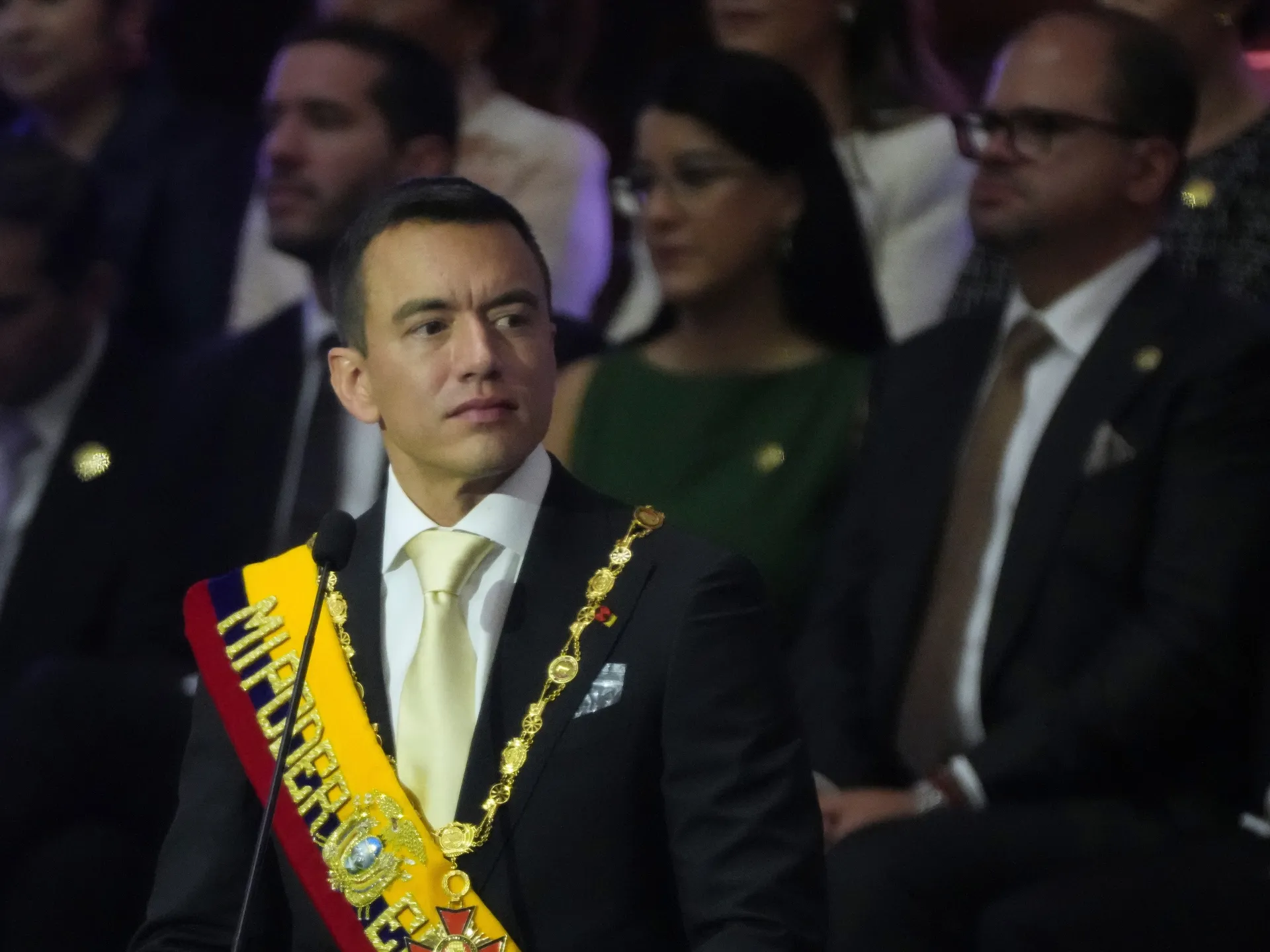
Ecuadorian President Daniel Noboa has used his State of the Union speech to tout his United States-backed crime-fighting strategies as well as improvements to the economy.
Addressing the National Assembly in the capital Quito on Sunday, Noboa cited the extradition of a dozen crime bosses to the US and the seizure of almost 300 tonnes of drugs as examples of what he described as his decisive and effective approach.
Recommended Stories
list of 3 itemsend of list
“We will seek them out, find them and extradite them,” Noboa said of wanted criminals. He also asserted that the South American country cannot develop “if families live in fear”.
Organised crime is the leading concern among Ecuadorians this decade, after a spike in homicides during the COVID-19 pandemic.
Since 2021, Ecuador has struggled to contain drug violence as rival cartels partner with local gangs to battle for control of routes and coastal ports used to smuggle cocaine. The country is wedged between Colombia and Peru, the world’s top cocaine producing countries.
Last year, Ecuador recorded its highest homicide rate in decades, with approximately 50 murders for every 100,000 residents, according to the Ministry of the Interior.
In response, Noboa, who was reelected last year to a four-year term, has used a state of exception to allow the military to implement a variety of crime-fighting strategies, including joint patrols with police officers and property searches without warrants.
Earlier this year, Ecuador’s military also carried out an operation with US forces against a training camp allegedly used by Colombian drug traffickers, attacking the site with drones, helicopters and boats.
Noboa’s approach, however, has come under criticism from civil society groups, who say his iron-fisted methods have failed to reduce crime while putting civilians in danger.
Glaedys Gonzalez, an analyst for the Andean region at the International Crisis Group, said on Sunday that Noboa may have been optimistic in his speech regarding the country’s security.
“Progress on violence is far from being achieved,” Gonzalez said. “It is evident that the situation in Ecuador has reached unprecedented levels.”
Sunday’s speech also promoted Ecuador’s economic progress, with Noboa telling lawmakers that poverty dropped from 26 percent to 21.4 percent in 2025. Extreme poverty, he added, went down from 10.4 percent to 8.4 percent.
Noboa was first elected in 2023 during a snap election triggered when then-President Guillermo Lasso dissolved the National Assembly and shortened his own term.
With little more than a week left until primary voters winnow the candidates for Los Angeles mayor, California governor and Congress, there remains a palpable sense of political uncertainty among the electorate — attributable to a lack of clear front-runners, redrawn political maps, messy party infighting and competing voter frustration with both President Trump and the state’s Democratic establishment.
In a state where Democrats hold a substantial advantage among registered voters and Trump lost in 2024 by more than 20 percentage points, MAGA-aligned Republicans are nonetheless competing on a message of ineptitude from longtime liberal leaders to address the state’s most intractable problems. Even some Democrats have railed against the status quo.
With Trump’s grip on the Republican base intact despite abysmal overall approval ratings, many Republican candidates have courted his approval — and been hammered for it by their Democratic opponents.
But those same Democrats have found it harder to explain why their own party should continue to lead the state despite allowing its affordability, housing and homelessness crises to take root and persist — taking little responsibility while swiping at each other for having failed to find solutions sooner.
All that party infighting — present before every primary, but at a fever pitch now — comes against a backdrop of broader voter unease about the war in Iran, volatile oil and gas prices, and the burgeoning threat of AI to the American workforce.
Republican voters are being warned of a blue wave in November giving Democrats control of Congress and grinding Trump’s agenda to a halt. Democratic voters are being warned of Trump administration efforts to undermine local and state elections, and of control of Congress unfairly slipping from reach thanks to further Republican redistricting following a U.S. Supreme Court decision undermining the Voting Rights Act and its protections for majority-Black districts across the South.
Many California voters — some already shaken or burned by former Rep. Eric Swalwell dropping from the gubernatorial race amid sexual assault and rape allegations last month — appear hesitant to cast ballots early, despite warnings that the Trump administration may try to discount those mailed at the last minute.
“Voters don’t want to make a mistake. They’re not absolutely certain,” said Rob Stutzman, a Republican consultant in California. “It’s just not real clear where to land.”
James Adams, a political science professor at UC Davis who studies elections and public opinion, said California Democrats this cycle “have a candidate problem and they have a message problem,” in that they are trying to convince voters to back them “not because they offer exciting ideas or inspiring leadership, but because their Republican opponents are even worse.”
And that message — offered as they gerrymander California in a race to the bottom with Republicans nationally — isn’t cutting it, Adams said.
“People are alienated from our current politics not because Americans are cynical, but because people recognize that they deserve better.”
Outsider shakes up L.A. mayor’s race
Amid entrenched homelessness, affordability concerns and lingering anger over the bungled response to last year’s wildfires, the L.A. mayor’s race was “supposed to be a referendum” on embattled Mayor Karen Bass, Stutzman said.
And yet, Bass remains in the lead, and many voters remain confused about which way to turn away from her — if at all.
Bass has won the endorsement of three council members who are members of the Democratic Socialists of America, despite City Councilmember Nithya Raman, an ally who’d previously endorsed Bass and is a member of the DSA herself, entering the race to her left.
Unable to consolidate support from the city’s progressive flank, Raman is now running neck and neck for a second-place finish and a chance to face Bass in the November runoff with former reality TV personality Spencer Pratt, who has remained in contention in ultra-liberal L.A. despite pushing a MAGA-aligned message to Bass’ right.
Pratt, who did not respond to a request for comment, lost his Pacific Palisades home in the fires and has won over many frustrated city residents with his anti-establishment message and cheeky AI videos — including one casting him as Batman, taking on a corrupt Democratic bourgeoisie.
Pratt, a registered Republican, has tried to dance around politics in the race, calling his campaign a “nonpartisan” one and comparing himself to President Obama politically. But he is backed by many Republicans, has echoed Trump’s rhetoric around restoring “common sense” and a “Golden Age” to L.A., and recently responded to Trump saying that he’d heard Pratt “is a big MAGA person” — and Raman posting the quote to X — with a meme of himself shrugging.
Fernando Guerra, founding director of the Center for the Study of Los Angeles at Loyola Marymount University, said he’s glad city voters have choices this race, because they clearly aren’t happy. He said Angelenos are less optimistic today than ever before and are deeply frustrated with “this same liberal Democratic regime from Bradley to Bass over 50 years” — a reference to former Mayor Tom Bradley, who first took office in 1973.
Voters are clearly tired of that regime, which has succumbed to “policy paralysis” in the name of “inclusion” and trying to please everyone, Guerra said — but not so much that they will consider going MAGA for Pratt.
“People say, ‘Yeah, Democrats have really f—d it up, but there’s no way we’re going to [back] Republicans. Look what they’ve done to the nation.’”
Others aren’t so sure. In its voter guide, the progressive group LA Forward wrote that the “most important thing” in the June 2 primary is to block Pratt — whom it called a “right-wing reality TV buffoon” — from advancing, and the best way to do so is to vote for Raman.
“We would much rather see a Bass/Raman runoff, with no chance of Pratt becoming mayor, than a Pratt/Bass runoff where a Pratt win would be a real possibility — plunging LA into a Trumpian mayoral nightmare,” the group wrote.
An unsettled gubernatorial contest
In the gubernatorial race, none of the many Democratic candidates has been able to consolidate a sizable lead, creating a lingering apprehension that Republicans could somehow eke out a stunning upset in the biggest of blue states.
That’s in part thanks to leading Democratic candidate Xavier Becerra, the former California attorney general and U.S. Health secretary under President Biden, being dogged by insinuations, including from fellow Democrats, that he was somehow complicit in a scheme by underlings to steal from his campaign coffers, despite prosecutors in the case — which resulted in his former chief of staff pleading guilty — never alleging wrongdoing on his part.
It’s also thanks in part to the fact that the leading progressive, Tom Steyer, is a billionaire who has bought his way into contention with nearly $200 million of his own money — in an election cycle in which progressive voters nationwide are decrying billionaires as the clearest symbol of all that is wrong with the nation’s lopsided economy.
“This kind of weird self-loathing rationale of why he’s the right guy to take on billionaires because he is one? You can’t build a Mamdani movement around that,” said Stutzman, referring to New York City Mayor Zohran Mamdani, who shot to power on a democratic socialist platform last year.
The Democrats have also struggled to combat the criticism — leveraged time and again by their Republican competitors — that their party has failed for years to solve California’s most substantial problems, and deserves to be ousted from power.
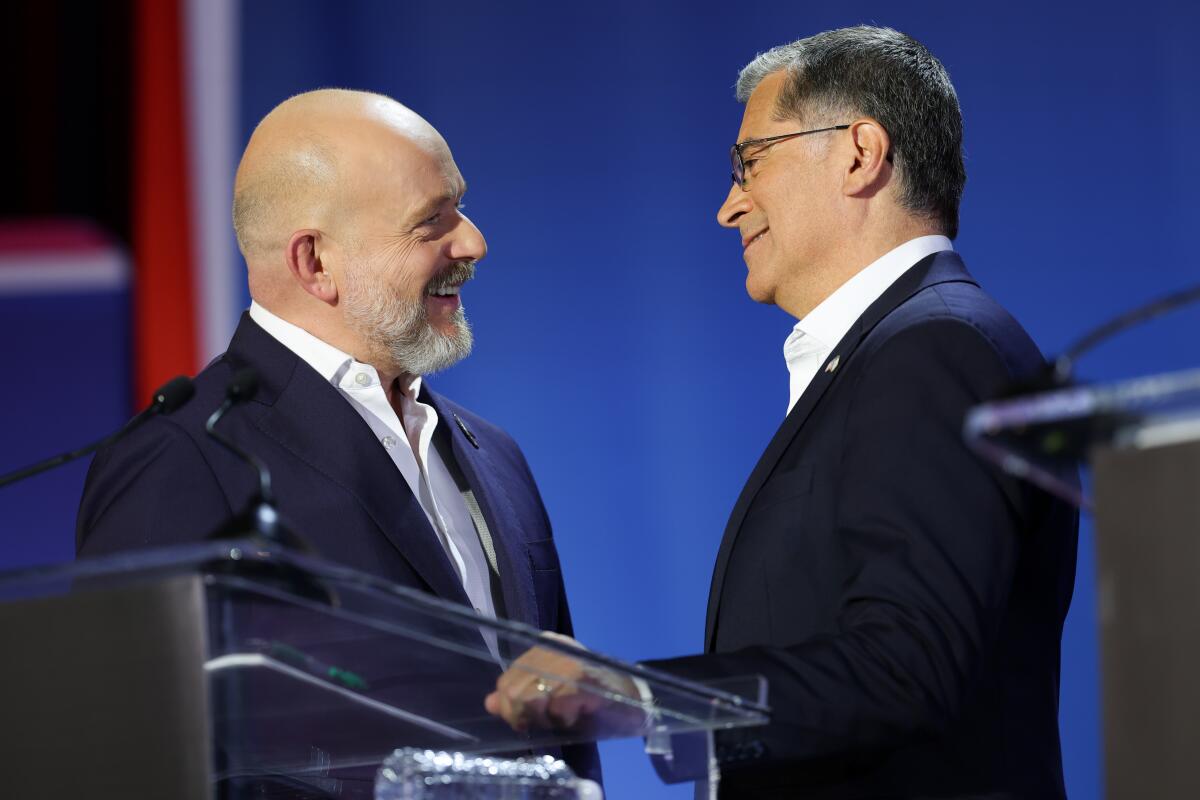
Republican Steve Hilton and Democrat Xavier Becerra speak during a break in the April 28 gubernatorial debate.
(Eric Thayer / Los Angeles Times)
Former Fox News commentator Steve Hilton has hammered that message in ads and on the debate stage, lambasting the Democratic establishment for pushing so much unnecessary regulation that it has chased out business and investment and made everything from gas to housing to groceries more expensive for average residents.
He has blamed Democrats for California’s high rates of poverty and unemployment, its high cost of living and high taxes, its record homelessness and its poor public school results.
In an interview, Hilton said he understands that California voters may not like Trump — who endorsed him — and may have conflicting beliefs about federal and international policy, but that California’s biggest problems have “nothing to do with President Trump.”
“Voters need to decide on what direction they want to take in terms of the policies that affect their daily lives in California,” he said, and those are “devised and enacted within California by our politicians here in Sacramento.”
He also said it’s no surprise that some of his Democratic rivals have also acknowledged that the Democratic establishment has been a failure, because “if you pretend otherwise, you show that you’re just completely out of touch with public opinion.”
Rusty Hicks, chair of the California Democratic Party, said “every campaign is entitled to run the race that they believe matches their story,” even if that means questioning the party’s past performance. But he also said polling hasn’t shown that message to be an effective one, and he’s confident that voters will show their ongoing trust in the party at the polls.
Redistricting, sniping and name-calling
The decision by California voters last November to pass Proposition 50 and allow the state’s Democratic leaders to redraw the state’s congressional maps to favor Democratic candidates in a handful of additional districts — part of a wider redistricting war sparked by Trump — has intensified the primary races in those areas.
As an example, longtime incumbent Reps. Ken Calvert (R-Corona) and Young Kim (R-Anaheim Hills) are now competing to represent the same redrawn swath of Orange, Riverside and San Bernardino counties, and have bitterly attacked one another. Kim has called Calvert a “swampy,” “sleazy” and “corrupt” politician guilty of “sabotaging President Trump’s agenda.” Calvert has called Kim a “RINO,” or Republican In Name Only, and a “Trump-hating liberal.”
Democrats have also sniped at each other, including in the race to replace retiring Rep. Darrell Issa (R-Bonsall) in his redrawn district in San Diego and Riverside counties — where Trump also holds an outsize presence.
Rep. Young Kim and Rep. Ken Calvert are opponents in a heated race in a newly redrawn congressional district.
(Associated Press)
Stutzman said it will be interesting to see how those primaries play out, but also how Democrats there and in other races perform in November — when Democrats are expected to perform well nationally given Trump’s lousy ratings, but Democrats in California could underperform thanks to statewide frustration with affordability, housing and homelessness here.
“People are like, ‘Eh, you know, yeah, Trump — but there’s some problems here,’” Stutzman said.
Hicks said he expects California voters to not only elect another Democratic governor, but to “push back on a Trump administration and congressional Republicans and Republicans around the country that have sought to rig the game in their favor,” including by “ensuring that we fulfill the promise of Proposition 50 by winning congressional seats and retaking the House of Representatives.”
He said the current political moment “can feel like a pressure cooker,” but Californians will “continue to adapt and overcome and be resilient, just as they always have been.”
Pack up the car and get ready for temperatures in the upper 80s this coming weekend in Clovis and Fresno, where CIF state championships will be held in track and field and boys’ volleyball.
Buchanan High School is the site Friday and Saturday for the track championships, where City Section record-holder Lawrence Kensinger will try to win a state title in the shotput after his astonishing mark of 65-11 at the City finals broke a record established in 1973. Running events begin at 5 p.m. Friday to qualify for Saturday’s finals.
Servite sprinters will try to put on a show in the 4×100 relay, the 100, 200 and 400 races. Sherman Oaks Notre Dame high jumper JJ Harel will try to defend his state title. At the Southern Section finals, he cleared a career-best 7-1.
Fresno City College is the site for the volleyball championships on Saturday.
Tickets are available only through gofan.co.
This is a daily look at the positive happenings in high school sports. To submit any news, please email eric.sondheimer@latimes.com.
May 23 (UPI) — California Gov. Gavin Newsom on Saturday declared a state of emergency in Orange County, Calif., in response to a hazardous chemical incident there.
Residents and businesses started to be evacuated on Friday afternoon after a tank containing methyl methacrylate in Garden Grove, Calif., at the GKN Aerospace manufacturing plant started to leak vapor, KABC and The Orange County Register reported.
The tank started to heat on Thursday, started to bulge and reached what is called a “boiling liquid expanding vapor explosion,” Craig Covey, an Orange County Fire Authority division chief, told The Los Angeles Times.
More than 44,000 people have been evacuated from the area because officials are concerned that the tank could either explode or fail and begin to leak, though they said if the tank leaks — which is also bad — it means the chemical at least would no longer be at risk of igniting.
“The safety of Orange County residents is the top priority,” Newsom said in a statement.
“We are mobilizing every state resource available to support local responders and make sure the community has what they need to stay safe,” he said.
Methyl metacrylate, or MMA, is stored in liquid form and is used to make plastics.
The tank holds about 7,000 gallons of the chemical, which if it gets into the air can be toxic to people at high concentrations.
The tank also is surrounded by several others containing fuel and other chemicals, which has especially raised concern among the first responders because if it explodes, the others around it may ignite, as well.
If the tank fails and leaks, it will spread thousands of gallons of the chemical through a parking lot and the entire surrounding area, which also poses potential health and safety risks for nearby people.
The California Governor’s Office of Emergency Services said that it is coordinating resources between state and local partners to be sure that first responders “have all the resources necessary to safely respond to this dynamic situation.”
Newsom encouraged Orange County residents, and especially those in Garden Grove, to pay attention to potential evacuation requests as the situation continues to develop.
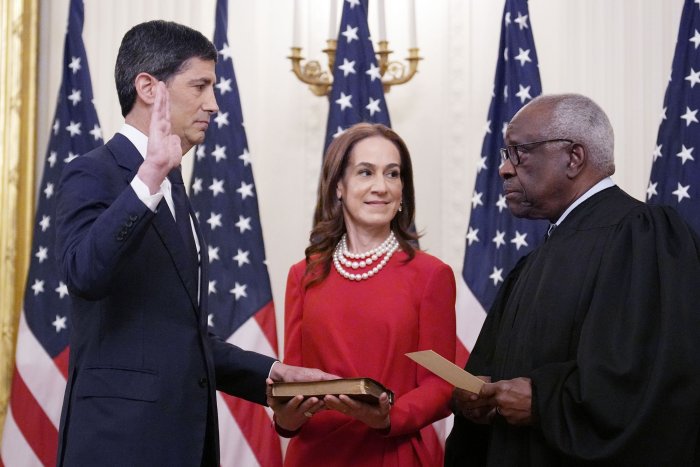
Kevin Warsh takes the oath of office as he is sworn-in as the new chairman of the Federal Reserve by Supreme Court Associate Justice Clarence Thomas in the East Room of the White House on Friday. Photo by Yuri Gripas/UPI | License Photo
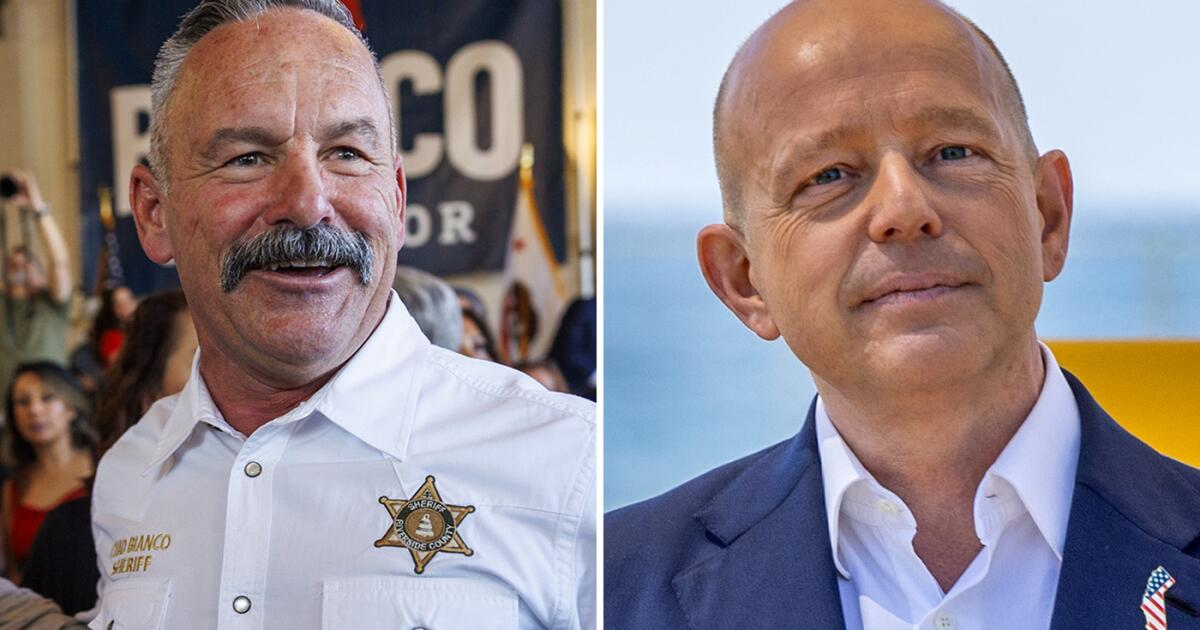
CLOVIS, Calif. — In the waning days before California’s primary election, the two top Republicans running for California governor delivered closing arguments in front of a friendly Central Valley audience Friday evening.
Hilton criticized Newsom’s new $20-million program to provide free diapers for families of newborn babies, referring to the outgoing governor as “the great loaded diaper of California himself.”
Earlier this year, Hilton and Bianco topped the governor’s race polls as a packed field of Democrats split many of the state’s liberal voters. Under California’s “jungle primary” system, where the top two candidates advance from the primary to the general election regardless of political affiliation, that led to fleeting hope among Republicans that the two candidates could shut Democratic candidates out of the November election.
“That idea was always a fantasy,” Hilton wrote in an op-ed published in the New York Post earlier this week in which he urged Bianco to drop out of the race “for the sake of the state we both love.”
“Steve, it is time for you to drop out,” Bianco retorted in a video posted to social media soon after. “In no world, no world does Steve Hilton beat a Democrat in November.”
After winning an endorsement from President Trump in early April, Hilton has steadily outpaced Bianco in polls. A poll commissioned by the California Democratic Party released last week showed Hilton leading the field with support from 22% of likely voters, followed by Democrat and former Biden Cabinet member Xavier Becerra with 21%. Bianco was at 10%, down from 15% in a previous poll conducted two weeks prior.
Still, Bianco, the two-term sheriff of California’s fourth most populous county, is a favorite of many Republicans in the state and won more support from delegates during the party’s recent endorsing convention than Hilton, though neither reached the necessary 60% to win the party backing.
While the two candidates have needled each other with personal digs and insults throughout much of the campaign, they appeared to set that energy aside during the Clovis forum and even traded some compliments. Hilton praised “sheriffs like Chad who actually understand what public safety looks like” while Bianco acknowledged that his opponent “should be very proud” to have Trump’s endorsement.
State Sen. Shannon Grove (R-Bakersfield), who moderated the more than 90-minute event, praised their “extraordinary civility” before she pressured each to commit to backing whichever Republican makes it through the June 2 primary — or if they both advance, continue to focus on policy debates over attacks.
The forum was hosted by the Fresno County & City Republican Women Federated as part of a fundraiser and dinner honoring the upcoming 250th anniversary of the nation’s founding. About 450 attendees were served dishes inspired by presidential favorites including sirloin steak for Theodore Roosevelt, a chopped salad from Chasen’s, a favorite Los Angeles eatery for Ronald Reagan, and a chocolate pie with cherry vanilla ice cream for Trump.
The Central Valley stretches from Bakersfield to Redding and is home to some of the nation’s most lucrative farmland. It also includes the heart of California oil country in Kern County. Yet residents feel largely neglected by statewide politicians who are more drawn to the ample votes and wealthy donors in Southern California and the Bay Area.
“We are the breadbasket of the world but we’ve been overlooked for too long,” said Andrea Shabaglian, a vice president of the Fresno Republican women’s group. “When gubernatorial candidates come here to sit down and listen to our communities, they realize that a stronger Valley means a stronger California.”
Though he lost California handily to former Vice President Kamala Harris in the 2024 election, Trump dominated in the state’s midsection. Even in Fresno County, where the Republican forum was held, Trump beat Harris by a four percentage point margin despite Democratic voters slightly outnumbering Republicans.
“We need a Republican in office because California is a mess. I mean, anybody with common sense can see that,” said LuAnne Pinedo-Madden, a retiree living in the Sierra foothill community of Coarsegold who listed transgender girls being allowed to compete in girls’ sports and government corruption as her top concerns.
Pinedo-Madden said she was “pretty sure” she had decided which of the Republican candidates to vote for but declined to say whom. “I feel that if we don’t get a Republican in office, we’re looking at moving” to Utah, Idaho or Nevada, she said. “We can’t take this anymore.”
Bianco and Hilton spoke about their plans to improve public safety, small businesses, homeowner’s insurance and water management, a crucial issue for the conservative-leaning owners of vast swaths of California’s agricultural heartland.
Signs along the major highways that straddle California’s Central Valley proclaim that “Food grows where water flows” and criticize Newsom for allowing water to flow into the ocean instead of capturing and storing more of it for farming.
Both of the GOP candidates described their visions for the state, which include building new dams and raising existing ones to store more water.
“We don’t have the water problem. We have a water management problem,” Bianco said before falsely arguing that “we get more water every single year than any other state in the country” and that California has “never, ever, ever been in a drought.”
“The water will be flowing to our farmers, the oil will be flowing to our refineries, the forests will be managed, the timber will be harvested” and used to build new single-family homes, Hilton said. “We’ve got the best weather, we’ve got the best people, we’ve got the best farmers, we’ve got everything we need to make this place amazing, except a good governor. Very soon we’ll have that as well.”
Though a Republican governor would likely face a hostile Legislature intent on blocking many priorities, Bianco and Hilton both promised sweeping cuts and cutbacks of state agencies. Both pledged on Friday to replace every member of the state’s parole review board, which drew criticism in February when it granted elderly parole to a man convicted of 16 counts of kidnapping and child molestation in 1999.
“California criminal justice is absolutely broken and it was forced upon us in the name of reform. What I’m going to do is make it a crime to hear the word reform again, because we lost track of what that word even means,” Bianco said.
He also pledged to eliminate laws and environmental regulators often blamed for slowing housing development: the California Environmental Quality Act, the California Coastal Commission and the state Air Resources Board.
Though his opponent has the coveted Trump endorsement, Bianco argued that it will hurt Hilton’s chances of winning the general election. The Republican president has never been popular in deep-blue California; just 25% of adults in the state approved of Trump’s performance according to a February survey by the Public Policy Institute of California.
“Steve should rightfully be proud of being endorsed by President Trump [but] we have to actually realize, is that a good thing in California? It’s a good thing in this room,” Bianco said as the crowd cheered at the mention of the president’s name. “We have to realize strategically that President Trump ran three elections in this state, and he lost 60-40 in all three of them.”
The Riverside sheriff argued he is “the only person that can actually sway Democrats to vote for a Republican across party lines on a public safety platform.”