sport

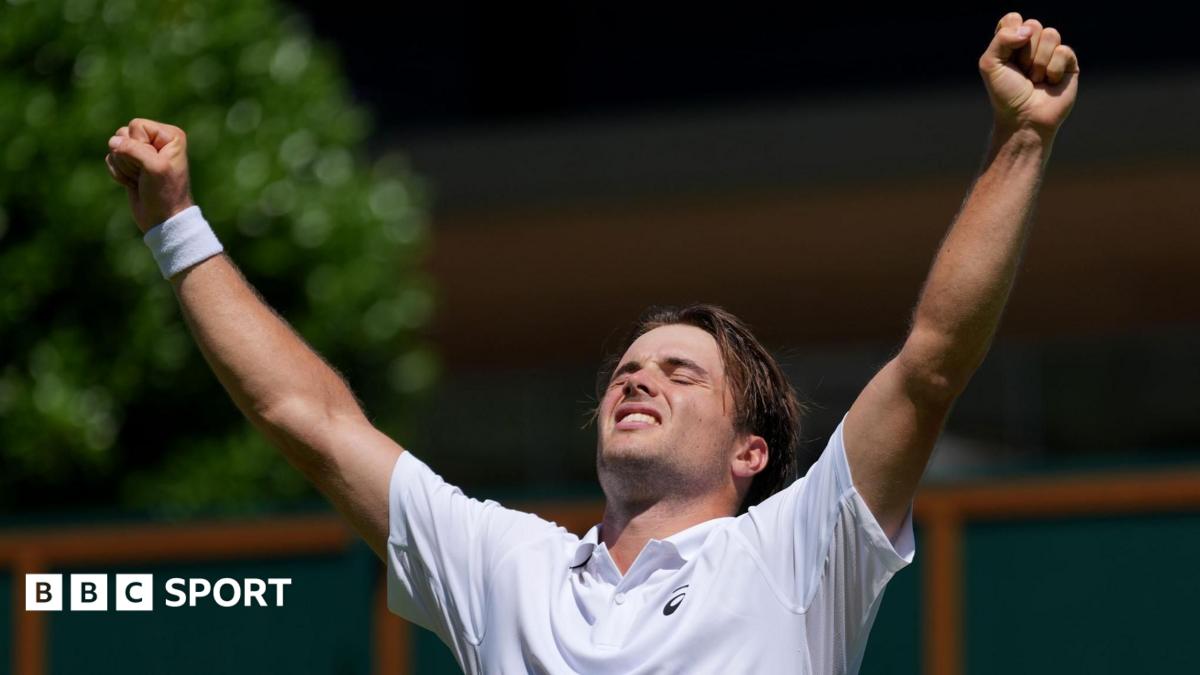
Wimbledon 2026: Arthur Fery left carrying British hopes at All England Club

Arthur Fery grew up just a short walk away from Wimbledon but there is much more to his story than simply the confines of SW19.

The British men’s number three was born near Paris to his French parents before the family moved to Wimbledon when he was still in nappies.

After coming through the Lawn Tennis Association system, the 23-year-old then moved to Stanford University in California to study for a degree in science, technology and society – and sharpen his game in a tennis scholarship.

Now Fery is back on his doorstep and enjoying the biggest success of his career.

The world number 114 is left carrying British hopes at the All England Club this year after becoming the sole home player to reach the third round of the singles.

“I grew up coming to the tournament, watching the players and that definitely contributed to my development,” Fery told BBC Sport.

“I was trying to imitate players – like you do when you’re a kid. Now I’m here winning matches. It’s awesome.”

Fery’s mother, Olivia, is a French former Fed Cup player, who used to work for the LTA as a business development manager, while father Loic is an asset manager who owns Ligue 1 football club Lorient.

Many summer holidays were spent at the family’s second home near La Rochelle on the west coast of France, while he also spent time with other relatives near Nice – an area packed with courts and academies – to hone his tennis talent.

Fery briefly represented France when he was about 10 before starting to play for Britain shortly after.

After that, he says, there was “no question” that he would go on to represent Britain in the professional ranks.

“By that point, there was really no decision to make. I was living here, I was training at the National Tennis Centre. I was in the system here,” he said.

“I feel completely British now. Maybe 10 years ago if you’d asked me the question, it would be a bit different. Now I feel very British at heart.”

Source link

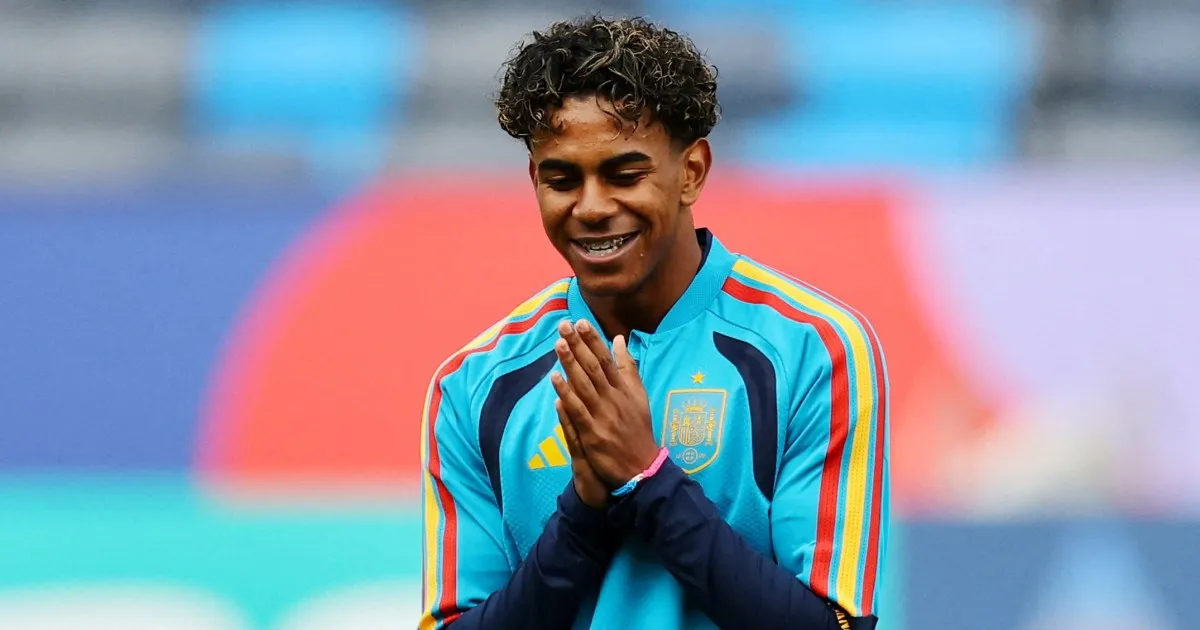
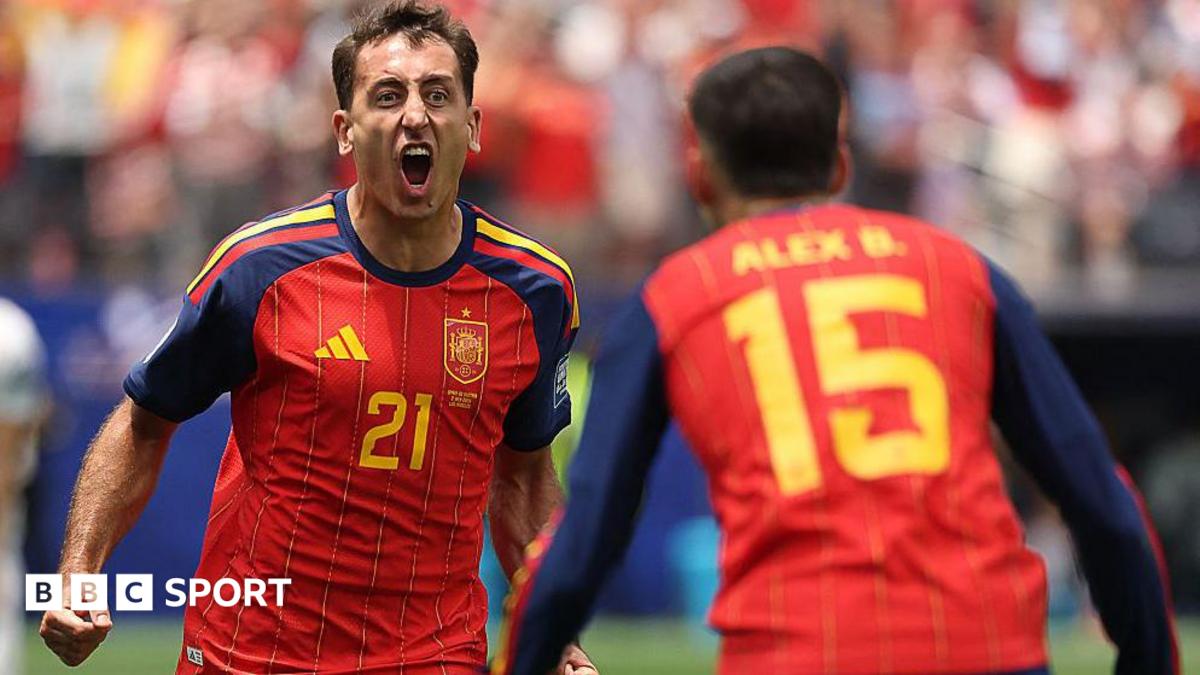
Mikel Oyarzabal: The one-club man who has become Spain’s ‘most decisive player’

For much of an international career that began a decade ago at the age of 19, Oyarzabal has not enjoyed much of the limelight.

He missed out on the 2022 World Cup in Qatar with a ruptured anterior cruciate ligament (ACL) in his left knee.

But four years later – and before a World Cup debut – he was in the form of his life with 12 goals in 12 international appearances.

The double against Austria extended that run to 17 in his last 16 starts, with four goals at this tournament.

“His last two seasons, since he recovered, are the best of his career,” added Balague.

“Four goals in the World Cup – our most decisive player, no doubt.”

Spain memorably played without a recognised striker at Euro 2012, but Oyarzabal is now very much the focal point of their attacks with two excellent finishes against Austria.

“Sometimes people are in doubt about Spain because of the centre-forward, but Oyarzabal is doing the job,” former Spain defender Cesar Azpilicueta told BBC One.

“A few years ago, Oyarzabal was playing a bit more on the right wing and he has transitioned more into the middle.”

Since the start of last year, the only European player with more international goals than Oyarzabal is Norway striker Erling Haaland with 22.

He also became the first Spanish player to score twice in a World Cup knockout match since Emilio Butragueno against Denmark in the last 16 of the 1986 tournament.

The statistics are impressive, but it is not to say he is overshadowed by Lamine Yamal, with the 18-year-old playing a key role in Oyarzabal being able to shine.

The Barcelona forward’s excellent ball control and dribbling skills clearly unsettles defences and pulled the Austrian defenders towards him to create more space for Oyarzabal.

“When you have someone in your team like Lamine Yamal who attracts so much attention, you know you will get more space,” said former Germany midfielder Thomas Hitzlsperger.

“Oyarzabal uses that space, gets the ball, and scores goals.”

Source link

Senegal’s World Cup agony: Nation left rueing last-gasp collapse | World Cup 2026 News

Dakar, Senegal – The silence came before kickoff. Not from fear but anticipation, a nation holding its breath.

Across Dakar, radios crackled from open windows. Men gathered shoulder to shoulder in cafes, their eyes fixed on flickering television screens. Families crowded into living rooms. Friends leaned over phones, tea growing cold as conversation gave way to concentration.

Recommended Stories

list of 3 itemsend of list

The city’s usual rhythm horns, its markets, its arguments, its laughter – did not disappear. It simply yielded to something larger.

Senegal were in the first knockout round of the World Cup, playing against Belgium.

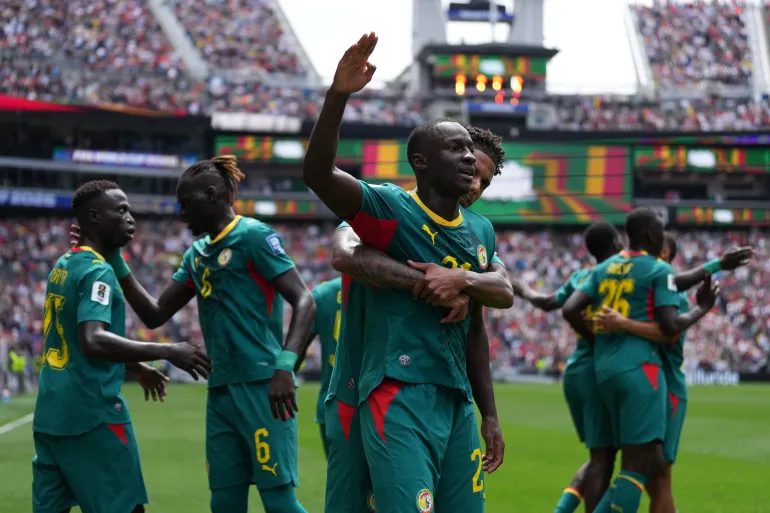
On the 25th-minute mark of the game, the boy from the suburbs of Dakar, Habib Diarra, delivered the nation from its anxiety, sweeping a loose ball beyond the Belgian goalkeeper: 1-0 to Senegal.

Eight thousand kilometres away from the game in Seattle, the United States, Dakar became the stadium. The celebrations only grew after Senegal scored a second goal early in the second half. Confidence turned into complacency. Five minutes from full-time, car horns blared and firecrackers echoed through the night. Victory was near.

But the celebrations came too early.

Belgium scored once. Then again. All in the space of five minutes, completing an astonishing comeback. And then, in the final minutes of extra-time, Senegal gave away a penalty: 3-2 to Belgium.

Problem is preparation

A day later, the silence remains.

Not quite mourning, but more disbelief.

“It’s incomprehensible,” says former Senegal international footballer Ferdinand Coly. “When you control a match with such quality until the 85th minute, you have to finish it. But psychologically, everything changed.”

Coly believes the turning point was not Belgium’s resurgence, but the Senegal coaching team’s decisions.

“The substitutions completely changed the midfield. There was no reason to make them. Once Belgium scored, they gained the psychological advantage. Senegal became fragile. They retreated, played with fear, and never recovered.”

Coly was part of Senegal’s 2002 World Cup squad, the team that famously stunned France in the tournament’s opening match.

“It’s never over… until the final whistle,” he said, reflecting on Belgium’s dramatic comeback.

Since retiring, Coly has swapped his football boots for farming. He has also worked with the Senegalese Football Federation, and believes the national team has lost sight of the basics.

For him, the problem is not talent but preparation.

He criticises what he sees as an over-reliance on data, statistics, and performance apps, instead of building a coherent team identity and developing a clear tactical strategy.

As Belgium searched for an equaliser, their coach was still scribbling notes on a sheet of paper, adjusting and reacting until the very last minute.

“What a contrast!” Coly said. “We’re relying on technology when football is still about reading the game, adapting and thinking.”

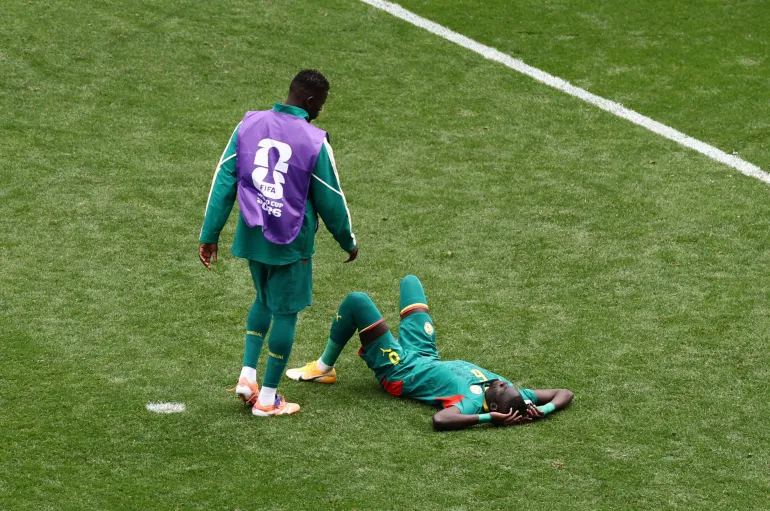
Soccer Football - FIFA World Cup 2026 - Round of 32 - Belgium v Senegal - Seattle Stadium, Seattle, Washington, U.S. - July 1, 2026 Senegal's Pathe Ciss looks dejected after the match as Senegal are eliminated from the World Cup REUTERS/Lee Smith
Senegal’s Pathe Ciss looks dejected after the match as the team are eliminated from the World Cup [Lee Smith /Reuters]

Same old struggle

Coly’s analysis echoes that of supporters still trying to process a defeat that slipped away in the closing minutes.

Ibrahima Diop is a die-hard fan of the Lions of Teranga. He travelled to the 2022 FIFA World Cup in Qatar. He was even jailed in Morocco after trouble during the Africa Cup of Nations Final earlier this year.

In that controversial final – played against the hosts, Morocco – Senegal’s coach controversially called his players off the pitch after a disputed penalty decision. Senegal went on to win the match, but later lost the title over the incident.

For Diop, the lesson was the same as against Belgium.

“It comes down to concentration,” he says. “For 85 minutes the team was organised and united. Then it disappeared. European teams are prepared psychologically to fight until the very end. We still struggle in those final minutes.”

Diop also believes Senegal were missing something impossible to measure.

“The team played without its supporters. Visa restrictions and the economic crisis meant many fans could not travel. The players know what that atmosphere gives them. Mentally, it made a difference.”

US President Donald Trump signed a proclamation in December declaring that no visas would be given for business or tourism to nationals of Senegal, and several other countries. This meant that fans with only Senegalese nationality were unable to travel to the tournament.

Diop sees a pattern in this World Cup. Ivory Coast, DR Congo, and now Senegal led until the closing minutes, only to watch victory slip away in stadiums empty of their fans.

Senegal supporters react after their team lost the 2026 World Cup round of 32 football match against Belgium as they watch the game at the FIFA Fan Zone at the Place de l'Obelisque in Dakar on July 1, 2026.
Senegal supporters watch as their national football team snatches defeat from the jaws of victory in the World Cup round-of-32 game against Belgium [AFP]

Cruel for country

Football is rarely just football. This World Cup – meant to unite – has revealed the deep inequalities beyond the stands. A nation may be united in victory. But when the referee blows the final whistle, another game begins: the blame game.

Football is opium for the masses, says Coly.  It has become one of the few moments when political loyalties disappear. For 90 minutes, everyone wears the same colours.

“The national team is a bridge,” Coly said. “When Senegal plays, there is no political affiliation. It’s simply Senegal. Sport has this unique ability to unite people beyond their differences.”

The unity makes defeat feel disproportionately heavy.

Social media quickly filled with frozen moments from the match: missed chances, defensive mistakes, and coaching decisions replayed endlessly.

Under pressure, football often reveals more than just sporting weaknesses.

Babacar Fall, a Senegalese journalist who has closely followed the national team, argues that the problems began long before kickoff.

According to him, uncertainty over the coach’s future, disagreements inside the federation, and unresolved contractual issues created instability during the tournament.

“There were already problems before the Norway match,” he says. “The coach’s contract wasn’t settled. There were disagreements over player selection. Then, 10 minutes from the end against Belgium, one substitution broke the defensive structure completely.”

He draws an even broader comparison.

“The country is paralysed. There was so much hope after the Africa Cup of Nations, just as there was so much hope politically. Today, there is disappointment. In many ways, the team’s collapse reflects the country’s mood.”

Those views capture a feeling repeated by many supporters in Dakar this week. There is frustration, not simply because Senegal lost, but because of how it lost.

The talent was there. The opportunity was there. For much of the match, Senegal looked like the stronger side. That is perhaps why the silence lingers.

This generation has raised expectations. Winning continental titles transformed how Senegal sees itself. Reaching the knockout stages is no longer enough; supporters believe this team should compete with the world’s best.

Ultimately, it is only football. But in Senegal, football has become something larger than sport. It is a source of national pride, a rare moment of collective unity, and a reflection of possibility.

That is why this defeat feels so cruel. Not because a match was lost. But because, for one evening, it felt as though an entire country’s potential had slipped away in the space of just five minutes.

Source link

Chris Johnson revives 2014 viral ALS Ice Bucket Challenge

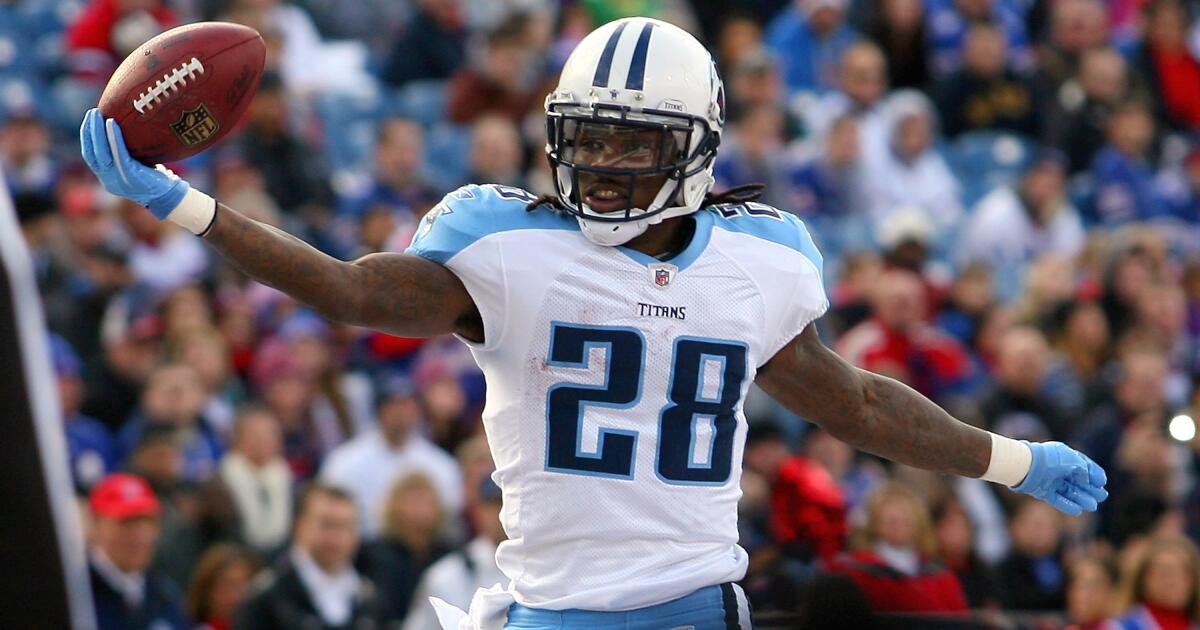
Former NFL running back Chris Johnson has issued a challenge to his family, friends and fans — one that could quite literally send a chill down the spine of those who remember a certain viral trend from more than a decade ago.

A quick refresher: A social media sensation went viral in 2014, involving people posting videos of themselves having a bucket of ice water poured over their heads and challenging others, by name, to do the same.

The trend was often referred to as the ALS Ice Bucket Challenge because many folks used the videos to raise awareness for and funding to help fight the degenerative neurological disorder amyotrophic lateral sclerosis, commonly known as ALS or Lou Gehrig’s disease.

Johnson, a three-time Pro Bowl selection who holds the NFL record for most yards from scrimmage in a single season, on Tuesday revealed on “Good Morning America” that he has been diagnosed with ALS. Soon after, former Utah basketball player and sports content creator Hunter Mecum posted a video on Instagram in which he dumped a large bowl of ice water on himself in Johnson’s honor.

That video inspired Johnson to bring the movement back.

“Man… the love y’all have shown me these last few days really [means] more than you know. Me and my family appreciate every prayer, message and every bit of support,” Johnson wrote on Wednesday on Instagram.

“After seeing @huntermecum video, I’m asking y’all to help me with something. Let’s bring back the ALS Ice Bucket Challenge. Grab a bucket, challenge 3 people and if you can, donate to help fund ALS research.”

Johnson included a link in his bio to a fundraiser for ALS research set up in his honor. As of Thursday morning, it had raised more than $32,000.

The retired player known as CJ2K also called on three people to accept the ice bucket challenge — ex-Tennessee Titans teammate LenDale White and fellow former NFL greats Marshawn Lynch and Adam “Pacman” Jones.

So far, White and Lynch have accepted Johnson’s challenge. Lynch, the former star running back for the Seattle Seahawks and Oakland Raiders, obliged by getting hailed on by a bucket of ice.

White, who was Johnson’s “Smash and Dash” counterpart in the Titans backfield, took the traditional ice water route and nominated former NFL players Deion Sanders, Vince Young and Michael Sims-Walker, who was on hand at the time and accepted the challenge in a separate video.

Johnson also posted a video of his daughter Honey Love taking the challenge, with White handling the ice-bucket duty. She nominated her brothers and former Lakers superstar LeBron James.

James hasn’t yet responded, but he was one of the many celebrities who took part in the original challenge 12 years ago. Others included Kobe Bryant (who submerged himself in an ice tub), Shaquille O’Neal (who humorously poured one drop of water on his head) and Donald Trump (who joked he was nominated because “they want to see whether or not it’s my real hair, which it is”).


Source link

Oyarzabal scores two goals as Spain dominates Austria in World Cup knockout | World Cup 2026 News

Mikel Oyarzabal’s brace allows the European champions to dominate Austria and move on to the round of 16.

Spain coasted past Austria and into the FIFA World Cup last 16 on Thursday, thoroughly outclassing their opponents in a 3-0 knockout win, with a brace from Mikel Oyarzabal and a Pedro Porro header.

The European champions controlled possession and sliced through the Austrian defence in a typically dominant performance in Los Angeles, as Hollywood stars Penelope Cruz and Javier Bardem and singer Rosalia cheered on.

Recommended Stories

list of 4 itemsend of list

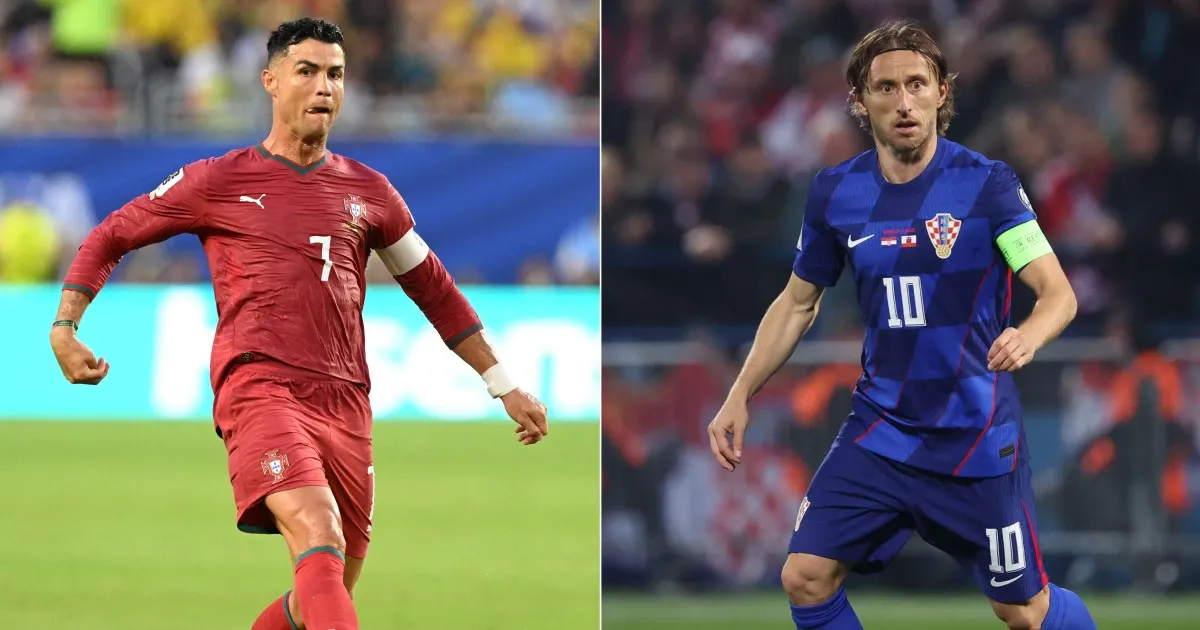
The win, which could have been by a greater margin – with a disallowed goal and a free kick off the woodwork – sets up a tantalising round-of-16 clash with either Portugal or Croatia.

“I’m happy to help the team and get through to the next round. Now we need to rest,” said Oyarzabal directly after full-time.

“They were a physical side and difficult to play against, but we played a good match. We’re happy to qualify,” he added.

As to whether he would prefer Portugal or Croatia in Monday’s last-16 match-up, Oyarzabal remarked: “It doesn’t matter who we face in the next round; I have friends in both teams.”

Oyarzabal sets the tone

Los Angeles Stadium was a sea of red and excitement over the first visit by a bona fide World Cup favourite to the US’s second city.

Spain ratcheted up the pressure gradually through the first half, creating a string of chances after the first hydration break.

Marc Cucurella thought he had scored from a Lamine Yamal corner, but Pau Cubarsi was judged to have encroached on Austria’s goalkeeper.

Alexander Schlager then made a superb diving save, pushing Oyarzabal’s low shot around the post.

Austria’s defence finally buckled in the 36th minute. Pedri pinged a ball wide, left to Cucurella, whose cross to Oyarzabal was calmly side-footed past the goalkeeper.

Spain’s dominance grew further, with Yamal tormenting the Austrians, mainly from the right flank.

An Alex Baena free kick hit the crossbar, and Yamal’s close-range follow-up shot was well saved.

Austria spurned a rare chance at the other end. Romano Schmid played in a late-arriving and unmarked Stefan Posch, but a terrible first touch meant he lost the ball before even attempting a shot.

Oyarzabal scores goal.
Oyarzabal scores his second goal against Austria in the 89th minute [Kiyoshi Mio/Imagn Images via Reuters]

‘Ole’

After the break, Spain continued knocking on the door without quite putting the game to rest.

Austria sent on two giant strikers, Sasa Kalajdzic and Marko Arnautovic, and immediately went long, with Kalajdzic putting a header over the bar.

But in the 66th minute, Spain struck again. Baena lifted a cross onto the head of Pedro Porro, who nodded in his first goal for Spain.

Some dogged defending kept the scoreline respectable, including a goal-line clearance by David Alaba from Yamal, who was substituted off to rest moments later.

Spain sprayed passes around the pitch as the final minutes ticked down, eliciting “Oles” from the crowd, as attention turned to a sterner test on Monday in Dallas.

In the 89th minute, a pinpoint Cucurella cross found a completely unmarked Oyarzabal in the penalty area, who slotted the ball home to seal the victory in style.

Source link

100 miles of agony and hope: A cancer survivor’s ultramarathon journey

In the pre-dawn chill of the Sierra Nevada, Christina Klayko bounced on the balls of her feet, trying to keep warm and calm before one of the planet’s most punishing competitions.

Surrounding her at the starting line for the Western States Endurance Run — a lung-busting 100-mile race over towering mountain ridges and through deep, sun-scorched canyons — were some of the most elite athletes in the world, including former champions, record holders and an Olympic marathon medalist.

  • Share via

Klayko, a 48-year-old mother of three, had no illusions about winning — she was just relieved to be there. She is a two-time cancer survivor, and a year earlier, she was lying on an operating table enduring a full hysterectomy, followed by months of radiation treatment. She was terrified she might die.

Spectators hike to the summit of the Sierra Crest at Palisades Tahoe Ski Resort.

Spectators trekked to Emigrant Pass before dawn to cheer at the first significant milestone the Western States Endurance Run.

“I was in a very dark place,” she said. “I would have given anything just to be able to walk my dog around the block.”

But Klayko, a former software engineer from Los Altos, has never been a quitter. In her twenties, following a breast cancer diagnosis and a full mastectomy, she finished an Ironman triathlon. Last Saturday, she was hoping to complete an even more miraculous comeback.

To do so, she would have to run almost half the width of California, from the shores of Lake Tahoe to Auburn, a former mining town in the foothills above Sacramento, along remote, rock-strewn paths that rise and fall like a roller coaster.

In all, she would have to propel herself up more than 18,000 vertical feet, or three times the elevation hikers climb to the summit of Mt. Whitney, the tallest peak in the contiguous U.S. And she’d have to endure relentless jack-hammering from nearly 23,000 feet of descent.

Hard things are nothing new to her, Klayko said. And unlike cancer, running is a choice. You can walk away when you’ve had enough.

There’s no prize money for doing well in the Western States 100, but finishers get a commemorative belt buckle and, more importantly, membership in one of the most exclusive clubs in all of sports. More than 11,000 runners entered a lottery for fewer than 400 spots this year. Many had waited for more than a decade for their chance.

But there’s a cruel twist — not everyone who crosses the finish line wins the bragging rights.

There’s a strict 30-hour time limit. Which means, most years, dozens of competitors struggle over snow-capped mountains, push themselves to the brink of heat stroke in the sweltering canyons and endure a long, dark night in the wilderness, only to show up at the finish line a few minutes late.

Eric Strand, 65, of Wildwood, MO, center, runs the Western States Endurance Run.

Eric Strand, 65, of Wildwood, MO, center, runs in front of the Granite Chief Wilderness at the start of the Western States Endurance Run.

They’re not acknowledged as finishers. As far as the official record is concerned, they didn’t make it.

So as Klayko waited for the ceremonial shotgun blast that signals the start, she wasn’t worrying about cancer, or mortality, or even the hours of torture that lay ahead — she was dreading the cutoff.

“I knew I could just push and push as long as I had to,” Klayko said. But she couldn’t escape the looming fear of “running out of time.”

The first major obstacle was Emigrant Pass, a high ridge that is four miles, almost straight uphill, from the start at the Palisades Tahoe ski resort.

Half an hour after the start, the sun peeked over distant summits, turning the horizon orange, and the first runners approached the top.

In the lead pack was Jim Walmsley, a four-time Western States champion and holder of the course record — an astonishing 14 hours, 9 minutes and 28 seconds. Spaniard Kilian Jornet, arguably the greatest ultra runner of all time, was right there with him. That was no surprise. In addition to having won Western States and almost every other notable ultramarathon, Jornet famously summited Mt. Everest twice in one week — without supplemental oxygen.

Among the women was Molly Seidel, perhaps the most recognizable name after Jornet. Seidel had been a 27-year-old barista and babysitter before the COVID-delayed Olympics in 2021, when she shocked the running world by winning the bronze medal in the marathon. It was only the third marathon she had ever run.

These battle-hardened pros barely flinched when they crested the ridge and ran headfirst into bitter, gale-force winds gusting to 65 mph. Their bare, muscled legs kept pumping steadily and carried them down the other side, where the gusts quickly subsided.

The rest of the pack didn’t make it look so easy.

Spectators watch the sunrise before the start of the Western States Endurance Run.

Spectators watch the sunrise before the start of the Western States Endurance Run.

Many were hunched and gasping as they struggled toward the crest. One woman bent over and started retching violently. Locking eyes with a reporter, she shouted, “I’M OK!” — apparently unaware that she was screaming over the wind and whatever was playing in her headphones. “I JUST SWALLOWED TOO MUCH SPIT!”

Then she straightened and staggered into the howling gale: only 96 more miles to go.

Seven hours later, at mile 56, the lead runners climbed out of the course’s deepest and hottest canyon, onto a dusty promontory called Michigan Bluff.

The first few looked almost as fresh and fast as they had at the ridge. But the punishment was starting to show on everyone else.

Jornet, who had been nursing a knee injury before the race, was concerned about the canyons. He didn’t make it through them, dropping out at mile 38.

Walmsley, who had been among the leaders for the first 30 miles, was fading by Michigan Bluff. Persistent hip pain would force him from the race at the next aid station. At this point, most of the other runners, including Klayko, were hours behind.

Justin Grunewald, a 40-year-old Colorado doctor, who some picked as a dark horse contender to finish in the top ten, looked exasperated as he emerged from the canyon. He went straight to his support team, who started dumping water down the back of his shirt and tying an ice bag around his neck.

“I’m totally fine,” he told them, “but my knee is killing me because I keep eating s—.” That’s runner shorthand for falling.

His knee was bleeding, but the real problem was his vision. He pulled off his sunglasses, and his eyes were a scary shade of red. He leaned his head back while a friend squeezed drops into them and reminded him to keep wearing his glasses. Obvious advice — but what else do you say to someone hellbent on running another 44 miles?

“Ultra runners are a strange breed,” said Amanda Basham, Grunewald’s wife. She was on his support team this year, but she has twice finished the race in fourth place.

Jacob Banta, of Mill Valley, pushes up the trail near Michigan Bluff during the Western States Endurance Run.

Jacob Banta, of Mill Valley, pushes up the trail near Michigan Bluff during the Western States Endurance Run.

As Grunewald composed himself and trotted off into the distance, it seemed like a good time to ask the obvious: why does anyone put themselves through such an ordeal?

Basham laughed and said most people would probably brush the question aside with something safe and trite, like, “I just love running!” But the truth, she said, is that “almost everyone here has an intense story.”

Grunewald’s first wife and running partner, Gabe, died after fighting a rare cancer for 10 years, Basham said. Other competitors have lost a child, struggled with mental health or battled addiction. Running long distances on secluded trails can be a coping mechanism. For some, showing up at big races to commune with their tribe is like group therapy.

“We all come together for this common thing, and it doesn’t really matter if you went to rehab 10 times,” Basham said. “You’re here trying to get better, and it’s cool.”

Minutes later, Seidel hobbled out of the canyon clutching her thighs. When her crew offered her a chair, she tried to settle but started panting in pain, apologizing that she was in too much agony to sit.

This was her first attempt at 100 miles. She would explain later that she hadn’t eaten enough during the race and had developed excruciating skin lesions from chafing. It looked like her day was done, but she refused to quit.

The women’s winner, Jennifer Lichter, might have the most intense story of them all. Born in Bogota, Colombia, she was a nine-year old orphaned by cartel violence when a couple from Wisconsin adopted her.

In her first 100-mile race, she shaved a minute off the women’s course record, finishing in 15 hours, 28 minutes and five seconds.

The men’s winner, Vincent Bouillard, smashed the overall course record by more than 20 minutes, sprinting across the line in 13 hours, 46 minutes and 15 seconds.

Klayko, who never imagined herself involved in the chase for records, emerged from the canyon eight hours behind the leaders.

For most of the race, she hovered between hiking fast and running slow. She subsisted mostly on energy chews and gels, indulging in a baked potato sprinkled with salt at one point, and luxuriating in a cup of broth with rice at another.

Was attempting the race wise, given her health? Had she told her doctors she was planning to do this?

“That’s, um, a good question,” she said with a chuckle. “They know I’m a serious runner but … I don’t think I actually told them I was running the Western States.”

Probably for the best.

Like a lot of the runners, Klayko said she got a jolt of much needed energy at mile 78, on the bank of the American River, where the run suddenly turns into an obstacle course.

Racers grab a thin nylon rope and gingerly wade into the freezing water. Volunteers offer life vests and stay close to prevent drownings, but offer no assistance.

A racer crosses the American River during the Western States Endurance Run.

A racer crosses the American River during the Western States Endurance Run.

Near the middle of the crossing, the water got so deep that many runners submerged completely, pulling on the rope to haul themselves to the far bank.

“It definitely woke me up,” Klayko said of her crossing in the dark at 3 a.m. “It was a lot colder than I expected.”

On the other side — soaked to the bone, with wet clothes and shoes — she crawled back onto the dusty trail and started running again. Soon after, the trouble set in.

It began with a burning sensation on the bottom of her left foot. As the pain intensified, she started hobbling, leaning on the trekking pole in her right hand to take pressure off the blister that was growing bigger than a golf ball.

With just miles to go, her husband, Chris, who ran beside her — after the halfway point, competitors are allowed to have a companion for safety — kept checking the time. They were falling behind.

What do you say to someone you love in such a situation? You don’t want them to suffer, but you don’t want them to fail.

“We need to hustle,” he told her.

In the last few hundred yards, the race enters the football stadium at Placer High School. Seidel had finished hours earlier, at 5:29 a.m., when the stadium was relatively empty.

But the last 60 minutes before the notorious cutoff — known as Golden Hour — attracts a huge crowd.

Cameras film from every angle as one battered body after another circles the track. Some jog, some hobble, some openly sob. Whatever they do, it’s fully public and likely to go viral on social media.

Christina Klayko pushes for the finish in the Western States Endurance Run in Auburn. Her total elapsed time was 29:42:30.

Christina Klayko pushes for the finish at Placer High School with just minutes to spare in the Western States Endurance Run..

Klayko said she was coached to visualize her finish during training. In her head, it looked nothing like this.

When she came around the final bend with the clock ticking down, gasps arose from the media gaggle behind the finish line.

Desperate to compensate for the enormous blisters on both feet now, she leaned forward and to the right at almost 90 degrees — wobbling and weaving on her heels, relying on trekking poles to stay upright and claw forward.

It was hard to watch but impossible to look away.

When she was finally in stumbling distance of the line, Chris bounced up and down and thrust his arms in the air. The crowd roared.

She finished with 18 minutes to spare.

Christina Klayko completes the Western States Endurance Run in Auburn

Christina Klayko nearly collapsed after crossing the finish with minutes to spare in Western States Endurance Run.

Source link

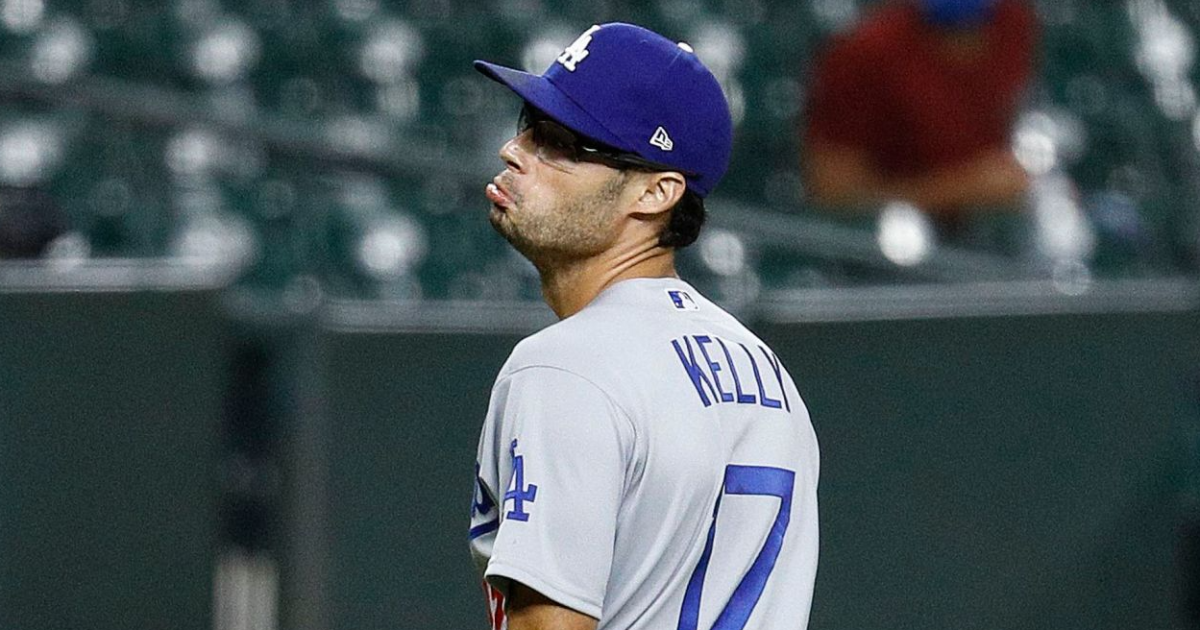
Former Dodgers pitcher Joe Kelly joins coaching staff at Corona High

Corona High baseball coach Andy Wise has pulled off the most intriguing acquisition of the summer season.

Former Dodgers relief pitcher Joe Kelly, a Corona graduate, is joining the program as an assistant coach to help guide pitchers.

Known for his quirky personality and ability to thrive under pressure, Kelly has followed the program in recent years after retiring as a player and jumped at the chance to help the pitchers, Wise said.

“My conversations with him over the years have been incredible,” Wise said. “What an asset for the pitching staff and the whole program. He’s got the time and he’s got a lot of kids. He’s not going to be here six days a week. He’s excited.”

The plan came together after Wise went up to Northern California to speak with a group of players with Kelly.

“No stress, no pressure, anything you might help us with would be awesome,” Wise said he told him.

Wise said Kelly has been following the team in person and on GameChanger and offering ideas.

Just having around a 13-year former MLB pitcher should be inspiring to players next season.

“Joe is Joe and I expect him to be Joe,” Wise said.

Source link

How ‘¿Y si sí?’ helped Mexico fans reimagine World Cup spirit

¿Y si sí?

As Mexico moves to the Round of 16 in the 2026 World Cup following its Tuesday night 2-0 win over Ecuador — advancing in the knockout stage of the tournament for the first time in 40 years — El Tri fans have rallied behind a unifying phrase: “¿Y si sí?”

The simple three-word expression — which roughly translates to “What if… yes?” — has given Mexico supporters all over the world renewed hope: What if Mexico wins the World Cup?

The now ubiquitous phrase has been featured in memes and compilation videos. Even Mexican goalkeeper Memo Ochoa has gotten in on the action, posting a selfie on Instagram wearing a straw cowboy hat with “¿Y si sí?” etched on it.

Origins of the phrase can be traced back to a May interview with Efraín Juárez, who led Pumas UNAM to the Liga MX Clausura final. During the media appearance, journalist Rodrigo Celorio asked the head coach, “Y si sí?” (“What if yes?”), to which Juárez responded, “Y si sí? Y si los Pumas sí son campeones?” (“What if yes? What if Pumas are be champions?”).

Although Pumas would lose to Cruz Azul 2-1, the optimistic sentiment resonated with TikTok users, especially with the World Cup just weeks away. Some hopeful fans took to social media to post their own interpretation of the phrase, often coupled with clips of past Mexican men’s national teams. Others included a mariachi soundbite of Juan Gabriel’s “Hasta Que Te Conocí” from his 1990 performance at the Palacio de Bellas Artes — an appearance that was seen as a milestone for Mexico’s working-class communities given that the iconic Mexico City venue was best known to cater to the elite class. Because if someone who grew up in extreme poverty like Juan Gabriel could bring a mariachi band to the illustrious Palacio de Bellas Artes, why couldn’t the Mexican national team win its first ever World Cup?

The phrase “¿Y si sí?” is also a callback to a 2018 interview Javier “Chicharito” Hernández gave to journalist David Faitelson, who asked the former striker if he was serious about Mexico’s chances of winning that year’s tournament.

“Why can’t we be Greece in the [2004] EuroCup? Why can’t we be Leicester in the Premier League? Why not?” said Hernández, referring to underdog teams that defeated the odds against more favorable clubs.

As the two discussed Mexico’s probability of advancing in the knockout stages of World Cup, Hernández balked back with his now famous phrase: “Imaginémonos cosas chingonas!” (“Let’s imagine badass things!”), followed by “Porque no?” (“Why not?”)

Now both “¿Y si sí?” and “Porque no?” have taken on new meaning in 2026. After Fox Deportes reporter Rodolfo Landeros asked attacking midfielder Gilberto Mora why Mexico could win the World Cup ahead of the June 11 kickoff, the 17-year-old responded with “Es qué, porque no?” (“Because, why not?”).

After Mexico won all three of its group stage matches, TUDN reporter Julio Ibáñez asked the wunderkind Mora, “¿Y si sí?” to which the young soccer player replied “Y Porque no?” When Ibáñez asked if people should get their hopes up, Mora said yes. “Si, que se ilusione” (“Yes, they should dream big”), playing up the running gag.

With Mexico set to face England, one of the teams favored at the start of the tournament, on July 5, would it be so wrong if fans allow themselves to dream? ¿Y si sí? ¿Porque no?


Source link

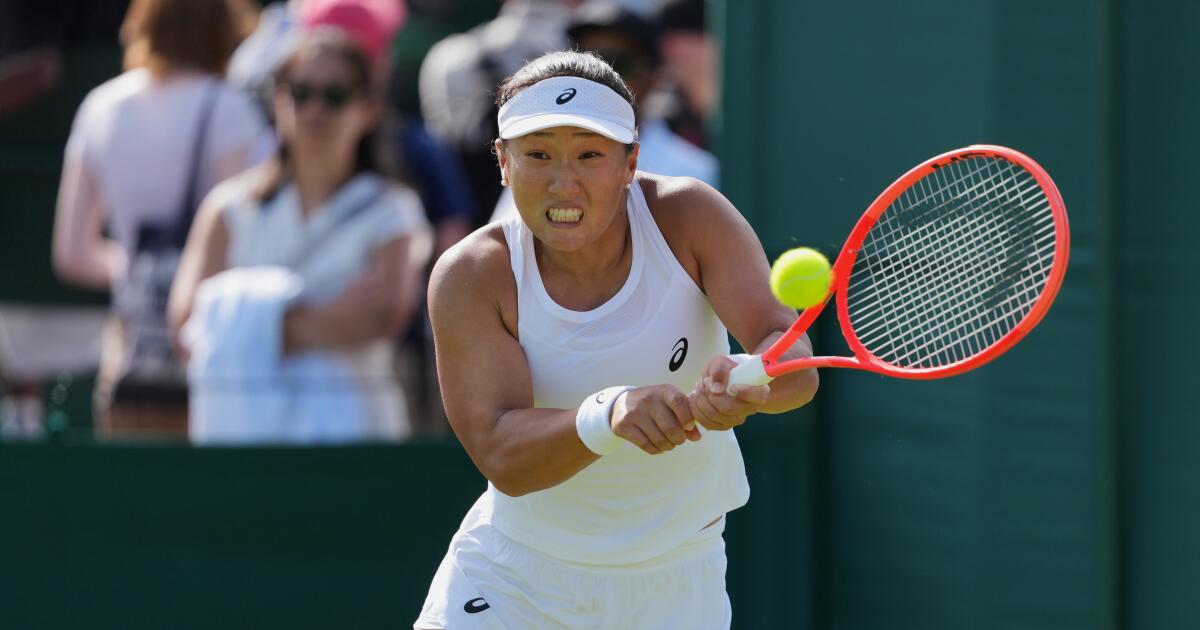
Thousand Oaks native Claire Liu finally reaches Wimbledon’s third round, will face Coco Gauff

Claire Liu packed her bags and checked out of her London hotel room on Wednesday morning before heading to the All England Club.

It was more pragmatism than pessimism — a reality of a qualifier navigating her Wimbledon journey one day at a time.

But as her boyfriend reminded her while organizing her luggage: “Just because you’re packing doesn’t mean you’re leaving,” Liu recalled with a laugh.

He was right.

The Thousand Oaks native went on to win her second-round match against 51st-ranked Zeynep Sonmez of Turkey 7-5, 6-3, advancing to the third round of a Grand Slam for the first time in her professional career. She had tried 29 previous times at majors, including qualifying rounds, since 2015.

“I was just super relieved to get through that,” said Liu, noting she had blown a set and a break lead in the French Open’s second round last month.

For Liu, who turned 26 in May, returning to the manicured lawns of SW19 brings her tennis journey full circle. Nine years ago, she captured the 2017 Wimbledon girls’ singles title — the first American to do so since Chanda Rubin in 1992 — and was the No. 1 junior in the world. She still holds fond memories of that heady achievement, including chatting with her idol, Roger Federer, at the Wimbledon Champions Ball.

Yet, the transition from teenage phenom to professional mainstay has been anything but a linear ascent. When asked if she expected to be in the third round of a major this late in her career given her junior success, Liu was candid.

“Younger me would have believed it more than now,” she said.

That shift in perspective comes after weathering some brutal setbacks.

Liu climbed as high as No. 52 in early 2023 but then endured a wrist injury and took a months-long mental health hiatus in 2024 that eventually saw her ranking plummet outside the top 400 last year.

Currently sitting at No. 146, she’s been rebuilding her standing by playing a mix of WTA 125 events and ITF tournaments before returning to the main WTA Tour, with 2026 stops in far-flung places from Bahrain to Boca Raton and plenty of places in between.

“My goals haven’t changed, but I think the stress of how I got there really took a toll on me,” said Liu.

To navigate the darkness, Liu leaned heavily into both sports psychology and traditional therapy, including EMDR, a technique that helps people process traumatic experiences. She also started a Substack newsletter called “Finding Claire-ity,” where she openly chronicles her life and struggles on the tour.

The Southern California native, who has trained at the USTA facility in Carson since she was 9 years old and resides in Redondo Beach, also split with her longtime coach last season, a difficult decision, and hired Clemens Wagner.

The switch following the U.S. Open last year is clicking.

“I saw in her someone who fought a lot of battles inside herself,” says Austrian-born Wagner, who has a background in tennis analytics.

Together, they have focused on keeping an “aggressive undertone” on the grass, emphasizing coming to the net and squeezing the most out of her game.

Wagner notes that the 5-foot-7 player’s game isn’t the flashiest, but describes her as a “silent killer” who excels at “redirecting pace, standing close to the baseline, constantly putting pressure on her opponents.”

The reboot is starting to pay significant dividends.

Liu put together her best stretch in years this spring, winning a lower-tier title in Trnava, Slovakia, her first professional title since 2024, and then qualifying for the French Open.

Having again successfully navigated three rounds of qualifying to reach the main draw here, Liu has now won five consecutive matches at Wimbledon. Not surprisingly, she currently has no sponsors, just equipment support from Head Sport and Asics Corp., making her Wimbledon run particularly lucrative. By reaching the third round, Liu achieved her highest career payday: around $250,000. A victory Friday would boost that to nearly $400,000.

First, she faces her biggest test yet: a third-round contest against two-time major champion Coco Gauff on No. 1 Court, which perhaps fittingly is the same show court where Liu won the girls’ title almost a decade ago.

Gauff, 22, noted that she and Liu haven’t crossed paths much since Liu is older, but expects a serious battle. Gauff won both of their previous meetings on hard courts.

“I feel like anytime you’re playing a qualifier, it’s always tough because they have three matches already,” the seventh-seeded American said.

Liu, who didn’t even know she was playing Gauff until a reporter told her after her match, is purposefully keeping her focus narrow.

“I will just take today to be happy for winning, and then tomorrow I’ll think about it,” Liu said. “Obviously she’s one of the best players in the world right now, so that’ll be a good experience.”

Veteran Jessica Pegula, 32, the top-ranked American who also toiled away on the sport’s lower tier before becoming a top-10 mainstay, appreciates Liu’s resolve.

“It’s always nice to see girls that are figuring it out slowly but surely,” the No. 4 seed said. “I think I can relate to that.”

Liu’s accommodations? Fortunately, her mother was able to rebook the same hotel after the match, which eased some of the logistical issues for her unexpectedly extended stay in London.

“It definitely makes me stay in the moment, like, day by day,” Liu smiled of her lodging limbo.

On Wednesday morning, Liu packed her bags expecting she might leave Wimbledon. Instead, she emptied them one more time, with the biggest match of her career still waiting.

Source link

Pubs allowed to stay open until 5am for England Mexico match

Pubs in England and Wales will now be allowed to stay open until 5am on Monday, allowing football fans to watch the Three Lions’ World Cup clash with Mexico to the final whistle.

The round-of-16 match in Mexico City kicks off at 1am UK time.

The government had initially said it would not relax licensing laws further than they already have been for the World Cup.

But Prime Minister Keir Starmer said on Thursday afternoon that pubs could stay open until the final whistle.

Monday’s match is not expected to finish until after 3am.

The government had initially decided not to extend licencing hours further, but u-turned on Thursday evening.

Prime Minister Keir Starmer that the decision was good news for both supporters and pubs.

“Football might be coming home but we’re making sure fans don’t have to,” he said.

Publicans and businesses welcomed the change. Emma McClarkin, chief executive of the British Beer and Pub Association, said: “We all know the best place to watch the match is down the local.”

Licensing hours had already been extended for the World Cup from 11pm to 1am for games with kick-offs from 5pm up to 9pm and up until 2am for kick-offs after 9pm.

Individual pubs normally have to apply to their local council for extended opening hours, at least five working days in advance.

Source link

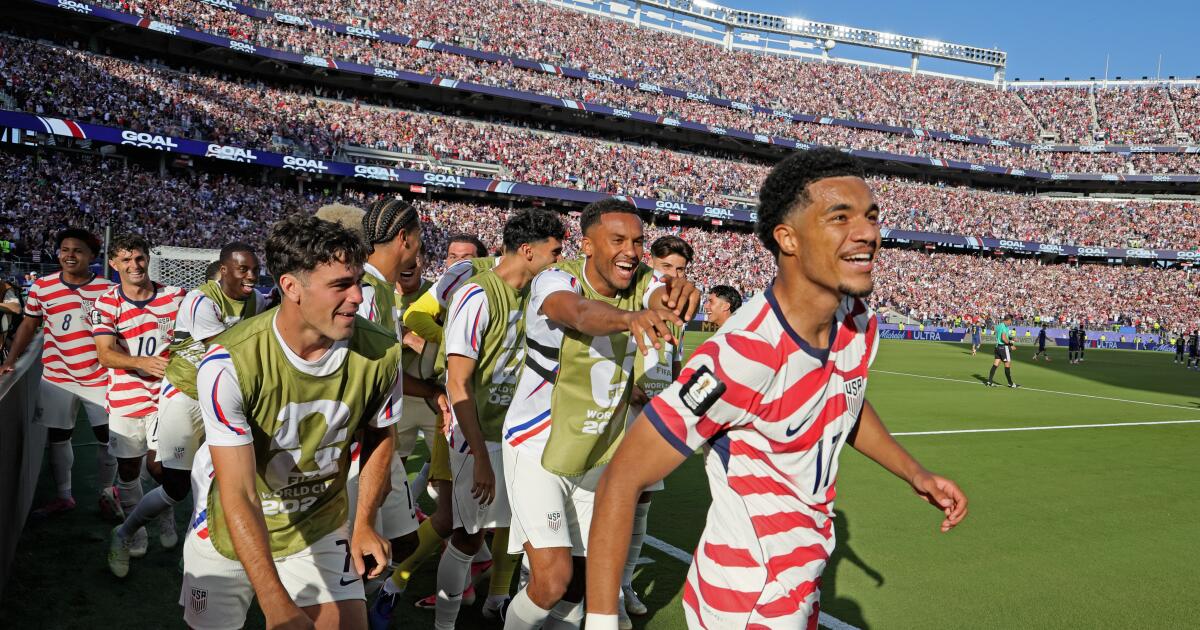
U.S. looks to make more World Cup history in round of 16 vs. Belgium

Mauricio Pochettino’s team continues to do things in this summer’s World Cup that no U.S. team has ever done before.

Its three wins are the most in a single tournament. So are the 10 goals in four games. It has the best goal differential ever and its two shutouts ties a record.

Yet all that means absolutely nothing to the players.

“They’re great milestones,” captain Tim Ream said. “But I don’t think anybody’s even once mentioned the different things that we’re doing. We’re focused on what we’re doing daily on the training ground, because that puts us in the best possible position to to put these performances.

“So yeah, not aware or even worried about records that we’re breaking.”

Well, except for maybe one.

With Wednesday’s gritty 2-0 over Bosnia and Herzegovina, a game the U.S. finished with just 10 men, the Americans won a game in the World Cup knockout stage for just the second time. That sends them on to a round-of-16 meeting with Belgium on Monday in Seattle where a win would be — you guessed it — historic.

“It’s cool and it’s great and it’s an accomplishment,” midfielder Weston McKennie said of the records. “But at the same time, we have high expectations for ourselves. That’s what we expect of ourselves, what we expect of our team.

“We just want to focus on Belgium now and continue to try to make history.”

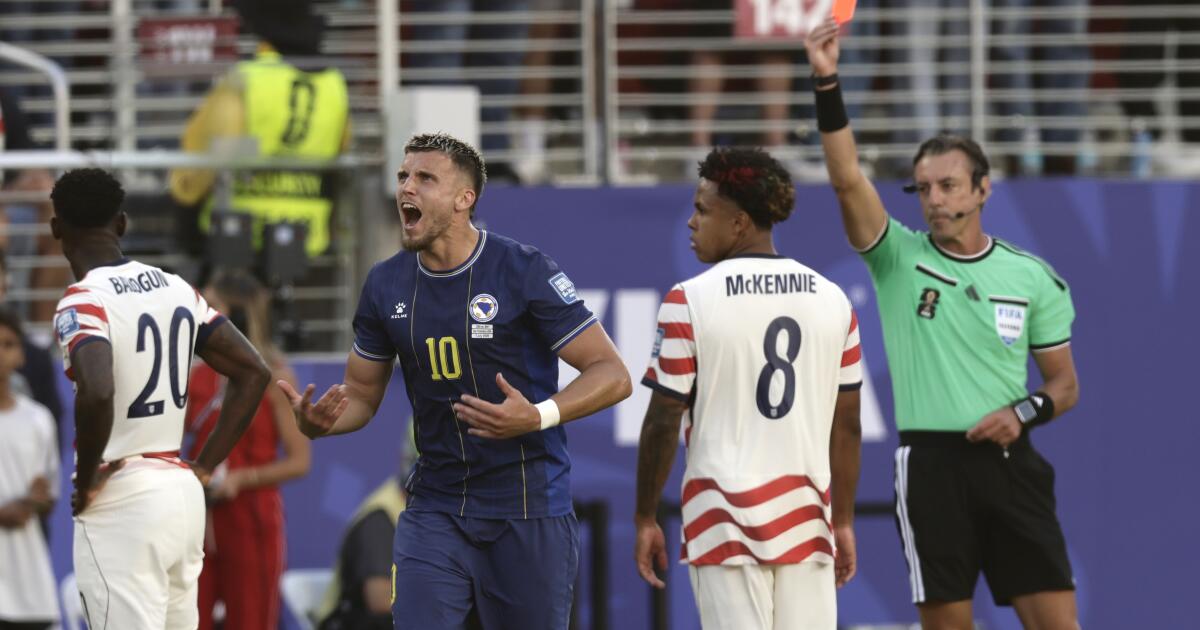
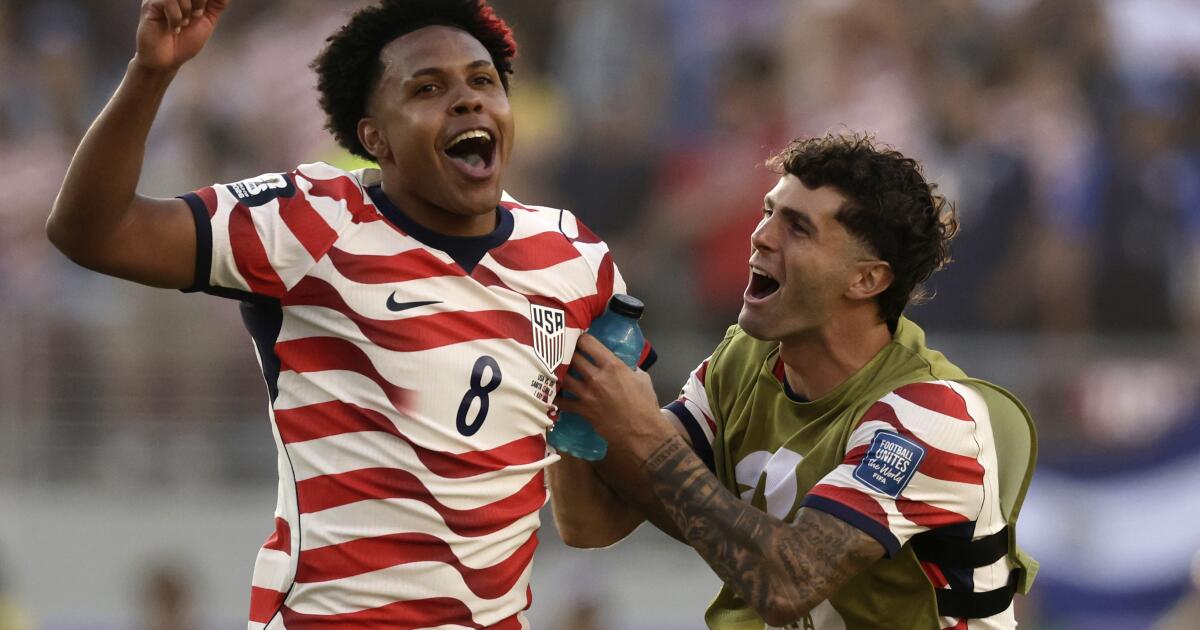
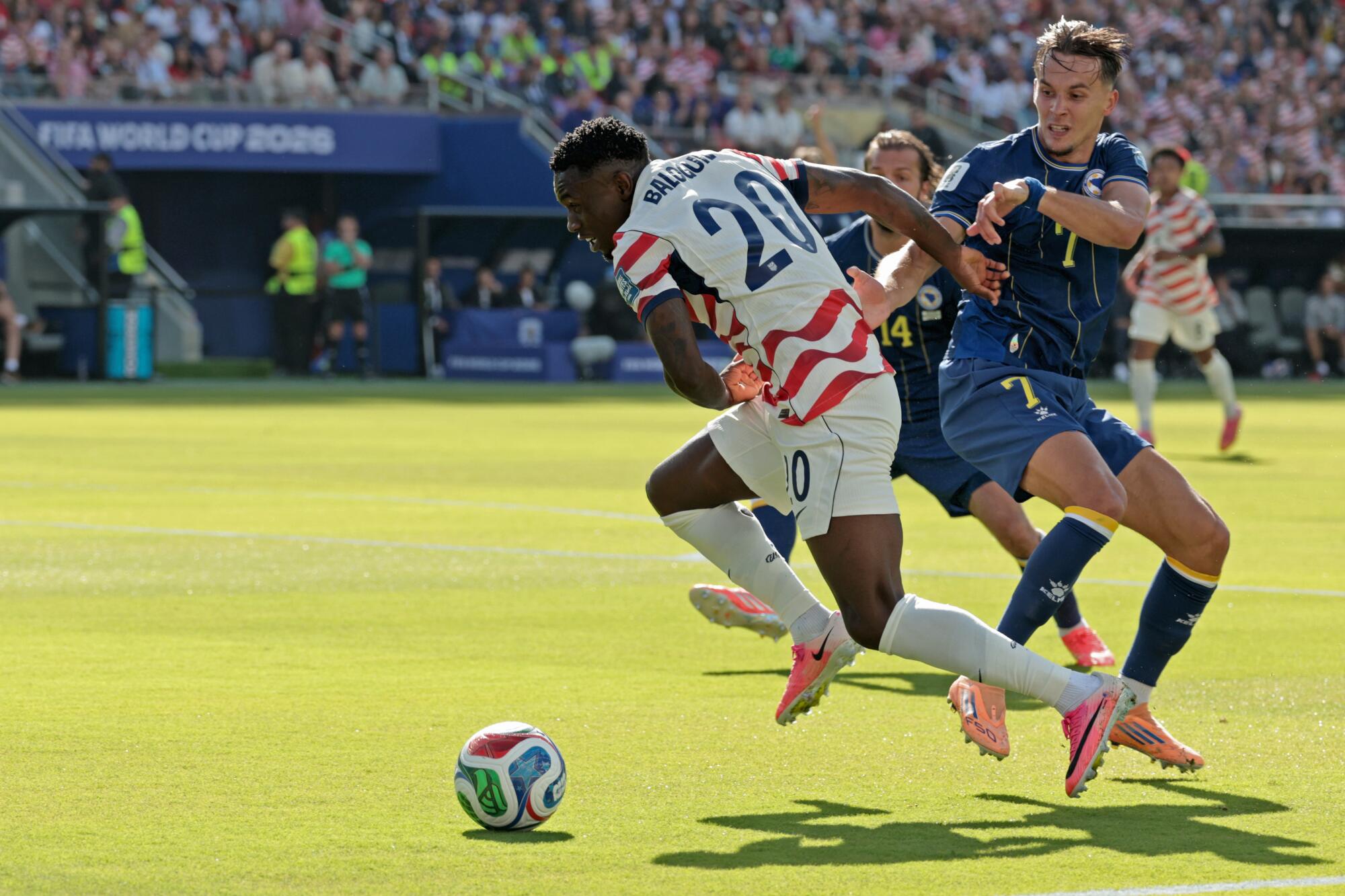
That chore got a good deal more difficult because of an unwanted team record that was also set Wednesday. When Folarin Balogun scored a goal late in the first half then drew a red card early in the second, he became the first American — and third player ever — to get one of each in the same World Cup knockout game.

“Cool record,” defender Chris Richards said.

But while the goal, Balogun’s third of the tournament, proved to be all the U.S. needed to beat Bosnia, the red card — which cannot be appealed according to U.S. Soccer — means he’s suspended for the game with Belgium.

“It’s just so unfortunate, honestly,” Christian Pulisic said. “Looking back at it, it seems so harsh. I just told him he’s done so much for us, and now we’ve got his back.”

The red card came in the 64th minute with the U.S. protecting a 1-0 lead built on Balogun’s goal just before the intermission. The American striker was battling hulking Bosnia defender Tarik Muharemovic for a loose ball when he inadvertently raked Muharemovic’s right calf with his studs up, then landed on his ankle, twisting it awkwardly.

Brazilian referee Raphael Claus did not flash either card before stopping play at the behest of the video assistant referee. But after consulting a slow-motion reply, Claus gave Balogun a red card for a dangerous challenge.

“For me, never is this a red card,” said Pochettino, now the winningest U.S. coach in World Cup history. “Watching after on TV, never was [it his] intention to step up on the player. That was a normal action in football.”

Maybe. But Claus sent Balogun off just the same, leaving the U.S. to protect a one-goal advantage for the final 30 minutes while playing a man down. It was probably the sternest test the Americans have faced in the tournament.

“It would be easy to have an excuse if they did score,” McKennie said. “But that’s not the type of team we are.”

For Ream, the challenge was actually no challenge at all.

“Would it be weird if I downplayed this and said [I] wasn’t even fazed by it?” he said. “It didn’t feel like we were down a man. We were still able to carve out chances and we were still able to keep hold of the ball. Everybody knew their roles.

“It felt really calm and felt really, really easy and simple for us in that moment.”

And that allowed another hero to shrug off the pain of his own wounds and step up big.

Early in the second half a Bosnian player stomped on Malik Tillman, shredding his boot and cutting his right foot (but not drawing a red card). During the hydration break, Tillman was able to change shoes and in the 82nd minute, his white sock turning red with blood, he found himself standing over a free kick just outside the Bosnian penalty area.

“I’ve been dreaming about this game. I’ve been dreaming about, yeah, maybe taking a free kick and scoring,” said Tillman, who bent the ball off the gloved right hand of Bosnian keeper Nikola Vasilj and into the net for his first World Cup goal. “I trained for this in our practices and then it actually came true.”

So did the team’s dreams of reaching the round of 16, only now they’re arriving without their leading scorer, who will have to watch the Belgium game from the stands. Balogun’s absence, however, creates opportunity for others, with Haji Wright and Ricardo Pepi the most likely candidates to take his place.

And if this U.S. team has proven anything, it’s proven that it loves nothing more than embracing opportunities to prove people wrong.

“We’re going to miss him for the next game but we know that if it’s Pepi or Haji, whoever, is going to step up next and they’re going to do the job just as well as he did,” Richards said of Balogun. “One thing about this team is we’re really a big family and we’re shown it this whole tournament.

“Coming in, there was a lot of question marks about our whole team in general. Game by game we started to put ourselves right. Because we knew we had it the whole time.”

Source link

Justice for U.S. star Folarin Balogun, red card for VAR

What do you mean U.S. forward Folarin Balogun got red-carded? For that?

As a nation, we’re pretty new to all this. And this VAR abomination we’ve all now been introduced to? Thanks, we hate it.

Soccer’s video assistant referee system is worse than the NBA’s tedious in-game reviews. Worse than the existential NFL question of whether it is or is not a catch. Dumber than not being able to argue obvious balls and strikes in a pre-ABS baseball world.

Worse than all those things put together.

And now that we witnessed it burn the U.S. men’s soccer team in its rousing 2-0 round of 32 World Cup victory over Bosnia and Herzegovina on Wednesday, all of us newly accredited soccer experts in America are ready to declare war on VAR.

In a physical fixture filled with shoving and shouldering, pushing and pummeling, blood and guts, after 60-plus minutes of letting ’em play, Balogun’s off-balance misstep got him kicked off the pitch.

A match of no-calls — including, initially, this gnarly moment of incidental contact between Balogun and Tarik Muharemovic — and the United States found itself down a man for most of the second half at Levi’s Stadium.

The unfortunate accident will rob Americans — both those on the pitch and those glued to screens at home or at a watch party — of their top scorer (Balogun has three goals in three matches) in a round of 16 showdown with Belgium on Monday in Seattle.

The young man was doing LeBron James’ silencer celebration after scoring a goal one moment and being tagged with soccer’s equivalent of a Flagrant 2 the next — because of how one moment was assessed on tape delay.

Delay being the operative phrase. No one loves late calls, but soccer has some late calls. Examined in super-slow motion. And, as the United States’ Tyler Adams pointed out: “When you slow everything down, it’s only going to look worse.”

And Balogun didn’t mean it! That’s a better defense in some situations than others — including this one. Per letter of the law.

ESPN’s resident refereeing expert, Andy Davies, a former Select Group referee with more 12 seasons on the elite list provided this summary judgment: “With both players challenging for ball, the contact from Balogun on Muharemovic, while it looked bad in slow motion, was purely accidental and an unfortunate result from two players challenging for possession of the ball in a normal football movement.”

Also, Davies: “VAR made their recommendation to the referee based on slow-motion and still replays, which is not aligned with VAR protocols, as these should be used for only point-of-contact purposes in a red card tackle situation.”

Let me tell you something you already knew: FIFA is inconsistent.

Malik Tillman’s exquisitely placed, curving free kick for a goal in the 82nd minute might have been Messi-esque, but the call on Balogun? Not Messi-esque.

In a group play match against Algeria, Lionel Messi, the Argentine superstar, seemed to rake his studs along Aïssa Mandi’s right calf and ankle. That time, a foul was called. VAR had a look. And despite the rules stating that a challenge from behind with studs-on-calf contact and a level of force should be a red card — no card was administered. Can’t have Messi missing games.

The armchair referee system, so far from unassailable, is also unappealable — to U.S. coach Mauricio Pochettino’s dismay.

“For me, never is this red card,” Pochettino said. “Watching after on TV, never was [it] intention[al] to step up on the player. That was a normal action in football that happened by accident.

“That is why for me it’s never a red card.”

But you don’t have to take his word for it.

On Fox, former French footballing legend Thierry Henry said: “You need to adopt some type of common sense. He never went to hurt nobody. He went to get the ball, and where do you land after? You have to land somewhere.”

Commentator Ian Darke weighed in with a post on X: “Reckless and yellow would have covered it.”

Trust your own eyes.

In an attempt to eliminate human error, this great sport has introduced human error. But it feels more egregious than a bad call in the run of play because it’s justice — or injustice — meted out arbitrarily, unevenly and after the fact.

Look, I’m sure the world doesn’t want to hear any of our star-spangled opinions about how to improve the beautiful game — but in this, we’re united.

There’s a universal sentiment: Give VAR the red card.

Source link

U.S. advances to round of 16, but gets potentially critical red card

U.S. advances to round of 16

From Kevin Baxter: Folarin Balogun was still learning to walk the last time the U.S. won a knockout round game in a World Cup. On Wednesday, he helped lead the Americans to another with his goal in the waning seconds of the first half, sparking a 2-0 win over Bosnia and Herzegovina that sends the team on to the round of 16 of this summer’s tournament.

The other goal came from Malik Tillman in the 82nd minute. The Americans have scored multiple goals in every game of the tournament for the first time ever, also setting a national record with 10 goals overall in the tournament.

The U.S. will face Belgium in the next round Monday in Seattle. Belgium advanced with a 3-2 win over Senegal in extra time.

Balogun wasn’t around to see the finish though, drawing a straight red card for stomping on the right ankle of Bosnian center back Tarik Muharemovic in the 61st minute, a foul Brazilian referee Raphael Claus confirmed via a video review. That forced the Americans to see Wednesday’s game out with just 10 players.

“For me, never is this red card,” U.S. coach Mauricio Pochettino said. “Watching after on TV, never was [it] intention[al] to step up on the player. That was a normal action in football that happened by accident.

“That is why for me it’s never a red card.”

Continue reading here

U.S. Soccer cannot appeal Folarin Balogun’s World Cup red card suspension

Go beyond the scoreboard

Get the latest on L.A.’s teams in the daily Sports Report newsletter.

Wednesday’s World Cup results

Round of 32
England 2, DR Congo 1
Belgium 3, Senegal 2
U.S. 2, Bosnia-Herzegovina 0

Today’s World Cup TV schedule

All times Pacific
Spain vs. Austria, noon, Fox, Telemundo
Portugal vs. Croatia, 4 p.m., Fox, Telemundo
Switzerland vs. Algeria, 8 p.m., FS1, Telemundo

World Cup round of 32 schedule, results

Round of 32 results
Canada 1, South Africa 0
Brazil 2, Japan 1
Paraguay 1, Germany 1 (Paraguay wins on PK’s, 4-3)
Morocco 1, Netherlands 1 (Morocco wins on PK’s, 3-2)
Norway 2, Ivory Coast 1
France 3, Sweden 0
Mexico 2, Ecuador 0
England 2, DR Congo 1
Belgium 3, Senegal 2
U.S. 2, Bosnia-Herzegovina 0

All times Pacific
Thursday
Spain vs. Austria, noon, Fox, Telemundo
Portugal vs. Croatia, 4 p.m., Fox, Telemundo
Switzerland vs. Algeria, 8 p.m., FS1, Telemundo

Friday
Australia vs. Egypt, 11 a.m., Fox, Telemundo
Argentina vs. Cape Verde, 3 p.m., Fox, Telemundo
Colombia vs. Ghana, 6:30 p.m., Fox, Telemundo

Round of 16 schedule

All times Pacific
All games on Fox and Telemundo

Saturday
Canada vs. Morocco, 10 a.m.
Paraguay vs. France, 2 p.m.

Sunday
Brazil vs. Norway, 1 p.m.,
Mexico vs. England, 5 p.m.

Monday
Portugal or Croatia vs. Spain or Austria, noon
U.S. vs. Belgium, 5 p.m.

Tuesday, July 7
Argentina or Cape Verde vs. Australia or Egypt, 9 a.m.
Switzerland or Algeria vs. Colombia or Ghana, 1 p.m.

Dodgers lose to Athletics

From Bill Shaikin: The Dodgers welcome their bitter rivals to Dodger Stadium on Thursday for what should be a big four-game series, but the San Diego Padres are a mess. They trail the Dodgers by 12 games in the National League West. Their best batter by WAR, according to Baseball Reference, is journeyman infielder Ty France.

The Dodgers lost a game Wednesday by six runs, 7-1 to the Athletics. The Padres lost a game by 20 runs.

However, standings and statistics be damned, the Dodgers are coming for the Padres, their closest pursers in the division even if “close” is relative. The Dodgers didn’t have to say anything out loud, but you could see it on the field Wednesday.

Shohei Ohtani was the scheduled starting pitcher, but the Dodgers pushed him back so he could face the Padres this weekend. The Padres will face Roki Sasaki on Thursday, Ohtani on Friday and Yoshinobu Yamamoto on Sunday.

“They’re all big for us,” Dodgers manager Dave Roberts said. “We try to take every series with the same importance, but obviously winning that series is the goal.”

Continue reading here

Dodgers box score

MLB standings

Lakers acquire Walker Kessler, three free agents

From Thuc Nhi Nguyen and Broderick Turner: A day after LeBron James told the Lakers he would take his talents elsewhere for an unprecedented 24th NBA season, the team started rebuilding its roster around Luka Doncic by delivering Doncic’s biggest wish: a new center.

The Lakers will pair Doncic with 24-year-old Walker Kessler after the team agreed to send two first-round picks (2031 and 2033) and two pick swaps (2028 and 2030) to the Utah Jazz, people with knowledge of the situation who are not authorized to speak publicly on the matter confirmed to The Times on Wednesday.

Kessler, who was limited to five games last season because of a shoulder injury, is expected to sign a four-year, $130-million contract with the Lakers, people with knowledge of the situation said.

After addressing their No. 1 position of concern with Kessler, the Lakers worked to fill in the margins with three free agents — center Sandro Mamukelashvili, guard Quentin Grimes and guard Collin Sexton.

Continue reading here

Lakers announce summer league schedule, roster

Celtics trade Jaylen Brown to the 76ers for Paul George, four draft picks

Fan loudly expresses unbridled enthusiasm for Mexico’s World Cup goal … at Dodgers-A’s game

This day in sports history

1921 — The Jack Dempsey-Georges Carpentier heavyweight match at Rickard’s Orchard in Jersey City, N.J., becomes the first million-dollar gate in boxing history. The receipts total $1,789,238 with $50 ringside seats. In front of 80,183, Dempsey knocks out Carpentier at 1:16 of the fourth round.

1927 — Helen Wills becomes the first American to win at Wimbledon since May Sutton in 1907, beating Lili de Alvar 6-2, 6-4 for the title.

1937 — Don Budge beats Gottfried von Cramm, 6-3, 6-4, 6-2 to win the men’s singles title at Wimbledon. Budge sweeps the championships winning the singles, the men’s doubles title with Gene Mako and the mixed doubles crown with Alice Marble.

1938 — Helen Wills Moody wins her eighth and final singles title at Wimbledon, defeating Helen Jacobs 6-4, 6-0.

1966 — Billie Jean King wins the first of her six singles titles at Wimbledon, beating Maria Bueno of Brazil 6-3, 3-6, 6-1.

1967 — Catherine Lacoste of France becomes the first foreigner and first amateur to win the U.S. Women’s Open golf championship. At age 22, she is also the youngest champion.

1976 — Chris Evert beats Evonne Goolagong, 6-3, 4-6, 8-6, to win the women’s singles title at Wimbledon.

1988 — Steffi Graf ends Martina Navratilova’s six-year reign as Wimbledon champion with a 5-7, 6-2, 6-1 victory. It is the first time in nine finals that Navratilova loses a Wimbledon singles match.

1989 — Jockey Steve Cauthen becomes the first rider in history to sweep the world’s four major derbies after winning the Irish Derby with Old Vic. He had previously won the Kentucky Derby with Affirmed (1978), the Epsom Derby with Slip Anchor (1985) and Reference Point (1987) and the French Derby with Old Vic (1989).

1994 — Colombian defender Andres Escobar, 27, is killed outside a bar in Colombia in retaliation for deflecting a ball into his own goal in a 2-1 loss to the United States in the World Cup.

1995 — Tom Weiskopf withstands a charge by Jack Nicklaus to win the U.S. Senior Open by four strokes.

1999 — Alexandra Stevenson becomes first qualifier in Wimbledon history to reach the women’s semis. She beats another qualifier, 16-year-old Jelena Dokic, 6-3, 1-6, 6-3.

2000 — UEFA European Championship Final, Feijenoord Stadion, Rotterdam, Netherlands: David Trezeguet scores in extra time to give France a 2-1 win over Italy.

2005 — Venus Williams overcomes an early deficit and a championship point to beat top-ranked Lindsay Davenport 4-6, 7-6 (4), 9-7 for her fifth major title and her first in nearly four years.

2010 — The United States beats Japan 7-2 to win its seventh consecutive world softball championship.

2010 — FIFA World Cup: Ghana, only African team remaining in last 8, are beaten 4-2 on penalties by Uruguay; Netherlands upset Brazil 2-1.

2011 — Wladimir Klitschko wins a lopsided unanimous decision over David Haye, adding the WBA title to his heavyweight haul. Klitschko and his older brother, Vitali, hold all three major heavyweight titles. Wladimir already had the IBF title (and minor WBO, IBO belts), while Vitali is the WBC champion.

2016 — Sam Querrey ends Novak Djokovic’s quest for a true Grand Slam in the third round at Wimbledon. In a match interrupted by three rain delays after being suspended in progress because of showers a night earlier, Querrey ousts Djokovic 7-6 (6), 6-1, 3-6, 7-6 (5) at the All England Club.

2017 — Home town underdog Jeff Horn upsets Manny Pacquiao of the Philippines on points in a highly controversial WBO welterweight title fight in Brisbane, Australia.

2018 — A wild brawl breaks out between Australia and the Philippines during the Basketball World Cup qualifying game in Manila. Thirteen players, including four Australians, are ejected for their part in the brawl. The game is won 79-48 by Australia.

Compiled by the Associated Press

This day in baseball history

1903 — Washington outfielder Ed Delahanty went over a railroad bridge at Niagara Falls and drowned. The exact circumstances of his death never were determined.

1909 — The Chicago White Sox stole 12 bases, including home plate three times, in a 15-3 rout of the St. Louis Browns.

1930 — Chicago outfielder Carl Reynolds homered in the first, second and third innings, leading the White Sox to a 15-4 win over the New York Yankees. Reynolds, the second player in history to hit home runs in three consecutive innings, had two inside-the-park homers.

1933 — Carl Hubbell of the New York Giants beat the St. Louis Cardinals 1-0 in an 18-inning game. He gave up six hits and no walks. In the second game of the doubleheader, the Cardinals were blanked 1-0, with Roy Parmelee outdueling Dizzy Dean.

1933 — Jimmie Foxx of the Philadelphia Athletics set and American League record with 21 total bases in a doubleheader. Foxx hit two solo homers in the opener, a 6-5 win over the St. Louis Browns. In the nightcap, an 11-6 loss, Foxx had two homers, a double and a triple.

1941 — Joe DiMaggio of the New York Yankees hit a home run to extend his consecutive game hitting streak to 45 games, surpassing Willie Keeler’s record of 44 straight games for the Orioles in 1897.

1963 — Juan Marichal of San Francisco beat Warren Spahn and the Milwaukee Braves 1-0 in 16 innings on Willie Mays’ homer.

1986 — Roger Clemens of the Boston Red Sox fell short of a record-tying 15th consecutive winning decision when the Toronto Blue Jays scored three runs in the eighth inning for a 4-2 victory.

1995 — Hideo Nomo of the Dodgers became the first Japanese player picked for baseball’s All-Star game. Nomo was the NL’s leader in strikeouts and second in ERA.

2007 — Roger Clemens reached a rare milestone, pitching eight innings of two-hit ball to earn his 350th win and lead the New York Yankees past Minnesota 5-1. Clemens became the first major leaguer to win 350 games since Hall of Famer Warren Spahn of the Milwaukee Braves accomplished the feat in 1963.

2009 — Houston Astros beat the Padres 7-2, but only after waiting out a 52-minute delay in the top of the ninth inning caused when a swarm of bees took over part of left field at San Diego’s Petco Park.

2013 — Homer Bailey pitched his second no-hitter in 10 months and the first in the majors this season, pitching the Cincinnati Reds to a 3-0 victory over the slumping San Francisco Giants. Bailey beat the Pirates 1-0 in Pittsburgh last Sept. 28.

2014 — Red Sox designated hitter David Ortiz became the 36th player in major league history to collect 1,000 extra-base hits with a ground-rule double during a 16-9 loss to the Chicago Cubs.

2016 — Cleveland’s franchise-record 14-game winning streak was snapped by a 9-6 loss to Toronto, with the Blue Jays scoring three runs in the eighth to overcome a cycle by Rajai Davis.

2016 — C.J. Cron went 6 for 6 with two homers and five RBIs, Carlos Perez had five hits and drove in six and the Angels ended a four-game losing streak with 21-2 rout of the Boston Red Sox.

2019 — The New York Yankees record streak of consecutive games with at least one home run comes to an end at 31.

2022 — The Cardinals become the first team to hit four consecutive homers in the 1st inning when Nolan Arenado, Nolan Gorman, Juan Yepez and Dylan Carlson all go deep against Kyle Gibson of the Phillies. Gibson retires the first two batters before giving up a single to Paul Goldschmidt, followed by the homer barrage. Lars Nootbaar then hits a ball that is caught at the warning track to end the inning. It is the 11th time time this has been done in any inning, but the Cards need another homer by Arenado, this one in the 9th, to end up as 7-6 winners.

Compiled by the Associated Press

Until next time…

That concludes today’s newsletter. If you have any feedback, ideas for improvement or things you’d like to see, email me at houston.mitchell@latimes.com. To get this newsletter in your inbox, click here.
Source link

Nations Championship: No Finn Russell for Scotland against Argentina as Jonny Gray returns

Finn Russell will not feature in Scotland’s opening Nations Championship match of the summer series but could feature against South Africa, says head coach Gregor Townsend, who welcomes back Jonny Gray.

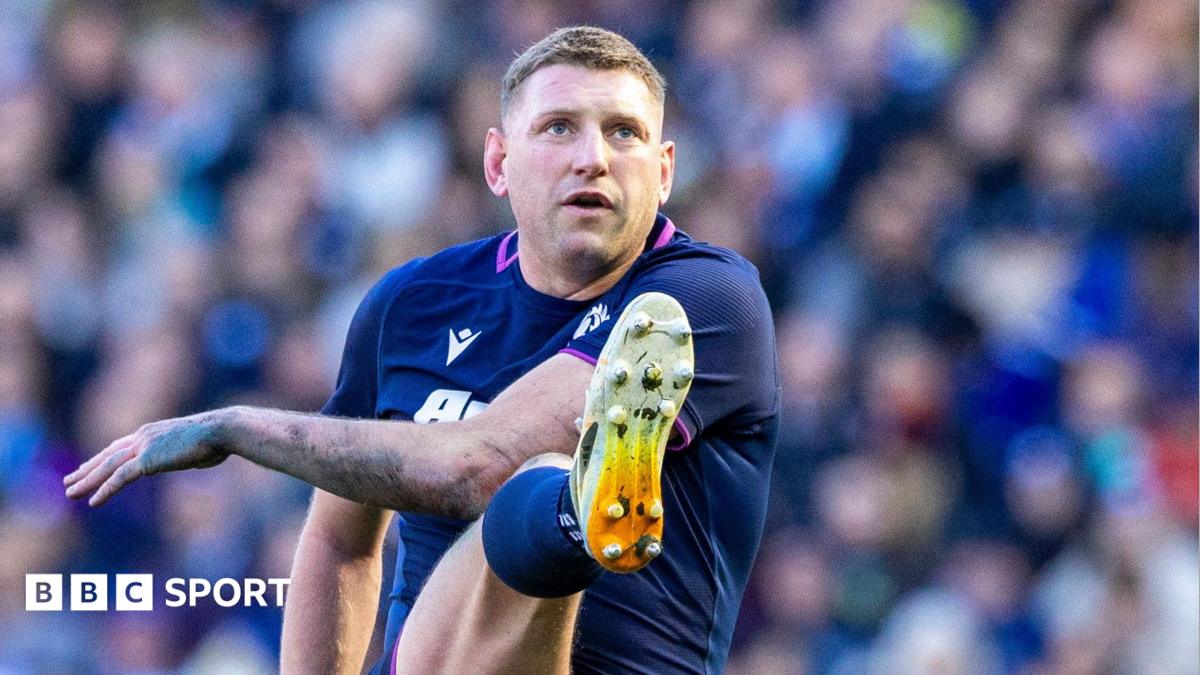
Fly-half Russell, 33, has not fully recovered from the calf injury that kept him out of the latter part of Bath’s domestic campaign and was not considered for the match at Estadio Mario Alberto Kempes in Cordoba on Saturday (20:10 BST). The Scots face the Springboks in Pretoria on 11 July then Fiji at Murrayfield on 18 July.

Tom Jordan starts at 10 in Russell’s absence, with Fergus Burke among the replacements.

Gray returns against the Pumas, having missed this year’s Six Nations, while fellow lock Scott Cummings, 29, and prop Pierre Schoeman, 32, will win their 50th caps.

“Great for [Jonny Gray] to be back in the squad,” said Townsend. “Since his move to Perpignan, he’s played very well so his form’s been rewarded with this opportunity. It’s nice obviously nice that him and Scott Cummings are playing together.

“Jonny was at Glasgow when Scott came through as an 18-year-old. It will be great to see them both back int he second row again.”

Overall, the XV in Cordoba shows eight personnel changes to the team that finished the Six Nations with defeat to Ireland in Dublin in mid-March.

Full-back Kyle Rowe, centre Rory Hutchinson, wing Jamie Dobie, fly-half Tom Jordan, hooker George Turner, prop Elliot Millar-Mills and Cummings are the players joining Gray in coming in to the side.

Kyle Steyn moves from left to right wing to accommodate Dobie. Prop Zander Fagerson and wing Darcy Graham, who started in Dublin, drop to the bench.

Gregor Hiddleston could make his Scotland debut off the bench.

“We’ll have to gel quickly,” Townsend said.

“It’s our first game since we played in Dublin. We’ve got a lot of evidence in the Six Nations and November that when we get our game in place in attack and defence, we can cause problems to any team in world rugby and do more than that, convert opportunities.

“I believe that our squad now is much deeper and we use that bench to continue what the starters are doing or actually raise the energy.”

Scotland: Rowe, Steyn, Hutchinson, Tuipulotu (capt), Dobie, Jordan, White; Schoeman, Ashman, Millar-Mills, Gray, Cummings, M Fagerson, Darge, Dempsey.

Replacements: Hiddleston, Sutherland, Z Fagerson, Samuel, Brown, Horne, Burke, Graham.

Source link

Controversial penalty ends Senegal’s FIFA World Cup run against Belgium | World Cup 2026 News

The penalty awarded against the Senegalese national team in the final moments of their match against Belgium on Wednesday caused widespread controversy after it led to their elimination from the Round of 32 at the 2026 World Cup, in a harsh turn of events that saw the “Lions of Teranga” go from leading 2-0 to losing 3-2.

Honduran referee Said Martinez awarded a penalty kick at the end of the second period of extra time, after a VAR review, following a challenge by Senegal’s Lamine Camara on Belgian captain Youri Tielemans, with the score tied 2-2 and the match heading towards a penalty shootout.

The “Archivo VAR” platform, which specialises in analysing refereeing decisions, said that VAR intervened excessively during the match, confirming that it was Tielemans who extended his foot in front of Camara, causing the contact.

The platform added, via its account on “X,” that the incident did not warrant VAR intervention, explaining that it was the Belgian player who forced the contact entirely, and that the situation did not amount to the clear and obvious error needed to justify the referee reviewing the decision.

Recommended Stories

list of 4 itemsend of list

The decision triggered a wave of controversy on social media, with one fan writing: “This is 100% robbery. Senegal have been robbed. How is this a penalty? Belgium do not deserve to go through corruption.”

Sports content creator Sneako blamed the result on match ‘”rigging”.

“Rigged! Senegal should storm the pitch right now. Leave the pitch and go home. This is rigged!”

Another sports fan wrote: “I’m sorry, but this was never a penalty. Camara went to clear the ball, but it was Tielemans who got in his way. Senegal was robbed, and it should have been Belgium going out.”

Spanish sports journalist Manolo Lama commented: “They stole the Africa Cup of Nations from them, and now they’re stealing all the solidarity with Senegal at the World Cup too.”

Senegal Belgium WCup Soccer
Senegal’s Habib Diarra, front, celebrates scoring their first goal with Ismail Jakobs, back, during the World Cup round of 32 soccer match between Belgium and Senegal in Seattle, Wednesday, July 1, 2026. (AP Photo/Abbie Parr) (AP)

Egyptian journalist Mohamed Saeed linked the incident to what happened in the 2025 Africa Cup of Nations final against Morocco, writing: “You can feel that the penalty awarded against Senegal in the final seconds was a harsh lesson and a difficult test. After the scenes from the Africa Cup of Nations final, I think that if it weren’t for the change in the rules around the withdrawal incident, this scene could have repeated itself.”

Another sports fan, Fares Ahmed, wrote that football ”teaches lessons” and the outcome brought back the memory of Senegal at the tournament in Morocco.

“They took advantage of the tournament’s vulnerable position and the host’s need to make it a success, and used that to impose their pressure,” Ahmed wrote. “Today, the scene was almost repeated against Belgium — a penalty in the final minutes, objections, and disbelief over the decision — but this time there was no threat of withdrawal, because you can’t risk penalties like that in a tournament the size of the World Cup.”

Drawing a connection between the two events, one follower wrote on “X”: “When there was a clear penalty in the Morocco final, they rebelled against the decision and tarnished the reputation of African football, just because the tournament was in Morocco. But when an unclear penalty came along that eliminated them from the World Cup, they stayed silent, because this time it was in the West.”

Senegal Belgium WCup Soccer
Senegal’s Pathe Ciss #6 kneels on the pitch after Belgium were awarded a penalty during the World Cup Round of 32 match in Seattle, on Wednesday, July 1, 2026 [Maddy Grassy/AP Photo]

After the dramatic penalty was awarded, Tielemans stepped up to take it and scored successfully, netting Belgium’s third goal and capping off an unexpected comeback that eliminated the Lions of Teranga.

But back on the pitch, Senegal had the run of play for 85 minutes. The African team held a two-goal lead, and had all but secured a spot in the round of 16 at the World Cup.

Within five minutes, it crumbled and the players were feeling it.

“We were at the heart of writing the beautiful pages of the history of our football in this world,” defender Krepin Diatta said. “And we have to accept that we failed at our mission.”

Senegal midfielder Habib Diarra said. “We had a good first half, but it wasn’t enough. A match lasts 90 minutes, and we’re devastated. It’s very tough. I don’t know what to say. When you’re on the pitch, you have to give your all, and that’s not what we did. We’ve only got ourselves to blame.”

Source link

New ‘world-class’ arena to transform iconic English resort’s seafront with pop concerts, festivals & sport matches

A NEW “world-class” arena is being plotted for an iconic UK seaside resort.

The Government has pledged £20million to explore the possibility of bringing the development to life.

Illustration of a stadium packed with an audience, lit by spotlights on a central stage.
A landmark arena in Blackpool has been proposed Credit: independently developed concept work by Carters Building Consultancy
Illustration of a futuristic stadium with pointed elements and a circular opening, with Blackpool Tower and a bright sunset in the background.
The venue would form part of the city’s planned regeneration Credit: independently developed concept work by Carters Building Consultancy

A new indoor arena has been proposed for Blackpool, as part of the area’s continued bid to become the UK’s City of Culture for 2029.

Currently dubbed the Phoenix Pavilion Arena, the venue would become the focal point of the city’s wider regeneration strategy.

With a proposed capacity of 15,000 to 20,000, Carters Building Consultancy said the site would host major concerts, sporting events, festivals, trade shows and live performances.

It would also create a new waterfront hospitality area, with cafes, bars and restaurants facing the promenade.

FLIGHT-MARE

UK airline’s rescue deal COLLAPSES as bidder pulls out with entire fleet sold


BEACH KEEN

On the Beach drops HUGE surprise sale – with 50% off city breaks and hotels

Blackpool South MP, Chris Webb, began a petition in November last year supporting the proposal, which has since been signed by thousands of local residents.

As a result, the Culture Secretary, Lisa Nandy, has now pledged £20million to explore the next stage of the development.

Webb said: “This funding gives Blackpool the opportunity to properly test whether the project is commercially viable and put us in the strongest possible position to attract an experienced private-sector partner with the expertise to develop, operate and programme a world-class venue.

“It has the potential to attract visitors throughout the year, support our hotels, restaurants and local businesses, create high-quality jobs and strengthen Blackpool’s position as the UK’s entertainment capital.”

The investment will assess whether the construction of the arena is financially feasible and whether it would be the right investment for the area.

It also places the proposal in a better position to attract private investors.

This comes as part of Blackpool’s £2billion regeneration program set to transform the seaside city.

Completed projects include the Talbot Road tramway extension – which connected the Promenade to Blackpool North railway station – and construction is currently underway on a new £65million, high-tech university campus.

Source link

Frankie Dettori seriously injured in Newmarket car crash

Jockey Frankie Dettori suffered several broken ribs and a broken thumb after being involved in a car crash, his management has said.

A spokesperson for H Talent Management confirmed the collision happened on Wednesday evening near Newmarket in Suffolk.

Another vehicle struck the rear passenger side of the car the 55-year-old was driving, causing it to spin and flip, they said.

Dettori’s injuries were still being assessed as he remained in hospital for further scans and observation.

More stories from Suffolk

“Frankie would like to thank the emergency services who attended the scene, together with the doctors, nurses and wider medical team caring for him,” said H Talent Management.

“His focus is now on resting and recovering. H Talent Management respectfully asks that Frankie’s privacy is respected at this time.

“No further comment will be made until there is a meaningful update.”

Dettori has not ridden in Britain since October 2023 when he won the Champion Stakes on King of Steel at Ascot.

But he was due to return to the saddle in the Leger Legends race at Doncaster during the St Leger Festival in September.

H Talent Management referred to Wednesday’s crash as an “accident”.

The collision is believed to have happened just over the border in Cambridgeshire and the county’s police force confirmed it was called to a collision on the A1304 London Road near Six Mile Bottom at about 19:00 BST.

A spokesperson for the force added that there were no arrests.

The East of England Ambulance Service said two patients were taken to Addenbrooke’s Hospital for “further assessment and treatment”.

Do you have a story suggestion for Suffolk? Contact us below.

Source link

Jaylen Brown traded to Philadelphia 76ers from Boston Celtics | Basketball News

In an unexpected move, Boston traded the All-Star guard to division rivals Philadelphia for Paul George and draft picks.

Jaylen Brown’s time in Boston has come to a surprising end with the Celtics deciding to trade him to one of their most storied rivals.

Brown – the 2024 NBA Finals MVP, a five-time All-Star and the league’s fourth-leading scorer this past season – is getting traded by the Celtics to the Philadelphia 76ers, a person with knowledge of the deal’s terms said on Wednesday night.

Recommended Stories

list of 4 itemsend of list

Boston is getting Paul George, along with a slew of draft capital that could become two first-round picks and two second-round picks, said the person who spoke to The Associated Press on condition of anonymity because the trade does not yet have the required league approvals.

ESPN first reported the trade agreement, and the terms were later confirmed by The Boston Globe.

Brown latest NBA star to be traded, joins Antetokounmpo, Leonard

Add this news to the list of blockbuster moves across the NBA so far this off season.

LeBron James is leaving the Los Angeles Lakers as a free agent. All-Star-calibre players Giannis Antetokounmpo, Kawhi Leonard and Brandon Ingram are also on the move.

Now, this.

“Welcome to Philly, JB!” Pennsylvania Governor Josh Shapiro posted on social media. “Sixers get way better and, as a bonus, the Celtics got worse!”

It’s a move that breaks up what has been one of the league’s most successful 1-2 punches in Brown and Jayson Tatum, who helped carry the Celtics to the 2024 NBA title.

Tatum missed most of this past season while recovering from an Achilles tear that happened during the 2025 playoffs, meaning Brown had to carry even more of the load for Boston – and he wound up with career-best averages of 28.7 points, 6.9 rebounds and 5.1 assists per game.

It seemed, though, that Brown had felt underappreciated, especially after it became known that Boston had included him in trade talks with Milwaukee when Antetokounmpo was on the market.

“Nobody has won more combined regular-season and playoff games since I entered the league 10 years ago,” Brown posted on social media over the weekend. He’s right: The Celtics have won 523 games with Brown in the lineup, including playoff contests, which is six more than Denver has won with Nikola Jokic over that span.

Brown now gets to be part of a squad in Philadelphia alongside guard Tyrese Maxey and centre Joel Embiid, someone who Brown recently called a flopper on a livestream.

“Joel Embiid is a great player. One of the best bigs in f****** basketball history flops,” Brown said. “He know it. This ain’t breaking news.”

Brown, Maxey (the league’s fifth top scorer this past season) and Embiid (a two-time NBA scoring champion) could become a positively frightening trio in Philadelphia, and the Celtics deciding to play a role in creating such a triumvirate only adds to the intrigue surrounding why they wanted to trade Brown in the first place.

The trade ends a tremendously disappointing two-year stint for George, who was traded with two years left on a four-year, $212m free-agent contract. The 36-year-old never approached his nine-time All-Star form in Philadelphia, and his tenure was marred by a 25-game suspension last season for flunking a drug test.

He averaged just 16.7 points in his two seasons in Philadelphia after topping the 20-point mark in nine straight seasons with Indiana, Oklahoma City and the Los Angeles Clippers.

Paul George in action.
Former All-Star forward Paul George endured two disappointing seasons at the Philadelphia 76ers [File: Matt Slocum/AP]

Source link

Dodgers let Charlie Barnes get shelled while they prepare for the Padres

Is this series worth hyping?

The Dodgers welcome their bitter rivals to Dodger Stadium on Thursday for what should be a big four-game series, but the San Diego Padres are a mess. They trail the Dodgers by 12 games in the National League West. Their best batter by WAR, according to Baseball Reference, is journeyman infielder Ty France.

The Dodgers lost a game Wednesday by six runs, 7-1 to the Athletics. The Padres lost a game by 20 runs.

However, standings and statistics be damned, the Dodgers are coming for the Padres, their closest pursers in the division even if “close” is relative. The Dodgers didn’t have to say anything out loud, but you could see it on the field Wednesday.

Shohei Ohtani was the scheduled starting pitcher, but the Dodgers pushed him back so he could face the Padres this weekend. The Padres will face Roki Sasaki on Thursday, Ohtani on Friday and Yoshinobu Yamamoto on Sunday.

And the Dodgers still won a series in Sacramento, behind Eric Lauer and Justin Wrobleski. Now comes a 10-game sprint to the All-Star break against division rivals, starting with the Padres.

“They’re all big for us,” Dodgers manager Dave Roberts said. “We try to take every series with the same importance, but obviously winning that series is the goal.”

For the final game of the Athletics series Wednesday, with Ohtani held back, the Dodgers used Jack Dreyer as a first-inning opener, then handed the ball to triple-A callup Charlie Barnes and told him to go as long as he could.

That did not go well and still went exactly according to plan.

In what was billed as a bullpen game, Barnes handled the final seven innings, leaving the varsity bullpen in fine shape for the Padres series.

“For him to be able to save everyone else puts us in a great position for the four games this weekend,” Roberts said.

The innings were not great. The first batter Barnes faced, Jonah Heim, deposited a 444-foot home run on the roof of the Dodgers’ clubhouse beyond the center-field fence.

The A’s bunched 11 hits over the first four innings against Barnes and his 90-mph fastball, and still the Dodgers gave Barnes the rest of the game, because a 12-game lead affords you the chance to sacrifice today in order to line up your pitching for your tomorrows.

In all, Barnes gave up seven runs and 12 hits, including three home runs. He did make a very reasonable 79 pitches over his seven innings.

Barnes, a 30-year-old still in search of his first major league victory, barely had a chance to take in the evening before Roberts told him immediately after the game that he would return to triple-A, with Paul Gervase coming up as a fresh arm.

“It’s tough for me to enjoy it when you give up seven,” Barnes said. “That’s part of the business. I did my job in providing length. Any time they need that or may want that, I’ll do my best to give it to them.”

This was not all on Barnes, to be sure. When Wrobleski won his 10th game in a 9-3 victory on Tuesday, he said the offense deserved a fair share of the credit for his success.

“We bang,” Wrobleski said, “so you can get a lot of wins if you go deep in games and go five innings. That’s more of a team thing than it is a performance thing for me, but it’s super cool.”

After collecting 17 hits here on Monday and 14 more on Tuesday, the Dodgers mustered five hits Wednesday, including a 431-foot home run from Freddie Freeman.

The Dodgers went hitless with runners in scoring position, leaving the bases loaded in the first inning, two men on in the third and two more in the eighth.

Will Smith out until after All-Star break

The first half of the season will conclude with Will Smith in the same place he has been for the last month: the injured list.

The Dodgers’ three-time All-Star catcher has been on the IL since June 8 because of what the Dodgers list as neck inflammation. Smith said he had been diagnosed with an inflamed disk.

Roberts said he “just can’t see any world” in which Smith would return before the All-Star break, which concludes July 16.

“It’s certainly longer, I know, than all of us expected,” Roberts said. “But I don’t think it’s anything real, kind of affecting-the-season type thing.”

Los Angeles Dodgers catcher Will Smith (16) against the Arizona Diamondbacks.

Will Smith has been sidelined by an injured neck.

(Rick Scuteri / Associated Press)

Roberts said Smith has not been able to accelerate his rehabilitation to the point of doing baseball activities.

Dalton Rushing, who has taken over as the Dodgers’ primary catcher in Smith’s absence, is batting .210 with one home run and 20 strikeouts in 19 games while Smith has been on the injured list. The Dodgers gave Rushing most of the day off Wednesday, although he struck out as a late-game replacement.

The Dodgers were 14-6 with Smith on the IL entering play Wednesday.

Also Wednesday, the team scratched shortstop Mookie Betts from the starting lineup because of a sore right wrist. Roberts said he expected Betts to play Thursday.

Source link

U.S. advances with thrilling win over Bosnia despite red card

Folarin Balogun was still learning to walk the last time the U.S. won a knockout round game in a World Cup. On Wednesday, he helped lead the Americans to another with his goal in the waning seconds of the first half, sparking a 2-0 win over Bosnia and Herzegovina that sends the team on to the round of 16 of this summer’s tournament.

The other goal came from Malik Tillman in the 82nd minute. The Americans have scored multiple goals in every game of the tournament for the first time ever, also setting a national record with 10 goals overall in the tournament.
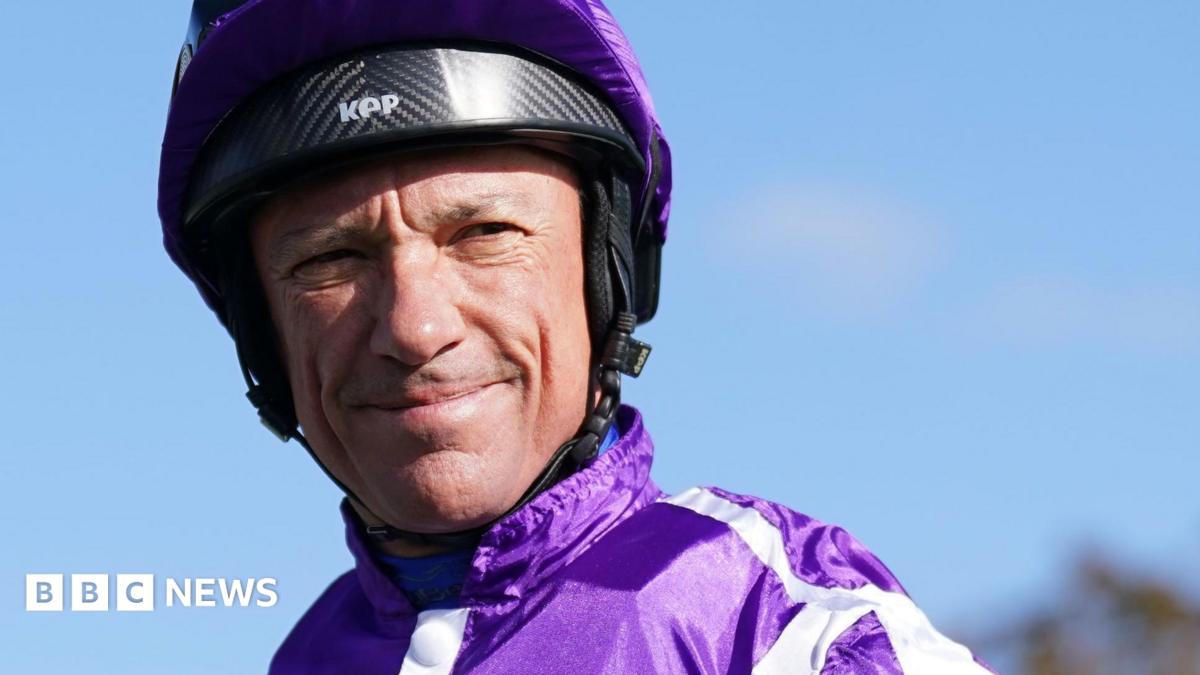
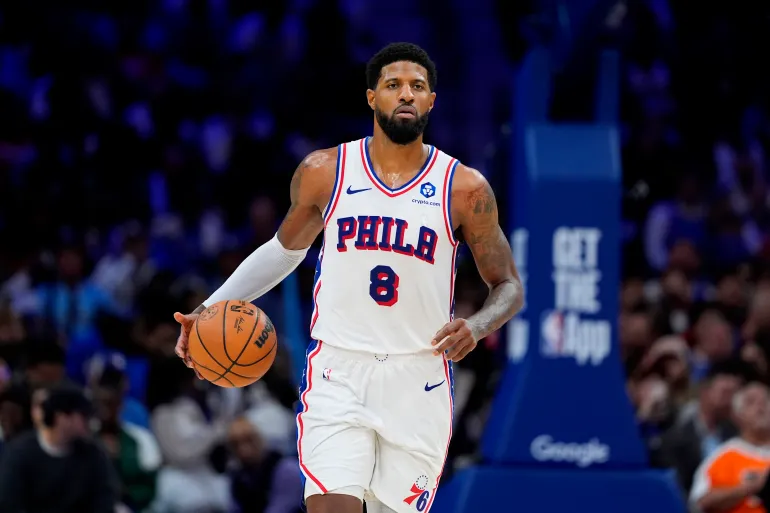
The U.S. will face Belgium in the next round Monday in Seattle. Belgium advanced with a 3-2 win over Senegal in extra time.

Balogun wasn’t around to see the finish though, drawing a straight red card for stomping on the right ankle of Bosnian center back Tarik Muharemovic in the 61st minute, a foul Brazilian referee Raphael Claus confirmed via a video review. That forced the Americans to see Wednesday’s game out with just 10 players.

“For me, never is this red card,” U.S. coach Mauricio Pochettino said. “Watching after on TV, never was [it] intention[al] to step up on the player. That was a normal action in football that happened by accident.

“That is why for me it’s never a red card.”

Claus disagreed, which could prove costly against Belgium because the card comes with a one-game suspension the U.S. cannot appeal.

“It’s just so unfortunate, honestly,” teammate Christian Pulisic said. “Looking back at it, it just seems, it seems so harsh. I just told him he’s done so much for us, and now we got his back. So that’s it.”

Balogun put the U.S. in front to stay just before the intermission. The sequence started with Bosnian defender Stjepan Radeljic sliding in front of a Tillman pass, deflecting it forward toward Muharemovic. But Muharemovic got his feet crossed, allowing the ball to carom to Balogun who did the rest, sweeping the ball into the net with his left boot from about 15 feet.

The goal was Balogun’s third of the tournament, tying him with Landon Donovan (2010) for most by an American in a single World Cup since 1930. The lead was the Americans’ first at halftime in a World Cup knockout game since 2002, when they beat Mexico in the round of 16.

Folarin Balogun and Bosnia-Herzegovina defender Amar Dedic in action during the first half.

Folarin Balogun and Bosnia-Herzegovina defender Amar Dedic in action during the first half.

(Robert Gauthier / Los Angeles Times)

It looked to be a precarious lead when Muharemovic crumpled to the ground with about 30 minutes in regulation time. Claus did not show a card but after the VAR official suggested he take a look at a slow-motion replay, he came away from the monitor and reached for the red, making Balogun the first American to get a red card and score a goal in the same World Cup game.

“I think it’s a yellow card,” midfielder Tyler Adams said. “I think when you slow everything down, it’s only going to look worse.”

A few minutes after Balogun left, the game paused for the second-half hydration break, which proved to be a lucky break for the U.S. Tillman had his right foot stomped on early in the half, ripping his boot and leaving his foot bloodied. The break came him a chance to change shoes.

In the 82nd minute, he swung that new right shoe at a free kick from the top of the box, bending it off the gloved right hand of Bosnian keeper Nikola Vasilj and in the net. That brought another first, according to OptaJack, which said Tillman was the first U.S. player to score on a direct free kick in a competitive match since Jozy Altidore in 2017 Gold Cup final.

“I’ve been dreaming about this game. I’ve been dreaming about maybe taking a free kick and scoring a free kick,” said Tillman, who practices set pieces endlessly after training sessions. “And then it actually came true.”

Until Wednesday, the U.S. hadn’t beaten a European team in 13 tries, a slump that included draws with Wales and England in the 2022 World Cup and six losses in as many games under Pochettino.

The last UEFA country it did beat? Bosnia and Herzegovina, in December 2021.

“Details decided the game,” Vasilj said.

After the red card “we started controlling the game,” he continued “and they canceled that with the second goal. We had our moments and you could feel something was coming. The only thing missing was the goal.”

Staff writer Mirjam Swanson contributed to this report.

Source link