




social

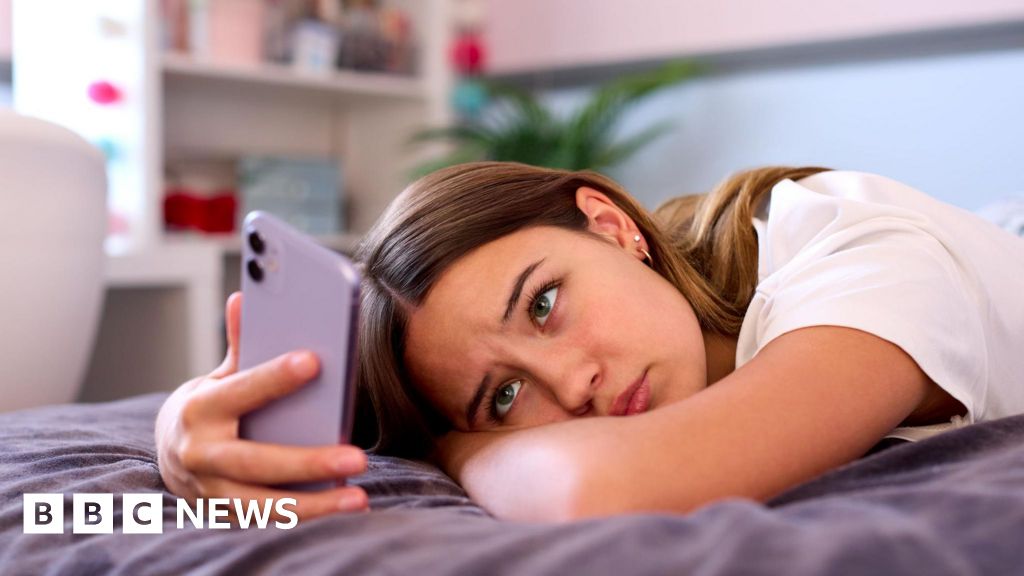
We won’t let Eric have a smartphone to protect him from social media… we must keep up pressure on government to do more

TV star Simon Cowell’s fiancée Lauren strongly believes social media MUST be made safe for our children. 

The US socialite, 48, is a determined campaigner for tougher curbs.  

Simon and Lauren have agreed not to let son Eric access social media Credit: Getty
Tragic Jools Sweeney, with mum Ellen Roome Credit: PA

Her passion for change is driven by her sons – Adam, 20, from a previous relationship and 12-year-old Eric with music mogul Simon – plus the anguish of parents who blame online content for their child’s death.  

This week, the Government finally agreed to bring in stronger, age-based restrictions for under-16s following pressure from grieving mums and dads. 

Here, Lauren – who does not allow Eric to use social media – explains why more needs to be done . . .  

WHEN I heard what had happened to 14-year-old Jools Sweeney, it broke my heart. 

SICKO SNARED

Moment smirking ex-Spandau Ballet singer arrested for raping & abusing 6 women


home truths

Katie Price says she’s never had one-night stand but sister calls her a ‘liar’

Lauren and Simon have given him a basic ‘brick phone’ so he can text and use WhatsApp while staying off smartphones Credit: Getty
Simon and Lauren won’t allow Eric to access social media Credit: Getty

After he had been playing ­happily with his friends one afternoon, his mother Ellen Roome came home to find his lifeless body in his bedroom

Jools was one of several British children who died in 2022 having seemingly copied a deadly challenge shown on TikTok

I thought, “God forbid, this could have been my child”. 

My youngest son Eric, 12, isn’t much younger than Jools was, and my eldest Adam, 20, is close to the age Jools would be now. 

Jools Sweeney’s mum Ellen is one of the parents behind a campaign called Raise The Age, which wants the restriction on access to social media to be raised from 13 to 16
Education Secretary Bridget Phillipson has been forced to commit to implementing social media restrictions for under-16s Credit: AP

Since then, myself and Simon have met Ellen, who is a remarkable woman taking on the big tech giants. 

Ellen is one of the parents behind a campaign called Raise The Age, which wants the restriction on access to social media to be raised from 13 to 16. 

The policy was opposed by the UK Government, but they finally saw sense this week and agreed to introduce stronger controls on what young people can and cannot do online.  

There is no issue more important to parents right now. It’s what everyone cares about.

Making social media safe is the topic that dominates all my parent group chats.  

In our family we have already made up our minds. 

Me and Simon won’t allow our son Eric to access social media. 

We recently gave him a brick phone so he can communicate with his friends by text and WhatsApp

A lot of his friends use Snapchat, but I said no to that platform because I believe it is one of the least safe products. 

Eric is fine with that decision because we have had so many ­discussions about the dangers. 

But a lot of parents are not aware of the risks, particularly on seemingly innocuous sites such as Discord, Pinterest and CapCut. 

It is unreasonable to expect ­parents to monitor everything their children do online. 

Instead, it should be the government which keeps them safe. 

The evidence we hear is sick.

The tech companies knew their ­platforms were addictive and yet they kept going, inventing new ways to keep our children hooked.  

Some told our politicians that their products were safe, even though their own internal research showed they did not believe it.  

In my opinion, these firms put profits ahead of children’s safety, and that is absolutely unacceptable.  

We have seen groundbreaking court cases in the US which ruled that these platforms were intentionally designed to be addictive and were endangering children.  

Our children could not wait any longer because they were dying as a result of what they saw and experienced online. 

This movement isn’t about a total ban on the internet.

It is about a restriction on unsafe and harmful social media.  

We want an end to infinite scrolling where children are sent ­material they did not ask for, and an end to strangers being able to message them.  

Those firms that make their products safe will be available — those that don’t must restrict access by law or face massive fines. 

I met with Lord Nash, who has been calling in the House of Lords for tougher controls on social media. 

It was his pressure which forced the Education Secretary Bridget Phillipson to commit to implementing social media restrictions for under-16s. I hear people saying that restrictions won’t work because children will find workarounds.  

However, we haven’t given up on age restrictions for alcohol just because some children still get their hands on booze.  

When seatbelt laws were first passed, many people ignored them. 

But eventually, the message got through that they save lives.

Now, it is natural to strap in safely. 

The Government U-turn doesn’t mean the fight is over.  

Far from it. 

We need to keep the pressure on them to act quickly. 

Our children cannot wait years, because they are dying every month as a result of what they see online. 

I made a vow to Ellen, who I consider to be a close friend, to not give up until social media is safe for our children. 

I have huge respect for the families that are campaigning for this change.

They know it won’t bring their children back. 

But they want to do everything in their power to stop anyone else experiencing these horrors. 

Source link

Keir Starmer tells social media firms he is considering a child ban

Europe, Middle East and Africa President of Snap, Ronan Harris (L), and Wifredo Fernandez, director of global government affairs at X, leave No. 10 Downing Street in London on Thursday morning after meeting Prime Minister Keir Starmer to discuss ways to protect children safe when they are on social media . Photo by Neil Hall/EPA

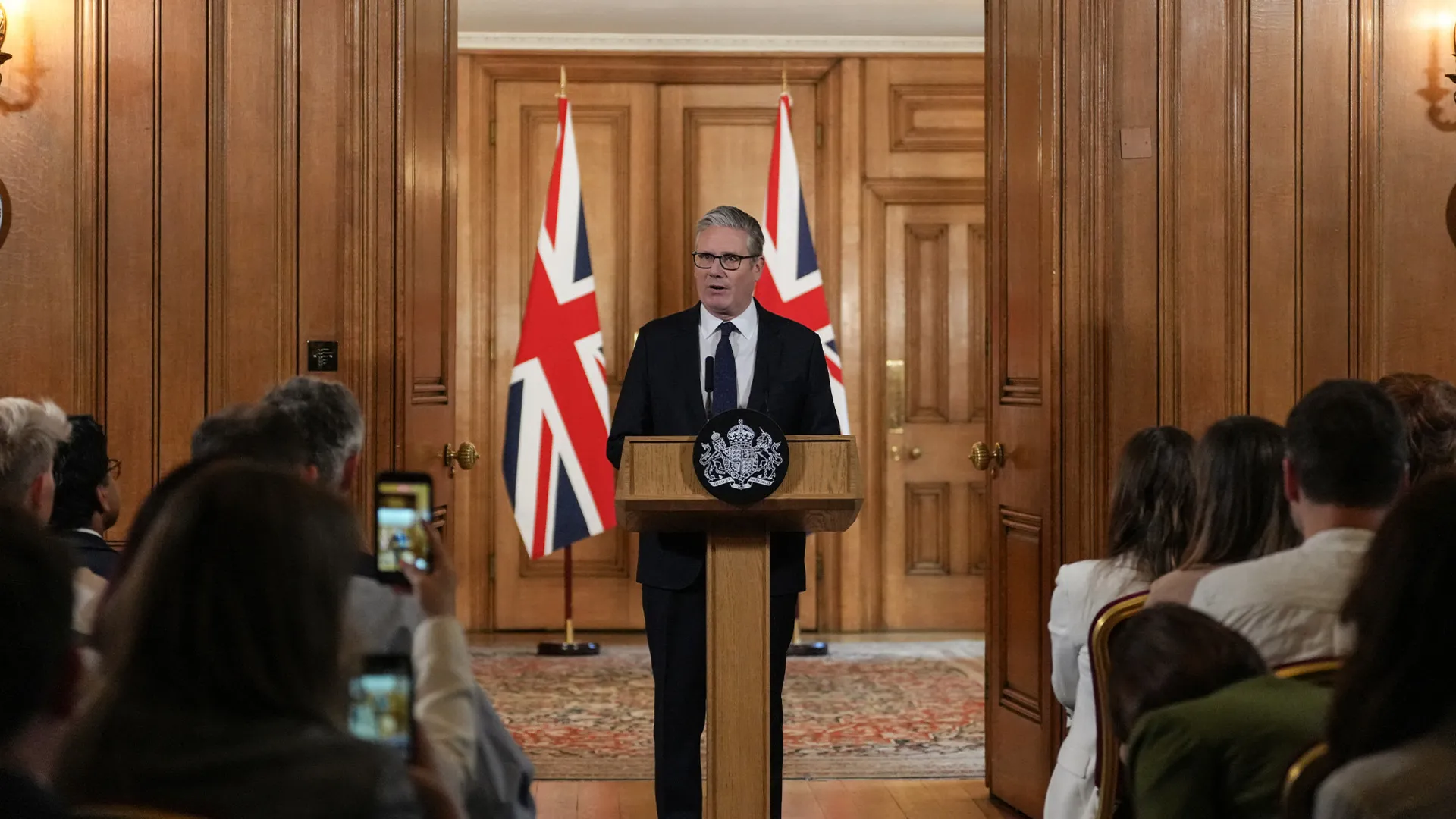
April 16 (UPI) — British Prime Minister Keir Starmer put the big five social media firms on notice Thursday that he was considering state intervention, including the nuclear option of a ban, if they did not do more to protect children from being harmed by their products.

Starmer warned executives from Meta, Snap, Google, TikTok and X at a meeting in Downing Street that something had to give, saying a ban on children accessing their platforms would be “preferable to a world where harm is the price” for social media use.

“Things can’t go on like this, they must change because right now social media is putting our children at risk. In a world in which children are protected, even if that means access is restricted, that is preferable to a world where harm is the price of participation,” said Starmer.

“I am determined we will build a better future for our children, and look forward to working with you on this. I do think this can be done. I think the question is not whether it is done, the question is how it is done,” he added.

Executives attending the meeting included Google U.K. managing director Kate Alessi, Markus Reinisch, a public policy principal at Meta, and X’s global government affairs director Wifredo Fernandez.

TikTok was represented by Alistair Law, director of public policy for northern Europe, while Snap was represented by Europe president Ronan Harris.

Starmer put to the firms the negative impacts of social media use on children’s ability to concentrate, their sleep, relationships and the way they view the world that have been flagged by parents and child experts.

“It’s clear to me that parents aren’t asking us for tweaks at the edges, they’re asking us whether a system that clearly isn’t working for children should be allowed to continue at all. Companies have to grip this and work with us to do better by British children,” he said.

No. 10 had earlier acknowledged that some of the tech firms had “stepped up” by disabling autoplay of videos for children by default and providing better tools to parents to limit the amount of time their children spend looking at screens, but took a much tougher line at Thursday’s meeting.

Starmer’s Labour administration has previously pushed back on pressure from parents, educators and child safety advocates for an Australia-style ban for children younger than 16 on fears it could drive them onto the dark web and make them more vulnerable when they eventually begin using the apps by hindering development of their digital skills.

Most social media sites operating in Britain do not permit children younger than 13 to use their products.

However, in the past three months, Starmer’s administration has twice been forced to use its House of Commons majority to override two efforts by the House of Lords, the upper chamber of Parliament, to amend a government bill to include a ban for children younger than 16.

The most recent of these was on Wednesday in which the government defeated the Lords’ latest attempt to force through a ban, but with a reduced majority from the previous vote on March 10. More than 240 of 650 MPs either failed to show or abstained.

In January, 60 Labour Party backbenchers signed a letter urging Starmer to bring forward a ban.

The government managed to fend off the first challenge in March by launching a three-month public consultation on how to proceed with anticipation inside his administration growing that Starmer will yield to pressure for a ban when the findings are published in the summer.

Children race to push colored eggs across the grass during the annual Easter Egg Roll event on the South Lawn of the White House in Washington on April 21, 2025. Easter this year takes place on April 5. Photo by Samuel Corum/UPI | License Photo

Source link