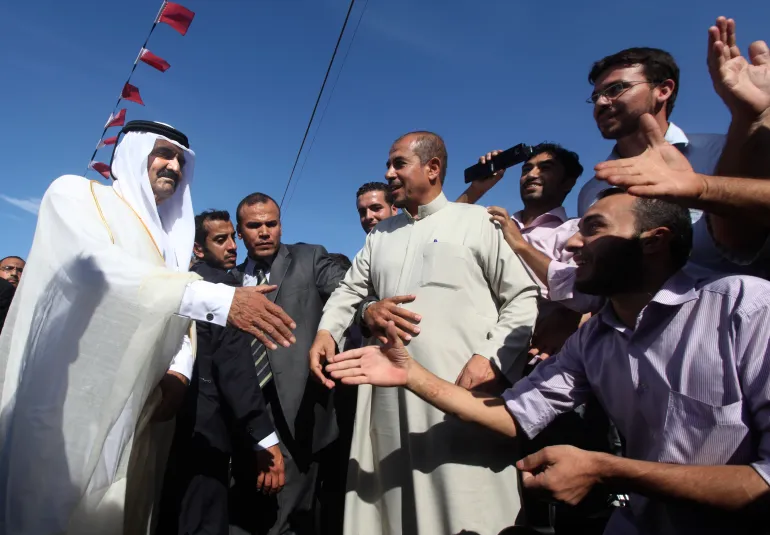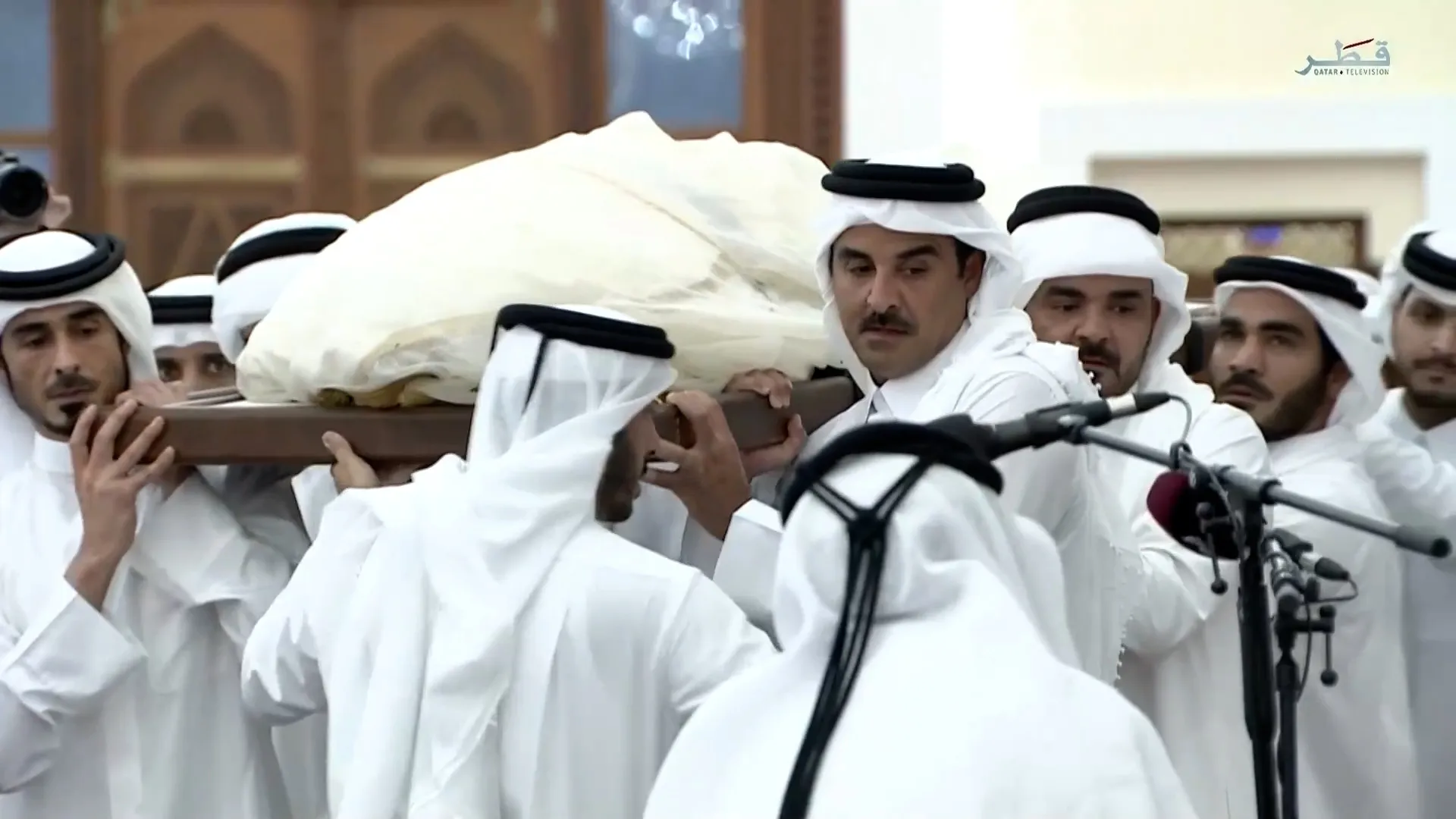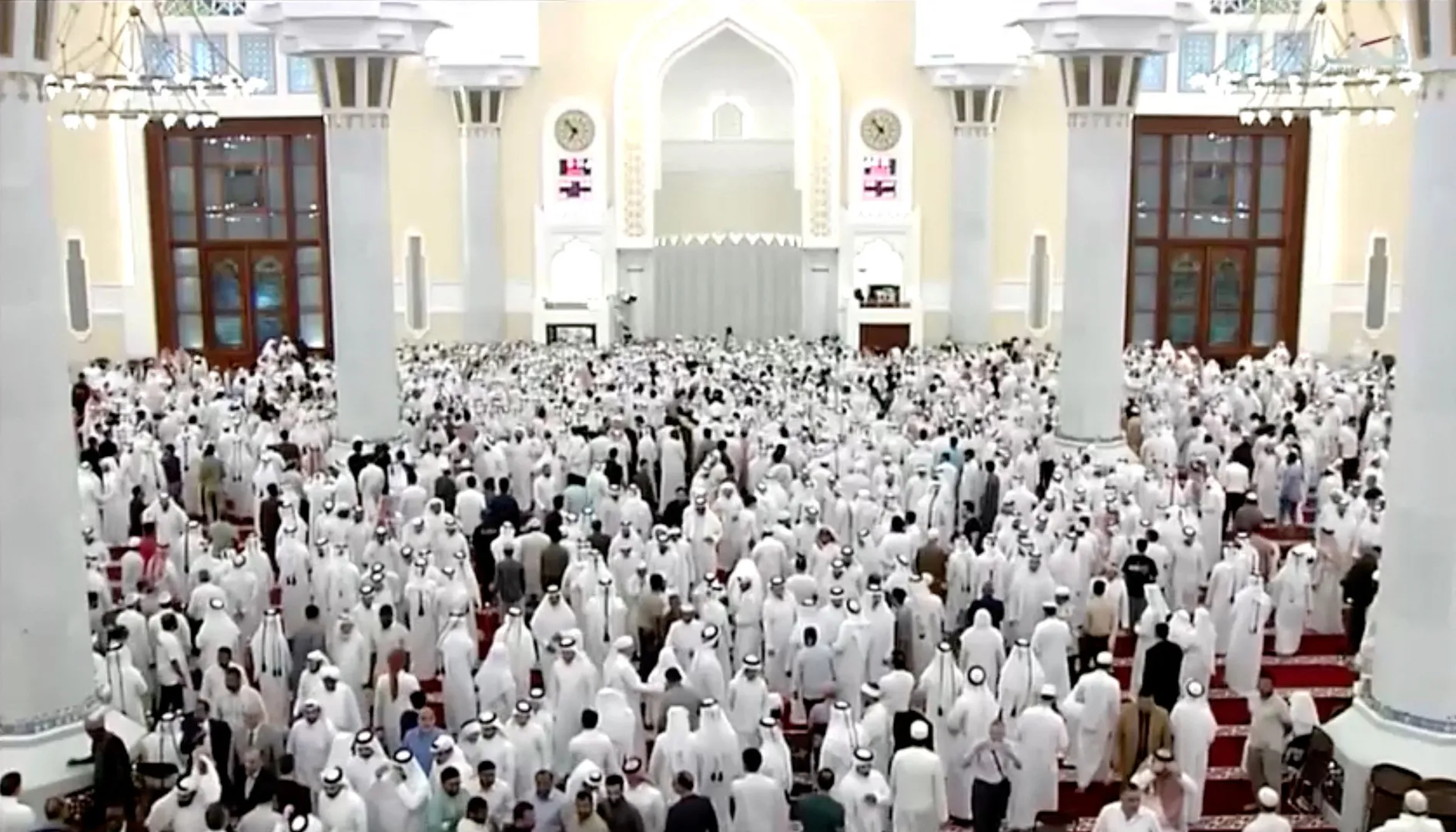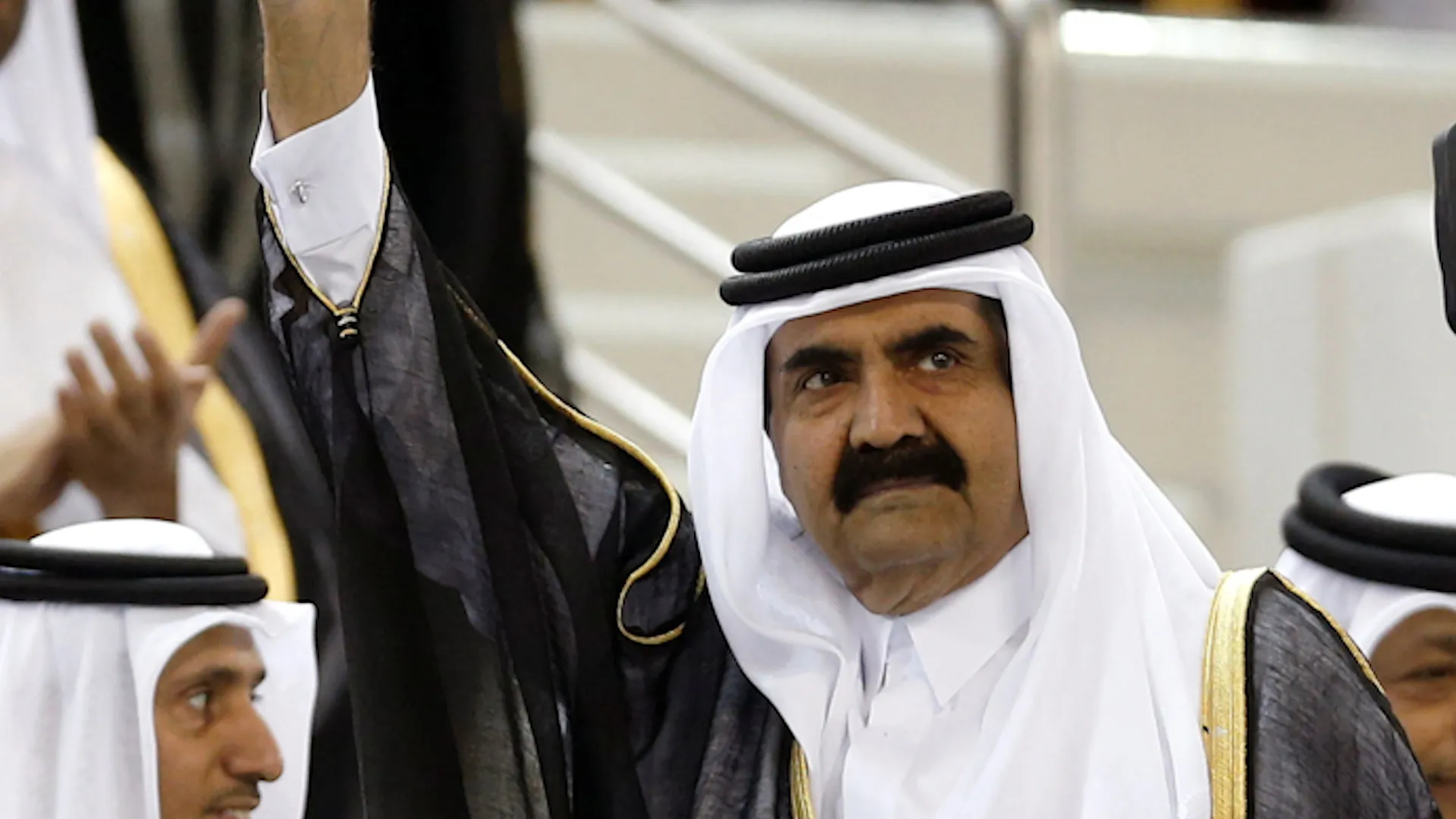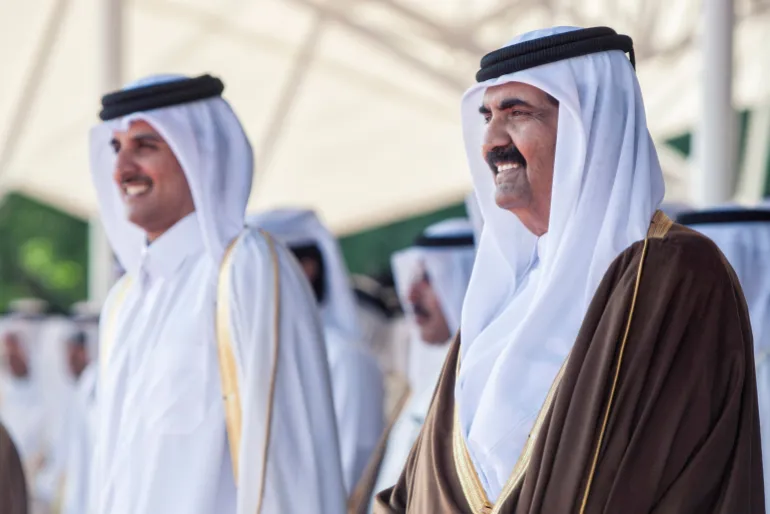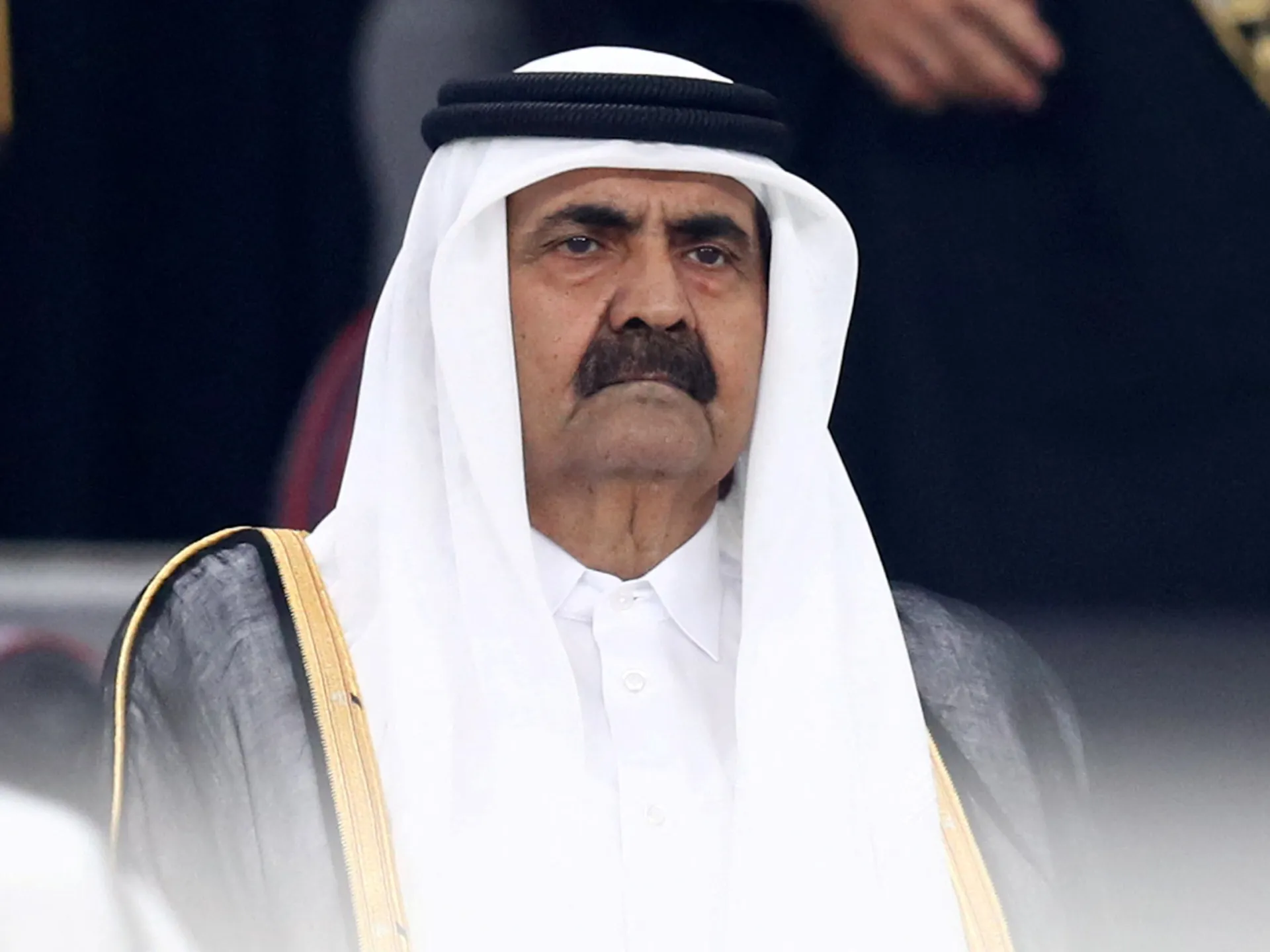
Qatar’s former Emir Sheikh Hamad bin Khalifa Al Thani has died at the age of 74, the country’s Amiri Diwan said.
“With hearts steadfast in faith in God’s decree and destiny, the Amiri Diwan mourns the great loss to the nation of the late – may God have mercy on him – His Highness the Father Amir Sheikh Hamad bin Khalifa Al Thani, who passed away this morning,” the Amiri Diwan said in a statement on Sunday.
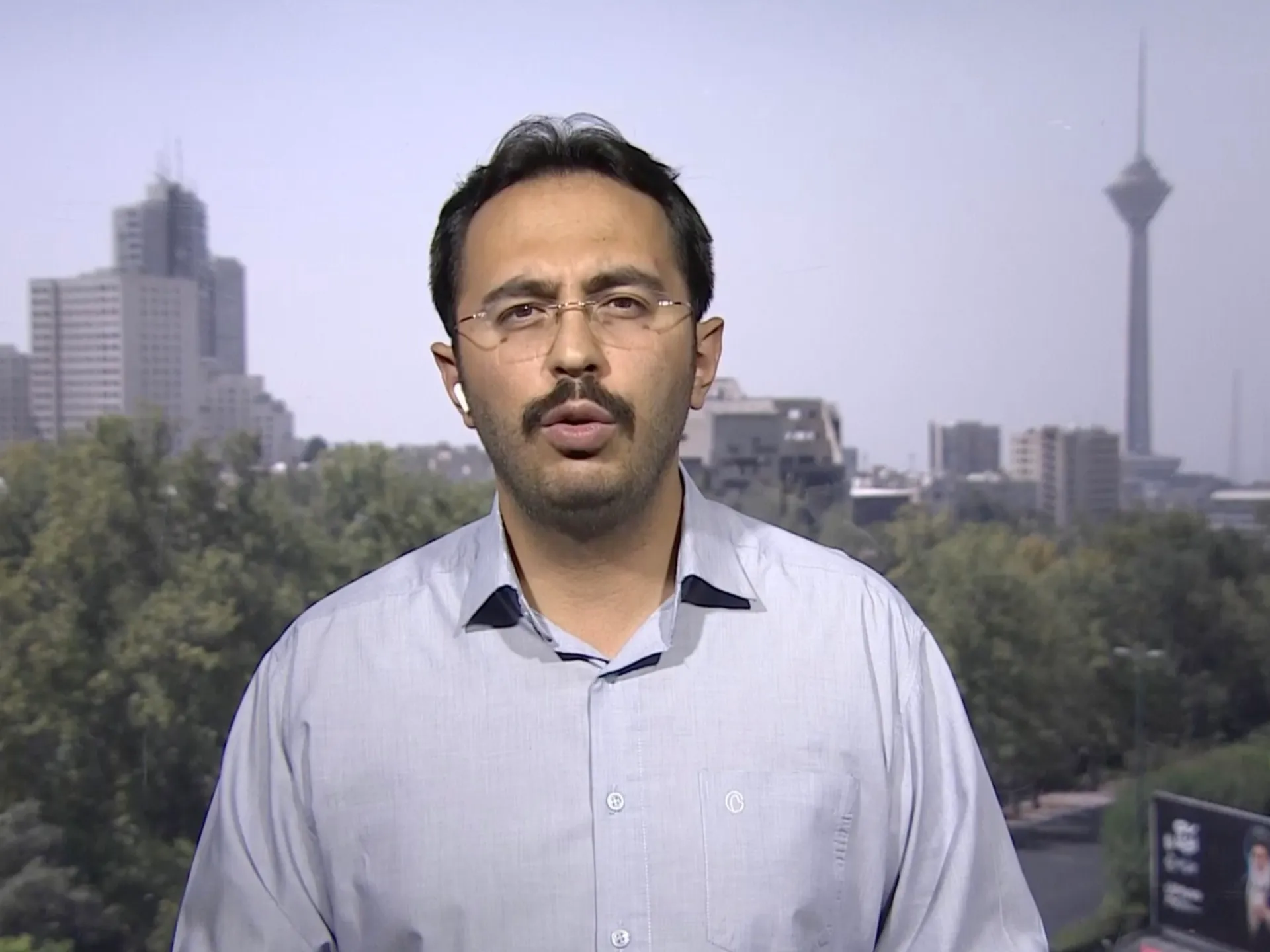
Regional mediators are stepping up efforts to prevent further escalation between Iran and the US. Qatar held talks in Tehran, while Oman is proposing a plan to manage shipping through the Strait of Hormuz. Al Jazeera’s Resul Serdar explains.
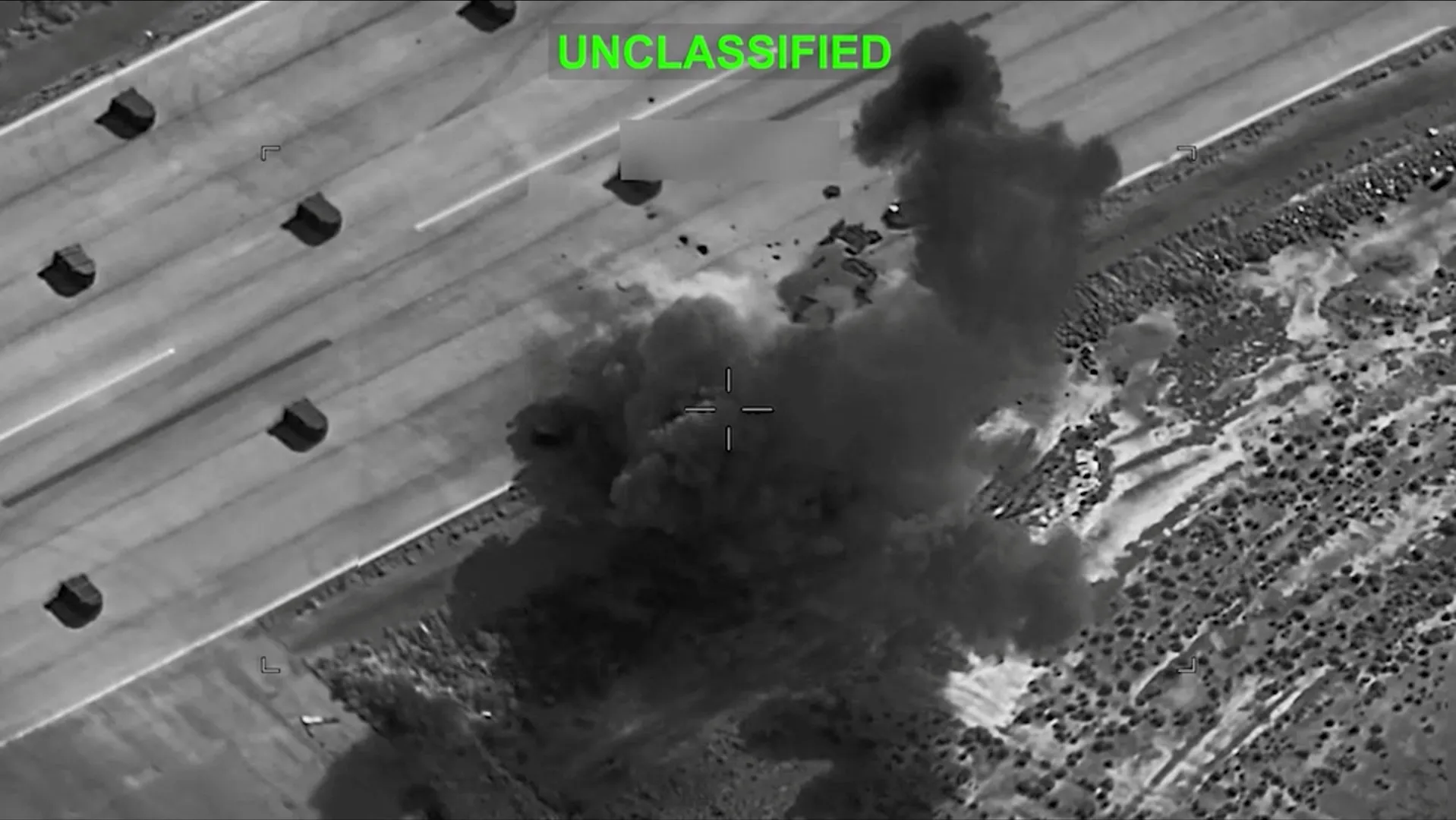
The US military says it has struck 90 targets across Iran, hitting ports and infrastructure along the Strait of Hormuz. Iran says at least 14 people have been killed in two nights of attacks, and that it has responded with drone strikes on US-linked sites in the Gulf region.
The United States and Iran have traded attacks for a second day, straining their fragile ceasefire further after US President Donald Trump said the truce was “over”.
The US military said late on Wednesday that the attacks were aimed at Iran’s “ability to threaten the freedom of navigation in the Strait of Hormuz”.
Recommended Stories
list of 3 itemsend of list
The US struck approximately 90 military targets, including missile and drone storage as well as logistics sites along Iran’s coastline, said the Central Command (CENTCOM), which oversees US military operations in the Middle East.
In a post on his Truth Social platform, Trump called the US attacks “retribution for yesterday’s bombing of ships by Iran. If it happens again, it will get much worse!”
The latest attacks come a day after the US said it hit more than 80 targets in Iran in response to Iranian attacks on commercial vessels in the Strait of Hormuz.
Iran’s Islamic Revolutionary Guard Corps (IRGC) said on Thursday it carried out attacks on “key infrastructure and facilities” at bases used by the US military in Arifjan and Ali Al Salem in Kuwait, and Juffair and Sheikh Isa in Bahrain in response to the latest US bombardment.
The Iranian army later said its forces targeted a Patriot missile system in Kuwait, a satellite antenna in Qatar and US military fuel depots in Bahrain.
Kuwait’s Ministry of Defence said it was intercepting missiles and drones, while Qatar issued an “elevated security threat” alert.
The renewed fighting threatens to undermine a memorandum of understanding (MoU) the two sides agreed last month to extend an April ceasefire and gradually reopen the Strait of Hormuz to shipping.
The attacks come a day after Trump said the ceasefire with Iran was “over” and criticised the Iranian leadership. However, he left the door open to more talks and suggested that any strikes would end quickly.
Speaking to reporters on board Air Force One as he travelled back to the US after attending the NATO summit in Turkiye, Trump said the Iranian side had “called a little while ago” and that they wanted “to make a deal so badly”.
US attacks across Iran
US strikes hit a railway bridge in Iran’s northeast, according to several official media, and the news agency IRNA reported strikes on a military base in coastal Bushehr, which hosts the nation’s only civilian nuclear power plant.
The Iranian railway (IRIR) said the train service on the Tehran-Mashhad line had been temporarily suspended as a result.
It said technical teams were on site to repair the damaged section so that the rail service could resume as soon as possible, adding that buses had been arranged to transport affected passengers.
Warplanes hovered over Iran’s Kish Island, and explosions rocked the port cities of Bandar Abbas, Konarak and Chabahar, part of which lost electricity, IRNA reported.
At least three people were killed in an attack on the outskirts of Ahvaz, capital of the southwestern province of Khuzestan, IRNA reported, citing the deputy governor of the region.
At least one firefighter was killed in an attack on an airport facility in Iranshahr, IRNA reported.
Iran’s Health Ministry said at least 14 people were killed and 78 others injured over the past two days.
Calls for diplomacy
In mid-June, the US and Iran signed an MoU to extend their ceasefire. It also led to the lifting of the US naval blockade of Iran and the gradual reopening of the Strait of Hormuz.
The MoU came following mediation by Pakistan and Qatar, which served as a launch point for 60 days of talks on more intractable issues, including the future of Iran’s nuclear programme, the administration of the Strait of Hormuz and access to billions of dollars in frozen Iranian funds.
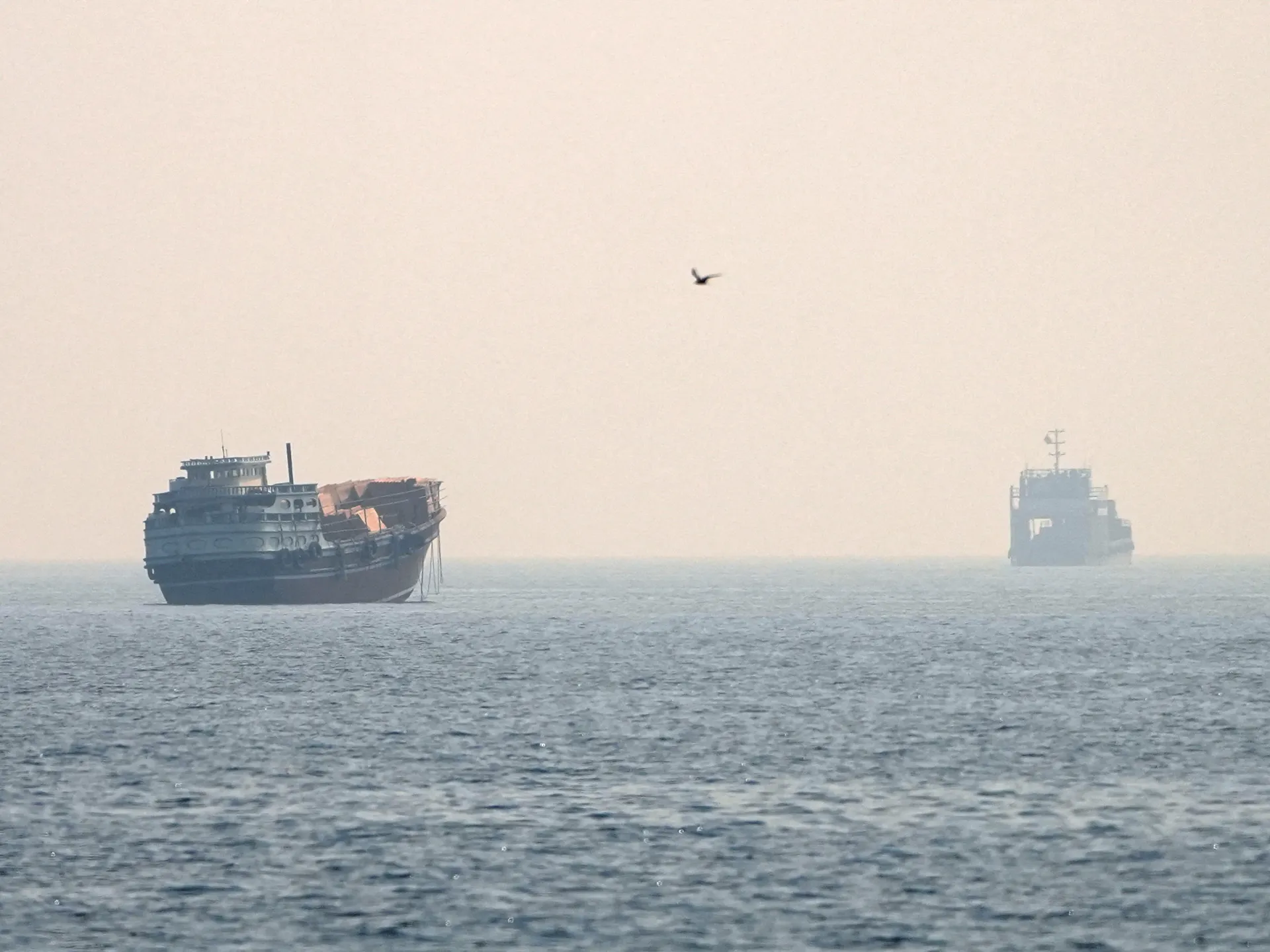
Since US-Israeli strikes triggered war in February, Tehran has effectively blocked the strait, threatening to hit vessels that deviate from its authorised route.
Reporting from Tehran, Al Jazeera’s Resul Serdar Atas said the US and Iran are “stuck in an equation – almost a deadlock” over the Strait of Hormuz.
“For the Americans, they say that Iran will not have control over the Strait of Hormuz. For the Iranians, control of the strait is indispensable.”
He said Iran sees control over the strait as the “ultimate deterrent, and if it gives that up, then it loses its negotiating position” with the US.
The US hopes that by targeting infrastructure that affects Iran’s ability to control the strait, including maritime traffic control centres, it will be forced to “return to the MoU”, Scott Uehlinger, a former senior CIA officer, told Al Jazeera.
United Nations chief Antonio Guterres called “on all parties to exercise maximum restraint”, as did Pakistan.
Qatari Prime Minister Sheikh Mohammed bin Abdulrahman bin Jassim Al Thani told Iranian Foreign Minister Abbas Araghchi in a phone call on Thursday that Iran and the US should commit to diplomacy.
Sheikh Mohammed, who is also the foreign minister, said Washington and Tehran should implement the MoU to end the war.
Iran said the two officials had spoken over the phone and “underscored the importance of using diplomatic means to resolve regional issues”.
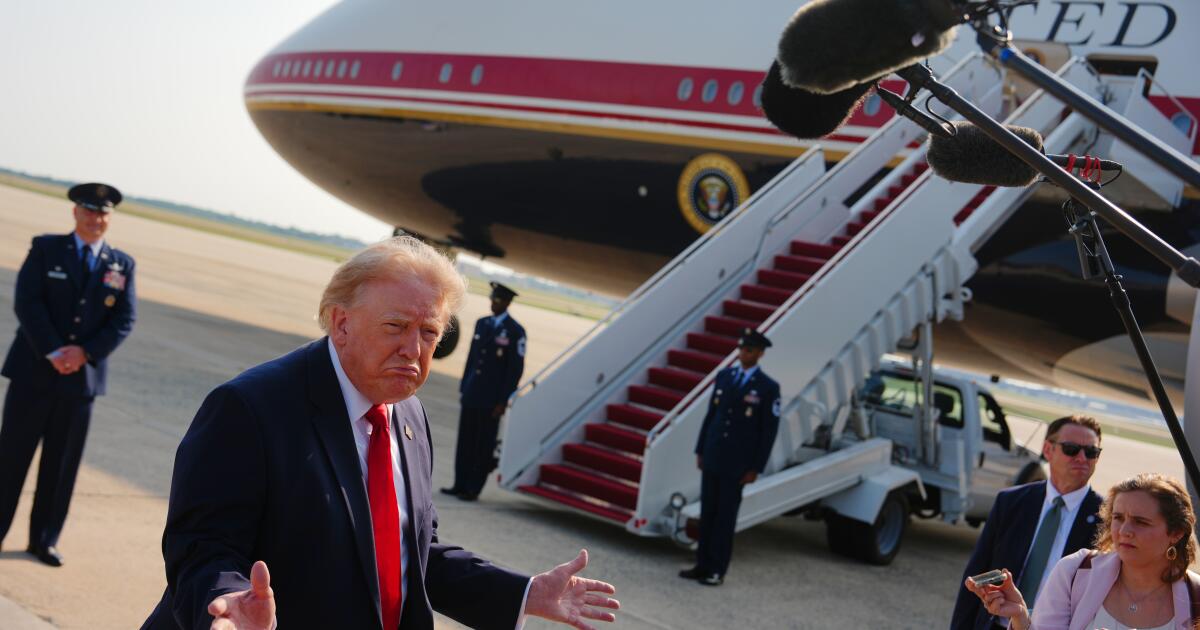
WASHINGTON — President Trump on Wednesday took his maiden voyage on a new Air Force One — a retrofitted Boeing 747 worth $400 million gifted by Qatar that embeds his personality more deeply into the institution of the American presidency.
Gone is the trademark light blue hull that helped Air Force One blend into the sky. The refurbished jet is painted to Trump’s preferred color scheme of a navy blue belly and red and gold stripes. It has the luxury features that the president believes a commander-in-chief’s entourage should have — plush carpets, lie-flat seats, wood paneling and a presidential seal on the seat belts, according to reported tours of the plane.
Trump told reporters that he was proud of the luxurious plane. “You can do two things: You can low-key it, or you can show it,” he said.
Reporters are generally not permitted to take photos on the plane unless Trump is present. But on Wednesday, Trump administration staffers posted images of the plane’s interior on social media.
White House communications director Steven Cheung posted a photo of aides gathered around a circular table that had off-white place mats and leather captain’s chairs. Monica Crowley, the chief of U.S. protocol, posted a picture of herself perched on a leather couch between a pair of Air Force One throw pillows. Mounted on the wall behind her was a framed photo of the Thomas Jefferson Memorial.
The jet carried Trump to North Dakota to see the Theodore Roosevelt Presidential Library, its first official visitor ahead of its opening on the nation’s 250th anniversary.
The gift from the Middle Eastern power raised ethical concerns, but Trump saw the plane as a necessary replacement to the 35-year-old planes that had previously ferried him as president.
“This is a gift from a country that has treated us very well,” Trump said.
The new jet will only temporarily be in the nation’s service, as Boeing is expected to deliver in 2028 long-delayed planes that will permanently serve as Air Force One. Trump, a Republican, has said in the past that the Qatar plane would end up in a presidential library.
The Air Force has said that it did little to change the cabin layout of the plane and that it spent less than $400 million on security upgrades.
Nikhinson and Boak write for the Associated Press.
Iran and U.S. negotiators will meet with intermediaries Wednesday to discuss the cease-fire agreement. Photo by Abedin Taherkenareh/EPA
July 1 (UPI) — Envoys Steve Witkoff and Jared Kushner and their Iranian counterparts are planning to meet with Qatari negotiators Wednesday for ongoing peace talks.
Iran and Qatar have said that there will be no direct, high-level meetings between United States and Iranian officials and that all discussions will be through Qatari intermediaries, The New York Times reported. Today’s negotiations will be about the cease-fire agreement and getting it implemented, a spokesperson told The Times.
Iran’s negotiator Mohammad Bagher Ghalibaf, in an interview with Iran’s state media Tuesday, laid out the most important provisions of the memorandum of understanding signed on June 17.
Ghalibaf said the most important prerequisite provisions to Iranian negotiators were Articles 1, 4, 5, 10 and 11, CNN reported.
Article 1 demands an end to all fighting, including in Lebanon. Israel and Lebanon signed a cease-fire agreement on Saturday, but Hezbollah hasn’t agreed to it.
Article 4 says that the United States must lift its naval blockade and Iran must allow shipping traffic through the Strait of Hormuz. The U.S. Navy is no longer blocking the strait but it still has a presence there. Article 5 says that Iran will allow passage through the strait with no tolls for 60 days.
The next two articles are about Iranian money and oil sales. Article 10 says the U.S. will allow waivers for Iran to sell its oil, which has happened – at least for 60 days. And Article 11 says that the United States will make frozen Iranian assets available, which is unclear. The United States has said that Iran must fulfill its commitments first.
Traffic through the strait is picking up, with 34 ships passing through on Tuesday, CNN said, though that’s far from pre-war levels, which saw about 100 per day.
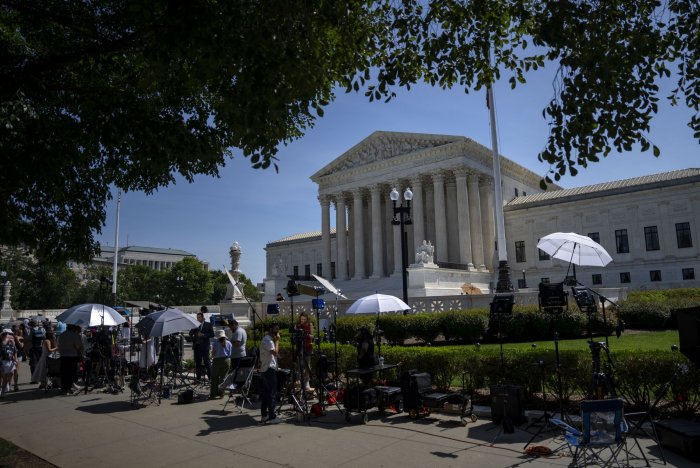
News anchors are seen outside the Supreme Court of the United States as the court releases their final opinions before summer recess on Tuesday. The court upheld birthright citizenship and also state laws banning transgender women and girls from playing on school athletic teams. Photo by Bonnie Cash/UPI | License Photo
Iranian Foreign Minister Abbas Araqchi speaks at a press conference in Baghdad, Iraq, on June 28, 2026. Iranian and U.S. envoys will travel to Doha, Qatar, to discuss the cease-fire with Qatari intermediaries. Photo by Iran MFA/UPI | License Photo
June 30 (UPI) — American and Iranian delegates arrived Tuesday in Doha, Qatar, for “technical talks” to discuss the memorandum of understanding that created a cease-fire between the two countries.
Qatari Foreign Ministry spokesman Majed al-Ansari said Tuesday that these are not high-level talks.
Unlike the recent talks in Switzerland with Vice President JD Vance and Iranian chief negotiator Mohammad Bagher Ghalibaf, these will be led by U.S. Special Envoy Steve Witkoff and Iranian Deputy Foreign Minister Kazem Gharibabadi. They will not meet in person and the talks will be mediated by Qatari officials. President Donald Trump‘s son-in-law Jared Kushner also participated.
Witkoff and Kushner met with the prime minister of Qatar, Sheikh Mohammed bin Abdulrahman al-Thani.
The discussions will “produce documents that will be elevated to principles in the high-level meetings to agree upon,” al-Ansari said.
Some of the topics expected to come up are: Financial restrictions and lifting sanctions on Iran, how to establish the free flow of vessels through the Strait of Hormuz, the future of Iran’s nuclear program, the potential release of Iran’s frozen assets and regional security, CNN reported.
Iran insists that the MOU gives it authority over the strait and has threatened ships that don’t travel on Iranian-mandated routes.
“If vessels pass through other routes, we will oppose it, we will try to prevent it, and if anything happens to those vessels, the responsibility will be their own,” Gharibabadi said on Monday, according to Iranian state media.
Iranian Foreign Ministry Spokesperson Esmaeil Baghaei said on Tuesday that the discussions will be about the MOU.
“What will probably take place in Doha tomorrow is a discussion with the Qatari side on the implementation of some provisions of the memorandum of understanding, including the provision concerning the release of Iran’s restricted assets,” Baghaei said.
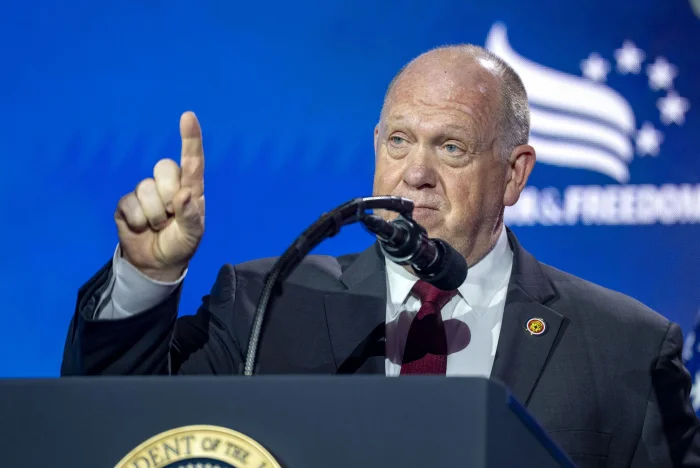
White House Border Czar Tom Homan speaks during the Faith and Freedom Coalition 2026 Road to Majority Policy Conference at the Washington Hilton on Friday. Photo by Bonnie Cash/UPI | License Photo
US president says talks will take place on Tuesday, but Tehran has not confirmed the negotiations in Doha.
President Donald Trump says a meeting will take place between Iran and the United States in Qatar on Tuesday, suggesting that diplomacy is still on track despite the recent military skirmishes in the Gulf.
Trump’s announcement on Monday came less than two hours after a top Iranian official said that technical talks over the memorandum of understanding (MoU) between Washington and Tehran “are not planned” for this week.
Recommended Stories
list of 3 itemsend of list
“IRAN HAS REQUESTED A MEETING. IT WILL TAKE PLACE TOMORROW IN DOHA!” Trump wrote in a social media post.
Iranian Deputy Foreign Minister Kazem Gharibabadi said the meeting would take place after conditions are met, without providing details.
“Although consultations with Qatar, including regarding the follow-up of the implementation of the other party’s commitments, are ongoing as usual, the news from some media outlets that technical talks of the working groups will be held in Doha cannot be confirmed,” Gharibabadi told Tasnim news agency.
The two statements from Washington and Tehran appear to contradict each other, but it is possible that a breakthrough finalising the meeting occurred after Gharibabadi’s comment.
Iran, however, has not confirmed that talks have been scheduled.
White House spokeswoman Karoline Leavitt said special envoy Steve Witkoff and Trump’s son-in-law, Jared Kushner, will lead the US negotiating team in Doha.
“Special Envoy Witkoff and Jared Kushner will be flying to Doha for high-level meetings this week as we continue to discuss the memorandum of understanding,” she told Fox News.
Leavitt added that technical talks will take place on the sidelines of the high-level negotiations.
The US and Iran reached a deal to end the war earlier this month, kicking off a 60-day period of negotiations over the thorniest issues in the relationship – Tehran’s nuclear programme.
But the deal has been tested by Israel’s continuing attacks in Lebanon and Iran’s assertion of control over the Strait of Hormuz.
The first sentence of the 14-point MoU calls for a full ceasefire in Lebanon, “ensuring the territorial integrity and sovereignty” of the country.
But the US has sponsored a separate agreement between the Lebanese government and Israel that conditions Israeli withdrawal on the disarmament of Hezbollah across the country.
Hormuz has been another sticking point. Iran has rejected routes through the strait outside of its control and fired at ships passing through lanes not designated by Tehran.
The US has struck Iranian positions near the waterway, to which Iran responded with missile and drone attacks against American bases in Bahrain and Kuwait.
But diplomatic and de-escalation efforts appear to continue, despite the trading of attacks.
“As far as we’re concerned, we’re holding up our end of the ceasefire,” Leavitt said on Monday, but she warned that “violence will be met with violence” if Iran attacks commercial ships or US interests.
On Monday, Trump hailed the drop in oil prices that followed the deal, which lifted Tehran’s blockade on Hormuz and eased US sanctions on Iran’s energy products.
“GAS PRICES COMING DOWN, FAST! REPORT ANY ABUSES AT RETAIL LEVEL,” the US president wrote on his Truth Social platform.
The average price of one gallon (3.8 litres) of gasoline in the US has dropped to $3.86, down from a peak of $4.56 in May. It was less than $3 before the war.
Six countries – Saudi Arabia, the United Arab Emirates (UAE), Qatar, Kuwait, Bahrain and Oman – form the Gulf Cooperation Council (GCC), which was created in 1981 following fears of the perceived expansionist ambitions of the new Iranian government.
Recommended Stories
list of 4 itemsend of list
Since the 1979 Islamic revolution, Israel has attempted to isolate Iran and its wide network of regional proxy groups. But in a twist of irony, Israeli aggression in this pursuit has pushed some Gulf states closer to Tehran.
When Israel and the US launched strikes on Iran on February 28 – and Tehran responded by attacking Gulf states – they were again forced to reassess their relationship with their neighbour.
Gulf relations with Iran, at present, appear more shaped by realism than reconciliation, but this approach could help them navigate the uncertain road ahead.
“The ongoing conflict … compelled the Gulf states to pursue a more pragmatic relationship with Tehran, one that will include enhanced dialogue to deter conflict,” Farah al-Qawasmi, a researcher at the Gulf Studies Center at Qatar University, told Al Jazeera.
Embracing de-escalation – not Iran
All six GCC member states have welcomed a memorandum of understanding (MoU) signed by Iran and the US last week. But this is shaped more by the Gulf states wanting the war to end rather than a newfound trust of Iran.
“An agreement between the two parties is being [highly] advocated by the Gulf states in [an] attempt to prevent and contain regional conflicts,” al-Qawasmi said.
Shortly after the US and Iran agreed in 2015 to the Joint Comprehensive Plan of Action (JCPOA) – putting guardrails on Tehran’s nuclear programme – Gulf states remained sceptical about their neighbour.
The current war has only heightened these suspicions, but it has also seen regional states seek diplomacy with Tehran rather than military confrontation, despite Iran directly attacking Gulf cities.
“The Gulf states still feel like diplomacy is better than using force to get a deal … to change Iran’s behaviour and to insulate them from Iran’s destabilising actions,” Rob Geist Pinfold, a lecturer on security studies at King’s College London, told Al Jazeera.
Pinfold points out that Iran closed the Strait of Hormuz via drones and missiles, not nuclear weapons, making dealing with that threat a priority for Gulf states rather than Tehran’s nuclear programme.
Gulf states will want a more comprehensive agreement between Iran and the US, rather than the nuclear-focused JCPOA, said Pinfold.
“If you talk to people in Gulf capitals, they will tell you that the nuclear programme is a tomorrow problem for them,” he said.
“The today problem is Iran’s use of drones and proxies to destabilise and undermine the sovereignty of Gulf states, but also states throughout the region.”
US Secretary of State Marco Rubio’s three-day tour of the Gulf, which ends Thursday, is seen as a way of allaying these fears and assuring the GCC that Tehran will not be strengthened by the agreement.
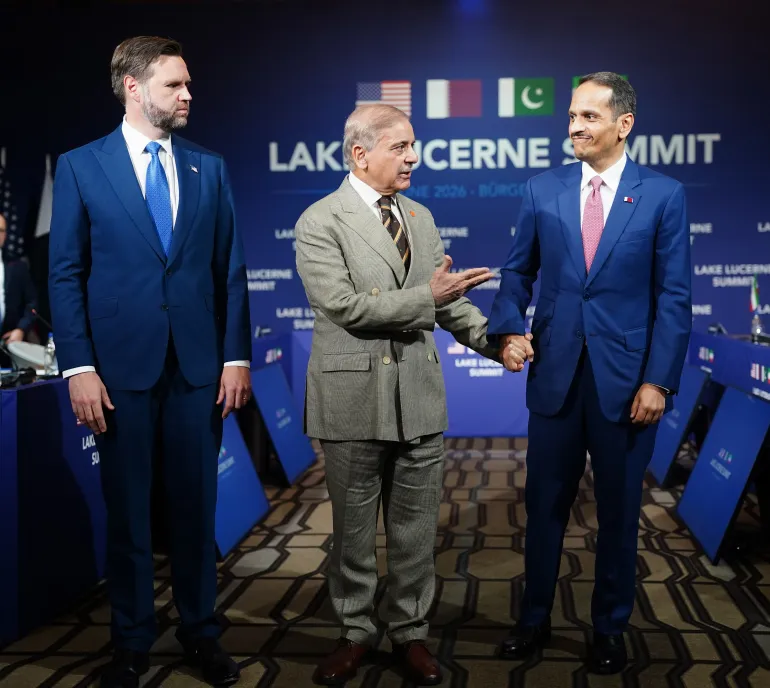
US Vice President JD Vance, left, looks on as Pakistan’s Prime Minister Shehbaz Sharif, centre, speaks and gestures towards Qatar’s Prime Minister and Minister of Foreign Affairs Sheikh Mohammed bin Abdulrahman bin Jassim Al Thani, right, at the start of a quadrilateral meeting between the US, Iran, Pakistan and Qatar [File: Nathan Howard/Pool via Getty Images]
Seat at the table
Mehran Haghirian, the director of research and programmes at the Bourse & Bazaar Foundation, believes Gulf states are in a better position to guide the outcome of the current US-Iran talks than in 2015.
“They are at the heart of the negotiations,” Haghirian said regarding the Gulf states’ role in the current talks.
In its role as a co-mediator, Qatar is essentially representing the GCC and their interests during the talks, while articles five and six of the Iran-US MoU place Gulf states at the centre of the agreement.
Among the biggest concerns for the GCC are the future of the Strait of Hormuz, with Tehran demanding tolls on shipping, and calls for the creation of a regional investment fund for Iran.
“There really cannot be any new Hormuz authority by Iran that would not include other GCC countries,” Haghirian told Al Jazeera.
US Vice President JD Vance claimed last week that the investment fund would be financed by the Gulf coalition, but Rubio said this week that regional allies would not be asked to contribute to any reconstruction fund for Iran.
Qatar’s Prime Minister Sheikh Mohammed bin Abdulrahman bin Jassim Al Thani has described the reported $300bn figure as “aspirational” in an interview with the Financial Times, while no Gulf state has yet said if it will contribute to the fund.
‘Maximum pressure era’
The analysts stress that the GCC is not a monolith – with Gulf states having contrasting and changing approaches towards Iran.
Oman, Qatar and Kuwait were broadly supportive of the JCPOA. Saudi Arabia, the UAE and Bahrain were more sceptical, but even these states publicly backed the agreement, said Haghirian.
When Trump pulled the US out of the JCPOA in 2018, Saudi Arabia, the UAE and Bahrain believed they had “found a partner in DC”.
That led to a “maximum pressure era” that brought a period of brinkmanship in the region, said Haghirian.
Suspected Iran-linked attacks on Saudi Arabia’s Abqaiq-Khurais oil facilities and vessels off the coast of Fujairah in 2019 were “the initial reaction by the Iranians to that maximum pressure” campaign, he added, but paradoxically, this also triggered a recalibration of relations.
“That was enough of a reason for Saudi Arabia [and] the UAE, particularly, to basically restructure their approach towards Iran,” Haghirian said.
The war and accelerated pragmatic rapprochement
While Israel has used war to attempt to increase its presence in the Gulf region – reportedly sending an Iron Dome battery to the UAE – other Gulf states view both Iran and Israel as unsettling forces in the region.
“Israel started the war, which was a destabilising act, and then Iran escalated by targeting the Gulf states, which was in turn a destabilising act,” Pinfold said.
Despite this, the Gulf states targeted by Iran still demonstrated patience and pragmatism in dealing with their neighbour.
Qatar, for example, has played a leading role in mediating between the US and Iran, even after being on the receiving end of Iranian drone and missile attacks.
“All six got attacked, and that’s really a level of foreign policy decision-making that is very difficult for any state to be able to really undertake, considering the fact that it was a military attack,” Haghirian said.
“But again, this pragmatism came out within this context to engage Iran and to actually speak for themselves at these negotiations. This war has really initiated a complete rebalancing of the entire region.”
Bosnia and Herzegovina are on the verge of reaching the knockout stages of the World Cup for the first time after beating Qatar 3-1 in their final Group B match.
Bosnia move on to four points and are in a strong position to be one of the best eight third-placed teams to progress to the last 32.
Recommended Stories
list of 4 itemsend of list
Qatar, meanwhile, exit at the group stage, just as they did four years ago when they hosted the World Cup.
Goals from Bosnia’s youngest-ever World Cup player, 18-year-old Kerim Alajbegovic, and an own goal by Qatar goalkeeper Mahmoud Abunada looked to have put the European side in the box seat.
However, Qatar made a game of it when 35-year-old Hassan Alhaydos, their most capped player, pulled one back late in the first half.
Ermin Mahmic then put the game beyond the Qataris when he scored for the second successive match in the 80th minute.
Bosnia flew out of the blocks as soon as the whistle went, testing Abunada twice inside the first four minutes.
First, Abunada denied Ermedin Demirovic’s fierce drive, and then he tipped away Ivan Sunjic’s shot.
Bosnia’s dominance finally paid off, but it was not the 40-year-old talisman Edin Dzeko who broke the deadlock, but the sublimely talented teenage left-wing.
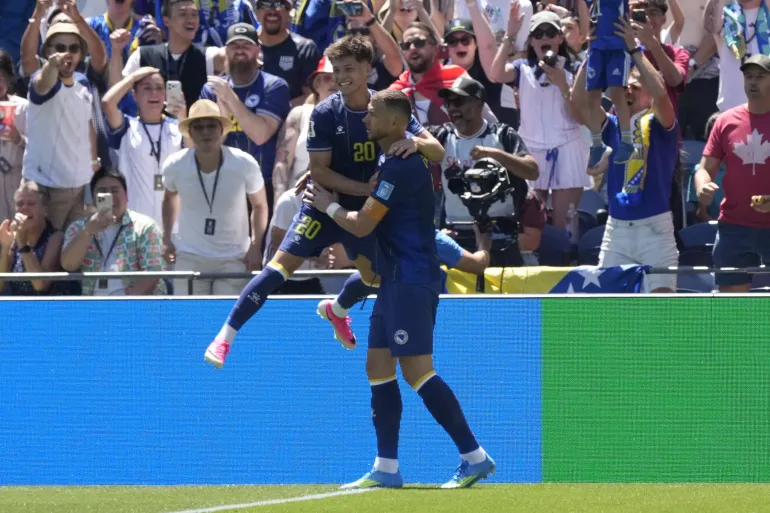
Edin Dzeko of Bosnia and Herzegovina and his teammates celebrate the second goal [Stephen Buddhist/EPA]
Abunada was unable to do anything about Alajbegovic’s screamer from outside the area, after he had beaten two players.
The youngster was mobbed by his teammates, and once they had trotted back to the halfway line, he stood and milked the moment, putting a finger to his lips.
Dzeko, winning his 150th cap, came more and more into the game, and not wishing to have his thunder stolen by the new kid on the block, he played an integral role in their second five minutes later.
His shot took a wicked deflection off Sultan Albrake and then Abunada on its way into the net.
Dzeko was well into his stride now, and he broke clear a few minutes later, his shot beating Abunada but rebounding off the post.
Bosnia’s earlier sprightliness dipped in the heat, and it was the doyen of Qatari football, Alhaydos, who repaid coach Julen Lopetegui’s faith by slotting home in the 42nd minute.
The Bosnian defence failed to learn from that, and in time added on, they had the far post to thank for keeping their noses in front as Pedro Miguel’s shot came back off it.
Alhaydos’s World Cup, and perhaps his distinguished international career, ended in tears as he trudged disconsolately off the pitch, injured in the 55th minute.
Chances were few and far between until Esmir Bajraktarevic stole in from the right wing and came close to emulating Alajbegovic’s effort, but Abunada turned it away for a corner.
Bosnian frustration gave way to ecstasy when Mahmic prodded the ball home – the scorer ripping his shirt off in celebration, and the 21-year-old paid little notice to being booked for it.
US Secretary of State Marco Rubio has said Iran will not be permitted to charge tolls or fees for vessels transiting the Strait of Hormuz under any final agreement with Washington, exposing one of the biggest points of friction in negotiations aimed at ending months of conflict across the Middle East.
The dispute comes after Iran announced it would waive planned transit fees through the strait that crosses through its territorial waters for 60 days while talks with the United States continue in Switzerland, suggesting charges could be introduced once the negotiating period expires.
Recommended Stories
list of 4 itemsend of list
Washington and Tehran signed a preliminary agreement in Switzerland this week to halt hostilities and launched a 60-day diplomatic process focused on sanctions relief, Iran’s nuclear programme and the future administration of the Strait of Hormuz.
Pakistan, which helped mediate the talks alongside Qatar, has said negotiations to end the four-month US-Israel war on Iran are expected to resume early next week, likely on Tuesday.
The future of Hormuz has already emerged as a key sticking point after Iran effectively closed the waterway during the war, severely disrupting maritime traffic through one of the world’s most important energy chokepoints and causing the price of oil to soar.
In peacetime, one-fifth of the world’s oil and natural gas supplies are shipped for export by Gulf producers through the waterway.
In April, the US imposed a corresponding naval blockade on Iranian naval ports in a bid to stem Iranian oil exports.
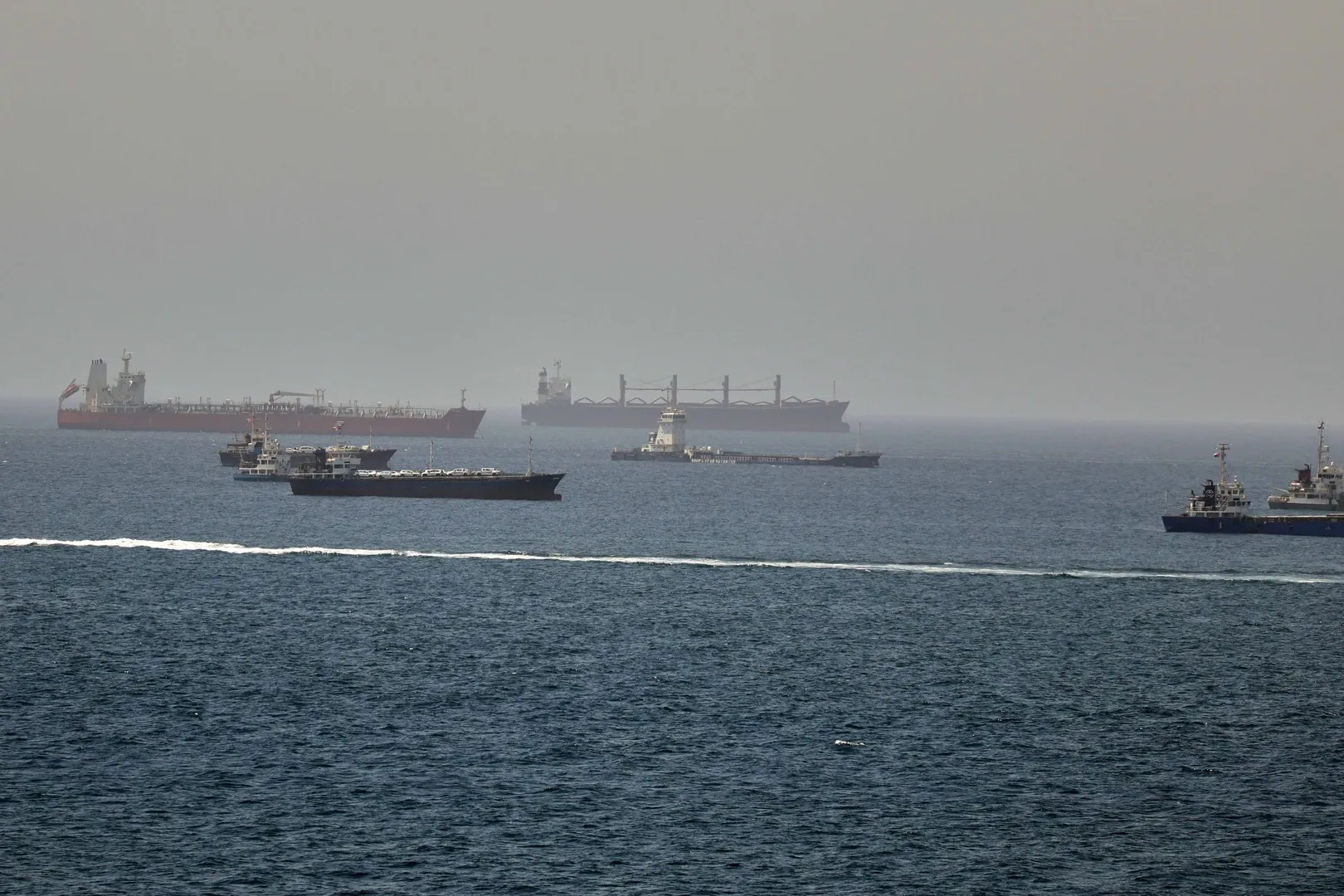
While a number of ships have crossed through the strait since the US-Iran agreement was signed last week, uncertainty remains over whether Tehran intends to impose permanent fees or service charges on shipping operators using the route. Here’s what we know – and what else is happening in the Strait of Hormuz this week.
(Al Jazeera)
What are the US and Iran saying?
On Friday, Iran’s Persian Gulf Strait Authority (PGSA) said planned fees for ships using the waterway would be suspended during the 60-day negotiation period established under the memorandum of understanding (MoU) signed with the US.
Earlier this week, Iran and Oman said in a joint statement that they would study the future administration of the trade route as well as possible charges for services provided there, while maintaining their sovereignty claims over territorial waters bordering the strait.
Speaking at the start of a regional tour in the United Arab Emirates, Rubio rejected the idea of transit fees. “It’s an international waterway. No country is allowed to charge tolls or fees on an international waterway,” he said, adding that he believed “all the countries in this region would agree”.
Iran’s chief negotiator, Mohammad Bagher Ghalibaf, has signalled that Tehran views the post-war arrangement as fundamentally different from the status quo that existed before the conflict, however. Experts also say that Iran will not give up control of the strait, which has proved to be its greatest point of leverage in the conflict with the US.
“Hormuz will never return” to its prewar status, Ghalibaf said, despite both sides agreeing on Monday to establish “communication mechanisms” aimed at keeping the waterway open.
What does international law say?
International law protects the right of transit through strategic waterways such as the Strait of Hormuz, preventing coastal states from imposing explicit tolls simply for passage through international shipping lanes, even when they are passing solely through territorial waters.
However, countries can charge for specific services, including inspections, navigation assistance, security measures and certain insurance-related requirements, insurance experts say.
Examples include fees associated with transit through the Suez Canal and Panama Canal, as well as some services provided in Turkiye’s Bosporus and Dardanelles straits.
Mohammad Reza Farzanegan, an economist at Germany’s Philipps-Universitat Marburg, told Al Jazeera last month that Iran, like Turkiye, could justify a negotiated mechanism for transit fees or service-based contributions through natural straits as payment for maintaining a safe passageway, reducing environmental risks and providing predictability in a waterway that supports global energy, food and technology supply chains.
A key difference, however, is that while those waterways pass through the territory of a single state in each case, the Strait of Hormuz passes through the territorial waters of both Iran and Oman, while also connecting to waters used by the United Arab Emirates and other Gulf states.
“This sort of arrangement is unprecedented, and there would not be such an outcome, unless there is a complete coordination between the GCC [Gulf Cooperation Council] countries and Iran, with the approval of major international powers, such as China and the United States,” Nader Habibi, an Iranian American economist, told Al Jazeera.
How many ships are getting through the strait now?
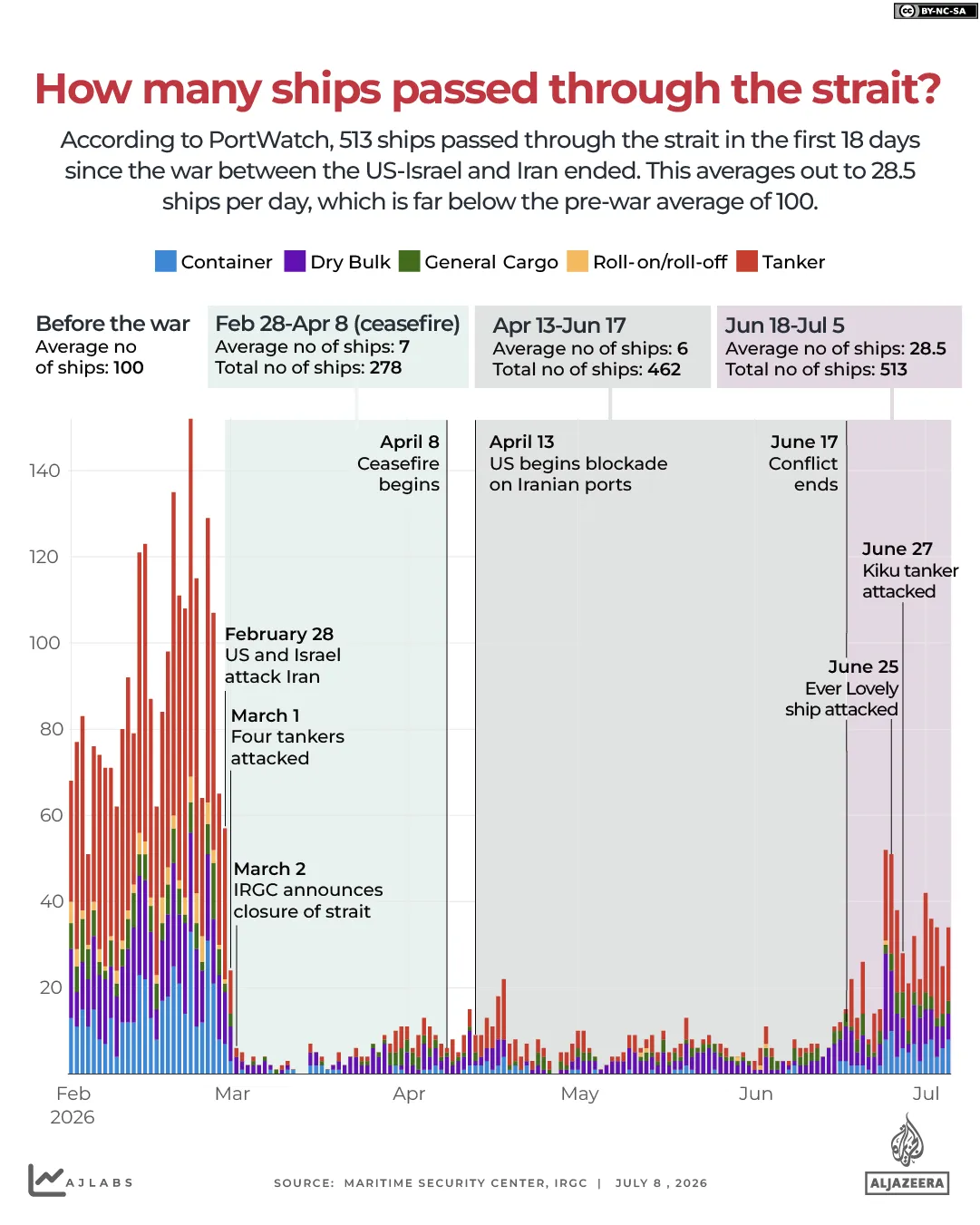
Ship movements through the Strait of Hormuz remain well below prewar levels, when between 120 and 140 ships transited the passage each day, including tankers carrying about 20 million barrels of oil from the Gulf.
As the strait begins to open up, Oman says it is working with the United Nations’ International Maritime Organization (IMO) on temporary arrangements to facilitate safe transit through the strait, launching an operation to evacuate more than 11,000 sailors stranded in the area after the conflict left hundreds of vessels trapped for months.
Traffic through the strait has also been held back by ongoing concerns about the possible presence of sea mines in the central shipping channels used by international vessels before the war.
The Joint Maritime Information Center (JMIC), which includes representatives from the US and other maritime partners, has warned ships to avoid the area “due to the existence of mines”.
Other countries, including Japan, are currently weighing up whether to send ships to help with efforts to remove mines from the strait.
While Iran has never confirmed the presence of mines in the strait, when it first issued a map of the waterway for vessels it had approved for transit while the conflict was ongoing, it ordered ships to pass close to its coast to avoid possible mines. Ships had previously passed much closer to the coast of Oman.
The graphic below illustrates how much shipping through the strait dropped off as a result of the US-Israel war on Iran.
Could the dispute over strait fees derail a peace deal?
Mostafa Khoshcheshm, a professor at the University of Applied Sciences in Tehran, told Al Jazeera that Iran is unlikely to abandon plans to introduce long-term service fees in the strait.
“According to the MoU, Iran is not going to charge service fees for 60 days, but afterwards, Iran is definitely going to do that,” Khoshcheshm told Al Jazeera.
He said many Iranians were already unhappy that Tehran had agreed to suspend fees for the duration of the negotiating period.
“The money is not the real core of the issue,” he said. “The point here is how to impose your new protocols in the region. This is highly important for the Iranians.”
Cyrus Schayegh, professor of international history and politics at the Geneva Graduate Institute, told Al Jazeera the success of any new administrative arrangement would depend heavily on regional support.
“I think this is a very big question, and the biggest question is whether they will be able to sell it to the Emirates,” Schayegh told Al Jazeera.
“I think the Emirates will need to be involved in a really substantive way for any sort of new authority to actually work.”
More broadly, he said, the future of Hormuz forms part of a wider debate over Gulf security architecture following the war.
“It is only one piece of a much larger puzzle,” Schayegh said, adding that several regional states now accept that Iran has strengthened its deterrence capabilities following the conflict.
What other issues remain unresolved?
Hormuz is far from the only serious obstacle to a peace deal.
Questions also remain over the future of Iran’s nuclear programme, with Kazem Gharibabadi, Iran’s deputy foreign minister for legal and international affairs, saying that access for international inspectors to nuclear facilities damaged during the war would only be addressed as part of a final agreement with Washington.
His comments came after US President Donald Trump claimed Iran had agreed to “the highest level” of nuclear inspections.
Iranian officials insist no commitments were made in Switzerland regarding Tehran’s nuclear programme and say they did not meet representatives of the International Atomic Energy Agency (IAEA), including Director-General Rafael Grossi.
Regional security remains another major source of disagreement, with Israeli Defence Minister Israel Katz insisting Israeli forces will not withdraw from southern Lebanon “even if there is an American demand” to do so.
Meanwhile, Ghalibaf has identified the withdrawal of foreign military forces from the Middle East as one of Tehran’s strategic objectives in the negotiations.
The future of Iran’s frozen assets also remains a sticking point, with Trump indicating Washington is reluctant to release large sums of Iranian funds directly, arguing that money could ultimately benefit the Islamic Revolutionary Guard Corps (IRGC).
Instead, he has suggested a mechanism under which some funds would be used to purchase US goods.
“Food is desperately needed in Iran, and we will be purchasing it for them exclusively from the United States,” Trump said. Iran has not confirmed plans to do this.
Qatar’s PM Sheikh Mohammed bin Abdulrahman Al Thani told Al Jazeera that safeguards have been put in place to prevent US-Iran negotiations from regional escalation, including tensions in Lebanon and the Strait of Hormuz, stressing diplomacy and respect for agreements.
The logo of state-owned petroleum company QatarEnergy is shown in front of its headquarters in Doha, Qatar. An explosion at a liquefied natural gas plant in Qatar killed 13 and injured dozens Sunday. Photo by Hannibal Hanschke/EPA
June 22 (UPI) — An explosion at Qatar’s largest natural gas plant killed 13 people and injured about 66, authorities said.
The blast, caused by a technical malfunction, took place Sunday as the facility restarted its natural gas production after a shutdown caused by the Iran-U.S. war, authorities from the interior ministry said. It took place in the Ras Laffan industrial zone. The nearby Ras Laffan Port is the largest artificial harbor in the world and was targeted by Iranian strikes earlier this year, BBC News reported.
Saad Sherida al-Kaabi, Qatar’s energy minister, said that the explosion would not affect the country’s exports and that it was an accident and “not sabotage or hostile in nature.”
“We convey our deepest condolences to the families of those who have unfortunately passed away in the sad incident at Ras Laffan Industrial City last night,” the Embassy of India in Doha said in a social media post.
Liquified natural gas is important to Qatar’s economy, and the country is one of the world’s largest exporters of it. Ras Laffan is the largest site in the country for producing LNG. Qatar had ceased production earlier in the Iran-U.S. war and has said damage from attacks during the conflict could take years to repair.
The blast turned the city’s skyline orange and was felt by residents more than 43 miles away, BBC News said.
Blast at Ras Laffan Industrial City caused by ‘technical malfunction’, Ministry of Interior says.
Published On 22 Jun 202622 Jun 2026
An explosion at Qatar’s main liquefied natural gas processing facility has injured 54 people and left 18 others missing, authorities have said.
The Qatari International Search and Rescue Group were deployed to conduct search operations for those missing following the “internal explosion” at Ras Laffan Industrial City, Qatar’s Ministry of Interior said on Monday.
Recommended Stories
list of 4 itemsend of list
The ministry did not provide information on the conditions of those injured in the incident, which it blamed on a “technical malfunction”.
Officials had said earlier that civil defence teams responding to the scene had not recorded any injuries.
The ministry said there was no leakage from the facility that would pose a danger to public safety.
QatarEnergy, which administers the industrial hub, said emergency response teams were immediately deployed after the explosion at the Barzan factory and brought a fire at the facility under control.
Ras Laffan Industrial City, located about 80km (50 miles) north of Doha, is home to the world’s largest LNG export facility, producing about one-fifth of global supply.
In March, the Qatari government announced that the industrial hub had sustained “significant damage” after being targeted by Iranian missile and drone attacks.
QatarEnergy invoked the force majeure clause in some of its contracts to free itself from its supply obligations following the attacks, affecting customers in Italy, Belgium, South Korea and China.
The first round of US-Iran talks has ended with both sides agreeing on a roadmap towards a final deal to be reached ‘within 60 days’. Iran said the negotiations resulted in waivers for oil exports and the release of some frozen assets. The parties have also agreed to a ‘de-confliction cell’ to monitor the ceasefire in Lebanon.
JOINT BASE ANDREWS, Md. — President Trump on Friday showed off the new Air Force One, a formerly Qatari-owned — and much debated — jumbo jet that has been converted into the official U.S. presidential aircraft.
The new plane — gifted from the Qatari government, raising a host of legal, ethical and security questions — will take on a new look, eschewing the Kennedy-era robin’s egg blue exterior in favor of white on the top half, its underbelly navy blue with a red stripe above it.
“This plane was transformed into a flying White House at a level of luxury that nobody has ever seen before,” Trump said from inside the massive Joint Base Andrews hangar, as a couple of hundred assembled Air Force personnel looked on. He spoke after stepping off the new plane in a dramatic flourish, as his signature tune “God Bless the USA” played.
He confirmed that he would be taking the new jet to the North Atlantic Treaty Organization summit in Ankara, Turkey, next month and indicated that he would be returning to China “at some point,” presumably a reference to the Asia-Pacific Economic Cooperation summit that China is hosting in November. His return from the Group of 7 summit in France this week was the last planned trip aboard the old Air Force One, he said.
“Now, when we land at airports in London and in Germany and different places, nobody tops this one, and that’s the way we have to have it for our country,” Trump said, noting that the colors and the design were to “my taste, I will say.”
He added that the new Air Force One will do a flyover during the July 4 celebrations next month.
The gift from Qatar is serving as a so-called bridge aircraft to carry the president until new planes ordered directly from Boeing arrive. That is currently slated for 2028.
The administration formally accepted a luxury Boeing 747 jet from Qatar last year to be used as the presidential airplane, despite questions about security and the ethics and legality of accepting such an expensive gift from a foreign government. Trump has claimed in the past that he would not fly around in the Qatari jet once he leaves office and said it would instead be donated to a future presidential library.
Trump on Friday said the U.S. was in a “little bit of a logjam” as it awaited the delivery of the new jets directly from Boeing, which had originally been scheduled for 2024 but have been delayed. He recalled asking the emir of Qatar for the use of one of their planes.
“See, a normal president wouldn’t do this. A normal president wants to stay away from aircraft,” Trump said Friday. “But our country has to be represented properly.”
Members of Congress and others have questioned the cost and effort that would be needed to make security modifications to an aircraft from a foreign government.
The Air Force said in a news release Friday that any plane deemed Air Force One “must meet rigorous security requirements” and that the Qatari plane “was modified under a disciplined engineering approach that prioritized these exact core capabilities above all else.” The Air Force also said “much of the previous head of state interior layout” of the plane was kept intact.
The Air Force has said in the past that security modifications to the jet would cost less than $400 million.
Trump’s efforts to reimagine the presidential airplane date back to his first administration, when he directed that an incoming fleet of new jets would adopt a color scheme that was nearly identical to that of his personal airplane. Then-President Biden reversed the decision in March 2023 as an Air Force review suggested that the darker colors could increase costs and delay delivery of the new jets, but once Trump returned to office, he returned to his desired colors for the plane.
Other government jets that carry other top administration officials will use a similar red, white and navy color scheme, the Air Force said earlier this year.
An Air Force spokesperson, who spoke on condition of anonymity to discuss sensitive plans, told the Associated Press that the two current planes, known as VC-25As, will not be retiring. Instead, they will remain in the fleet until the new Boeing planes, referred to as VC-25Bs, come into service, the spokesperson said.
It is unclear how the older jets will be used but the spokesperson said that both the Qatari jet as well as the VC-25As will be available for use and “the Presidential Airlift Group will select the appropriate aircraft for each mission based on operational requirements.”
Kim and Ceneta write for the Associated Press. Kim reported from Washington. AP writer Konstantin Toropin contributed to this report from Washington.
VANCOUVER, Canada — When the first men’s World Cup game played in Canada kicked off last week, Anthony Totera sat in the stands and wept.
“It was a dream come true,” said Totera, who has spent most of his 57 years on earth promoting Canadian soccer. “I can’t describe the emotions. It was something surreal.”
If the 1994 World Cup, the first held in the U.S., forever altered the direction of American soccer, this summer’s tournament, which Canada is sharing with the U.S. and Mexico, has the potential to do the same for that country.
“This is going to be something monumental,” Totera said. “We’re going to get to another level, another point, where we’re going to say this was when it all turned.”
With an opening draw against Bosnia and Herzegovina last week in Toronto and Thursday’s 6-0 blowout victory over Qatar in Vancouver, this tournament is already the most successful on the field for Canada, which had lost all six previous World Cup games it had played. Now it’s poised to advance to the knockout rounds for the first time ever.
Jonathan David’s three goals were more than Canada had scored in its previous World Cup seven games combined. And former LAFC goalkeeper Maxime Crepeau, who lost his chance to play in the last World Cup when he broke his leg in the MLS Cup final, had no trouble making them stand up, recording Canada’s first-ever World Cup clean sheet.
The hosts outshoot Qatar 32-2 and had 97 touches in the box in one of the most dominant performances in recent World Cup history.
“I really think that we’re a soccer country,” LAFC midfielder Stephen Eustaquio said. “It’s a very special group.”
But the win was a costly one since Canada, which entered the tournament missing three starters to injury, lost another early in the second half when midfielder Ismael Kone was carted off on a stretcher with an apparent broken leg after Qatar’s Assim Madibo clipped him from behind.
And while that success on the field — costly or not — is significant, Steve Reed, the former Canadian Soccer Assn. president who was instrumental in bringing the World Cup to Canada, said the real goal wasn’t to win games as much as it was to win over the public.
“Each time we have hosted major tournaments, we have seen a significant increase in participation and general public interest,” said Reed, who was part of the group that organized the 2015 women’s World Cup in Canada. That tournament produced nearly a half-billion dollars in economic activity, double the original projections. It also boosted investment of soccer infrastructure, including the construction or upgrading of 21 “FIFA-quality” pitches, and surged youth participation numbers. The quarterfinal game between the host country and England drew a record TV audience of 20.8 million Canadians.
“I would say that we have proved that we excel at hosting major events. This will just be reinforced in 2026,” Reed said.
“In terms of expectations,” he continued, “one would be the continued growth of the game, particularly on the men’s side. We have always been great at the grassroots level. But we need to be better at the top end of the game, creating more professional opportunities for players in our domestic leagues and creating a pipeline to bigger clubs in major leagues.”
Canada fans celebrate after a 6-0 win over Qatar at the World Cup on Thursday.
(Kaleb Tatum / Associated Press)
That’s exactly the kind of legacy the 1994 World Cup created in the U.S., where it gave birth to Major League Soccer, a deep lower-tier professional infrastructure and an academy system that has sent players to major teams all over the world. Canada has also benefited from that, with MLS placing teams in Vancouver, Montreal and Toronto. Nine players from the league — including three from LAFC — are on Canada’s World Cup team.
In the last decade, Canada has begun building its own youth development system. It also launched the Canadian Premier League, an eight-team professional league that has already sent 15 players to the national team. Those initiatives had a good foundation to build on since soccer is Canada’s most popular sport in terms of registration and participation and ranks behind only hockey as a spectator sport.
Still, when Victor Montagliani, a former Canadian Soccer Assn. president, first publicly floated the idea of bidding to host the men’s World Cup in 2013, he was lampooned.
“People absolutely laughed at him, all across this country,” said Totera, who is now the grassroots ambassador for the Premier League. “But his closest friends and people that knew him knew he didn’t lie when he said, ‘I want to bring the World Cup to Canada.’ And he brought it.”
Canada had to pair with the U.S. and Mexico to make that happen, with the so-called United Bid beating back a proposal from Morocco thanks in part to some steady diplomacy from Reed, who took over as president when Montagliani was chosen to lead CONCACAF, the governing body that oversees soccer in North America, Central America and the Caribbean.
Canada’s reward was 13 World Cup games — seven in Vancouver and six in Toronto. Mexico gets the same number, while 78 of the record 104 matches will be played in the U.S.
That same year, 2018, Reed and Canada Soccer put the final piece of its World Cup preparations in place when it hired John Herdman to rebuild its men’s team.
In seven years with the country’s women, Herdman had taken a team that finished last in the 2011 World Cup to the quarterfinals of the next tournament, sandwiched between two bronze-medal performances in the Olympic Games. His impact on the men’s team was equally as stunning.
When Herdman took over, it had been 32 years since Canada played in its only World Cup. The country not only returned in its first cycle under the new coach, but it won the CONCACAF qualifying tournament to earn its place in the 2022 tournament.
“Being a Canadian football supporter, the roller-coaster ride has been downward for most of the years,” said Totera, who pulled on his first Canada soccer shirt the year he entered first grade. “But for the last few years, it’s been on on the upswing.”
Herdman found success in part by making the recruitment of dual nationals a priority, starting four of them — including Alphonso Davies, who immigrated to Canada from a refugee camp in Ghana — in Qatar.
Nearly a quarter of Canada’s population was born somewhere else and Herdman leaned into that diversity.
Jesse Marsch, the U.S.-born coach who took over the national team in 2024, followed Herdman’s lead, recruiting six dual nationals to his World Cup team. As a result the 26 players on Canada’s roster, or their parents, come from more than 17 countries — from Iran, Croatia, Jamaica and Barbados to Haiti, Lebanon, Nigeria and the Philippines.
“We’re a melting pot. We embrace it,” said Totera, whose family moved to Canada from Italy. “I look at that team, our team, and they’re from all parts of the world. Not one from one section of the world or the other section. No, all over.
“Amazing.”
Now, with a win and draw in two games, that diverse Canadian team is almost certain to advance out of a World Cup group stage for the first time — just as the U.S. did when it first hosted a men’s World Cup in 1994.
“After ‘94, after the World Cup was there, they took off to bigger and better things,” Totera said. “I believe once we get into the knockout route, we won’t look back.
“We’re on the cusp of something really special in this country right now. And we need to grab it and run with it.”
BC Place Vancouver was a battlefield as Kone was stretchered off, Qatar got 2 red cards, and both teams brawled after full time.
Published On 19 Jun 202619 Jun 2026
Canada thrashed nine-man Qatar 6-0 to clinch their first-ever World Cup victory in a Group B match, marred by a horrific injury to the home team’s midfielder Ismael Kone, and disciplinary issues both during and after the match.
A Jonathan David hat-trick, one goal apiece from Cyle Larin and Nathan Saliba, as well as a Qatar own goal, sealed a momentous victory for the Canadians at the BC Place Vancouver stadium on Thursday.
Recommended Stories
list of 4 itemsend of list
Canada now need only a draw against Switzerland in their final match to finish top of the group, while Qatar and Bosnia and Herzegovina will aim to finish third when they meet on Wednesday.
But the celebratory atmosphere in Vancouver, with Canadian Prime Minister Mark Carney cheering on Les Rouges, was soured by a serious injury to Kone in the 51st minute.
Qatar’s Assim Madibo upended Kone with a clumsy challenge from behind, leaving the Italy-based midfielder writhing in agony and clutching his left leg.
The seriousness of the injury was immediately apparent as teammates frantically called for help from the Canadian medical staff on the sidelines.
Kone was eventually stretchered off the pitch, waving to the crowd as he inhaled from an oxygen pipe.
Kone waves to the crowd as he receives oxygen while being stretchered off after sustaining an injury [Agustin Marcarian/Reuters]
Madibo, who had initially been given a yellow card for the tackle, was sent off after it was upgraded to red following a VAR review, the second Qatari dismissal after Homam Ahmed was given his marching orders in the first half.
With Qatar down to nine men, Canada took full advantage to score three more goals.
Saliba, who had replaced the injured Kone, curled in a free kick to make it 4-0 in the 64th minute.
The substitute celebrated his goal by racing to the sideline to hold up a replica of the stricken Kone’s Canadian jersey and pointing to his jersey number, eight.
Another substitute, Jacob Shaffelburg, then helped make it 5-0, his fierce shot turned into the Qatar goal by defender Mohamed Manai.
David, who had scored twice in the first half after Cyle Larin’s 16th-minute opener, then completed his hat-trick in the second minute of stoppage time to end the rout.
Jonathan David celebrates scoring his second goal [Fran Santiago/Getty Images via AFP]
‘Tough to focus’
David’s was the 56th hat-trick scored at a men’s World Cup and the second of the 2026 edition.
Argentinian superstar Lionel Messi earned his first of the tournament when he led his side to a 3-0 victory over Algeria and steamrolled several records in the process.
David is also the first Confederation of North, Central America and Caribbean Association Football (CONCACAF) men’s player to score a hat-trick since 1930 and the first Canadian man to record a multi-goal game at the World Cup.
Embers of carnage during the match were reignited after full-time when both sides brawled on the halfway line and had to be pushed apart by FIFA volunteers and team personnel.
“It was a great game even before [Kone] got hurt, but I think after he got hurt, it was tough to focus on the game, even finishing the game… We just wanted the game to end so we could all be together,” David said after the match.
“It will take a few days to sink in, but obviously we know that what we’ve done today is historical for the country, our first win in the World Cup, and to do it in that fashion is really amazing.”
Qatar had a forgettable day in the field [Lee Smith/Reuters]
Was Switzerland’s Remo Freuler offside before he was brought down by Qatar goalkeeper Mahmoud Abunada?
It is the question that, for many, remains unanswered despite Fifa finally releasing images four and a half hours after the incident happened.
The move led to a penalty, converted by Breel Embolo, as the teams drew 1-1 in Saturday’s World Cup Group B match in Santa Clara.
Before the tournament Fifa put a lot of stock in its new, enhanced semi-automated offside system.
World football’s governing body scanned every player at the World Cup to create unique, lifelike avatars.
It was supposed to provide the most accurate illustration of offside decisions we have ever seen.
But it did not work and Fifa had to revert to drawing lines to the players and on the pitch.
Fifa released a statement saying “a brief technical outage prevented the onside animation graphic from being generated”.
It went on to say the lines drawn by the video assistant referee (VAR) showed no offside and released two images – which remain unconvincing – but not the usual avatar graphics.
Within the move, two Switzerland players could potentially have been offside.
Fifa released an image for both as evidence they were onside. The first was for Embolo in the build-up, the second for Freuler before he was fouled by Abunada.
Fifa’s statement read: “The workflow of the VAR was not affected by this issue and followed the normal procedure in checking the on-field decision.
“The lines used by the VAR to check the position of the relevant players did not show the attacking player to be in an offside position in either of the two situations immediately before the penalty decision.”
The semi-automated technology is not flawless. It can be impacted by many things, such as players being close together or even something as random as ticker tape on the pitch.
When the technology fails in the Premier League there is the option to fall back to the old technology where the VAR draws the lines.
But the offside image is produced straight away, not several hours later.
“We all think [it was offside],” Gary Neville said on ITV before the statement was released.
“Everybody at home thinks it. Fifa are the host broadcaster and they have the semi-automatic decision that they can show us.
“There is a massive question over that because it is offside in my eyes until they prove to me different.”
If there is one thing that is guaranteed to create doubt it is delay. It creates a vacuum that feeds conspiracy theories. It might give the impression Fifa is hiding something.
Qatar has earned its first-ever FIFA World Cup point in dramatic fashion against Switzerland. An injury time own goal put Qatar level with the Swiss in San Francisco. Al Jazeera’s Paul Rhys was there.
Asian Cup holders Qatar level in injury time to draw 1-1 with Switzerland in World Cup 2026 opening game.
Published On 13 Jun 202613 Jun 2026
Boualem Khoukhi scored an equalising goal on a header in the fourth minute of stoppage time, and Qatar spoiled a dominant day by Switzerland in a 1-1 draw in Group B of the World Cup.
Several of the Qatari players fell to the ground on Saturday in celebration of the late goal, as others ran to each other to embrace.
Recommended Stories
list of 4 itemsend of list
Breel Embolo scored for Switzerland from the penalty spot in the first half just over a week after being cleared to enter the US following a visa delay, but the Swiss failed to capitalise on multiple other scoring chances.
In the 13th minute, Embolo was fouled by Qatar goalkeeper Mahmoud Abunada, who received a yellow card on the play. Abunada lay face down and appeared motionless for a couple of minutes before he began to move his legs and was able to stand up again.
When Embolo calmly sent his penalty into the upper left corner in the 17th minute, it sent the red-clad Swiss fans into a dancing frenzy in the stands of San Francisco Bay Area Stadium.
The 29-year-old forward applied for an urgent visa at the United States embassy in Bern on June 3, one day after he was denied boarding the team’s flight to travel for his third World Cup because of a 2018 criminal conviction that was only finalised in April.
Switzerland dominated the possession game on an unseasonably warm June afternoon — with sprinklers running during a first-half break.
Qatar’s Boualem Khoukhi scores their first goal past Switzerland’s Gregor Kobel [Eloisa Lopez/Reuters]
There were thousands of empty seats scattered throughout Levi’s Stadium, home of the NFL’s San Francisco 49ers. Brazil and Colombia drew 70,971 two years ago in a group match at the Copa America. The stadium in Santa Clara staged the Super Bowl only four months ago.
Switzerland goalkeeper Gregor Kobel made a save in the second minute after Edmilson Junior got through the defence for a one-on-one. Kobel corralled the ball again in the 90th on a close-range attempt by Ahmed Alaaeldin.
Switzerland is hoping to advance further than its round-of-16 showing four years ago before losing 6-1 to Portugal — when Goncalo Ramos delivered an improbable hat-trick playing in place of benched star Cristiano Ronaldo. The loss prompted Switzerland midfielder Xherdan Shaqiri to apologize the the fans.
The Swiss used consistency and experience to go unbeaten through qualifying against Sweden, Kosovo and Slovenia. Coach Murat Yakin’s team produced four wins and two draws to secure its sixth straight World Cup appearance and hasn’t missed one since 2002, but the team has never gotten beyond the quarterfinals.
Qatar, led by Spanish coach Julen Lopetegui, had to qualify through a playoff in November — beating the United Arab Emirates and Oman — after missing an opportunity from its group stage of Asian qualifying.
The Gulf state country became the first host nation to lose all of its group matches four years ago. It lost to Senegal, Ecuador and the Netherlands in the 2022 tournament, scoring its lone goal in a 3-1 loss to Senegal.
Qatar’s Boualem Khoukhi heads home an equaliser in added on time as his side earn their first ever World Cup point against Switzerland in San Francisco.