Niger’s military government has banned many local and foreign reporters since seizing power in 2023.
Media watchdog Reporters Without Borders (RSF) has condemned Niger’s suspension of nine French media publications as the military government continues to crack down on journalists.
Niger announced the suspension on Friday, citing “repeated dissemination of content likely to seriously jeopardise public order, national unity, social cohesion, and the stability of the institutions of the Republic”.
Recommended Stories
list of 3 itemsend of list
The suspended organisations are France 24, RFI (Radio France Internationale), France Afrique Media, LSI Africa, AFP (Agence France-Presse), TV5 Monde, TF1 Info, Jeune Afrique and Mediapart, according to a TV statement from the National Communication Observatory (ONC).
It added that the decision was “immediate” and it included “satellite packages, cable networks, digital platforms, websites and mobile applications”.
RSF described the decision as “abusive”.
“RSF condemns a coordinated strategy to repress press freedom within the AES [Alliance of Sahel States] and calls for the immediate reversal of this abusive decision,” said a statement posted on X, referring to Niger and allies Mali and Burkina Faso, all ruled by military governments.
Niger’s military seized power in July 2023, toppling the democratically elected government of President Mohamed Bazoum and detaining him.
The government has since targeted local and foreign media outlets, particularly those critical of its policies, by issuing bans or suspensions.
RFI and France 24 were suspended a few days after the coup, and the BBC from Britain was suspended in December 2024.
The targeting of French and other foreign media comes as Niger’s military government has largely severed ties with its former colonial power, France, and turned away from Western allies.
In late 2023, Niger asked leaders in Paris to withdraw thousands of troops involved in missions against armed groups operating in Niger, neighbouring Mali and Burkina Faso.
The three AES states have since secured defence partnerships with other countries, notably Russia.
All three have regularly denounced France’s “imperialism”, saying they want to assert their “sovereignty”. French media and other foreign outlets have similarly been suspended or banned by the governments in Bamako and Ouagadougou.
Local journalists have also been affected. Two Nigerien journalists, Gazali Abdou, a correspondent for German broadcaster Deutsche Welle, and Hassane Zada, a regional newspaper editor, were released this week after being detained for months.
In 2024, leaders in the capital Niamey strengthened a law that criminalises the digital dissemination of “data likely to disturb public order”.
The United Nations said in November that 13 journalists were arrested in Niger and urged the government to release them. Local media organisations say six journalists are detained for allegedly “undermining national defence” and for “conspiracy against the authority of the state”.
According to AFP, Niger suspended nearly 3,000 local and foreign NGOs in 2025, accusing them of lacking transparency and supporting “terrorists” and armed groups.
Niger dropped 37 places in this year’s RSF World Press Freedom Index and now ranks 120th out of 180 countries. RSF and Amnesty International have repeatedly voiced concerns about the “decline” in press freedom in Niger.
Good morning, and welcome to L.A. on the Record — our City Hall newsletter. It’s David Zahniser, with an assist from Noah Goldberg, offering up the latest on city and county government.
L.A. voters finally got a chance this week to see how the leading candidates for mayor behave onstage with each other, and they didn’t disappoint.
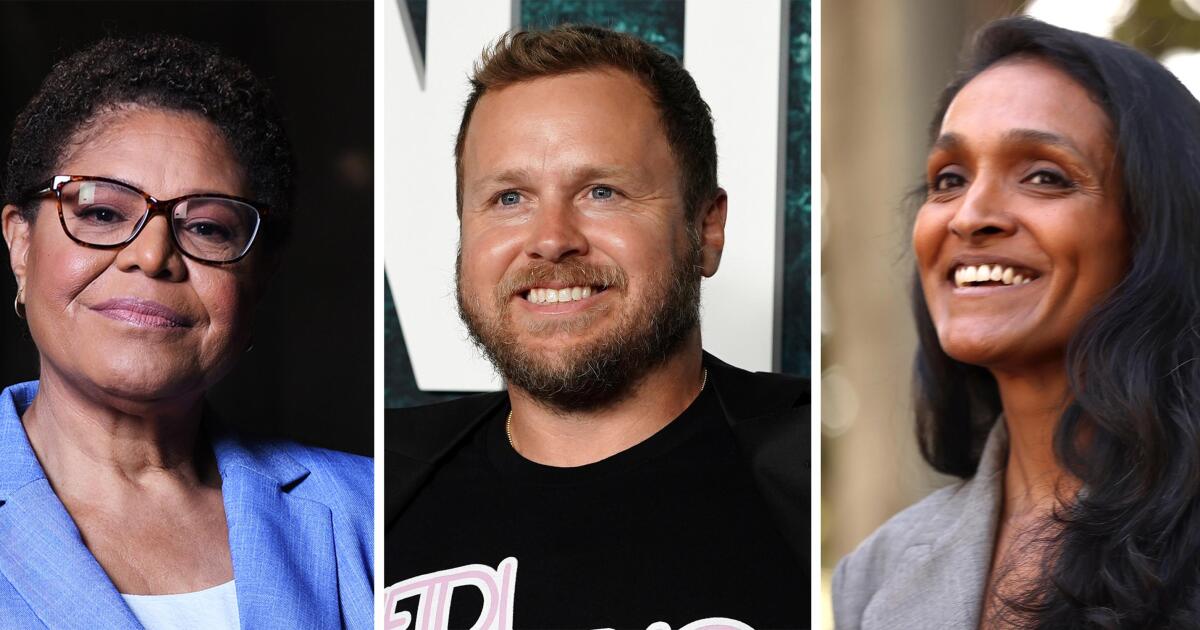
The back-to-back debates offered plenty of cutting moments as Mayor Karen Bass, Councilmember Nithya Raman and reality television star Spencer Pratt faced off against each other.
But the two showdowns also served up a few surprises. Here are three that were noteworthy:
Raman and a campaign pledge
Bass went mano-a-mano with Raman on Tuesday for 90 minutes in the drab settings of the Sherman Oaks Adult Center.
Technically it was Raman’s home turf, since the facility is located in her Hollywood Hills district. But the Sherman Oaks Homeowners Assn., the event’s host, wasn’t an especially friendly audience — in part because of their diverging views on real estate development.
You’re reading the L.A. on the Record newsletter
Sign up to make sense of the often unexplained world of L.A. politics.
By continuing, you agree to our Terms of Service, which include arbitration and a class action waiver. You agree that we and our third-party vendors may collect and use your information, including through cookies, pixels and similar technologies, for the purposes set forth in our Privacy Policy such as personalizing your experience and ads.
Raman soldiered on, telling the audience about her big promise of the day: If elected, she would cut the number of homeless encampments across the city in half by the 2028 Olympic Games.
Then she went further, saying she would remove every encampment by the end of 2030, the conclusion of her hoped-for first term as mayor.
Raman has spent much of the campaign talking up her record on homelessness in her district, which stretches from Silver Lake to Reseda, pointing to a 54% reduction in the number of tents and encampments over three years. She’s been contrasting that work with Bass’ Inside Safe program, which secured a 17.5% reduction over two years citywide.
“I don’t think anybody in Los Angeles right now can say that we are satisfied with spending extraordinary amounts of money and getting only incremental progress,” Raman said the following night, at a debate sponsored by NBC4 and Telemundo 52 at the Skirball Cultural Center.
As part of her pitch, Raman unveiled a four-part strategy to get the city’s nearly 27,000 “unsheltered” homeless residents indoors.
Still, her pledge drew criticism from Councilmember Monica Rodriguez, who has emerged as a Bass supporter in recent days. Rodriguez said Raman has been in office since 2020, spending half that time in charge of the committee that oversees homelessness, and is only offering a comprehensive encampment strategy weeks before the election.
“What’s stopped her for the last six years?” Rodriguez asked in a text message.
Bass and needle exchange
On Wednesday, Bass and Raman joined Pratt for the one-hour televised debate at Skirball. Pratt spent much of the night promising to rid the streets of drug addicts, whom he regularly refers to as “zombies” on social media.
“When you get rid of all the drug addicts on the street, the police won’t be responding to the drug addicts all day long,” he said.
Echoing that theme, NBC4’s Colleen Williams told the three candidates that Norm Langer of Langer’s Delicatessen wants the city to end its needle “giveaway program.”
Williams asked the three candidates if they would do as Langer requested. Raman said no. Pratt said yes.
Bass, after a brief pause, also said yes. That was something of a surprise, since the city’s Department on Disability delivers those types of services as part of its HIV/AIDS prevention services, collecting dirty syringes and offering clean ones to drug users.
The mayor’s budget calls for nearly $1.2 million in the coming fiscal year for overdose prevention and syringe exchange services, City Administrative Officer Matt Szabo said in an email.
Bass spokesperson Paige Sterling said the mayor’s office is now “actively reviewing these programs.”
“Needle exchange programs like this are not designed to end people’s addictions, and we should be doing everything we can to end drug use in our parks — especially given the increased use of deadly drugs like Fentanyl,” she said in a text message.
Langer said needle giveaways should not be in or near “sensitive sites” like parks and schools, including MacArthur Park.
Officials in Los Angeles County’s Department of Public Health said so-called harm reduction programs, including the distribution of Narcan and syringes, help save lives and improve public health, reducing the number of overdose deaths and the transmission of HIV and viral hepatitis.
Pratt was in fact kinda chummy with Bass
He calls Bass trash on social media — at least in Spanish. He reposted an AI video that portrays her as the Joker. He blasted her as “an incredible liar” during Wednesday’s debate.
Yet the evidence is clear: Pratt, the former star of MTV’s “The Hills,” did get friendly with Bass for a few moments during his hour onstage with her.
At one point, Pratt praised Bass for working to fund the Los Angeles Police Department, saying her efforts were “important, actually.” At another point, he flagged for the moderators that Bass was trying to rebut some of Raman’s remarks.
“Mayor Bass would like to respond,” Pratt nudged them.
“Thank you,” Bass replied.
Team Raman has been trying to make the case that Bass has been going easy on Pratt, as part of a larger strategy to ensure that she faces him in the top-two Nov. 3 runoff. During the debate, Raman accused the two of teaming up to attack her, saying they were afraid of facing her in Round 2.
Pratt pushed back on the idea, saying he considers Bass to be the more formidable opponent. “You think it’s easier to run against the incumbent mayor with all the unions [endorsing her], or a random council member who’s been a failure for six years?” he said.
Halfway through the debate, Bass tried to reply to another Raman remark, and Pratt stepped in again to assist.
“See how nice they are being to each other?” Raman said.
State of play
— DOUBLE NO-SHOW: Bass won’t be returning to the debate stage next week, skipping a candidate forum scheduled for Wednesday on Fox11. Pratt also is not attending, according to organizers. That leaves City Councilmember Nithya Raman, tech entrepreneur Adam Miller and community organizer Rae Huang. Bass spokesperson Alex Stack said the mayor will be in Sacramento that day lobbying for state funding.
The main organizers of the event — the Pat Brown Institute for Public Affairs and the League of Women Voters of Greater Los Angeles — issued a statement calling Bass’ withdrawal from the debate “disappointing.” “Public forums such as this are a cornerstone of democratic accountability,” the groups said.
— TICKING TIMEBOMB: Szabo, the city administrative officer, issued a grim warning this week about the proposal heading to the November ballot that would repeal the city’s business tax, depriving the city of about $860 million per year. Szabo said the measure, backed by a coalition of business leaders, would lead to “an immediate and lasting contraction of public services” and “fundamentally undermine” the city’s ability to host the 2028 Olympic Games.
— THREE MORE STOPS: Metro’s D Line subway extension finally opened Friday, offering three additional stations along Wilshire Boulevard. The line’s westernmost point is now the La Cienega Boulevard station.
— MAD FOR MCKINNEY: L.A. County Dist. Atty. Nathan Hochman and the union that represents rank-and-file police officers endorsed prosecutor John McKinney, dealing a fresh setback to the reelection campaign of City Atty. Hydee Feldstein Soto. The police union withdrew its endorsement of Feldstein Soto last month, citing her handling of a data breach dealing in part with police lawsuits.
— AIRBNB’S BIG BUCKS: Meanwhile, a campaign committee sponsored by Airbnb just put $1.5 million in an independent expenditure committee backing McKinney, according to a new filing with the secretary of state. Michael Trujillo, political strategist for Feldstein Soto, responded on X: “Hydee Feldstein Soto SUED AIRBNB for GOUGING LA FIRE SURVIVORS and now they are crying with this IE in support of their hand picked puppet.”
— ROOTING FOR RAMAN: She didn’t get Democratic Socialists of America to reopen its endorsement process for the mayoral primary election. But Raman got something else: a recommendation in DSA’s newly released voter guide.
The group’s L.A. chapter said a vote for Raman would ensure that “a left candidate with a proven track record of delivering for working class Angelenos” makes it into the top two against Bass. The DSA also issued a caveat, saying in boldface that its “recommendation” is “not an endorsement” — and therefore will not cause the group to expend any resources on her behalf.
— THEN THERE’S THIS: The centrist 501(c)4 nonprofit group Thrive LA took a sharply different approach, issuing a voter guide that — wait for it — endorses both Bass and Pratt in the primary. Why? The group doesn’t want Raman, arguing she would bring “higher taxes, more regulation, less housing production, and an ideological approach to governance.”
— STOPPING TRAFFIC STOPS: The City Council took a step toward imposing new restrictions on “pretextual” traffic stops this week, asking the Los Angeles Police Commission to adopt new guidelines similar to San Francisco, which bars officers from pulling drivers over for broken taillights and other minor equipment violations, unless there is a safety threat.
— NOHO TRAGEDY: A jury found Thursday that an LAPD officer was not liable for the death of a 14-year-old girl who was killed by a bullet fired by the officer as he pursued a suspect in a Burlington department store. The family of Valentina Orellana-Peralta filed a lawsuit contending that the officer should have slowed down and deferred to other officers at the scene who had already determined that the suspect wasn’t armed with a gun.
— MEA CULPA: We made a mistake in last week’s newsletter, incorrectly reporting that Councilmember Traci Park voted against L.A.’s “sanctuary city” ordinance. Although Park was highly critical of the ordinance after it passed, she was absent from the council’s vote.
— THEY’RE HERE: Our voters guides have arrived, giving you the rundown on who’s running for what in a whole bunch of races. Take a look!
QUICK HITS
Where is Inside Safe? The mayor’s signature program to address homelessness revisted a long list of spots that have been targeted by the program previously.
On the docket next week: As we mentioned earlier, the next televised forum is set for Wednesday, with the Pat Brown Institute for Public Affairs, the League of Women Voters of Greater Los Angeles and Fox11 hosting.
Stay in touch
That’s it for this week! Send your questions, comments and gossip to LAontheRecord@latimes.com. Did a friend forward you this email? Sign up here to get it in your inbox every Saturday morning.
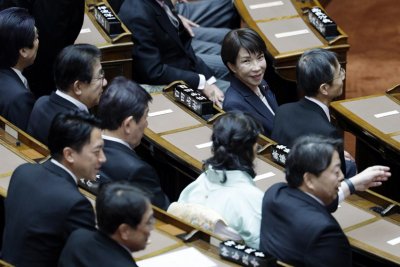
Japanese Prime Minister Sanae Takaichi (top 2-R) smiles to lawmakers before the arrival of Japan’s Emperor Naruhito at the parliament in Tokyo, Japan, 20 February 2026. File. Photo by FRANCK ROBICHON / EPA
May 8 (Asia Today) — A new political group supporting Japanese Prime Minister Sanae Takaichi is set to launch within the ruling Liberal Democratic Party, raising questions about the return of faction-style politics less than two years after the party formally moved to dismantle its traditional factions.
The Yomiuri Shimbun reported Thursday that the new group, called the National Power Research Association, will hold its first meeting on May 21 with participation from senior ruling party figures including former Prime Minister Taro Aso and former Foreign Minister Toshimitsu Motegi.
The organization is being positioned as a policy study group, but analysts say it could effectively serve as a new political base for Takaichi inside the party.
The group’s abbreviated name, “JiB,” is derived from Takaichi’s campaign slogan, “Japan is Back,” used during the Liberal Democratic Party leadership race last year.
Founding documents distributed to lawmakers this week state that the government and ruling party “will work as one” to implement policy, with a focus on security, energy and resource issues.
George Glass, the U.S. ambassador to Japan, has reportedly been invited to speak at the inaugural meeting on U.S.-Japan relations and related topics.
Although Takaichi herself is not expected to attend the first gathering, the decision to feature the American ambassador highlights the group’s emphasis on the U.S.-Japan alliance, economic security and defense cooperation.
The organization was reportedly spearheaded by Hiroshi Yamada, a lawmaker close to Takaichi, along with senior party officials including Koichi Hagiuda.
Other participants include prominent ruling party lawmakers and potential future leadership contenders such as Defense Minister Shinjiro Koizumi and policy chief Takayuki Kobayashi.
The group is encouraging participation across current and former factions, both chambers of parliament and newly elected lawmakers.
Still, questions remain over whether the organization will be accepted as a legitimate policy forum or criticized as a de facto revival of faction politics under a different name.
The Liberal Democratic Party pledged reforms after political funding scandals triggered public backlash and accelerated efforts to dissolve traditional factions.
Critics argue that reorganizing lawmakers through policy groups risks recreating the same power structures the party had promised to dismantle.
The development is also being closely watched in South Korea because of its potential implications for regional security and economic policy.
If Takaichi strengthens her position inside the ruling party, analysts expect Japan to pursue more consistent policies on military expansion, the U.S.-Japan alliance, trilateral cooperation with the United States and South Korea, and energy and supply chain security.
At the same time, observers warn that a stronger conservative political base inside the ruling party could also affect disputes involving history, defense policy and constitutional revision.
Analysts say the launch of the new group signals that the Takaichi administration is beginning to build a longer-term organizational foundation for its security and economic agenda inside the ruling party.
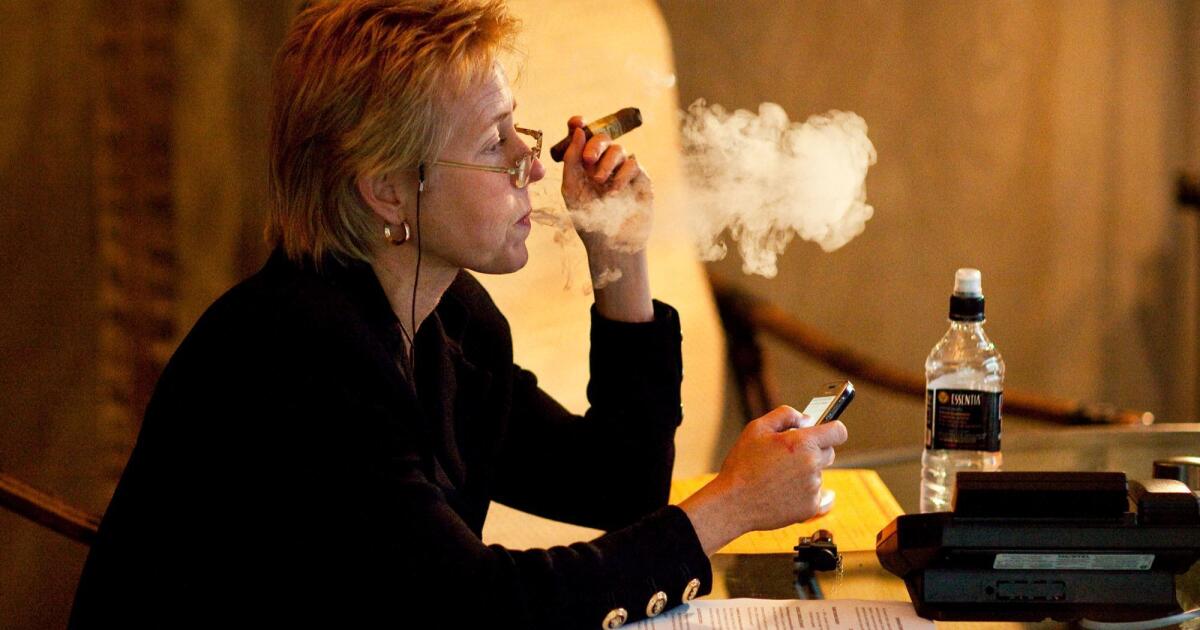
Reporting from Sacramento — Susan Kennedy, the former top aide to Gov. Arnold Schwarzenegger, has agreed to pay $32,500 in fines for shadow lobbying, or advocating for clients before a state agency without registering as a lobbyist, according to documents released Monday.
The state Fair Political Practices Commission’s enforcement staff says Kennedy failed to register though she attempted to influence the California Public Utilities Commission from 2012 through 2014 on behalf of her clients, Lyft Inc. and San Gabriel Valley Water Co. Kennedy was paid $201,000 for the lobbying work.
Kennedy served on the California Public Utilities Commission from 2003 to 2006. She was chief of staff to Schwarzenegger from 2007 to 2011 before she became a consultant.
She signed an agreement with the FPPC enforcement staff admitting to the violations of the state Political Reform Act.
“In this case, the violations were serious since the public and other interested parties were not informed of Kennedy’s lobbying activity,” the agreement says. “While Kennedy maintains she did not intend to qualify as a lobbyist, given her experience and sophistication, she should have been aware at the time that her activity qualified as lobbying.”
The agreement and fines are expected to be approved by the Fair Political Practices Commission on Feb. 15.
The panel has been investigating shadow lobbying for years at the state Capitol and has fined others who have tried to secretly influence state government.
The state defines a lobbyist as someone who receives $2,000 or more in a calendar month to communicate directly, or through an agent, with state officials for the purpose of influencing legislative or administrative action. Such people must register as lobbyists with the state and periodically report who is paying them, how much and for what purpose.
Kennedy failed to register and disclose her payments, resulting in eight violations of the Political Reform Act. In 2012, Lyft Inc. gave Kennedy a $15,000-a-month contract to help “strategic management” of Lyft’s public policy interests, the report said.
Lyft and other ride-hailing firms including Uber were under the scrutiny of the PUC for operating without its approval at the time, and Lyft agreed to pay a fine of $20,000 for operating without the agency’s authority.
After being retained by Lyft, Kennedy contacted CPUC President Michael Peevey, Executive Director Paul Clanon and other staff to convince them that the state should work with the ride-hailing firms, not shut them down.
At Kennedy’s prodding, the California Public Utilities Commission decided to adopt rules on the new industry regarding liability insurance, driver licensing and background checks, driver training programs and vehicle inspections.
James C. Harrison, an attorney for Kennedy, said she “moved immediately once the discrepancy was identified to provide the necessary information requested by the FPPC. Integrity and character are hallmark principles in how Kennedy conducts herself in business, which is why she is acting swiftly and looks forward to its resolution.”
Trump signed off on the decision to replace Makary as he has clashed with Trump, officials in the Department of Health and Human Services and other officials in the administration, multiple reports said on Friday.
Makary, a former surgeon at Johns Hopkins, was confirmed to run the FDA in March 2025 on a vote the included two Democratic members of the Senate voting yes.
His nomination carried some controversy because, like several other Trump cabinet members and nominees, is a former Fox News contributor who preferred that society develop natural immunity to the virus that causes COVID-19 instead of the CDC’s preferred method of using vaccine-induced immunity during the pandemic.
The reports suggest that Makary has struggled to run the FDA as long-time staff have left the agency and a range of healthcare, pharmaceutical and advocacy groups have been highly critical of its actions.
The Department of Health and Human Services and Makary have not commented on the reports, and sources for all four news organizations noted that the plan could change if Trump changes his mind.
President Donald Trump delivers remarks at an event he is hosting for a group that includes Gold Star Mothers and Angel Mothers in honor of Mother’s Day in the Rose Garden of the White House on Friday. Photo by Aaron Schwartz/UPI | License Photo
I’m going to start this story on a quiet tree-lined street in Mar Vista, where a couple I met with on Thursday — the day after the L.A. mayoral debate — have a problem.
It’s not an unusual matter, as things go in Los Angeles. On both sides of the street, the sidewalk rises and falls, uprooted and cracked by shallow roots because over many decades, the trees were not properly maintained.
John Coanda, 61, who grew up in Los Angeles, was never bothered by torn-up sidewalks as a kid.
“In fact,” he said when he first emailed me about his predicament, “my friends and I sometimes used the ramping pavement as jumps for our bicycles.”
But his wife, Barbara, was diagnosed in 2024 with ALS, and she uses a wheelchair. When John pushes her, they can’t use the sidewalk if they want to go to the store or meet with friends, or just enjoy a nice pass through the neighborhood without getting into a vehicle.
So John pushes Barbara’s wheelchair in the street, which creates an obvious safety problem. And despite John’s best efforts to get City Hall to fix the sidewalks, he’s not expecting help anytime soon.
I’ll circle back to this story in a bit, but first, about that debate.
I recruited a half-dozen L.A. residents to watch and send me their thoughts about how the candidates tackled the important issues. And then I felt guilty for having done so, because the candidates didn’t do much tackling at all.
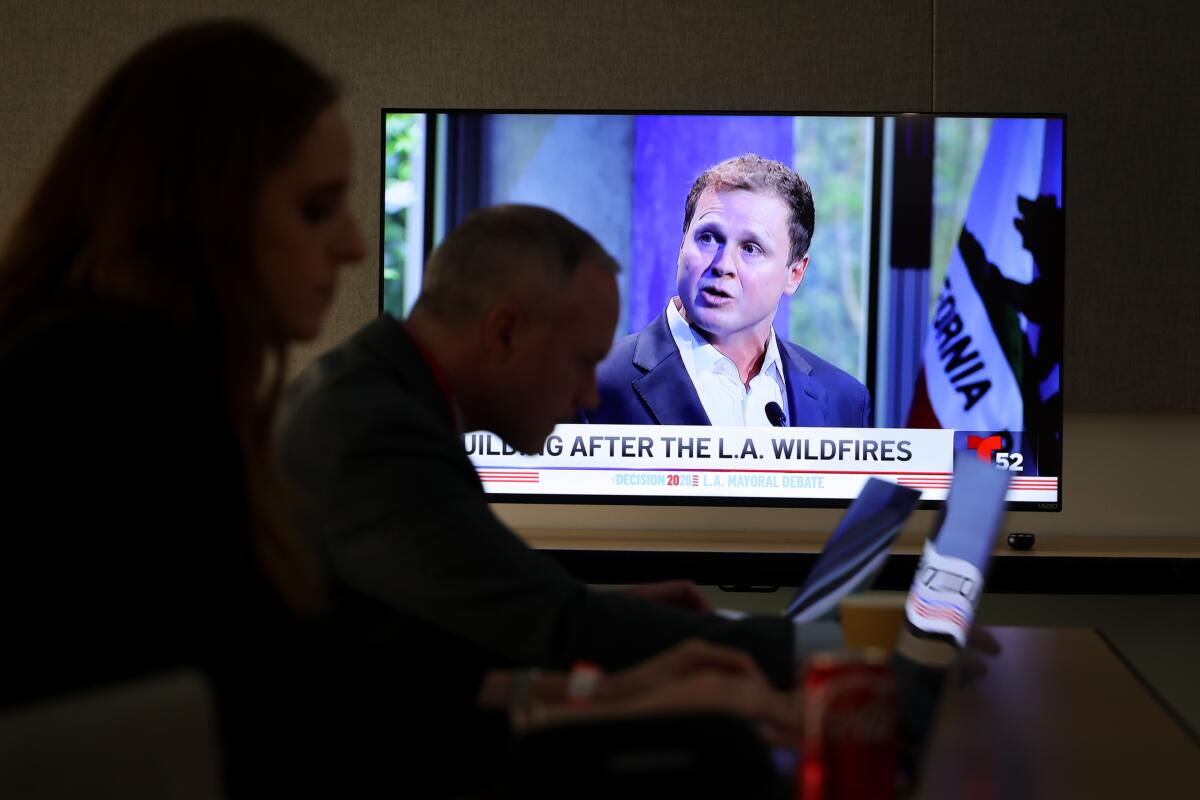
Candidate Spencer Pratt is shown on a television while journalists work during the 2026 Los Angeles mayoral debate at Skirball Cultural Center.
(Jason Armond / Los Angeles Times)
They hit their talking points, for sure, and Mayor Karen Bass, Councilmember Nithya Raman and TV personality Spencer Pratt each had their moments. But by the end of the debate, and two straight nights of gubernatorial debates as well, I came away thinking there were no clear winners, but there was a definite loser.
Voters.
This is the fault of the format more than of the candidates themselves. The deck is stacked against meaningful, substantive discussions, especially when moderators ask — as they did several times — for one-word answers.
“Moderator questions are so meaningless … and they make it easy for candidates to take potshots at each other,” said longtime political sage Darry Sragow. “The format is guaranteed to elicit nothing that matters.”
It’d be better to have single-issue debates, and to have candidates pressed for details by journalists who cover those issues and can push back against unrealistic promises and expose a lack of depth.
My debate watchers did some of that themselves. CSUN librarian Yi Ding had praise and criticism for each candidate, but was looking for concrete plans and didn’t get many.
Ding was also disappointed that two other mayoral candidates — Ray Huang and Adam Miller — were not invited to the debate, and I agree with her. Both have been polling low, but with so many undecided voters, and such high unfavorability ratings for Bass, they should have been in the mix.
Mike Washington, a retired pharmacist and West Adams resident, said Bass has done better than previous mayors on homelessness and he didn’t think Raman or Pratt came off as worthy of bumping her out of City Hall.
“The public would have benefited from more questions related to the challenges young people are facing,” said Juan Solorio Jr., president of the San Fernando Valley Young Democrats club. His colleague David Ramirez agreed, saying he was hoping for “more discussion about the cost of living for young adults,” but he and Solorio are both backing Bass.
West L.A. software developer Mike Eveloff asked the million-dollar question in one of his many observations during the debate:
“Why is LA spending record amounts on homelessness, fire, police, and infrastructure while results deteriorate? Streets and sidewalks crumble. Even the city emblem right in front of City Hall is deteriorated. With the World Cup and Olympics approaching, voters need to know: Do these leaders have the financial discipline and operational competence to manage a fourteen billion dollar city?”
Venice resident Dennis Hathaway, author of “An Octogenarian’s Journal,” said he thinks “these kinds of debates are pretty non-edifying.” And, as someone I wrote about two years ago regarding busted sidewalks in his neighborhood, he shared this lament about Thursday’s debate:
“No mention of broken sidewalks, potholed streets, other deteriorated infrastructure. To me, that’s a much more important subject than non-citizens voting in city elections.”
(Bass did say during the debate that there was a new infrastucture plan in place, and that’s a step in the right direction. But there was no discussion, and when you read the details, 2028 Olympics projects will be prioritized, and it’ll take years to figure out how to fund thousands of additional much-needed fixes.)
The Coandas live not far from Hathaway, and their lives have been upended first by Barbara’s diagnosis and then by John getting laid off in February from his job as a data analyst. Barbara still teaches French via Zoom, and John is tending to her needs. They started a Gofundme campaign to help pay their bills.
With Barbara in a wheelchair, John contacted the city’s Safe Sidewalks L.A. program last fall, and I think it’s fair to say that name is somewhere between a misnomer and a bad joke.
The “program” responded by email on Halloween, appropriately enough, informing him that under the City Council-approved “Sidewalk Repair Program Prioritization and Scoring System,” his request for help merits only 15 points out of a possible 45.
“Currently,” he was informed, “the estimated wait time for completion of an Access Request with a score of 15 is in excess of 10 years.”
Happy Halloween.
Over the years, responsibility for sidewalk repairs has shifted between the city and homeowners. There’s a rebate program available to people who repair their own sidewalks, but it’s capped at an amount that doesn’t always cover the costs. And ruptured pavement is keeping lots of lawyers busy with trip-and-fall lawsuits that cost the city millions each year.
Barbara Durieux Coanda, who has ALS, and her husband, John Coanda, make their way down the ramp in front of their home in Mar Vista.
(Genaro Molina / Los Angeles Times)
Coanda told me he doesn’t have the funds at the moment to pay for repairs, and even if he did, there are several more sidewalk disaster zones on both sides of his street, so he’d still have to push his wife’s wheelchair in the street even if he fixed the cracks in front of his own house.
Barbara graciously said she thinks the city has other, higher priorities, but in November her husband contacted the office of Councilmember Traci Park, saying he was told that he would have to wait 10 years for repairs.
“Sadly,” he wrote, “I don’t think my wife will live that long.”
A Park staffer wrote back, saying, “The turnaround time does sound realistic given the budgetary crisis the city finds itself in.” But, the staffer added, maybe the council member’s office could “help move the needle on this request.”
Coanda said he’s been too busy with his wife’s issues to follow up. But Pete Brown, Park’s communications director, told me Friday afternoon that the office is exploring ways to pay for fixes that don’t take 10 years, including the use of discretionary funds.
I don’t know how that might play out, but I do know that L.A. doesn’t need another debate like the last one.
We need a mayor and council members who refuse to accept that it takes 10 years to create safe passage for a wheelchair.
In the national capital of broken sidewalks, we need concrete plans.
Chad Bianco’s campaign for California governor leans heavily on his years as Riverside County sheriff, a record that has drawn praise from voters yearning to return to a tough-on-crime era and harsh criticism from others who consider him a far-right affront to the rule of law.
The stout, mustached Republican is running an unapologetic campaign against the “Democrat policies that have destroyed this state,” launching into angry diatribes about, as he sees it, the left’s failed record in California in debate after debate, on social media and in news interviews, during which where he often accuses the media of being complicit.
In an interview with The Times, Bianco said he is sick of what he calls soft-on-crime Democrats in Sacramento undermining him and other law enforcement leaders across the state, whom he wants to unleash if given the power.
Part of Bianco’s prescription for turning California around: cracking down on theft and drug offenses, stiffening sentences for both petty and violent crime, building more detention facilities, collaborating with federal immigration forces to deport immigrant offenders, and demanding greater personal accountability from homeless people suffering from mental illness and drug addiction.
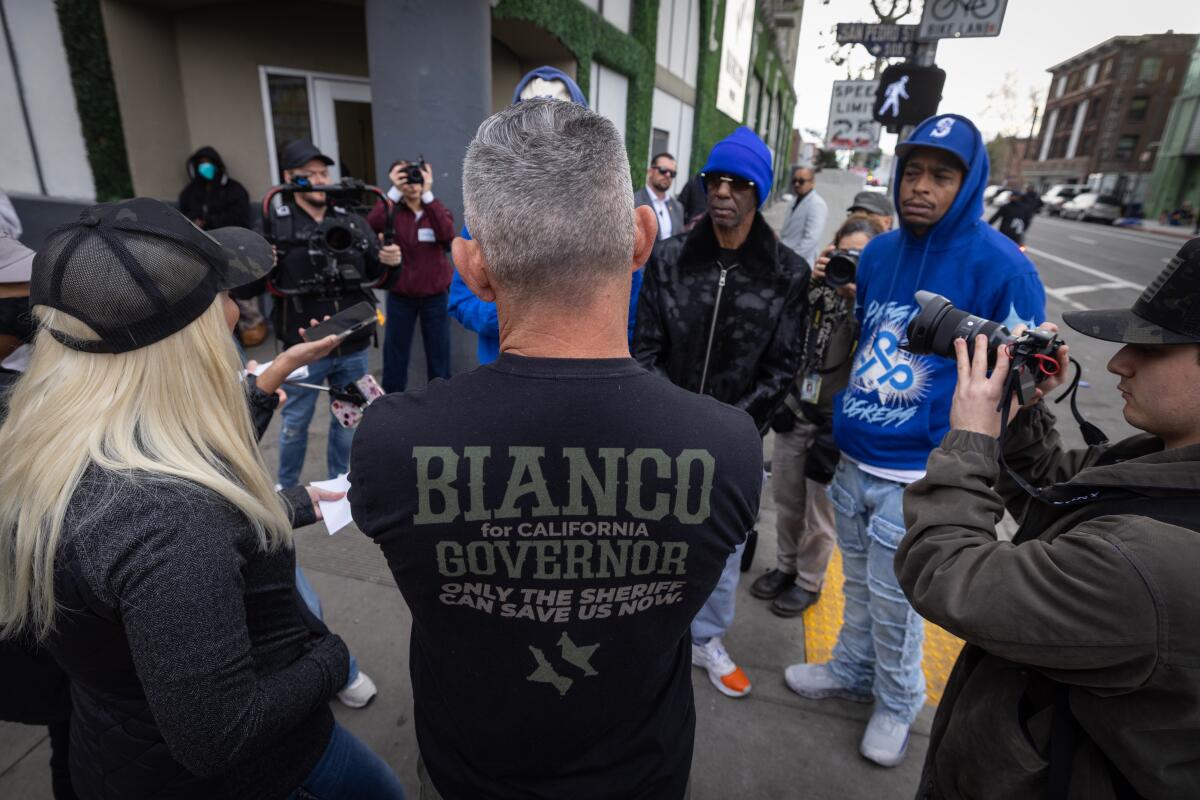
Riverside County Sheriff Chad Bianco, a GOP candidate for governor, and Kate Monroe, CEO of VETCOMM, speak with people in the Skid Row area of Los Angeles. .
(Jason Armond / Los Angeles Times)
“It is impossible for me to keep my county safe because of politics. It is impossible for me to run my jails correctly because of politics. It is impossible for me to prosecute someone to the fullest extent of the law because of politics,” Bianco said. “Politics is destroying the state of California — and unfortunately for the Democrat Party, they are 100% to blame.”
It’s a message that has clearly resonated with a slice of the California electorate. Bianco has consistently polled above 10% among likely voters, putting the MAGA-aligned sheriff among the top tier of gubernatorial candidates in deep blue California thanks to a slew of Democratic candidates still splitting their party’s much bigger base.
It’s also a message receiving increased scrutiny as the June 2 primary nears, from rival candidates on both sides of the political aisle.
A spokesman for Democrat Xavier Becerra, who served as California attorney general during part of Bianco’s time as sheriff, called Bianco a “tyrant” and said he has run his department “like a man who answers to no one — not the president, not the courts, not the people he was elected to serve.”
Republican Steve Hilton, a former Fox News commentator endorsed by President Trump, has attacked Bianco for essentially the opposite reason — suggesting Bianco has literally and figuratively bent the knee to liberal forces in the state.
Despite Hilton’s attacks, Bianco’s political record is far right and fully in line with the MAGA base, including on sanctuary policies, election integrity and other issues favored by Trump.
LAPD officers and DEA agents converge along Alvarado Avenue near MacArthur Park targeting an open-air drug market on Wednesday.
(Genaro Molina / Los Angeles Times)
On crime
Crime has been a top issue for California voters for years, and Bianco will no doubt benefit among a portion of the electorate from having the title of sheriff attached to his name on the ballot.
According to a Times analysis of state-collected data through 2024, Bianco’s record on crime has been mixed. The data show violent crime rising for years under his leadership and being solved at lower rates than in surrounding counties. The data also show a more recent turnaround, with declines in such crime and improved clearance rates.
Bianco challenged the accuracy of the state data and offered his own snapshot of crime figures that painted a different picture — of much higher clearance rates, but also a much larger volume of violent crime in his jurisdiction.
Bianco, 58, joined the Sheriff’s Department in 1993 and was a lieutenant when he defeated the incumbent sheriff in 2018, taking over policing and jail oversight in 2019 for a vast swath of one of California’s largest counties. He won reelection in 2022.
Riverside County Sheriff Chad Bianco takes a knee with demonstrators after thousands marched to the Robert Presley Detention Center and were met with a roadblock of law enforcement during a protest against the death of George Floyd in 2020.
(Gina Ferazzi / Los Angeles Times)
According to the state data, overall violent crime in that county jumped in 2019, fell slightly in 2020, then increased each year from 2021 to 2023 before falling again in 2024. Homicides increased in 2019 and again in 2020, when the COVID-19 pandemic raged and cities across the country saw similar spikes, but declined each of the next four years, the data show.
Vehicle thefts have fluctuated during Bianco’s tenure but have been on the decline since 2021, according to the state data. Other forms of theft, as well as drug offenses — something Bianco said is crucial to address while backing Proposition 36, a ballot measure state voters passed in 2024 to increase penalties for such crimes — have also fluctuated in the county for years.
Meanwhile, Bianco’s deputies have struggled to reduce violent crime — like their counterparts in other counties — though they have made improvements under Bianco, according to state statistics.
The department cleared about 38% of violent crimes in 2018 and about 47% in 2024, with several fluctuations within that range in the years between, according to state data.
Law enforcement from surrounding communities, including San Bernardino County sheriff’s deputies and CHP officers, close off streets and lock down the perimeter at Loma Linda University Medical Center after a report of a gunman in the emergency department of Children’s Hospital on March 12, 2025.
(Gina Ferazzi / Los Angeles Times)
By comparison, the San Bernardino County Sheriff’s Department during the same time period saw violent crime clearance rates between about 50% and nearly 64%, while the Los Angeles County Sheriff’s Department saw rates between about 55% and 63%, the data show.
The Sheriff’s Department is responsible for law enforcement in the county’s unincorporated areas, which include deserts and mountains, as well as cities that contract with the agency — including Temecula, Moreno Valley, Lake Elsinore, Rancho Mirage and others. The Times analyzed state crime and clearance data from all those areas.
In 2021, the ACLU of Southern California wrote a letter to the California attorney general’s office demanding that it investigate Bianco’s department for “racist policing practices, rampant patrol and jail deaths” and noncompliance with past court orders requiring improvements.
In 2022, 19 people died in Riverside County jails, making them among the deadliest in the nation. An investigation by the Desert Sun later blamed “neglect by jail employees, access to illicit drugs, and cell assignments that put detainees at increased risk of violence or did not allow for close oversight.”
In 2023, California Atty. Gen. Rob Bonta launched a sweeping civil rights investigation to determine whether the Sheriff’s Department had “engaged in a pattern or practice of unconstitutional policing amid deeply concerning allegations relating to conditions of confinement in its jail facilities, excessive force, and other misconduct.”
Bonta’s office declined to comment on the ongoing investigation, which has yet to produce any public findings. Bianco pointed to the lack of results to date as proof there is nothing to uncover in his jails, which he claimed are the best-run in the state.
“If there was all of these bad things that I were doing, are you telling me that he was going to allow me to continue to do them for three years?” Bianco said. “There is not going to be anything because our attorney general is an absolute lying fraud and an embarrassment to law enforcement.”
Gubernatorial candidate Chad Bianco greets supporters during a break at the California Republican Convention at the Sheraton San Diego Resort on April 11.
(John Gastaldo / For The Times)
Bianco argued that crime data put out by the state has been cherry-picked by liberals to make law enforcement look bad.
He said crime was underreported in Riverside County before he took office because residents and business owners didn’t believe anything would be done about it, and that he actually “wanted our crime stats to go up” when he took over because it would mean trust had improved.
He said his agency had been struggling to retain deputies amid poor morale when he took over, but has since rebounded and become “one of the most proactive law enforcement agencies in the country” thanks to his focus on addressing crime “hot spots” and “broken windows” policing — a much-criticized theory that says addressing urban blight and enforcing laws against petty offenses also drives down violent crime.
Rep. Ken Calvert (R-Corona), who has endorsed Bianco, called him a “real law enforcement champion” for Riverside who despite challenges has “consistently made it harder for criminals to succeed in our communities.” Calvert said drug cartels operating in rural stretches of the Inland Empire make solving crime in the region difficult, but Bianco has “done a good job of trying to face up to it and move it in the right direction,” including as an outspoken critic of “soft-on-crime laws” in Sacramento.
Speaker of the House Mike Johnson (R-La.,) center, listens to Riverside County Sheriff Chad Bianco speak at a news conference in the U.S. Capitol as part of Police Week on May 15, 2024.
Speaking with The Times, Bianco defended the Oath Keepers — which he did again during a recent debate — and said it wasn’t right to judge the entire organization based on the actions of some members. He also said Trump was right to pardon many of the people charged in connection with Jan. 6 — who he said “did absolutely nothing” wrong and were “politically prosecuted with lies” — but that he disagreed with the president’s pardoning of others who were caught on video attacking U.S. Capitol police.
Bianco has claimed expansive powers as sheriff, including to buck state directives, as with COVID; has said his Christian faith is a driving force in his life; and has described his comment about a felon in the White House as a tongue-in-cheek criticism of bogus attacks on Trump.
He joined Huntington Beach in a lawsuit challenging California’s sanctuary policies, which generally bar localities and their law enforcement agencies from participating in federal immigration raids or initiatives, and has sent mixed messages on whether his deputies would work with Immigration and Customs Enforcement agents despite California’s laws.
In November 2024, he told Fox 11 L.A. that if keeping Riverside County residents safe meant “working somehow around” state laws and “with ICE so we can deport these people victimizing us and our residents, you can be 100% sure I’m going to do that.” In February 2025, he said Riverside County deputies “have not, are not and will not engage” in immigration enforcement, which he said is a federal responsibility.
Riverside County Sheriff Chad Bianco kicks off his campaign to run for governor at the city’s Avila’s Historic 1929 event center on Feb. 17, 2025.
(Gina Ferazzi / Los Angeles Times)
Also this year, Bianco caused an uproar when he seized more than 650,000 ballots from last November’s election as part of what he said was an investigation into whether they were fraudulently counted — a claim he is entertaining from a fringe group of election deniers, despite assurances from county and state officials that the allegations are baseless.
Bonta sued to stop the investigation, arguing there is no basis for it and that Bianco has no such authority without buy-in from him and oversight from state elections officials. He accused Bianco of having gone “rogue” and creating “a constitutional emergency in the process.”
The California Supreme Court halted the investigation as it weighs arguments in the case.
Bianco slammed Bonta for trying to halt his investigation, which he said was “probably one of the most easy criminal investigations you could ever, ever imagine” and normal work for a sheriff.
Bob Shrum, a longtime Democratic strategist and director of the Dornsife Center for the Political Future at USC, said much of what Bianco does, including his seizure of ballots, is “performative Trumpism” — and “out of step with California.”
Chad Bianco, left, answers a question as Tom Steyer watches during a gubernatorial debate at Pomona College on Tuesday, April 28, 2026 in Claremont, CA.
(Eric Thayer/Los Angeles Times)
Joy Silver, chair of the Riverside County Democratic Party, said Bianco has been cultivating an image as a tough-on-crime candidate for years, but in recent debates has shown his true colors as an angry ideologue with few policy ideas and little willingness to work across the aisle.
Silver said Bianco’s simplistic “own the libs” approach to governing has already harmed Riverside, and would serve no one were he governor.
“There’s no policy or solutions or anything that are packed into that,” she said. “It’s just a hateful message.”
The last time the Supreme Court threatened to end access to the country’s most popular abortion method, California’s network of online providers and their pharmaceutical suppliers scrambled to respond.
Now, with the fate of the cocktail used in roughly two-thirds of U.S. terminations once again in the balance, they’re not even breaking a sweat.
Dr. Michele Gomez, co-founder of the MYA Network, a consortium of virtual reproductive healthcare providers, said the supply chain is “ready to switch in a day” to an alternative drug combination.
“It’s not going away and it’s not going to slow down,” Gomez said.
On May 1, the 5th U.S. Circuit Court of Appeals ruled to block the drug mifepristone from being prescribed virtually and shipped through the mail, making such deliveries illegal across the country. On Monday, the Supreme Court stayed that decision, allowing prescriptions to resume until the court issues an emergency ruling next week.
Mifepristone is the first half of a two-drug protocol for medication abortion, which made up 63% of all legal abortions in the U.S. in 2023.
Between a quarter and a third of those abortions are now prescribed by healthcare providers over the internet and delivered by mail — a path Louisiana and other ban states are fighting to bar.
“Abortion access has gone up with all the telehealth providers,” Gomez said. “We uncovered an unmet need.”
But the cocktail’s second ingredient, misoprostol, can be used to produce abortion on its own — a method that’s often more painful and slightly less effective.
It would be easy for suppliers to switch to a misoprostol-only protocol — and much harder for courts to block it, experts said.
“We heard about this on Friday and organizations that mail pills were mailing misoprostol on Saturday,” Gomez said. “They already knew what to do.”
After the Supreme Court overturned Roe vs. Wade in 2022, California became one of the first states to enshrine abortion rights for residents in its Constitution and legislate protection for clinicians who prescribe abortion pills to women in states with bans.
Last fall, legislators in Sacramento expanded those protections by allowing pills to be mailed without either the doctor or the patient’s name attached.
But cases like the one being decided next week could still sharply limit abortion rights even in states with extensive legal protections, experts warned.
“Even though California has built a fortress around its own constitutional protections of reproductive freedom, those [protections] become vulnerable to the whims of antiabortion states if the Supreme Court gives those states their imprimatur,” said Michele Goodwin, professor at Georgetown Law and an expert on reproductive justice.
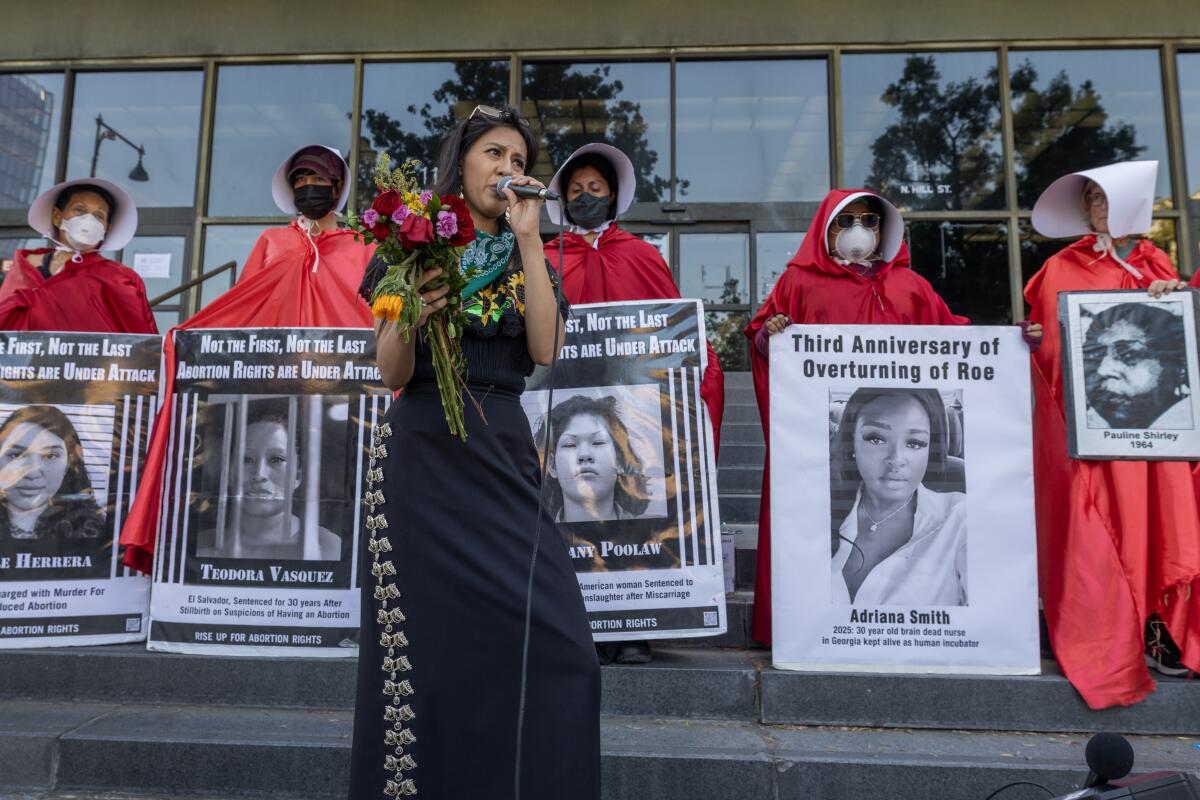
Coral Alonso sings in Spanish as protesters rally on the three-year anniversary of the U.S. Supreme Court decision overturning Roe vs. Wade on June 24, 2025, in Los Angeles. The ruling ended the federal right to legal abortion in the United States.
(David McNew / Getty Images)
Legal experts are split over how the justices will decide the medication’s mail-order fate.
“This is a case where law clearly won’t matter,” Eric J. Segall, a law professor at Georgia State University and an expert on the Supreme Court.
“In a very important midterm election year, I think there’s at least two Republicans on the court who will decide that upholding the 5th Circuit would really hurt the Republicans at the polls,” he said. “If women can’t get this by mail in California or other blue states where abortion is legal, it’s going to have devastating consequences, and I think the court knows that.”
But he and others believe it’s no longer a matter of if — but when and how — the drugs are restricted, including in California.
“This is curating a backdrop for a legal showdown that may surely come,” Goodwin said.
The court’s most conservative justices could find grounds to act in the long-forgotten Comstock Act of 1873. The brainchild of America’s zealously anti-porn postmaster Anthony Comstock, the law not only banned the mailing of the “Birth of Venus” and “Lady Chatterley’s Lover,” but also condoms, diaphragms and any drug, tool or text that could be used to produce an abortion.
Though it hasn’t been enforced since the 1970s, the antiabortion provision of the law remains on the books, experts said.
“The next move is with the Comstock Act, which Justices Alito and Thomas have already been hinting at,” Goodwin said. “In that case, it’s like playing Monopoly — we could skip mifepristone and go straight to contraception. The goal is to make sure none of that gets to be in the mail.”
That move would upend how Americans get both abortions and birth control, and put an unassuming L.A. County pharmacy squarely in the government’s crosshairs.
Although doctors in nearly two dozen states can safely prescribe medication abortion to women anywhere in the U.S., only a handful of specialty pharmacies actually fill those mail orders, Gomez explained. Among the largest is Honeybee in Culver City, which did not reply to requests for comment.
Even if the justices don’t reach for Comstock, a decision in Louisiana’s favor next week could create a two-tiered system of abortion across California and other blue states, experts said.
“The people this case hurts the most are the poor and the rural,” said Segall, the Supreme Court expert.
National data show that abortion patients are disproportionately poor. Most are also already mothers. Losing mail access to mifepristone would leave many with the more painful, less effective option while those with the time and means to reach a clinic continue to get the gold standard of care.
“There are fundamental questions of citizenship at the heart of this,” said Goodwin, the constitutional scholar. “Under the 14th Amendment, women are supposed to have equality, citizenship, liberty. It’s as though the Supreme Court has taken a black marker and pressed it against all of those words.”
For Gomez and other providers, that’s tomorrow’s problem.
“The lawyers and the politicians are just going to do their thing,” the doctor said. “The healthcare providers are just trying to get medications to people who need them.”
Fernandez enters office with her right-wing party holding absolute majority in the country’s legislature.
Published On 8 May 20268 May 2026
Laura Fernandez has been sworn in as Costa Rica’s new president and has vowed to fight rising crime in the Central American country, as well as maintain close ties with the United States.
Fernandez defeated a crowded field in the February 1 vote to replace outgoing president Rodrigo Chaves, who has remained a close ally of US President Donald Trump.
Recommended Stories
list of 3 itemsend of list
In an unorthodox move, Chaves is set to remain in the government as dual minister of the presidency and finance, assuring outsized influence in the incoming administration.
Further underscoring plans to maintain close ties with the US, Fernandez has appointed her second vice president, Douglas Soto, as ambassador to Washington.
Kristi Noem, the US special envoy spearheading the Trump administration’s militaristic approach to Latin America, dubbed “Shield of the Americas”, was at Friday’s inauguration.
So too was Israeli President Isaac Herzog, as part of efforts to boost ties with the region during the political fallout from the genocide in Gaza.
The 39-year-old Fernandez has vowed sweeping reforms to Costa Rica’s judiciary and security laws, as well as a broad crackdown on crime.
Last week, as she introduced her new security minister, Gerald Campos, Fernandez vowed “a war without quarter, a heavy-handed war against organised crime”.
Costa Rica has long been considered one of the most stable countries in Central America, but crime has surged in recent years as it has increasingly become a transit route for smuggling drugs to the US.
Costa Rica is building a maximum security prison modelled on El Salvador’s anti-terrorism CECOT centre, where hundreds of Venezuelans were held without trial after deportation from the US early last year.
Like El Salvador, Costa Rica has also agreed to accept non-citizens deported from the US per an agreement signed in March.
Rights groups have condemned the so-called “third-country agreements” for stranding deportees in countries in which they have no ties and could be subject to inhumane conditions.
Fernandez’s right-wing Sovereign People’s Party (PPSO) won 31 of 57 seats in the single-chamber legislature.
That gives her party an absolute majority as she takes office.
MONTGOMERY, Ala. — A national redistricting battle over U.S. House seats swung toward Republicans on Friday, as a Virginia court invalidated a Democratic gerrymandering effort and Republicans in Alabama approved plans for new primary elections if courts allow GOP-drawn House districts to be used in the November midterm elections.
The Alabama legislation, which was signed quickly into law by Republican Gov. Kay Ivey, is part of an effort by Republicans in Southern states to capitalize quickly on a recent U.S. Supreme Court ruling that significantly weakened Voting Rights Act protections for minorities.
Tensions ran high in the Alabama Statehouse. And Republican lawmakers in Louisiana and South Carolina also faced staunch opposition from civil rights activists and Democrats as they presented plans Friday to redraw their congressional districts.
The action came just a day after Tennessee enacted new congressional districts that carve up a Democratic-held, Black-majority district in Memphis. The state Democratic Party sued on Friday, seeking to prevent the districts from being used until after this year’s elections because of the tight time frame
Even before last week’s Supreme Court ruling in a Louisiana case, Republicans and Democrats already were engaged in a fierce redistricting battle, each seeking an edge in the midterm elections that will determine control of the closely divided House. That battle tilted further toward Republicans when the Virginia Supreme Court ruled Friday that Democratic lawmakers had violated constitutional requirements when placing a redistricting amendment on the ballot.
Since President Trump prodded Texas to redraw its congressional districts last summer, Republicans think they could gain as many as 14 seats from new districts in several states while Democrats think they could gain up to six seats. But the parties may not get everything they sought, because the gerrymandering could backfire in some highly competitive districts.
Alabama primaries could be in flux
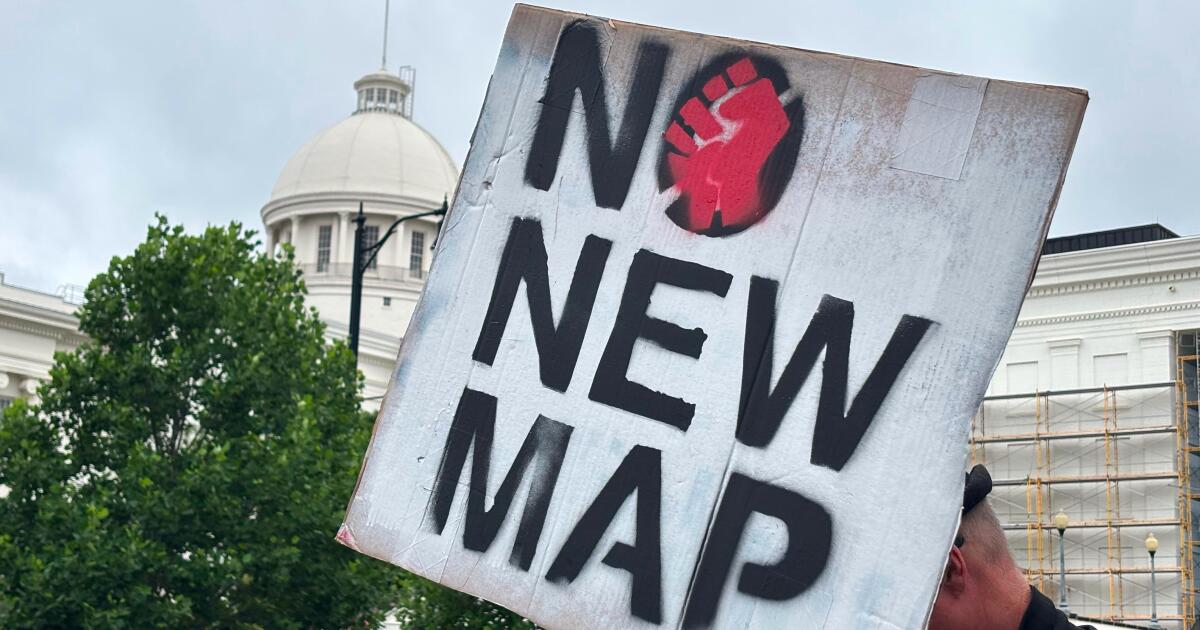
Demonstrators outside the Alabama Statehouse on Friday shouted “fight for democracy” and “down with white supremacy.”
“I was out there in 1965 marching for the right to vote, and now we are back here in 2026 doing the same thing,” Betty White Boynton said.
During debate inside the statehouse, Black lawmakers sharply criticized the Republican legislation, saying it harks back to the state’s shameful Jim Crow history. The new law would ignore the May 19 primary results for some congressional seats and direct the governor to schedule a new primary under revised districts, if a court allows it. Lawmakers also approved a similar bill related to state Senate districts.
“What happened here today is that we were set back as a people to the days of Reconstruction,” Democratic state Sen. Rodger Smitherman said after the vote.
Senate Democrats shouted “hell no” and “stop the steal” as the vote occurred in the Alabama Senate.
The special primary would happen only if the courts agree to lift an injunction that put a court-selected map in place until after the 2030 census. That order required a second district where Black voters are the majority or close to it, resulting in the 2024 election of Democratic Rep. Shomari Figures, who is Black. If a court lifts the injunction, Republican officials want to put in place a map lawmakers drew in 2023 — which was rejected by a federal court — that could allow them to reclaim Figures’ district.
“With this special session successfully behind us, Alabama now stands ready to quickly act, should the courts issue favorable rulings in our ongoing redistricting cases,” Ivey said in a statement.
Virginia ruling centered on timing of election
Democrats had hoped to gain as many as four additional U.S. House seats under new districts narrowly approved by voters in April. But the state Supreme Court invalidated the measure because it said the Democratic-led legislature violated procedural requirements.
To place a constitutional amendment before voters, the Virginia Constitution requires lawmakers to approve it in two separate legislative sessions, with a state election sandwiched in between. The legislature’s initial approval of the redistricting amendment occurred last October — while early voting was underway but before it concluded on the day of the general election. The legislature’s second vote on the amendment occurred after a new legislative session began in January.
The Supreme Court said the initial legislative approval came too late, noting that more than 1.3 million ballots already had been cast in the general election, about 40% of the total votes ultimately cast.
Louisiana lawmakers look at map options
A Louisiana Senate committee considered several redistricting options Friday from Republican state Sen. John “Jay” Morris that would eliminate either both or one of the current Black-majority U.S. House districts.
“Every one of these maps reduces Black voting power in every one of the districts. And I think that’s a problem,” Democratic state Sen. Sam Jenkins told Morris.
Morris denied that the proposed redistricting maps were racially discriminatory. He said his goal was to be “respectful of the traditional boundaries” of the state’s six congressional districts.
“I don’t think we should care that much about race,” Morris said.
The only four Black congressmen who have represented Louisiana since the end of the Reconstruction era appealed to state senators to keep two majority-Black districts in a state where one-third of voters are Black.
Leona Tate, who as a 6-year-old girl was escorted by federal marshals through a racist white mob trying to prevent her from desegregating a New Orleans elementary school, told lawmakers she felt they were taking a step backward in time by reducing Black political power.
“You have a choice in front of you: You can draw a map that reflects what Louisiana actually is — a state where Black voices belong in the halls of Congress,” said Tate, 71. “Or you can draw a map that tells my grandchildren that their votes don’t count, that their faces don’t matter and that the progress I helped build with my own two feet as a 6-year-old can be erased at will.”
South Carolina considers a House map
A small group of South Carolina lawmakers held a rare Friday meeting to discuss a proposed new congressional map intended to allow Republicans a clean sweep of the state’s seven U.S. House seats.
The hearing was the first step in redistricting. But its future remains murky. The state Senate has yet to agree to consider new districts later this month, an action that would require a two-thirds vote.
The new map has some Republicans nervous. Breaking up the 6th District, represented by Rep. James E. Clyburn (D-S.C.), makes the other six districts less Republican.
At Friday’s subcommittee meeting, lawmakers heard hours of testimony, almost all against the new map. The hearing included a consultant who reviewed the map, saying it appeared to be legal under the Supreme Court’s decision in the Louisiana case.
“I agree if the law allows us to do it, then we can do it,” Democratic state Rep. Justin Bamberg said. “But I can slap somebody’s mama and it’s not the right thing to do.”
Some absentee ballots already have been returned for the state’s June 9 primary elections. The legislative subcommittee advanced a plan to delay the congressional primaries to August and reopen a candidate filing period, if a new map is approved.
Chandler, Brook, Collins and Lieb write for the Associated Press. Collins reported from Columbia, S.C.; Brook from Baton Rouge, La.; and Lieb from Jefferson City, Mo.
“We’ve been so used to thinking about politics in terms of left and right, yet what Reform are able to do is to win in areas that have always been Conservative, but equally, we’re proving in a big way that we could win in areas that Labour has dominated since the end of World War I.”
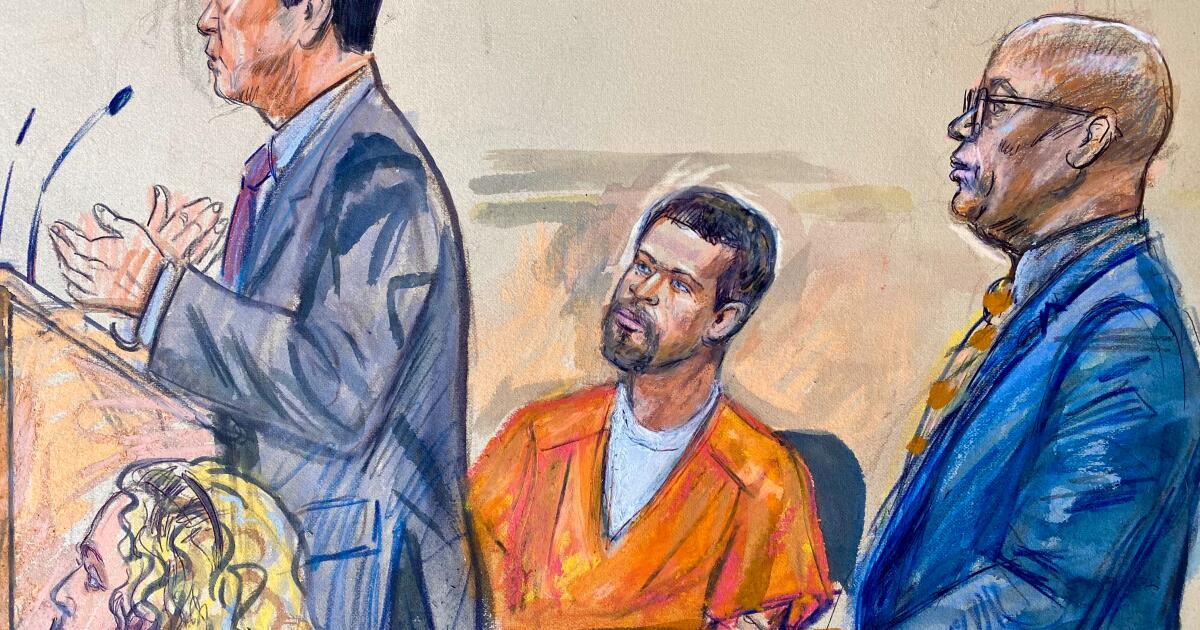
WASHINGTON — A man charged with attacking the White House Correspondents’ Assn. dinner is seeking to disqualify top Justice Department officials from direct involvement in prosecuting him because they could be considered victims or witnesses in the case, creating a potential conflict of interest.
Acting Atty. Gen. Todd Blanche and U.S. Atty. Jeanine Pirro were attending the April 25 event at the Washington Hilton when Cole Tomas Allen allegedly ran through a security checkpoint and fired a shotgun at a Secret Service officer.
In a court filing late Thursday, Allen’s attorneys argued that it creates at least the appearance of a conflict of interest for Blanche and Pirro to be making any prosecutorial decisions in the case.
“As this case proceeds closer to trial, the country and the world will continue to wonder — how can the American justice system permit a victim to prosecute a criminal defendant in a case involving them?” defense attorneys Eugene Ohm and Tezira Abe wrote.
Ohm and Abe, who are assistant federal public defenders, suggested that the appointment of a special prosecutor might be warranted. They urged U.S. District Judge Trevor McFadden, a Trump nominee assigned to Allen’s case, to disqualify Pirro, Blanche and possibly other Justice Department officials from direct involvement in the investigation and prosecution.
“Both heard gunshots, which presumably forced them to duck below the tables with the rest of the occupants. They were quickly evacuated. Shortly thereafter, they learned that law enforcement believed the target was certain administration officials,” Ohm and Abe wrote.
Pirro said her office will respond to the defense lawyers’ arguments in its own court filing.
“We will not tolerate people who come to the District of Columbia to engage in antidemocratic acts of political violence; and we will prosecute all such acts to the fullest extent of the law,” Pirro said in a statement.
Allen is scheduled to be arraigned Monday on charges in an indictment handed up Tuesday by a grand jury in Washington.
The charges include attempting to assassinate President Trump, who is a longtime friend of Pirro’s. Blanche served as a personal attorney for Trump before joining the Justice Department last year.
Blanche, through a spokesperson, referred a request for comment to Pirro’s office.
Allen also is charged with assaulting a federal officer with a deadly weapon and two additional firearms counts. He faces a maximum sentence of life in prison if convicted of the attempted assassination charge alone.
The Secret Service officer who was shot once in a bullet-resistant vest fired his own weapon five times without hitting anybody. Allen, 31, of Torrance, was injured but was not shot.
SACRAMENTO — Newborns won’t be leaving the hospital empty-handed in California.
Gov. Gavin Newsom announced on Friday that the state is partnering with Baby2Baby to provide 400 free diapers to every newborn. Baby2Baby is a national nonprofit based in California that provides clothing and other basic necessities to children.
The governor said it would help families with the rising cost of living.
“Since the pandemic, we have seen the cost of diapers go up by 45%,” said Newsom, speaking at a press conference in San Francisco. “One out of four families skip meals to pay for diapers.”
The new program, dubbed the Golden State Start, will launch this summer. Participating hospitals will distribute the diapers to families at the time of discharge. Forty million diapers will be distributed during the program’s first year, with a goal of later expanding the program to provide 160 million.
Newsom said the state will prioritize hospitals that serve large numbers of parents enrolled in Medi-Cal, California’s version of the federal Medicaid program providing healthcare coverage to low-income Americans. The state plans to later expand to additional hospitals and birthing centers.
The governor described the program as the first of its kind in the nation.
“We are not imitating; we are a model to others,” he said.
Kim Johnson, secretary of the California Health and Human Services Agency, said the initiative would help families enjoy their first few weeks at home with a new baby.
“The first days at home with a newborn should be focused on the love, connection, and joy of an expanded family, not stress about affording diapers,” Johnson said in a statement. “This program helps ensure families can begin that journey with greater stability and peace of mind.”
The National Diaper Bank Network, a national nonprofit that tracks diaper insecurity, found about 60% of low-income families nationwide struggle with the cost of diapers and rely on less-frequent changes to get by. The organization said dirty diapers leave babies at risk of developing rashes or urinary tract infections.
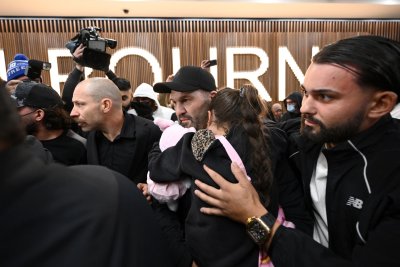
A group of supporters surround an ISIS-linked family as they arrive at Melbourne International Airport in Melbourne, Australia, Thursday. The group of 13 women and children came home to Australia after years spent in a Syrian refugee camp following the fall of the Islamic State. Three of the women have been charged with crimes. Photo by Joel Carrett/EPA
May 8 (UPI) — Australia has charged three women linked to ISIS with crimes against humanity after they returned home from Syria.
They had allegedly moved to Syria to be part of the Islamic State caliphate in Syria, but once it fell, they were in refugee camps guarded by Kurdish guards. They were part of a group of 13 people who were returned to Australia. It’s not yet clear if other people returning to Australia will face charges.
Australia’s Prime Minister Anthony Albanese said in February that he would not allow the refugees to repatriate to Australia.
Kawsar Ahmad, 53, and her daughter Zeinab Ahmad, 31, appeared in a Melbourne court Friday. Kawsar Ahmad was charged with four counts of crimes against humanity. Police allege she went to Syria in 2014 and kept a female slave in her home. Zeinab Ahmad faces two similar charges.
Another adult child of Kawsar Ahmad, Zahra Ahmad, arrived in Melbourne Thursday, but was not arrested.
Janai Safar, 32, appeared in a Sydney court and was charged with entering and remaining in a declared conflict zone and joining ISIS. She returned to Sydney Thursday with her son.
Safar’s lawyer, Michael Ainsworth argued for her release on bail, saying her alleged offenses happened when she was 21, and she has been in a refugee camp for nine years.
“This young lady … lived in truly horrific conditions in these refugee camps for many years,” Ainsworth said. “She has significant community ties here in Australia, she’s one of seven children. There’s a place for her to live.”
The Australian Federal Police said Kawsar Ahmad moved to Syria with her husband and children in 2014 and was complicit in buying a female slave for $10,000, “and knowingly kept the woman in the home.”
Zeinab Ahmad allegedly also traveled to Syria and kept a female slave in the home. A slavery conviction can bring up to 25 years in prison.
Federal police assistant commissioner for counter-terrorism Stephen Nutt said Thursday night that planning for the return of people from the Middle East began in 2015.
“Australian joint counter-terrorism teams methodically investigated all Australians who travelled to declared conflict areas and will ensure those who are alleged to have committed a criminal offense are put before the courts,” Nutt said.
When Gavin Newsom ran for California governor in 2018, his support for a state-run single-payer healthcare system was considered a risky move and earned him hefty labor endorsements.
Today, leading Democrats in the wide-open race to succeed Newsom have embraced single-payer healthcare as a political necessity, an answer to voters fed up with rising premiums and other spiraling healthcare costs.
But with no clear front-runner, they are sparring among themselves in debates and political ads over who is most committed to a government-run model. No candidate has outlined how California would fund comprehensive health coverage for its 40 million residents, leaving voters unable to discern which candidate has a concrete plan for the nation’s most populous state.
Healthcare and political experts said the concept of single-payer has shifted from progressive pipe dream a decade ago to today’s mainstream talking points in a state where Democrats outnumber Republicans nearly 2 to 1. Democrats have pledged the model as the best way to lower costs in an attempt to woo voters worried about affordability as ballots arrive for the June 2 primary. The top two Republicans, meanwhile, have dismissed government-run healthcare as a “disaster” and “socialism.”
“In many ways, single-payer healthcare has become a progressive litmus test,” said Larry Levitt, a former White House policy advisor and a healthcare expert at KFF, a health information nonprofit that includes KFF Health News.
Few voters fully understand the term single-payer, let alone expect the next governor to achieve it, Levitt said. Rather, he added, the term has become more of a signal to voters about a candidate’s approach to healthcare reform.
Xavier Becerra, the former U.S. Health and Human Services secretary, who for decades backed single-payer healthcare in Congress, has come under criticism from opponents for a nuanced but clear shift away from single-payer. It came after Becerra secured an endorsement from the California Medical Assn., a powerful group representing doctors and a longtime opponent of single-payer healthcare bills in California.
At a May 5 debate put on by CNN, Becerra declared his support for “Medicare for All,” a proposal for a federally run system that’s been stalled for years, but he declined to say whether he’d pursue a California-led effort. He said his immediate focus would be on mitigating the drastic federal cuts expected to hit low-income and disabled enrollees in Medi-Cal, the state’s Medicaid program, which covers more than a third of residents.
Becerra is counting on voters not to distinguish between the often-confused terms single-payer, Medicare for All, and universal coverage, noting during the debate that “Californians don’t care what you call it, so long as they have affordable healthcare.”
“A lot of people aren’t clear what single-payer is, and they need a metaphor to understand it,” said Celinda Lake, a Democratic strategist and one of the lead pollsters for former President Biden’s 2020 campaign.
Billionaire activist Tom Steyer, who’s touted his self-funding as a signal he can’t be bought, has emerged as the race’s most vocal advocate of single-payer after opposing it during a short-lived 2020 presidential bid. As governor, Steyer has said, he would pass legislation backed by the California Nurses Assn. that has failed to come to fruition under Newsom’s tenure. Pressed on how he would cover the estimated $731.4-billion cost, Steyer told KFF Health News that “God is going to be in the details.”
At a forum last year, former U.S. Rep. Katie Porter said she didn’t believe achieving such a system was realistic in the near term, but the Orange County Democrat later told party delegates that she would “deliver single-payer.” Former Los Angeles Mayor Antonio Villaraigosa and San Jose Mayor Matt Mahan, Democrats who are trailing their competitors in the polls, don’t support single-payer. The top two vote-getters — regardless of party — advance to the November general election.
Some of the most seasoned politicians have failed to deliver single-payer. Newsom, who campaigned on the promise of being a “healthcare governor,” dialed back his ambitions upon taking office, choosing instead to pursue “universal access” to health coverage under a series of Medi-Cal expansions and efforts to contain healthcare spending.
The campaign bus for billionaire activist Tom Steyer, who has made single-payer healthcare a central pillar of his run for governor, in downtown Oakland.
(Christine Mai-Duc/KFF Health News)
Vermont, which remains the only state to pass a single-payer healthcare law, reversed course when leaders there couldn’t identify a funding source.
To enact single-payer, California would need permission from the federal government to redirect billions of dollars from Medicaid, Medicare and other funding that currently flows to the system — approval not likely to come from the Trump administration.
More than half of adults nationally say healthcare costs will have a major impact on whom they vote for in November, according an April KFF poll.
Danielle Cendejas, a Los Angeles-based Democratic consultant who works with state legislative candidates, said single-payer healthcare increasingly appears on candidate questionnaires from small-business advocates as well as hyperlocal Democratic clubs, in state legislative races and national union endorsements. What most California voters want to hear, Cendejas said, is how candidates plan to give them more immediate relief from higher premiums, expensive drug costs and long waits to access care.
The high price tag doesn’t faze Jennifer Easton, a 63-year-old Democrat from Oakland, who said other countries with similar models have proved they can lower costs. She said she supports a single-payer health system because it’s clear to her that Americans have reached the limits of working within the existing system. But she isn’t expecting any of the current candidates to succeed in implementing one, and she hasn’t decided whom to support.
“No one can in four years,” she said. Seeing a candidate enthusiastically support the concept gives her a good idea of their philosophy. “It is, if we’re lucky, a 20-year, 25-year plan.”
Rob Stutzman, a Republican political consultant who advised former Gov. Arnold Schwarzenegger, said while Americans may be supportive of single-payer in polls, focus groups suggest that approval drops quickly when voters realize it could mean losing their current doctor or insurance plan.
At the CNN debate, Steve Hilton, the Republican candidate President Trump has endorsed, said Californians would end up with subpar patient care and “taxes sky high to pay for it,” like in his native United Kingdom. Instead, Hilton suggested the state stop providing “free healthcare for illegal immigrants who shouldn’t even be in the country in the first place.”
Mai-Duc writes for KFF Health News, anational newsroom that produces in-depth journalism about health issues and is one of the core operating programs at KFF—an independent source of health policy research, polling, and journalism.
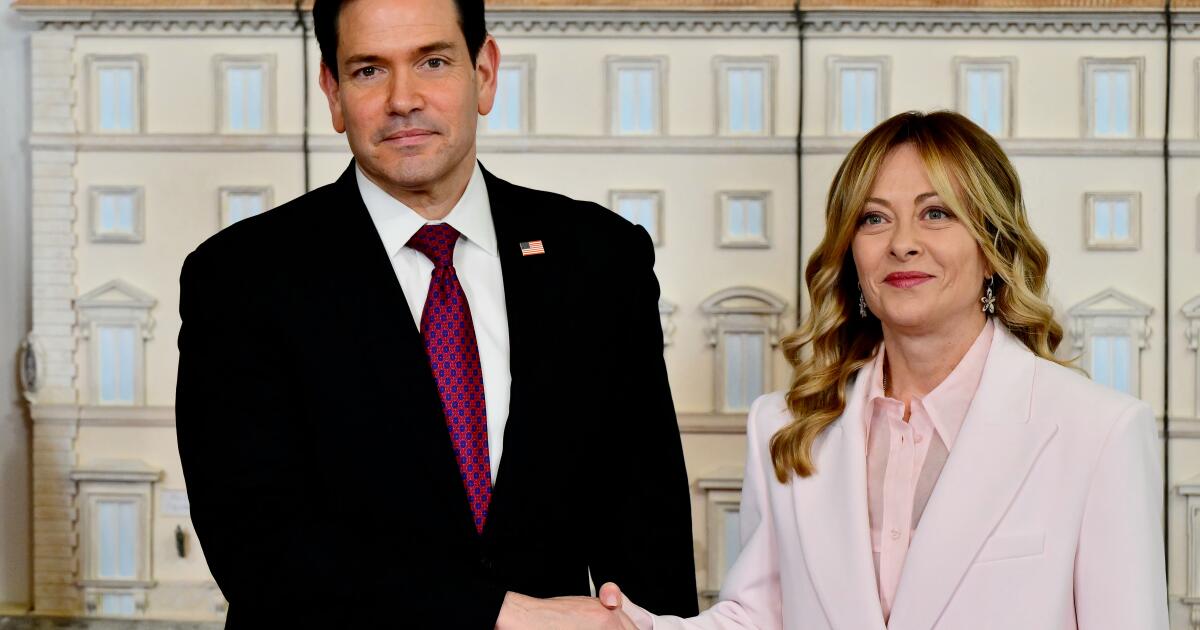
ROME — U.S. Secretary of State Marco Rubio urged European allies Friday to move beyond rhetoric and take concrete action against Iran, even as he sought to repair strained ties with Italy and the Vatican during a two-day visit following tensions over the U.S.-Israeli war in Iran.
Speaking after meetings with Premier Giorgia Meloni and Foreign Minister Antonio Tajani, Rubio warned that Tehran was attempting to assert control over the strategic Strait of Hormuz, calling the move “unacceptable” and a threat to global security.
“Everybody says Iran is a threat. Everybody says that Iran can’t have a nuclear weapon … but you’ve got to do something about it,” Rubio told reporters in Rome. “If the answer is no … then you better have something more than just strongly worded statements to back it up.”
Clear ‘red line’
Rubio said Iran was trying to normalize control over an international waterway, a precedent he warned could encourage similar actions elsewhere. He also cautioned Tehran against targeting U.S. maritime assets, saying the United States had thwarted attacks on three Navy ships in the strait.
“The red line is clear. They threaten Americans, they are going to be blown up,” he said.
Rubio said Washington was pursuing a diplomatic track, including a proposed U.N. Security Council resolution aimed at preserving freedom of navigation. He added the U.S. was awaiting Iran’s response on Friday to ongoing diplomatic efforts.
Rubio’s visit comes after weeks of sharp disagreements between Washington and Rome over the Iran war, tariffs and President Trump’s criticism of both Meloni and Pope Leo XIV.
Differences remain over Iran war
Meloni described her meeting with Rubio as “constructive, frank and productive,” focused on both bilateral relations and major international issues. She said the talks covered strategic topics, including the Middle East, freedom of navigation in the Strait of Hormuz, Ukraine, China and areas of Italian interest such as Libya and Lebanon.
“We both understand how important the trans-Atlantic relationship is, but we also understand that each country must defend its own national interests,” Meloni stressed after the meeting.
Tajani struck a more conciliatory tone after meeting his U.S. counterpart, reaffirming the importance of the trans-Atlantic alliance.
“I am convinced Europe needs America — Italy needs America — and the United States also needs Europe and Italy,” Tajani said, adding he hoped “tensions have been calmed.”
He said discussions covered the Iran conflict and its spillover into Lebanon, as well as Venezuela and Cuba. The U.S. State Department said Rubio also raised the need to protect economic interests and end the war in Ukraine.
Despite the effort to ease tensions, differences remain over the Iran conflict. Italy has opposed the U.S.-Israeli bombing campaign, with Meloni calling it “illegal,” and has resisted involvement in offensive operations.
Tajani said Italy would be prepared to contribute naval forces to demine the Strait of Hormuz once a permanent ceasefire is reached, and would maintain its role in the U.N. peacekeeping mission in Lebanon. He also stressed the importance of continued U.S. troop presence in Europe amid concerns about possible reductions.
No final decision on NATO troops adjustments
Rubio said “no final decision” had been made on NATO troop adjustments, noting that any changes would depend on U.S. national interests and global priorities.
The U.S. has announced a decision to pull 5,000 military personnel from Germany and Trump has threatened to withdraw more troops from Italy and Spain over their stance on the war.
Italy, a key logistics hub for U.S. and allied operations in the Mediterranean and beyond, has already signaled limits to its cooperation. In March, it declined to allow U.S. bombers bound for the Middle East to use a base in Sicily without parliamentary approval, reflecting constitutional constraints and strong domestic opposition to the war.
Meloni, weakened by a recent referendum defeat and facing public unease over the conflict, has insisted that any use of Italian bases for offensive operations would require parliamentary backing.
The war has also raised economic concerns in Italy, with Meloni warning that disruptions in the Strait of Hormuz risk driving up energy costs and inflation, while U.S. tariff threats weigh on the country’s export-driven economy.
An attempt to de-escalate at the Vatican
Rubio also sought to ease tensions with the Vatican following Trump’s criticism of the pope’s calls for peace. After a lengthy meeting on Thursday with the pontiff and Vatican Secretary of State Cardinal Pietro Parolin, Rubio said Washington remained committed to a “productive and fruitful” relationship with the Catholic Church.
“The president’s perspective is clear. He thinks that Iran is a threat, and it needs to be addressed. And that position remains unchanged,” Rubio said.
Rubio confirmed that Cuba was also discussed at the Vatican, with Washington hoping the church’s Caritas charity organization would continue distributing humanitarian aid.
Rubio said the U.S. has provided about $6 million in humanitarian aid to Cuba, to be distributed through Caritas, should the Cubans allow it. He added Washington has also offered up to $100 million in additional aid, but the Cuban government has not accepted it so far. Rubio blamed Cuba’s government for blocking assistance and worsening conditions, describing it as “incompetent.”
U.S. officials said the Vatican talks underscored strong bilateral ties and a shared commitment to promoting peace, even as differences over the Iran war persist.
Zampano and Winfield write for the Associated Press.
Walt Disney Co.’s ABC is forcefully resisting Federal Communications Commission efforts to soften the network’s programming, accusing the federal agency of an overreach that violates 1st Amendment freedoms.
Last week, the FCC took the unusual step of calling in the licenses of eight Disney-owned television stations for early review. The move — widely interpreted as an effort to chill the network’s speech — came a day after President Trump demanded that ABC fire late-night talk show host Jimmy Kimmel over a joke about First Lady Melania Trump.
The FCC separately has taken aim at ABC’s daytime discussion show, “The View,” which delves deeply into politics.
The FCC has questioned whether the show, which prominently features Trump critics Whoopi Goldberg and Joy Behar, could continue toclaim an exemption to rules that require broadcasters to provide equal time for opponents of political candidates.
In its filing this week with the FCC, Disney’s Houston television station raised the stakes in the dispute over “The View,” calling the commission’s actions “unprecedented” and “beyond the Commission’s authority.” The ABC station’s petition for a declaratory ruling said “The View,” has long qualified as a “bona fide” news interview program with freedom to conduct interviews of legally qualified political candidates.
“The Commission’s actions threaten to upend decades of settled law and practice and chill critical protected speech, both with respect to The View and more broadly,” the Houston station KTRK-TV said in the filing.
The network’s firm stance sets up a clash with the Trump administration, including the president’s hand-picked FCC Chairman Brendan Carr, who has made no secret of his disdain for Kimmel and other ABC programming. Earlier this year, Carr announced that decades-old exemptions from the so-called “equal time rule” for news programs, including “The View,” were no longer valid.
ABC’s strenuous arguments mark a departure for the Disney-owned outlet.
In December 2024, a month after Trump was elected to a second term, the network quickly settled a lawsuit over statements made by news anchor George Stephanopoulos that Trump found offensive. ABC agreed to pay Trump $15 million to end his legal fight — sparking an outcry among free speech advocates, who accused the network of caving on a case it could have won.
“Some may dislike certain—or even most—of the viewpoints expressed on The View or similar shows,” the station said in its filing. “Such dislike, however, cannot justify using regulatory processes to restrict those views. The government does not get to decide ‘what shall be orthodox in politics, nationalism, religion, or other matters of opinion.’”
The station noted that, while the FCC has questioned the exemption for “The View,” which dates back to 2002, the FCC hasn’t showed interest in regulating programs on other networks, “including the many voices — conservative and liberal — on broadcast radio.”
“The danger is that the government will simply decide which perspectives to regulate and which to leave undisturbed,” ABC said.
On April 28, Carr called for a review of Disney’s broadcast licenses two years before any of them were set to expire, citing the agency’s year-old inquiry into Disney’s diversity, equity and inclusion policies and whether they violated federal anti-discrimination rules.
Two press freedom groups that own shares in Paramount Skydance are demanding to see the company’s books and internal documents, citing allegations that the company’s leaders may have promised favors to the White House to win approval for Paramount’s deal to acquire Warner Bros. Discovery.
The letter, sent Thursday to Paramount chief legal officer Makan Delrahim, says that media reports alleging that Paramount owner David Ellison and others promised favors to the Trump administration “create credible concern that Paramount leadership has offered, solicited, or effectuated a corrupt exchange,” which the groups argue would “constitute a breach of fiduciary duties” and open the company up to a “range of potential civil and criminal penalties.”
The letter cites Delaware law that allows stockholders to inspect the company’s books and records “for any proper purpose.”
Paramount declined to comment on the letter.
Among the issues raised in the letter are promises reportedly made by David Ellison and his father, Oracle billionaire Larry Ellison, that they would make “sweeping” changes at the news network CNN, which is owned by Warner Bros. Discovery.
The Ellison family acquired Paramount, which includes CBS and the storied Melrose Avenue film studio, last summer.
The letter cites changes implemented in CBS since their acquisition, including their decision to end late night television house Stephen Colbert’s show days after he characterized a settlement Paramount reached with Trump as a “big fat bribe.”
Under Ellison’s ownership, the letter says, numerous high-profile reporters have left the network and its ratings have dropped to “historic lows.”
Larry Ellison, who is backing the financing of Paramount’s proposed takeover of Warner, reportedly told White House officials that Paramount would “implement the CBS playbook” at CNN if the merger is approved, and remove anchors and commentators at the cable news network that Trump doesn’t like, according to the letter.
The effort comes just two weeks after Warner Bros. Discovery shareholders overwhelmingly approved the proposed merger. Investors have supported the Larry Ellison family takeover, which would become the biggest Hollywood merger in nearly a decade. The deal would pay Warner stockholders $31 per share — four times the stock price a year ago.
The letter was written on behalf of the Freedom of the Press Foundation, which develops secure communication tools for journalists and tracks violations of press freedom, and Reporters Without Borders, which tracks press freedom globally.
The organizations are being represented by former federal prosecutor Brendan Ballou, who established the Public Integrity Project this year to challenged alleged government corruption, as well as Delaware attorney Ronald Poliquin.
The missive, which could be a precursor to a lawsuit, opens another avenue of attack against the controversial $111-billion deal, which would transform the smaller Paramount into an industry titan.
With Warner Bros. Discovery, the Ellisons would also control HBO, TBS and the vast film and TV library of Warner Bros., which includes the Harry Potter, DC Comics, and Scooby-Doo, in addition to CNN.
Paramount, led 43-year-old David Ellison, wants to finalize its Warner Bros. takeover by the end of September. President Trump favors the deal; he has long agitated for changes at CNN.
Politicians, unions and progressive groups separately have pressed California Atty. Gen. Rob Bonta to scrutinize the proposed merger, hoping that he brings an antitrust lawsuit in an attempt to upend the deal.
More than 4,000 film industry workers, including Ben Stiller, Bryan Cranston, Ted Danson, J.J. Abrams, Jane Fonda and Kristen Stewart, have signed an open letter imploring Bonta and other regulators to block the merger. The group lamented the proposed tie-up, saying it “would reduce the number of major U.S. film studios to just four.”
Opponents fear the consolidation would lead to massive layoffs and diminish the quality of programming that Warner Bros., CNN and HBO are known for.
Hollywood has sustained thousands of layoffs over the last seven years since Walt Disney Co. swallowed Fox’s entertainment assets in another huge merger. In addition, the film production economy hasn’t recovered from shutdowns during the 2023 labor strikes. An estimated 42,000 entertainment industry jobs were lost from 2022 and 2024.
On Thursday, 34 California Democrats in Congress also sent a letter to Bonta, encouraging him to look closely at the merger.
The deal is expected to become one of the largest leveraged buyouts ever.
Ballou, who is working with the press freedom groups, previously served as a Justice Department special counsel with expertise in private equity transactions.
He resigned from the Justice Department in January 2025 when Trump returned to office. In his book, “Plunder: Private Equity’s Plan to Pillage America,” Ballou examined large leveraged buyouts and found that many of which resulted in bankruptcies.
A new International Monetary Funds report says higher copper production and prices support Chile’s growth expectations, but warned of risks that include the crisis in the Middle East, rising oil prices and loss of domestic competitiveness tied to the sharp public spending cuts. File Photo by Mario Ruiz/EPA
SANTIAGO, Chile, May 8 (UPI) — An economic reform plan Chilean President José Antonio Kast announced to revive the country’s economy is drawing criticism over its potential short- and medium-term fiscal impact, as the International Monetary Fund lowered its growth projections for Chile.
The IMF’s World Economic Outlook report had estimated in mid-April that Chile’s gross domestic product would grow 2.4% in 2026 and 2.6% in 2027. However, the organization said this week it revised those projections to 2.2% this year and 2.5% in 2027 if external conditions and the country’s fiscal situation improve.
“Economic activity, driven by investment and exports in 2025, faces a period of heightened uncertainty,” the IMF said.
The report said higher copper production and prices support growth expectations, but warned of risks that include the crisis in the Middle East, rising oil prices and loss of domestic competitiveness tied to the sharp public spending cuts promoted by Kast.
The Chilean president’s plan includes proposals to reduce corporate taxes and cut bureaucracy in an effort to stimulate private investment. Congress is discussing tha proposal.
“Amid persistently high inequality, social discontent also remains a risk,” the IMF report said.
The IMF is not the only institution warning about the risks associated with the government’s National Reconstruction Plan.
Chile’s Autonomous Fiscal Council, an independent public agency tasked with monitoring the sustainability of fiscal policy, warned about the proposal’s possible impact on the country’s fiscal balance and public debt.
“The project commits fiscal spending with a high degree of certainty in the short term and reduces permanent revenue, while the positive effects depend on more uncertain future income associated with growth, which could lead to a deterioration in the fiscal balance if growth does not materialize at the estimated magnitude and speed,” the council said.
Jaime Bastías, director of the auditing school at Finis Terrae University, told UPI the IMF’s downgrade was “absolutely” expected because Chile’s central bank had already made a similar adjustment, while debate over financing the government’s proposal continues to intensify.
“The government’s plan can be an engine that helps us face the storm we are going through, but that is heavily conditioned on the state maintaining orderly public finances. The IMF says that if the proposed tax cuts are not offset through other channels, the country’s debt will grow too much, and that will create another problem,” Bastías warned.
Carlos Smith, a researcher at the Center for Business and Society Research at Universidad del Desarrollo, told UPI the IMF report shows that both external and domestic factors are likely to weaken household income and affect consumer spending.
“Consumption is one of the main drivers of Chile’s GDP. The IMF expects it to contract and that is already beginning to show, along with a very weak labor market. Chile is in a much weaker condition,” he said.
Smith said that although the IMF lowered its growth forecasts, the organization still appears optimistic about the long-term positive impact of the government’s proposed reforms.
“The impact will materialize more slowly than the finance minister expects. Therefore, the IMF is suggesting more efficient alternatives such as lower costs or more limited subsidies to create new jobs,” Smith said.
He added that while Ciles should adjust some aspects of the reform, he believes the plan is still moving in the right direction.
“I agree with the IMF that the proposal needs refinement and should focus on removing obstacles to investment projects without lowering the standards of our legislation or environmental protections. If that is achieved, I believe there is a possibility of reaching 3% growth by the end of the decade,” he said.
Bastías agreed, saying Chile could grow at 3% by 2030 if copper prices remain high, production increases and more private investment arrives.
“It is an optimistic scenario where we need to focus on stimulating those three factors. If that favorable future does not materialize, we will all pay the costs,” he said.
The Virginia Supreme Court on Friday struck down a voter-approved Democratic congressional redistricting plan, delivering another major setback to the party in a nationwide battle against Republicans for an edge in this year’s midterm elections.
The court ruled that the state’s Democratic-led legislature violated procedural requirements when it placed the constitutional amendment on the ballot to authorize the mid-decade redistricting. Voters narrowly approved the amendment April 21, but the court’s ruling renders the results of that vote meaningless.
“This violation irreparably undermines the integrity of the resulting referendum vote and renders it null and void,” the court said in its opinion.
Democrats had hoped to win as many as four additional U.S. House seats under Virginia’s redrawn U.S. House map as part of an attempt to offset Republican redistricting done elsewhere at the urging of President Donald Trump. That ruling, combined with a recent U.S. Supreme Court decision severely weakening the Voting Rights Act, has supercharged the Republicans’ congressional gerrymandering advantage heading into this year’s midterm elections.
Legislative voting districts typically are redrawn once a decade after each census to account for population changes. But Trump started an unusual flurry of mid-decade redistricting last year when he encouraged Republican officials in Texas to redraw districts in a bid to win several additional U.S. House seats and hold on to their party’s narrow majority in the midterm elections.
California responded with new voter-approved districts drawn to Democrats’ advantage, and Utah’s top court imposed a new congressional map that also helps Democrats. Meanwhile, Republicans stand to gain from new House districts passed in Florida, Missouri, North Carolina, Ohio and Tennessee. They could add even more after the U.S. Supreme Court’s ruling in the Voting Rights Act case, which has prompted some other Republican states to consider redrawing their maps in time for this year’s elections.
Virginia currently is represented in the U.S. House by six Democrats and five Republicans who were elected from districts imposed by a court after a bipartisan redistricting commission failed to agree on a map after the 2020 census. The new districts could have given Democrats an improved chance to win all but one of the state’s 11 congressional seats.
Under the Demcoratic-drawn map, five districts would have been anchored in the Democratic stronghold of northern Virginia, including one stretching out like a lobster to consume Republican-leaning rural areas. Revisions to four other districts across Richmond, southern Virginia and Hampton Roads would have diluted the voting power of conservative blocs in those areas. And a reshaped district in parts of western Virginia would have lumped together three Democratic-leaning college towns to offset other Republican voters.
The state Supreme Court’s seven justices are appointed by the state legislature, which has toggled back and forth between Democratic, Republican and split control over recent years. Legal experts say the body doesn’t have a set ideological profile
The case before the court focused not on the shape of the new districts but rather on the process the General Assembly used to authorize them.
Because the state’s redistricting commission was established by a voter-approved constitutional amendment, lawmakers had to propose an amendment to redraw the districts. That required approval of a resolution in two separate legislative sessions, with a state election sandwiched in between, to place the amendment on the ballot.
The legislature’s initial approval of the amendment occurred last October — while early voting was underway but before it concluded on the day of the general election. The legislature’s second vote on the amendment occurred after a new legislative session began in January. Lawmakers also approved a separate bill in February laying out the new districts, subject to voter approval of the constitutional amendment.
Judicial arguments focused on whether the legislature’s initial approval of the amendment came too late, because early voting already had begun for the 2025 general election.
Attorney Matthew Seligman, who defended the legislature, argued that the “election” should be defined narrowly to mean the Tuesday of the general election. In that case, the legislature’s first vote on the redistricting amendment occurred before the election and was constitutional, he told judges.
An attorney for the plaintiffs, Thomas McCarthy, argued that an “election” should be interpreted to cover the entire period during which people can cast ballots, which lasts several weeks in Virginia. If that’s the case, he told justices, then the legislature’s initial endorsement of the redistricting amendment came too late to comply with the state constitution.
In January, a judge in rural Tazewell County, in southwestern Virginia, ruled that lawmakers failed to follow their own rules for adding the redistricting amendment to a special session last fall. Circuit Judge Jack Hurley Jr. also ruled that lawmakers failed to initially approve the amendment before the public began voting in last year’s general election and that the state had failed to publish the amendment three months before the election, as required by law. As a result, he said, the amendment is invalid and void.
The Virginia Supreme Court placed Hurley’s order on hold and allowed the redistricting vote to proceed before hearing arguments on the case.
Following a beating in local elections, Prime Minister Keir Starmer (L) said Friday that he took responsbility for the losses suffered by Labour candidates across the country but vowed he would not quit. Photo by Neil Hall/EPA
May 8 (UPI) — Prime Minister Keir Starmer vowed Friday that he would not stand aside following a disastrous Labour performance in “mid-term” local elections in England, Wales and Scotland.
With early results from 46 of the 136 races in England showing Labour losing hundreds of seats in councils to Reform and the Greens, Starmer said while the situation was “really tough,” he had been handed a mandate to change Britain by the electorate in the general election in 2024 and that he intended to fulfil his promise.
He said he believed the message voters had sent in Thursday’s elections was about the “pace of change, how they want their lives improved.”
“Labour was elected to meet those challenges and I’m not going to walk away from those challenges and plunge the country into chaos. I led our party to that victory, that is a five-year mandate to change the country. It was a five-year term I was elected to do, I intend to see that through.”
Acknowledging his government hadn’t done enough to convince people that things could improve, their lives could be better and that there was hope, he said Labour would “in the coming days” set out steps it would take to win over the electorate.
Repeatedly pressed on whether he would lead Labour into the next election, Starmer would only say that he intended to serve the full five years of his term.
Large numbers of Labour MPs believe that the party will lose if Starmer leads it into the next election but do not want him to quit right now, favoring an orderly, consensual process of finding a successor, as opposed to an all-out leadership battle.
Sky News’ chief political correspondent said a member of Starmer’s “top team,” had messaged her saying that he was “the reason Labour risks handing the country to Reform.”
With counting still underway, or yet to begin, in the vast majority of contests for council and mayoral contests, as well parliamentary races in Scotland and Wales, the opposition Conservative Party were also close to 200 seats adrift.
The Green Party and the Liberal Democrats had each added dozens of seats.
Speaking in the London borough of Havering, which Labour lost overnight to Reform UK, leader Nigel Farage hailed what he said was a “truly historic shift in British politics.”
“The pattern that’s emerging across the country is that Labour are being wiped out by Reform in many of their most traditional areas. And what you’re going to see later on today is the Conservative Party being wiped out in their heartlands like Essex,” he said, noting that the county was the heartland of the leadership of the Conservative opposition.
“We’ve been so used to thinking about politics in terms of left and right, and yet what Reform are able to do is to win in areas that have always been Conservative. But equally, we’re proving in a big way we can win in areas that Labour have dominated, frankly, since the end of World War One.
“At the moment, we’re winning one in three of all the seats that are up. But I genuinely think the best is yet to come. I’m very excited about the north-east results, the Yorkshire results, some more to come in the West Midlands. So it’s a big day,” added Farage.
Forecasts put Reform’s eventual gains when the results are complete at as many as 1,000 seats of the 5,000 up for grabs.
In Scotland, where voters are electing all 129 seats in the Scottish Parliament, the ruling Scottish National Party is hanging by a knife edge amid a 17% swing to Reform.
However, the insurgent party’s rise could inadvertently help deliver First Minister John Swinney‘s 65-seat target, thanks to Reform UK candidates taking votes away from challenger parties, particularly those that oppose Scottish independence.
Swinney has said he would treat an SNP majority as a mandate to mount a second bid to secede from the United Kingdom, following a failed independence referendum in 2014.
Swinney told an election debate between the leaders of the five Scottish political parties plus Reform UK last month that holding a second independence referendum by 2028 was “perfectly conceivable.”
In Wales, where voters are electing a Senedd legislature that has been expanded to 96 seats, the ruling Labour administration was on track to lose power for the first time since devolution in 1999 and ending more than a century of Labour dominance in the country.
Plaid Cymru, the Welsh nationalists, and Reform UK, who were neck and neck in the polls, were expected to be the biggest beneficiaries, projected to emerge with 38 and 35 seats, respectively.
Deputy First Minister Huw Irranca-Davies told the BBC that he didn’t think Labour would be in a position to form the next government, saying the party’s campaign had failed to “cut through” to Welsh voters.
Wreathes are seen amongst the statues at the Korean War Veterans Memorial during Memorial Day weekend in Washington on May 27, 2023. Memorial Day, which honors U.S. military personnel who died while in service, is held on the last Monday of May. Photo by Bonnie Cash/UPI | License Photo