politics

With Oval Office replica and skyline views of Chicago, Obama’s new museum is political and personal

Former President Obama’s influence in his presidential museum runs deep, from the location on Chicago’s South Side to textured stone adorning its dramatic tower to striped reading chairs that resemble ones in his own home.

The Obama Presidential Center opens to the general public on Juneteenth after a celebratory dedication in Chicago with dignitaries. But tens of thousands of people — friends and family of museum staff, students and journalists — have already been offered a sneak peek of the nearly 20-acre campus as crews finish final art installations and landscaping.

The roughly $850 million project covers the political and personal realms of the nation’s first Black president. Campaign memorabilia and presidential artifacts are displayed in the admission-based museum tower while public spaces of the sprawling campus feature other things important to Obama: a new library, basketball court and picnic area with grills.

“This is a safe space for people to come and, yes, reflect on the historic moments of this presidency and the campaigns, but also to come together as a community to think about what change you can bring to your own neighborhood,” Josh Harris, the Obama Foundation’s vice president of public engagement, said during a recent tour with The Associated Press.

Here’s a closer look at the top attractions of the campus that is expected to draw as many as 1 million visitors annually.

President for a day

Obama’s presidential museum will be the first fully digital museum of its kind. There will be no official papers on display. Instead, visitors will experience high-tech and hands-on exhibits spanning the campaigns, key moments of Obama’s presidency and life at the White House.

One of the largest attractions is a life-sized replica of the Oval Office.

On a recent day, a stream of visitors, including schoolchildren, walked through the circular room, stopping to sit behind the desk and pose for pictures. The top drawer holds a copy of a handwritten letter from his predecessor, President George W. Bush, and Obama’s beloved BlackBerry phone.

“We want to make sure that people from all walks of life have the opportunity sit behind the Resolute Desk,” said Harris. “You think about the possibilities that if a young organizer from the South Side of Chicago can be president, you can be president too.”

Other sections of the museum detail the Affordable Care Act, immigration policies, and smaller moments such as when Obama unexpectedly sang during a 2015 eulogy for those killed in a South Carolina church shooting. A large television screen plays a clip of Obama singing “Amazing Grace.”

Peppered throughout are areas for personal reflection, which museum organizers say is key.

“We’re passing that baton and inviting people to bring change home, however change may be defined, both small or large,” said Louise Bernard, the museum’s director.

Touching iconic ballgowns

When Obama touted the museum’s contents at its groundbreaking in 2021, he predicted one of the top draws.

“We want this center to be more than a static museum or a source of archival research,” Obama joked at the site. “It won’t just be a collection of campaign memorabilia or Michelle’s ballgowns, although I know everybody will come see those.”

Roughly a dozen outfits on mannequins are behind glass, including a black and red dress designed by Narciso Rodriguez that the former first lady wore on Election Night in 2008 in Chicago.

Visitors will also get a chance to touch swatches of the fabrics, including the rose gold chain mail Atelier Versace evening gown she wore at her final state dinner in 2016.

Obama’s personal touches

The museum’s location is near where Barack Obama started his political career, taught law at the University of Chicago and where the family lived. Michelle Obama also grew up on the South Side.

A lifelong basketball lover, Obama requested a glass-paneled, professional grade basketball court to be used for community programs.

The former first lady designed a garden, where lettuce and strawberry plants are sprouting. There are also charcoal grills available for public use — an element that Obama envisioned when he pitched the plan in community meetings nearly a decade ago.

“President Obama always talked about his feelings of being in Chicago and one of his memorable moments was grilling in the park,” Harris said.

The Obamas’ design tastes and love of history are also evident.

The museum campus features dozens of commissioned works of art while different parts of the campus are named after prominent figures. The central “John Lewis Plaza,” named for the late congressman and Civil Rights leader, is designed as a public gathering spot.

Inside a new Chicago Public Library branch, a 70-foot mural depicts literary figures, including Walt Whitman and James Baldwin. At the center, Toni Morrison reads to a boy wearing orange shirt, representing a young Obama.

The presidential reading room features thousands of books chosen by the Obamas, ranging from presidential biographies to best-selling fiction. One of Obama’s favorite parts are two high-backed chairs with blue, yellow and black stripes. They were selected by the former president as top-notch reading chairs similar to ones he has at home.

Pricey admission with free options

Tickets are $30, the highest of any U.S. presidential museum or library. Next on the list is the Richard Nixon Presidential Library and Museum in California, where tickets are $29.

Obama Foundation leaders say the prices are justified for the state-of-the-art facility.

Tickets at the adjacent Griffin Museum of Science and Industry are $25.95. In downstate Illinois, tickets to the Abraham Lincoln Presidential Library and Museum in Springfield cost $15.

Along with free days and discounts for Illinois residents, Obama Foundation officials also argue that most of the campus is free, with only four floors of the museum tower requiring tickets.

Anyone can walk the campus, use the playground, library, sledding hill or grilling area. The tower’s top floor, which feature panoramic views of the nation’s third-largest city, is also free.

“The idea behind this institution, this campus, was to make it accessible to as many people as possible,” Harris said.

Tareen writes for the Associated Press.
Source link

Republican Hilton, Democrat Becerra lead California governor primary

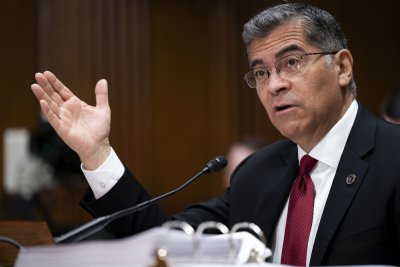
1 of 2 | Former Secretary of the Department of Health and Human Services Xavier Becerra speaks during a Senate Finance Committee hearing on former President Joe Biden’s proposed budget request for the Department of Health and Human Services for fiscal year 2025 at the U.S. Capitol in Washington, D.C., on March 14, 2024. File Photo by Bonnie Cash/UPI | License Photo

June 4 (UPI) — Republican Steve Hilton and Democrat Xavier Becerra are leading a crowded field in California’s primary for governor on Thursday with millions of ballots left to count.

The two candidates that receive the most votes will advance to the November election, regardless of party. Democrat Tom Steyer has the third most votes so far.

Sixty-one candidates qualified to appear on the primary ballot to replace Gov. Gavin Newsom.

Polls closed on Tuesday night at 8 p.m. PDT. It is common for California to take days if not weeks to tally enough votes to declare a winner.

Despite millions of votes still being counted, President Donald Trump has alleged that Democrats have cheated in California’s primaries.

“There’s BIG cheating by the Dumocrats in California,” Trump posted on social media. “Votes are all tied up. May not be in for weeks. Under investigation by the U.S. Attorney’s Office in Los Angeles. Why the vote counting DELAY?”

Trump also declared Hilton the winner of the primary, even though not enough votes have been counted to make that determination.

“Congratulations to Steve Hilton on coming in first, last night, in the California Vote for Governor,” Trump wrote.

Hilton, a former Fox News host, is the top overall vote-getter as of Thursday morning.

Becerra is the former Biden administration U.S. human services and health secretary. Steyer, a billionaire, is a philanthropist and climate activist.

Source link

Albanians protest $1.6B Jared Kushner-backed resort in protected area

Demonstrators march during a rally in Tirana on Wednesday calling for a proposed $1.6 billion luxury resort in an enironmentally sensitve island location off Albania’s Adriatic Sea coast by an international consortium led by Donald Tump’s son-in-law, Jared Kushner. Kushner and wife Ivanka Trump stumbled upon the uninhabited island during a vacation. Photo by Malton Dibra/EPA

June 4 (UPI) — Thousands of Albanians marched in the capital Tirana for a third day straight to protest against a $1.6 billion luxury resort backed by Donald Trump‘s son-in-law, Jared Kushner, in a national marine park off the country’s Adriatic Sea coast.

Some demonstrators in Wednesday’s protest held inflatable flamingos aloft to highlight the impact they fear the project will have in and around Sazan Island, where work recently got underway in the midst of one of the Mediterranean’s most environmentally-vulnerable areas.

Scuffles broke out with police who fired water canon at protesters.

An offer to meet with opponents from Prime Minister Edi Rama, who has staked his premiership on what he has billed as a developmental coup for the former communist state, was rejected as calls for the project to be halted grew, with protests also set to spread to the south of the country.

“From start to finish there has been a total lack of transparency. We have seen no public consultation or public documentation regarding permits, and so now what we are saying is, if they remove the bulldozers, remove the fence and restore the habitats to what they were, then we can start talking,” said Aleksandr Trajce, executive director of Protection and Preservation of the Natural Environment in Albania.

Kushner stumbled upon the site by chance while vacationing in Albania with his wife, Ivanka Trump.

“We were on a friend’s boat, and we stopped for a swim. Effectively, that’s how we found it. We swam to the island. We went on a hike, barefoot all the way up to the top, and we were just captivated,” Ivanka Trump said.

Environmentalists are worried about the effect the resort will have on an area that includes the currently uninhabited Sazan Island and the nearby wetlands and coastal habitats of the Karaburun-Sazan Marine Park.

BirdLife International said the park’s waters around Sazan and the Karaburun peninsulta were among the last places where Mediterranean monk seals survive and support populations of flamingos and Dalmatian pelicans as well as 200 other species of birds, many of which are endangered.

Sazan Real Estate Development, which is developing the plans in partnership with Kushner’s Miami-based investment firm, Affinity Partners, insisted it was committed to sustainable development.

“Our focus remains on responsible stewardship, environmental enhancement, job creation, and creating long-term value for local communities. We respect the ongoing public and institutional processes,” said Sazan Real Estate Development chair Asher Abehsera.

Source link

’60 Minutes’ in turmoil as talent revolts under Bari Weiss

In recent months, the iconic ticking stopwatch of the CBS News magazine “60 Minutes” began to sound like a time bomb.

The explosive detonated Tuesday as the prestigious program’s most high-profile correspondent, Scott Pelley, was fired after openly challenging the moves and motives of the news division’s leadership and questioning the credentials of new “60 Minutes” executive producer Nick Bilton.

Pelley accused CBS News Editor in Chief Bari Weiss of “murdering” the program and berated Bilton, a former New York Times journalist, for lacking TV news experience. His forced exit along with the departure of several other veterans is raising fears about the future of the most-watched TV news program that has managed to retain its vitality and importance in the face of major changes across the media landscape.

Weiss praised Pelley’s contribution to the network when she discussed his termination at the network’s morning editorial meeting Wednesday, but cited a loss of “trust and mutual respect” as the reason for moving on.

“We cannot do our work without it,” Weiss said. “That foundation was broken on Monday, and despite our attempts to engage with Scott Pelley and to find a way back, unfortunately we weren’t able to do so, and so we had to part ways.”

But industry veterans familiar with “60 Minutes” said the firings represented a notable shift in how the venerable program has been run by its predecessors.

Rome Hartman, a former longtime “60 Minutes” producer, said Wednesday in an interview that the termination of Pelley for forcefully expressing his views at a staff meeting is a fundamental misunderstanding of how the program has operated and thrived over 58 years. Spirited, and occasionally acrimonious, internal debate has always been a part of working at “60 Minutes.”

“Sharp words in defense of important ideas, whether they be in stories, or whether they be about the future of the broadcast, shouldn’t just be tolerated, they should be encouraged and inculcated, and they always have,” Hartman said.

The insularity of the “60 Minutes” operation — which has its own suite of offices across the street from the main headquarters of CBS News — has rankled the network’s executives in the past. But those dynamics were considered part of the price of having the most prestigious news program on television.

“Every single CBS News president in the history of CBS News has resented the independence of ’60 Minutes,’” Hartman said.”But the smart ones have come to understand that that independence is part of the secret sauce. I don’t know Bari Weiss, but she seems incredibly thin-skinned.”

The turmoil inside “60 Minutes” comes at an inopportune time for CBS. Weiss is now under the gun to replenish the program’s staff with three months to go before original episodes return to the prime-time schedule.

Pelley is the fourth correspondent to depart “60 Minutes” since Weiss took over as editor in chief. Last week, Weiss fired correspondents Sharyn Alfonsi — who accused Weiss of playing politics by holding a story on the government’s use of El Salvador prisons for undocumented migrants — and Cecilia Vega, who was also outspoken in her criticism of the changes at “60 Minutes,” saying she faced censorship. Anderson Cooper, the CNN anchor who spent nearly 20 years as a contributor to the program, chose not to sign a new contract.

Weiss also fired executive producer Tanya Simon, who has been with the program for 25 years, and her second in command. (Pelley said he was unable to get answers on the firings during his final meeting Tuesday with Weiss and CBS News President Tom Cibrowski.)

Bari Weiss hosts Senator Ted Cruz on her "Honesty" podcast on January 18, 2025, in Washington, D.C.

Bari Weiss hosts Senator Ted Cruz on her “Honesty” podcast on January 18, 2025, in Washington, D.C.

(Leigh Vogel / Getty Images for Uber, X and The Free Press)

And there could be more departures on the way, adding to the upheaval. Bill Whitaker, who joined the program in 2014 and was a Pelley ally, is said to be weighing whether to walk away from the two years left on his current contract. The program’s respected veteran , Lesley Stahl, is pondering her future as well amid the massive changes, according to people familiar with her thinking who were not authorized to speak publicly.

The call is out for new talent, according to one agent who said CBS News is talking to “dozens of people” for the openings.

But the company will also look within its ranks. Matt Guttman, hired away from ABC News by Weiss to become senior national correspondent, is one name being mentioned, along with Major Garrett, the network’s chief Washington correspondent. Both have emerged as favorites of Weiss.

Norah O’Donnell, already a contributor to the program, is also likely to have a larger presence.

While the “60 Minutes” patina has been tarnished by the recent events, there is no shortage of journalists who would be willing to step up and join the program. But whoever does sign on will be intensely scrutinized while the Nielsen numbers are closely watched.

Newcomers on the program are rare and would have an easier time gaining audience acceptance if they were joining a stable operation.

Although every long-running TV program can use an occasional refresh, a massive overhaul is destabilizing for “60 Minutes,” one of the last non-sports appointment programs for the traditional television audience that still provides broadcast networks with the bulk of their advertising revenue.

Notably, the program averaged 9.1 million viewers during the 2025-26 TV season according to Nielsen, up 9% over the previous year.

“Viewers liked the ’60 Minutes’ that they had,” said a former CBS News executive who worked on the program who was not authorized to speak publicly. “And if they don’t like it, they have many other places to go.”

One of Weiss’ mantras — echoed by Bilton — has been the need to pull “60 Minutes” into the digital future as traditional TV viewing declines. Insiders say she has yet to make clear how that will be achieved.

Under Weiss’ watch, clips and full segments of the program gained significant traction on platforms such as YouTube. The success on digital is an encouraging sign for the program’s ability to attract younger viewers who don’t watch traditional talent.

But veteran TV executives say that loyal “60 Minutes” viewers still expect to see seasoned correspondents delivering in-depth investigations and analysis. A diversion from that formula poses substantial risks.

“Its audience has certain expectations,” said Jim Murphy, a former executive producer for CNN and CBS News. “These guys built a literally nearly perfect program for the medium and for the audience. You’re not going to make it better just because somebody cooler does a story that’s, like, a little funkier. It just not going to work.”

Steve Capus, a veteran network producer who worked with Pelley at the “CBS Evening News,” said his former colleague was built for the meticulous work that goes into every “60 Minutes” segment.

“It’s hard to do week in and week out,” Capus said. “You have to be first-rate in your storytelling.”

What’s more, Weiss and Bilton will also have to fight the perception that their moves on the program have been guided by the desire of David Ellison, chief executive of CBS News parent Paramount, to please the Trump administration as he seeks regulatory approval of his deal to acquire Warner Bros. Discovery.

Trump sued “60 Minutes” over the editing of an interview with his 2024 presidential opponent, former Vice President Kamala Harris. The suit was settled just ahead of the Federal Communications Commission clearing the way for the takeover of Paramount by David Ellison’s Skydance Media.

Ellison acquired Weiss’ digital startup, the Free Press, which established itself as a voice critical of so-called woke politics.

Pelley said in a statement Tuesday that there has been pressure to shape CBS News coverage to please the Trump White House, a claim that both Vega and Alfonsi have made.

“I’ve been told to include assertions that are unverified,” he said. “To date, in every case, I have ignored these instructions or refuse them.”

In a statement, a representative of “60 Minutes” said that the exchanges with Pelley regarding editorial content were not out of the ordinary.

“There is no political interference at CBS News, not from ownership, not from Bari Weiss,” the representative said. “The only ‘interference’ is the normal back and forth between editor and correspondent that happens in every newsroom.”

Source link

Who is Khalilur Rahman, Bangladesh FM who beat Cyprus to UNGA presidency? | Antonio Guterres News

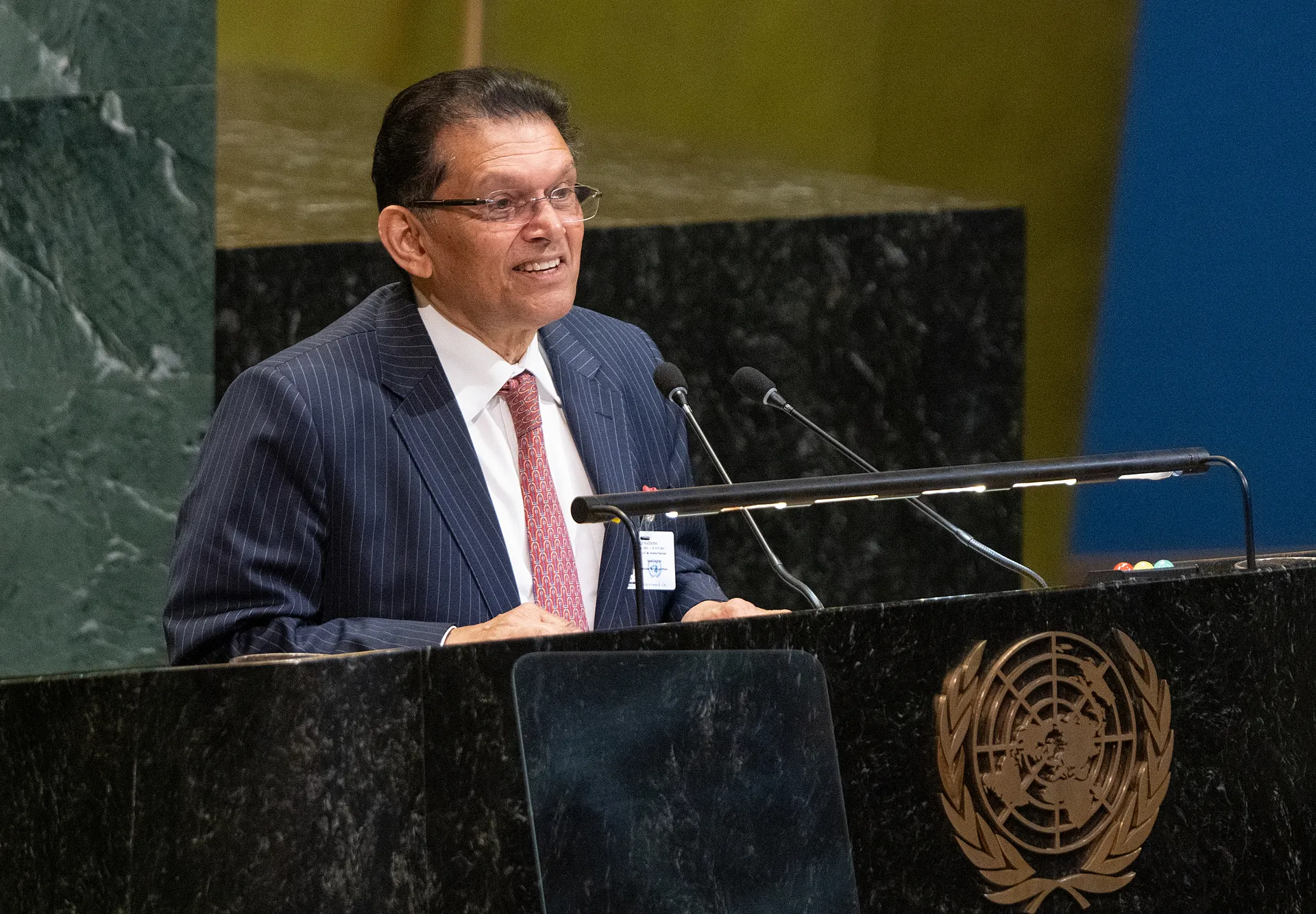
Bangladeshi Foreign Minister Khalilur Rahman has been elected as the 81st president of the 193-member United Nations General Assembly (UNGA). He will assume office when the UNGA session opens in September.

Rahman, who earlier held several portfolios at the UN, won the presidency after defeating Cyprus’s Ambassador Andreas Kakouris in a closely contested vote, taking the helm of the world’s most representative diplomatic body during a time of global geopolitical turmoil.

Recommended Stories

list of 4 itemsend of list

Who is Khalilur Rahman?

A career diplomat, Rahman joined Bangladesh’s foreign service in 1979. He also held senior UN positions in New York and Geneva, including as the spokesperson for the Least Developed Countries (LDCs) and as special adviser to the UN Conference on Trade and Development (UNCTAD).

Between 1986 and 1991, he served as the first secretary at the Permanent Mission of Bangladesh to the UN.

Rahman became foreign minister in February, when the Bangladesh Nationalist Party (BNP) won the country’s first election since a student-led uprising ousted Prime Minister Sheikh Hasina in 2024.

He previously served as national security adviser and the high representative on the Rohingya issue in the interim government led by Nobel laureate Muhammad Yunus.

Rahman’s presidency will coincide with one of the most consequential processes on the UN calendar – the selection of Secretary-General Antonio Guterres’s successor – as his term expires at the end of this year.

“The UN will commence its ninth decade at a time when trust in our organisation is being tested on multiple fronts,” he told diplomats assembled at the UNGA as he accepted the new role. “Taken together, these challenges tend to undermine the public trust and confidence in the ability of our organisation to deliver its promises.”

Guterres congratulated Rahman, saying, “Your remarkable political and diplomatic experience are a guarantee of success not only to the General Assembly but to the United Nations as a whole.”

How is the UNGA president selected?

While the presidency of the UNGA is largely ceremonial, it is also prestigious. It is the UN organ where countries large and small can speak, and it is the scene of the world’s largest annual diplomatic gathering.

The UNGA president is normally chosen by acclamation, meaning member states agree on a candidate by broad consensus. If no consensus can be reached, a secret ballot is held; in that rare case, the candidate who wins a simple majority of votes becomes president.

Before this year, the last contested UNGA presidential election was in 2016, when Fijian diplomat Peter Thomson won the presidency of the 71st session in a secret ballot, defeating Cyprus’s candidate by four votes. In 2012, Serbia’s Vuk Jeremic narrowly beat Lithuania’s candidate in another secret ballot. In 1991, Saudi Arabia’s candidate, Samir Shihabi, won the presidency in a contested vote against candidates from Yemen and Papua New Guinea.

In the secret ballot, Rahman secured 99 votes, eight more than his competitor Kakouris. A total of 190 ballots were cast, with no invalid votes or abstentions.

The presidency rotates among the UN’s five regional groups, and the 81st session falls to the Asia Pacific group. Rahman will serve a one-year term starting on September 8, the UN said.

Outgoing UNGA President Annalena Baerbock, Germany’s foreign minister, highlighted how trust towards multilateralism is under growing strain.

The UN is facing “not only headwinds, but immense pressure”, with consensus increasingly difficult to achieve and defence of the UN Charter becoming “a daily necessity”.

“The role of the president of the General Assembly is no longer simply procedural,” she said.

The US administration under President Donald Trump has tried to undermine the UN system, resorting to unilateral actions to tackle complex global geopolitical issues. Washington has withdrawn from several UN organisations, such as the World Health Organization and the Human Rights Council, and cut funding to the global body.

The US president has called the UN a “talking shop”, questioning its purpose during his speech at the annual UNGA meeting last September. “The UN has such tremendous potential … but it’s not even coming close to living up to that potential,” he said.

What is the UNGA?

The General Assembly is the UN’s most representative body, bringing together all 193 member states, each with one vote. Its annual gathering in September in New York is the only UN forum where world leaders from all countries can speak.

The UNGA controls the UN budget, adopts treaties, addresses global issues from poverty to corruption and passes numerous resolutions that, while not legally binding, almost always reflect global opinion.

The UNGA also makes key decisions for the UN, including appointing the secretary-general on the recommendation of the UN Security Council (UNSC) and electing the nonpermanent members of the council.

The coming UNGA session will open on September 8.

On Wednesday, the UNGA elected Austria, Kyrgyzstan, Portugal, Trinidad and Tobago and Zimbabwe to the 15-member UNSC for two-year terms starting on January 1, 2027.

Germany, which had lobbied hard for a seat, failed to win the UNSC seat in a major setback for Chancellor Friedrich Merz.

The council is the only UN body that can make legally binding decisions, such as imposing sanctions and authorising the use of force. It has five permanent veto-wielding members: China, France, Russia, the United Kingdom, and the United States.

Source link

One thing was clear on election night: Angelenos want change

A huge, waning moon glimmered over Los Angeles on election night, a metaphor for a trend that emerged in early returns.

The city’s political establishment seemed to be on the retreat in favor of populist insurgents from both the left and the right.

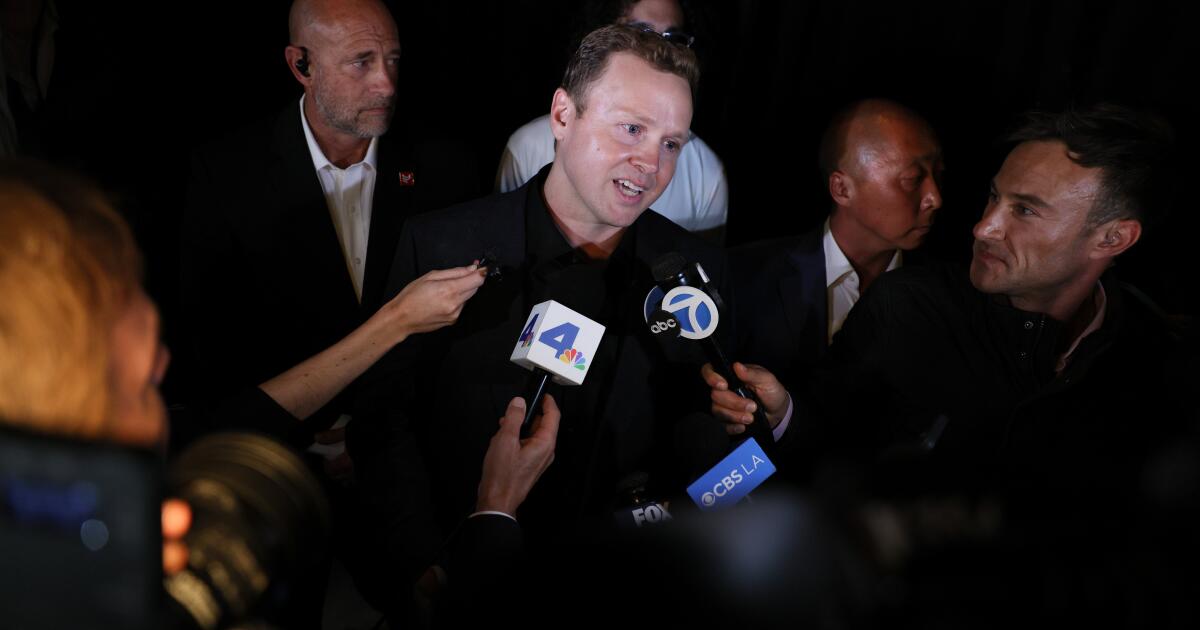
Mayor Karen Bass held a cushy lead in her bid for a second term, and the Associated Press declared that she had made it into the November runoff election. But the underwhelming amount of support she got thus far showed that many voters in a super-blue city didn’t have enough confidence in a Democratic stalwart to return her to office. Instead, many chose self-proclaimed upstarts from opposite ends of the political spectrum: Republican reality TV star Spencer Pratt and democratic socialist City Councilmember Nithya Raman.

Raman launched her campaign at the last moment, just weeks after endorsing her longtime ally Bass, figuring that enough Angelenos were tired of the incumbent and would join her message of change from inside City Hall.

Raman’s instincts were half right. Voters did want change. But they didn’t view her as a challenge to the status quo — to many, she is the status quo.

The mayoral hopeful didn’t articulate a platform that radically departed from Bass’, and voter antipathy to her muddled messaging showed: she ended the night in third place. If the current results hold, Bass would face Pratt in the runoff.

At Raman’s election-night party at Boomtown Brewery on the outskirts of Little Tokyo, I saw why her chances of becoming L.A.’s next mayor were slim from the start. The gathering felt like happy hour at a Silver Lake bar: far whiter than the city overall, with few Latinos. Her address to a packed house was a grab bag of platitudes mixed with a broadside against MAGA, which is a political nothing in L.A. politics. It was an uninspiring cri de coeur and reflective of a campaign that wasn’t apocalyptic enough for those, such as Pratt’s people, who want radical change, while offering nothing new for Bass supporters.

Yet Raman still insisted she had unlocked something transformative.

“Together, we built something extraordinary,” she said to cheers. “And it gives me so much inspiration to be a part of it, a movement powered not by cynicism or political insiders, but by ordinary people who still believe Los Angeles is worth fighting for.”

Raman then went on the dance floor to greet well-wishers, pumping her fist while a DJ blasted Daft Punk’s “Lose Yourself to Dance.”

A political billboard for City of Los Angeles mayoral candidate Spencer Pratt.

A billboard for L.A. mayoral candidate Spencer Pratt near MacArthur Park on June 2, 2026.

(Ronaldo Bolanos / Los Angeles Times)

Across town in West Los Angeles, Pratt reveled in his second-place position, enjoying a Mexican dinner with friends and family. It was a peaceful conclusion to a spring of fulminations against Bass (“Karen Basura”), nonprofits, homeless people (“zombies”) and anything that reeked of Democratic pieties, even as the Republican swore he was campaigning for all ideologies in a nonpartisan race.

Long dismissed as a has-been joke, Pratt correctly judged that Angelenos are angry and don’t want to be polite about it anymore. He and his supporters will take his unlikely rise as a mandate to double down against liberal L.A.

But if Pratt, who lost his house in the Palisades fire, does move on to the general election and is serious about winning, he needs to learn from the political revolution successfully pursued by his polar opposites, the local chapter of the Democratic Socialists of America.

Six years ago this spring, L.A.’s political establishment wrote off DSA-LA as wokoso upstarts in their long-shot quest to get a political novice named Nithya Raman elected to the city council. Even as Raman and three other DSA members joined the council, skeptics dismissed them and their progressive policies as anomalies that didn’t reflect how Angelenos actually wanted the city to work.

Tuesday night, four of the six DSA-endorsed candidates in L.A. city elections were in first place by large margins and another was comfortably in second, reflecting DSA’s multicultural, citywide reach. In a telling sign of its newfound king-making status, the local chapter declined to endorse Raman or any other mayoral candidate. Without that powerful backing, their trailblazer, along with DSA member Rae Huang, withered on their L.A. revolutionary vine.

Councilmember Hugo Soto-Martínez and L.A. Unified school board member Rocío Rivas looked to be coasting to outright victories. Marissa Roy was on her way to a runoff that would exclude the incumbent city attorney, Hydee Feldstein Soto, who was a distant third in the early returns. In District 9, where Curren Price is terming out, Estuardo Mazariegos stood comfortably in second place and looked to headed to a runoff against a fellow Latino candidate in a race that will see South Los Angeles elect its first non-Black council member in 63 years.

The most surprising outcome involved Councilmember Eunisses Hernandez, who became a punching bag, along with Bass, for people who thought L.A. had transformed into a hellhole. So-called dark money groups, which don’t have to reveal where their funding comes from, poured hundreds of thousands of dollars into negative mailers. Opponents vying for her seat cast federal raids against drug dealers and gangs in the MacArthur Park area as an indictment of her leadership, berating her during debates and on social media.

Even Hernandez’s supporters were fretting about what might happen on election night. But by the time I arrived at her raucous soirée in Highland Park, early returns showed her way ahead of the field and perhaps avoiding a runoff.

“It’s reassuring to see [DSA’s success],” she said as jubilant supporters lined up beside her to get tattoos — real ink, not temporary — of hummingbirds, her campaign’s logo. “That means people see us. That means people want more.”

Hernandez pointed to her fellow DSA member, New York City Mayor Zohran Mamdani.

“What happened with DSA over there didn’t happen overnight,” she said. “In L.A., we’re getting there.”

A table filled with campaign buttons for Hugo Soto-Martinez.

A table filled with campaign buttons for Council Memer Hugo Soto-Martinez, who ran for reelection this year and is expected to win outright.

(Jason Armond/Los Angeles Times)

L.A. hasn’t suddenly become a land of Trumpers and closet commies, of course. Two incumbent council members who are centrist Democrats are also on their way to easy victories, while Councilmember Monica Rodriguez walked into a third term because no one ran against her. Centrists Timothy Gaspar and Barri Worth Girvan have a huge lead over their rivals for the San Fernando Valley council seat that Bob Blumenfield is leaving due to term limits.

But anyone who wants to win in Los Angeles needs to realize that antiestablishment sentiment is in the air.

At the same time, I would remind the victorious populists to look up in the sky and remember their Shakespeare.

“O, swear not by the moon, th’ inconstant moon / That monthly changes in her circle orb / Lest that thy love prove likewise variable,” Juliet warned Romeo.

Politics, like la luna, waxes and wanes whether we like it or not, and anyone who bets on a permanent transformation at City Hall will probably lose.

Angelenos have declared that they want dramatic change. But how will they feel in November?

Source link

If Pratt holds off Raman, the L.A. mayor’s race could be a holy war

L.A. Mayor Karen Bass made what sounded like a victory speech Tuesday night.

Councilmember Nithya Raman made what sounded almost like a concession speech.

And former reality TV star Spencer Pratt relayed a message from the heavens.

“Well, obviously God wanted five more months of me exposing all the failures of our mayor, so it’s gonna be a fun ride,” Pratt said. “I hope she’s ready.”

Assuming Pratt holds on to one of the two spots in the Nov. 3 general election as the final votes are tallied in the next few days, the smart money will be on Bass, for reasons I’ll get into in a moment.

But the supreme being and patron of all pontiffs has to be considered a wild card. This is the first time, to my knowledge, that an incumbent mayor in the City of Angels would be running against a challenger whose campaign manager is God Almighty.

So here we go. We could be in for one of the more remarkable electoral adventures in city history, with a complete novice and MAGA conservative going up against a liberal career politician in a deep-blue city and state full of people who are tired of hearing excuses from Democrats. (If Raman ends up ousting Pratt, my apologies for jumping to conclusions. But it’s not my fault. The devil made me do it.)

If you intend to follow closely, as of course you should, maybe you can help me count the number of times Pratt plays the faith card. I went to St. Peter Martyr School and attended the church by the same name, and I don’t recall ever hearing a nun or a priest drop God’s name as often as Pratt does.

In fact, I just watched a clip of Pratt talking to Fox News TV host and Donald Trump disciple Kayleigh McEnany, and over the course of 1 minute and 52 seconds, he mentioned God or Jesus 10 times.

“Thankfully, I married an angel who was very connected with Jesus and has brought me to the light,” Pratt said of his wife and former reality TV co-star Heidi Montag. “It’s been very empowering to just pray and just be on his path and just say, ‘God, if you want me to save these animals, save these humans and protect my city, just keep putting me in the place where I can do that.’”

Is he running for mayor or cardinal?

Look, I totally respect your average true believer. But I’m not entirely comfortable with a mayor who might be sitting around City Hall waiting for signs and smoke signals rather than knowing what to do on his own.

God has a lot on his plate. He might be busy multiplying fishes and loaves so people don’t go hungry thanks to the president’s tariffs and warmongering. Is he going to rush to answer a prayer for guidance about underfunded parks or broken sidewalks in Los Angeles?

How did we get here, you ask?

Well, Pratt is an AI creation, in a way. A composite of sorts. You combine the forces of social media, political rebellion, second-rate celebrity obsession and the Peter Principle, and here’s a little Trump puppet walking around L.A. like he’s the chosen one.

Add to that the very real essence of his appeal to some voters:

Los Angeles has problems. Big problems that don’t get fixed quickly enough or at all, and Pratt represents the angry voter who wants to know why City Hall can’t do better and where all the money went. He’s absolutely right when he says we shouldn’t have people living on the streets, using drugs on the streets and dying on the streets.

But if Pratt is in the general election rather than Raman, we’re in for a national media circus rather than a summit on solutions. Raman is well-versed on matters of relevance and could have pushed back against Bass in substantive, detailed ways. On the other hand, as Pratt has fairly argued, Raman headed City Council’s homelessness committee, so isn’t she partly to blame for the failures she tried to pin on Bass?

As for Pratt’s policy chops, he has not responded to my offers of a get-together. Absent that, and given his careful avoidance of local reporters who know their stuff, I read his platform on his campaign website and I can tell you that while he touches on many of the right issues — public safety, fiscal integrity, homelessness — attention to detail and depth of knowledge are not God-given strengths.

Maybe Pratt can actually deliver on his promise of a “treatment-led recovery model that addresses mental illness and addiction as the primary drivers of chronic homelessness.” But that would require an act of God (which I suppose is possible given their relationship), because those matters are primarily under the direction of the county, not the city.

This is the main problem here. Bass was beatable, and could have been pushed by a serious challenger to do better.

In the last election, Rick Caruso gave her a scare. That was partly because he had some depth on the issues, he was a successful businessman and philanthropist, he had served on the police commission and the water and power board, he had built relationships across the city and, along with his family, he had poured time and millions of dollars into underserved communities.

In this election, it looks as though Bass could get lucky and face off against a guy who lost his house in the Palisades fire, saw a few homeless encampments through his car window, and decided he wanted to be mayor. Some might have questioned his hubris, but only before learning that he was on a mission from God.

If you’re keeping count, that’s nine mentions of God so far in this column.

One more for the tie, with an eye toward five more months of campaign fodder.

Thank you, God.

steve.lopez@latimes.com

Source link

A competitive governor’s race? Not only in California

As Californians cast their ballots in the state’s closely watched gubernatorial primary Tuesday, a very different race was playing out in Iowa — one that holds clues about the mood of Republican voters heading into November.

President Trump’s endorsed candidate in Iowa’s high-stakes governor’s race, Republican U.S. Rep. Randy Feenstra, lost his bid for the party’s nomination, a rare defeat for a Trump-backed candidate.

The outcome exposed fractures among Republican voters, though their choice of Zach Lahn, who ran on an “Iowa First” and Make America Healthy Again platform, didn’t amount to a rebuke of Trump’s politics, said Jimmy Centers, a Republican strategist in Iowa.

The primary race was “emblematic of the seismic plates that make up the Republican Party in Iowa,” Centers said — the successful MAGA-style message, from Lahn; a more traditional conservative platform, from Feenstra; and a conservative Christian approach, from candidate Adam Steen.

“It’s a bit of a look-ahead in terms of how the Republican Party is going to be shaped in what will be a post-Trump era,” Centers said. “Those plates are moving, and last night in Iowa, we had an earthquake.”

Results from Iowa, California and other late-stage primaries portend contentious fall campaigns, with control of the House and Senate hanging in the balance.

“You’re seeing Republican primary voters rebel against politicians, whether it’s Dusty Johnson in South Dakota or Chip Roy in Texas,” said Matt Gorman, a longtime Republican strategist and chief communications officer at Targeted Victory. “There’s clearly a backlash against sitting politicians, and Republican primary voters are looking for outsiders.”

That pro-outsider outlook has been promoted by Trump himself in some races, as he has used his endorsement to boost primary challengers to victory over Republican incumbents — notably in Texas, Louisiana and Kentucky. In Tuesday’s primaries, however — held in six states — none of the races involved Republican veterans whom Trump wanted to see ousted.

Outside of such races, Trump — who last week said, “I don’t care about the midterms” — has taken a more laissez-faire approach. In Iowa, he did not endorse Feenstra until Friday, a last-minute boost that didn’t help the congressman over the finish line.

Lahn, in a victory speech Tuesday night, acknowledged the upset he had pulled off.

“Nobody thought this could be done,” Lahn said. “We were outspent, opposed by the establishment, told to wait our turn.”

Lahn will face Iowa state auditor Rob Sand, who ran uncontested for the Democratic nomination. The seat is being vacated by Gov. Kim Reynolds, a Republican who is not seeking reelection.

Iowa Republicans will now ramp up efforts to retain both the governor’s office and the U.S. Senate seat being vacated by Sen. Joni Ernst, as Democrats target both offices for flipping.

The race to replace Ernst is now on between Republican Rep. Ashley Hinson, who has been in Congress since 2021 and has Trump’s support, and Democratic state Rep. Josh Turek, a former Paralympian who was backed by a leadership PAC aligned with Senate Minority Leader Chuck Schumer.

Economic issues, particularly in the agricultural sector, where farmers have been squeezed by Trump’s tariffs and war in Iran, could dominate the races. Centers said both parties are acutely aware of the economic factors — and aware that Democrats’ chances in Iowa could be slightly better than “a hope and a prayer,” though the state’s voter-registration edge remains solidly red.

“I don’t think many Republicans in Iowa are bashful about acknowledging the environment we’ll face in November,” Centers said. “It’s going to be a hard-fought race.”

You’re reading the L.A. Times Politics newsletter

George Skelton and Michael Wilner cover the insights, legislation, players and politics you need to know. In your inbox Monday and Thursday mornings.

Other Tuesday takeaways

Elsewhere on Tuesday, voters chose candidates in races for U.S. Senate, House and governor’s seats, setting up some lively November match-ups.

In New Jersey, the state’s 7th Congressional District will be a closely watched contest — largely because of the recent absence of Republican Rep. Tom Kean, who has not been publicly seen for months as he deals with an undisclosed medical issue.

His absence has provided an opening to Democrats, who have ramped up attention on the seat as they attempt to flip as many House seats as possible. Rebecca Bennett, a former Navy helicopter pilot, won the Democratic nomination Tuesday.

Kean, who has support from Trump, ran unopposed. In a statement Tuesday evening, he laid out plans to reveal his medical condition when he returns to in-person work, which he said would be “within a matter of weeks.”

The race could become key to Democrats’ attempt to win control of the House in November.

“We’re ready for this fight. Bring it on,” Bennett wrote Wednesday on X.

In Montana, the race for the state’s open U.S. Senate seat, being vacated by Republican Sen. Steve Daines, was also set to get interesting.

Trump-backed Republican Kurt Alme, a former U.S. attorney, and Democrat Alani Bankhead, an Air Force veteran, won primaries Tuesday — but former University of Montana president Seth Bodnar has launched an independent bid for the seat. Bodnar said Tuesday that he had delivered enough petition signatures to the secretary of state to get on the November ballot.

And in New Mexico, former Interior Secretary Deb Haaland secured the Democratic nomination for governor, advancing in her bid to make history as the first Native American governor in the United States. She will face Republican Gregg Hull, a former local mayor, in November.

What’s next

Next week brings Maine’s Senate primaries, following a Democratic race that has taken several twists and turns. Democrats have held hopes of unseating Sen. Susan Collins, the veteran Republican lawmaker, as part of their long-shot attempt to flip the Senate along with the House.

But leading Democratic candidate Graham Platner has been dogged by controversies. The primary vote will be held just more than a week after a New York Times report that he had sent sexual messages to several women outside his marriage. This week, Gov. Janet Mills, who had opposed Platner but suspended her campaign at the end of April, said, “I am still on the ballot.”

Also to watch: Next week’s outcomes in South Carolina’s crowded gubernatorial field; the June 16 Georgia Senate runoff to determine which Republican will face Democratic Sen. Jon Osoff; and the June 16 Democratic primary for Senate in Oklahoma.

Times staff writer Michael Wilner,in Los Angeles contributed to this report.

What else you should be reading

The must-read: The U.S. is investigating two more Mexican governors for connections to cartels
The deep dive:Can we speed up California’s vote count already?
The L.A. Times Special:More middle-class Californians cancel health coverage after losing federal aid

More to come,
Justine McDaniel and Michael Wilner

Was this newsletter forwarded to you? Sign up here to get it in your inbox.

Source link

Hilton and Becerra lead California governor’s race; Steyer faces elimination

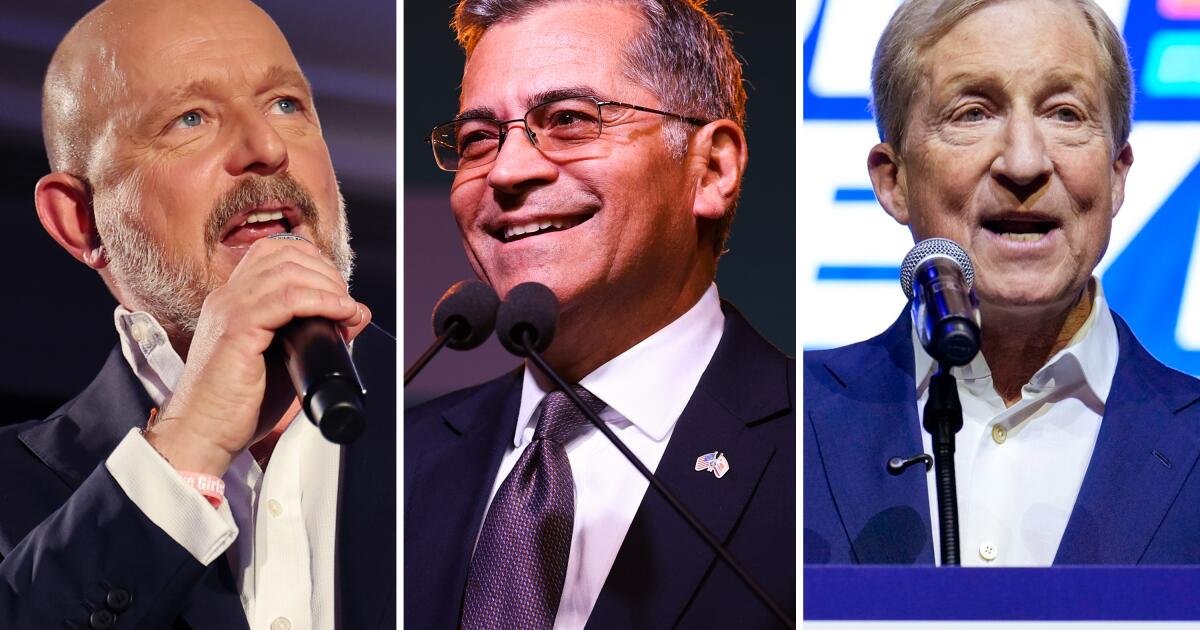
As election officials continued tallying ballots Wednesday, Republican Steve Hilton and Democrat Xavier Becerra continued to lead in the unsettled race to replace termed-out Gov. Gavin Newsom, with billionaire Democrat Tom Steyer hoping for a surge in late-arriving votes to push him into one of the top-two spots to advance to the November general election.

Hilton, a British immigrant and former Fox News commentator, told reporters outside the state Capitol in Sacramento Wednesday morning that he was “very encouraged” by the latest results, though he stopped short of declaring victory.

“It does look as if change is coming to California, and that is good news for everyone, every small business, every working family, everyone who wants to see our state set back on track,” he said.

Becerra and Steyer did not hold public events as of Wednesday afternoon.

Election data analyst Paul Mitchell said it would be nearly mathematically impossible for Steyer to close the gap.

“As we start to get more data, the runway is going to get shorter and shorter,” he said.

He said Steyer, to finish in the top two in the primary, would have to get about 30% of the remaining uncounted votes while Becerra would need to be limited to 15%. The self-funded billionaire has “a very high hill to overcome, and the challenge gets steeper and steeper as we get more data from the counties,” Mitchell said.

Once mired near the bottom of a crowded pack of Democrats in opinion polls, Becerra, a former Biden administration cabinet member, rocketed ahead of his rival candidates after former Rep. Eric Swalwell dropped out of the race in April amid allegations of sexual assault and misconduct. The scandal triggered an upswing of voter interest in California’s once sluggish governor’s race and in Becerra, who seized the moment.

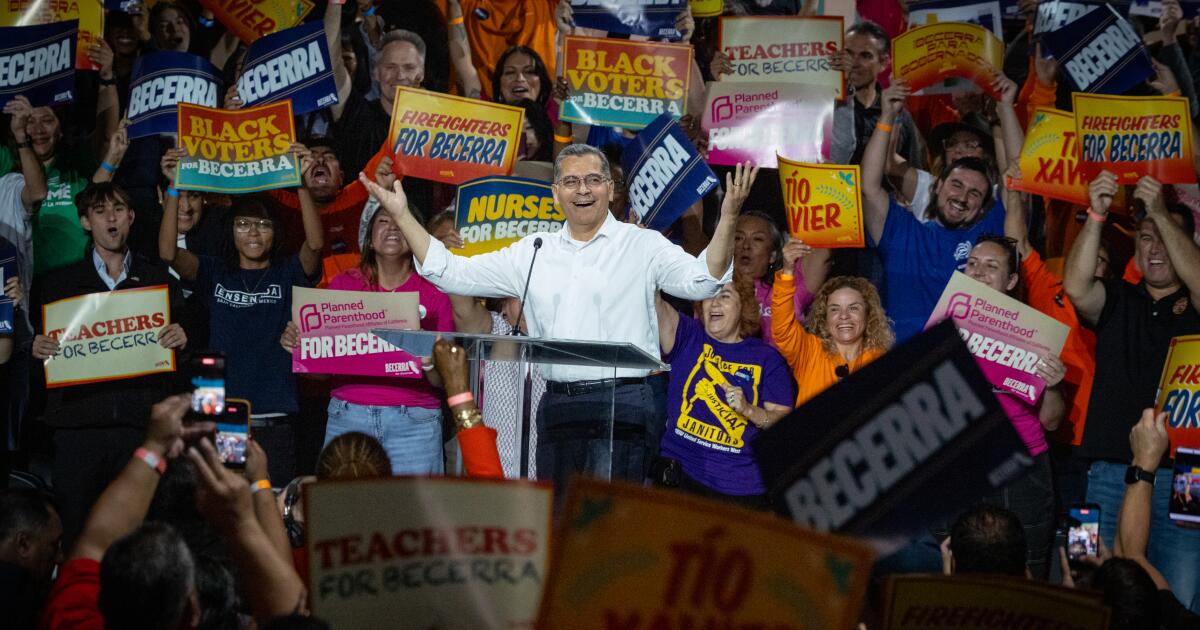
“Here in Hollywood’s hometown, we love a good underdog story,” Becerra told cheering supporters at his election night party at La Plaza de Cultura y Artes in downtown Los Angeles.

Becerra spoke about his Mexican immigrant parents and becoming the first in his family to attend college. Though a longtime California politician, Becerra said that his campaign for governor was outspent and that he faced calls to drop out of the race.

“The underdog stayed in the fight,” he said. “Like my parents, I never gave up. … Never stopped believing in the beacon-light goodness of California and thankfully, neither did you.”

Steyer, who spent more than $216 million of his wealth on the race, has not conceded defeat.

His campaign manager, Heather Hargreaves, wrote in a letter to supporters Wednesday that “we’re going to give democracy time to work. County election officials are still counting ballots and don’t expect to know how many people voted in total until” Thursday, when officials are required to report the estimated number ballots left to process.

The billionaire former hedge fund owner campaigned against the corporate and special interests that have a powerful presence in Sacramento and often spend heavily in elections, including this year against Steyer.

Billionaires “do everything they can to hoard their wealth and avoid paying taxes, and we see corporations continue to rig the system for themselves — raising your prices to juice their profits. Screw that,” Steyer said at his election watch party at the Regency Ballroom in San Francisco.

Other candidates in the race included Republican Riverside County Sheriff Chad Bianco and Democrats including former Rep. Katie Porter, San José Mayor Matt Mahan, former Los Angeles Mayor Antonio Villaraigosa and state Supt. of Public Instruction Tony Thurmond.

Villaraigosa, Mahan and Porter conceded the race Tuesday night.

California’s 2026 race for governor started slow but ended with a flourish, including the demise of a scandal-ridden Democratic favorite, the anointing of a Republican by Trump and Becerra’s unexpected rise from the depths of the candidate field.

Unlike gubernatorial elections in the last quarter of a century, this year’s race lacked a clear crowd-pleasing front-runner able to win over voters, such as movie star Arnold Schwarzenegger or Jerry Brown, a sage of the California electorate and scion of a storied political family. But it unfolded at a time when the state’s residents are overwhelmed by high housing costs, steep gas prices and overall unaffordability that threatens the “California dream” that once drew millions of people to the state.

“Normal people are not living and breathing politics on a daily basis,” said Tim Rosales, a strategist who ran Republican John Cox’s unsuccessful 2018 gubernatorial campaign. In today’s information-saturated environment, Rosales said, the race and its roster of “extremely milquetoast candidates” didn’t break through until the Swalwell scandal grabbed voters’ attention.

The 2026 gubernatorial primary has been one of the most unpredictable and expensive in decades and a race that was shaped early on by a number of heavyweight Democrats staying on the sidelines.

Though supporters urged them to run, former Vice President Kamala Harris, Sen. Alex Padilla and Atty. Gen. Rob Bonta passed on the race. It was in a state of limbo for months last year as Harris, one of the state’s most high-profile politicians, weighed whether to jump in.

“I don’t ever recall a playing field that looks like this one. Usually there’s a clear front-runner,” said veteran Democratic strategist Darry Sragow. “It’s easy to say that it reflects a lack of talent [but] that’s absolutely not true. Almost any of the candidates running could make a good governor.”

Still, candidates struggled for months to break through to voters.

In February, polls showed the crowded field of Democrats splitting liberal voters and opening a statistical possibility that the party would be boxed out of November under California’s open, top-two primary, which places all candidates on the same ballot. Only the first- and second-place finishers in the primary advance to the general election, regardless of their party affiliation.

Just when Swalwell appeared on the cusp of becoming the Democratic front-runner the San Francisco Chronicle and CNN published allegations that he sexually assaulted a former staffer and acted inappropriately with other women. Swalwell suspended his campaign.

It was Becerra who benefited the most. In less than two months, he vaulted from polling in the low single digits to the top of the field of candidates, according to surveys conducted by UC Berkeley’s Institute of Governmental Studies that were co-sponsored by the Los Angeles Times.

“Becerra caught lightning in a bottle,” Rosales said. “It could have easily gone to any of the other candidates,” but many had baggage. Videos of Porter losing her temper hurt her image, the source of Steyer’s wealth and his unbridled campaign spending weighed on voters’ minds, and Villaraigosa and Mahan were “more centrist than what most Democrats wanted, and so Xavier Becerra was really the safe choice,” Rosales said.

Before Democratic voters began to narrow down their choices, Trump endorsed Hilton in early April. It helped the former Fox News host break away from Bianco, his main GOP rival.

In the days before the primary election, the race solidified into a three-way contest involving Becerra, Steyer and Hilton.

Steyer stepped up his fight in the remaining days, seeking to squeeze into one of the top two spots by battering Becerra in ads and at campaign rallies as a politician propped up by corporate special interests.

“We cannot afford to have a governor who’s been bought off by Big Oil. Period,” he said at a Sunday rally in Los Angeles.

Corporations, along with labor unions and interest groups including the California Assn. of Realtors, had spent more than $18.7 million to boost Becerra, according to the election spending tracker California Target Book. Many of the same groups also gave money to a committee intended to attack Steyer.

As the election neared, Becerra sharpened his attacks against Steyer, calling the billionaire a “liar” and accusing him of trying to buy the election.

“We are not going to let a billionaire or Trump’s handpicked candidate take over this state,” he said during a Sunday rally in Long Beach.

If Becerra faces off with Hilton in November he’ll have a distinct advantage. Democratic voters outnumber Republicans nearly 2 to 1 in left-leaning California.

Winning the general election would make the 68-year-old Becerra the first elected Latino governor of California. At roughly 40% of the state’s population, Latinos are California’s largest ethnic group but have not been represented in the governor’s mansion since 1875, when then-Lt. Gov. Romualdo Pacheco was elevated to fill a 10-month vacancy.

Times staff writers Iris Kwok, Susanne Rust, Andrew Khouri and Christopher Goffard contributed to this report.

Source link

Mullin says ICE training will return to ‘regular standards’

1 of 5 | Markwayne Mullin, secretary of the Department of Homeland Security, and Troy Edgar, deputy secretary, are shown Wednesday during a House Homeland Security Committee hearing on the fiscal year 2027 budget request for DHS in the Canon House Office Building near the U.S. Capitol in Washington, D.C. Photo by Bonnie Cash/UPI | License Photo

June 3 (UPI) — Markwayne Mullin, secretary of the Department of Homeland Security, said Wednesday that Immigration and Customs Enforcement officers will have to undergo more than 500 hours of training again, a return to the amount the department originally required.

“We had to rewrite the curriculum,” Mullin told members ofthe House Homeland Security Committee. “All training starting July 1 will be back up to the regular standards.”

News agencies first reported in early May that this change might be on the way. In fall 2025, ICE cut training for its officers from 584 hours to 336 hours, a move that came as part of a hiring push that brought in hundreds of new ICE agents. Senate Democrats released documents showing the cuts earlier this year, The New York Times reported.

The cuts were criticized by Democrats and some others, as critics said recruits did not receive enough training on how to handle firearms, First Amendment rights or other issues. Many people have called for ICE to be reformed or abolished, especially after ICE agents killed two U.S. citizens in January in Minneapolis. Then, in February, the Times reported, a former ICE attorney publicly criticized the changes in training at a forum in Washington, D.C.

“For the last five minutes, I watched ICE dismantle the training program,” Ryan Schwank said. “Cutting 240 hours of vital classes from a 584-hour program — classes that teach the Constitution, our legal system, firearms training, the use of force, lawful arrests, proper detention and the limits of officers’ authority.”

The agency responded at the time by saying hours had not been cut.

Mullin also said Wednesday that he’s reviewing contracts signed by Kristi Noem, the previous secretary of the department, that may have ties to her allies, The Hill reported. Rep. Bennie Thompson, D-Miss., the top Democrat on the committee, noted that Noem had signed contracts giving business to companies connected with her.

Mullin said he’d give the committee a list of any canceled contracts that hadn’t yet been signed. The department cannot nullify contacts that have been signed, but some are under review, he said.

Acting Attorney General Todd Blanche speaks during a House Appropriations Subcommittee on Commerce, Justice, Science and Related Agencies oversight hearing on the Department of Justice in the Rayburn House Office Building near the U.S. Capitol on Tuesday. Blanche announced the Justice Department is abandoning President Donald Trump’s proposed $1.8 billion “anti weaponization” fund. Photo by Bonnie Cash/UPI | License Photo

Source link

House approves war powers resolution to halt military action against Iran

The House approved a war powers resolution Wednesday that would halt the U.S. military action against Iran, defying President Trump as a handful of Republicans joined with Democrats to end the three-month-long war that has reordered politics at home and abroad.

House Speaker Mike Johnson had tried to prevent an outcome that would show the mounting opposition to the war, abruptly shutting down floor action two weeks ago when the war powers resolution was on the verge of approval. But displeasure has only grown as the conflict drags on and as Trump struggles to negotiate a quick resolution.

The roll call Wednesday was 215-208, and cheers erupted in the House chamber.

“This reckless and costly war of choice needs to end today,” House Democratic Leader Hakeem Jeffries of New York said earlier in the week.

“All we need are a handful of Republicans to join us and we can end this reckless and costly war of choice — a war that has cost the American taxpayer over $100 billion — that’s extraordinary — and left our country in a weaker position relative to Iran.”

Opposition to war grows

It’s the fourth time the House has tried to curb the U.S. war against Iran, and the first time the House was able to pass the measure. The Senate advanced its own war powers resolution last month when a handful of GOP senators broke ranks with the Republican president in a rare show of political pushback from his party.

Each time Democrats have pushed forward the war powers resolution, the vote tallies have inched higher as political unease with the U.S. war swells. Trump had campaigned for the White House on a promise to end U.S. entanglements abroad and focus more on domestic issues, but the war has shifted attention back to the Middle East.

Johnson insisted Trump is “laser focused” on the domestic front, particularly ahead of the midterm elections that will determine control of Congress.

The speaker said he spent three hours at the White House with the president this week as Trump is calling on allies to help reopen the Strait of Hormuz for commerce, especially the flow of oil.

Since the U.S. joined Israel in launching the Feb. 28 strikes on Iran, Americans have seen gas prices spike at the pumps, adding to inflationary pressure on consumer spending.

Iran has been able to interrupt shipping through the Strait of Hormuz, a vital channel for a large segment of the world’s oil, natural gas and related products such as fertilizer.

“We’re working on that final piece,” said Johnson, R-La. “The entire world has an interest in the Strait of Hormuz being reopen for commerce. That what he’s working on.”

While a ceasefire in the conflict was declared in April, it remains uneasy and uncertain. Talks for a more durable end to the fighting have dragged, increasingly complicated by Israel’s broadening war with Iran-backed Hezbollah militants in Lebanon. Meanwhile, military strikes between the U.S and Iran continue to flare.

Congress exerts its war powers authority

The war powers resolution from the House would not immediately stop the war, but it would provide a symbolic if not legal step against further military action.

If approved, it would then go to the Senate, where four Republican senators last month joined Democrats in advancing a similar measure to curtail the U.S. campaign against Iran. The Senate has yet to take a final vote to approve or reject its own war powers resolution.

Secretary of State Marco Rubio warned Wednesday testifying at a House Foreign Affairs Committee hearing that the Iranians would think that the administration’s “hands are going to be tied” if Congress approved a war powers resolution. He said they would think ”we won’t be able to do anything to them, so why make a deal?”

It’s not the only action Congress is taking in the national security arena as Democrats, in the minority, work to peel off Republican support for measures beyond the war against Iran.

The House is also voting Wednesday on another Democratic-led effort that would authorize U.S. support for Ukraine’s military operations as it battles Russia and to help reconstruct the war-torn country. The House this week is also expected to consider a war powers resolution to block U.S. action in Lebanon.

While Congress has the authority under the Constitution to declare war, the president also has power as the commander in chief to engage in military action, creating a legal dispute over which branch of government has ultimate say in matters of war and peace.

Under the war powers act, the White House has a 60-day window to seek approval from Congress for military action. The administration, however, has indicated that because a ceasefire has been declared in the current conflict in Iran, the hostilities have ceased.

Mascaro writes for the Associated Press.
Source link

Senators debate Trump’s ‘denaturalization’ plans for American citizens

An aide to Sen. Eric Schmitt holds up a sign Wednesday depicting the radicalization of Mirsad Ramic, a naturalized U.S. citizen who was convicted in 2024 of providing material support to ISIS after traveling to Syria to join the terrorist organization. The hearing was held at the at the Dirksen Senate Office Building in Washington. Photo by Senate judiciary Committee

WASHINGTON, June 3 (UPI) — As the Justice Department increases efforts to strip some naturalized Americans of their U.S. citizenship, U.S. senators on Wednesday debated whether such efforts violate the Constitution.

Republicans argued during a Judiciary Subcommittee on the Constitution that it has been too hard to take away citizenship of naturalized citizens. But Democrats oppose increasing denaturalization and said it reflects President Donald Trump‘s broader anti-immigrant agenda.

“When someone lies during that [naturalization] process, conceals material facts, hides criminal conduct, masks allegiance to a foreign enemy or swears loyalty with mental reservation, he commits fraud against the United States,” said Sen. Eric Schmitt, R-Mo., chairman of the subcommittee.

Countered Sen. Mazie Hirono, D-Hawaii, a naturalized citizen. “It’s more than astounding, it should be unconstitutional. Let’s be clear. This has never been about law and order for the Republicans. This is all about getting immigrants. It’s about terrorizing immigrant communities.”

The Trump administration has significantly increased denaturalization efforts since the beginning of the president’s second term. Between 1990 and 2017, the government opened 11 denaturalization cases, on average, every year, according to the Immigrant Legal Resource Center.

Since January, the government has opened 34 denaturalization cases and revoked citizenship of 11 people. This is part of a larger, unprecedented push led by the United States Citizenship and Immigration Services to review 100 to 200 denaturalization cases per month.

“The Trump administration is right to revive denaturalization,” Schmitt said. Democrats, however, raised alarms that the push will have far-reaching consequences for naturalized Americans who are accused of crimes after becoming citizens.

Sen. Peter Welch, D-Vt., the top Democrat on the subcommittee, said he has no issue denaturalizing citizens who have committed fraud or misled officials during their naturalization process.

“I support that, but I don’t agree that naturalized citizens should be punished for something that happens after they become a citizen,” he said. “It’s the view of the Supreme Court. So, we do not have to reach too far back in our nation’s history to see that a familiar cycle is unfolding.”

The denaturalization campaign has marked a significant shift from previous administrations, which mainly targeted those with links to terrorist organizations or found guilty of war crimes.

But a June 2025 memo from the Department of Justice told government attorneys to expand the campaign to those involved in fraud or sex crimes. The memo later added a broad instruction that attorneys should pursue “any other cases … that the division deems to be sufficiently important.”

A law professor and an attorney pushed back against that tactic.

“The idea is to try to normalize the idea of denaturalization so that they can focus efforts against people who are kind of universally condemned,” said Cassandra Robertson, a law professor at Case Western Reserve University. “Then it’ll be a smaller step to start using denaturalization against other people.”

Robertson said that she had spoken to many naturalized citizens who now fear their citizenship may be revoked over actions like criticizing the government. She cited growing attacks from lawmakers to denaturalize public figures like New York Mayor Zohran Mamdani.

“If they’re threatening these high level people, what protection does an ordinary person have?” Robertson asked rhetorically.

David Leopold, an immigration attorney in Cleveland and former president of the American Immigration Attorney’s Association, said he sees similar fears among many of his naturalized clients. He said some have been stopped at airports and asked about their immigration history, despite having U.S. citizenship.

“This administration has succeeded in doing what a lot of authoritarian governments do, and that is spreading fear,” Leopold said.

Democrat Welch said the Trump administration’s denaturalization push seeks to advance the president’s deportation goals.

“The administration has — it is absolutely clear — a very radical goal. And that is mass deportation of immigrants from our country,” Welch said. “It’s doing real damage to our country, and as part of that effort, we’ve seen the abusive lengths that this administration is willing to go to.”

In January, Schmitt, supported by Majority Whip Tom Emmer, R-Minn., introduced the SCAM Act, which would amend the Immigration and Nationality Act to clarify the denaturalization process.

One notable expansion of the Act would lengthen the statute of limitations from five to 10 years for being able to revoke the citizenship status of naturalized Americans. The bill has yet to face votes.

“I’m proud to co-sponsor the Scam Act because I believe citizenship must be grounded in conduct that confirms rather than contradicts the promises made in connection with the naturalization process,” said Sen. Mike Lee, R-Utah.

Source link

Kuwait labels Iran attack ‘heinous aggression’ | Conflict

NewsFeed

Kuwait’s defence ministry has labelled an attack on the country’s international airport as ‘heinous Iranian aggression’. One person was killed and dozens were injured after Iranian drones struck a terminal on Wednesday, causing ‘significant material damage’.

Source link

Trump acknowledges calling Netanyahu ‘crazy’ and says Israel is complicating peace talks with Iran

President Trump acknowledged criticizing Israeli Prime Minister Benjamin Netanyahu as “crazy” in a phone call that involved expletives, saying he was “a little bit perturbed” that Israel’s fighting with Hezbollah militants in Lebanon was holding back peace talks with Iran.

But even as the president conceded the tensions in an interview released Wednesday, he insisted that his relationship with Netanyahu was solid and that they connected, in part, because they are both “wartime” leaders.

“We’ve worked very well together. I like Bibi a lot. And I work very well with him,” Trump told the New York Post’s “Pod Force One.”

In an interview on the American business-news channel CNBC, Netanyahu responded that he and Trump sometimes have “tactical disagreements” but have “common goals” and “agree on the main things.”

“He respects me. I respect him. We always find a way to work out our differences,” the prime minister said.

The president’s comments about the Monday call offered a sign of the growing pressure he faces to resolve the Iran war as higher energy prices and economic uncertainty threaten Republican prospects in the midterm elections and hamper global commerce.

Talks have dragged on for weeks as mediators seek to extend a fragile ceasefire into a more enduring truce. The negotiations are further strained by Israel’s broadening war with the Iranian-backed militia group in Lebanon. The conflicts have become increasingly intertwined as Iran insists that any potential truce in the war there must also quell the fighting in Lebanon.

Trump does not commit to timeline for ending Iran war

Trump remained noncommittal about a timeline for settling the Iran conflict, saying the Strait of Hormuz might stay blocked through the Labor Day holiday on Sept. 7. He has insisted that Iran stop any efforts that could lead to a nuclear weapon and that the strait be reopened for shipments of oil and natural gas.

“I don’t know. I mean, I think it could be [closed through Labor Day], but I think it’s unlikely. I think that we’ll have it. I think this will resolve itself fairly quickly,” Trump said.

Iran’s Supreme Leader Mojtaba Khamenei, who succeeded his late father, is “involved” in peace talks, Trump added.

“They have a lot of respect for him,” the president said in the interview.

Trump said that Khamenei is not doing well due to wounds sustained in an airstrike, but “they say he’s giving approval because that’s the way it has been for a long, long time.” Khamenei’s father was killed in an airstrike when the U.S. and Israel attacked Iran at the end of February.

Meanwhile in the Persian Gulf region, Kuwait briefly shut its main airport Wednesday after Iranian drones hit a passenger terminal building, killing one person and wounding dozens. It was the latest in the back-and-forth attacks by Tehran and Washington that have tested the ceasefire.

The strike again brought home the risks to residents and travelers in Gulf countries that had considered themselves relative safe havens before the war, now in its fourth month.

Path to a lasting ceasefire in Lebanon is obscured by new strikes

The path toward a lasting ceasefire between Israel and Hezbollah remained unclear as hostilities continued in Lebanon.

An Israeli strike Wednesday hit a car on a busy highway just south of Beirut, hours before the second day of talks between Lebanon and Israel in Washington were set to take place.

The strike in Khaldeh came without warning, and it was not immediately clear if the person targeted was killed.

Israel and Lebanon on Monday reached a U.S.-brokered agreement in which Israel would not strike Beirut’s southern suburbs and Hezbollah would end its attacks on northern Israel.

The agreement was made hours after Israel announced that it was going to launch strikes across the sprawling urban neighborhoods near the Lebanese capital in what would have been the most intense strikes since a nominal ceasefire went into effect on April 17.

The State Department said progress was made during the first day of talks on Tuesday. Lebanon hopes to widen the scope of the ceasefire so it becomes comprehensive across the country. Israel wants to disarm Hezbollah immediately before the Israeli military ends its operations in Lebanon and withdraws its troops from dozens of villages and towns.

Not long after the strike on Khaldeh, the Israeli military said it intercepted what it called a hostile aircraft coming from southern Lebanon, but it did not immediately blame Hezbollah. Hezbollah has not claimed a cross-border attack since the agreement.

Israeli military warning rattles coastal city

Israeli strikes over southern Lebanon continued, especially in and around the battered cities of Tyre and Nabatiyeh. Two overnight strikes near Tyre, a coastal city, killed four Syrians and two Palestinians.

Israel warned the Christian neighborhoods in Tyre that Hezbollah members were among them. Many Lebanese Shiite Muslims fled to those areas in recent days because they were spared from the aerial bombardment along the Mediterranean coast.

After the warning, the Lebanese army deployed to the Christian district of Tyre in an effort to prevent Israeli attacks there and to show that Hezbollah has no armed presence in the area.

Israel launched an invasion of southern Lebanon days after the latest war was sparked on March 2, when Iran-backed Hezbollah fired rockets toward northern Israel in solidarity with Iran. Israeli troops have pushed deeper into Lebanon over the past week, as Hezbollah continues to claim rocket and drone attacks.

The latest round of fighting between Israel and Hezbollah has killed 3,468 people in Lebanon and displaced 1.2 million people. According to Netanyahu’s office, at least 27 Israeli soldiers and a defense contractor have been killed in or near southern Lebanon. Two civilians have also been killed in northern Israel.

Strike on village kills most of a family

Many residents of southern Lebanon remained in villages near the hostilities or returned to areas where strikes occurred after evacuation warnings.

The Al-Abdallah family returned to their home in Marwanieyh, which they left because they thought the village was unsafe following earlier strikes. A day later, two rockets hit the home, bringing down the three-story building and killing six family members, said the brother of Hassan Al-Abdallah, who was killed.

Ahmed Al-Abdallah, 13, was thrown away from the building by the force of the blasts and was the only member of his family to survive. His uncle, Eissa Al-Abdallah, said the boy has two broken legs and shrapnel wounds all over his body.

“What good is talking now? They are gone, and nothing will bring them back,” the uncle told the Associated Press in a phone call Tuesday. “This land costs blood.”

Chehayeb, Boak and El Deeb write for the Associated Press. Boak reported from Washington.

Source link

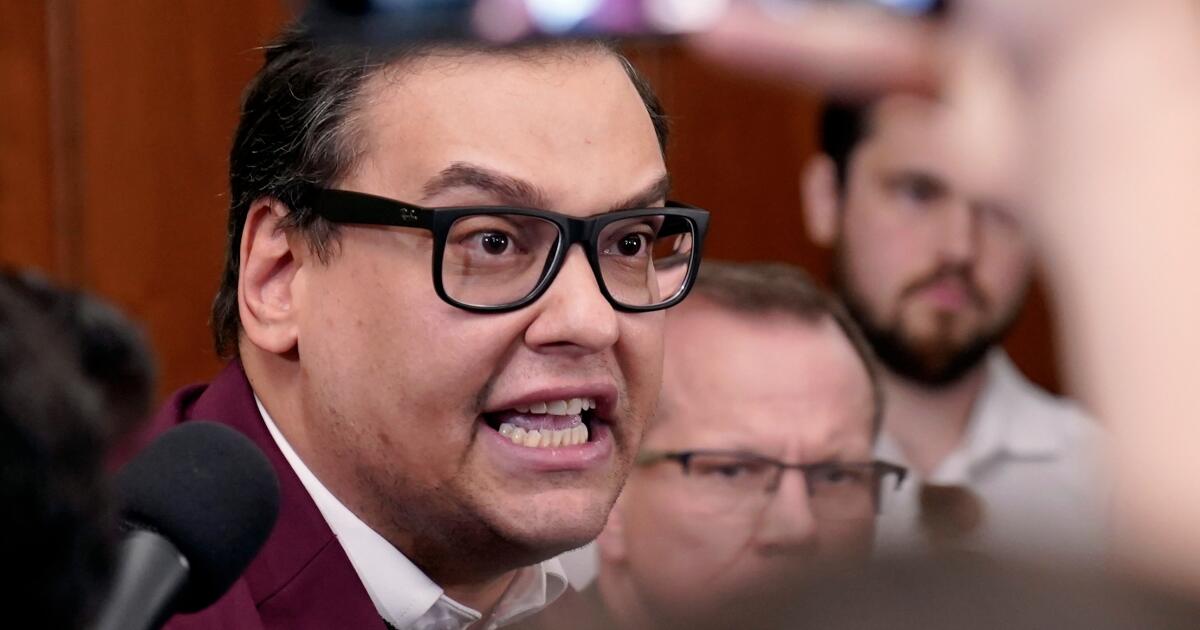
George Santos reported to prosecutors over suspicious Kalshi trades, AP source says

A prediction market reported former U.S. Rep. George Santos to federal prosecutors after he boasted he’d be going to President Trump’s State of the Union address, then bet against his own attendance, according to a person familiar with the investigation.

Kalshi, the online prediction marketplace, referred Santos to the Department of Justice after detecting suspicious trades made by him ahead of Trump’s Feb. 24 speech, the person said. The person spoke to the Associated Press on the condition of anonymity because they weren’t authorized to discuss the matter publicly.

Kalshi also reported the trades to the Commodity Futures Trading Commission, a federal regulatory body that has vowed to crack down on insider trading in prediction marketplaces.

The Justice Department and the CFTC didn’t immediately respond Tuesday to inquiries from the AP.

Santos also did not respond to text messages or phone calls.

The referral was first reported by NPR. Santos told NPR that he wasn’t aware of the investigation. He declined to say whether he had a Kalshi account.

“I’m not saying yes, I’m not saying no,” Santos told NPR.

The convicted ex-congressman had repeatedly discussed his intention to attend the State of the Union, which came just four months after he was granted clemency by Trump in a fraud case that led to his expulsion from the U.S. House.

On the eve of Trump’s speech, Kalshi put the odds of Santos attending at close to 75%.

Then, minutes into the speech, Santos posted on X that he had been waylaid at the airport. Immediately, several social media users accused him of running another scheme.

“Santos talking to his accountant and telling him to open his Kalshi account and bet all his money on No,” one user wrote, alongside a meme of Al Pacino counting money in the movie Scarface.

In March, Santos addressed the complaints on his podcast.

“I guess people lost money,” he said. “Some people made unexpected money. That’s to show you how fragile these markets are.”

Santos, who won office as a Republican after inventing a bogus persona as a Wall Street dealmaker, was sentenced to seven years in prison after pleading guilty to fraud and identity theft in 2024.

After serving just 84 days, he was ordered released by Trump, who called Santos a “rogue” but said he didn’t deserve a harsh sentence and should get credit for voting Republican.

Prediction markets, including Kalshi and its chief rival Polymarket, have drawn scrutiny as their businesses have expanded — with some lawmakers urging the platforms to do more to guard against insider trading.

Both companies have said they are reporting suspicious trades to federal regulators. Some investigations have led to criminal charges. In April a soldier involved in the military operation to capture Venezuelan President Nicolás Maduro was charged with using classified information to win more than $400,000 predicting the date of his capture on Polymarket.

In April, the Senate approved a bipartisan resolution to prevent its own members from using prediction markets.

Offenhartz writes for the Associated Press.

Source link

Bolivian president pushes state of emergency law as 2 ministers resign

Members of the Bolivian police in riot gear deploy tear gas during an operation to regain control of the seized Humberto Suarez Roca plant and oil field, in the municipality of Santa Rosa del Sara, Bolivia, on Wednesday. Hundreds of demonstrators stormed the plant a day earlier, forcing operations to halt and blockading the facility to demand President Rodrigo Paz’s resignation. Photo by Juan Carlos/EPA

June 3 (UPI) — Bolivian President Rodrigo Paz sent a bill to Parliament on Wednesday to regulate states of emergency, while two ministers resigned amid a crisis that has entered its fifth week of road blockades.

The crisis, which began in early May with protests over fuel shortages, rising living costs and opposition to economic measures promoted by the government, has left at least five people dead and caused economic losses that exceed $1.6 billion.

Since the inception, more than 100 roadblocks have disrupted the transportation of goods, food and medical supplies, and fuel distribution in different parts of the country.

“This law regulating states of emergency in the nation has already been sent to Parliament, and I hope it will be resolved soon,” Paz said during a public statement.

Paz said the initiative would provide a legal framework for actions the government plans to implement to ensure assistance to the population and distribution of essential supplies.

Bolivia’s Constitution provides for a state of emergency in extraordinary situations that affect the country’s security or normal functioning. However, the newspaper La Razón reported the government considers it necessary to have a specific law establishing procedures, scope and implementation mechanisms for that constitutional tool.

Paz added that any action taken by the police, armed forces and government would be guided by a “logic of humanitarian action” and defended dialogue as the path to resolving the crisis.

“We come from the real, democratic and constitutional culture of dialogue,” he said.

The announcement came the same day defense and education ministers submitted resignations, becoming the most significant cabinet departures since the protests began, according to reports from Bolivian media outlets.

Their departures follow the resignation of Labor Minister Edgar Morales less than two weeks ago.

The resignations represent a new political blow to Paz, who took office six months ago and is facing a growing humanitarian crisis.

The protests, led by labor unions, Indigenous organizations, teachers and groups aligned with former President Evo Morales, have expanded their demands, and some groups have begun to call for the president’s resignation.

According to reports by El País and Infobae based on data from Bolivian authorities and business organizations, the Federation of Private Business Entities of Bolivia warned that the road blockades continue to affect productive sectors, exporters and transport operators, while agricultural producers have warned of growing difficulties in moving goods and guaranteeing domestic supply.

The Legislative Assembly must now debate the proposal on states of emergency as protests continue and pressure mounts on the executive branch to solve the crisis.

The government maintains that road blockades are intended to destabilize the constitutional order, while protesters say the demonstrations are a response to deteriorating economic conditions and shortages that affect much of the country.


Source link

Federal judge pauses sentencing to weigh argument in Wisconsin judge’s immigration case conviction

A federal judge on Wednesday considered whether to throw out a jury’s guilty verdict against former Wisconsin Judge Hannah Dugan, who was convicted of felony obstruction for helping an immigrant evade federal officers.

The case was an early test of how the courts would respond to President Trump’s sweeping immigration crackdown.

Dugan had been scheduled to be sentenced on Wednesday, but U.S. District Judge Lynn Adelman postponed the proceedings indefinitely to instead hear arguments about whether to overturn her conviction.

Adelman did not rule from the bench and did not indicate when he might issue a decision. Dugan and attorneys for both sides left the courtroom without commenting to reporters.

Former judge’s attorney points to a Virginia case

Dugan’s attorney Steven Biskupic argued that her conviction was invalid and should be overturned. He said that was necessary because a federal appeals court in April overturned a key Virginia immigration case that the judge and prosecutors had cited in the Dugan case.

Biskupic argued that based on the 4th U.S. Circuit Court of Appeals overturning that ruling, Dugan was improperly convicted, procedurally, under a certain federal law.

“Our primary argument is this was an invalid theory of conviction,” Biskupic said.

In the Virginia case, an immigrant who was in the country illegally was detained by U.S. Immigration and Customs Enforcement agents and later escaped. He was recaptured and indicted on a charge of obstructing a pending immigration proceeding.

The federal appeals court found that the ICE action did not constitute a “pending proceeding,” as is required under the federal obstruction law.

Dugan’s attorneys argue that she should not have been charged because there was no “pending proceeding” against the immigrant in her courtroom being sought by ICE agents, only a warrant filed for his arrest. The filing of a warrant does not constitute a “proceeding” under the law, Biskupic argued.

Prosecutors countered that the facts in the Virginia case are different and don’t apply to Dugan’s. They also argued that other cases support Dugan’s conviction.

“The court should stick with its ruling,” said Richard Frohling, acting U.S. attorney for the eastern district of Wisconsin.

In response to a question from the judge, he contended that the appeals court was wrong to overturn the Virginia case. The judge also quizzed Frohling on what constitutes a proceeding under the law and how long it lasts.

“It could be a couple minutes, it could be a couple years,” Frohling said. “It all depends on the context.”

Dugan’s sentencing was postponed so the court can hear new arguments

Dugan, 67, faces up to five years in prison after a jury convicted her on Dec. 19. But it is unlikely that Dugan would be sentenced to prison. Federal sentencing guidelines generally call for probation for defendants like her who have no criminal history and are convicted of a nonviolent crime.

She resigned from her position as a Milwaukee County circuit judge two weeks after her conviction amid threats of impeachment from Republican state lawmakers. She had been a judge for nine years.

Dugan was present for Wednesday’s arguments but did not speak.

The Trump administration brought the case against Dugan as the president pressed ahead with his sweeping immigration crackdown. Trump’s administration and his allies branded Dugan as an activist judge, while Dugan’s attorneys said she was being unfairly targeted and argued, unsuccessfully, that she was immune from being charged because she was a judge.

Dugan’s case marked the first time that a state judge in Wisconsin went to trial on charges of obstructing immigration agents. She was acquitted of concealing an individual to prevent arrest, a misdemeanor.

Dugan helped an immigrant wanted by ICE agents

On April 18, 2025, immigration officers went to the Milwaukee County courthouse after learning Eduardo Flores-Ruiz had reentered the country illegally and was scheduled to appear before Dugan for a hearing in a state battery case.

Dugan confronted agents outside her courtroom and directed them to the chief judge’s office because she told them their administrative warrant wasn’t sufficient grounds to arrest Flores-Ruiz.

After the agents left, she led Flores-Ruiz and his attorney out a private jury door. Agents spotted Flores-Ruiz in the corridor, followed him outside and arrested him after a foot chase. A week later, FBI agents arrested Dugan in the courthouse, leading her outside in handcuffs.

Flores-Ruiz was deported in November.

Bauer writes for the Associated Press.

Source link

Scott Pelley fired from ’60 Minutes’ after 37 years at CBS

June 3 (UPI) — CBS News fired veteran journalist Scott Pelley from 60 Minutes after an argument with its new executive producer two days before.

Pelley, 68, is a former anchor of the CBS Evening News and joined the network in 1989. Pelley is a familiar face on Sunday evenings as a correspondent for 60 Minutes.

On Monday, Pelley took issue with the recent firing of two correspondents and the show’s leadership team. He told his new producer Nick Bilton, a tech journalist hired last week, that CBS News editor-in-chief Bari Weiss was “murdering 60 Minutes.”

“She was brought in to kill it, and she’s been doing exactly that,” The Hill reported Pelley told Bilton.

In a memo to staff Tuesday evening, Bilton said, “We have parted ways with Scott Pelley,” The New York Times reported. The network chose not to comment.

Bilton wrote a formal letter to Pelley explaining his termination, which was shared with The Times. He told Pelley he was “terminated for cause effective immediately.”

“I have been in combat in Afghanistan,” Pelley told The Times in an interview. “I have been in combat in Iraq. I have been in the war zone in Ukraine multiple times, risking my life and the happiness of my family because of my devotion to the broadcast.”

He said he still cares deeply about the show.

The program is CBS News’ most successful show, and its ratings were up 9% over last year. It’s often among the highest-rated weekly broadcasts in the country, according to Nielson.

In the letter from Bilton, he said Pelley “hijacked” the meeting Monday

“Yesterday’s performative display of hostility enacted in front of the staff instead of in a civil, private conversation, demonstrated that you have no interest in contributing to the future success of the show, or approaching my new tenure with a mind open to collaboration and progress,” Bilton wrote. “I am here to deliver first-in-class news programming, not to make headlines about newsroom drama. I am eager to work alongside those who share this goal.”

Pelley, in The Times interview, said the letter “betrays a complete misunderstanding of what we work for and what we live for at 60 Minutes.”

He also told The Times on Tuesday that “incompetence and unprofessionalism in the new management have wreaked havoc” at the network. “The collapse of values at the top has become untenable.”

He alleged that management had pressured him to insert bias into his stories over the past season, though he didn’t give details.

Now the show is down four of its correspondents: Sharyn Alfonsi and Cecilia Vega were fired last week, and Anderson Cooper left the show in May at the end of the season.

Weiss was hired last year by David Ellison, CBS owner and son of tech mogul Larry Ellison. She was given the order to revamp the news for the digital era. Weiss is an opinion writer with little broadcast experience. Bilton is a tech journalist with no experience in broadcasting.

CBS management had a meeting with Pelley on Tuesday to discuss the situation and find a way to move forward, but it turned contentious, some people with knowledge told The Times. Pelley said in the interview with The Times that Weiss wouldn’t answer his questions about why Simon, Alfonsi and Vega were fired.

Pelley said Weiss’ behavior “was cold and callous and beneath the dignity of CBS News.”

Weiss told staff Wednesday morning that “despite our attempts to engage with Scott Pelley and to find a way back, unfortunately we weren’t able to do so, and so we had to part ways.”

But Pelley said it wasn’t true. “At no point did anyone at the Tuesday meeting suggest that there could be steps taken by either side that would lead to a resolution,” he said.

Source link

In race for Pelosi’s seat, her famed political influence was a factor — but just one

Even on her way out, Rep. Nancy Pelosi (D-San Francisco) — 86 and retiring — held sway.

Last month, in the final stretch of the race to replace her, Pelosi endorsed Connie Chan, a member of the San Francisco board of supervisors and a candidate who had until then struggled to gain traction. The move clearly had an effect, with Chan advancing out of Tuesday’s primary to the general election in November, according to the Associated Press.

Political observers were quick to note that Pelosi’s famed political influence was alive and well, as made clear as of Wednesday morning by Chan’s bounding past the third-place finisher, tech millionaire and Democratic political operative Saikat Chakrabarti, who self-funded his campaign to the tune of nearly $10 million.

But cast another way, the race’s early results also showed the limits of Pelosi’s influence — in the form of state Sen. Scott Wiener, who as of Wednesday morning was clearly the race’s front-runner, holding a double-digit lead over both Chan and Chakrabarti.

Wiener — an ambitious and prolific state lawmaker with a strong base in San Francisco, particularly in the liberal bastion’s LGBTQ+ community — has long eyed the seat but held off from running for years in deference to Pelosi, a trailblazing politician and one of the most powerful of her generation. She was the first woman ever elected House Speaker in 2007 and oversaw both of President Trump’s first-term impeachments.

However, that changed in late October, when Wiener, 56, announced he couldn’t wait any longer and would be running this year. His announcement came before Pelosi had announced her own plans, amid broader party backlash against gerontocracy and elderly incumbents holding on within the aging Democratic establishment, and it appeared to irk her.

In early November, shortly after California voters passed Proposition 50 to allow Democrats to redraw the state’s congressional districts to better favor Democrats — an initiative she helped spearhead — the still influential Pelosi announced she would retire.

In that announcement, Pelosi thanked San Francisco voters for giving her wide latitude to be a fearless voice in Washington. She hadn’t faced a serious election challenge since the Reagan administration. In her last race, in 2024, she won reelection with 81% of the vote.

Pelosi then waited until last month to endorse Chan as her chosen successor.

Chan, 47, who was born in Hong Kong and immigrated to San Francisco with her family at age 13, was first elected to the board of supervisors in 2020, and has been chair of its budget committee since February 2023. Before winning office, she was a Chinese interpreter and then an aide for nearly 15 years to several different Democratic politicians from the Bay Area, including then-San Francisco Dist. Atty. Kamala Harris.

Other establishment figures, such as Sen. Adam Schiff (D-Calif.) and former San Francisco Mayor Willie Brown, endorsed Chan as well.

Last week, Pelosi said she’d decided to weigh in and back Chan in part because, after spending years boosting women into positions of power, she’d realized there weren’t enough around anymore.

“It’s not about women being better than men; it’s that we have to have women at the table,” she told NBC News.

At her election night party, Chan told the SF Standard that Pelosi’s endorsement “absolutely changed the tide” in the race, delivering a “fatal punch” on behalf of her campaign.

But that punch, if devastating to Chakrabarti’s campaign, had clearly not knocked out Wiener — who was ready Tuesday night with a few punches of his own in a speech to his supporters.

“Tonight, San Franciscans sent a very clear message,” he said, according to shared remarks. “San Franciscans are ready for bold leadership, real results, and a new generation of leaders that isn’t afraid to take on the toughest fights facing our country.”

Wiener, who served in the San Francisco board of supervisors himself before winning election to the state Senate in 2016, said in this political moment, “we can’t afford politics that simply preserve the status quo.”

He said, “I’m not going to Washington to sit quietly, protect the status quo, or wait my turn.”

“I’m going to fight relentlessly for Medicare for all, to build millions of homes, to make public transit more expansive and reliable, for affordable clean energy, for working families, for civil rights, and for democracy itself,” he said. “I’m going to fight to protect our immigrant neighbors, LGBTQ people, reproductive freedom, and the rule of law — and to protect them from Donald Trump and MAGA extremism.”

Others, including many in the LGBTQ+ community, also cheered the strong showing from Wiener, who is gay and has long championed LGBTQ+ rights. Kelley Robinson, president of the LGBTQ+ rights organization Human Rights Campaign, said her organization was “thrilled.”

“We need more voices like Wiener in Washington. Not only would he expand the number of openly LGBTQ+ members of Congress, he has a record of impact and delivering for his constituents,” Robinson said. “We are excited to support him on to victory in November.”

With Tuesday’s primary settled, a new head-to-head race for Pelosi’s seat begins — one that, given her endorsement of Chan and Wiener’s intentional focus on pulling San Francisco in a new direction, will be an even clearer referendum on her influence.

Source link

US cites forced labour concerns as grounds for new tariffs | Trade War News

The administration of US President Donald Trump has proposed new tariffs of up to 12.5 percent on imports from 60 economies after determining they had failed to curb trade in goods made with forced labour, an assertion that was rejected by US trading partners.

The proposal from the Office of the United States Trade Representative (USTR), issued late on Tuesday, comes from a Section 301 unfair trade practices investigation designed to help rebuild US President Donald Trump’s emergency tariffs, struck down by a US Supreme Court decision in February.

Recommended Stories

list of 4 itemsend of list

Despite laws banning them, the products of forced labour are deeply embedded in supply chains across the world. European lawmakers bristle at the accusation that the region is less effective than the US at curbing the trade in such goods, with one describing the US findings as “utterly absurd”. Business leaders said the US move created more confusion for companies.

The USTR proposed 10 percent additional duties on imports from Canada, Ecuador, the European Union, Indonesia, Mexico, Pakistan, Argentina, Bangladesh, Cambodia, El Salvador, Guatemala, Malaysia, Taiwan and Britain. The USTR said all had plans or partial schemes in place.

The trade agency said it would impose additional duties of 12.5 percent on the remaining 45 countries that it investigated. These include China, India, Nigeria, Japan, South Korea, Vietnam, Australia and New Zealand.

“The failure of our most important trading partners to address the importation of goods made with forced labour is unacceptable,” US Trade Representative Jamieson Greer said in a statement. “This creates a dynamic where American workers are forced to compete globally on an unlevel playing field.”

The USTR said it would accept public comments on the proposed tariffs and other remedies through July 6, with a public hearing scheduled for July 7.

The announcement comes ahead of the July 24 expiration of a 10 percent temporary tariff imposed by the Trump administration on February 20, the day the Supreme Court struck down Trump’s tariffs under the International Emergency Economic Powers Act. It also shows how determined the Trump administration is about building a wall of tariffs around the US economy, the world’s largest, despite repeated setbacks in court.

After the loss in the Supreme Court, Trump turned to another law to impose temporary 10 percent tariffs globally. But those stopgap levies expire July 24. And a specialised trade court ruled last month that they, too, were illegal – though the government can continue collecting them while that case works its way through the courts.

Unjustified tariffs

The European Commission said the tariffs were unjustified and reiterated its commitment to the trade deal sealed with Washington last year.

Bernd Lange, the chair of the European Parliament’s trade committee, which voted on Tuesday to accept that trade deal, said the new tariffs were expected, but said the results of the US investigation were still “utterly absurd” given a 2024 EU law to ban imports of forced labour products.

“The impression is increasingly emerging that a tariff measure is sought first, and only then is a suitable legal justification found,” he said. However, he added that the key question would be whether the additional tariffs would exceed those agreed between both sides last July.

The US’s largest trading partner, the EU, agreed last July to accept tariffs of 15 percent on a broad range of its exports. In its report, the USTR said the EU anti-forced labour measures only came into force in December 2027 and lacked key elements.

It was unclear whether the proposed tariffs – which the US release described as “additional duties” – would come on top of levies agreed in bilateral deals signed with the US.

Britain said it was in regular talks with the US and was taking action to tackle forced labour. It added that the preferential access to US markets that it had negotiated for UK businesses remained in place.

Mexico said that goods that were compliant under the United States-Mexico-Canada Agreement (USMCA) would be exempt from the new tariffs.

Taiwan said it was “hopeful and confident” that the final results would reflect agreements already reached, securing relatively preferential treatment.

Beijing, facing 12.5 percent tariffs, said that it opposed all forms of unilateral tariffs and that there was no forced labour in China. India, confronted with the same rate, said it was engaged with Washington on the Section 301 proceedings, noting the proposed tariffs were not final.

“There will be deep concerns in the international business community that the US [forced labour law could] become a global template,” said Andrew Wilson, deputy secretary general of the International Chamber of Commerce.

“Anyone can make a claim, get a shipment impounded and the company has to prove no forced labour in supply chain.”

Certain exemptions

The USTR said it would exempt from tariffs products including energy, rare earths and some other metals, beef, coffee, certain fruits and vegetables, pharmaceuticals, organic chemicals and aircraft parts.

It also said it was proposing a textile mechanism that would allow for a certain volume of apparel and textile imports to enter the US at a reduced tariff rate, without giving details.

The ICC’s Wilson said the list of exemptions, stretching for more than 76 pages, suggested sensitivities over the potential cost-of-living hit to food and other goods with known forced-labour risks.

“It doesn’t make sense if the object of this is to enhance controls on modern slavery,” he said.

Source link

Takeaways from the California gubernatorial primary election

After all the buildup, fear and uncertainty, the most wide-open and unpredictable California gubernatorial primary in decades appears to have ended in the most consistent and predictable of ways.

California has never elected a female governor. That won’t change in November.

Voters have never much cared for rich people trying to buy the state’s highest elected office. They still don’t.

The California electorate has typically favored experience over youth, and favored bland and boring over razzle and dazzle. It continues to do so.

And for all the speculation about one political party or the other being shut out in Tuesday’s primary, the November runoff may very well turn out to be a thoroughly conventional Democrat vs. Republican matchup.

Here are five takeaways from a gubernatorial contest that was sedentary and sleepy until, suddenly, it wasn’t.

Flashback!

Three months ago, Xavier Becerra seemed so irrelevant he — along with a clutch of other weak-polling candidates — was conspicuously excluded from a scheduled debate at USC. Today, the Democrat has seemingly punched his ticket to November.

The obvious parallel is with another massive underdog, Gray Davis, who also came from far behind to win the last time a gubernatorial primary held this level of uncertainty and suspense. That was back in 1998.

Like Davis, Becerra has a political persona that could be marketed as a sleep aid. No one will ever mistake either of them for, say, Arnold Schwarzenegger. But Becerra’s even-keeled demeanor seemed the perfect prescription following the overnight implosion of Eric Swalwell’s scandal-scarred campaign while presenting a welcome contrast with the endless Sturm und Drang emanating from Washington, D.C.

Despite California’s star-struck reputation (perpetuated mainly by outsiders), the state has elected far more governors like Davis and Becerra than Schwarzenegger and Ronald Reagan. In fact, other than Schwarzenegger, who prevailed in an unprecedented recall campaign, every candidate following Reagan has successfully run for statewide office at least once before being chosen governor.

Becerra was elected attorney general before heading to Washington to join the Biden administration; his candidacy offered worn-out voters a safe harbor amid the Trumpian tempest.

Cha-ching!

There are things money can’t buy which, Tom $teyer — er, Steyer — is just the latest to discover.

The hedge fund billionaire turned Democratic activist sank more than $215 million — a record — into his gubernatorial bid, after spending nearly $350 million in a failed 2020 try for president.

With roughly 60% of the vote counted, he was running an unimpressive third and hoping a lopsided surge of still-to-be-counted ballots will push him into the top two.

Half a billion dollars, which makes for a pretty pricey, “Meh.”

California has a long record of rejecting money-bag candidates for governor and the U.S. Senate — a pattern stretching back more than half a century. Given that hostile history, Steyer would enter the runoff as a distinct underdog, notwithstanding the many added millions he is poised to spend.

“These filthy rich people who don’t have to deal with the kind of financial struggles that people have in connection with their daliy lives just don’t feel relatable,” said Garry South, who ran Davis’ successful 1998 campaign against the free-spending Steyer of his day, former airline executive Al Checchi.

Given the relentlessly negative campaign Steyer has waged, besieged voters could count on many more ugly months of brutality on the airwaves, on computer screens and in their mailboxes.

The only happy ones would be TV station managers and political consultants cashing Steyer’s super-sized checks.

A self-fulfilling prophecy

It was never likely. But the mere prospect of Democrats being shut out of the November runoff was enough to guarantee such a scenario would not happen in this reliably blue state.

With a large pack of Democrats running and just two serious Republican contenders, Democratic partisans feared their fractured vote would let the GOP nab both spots in Tuesday’s top-two primary.

Much of the freak-out was fed by polls supposedly showing Republicans Steve Hilton and Chad Bianco atop the field. But no candidate ever had much more than a paltry 20% support; for all the heavy breathing, the race was always pretty much a multi-candidate tie.

Fearing the worst, however, voters who normally couldn’t tell a “jungle primary” from a jungle gym began thinking a lot like gimlet-eyed political strategists. Democrats, in particular, held onto their ballots much longer than usual, waiting to see which candidate appeared strongest at the end.

“The decision matrix on this was not just the political insiders, but all the normies who heard there might be two Republicans,” said Paul Mitchell, a Sacramento political data expert who developed a popular online tool handicapping various election scenarios. “They’re talking to friends and families. It was kind of crazy.”

In the end, the race among Democrats became less a contest than a self-fulfilling prophecy. Becerra was seen as the candidate with the best chance of advancing to November, so many voters flocked his way — ensuring he would advance to November.

Now he waits to see whether his opponent will be Hilton or Steyer.

Sacramento still a boy’s club

More than 30 states have elected female governors. A few have done so multiple times. But come January, California — which perceives itself as oh-so-cutting edge on oh-so-many things — will install the 41st in the state’s unbroken line of male governors.

Things might have been different had Kamala Harris jumped into the contest. The former vice president, U.S senator and California attorney general would have been a prohibitive favorite to end that gendered streak. When she opted not to run, there were still a handful of female contenders. But Toni Atkins and Betty Yee eventually fell by the wayside, leaving just Katie Porter.

The former Orange County congresswoman and whiteboard wizard was making her second try for statewide office after a failed 2024 bid for U.S. Senate. Given her wide name recognition and national fundraising base, Porter started as one of the front-runners for governor. But a needlessly combustible TV interview and a leaked video that showed her profanely snapping at one of her aides played into persistent questions about Porter’s temper and temperament.

Unfair? Perhaps.

“There’s expectations that are put on a woman” that are different from those male candidates face, said Mindy Romero, director of the Center for Inclusive Democracy at USC. Toughness in a man can be seen as abrasive or off-putting in a women. Acting with authority can come across — at least to some observers — as overbearing.

“A woman’s version of a leader still has to be at least somewhat feminine,” Romero said. “That’s what our society expects. So you have to be tough, but do it with a smile.”

Clearly, there’s a double standard. There’s also apparently a different standard for the office of governor. California, after all, became the first state in history to send two women to serve at the same time in the U.S. Senate and is home to the first female House speaker, San Francisco’s Nancy Pelosi.

But in Sacramento, within the governor’s suite, California’s highest glass ceiling remains firmly intact.

Youth won’t be served

Last fall, over a plate of enchiladas in downtown San José, Mayor Matt Mahan emphatically ruled out a run for governor.

“I have a wonderful marriage,” Mahan said at the time. “I have two wonderful kids. I loved working in the private sector. I’ve got a lot of great friends … I genuinely want to make our city better, and I love the job.”

He should have stuck to those words.

Instead, Mahan and his wealthy Silicon Valley backers talked themselves into a rushed and premature campaign that was never remotely competitive. Investors might have thought they were getting in on the ground floor of the next Amazon. Instead, Mahan’s candidacy was more like Pets.com, a famous e-commerce flop that came to embody the heedless froth of the dot.com bubble.

But it would be equally premature to write Mahan off.

Decades ago, another youthful big-city mayor ran an ill-considered campaign for governor, finishing a distant fourth and failing to muster even double-digit support. That, however, didn’t hurt Pete Wilson’s political career. Four years later, he was elected to the U.S. Senate en route to two terms as California governor.

At 43, Mahan has plenty of highway ahead and a good deal of political potential. His time may yet come.

Source link

Meliá exits 15 Cuba hotels ahead of U.S. deadline

Tourism in Cuba has all but disappeared, as hotels close and airlines cancel routes because of fuel shortages. Photo by Ernesto Mastrascusa/EPA

June 3 (UPI) — Spanish hotel operator Meliá Hotels International said Wednesday it will stop managing 15 hotels linked to Cuba’s military-run conglomerate GAESA, expanding the withdrawal of foreign operators from the island just days before new U.S. sanctions take effect.

The decision makes Meliá the fourth international hotel company to reduce or end operations in Cuba in less than a week, following the departures announced by Blue Diamond, Iberostar and Archipelago International under its Aston brand.

Meliá informed Spain’s National Securities Market Commission that its Portuguese subsidiary, Ilha Bela, will immediately terminate management, marketing and brand-use services at hotels associated with entities controlled by GAESA, according to Forbes España.

The company said the economic impact will be limited because many of the affected properties already were closed or only partially open.

In February, the Spanish hotel chain confirmed the temporary closure of several properties due to fuel shortages, transportation problems affecting workers and a sustained decline in tourism demand, CiberCuba reported.

At that time, the company operated 35 hotels on the island and said it was not considering leaving the Cuban market.

The latest move comes two days before the deadline set by President Donald Trump‘s administration for foreign companies to sever commercial ties with Cuba’s military conglomerate or face potential economic sanctions.

GAESA controls a significant portion of the Cuban economy and dominates large segments of the tourism sector through companies such as Gaviota Tourism Group.

On Tuesday, Archipelago International withdrew from several hotels operated under the Aston brand for Gaviota, including properties in Havana, Varadero and Cuba’s northern cays.

Days earlier, Canada’s Blue Diamond announced the end of its operations on the island, while Spain’s Iberostar stopped managing 12 hotels linked to GAESA assets.

None of the companies officially attributed their departure to the U.S. measures.

The withdrawals coincide with a deep crisis in Cuba’s tourism sector. According to data cited by IndexBox, Cuba received 328,608 international visitors between January and April 2026, a 55.8% decline from the same period a year earlier.

The deterioration is also affecting air transportation, as at least 11 airlines have suspended or reduced flights to Cuba this year.

The withdrawal of Meliá and Iberostar has also raised concerns in Spain.

Jaume Bauzà, tourism, culture and sports minister for the Balearic Islands regional government, said Wednesday that authorities are closely monitoring the situation facing the two Mallorca-based companies and offered institutional support.

“We will look after them. This is a commercial matter, but if we can help in any way, we will do so,” Bauzà said, according to Forbes España.

He said he hopes the situation can be resolved “as quickly as possible” for the companies and the Cuban population.

Source link