police

Couple charged with felonies for Empire State Building climb-turned-proposal

A skyscraper-scaling daredevil told police that he and his girlfriend climbed the Empire State Building’s antenna and unfurled a banner about love and peace because he wanted to “do something special” for their engagement, prosecutors said Thursday at the couple’s arraignment on felony reckless endangerment, burglary and other charges.

The couple, who go by Angela Nikolau and Ivan Beerkus, said little as they left court, though Beerkus responded to a journalist’s question about the stunt by saying, “We believe in love.”

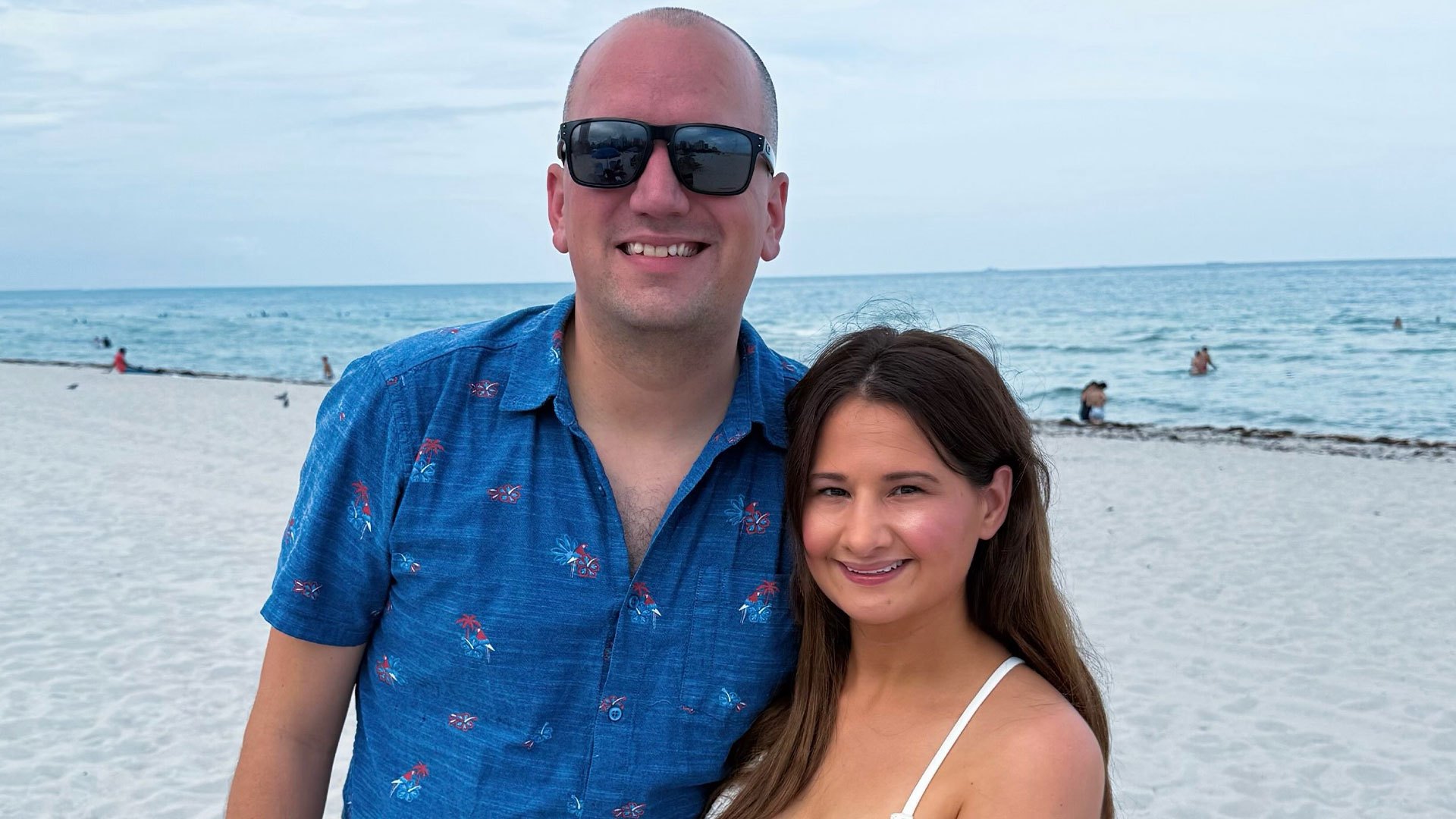
Authorities said the two — who were the subject of the 2024 Netflix documentary “Skywalkers: A Love Story ” about their “rooftopping” exploits and budding romance — created not only a spectacle but also a danger by ascending the famed skyscraper’s broadcast antenna Wednesday.

After reaching the top, 1,454 feet above Midtown Manhattan, the climbers displayed a black banner reading, “When the power of love beats the love of power the world knows peace,” news helicopter video showed.

Then they collected the banner and descended to a slightly lower ledge, where an apparently successful marriage proposal unfolded. Nikolau posted images of the escapade on her social media accounts, including a photo that modeled an engagement-style ring above a bird’s-eye view of Manhattan.

Police waited about half an hour for the antenna to be powered down before Emergency Services Unit officers started ascending and eventually intercepted the climbers on their way down, according to the court complaint, which noted the danger to officers who climbed about 1,250 feet above the ground. The court document identified the two by their formal names, Angelina Nikolau and Ivan Kuznetsov.

“Skywalkers: A Love Story” follows Beerkus, now 32, and Nikolau, 33, as they make often unauthorized ascents of tall structures, sometimes posing as construction workers to sneak in.

The court complaint said police found a broken lock on a security door on the Empire State Building’s restricted-access 104th floor, which provides access to the antenna. The highest public floor is the 102nd, where there’s an observation deck. Going higher requires a key card, according to the court complaint.

The Empire State Building’s management has called the climb “unauthorized” but hasn’t answered questions about what interactions, if any, the daredevils had with security workers. Visitors to the skyscraper are screened and told not to bring large packages, sports equipment, costumes or masks, among other items.

Beerkus and Nikolau were released without bail, in accordance with New York laws that restrict when monetary bail can be set. Their attorney, Jason Krinsky, said outside court that once prosecutors provide evidence, he and his clients would assess it and determine next steps.

“What a way to propose — something you can only dream of,” Krinsky said. “So you’ve got to, you know, give him some credit for that.”

Other daredevils have climbed the antenna and other parts of the Empire State Building. Those ascents have largely been unauthorized, but actor and musician Jared Leto was allowed to climb up to the base of the antenna from the 86th floor in 2023 to promote a tour.

Peltz writes for the Associated Press.

Source link

Brother of NFL’s Calais Campbell charged with murdering their mother

A brother of veteran NFL star Calais Campbell has been charged with the murder of their mother in her Atlanta home on Tuesday.

Ciarre Campbell, one of the Baltimore Ravens defensive end’s seven siblings, faces two counts of murder as well as aggravated assault, and possession of a knife during the commission of a felony in connection with the death of his 71-year-old mother Nateal Campbell, according to the affidavits for his arrest issued by the magistrate court of Fulton County, Ga.

“We are devastated to share that the Campbell Family has lost its matriarch, Mrs. Nateal Campbell,” the family said in a statement. “While the details of her passing are still being investigated, we take comfort in knowing she is reunited with our father, her beloved Chuck, and in the arms of our Lord and Savior, Jesus Christ. We ask for privacy at this time so that we may honor her and share in our overwhelming grief privately and as a family.”

According to the Atlanta Police Department, officers responded Tuesday at around 12:36 p.m. to a welfare check at Nateal Campbell’s address. They found a male, later identified as Ciarre Campbell, 41, who “appeared to have barricaded himself inside the home.”

Nateal Campbell was found unresponsive inside the home and was pronounced dead at the scene by EMS services. Ciarre Campbell was detained by the officers and transported to the Fulton County Jail, where he was held without bond. He waived his initial court hearing Wednesday.

A booking photo of Ciarre Campbell provided by the Fulton County Sheriff's Office on Wednesday.

A booking photo of Ciarre Campbell provided by the Fulton County Sheriff’s Office on Wednesday.

(Fulton County Sheriff’s Office Via Associated Press)

WSB-TV in Atlanta reports that Ciarre Campbell is being represented by defense attorney Jay Abt, who told the station that his client is innocent.

“We look forward to his day in court,” Abt said. “I’m honored to defend him and, most importantly, the Campbell family.”

In a 911 call released by police, a man said he was calling for authorities to check on his mother at her house. He said he was there with his sister and brother-in-law but they couldn’t get inside. According to the caller, his brother — whom the caller says is “mentally ill” — had been staying at the house and was seen driving their mother’s car, “which is very unusual [because] he doesn’t drive at all.”

The caller said his brother was inside the house and told them their mother had left, even though video footage from a neighbor showed that wasn’t the case.

The affidavit for arrest stated that Ciarre Campbell created “incisions upon the victim’s neck causing her to be nearly decapitated.”

Atlanta police say they have received at least 10 calls for service at that address since September, including one in April reporting arson. According to a police report from that incident, Kimba Blaylock had called 911 because her brother, identified in the report as Ciarrie Campbell, had started a fire to rid the house of demons.”

Firefighters found no one inside the house.

Another police report from May 26 states that police were dispatched to the address on a dispute call. The responding officer wrote that a neighbor told him that her neighbor’s son, identified in the report as Ciarri Campbell, “was acting crazy and putting stuff in her trash and yelling at her.” She told the officer that the neighbor’s son had just been released from a hospital “for mental issues” a couple of days earlier.

The neighbor also said that Nateal Campbell had told her that her son “was a good kid.”

Calais Campbell is a five-time Pro Bowl selection who has played 18 seasons in the NFL for the Arizona Cardinals, Jacksonville Jaguars, Miami Dolphins, Atlanta Falcons and Ravens. He was named the Walter Payton NFL Man of the Year in 2019.

“We are incredibly saddened to learn about the passing of Calais Campbell’s mother,” the Ravens said Wednesday in a statement. “We extend our deepest condolences and full support to Calais and his family during this difficult time.”

The Associated Press contributed to this report.

Source link

Afghan migrants say Turkish police beat them with iron rods before they lost limbs to frostbite

Şafak Bozkurt, who chairs the Van Bar Association Human Rights Centre Migration and Asylum Commission, said he was familiar with this type of push-back in the region, and aware of cases of hypothermia.

Afghan migrants have reported multiple similar incidents since 2021, when the Taliban seized power in Kabul, according to Turkey-based activist Zakira Hikmat. She said increased border surveillance in Turkey had forced them onto more dangerous routes.

Mahmout Keçen, another migrant-rights activist based in Van, said the nature of the mountains “most commonly used by Afghans entering Turkey irregularly” meant crossings had to be made in difficult, risky weather conditions.

He has worked on numerous cases involving Afghans and other migrants who alleged “ill-treatment, push-backs, denial of access to asylum procedures, and forced returns” around the Iran-Turkey border region.

The Turkish foreign ministry told the BBC such allegations were unfounded and “unfairly cast a shadow on Turkey’s successful efforts in combating irregular migration”.

“Due to its geopolitical location on migration routes and hosting a significant migrant and refugee population, Turkey aims to implement a human-centred and sustainable migration-management system that is compatible with civilisational values, that balances security and freedom.

“Thanks to Turkey’s effective measures and successful fight against irregular migration, irregular migration flows towards the European Union have been almost completely halted.”

The Iranian authorities have also been approached for comment.

Source link

South Africa deploys police as anti-immigrant protests prompt fears | News

Anti-migrant groups have demanded undocumented foreigners leave the country by Tuesday.

Businesses in South African cities have been shuttered and police have been deployed to the streets as demonstrators gathered at anti-immigrant protests around the country.

Anti-immigrant groups have given undocumented foreign nationals a “deadline” of Tuesday to leave the country. The groups have falsely claimed that undocumented immigrants will face arrest and deportation if they do not leave in time.

Recommended Stories

list of 3 itemsend of list

The South African government has rejected the groups’ threats as false, but thousands of people have been pushed to flee.

President Cyril Ramaphosa said on Monday that the right to protest “does not allow people to threaten or intimidate others, or to engage in acts of vandalism or violence”.

“Whatever the motivation, taking the law into one’s own hands is vigilantism,” he said.

Reporting from a protest in Johannesburg, Al Jazeera correspondent Haru Mutasa said the demonstrators were both working-class and middle-class South Africans and from different tribes around the country.

“They all have one goal, which is basically that they want the government to do something about undocumented foreigners in the country,” she said. “They’re saying that they’re frustrated, that they’ve heard promises from the government but they’re not seeing any difference on the ground.

“They’re asking why is it, when some of them have degrees, why can’t they get a job?”

Fears mount amid xenophobic attacks

The protests started as small gatherings of anti-immigrant groups in April but have been growing recently.

The country has seen weeks of xenophobic attacks, with at least two Mozambicans, an Ethiopian and a Malawian killed in anti-immigrant violence, the AFP news agency reports.

SOUTH AFRICA MIGRATION
Malawian refugees gather outside their embassy as they try to get buses back to their home country on June 29, 2026 [Kim Ludbrook/EPA]

Although the groups say they are targeting undocumented migrants, foreign people who are in South Africa legally are also at risk. Thousands of foreign nationals are camping outside consulates and shelters for protection. Others say they have been evicted or fired, their landlords and employers citing fears of fines or attacks.

Many foreign nationals have already fled the country. Some have left on their own, while others have asked their embassies for assistance. Several African countries have sent aircraft and buses to repatriate their fleeing nationals.

While some political parties have been calling for peaceful protests, other politicians have increasingly been using anti-immigrant rhetoric as the country’s November elections approach.

South Africa has a history of anti-immigrant violence. In 2008, 62 people were killed in riots, and more xenophobic attacks occurred in 2015 and 2016. At least 12 people were killed in 2019 when armed mobs attacked foreign-owned businesses around Johannesburg.

Source link

Police hunt for suspect after three wounded in Monaco blast | Crime News

Ukrainian oligarch reported to be among injured in explosion at residential building in the Mediterranean principality.

Police in Monaco and neighbouring France are hunting for a man suspected of detonating a makeshift bomb in the centre of the wealthy Mediterranean principality, which seriously injured several people, officials said.

Three people, including a teenager, were hurt in the explosion that struck at about 9pm local time (19:00 GMT) on Monday in a residential building in Monaco, according to authorities in the micro-state on the French Riviera, known as a haven for billionaires and their luxury yachts.

Recommended Stories

list of 4 itemsend of list

According to the AFP news agency, Ukrainian oligarch Vadym Yermolaiev was one of those wounded.

Monaco’s Minister of State Christophe Mirmand initially told AFP that the blast appeared to be “an attack”, but later dropped the term, describing it as a “deliberate explosion”.

A couple in their 50s or 60s suffered life-threatening conditions, while a 13-year-old who was “very likely related to the couple” suffered less serious injuries, Mirmand said, without disclosing their identities.

The explosive device apparently contained bolts and buckshot, Mirmand said.

“This is the first time in history, to my knowledge, that such an act has taken place in the principality,” he said.

A source close to the investigation who asked not to be named told AFP that one of those wounded was Yermolaiev.

Yermolaiev, a multimillionaire Monaco resident, has been subject to sanctions from Kyiv since December 2023, which Ukrainian security services reportedly said stemmed from his alcohol business activity in Russian-occupied Crimea.

Monaco’s public prosecutor, Stephane Thibault, said a suspect had left a bag or package in the building’s lobby before leaving.

French newspaper Le Figaro said video surveillance images showed a man dropping a backpack at the entrance of a residential building shortly before the explosion.

Monaco’s Prince Albert II described the incident as a “heinous crime” and “a shock to the entire Monegasque community”.

An aide to French Minister of the Interior Laurent Nunez said police were working “to find the perpetrator, who has fled”.

An AFP photographer at the scene saw a heavy police presence with access to the area cordoned off, while a helicopter circled overhead.

Source link

Supreme Court limits police use of cellphone data to find crime suspects

The Supreme Court cast doubt Monday on whether police may obtain cellphone data to find crime suspects.

In a 6-3 decision, the justices said this location data showing where a cellphone user has traveled is personal and private and subject to the protection of the 4th Amendment’s ban on unreasonable searches.

Justice Elena Kagan said these “records serve as a personal journal of a user’s movements.”

She said the data “resembles other private materials—think of emails, documents, photographs, or calendars—that even if stored on Google’s servers, a user reasonably views as his own…and reasonably expects to be shielded from the inquisitive eyes of the government.”

Because an “individual has a legitimate expectation of privacy in his cellphone location data,” she said police investigators need a valid search warrant from a magistrate.

The court stopped short of deciding the proper basis for a search warrant in such cases. Instead, the justices sent the case back to judges in Virginia.

But the outcome casts doubt on “geofence warrants.”

In recent years, police have gone to Google and cellphone companies seeking tracking data on cellphones that were at a crime scene. Some times, they have had a warrant from a magistrate.

Civil libertarians say the use of this tracking data raises the specter of mass surveillance on innocent people.

Police and government lawyers say no one has a reasonable right to privacy when they are walking on a sidewalk or driving down the street.

The case before the court arose from the armed robbery conviction of a Virginia man who stole $195,000 from a credit union in a small town near Richmond.

By the time police arrived, the robber had fled. But surveillance cameras showed he was carrying a gun and a cellphone.

Lacking other leads, detective Joshua Hilton asked a judge to issue a special type of warrant seeking information from Google.
Referred to as a “geofence warrant,” it seeks data from phones in a particular area at a particular time.

The detective sought data on phones that were within 150 yards of the credit union within one hour of the late afternoon robbery.

After examining and paring down the data, the detective asked for the phone records of Okello Chatrie. Then, with a search warrant of his home, investigators found two robbery-style demand notes, a semi-automatic pistol and about $100,000 in cash.

A judge refused to suppress the evidence from an allegedly unconstitutional “search”, and Chatrie entered a conditional guilty plea.
The full 4th Circuit Court of Appeals split evenly on the legality of the geofence warrant, and the Supreme Court agreed to decide the issue in Chatrie vs. U.S.

Usually investigators obtain warrants to search the home or vehicle of a known crime suspect.

The new and disputed geofence warrrants seek to find a suspect by examining data on the cellphones that were at the scene of a crime.

The FBI used this cellphone data in 2021 to identify suspects who broke through police barracks on Jan. 6, 2021, and pushed their way into the Capitol to disrupt the official counting of electoral votes.

Chief Justice John G. Roberts and Justices Sonia Sotomayor, Neil M. Gorsuch, Brett M. Kavanaugh and Ketanji Brown Jackson agreed on the outcome in Chatrie vs. U.S.

In a 21-page dissent, Justice Samuel A. Alito said the court had “carefully set the stage for its planned performance: striking a pose as a great champion of privacy in the digital age. I cannot support this irresponsible escapade.”

Justice Clarence Thomas agreed.

Justice Amy Coney Barrett agreed in a one-paragraph dissent. “Chatrie had no reasonable expectation of privacy in data about his public movements that he voluntarily disclosed to Google,” she said.

Source link

Iraq security forces arrest several officials in anticorruption crackdown | Corruption News

Elite security personnel carry out a large-scale operation at dawn in the Green Zone and several neighbourhoods in Baghdad, security source says.

Several Iraqi politicians, lawmakers and officials have been arrested on corruption charges, Iraqi state-run media report.

Several people, including members of parliament “whose immunity had been lifted and officials whose names appeared in … confessions”, were arrested early on Sunday in the capital, Baghdad, the Iraqi News Agency reported, quoting a security source.

Recommended Stories

list of 3 itemsend of list

It was not immediately clear who had been arrested. There was no immediate official statement on the arrests from the Iraqi government or security forces.

A security source told Al Jazeera that elite Iraqi security forces carried out a large-scale arrest operation at dawn in the fortified International Zone (Green Zone) and several neighbourhoods in Baghdad.

The source said the arrests were carried out by the Counter Terrorism Service and were based on statements provided by Adnan al-Jumaili, deputy oil minister, after his arrest last month on corruption charges.

Iraq’s new prime minister, Ali al-Zaidi, has pledged to fight corruption and mismanagement that have plagued Iraq for decades.

Authorities seized about $86m in cash this month that was allegedly part of the corruption case against al-Jumaili.

The Associated Press news agency reported that seven people were arrested on Sunday, including five members of parliament. It cited a security agency report it obtained. The AP said some of those arrested were from the political bloc of former Prime Minister Mohammed Shia al-Sudani.

During November’s parliamentary elections, al-Sudani’s bloc won the largest share of seats, but he did not return as prime minister. He stepped aside amid a deadlock in the Coordination Framework, a group of Shia parties allied with Iran that brought al-Sudani to power. They disagreed for months over their preferred candidate for the post.

Source link

Doug Martin wrongful death lawsuit alleges ‘excessive force’ by police

The parents of Doug Martin filed a wrongful death lawsuit alleging that police officers used excessive force in trying to subdue the former NFL running back while he was “experiencing a mental health crisis” last October.

The lawsuit, filed Tuesday in the Northern District of California, also claims that paramedics contributed to Martin’s death by failing to “provide timely medical care.” The city of Oakland, several police officers and emergency medical service provider Falck USA/Northern California were named as defendants.

Martin died Oct. 18 in a hospital following his arrest by officers responding to reports of a break-in at a residence. He was 36. His death remains under investigation by Oakland police.

According to the Alameda County coroner’s office, Martin’s autopsy reports still are being finalized. Martin family attorney John Burris told the Athletic that an independent pathologist told the family that Martin potentially died from restraint asphyxia.

“Plaintiffs allege, on information and belief, that Decedent Martin died from restraint asphyxia caused by Oakland police officers and the FALCK NORCAL paramedics’ failure to provide timely medical care,” the lawsuit states.

The Oakland Police Department and Falck Norcal did not immediately respond to messages from The Times.

According to the complaint, Martin was “experiencing a mental health crisis” when his mother called for paramedics. He then fled and hid in a neighbor’s basement, where officers found him.

“After a brief struggle, defendant police officers physically restrained him,” the complaint states. “During the restraint, decedent Martin was placed face down while one or more officers pressed on his back. After a period of time, defendant Officers turned him onto his side.

“When they did so decedent Martin was unresponsive seemingly unconscious; However, the defendant officers initially believed he was sleeping or pretending to be sleep. When decedent Martin remained unresponsive, an officer requested medical assistance.

“Plaintiffs are informed and believe that decedent Martin did not receive immediate medical attention. Falck paramedics arrived over 15 minutes after the call for service and, and when they arrived, did not promptly provide medical care.”

A Stockton native, Martin was a first-round pick by Tampa Bay in the 2012 draft. He played six seasons for the Buccaneers, making the Pro Bowl in 2012 and 2015, before spending his final season with the Oakland Raiders in 2018. In his career, Martin rushed for 5,356 yards and 30 touchdowns.

Source link

Tom Sandoval’s girlfriend arrested after patio fire pit altercation

Tom Sandoval’s girlfriend Victoria Lee Robinson was arrested after the two had an altercation that involved her father being pushed into a lit fire pit.

Sandoval, known for the cheating “Scandoval” that erupted on the reality television series “Vanderpump Rules,” filed a restraining order against the model and her father J. Will Robinson (who goes by Will) over a June 3 incident that was partially caught on video. He was granted a temporary restraining order and a subsequent hearing was set for July 16.

According to court documents obtained by The Times, the altercation involving Sandoval, Victoria Robinson and J. Will Robinson happened in the early morning hours after the couple returned home from a night out at a bar. Sandoval claimed in the petition that since the two became a couple in February 2024, Victoria Lee Robinson has been violent and attacked him physically, as well as changing the passwords on his phone and social media and tracking him using Airtags.

“The most recent physical incident occurred on June 3 when [she] punched my face and injured my neck and ear. During this same incident, Mr. Robinson, grabbed me and punched an approximately 12-inch hole in the door of my spare bedroom where I was barricading myself,” reads the petition.

In a video, obtained by TMZ, that captured part of the June 3 incident, Victoria Robinson and Will Robinson are seen sitting next to a lit fire pit on the patio when Sandoval and Will Robinson begin arguing. Sandoval is heard yelling at Will Robinson before he asks Victoria Robinson if she is recording and approaches her. Will Robinson stands and wraps his arms around Sandoval, seemingly to get him to back away from Victoria Robinson, and Sandoval turns and pushes Will Robinson, who falls backward into the lit fire pit.

After Will Robinson gets back up, he rushes after Sandoval into the home while Victoria Robinson screams for the men to stop.

According to the petition, the fight escalated, and Will Robinson phoned the police while Sandoval hid inside a spare bedroom. When police arrived, the petition claims that they initially put Sandoval in handcuffs, but after reviewing footage, Victoria Robinson was arrested for intimate partner battery with physical violence.

Robinson bonded out and was released the same day. The Los Angeles Police Department was not able to confirm the reason for Victoria Robinson’s arrest.

Representatives for Sandoval did not immediately respond to The Times’ request for comment. Victoria Robinson could not be reached for comment.

According to the petition, both Victoria Robinson and her father have lived in the Los Angeles rental home with Sandoval. According to the filing, the reality star hopped between hotels and friends’ houses after the June 3 incident.

Will Robinson told TMZ, “The DA did not file the case for a reason. I lifted Tom off of my daughter because he was overpowering and twisting her arm and trying to take her phone aggressively after yelling at us in a very aggressive and threatening manner.”

“This is my daughter’s home and we just want Tom as far away from us as possible and to keep his lies and drunken abuse away,” Robinson said.

Source link

Kenya arrests more than 350 as people mark anniversary of deadly protests | Protests News

Demonstrators mark the second anniversary of a 2024 protest where 60 people were killed by security forces.

Kenyan police have dispersed protesters in the capital and detained others who took to the streets in memory of the demonstrators who were killed in anti-government rallies against tax rises two years ago.

Interior Minister Kipchumba Murkomen said on Thursday that a total of 355 people were arrested in various parts of the country. He called those detained “criminals” and apologised for the use of barricades and other security measures aimed at containing the protests.

Recommended Stories

list of 3 itemsend of list

“We regret the inconveniences occasioned by these measures, and at the same time appreciate their effectiveness in securing the city and other parts of the country,” Murkomen told reporters.

A correspondent for the Reuters news agency also saw police fire tear gas to disperse people who were gathering peacefully outside of Nairobi’s police station after forces detained six people outside parliament, where they had laid flowers.

According to the Kenya National Commission on Human Rights, organisers had planned to mark the second anniversary of the demonstrations that had left at least 60 people dead after protesters had breached parliament grounds in 2024.

But in Nairobi, shops and restaurants in the central business district remained closed as police set up roadblocks with water-cannon trucks.


Reporting from Nairobi, Al Jazeera’s Malcom Webb explained that the heavy police response to the protest was due to the government’s desire to avoid a repeat of the events two years ago.

“This comes following a series of different protests in recent weeks, some led by [President William] Ruto’s political opponents, others by transport unions over increases in fuel prices and a state of simmering discontent that hasn’t really recovered since that day two years ago when dozens of people were killed,” he said.

Opposition leaders joined the victims of alleged police brutality and families of protesters who were killed in the crackdown before they headed to parliament.

“As parents, we sought permission just to come here … to mourn and lay flowers for our children. But when we arrived, we were shocked because the police blocked us,” said Edith Wanjiku, whose 19-year-old son Ibrahim Kamau was killed in 2024.

“That is very shameful,” she continued.

“And one thing I would ask of President Ruto: those police officers who killed the children – because they are known – I am only asking for justice for those children and also compensation,” she added.

Protest organisers have said that they want a credible investigation into past police conduct and guarantees against the use of excessive force.

While Ruto has acknowledged what he called “instances of excessive and extrajudicial actions by members of the security services” and said last week that two billion Kenyan shillings ($15.5 million) had been set aside for victims of protest-related abuses, some activists have said it was not enough.

Source link

Editorial: The Collapse of Merit in the Nigeria Police Force

Nigeria’s security crisis is not only unfolding in forests, highways, villages and cities. It is unfolding inside the institutions responsible for confronting it.

The Nigeria Police Force faces a threat that receives far less attention than inadequate funding, obsolete equipment or personnel shortages: the gradual erosion of merit as the basis for advancement.

Every institution reveals its values through what it rewards. When competence, courage, and sacrifice are rewarded, then professionalism grows. But when proximity to power is rewarded, a different culture emerges.

Across Nigeria, police officers are risking their lives daily against insurgents, terrorists, organised armed groups, kidnappers, and violent criminals. Yet many are watching a different reality unfold. They see colleagues whose careers were built around powerful politicians, governors, ministers, and other influential figures rise rapidly through the ranks, often ahead of officers who spent years in dangerous operational theatres.

Some officers remain Superintendents of Police (SPs) while coursemates have risen to Assistant Commissioners of Police (ACPs). Similarly, some officers are Deputy Superintendents of Police (DSPs) while their contemporaries have become Chief Superintendents of Police (CSPs), largely as a result of special promotions granted at different times. Due to these irregularities, an Assistant Commissioner of Police who has spent years on the frontlines can find themselves taking orders from a coursemate who has advanced higher than them, largely because of political connections and privileged appointments rather than demonstrated operational excellence.

Promotions signal to young officers and the outside world what behaviour the institution values. If political visibility matters more than operational excellence, ambitious officers will pursue access instead of experience. Dangerous assignments become career risks rather than opportunities for leadership. No security institution can survive such incentives.

This is not the time for a leadership pipeline shaped by patronage, but a time for leaders tested under pressure and promoted because they have demonstrated competence.

The Police Service Commission exists to protect the integrity of promotions and shield them from political influence. That responsibility has never been more important. The Commission has tried to tie promotion to examination, but has not been able to completely resist the pressure to award “special promotions”. Consequently, officers have questioned promotion outcomes that appear disconnected from performance, operational achievements and professional record. Whether every complaint is justified is not the point. Confidence in the system is eroding.

As thousands of police officers converge in Abuja for promotion examinations, this conversation must be a wake-up call for the institution. The credibility of the process matters as much as the process itself.

The consequences extend beyond morale. A police force that ceases to reward merit eventually ceases to attract and retain its best leaders. When this happens, strategic thinking suffers, professional standards decline, operational effectiveness weakens, and public trust erodes.

These concerns are compounded by longstanding allegations of corruption, extortion, abuse of authority and weak accountability. The EndSARS protests reflected years of public anger over police brutality and impunity. Although reforms were promised, many Nigerians remain unconvinced that accountability has become deeply embedded within the institution.

Merit is not only about promoting the best. It is about ensuring that leadership positions are occupied by individuals whose conduct strengthens public trust. Officers who demonstrate integrity, discipline, and excellence must see those qualities rewarded. Officers whose records are tainted by corruption, abuse, or chronic underperformance should not continue advancing without scrutiny.

Citizens are also noticing a troubling pattern. Some officers attached to powerful political figures are increasingly perceived as beneficiaries of privileges unavailable to most of their colleagues.

The reforms required are straightforward. Promotion criteria should be transparent and publicly accessible. Exceptional promotions should remain exceptional and be clearly justified. Service in high-risk operational environments should carry significant weight. Promotion records should face greater scrutiny. The Police Service Commission must demonstrate visible independence from political pressure.

Nigeria is moving steadily toward state police. If we do not fix the obvious gaps in the federal police before 36 states establish their own police services, the consequences could be chaotic. State policing requires a strong, disciplined, and professional federal police capable of setting standards, enforcing accountability and preventing abuse. A weak federal police cannot effectively keep state police in check.

The future leadership of the Nigeria Police Force is being determined today. Every promotion creates tomorrow’s commanders, investigators, and strategists.

A system built on merit produces leaders. A system built on influence produces loyalists. Nigeria cannot afford a police force where political proximity outranks professional excellence. The country is already paying too high a price for failure.

The editorial highlights a critical issue within the Nigeria Police Force: the diminishing role of merit in promotions, overshadowed by political connections.

It contends that rewarding political proximity over operational excellence weakens the institution’s integrity and deters talented officers, ultimately endangering public trust and operational effectiveness.

To restore credibility, the editorial advocates for transparent and merit-based promotion criteria, emphasizing the importance of recognizing officers who demonstrate integrity and competence. It warns of the dire consequences if the federal police fail to address these issues before state police services are established, as current leadership decisions shape future command and strategic capabilities.

Source link

After a weekend of gun violence in Chicago, Trump renews call for intervention

A spate of shootings in Chicago has led to seven deaths and at least 38 injuries since Friday evening, police say, prompting President Trump to renew his call for a military intervention in the nation’s third-largest city.

It is the latest in a series of threats made and interventions ordered by the Republican president against a Democratic-led city, including Los Angeles.

“Why isn’t Governor Pritzker calling me for help. I could make Chicago a safe City in ONE MONTH, in ONE YEAR, it would be one of the safest!!!” Trump said in a Sunday morning post on social media.

The office of Illinois Gov. JB Pritzker, a potential 2028 Democratic presidential contender who has repeatedly rebuffed Trump’s calls for a military intervention, did not immediately respond to a request for comment.

Under Trump, National Guard troops have been deployed on crime-fighting missions in Democratic-led cities including New Orleans, Washington and Memphis, Tenn.; and Marines and Guardsmen were sent to L.A. last year amid protests over federal immigration raids.

Although Chicago Police Department data show a slight increase in shooting incidents compared with the first half of last year, violent crime rates have generally dropped in the city over the last few years, in parallel with national trends.

Preliminary information shared by Chicago police indicate there have been at least two dozen shooting incidents since 5 p.m. Friday. Those killed by gunfire include a 21-year-old shot in the chest Sunday, an 18-year-old shot in the armpit Saturday evening and a 50-year-old shot in the chest Friday.

At least 12 people in a crowd on a Chicago street suffered gunshot wounds Friday evening after an SUV pulled up and two people inside started shooting, police said.

The eight men and four women in the group ranged in age from 17 to 47. They were being treated at four hospitals. Police said another man suffered unknown injuries and refused medical treatment.

That shooting happened on Juneteenth, a holiday that celebrates the end of slavery in the U.S. Earlier Friday, former President Obama and former First Lady Michelle Obama welcomed the first visitors to his presidential center on the South Side.

“What should have been a night of celebration and community reflection for Juneteenth was shattered by a horrific act of violence,” Mayor Brandon Johnson said in an X post Saturday. “My thoughts and prayers are with the victims and their loved ones.”

“Violence has no place in our city, and those responsible will be held accountable,” he said.

Source link

Man falls to his death at concert at Madison Square Garden

A 51-year-old man fell to his death from an upper deck of Madison Square Garden during a rock concert Saturday night, police said.

Officers responding to a 911 call around 9:51 p.m. found the man unconscious and unresponsive with injuries indicating a fall from an “elevated position,” New York City police said. Police did not say how far the man fell, but said he was in Section 300. They declined to release his name.

The man was with his wife, according to police. He was taken to a hospital, where he was pronounced dead.

The rock band Goose was performing. In a statement on Facebook, the band said it was “deeply saddened and heartbroken to learn of the tragic event that occurred.”

Source link

Calls for Justice Heighten Over Police Killing in South South Nigeria

“Officer, abeg! I go tell you everything. Na my friend na him deceive me. E de Sapele, I go carry you go the place. I no know anything concern. Officer!”

These were the last words of 28-year-old Oghenemine Ogidi before he was shot at close range by Usman Nuhu, an Assistant Superintendent of Police (ASP), on April 26, 2026, in Effurun, Delta State, South South Nigeria. Oghenemine died instantly from the gunshot. 

A disturbing video had captured him speaking Nigerian Pidgin while begging for mercy from the police officer with his hands and legs tied. He was said to have visited the Effurun Main Park along the Warri-Sapele Expressway to collect a waybill for a friend. However, transport union workers intercepted the parcel, which allegedly contained a Beretta pistol and ammunition. The transport workers informed the Uvwie Area Police Command.

At the park, the police, led by ASP Usman, a former member of the disbanded Special Anti-Robbery Squad (SARS), arrived in a 2010 Toyota Sienna with other officers, supposedly to intervene and arrest the suspect, who had already been restrained by the transport unionists. The police whisked him away from the scene and took him to the front of the Ekpan Police Station in the state, where Usman allegedly shot him three times, while the other officers watched. 

The horrific incident triggered a cascade of criticism against the police on the internet, with many condemning the extrajudicial operations of ASP Usman and other officers in the country. Before his death, Oghenemine was an up-and-coming musical artist and the second child in the family to have been killed by the police. The mother of the slain artist said his elder brother was also killed in 2022 by a high-handed police officer.

Human rights defenders and lawyers have condemned the incident, stressing that it betrayed Nigeria’s judicial system. Abba Hikima, a human rights lawyer, told HumAngle that it is unjust for a police officer to execute the most severe form of criminal justice without a fair trial or proper judicial process in any case. He emphasised the need for swift justice for the victim.

“If someone is found culpable or liable for the allegations against him and a judgment of a death sentence is passed, even the court has to hand that out to the executors of the judgment, which is a department of its own; even the judge cannot do that. It is the sheriffs of the court and the executors that execute the judgment of the court,” Abba said, noting that Usman’s job was to arrest, investigate, and charge the suspect in court so that justice could be administered accordingly.

Oghenemine’s murder forms a part of the troubling pattern of extrajudicial killings that have plagued Nigeria for decades, eroding public trust in law enforcement and fuelling cycles of protest and repression.  

A disturbing pattern

Many civilian lives have been lost to police extrajudicial killings, ill-treatment, and abuse of power. Oghenemine only fell victim to a policing system enmeshed in impunity and brutality. Far worse cases have occurred in the past, and disturbing incidents of police officers unleashing cruelty against civilians continue to disrupt Nigeria’s civic spaces. 

In 2005, for instance, six young traders were killed by some police officers during a supposed anti-robbery patrol. The traders were said to be returning from a nightclub in Abuja, North Central Nigeria. One of them, Augustina, had allegedly rejected the advances of a senior police officer, Danjuma Ibrahim, leading to a bitter confrontation. The angry Danjuma then told officers at a nearby police checkpoint that armed robbers were approaching. When the group arrived in their car, the police blocked them and opened fire. Four died instantly, while two survivors were taken away and left to die. The police had reportedly planted weapons on their bodies to frame them as criminals.

The killings sparked outrage across Nigeria, with widespread condemnation of police brutality and impunity. Then-President Olusegun Obasanjo ordered a panel of inquiry, which confirmed that the victims were innocent traders and not armed robbers. Findings from the panel revealed the deliberate framing of the victims and exposed the systemic abuse of power within the police force. The case became emblematic of the dangers of unchecked authority and the lack of accountability in Nigeria’s law enforcement system.

Collage of six individual portraits, showing varied expressions and poses against different backgrounds.
Image of ‘Apo six’ killed by police in 2005. Photo: Family members.

It took more than 11 years for justice to be partially served. In 2017, two of the six policemen involved, Ezekiel Acheneje and Baba Emmanuel, were sentenced to death for their roles in the killings, while others were discharged. 

The Apo Six case remains a relevant example of extrajudicial killings in Nigeria, projecting a system that harbours police misconduct and the long struggle for justice faced by victims’ families. Between 2020 and 2023 alone, 848 Nigerians were victims of extrajudicial killings, according to Global Rights’ Mass Atrocities Tracker.

During the #EndBadGovernance protests in 2024, several protesters were killed in Kano, Jigawa, Katsina, and Kaduna, with experts raising concerns over growing police brutality. In Oghenemine’s case, however, the Nigerian Police Force seems to have moved swiftly to dismiss the officers involved and hand them over for prosecution. 

“The Force does not shield officers who violate the law. No rank, no position, and no circumstance will be permitted to place any officer above accountability,” DCP Anthony Placid, the Police spokesperson, said in a statement at the time. 

On June 1, a High Court in Delta State ordered the detention of five police officers over the alleged killing. The officers – ASP Usman Nuhu, ASP Onoloko Dauroupamo, ASP Okoh Kelechi, Inspector Goodluck Kingsley, and Inspector Omonigho Ahweyevu – were arraigned before Justice Marshal Onome Umukoro under Suit No. THC/ASB/CR/M/66C/2026. The court directed that they be remanded at the Ogwashi‑Uku Correctional Centre pending legal advice from the Directorate of Public Prosecutions (DPP) and adjourned the matter until June 15, 2026, for further proceedings. 

On the scheduled hearing date, Harrison Gwamnishu, a human rights activist who has closely followed the case and was present at the High Court in Asaba, revealed that the DPP had filed the necessary information before the court. He noted that the matter is now awaiting legal advice before proceedings can continue.

Court document from Delta State, Nigeria charging multiple individuals with murder and negligent acts causing harm.
The court document. Photo: Harrison Gwamnishu. 

“The burial date has not yet been fixed, pending the conclusion of the trial,” he noted. 

The activist emphasised that the murder of Oghenemine symbolises Nigeria’s ongoing challenges with police reform, noting that this incident shows the critical need for reform, accountability, and the protection of human rights. He added that moving forward, the Nigerian police should begin to use body cameras, as they will help reduce the incidents of extrajudicial killings of suspects who are supposed to be charged in court in the country.

“Even though Nigeria stands at a crossroads, I believe that justice will be served, and the judge has ordered that some of the hearings be delivered online to avoid technicalities, even right from the correctional centre. When there is accountability, justice is possible,” the activist said.

‘Police your friend’

Nigeria’s policing system has long been associated with excessive use of force. SARS, for example, was established in 1992 as a branch of the police under the Criminal Investigation Department (CID) and was designed to find a lasting solution to violent crimes, specifically armed robbery, kidnapping, and carjacking across the country. However, it became notorious for torture, extortion, and unlawful killings. 

Despite repeated promises of reform, the culture of impunity persisted. Amnesty International, a global human rights organisation, described the promises of Nigerian leaders to reform the police as “ineffective”. In its 2016 investigation, the organisation painted a damning portrait of SARS, exposing how the unit had strayed far from its original mission of tackling violent crime. SARS officers were accused of turning torture and extortion into a profitable enterprise, routinely brutalising detainees to extract confessions or money. 

The report documented harrowing abuses, including beatings, shootings, starvation, and mock executions. Detainees were held in notorious centres such as the “Abattoir” in Abuja, where overcrowding and inhumane conditions compounded the suffering. Despite clear evidence, officers implicated in torture were rarely suspended or prosecuted; instead, they were transferred to other stations, perpetuating a cycle of impunity.

Beyond violent crimes, SARS extended its reach into civil disputes and business disagreements, exploiting its power to intimidate and extort. Victims reported theft of property, raiding of homes, and confiscation of valuables, with families describing how officers stole cars, emptied bank accounts, and looted homes during arrests. 

The #EndSARS protests of October 2020 were a watershed moment in Nigeria’s struggle against police brutality. Sparked by years of abuses by SARS officers, the protests drew thousands of young Nigerians into the streets, demanding an end to extrajudicial killings, torture, and extortion.  The movement culminated in the Lekki Toll Gate massacre, where security forces opened fire on peaceful demonstrators, killing and injuring dozens. According to Amnesty International, the government’s denial and lack of accountability deepened public mistrust. 

“These shootings clearly amount to extrajudicial executions. There must be an immediate investigation, and suspected perpetrators must be held accountable through fair trials. Authorities must ensure access to justice and effective remedies for the victims and their families,” Osai Ojigho, former country director for Amnesty International in Nigeria, said. 

The death of Oghenemine highlights the same issues that triggered the EndSARS protests: unchecked police violence, lack of accountability, and the erosion of public trust. However, extrajudicial killings are not confined to SARS alone. Regular police units, military detachments, and other security agencies have been implicated in unlawful killings during routine patrols, protests, and even minor disputes. 

For instance, in April 2026, Abdulsamad Jamiu, a youth corps member, was shot in Abuja by Guards Brigade personnel. A similar incident occurred elsewhere on January 1, when Timothy Daniel, a 13-year-old boy, was killed by a soldier in Akwa Ibom. In May 2025, Japhet Njoku, a security guard, died in police detention at Tiger Base, Imo State, after severe beatings. Experts say this systemic problem reflects weak accountability structures, inadequate training, and a justice system that rarely prosecutes officers for abuses.  

“If the lives of human beings can be taken by security personnel, whether or not they have been found guilty of any crime or not and no matter how harsh that crime is, someday somewhere, somebody may be framed for a similar offence, and his life will also be taken unjustifiably,” human rights lawyer Abba warned.

Source link

Syrian activist Hassan Akkad detained in Damascus | Police News

Syrian journalist Mousa al-Omar reportedly filed a complaint about Akkad’s social media comments prior to his arrest.

British Syrian activist Hassan Akkad has been detained by security forces in Damascus, in an alleged response to his online comments criticising a prominent journalist.

Akkad, founder of the Give Us the Money That You Owe! campaign, was taken into custody on Wednesday at about 9:45pm local time (18:45 GMT) while at a cafe in the capital’s al-Malki neighbourhood, the statement said.

Recommended Stories

list of 3 itemsend of list

His detention appears to be related to a legal complaint filed by Syrian journalist and presenter Mousa al-Omar in relation to “Hassan’s social media activities and public comments”, the campaign reported.

It added that he was summoned by the cybersecurity branch on June 4. Al Jazeera understands that Akkad is still detained.

“He later became aware that additional cases had also been filed against him, although he was not informed of the identities of the complainants,” the campaign said.

Al Jazeera reached out to the Syrian government regarding he case but has yet to receive a response regarding the activist’s arrest.
Public Prosecutor Judge Hossam Khattab confirmed that Akkad had been detained due to a search warrant being issued for him, but that the case against him had been dropped.

Al-Omar told Al Jazeera that he had instructed his lawyer to tell the police that he had dropped the case against Akkad and said he was “saddened” by what had happened.

“I am sorry for what happened to Hassan as a result of his mistakes; I followed the legal path under the cybercrime law… Everything I pledged, amounting to $700,000 in projects and cash, was paid in the donations,” he said.

Akkad’s campaign tracks financial commitments related to a public drive for donations to fund Syria’s reconstruction since the ouster of President Bashar al-Assad.

The activist reportedly criticised al-Omar on social media in recent weeks for allegedly failing to deliver on his financial pledges to the country’s rehabilitation efforts, pledges he claimed were worth thousands of dollars.

The campaign said after Akkad was summoned, he paused his online activities related to the case, to “allow the investigation and legal process to proceed”.

Akkad, a refugee and former English teacher in his late 30s, previously won BAFTA and International Emmy awards for documenting his journey from Turkiye to Europe after fleeing the Syrian civil war that began in 2011, during which he was arrested by the al-Assad’s authorities.

He eventually settled in the United Kingdom in 2015, returning to Syria after years in exile when al-Assad fled the country.

According to witness accounts cited in the statement, five plainclothes security officers entered the coffee shop where Akkad was meeting with several journalists.

Witnesses said the officers initially requested Akkad’s mobile phone before informing him that he was being arrested.

His lawyers said the arrest raises questions about whether authorities followed established legal procedures.

“No legal basis for the arrest … was presented at the time of his detention,” the statement said,

It added that since the allegations appear to be related to his online commentary, the arrest raises “broader concerns regarding the protection of freedom of expression”.

The statement further questioned the reported use of a cybersecurity law enacted during the rule of al-Assad, arguing that reliance on such legislation “appears inconsistent with the interim government’s commitments to expand protections for freedom of expression following the collapse of the previous regime”.

Source link

What a UK court’s backing of the Palestine Action ‘terror’ ban means | Conflict News

The United Kingdom’s Court of Appeal has ruled that the British government was right to proscribe the Palestine Action activist group as a “terrorist” organisation last year.

Palestine Action is a British protest group which was founded six years ago and describes itself as a movement “committed to ending global participation in Israel’s genocidal and apartheid regime”.

On Monday, police made more arrests of protesters demonstrating in support of Palestine Action outside the Court of Appeal in London.

Since the group’s proscription, which also bans support for proscribed groups, about 3,000 people have been arrested.

The Metropolitan Police welcomed the ruling and said it would continue to arrest those who protest in support of the group.

Here is what we know about the ruling:

What has the Court of Appeal ruled?

The judgement released on Monday states: “The proscription of an organisation like Palestine Action is highly controversial. But it is a fundamental mistake to overlook the fact that Palestine Action overtly promotes unlawful violence amounting to terrorism”.

The ruling was made by a five-strong panel, including the two most senior judges in England and Wales.

Palestine Action, which was formally proscribed by the UK last July, is a British protest group founded six years ago. It says it uses “disruptive tactics” to target “corporate enablers” and companies involved in the manufacture of weapons for Israel, such as Israeli group Elbit Systems, Italian aerospace company Leonardo, French multinational Thales and Teledyne from the United States. The group has targeted British facilities linked to those companies.

In all, British police say action by the group has resulted in millions of pounds of criminal damage.

A court in London ruled on June 12 that four Palestine Action members convicted of criminal damage at a British facility owned by Israeli weapons group Elbit Systems near Bristol, west England, would be sentenced on the basis that their actions had a “terrorist connection”.

Why was this case brought?

Following the proscription of Palestine Action last year, the group’s co-founder, Huda Ammori, challenged the decision in the High Court. In February, the High Court ruled that the government’s “terror group” ban was unlawful and disproportionate.

The government immediately said it would appeal. “I am disappointed by ⁠the court’s decision ⁠and disagree with the notion that banning ⁠this terrorist organisation ⁠is disproportionate,” ⁠Home Secretary Shabana Mahmood ⁠said.

The judgement on Monday agreed with her. Its ruling states: “The Home Secretary had the institutional competence and the democratic accountability to make the decision. The Proscription Decision was consistent with the Home Secretary’s Proscription Policy and was proportionate. It was not unlawful.”

Why did the UK proscribe Palestine Action?

On June 20, 2025, Palestine Action activists broke into the Royal Air Force base at Brize Norton in Oxfordshire and sprayed two military aircraft with red paint.

Days after the Brize Norton attack, members of parliament voted in favour of proscribing the group. That classified Palestine Action as a “terrorist” organisation, bringing it into the same category as armed groups such as al-Qaeda and ISIL (ISIS).

Critics decried the vote, arguing that while members of the group have caused damage to property, they have not committed violent acts that amount to terrorism. More than 130 high-profile public figures have spoken out against the proscription.

Other previous actions the group has taken include:

  • In 2021, members protested for six days on the roof of Elbit Systems’ subsidiary, UAV Tactical Systems in Leicester, until some were arrested by police.
  • In 2022, the group broke into a Thales equipment factory in Glasgow, causing damage to weapons worth more than a million pounds ($1.3m).
  • In 2024, 10 months into Israel’s genocidal war on Gaza, Palestine Action activists broke into an Elbit Systems UK facility near Bristol in southwest England, causing another million pounds of damage.

How has Palestine Action responded to the ruling?

In a statement read by a representative following the ruling, Palestine Action’s Ammori said the group will challenge the judgement in the UK’s Supreme Court.

“We will fight this all the way. We will seek permission to appeal to the Supreme Court and, if need be, take this to the European Court of Human Rights,” Ammori said.

The European Court of Human Rights (ECHR), established by the Council of Europe, allows individuals to hold member states accountable for rights violations through a dedicated court. When the ECHR finds a violation, its judgements are legally binding on the state concerned under the European Convention on Human Rights.

“We will not stop fighting to overturn one of the most extreme attacks on free speech and the right to protest in modern British history,” Ammori added.

“This unprecedented abuse of power has devastated the lives of thousands of people while silencing dissent over Israel’s slaughter of the Palestinian people during the genocide, when that dissent could not be more urgent.”

How have others reacted to the ruling?

Anas Mustapha, Head of Public Advocacy at CAGE International, said: “This ruling tells us exactly what these powers are for. They are not safeguards against violence, they are authoritarian tools for crushing dissent.”

Mustapha added: “No ruling from any court is going to convince people that their conscience is wrong, and no amount of legislation will make support for Palestine disappear. The only sustainable outcome is the abolition of these laws in their entirety.”

Thomas Bell, acting UK Director of Human Rights Watch, said: “This disastrous decision further cements the UK’s place among countries that are backsliding on human rights by classifying acts of protest as terrorism.”

“When Palestine Action members have committed criminal damage, that should be dealt with under normal criminal laws, not by misusing overbroad and poorly defined terrorism powers. Defining a protest group as terrorists has created an absurd situation where thousands of people peacefully holding up signs have been arrested,” Bell added.

Source link

Mayhem mars euphoria as New York celebrates Knicks’ title

It was bedlam on Broadway as the New York Knicks won their first NBA championship in 53 years on Saturday night, with exuberant celebrations marred by mayhem and violence, including a shooting in Times Square.

Outside Madison Square Garden, a crowd watching on a big screen roared as the Knicks rallied from a 16-point deficit to beat the Spurs in San Antonio in Game 5 of the NBA Finals.

Soon after, tens of thousands of people filled the streets and the rowdiest among them were clashing with police, smashing windshields, scaling scaffolding, light poles and a statue, climbing into and atop school buses in Times Square and trying to hitch a ride on a moving fire truck.

Around 2 a.m., a 17-year-old was shot near 42nd Street and Broadway, police said. Bystander video captured the sound of at least seven shots and showed people crouching and running for cover. Police took the victim to the hospital because an ambulance could not get through the crowds, police said. A gun was recovered and three people were taken into custody.

Four people were stabbed or slashed, and one of the school buses, which was being used for World Cup transportation, was set on fire and engulfed in flames, police said. Other buses and five police cars were also damaged, police said.

In all, 63 people were arrested, with charges including assault on a police officer, criminal possession of a weapon, criminal mischief and disorderly conduct.

Knicks owner James Dolan, speaking in San Antonio after the game, urged fans to stay calm.

“We need to tell everybody in New York that we know that they’re celebrating, we want them to have a great time,” said Dolan, interrupting guard Josh Hart’s news conference. “Please be safe. Don’t get hurt; don’t hurt anybody.”

The city will officially celebrate the Knicks on Thursday with a parade and City Hall ceremony.

As the clock ticked to the final buzzer on Saturday night, anxiety that had dominated the game’s first three quarters gave way to euphoria. An orange-and-blue-tinted fever dream that started with the Knicks’ first playoff game two months ago ended in the third title in their 80-year history.

Fireworks boomed over Brooklyn and Central Park. Fans flocked to Times Square and ran through the streets. Outside the Garden, they sang the team’s anthem: “Go New York, Go New York, Go!”

Police officers and ambulance workers shouted, “Let’s go Knicks!” over loudspeakers in Brooklyn. Strangers shook hands and hugged. In the Lincoln Tunnel, where people were riding buses back from the World Cup at MetLife Stadium in New Jersey, drivers honked their horns in celebration.

“I’m so overwhelmed. I’m so happy,” said Mathieu Ogno of Long Island, who fought back tears as he soaked in the victory at a team-sanctioned watch party at Wollman Rink in Central Park.

Ogno wore the jersey of Knicks captain Jalen Brunson, whose 45 points propelled his team to victory and him to the NBA Finals MVP. Brunson’s gritty determination and chip-on-his-shoulder style have made him a fan favorite, embodying New York’s working-class ethos.

The Knicks’ championship — 19,392 days since their last — capped an extraordinary postseason for a franchise that hadn’t been to the NBA Finals since losing to the Spurs in 1999. Since April 23, the team has won 15 of 16 games, with its lone loss coming Monday in Game 3.

Their last title, in 1973, was also won on the road in a Game 5. Their first, in 1970, was won at home in a Game 7 thriller. Neither was celebrated with a parade.

“I’m happy to see my Knicks finally make it over the hump,” said Shawn Muoneke, 26. “I’ve seen them knock on the door. They were knocking on the door the past few years. But they finally made it over the hump, and I’m so happy to see it and I’m so happy I’m in the city to experience it.”

Muoneke, born a year after the Knicks’ last trip to the NBA Finals, started rooting for them when he was 10. He drove from Maryland to be in the city for Game 5 at the team’s Central Park watch party.

“I saw the ups, the downs and I watched the team come back up, and I was so happy to see them finally reach the highest echelon of stardom as a team,” Muoneke said.

After the Knicks’ win, he said, the vibes in the city “are the highest they’ve ever been.”

President Trump, a longtime Knicks fan who attended Game 3 at the Garden with Dolan, congratulated the team in a post on social media.

“What a year it has been but, even more so, what incredible playoff wins we have all witnessed, especially the last four — Maybe the greatest in the history of basketball,” Trump wrote.

With Brunson’s clutch performance, he added, “a superstar was born.”

After several dozen arrests throughout the playoffs and violence after Games 3 and 4 in New York that left officers injured and a teen in a coma, police girded for unrest as Saturday turned to Sunday.

“As we celebrate, be responsible, look out for one another, stay safe, be smart, and make this a night that reflects the very best of our city,” Mayor Zohran Mamdani said on social media. “Let’s go Knicks.”

Sisak and Lum write for the Associated Press. AP writer Emily Wang Fujiyama contributed to this report.

Source link

Capitol Police chief apologizes for failures in D.C. riot

The interim chief of the Capitol Police apologized Tuesday for failing to prepare for what became a violent insurrection despite having warnings that white supremacists and far-right groups would target Congress.

Yogananda Pittman, in prepared testimony before Congress, said the Capitol Police “failed to meet its own high standards as well as yours.” She listed several missteps: not having enough manpower or supplies on hand, not following through with a lockdown order she issued during the siege, and not having a sufficient communications plan for a crisis.

“We knew that militia groups and white supremacists organizations would be attending,” Pittman wrote. “We also knew that some of these participants were intending to bring firearms and other weapons to the event. We knew that there was a strong potential for violence and that Congress was the target.”

Her admissions come as U.S. law enforcement investigates a number of threats aimed at members of Congress and as the second impeachment trial of former President Trump gets underway. A law enforcement official told the Associated Press that authorities have detected ominous chatter about killing legislators or attacking them outside the Capitol.

Trump supporters tore down fences and broke through doors and windows after an event in which the now-former president called on them to “fight” and “stop the steal.”

Inside the building, Congress was certifying the victory of President Biden. Five people died, including Capitol Police Officer Brian Sicknick, who was hit in the head with a fire extinguisher. A sixth person, another Capitol Police officer, later died by suicide.

The day after the riot, then-Capitol Police Chief Steven Sund said his force “had a robust plan established to address anticipated 1st Amendment activities.” Sund has since resigned, as have the sergeants at arms for the House and Senate.

Officers who have spoken to the AP described being overrun by insurrectionists who in many cases were more armed than they were. The officers said they were given next to no plan beforehand or communication during the riot.

There are conflicting accounts of why the Capitol Police did not have more backup. Pittman’s statement provoked a new round of finger-pointing.

In her testimony, Pittman said Sund asked the Capitol Police Board, which oversees the department, to declare a state of emergency and allow him to request National Guard support, but the board declined. The Defense Department has said it asked the Capitol Police if it needed the Guard, but the request was denied.

A member of the Capitol Police Board denied Pittman’s claim after her testimony was released. J. Brett Blanton, the architect of the Capitol, said that Sund didn’t ask him for help and that there was “no record of a request for an emergency declaration.”

Several law enforcement and congressional reviews are underway.

Both Pittman and Timothy Blodgett, the acting House sergeant at arms, told Congress on Tuesday that they need stronger communications and more fortifications around the Capitol building. Blodgett called on Congress to prepare for future emergencies and offered training for any offices that requested it.

“You want people to have some level of access to the government,” said Rep. Tim Ryan (D-Ohio). But he noted that it’s also important that lawmakers feel protected and positioned to respond quickly to anything that might happen.

Source link

Anti-immigration protests break out in Belfast after knife attack | Protests News

Anti-immigration protesters have torched buildings and vehicles in the capital of Northern Ireland, a day after a knife attack was captured in a graphic video.

Hundreds of protesters, many of them masked, gathered at several locations across Belfast on Tuesday evening. A bus and several cars were set alight, while a building on the edge of the city centre caught fire and its residents had to be evacuated.

Police helicopters patrolled above the city, and shops closed early.

British Prime Minister Keir Starmer described the initial knife attack, which took place in north Belfast late on Monday evening, as “sickening”.

The attack comes at a time of heightened tensions in the United Kingdom following the murder of a student who was handcuffed by police as he lay dying from stab wounds after his killer falsely alleged a racist attack.

It also follows repeated protests over immigration, with populist parties saying the UK’s asylum policy has allowed dangerous men into the country. There was anti-immigration rioting in Northern Ireland last year amid anger over an alleged sexual assault.

Immigration has become a highly charged political issue and has helped fuel the rise of the hard-right Reform UK and Restore Britain parties in opinion polls.

Northern Ireland’s political leaders and the region’s chief constable have urged people not to incite hate and fear or target particular communities.

Source link

Police: Former airline pilot charged for flying without proper license

An Air Canada plane is shown in 2025 at a gate at Montreal-Trudeau International Airport in Montreal, Quebec, Canada. Police said a former Air Canada captain faces fraud charges after flying without the correct license for 17 years. File Photo by Graham Hughes/EPA

June 9 (UPI) — A former pilot and captain for Air Canada faces fraud charges after an investigation showed he flew hundreds of flights over 17 years without a proper license, police said Tuesday.

Geoffrey Wall, 59, of Barrie, Ontario, was arrested June 1 after the investigation, which police called “Project Icarus,” CBC News reported.

Wall, who’d started his career with Air Canada in 1998, did not obtain the required airline transport pilot license in 2009 when he was promoted to captain, Deputy Chief Nick Milinovich said at a press conference.

That license requires a series of written exams. Instead, Wall allegedly used fraudulent licenses for Air Canada and Transport Canada (the country’s federal transportation department)and then attempted to conceal that in a false police report, Milinovich said.

“This is very similar to a doctor who that is licensed to practice family medicine but is doing brain surgery in their office,” Milinovich said.

Air Canada said that Wall was immediately removed from duty when the fraud was discovered, The BBC reported. Airline officials said passengers were never at risk and that Wall was completely trained with a valid commercial pilot license, just not the ATPL.

Police said Wall flew several types of airplanes in a total of 900 domestic and international flights. The investigation through Transport Canada started when officials noticed inconsistencies with his license documentation in a routine evaluation. The Peel Regional Police then started a criminal investigation. The charges include fraud, forging documents and possession of counterfeit mark.

Wall is expected to appear in court on June 29.

Source link

Rams’ Alaric Jackson arrested on suspicion of felony domestic violence

Rams offensive lineman Alaric Jackson was arrested on suspicion of felony domestic violence Monday night in Los Angeles, according to a person with knowledge of the incident not authorized to speak publicly.

Jackson was arrested shortly before 11 p.m. after police responded to a call at a home in West Hills. Upon arrival, police determined that the woman involved in the incident had recorded the interaction and noticed scratch marks on her arms. Jackson was arrested and later booked into jail on a $50,000 bond, according to jail records.

The specific charge Jackson was arrested for is for a person who “willfully inflicts physical or corporal injury resulting in a ‘traumatic condition’ [such as a bruise, scratch, swelling, or internal injury] on an intimate partner.”

The Los Angeles County District Attorney’s Office is reviewing the case for potential charges.

“We are aware of the incident regarding Alaric Jackson, and we take these matters very seriously,” the Rams said in a statement. “Due to this being an ongoing legal situation, we cannot comment further at this time.”

Jackson, 27, entering his sixth season with the Rams as one of their anchors on the offensive line, was suspended by the NFL in 2024 for violating its personal conduct policy.

In November, a woman filed a lawsuit against Jackson alleging he recorded her without her consent during sex. The woman alleged that Jackson repeatedly refused to delete the video and then taunted her with it. The woman reported the incident to the NFL, but the civil case was dismissed.

Jackson, who joined the Rams as an undrafted free agent in 2021, signed a three-year deal with the team in February 2025 that included $35 million in guarantees.

Times staff writers Richard Winton and Gary Klein contributed to this report.

Source link

Kenya’s police crack down on protest against US Ebola centre in Nanyuki | Ebola News

Gunshots, water cannon and tear gas have been used by Kenya’s police in the central town of Nanyuki, where hundreds of protesters lit fires and hurled stones at law enforcement officers as they demonstrated against a quarantine centre for US citizens exposed to Ebola.

Tuesday’s violence came as the proposed quarantine centre at the town’s Laikipia Air Base has caused anger among Kenyans who accuse the United States of shifting the risks of caring for people exposed to the Ebola outbreak in eastern Democratic Republic of the Congo and Uganda onto Kenya.

Kenya has never recorded a case of Ebola, and many residents oppose bringing potential carriers of the virus into the country.

The centre is designed to have 50 isolation beds, run by US staff, and was nearing completion late last week.

Construction has continued despite a temporary halt order from Kenya’s High Court and vocal opposition from local politicians.

President William Ruto’s government has pledged to press ahead with the project, arguing that Kenya owes Washington for years of financial and technical support.

The US has committed $13.5m to support Kenya’s Ebola preparedness efforts.

Source link