96-year-old Emma Finch was found dead in her own home, but detectives suspected a sinister reality
Murder Scene The Incident Room returns to Channel 5
A killer who faced police after a chilling crime remained silent, as chilling footage has been revealed in a Channel 5 true crime documentary.
Taking viewers beyond a crime scene, the Channel 5 series once again plunged people into the heart of another brutal criminal investigation as detectives investigate high-profile murder and criminal cases across the UK.
Back for a new series on Channel 5, Murder Scene: The Incident Room aired a chilling episode tonight (October 14) titled A Killer in the Family. Tonight’s heartbreaking instalment transported viewers to a devastating 2024 fire in Hampshire when firefighters made a heartbreaking discovery.
But when detectives arrived on the scene to piece together what happened, they were soon faced with a chilling reality. 96-year-old grandmother Emma Finch was found dead on her bedroom floor, with suspicions soon turning to her grandson Joshua Powell.
The episode heard from detectives involved and how they pieced together vital information, as the police interview with Joshua was also shown.
But with 96 hours to question him, and detectives working against the clock, Joshua decided to exercise his right to silence on multiple occasions.
The episode hears how the evidence against Joshua “kept getting stronger” before detectives had a sufficient amount to bring a charge of murder, with viewers also hearing heartbreaking accounts from family, including Emma’s son Peter.
What happened to Joshua Powell, and where is he now?
On May 16, 2025 – a day before the anniversary of Emma’s killing – Joshua pleaded guilty to the murder of his grandmother. The documentary heard: “He was left with no option but to plead guilty. By admitting his guilt and telling everyone how he killed Emma, he did at least avoid putting the family through a trial.”
Months later, on November 14, Joshua Powell was sentenced at Portsmouth Crown Court, where he was handed the sentence of life imprisonment with a minimum term of 26 years.
Aged 17 at the time, he would be 53 before even being considered for release. As of 2026, he would still be in prison for his crime.
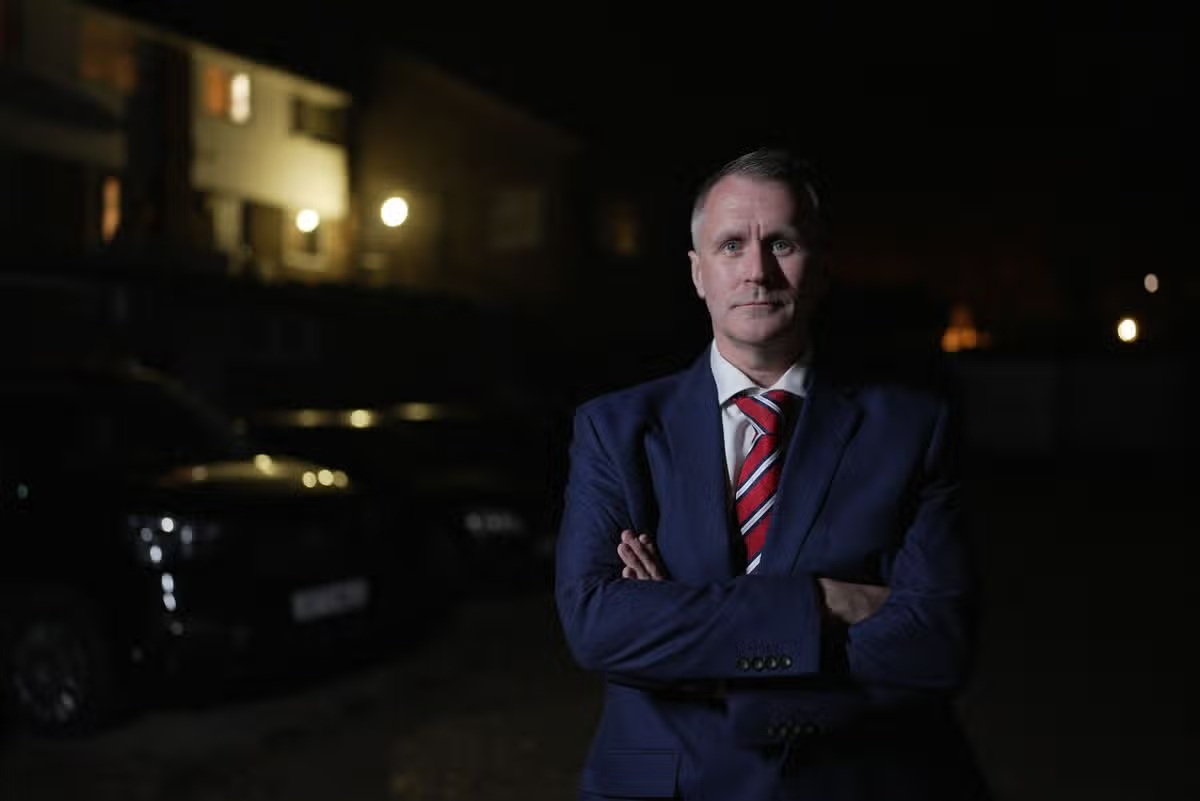
At the time of the sentencing, Senior Investigating Officer, Detective Chief Inspector Howard Broadribb, said: “Joshua’s callous actions took advantage of Emma’s trust in him. His subsequent denials when faced with mounting evidence against him showed a total disregard for Emma and her family.
“His subsequent admission at court spared them from having to endure a trial, but that is little comfort when compared to the loss that they have suffered. I hope that this sentence gives all of Emma’s relatives the opportunity to grieve their loss in the knowledge that justice has been served.”
Murder Scene: The Incident Room airs Mondays at 8pm on Channel 5
Police in India detained at least 35 media workers covering protests in New Delhi over a 48-hour period, according to the US-based Committee to Protect Journalists. Authorities allege they were obstructing police duties.
New Delhi, India — India’s main opposition leader Rahul Gandhi has returned to the streets of central New Delhi, leading dozens of members of parliament demanding the election chief’s resignation, as protests gather momentum.
Gandhi, heir to India’s most influential political dynasty, is seeking to turn a summer youth uprising into a broader challenge to Prime Minister Narendra Modi’s decade-long dominance of Indian politics, putting the Hindu nationalist government under growing pressure.
In a press briefing on Monday, Gandhi said the Modi government had put the capital city “in jail”.
The youth-led “Cockroach” movement that forced out the education minister in July has also threatened to protest on Tuesday if it is not allowed to rally at Jantar Mantar in central Delhi, which was the focus of summer demonstrations.
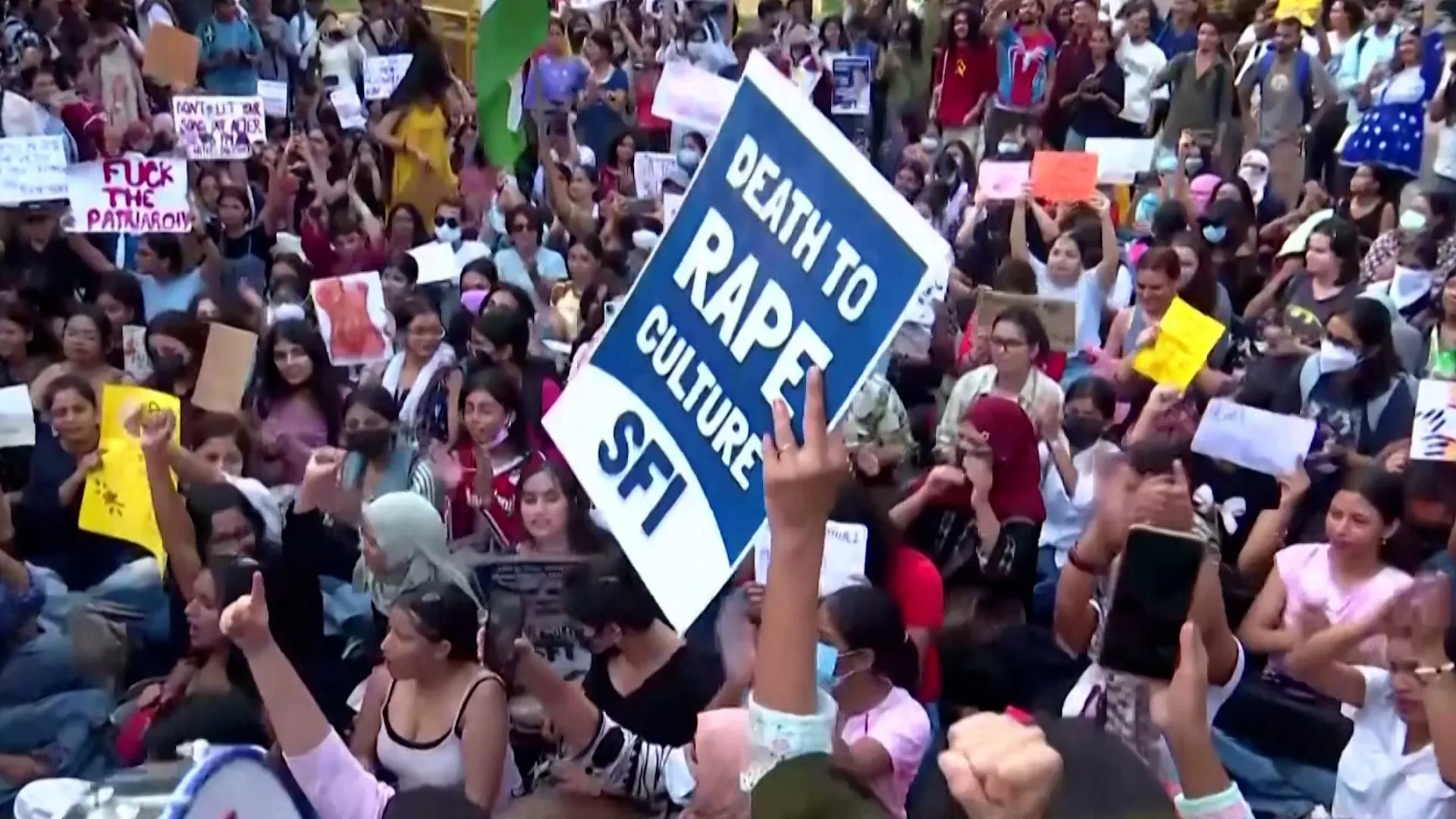
Joining Gandhi’s Congress party, other opposition forces and the Cockroach Janta Party (CJP) are thousands of students from left-wing organisations. As the government braces for further protests, security forces have been detaining thousands of students every day, with allegations of custodial violence casting a climate of fear over the capital.
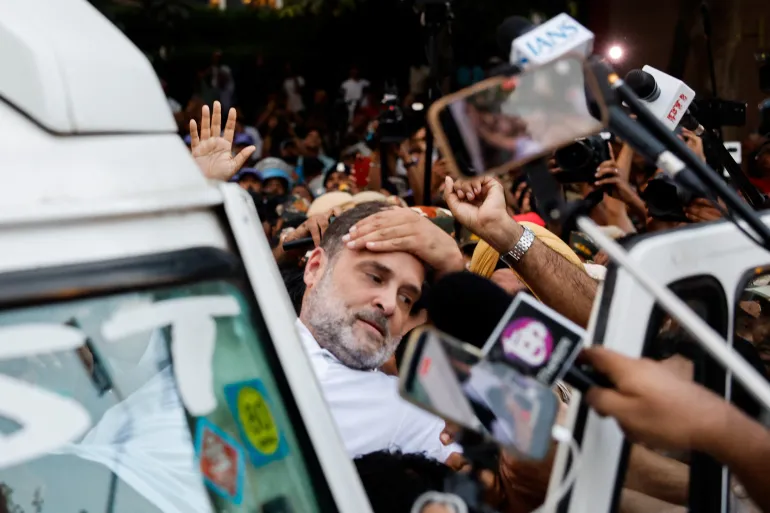
Indian opposition leader Rahul Gandhi is detained by police during a protest organised by opposition parties demanding the resignation of Chief Election Commissioner Gyanesh Kumar, in New Delhi, India, October 7, 2026 [Adnan Abidi/Reuters]
‘No constraints on Modi’
India’s Election Commission, a supposedly autonomous body tasked with overseeing the world’s largest electorate, has been criticised after revelations that its chief, Gyanesh Kumar, frequently overruled concerns raised by the other two election commissioners about the integrity of changes to the voter database.
For months, India’s opposition parties have argued that the election commission is compromised, sabotaging elections at the behest of Modi’s Hindu majoritarian Bharatiya Janata Party (BJP) for its electoral benefit. The BJP denies the allegations.
Since June last year, the commission has been revising and updating statewide voter lists. It has since removed more than 130 million names, which critics say has disproportionately deprived minorities and other vulnerable groups in India of the right to vote.
Gandhi has called for the Chief Election Commissioner to be tried for treason. “We will not spare you,” he said, referring to Kumar, at his Monday press briefing.
Opposition politicians allege that protest rallies by leaders including Gandhi have been met with violent and brutal force, as seen in videos showing them being detained.
“[The protesters] came with love in their hearts, not hatred or anger,” Gandhi said, referring to a protest on Saturday. “They were beaten, both by cops and BJP goons.”
“Narendra Modi … cannot silence India’s voice. These cowards cannot intimidate us. They will have to step aside,” he wrote on X, calling on people from all walks of life to join the protest on Monday.
Analysts say circumstances this time around are starkly different to the summer protests, when CJP-led demonstrators demanded the resignation of then-Education Minister Dharmendra Pradhan.
Asim Ali, a political analyst in New Delhi, told Al Jazeera that the mobilisation of the wider opposition would not stop, but the Modi government was unlikely to back down.
“The crackdown this time on students is making it apparent that it would be tougher for young protesters this time, and students can’t get beaten up and dragged violently daily,” he said. “Going forward, the opposition parties stand to be the front face of the protests, and they need to lead from the front.”
Since 1975, when then-Prime Minister Indira Gandhi imposed a state of national emergency suspending civil liberties, “India saw more civil politics grow into mainstream, where opposition parties were allowed space,” Ali said.
He added that after five decades, “those democratic gains have vanished – and there are no constraints on this government by independent institutions.”
Rasheed Kidwai, a political analyst, said he has seen New Delhi at the centre of “several big opposition political rallies, held in areas near the parliament, hosting hundreds of thousands of people,” when the police did not interfere, unlike the crackdowns this year.
Kidwai said that the violent detention of members of parliament, in particular, was worrying.
“We are seeing a big change from when politicians were more tolerant of dissent,” he added.
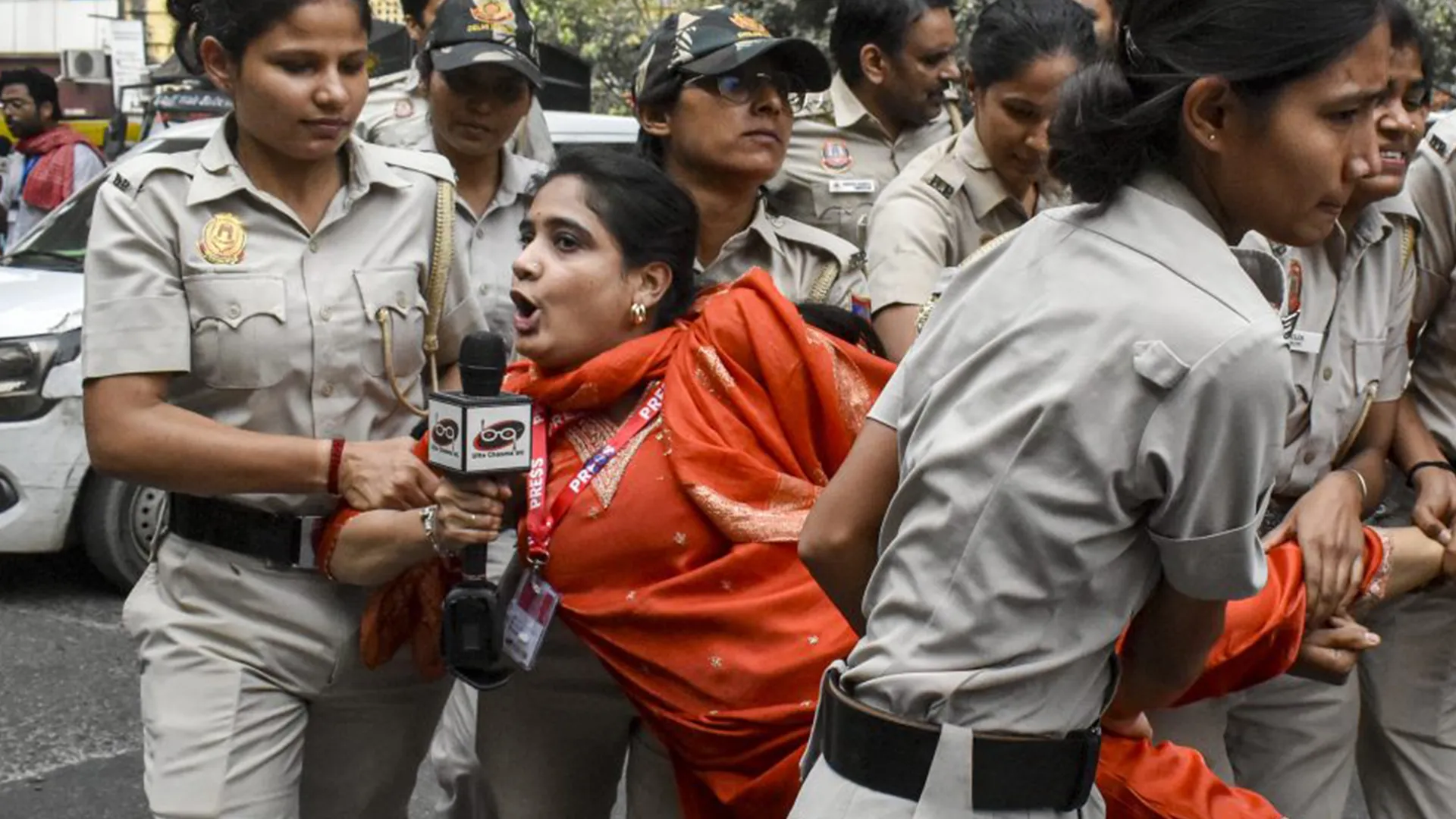
Neha Bora, National President of the All India Students’ Association (AISA), is detained by police during a protest demanding the resignation of Chief Election Commissioner Gyanesh Kumar in New Delhi, India, October 4, 2026 [Bhawika Chhabra/Reuters]
Cat-and-mouse chases
With an unprecedented security deployment in central New Delhi designed to prevent protest, youth leaders are turning to new tactics.
Neha Bora, the president of All India Students’ Association (AISA), a left-wing group affiliated with the Communist Party of India, has often tricked Delhi police in order to stage protests.
Bora, a post-doctoral student of theatre, came to national prominence for her fiery speeches in the July protests, becoming a leading face of the Gen Z movement challenging Modi’s Hindu nationalist politics.
Aditi Thakur, a 23-year-old student in the capital, has turned on notifications for all of Bora’s posts on social media. “A call to protest can come anytime, anywhere,” she told Al Jazeera.
Bora does not reveal when or where she is going to stage a protest until just 30 minutes before, to avoid detentions by the police. Her supporters are alerted via social media to join her at a given location in the capital.
On Sunday, she picked a congested street near central Delhi — and was able to jump several barricades to reach the heavily secured Parliament Street, before being chased down and dragged into a police van.
Even Thakur couldn’t catch her, she told Al Jazeera, laughing. “These are guerrilla times, but peacefully. If the government cracks down on us, we also need to adapt,” she said. “It is a fun cat-and-mouse chase every day. I’m hooked on it.”
The Gandhi-led Congress is also adopting similar measures, holding flash rallies at unannounced venues, then running away from police.
A man walks past members of the Rapid Action Force (RAF) standing guard ahead of a protest planned by the Cockroach Janta Party (CJP) seeking the resignation of India’s Chief Election Commissioner Gyanesh Kumar, in New Delhi, India, October 10, 2026 [Adnan Abidi/Reuters]
The mood is changing
A defining feature of the July protests – a watershed moment for wrestling concessions from the government – was Gen Z’s humour in the face of police brutality.
Now, protesters are prepared for a more serious confrontation, even if demonstrations remain peaceful, say analysts.
“We are seeing that humour changing more into anger this time,” Asim Ali said.
The biggest challenge for the government is disruption in central New Delhi, which, Ali said, the government cannot allow on a daily basis. The area is home to most federal government offices, as well as being a major business hub.
Protesters know that too, and that gives them leverage.
“We are seeing this movement grow into a bigger anti-government, anti-Modi movement,” Ali said.
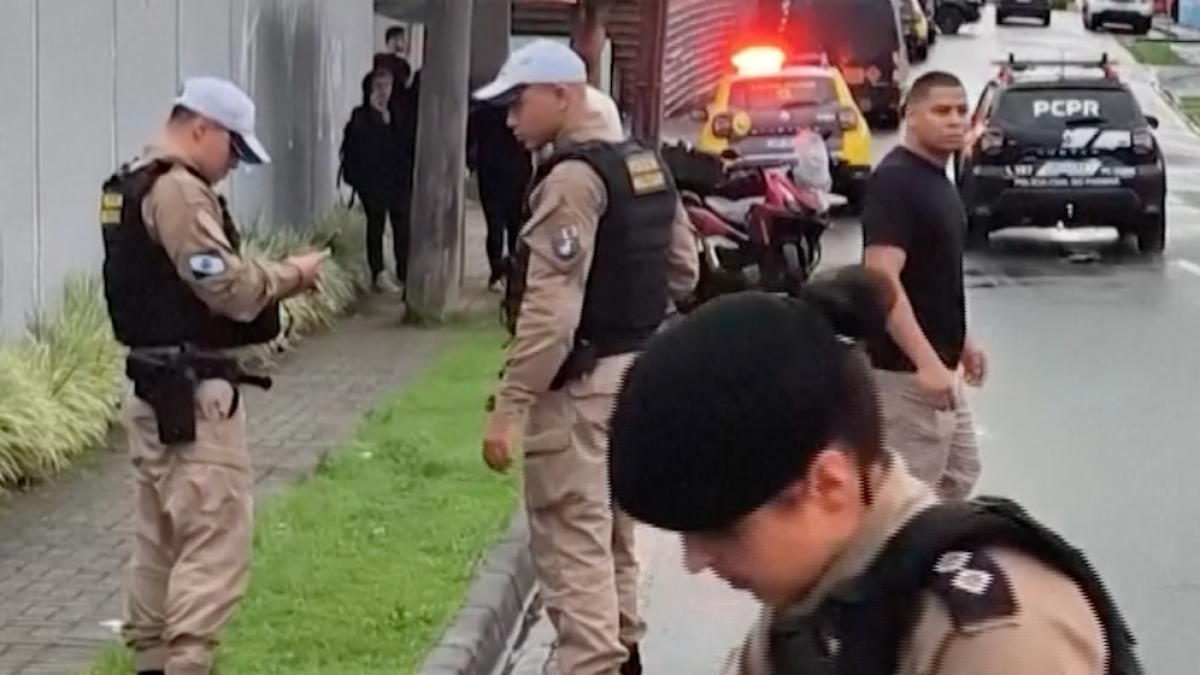
Brazilian police have rescued 13 children held hostage for more than two hours at a daycare centre in Curitiba after an armed man threatened to set the building on fire. The suspect was shot and killed when he attempted to grab a child.
The Cockroach Janta Party wants Chief Election Commissioner Gyanesh Kumar to quit over changes to voter lists.
Published On 10 Oct 202610 Oct 2026
India has deployed thousands of police and paramilitary personnel in central Delhi and restricted transport in and around the capital ahead of a youth-led protest demanding the resignation of Gyanesh Kumar, the country’s chief election commissioner.
Saturday’s rally, called by the Cockroach Janta Party (CJP), a youth-based political movement, is expected to be the biggest yet in a wave of near-daily protests over a revision of voter lists that critics say favours Prime Minister Narendra Modi’s ruling Bharatiya Janata Party (BJP).
Recommended Stories
list of 3 itemsend of list
Organisers have billed it as a protest to “Save Democracy”.
Shutdown of central Delhi
Police have not authorised a rally at Jantar Mantar in central Delhi, which authorities usually designate for protests, because they said the request was not made on time and that the CJP had violated undertakings given during earlier protests.
Police have also warned that protesters will face a forceful law enforcement response if they violate the ban.
Roads to the site are blocked with multiple layers of metal barricades, as authorities shut 57 metro stations from Friday night, cancelled several long-distance trains and suspended mobile internet within 4km (2.5 miles) of the protest area until Saturday night, the Indian news agency ANI reported.
India’s Supreme Court said on Friday that some trains must still run and that blanket closure of metro stations is unlikely.
“The dictator would rather shut down the entire national capital and inconvenience millions of citizens than allow a peaceful protest at a designated protest site,” CJP chief Abhijeet Dipke said on X.
The CJP says at least 10,000 people, including protesters travelling to Delhi by train, have been detained across the country.
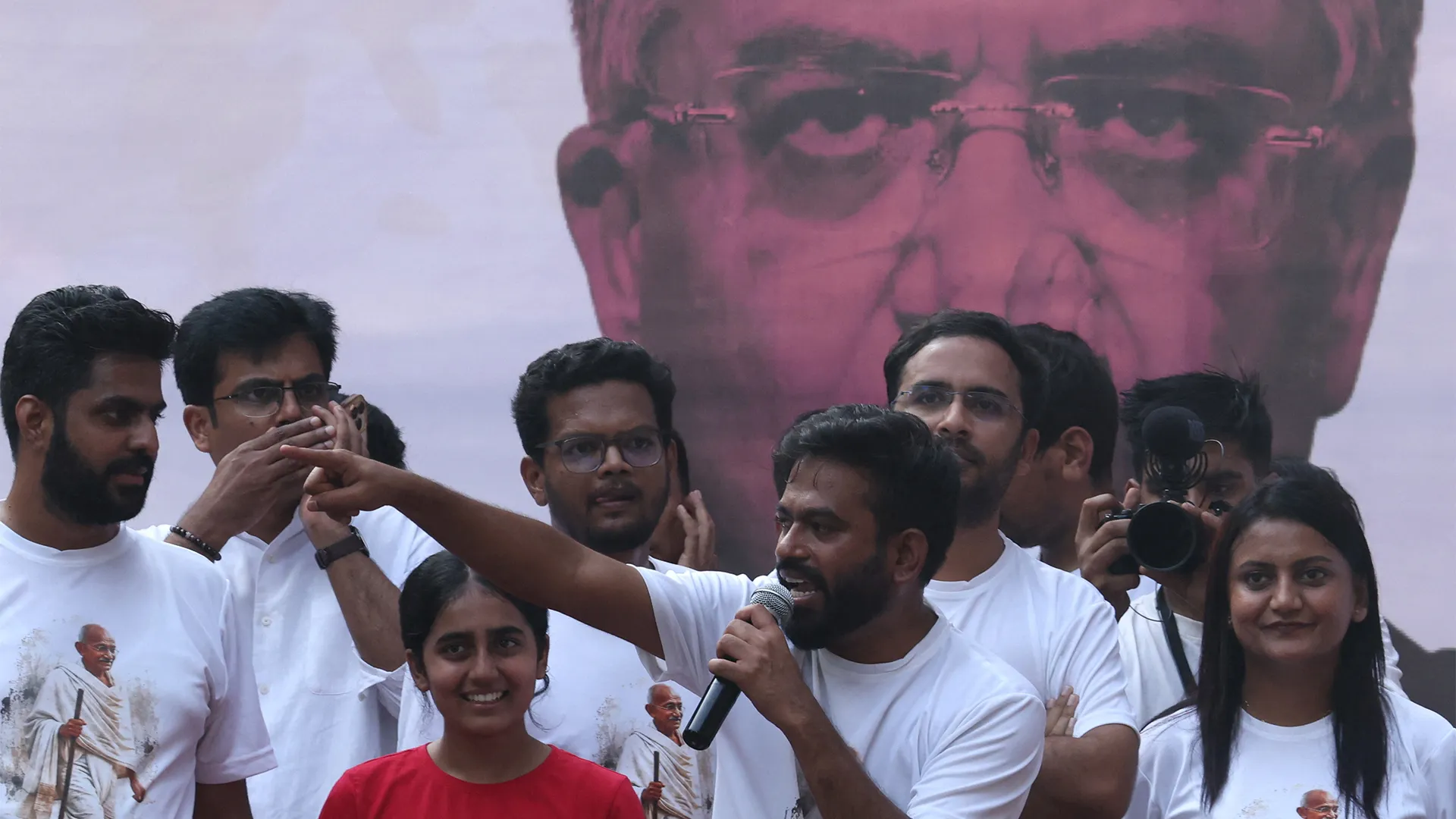
“You can detain the people, you cannot detain the movement,” said Neha Bora, national president of the All India Students’ Association, who has emerged as a leading face of the protests.
What kicked off the protests
Protesters want Chief Election Commissioner Gyanesh Kumar to quit over a voter list revision that has removed more than 130 million names.
The Election Commission says the exercise removes duplicate and ineligible voters and aims to prevent “foreign illegal immigrants” from voting.
Critics say it has disproportionately affected marginalised and minority communities.
The protests escalated after the Indian Express reported that Kumar’s two deputies had formally raised concerns at least 14 times in the past 10 months over the revisions.
The Election Commission and the BJP have denied the allegations. The BJP says the opposition is misleading the country because it cannot win elections.
The CJP began online as political satire in May after Chief Justice Surya Kant called unemployed youth “cockroaches”, sparking nationwide outrage. Since then, the CJP has garnered a large following among India’s youth.
The July protests led Modi’s education minister to resign over exam paper leaks. The latest demonstrations come months before a series of state elections in early 2027, including in Uttar Pradesh, India’s most populous state, which the BJP governs.
The recovered Renoir paintings, valued at millions, were stolen in a daring heist at Cagnes-sur-Mer last month.
Published On 10 Oct 202610 Oct 2026
Two paintings by the French Impressionist artist Pierre-Auguste Renoir that were stolen from a museum in southern France a month ago have been recovered, the town’s mayor said.
“These two paintings are not simply works of art. They are part of our city’s history,” Bryan Masson, the mayor of Cagnes-sur-Mer, near Nice, said on Friday. “Knowing they have been recovered is an immense relief.”
Recommended Stories
list of 3 itemsend of list
Six people have been arrested in connection with the theft, local authorities said. Masson did not say where the paintings were found or in what condition.
How the theft unfolded
Two thieves broke into the Renoir Museum a little before 6am on September 8, cutting through a fence to enter the grounds, smashing a window and using an electric saw to cut the clips securing the frames, Masson said at the time.
He described them as “well equipped” and “well informed”.
The museum alarm sounded at 5:48am, and municipal police arrived five minutes later, forcing the thieves to flee.
They had taken four paintings, valued by the mayor at about nine million euros ($10.5m).
Two of the stolen works – Renoir’s “Portrait of Madame Pichon” and “Coco Reading” – were later found dropped in the museum garden, the prosecutor’s office said at the time.
The two works that remained missing were “Portrait of Madame Colonna Romano” and “Young Woman at the Well”, the office said.
Police said last month that the thieves were not first-time offenders and had scoped out the premises.
The Marseille prosecutor opened a theft investigation into an organised gang, and the national office for trafficking in cultural goods joined the probe.
A string of museum heists
The museum, opened in 1960, is in the painter’s last home, where he died in 1919.
“This incident should serve as a warning about the protection of our museums,” Masson said after the robbery.
The theft came less than a year after jewels worth about $100m were stolen from the Louvre in Paris in a daylight robbery.
The four suspected robbers have been arrested, but the jewels have not been found.
In August, Italian police said they had recovered paintings by Renoir, Cezanne and Matisse worth more than $10.4m that were stolen from a museum in March.
The shooting prompted protests in New York City as officials defended ICE and Mayor Zohran Mamdani condemned the incident.
Published On 9 Oct 20269 Oct 2026
The United States Department of Homeland Security has defended Immigration and Customs Enforcement’s (ICE) shooting of a man in New York City while his child was present. Federal officials used the incident to criticise sanctuary-city policies that limit cooperation with federal immigration authorities.
New York officials have condemned the shooting and have called for ICE to end its operations in the city.
Recommended Stories
list of 3 itemsend of list
The shooting took place on Thursday afternoon when ICE officers attempted to arrest a man identified by New York City police as Oscar Belgal.
Homeland Security officials gave their account of the incident on Friday during a news conference, saying that Belgal refused to exit his car when approached by officers and then accelerated, striking two ICE vehicles.
They said officers then opened fire, grazing Belgal’s neck while his five-year-old child was in the back seat.
According to Homeland Security officials, Belgal received first aid and was taken to hospital before being transferred to a secure detention facility outside New York state. They did not disclose where Belgal is being held.
Department of Homeland Security (DHS) Secretary Markwayne Mullin said that the agents did not know the child was inside the vehicle when they fired.
ICE senior official Marcos Charles said agents had attempted to arrest Belgal as part of an investigation into suspected gang involvement in an earlier shooting of a US Customs and Border Protection officer.
According to US officials, Belgal is an undocumented migrant from the Dominican Republic who had previously evaded arrest and received a five-year sentence for grand larceny in April 2025.
“[Belgal] was a thug,” Mullin said at the Friday news conference. “The absolute worst of the worst.”
Mullin confirmed that officers were wearing body cameras but the footage has not been made public. New York City police released bodycam footage on Friday of police officers on the scene who had responded to a 911 call about the incident.
In other violent incidents involving federal immigration officers, video evidence has contradicted initial accounts from ICE and Homeland Security officials, including in Minneapolis, where footage of the fatal shootings of Alex Pretti and Renee Good challenged federal officials’ descriptions of the encounters.
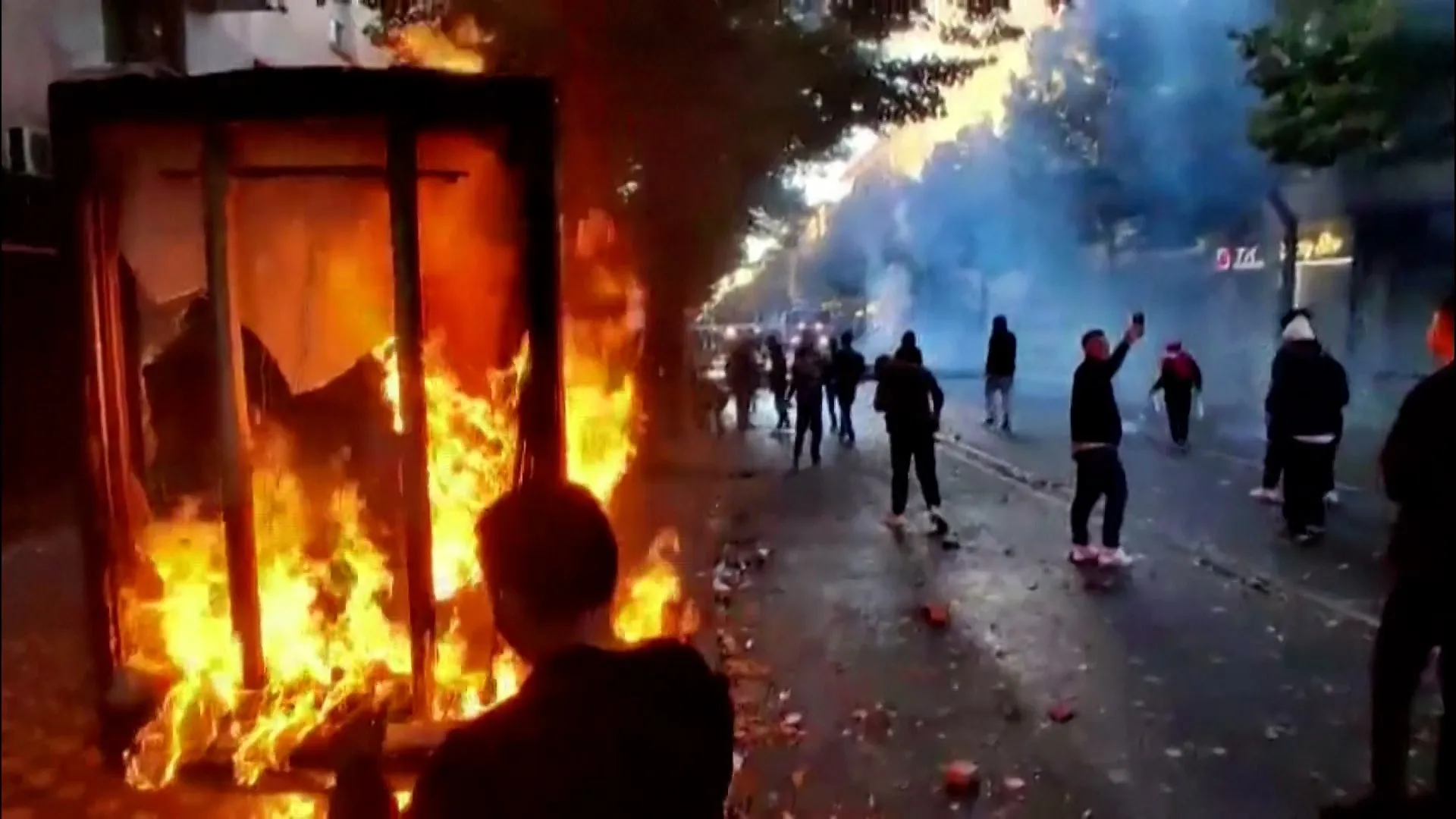
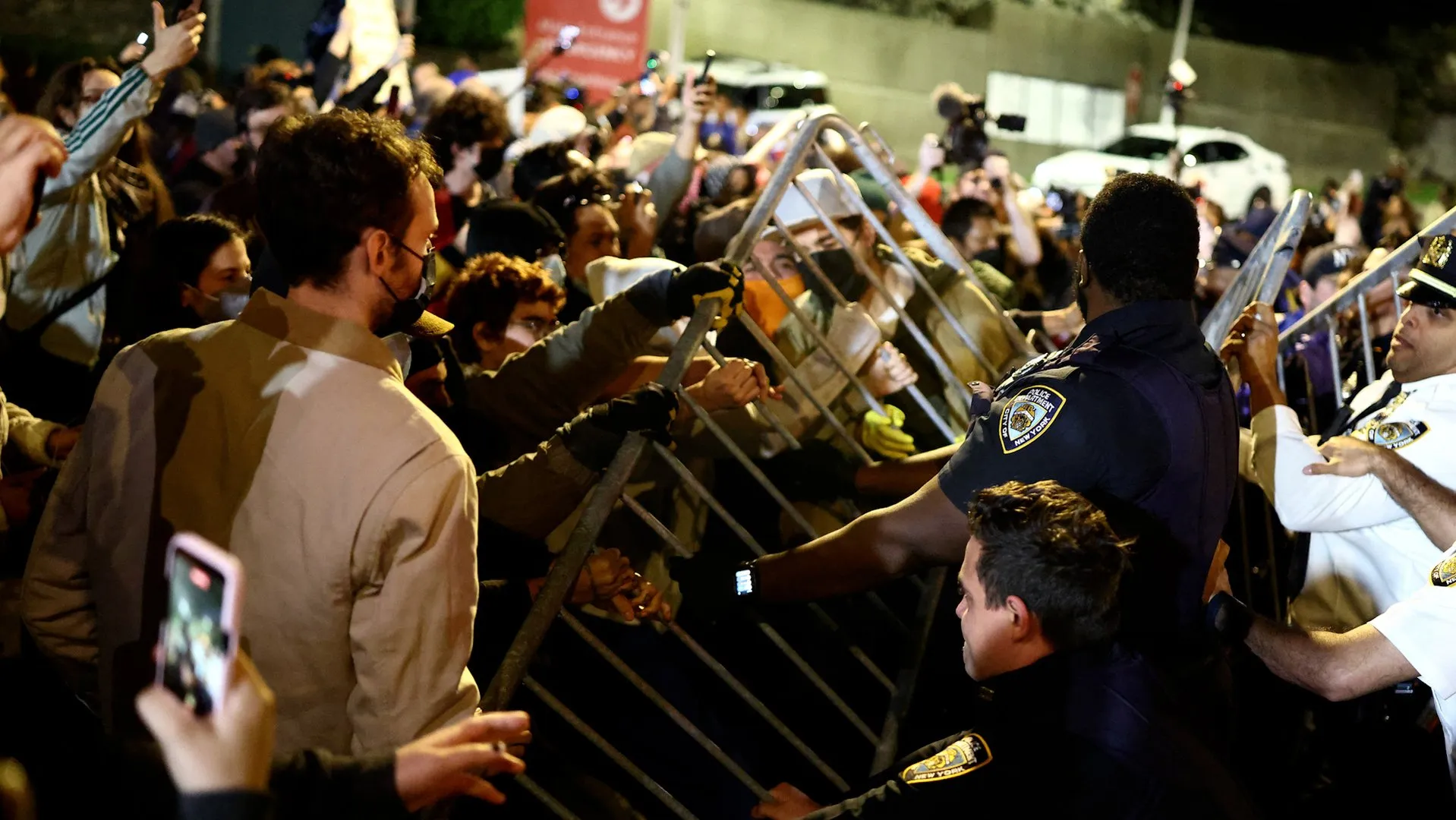
The latest shooting prompted protests on Thursday night in the Bronx, where the shooting took place, with demonstrators condemning ICE and calling for the agency to be abolished. Tensions rose after NYPD officers clashed with some of the protesters.
New York City Mayor Zohran Mamdani condemned the shooting and said he had called US President Donald Trump to demand an end to ICE enforcement in the city.
Speaking to reporters late on Thursday at the scene of the shooting, Mamdani said he had tried unsuccessfully to secure Belgal’s release in phone calls with Trump and Mullin.
“These actions are making the city less safe,” Mamdani said. “ICE is rotten to its core.”
Mullin accused Mamdani of prioritising politics over public safety and said Trump had offered to transfer Belgal to New York police custody if they pursued charges. Mullin said Mamdani refused this offer.
New York City mayor Zohran Mamdani gives an update about the Immigration and Customs Enforcement (ICE) shooting in the Bronx borough of New York, October 8, 2026 [AFP]
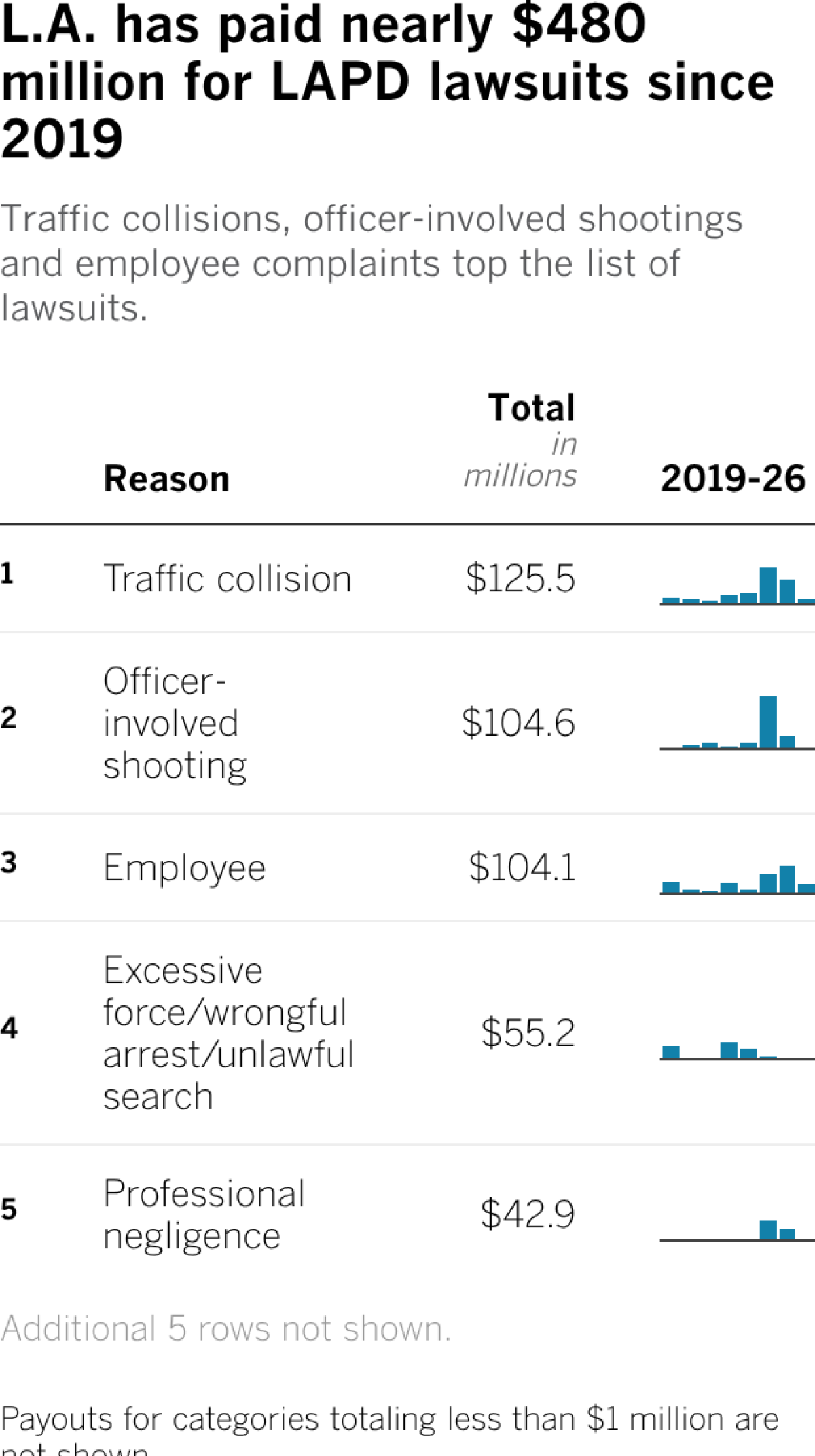
The city of Los Angeles has shelled out nearly $480 million over the last five and a half years to end legal disputes involving the Police Department, including claims of excessive force, litigation over traffic accidents and cases filed by employees who allegedly faced retaliation after reporting misconduct.
The soaring legal costs have come under greater scrutiny in recent years as Los Angeles’ financial problems have gotten worse. The city faced a $1-billion budget shortfall in 2025 but, after various cost-cutting measures, managed to set aside funding for the LAPD to hire more than 500 new officers in the coming year.
The LAPD’s annual lawsuit costs more than doubled from 2019 to 2025. The payouts peaked in 2024, when the city spent $178.6 million to resolve more than 300 police-related lawsuits and civil claims, before dropping to just over $100 million in 2025, according to a Times analysis of city attorney’s data.
The Times reviewed hundreds of pages of court documents and analyzed data from the city attorney’s office released through a public records request showing nearly 2,000 payouts dating to January 2019.
Through the first six months of this year, the city has paid out $20.3 million in legal settlements and court judgments involving LAPD officers. Several recentbig-dollarverdicts aren’t included in that tally because they hadn’t yet been approved by the City Council.
The surging cost of LAPD payouts depriving the cash-strapped city of money for pressing needs such as fixing roads and sidewalks, according to City Controller Kenneth Mejia.
“There’s a reason why your streetlights are out and they’re not fixed for a year, there’s a reason why your sidewalk won’t get fixed or your animal shelters are understaffed or underfunded,” said Mejia, whose office is conducting an audit of the city’s risk management strategies, the results of which will be released this year.
Experts are still untangling the reasons for the explosion of legal payouts involving police — which stretches far beyond L.A.
This year, a legal defense organization found that New York City has paid more than $796 million since 2019 to settle lawsuits involving accusations of police misconduct — including $117 million in 2025. In Chicago, the city is on track to blow past the $252 million spent last year to resolve police lawsuits, mostly involving plaintiffs who went to prison based on faulty evidence, according to local news reports.
In Los Angeles, the surge has come under the watch of City Atty. Hydee Feldstein Soto, who has blamed the rising costs on the way the office handled litigation of all kinds before her administration — as well as a national legal trend of so-called nuclear verdicts.
“The system is getting inflated in a way that is unhealthy and it creates, I think, incentives to sue and to do pie-in-the-sky settlements,” Feldstein Soto said in interview with The Times earlier this year. She said her office evaluates each claim case by case, deciding when it makes more sense to settle rather than go to trial, at which juries can issue decisions based on emotion or differing perceptions of what occurred. Feldstein Soto has lobbied for years to change state law to limit “non-economic” damages.
Feldstein Soto’s critics contend that she has pursued a hard-line approach in recent years, refusing to settle except in cases where it is clear the city is likely to lose in court.
That tough stance has led to mixed results. The city has lost some jury verdicts that could have been avoided if it had been willing to settle. It has also prevailed in several high-profile cases, including this year when a jury ruled that an officer was not liable for the 2021 death of a 14-year-old girl killed by a wayward bullet fired during a hasty confrontation with a suspect at a North Hollywood department store.
The city attorney’s office said in a statement to The Times that while it is proactively working to curb rising litigation costs “by every means possible,” it could not “control the number, timing or claimed damages of lawsuits filed against the City.”
“Nor does the Office have control over the alleged root causes of these liabilities: the City Attorney’s Office is not responsible for LAPD policies or personnel,” said the statement, adding that the number of lawsuits filed against the city has risen by roughly 20% in each of the last four budget years, straining the office’s resources.
Zachary Powell, an associate professor of criminal justice at Cal State San Bernardino, said that although data suggest that use of force by police has decreased since 2020, the public has become “much more aware of police abuses and conduct than they ever were before.”
“I think people also ask a lot more questions in a jury setting,” he said.
Other explanations, he says, are the passage of statewide police accountability measures and the fact that a backlog of cases from the pandemic years are finally coming due.
The Times’ analysis found that hundreds of legal battles involving officer-involved traffic incidents make up nearly a quarter of all payouts. Since 2019, the city has paid $125 million for the thousands of accident claims, just under a third of which stemmed from cases in which officers were found to have failed to stop or yield at crossings before crashing into another vehicle or a pedestrian. Pursuit-related claims and suits stemming from cases in which officers made improper left turns have also cost the city millions.
Other legal costs date back years — and in some cases decades.
The city is still paying $7,410 a month to Clarence Chance, who in the early 1990s was awarded a large payment over a wrongful arrest that led him to spend 17 years in prison for a murder he didn’t commit. Nearly $40 million has gone to people whose homes were damaged after the LAPD bomb squadbotched the detonation of seized fireworks and leveled part of a city block in 2021.
One of the biggest payout categories was $104.6 million spent since 2019 on claims related to police shootings — more than three-fourths of which involved people who were reported to be under the influence of a substance or in the midst of a mental health crisis, according to The Times’ analysis. Roughly $38.4 million was paid out after police shot someone wielding an edged weapon, such as a knife, the analysis found. Shootings involving gang officers cost the city nearly $4 million in that span.
Dozens of lawsuits remain pending, including claims related to the handling of mass pro-immigration protests since last year, likely putting taxpayers on the hook for more large payouts in the future. Police use of hard foam projectiles, house-mounted officers and other tactics against crowds have already cost the city at least $22 million in the last seven and a half years — just over half of which stemmed from the department’s response to the 2020 mass protests over the murder of George Floyd.
Such totals may not always include lawyer fees that are negotiated after a settlement is reached — or if a case is appealed.
Jonathan Evans, a civil rights attorney who has sued the department, thinks the big payouts show that greater public awareness of mental health issues is a factor. Recognizing this, he said, municipalities are agreeing to higher settlements than in years past.
“The decision to use lethal force is being more heavily scrutinized,” he said.
Tens of millions of city dollars have in recent years gone to disgruntled police officers who sued over workplace injustices such as sexual harassment, racial discrimination and retaliation. Since 2019, at least 27 LAPD employees have won million-dollar-plus jury verdicts or settlements from the city; many more have seen five- or six-figure paydays.
To clamp down on future legal costs, the department last year brought back a former senior official, Arif Alikhan — at a monthly salary of $20,000, paid for by a private donation — to study how to reduce the number of costly lawsuits. Alikhan did not respond to a call requesting comment.
The department maintains an early intervention system that flags officers based on risk factors, such as a relatively high volume of civilian complaints, frequent use force, and involvement in preventable traffic collisions or pursuits. The system is used to determine whether they need additional training or should be reassigned or placed on a performance improvement plan.
Within the LAPD, some officers and the Los Angeles Police Protective League, the rank-and-file union, argue that the city should fight back harder against claims with no credibility, instead of settling. They say officers who are most often sued tend to come from specialized units that do the type of proactive policing that the department and most of of the public wants: targeting gangs, drugs and guns.
Attorneys who represent officers that have sued the department over whistleblower retaliation dismiss the claim by Chief Jim McDonnell and others that some cops are exaggerating their claims in pursuit of a big payday. If anything, they contend, the continued large payouts are a product of entrenched racial and gender bias and inconsistent discipline — and the LAPD’s unwillingness to learn its lessons from past lawsuits.
Greg Yacoubian, a labor attorney, said there is little incentive for the current system to change because the costs of lawsuits are passed on to taxpayers — not the officers involved in misconduct and their bosses.
“The person responsible for the error never feels the pinch,” Yacoubian said.
Times staff writer James Queally contributed to this report.
There are protests and outrage in New York after ICE agents shot a man after surrounding his vehicle. The victim had a five-year old child in the car at the time. New York Mayor Zohran Mamdani has called President Trump to demand ICE withdraw from the city.
Opposition unionists call for the prosecution of Sinn Fein lawmakers who participated in the protest.
Published On 9 Oct 20269 Oct 2026
Northern Irish police have contacted representatives of Sinn Fein in an investigation into a protest that blocked a Protestant parade from marching through a Catholic area, the party said.
The Sinn Fein party leads Northern Ireland’s power-sharing government alongside its main pro-British rival, the Democratic Unionist Party (DUP), which has called for Sinn Fein lawmakers to be prosecuted.
Recommended Stories
list of 3 itemsend of list
In a statement posted to Facebook on Thursday, Sinn Fein confirmed “that a number of its representatives and party members received correspondence” from police.
“Sinn Fein will continue to stand with the Garvaghy Road residents who should be allowed to live in peace and free from sectarian intimidation,” the party said in the statement.
It added they have “stood with residents of the Garvaghy Road for the last two weeks in the face of provocation and the threat of an unwanted Orange march through their community”.
March permitted
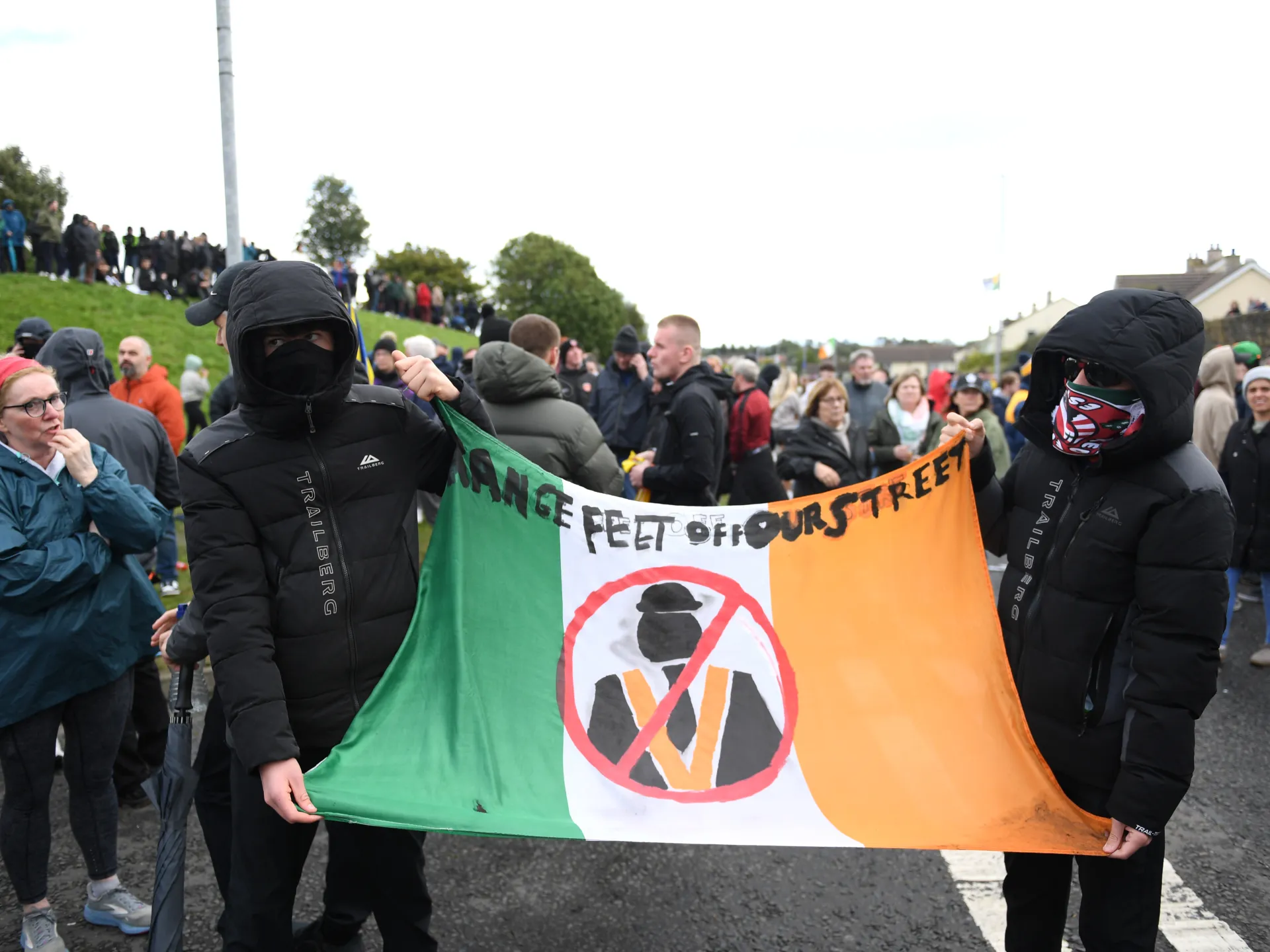
Northern Ireland’s High Court permitted the Protestant Orange Order to march on the Catholic Garvaghy Road for the first time in 28 years.
Police opened an investigation into what they called the unlawful protest of the march, and said people reasonably suspected of committing offences will receive letters for interviews.
Sinn Fein First Minister Michelle O’Neill and Sinn Fein President Mary Lou McDonald participated in the protests.
The DUP called for O’Neill and other lawmakers to be prosecuted.
“A political title is not a shield, and no one is above the law,” the party said in a statement on Thursday.
Before the Good Friday Agreement was signed, annual attempts by the Orange Order to march through the area triggered unrest across the British-run region until the route was banned in 1998.
The standoff has become a political crisis in Northern Ireland, affecting the region’s power-sharing government.
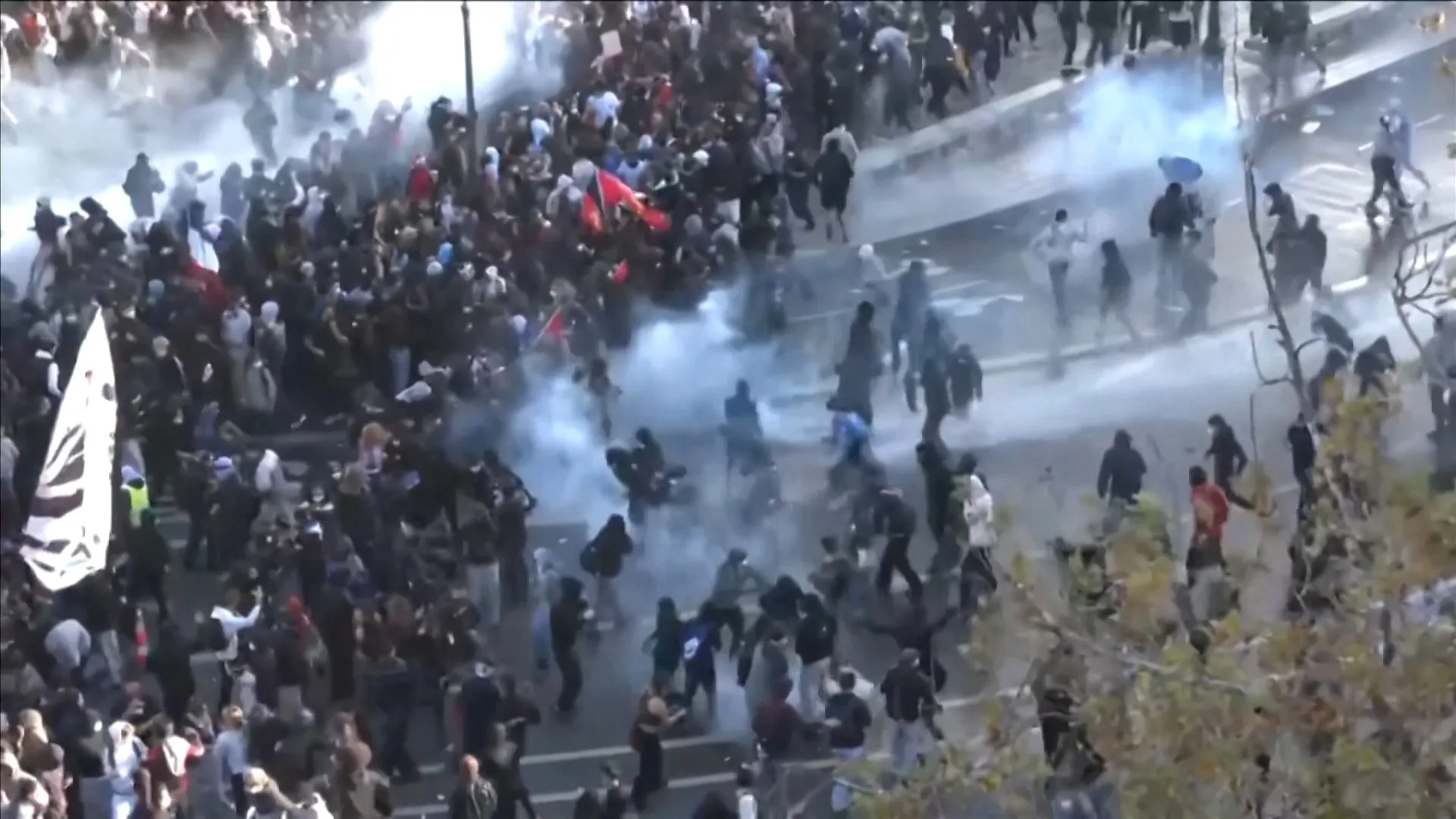
Police fired tear gas and water cannons as demonstrators gathered in Paris to demand more funding, teachers, and better conditions in schools. The movement has entered its third week, with police tactics under scrutiny after several teenagers were seriously injured.
Dozens of people have been injured in the protests, including students, teachers, and police officers.
Published On 8 Oct 20268 Oct 2026
Protests have resumed at schools across France as high school students press on with demands for more education funding and better conditions, the day after the country’s prime minister ordered ministers to provide an action plan.
Reporting from Paris, Al Jazeera’s Natacha Butler said university students and more trade unions have joined the nationwide protests and that a large rally is expected in the capital on Thursday.
Recommended Stories
list of 4 itemsend of list
“They are moving around, trying to block off the streets,” Butler said from outside one school, where university students were barricading a large area.
“They are out, they say, in solidarity with high school students because they say it’s important that as many young people join in the protests as possible,” she added.
The wave of protests began in a high school in a deprived area of Paris on September 21 . Tens of thousands of students across the country have since marched with a range of demands, from renovated school buildings to fewer classroom hours.
Police response under scrutiny
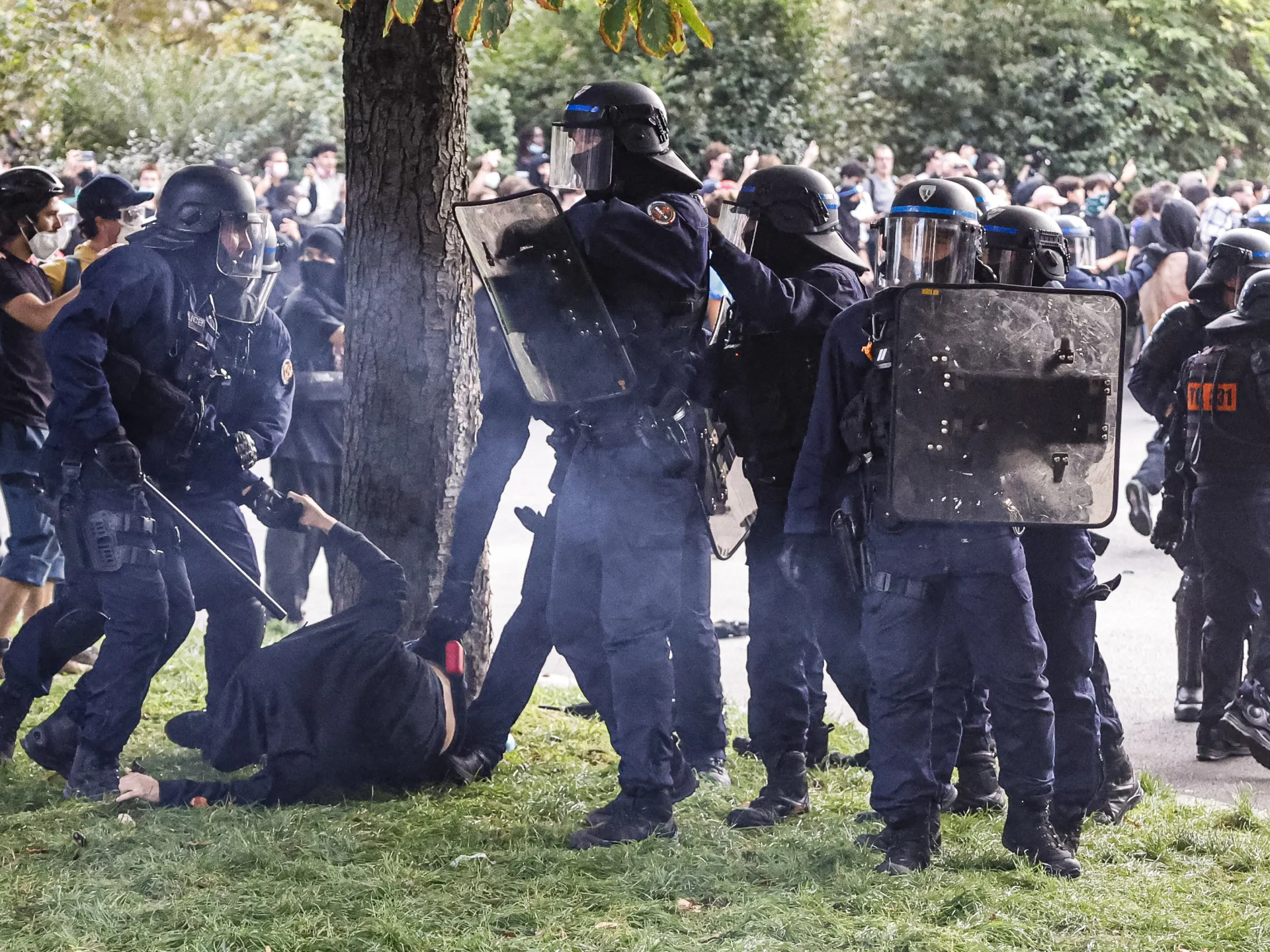
Rights groups have accused security officials of using disproportionate force against protesters.
Several demonstrators have been injured, including one teenager who lost a hand and another whose jaw was shattered by an exploding stun grenade. They have since been banned at marches.
Police officers and teachers have also been injured, authorities say, accusing students of committing violent acts. At least 6,600 arrests – mostly of minors – have been made so far, according to the Interior Ministry.
Authorities said 375 schools were either fully or partially closed on Thursday, and that two dozen had been burned or destroyed.
The demonstrations are increasing pressure on the cash-strapped outgoing government of Emmanuel Macron ahead of April elections.
Prime Minister Sebastien Lecornu condemned the violence in a TV address on Wednesday. He faulted “political leaders who use this anger to conduct their electoral battles”, after opposition leader Jean-Luc Mélenchon called for protesters to keep marching.
Lecornu has ordered ministers to provide an action plan responding to students’ demands by the end of the month, but protesters remain unconvinced.
“As far as they are concerned, the government only talks about solutions but never actually comes up with concrete actions, so they say they are going to keep coming out onto the streets until their demands are met,” Butler said.
Police say the incident is not connected to ongoing investigations at the RAF Fairford airbase.
Published On 8 Oct 20268 Oct 2026
Police in the United Kingdom say they have arrested and charged a member of the Royal Navy accused of working with an unnamed foreign power after an investigation by counterterrorism police.
Teddy Young, 24, was charged with two offences under the National Security Act for allegedly obtaining protected information and preparing to transfer it for the benefit of a foreign power.
Recommended Stories
list of 4 itemsend of list
In a statement, authorities alleged that between November 2024 and May 2025, Young “obtained, copied, recorded or retained protected information, intending the conduct to benefit a foreign power… contrary to section 1 of the National Security Act 2023″.
Young is due to appear at London’s Westminster Magistrates’ Court later on Thursday.
“These are very serious charges against a serving member of the armed forces,” Commander Helen Flanagan, Head of Counter Terrorism Policing London, said in a statement.
“We have worked extremely closely with relevant operational colleagues within the Ministry of Defence as our investigation has progressed to ensure appropriate measures could be taken to mitigate any potential risks linked to this matter,” she added.
UK media reported that the officer was arrested at his home in Bedfordshire on Tuesday before he was taken into custody in London.
The police clarified that the case is not related to the ongoing investigation into an incident at the RAF Fairford airbase.
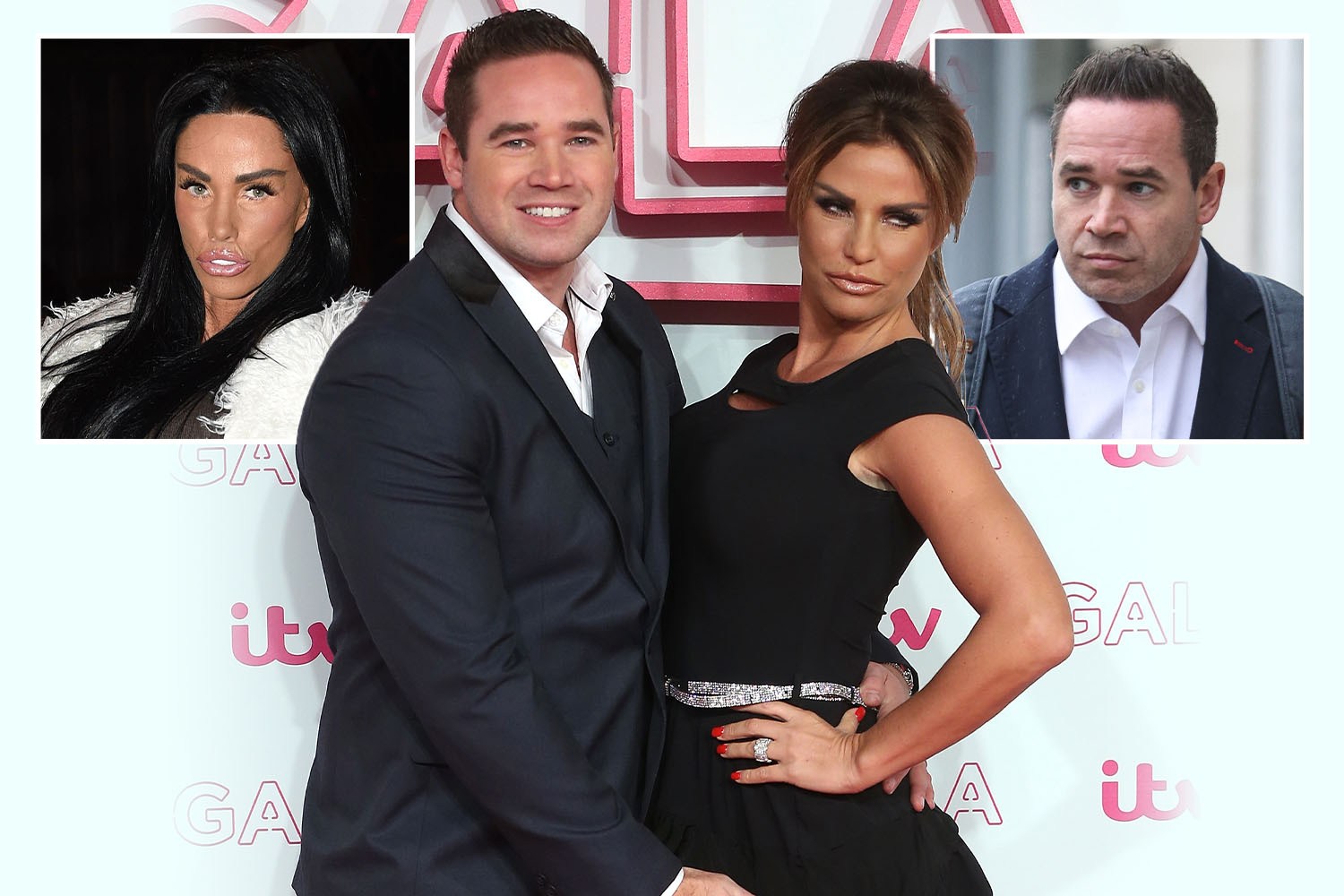
KATIE Price told her ex-husband Kieran Hayler’s alleged child rape victim she would “make her a little star”, a court heard today.
The former glamour model, 48, made the comment in a message while quizzing the girl about whether she had kissed Hayler, jurors were told.
Katie Price said she would make Kieran Hayler’s alleged child rape victim a ‘little star’Credit: GettyHayler has denied the allegationsCredit: Gary Stone
The message exchange happened in May 2017 – eight months after the last alleged attack by Hayler, it was said.
The former stripper is accused of three counts of rape and one count of sexual assault against the girl between June and October 2016 – when she was 13 and Hayler and Katie were married.
Sign up for the Showbiz newsletter
Thank you!
In the May 2017 exchange, mother-of-five Katie asked the girl if she and Hayler, 39, had kissed.
Katie wrote: “I WON’T say anything and I PROMISE I’ll protect you!
Prime Minister Sebastien Lecornu to make public address after hundreds of thousands rally to demand more funding for education.
Published On 7 Oct 20267 Oct 2026
France has temporarily banned police from using stun grenades at student-led protests, the interior minister said, amid growing accusations of police brutality following several days of student demonstrations nationwide.
The announcement on Wednesday came a day after hundreds of thousands of students and supporters marched across France to demand more funding for education and better conditions in high schools, prompting President Emmanuel Macron to convene an emergency meeting with Prime Minister Sebastien Lecornu and other key ministers to try to defuse the crisis.
Recommended Stories
list of 3 itemsend of list
Lecornu will make a public address later on Wednesday on the school protests as well as the country’s finances, his office said.
Interior Minister Laurent Nunez told radio broadcaster RTL early on Wednesday that he had suspended police use of stun grenades at the protests.
A 15-year-old lost a hand in the northern city of Lens on Monday after police fired a stun grenade.
Earlier, a 14-year-old student was hit in the face by a tear gas grenade at such close range that he lost several teeth. A policeman was charged on Tuesday over the incident in the capital, Paris.
Police have opened 18 internal investigations into allegations of misconduct since the protests began, Nunez said.
Rights groups, students and parents’ groups have accused authorities of using disproportionate force against minors. The government says the protest movement has been hijacked by outsiders and morphed into urban violence.
The Ministry of the Interior said 6,100 people have been arrested since the protests began last month, the overwhelming majority of them minors.
More than 1,800 people are being prosecuted, including 1,483 minors, the Ministry of Justice said, without specifying the crimes.
At least 715 police officers and 215 teenagers have been injured in clashes, according to Lecornu’s office.
Students demand school funding
Protests started in late September with students blocking entrances to hundreds of high schools for 15- to 17-year-olds over complaints of dilapidated facilities and teacher shortages and demands for more funding for education.
Parents, teachers and union workers joined the demonstrations in Paris and other cities on Tuesday amid accusations that police were using disproportionate force.
Sporadic violent clashes have broken out between police and protesters at what otherwise have been largely peaceful demonstrations.
Lecornu on Tuesday condemned the violence and told lawmakers that it would not be tolerated, while also rejecting accusations that the government had ordered “police repression” against protesters.
Hit Northern Irish police series, Blue Lights, aired its second episode on Tuesday night with the series also available to watch in full on BBC iPlayer
22:43, 06 Oct 2026Updated 22:43, 06 Oct 2026
Blue Lights recently returned with series four(Image: BBC/Two Cities Television)
Blue Lights recently returned with series four.
The hit Northern Irish police series is back with its fourth season, which is available to watch in full on BBC iPlayer now, and Tuesday night saw episode two air.
A teaser for series four reads: “Three years into their jobs as response officers, Constables Grace Ellis, Tommy Foster, and Annie Conlon are operating at their limit, facing a new threat on the streets that the police can barely control.
“Meanwhile, the murder trial of Gerry Cliff exposes a dangerous and long-buried secret that leads to chaos both inside the police and across the criminal underworld.
“As they grapple with big decisions about their future, Grace, Tommy and Annie must find the courage to face the greatest threat they have ever encountered: the truth.”
Meanwhile, a synopsis for episode two saw: “In the wake of the attack on Amira, Grace’s determination puts her in danger, while Mo spirals further with violent consequences.”
Many fans have already binged series four, taking to Twitter, now X, to share their thoughts one person said: “Such a brilliant show. Season 4 binged over 2 days. Not sure where it goes from here, would love more. I grew up with Cagney & Lacey, that really made me smile #BlueLights.”
Another viewer wrote: “@BBC thank you for another brilliant series of #bluelights, hopefully they’ll find a way to come back for a fifth season.”
A different account put: “Just finished episode two of #BlueLights it’s brilliant! No spoilers!” while another person added: “Two episodes into #BlueLights S4, @sgfmann you were indeed correct, it’s great – gripping & so pertinent.”
Elsewhere, another show watcher praised: “Just finished S4 of #BlueLights, surely one the best cop dramas ever produced, the writing, acting and filming are all top notch.
“Edge of my seat every episode. If that was the last, then what a way to go out! Deserves every award coming it’s way!”
While a different account added: “Finished watching #bluelights series 4 . I hope the BBC plan on doing more it’s probably one of the best shows I’ve watched on the beeb in recent years .. not sure how exactly most storylines seemed to be wrapped up!”
Blue Lights is available to watch on BBC One and BBC iPlayer
WASHINGTON — Political advertising warns about Democratic plots to defund the police. Campaign events feature law enforcement unions and tough talk about law and order. Stump speeches boast about record low levels of violent crime.
From coast to coast, Republicans are focusing on public disorder, illegal immigration and violent crime in midterm campaigns as voters sour on their party’s handling of the cost of living and the war with Iran.
Democrats have tried to counter the attacks by recruiting candidates with law enforcement backgrounds and emphasizing their own anti-crime plans, but Republicans believe it’s a rare opportunity to go on the offensive in an otherwise challenging year.
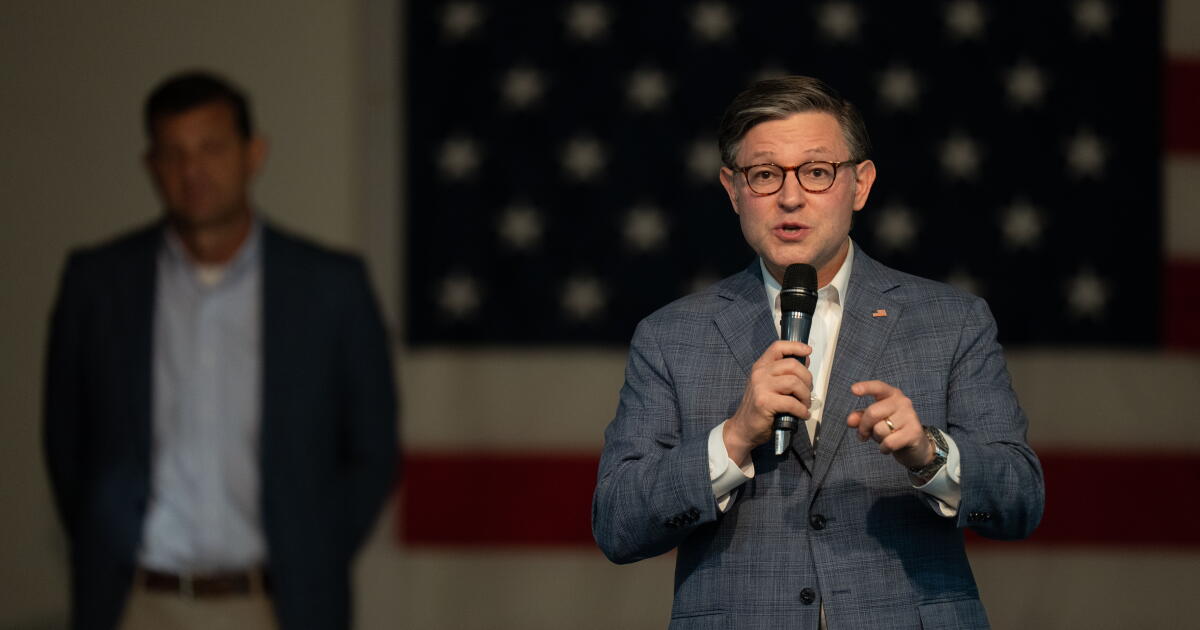
“Do you know that right now we have the lowest violent crime rate in 126 years in America right now? Because we emphasize the rule of law,” House Speaker Mike Johnson recently told an audience at Louisiana State University. Crime rates have generally trended down since the 1990s with a brief spike during the COVID pandemic. “We have the most secure border we have had in the past half century.”
President Trump returned to the topic Monday night in Nebraska, warning about how the country used to be before he returned to the White House.
“We had a border with people pouring in, crime like nobody’s ever seen,” he said.
Republicans say Democrats will ‘defund the police’
In Georgia, Michigan, Nevada, Texas and Wisconsin, Republican candidates for governor have attacked their Democratic rivals as weak on crime or warned they could cut police funding. Texas Gov. Greg Abbott, for instance, has lambasted Democratic nominee and state Rep. Gina Hinojosa for not supporting legislation that would require judges to deny bail to illegal immigrants charged with a violent crime.
Hinojosa has campaigned on her tenure as a civil rights lawyer and criticized Abbott’s crime policies as violating civil liberties.
Rick Jackson, a billionaire healthcare executive running in Georgia, has repeatedly attacked Democratic opponent Keisha Lance Bottoms over her tenure as Atlanta mayor.
“I grew up in the type of neighborhood Keisha Lance Bottoms abandoned,” Jackson said at a summer campaign rally. “I know who gets hurt when politicians defund the police.”
In an interview with Atlanta station 11Alive, Bottoms emphasized that her administration gave pay raises to police and firefighters, and said she called for increased federal funding for public safety during her time as mayor.
Crime warnings pervade congressional races
It’s a similar story in U.S. House races.
In Virginia’s first congressional district, Rep. Rob Wittman has attacked his Democratic opponent, prosecutor Shannon Taylor, over her allegedly “soft on crime” record in office. In Michigan’s 10th district, Republican Michael Bouchard is running on his service as a Bronze Star Army captain and son of a longtime local sheriff. He’s claimed his Democratic opponent, former prosecutor Christina Hines, supports “woke, soft on crime, socialist policies.”
In Colorado’s eighth district, Rep. Gabe Evans touts his time as a police officer against Democratic challenger Manny Rutinel. And in Wisconsin’s third district, Rep. Derrick Van Orden hopes to win a third race against Democratic nominee Rebecca Cooke by painting her as a communist who wants to defund the police.
Republicans hope that by reprising warnings of crime and disorder the party can reenergize their disillusioned base and win back skeptical moderate voters who have drifted over concerns like affordability.
Democratic rivals have responded in kind. Taylor aired an ad featuring 13 local sheriffs who endorsed her campaign. Rutinel aired ads with local police and rolled out a safety plan that called for greater police funding and drug prevention programs. Hines said she’ll continue to prioritize public safety and prosecute corruption in Washington. Cooke has vowed to fully fund police departments in Congress.
Not all Republicans see crime as a winning issue
It’s yet to be seen if the strategy will prove effective.
“We’ve got to talk about it. I think that in many ways, we are the victim of our own success because it’s off the headlines a little bit more,” said Sen. Eric Schmitt, a Missouri Republican and former state attorney general. “Having a completely secure border now, no one even talks about it. But that’s a huge accomplishment from where we were at before.”
An AP-NORC poll conducted in September found that border security — which Trump and Republicans often link to crime — was a relative strength for the Republican president, with 48% of U.S. adults saying they approved of his performance on the issue. But that was still a decline from a year ago, when his approval on border security was at 55%.
Not everyone in the party is sold on Republicans rehashing the crime message.
“I don’t see that bubbling up as a major issue for the voters,” said Sen. Thom Tillis, a North Carolina Republican who chose not to seek reelection this year. Aiming to make the race to succeed Tillis a referendum on crime, Republicans have run ads claiming that Democratic nominee Roy Cooper went easy on convicts during his two terms in the governor’s mansion.
Black political leaders have criticized the ads as racist and reminiscent of past Republican campaigns that used dog whistles to appeal to suburban white voters. Trump made the message explicit when he invoked the infamous 1988 “Willie Horton” ad and displayed dozens of mugshots of men of color on a jumbotron during a rally stumping for Michael Whatley, Cooper’s Republican rival.
In contrast to his party’s messaging, Tillis noted his state’s safety in recent years.
“Frankly, when I hear somebody talking about crime in Charlotte, I live 25 minutes from downtown. I’m not worried about walking through Charlotte at night,” said Tillis.
Democrats accuse Trump of corruption
National Democrats contend that Republicans’ message on violent crime is undercut by the Trump administration’s hardline immigration enforcement actions, which resulted in the killing of two American protesters in January and the fatal shootings of multiple undocumented people. They accuse Trump of corruption and have hammered Republicans for alleged complicity in the president’s self-dealing.
“This is the biggest criminal organization that we’ve ever seen,” said Sen. Ruben Gallego, an Arizona Democrat, of the current White House.
He added that, “Democrats should be pushing back with the fact that, if not for the fact that he was president, this guy would be leading some type of mafia right now.”
Lauren Bis, a White House spokeswoman, said “extreme Democrats are trying to deflect from their radical soft on crime agenda.”
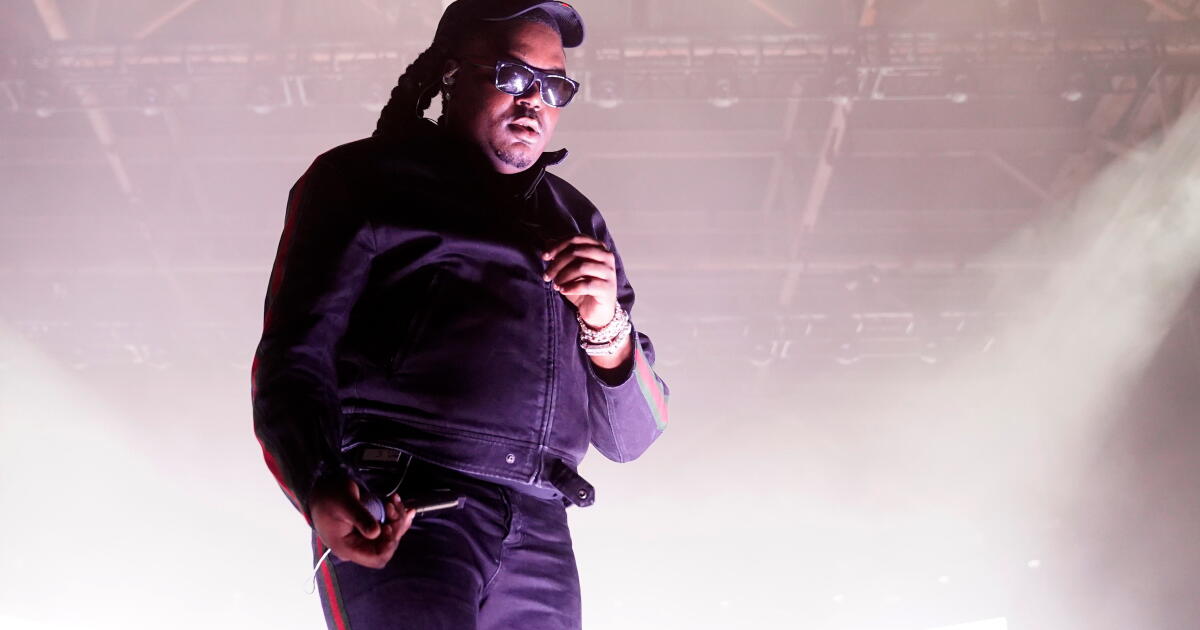
Rapper Lucki was allegedly involved in a fight at ComplexCon in downtown Los Angeles on Saturday, leaving him with a gash on his neck, according to videos on social media.
Police confirmed to The Times on Sunday evening that four people were wounded in what appeared to be a knife attack but did not name the victims. Officers responded to reports of a fight involving multiple people near Chick Hearn Court and Georgia Street around 4:45 p.m. Saturday, police said. When officers arrived, people were still fighting, according to police.
Footage shared on X appears to show a brawl involving Lucki, 30, outside the L.A. Convention Center.
In one part of the video, as onlookers shout for a paramedic, one unidentified bloodied man shuffles to a car while holding a towel to his neck.
Although police did not confirm whether the rapper or his associates were involved in the fight, police told TMZ that Lucki was surrounded by fans for photos when a suspect “hit him on the side of his face, causing a laceration.”
Additional footage posted to TikTok appears to show a visibly shaken Lucki climbing into the back seat of a black car with a wound near his jaw.
Two people were transported to a local hospital after sustaining injuries “that appeared to be the result of a knife attack,” police told The Times. A third person self-transported to a local hospital for treatment of a severe laceration.
A fourth person approached an officer at the scene and showed a laceration to his elbow, police confirmed. The victim declined medical treatment and left the scene on his own. Authorities did not know if the victim sought medical help afterward.
Before the violence, ComplexCon shared a story to Instagram on Saturday in which the rapper said he was “happy to be here.” In a statement to People Magazine, the venue said officials were aware of the situation, adding that they “take incidents of this nature extremely seriously and remain focused on maintaining a safe and secure environment for everyone.”
Authorities did not provide any further information Sunday.
Australian police and intelligence join the list of those probing the incident.
Published On 4 Oct 20264 Oct 2026
Authorities have said they are investigating the links of the co-pilot of the Israel-bound Flydubai flight with Australia.
A multi-agency Australian police and intelligence team – the Victorian Joint Counter Terrorism Team – is carrying out the probe, a spokesperson said on Sunday.
Recommended Stories
list of 3 itemsend of list
Mystery surrounds the co-pilot, who is accused of attacking the captain with an axe and attempting to seize control of Flight FZ1073 from Dubai as it approached Israel, and how he was able to acquire his seat in the plane’s cockpit.
He had been barred from flying in his own country because of concerns that he had adopted “extremist” views, The Associated Press news agency cited sources as saying.
While al-Hammami reportedly spent part of his life in the United Arab Emirates, the Reuters news agency, citing sources briefed on the Australian investigation, reported that he studied at a university in the Australian city of Melbourne.
A third unnamed source told the agency that he studied at RMIT University, a public research university in Melbourne, about a decade ago.
The Financial Times also reported al-Hammami’s links to Australia. Citing two sources familiar with the Australian investigation, the FT said al-Hammami had allegedly visited what it described as “radical mosques and extremist websites” while in the country.
Disaster was averted after passengers and crew subdued the co-pilot and a reserve pilot took over its controls and completed an emergency landing in Saudi Arabia.
However, the case has raised questions about security in Israel, which has some of the world’s strictest aviation security measures.
The prosecutor general of the UAE, Hamad Saif al-Shamsi, has labelled the attack an attempted “terrorist act”.
Israeli Prime Minister Benjamin Netanyahu has said that Israel has longstanding arrangements with foreign airlines aimed at preventing pilots who are nationals of countries without diplomatic relations with Israel from flying there.
Netanyahu said a “loophole” appears to have allowed the Omani pilot to take part in the Flydubai flight, and that Israel would now strengthen its checks.
The UAE has not yet publicly established a motive or announced whether investigators believe al-Hammami acted alone.
UAE presidential adviser Anwar Gargash said on Saturday that the latest “terrorist” attack is a new warning that the region’s fight against “extremism” is not over.
Aditi Subramanian joined protests after the alleged gang rape of a teenager in New Delhi, calling for women’s safety without more restrictions or surveillance. As she and hundreds of others tried to reach the planned protest site, they were detained. This piece was produced in collaboration with Jigyasa Mishra.
India’s Cockroach Janta Party has launched a new protest demanding change after millions of voters were allegedly improperly removed from electoral rolls. Other protest movements joined the rallies, which led to scuffles and arrests in the capital.