No injuries were reported at the building, known locally as the Kehlsteinhaus, while police said a ‘suspicious person’ has been taken into custody.
Published On 24 Oct 202624 Oct 2026
German police have detained a suspect after a fire engulfed the Eagle’s Nest, Adolf Hitler’s notorious Nazi-era mountain retreat in Bavaria, prompting an overnight emergency operation involving about 200 firefighters.
No injuries were reported at the building, known locally as the Kehlsteinhaus. Police said investigators were examining whether a “suspicious person” taken into temporary custody was connected to the blaze.
Recommended Stories
list of 3 itemsend of list
The fire alarm was triggered by a smoke detector at about 9:50pm (19:50 GMT) on Friday. Emergency crews could see flames rising above the building as they approached and found it “completely ablaze”, according to police.
The retreat’s remote Alpine location, at an altitude of more than 1,800 metres (about 6,000 feet), complicated efforts to extinguish the fire, police spokesperson Lisa Maier said.
While authorities have not announced a cause, German media reported that investigators suspected arson.
The newspaper Bild said emergency responders had encountered a motorcyclist travelling towards them on their way to the scene and that he was subsequently detained. His possible involvement remained under investigation.
Maier said inquiries were continuing, with police planning a news conference later on Saturday.
Built between 1937 and 1938, the stone-and-granite retreat stands on the Kehlstein mountain above Obersalzberg, near Berchtesgaden in southern Germany.
Designed as a monument to Hitler’s rule and a setting for receiving foreign diplomats, it offers sweeping views across the Bavarian Alps. Hitler himself visited the resort.
The site, which remains part of the legacy of Nazi Germany, survived World War II undamaged. It has operated as a restaurant since 1952 and also houses an exhibition examining its Nazi history.
Mississippi released bodycam footage of the fatal shooting of 1-year-old Kohen Wiley, who was in a moving car when a police officer on a shoplifting call opened fire. The officer was cleared of criminal wrongdoing, but the boy’s family says the shooting was unjustified.
Italy has approved the deployment of troops and tougher legal penalties in a bid to quell cost-of-living protests in the north of the country that occasionally turned violent over the weekend.
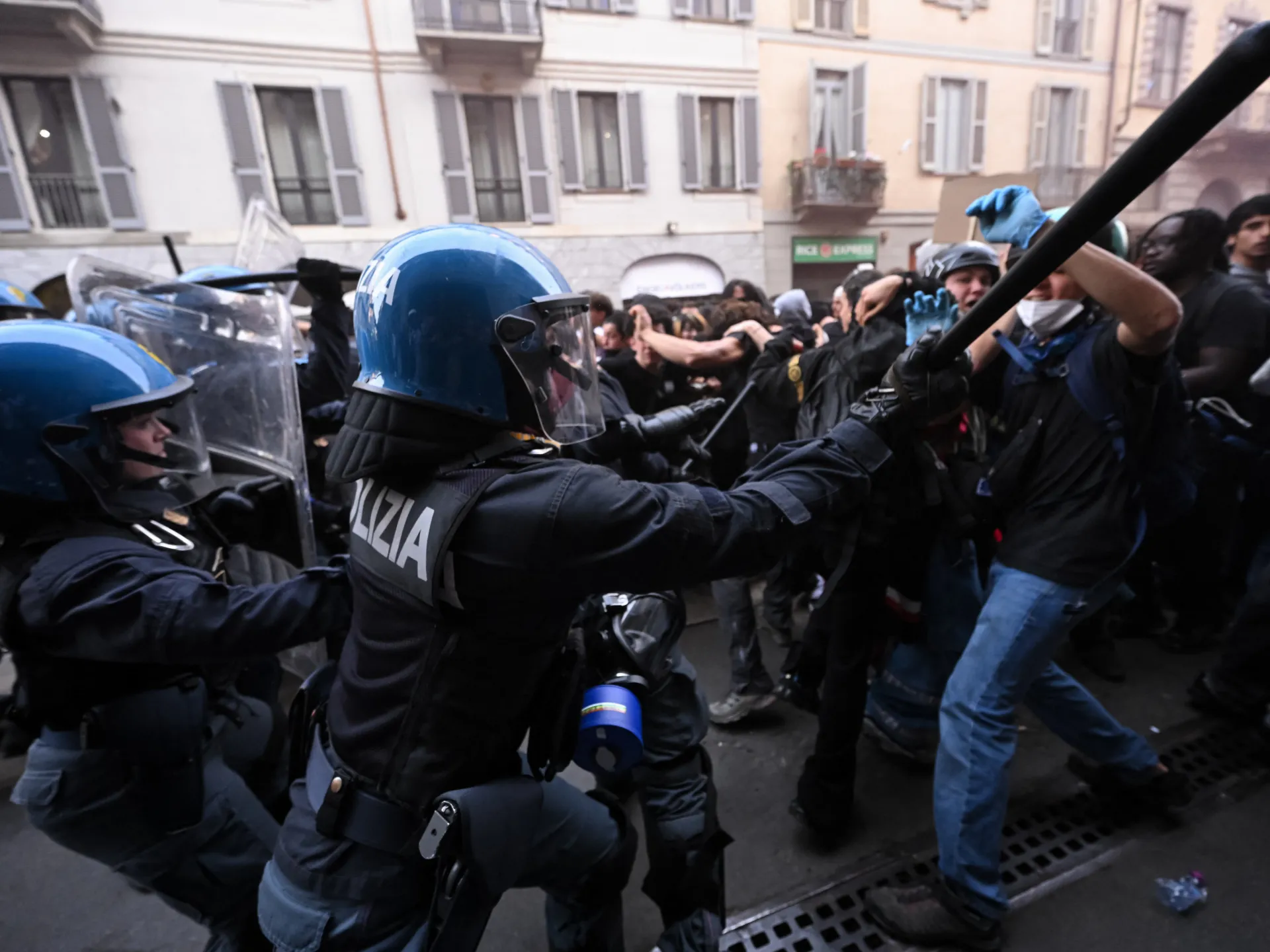
The Italian cabinet on Tuesday approved sending 500 troops to Milan, a new legal offence covering violent participation in a demonstration, tougher penalties for rioters and financial liability for parents whose children take part in vandalism and looting.
Recommended Stories
list of 3 itemsend of list
Italy’s Ministry of Defence said the military will help reinforce security at key sites, step up surveillance of sensitive locations and enhance monitoring.
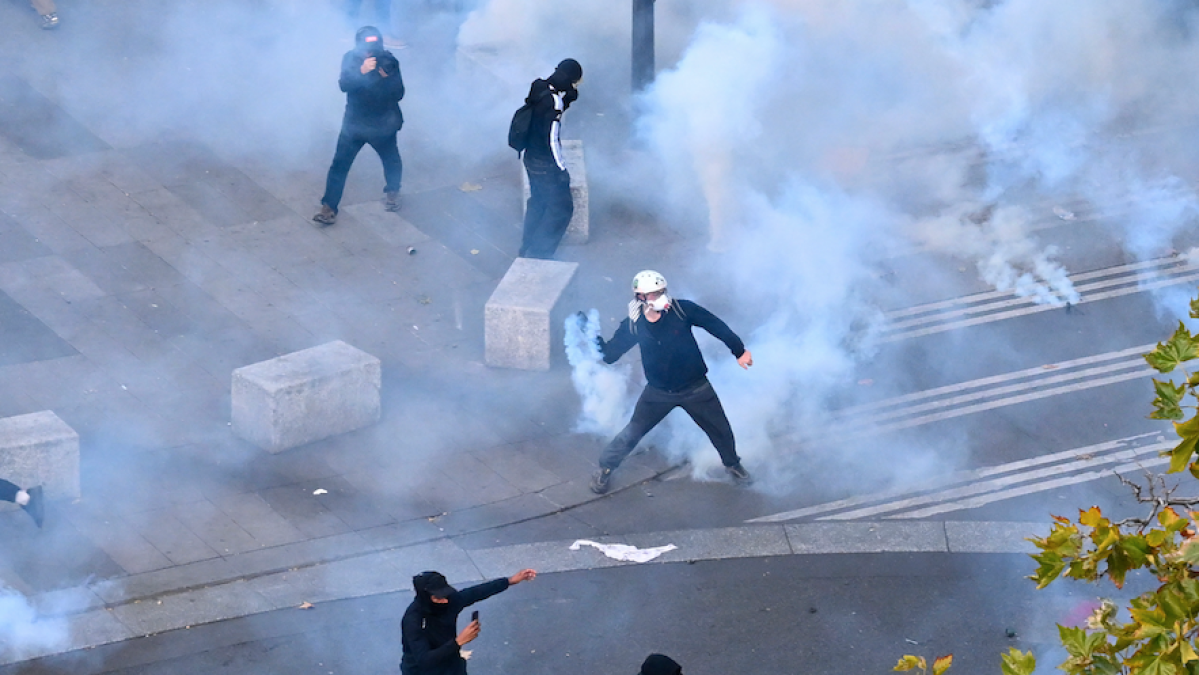
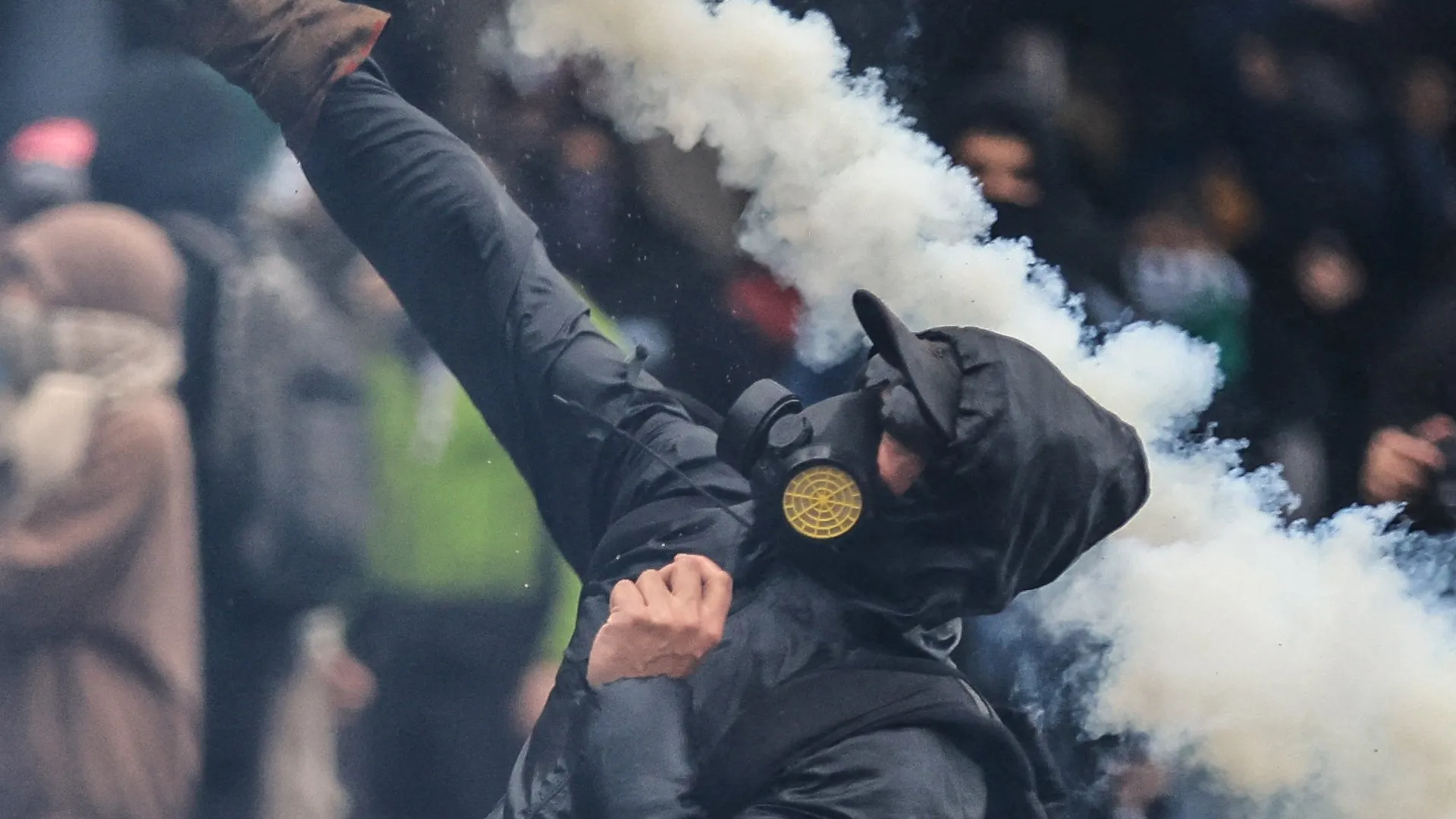
Unrest swept northern Italian cities at the weekend, including the financial capital Milan, where groups of mainly young people looted shops, smashed windows and clashed with the police. The demonstrations were driven by anger over soaring fuel and energy prices, high rents, low wages and the state of public services.
Public safety
As part of the new legal measures, which take effect immediately, anyone who takes part in a group of at least five people and endangers public safety during protests faces up to five years in prison and a maximum fine of €20,000 ($22,460).
Penalties increase if faces are concealed or people are injured.
Authorities can order prompt compensation for any damage inflicted and, in the case of minors, hold their parents liable.
Police will be allowed to detain youths aged between 14 and 17, even if they have not committed a crime, provided there is evidence they pose a danger, extending powers that previously applied only to adults.
But the cabinet did not approve giving soldiers policing powers, as expected, after opposition from President Sergio Mattarella, Italian media reported.
“Destroying and stealing is not protest, it is crime, and the state’s response must be firm,” Prime Minister Giorgia Meloni said in a social media post after the cabinet meeting.
Echoing protests
The disturbances in northern Italy echoed riots in neighbouring France, where hundreds of thousands of people took to the streets on Saturday in some of the country’s most violent turmoil in years.
Meloni’s government is also facing mounting pressure from a separate wave of protests in southern Italy, where truck drivers angered by soaring diesel prices and the rising cost of living have staged roadblocks that are disrupting supply chains.
Protesters in both the north and the south say rising prices are pushing families into poverty, a concern for Meloni ahead of the 2027 national elections.
Police have arrested 55 people after protesters camp in Lisbon and Porto.
Published On 21 Oct 202621 Oct 2026
Thousands of protesters have returned to two central squares in Portugal for demonstrations against an intensifying housing crisis, hours after police cleared their camps in the capital, Lisbon, and the city of Porto, arresting 55 people.
Activists have demanded the centre-right government withdraw a bill that makes evictions easier and ends rent caps on new leases, which passed a first parliamentary reading.
Recommended Stories
list of 3 itemsend of list
The demonstrators in Lisbon sought to rebuild their sit-in camp at Rossio Square on Tuesday, while those in Porto were returning to the northern city’s Dom Joao I Square.
Organisers said more than 1,000 people had gathered at each square. Activists have occupied Lisbon’s Rossio Square since Saturday, pitching around 200 tents, and Porto’s Dom Joao I Square for around 10 days.
A picture taken on October 19, 2026, shows a tent with a sign reading “Evicted by the State – Evicted by the climate – End to the evictions” at Rossio Square in central Lisbon [AFP]
‘Enough is enough’
Debora Miranda, 41, a communications consultant, told Reuters she joined the Rossio Square protest to represent generations struggling with soaring costs. “If people don’t feel at home, in every sense of the word, they can’t move forward with their lives…enough is enough.”
The camps mirrored housing protests in neighbouring Spain, and coincided with unrest over rising living costs in countries such as France, Belgium and Italy.
Shortly before 6am, after warning protesters that the camps were illegal, police launched coordinated operations in both cities. Demonstrators in Porto followed orders and dismantled their own tents. Officers cleared Lisbon’s Rossio Square in what Carla Valadao, a spokesperson for the camp, described as “very aggressive”.
Public Security Police superintendent Sergio Soares told reporters that the eviction had been “calm, proportionate and appropriate, with no police charge”.
The 55 detainees were later released pending a court appearance in Lisbon on Wednesday.
People gather to protest in Rossio Square against the housing crisis and cost of living in Lisbon, Portugal, on October 20, 2026 [Pedro Nunes/Reuters]
One of Europe’s worst housing crises
Portugal is grappling with one of Europe’s worst housing affordability crises as purchase prices have more than doubled since 2017 and rents for new leases have nearly doubled.
Jorge Paixao, 19, a history student, called it “a societal crisis”, saying his generation needed “the ability to live with dignity, start families and rejuvenate Portugal”.
The squeeze is most acute in the major cities, where there has also been opposition to excessive tourism and an influx of so-called digital nomads, people who travel while working remotely.
People at a protest camp at Rossio Square against the housing crisis and cost of living in Lisbon, Portugal, on October 19, 2026 [Pedro Nunes/Reuters]
UN experts have called on the Indian government to stop the use of “excessive force” in the wake of the crackdown on opposition and student protests in India.
In a statement on Tuesday, the two dozen independent experts pressed for an impartial investigation into Indian authorities’ conduct, saying that demonstrators had sustained injuries and some reported being subjected to ill-treatment.
Recommended Stories
list of 3 itemsend of list
“Protesters have sustained injuries, with some reporting being subjected to ill-treatment. The experts expressed particular concern about reports of sexual violence and other forms of gender-based abuse in the protests and related detentions,” according to the statement.
UN experts are appointed by the UN Human Rights Council to monitor and document specific human rights crises but are independent of the organisation itself.
India’s Cockroach Janta Party (CJP), along with other opposition parties and student organisations, has led protests this month demanding Chief Election Commissioner Gyanesh Kumar’s resignation, after 130 million names were removed from voter lists.
The protesting groups said the removal disproportionately affected poor and homeless people as well as ethnic minorities including Muslims, who are unlikely to vote for Prime Minister Narendra Modi’s Hindu nationalist Bharatiya Janata Party (BJP).
The BJP and India’s Election Commission deny the accusations. The Election Commission said it was removing duplicate, deceased, shifted and otherwise ineligible voters and that anyone excluded in error can pursue appeals.
‘Deployed force’
“Despite the non-violent nature of the assemblies, law enforcement agencies have reportedly deployed force against unarmed students including by means of police so-called lathi charges, and have prevented thousands from joining the protests,” the UN experts said.
Lathi charges are coordinated movements by a policing force using sticks to disperse crowds.
“We call on the authorities to immediately cease the use of excessive force, rescind blanket assembly bans, and refrain from the misuse of digital surveillance, including through biometrics, and internet disruptions,” they added.
India has repeatedly dismissed such criticism and cast it as interference in the country’s internal affairs, including when the UN human rights office earlier this month expressed concerns over mass detentions in relation to the latest protests.
“LAUGHING” Russell Brand sexually assaulted a radio worker in a “violent, sloppy and frenzied” attack as his entourage stood by and watched, a court heard.
The comedian, 51, is accused of forcing six women into sexual acts and kissing and groping them in an “obsessive” campaign to sleep with 5,000 women.
Russell Brand’s alleged rape trial is continuing todayCredit: Shutterstock EditorialThe comedian pictured at court with wife LauraCredit: Getty
On the fifth day of his trial, jurors heard from a woman who was in her 20s working at a radio station in the mid-2000s when Brand allegedly sexually assaulted her.
She told Southwark Crown Court Brand was a “perfect stranger” to her at the time and said his alleged assault was “violent”, “sloppy” and “frenzied”.
Sign up for the Showbiz newsletter
Thank you!
Describing the alleged attack, she added: “It was hard, I would say it was sloppy, he kissed my mouth, he just was kissing me and it was hard, it was very hard.
“He was kissing me all down my neck, his hands at the same time were all over me.”
Asked about where his hands were, she said: “He touched my bum, he touched my breast, he had his hand on my waist and his other hand was just pinning me against the wall, and his body was just pressed up against me.”
The woman added: “It was rough, it was very, very rough. It was hard, I would say that his whole body was pressed against me, the kisses were hard and sloppy, going down my neck
“The reason I used the word frenzied is because it was just, it was violent.”
She said four members of Brand’s entourage including a woman were in the room at the time but “did nothing”.
The woman wept as she told jurors: “I wonder why those people didn’t do anything to stop him.”
She also told the court she had locked eyes” with the other woman and was “pleading with her” to stop what was allegedly happening.
The woman said she was “stunned” and “in a haze” but managed to push Brand away and told him to “f*** off”.
She added: “I remember he made like a sound, that was like funny – ha ha – like that.”
Brand allegedly made a woman take this photo before raping her, jurors heardCredit: AFPBrand had taken part in the Soapbox Cabaret in 1999 in BournemouthCredit: PA
Jurors heard Brand allegedly preyed on the complainants between 1999 and 2009 in a bid to satisfy his “voracious” sexual appetite.
One of the women was allegedly raped in a hotel room in Bournemouth in 1999 after a Labour conference.
The woman said Brand had suddenly “changed” from being “camp, friendly, and effeminate” to “monster-like”.
Jurors were also shown pictures that Brand allegedly made one of the women take moments before he raped her.
The images – released by police – show the comedian topless in a pair of white trousers blowing a kiss to the camera.
She told police she remembers feeling “frightened” after Brand forced her to take the pictures of him on her camera.
She added: “I took pictures of him on my camera – he made me take them.
“I was frightened. I remember feeling ‘what on earth have I got myself into’ – and then he did rape me.
“He pushed me onto the bed. He did take my trousers off.”
She previously claimed he emerged topless from the toilet and “was prancing around the room, a bit like an ostrich, doing silly walks like Basil Fawlty”.
The woman later added: “I found his body quite snake-like and disgusting. It made me feel sick, if I’m being honest.”
Another alleged victim who claimed she was targeted by Brand while working at MTV in 2001 also gave evidence.
The alleged incidents are said to have happened at the height of Brand’s fameCredit: Getty Images for The Recording AcademyHe has denied the alleged offencesCredit: SWNS
At the time he was the flagship presenter at the video music channel, jurors heard.
The woman said Brand was “pleading” for her to join him in the toilet before he “grabbed me by the arm and started to pull me in, saying ‘come on, come in with me’.”
She described Brand as a “wild-eyed maniac” during the alleged assault and said she was left “bewildered” and “confused”.
Prosecutor Riel Karmy-Jones KC dubbed the comedian a “sexual predator” who was “ruthless, calculated and manipulative”.
She also said women have told police he was “childlike in his expectation that his every desire should be met”.
The court heard the alleged offences took place when Brand’s “public profile was taking off”.
He allegedly prayed on women in a number of locations – including workplaces, a toilet cubicle in a bar and at his home address.
The fifth alleged victim met Brand after seeing his show at the Hammersmith Apollo in London with a friend in 2009.
He allegedly told her his age range was from “16 to death” before she was invited to a backstage bar where they kissed and had a threesome.
The woman claims she went to his home the next day where Brand told her: “Your hair smells funny”.
He then made her take a shower and wash her hair while he watched through a glass shower cubicle, it was said.
Ms Karmy-Jones said once in the bedroom, they had consensual sex but afterwards Brand “flipped” the woman on to her front and on all fours and allegedly penetrated her anally.
Afterwards, jurors heard the comedian told her to “clean up the mess you have made”.
The sixth woman worked for Channel 4 when she met Brand while he was filming a project.
She said she was informed Brand was “unhappy” and the situation would not improve unless she gave him a massage, jurors were told.
The woman claimed he walked up to a chair she was sitting on and placed his head directly into her groin area.
Brand has denied three counts of rape, three of sexual assault and one count of indecent assault against six women.
A 43-year-old man accused of deliberately hitting Helen Haines outside her office remains in police custody.
Published On 20 Oct 202620 Oct 2026
The Australian Federal Police (AFP) have said the alleged targeting of independent lawmaker Helen Haines appeared to be an “isolated incident” and there were no known further threats associated with the attack.
Haines was struck by a Toyota Land Cruiser SUV outside her office in Wangaratta, about 200km (124 miles) northwest of the state of Victoria’s capital, Melbourne, on Monday, in what Prime Minister Anthony Albanese called a “deliberate” act.
Recommended Stories
list of 3 itemsend of list
The 65-year-old underwent surgery overnight, with Australian media outlets reporting on Tuesday that she has lost a leg and remains in critical condition in a Melbourne hospital.
The suspect is in police custody, an AFP statement released on Tuesday said. Local media identified the driver as a 43-year-old man from Tarrawingee, Victoria.
Federal and state police were working “to identify potential charges”, including “the offence of causing harm to a Commonwealth public official which carries a maximum penalty of 10 years’ imprisonment”, the statement said.
The prime minister said on Tuesday that the vehicle had performed a U-turn before hitting the MP.
“It’s clear that there was a deliberate act here. This wasn’t an accident, someone just skidding off the road,” Albanese told the ABC national broadcaster.
The prime minister said the alleged attacker’s motive remained unknown.
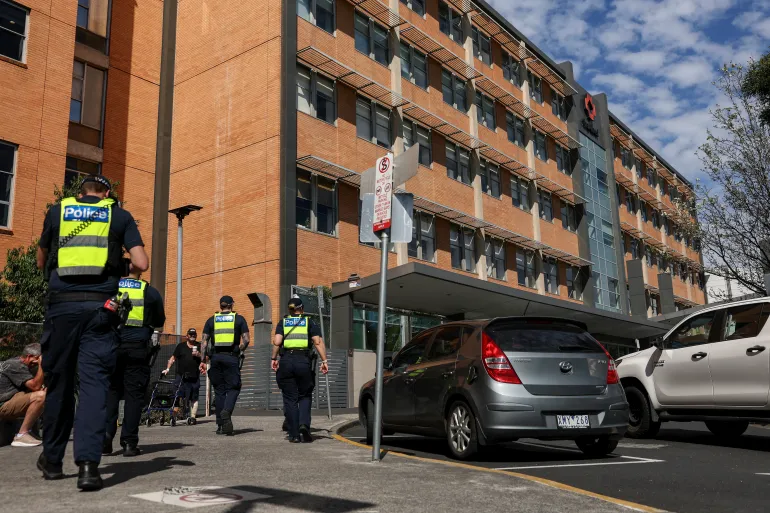
Police arrive at Alfred Hospital, where Australian politician Helen Haines is being treated, in Melbourne on October 20, 2026 [Martin Keep/AFP]
Bystander intervened
A former nurse, Haines is an independent federal MP for the Victorian seat of Indi and is known for her socially conscious policy positions on the environment and transparency.
Home Affairs Minister Tony Burke told ABC Radio that witnesses said Haines was struck twice by the vehicle before a bystander intervened.
Ricky Jefferies ran from his barber shop, restrained the attacker and removed a knife from him after initially believing the incident was a car accident, Australian media reported.
“I heard a loud bang with no brakes. It was crazy; I just ran out to the front to see what’s happening,” Jefferies told reporters outside his shop.
“I didn’t realise the seriousness of the situation initially, and once it became relevant, I just did what I could and what others were already trying to do.”
Threats and abuse
Foreign Minister Penny Wong said she was shocked by the “deeply disturbing attack” and wished Haines a full recovery in a post on X.
The attack comes after the federal police documented a steady rise in threats and abuse directed towards the nation’s politicians in recent years. Politicians have historically been highly accessible to the public and usually go about their business without security.
Albanese said on Monday that “the temperature has increased in recent times”.
Haines entered parliament in 2019 after working as a nurse and midwife, becoming known for stances such as supporting stronger climate action.
She has been praised for her efforts to increase transparency in politics and crack down on corruption.
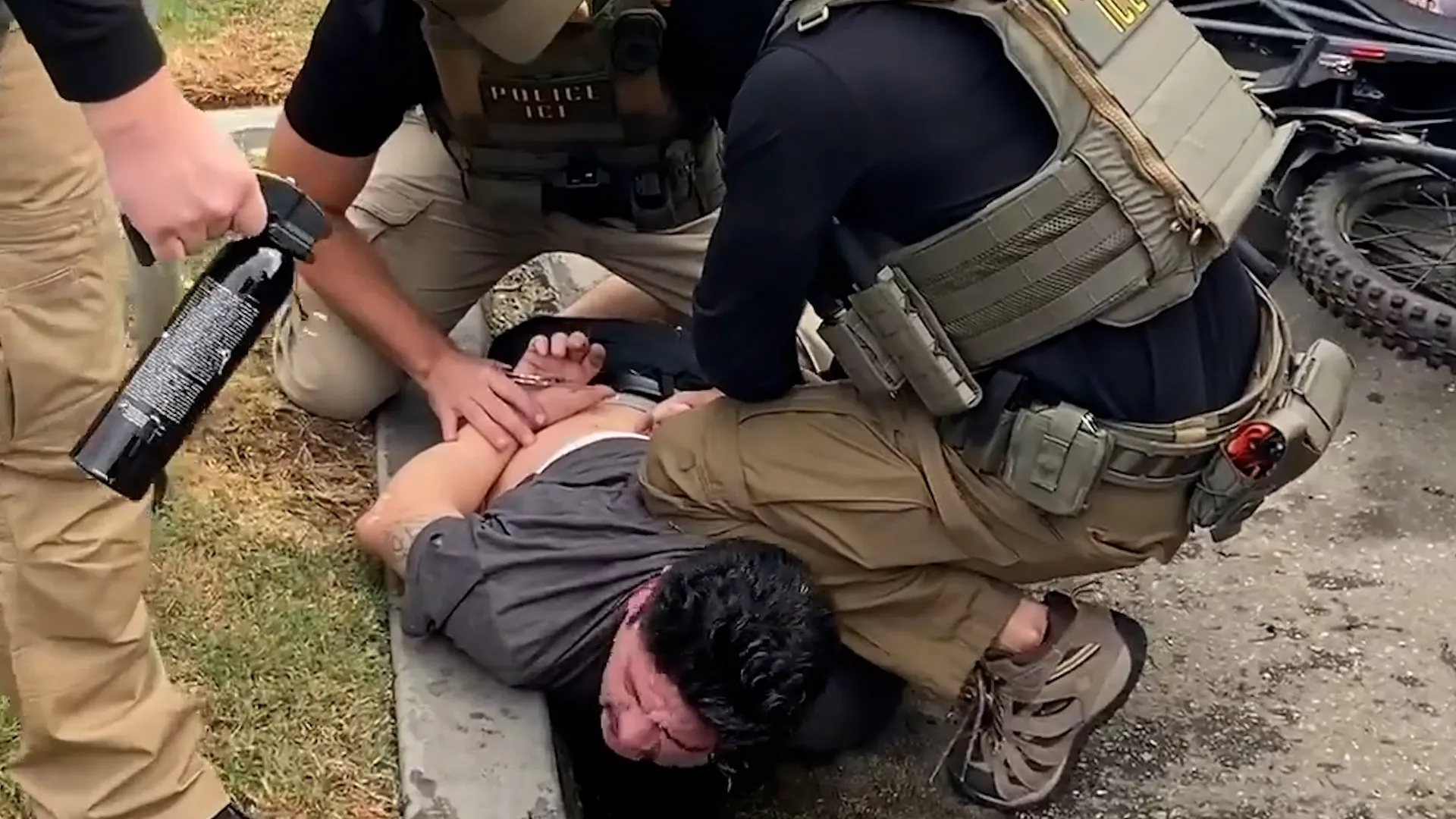
Video shows a man screaming in pain as ICE agents pin him down during an arrest in Long Beach, California. The family of Ricardo Gonzalez say he is a US citizen, and that ICE agents broke his arm during a wrongful arrest.
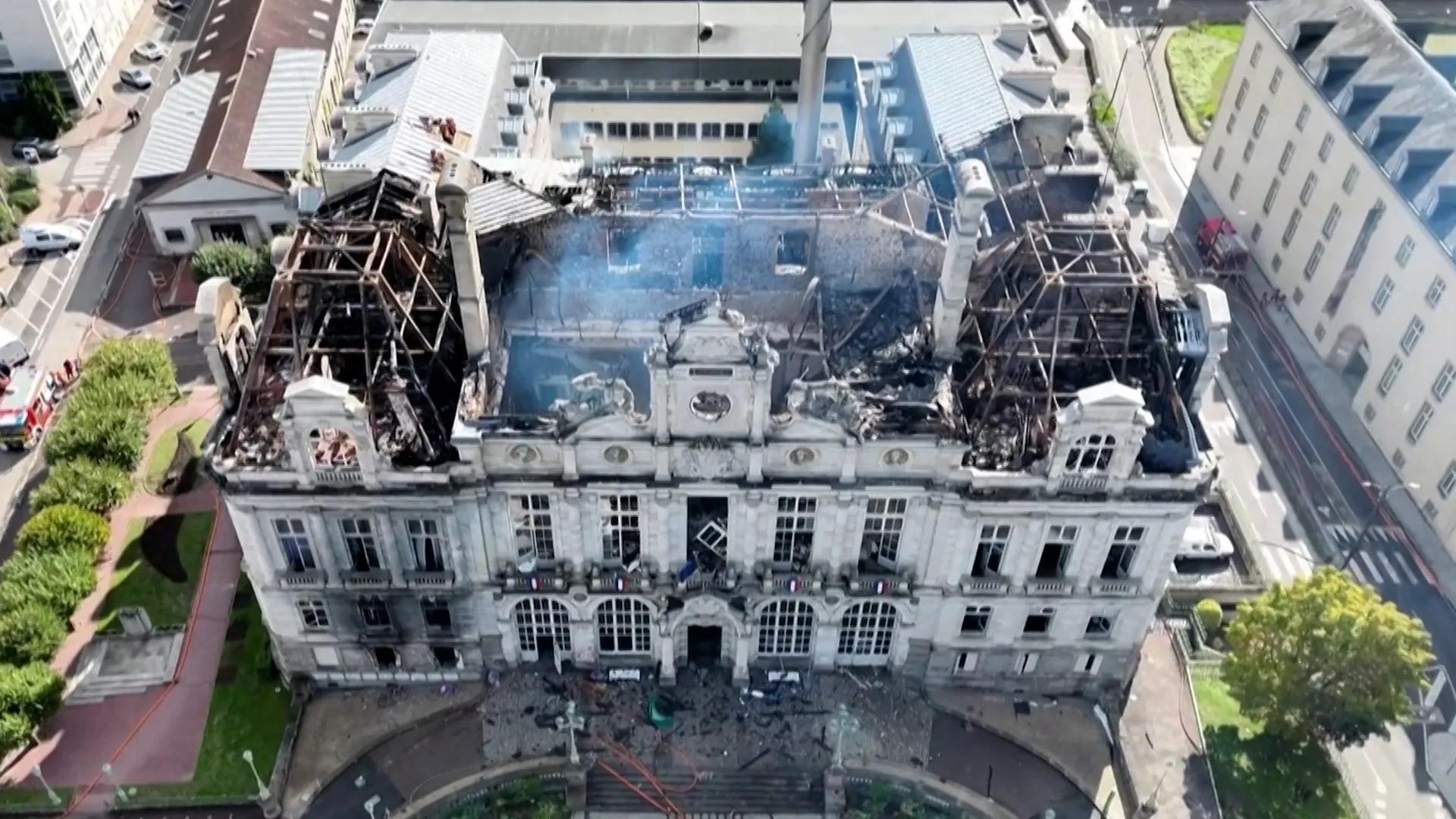
Residents in Limoges, France, are expressing shock and anger after protests saw their 140-year-old town hall set ablaze. The fire destroyed its roof and clock tower, as officials condemned the attack.
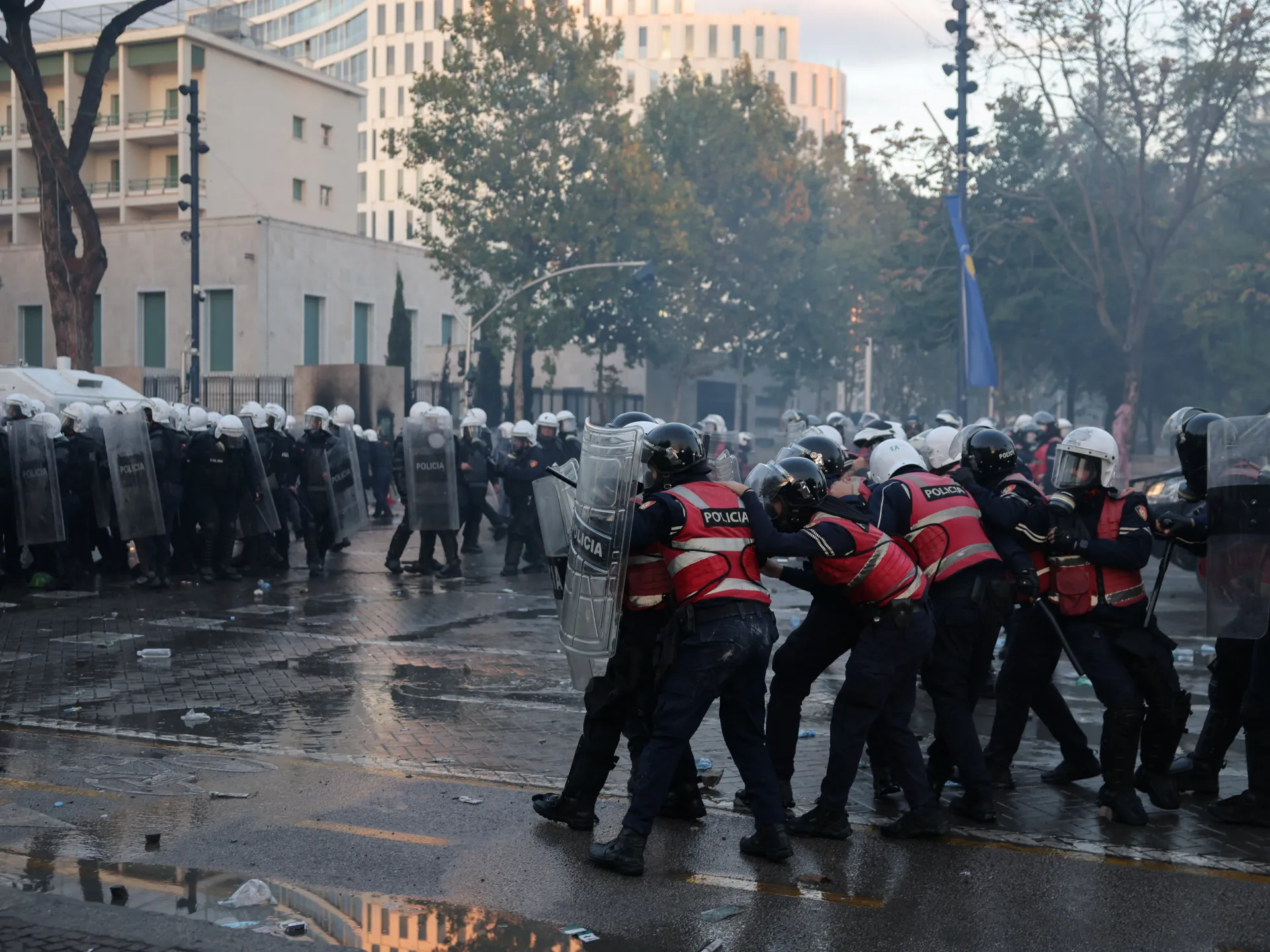
Protesters have clashed with riot police in Albania’s capital, as antigovernment demonstrations escalated into violent unrest.
Demonstrations have shaken Tirana since Tuesday, with thousands of protesters calling for Prime Minister Edi Rama to step down as they rally against poor university conditions, high tuition fees and corruption.
This week’s unrest follows months of antigovernment protests in the Balkan nation, initially prompted by a controversial resort development linked to United States President Donald Trump’s family.
Protests are sweeping France as anger over conditions in schools meets frustration with high living costs and a government accused of doing little to address problems facing people.
New Delhi, India – A 19-year-old woman was detained by police during the youth-led antigovernment protests in the Indian capital over the weekend.
The young woman, who asked to remain anonymous for fear of further reprisals from the authorities, said she was detained on Sunday as thousands of people congregated in central New Delhi. They were demanding the resignation of India’s Chief Election Commissioner, Gyanesh Kumar, over alleged irregularities in electoral rolls, which saw the removal of 133 million people from the voter lists.
Recommended Stories
list of 4 itemsend of list
After the woman’s detention, she and several other demonstrators were taken on a police bus to a location about 50km from the protest site. With no cash and her phone battery drained, the woman spent nearly an hour wandering along a dark road, trying to figure out what to do next.
A car pulled up and the driver asked if she needed any help.
“I was frightened and completely lost. When those volunteers finally helped me get back safely, it felt like a miracle. I had never imagined that someone I had never met would come forward to help me like that,” she told Al Jazeera.
For a young woman in New Delhi, notoriously referred to as the “rape capital of India”, being alone in the middle of the night and getting into a car with strangers is not an easy decision. The city records an average of three rapes a day.
But the young protester said she immediately recognised one of the volunteers in the car. She had seen his videos online, in which he had asked the detained protesters whether they needed help. Recognising a familiar face reassured her that the people offering the ride could be trusted.
The woman was rescued using an AI-assisted tool developed by 25-year-old Rajiv Choudhary, who is helping protesters get home safely after being detained and dropped off by the police far away.
Called the Detainee Gharwapsi Yojana, the initiative combines a digital dashboard with a network of volunteers who track information about police buses carrying detainees and arrange transport for those left stranded.
“Gharwapsi” in Hindi means “to return home”. It is also a play on a campaign by India’s right-wing Hindu groups which want to bring the country’s Muslims and Christians back into the Hindu fold, claiming that their ancestors converted to “foreign” religions from Hinduism. “Yojana” means a plan.
Since the beginning of this month, India has seen near daily protests over alleged electoral fraud by Kumar and his commission. Led by the satirical Cockroach Janta Party (CJP), a number of left-leaning student groups as well as the main opposition Congress party, the protests have seen tens of thousands of people hitting the streets in New Delhi and other cities.
In response, authorities in the Indian capital have imposed a sweeping crackdown, blocking roads, closing metro stations and detaining thousands as Prime Minister Narendra Modi’s government faces the biggest challenge to its power after 12 years of rule.
Choudhary said his network’s primary focus was to help minors, elderly people and women, mainly first-time protesters.
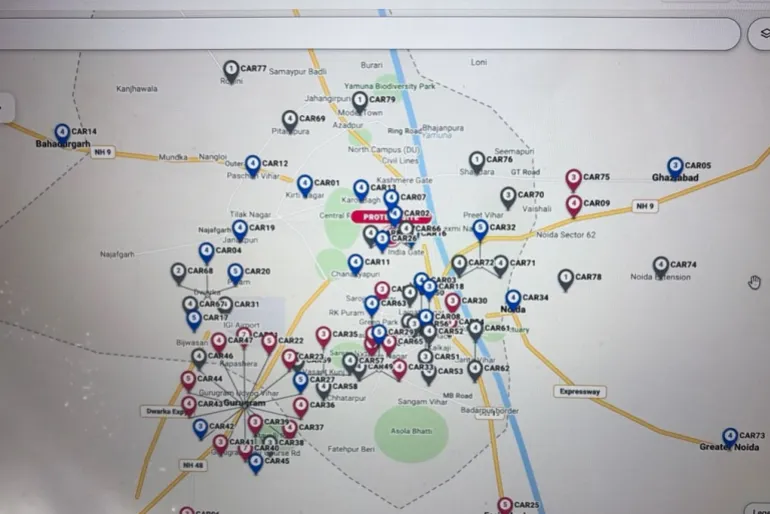
The initiative operates through a private digital dashboard that uses AI-assisted data processing, live mapping and information shared by volunteers on the ground. Volunteers send details, including police bus numbers and locations, through WhatsApp, helping the team coordinate assistance and rides home.
A map showing the locations of rescue cars deployed by Rajiv Choudhary’s team in New Delhi [File; Mehran Firdous/Al Jazeera]
Choudhary said he and his associate, journalist Meghnad, who goes by a single name, initially worked with a small group of volunteers to connect detainees with transport, legal assistance and medical support. The network has since expanded to more than 130 volunteers, who have offered their time and resources to assist detained demonstrators.
“For people caught up in these demonstrations, the ordeal doesn’t end with detention. They can be taken far from the protest site and left trying to find their way home from unfamiliar locations, often struggling to contact friends or arrange transport,” he said.
The idea grew out of Choudhary’s experience during an earlier protest called by the CJP at Jantar Mantar, the designated protest site in New Delhi that has now been denotified by the authorities. Initially, he helped organise supplies and volunteers.
As demonstrations continued, he recognised that protesters needed more systemic support, particularly those who were detained by the police and left fending for themselves far from the city limits.
A young protester is detained by police during a demonstration in New Delhi, October 4, 2026 [Mehran Firdous/Al Jazeera]
As renewed protests began on October 2 , Choudhary built a digital system around the same volunteer network using AI tools. It began with a simple spreadsheet.
“The whole aim behind the application was that I had to systemise things that are not systemised,” he said. “We just wanted to become a support system that could help our people in their fight for their demands.”
Choudhary recalled receiving a distress call from a woman who had been detained in central New Delhi and released on the outskirts of the city. Stranded alone near a railway station, with metro services shut and no clear way to get home, she was frightened and unsure which way to turn.
She reached out to Choudhary’s network for help and he arranged for a nearby female driver to take her home safely. “It is heartbreaking to see people left helpless in an unfamiliar city, frightened and unsure of how they will get home,” he said.
For now, the Detainee Gharwapsi Yojana operates only in New Delhi, but Choudhary plans to expand it to other cities.
“I am overwhelmed by the response from volunteers and drivers who have come forward to help without charging anything. They are offering their services for free because they want to support the protesters,” he said.
The 19-year-old woman who was helped by Choudhary’s team described the initiative as “a lifeline for protesters”. She said the team not only arranged her return, but also offered reassurance and emotional support.
“I cannot thank them enough. As long as we have people like them in our society, no authority can stop us from demanding our rights and protesting peacefully,” she said.
Five days of clashes rock Tirana as students join a wider movement demanding Prime Minister Edi Rama’s resignation.
By AFP and The Associated Press
Published On 17 Oct 202617 Oct 2026
Police in Albania have fired rubber bullets at antigovernment protesters in the capital, Tirana, as violent clashes intensify over demands for Prime Minister Edi Rama to resign.
The clashes continued on Saturday for a fifth consecutive day after high school and university students joined a broader movement against Rama, whose governing centre-left Socialist Party has held power since 2013.
Recommended Stories
list of 2 itemsend of list
The unrest has brought growing anger over education, unemployment and alleged corruption into a wider confrontation with the government.
Protesters threw stones, petrol bombs and fireworks at police near Rama’s office and elsewhere in central Tirana.
Some set cars and rubbish bins alight, creating burning barricades across streets.
Police responded with tear gas, water cannon and baton charges as demonstrators pushed against security lines.
The AFP news agency reported that officers used rubber bullets for the first time since the demonstrations began.
National police chief Skender Hita confirmed their use at a news conference on Saturday, saying they had been deployed “in a limited manner”.
The Ministry of Health and Social Welfare said nine protesters and four police officers received medical treatment on Saturday.
Hita said 167 people had been arrested over five days of unrest, while 132 officers had been injured.
Seven police officers were also suspended pending investigations into allegations that they had exceeded their authority.
Rama, who is serving his fourth term and has refused to resign, visited businesses damaged during the unrest on Saturday. He promised to listen to students and protect their right to demonstrate, while warning against further destruction.
He also accused his conservative political opponents of encouraging the violence.
Growing discontent
The students have complained about expensive university fees, poor educational facilities and limited employment opportunities, alongside allegations of government corruption.
At the start of Saturday’s demonstration, protesters set fire to a suitcase and threw it into the Ministry of Education’s courtyard. AFP reported that the gesture symbolised their determination not to leave Albania in search of better opportunities.
“We are demanding our rights, our future and a better country,” journalism student Sinan Billa told AFP.
The student demonstrations have added to months of antigovernment rallies organised by the Flamingo movement, which began as a campaign against a luxury tourism development on Albania’s southern coast.
The project is linked to an investment company founded by Jared Kushner, the son-in-law of US President Donald Trump.
The movement has since widened its demands to include Rama’s resignation amid allegations of corruption against his government.
The unrest has also spread beyond Tirana. Local media reported that protesters in the coastal city of Durres damaged a post office and blocked roads with burning barricades, extending the confrontations beyond the capital.
In Paris, thousands are protesting teacher shortages, poor school facilities and cuts to public services. The student-led movement has widened into broader anger over living costs and police repression, with officers firing tear gas at demonstrators. Al Jazeera’s Virginia Pietromarchi reports.
The 16-year-old who killed three children and a teacher at an elementary school in the US state of Oregon was a former special-needs student at the school, police and school officials have said.
A teacher fought the teenage shooter and a parent shot him dead, police say on Friday, a day after four people were killed.
Published On 17 Oct 202617 Oct 2026
The 16-year-old who killed three children and a teacher at an elementary school in the US state of Oregon was a former special-needs student at the school, police and school officials have said.
Bend Police Chief Mike Krantz identified the attacker on Friday, a day after the shooting at Silver Rail Elementary School, as Griffin J. John II.
Recommended Stories
list of 3 itemsend of list
He said the teenager attacked a classroom of special-needs students, where all the victims were shot.
Steven Cook, superintendent of Bend-La Pine Schools, said John was not enrolled in the local public school system at the time.
“That classroom was a special needs classroom, and the suspect was a special needs student in that school,” Cook told a news conference.
Krantz said John shot his way through locked doors with a 12-gauge shotgun, firing as many as 15 shots, and had about 44 rounds left when he was killed. Police are still trying to determine how he obtained the gun.
Under Oregon law, a minor may possess a shotgun if provided by a parent or with a parent’s consent.
The shooter’s mother, Shauntai Nickerson, separately told reporters outside her apartment: “I’m so sorry, I wish I could have done something.”
A teacher threw her phone at the gunman, then tackled and fought him, likely saving lives, Krantz said, calling her actions “heroic”. She was not injured.
A 36-year-old father, Kaylub Giamanco, who has two children at the school, then followed the gunman inside and shot him dead minutes after the first 911 call.
US President Donald Trump called Giamanco a “great hero”. “It’s a terrible thing, but thank goodness for a man that had a gun and knew how to use it,” Trump said.
People mourn next to a cordoned-off area at Silver Rail Elementary School in Bend, Oregon, on October 16, 2026, the day after a shooting [David Ryder/Reuters]
The children killed were aged five, eight and 11, and the teacher was Meghan Lambert, 25, police said.
A seven-year-old child and a 54-year-old teacher were taken to hospital in critical condition.
The shooting is the 28th mass killing in the US this year, according to a database by The Associated Press, USA Today and Northeastern University.
The Gun Violence Archive in the US has documented 369 mass shootings in 2026, defined as incidents in which four or more people are shot.
The Everytown for Gun Safety group has counted at least 100 incidents of gunfire on school grounds this year, with 34 deaths.
Police reviewing social media post by writer Sarah Helm, wife of Burnham’s National Security Adviser Jonathan Powell.
Published On 16 Oct 202616 Oct 2026
British police are reviewing a social media post by the wife of National Security Adviser Jonathan Powell in which she appears to endorse Palestine Action, a group proscribed in the country as a “terrorist” organisation.
“God help us authors who support Palestine and Palestine Action,” Sarah Helm, a writer who is married to Powell – Prime Minister Andy Burnham’s national security adviser – wrote on X on Thursday.
Recommended Stories
list of 3 itemsend of list
She was responding to a post defending Irish novelist Sally Rooney, who this week announced her books would no longer be sold in the United Kingdom over her plans to use her royalties to support Palestine Action.
A Metropolitan Police spokesperson on Friday said Helm’s post is “being assessed to determine whether any further police investigation may be required”.
A government spokesperson cited by the Reuters news agency said the views expressed in Helm’s post “are held by an individual who does not represent the government in any capacity”.
‘Absurdly authoritarian ban’
UK-based activist group Defend Our Juries defended Helm for defying what it called an “absurdly authoritarian ban on Palestine Action”.
“We know of 36 people who have been arrested and had their homes raided for similarly expressing support for Palestine Action on social media,” said a spokesperson for the group.
“We hope Sarah will not face the same treatment for standing up for free speech and Palestinian lives.”
The UK government outlawed Palestine Action in July 2025, after activists from the group broke into a Royal Air Force base and sprayed red paint on two aircraft to protest against UK military support for Israel’s genocidal war on Gaza. Being a member or a supporter is punishable by up to 14 years in prison.
Since the ban went into effect, police have arrested more than 3,500 people in the UK for alleged support of the group, many of them for holding up placards, according to rights group Amnesty International.
Palestine Action has contested its proscription, but the Court of Appeal upheld it in June.
The UK’s new Foreign Secretary Ed Miliband last month said the government was “looking at” the Palestine Action ban, adding that he did not believe mass arrests resulting from its proscription were “anyone’s intent”.
In the race to become L.A.’s next mayor, the city’s top cop — LAPD Chief Jim McDonnell — has become a lightning rod for debate.
The two candidates — incumbent Karen Bass and City Councilmember Nithya Raman — have staked out differing positions about how the Los Angeles Police Department has performed under McDonnell.
Raman has vowed to replace McDonnell, saying he has not “met the moment” given the department’s response to federal immigration raids. Bass has publicly backed the chief she hired two years ago, saying the LAPD could be thrown into disarray if McDonnell is removed before the 2028 Olympic Games.
Raman’s potential ouster of McDonnell and desire to push reforms on the LAPD has pitted her against the Los Angeles Police Protective League, the powerful union for rank-and-file officers that campaigned against Bass during her first election but is now backing her. The union has poured millions of dollars into attack ads against Raman, who has said she declined contributions from the organization in the past.
In an op-ed published in the Protective League’s monthly magazine earlier this year, union president Richard Mendoza called the Democratic Socialists of America, which has endorsed Raman, an “imminent threat to our members.”
Last week, Raman faced criticism for an Instagram video in which she appeared to slam McDonnell and the mayor, saying at one point “only you can stop fascist liars.” She later denied that she was referring to Bass or McDonnell, saying her remarks were improperly edited — and that she had the video pulled.
The Raman campaign did not respond to numerous requests for an interview about her vision for the LAPD.
Raman, a Harvard-educated urban planner, has sought to burnish her credentials as a political outsider by publicly calling for a change in LAPD leadership — but she hasn’t given a clear timeline on when she would replace McDonnell.
LAPD Chief Jim McDonnell greets Mayor Karen Bass during a ceremony at police headquarters in downtown Los Angeles on May 27.
(Christina House / Los Angeles Times)
Last week, Raman told ABC7 she expected to replace McDonnell in 2030, after he has finished his first five-year term. Hours later, she pulled back a bit, issuing a statement saying she expects to replace him prior to the end of his term, which concludes in late 2029.
“Chief McDonnell is Mayor Bass’s police chief,” her statement said. “I have made it clear that I would seek a chief who can keep Angelenos safe and restore trust with our immigrant communities.”
Her comments at a mayoral debate this week threw further uncertainty about who will run the LAPD if she gets the top job.
Raman sidestepped a question about whether she would replace McDonnell before the Olympics.
“I believe he’s lost the trust of Angelenos, especially in light of the ICE raids,” she said, adding that she wasn’t sure that she could make a “unilateral decision” to fire McDonnell outright. Bass pounced on the comment, saying that the fact that Raman didn’t know the mayor has that authority to get rid of a police chief shows she is unfit for the office.
The LAPD didn’t immediately respond to a request Thursday for an interview with McDonnell.
Asked about Raman’s remarks during his regular appearance on Fox 11 Los Angeles on Wednesday, McDonnell said he found it “problematic” to hear criticism of the LAPD’s response to civil unrest from someone “who wasn’t there.”
He defended the department’s protest response, saying his officers acted appropriately when confronted by unruly demonstrators hurling bottles, bricks, Molotov cocktails and commercial-grade fireworks. Fifty-two officers suffered injuries, ranging from concussions to hearing loss, he said. Such “riotous situations” necessitated the use of tear gas against crowds, he said, something the department hadn’t done in decades.
“It was getting to a point where it could become a deadly force situation, which we were trying to avoid at all costs,” he said. “I don’t think it could’ve been done differently that could’ve had a better outcome.”
City Councilmember Nithya Raman speaks during a debate with incumbent Mayor Karen Bass on Oct. 13.
(Eric Thayer / Los Angeles Times)
Conventional wisdom holds that new mayors will eventually select their own chief, a decision that is considered as important as any in defining a city leader’s legacy. Some have waited longer than others to do it. Bass, for instance, oversaw the reappointment of McDonnell’s predecessor, Michel Moore, shortly after her election and stood by him for a year before Moore’s abrupt resignation in early 2024.
Mayors in other big cities have faced similar dilemmas.
In New York City, Mayor Zohran Mamdani, a democratic socialist whom Raman is sometimes compared to, recently announced that he intends to retain NYPD Commissioner Jessica Tisch, in a move that was decried by his progressive base. Mamdani told local media that he believed that Tisch was right for the job, based on a proven track record of rooting out corruption and had overseen a crime drop as commissioner, which is the equivalent of a police chief in L.A.
Bass selected McDonnell to lead the LAPD in November 2024 after a lengthy nationwide search.
His appointment was viewed with surprise in local political circles, where some questioned why a progressive mayor like Bass, with a background in community organizing, would hitch her fortunes to a law-and-order chief. Others argued that McDonnell was an appealing choice: An LAPD veteran who offered experience and respect after serving as the chief in Long Beach and later as L.A. County sheriff.
After numerous scandals under Moore, McDonnell was seen as offering stability while the city prepared for the massive security challenges of the World Cup and Olympic Games. In McDonnell, his supporters say, the mayor has an honest and principled leader who has managed to steady a department beset by low morale, dwindling staffing levels and aging facilities. Violent crime has fallen to historic lows under his watch, as it has it many other U.S. cities.
McDonnell, however, has faced withering scrutiny over a dramatic rise in police shootings last year and for the department’s use of hard foam projectiles, tear gas, horse-mounted officers and other tactics against protesters. Within the LAPD, some have also criticized McDonnell for taking a detached approach to running the department and ceding control to underlings, such as Assistant Chief Dominic Choi.
During Tuesday’s debate, Raman suggested that under McDonnell the LAPD has drifted back to being a more opaque, closed-off agency that no longer publishes basic information such as neighborhood-level crime statistics.
In a recent interview with The Times, Bass signaled her frustration with the slow pace of change within the LAPD.
Without singling out McDonnell by name, Bass said she was concerned about the lack of progress on revamping LAPD’s much-maligned disciplinary system, which the chief oversees and which — depending on who you ask — either punishes officers too harshly or fails to hold them accountable.
Bass said that when she toured police station houses after being elected, the number one complaint she heard was about the perception that lower-ranking officers are punished more severely than command staff.
“They feel that command gets away with a lot of things that the rank and file does not,” she said. “So I feel like the reform of the disciplinary system has not gone fast enough, and I am concerned about that.”
Bass has also vowed to make a priority of addressing police shootings of civilians, particularly those involving people experiencing mental health crises. Last month, she signed an executive directive calling for an outside review of the LAPD’s policies and training, which she referred to as “woefully inadequate.”
Los Angeles Police Chief Jim McDonnell speaks at a news conference at the Hall of Justice on Aug. 6.
(Arwen Clemans / Los Angeles Times)
If McDonnell has any doubts about his future, he hasn’t hinted at them during recent public appearances, often talking about the department’s role in the Olympics.
Bass told The Times that a push to replace McDonnell right before the 2028 Olympic Games would leave the LAPD with a leadership vacuum just as its leaders are supposed to be focused on security plans for that event. The last time city leaders recruited a new chief, the search process was nationwide, lasting more than 10 months, she said.
“I think that [Raman] is naive on what it means to do that,” Bass said. “I think she’s naive, and not understanding the instability to the department when leadership is in flux. And so if it took her the same amount of time, that means we’d have a new police chief about seven to eight months before one of the most high-profile security events in U.S. history.”
LAPD Chief Jim McDonnell with his wife Kathy, right, is introduced as the 59th chief of the Los Angeles Police Department with Dr. Erroll Southers, then the president of the Los Angeles Police Commission, left, and Mayor Karen Bass on Nov. 14, 2024.
(Brian van der Brug / Los Angeles Times)
In some ways, Raman and Bass are not as far apart on public safety as they previously were. Both candidates have been critical of the license plate reader company Flock Safety, advocated for investing in alternatives to policing and have recently indicated that they are committed to keeping the LAPD from shrinking any further. And since launching her mayoral bid, Raman’s campaign has publicly distanced itself from the “defund the police” movement that Bass has consistently rebuffed.
Where the two candidates diverge most sharply was over a package of police raises negotiated by Bass in 2023 that Raman said has deepened the city’s financial problems. Sold as a way to boost recruitment, the pay increases are among the reasons the police union has endorsed Bass’ reelection. The next mayor will be asked to negotiate a new police contract, which is set to expire next year.
Matt Klink, an L.A.-based Republican political consultant, said that law enforcement groups, such as the Protective League, were skeptical of Bass when she first took office but now back her because she has “shown through her first term in office that she has consistently supported the police.” He said that Raman, on the other hand, has played to the far left by villainizing McDonnell and downplaying concerns about safety.
“Mayor Bass has a stronger record of supporting the police,” he said. “She backed our contracts and our budgets — she has generally supported public safety.”
UCLA professor David Turner said despite his wariness of Bass’ centrist drift, he and other progressives are equally skeptical of Raman, who, has repeatedly voted to increase the LAPD budget without any meaningful efforts to rein in police misconduct.
“That money was proposed by Mayor Bass and voted and approved by Councilmember Nithya Raman,” said Turner, who runs Million Dollar Hoods, which seeks to map the impact of mass incarceration. Still, he said, he hopes that Raman’s tough talk about McDonnell will translate into more accountability for the LAPD.
“What I’m looking for and what L.A. progressives are looking for is a certain level of boldness and a willingness not to capitulate to the [Protective League] and their whims,” he said.
Times staff writers David Zahniser and James Queally contributed to this report.
Protesters clashed with police in Buenos Aires as students and teachers vented fury at the government’s refusal to enact a law to boost education funding. President Javier Milei says implementing the law would threaten his budget-balancing plan.
Coworker alerted police after receiving disturbing messages from 19-year-old suspect.
Published On 15 Oct 202615 Oct 2026
A teenager arrested in a Chicago suburb had shared a document expressing white supremacist views and outlined an alleged plan to carry out a mass shooting, potentially targeting a Hindu place of worship, police in the US state of Illinois have said.
Alexandros Paporakis, 19, of Palatine, was arrested on Sunday after an individual reported receiving concerning electronic communications from him, Palatine police said on Wednesday. It was not immediately clear whether he had legal representation.
Recommended Stories
list of 3 itemsend of list
Detectives searched Paporakis’s home and recovered a rifle, multiple loaded rifle magazines and hundreds of additional rounds of rifle ammunition.
“Among the recovered items was a tactical vest containing body armor and a patch displaying imagery associated with white supremacist extremism,” a police statement said.
Paporakis’s coworker reportedly told police that he openly identified himself as a white supremacist at work and said he “couldn’t wait” to kill Indian people, according to prosecutors from the Cook County State’s Attorney’s office.
Detectives recovered a document called “Why I fought: A.K.A.: (Aurora Shooter’s Manifesto)” which had sentiments expressing white supremacist and extremist ideologies, referencing violence towards South Asians, specifically Indians.
Authorities believed Paporakis was planning to carry out his attack on Sunday, possibly targeting a Hindu temple in Aurora, 40 miles (65km) southwest of Palatine.
“However, the specific intended location has not been confirmed and remains under investigation,” the police said, adding the FBI was assisting in the probe.
Police said Paporakis is facing felony charges of “making a terrorist threat” and possessing an unlawful weapon.
The suspect appeared for a detention hearing on Wednesday and his next court appearance is scheduled for the end of October.
Human rights advocates said hate against South Asians has surged in the United States in recent years due to rising anti-immigration policies and a rise in white supremacist ideology.
The immigration agency has rejected a report from a government watchdog, making suggestions for improved body camera policy.
Published On 14 Oct 202614 Oct 2026
Immigration and Customs Enforcement (ICE), a United States agency that has taken a central role in President Donald Trump’s mass deportation campaign, has rejected a government report calling for its agents to wear body cameras that automatically activate.
On Wednesday, the Government Accountability Office, a nonpartisan agency that provides research to Congress, released a report recommending an update to ICE guidelines for camera usage.
Recommended Stories
list of 3 itemsend of list
It suggested that “automated camera activation” would be helpful in situations where “unexpected and unplanned incidents, unrelated to sensitive operations, result in use of force by or against personnel”.
“Given the important role of body-worn cameras in law enforcement activities, we maintain that additional controls are needed to help ensure that ICE personnel capture footage in accordance with policy,” the report said.
Automatic activation, it added, would address difficulties ICE agents face in manually turning on their cameras during enforcement operations.
But ICE has rejected the recommendation for automatic activation, which could be triggered by an agent pulling a gun or turning on a car siren. The agency cited privacy concerns.
But the Trump administration faces public pressure to improve transparency during its immigration raids.
Agents from ICE and other agencies such as Customs and Border Protection (CBP) have faced accusations of excessive force and civil liberties violations.
In January, two US citizens – Renee Good and Alex Pretti – were shot to death in separate shootings in Minneapolis, Minnesota, during immigration operations.
The New York Times estimated in July that immigration agents had opened fire on at least 25 people since the start of Trump’s second term. A CBS News review updated this week counts at least 30 shootings, with nine people killed and 13 others wounded.
ICE has often blamed such incidents on aggression against its agents, and it has argued that its officers have opened fire to defend themselves from danger.
But in several cases, that rationale has come under scrutiny.
Critics argued that video footage in Good’s fatal shooting disproved government statements alleging that she had weaponised her vehicle against agents. Her car, according to observers, appeared to be turning away from agents, not towards them.
In another case, ICE agent Christian Castro was accused of making false statements about a shooting that resulted in injury to Julio Cesar Sosa-Celis, a Venezuelan man living in Minneapolis.
Castro faces federal charges for allegedly lying about being attacked with a snow shovel and broom before the shooting, after video footage contradicted his account. Castro pleaded not guilty last month.
More recently, on October 8, immigration agents shot a man named Oscar Belgal in New York City while his five-year-old son was in the backseat of his car. ICE stated that Belgal appeared to be “going towards officers” in his car when they opened fire.
On Tuesday, a judge rejected the government’s effort to have Belgal deported.
Activists say better recording procedures for body camera footage could help clarify what happened in such incidents.
But the Trump administration has largely refused to implement reforms to ICE protocol.
Earlier this year, Democrats in Congress delayed funding for the Department of Homeland Security, which oversees ICE, on the basis that significant changes needed to be made to reduce incidents of excessive force.
The department said on Wednesday that automatically recording cameras could result in “the unauthorised recording of sensitive interactions with informants or victims”.
The agency added that all ICE offices had received body cameras as of August 5, but that training in their use was still ongoing and would be finished “soon”.
Two men charged Wednesday in connection with the shooting of San Francisco 49ers defensive lineman Keion White at a Super Bowl party in the early hours of February 9 were among four arrested as a result of a sweeping investigation.
Alleged gunman Gregory Walker, 36, of Mountain House was arrested by the Los Angeles Police Department and charged with assault with a firearm. San Francisco District Attorney Brooke Jenkins said Walker is alleged to have personally discharged the weapon that wounded White. Walker is also charged with causing great bodily injury, possession of a firearm by a felon, possession of a concealed firearm by a felon, and possession of a loaded firearm by a felon.
Curtis Green, 35, of Irvine was charged with brandishing a firearm at the party held in the VIP area of the Dahlia Lounge in San Francisco’s Mission District. Green was booked in San Francisco on misdemeanor weapons charges. Charges for the other two suspects, Marquis Davis, 38, and Antoine Washington, 36, have not been announced because they are not in custody in San Francisco, police said.
Davis was arrested in Atlanta and police said they found 979 grams of cocaine, 820 grams of MDMA, 1,026 grams of methamphetamine and 3,842 grams of fentanyl at his home. Washington was arrested in Stockton and police said they found loaded gun and oxycodone pills.
The investigation was dubbed “Operation D-Line” by San Francisco police and involved more than 50 search warrants and the assistance of more than 250 law enforcement personnel nationwide, officials said Wednesday.
“This kind of violence is unacceptable in San Francisco, and we devoted significant resources to holding the perpetrators of this incident accountable,” San Francisco Police Chief Derrick Lew said in a statement.
White was struck in the ankle with a bullet at 4 a.m. According to reports, the shooting occurred after an argument between White, Atlanta rapper Lil Baby, and the rapper’s entourage, who attempted to enter White’s event, according to a police report.
“For those who know me, y’all know this won’t stope [sic] me from spreading peace and joy to the world,” White wrote on Instagram a day after the shooting. “Full steam ahead. I’m in great spirits and ready to make the most of this off-season.”
White, a second-round draft pick of the New England Patriots in 2023, has played in all five games this season for the unbeaten 49ers, registering three sacks and nine tackles. He had a rooting interest in Super Bowl LX because he was traded to the 49ers from the Patriots, who lost the game to the Seattle Seahawks at Levi’s Stadium in Santa Clara.
Lil Baby, a 2022 Grammy winner whose given name is Dominique Jones, performed the night of the game at The Grand nightclub San Francisco before heading to the Dahlia Lounge, where strippers entertained on the main floor. White’s private party was downstairs.
An unidentified witness from White’s group told police that when he went upstairs to ask for help breaking up the conflict, he heard two gunshots. He returned downstairs and found that White had been shot in the left leg. According to the police report, topless women were scooping up money from the floor when police entered the club.
“As I entered, I saw numerous scantily clad females picking up dollar bills that were strewn all over the floor,” the police report said. “Some of the females were topless and appeared to have been adult entertainers.”
White posted a photograph on his Instagram story showing him smiling from his hospital room. He wrote, “I’ve undergone successful surgery. Thank you to everyone who has reached out with their prayers and concerns on my behalf.”
The shooting was the second involving a 49ers player in San Francisco in the last two years. Rookie wide receiver Ricky Pearsall was shot in Union Square when a teenager allegedly attempted to rob him in 2004.







![Police arrive at Alfred Hospital where Australian politician Helen Haines is being treated in Melbourne on October 20, 2026 [Martin Keep/AFP]](https://i0.wp.com/occasionaldigest.com/wp-content/uploads/2026/10/AFP__20261020__D3T463E__v1__HighRes__AustraliaPoliticsAttack-1792461122.jpg?w=640&ssl=1)