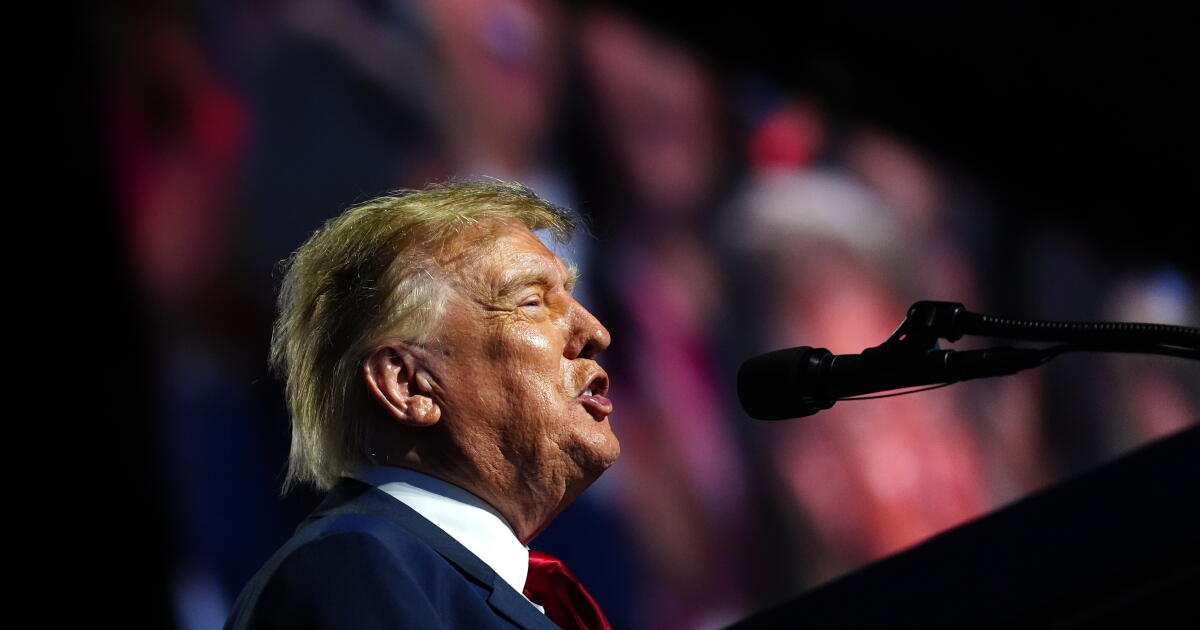
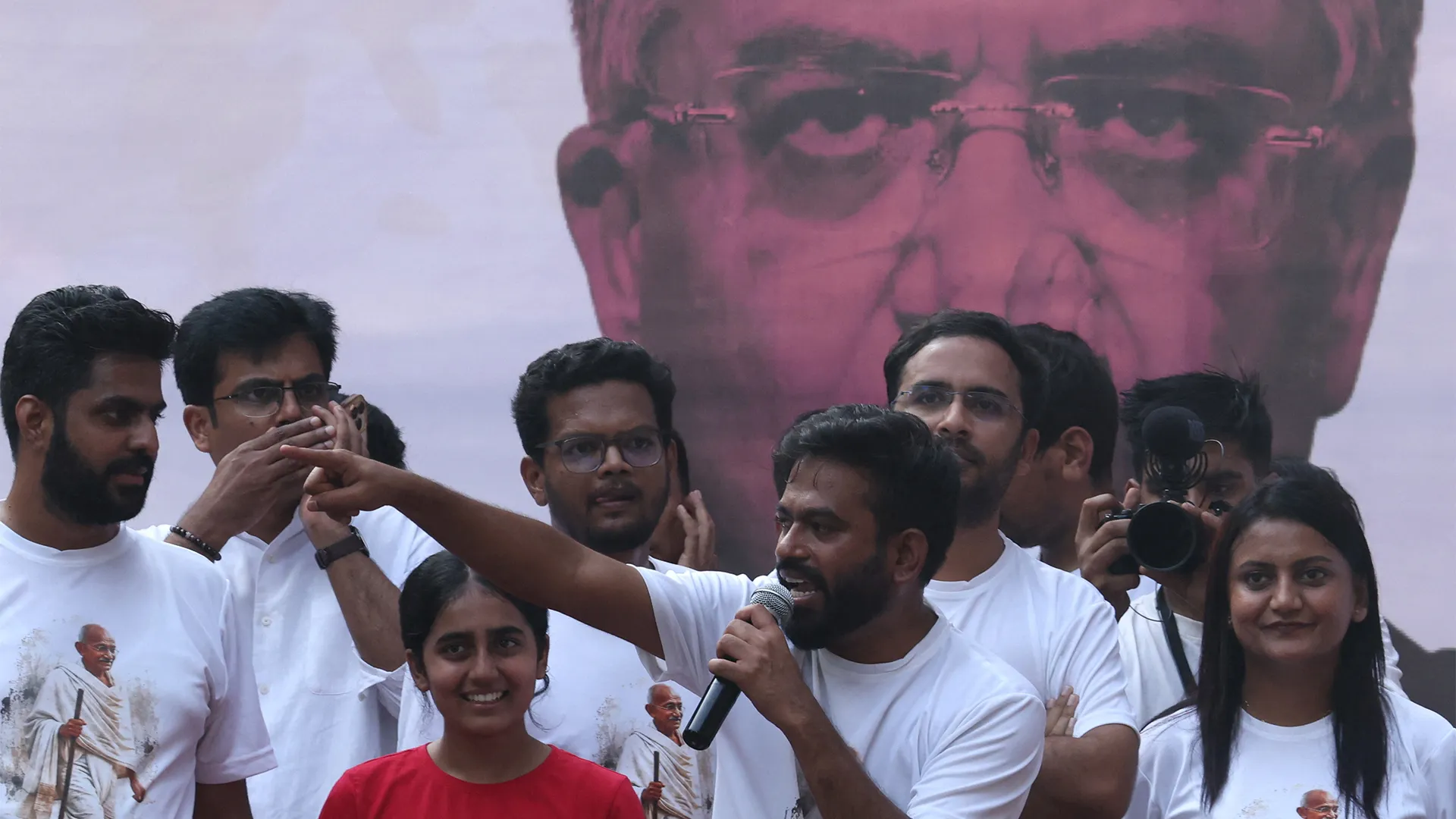
India’s Cockroach Janta Party has launched a new protest demanding change after millions of voters were allegedly improperly removed from electoral rolls. Other protest movements joined the rallies, which led to scuffles and arrests in the capital.
Palestinian participation in upcoming Knesset vote continues to shrink with withdrawal of Sami Abu Shehadeh.
Published On 2 Oct 20262 Oct 2026
Arab Israeli politician Sami Abu Shehadeh has withdrawn his candidacy for the upcoming Israeli elections after the Supreme Court advised him to drop out.
The leader of the left-wing Palestinian Balad party announced on Friday he was dropping his bid for election to the Knesset on October 27. His withdrawal, which came after the court threatened to disqualify him, comes amid increased efforts by Israeli authorities to block Arab Israeli parties from taking part.
Recommended Stories
list of 3 itemsend of list
Political analysts view Arab Israeli parties as potential kingmakers in the election, with polls showing neither Prime Minister Benjamin Netanyahu’s coalition nor the main opposition bloc on course for an outright majority.
The withdrawal came after the Supreme Court indicated that a majority of its judges agreed with a September 23 decision from Israel’s Central Elections Committee to oust him from the race after nationalist political rivals accused him of supporting Hamas’s attack on October 7, 2023.
Adalah, a rights organisation representing Abu Shehadeh, condemned the court, saying the evidence it presented had no legal basis.
“The court has effectively decided to remove a Palestinian leader, a citizen of Israel, from the Knesset,” Adalah said in a statement.
“The court’s clear intention to disqualify him,” it added, was “a direction that would have set a dangerous legal precedent with devastating consequences.”
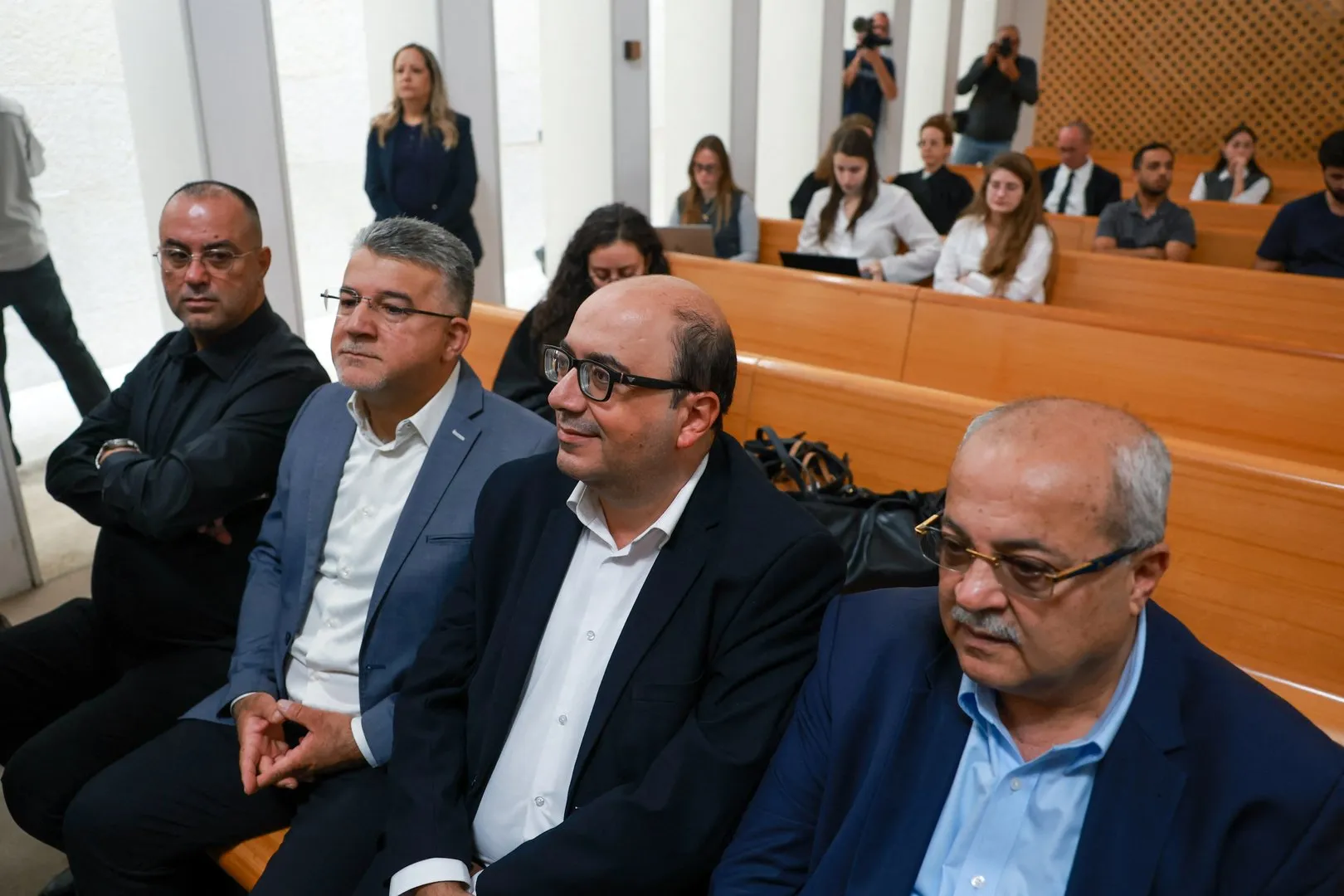
Sami Abu Shehadeh, leader of the Balad party, arrives at the Supreme Court in Jerusalem on October 1, 2026 [AFP]
Abu Shehadeh served in the Knesset from 2019 to 2022. Balad confirmed he was withdrawing his candidacy but stressed that the decision did not mark the end of his political struggle and that he would remain party leader.
The elections committee voted to disqualify him at the request of far-right National Security Minister Itamar Ben-Gvir, who accused him of supporting the Hamas attack due to an article issued the following day in which Abu Shehadeh called it an “important historical event”.
Speaking to the Supreme Court on Thursday, Abu Shehadeh said he did not support “armed struggle” but acknowledged that a paragraph in the article had been incorrectly worded. He said his intention was to call for moving the conflict towards a political process.
Adalah labelled his withdrawal from the election “a severe blow to the right of Palestinian citizens to be represented and to stand for election”.
The elections committee has also barred two Arab electoral lists: the United Arab List and the Joint List, a three-party alliance that includes Abu Shehadeh’s party Balad. The Supreme Court is due to continue hearing appeals from the parties on Friday.
Adalah has questioned why the Palestinian candidates are being disqualified but far-right Israeli candidates were “cleared to run” despite openly calling for violence against Palestinians and making statements “amounting to incitement to genocide”.
There is no love like municipal infrastructure love.
It was late in the 20th century when my wife, Mary Frances, and I moved into Los Feliz. Quickly we learned that our corner of the neighborhood was known as Franklin Hills, and that just about every eastward outing would take us across a funny little bridge with eight pointy turrets. That bridge was the Shakespeare Bridge.
As a teacher at nearby Ivanhoe Elementary, Mary Frances crossed the bridge twice every school day for more than 20 years. As a student there, our daughter Grace crossed it for six years, usually with me as chauffeur.
We’ve crossed it at all hours in every kind of weather, on foot, on bikes and in cars, talking about school, work, family and, lately, the fractured state of the nation and world.
Now that bridge on Franklin Avenue at St. George Street is near its 100th anniversary and an Oct. 10 neighborhood celebration is in the works, complete with a street party and procession. As the day approaches, I keep thinking about how large a funny little bridge can become in the lives of its neighbors.
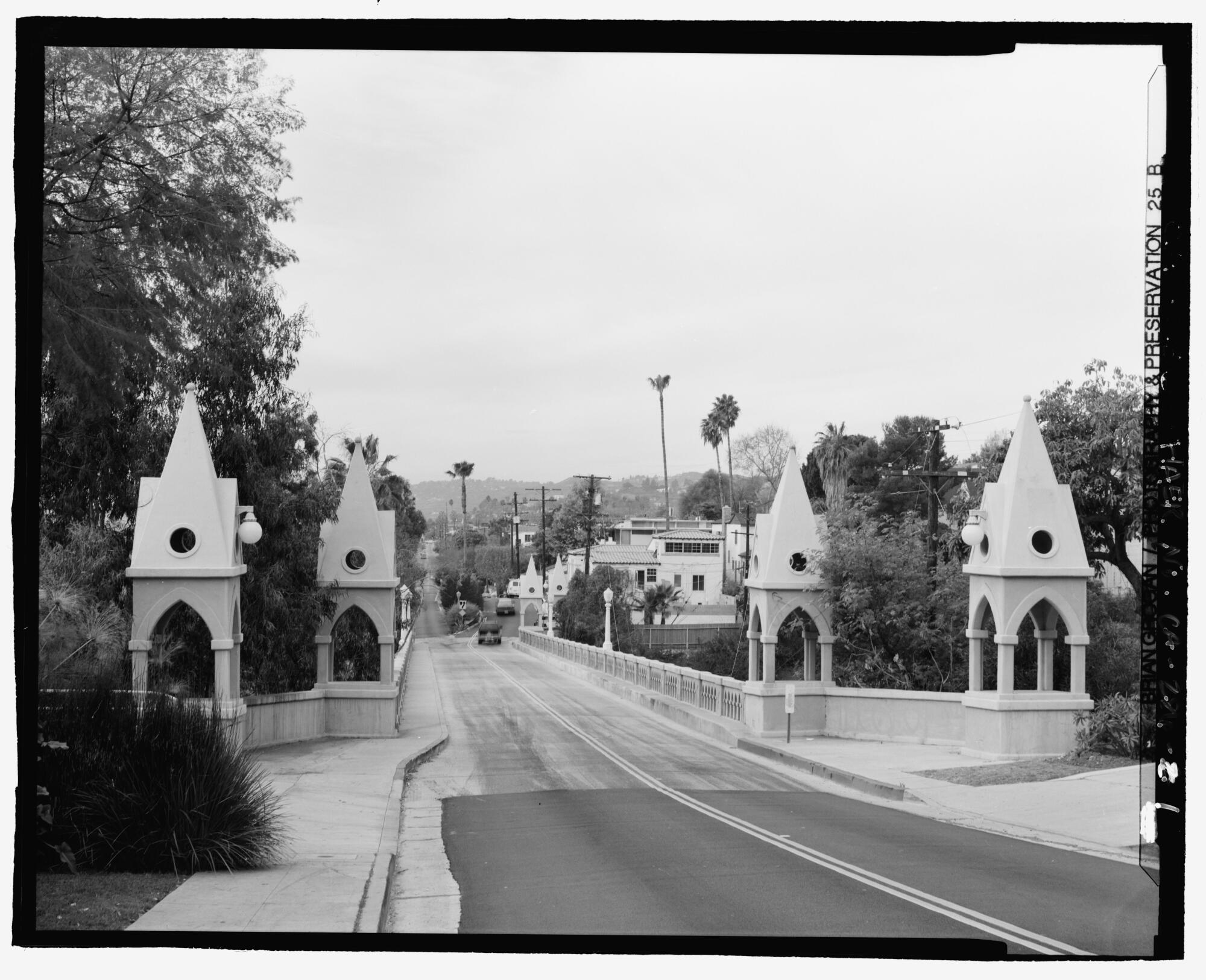
This view looks westward across L.A.’s Franklin Avenue Bridge, also known as the Shakespeare Bridge.
(Library of Congress)
Originally it was the Franklin Avenue Bridge, designed by J.C. Wright of the city’s civil engineering department in the mid-1920s, when a twenty-something cartoonist named Walt Disney was new to the neighborhood and the Vitagraph Studios, a block away, were transitioning from silent films to talkies.
Paid for by a controversial city assessment of neighbors, the bridge is 262 feet long and 30 feet wide — a pipsqueak compared with landmarks like Pasadena’s Colorado Street Bridge or the 6th Street Bridge between Boyle Heights and downtown L.A.’s Arts District. Its three open-spandrel arches were made using Portland cement.
Nobody knows where the Shakespeare nickname came from, but city officials designated the bridge as L.A.’s Historic-Cultural Monument No. 126 in 1974 and retrofitted it in the 1990s to better withstand earthquakes. Crucially, city staffers preserved those charming and entirely unnecessary turrets, which deserve their own sonnet, if you ask me.
“Back then, people put some thought into these things,” City Council aide Tom LaBonge told this newspaper in 1988, years before he became councilman (2001-15) for the district that includes the bridge.
Since 2017, neighbors have tended a Shakespeare Bridge Garden beneath the span. The neighbors (a.k.a. the Franklin Hills Residents Assn.) also pay to keep up the landscaping on the nearby traffic island.
When the bridge went up, L.A. “was becoming a city,” said Alison Wallace, president of the FHRA. “We were trying to look legit, and people were adding all of these amazing public works.”
The result, Wallace said, was a span that eased connections between neighborhoods and “helped us become a community.”
This view looks from below the Franklin Avenue Bridge, also known as the Shakespeare Bridge.
(Library of Congress)
Many architectural sources call its style Gothic Revival. Some see Moorish influence. Researcher Tiger Shankman has hailed its “perky, anachronistic beauty.” In “An Architectural Guidebook to Los Angeles,” authors David Gebhard and Robert Winter suggest that the ornate ends of the bridge “cry out for sculptured saints.”
Instead of saints, however, the bridge has seen a lot of actors and film crews. The bridge turns up in the movies “Dead Again” (1991) and “I Love You, Man” (2009), the Netflix series “Nobody Wants This” (in 2025) and the HBO series “I Love L.A.” (also 2025). My favorite clip is a chase sequence from a 1971 “Mannix” episode — excruciatingly slow-paced by 2026 standards, and shot long before the FHRA tore out the city’s blacktop median and planted greenery.
Given all of its neighborhood fame, it surprised me to hear how few Angelenos know about the bridge. When Charlie Ryan and Thom Vest started offering LA Explained walking tours early this year, they expected the Disney history would be a popular part of their Los Feliz itinerary, but the bridge quickly emerged as another central element.
Because most of those who sign up for the Los Feliz tour live elsewhere, they have never crossed the bridge “and don’t know it’s there,” Ryan said. “Out of all the tours that I do, it’s the one that brings the most surprise to people.”
An aerial view of the Shakespeare Bridge, formally known as the Franklin Avenue Bridge, in the Franklin Hills area of Los Feliz.
(Allen J. Schaben / Los Angeles Times)
But plenty of those who live nearby have deep connections with the bridge, including Charley and Shirley Mims, who got married there on Oct. 21, 2000.
To open the ceremony, Shirley strolled from the west end of the bridge to the east, where Charley was waiting. (They still live in the neighborhood and plan to be at the centennial party.)
“When you see the bridge and cross it,” my neighbor Dave McDonald said the other day, “you feel like you’re home. It’s like a welcoming beacon.”
“It’s a real local’s way of getting around,” said Matteo Chizzola, who moved to Los Angeles four years ago and settled in Los Feliz two years ago. Last year, when Chizzola decided to start selling matcha from a sort of grown-up street-corner lemonade stand, he chose a patch of sidewalk at Franklin Avenue and Talmadge Street, two blocks from the bridge.
A jogger crosses the Shakespeare Bridge.
(Allen J. Schaben / Los Angeles Times)
“It is beautiful and it’s weird. If you go at the right time of day, at sunset, it’s an incredible view,” he said.
Chizzola said he isn’t getting rich running the stand, Fridays through Sundays, but “it has become something that puts a huge smile on my face.”
He’ll be on hand for the bridge’s centennial parade, along with invited local luminaries including Victor the fruit guy (who worked a corner near Marshall High School for more than a decade) and Dora Herrera of the much-loved Yuca’s restaurant on Hillhurst Avenue.
A pedestrian crosses the Shakespeare Bridge,which was completed in 1926.
(Allen J. Schaben/Los Angeles Times)
Sometimes, when Mary Frances and I are on a neighborhood walk, we stop mid-span. In the distance to the south, you see the downtown skyline. In the arroyo below the bridge (officially the Arroyo de Sacatela) you see the private homes and yards along Monon Street and Myra Avenue. You also see the Los Feliz campus of the International School of Los Angeles (1960), the only school designed by modernist architect John Lautner.
Then there are the decorations. Every few months, in a tradition started by departed neighbor Chris Boutelle, Mary Frances joins a team of FHRA board members and other volunteers who put up hearts for Valentine’s Day, shamrocks for St. Patrick’s Day, Pride and Juneteenth flags in June, American flags and bunting in the lead-up to July 4, and so on.
Most of these costume changes are seamless. But in June 2023, someone tore down the Pride flags. Neighbors quickly replaced them. They came down again. Neighbors replaced them again. The back-and-forth went on for weeks. A suspect was arrested, released, then re-arrested.
Shakespeare Bridge in Los Feliz was the site of controversy in June 2023, when someone repeatedly stole Pride flags from a bridge display. Neighbors replaced the flags and police made an arrest.
(Gary Coronado / Los Angeles Times)
“It was almost every day for a month. People really came together,” said Wallace. The vandal surely didn’t mean to, but Wallace contends that he wound up uniting the neighborhood as never before.
The Oct. 10 bridge celebration, organized by the FHRA, will begin with a noon procession to the bridge from Marshall High School (another neighborhood Gothic Revival landmark), featuring a marching band, several vintage cars and a costumed dog parade.
At the end of that short walk, there’s a party planned from 1-5 p.m. at the end of Monon Street , right under the bridge. There will be snacks, drinks, live music, kid crafts, a bouncy house, a handful of actors in Shakespearean garb and scads of neighbors being neighborly.
I’ll be there for all of it. In times like these, every bridge needs celebrating.
Shakespeare Bridge, formally known as the Franklin Avenue Bridge, spans a ravine in the Franklin Hills with downtown Los Angeles in the background.
WASHINGTON — A pro-Israel Democratic advocacy group on Thursday released a framework intended to help the party better articulate its vision for the U.S. relationship with Israel, an issue that has deeply fractured Democrats this year and could lead to further divisions heading into the next presidential campaign.
Democratic Majority for Israel is calling on the party to continue providing security and military assistance to the country while supporting a negotiated path to statehood for both Israelis and Palestinians and a future for Gaza that doesn’t include Hamas.
It notably does not insist on unyielding support for Israel, acknowledging that “Israel’s security does not require support for every decision made by an Israeli government.” The document also calls on Israel to “act decisively against settler threats, intimidation, and violence.”
The framework is being released at a sensitive moment for Democrats following a primary season in which voters from New York to Michigan embraced candidates who backed positions including ending military aid to Israel. If Democrats retake control of the U.S. House or Senate in next month’s elections, these candidates could play a significant role in shaping the debate over America’s posture toward Israel.
The issue could also play prominently in the early stages of the next presidential campaign, which could begin shortly after the midterms.
Democratic Majority for Israel’s chief executive, Brian Romick, said his goal is to provide a “helpful guide for our mainstream Democratic candidates on how to engage with a complicated issue.”
“It’s important to remind Democrats and Americans that there’s value in the U.S.-Israel relationship,” he said. “We thought it was important to kind of lay out a forward-looking vision.”
The question is whether such a framework will go very far in shaping the views of Democrats, who are increasingly skeptical of Israel.
About 58% of Democrats said the U.S. is “too supportive” of the Israelis, according to a June survey by The Associated Press-NORC Center for Public Affairs Research, up from 45% in January 2024. Roughly half of Democrats believe that Israel has committed genocide against Palestinians during the war with Hamas, an accusation Israel rejects.
Former Obama administration chief of staff Rahm Emanuel, who has argued Democrats need to return to the political center ahead of launching a potential presidential bid, went to Israel in July and delivered a blistering speech warning the country was at risk of becoming a “territorial pariah.” He specifically called out Prime Minister Benjamin Netanyahu, who has closely aligned himself with President Trump, a Republican.
Emanuel, who’s also a former congressman, Chicago mayor and U.S. ambassador, blamed Netanyahu for driving Israel to a “dead end,” emboldened by poor decisions from American leaders.
The framework from Democratic Majority for Israel takes a less strident view on Netanyahu, who faces another election this month. “Support for Israel,” the group argued, “transcends any one Israeli government.”
The group took a similarly long view on military and security assistance for Israel, arguing it shouldn’t be stopped now even as it acknowledged the possibility of change in the future.
“Over time, and by mutual agreement, today’s partnership should be capable of evolving beyond the traditional assistance framework toward an increasingly reciprocal relationship centered on joint investment, innovation, and technological advantage,” the framework reads. “The objective should be to build the partnership both countries will need to confront the threats and seize the opportunities of the coming decades.”
Daniel Shapiro, the former U.S. ambassador to Israel under President Barack Obama, acknowledged “strong, passionate views” on the issue.
“Clearly, not everyone will agree with every aspect” of the framework, he said. “But I think there’s a lot there that many Democrats would find speaks to them.”
With gas prices topping $6 a gallon and an unpopular war continuing in Iran, President Trump’s approval has slipped with California Republicans — a falloff that could diminish the party’s chances in the state’s few competitive congressional races.
A new poll by the UC Berkeley Institute of Governmental Studies, co-sponsored by The Times, found that 76% of Republican voters in the state approve of the president’s performance, down from 83% last year.
The president’s approval has softened even among those who still support his performance. Only 44% of Republicans in California said they strongly support Trump’s performance, down from 57% who said the same in August 2025.
That could translate into lower Republican turnout in the state’s few competitive races, said the poll’s director, Mark DiCamillo.
“Republicans are losing some of their enthusiasm in terms of being motivated to vote,” he said.
In addition, the more Trump tries to make the midterm elections about himself — such as the pro-Trump ads recently sponsored and paid for by the government — the more Democrats might be inclined to show up, said G. Cristina Mora, the UC Berkeley institute’s co-director.
“That might actually have a galvanizing effect on voters,” she said.
The congressional map in the state was already challenging for Republicans after voters last year approved a referendum championed by Gov. Gavin Newsom to redraw districts to be more favorable for Democrats — a response to similar efforts by Republicans in Texas and other states.
In the new map, only four of the state’s 52 districts are currently considered safe Republican districts, while three additional districts are seen as competitive, according to the Cook Political Report, a nonpartisan political handicapper.
The remaining 45 districts are seen as either likely or solidly Democratic in a state where Democrats hold a roughly 20% advantage in party registration.
Only one race is considered by Cook to be a true toss-up — California’s 22nd Congressional District in the Central Valley, which is held by Republican Rep. David Valadao.
“We’re looking at the best case scenario for Democrats at this point,” said Erin Covey, Cook’s U.S. House editor.
Valadao, one of only 10 Republicans to vote for Trump’s impeachment in the wake of the Jan. 6, 2021, insurrection, faces progressive Democrat Randy Villegas, a political science professor who has the backing of Bernie Sanders. The Vermont senator is joining Villegas this weekend for a rally in Bakersfield.
Valadao first won a seat in Congress in 2012, but was ousted from office during the Democrats’ “blue wave” election in 2018, in which the party gained 40 seats in the House in the first election after Trump took office in 2016. Valadao was able to win back his seat in 2020 and has held it since.
There has been scant public polling in the race, but a poll conducted in June by a political committee backing Villegas showed the Democrat holding a 4-point lead over Valadao.
Two other congressional districts in the state are listed by Cook as leaning Democratic:
California’s 48th Congressional District in Riverside and San Diego counties, now held by Republican Rep. Darrell Issa, who opted to retire rather than seek reelection in the redrawn district.
California’s 13th Congressional District in the San Joaquin Valley, where Democratic Rep. Adam Gray is trying to fend off a challenge from Republican Kevin Lincoln, the former mayor of Stockton.
Trump’s approval also dipped among Black and Latino voters in the poll. Both groups were part of Trump’s winning coalition in the 2024 presidential election.
The poll also found broad disapproval of two signature Trump administration policies.
It found that 70% of California voters disapprove of Trump’s decision to go to war in Iran, including 1 in 5 Republicans.
Also, 70% of California voters believe that the president’s immigration policies are hurting California’s economy and local businesses, including 1 in 5 Republicans.
The poll was conducted online in English and Spanish between Sept. 15 and Sept. 20 and included the opinions of 6,989 registered California voters. The margin of error is plus or minus 1.5 percentage points.
Demonstrators protest against UK government’s proscription of Palestine Action as a terrorist organisation.
Published On 28 Sep 202628 Sep 2026
Police in the United Kingdom have arrested more than 50 people protesting in support of the banned Palestine Action group outside a Labour Party conference in the northwestern English city of Liverpool.
The local Merseyside Police confirmed the arrests in a statement published on Sunday.
Recommended Stories
list of 3 itemsend of list
The police said those taken into custody at the protest, organised by Defend Our Juries, had displayed material in support of Palestine Action, proscribed as a “terrorist” group by the Labour government in July 2025 under the Terrorism Act.
According to the statement, police respected the rights of people to protest lawfully while aiming to keep the peace and ensure the public are safe.
A police officer speaks to a supporter of the group Palestine Action as demonstrators gather to protest outside the conference venue on the first day of the annual Labour Party conference in Liverpool, northwest England, on September 27, 2026 [Oli Scarff/AFP]
More than 250 protesters sat outside the conference centre holding banners with words supporting the group on Sunday, before dozens of police began making arrests.
English band Massive Attack singer Robert Del Naja was among those arrested.
After asking demonstrators if they were going to continue holding up the signs, officers led people away, telling them they had been arrested under the Terrorism Act.
Reporting from Liverpool, Al Jazeera correspondent Milena Veselinovic said the protesters wanted to put proscription “front and centre of the UK Prime Minister Andy Burnham’s agenda” on the first day of his party’s annual conference.
“Being arrested is nothing in comparison to what the people in Gaza are going through, and it’s also worth it, because this is about our right to free speech,” one protester told Al Jazeera.
Another said that “there are priests, there are healthcare workers, there are people who deeply care, and deeply care about right and wrong.”
Kerry Moscogiuri, chief executive of Amnesty International UK, said protesting “is one of the most effective tools” to make government leaders listen and described the arrests as “a truly shameful attack on freedom of speech”.
“The new prime minister can reform our laws so that communities are protected in coming together and demonstrating on the issues they care about. Will he do so?” she said.
Activists also confronted Foreign Secretary Ed Miliband inside a restaurant in Liverpool, demanding that he lift the ban on the group and declare Israel’s genocide in Gaza.
The activists left after Miliband reportedly refused to comment.
A civil disobedience campaign has emerged since Palestine Action was outlawed in July 2025, with more than 3,600 people arrested for showing their support for the group, often while holding signs reading, “I oppose genocide. I support Palestine Action.”
The UK Supreme Court is now set to hear the case after London’s Court of Appeal upheld the government ban in June.
At first glance, it looks like a typical Republican campaign advertisement. As images of President Trump flash across the screen, the 30-second spot says, “America will never be a communist country” and boasts about the “largest tax cuts in history.”
But there’s something different near the end — a bit of text at the bottom that says “paid for by the U.S. government.”
According to AdImpact, which tracks media spending, the advertisement cost $14,000 and it ran during conservative shows on Fox News and Newsmax.
The White House said in a statement the ad is “educational and unapologetically patriotic.”
“These public service announcements are about reminding Americans to love their country and understand what makes it worth defending, at home, at our borders, and abroad,” the White House statement said.
Fox News and Newsmax did not immediately return a request for comment.
The White House did not say what agency paid for the spot, which includes background music with singers crooning “love me” over and over.
The advertisement does not say who voters should support in the midterms, but it meshes with campaign messaging from Trump and other Republicans, particularly during the party’s unusual convention in Dallas earlier this month.
Democratic Rep. Jamie Raskin of Maryland, who is in line to chair the House Judiciary Committee if his party wins the majority in November, said in a social media post that it’s a violation of the Hatch Act for government employees to work on such a video.
“It is blatantly unethical under numerous federal ethics provisions proscribing the use of government resources for political campaigns,” Raskin wrote.
Republicans also criticized the ad.
North Carolina Sen. Thom Tillis, who is not running for reelection, referenced the former right-wing Hungarian prime minister to critique the advertisement.
“It’s inappropriate. It’s not like they need a GoFundMe page to have the dollars to do that sort of ad and they could do it. But using taxpayer dollars, it feels like Viktor Orban,” he said.
Louisiana Republican Sen. John Kennedy said he hadn’t seen the ad but questioned whether it was legal.
“I don’t generally like to see politicians use public money to pay for their own campaign ads,” he said.
Catalini writes for the Associated Press. AP writers Joey Cappelletti and Steven Sloan in Washington contributed to this report.

![Sami Abu Shehadeh, leader of the Balad party, arrives at the Supreme Court in Jerusalem on October 1, 2026 [AFP]](https://i0.wp.com/occasionaldigest.com/wp-content/uploads/2026/10/afp_6abe81d70b9e-1790869975.jpg?w=640&ssl=1)


![A policeman speaks to a supporter of the proscribed group Palestine Action as they gather to protest outside the conference venue on the first day of the annual Labour Party conference in Liverpool, north-west England on September 27, 2026 [Oli Scarff/AFP]](https://i0.wp.com/occasionaldigest.com/wp-content/uploads/2026/09/AFP__20260927__C9GU2MN__v1__HighRes__BritainPoliticsLabourConferencePalestineConflic-1790556936.jpg?w=640&ssl=1)