



party

How Massie’s Kentucky primary may test Trump’s hold on the Republican Party | US Midterm Elections 2026 News

‘The great puzzle’

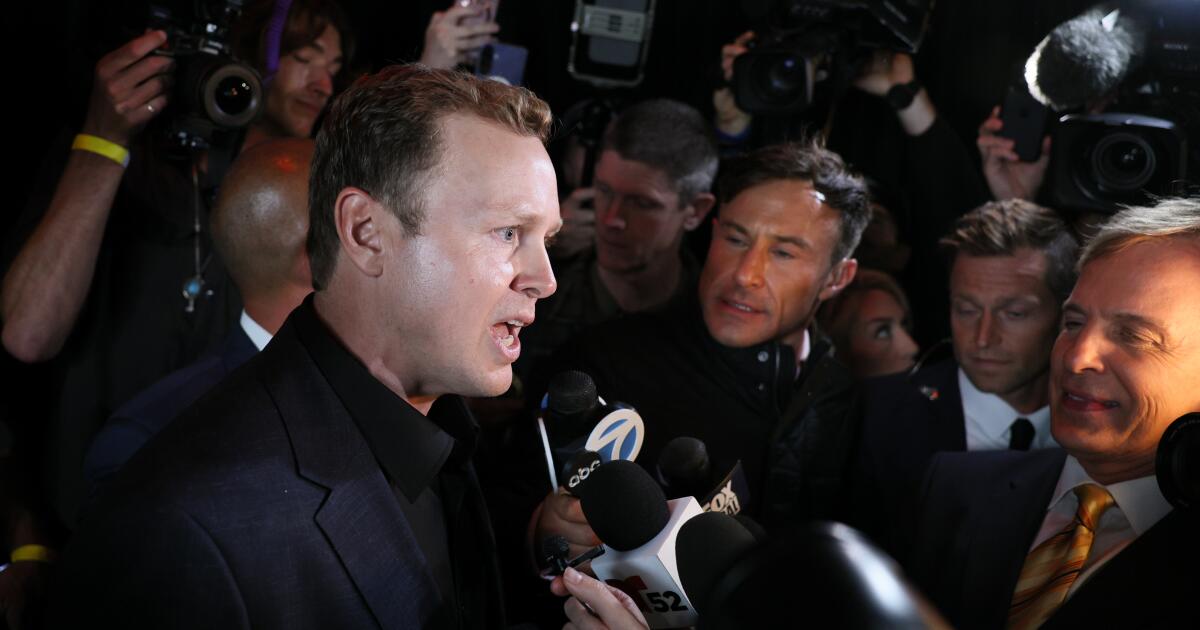
While Massie has long dominated elections in Kentucky’s 4th district, polling this year shows a tighter race than expected.

A Quantus Insights survey conducted from April 6 to 7 showed Massie leading Gallrein 46.8 percent to 37.7 percent.

Another survey conducted by Big Data Poll in early April had Massie ahead with 52.4 percent to Gallrein’s 47.6 percent.

The relatively close primary could be a bellwether for Republican voting trends nationwide, according to Stephen Voss, a political science professor at the University of Kentucky.

“Massie is an early opportunity to see what Republican voters will do when their pro-Trump leanings clash with their conservative leanings,” Voss said. “That is the great puzzle of this race.”

This is not the first time Trump has turned against Massie, though. In 2020, another election year, Trump famously petitioned to “throw Massie out of the Republican Party”.

But by 2022, Trump had reversed course, endorsing Massie over a challenger who questioned the congressman’s commitment to the president.

Still, the past year has widened the rift between Trump and Massie, leading the president to make his most aggressive moves yet to unseat the congressman.

The two Republicans clashed on a range of issues in 2025. Massie, for example, opposed the president on his tax and spending measures, fearing increases to the national debt.

That meant voting against Trump’s signature piece of legislation, the One Big Beautiful Bill Act, last July.

The Kentucky Republican also denounced Trump’s campaign of foreign intervention. Last June, NBC News reported that it was after Massie criticised Trump’s strikes on Iran that the president’s allies began laying the groundwork for a primary challenge.

Massie also led the charge to compel the Department of Justice to release all the files related to the investigation into Jeffrey Epstein, the late financier and convicted child sex offender.

Shortly thereafter, Trump gave his stamp of approval to Gallrein, posting on his Truth Social site, “RUN, ED, RUN.”

By that point, Gallrein, a military veteran and fifth-generation farmer, had yet to enter the race. Four days later, on October 21, he launched his bid.

Critics argue Gallrein’s platform does not offer much of a distinction from Massie’s. His campaign website lists his priorities as cutting taxes, reducing government spending, protecting gun rights and opposing abortion — issues Massie also supports.

“I don’t think he’s offering any kind of alternative, except for being the selection of Donald Trump,” Kahne said. “I think that’s it. That’s the only thing he has to offer.”

But Gallrein has drawn heavily from Trump’s endorsement, using it as a badge of loyalty and authenticity.

“You deserve an authentic, true Republican conservative that stands shoulder to shoulder with our president and the Republican Party,” Gallrein declared at the Trump rally in March.

Trump, meanwhile, told the crowd he had grown so frustrated that he just wanted “somebody with a warm body to beat Massie”.

Source link

We were there: Hearing gunfire and ducking for cover at the D.C. gala shooting

Directly outside the Washington Hilton ballroom, as the yearly White House Correspondents’ Assn. dinner got underway Saturday, a Times reporter had just entered the men’s room when he heard a handful of loud pops ring out.

“Shooter!” someone shouted. “Get down! Shots fired!”

Inside the ballroom, thousands of journalists and politicians began to duck for cover as the event devolved from a celebration of free speech to a scene of fear.

The Times had six reporters at the dinner, seated at a table near the right side of the stage.

The Times reporter in the restroom, Gavin Quinton, heard the gunfire around 8:30 p.m. He had left The Times’ table minutes earlier, moving past the TV cameras and up toward the raised terrace near the ballroom’s security entrance. He crossed paths with CNN anchor Wolf Blitzer.

Outside the restroom, Cole Tomas Allen, 31, had broken into a sprint through the metal detectors, security footage would later show, getting within feet of the ballroom entrance.

Five or six shots fired by Secret Service agents missed Allen before agents brought him down near a staircase leading to the main floor, where Trump sat prominently in view.

A federal agent was hit in the chest in the exchange of gunfire but was wearing a bullet-proof vest and not seriously injured.

Inside the restroom, Quinton crouched near a corner. Others rushed into the room, including three hotel security guards who flung themselves in so quickly their backs slammed against the tiled wall. Within moments, a Secret Service agent positioned himself at the bathroom entrance, his pistol drawn.

“Head count?” he asked.

“A dozen — no, 15!” someone shouted back.

People stayed locked in bathroom stalls. Some tried to overcome the poor cellphone service to call loved ones. Confused, the mix of tuxedo-clad attendees, uniformed hotel guards and waitstaff tried to piece together what had happened.

“He had a gun,” one of the hotel guards said.

Another witness told Quinton that he initially thought Blitzer had been the shooter’s target.

“I look around and I hear shots as I’m opening the door. And I turn and I see him,” the man said of the gunman. “I look again and I’m like, ‘Oh, they just shot someone.’ ”

Blitzer, who was tackled to the floor by officers during the incident, would later say that “the first thing that went through my mind was whether he was going to shoot me.”

As the group speculated over whether the shooter had died in the volley, one man wondered aloud whether the event would continue. Initially thinking the gunman must have been killed, Quinton replied no.

“Why not?” the man asked. “It’s a bad guy who’s dead. It was a good f— ending. Seriously.”

The Washington Hilton has hosted the annual correspondents’ dinner for decades. The event, referred to locally as “Nerd Prom,” now comes with a slate of pre-parties and after-parties.

This was the president’s first appearance at the dinner since 2015; he had skipped it during his entire first term.

Questions now surround the security protocols. Guests faced little screening to enter the hotel on Saturday — a quick flash of a paper ticket — before heading down escalators to the only area with magnetometers, where bags were also searched.

Trump had entered the ballroom at 8:15 p.m. as the Marine band played “Hail to the Chief.”

Twenty minutes later, videos show, Secret Service officers with ballistic vests and long guns barked instructions to clear a path as they rushed into the ballroom and onto the stage.

One agent pulled Vice President JD Vance away. Another escorted Trump, who appeared to trip, but later explained he had been urged to drop to the floor.

Other officials — Secretary of State Marco Rubio, Defense Secretary Pete Hegseth, FBI Director Kash Patel, Homeland Security advisor Stephen Miller — were quickly whisked away too.

At The Times’ table in the ballroom, nothing appeared amiss at first.

Waiters had just begun to clear plates of spring pea and burrata salad. The reporters did not hear the gunshots, but watched as the room fell silent and others began to drop from their seats and duck under the floor-length white tablecloths.

One reporter lost a shoe in the process and then feared a gunman would spot it. She dragged it under the table.

They stayed in place for several minutes, texting loved ones and waiting for an all-clear, but none came.

From under the tablecloth, reporters heard someone yell out, “God bless America! USA!” They feared that was the shooter.

It turned out to be Dan Scavino, White House deputy chief of staff. The chant did not catch on.

Eventually, others could be heard speaking loudly and dishes clanking. Guests began to peek out from under their tables and warily stand up. Uneasy laughter flickered about the ballroom.

Cellphone service inside the ballroom was spotty. There was confusion at first about whether a shooting had occurred or whether plates dropping to the floor had been mistaken for gunshots.

“I thought it was a tray going down,” Trump said later.

Just before 9 p.m., Weijia Jiang, a senior White House correspondent for CBS News who is president of the White House Correspondents’ Assn., told guests the program would “resume momentarily.”

A half hour later, Jiang returned to the stage and announced that law enforcement had requested guests leave the premises. She said Trump had told her no one was hurt and that he, the first lady and members of the Cabinet were safe.

In closing remarks, Jiang said journalism is a public service “because when there is an emergency, we run to the crisis — not away from it.”

“And on a night when we are thinking about the freedoms of the 1st Amendment, we must also think about how fragile they are,” she said. “I saw all of you reporting, and that’s what we do.”

Law enforcement and media leaders offered conflicting guidance. Quinton was among the first to evacuate the building, though the vast majority of guests waited inside for longer.

On his way out, he noticed a metal detector had already partially been dismantled when the shooter ran through.

Quinton passed the grounded shooter, restrained on his stomach, near the staircase just 20 or so feet from the bathroom entrance. He lifted his phone and recorded a brief, shaky video of the scene before security forced him out of the hotel and onto the street.

The entire spectrum of emotion was on display when security finally ordered everyone to evacuate. Women in gowns ran in fear. One man sobbed into the sleeves of his evening jacket.

Photos on social media showed others stopping to take selfies. Some drank wine straight form the bottle.

Quinton spotted the presidential motorcade outside of the hotel lobby at about 8:45 p.m. Around the same time, an ambulance arrived as about 100 event attendees were escorted out of the secured event perimeter.

More law enforcement was inside the hotel as guests exited the building, including agents from the Secret Service, ATF, FBI and the Department of Homeland Security. National Guard soldiers replaced celebrities and politicians at the red carpet entrance.

Outside, Metropolitan police ushered people north on Columbia Road NW. Hungry guests in tuxedos filed into a nearby 7-Eleven. The dinner’s main course — prime beef and Maine lobster — had not been served.

At the White House afterward, Trump said the event would be rescheduled.

“We’re not going to let anybody take over our society,” he told reporters who had rushed to the news conference still dressed in gowns and black tie. “We’re not going to cancel things out because we can’t do that.”

Meanwhile, the night’s after-parties continued, though organizers attempted a more somber tone. MS NOW, for instance, told those who had RSVP’d that their “Democracy After Hours” party would be a “space for friends and colleagues to be together.”

Independent journalist Tara Palmeri posted a photo on the social media site X of a full party with blue mood lighting.

“People were still partying, still hitting WHCD afterparties last night,” she wrote. “Epstein corruption, an escalating Iran conflict, and an active shooter— and Washington just… kept going. The cognitive dissonance is the system.”

On Sunday morning, the Washington Hilton appeared back to normal, except for the presence of journalists using the hotel as a backdrop for their live shots.

Source link

Analysis: Trump loomed over midterms and GOP suffered for it

The protracted uncertainty over control of Congress reverberated through both major political parties on Wednesday, as Democrats basked in the relief of the red wave that wasn’t and Republicans became increasingly clear-eyed that the lingering influence of former President Trump had hamstrung their party.

President Biden’s emphasis during the campaign season on the extremism of “MAGA Republicans” had been greeted skeptically by many. In the Democratic Party’s better-than-expected showing, though, he saw vindication of his appeals for civility and normalcy.

“This election season, American people made it clear: They don’t want every day going forward to be a constant political battle,” Biden said at a White House news conference. “The future of America is too promising to be trapped in endless political warfare.”

Amid high inflation and Biden’s lackluster approval numbers, Democrats’ hopes had hinged on voters being more put off by Trump’s imprint on the Republican Party — be it the divisive candidates he endorsed, the political violence that festered from his lies about election fraud, or the reversal of federal abortion protections made possible by justices he appointed to the Supreme Court.

“We knew going into the cycle that there was going to be an opportunity to rally a moral majority that is an anti-MAGA coalition,” said Tory Gavito, president of Way to Win, a progressive donor network. “When I say that, I include everyone from [GOP Rep.] Liz Cheney to [democratic socialist Sen.] Bernie Sanders. Think about that spectrum of the middle to the left coming together to say Republicans are just too damn extreme.”

If recent history is any guide, Trump’s not going anywhere. The once and likely future presidential candidate is unpopular, but he continues to exercise outsized sway over the Republican base, and could hobble the party for the next two years and beyond.

“While in certain ways yesterday’s election was somewhat disappointing, from my personal standpoint it was a very big victory,” Trump said on his conservative social media network, Truth Social, pointing to the record of candidates he endorsed. “219 WINS and 16 Losses in the General – Who has ever done better than that?”

The specter of the former president hampered the GOP’s ability to frame the midterm as a referendum on Biden, said Ken Spain, a GOP strategist and former spokesman for the party’s House campaign arm.

“Trump was always a looming shadow over this election, more than Republicans probably wanted to admit,” he said. “This essentially became a choice election between an unpopular president and an even more unpopular Trump.”

There were signs that patience was running thin among Republican power brokers. Notably, Trump’s much-beloved New York Post, the tabloid owned by conservative media magnate Rupert Murdoch, featured Florida Gov. Ron DeSantis on its cover Wednesday with the headline “DeFuture.” DeSantis is widely considered Trump’s biggest threat for the 2024 GOP presidential nomination.

Republicans still had a chance of winning both chambers of Congress as vote-counting continued Wednesday. House Minority Leader Kevin McCarthy (R-Bakersfield) projected confidence that his party would win the five additional seats necessary to take the majority there, and announced his intention to run for speaker of the House.

Whether he secures a majority may come down to his home state. California’s 11 competitive races remained unsettled as of Wednesday evening, with results trickling in slowly, as is common with the state’s methodical ballot-counting procedures.

Republicans had targeted incumbent Democratic Reps. Katie Porter and Mike Levin in Orange County, as well as an open seat in the Central Valley, as possible pick-ups. But Democrats were also watching the returns for the potential to oust vulnerable GOP Reps. David Valadao of Hanford and Ken Calvert of Corona.

Republican Sen. Ron Johnson of Wisconsin notched a close win over Democratic challenger Mandela Barnes, giving Republicans a 49-48 advantage in the Senate, with races in Georgia, Arizona and Nevada yet to be decided.

With neither candidate in Georgia winning more than 50% of the vote, the race will go to a Dec. 6 runoff, like the one that decided Senate control in 2020. A 50-50 split in the Senate would let Democrats maintain control with Vice President Kamala Harris’ tiebreaking vote.

Republicans made some successful pushes into blue territory; in New York, for example, they appeared likely to win four Democratic-held House seats. Rep. Sean Patrick Maloney, a New York Democrat who led his party’s efforts to keep the House, conceded his own race Wednesday morning to Mike Lawler, a Republican state assemblyman.

Still, the night was distinctly underwhelming for a party that contemplated a blowout win in the House and an assured majority in the Senate.

“Definitely not a Republican wave, that’s for darn sure,” Sen. Lindsey Graham (R-S.C.) said Tuesday night on NBC as he predicted a narrow win for Republicans in the Senate.

Paradoxically, a small Republican majority in the House would likely give Trump more leverage there, as McCarthy would have to depend on continued support from acolytes of the former president, such as Rep. Marjorie Taylor Greene, to exercise the GOP’s majority power.

Biden, speaking at the White House on Wednesday, said he had not had much occasion to interact with McCarthy but planned to talk with him later in the day. The president promised to work with Republicans in Congress, but noted pointedly that the American people had also sent the message that they wanted the GOP to show similar cooperation.

The president was happy to point out that his party had defied expectations, noting that “while the press and the pundits [were] predicting a giant red wave, it didn’t happen.”

National exit polls gave a glimpse into why Republicans fizzled. The surveys showed inflation was a top concern among voters. But abortion ranked second. That, and the relative weakness of Trump-backed candidates, helped Democrats stay in the fight.

Many voters appeared willing to swallow their disappointment with Biden. An NBC exit poll showed Democrats narrowly winning — 49% to 45% — among voters who “somewhat disapprove” of Biden’s performance.

Results in Michigan underscored the extent of the Republican Party’s disappointments. Democratic Gov. Gretchen Whitmer, whom Trump had attacked relentlessly, defeated his endorsed candidate, Tudor Dixon, and Democratic incumbents held on to the state’s attorney general and secretary of state posts and gained control of the Legislature as well.

The GOP failed to oust Rep. Elissa Slotkin, a vulnerable Democrat in a Michigan swing district that barely backed Biden two years ago. Elsewhere in the state, a Trump-backed candidate — who in the primary beat Rep. Peter Meijer, a Republican who had voted to impeach the former president — lost in the general election, costing Republicans a seat in the surprisingly tight battle for control of the House.

Michigan voters also approved a ballot measure striking down a 1931 ban on abortion, and voters in Kentucky rejected an initiative that would have amended the state constitution to make clear it did not protect abortion rights.

The Republicans’ loss of a Senate seat in Pennsylvania could prove the most consequential if Democrats keep the chamber. Lt. Gov. John Fetterman defeated Mehmet Oz, a television doctor and first-time candidate backed by Trump. Fetterman, still recovering from a stroke, painted the untested Oz as an elite carpetbagger.

Many of the gubernatorial candidates Trump backed also lost or were in danger of losing as of Wednesday afternoon. DeSantis’ double-digit win in Florida, as well as his strong coattails for Republicans in the House, served as a stark contrast. But Trump has said he will run again even if party leaders prefer DeSantis. Opinion polls, at least for now, show the former president as the prohibitive favorite to capture the party’s nomination.

Jason Miller, an advisor to Trump, told the BBC on Wednesday morning that he was urging Trump to postpone an announcement that he will run again from next week — as he has been teasing — to December, to avoid distracting from a potential Senate runoff in Georgia. But Miller said he remained 100% certain that Trump would run.

“Many of the people who are championing Ron DeSantis for president are the same people who were skeptical of President Trump ever since he came down the escalator in 2015,” Miller said, recalling Trump’s improbable announcement for the 2016 race.

Miller predicted that Trump would “have his hands full” but would ultimately win the nomination again.

Mason reported from Los Angeles and Bierman from Washington. Times staff writer Erin B. Logan contributed to this report from Washington.


Source link

Democrats win in Virginia but it won’t be the final say in a national redistricting competition

Democrats on Wednesday celebrated an election win in Virginia that could put them slightly ahead in the national redistricting competition that President Trump triggered in an attempt to preserve his party’s House majority in this year’s midterms, but it will not be the final round.

Now that it’s been approved by voters, the new Virginia map will have to clear additional legal hurdles. On Wednesday, the state attorney general’s office said it would immediately appeal a ruling earlier in the day from a judge in rural southern Virginia who ordered that the results of Tuesday’s vote not be certified.

Ultimately, the Virginia Supreme Court will decide whether Democratic lawmakers violated procedural rules when they referred a constitutional amendment to the ballot authorizing the new U.S. House districts that could help Democrats win as many as four additional seats in the state. If so, that could invalidate the map voters narrowly approved Tuesday.

What happens next in Florida also will matter.

The state’s Republican-controlled Legislature is to meet in a special session next week that GOP Gov. Ron DeSantis called in part to draw a new map to expand the party’s congressional majority there. The U.S. Supreme Court is scheduled to issue an opinion by the end of June in a Louisiana case that could overturn a key provision of the Voting Rights Act and lead to redrawn political maps across the South, though almost all of those could not happen until 2028.

After voters passed the Virginia amendment, Democrats could tentatively claim that they netted 10 seats nationally from the mid-decade redistricting, compared with the nine that Republicans claim. Even if things swing again in the GOP’s favor, the net result of Trump’s campaign would be at best an incremental increase in the number of GOP-leaning House seats at a time when his approval rating is dropping and Republican anxiety over losing control of Congress in November is rising.

“We have successfully blunted Trump’s attempt to completely hijack the midterms,” said John Bisognano, president of the National Democratic Redistricting Committee.

Many Republicans agreed.

“The GOP will now lose net seats across the country. If you’re going to pick a fight, at least win it,” Ari Fleischer, who was a spokesman for President George W. Bush, posted on the social media site X after the Virginia vote. “All this was foreseeable and avoidable. We should not have started this fight.”

Adam Kincaid, executive director of the National Republican Redistricting Trust, argued that it is too soon to declare one party a victor.

“It’s an ongoing process with many legal challenges pending, and it’s far too early for sweeping statements on the final outcome,” he said.

Trump on Wednesday tried to undermine the Virginia result by leveling groundless accusations of fraud similar to ones he made after losing the 2020 presidential election. He called the Virginia vote “RIGGED” and “Crooked” in a post on his social media site and added, “Let’s see if the Courts will fix this travesty of ‘Justice.’”

Redistricting spread from Texas to other states

Redistricting is typically done every 10 years after each census, unless ordered by a court. But last summer, Trump pushed a redrawing in Texas, prodding the state’s Republican-controlled Legislature to add up to five winnable House seats for his party. Trump then began pressuring other Republican-run states to follow. Missouri, North Carolina and Ohio have since created more GOP-leaning seats in addition to Texas.

Democrats began to fight back, even though they were more constrained because several Democratic-controlled states had maps drawn by independent commissions rather than lawmakers and governors.

To counter Texas, California’s Democratic governor, Gavin Newsom, pushed the Democratic-controlled Legislature to place a redistricting initiative on last fall’s ballot. After voters overwhelmingly approved it, the measure will replace a commission-approved map with one that could gain Democrats five seats.

Democrats reclaimed the Legislature and governor’s office in November in Virginia and swiftly moved to replicate California’s move with an even more aggressive redistricting plan. It replaces a congressional map imposed by a court after the last census that had resulted in a 6-5 edge for Democrats with one that could allow Democrats to win as many as 10 seats.

“We are not going to let anyone tilt the system without a response,” state Senate President L. Louise Lucas said at a news conference Wednesday.

Courts could still have a say on redistricting

In Washington, U.S. House Democratic leader Hakeem Jeffries of New York warned Florida Republicans, who have been openly nervous about redrawing their district boundaries and potentially spreading their core voters too thin before an election that appears to be trending against them.

“Our message to Florida Republicans right now is, ‘F around and find out,’” Jeffries said.

House Majority Forward, the nonprofit arm of the super political action committee aligned with House Democrats, has spent nearly $60 million to push back against Republicans’ redistricting efforts. Some $40 million of that was on the Virginia campaign.

Another obstacle in Florida is an anti-gerrymandering constitutional amendment that was approved by state voters in 2010. It is likely that any new Florida map would trigger significant litigation, although six of the state Supreme Court’s seven justices were appointed by Republicans.

Nicholas Stephanopolous, a Harvard law professor, said a challenge for DeSantis is that the Florida amendment forbids drawing lines for purely partisan purposes, so he has to find some other excuse for revising the map. “Even with that sort of acquiescent state supreme court, I don’t think it’s a done deal,” Stephanopolous said.

The Virginia move comes with its own legal issues. Republicans have challenged the process that Democrats used to place the measure on the ballot and the state Supreme Court opted to wait for the vote before even scheduling arguments in the case. It is unclear when a ruling could come.

Wednesday’s ruling stopping certification came from a separate case that Republicans filed with the same lower court judge, whose initial ruling against the initiative was put on hold by the state supreme court.

“The ballot box was never the final word here,” Terry Kilgore, the Virginia House Republican leader, said in a statement after Tuesday’s vote. “Serious legal questions remain about both the wording of this referendum and the process used to put it before voters.”

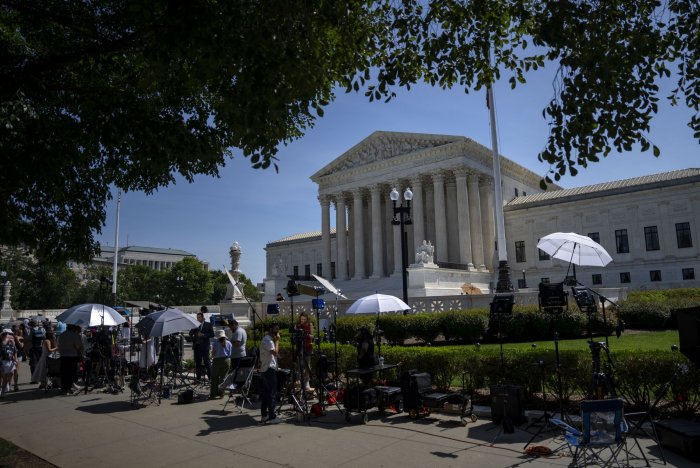
The biggest legal wild card is held by the U.S. Supreme Court. Its conservative majority could throw out a requirement under the Voting Rights Act that in areas with a large minority population, mapmakers draw districts that are more favorable to the election of minority candidates.

That provision has led to the creation of several majority-minority congressional seats, especially in the South. Without it, Republicans in conservative states could shrink the number of U.S. House seats winnable by Democrats even further.

But it’s unlikely that any state other than Louisiana, which brought the lawsuit the high court will rule on, would be able to adjust its congressional lines in time for November even if the court eliminates that provision, known as Section Two. That’s because the November election is already officially underway in most states and candidate filing deadlines — and, in some cases, primary elections — have already passed.

Riccardi and Lieb write for the Associated Press. AP writers Lisa Mascaro and Leah Askarinam in Washington contributed to this report.

Source link

Rep. David Scott, a Georgia Democrat seeking his 13th term in Congress, dies at age 80

U.S. Rep. David Scott, a Georgia Democrat and the first Black chairman of the House Agriculture Committee, has died. He was 80.

Scott, who was seeking his 13th term in Congress despite challenges from within his party, was once a leading voice for Democrats on issues related to farm aid policy and food aid for consumers and a prominent Black member of the party’s moderate Blue Dog caucus. But he faced criticism and concerns in recent years because of declining health, enduring a primary challenge in 2024 and facing another one at the time of his death.

Democrats on Capitol Hill praised the longtime lawmaker.

“The news of Congressman Scott’s passing is deeply sad,” House Minority Leader Hakeem Jeffries told reporters on Wednesday.

“David Scott was a trailblazer who served district that he represented admirably, rose up from humble beginnings to become the first African American ever to chair the House Ag Committee,” Jeffries said. “He cared about the people that he represented. He was fiercely committed to getting things done for the people of the great state of Georgia, and he’ll be deeply missed.”

News of Scott’s death came during the Congressional Black Caucus’ weekly luncheon on Capitol Hill. The Black Caucus’ chair, Rep. Yvette Clarke, told lawmakers at the outset of the meeting, according to a person who insisted on anonymity to discuss a private conversation. Many lawmakers in the room, some of whom had served with Scott for decades, were shocked and saddened by the news.

Scott’s death slightly widens Republicans’ narrow House majority going into the thick of this midterm election year.

The congressman was not especially active on the campaign trail in 2026. But he had been dismissive of pressure to retire.

“Thank God I’m in good health, moving and doing the people’s work,” Scott said in 2024.

David Albert Scott was born in rural Aynor, South Carolina, on June 27, 1945, in the era of Jim Crow segregation. He graduated from Florida A&M University, one of the nation’s largest historically Black college campuses — and in office he was an outspoken advocate for federal support of HBCUs. Scott also earned an MBA from the University of Pennsylvania’s Wharton School.

He was already a veteran state lawmaker in Georgia before being elected to Congress in 2002.

Barrow, Brown and Amy write for the Associated Press. Brown reported from Washington.

Source link

Becerra sees momentum, money and movement in the polls in governor’s race

Xavier Becerra, a former cabinet secretary in President Biden’s administration, appears to be surging in the curiously unsettled California governor’s race.

Until recently, the former U.S. Health and Human Services secretary had been mired in the single digits in polling to replace termed-out Gov. Gavin Newsom and lead the nation’s most populous state.

But after former Rep. Eric Swalwell, (D-Dublin) dropped out of the race earlier this month amid accusations ofsexual assault and other misconduct Becerra has seen a boost in polls, fundraising and endorsements.

On Tuesday, Assembly Speaker Robert Rivas endorsed Becerra alongside 14 Democratic members of the legislative body.

Arguing that Californians are under constant threat from President Trump’s policies, Rivas cited Becerra’s decades-long record in public office, including defending Obamacare and young immigrants, or dreamers, to argue that Becerra is best positioned to lead the state.

“There’s no time to learn on the job — we need a governor who’s ready to fight back on day one,” Rivas said in a statement, noting that Becerra sued the Trump administration 122 times while he was California’s attorney general. “We have a strong Democratic field for governor. But right now, we need someone ready on day one. Xavier Becerra is that leader.”

Becerra said he was honored to receive the legislators’ backing.

“I look forward to working with the Speaker and legislators on Day One to tackle the problems Californians care about most — from the skyrocketing cost of groceries and housing to our unyielding fight against the Trump Administration’s disastrous policies,” he said in a prepared statement. “Californians need an experienced and trusted leader who doesn’t need on-the-job training.”

Despite Becerra’s long tenure in state and federal office, the unflashy politician is not well-known among California voters. He was among the underdogs in the 2026 gubernatorial race. Swalwell, by contrast, was among the leading Democratic candidates.

Amy Thoma, a former Republican strategist who is no longer affiliated with a political party, noted that Becerra’s surge comes at a critical moment in the election, shortly before ballots land in Californians’ mailboxes.

“Voters are starting to tune into the race. Yes, they want someone who will stand up to Trump, but it also seems they want someone with experience who can address the very real issues facing the state,” Thoma said.

She added that Becerra’s life story is “incredibly compelling.”

“The word authentic is overused, but every time he talks about his love for this state, for his family and wanting to make California work for everyone, it comes across incredibly sincere,” Thoma said. “Voters can see through candidates who fake it.”

Becerra was respected by colleagues across the aisle, including former GOP legislative leader and state Republican party chairman Jim Brulte. Both men were elected to the state Assembly in 1990 and though their politics often sharply differed. However, they had a warm relationship.

“He was progressive and I am a conservative,” Brulte said. “We never agreed much on policy, but he is a good man with a great heart.”

The 2026 governor’s race has been unlike any in recent memory, with no clear front-runner in a crowded field of candidates and voters just beginning to pay attention to the contest shortly before the June 2 primary.

There were two prominent Republicans and eight prominent Democrats in the race, leading to fears among Democratic leaders in the state that their party’s candidates could be shut out of the governor’s race in the general election because of California’s unique primary system. The two candidates who win the most votes in the June 2 primary will move onto the November general election, regardless of party affiliation.

Democratic leaders remain concerned that despite California’s sapphire-blue tilt, the number of their party’s candidates in the race could lead to a splintering of Democratic voters that results in two Republicans advancing to the November ballot.

Six prominent Democrats remain in the race, after Swalwell and former state Controller Betty Yee dropped out.

The race — lacking a global superstar such as Arnold Schwarzenegger or the scion of a storied political family and former governor like Jerry Brown — is ephemeral. Anything can happen before the June 2 primary.

But Becerra is having a moment. In addition to the new endorsements, he has seen notable movement in polls, most recently in a survey released Monday by the state Democratic party. Becerra jumped nine points from the party’s last poll, tying with billionaire Tom Steyer at 13%.

While Becerra will never be able to match Steyer’s deep pockets, he raised more than $1 million on ActBlue, the top Democratic fundraising platform, in the week ending on April 18, making him the biggest fundraiser on the site in the nation.

“Ninety-seven percent were first-time donors,” Becerra’s campaign said in a statement. “This is not a donor base being recycled. It is a movement being born.”

Source link

Former state Controller Betty Yee drops out of the governor’s race

Former state Controller Betty Yee dropped out of the 2026 governor’s race on Monday, citing low levels of support from voters and donors.

Yee, a Democrat, was part of a sprawling field of politicians vying to replace termed-out Gov. Gavin Newsom. But despite the bevy of prominent candidates running to lead the nation’s most populous state and the world’s fourth-largest economy, this year’s governor’s race has long lacked a clear front-runner well known by the electorate.

“The whole notion that voters are looking for experience and competence is not a top priority, and that’s been really my wheelhouse in terms of how we grounded this campaign was based on my experience,” she said in a virtual press conference Monday morning. “The donors have felt the chill of the polling … and it really just came down to where I’m not going to have sufficient resources to get us to the finish line.”

The former two-term state controller did not immediately endorse another candidate and said she would take a few days to assess the field before making an announcement.

The race was upended earlier this month when then-Rep. Eric Swalwell, among the leading Democrats in the race, was accused of sexual assault and other misconduct. The East Bay Democrat, who is facing multiple criminal investigations, promptly ended his gubernatorial bid and resigned from Congress.

Yee, 68, was well regarded by Democrats during her tenure in Sacramento. And she highlighted her no-drama persona on Thursday.

“California — had enough chaos, fear and horrendous political scandals? Ready for calm, cool, collected change? Some may consider that boring. But that’s the point. We need Boring Betty,” Yee posted on the social media site X. “No crisis. No circus. Just competent, drama-free leadership you can trust. #BoringisBetter”

But she never had the financial resources to aggressively compete in a state with many of the most expensive media markets in the nation.

Yee reported raising nearly $583,000 for her gubernatorial bid in 2025, according to campaign fundraising reports filed with the California secretary of state’s office. Yee’s announcement that she is dropping out of the race came days before the latest financial disclosures will be publicly reported.

Despite being elected to the state Board of Equalization twice and as state controller twice, Yee was not widely known by most Californians. She never cracked double digits in gubernatorial polls.

Her name will still appear on the ballot. She was among the candidates who rebuffed state Democratic Party leaders’ request earlier this year to reconsider their viability amid fears that the party could be shut out of the November general election because of the state’s unique primary system. The top two vote-getters in the June primary will move on to to the November general election, regardless of party affiliation.

Though California’s electorate is overwhelmingly Democratic, the makeup of the gubernatorial field makes it statistically possible for Republicans to win the top two spots if Democratic voters splinter among their party’s candidates. Yee said fear of that scenario playing out “kind of took over” the gubernatorial race.

“Was it possible? Yes. Was it plausible? No, we’re in California. That was not going to happen,” she said, adding that the top-two primary system should be done away with.

Still, Yee was beloved by Democratic Party activists, and previously served as the party’s vice chair.

No Democratic candidate reached the necessary threshold to win the party’s official endorsement at its February convention, but Yee came in second with support from 17% of delegates despite calls for her to drop out of the race.

“Every poll shows that this race is wide open, and I know this party,” she said in an interview at the convention. “Frankly, I’ve been in positions where it’s been a crowded field, and we work hard and candidates emerge.”

The gubernatorial primary will take place June 2, though voters will start receiving mail ballots in about two weeks.

Source link

L.A. birthday party spots that will spark your inner child

I have a “big” birthday coming up. It’s the big 70 (gulp!). I’d like to throw myself a party, but one that might seem more fit for a 7-year-old than a 70-year-old (except when it comes to the food). I would like for there to be activities or games such as scavenger hunts, escape rooms, billiards, pinball, karaoke, pin-the-tail-on-the-donkey — you name it. But my friends and I also appreciate gourmet-quality food like the stuff that’s served at Providence, Crustacean and Mélisse. Is there any way to combine all of that into a party for 20-30 people? — Marla Levine

Looking for things to do in L.A.? Ask us your questions and our expert guides will share highly specific recommendations.

Here’s what we suggest:

Marla, I love that you want to celebrate your milestone birthday in a playful way that sparks your inner child. Who says you can’t run around and play games with your friends just because you’re a “grown-up”?

Similar to you, I prefer fun activities over stuffy, formal parties. I’ve celebrated my birthday at a go-kart racing track and a bowling alley. One year, I hosted an adult field day at the park with sack races, water balloons and snow cones, so I have some fun ideas for you. While many of these spots don’t offer gourmet-level cuisine — unless you consider chicken tenders and fries fancy — I’ve paired them with nearby restaurants that you can walk to. Depending on your vibe, you can do the activity first then walk to dinner, or vice versa.

One of my favorite adult-only barcades in Los Angeles is EightyTwo in the Arts District. Not only is it nestled between an array of bars, shops and restaurants, it is home to more than 50 vintage pinball and arcade machines. They have all of the classics like “Donkey Kong,” “Galaga,” “Mario Bros.,” “Ms. Pac-Man” and “Mortal Kombat.” On certain nights, you can catch live DJ sets as well. For a meal, consider the Michelin-recommended restaurant Manuela, which received a stamp of approval from the late Times restaurant critic Jonathan Gold. Tucked inside of the Hauser & Wirth complex, Manuela is a farm-to-table establishment with a variety of modern American bites to choose from. Whatever you do, be sure to order cream biscuits for the table.

An activity that instantly makes me feel like a kid again is singing — OK, more like belting — my favorite song into a microphone while surrounded by loved ones. One of the coolest karaoke spots in L.A. is Break Room 86, a nostalgic speakeasy hidden inside Koreatown’s Line hotel, which has private karaoke rooms, live DJs (and sometimes dancers, including a Michael Jackson impersonator) and an ice cream truck that serves boozy ice cream and Jell-O shots. Times senior food editor Danielle Dorsey says, “Entering the bar feels like you’ve stepped through an ’80s time machine with vintage arcade games, stacks of box TVs with static-fuzzy screens and tape cassettes decorating the walls.” Break Room 86 doesn’t open until 9 p.m., so check out Openaire for a sunset dinner. Led by Michelin-starred chef Josiah Citrin (the same guy behind one of your favorites, Mélisse), the rooftop restaurant offers elevated American fare such as a brick-pressed jidori chicken and grilled branzino — and it’s inside a glorious light-filled greenhouse.

Another spot that would make for an enjoyable birthday celebration is Highland Park Bowl, the oldest functioning bowling alley in L.A. Built in 1927 during the Prohibition era, the venue still has that vintage aesthetic with old pinsetters that serve as chandeliers, a revamped mural from the 1930s and eight refurbished bowling lanes. There’s also a billiards room and a full bar (with a tasty cocktail menu that rotates twice a year). When you get hungry, take a quick walk to Checker Hall, a neighborhood bar and restaurant that serves California-Mediterranean food such as skewers, turkish chicken and chicken schnitzel. Actor-comedian Hannah Pilkes told The Times it’s her “favorite bar in all of L.A.” How she described it: “It has the best cocktails and it almost feels like you’re in New Orleans when you step inside. It has a beautiful patio overlooking Highland Park. The decor is funky and kitschy yet classy; it’s magical.” Afterward, you can take another short walk to Jeni’s Splendid Ice Creams for a sweet treat (if you don’t have a cake).

My colleague Todd Martens, who writes about theme parks and immersive experiences, says it’s difficult to find escape rooms that can accommodate 20 to 30 people, but if you don’t mind splitting up and staggering your start times, check out Hatch Escapes near Koreatown. The venue can accommodate about 10 people at a time. Martens wrote about their room called “the Ladder,” which he describes as a “90-minute interactive movie with puzzles, taking guests through five decades, beginning in the 1950s, in which they will play an exaggerated game of corporate life.” The room “incorporates a wide variety of games, puzzles, as well as film and animation,” he adds. If this theme doesn’t spark your interest, there are three other options, including “Lab Rat,” which can accommodate 12 people.

You sound like a fun person, so I have a feeling that anything you do will be a good time. I hope that these suggestions are helpful in planning your special day. If you end up visiting any of these spots, please send us a photo. We’d love to see it. Happy birthday!

Source link

Clavicular plans to party less than a day after livestreaming OD

Clavicular, the manosphere influencer leading the “looksmaxxing” movement, was rushed to the hospital Tuesday after a suspected overdose in a Miami nightclub.

The controversial internet celebrity, born Braden Eric Peters, was live streaming to his hundreds of thousands of followers from a Miami hot spot Tuesday night when the party took a dark turn. Live stream footage showed Peters hanging with friends outside of the club when he took a swig from a tiny bottle and said he was going to be “done for,” and “that was giga,” meaning that whatever he had taken was a large dose.

Inside the club, with cameras still rolling, Peters found a place to sit down with his friends and started to say “Oh my God” repeatedly and rubbing his eyes. A friend sitting next to him, influencer Androgenic, asked “How f— are you?” and then repeatedly offered him an “addy,” which is short for Adderall, a prescription stimulant used to treat ADHD that’s often sold as a party drug. Peters started to mumble, sway and close his eyes as the camera panned away.

TMZ obtained the audio from a 911 call alerting emergency services to the possible overdose of a 20-year-old man. Additional videos, taken by bystanders, have since made their way online showing Peters being carried out of the nightclub.

A source close to Peters told the Times that he was hospitalized for the overdose and checked himself out Wednesday morning.

“Just got home, that was brutal,” Peters wrote early Wednesday on X. The influencer, who has said he has autism, also posted a selfie with dried blood on his face. “All of the substances are just a cope trying to feel neurotypical while being in public, but obviously that isn’t a real solution. The worst part of tonight was my face descending from the life support mask.”

On his Kick channel Wednesday, Peters live streamed as he played online slots and said that “it could have been worse” and he wouldn’t “do that s— anymore.”

He also said that in the hospital, doctors asked what he planned to do after he was discharged. “Then I was like, ‘Dude, I got the club grand opening,’” he said, adding that doctors advised him to get rest and shouldn’t attend. “I was like, dude, gotta be on the grind.”

The influencer, who rose to fame helming the “looksmaxxing” movement — a subculture hyperfocused on taking extreme measures to perfect one’s physical appearance — has been candid about using drugs, from steroids, peptides and testosterone to methamphetamine and Adderall. He has also said he chisels his face by smashing his bones with a hammer.

Androgenic, the influencer videotaped asking Peters if he needed “an addy” as Peters swayed and lost motor function control, has also been vocal about his own drug use. He recently posted on X that he was on “Walter White’s batch” when someone snatched his wig off his head and ran away. (Walter White is a fictional chemist and crystal meth manufacturer from the show “Breaking Bad.”)

A source close to Peters told The Times that Androgenic was escorted away from the hospital where Peters was being treated for the overdose Tuesday night.

Androgenic has not responded to The Times’ request for comment.

Tuesday’s suspected overdose is the latest in a series of incidents involving the manosphere personality. Last month, Peters was arrested in Florida on suspicion of misdemeanor battery. The Osceola County Sheriff’s Office alleged Peters instigated a fight between his girlfriend, Violet Lentz, 24, and a 19-year-old influencer in February at a short-term rental in Kissimmee, Fla.

The Florida Fish and Wildlife Conservation Commission launched a separate investigation into another of Peters’ videos involving an alligator in the Everglades.

In that video, the influencer appears to come across what is seemingly the carcass of an alligator floating in the water and shoots it repeatedly. Peters has not been charged with any crime in that incident.

According to Peters’ Kick live stream, the influencer is headed back out Wednesday night to celebrate Miami’s Bacara Club streaming launch party.

Source link

Inside Justin Bieber’s Coachella party where Hailey ‘turned away’ girls and Kendall Jenner ‘got close’ to Jacob Elordi

JUSTIN Bieber’s private Coachella after-party had a guest list so exclusive that promoters and influencers who were initially invited wound up being turned away, The U.S. Sun can reveal.

The pop star was supported by the Kardashian-Jenner clan, along with actor Jacob Elordi, who was seen with them in the crowd – and later cozying up with Kendall at the after-party.

Justin Bieber with his wife Hailey and their son Jack dancing at ‘Bieberchella’ in CaliforniaCredit: Instagram
Jacob Elordi joined the Kardashians in the crowd for Justin Bieber’s headline set at CoachellaCredit: Instagram
Kendall Jenner went for a casual look at Coachella in a pair of white denim shorts, a white tank top, and a hat with shadesCredit: Instagram

Following Bieber’s headlining set on Saturday night in Indio, California, the star hosted a blowout bash with wife Hailey and A-list friends.

Kendall, 30, and Jacob, 28, were reportedly “all over each other” at the after-party.

A source told The U.S. Sun that the party was ultra-exclusive and hosted by Bieber’s new fashion brand, Skylrk, which also had a pop-up at the festival.

“Many people were turned down who had previously been invited,” they claimed.

“Promoters also had a lot of girls on their guest lists and I heard Hailey was turning them away.”

Influencer Zach Clayton echoed this by sharing a video on his TikTok showing a guy complaining, “They cut all my guest list off.”

He explained he invited 20 girls and they were all denied, joking that Hailey is a “boss,” and she was likely the reason they were not given access to the private event.

An insider also told The U.S. Sun that the party was off-grounds, as it’s well known Bieber purchased a $16.6 million estate in the ultra-exclusive Madison Club in nearby La Quinta.

Most read in Entertainment

The U.S. Sun has reached out to the Biebers’ reps for comment.

Kylie and other Kardashian family members also own property in the guard-gated community.

A source told The U.S. Sun that Kendall and Jacob are not serious but were seen getting close in the early hours.

“Kendall is 100 percent Jacob’s type. I heard they’re having fun and he hung out with her Sunday, too,” they said.

Australian Jacob has been single since splitting from influencer Olivia Jade Giannulli in October 2025.

The pair had an on-and-off relationship from December 2021 through late 2025.

They last stepped out together at a Frankenstein screening in New York on January 14, but are said to be over.

“Him and Olivia are so done,” the insider added.

The U.S. Sun reached out to Kendall and Jacob’s reps for comment.

Kendall was seen at the festival dressed casually in a pair of white denim shorts, a white tank top, an Adidas hat, and shades.

Jacob wore Bieber’s merchandise, including a black Swag cap, and was seen sneaking through the crowd as he enjoyed the set with the Kardashian-Jenners.

Meanwhile, Kendall has been single since her brief romance with rapper and actor Bad Bunny.

Following their December 2023 breakup, they were spotted together again in May 2024.

Kendall was also seen at the Super Bowl in February, awkwardly dancing to his halftime performance, while the rapper had reconnected with his ex-girlfriend, Gabriela Berlingeri.

Kendall’s new romance with a movie star has tongues wagging, as her sister, Kylie Jenner, is dating Oscar-nominated actor Timothee Chalamet, who was also seen at the festival.

Both actors were highlighted as key figures of this year’s awards season, often appearing together at events.

Kim Kardashian was also seen at Coachella, hiding in the crowd with new love Lewis Hamilton as they tried to go incognito.

Kendall, Kylie, and Kourtney were seen earlier in the weekend at the annual 818 Outpost event, which promoted the family’s brands, along with Hailey Bieber’s skincare line, Rhode.

Justin Bieber will return to the stage this weekend after a headline Coachella set that sharply divided fans.

The pop star opted for a stripped-back, intimate performance style — at times sitting behind a laptop, taking requests, and playing a mix of old music videos, childhood clips, and viral moments.

Some critics labeled the set “lazy” and “low effort,” arguing it lacked the polish expected from a major headliner.

Others, however, praised the nostalgic feel, as Bieber revisited his biggest hits alongside newer material.

Kendall Jenner, Kourtney Kardashian, and Kylie Jenner at the annual 818 Outpost at CoachellaCredit: Instagram
Justin Bieber on stage during his set on the first Saturday of CoachellaCredit: Getty

Source link