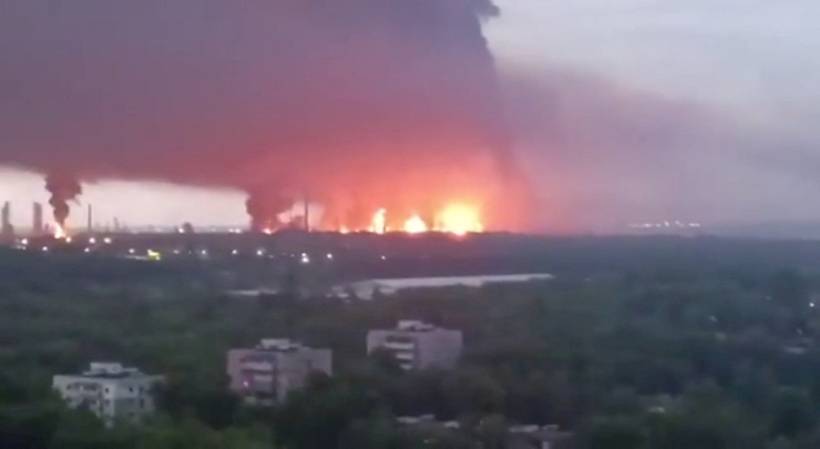
A well-known Russian city, Nizhny Novgorod, is incredibly famous for its place on the energy map as the location for the largest energy production and refinery for both local consumption and for exports to Europe. But the energy history has suddenly changed in early July 2026, primarily due to unexpected attacks by Ukrainian drones. The Ukrainian drone attacks, described in official reports, have left an indelible devastating mark on Lukoil-Nizhegorodnefteorgsitez (Norsi), considered the largest oil refinery of the Lukoil corporation in Kstovo (Nizhny Novgorod region), and had to suspend its routine refinery operations.
Reuters reported this serious military-related incident on July 3, citing two sources in Russia’s oil industry. According to The Moscow Times, a reputable foreign media outlet, the drone attack damaged the plant’s main primary processing unit, AVT-6, which provided 53% of the Norsi refinery’s capacity. Another unit, AVT-5, which accounts for 25% of the plant’s capacity, was disabled by a drone on June 24. As of July 2, Norsi (Russia’s fourth largest oil refinery and the second largest gasoline producer) stopped selling wholesale quantities of gasoline and diesel fuel on the St. Petersburg Commodity and Raw Materials Exchange.
As The Moscow Times reports, Norsi, which has an annual capacity to process 15 million tons of oil and produce 5 million tons of gasoline, became the fifth Russian refinery to halt production since the beginning of June. Gazprom Neft’s Moscow refinery ceased refining on June 16, with repairs, according to Reuters sources, potentially lasting until 2027. Tatneft’s Taneco refinery in Nizhnekamsk has been idled since June 12; the Kuibyshev refinery, since June 10; and the Volgograd refinery, since June 1.
Moreover, the authorities of the aggressor country will likely be unable to increase the capacity of Russian oil refineries damaged by BP-LA strikes in the coming month, local Russian media Kommersant reported. According to its source, refining volumes in July will “at best” remain at June levels, and only if there are no further attacks at the refineries.
Stay ahead of the geopolitical week.
MD Briefing delivers expert analysis across five global fronts — the Indo-Pacific, energy, geoeconomics, European security, and the Middle East — every Monday morning. Free.
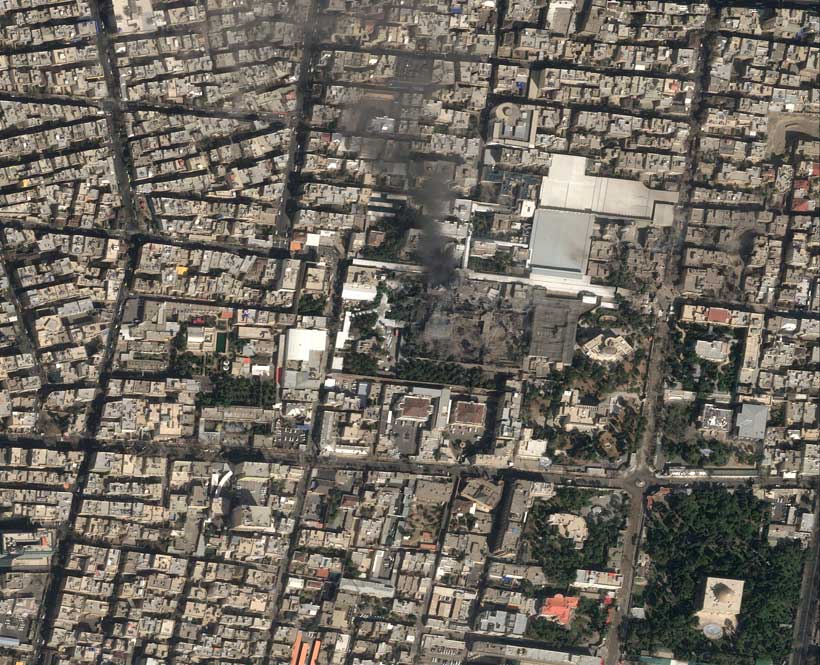
Ukrainian Defense Forces attacked the Kstovo oil refinery on May 18 and 20, 2026. As a result of the repeated attacks, the AVT-6 primary oil refining unit was damaged, after which the refinery suspended operations.
On July 2, Sergei Sternenko, advisor to Ukrainian Defense Minister Mykhailo Fedorov, reported that drones had again attacked the Kstovsky refinery of Lukoil-Nizhegorodnefteorgsintez, and a major fire had broken out at the plant. Later that same day, the General Staff of the Armed Forces of Ukraine confirmed that the strike on the Kstovsky Oil Refinery was carried out by the Defense Forces, as a result of which the AVT-6 primary oil refinery unit was damaged. Ukrainian officers noted that this oil refinery is one of the largest in Russia and has a design capacity of about 17 million tons of oil per year.
Reports also circulated this early July that Russia has turned to fuel imports from India after Ukrainian strikes disrupted its refineries, a rare reversal for one of the world’s biggest fuel exporters that could bring African oil giants into focus if Moscow widens its search for alternative suppliers. The reports further indicated Russia to likely seek imports from Belarus, with which it has a strategic partnership, and both formed the Russia-Belarus Union. Moscow and Minsk have been working together productively in all areas, coordinating their efforts in countering external threats and coordinating challenges through various institutions of the Russia-Belarus Union.
But for African oil producers, such as Algeria, Angola, Libya, Nigeria, and Egypt, Russia’s fuel crisis could open a new window for countries with active refineries, as global markets seek more secure supplies after US-Iran tensions and disruptions around the Strait of Hormuz reshaped fuel trade. That possibility has gained attention because Russia is now turning to foreign imports to ease domestic shortages.
Meanwhile, Russia has not traditionally depended on African crude oil, but its worsening fuel shortages could make Africa’s oil producers and refiners more strategically important as Moscow seeks supply through direct purchases or alternative refinery routes, while sanctions pressure complicates access to Venezuela and Iranian oil networks.
India is the fourth-largest oil refiner in the world. Indian Minister of Petroleum and Natural Gas Hardeep Singh Puri said at a press conference held on July 2 that India was ready to support Russia with oil and gas supply. “We could potentially supply fuel to Russia if needed,” the minister said, explaining it depends on how the situation develops.
Russian Deputy Prime Minister Alexander Novak told TASS that Russia had sufficient fuel reserves to supply the domestic market, but the stir around the situation with gasoline had led to a demand increase of approximately 20-30%. However, he added, “the system’s logistics connections are currently being restructured to meet needs,” and this will take some time. He also stated that he could restrict exporting diesel to manufacturers “to further fill the domestic market.”
As Kremlin spokesman Dmitry Peskov stated on June 30, if Russia can reach cost-effective deals to import fuel, that could help stabilize the market. However, Peskov added that the Kremlin will not disclose which countries it is in contact with regarding possible fuel imports.
In the meantime, Russia has taken a few steps to control the situation. The government has already reduced the mandatory sales of gasoline on the exchange trading from 15% to 10% of the volume. The Kremlin’s presidential decree has been signed, aimed at stabilizing the domestic petroleum product market. Interfax sources explained that the gasoline volumes freed up by the measure would be used to supply agricultural producers and socially significant consumers. While Russia makes no request for fuel from Kazakhstan, Orenburg processing plants are receiving 28% of usual gas from Kazakhstan. In addition, Bashkortostan’s oil refineries are boosting output, owing to unprecedented emergency demand of fuel, and this is stabilizing the situational challenge.
Ukrainian drones have attacked many cities, including Tver, Tula, Smolensk, Kaluga, Belgorod, Bryansk, Kursk, Rostov, Krasnodar, and Moscow regions, as well as the republic of Crimea and the Sea of Azov and the Black Seas.
The Iranians have come out on top after the conflict. They have demonstrated themselves as a pure and united nation by not dividing into small factions during the recent militarily confrontation with the United States and Israel. The Americans and Israelis were seemed to be launching a shock and awe strategy against the Iranians to overwhelm them and easily bring down their regime.
However, they were unable to accomplish their task, resulting in social pressure from within the United States, as 61% people were not in favor of launching a war of choice against Iran while the escalation concluded in huge financial setbacks for both the U.S and Israel.
According to John Kiriakou – the former CIA officer, Trump was told by the Israeli Prime Minister that they could easily topple the regime of Iran due to prevailing social unrest at that time. But the Iranians remained intact and united, rallying behind their government. This shattered Americans and Israelis ambitions.
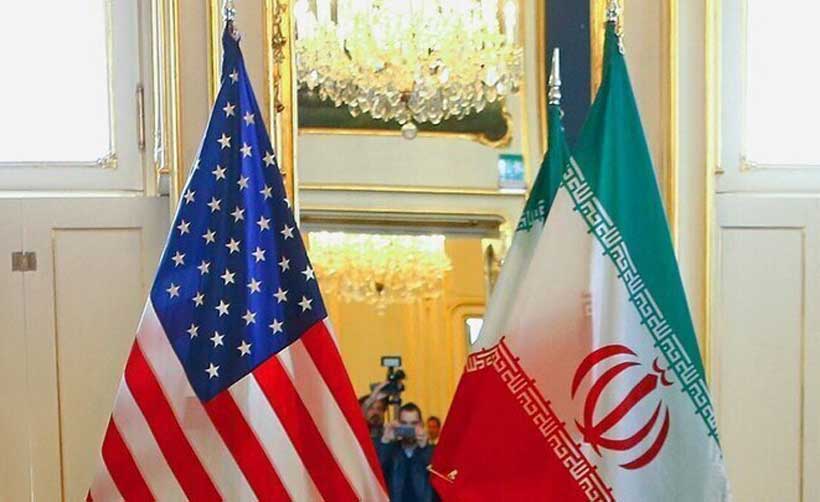
On the day Americans and Israelis launched an unprovoked aggression against Tehran, Iran imposed a closure of the Strait of Hormuz, which made Iran to maintain upper hand throughout the confrontation and sustain its position against the enemy.
Stay ahead of the geopolitical week.
MD Briefing delivers expert analysis across five global fronts — the Indo-Pacific, energy, geoeconomics, European security, and the Middle East — every Monday morning. Free.
Strait of Hormuz was open before 28th February, but during the war it was observed that the United States presented its closure as a cause of war, whereas it was obviously a consequence of the war. In addition to this context, Tehran laid a lot of mines in the waters of the Strait of Hormuz to hinder the flow of maritime trade across the strait.
From the beginning, the Iranians adopted a military strategy called Mosaic Defense, in which they decentralized their defense system, dividing their military into 31 factions which were able to take any decision on spot without asking from the central command of Tehran. This gave their military to take sudden military decisions and hit military targets as per their choice. This strategy significantly helped the Iranians hold the upper hand in the conflict, maintain their position, and stand firm against their enemy.
The Iranians also pursued the strategy of asymmetric warfare, attacking with cheap Shahed-136 drones and using different types of missiles to overwhelm the enemy. They used drones of worth around 20000 to 50000 $ while the Americans and Israelis were using expensive defensive equipment of worth 1 million to 4million dollars.
Iran fought Americans forces using a strategy called horizontal warfare, broadening the conflict across the Middle East by attacking Americans bases in the region and making the region increasingly vulnerable and unstable for the other countries there. This helped Iran consolidate their hard power in the region.
Islamic Revolutionary Guards Corps (IRGC) eliminated the most expensive radars of the US situated in different countries of the region. They blew up AN/FPS-132 and AN/TPY-2 Radar systems of the US in Qatar and Jordan respectively.
Along with that, they decimated American 5th fleet headquarter in Bahrain, which held 75% of the US military power in the region, resulting in heavy losses for Washington. Furthermore, Iran inflicted pain on more than dozen American bases in the Middle East.
It was seemed that Tehran converted this war into a war of attrition by slowly weakening the Americans over time. They were fully prepared for this protracted war but it did not go in favor of the United States, as Washington was unable to afford a protracted war at lot.
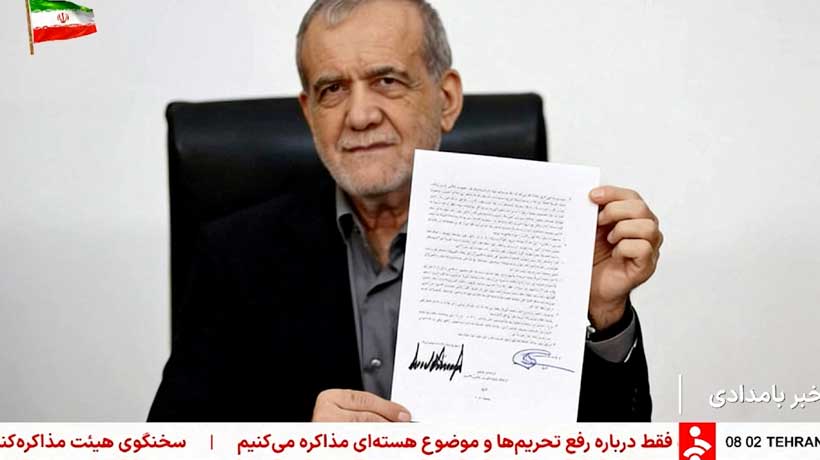
Therefore, President Trump was increasingly perceived as pursuing a deal with Tehran over time, emphasizing that a deal was in progress and would be reached soon. As a result, president trump had to sign a memorandum of understanding (MOU) with Tehran on 17th June 27, 2026 to save the world economy from another Great Depression.
The extent which Washington achieved its objectives remain open to debate. These goals included the overthrow of the regime, the de-weaponization of Iran, and the weakening of the country’s strategic potential.
According to the U.S political scientist Robert Pape, Iran has emerged as the fourth center of power, following the US, China, and Russia. It was obvious that Iran had been preparing for possible military misadventure by the U.S and Israel since 1979.
One of the crucial steps that Iran took after the Islamic revolution was the creation of the Islamic Revolutionary Guards Corps (IRGC) parallel to its national army. Consequently, it had huge leverage over the US and Israel during overall confrontation.
Moreover, this military confrontation between the U.S and Iran gave huge advantage to Tehran, making its position stronger in the regional politics and globally. Resultantly, Tehran has achieved what it had been unable to gain over the last 47 years. It successfully gained the removal of sanctions, the release of its $24B frozen assets, dominance over the Strait of Hormuz, and recognition as a regional power. Apart from that, it still retains its regional proxies and ballistic missile program.
While the Americans and Israelis miscalculated the war, assuming that they could win a quick and decisive victory by decapitating the regime. For that they orchestrated a plan to quickly topple the regime through a shock-and-awe campaign and they wanted to place people on the top that were subservient to them. However, the Iranian military emerged as a key deterrent against the adversary and made the pursuit of Washington’s objectives complicated.
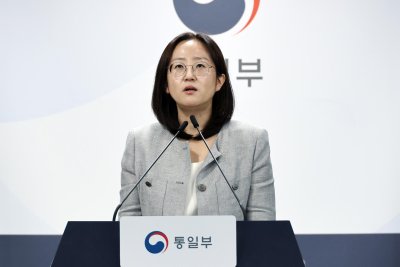
Chang Yoon-jeong, deputy spokesperson at South Korea’s Unification Ministry, speaks at a regular briefing in Seoul in this June 26 file photo. File Photo by Yonhap
The unification ministry said Friday it views growing calls to refer to North Korea by its official name as part of a broader effort to build public consensus on the issue.
“The ministry is paying attention to religious leaders’ call for the two Koreas to use each other’s official names,” deputy spokesperson Chang Yoon-jeong said at a regular briefing.
“Since their announcement, we have also noted support from various sectors of society, and we will continue listening to these voices going forward,” she added.
The Korean Council of Religious Leaders said the previous day that genuine peace begins with “acknowledging each other as they are,” urging both South and North Korea to refer to each other using their official names, respectively, the Republic of Korea and the Democratic People’s Republic of Korea.
“Respecting each other’s name is the first step” toward peaceful coexistence, the group said.
Kang Chang-il, vice chair of the Peaceful Unification Advisory Council, a presidential advisory body on unification, echoed the call.
“I would first like to express my deep appreciation for the senior religious leaders who said peace begins with respecting each other’s name,” Kang said Thursday.
South Korea currently uses “North Korea” rather than its official name, “Joson” in Korean, as Seoul does not recognize its ties with North Korea as state-to-state relations under the 1991 inter-Korean Basic Agreement.
The debate has gained momentum in recent months, with senior officials, including Unification Minister Chung Dong-young, raising the need for Seoul to call North Korea by its official name to achieve peaceful coexistence.
Copyright (c) Yonhap News Agency prohibits its content from being redistributed or reprinted without consent, and forbids the content from being learned and used by artificial intelligence systems.
Until not so long ago Latin America had been considered a quiet region, located far from the world’s superpower main strategic confrontations, with sporadic but crucial moments that helped to shape the international order as we know it today. The Cuban Missile Crisis is the clearest example: it became the starting point for a series of agreements and treaties on nuclear and strategic security, involving both the US and the Soviet Union at first, and later extending to other actors of the international community, from Europe, Asia and Latin America, which became the first region free from nuclear weapons after the signing of the Treaty of Tlatelolco in 1967, 5 years after the crisis. After this episode, the region’s relevance seemed to fade, and Latin American countries appeared condemned to a destiny of surfing between weak political cohesion internally and relatively stable economies, even as most of its governments remained closely aligned with Washington on foreign policy matters.
It was precisely during this period of perceived irrelevance that China began building its presence in the region, very gradually and over the course of a little more than two decades. Washington largely ignored this process, even as it became clear that the Asian giant was becoming the largest trading partner for several South American countries, such as Peru and Brazil, and in many cases also the main investor in their economies. This neglect was not born of ignorance: it reflected, instead, a confidence that local governments would remain compliant regardless of who was investing in them. President Trump’s first term illustrates this well. Despite isolated clashes with the governments of Mexico and Venezuela, these episodes looked minor when compared to the “tariff wars” waged against the EU and China. In fact, the only time Trump ever set foot in the region during his entire first term was in November 2018 when he attended the G20 Forum in Buenos Aires. Significantly, there was a planned short visit in Colombia after this event, but I was cancelled. This was widely read at the time as a confirmation that Latin America remained a low priority for Washington’s foreign policy agenda, more due to the expectable compliance of local governments than ignorance of the importance of the region as a resource base capable of fueling US power projection in other regions.
It was only during Trump’s second term that American foreign policy has shifted towards the Western Hemisphere, attributing strategic importance to the region and setting the objective to maintain a near-absolute dominant presence, involving both economic and military dimensions, as is stated in the latest National Security Strategy of 2025.
By the time this shift was formalized, China’s footprint in the region was already deep and country-specific. In Brazil, China had been the largest trading partner since 2009; bilateral trade hit a record $171 billion in 2025, with China accounting for 27.2% of Brazil’s total foreign trade, besides, EV plants and a still planned bi-oceanic railway linking Brazil to Peru’s Pacific coast were being negotiated as part of the Chinese investment strategy in both countries. In Argentina, China became the primary supplier of mobile network infrastructure, part of a broader Chinese push into Latin American 5G and data-center markets. And in Peru, China invested around $1.3 billion in the strategic port of Chancay, a deepwater facility that entered full operation stage in November 2024, and set a new phase for trade between China and South America, bypassing the traditional deepwater ports located in the US, like the ports of Oakland and Stockton. Reinforcing this, China pledged in May 2025, at the CELAC forum ministerial meeting in Beijing, to ramp up its regional engagement even further. These were not isolated transactions but a structural presence, one that the 2025 National Security Strategy now identifies strictly as the rival foothold it intends to dislodge.
Stay ahead of the geopolitical week.
MD Briefing delivers expert analysis across five global fronts — the Indo-Pacific, energy, geoeconomics, European security, and the Middle East — every Monday morning. Free.
Now, within this context in 2026 the declared shift of interests proved it wasn’t merely rhetorical. The year started with the launching of Operation Resolve, when a group of American special military forces conducted a military raid and captured President Nicolás Maduro and his wife in Caracas, transporting them to New York to face narcoterrorism charges. Trump declared that the US was now “in charge” of Venezuela until a transition takes place. This meant in practice that the US would hold control over the country’s oil exports, which during the first four months after Maduro’s capture were estimated at $8 billion, but the data on how much oil has been sold, the revenue from it and the use given to those funds remains secret. The main importers of Venezuelan oil during this period were the United States (43 percent), India (26 percent, part of the strategy to reduce Indian import of Russian oil), and Spain (8 percent). This episode, condemned by critics as a return to the old days of imperialism, set the tone for the rest of the year: a hemisphere where Washington would use military force, tariffs, and other mechanics for pressuring countries to sign economic deals where American core interests prevail.
An example of this is the new and controversial Trade and Investment agreement signed by the United States and Argentina in February of this year. According to the text, Argentina shall adapt the regulatory framework to implement US trade standards and prioritize American direct investment in the country, while the counterpart shall “try to review its tariffs” and “consider supporting investment financing”. Milei’s government has justified this as the price for ideological loyalty and continued financial support after the $20 billion credit line that helped to stabilize the local currency (peso) last year.
On the other hand, Brazil took the opposite path: rather than just seeking accommodation to this policy, the government of Lula da Silva accelerated diversification, finalizing the long-delayed EU-Mercosur agreement in January, deepening trade with China and signing a memorandum of understanding with aims for further strategic partnership with Russia. Notably, the US has implemented another mechanism of pressure here, condemning the imprisonment of former president Jair Bolsonaro and holding a meeting with his son Flavio Bolsonaro, who will participate in the presidential elections this October. This gives clear signs of indirect support for this far-right candidate, following the regional trend with Milei in Argentina and Keiko Fujimori in Peru.
Peru, meanwhile, illustrates a third pattern and an interesting case, because alignment here is imposed less by negotiation than by sheer state fragility. Amid a presidency turning over for the ninth time in a decade, the US State Department warned in February that China’s control over the Chancay megaport threatens Peru’s sovereignty, following a Peruvian court ruling that exempted the port from national oversight. Peru’s case pictures a scenario where both counterparts keep pushing for concessions and more privileges. Under the government of José María Balcázar, the ninth president in 10 years, the country has been involved in the controversial purchase of 12 F-16 jetfighters with a cost of around $3.5 billion. On April he postponed the official ceremony where this deal was supposed to be signed arguing that it would have to be the responsibility of a new president, the decision was met with pushback, both internally, with declarations from the Ministry of Defense and in the US Embassy, with ambassador Bernardo Navarro declaring “If you deal with the U.S. in bad faith and undermine U.S. interests, rest assured, I, on behalf of [President] Trump and his administration, will use every available tool to protect and promote the prosperity and security of the United States and our region.” After this, with both internal and diplomatic pressure, the deal was signed on the 17th of April.
Taken together, these cases suggest the current US approach to Latin America is not fueled by a single ideological logic, but by transactional calculations that value compliance and heavily punishes resistance, exploiting weaknesses here and there and aiming to these policy goal indifferently to whether the country in question is led by a right, left or ideologically undefined government. What seems quite clear is that the decades of quietness in Latin America have ended, not necessarily because the region has changed, many of the deep challenges for development are still present, but because the rivalry that once defined the Cuban Missile Crisis has returned, this time fought over trade tariffs, infrastructure and technology access rather than missiles.
The international order is falling apart, happening visibly, rapidly, and in ways that no longer surprise even the most committed defenders of the post-1945 liberal framework. The United Nations Security Council has not been able to do anything about the problems in Gaza and Ukraine. The group of countries known as BRICS is getting bigger. Now has nine members. Some countries in the Gulf are thinking about using a currency to price oil instead of using the US dollar. All of these things are putting a lot of pressure on the system that the United States has been in charge of.
Many people in the Global South think this is a thing. They do not think the United States has been fair in the way it has enforced the rules. They think the United States has only looked out for its interests and the interests of its friends. This is not a thing to say. The United States has been inconsistent in the way it has applied the rules about weapons, sanctions, and international crime.
The problem is that just because the old system is falling apart, it does not mean that something better will take its place. The question is not whether the United States is losing its power because it is clear that this is happening. The question is what will happen next. Will the new system be fair, more stable, and better at dealing with global problems?
The Architecture of Decline
Stay ahead of the geopolitical week.
MD Briefing delivers expert analysis across five global fronts — the Indo-Pacific, energy, geoeconomics, European security, and the Middle East — every Monday morning. Free.
The truth is that the United States has been losing its power for a time, but this has happened much faster since 2022. When Russia invaded Ukraine, it showed that big countries can still go to war with each other. It also showed that the United States and its friends cannot stop this from happening. The war in Ukraine has led to the use of financial sanctions in history, with over $300 billion in Russian assets being frozen.
This has made other countries want to reduce their dependence on the US dollar. They are afraid that if they rely much on the United States, they will be vulnerable to its power. According to International Monetary Fund estimates, the group of countries known as BRICS has expanded to include Saudi Arabia, the United Arab Emirates, Iran, Ethiopia, and Egypt. This group now accounts for over 40 percent of the economy. The Shanghai Cooperation Organisation has also gotten bigger. Now includes Pakistan, India, and Iran in addition to Russia and China. This organization is now the regional security group in the world. These changes are not just symbolic; they show a shift in where power is concentrated in the world.
New Poles, Old Problems
The problem with a world is that it does not necessarily mean that things will be more fair or more stable. In the century Europe had a multipolar system, but it still had many wars. The same thing happened in the 20th century. Just because there are powerful countries does not mean that they will behave in a certain way.
The problem with a world is that it does not necessarily mean that things will be more fair or more stable. In the century Europe had a multipolar system, but it still had many wars. The same thing happened in the 20th century. Just because there are powerful countries does not mean that they will behave in a certain way.
The Institutional Vacuum
The biggest risk of the situation is that the international institutions that we have will become useless. The United Nations Security Council has not been able to do anything about the security crises of the past few years. The World Trade Organization is also not working properly.
When powerful countries use these institutions for their purposes, it undermines their legitimacy. This is a problem because it means that smaller countries will suffer the most. The rules of law are only useful if they are applied equally to everyone.
The Global South’s Strategic Dilemma
For countries in the Global South, the transition to a world is a double-edged sword. On the one hand, it gives them space to maneuver and more access to financing for infrastructure projects. On the other hand, it also means that they will have to navigate a more complex and uncertain world.
The best way forward is to try to shape the transition to a world in a way that preserves the international institutions that we have. This means reforming the United Nations Security Council to make it more representative of the world. It also means strengthening the courts and the World Trade Organization.
Towards a Legitimate Multipolarity
This will not be easy. It is necessary. If we do not do this, we risk creating a world where might makes right. There is no shared set of rules to govern the behavior of states. This would be a disaster for everyone, for the smallest and weakest countries.
The multipolar world may signal the end of the order, but it does not have to mean the end of order itself. We have to work to create a system that is fairer, more stable, and more just.
In May 2026, just hours before President Donald Trump met President Xi Jinping, OpenAI’s Vice President of Global Affairs Chris Lehane floated the idea of a US-led global governance body for artificial intelligence that would include China as a member. The model, according to media reports, was compared to the International Atomic Energy Agency (IAEA), a familiar reference for managing strategic technologies with global consequences.
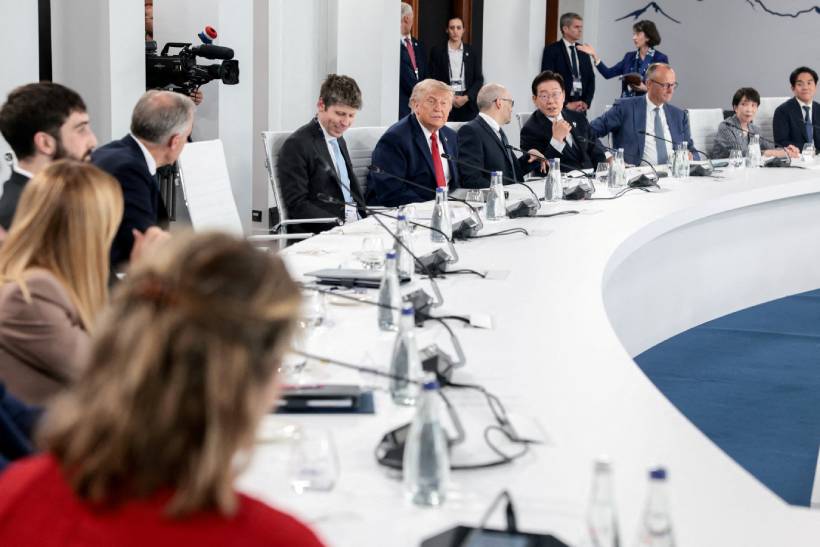
One month later, at the G7 summit in Évian-les-Bains, a different tone emerged. Several influential AI executives joined leaders from advanced economies to discuss AI governance, online safety, and global security. According to Axios, Anthropic’s Dario Amodei and Google DeepMind’s Demis Hassabis leaned towards a more selective framework among democratic countries, while OpenAI’s Sam Altman used broader language, calling for an international forum to develop shared testing standards and risk assessments.
These two moments reveal something important: the meaning of “global AI governance” remains unsettled. In one setting, global means including China for legitimacy. In another, it can mean a trusted coalition designed to manage access, capability, and strategic risk. AI governance is becoming part of the architecture of global power.
Three Voices, Different Emphases
Stay ahead of the geopolitical week.
MD Briefing delivers expert analysis across five global fronts — the Indo-Pacific, energy, geoeconomics, European security, and the Middle East — every Monday morning. Free.
Their presence at the G7 showed how quickly AI firms have moved from building systems to helping shape the politics around them. The leaders of OpenAI, Anthropic, Google DeepMind, Mistral, Cohere, and other firms were not simply observers of geopolitics. They were part of the conversation about how technological power should be governed.
Their positions were not identical. Amodei reportedly urged democratic countries to coordinate more closely so that AI governance would not fragment. Hassabis stressed the strategic importance of frontier capability. Altman, by contrast, used more institutionally neutral language, suggesting that advanced AI should not be shaped only by the companies building the most capable systems.
Even among frontier AI developers, there is no settled imagination of global governance. Should it include all major AI powers, including strategic rivals? Should it be built around trusted coalitions? Should it prioritize safety, democratic values, geopolitical advantage, or public legitimacy?
The question became more complicated because the G7 discussions came shortly after the US government imposed export controls that forced Anthropic to suspend foreign access to its Fable 5 and Mythos 5 models. Reuters reported that the order required Anthropic to block access to the models for foreign nationals, leading the company to disable them more broadly to ensure compliance. The episode showed how frontier AI governance can move from abstract principles to abrupt restrictions. Even among democratic allies, technological solidarity has limits. When AI becomes strategic infrastructure, every country begins to think about its own room for maneuver.
The Asymmetry of “Global”
The deeper issue lies in who has the power to define the word “global” in the first place. In May, global governance could mean a US-led institution that includes China. In June, it could mean coordination among democracies to manage frontier capability and strategic access. The definition changed because the political room changed.
This reveals a double asymmetry. The first is technical: only a small number of firms can define what counts as a frontier model, how its capabilities should be tested, and who should be allowed to access it. The second is narrative: the same ecosystem also helps frame the language through which the world discusses governance.
For countries outside the frontier AI circle, they may be invited to conversations but not always to the stage where categories, thresholds, and governance priorities are first shaped. They may be asked to adopt best practices whose assumptions were formed elsewhere. They may be told that risks are global, even when preparedness remains highly unequal.
G7 outreach to partner countries such as India, Brazil, Kenya, South Korea, and Egypt is important. It recognizes that AI governance cannot remain a conversation among advanced economies alone. Yet there remains a difference between being present in a forum and helping design the architecture of the forum itself. The question is who defines the table, the agenda, the risk categories, and the meaning of global governance itself.
When the AI Frontier Moves Towards the Market
There is another reason why a broader governance imagination is necessary. Frontier AI innovation is no longer centered primarily in universities or public research institutions. It is increasingly shaped by private firms with the capital, compute, talent, data access, and infrastructure required to train and deploy the most capable models.
Stanford’s AI Index 2025 noted that nearly 90 per cent of notable AI models in 2024 came from industry, up from 60 per cent in 2023. A report prepared for the European Economic and Social Committee on generative AI and foundation models also described significant US dominance across the value chain. These findings point to a structural shift: the frontier is becoming more concentrated, more expensive, and more closely tied to corporate and geopolitical capacity.
Much of AI’s progress has come from companies willing to take risks, scale products, and build technical capability at extraordinary speed. But the center of gravity has shifted. When frontier AI is largely financed, defined, and deployed by market actors, the default imagination of AI development can tilt towards commercial viability, platform advantage, user growth, and strategic positioning.
Public interest does not disappear in such a system. It risks becoming secondary unless other actors are strong enough to bring it back into the room.
Open Future, a European digital policy organization, has warned that concentrations of power in AI can make public activities dependent on “a narrow group of monopolists.” The phrase matters because infrastructure-level dependency can weaken society’s ability to negotiate the terms of the technologies it relies on.
A Wider Public-Interest Layer
In a multiplex digital world, power does not flow only through states or markets. It also moves through universities, civil society organizations, professional associations, media, labor groups, open-source communities, public-interest technologists, and moral institutions. Together, these actors form the society layer often missing from discussions dominated by states and markets.
States define security priorities. Companies define technical possibility. Society must help test legitimacy. Who bears the risk? Who benefits from deployment? Who is excluded from design? What harms are being normalized because they are commercially convenient or geopolitically useful?
This is why Pope Leo XIV’s recent intervention on AI is politically relevant beyond its religious context. In his encyclical Magnifica Humanitas, he argues that protecting the human person in the age of AI requires renewed reflection on the common good, solidarity, social justice, and human dignity. Such interventions will not replace regulation or technical standards. They help recover a truth easily lost in frontier AI politics: governance is also about preserving the human meaning of technological progress.
The same question of authorship is beginning to appear in empirical research. Ongoing fieldwork-based research at the University of Oxford has started to examine whether countries in the Global South are developing approaches to AI governance that are neither simple copies of Western regulatory templates nor rejections of international cooperation but pragmatic syntheses shaped by local institutional capacity, regulatory sequencing, and historical experience with technology transfer. Indonesia has appeared as one of the country cases in this line of inquiry.
Governance models worth studying are not only those negotiated in Évian, Brussels, Washington, or New York. They are also being improvised, often informally, by mid-sized digital economies navigating dependency and ambition at the same time.
The United Nations’ Global Digital Compact (GDC), adopted in September 2024, offers a useful multilateral reference point. It frames digital cooperation and AI governance around inclusion, human rights, open standards, interoperability, digital public goods, and multi-stakeholder cooperation. The Compact does not resolve the power asymmetries of frontier AI by itself, but it gives societies, alongside states and firms, a language for claiming a legitimate role in digital governance.
The practical task is to strengthen public-interest evaluation: the ability to test social impact, language bias, local risks, institutional misuse, and deployment consequences in different societies. The aim is to preserve enough room for public reasoning so that the future of AI is not defined only by those with the largest models, the biggest markets, or the strongest strategic leverage.
Imagining a More Inclusive AI Governance
The lesson from the IAEA analogy and the G7 discussions is not that one model is right and the other is wrong. Both reflect real concerns. A broadly inclusive governance arrangement may be necessary for legitimacy, especially when AI risks cross borders. A trusted coalition may also be necessary when capability access raises genuine security concerns. The problem begins when either model claims to be global while leaving too many societies downstream of decisions made elsewhere.
For emerging economies, the strategic challenge is not simply to wait for a better invitation to the next summit. Participation matters, but it is not enough. Countries and societies need stronger capacity to evaluate AI systems, understand their dependencies, articulate local risks, and negotiate governance terms with greater confidence.
This is a call for a more plural architecture of governance, where states, markets, and society all have meaningful roles. The uncomfortable question is not whether AI requires international coordination. It clearly does. The harder question is whether that coordination can remain open enough for societies, not only states and companies, to shape the terms of technological power.
In the age of frontier AI, the future will not be determined only by who builds the largest models. It will also be shaped by who gets to define risk, test systems, question assumptions, and decide what counts as progress.
Every era that has tried to govern a transformative technology eventually learns the same lesson: legitimacy borrowed from power is not the same as legitimacy earned through participation. The IAEA’s own history shows that global trust is rarely built at the moment institutions are created; it is earned over time, through broader representation, credible restraint, and shared accountability. The real question for AI governance is whether it can shorten that distance by design, rather than waiting for legitimacy to arrive only after contestation.
Artificial intelligence is increasingly being used in the military for planning and operations as a decision support tool at multiple stages. The US’s use of Anthropic’s Claude model against Iran marks a significant moment in the history of warfare. Integrated via Palantir’s Maven Smart System, AI-supported intelligence analysis, target identification, and operational simulations enabled planners to process information faster than human capabilities. While analysts have framed this as an “AI war,” the more significant shift lies in the growing influence of algorithmic systems in shaping military decision-making architectures.
Admiral Brad Cooper, who led Operation Epic Fury, said that AI systems processed massive amounts of intelligence and surveillance data, allowing commanders to gain insights within seconds. This is part of a wider movement to shift more complex intelligence tasks to algorithmic systems, raising questions about transparency, oversight, and reliance on algorithmic assessments.
This is also observed in other conflict zones, but in different operational roles. In Gaza, Israel’s Lavender system, developed by Unit 8200, assisted in the targeting of 37,000 suspected individuals, based on reported affiliations, using AI. Structural strikes and real-time tracking were made possible through the use of additional tools like “The Gospel” and “Where’s Daddy?” These systems reduced human review into quick, seconds-long “stamp of approval” decisions, moving targeting to machine-driven validation. In Ukraine, AI tools were used to assist in drone operations and battlefield analysis by training datasets. Initial programs, like Project Maven, relied on manually labeling 150,000 images. Currently, the Brave1 has enabled over 100 defense-tech firms to train combat AI on millions of annotated images from ongoing missions to improve these AI models.
The modern battlefield produces unprecedented volumes of data from interwoven sensor networks, drones, satellite imagery, and localized communications streams. This information comes at high speed and volume, which can overload the human brain. AI is being used to deal with this information overload, but there are concerns about the accuracy of AI-driven assessments and how much human oversight might be required to rely on AI. Military officials emphasize that humans have the final authority, but systematic integration poses challenges to oversight quality. The other predicament is automation bias, a psychological phenomenon in which a human operator, particularly under pressure or high stress, is likely to rely on the system’s recommendations. Therefore, striking a balance between speed and responsibility, ethical judgment, and accountability in the use of force is a key challenge.
Stay ahead of the geopolitical week.
MD Briefing delivers expert analysis across five global fronts — the Indo-Pacific, energy, geoeconomics, European security, and the Middle East — every Monday morning. Free.
Another area of concern pertains to legal and ethical issues. International humanitarian law is based on the principles of distinction, proportionality, and precaution. With the growing use of AI in military operations, it becomes more difficult to apply these principles, thereby making accountability and scrutiny more difficult. The International Committee of the Red Cross has warned that, when algorithmic systems provide input for analysis, targeting, or operational planning, it is hard to assign responsibility for any errors. Even with humans “in the loop,” the black-box nature of machine learning limits transparency and complicates legal review. It is not just a theoretical problem; it has been seen in practice. In the early US campaign against Iran, an AI-assisted missile struck a girls’ school near an IRGC compound, killing 120 children, likely due to a classification error. Anthropic’s CEO’s admission of limited awareness over Claude’s use in the strike highlights a broader issue. AI developers are fully aware of the risks associated with delegating autonomous functions to AI, yet they continue to promote its adoption. As AI assumes greater decision-making roles, concerns over misidentification and the possibility of AI acting against human directives are often overshadowed by narratives emphasizing its benefits.
For Pakistan, these developments are neither distant nor theoretical. In a region where crises can escalate quickly, AI-enabled decision support offers advantages but also carries risks. It improves situational awareness and accelerates analysis but compresses decision time, limits verification, and heightens the risk of miscalculation. Considering both, Pakistan is accelerating efforts to build AI capacity and strengthen its supporting infrastructure. At the policy level, this translates to a recognition that successful adoption is not just about adopting algorithms but about enhancing data governance, institutional maturity, and a skilled workforce capable of embedding AI into decision-making processes. Thus, Pakistan’s approach remains focused on leveraging AI to bolster human judgment in intelligence fusion, surveillance, logistics, and cyber defense.
There is a clear lesson from the academic literature and initial operational experience: algorithmic systems are transforming military information processing. However, as their role in decision-making grows, they also entail bias, error propagation, lack of transparency, and overreliance on machine-generated recommendations. AI, therefore, must be used as a support system, with humans retaining final decision-making responsibility. This requires investment in training, auditability, and institutional safeguards to ensure that human decision-makers are meaningfully engaged, rather than merely present in form. The future of warfare will likely be defined not by machines acting alone, but by humans making increasingly time-pressured decisions shaped by machine-generated insights. The central strategic challenge is not whether to adopt algorithmic tools, but how to ensure that their speed never outpaces sound judgment.
When Morocco reached the semi-finals of the 2022 FIFA World Cup, the achievement immediately transcended the boundaries of sport. It was the first time an African and Arab national team had reached that stage of the tournament. Yet what drew the greatest attention from international observers was not simply the result itself, but the way it confirmed changes that had already been unfolding elsewhere.
Football rarely exists in isolation. The fortunes of a national team often reflect deeper developments in governance, investment, youth development, and a country’s capacity to pursue long-term objectives. Morocco’s World Cup campaign brought into focus the broader transformation of a nation whose international profile has steadily expanded through diplomacy, infrastructure development, strategic investment, and regional cooperation.
That distinction matters. The World Cup did not create a new geopolitical reality for Morocco; it revealed one that had already taken shape. For several weeks, hundreds of millions of viewers encountered a Morocco that differed from the image long associated with the Kingdom. To many, Morocco had primarily been known as a tourist destination, a close European partner, or a North African state. Qatar 2022 introduced another image: a country capable of competing with football’s traditional powers, rallying a global diaspora, and projecting ambitions that extend well beyond its immediate neighborhood.
The scale of that exposure helps explain why the tournament proved so consequential. The 2022 FIFA World Cup reached an estimated audience of more than five billion people across television and digital platforms, giving Morocco a level of global visibility that few international events could ever provide.
Stay ahead of the geopolitical week.
MD Briefing delivers expert analysis across five global fronts — the Indo-Pacific, energy, geoeconomics, European security, and the Middle East — every Monday morning. Free.
This evolution reflects broader changes in the international system. Throughout much of the twentieth century, a state’s influence was measured primarily through military capabilities, economic strength, and diplomatic reach. While these pillars remain essential, they cannot fully explain how a country’s international image is shaped. In an era shaped by digital communication and instantaneous information flows, the ability to capture global attention, generate narratives, and engage international audiences has become another source of influence.
Football occupies a unique position within that landscape. No other sport crosses cultural, linguistic, and geographic boundaries with comparable ease. A World Cup captures the attention of governments, businesses, media organizations, and public opinion all at once. For several weeks, it places a country under a level of global scrutiny that no public diplomacy campaign could realistically achieve.
Morocco benefited from that exposure in remarkable fashion. Victories over Belgium, Spain, and Portugal naturally attracted worldwide attention. Yet the significance of Morocco’s campaign also lay in what it revealed about the Kingdom’s distinctive position at the intersection of multiple geopolitical spaces. Throughout the tournament, the Atlas Lions received support far beyond their domestic fan base. Celebrations unfolded across cities in Africa, the Arab world, and Europe. Those scenes illustrated something analysts had long observed but rarely witnessed so vividly: Morocco simultaneously belongs to several geopolitical spheres.
The team’s appeal was not built on sporting success alone. It also rested on a moral and ethical capital that substantially strengthened its international standing. Across much of the Global South, Morocco came to embody the possibility that a nation operating outside football’s traditional centers of power could challenge the established hierarchy without abandoning values deeply rooted in its own identity. Images of players embracing their mothers after victories, the importance given to family, and the respect shown toward opponents throughout the tournament resonated in ways that athletic performance alone rarely achieves.
Competitiveness, humility, and attachment to deeply held values combined to create a powerful sense of identification. That helps explain why Morocco inspired support far beyond its own borders.
Looking back, the 2022 World Cup stands out as a genuine turning point. It did not, by itself, redefine Morocco’s place in the world. What it did accomplish was introducing much of international public opinion to a modern Morocco—confident in its identity, proud of its history, and already engaged in a far-reaching process of transformation.
When Performance Becomes an International Language
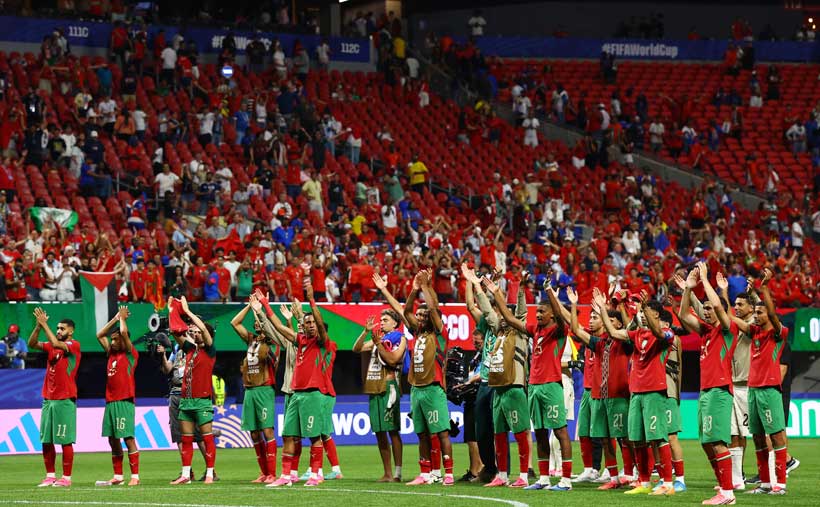
Morocco’s 1–1 draw with Brazil at the 2026 FIFA World Cup lends itself to a reading that reaches well beyond football. For decades, African national teams were largely viewed through the prism of isolated upsets against the sport’s established powers. Morocco now appears to have moved beyond that perception. Consistent results over several years have established the image of a team capable of competing regularly with the world’s elite.
This evolution reflects a broader pattern often found in international affairs. A country’s status rarely changes because of a single success. It changes when success ceases to be viewed as exceptional. The result against Brazil therefore says less about an unexpected sporting achievement than about Morocco’s growing place within world football’s established hierarchy.
The real shift is not that Morocco earned a result against Brazil. It is that such a result has become part of normal expectations.
The Foundations of Influence
Morocco’s growing stature on the football field is also the product of sustained investment in talent development. The Mohammed VI Football Academy has become one of the clearest expressions of that long-term strategy. With some of Africa’s most advanced training facilities, an integrated sports medicine center, and highly qualified coaching staff, the academy has helped build a generation of players capable of competing in the world’s leading leagues. The objective has never been limited to short-term success. It has been to establish the conditions for Moroccan football to remain competitive over time.
The success of this development model now extends well beyond the senior national team. Morocco won its first FIFA U-20 World Cup by defeating Argentina 2–0 in the final of the 2025 tournament in Chile. This dynamic illustrates the depth of the country’s football structure and suggests that recent achievements are part of a broader trajectory rather than an isolated cycle. The ability to produce successive generations of highly competitive players has become one of the defining features of Moroccan football.
Few countries possess the ability to inspire such diverse audiences. Morocco’s history, geography, and human ties connect it simultaneously to Africa, Europe, the Arab world, the Mediterranean basin, and, increasingly, the Atlantic community. Football has made that distinctive position visible in a way that few other instruments could.
A broader picture also emerges. Morocco’s achievements on the pitch have encouraged many foreign observers to look beyond football and discover a country they previously understood only in part. Behind the national team stands a state investing heavily in modern infrastructure, expanding its international partnerships, and strengthening its role across Africa while deepening its engagement throughout the Mediterranean.
Football has become one of the clearest expressions of that broader trajectory. It has drawn international attention to developments that were already reshaping the country.
It likewise strengthens one of Morocco’s most effective sources of soft power. Without replacing diplomacy, economic policy, or cultural outreach, football helps shape how the Kingdom is perceived abroad. Sporting success, world-class infrastructure, the organization of international competitions, and the presence of Moroccan players in Europe’s leading clubs all enhance the country’s visibility among audiences that may have little direct interest in political or economic affairs. Football has therefore become another instrument through which Morocco projects influence beyond its borders.
In today’s international environment, influence is measured not only by the ability to deter, but also by the capacity to inspire, attract, and unite. A successful national team can sometimes do more to strengthen a country’s international standing than demonstrations of hard power that no one hopes to witness.
Football, however, does not operate in a strategic vacuum. Its impact forms part of a broader national trajectory in which diplomacy, economic policy, institutional reform, and international partnerships reinforce one another.
Morocco’s return to the African Union in 2017, the expansion of its economic engagement across Sub-Saharan Africa, the implementation of major strategic infrastructure projects, and the consolidation of its diplomatic position on several regional issues all reflect a broader transformation whose significance extends far beyond sport.
The same pattern is evident in Morocco’s ability to organize major sporting events. The Africa Cup of Nations confirmed the results of years of investment in stadiums, transportation networks, and supporting infrastructure. Tournament management, logistical coordination, hospitality, and operational efficiency demonstrated capabilities already visible in other sectors of national development. The experience further strengthened Morocco’s credibility within international sporting institutions while reinforcing its reputation as a country capable of hosting events of global significance.
From Recognition to Projection
Against this backdrop, the decision to award the 2030 FIFA World Cup jointly to Morocco, Spain, and Portugal carries particular importance. Beyond its symbolic value, the decision reflects confidence in Morocco’s organizational capacity and in the institutional ecosystem that has been developed over many years.
In addition, the tournament carries a broader civilizational meaning. Its Moroccan, Spanish, and Portuguese framework creates a new narrative connecting Africa, Europe, the Mediterranean, and the Atlantic. For Morocco, this configuration reinforces the image of a country located at the intersection of these spaces and capable of transforming geography, history, and culture into instruments of dialogue, visibility, and influence.
Hosting one of the world’s most watched events requires more than modern stadiums. It demands political stability, efficient institutions, and the ability to coordinate complex operations over an extended period.
For that reason, the 2030 World Cup represents far more than another sporting milestone. It will serve as a large-scale test of credibility as well. For several weeks, Morocco will be observed by billions of viewers, thousands of businesses, and hundreds of official delegations. Few international events offer such an opportunity to showcase a country’s transformation before a truly global audience.
Morocco’s experience reflects another broader international trend. An increasing number of states now use major sporting events to support their integration into global political and economic networks. China’s Olympic Games, Qatar’s hosting of the 2022 FIFA World Cup, and Saudi Arabia’s expanding sports strategy all illustrate this evolution. Sport has become a platform through which countries project national ambition and shape how they are perceived abroad.
Morocco’s trajectory nevertheless stands apart. Unlike countries whose sporting influence depends primarily on financial resources, Morocco benefits from a combination of history, geography, and culture that allows it to engage multiple regions simultaneously. Few countries occupy such a position. At a time when the international system is increasingly fragmented by geopolitical rivalries, economic competition, and identity politics, that characteristic has acquired growing strategic value.
Football ultimately raises a broader question about the changing nature of power itself. For decades, influence was measured largely through military capabilities, economic resources, and demographic weight. Those factors remain fundamental, yet they cannot fully account for how countries are perceived today. The emerging international landscape increasingly rewards countries able to connect regions, facilitate exchanges, and build relationships across political, economic, and cultural divides.
From that standpoint, Morocco’s evolution may signal the emergence of what could be described as a connective power. Unlike traditional middle powers, a connective power derives its influence less from the resources it controls than from its ability to connect regions, facilitate exchanges, and create strategic interfaces between political, economic, and cultural spaces. Its comparative advantage lies not in domination, but in connectivity.
Football represents only one expression of that broader transformation. Infrastructure development, Atlantic initiatives, expanding African economic partnerships, growing human mobility, and the country’s capacity to host major international events all reinforce the same strategic trajectory. Taken together, they point toward a distinctive role for Morocco within the emerging international order.
Football, then, accompanies a much deeper national transformation. It reflects Morocco’s gradual evolution from a respected regional partner into a country whose initiatives and ambitions increasingly attract attention well beyond its immediate neighborhood. The Kingdom’s Atlantic vision, its expanding role across Africa, continuing investment in infrastructure, and ability to host major international gatherings all belong to the same strategic narrative.
The geopolitical importance of football lies precisely in its ability to make visible changes that often develop far from public attention. Sporting achievements can reveal broader shifts in economic development, diplomatic influence, and a country’s strategic positioning.
For Morocco, football has become one of the clearest mirrors of a broader national ambition. It is neither the source nor the principal driver of the Kingdom’s rise. Rather, it provides one of its most visible expressions. As Morocco strengthens its position between Africa, Europe, and the Atlantic, football continues to reflect changes that extend well beyond the sporting arena.
Behind the achievements of the Atlas Lions lies a Royal Vision that places human development at the center of national progress while pursuing a broader ambition: establishing Morocco as a connective power capable of linking Africa, Europe, the Mediterranean, and the Atlantic.
Football did not transform Morocco’s place in the world. It simply made that transformation impossible to ignore.
Egypt’s foreign ministry used carefully calibrated language on Monday to restate a familiar position: unwavering support for Sudan’s “unity, sovereignty and territorial integrity” and for its “national institutions, particularly the Sudanese Armed Forces (SAF).” Framed as a rejection of “parallel entities” seeking to form an alternative government in exile, the statement is another sign that Cairo is tying its Sudan policy ever more tightly to General Abdel Fattah al‑Burhan and the SAF as the country’s civil war grinds into yet another year.
Behind the diplomatic phrasing lies a blunt political choice. Since the outbreak of fighting between the SAF and the Rapid Support Forces (RSF) in April 2023, Egypt has emerged as one of the army’s main regional backers, both politically and—according to multiple reports—quietly in security terms. Egyptian officials insist they are defending Sudanese state institutions against militia fragmentation and external meddling, a message they repeat in multilateral forums and joint communiqués with Burhan’s Transitional Sovereignty Council.
From Cairo, the stakes in Sudan are seen as existential rather than abstract. Egyptian analysts routinely describe the stability of their southern neighbour as a vital national security concern, citing fears of refugee flows, arms smuggling and jihadist safe havens along the porous border. Control of the Nile is an even deeper driver: since the 2019 fall of Omar al‑Bashir, Egypt has intensified security and military coordination with Khartoum to counter Ethiopia’s upstream Grand Ethiopian Renaissance Dam (GERD) and preserve its historic water share.
There is also a clear regime‑security affinity, however misguided that affinity might be. Burhan, a career officer who trained in Cairo and maintains close ties with Egyptian generals, represents a familiar authoritarian model for President Abdel Fattah el‑Sisi, himself a former general who came to power after a coup in 2013. Supporting the SAF fits Egypt’s long‑standing pattern of siding with Sudan’s army “whoever is in charge of it,” and buttresses Cairo’s broader preference for strong central militaries over messy civilian transitions across the region.
Stay ahead of the geopolitical week.
MD Briefing delivers expert analysis across five global fronts — the Indo-Pacific, energy, geoeconomics, European security, and the Middle East — every Monday morning. Free.
Officially, Egypt insists it is not a party to Sudan’s war. Sisi has repeatedly pledged “non‑interference,” and Cairo frames its role as limited to mediation, humanitarian aid, and hosting millions of Sudanese fleeing the conflict. Egyptian troops captured by the RSF at Merowe airbase in April 2023 were described as participants in pre‑scheduled joint exercises, not combat operations, a spin that few international observers bought.
The line between deterrent presence and de facto involvement has become increasingly blurred. Analysts note years of intensifying joint drills, intelligence cooperation and arms ties between the two militaries since 2019. Think‑tanks and regional media have reported unconfirmed Egyptian airstrikes on RSF positions and possible targeting of gold‑mining camps in northern Sudan, amid allegations by RSF leaders that Cairo is providing drones and tactical support to the SAF—claims Egypt denies. The pattern points towards at the very least a protective security umbrella for Burhan’s forces, far beyond the strict neutrality Cairo proclaims.
Yet in Burhan Egypt is backing a very risky partner. By hinging its Sudan strategy almost entirely on the SAF and Burhan’s sovereignty council, Egypt is betting on a man and an institution that look increasingly incapable of reunifying the country. The war has left tens of thousands dead, displaced over 14 million people, and pushed parts of Sudan towards famine, with the army losing and regaining territory in a grinding stalemate against the RSF. Burhan’s own legitimacy is deeply contested: he led the 2021 coup that derailed a fragile civilian‑military power‑sharing agreement, and his government is widely seen by pro‑democracy groups as a continuation of military dominance rather than a path to elections.
Cairo’s categorical rejection of “parallel governments” sounds like a defence of state unity, but in practice it risks delegitimising genuine civilian coalitions seeking to organise outside the SAF‑RSF binary. By equating Sudan’s “national institutions” with the existing military leadership, Egypt narrows the political horizon and sidelines the broad civilian forces that led the 2018–2019 uprising—precisely the actors most likely to provide a sustainable, inclusive settlement. If the SAF continues to fragment on the battlefield or loses further territorial control, Cairo may find that its red lines have locked it into defending a shrinking power centre with dwindling popular backing.
There is also a long‑term reputational cost. Egypt positions itself as a mediator through formats such as the “Quad”, and hosts conferences of Sudanese civil and political actors in Cairo. But as long as its public diplomacy is tethered to explicit promises that it “will not be lax or late in supporting the legitimate Sudanese government” under Burhan, that positioning is scarcely credible. On the contrary, Egypt has decisively and actively allied itself to Sudan’s military junta.
Myanmar’s president Min Aung Hlaing is currently on a 5-day state visit to India on the invitation of Indian prime minister Narendra Modi. This is his first foreign visit after the recent election where he was elected as the new president of Myanmar. However, the elections that brought him to power were not democratic in nature. Therefore, “Min Aung Hlaing is not Myanmar’s legitimate president,” as noted by Mercy Chriesty Barends, a member of the Indonesian Parliament and chairperson of the ASEAN Parliamentarian on Human Rights. He oversaw a campaign of widespread crimes against his own people after masterminding a bloody coup that toppled a democratically elected government. As a result, APHR has asked India to condemn Min Aung’s government as undemocratic and illegal. Thus, the question of why India, which claims to be the largest democracy in the world, is dealing with an undemocratic administration that is accused of violating its own citizens’ human rights emerges.
The idea of democracy and human right violation had been India’s central position during the 1988 military coup in Myanmar. The Indian government had cut ties with the then military junta. India’s idealistic position had sidetracked India-Myanmar relations and led China to occupy the strategic sphere in India’s immediate neighborhood. Chinese investment and trade with Myanmar grew exponentially with the junta purchasing military hardware worth $1 billion from Beijing in 1989 one of the largest weapons deals in Myanmar’s history. This had led China to exert its influence on Myanmar. For Beijing the geo-strategic location of Myanmar having access to the Indian Ocean was of strategic interest. Enhancement of Chinese influence in Myanmar had a security implication for India as China used Myanmar to train major northeastern Indian insurgent groups like NSCN, ULFA etc. Thus, India’s rupturing of relationship with Myanmar after 1989 on idealistic grounds led China to exploit major gain at India’s immediate neighborhood.
This had led India to recalibrate its strategy towards Myanmar post the 2021 coup when India took a more pragmatic stand. The Indian ministry of external affairs had categorically pointed that any development in Myanmar has implications for India so India’s policy must serve its strategic interest. Therefore, we have seen India engaging both the military junta and the ethnic armed groups trying to balance its ties with both the parties. Since the coup India has been providing steady military assistant to the junta in form of military hardware and spares. It has also engaged the various ethnic armed groups by sending officials across the border and by inviting some of the groups to New Delhi for a conference. This makes it very evident that rather than maintaining the moral superiority of democracy, India is striving to further its strategic interests. The support to the rebel groups like the Arakan Army (AA) which controls a major part of strategic Rakhine state. After seizing control of majority of the state the Arakan Army pushed the initiative to have dialogue with the military junta. The AA had always held the ambition of having greater strategic autonomy in the Rakhine state. Thus, India’s engagement with the AA by sending government officials over to Myanmar signals that it wants to have strategic relation with the AA as that would enhance its influence and uphold India’s economic and trade ambitions.
For India, the geographical location of Myanmar holds a great strategic significance. It shares a 1,693 kms of border and is seen as India’s gateway to the ASEAN. This had led India to invest heavily on major infrastructure projects in Myanmar. The Kaladan Multimodal Transit Corridor and Sittwe Port are two of India’s largest projects in Rakhine and Chin state of Myanmar. This project is seen to give India’s landlocked northeastern states access to Myanmar’s Sittwe port. This project is also seen as a counter to China’s Kyaukphyu Port at the Rakhine state. This has made the relation with Arakan Army of geo-strategic importance. The other major project that India is working on is to physically connect itself ASEAN via the India-Myanmar-Thailand trilateral highway. This project would give India land access to the two ASEAN states which can further be expanded to other nations like Vietnam. Although the projects are currently stalled due to the civil war, India is working with both the ethnic armed groups and the government to safeguard and fast-track the projects.
Thus, the recent visit of Min Aung Hlaing to India shows that India has chosen pragmatism over idealism. New Delhi has kept itself away from the nature of democracy in Myanmar and is trying to engage based on strategic interest. During the press briefing the Indian foreign sectary had pointed that India’s engagement with Myanmar is not based on Myanmar’s internal political arrangement. India does not want to disengage based on internal political dynamics as history has shown that other powers which has no interest in democracy would eventually take the advantage. This statement although has not mentioned China but was directed towards it. Therefore, the visit led to the signing of various agreements and MOUs between both the states. Myanmar has also reiterated that it won’t allow its territory to be used against anti-India activities. The recent advancement by the Myanmar Army is further leading it to consolidate its power and capture grounds. With the new conscript law, it can funnel additional troops to keep its advancement. Further being supported by Russia, China and India the firepower of the junta is superior to the rebel forces. This has also led India to recalibrate its Myanmar policy by engaging the current powerful junta and strategic rebel forces like the AA in Rakhine state.
Therefore, it can be argued that the growing India-China competition has made India move its Myanmar strategy towards pragmatism from idealism. Unlike in 1988 when India lost its strategic foothold to China in Myanmar due to its idealistic stand, the situation has now altered as the competition grows. But as a democracy, India must tread carefully on this fine line and bring up important issues of human rights and democracy in Myanmar.
Bio: Aung Kyaw is a recent graduate from Lingnan University majoring in Global Development and Sustainability and minor in Sociology. His research interests are politics of southeast asia, peace and conflict studies, social development, social issues in southeast asia. kyawkyawaung@ln.hk
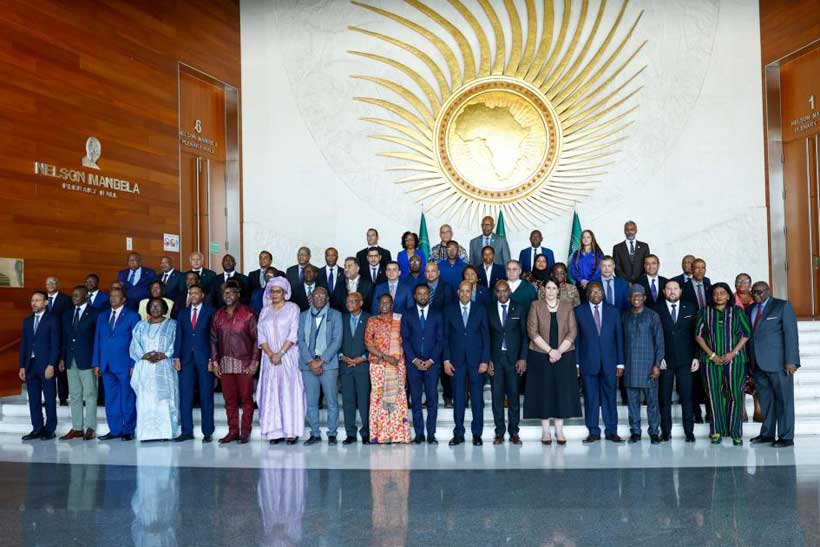
As Africa navigates the challenges posed by the U.S.-Iran crisis, creating worldwide economic instability, the 52nd Ordinary Session of the Permanent Representatives’ Committee (PRC) called for consistent commitment to the peaceful resolution of disputes through dialogue and diplomacy. The 49th Ordinary Session of the Executive Council and the 8th Mid-Year Coordination Meeting (MYCM) between the AU, Regional Economic Communities (RECs), and Regional Mechanisms (RMs), scheduled to take place on 27 June 2026 in El Alamein, Egypt.
Chairperson of the AU Commission, Mahmoud Ali Youssouf, has acknowledged that the multifaceted challenges currently facing the continent, including geopolitical tensions affecting global supply chains, macroeconomic instability, delays in fertilizer imports, ongoing conflicts, and health emergencies such as the recent Ebola outbreak. He noted that external factors, including the closure of the Strait of Hormuz, continue to disrupt continental plans.
Despite these difficulties, the AUC chairperson affirmed the commission’s commitment to redoubling its efforts, implementing contingency plans, and reinforcing fiscal discipline. He stated that the 2027 budget would be an austerity budget, while underscoring the imperative to continue the post-SACA (Skills Assessment and Competence Audit) trajectory. He revealed that the AU currently operates with only 30% of its required staffing levels and approximately 25% of its global budget, including programs funded by statutory contributions.
That, however, Youssouf appealed to Member States for enhanced solidarity and material support, emphasizing that achieving the objectives of Agenda 2063 demands greater involvement and commitment. He reassured the Permanent Representatives’ Committee that the Commission is developing scenarios to address human and financial resource gaps and remains ready to work collaboratively with Member States to identify appropriate solutions.
He concluded by reaffirming the Commission’s dedication to strict budgetary discipline and its unwavering support to Member States. “The African Union should have the necessary human and financial resources to attain the objectives of Agenda 2063. I am aware of the difficulties that our member states are facing. The Commission is ready to find, together with you, the appropriate solutions to take up these challenges together,” said Mahmoud Ali Youssouf.
Ambassador Willy Nyamitwe, Chairperson of the PRC and Ambassador of the Republic of Burundi to Ethiopia, delivered a compelling address calling for unity, self-reflection, and action. He expressed gratitude to Member States for entrusting Burundi with steering the continental organization this year. Ambassador Nyamitwe highlighted the profound technological transformations reshaping economies and the rising expectations of African citizens.
Ambassador Nyamitwe cautioned against national positions that may unintentionally undermine continental unity, urging ambassadors to ensure that their decisions tangibly improve the lives of ordinary Africans. He stated that unity is not merely a virtue but a weapon and that history will judge not speeches but the courage to acknowledge mistakes and strengthen collective institutions. He called on the PRC to choose solidarity over division and vision over hesitation. “History will remember whether we strengthened the institutions entrusted to us. It will remember whether we chose solidarity over division and vision over hesitation. I have every confidence that this committee, the PRC, possesses the wisdom, the experience, and the determination required to meet these expectations. Together, let us continue building an African Union that is stronger, more effective, and more responsive to the aspirations of our peoples,” concluded Ambassador Willy Nyamitwe.
The official meeting was attended by Selma Malika Haddadi, Deputy Chairperson of the AU Commission, along with AU Commissioners, representatives of AU organs, and senior officials. The PRC will deliberate on reports from its Sub-Committees, the AU Commission, and other AU organs and specialized agencies. The Committee will subsequently adopt its report and the draft decisions for the 49th Ordinary Session of the Executive Council, scheduled for 24-25 June 2026 in El Alamein, Egypt.
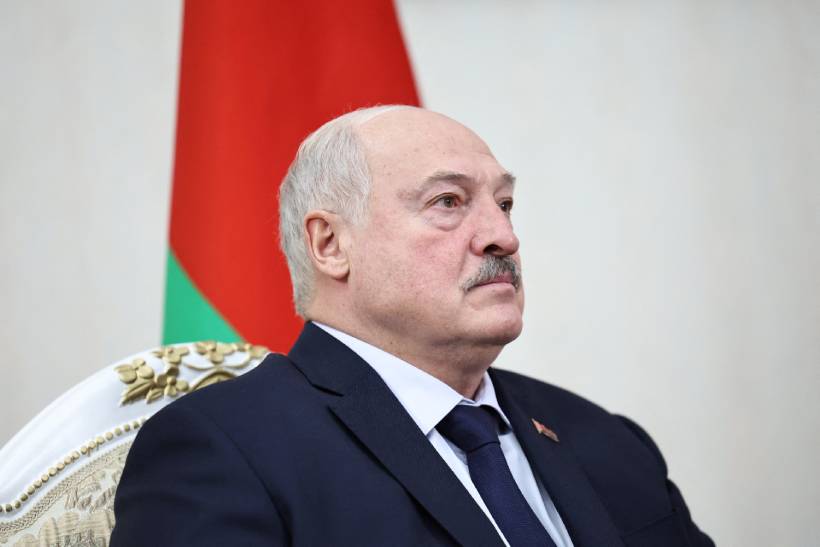
Diplomatic sparring between Ukraine and Belarus escalated sharply on 19 June, when Ukrainian President Volodymyr Zelensky demanded that Belarus dismantle communications infrastructure allegedly used by Russia to extend the range of its strike drones. Zelensky has offered a week for such removals to take place, reportedly saying, “I am giving a week for it to be withdrawn; otherwise, we will do it ourselves.” This marks a severe deterioration in relations since Belarus allowed Russian forces to cross Ukraine’s northern border using Belarusian territory in 2022. Following Russia’s withdrawal from Ukraine’s northern regions, Belarus has not enabled further assaults from its own territory but has actively aided Russian efforts, in part, by allowing drones to operate over Belarusian territory to strike Ukrainian targets with less warning. These increased tensions follow recent statements from Belarusian President Alexander Lukashenko aimed at easing tensions, stating, “If Volodymyr Oleksandrovych was offended, I apologize to him for those words… Perhaps I shouldn’t have spoken so sharply about it. But, on the other hand, he should understand, as we often say: you get what you give.” As Zelensky applies pressure to Russia’s key European ally, Lukashenko’s response may determine whether his country will begin to withdraw support or play a larger part in this war.
Belarus’ Assistance in Putin’s Invasion
Belarus has played a vital role in Russia’s aggression since 2022, remaining one of Moscow’s most important enablers throughout the war. On the opening days of the conflict, 45,000 Russian soldiers crossed into the capital region of Kyiv. Since Russia’s withdrawal from northern Ukraine, Belarus has remained a tacit supporter of the invasion, finding auxiliary ways to support its key strategic ally’s actions in Ukraine without directly becoming involved itself. While weapons transfers and diplomatic support aid Moscow’s war effort, Belarus’ most valuable contributions come from two primary sources. First, Belarus’ expansive border with Ukraine. The two countries share a border that stretches over 1,000 kilometers. The existence of a Russian ally on Ukraine’s northern border introduces the risk of another attack from this direction, requiring the dedication of over 100,000 soldiers to the defense of a region that may not become active for the duration of the war. Second, neutral airspace was made available to long-range strike drones. Without this advantageous lane of attack, Russian drones, such as the Geran-2, must spend hours loitering over Ukrainian territory, where they are exposed to interception attempts while trying to reach their targets. Additionally, and central to Zelensky’s latest ultimatum, Belarus has reportedly allowed Russia to build a network of relays along Ukraine’s border to expand the range of its strike drones, allowing greater operational reach and improved resistance to electronic warfare.
Belarusian Capabilities
Threats made without the capability to enforce them are functionally pointless, suggesting that Zelensky believes Ukraine occupies a militarily advantageous position relative to Belarus. This warrants analysis of Belarus’ military capabilities to determine whether they pose a threat to Ukraine. As of 2022, Belarus reportedly maintained an active-duty army of approximately 48,000 soldiers, with inactive trained reserves and additional supporting personnel amounting to another 300,000 people. The country fields 1,200 main battle tanks and 3,400 other armored fighting vehicles, although it is unclear how many remain in active service. Many of these vehicles are of questionable utility, with Belarus operating mainly vintage Soviet equipment and few vehicles having been modernized to contemporary standards. The Belarusian Air Force fares slightly better, fielding 48 front-line fighter aircraft, of which 16 are new Su-30SM/SM2 airframes. The war and its rapidly changing dynamics have forced Belarus to invest in the modernization of its armed forces. However, in contrast to many Western modernization programs, which frequently involve high-value equipment deals, Belarusian efforts have focused more heavily on improving infantry capabilities. Belarus currently funds several programs for procuring modern armored vehicles and has recently made new equipment purchases from Russia, including the nuclear-capable intermediate-range ballistic missile known as Oreshnik. More transformative, however, are efforts to reform the country’s mobilization system and employment of experienced Wagner mercenaries to train Belarusian soldiers in drone-centric combat techniques. This could be interpreted either as an inability to afford more comprehensive reforms or as a deliberate shift away from traditional reliance on armored formations in favor of unmanned systems. Regardless of the motivation, these programs demonstrate substantive efforts to improve the military readiness of a vital ally to Russia.
Ukrainian-Belarusian Diplomatic Efforts
Zelensky’s demand follows months of escalating tensions between Belarus and Ukraine, contrasting Belarus’ traditionally ancillary role in Ukrainian foreign relations. Due to Belarus’ refusal to participate directly in combat operations, Kyiv had little incentive to press diplomatic issues and antagonize its northern neighbor. Until the recent flare-up, it was in Ukraine’s interest to keep Belarus on the sidelines while accepting the reality of Belarusian aid and weapons transfers that benefited Russia. Relations between the two countries followed a repeated cycle of saber-rattling, military posturing, de-escalation, and periods of calm. Lukashenko has repeatedly offered his services as a mediator between Russia and Ukraine, although Kyiv has rejected these offers because of Belarus’ close ties to Moscow. Tellingly, despite Belarus aiding its aggressor, Ukraine has maintained diplomatic ties with Minsk throughout the conflict. Lukashenko further offered to open bilateral talks with Kyiv in late 2025 in an attempt to reduce rising tensions. These efforts failed to bear fruit as relations deteriorated to their lowest point since the beginning of the war in May 2026. Following the construction of additional drone launching facilities in Belarus and an increase in Russian drone strikes, Ukrainian diplomacy shifted towards the application of direct pressure. Kyiv’s announcement that it had identified more than 500 strategic Belarusian targets in the event of conflict culminated in Zelensky’s ultimatum to dismantle Russia’s drone relay network within a week. The ultimatum suggests that Ukraine is abandoning its previous strategy of managing tensions with Belarus in favor of direct pressure. It also followed the largest Ukrainian drone strike on Moscow to date. Viewed in that context, Zelensky appears to be leveraging Ukraine’s growing long-range strike capabilities while simultaneously attempting to disrupt a component of Russia’s own drone warfare infrastructure.
The Chinese strategy employs research and intelligence institutions working to foster closer ties between Iranian national security institutions and the Egyptian military, aiming to undermine the American presence in the Middle East. Prominent among these institutions are the Middle East Studies Institute at Shanghai International Studies University, the China Institute of International Studies, and the Center for West Asian and African Studies. These Chinese research centers, which shape China’s relations with countries in the region and the Gulf, include the Middle East Studies Institute at Shanghai International Studies University (SISU), which directs studies related to security and defense issues and facilitates direct dialogue between think tanks in Iran and research centers in Egypt. Another example is the China Institute of International Studies (CIIS), which reports directly to the Chinese Ministry of Foreign Affairs and works to engineer diplomatic plans that align Egypt’s strategic interests with the objectives of Tehran and resistance movements in the region. Chinese think tanks and intelligence agencies also rely on a number of People’s Liberation Army-backed space intelligence companies, such as MizarVision and EarthEye. These Chinese companies have provided high-resolution satellite imagery and intelligence data to support operations targeting US bases in the Gulf and the Middle East. These Chinese entities coordinate and plan operations through various mechanisms and initiatives officially launched by China, most notably the Global Security Initiative (GSI). Beijing also uses forums, such as the China-Arab Cooperation Forum, to pressure Middle Eastern and Gulf countries to withdraw foreign forces and end US hegemony in the Gulf and the Middle East. This is framed as ending direct interference in the internal affairs of countries in the region. Beijing is also seeking to establish permanent overseas bases, most prominently the Djibouti naval base in East Africa, to support its regional alliances and ensure the continuity of global supply lines for Chinese interests and investments within the framework of the Belt and Road Initiative.
The relationship between Chinese military and intelligence think tanks and the Egyptian army is highlighted by their shared goal of countering American hegemony and expelling US military bases from the Gulf and the Middle East. China is strengthening its strategic cooperation with the Egyptian army as part of the Djibouti-UAE-Egypt axis, with Beijing relying on Cairo as a key launching pad to secure maritime navigation and reduce American military influence. Beijing is utilizing its strategic institutions and think tanks to provide technological and logistical support to the Egyptian army, aiming to create a regional power capable of maintaining strategic balance in the region against American hegemony and interventions. This escalating security and strategic relationship between the Egyptian and Chinese armies rests on several key pillars, most notably intelligence and military partnership. China aims to train the Egyptian military elite through Egyptian military academies and coordinate threat assessments and mutual monitoring of the military movements of the United States and its allies in the Gulf and the wider region. With the implementation of several joint exercises between the two sides, the Chinese vision crystallized in the (Civilization Eagles maneuvers), which brought together the air forces of China and Egypt. This paves the way for the transfer of military technology and the integration of Chinese systems with Egyptian defenses independent of the West, along with the localization of Chinese military industries in the heart of Cairo. China is negotiating with the Egyptian Ministry of Defense to develop local manufacturing capabilities and transfer defense technology. There are also reports of integrating Chinese systems into Egyptian systems to reduce Egypt’s dependence on American-supplied weaponry. Beijing seeks to create a counterweight to American hegemony in the Middle East and the Gulf. China sees Egypt’s refusal to host any American military bases as a cornerstone of its strategy, relying on the Egyptian and Emirati armies to guarantee regional security as an alternative to the traditional American presence in the Gulf and the Middle East.
Chinese research, military, and intelligence think tanks are working to engineer an asymmetric strategic partnership to end American hegemony in the Middle East and the Gulf. Chinese think tanks, military research centers, and intelligence agencies are operating according to a clear strategic vision aimed at building asymmetrical partnerships in the Middle East and the Arabian Gulf to reduce American influence and establish a multipolar world order. Beijing provides Tehran with technical and intelligence support to deter Washington, while simultaneously seeking to strengthen military cooperation with Egypt as a pivotal regional power. This strategy aims to diminish American influence and secure China’s vital economic interests. The Chinese strategy in the region rests on several pillars, most notably its strategy toward Iran and its technical and intelligence support for the country. China has secretly supplied Iran with advanced satellite technology from its BeiDou satellite system, bypassing Western and American GPS systems, as well as sophisticated air defense systems. This has significantly enhanced the Iranian Revolutionary Guard’s ability to monitor and target American military bases in the region and the Gulf.
The objectives of Chinese think tanks, political, strategic, military, and intelligence research centers become apparent here, as they attempt to plan a path to link Iran to China’s Belt and Road Initiative and transform Iranian military pressure into a tool for destabilizing the US bases deployed in the region and the Gulf. The convergence between China and the Egyptian military is highlighted through the comprehensive strategic partnership between the two countries. Beijing is inclined to strengthen military cooperation with Egypt, capitalizing on its political stability and its geographic location controlling vital maritime trade routes, and to transfer advanced Chinese military technology to Egypt. Beijing has revealed its desire to be a major supplier of equipment to the Egyptian army, such as the J-10 aircraft. This aims to increase Egypt’s strategic maneuvering room and reduce the dominance of Western weaponry.
The stability achieved by the Egyptian leadership is a fundamental pillar supporting the comprehensive strategic partnership, as Beijing seeks to secure its economic and military interests with a stable and influential regional power. Therefore, China is investing in the Belt and Road Initiative, for which the Suez Canal is a vital artery in the Middle East. Cooperation extends to the exchange and transfer of military technology, joint military manufacturing, advanced air defense systems, and the evaluation of potential acquisitions of modern Chinese fighter jets. Furthermore, joint air exercises have been conducted, with the Egyptian Armed Forces carrying out their first-ever joint air exercise, dubbed Eagles of Civilization with China, involving multi-role fighter aircraft from both countries, underscoring the deepening defense partnership between them.
In this context, China relies on the Egyptian military within the framework of its strategic and African axis to counter American influence. For China, Egypt represents its strategic gateway to the African continent and a cornerstone in its maneuvers against the US Africa Command (USAFRICOM). In addition to joint military exercises, China and Egypt have conducted joint air force drills, a clear indication of an unprecedented military rapprochement that has drawn close American scrutiny. With China’s move to transfer technology and arms deals to Cairo, it is positioning itself to support the Egyptian army with advanced air defense systems, such as the HQ-9B. This enhances Egypt’s air deterrence capabilities and forms part of strategic military deals aimed at reducing dependence on the United States and its Western allies. On the other hand, China relies on Iran as a deterrent and direct driver, exerting pressure on American bases in the region. Iran represents the spearhead of China’s brinkmanship policy against American military bases in the Gulf, Iraq, and Syria, with Tehran threatening to strike them should any regional conflict erupt. In conjunction with the economic and diplomatic alliance between Beijing and Tehran, China uses emerging alliances, such as the BRICS group and the Shanghai Cooperation Organisation (SCO), to establish Iran’s political foothold. It sometimes resorts to mediation policies as a tool to reduce the likelihood of a direct confrontation with Iran, which could harm its commercial interests, such as China’s sponsorship of Pakistani mediation efforts between Iran and the United States to stop the war against Iran and allow the Strait of Hormuz to be opened to global trade and navigation.
China’s major objectives in the Middle East lie in a strategy of attrition against the United States. China uses Iranian actions as a clever pressure tactic to test and deplete American military technology without direct involvement in wars of attrition, while simultaneously attempting to create a new regional order. Here, Chinese intelligence agencies coordinate networks of overlapping interests to push countries toward understandings that transcend the American security umbrella, paving the way for the future withdrawal of foreign military bases. The pillars of China’s strategy for alternative hegemony are based on asymmetric partnerships. Beijing focuses on presenting itself as a reliable economic and technological partner without political conditions or interference in internal affairs, unlike the American model based on conditionality and direct military alliances. With China’s emphasis on the economy as a gateway to security, it utilizes the Belt and Road Initiative and its massive investments in infrastructure and ports, such as the Khalifa Port in the UAE and the Port of Duqm in Oman, to solidify its strategic presence and transform economic dependence into long-term geopolitical influence. With Beijing’s use of security diplomacy and mediation, Chinese decision-making centers have adopted a common security approach and offered political mediation, such as sponsoring the Saudi-Iranian agreement, to solidify Beijing’s role as an international peacemaker and portray the United States as a destabilizing force through the militarization of the region. This is coupled with China’s technological and intelligence penetration of the region and the Gulf, where Chinese partnerships focus on transferring 5G technologies, artificial intelligence, and space cooperation with Gulf states. This grants Beijing intelligence-gathering capabilities and allows it to connect the region’s vital systems to the Chinese technological infrastructure. Chinese think tanks and intelligence agencies are planning to cautiously fill the void, as China avoids direct military confrontation with Washington in the region and prefers to capitalize on the Gulf states’ desire to diversify their partnerships and hedge against the gradual decline of American interest in the Middle East.
Accordingly, we analyze that China’s military strategy in the Middle East and Africa relies on building defense partnerships with diverse objectives. It utilizes the Egyptian army as a pivotal regional power to bolster its influence and counterbalance the American presence through advanced training cooperation while simultaneously leveraging its relationship with Iran to exert pressure on American bases, particularly in the Gulf, and secure its oil interests all within a comprehensive policy aimed at dismantling American hegemony in the region.
The 14-point Islamabad Memorandum of Understanding between the United States and Iran deserves cautious support, not celebration. Its most important promise is immediate and permanent cessation of military operations on all fronts, including Lebanon. That is a serious achievement if it holds. The reported US-Iran text also commits both sides to avoid threats or use of force and to respect sovereignty. But wars do not end because officials announce elegant clauses. They end when armies, proxies, navies, banks, inspectors and political leaders behave differently the next morning.
The reported Versailles signing, with President Macron nearby, gave the accord theatrical weight. The reported confirmation by Iran’s Foreign Ministry gave it visibility in Tehran. Yet the title “Islamabad” may be the most revealing symbol. It suggests that diplomacy around Iran is no longer owned by Washington and Europe alone. Pakistan, Qatar, Oman and Gulf states now matter. That is healthy. But symbolism cannot replace sequencing. A memorandum is useful only if it becomes a disciplined path toward a final settlement.
Hormuz is the pressure point
The Strait of Hormuz is the economic heart of this agreement. The International Energy Agency describes it as one of the world’s critical oil chokepoints, so restoring commercial shipping is a global necessity. The MOU’s promise of safe, toll-free passage for 60 days can calm markets, but it cannot settle maritime governance. Iran’s future talks with the Sultanate of Oman and other littoral states must produce rules on fees, inspections, de-mining, escorts and disputes. Without that, Hormuz remains a bargaining chip, not a secure passage.
The most controversial part is economic. Washington would provide waivers for Iranian oil exports, make frozen assets usable, avoid new sanctions during talks and support a reconstruction plan of at least $300 billion. This could be pragmatic statecraft or a strategic mistake. The OFAC Iran sanctions system affects banks, insurers, traders and shippers. Recent State Department sanctions show how aggressively Iranian petroleum networks had been targeted. Relief must therefore be sequenced with measurable action. If Tehran receives benefits before verification, critics will call it capitulation. If Washington delays relief after compliance, Tehran will call it bad faith.
Nuclear language cannot stay vague
Iran’s renewed pledge not to build nuclear weapons is necessary, but not enough. The decisive issue is the future of enriched material, enrichment activity and inspection access. Any final deal must put IAEA Iran monitoring at the centre. The IAEA’s NPT safeguards framework and the Non-Proliferation Treaty offer the right balance: Iran has civilian nuclear rights, but the world has a right to credible assurance that military pathways are closed. Down-blending enriched material under inspection may be a start. It cannot be the finish line.
Including Lebanon in the ceasefire is wise, but risky. The promise to protect sovereignty echoes the UN Charter. But Lebanon has long suffered from the gap between formal sovereignty and armed reality. If Hezbollah, Israel, Iran or any other actor treats Lebanon as a loophole, the ceasefire will collapse at its weakest seam. The final text must clarify what “all fronts” means, how non-state armed groups are restrained, and what happens if a party violates the ceasefire through an ally.
The final agreement must be public and enforceable
The Islamabad MOU is not peace. It is a pause with possibilities. It should be supported because war has already proved disastrous, but it must be judged by performance: ceasefire maintained, Hormuz reopened, sanctions relief sequenced, nuclear material verified, Lebanon protected and the final deal anchored in law. Anything less would turn a promising memorandum into another diplomatic mirage.
For decades, historian’s discussion about colonialism has revolved around large armies, territorial conquests and vast empires. Yet, they often fail to focus on the fact that one of the most powerful empires did not begin with soldiers – it emerged because of corporations. The British East India Company, in 1600 started its commercial activities in the sub-continent, initially as a trading merchandise seeking profit in foreign markets. Within the period of two centuries, it acquired its own military, expanded its territorial influence, and started acting as a ruling government that ultimately blurred the difference between private capitalist enterprises and sovereign national authority. More than two hundred years later, Artificial Intelligence (AI) is the latest incarnation of that colonial legacy. Unlike previous forms of colonialism of territory and resources, this control is primarily centered around data, algorithmic decision-making systems, and automated computation. Their territories are not like land, it is the dominance over data ecosystems; their currency is not raw materials, it is ‘data’, and their empires are not built on castles, but are gigantic ‘data-centers’. Instead of emancipation for the marginalized, this technology creates new forms of dependency known as ‘digital dependency’.
The 21st century is witnessing a growth of an imperial empire that is built on establishing control over datasets, computational power, and algorithmic sovereignty. Where a few Chinese and American tech giants such as NVIDIA, Amazon Web Services, Google Cloud, and Microsoft Azure are controlling the digital markets through complete ownership of cloud platforms, chip production, and algorithmic intelligence. These hegemonic corporations act as imperial powers that perpetuate similar inequalities to traditional colonists, in which the global south risks becoming a resource for the tech giants. The comparison might seem like an exaggeration, but in reality AI colonialism follows similar patterns. Historically great economies were built on extraction; they extracted raw materials from peripheries, and then the industrial base at the center transformed into a worthy product, geopolitical influence, innovation, and wealth. Cotton flowed from subcontinent to Britain; rubber moved from southeast Asia to European countries, while minerals obtained from Africa were sent to imperial empires.
Today, the AI economy adopts an akin model where “data” is the vital material for digital functioning. Millions of people from the south utilize these platforms; every search, GPS location, digital personal profile, and digital transaction becomes part of the data ecosystem that is required for its training, but their economic value is located elsewhere. It is particularly evident in African countries, where millions of people rely on these foreign platforms for information. Their data from search engines, digital databases, and social media, is then used to train the AI models, whilst the African community receives little economic benefit or no influence over how these technologies are deployed in their region. By controlling these giant data ecosystems, these tech conglomerates also gain leverage over their political, social, cultural, and economic affairs. Even though having a digital footprint is a sign of progress, when it is foreign owned or funded by external actors, it can be manipulated as imperialistic power that not only controls the data system, but also significantly affects the local traders and businesses.
Similar to east India companies, these tech corporations operate across national jurisdictions, shape economic trajectories and influence domestic governments to sustain their digital dominance. They shape information systems, and their regimes of truth. They decide which technology should be introduced in the market, at what cost, what conditions, and for whom. The east India company governed India not through military conquests but because the local leaders became dependent on the commercial and political networks controlled by the corporation. Their economic dependency paved the way for the east India company’s takeover. Today, the danger is not that the tech corporations will rule the state directly, rather it is the fear that the national governments will become so dependent that the exercises of their sovereign autonomy will be meaningless. AI colonialism is at the front, recreating the colonial dependency traps.
Another manifestation of ‘digital colonialism’ in the global south is the extraction of data through coercive bundles of consent forms. Most people from third-world countries click ‘accept all’ to install an app or to log into a website without reading its full contents. It is an illusion of ‘choice’ created by these companies, but in actuality, these people have no choice. If they ‘refuse’ to click they might lose their access to digital accounts, bank apps, or mobile services. Colonial powers used a similar tactic of ‘terra nullius’ to lay claim on foreign land and resources. The new digital ecosystems are now integrating modern forms of terra nullius to govern the global data and algorithmic infrastructures. In addition to controlling the databases, the new AI colonial world order exploits the cheap labor services of the global south to maximize their profits. During Venezuela’s economic crisis, the prime educated force was readily exploited as ‘cheap labor’ by the Silicon Valley. In exchange for survival income, they were exposed to precarious working conditions, pay-cuts, unstable contracts. This reflects that the AI colonialism is following the legacy of historical empires step-by-step; controlling foreign ecosystems, exploiting cheap labor, and profiting over their raw materials.
The digital hegemony in the global south extends beyond economical matrix; it is the struggle over political influence, power, and raw materials that will ultimately determine who will produce the knowledge, who controls the technology, and who profits off the wealth generated by AI ecosystems. Colonial history should not be merely viewed as the ancient past, but as a lesson to reject the ‘modern empires’. In order to do so, the global south must invest in indigenous technology companies, data systems and regulatory digital frameworks to protect the local’s data. Unless the global south acts collectively against AI colonialism, it may again serve as a colony supplying critical resources that enrich others whilst itself remains excluded from the global power centers.
For decades, satellites have provided critical data for military activities in active and non-active combat zones. One of the most significant integration of space-based technologies emerged in missile defense systems during the Cold War. Satellite constellations provided critical data on the launch sites and trajectories of ballistic missiles. The US Defense Support Program (DSP) was the first program to launch satellite constellations to detect heat signatures of Soviet ICBMs with infrared sensors. The Soviet Union launched the first generation of early warning systems under OKO satellite constellations against US missile threats. These systems of satellite constellations allowed both the US and the USSR to maintain a close watch over each other’s strategic capabilities and allowed for much needed early warning that upheld mutual deterrence between the two powers.
Fast forward to the current era, today’s missile defense systems have shown a very limited success rate against hypersonic missiles. The tracking and interception capabilities of current missile defense systems have remained effectively limited due to speed, maneuverability, and depressed flight of hypersonic missiles. Traditional missile defense systems have been outmaneuvered by hypersonic missiles, which increases the threat level due to their capability to reach and hit targets with a high success rate. Modern hypersonic missiles can still be detected with infrared sensing during their boost phase, but Hypersonic Glide Vehicles (HGVs) are extremely difficult to track and intercept primarily due to their maneuverability. The radar-evading capabilities of HGVs affect the strategic calculus by shrinking detection and reaction time duration during crises and conflicts.
As a remedy, the US has introduced the Hypersonic and Ballistic Tracking Space Sensors (HBTSS) to counter the threat of HGVs and Hypersonic Cruise Missiles (HCMs). The HBTSS will be a major component of the US Golden Dome missile defense project. It is a layered network of command-and-control systems, interceptors, and space-based sensors to build an advanced layer of missile defense system. What makes HBTSS different from traditional missile defense systems is the satellite constellation, which provides real-time tracking data of missiles. Traditional defense systems like Space Based Infrared System (SBIR) could detect the launch of missiles, but HBTSS can detect, track, and possibly predict the target of the missile.
Because HGVs present a unique challenge due to low flight path and maneuverability and often operate under the coverage of conventional radars, which make it difficult for traditional defense systems to detect. HBTSS relies on space-based sensors, which can detect and track continuously from space. Theoretically, it can be called a space-based missile defense system reflecting the growing strategic importance of space in the military domain. It relies on an interconnected satellite network that can work as a kill web across the globe against the threat of hypersonic missiles.
HBTSS is an emerging strategic shift as it starts a new era of space weaponization with a layer of satellites for enhanced detection and tracking. A reliable space-based tracking system bolsters a state’s capabilities to deal with the threat of hypersonic missiles with improved early warning and missile tracking systems, and reduces the threat of surprise attacks from an adversary. Although missile forces hold great impact on deterrence stability, the induction of HTBSS will question the effectiveness of missiles during crises and conflicts if a more advance missile defense system is introduced. This will provide a wider view from space with more accuracy and precision, and increase the vulnerability of missile forces of states.
Because ground-based nuclear forces are considered vulnerable, many countries have developed second-strike capabilities, particularly at sea, to preserve deterrence even after absorbing an initial attack. But the development of HBTSS undermines the survivability of a state’s missile forces with an enhanced detection and tracking system. Even though the United States and Russia continue to maintain certain crisis management and risk reduction mechanisms, including hotlines and military deconfliction channels, the suspension of New START has weakened the broader framework of strategic stability. While in conflict-prone regions like South Asia, India and Pakistan possess a more limited and less institutionalized set of confidence-building measures (CBMs), making crisis management in South Asia particularly challenging due to emerging technologies.
The peaceful use of outer space depends on the intent and actions of major powers. Sometimes measures taken for self-defense can also prompt a proportionate reaction in the form of countermeasures. The strategic impact of HBTSS on the missile forces may lead to more advance, fast, and lethal missiles for survivability. The development of HBTSS will not end the arms race, it will intensify the arms race with countermeasures.
China officially objected through its Foreign Ministry to the Japanese draft resolution to increase armaments and abandon Japan’s post-World War II commitment not to rearm its military, as approved by the Liberal Democratic Party of Japan during its general council meeting. The draft resolution proposed amending three key security documents, which are the National Security Strategy, the National Defense Strategy, and the Medium-Range Defense Forces Enhancement Plan. It was to be submitted to the Japanese government and parliament for further discussion. Chinese authorities officially rejected and objected to the draft, deeming it a threat to their national security and their spheres of direct influence in Taiwan, the South China Sea, and the Indo-Pacific region. They considered it a radical escalation of Japan’s security strategy, detrimental to Chinese national security and to the global security initiative proposed by Chinese President Xi Jinping.
Here, the revision of Japan’s three security documents, represented in the National Security Strategy, National Defense Strategy, and Defense Force Enhancement Plan, represents a strategic shift away from its post-war pacifist constitution toward more proactive and independent military policies. The nature of this shift is evident in Tokyo’s easing of restrictions on lethal weapons exports and its reorientation of its armament toward counter-offensive capabilities and missile development. Under Prime Minister Sanae Takaichi’s administration, the Liberal Democratic Party of Japan has adopted a proactive approach, reshaping Japanese industries and institutions to address the greatest strategic challenge posed by China. The updated National Security Strategy has already fundamentally altered the country’s pacifist military doctrine by disarming the Japanese military and preventing its rearmament since World War II, a move that has drawn staunch opposition from China, which seeks to protect its own national security. The most significant amendments to the three Japanese security documents included Japan’s acknowledgment of its ability to double and enhance its counter-strike capabilities. This was achieved by allowing Japan to possess long-range missiles capable of striking enemy targets before launch. Simultaneously, Japanese authorities approved doubling defense spending, raising the military budget to 2% of GDP.
China objected to the Japanese draft resolution, which aimed to increase Japanese armament and militarize the region and global supply chains, and threatened to escalate the situation. Beijing strongly condemned these trends, describing them as new militarism. A key point of contention for China was what Chinese intelligence and military circles perceived as a warning of Japanese and foreign interference in Taiwanese affairs, as China considers Taiwan an integral part of its territory. Beijing condemned the Japanese leadership’s statement that any emergency in Taiwan is an emergency for Japan, describing a potential Chinese military intervention in Taiwan as an act of aggression. Here, Beijing rejects Japan’s new military approach, characterized by advanced military deployment. China has officially protested and taken countermeasures against Japan’s plans to deploy defensive missiles on Yonaguni Island, located only about 110 kilometers from Taiwan. China has strongly accused Japan of violating its commitments, arguing that this new Japanese military expansion violates Tokyo’s international obligations and its pacifist constitution. China has warned Japan that it will pay a heavy price if it intervenes militarily in the Taiwan Strait.
Chinese intelligence, military, security, and defense circles link Japan’s armament activities in Taiwan to American interference in Chinese affairs through its network of allies in the Asian region, such as Japan, given its close alliance with Washington. Here, Japan defends its military rearmament against China, with several of its officials sending political and security warnings to China. They argue that, given the uncertainty in Japan stemming from US policies and the fluctuating stance in Washington, Japan seeks to bolster its own capabilities and build regional alliances (with the Philippines, Australia, and NATO) to expand deterrence against Beijing and maintain regional security from a Japanese perspective. Strategic circles in Tokyo view the potential fall of Taiwan to China as a direct and existential threat to Japanese national security and vital shipping lanes, making the protection of the Taiwan Strait a fundamental component of Japan’s updated defense doctrine.
For these reasons, China’s decisive response was seen as a challenge to its national security, especially given Japan’s de facto official classification of Beijing as the greatest and most unprecedented strategic challenge to its security. This classification was further reinforced by Japanese authorities’ approval of developing military production, strengthening domestic defense industries, and easing restrictions on arms exports. This is where the dimensions of China’s official rejection and objection lie, as it is considered a violation of the pacifist principle enshrined in the Japanese military doctrine, which was internationally and regionally agreed upon after World War II for Japan’s disarmament. Beijing believes that Tokyo is abandoning its pacifist constitution and returning to a militaristic path, while Japan exaggerates the narrative of a China threat. Beijing accuses Japan of fabricating flimsy pretexts to justify its military expansion and arsenal, which threatens China’s regional security. Therefore, China warned that these Japanese steps to increase armament undermine peace and stability in the Asia-Pacific region and jeopardize the principles of China’s global security initiative. China also registered its objection to Japan’s exclusionary approaches to its initiative based on shared and sustainable security. Furthermore, China linked this Japanese escalation in its confrontation with China in the region to the sensitive issue of Taiwan and the close alliance between the United States and Japan, while categorically rejecting Japanese interference in Taiwan’s affairs and considering the island’s security an integral part of China’s national security.
Russian President Vladimir Putin’s recent state visit to China, which was his first foreign trip of 2026, is a clear indication of the shifting dynamics of the bilateral relationship. Accompanied by an unprecedented delegation of 39 high-ranking officials, including five deputy prime ministers, eight ministers, the central bank governor, and energy executives, the scale resembled a partial cabinet relocation. This massive mobilization reflects Moscow’s urgency to secure an agreement on the Power of Siberia 2 natural gas pipeline, a strategic super-project stalled in commercial negotiations since 2012. Planned to span over 2,600 kilometers with an annual capacity of 50 billion cubic meters, the pipeline would traverse Mongolia to link Russian fields with Chinese markets. For Russia, finalizing this energy artery is an economic imperative to replace the European market, where Western sanctions aim to eliminate Russian pipeline gas imports by the end of 2027.
Evaluating the geopolitics of this energy relationship requires analyzing five distinct strategic dimensions.
First, Beijing has strong incentives to resist quick concessions. The negotiation deadlock is largely on pricing. Russia reportedly seeks approximately US$ 265 per thousand cubic meters to cover the high extraction and infrastructure costs of its Yamal fields in Western Siberia, whereas China targets roughly US$ 120. Unlike Russia, China commands significant leverage, boasting robust domestic pipeline networks, stable Central Asian infrastructure, and diverse liquefied natural gas imports. Given Russia’s acute financial pressure and diminishing options due to sanctions after the war in Ukraine, Beijing has the luxury of strategic patience, allowing it to wait for terms that align with market principles rather than rushing a deal under political pressure.
Second, the pipeline is less about energy revenue for Moscow and more about maintaining global geopolitical relevance. In the current international order, Russia finds itself sidelined from primary great-power management. Consequently, Putin seeks to leverage the Ukraine conflict to engage Washington while simultaneously trying to bind Russia’s economic future to China, much like it previously did with Europe. This anxiety within the China-United States-Russia triangular relationship was highlighted by the timing of the visit, which occurred just days after the U.S. President Donald Trump departed Beijing. As the war enters its fifth year and energy weaponization loses its potency in the West, shifting exports eastward has transformed from a strategic choice into a necessity for regime survival. By proposing a 30-year, multibillion-dollar pipeline network, Moscow hopes to anchor itself to the world’s largest energy consumer, ensuring it remains an indispensable player rather than a marginalized resource base.
Third, the proposed pipeline route serves as a geopolitical lever within the post-Soviet space. Passing through Mongolia, the route allows Russia to entrench its influence over Ulaanbaatar, which has recently deepened its engagement with the United States and NATO, while monitoring China’s northern energy ingress. This alignment requires Beijing to pay substantial transit fees and leaves its energy security vulnerable to the political stability of a third country. For Moscow, the project simultaneously secures the Chinese market and reinforces its traditional sphere of influence across Central Asia and Mongolia, using infrastructure to manage the economic and diplomatic trajectories of neighboring states.
Fourth, the protracted timeline works in Beijing’s favor. The longer negotiations stall, the more China’s bargaining position strengthens against an increasingly isolated Russia. While Moscow faces a liquidity crisis within its National Wealth Fund and the fiscal drain of a prolonged war, China’s energy diversification has progressed rapidly. Construction on Line D of the Central Asia-China gas pipeline is advancing alongside commitments from Turkmenistan, while maritime LNG capacity expanded by over 10 million tons recently with imports from Qatar, Australia, and the United States. Furthermore, China’s domestic shale gas production and global leadership in renewable energy insulation provide a structural ceiling on long-term natural gas demand. Middle Eastern instability in the Strait of Hormuz elevates the short-term value of overland corridors, but it ultimately reinforces Beijing’s commitment to resilience rather than a singular dependence on Moscow.
Fifth, China’s optimal energy architecture centers on the Southern Corridor, specifically what can be called the “Turkmenistan-Uzbekistan-Tajikistan (TUT) Corridor” framework. This network offers a direct alternative that circumvents Russian territory, extending through Xinjiang and across the Caspian Sea toward Azerbaijan and Europe. Lines A, B, and C of the Central Asia-China pipeline are already operational, and the completion of Line D will raise total capacity to 65 billion cubic meters annually. This infrastructure is backed by deepening diplomatic ties. Beijing and Dushanbe codified their strategic partnership via a friendship treaty, and China’s trade volume with the five Central Asian republics surpassed US$ 100 billion, cementing its status as their primary trading partner. A fully integrated Central Asian energy network directly erodes Russia’s traditional influence in its southern flank, creating a new economic center of gravity.
Ultimately, while Putin’s high-profile delegation sought to secure a vital economic lifeline, the unresolved pipeline agreement exposes the cold calculation of national interests underlying the partnership. For Beijing, maintaining a deliberate pace maximizes its buyers’ advantage and allows alternative supply chains to mature. The true key to Eurasian energy security lies not in a single northern pipeline, but in a diversified, networked western corridor that mitigates risk and ensures supply chain autonomy, a structural reality that will shape the continent’s geopolitical architecture for decades.
Beijing warmly welcomes the peace agreement and memorandum of understanding between the United States and Iran, considering it an important step toward de-escalating regional tensions. China supports the diplomatic path to resolving the crisis, based on a clear strategy aimed at protecting its economic and strategic interests. Beijing emphasizes that a permanent ceasefire, the protection of national sovereignty, the reopening of the Strait of Hormuz, and ensuring the safety of international navigation are top priorities. China contributed behind the scenes to shaping the negotiating framework and influencing Tehran to accept the agreement with the United States in order to safeguard its vital interests in the continued flow of Iranian oil. Accordingly, China officially welcomed the memorandum of understanding between the United States and Iran, affirming that the agreement represents a crucial step toward de-escalating regional tensions. The Chinese diplomatic welcome focused on the key provisions of the agreement, as stated by the spokesperson for the Chinese Foreign Ministry. These provisions guarantee a comprehensive ceasefire, freedom of navigation, energy security, an end to the naval blockade, and the reopening of the Strait of Hormuz to global trade and energy supplies. China considers this essential for its energy and economic security. This agreement, along with the nuclear framework and negotiations, marks the conclusion of the first phase, followed by a 30-60 day negotiation period to discuss the Iranian nuclear program (uranium enrichment and the lifting of sanctions). This Chinese announcement came in support of international mediation efforts ahead of the official signing ceremony in Geneva.
The most prominent points welcomed by China in the US-Iranian agreement, according to announcements and follow-up by Chinese diplomatic channels and as included in the key provisions of the memorandum of understanding, were a cessation of military operations; an immediate and permanent ceasefire on all fronts, including the Lebanese front; freedom of navigation through a commitment to end the naval blockade and open the Strait of Hormuz to global trade and energy supplies; and the nuclear framework, with the conclusion of a phase one agreement stipulating that negotiations on the Iranian nuclear program (uranium enrichment and sanctions relief) would take place within a specified timeframe of 30 to 60 days following the signing.
China has played a pivotal, often unacknowledged, role as a diplomatic bridge between Tehran and Washington to protect its strategic and economic interests in the Middle East. The dimensions of China’s behind-the-scenes role include ensuring the flow of energy. Beijing seeks to maintain stability in the Gulf region to guarantee the uninterrupted supply of Iranian oil and to protect its interests and investments in the Belt and Road Initiative. Iran represents a crucial geographical and strategic hub in China’s ambitious Belt and Road Initiative. To this end, Beijing has sought to leverage its strong economic ties and strategic partnership with Tehran to persuade it to make flexible concessions during critical times, while offering support to avoid military escalation. Beijing fears that the collapse of diplomatic channels could lead to a regional war that would jeopardize its extensive investments in the region.
On the other hand, Beijing seeks to counterbalance American influence. China prefers a negotiated framework between Tehran and Washington that limits American unilateral hegemony and positions itself as a responsible international player capable of peacemaking. China’s vision for diplomatic balancing between Washington and Tehran is shaped by several key strategic axes, most importantly (establishing the principle of a political settlement). Here, Beijing consistently emphasizes that dialogue is the only solution to the Iranian crisis, rejecting military escalation that harms the security of navigation and global trade. This is coupled with regional and international networking, where China supports parallel diplomatic efforts, such as Pakistani mediation. Beijing maintains continuous communication with the parties to the crisis to ensure the opening of indirect negotiation channels that prevent a full-scale confrontation and safeguard vital interests. China has maintained the flow of Iranian oil while simultaneously strengthening its extensive economic partnerships with the Gulf states, granting it unique diplomatic weight and influence that Western powers lack. Despite this notable progress, Beijing faces ongoing challenges due to US containment policies. China rejects Washington’s classification of its major technology companies as military entities and threatens retaliatory measures, making Beijing’s attempts to create a strategic balance with the United States an extremely delicate and sensitive process.
Based on the preceding understanding and analysis, we can see how successful Beijing has been in transforming escalating tensions in the Middle East into strategic gains. China has played an active mediating role by supporting diplomatic talks and the memorandum of understanding for peace between Washington and Tehran, thus positioning itself as a responsible international power seeking to establish stability and move away from unilateral hegemony.
Behind a veil of good-natured diplomacy, American adversaries are exploiting the conflict in Iran by gaining insights, strategic lessons, and geopolitical power while the United States wages feckless war against the Middle Eastern theocracy. Beyond the bombings, the blockade, and the oil prices, Russia and China keenly watch how America struggles, succeeds, and scrambles. In doing so, these adversaries are leveraging the conflict to challenge America’s readiness, aid its adversaries, and gain invaluable intel on America’s successes and failures.
The concept of observing a conflict to acquire critical intelligence on how to best conduct combat is not unique to the war in Iran. For example, in the Russo-Ukrainian War, America has gained indispensable knowledge on the most and least effective tools of 21st-century warfare, including information on the power of unmanned aerial systems. With the war in Iran, though, Russia and China are the scientists, and America is the experiment. The Middle East is now a testing ground for cutting-edge drone swarm technologies and a catalyst for how smaller powers can effectively deny their adversaries from accomplishing their objectives—a lesson that China is certainly eager to learn about for a possible conflict over Taiwan. Therefore, when America wages war against Iran, there are consequences that are crucial to recognize, and one of those consequences is that the United States is inadvertently empowering and informing its adversaries.
Maintaining its signaled commitment of multipolarity and geopolitical neutrality, China’s Foreign Ministry spokeswoman Mao Ning commented, “…China…has been making active efforts to promote ceasefire and peace…we will continue playing an active role in restoring…tranquility to the Middle East…” Reality demonstrates that this is false. China is discreetly gaining intelligence on the U.S. military’s readiness, pacing, and warfighting strategies. Furthermore, China has directly supported Iran, providing anti-missile weaponry, building blocks for ballistic missiles, and invaluable military intelligence to the Iranian Revolutionary Guard Corps. Instead of promoting peace and tranquility, these actions are designed to empower Iran and keep America locked in the struggle, weakening the country and allowing China to acquire more intelligence on U.S. readiness. Despite China’s claimed intentions, it’s clear that the nation is bolstering Iran’s strength and sustaining its defenses. Even from a domestic point of view, these actions are increasing domestic American division and the depletion of America’s defense resources. The conflict with Iran is not limited to Iran; by proxy, it’s with America’s foremost adversaries, too.
Similarly, Russia has provided critical support to Iran in the form of targeting intelligence, which Iran couldn’t have otherwise acquired. Shahed drones, assets that have proven to be exceptionally effective against western defenses, are manufactured in Russia’s Alabuga Special Economic Zone and are being provided to Iran by Russia. Contradicting these actions, a statement by the Russian Ministry of Foreign Affairs declared that the country “…stands ready to assist in advancing peaceful solutions grounded in international law, mutual respect, and a balanced consideration of interests.” But equipping Iran with efficacious tools of war is not a peaceful solution. Giving the nation targeting information cannot be construed as a neutral or geopolitically insignificant act. In reality, America’s adversaries are taking an active, hands-on approach to the war in Iran, indirectly but clearly aiding the nation and actively working against U.S. goals.
In response to this tacit yet significant aid to Iran, the natural response for America should be to publicly highlight the hostile actions of its adversaries. But the United States has been hesitant, if not downright unwilling, to do so. For example, Matthew Whitaker, the U.S. Permanent Representative to NATO, commented that “China certainly is not participating and is not aiding and abetting the Iranian demise…” Separately, he claimed, “There’s no indication that we can talk about publicly that the Russians are participating with the Iranians.” Public investigations, though, have proven both those assertions false. The trepidation of the United States to clearly and confidently condemn its adversaries’ belligerence in the region is an enormous blunder of strategic communications. Contrasting this, Russia and China have simultaneously and aggressively pursued campaigns of condemnation to weaken America’s global power. For example, Russia has often claimed that certain U.S. support to Ukraine may constitute an act of war; China strongly condemned recent American intervention in Venezuela as violating the international laws by which America claims to be guided. U.S. adversaries are eager and willing to strategically undermine and criticize U.S. actions, yet America is unwisely unwilling to do the same.
Russia’s and China’s cooperative aid to Iran demonstrates that the conflict is, in many senses, between world powers. A new ‘axis of resistance’ against Western liberalism is developing, and allowing American adversaries to act without denunciation is a failure of strategic communications and allows these nations to act with undeserved impunity. As the United States continues to wage war against Iran, it’s crucial to recognize that every bomb America drops, every mission American soldiers complete, and every destroyed military asset is a datapoint that U.S. adversaries will exploit. Russia’s and China’s critical support to Iran is hostile and counter to American goals; ignoring this is strategically imprudent. Beyond the explosions, America’s adversaries are watching—and acting. It’s the responsibility of the United States to expose those actions for what they really are.
With its recent Foreign Ministers’ meeting in Delhi, the Quad has again shown it remains active, defying widespread rumours of collapse.
While the Japanese and Australian foreign ministers highlighted their countries’ strong relations with India and the Quad’s central role in shaping the Indo-Pacific security architecture, Marco Rubio’s four-day visit to India was the most noteworthy aspect, as he repeatedly emphasized the significance of Indo-US relations.
Speculations about the Quad’s potential dissolution, reminiscent of developments in the 2000s, were fuelled by the postponement of the leaders’ summit, President Trump’s apparent lack of interest, and a more conciliatory approach toward China. Even so, the meeting reaffirmed the US’s ongoing engagement in the region and its support for the Quad.
The Quad’s momentum currently faces its principal challenge not from India’s or the US’s relations with Australia and Japan, but from a complicated Indo-US relationship.
Two factors show why India-US relations are central to the Quad’s minilateral framework.
Over the past year, India has faced unprecedented criticism from the US administration, particularly from President Trump, who has been critical of India on trade and security fronts. Issues such as tariff disputes, H-1B visa restrictions affecting Indian professionals, deepening US relations with the Pakistan Army, and increased US involvement in Bangladesh and Nepal have contributed to growing distrust about the US’s willingness to cooperate with India and promote stability in the Indo-Pacific.
In response to several contentious statements by President Trump directed at India, Rubio’s visit served as a diplomatic effort to restore bilateral relations. His repeated emphasis on India’s role as a strategic partner signalled a commitment to improving ties. While a single visit cannot resolve all tensions from the past year, it reassures India and reduces the risk of further deterioration.
The Quad Foreign Ministers’ meeting became feasible only after India and the US undertook concerted efforts to revive bilateral relations. Notable examples include India’s invitation to the US to attend the AI Impact Summit in February 2026, ongoing trade agreement negotiations, and the US decision to invite India to the Pax Silica initiative. The meeting occurred only after a certain level of normalization had been achieved. Even so, a leaders’ summit is unlikely unless President Trump and Prime Minister Modi demonstrate a clear commitment to advancing India-US relations.
Second, without proactive American engagement, Japan, Australia, and India may develop their own trilateral regional strategies, perhaps with some Southeast Asian countries such as Indonesia, the Philippines, and Singapore. However, the impact of such an alternative would be limited and localized. Japan could take a greater role in sustaining and rebuilding regional economic frameworks, replicating the Trans-Pacific Partnership experiment. Still, due to constitutional and capacity constraints, Tokyo is unlikely to replace Washington as the region’s primary security guarantor soon.
Although the Quad’s resilience is maintained by the agency and commitment of Australia, India, and Japan rather than by exclusive US leadership, strong US involvement in the Indo-Pacific security mechanism will remain a cornerstone of the Indo-Pacific architecture.
China’s persistent assertive behaviour remains the central factor. It continues to employ coercive tactics and expand its influence in regions critical to the US and its partners, so the original motivations for revitalizing the Quad remain relevant. Although the US approach to China is evolving, the fundamental dynamics of US-China relations remain unchanged. In the long term, Washington will require frameworks such as the Quad to maintain stability in the Indo-Pacific and prevent the erosion of its strategic influence. Consequently, the Quad is likely to remain central to regional strategy, with India as a key partner.
The US Deputy Secretary of State Christopher Landau’s statement that the US is not going to make the same mistakes with India that it made with China 20 years ago must not guide Indo-US relations. The US needs India as much as India needs the US, and unlike China, India-US relations rest on shared values – democracy, freedom of speech, multiculturalism, and a common vision of maintaining a rules-based liberal international order. Both countries require mutually beneficial cooperation to advance their strategic objectives. Other Quad members and Indo-Pacific stakeholders also depend on collaboration between Washington and New Delhi to maintain strategic equilibrium and preserve the bloc’s cohesion.
The US regards India as a responsible stakeholder and a regional counterweight to China, especially after the limited outcomes of President Trump’s recent visit to China. Conversely, India depends on the US for advanced technology, strategic investments, and long-term defense needs. This mutual dependence makes both countries indispensable to each other, and significant short-term trade diversification is unlikely. Even if achieved, it would likely harm both parties.
The US must strengthen its engagement in the Indo-Pacific by leveraging the Quad and its member states to develop an effective regional strategy. Closer strategic coordination among Quad partners, particularly with India, is essential to this effort.
At first it looked like just another fight over war powers and Congress doing its job. But it feels like something bigger: the start of a real tug-of-war over what the Republican Party is going to be once Trump isn’t the center of everything.
For almost ten years now, Republican politics has been all about Trump. You rose if you stood with him, and you got sidelined if you didn’t. Loyalty often counted more than old-school conservative ideas, passing bills, or sticking to principles. But every party eventually has to answer the tough question that personality-driven movements hate: what happens when the big guy starts looking more like a problem than a winner? That question is getting harder for Republicans to dodge.
Trump didn’t just take over the party in 2016 — he remade it. The old Republican worldview of strong alliances, free trade, and steady leadership shifted toward a more populist, Trump-centered style.
It worked for a while. He won elections, fired up voters who felt ignored, and built a super-loyal base. As long as the wins kept coming, most Republicans went along. Parties get tested in the tough times, though — not the good ones. And the Iran conflict is turning into exactly that kind of test.
A lot of Republicans who backed Trump’s rise never thought they’d end up defending another big Middle East war. Trump made “no more endless wars” one of his best lines—slamming both parties for the messes in Iraq and Afghanistan.
Now the fighting with Iran has dragged on for months. Costs are adding up, gas prices sting at the pump, and nobody’s really clear on what “winning” would even mean. That’s created real quiet discomfort inside the party. The senators and reps who voted to rein in Trump’s war powers weren’t just talking procedure. They were signaling that blind loyalty isn’t automatic anymore.
Parties talk a lot about ideology, but when things get serious, survival often wins out. Some Republicans are starting to put distance between themselves and Trump — not because they hate everything he stands for, but because they don’t want their own careers sinking with one person. There’s a real difference between backing conservative policies and handing the whole party over to a single leader. More of them seem to be waking up to that.
What’s interesting is that the pushback is coming from inside the tent. Democrats opposing Trump is old news. When Republicans do it, it hits different. Senators like Rand Paul, Susan Collins, Lisa Murkowski, and Bill Cassidy broke ranks on the Senate vote. In the House, guys like Thomas Massie, Brian Fitzpatrick, Tom Barrett, and Warren Davidson did the same. These are still small numbers. But big shifts often start small.
The bigger story might be that some Republicans are finally imagining a future without Trump dominating every headline. A younger crop is coming up—they agree with him on immigration, trade, and culture wars, but they don’t want the party to be defined only by personal loyalty to him forever. They want a Republican Party that can keep going after he’s gone—Trumpism as one important piece, not the whole thing.
History shows parties sometimes tie themselves too tightly to charismatic leaders. Sometimes it revitalizes them. Sometimes it drags them down.
Right now, some inside the GOP worry Trump might be moving from asset to liability—especially with the Iran war dragging on and polarization getting worse. Trump is still the biggest force in the party with a rock-solid base. But power and lasting control aren’t the same.
These congressional votes show that at least some Republicans are already looking ahead to the next chapter. They see the risks of hitching the whole party’s future to one man. Whether they’re right or wrong, time will tell. But the conversation inside the party has clearly moved past just Iran or war powers. It’s now about whether the Republican Party still belongs to Trump — or whether it can finally start belonging to itself again.