opinion

‘Africa Forward Summit’ Envisions Sustainable, Balanced Partnerships

For decades, France and all of Europe have been key partners, providing diverse development support for Africa. But the time has indeed changed. With the heightening of geopolitical threats and tensions, France struggles to sustain its presence in Africa, targeting to increase its business profile by leveraging the Anglophone community of potential investors in the forthcoming investment conference in Nairobi, the capital of Kenya, located in East Africa. The France-backed and organized conference marks a distinctive commitment to expanding financing across the continent.

According to authentic reports, Kenya and France will co-host the ‘Africa Forward Summit’ in Nairobi on May 11–12, under the theme ‘Africa-France Partnerships for Innovation and Growth,’ marking the first time this summit is held in an English-speaking African country. President Emmanuel Macron and President William Ruto will lead the summit, focusing on economic partnerships, digital innovation, green industrialization, and global financial reform.

Details of the summit are listed as follows:

Significance: The move signals a shift in France’s Africa strategy beyond Francophone regions. It highlights Kenya’s role as a major diplomatic and regional hub.

Key Topics: Discussions will cover sustainable finance, energy transition, health, agriculture, and AI, aiming for an action-oriented approach to economic growth.

Attendees: Over 30 heads of state and 2,000 CEOs/business leaders from France and Africa are expected to attend.

Structure: The event includes high-level state meetings, a business forum to explore investment, and a sports segment.

Objective: To strengthen the Africa-France partnership and reform global financial architecture to ensure better access to capital and signify a new, balanced economic relationship between the two regions.

French corporate executives are also stepping up their engagement in Africa’s innovation economy, eyeing the wide investment landscape through a new ‘Global Gateway Strategy’ with the EU allocating €300 billion ($340 billion), signaling a deepening of financial ties with Africa. Ready-made funds are a contributing capital to support early- and growth-stage startups, which reflects a broader shift in how European investors view long-term business with Africa today. 

While France indicates a long-term potential driven by demographics, digital adoption, and expanding urban markets, African entrepreneurs are increasingly positioning themselves to take advantage, teaming up for development priorities, innovation expertise, financial support, and France’s investment strengths. What is important here is that the May conference would offer insights into the growing appetite for Link-Up Africa and signal the involvement of French financial institutions and the expected roles in supporting economic diversification across Africa’s emerging markets.

Malawian President Lazarus Chakwera has acknowledged the drastic changes, proposing a shift from an aid-driven relationship, at least, to win-win investments that are more purposeful, describing it as a new level kind of partnership. “We are saying economic integration on the continent should be prioritized as much as we have bilateral agreements with external nations outside the continent,” Chakwera said. “We need also to find mutual ways of facilitating the implementation of development projects, progressive ways of trading, and attractive policy approaches with the involvement of European investors in economic sectors in Africa.” 

President William Ruto and French President Emmanuel Macron both acknowledged the strategic pathway with a focus on unlocking Africa’s development potential, driving sustainable industrialization, and targeting economic growth across Africa. Harnessing the untapped resources and utilizing the huge human resources is France’s priority in consolidating the existing bilateral engagement and collaboration.

In a statement, President Ruto underlined the summit reflects a shared commitment to strengthening bilateral ties and deepening multilateral cooperation to advance global goals. Ruto further described the summit as part of the renewal of relations between France and Africa, emphasizing genuine partnerships and shared progress. The agenda will focus on key areas including reform of the international financial architecture, energy transition, green industrialization, the blue economy and connectivity, artificial intelligence, sustainable agriculture, and health. It will spotlight the role of young entrepreneurs, civil society, and international organizations in shaping solutions to pressing global and regional challenges.

In addition, the European Union countries are increasingly strong economic partners for many African countries. It therefore behooves African leaders and business people to necessarily explore available possibilities and windows that have been opened. The EU has unveiled a €300 billion ($340 billion) alternative to China’s Belt and Road Initiative—an investment program the bloc claims will create links, not dependencies.

In an official document, it said the European Commission is broadly examining the following:

– Support AfCFTA implementation and the green transition;

– Improve the trade and investment climate between the EU and Africa;

– Reinforce high-level public-private dialogue;

– Enhance long-term dialogue structures between EU and Africa business associations;

– Unlock new business and investment opportunities, including in the areas of manufacturing and agro-processing as well as regional and continental value chain development.

It is further included in the joint communication of the European Commission (EC) entitled “Toward a Comprehensive Strategy with Africa,” which sets forth what the EU plans with Africa. The Joint EU-Africa Strategy takes into cognizance the most common interests, such as climate change, global security, and the achievement of the United Nations Sustainable Development Goals (SDGs).

Just as China, India, and the United States do, so also France and other European countries are exploring emerging opportunities offered by the African Continental Free Trade Area (AfCFTA), which provides unique and valuable access to an integrated African market of 1.4 billion people. In practical reality, it aims at creating a continental market for goods and services, with free movement of business people and investments in Africa.

Analysts, however, say deepening economic partnership and investment ties between Europe and Africa could rapidly change the landscape in Africa. But challenges significantly remain, particularly the official state bureaucracy combined with infrastructure and security in the continent. France has currently broadened its scope, moving more toward Anglophone African countries and courting them with trade and investment. According to source EU data 2024, aggregate trade was €355 billion between Europe and Africa.

According to Isabelle Herbert-Collet, a customer insights and market expert, a new approach must factor in what she referred to as “local exchange” in the new relationship. “It’s not only about investment; it is about imagining the right products and services and simply facilitating the intercultural exchange,” she said.

Looking ahead, France intends to capitalize on Africa’s most transformative economic sectors and make strategic moves by collaborating, as mutual partnership remains dynamic and adaptable. Despite growing geopolitical tensions, France’s approach and its long-standing ties still offer an alternative partnership model that many African leaders find very appealing. 

The challenge for the future will be to ensure these ties evolve in ways that serve Africa’s development needs while navigating the increasing complexity of global politics. As Africa is indiscriminately open for business, on May 11-12, African and French heads of state and government meet together to chart a new path for innovation, growth, and mutual cooperation. Kenya will hold this investment summit for France to position Africa as a key partner in innovation and economic development while strengthening bilateral ties with France and advancing further Africa’s collective agenda on the international stage.

Source link

Project Freedom and the UAE Attack: What It Means for the Iran Ceasefire Now

The ceasefire between the US and Iran has been in place for nearly four weeks. The Strait of Hormuz has not been at peace for a single day.

This week pushed that contradiction to its most dangerous point yet. The United States launched Project Freedom, a naval escort operation designed to guide roughly 2,000 ships stranded on either side of the Strait through to open water. Iran said any ship attempting passage without IRGC permission would be fired on. Within hours, both sides were claiming to have hit the other, the UAE was scrambling missile alerts for the first time since the ceasefire began, an oil refinery in Fujairah was on fire, and commercial aircraft bound for Dubai were turning around mid-air.

As of Tuesday evening, Trump announced Project Freedom would be paused “for a short period of time” to see if an agreement with Iran could be reached. Secretary of State Rubio told reporters the US was now in a “defensive” posture. Twenty-four hours earlier, both sides had been shooting and denying it simultaneously.

Here is what we know, what is contested, and what it means.

What Is Project Freedom and Why Did the US Launch It?

Trump announced the operation on Sunday, framing it in humanitarian terms, an effort to free the seafarers and cargo companies that had done nothing wrong and were caught between two governments fighting a war neither had formally ended. About 2,000 ships have been stranded on either side of the Strait since late February, unable to move without IRGC permission, which Iran began requiring and charging for after the ceasefire took effect.

The US had already begun a naval blockade of Iranian ports on April 13. Project Freedom was the next escalation — a direct challenge to Iran’s assertion that the Strait was now under its operational control. Trump described it as a “humanitarian gesture.” Iran described it as a violation of the ceasefire and an act of military aggression in a sensitive oil region that affects the economies of countries around the world.

Two American-flagged merchant ships successfully transited the Strait on Monday with US Navy escort. A Danish shipping company confirmed one of its vessels crossed with US military protection. But the transit did not go smoothly.

Did Iran Attack a US Warship? What the Claims Say

By Monday afternoon, the competing narratives had become almost impossible to untangle, which is itself part of the story.

Iran’s Fars News Agency reported a US warship had been hit by two Iranian drones after refusing to turn back from the Strait. CENTCOM denied any warship had been hit. US Admiral Brad Cooper said CENTCOM forces had sunk six IRGC vessels that tried to interfere with Project Freedom. Trump later said seven. Iran’s state broadcaster then reported that Tehran had launched an investigation and its preliminary conclusion was that the vessels the US claimed to have sunk were not IRGC boats at all, they were two small civilian craft carrying passengers from Oman to the Iranian coast, and five civilian passengers had been killed. The US has not commented on that claim and it has not been independently verified.

Why Iran Attacked the UAE in 2026: The Fujairah Strike Explained

The UAE’s Ministry of Defense said its air defenses engaged 15 ballistic missiles, three cruise missiles, and four drones launched from Iran on Monday, the first Iranian attacks on the UAE since the ceasefire took effect on April 8. One drone struck an oil refinery in Fujairah, wounding three Indian nationals and setting the facility ablaze. Four missile alerts were issued across the country, sending residents to shelter. Commercial aircraft bound for Dubai and Abu Dhabi turned around in mid-flight.

Iran’s position was that the Fujairah attack was not a premeditated strike on the UAE but a consequence of what it called US military adventurism in the Strait. An Iranian military official said the Islamic Republic had no preplanned programme to attack UAE facilities, and that what happened resulted from the US attempt to create an illegal passage through restricted waters. The UAE’s Foreign Ministry rejected that framing entirely, condemning what it called renewed terrorist and unprovoked Iranian attacks on civilian sites, and warning it reserves the full right to respond.

Why the Attack Claims Cannot Be Independently Verified

One detail worth noting is the shifting count of Iranian vessels supposedly sunk. Admiral Cooper said six. Trump said seven. No independent observer has confirmed either figure, and Iran has denied any IRGC boats were hit at all. This pattern: each side claiming damage inflicted while denying damage received, with no neutral verification , has run throughout the conflict and is not unique to this week’s exchange. What is different now is that the Strait is supposed to be under a ceasefire, and the exchanges are happening in a waterway where 2,000 civilian ships are anchored and waiting to see who wins the argument.

How the Hormuz Escalation Is Threatening Iran Ceasefire Talks in 2026

Trump’s decision to pause Project Freedom on Tuesday is significant precisely because of how quickly it followed the launch. The operation began Sunday. By Tuesday, with the UAE under attack, Iranian drones targeting ships in the Strait, and competing claims circulating with no resolution, the White House stepped back. Rubio reframed the entire mission as defensive rather than offensive, and a new UN Security Council resolution on freedom of navigation was announced, co-authored by Bahrain, Saudi Arabia, the UAE, Kuwait, and Qatar. A previous similar resolution was vetoed by China and Russia, and the outlook for this one is no clearer.

The pause does not resolve the underlying problem. The Strait remains contested. Iran still insists ships must seek IRGC permission and pay for transit. The US still insists the Strait is international water under international law. Two thousand ships are still stranded. And the ceasefire that is supposed to govern all of this is being tested in ways its text was never designed to handle.

The attacks this week did not happen in isolation from the negotiations still technically underway. Pakistan has been trying to bring the US and Iran back to a second round of talks after the Islamabad discussions collapsed on the nuclear question in April. Every exchange of fire, every competing claim, every missile alert in Abu Dhabi makes that second round harder to convene and harder to trust once convened.

As Shahram Akbarzadeh, a professor in Middle East and Central Asian politics at Deakin University, told Al Jazeera: “We see escalation after escalation against the backdrop of shuttle diplomacy. Such attacks, even if they are aimed to be contained, risk exploding into another major combat.” Neither the Americans nor the Iranians want a return to full-scale war, Akbarzadeh said, but neither is prepared to show weakness. “This dynamic has locked them in a perpetual conflict and in desperate need of a circuit breaker.”

The circuit breaker Pakistan offered in April produced a ceasefire. That ceasefire is now generating its own escalation cycle, in twenty-one miles of water, over a question neither side has answered: who controls the Strait of Hormuz, and on what terms does the world’s most important waterway reopen.

Two thousand ships are waiting for the answer.

Source link

Egyptian military bases: a strategic linchpin for China’s interests in the Eastern Med and Red Sea

Chinese military and intelligence analyses for 2025 and 2026 indicate that China views the expansion of the Egyptian Armed Forces in establishing numerous naval and air bases, such as the Bernice and Gargoub bases, with strategic interest. Beijing considers this trend, spearheaded by the Egyptian political leadership under President El-Sisi and the Egyptian Ministry of Defense, a vital component of a comprehensive strategic partnership between Egypt and China, aimed at securing shared interests in strategically vital regions. Chinese intelligence and military agencies view the Egyptian expansion in establishing military bases, such as the Mohamed Naguib base, the July 3 base, and bases east and west of the Suez Canal, as part of a comprehensive Chinese strategy to develop the Egyptian Armed Forces and enhance their deterrent capabilities against Beijing’s adversaries in the region. This perspective aligns with Beijing’s view of Egypt as a key strategic partner in Africa and the Middle East. The Chinese military establishment’s vision for this Egyptian military development of air and naval bases up to 2026 can be detailed, as follows: Supporting the Egyptian political leadership’s vision, from a Chinese perspective, of Egyptian military development under President Abdel Fattah al-Sisi, is seen as a serious attempt to modernize the army and transform it into a smart deterrent force capable of protecting national security and the country’s economic interests. This aligns with China’s +1 strategy (localization), as China seeks to leverage the development of Egyptian bases to become centers for localizing Chinese military technology in Egypt, particularly in the areas of unmanned aerial vehicles (UAVs), such as the Wing Loong and advanced air defense systems, such as the HQ-9B.

In this context, China views Egypt’s expansion in establishing military bases, such as the Mohamed Naguib Base, the July 3 Base, and the bases east and west of the Suez Canal, with strategic interest as a crucial element in strengthening the comprehensive strategic partnership between Cairo and Beijing. China considers these Egyptian military bases, especially those located on the Mediterranean Sea and near the Suez Canal. Bases like the July 3rd Air Base serve as vital support points for protecting China’s commercial interests and the routes of its Belt and Road Initiative, which passes through the Egyptian Suez Canal. Egypt represents a cornerstone in China’s 21st-century strategy. Therefore, China aims to bolster Egypt’s deterrent capabilities (a defense partnership). Chinese military officials believe that modernizing the Egyptian armed forces through these naval and air bases and localizing Chinese defense industries in Cairo, in accordance with President Sisi’s vision, enhances the independence of Egyptian military decision-making, paves the way for multipolarity, supports developing countries in the Global South, and contributes to regional stability. Relations between Egypt and China have moved beyond mere arms deals to the localization of Chinese technology within Egypt, enabling Egypt to confront regional challenges more effectively and creating a kind of regional balance of power. Here, Beijing, by supporting Egyptian military expansion through these bases, aims to create a strategic balance in the region amidst a growing Egyptian-Chinese rapprochement seen as an alternative to or complement to traditional partnerships with the West. This can be inferred from the military exercises. The air capabilities and joint military exercises between Egypt and China are reflected here. Joint air exercises, such as Eagles of Civilization 2025, and cooperation at Wadi Abu Rish Air Base are Egyptian-Chinese joint training exercises aimed at exchanging expertise in air combat and protecting maritime routes. This coincides with Egypt’s interest in military and arms deals with China, such as the J-10C. Other Egyptian military negotiations with China regarding the purchase of advanced submarines, known as the Yuan class, are also underway. This reduces Egypt’s military dependence on Washington and the West and strengthens the Chinese presence in the Egyptian military arsenal. This reflects a convergence of military visions between the two countries, with China supporting Egypt’s efforts to modernize its military infrastructure. The new bases are considered a cornerstone for securing shared interests in the Eastern Mediterranean and the Red Sea.

Beijing also aims to strengthen the comprehensive strategic partnership. Here, the Chinese vision extends beyond mere arms deals; it views this as a core partnership aimed at establishing a broad military alliance with Egypt to develop the Chinese military Silk Road. This includes joint operational planning and training exercises, as demonstrated in the Civilization Eagles 2025 maneuvers. China seeks to effect a comprehensive shift in the regional balance of power. Chinese intelligence believes that establishing bases and developing naval and air forces will grant Egypt strategic independence and reduce its dependence on the West. This, in turn, opens the door for China to enhance its influence in the region through defense cooperation, thereby securing shared Chinese and Egyptian military interests. Beijing considers securing Egyptian bases for maritime routes (the Suez Canal) and the Red Sea to be in line with Chinese economic and security interests within the framework of the Belt and Road Initiative. In general, the Chinese military establishment views Cairo as working to build a strong regional pivot point, and Beijing sees this expansion as an opportunity to deepen defense and technological ties with Cairo, paving the way for the formal declaration of a Chinese-Egyptian military Silk Road partnership.

China views the new Egyptian military bases as a means of protecting its strategic interests within the framework of the Belt and Road Initiative. These bases, particularly those located on the Red Sea, the Mediterranean Sea, and the Suez Canal, occupy vital maritime chokepoints, and China considers them a guarantee for the security of its international trade routes. The relationship between Egypt and China has evolved from mere arms purchases to the localization of defense industries, such as the production of unmanned aerial vehicles (UAVs) and electronic warfare systems, increasing Egypt’s military reliance on Chinese technology. These Egyptian military bases, which enhance Egypt’s rapid deployment capabilities, align with China’s interests in establishing a multipolar regional order that reduces American influence in the Middle East. Chinese intelligence, military, defense, and security reports indicate a qualitative shift in Egyptian military doctrine. Chinese military institutions affiliated with the People’s Liberation Army analyze that Egyptian military bases, such as the July 3rd base, provide strategic depth and protection for economic assets (gas fields and the Dabaa nuclear power plant), thus contributing to the economic stability in which China participates. For this reason, the Chinese People’s Liberation Army (PLA) is seeking to train and qualify the Egyptian military elite through the Military Academy for Advanced Studies as an alternative to Western and American training.

The Chinese intelligence and military establishments view the Egyptian army’s expansionist vision in establishing naval and air bases within Egypt as part of the development strategy adopted by the Egyptian Armed Forces and the political leadership of President El-Sisi. This strategy aims to complete the modernization of the Egyptian Armed Forces and advance the Chinese military Silk Road with Egypt’s assistance. China supports the Egyptian Armed Forces’ efforts to modernize Egyptian military infrastructure, considering the new Egyptian military bases a cornerstone for securing China’s shared interests in the Eastern Mediterranean and the Red Sea. China views these new Egyptian military bases, particularly on the Red Sea, as essential for securing Chinese trade routes (the military/maritime Silk Road) and mitigating risks. In addition to the significant role Egypt plays for China as a regional power center and a key player in the balance of power, relevant military circles in Beijing analyze the modernization of the Egyptian army as a center of gravity for stability in the Middle East and Africa. A strong and stable army serves China’s interests in the Eastern Mediterranean. Therefore, China translates its vision into tangible support, including modernizing Egypt’s military infrastructure to align with the Chinese Belt and Road Initiative in its maritime, air, and naval components and equipping it with advanced weapons systems.

Based on the preceding understanding and analysis, we conclude that the new Egyptian military bases (naval and air) are considered, according to the Chinese military and strategic vision, strategic strengths. Their benefits extend beyond Egypt, securing China’s commercial and military interests in the Mediterranean and Red Seas. They also provide a Chinese technological alternative in a region previously dominated by Western and American platforms, paving the way for China’s gradual expansion of its military Silk Road initiative.

Source link

Supreme Court resembles a feuding family with arguments that go on for years

The Supreme Court often resembles a feuding family where the same heated arguments go on for years.

The justices disagree over race, religion, abortion, guns and the environment, and more recently, presidential power and LGBTQ+ rights. And while they try to maintain a cordial working relationship, they don’t claim to be good friends.

“We are stuck with one another whether we like it or not,” Justice Amy Coney Barrett wrote last year in her book, “Listening to the Law.”

And like it or not, the testy exchanges and simmering anger have been increasing, driven by the sharp ideological divide.

The three liberals had known since October the conservative majority was preparing to elevate partisan power over racial fairness.

By retreating from part of the Voting Rights Act, the court’s opinion last week by Justice Samuel A. Alito will allow Republicans across the South to dismantle voting districts that favor Black Democrats.

Justice Elena Kagan, who first came to the court as a law clerk for Justice Thurgood Marshall, denounced the “demolition” of a historic civil rights law.

In dissent, she quoted Marshall’s warning that if all the voting districts in the South have white majorities, Black citizens will be left with a “right to cast meaningless ballots.”

But Alito and Chief Justice John G. Roberts joined the court 20 years ago believing the government may not make decisions based on race.

Their first major ruling was a 5-4 decision that struck down voluntary school integration policies in Seattle and Louisville. It was illegal to encourage some students to transfer based on their race, Roberts said.

When faced with a redistricting case from Texas, Roberts described it as the “sordid business … [of] divvying us up by race.”

With President Trump’s three appointees on the court, the conservatives had a solid majority to change the law on race. Three years ago, they struck down college affirmative action policies.

Watching closely were states such as Alabama and Louisiana.

They had been sued by voting rights advocates, and both had been required to draw a second congressional district with a Black majority.

Their state attorneys appealed to the Supreme Court, arguing these race-based districts were unconstitutional.

In a decision that surprised both sides, Alabama lost by a 5-4 vote in 2023.

Roberts said the Voting Rights Act as interpreted by past decisions suggests Alabama must draw a second congressional district that may well elect a Black candidate. The three liberals agreed entirely and Justice Brett M. Kavanaugh cast a tentative fifth vote.

Alito and Justice Clarence Thomas filed strong dissents, joined by Barrett and Justice Neil M. Gorsuch.

Last year, the justices agreed to decide a nearly identical appeal from Louisiana, and this time Roberts joined the conservative majority and assigned the opinion to Alito.

He argued the Voting Rights Act gave “minority voters” an equal right to vote but not a right to “elect a preferred candidate.”

The decision dealt a double blow to Black Democrats because an earlier 5-4 opinion by Roberts freed state lawmakers to draw voting districts for partisan advantage.

That ruling, combined with Wednesday’s decision, will bolster Republicans trying to maintain their narrow hold on Congress.

As if to highlight that point, the court’s six Republican appointees were guests of President Trump at Tuesday’s White House dinner for King Charles.

Just a few days before, Trump had slammed the court in another social media post.

“The Radical Left Democrats don’t need to ‘Pack the Court’. It’s already Packed,” he wrote. “Certain ‘Republican’ Justices have just gone weak, stupid, and bad.” They had struck down his sweeping tariffs, he said, “they probably will … rule against our Country on Birthright Citizenship.”

That didn’t stop him from inviting them to the White House, nor did the partisan appearances dissuade them from attending.

Alito is enjoying his moment of acclaim as the voice of the conservative legal movement.

In March, the Federalist Society held a day-long conference in Philadelphia to celebrate the “Jurisprudence of Justice Alito.”

He is the subject of two new books. One, by journalist Mollie Hemingway, calls him “the justice who reshaped the Supreme Court and restored the Constitution.”

The other, by author Peter S. Canellos, is “Revenge for the Sixties: Sam Alito and the Triumph of the Conservative Legal Movement.”

Alito attended Princeton during the Vietnam War and was put off “by very privileged people behaving irresponsibly,” as he later described his classmates.

He then went to the Yale Law School and, like Thomas, left with a lasting disdain for the left-leaning faculty and students.

Alito has a book of his own scheduled to be released in October. It is called “So Ordered: An Originalist’s View of the Constitution, the Court and Our Country.”

Last month, rumors and speculation had it that Alito and perhaps Thomas planned to retire this year so Trump and the Senate Republicans could quickly fill their seats.

At age 76, Alito is at the peak of his influence and has no interest in stepping down, and he and Thomas confirmed to news organizations they had no plans to retire this year.

For 20 years, Alito has cast reliably conservative votes at the Supreme Court and regularly argued for moving the law farther to the right.

Most famously, he wrote the court’s 5-4 opinion in the Dobbs case that overturned Roe vs. Wade and the constitutional right to abortion.

Roberts issued a partial dissent, arguing the court should uphold Mississippi’s 16-week limit on abortions and stop there.

Alito has called religion a “disfavored right,” and there too a change is underway.

In the decades before his arrival, the court had handed down steady rulings barring taxpayer funds for religious schools or religious ceremonies or symbols in public schools or city parks.

Then, the court viewed these official “endorsements” of religion as violations of the 1st Amendment’s ban on an “establishment” of religion or the principle of church-state separation.

Those decisions have faded into the background, however.

Instead, Alito, Roberts and the four other conservatives see today’s threat as one of discrimination against religion, not official favoritism for religion.

They ruled church schools and their students may not be denied state aid because of religion. Similarly, Catholic charities and other religious groups may not be excluded from publicly funded programs because they refuse to accept same-sex parents, the justices said.

They upheld a football coach’s right to pray on the field. And they ruled for a wedding cake maker in Colorado and other business owners who refused to serve same-sex couples in violation of a state civil rights law.

Religious liberty has now replaced separation of church and state as the winning formula at the Supreme Court.

The next test on that front may come from Louisiana, which calls for the posting of the Ten Commandments in public school classes.

In the past, the court had ruled such religious displays violated the 1st Amendment, but it is not clear that the current majority will agree.

The court’s oral arguments for this term ended last week. Many of them were dominated by questions from liberal Justices Sonia Sotomayor and Ketanji Brown Jackson.

A statistical tally by Adam Feldman for Scotusblog found that Jackson, the newest justice, had spoken twice as many words as the most talkative of the conservative justices.

Her arrival shifted the “center of verbal energy” to the liberal side, Feldman wrote. While Jackson “sits in a class of her own,” Sotomayor also presses the argument on the liberal side.

The court now has about eight weeks to hand down the decisions in 35 remaining cases. Usually, May and June can be a trying time because of intense disagreements over the opinions in close cases.

But for the liberal justices, it also may be a time mostly for writing dissents.

Source link

Saudi Vision 2030: Gains and Gaps in Women’s Empowerment

In recent years, the evolution of women in Saudi Arabia has become one of the most scrutinized aspects of the kingdom’s reforms of recent times. These reforms have frequently served as proof of a broader transformation under Vision 2030, an ambitious pathway designed to modernize Saudi Arabia and decrease its reliance on oil revenues. However, behind these apparent advancements arises an intricate question: are these reforms a genuine move towards social emancipation or primarily a tactical element of state-led goals of economic diversification, modernization, and enhancing global reputation?

In 2016, Saudi Arabia introduced Vision 2030, launched and guided by King Salman bin Abdulaziz Al Saud and Muhammad bin Salman as a comprehensive and holistic strategy aimed to reform the country’s future. This initiative leverages the Kingdom’s strengths, including its pivotal role in the Arab and Islamic world, robust investment capabilities, and advantageous strategic position. The goal is to establish Saudi Arabia as a global leader while improving quality of life and broadening growth opportunities for citizens. At its essence, Vision 2030 seeks to reposition Saudi Arabia in the global economy by diversifying the non-oil sectors, drawing in foreign investment, and cultivating a dynamic workforce.

The women’s research compendium has gained significant attention from the government in alignment with the kingdom’s Vision 2030 and its associated programs. Consequently, relevant authorities, including the Ministry of Human Resources and Social Development, have allocated one of the visions’ goals to improve the public and private lives of Saudi women. From this perspective, the progress of Saudi women towards empowerment has condensed. This perspective of ministry is facilitated by numerous policies, legislations, and regulations that bolster the female’s status in society. In this context, women have become a pivotal component of reform. Enhancing female participation in the labor force is not just a social aspiration but also an economic imperative. By incorporating women into sectors like tourism, mass markets, and technology, the government intends to harness previously underutilized human capacity and accelerate economic growth. Hence, women’s empowerment is intricately aligned with the national development goals. It is important to acknowledge the considerable progress the country has made so far, such as the removal of the driving ban; increased employment; and enhanced public representation signify substantial changes in the everyday life of numerous women in Saudi Arabia.

Comparatively, these reforms demonstrate a prominent departure from more prudent norms of Saudi society and have formed new avenues for both personal and professional initiatives. Recognizing these developments is important for sustaining a fair and substantiated analysis. However, a deeper evaluation reveals that this empowerment is closely associated with the economic strategy and development. The consolidation of women in the workforce is consistently presented not just as a matter of rights but as a roadmap to enhance productivity and to boost the country’s GDP. This realistic perspective implies that empowerment is being pursued not just as a fundamental social objective but as a calculated countermove to fulfill economic demands. In this context, women are viewed not just as citizens, but also as economic assets that are essential to the success of Vision 2030.

In addition to the economic considerations, these reforms significantly contribute to the international image of Saudi Arabia. As the kingdom aims to enhance foreign investment and establish itself as a contemporary progressive nation, the advancement of women’s rights acts as a strong emblem of transformation. These developments are visible as a form of strategic liberalization, a deliberate opening intended to synchronize domestic policies with the international standards. Within this framework, women’s empowerment is integrated into a broader soft power strategy, boosting nations’ appealing image on the world stage. However, this transformation is still being meticulously overseen. Although new liberties have been introduced, they operate within a well-defined structure and are regulated by the state. The pace and scope of these structural initiatives are not propelled by grassroots institutions but are instead orchestrated by the governing bodies. This top-down approach limits the acceleration of the independent voices and limits the growth of a more autonomous civil society. Consequently, empowerment is allocated rather than asserted, therefore prompting the queries regarding its substantive nature and sustainability.

Therefore, this dynamic creates a striking paradox: “advancement without complete autonomy.” Currently, Saudi women experience enhanced mobility and visible participation in public life, but their capacity to independently shape the trajectory of reform is still constrained. The expansion of opportunities has not been accompanied by a similar increase in agency. This conflict highlights an important question: can empowerment truly exist in the absence of independent expression and participation in decision-making processes? However, the future prediction denotes that the sustainability of these reforms depends on their ability to progress beyond their strategic foundations. Women’s empowerment continues to be closely linked to economic and image-building objectives of the state; it risks being susceptible to shifts in governmental priorities and policies. On the other hand, lasting transformation necessitates more profound structural alterations that are way beyond mere participation to encompass genuine agency and proper representation.

In this context, the transformations unfolding under Vision 2030 are the embodiment of both advancement and limitation. They indicate a notable departure from the previous practices and traditional norms while also underscoring the constraints of government-driven modernization. Ultimately, the issue is not if change will lead to enduring empowerment, for true empowerment is not just about participation in the workforce or recognition in public spheres; it is about having the capacity to influence one’s own future. This aspect remains the most vital and a pending dimension of Saudi Arabia’s evolution.

In conclusion, the trajectory of advancing gender diversity as articulated in Vision 2030 demonstrates both meaningful advancements and fundamental structural limitations. Although reforms have undeniably broadened strategic growth indicators and transformed the social norms, they’re still closely intertwined with economic needs and strategic initiatives for international status. This top-down model of reform prompts essential inquiries regarding the depth, independence, and long-term durability of women’s empowerment. For Saudi Arabia, the operating complexities will be whether these transformations can progress beyond mere instrumental milestones to cultivate true agency and representation. Only then can women’s empowerment shift from being a facet of national strategy to a lasting anchoring principle of societal advancement.

Source link

China’s security model blends tech, community, and digital growth

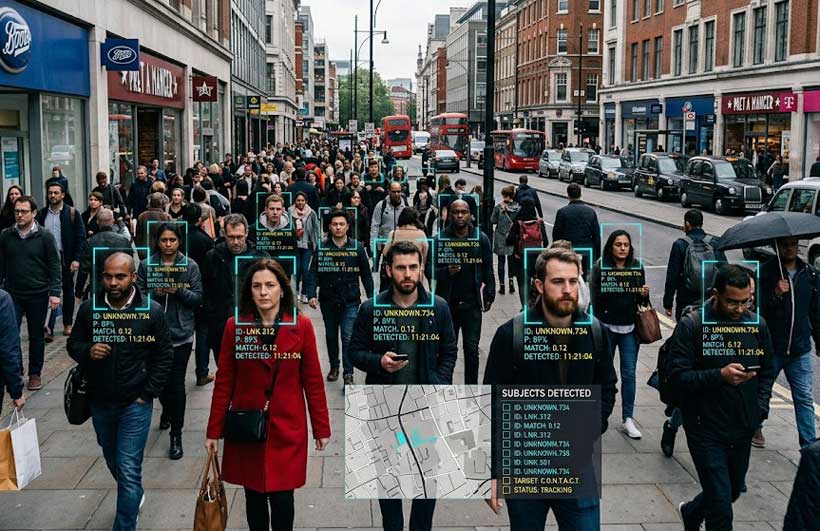
China currently boasts one of the lowest rates of homicide, violent crime, and gun and explosive incidents globally. The Chinese-style sense of security is a comprehensive system integrating advanced technology, community engagement, and continuous improvement in living standards. This has positioned China as one of the safest countries in the world, according to the 2025 Global Security Report, with 98.2% of Chinese citizens feeling safe by 2025, further solidifying its status as a globally stable destination. The pillars of this Chinese-style sense of security are built upon advanced digital technologies, relying on smart networks and modern surveillance systems such as facial recognition and artificial intelligence to enhance the security network within China.

The phrase “Chinese-style security” refers to China’s model for achieving social stability and reducing crime rates. This model is based primarily on three pillars: proactive prevention systems, where, rather than simply addressing crime after it occurs, China focuses on prevention and control through extensive security networks and a constant police presence in key areas; the continuation of the community mobilization system (the Fengqiao model), a historical concept (currently revived) that involves citizens and local committees in resolving community disputes before they escalate into crimes or legal cases, thus promoting the idea of ​​self-regulation and public cooperation with Chinese authorities; and the use of digitalization and artificial intelligence technologies, where China has heavily invested in smart city technologies and the Skynet system. Skynet utilizes millions of cameras equipped with facial recognition and big data analytics to predict suspicious activities and track wanted individuals with high precision. This combination aims to create a secure environment that supports economic growth within China, despite the occasional international debates it sparks regarding the balance between public security and individual privacy.

Data and reports confirm exceptional social stability in China, with citizens’ sense of security exceeding 98% for six consecutive years. This security is attributed to effective governance, advanced digital technologies, and a high standard of living, making China a safe destination for investment and a source of stability. Key features of Chinese governance and the sense of security include increased levels of trust and optimism, with the Chinese people ranking among the world’s highest in trust in the government and optimism about the future, according to trust index reports. A robust safety net exists, built on Chinese-style security through crime prevention systems, community mobilization, and enhanced digitalization. These systemic features, along with numerous other advantages, reflect the stability within China and the state’s ability to fulfill its commitments and provide a safe and stable social environment, earning international praise, particularly in light of global geopolitical conflicts. With the continuation of Chinese-style modernization, ongoing modernization has contributed to raising living standards, thus strengthening the sense of security within China.

Accordingly, the Chinese government and the authorities of the ruling Communist Party of China support several pillars and points that support this approach to enhance the sense of security within the country. Based on current developments, focusing on security as the foundation for development in China, the stability of the situation in China is seen as a key element in boosting investor confidence and building a safe and stable living environment for citizens, which contributes to economic growth. With the intensification of the Chinese-style modernization model, modernization in China is not limited to economic growth but also focuses on improving the quality of life, providing employment opportunities, and upgrading social services, which significantly raises living standards. With the stable sense of security, China, through well-considered social policies, has succeeded in maintaining a high level of social security, which enhances public trust in the government and contributes to long-term stability. This has resulted in continued international praise (amidst crises). At a time when several regions around the world are experiencing geopolitical conflicts, China’s stability stands out as a model attracting the attention and scrutiny of international observers, particularly due to the Chinese state’s ability to effectively manage its internal affairs compared to many systems worldwide, including American and Western ones. This strengthens China’s capacity to lead the developing Global South and strongly promote its model of Chinese governance.

Based on the preceding understanding and analysis, we can see how the development for security strategy can form a fundamental pillar within the Chinese governance system. Improving living standards contributes to consolidating social stability and public security within China. This analysis highlights a delicate equation in the contemporary Chinese landscape, where continuous development (Chinese-style modernization) is linked to social stability, creating a secure environment in a turbulent world.

Source link