





The 2026 FIFA World Cup has wrapped, but some Angelenos who rented their homes to fans are still tallying up profits from a month of soccer frenzy in the city.
Driven by projections of massive tourism and a $750 first-time host incentive from Airbnb, many local property owners expected a sizable payout. While some savvy owners were able to cash in big during the tournament, others experienced only a moderate bump.
But something they all walked away with was some extra cash in their pockets and a blueprint for the LA28 Olympics.
We spoke with three L.A. Airbnb hosts to find out what they earned through their rentals during the World Cup, the luxurious renovations and amenities that helped their properties stand out and what advice they’d give others to prepare for the next global gold rush.
Wellness retreat-inspired house in Inglewood, 3 bedrooms
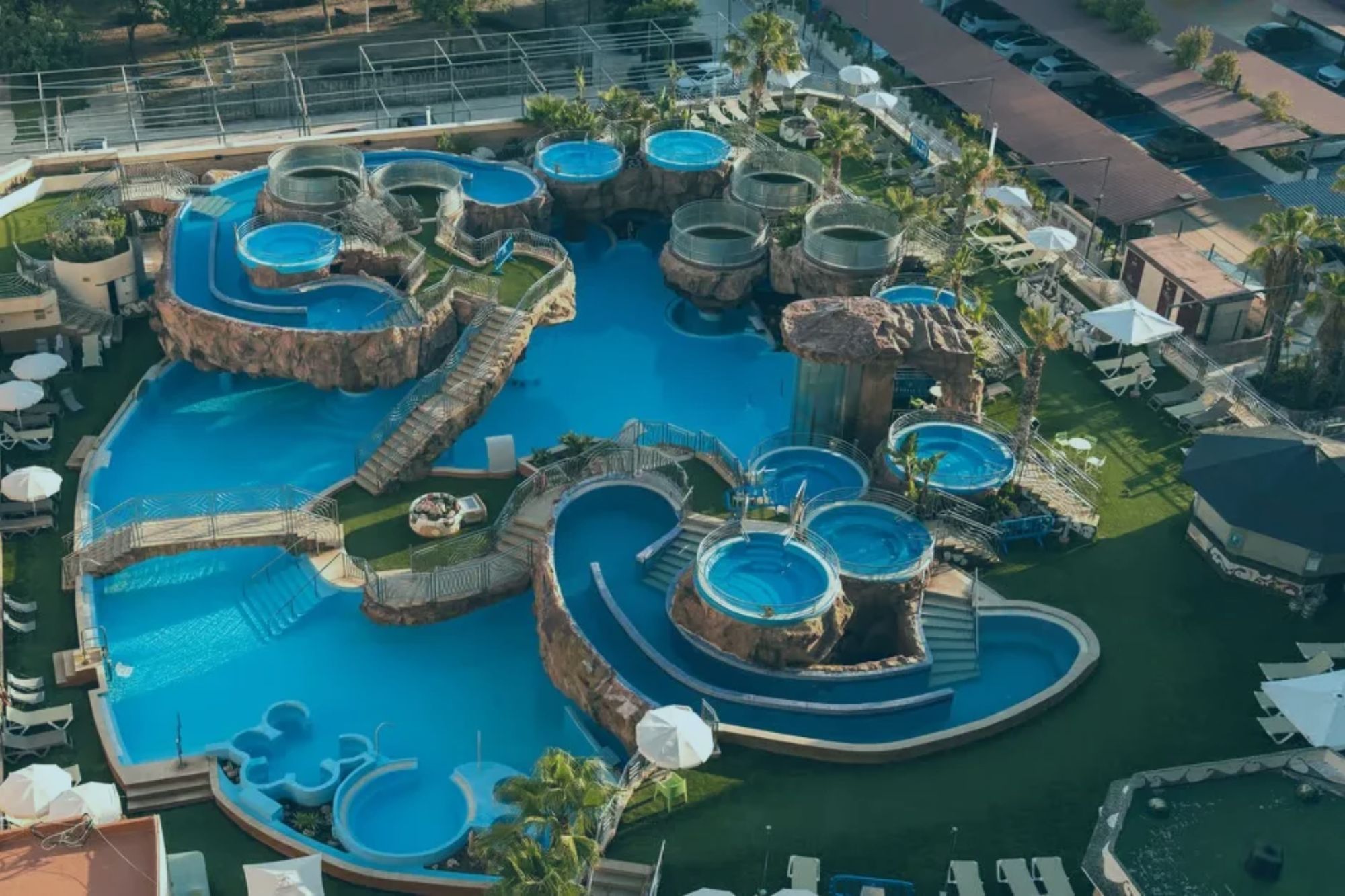
Lia Pilla turned one of her Airbnb properties into what she calls the Pink Palms Retreat. The Inglewood home features an infrared sauna, a large hot tub and more.
Price during the World Cup: During opening weekend, I got $2,730 for two nights. Of course, I have to pay a cleaning fee, but just in two nights, I’m a few hundred short of paying my mortgage, so that was really cool. For the following games, I maybe got like $400 to $500 a night. Then for the final weekend, I got like $3,400 for four nights, so it went back up.
What updates did you make, if any, to prepare? Last July, I did a full remodel of the house and turned it into what I call Pink Palms Spa Retreat. It’s all pink on the outside. It has an infrared sauna and a huge hot tub that can fit up to like 20 people. It has a large dining table with a firepit on top of the table, lush privacy trees and a custom gym.
Were you surprised with how things played out? I was expecting to make a couple hundred thousand off this World Cup, I’m not gonna lie, but I didn’t so I was like “OK. That kind of sucks.” I think L.A. got a little bit [cheated] with the teams we had. We had Team USA, which was cool, but we didn’t have any of the the big name teams like Argentina or France or Spain, so I think that’s one reason why the prices weren’t as high. I also think the political climate has made a big impact. Some people are scared to come to the U.S. or they aren’t allowed to come. But I’m happy with what I did get.
What’s one thing you’re thinking about doing with the money you made? I always invest back into the business. I want to touch up everything at all of my properties, so it continues to look like the pictures because your reviews are so important. I also have a Europe vacation planned.
Any advice for hosts preparing for the Olympics? Do your research on the market. Think “If I’m traveling to Los Angeles, what would I want?” because it’s also about the experience you create. Know what amenities people like. If you’re starting out or you’re already a host, I highly recommend having software in place for property management, cleaning and pricing.
‘Hillside hideaway’ in Woodland Hills, 2 bedrooms
Matthew Motamedi was surprised to see an influx of bookings on his Woodland Hills hideaway, which is roughly 30 miles away from SoFi Stadium.
Pre-World Cup rate: In late spring, we were charging $250-$280 per night on average.
Price during the World Cup: It was around $300, which is normal during July for us. We undercut the hotels and some of the other listings in our area by $100.
What updates did you make, if any, to prepare? We added a super crazy, comfy couch made of fake fur and people love it. That’s one of the important things about an Airbnb. There needs to be a really good hangout spot, so the couch needs to be super comfortable, and if the couch isn’t comfortable, no one wants to stay there.
Were you surprised with how things played out? Our property was so far away from SoFi Stadium (nearly 30 miles) so I thought it was going to be a non-event for us. It was supposed to be like that, but it definitely affected us because I started getting a lot of European and Spanish-speaking tenants.
What’s one thing you’re thinking about doing with the money you made? We’re definitely putting the extra money back into the property because we’re not there yet. There’s so much we want to do. During the World Cup, I was able to upgrade the AC unit, added a smart thermostat and invested in landscaping, which we want to do more of. We want to invest in the curb appeal and add more outdoor furniture. Maybe a movie room. We also want to get an auto pen so we can write handwritten cards for guests because it’s kind of hard to write perfect handwriting in different languages and in cursive. [Laughs] You can pick a font and it holds a ballpoint pen. To have that would be really cool.
Any advice for hosts preparing for the Olympics? You have to curate the experience and get more involved. If you can’t get involved, you need a co-host. Find a cousin, a sister, a brother, a friend, someone you trust with good taste to help you. Also, don’t just put up random paintings. Make it so that people want to move there. A lot of my guests are like “I wish I could live here.” You need a hotel scent and to provide laundry supplies. Ask your guests about their allergies and snack preferences then put together a snack basket. They freak out when they see that. Have a comfy couch, add plants like the fiddle-leaf fig (it looks bougie and you only have to water it once a week) and get a good cleaner. With that, you’re going to do really well.
Modern suite with luxurious amenities in Westchester, 1 bedroom, 2 guests
How long have you been a host? I started my [rental management] business about 10 years ago, but have been a full-time host for roughly eight years.
Pre-World Cup rate: About $195 a night.
Price during the World Cup: $234, which is about a 15% increase so a little bump. It wasn’t anything crazy.
Were you surprised with how things played out? I probably was expecting a little bit more because it was such a huge event. What I was a little surprised by though was how long the stays were. I was thinking that people were going to come in for a few days, but most of my stays were for a week or longer. We were pretty booked. I think we only had a couple days in between bookings.
What updates did you make, if any, to prepare? We bought the home a year ago and we’ve been getting it ready for the last four months. I added a private hot tub and an Eight Sleep Pod, which is a really fancy mattress topper that heats and cools your mattress. I tried to go all out with my amenities. We’ve got all the fancy soaps, deluxe robes and we added a washer and dryer. I always think about what I’d want when I’m traveling. I always put Q-tips, cotton balls and makeup wipes. For the kitchen, just having all the little stuff you need there. A wine bottle opener is No. 1.
What’s one thing you’re thinking about doing with the money you made? Paying my property taxes and my mortgage. [Laughs] Honestly, we’re putting it toward our living expenses and being able to afford our house. It’s been a huge help because everything is so high.
Any advice for hosts preparing for the Olympics? Really think about what you would want and put yourself in the shoes of the traveler. I always recommend people to try out your space before they rent it out. That will help you realize things like this faucet doesn’t get hot water or I forgot to put an ice cream scoop in the kitchen. You don’t want your guest to be a guinea pig.
To put it simply, the testing could help to combat micro-dosing. This is where tiny amounts of performance-enhancing drugs are ingested but are in and out of the rider’s system within a few hours, leaving only a short window for detection.
If a rider knows they have a seven-hour window where they are not normally tested, some believe it could be an opportunity to micro-dose.
Vaughters said: “If you introduce a low enough dose of a peptide hormone, the clearance time can be four hours. If you take it at 11pm, it’ll be out of the system at 3am, so it makes a difference.”
He added testing technology is evolving quickly but, where riders and teams push the boundaries, doping is always going to be a risk factor.
On night testing, he added: “It sucks if it happened all the time – but it’s happening once or twice a year. Listen, it’s a great deterrent. One night of lost sleep; lose a little sleep – gain a lot of credibility.”
Generally, the days when riders boosted blood values using first EPO and then moved on to blood transfusions (which is why the night-time hotel room is such a taboo backdrop in cycling) are thought to have largely gone from the top of the sport.
Since the 1990s and decade from 2000, when the disgraced once seven-time winner Armstrong tricked the world into thinking he was clean when dominating the sport, the athlete biological passport (ABP) used by Wada is sophisticated enough to pick up seemingly all inconsistencies recorded.
There have been cyclists banned recently but no high-profile names.
The sport’s lower-tiers frequently has seen riders busted for being tempted back to EPO and human growth hormones.
The ITA told BBC Sport: “Due consideration has been given to minimise as much as possible the impact testing activities have on riders.
“However, the ITA, on behalf of the UCI, has the responsibility to ensure the effectiveness of the cycling anti-doping program and the integrity of cycling races.
“As such, effective testing must, in limited and justified circumstances, be capable to occur outside standard daytime hours.”
The US military’s 11th consecutive night of strikes extended to Iranian provinces not previously hit, marking a broadening of the campaign. As Al Jazeera’s Tohid Asadi reports from Tehran, rising civilian casualties and mounting economic pressures are fueling questions about whether diplomacy is possible.
My theme park day begins with gunfire. A jailbreak! But shortly after, I‘m attending a wedding. Next I’m on a mission, helping the local postmaster justify his uncontrollable desire to open everyone’s packages, and trying to find a way to do so without telling a lie.
This is just another Sunday morning at Knott’s Berry Farm’s “Ghost Town Alive!,” a now-10-year-old interactive show — live-action role-playing game is more accurate — that has become the best summer offering at any theme park, and not just in SoCal but in America. There’s a daily story, including three editions of a single-page newsletter that are updated every day. There’s also lots of improv. Over the years, I’ve found myself on the prowl for mysterious elixirs, playing matchmaker, collaborating on group stories in a schoolhouse, doing police work, participating in a mustache contest or flashing a press badge.
“Ghost Town Alive!” ultimately is the promise of theme parks fulfilled, that is that we can enter a fantasy world and play as cartoonish, or maybe even idealized, versions of ourselves.
You’re reading Mr. Todd’s Wild Ride newsletter
Todd Martens’ newsletter delivers news and commentary on the past, present and future of theme parks, right from the theme park capital of the world — Southern California.
By continuing, you agree to our Terms of Service, which include arbitration and a class action waiver. You agree that we and our third-party vendors may collect and use your information, including through cookies, pixels and similar technologies, for the purposes set forth in our Privacy Policy such as personalizing your experience and ads.
It’s a rarity, an event with 46 actors — about 30 of whom appear each afternoon — who lead guests through scavenger hunts, puzzles or just conversations about life in Calico, the fictional town of Knott’s Berry Farm’s Ghost Town area. The cast ranges from those just out of college to those in their mid-70s, and no character is ever played by more than one actor. This gives Calico a sense of life, an illusion that it’s actually populated, but also allows actors to fully develop a personality and let their characters evolve.
Before creative director Andy Crocker was working on “Ghost Town Alive!,” she was visiting it as a fan. Crocker, an experiential designer who has worked on projects for companies as wide-ranging as the Los Angeles Public Library and Walt Disney Imagineering, specializes in particular on guest-to-actor interactions.
“Ghost Town Alive!” unfolds like a live-action role-playing game. But expect plenty of silliness.
(Allen J. Schaben / Los Angeles Times)
“I will never forget the first time I saw it as a guest,” Crocker tells me. “I came with my husband, and we did not bring our kid. We walked in, and I saw a little girl in a pink cowboy hat with a painted-on mustache following an outlaw off to jail. That outlaw was giving a gritty HBO performance. Wasn’t patronizing. Wasn’t talking down. He was giving her a hero moment, and I burst into tears. I didn’t know this was possible to do on this scale with such an institution. The empowerment that performer gave to that guest, I will never forget.”
To make a theme park feel personal is no easy feat. In fact, designers have long been trying to solve this problem, whether by creating interactive attractions that feel responsive to the guest, or short-lived experiments such as the late but great Star Wars: Galactic Starcruiser, colloquially known as the Star Wars hotel.
Crocker says others have asked for the “secret sauce” to “Ghost Town Alive!” They’ve tried — and are trying — but she’s not so sure the magic can be replicated. One, Knott’s is blessed with a real, 100-year-old Ghost Town. That allowed for the investment to be solely in the cast and performance rather than infrastructure. And yet actors, of course, aren’t cheap.
A single-page newspaper is printed three times a day during “Ghost Town Alive!”
(Todd Martens / Los Angeles Times)
“The amount of people that we have, that’s tough for a lot of places,” Crocker says. “They try to do it with less, and it doesn’t quite work.”
Speaking on a panel hosted by trade group the Themed Entertainment Assn., Jeff Tucker, Knott’s Berry Farm’s show writer, says one early mistake Knott’s made was thinking everyone who works in Ghost Town could partake. That meant, for instance, taping dialogue cues to cash registers in the saloon in the hopes that bartenders could become a character. The concept failed. “It’s a logistical nightmare,” he says. The lesson: Hire actors to perform. Let bartenders be bartenders and retail staff be retail staff.
Another reason Crocker tells me “Ghost Town Alive!” is so rare, and will remain so: It doesn’t rely on intellectual property, or a known franchise, which has become the lifeblood of modern theme parks. “With things that are heavy IP, it’s very tricky to control your IP and to allow for real play, guest agency, and, honestly, artist agency,” she says.
Evan Battle, center, who plays Deputy Chester Davenport, at Knott’s Berry Farm’s “Ghost Town Alive!” in 2024. The interactive theatrical experience allows guests to mingle with about 30 actors.
(Allen J. Schaben / Los Angeles Times)
That’s important, as “Ghost Town Alive!” can shift with the whims of the guest. There’s a core storyline this year. A rich, Beverly Hills-like family is revealed to be the true owners of Calico, and how the residents respond is the key narrative of the day. But there are multiple tales to uncover, including hidden factions (check out the Calico Historical Society) and who is taking who to the 4 p.m. hoedown, which ends each daily game of “Ghost Town Alive!”
But Crocker has also seen it get rather heartwarming.
“My mom came to see it,” she says. “She has some health concerns. There was a character who was in a crazy mix-’em-up and said he would not make it to the hoedown and that this would be his last day on Earth. This character and my mom ended up having this conversation about how if you know you don’t have a lot of time left, what would you do with your time? I was surprised by that pivot.”
It helps, Crocker says, that she’s noticed one commonality among the “Ghost Town Alive!” staff. They play — or were weaned on — tabletop role-playing games such as “Dungeons & Dragons,” which at their best allow for an anything-goes approach designed to follow the direction of the players rather than a strict script.
Tucker on the panel said there was one rule the crew lives by that defines the success of “Ghost Town Alive!”: “It’s not real,” he said. “We can do whatever we want.”
This week in SoCal theme parks
Not yet ready for prime time, Knott’s Berry Farm has delayed the opening of Montezooma: The Forbidden Fortress.
(Todd Martens / Los Angeles Times)
Montezooma is not yet zooming. Knott’s Berry Farm initially intended to launch its reimagined Montezooma’s Revenge, now known as Montezooma: The Forbidden Fortress, this week. Late Thursday, the park delayed its public unveiling, with a spokesperson citing additional fine-tuning that surfaced during its final days of testing. The delay is not expected to be a prolonged one. “We appreciate everyone’s understanding and look forward to welcoming media and guests in the coming days when we can showcase the attraction exactly as intended,” read a statement from the park.
A monthlong Lego celebration. Carlsbad’s Legoland likes to describe its Lego Festival, which started Monday and runs through Aug. 30, as a child’s first fest. Expect lots of characters and an assortment of play-focused areas. One is dedicated to music, another is a free-run creative zone and a third is a Lego garden designed to soothe. New this year is a game-heavy center dedicated to the Pokémon franchise, as well as a challenge-filled F1 installation.
It’s now more expensive to eat at Disneyland. Price hikes, unfortunately, are a yearly-occurrence at the Disneyland Resort, and this summer, like every summer, hundreds of food items have ever-so-slightly increased in cost. Most are in the range of a dollar or so — give or take a quarter or two — but expect to pay $7, up from $6.50, for a scoop of popcorn. I admittedly do not keep a database of Disneyland food prices, but sites like Mickey Visit or Theme Park IQ have tracked the most egregious price bumps. Looking at their data, you may want to think twice about dining at Disneyland’s Rancho del Zocalo Restaurante, where prices have been increasing even as portions over the years have been declining.
Where is Fast & Furious: Hollywood Drift? We’re now in midsummer, and Universal Studios Hollywood’s Fast & Furious: Hollywood Drift still does not have an official opening date. While sources familiar with the coaster’s operations point to routine mechanical issues that have arisen during its test and adjustment phase, one thing is certain: It’s not delayed due to noise complaints from neighbors, as rumors suggested last week. A Universal spokesperson pushed back on the notion that the coaster is delayed, stating it would still open this summer, which lasts into late September.
The best thing I ate at the parks
The hearty cottage pie from Downtown Disney’s Gordon Ramsay at the Carnaby.
(Todd Martens / Los Angeles Times)
I’ve been eagerly anticipating the opening of Gordon Ramsay at the Carnaby at the Disneyland Resort’s Downtown Disney, the latest concept in which the celebrity chef has agreed to lend his name. This one is an upscale gastropub, and while I’ll leave the full cuisine analysis to the professional food writers, as a parkgoer I do believe it fills a void in Disneyland’s shopping and entertainment district, bringing the area an adult-focused space with upscale (read: expensive) twists on old favorites like fish and chips ($33) and cottage pie ($38). And after reading breathless press release-like articles and posts from my theme park peers (“utter perfection,” proclaimed one) I couldn’t have been more excited to dine there this weekend.
Let’s start with the vibe, which I found to be rather confused. I was seated in the tiny, uncomfortable indoor bar, a place that felt like an afterthought and leaned airport terminal drinking hole, as it’s situated at the top of a stairwell and serves primarily as a thoroughfare into the dining hall. That a pub, especially one with an extensive cocktail menu (I did love my $22 cotton candy-infused Old Fashioned) would treat its introductory bar as a throwaway rather than a centerpiece of the experience was disappointing (an outdoor bar is significantly more enticing). The core dining space leans contemporary more than a traditional, wood-infused pub, feeling cafe-like with its ‘60s rock posters and framed portraits of those in mod outfits. More theme-ing would have been welcome, as I read it as slightly cold and corporate rather than homey and intimate. Instead of, say Pasadena’s Lucky Baldwins, this felt like a nice break room at a major record label.
But my dish was delightful. I had my heart set on the cottage pie, this one infused with a hearty portion of short rib. I probably should have taken leftovers, because it’s heavy, but in the best way possible. The potato-rich top felt creamy and buttery, while the meat was equally soft. The whole thing felt invitingly plush. I walked away mixed. No complaints on my entrée, and I’m eager to come back and try the fish and chips, and yes, that viral sticky toffee pudding dessert, but longing for a more welcoming atmosphere, especially at this price point.
Tell us your stories. Ask us your questions.
Have a theme park tale to share? Whether it was a good day or less-than-perfect day, I would love to hear about it. Have a question? A tip? A fun photo from the parks to share? Email me at todd.martens@latimes.com. I may feature your note in an upcoming newsletter.
Ride on,
Todd Martens
P.S.
Drowned Out Productions’ “The Shoebox Museum” explores love and loss.
(Drowned Out Productions. )
There’s a show running Saturday and Sunday in Los Angeles that I believe theme park fans should make time for. “The Shoebox Museum,” at North Hollywood’s After Hours theater, is a walk-through immersive experience at its most thoughtful. It’s short, at around 30 minutes, but it stayed with me for hours after it concluded.
“The Shoebox Museum,” from Drowned Out Productions’ Jackson Mancuso, who does theme park design by day, is a mediation on heartbreak, asking what we want to leave behind, and take with us, as we explore our grief. It’s meticulously designed, as we follow light cues through byzantine rooms filled with everyday ephemera — the type of stuff that only holds meaning to those who were in love. It’s a show about how an once broken heart, even mended, still finds ways to haunt us.
Traders work Monday on the floor of the New York Stock Exchange on Wall Street in New York City. Oil prices fluctuated in response to the latest bout of military exchanges between the U.S. and Iran. Later Monday, the United States attacked Iranian sites for the 10th day in a row. Photo by John Angelillo/UPI | License Photo
July 20 (UPI) — The United States launched strikes on Iran for the 10th night in a row Monday as U.S. President Donald Trump said Iran would pay for the deaths of three U.S. service members.
U.S. Central Command posted on social media that a new round of strikes had started, while Iranian media reported explosions heard in several locations, including port areas of Chabahar and Konorak on the southeast coast, Bandar Abbas and Qeshm.
Trump said in a social media post earlier Monday that Iran would pay “many times over” for the deaths of U.S. service members and that he’s passed that directive to Secretary of Defense Pete Hegseth.
Earlier in the day, the Department of Defense identified two U.S. soldiers who were killed Friday by an Iranian strike in Jordan. Another soldier was killed Saturday in Iraq but has not yet been identified, and another is missing.
The Pentagon said Monday that nearly 100 U.S. service members have been injured over the last two weeks. Spokesman Sean Parnellsaid in a social media post that 96% have returned to duty.
“They are determined to get back in the fight,” Parnell wrote. “The vast majority of injuries experienced were minor concussions.”
Parnell’s statement occurred after reports from both the New York Times and CNN about how the Pentagon has reported injuries to U.S. troops in the Iran war. The Times reported that the Defense Department withheld reports on dozens of injuries to troops. CNN said the U.S. military has been slow to report on injuries, partly due to a military website with a delay in updates.
Iran continued to target countries that host U.S. military bases. The Kuwait military said it was intercepting “hostile” missiles and drones Monday afternoon, part of three rounds of Iranian attacks that day.
“The General Staff of the Kuwaiti Armed Forces confirms that any explosions that may be heard are the result of air defense systems intercepting hostile targets,” the military said in a statement.
Jordan said that it intercepted incoming missiles from Iran on Monday as well. The armed forces said the missiles caused no casualties or damage.
Also Monday, the UK Maritime Trade Operations center, which monitors shipping in the Persian Gulf, northern Indian Ocean and Red Sea, reported that a tanker was struck by a projectile in the Strait of Hormuz.
Washington vows revenge for US military casualties, while Iran claims attacks on US sites across the region.
Published On 21 Jul 202621 Jul 2026
The United States is carrying out its 10th consecutive night of attacks against Iran, with Iranian media reporting explosions in Sirik, Bandar Abbas, Qeshm Island, and Isfahan.
US Central Command (CENTCOM) announced the operation on Monday evening, claiming that the strikes are “designed to further degrade Iranian military capabilities used to attack commercial shipping in the Strait of Hormuz”.
The Islamic Revolutionary Guard Corps (IRGC) issued a statement claiming to have retaliated by launching ground-to-ground missiles at “US HIMARS missile systems” stationed at Camp Arifjan in Kuwait.
Recommended Stories
list of 3 itemsend of list
Two Greek-owned oil tankers in the Strait of Hormuz were struck earlier on Monday, while the United Kingdom Maritime Trade Operations, which monitors attacks on ships, reports that another tanker has been hit off the coast of Oman’s port city of Limah.
Shortly before the night’s bombing began, US President Donald Trump took to social media to warn that Iranian attacks on US military personnel would be paid back “many times over”. On Friday, two US soldiers were killed, and a third was reported missing when an Iranian missile struck a military site in Jordan, while another US service member was killed in northern Iraq.
Trump also reiterated earlier warnings that continued Iranian attacks on commercial vessels in the Strait of Hormuz would be met with a stronger response.
Meanwhile, Yemen’s pro-Iranian Houthis have declared a blockade on Saudi Arabia, escalating tensions and sparking fears that the Yemeni conflict, which had been relatively quiet for four years, may be about to reignite and threaten shipping in the Red Sea.
Last night, Spain defeated Argentina to win the World Cup. Ordinarily, for those of us with no national connection to either country, the choice of whom to support would have been gloriously trivial. We might have chosen the team that played more beautiful football, the player we most admired or simply the side whose colours we preferred.
But these are no ordinary times.
Gaza and Palestine have changed the way many of us see the world. It has become a moral prism, refracting our judgments not only about governments and political leaders, but about institutions, universities, media, corporations and public figures. We have watched people and institutions we once respected avert their eyes from the destruction of a people. We have watched others discover elaborate vocabularies of qualification and equivocation when confronted with horrors that, in another place and against another people, they would have condemned without hesitation.
And we have remembered those who refused to look away.
That is why, last night, I was Spanish.
Of course, a football team is not a government. Spanish footballers are not responsible for the policies of Spanish Prime Minister Pedro Sánchez, any more than Lionel Messi and his teammates are responsible for the politics of Argentinian President Javier Milei.
But sport has never existed in the hermetically sealed apolitical world we sometimes pretend it inhabits. We bring ourselves to sport. We bring our histories, our identities, our sympathies and, inevitably, our moral judgements. We decide whom we want to win for reasons that often have very little to do with formations and statistics.
And so, for many people of conscience, Spain has come to represent something larger.
At a moment when much of the Western political establishment has twisted itself into moral and linguistic contortions over Gaza, Spain has stood apart. Sánchez and his government have been willing to speak with a clarity conspicuously absent from many of Spain’s Western allies. Spain recognised the State of Palestine. Sánchez has openly used the word genocide to describe what is being done in Gaza. His government has moved to entrench an arms embargo against Israel.
One need not agree with every policy of the Spanish government to recognise the significance of that position. Moral courage is measured precisely when taking a position carries a cost.
There was also something deeply moving about seeing Lamine Yamal, one of the brightest young stars in world football, waving the Palestinian flag during Barcelona’s celebrations after winning La Liga.
It was a small gesture in the vast landscape of Palestinian suffering. But symbols matter, particularly when so many powerful institutions have worked so hard to make Palestine invisible.
There was Yamal, at the summit of sporting success, surrounded by celebration, holding up the flag of a people whose suffering the world has been asked repeatedly to forget. And last night he wore the colours of Spain in a World Cup final and emerged a world champion.
On the other side stood Argentina, a magnificent footballing nation led by perhaps the greatest footballer of his generation. And here, too, Gaza intruded upon the emotions with which some of us watched. An image of Lionel Messi at the Western Wall in occupied East Jerusalem has circulated widely. It dates back to Barcelona’s 2013 visit to Israel and the Occupied Palestinian Territory, years before the present catastrophe. But images have lives beyond the circumstances in which they were created, and Gaza has transformed the way many of us see them.
FC Barcelona football player Lionel Messi puts a paper with wishes in a crack in the Western Wall, Judaism’s holiest site, in occupied East Jerusalem on August 4, 2013 [Oliver Weiken/AFP]
The contrast with Lamine Yamal is striking. There is the image of Messi at the Western Wall. And there is the image of Yamal, at one of the happiest moments of his young career, waving the Palestinian flag. Different moments, different circumstances, different intentions.
But symbols matter. For those whose view of the world has been transformed by Gaza, it is impossible not to feel the emotional force of the contrast.
And beyond Messi stands the politics of Javier Milei. Argentina’s president has made his allegiances clear. He has embraced US President Donald Trump and declared himself “the most Zionist president in the world” at precisely the historical moment when Palestinians in Gaza have endured unimaginable destruction.
Argentina’s footballers are not responsible for Milei, and its people cannot be reduced to their president. But neither can those politics be entirely erased from the emotions with which the rest of us watch.
Then there was another recent vote, far removed from Gaza but revealing in its own way. In March, the United Nations General Assembly adopted a landmark resolution confronting the historical wrongs of the transatlantic trafficking and enslavement of Africans and calling for reparatory justice. One hundred and twenty-three countries voted in favour. Fifty-two abstained. Only three countries in the entire world voted against it: the United States, Israel and Argentina.
There is something extraordinary about that alignment. On an issue concerning one of humanity’s greatest historical crimes and the continuing demand for reparatory justice, Trump’s America, Benjamin Netanyahu’s Israel and Milei’s Argentina found themselves standing together, virtually alone.
It is difficult for those of us who increasingly view the world through the prism of Gaza not to notice the pattern. The issues are different, the histories are different and the legal questions are different. But the moral instinct seems eerily familiar: when the victims of historical injustice demand recognition, accountability and redress, the same governments so often seem to find reasons to stand on the other side.
So, yes, last night I watched a football match.
I admired Messi because greatness remains greatness. I marvelled at the extraordinary history of Argentine football.
But I wanted Spain to win.
And Spain won.
Perhaps that says something about what Gaza has done to us. It has rearranged our moral geography. Countries that once felt distant can suddenly feel close because they spoke when others were silent. Governments we barely thought about can earn our respect because, at a moment of profound moral testing, they refused to avert their gaze.
A mural painted by Palestinian artists depicts football star Lamine Yamal, who waved a Palestinian flag during Barcelona’s LaLiga victory parade, on the rubble of buildings destroyed by the Israeli army in Al Shati refugee camp in Gaza City on May 13, 2026 [Ebrahim Hajjaj/Reuters]
And sometimes that moral geography spills into the most unexpected places.
Last night it spilled onto a football pitch.
Millions celebrated Spain’s victory because they love Spanish football, because they admire Lamine Yamal or simply because their team had won the greatest prize in the sport.
But many also celebrated out of solidarity with the Palestinian people.
A World Cup cannot deliver justice to Palestine. Spain’s victory will not feed a hungry child in Gaza, rebuild a destroyed home or bring back the dead. We should never confuse symbolism with justice.
But human beings live partly through symbols. And last night, for some of us, the red shirt of Spain carried a meaning it was never designed to bear.
When Lamine Yamal and his teammates lifted the World Cup, I celebrated with them.
Not because football can change what has happened in Gaza.
But because Gaza has changed the way I watch even a game of football.
The views expressed in this article are the author’s own and do not necessarily reflect Al Jazeera’s editorial stance.
The US military carried out its ninth consecutive night of strikes on Iran, targeting military command centres, air defence systems and coastal surveillance facilities, according to CENTCOM. The US military said it hit maritime capabilities, missile and drone launch sites, and communications networks.
Spanish fans spent the night partying in Madrid after their team defeated Argentina 1-0 in the final of the World Cup. Al Jazeera’s Natacha Butler reports from the heart of the celebrations in Madrid.
Iranian media report blasts in cities in the far north and far south, including Tabriz and Chabahar.
Published On 20 Jul 202620 Jul 2026
The United States has launched strikes on Iran for a ninth consecutive night, with Iranian media reporting explosions in multiple cities, including Sirik, Jask, Tabriz and Chabahar.
The attacks on Monday came as the US military announced the death of a third soldier in recent days and as a month-old ceasefire agreement between Tehran and Washington unravelled amid a struggle for control of the Strait of Hormuz.
Recommended Stories
list of 4 itemsend of list
In a statement, the US military said the latest strikes were aimed at “degrading Iranian military capabilities used to attack commercial vessels and mariners transiting the Strait of Hormuz”.
Iran’s IRIB state broadcaster said several explosions were heard in the port cities of Mahshahr and Imam Khomeini, in the southwestern Khuzestan province. It reported further explosions near the cities of Sirik and Jask in the Hormozgan province on Iran’s southern coast, as well as near the city of Khvormuj in the Bushehr province.
Three explosions were also heard near the city of Tabriz in northwestern Iran, IRIB added, while air defences were activated in the southeastern cities of Konarak and Chabahar in the Sistan and Baluchestan province, according to the semi-official Fars news agency.
Tehran promises retaliation
Al Jazeera’s Tohid Asadi, reporting from the Iranian capital, Tehran, said the latest US strikes had again targeted Iran’s southern coast. He added that the explosions in Tabriz, if confirmed, mark the first time the northwestern city has come under attack since the recent escalation began.
“We are having yet another night of exchange of fire,” he said. “The Iranian side is also talking about retaliatory strikes, with Iranian media reporting a new wave of missiles from the province of Lorestan targeting US military assets across the region.”
Earlier, Kuwait reported confronting “hostile drone threats”, while air raid sirens sounded in Bahrain for a second time on Sunday. Sirens also sounded in Jordan, where the military said it shot down three Iranian missiles. Kuwait’s government said a desalination plant had been attacked for the second day running on Sunday, causing a fire, in what it said was a direct strike on vital civilian infrastructure.
Both Iran and the US have also taken aim at shipping traffic, with Washington saying it is enforcing a naval blockade on Iranian ports, and Tehran saying it targets vessels violating its rules on navigating the Strait of Hormuz.
Iran’s Islamic Revolutionary Guard Corps (IRGC) said on Sunday that four vessels had attempted to transit the strait via an “unsafe route” with US backing after ignoring IRGC warnings. It said two had abandoned the attempt, while the other two were involved in an “accident”. It did not elaborate.
US Central Command (CENTCOM) said it has redirected six commercial vessels and disabled another ship to ensure “full compliance” with its blockade.
Earlier, CENTCOM also said that an American soldier was killed in northern Iraq on Saturday during a “controlled detonation of unexploded ordnance” from a downed Iranian drone. It added that “unidentified remains” had been found at the site of a deadly Iranian attack in Jordan on Friday and that “an examination process to verify the remains is ongoing”.
Two US soldiers died in Friday’s attack, while a third was reported missing in action.
The latest deaths bring the number of US service members killed since the war began to 17, while more than 420 have been wounded.
The conflict, which began when the US and Israel attacked Iran on February 28, has killed thousands of people, mostly in Iran and Lebanon, and led to major disruptions to energy supplies and fears over global inflation.
US Central Command says new strikes on Iran are designed to further degrade Iran’s ability to choke the Strait of Hormuz.
By Al Jazeera Staff, AP and Reuters
Published On 19 Jul 202619 Jul 2026
The United States military said Sunday that it launched new strikes on Iran to “swiftly punish” the country’s Islamic Revolutionary Guard Corps (IRGC) for an attack that killed two American service members and left one missing and four requiring hospitalisation.
An area near Sirik in Iran’s Hormozgan province and Qeshm Island have been hit on the eighth consecutive night of US air strikes on Iran, according to Iran’s semi-official Mehr and Tasnim news agencies.
Recommended Stories
list of 3 itemsend of list
The attacks happened early on Sunday, hitting Sirik at 1:30am local time (22:00 GMT, Saturday), and Qeshm Island at about 3:38am (00:08 GMT, Sunday) and again at 6:10am local time (0240 GMT) according to Iranian reports.
Tasnim also said the US military targeted a location near Shadegan in Iran’s Khuzestan province at 5:55am (02:25GMT Sunday).
The reports said there were no casualties and that residential and commercial infrastructure was not damaged in the attacks.
In a post on X, US Central Command (CENTCOM) said the US military launched new strikes “designed to further degrade Iran’s ability to threaten commercial shipping in the Strait of Hormuz”.
The post added that strikes were also in retaliation for Iranian ballistic missile and drone attacks on a US base in Jordan that killed the two US service members on Friday.
US Central Command later said its strikes targeted “Iranian military coastal surveillance and air defense facilities, maritime capabilities, and missile and drone storage sites.”
Since the war began in February, 16 US service members have been killed and more than 430 wounded.
The Tasnim news agency said there were reports of explosions in Qom, Arak and Behbahan that were later denied by local authorities.
The governor of Arak said that “the situation is completely normal and so far we have not had any reports of attack or explosion”.
Iranian retaliatory strikes
Tasnim news agency said the Iranian army targeted US military assets in two bases in Kuwait.
A statement from Iran’s military said, “In response to the repeated aggressions of the enemy”, the army targeted a US “ammunition depot at Al-Adiri camp and the Patriot radar and air radar” at the Ali Al Salem base in Kuwait.
“Unforgettable lessons”
Before the latest US strikes began, Iran’s supreme leader warned of “unforgettable lessons” if the US continued its attacks on Iran.
Initially, the battle focused on control of the Strait of Hormuz. But US strikes have now widened to include civilian infrastructure, including bridges and desalination plants for drinking water.
State-run news agency IRNA said the Bonji desalination plant was destroyed, cutting off water supplies to about 10,000 people, and a desalination plant on strategic Qeshm Island inside the strait was damaged.
Iran’s Deputy Foreign Minister Kazem Gharibabadi told state television the US is violating terms of the interim deal and “no longer implementing them”.
Iranian authorities said at least 50 people have been killed and more than 500 wounded in US strikes in the past three weeks.
Late Saturday, the Iranian embassy in India named two girls – Sogand Dardmand and Fatemeh Zahra Akbari – who were among seven killed in a US strike on Bandar Khamir in southern Iran, which took place on Thursday.
Al Jazeera’s Tohid Asadi, reporting from Tehran, said that the last eight nights of US strikes on Iran have caused “anger” and “frustration” among the populace.
“People don’t really know whether they are going to see the continuation of this confrontation, or how long it’s going to take, and also if there is a possibility for a diplomatic settlement to resolve all these complexities and find a long-lasting solution”, he said.
The US has launched a new wave of strikes on Iran after two American soldiers were killed by Iranian strikes in Jordan. President Donald Trump called it ‘swift punishment’, as Al Jazeera’s Heidi Zhou-Castro reports.
OLIVIA Atwood and Pete Wicks are all loved-up on date night just days after going Instagram official.
The couple spent the evening together through to the early hours and sealed the deal with a steamy snog.
Olivia Attwood and Pete Wicks snog on date nightCredit: Raw Image LtdThe couple spent the evening together through to the early hours and sealed the deal with a steamy snogCredit: Raw Image LtdOlivia and TV star Pete were spotted celebrating her launch together in London this weekCredit: Raw Image LtdThe pair were snapped outside Pete’s favourite hotspot Stringfellows enjoying the night togetherCredit: Raw Image Ltd
Love Island Alum Olivia and TV star Pete were spotted celebrating her new range with Tatti Lash launch in London this week.
The pair couldn’t keep their hands off each other and looked as loved up as ever as they embraced each other.
Sign up for the Showbiz newsletter
Thank you!
They even shared a steamy snog outside Pete’s favourite hotspot Stringfellows enjoying the night together.
Olivia stunned in a pink number, which was emblazoned with sequins and featured a mesh shirt design which came into a fitted skirt, matching a pink bra seen through the garment.
She pulled her blonde tresses into a tight ponytail and matched pink heels with the look.
Pete opted for an all black outfit pairing a shirt with trousers and carried a designer bag with him.
It certainly seems the pair’s relationship is here to stay, with the couple trying to keep their relationship under wraps for months, but have still been pictured kissing, cuddling and on romantic dates.
Pete flew out to visit Olivia in Ibiza as she filmed a new series of her show, Bad Boyfriends, and now he has shared snaps of them together for the first time.
In a perfect hard launch, he captioned the snaps: “I guess someone has to go first…IBIZA” followed by a black heart emoji.
The first black and white snap saw them lying together on a yacht while sailing across the water, and another showed Olivia lying in Pete’s lap as he kissed the top of her head.
The couple have been trying to keep their relationship under wraps for monthsCredit: Raw Image LtdOlivia and Pete made things Instagram official after jetting off to Ibiza togetherCredit: Instagram
His Staying Relevant co-star Sam Thompson was quick to comment: “Never thought I’d see the day YOU hard launch!! couldn’t be happier for you brother.”
Pete’s post came just hours after Olivia returned to her Olivia’s House podcast and said: “Just in the way that I don’t send the first good morning text, I’m not f***ing hard launching anyone first.”
Pete had commented on the post with the wide-eyed emoji, so clearly knew what he had to do.
The pair – who host a KISS FM radio show together – began dating back in February, following Olivia’s split from husband Bradley Dack.
Mary Steenburgen moved to California to work with Jack Nicholson.
It was 1977, and Steenburgen — an Arkansas native — had been waiting tables in New York at night while studying acting with Sandy Meisner at the Neighborhood Playhouse during the day. She’d been pounding the pavement for about seven years, she says, when her “overnight moment came” and she was called in to read for a film Nicholson was both directing and starring in called “Goin’ South.”
In Sunday Funday, L.A. people give us a play-by-play of their ideal Sunday around town. Find ideas and inspiration on where to go, what to eat and how to enjoy life on the weekends.
Getting the role, Steenburgen says, changed her life in every way. “I flew out [to film] and had an amazing introduction to the town,” she explains. “I lived at the Chateau Marmont and went to Paramount Studios every day, where [Nicholson] would screen movies for me and then come in at the end to give me a little film-slash-acting lecture about each one. It really helped me get ready to dive into the big leagues.”
Though she spent some years in an old Ojai farmhouse in the 1980s raising her kids with former husband Malcolm McDowell, she’s always had a base of operations here in L.A. She shares her L.A. abode now with husband Ted Danson, whom she married in 1995 and with whom she’s starred in numerous projects, including the Netflix series “A Man on the Inside.” L.A. is also where she filmed her latest movie, “The Dink,” an Apple TV comedy centered on one of her favorite pastimes: pickleball.
Here’s how Steenburgen would spend her perfect, pickleball-filled Sunday in Los Angeles.
This interview has been edited for length and clarity.
5:30 a.m.: Early morning meditation and mental exercise
We always wake up early. After so many years of going to work at 5 in the morning, we always wake up between 5 and 6 now.
We’re morning meditators, or we try to be since our dog [Blue] just sits on our laps and stares at us until he’s been fed. Then we have to do all the New York Times games, and then I’ll try and find a pickleball game. We love Spelling Bee. We have to get to Genius, at least. Occasionally we’ll get to Queen Bee, but if we don’t get to at least Genius, then my day is ruined.
If my husband and I are working that week, whoever’s not working will have to run lines with the one who is. So we’ll generally spend a few hours doing that in the morning, too.
8:30 a.m.: Light gardening
I love my garden. A lot of it was hand-planted by me. Not the big trees — someone else planted those — but everything else, like the ground cover and smaller plants, I did. So I’ll spend a little time out there, too.
I like to go to Armstrong Garden Centers. They hire very knowledgeable people there. When I first started planting my garden — I live on a hill and it was all dirt back there and not everything grows well that way so I was looking for ground cover that would grow quickly but also didn’t mind a hillside. The people at Armstrong knew the answer, and they were great.
10 a.m.: Pickleball-palooza
I try to play pickleball for at least two hours a day, if I can. I try to find a game with friends, or I’ll go and play in different parks.
This morning, I played at a friend’s house. She has a beautiful tennis court and they put tape down on it so we can use it for pickleball, too. I played with her daughter and her friend.
I also have a pickleball coach and sometimes we’ll go play at this place called Pickle Pop that’s on the Third Street Promenade. Other times, I’ll play at the Santa Monica Pickleball Center.
My son just brought eight members over from [one of] London’s biggest pickleball club[s], Lemon Pickleball, and they all stayed with me. We played all over the place and we had so much fun. They loved Southern California, and seeing it through their eyes made me love it even more.
On their last night here, I called a wonderful family I know that cooks fantastic Mexican food, because I knew [the Brits] hadn’t ever really experienced great Mexican food. I met them because they’re set up every weekend in the parking lot at Rustic Coffee [in Santa Monica]. They’re lovely folks. So they came over and cooked, and we had a wonderful night for the Brits, putting up all kinds of lights and decorations too.
12:30 p.m.: Magical brunch with the grandkids
We go to Kreation a lot for lunch, just because it’s nice and it’s very healthy. I was just there yesterday with my granddaughters, after we all played Pickleball.
Actually, this weekend we all went to the Magic Castle together, too. I hadn’t been for decades and two of my five grandkids were here, and they’d never been either. Mostly it’s no kids at the Magic Castle but on weekends they do a brunch where kids can come so we went to that. The last magician in the show even called my granddaughter up on stage to be a sort of assistant, and it was very cute.
3 p.m.: Hiking with the dog
Because we work a lot and our days often belong to someone else from early in the morning until pretty late at night, weekends are more laid back.
We like to go on hikes and walks around Santa Monica. We have this big Australian Shepherd and we take him for long, slow walks. They’re slow because he has to say hello to every dog and person along the way — especially babies, who are his absolute favorite.
There’s something magical about my dog, I think. People will say, “Oh, my dog hates all dogs” and then my dog pulls me over and the dog that hates all dogs just melts. It’s like he calms other dogs. He even calms people that think they don’t like dogs. I know I’m very prejudiced, but I’m also very proud.
6 p.m.: Breakfast (or Goop) for dinner
We’re big on breakfast for dinner, so maybe we’d have some poached eggs on toast or poached eggs on creamed spinach.
If we order in, we might get food from Goop Kitchen. They have so many healthy, fantastic choices. Even their pizzas are pretty healthy.
8:30 p.m.: TV in bed
Sometimes I read a book at night, but we also have a show we absolutely love to go to sleep to, even if you’re not supposed to do that. It’s this British game show called “Would I Lie to You?” and unfailingly it makes me laugh. I’ve seen every single episode — some of them twice — and I like to go to sleep laughing.
I also just said to Ted that I think we’re going to have to start “Cheers” again soon. We just lost our friend Jimmy Burrows, who was a magnificent human and so important to Ted’s whole career, and one of the great things about watching “Cheers” is, if you know Jimmy’s laugh, you can actually pick it out multiple times during each episode.
It’s been a long time since we’ve watched “Cheers,” and it honestly never gets old. I first watched it in Ojai when I was married and had young children. We would watch it with our best friends on Thursday nights, like everybody would go down to their house in their pajamas and we’d watch “Cheers” and then I’d come home to put the kids to bed. Then, when I was going through my divorce I would watch it at 10 o’clock at night because I was very lonely and it was the thing that cheered me up at the end of the day during a hard time in my life. Little did I know that one day I’d be sleeping with Sam Malone.
THERE’s a universal rule of thumb that ‘you get what you pay for’ – so when I booked a £23 hotel in one of the UK’s most popular seaside destinations, I was definitely apprehensive.
It’s estimated that Blackpool has around 500 to 600 hotels, B&Bs and guesthouses. And with that many, the choice can be overwhelming.
I found a £23 hotel in BlackpoolCredit: Cyann Fielding
Scouting for the cheapest option, I came across The Vernon costing from just £23 – or £11.50 per person, per night.
While alarm bells ring when I find something this cheap – will it be clean, is it even real – after a couple minutes of hesitation I pressed the looming booking button.
Sign up for the Travel newsletter
Thank you!
Within 24 hours, my Booking.com reservation was confirmed, with a check-in time of 4pm and no further instructions.
The hotel itself lies on a street just off the main promenade and is only a couple of minutes’ walk from both the beach and the closest tram stop.
So when it comes to location, I really couldn’t have asked for better – far enough away from the hustle and bustle to not hear it, but close enough that I can enjoy it and pop back to the hotel in two ticks.
Standing outside the hotel, I could have easily mistaken it for a pub, with textured cream bricks, two large bay windows and a sign that has seen better days.
Though, it was still in a better shape than I had anticipated.
Stepping inside was rather like stepping back in time, with elaborate carpets, mahogany beams and textured plaster walls.
To check in, there was one man standing at an old counter with a notepad and pen at the ready.
With no computer in sight, I simply stated my name, which he then checked against his notepad and highlighted to signify that I had checked in.
Which means its costs from just £11.50 per personCredit: Cyann FieldingI stayed in a superior double, which had its own en suiteCredit: Cyann Fielding
Sometimes, the old school way is the simplest.
The old school theme continued when he handed me my keys (physical door keys rather than an electronic card) with one for the front door of the hotel and the other for my room.
The hotel has 15 rooms ranging from family options to singles, but I was staying in a ‘superior double’.
After a rather arduous 20 minute battle with the door lock, when it just would not open, I was in.
The room before me was flooded with light coming from a large window.
Mind you, you don’t get much of a glamorous view (not that I would’ve expected one for the price).
Instead, I peered out to see a flat grey roof, scattered with empty pill packets.
On the surface the room looked neat and tidy enough, and a decent size, with a double bed in the middle with two towels placed neatly at the end.
Deploying tactics learned from years of binge-watching Channel 4‘s Four in a Bed, I got straight to work.
The bed was comfortable and clean, with sufficient pillows on each side and there were no bed bugs in sight.
The room also has its own tea and coffee making facilitiesCredit: Cyann FieldingAnd downstairs there is a social room with a pool tableCredit: Cyann Fielding
But just when I felt pleasantly surprised at the cleanliness of the room, out of the corner of my eye I spotted a crescent in the carpet.
By the skirting board, there sat a rogue toenail clipping.
It felt like a budget hotel ‘rite of passage’, but it was definitely a souvenir I didn’t want from my time in Blackpool.
Two bedside tables also featured reading lamps, though the remains of two defunct wall lamps still hovered above them.
One wall boasted a TV and another had a full-length mirror.
By the window was also a chest of drawers where I found the kettle, tea, coffee and milk pots – of which there were plenty.
Expecting to find layers of crusty limescale, I popped the kettle lid and… nothing. It was spotless.
I was simultaneously disappointed and relieved – so far, so good, I thought to myself.
Then onto the en suite. While ultimately outdated with a cream-coloured bathroom suite, it was notably clean.
As if they knew I would inspect the cleanliness of the toilet (I was taking this very seriously), the seat was already lifted up to reveal a perfectly polished bowl.
The shower had the same clean sheen.
In fact, the only things to note in the bathroom were a broken tile, a slightly scruffy window seal and a watermark on the ceiling.
Overall, the hotel was pretty clean apart from a couple of thingsCredit: Cyann FieldingIt it is just a couple minute walk from the main promenade and beachCredit: Cyann Fielding
Just don’t expect any complimentary shower gel, shampoo or conditioner…
Obviously for this price you don’t get breakfast, but downstairs you can make the most of a social room with a large pool table and even an in-house pub.
Now, I’ve stayed in some pretty grotty places and I’ve also experienced my fair share of hostels.
While I am young, I might still opt for the hostel especially as these tend to be part of big chains that set a standard.
But if I wanted privacy, then The Vernon wouldn’t put me off.
While my experience wasn’t awful, it is worth noting other guests who have recently stayed have left reviews commenting that the milk in the room was out of date, some of the beds are uncomfortable and despite advertising there is a hairdryer in each room, there isn’t in some.
But for the price, and its location, can you really argue at any of the hotel’s imperfections? Personally, I think not.
Todd Martens’ newsletter delivers news and commentary on the past, present and future of theme parks, right from the theme park capital of the world — Southern California.
By continuing, you agree to our Terms of Service, which include arbitration and a class action waiver. You agree that we and our third-party vendors may collect and use your information, including through cookies, pixels and similar technologies, for the purposes set forth in our Privacy Policy such as personalizing your experience and ads.
So when I had the opportunity to talk to Chris Mortensen, one of the Disneyland Resort’s longest-tenured vacation planners, I wanted to know his.
Mortensen recently celebrated his 40th year with the company, and has spent more than 20 of them in his current role as director of West Coast Travel Operations. That means a significant part of his job is talking on the phone with those who want advice on how to plan their Disneyland days.
He comes from a Disney family. His wife has spent about 30 years with the resort, and one of their children is also a cast member. If anyone should know how to plan a special day at Disneyland, it’s Mortensen.
One of his key pieces of advice: Decide what’s most important to you as a guest. “Is it a thrill ride? Is it entertainment? Is it food?” Mortensen asks. “One of the things that I like to tell people is that you’re going to have a really busy day, but take time for yourself.”
Here are some of Mortensen’s other favorite park tips. We steered the conversation to Southern California locals, and those who may want a little glimpse of what makes Disneyland so special.
Get around the park by train
Here’s one hint, off the bat, that Mortensen says he gives most everyone: “Use the Disneyland Railroad as a form of transportation. Yes, it’s a great little attraction. Seeing the dinosaurs is one of my favorites. But it’s also a great way to get from one place to another. If you’re on Main Street and don’t want to walk all the way back to see ‘Bluey,’ jump on the railway. It’s a great way to get a little rest, and experience the park.”
Decompress at Disneyland’s most tranquil spot
Disneyland’s Snow White Grotto is a tranquil spot overlooked by many guests.
(Todd Martens / Los Angeles Times)
Mortensen notes that it’s impossible to see all Disneyland has to offer in a single day, but rather than stressing about rushing from attraction to attraction, prioritize those that are important to you, and then take a breather at some overlooked park elements, especially those that add to its beauty and tranquility. I couldn’t agree more, and was pleased when Mortensen singled out one of my favorite places in the park: the Snow White Grotto, which is on a path on the eastern side of Sleeping Beauty Castle.
Sculpted by Leonida Parma from Carrara marble, the initial figures have, according to Disney’s fan club D23, been since replaced by fiberglass ones built from the original molds. The eight figures are still a sight, and Disney legendary designer John Hench constructed the fountain that holds them in 1960. The character figures, in the midst of a collection of jutting rocks and log bridges surrounding a peaceful waterfall, are all the same height, so Hench used forced perspective illusions to make it seem like Snow White was towering over the dwarf sculpts.
“The Snow White wishing well — you won’t find that anywhere [else],” Mortensen says. “Bring a quarter and toss it in, experience that.”
Take time for the Sleeping Beauty Castle Walkthrough, a lesser-known attraction
Don’t sleep on the Sleeping Beauty Castle Walkthrough at Disneyland.
(Todd Martens / Los Angeles Times)
“People don’t know about it,” Mortensen says of the self-guided mini-tour that tells the tale of Princess Aurora.
Indeed, I had the Sleeping Beauty Castle Walkthrough to myself one late Sunday morning. The attraction, best experienced with patience in mind, is largely inspired by the artwork of Eyvind Earle. Earle’s approach, after all, is designed to transport us, to place us in lush, fairy-tale-like environments that contain an ever-so-slightly foreboding atmosphere.
Think of this as a mini-art gallery where illuminated dioramas spring to life and transform before us. The walk-through was updated with new effects and artwork in 2008 but dates to 1957.
It’s Disneyland. Order the iconic turkey leg.
Mortensen and I clearly have different palates. If I’m recommending a must-try Disney snack, it’s not the churro. It’s the corn dog. Mortensen, however, is voting for the turkey leg. A brave choice, I believe, as it’s a hefty item and, well, a lot of tough meat. Mortensen, however, made his case.
“It’s unique,” he says. “Yes, you can get a churro, but where else can you walk around and just literally bite out of a turkey leg? It’s about trying to create memories. Every time we have conversations with someone, it’s about, ‘What’s going to make a memory for you?’ You’re always going to remember walking around Disneyland as a 5- or 6-year-old little boy or girl with a turkey leg.”
Turn It’s a Small World into a scavenger hunt
Cinderella is one of the many Disney characters that was added to It’s a Small World in the late 2000s.
(Todd Martens / Los Angeles Times)
Mortensen had my attention when he declared It’s a Small World a must-do attraction at the park. After all, the Mary Blair-styled boat excursion is my favorite Disneyland ride.
Mortensen highlights a once controversial but now beloved late 2000s renovation that added more than two dozen Disney and Pixar characters to the attraction. When riding It’s a Small World, he says, try to spot as many as possible. Disneyland even recently placed Miguel from “Coco” in the ride. Focusing on the scavenger hunt, says Mortensen, helps turn a familiar attraction into one that feels fresh.
“There’s more to it than just riding the attraction,” he says.
Spot details in the windows of Main Street
Enjoying a horse-drawn trip around Main Street, U.S.A., is a relaxing start to a Disneyland day.
(Todd Martens / Los Angeles Times)
Disneyland’s introductory land is a joy. Often, I start my day with a ride on one of Disneyland’s horse-drawn carriages, which venture from the foot of Main Street, U.S.A., to the Sleeping Beauty Castle and back. It’s a relaxing way to settle into the theme park and take a look at the exquisite designs of the Main Street buildings, which many guests rush past on their way to one of the park’s many rides.
Mortensen wanted to call specific attention to Main Street’s windows, which celebrate those who were integral to the development of the park. Many are nods to famed Disneyland designers. Most recently, the park awarded a window to the just-retired Kim Irvine and her mother, Leota Toombs. Irvine and Toombs were longtime creatives with Walt Disney Imagineering vital to the development of the park.
“I love to point out the windows on Main Street,” Mortensen says. “If you and I were walking in, that’s what I would do. I’d grab a box of popcorn, and just point out two or three of the names. Some people you may recognize. Some people you may not.”
And I certainly won’t argue with popcorn for breakfast.
This week in SoCal theme parks
Disney legend Don Iwerks died last week at 96.
(Lori Shepler / Los Angeles Times)
A legend was lost. Don Iwerks, whose inventiveness helped transform Disney’s theme parks, died July 9 at the age of 96, reported the Walt Disney Co. For Disney and his own studio, Iwerks Entertainment, Iwerks helped develop technologies and techniques like Circle-Vision, the 360-degree camera behind “America the Beautiful” and other early Disney attractions, and the 3D effects used in attractions like Captain EO and Star Tours. He also had major contributions to the world of cinema, instrumental, particularly, in the effects sequences of “Mary Poppins.” Read more about Iwerks in The Times’ obituary by Corinne Purtill.
Fiesta Village is no more. The Inland Empire amusement park, which stood for more than 50 years, closed for good last weekend. A center for mini golf, roller skating and go-karting, Fiesta Village announced the closure last week, citing rising operation costs and declining attendance.
Montezooma’s Revenge is back. The reimagined coaster, now known as Montezooma: The Forbidden Fortress, is set to return to Knott’s Berry Farm on Monday. Shuttered for the last four years, the ride has essentially been rebuilt, now featuring enhanced Aztec theming, new trains and a modern launch system. Look for a report on the remade coaster next week.
It’s almost Halloween season. Disneyland in mid-August will launch its Oogie Boogie Bash, Universal will follow in early September with Halloween Horror Nights and Knott’s Berry Farm isn’t far behind with its Knott’s Scary Farm. The latter is the longest-running Halloween event in the Southland, and defined the maze-focused haunt formula. Tickets are now on sale for all three happenings.
Happy 71st anniversary, Disneyland! On Friday, Disneyland will turn 71. While the occasion won’t be as grand as the 70th anniversary, which has been celebrated for the past year and will essentially continue up until the start of the park’s Halloween activities, the Anaheim theme park typically recognizes the birthday with some light festivities for guests. Think, perhaps, a character cavalcade or some specialty treats.
Tell us your stories. Ask us your questions.
Have a theme park tale to share? Whether it was a good day or less-than-perfect day, I would love to hear about it. Have a question? A tip? A fun photo from the parks to share? Email me at todd.martens@latimes.com. I may feature your note in an upcoming newsletter.
Ride on,
Todd Martens
P.S.
The initial news for those who purchased Disneyland’s specially priced $59 nighttime ticket is good. While now sold-out, Disneyland launched the promotional evenings this past Sunday, and the park didn’t appear flooded with twilight guests. Attendance was continuing a summer trend of being relatively light, and though wait times increased in the evening, nothing was headache-inducing.
At times, even showcase attraction Star Wars: Rise of the Resistance stood at about 40 minutes, with Space Mountain often showing a similar wait time. Most rides, however, were even more approachable, topping off at around 25 minutes throughout the night. Since the evening ticket only gives guests a taste of Disneyland — five hours worth — it’s a positive sign that the event’s opening night kept things manageable, providing those who bought in at a budget price a prime experience.
The United States on Sunday carried out a second night of airstrikes against Iranian targets as their dispute over transit rights in the Strait of Hormuz threatened to escalate beyond the region. U.S. Navy file photo by Mass Communication Specialist Seaman Zoe Simpson
July 12 (UPI) — The U.S. military said late Sunday ithad completed a new wave of attacks against Iran, as world leaders raised fears that a fragile cease-fire would collapse and the conflict could widen beyond the region.
The Sunday attack was the second consecutive night that the United States had attacked Iran and was the fourth round in a week, prompting retaliatory strikes from Tehran against regional U.S. military assets following each operation, as the two sides battle over the vital Strait of Hormuz shipping route.
U.S. Central Command said its forces had completed the wave of strikes, claiming to have hit dozens of targets with precision munitions with the intent to “degrade Iran’s ability to continue attacking international shipping flowing through the Strait of Hormuz.”
Iranian air-defense systems, coastal radar sites, missile and drone capabilities and small boats were among the targets attacked by U.S. fighter jets, naval assets and aerial and sea drones on Sunday, CENTCOM said.
“The Strait of Hormuz is a vital maritime corridor for global trade,” CENTCOM said in a statement.
“Iran does not control it.”
The announcement of the operation’s conclusion came hours after CENTCOM said it had begun and after the U.S. military refuted Iran’s claims that it had closed the vital waterway in response to what it characterized as violations of the 25-day-old U.S.-Iran memorandum of understanding that established the shaky cease-fire.
“The Strait of Hormuz is open to all vessels seeking to lawfully transit the international waterway,” CENTCOM declared. “U.S. forces are positioned and prepared to ensure that freedom of navigation remains available despite unwarranted Iranian aggression, harassment, threats, and arbitrary declarations. Iran does not control the strait.
“Traffic is flowing.”
Late Sunday, Iranian media reported explosions near Sirik and west of Bandar Abbas in the country’s south during the second night of U.S. strikes, which came shortly after Iran’s Islamic Revolutionary Guard Corps targeted what it called American military assets in Qatar, Oman, Bahrain, Kuwait, Jordan and the United Arab Emirates.
As CENTCOM announced the completion of its strikes, state-run Islamic Republic of Iran Broadcasting reported that Iran’s Islamic Revolutionary Guard Corps was targeting U.S. bases in Jordan.
Those attacks drew condemnation from the Gulf states and warnings from world leaders that events were spiraling quickly.
Pakistan’s foreign ministry said it is “following with deep concern the recent incidents that are further escalating the regional tensions.”
Islamabad, which mediated the memorandum of understanding, “reiterates its strong support for the sovereignty and territorial integrity of all brotherly countries in the region, and urges all sides to exercise restraint, take immediate steps towards de-escalation, and uphold respective commitments under the [MOU].”
U.N. Secretary-General António Guterres on Sunday similarly expressed “deep concerns” over what he called a “serious escalation & renewed military confrontations in the Gulf, including the Iranian attacks on ships in the Strait of Hormuz, the attacks by the U.S. on Iran, and the attacks by Iran on targets in the neighboring countries.
“These attacks must all stop,” he said, warning that “a return to full-scale hostilities would have catastrophic consequences — for the peoples of the region, for international peace & security & for the global economy.
“I urge Iran & the U.S. to urgently resume negotiations & to address outstanding issues through diplomacy,” Guterres said.
The fighting comes as the two sides were negotiating the implementation of the MOU, with the Strait of Hormuz appearing to be a sticking point.
The United States resumed striking Iran on Wednesday after Iran attacked three commercial ships in the vital chokepoint. The Trump administration is seeking to regain freedom of navigation through the strait, while Iran seeks to maintain control over ships transiting it.
A missile identified as “Khorramshahr-4” was on display during a public rally in Tehran’s Enghelab Square on April 21, 2026. Photo by Behnam Tofighi/UPI | License Photo
The carriage also has a kitchen so you can rustle up your evening meals and breakfast.
And then in the other carriage – Penzance – you’ll find a sofa bed, as well as more original seats and tables.
The carriage also has a lounge area with wood flooring and a Smart TV.
Other original features have been kept across the carriages too such as the windows, classic glass sliding doors and even safety signs.
One carriage is called Paddington and the other is called PenzanceCredit: Coolstays.comInside there are still some original features such as tables and chairsCredit: Coolstays.com
And for those who have always had the urge to push a big red button in their life, they can do so by pulling the original red emergency lever.
Outside of the carriage there is a small garden with a fire pit and patio.
There’s even a hot tub for the ultimate relaxation.
And if you really want to amplify your train experience, you can order an afternoon tea to be delivered to you, with scones, jam, cream, cakes and several sandwiches – all served with a big pot of English Breakfast of course.
It costs from £180 per night to stay in the carriage, with a minimum stay of two nights.
One recent visitor said: “Just WOW, just as expected lovely location, great accommodation, friendly owners.
“We had the afternoon tea on arrival – excellent. Will definitely stay again.”
Another visitor added: “Fantastic place to stay, so different and such a tranquil setting, loved the hot tub, plus all the little touches, dressing gowns, slippers, biscuits, chocolates, canned drinks plus fresh milk.”
Stays cost from £180 per nightCredit: Coolstays.comAnd outside on the patio, there is even a hot tubCredit: Coolstays.com
The carriage is also only a five-minute drive from the city of Ely, where you can head to the cathedral or even Oliver Cromwell’s House.
If you want to spend even more time outdoors, head to The Fens where there are a number of walking and cycling trails.
My dinner course is served. It is a Campbell’s-inspired soup can, lightly angled so strands of broccoli are peeking out. I lift the can to uncover a slow-braised short rib and mashed potatoes. An American dish to represent an American artist, here Andy Warhol.
The room is overtaken with projections, scenes of bustling New York traffic paired with bachelor-pad-like guitar riffs. Shown on a wall above a dinner table is a selection of Warhol silkscreens. It’s a Friday night in West Hollywood, and I’m surrounded by a mix of out-of-towners and those celebrating an anniversary. And while this is a special occasion, we’re urged to get a little messy with our food — to use our hands, to paint with a salad, to draw on a cookie.
The main course: A tomato soup can? “7 Paintings” is an immersive event that occasionally hides dishes in artist-inspired presentations.
(Christina House / Los Angeles Times)
Play is the primary side dish at “7 Paintings,” a tech-infused dinner theater that aims to be a crash course in fine art. That selection of veggies paired with multiple mini cups of colorful dressings? Guests are encouraged to mix and match the vinaigrettes into a mess of hues, a nod to abstractionist Jackson Pollock. And yellowfin tuna with dashes of avocado and taro chips? That’s an edible tribute to Banksy, of course. What does raw fish have to do with stenciled street art? It’s bold, heavily angled and has a short shelf life? Maybe? Perhaps don’t overthink it.
Even the paper is edible.
(Christina House / Los Angeles Times)
“Have you ever eaten a painting before?” says Nadine Beshir, the Dubai-based creator of “7 Paintings.” “We try to get people out of their comfort zones and eating paper. I want to bring out the child in them.”
“7 Paintings,” held at Sunset House L.A. through the end of August, is the latest example of immersive dining to arrive in this city. These experiences often involve guest participation and are accentuated with advanced multimedia technology and sometimes theatrical elements.
Worldwide, there have been standouts. For instance, Eatrenalin at Germany’s Europa-Park, a dining room-meets-ride where participants are whisked around the space on trackless “floating chairs,” has just received a coveted Michelin star. Ibiza’s Sublimotion has similar haute ambitions, pairing 12 diners together in a room that will come alive with otherworldly projections and performers. At times, diners will win don virtual reality headgear.
“7 Paintings” pairs food with art and music. It’s “fun dining, not fine dining,” says its founder.
(Christina House / Los Angeles Times)
Bartender Luca Famulari shakes a cocktail at the immersive dining event.
(Christina House / Los Angeles Times)
“The economics of a restaurant are not the same as the economics of theater and the challenge of combining the two lies in thinking outside the box with respect to pricing and cost structure, such that the customer perceives high value from both the food and the experience,” says the Gallery co-founder Daren Ulmer.
Entrepreneurs keep aiming for that careful balance. “Le Petit Chef and Friends” is currently running at Tangier at downtown’s Hotel Figueroa, an event in which a fully animated film is projected on our plates and tables. Long-running pop-up event Fork N’ Film leans more dinner and movie, pairing dishes directly inspired by what is happening on screen. Upcoming films include “Ratatouille” and “Lilo and Stitch.”
The field comes with challenges. “The costs are very high,” says Joanna Garner, an immersive designer and former creative director with experiential art firm Meow Wolf. Garner has been experimenting herself with communal, immersive dinner events, and her next, the flirtatious “Please Open Your Mouth,” is set for July 11. (No tech there, as Garner is after a more sensual, adult-focused gathering.) Tickets for her event are $150 and a spot in the “7 Paintings” dining room runs $175, priced on par with a number of city’s most acclaimed restaurants.
There is also the reality that all public dining is in some fashion immersive, usually requiring varying combinations of engagement, communication and presentation. And then, are all these added elements distracting?
An animated Mona Lisa sits on the wall as guests enjoy their meals. Throughout the dinner, the painting provides factoids on various artists.
(Christina House / Los Angeles Times)
Throughout “7 Paintings,” for instance, an animated Mona Lisa, situated on the wall next to the main dinner table, will provide brief biographical details of each artist represented.
“Being able to nail the food, and nail the story, those are two very difficult threads to weave,” Garner says. “I do think, ultimately, people come to a dinner table to talk to the people at the table and to have intimate experiences. To have an experience where you’re constantly being taken away from the food, I’m not so sure if that’s what people are looking for.”
Food is framed as a star of “7 Paintings” but tasting it is just one component. At one point, we must uncover a cheese course in a tiny treasure chest, the code for the lock hidden in the projections (don’t stress, it’s not a hard puzzle). Beshir highlights the Pollock-inspired salad course, which is accentuated with a jazz soundtrack, as the thesis of the evening.
1
2
1.A guest uses a silicon brush to apply sauces onto an entree, a nod to abstractionist Jackson Pollock.2.Projections fill up the dining table during meals.
“This course is really about getting people to free their minds from preconceived ideas,” Beshir says. “Like, you have to eat with a fork and knife, or the salad comes and then the dressing. No, the dressing comes and then the salad, and it’s trying with big brushes to paint the way he did. A lot of people do not understand Abstract Expressionism, and they think it’s people just splashing colors around. But when you understand the link between the rhythm of the music and painting, you live it. We give you time to paint with your salad dressing.”
In L.A., Beshir has partnered with nightlife impresario Kim Kelly, who is plotting a “Sleep No More”-inspired walk-around theatrical show for the Sunset House venue later this year. “7 Paintings,” however, is fully seated, and purposefully a little silly. Beshir and Kelly have been evolving it during its L.A. run, recently adding a stronger painting component by giving guests their own canvas to work on throughout the evening. Each night crowns a winner.
“Everyone comes over to look at their art,” Kelly says. “It just kind of changed the whole thing, to be honest. People are now being creative throughout the entire evening. Instead of just watching and occasionally painting, you’re now painting the whole time.”
As for what, perhaps, soba noodles with edamame and mushrooms have to do with Pablo Picasso, or why Salvador Dali gets an unexpected dessert course of a white chocolate potato souffle, Beshir clarifies the goal of the evening. While the animated Mona Lisa will provide backstories on each painter, this isn’t an educational night. “It’s fun dining, not fine dining,” Beshir says.
And by the end of my night, strangers were socializing, showing off their painted cookie creations, sharing Banksy tidbits and asking for recommendations on various vinaigrette combinations. Ultimately, it’s an evening of discovery, packed with surprises like finding an entire course hidden under a canvas.
Darryl Mayes of Charlotte, N.C., left, and Taylor Smith of North Hollywood, right, uncover their course.
(Christina House / Los Angeles Times)
“We try not to have too much sophistication, like fried ants or something. I’m personally very adventurous in how I eat, but if I want to have this in 100 cities around the world, I cannot be too meticulous.”
And Beshir has big goals.
“I want this be your movie and dinner thing,” Beshir says. “I want people to be waiting for our next show, and to be able to afford to come every couple months.”
And to come home not with leftovers, but perhaps a painting of their own.
America’s semiquincentennial came and went, and the Disneyland Resort marked the occasion with a transformation of its now-classic Soarin’ ride. Gone, for now, is Soarin’ Over California and Soarin’ Around the World. In their place is Soarin’ Across America, a lightly patriotic-themed journey from coast to coast.
There are flyovers of nationalistic symbols such as the Statue of Liberty, Mount Rushmore National Monument and the Washington Monument, but the majority of its dozen locations are national parks, making Soarin’ Across America a love letter to America’s natural and diverse beauty. And it felt like a four-and-a-half-minute celebration.
You’re reading Mr. Todd’s Wild Ride newsletter
Todd Martens’ newsletter delivers news and commentary on the past, present and future of theme parks, right from the theme park capital of the world — Southern California.
By continuing, you agree to our Terms of Service, which include arbitration and a class action waiver. You agree that we and our third-party vendors may collect and use your information, including through cookies, pixels and similar technologies, for the purposes set forth in our Privacy Policy such as personalizing your experience and ads.
Soarin’ Across America has the strongest scene of any of the three attraction films, which envelop riders as they ascend in the sky on a hang glider simulator. That’s its opening, a shot of a rocket launch at Florida’s Kennedy Space Center. We start level with the spacecraft, and then follow its journey into the clouds. Being this close to a liftoff, and feeling the sensation of rising with it, creates an inspiring, rousing moment. As in any Soarin’ film, we are promised the great outdoors, but here we get magnificent ingenuity.
Is it the best Soarin’? I’d still rank Soarin’ Over California as No. 1, as it has a sort of goofball charm, such as tumbling skiers or a golf ball flying toward the audience. But Soarin’ Across America is a worthy successor. It takes a more patient approach, as the ride now seems to linger longer over certain locales, allowing us to take in the majesty of the Grand Canyon West or vibrancy of the Louisiana bayou without distraction. I appreciated the tonal shift, which makes it stand on its own and doesn’t try to force itself to capture the original’s whimsy.
A coastal scene from Soarin’ Across America.
(Disney Parks)
I also enjoyed the new smells. When hovering near the Hawaii coast, for instance, the tropical fragrances that wafted over guests seemed to reflect the gummy fruitiness of a mai tai. (No, that wasn’t just me longing for an afternoon break at Trader Sam’s.)
I went in with a bit of skepticism, and I’m relieved to say my fears weren’t realized. Well, fully realized. This is a divisive time in American history, and cultural works are increasingly viewed through a political lens. When announcing the attraction, Disney did so with symbolism of the American flag, a bald eagle and the Statue of Liberty, art that was admittedly bright and welcoming, but also could be read as giving it an uncomfortable, chauvinistic sheen.
Share via
Not everyone in 2026 may be excited with a flight simulator that serves as a cheerleader for America. And I still question the inclusion of Mount Rushmore, which has a long, controversial history, and has been a fascination of President Trump’s. But aside from that scene, and some odd red, white and blue sparkler-like fireworks visible in the New York Harbor, which curiously distract from a view of the Statue of Liberty, Soarin’ Across America doesn’t lay on the jingoism. At least until the final moments, when we see an American flag in the sky above Disneyland’s Sleeping Beauty Castle.
I’ll take it. The vibe throughout is one of restraint. When we glide near a Maine lighthouse, the film seems to pause, allowing the rocky coast and long-standing structure to be the stars. A dip across the American plains takes us above a herd of bison, but by and large movement is kept to a minimum (here the scent is of grassy freshness, which I’m betting is not what a bison smells like). A train in the Ozarks, for instance, comes to us rather than the film rushing to trace its path.
Filmed primarily with helicopters and drone shots, Soarin’ Across America utilizes CGI, courtesy of Industrial Light & Magic, less than Soarin’ Around the World, and primarily on scene transitions when we appear to fly next to a bird. This is an attraction that leans more National Geographic, that is it is unobtrusive and unstaged, than past iterations of Soarin’. While some may miss more active visuals, I appreciate that each Soarin’ film takes a different approach. Long term, it will allow Soarin’ Across America to serve as a snapshot in time, of an America at a certain point in history.
Soarin’ Across America shows aerial vistas across the United States, and it’s arriving at a divisive moment in our nation’s political history.
(Disney Parks)
And that’s already true. For when the film takes us down in front of the Washington Monument, we can off in the distance ever-so-slightly glance at the Lincoln Memorial Reflecting Pool, caught before its current Trump adminstration remodeling. Depending on your point of view, it can be unintentionally uncomfortable or amusing to see a locale before it became a political lightning rod. But that’s sort of the appeal of the Soarin’ films. They’re glimpses of not just a moment in time, but of a constantly changing world.
In that sense, there’s something relatively quaint about Soarin’, especially for our fast-paced, thrill-focused world. Soarin’ was groundbreaking when it debuted in 2001, but today we have venues like Las Vegas’ Sphere and Inglewood’s Cosm, whose spherical screens are higher definition and can even create the illusion of movement. Soarin’ Across America charms — all four of my rides last week ended in audience applause — by simply being a calming, relaxed journey that stokes our sense of adventure.
This week in SoCal theme parks
Disneyland Park has now welcomed more than 1 billion guests.
(Christian Thompson / Disneyland Resort)
Disneyland: More than 1 billion served. The Disneyland Resort over the weekend welcomed its 1 billionth guest. The distinction went to 8-year-old Andres Robles, who with his family was treated to a VIP tour of the park. Disneyland has updated its population sign atop the Disneyland Railroad’s Main Street Station. To help put into context how unfathomably large 1 billion is, it’s worth noting that it took Disneyland, which in recent years has been drawing around 17 million attendees, nearly 71 years to reach that number.
The Cenobites are coming to Universal Studios Hollywood. The latest addition to this year’s Halloween Horror Nights has been revealed, and it’s a haunted house based on the “Hellraiser” franchise. Pinhead actor Doug Bradley will reprise his role for the walkthrough attraction by voicing the character’s representation in the house. Halloween Horror Nights is set to launch Sept. 3.
Don’t miss this look into Disney history. PBS SoCal will on Friday, July 17, show the documentary, “Bob Gurr: Living by Design.” It’s a revealing look into the life of a key early Disneyland designer, as Gurr created the look and feel of the Haunted Mansion “Doombuggies,” the original Autopia cars, the bobsleds of the Matterhorn and, of course, the first Disneyland Monorail. Before you watch, get to know the colorful, outspoken Disney legend.
A Disneyland deal for Anaheim residents. Good news for those who live near the Disneyland Resort. For a limited time from July 20 through Aug. 8, Anaheim residents will have access to a locals-only deal. Adult one-day tickets will start at $71, while child tickets will be $50. Park-hoppers for adults will sell for $104 while child tickets will remain $50. It’s a significant savings and a great way to see the start of the park’s Halloween season. The tickets go on sale July 16.
The best thing I ate at the parks
The al pastor pork chop at Lamplight Lounge.
(Todd Martens / Los Angeles Times)
One of Disneyland’s best dishes is currently available at Disney California Adventure’s Lamplight Lounge, its Pixar-decorated pub-like outpost. It’s a sliced al pastor pork chop served with cheese polenta, pineapple relish and a spicy red chili butter sauce ($32). The pork is soft, the polenta creamy and it carries just enough heat to give it a bit of an edge. While filling, it’s surprisingly not too heavy, and Lamplight is always a lively spot to take a break from the parks. I only wish the place had a non-hazy IPA.
Your questions answered
Disneyland’s Sleeping Beauty Castle on a crowded 2019 day.
(Jay L. Clendenin / Los Angeles Times)
Hi Todd, we went to the park [Sunday] and it was empty: walk on to Cars, walk on to Indy. Thirty minutes for Guardians. Everything else was down to about 5 [minutes] besides Tiki Room because it’s a 15 min show. Are they struggling this summer? I haven’t seen a day like that at Disney since I was a kid. — Jake from Riverside
Disneyland has been unseasonably comfortable this summer (read: less people). And the Fourth of July holiday week was kind of a breeze, with low wait times at most attractions at both parks.
But I wouldn’t says struggling, as I have seen busy days in recent weeks and Sunday was particularly unique. Mexico and England were playing a much-buzzed-about World Cup match, which no doubt kept crowds at bay. But it’s true that Disneyland this summer has, on a whole, been more pleasant, crowd-wise, than in year’s past.
Ultimately, I attribute the potentially lighter attendance to a combination of factors. One, the park has likely hit the peak price it can currently offer guests (fingers crossed this is true, as I don’t think most Disneyland fans can absorb another yearly price hike right now). Two, the aforementioned World Cup is drawing away potential attendees. And three, everything is more expensive today, forcing families to choose between, say, an afternoon at Dodger Stadium or a day at Disneyland. It’s increasingly untenable to do both.
And people are hungry for different, approachable ticket options. Last week, for instance, Disneyland unveiled a new evening ticket deal for all guests. The $59 offer allows attendees to enter either Disney California Adventure at 5 p.m. or Disneyland at 7 p.m. Available Sundays to Wednesdays through Aug. 5, all dates sold out in six days, unless Disneyland allots more tickets for the deal.
Tell us your stories. Ask us your questions.
Have a theme park tale to share? Whether it was a good day or less-than-perfect day, I would love to hear about it. Have a question? A tip? A fun photo from the parks to share? Email me at todd.martens@latimes.com. I may feature your note in an upcoming newsletter.
Ride on,
Todd Martens
P.S.
Universal Studios Hollywood first began exploring a high-speed coaster more than a decade ago.
(Todd Martens / Los Angeles Times)
Universal Studios Hollywood’s new Fast & Furious: Hollywood Drift is set to open soon, and while many are excited, I’m curious to hear from those who live near the theme park. Universal has emphasized how it has instituted a number of noise-mitigating factors, from placing pea gravel in the tracks to building sound walls and creating shields designed to capture rider screams.
Theme park rides, however, can still be loud. If you’re in one of the neighborhoods surrounding the park, drop a line at todd.martens@latimes.com and let me know if Universal’s efforts have been enough, or if the coaster is a disruptive presence.
The Love Island villa welcomed Movie Night as secrets were exposed, but viewers ‘spotted’ a problem
Mica on Love Island(Image: ITV)
It didn’t take long for fans to flock to social media with their complaints.
Fresh drama erupted in the Love Island villa on Sunday evening (July 5) as the notorious Movie Night descended upon the ITV2 reality programme.
The twist enables the Islanders to assemble in the garden and view a giant screen displaying video footage from across the series. It’s during this event that private discussions are laid bare and startling romantic encounters are completely unmasked.
It provides the contestants with an opportunity to uncover whether their partners and romantic interests have been wholly honest, and discover what fellow Islanders have been remarking about them while they were away.
This year’s Love Island Movie Night sparked especially heated rows, particularly for the boys who stayed faithful following Casa Amor yet still snogged and chatted up the bombshells.
The selection for the Movie Night footage featured scandalous headings such as ‘The Affair’, ‘Mamma Mica’, ‘The Princess Jasmine Diaries’ and ‘Samraj Like It Hot’, reports OK!.
It was ‘The Affair’ that thrust Jasmine and Lorenzo’s developing bond into the limelight, leading Kavan to announce, “It’s all there, the affair is clear”. Yasmin also wasted no time in telling Lorenzo, “You don’t have a leg to stand on”.
Mica was next to appear on the big screen, and she promptly faced criticism as the islanders witnessed her burgeoning romance with Samraj unfold. The jaw-dropping scenes left Priya doubting everything as she confessed to other islanders, “I look like a mug all the time.”
‘Samraj Like It Hot’ once more placed Mica and Samraj at the centre of attention, courtesy of their developing romance. As Mica tried to justify herself, Priya remained unconvinced and said, “That’s so dishonest of you.”
Yet Mica and Samraj weren’t the sole islanders to come under fire as Kavan drew parallels between his and Jasmine’s situations following their choices during Casa Amor.
Immediately standing her ground, Jasmine told Kavan, “I did not do the same thing”, which didn’t land well, and the friction escalated.
Despite all the expected fireworks, some Love Island fans grumbled as the ITV programme broke for adverts just minutes into Movie Night.
Heading to X, one Love Island fan exclaimed: “Hydration break and ad break at the exact same time, alright man #loveisland.”
A second stated: “A break!? Seriously!? #loveisland #loveislanduk”, while a third chimed in: “BREAK ALREADY?? #loveisland.”
“Break after break after break, this is why there’s so much unused footage, mate #LoveIsland #LoveIslandUK,” commented one viewer.
“AFTER A 10MIN AD BREAK?! ANOTHER ADVERT?!!! ITV R U TAKING THE P*** ?? @ITV #LoveIsland #LoveIslandUK,” asked another, while another echoed the sentiment: “Did we not just come back from a break?! #loveisland #loveislanduk.”
MEXICO CITY — Mexico once again enjoyed a night of celebration with its fans, this time after defeating an old nemesis — the knockout stage of the World Cup.
El Tri won its first knockout match at a World Cup since 1986, beating Ecuador 2-0 on Tuesday night at the majestic Azteca Stadium packed with 80,824 fans.
From 1994 to 2018, Mexico failed to win a World Cup knockout game and, in 2022, failed to advance past the group stage — its worst showing at a World Cup since 1978.
“Bringing joy to the fans is the best thing that can happen to us,” Mexico coach Javier Aguirre said after the win. “Our duty is to give it our all on the field. Our duty is to defend our crest and represent our country with dignity.”
Thanks to an expanded 48-team World Cup format with a knockout round of 32 teams and a formidable home-field advantage, Mexico achieved a goal that had seemed impossible.
Mexico players celebrate after the World Cup round of 32 win over Ecuador in Mexico City on Tuesday.
(Fernando Llano / Associated Press)
Ecuador, which finished second in the South American World Cup qualifiers, put up a strong fight, bombarding the Mexican team with crosses, albeit without much organization.
Fans roared their approval for the Mexican national team, which took a lap of honor after the match, as the crowd sang “El Rey” and other songs to express their love for their team.
Julián Quiñones scored the first goal for Mexico in the 22nd minute on a counterattack, while Raúl Jiménez added the second in the 31st minute, in a match where El Tri had numerous scoring opportunities against an Ecuador side that did not appear to be well-organized defensively despite having advanced after defeating Germany in the group stage. The victory over Germany helped Ecuador become one of the third-place finishers to advance to the knockout round.
Mexico will play one more match in Mexico City, facing the winner of the England versus the Democratic Republic of Congo match to be played Wednesday in Atlanta. Mexico’s round of 16 game is scheduled for Sunday. The team is one step away from matching its best World Cup performance — a run to the quarterfinals it achieved in 1970 and 1986 when Mexico hosted both tournaments.
El Tri is now 4-0 in World Cup matches and has yet to concede a goal, both firsts for the Mexican national team.
Tuesday night’s showdown with Ecuador was delayed by an hour because of lightning.
The Ecuadorian team complained before the match that their fans had not received the tickets required by FIFA and that Mexican fans made noise all night outside the Ecuadorian team’s hotel — a common practice in Latin America designed to prevent the opponent from getting a good night’s sleep the night before a decisive match. Finally, Ecuador’s coach, Argentine Sebastián Beccacece, complained about the logistics of the trip to Mexico, claiming it involved long journeys that were an undue burden for his team.
Frustration flared up throughout the match, with both teams briefly crowding the sideline after a hard foul.
When Ecuador could not earn shots on target and time was running out during the second half, Piero Hincapié ran toward forward Santi Giménez and covered his mouth while speaking.
The referee saw the exchange and stopped play, calling for video review. Once he confirmed Hincapié’s action, the referee issued a red card and the Ecuador player became the second player this World Cup for violating FIFA’s restriction against players covering their mouths during heated exchanges. Since Ecuador lost, Hincapié will serve his red-card suspension during the team’s next international match.
FIFA established the new rule to prevent players from trying hide use of offensive language.
Paraguay’s Miguel Almirón was the first player to get a red card for the infraction against Turkey earlier in the World Cup.
Other players have covered their mouths while speaking to opponents during the World Cup, but a red card is only issued if the conversation occurs during a confrontation or heated exchange.