European airlines and airports call for flexibility to suspend digital border system amid severe delays.
Published On 2 Jul 20262 Jul 2026
The European Union’s new digital border check system is causing severe disruption to travel, with passengers facing five-hour queues and departure gates closing with planes only half-full, industry representatives have warned.
In an open letter published online on Wednesday, the top representative bodies for Europe’s airports and airlines said that delays caused by the bloc’s recently-implemented Entry/Exit System (EES) had reached a “critical point”.
Recommended Stories
list of 4 itemsend of list
“The current implementation of the EES is creating severe operational consequences, disrupting passengers and putting border authorities, airports and airlines under unsustainable pressure,” Airports Council International Europe, Airlines for Europe, and the International Air Transport Association said in a joint letter addressed to European Commission President Ursula von der Leyen.
“We therefore urge your immediate intervention before the situation deteriorates further during the peak summer travel season.”
With European airports expected to handle 40 million more passengers in July and August than the previous two months, EU leaders “must take stock of the reality of the current situation and of what our air transport system will face over the coming weeks”, the lobby groups said.
“Without additional flexibility, existing challenges will inevitably intensify,” they said.
“As representatives of Europe’s aviation sector, we have a responsibility to warn that this would result in a significant worsening of an already very difficult situation for passengers.”
Warning that the travel disruption was undermining the reputation of the EU and European tourism, the industry groups said it was crucial that the continent continued to be an “efficient, welcoming and competitive” destination.
“Reports already suggest that some international travellers are reconsidering trips to Europe because of the prospect of excessive border delays,” they said.
A police officer scans a passport during a presentation of an automated terminal for registration to the Entry/Exit System (EES) at the Vaclav Havel airport in Prague, Czech Republic, on October 14, 2025 [David W Cerny/Reuters]
Until the stability of the EES is ensured and adequate staffing levels are in place, EU member states should be immediately granted the flexibility to “completely suspend” the new system whenever passenger numbers exceed the “operational capacity” of border facilities, the lobby groups said.
The World Travel and Tourism Council, the world’s largest representative body for tourism-related businesses, said on Wednesday that it endorsed the letter’s calls, warning that the delays could put up to 41 million arrivals and $45.4bn in visitor spending at risk.
“If lengthy delays become accepted practice, travellers will look elsewhere,” WTTC President and CEO Gloria Guevara said in a statement.
“Europe cannot afford to compromise its competitiveness or the experience it offers millions of visitors.”
The European Commission did not immediately respond to a request for comment sent by Al Jazeera outside of regular business hours.
The EU began rolling out the EES in October as a replacement for passport stamping.
The system records each traveller’s name, passport information, fingerprints and facial images, and his or her date and place of entry and exit.
The European Commission announced that the ESS was “fully operational” across the Schengen Area in April, but the system has been blamed for lengthy delays since its introduction, including cases of flights leaving before many of their passengers were able to board.
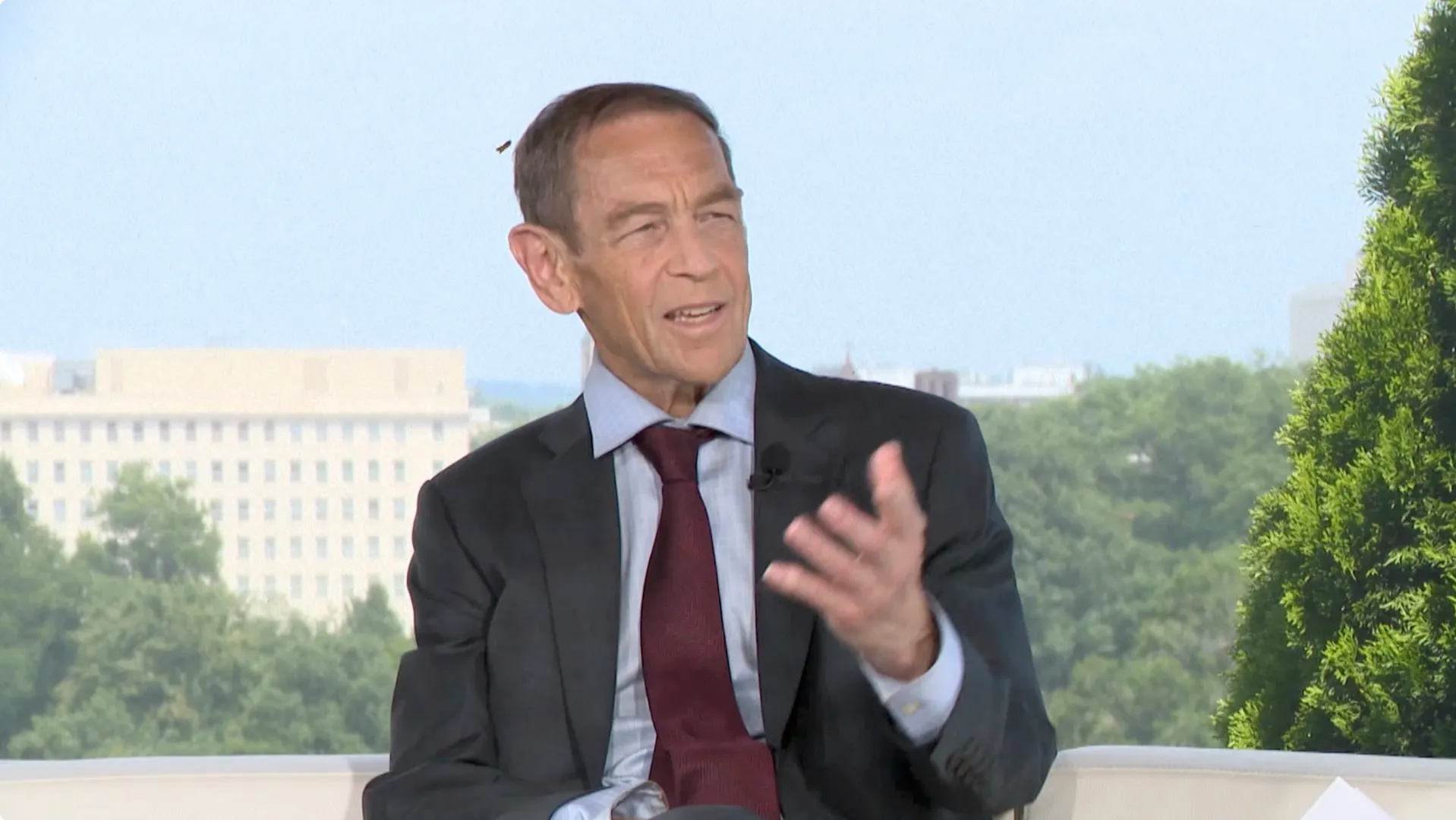
Constitutional lawyer Bruce Fein says the US was founded on the principle that governments exist to protect inalienable rights. He argues expanded presidential powers and unchecked authority represents a step backwards for US democracy.
She said she and 31-year-old Ana Luz were extremely close and would talk every day on video calls. Her sister always had Kleiber by her side.
“Wherever she went, her son went too. Whatever Kleiber wanted, she would please him. If she didn’t have money, she would call me: ‘Kleiber wants this’ or ‘he’s missing this,'” Andreína said.
“She is my older sister and I always trusted her and could tell her my problems and whenever I spoke to her on a video call, the child was by her side.”
Andreína said she was certain that her sister would have been next to Kleiber in the rubble.
As she sat with her nephew in hospital, desperate search and rescue efforts were continuing after the earthquakes.
Some 2,295 deaths have been officially recorded, but the final toll is expected to be many times higher. Tens of thousands have been reported missing, and the United Nations has said it is procuring 10,000 body bags for the country.
Andreína said she had not lost hope that Kleiber’s parents would be rescued.
“Just as they found my nephew, I have faith that they are going to find my sister and my brother-in-law,” she said.
Looking affectionately at Kleiber, she said she believed “he has a purpose in the world”.
“When this child grows up, God willing, this will be his story,” she said.
Medical experts fear the aftermath of Venezuela’s devastating twin earthquakes could trigger a widening health crisis marked by untreated injuries, infectious diseases, and a healthcare system already on the brink of collapse.
Thousands of displaced Venezuelans are sleeping in crowded temporary shelters or outside without access to clean water amid dismal sanitary conditions following the June 24 earthquakes, which officials said on Wednesday killed at least 2,295 people and left more than 11,000 injured.
Recommended Stories
list of 3 itemsend of list
“The issue we foresee just around the corner is the infections that patients who have been exposed to the disaster for the longest time might bring,” said Eugenio Cova, the head of the trauma unit at Hospital Jose Gregorio Hernandez in Caracas.
“We’ve already gone through a period of complex trauma – which will continue to occur – but now, it’s complicated by infections,” Cova said.
Aid workers also warn that the extensive damage to infrastructure could fuel outbreaks of diseases in the hardest-hit communities.
“There’s been lots of reports among the population here with diarrhoea and other diseases,” said Al Jazeera’s correspondent Teresa Bo, reporting from a shelter site in the region of La Guaira.
“They’re asking, for example, for portable toilets, and also help from the government to try to reorganise this place to try to prevent overcrowding, but also the spread of disease,” Bo said.
Children shelter under a tent after the earthquakes in La Guaira, Venezuela [Edilzon Gamez/Getty Images]
US military deploys 900 personnel to aid Venezuela
The United States has deployed some 900 military personnel on the ground in Venezuela to support relief and rescue operations as of Wednesday, Steven McLoud, a spokesperson for the US military’s Southern Command (SOUTHCOM), told The Associated Press news agency.
According to McLoud, the US military has repaired an earthquake-damaged runway at Venezuela’s main international airport, which serves Caracas, to allow for the arrival of humanitarian assistance, and has stationed naval vessels off the country’s coast to assist in the aid operation.
An additional 100 people from the US Department of State have been sent to support the efforts, McLoud said.
So far, the administration of US President Donald Trump has offered Venezuela $300m in assistance channelled through aid groups and the United Nations.
That contribution is just a fraction of the post-earthquake aid the country needs, with material damage from the devastating quakes estimated at more than $6.7bn, according to satellite analysis by the UN Development Programme.
A rescue team from Vietnam searches a building that collapsed during back-to-back earthquakes in Catia La Mar, Venezuela [Fernando Vergara/AP]
About 50 other international aid teams have arrived in the country in recent days to help with search-and-rescue operations, including from Ecuador and Israel, which do not have diplomatic relations with Venezuela.
Against the odds, rescuers continue to find a small number of survivors, including on Tuesday, a toddler who had been trapped for six days beneath the rubble.
Kevin Simm, a volunteer aid worker, told Al Jazeera the scale of the destruction was akin to armed conflict.
“This obviously brings to mind the current situations that are going on across Gaza and Ukraine,” Simm said.
“It’s like a scene from a movie or from a war zone… We have never seen this in peacetime.”
Venezuela’s crisis-stricken hospitals dealt another blow
Long before the earthquakes, Venezuela’s public hospitals were strained by shortages of water, energy, critical medical equipment, and highly trained staff, according to reports.
More than 7.7 million Venezuelans have left the country since its economic crisis began in 2013 under then-President Nicolas Maduro, who was abducted by US forces in a military raid, along with his wife, earlier this year.
Many specialised doctors and nurses were among those who departed, with Venezuela’s medical association estimating that about one-third of its 60,000 registered physicians have left the country.
Huniades Urbina, a member of the board of Venezuela’s paediatrics association, said that a 2025 national survey of public hospitals revealed shortages of more than 30 percent of emergency supplies, and more than 70 percent of supplies in operating rooms.
Laboratories are “all practically closed or do the basic things only”, Urbina said.
The earthquakes “once again highlight the Venezuelan government’s inability to provide an adequate healthcare system that meets the needs of the Venezuelan people”, he added.
Syria has completed the formation of its transitional parliament after President Ahmed al-Sharaa appointed the remaining lawmakers to the 210-member People’s Assembly, allowing the legislature to convene for the first time next week. The move marks another step in the country’s post-Assad political transition, though the chamber will operate with limited authority under Syria’s interim constitutional framework.
The parliament’s formation comes more than eight months after the selection process began following the overthrow of Bashar al-Assad in 2024, with the new leadership pledging a more inclusive political system while retaining a strong presidential model.
Sharaa completes formation of transitional parliament
President Ahmed al-Sharaa appointed 70 lawmakers to fill the final seats in the People’s Assembly, completing the 210-member chamber after two-thirds of legislators were selected through regional electoral colleges last year.
The Assembly is scheduled to hold its inaugural session on Monday, formally beginning its role as Syria’s transitional legislature.
Stay ahead of the geopolitical week.
MD Briefing delivers expert analysis across five global fronts — the Indo-Pacific, energy, geoeconomics, European security, and the Middle East — every Monday morning. Free.
Women’s representation increases in new legislature
Among the presidential appointments are 15 women, raising the total number of female lawmakers from six to 21.
The appointments address one of the main criticisms of last year’s selection process, which drew scrutiny for the limited representation of women and concerns over political inclusivity.
Sweida seats remain vacant amid security concerns
Lawmakers representing the predominantly Druze province of Sweida have not yet been appointed, with authorities citing ongoing security conditions.
The province has remained outside full government control following deadly clashes between government forces and Druze fighters last year, delaying its integration into the transitional political process.
Parliament to operate under strong presidential system
The newly formed legislature will function under a temporary constitutional framework introduced in 2025 that grants limited powers to parliament while preserving broad executive authority for the presidency.
Although lawmakers can propose and approve legislation, the government is not required to secure parliamentary approval to remain in office, limiting the Assembly’s oversight role during the transition.
Political representation remains under scrutiny
The parliament’s formation has been closely watched as a measure of the new government’s commitment to political inclusion after decades of authoritarian rule under the Assad family.
Rights groups and some Syrian political figures have argued that the appointment process concentrates significant influence in the presidency and called for greater electoral independence, stronger judicial safeguards and broader representation of Syria’s ethnic and religious communities.
Implications
The completion of the transitional parliament provides Syria with its first functioning legislature since the fall of the Assad government, offering an institutional framework for drafting legislation during the transition. However, its limited constitutional authority means executive power will remain concentrated in the presidency, leaving questions over the pace and depth of political reform.
The composition of the Assembly will also be closely monitored by regional governments and the international community as they assess the credibility of Syria’s political transition and prospects for broader engagement with Damascus.
Future Outlook
The People’s Assembly’s first session will signal the beginning of Syria’s transitional legislative process, with lawmakers expected to begin debating new legislation under the interim constitutional framework. Attention will now shift to whether the parliament evolves into a more influential institution ahead of the adoption of a permanent constitution and the eventual holding of nationwide elections.
Tielemans’s penalty late into stoppage time of extra time capped Belgium’s comeback from 2-0 down in Seattle.
Published On 2 Jul 20262 Jul 2026
Youri Tielemans struck a 125th-minute penalty as Belgium rallied from two goals down and defeated Senegal 3-2 after extra time in their World Cup last -32 clash in Seattle to keep alive their title hopes, which had looked dead and buried.
Senegal’s Lamine Camara slid in on Tielemans as the ball flashed across the face of goal and conceded the spot kick after a video assistant referee review, with the Belgian picking out the top corner to complete an extraordinary comeback on Wednesday.
Habib Diarra and Ismaila Sarr had given Senegal a deserved 2-0 lead, and they looked to be cruising through to the next round before Belgium netted twice in the final four minutes through Romelu Lukaku and Tielemans to force extra time.
Belgium now face the winner of Wednesday’s last-32 clash between cohosts United States and Bosnia and Herzegovina in the next round in Seattle on Monday.
It was cruel on Senegal, who controlled much of the 90 minutes, and struck the woodwork twice, but could not see out the game.
They became the fourth African side to bow out in a narrow defeat in the last 32 after South Africa, Ivory Coast, and the Democratic Republic of the Congo, and will wonder how they managed to let this one slip.
Senegal were inches away from the lead when Ismail Jakobs’s cross from the left was parried by Thibaut Courtois, but a stretching Sarr could only steer the loose ball onto the post.
When the African side did break the deadlock in the 25th minute, it was no surprise. Sadio Mane’s cross was headed goal-wards by Sarr, but his effort came off the post again.
This time, the loose ball fell kindly for Diarra, and he side-footed home from 7 yards.
Maxim De Cuyper forced an excellent save from Senegal goalkeeper Mory Diaw with a shot that looked to be heading into the top corner as Belgium trailed at the break.
Belgium brought on Lukaku for the ineffective Charles De Ketelaere at half-time, but were soon 2-0 down.
A stunning long pass from Moussa Niakhate was brilliantly controlled on the chest by Sarr, who held off two defenders before thundering the ball into the net in the 51st minute.
Belgium struggled to create clear-cut chances until the final five minutes, and almost out of nowhere turned the game on its head by netting twice in three minutes.
First, Lukaku turned the ball in at the near post from Thomas Meunier’s low cross, and Leandro Trossard’s ball into the box from deep was headed into the net by Tielemans.
Those two had been involved in a heated exchange earlier in the match, but it was all smiles and hugs when the equaliser went in, before Tielemans was central again in the winner.
President Donald Trump has sought to limit mail-in voting and has ordered his administration to impose limits on the practice.
Published On 1 Jul 20261 Jul 2026
A federal judge in the United States has blocked proposed restrictions on mail-in voting that were championed by President Donald Trump.
On Wednesday in Washington, DC, District Judge Emmet Sullivan sided with the NAACP, a civil rights organisation, in its case against the US Postal Service (USPS).
Recommended Stories
list of 3 itemsend of list
Sullivan found that the restrictions would likely violate a 2021 settlement requiring expedited handling for mail-in ballots.
He therefore granted the NAACP’s motion to enforce compliance with the settlement, dealing another setback to the Trump administration’s efforts to reshape the US voting landscape.
“NAACP has plausibly suggested — and the Postal Service has not disputed — that the Proposed Rule is already having a ‘real impact on present day affairs’,” Sullivan wrote in his ruling.
The case revolves around a rule the Postal Service put forward in May that would require states to provide lists of absentee and mail-in voters. Ballots that do not conform to the list would be returned.
The proposed rule would also require a new envelope design for mail-in ballots, governing logos and barcode placements. Failure to comply would result in the Postal Service refusing to deliver the ballots.
The NAACP argued that the proposal would run afoul of a 2021 legal settlement that forces Postal Service officials to take “extraordinary measures” to ensure timely delivery of ballot mail.
The settlement “stipulated that the Postal Service agreed ‘to prioritize monitoring and timely delivery of election mail’”, Sullivan wrote in Wednesday’s ruling.
The decision comes less than five months before the November 3 midterm elections, which will decide whether Trump’s Republican Party retains control over both chambers of Congress.
Trump has expressed fears that he may be subject to a third impeachment if Democrats flip the legislature.
He has also spread unfounded theories that US elections are vulnerable to “vote rigging”, pointing to commonplace election tools like mail-in voting and electronic voting machines.
Elections are administered by state and local election officials, as established in the US Constitution. But the Postal Service’s proposed rule came as the result of efforts under the Trump administration to impose new limits on voting.
In March, Trump issued an executive order called “Preserving and Protecting the Integrity of American Elections”. In it, he directed the Department of Justice to take action against states that “fail to comply” with certain standards for mail-in ballots.
He also accused states that accepted absentee or mail-in ballots after Election Day of violating the law.
But in another blow to Trump, the Supreme Court on Monday upheld a state law that allows mail-in ballots to be counted even if they were received after Election Day, so long as they were postmarked on or before that date. The president’s executive order has also been blocked by lower courts.
Civil rights advocates applauded the court’s Wednesday decision and warned against Trump’s efforts to limit mail-in voting.
“The court today correctly recognized that USPS’s plan to create roadblocks to mail-in voting was inconsistent with its commitment to timely deliver election mail,” said Allison Zieve, director of the Public Citizen Litigation Group, which argued on behalf of the NAACP.
“USPS’s plan was unwise, unlawful, and a threat to the millions of voters who rely on mailed ballots to participate in our democracy.”
Sam Spital, the associate director-counsel of the Legal Defense Fund, which also argued for the NAACP, called the Postal Service’s proposed plan “a blatant attempt” to disenfranchise voters who rely on mailed ballots.
“Today’s decision recognizes that USPS cannot disregard its legal obligation to timely deliver mail-in ballots to all voters,” Spital said.
Taylor’s 12th album, The Life of a Showgirl, dropped in October 2025, with a flurry of lovestruck lyrics about her now fiancé.
She reminisced about date nights spent on ferris wheels, and dreamt of raising kids in a house with “a driveway with a basketball hoop”. There’s also an entire song about his, ahem, manhood.
On the promo trail, she was peppered with questions about the wedding, but gave away very little, except to tell the BBC’s Graham Norton it wouldn’t be a small affair.
Since those interviews, Team Taylor has gone quiet.
A rumoured wedding date of 13 June 2026 passed without incident. A few days later, a flurry of activity at Swift’s Rhode Island mansion had fans speculating that a bachelorette party was in full swing.
Then the New York Times reported that Swift had hired the entirety of Madison Square Gardens for a mega event just before Independence Day weekend.
According to officials with knowledge of the booking, the plans involve an intimate gathering of about 100 people on Thursday 2 July, followed by a more extravagant celebration with about 1,000 guests the next day.
TV cameras have captured trucks unloading drapes, lights, food and even a “40-inch mirror ball”.
Tabloids are speculating about wedding performers and bridesmaids. – but we’ll only know for sure, when Taylor decides it’s time.
And given that she’s recently been spotted at New York’s Electric Lady recording studios, there’s even speculation that confirmation could come in the form of a wedding song.
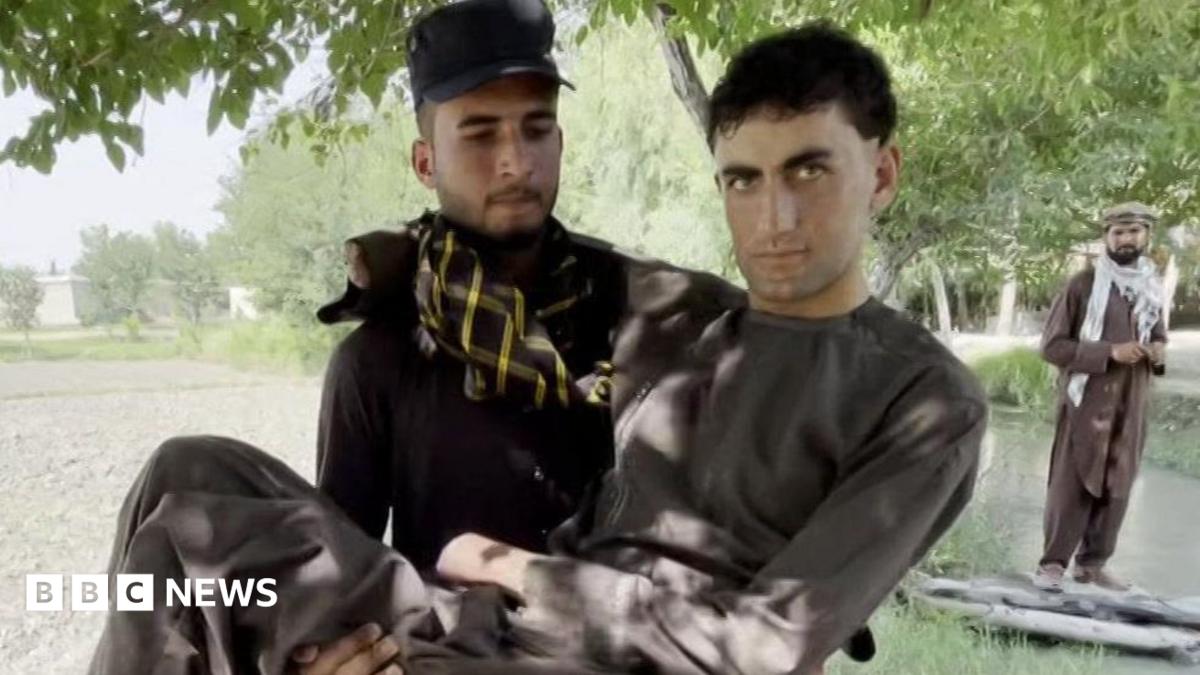
Şafak Bozkurt, who chairs the Van Bar Association Human Rights Centre Migration and Asylum Commission, said he was familiar with this type of push-back in the region, and aware of cases of hypothermia.
Afghan migrants have reported multiple similar incidents since 2021, when the Taliban seized power in Kabul, according to Turkey-based activist Zakira Hikmat. She said increased border surveillance in Turkey had forced them onto more dangerous routes.
Mahmout Keçen, another migrant-rights activist based in Van, said the nature of the mountains “most commonly used by Afghans entering Turkey irregularly” meant crossings had to be made in difficult, risky weather conditions.
He has worked on numerous cases involving Afghans and other migrants who alleged “ill-treatment, push-backs, denial of access to asylum procedures, and forced returns” around the Iran-Turkey border region.
The Turkish foreign ministry told the BBC such allegations were unfounded and “unfairly cast a shadow on Turkey’s successful efforts in combating irregular migration”.
“Due to its geopolitical location on migration routes and hosting a significant migrant and refugee population, Turkey aims to implement a human-centred and sustainable migration-management system that is compatible with civilisational values, that balances security and freedom.
“Thanks to Turkey’s effective measures and successful fight against irregular migration, irregular migration flows towards the European Union have been almost completely halted.”
The Iranian authorities have also been approached for comment.
The US and Israel have signed a deal allocating land for a permanent US embassy in West Jerusalem, years after a temporary one was established during Trump’s first term in office. The move is yet another blow to the hopes of a future Palestinian capital.
England’s reaction was an explosion of celebration and sheer relief, a largely dreadful performance transformed into dramatic victory by their magnificent captain.
The celebration was for that place in the last 16.
The relief will have been Tuchel’s, who would surely have been unable to survive such embarrassment had England lost, irrespective of his contract extension.
Relief, too, for the Football Association, who placed such faith in the German and handed him the sole mission of winning this World Cup.
And it was all down to Kane.
Kane attracts superlatives and respect like a magnet. Every bit of it deserved – as proved by the stats left behind by his latest feat.
He now has five goals in this World Cup, as the race for the Golden Boot becomes a sprint between Kane, Kylian Mbappe, Erling Haaland and Lionel Messi, with Tuchel saying: “They are all sharks. They smell blood.”
Tuchel added: “These big guys at this World Cup, do they watch each other? And then they go ‘not with me, then I score, then I do a hat-trick, then you go’. What is going on? Crazy.
“Harry is so, so good. He’s our captain. He’s our leader. He decides football matches with unbelievable finishes and did it here twice. The second one was just a brilliant goal.”
Kane now moves above Pele to go joint sixth on the all-time World Cup scorers list with 13, and now has 84 goals for England, putting him level with legendary Hungarian Ferenc Puskas in ninth on all-time international scorers list.
He is the first England player to score twice in a World Cup knockout stage match since Gary Lineker against Cameroon in 1990. Kane has now scored five knockout stage goals at a World Cup. Only Lineker, with six, has scored more for England.
Most remarkably of all, he now has scored 72 goals in 62 games for club and country this season, with 11 for England and 61 for Bayern Munich.
US prosecutors have alleged those involved in the Prairieland Detention Center protest were linked to antifa.
Seven more people have been sentenced to prison over a protest that culminated in a police officer being shot outside an immigration detention centre last year.
A federal court in Fort Worth handed down the latest sentences on Wednesday. Critics, however, say the case could reshape how protest is prosecuted in the United States.
Recommended Stories
list of 4 itemsend of list
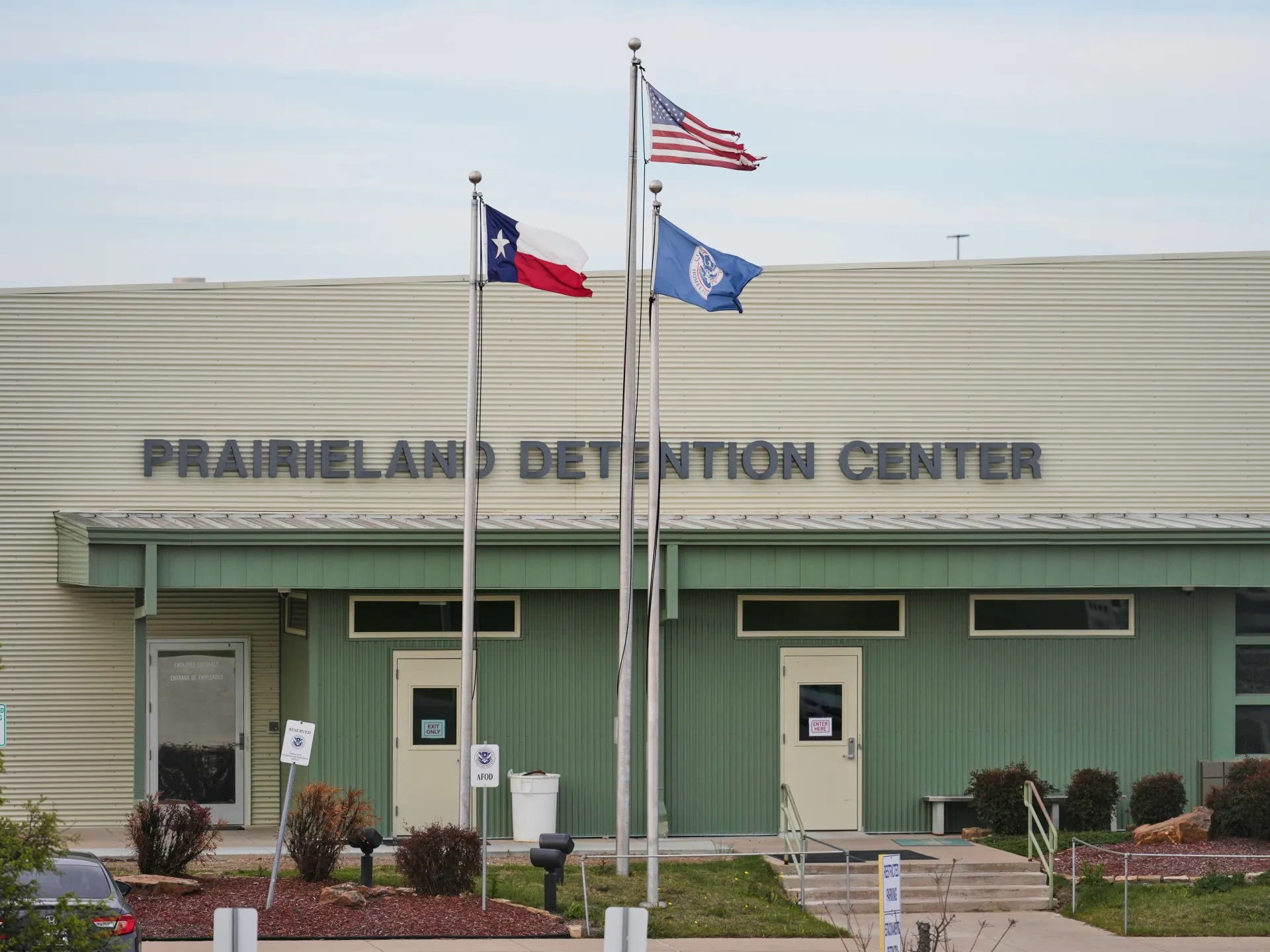
The case centres on a shooting outside the Prairieland Detention Center, near Dallas, Texas, that took place during an antigovernment protest.
Six of the defendants in Wednesday’s sentencing hearing had pleaded guilty to providing material support to “terrorism” and received prison terms ranging from nearly two to 15 years.
A seventh defendant, Ines Soto, was sentenced to 50 years in prison after being convicted of “providing material support to terrorists”, as well as charges related to rioting and conspiracy to carry an explosive.
The protest in question took place on the night of July 4, 2025. Activists had gathered outside Prairieland to denounce President Donald Trump’s push for mass deportation. Some set off fireworks. Others have been accused of vandalism.
Prosecutors said that, during the demonstration, former US Marine reservist Benjamin Song shot and wounded a police officer who had just arrived at the centre. Song had reportedly shouted, “Get out the rifles,” prior to opening fire.
The Trump administration has described the protest as an act of “terrorism”, and 19 people were ultimately arrested.
Some of those detained were not present at the Prairieland protest. But the Trump administration has designated antifa — a loose-knit, left-wing antifascist movement — as a “domestic terrorist organisation”, and it accused the protest’s supporters of being part of an “antifa cell”.
Prosecutors for the US Department of Justice also argued that bringing firearms, first aid kits and body armour to the protest showed nefarious intent.
“The sentences handed down today make clear that Antifa terrorists who attack law enforcement and federal facilities will face swift and uncompromising justice,” acting Attorney General Todd Blanche said in a statement last week.
But civil liberties advocates say the case could have broad implications for protesters nationwide.
It will also likely test the boundaries of the free speech rights protected under the First Amendment of the US Constitution.
The Justice Department touted last week’s initial round of sentencing as the first time alleged antifa members were sentenced on criminal charges since Trump issued his executive order designating the group a “domestic terrorist” body.
Lawyers for the defendants, however, have largely denied links to antifa and rejected the prosecution’s characterisation of the protest.
They argued there was no planned ambush and that those carrying firearms only did so for their own protection, as is allowed under the Constitution’s Second Amendment. The fireworks, they added, were meant as a show of support for immigrants detained inside Prairieland.
On June 23, the eight defendants who chose to stand trial were handed lengthy prison terms.
Song was sentenced to 100 years in prison after being convicted of attempted murder in the shooting. The seven others received sentences ranging from 30 to 70 years. They received a combined 450 years in prison.
One defendant, Daniel Rolando Sanchez Estrada, has argued his only crime was to move a box of belongings, including zines. Prosecutors, meanwhile, have characterised his actions as “transporting a box containing numerous Antifa materials” and attempting to conceal them.
Several of the defendants, including Song and Sanchez Estrada, have filed notices of appeal.
In handing down last week’s sentences, US District Judge Reed O’Connor said what happened was not a protest but an “assault on democracy” and that “the need to deter this type of conduct is high”.
Catia la Mar, Venezuela – Andreina Velasquez looks up at her multistorey apartment block overlooking Catia la Mar, a coastal city in the Venezuelan state of La Guaira. The concrete slabs that once separated each floor are now stacked on top of each other.
“They fell like a pack of cards,” she said, pointing to where she used to live on the sixth floor.
Velasquez feels lucky. She left her apartment a couple of hours before a pair of deadly earthquakes shook Venezuela on June 24, reaching magnitudes of 7.2 and 7.5, respectively.
She had gone to get a new key cut and was at the beach when the first quake struck.
Her neighbours did not make it. She remembers one as a gentle, retired man, another as a woman with a young daughter who had just moved in. They had been overjoyed with their view of the sea.
Velasquez is still struggling to process what she has lost. Her state was among the hardest hit by the earthquakes.
But despite her grief, she has started to hand out face masks to passersby, hoping to shield them from the gusts of dust drifting from the collapsed buildings and the stench rising from the rubble.
“I’ve been here every day. Other people came to help, but they don’t have helmets, they don’t have gloves, they don’t have masks. That’s why I’m helping,” she said.
More than 2,295 people have been killed and 11,000 injured in the twin earthquakes, according to Venezuela’s National Assembly. The United Nations has warned the death toll could rise to 10,000.
As Venezuela continues to confront the destruction, experts say recovery efforts have been driven largely by volunteers and neighbours like Velasquez.
Hospitals are overwhelmed, and government aid has been slow to reach some of the worst-affected areas.
Carolina Jimenez, the president of the Washington Office on Latin America (WOLA), a research and advocacy group, told Al Jazeera that the result has been growing anger towards the state.
“In a government in any other country, the first responder should be the state,” she said. “In the case of Venezuela, the state has been the last responder.”
In places like Catia la Mar, north of Caracas, authorities still haven’t arrived or are lacking.
Velasquez and other locals say that help from the federal government only arrived on Sunday — three days after the earthquakes hit the country. In some parts of La Guaira, such assistance has yet to arrive at all.
“[The] response has come from citizens, from civil society, from humanitarian workers, from volunteers — but not from the government,” Jimenez said.
For years, India’s Muslim women have been subject to online abuse.
Now researchers warn that generative AI is taking that harassment to a new level, making it easier to create fake sexualised imagery and propaganda targeting Muslim women.
A punishing heatwave affected many parts of the country during the last week of the month.
Published On 1 Jul 20261 Jul 2026
Last month was provisionally the warmest June in England since records began, as well as the second-warmest for the United Kingdom, according to figures published by the country’s Met Office.
Rare extreme heat warnings were issued for several days last month, with “exceptionally warm overnight temperatures”, the weather agency said on Wednesday.
Recommended Stories
list of 4 itemsend of list
England registered an average temperature of 17.1C (62.78 degrees Fahrenheit) last month – the highest since records began in 1884.
“The exceptional warmth was driven by an intense and record-breaking heatwave at the end of the month,” the Met Office said in a statement.
The previous record of 16.9C (62.4F) was set in June 2025, nearly 3C (5.4F) above the long-term average. It means England’s top three warmest Junes since data began in 1884 have all occurred this decade, with the third being in 2023.
A punishing heatwave affected many parts of the country during the last week of the month, with temperatures topping 30C (86F) at some places in the UK for seven days in a row from June 21-27.
A peak of 37.7C (99.86F) was provisionally reached at Lingwood in Norfolk on June 26 – the highest maximum temperature ever recorded for the month.
This was more than 2C higher (3.6F) than the previous June record of 35.6C (96.08F), set in 1957 at Camden Square in London and equalled in 1976 at Mayflower Park in Southampton.
Last month also saw a provisional new June record for the highest overnight minimum, with temperatures at Cardiff Bute Park dropping no lower than 23.5C (74.3F) on June 25.
More than 1,000 schools and nurseries were closed during the heatwave, and there was disruption to public transport with overhead wires and signalling strained because of the heat.
Critics felt the country was ill-prepared to deal with the sweltering heat. Climate experts have urged the UK government to adapt its infrastructure to warming summers, with a surge in demand for fans and air conditioners, which remain rare in British homes.
The heatwave has also affected many countries in Europe, including France, Germany, Slovakia, Serbia, Croatia, Italy, Austria and western Ukraine, with more than 1,000 deaths linked to the scorching heat reported in France alone.
A group of scientists blamed climate change for the dangerous weather blazing across Europe. In a report by the World Weather Attribution, experts warned that the phasing out of fossil fuels is essential to reverse the extreme weather trend.
There’s this idea in social media that you’re supposed to choose a lane. Either you grow “purely organic”, patiently waiting for the algorithm to reward you, or you automate everything and turn your account into some kind of growth machine that runs without you.
In reality, nobody who actually tries to grow an account long-term sticks to either extreme.
Pure organic growth is slow enough to make you question whether anything is happening at all. Pure automation without real content is just noise with extra steps.
Most accounts that survive past the first few months end up somewhere in between, even if nobody says it out loud.
Stay ahead of the geopolitical week.
MD Briefing delivers expert analysis across five global fronts — the Indo-Pacific, energy, geoeconomics, European security, and the Middle East — every Monday morning. Free.
Where automation actually fits in
When people hear “automation”, they still imagine spam bots or engagement farms from years ago. That’s not really what we’re talking about anymore.
Used properly, automation isn’t about replacing activity. It’s about smoothing out the worst part of it – posting something decent and watching it sit at zero for hours because the algorithm didn’t pick it up.
That initial silence is where a lot of good content dies. Not because it’s bad, but because nothing happens around it early enough.
Automation in this context is just early support. A bit of initial visibility, some signal that the post isn’t completely invisible, enough to get it into circulation instead of letting it sink immediately.
Why organic alone stops scaling
Organic-only accounts usually hit the same pattern. At the beginning, everything feels like progress. A few posts perform, you get your first audience, and there’s a sense that things are starting to move.
Then it slows down. Not dramatically, just quietly. You keep posting, improving, adjusting – but the results stay in the same range. It’s not that the content gets worse. It’s that platforms don’t scale reach in a predictable way.
That’s usually where frustration starts. Not failure, just repetition. You’re doing the same work, but the outcome doesn’t change much. And that’s a difficult place to stay in for long.
Why automation alone also fails
On the other side, accounts that rely only on automated promotion usually run into a different problem. They can create activity, they can push numbers, they can make a profile look alive. But without real content behind it, there’s nothing for people to actually connect to.
No point of view, consistency and reason to follow.
People notice that, even if they don’t consciously analyze it. An account can look active and still feel empty. Automation can amplify reach, but it can’t replace identity.
The middle layer: where growth actually happens
The more stable setups usually combine both sides. Organic content is responsible for the actual message – what the account stands for, what it’s trying to say, why it exists in the first place.
Automation supports distribution – making sure that message doesn’t get lost immediately after it’s published. They solve different problems:
organic answers what is being communicated;
automation answers whether anyone is actually seeing it.
Most accounts struggle because they only solve one of those properly.
The psychology of perceived activity
There’s also a simpler factor that often gets ignored: perception. People don’t evaluate accounts in isolation. They compare them instantly to everything else in their feed.
An account with visible engagement feels more established. Not because people sit and analyze metrics, but because inactivity is noticeable.
Good content with no traction creates hesitation. Not rejection – just a pause. And on social media, hesitation is usually enough for someone to move on.
Adding early visibility reduces that friction. It makes the account feel like it already exists in circulation, not like it’s still trying to get noticed.
How teams actually use this mix
In practice, most teams don’t frame this as theory. They just build a workflow.
Organic content is used for messaging, storytelling, positioning. That part doesn’t change.
Promotion, including automated support, is used when something deserves more reach than it would naturally get in the first hour or two.
Some posts are left alone, some are boosted, while others are tested and dropped. It’s less about forcing outcomes and more about not letting good content disappear by default.
Services like Top4SMM are often used in that layer – not as a replacement for marketing, but as a way to stabilize visibility when organic reach is unpredictable. If you want to compare options, you can see details.
Why consistency beats intensity
A common mistake is treating growth like a short-term push. People post more, experiment harder, try to “fix” the algorithm in a week or two – and then step back when nothing changes immediately.
What actually works is much less dramatic. Steady output. Steady distribution. No spikes needed.
When both sides are consistent, results start compounding. Slowly at first, then more noticeably over time.
Final thoughts
There isn’t really a pure way to grow on social media anymore. Organic alone struggles with reach. Automation alone struggles with meaning.
The accounts that keep growing are the ones that combine both – content that actually says something, and distribution that makes sure it doesn’t disappear on impact.
Everything else mostly comes down to hoping for timing to behave like a strategy.
An intense heatwave is set to blanket much of the central and eastern United States this week as a “heat dome” settles over the region, bringing days of oppressively high temperatures and humidity ahead of the Fourth of July weekend and FIFA World Cup matches in several US cities.
Forecasters say in some places it could feel as hot as 46 degrees Celsius (115 degrees Fahrenheit). Dozens of temperature records could be broken, according to the National Weather Service (NWS), which called the conditions “dangerous”. More than 60 million people are currently under heat alerts.
Recommended Stories
list of 4 itemsend of list
At the centre of this week’s forecast is a weather phenomenon known as a heat dome. What is it, and why does it make heatwaves even more intense and unbearable?
What is a heat dome?
A heat dome is a large area of high pressure, formed when warm air flows northward, that acts like a lid over the atmosphere, trapping hot air close to the ground.
As the air sinks, it compresses and warms even more. At the same time, the pressure system helps prevent cooler air and storms from moving in, allowing heat to build at the surface and remain trapped there. With few clouds and little wind, the sun has more direct access to the ground, creating a heat feedback loop.
Heat domes are linked to prolonged heatwaves that can last for days.
How long will it last?
The heat dome is already building and is expected to strengthen over the coming days, spreading from the central US towards the east coast, with dangerous heat lasting several days into early July.
The hottest conditions are expected Thursday and Friday, according to the NWS, and are set to continue through the Fourth of July weekend, which marks the 250th anniversary year of the US, and forecasters say some areas across the Great Plains, the southeast, and the mid-Atlantic are likely to remain unusually hot into next weekend.
What will the highest temperatures be?
Many places are expected to see daytime temperatures in the high 30s Celsius (low 100s Fahrenheit), but humidity will make it feel much hotter. In parts of the central and eastern US, the heat index – a measure of how hot it feels when humidity is factored in – could climb between 40C and 46C (100F and 115F).
“That’s heat that’s impactful to anyone,” said NWS meteorologist Bryan Putnam. “It’s not just older adults or younger children or people who are spending a ton of time outdoors, maybe straining themselves a little more than normal. This is heat that really could impact everyone, especially with people outdoors going into the holiday weekend.”
The nights won’t bring much relief either, with temperatures expected to stay in the 20s Celsius (70s Fahrenheit) overnight, creating potentially miserable sleep conditions for those without air conditioning and making it harder for people to cool down.
“Even after the sun goes down, it’s still going to be very hot,” said AccuWeather senior meteorologist Alan Reppert. “We’re at a pattern that’s really going to be hot during the good portion of the afternoon and even into the evening hours.”
Which parts of the US will be hit the hardest?
The most dangerous conditions are expected in a broad corridor stretching from the Great Lakes to the East Coast, where several cities could experience their hottest day of the year so far. New York City, Philadelphia, Washington, Baltimore, Chicago, Indianapolis, Detroit and St Louis are all expected to be affected, with temperatures also soaring farther south in Dallas, Little Rock and Memphis.
Several of those cities are also hosting FIFA World Cup events. In Philadelphia, organisers have already changed Fan Festival hours to start later in the day.
Cities across the US are rolling out emergency measures as temperatures climb.
Chicago said it would open cooling centres and send city workers to check on vulnerable residents.
In New York City, Mayor Zohran Mamdani’s office announced what it called an “unprecedented” response to the heat, including hydration vans and pop-up cooling stations equipped with misting fans and cooling towels.
Washington, DC, where temperatures are expected to exceed 38C (100F) from Thursday through Saturday, the heat will coincide with Fourth of July celebrations, including what organisers say will be the largest fireworks display ever held on the National Mall.
What are some ways to stay cool?
The NWS says people should stay hydrated, avoid strenuous outdoor activity during the hottest part of the day and seek air conditioning or cooling centres where possible. If you’re spending time outside, wear loose, lightweight clothing and stay near shady areas.
Experts say one of the biggest risks during a prolonged heatwave is that the body doesn’t have time to cool down overnight, which can make the effects of the heat build up from one day to the next. They also recommend drinking water before you feel thirsty and limiting alcohol, which can increase the risk of dehydration.
“If somebody realises that they’re hot, but they’re not sweating, or if they begin to feel a little bit dizzy, those are some signs that they really need to take a break, get inside, find some cooling, and drink plenty of water,” said Geoff Cornish, assistant chief video meteorologist for the weather forecasting company AccuWeather. “And if they really begin to experience significant symptoms, they need to seek medical attention right away.”
“Imagine the scenario; one of our Havoc hypersonic missiles loaded on an F-15EX Eagle with a mission profile locked-in and ready to go. This new missile is designed for low-cost and high-effect – it’s very difficult for an adversary to track in flight,” explains Chris Spagnoletti, chief executive officer of Ursa Major, as he discusses the company’s expanding hypersonics activities. Part of a company strategy to help overcome critical Department of War munitions shortages, Ursa Major’s Havoc was unveiled in early 2026. With a unique 3D-printed propulsion system, Havoc has been envisioned as a hypersonic missile that aims to re-write the rulebook for these types of weapons.
Ursa Major’s ambitious vision comes at a time of something of a renaissance in U.S. aerospace development and defense manufacturing, with newer firms establishing major positions within a rapidly evolving marketplace. These fresh takes on cutting-edge defense technologies also come as the United States celebrates its 250th birthday and looks back on a history of unlikely up-starts changing the world with new ideas and ways of doing business. It’s in this same spirit that Ursa Major looks to stake its claim.
Ursa Major’s Affordable Rapid Missile demonstrator, powered by the company’s Draper liquid rocket engine. U.S. Army via Ursa Major
The firm is evolving from a propulsion provider into a prime contractor and integrator with a keen focus on hypersonics and solving a need for affordable high-speed missiles at scale for the U.S. and its allies. In recent operations, the U.S. has fired a vast number of standoff air-to-ground weapons including more than 850 Tomahawks cruise missiles in the recent war with Iran and hundreds of high-end interceptors, stressing a system that’s been constrained by prolonged replenishment timelines.
Spagnoletti says he strongly believes that hypersonic missiles are “the most important and pressing issue within critical munitions, with solid rocket motors coming close behind.” The company’s approach to design and production in both of these areas means Spagnoletti sees Ursa Major as being “well positioned to solve” these pressing requirements for the U.S. military.
“We are innovating on manufacturability and on new munition systems,” he continues. “It’s all under the umbrella of scalable munitions. Ursa Major’s founders really focused on developing very complicated propulsion systems, but with a strong propensity on design for manufacturability – essentially developing very high performing rocket engines as low-cost and as reliably as possible.”
Ursa Major has produced hundreds of engines and motors and accumulated more than 135,000 seconds of hotfire test time in under a decade. From its very beginnings the company has innovated through advanced manufacturing techniques that have evolved to leverage AI-enabled 3D-printing, specifically metal printing. “We’re looking at the problem set, and the landscape here is about how we can help the United States catch up as quickly as possible. We don’t just want a “me too” product, because we find there’s a lot of that in this space. This is about finding real answers to the desperate need to replenish our critical munitions fast,” says Spagnoletti.
Solid rocket motors in high demand
Having started out with liquid rocket engines, Ursa Major increasingly saw a burgeoning requirement for solid rocket motors (SRMs) for munitions, which Spagnoletti says have remained tied to traditional manufacturing approaches. Ursa Major says its approach to SRM manufacturing is designed to complement and strengthen the broader defense industrial base by providing flexible manufacturing capacity, common architectures, and modernized production methods.
Ursa Major’s manufacturing approach fundamentally changes how SRMs are designed and built using additive manufacturing, modular tooling, and software-backed production cells. This enables rapid switching between SRM variants without expensive retooling, which reduces production timelines and increases flexibility.
Ursa Major makes significant use of additive manufacturing across its engines. Ursa Major
In addition, Ursa Major’s highly-loaded grain technology increases motor performance and range without increasing motor size. By leveraging common architectures and using a limited set of qualified propellants, it says it can reduce qualification timelines and simplify production across multiple variants. The company’s energetics (solid propellent grain) strategy aims to expand domestic propellant capacity and reduce dependence on fragile supply chains, while using reliable mix, cast, and cure processes.
“Both in the liquid rocket engine side, and in solid rocket motors, the approach from the outset is deeply embedded in our culture; how we design, how we build, how we scale,” says Nick Doucette, co-founder and vice president of strategic operations for Ursa Major. “We came at the manufacturing problems from a completely different direction. We started out building liquid rocket engines, which were – to a degree – supporting the launch industry. That approach allowed us to develop new platforms that use new types of fuels or higher performance rates and lower costs.”
“From the start it helped support a growing launch industry, but very quickly it started to find its way into the hypersonics community as our engines, products, and performance points really started to solve some interesting problems. As we leaned heavily into the hypersonics needs, we realized that the early Ursa Major approach in manufacturing and the types of tech that we’re using are really solving some of the actual problems, and that led to our solid rocket motor programs.”
When building solid rocket motors, the inert part of the manufacturing leverages additive manufacturing heavily – Ursa Major avoids fixed tooling. “For example, after we qualify a motor, say a specific diameter booster, and then the government comes back to us and says that the adversaries have adapted. Now they want slightly different thrust, or maybe get additional range. We’ve already thought about that, our manufacturing line doesn’t need to change. We can use the same manufacturing line and adapt it,” explains Spagnoletti.
Solid rocket motor testing. Ursa Major
“We kept the energetics formulation essentially the same – it’s tried and true and it has been munition-tested for years – but we looked at the problem from the manufacturability of the entirety of the system. From a contracting point of view, this gives the government a lot more flexibility and to be as agile as the adversary. This has been happening on the development side for the past three years, working with several primes and the U.S. Navy. They’re inherently leveraging our ability to turn things fast, and now that’s translating into contracts for us.”
“The Navy really understood our approach to manufacturing,” adds Doucette. “They challenged us to apply our approach with liquid rockets to the solid rocket motor industry. To look at the problems and peel back the onion on solid rocket motors. What we found is that the choke point actually lies the metallic components that make what we call the inert tube section, that then gets packed with the energetics. The energetics are difficult for sure, but what actually chokes the supply chain is the 36-plus months to make the metallic tube structures. To compound the problem, all these production lines of the last 30, 40, 50 years are designed around one platform. Can you imagine an automotive company that has a huge expensive factory but only ever makes one car model! I mean, it would economically go out of business.”
“We have demonstrated that, by looking at the steps to make a solid rocket motor, be it metal printing the end domes or how we do the internal features and make the actual case to how we in some cases load the highly-loaded grain to get more performance, we can do all of it on the same production line for any motor between two inches and 22 inches in diameter. The same equipment, the same people, the same factory footprint. If we want to scale, we just copy paste the factory. If the demand signal changes in a year – which if recent conflicts give us any indication they probably will – that factory can switch over to a different munition. We just stop making one size and tool up for the new size in a matter of months.”
Ursa Major’s primary 93-acre corporate headquarters is located in Berthoud, about an hour north of Denver, Colorado. Here the company has the facilities to test its liquid rocket engines on site and it also designs, develops, and manufactures here. “Our main building is really split in half,” explains Spagnoletti. “On one side we have liquid rocket engine manufacturing and development to power hypersonics, and on the other behind a steel rolling door are the solid rocket motor development and low-rate production as part of our replenishment of critical munitions.”
Live fire testing of a small diameter solid rocket motor. Ursa Major
“At the Colorado site, we’re actually grinding, mixing, casting, curing thousands of pounds of energetics per year for our solid rocket motors, with a lot of automation built-in to not only protect the people but also to make the process more consistent. We have another site for our high volume solid rocket motor production – it needs a lot of space – and we are targeting to manufacture hundreds of thousands of pounds of energetics for use in various shapes and sizes by the middle of 2027.”
The company has expanded with more than 400 acres for SRM production in Galeton, Colorado.
Solid rocket motors of all sizes
Nick Doucette already sees the solid rocket motor work evolving. “We will eventually boost-power our Havoc system with our solid rocket motors. Remember, we got into SRMs due to seeing the critical munition needs, with an open door for manufacturing innovation and a problem we want to help solve. So we’ve built a manufacturing approach and we are now building a multitude of different size classes for different customers.”
The smallest SRM that Ursa Major is actively working on is for the Advanced Precision Kill Weapons System, or APKWS, from BAE Systems. “This currently uses a very dated motor and there’s been a lot of need in the industry to essentially innovate on that motor,” explains Doucette. “So we’ve been working extensively with both BAE Systems and the U.S. Air Force on that particular platform, especially with highly loaded grain, and we see a very promising future there.”
Doucette explains that Ursa Major has already made several hundred 2.75-inch motors for testing and development. This will be an extended range version of the motor, packing a significantly larger amount of energetic material into the same size rocket casing.
A common modular solid rocket motor in test. Ursa Major
In 2024, Ursa Major won a contract with the Naval Energetics Systems and Technologies (NEST) program to develop and test a new design to apply its SRM manufacturing processes to the Mk104 dual-thrust rocket motor that powers the U.S. Navy Standard Missile 2 (SM-2), used for surface-to-air defense, and the SM-6 anti-air, land, and sea missile.
Trusted solid rocket motor providers are in limited supply, and the versatility of Ursa Major’s production process opens up a raft of potential opportunities, particularly in the missile defense space. The 10-14-inch range is what Doucette calls a “sweet spot” for interceptor missiles.
Asked about air-to-air missiles, Doucette says: “of course, we’re looking at it. There’s been a lot of conversations around how Ursa Major would approach the problem, but we have a lot going on already, so we’re making sure we don’t try to swallow the whole critical munitions list at once.”
“Most of these larger hypersonic weapons are all boosted,” adds Doucette. “These have a booster in the back end, and we have additionally completed internal work to develop that 22-inch diameter SRM capability. So now we can do anything from 2-inch to 22-inch on that same production line using our common modular manufacturing approach.”
Unleashing Havoc
Ursa Major’s parallel efforts in hypersonics brings the story full circle. Alongside the solid rocket motors business, hypersonic missiles have become a critical part of the company’s efforts, as Nick Doucette picks up the story.
“There’s two specific products that Ursa Major makes in the hypersonics realm right now. The first is an engine that’s liquid oxygen-powered with rocket fuel. We call it Hadley, and we’ve had that for the better part of a decade. Hadley powers the Stratolaunch hypersonic Talon A testbed, for example. We don’t make the vehicle, we just provide the engine and support services, and Hadley has flown 10 times now.”
The Talon A testbed, powered by the Hadley engine. Ursa Major
“The challenge with Hadley is that it uses cryogenic liquid oxygen, which presents a whole suite of issues from a tactical perspective. A military user can’t sit and wait for the propellant to get cold, like you do with liquid oxygen. We needed to make a similar engine, slightly lower thrust, a little smaller, but essentially in the same packaging, make it storable and most importantly, make it tactical, so that you can drop it from a plane or shoot it vertically from a ship. So we switched from liquid oxygen to hydrogen peroxide.”
“The catch there was that the only way we were able to do that in the right packaging, tightness, and density, was to use 3D-printing. Fast-forward through six years of insane additive development and the Draper engine became a reality. It simply would not have been possible without massive advances in the additive world because of the complexity of what we’re doing geometrically. It’s a really challenging thing to do.”
Draper is a 4,000-pound-thrust engine that is powered by hydrogen peroxide and rocket fuel. Its use of non-cryogenic storable propellants enables long-duration storage, rapid deployment, and operational flexibility in real-world conditions. Its massive potential drove Ursa Major to search for a suitable hypersonic vehicle design to match it with.
“We strongly believed that Draper introduced a differentiating threat vector for any adversary,” Doucette continues. “China has had boost-glide hypersonics for a decade. Other hypersonic designs use a scramjet, which are costly and complex. Draper opened up hypersonic performance, where you have a wide range of trajectories and adaptability as well as other really creative mechanisms that, to be honest, the adversaries don’t have. I mean it’s wildly different, which we see as being a very valuable asset to the national security arsenal.
The Draper engine, which is powered by hydrogen peroxide and rocket fuel. Ursa Major
“The concept of using a liquid rocket engine for a hypersonic weapon is absolutely game changing. Draper can be throttled – unlike solid rocket motors that use a pre-mixed propellant and oxidizer that cannot be controlled once ignited – plus it’s designed to be more safely stored than other liquid rocket engines, providing the tactical storage capabilities that are typical of a solid rocket motor.”
Doucette says that Ursa Major looked to find a partner for the vehicle itself, but concluded that none were suitable, particularly when it came to moving fast. The decision was made to go it alone in-house with an air vehicle. The result is Havoc, which is designed like other hypersonic programs to fly in excess of mach 5, and intended to be launched in a variety of ways; as a single-stage from an aircraft or ground-launched with added booster stages. It’s also designed to run out at circa $3-million apiece. “We entered a rapid campaign in partnership with the Air Force Research Laboratory and we went from concept to flight-ready in about six months,” Doucette says.
Hypersonic missiles currently in testing with the USAF include the AGM-183A Air-Launched Rapid Response Weapon (ARRW), which is a boost-glide hypersonic system, with rocket boost and an unpowered glide vehicle inside. The Hypersonic Attack Cruise Missile, or HACM, also features rocket boosters, but with an air-breathing scramjet second stage vehicle. Both are limited to operations in the Earth’s atmosphere – whereas Havoc can operate either in or above the atmosphere.
An artist’s rendition of Havoc. Ursa Major
“With regard to propulsion in aerospace defense, there’s three main types; air-breathing, solid powered, and liquid powered,” Doucette explains. “In the world of hypersonics, specifically, we’re talking about fast-moving, somewhat unpredictable, missile systems that are moving at over five times the speed of sound. You have the same propulsion methods, but liquid fuel has never really been introduced.”
“The air-breathing hypersonic weapons are typically scramjets and ramjets, which the U.S. has been developing for a very long time. They’re expensive and exquisite, but very long range.
A hotfire test of Draper. Ursa Major
“China has something in the order of 600-700 operational boost-glide systems in its arsenal right now. This is not new to them. They’ve been practicing, watching, and rehearsing.” Doucette warns that the U.S. fielding a boost-glide or scramjet hypersonic weapon may not really change the dynamic, which is why Ursa Major’s argument for its liquid-powered weapon is so strong.
“The novelty of being liquid-powered is that it carries its own oxidizer and fuel, which means it can go anywhere – in the atmosphere, out of the atmosphere, high, low. A solid rocket can technically do the same thing, but the big difference with the liquid system is that it can turn on and off an infinite number of times. A solid is going where it’s going, but a liquid could be on one trajectory and a split second later turn it off, then instantaneously head on a different trajectory because you can maneuver it from a powered vector perspective. Draper is also fully throttleable down to 10% all the way up to 100%.”
There are currently no competing systems that have the ability to bridge the gap between running in atmosphere and out of atmosphere with such a degree of throttle control. Ursa Major is currently the only company with a hypersonic vehicle and experience in the liquid-powered hypersonic realm. It has twice ground-launched from a rail what it calls “Havoc Block 0” in partnership with the Air Force Research Laboratory, under its Affordable Rapid Missile Demonstrator (ARMD) program. These demonstrator flights have been designed as multi-domain tests. “The great thing about Havoc is that we can alter the wings, add our solid rocket motor boost system, and it means we can ground launch, VLS [vertical launch system] launch, or air-launch,” Doucette says.
A flight test of the Draper-powered Affordable Rapid Missile Demonstrator. Ursa Major
“Havoc provides something the Department of War has not previously seen,” adds Chris Spagnoletti. “Having a mid- and long-range tactical weapon that can deep throttle, turn on and off at will, is agnostic to atmosphere, rapidly change vector, accelerate and de-celerate, skim the sea, fly outside the atmosphere – this really opens up the aperture of what a munition can do. This is very tough for conventional systems to figure out what it’s intending to do.”
Rapidly scaling production
Spagnoletti says Ursa Major’s hypersonic program can scale quickly because of the company’s additive manufacturing and AI-driven manufacturing processes. Draper’s liquid propellant also has additional advantages when it comes to production. “We can drain the fuel, bring them into a facility, and that now-inert system doesn’t need massive keep-out distances,” explains Spagnoletti. “So, say in a 100,000 square foot building, we can produce 500 full-up missile systems per year inert, then fuel them right before we ship them or at the operational location.”
“Some companies are advocating for things like multi-year contracts, and that really matters to them because they’re setting up rigid long-term production lines. We’ve flipped that on its head where if a customer decides in say five years they want this weapon to look different, we have a common modular approach that we can swap things out. Most of the aerospace systems I’ve worked on in my career have long five or 10-year windows. Design, build, qualify – they don’t want to make hardware changes because it’s going to take ages and cost a lot of money to modify and qualify those systems. They’re inherently resistant to change, not because they don’t want to help and adapt, but because the system allows a massive amount of inertia, production lines have rigid tooling and processes, they can’t adapt. What’s different about Ursa Major is, again, that we design for manufacturability and leverage advanced manufacturing.’
Ursa Major Additive Manufacturing
In addition to its Colorado facilities mentioned earlier, Ursa Major also has a plant in Youngstown, Ohio, which is a center of excellence for 3D-printing, they then ship to Berthoud for final assembly and test. A lot of parts and components are manufactured in house, including valves, tanks, pressurization systems, avionics, but it does have dependency on some external suppliers where appropriate. “We have some really strong partnerships where we can’t bring things in-house. We’re such experts in additive manufacturing that we know when not to do it.”
“Importantly, we are not reducing costs by using the cheapest parts. In my 36 years in the aerospace industry, when it comes to building a critical munition, I know the devil’s in the details – it has to work every time and there’s only so cheap you can go before you start to sacrifice reliability. Some of our competitors are trying to achieve a lower cost hypersonic system, which is great, but those are typically salvo weapons where you just launch a lot of them. The Havoc missile system is more of a strategic asset.”
Ursa Major’s adaptable additive manufacturing process is known as Lynx. Ursa Major
Ursa Major is making significant moves in the U.S. military’s missile stockpile recapitalization effort. It has opened up versatile methods of producing solid rocket motors, and it has demonstrated the functionality of Havoc with the Air Force Research Laboratory, including the concept of operations with the liquid rocket. Spagnoletti points out that the U.S. used to use liquid rockets prior to the advent of solid rocket motors. Use of additive manufacturing and 3D-printing is always in the conversation too, it’s how this company can scale its innovations fast.
The next major milestone it’s driving towards is a follow-on demonstration phase for Havoc – a boosted, full hypersonic flight. “We’re pushing for that in 2027,” says Spagnoletti.
As America marks its 250th year, the dream of a hypersonic missile with a 3D-printed engine that can be delivered in large quantities at an affordable price could materialize into another significant landmark in the story of American defense innovation. At least that’s Ursa Major’s goal, and it appears to look more promising by the day.
The new 210-member parliament takes shape, marking a historic shift after decades of Assad family rule.
By AFP and The Associated Press
Published On 1 Jul 20261 Jul 2026
The first parliament in Syria’s post-Assad era has taken shape with the release of a list of 70 legislators picked by President Ahmed al-Sharaa.
The inauguration of the new parliament on Wednesday shows the country is moving ahead with drafting laws as the nation works on recovering from decades of iron-fist rule under longtime ruler Bashar al-Assad, who was ousted in December 2024 after more than 13 years of civil war, which killed about half a million people.
Recommended Stories
list of 4 itemsend of list
The head of Syria’s electoral committee, Mohammed Taha al-Ahmad, told reporters that the new 210-member legislature will hold its first meeting on Monday, when the new members will be sworn in, and the parliament’s presidential council will be elected.
Interim President al-Sharaa directly appoints one third of the 210 seats. His list of 70 legislators includes 15 women, raising the number of female members in the legislature to 22.
Portraits of the former speakers of Syrian parliament, including former Egyptian President Anwar Sadat (fourth from right), who served as chair of the Council of Nations under the United Arab Republic era, are displayed at the parliament in Damascus [AFP]
Syria held the first phase of its parliamentary elections in October last year while excluding the southern province of Suwayda, a predominantly Druze governorate and where no date has been set yet for a vote due to security concerns.
The October vote also excluded northeast Syria, which was under Kurdish control. A vote in that region was held in May after government forces took control of the area during deadly clashes earlier this year.
The new parliament also includes representatives of the Alawite community and two legislators from Suwayda.
“Initially, there was a very small portion of the elected members that were from some of the minority groups, such as the Kurdish community,” said Al Jazeera’s Obaida Hitto, reporting from the capital Damascus.
“The appointees by the president remedied that by adding several more Kurdish members from the Hasakah governorate,” Hitto added.
The new parliament will have a 30-month term and work on a new elections law while preparing the ground for a popular vote in the next elections, according to al-Ahmad, as a test for the country’s transition.
The White House has confirmed to TWZ that this is Trump’s first flight aboard the Bridge aircraft. The plane has been the source of controversy, including over its ability to adequately serve in the Air Force One role, something TWZ has questioned in detail in the past. The gifting of the jet from Qatar in the first place was also highly irregular, and the justification for needing it at all remains up for debate. The converted 747-8i has also been painted in a new scheme for U.S. executive aircraft preferred by Trump, which is a major departure from the Kennedy-era Air Force One livery that had been the standard for 60 years.
Decorative books, soft lighting, framed photos on new AF1, a gift from Qatar and retrofitted for presidential use by Trump. Some of the 1st images out publicly from @StevenCheung47, who is pictured with Ross Worthington, Natalie Harp, Karoline Leavitt, Meredith O’Rourke, Stephen… pic.twitter.com/jdVWNPvCmA
For the first time, the VC-25B bridge aircraft has flown over the Washington, D.C. area with the callsign “AIR FORCE ONE.” @POTUS is on his way to North Dakota today. pic.twitter.com/VVwTbsyAKi
“This will be the first flight of what I think is maybe the greatest commercial plane ever built. I said to Boeing, what’s the best one? They said this is the best plane ever built. And you’re going to have the privilege of flying it, and I have the privilege also of flying it,” Trump told reporters before boarding the plane at Andrews Air Force Base. “I’m excited about the first flight.”
Bloomberg was first to report that the trip to North Dakota would be Trump’s first flight aboard the Bridge aircraft. NBC News had previously reported that the inaugural flight of the Bridge aircraft might come later in the week, taking Trump on a planned trip to Mount Rushmore in South Dakota on July 3. It is still very possible, if not probable, that the plane will take Trump to South Dakota, as well.
The VC-25B Bridge aircraft seen during its official unveiling on June 19. USAF
Significant questions do still remain about the Bridge aircraft’s ability to support the full spectrum of Air Force One mission requirements, especially given that the plane was modified for this role in just 10 months. U.S. officials and defense contractor L3Harris, which did the conversion work, have insisted that operational concerns have been addressed and have downplayed any potential risks.
“One of the first things we have to do on this aircraft, in conjunction with the U.S. government, is ensure it is safe. There was a lot of content and buzz on blogs and whatnot about is the aircraft secure? Is there anything that we wouldn’t want coming in on the aircraft? Somebody could listen in, something like that,” Jason Lambert, President of Intelligence, Surveillance and Reconnaissance (ISR) at L3Harris, told TWZ in an interview last week. “I can assure you that was very effectively managed to the highest degree. Experts from the U.S. government, experts from L3Harris, experts in cyber security, electronic warfare, ensured that every square inch of that plane was clean, not only on the exterior but interior of the plane and all systems within. So I’ll say, there’s just electronic scrubbing, is how I would describe it, to ensure that it was safe and secure. Frankly, that work took place even before we were able to do any real work on the plane.”
President Donald Trump is seen here with Air Force officials and others during an earlier tour of the VC-25B Bridge aircraft. Dan Scavino via X
“Survivability of the aircraft was something that was absolutely thought of, but I can’t comment on the specific systems on the aircraft yet. That’s one I’ll have to direct you back to the Air Force,” he added. Lambert also deferred to the Air Force when asked about hardening against electromagnetic pulses, command and control capabilities, and other core Air Force One requirements.
The Air Force’s two existing VC-25A Air Force One aircraft remain in service, as evidenced by the one serving today as a backup. Boeing is still working toward delivering two fully-equipped VC-25B jets around the end of the decade. The VC-25Bs are set to replace the aging and increasingly difficult to sustain VC-25As, which were converted from older 747-200 models. However, that program has suffered repeated delays and cost growth. The Air Force is also now operating an additional 747-8i, acquired from Lufthansa, as a trainer for aircrew and ground personnel. A second ex-Lufthansa 747 will serve as a source of spare parts for the expanded Air Force One fleet.
Trump’s inauguration flight today aboard the VC-25B Bridge jet makes clear that it is now firmly in the Air Force One rotation.
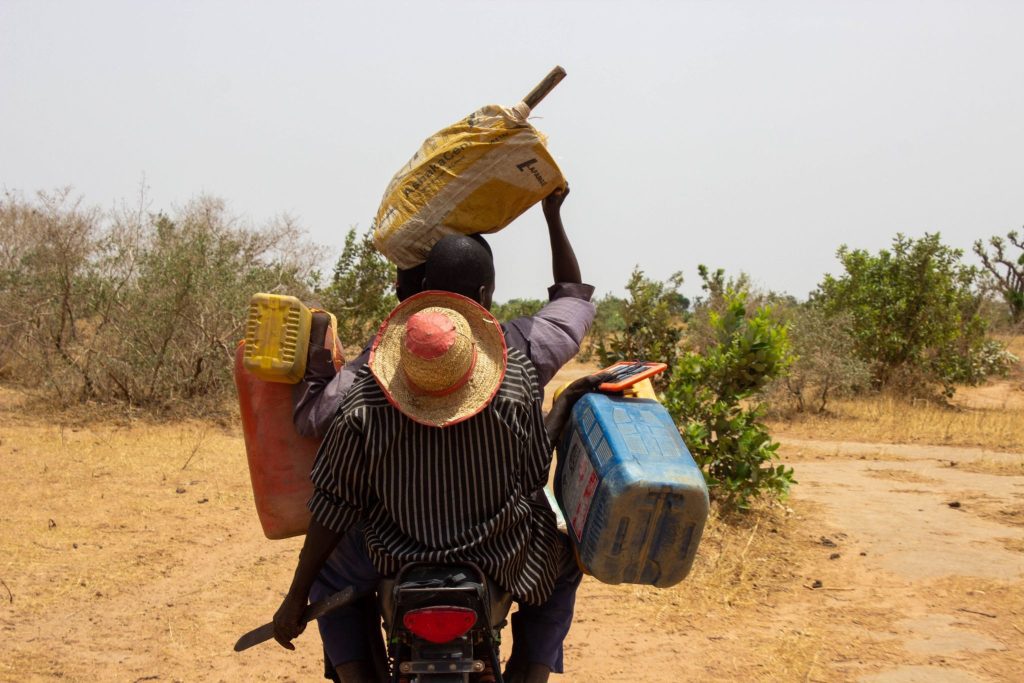
When Kaka Ali said those words over the phone on June 8, I nearly asked him to repeat himself. I had been speaking to him about farming and survival in northern Borno for nearly two years. Kumalia was where he was born, but it was also a place that most people had long stopped calling home.
The community is located within Monguno Local Government Area (LGA) in Borno State, northeastern Nigeria. The Boko Haram insurgency had emptied it in 2016, forcing residents to flee to Monguno town and Maiduguri, the state capital. The government never formally reopened the community. In the years that followed, its name surfaced mostly in conversations about what the insurgency had taken.
“Why would you go back there?” I asked.
“The negotiations did not go through,” Kaka replied.
I did not fully understand what he meant until weeks later.
On June 21, I reached him again. I learnt that he had returned to Monguno to attend the funerals of four friends who were killed the previous day by suspected Islamic State West Africa Province (ISWAP) terrorists while working on a farm near Kartari, a remote settlement close to Cross Kauwa town in Kukawa LGA, on the shores of Lake Chad. Twelve other farmers were also killed in the incident.
The men had travelled to Kartari from different parts of northern Borno, drawn by the search for land to cultivate after farming had been disrupted closer to home. That same day, in Zabarmari, a farming community in Jere LGA, another 11 farmers were reportedly killed. By then, Kaka’s explanation about Kumalia finally made sense.
The warning had come months earlier at the onset of cultivation in February, when farmers across parts of northern Borno began receiving warnings from ISWAP terrorists not to farm this season. The message spread among returning farmers and community leaders through word of mouth.
“They approached farmers who had gone to Kartari and told them we must not cultivate this year,” said Musa Abubakar, a farmer from Cross Kauwa. “They also informed community leaders in villages close to them, and those leaders passed the message to us in other towns,” he said.
According to Musa, farmers who wished to cultivate were instructed to relocate with their families to terror-controlled territories, locally known as Daula, and farm there instead. Many initially assumed it was another extortion attempt because for years, cultivating in parts of northern Borno had meant paying terror groups for access to land. In 2024, HumAngle documented how farmers in the region paid millions of naira in levies and so-called farming permits to ISWAP. This season, farmers pooled their money together, some contributing at least ₦50,000 each, hoping to negotiate their way back to their fields. However, the effort failed, and the warning held.
So they began looking elsewhere. Some moved toward the Lake Chad region. Others returned to abandoned communities. More than 100 farmers from Monguno, according to Kaka, relocated to Kumalia, where they erected makeshift shelters from sticks and dry grass to plant their crops. They plan to stay until the harvest season in November or December.
The women were not left behind either.
“My sister is there,” Kaka, the 30-year-old father of two, said. “Many women went with their children. The older ones trekked with their parents. The younger ones are carried on their backs or transported in push carts.”
Kaka’s older sister, Yabusam Ali, travelled with one of her children and left the others with their grandmother in Monguno. Other women made similar calculations, weighing which children could endure the walk and which would be safer left behind. Yabusam said conditions remain basic but manageable.
“There is drinkable water there,” she told HumAngle.
For now, that is enough. Kumalia has no schools, no health facilities, and no visible state presence. It is a settlement held together by necessity. Over the coming months, the community will once again have residents, not because it is safe, but because it has become the least dangerous option left.
File: A family riding to their farm on a motorcycle in rural Gombe in 2024. Photo: Al’amin Umar/HumAngle.
Across Borno, the farming ban, enforced through violence and the threat of it, is reshaping how rural families survive. Some have abandoned cultivation entirely. Others have confined themselves to plots within sight of military positions. A growing number are returning to communities the state had given up on, betting that the promise of a harvest is worth living beyond its protection. Together, these choices are accumulating into something larger than disrupted planting seasons: a food security crisis taking shape incrementally, in the daily calculations of people who can no longer be certain what the harvest will bring, or whether there will be one at all.
The consequences extend far beyond the communities where cultivation has been disrupted. Agriculture remains one of Nigeria’s largest employers and a critical source of food for millions of households. The World Bank estimates that nearly four in every five rural households in Nigeria depend on farming, while livestock rearing is especially common across the country’s northern regions. When insecurity forces farmers off their land, harvests decline, market supplies tighten, and food prices rise.
The Famine Early Warning Systems Network (FEWS NET), a food security monitoring and forecasting initiative, estimates that between 21 and 22 million people across northern Nigeria will require humanitarian assistance during the June-to-August lean season, driven by escalating conflict, lower-than-expected household food production, and constrained access to food. The Integrated Food Security Phase Classification (IPC) similarly projects that more than six million children across northern Nigeria will experience acute malnutrition this year, with conflict, displacement, and reduced access to food among the principal drivers.
Get our in-depth, creative coverage of conflict and development delivered to you every weekend.
Subscribe now to our newsletter!
Kaka had already made these calculations. “Are you not afraid of attack from the terrorists, or of being mistaken for one by troops?” I asked him. “We will die even if we don’t go,” he replied. “So, it is all the same.”
Flags on the farm
Just as Kaka mentioned, several farmers in northern and central Borno say the people who first heard the warnings were often those who had gone ahead of the rains to clear their fields.
In Monguno, Koso Abubakar said farmers preparing their land were approached and warned against cultivation. They returned to town carrying the news, and from there, the message spread from household to household. In Cross Kauwa, a farming and fishing community on the shores of Lake Chad, the warning reached those working near Kartari, a remote settlement under Kukawa LGA. Community leaders received it and relayed it to surrounding towns.
In Lassa, a farming community in Askira-Uba LGA in southern Borno, it arrived with violence. Andrew Adamu, a farmer there, said suspected terrorists attacked and flogged women they found working on their fields at the beginning of the season. “They said nobody should farm there,” he said. “They [the women] said they had mounted their flags on those lands.”
The flags, a territorial marker used by terror groups across the region to signal control, were understood immediately. Few people in Lassa are now willing to venture beyond the land immediately surrounding the town.
Musa, a farmer in Cross Kauwa, said the warning came with an additional condition in the northern Borno community. He said that farmers willing to cultivate were instructed to relocate permanently with their families to terror-controlled territories and continue to farm there while paying levies instead. The requirement to relocate permanently was new. The levies were not. But this time around, levy negotiations failed in some places.
Farmers handing over money to armed and masked terrorists in a rural setting. Illustration: Akila Jibrin/HumAngle.
However, in parts of southern Monguno, some farmers were reportedly permitted to cultivate after paying ₦50,000 each. The inconsistency stirred speculation that the restrictions reflected internal disagreements among ISWAP commanders rather than a unified policy.
“It was said that two Amirs controlling two farming villages had a dispute over farming fees,” Kaka explained. “The Amir controlling where we farm said he would not allow anyone to farm this season. The other Amir said farmers were welcome to cultivate in his territory after paying this year’s levy.”
HumAngle could not independently verify the claim.
When negotiations collapsed, the consequences began to accumulate. In Lassa, Andrew said, women were beaten while working on their farms. In Auno, Konduga LGA, a 55-year-old farmer was attacked and killed while working on his land earlier in February, according to residents. News of his death, Aja Bukar, another farmer, said, spread quickly through surrounding communities, confirming what many had hoped was merely a threat.
Then, on June 20, 15 farmers were killed near Kartari while working on their fields. Bashir Suleiman, a farmer from Doron Baga, said the victims included four farmers from Monguno, six from Kukawa town, three from Baga, and two from Cross Kauwa.
In Cross Kauwa, Musa said most farmers have stayed away from their fields since. The few still cultivating have been permitted by the military to plant low-growing crops, such as beans and groundnuts, within a fixed distance of the community’s defensive trench. Beyond that line, he said, most no longer believe the harvest is worth the risk.
The return to Kumalia
For the first time in nearly a decade, Kumalia has residents again. Not many, and not enough to resemble the farming community it once was before the insurgency emptied it in 2016, but enough to bring movement back to a place which has long given up — children’s voices have returned. Smoke rises from cooking fires in the morning. The fields are being planted. And temporary shelters made from sticks, ropes, and dry grass stand across parts of the settlement.
Getting there, however, is not easy. According to Modu Baluye, a farmer who also relocated to Kumalia, reaching the settlement takes five hours of walking over terrain most vehicles cannot cross. “We travel by foot,” he said. “There is no means of transportation except push carts.” The shelters, he said, are simple: stick frames with dry grass roofing, which offers little protection from rain or wind, but they are enough to house families for the months between planting and harvest.
A family working together in their field. Illustration: Akila Jibrin/HumAngle.
For years, displacement pushed families out of places like Kumalia and into towns where security forces could better protect them. Now, insecurity around farming is pushing some of those same families back, not into safety but into a different kind of exposure: too far from the state to be protected, yet close enough to armed groups to be noticed.
Communities across northeastern Nigeria have learned, often through grief, that living or farming in remote and ungoverned territories can attract a different kind of violence during military operations. Aerial surveillance, in vast terrains where terror groups move through civilian spaces, collect levies, and use local markets, must be able to distinguish between farmers and fighters. In places like Kumalia, unrecognised by the government, absent from any official resettlement record, populated by people living in makeshift shelters on cultivated open land, that distinction is not guaranteed.
In April 2026, reports showed that more than 30 civilians were killed when a Nigerian Air Force strike hit a village market in Jilli, a remote settlement between Gubio LGA in Borno State and Geidam LGA in Yobe State. Military authorities described it as an active terrorist enclave. Borno State Governor Babagana Zulum later acknowledged that the area’s market had been officially closed due to terrorist activity, yet civilians were among the dead. It was not the first such incident. In 2017, a military aircraft bombed a displaced persons camp in Rann, Kala-Balge LGA, killing more than 100 people including aid workers. And in 2024, HumAngle documented cases in which fishermen around Lake Chad were reportedly misidentified during military operations.
Farmers in Kumalia are aware of this history. It sits alongside the warnings from ISWAP, the distance from town, and the inadequacy of their shelters. It is part of what they weighed before they went.
The price of survival
Every morning before sunrise, Esther Danjuma sets up her stall on the roadside outside the Divisional Council Church (DCC) Internally Displaced Persons’ camp in Shuwari, Maiduguri. She heats cooking oil, prepares her bean paste, and waits for the first customers. By the time most people in Maiduguri are awake, she is already working.
Esther Danjuma fries kosai every morning outside her settlement in Maiduguri. The farming restrictions this season led her to switch professions. Photo: Al’amin Umar/HumAngle.
The 26-year-old was displaced from Amuda in Gwoza LGA years ago. Until recently, she measured time by farming seasons, not calendar months. Before the warning reached Chabbal, a farming community in Magumeri LGA where she and thousands of others from the DCC displacement camp cultivate each season, she grew sorghum, sesame, and groundnuts. Last year, she harvested five bags each of sorghum and sesame and three bags of groundnuts. This year, she planted nothing.
“I never thought I would sell kosai,” she told HumAngle. She earns at least ₦3,000 daily. This helps her care for herself and her elderly grandmother at the camp, she said.
A few shelters away from Esther lives Andrawus Yakubu. While Esther replaced farming with a small business, Andrawus has replaced it with whatever work presents itself each day. On some days, he works at construction sites. On other days, he digs pits, cuts logs, or takes on manual labour wherever opportunities arise. The work is irregular and physically demanding, but Andrawus says he cannot afford to be selective. “I will do whatever legal thing that my strength can do,” the father of nine told HumAngle.
For years, Andrawus supplemented his household income through farming in Limanti, a rural community in Konduga LGA. Like many displaced residents of the DCC Shuwari camp, he relied on the farming season to feed his family and reduce their dependence on the market. Last season, he cultivated four hectares of land, harvesting five bags of millet, 12 bags of groundnuts, and eight bags of beans. This season, however, the farming restrictions have forced him to abandon farming.
Andrawus has replaced farming with whatever work presents itself each day. Photo: Al’amin Umar/HumAngle.
Others have chosen to leave Borno altogether. In Auno, Aja Bukar said the killing of a farmer earlier this year convinced many residents that remaining in the area was no longer worth the risk. Some households, including his, have since relocated to Damaturu in neighbouring Yobe State, hoping to find safer opportunities elsewhere.
These different responses – the roadside stall, the day labour, and relocation to another state – all lead back to the same question: what can replace a harvest, if anything?
Agriculture remains the backbone of rural livelihoods across Borno and the wider North East. In Borno, farming is not only an occupation but also a source of sustenance for families; it is how they feed themselves, pay school fees, buy medicine, and prepare for the long dry season. Yet years of conflict have steadily eroded that foundation, limiting access to farmland, disrupting markets, and deepening food insecurity.
When farmers abandon their fields, the consequences ripple far beyond the households directly affected: Harvests decline, local markets receive fewer supplies, and children and other vulnerable groups bear the greatest nutritional burden. The effects are felt not only in the villages where cultivation stops, but across communities that rely on those harvests for food and trade.
A boy sits, selling grain at the Baga Road grain market in Maiduguri. Humanitarian organisations project that food prices may skyrocket, driving food insecurity across Borno and the wider northern region due to increasing restrictions on farming and attacks on farmers. Photo: Al’amin Umar/HumAngle.
The region has been here before. In 2023, HumAngle documented how repeated attacks on farming communities forced many residents to abandon cultivated fields, leaving crops worth millions of naira to wither or be destroyed. A year later, the trend persisted, contributing to worsening food insecurity and malnutrition among vulnerable households, particularly children.
What is unfolding this season is not unique to Borno. Across the North West and North Central, terror groups have used similar tactics to control access to rural farmland, taxing farmers, threatening communities, and displacing those who resist. In Zamfara, HumAngle reported in June that farmers were displaced despite paying millions in levies. Another report the same month showed that 17 farmers were killed in Maradun while working their fields. In 2024, Reuters reported from Katsina that attacks on farmers were driving up food prices. According to SBM Intelligence, a Lagos-based consultancy, 1,356 farmers have been killed across Nigeria since 2020.
The scale of what is at stake is significant. UNICEF estimates that around three million children may require treatment for severe wasting in 2026, with conflict-affected northeastern states carrying a disproportionate share.
Across Borno, people are making decisions whose consequences they cannot yet fully see.