news

MiG-29 Transfer To Ukraine Halted By Poland Over Claimed Drone Snub

Poland won’t transfer additional MiG-29 Fulcrum fighters to Ukraine because Kyiv won’t provide drone production technology information, the country’s defense minister and deputy prime minister said. The move represents a pivot from policies of the previous Polish government and comes amid worsening relations between Kyiv and Warsaw.

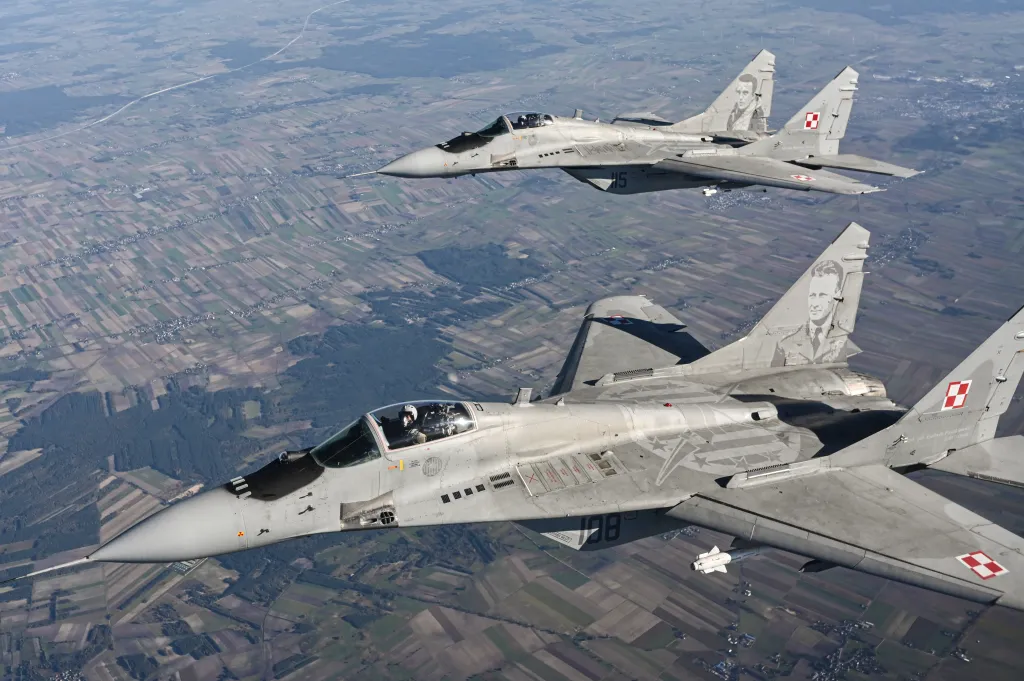
As we have previously reported, under former President Andrzej Duda, Poland donated 14 of its MiG-29s to Ukraine, becoming the first country to commit to supplying combat jets to Kyiv. However, under new Polish President Karol Nawrocki, who was elected last August, the country is now seeking something tangible in return for the Fulcrums.

“I proposed what I believe was a very partnership-based approach. MiGs in exchange for drones,” Władysław Kosiniak-Kamysz, who serves as defense minister and deputy prime minister, told the Polish Polsat News outlet. “The Ukrainians initially agreed, but they did not honor this arrangement, so there will be no MiGs for Ukraine because Poland does not have drones or the capability to use them.”

TWZ cannot independently confirm the Polish defense minister’s claims.

LASK, POLAND - OCTOBER 12: Mikoyan MIG-29 fighter jets of the Polish Air Force take part in a NATO shielding exercise at the Lask Air Base on October 12, 2022 in Lask, Poland. NATO's Allied Air Command, the Polish Air Force and the United States Air Force demonstrated the modern aircraft capabilities of Polish F-16s and the U.S. F-22s. As the Russian Invasion of Ukraine continues, NATO member Poland has been investing in new military equipment and various NATO allies' troops are now stationed in the country. (Photo by Omar Marques/Getty Images)
Poland has halted the transfer of Mikoyan MiG-29 Fulcrum fighters to Ukraine. (Photo by Omar Marques/Getty Images) Omar Marques

The Polish defense minister lauded Ukraine’s defense technology.

“Ukraine has such significant capabilities in the field of drones that, in return for the military equipment it has received, it could have shared its know-how with Poland and provided partial access to its technologies,” he said.

Kosiniak-Kamysz added that he was not criticizing the previous administration’s policies toward Ukraine.

“I’m not going to bash them over this issue; that’s far from my intention,” he told Polsat. “They did the right thing—in fact, I’d go further: I would have done the same. They acted correctly, and Ukraine was in a much more difficult situation back then.”

The Polish move echoes U.S. President Donald Trump’s stance on Ukraine and the NATO alliance writ large. The American leader has frequently criticized the Biden administration for giving Ukraine military aid with no compensation and NATO for not doing enough to pay for its own defense.

Kosiniak-Kamysz’s pronouncement about halting the Fulcrum transfer follows Nawrocki’s confirmation last December that Poland would transfer the additional MiG-29 fighter jets to Ukraine in exchange for counter-drone systems.

“After the unnecessary and unclear public uproar surrounding this issue—unfortunately, public opinion has been somewhat misinformed about this matter—we are seeking a symmetrical strategic partnership,” Nawrocki said during a press conference with Ukrainian President Volodymyr Zelensky. “This exchange of MiGs for anti-drone systems does not contradict our policy.”

It is unclear exactly what drone technology Poland was seeking or what Ukraine refused to provide. Ukraine has yet to comment on the matter. However, Kosiniak-Kamysz’s comments come as Polish-Ukrainian relations are spiraling downward.

Earlier this month, Nawrocki stripped Zelensky of the Order of the White Eagle, Warsaw’s top award, escalating a row between the allies over the memory of WWII.

“Zelensky had infuriated Warsaw this month by naming a military unit after an insurgent army that took part in massacres against Poles in WWII,” AFP reported.

For much of this conflict, Poland has been one of Ukraine’s staunchest allies, serving as a logistics hub and providing military assistance. As we noted earlier in this story, Poland’s initial donation of MiG-29s opened the door for the transfer of dozens of others from several NATO nations. That was followed by the eventual provision of F-16 Vipers and later French Mirage 2000 fighters.

Despite receiving more modern fighters: “Zelensky has noted that Ukraine requires MiG-29 aircraft because its pilots are already trained to operate them,” according to the Ukrainian United24 media outlet. “He added that transitioning to F-16 fighters requires lengthy retraining, temporarily reducing combat readiness, whereas MiG-29s would allow Ukraine to maintain operational air capabilities more immediately.”

Regardless of the type, Ukraine has a great need for more combat jets. Its air force has lost at least 88 of various kinds since the start of the war, according to the Oryx open-source tracking group. Those figures are likely higher because Oryx only tabulates losses for which it has visual proof.

The list includes at least 38 MiG-29s, 20 Su-27 Flankers, four F-16s and a Mirage. Ukraine lost two more aircraft in recent days.

A MiG-29 Fulcrum went down during a nighttime combat mission in the central Poltava region on June 27, the Ukrainian Air Force reported, according to the Kyiv Post. Earlier this month, a Su-24M bomber crashed, resulting in the deaths of both crew members, the newspaper noted.

Meanwhile, as the Ukraine-Poland spat simmers, Kyiv has inked a number of deals to share defense technology with Arab states in the wake of the U.S.-Israeli war on Iran. Tehran has struck several Arab nations with missiles and drones in response to Operation Epic Fury, and they in turn reached out to Ukraine, which has gained air defense expertise after battling waves of Russian attacks for more than four years.

Earlier this week, Ukraine and Kuwait signed a bilateral defense cooperation agreement paving the way for joint defense projects, military-technical cooperation, and collaboration between the two countries’ defense industries.

As we noted in a prior story, during a tour of the Middle East earlier this year, Zelensky said he inked defense cooperation agreements with Saudi Arabia, UAE and Qatar, and had discussions with Jordan.

It is unclear how much these deals affected Poland’s MiG-29 decision, if at all. Nor is it known if there will be a cascading fallout on other drone deals Zelensky is trying to engineer with the U.S. and other nations. Regardless, while an additional 14 Fulcrums won’t change the course of the war for Ukraine, Poland’s refusal to provide them is another sign that a once-close relationship is now troubled.

Contact the author: howard@twz.com

Howard is a Senior Staff Writer for TWZ. He writes frequently about conflict, focusing heavily on the Middle East and Ukraine, and interviews with military and intelligence officials and industry leaders from around the globe. He lives near Tampa, Florida, home of U.S. Central Command, U.S. Special Operations Command.


Source link

LeBron James and Lakers part ways

LeBron leaving Lakers is a good thing

From Bill Plaschke: Of all the calculated maneuvers by LeBron James during his eight years with the Lakers, he saved his smartest for last.

He left before the door could hit him in the butt.

He knew the Lakers didn’t want him back, so he skipped out before they had a chance to say goodbye.

He leaked the news alone, before the Lakers could publicly confirm, because he wanted to sell that this was his decision, when it absolutely was not.

This was not his idea. This was not his call. This was the Lakers saying, enough is enough. This was the Lakers saying, we want our team back.

This was arguably the greatest player in basketball getting the message and getting out before they threw him out

Officially, on Tuesday, James informed the Lakers that he’s going to leave them as a free agent and finish his career elsewhere.

Unofficially, yay!

Continue reading here

LeBron James and Lakers share gratitude as he leaves team, look ahead to what’s next

Luke Kennard leaves Lakers for two-year deal with Phoenix Suns

Go beyond the scoreboard

Get the latest on L.A.’s teams in the daily Sports Report newsletter.

Clippers send Kawhi Leonard to Toronto

From Joaquin Ruiz: The Kawhi Leonard era is over in Los Angeles.

A deal to send the seven-time NBA All-Star forward back to Toronto, where he won his second NBA title, has been finalized, according to a person with knowledge of the situation who is not authorized to speak publicly on the matter.

The trade — which will net the Clippers All-Star forward Brandon Ingram, shooting guard Gradey Dick, two first-round draft picks, a pick swap and two second-round picks — marks the end of another promising-but-empty chapter in the franchise’s ringless history.

Continue reading here

World Cup: Mexico advances to Round of 16

From Eduard Cauich: Mexico once again enjoyed a night of celebration with its fans, this time after defeating an old nemesis — the knockout stage of the World Cup.

El Tri won its first knockout match at a World Cup since 1986, beating Ecuador 2-0 on Tuesday night at the majestic Azteca Stadium packed with 80,824 fans.

From 1994 to 2018, Mexico failed to win a World Cup knockout game and, in 2022, failed to advance past the group stage — its worst showing at a World Cup since 1978.

“Bringing joy to the fans is the best thing that can happen to us,” Mexico coach Javier Aguirre said after the win. “Our duty is to give it our all on the field. Our duty is to defend our crest and represent our country with dignity.”

Thanks to an expanded 48-team World Cup format with a knockout round of 32 teams and a formidable home-field advantage, Mexico achieved a goal that had seemed impossible.

Continue reading here

For Sebastian Berhalter, a shot with the U.S. national team was well worth the wait

Tuesday’s World Cup results

Round of 32
Norway 2, Ivory Coast 1
France 3, Sweden 0
Mexico 2, Ecuador 0

Today’s World Cup TV schedule

All times Pacific
9 a.m., England vs. DR Congo, Fox, Telemundo
1 p.m., Belgium vs. Senegal, FS1, Telemundo
5 p.m., U.S. vs. Bosnia-Herzegovina, Fox, Telemundo

World Cup round of 32 schedule, results

Round of 32 results
Canada 1, South Africa 0
Brazil 2, Japan 1
Paraguay 1, Germany 1 (Paraguay wins on PK’s, 4-3)
Morocco 1, Netherlands 1 (Morocco wins on PK’s, 3-2)
Norway 2, Ivory Coast 1
France 3, Sweden 0
Mexico 2, Ecuador 0

All times Pacific
Wednesday
England vs. Congo DR, 9 a.m., Fox, Telemundo
Belgium vs. Senegal, 1 p.m., FS1, Telemundo
U.S. vs. Bosnia-Herzegovina, 5 p.m., Fox, Telemundo

Thursday
Spain vs. Austria, noon, Fox, Telemundo
Portugal vs. Croatia, 4 p.m., Fox, Telemundo
Switzerland vs. Algeria, 8 p.m., FS1, Telemundo

Friday
Australia vs. Egypt, 11 a.m., Fox, Telemundo
Argentina vs. Cape Verde, 3 p.m., Fox, Telemundo
Colombia vs. Ghana, 6:30 p.m., Fox, Telemundo

Round of 16 schedule

All times Pacific
All games on Fox and Telemundo

Saturday
Canada vs. Morocco, 10 a.m.
Paraguay vs. France, 2 p.m.

Sunday
Brazil vs. Norway, 1 p.m.,
Mexico vs. England or DR Congo, 5 p.m.

Monday
Portugal or Croatia vs. Spain or Austria, noon
U.S. or Bosnia-Herzegovina vs. Belgium or Senegal, 5 p.m.

Tuesday, July 7
Argentina or Cape Verde vs. Australia or Egypt, 9 a.m.
Switzerland or Algeria vs. Colombia or Ghana, 1 p.m.

Dave Roberts gets 1,000th win as manager

From Bill Shaikin: For Dave Roberts, it’s 1,000 down and Cooperstown to go.

Victory No. 1: 15-0 over the San Diego Padres in 2016, with vintage Clayton Kershaw on the mound and Adrián González in the cleanup spot. Amid the postgame handshakes, González showered Roberts with bubble gum.

“There was no stress,” Roberts said. “It was such a nice soft landing.”

Victory No. 1,000: 9-3 over the Athletics in Sacramento on Tuesday with home runs from Tommy Edman and Miguel Rojas, and with Justin Wrobleski striking out a career-high 11 to become the Dodgers’ first 10-game winner.

Pretty soft landing too, and well worth a celebration. Roberts doffed his cap in gratitude for a spirited postgame ovation from the fans here, almost all of them Dodgers fans. Inside the clubhouse, Rojas and Freddie Freeman led a champagne and tequila toast.

Continue reading here

Walter Alston, Dave Roberts and everyone in between: The 10 managers in L.A. Dodgers history

Dodgers box score

MLB standings

Angels lose to Mariners

Julio Rodriguez had three hits and scored twice, Bryan Woo took a shutout into the seventh inning and the Seattle Mariners put together a five-run sixth Tuesday night to beat the Angels 8-3.

Rodriguez and Colt Emerson both had three of Seattle’s 13 hits. Randy Arozarena and Cole Young scored two runs apiece.

Woo (7-6) gave up just four hits and struck out five in 6 1/3 innings. The Angels’ first two runs in their three-run seventh were charged to him after he gave way to reliever Eduard Bazardo. That ended Woo’s streak of home shutout innings at 32 1/3, which stretched over a span of five games dating to May 6 against Atlanta.

Continue reading here

‘He’s a friendly killer.’ How Angels’ José Soriano balances competitive fire, mentorship

Angels box score

MLB standings

Serena Williams loses at Wimbledon

From Chuck Schilken: Experience took on youth Tuesday morning at Wimbledon’s Centre Court as 44-year-old tennis legend Serena Williams played her first singles match in nearly four years, against 20-year-old Australian Maya Joint.

Advantage: youth, as Joint pulled out a 6-3, 6-7 (6), 6-3 win over the 23-time Grand Slam champion, and advances to play 29-seed Alexandra Eala of the Philippines — a 6-1, 6-2 winner over Renata Zarazúa of Mexico — on Thursday.

“She has such an aura. She’s such a legend,” Joint said of Williams during an on-court interview after her first-ever Wimbledon win. “And this court has so many huge names that have played on it. I’ve been dreaming about this moment since I was a little kid, so this is pretty crazy.”

Continue reading here

This day in sports history

1903 — Maurice Garin wins the first stage of the first Tour de France bicycle race. Garin finishes 55 seconds ahead of Emile Pagie. The first stage, from Paris to Lyon, is 467 kilometers long, and takes 17 hours and 45 minutes, riding both day and night. Only 37 riders of 60 are able to complete the day’s race.

1920 — Suzanne Lenglen of France becomes the first player to win three Wimbledon titles in one year, taking the singles, doubles and mixed doubles.

1932 — Helen Moody wins her fifth women’s singles title in six years at Wimbledon, defeating Helen Jacobs 6-3, 6-1.

1938 — Don Budge defeats Henry Austin 6-1, 6-0, 6-3 to win the men’s singles title and sweep the singles, doubles and mixed doubles titles at Wimbledon for the second straight year.

1947 — Basketball Assn. of America (BAA), which later became the National Basketball Assn. (NBA), holds its inaugural college player draft.

1951 — Beverly Hanson wins the Eastern Open by three strokes over Babe Zaharias in her first start on the LPGA Tour. Hanson is the only golfer to win a tournament in her first pro start.

1961 — Mickey Wright beats defending champion Betsy Rawls by six strokes to win the U.S. Women’s Open.

1977 — Britain’s Virginia Wade wins the singles title on the 100th anniversary of Wimbledon, defeating Betty Stove 4-6, 6-3, 6-1.

1990 — Cathy Johnston completes a wire-to-wire performance, beating Patty Sheehan by two strokes to win the LPGA du Maurier Classic.

1995 — The NBA locks out its players at 12:01 a.m., the first work stoppage in league history.

1997 — Nevada Athletic Commission suspends Mike Tyson indefinitely and withholds $20-million purse for biting Evander Holyfield’s ear during their heavyweight title fight on June 28.

2007 — Cristie Kerr wins the U.S. Women’s Open by making only two bogeys over her final 45 holes. Kerr finishes at 5-under 279 for her 10th career victory.

2011 — The NBA locks out its players, a long-expected move putting the 2011-12 season in jeopardy.

2012 — Spain wins its third straight major soccer title, beating Italy 4-0 in the European Championship final in Kiev, Ukraine. The Spanish, who won the Euro 2008 title and World Cup title in 2010, posts the largest score in a Euro final.

2012 — Tiger Woods wins the AT&T National at Congressional in Bethesda, Md. for the 74th win of his career. That moves him past Jack Nicklaus into second place on the tour list, eight short of Sam Snead.

2018 — NBA superstar LeBron James agrees to a 4-year, $154-million deal with the Lakers, moving from Cleveland Cavaliers.

2018 — Park Sung-hyun wins the PGA Women’s Championship at Kemper Lakes Golf Course in a playoff with Nasa Hataoka and Ryu So-yeon.

2018 — David Toms wins the Men’ US Senior Open at Broadmoor Golf Course by one stroke over Miguel Angel Jimenez, Jerry Kelly and Tim Petrovic.

Compiled by the Associated Press

This day in baseball history

1910 — Comiskey Park — then known as White Sox Park — held its first major league game, with the St. Louis Browns beating Chicago 2-0.

1917 — Fred Toney of the Cincinnati Reds pitched complete-game victories in a doubleheader against the Pittsburgh Pirates. Toney threw a three-hitter in each game for 4-1 and 5-1 wins, setting a record for the fewest hits given up in a doubleheader by a pitcher.

1920 — Walter Johnson of the Washington Senators defeated the Boston Red Sox 1-0 at Fenway Park with the season’s only no-hitter.

1925 — Hack Wilson of the New York Giants hit two home runs in the third inning of a 16-7 victory over the Philadelphia Phillies in the second game of a doubleheader. Wilson also doubled twice during the game.

1941 — Joe DiMaggio of the New York Yankees singled off Boston’s Jack Wilson in the fourth inning, tying Willie Keeler’s hitting streak of 44 games.

1951 — Bob Feller of the Indians pitched his third career no-hitter, beating the Detroit Tigers 2-1 in the first game of a doubleheader at Cleveland.

1990 — Andy Hawkins of the New York Yankees pitched the sixth no-hitter in the majors this season and the third in less than 48 hours, but lost 4-0 to the Chicago White Sox on two outfield errors in the eighth inning.

1997 — Detroit’s Bobby Higginson homered in the first inning against the New York Mets, tying a major league record by homering in four consecutive at-bats over two games. Higginson, who struck out looking in his next at-bat, became the 23rd player since 1900 to accomplish the feat and the fourth Tiger.

2009 — One run was enough for a victory for three National League teams, the first time in 33 years there were three 1-0 games in one league on the same day. The Mets, Dodgers and Reds came away with 1-0 victories. The last time there were three 1-0 games in one league was Sept. 1, 1976, in the NL.

2009 — Hanley Ramirez extended his RBI streak to 10 games in the Florida Marlins’ 5-3 victory over the Washington Nationals. Ramirez hit a two-run double in the third inning to become the first shortstop in NL history with an RBI streak of double-digit games.

2013 — Andy Pettitte passes Whitey Ford for the most strikeouts in New York Yankees history when he records his 1,957th in the Yankees’ 10-4 win over the Twins. The win goes to reliever Joba Chamberlain, his first of the year, as he benefits from a three-run outburst off reliever Jared Burton in the 8th. The Yankees then add four runs in the top of the 9th as they end a five-game losing streak.

2014 — The Cleveland Indians executed an unorthodox triple play in the fourth inning against the Dodgers that required two video replay reviews to sort out. With runners on first and third, Adrián González lifted a fly ball to left fielder Michael Brantley, who threw out Dee Gordon at the plate. Catcher Yan Gomes then fired to second baseman Jason Kipnis for the tag on Yasiel Puig as he slid headfirst. Cleveland manager Terry Francona challenged the original safe call at second and got the play overturned after a replay delay that lasted 1 minute, 29 seconds. Dodgers skipper Don Mattingly then challenged the call at the plate, but that call stood after another wait of 1 minute, 34 seconds. Cleveland went on to a 10-3 win.

2015 — Carlos Carrasco came within one strike of throwing the Cleveland Indians’ first no-hitter since 1981, giving up an RBI single to Joey Butler over leaping second baseman Jason Kipnis’ glove in an 8-1 victory over the Tampa Bay Rays.

2019 — Angels pitcher Tyler Skaggs is found dead in his hotel room a few hour before the team’s scheduled game with the Texas Rangers. Police confirm that no foul play is suspected.

Compiled by the Associated Press

Until next time…

That concludes today’s newsletter. If you have any feedback, ideas for improvement or things you’d like to see, email me at houston.mitchell@latimes.com. To get this newsletter in your inbox, click here.
Source link

Nearly three in four US scam victims report mental health harm, poll finds | Crime News

Gallup survey says the financial toll of scams in the United States in 2025 was estimated at $68bn.

A tenth of adults in the United States directly or indirectly experienced a scam last year, adversely affecting their financial and emotional wellbeing, according to a new Gallup poll.

The report by Gallup released on Tuesday indicated that 6 percent of US adults were personally scammed in 2025, while 4 percent experienced a scam indirectly, with someone in their household affected.

Recommended Stories

list of 3 itemsend of list

Scams are a widespread problem in the country, with Gallup noting that they can leave victims more cautious, less likely to shop online, and more hesitant to engage with unfamiliar businesses.

“The data suggest the cost of scams extends beyond what can be measured in dollars, as nearly three in four victims say the experience negatively affected their mental health or wellbeing,” the report stated.

The poll suggested that people from lower-income households were more likely than wealthier people to report being scammed.

Adults with less than a bachelor’s degree were more likely to report being scammed than those with a bachelor’s degree or higher – 7 percent versus 4 percent, Gallup found.

Black (8 percent) and Hispanic (9 percent) adults were also more likely than white adults (5 percent) to say they had been scammed. However, victimisation rates did not differ by age, the report stated.

In more than half of the scams reported to Gallup, people lost $500 or less. However, the average loss per scam was $5,578, as some scams reached tens of thousands of dollars, the report said.

In total, the financial toll of scams in 2025 was estimated at $68bn, amounting to an average of $186m stolen each day.

One in five adults who were personally victimised or live in a household that was scammed in 2025 reported that it created a severe financial hardship for their household, with households earning less than $80,000 annually hit harder.

Emotional damage from scams, however, was more widespread, the survey indicated.

Among adults in households affected by scams, more than a quarter (28 percent) said the experience had a very negative impact on their mental health or wellbeing, while a further 45 percent describe the impact as moderately negative. Overall, nearly three-quarters (73 percent) of people reported that the scam adversely affected their mental health or wellbeing.

The emotional toll was also pervasive among those who live with someone who was scammed, the survey suggested.

The poll also indicated that the lifetime prevalence of being scammed is much higher than the 6 percent of people who were in 2025. Nearly a quarter (24 percent) of adults report having been scammed at some point in their lives, including 10 percent who said that they had fallen victim multiple times.

“At a time when institutional trust in the US is already weak, the prevalence of scams represents not just a personal financial threat, but a broader erosion of confidence in the businesses and systems used in everyday life,” the report said.

Gallup surveyed 5,173 US adults between January and February of this year.

Source link

UK Sacrifices Its Future Destroyer As Part Of Massive Bet On Drones Across Its Forces

Uncrewed systems will be at the heart of the UK Armed Forces in the future, under a more than $6.6-billion initiative that looks to transform all three services and the way they fight. Perhaps most dramatically, the new defense plan will see the Royal Navy sacrifice its future destroyer for a “hybrid,” distributed concept, with autonomous vessels being paired with crewed ones. But there are equally far-reaching measures set to reconfigure the British Army and Royal Air Force (RAF) around uncrewed and autonomous capabilities, some of which remain very high-risk as they are still deep or even early in development.

In a speech today, U.K. Prime Minister Keir Starmer set out his government’s long-awaited Defense Investment Plan. The aim of this is nothing less than “keeping the country safe for years to come,” the government said, and for this, the UK Armed Forces will lean heavily on autonomous systems. Most of these don’t currently exist in physical form, at least as far as we know. At the same time, the effort stresses the rapid fielding of capabilities. This illustrates just how ambitious, and risky, the plan is.

The Defense Investment Plan provides a budget of more than £5 billion ($6.6 billion) over four years just for drones and related capabilities. This is part of a much larger overall spend on defense, amounting to £298 billion ($395 billion) over the same period. This sum also includes £15 billion ($20 billion) of additional spending on top of last year’s Spending Review.

By the end of the decade, Starmer asserted, the proportion of U.K. GDP spent on defense will be higher than at any time during the last 30 years and is in line with NATO ambitions to reach a level of 3.5 percent of GDP.

The government points to the conflicts in Ukraine and Iran, specifically, as evidence of the need for a “drone transformation.”

“Drones are rapidly reshaping warfare, with cheap systems destroying high-value targets and innovation cycles measured in weeks, not years,” the government said, in announcing the plan. “Ukraine uses roughly 200,000 drones a month to defend itself from Russia’s barbaric invasion, while at the height of the Iran conflict, 700 offensive drones were being launched per day,” it adds.

Royal Navy

The changes forecast for the Royal Navy have so far garnered the most attention.

As part of a previously announced plan to create a so-called “Hybrid Navy,” the service will receive four new types of uncrewed vessels that will operate in conjunction with crewed warships and aircraft.

Of these new vessels, the Type 91 will be an uncrewed missile platform, serving as a ‘floating magazine’ to increase the overall firepower of the fleet. A combination of air defense, long-range land attack, and anti-ship missile capabilities seems likely, although any armament fit will likely be readily changeable and highly modular. The lessons of the conflict in the Red Sea provided dramatic evidence of how quickly missile cells can be depleted in an intense air-warfare environment.

Also uncrewed, the Type 92 vessels are described as “sense platforms” and will have a primary anti-submarine warfare (ASW) tasking. As such, they will ensure the Royal Navy’s sensor reach is extended further into the North Atlantic, where the Type 92s will support previously ordered frigates in the hunt for Russian submarines.

Pictured: Image shows Type 23 Frigate HMS Somerset escorting a Russian submarine through the English Channel. HMS SOMERSET ESCORTS RUSSIAN SUBMARINE THROUGH THE ENGLISH CHANNEL On Saturday 6th May 2017, HMS Somerset, a Type 23 Frigate was escorting a Russian Submarine through the English Channel. The Russian Submarine which had been deployed was transiting through the English Channel. A Merlin helicopter from 820 Naval Air Squadron based at RNAS Culdrose met with the Frigate, Submarine and support tug south west of the Isle of Wight before returning to base.
The Royal Type 23 frigate HMS Somerset escorting a Russian submarine through the English Channel. Crown Copyright LPhot Dan Rosenbaum

The Type 93 is defined as an extra-large uncrewed underwater vessel and is intended as an adjunct to crewed hunter-killer submarines. They will carry both sensors and weapons (presumably torpedoes) to help search and destroy enemy submarines. This is an area in which the Royal Navy has been struggling particularly, with significant gaps in its fast-attack submarine force due to limited availability.

Finally, the Type 94 is another uncrewed sense platform, but is optimized for air defense missions. It will use its sensors to look for aerial threats on behalf of both the fleet and in support of homeland missions.

The Types 91 and 94 will eventually be tied together by at least six Common Combat Vessels, which will form part of a networked Maritime Air Defense system. Arriving in service in the 2030s, the crewed Common Combat Vessels will serve as the “brains” behind this architecture, and the overall system will eventually take over the air defense tasking currently handled by the Type 45 destroyers.

25 May 2026 - HMS Dragon (bottom) conducting Replenishment at Sea with French Navy Ship Jacques Chevallier-class LSS (top). HMS Dragon is currently operating in the Middle East ahead of her tasking to support freedom of navigation and ensure UK assets are safe in the region. HMS Dragon has embedded with the French CSG as part of the multinational coalition to support freedom of navigation and ensure the Strait of Hormuz are opened and remain safe for Merchant Vessels.
The Type 45 destroyer HMS Dragon (bottom) conducting replenishment at sea while operating in the Middle East. Crown Copyright LPhot Helayna Birkett

The Maritime Air Defense system and the Common Combat Vessels, which are widely assumed to be roughly frigate-sized vessels, supersede earlier plans for the new Type 83 destroyer. This was previously expected to replace the Type 45 in the late 2030s, although for some time now its future had appeared threatened by increasing Admiralty interest in ‘arsenal ship’ concepts like the Type 91.

The Hybrid Carrier Air Wing outlined in the Defense Investment Plan is something we have discussed before.

In its last Strategic Defense Review, the U.K. Ministry of Defense introduced it as follows:

“The Royal Navy must continue to move towards a more powerful but cheaper and simpler fleet, developing a ‘high-low’ mix of equipment and weapons that exploits autonomy and digital integration. Carrier strike is already at the cutting edge of NATO capability, but much more rapid progress is needed in its evolution into ‘hybrid’ carrier air wings, whereby crewed combat aircraft (F-35B) are complemented by autonomous collaborative platforms in the air, and expendable, single-use drones. Plans for the hybrid carrier air wings should also include long-range precision missiles capable of being fired from the carrier deck.”

F-35Bs launch from HMS Prince of Wales to take part in NATO Exercise Ramstein Flag 2026. Crown Copyright PO Phot Chris Sellars

While there is no further mention of the deck-launched long-range precision missiles at this point, the Defense Investment Plan does note that Project Pantheon will serve as the development effort for the Hybrid Carrier Air Wing and will include trials of unnamed jet-powered drones alongside the F-35B.

While not referred to specifically, the Royal Navy has already outlined its ambition for ‘cat and trap’ drone operations aboard U.K. carriers, which is known as Project Ark Royal.

If realized, the project will see the two Queen Elizabeth class carriers start to operate drones that can undertake a variety of missions and then increasingly heavier, complex, and higher-performance ones. Later on, full catapult-assisted takeoff but arrested recovery (CATOBAR) capability could also add fixed-wing crewed aircraft, as we have explored in the past.

Larger fixed-wing drones are an aspiration that the Royal Navy is already working toward under Project Vixen, which you can read more about here.

As we have discussed in the past, there are many technological hurdles ahead as the Royal Navy looks to introduce carrier-capable drones. Beyond the launch and recovery systems, it will also need to develop control stations, datalinks, unique procedures, and much more to ensure the drones can be safely and effectively integrated within the carrier air group, for example. Even working out the intricacies of deck handling and flow integration involving drones combined with crewed fixed-wing jets and helicopters will be a considerable effort.

Project Pantheon certainly looks like it will move all of this ahead, although it should be noted that the size of the jet-powered drones for the program has not been stated. Already, the Royal Navy has conducted trials involving smaller, jet-powered drones, with the QinetiQ Banshee Jet 80+, best known as a target drone, being launched from HMS Prince of Wales in 2021. Even the Banshee could provide a suitable platform for a rapidly introduced decoy or one-way attack munition.

Banshee Jet 80+ drones on the flight deck of HMS Prince of WalesCrown Copyright

The Royal Navy’s elite amphibious and special operations-capable light infantry force, the Commandos, are also earmarked for further investment including “new high-speed boats and the latest drone and autonomous technology.”

Less surprising was the government’s commitment to strengthen the U.K.’s nuclear deterrent, including allocating more than £63 billion ($83 billion) over the next four years to fund the four Dreadnought class ballistic missile submarines and the SSN-AUKUS nuclear attack submarines, as well as a new warhead for British Trident submarine-launched ballistic missiles (SLBMs).

British Army

Moving on to the British Army, this service will benefit from more investment into “inexpensive expendable autonomous systems and loitering munitions.” This will include around $66 million boost over the next 12 months for the Army’s Rapstone program, which will pay for additional first-person view (FPV) and interceptor drones.

Pictured: PUMA AE 2 Drone, a Fixed Wing UAV is launched during a tactical training exercise by a 32 REGT Gunner, while another soldier fly’s the device with a laptop and controller. The Puma is just over 4½ft long, with a wingspan of 9ft, and is designed to fly for up to two hours carrying out reconnaissance and intelligence gathering missions over sea or land. The drone can monitor an area larger than the size of Greater Manchester during its flights, feeding back real-time footage to help soldiers make accurate tactical decisions. Personnel from the Royal Artillery, test a suite of cutting-edge equipment at Sennybridge training area, including a digital communications hub that allows observation posts, HQs and joint fires cell to receive and see the same information feeds simultaneously and talk directly to strike assets including heavy artillery, rockets, mortars and aircraft. Interactive on-screen graphics with integrated ISTAR functionality at all levels allows for agile offensive and defensive manoeuvres. The live data feed can include outputs from sonic and radar artillery monitors such as Mamba, LCMR and ASP as well as video, stills and infra-red images from drones.
A British Army Puma AE 2 drone is launched during a tactical training exercise, while another soldier flies the device with a laptop and controller. Crown Copyright Graeme Main

The British Army gets a new uncrewed ground vehicle (UGV) program, as yet unnamed, which plans to rapidly develop and produce uncrewed vehicles and associated mission systems via U.K. industry.

In the air, Project Nyx will provide the British Army with up to 24 autonomous armed drones that will operate in a crewed-uncrewed teaming arrangement with the service’s recently upgraded Apache attack helicopters. Planned to be operational by 2030, the drones will be outfitted for reconnaissance, precision strike, and electronic warfare.

Pictured: A British Army Apache and RAF Chinook land at the Armed Forces Day national event in Aldershot on Saturday 27th June 2026. This prestigious national event brings the communities of Aldershot and Farnborough together with the military community in celebration and appreciation, through fantastic free activities, sports and entertainment. It is a chance for all to thank the Armed Forces for the vital role they play in protecting the nation. Service personnel from the Royal Navy, Royal Marines, Army, and Royal Air Force showcase the diverse mix of roles in the Armed Forces, demonstrating equipment, and highlighting their contribution to national security. Visitors are able to meet serving personnel, reservists, veterans, cadets, and military families during the weekend, which includes live military bands, parades and flypasts. The programme of activities also looks to the future by inspiring young people through displays, activities, sports, and family events.
A British Army Apache and Royal Air Force Chinook. Crown Copyright AS1 Haydn Brumley Banks

Lastly, under Project Corvus, up to 24 surveillance drones will replace the British Army’s much-troubled Watchkeeper drone system, carrying out intelligence, surveillance, target acquisition, and reconnaissance (ISTAR).

A British Army Watchkeeper drone. Crown Copyright Sgt Donald C Todd (RLC)

Royal Air Force

While standout announcements for the Royal Air Force are fewer than for the other services, the flying branch does secure around $10.6 billion for the Global Combat Air Program (GCAP) over the next four years. This should drive forward the effort to a next-generation stealth fighter for the Royal Air Force, alongside Japan and Italy. 

More intriguingly, the Defense Investment Plan mentions a “new, national Collaborative Combat Air program,” which would appear to supersede various earlier ‘loyal wingman’-type programs. The Collaborative Combat Air program aims to develop “new autonomous fighter jets which will fly alongside crewed jets,” and a demonstrator is expected to be in the air by at least 2030.

As part of the nuclear deterrence budget, the Royal Air Force will also receive the 12 F-35As that will be armed with U.S.-owned B61-12 tactical nuclear bombs, allowing them to join NATO’s nuclear mission. You can read more about that plan — and questions about its feasibility — here.

Pictured: RAF Typhoon FGR4 and a U.S. Air Force F-35A Lightning II prepare to land at Nellis Air Force Base, Nevada, Jan. 26, 2026 Exercise Red Flag is the world’s premier air combat training exercise, held annually by the United States Air Force in Nevada, consisting of the Royal Air Force (RAF), the Royal Australian Air Force (RAAF) and the United States Air Force (USAF). Exercise Red Flag 26-1 (Ex RF 26-1), running from 2 February to 14 February 2026. It provides the RAF with unparalleled training, as well as building the training strength of the Western Alliance. Ex RF 26-1 takes place over the Nevada Test and Training Range (NTTR), an expanse of more than 2.9 million acres of restricted airspace. This provides the RAF with a ‘sandbox’ which is impossible to replicate in the more congested skies of Western Europe. The RAF contribution to the exercise consisted of XI(F) Squadron Eurofighter Typhoon FGR4 fighter jets, a Voyager A330 MRTT for air-to-air refuelling and a Boeing RC-135W Rivet Joint reconnaissance aircraft. As well as over 300 UK personnel, including ground crews, engineers and intelligence officers, to ensure the high-tempo missions remain on schedule. This exercise has two forces: Blue Force (the UK and its allies), and the Red Force, who are comprised of the USAF’s elite ‘Aggressor’ Squadrons. These pilots are trained to fly using the tactics and manoeuvres of peer adversaries, flying F-16s and F-35s painted in different camouflage schemes. RAF Typhoon pilots on the exercise were predominantly from XI(Fighter) Squadron from RAF Coningsby, but pilots from several other Typhoon squadrons (such as 1(F) Sqn from RAF Lossiemouth) also participated. This was to ensure that the advancements made during the exercise are rapidly implemented across the RAF Typhoon Force.
A Royal Air Force Typhoon FGR4 and a U.S. Air Force F-35A prepare to land at Nellis Air Force Base, Nevada, during Exercise Red Flag in 2026. Crown Copyright William Lewis

Finally, the Storm Shroud system will provide the Royal Air Force with a new uncrewed electronic warfare drone, which will enter service this year. The Storm Shroud has already been trialed in exercises and is equipped with the Leonardo BriteStorm stand-in jammer, which you can read more about here.

ACP Drone event MoD Boscombe Down
A Storm Shroud drone during trials at MoD Boscombe Down. Crown Copyright AS1 Leah Jones

All three services will benefit from an initiative to boost munitions and weapons stockpiles, a growing concern for militaries across the board, which has been highlighted by depletions through transfers to Ukraine and conflict in the Middle East.

The United Kingdom will spend £11 billion ($14.5 billion) to increase U.K. stockpiles, including long-range strike weapons, low-cost cruise missiles, and one-way effectors. Conceivably, a lot of these efforts will be kickstarted by separate projects originally launched to provide Ukraine with U.K.-made weapons. By 2030, there is a plan to build at least six new energetics factories as part of an overall increase in national munitions production capacity. 

Less obvious are the cuts that the British Armed Forces will face in some areas.

The government says it will phase out its Storm Shadow air-launched cruise missiles, many of which have already been transferred to Ukraine. The plan says that “We are now pivoting to the next generation of low-cost cruise missiles,” without providing further details.

Also facing the axe are more than 30 Wildcat and the oldest (Mk 6A variant) Chinook helicopters, as well as plans to upgrade a satellite communications system.

A Royal Navy Wildcat helicopter from 815 Naval Air Squadron embarked on the aircraft carrier HMS Prince of Wales. Crown Copyright PO Phot Chris Sellars

A drone-based defense plan

By putting drones squarely at the forefront, Starmer’s long-delayed Defense Investment Plan is certainly eye-catching. It also comes with immense developmental risk, involving many concepts that remain unproven in the real world.

However, there are still plenty of stress factors, not least the demands of senior officers from all three services for additional funding.

Tensions around the Defense Investment Plan have already led to fierce discussions between the Ministry of Defense and the Treasury. These came to a head when John Healey resigned as defense secretary earlier this month.

In an effort to placate criticisms, Starmer added another £1 billion ($1.3 billion) to the defense budget after Healey walked. However, Healey had reportedly been pushing the Treasury for a total rise closer to £18 billion ($23.8 billion).

The government has also responded to criticism that it is moving too slowly to address emerging threats and changing security demands.

“The Defense Secretary [Dan Jarvis] has spent the last two weeks refocusing the Defense Investment Plan so that it prioritizes getting the latest kit into the hands of military personnel,” the MoD said.

So, there we have it. The U.K. government has injected $6.6 billion into a defense plan that aims to do no less than reconfigure the British Armed Forces as “a flexible, integrated force with attack drones flying alongside Army helicopters, RAF jets made invisible from enemy detection with new drones, and a hybrid Royal Navy made up of crewed and uncrewed vessels.”

It is a bold vision and one that will face further challenges, not just in terms of cost and technological hurdles, but also from senior officers who will still question whether traditional crewed platforms — as well as all other military requirements — are adequately funded.

Contact the author: thomas@thewarzone.com

Thomas Newdick is a staff writer at TWZ, where he covers military aviation, defense technology, weapons systems, and international security. Based in Berlin, Germany, he reports on conflicts, military modernization efforts, and emerging aerospace technologies around the world, with a particular interest in airpower and its role in contemporary warfare. His reporting is informed by deep expertise in modern and historical airpower, particularly in Europe, with a focus on military aviation, air campaigns, and aerospace developments across the continent and beyond.


Source link

The Possibilist | Ep 8 | Documentary

Veteran mediator William Ury reflects on how the fine art of diplomacy is essential at holding the world together.

We are living in a time of deep rupture. From Gaza to Ukraine, Myanmar to Kashmir, the United States to Europe, polarisation has become the defining rhythm of our age. Dialogue is no longer just difficult – it is risky. Leaders speak in absolutes. Humiliation and fear spur violence. In this context, the role of the mediator is more fragile, more necessary, and more human than ever.

At the centre of this episode is William Ury, cofounder of Harvard’s Program on Negotiation and one of the architects of modern conflict resolution. Through his life’s work, we trace the hidden anatomy of peace: How trust is built when no one believes in it, how negotiations survive egos, trauma, and political pressure, and how humanity is preserved when everything pushes towards dehumanisation.

Ultimately, The Possibilist reveals that peace is not the domain of diplomats alone. It belongs to all of us. In our homes, our workplaces, and our communities, we all carry a form of power. Political power may change laws – but moral power, the power of empathy, courage, and presence, can change hearts.

A film by Fatima Lianes

Source link

JuJu Watkins is back on the practice court for USC

From Ryan Kartje: She’d been out for more than a year, her long, arduous recovery from a season-ending knee injury kept almost completely under wraps. But as JuJu Watkins took her place in front of a microphone for the first time since returning to practice this summer, the USC superstar barely could contain her gratitude.

Asked Monday what the best part about being back has been so far, a big smile crept across Watkins’ face.

“Honestly everything,” Watkins said. “Like I don’t even know, the smallest stuff just gets me excited.”

Watkins’ return is a momentous mile marker for a Trojans team that has serious national title aspirations this season. Her status remains uncertain, and reporters in attendance Monday were told not to inquire further about Watkins’ recovery timeline. But she did say she’s already been able to scrimmage during USC’s summer practice and that she’s “feeling back like myself.”

“It’s just been a long time coming,” Watkins said. “I’ve just been working out and grinding every day so that I could be in position, so to see all of that hard work pay off right now, it’s really fulfilling.”

Continue reading here

Go beyond the scoreboard

Get the latest on L.A.’s teams in the daily Sports Report newsletter.

Monday’s World Cup results

Round of 32
Brazil 2, Japan 1
Paraguay 1, Germany 1 (Paraguay wins on PK’s, 4-3)
Morocco 1, Netherlands 1 (Morocco wins on PK’s, 3-2)

Today’s World Cup TV schedule

All times Pacific
10 a.m., Ivory Coast vs. Norway, Fox, Telemundo
2 p.m., France vs. Sweden, Fox, Telemundo
6 p.m., Mexico vs. Ecuador, Fox, Telemundo

World Cup round of 32 schedule, results

Canada 1, South Africa 0
Brazil 2, Japan 1
Paraguay 1, Germany 1 (Paraguay wins on PK’s, 4-3)
Morocco 1, Netherlands 1 (Morocco wins on PK’s, 3-2)

All times Pacific
Tuesday
Ivory Coast vs. Norway, 10 a.m., Fox, Telemundo
France vs. Sweden, 2 p.m., Fox, Telemundo
Mexico vs. Ecuador, 6 p.m., Fox, Telemundo

Wednesday
England vs. Congo DR, 9 a.m., Fox, Telemundo
Belgium vs. Senegal, 1 p.m., FS1, Telemundo
U.S. vs. Bosnia-Herzegovina, 5 p.m., Fox, Telemundo

Thursday
Spain vs. Austria, noon, Fox, Telemundo
Portugal vs. Croatia, 4 p.m., Fox, Telemundo
Switzerland vs. Algeria, 8 p.m., FS1, Telemundo

Friday
Australia vs. Egypt, 11 a.m., Fox, Telemundo
Argentina vs. Cape Verde, 3 p.m., Fox, Telemundo
Colombia vs. Ghana, 6:30 p.m., Fox, Telemundo

Round of 16 schedule

Saturday
Canada vs. Morocco, 10 a.m., Fox, Telemundo
Paraguay vs. France or Sweden, 2 p.m., Fox, Telemundo

Sunday
Brazil vs. Norway or Ivory Coast, 1 p.m., Fox, Telemundo

Dodgers defeat the Athletics

From Bill Shaikin: Teoscar Hernández was back from a hamstring injury, and a little bit humble. He was about to play his first game in a month for the Dodgers.

“I don’t think they really need me in the lineup,” he said, with a hint of a smile.

Hernández hit 58 home runs over his first two seasons with the Dodgers, each of which ended in a World Series championship, so of course they need him. But, in his absence, the Dodgers had more than doubled their National League West lead.

Hernández is back, but Will Smith and Kiké Hernández still are out. So are Tyler Glasnow, Blake Snell and Edwin Díaz.

No matter: The Dodgers boosted their division lead to 11 games Monday with a 9-4 victory over the Athletics. Shohei Ohtani, Max Muncy and Andy Pages homered to highlight a 17-hit attack.

Continue reading here

Dodgers box score

MLB standings

Angels lose to Mariners

Cole Young hit two home runs to back eight strong innings from George Kirby as the Seattle Mariners came from behind to beat the Angels 6-2 on Monday night.

Dominic Canzone also went deep to help Seattle (43-43) get back to .500 and stay a half-game behind the first-place Texas Rangers in the American League West.

Zach Neto doubled to center field leading off the game against Kirby (7-7), and Denzer Guzman singled two pitches later for a 1-0 lead. Neto hit his 18th home run in the third — a two-out shot that made it 2-0.

Continue reading here

Angels box score

MLB standings

Who is coming back to the Lakers?

From Broderick Turner: As LeBron James dominated the news cycle regarding his future on the eve of NBA free agency, another member of the Lakers’ starting lineup returned.

Deandre Ayton is picking up his contract option for $8.1 million, according to people not authorized to publicly discuss the decision.

The 7-foot Ayton averaged career lows in points (12.5), rebounds (8.2) and minutes per game (27.2) in his first season with the Lakers, but played a career-high 72 games and shot a career-best 67.1% from the field. He averaged 10 points and 9.6 rebounds in the playoffs.

Lakers guard Marcus Smart declined his option of $5.9 million and will become an unrestricted free agent, according to people not authorized to publicly discuss the decision.

Smart is expected to have several teams pursue him in free agency, with the Houston Rockets reportedly among them.

He was the Lakers’ best defender and averaged 9.3 points and 3.0 assists last season, also his first with the team.

As for James, he’s an unrestricted free agent who earned $52.6 million last season. Lakers president of basketball operations Rob Pelinka said during his season-ending news conference in May that they would give James time with his family to decide his future.

Continue reading here

Former Lakers Malik Beasley and Ed Davis accused of illegal gambling, wire fraud and money laundering

This day in sports history

1909 — Jack Johnson fights Tony Ross to a no decision in 6 rounds at Duquesne Gardens, Pittsburgh, Pennsylvania to retain his heavyweight boxing title.

1916 — Amateur Chick Evans Jr. wins the U.S. Open with a record 286 total.

1929 — Bobby Jones beats Al Espinosa by 23 strokes in a 36-hole playoff to win the U.S. Open.

1962 — Murle Lindstrom wins the U.S. Women’s Open by two strokes over Jo Anne Prentice and Ruth Jessen.

1965 — The NFL grants Atlanta a franchise. Rankin Smith Sr., an Executive Vice President of Life Insurance Company of Georgia, pays $8.5 million for the franchise. It’s the highest price paid in league history at the time.

1975 — Muhammad Ali retains world heavyweight boxing crown by beating Englishman Joe Bugner by unanimous points decision in a re-match in Kuala Lumpur, Malaysia.

1991 — Wimbledon breaks 114 years of tradition by playing on the middle Sunday of the tournament, a move forced by a huge backlog of matches caused by rain earlier in the week.

1991 — Meg Mallon sinks a 10-foot birdie putt on the final hole to break a tie with Pat Bradley and Ayako Okamoto and win the LPGA Championship.

1993 — NBA Draft: Michigan center Chris Webber first pick by Orlando Magic (traded to Golden State).

1994 — Diego Maradona is kicked out of the World Cup by FIFA for failing a drug test after Argentina’s June 25 victory over Nigeria in Foxboro, Mass.

1994 — Tonya Harding is stripped of her national title and banned for life from the U.S. Figure Skating Assn. because of her role in an attack on Nancy Kerrigan.

1996 — UEFA European Championship Final, Wembley Stadium, London, England: Oliver Bierhoff scores his second goal in extra time as Germany beat Czech Republic, 2-1.

1999 — NBA Draft: Duke power forward Elton Brand first pick by Chicago Bulls.

2002 — Ronaldo scores both goals to lead Brazil to a 2-0 victory over Germany for the team’s record fifth World Cup title.

2012 — Yaroslava Shvedova of Kazakhstan becomes the first player in a Grand Slam tournament to win every point of a set on her way to beating French Open runner-up Sara Errani 6-0, 6-4 in the third round of Wimbledon.

2013 — Inbee Park wins the U.S. Women’s Open for her third straight major this year. Babe Zaharias is the last player to win three straight majors on the calendar, but that was in 1950 when that’s all there were.

2013 — NHL Draft: Halifax Mooseheads (QMJHL) center Nathan MacKinnon #1 pick by Colorado Avalanche.

2015 — The United States defeat Germany 2-0 in semifinals at Women’s World Cup. Carli Lloyd converts a penalty kick for Team USA and a 1-0 lead. Substitute Kelley O’Hara scores in the 84th minute off a Lloyd cross to seal the U.S. team’s 2-0 victory.

2018 — FIFA World Cup: Kylian Mbappé (19) becomes only 2nd teenager (Pelé 1st 1958) to score twice in a World Cup match as France eliminate Argentina 4-3 in Kazan.

2020 — FC Barcelona’ Argentine soccer player Lionel Messi scores his 700th career goal in a 2-2 draw with Atletico Madrid.

Compiled by the Associated Press

This day in baseball history

1908 — Cy Young of the Boston Red Sox pitched the third no-hitter of his career at age 41, an 8-0 win over the New York Highlanders.

1948 — Cleveland’s Bob Lemon pitched a 2-0 no-hitter against the Detroit Tigers for the first American League no-hitter at night.

1962 — Sandy Koufax of the Dodgers struck out 13 New York Mets en route to the first of four career no-hitters, a 5-0 victory at Dodger Stadium.

1970 — Riverfront Stadium in Cincinnati was dedicated, but Henry Aaron spoiled the show for the crowd of 51,050 with a first-inning homer off Jim McGlothlin to send Atlanta past the Reds 8-2.

1978 — Willie McCovey became the 12th player in major league history to hit 500 home runs. His shot off Atlanta’s Jamie Easterly wasn’t enough, with the Braves beating the visiting San Francisco Giants 10-5 in the second game of a doubleheader.

1986 — 1985 Heisman Trophy winner Bo Jackson makes his pro baseball debut with the Memphis Chicks of the double-A Southern League and goes 1 for 4 with two strikeouts.

1995 — Eddie Murray of the Cleveland Indians became the second switch-hitter and the 20th player in baseball history to reach 3,000 hits when he singled against the Minnesota Twins. Murray joined Pete Rose, the career hits leader with 4,256, as the only switch-hitters to get 3,000.

1997 — Bobby Witt of Texas hit the first home run by an American League pitcher in a regular-season game in almost 25 years, connecting off Ismael Valdes in the Rangers’ 3-2 interleague victory over the Dodgers.

1998 — Sammy Sosa hit his 20th home run in June, extending his major league record for most homers in a month with an eighth-inning shot for the Cubs against Arizona.

2005 — Chad Cordero earned his 15th save in June in the Washington Nationals’ 7-5 victory over the Pittsburgh Pirates. He tied a major league record set by Lee Smith in 1993 and matched by John Wetteland in 1996.

2006 — Adam Dunn hit a grand slam with two out in the bottom of the ninth inning off closer Bob Wickman to lead Cincinnati to a 9-8 victory over Cleveland.

2008 — Nick Swisher homered from both sides of the plate, hitting his second grand slam in four games and adding a solo shot to lead the Chicago White Sox past Cleveland, 9-7.

2009 — Nick Markakis hit a two-run double off Boston closer Jonathan Papelbon to complete the biggest comeback in Baltimore Orioles history for an 11-10 win. Baltimore trailed 10-1 before scoring five runs in the seventh inning and five more in the eighth.

2016 — Coastal Carolina capitalized on two errors on the same play for four unearned runs in the sixth inning, and the Chanticleers won their first national championship in any sport with a 4-3 victory over Arizona in Game 3 of the College World Series finals. The Chanticleers became the first school since Minnesota in 1956 to win the title in its first CWS appearance.

2020 — Minor League Baseball officially announces the cancellation of its season as Major League Baseball will keep a “taxi squad” of eligible players that can be added to the roster if needed.

2021 — Washington Nationals shortstop Trea Turner ties the major league record by hitting for the cycle for the third time in his career in a 15-6 victory over the Tampa Bay Rays.

Compiled by the Associated Press

Until next time…

That concludes today’s newsletter. If you have any feedback, ideas for improvement or things you’d like to see, email me at houston.mitchell@latimes.com. To get this newsletter in your inbox, click here.

Source link

Africa can finally mine, beneficiate and industrialise on its own terms | Opinions

At the G7 summit in Evian-les-Bains, France, on June 17, Kenyan President William Ruto revealed that his country was nearing a critical minerals agreement with the United States. Far more significant was Kenya’s insistence that its rare earths, lithium, graphite, copper, nickel and niobium be refined and processed domestically rather than exported as raw materials. This was not simply another minerals deal; it was a signal that African governments are trying to rewrite the extractive bargain.

That demand, long voiced but rarely enforced, is beginning to reshape African resource governance. Namibia has prohibited exports of unprocessed lithium, cobalt, manganese, graphite and rare earths. Mali is constructing a 200-tonne-a-year gold refinery while requiring more local refining. Ghana will begin buying 30 percent of large-scale gold output from July 2026 to strengthen local refining and reserves. Across the continent, governments are increasingly requiring natural resources to create industries at home before generating profits abroad. The turn is not confined to critical minerals; it reflects a wider push to keep more value from natural resources at home.

Kenya’s move comes as the global race for critical minerals intensifies and Africa assumes greater strategic importance. Lithium consumption rose by almost 30 percent in 2024 as countries accelerated investment in electric vehicles, battery storage, renewable energy systems and advanced manufacturing. The International Energy Agency (IEA) projects lithium use will increase fivefold by 2040, with graphite and nickel requirements roughly doubling.

This commodity boom differs in one crucial respect: The supply of critical minerals cannot expand rapidly. New mines often take well more than a decade to move from discovery through permits and development to first production, even as global demand continues to accelerate. The IEA estimates that, under its Stated Policies Scenario, announced mining projects will leave lithium supply 40 percent short of projected demand by 2035. Countries seeking secure supplies therefore have greater incentives to invest where the minerals already exist, giving African governments more room to negotiate local value addition, technology transfer and industrial investment.

For generations, the continent’s economic role has been brutally simple: Dig, ship and buy back the finished product. The transition minerals boom offers a rare opportunity to reverse that relationship. But this will require reliable power, transport, finance and skills, not export bans alone.

Mining is only the first step. The greatest wealth is created further along the production chain, when minerals are refined, processed and assembled into products that command far higher prices than the ore that left the ground. United Nations data illustrates how rapidly export value rises along the lithium-ion supply chain. In 2022, global exports of lithium ore and brine were worth about $20bn. Battery materials generated $51bn, cell components and battery packs $106bn, and electric vehicles $135bn.

Africa’s challenge is to move further along that chain. Every additional stage completed on the continent captures more income, creates more skilled jobs and embeds more technology before a single battery reaches the market.

Refining minerals is not an end in itself. It is the first step towards building the productive capabilities that distinguish manufacturing economies from extractive ones. Around every refinery cluster, engineering companies, chemical producers, equipment manufacturers, laboratories and specialist suppliers can emerge. Taiwan’s experience offers a broader lesson: With sustained policy, skills and supplier networks, industrial capabilities built in one generation can create higher-value industries in the next.

Africa’s growing confidence reflects a profound shift in supply chain politics. In a market this concentrated, countries that combine mineral deposits with downstream ambition can negotiate stronger terms. What has changed is not simply demand, but dependency: China is the dominant refiner for 19 of the 20 strategic minerals tracked by the IEA. For copper, lithium, nickel, cobalt, graphite and rare earths, the top three refining countries control 86 percent of processed output. The continent should demand beneficiation, meaning the processing of raw materials into higher-value products before export, alongside technology transfer and industrial investment before those resources enter global supply chains.

History offers a cautionary lesson.

Gold, diamonds, copper and oil generated billions of dollars in exports across the continent, yet most resource-rich economies remained dependent on exporting raw commodities rather than manufacturing higher-value products.

The colonial economy was built around those outward flows. In what is now Zambia, copper from Nkana, Mufulira and Nchanga moved through Ndola and across the rail network to Beira, the Mozambican port that linked the Copperbelt to overseas smelters and factories. Across the Gold Coast, in present-day Ghana, cocoa from Kumasi travelled by rail to Sekondi and later Takoradi before entering Britain’s chocolate industry.

Today’s export restrictions, refining mandates and beneficiation policies seek to disrupt that flow. The prize is to capture the industries built around those minerals before they take root elsewhere.

The real wealth in Africa’s transition minerals boom will not be measured by what leaves its ports, but by what never has to. Every tonne of lithium refined, every battery precursor produced and every stage of manufacturing completed before export shifts more income, technology, investment and skilled employment onto the continent.

Research by Publish What You Pay suggests that expanding higher-value mineral processing across Africa could generate an additional $32bn in annual exports, add up to $24bn to the continent’s gross domestic product and create about 2.3 million jobs. More importantly, it would leave behind industries, technologies and expertise that outlast the minerals themselves.

Nigeria’s Dangote refinery provides Africa’s clearest demonstration of what beneficiation can achieve. Located in the Lekki Free Zone outside Lagos and built at a cost of about $20bn, the 650,000-barrel-a-day facility is Africa’s largest single-train refinery.

Since beginning production in early 2024, the refinery has helped transform Nigeria’s energy sector. For decades, the country imported much of its refined fuel, spending billions of dollars in foreign exchange. The refinery now supplies much of the domestic market while exporting petrol, diesel and jet fuel to Ghana, Cameroon, Togo, Burkina Faso and Ivory Coast.

Between February and March 2026, Nigeria’s clean petroleum exports more than doubled from about 100,000 barrels a day to 214,000 barrels, while helping anchor a new industrial ecosystem of marine infrastructure, storage terminals, petrochemical plants and fertiliser production.

Indonesia exemplifies the same principle.

After banning exports of unprocessed nickel ore on January 1, 2020, Indonesia became a leading producer and exporter of processed nickel products. The country targeted $21.3bn in foreign investment in mining and processing projects, while the value of its nickel product exports rose from less than $1bn in 2015 to nearly $20bn in 2022. New smelters, refineries, battery-material plants and electric vehicle manufacturing have expanded rapidly, though the boom has also brought environmental and labour concerns.

Africa’s transition minerals require the same strategic intent. If Zambia refines copper, Zimbabwe processes lithium, the Democratic Republic of the Congo produces battery precursors, and South Africa manufactures battery components, engineering firms will expand, chemical industries will grow, and skilled workers will find opportunities at home instead of abroad. Railways will carry higher-value products instead of raw ore, tax revenues will become more stable, and manufacturing will increasingly replace extraction as the main driver of long-term economic growth.

No African country needs to manufacture every component of an electric vehicle or every battery cell. Copper, cobalt, lithium, graphite and manganese are spread across different economies, making regional integration an economic necessity rather than a political aspiration. Shared power systems, transport corridors, research institutions, standards and integrated markets will determine whether Africa exports minerals or manufactures products.

That makes the African Continental Free Trade Area indispensable. Properly implemented, it can turn isolated mineral deposits into regional manufacturing systems by lowering trade barriers and allowing countries to specialise. Together, African economies can develop an integrated industrial base that none could achieve alone.

Africa has lived through too many extractive booms that enriched others first. Copper built industries across Europe and North America while Zambia remained dependent on raw exports. Cocoa supplied Britain’s chocolate manufacturers while Ghana captured only a fraction of the value added.

The global energy transition gives Africa its best opportunity in generations to rewrite that history.

Africa can finally mine, beneficiate and industrialise on its own terms.

The views expressed in this article are the author’s own and do not necessarily reflect Al Jazeera’s editorial policy.

Source link

Democratic socialist Kiros defeats longtime incumbent in Colorado primary | Politics News

Former lawyer Melat Kiros, 29, has criticised the Democrats for their support of Israel during its genocidal war on Gaza.

Democratic ⁠socialist Melat Kiros has defeated 15-term United States Representative Diana DeGette in the Democratic primary in a Denver-area district in Colorado, according to US media projections, the latest victory of ‌a leftist over an establishment Democrat.

The race on Tuesday was called ⁠by multiple media outlets after 78 percent ⁠of the votes were counted and Kiros had a nearly 7,000-vote lead over DeGette.

Recommended Stories

list of 4 itemsend of list

Kiros, who moved to the US from Ethiopia as a ⁠baby, had faced controversy over her criticism of Democrats who support Israel and her alliance ⁠with socialist political commentator Hasan Piker.

She is now favoured to win November’s election in the overwhelmingly Democratic district.

Kiros, a 29-year-old former lawyer, was fired from her job after refusing to remove a post that criticised law firms for their stance on Israel and Palestine and has called Israel’s actions in Gaza genocide.

Kiros is ‌the latest democratic socialist to oust an incumbent Democrat this summer.

In New York City, three candidates with ties ‌to ‌the Democratic Socialists of America and endorsed by Mayor Zohran Mamdani won their primaries.

Also on Tuesday, Colorado ‌Attorney General Phil Weiser beat ⁠US ⁠Senator Michael Bennet for the Democratic nomination for governor, ⁠US media projected.

Weiser outraised and outspent Bennet in a race ⁠that was largely about who was best positioned to defend Colorado against President Donald Trump, who froze federal funds ‌to the state and vetoed a major drinking water project in Colorado, where voters have trended Democratic in elections over the past 20 years.

The attorney general argued that he ⁠stood up to ⁠the Trump administration in court, where he fought against the funding freeze and the president’s attempt to ⁠end birthright citizenship.

Weiser is expected to be elected ⁠governor in November.

State Representative Manny Rutinel ⁠also won the ⁠Democratic nomination to challenge Republican US Representative Gabe ⁠Evans in a battleground district that Democrats consider a top ⁠pickup opportunity in the November 3 midterm elections, according to projections.

Rutinel, a progressive candidate, defeated moderate former state Representative Shannon Bird in ‌a campaign that focused heavily on immigration. The district in Denver’s northern suburbs and nearby rural area is nearly 40 percent Latino.

Evans narrowly won his ‌seat in 2024 but has a significant cash advantage over Rutinel, ‌reporting $3.4m on hand in campaign funds to Rutinel’s $910,000.

Trump’s Republican Party now holds a slim majority in the US House of Representatives and Senate. Democrats need to net three ⁠seats to win control ⁠of the House in November and four to win the Senate.

Source link

Gripen E Fighters Officially Ordered By Ukraine

Swedish defense firm Saab announced today that it had signed a contract to provide 16 Gripen E fighters to Ukraine. Once they arrive in the country, the jets will likely provide Ukraine with its most capable combat aircraft, and the development comes after Stockholm agreed to donate up to 16 of the previous-generation Gripen C/Ds to Ukraine. Handover of the Gripen C/Ds in Ukraine is slated to take place in early 2027, while the Gripen Es are scheduled for delivery starting in 2029.

The deal was signed between Saab and the Swedish Defense Materiel Administration (FMV), the governmental procurement agency acting under the Swedish Ministry of Defense. The order is valued at around SEK 24.6 billion (approximately $2.5 billion) and will be booked in the third quarter of this year.

Saab is scheduled to deliver the new jets to the FMV between 2029 and 2030, after which they will be transferred to Ukraine.

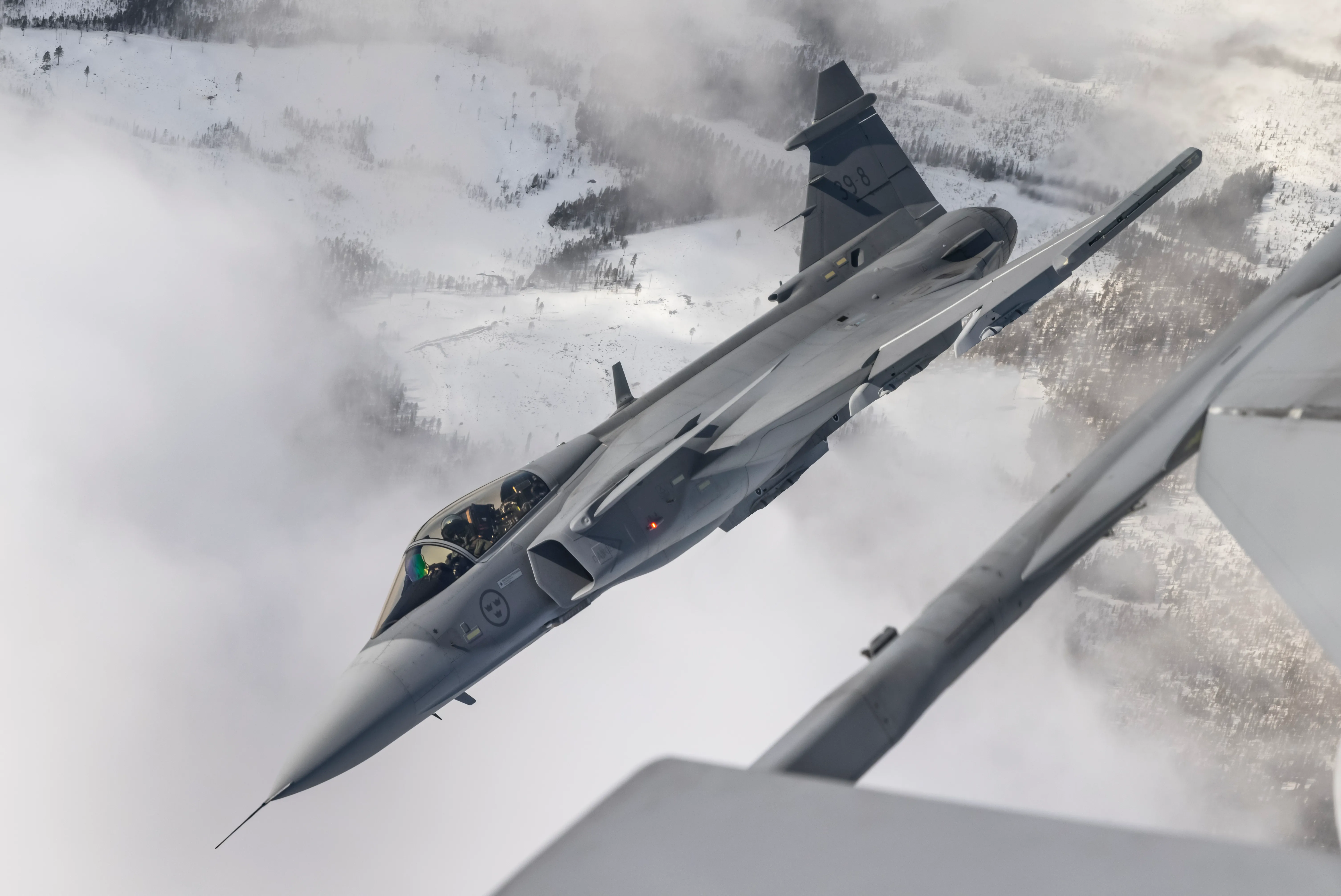
Gripen E in the northern part of Sweden.
A Gripen E in the northern part of Sweden. Saab “Jörgen Ericsson; Saab AB”

In addition to the 16 Gripen E fighters, the contract also includes spare parts and associated items and equipment.

“I am deeply proud that Sweden and Saab can now enable the provision of Gripen E to Ukraine, bringing a world-class fighter that will transform the Ukrainian Air Force’s capability. This will significantly strengthen Ukraine’s air defense and help ensure the nation can protect its people and safeguard its future,” said Micael Johansson, President and CEO of Saab, in a statement from the company.

The same statement also outlined particular features of the Gripen series that it says make it ideal for operations with the Ukrainian Air Force:

“Gripen is designed to address advanced threats in demanding environments. Operational flexibility and resilience enable operations from short stretches, temporary runways or roads, supporting dispersed operations and high availability. The software-based architecture facilitates continuous upgrades and adaptation to evolving operational requirements. With low maintenance requirements and fast turnaround, Gripen provides an advanced and cost-effective fighter capability that is easy to operate and maintain.”

Gripen E in Finland for the HX Challenge
A Gripen E during trials in Finland. Saab

These qualities, not restricted to, but notably baked into the Gripen design philosophy, are something we have explored as long ago as 2022, in the context of potential deliveries to Ukraine. In our previous coverage, we noted:

Designed during the Cold War to meet the Soviet threat, the Gripen was engineered for efficiency, durability, and ease of operation under wartime conditions. It was specifically designed to be serviced and rearmed by small teams — often including conscript personnel — while operating from dispersed locations such as roads and improvised airstrips instead of traditional air bases. The aircraft’s entire concept centers on maintaining combat operations in demanding environments, including prolonged cold-weather conditions.

Gripen - Always combat ready thumbnail

Gripen – Always combat ready


Even with its existing fighters, the Ukrainian Air Force has developed tactics and equipment to operate these jets from dispersed locations around the country. Prior to the current conflict, Ukrainian fighters were training to make use of highways as alternatives to traditional runways.

Already, the Gripen C/D represents a significant advance, but, as noted, these are previous-generation jets, and they are secondhand aircraft drawn from Swedish stocks to expedite delivery.

A Gripen C launches infrared countermeasures. Saab

Compared to the Gripen C/D, the Gripen E, as you can read about here, is a very different proposition, despite its superficially similar appearance.

In contrast to the older jet, the Gripen E has a bigger fuselage that accommodates approximately 30 percent more fuel and has a more powerful General Electric F414 engine, plus a total of 10 hardpoints for weapons and other stores. The cockpit is entirely revised, and the pilot is provided with a single Wide Area Display (WAD), replacing the three separate displays in the Gripen C/D.

The Gripen E can carry up to seven MBDA Meteor beyond-visual-range air-to-air missiles, weapons also compatible with the Gripen C/D, although in the new aircraft these are integrated with the Leonardo ES-05 Raven active electronically scanned array (AESA) radar, and the Leonardo Skyward G infrared search and track (IRST) sensor.

Gripen E fires Meteor
Gripen E fires Meteor. Saab

The ES-05 Raven is set to be the first AESA fighter radar for Ukraine. Arrays of this kind bring a significant boost to modern combat aircraft. In comparison with traditional mechanically scanned array technology, an AESA can find and track a target at a much greater range, more quickly, and with a greater degree of accuracy. This also applies to smaller threats, including those with limited radar signatures, or flying at very low levels, which older radars find much harder to detect. This makes it especially relevant to hunting drones and cruise missiles, which are small targets often encountered by Ukraine en masse.

One particular feature of the ES-05 Raven on the Gripen E is the fact that the radar is mounted on a rotating repositioner, also known as a swashplate. As you can read about here, this enables the electronically scanned antenna, which is normally fixed in a forward position on fighter aircraft, to be slewed to the left and to the right in order to increase its field of view.

As we have discussed in the past, the Meteor would provide Ukraine with a class of air-to-air weapon that it badly needs to redress the balance against Russian fighter jets.

The Meteor is among the most capable air-to-air missiles in operational service anywhere in the world. Thanks to its ramjet propulsion, which can be throttled during different phases of flight, the Meteor is generally considered to be effective against certain types of targets out to around 130 miles.

The Meteor also features an active radar seeker for the terminal phase and a two-way datalink that feeds it with in-flight updates as it flies out to its target and provides information to the pilot in the launch aircraft.

Meteor thumbnail

Meteor


All Gripens can also be armed with the AIM-120 Advanced Medium-Range Air-to-Air Missile (AMRAAM) that arms Ukraine’s F-16 fighters as well as several of its ground-based air defense systems.

The jet also includes a new Saab Electronic Warfare System (EWS), featuring a 360-degree spherical Missile Approach Warning System (MAWS).

Less obvious is the Gripen E’s avionics architecture, which is designed to enable the rapid insertion of new hardware and updated software applications to take on new missions. Customers are also able to design and develop their own software to introduce new technologies and systems to keep pace with ever-evolving threats.

A Gripen E seen from the cockpit of its wingman. Saab

Furthermore, Ukraine will be able to maximize the potential of its Gripens by operating them in conjunction with its two Saab 340 airborne early warning and control (AEW&C) aircraft equipped with Erieye radar that have been donated by Sweden.

The Saab 340 AEW&C can serve as an airborne fighter control platform by detecting and tracking Russian targets, prioritizing threats, and directing friendly fighters to intercept them. Using its datalink system, the aircraft can also provide mid-course guidance updates to missiles after launch. This allows fighter pilots to engage targets without necessarily activating their own radar. Instead, a missile can be assigned a target before launch, fired, and then receive continuous guidance updates from the AEW&C aircraft until it reaches the target. The Erieye radar is also notably effective when tracking ground and maritime targets.

Brazil was the first export customer for the Gripen E (also taking the two-seat Gripen F version), with its decision to buy the fighter influenced to a significant degree by the opportunity to establish a domestic production line. It was followed by Thailand, which secured a small batch of Gripen E/Fs to bolster its existing Gripen C/D fleet, and Colombia, which is also buying Gripen E/Fs. Meanwhile, Sweden has ordered 60 Gripen Es, the first of which was delivered to an operational unit last year.

A Brazilian Air Force Gripen E. Saab

Otherwise, the commonality between the aircraft will ensure that the Gripen E is easier for the Ukrainians to introduce.

According to Swedish officials, the training of Ukrainian pilots and technicians on the Gripen C/D is already underway and will be expanded this fall.

These Gripen Es could be just the start of a much bigger program.

The long-term ambition remains 100-150 Gripen aircraft. However, this transfer only exists as a statement of intent for now, as we have previously reported.

A similar letter of intent covers a plan for Kyiv to buy up to 100 Dassault Rafale F4 fighters from France over the next 10 years. These Rafales are at least as advanced as the Gripen Es, and superior in some respects, but there remain glaring questions about whether they can both be procured, especially in such numbers.

DA00052389_CCO_
A Standard F4 Rafale. Dassault Aviation/C. Cosmao © Dassault Aviation – C. Cosmao / © Dassault Aviation – C. Cosmao

The Gripen E is an even bigger deal for Ukraine than the Gripen C/D. The Ukrainian Air Force has already received Western-supplied F-16s and a smaller number of Mirage 2000s, but still relies heavily on its Soviet-era fighters. The MiG-29 Fulcrum, in particular, has been continually adapted to carry new weaponry, both Western-supplied and locally developed, but these are all aging jets and the fleet overall has been steadily reduced by attrition.

UNSPECIFIED, UKRAINE - AUGUST 4: The first General Dynamics F-16 Fighting Falcon received by Ukraine is seen on the Day of Ukrainian Air Force on August 4, 2024 in Unspecified, Ukraine. At the event for the Day of Ukrainian Air Force with the participation of President of Ukraine Volodymyr Zelenskyi, the first General Dynamics F-16 Fighting Falcons received by Ukraine were demonstrated. (Photo by Vitalii Nosach/Global Images Ukraine via Getty Images)
One of the first F-16s received by Ukraine is seen in August 2024. Photo by Vitalii Nosach/Global Images Ukraine via Getty Images VITALII NOSACH

Taken together, the Gripen C/D and Gripen E will provide Ukraine with a modern, networked fighter force unlike anything it has operated before. Combined with long-range Meteor missiles and Erieye AEW&C support, the aircraft will significantly enhance Ukraine’s ability to challenge Russian airpower and defend its airspace, and it will also be able to deliver precise attacks against surface targets.

Perhaps more importantly, these Swedish-made jets will bring the Ukrainian Air Force into a new era in which it is spearheaded by advanced, Western-made combat aircraft.

Contact the author: thomas@thewarzone.com

Thomas Newdick is a staff writer at TWZ, where he covers military aviation, defense technology, weapons systems, and international security. Based in Berlin, Germany, he reports on conflicts, military modernization efforts, and emerging aerospace technologies around the world, with a particular interest in airpower and its role in contemporary warfare. His reporting is informed by deep expertise in modern and historical airpower, particularly in Europe, with a focus on military aviation, air campaigns, and aerospace developments across the continent and beyond.


Source link

China Stocks Gain on Strong Factory Data and Xi Growth pledge

Chinese stocks advanced after fresh manufacturing data pointed to sustained factory expansion and President Xi Jinping reaffirmed his commitment to promoting high-quality economic development. The upbeat market reaction reflected growing optimism over the resilience of China’s industrial sector and the continued strength of technology and innovation-driven industries.

However, investor sentiment remains tempered by concerns over uneven economic growth, with persistent weakness in consumer confidence, the labour market and the property sector continuing to weigh on the broader recovery.

Strong factory activity boosts market confidence

China’s manufacturing sector expanded for a seventh consecutive month, marking its strongest quarterly performance since late 2020. The data reinforced expectations that industrial production remains a key pillar of economic growth despite ongoing challenges in other parts of the economy.

Stay ahead of the geopolitical week.

MD Briefing delivers expert analysis across five global fronts — the Indo-Pacific, energy, geoeconomics, European security, and the Middle East — every Monday morning. Free.

The stronger-than-expected factory activity provided investors with reassurance that export-oriented manufacturing and industrial output continue to support China’s recovery.

Xi reiterates commitment to high-quality growth

President Xi Jinping renewed his pledge to pursue high-quality development, signalling that Beijing remains committed to an economic strategy centred on technological innovation, industrial upgrading and sustainable long-term growth.

The remarks reinforced expectations that policymakers will continue prioritising advanced manufacturing, strategic industries and innovation rather than relying solely on traditional stimulus measures to support the economy.

Technology sectors continue to outperform

Technology-related stocks led gains as investors increased exposure to sectors expected to benefit from China’s industrial and technological ambitions. Chipmaking equipment, biotechnology and software companies posted strong advances, reflecting continued confidence in industries viewed as central to China’s long-term economic transformation.

The rally highlights investors’ preference for sectors with stronger earnings potential and policy support.

Traditional sectors show signs of broader participation

Alongside technology stocks, gains also spread to agriculture and property-related shares, suggesting investor optimism is gradually broadening beyond high-growth industries.

Although these sectors continue to face structural challenges, their recovery indicates improving market sentiment and expectations that policy support could help stabilise weaker areas of the economy.

Economic recovery remains uneven

Despite encouraging manufacturing data, investors remain cautious about China’s broader economic outlook. Consumer spending continues to be constrained by weak confidence, labour market pressures and the prolonged downturn in the property sector, creating an uneven recovery across different parts of the economy.

The divergence between strong industrial performance and softer domestic demand continues to shape investment strategies and policy expectations.

Future Outlook

Chinese markets are likely to remain supported by resilient manufacturing activity, continued policy backing for innovation and expectations of further measures to sustain economic growth. However, the durability of the rally will depend on whether improvements in industrial production translate into stronger domestic consumption and broader economic recovery.

Investors will closely monitor upcoming economic data and government policy announcements for signs that Beijing can address persistent weaknesses in the property market, employment and consumer confidence while maintaining momentum in high-value manufacturing and technology sectors.

With information from Reuters.

Source link

Mexico beat Ecuador 2-0 to reach World Cup last-16 and break 40-year curse | World Cup 2026 News

Adverse weather does not dampen Mexico’s party as the cohosts storm into the last 16 by beating Ecuador.

Mexico turned on the style at their iconic Azteca Stadium on Tuesday, brushing Ecuador aside 2-0 to break their FIFA World Cup knockout curse dating back 40 years.

The round-of-32 match was delayed for an hour due to stormy weather, and when it started, the co-hosts flew out of the blocks, mounting wave after wave of attacks.

Recommended Stories

list of 3 itemsend of list

In a supercharged atmosphere, Julian Quinones gave Mexico a deserved lead midway through the first half with a thunderous strike, and then turned provider for Raul Jimenez.

Ecuador desperately needed to wrest back the momentum after the break but struggled to shift through the gears, with the home side largely in control.

Mexico had not won a World Cup knockout game since 1986, when it last hosted the tournament.

Tuesday’s win means Mexico are now unbeaten in 10 World Cup games at the Azteca and will fancy their chances against England or the Democratic Republic of Congo in the round of 16.

Mexico were one of only three teams in the group phase to win all three of their matches, alongside title favourites France and reigning champions Argentina, and did not concede a single goal.

Ecuador finished third in their group, scoring just two goals.

Soccer Football - FIFA World Cup 2026 - Round of 32 - Mexico v Ecuador - Estadio Azteca, Mexico City, Mexico - June 30, 2026 Mexico players celebrate after the match REUTERS/Henry Romero
Mexico players celebrate after the match [Henry Romero/Reuters]

Gilberto Mora, 17, was named in the starting line-up for Mexico, becoming the second-youngest player to start a knockout match at the World Cup finals behind Brazil legend Pele in 1958.

The home team started on the front foot, refusing to allow a shell-shocked Ecuador to settle.

Jimenez wasted a glorious headed chance in the seventh minute, and Mora flashed just wide.

At the other end, John Yeboah muscled his way into the penalty area in a rare foray forward for the visitors, clipping the outside of the near post.

Mexico took the lead in the 22nd minute when Saudi-based Quinones received the ball from Roberto Alvarado and tore down the left before driving into the box and unleashing an unstoppable shot past goalkeeper Hernan Galindez, raising the roof.

The first hydration break failed to change the script, and Mexico doubled their lead after half an hour when Quinones fed Wolverhampton Wanderers striker Jimenez, who fired a rocket into the top corner.

Soccer Football - FIFA World Cup 2026 - Round of 32 - Mexico v Ecuador - Estadio Azteca, Mexico City, Mexico - June 30, 2026 Mexico's Julian Quinones celebrates scoring their first goal REUTERS/Raquel Cunha TPX IMAGES OF THE DAY
Mexico’s Julian Quinones scored the first goal and set up the second [Raquel Cunha/Reuters]

Raul Rangel produced a fine save to keep out another Yeboah effort, as Ecuador got a foothold in the match, but chances kept flowing at the other end.

Ecuador coach Sebastian Beccacece made several changes after the break in an effort to find a way back into the match. But Mexico, largely content to sit back, still looked the more threatening team, with Cesar Montes twice going close.

Ecuador substitute Kevin Rodriguez poked just wide with just over a quarter of an hour remaining, but their chances ran out. Piero Hincapie was sent off in stoppage time after covering his mouth during a confrontation with an opposition player to cap a miserable night for Ecuador.

Mexico will hope the Azteca, which hosted the World Cup final in 1970 and 1986, works its magic again in the last 16 on Sunday.

From the quarterfinals onwards, all the matches at the World Cup will be taking place in the United States.

Soccer Football - FIFA World Cup 2026 - Round of 32 - Mexico v Ecuador - Estadio Azteca, Mexico City, Mexico - June 30, 2026 Former Mexico player Andres Guardado is thrown in the air in celebration by the players after the match as Mexico qualify for the round of 16 stage of the World Cup REUTERS/Eloisa Sanchez
Former Mexico player Andres Guardado is thrown in the air in celebration by the players after the match, as Mexico qualify for the round of 16 stage of the World Cup [Eloisa Sanchez/Reuters]

Source link

US lifts restrictions on powerful AI models Fable, Mythos, Anthropic says | Technology News

DEVELOPING STORY,

AI firm says it will begin restoring access to Claude Fable 5 and Mythos 5 after removal of export controls.

The United States government has lifted its restrictions on foreign access to Anthropic’s most powerful AI models, the company has announced.

Anthropic said late on Tuesday that it would begin restoring access to Claude Fable 5 and Mythos 5 from tomorrow after the US Department of Commerce notified the company that it had removed its export controls.

Recommended Stories

list of 4 itemsend of list

“We’re grateful to our users for their patience, and to everyone who worked with us on redeploying the models,” Anthropic said in a statement posted on X.

Anthropic’s announcement came shortly after US Commerce Secretary Howard Lutnick said that his department had been coordinating with the company on the approval of its frontier models.

“Over the past two weeks, we have worked closely with Anthropic to analyze and approve Fable 5 to ensure alignment across the US Government and strengthen America’s leadership in AI,” Lutnick said in a post on X.

Anthropic abruptly shut off Claude Fable 5 and Mythos 5 last month after US President Donald Trump’s administration ordered the company to restrict all foreign nationals, including company employees, from accessing the models.

On Friday, the San Francisco-based company said that it had been granted approval to provide the models to US organisations that “operate and defend critical infrastructure”, and that it was working with the government to restore general access for the public.

More to follow…

Source link

Venezuelan Gov’t Sets Up Post-Earthquake Housing Commission

Commission chairman Garcés conducted inspections in Brisas del Aeropuerto, La Guaira State. (Ángel Márquez)

Caracas, June 30, 2026 (venezuelanalysis.com) – Venezuelan Acting President Delcy Rodríguez has created a Presidential Commission for the Assessment of Housing and Infrastructure Habitability following the 7.2- and 7.5-magnitude earthquakes that struck the country on June 24.

The commission, chaired by structural engineer Francisco Garcés, began its work on Monday, June 29, in the states of La Guaira and Miranda, as well as in Caracas, carrying out scientific and technical evaluations of buildings, bridges, overpasses, and road infrastructure.

The inspections will deliver a traffic light-style assessment system developed by the Venezuelan Seismological Research Foundation (FUNVISIS) and the Central University of Venezuela (UCV) to classify the level of structural damage through a rating system that is easily understood by the public.

“We have created a traffic light system to determine whether a building is habitable, using the colors green, yellow, and red, so that this commission on housing and infrastructure can decide whether a home is safe to continue occupying,” Rodríguez said during a televised broadcast on Monday.

Under the system, green identifies homes that are structurally stable and safe for occupancy without significant risk. Yellow indicates buildings with moderate or partial damage that require repairs before they can be safely reoccupied, while red designates structures that have suffered total loss or critical structural damage.

“We have found buildings whose structural systems—beams, columns, and frame structures—have not sustained significant damage. However, the masonry has been severely affected. This means these buildings are repairable but cannot be inhabited until damaged walls and enclosure elements are removed and rebuilt,” Garcés explained to Venezuelan media.

The commission brings together specialists from the Ministry of Habitat and Housing, the Ministry of Public Works, the Venezuelan College of Engineers, the Venezuelan Chamber of Construction, Funvisis, and the Engineering Corps of the Bolivarian National Armed Forces.

It is also supported by several academic institutions and will coordinate efforts with governors’ and mayors’ offices from the hardest-hit regions.

“We have deployed several teams of engineers specialized in structural engineering,” Garcés added. “After receiving training in the use of the damage assessment forms, they are able to determine the condition of a structure and recommend the appropriate course of action.”

The acting government has also launched training programs so that professors, graduates, and senior engineering students with the required technical background can join the inspection teams. Authorities say the initiative likewise aims to address public fears among residents who remain hesitant to return to their homes.

Rodríguez additionally announced plans to build thousands of new homes by the end of the year.

According to official figures, the earthquakes have left 189 buildings completely destroyed as well as 585 structures with severe damage or partial collapse. There have been 38 hospitals and 44 shopping malls affected, and 1,645 additional structures, mainly bridges and roads, have sustained damage.

Multiple corporate media outlets have launched claims that the buildings from Venezuela’s Great Housing Mission (GMVV) were especially damaged by the earthquake. However, analysis from open-source tracking of damaged buildings has shown that only a very small percentage of affected structures belong to the housing mission. Former President Hugo Chávez launched the massive program in 2011 to provide housing at next-to-no cost for working-class families.

So far, Venezuelan authorities have reported 1,943 dead, 10,571 injured, and over 15,000 displaced families as a result of the double earthquake. The disaster has seen emergency teams arrive from 27 countries to assist in search-and-rescue operations. For its part, the US Southern Command (SOUTHCOM) has deployed multiple military assets and is managing operations at Simón Bolívar International Airport, the South American country’s main air hub.

Alongside the disaster in Venezuela’s northern central region, the Caribbean nation has been struck by further emergencies in recent days. Torrential rains caused rivers to overflow in western Portuguesa state, leaving an initial toll of 100 displaced families. Further west, firefighters have been working to bring forest fires under control since last Friday.

Edited by Ricardo Vaz in Caracas.


Source link

Mexican fans keep Ecuador’s team awake before World Cup showdown | World Cup 2026

NewsFeed

Mexican fans gathered outside Ecuador’s team hotel using loudspeakers, horns and motorcycles to disturb their rest, ahead of their round of 32 knockout match. The Ecuadorian soccer federation said it has filed a formal complaint with organizers.

Source link

Donald Trump reports $1.4bn in cryptocurrency income in government filing | Donald Trump News

Trump has launched a slate of crypto-friendly policies since returning to the White House for a second term.

A new government report has shown that United States President Donald Trump made millions from cryptocurrency and settlements with media companies last year, raising questions about possible conflicts of interest.

On Tuesday, the US Office of Government Ethics released annual financial disclosure forms for both Trump and his vice president, JD Vance.

Recommended Stories

list of 3 itemsend of list

One 927-page document itemises all of Trump’s reported assets and income for 2025. They include more than $1.4bn from his family’s cryptocurrency ventures.

Trump received more than $500m from World Liberty Financial, a crypto venture he and his sons co-founded. The president also reported another $635m from the sale of his $TRUMP meme coins.

The report suggests that investments in digital assets now generate one of the largest tranches of Trump’s income, overtaking even the real estate empire he inherited from his father.

The revelation is likely to intensify scrutiny of Trump’s policies.

Since returning to the White House in January 2025, Trump has launched a slate of crypto-friendly policies as he seeks to make the US the “crypto capital of the world”.

Early in his second term, for instance, the president announced that his government would create a national strategic cryptocurrency reserve to help ensure the stability of certain digital assets.

He also hosted the first-ever White House cryptocurrency summit.

The forum included several technology leaders that had been under investigation during the administration of Trump’s predecessor, Democrat Joe Biden.

But Trump reversed those actions. In February 2025, for instance, the Securities and Exchange Commission announced it would drop charges against Coinbase, the largest US-based cryptocurrency exchange, after it was accused of acting as an unregistered broker.

Other digital currency firms came under suspicion for fraudulent transactions.

Trump has coupled the shift away from government oversight with efforts to champion new legislation, including the GENIUS Act.

The law, passed in Congress in July 2025, created a general regulatory framework that required stablecoin, a type of cryptocurrency, to be backed one-to-one by US dollars. Advocates said the law would help to make cryptocurrency more mainstream.

“The entire crypto community: For years, you were mocked and dismissed and counted out,” Trump said during the law’s signing ceremony. “You were counted out as little as a year and a half ago, but this signing is a massive validation.”

But Trump’s increasingly close ties to the cryptocurrency industry have drawn criticism for its potential for corruption.

Last week, five Democratic senators, including Elizabeth Warren and Richard Blumenthal, called on their Republican colleagues to join them in forcing Trump administration officials to testify under oath about their cryptocurrency dealings.

They pointed to investments from the United Arab Emirates (UAE) in World Liberty Financial, the company the Trump family co-owns with government envoy Steve Witkoff’s sons.

Those investments, they argued, “raise questions about what more the UAE may receive — or may have already received – at the expense of U.S. national security after investing in the Trump family crypto company”.

The five Democrats urged immediate hearings on the matter.

Source link

Ticonderoga Class Cruiser Set To Be Sunk During RIMPAC Wargames

Sometime in the next few weeks, the decommissioned Ticonderoga class guided missile cruiser ex-USS Mobile Bay, the 7th example of her class built, will be sent to the bottom of the Pacific Ocean by friendly forces, according to the San Diego Union-Tribune. The Tarawa class ex-USS Peleliu (LHA-5) amphibious assault ship will also be pummeled to its doom by friendly fire. These are two very high-profile and vastly different targets, which will make for a uniquely interesting pair of SINKEX drills. The event will take place during the 30th Rim of the Pacific (RIMPAC) biennial international maritime exercise.

RIMPAC 2026 began June 24 and runs through July 31; however, the date and manner of the sinking are not yet known. The sinking exercise (SINKEX) is the capstone event at each RIMPAC, though the type of surplus ship used varies.

The guided-missile cruiser USS Mobile Bay (CG 53) cuts through the Pacific Ocean, Feb. 5, 2019. The John C. Stennis Carrier Strike Group is deployed to the U.S. 7th Fleet area of operations in support of security and stability in the Indo-Pacific region. (U.S. Navy photo by Mass Communication Specialist 3rd Class Jake Greenberg)
The guided-missile cruiser USS Mobile Bay (CG 53) cutting through the Pacific Ocean, Feb. 5, 2019. (U.S. Navy photo by Mass Communication Specialist 3rd Class Jake Greenberg) Petty Officer 2nd Class Jacob L. Greenberg

Mobile Bay was decommissioned in 2023 and determined ineligible to be placed on the National Register of Historic Places a year later, sealing its fate.

USS Mobile Bay (CG 53) Outbound - August 18, 2023 - San Diego, California thumbnail

USS Mobile Bay (CG 53) Outbound – August 18, 2023 – San Diego, California


Commissioned on Feb. 27, 1987, Mobile Bay took part in a number of major events during its 36 years in service.

“The ship’s operational history includes the 1989 evacuation of the U.S. Embassy in Beirut, Lebanon; launching 22 Tomahawk Land Attack Missiles (TLAMs) in support of Operation Desert Storm and the evacuation of thousands of people displaced by the volcanic eruption of Mt. Pinatubo in the vicinity of Subic Bay, Republic of the Philippines during Operation Fiery Vigil in 1991,” according to the Navy. It also participated in the “U.S. Coast Guard Law Enforcement Detachment (CGLED) seizure of 10.5 metric tons of cocaine approximately 800 miles southwest of Acapulco, Mexico, and launching TLAMS in support of Operation Iraqi Freedom in 2003.”

USS Mobile Bay CG-53 in Desert Storm thumbnail

USS Mobile Bay CG-53 in Desert Storm


In addition to the date of its sinking being so far unknown, we also do not know how Mobile Bay will be struck. These events are used to test out a variety of weapons systems and crews to see how they perform. This often includes the ship being hit by many different kinds of weapons.

In the most recent SINKEX, for instance, we wrote that a U.S. Air Force B-2A Spirit bomber fired an AGM-158C Long Range Anti-Ship Missile (LRASM) at the ex-USS Juneau during Valiant Shield 2026 in the Western Pacific. You can read more about that in our story about that here. Oftentimes everything from torpedoes to short-range missiles to rocket artillery to airborne gunfire is used to maximize the sacrifice of the retired hull.

Integration of the AGM-158C offers a huge boost in capability for the B-2, creating a penetrating fleet-killing platform that could be especially valuable in a future high-end fight in the Pacific against China.
A U.S. Air Force B-2A Spirit bomber launched an AGM-158C Long Range Anti-Ship Missile (LRASM) at the ex-USS Juneau during a SINKEX at Valiant Shield 2026. (USAF) USAF

Mobile Bay, which took part in RIMPAC 2022, is one of four Ticonderoga class cruisers set to be disposed of by a SINKEX. In addition, the ex-USS Vella Gulf, the ex-USS Antietam and the ex-USS Port Royal are all facing the same fate, according to Navy records.

The ex-USS Valley Forge was the first of the decommissioned Ticonderogas to be sunk, during target practice in Hawaii in November 2006.

HONOLULU (September 27, 2024) – Crewmembers prepare to say farewell to their ships during the decommissioning ceremony of Ticonderoga-class guided-missile cruiser USS Antietam (CG 54). Commissioned in Baltimore, Maryland on May 22, 1987, Antietam completes its service after 37 years. Modern U.S. Navy guided-missile cruisers perform multiple mission including Air Warfare (AW), Undersea Warfare (USW), Naval Surface Fire Support (NSFS) and Surface Warfare (SUW) surface combatants capable of supporting carrier battle groups, amphibious forces or operating independently and as flagships of surface action groups. (U.S. Navy photo by Ens. Paula Hackbart/Released)
Crewmembers prepare to say farewell to their ship during the decommissioning ceremony of Ticonderoga class guided missile cruiser USS Antietam (CG 54). (U.S. Navy photo by Ens. Paula Hackbart/Released) Ensign Paula Hackbart

The Ticonderogas carry Tomahawk Land Attack Missiles (TLAM) and serve as air and missile defense batteries and command and control platforms. They are also equipped with Harpoon anti-ship missiles and MH-60R Sea Hawk helicopters, and execute anti-submarine warfare operations. 

Built in the 1980s and early 1990s, these cruisers primarily provide the backbone of a carrier strike group’s air warfare capabilities.

There are nine ships in this class still serving in the Navy. Of those, a half dozen are slated to be decommissioned in the coming years, while the remainder — USS Gettysburg, USS Chosin and USS Cape St. George — have been modernized or are close to finishing modernization and will serve out toward the end of the decade.

The Ticonderoga class guided missile cruiser USS Gettysburg has been deployed to the Caribbean as part of the ongoing counter-narcotics opertion.
USS Gettysburg. (U.S. Navy Photo by Mass Communication Specialist 2nd Class Kaitlin Young)

The effort to keep these ships afloat has been costly and controversial, which you can read more about in our story about the process here.

The Navy is billing RIMPAC 2026 as the largest in the history of these exercises.

141022-N-NZ935-057PHILIPPINE SEA (Oct. 22, 2014) – The amphibious assault ship USS Peleliu (LHA 5) sails into open water as part of the Peleliu Amphibious Ready Group (PELARG). Peleliu is the lead ship in the PELARG (#PELARG14), commanded by Capt. Heidi Agle, and is conducting joint forces exercises in the U.S. 7th Fleet area of responsibility. (U.S. Navy Photo by Mass Communication Specialist 1st Class Joshua Hammond/Released)
PHILIPPINE SEA (Oct. 22, 2014) – The amphibious assault ship USS Peleliu (LHA 5) sails into open water as part of the Peleliu Amphibious Ready Group (PELARG). (U.S. Navy Photo by Mass Communication Specialist 1st Class Joshua Hammond/Released) MC1 Joshua Hammond

“Thirty nations, over 30 surface ships, five submarines, 15 national land forces, more than 206 aircraft and 30,000 personnel will train and operate in and around the Hawaiian Islands during the exercise,” the Navy said in a release. “RIMPAC provides a unique training opportunity while fostering and sustaining cooperative relationships among participants that are critical to ensuring the security of sea lanes and stability across the region.”

It will be interesting to see how the ex-Mobile Bay is ultimately disposed of. We will provide an update when more information is available.

Contact the author: howard@twz.com

Howard is a Senior Staff Writer for TWZ. He writes frequently about conflict, focusing heavily on the Middle East and Ukraine, and interviews with military and intelligence officials and industry leaders from around the globe. He lives near Tampa, Florida, home of U.S. Central Command, U.S. Special Operations Command.


Source link

More than 30 students remain missing after Nigeria school attack | Armed Groups News

The attacks targeted a secondary school in the northeastern town of Lassa, in Borno State.

At least 37 students remain missing after gunmen raided their school in northeast Nigeria, according to local officials.

The attack occurred on Monday when assailants from the Islamic State West Africa Province (ISWAP) group stormed a secondary school in the town of Lassa, in Borno State, which has faced years of violence by armed groups.

Recommended Stories

list of 3 itemsend of list

The AFP news agency reported on Tuesday that at least 37 students remain missing following the attack, which occurred while they were sitting exams.

At least three people were killed in the attack, including a soldier and a teacher, according to the military, who initially said that authorities had rescued 10 of them and that only one remained missing.

The “list of students in captivity”, showing the students’ genders and their parents’ mobile phone numbers, was shared with journalists by the area’s local government councillor, Ijagla Ijabila.

An intel source also showed AFP the same list.

Borno Commissioner for Education Lawan Abba Wakilbe told reporters in Lassa that 25 female students, 11 male students and one staff member were still being held, reported the Reuters news agency.

Abba Wakilbe added that eight people, including the school’s vice principal, have been freed.

Kidnapping for ransom, especially of students, has become a common tactic for both armed groups and non-ideological “bandit” gangs operating across the country’s conflict-hit north and centre.

While the 2014 kidnapping of hundreds of schoolgirls from the town of Chibok by members of Boko Haram remains Nigeria’s most infamous, school abductions continue to be prevalent across the country.

In May, gunmen kidnapped more than 40 pupils – who remain in captivity – from Borno State’s Mussa village.

That same month, armed men rounded up dozens of schoolchildren from three schools in Oyo State – a rare attack in southwest Nigeria, considered to be the safest region in the country.

Nigeria has been fighting an armed uprising since 2009, concentrated in the northeast.

While violence has waned since the peak of the conflict a decade ago, analysts have warned of an uptick in attacks since last year.

Source link

Uganda media shutdown sparks talks to reopen outlets

Negotiations are underway to reopen several Ugandan media outlets after the military ordered their closure, intensifying concerns over press freedom and political interference in the country’s media landscape. The shutdown, which targeted newspapers, television and radio stations owned by Kenya’s Nation Media Group, has drawn international criticism from human rights organisations and foreign lawmakers, adding to scrutiny of Uganda’s record on civil liberties.

The closures were ordered by Uganda’s military chief, Muhoozi Kainerugaba, who said the outlets would remain shut without his approval but did not publicly explain the reasons for the decision.

The military’s decision forced several leading newspapers, television channels and radio stations to suspend operations, with security personnel preventing staff from accessing their offices. The disruption has affected one of East Africa’s largest independent media organisations and raised concerns over the military’s growing influence over civilian institutions.

Nation Media Group has confirmed that discussions are taking place with military authorities to restore operations. While negotiations are continuing at multiple levels, employees remain locked out of company premises, underscoring the uncertainty surrounding the timeline for resuming normal broadcasting and publishing activities.

Stay ahead of the geopolitical week.

MD Briefing delivers expert analysis across five global fronts — the Indo-Pacific, energy, geoeconomics, European security, and the Middle East — every Monday morning. Free.

International criticism intensifies over press freedom

The shutdown has prompted strong condemnation from human rights organisations, which argue the move represents another attempt to suppress independent journalism. International observers have warned that restricting media operations undermines freedom of expression and weakens democratic accountability in Uganda.

Political spotlight falls on Muhoozi Kainerugaba

The incident has further focused attention on military chief Muhoozi Kainerugaba, who has increasingly become a controversial political figure through his public statements and actions. Widely viewed as a potential successor to President Yoweri Museveni, Kainerugaba has faced repeated criticism over his treatment of political opponents, civil society groups and independent media.

Diplomatic pressure adds to domestic scrutiny

The media shutdown has also attracted international political attention, with senior US lawmakers calling for a review of Washington’s security relationship with Uganda. The episode risks increasing diplomatic pressure on Kampala over governance, human rights and the role of the military in restricting fundamental freedoms.

Future Outlook

The immediate focus will be on whether negotiations lead to the reopening of the affected media outlets and the restoration of normal operations. Beyond the current dispute, the incident is likely to intensify domestic and international scrutiny of Uganda’s commitment to press freedom, with potential implications for its diplomatic relationships, human rights record and political environment ahead of future leadership transitions.

With information from Reuters.

Source link

China’s Truck-Mounted Electromagnetic Aircraft Catapult Seen In Action For The First Time

We now have our first look at a Chinese modular, road-mobile, electromagnetic aircraft launch system (EMALS) catapult actually launching a drone. The system, which consists of multiple specially-designed trucks linked together, first emerged right at the end of last year and was soon loaded onto the deck of a cargo ship. The same vessel, named Zhong Da 79, was used to showcase a new family of containerized weapons, sensors, and other systems, images of which went viral in a big way online. It has now also been confirmed that the truck-mounted EMALS catapult is part of that family.

Video of the truck-mounted EMALS catapult in use first began circulating widely on social media earlier today, but exactly where or when it was shot is unclear. The footage looks to have originally accompanied a Chinese-language social media post from the Beijing Institute of Technology’s School of Mechanical Engineering. Screenshots said to be of the post show it was primarily on news about the development of the full family of containerized weapons and other systems, which we will come back to later on.

A screen capture from a video circulating on social media showing a drone being launched from a modular, road-mobile, electromagnetic aircraft launch system (EMALS) catapult. Chinese internet screen capture via X

The video, seen in full in the social media post below, starts by showing a propeller-driven drone being launched from a mobile EMALS catapult made up of three trucks. The drone in question has a high-wing monoplane planform with a v-tail and tricycle landing gear. When the system first appeared publicly last year, it was shown in a four-truck configuration, and paired with stealthy collaborative combat aircraft (CCA)-like drones, or what were more likely mockups thereof.

The footage continues on, showing three EMALS catapult trucks traveling in a group, unlinked, in a convoy, before joining together. The convoy clip notably shows what look to be covers on top of the trucks that do not appear to have been previously seen. There are what appear to be hinges or at least large straps on the side to hold them in place.

A screen capture showing the three EMALS trucks traveling separately in a convoy with what appear to be covers on top. Chinese internet capture via X
Another screen capture showing two of the EMALS trucks linking up with the appropriate covers still in place. Some of the hinges or straps holding them in place can be seen on both vehicles. Chinese internet capture via X

Covers would help protect the system from the elements during transit. It might also help mask its true purpose, though the trucks have other very distinct features, including a very prominent locking point at the front. The possibility that the covers hinge to either side also raises the question of whether the system could be configured to fold out to create a wider runway, though there is no evidence of this so far.

The video also reveals that the trucks have an extreme all-wheel steering capability that allows them to turn in a roughly flat circle, even when joined together. This would allow for the launching of aircraft in any direction as long as their sufficent space to turn the complete system. This would be key for pointing aircraft into the wind ahead of launches, especially in confined spaces with limited room to maneuver. This is an essential capability for enabling this concept overall. It would be extremely hard, if not impossible, to do this with normal steering, especially to account for any major shift in the wind’s direction.

A ground-level view of three of the EMALS trucks without any covers on top turning while linked together, highlighting their all-wheel steering. Chinese internet capture via X
A top-down look at the EMALS trucks turning while linked together. Chinese internet capture via X

The footage caps off with another clip of the drone being launched and then one of Zhong Da 79 as it was seen earlier this year with the various containerized systems, at least some of which turned out to be mockups, onboard.

As seen earlier in this story, the video is circulating along with a graphic showing the full family of containerized weapons and other capabilities. This includes versions armed with launchers for land-attack and anti-ship cruise missiles, as well as surface-to-air missiles. There are also ones that contain either a single Type 1130 30mm close-in-weapon system (CIWS) or two Type 726 close-in defensive launchers. There are also containerized radars, electronic warfare systems, and command and control suites. The graphic also notably shows a container loaded with a single EMALS catapult truck and another with a disassembled drone inside that looks very much like the one seen being launched in the opening clip.

The graphic showing the full family of containerized systems. Chinese internet via X
A close-up of the EMALS truck and drone containers depicted on the graphic. Chinese internet via X

Annual production of 2,000 of these containerized systems, collectively, is now being targeted, according to a machine translation of the apparent social media post from the Beijing Institute of Technology’s School of Mechanical Engineering that is the original source of the video.

The social media post from Beijing Institute of Technology’s School of Mechanical Engineering also says 70 other entities were also involved in the development of the various systems showcased on the Zhong Da 79. The China State Shipbuilding Corporation (CSSC), China North Industries Group Corporation (NORINCO), China Aerospace Science and Industry Corporation (CASIC), China Aerospace Science and Technology Corporation (CASC), China Electronics Technology Group Corporation (CETC), and the Aviation Industry Corporation of China (AVIC) are explicitly named.

Not on this list of named organizations is Tiantao Technology, a company that has been publicly discussing plans for a ground-based electromagnetic catapult system made up of modular wheeled segments since at least August 2025. As TWZ previously noted, Tiantao Technology’s renderings have shown a system that is visually different from the one now tied to the Beijing Institute of Technology’s School of Mechanical Engineering. However, its expected capabilities are in line with what have now seen in the video, especially the ability to drones weighing up to around 2.2 tons (two metric tons). The drone seen being launched is notably smaller and lighter than the CCA-type designs previously displayed with the system.

A broad view of the drone or drone mockups, as well as three EMALS trucks linked together, on the pier at Hudong-Zhonghua shipyard. All of this was later loaded onto the Zhong Da 79. Chinese internet

As TWZ wrote in our initial reporting on the truck-mounted EMALS catapult after it emerged last year:

“This [2.2 tons] is lighter than the expected takeoff weights of ‘loyal wingman’ type drones China has shown to date, based on the known specifications of comparably-sized Western designs. For example, the stated maximum launch weight of the XQ-58 is three tons, according to Kratos. As another point of comparison, the Chinese GJ-11, a larger flying-wing uncrewed combat air vehicle (UCAV), a catapult-capable version of which is now in development, reportedly has a payload capacity of around two tons. China’s J-15 family of crewed carrier-based fighters, derived from the Su-33 Flanker, each weighs around 19 tons (17.5 metric tons) empty without any fuel or ordnance, as well.”

“It is possible that the modular design of Tiantao Technology’s ground-based catapult system could allow for configurations capable of launching heavier designs. A core benefit of electromagnetic catapults over steam-powered ones, in general, is their ability to be more fine-tuned in terms of the forces they exert on any aircraft during launch. The capabilities of a modular system would also be dependent on its exact configuration, including how long the catapult track is overall. Tiantao Technology has said the total length of its system could be scaled between roughly 65 and 196 feet (20 and 60 meters). What limitations there might be on simply adding more segments to increase launch capacity are unknown.”

“Tiantao Technology has also shown models and renderings of truck and trailer-mounted electromagnetic catapults for launching even smaller drones. How much progress it has made in the actual development of any of the systems to date is unclear.”

As we noted at that time, other companies in China could very well have been working along similar lines. There’s also the distinct possibility that Tiantao Technology is among the dozens of unnamed partners that are said to have been working with Beijing Institute of Technology’s School of Mechanical Engineering on this project.

A rendering from Tiantao Technology of a modular EMALS catapult made up of multiple road-mobile segments. Tiantao Technology

There is still an outstanding question about how drones are loaded onto the truck-mounted EMALS catapult to begin with, which would impact the launch tempo. TWZ has noted previously that a cycle could be established using trucks carrying drones that would drive up, one at a time, locking into the rear of an existing track, and then detaching after launch.

What kind of power and logistical footprint is required to support the mobile EMALS catapult, either on land or at sea, is also unknown. The system is not intended to support a traditional carrier air wing, and would therefore inherently have lower capability demands. It’s worth pointing out here that questions about power demands and logistical requirements would also apply to other parts of the family of containerized systems that are now in development, as well.

What limitations might exist when it comes to employing the catapult system from the deck of a ship that was not designed to have this capability from the start is another open question. Whether the truck-mounted arrangement would be stable enough for launches with the ship rocking back and forth at sea is unclear.

Zhong Da 79 seen earlier this year with the truck-mounted EMALS catapult and other containerized systems loaded onboard. Chinese internet

Overall, much more is still to be learned about the modular EMALS catapult and its capabilities. At the same time, what we’ve learned now underscores points that TWZ has made in the past about the new operational possibilities this system could enable, both in shipboard and ground-based modes. It is tailor-made for expeditionary scenarios or other situations in which traditional runways may not be available. As a mobile system that can be moved on the ground or embarked on ships, it would allow for at least a certain tier of airpower to be more readily positioned closer to operating areas.

The system’s mobility and ability to stay in relatively close proximity to the forces it is supporting would make this a very responsive capability, even as the overall operational picture and battlespace demands evolve. The less time any aircraft has to spend in transit means more on-station endurance, which could be especially valuable when employing smaller, shorter-range drones. The choice of an electromagnetic catapult system versus a steam-powered one also means shorter reset times between launches and, by extension, increased sortie generation rates.

Since it is made up of multiple modular truck-mounted segments, it would be easier for the system to disperse when not in use, creating targeting challenges for opponents and helping to increase survivability. Being able to store components of the catapult system, as well as drones to launch from it, concealed inside unassuming shipping containers would create further benefits in this regard.

All of this is relevant for a Chinese People’s Liberation Army (PLA) that has significant standing requirements to be able to provide airpower and other support during island-hopping campaigns against various potential opponents in the Pacific, where established runways may be few and far between. Another key focus area for the PLA is supporting operations in highly remote and high-altitude areas along its disputed western border with India, where runway access is also often constrained. The truck-mounted catapult could also be combined with the elements of the full family of containerized systems to help establish more robust and defensible operating locations on land, as well as rapidly turn any ship with suitable deck space into a multi-purpose naval vessel.

An annotated image of Zhong Da 79 as it was seen earlier this year, highlighting various containerized weapons and sensors, or mockups thereof, loaded onboard. Chinese internet via X

As an aside, the fact that the new details about the truck-mounted EMALS catapult and the other containerized system have come via Beijing Institute of Technology underscores the strong ties that state-run research institutions in China often have to the country’s government-owned defense industry and to the People’s Liberation Army (PLA). This is something TWZ regularly calls attention to, especially in advanced aerospace development realms, where the academic side of the ecosystem has been shown to be very deeply involved.

With the release of the video showing actual testing of the mobile EMALS catapult, and other insights into the full family of containerized weapons and other systems, more details about these new capabilities may now start coming more rapidly.

Contact the author: joe@twz.com

Joseph is TWZ’s Deputy Editor, helping to oversee the site’s highly experienced and dedicated team, while also writing informative and impactful defense and national security content. He lives right in the thick of it in the Washington, D.C. area.


Source link

Supreme Court strikes down US campaign spending limits in landmark ruling | Courts News

The high court strikes down campaign spending limits, citing First Amendment protections in a 6-3 decision

On the final day of rulings for the Supreme Court’s current term, the top US court overruled a case that would limit campaign spending by rejecting restrictions on coordinated spending efforts between political parties and their candidates on free speech grounds.

The court handed down the ruling on Tuesday in a 6-3 split, with the six conservative judges in the majority, citing free speech grounds, and the three liberal judges dissenting.

Recommended Stories

list of 4 itemsend of list

The Supreme Court ruled that a spending cap on campaign spending, with input from candidates, violates the United States Constitution’s First Amendment after a lower court upheld the limits.

The decision, stemming from a Republican-led lawsuit, strikes down a provision of a more than 50-year-old federal election law limiting coordinated party spending. Among the Republican candidates at the centre of the lawsuit is now Vice President JD Vance. Vance was running for the US Senate in Ohio when the lawsuit challenging the restrictions was filed in 2022.

The Federal Election Campaign Act of 1971 regulates fundraising and spending in US elections by limiting the amount that can be spent on a candidate, aiming to prevent corruption.

Under that law, spending by a political party to advocate for or against a candidate that is not coordinated with a candidate’s campaign is considered an “independent expenditure” – and not subject to a cap.

Spending that is coordinated between a party and a campaign, however, has been restricted.

Tuesday’s decision overruled a 2001 decision in which the Colorado Republican Federal Campaign Committee challenged the rule against the Federal Election Commission, but the high court had upheld the limits on a vote of 5-4.

In 2024, the US 6th Circuit Court of Appeals had also upheld the limits.

On appeal, the plaintiffs said that developments in campaign finance over the intervening decades, including shifts in the Supreme Court’s jurisprudence, had eroded the rationale for that 2001 ruling and urged the justices to overrule it.

Then, when Donald Trump took office, the Federal Election Commission declined to defend the provision of federal law challenged by Vance and the other plaintiffs. The Supreme Court appointed lawyer Roman Martinez to do so. It also granted a request by the Democratic National Committee, Democratic Senatorial Campaign Committee, and Democratic Congressional Campaign Committee to intervene to defend the spending limits.

These spending limits have varied by state, being lower in states with smaller populations and higher in those with larger populations. In 2025, restrictions ranged from about $127,000 to $3.9m for Senate candidates and from approximately $63,000 to $127,000 for House of Representatives candidates.

The Supreme Court issued its campaign finance ruling with the November midterm elections looming, as President Donald Trump’s fellow Republicans seek to retain control of Congress.

The three major Republican committees – the Republican National Committee, the National Republican Congressional Committee, and the National Republican Senatorial Committee — ended May with $256m in cash and no debt. That was more than double the roughly $126m held by their Democratic counterparts, who also carried more than $18m in debt.

Election implications

The Supreme Court has issued multiple rulings during its current term that have election implications.

The justices on Monday backed state laws that allow mail-in ballots received after Election Day to be counted, rejecting a Republican-led challenge to a five-day grace period in Mississippi and dealing a setback to Trump.

The court in April gutted a key provision of the 1965 Voting Rights Act, opening the door for Republican-led Southern states to dismantle Democratic-held majority-Black and majority-Latino districts ahead of the midterms. Black and Latino voters tend to support Democratic candidates.

That decision prompted several Republican-led states to pursue redrawn electoral maps ahead of the midterms in an effort to threaten US House seats long considered safely Democratic.

Source link