Grid operators warn the US heatwave could send electricity demand near record levels before the Fourth of July holiday.
Power grid operators in the United States are warning that a dangerous heatwave could put more strain on an electric grid already under pressure from surging energy consumption.
A stretch of extreme heat is expected to intensify across much of the central and eastern parts of the country this week, peaking from Tuesday through Thursday.
Recommended Stories
list of 3 itemsend of list
That heatwave is likely to continue through one of the busiest travel weekends of the year, as millions of Americans prepare for Fourth of July celebrations on Saturday.
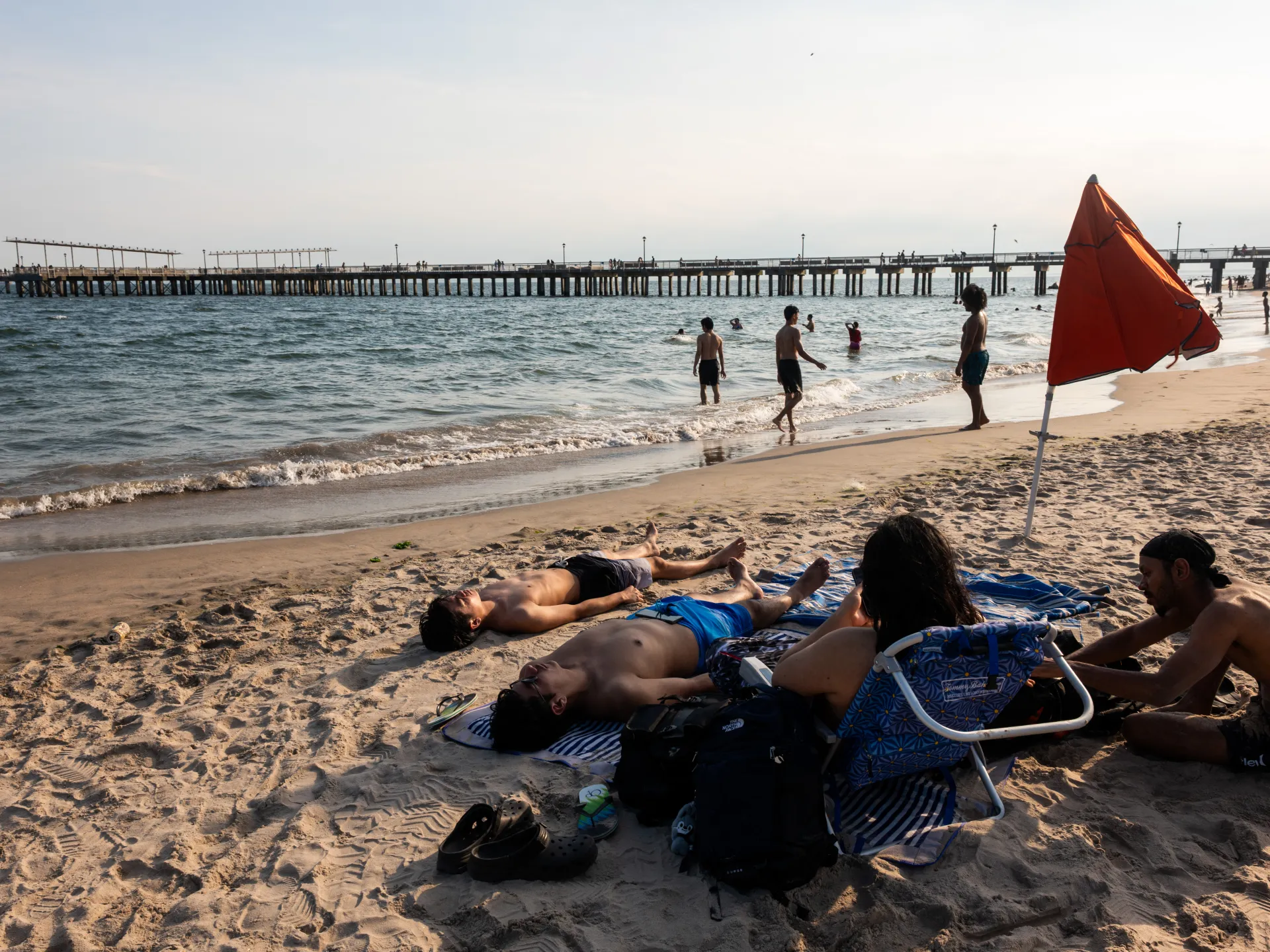
Temperatures this week are forecasted to climb above 38 degrees Celsius (100 degrees Fahrenheit) from Boston to Washington, DC, pushing up demand for air conditioning.
The heatwave coincides with two major events on the US calendar. Saturday’s holiday marks the 250th anniversary of the US’s independence, and millions are expected to gather for barbecues, parades and fireworks.
The extreme temperatures also come as the FIFA World Cup has reached the knockout stage, with many host cities, including New York, Boston, Philadelphia and Washington, expected to feel the heat.
Humidity could push the heat index as high as 46 degrees Celsius (114 Fahrenheit) in some places, while overnight temperatures will offer little respite.
The US’s largest regional grid operator, PMJ Interconnection, is forecasting record summer electrical demand of 166.3 gigawatts for Thursday evening, surpassing the previous summer peak set two decades ago, in 2006.
The New York Independent System Operator (NYISO), the state’s grid operator, is also expecting electricity demand to approach record highs, while the Midcontinent Independent System Operator (MISO), which covers 15 states in the Midwest and South, could also see its peak demand record challenged.
Authorities at MISO say they will rely on PMJ for support in covering consumer needs.
In a May report, PMJ’s executives warned of a “fundamental mismatch between how fast demand is growing and how quickly new supply can be built and connected to the grid”.
New power plants, they said, now take twice as long to build and cost twice as much as they did a decade ago.
Meanwhile, there has been increasing pressure on electrical grids from new technology like data centres and electric vehicles.
In May, PMJ said hyperscale data centres were “adding load at an unprecedented pace”.
Experts say the artificial intelligence (AI) boom is colliding with climate change, with tools like ChatGPT, Gemini and Claude being processed in vast, energy-hungry data centres.
The most energy-intensive are the hyperscale facilities that require between 100 and 300 megawatts of electricity, enough to power hundreds of thousands of homes.
Many of those are concentrated in northern Virginia, which sits within PJM’s service territory and is widely described as the world’s largest data centre hub.
Researchers have also identified what they call a “data heat island effect”, finding that land surface temperatures around AI data centres rise by an average of 2 degrees Celsius (3.6 degrees Fahrenheit), with some locations seeing increases of up to 9 degrees Celsius (16.2 degrees Fahrenheit).
The National Weather Service in the US warns that long periods of extreme heat create significant stress on the body.
It has urged people to limit outdoor activity, stay hydrated and keep close to air conditioning or cooling centres.
A 2024 report from the Journal of the American Medical Association (JAMA) found that 21,518 deaths in the United States from 1999 to 2023 were heat-related.
The highest number came in the final year of the report’s analysis, 2023. That year, 2,325 people died from causes attributed to high temperatures.
The United States is expected to formally notify its North American partners that it will not extend the United States Mexico Canada Agreement (USMCA), triggering the pact’s sunset review process and beginning a potential 10-year countdown to its expiry in 2036. While the move does not immediately terminate the agreement, it opens a prolonged period of negotiations during which the three countries will seek to resolve disputes over automotive rules, regional manufacturing, market access and measures to prevent Chinese goods from benefiting from preferential trade provisions.
The decision reflects the Trump administration’s push to reshape North American trade around greater US manufacturing content and stricter supply chain rules rather than preserving the agreement in its current form.
Sunset clause launches a decade of negotiations
The notification activates the USMCA’s sunset review mechanism, requiring annual consultations if no agreement is reached to renew the pact for another 16 years. Rather than ending the agreement immediately, the process creates a structured but uncertain negotiation period that could last until the agreement expires in 2036 unless the three countries reach a revised deal.
The review mechanism is intended to keep the agreement under continuous assessment but also introduces long-term uncertainty for businesses operating across North America.
Stay ahead of the geopolitical week.
MD Briefing delivers expert analysis across five global fronts — the Indo-Pacific, energy, geoeconomics, European security, and the Middle East — every Monday morning. Free.
Washington pushes for tougher automotive rules
The United States is seeking significant changes to the agreement’s rules of origin, particularly in the automotive sector. Washington wants a substantially larger share of vehicle components to be produced in the United States while increasing overall North American content requirements to reduce dependence on Asian supply chains.
The proposals form part of a broader industrial strategy aimed at strengthening domestic manufacturing, creating more US jobs and preventing third-country producers, particularly China, from indirectly accessing preferential North American trade benefits.
US and Mexico lead negotiations while Canada remains sidelined
Current negotiations are taking place primarily between Washington and Mexico, with Canada playing a more limited role amid ongoing bilateral trade disputes with the United States.
The narrower negotiating format highlights differing priorities within the three-country partnership and raises questions about whether a comprehensive trilateral agreement can be achieved without parallel negotiations involving Ottawa.
The proposed revisions extend beyond traditional tariff issues and reflect a wider effort to reorganise North American manufacturing. By tightening content requirements and strengthening origin rules, the United States aims to encourage companies to relocate production closer to home while limiting opportunities for Chinese manufacturers to circumvent trade restrictions through regional supply chains.
This shift illustrates how trade policy has become increasingly intertwined with industrial policy and national economic security objectives.
Businesses face prolonged policy uncertainty
The activation of the sunset clause is unlikely to disrupt trade immediately, but it introduces a prolonged period of uncertainty for manufacturers, exporters and investors whose operations depend on integrated North American supply chains.
Companies may delay long-term investment decisions until greater clarity emerges on future tariff structures, production requirements and the overall direction of regional trade policy.
Future Outlook
Negotiations are expected to intensify over the coming months as the United States continues pressing for stricter manufacturing rules and stronger regional content requirements. While Mexico appears willing to negotiate toward shared industrial objectives, Canada’s future role remains less certain given unresolved bilateral trade disputes.
Unless the three countries reach a mutually acceptable compromise, the USMCA could remain under annual review for the next decade, prolonging uncertainty for businesses while reshaping North America’s manufacturing landscape. The outcome of these negotiations will likely determine not only the future of the trade agreement but also the competitiveness of regional supply chains and the balance between economic integration and national industrial policy.
The US Supreme Court has ruled that states can ban transgender women from competing in female school and college sports.
The court considered cases from students in two different states who had challenged bans on participation. The two states, Idaho and West Virginia, enacted laws that required public school and college sports teams to compete in accordance with their sex recorded at birth.
One of the two challenges said the ban violates equal rights protections in the US Constitution. The other said it contradicts civil rights laws.
More than two dozen states have enacted bans since Idaho did so in 2020.
Under those state bans, a transgender woman – a biological male who identifies as a woman – is not permitted to compete in female sports at schools and colleges.
All nine justices on the court decided the state bans do not violate a civil rights law called Title IX which prohibits sex-based discrimination in schools.
But the judges were split along ideological lines on whether the bans contravene the constitution’s 14th Amendment guarantee of equal protection under the law.
The six conservative justices said it did not violate the constitution but the three liberal justices disagreed.
“The Constitution and Title IX do not require an overhaul of women’s and girls’ sports throughout America,” wrote Justice Brett Kavanaugh who authored the ruling.
In her partial dissent, Justice Sonia Sotomayor said the majority opinion had applied “a diminished view of equal protection” to sports.
The challenge launched in Idaho came from a transgender woman, Lindsay Hecox, a long distance runner, who lodged it shortly after the law was enacted. She was later granted an injunction by both a district court and an appeals court.
State lawmaker Barbara Ehardt, who introduced the law, said at the time of its passing that it would ensure “boys and men will not be able to take the place of girls and women in sports because it’s not fair”.
But in the appeals ruling, a panel of three judges found that the Idaho law violated constitutional rights. They said the state had failed to provide evidence that its ban protects “sex equality and opportunity for women athletes”.
President Donald Trump made the issue of transgender athletes in women’s sports a regular focus of his 2024 election campaign. Last year, he signed an executive order that aimed to ban transgender women from competing on female sports teams in schools and colleges.
Following that decision, the NCAA, the governing body for US college sports, banned transgender women from competing in women’s sports.
Supporters of the bans argued that transgender women had a biological advantage over athletes who were recorded female at birth.
When the International Olympic Committee (IOC) announced in March it was going to limit the women’s category of Olympic sports to biological females, it said its working group reviewed the latest scientific evidence over the previous 18 months and had concluded there was a “clear consensus”, external that “male sex provides a performance advantage in all sports and events that rely on strength, power and resistance” .
Those who opposed the bans argue that they unfairly discriminated against transgender students and dispute whether there is a scientific consensus that transgender women and girls have an inherent advantage.
Search under way for suspect who fled scene after explosive device placed at entrance to residential building wounded three, authorities say.
Published On 30 Jun 202630 Jun 2026
Authorities in Monaco say at this stage have ruled out “terrorism” as a motive in an explosion that left three people wounded.
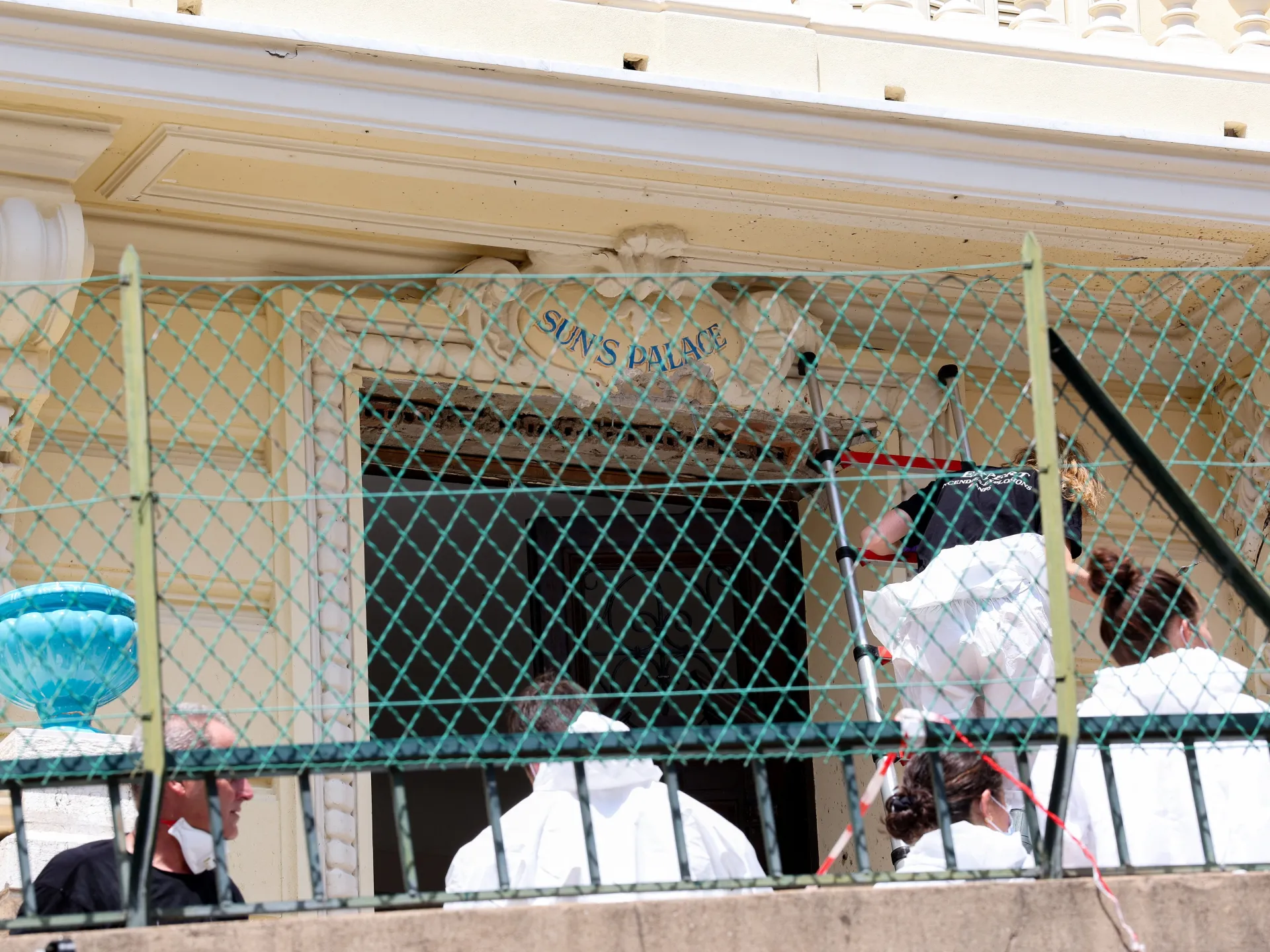
The powerful blast took place at the entrance to a residential building on Monday evening, after a man had apparently left a package there.
Prosecutor Stephane Thibault told reporters on Tuesday the suspect who fled on foot acted alone and remained at large.
security-camera footage showed the suspect walking in a street wearing a black jacket, light-coloured trousers, white shoes and a black hat that partly conceals his face.
Police have opened an attempted murder probe but are not qualifying it as a “terrorism” investigation, said Thibault, adding that the motive remained unclear.
‘Caught in the explosion’
One of the three injured is a woman in life-threatening condition, while her partner and a 13-year-old child suffered less severe injuries but remain in the hospital. Thibault did not provide their identities.
Media reports identified Ukrainian construction tycoon Vadym Yermolaiev as being among the injured. Ukrainian news site Ukrainska Pravda said he was targeted by Ukrainian sanctions in 2023 for alleged ties to Russia.
The three victims were “apparently returning home peacefully” in the early evening, according to surveillance footage, Christophe Mirmand, the minister of state for Monaco, told French news broadcaster LCI
“They were caught in the explosion as they crossed the threshold of their apartment building,” he said.
Ukraine’s Foreign Ministry said it was in touch with authorities in Monaco, saying the explosion wounded three people of Ukrainian descent, who are members of one family. It did not name them, but said Ukrainian authorities are checking their citizenship.
Yermolaiev, a multimillionaire Monaco resident, has been subject to sanctions from Ukraine since December 2023, which Ukrainian security services reportedly said stemmed from his alcohol business activity in Russian-occupied Crimea.
Monaco is a microstate with a population of 38,000 people, where many ultra-wealthy people reside. It is considered to be one of the safest places in the world, with an extensive surveillance network of thousands of security cameras covering most public spaces.
The app said it will be rolling out usernames gradually, in a move meant to improve privacy.
Published On 30 Jun 202630 Jun 2026
Change is coming for some three billion users of the world’s favourite messaging platform, WhatsApp.
The social media app owned by Meta will allow users to be identified by usernames instead of phone numbers, it said on Monday. WhatsApp is used in more than 180 countries and 60 languages, the platform says.
Recommended Stories
list of 3 itemsend of list
Users will soon be able to reserve unique handles, with a wider rollout planned for later this year.
The move is designed to improve privacy on the platform amid longstanding scrutiny over its data protection practices.
So what is changing, and how can you grab a handle no one else has?
What change has WhatsApp announced?
Users will soon be able to swap the phone numbers displayed on WhatsApp with usernames, the company said. Under the new system, which will commence later this year, users will be able to choose to be “findable” and contacted by their handles only.
The app said it has already begun allowing some users to reserve unique usernames before a bigger rollout later this year.
Why is WhatsApp making this change?
The messaging platform said the change is designed to improve privacy features, for which it and its parent company Meta have come under scrutiny in the past.
“We have designed this as a core privacy feature,” Alice Newton-Rex, WhatsApp’s vice president of product, told reporters.
According to the company, there will be no public directory of usernames and no autocomplete suggestions, meaning users will need to know someone’s exact username to reach them for the first time.
“When someone new walks into your life – a classmate, a neighbour, someone you meet at an event – sharing a phone number can feel like a big step,” a WhatsApp company blog post stated.
“That’s because a phone number is personal and it’s tied to so many parts of your life. Sometimes you just want to chat without handing over your digits.”
The company told one user on X that it has added multiple new features to help users defend themselves from scammers.
Optional username keys – or short numbered codes – can be added, which would mean people can only contact a user if they have both their username and its key, for example.
WhatsApp also said it will limit the number of new people any one account can contact as a guard against spam accounts, and that its systems can now detect and block “abuse patterns”.
How will the new usernames work?
Companies, organisations and creators with existing accounts on Meta’s other social media platforms – Instagram and Facebook – will have the opportunity to claim their usernames as handles on WhatsApp as well.
Usernames will have to be three to 35 characters. To prevent impersonation, WhatsApp will hold back usernames for high-profile people or groups, such as celebrities, public figures and government entities.
To reserve a specific username, WhatsApp said a user must download the latest version of WhatsApp, go to the Settings tab, the Account tab, and then the Username tab.
The reservation must be done with a smartphone – it cannot be done on WhatsApp Web or Desktop.
When will this change come into effect?
WhatsApp said it will roll out usernames gradually over the coming months and will notify users on WhatsApp when the new feature is available in their country. It has not given specific timelines.
To be prepared, the company told users to “make sure you have the latest version of WhatsApp downloaded and keep an eye on your app”.
What are WhatsApp’s current privacy features?
WhatsApp’s current privacy settings are limited to blocking individual users and silencing unknown callers.
Plan includes more than 5 billion pounds for drones and autonomous systems over four years, Ministry of Defence says.
Published On 30 Jun 202630 Jun 2026
Outgoing Prime Minister Keir Starmer has announced that Britain will spend almost 300 billion pounds ($397bn) over the next four years to modernise its armed forces amid rising threats.
Starmer, expected to leave office next month after losing the support of Labour MPs, announced on Tuesday that the overall defence budget would increase by 15 billion pounds ($20bn) over the next four years to almost 300 billion pounds as he launched his long-awaited defence investment plan.
Recommended Stories
list of 3 itemsend of list
“Last year I made the decision in the national interest to reprioritise aid spending towards defence and achieved the biggest uplift in defence spending since the end of the Cold War,” Starmer said.
“That was the right choice because the world has changed. National security is economic security.
“Today we uplift defence spending further – an additional 15 billion pounds worth of funding – by … reprioritising spending across government.”
The plan includes more than 5 billion pounds ($6.6bn) for drones and autonomous systems over the next four years, the Ministry of Defence said in a news release.
The announcement followed months of wrangling within Starmer’s Labour government over the resources required to modernise the United Kingdom’s armed forces in the face of rising threats, including from Russia.
Two defence ministers quit this month in a row over the spending proposals, including Defence Secretary John Healey, who said the plans risked making Britain “less safe”.
Starmer’s pledge came as United States President Donald Trump has repeatedly urged NATO allies to spend more on defence and become less reliant on Washington for security.
Starmer will take the plan, which foresees spending nearly 80 billion pounds ($105.7bn) a year by 2029, to Ankara for a NATO summit on July 7-8. He wants to signal Britain is on track to spend 3.5 percent of its gross domestic product on defence by 2035.
With likely successor Andy Burnham due to take power as early as July 20, Starmer acknowledged new governments could “build” on his blueprint.
Critics said the plan, delayed for more than nine months, was too little, too late.
Anti-migrant groups have demanded undocumented foreigners leave the country by Tuesday.
Published On 30 Jun 202630 Jun 2026
Businesses in South African cities have been shuttered and police have been deployed to the streets as demonstrators gathered at anti-immigrant protests around the country.
Anti-immigrant groups have given undocumented foreign nationals a “deadline” of Tuesday to leave the country. The groups have falsely claimed that undocumented immigrants will face arrest and deportation if they do not leave in time.
Recommended Stories
list of 3 itemsend of list
The South African government has rejected the groups’ threats as false, but thousands of people have been pushed to flee.
President Cyril Ramaphosa said on Monday that the right to protest “does not allow people to threaten or intimidate others, or to engage in acts of vandalism or violence”.
“Whatever the motivation, taking the law into one’s own hands is vigilantism,” he said.
Reporting from a protest in Johannesburg, Al Jazeera correspondent Haru Mutasa said the demonstrators were both working-class and middle-class South Africans and from different tribes around the country.
“They all have one goal, which is basically that they want the government to do something about undocumented foreigners in the country,” she said. “They’re saying that they’re frustrated, that they’ve heard promises from the government but they’re not seeing any difference on the ground.
“They’re asking why is it, when some of them have degrees, why can’t they get a job?”
Fears mount amid xenophobic attacks
The protests started as small gatherings of anti-immigrant groups in April but have been growing recently.
The country has seen weeks of xenophobic attacks, with at least two Mozambicans, an Ethiopian and a Malawian killed in anti-immigrant violence, the AFP news agency reports.
Malawian refugees gather outside their embassy as they try to get buses back to their home country on June 29, 2026 [Kim Ludbrook/EPA]
Although the groups say they are targeting undocumented migrants, foreign people who are in South Africa legally are also at risk. Thousands of foreign nationals are camping outside consulates and shelters for protection. Others say they have been evicted or fired, their landlords and employers citing fears of fines or attacks.
Many foreign nationals have already fled the country. Some have left on their own, while others have asked their embassies for assistance. Several African countries have sent aircraft and buses to repatriate their fleeing nationals.
While some political parties have been calling for peaceful protests, other politicians have increasingly been using anti-immigrant rhetoric as the country’s November elections approach.
South Africa has a history of anti-immigrant violence. In 2008, 62 people were killed in riots, and more xenophobic attacks occurred in 2015 and 2016. At least 12 people were killed in 2019 when armed mobs attacked foreign-owned businesses around Johannesburg.
Indonesia court finds former education minister guilty of abuse of authority and of causing state losses.
Published On 30 Jun 202630 Jun 2026
A court in Indonesia has sentenced former Education Minister Nadiem Makarim, co-founder of the Gojek app, to 10 years in prison on corruption charges.
Judges at the Jakarta anti-corruption court on Tuesday found Makarim guilty of corruption related to the procurement of Chromebook laptops for schools during the COVID-19 pandemic.
Chief Judge Purwanto Abdullah, presiding over the ruling at Indonesia’s Corruption Court in Jakarta, said a panel of judges had found Makarim guilty of abuse of authority and of causing state losses. He was found not guilty of directly seeking to enrich himself.
The court said the case caused state losses of approximately $120m. It also ordered Makarim to pay a fine of Rp1 billion ($55,850) and Rp809 billion (more than $45m) in restitution, or face additional prison time.
The verdict marks a sharp fall for the Ivy League-educated entrepreneur once seen as a symbol of Indonesia’s startup sector.
Makarim, 41, co-founded Gojek in 2010, growing it from a call centre with 20 motorcycle drivers into a major ride-hailing and delivery platform.
He became one of Indonesia’s youngest cabinet ministers in 2019 and served as education minister until 2024.
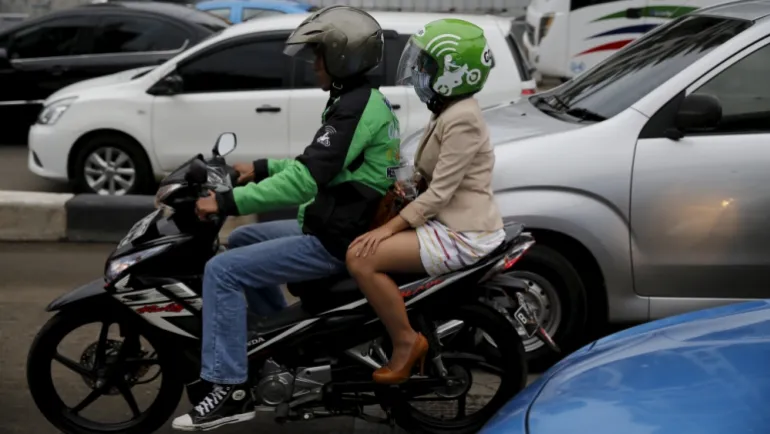
A Gojek driver carries a passenger through a business district in Jakarta. Gojek’s app lets users book motorcycle taxis to navigate the city’s gridlock [File: Beawiharta/Reuters]
Prosecutors said his decision to purchase Chromebook laptops, which run Google’s ChromeOS, was linked to the US tech giant’s investment in Gojek.
Makarim has consistently denied wrongdoing and vowed to appeal.
“The judges couldn’t even look me in the eye,” he said, adding he could not pay the amount ordered under the ruling.
The former minister has said the procurement saved money and called the case an “investigative error”.
In his defence this month, he said: “Experts and factual witnesses have stated: there is no element of state loss, no element of violation of the law, no element of self-enrichment, enrichment of another person or company, and no malicious intent or bad intentions.”
Prosecutors had sought an 18-year prison sentence and Rp5.68 trillion (about $313m) in restitution. Google was not charged and has denied any wrongdoing.
GoTo Group, formed after Gojek merged with Tokopedia in 2021, said Makarim had not had a decision-making role since resigning in 2019.
Makarim, whose lawyer father once served on the ethics committee of Indonesia’s anti-corruption body, said he joined the government to encourage professionals to enter public service.
The Round of 32 has already delivered shocks, shootouts and scenes that will live long in World Cup memory.
After Paraguay stunned Germany and Morocco sent the Netherlands home on penalties, Tuesday brings three more games, with France, Norway and co-hosts Mexico all looking to avoid becoming the next big casualty.
Recommended Stories
list of 4 itemsend of list
Ivory Coast face Norway, France meet Sweden and Mexico take on Ecuador as three more places in the last 16 are decided.
Here is what we know:
What is Tuesday’s schedule?
Ivory Coast vs Norway (noon/17:00 GMT) at Dallas Stadium, Texas, in the US
France vs Sweden (5pm/21:00 GMT) at New York/New Jersey Stadium in the US
Mexico vs Ecuador (7pm/02:00 GMT on Wednesday) at Mexico City Stadium in Mexico
Ivory Coast have found European opposition difficult at the World Cup while Norway have traditionally fared well against African teams. They have lost only two of their 19 meetings with CAF nations across all competitions.
The Opta supercomputer calculates Norway as the clear favourites to progress.
Across 25,000 pre-match simulations, Norway won in normal time 56.1 percent of the time, while Ivory Coast claimed victory in 21.6 percent. A draw after 90 minutes, sending the tie to extra time, occurred in 22.3 percent of simulations.
Norway are also strongly backed to reach the Round of 16 and equal their best-ever World Cup finish, while Ivory Coast will need to produce one of the tournament’s biggest upsets to keep their campaign alive.
What is the prediction for France vs Sweden?
France and Sweden are familiar opponents, having met 23 times across all competitions. France hold the advantage with 12 wins to Sweden’s six, while five matches have ended level.
Despite that long history, this will be their first-ever meeting at a FIFA World Cup.
The Opta supercomputer gives France a commanding edge heading into the Round of 32.
Across 25,000 pre-match simulations, France won in normal time 75.1 percent of the time, underlining their status as one of the tournament favourites. Sweden were victorious in just 9.5 percent of simulations, while 15.4 percent of matches were level after 90 minutes and required extra time or penalties.
What is the prediction for Mexico vs Ecuador?
Mexico and Ecuador have met only once before at the FIFA World Cup, with El Tri claiming a 2-1 victory during the group stage of the 2002 tournament.
Recent meetings have been far more evenly matched. The sides are unbeaten against each other in their last three encounters, with all three ending in draws, raising the possibility that this Round of 32 tie could be decided beyond 90 minutes.
The Opta supercomputer gives the tournament co-hosts the edge but expects a competitive contest.
Across 25,000 pre-match simulations, Mexico won in normal time 47.1 percent of the time, compared with 23.7 percent for Ecuador. A draw after 90 minutes occurred in 29.2 percent of simulations, making extra time a realistic possibility.
Factoring in extra time and penalties, Mexico’s chances of reaching the Round of 16 rise to 61 percent, while Ecuador are given a 38.9 percent probability of progressing.
Which teams have advanced to the Round of 16 and who has been eliminated?
The tournament has now moved into the Round of 32. So far, these teams have advanced to the Round of 16:
Canada (defeated South Africa 1-0)
Brazil (defeated Japan 2-1)
Paraguay (defeated Germany on penalties after a 1-1 draw)
Morocco (defeated the Netherlands on penalties after a 1-1 draw)
What else is happening?
Morocco stuns Netherlands on penalties
Morocco beat the Netherlands 3-2 in a penalty shootout to reach the FIFA World Cup last 16 after a dramatic 1-1 draw following extra time in Monterrey.
Goalkeeper Yassine Bounou was the hero, saving Crysencio Summerville’s penalty before Ismael Saibari fired home the decisive spot-kick to send Morocco through.
Morocco will now face Canada in the Round of 16 in Houston on Saturday.
The match appeared to be heading for a Dutch victory after Cody Gakpo, playing just days after he and his partner announced the loss of their unborn child, put the Netherlands ahead midway through the second half.
Gakpo’s emotional World Cup goal
Cody Gakpo broke down in tears after scoring for the Netherlands against Morocco, just two days after he and his partner announced the loss of their unborn child.
The forward chose to remain with the squad despite the tragedy and received a standing ovation from Dutch fans when he was substituted in extra time.
Netherlands’ Cody Gakpo, kneeling, is congratulated by teammates after scoring his team’s first goal during the World Cup round of 32 soccer match between the Netherlands and Morocco [Ricardo Mazalan/AP]
Saibari celebrates with his mum
A heartwarming moment goes viral as Ismael Saibari, who scored the decisive penalty kick against Netherlands, celebrates Morocco’s big win with his mother on the pitch.
Germany suffers shock early exit
Germany’s campaign came to a stunning end on Monday as Paraguay pulled off one of the greatest upsets in tournament history, winning a dramatic Round of 32 tie on penalties.
Paraguay took a deserved 1-0 lead into half-time after Julio Enciso headed home from Matias Galarza’s cross in the 42nd minute.
Germany responded eight minutes into the second half when Kai Havertz glanced in Florian Wirtz’s cross to level the match at 1-1.
With neither side able to find a winner in extra time, the tie went to penalties. Havertz missed Germany’s opening spot-kick and the Germans failed to convert three of their five attempts, allowing Paraguay to seal a famous 4-3 shootout victory and book their place in the last 16.
Paraguay declares national holiday after stunning Germany
Paraguay President Santiago Pena declared Tuesday a national holiday after the country’s shock penalty shootout victory over Germany secured a place in the FIFA World Cup last 16.
Paraguay stunned the four-time world champions 4-3 on penalties after a 1-1 draw following extra time on Monday, pulling off one of the biggest upsets in World Cup history.
Paraguay became the second South American nation to declare a national holiday after a surprise World Cup victory over Germany. Ecuador was the first, doing so after its 2-1 group-stage win over the four-time champions.
Translation: Giant Paraguay! Today, an entire country celebrates. It celebrates the victory of a team that represents the deepest part of our identity: the grit, the faith, and the strength of a people who never give up. Thank you, Albirroja, for gifting us this immense joy and for once again uniting millions of Paraguayans under the same flag. Decree No. 6280: the best things are worth the wait. Let’s go Paraguay!
US homeland security chief celebrates Iran’s exit
US Homeland Security Secretary Markwayne Mullin said he “danced a happy dance” after Iran were eliminated from the World Cup.
Iran missed out on the Round of 32 on goal difference after a stoppage-time winner against Egypt was ruled out for offside, with their elimination confirmed when Algeria and Austria drew 3-3 on Sunday.
Speaking during a World Cup briefing on Monday, Mullin said he was “glad they’re done, and they’re not coming back”, adding he was happy when Iran’s visas were revoked and the team left US soil. He also said Iran had required more attention from US authorities than any other team at the tournament.
The comments add to Mullin’s public dispute with the Iranian team. Earlier in the tournament, he alleged members of Iran’s travelling delegation had attempted to bring someone with ties to the Islamic Revolutionary Guard Corps into the United States, an accusation the Iran Football Federation dismissed as “false, fabricated and entirely baseless.”
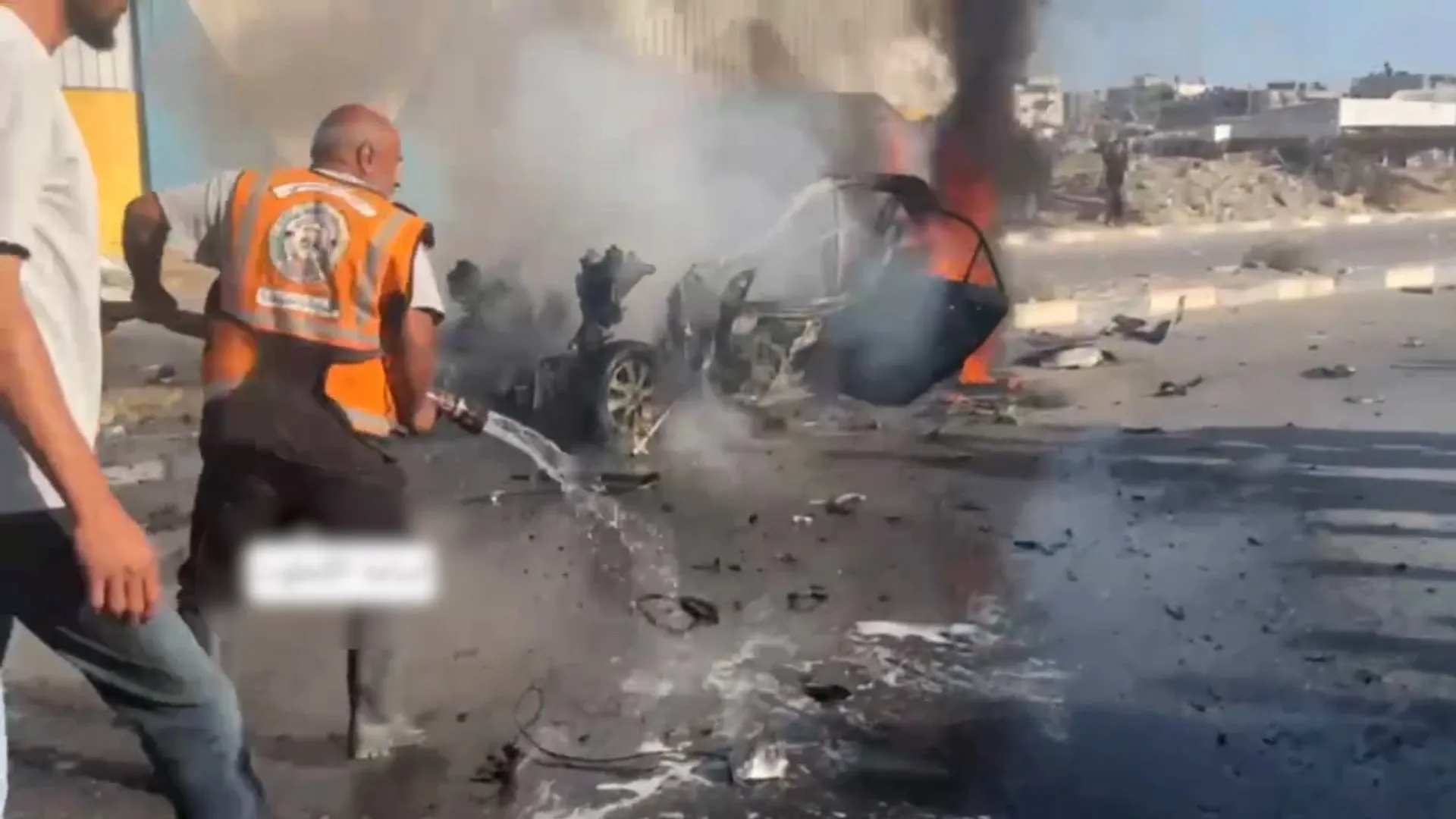
Israel bombed a car near the Maghazi refugee camp in central Gaza. As one of the men escapes, Israeli forces strike again. Double tap attacks are widely considered to be war crimes.
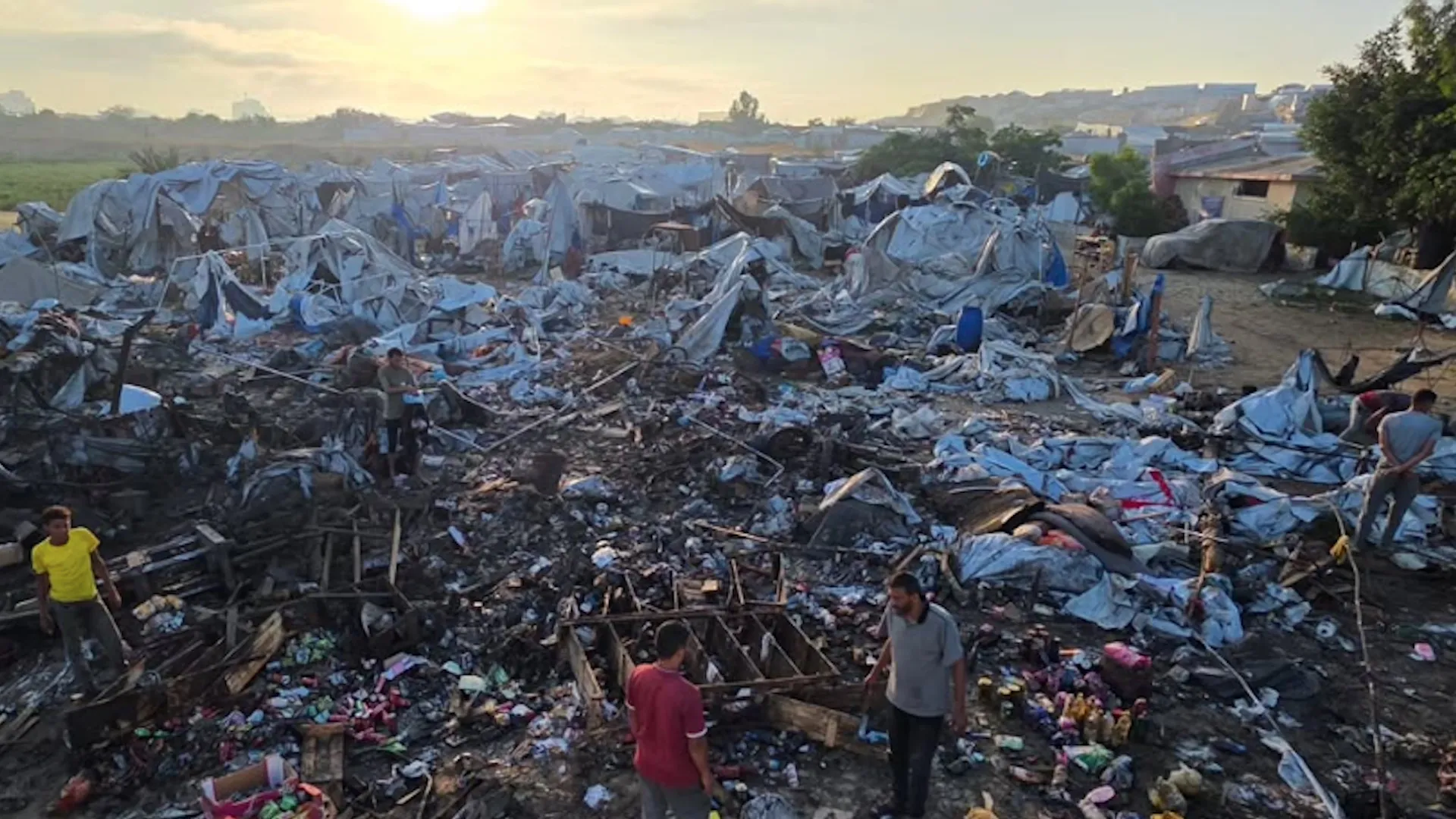
An Israeli attack on the al-Mawasi camp in Khan Younis has killed several people, including a mother and her child. More than one hundred tents belonging to displaced Palestinians were also destroyed.
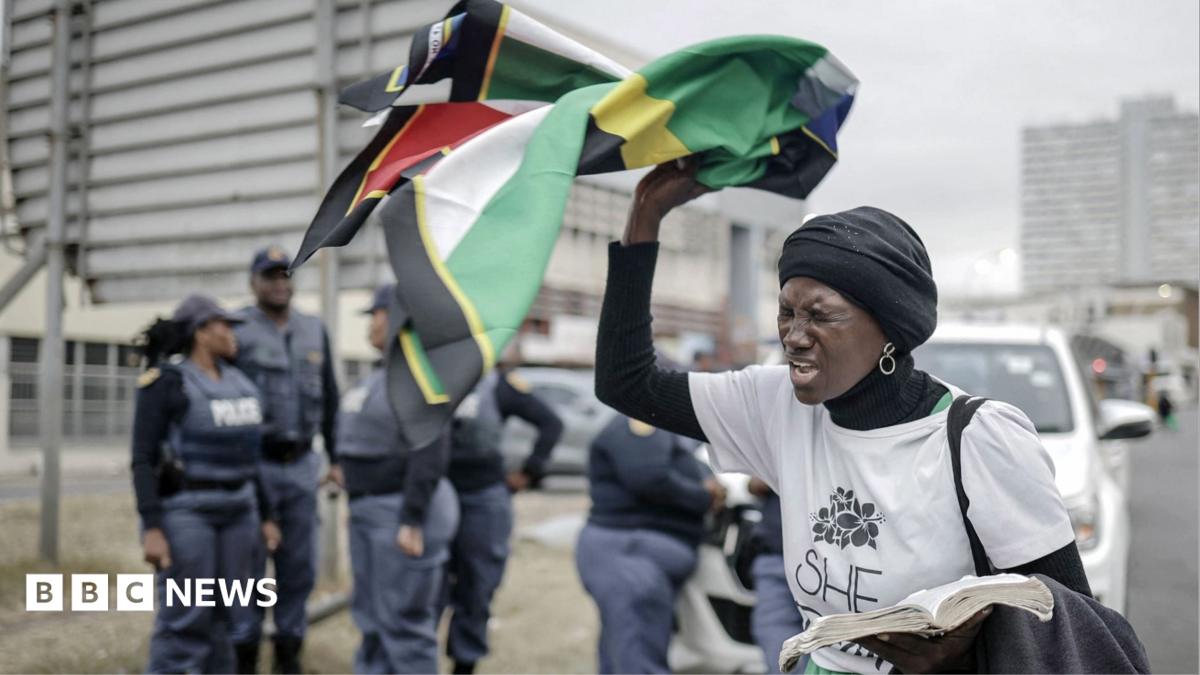
Police and personnel from private security firms have been deployed across South Africa because of fears that anti-immigration protests could turn violent as President Cyril Ramaphosa urged those planning to take part to do so without “intimidation, threats or ultimatums”.
The planned protests mark an unofficial deadline set by campaigners for all undocumented foreigner to leave the country.
Many have already fled to escape violence and intimidation. South African police say 25,000 have been repatriated so far. Most are from other African countries.
One undocumented Malawian told the BBC he was “happy to be going back” but “heartbroken” to be leaving behind four young children.
Johannesburg, where one of the protests is planned, is unusually quiet.
All the shops in the vicinity of where marchers are due to gather are closed, while police visibility is high on the city’s major streets.
Police said that five people were arrested in Johannesburg’s biggest township, Soweto, for allegedly looting a foreign-owned shop.
Five people were also arrested for allegedly breaking into a tuck shop in Hammarsdale in KwaZulu-Natal province.
Many businesses in central Durban, the main city in the province, are shut.
Ramaphosa has repeatedly warned demonstrators to act peacefully and responsibly, while also accepting the need for immigration reforms.
“They work, study, raise families, invest in our economy and contribute positively to our society. They too are entitled to the protection of our laws and our Constitution.
“The right to protest and freedom of expression does not allow people to threaten or intimidate others, or to engage in acts of vandalism or violence,” he wrote.
There are more than three million documented foreign nationals in South Africa, according to official figures.
Ahead of the deadline, thousands of migrants have been awaiting processing in temporary camps for several weeks out of fear for their safety.
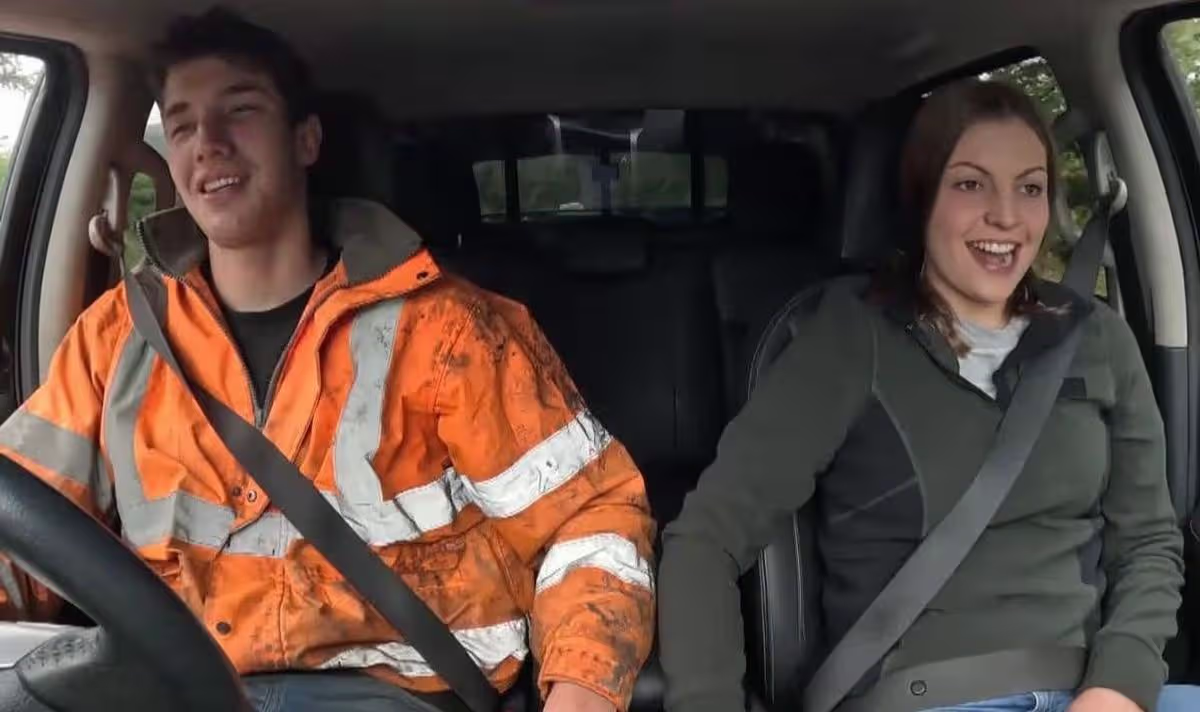
The ambitious 22-year-old entrepreneur has been continuing to tackle building up their plant machinery and groundwork business with help from his friends and girlfriend Jess.
Season 3’s ninth episode and grand finale airs tonight, Tuesday, June 30, spelling the end of the popular docu-series with no confirmation of a fourth outing just yet. However, fans of the young Yorkshire farmer will be thrilled by its Channel 5 replacement on TV schedules next week.
Series 3 might be ending but next Tuesday, July 7, fans are going to be treated to a repeat episode from Reuben Owen Life in the Dales Season 2.
The instalment that’s taking up the primetime slot at 8pm will be episode seven where Reuben celebrates his 21st birthday with a vintage tractor journey. His girlfriend Jess also organises a cute surprise of balloons and a cake which is secretly transported under his best friend Tommy McWhirter’s tractor engine.
As of yet though, it isn’t clear if this is just a one-off repeat of Life in the Dales or if Channel 5 is going to continue airing episodes every Tuesday.
But before fans step back in time, there is the Season 3 finale to get excited about. The official synopsis for tonight’s episode reads: “With lambing season well underway, Reuben and Jess race to stock-proof the fences at Brough Castle Farm before more than 300 newborn lambs arrive in the fields.
“However, when Reuben challenges Jess’s dad Dave to a battle of man versus machine, Jess is left caught in the middle.
“Capper and Sonny attempt to breathe life back into a vintage tractor, but getting it to run proves tricky.”
Reuben Owen Life in the Dales is available to watch on Channel 5.
WhatsApp says the feature is designed to give its three billion users a new layer of control over who can contact them.
Published On 30 Jun 202630 Jun 2026
WhatsApp will let users go by usernames instead of phone numbers, closing a longstanding privacy gap on the app used by more than three billion people.
The Meta-owned platform said on Monday that it has begun letting users reserve unique usernames before a wider rollout later this year when people will be able to choose to be found and contacted only by their handles.
Recommended Stories
list of 4 itemsend of list
WhatsApp said the change was designed as a core privacy feature with no public directory of usernames and no autocomplete suggestions, meaning users will need to know someone’s exact username to reach them for the first time.
WhatsApp offers end-to-end encrypted communication across smartphones, tablets and desktop computers. Until now, it has allowed users to be contacted by anyone who has their phone number.
The app said in a blog post that over the “coming months”, users will get the option to be found and contacted only by their username, and not their number. It wasn’t more specific about the timeline.
“We have designed this as a core privacy feature,” Alice Newton-Rex, WhatsApp’s vice president of product, told reporters.
“People will need to know your exact username to contact you for the first time,” she said.
WhatsApp’s current privacy settings are limited to blocking individual users and silencing unknown callers.
The app also allows users to add a profile name, but that’s only displayed in chat groups for other people who don’t have the user’s contact info saved.
A scramble for unique usernames
While people in the United States still prefer text messaging to WhatsApp, the app is widely used in Europe, Asia and much of the rest of the world.
Catchy online handles are highly coveted, and users will likely scramble to claim a desirable one.
“I think a lot of people will go and get usernames, and that’s why we decided to open reservations early,” Newton-Rex said.
Companies, organisations and creators with existing accounts on Meta’s social media platforms, Instagram and Facebook, will get the chance to claim their usernames on WhatsApp.
Usernames need to be three to 35 characters. To prevent impersonation, WhatsApp will hold back usernames for high-profile people or groups, such as celebrities, public figures and government entities.
Weekly insights and analysis on the latest developments in military technology, strategy, and foreign policy.
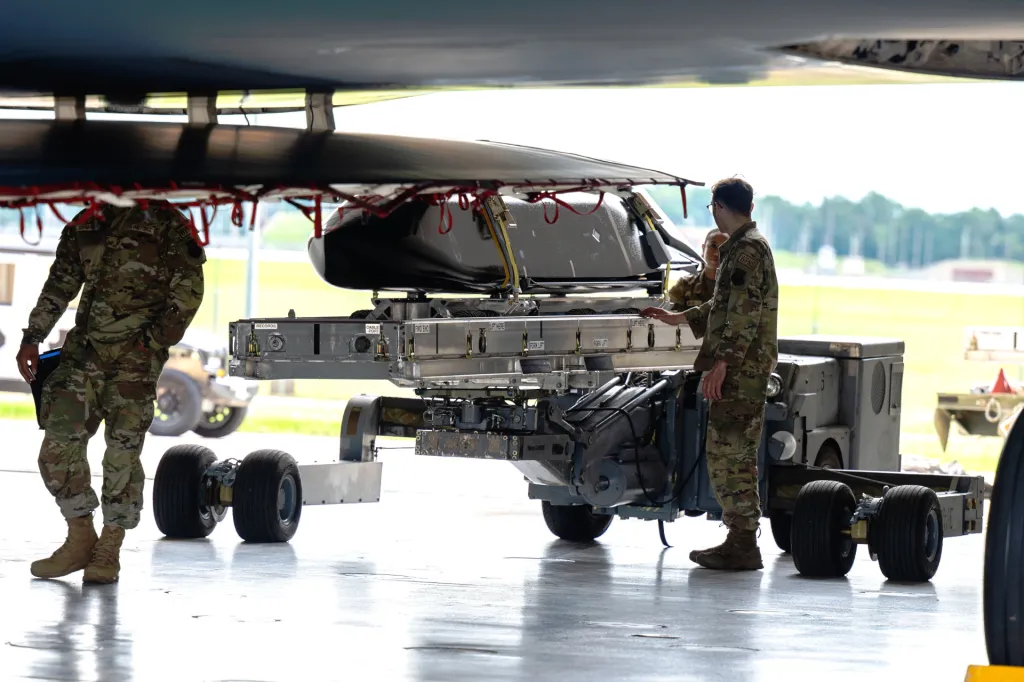
One of the U.S. Air Force’s B-2 bombers fired an AGM-158C Long Range Anti-Ship Missile (LRASM) during a recent live-fire sinking exercise (SINKEX) in the Western Pacific. The stealthy LRASM was not previously known to be in the B-2’s arsenal. Integration of the AGM-158C offers a huge boost in capability for the B-2, creating a penetrating fleet-killing platform that could be especially valuable in a future high-end fight in the Pacific against China.
“The Pacific Air Forces successfully conducted a live-fire Sinking Exercise using the B-2 Spirit north of the Mariana Islands. The B-2 deployed the Long Range Anti-Ship Missile, demonstrating enhanced ability to achieve strategic objectives within range of potential threats,” according to a press release today from Pacific Air Forces (PACAF). “With the deployment of the LRASM from the B-2 Spirit, the Pacific Air Forces takes a major step forward in countering maritime threats. This milestone showcased impressive high-end innovation reinforcing the US military’s commitment to safeguarding national interests and maintaining global security.”
Air Force personnel prepare to load an AGM-158C onto a waiting B-2 bomber. USAF
The release does not provide any further details about the SINKEX, but PACAF confirmed to TWZ directly that the B-2 fired the LRASM at the ex-USS Juneau, a decommissioned Austin class amphibious warfare ship, as part of Exercise Valiant Shield 2026. U.S. and allied forces taking part in the exercise pummeled the Juneau with various munitions this weekend, sending it to the bottom of the Pacific, roughly 200 nautical miles off the coast of Guam. An unnamed Japan Maritime Self-Defense Force (JMSDF) submarine appears to have delivered the final blow with a heavyweight torpedo. The B-2’s involvement was not mentioned until today.
The ex-USS Juneau is hit by a torpedo from an unnamed Japanese submarine during the SINKEX during Exercise Valiant Shield on June 27, 2026. USN/Seaman Apprentice Anthony Vilardi
“Exercises like Valiant Shield allow U.S. Pacific Command the opportunity to integrate forces from all branches of service and with our allies to conduct precise, lethal, and overwhelming multi-domain effects that demonstrate the strength and versatility of the Joint Force and our commitment to a free and open Indo-Pacific,” a PACAF spokesperson told TWZ.
A B-2 bomber takes off from Andersen Air Force Base on Guam on a sortie as part of Exercise Valiant Shield 2026. USAF
As noted, the B-2’s ability to fire LRASM at all does not appear to have been previously disclosed. When reached for comment, Air Force Global Strike Command (AFGSC) told TWZ that all details about the integration of the missile onto the B-2 were classified, as was whether or not the SINKEX represented any kind of first for the bomber.
A LRASM is seen under the wing of an F/A-18, with another missile in the foreground. USN
The Air Force previously highlighted other efforts to expand the B-2’s anti-ship capabilities in the form of Quicksink precision-guided anti-ship bombs, which leverage the Joint Direct Attack Munition (JDAM) guidance kit. You can read more about Quicksink here.
A B-2 bomber drops a Quicksink bomb during a test in cooperation with the Royal Norwegian Air Force in 2025. A Norwegian F-35A is seen flying alongside. Royal Norwegian Air Force
The AGM-158C is derived from the AGM-158 Joint Air-to-Surface Standoff Missile (JASSM) family of land-attack cruise missiles. The baseline AGM-158A JASSM and AGM-158B JASSM-Extended Range (JASSM-ER) are already known to be integrated onto the B-2. The B-2 is also known to be able to carry up to 16 AGM-158As, and is very likely capable of carrying the same number of JASSM-ERs and LRASMs, as all of these missiles have the same general form factor.
A B-2 drops a JASSM. USAF
In terms of its general mode of operation, LRASM uses GPS-assisted Inertial Navigation System (INS) guidance to navigate first to a designated target area. The missile is highly autonomous, thanks to a built-in route planning capability that is linked to an onboard electronic support measures (ESM) package. The missile has the ability to automatically change course in response to the sudden emergence of enemy defenses based on their radio-frequency emissions, as well as use those signals to better detect potential targets.
After arriving in the target area, the missile’s imaging infrared sensor in the nose takes over for the terminal phase of flight. Using a built-in threat target library database, the seeker searches for and categorizes targets autonomously. Information in that database also helps steer the missile to hit the target ship at its most vulnerable point. As a passive sensor, the infrared seeker does not send out radio-frequency signals that an enemy could detect. It is also immune to radio-frequency jamming.
Long Range Anti-Ship Missile (LRASM)
LRASM also has a datalink that allows it to get threat updates while in flight. It can also work cooperatively with other LRASMs during coordinated strikes. A C-3 variant is now in development that will feature a boost in maximum range, as well as “C++ software, [an] enhanced BLOS [beyond-line-of-sight] Weapons Data Link, [and] advanced survivability” capabilities, according to previously released Navy budget documents. The range of existing versions of the LRASM is not publicly disclosed, but is reported to be between 200 and 300 miles, in line with the AGM-158A JASSM. The C-3 version is expected to have the same reach as the JASSM-ER, which is reported to be around 600 miles.
“With the deployment of the LRASM from the B-2 Spirit, the Pacific Air Forces takes a major step forward in countering maritime threats,” according to today’s release from that command. “This milestone showcased impressive high-end innovation reinforcing the US military’s commitment to safeguarding national interests and maintaining global security.”
“The B-2’s impressive performance underscores the US military’s commitment to adaptability and flexibility in the face of emerging security challenges,” Air Force Gen. Kevin B. Schneider, head of PACAF, also said in a statement. “By prioritizing counter-maritime strike operations, we can maintain a decisive edge over adversaries, protect our national interests and ensure the free and open Pacific that underpin our global security.”
Another view of an LRASM being loaded onto a B-2 ahead of the Valiant Shield 2026 SINKEX. USAF
As we noted right up front in this story, pairing the highly survivable and hard-to-spot B-2 with LRASM presents a new penetrating anti-ship capability. Each one of the bombers could engage multiple ships simultaneously and use their other attributes to get within range of even the most high-value targets, such as the People’s Liberation Army Navy’s (PLAN) growing fleet of aircraft carriers and big deck amphibious assault ships. LRASM’s range means that the bombers only need to be in hundreds of miles of their targets. As mentioned, the missiles themselves offer a high degree of survivability, as well.
The Chinese aircraft carrier Shandong, at left, and Liaoning, at right, sail together in the Pacific together with their escorts, as aircraft fly overhead. Chinese government
“LRASM plays a critical role in ensuring U.S. naval access to operate in both open-ocean and littoral environments due to its enhanced ability to discriminate between targets from long-range,” then-Lt. Col. Timothy Albrecht, said following B-1 training sorties over the Black Sea back in 2020. “With the increase of maritime threats and their improvement of anti-access/area-denial [A2/AD] environmental weapons, this stealthy anti-ship cruise missile provides reduced risk to strike assets by penetrating and defeating sophisticated enemy air-defense systems.”
A B-1 bomber drops an LRASM during a test. USAF
At that time, Albrecht was a member of the U.S. Air Forces in Europe’s (USAFE) 603rd Air Operations Center and the Bomber Task Force mission planner.
A pre-production B-21 Raider bomber seen from above during aerial refueling testing. USAF
What has been revealed already is that the Air Force now has a very capable, long-range, deep-penetrating delivery platform capable of delivering its most capable and hard-to-detect anti-ship missiles.
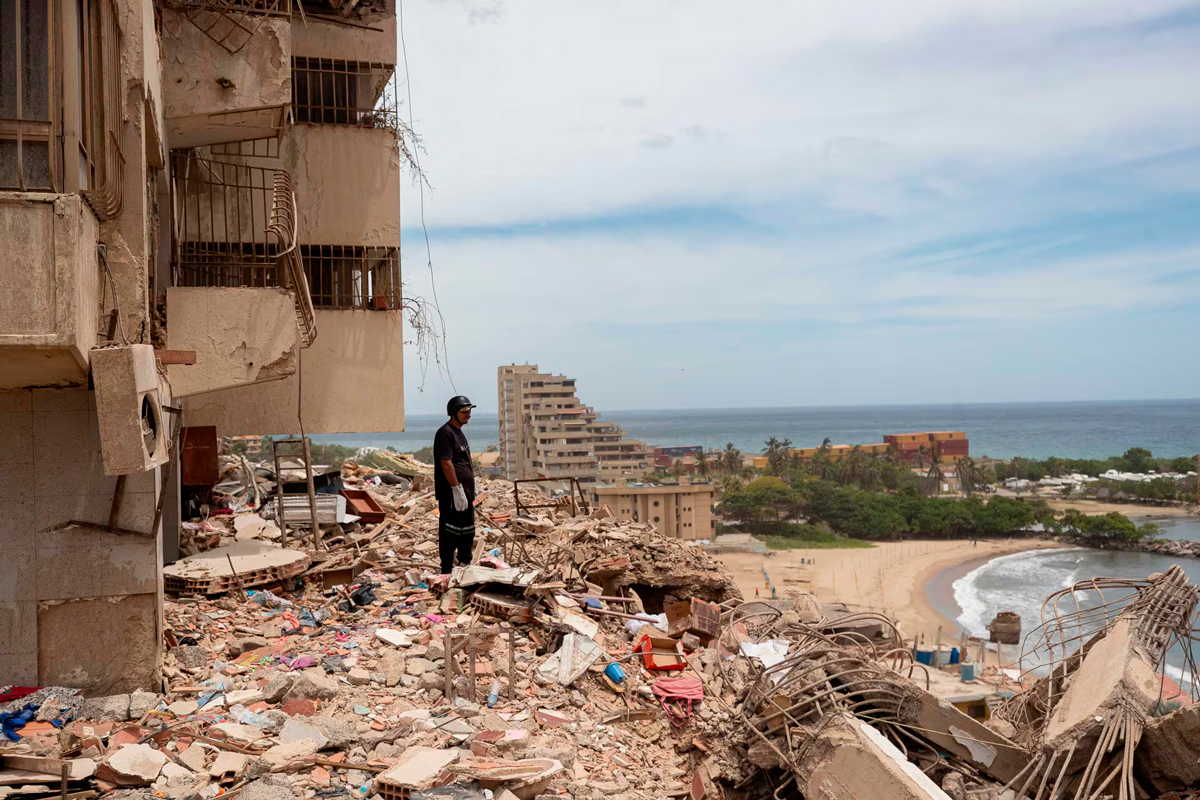
The earthquake flattened more than 100 buildings in La Guaira. (Agencia Zero)
Mérida, June 29, 2026 (venezuelanalysis.com) – Venezuelan and international rescue teams continue to search for survivors under collapsed buildings following last Wednesday’s back-to-back earthquakes.
The 7.2- and 7.5-magnitude tremors caused widespread destruction, primarily in the coastal state of La Guaira, which has been described as “ground zero.” Geological services have registered more than 500 aftershocks since the original earthquakes.
On Monday, Venezuelan officials reported that there have been 1,719 people killed, 5,034 injured, and more than 15 thousand displaced. According to the country’s authorities, 855 buildings have been damaged, including 189 totally collapsed, along with damage to 38 hospitals and 1,645 road structures.
“We are in critical and crucial hours to continue saving lives,” National Assembly President Jorge Rodríguez stated during a Monday press conference. He confirmed that over 25,000 rescue workers, including military personnel, police, firefighters, and civil protection units, are currently deployed, supported by 3,319 international rescuers from 25 nations and 137 specialized canines.
Rodríguez added that 90% of electricity service has been restored in La Guaira State, and that a special hotline remains active to provide psychological support to relatives of the victims, displaced people, and those suffering from post-traumatic stress following the earthquakes.
Earlier on Monday, Acting President Delcy Rodríguez celebrated the rescue of 21-year-old Aaron Levi Cantillo, who was pulled alive from the rubble in La Guaira after being trapped for 106 hours. The rescue was the result of 43 hours of intense, coordinated work by Venezuelan Civil Protection and brigades from Mexico, Chile, and Argentina. Emergency workers have warned that, as time passes, the probability of still finding survivors drastically decreases.
Over the weekend, the Venezuelan government has likewise ramped up efforts to tend to displaced families, with 15 temporary shelters set up in La Guaira and a further 50 in Caracas.
Other areas beyond La Guaira have also been severely impacted. Local residents reported structural damage and service failures in Morón, Carabobo state, close to the earthquakes’ epicenters. Similarly, in Tucacas, Falcón state, residents called for assistance from authorities as they face interrupted electricity or water services.
As part of its response to the crisis, the acting Rodríguez government restricted access to the state of La Guaira, the hardest-hit area. The measure aims to prevent traffic congestion and prioritize the movement of emergency vehicles and heavy machinery. Venezuelan officials have urged the public to avoid traveling to the area to ensure that rescue efforts are not impeded.
At the same time, authorities have sought to organize volunteer brigades, both for search and rescue operations and to tend to temporary shelters, via a registration center at the Poliedro complex in Caracas.
As of June 29, 10,834 volunteers had registered, and they have been categorized according to their area of expertise: survivor rescue, medical care, logistics at temporary camps, and other essential tasks.
Following the double earthquake, the United States government has ramped up its presence in the Caribbean nation. The US Department of State has deployed a Disaster Assistance Response Team (DART) and specialized urban search and rescue units.
The Department of War has sent an expeditionary airfield management team to repair and reopen the damaged Simón Bolívar International Airport, which is now serving as the primary hub for international relief flights. The US Southern Command (SOUTHCOM) has stated that it is currently “managing tower and ground operations” at the country’s most important airport.
SOUTHCOM is also assessing conditions at the port of La Guaira and has docked the USS Fort Lauderdale warship to coordinate maritime deliveries. Various aircraft, including C-17 Globemaster, C-130 Hercules, MV-22 Ospreys, and helicopters, have conducted aerial surveys and transported rescue teams and supplies.
Acting President Delcy Rodríguez personally thanked President Trump and Secretary of State Marco Rubio for US support following the natural disaster. In a social media message, the acting president said she was “deeply grateful for this gesture of friendship and cooperation.”
The Trump administration announced that humanitarian assistance to Venezuela has been increased to over $300 million. However, Washington has not offered any relief from widespread economic sanctions, only issuing a time-limited license allowing earthquake relief-related transactions.
The White House also retains control over Venezuelan oil export revenues, with the disbursement timings and amounts left at US officials’ discretion.
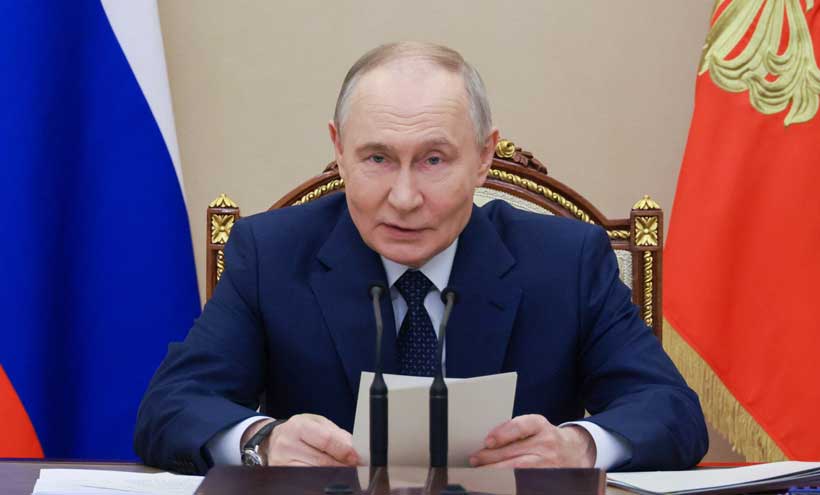
President Vladimir Putin announced that Russia will continue its efforts to fully capture four Ukrainian regions, dismissing Ukraine’s recent proposal to ease hostilities in the ongoing war. In a televised interview, he emphasized the need to enhance Russia’s air defense to respond to increased Ukrainian drone attacks targeting its oil industry. Despite acknowledging fuel shortages due to Ukrainian strikes, he asserted that Russia is managing these challenges effectively.
Putin claimed that Ukraine’s suggestion for a mutual halt to long-range strikes was merely a tactic to relieve pressure on its forces along the extensive front line. He expressed confidence in Russia’s military success, stating that their offensive actions are significantly more impactful and destructive. He rejected the idea of saving the Ukrainian government as part of Russia’s plans.
Ukrainian President Volodymyr Zelenskiy, who had proposed a meeting with Putin, received no response from the Russian leader. Putin described Ukraine’s attacks as attempts to distract Russia from achieving its goals of fully liberating the Donbas and other strategically important regions. He reiterated that Ukraine must relinquish its remaining positions in Donetsk as a crucial condition for any peace agreement, following Russia’s annexation of the four regions seven months after its invasion.
In addressing the drone attacks, Putin called for a rapid increase in the production of necessary air defense systems, claiming that the attacks would not affect the overall combat situation. He anticipated renewed U. S.-led diplomatic efforts to end the war, following the resolution of the U. S.-Israeli conflict with Iran. Furthermore, he indicated that Belarusian President Alexander Lukashenko could play a role in peace talks, without acknowledging Ukraine’s concerns regarding Belarus’s involvement in the conflict.
Ukrainian oligarch reported to be among injured in explosion at residential building in the Mediterranean principality.
Published On 30 Jun 202630 Jun 2026
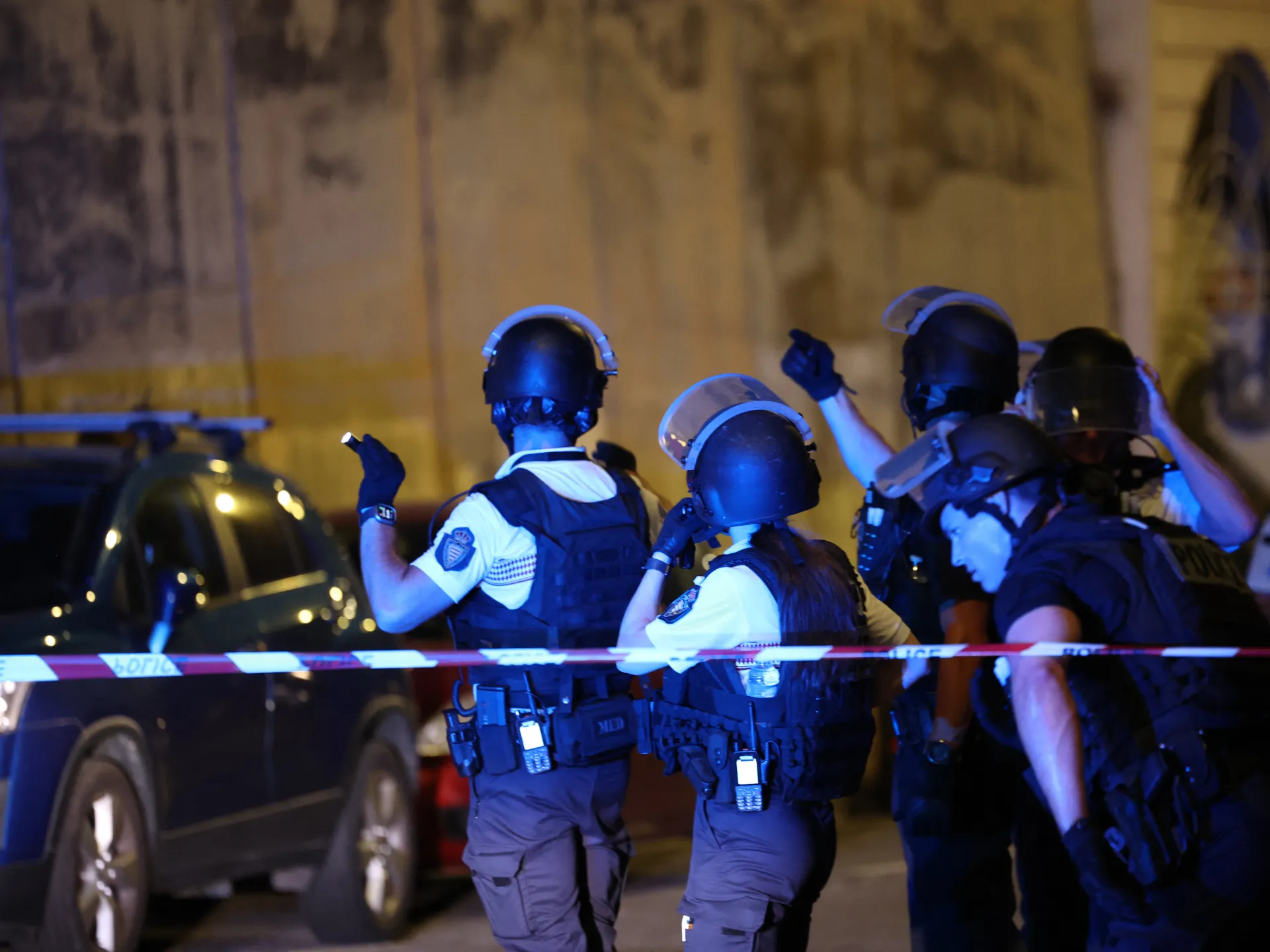
Police in Monaco and neighbouring France are hunting for a man suspected of detonating a makeshift bomb in the centre of the wealthy Mediterranean principality, which seriously injured several people, officials said.
Three people, including a teenager, were hurt in the explosion that struck at about 9pm local time (19:00 GMT) on Monday in a residential building in Monaco, according to authorities in the micro-state on the French Riviera, known as a haven for billionaires and their luxury yachts.
Recommended Stories
list of 4 itemsend of list
According to the AFP news agency, Ukrainian oligarch Vadym Yermolaiev was one of those wounded.
Monaco’s Minister of State Christophe Mirmand initially told AFP that the blast appeared to be “an attack”, but later dropped the term, describing it as a “deliberate explosion”.
A couple in their 50s or 60s suffered life-threatening conditions, while a 13-year-old who was “very likely related to the couple” suffered less serious injuries, Mirmand said, without disclosing their identities.
The explosive device apparently contained bolts and buckshot, Mirmand said.
“This is the first time in history, to my knowledge, that such an act has taken place in the principality,” he said.
A source close to the investigation who asked not to be named told AFP that one of those wounded was Yermolaiev.
Yermolaiev, a multimillionaire Monaco resident, has been subject to sanctions from Kyiv since December 2023, which Ukrainian security services reportedly said stemmed from his alcohol business activity in Russian-occupied Crimea.
Monaco’s public prosecutor, Stephane Thibault, said a suspect had left a bag or package in the building’s lobby before leaving.
French newspaper Le Figaro said video surveillance images showed a man dropping a backpack at the entrance of a residential building shortly before the explosion.
Monaco’s Prince Albert II described the incident as a “heinous crime” and “a shock to the entire Monegasque community”.
An aide to French Minister of the Interior Laurent Nunez said police were working “to find the perpetrator, who has fled”.
An AFP photographer at the scene saw a heavy police presence with access to the area cordoned off, while a helicopter circled overhead.
Students at Government Day Secondary School in Lassa, Askira-Uba Local Government Area of Borno State, northeastern Nigeria, were preparing to sit for their National Examinations Council (NECO) Biology paper on the morning of Monday, June 29, when terrorists stormed the school, killing at least one teacher, abducting staff and students, and forcing another disruption to education in a community still reeling from a school abduction barely a month ago.
The attackers struck shortly before 9 a.m., according to school officials and residents, arriving on more than 40 motorcycles, many dressed in military camouflage and armed with AK-47 rifles. Witnesses said the assault lasted about 20 minutes before security personnel pursued the attackers into nearby bushland.
The exact number of abducted students remains unclear as authorities and school officials continue compiling names.
Imperiju Mamza, the school’s examinations officer, told HumAngle that the senior students had assembled for their Biology paper, scheduled to begin at 10 a.m., when the attackers arrived. “They invaded the school some minutes to 9 a.m.,” he said.
“Only one student who is sitting for the exams was abducted. She came very early and was, unfortunately, abducted alongside the other students who were from other classes. The others are safe and are currently writing their paper,” he said.
The ongoing NECO examinations began on June 23. According to Mamza, 243 candidates registered for the examination. “Apart from the one abducted, 242 are currently writing their exams,” he said. “I am trying to compile names of those abducted and cannot yet confirm how many were taken.”
Following the attack, candidates were relocated under armed protection to Government Girls Secondary School, Lassa, where the Biology examination continued.
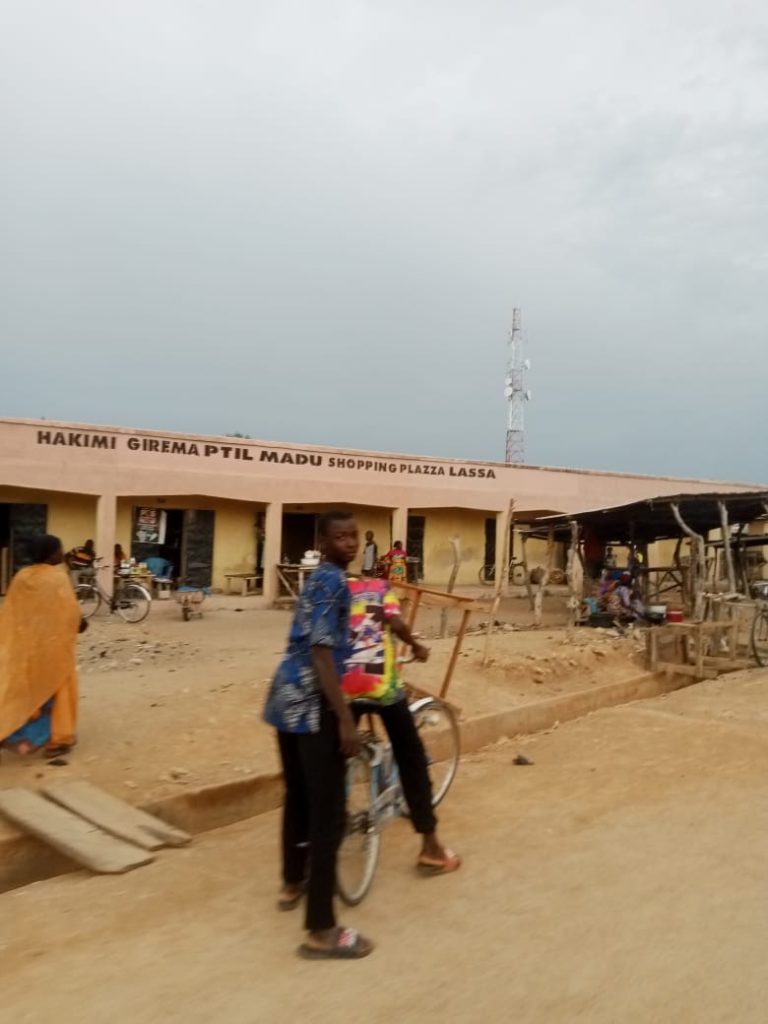
The Hakimi Girema Ptil Madu Shopping Complex at the Lassa Central Market. The Government Day Secondary School, where the abduction happened, sits a few kilometres away. Photo: James Lucky.
Teachers killed, others abducted
Residents who witnessed the aftermath said the attackers appeared to target the school directly rather than the wider community.
Timothy Apagu, whose shop is located near the school, said the community had received reports as early as 7 a.m. that armed men had been sighted around Muthalavu village on the outskirts of Lassa. Community vigilantes were deployed towards the Dille axis after residents raised the alarm, believing the gunmen were approaching from that direction.
“Unfortunately, another team of terrorists followed a different route and attacked the community,” he said.
Apagu said the attackers went straight into the school. “They did not enter the community. I suspect it was a targeted attack.”
He said more than 40 motorcycles participated in the raid. “Most were wearing military camouflage. Others were wearing black trousers. Some wore boots while others wore bathroom slippers. From afar, you would know they were terrorists.”
According to Apagu, one teacher died at the scene while another, who sustained gunshot injuries, later died at the Lassa General Hospital.
He said two teachers, a male Vice Principal identified as Mr Paul and a female teacher popularly known as Madam Angelina, were initially abducted alongside students. The Vice Principal was later rescued after security personnel pursued the attackers, while the female teacher remained in captivity at the time of reporting.
The corpse of the teacher killed at the scene is covered in leaves. Photo: James Lucky.
Another resident, Andrew Adamu, gave a similar account, saying security personnel rescued one teacher and five students during the pursuit and recovered six motorcycles abandoned by the fleeing gunmen.
He added that one female student escaped with gunshot injuries. HumAngle could not independently verify these rescue figures.
Security response
The military and local vigilantes immediately pursued the attackers into nearby bushland, residents said. Adamu said one soldier and one vigilante were killed during the pursuit.
Residents said the military and local vigilantes immediately pursued the attackers into nearby bushland, rescuing the vice principal and six students. Photo: James Lucky.
“There is a military base here, but the soldiers are few. They are not more than 50,” he said. “The school and the military base are less than a kilometre apart.”
The Borno State Police Command confirmed the attack but said the number of abducted students remained unverified. Nahum Kenneth Daso, the Police Public Relations Officer, said the Area Commander for Askira-Uba had deployed to the scene alongside other officers.
Asked what security measures had been introduced after last month’s abduction of more than 40 schoolchildren in nearby Mussa, Daso said police deployments around schools in the area had been increased.
Get our in-depth, creative coverage of conflict and development delivered to you every weekend.
Subscribe now to our newsletter!
“The challenge we had in Lassa is that the school does not have a fence,” he said. “When the invasion happened, they took advantage of that.”
The school vice principal, Mr Paul, and six students who were rescued by security operatives.
Mamza said school authorities had repeatedly raised concerns about the absence of perimeter fencing following the Mussa attack. “The Government Day Secondary School has no fence, and we have complained to the government following the Mussa incident,” he said. He explained that the school is located about a kilometre from the town centre and shares a boundary with the Lassa Vocational Training Centre.
When contacted, Mada Saidu, the Chairperson of Askira-Uba LGA, declined to discuss the attack, saying he was channelling his time and efforts into coordinating the emergency response, which he felt was more important than speaking to journalists.
The latest attack comes barely a month after dozens of schoolchildren were abducted in neighbouring Mussa, also in Askira-Uba LGA, renewing fears over the security of schools across southern Borno despite assurances that protective measures had been strengthened.
Terrorists attacked the Government Day Secondary School in Lassa, northeastern Nigeria, killing at least one teacher and abducting others, causing a significant disruption to the students who were preparing for their NECO Biology exams.
The assault involved approximately 40 armed men on motorcycles and targeted the school specifically, leading to the abduction of students and staff, including the Vice Principal, who was later rescued.
In response, security forces, including the military and local vigilantes, pursued the attackers, with some casualties on both sides. Authorities could not confirm the exact number of abducted students, but following the attack, surviving students continued their exams under increased security at a different location. Residents and officials have raised concerns about the lack of perimeter fencing at the school, an issue highlighted in previous incidents, as local security efforts have been increased following similar abductions in the nearby area.
Search and rescue operations continue in Caracas, Venezuela nearly five days after the devastating double earthquakes. Al Jazeera’s Noris Soto speaks with a family member who remains hopeful their loved one is still alive beneath the rubble.
Daughter of former President Alberto Fujimori says country is closer to ‘order and hope’ after prolonged vote count.
Published On 30 Jun 202630 Jun 2026
Right-wing candidate Keiko Fujimori is ahead in Peru’s presidential race as the country’s electoral authorities concluded their tally of the vote count after a contentious run-off, which her leftist rival has refused to recognise.
Fujimori said on Monday that she would continue to wait for an official announcement from Peru’s National Jury of Elections (JNE) after the ONPE electoral authority finished a review of contested ballots.
Recommended Stories
list of 3 itemsend of list
“We are getting closer and closer to embarking on a path of order and hope for all Peruvians,” Fujimori said in a social media post.
Fujimori, the daughter of the late former President Alberto Fujimori – who was jailed for human rights abuses – has pledged to “unite the country” after the final tally showed her beating leftist rival Roberto Sanchez by 50.13 percent to his 49.86 percent, with 100 percent of the votes counted.
The JNE is scheduled to officially announce a winner on July 3, following a drawn-out vote count that has lasted for weeks.
But the results of the June 7 run-off are unlikely to bring an end to Peru’s years of political crisis, which have seen nine presidents take office in just 10 years before being voted out or removed from their post.
Sanchez has refused to recognise the results of the election, which he has said was marred by irregularities and fraud. He has not provided evidence for those claims, but has called for protests to “defend the vote” and said he will file a legal challenge to appeal the official proclamation.
Such claims have become common in Peru, whose political system has become increasingly chaotic amid declining voter trust in elections and government institutions in recent years.
Many voters expressed frustration after the first round of voting in April, when logistical issues delayed voting in parts of the capital, Lima.
Election monitors have cautioned that there was no evidence of widespread fraud but acknowledged voter frustrations.
Al Jazeera’s Mariana Sanchez, reporting from Peru’s capital Lima, said Fujimori has reacted to the result, saying she was very happy that the vote count has finished and would wait with “humility and prudence” until the official declaration of her victory.
“Keiko Fujimori is aware that she has just won by only 49,000 votes. She is not very popular in the country. She has lost three election bids,” Sanchez said.
Members of Fujimori’s party have said they now hope that her opponent, Roberto Sanchez, will recognise the results, she added.