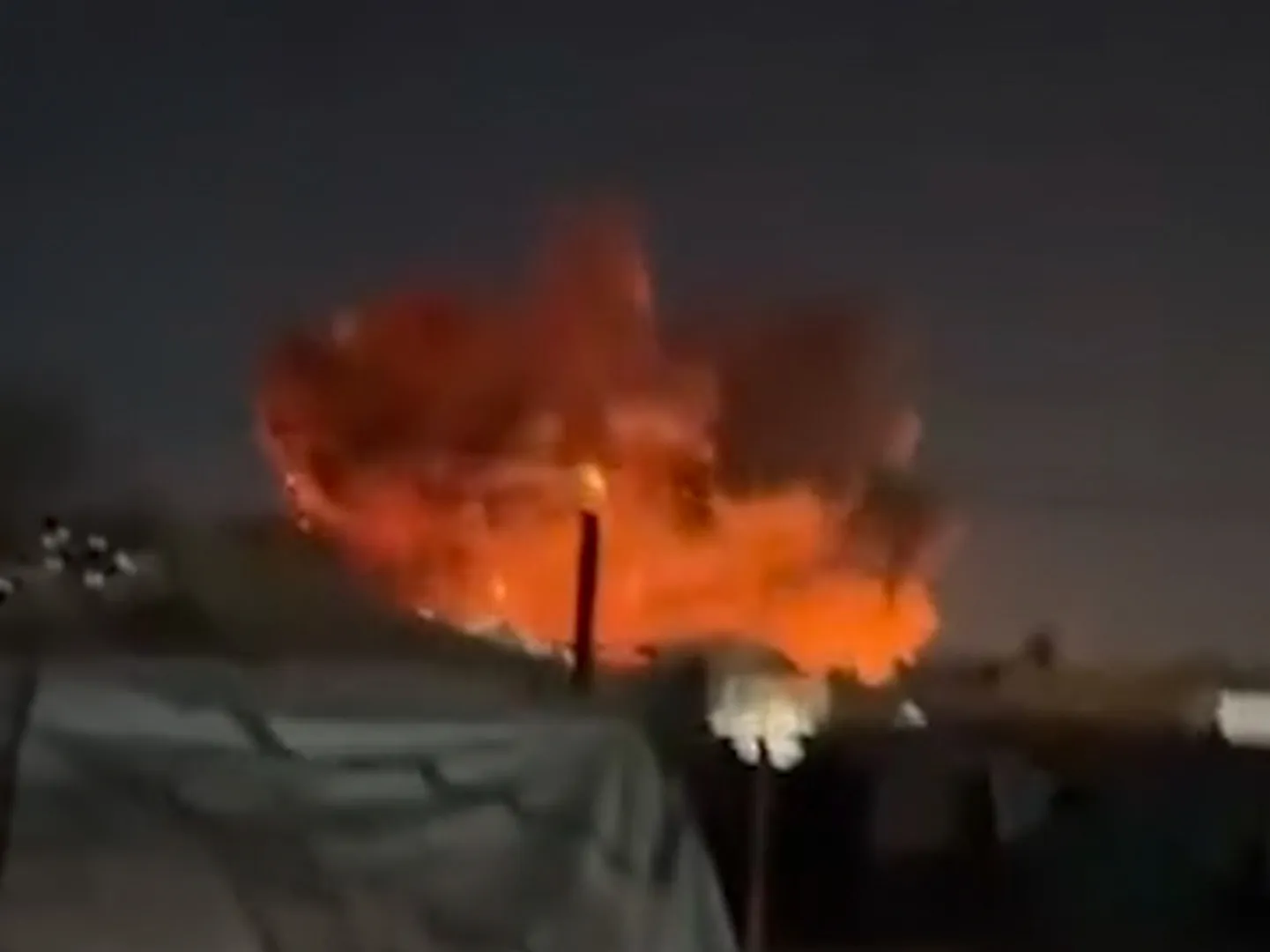
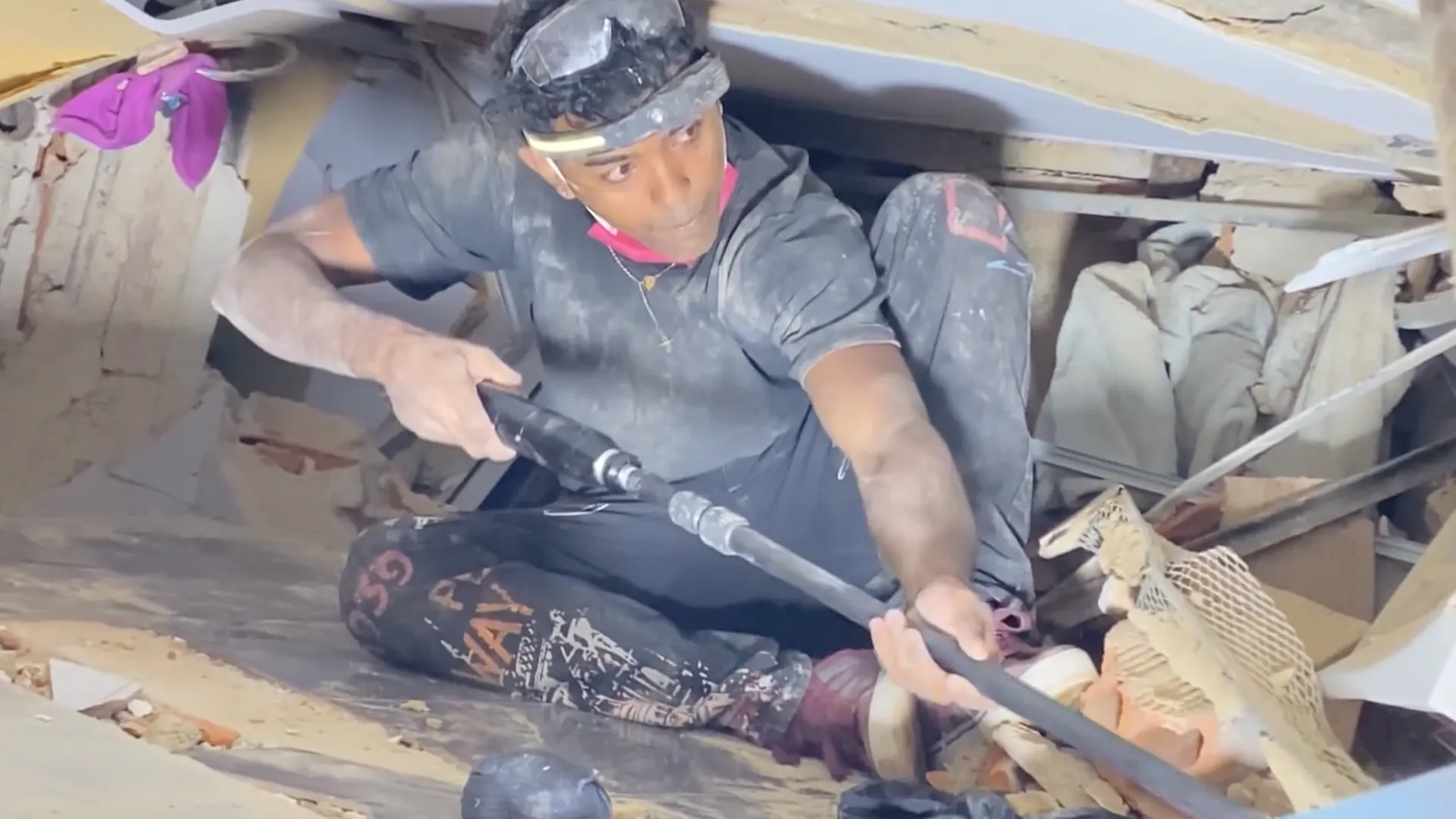
Two people were killed and several others were injured after an Israeli strike hit the Mawasi area of Khan Younis, a zone previously designated by Israel as a humanitarian area in the southern Gaza Strip. A total of five people were killed across Gaza on Monday.
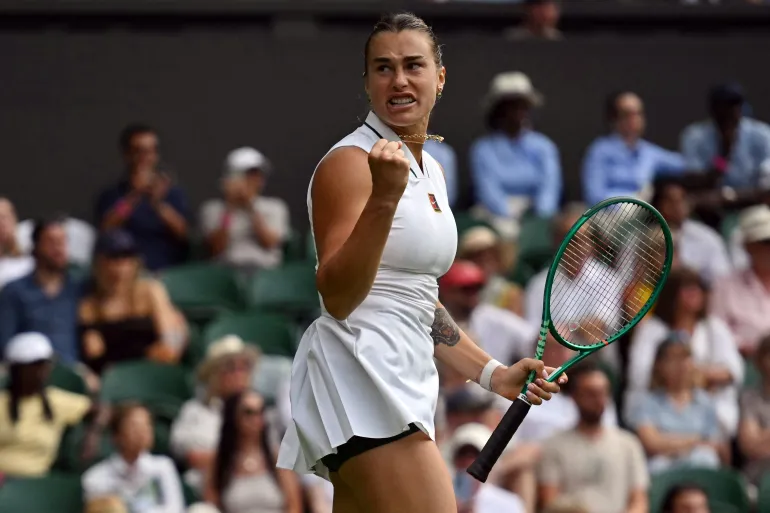
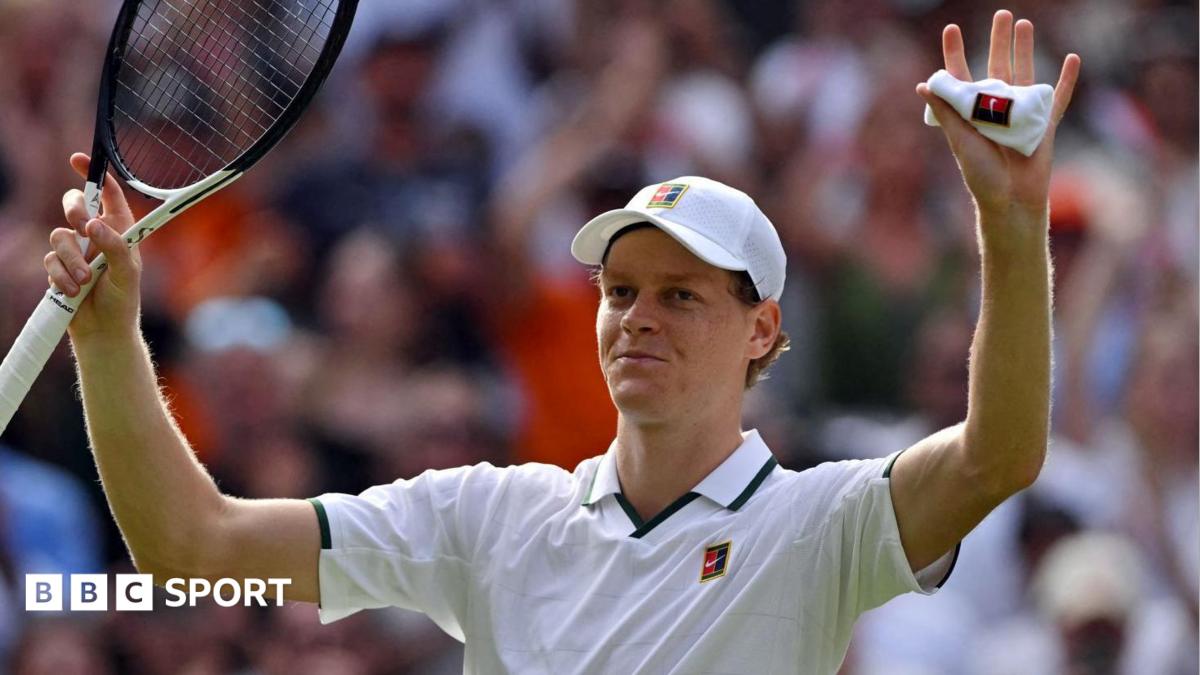
Men’s defending champion Jannik Sinner and women’s top seed Aryna Sabalenka both arrived at Wimbledon with question marks hanging over them but answered the doubters with contrasting first-round victories.
Italy’s Sinner – playing his first match since his shock collapse and defeat in the second round of the French Open on a scorching day in Paris – was stretched to the limit by Serbia’s Miomir Kecmanovic but survived, winning 4-6, 6-3, 6-7(6), 6-2, 6-3 on Monday.
Recommended Stories
list of 4 itemsend of list
Sabalenka, who left Paris in a “deep, dark place” after losing the last 10 games of her quarterfinal against Diana Shnaider, followed Sinner onto Centre Court and breezed past Serbian qualifier Teodora Kostovic 6-2, 6-3.
While world number one Sinner, the overwhelming favourite in the absence of Spain’s Carlos Alcaraz, lived to fight another day, there were some early seeded casualties.
Norway’s 11th seed Casper Ruud was handed a tough draw in the shape of big-serving Pole Hubert Hurkacz and duly lost 6-4, 6-2, 7-6(7), while 12th seed Andrey Rublev was edged out in a five-set battle against fellow Russian Roman Safiullin, losing a deciding set tiebreaker 14-12 after missing two match points.
There was heartbreak too for surprise French Open runner-up Maja Chwalinska as she lost 2-6, 7-5, 6-2 to Thai qualifier Mananchaya Sawangkaew on Monday after the Pole fell and hurt herself while on match point.
Several women’s seeds moved through on a day mercifully cooler than the heatwave that gripped London last week.
Japan’s Naomi Osaka once again dressed to impress, walking on court in a Kill Bill-inspired white kimono and tennis shoes that shone as the 14th seed beat Elsa Jacquemot 6-1, 7-5.
American fourth seed Jessica Pegula beat Darja Vidmanova 7-5, 6-3, while newly crowned French Open champion Mirra Andreeva, seeded fifth, beat Magda Linette 7-5, 6-4.
Swiss 11th seed Belinda Bencic had far too much experience for young wildcard Mika Stojsavljevic, whose defeat was one of many on a miserable day for home players.
Home hopes ebb away
It was a grim day for the home nation, who failed to celebrate a single victory.
Twenty-one players, including 12 wildcards, were in the first-round draw, but after Emma Raducanu withdrew with an injury on the eve of the tournament, she was followed on Monday by Jack Draper, who announced he was also pulling out with an arm injury.
Ten British players lost, including British number one Cameron Norrie, seeded 26, beaten in five sets by inspired American qualifier Michael Zheng.
Sinner’s meltdown in the Roland Garros furnace against Juan Manuel Cerundolo had raised questions about his durability in long matches, but he answered those, albeit in relatively cool conditions, against Kecmanovic.
Sinner racked up his 94th Grand Slam match win, equalling the Italian record of Nicola Pietrangeli, but shed plenty of sweat and a little blood in reaching that mark, his white shoe stained red after injuring a nail in a fall.
“It was a little tight in the beginning; I didn’t play at my best, but I tried to get into it,” he said. “I’m happy I turned it around because the third set was very tough to swallow.”
Sinner had a point to go two sets to one ahead but lost it, and Kecmanovic pounced. Sinner was in danger of becoming only the third defending Wimbledon men’s champion to lose in the first round, but dominated from then on and later said his foot injury was not serious despite the pounding it took during his third-longest match at Wimbledon at three hours and 30 minutes.
“I’m actually surprised that they let me keep playing, because my all-white outfit turned into a little red,” he added.
New generation triumph
Court One fans expecting to see Raducanu in action were left disappointed as the replacement match saw home hope Harriet Dart beaten by Latvia’s Jelena Ostapenko.
Next up was a duel between two more former US Open champions, Daniil Medvedev and Marin Cilic, but that fell flat as Cilic was made to look all of his 37 years as eighth-seed Medvedev romped to a 6-1, 6-2, 6-4 win.
Two of the new men’s generation lit up the opening day.
Brazil’s Joao Fonseca, cheered on by a large contingent of fans in yellow football shirts, beat Spanish veteran Roberto Bautista Agut 7-6(4), 6-4, 6-3, before heading off to watch Brazil beat Japan to reach the last 16 at the World Cup.
Rising Spanish teenager Rafael Jodar, also aged 19, made an impressive debut, beating British wildcard Felix Gill 6-3, 6-3, 7-5.
Kerr signs with the NWSL champions until 2030, returning to the US league after six years spent with Chelsea in England.
Published On 29 Jun 202629 Jun 2026
Australian striker Sam Kerr has signed with Gotham FC, the reigning champions of the National Women’s Soccer League (NWSL) in the United States, the club announced after the iconic player ended her dazzling career with Chelsea, which saw her win five Women’s Super League titles.
Kerr, who was a free agent, signed the contract on Monday that will see her play in New York through the 2030 season. She previously played in the city between 2015 and 2017.
The all-time leading regular-season goal-scorer for the North American league recorded 116 goals across all competitions with Chelsea and was the 2023 Ballon d’Or runner-up.
“This club was an important part of my journey, and to come back at this moment, with everything Gotham has built, is really special. The ambition here is clear, and I’m looking forward to helping this team compete for trophies and create more history,” Kerr said in a statement.
The signing is a fine coup for the NWSL, which saw several players exit for opportunities in Europe last year, and brings one of the game’s brightest talents to the biggest sports market in the US.
“Sam is one of the defining players of her generation and a game-changing talent who has consistently delivered at the highest levels of world football,” Yael Averbuch West, the president of football operations for Gotham, said.
“Bringing Sam back to Gotham is a landmark moment for our club, and we couldn’t be more excited.”
Kerr played 119 career regular-season games (113 starts) across her seven seasons with three teams in the NWSL, including three years with Sky Blue FC (now Gotham FC) from 2015 to 2017.
After playing the 2018 season with the Chicago Red Stars, Kerr played a season for the Perth Glory in her native Australia (2018-19) before returning to Chicago in 2019. She joined Chelsea in the Women’s Super League in late 2019.
Despite her six-and-a-half-year absence, her 77 regular-season goals are still an NWSL record. In 2017, she won the Golden Boot and MVP awards with Sky Blue FC after a season in which she scored 17 goals in 22 games.
Kerr will debut for Gotham after the NWSL’s transfer window opens on July 14. Gotham host the Washington Spirit on July 15 in the Queens Classic in New York.
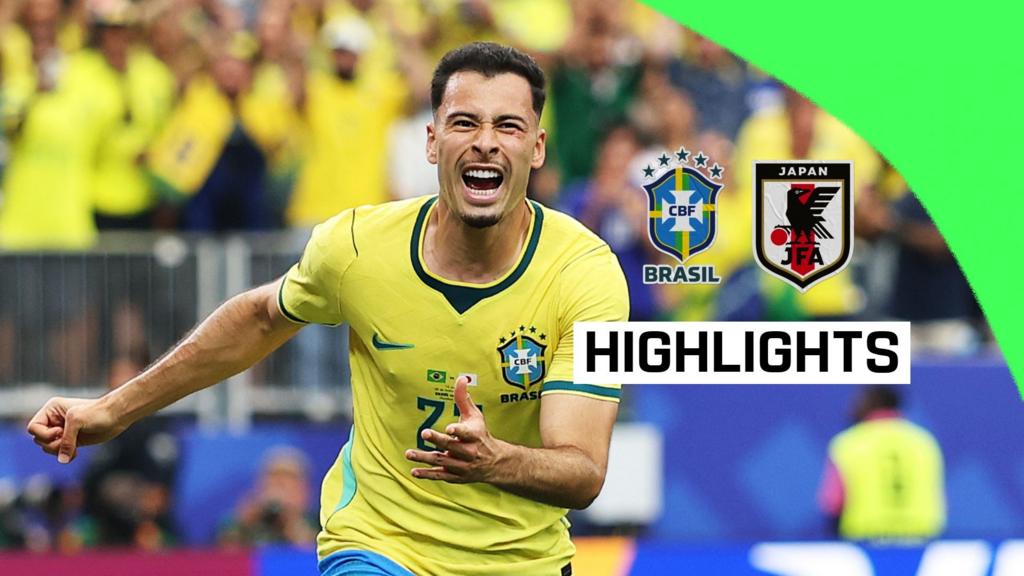
Gabriel Martinelli scored the winner late in injury time to give five-time champions Brazil a 2-1 win over Japan in the World Cup round of 32 in Houston.
Martinelli, who had come on as a second-half substitute, scored in the sixth minute of stoppage time as the match on Monday appeared to be heading to extra time.
Brazil will next face either the Ivory Coast or Norway on Sunday in East Rutherford, New Jersey, in the round of 16.
Casemiro had earlier equalised with a header in the 56th minute off an assist from Gabriel Magalhaes after just missing another chance two minutes earlier. The shot sailed just out of reach of the outstretched hand of Japan goalkeeper Zion Suzuki and into the net.
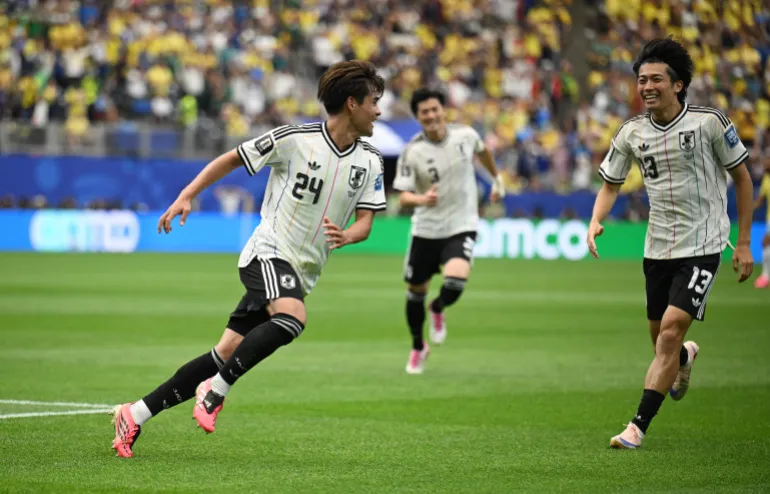
Kaishu Sano stole a misplaced pass in midfield before his right-footed shot from above the half-circle put Japan ahead after 29 minutes.
Kaishu Sano celebrates scoring the first goal [Annegret Hilse/Reuters]
Vinicius Junior, who has scored four goals so far in the tournament, had a chance to put Brazil on top in the 58th minute, but his shot from the left was deflected by goalkeeper Suzuki and went past the far post.
Brazil had two chances to even the score early in the second half before breaking through late on. First, Suzuki blocked a header from Bruno Guimaraes in the 52nd minute. Soon after, Casemiro’s header bounced off a defender’s head and Suzuki’s face.
Japan have never won a World Cup knockout match.
The win was Brazil’s 12th in 15 games against Japan. The teams have also played to two draws, while Japan got their first win in the series in a friendly in Tokyo in October.
This was a match-up between two countries with deep ties, Brazil being home to about 2.7 million Japanese descendants, which is the largest Japanese population outside of Japan.
Those ties extend to football, where Brazil superstar Zico moved to Japan in 1991 to play for Kashima Antlers and help build Japan’s professional football network. He coached the Japan national team from 2002–06, leading the team to the World Cup in 2006.
That team lost to Brazil 4-1 in the only previous meeting between the teams at the World Cup.
Brazil won Group C after a draw with Morocco and victories over Haiti and Scotland.
Monday’s victory came on the anniversary of their first World Cup championship in Sweden in 1958, when a 17-year-old Pele scored two goals in the final against the host country.
Japan reached the round of 32 as runner-up in Group F after draws with the Netherlands and Sweden and a win over Tunisia. The loss snaps a 10-game unbeaten streak dating back to a 2-0 defeat to the United States in September.
Brazil players celebrate after the match [Annegret Hilse/Reuters]
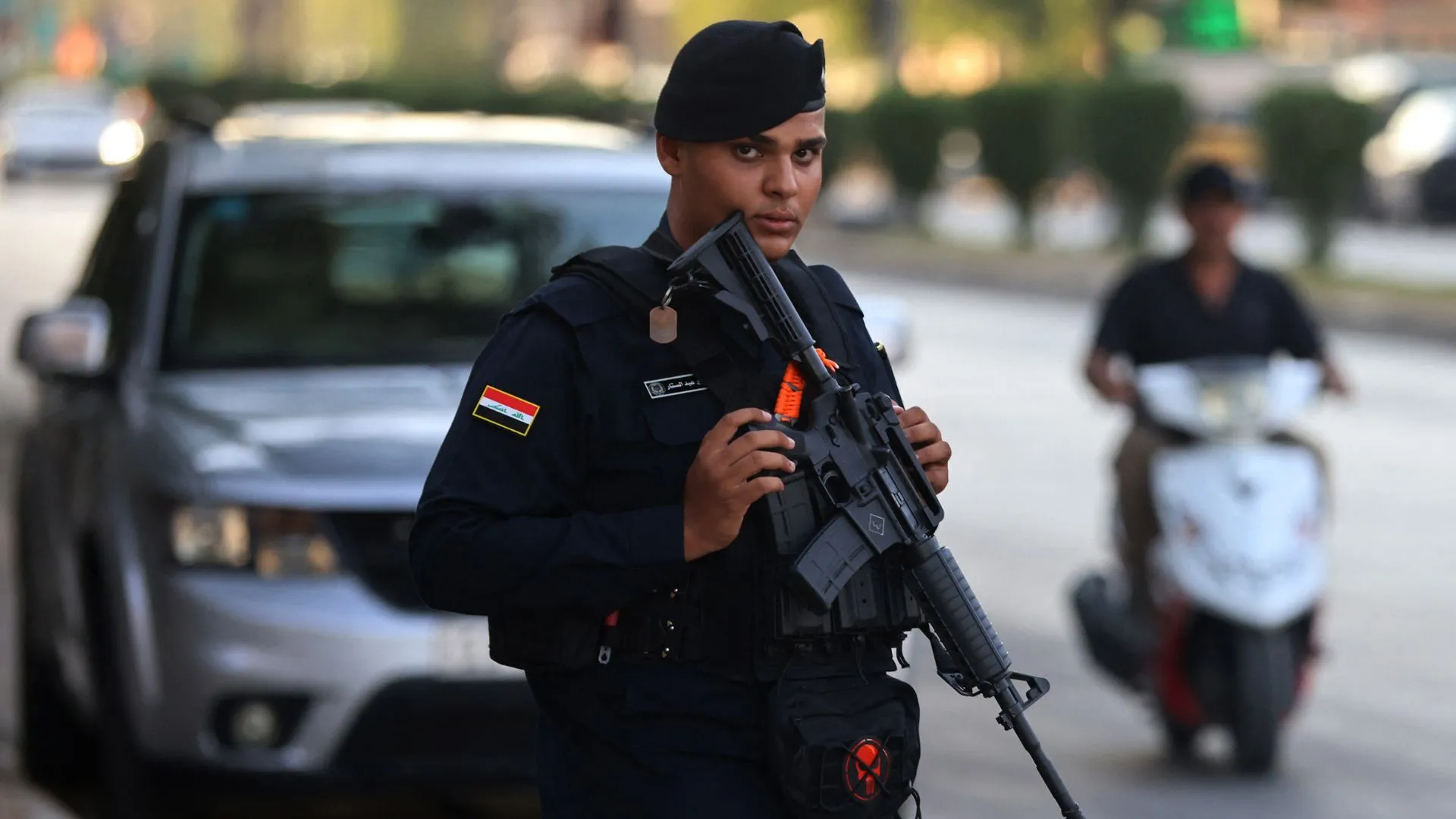
A number of senior politicians have been detained in a wave of arrests.
For more than two decades, corruption has been a serious issue in Iraq.
The oil-rich nation has consistently been ranked as one of the most corrupt in the world.
Recommended Stories
list of 4 itemsend of list
But this week, its new government has embarked on an unprecedented anti-corruption crackdown.
It’s targeting many high-profile politicians and other senior figures accused of making illicit wealth and abuse of office.
Iraqis have repeatedly protested against what they say is rampant corruption in their nation.
Now, they hope the new government keeps this promise to eradicate what they call a ‘pandemic of fraudulent activities’ at the highest echelons of power.
But what are the challenges ahead in this battle?
Presenter: Imran Khan
Guests:
Ahmed Rushdi – President of the think-tank, House of Iraqi Expertise Foundation.
Renad Mansour – Deputy Director of the Middle East and North Africa Programme at Chatham House.
Manuel Pirino – Regional Advisor for Middle East and North Africa at Transparency International.
Gabriel Martinelli scores a dramatic 95th-minute winner with Brazil coming from behind to beat Japan, set up a World Cup last-16 tie against Norway or Ivory Coast.
The frontrunner to succeed Keir Starmer was criticised for not taking questions after a speech setting out his policy vision.
Published On 29 Jun 202629 Jun 2026
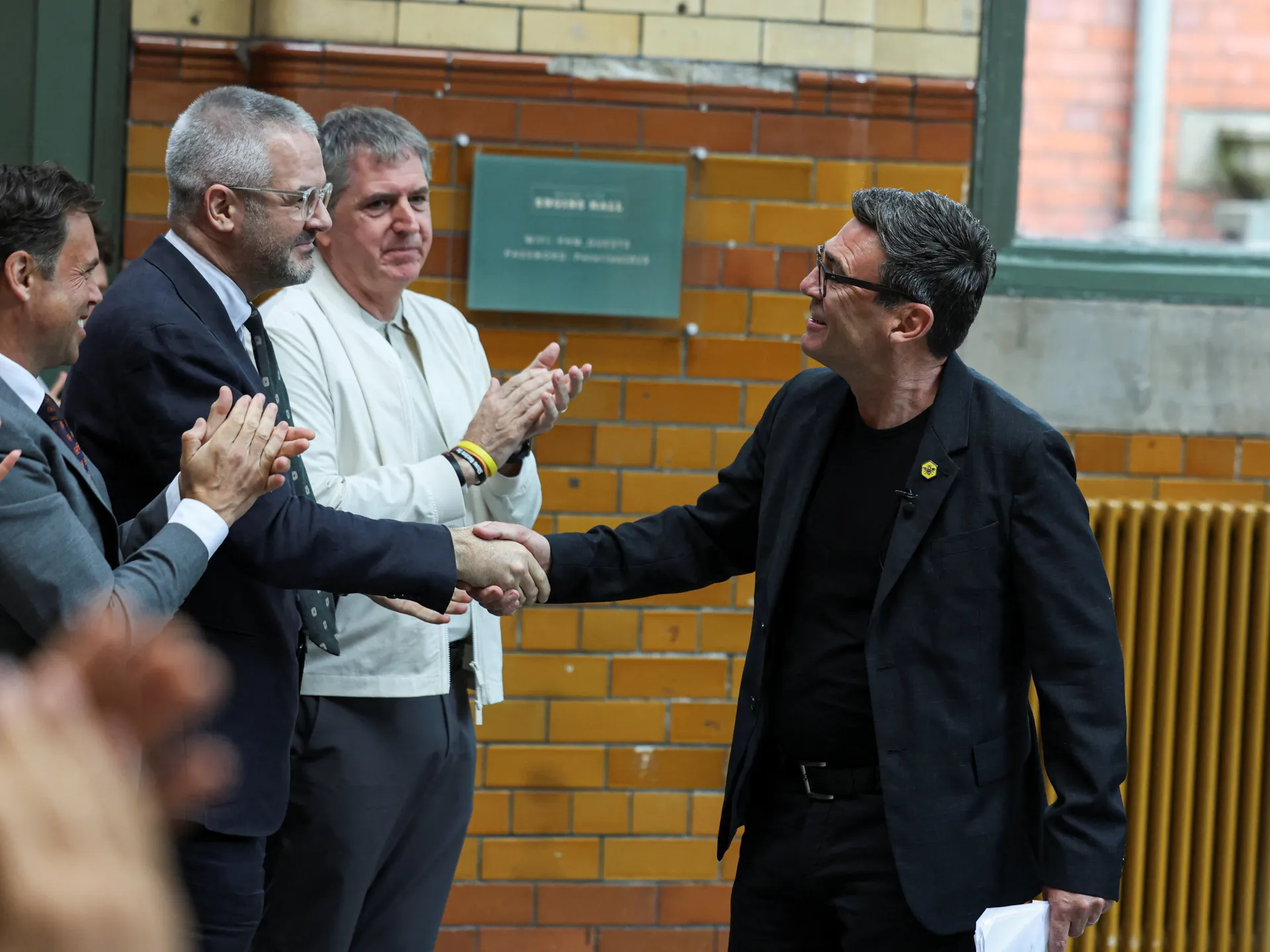
Andy Burnham, the frontrunner to become Britain’s next prime minister, has vowed to “bring about the biggest rebalancing of power our country has seen” by handing more autonomy to the regions if he succeeds Keir Starmer.
In a speech on Monday setting out his policy vision, in Manchester where he spent nine years as mayor, Burnham pledged fiscal discipline and promised to reduce Britain’s ballooning welfare bill, having already sought to calm markets by committing to the government’s current borrowing limits.
Recommended Stories
list of 4 itemsend of list
“Growth cannot be ordered from the top down. Instead, it can only be nurtured from the bottom up,” Burnham said.
“If councils can’t fix potholes, what chance do they have of bringing forward major regeneration schemes to get growth going?”
He set out a 10-year plan to get “good growth in every postcode”, in a country where wealth and power are concentrated in London and the south of England.
Burnham won a by-election on June 18 to regain a seat in parliament, where he was sworn in on June 22, the same day Starmer announced that he will resign as soon as a successor is chosen.
Burnham is so far the only contender in the Labour Party leadership contest. If nobody challenges him, he will become prime minister by July 20.
Although he is considered more charismatic than Starmer, Burnham will face the same political and economic challenges, including a sluggish economy, tattered public services and a cost-of-living squeeze.
He will be constrained by the platform the Labour Party was elected on in 2024, with a pledge not to increase taxes on working people.
Like other NATO countries, Britain is also under pressure to dramatically increase defence spending to counter a more aggressive Russia and less reliable United States.
The government’s long-awaited defence investment plan is expected to be published before a NATO summit in Turkey on July 7 and 8. Starmer’s successor will be expected to stick to the commitments in the plan.
Burnham drew criticism from political commentators and opposition leader Kemi Badenoch of the Conservative Party for declining to take any questions after his speech.
“He doesn’t have a plan beyond telling the mayors to go and sort it out,” Badenoch said. “If he wants to be the leader of our country, it’s time to start acting like it.”
Specially-trained search dogs are used to sniff out where potential victims may be located, says Ivory – who has been deployed to relief efforts following earthquakes in Haiti, Japan and Nepal and is currently helping to coordinate efforts in Venezuela from the UK.
They can identify a person’s smell even when they are buried as far as 10m (32.8ft) under rubble – and will let out a “really strong and sustained bark” when they do, alerting rescuers to a potential survivor.
The dogs are trained using toys imprinted with a human’s smell, Ivory explains. Then, when they actually locate a human on the ground, they are handed the toy as a reward by their handler.
Search dogs can also be very useful during the technical part of rescue operations, says Sakthy Selvakumaran of the UK-based charity Search and Rescue Assistance in Disasters (SARAID), which deploys personnel to large-scale disasters worldwide.
They can find hard-to-navigate paths through rubble to follow a scent or identify different access points to the victim, Selvakumaran tells the BBC.
Jannik Sinner survived an almighty scare as he began his Wimbledon title defence with a five-set comeback victory over inspired opponent Miomir Kecmanovic on Centre Court.
One month on from a seismic second-round loss at the French Open, four-time major winner Sinner recovered from an error-strewn start and an awkward fall to overcome his 50th-ranked opponent 4-6 6-3 6-7 (6-8) 6-2 6-3 after a tense three and a half hours.
Sinner opted against contesting a grass tournament in the lead-up to Wimbledon, with this his first match since an extraordinary collapse against Argentine Juan Manuel Cerundolo, whom he had led by two sets and 5-1 at Roland Garros.
Having appeared to physically shut down in the stifling Paris heat that day, Sinner’s durability was thoroughly tested by Kecmanovic, and he was fortunate to escape relatively unscathed after a moment of genuine concern inside the stadium court.
There were gasps in the crowd when Sinner slipped behind the baseline during the third set and took time to return to his feet, the umpire heading over to check on his wellbeing.
Blood was also seen seeping from Sinner’s shoe during a must-win fourth set for the Italian, which he later explained was caused by a problematic toe nail.
But Sinner raised his level when it truly mattered to avert another early exit, improving his poor recent record in five-set matches to avoid becoming only the third defending Wimbledon men’s champion to lose in the first round.
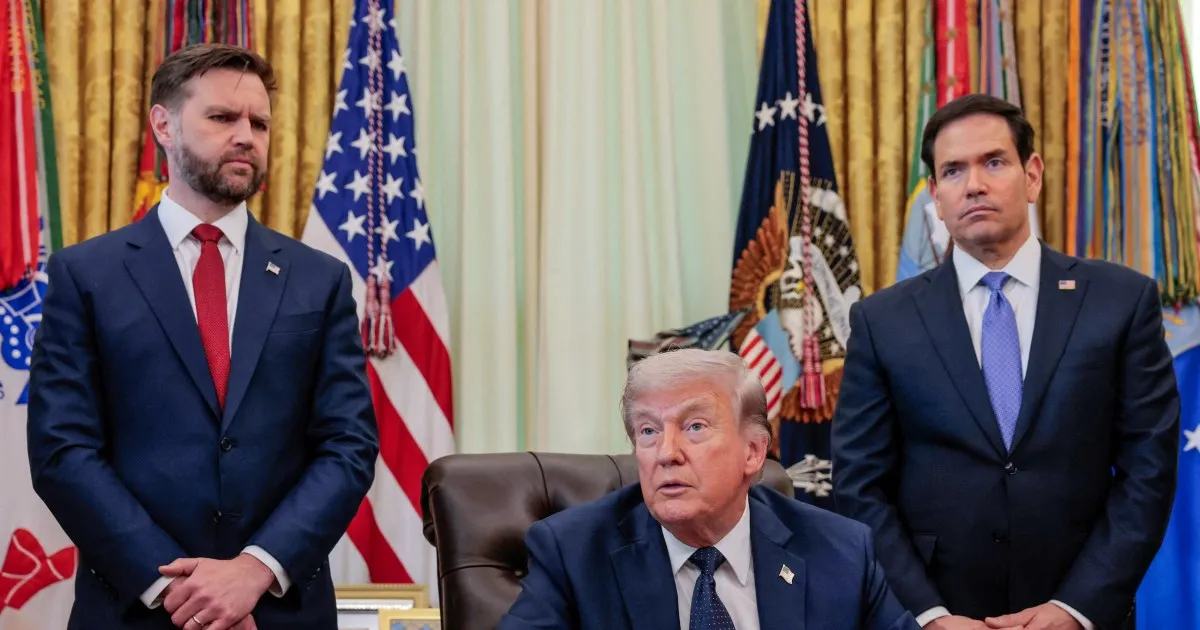
In a recent interview with the New York Times, Vice President JD Vance denied that there was an “intense rivalry” between him and Secretary of State Marco Rubio. And yet, reports and speculations about tensions between them continue to emerge, with the Rubio camp allegedly spreading rumours that Vance was thinking about pulling out of the presidential campaign before it even starts
In response, perhaps, during the past two weeks, the vice president has stepped out of his routine public persona that usually avoids controversy to make bold statements critical of Israel. Rubio, on the other hand, has continued to hold the party line of unconditional support for Israel. While Vance has led efforts to negotiate a peace deal with Iran, which have rattled Israel, Rubio has spearheaded efforts to pressure the Lebanese government into an agreement on Israel’s terms.
By becoming the face of Republican scepticism of Israel and clashing with his likely presidential election rival Rubio, Vance appears to be charting his own way to the presidency – one that distances the vice president from what increasingly seem to be unpopular foreign policy positions.
Rubio, until recently, had been on the upswing, assigned ever-more important responsibilities by Trump. He has been a leading voice within the administration for a hawkish approach that has encompassed military action from Venezuela to Iran, outweighing the counsel of the more isolationist Vance.
When it comes to Israel, Rubio has made a point of being as public and proactive as possible in his support for that country and its prime minister, Benjamin Netanyahu, supporting his appeal for the US to enter the war with Iran, and even going so far as to put his name on determinations leveraging claims of national security threats to deport foreign students critical of Israel.
While the bulk of his public statements have been directed at the Netanyahu government, it is hard not to read some of Vance’s recent comments as being directly responsive to Rubio’s actions not only abroad, but at home as well.
As Vance put it, “…pro-Israel people in the United States make two critical mistakes. One, on the one hand, is not delineating between America’s interest and Israeli interests because they’re not the same. But the second is always conflating criticism of a particular government with Jew hatred, because if everything is Jew hatred, then nothing is Jew hatred.”
But, if Vance is creating space between himself and Rubio (including, apparently, by eschewing the increasingly weaponised terminology of “antisemitism”), it must also be the case that there is a political case for his doing so. That case has yet to be tested on the Republican side, where the political elites well beyond Rubio continue to move in lockstep with Israel’s Netanyahu.
But Vance, as ever, is reading the base. The same polls that show an absolute collapse of Democratic grassroots support for Israel also show an unmistakable weakening of that support in the Republican base, with one recent survey finding that 57 percent of Republicans under 50 now hold negative views of Israel.
Despite the inability of Republican elected officials to rally support behind their criticism of Israel (neither of the two most visible examples, Representatives Marjorie Taylor Greene and Thomas Massie will re-enter Congress next year), the demand signal for more frank conversation has propelled right-wing commenters like Tucker Carlson and Candace Owens to ever-greater prominence. Looking into the social media landscape, Republican questioning of the Israel relationship – particularly under the banner question of whether it represents “America First” or “Israel First,” is inescapable.
Which is not to say it will be an easy path. As sitting vice president, Vance must defer to Trump; while the latter is currently frustrated with Netanyahu, there are no guarantees that the relationship will not warm up between now and 2028 – or that if Israel elects a new leader this autumn, that that person would not be able to rebuild much of Israel’s political capital in Washington.
And similarly, if Vance’s stance on Israel helps him capture the “America First” – which is no easy task given the cohesion within that movement of the Christian Zionist camp that remains strongly pro-Israel – he may then have to contend with a Democratic competitor who seizes the Israel-sceptic mantle more credibly.
Or not. It is still early, but the favoured nominee on the Democratic side appears to be California Governor Gavin Newsom, whose few forays into commentary on Palestine and Israel have quickly been walked back to appease the pro-Israel backers of the party establishment. Indeed, the Democrats will have their own complicated, and likely ugly, battle to fight when it comes to Israel.
What does appear certain, however, is that Israel will be a wedge issue in the upcoming election – and in the wake of the failed Iran war and increasingly unpopular attacks on free speech, both greatly driven by the government of Israel or its aligned lobbies, there is an opening here that Vance, given his competition with Rubio, would have been foolish to ignore.
So is Vance’s public criticism of Israel – and pro-Israel voices within his own party genuine, or calculated? As Vance put it in his book Hillbilly Elegy, “I don’t believe in epiphanies. I don’t believe in transformative moments, as transformation is harder than a moment. I’ve seen far too many people awash in a genuine desire to change only to lose their mettle when they realised just how difficult change actually is.”
Until now, little is harder in Republican politics than to go against the prevailing dogma on Israel. And while Vance has long demonstrated what might be termed isolationist tendencies, there is no reason to think that his recent comments represent an epiphany. Rather, like any politician, he is reading the tea leaves, and sensing an opportunity on the back of a change that is filtering across American public opinion.
Vance may not be committed to driving that change. But he may be smart enough to ride it.
The views expressed in this article are the author’s own and do not necessarily reflect Al Jazeera’s editorial policy.
The US Supreme Court will not hear an appeal requested by President Donald Trump to review the civil case that found he defamed and sexually abused writer E Jean Carroll.
A New York jury awarded Carroll $5m (£3.6m) in damages in 2023 over her civil claim that Trump sexually assaulted her in the 1990s, and then branded the incident a hoax on social media.
Trump denied the allegations and repeatedly claimed that the judge who oversaw the civil trial improperly allowed evidence to be presented that affected how the jury viewed him.
A federal appeals court agreed with the jury’s verdict last year and said a new trial was not warranted. Trump then asked the highest court to intervene.
The Supreme Court gave no details about their decision not to take up the case, as is customary.
It was Trump’sfinal hope of overturning the jury’s unanimous verdict and means he will have to pay Carroll the damages she had been awarded.
“The American People stand with President Trump as they demand an immediate end to all of the Witch Hunts, including the Democrat-funded travesty of the Carroll Hoaxes,” a spokesman for Trumps legal team told CBS News, the BBC’s US news partner.
“President Trump will keep winning against Liberal Lawfare, as he continues to focus on his mission to Make America Great Again.”
Caroll’s attorney, Roberta Kaplan, said in a statement that the Supreme Court’s decision “affirms once and for all the jury’s unanimous verdict that President Donald J Trump sexually assaulted and defamed E Jean Carroll”.
“His multiple efforts to appeal that verdict have all failed and today’s ruling ends his quest to avoid accountability for his actions,” she added.
Carroll’s counsel had not previously commented on the president’s decision to bring a challenge to the Supreme Court.
In the petition, Trump’s lawyers argued Carroll’s lawyer should not have let jurors see the 2005 Access Hollywood tape that showed the president saying he groped and kissed women.
Trump’s comments about the jury’s findings in the case led a separate jury to order him to pay Carroll $83m for defaming her. A panel of federal judges denied his appeal of that decision in September.
While Trump was found to have defamed and sexually abused Ms Carroll, the jury rejected her claim of rape as defined in New York’s penal code.
Carroll, a former magazine columnist who is now 81, sued Trump for attacking her in the mid-1990s in a department store dressing room in Manhattan. The defamation stemmed from Trump’s post on his Truth Social platform in 2022 denying her claim.
Trump has said Carroll was “not my type” and that she had lied.
US president says talks will take place on Tuesday, but Tehran has not confirmed the negotiations in Doha.
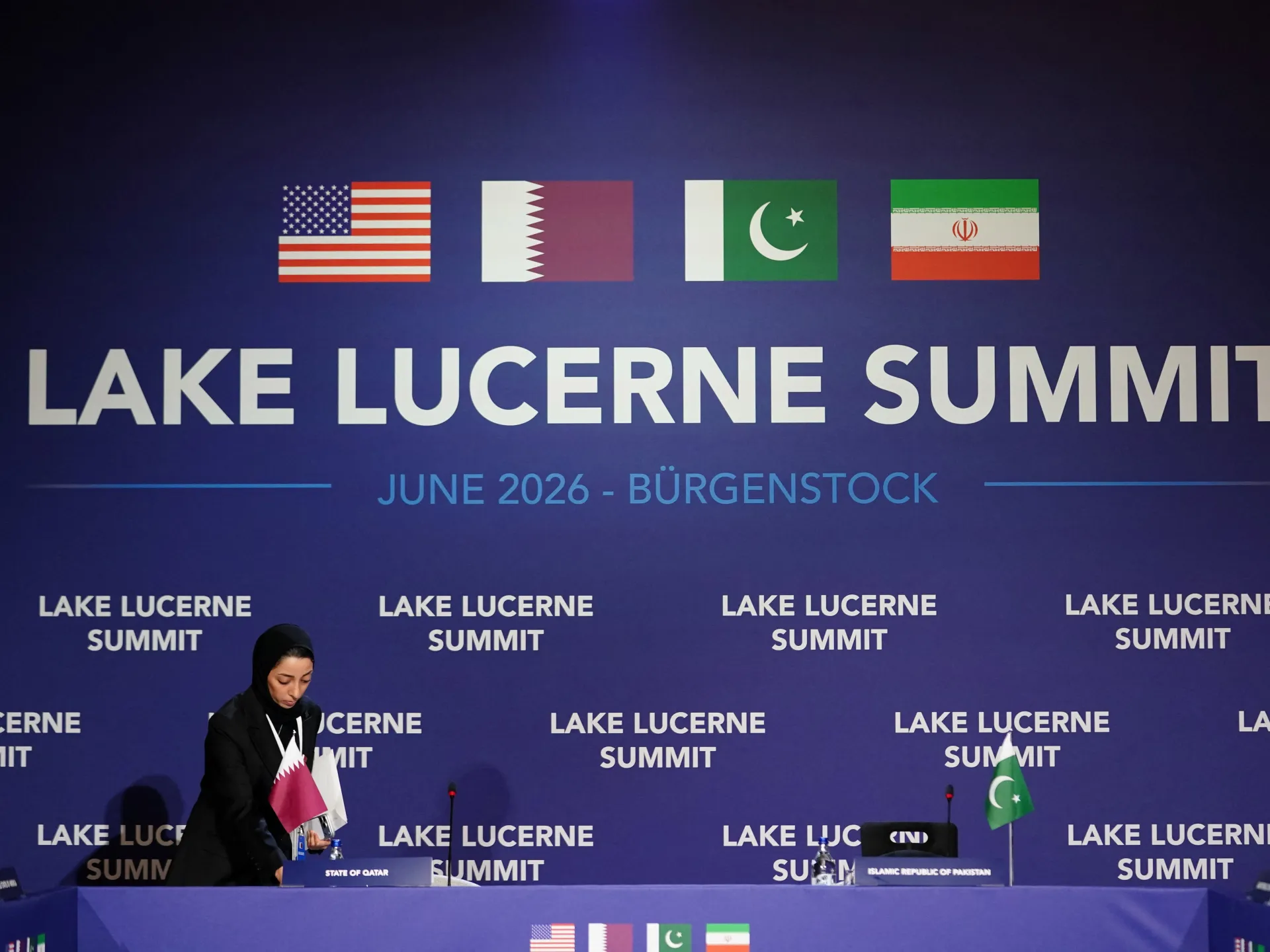
President Donald Trump says a meeting will take place between Iran and the United States in Qatar on Tuesday, suggesting that diplomacy is still on track despite the recent military skirmishes in the Gulf.
Trump’s announcement on Monday came less than two hours after a top Iranian official said that technical talks over the memorandum of understanding (MoU) between Washington and Tehran “are not planned” for this week.
Recommended Stories
list of 3 itemsend of list
“IRAN HAS REQUESTED A MEETING. IT WILL TAKE PLACE TOMORROW IN DOHA!” Trump wrote in a social media post.
Iranian Deputy Foreign Minister Kazem Gharibabadi said the meeting would take place after conditions are met, without providing details.
“Although consultations with Qatar, including regarding the follow-up of the implementation of the other party’s commitments, are ongoing as usual, the news from some media outlets that technical talks of the working groups will be held in Doha cannot be confirmed,” Gharibabadi told Tasnim news agency.
The two statements from Washington and Tehran appear to contradict each other, but it is possible that a breakthrough finalising the meeting occurred after Gharibabadi’s comment.
Iran, however, has not confirmed that talks have been scheduled.
White House spokeswoman Karoline Leavitt said special envoy Steve Witkoff and Trump’s son-in-law, Jared Kushner, will lead the US negotiating team in Doha.
“Special Envoy Witkoff and Jared Kushner will be flying to Doha for high-level meetings this week as we continue to discuss the memorandum of understanding,” she told Fox News.
Leavitt added that technical talks will take place on the sidelines of the high-level negotiations.
The US and Iran reached a deal to end the war earlier this month, kicking off a 60-day period of negotiations over the thorniest issues in the relationship – Tehran’s nuclear programme.
But the deal has been tested by Israel’s continuing attacks in Lebanon and Iran’s assertion of control over the Strait of Hormuz.
The first sentence of the 14-point MoU calls for a full ceasefire in Lebanon, “ensuring the territorial integrity and sovereignty” of the country.
But the US has sponsored a separate agreement between the Lebanese government and Israel that conditions Israeli withdrawal on the disarmament of Hezbollah across the country.
Hormuz has been another sticking point. Iran has rejected routes through the strait outside of its control and fired at ships passing through lanes not designated by Tehran.
The US has struck Iranian positions near the waterway, to which Iran responded with missile and drone attacks against American bases in Bahrain and Kuwait.
But diplomatic and de-escalation efforts appear to continue, despite the trading of attacks.
“As far as we’re concerned, we’re holding up our end of the ceasefire,” Leavitt said on Monday, but she warned that “violence will be met with violence” if Iran attacks commercial ships or US interests.
On Monday, Trump hailed the drop in oil prices that followed the deal, which lifted Tehran’s blockade on Hormuz and eased US sanctions on Iran’s energy products.
“GAS PRICES COMING DOWN, FAST! REPORT ANY ABUSES AT RETAIL LEVEL,” the US president wrote on his Truth Social platform.
The average price of one gallon (3.8 litres) of gasoline in the US has dropped to $3.86, down from a peak of $4.56 in May. It was less than $3 before the war.
China and Sudan signed off on a waiver of $50m as Sudan’s military-led government seeks support amid Western sanctions.
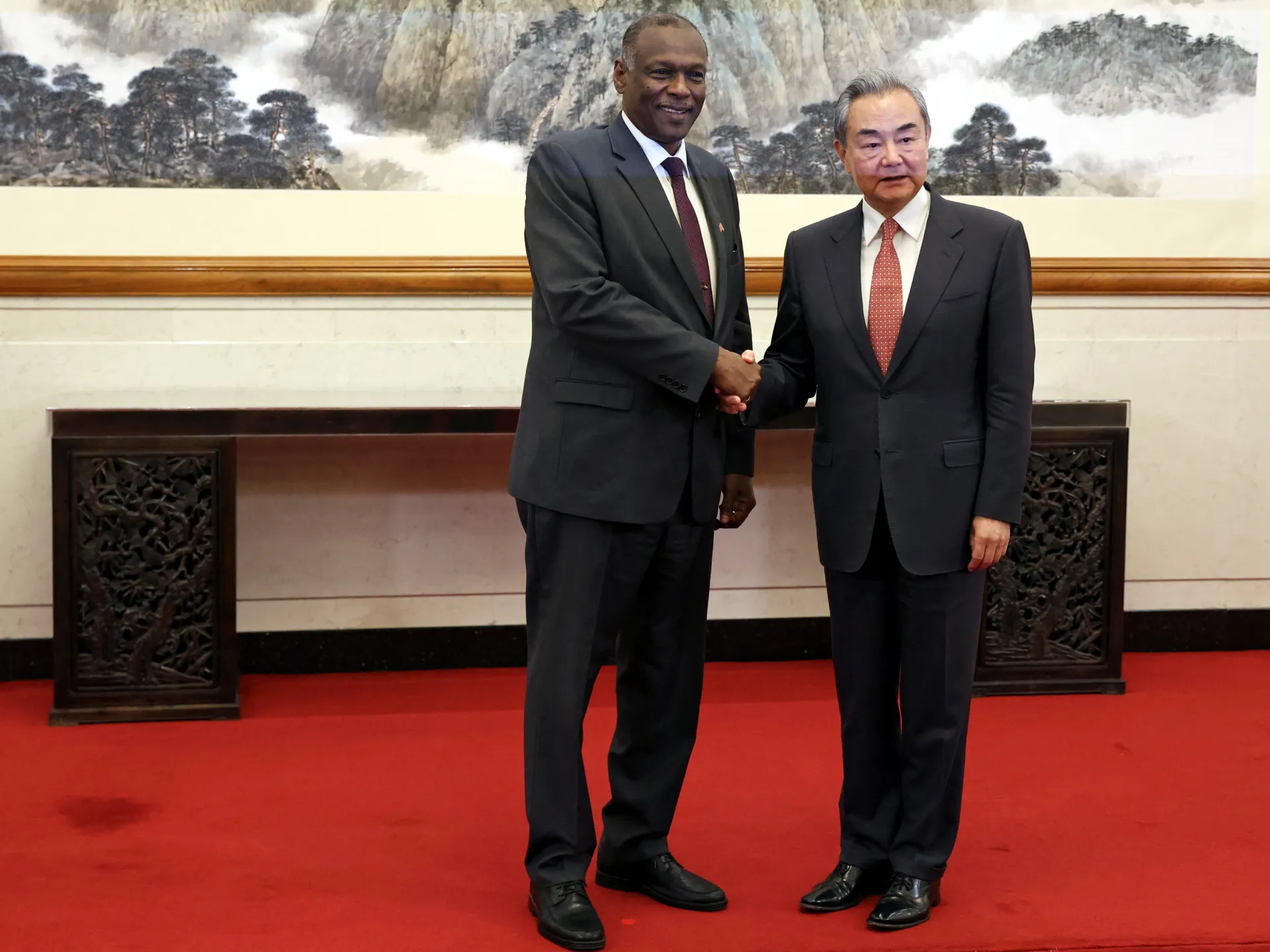
China has waived loans worth $50m that it had given to Sudan, the two countries said over the weekend. The agreement comes three years into a war between Sudan’s army and the Rapid Support Forces (RSF) that has shrunk the country’s economy by roughly 40 percent, according to the United Nations.
The sum is small compared with what Sudan owes overall to external governments or agencies, an amount estimated at more than $56bn before the war. But the waiver lands at a moment when Khartoum has few other international lenders extending any financial support.
China’s relationship with Sudan predates the war by decades, built on oil and infrastructure interests that survived multiple changes of government in Khartoum. But the war has narrowed Sudan’s options elsewhere, as Western governments have largely held back or imposed sanctions.
Here’s why this deal is significant for Sudan and China:
What do we know about the deal?
The signed protocol in Port Sudan cancels four interest-free loans worth 344 million yuan, about $50m, with immediate effect, according to Sudan’s official news agency, SUNA.
Sudan’s Finance Minister Gibril Ibrahim welcomed the move, reportedly saying that China has continued investing in the country throughout the war while Western governments, including the United States and European Union members, have largely held back. Gibril himself was added to the US Treasury sanctions list in September 2025 for his alleged “involvement in Sudan’s brutal civil war and … connections to Iran”.
China’s charge d’affaires in Sudan, Xu Jian, reportedly said at the signing ceremony that China was ready to help rebuild what was destroyed during the war in Sudan.
What’s in it for Sudan?
Sudan’s external debt of more than $56bn before the war is expected to have ballooned since.
The $50m debt relief amounts to not even 1 percent of the total external pre-war debt. In fact, Sudan was close to a far bigger debt write-off in 2021. It was on track with the IMF and the World Bank Heavily Indebted Poor Countries initiative to have more than $50bn of its debt forgiven within three years. The 2021 military coup in October derailed that debt relief plan, and the process was formally suspended a year later.
Still, China’s waiver arrives at a moment of acute need for the country. The war is now in its third year. More than 1.5 million people have been killed, according to the UN, and the war has displaced about 14 million people – about a quarter of the Sudanese population. The World Health Organization says less than 14 percent of health facilities are still functioning. Jobs have vanished in many parts of the country, and the rising cost of living has made it difficult for households to survive.
The Sudanese pound has collapsed since the start of the war. It went from roughly 600 to the dollar before the war to more than 5000 to the dollar by June 2026.
What’s in it for China?
In many ways, Beijing’s decision to waive the $50m loan is in keeping with a broader approach it has taken in recent years, one that has helped cement China as Africa’s largest trading partner for 17 consecutive years.
China has provided interest-free loan forgiveness as a diplomatic gesture to multiple countries, and these decisions are recurrent announcements at Beijing’s frequent leader-level summits with African nations. This is especially true for smaller loans. Research from the Johns Hopkins China Africa Research Initiative found that China forgave at least $3.4bn of these kinds of debts across the African continent between 2000 and 2019.
By contrast, larger loans are usually commercial loans through state banks that come with interest, and waiving those is harder.
At a time when the West is largely trying to isolate Sudan’s leadership, a small loan waiver gives China outsized influence in a country that sits at the intersection of the Middle East and sub-Saharan Africa.
What have China-Sudan ties been like historically?
Oil has long served as a catalyst for their relationship. From the mid-1990s on, China’s National Petroleum Corporation (CNPC) poured billions of dollars into Sudanese oil fields and the pipelines carrying that crude oil to Port Sudan. This was a time when many Western companies were pushed out due to sanctions.
The relationship changed when the southern part of the country voted in favour of independence in 2011. The world’s newest country, South Sudan, left the north and took most of the country’s oil fields with it.
Chinese investment largely dried up afterwards, but Sudan still has more than $5bn of outstanding debt to China. The war has aggravated Sudan’s economic challenges. The CNPC requested a formal exit from Sudan in December 2025.
Police say several people also injured while the suspected shooter has been arrested.
Published On 29 Jun 202629 Jun 2026
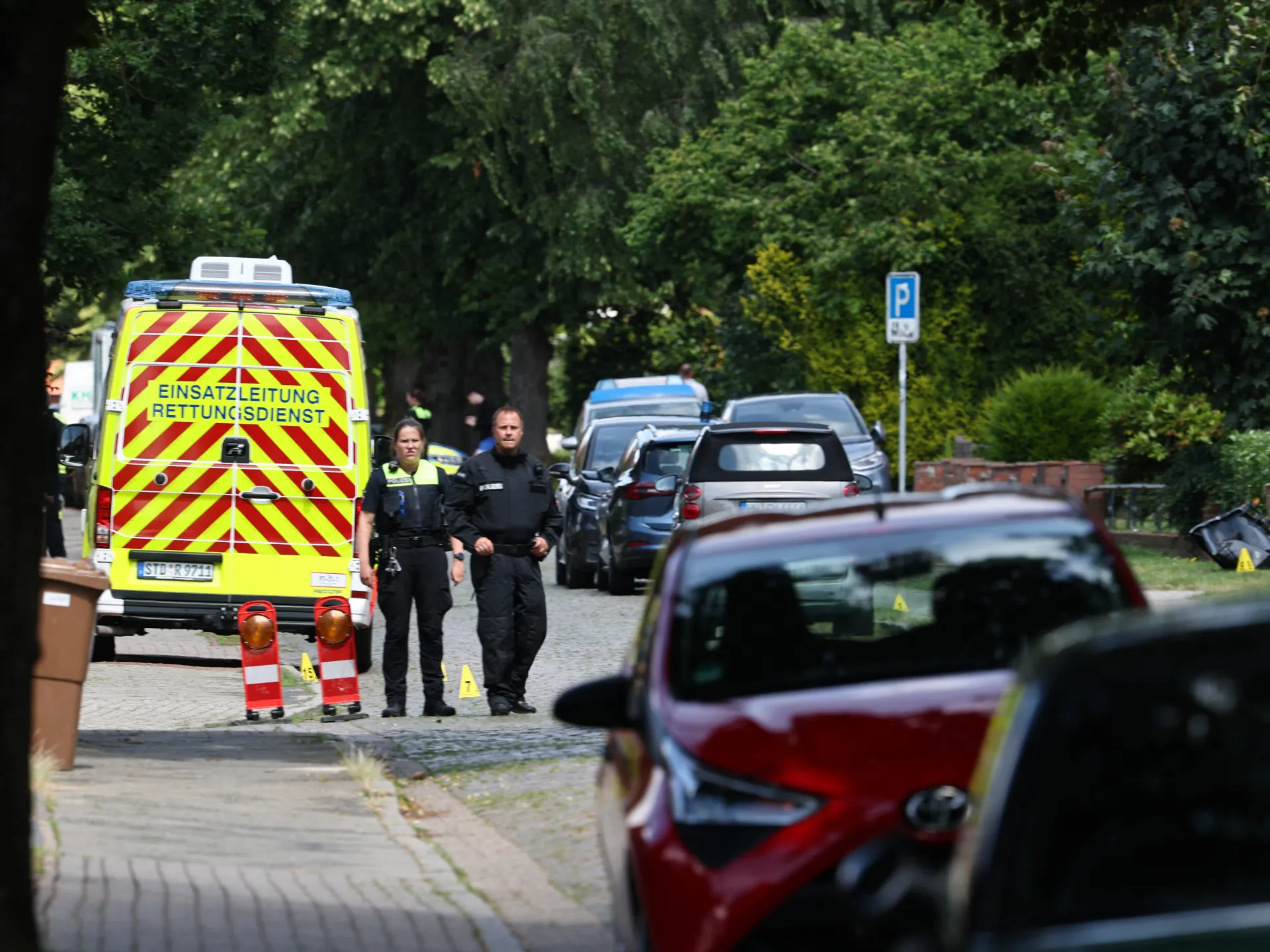
Five people have been killed and others wounded in a shooting at a youth welfare centre in the northern German city of Stade, according to police.
Two suspects were detained following the shooting on Monday, one of whom is believed to be the alleged attacker. The motive is not clear.
Recommended Stories
list of 3 itemsend of list
“Homicides involving multiple victims occurred at a youth welfare facility,” police said. “Five people were fatally injured and additional individuals sustained injuries.”
Police in Stade said a major operation was being conducted on Dankersstrasse, a street south of the city centre. People were urged to avoid the area and follow the instructions of the emergency services.
Stade is about 40km (25 miles) from Hamburg with a population of half a million.
With ₦2.759 million standing between Pious Umokoro* and graduation, his dream of building a better life for himself hangs in the balance. The chance to attend a private university felt like a blessing, but four years of relentless effort, sleepless nights, and hope are at risk if he cannot secure the funds.
Given his family’s financial struggles, Pious’s best chance at higher education was through the Presidential Amnesty Programme (PAP) scholarship at Novena University in Delta State, South South Nigeria. Trapped in a deceitful slot system that promised him the PAP scholarship, he is now unable to pay the outstanding fees demanded by the university.
PAP was established in 2009 by the Nigerian federal government to address militancy in the Niger Delta region, offering scholarships, vocational training, and peacebuilding schemes. One of PAP’s initiatives is a fully funded scholarship programme that covers tuition, monthly stipends, books, and accommodation for both undergraduate and postgraduate beneficiaries. The scholarship scheme is meant to be life-changing for those lucky enough to receive it, but a confusing selection process and sharp practices have put the chances of many hopeful participants at risk.
According to the Foundation for Partnership Initiatives in the Niger Delta (PIND), militancy in the region arises from communal conflicts, gang clashes related to cults, armed confrontations with security forces, separatist agitations, and natural disasters. However, the PAP initiative provides opportunities for young people – ex-agitators and individuals from impacted communities – to eradicate militancy and armed violence in the region.
A dream deferred
Pious is the youngest of his parents’ four children. After losing his father at the age of two, his family moved from South West Nigeria to North Central. His mother, a retired nurse, became the family’s breadwinner, taking over her late husband’s frozen-food business to support her children. Unfortunately, the business began to decline, making things more difficult for them.
In 2012, pressure from their extended family in Delta State prompted his mother to relocate, driven by fears of the insurgency in the northern region. His mother registered him in a private school, but did not have the financial means to support his education there for long, which eventually led to his transfer to a government school.
The extended family promised to set up a chemist shop for his mother after she returned, but they could only pay her rent for a few months for a one-bedroom apartment. “The support stopped coming from family members, and my mother started to look for another job. Her salary was not enough to support us. So she eventually started farming, mostly cassava for our own consumption and occasional pepper farming, which she does to date,” he told HumAngle.
She raised money for her son to take the Basic Education Certificate Examination (BECE) by working on people’s farms. “The good thing is that the secondary school I attended was free. You just handle things like books and uniforms,” he recalled.
Despite the presence of many oil companies, the community in Delta State remained underdeveloped, and it took time for Pious’ family to adjust. After finishing secondary school in 2017, a church member introduced him to a teaching job paying ₦8,000 per month. Eventually, he took another job at a depot where he was paid ₦10,000. He would later find yet another job, which he held until 2021.
“I started working to raise money to do a computer training. I ended up saving nothing for the computer I wanted to learn,” he said.
Over the years, he had taken the Joint Admissions and Matriculation Board (JAMB) exam twice. On his first attempt, he applied to Ahmadu Bello University, Zaria, in the country’s northwestern region, but was not admitted. When he took the second exam, he encountered a technical problem due to a mistake by the person in charge of his registration. He went to a JAMB centre in Asaba, but couldn’t rectify the error. It was around that time that the Novena University opportunity came through a church member who worked in the school. The church member noticed that he had been at home since finishing secondary school and decided to get him the scholarship slot so he could reach his full potential. His excitement at the time seemed to have stopped him from spotting the red flag early enough, as he never received any formal letter indicating that he had secured the PAP scholarship, nor did he apply for it through any formal process.
“The church member who introduced me worked in the school. I was taken to the Dean of Student Affairs’ office, where I collected my admission letter,” he recounted.
Applications for this programme are submitted online through the official PAP portal, where successful candidates undergo a written aptitude test and an oral interview. Pious only became aware of the PAP scholarship through the church member. He was aware that companies, especially oil companies, and sometimes government organisations, offer scholarships, but he never had the chance to apply for any. He said he was clueless and had assumed the procedure he followed was the norm, meaning he didn’t explore the right application channel.
“Novena rarely did anything online. There was no student portal. When you resume, you will buy seven files, photocopy your documents into them, and then submit them to six offices. The system was fully manual, and we did that process for two years,” he noted, adding that he never received an email or any kind of digital message from PAP, and there was no direct interaction between the students and the scholarship scheme.
Schooling in fear
Pious and several other students in his shoes claimed the only evidence they had for being beneficiaries of the PAP scholarship was a mention of the programme on their admission form, specifically the student records update form, where PAP was listed as their sponsor. They received a temporary clearance each year, which granted them access to school facilities.
But the so-called scholarship came with so many uncertainties. Although they were not paying school fees, there were many other expenses, and the accommodation they were provided was not very good. “The hostels they put us in were not good, but we did not have to pay for them,” he said.
The school also prohibited activities such as cooking, making it compulsory for students like Pious, who were already struggling, to buy food. He said he persisted because he knew that he could not support himself in any other school. Even when he was starving, he poured everything he could into the school and eventually finished with a very good result.
“I didn’t want to let down the church member who helped me, or my family. So I put in everything, and my efforts paid off. This is why it is so painful that I am not allowed to graduate,” he told HumAngle.
Due to a lack of direct communication with the school, students like Pious must rely on rumours or seek confirmation from those who secured their scholarship slots for them, albeit through the back door.
After graduating in 2025, he was trying to gather the ₦200,000 required for his final clearance when the news officially came from the students who had started the clearance process. “A little before graduation, we started hearing stories of what could happen from previous amnesty students [PAP scholarship beneficiaries], who said that at one point they were told that amnesty [PAP] did not pay their dues,” he said.
Get our in-depth, creative coverage of conflict and development delivered to you every weekend.
Subscribe now to our newsletter!
Pious refused to name the church member who had “given him the scholarship opportunity” at the university. In 2022, some of the supposed scholarship recipients staged a protest, stopping staff from entering the university premises. The protest also stalled lectures and other activities until the university management intervened.
“I don’t understand why they didn’t inform us when they weren’t receiving any money from amnesty,” Pious complained.
Scholarship for sale?
During separate interviews with HumAngle, several students who claimed to be recipients of the PAP scholarship, such as Favour David*, admitted they had to pay large sums to “buy” the opportunity, despite warnings on PAP’s website that the scholarship requires no payment from beneficiaries. Now, they find themselves in a muddle.
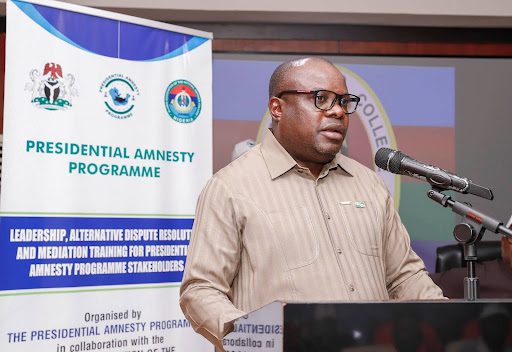
PAP Administrator Dennis Otuaro. Photo: Presidential Amnesty Programme/Facebook
“My mum got information from where she works that someone was selling [PAP scholarship] slot for ₦200,000. He promised her a monthly stipend of ₦70,000, along with full tuition payment. So she didn’t hesitate to buy it for me,” Favour confessed. He had gotten his provisional admission letter at the university premises, where he also signed “many forms”. Like other students, he had gotten a temporary clearance slip instead of school fees receipts.
“We were made to sign lots of forms, among them was a clause stating that if amnesty does not pay our tuition, we are paying it ourselves later,” Favour noted.
It appears that some other students, like Pious, failed to pay attention to that clause, as noted in one of the documents they had signed. While speaking to HumAngle, Pious said he had only just noticed that such a clause existed in one of his signed documents.
“We filled out countless forms, and many of them contained those kinds of clauses, including the hostel forms. I only filled in the form once, and my attention didn’t go there,” he claimed. “I remembered I was called by the man who brought me to fill in the form, which we returned to him immediately, told us to pay attention to the name of the clan we were registered under, and that was the only name where that clan name appeared.”
The clan names refer to leaders of militant groups who worked with the PAP to represent their communities and were given slots to distribute to their followers.
For Favour, the red flags were obvious from the beginning. Some past beneficiaries of the scholarship also left midway after spotting what they described as “red flags”, but many just kept moving because they had invested too much to stop.
“Some people paid over ₦500,000 for their slot. Personally, I would have dropped out as well, but my mom disagreed, having lots of hope in our pitiful government. Now we have debts in millions on our heads, no promised stipend, no school fees paid, nothing but insults and humiliation,” he said.
The students complained that the school offered no direct communication with them and that they relied on the annual temporary clearance they were given, hoping for a better outcome.
“Even after everything, if you come for clearance, there are only two options – pay your outstanding fees or write a letter to the school board affirming your willingness to formally owe them. Even if you choose option one to pay your fees if you have the money, you still need to write a letter to the school board telling them that you are willingly converting from an amnesty student to a private, self-sponsored student before they allow you to pay the money,” he noted.
Favour, like other students, says he feels trapped and unable to move towards the better future they were promised. He is not the only person left to pick up the pieces after paying bribes to get “the alleged life-changing opportunity”.
Felicia John*, another student of the university, said she had never heard of PAP or Novena University before her parents allegedly raised ₦500,000 to secure her a slot through someone who worked at the university. The opportunity came two years after her secondary school graduation.
Due to late resumptions at the time, the university ran semesters concurrently, which affected many people, Felicia said. Before she got a PAP slot, her parents could not afford to send her to university, so she focused on learning a trade until she had the chance to continue her education.
When she arrived at the school, she discovered a list of all the amnesty students. This list came from a lecturer in a very important position at the institution. During her second year, as a 200-level student, there were numerous issues with the verification of the amnesty scholarship. In 2022, when students protested to learn their standing in the scholarship scheme, the school ultimately paused their exams.
“Even with all these, the school was still accepting students who came through amnesty to the extent that their nursing department was overpopulated,” she said.
Felicia considered dropping out in her third year due to unresolved issues, but the promise of a resolution kept her in school. Now, she feels stuck with little hope of graduating. Her spirits were lifted when the King of the Itsekiri ethnic group pledged to address their outstanding fees in 2025. However, not all students received an email inviting them to verify their information after completing the online form sent to members of the ethnic group.
“But my friends who went said if you’re not from Itsekiri, you have to change your origin to Itsekiri and also pay an amount of money for it, which they didn’t do, but those from the tribe were given a consent form to fill out. That’s more like a form that says you permit them to sort out everything for you,” she said.
The students are still waiting for a solution to this problem.
In September 2025, a group of 5,000 Itsekiri graduates from Novena University woke up to the news that they had been excluded from the official PAP scholarship scheme. This issue came to light when a representative for the Olu of Warri, Collins Oritsetimeyin, claimed that the government owed the university money for these students, noting that the palace would step in to help pay their fees and clearance costs.
PAP stated that neither Novena University nor its office had any record indicating that scholarships had been awarded to the institution’s 5,000 Itsekiri students. Photo: Novena University.
However, the amnesty officials insisted that they had no obligation to pay the students’ school fees, as the students had failed to secure the scholarship through the proper channel. In 2017, a group called the Itsekiri National Youth Council (INYC) sent a list of 5,000 names directly to Novena University as candidates for the PAP scholarship, without obtaining approval from the authorities, according to a statement by the amnesty office.
The statement, signed by Igoniko Oduma, the special assistant on media to PAP’s administrator, Dennis Otuaro, reiterated that during meetings with the university and the youth council, no one could find any letters or papers proving the government had ever agreed to pay for these students. Igboniko noted that paying for them now would encourage dishonest behaviour and “sharp practices”.
Dennis also said he has upheld this decision. While he is working to expand access to higher education in the Niger Delta, he says beneficiaries of the scholarship programme must follow the proper channels. The agency noted that, for the 5,000 Itsekiri graduates, the official stance remains that they were never part of the scholarship scheme.
Following the due process
Not all stories had a tragic ending. Kuru Blaq was a successful beneficiary of the PAP scholarship at Novena University. During his time in school, he held various positions in several campus associations. Admitted into the institution in 2019, Kuru received a scholarship letter following a verification exercise involving many other beneficiaries.
“The programme covered our tuition fee, stipend, and we were also given laptops, though some people didn’t get them, and some people also were not getting stipends, but many of those issues eventually got resolved,” he said. The legitimate PAP scholarship recipients received a monthly stipend of ₦70,000 and a book allowance of ₦20,000 every three months.
File: Some PAP scholarship recipients at another university in Abuja who followed due process received laptops from PAP during a visit to the university’s campus. Photo: PAP
Kuru was still in school when some other sources HumAngle interviewed came in, but the admissions process was different. “Some of them said they got their admission letters while they were still at home. I am sure that if PAP sent people to the school, they sent deployment letters to the school,“ he said.
When Kuru was in school, their departmental dues, including examination fees, were also covered by PAP. They only had to pay dues occasionally. However, the other students, like Felicia, paid all dues and did not receive stipends.
“We started suspecting that those student sponsorships were not true. But students started to complain. Some students started withdrawing. I remembered that the then-coordinator of PAP came to Novena University for clarification,” he said.
Nothing changed for the students involved, leading to the protest at the university entrance in 2022. Kuru said he did not participate in the protest, but was in school when it occurred. He also said that the organiser of the protest was arrested, even though it was not violent.
“Later on, the university added a clause which many of the students did not read properly. But the students were not told directly that they were not bona fide scholarship students. People keep reaching out to me on a daily basis, asking for solutions,” he added.
Peter John*, another student who properly secured the PAP scholarship, said he served on a committee that oversaw complaints from beneficiaries of the programme. Peter’s role in the committee gave him access to top officials in the Abuja headquarters. He had urged the officials to conduct a thorough investigation into allegations that students bought their way into the programme.
He recalled speaking directly with some parents during which he realised that some students had paid certain people who claimed to be lecturers and officials of the amnesty programme. PAP would later issue two circulars to release the list of those who entered the amnesty scheme through the back door. For unclear reasons, he said, the circular was not pasted on the school’s notice board.
Peter also experienced a delay in payments for a few months after his admission, but it was resolved following another verification round, after which the arrears were paid. Some other students, however, noted that while their school fees were paid, their monthly allowances were delayed.
The PAP committee asked Peter for a list of students with controversial scholarship claims, but the school failed to provide it. Some affected students affiliated with the Itsekiri ethnic group approached him for intervention, but he was reluctant to help due to fear of being labelled tribalistic. The students were urged to visit the Itsekiri palace in Warri to resolve the issue.
File: Students during the 2022 protest at Novena University. Photo: Eve Afrique/Facebook
“The list the school refused to give was later presented by the Dean of Student Affairs in my presence, claiming that they had already informed the affected students to leave the school. I could not say anything openly as I had not gotten my result then, and I had to be careful,” he said.
The PAP leadership subsequently made a public statement, advising delegates, traditional rulers, and parents to be cautious about paying individuals to secure the scholarship. They emphasised that the programme does not require any payment.
As a committee member of the PAP scholarship students’ association, Peter had also presented the matter to the then head of reintegration. “They send instructions saying that students can still apply by writing and passing the JAMB and applying directly to PAP, and they can send them to other schools. Some students got the information, and I am personally aware of some who were sent to other schools. Because of that issue, Amnesty stopped sending students to Novena University,” he said.
Reluctant response
HumAngle tried to reach Novena University via three different email addresses listed on its website, but received no response. A representative of the university who answered the call when we contacted the official phone number asked HumAngle to visit the school in person for identity verification.
When contacted, Linus Ilogho, the university registrar, initially claimed he needed to consult certain documents to answer questions posed by HumAngle, but later attempted to explain the complexities of the scholarship funding.
“The law of contract says every contract must be signed and delivered, must include an acceptance, and must be based on records. That is it, even if you are in an amnesty programme and amnesty says they are not paying for you, we cannot use our fee to pay for the person after we have given training to the person,” Linus declared.
“For example, if you spend four years and the scholarship you told us you were given does not work, and they don’t pay us for five years, four years, six years, everything we are doing in a private university is run on funds. There is no other thing I can tell you, unless you come to the university to ask these questions,” he added.
When asked if PAP had an arrangement with the university, he did not provide a clear answer. “Why are you talking to me in this manner?” he asked before hanging up the phone.
On June 1, HumAngle submitted a freedom of information (FOI) letter to PAP, seeking answers to pressing questions. As days turned into weeks, the silence from the government institution grew deafening, heightening the frustration and urgency of the situation. The affected students continued to chart their course, relentlessly pursuing any glimmer of hope that could reignite their dreams of a brighter future.
Editor’s Note: Students quoted in this story asked that their names be changed to protect them from possible retribution.
The strike in Deir el-Balah is the latest Israeli attack amid ongoing ‘ceasefire’ violations.
Published On 29 Jun 202629 Jun 2026
At least three people have been killed in an Israeli air strike in Deir el-Balah in central Gaza, health authorities say.
An eight-year-old and two men were killed in Monday’s attack, and several people were wounded, Al-Aqsa Martyrs Hospital said.
Recommended Stories
list of 3 itemsend of list
The strike occurred near Wadi Salqa Bridge on al-Baraka Street. The Palestinian news agency Wafa named those killed as Ali Fayez Isbaitan, Hassan Salman al-Hanajra and eight-year-old Malik Wael Abu Shaweesh.
Israeli military vehicles also advanced on Salah al-Din Street in the Nuseirat refugee camp, also in the central Gaza Strip, amid gunfire and shelling, Turkiye’s Anadolu news agency reported. Two people were reported injured by shelling in Beit Lahiya in northern Gaza.
Despite the “ceasefire” that came into effect in October, Israeli forces continue to carry out strikes on the enclave.
Israeli attacks killed at least four Palestinians in Gaza on Sunday, including a 13-year-old girl, and wounded several.
Ongoing violations
Gaza’s Government Media Office reported that 1,045 Palestinians have been killed since the “ceasefire” took effect and 3,380 have been injured. It has documented 3,465 Israeli violations of the agreement.
“We strongly condemn the occupation’s systematic policies of targeting and destroying the Palestinian people,” it said.
It called on the mediators and parties sponsoring the “ceasefire” to compel Israel to implement all of its terms and “immediately cease its ongoing violations”.
The Palestinian Ministry of Health said on Sunday that a total of 73,054 Palestinians have been confirmed killed and 173,480 injured since Israel launched its genocidal war against Palestinians in Gaza in October 2023.
Also during the “ceasefire”, the Israeli military is continuing to expand the area it is occupying inside the Strip and to issue forced displacement orders. It says Palestinians are not allowed to approach the Israeli-occupied area beyond the “Yellow Line”, which encompassed 53 percent of Gaza’s territory at the start of the ceasefire and had increased to 64 percent by March.
Anadolu reported that Israeli military vehicles have moved the “Yellow Line” markers about 150 metres (165 yards) to the west in central Gaza.
Israeli Prime Minister Benjamin Netanyahu has called for Israeli forces to occupy 70 percent of the Strip.
British American Tobacco (BAT) is to cut nearly a fifth of its global workforce as part of a major cost-cutting drive.
The company, which makes Lucky Strike and Dunhill cigarettes, is cutting 5,500 roles and outsourcing 3,500 more.
BAT did not say where the jobs being cut were located, but added that the US was not affected.
The cost-cutting programme is expected to save about £600m a year by 2028, it added.
The tobacco giant, which currently employs 47,000 people globally, had previously announced a savings drive that would involve making it “more digital and AI-focused”.
Traditional cigarette sales are shrinking as smokers increasingly switch to vapes and nicotine pouches.
BAT is shifting its focus to smoking alternatives such as its Vuse vapes and Velo nicotine pouches to drive growth, but its sales and profit margins have been sluggish in recent years.
Sales in the US — its biggest market — have also been hit by the cost of living, as smokers swap for cheaper brands.
Additionally, the company is battling rising duties and stricter regulations in some markets.
BAT said the job cuts, which have already started, are set to be completed by the end of this year.
Chief executive Tadeu Marroco said the cuts would make the company “more agile, cost disciplined and technology enabled”.
“These changes affect many of our colleagues, and we are focused on supporting them through this transition with care and respect, as we position the business for the future.”
The international order is falling apart, happening visibly, rapidly, and in ways that no longer surprise even the most committed defenders of the post-1945 liberal framework. The United Nations Security Council has not been able to do anything about the problems in Gaza and Ukraine. The group of countries known as BRICS is getting bigger. Now has nine members. Some countries in the Gulf are thinking about using a currency to price oil instead of using the US dollar. All of these things are putting a lot of pressure on the system that the United States has been in charge of.
Many people in the Global South think this is a thing. They do not think the United States has been fair in the way it has enforced the rules. They think the United States has only looked out for its interests and the interests of its friends. This is not a thing to say. The United States has been inconsistent in the way it has applied the rules about weapons, sanctions, and international crime.
The problem is that just because the old system is falling apart, it does not mean that something better will take its place. The question is not whether the United States is losing its power because it is clear that this is happening. The question is what will happen next. Will the new system be fair, more stable, and better at dealing with global problems?
The Architecture of Decline
Stay ahead of the geopolitical week.
MD Briefing delivers expert analysis across five global fronts — the Indo-Pacific, energy, geoeconomics, European security, and the Middle East — every Monday morning. Free.
The truth is that the United States has been losing its power for a time, but this has happened much faster since 2022. When Russia invaded Ukraine, it showed that big countries can still go to war with each other. It also showed that the United States and its friends cannot stop this from happening. The war in Ukraine has led to the use of financial sanctions in history, with over $300 billion in Russian assets being frozen.
This has made other countries want to reduce their dependence on the US dollar. They are afraid that if they rely much on the United States, they will be vulnerable to its power. According to International Monetary Fund estimates, the group of countries known as BRICS has expanded to include Saudi Arabia, the United Arab Emirates, Iran, Ethiopia, and Egypt. This group now accounts for over 40 percent of the economy. The Shanghai Cooperation Organisation has also gotten bigger. Now includes Pakistan, India, and Iran in addition to Russia and China. This organization is now the regional security group in the world. These changes are not just symbolic; they show a shift in where power is concentrated in the world.
New Poles, Old Problems
The problem with a world is that it does not necessarily mean that things will be more fair or more stable. In the century Europe had a multipolar system, but it still had many wars. The same thing happened in the 20th century. Just because there are powerful countries does not mean that they will behave in a certain way.
The problem with a world is that it does not necessarily mean that things will be more fair or more stable. In the century Europe had a multipolar system, but it still had many wars. The same thing happened in the 20th century. Just because there are powerful countries does not mean that they will behave in a certain way.
The Institutional Vacuum
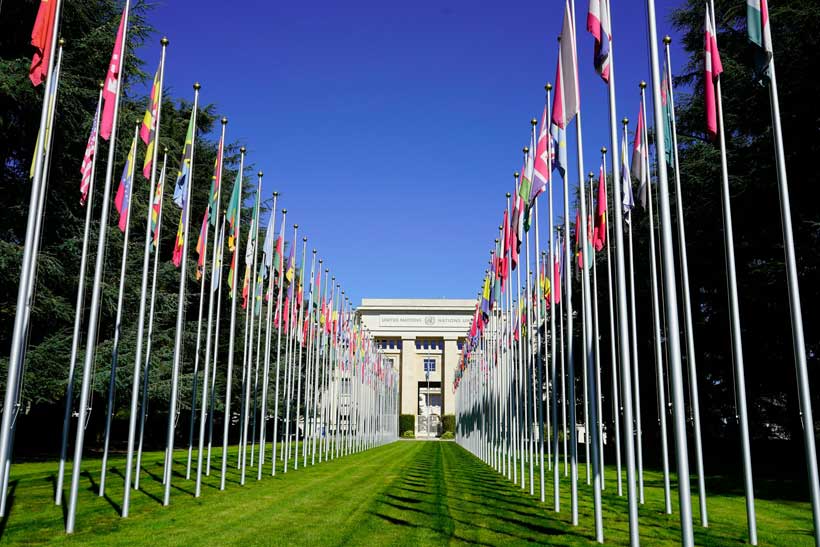
The biggest risk of the situation is that the international institutions that we have will become useless. The United Nations Security Council has not been able to do anything about the security crises of the past few years. The World Trade Organization is also not working properly.
When powerful countries use these institutions for their purposes, it undermines their legitimacy. This is a problem because it means that smaller countries will suffer the most. The rules of law are only useful if they are applied equally to everyone.
The Global South’s Strategic Dilemma
For countries in the Global South, the transition to a world is a double-edged sword. On the one hand, it gives them space to maneuver and more access to financing for infrastructure projects. On the other hand, it also means that they will have to navigate a more complex and uncertain world.
The best way forward is to try to shape the transition to a world in a way that preserves the international institutions that we have. This means reforming the United Nations Security Council to make it more representative of the world. It also means strengthening the courts and the World Trade Organization.
Towards a Legitimate Multipolarity
This will not be easy. It is necessary. If we do not do this, we risk creating a world where might makes right. There is no shared set of rules to govern the behavior of states. This would be a disaster for everyone, for the smallest and weakest countries.
The multipolar world may signal the end of the order, but it does not have to mean the end of order itself. We have to work to create a system that is fairer, more stable, and more just.
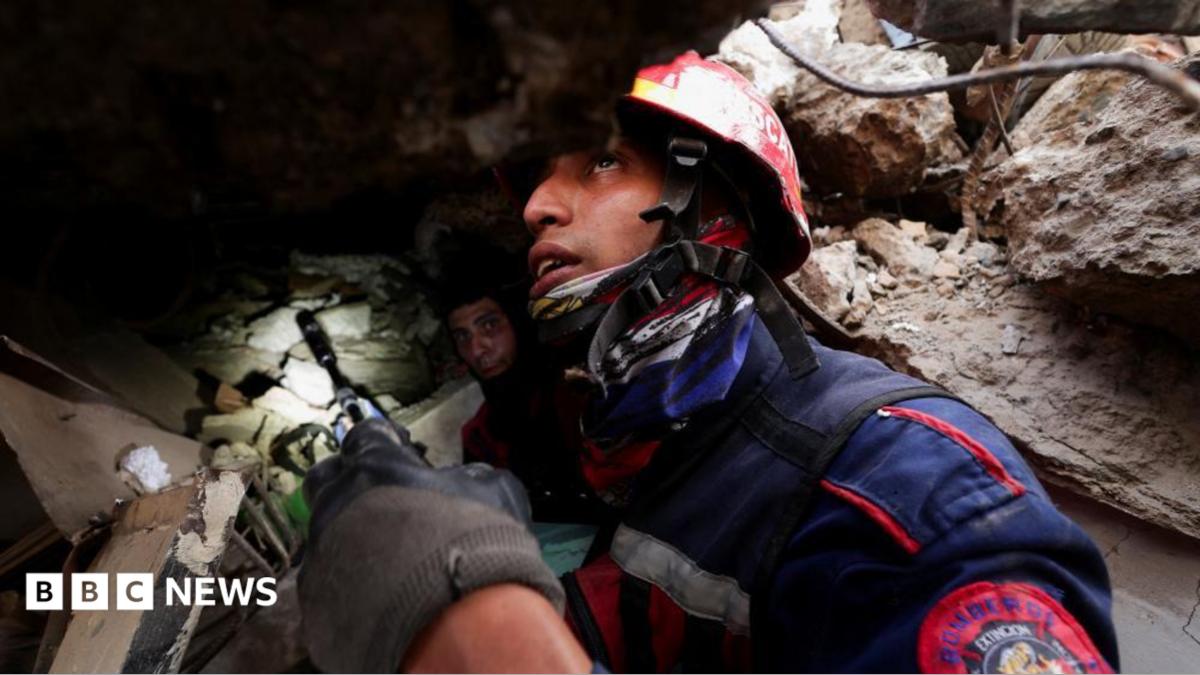
Rescue teams and volunteers are working around the clock in search for survivors trapped beneath the rubble in Venezuela, as families cling to hope days after the June 24 twin earthquakes, with tens of thousands of people still missing. Zein Basravi reports from Caracas.
South Korean president frames the push as a race against time to secure the country’s domination in AI boom.
Published On 29 Jun 202629 Jun 2026
South Korea has laid out a sweeping industrial strategy focused on semiconductor chips and artificial intelligence projects as President Lee Jae Myung pledges to cement overwhelming industry leadership with investments of hundreds of billions of dollars over several years.
Flanked by the heads of the world’s two biggest memory chipmakers, Lee cast the initiative on Monday as a “great leap forward” centred on the “triple axis” of semiconductors, physical AI and data centres.
Recommended Stories
list of 4 itemsend of list
“We must secure the core elements of AI faster than any other country,” the president said in a televised address.
The world’s two largest memory chipmakers, Samsung Electronics and SK Hynix, will invest 800 trillion won ($518bn) with suppliers to build two new chip fabrication sites each in South Korea’s southwest, Industry Minister Kim Jung-kwan said.
Lee said the country’s southwestern city of Gwangju and South Jeolla province will also invest 5 trillion to 20 trillion won ($3.2bn to $13bn) in the projects. Kim said a further 81 trillion won ($52.5bn) is expected to be invested for a chip-packaging cluster in the Chungcheong area near Seoul.
The government also unveiled plans to build AI data centres in the region, backed by 550 trillion won ($356bn) in investments from the SK Group, GS Group and Naver.
“By 2035, an additional 10-gigawatt AI data centre will be built with a total investment exceeding 18.4 gigawatts and 1,000 trillion won,” or $648bn, Science Minister Bae Kyung-hoon announced.
The announcement marks the government’s boldest push yet to align South Korea’s AI and chip ambitions with Lee’s pledge to narrow regional disparities and revive economies beyond the Seoul metropolitan area.
The opposition has criticised the plan, arguing that his government’s decision to locate a second semiconductor cluster in Honam, the traditional electoral stronghold of his liberal Democratic Party, is driven more by regional politics than by industrial logic.
They have accused the government of pressuring memory chipmakers to invest in the region to bolster political support rather than allowing companies to choose the most commercially viable locations.
As part of the overall initiative, the southwest would be the home of new, large chip production clusters, Lee said, in part to use the rich power resources yet untapped there.
The president defended the proposed southwestern chip hub in a series of X posts over the weekend, rejecting criticism that it favours a region where 85 percent of voters backed him in last year’s presidential election.
Five wins to go. How can your team reach the final and win World Cup 2026? Click here.
Who: Brazil vs Japan What: FIFA World Cup 2026 – round of 32 Where: Houston Stadium, Houston, United States When: Monday, June 29, at 12pm (17:00 GMT) How to follow: We will have all the build-up on Al Jazeera Sport from 14:00 GMT ahead of our live text commentary stream.
Recommended Stories
list of 4 itemsend of list
Carlo Ancelotti faces his first major test as the Brazil coach when the record five-time world champions take on Japan, arguably the best Asian team at the tournament, in the round of 32.
Monday’s meeting in Houston offers Brazil the chance to exact revenge for their friendly defeat to Japan late last year, as the South American giants lock in on their target of a deep run in North America.
The odds are heavily in Brazil’s favour, but after Japan came out of a tricky group with flying colours, it would be foolish to write them off.
There is also a mutual respect and camaraderie between the nations, given the overwhelming Brazilian influence on professional football in Japan.
Al Jazeera tells you everything about the second game of the round of 32:
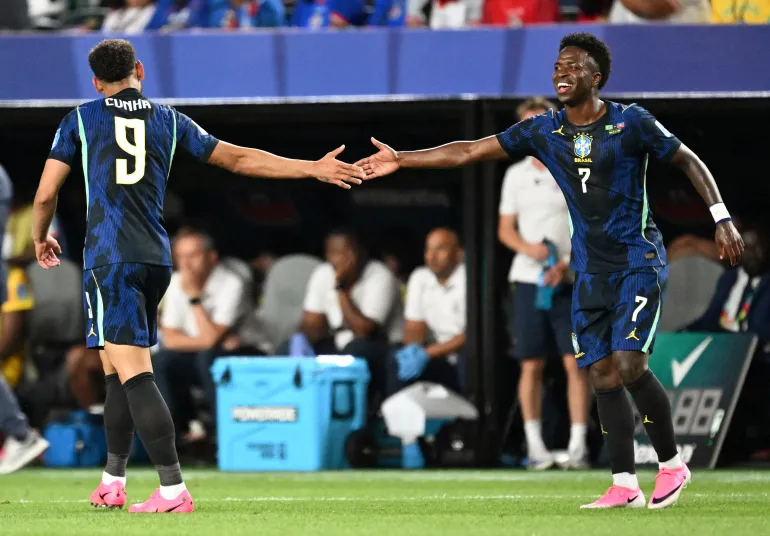
Of all the seven goals Brazil registered across three games, Real Madrid star forward Vinicius Jr scored four of them, while Matheus Cunha netted three. Bruno Guimaraes bagged the most assists (three).
Brazil’s forwards Matheus Cunha, left, and Vinicius Jr are spearheading Brazil’s attack at the World Cup [Roberto Schmidt/AFP]
Ancelotti in relaxed mood ahead of Japan clash
Since their low-key display in the first game, Brazil appear to be growing into the tournament, showing glimpses of their all-round potential, with some of the Selecao stars finding their rhythm.
Ancelotti knows Japan will be no pushovers, describing the record four-time Asian champions as “one of the best teams” in the world.
During Sunday’s pre-match press conference, the Italian was relaxed and betrayed no signs of feeling the pressure, despite Brazil being cast as the clear favourites for the knockout tie.
“We need a lot of things: A strong mind, a strong heart, a clear mind,” he told the media. “I think we have to be ready for anything that might take place in a knockout match, and a lot can happen in a knockout match.
“I think the team is ready. They’re motivated, they’re confident,” added Ancelotti, who is leading Brazil’s charge for a record-extending sixth world title.
How did Japan reach the round of 32?
Japan started their campaign by holding the Netherlands to a 2-2 draw before thrashing Tunisia 4-0 in the second game. They wrapped up the first round with a 1-1 draw with Sweden, which saw them finish with five points, confirming a second spot in Group F.
Ayase Ueda and Daichi Kamada are the joint top scorers for Japan so far, with two strikes each, while Keito Nakamura, Junya Ito and Daizen Maeda have also scored one each.
Japan’s Junya Ito, right, has scored once in the tournament, while Ayase Ueda, left, and Daichi Kamada, centre, have two goals each [Daniel Becerril/Reuters]
Dark horses Japan are ‘united’, says Moriyasu
Japan have lived up to their billing as the “dark horses” at the tournament, holding two formidable European sides – the Netherlands and Sweden – to draws.
After beating Germany and Spain en route to a round of 16 run at the 2022 World Cup, Japan have shown the world they are capable of pulling off upsets, especially on the sport’s biggest stage.
Japan coach Hajime Moriyasu said his side’s collective spirit can fire them into the last 16 again.
“All the players will do what they can for the team and contribute,” Moriyasu said on Sunday. “The team is united, and that feeling is getting even stronger now.”
Japan’s best finish at the World Cup has been reaching the round of 16 on four occasions: 2002, 2010, 2018 and 2022. They have never won a World Cup knockout game.
Brazil vs Japan: master vs the apprentice
Launched in 1993, Japan’s top-flight, the J-League, took much of its inspiration from Brazil and also employed plenty of their players.
Zico, the creative lynchpin of Brazil’s fabled 1982 World Cup team, was enticed out of retirement to join Kashima Antlers, while internationals Bismarck and Elivelton started a run of Brazil national team players making the move to Japan.
By the late 1990s, seven of the Brazil team that won the 1994 World Cup, including captain Dunga, had played or were playing for Japanese clubs and, by extension, lent their influence to a rapidly developing scene.
Brazil vs Japan predictions
Opta’s supercomputer has calculated a 58.3 percent probability of Brazil winning this fixture in regulation time, while Japan is assessed an 18.1 percent chance of victory.
The probability of going to extra time – or potentially penalties – is 23.6 percent.
Who will the winner face in the round of 16?
The winner of Brazil vs Japan will face either Norway or the Ivory Coast in the round of 16.
Brazil vs Japan: Kickoff time, TV channel
Brazil: CazeTV, TV Globo, GETV, Globoplay, sportv (2pm, Brasilia Time)
Japan: NHKBS1, DAZN, Fuji TV (2am on Tuesday, Japan Standard Time)
United Kingdom: ITVX, ITV1, STV Player, STV (6pm, British Summer Time)
To check the TV listings for your country, head to FIFA’s TV listing schedule here.
Brazil vs Japan: head-to-head
In the all-time head-to-head record, Brazil have only lost once to Japan (W11 D2 L1). In their only World Cup contest 20 years ago at Germany 2006, Brazil won 4-1.
Significantly, Japan’s sole victory over Brazil came in their most recent clash, a 3-2 victory in a friendly in October 2025 in which Brazil let a two-goal lead slip in Tokyo, with Ueda scoring the hosts’ winner.
Brazil vs Japan: Team news
Raphinha remains sidelined for Brazil due to a hamstring injury, while Japan’s Takefusa Kubo is out with a sprained knee.
Neymar, who made his first appearance for Brazil since October 2023 when he came off the bench in the last game, will be available to play more minutes against Japan. The star forward is working his way back to full fitness after dealing with a lingering calf injury.