Withdrawal is latest instance of government’s efforts to crack down on critical media facing setbacks in court.
Published On 23 Jul 202623 Jul 2026
Attorneys for the United States government have withdrawn subpoenas seeking to compel three New York Times reporters to testify about their sources for a story about an Air Force One jet gifted to US President Donald Trump by Qatar.
Judge Arun Subramanian slammed the government’s lawyers for what he deemed sloppy legal work in an exchange in court on Thursday.
Recommended Stories
list of 3 itemsend of list
“Subpoenas are not the first thing you do; they are the last thing you do,” an irritated Subramanian said.
“When you see something like this, if this were a civil proceeding, what I would normally do is ask the parties to show causes why sanctions should not be issued,” he added.
The Trump administration had sought to keep the proceedings secret as it pressured the reporters to reveal their sources for a story, a request that raised alarms for US press freedoms as the president and his allies continue to aggressively target critical media and political opponents.
Such efforts, however, have largely been rejected in court. The US government recently withdrew similar subpoenas that sought to compel testimony from reporters with the Washington Post and Wall Street Journal.
Lawyers for the New York Times challenged the legitimacy of the grand jury subpoenas along with subpoenas for the phone records of several journalists and their relatives. The paper’s managing editor and general counsel sat in the gallery during proceedings on Thursday.
The government has said that it is pursuing those who have leaked material to reporters for a story about Trump taking an older model Air Force One jet back from a summit in Turkiye, rather than the one gifted from Qatar.
The Secret Service reportedly advised that the new jet, which the government has spent $400m to retrofit and upgrade, lacks important security features such as antimissile capabilities.
“Reporters are not the targets; those leaking classified information are,” the Department of Justice said of the subpoena requests.
Obtaining information from government sources is a cornerstone of journalism, and national security reporting in particular and is considered essential to press freedom. Efforts by the US government under both Democratic and Republican administrations to compel reporters to disclose their sources have been viewed as an effort to weaken those protections.
Weekly insights and analysis on the latest developments in military technology, strategy, and foreign policy.
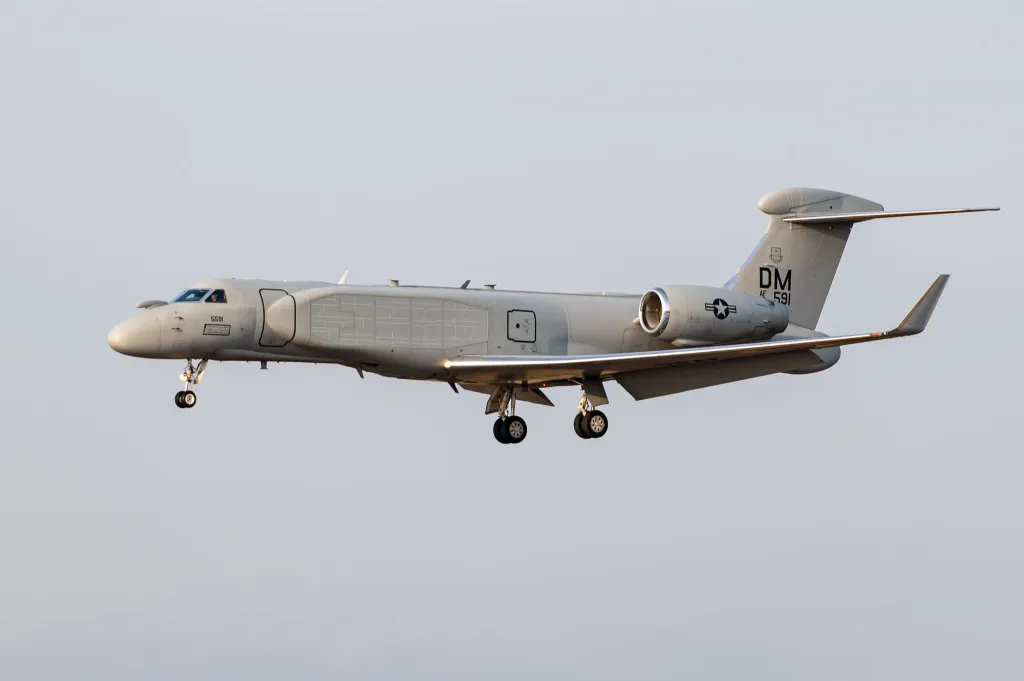
Iran on Thursday threatened RAF Fairford in the U.K. after claims emerged that U.S. Air Force B-1B Lancer bombers launched from there attacked the Islamic Republic on Tuesday. RAF Fairford is a major hub for U.S. military aircraft, with strategic assets, like the B-1s, being forward deployed to the base and tactical and other assets often using it as a pit stop during flights ‘across the pond.’ As an example, Iran’s threat came hours after two EA-37B Compass Call electronic warfare jets arrived at the base from the United States.
“The American aggressor army, which used to launch cruise missiles from its vessels in the Indian Ocean in its aggression after the official resumption of the war, with the end of the missile reserves of the aforementioned vessels, yesterday switched to using B1 planes flying from Fairford Air Base, England,” the Islamic Revolutionary Guard Corps (IRGC)-connected Tasnim news outlet claimed on Telegram. “As the officials of the Ministry of Foreign Affairs also stated, any base that is used to invade Iran’s territory is our legitimate goal.”
🔹Iran’s IRGC adds that the US enemy has turned to using B1 bombers flying from the Fairford airbase in Britain, warning the United Kingdom that as officials of Iran’s Foreign Ministry have also stated, any base used to aggress against Iranian territory is a legitimate target.
Asked about the threats, British officials told us that the country is prepared to defend itself.
“Our Armed Forces are ready to keep the United Kingdom safe from any kind of attacks, whether it’s on our soil or from abroad,” a government official told TWZ. “The UK stands ready 24/7 to defend itself. This includes through operating a layered approach to air and missile defense, provided by Royal Navy, British Army and Royal Air Force assets equipped with a range of advanced capabilities, working closely with our NATO allies.”
“In the Defense Investment Plan we have made air and missile defense a priority after years of underfunding, dedicating £790 million to enhance protection of the UK homeland and overseas bases from air, drone and missile threats,” the official added. “That is complemented by more than £2 billion of funding to deliver further air defense and counter-drone capabilities, and to upgrade and sustain our Typhoon fleet.”
Iranian officials did not specify how they would strike RAF Fairford, and it is unclear how they could. In March, Iran reportedly fired two missiles at Diego Garcia, a joint U.S.-U.K. base on an island in the Indian Ocean. That’s about 2,400 miles away, or about the same distance as Fairford is from Iran. However, one missile was reportedly shot down by a U.S. warship while the other failed in flight. Given that, whether Iran could actually launch a successful attack on Fairford using those weapons is questionable at the least. Far more likely, if Iran would actually even try anything at all, would be a near-field attack like Operation Spider Web launched by Ukraine in June 2025 against Russian bombers using short-range drones hidden in trucks near airfields. One-way attack drones launched from vessels at sea is another very real attack vector Iran has trained for and equipped itself to execute, a threat you can read all about here.
You can see video of one of those strikes below.
The threats came after Axios reported that B-1B bombers from the base took part in Tuesday’s strikes on Iran. TWZ cannot independently confirm that and CENTCOM declined comment. However, open-source trackers made that claim early Wednesday morning before the Axios story was published.
Overnight, B-1B “Lancer” bombers flying from RAF Fairford (EGVA) conducted strikes in Iran as the US ramps up operations again. Although 2 bombers launched, it appears it was pre-planned that only 1 of them would… pic.twitter.com/Q7Ic3Ahqk3
“U.S. Air Forces in Europe operating locations, including the 501st Combat Support Wing at RAF Fairford, routinely host transient U.S. military aircraft in accordance with access, basing, and overflight agreements with Allies and partners,” an Air Force spokesperson told us in response to our questions about the Compass Calls.
The EC-37s landed shortly after 7 a.m. British Summer Time (BST), or about 2 a.m. EDT, according to local aviation photographer Matt Belcher, who was kind enough to share photos he took of the aircraft.
The Compass Calls are heavily modified Gulfstream G550 business jets. They leverage the Conformal Airborne Early Warning (CAEW) configuration developed first for the Israel Defense Forces, which has large ‘cheek’ fairings on either side of the fuselage, among other distinctive features.
The Air Force is planning to procure 10 of these jets to replace the aging and decreasing fleet of turboprop EC-130H Compass Call planes, of which only four remain. The 43rd Electronic Combat Squadron flew the first training sortie for the EA-37B on May 2, 2025, and one made the type’s maiden voyage to Europe in January.
A U.S. Air Force EA-37B Compass Call aircraft assigned to the 55th Electronic Combat Group at Davis-Monthan Air Force Base, Arizona, is parked at Ramstein Air Base, Germany, as part of its first stop in the European theater for a scheduled road show, Jan. 26, 2026. (U.S. Air Force photo by Senior Airman Edgar Grimaldo) Senior Airman Edgar Grimaldo
Many of the EA-37B’s mission systems are directly ported over from the EC-130H, which is why the two very different aircraft share the same nickname. Both aircraft are designed to provide critical stand-off jamming support, including against enemy radars and communications systems. They also have a secondary intelligence, surveillance, and reconnaissance (ISR) function given their ability to spot, track, and geolocate various types of emitters.
An EC-130H Compass Call assigned to Davis-Monthan Air Force Base, Arizona, takes off for a Weapons School Integration mission at Nellis Air Force Base, Nevada, May 29, 2024. (U.S. Air Force photo by Senior Airman Jose Miguel T. Tamondong) Staff Sgt. Jose Miguel Tamondong
The EA-37B also offers new capabilities that go beyond what is found on the EC-130H. The Air Force has said in the past that the aircraft’s designation reflects its ability to not only attack, but also destroy certain targets, as you can read more about here.
The Compass Calls had previously been deployed to RAF Mildenhall in the early days of Operation Epic Fury. On April 1, CENTCOM announced for the first time that they had been used in combat as part of Epic Fury. The possibility that they are returning to the region, or adding additional electronic warfare capabilities to the total force deployed there, can be considered a potential indicator of what’s to come. These are often the last assets we see move into place ahead of major combat operations.
All this comes as the U.S. is building up forces amid increasing intensity of attacks on and by Iran and President Trump’s statement to Axios today that “I am considering a massive attack. Bigger than ever before. I am close to making a decision. We are all set for it.”
“I am considering a massive attack. Bigger than ever before. I am close to making a decision. We are all set for it”, Trump told me https://t.co/AZnZNyEPrP
Last week, we reported that at least 12 F-16 Fighting Falcons were deployed to Muwaffaq Salti Air Base in Jordan from Spangdahlem Air Base in Germany. Other aircraft have rotated into the CENTCOM area of operations as well.
Going for GOLD: 4 flts of 3x “SP” F-16CJ (TABOR11,21,31,41) are inbound to Muwaffaq Salti AB, Jordan (OJMS) from Spangdahlem AB, Germany (ETAD). 4x KC-135R/T “GOLD” team tankers are up to support the movement.
In addition, “special-operations forces have deployed to the region from their U.S. bases,” The Wall Street Journal reported, citing flight-tracking data and U.S. officials. “Squadrons of jet fighters have been staged across the Middle East, and bomber aircraft at bases in the U.S. and U.K. are on high alert to ramp up operations, according to one of the officials.”
Beyond aircraft, “more than 150 medics have arrived at the Landstuhl Regional Medical Center in Germany in recent days,” the Journal added. The hospital is the primary location for treating troops injured in combat in the Middle East.
The U.S. has been surging forces toward the Middle East, giving Trump options to expand the Iran war
Among the things moving/on alert: -fighter squadrons -special operations forces -medics -long-range bombers https://t.co/peSx70S85v w/ @laraseligman
Other assets have been rotated out, like the B-52 Stratofortress bombers that departed from Fairford earlier this month. The U.S. also returnedF-22 Raptors that were flying out of Ovda Air Base in Israel back to the United States. Other aircraft, such as A-10s and F-15Es, have also returned home from or have been replaced in the CENTCOM region. So clearly there is a lot of shifting of aviation assets taking place even amid current operations.
While adding new forces to Europe and the Middle East does not necessarily mean that Trump will dramatically escalate the conflict, it gives him options to do so. In addition, the public nature of some of these movements also has a messaging effect, letting Tehran and the Houthis know that Trump is ordering more assets to the region.
Regardless, the direct threat against RAF Fairford, no matter how nebulous, is new and will certainly be taken seriously by security officials at the installations and others in region.
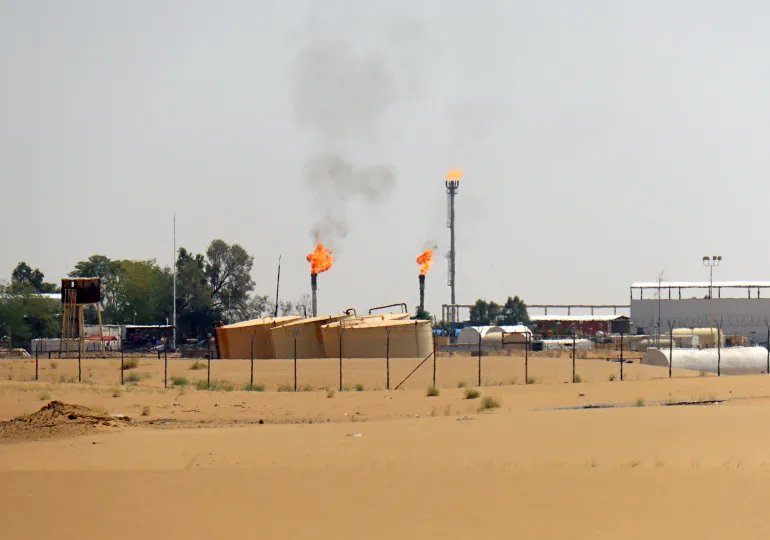
The announcement by the head of Yemen’s Presidential Leadership Council, Rashad al-Alimi, to resume oil exports starting July 20 following a halt that began in late 2022 has revived hope that the Yemeni government’s most important source of foreign currency will be restored. The government, struggling economically and facing continued Houthi rebel control over Yemen’s northwest, needs the money – and has pledged to direct the revenues towards paying salaries, improving services, and supporting economic stability.
However, the flow of oil from Yemen’s fields to global markets does not depend solely on a decision made by politicians; it requires creating a security environment, after years of war, that allows for the protection of facilities, pipelines and ports, in addition to restoring the confidence of shipping and insurance companies, as well as international buyers.
Recommended Stories
list of 4 itemsend of list
With Yemen’s war threatening to escalate after a four-year period of calm, the stability the country needs to resume oil exports may be elusive.
The export test
Yemen has proven oil reserves estimated at about three billion barrels, primarily concentrated in the Masila, Marib and Shabwa basins. While the United States Energy Information Administration (EIA) indicates that the country still holds sufficient resources for production and export, the security environment hinders their extraction and transport to global markets.
Yemen’s oil production reached a historical peak of about 439,000 barrels per day (bpd) at the beginning of the millennium, but it has gradually declined due to the depletion of some old fields. This decline accelerated with the outbreak of the war in 2014 and the targeting of oil infrastructure, settling at a level of 19,000bpd in 2024, according to the International Monetary Fund (IMF).
A report published by S&P Global estimated actual production, following the halt in exports, at about 7,000bpd to 10,000bpd in 2023 and 2024, almost all of which was for domestic use.
Yemeni Minister of Oil and Minerals Mohammed Bamqaa said that export revenues would be deposited in the Central Bank as part of a government directive to bolster the state’s financial resources, pointing out that there are oil stockpiles exceeding 1.7 million barrels ready for export.
Bamqaa added that total production will initially reach about 60,000bpd. He explained that the ministry has directed oil companies to prepare timelines to increase production and develop the fields, in a way that raises production capacity by up to 25 percent during the first month after exports resume.
Professor of financial economics at Hadramout University, Mohammed al-Kasadi, told Al Jazeera that while he expected oil production to meet the 60,000bpd figure mentioned by Bamqaa, the figure does not reflect the actual volume of exports, as the local market consumes about 20,000bpd to operate refineries and power plants, which makes the quantities available for export likely to hover at about 40,000bpd.
Hassan Mohammed Moghalis, an expert in Yemeni affairs, told Al Jazeera that most of the fields located in government-controlled areas remain capable of production. At the forefront of these are the Masila fields in Hadramout and the al-Uqla fields in Shabwa, which represent the fundamental base for any anticipated resumption. Moghalis explained that crude oil can be transported via pipelines to Arabian Sea ports.
However, Moghalis pointed out that resuming exports does not simply mean opening the valves, as some fields require maintenance and restoration after a long period of suspension. Additionally, pipelines and pumping stations require technical reviews to ensure their readiness before resuming regular operations.
A view of the Safer oil refinery in Marib, Yemen, in September 2020 [File: Ali Owidha/Reuters]
Market confidence
Despite the importance of restarting production at the oilfields, experts believe bigger obstacles await after the oil reaches Yemen’s ports. Houthi attacks targeting export ports in Hadramout and Shabwa in late 2022 made shipping and insurance companies more wary of handling Yemeni crude, pushing up insurance costs and weakening buyers’ willingness to enter into contracts.
The Houthis have conditioned the resumption of exports on them receiving a share of the revenues to cover public sector salaries.
Al-Kasadi, of Hadramout University, says that the government’s success in pumping oil to the port does not automatically guarantee a successful export process. Maritime transport and insurance companies primarily assess the level of security risks and the likelihood of ports or tankers facing renewed attacks – currently a particular concern in light of Houthi attacks on shipments tied to Saudi Arabia, which supports the Yemeni government.
Al-Kasadi added that the oil market relies heavily on trust and stability. Therefore, any export operation requires buyers to be convinced that shipments will depart safely and that export activities will not suddenly halt again.
Moghalis, the expert, believes that providing military protection for ports and pipelines is the first step, but not the only condition. It is also imperative to restore the confidence of insurance companies and international buyers, as oil does not reach markets solely through production, but rather via an interconnected system of transport, financing and insurance.
He added that any new attack on the ports, even if it does not cause significant material damage, could be enough to send the sector back to square one, given shipping companies’ sensitivity to risks in conflict zones.
But, as al-Kasadi pointed out, a resumption in exports is vital. He argued that the halt in exports was not merely an oil sector crisis, but rather developed into a comprehensive financial crisis. The government lost its most crucial source of foreign currency, which negatively impacted the Yemeni rial’s exchange rate and the state’s ability to finance basic services.
Economic pressure
Despite the importance of resuming exports, Yemeni affairs expert Abdul Karim al-Ansi warned against overstating its immediate impact on the Yemeni economy.
He told Al Jazeera that the resumption of exports will undoubtedly provide a vital source of foreign currency and afford the Central Bank greater leeway to support monetary stability. However, it will not be enough on its own to end the economic crisis, as the Yemeni economy faces broader challenges related to the division between government- and Houthi-controlled areas, weak non-oil revenues and declining economic activity.
Al-Ansi added that the extent to which Yemenis benefit from oil revenues will ultimately depend on how these funds are managed and the government’s ability to channel them into salaries and basic services, rather than solely on the volume of exports.
And while successful initial shipments could send a positive signal to markets and investors, al-Ansi stressed that the real test would be whether exports can be sustained. Yemen’s economy needs a steady flow of foreign currency, rather than sporadic shipments that stop whenever security conditions deteriorate.
The suspension of oil exports has not only deprived the government of its most important source of revenue, but also intensified pressure on the foreign exchange market. As dollar inflows from oil sales have dried up, demand for foreign currency has remained high to finance imports of essential goods, particularly food, fuel and medicine. The resulting shortage has weakened the Yemeni rial and contributed to rising inflation.
These pressures have been compounded by the monetary division between the Central Bank in Aden and the Houthis in Sanaa, which has created two separate financial systems and exchange rates. The split complicates monetary policy and limits the authorities’ ability to use oil revenues in a coordinated way to stabilise the economy.
Al-Kasadi said that Saudi financial support for the government had recently helped contain currency volatility in government-held areas. However, he stressed that such support was no substitute for a steady and sustainable flow of oil revenues – which needs a period of stability, something that may be difficult if the conflict escalates in Yemen, as it is currently threatening to do.
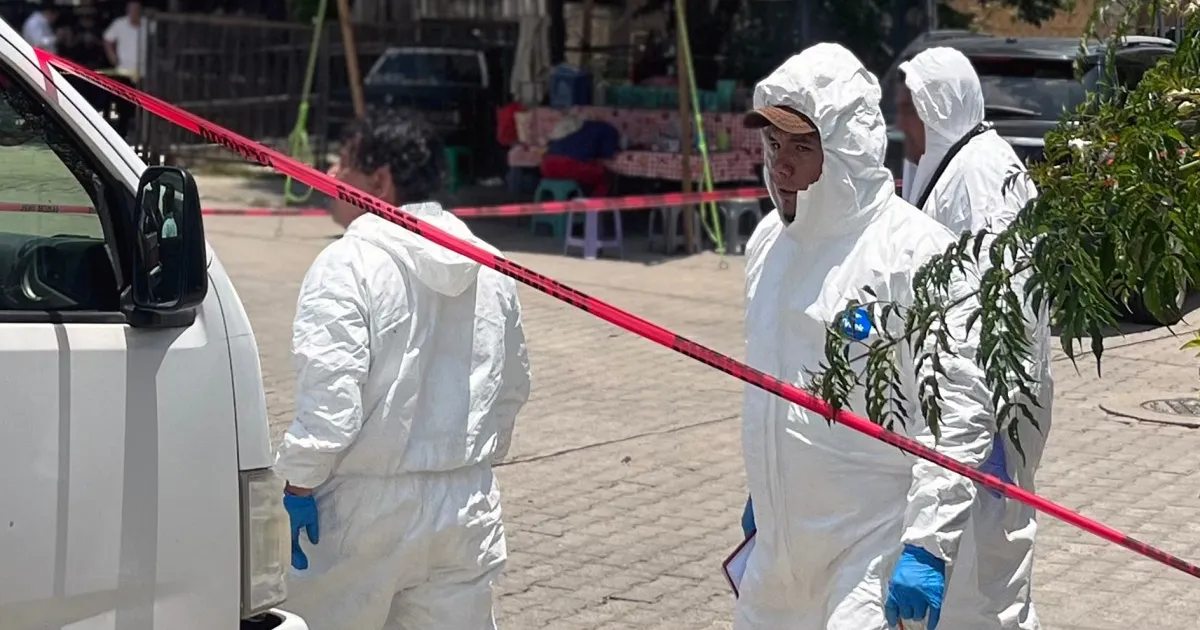
Mexican journalist Alejandro Leyva Aguilar was shot dead while eating at a street food stall in Oaxaca. He had spent years reporting on alleged corruption and criminal violence. His murder marks the fourth journalist killing in Mexico since June.
Ali al-Zaidi will hold talks with senior Iranian officials on bilateral cooperation, shared interests and security.
Published On 23 Jul 202623 Jul 2026
Iraqi Prime Minister Ali al-Zaidi is in Iran on his first official visit since assuming office in May.
The Iraqi News Agency (INA) on Thursday said al-Zaidi and Iranian President Masoud Pezeshkian oversaw the signing of several agreements and memoranda of understanding (MoUs) pertaining to foreign affairs, finance, the economy and energy in Tehran.
Recommended Stories
list of 4 itemsend of list
Speaking at a joint meeting of senior Iranian and Iraqi delegations in Tehran, al-Zaidi thanked Iran for helping Iraq in its fight against the ISIL (ISIS) group, and reaffirmed his country’s commitment to security cooperation with Tehran, saying that Iraq would not accept hostile action against Iran by any party.
“Iraq will never forget Iran’s support in the fight against the [ISIL/ISIL] terrorist group,” he said, according to Pezeshkian’s office.
Pezeshkian said a comprehensive strategic cooperation plan would serve as a roadmap for expanding relations between Tehran and Baghdad, stressing that the security of the two neighbouring countries was closely linked.
Over the course of the two-day visit, al-Zaidi will hold talks with other senior Iranian officials on bilateral cooperation, shared interests and regional security, he said on X.
“We will meet with senior officials of the Islamic Republic of Iran to discuss issues of mutual interest, bilateral cooperation, regional developments, and ongoing efforts to consolidate security and stability across the region,” he said.
“Iraq and Iran are bound by historic and civilizational ties, shared borders, and common interests. These enduring bonds call for continued engagement in a spirit of dialogue, cooperation, and mutual respect in a manner that promotes sustainable development and prosperity for the peoples of both countries, while contributing to security and stability at the regional and international levels.”
Iraq remains heavily reliant on Iranian natural gas and electricity, while bilateral trade exceeds $12bn annually, making it one of Iran’s largest trading partners.
A deep religious bond also exists between the two countries, as millions of Iranian Shia pilgrims cross the border to visit Iraq’s holy sites every year. During the week-long funeral held for Iran’s slain Supreme Leader Ayatollah Ali Khamenei earlier this month, the procession travelled through the Iraqi Shia pilgrimage cities of Najaf and Karbala.
The Iranian government has also cultivated close ties with influential Shia parties and armed groups in Iraq that form the backbone of Iraq’s security forces.
Political analyst Ghaleb Al-Daami told Al Jazeera that al-Zaidi’s visit came as Baghdad tries the difficult task of maintaining relations with both the warring parties, the United States and Iran.
Al-Daami said the main objectives of al-Zaidi’s visit were to tell Iran to stop its support for armed groups in Iraq and to deliver a message from the US, which has expressed support for Iraq acting as a mediator amid the US war on Iran.
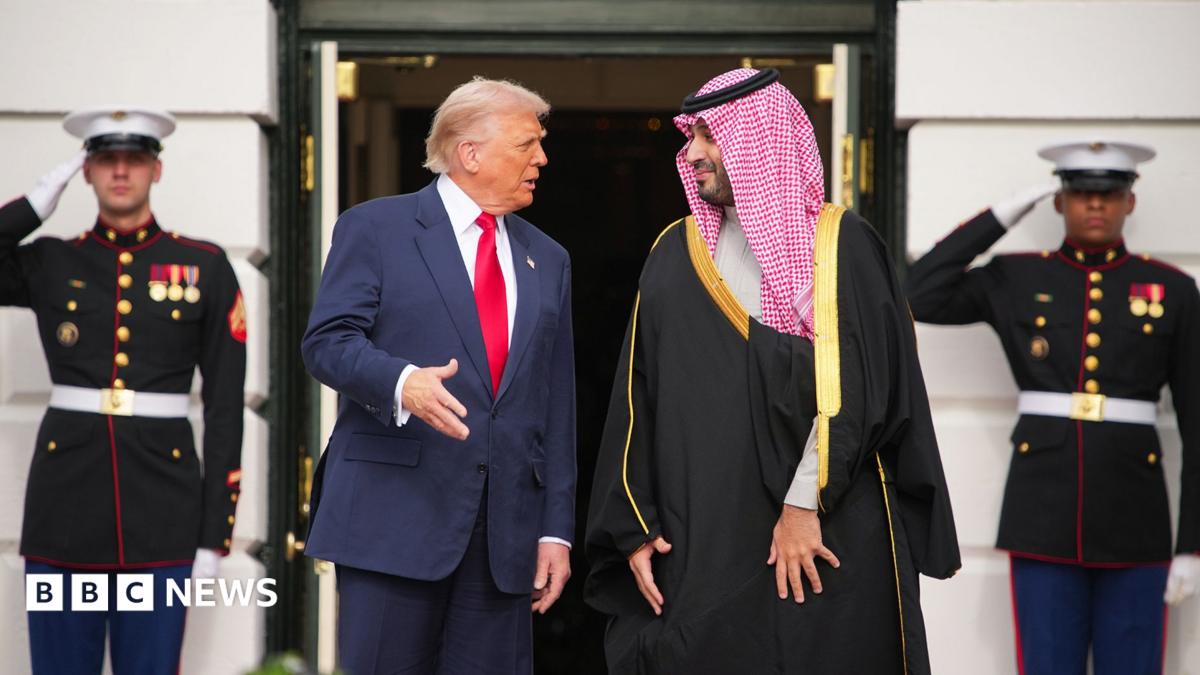
United States President Donald Trump agreed to a 30-year nuclear deal with Saudi Arabia on Wednesday that would see Washington transfer nuclear technology to the Gulf kingdom.
This has drawn concerns that if the deal comes to fruition, it could spark a nuclear arms race across the Middle East amid reports that Riyadh would be able to enrich its own uranium, a necessary step in acquiring nuclear weapons.
Recommended Stories
list of 4 itemsend of list
US officials have stressed the proposed deal would serve civilian nuclear purposes, although exact details of the agreement have not been made public.
It has now been tabled in the US Congress for a review, but is expected to survive resistance from Democrats.
Here’s why some are concerned about the agreement:
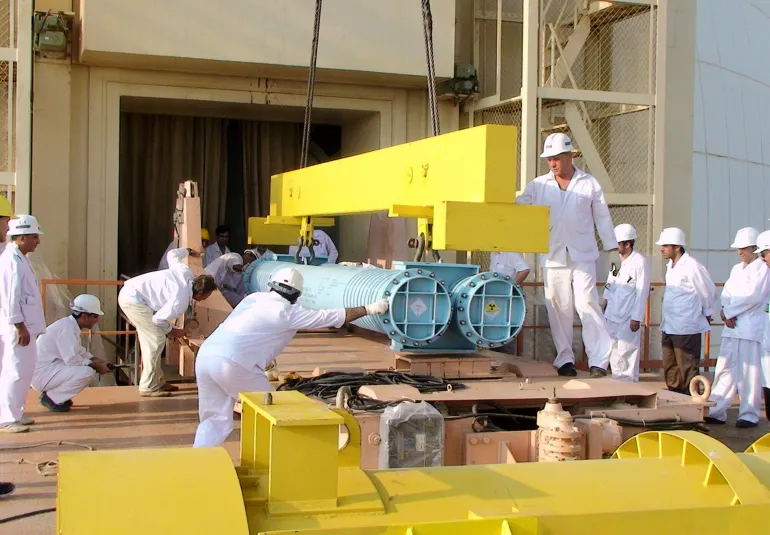
The first fuel is loaded into Iran’s Bushehr nuclear power plant on August 21, 2010 [Photo by IIPA/Getty Images]
Could this spur a nuclear arms race in the region?
Analysts have raised concerns about whether the proposed deal could lead to Saudi Arabia seeking to develop military-grade uranium, which the US Energy Department has not yet confirmed.
Some analysts have warned this could open the door to spurring an arms race with other regional powers.
Saudi Arabia has long voiced its intention to use nuclear energy for power generation, but in 2018, de facto leader Mohammad bin Salman told CBS that Riyadh would “without a doubt” develop a nuclear weapon if Iran did the same.
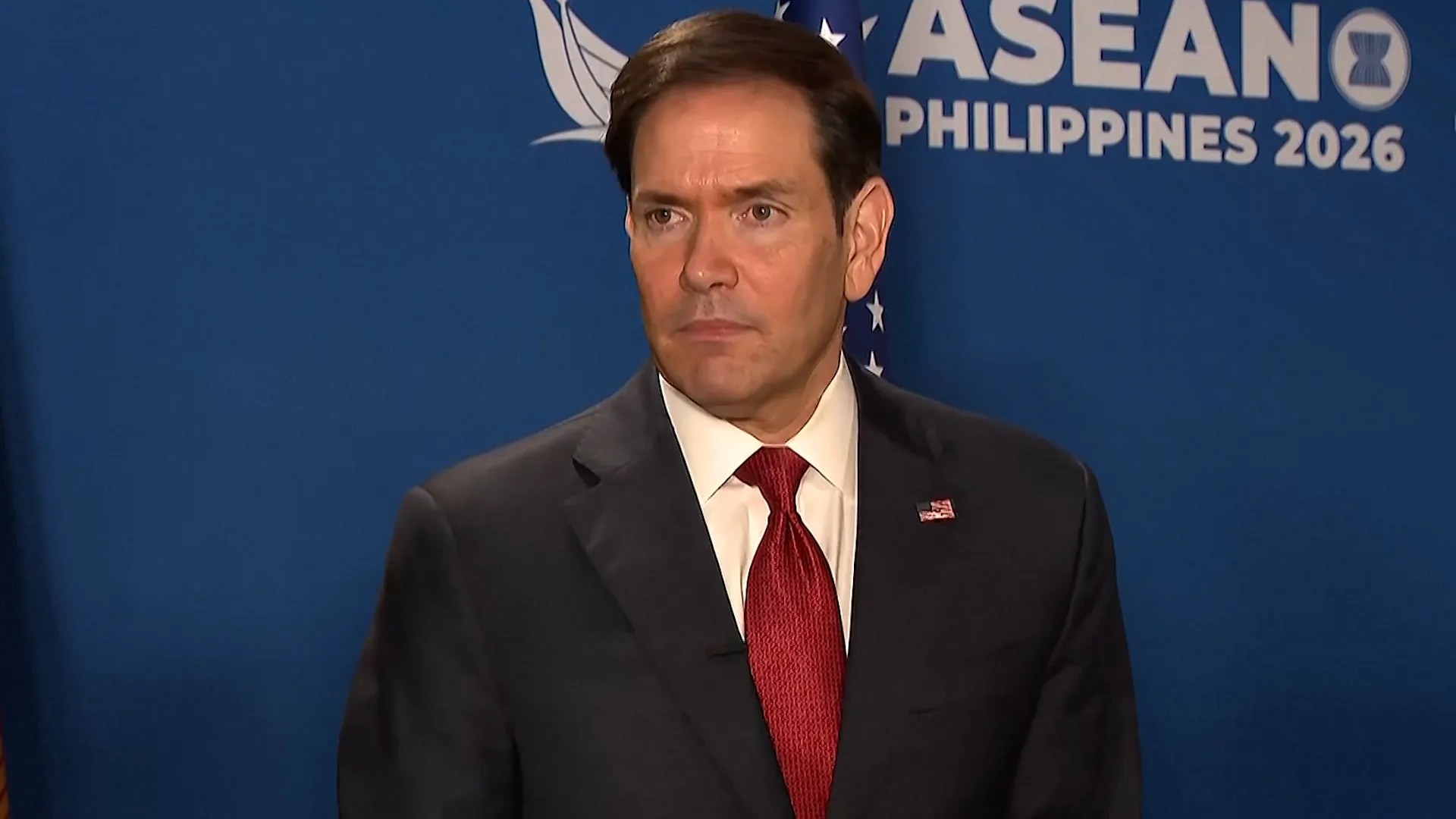
US Secretary of State Marco Rubio insisted on Thursday that the deal would not lead to nuclear proliferation, as US contractors would handle the project, allowing Washington to monitor it. US nuclear reactor designer Westinghouse is believed to be a major contractor.
Former Israeli Defence Minister Avigdor Liberman said in a post on X on Wednesday that Israel must oppose the deal with “all our might.”
“We must all understand that Saudi Arabia’s civilian nuclear programme will end in nuclear weapons and lead to a mad arms race across the entire Middle East,” he posted.
Israel, which developed a nuclear arsenal in the 1960s, has long sought to stop Arab countries and other regional countries from gaining their own nuclear weapons.
Is there a risk of nuclear reactors being attacked in strikes?
Some others have also raised concerns over possible nuclear leaks amid the tensions in the Middle East.
None of these strikes hit the nuclear plants’ reactors, but analysts say allowing more such facilities in the Middle East when tensions are so high is a mistake.
Damage to a reactor’s core could release highly radioactive gases, causing immediate catastrophic damage within a 20- to 30-kilometre (12- to 18-mile) radius.
Nuclear accidents at Japan’s Fukushima nuclear plant in 2011 and Chornobyl in Ukraine in the former Soviet Union in 1986 are cautionary stories.
Could Saudi Arabia have access to sensitive material?
That’s unclear for now.
Highly enriched uranium and spent nuclear reactor fuel are key components of nuclear bombs.
According to US media, the agreement includes a clause providing for a “black box” uranium enrichment facility that would be situated in Saudi Arabia but run by US companies.
A joint study by the two countries, set to last two years, will determine whether such a facility is needed, or if Saudi Arabia should import commercial-grade low-enriched uranium.
“That’s really the concern,” Matthew Kroenig, a fellow with the Atlantic Council, told Al Jazeera, saying there’s been no such arrangement anywhere else in the world.
“What does the US really mean by a ‘black box’? So will the US bring its engineers there full time, forever? Realistically, the Saudis will be involved, they will learn the tech, and they could kick out the US in the future,” Kroenig said.
Washington could be seeking to model Moscow’s agreement with Turkiye and Egypt, where Russian contractors manage active nuclear power plants, including the needed uranium and the highly radioactive spent fuel from the reactors.
The difference, Kroenig pointed out, is that Russia does not enrich the uranium in those cases.
On the other hand, the UAE, which runs a civilian nuclear programme that has been held up as a gold standard for non-proliferation, imports all of its low-enriched uranium from France, the United Kingdom and Russia among other countries.
Kroenig suggested that the US could be using the two-year study as a negotiating tactic, noting that the same claims of impact studies have been used to stall South Korea’s requests to enrich its own uranium.
“The deal doesn’t immediately speak about uranium enrichment, so my hope is that this is a negotiating tactic and that after two years the US will say ‘oh no, this doesn’t make sense right now’”, he said.
Saudi Arabia’s de facto ruler, Crown Prince Mohammed bin Salman, told CBS News in 2018 that his own nation was not planning to acquire a nuclear weapon, but that “without a doubt if Iran developed a nuclear bomb, we will follow suit as soon as possible”.
Earlier US media reports suggested the deal could allow Saudi Arabia to enrich uranium in the future – which can be used as fuel for power plants, but also potentially to make nuclear bombs. However, Trump’s remarks appear to deny this.
Rosemary Kelanic, the director of the Middle East programme at the US-based Defense Priorities think tank, said it would be “quite shocking” if the US were to allow Saudi Arabia uranium enrichment facilities.
“The US has never done that before. We have never helped another country enrich on their own soil,” she said, adding that this was because “if you can produce your own nuclear fuel, you become a much bigger risk” for building nuclear weapons.
The agreement will now be sent to the US Congress for review.
Some lawmakers on both sides of the political aisle are expected to oppose the deal, though Trump’s Republican Party controls both the upper and lower chambers and opponents of the deal do not appear to have the votes needed to block it.
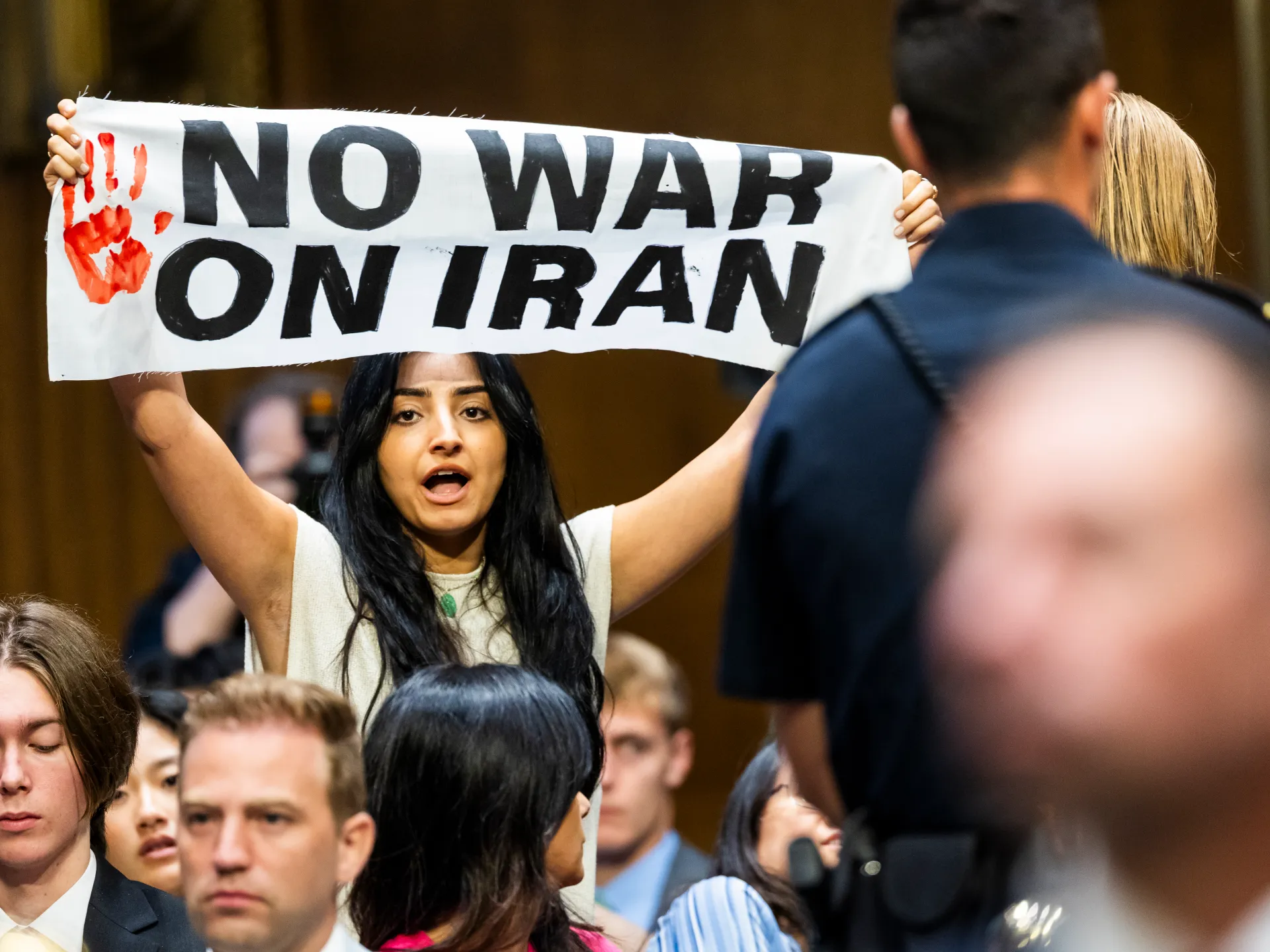
The Senate was also expected to vote on War Powers resolution, in largely symbolic move attempting to reign in Trump.
Four Republicans in the United States House of Representatives have again joined Democrats in voting to constrain President Donald Trump’s power to wage war against Iran.
The resolution passed on Thursday, nearly a week after three US military personnel were killed by an Iranian attack on a base in Jordan, with a 214-208 vote. Senate Minority Leader Chuck Schumer has said Democrats will also force a War Powers vote in the Senate on Thursday.
Recommended Stories
list of 3 itemsend of list
Both the House and Senate had previously passed a resolution in June that called on Trump to seek congressional approval before launching further attacks. However, because the resolution was passed as a so-called “concurrent resolution”, it was not sent to Trump’s desk.
Even if the measure had been passed as a joint resolution, requiring it to be sent to Trump for approval, the president could veto it. Overriding such a veto requires a two-thirds vote in both chambers.
Democrats have said the latest resolution sends an important message that lawmakers oppose Trump’s approach to the war, which has re-escalated after a ceasefire broke down in early July.
Both the US and Iran have traded 12 days of consecutive attacks, with some analysts warning an even greater US escalation may be on the horizon, as Trump has repeatedly threatened attacks on civilian infrastructure and a possible ground invasion.
“This is a vote that requires us to find the strength to do what is right for the American people, and to send the clearest, even stronger message to this president of the United States that the United States Congress, the House of Representatives, is reasserting our authority over war,” Representative Pramila Jayapal said from the House floor on Wednesday.
“This war must end,” she said.
Under the US Constitution, only Congress can declare war, something it has not done since World War II, although presidents can commit forces in instances of pressing self-defence.
Trump has argued that the culmination of Iran’s actions since 1979 represents such an imminent threat, a claim many constitutional law experts have rejected.
Under the 1973 War Powers Act, presidents must receive congressional approval within 60 days of committing troops. While the US-Israel war with Iran began on February 28, the Trump administration claimed that hostilities had “terminated” following a temporary pause in fighting reached in April.
War powers experts and some members of Congress have said the attempted workaround flouts the law. The administration again notified Congress that fighting had resumed before the most recent round of attacks.
In a statement on Thursday, David Janovsky, acting director of The Constitution Project at the Project On Government Oversight (POGO), said the House vote “reaffirmed what people across the country have been saying all along: We want no part in an illegal war”.
“Contrary to the administration’s claims, the latest hostilities are not a new war. We’re now months past the constitutional deadline for the administration to end this unauthorised war,” he said.
He also noted that the House on Tuesday approved a sprawling $1.15 trillion defence bill that includes tens of billions more in funding for the war. The Senate has not yet voted on the package.
“If Congress is serious about bringing an end to this prolonged conflict, it must also refuse the administration’s request to fund it,” he said.
The conflict in Yemen has entered a new chapter with a declaration by the Houthis that they are imposing a maritime siege on all shipping to Saudi Arabia.
This development has placed the Bab al-Mandeb Strait, the strategic waterway that connects the Red Sea to the Gulf of Aden and the wider Indian Ocean, at the heart of the war between the United States and Iran, and amplifies pressure on global trade routes.
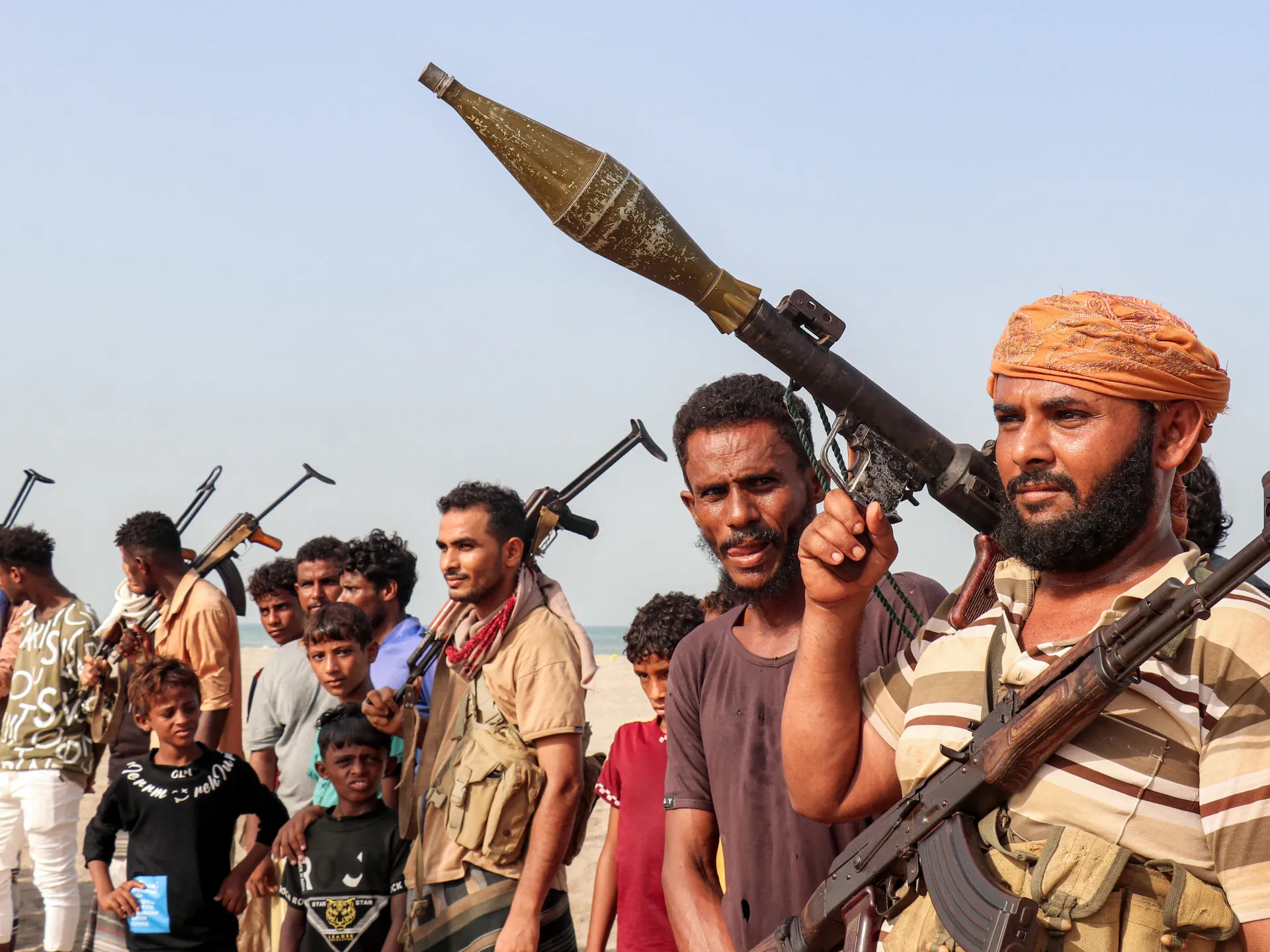
The Iranian-backed Houthis, who seized Yemeni capital Sanaa in 2014, have threatened to close the strait, the route through which much of Europe’s energy supplies pass. It is also a key passage for imports to Saudi Arabia.
The Houthis’ decision to announce a maritime blockade cannot be separated from the turmoil created by the ongoing war between Washington and Tehran, which erupted on February 28 when the US and Israel attacked Iran.
Houthis raise stakes for Saudi’s support
On Monday, Yemen’s internationally recognised government claimed responsibility for an air strike on Sanaa airport, saying that it was a measure to prevent an Iranian plane from landing in Yemen’s Houthi-controlled capital. But the Houthis blamed Saudi Arabia for it.
The Houthis responded by firing missiles into Saudi Arabia – a key backer of the Aden-based Yemeni government – and later upped the stakes by announcing a naval blockade on the kingdom.
These developments mark a major escalation in Yemen’s civil war. Saudi Arabia, which has sought in recent years to avoid a new war on its southern borders, is facing a more complex equation with the threat shifting from land to sea, and the targeting of one of the most important alternative routes for its oil exports.
All of this raises the question: will this escalation cause a new confrontation between the Yemeni government and the Houthis? And if so, what does the balance of power look like between the Houthi and government sides after more than a decade of war? Has the balance changed enough to increase the odds of a military resolution to the conflict?
There has been talk of potential escalations in recent years, but this now seems more likely, especially since it intersects with local, regional and international events and the return of the US-Iran war.
The Yemeni government has restructured its military with a single decision-making centre, and regional messages suggest the military option has not been shelved, as was once thought.
So, will retaking Sanaa return to the table as a military objective to be thought of seriously, and what does that mean practically? And how ready are the parties, especially the Yemeni government, for battle?
The structure of government-affiliated forces
The anti-Houthi camp today comprises the National Army as the official framework of the Ministry of Defence, in addition to new formations with independent commands, such as the Giants Brigades, and the Guardians of the Republic forces in al-Makha, or Mocha, in the west.
These different groupings – all on the anti-Houthi side in the conflict – have emerged over the years due to the weakening power of the central government, the growth of independent figures, and the backing of regional countries.
The number of National Army personnel in the field is estimated at about 400,000, according to recent statements by the Defence Ministry. Its organisational structure includes Yemen’s seven military regions, but troop deployment is concentrated in Marib, Taiz and the country’s southern and eastern governorates, as a result of Houthi control over vast parts of the country’s northwest, including Sanaa.
Also backing the army are the Emergency Forces, comprising between 30,000 to 40,000 personnel, and the Homeland Shield Forces, created in 2022 with between 30,000 and 40,000 recruits, and tasked with taking over camps in Hadramout and the southern governorates in December 2025, following the defeat of separatist forces who previously controlled those areas.
Fighting late last year between the Yemeni government and affiliated forces on one side, and United Arab Emirates-backed separatists on the other, has led to changes in Yemen’s south and west.
After the defeat of the 75,000-strong separatist Southern Transitional Council, following a Saudi intervention on the side of the government and the withdrawal of the UAE from Yemen, the group’s organisational cohesion has been impacted. But they have not been disarmed, and remain in many locations in the south, with some elements absorbed – even if nominally – into government structures.
Another formerly-UAE backed force, the Tariq Saleh-led Guardians of the Republic, is estimated to number about 20,000 fighters. They are stationed primarily on the Red Sea coast and are considered among the most heavily armed formations, due to the past Emirati support.
The Giants Brigades are among the most prominent combat formations in the anti-Houthi camp, with an estimated 20,000 fighters and a presence on the Red Sea coast, in Aden, and in some southern areas.
Consequently, the total size of the forces affiliated with the government and the anti-Houthi camp is estimated at more than 500,000 personnel, albeit with a clear disparity in levels of training, discipline and institutional integration.
Quality of armament and military equipment
The types of weapons held by these forces do not differ as significantly as the level of their operation and management. The National Army relies on conventional weapons inherited from the Yemeni army pre-war, including light and medium weapons, armoured vehicles, tanks and field artillery, alongside various communication and transport capabilities.
The Homeland Shield Forces, backed by Saudi Arabia, are considered among the most relatively well-equipped modern formations. They rely on tactical vehicles, light armoured vehicles, and superior communication systems suited for rapid deployment missions and the protection of institutions.
The Emergency Forces rely on light to medium armament focused on urban operations and rapid deployment missions, more akin to a field military force with rapid intervention duties, combining a security character with combat capability.
The Giants Brigades rely on medium and heavy armament, armoured vehicles and fire support units, and they are recognised for their capability to conduct offensive ground operations compared with other forces.
As for the formations affiliated with the Southern Transitional Council, they rely on diverse weaponry, though readiness varies as a result of the organisational changes they have undergone.
In recent years, the majority of government forces have also developed their drone capabilities, both within regular units and some irregular formations. These assets are now used for reconnaissance and surveillance missions, and occasionally for limited tactical support.
Balance of power with the Houthis
Official military records in Sanaa indicate that Houthi-affiliated army units comprise more than 200,000 fighters and can also mobilise tens of thousands of members from their volunteer Popular Committees for rapid intervention and support.
However, these figures, much like the military rosters in the government camp, may not accurately reflect the actual combat strength on the ground due to the inclusion of reserve or inactive names in registries.
Although government-affiliated forces may possess more manpower, the balance of power in Yemen is not determined solely by numbers.
Despite sustaining significant damage to its forces and assets from US and Israeli strikes over the past few years, the Houthi side benefits from a more centralised command structure and possesses experience in managing asymmetric warfare.
This is in addition to possessing missile, drone and maritime threat capabilities that have proven their impact in the Red Sea and the Bab-al-Mandeb Strait. It appears that the military balance in Yemen is more a balance of organisational and war management rather than a balance of weaponry and numbers.
Readiness of government forces for a major battle
Indicators suggest government forces are capable of engaging in defensive battles, holding territory or managing extensive security deployments. However, they face significant challenges should they consider launching a large-scale offensive.
The most prominent of these challenges was the multiplicity of military decision-making centres – before Saudi Arabia assumed control of this decision-making following the UAE’s withdrawal – and the varying levels of training and discipline, compounded by the difficulty of operational coordination.
Geography is also a factor, as the Houthis’ control over the mountainous northwest grants them a defensive advantage, whereas government forces are dispersed across multiple fronts, limiting their ability to mobilise at a decisive point.
The scenario of entering Sanaa
So far, there are no clear public indications that any international power, including the US, has adopted a declared plan to support a large-scale military operation to take Sanaa.
Although Houthi attacks in the Red Sea have elevated the level of international interest in the Yemeni file, the international strategy has been focused on degrading Houthi capabilities related to the sea and smuggling, rather than on a ground offensive. However, reports have emerged from sources within the Yemeni state regarding a possibility of waging a war against the Houthis with US support.
If an operation towards Sanaa is considered, its success would require complex conditions, most notably unifying the government’s military command, providing broad domestic and regional political cover, and ensuring the ability to manage the city after seizing control of it. Some of these conditions may have already been met.
Has Saudi Arabia provided cover to confront the Houthis?
The Yemeni government’s military decision-making is largely tied to Saudi political and military support, and any broad move against the Houthis remains contingent upon Riyadh. But Riyadh has preferred to focus on protecting the kingdom’s southern borders, securing shipping lanes and preventing the expansion of the Houthi threat deep into Saudi territory.
It seems that Saudi strategy has previously leaned towards managing the conflict rather than resolving it, by combining limited military pressure, diplomatic moves and de-escalation tracks to reduce the security and economic costs of the war.
The Saudi position may have shifted recently in light of international and regional events, particularly concerning the security of navigation in the Red Sea. Riyadh may be pushed to re-evaluate its options regarding the Yemeni file, and the one currently on the table may be a military one.
New data released on Thursday showed that UK petrol prices have risen by 5p a litre since the beginning of July, hitting reaching almost £1.56.
Diesel is at £1.72 a litre, on average, according to the RAC.
Average gasoline prices in the US have surpassed $4 a gallon once more, up from $3.92 a month ago, according to motorist advocacy group AAA.
“More expensive fuel and energy can ripple through the wider economy, increasing costs for businesses and ultimately feeding through into the price of food and other goods,” said Jonathan Raymond, investment manager at Quilter Cheviot.
“This creates another headache for central banks as they continue their battle against inflation.
“If energy prices remain elevated, policymakers may come under pressure to keep interest rates higher for longer or even raise them. This would come as a blow to mortgage holders and borrowers already feeling the strain.”
The Bank of England, which sets UK interest rates, has held them at 3.75% in its last four meetings.
Paul Dales, chief UK economist at Capital Economics, said he believed the Bank will “almost certainly” hold them again. But he said analysts still expected that interest rates could be cut next year if energy price rises ease.
Kevin Warsh, the newly-appointed chair of the US Federal Reserve, last week told Congress that the central bank had “no tolerance to persistently elevated inflation”.
US President Donald Trump had pushed Warsh’s predecessor, Jerome Powell, to cut interest rates.
Trump has made it clear he expects Warsh to fulfil his demand for reductions in borrowing costs for Americans.
But the Fed held US interest rates between 3.5% and 3.75% at Warsh’s first meeting last month. He also told Congress that he was committed to “restoring price stability” in the wake of the Middle East conflict impacting prices.
Fatima ‘Teema’ Mahmud uploaded a short clip on her Telegram Status that morning; it showed a leaked intimate video involving individuals in northern Nigeria. The time was 8:13 a.m.; minutes later, she uploaded another one and another. By midday, she had uploaded dozens of similar pieces of content. By evening, there were hundreds.
Some of the updates advertised leaked, non-consensual intimate videos that had circulated across social media timelines in the region days earlier. Others promoted sex work services, paid erotic video calls, and private VIP groups featuring explicit videos of women, particularly northern actresses. Among them, and pinned prominently at the top of Fatima’s Telegram profile, were screen records of what she claimed were sexual and nude videos of children, advertised under paid access tiers.
The next morning, the cycle began again.
This reporting was never supposed to become an investigation into child sexual abuse material. It began with a simpler question: where do the leaked intimate videos that circulate on northern Nigerian social media end up?
Every few weeks, another such video appears. The names change, but the outrage follows a familiar script: WhatsApp groups begin asking for links, X users post screenshots before directing followers to Telegram, and Facebook pages recycle the same clips. For a day or two, timelines become courtrooms. Then attention shifts elsewhere, and the people at the centre of those scandals disappear from public conversation, but the links do not.
One such link appeared in May. An X account, now suspended, promoting what it described as a leaked intimate video involving a woman, instructed followers to continue on Telegram. Instead of downloading the material, HumAngle followed the trail, using a pseudonymous account to trace the same path thousands of other users take whenever another intimate video erupts across northern Nigerian social media.
For three months, HumAngle watched what that trail led to: an ecosystem that had evolved to survive platform bans, rebuild audiences almost overnight, and transform some of women’s most private moments into commercial products. Within that ecosystem, children appeared to have become one of its most valuable commodities.
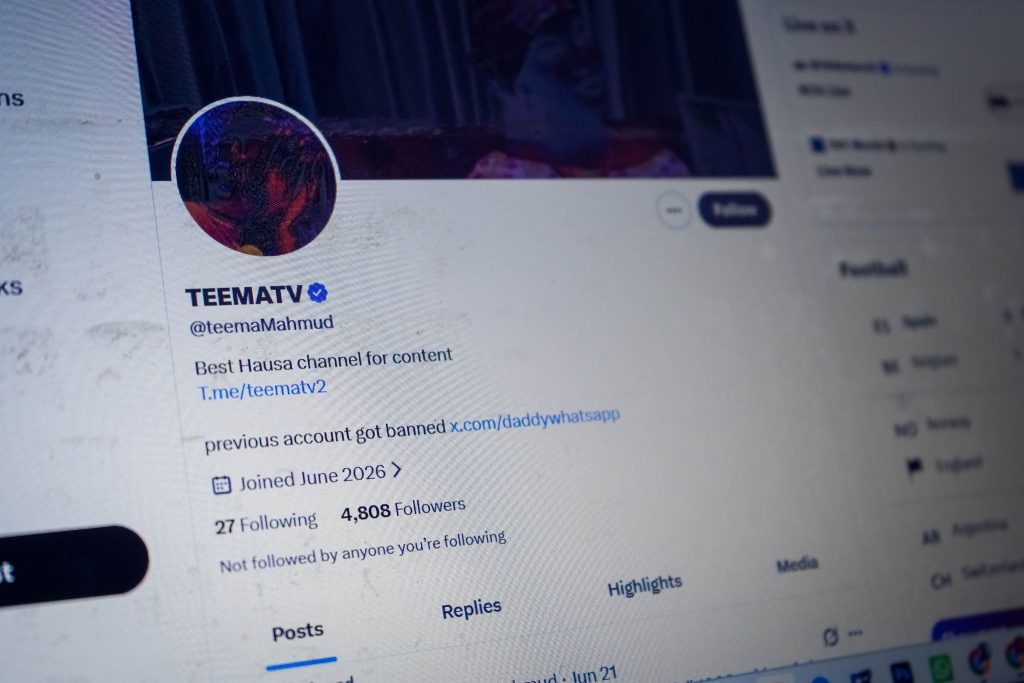
A snapshot of Fatima Mahmud’s X account, “TEEMATV” (@teemaMahmud). As of July 11, the account had over 4,000 followers. Here, she promotes explicit videos, often posting teaser clips and directing followers to continue on Telegram. Her previous account, also called TeemaTV (@teematv), which first drew HumAngle’s attention to this investigation, had more than 11,000 followers before X suspended it in May. Her bio reads “Best Hausa channel for content”, with a follow-up note beneath it explaining that her “previous account got banned.”
Following the trail
It started with “Teematv” on X. HumAngle stumbled on the account promoting a teaser video following a scandal involving a Kaduna-based woman, whom HumAngle will not name to avoid re-victimising her. The X account claimed to have the “full video” and encouraged followers to access it on Telegram.
We created a pseudonymous account and followed the trail.
The first Telegram channel, “Teematv” (@teematv9), which is the main feeder channel and had over 40,000 subscribers before it got suspended in June, looked much as expected: pornography, leaked videos, and VIP subscriptions. But the longer the investigation continued, the less it resembled another anonymous pornography page. The channel did not exist in isolation. Every video and image posted linked to something else, and subscribers were encouraged to save the phone numbers provided by the administrators. “Add my contact,” she often tells subscribers.
Once saved, these numbers unlocked Telegram Status updates, which promoted private VIP groups, which led to new administrators, who promoted replacement channels. When one account disappeared, another had already taken its place.
It felt less like browsing social media and more like walking through a marketplace where every stall owner knew the next. The journey was remarkably consistent, and the pattern held across every operator HumAngle traced; the public channels attracted attention, Telegram Status sustained it, and private conversations completed the sale. Each platform served a different purpose within the same business. X functioned as a storefront, where explicit clips and provocative teasers attracted attention and encouraged users to click through. Telegram became the marketplace itself, while WhatsApp and private Telegram conversations handled the transactions.
Looking closer, the structure reflected an operation built specifically to survive the content moderation it was navigating.
The pattern started with what appeared, and what did not appear, on X. Operators such as Teema used their X accounts to post pornographic clips into X’s video feed, content that the platform’s moderation has grown relatively permissive toward, and whose recommendation algorithm readily surfaces more of it once a user engages with it repeatedly. At no point during our three months of monitoring did HumAngle observe child sexual abuse material posted directly on X.
Whether by experience or deliberate caution, the operators appeared to understand the distinction: ordinary pornography might slip through a platform that has relaxed many of its guardrails around adult content, but material involving children almost certainly would not survive there. The Telegram link attached to those X posts was, in turn, rarely the final destination. It served as an additional layer of security, requiring users to either save a phone number or send a private inquiry before anything further was revealed.
Only after that number was saved did the next stage begin, through Telegram Status. There, too, the same caution applied. Rather than posting material involving children directly, operators uploaded blurred collages or screenshots, with titles and scenes presented as proof that a fuller collection existed, along with a caption advertising group access and a price, directing interested buyers into a private conversation. Nothing that could be mistaken for the material itself appeared in a space Telegram or outside observers could easily flag; the proof of possession and the point of sale were kept one careful step apart. HumAngle observed screenshots of children naked and being abused.
The advertisements rarely remained online for long. Telegram Status updates disappear automatically after 24 hours, and the administrators appeared to exploit that feature deliberately, because the posts remain accessible on the profile itself to anyone who has saved their contact. On some days, one operator uploaded close to 200 Status updates, rotating through advertisements, teaser clips, and promotional graphics before repeating the process the following morning.
The result was a constantly changing catalogue. One day, the focus might be leaked intimate videos. The next, sex work services. Then paid video calls. Then another newly emerging leaked-video scandal that had just begun trending elsewhere on social media. The operators appeared to respond quickly to public attention: whenever an intimate video began circulating widely online, it often appeared inside the network within hours, repackaged as a commercial product, a short preview posted publicly with the full video available, administrators claimed, after payment. The scandals that dominated social media for a day or two became inventory.
Identifying the operators
There was one problem with Telegram usernames: they rarely lasted. By the time HumAngle finished documenting one account, another had often appeared. The usernames, invitations, and even profile photographs changed. But the people behind them did not.
To understand who was operating the network, our investigation moved beyond monitoring channels and focused instead on the digital traces the administrators had left behind, rather than the material they were advertising. The approach was deliberate: HumAngle had already decided it would not purchase access to private VIP groups or attempt to obtain any material advertised as involving children.
Beyond the obvious ethical concerns, doing so could expose journalists to illegal content and compromise the investigation itself. Instead, we focused on the operators’ own mistakes, and the first was surprisingly ordinary: money.
Like any online business, the administrators eventually needed customers to pay. Across multiple Telegram channels and Status updates, Teema repeatedly instructed interested buyers to save a phone number before making enquiries or completing payments. Unlike her usernames, the number rarely changed. It became the first real-world lead.
A search through Truecaller, a popular caller identification service, returned the name “Fatima Mahmud”. One result was not enough, so the same number was cross-checked against Nigerian online banking applications, including OPay and PalmPay, both of which use registered phone numbers as account identifiers and display the associated account name before a transfer is completed. Both returned the same name. For the first time, the investigation had connected one of the network’s most active operators to a real-world name, confirmed through two independent verification methods.
Finding the person behind that name proved harder. Searching “Fatima Mahmud” and “Teema” on social media produced dozens of unrelated results, and many of the accounts connected to the investigation had already been suspended or had disappeared before they could be examined. So HumAngle changed direction, following relationships rather than names: Telegram usernames led to older accounts, older accounts led to replacement accounts, and replacement accounts led to suspended X profiles, each revealing another fragment of the same digital footprint.
The same process and the same dual verification through Truecaller and banking app records identified a second recurring figure in the network who used several online identities: Deejah, Nanadady, and Deharjah. Once again, the payment trail pointed to one name: Khadija Adamu.
Illustrated by Akila Jibrin/HumAngle, edited using AI.
Despite the frequent account suspensions and identity changes, traces of her activity remained visible. As recently as July 17, Khadija remained active. In a Telegram Status update, she told followers her phone had been damaged and appealed for financial support to replace it, posting her Union Bank account details. The account name she provided, Khadija Adamu Abubakar, was confirmed through a mobile banking application search, adding a third independent verification to the identity already established through Truecaller and her OPay and PalmPay records. Fatima’s administrator account was also active at the time of publication.
A collage of screenshots documenting the recent activity of Fatima Mahmud and Khadija Adamu, captured three days before publication. In the first frame, dated July 17, Khadija appeals to her followers for financial support to replace a damaged phone, posting her Union Bank account details beneath the request. The second frame, dated July 13, shows Fatima sharing her WhatsApp number on Telegram and directing followers to save her contact and message her there for access to her WhatsApp Status. The third frame, also dated July 17, shows Fatima advertising a VIP channel containing what HumAngle’s monitoring observed as more than 1,200 videos of child sexual abuse material, captioned “Bonanza 20k,” indicating a discounted access price of ₦20,000.
Khadija’s operation mirrored Teema’s in structure, but she operated across a considerably wider segment of the online sex trade, advertising leaked intimate videos, homosexual pornography, sex work, paid sexual video chats, sex toys, sexual stimulants, and VIP groups promoted as containing child sexual abuse material. Of that range, child sexual abuse material appeared to be one of her primary products, and her pricing across the board was consistently higher than Teema’s, with VIP access advertised at between ₦50,000 and ₦100,000. From what HumAngle observed, she made no attempt to obscure or apologise for any of it.
A further question remained: were the photographs attached to their profiles genuine? At first glance, they appeared convincing: young Hausa women in casual portraits and self-portraits, but reverse-image searches using Google Lens and facial-recognition software found that several did not belong to the account holders at all. Instead, they matched publicly available photographs of Hausa actresses and other individuals whose images had been lifted from elsewhere online. The people running the accounts had carefully concealed their own identities behind someone else’s faces.
Fatima addressed this directly in the description of her main feeder channel, Teematv (@teematv9), which had more than 40,000 subscribers before it was suspended on June 12. “I post pretty Hausa girls on my page. If you see your picture here, then know [that] you are pretty,” she wrote. “Some of you are complaining. I just leave compliments as the caption. I mean no harm. [It] is just for fun.”
A final search, this time relying on Facebook’s “People You May Know” recommendation feature after the administrators’ phone numbers were saved as contacts, surfaced a profile that strongly matched the identity already established for Khadija. Fatima’s case proved less conclusive; several profiles appeared, but none could be verified with sufficient confidence. The search stopped there. We do not possess the legal powers available to law enforcement agencies, but what the reporting established was enough: two operators had been identified through the payment infrastructure they themselves had created, and neither appeared to be working alone.
The product
A collage of screenshots from Fatima Mahmud’s main Telegram feeder channel, “Teematv” (@teematv9), showing advertisements for child sexual abuse material posted on April 15, 23, and 28. In each post, she offered discounted access to interested subscribers and directed them to contact her privately. The channel had more than 40,000 subscribers before Telegram suspended it in June.
The advertisements followed a consistent commercial logic, and the same pricing structure recurred across all operators and channels documented in this investigation.
Individual leaked Hausa intimate videos, after a short teaser had been posted publicly, typically sold for between ₦2,000 and ₦5,000. Buyers seeking larger collections were encouraged to pay for VIP memberships instead, which administrators claimed offered hundreds of additional videos. The advertisements suggested a tiered business: casual customers bought individual videos, regular customers subscribed, and those willing to spend more were offered access to increasingly exclusive groups.
At the top of the pricing structure were advertisements for group access explicitly involving children. Unlike the adult-content advertisements, which typically promoted individual clips, these posts promised something larger: a collection, membership, exclusivity. They were usually brief: a blurred collage or screen record, a short caption, sometimes only a few words, followed by a price. Most commonly, that price was ₦50,000, though some operators, like Khadija, advertised memberships as high as ₦100,000. The wording varied slightly from one administrator to another, but the sales strategy did not, and the same pattern appeared consistently across multiple Status updates, different administrators, and different channels over the three months of monitoring.
At first, HumAngle questioned whether the advertisements were genuine; exaggerated claims to lure paying customers are common online. But the consistency, repeated across unrelated administrators using nearly identical language, made coincidence difficult to sustain as an explanation.
Teema’s advertisements illustrated how the claims were built up over time. In a sequence of Status updates viewed chronologically, she claimed her VIP collection had grown from around 600 videos to more than 800, and eventually to over 1,200. HumAngle could not independently verify those figures, but documented them as part of the marketing strategy: growth itself had become a product, with a larger claimed catalogue used to strengthen the sales pitch.
A collage of screenshots from the Telegram Status updates of Fatima Mahmud and Khadija Adamu, advertising paid access to VIP groups where child sexual abuse material is sold. Both posts offered discounted entry prices. Fatima’s post, dated June 16, shows the advertised VIP channel with one subscriber; Khadija’s, dated June 22, shows four.
The operators appeared to understand a basic principle of online commerce: that people rarely arrive intending to make their largest purchase but are guided towards it. Every stage encouraged the next. The channels resembled a subscription business more than an ordinary social media page. Only the product was different, and its advertisements did not appear hidden in obscure corners of the internet. They appeared alongside the same promotional posts advertising leaked intimate videos, prostitution, and paid video calls. Children were not presented as something separate. They were presented as another product category, another premium tier.
Illustrated by Akila Jibrin/HumAngle, edited using AI.
HumAngle also decided not to attempt to identify the children referenced in the advertisements. INTERPOL’s International Child Sexual Exploitation database, the tool specialist law enforcement units use to identify victims and offenders worldwide, treats abusive images and videos as evidence tied to real children, real locations, and real offenders, material to be handled by trained victim-identification specialists rather than pursued independently. Attempting to trace the children through the material risked compounding the harm the investigation was seeking to expose.
The network
For much of the investigation, Teema and Khadija appeared to be running separate operations: different Telegram channels, different X usernames, different pricing. It was easy to assume they were competitors. Then one Status update changed that.
While reviewing Teema’s Telegram Status one afternoon, HumAngle noticed she was no longer advertising her own channel, but Khadija’s. Only days earlier, one of Khadija’s Telegram accounts had disappeared or been removed before we could complete the documentation of its activity. The replacement account appeared almost immediately, and Teema introduced it to thousands of followers. Over the following days, the same promotion resurfaced repeatedly across dozens of Status updates before disappearing after 24 hours, only to return.
Illustrated by Kingsley Chibueze/HumAngle, edited using AI.
Tracing the followers who interacted with those promotions on X uncovered dozens of accounts exhibiting remarkably similar behaviour. When one profile disappeared, another announced its replacement. When Telegram removed a channel, fresh invitation links circulated through WhatsApp Status updates and newer Telegram accounts. The audience rarely needed to search; the network guided them. Investigators documented several accounts operating under different versions of Teema’s identity, including @teematv2 and @teematv3, with Khadija running parallel replacements under her own aliases.
Around them was a wider ecosystem. Channels such as AREWA GIDAN DADI, Arewagidanharkazallah, and Sadearharka surfaced repeatedly throughout the investigation.
HumAngle found no evidence that these accounts were all controlled by the same individual, nor could we establish that every operator knew every other one personally. What our investigation does establish is narrower but significant: the accounts consistently promoted one another, shared audiences, and directed followers towards replacement channels, forming a distribution network that platform bans repeatedly failed to disrupt.
A collage of screenshots showing the premium subscription badges held by operators and channels within the network. The subscriptions grant access to features including unlimited Status updates and unlimited cloud storage, capabilities that appear to have supported the scale and persistence of their operations.
The blind spot
The most surprising thing about the network was not that it existed, but that it appeared to operate in plain sight. The operators behaved less like people trying to disappear than people confident they would not be noticed. That raises a broader question: why did a network operating so openly prove so resilient?
Part of the answer may lie in language. Almost every account documented in this investigation communicated primarily in Hausa, and the cities referenced in conversations, such as Kano, Kaduna, Maiduguri, Katsina, Sokoto, and Abuja, pointed overwhelmingly to audiences in northern Nigeria. This was not simply a Nigerian online marketplace; it was a Hausa-speaking one.
Researchers have increasingly warned that many widely spoken African languages remain “low-resource” from the perspective of artificial intelligence and automated content moderation. While Hausa is spoken by tens of millions of people across West Africa, there are comparatively fewer linguistic datasets and moderation tools to help technology companies automatically identify harmful content in the language, meaning abusive or exploitative content can be harder to detect at scale than equivalent content in English.
Nothing in HumAngle’s investigation suggests the operators tried to hide the language they used; on the contrary, their marketing relied on local expressions and reflected the culture of Arewa social media. The same characteristics that made the network accessible to its intended audience may also have made it less visible to moderation systems built primarily around better-resourced languages.
This is not a uniquely Nigerian, or even uniquely Hausa-language, problem. Investigations in other parts of the world have documented strikingly similar patterns, in which mainstream platforms funnel users toward Telegram-based child sexual abuse material (CSAM) marketplaces that survive enforcement through rapid replacement.
A BBC Eye investigation published in July found that Instagram’s advertising system in India was itself directing a test account toward paid child sexual abuse material sold through Telegram channels, with material advertised for as little as the naira equivalent of one US dollar; Meta’s own moderation team initially cleared one flagged advertisement as compliant with its policies, and only acted once BBC journalists sought formal comment.
A separate investigation by Sudan’s Ayin Network documented Telegram channels operating an almost identical structure to the one described here: administrators charging roughly $30 for VIP access to material described as exclusive, channels going dark after reports only to be quickly recreated with subscribers migrated across, and content sourced from economically vulnerable communities with little legal recourse.
Malaysiakini’s Kini News Lab has separately described Telegram as functioning as a “dark mall” for this kind of material, in which promotional content on more visible platforms consistently routes interested users toward Telegram, where moderation is comparatively lighter.
Another investigation, conducted by the Brazilian outlet Núcleo with the Pulitzer Centre’s AI Accountability Network, found dozens of Telegram bots capable of generating AI-manipulated child sexual abuse imagery, most operating despite Telegram’s own public commitments on child safety.
These investigations point to a recurring global pattern. Broader research suggests the problem extends far beyond the networks examined in any single investigation. Research conducted by UNICEF Innocenti, ECPAT International, and INTERPOL across 13 countries in Africa and Southeast Asia found that, depending on the country, up to one in five internet-using children aged 12 to 17 had experienced online sexual abuse within a single year. Social media platforms were among the environments where children most frequently encountered the abuse.
Nigeria was not included among the countries studied, leaving no comparable national estimate of how many Nigerian children may be affected. UNICEF and the WeProtect Global Alliance have warned that online child sexual exploitation is becoming increasingly complex as offenders adapt quickly to new technologies, encrypted platforms, and gaps in national responses, arguing that effective responses require cooperation between technology companies, law enforcement, child-protection organisations, and governments, rather than isolated moderation decisions by individual platforms. UNICEF Nigeria has separately noted that violence against children increasingly occurs in both physical and digital spaces, while support for victims remains limited.
As we identified the operators of these accounts, an obvious question emerged: if journalists could trace those digital footprints using publicly available tools, what prevented authorities from doing the same?
Nigeria does not lack the relevant laws. The Cybercrimes (Prohibition, Prevention, etc.) Act criminalises the production, distribution, and possession of child sexual abuse material, alongside offences relating to the use of digital platforms to facilitate unlawful activities, including the non-consensual distribution of intimate images.
The Violence Against Persons (Prohibition) Act recognises image-based sexual abuse, and children receive further protection under the Child Rights Act and the Trafficking in Persons (Prohibition) Enforcement and Administration Act.
The activity documented in this investigation appears to fall squarely within conduct already prohibited under Nigerian law. Over three months of monitoring, HumAngle found no public record of investigations or prosecutions specifically targeting the Hausa-language Telegram ecosystem documented in this reporting, even as channels disappeared, replacement channels emerged, subscribers migrated, and the marketplace continued operating.
The threat was not entirely new to Nigerian authorities. In 2023, the National Agency for the Prohibition of Trafficking in Persons (NAPTIP) said it had observed increasing cases involving child sexual abuse material, sextortion, and revenge pornography, and had established a Cybersecurity Response Team, in partnership with organisations including Meta and the United States National Centre for Missing and Exploited Children (NCMEC). That year, the agency said it was investigating six cyber-tip reports involving online child exploitation and sextortion, drawing on NCMEC’s CyberTipline, the centralised reporting system through which tech companies and the public flag suspected child exploitation to law enforcement worldwide. What remains unclear is whether the Hausa-language network HumAngle documented had ever entered that reporting system.
The network appeared to exploit precisely the jurisdictional and institutional gaps that researchers have long warned about: Telegram channels directed users toward WhatsApp, WhatsApp conversations led back to Telegram, and X attracted new audiences, with each platform seeing only one part of the picture while the operators appeared to see the whole. Platform enforcement removed accounts. Law enforcement, at least publicly, appeared largely absent, aside from the small number of cases NAPTIP said it was already investigating.
What follows
Before publication, HumAngle shared its findings with Telegram and NAPTIP, seeking answers about the network, its operators, and the apparent gaps that allowed it to persist. The advertisements, the Telegram links, the payment instructions, and the phone numbers had all been public. The operators had made no effort to hide them.
Indian authorities release the two men after years in prison although both remain under tight court-imposed restrictions.
By Al Jazeera Staff, AFP and AP
Published On 23 Jul 202623 Jul 2026
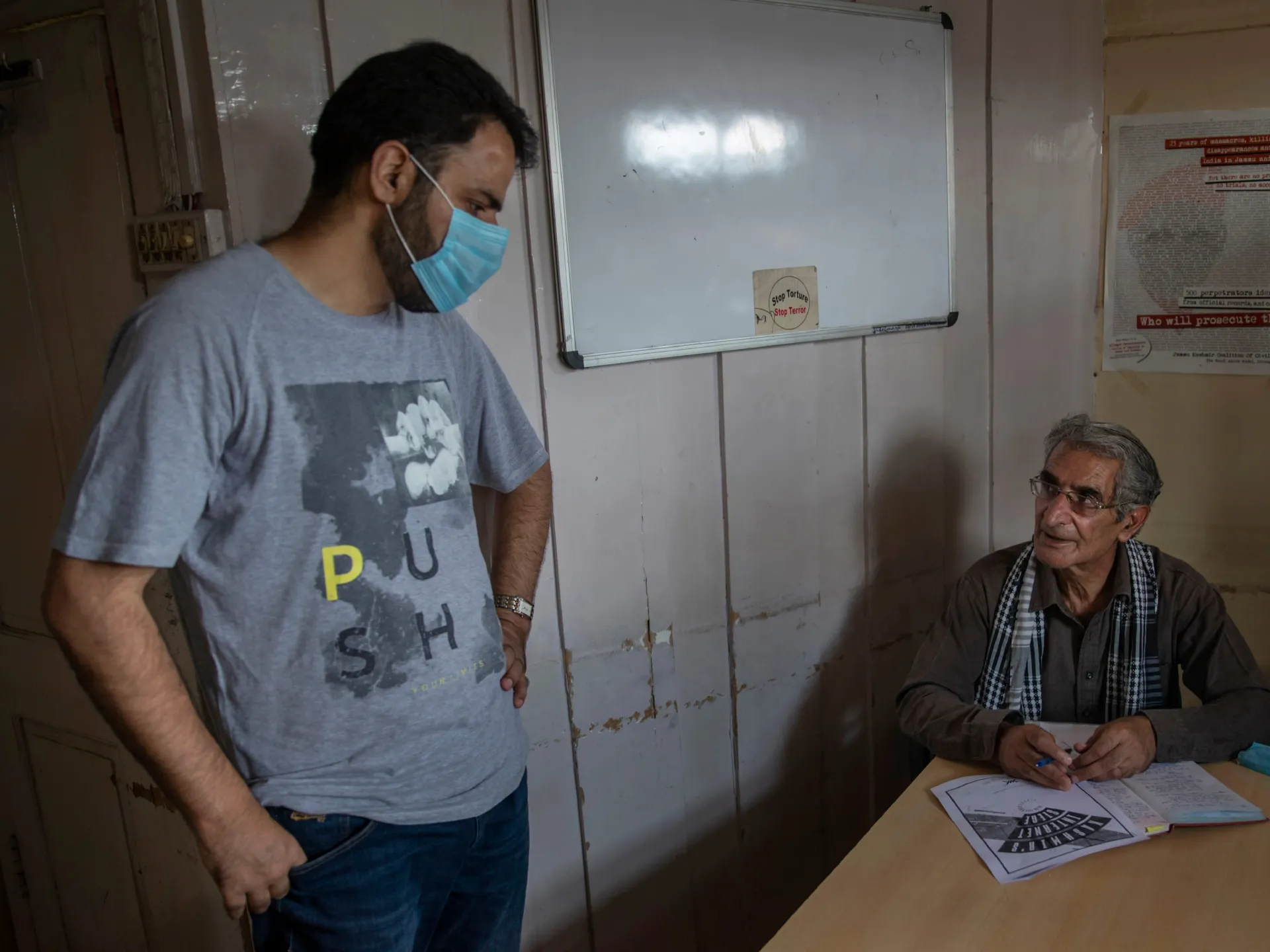
Indian authorities have released prominent Kashmiri human rights activist Khurram Parvez and journalist Irfan Mehraj on bail after years in prison on “terrorism” financing charges although both remain under tight court-imposed restrictions.
The two men walked free from a New Delhi jail late on Wednesday, their relatives said, as India’s National Investigation Agency seeks to overturn their bail – the latest chapter in what rights groups call New Delhi’s sweeping crackdown on activists, journalists and dissidents in India-administered Kashmir since 2019 when it scrapped the region’s autonomy, granted under the Indian Constitution.
Recommended Stories
list of 4 itemsend of list
Parvez, programme coordinator for the Jammu Kashmir Coalition of Civil Society (JKCCS), was arrested in 2021 by the National Investigation Agency at his home in Srinagar.
Mehraj, a freelance journalist who worked with the same rights group as a researcher, was arrested in 2023.
Both face charges of “funding terrorism” and “propagation of secessionist agenda” under India’s stringent “antiterrorism” laws, which in effect allow authorities to hold people without trial indefinitely.
The National Investigation Agency accuses the two of using the JKCCS to fund militant-linked activities and promote a separatist agenda. Both men deny the allegations.
A lower court granted them bail last week, but the agency appealed. The Delhi High Court refused on Tuesday to suspend the release order although it imposed tougher restrictions on the men’s movements and activities while it hears the appeal.
Under their bail conditions, the two must arrange their own stay in the capital, where they are facing trial, and cannot travel to Kashmir, according to a court document seen by the news agency AFP. Proceedings in the case will continue in the coming weeks.
Human rights violations
The JKCCS has for decades documented alleged rights violations by Indian government forces in Kashmir, including torture and unlawful killings, and has drawn attention to thousands of unmarked graves in border areas suspected of holding victims of “enforced disappearances”.
International rights groups, including the Office of the United Nations High Commissioner for Human Rights, have consistently called for the men’s release, saying they were jailed for their work.
In 2023, the UN Working Group on Arbitrary Detention said Parvez’s arrest was an “act of reprisal for his human rights work, and an attempt to silence him and Kashmiri civil society as a whole”.
After their release, the Paris-based International Federation for Human Rights and the World Organisation Against Torture said the two were arrested on “trumped-up charges” and called on Indian authorities to drop the case, describing the proceedings as politically motivated.
Journalists in Indian-administered Kashmir say they have faced harassment and arrests since Prime Minister Narendra Modi’s government annulled the region’s partial autonomy.
From 2019 to 2023, more than 3,600 people were arrested there under “antiterrorism” laws, more than half of whom remain in prison, according to government figures.
Muslim-majority Kashmir has been divided between India and Pakistan since their independence from British rule in 1947. Both countries claim the territory in full.
Rebel groups have fought the Indian government since 1989, demanding independence or a merger with Pakistan. The conflict has killed tens of thousands of people, mostly civilians.
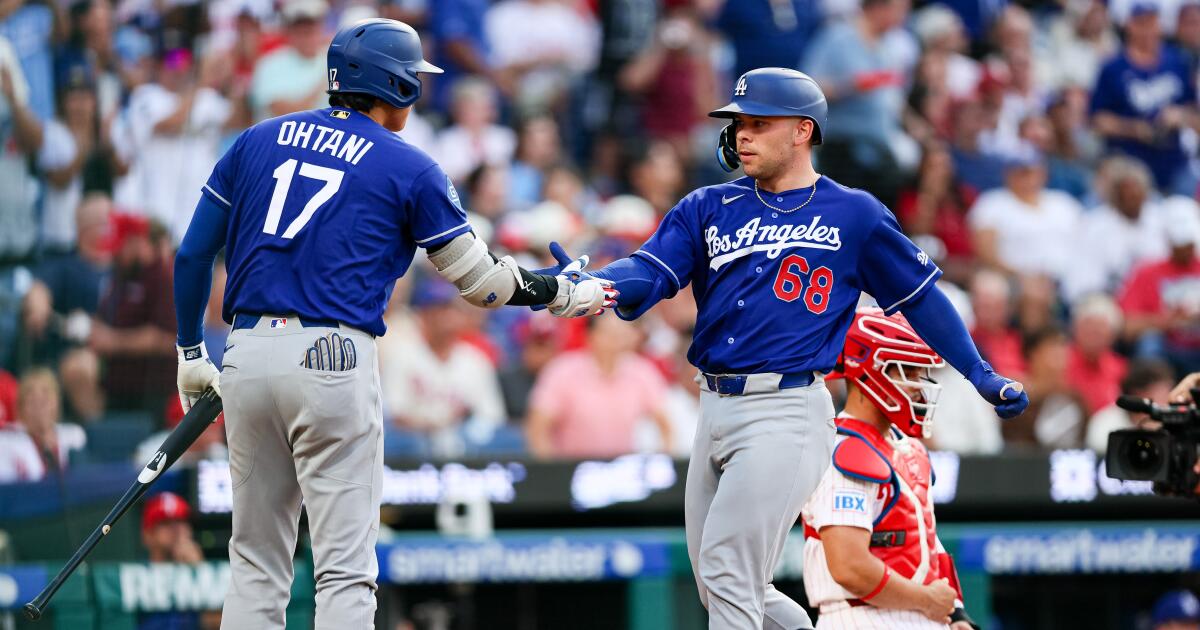
He held up on a curveball from Phillies right-hander Aaron Nola that clipped the bottom of the strike zone. He fouled off a changeup. And he stayed disciplined as Nola tried to get him to chase a fastball up and two breaking balls in the dirt.
In a full count, Rushing fouled off another changeup. And then, finally, Nola made a mistake.
Rushing hammered the grooved fastball to left-center field, just shy of the Citizens Bank Park concourse.
“It’s pretty obvious I’ve been fighting recently,” Rushing said after the game. “The more you try in this game to fight out of a hole, the deeper you dig yourself in a hole. So I think that’s what it’s been recently. And today it was, obviously, you get a good start to the day, and it’s kind of uphill. Yeah, I wouldn’t say it was anything different. I just trusted myself today.”
It was the Dodgers’ first run during a 9-5 win and Rushing’s first hit in more than two weeks. Over the course of nine hitless games, he went 0-for-19.
Get the latest on L.A.’s teams in the daily Sports Report newsletter.
By continuing, you agree to our Terms of Service, which include arbitration and a class action waiver. You agree that we and our third-party vendors may collect and use your information, including through cookies, pixels and similar technologies, for the purposes set forth in our Privacy Policy such as personalizing your experience and ads.
Angels fall to Cards in series finale
Hunter Dobbins scattered six hits over six innings, JJ Wetherholt hit a home run in the sixth and the St. Louis Cardinals held on for a 1-0 victory over the Angels on Wednesday at Angel Stadium.
Dobbins, recalled from triple-A Memphis for Wednesday’s start, struck out five and walked none to help St. Louis snap a four-game losing streak and end the Angels’ three-game win streak.
Luis Gastelum threw a scoreless seventh, George Soriano had a 1-2-3 eighth and closer Riley O’Brien struck out Oswald Peraza with an 80-mph sweeper and Josh Lowe with a 98-mph sinker with two on in the ninth for his 26th save.
In Japan, fans come up with a song for each player and sing it happily and relentlessly. Nootbaar played in the major leagues, not in the Japanese league, so he was not sure he would get a song until he came up to bat.
“I don’t know how everybody in the stadium knew how to do it,” the St. Louis Cardinals outfielder said Wednesday at Angel Stadium. “Everybody was chanting it. It was pretty awesome.”
In Japan, baseball games are nine innings of songs and chants, drums and noise sticks. No excessively caffeinated in-game hosts. No scolding video commands to make some noise. The joyful sounds are organic, and they come from the fans.
Nootbaar attended Yoshinobu Yamamoto’s last game in Japan and absolutely raved about the energy in the stadium. Does he believe that kind of fan experience would translate to an American ballpark?
“I don’t see why not,” Nootbaar said. “It would probably have to start small, but it would be cool to integrate that.”
We’re starting small, and soon. A minor league team plans to launch in Irvine next year, and the entrepreneur behind it is pitching it as a way to provide fans with a taste of Asian baseball.
“We’re going to really lean into some of the innovation in fan experience that you’ve seen in Korea and Japan,” said Paul Freedman, co-founder of Innovation Baseball Partners.
Sparks fall to Mercury in final game before all-star break
From Joaquin Ruiz: The Sparks and Mercury teetered and tottered, but Phoenix pulled away late to hand Los Angeles an 86-82 loss on Wednesday afternoon at Crypto.com Arena in the two teams’ final game before a much-needed All-Star break.
With the game tied at 60 entering the fourth quarter, Phoenix scored consecutive baskets and never relinquished its advantage. Forward Alyssa Thomas dominated with 19 points, 11 rebounds, 15 assists and three steals, while guard Kahleah Copper poured in 21 points on 10-for-16 shooting to lead the Mercury precisely as Sparks coach Lynne Roberts expected.
“Players like [Thomas] and [Copper] … can both take over games,” Roberts said before the game. “Last time we played them, Copper had 41 … she is an absolute talent. I think they run good stuff. I like what [Mercury coach Nate Tibbetts] does.”
Lukas MacNaughton and Marcel Hartel scored four minutes apart late in the first half to break open St. Louis City’s 3-1 victory over the Galaxy on Wednesday night.
Simon Becher scored in the second half after Galaxy defender Emiro Garcés was sent off in the 49th minute with his second yellow card, and St. Louis cruised to its third straight win.
St. Louis, which is unbeaten in six straight since early May, also leapfrogged the Galaxy into the Western Conference’s playoff positions with this victory.
1907 — Australasia beats British Isles 3-2 to win the Davis Cup held at Wimbledon. Australasia wins its first David Cup and ends the four-year reign of the British Isles.
1921 — At the annual Harvard-Yale vs. Cambridge-Oxford meet at Harvard Stadium, Harvard’s Edward Gourdin becomes the first to long jump 25 feet. Harvard lists Gourdin’s jump as 25 feet, 3 inches, but the official listing in U.S. Track and Field is 25-2.
1960 — Betsy Rawls becomes the first woman to win the U.S. Women’s Open golf title four times.
1966 — John Pennel pole vaults 17 feet, 6 1/4 inches for the world record in a meet at Los Angeles. It’s the eighth of nine world records he set in the event in his career and his first since 1963.
1976 — The last NFL All-Star game is held and is shortened when thunderstorms hit Chicago. The Pittsburgh Steelers beat the All-Stars 24-0.
1978 — Hollis Stacy wins the U.S. Women’s Open golf championship for the second straight year.
1989 — Mark Calcavecchia wins the British Open, edging Greg Norman and Wayne Grady in a three-man playoff. Calcavecchia, the first American to win the Open in five years, birdies three of the four holes in the playoff.
1989 — Greg Lemond wins his second Tour de France with the closest finish ever, edging Laurent Fignon by 8 seconds. Lemond starts the day 50 seconds behind Fignon and wins the final stage, a 15-mile race against the clock from Versailles to Paris, in 26:57. Fignon finishes the stage 58 seconds slower.
1995 — John Daly wins the British Open at St. Andrews by four strokes in a four-hole playoff with Italy’s Costantino Rocca. Rocca forces the playoff by sinking a 65-foot putt on the 18th hole.
1995 — Miguel Indurain of Spain wins his record fifth consecutive Tour de France. Indurain joins Jacques Anquetil, Eddy Merckx and Bernard Hinault as the other five-time winners.
2000 — Tiger Woods, at 24, becomes the youngest player to win the career Grand Slam with a record-breaking performance in the British Open on the Old Course at St. Andrews. Woods closes with a 3-under 69 for a 19-under 269 total, the lowest score in relation to par at a major championship.
2000 — 87th Tour de France: no winner (Lance Armstrong disqualified).
2006 — Tiger Woods, one month after missing the cut for the first time in a major, becomes the first player since Tom Watson in 1982-83 to win consecutive British Open titles.
2006 — Floyd Landis, pedaling with an injured hip, cruises to victory in the Tour de France, keeping cycling’s most prestigious title in American hands for the eighth straight year.
2009 — Mark Buehrle pitches the 18th perfect game in major league history, a 5-0 win over Tampa Bay.
2012 — Penn State is all but leveled by penalties handed down by the NCAA for its handling of the allegations against former assistant football coach Jerry Sandusky. The NCAA imposes an unprecedented $60 million fine, a four-year ban from postseason play and a cut in the number of football scholarships it can award.
2017 — British cyclist Chris Froome wins his fourth Tour de France.
2019 — Nike’s Jordan Brand signs 2019 NBA #1 draft pick Zion Williamson to richest multiyear sponsorship deal for a rookie in history; estimated 7 years for $75 million.
2021 — The Opening ceremony of the 2020 Tokyo Olympic Games takes place after a one-year delay due to the COVID-19 pandemic.
2021 — The Cleveland Indians announce the team will be re-named the Guardians.
Compiled by the Associated Press
This day in baseball history
1925 — Lou Gehrig hit the first of his major league record 23 grand slam homers as the New York Yankees posted an 11-7 triumph over the Washington Senators.
1930 — Pie Traynor won both ends of a doubleheader for the Pittsburgh Pirates with home runs. In the first game, Traynor homered in the ninth and in the second game, he connected in the 13th.
1944 — Bill Nicholson of the Chicago Cubs hit four home runs in a doubleheader split with the New York Giants. Nicholson hit a home run in the opener, which the Cubs won 7-4. He hit three straight in the second game, but the Giants won 12-10. In that game, Nicholson was walked with the bases loaded in the seventh inning.
1955 — Bob Cerv and Elston Howard of the New York Yankess hit consecutive pinch-hit home runs to force extra innings against Kansas City. The Athletics won 8-7 in the 11th inning on Hector Lopez’s RBI-single. Trailing 7-5 entering the top of the ninth, Cerv batted for pitcher Tommy Byrne and homered of Alex Kellner. Tom Gorman replaced Kellner and Howard, hitting for Irv Noren, tied the game.
1964 — Bert Campaneris of Kansas City hit two home runs in his first major league game. He homered on the first pitch off Minnesota’s Jim Kaat, and then connected again in the seventh to lift the Athletics to a 4-3 win.
1974 — Write-in starter Steve Garvey of the Los Angeles Dodgers singled and doubled to lead the NL to a 7-2 victory over the AL in the All-Star game at Pittsburgh.
1985 — Oddibe McDowell became the first player in Texas Rangers history to hit for the cycle in an 8-4 win over the Cleveland Indians.
2000 — Ryan Klesko hit a game-tying solo homer in the ninth inning and a two-run shot in the 10th to lift San Diego over Colorado 6-4.
2009 — Mark Buehrle pitched the 18th perfect game in major league history, a 5-0 win over Tampa Bay. It was the first since Randy Johnson’s on May 18, 2004. Buehrle threw 76 of 116 pitches for strikes and fanned six in his second no-hitter — the first coming on April 18, 2007, against Texas.
2011 — The Red Sox extend Seattle’s losing streak to 14 games, tied for the longest in team history, with a 3 – 1 win at Fenway Park which is also Terry Francona’s 1000th as Sox manager. Josh Beckett is the winner.
2014 — Padres OF Cameron Maybin is handed a 25-game suspension for testing positive for amphetamines; he is the first major leaguer suspended for PED use this season.
2016 — Trevor Story hit two home runs to set an NL rookie record for shortstops and Colorado beat Atlanta 8-4. Story had four hits including his 25th and 26th homers to pass his mentor, Troy Tulowitzki, who had 24 for the Rockies in 2007. Nomar Garciaparra of the Boston Red Sox set the major league record for shortstops with 30 in 1997.
2020 — CommissionerRob Manfred springs a surprise on everyone as he announces a modified postseason format for this year only. There will be eight teams participating from each league: the two teams with the best records in each division, and the ones with the two next best records in the league. The teams will be seeded one to eight. The Wild Card Game will be replaced by a preliminary round with all teams participating, played in best-of-three format, with all games played in the better-ranked team’s ballpark.
2021 — Cleveland baseball team announced the team will be called the Guardians beginning in 2022.
2023 — In Cooperstown, NY, Fred McGriff and Scott Rolen are inducted into the Hall of Fame as the Class of 2023.
Compiled by the Associated Press
Until next time…
That concludes today’s newsletter. If you have any feedback, ideas for improvement or things you’d like to see, email houston.mitchell@latimes.com. To get this newsletter in your inbox, click here.
England and Australia will not play Tests in the north of England after Old Trafford and Headingley not chosen to host.
Published On 23 Jul 202623 Jul 2026
There will be no Ashes matches in the north of England next year, when Australia arrive for Test cricket’s oldest rivalry.
Headingley in Leeds and Manchester’s Old Trafford have both staged some of the most dramatic clashes in the long history of Ashes cricket.
Recommended Stories
list of 4 itemsend of list
Don Bradman, arguably cricket’s greatest batsman, scored two triple centuries at Headingley in the 1930s.
Both grounds played host to remarkable individual feats by England hero Ian Botham during the 1981 Ashes series.
Headingley was also the venue for a remarkable unbeaten century by England’s Ben Stokes in a one-wicket win during the 2019 series.
England’s Ben Stokes celebrates as they win the third Test against Australia, in Headingley, Leeds, in August 2019 [Andrew Boyers/Action Images via Reuters]
But both venues have been left off the schedule for the 2027 Ashes – a decision criticised by new British Prime Minister Andy Burnham, then the mayor of Greater Manchester – when it was announced in 2023.
The England and Wales Cricket Board confirmed on Thursday the exact fixture list for next year’s Ashes, with all five matches limited to the Midlands and south of England.
Hampshire’s Rose Bowl, near Southampton, will stage its first Ashes Test from July 21 – the fourth of the series.
It will become the 10th ground in the United Kingdom to stage a men’s Ashes Test.
Lord’s recently hosted its first-ever women’s Test, as India defeated England [File: Peter Cziborra/Reuters]
The series will start at Trent Bridge in Nottingham on June 18, with Lord’s – as is traditional – staging the second Test on June 30 and Edgbaston in Birmingham the third on July 8.
The Ashes will conclude at the Oval in south London with the July 29-August 2 Test.
Old Trafford and Headingley are both set to stage Ashes Tests in 2031.
Israeli police barred Palestinian worshippers from entering Al-Aqsa Mosque as more than 2,300 right-wing Israelis entered the compound under police protection during Tisha B’Av. Palestinian officials say the incursions aim to undermine the site’s longstanding status quo.
US Secretary of State Marco Rubio says Iran will continue to ‘pay the price’ for what he said was the failure to stick to agreements, telling reporters that President Trump’s policy is ‘a head for an eye’.
Sailors on board a Thai cargo ship that was hit by a deadly attack in the Strait of Hormuz are suing the ship’s owners, claiming they ignored warnings issued by Iran. Al Jazeera’s Tony Cheng has the story.
The United States continued to hit Iran for a 12th consecutive night early on Thursday, and Iran retaliated, striking targets across the Gulf, particularly in Kuwait and Jordan.
Iran’s Islamic Revolutionary Guard Corps (IRGC) said on Thursday that an explosion set a tanker ablaze in the Strait of Hormuz after it attempted to navigate the southern route off the coast of Oman.
Here is a recap of what happened on Wednesday night and Thursday.
Where did the US attack Iran?
US Central Command (CENTCOM) said at 02:30 GMT on Thursday that it concluded the latest round of strikes against Iran.
It targeted Iranian military targets, including maritime capabilities, missile and drone storage facilities, coastal surveillance sites and air defence assets, CENTCOM said, without specifying what areas in Iran were struck.
A local official told the Mehr news agency that US missiles struck the area around a passenger terminal in Shalamcheh, a western city near the Iraqi border. Two people were killed in the attack, the deputy governor of Iran’s Khuzestan province told the state broadcaster IRIB on Thursday. Local media also reported that 11 people were injured.
Al Jazeera’s Tohid Assidi reported from Iranian capital Tehran that overnight strikes targeted at least three cities in the southwestern province of Khuzestan. This included the city of Ramshir, where an asphalt facility was reported to have been targeted.
In Hormozgan province, explosions were heard in the city of Sirik, which overlooks the Strait of Hormuz, Assidi reported.
He added that the governor confirmed an overnight attack in Bushehr on a power substation near the city’s nuclear power plant. This resulted in a few hours of power outage in the city.
IRIB also reported that explosions were heard in Iran’s Jask.
The Tasnim news agency reported that a US missile hit a location on the outskirts of the city of Andimeshk.
Two naval search and rescue vessels were hit and seriously damaged in a US attack on Iran’s Hormozgan, the ISNA news agency reported, citing the province’s Ports and Maritime Administration.
Where did Iran hit back?
Kuwait
The IRGC claimed attacks on US assets in Kuwait on Thursday.
It said it had “attacked and destroyed a large warehouse of military equipment, a Patriot missile defence system, and a hangar of American MQ9 drones” at Ali Al Salem airbase.
Addressing the Kuwaiti people, the IRGC insisted that it was the US, not Iran, that had “violated your territorial integrity and sovereignty”.
It said its attacks were aimed at US bases, territory it described as beyond the control of Kuwait’s own border guards.
“So it is America that has violated your territorial integrity and sovereignty, not us. We are attacking lands occupied by the American army, an army that knows nothing but crime,” the IRGC said.
Jordan
Later on Thursday, the IRGC claimed attacks on US assets in Jordan, saying it had “destroyed a radar of the American THAAD missile defence system with lightning strikes”.
“A Patriot system and a C-RAM radar were also targeted and destroyed, and the fuel tanks of the American base were set on fire,” it said.
The IRGC added that “a large helicopter equipment warehouse and a helicopter repair and maintenance shed were also set on fire and destroyed”.
Addressing the Jordanian people, it insisted that its actions did not violate Jordanian sovereignty, arguing that the US military presence infringes on local authority and that targeting US forces was a legal and necessary response.
What happened in the Strait of Hormuz and the Red Sea?
The IRGC said an explosion set a tanker on fire in the Strait of Hormuz.
In a statement carried by Iranian media, it said two other vessels quickly turned back following the explosion.
The IRGC claimed the three ships were acting under US orders and had “intended to pass through the mine-laid route south of the Strait of Hormuz”.
“The powerful IRGC Navy emphasises that the Strait of Hormuz is under our control and that as long as America’s evil deeds in the region continue, it is completely closed and no oil tanker will enter or exit [the strait],” it warned.
“Any ship that is deceived by America and intends to pass through without coordination with the Islamic Republic of Iran will suffer the same fate.”
The UK Maritime Trade Operations Centre said a ship was targeted 70 nautical miles (130km) off the Saudi coast, causing a fire on board. There was no mention of casualties among the crew.
The Houthis, meanwhile, claimed a major operation against two Saudi oil tankers in the Red Sea, called the Encelia and the Layla. The Saudi SPA news agency confirmed the Encelia was hit.
The Houthis said they targeted those two tankers with cruise and ballistic missiles as well as drones, causing huge balls of fire and devastation.
The Houthis framed the attack as part of a tit-for-tat campaign against Saudi Arabia. They are calling it a “siege-for-siege”. They said it has been 12 years since Saudi Arabia has been imposing a siege on the Yemeni people, and that it is now time for Yemen and the Houthis to respond in kind. Riyadh has rejected Houthi claims that it had besieged Yemen.
Millionaires including former footballer Gary Lineker and music producer Brian Eno have written to new prime minister Andy Burnham asking to be taxed more.
In an open letter, 120 well-off Britons told Burnham: “We can afford it. We’re not talking about higher taxes on those who get up and go to work for their income every day, but on the very richest whose income is derived from the wealth they hold.”
Organised by Patriotic Millionaires, the letter said it would lead to a more equal society, and urged a “devolution of wealth and power from the very richest”.
People can already quietly give money or stocks voluntarily to the Treasury using its donation facility.
The group supports a 2% tax on wealth over £10m.
“Millionaires are a patriotic bunch,” the letter states. “We love this country and we want it to succeed.
“But success requires investment and a primary source of untouched capital investment is sitting with us, in untaxed potential.”
He suggested he may have “to ask for a little more” tax at some point.
The latest call from Patriotic Millionaires said there is a “need to embrace a new kind of devolution of wealth and power, from the very richest in order to reinvest back into our greatest asset in every region”.
It added that in its own poll, the majority of millionaires wanted a higher tax on themselves.
“There are a few people left with outdated economic thinking and few others desperate to hold onto every penny they can… Those that can’t see past the end of their own self interest have no place in designing a Britain for the future,” the letter said.
Other signatories include film director Richard Curtis who directed Notting Hill and Ian Gregg, the former managing director of bakery chain Greggs, who is the son of the firm’s founder.
Indian activist Sonam Wangchuk says he will end his hunger strike if the government guarantees that police will not use force against student protesters or take punitive action against them. Demonstrators are calling for the education minister to resign over a medical exam scandal.
Centre back William Saliba won’t require surgery for injury sustained at World Cup, his club says.
Published On 23 Jul 202623 Jul 2026
Arsenal defender William Saliba will be sidelined for an extended period after suffering a back injury while playing for France during the 2026 FIFA World Cup, the reigning Premier League champions say.
Saliba was hampered by the injury throughout the tournament in North America, limiting his training. He was substituted in the first half of France’s 2-0 semifinal defeat by Spain and missed the 6-4 third-place playoff loss to England.
“Subsequent specialist reviews on William’s return to London this week have confirmed that he has suffered a back injury which will require a period of rehabilitation,” Arsenal said in a statement on Wednesday.
France’s William Saliba shakes hands with coach Didier Deschamps after sustaining an injury and being escorted off the pitch [Marco Bello/Reuters]
“Extensive assessments have concluded that surgery is not recommended, but William should now commence a managed recovery programme.
“Everyone is fully focused on supporting William to ensure he is back to full fitness as soon as possible.”
Saliba made 50 appearances across all competitions for the North London club last season as the Gunners ended a 22-year wait to win the Premier League title and also reached the Champions League final.
Russian Foreign Minister Lavrov ‘reaffirmed readiness’ for a political and diplomatic settlement to Russia-Ukraine war.
Published On 23 Jul 202623 Jul 2026
The top United States and Russian diplomats have discussed the war in Ukraine on the sidelines of an Association of Southeast Asian Nations (ASEAN) meeting in the Philippines.
US Secretary of State Marco Rubio met Russian Foreign Minister Sergey Lavrov on Thursday in Manila, with Russian media reporting that the meeting was just over half an hour long.
Recommended Stories
list of 3 itemsend of list
The sit-down came as Ukrainian President Volodymyr Zelenskyy said he had spoken with US envoys in a bid to revive stalled talks aimed at ending the years-long war.
Lavrov “reaffirmed Russia’s readiness for a political and diplomatic settlement of the conflict”, a statement from Russia’s Ministry of Foreign Affairs said, adding that the minister told Rubio that Moscow remained committed to proposals put forward by presidents Donald Trump and Vladimir Putin at their August 2025 meeting in Alaska.
Lavrov also “stressed that it was unacceptable to continue supplying weapons to the Kyiv regime”, the ministry said. The minister condemned “a destabilising policy by European countries, which are still seeking to inflict a ‘strategic defeat’ on Russia,” it added.
The US State Department offered few details about the meeting, with a spokesperson only saying that Rubio and Lavrov “discussed the US-Russia relationship and the need to end the Russia-Ukraine war”.
The two were also expected to discuss the conflict in the Middle East, which has seen Moscow condemn Washington’s strikes on its ally Iran.
“The war in Ukraine, I think, has in many ways impeded the ability of Russia and the United States to find areas of agreement on other topics,” Rubio told reporters on Wednesday.
“That doesn’t mean we won’t seek to find other areas of potential cooperation. But by the same token … we’d like to see that war come to an end,” he added.
Rubio said the US remained open to playing a role in ending the conflict “if that opportunity presents itself”.
For his part, Lavrov earlier indicated the meeting would “be useful in any case”.
“It’s good to ask questions and get answers,” Lavrov said to reporters on Wednesday, adding that he would ask Rubio about the latest statements by Trump predicting that a settlement is getting close.
Discussions aimed at ending the conflict in Ukraine have been at a standstill, with US attention now focused on the Middle East and Moscow maintaining its demand that Kyiv cede territory.
On Thursday, Zelenskyy said in a post on X that he had “a good, important conversation on how to reinvigorate diplomacy” with US envoys Steve Witkoff and Jared Kushner.
Rubio spoke briefly with Lavrov at a gala dinner on Tuesday, and the two participated in a meeting of the ASEAN Regional Forum on Thursday morning.
Trump has voiced support for Ukraine’s campaign of long-range drone strikes targeting Russian energy infrastructure, saying it could “help bring about an end” to the conflict.
Ukraine has been escalating its drone strikes, hitting refineries, oil depots and cargo ships at sea, which has caused fuel shortages in Russia.
In late June, a massive barrage of Russian missiles and drones killed at least 30 people in the Ukrainian capital, Kyiv.