news

Camouflaged F-15E Painted To Mark F-111’s Libya Raid Blasts Through Mach Loop On First Flight

A U.S. Air Force F-15E Strike Eagle, specially painted to mark 40 years since Operation Eldorado Canyon, the U.S. raid on Libya, has taken to the air for the first. Hauling a load of eight inert 500-pound GBU-12 laser-guided bombs, today the jet flew the legendary low-level routes that run through Wales, better known as the Mach Loop. The spectacular accompanying photos of the sortie were kindly shared with TWZ by David Lister and Alec Walker.

With a color scheme recalling an F-111F Aardvark of the same unit, the 48th Fighter Wing F-15E serial 91-0311 had first been unveiled in a ceremony at RAF Lakenheath in England, on April 28. However, it seems its first flight in its new look was recorded today.

The F-15E screaming through the Mach Loop earlier today. facebook.com/davidlisterphotography

The jet departed Lakenheath in the morning as EAGLE 31, accompanied by its wingman, EAGLE 32. After taking on fuel from a KC-135 Stratotanker, the jets headed to North Wales. From there, EAGLE flight went to the Holbeach Air Weapons Range on the coast north of Lakenheath, where the inert bombs were dropped. 

A U.S. Air Force F-15E Strike Eagle, specially painted to mark 40 years since Operation Eldorado Canyon, the raid on Libya, has taken to the air.
facebook.com/davidlisterphotography David Lister

Recalling the F-111, the specially painted F-15E has the same camouflage scheme in two shades of green and tan, and the original 494th Tactical Fighter Squadron marking and red band on the tail. The tails of the jet also bear the legend “40 years Eldorado Canyon,” the panther emblem of the 494th, an F-111 silhouette, and the 48th wing’s Statue of Liberty insignia.

Notably, the nose radome is left in its standard gray paint.

The bombed-up F-15E departs Lakenheath earlier today. Stewart Jack
Stewart Jack

Elsewhere on the nose, the Strike Eagle carries another F-111 silhouette and the inscription “Karma 52” in red. This commemorates KARMA 52, the Lakenheath-based F-111F serial 70-2389, which was the only example of the type lost during the Eldorado Canyon raid. The jet, armed with four GBU-10 laser-guided bombs, was flown by pilot Capt. Fernando L. Ribas-Dominicci, and weapons system officer Capt. Paul Lorence. The exact fate of KARMA 52 remains unknown, with the aircraft wreckage never being located after it came down in the Mediterranean.

Capt. Ribas-Dominicci’s body was later washed ashore; the body of Captain Lorence was never recovered. Their mission had been a hazardous one: a single-ship, low-level attack on a heavily defended target at night.

A U.S. Air Force F-15E Strike Eagle aircraft assigned to the 494th Fighter Generation Squadron sits behind a heritage design mock-up at RAF Lakenheath, England, March 18, 2026. During Operation El Dorado Canyon, an F-111F Aardvark “Karma 52” aircraft, the captain and the weapons system officer went missing while flying over the Mediterranean Sea. The markings on the modern paint scheme pay tribute to the personnel and aircraft that were lost during the mission. (U.S. Air Force photo by Airman 1st Class Rilynn Jacobs)
The F-15E sits behind a heritage design mock-up at RAF Lakenheath, England, March 18, 2026. U.S. Air Force photo by Airman 1st Class Rilynn Jacobs Airman 1st Class Rilynn Jacobs

Two dozen F-111s of the 48th Fighter Wing, also based at Lakenheath, were at the forefront of the Air Force’s Eldorado Canyon strikes, conducted in April 1986, together with Navy assets from the aircraft carriers USS America and USS Coral Sea. The raid was launched by U.S. President Ronald Reagan after the bombing of a West Berlin discotheque, in which two U.S. soldiers were killed and over 70 others wounded. Libyan leader Muammar Gaddafi was blamed for the attack.

U.S. airmen prepare a 48th Fighter Tactical Wing F-111F Aardvark aircraft for take-off prior to Operation Eldorado Canyon. National Archives

Ever since, the 48th Fighter Wing at Lakenheath has remained the first choice for a wide variety of critical missions around the globe, most recently Operation Epic Fury over Iran. This campaign has seen four combat losses of the F-15E, three of them to friendly fire. As to the other loss, this led to one of the most dramatic and complex combat search and rescue (CSAR) missions of recent times, before the two crew were safely recovered.

Alec Walker/@phoenixegmh Alec Walker

As of 2025, as you can read about here, the Air Force was planning to return its two squadrons of F-15Es from Lakenheath — the only permanently forward-deployed examples of the aircraft — to the United States.

Currently, Lakenheath is home to the 492nd and 494th Fighter Squadrons flying the Strike Eagle. These squadrons each have a primary aircraft assigned (PAA) complement of 26 aircraft, although this is subject to some fluctuation. Under the 48th Fighter Wing, these operate alongside the 493rd and 495th Fighter Squadrons flying the F-35A, the first of the Air Force’s stealth jets to be based in Europe.

F-35As assigned to the 495th Fighter Squadron at RAF Lakenheath. U.S. Air Force Photo By Tech. Sgt. Rachel Maxwell 

As well as being fitted with the more powerful Dash 229 engines, Lakenheath’s F-15Es have been at the front of the queue to receive a sophisticated new radar warning and electronic warfare suite, the AN/ALQ-250 Eagle Passive/Active Warning Survivability System, or EPAWSS.

With the F-35A now firmly embedded at Lakenheath and apparently also provided with forward-deployed B61-12 thermonuclear gravity bombs, these stealthy jets may well take over entirely the F-15E, provided Congress approves consolidating the Strike Eagles in the United States. It is also possible that the decision to significantly boost the planned F-15EX Eagle II buy may see these plans changed.

In the meantime, the F-35A flies alongside the F-15E at Lakenheath, where these jets and their airmen continue the proud traditions of the 48th Fighter Wing.

Contact the author: thomas@thewarzone.comu

Thomas is a defense writer and editor with over 20 years of experience covering military aerospace topics and conflicts. He’s written a number of books, edited many more, and has contributed to many of the world’s leading aviation publications. Before joining The War Zone in 2020, he was the editor of AirForces Monthly.


Source link

US pushing Israeli de-escalation ahead of new talks: Lebanese official | Israel attacks Lebanon News

Talks between Lebanese and Israeli delegations to be held in Washington, DC, next week, the official tells Al Jazeera.

The United States is trying to de-escalate Israel’s actions in Lebanon as it pushes for solidifying an ongoing ceasefire and moving to the next phase of negotiations between the two sides, according to a Lebanese official.

The official, who spoke to Al Jazeera Arabic on condition of anonymity, revealed on Thursday the details of the planned second stage of negotiations between Israel and Lebanon after an initial round in Washington, DC, in mid-April, which led to the current status quo of a ceasefire being declared but attacks continuing.

Recommended Stories

list of 4 itemsend of list

Delegation-level negotiations will begin on May 17 in the US capital, the official said, adding that the talks will address both security and political tracks to resolve issues of a full Israeli withdrawal from southern Lebanon, borders, prisoners, displaced people and reconstruction.

The Reuters and AFP news agencies, both quoting an unnamed State Department official on Thursday, reported that the upcoming talks are due to be held May 14 and 15.

Israel continued to pound southern Lebanon on Thursday, killing one person and injuring several, according to Lebanese state-run media, a day after it targeted a commander of Hezbollah’s elite Radwan Force in the southern suburbs of Beirut.

The strikes put pressure on the Lebanon ceasefire, which emerged in parallel with a US-Iran truce in the wider war in the Middle East. A halt to Israeli strikes in Lebanon is a key Iranian demand in Tehran’s negotiations with Washington.

No peace agreement: Official

The Lebanese official told Al Jazeera that the country’s presidency has been seeking to discuss a final cessation of hostilities with Israel.

The expected step before May 17 is an extension of the truce and an Israeli commitment to a ceasefire, the official said, adding that the recent attack on Beirut’s southern suburbs was an Israeli message intended to obstruct the negotiation process.

Lebanon is not moving towards signing a peace agreement but towards a nonaggression pact, the official said.

The Lebanon ceasefire, announced on April 16 by US President Donald Trump, has led to a reduction in hostilities. The Beirut area, for example, was not struck by Israel for weeks before Wednesday’s attack.

However, since it went into effect, Israel and Hezbollah have traded accusations of violating the ceasefire in other areas, particularly in southern Lebanon.

More than 2,700 people have been killed in the war in Lebanon since March 2, Lebanon’s Ministry of Public Health said. About 1.2 million people have been driven from their homes in Lebanon, many of them fleeing from southern Lebanon.

Israel has announced 17 soldiers have been killed in southern Lebanon along with two civilians in northern Israel.

Source link

International Olympic Committee recommends ending Belarus restrictions | Olympics News

International Olympic Committee urges sporting bodies to let Belarusian athletes compete again without vetting as neutrals.

Athletes from Belarus should once again compete with their full national identity and not be vetted for neutral status, the International Olympic Committee has said.

Though the advice to sports governing bodies does not yet apply also to Russia, it seemed to point towards being closer to ending Russia’s isolation in Olympic circles during its war on Ukraine.

Recommended Stories

list of 4 itemsend of list

One barrier to Russia’s return is an ongoing World Anti-Doping Agency investigation into recent reports implicating Russian anti-doping agency official Veronika Loginova.

The IOC said its executive board noted “with concern the recent information” being looked at by WADA, without naming Loginova.

Athletes from Russia and Belarus had to be approved as neutrals who did not support the war for individual events at the 2024 Paris Olympics and February’s Milano Cortina Winter Olympics. A total of 32 athletes from the two countries competed in Paris, to win five medals combined, including one gold in trampoline by an athlete from Belarus.

“The IOC reaffirms that athletes’ participation in international competition should not be limited by the actions of their governments, including involvement in a war or conflict,” the Olympic body said on Thursday.

The IOC noted the qualification period for the 2028 Los Angeles Olympics “starts this summer.”

The Russian Olympic Committee has been suspended by the IOC since October 2023 for incorporating regional sports bodies in illegally occupied eastern Ukraine.

“Whilst the ROC has held constructive exchanges with the IOC on its suspension,” the IOC said, “it remains suspended while the IOC Legal Affairs Commission continues to review the matter.”

Source link

My God… The F-14 Tomcat May Actually Fly Again Over The United States

The dream of getting an F-14 Tomcat back up in American skies, discussed as a fantasy for the past two decades since the Navy retired the type, may actually become a reality.

Legislation making its way through Congress would allow the Navy to gift three retired F-14Ds to the U.S. Space & Rocket Center museum in Huntsville, Alabama, and open the door to one of the iconic jets potentially being returned to flight status. Companion bills in the Senate and House are both dubbed the “Maverick Act,” a clear reference to the Top Gun film franchise and the fictional Navy Capt. Pete “Maverick” Mitchell, played by star Tom Cruise.

Senator Tim Sheehy, a Montana Republican, introduced the Senate’s version of the Maverick Act on March 23. Senator Mark Kelly, an Arizona Democrat, co-sponsored that bill. Sheehy is a U.S. Naval Academy graduate and former Navy SEAL. Kelly is also a retired naval aviator, who flew A-6 Intruders, and astronaut. In the House, Representative Abe Hamadeh, a Republican from Arizona and U.S. Army veteran, introduced the companion legislation with the same title on April 16. There are nine co-sponsors to Hamadeh’s bill, including one Democrat. The legislation cleared the Senate by unanimous consent on April 28, and the matter is now in the hands of the House.

A Navy F-14D Tomcat is silhouetted against the sun as it flies a mission over the Persian Gulf on Dec. 4, 2005. The Tomcat and its crew are assigned to Fighter Squadron 213 and are operating off of the aircraft carrier USS Theodore Roosevelt (CVN 71). Roosevelt and its embarked Carrier Air Wing 8 are conducting maritime security operations in the Persian Gulf. (DoD photo by Lt. j.g. Scott Timmester, U.S. Navy. (Released))
A U.S. Navy F-14D Tomcat is silhouetted against the sun as it flies a mission over the Persian Gulf on December 4, 2005. DoD photo by Lt. j.g. Scott Timmester, U.S. Navy. (Released) Diana Nesukh

The last Navy F-14 was officially retired in September 2006 after 32 years of service to the fleet. Despite its retirement in the United States, the Tomcat has remained under extremely tight export controls due to its continued service in Iran, the only other country to ever operate the type.

The three Tomcats now earmarked for potential transfer are identified by their Navy serial numbers, or Bureau Numbers: 164341, 164602, and 159437. These are the only three F-14Ds currently in storage at the famed boneyard at Davis-Monthan Air Force Base in Arizona, per U.S. Air Force records. Three A variants and a pair of B models are also currently stored there. The current condition of any of these aircraft is unclear.

A satellite image showing some of the F-14s, as well as other aircraft, in storage at the boneyard at Davis-Monthan Air Force Base in Arizona. Google Earth

Sticking with the text of the Senate version at the time of writing for simplicity, the bill says the transfer of the F-14s to the U.S. Space & Rocket Center, an air and space museum established by the government of Alabama in 1970, would be made at no cost to the government. “Any costs associated with such conveyance, costs of determining compliance with terms of the conveyance, and costs of operation and maintenance of the aircraft conveyed shall be borne by the Commission,” per the proposed legislation.

The bill explicitly states that the aircraft will “not have any capability for use as a platform for launching or releasing munitions or any other combat capability that it was designed to have.” It also lays out a series of conditions for the transfer, noting that the Secretary of the Navy would not be obligated to restore, repair, or otherwise modify the Tomcats before handing them over, but would provide accompanying maintenance and operations manuals along with any excess spare parts available.

A Navy F-14D Tomcat makes a near supersonic fly-by above the flight deck of the USS Theodore Roosevelt (CVN 71) during the final launch of Tomcats as the ship operates in the Atlantic Ocean on July 28, 2006. The F-14 will officially retire in September 2006 after 32 years of service to the fleet. This Tomcat is assigned to Fighter Squadron 31. (DoD photo by Petty Officer 3rd Class Nathan Laird, U.S. Navy. (Released))
A U.S. Navy F-14D Tomcat makes a near supersonic fly-by above the flight deck of the USS Theodore Roosevelt (CVN 71) during the final launch of Tomcats as the ship operates in the Atlantic Ocean on July 28, 2006. DoD photo by Petty Officer 3rd Class Nathan Laird, U.S. Navy. (Released) Chief Petty Officer Nathan Laird

The matter of excess spare parts leads us to the most eye-catching section of the bill:

“The Secretary [of the Navy] shall provide excess spare parts to make one of the F-14D aircraft flyable or able to complete a static display, provided that any part transferred is from existing Navy stock, with no items being procured on behalf of the Commission.”

“The Secretary will not be responsible for transferring any additional parts or providing any additional support beyond what is stated in this section, during or after the conveyance of the aircraft,” the proposed legislation adds. As such, the Secretary of the Navy would allow the Commission to enter into agreements with relevant nonprofit organizations to help with restoring and operating the aircraft “for public display, airshows, and commemorative events to preserve naval aviation heritage.”

The transfer would also be made under the “condition that the Commission shall operate and maintain the aircraft in compliance with all applicable limitations and maintenance requirements imposed by the Administrator of the Federal Aviation Administration,” the bill notes. “The Commission shall not convey any ownership interest in, or transfer possession of, the aircraft to another party without the prior approval of the Secretary.”

The Navy would reserve the right to immediately repossess the aircraft if either of the above terms were breached.

A retired F-14 is moved into position for static display at Naval Air Station Jacksonville (NAS JAX) in 2005. USN

“The Maverick Act of 2026 creates a narrow exception to the post-retirement restrictions that have destroyed nearly all F-14s, ensuring that its legacy is preserved,” according to a press release that Abe Hamadeh’s office put out on May 1. “The Maverick Act allows three of the world’s final Tomcats to be demilitarized and transferred for public display and education under strict national security safeguards. It does not restore combat capability or reopen foreign transfer.”

“I want to thank Senator Sheehy and his colleagues for passing this legislation aimed at preserving for history one of the most iconic aircraft ever flown,” Hamadeh said in an accompanying statement. “As a former U.S. Army officer, I know that many of the men and women I served with felt the same way. That is why I proudly introduced this legislation.”

It is worth noting that retired F-14s are on public display at various military bases and museums in the United States, but none are in flyable condition. Around it’s retirement, there had been unsuccessful pushes in the past to try to get a Tomcat back into the air in private hands, including by the late Dale “Snort” Snodgrass, a legendary naval aviator and F-14 pilot, who performed official Navy Tomcat demos at airshows for many years.

The prospect of getting a ‘warbird’ Tomcat flying has remained a persistent topic of popular discussion, but has long seemed largely impossible due to bureaucratic red tape, as well as the cost and complexity of doing so. TWZ stressed these points when it emerged that a non-flying F-14 would feature in the sequel to 1986’s Top Gun, Top Gun: Maverick, which hit theaters in 2022. The U.S. military was heavily involved in the production of both movies. The original film cemented the place of the F-14 and the Navy’s TOPGUN program in popular culture.

TOP GUN | Official Trailer | Paramount Movies thumbnail

TOP GUN | Official Trailer | Paramount Movies


Top Gun: Maverick - Official Trailer (2022) - Paramount Pictures thumbnail

Top Gun: Maverick – Official Trailer (2022) – Paramount Pictures


A key factor in all of this has been that the story of the Tomcat is inseparably linked to Iran, which received a fleet of F-14As before the fall of the Shah in 1979. The Islamic Republic that emerged afterward continued to operate the jets despite the U.S. government cutting off support. American authorities also moved to impose very tight controls on access to retired F-14 airframes and spare parts, and many of the aircraft were destroyed outright as they left Navy service because of this.

Intriguingly, the prospect of having an F-14 flying again in the United States may have become more likely as a result of the latest conflict with Iran. As TWZ has previously reported, joint U.S. and Israeli strikes between February and April may well have finally put an end to the Islamic Republic of Iran Air Force’s (IRIAF) Tomcat operations for good.

A satellite image taken on March 9, 2026, shows IRIAF F-14s and other aircraft targeted in strikes on the 8th Tactical Air Base in Isfahan. Satellite image ©2026 Vantor

Even before the conflict, Iran likely only had a handful of serviceable Tomcats. For example, only one example appeared at the Kish Air Show in 2024, as you can read about here.

An IRIAF F-14A from the 8th Tactical Air Base at Isfahan participates in the 2024 Kish Air Show. @tower_eye, Tango Six

Still, even if the Maverick bill is passed and signed into law, there would be many more hurdles before an F-14 could return to the air. After many years spent in the desert boneyard, the Tomcat would require deep inspections to ensure its structure and critical subsystems were fully functional and compliant with the Federal Aviation Administration’s certification requirements.

Petty Officer 3rd Class Jesse L. Alvarado ensures the tail hook of a F-14D Tomcat of Fighter Attack Squadron 31 is properly seated during his pre-launch checks aboard the USS Theodore Roosevelt (CVN 71) on March 26, 2005. Roosevelt is currently underway for training in the Atlantic Ocean. (DoD photo by Petty Officer 1st Class James E. Foehl, U.S. Navy. (Released))
Petty Officer 3rd Class Jesse L. Alvarado ensures the tail hook of a F-14D Tomcat of Fighter Attack Squadron 31 is properly seated during his pre-launch checks aboard the USS Theodore Roosevelt (CVN 71) on March 26, 2005. DoD photo by Petty Officer 1st Class James E. Foehl, U.S. Navy. (Released) War.gov

Just getting the F-14 back to flight status would be massively labor-intensive and very expensive. Keeping the jet in the air would also require considerable funds, with the Tomcat being notoriously maintenance-heavy. Flying the jet regularly would impose high costs, including fuel. The F-14 holds roughly 2,280 gallons of fuel internally. So filling up the jet with a single tank of gas would run around $14,500 at today’s jet fuel prices. This jumps up considerably with external fuel tanks, which add another 534 gallons to the price tag. It can burn this fuel load very fast, especially during high-performance airshow routines.

Complex, supersonic swing-wing jets have periodically appeared at U.S. airshows, specifically the Soviet-era MiG-23 Flogger. In 2023, a privately owned MiG-23UB crashed at the Thunder Over Michigan airshow in Ypsilanti, Michigan, highlighting the challenges of operating these kinds of jets in private hands.

Meanwhile, a Tornado F2, another Cold War-era swing-wing jet, is now being returned to flight status by Jared Isaacman. Now the administrator of NASA, Isaacman is also the founder and former CEO of the ‘red air’ adversary support provider Draken International, as well as a tech billionaire, astronaut, and the operator of a pristine MiG-29 Fulcrum personal jet.

The next aviation project has arrived in the hangar. The Tornado F2. She can fly low and very fast w/ a variable-sweep wing. I imagine it will take a year but she will fly again. pic.twitter.com/sdZvbuL4qO

— Jared Isaacman (@rookisaacman) July 1, 2024

Whether or not the Maverick Act becomes law, or if the U.S. Space & Rocket Center returns an F-14 to U.S. skies, the legislation is a notable new development in the Tomcat’s story. It could have broader impacts, as well. On several occasions in the past, members of Congress have proposed legislation to curtail private operators from flying former advanced U.S. military aircraft, in general.

When it comes to the possibility of a Tomcat back in the air, while it is certain to be a big challenge, it is fair to say that no other single aircraft has more of a draw in popular culture and more pull in the public consciousness. There are likely to be many people with a lot of money who would be eager to get behind an initiative to get one of the jets back in the air if the opportunity presents itself.

Overall, turning the idea of a ‘warbird’ Tomcat from fantasy into reality would be extremely welcome among Top Gun movie lovers, loyal fans of the F-14, Naval Aviation veterans and aficionados, and the aviation heritage community at large.

Author’s note: Special thanks to @Osinttechnical on X for bringing this to our attention.

Contact the author: thomas@thewarzne.com

Thomas is a defense writer and editor with over 20 years of experience covering military aerospace topics and conflicts. He’s written a number of books, edited many more, and has contributed to many of the world’s leading aviation publications. Before joining The War Zone in 2020, he was the editor of AirForces Monthly.


Joseph has been a member of The War Zone team since early 2017. Prior to that, he was an Associate Editor at War Is Boring, and his byline has appeared in other publications, including Small Arms Review, Small Arms Defense Journal, Reuters, We Are the Mighty, and Task & Purpose.


Source link

Trump Immigration Crackdown in Minneapolis Slowed Major Federal Crime Investigations

A large scale immigration enforcement operation launched under Donald Trump in Minneapolis significantly disrupted federal crime fighting efforts in the region, according to a review of court records and interviews with law enforcement officials.

The operation brought thousands of immigration agents into Minnesota beginning in December as part of a broader crackdown targeting undocumented immigrants and alleged criminal networks.

While the administration described the campaign as a public safety initiative focused on violent offenders, officials and legal records suggest the crackdown diverted federal resources away from investigations into serious crimes including gun trafficking, drug offenses, gang activity, and sex trafficking.

Federal Criminal Prosecutions Dropped Sharply

Court records reviewed by Reuters showed a steep decline in federal prosecutions during the first four months of the year.

Between January and April, federal prosecutors charged only eight individuals with gun or drug crimes compared with seventy seven during the same period last year.

Overall felony prosecutions also fell sharply, with ninety felony cases filed compared with nearly double that number a year earlier.

A significant portion of those cases involved immigration related offenses or arrests linked to protests against the crackdown itself rather than traditional violent crime investigations.

Prosecutors and Agents Were Reassigned

Officials said many federal agents who had previously worked on drug task forces and gang investigations were reassigned to immigration enforcement duties.

Some investigators reportedly became unavailable for ongoing criminal investigations because they were focused on immigration operations.

The crackdown also triggered major staffing problems inside the Minnesota office of the United States Attorney.

Several prosecutors reportedly resigned after being ordered to investigate the widow of a protester who was fatally shot during the immigration operation.

Sources familiar with the office said staffing levels dropped to roughly half of their normal strength, leaving prosecutors struggling to manage existing cases.

Local Authorities Say Public Safety Was Affected

Mary Moriarty, the top prosecutor in Hennepin County, said federal investigators had begun bringing complex criminal cases to local authorities because federal prosecutors lacked the resources to handle them.

She argued that the diversion of resources toward immigration enforcement weakened efforts to address serious crimes such as drug trafficking and sex trafficking.

Former federal prosecutor John Marti warned that reduced federal involvement could leave dangerous criminals operating without effective intervention.

Officials also expressed concern that the long term impact on federal and local cooperation could continue even after the immigration operation ends.

Immigration Crackdown Sparked National Controversy

The operation became one of the most controversial domestic security actions of Trump’s presidency.

Federal agents conducted large scale raids, detentions, and deportation efforts across Minneapolis, leading to protests and confrontations with demonstrators.

Two American citizens, Renee Good and Alex Pretti, were fatally shot during the unrest, intensifying public outrage and increasing political pressure on the administration.

The crackdown eventually prompted a partial retreat by federal authorities amid growing criticism over aggressive policing tactics.

Cases Delayed and Dismissed

The shortage of prosecutors and staff disruptions also affected ongoing criminal cases.

In one example, a federal judge dismissed a firearms case against Tavon Timberlake after prosecutors repeatedly missed deadlines, with staffing shortages cited as one factor.

Federal prosecutors also sought to drop a major carjacking case involving multiple deaths so that local prosecutors could take over.

At the same time, authorities continued pursuing charges against dozens of protesters linked to demonstrations against the immigration operation, although many of those cases were later dismissed.

Analysis

The Minneapolis operation highlights the broader national debate over balancing immigration enforcement with traditional public safety priorities.

Supporters of the crackdown argue that stronger immigration controls are necessary to combat crime and restore law and order. Critics contend that redirecting federal resources toward mass immigration enforcement weakens efforts to investigate violent crime and organised criminal activity.

The situation in Minnesota also illustrates how large scale political priorities can reshape the functioning of federal law enforcement agencies at the local level.

Analysts say the long term consequences may include weakened cooperation between federal and local authorities, reduced capacity for complex investigations, and growing concerns over whether public safety resources are being allocated effectively.

With information from Reuters.

Source link

Luka Doncic doing ‘everything’ he can to return to Lakers

From Thuc Nhi Nguyen: With the Lakers down 1-0 in the Western Conference semifinals, Luka Doncic has not yet ramped up to on-court contact drills while recovering from an injured left hamstring that had an initial eight-week timeline for his return.

Doncic, speaking to reporters for the first time since he hobbled off the court at Oklahoma City’s Paycom Center on April 2, said Wednesday he has improved enough to begin running but he has not progressed to on-court contact drills. After suffering a left hamstring injury earlier this season, Doncic said the latest Grade 2 strain to the same area is unlike any he’s experienced because of its severity.

Go beyond the scoreboard

Get the latest on L.A.’s teams in the daily Sports Report newsletter.

But it has not stopped him from trying to come back as soon as possible.

“I’m just doing everything I can,” Doncic said. “Every day I’m doing stuff I’m supposed to do. Obviously recovery, now I’m working … just going day by day, and I feel better every day.”

Soon after his injury, Doncic went to Spain and received platelet-rich plasma injections with hopes of helping his recovery. He stayed for roughly two weeks because he needed to wait four days between each injection. He received four in total.

Without their leading scorer, the Lakers fought through a six-game, first-round series against the Houston Rockets, playing four of those games without Austin Reaves, who was also injured in the same game as Doncic. The fourth-seeded Lakers lost 108-90 to the defending champion Thunder in Game 1 of the conference semifinals on Tuesday.

Continue reading here

Lakers need more from Austin Reaves

Lakers star Austin Reaves shoots in front of Oklahoma City's Alex Caruso.

Lakers star Austin Reaves shoots in front of Oklahoma City’s Alex Caruso, right, during the Lakers’ Game 1 playoff loss Tuesday.

(Kyle Phillips / Associated Press)

From Bill Plaschke: It was the best opportunity for the potential free agent to begin earning the $241-million contract the Lakers were expected to offer this summer, the best chance for the April-cursed guard to escape his playoff demons and paint the Lakers’ future with a max masterpiece.

Yet Austin Reaves decorated with bricks.

Again.

The badly outmanned and heavily underdog Lakers generally played well enough and smart enough to hang with the defending champion Oklahoma City Thunder Tuesday night in the opener of their Western Conference semifinal series at Paycom Center.

All except for you-know-who.

In their 108-90 loss, Austin Reaves was arguably the difference.

Continue reading here

More on Lakers: Jarred Vanderbilt day-to-day after dislocating right pinky finger

Tyler Glasnow injury scare

Dodgers starting pitcher Tyler Glasnow delivers in the first inning against the Houston Astros.

Dodgers starting pitcher Tyler Glasnow delivers in the first inning against the Houston Astros on Wednesday.

(Ashley Landis / Associated Press)

From Maddie Lee: Dodgers right-hander Tyler Glasnow felt his back spasm on a warmup pitch ahead of the bottom of the second inning Wednesday. He threw another to test it. No luck. Bending at the waist was too hard to pitch through the discomfort. He motioned to the dugout.

Glasnow threw just one inning in the Dodgers’ 12-2 rout of the Astros before exiting with what the Dodgers called lower back pain.

“It kind of just gives out,” Glasnow said of the recurring injury. “I’ve gotten it since high school. Being tall, I guess. I get it a couple times a year. … Once it feels better, it feels better. It shouldn’t be too long.”

Last September, Glasnow was scratched from a start against the Orioles with back tightness, but he went on to pitch three days later. In 2024, he spent two weeks on the IL over the All-Star break with a back injury.

Continue reading here

Dodgers-Astros box score

MLB scores

MLB standings

Ducks even playoff series with Vegas

Anaheim Ducks center Leo Carlsson (91) celebrates after scoring.

Ducks forward Leo Carlsson celebrates after scoring in the third period of a 3-1 win over the Vegas Golden Knights in Game 2 of the Western Conference semifinals on Wednesday night.

(John Locher / Associated Press)

From Kevin Baxter: Before the Ducks had even checked out of their hotel Wednesday for the short bus ride to T-Mobile Arena for Game 2 of their Stanley Cup playoff series, the Las Vegas sports books had made the hometown Golden Knights heavy favorites.

That proved to be a poor bet a couple of hours later when the Ducks rolled to a 3-1 victory, evening the best-of-seven playoff series at 1-1. The second-round series resumes Friday at Honda Center.

The Ducks’ goals came from Beckett Sennecke in the second period and Leo Carlsson and Jansen Harkins in the third. Harkins’ goal, into an empty net, was the exclamation point on the win. Jack Eichel scored Vegas’ only goal on a power play in the final seconds, denying goaltender Lukas Dostal and the Ducks their first shutout of the season.

Continue reading here

Ducks-Golden Knights summary

NHL scores

Angels GM sees a ‘very competitive’ team

Angels general manager Perry Minasian.

Angels general manager Perry Minasian.

(Elsa Garrison / Getty Images)

From Bill Shaikin: I walked around a street fair in Irvine over the weekend, checking out the crowd while waiting for my daughter’s dance team to perform. We were a few short miles from Angel Stadium, but you wouldn’t have known it: lots of people wearing Dodgers caps, someone wearing a Shohei Ohtani cap, someone else wearing an Ohtani jersey, someone else wearing a Clayton Kershaw jersey, a dog wearing a Dodgers bandana, and people repping the Padres, Giants, Athletics and Yankees.

After 25 minutes, someone walked by in an Angels cap.

If the passion wanes, apathy can set in. I wondered if that is where the Angels might find themselves now, with a slice of their fan base finding a more enjoyable way to spend its summers than watching one losing season after another, and with the shadow of baseball’s best team extending ever more securely into Orange County.

Continue reading here

Angels defeat White Sox

Angels starting pitcher Walbert Ureña throws against the Chicago White Sox in the first inning.

Angels starting pitcher Walbert Ureña throws against the Chicago White Sox in the first inning Wednesday at Angel Stadium.

(Mark J. Terrill / Associated Press)

From the Associated Press: Travis d’Arnaud hit a three-run homer, Walbert Ureña threw six innings of two-hit ball, and the Angels defeated the Chicago White Sox 8-2 on Wednesday.

The Angels won a series for the first time since April 10-12 at Cincinnati. The Angels (15-23) are 2-7-2 in series this season.

D’Arnaud’s 396-foot shot off Noah Schultz (2-2), the backup catcher’s first homer of the season, kicked off a five-run second inning for the Halos. After Bryce Teodosio doubled on a ball that got past right fielder Jarred Kelenic, Zach Neto hit a stand-up RBI triple.

Continue reading here

Angels-White Sox box score

Detroit’s Framber Valdez suspended

Detroit pitcher Framber Valdez walks to the clubhouse after being ejected against the Boston Red Sox.

Detroit pitcher Framber Valdez walks to the clubhouse after being ejected against the Boston Red Sox on Tuesday.

(Mike Mulholland / Getty Images)

From Chuck Schilken: Framber Valdez was having a rough night, but the Detroit Tigers pitcher insists he didn’t take his frustrations out on Boston Red Sox batter Trevor Story.

Valdez had given up 10 runs, including back-to-back solo home runs in the previous two at-bats, when Story batted in the top of the fourth inning on Tuesday at Comerica Park.

What happened next wasn’t intentional — at least that’s what Valdez said after the Tigers’ 10-3 loss.

Not everybody believes him. Valdez has received a six-game suspension and a fine for an undisclosed amount after hitting Story in the back with a 94-mph fastball with the first pitch of the at-bat, MLB announced Wednesday. The suspension will begin that night in the Red Sox-Tigers series finale, unless Valdez appeals.

Continue reading here

Tina Charles retires from WNBA

Tina Charles, the WNBA’s leader in career rebounds and double-doubles, has retired after 14 seasons.

Tina Charles, the WNBA’s leader in career rebounds and double-doubles, has retired after 14 seasons.

(Justin Casterline / Getty Images)

From Tracy Brown: Former WNBA MVP Tina Charles has retired after 14 seasons in the league.

“Today, I officially announce my retirement from basketball,” the eight-time All Star wrote in a post shared across her social media accounts Tuesday. “This game gave me everything and I’ll miss it deeply.”

The veteran center — the No. 1 overall draft pick selected by the Connecticut Sun in 2010 — played for six WNBA franchises over the course of her career, including a lengthy stint with the New York Liberty. Named the league MVP during her 2012 campaign, Charles is the WNBA’s leader in career rebounds (4,262), double-doubles (201) and made field goals (3,364), as well as second on the list for career points (8,396) behind Diana Taurasi.

Continue reading here

No Triple Crown winner this year

Golden Tempo, ridden by jockey Jose Ortiz, runs during the Kentucky Derby on Saturday at Churchill Downs.

Golden Tempo, ridden by jockey Jose Ortiz, runs during the Kentucky Derby on Saturday at Churchill Downs.

(Michael Reaves / Getty Images)

From Jay Posner: There will be no Triple Crown winner in horse racing this year. There won’t even be an attempt.

Trainer Cherie DeVaux on Wednesday announced Golden Tempo, the horse that made her the first female trainer to win the Kentucky Derby, would skip the Preakness Stakes next week at its temporary home, Laurel Park in Laurel, Md.

Just hours after Golden Tempo returned to the racetrack at Keeneland for the first time since his victory Saturday at Churchill Downs, DeVaux posted a statement on X.

Continue reading here

Lakers playoff schedule

Second round
All times Pacific
at Oklahoma City 108, Lakers 90 (box score)
Thursday at Oklahoma City, 6:30 p.m., Amazon Prime
Saturday at Lakers, 5:30 p.m., ABC
Monday at Lakers, 7:30 p.m., Prime Video
*Wednesday at Oklahoma City, TBD
*Saturday, May 16 at Lakers, TBD
*Monday, May 18 at Oklahoma City, TBD
*- if necessary

Ducks playoffs schedule

Second round
All times Pacific
at Vegas 3, Ducks 1 (summary)
Ducks 3, at Vegas 1 (summary)
Friday at Ducks, 6:30 p.m., TNT, truTV, HBO MAX
Sunday at Ducks, 6:30 p.m., ESPN
*Tuesday at Vegas, TBD, ESPN
*Thursday, May 14 at Ducks, TBD, TNT, truTV, HBO MAX
*Saturday, May 16 at Vegas, TBA, ABC or ESPN
*-if necessary

This day in sports history

1938 — Lawrin, ridden by Eddie Arcaro, wins the Kentucky Derby by one length over Dauber.

1945 — Branch Rickey announces formation of the US Negro Baseball League.

1951 — International Olympic committee allows Russia to participate in 1952 Olympics.

1955 — Swaps, ridden by Willie Shoemaker, wins the Kentucky Derby by 1 1/2 lengths over Nashua.

1969 — 2nd ABA championship: Oakland Oaks beat Indiana Pacers, 4 games to 1.

1972 — The Los Angeles Lakers win their first NBA championship with a 114-100 victory over the New York Knicks in Game 5.

1977 — Heavily favored Seattle Slew, ridden by Jean Cruguet, wins the Kentucky Derby by 1 3/4 lengths over Run Dusty Run.

1982 — A federal jury rules the NFL violated antitrust laws when it unsuccessfully attempted to prevent the Oakland Raiders from moving to Los Angeles.

1986 — 30th European Cup: Steaua Bucuresti beats Barcelona (0-0, 2-0 on penalties) at Seville.

1988 — Winning Colors, ridden by Gary Stevens, leads from start to finish to win the Kentucky Derby by a neck, becoming the first roan and the third filly to win the race.

1989 — Chicago’s Michael Jordan hits an 18-foot shot over the outstretched fingertips of Craig Ehlo to give the Bulls a 101-100 victory in the deciding Game 5 of their 1989 Eastern Conference first round playoff series against the Cleveland Cavaliers.

1993 — Wayne Gretzky of the Los Angeles Kings scores his 100th and 101st playoff goals in a 7-4 win over the Vancouver Canucks.

1994 — The Denver Nuggets, with a 98-94 overtime win against the No. 1-seeded Seattle SuperSonics, become the first eighth-seeded playoff team to win a series. The Nuggets come back from an 0-2 deficit in the best-of-5 series.

1995 — Reggie Miller scores eight points in the last 16 seconds to lead the Indiana Pacers to a 107-105 win over the New York Knicks in the second-round opener of the NBA playoffs.

2005 — Giacomo, a 50-1 shot, wins the Kentucky Derby, running down a game Afleet Alex in the final strides and generating a huge payoff. Closing Argument, a 70-1 shot, finishes second with Afleet Alex third.

2005 — Dallas’ 116-76 victory over Houston is the most lopsided Game 7 score in NBA history. The Mavericks are the third team in playoff history to win a seven-game series after losing the first two games at home.

2010 — Before a record hockey crowd of 77,803, the U.S. loses to Germany 2-1 in the opening game of the world hockey championships. Felix Schutz scores the winning goal 21 seconds into overtime at Veltins Arena, ordinarily the home of the Schalke soccer team.

2014 — Russell Westbrook has a triple-double, Kevin Durant falls one assist short and the Oklahoma City Thunder beat the Los Angeles Clippers 112-101 to tie their Western Conference semifinal series at one win apiece. Westbrook has 31 points, 10 rebounds and 10 assists. Durant has 32 points, 12 rebounds and nine assists before leaving the game with 1:21 remaining.

2016 — Nyquist won the Kentucky Derby by 1 1/4 lengths, improving to 8-0 in his career as the fourth consecutive favorite to win the race. Ridden by Mario Gutierrez, Nyquist finished in 2:01.31. The 3-year-old colt became the eighth unbeaten winner in the race’s 142-year history.

2017 — Bradley Beal scores 29 points and Washington Wizards used a 26-0 third-quarter run to beat the Boston Celtics 121-102 to tie the second-round series at two games apiece. John Wall, who adds 27 points and 12 assists, has seven points, three assists and two steals during the third-quarter spree.

2021 — Cincinnati Reds pitcher Wade Miley no-hits Cleveland Indians, 3-0 at Progressive Field, Cleveland.

Compiled by the Associated Press.

Until next time…

That concludes today’s newsletter. If you have any feedback, ideas for improvement or things you’d like to see, email me at houston.mitchell@latimes.com. To get this newsletter in your inbox, click here.


Source link

Irish footballers and celebrities urge boycott of Israel matches | Football News

Irish Sport for Palestine accuses Israel of engaging ⁠in ‘genocide’ in war on Gaza ahead of UEFA Nations League game.

Leading Irish footballers have joined celebrities in a campaign urging ⁠the Republic of Ireland to boycott a UEFA Nations League match against Israel later this year.

An open letter sent to the Football Association of Ireland (FAI) from campaign group Irish Sport for Palestine accuses Israel of engaging ⁠in “genocide” in the war in Gaza and of breaching UEFA and FIFA statutes by allowing teams to play on occupied Palestinian land.

Recommended Stories

list of 4 itemsend of list

In November 2025, 93 percent of FAI members voted for its leadership to press UEFA to suspend Israel under those statutes, a mandate campaigners say the Irish governing body should “respect and represent”.

Israel has denied that its forces have ‌committed genocide during the war in Gaza.

The letter, entitled “Stop the Game”, was signed by League of Ireland players, former men’s coach Brian Kerr and twice women’s player of the year Louise Quinn.

Irish rock band Fontaines D C, hip-hop trio Kneecap and singer-songwriter Christy Moore were among the other signatories, along with Oscar-nominated actor Stephen Rea.

Ireland are set to host Israel at Dublin’s Aviva Stadium on October 4, while a September 27 fixture designated as an Israeli home ⁠match is expected to be staged at a neutral venue.

The letter includes a statement ⁠from Shamrock Rovers captain and Professional Footballers’ Association of Ireland chair Roberto Lopes.

“We can’t ignore the humanitarian catastrophe in Palestine; the sheer loss of life there has to take precedence over any sporting consideration,” said Dublin-born Lopes, who is set to play at the ⁠World Cup for Cape Verde in June.

“Ireland has an opportunity here to lead and do what others won’t.”

Israel have played in UEFA competitions since the early 1980s after ⁠being excluded from Asian Football Confederation (AFC) competitions in the 1970s when ⁠several countries refused to play against them.

Ireland’s prime minister Micheal Martin said the two matches against Israel should go ahead.

“We have been critics and have opposed very strongly Israeli government policy within Gaza in particular. We condemned the Hamas attack on Israel which was absolutely horrific,” ‌the taoiseach told The Irish Times.

“I think sport is an area that can be challenging when it crosses into the realm of politics.”

In February, FAI Chief Executive David Courell said the national team had no choice but ‌to ‌fulfil its obligations or risk harming the long-term sporting interests of Irish football, including potential disqualification from future competitions.

A poll by the Irish Football Supporters Partnership found 76 percent of respondents opposed the fixture being played.

Source link

What are US proposals to end war, and will Iran agree to them? | US-Israel war on Iran News

Iran said on Wednesday that it was reviewing a United States peace proposal that sources said would formally end the war, while leaving unresolved the key US demands that Iran suspend its nuclear programme and reopen the Strait of Hormuz.

An Iranian Foreign Ministry spokesperson quoted by Iran’s ISNA news agency said on Wednesday that Tehran would convey its response. US President Donald Trump said he believed Iran wanted an agreement.

“They want to make a deal. We’ve had very good talks over the last 24 hours, and it’s very possible that we’ll make a deal,” Trump told reporters in the Oval Office on Wednesday.

A day before, Trump paused “Project Freedom” to reopen the blockaded strait, citing progress in peace talks. The de facto blockade of the waterway threatens to cause a global recession. Iran has been pressing to keep Hormuz under its control, through which a fifth of global oil and gas supply passes.

Here is more about the US proposal to end the war, and how experts think Iran would respond.

What is the latest US proposal to end the Iran war?

US media outlet Axios said the two sides were “getting close” to an agreement on a 14-point document. Under the memorandum, Iran would agree not to develop a nuclear weapon and halt enrichment of uranium for at least 12 years, it said.

The US would lift sanctions and release billions of dollars in frozen Iranian assets, and both sides, which have imposed competing blockades in the Strait of Hormuz, would reopen the critical waterway within 30 days of signing.

Iran has been under US sanctions for decades, and the lifting of some sanctions under the 2015 nuclear agreement was reversed after Trump walked out of the landmark deal signed under his predecessor, President Barack Obama. Billions of dollars of Iranian assets remain frozen in foreign banks due to the sanctions.

It is unclear how this memorandum differs from a 14-point plan proposed by Iran last week.

The Reuters news agency reported on Thursday, citing a source briefed on the mediation, that the US negotiations were being led by Trump’s envoy Steve Witkoff and son-in-law Jared Kushner. If both sides agreed on the preliminary deal, that would start the clock on 30 days of detailed negotiations to reach a full agreement.

The full agreement would end the competing US and Iranian blockades on the strait, lift US sanctions and release frozen Iranian funds. It would also include certain curbs on Iran’s nuclear programme, which was allowed by the United Nations nuclear watchdog.

While the sources said the memorandum would not initially require concessions from either side, they did not mention several key demands Washington has made in the past, which Iran has rejected, such as curbs on Iran’s missile programme and an end to its support for armed proxy groups in the Middle East.

The sources also made no mention of Iran’s existing stockpile of more than 400kg (900lb) of near-weapons-grade uranium.

Israeli Prime Minister Benjamin Netanyahu, Trump’s ally, said on Wednesday the two leaders agreed that all enriched uranium must be removed from Iran to prevent it from developing a nuclear bomb.

The US and Israel bombed Iranian nuclear sites last June during the 12-day war, after which Trump claimed that Tehran’s nuclear programme was obliterated. A significant portion of Iran’s enriched uranium stockpile remains buried inside the bombed nuclear sites.

Tehran denies wanting to acquire a nuclear weapon. It insists its programme is for civilian purposes as allowed within its position as a signatory to the non-proliferation treaty.

ISFAHAN, IRAN - MARCH 30: A worker walks inside of an uranium conversion facility March 30, 2005 just outside the city of Isfahan, about 254 miles (410 kilometers), south of capital Tehran, Iran. The cities of Isfahan and Natanz in central Iran are home to the heart of Iran's nuclear program. The facility in Isfahan makes hexaflouride gas, which is then enriched by feeding it into centrifuges at a facility in Natanz, Iran. Iran's President Mohammad Khatami and the head of Iran's Atomic Energy Organisation Gholamreza Aghazadeh is scheduled to visit the facilities. (Photo by Getty Images)
A worker walks inside of an uranium conversion facility on March 30, 2005 just outside the city of Isfahan, about 254 miles (410 kilometers), south of capital Tehran, Iran. President wants Iran to end its nuclear programme [File: Getty Images]

Could Iran agree to this proposal?

Iran has yet to formally respond to the latest US proposal. However, Iranian leaders have pushed back against it.

Iranian lawmaker Ebrahim Rezaee, a spokesperson for the parliament’s powerful foreign policy and national security committee, described the text as “more of an American wish-list than a reality”.
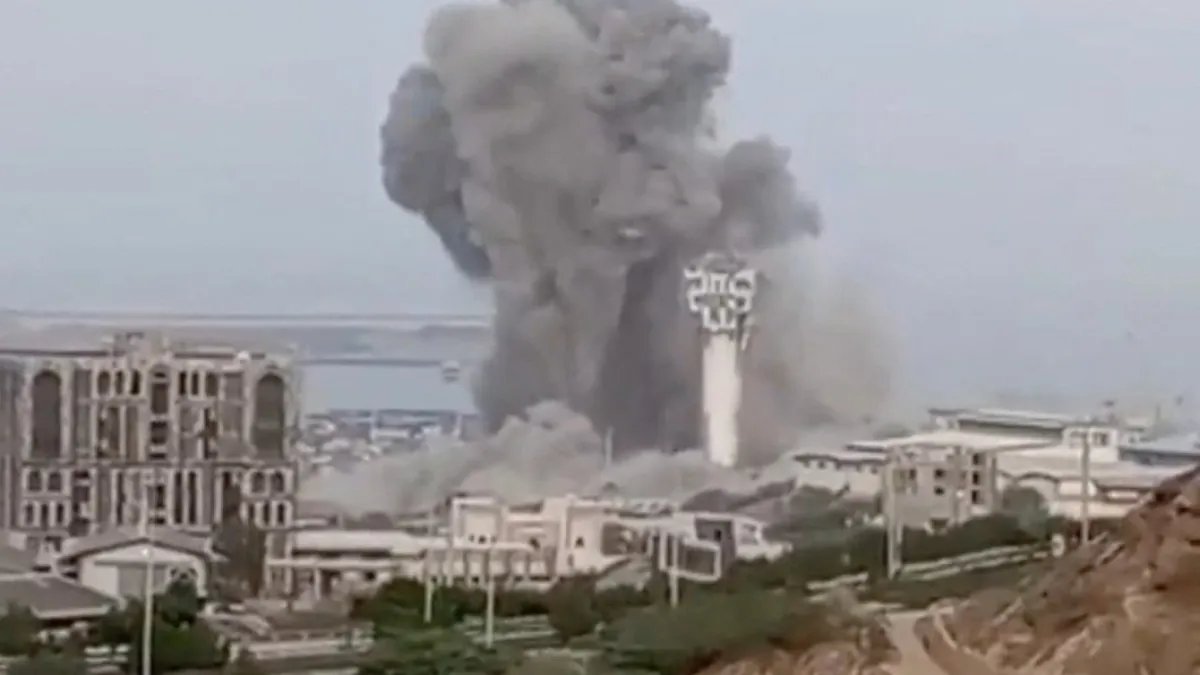
Iran’s Parliament Speaker Mohammad Bagher Ghalibaf appeared to mock reports that the two sides were close, writing on social media in English that “Operation Trust Me Bro failed.”

Al Jazeera’s Resul Serdar Atas, reporting from Tehran, said on Thursday that Iran is still reviewing the US proposal, after which a response is expected to be given to the Pakistani mediators later today.

The Pakistani Ministry of Foreign Affairs said on Thursday that it welcomes the news of a potential agreement between Iran and the US, adding that it will not disclose additional information at this stage.

“As mediators, we will not lose the trust of both parties by revealing details,” it said in a statement quoted by Al Jazeera Arabic.

Atas said, “Iranians are saying that, at this stage, they’re not negotiating their nuclear programme; it’s only about ending the war on all fronts.”

He added that Tehran wants direct guarantees from the UN Security Council, a lifting of sanctions and the reopening of the Strait of Hormuz.

“If that is achieved, in a second phase, they’re ready to discuss their nuclear programme.”

Al Jazeera’s Almigdad Alruhaid reported from Tehran on Tuesday that Iran has set “a very firm red line” on the nuclear file. “The nuclear enrichment programme is non-negotiable,” he said.

According to former US Assistant Secretary of State Mark Kimmitt, Trump’s reported demand that Iran halt all uranium enrichment is unrealistic and unlikely to be accepted by Tehran.

“If there is anything the Iranians are going to insist upon in these negotiations, it is their right to enrich uranium to the 3.67 percent level, which is allowed under nuclear non-proliferation treaties,” he told Al Jazeera.

Kimmitt added that even the 2015 nuclear deal permitted Iran to continue enrichment. Iran boosted its enrichment up to 60 percent after Trump withdrew from the deal in 2018, during his first term.

However, Kimmitt postulated that Trump might want Iran’s existing stockpile of enriched uranium outside of Iran. He added that Iran might either agree to move the enriched uranium outside the country or dilute it down to a non-enriched state.

Alruhaid, the Al Jazeera correspondent, however, said Iran is resisting handing over its existing stockpile of enriched uranium.

Iran is believed to have about 440kg (970lb) of uranium enriched to 60 percent. A 90 percent threshold of enriched uranium is needed to produce a nuclear weapon.

Al Jazeera’s Alruhaid said “the sovereignty on the Strait of Hormuz is becoming one of the main issues on the negotiating table.

“We are seeing the Iranians are tightening their control. They are setting new protocol, new mechanism for controlling that strategic chokepoint for each vessel that is to pass through.”

The US allies in the Gulf, who faced the brunt of Iranian retaliatory strikes, have been pushing for the restoration of navigation in the strait without any conditions. Iran carried out attacks on the Gulf nations, mainly targeting US military assets, after the US and Israel launched attacks on it on February 28.

Trump has repeatedly played up the prospect of an agreement that would end the war, so far without success. The two sides remain at odds over a variety of difficult issues, such as Iran’s nuclear ambitions and its control of the Strait of Hormuz.

A Pakistani source and another source briefed on the mediation told Reuters that an agreement was close on a one-page memorandum that would formally end the conflict, the agency reported on Thursday.

This agreement would kick off discussions to unblock shipping through the strait, lift US sanctions on Iran and set curbs on Iran’s nuclear programme, the sources said.

Al Jazeera, however, could not confirm the veracity of the reports.

Source link

Passenger from Hantavirus-hit ship speaks to Al Jazeera from isolation | Newsfeed

NewsFeed

A passenger from the cruise ship hit with a Hantavirus outbreak has spoken to Al Jazeera from isolation about what took place on board. Three passengers died from respiratory illness on the MV Hondius as it travelled from Argentina to West Africa.

Source link

Madrid captain Carvajal in race against time for Spain’s World Cup squad | World Cup 2026

Spain international Dani ⁠Carvajal injured his right foot during a training session for Real Madrid last week.

Spain manager ‌Luis de la Fuente says ⁠Dani ⁠Carvajal could still make his World Cup squad but the right back must prove his ⁠fitness and form after suffering a foot injury in training ⁠with his club Real Madrid last week.

“Carvajal is a very important figure in our dressing room,” de la Fuente said on Wednesday.

“I actually spoke with him yesterday, so I’m aware ‌of what’s going on. He doesn’t have a specific injury, nothing serious, but he needs time to get back to his usual level.

“We’ll see in the remaining matches whether he truly gets the opportunity and delivers the performances.”

De ⁠la Fuente added that Carvajal, ⁠who made just one appearance for Spain in 2025, would understand if he is left out of the squad for the ⁠World Cup, which is being held in the United States, Canada ⁠and Mexico from June 11 to ⁠July 19.

He joins a list of players who have sustained injuries in the weeks before the World Cup with Spanish teammate Lamine Yamal among them.

Carvajal, 34, is approaching the final weeks of his contract with Real and has struggled for game time this season ‌amid competition from Trent Alexander-Arnold.

Spain begin their World Cup campaign against Cape Verde on June 15 ‌and ‌also face Saudi Arabia and Uruguay in Group H.

INTERACTIVE-Football FIFA How teams are group World Cup 2026-1776670778
(Al Jazeera)

Source link

Aid cuts, drought and conflict leave Somalis desperate | Drought News

Maryam watched her goats starve and her crops fail. She buried two of her children before she finally gave up hope and sought help from international aid agencies in southern Somalia.

She left her village with her remaining six children, making the long journey along the Jubba River to one of a clutch of makeshift settlements on the outskirts of Kismayo, the capital of Somalia’s Jubbaland state.

Three consecutive seasons of failed rains have doubled Somalia’s malnutrition rate. Maryam, 46, is among more than 300,000 Somalis forced to leave their homes since January alone.

Several international organisations have stopped operations in the Kismayo camp for internally displaced people (IDPs), largely due to aid cuts ordered by United States President Donald Trump last year.

“We are hungry. We need care and help,” said Maryam.

Haunted by the memory of her dead children’s swollen bellies, she says she will not return to her village, which is under the control of the al-Qaeda-linked armed group al-Shabab. Fighters there have started seizing the limited food supplies available.

Somali internally displaced children
Children play near their makeshift shelters at an IDP camp in Ceel Cad, Kismayo town [Simon Maina/AFP]

But the camp is hardly better. In March alone, five children died of malnutrition, its manager says.

Since the early 1990s, Somalia has endured near-constant civil war, armed rebellions, floods and droughts. The war-torn country ranks among the world’s most vulnerable to climate change, which scientists say is leading to more frequent and more intense episodes of extreme weather such as droughts and floods.

Africa, which contributes the least to global warming, bears the brunt.

The recent cuts in foreign aid have not helped. They have had “a huge impact on our work”, said Mohamud Mohamed Hassan, Somalia director for NGO Save the Children.

More than 200 health centres and 400 schools have closed since last year.

Farmers, whose herds and crops have been decimated, describe one of the worst droughts ever recorded in a country where a third of the population already lacked regular meals. Even if the forthcoming rainy season is normal, it will take months for affected populations to recover.

“We cannot afford to actually address all the needs of these people,” said Ali Adan Ali, a Jubbaland official managing the displaced.

At a mobile health clinic supported by Save the Children, the only one still operating for multiple camps in the area around Kismayo, a woman named Khadija tried to feed a high-calorie solution to her severely malnourished one-year-old daughter.

She came to the camp after last year’s drought killed her livestock, but here also “we have nothing to eat”, the 45-year-old said.

A newly displaced Somali woman holds her severely malnourished baby in a stabilization centre for children suffering severe accute malnutrition in Kismayo,
A displaced woman holds her malnourished baby in a stabilisation centre for children suffering severe acute malnutrition in Kismayo [Simon Maina/AFP]

A hospital in Kismayo is the only facility in the region capable of treating the most severe cases of malnutrition. But it is turning patients away due to a lack of space and staff.

Every bed is occupied by starving babies, some on ventilators with intravenous drips in their fragile arms. Cases have tripled since last year, and things are only getting worse.

The US-Israel war on Iran has increased fuel prices, affecting food and water supplies.

Those in the camp seek work in construction or cleaning jobs in Kismayo or sell firewood, but the options are limited.

Meanwhile, the United Nations Office for the Coordination of Humanitarian Affairs (OCHA) has had to steadily reduce its Somalia programme from $2.6bn in 2023 to $852m this year, especially since Washington slashed its donations. So far, only 13 percent of this year’s target has been raised.

“It’s a toxic cocktail of factors … Things are really, really desperate,” Tom Fletcher, head of OCHA, told the AFP news agency in an interview last week.

“Often we’re having to choose which lives to save and which lives not to save.”

Source link

What’s the full match schedule, groups and format for World Cup 2026? | World Cup 2026 News

The 23rd edition of the FIFA World Cup — the biggest ever — will see 48 nations compete for the prize in a 39-day tournament in Canada, Mexico, and the United States.

Sixteen venues across the three nations will host 104 matches as the tournament returns to North America after 32 years.

Recommended Stories

list of 4 itemsend of list

Argentina will look to defend the trophy they lifted under their iconic captain, Lionel Messi, at Qatar 2022, while Cape Verde, Curacao, Jordan, and Uzbekistan will make their debut at the finals.

The tournament will begin in Mexico and conclude in the US.

Here’s everything you need to know about its teams, groups, format and schedule.

What are the groups and teams for the FIFA World Cup 2026?

Group A: Mexico, South Africa, Korea Republic, Czechia
Group B: Canada, Bosnia and Herzegovina, Qatar, Switzerland
Group C: Brazil, Morocco, Haiti, Scotland
Group D: United States, Paraguay, Australia, Turkiye
Group E: Germany, Curacao, Ivory Coast, Ecuador
Group F: Netherlands, Japan, Sweden, Tunisia
Group G: Belgium, Egypt, Iran, New Zealand
Group H: Spain, Cape Verde, Saudi Arabia, Uruguay
Group I: France, Senegal, Iraq, Norway
Group J: Argentina, Algeria, Austria, Jordan
Group K: Portugal, DR Congo, Uzbekistan, Colombia
Group L: England, Croatia, Ghana, Panama

When and where is the opening match of the FIFA World Cup 2026?

The tournament will open on June 11 at 3pm (21:00 GMT) at the Mexico City Stadium in Mexico.

When and where is the final of the FIFA World Cup 2026?

The MetLife Stadium, which will be called the New York New Jersey Stadium during the tournament, will host the final on July 19 at 3pm (20:00 GMT).

Why has FIFA changed the names of the stadiums hosting World Cup matches?

In a move to restrict ambush marketing for brands not associated with FIFA, the governing body has changed stadium names for all venues to match the host city.

Therefore, the MetLife Stadium in New Jersey has been rebranded as the New York New Jersey Stadium, and the SoFi Stadium in Los Angeles has been renamed the Los Angeles Stadium for the tournament.

What’s the format of the FIFA World Cup 2026?

The tournament will consist of one group-stage round and four knockout rounds before the final.

Unlike previous editions, the knockouts will begin with the round of 32, followed by the round of 16, the four quarterfinals and two semifinals.

The stage-wise breakdown of the tournament’s schedule is:

  • Group stage: June 11 June 27
  • Round of 32: June 28 to July 3
  • Round of 16: July 4-7
  • Quarterfinals: July 9-11
  • Semifinals: July 14-15
  • Bronze medal match: July 18
  • Final: July 19

What’s the full match schedule of the World Cup?

Group stage

Thursday, June 11

Mexico vs South Africa at 3pm (21:00 GMT) – Mexico City Stadium, Mexico City, Mexico

South Korea vs Czechia at 10pm (04:00 GMT on Friday) – Estadio Guadalajara, Zapopan, Mexico

Friday, June 12

Canada vs Bosnia at 3pm (20:00 GMT) – Toronto Stadium, Toronto, Canada

USA vs Paraguay at 9pm (05:00 GMT on Saturday) – Los Angeles Stadium, Los Angeles, US

Saturday, June 13

Qatar vs Switzerland at 3pm (23:00 GMT) – San Francisco Bay Area Stadium, San Francisco, US

Brazil vs Morocco at 6pm (23:00 GMT) – New York New Jersey Stadium, New Jersey, US

Haiti vs Scotland at 9pm (02:00 GMT on Sunday) – Boston Stadium, Boston, US

Australia vs Turkiye at midnight (08:00 GMT on Sunday) – BC Place, Vancouver, Canada

Sunday, June 14

Germany vs Curacao at 1pm (19:00 GMT) – Houston Stadium, Houston, US

Netherlands vs Japan at 4pm (22:00 GMT) – Dallas Stadium, Dallas, US

Ivory Coast vs Ecuador at 7pm (00:00 GMT on Monday) – Philadelphia Stadium, Philadelphia, US

Sweden vs Tunisia at 10pm (04:00 GMT on Monday) – Estadio Monterrey, Guadalupe, Mexico

Monday, June 15

Spain vs Cape Verde at 12pm (17:00 GMT) – Atlanta Stadium, Atlanta, US

Belgium vs Egypt at 3pm (23:00 GMT) – BC Place, Vancouver, Canada

Saudi Arabia vs Uruguay at 6pm (23:00 GMT) – Miami Stadium, Miami, US

Iran vs New Zealand at 9pm (05:00 GMT on Tuesday) – Los Angeles Stadium, Los Angeles, US

Tuesday, June 16

France vs Senegal at 3pm (20:00 GMT) – New York New Jersey Stadium, New Jersey, US

Iraq vs Norway at 6pm (23:00 GMT) – Boston Stadium, Boston, US

Argentina vs Algeria at 9pm (03:00 GMT on Wednesday) – Kansas City Stadium, Kansas City, US

Austria vs Jordan at midnight (08:00 GMT on Wednesday) – San Francisco Bay Area Stadium, San Francisco, US

Wednesday, June 17

Portugal vs DRC at 1pm (19:00 GMT) – Houston Stadium, Houston, US

England vs Croatia at 4pm (22:00 GMT) – Dallas Stadium, Dallas, US

Ghana vs Panama at 7pm (00:00 GMT on Thursday) – Toronto Stadium, Toronto, Canada

Uzbekistan vs Colombia at 10pm (04:00 GMT on Thursday) – Mexico City Stadium, Mexico City, Mexico

Thursday, June 18

Czechia vs South Africa at 12pm (17:00 GMT) – Atlanta Stadium, Atlanta, US

Switzerland vs Bosnia at 3pm (23:00 GMT) – Los Angeles Stadium, Los Angeles, US

Canada vs Qatar at 6pm (02:00 GMT on Friday) – BC Place, Vancouver, Canada

Mexico vs South Korea at 9pm (03:00 GMT on Friday) – Estadio Guadalajara, Zapopan, Mexico

Friday, June 19

Scotland vs Morocco at 6pm (23:00 GMT) – Boston Stadium, Boston, US

USA vs Australia at 3pm (23:00 GMT) – Seattle Stadium, Seattle, US

Brazil vs Haiti at 9pm (02:00 GMT on Saturday) – Philadelphia Stadium, Philadelphia, US

Turkiye vs Paraguay at midnight (08:00 GMT on Saturday) – San Francisco Bay Area Stadium, San Francisco, US

Saturday, June 20

Netherlands vs Sweden at 1pm (19:00 GMT) – Houston Stadium, Houston, US

Germany vs Ivory Coast at 4pm (21:00 GMT) – Toronto Stadium, Toronto, Canada

Ecuador vs Curacao at 8pm (04:00 GMT on Sunday) – Kansas City Stadium, Kansas City, US

Tunisia vs Japan at midnight (06:00 GMT on Sunday) – Estadio Monterrey, Guadalupe, Mexico

Sunday, June 21

Spain vs Saudi Arabia at 12pm (17:00 GMT) – Atlanta Stadium, Atlanta, US

Belgium vs Iran at 3pm (23:00 GMT) – Los Angeles Stadium, Los Angeles, US

Uruguay vs Cape Verde at 6pm (23:00 GMT) – Miami Stadium, Miami, US

New Zealand vs Egypt at 9pm (05:00 GMT on Monday) – BC Place, Vancouver, Canada

Monday, June 22

Argentina vs Austria at 1pm (19:00 GMT) – Dallas Stadium, Dallas, US

France vs Iraq at 5pm (22:00 GMT) – Philadelphia Stadium, Philadelphia, US

Norway vs Senegal at 8pm (01:00 GMT on Tuesday) – New York New Jersey Stadium, New Jersey, US

Jordan vs Algeria at 11pm (07:00 GMT on Tuesday) – San Francisco Bay Area Stadium, San Francisco, US

Tuesday, June 23

Portugal vs Uzbekistan at 1pm (19:00 GMT) – Houston Stadium, Houston, US

England vs Ghana at 4pm (21:00 GMT) – Boston Stadium, Boston, US

Panama vs Croatia at 7pm (00:00 GMT on Wednesday) – Toronto Stadium, Toronto, Canada

Colombia vs DRC at 10pm (04:00 GMT on Wednesday) – Estadio Guadalajara, Zapopan, Mexico

Wednesday, June 24

Switzerland vs Canada at 3pm (23:00 GMT) – BC Place, Vancouver, Canada

Bosnia vs Qatar at 3pm (23:00 GMT) – Seattle Stadium, Seattle, US

Scotland vs Brazil at 6pm (23:00 GMT) – Miami Stadium, Miami, US

Morocco vs Haiti at 6pm (23:00 GMT) – Atlanta Stadium, Atlanta, US

Czechia vs Mexico at 9pm (03:00 GMT on Thursday) – Mexico City Stadium, Mexico City, Mexico

South Africa vs South Korea at 9pm (03:00 GMT on Thursday) – Estadio Monterrey, Guadalupe, Mexico

Thursday, June 25

Ecuador vs Germany at 4pm (21:00 GMT) – New York New Jersey Stadium, New Jersey, US

Curacao vs Ivory Coast at 4pm (21:00 GMT) – Philadelphia Stadium, Philadelphia, US

Japan vs Sweden at 7pm (01:00 GMT on Friday) – Dallas Stadium, Dallas, US

Tunisia vs Netherlands at 7pm (01:00 GMT on Friday) – Kansas City Stadium, Kansas City, US,

Turkiye vs USA at 10pm (06:00 GMT on Friday) – Los Angeles Stadium, Los Angeles, US

Paraguay vs Australia at 10pm (06:00 GMT on Friday) – San Francisco Bay Area Stadium, San Francisco, US

Friday, June 26

Norway vs France at 3pm (20:00 GMT) – Boston Stadium, Boston, US

Senegal vs Iraq at 3pm (20:00 GMT) – Toronto Stadium, Toronto, Canada

Cape Verde vs Saudi Arabia at 8pm (02:00 GMT on Saturday) – Houston Stadium, Houston, US

Uruguay vs Spain at 8pm (02:00 GMT on Saturday) – Estadio Guadalajara, Zapopan, Mexico

Egypt vs Iran at 11pm (07:00 GMT on Saturday) – Seattle Stadium, Seattle, US

New Zealand vs Belgium at 11pm (07:00 GMT on Saturday) – BC Place, Vancouver, Canada

Saturday, June 27

Panama vs England at 5pm (22:00 GMT) – New York New Jersey Stadium, New Jersey, US

Croatia vs Ghana at 5pm (22:00 GMT) – Philadelphia Stadium, Philadelphia, US

Colombia vs Portugal at 7:30pm (02:30 GMT on Sunday) – Miami Stadium, Miami, US

DRC vs Uzbekistan at 7:30pm (02:30 GMT on Sunday) – Atlanta Stadium, Atlanta, US

Algeria vs Austria at 10pm (04:00 GMT on Sunday) – Kansas City Stadium, Kansas City, US

Jordan vs Argentina at 10pm (04:00 GMT on Sunday) – Dallas Stadium, Dallas, US

Knockout stage

Sunday, June 28

Round of 32 match at 3pm (23:00 GMT) – Los Angeles Stadium, Los Angeles, US

Monday, June 29

Round of 32 match at 1pm (19:00 GMT) – Houston Stadium, Houston, US

Round of 32 match at 4:30pm (22:30 GMT) – Boston Stadium, Boston, US

Round of 32 match at 9pm (03:00 GMT on Tuesday) – Estadio Monterrey, Guadalupe, Mexico

Tuesday, June 30

Round of 32 match at 1pm (19:00 GMT) – Dallas Stadium, Dallas, US

Round of 32 match at 5pm (22:00 GMT) – New York New Jersey Stadium, New Jersey, US

Round of 32 match at 9pm (03:00 GMT on Wednesday) – Mexico City Stadium, Mexico City, Mexico

Wednesday, July 1

Round of 32 match at 12pm (17:00 GMT) – Atlanta Stadium, Atlanta, US

Round of 32 match at 4pm (00:00 GMT on Thursday) – Seattle Stadium, Seattle, US

Round of 32 match at 8pm (04:00 GMT on Thursday) – San Francisco Bay Area Stadium, San Francisco, US

Thursday, July 2

Round of 32 match at 3pm (23:00 GMT) – Los Angeles Stadium, Los Angeles, US

Round of 32 match at 7pm (00:00 GMT on Friday) – Toronto Stadium, Toronto, Canada

Round of 32 match at 11pm (07:00 GMT on Friday) – BC Place, Vancouver, Canada

Friday, July 3

Round of 32 match at 2pm (21:00 GMT) – Dallas Stadium, Dallas, US

Round of 32 match at 6pm (23:00 GMT) – Miami Stadium, Miami, US

Round of 32 match at 9:30pm (03:30 GMT on Saturday) – Kansas City Stadium, Kansas City, US

Saturday, July 4

Round of 16 match at 1pm (19:00 GMT) – Houston Stadium, Houston, US

Round of 16 match at 5pm (22:00 GMT) – Philadelphia Stadium, Philadelphia, US

Sunday, July 5

Round of 16 match at 4pm (21:00 GMT) – New York New Jersey Stadium, New Jersey, US

Round of 16 match at 8pm (02:00 GMT on Monday) – Mexico City Stadium, Mexico City, Mexico

Monday, July 6

Round of 16 match at 3pm (21:00 GMT) – Dallas Stadium, Dallas, US

Round of 16 match at 8pm (04:00 GMT on Tuesday) – Seattle Stadium, Seattle, US

Tuesday, July 7

Round of 16 match at 12pm (17:00 GMT) – Atlanta Stadium, Atlanta, US

Round of 16 match at 4pm (00:00 GMT on Wednesday) – BC Place, Vancouver, Canada

Thursday, 9 July

First quarterfinal at 4pm (21:00 GMT) – Boston Stadium, Boston, US

Friday, 10 July

Second quarterfinal at 3pm (23:00 GMT) – Los Angeles Stadium, Los Angeles, US

Saturday, July 11

Third quarterfinal at 5pm (22:00 GMT) –  Miami Stadium, Miami, US

Fourth quarterfinal at 9pm (03:00 GMT on Sunday) – Kansas City Stadium, Kansas City, US

Tuesday, July 14

First semifinal at 3pm (21:00 GMT) – Dallas Stadium, Dallas, US

Wednesday, July 15

Second semifinal at 3pm (20:00 GMT) – Atlanta Stadium, Atlanta, US

Saturday, July 18

Bronze medal match at 5pm (22:00 GMT) – Miami Stadium, Miami, US

Sunday, July 19

Final at 3pm (20:00 GMT) – New York New Jersey Stadium, New Jersey, US.

Source link

‘Africa Forward Summit’ Envisions Sustainable, Balanced Partnerships

For decades, France and all of Europe have been key partners, providing diverse development support for Africa. But the time has indeed changed. With the heightening of geopolitical threats and tensions, France struggles to sustain its presence in Africa, targeting to increase its business profile by leveraging the Anglophone community of potential investors in the forthcoming investment conference in Nairobi, the capital of Kenya, located in East Africa. The France-backed and organized conference marks a distinctive commitment to expanding financing across the continent.

According to authentic reports, Kenya and France will co-host the ‘Africa Forward Summit’ in Nairobi on May 11–12, under the theme ‘Africa-France Partnerships for Innovation and Growth,’ marking the first time this summit is held in an English-speaking African country. President Emmanuel Macron and President William Ruto will lead the summit, focusing on economic partnerships, digital innovation, green industrialization, and global financial reform.

Details of the summit are listed as follows:

Significance: The move signals a shift in France’s Africa strategy beyond Francophone regions. It highlights Kenya’s role as a major diplomatic and regional hub.

Key Topics: Discussions will cover sustainable finance, energy transition, health, agriculture, and AI, aiming for an action-oriented approach to economic growth.

Attendees: Over 30 heads of state and 2,000 CEOs/business leaders from France and Africa are expected to attend.

Structure: The event includes high-level state meetings, a business forum to explore investment, and a sports segment.

Objective: To strengthen the Africa-France partnership and reform global financial architecture to ensure better access to capital and signify a new, balanced economic relationship between the two regions.

French corporate executives are also stepping up their engagement in Africa’s innovation economy, eyeing the wide investment landscape through a new ‘Global Gateway Strategy’ with the EU allocating €300 billion ($340 billion), signaling a deepening of financial ties with Africa. Ready-made funds are a contributing capital to support early- and growth-stage startups, which reflects a broader shift in how European investors view long-term business with Africa today. 

While France indicates a long-term potential driven by demographics, digital adoption, and expanding urban markets, African entrepreneurs are increasingly positioning themselves to take advantage, teaming up for development priorities, innovation expertise, financial support, and France’s investment strengths. What is important here is that the May conference would offer insights into the growing appetite for Link-Up Africa and signal the involvement of French financial institutions and the expected roles in supporting economic diversification across Africa’s emerging markets.

Malawian President Lazarus Chakwera has acknowledged the drastic changes, proposing a shift from an aid-driven relationship, at least, to win-win investments that are more purposeful, describing it as a new level kind of partnership. “We are saying economic integration on the continent should be prioritized as much as we have bilateral agreements with external nations outside the continent,” Chakwera said. “We need also to find mutual ways of facilitating the implementation of development projects, progressive ways of trading, and attractive policy approaches with the involvement of European investors in economic sectors in Africa.” 

President William Ruto and French President Emmanuel Macron both acknowledged the strategic pathway with a focus on unlocking Africa’s development potential, driving sustainable industrialization, and targeting economic growth across Africa. Harnessing the untapped resources and utilizing the huge human resources is France’s priority in consolidating the existing bilateral engagement and collaboration.

In a statement, President Ruto underlined the summit reflects a shared commitment to strengthening bilateral ties and deepening multilateral cooperation to advance global goals. Ruto further described the summit as part of the renewal of relations between France and Africa, emphasizing genuine partnerships and shared progress. The agenda will focus on key areas including reform of the international financial architecture, energy transition, green industrialization, the blue economy and connectivity, artificial intelligence, sustainable agriculture, and health. It will spotlight the role of young entrepreneurs, civil society, and international organizations in shaping solutions to pressing global and regional challenges.

In addition, the European Union countries are increasingly strong economic partners for many African countries. It therefore behooves African leaders and business people to necessarily explore available possibilities and windows that have been opened. The EU has unveiled a €300 billion ($340 billion) alternative to China’s Belt and Road Initiative—an investment program the bloc claims will create links, not dependencies.

In an official document, it said the European Commission is broadly examining the following:

– Support AfCFTA implementation and the green transition;

– Improve the trade and investment climate between the EU and Africa;

– Reinforce high-level public-private dialogue;

– Enhance long-term dialogue structures between EU and Africa business associations;

– Unlock new business and investment opportunities, including in the areas of manufacturing and agro-processing as well as regional and continental value chain development.

It is further included in the joint communication of the European Commission (EC) entitled “Toward a Comprehensive Strategy with Africa,” which sets forth what the EU plans with Africa. The Joint EU-Africa Strategy takes into cognizance the most common interests, such as climate change, global security, and the achievement of the United Nations Sustainable Development Goals (SDGs).

Just as China, India, and the United States do, so also France and other European countries are exploring emerging opportunities offered by the African Continental Free Trade Area (AfCFTA), which provides unique and valuable access to an integrated African market of 1.4 billion people. In practical reality, it aims at creating a continental market for goods and services, with free movement of business people and investments in Africa.

Analysts, however, say deepening economic partnership and investment ties between Europe and Africa could rapidly change the landscape in Africa. But challenges significantly remain, particularly the official state bureaucracy combined with infrastructure and security in the continent. France has currently broadened its scope, moving more toward Anglophone African countries and courting them with trade and investment. According to source EU data 2024, aggregate trade was €355 billion between Europe and Africa.

According to Isabelle Herbert-Collet, a customer insights and market expert, a new approach must factor in what she referred to as “local exchange” in the new relationship. “It’s not only about investment; it is about imagining the right products and services and simply facilitating the intercultural exchange,” she said.

Looking ahead, France intends to capitalize on Africa’s most transformative economic sectors and make strategic moves by collaborating, as mutual partnership remains dynamic and adaptable. Despite growing geopolitical tensions, France’s approach and its long-standing ties still offer an alternative partnership model that many African leaders find very appealing. 

The challenge for the future will be to ensure these ties evolve in ways that serve Africa’s development needs while navigating the increasing complexity of global politics. As Africa is indiscriminately open for business, on May 11-12, African and French heads of state and government meet together to chart a new path for innovation, growth, and mutual cooperation. Kenya will hold this investment summit for France to position Africa as a key partner in innovation and economic development while strengthening bilateral ties with France and advancing further Africa’s collective agenda on the international stage.

Source link

South Korean court reduces Han Duck-soo’s prison term in martial law case | News

Seoul appeals court cuts ex-prime minister’s prison sentence from 23 years to 15.

A South Korean appeals court has reduced the sentence of former Prime Minister Han Duck-soo by eight years for crimes relating to ex-President Yoon Suk Yeol’s declaration of martial law.

The verdict was issued in the South Korean capital, Seoul, on Thursday.

Recommended Stories

list of 4 itemsend of list

Yoon’s decree in December 2024 briefly suspended civilian government and plunged South Korea into chaos, but it only lasted about six hours as opposition lawmakers moved quickly to overturn it in a vote.

A lower court had sentenced Han in January to a heavier-than-expected jail term of 23 years for engaging in the insurrection, as well as on related charges of perjury and falsifying an official document.

But the appeals court in Seoul cut that by eight years on Thursday, with the presiding judge announcing: “We sentence the defendant to 15 years in prison.”

The court still maintained most of Han’s convictions but lessened the penalties after taking into account his “more than 50 years as a public official prior to the martial law declaration”.

“The records also make it difficult to find evidence showing that the defendant participated more actively in the insurrection, such as by conspiring in advance or systematically leading the operation,” the judge said.

However, he said Han had “abandoned the grave responsibilities arising from the authority and position entrusted to him and instead sided with those participating in the acts of insurrection”.

Han, wearing a white shirt and a dark suit with no tie, listened to the verdict without showing much emotion.

The 76-year-old has been imprisoned since his original sentence in January.

Han had denied wrongdoing on all charges except perjury, saying in November that while he regretted not being able to stop Yoon from declaring martial law, he “never agreed to it or tried to help”.

Han is an experienced technocrat, who served in senior posts under five presidents.

He became the acting president after Yoon was impeached, before his own impeachment on accusations of having aided Yoon in the martial law declaration.

The Constitutional Court overturned Han’s impeachment, restoring his powers to serve as leader before he resigned from the post to run in a snap election in June.

He ended his bid for the presidency following rifts among conservatives.

Yoon, who faces eight separate trials, was handed a life sentence in February on charges of “masterminding an insurrection”.

Yoon, a former career prosecutor, denied the charges, arguing he had presidential authority to declare martial law and that his action was aimed at sounding the alarm over opposition parties’ obstruction of government.

He has apologised for the “frustration and hardship” brought upon the people by his martial law decree, but said in a statement after the sentencing that he stood behind the “sincerity and purpose” behind his actions.

Source link

F/A-18 Super Hornet Blasts Blockade-Running Iranian Ship’s Rudder With 20mm Cannon (Updated)

U.S. forces operating in the Gulf of Oman disabled an Iranian-flagged ship trying to run the ongoing blockade of Iranian ports by blasting its rudder with several rounds from the 20mm cannon of an F/A-18 Super Hornet , U.S. Central Command stated on X. The jet was launched from aircraft carrier USS Abraham Lincoln.

The incident occurred at 9 a.m. EDT, according to the command. It came as a new peace initiative between the U.S. and Iran is being floated and a day after President Trump paused the short-lived Project Freedom operation to protect commercial shipping trying to escape the Persian Gulf through the Strait of Hormuz.

CENTCOM forces “observed M/T Hasna as it transited international waters enroute to an Iranian port on the Gulf of Oman,” the command added. “American forces issued multiple warnings and informed the Iranian-flagged vessel it was in violation of the U.S. blockade.”

When it ignored the warnings, the Super Hornet opened fire. After being fired upon, the ship is no longer traveling to Iran, CENTCOM explained.

Sailors assigned to the Tophatters of Strike Fighter Squadron 14 remove a M-61A2 Vulcan 20mm Gattling gun from an F/A-18E Super Hornet aboard the aircraft carrier USS Nimitz. Nimitz is deployed with the U.S. 7th Fleet operating in the western Pacific and Indian oceans.
Sailors assigned to the Tophatters of Strike Fighter Squadron 14 remove a M-61A2 Vulcan 20mm Gattling gun from an F/A-18E Super Hornet aboard the aircraft carrier USS Nimitz. (MC3 EDUARDO ZARAGOZA, USN) MC3 EDUARDO ZARAGOZA, USN

“The U.S. blockade against ships attempting to enter or depart Iranian ports remains in full effect,” the command continued. “CENTCOM forces continue to act deliberately and professionally to ensure compliance.”

The Iranian-flagged oil tanker M/T Hasna had its rudder fired upon by an F/A-18E/F Super Hornet. (CENTCOM)

The Hasna incident is the second known time the U.S. has fired on an Iranian-linked large commercial ship running the blockade. The Arleigh Burke class guided missile destroyer USS Spruance struck the Iranian cargo ship Touska on April 19th with its 5-inch MK 45 gun. The destroyer fired nine inert rounds into the cargo ship’s engine room after the vessel failed to comply with warnings while transiting the north Arabian Sea, Joint Chiefs Chairman Gen. Dan Caine said last month. The Super Hornet used its own method to disable but not sink the ship via taking out its rudder control.

You can see him explain the incident in the following video.

.@thejointstaff Chairman Gen. Dan Caine: As of this morning, 34 ships have met the U.S. blockade and made the wise choice to turn around. One ship did not. Over several hours this past Sunday, the U.S. conducted maritime interdiction operations against the Touska, whose crew… pic.twitter.com/GG5UxxDACa

— Rapid Response 47 (@RapidResponse47) April 24, 2026

Meanwhile, a French-owned ship is “currently drifting without power” after being “struck by an Iranian drone” yesterday, a maritime security official told TWZ.

The container vessel, CMA CGM San Antonio, was damaged and eight people were injured in the attack, the U.N.’s International Maritime Organization (IMO) told us. The attack was reported about two hours before Trump paused Project Freedom, pending further negotiations with Iran.

A U.S. military official told us that it is “aware of the reports” about the attack on the San Antonio, but had no further details about how it happened.

“The transit in question was not coordinated” through Project Freedom, said the official, adding that the crew did not seek U.S. assistance.

Since the war began on Feb. 28, UKMTO “has received 46 reports of incidents affecting vessels operating in and around the Arabian Gulf, Strait of Hormuz (SOH), and Gulf of Oman,” the organization states. There were 26 reported ship attacks, including the San Antonio, 18 suspicious activity reports and two ships hijacked.

Vessel Attacked In Strait Of Hormuz As US Pauses Operation To Guide Ships | US Iran Update thumbnail

Vessel Attacked In Strait Of Hormuz As US Pauses Operation To Guide Ships | US Iran Update


In the wake of Trump’s decision to pause Project Freedom, the IMO and shipping companies say the short-lived effort did not changed the level of danger for ships trapped in the Persian Gulf.

“The situation remains the same,” IMO told us Wednesday morning. “IMO has been consistent in its messaging that the Strait of Hormuz is not safe at present for ships to transit, and ships should exercise maximum caution. Things have not materially changed over the past few weeks.”

“Our risk assessment goes on continuously and it is still valid, that the Strait of Hormuz remains closed for Hapag-Lloyd transits until further notice,” a spokesperson for the German shipping giant told us

“We don’t have a comment specifically addressing the decision to pause,” a spokesperson for Maersk told us. We are following the guidance of our security partners in the region, and it is currently recommended to avoid transiting the strait.

A U.S. official declined comment on how the pause is affecting CENTCOM operations. However, “U.S. forces are currently focused on enforcing the U.S. naval blockade against Iran,” the official told us.

As we reported yesterday, Trump paused Project Freedom after little more than a day, pending negotiations with Iran. 

The move came after Iran fired on U.S. warships and commercial vessels being protected under Project Freedom.  Trump said he made that decision at the behest of Pakistan, which has been mediating peace talks. The president claimed the goal was to give Iran time to respond to U.S. proposals.

Given the circumstances, it seems probable that tactical considerations also drove this decision.

UPDATE: 6:57 PM EDT –

NBC News is reporting that Trump’s abrupt pause on Project Freedom “came after a key Gulf ally suspended the U.S. military’s ability to use its bases and airspace to carry out the operation. The network cited two U.S. officials.

“Trump surprised Gulf allies by announcing ‘Project Freedom’ on social media Sunday afternoon, the officials said, angering leadership in Saudi Arabia,” NBC added. “In response, the Kingdom informed the U.S. it would not allow the U.S. military to fly aircraft from Prince Sultan Airbase southeast of Riyadh or fly through Saudi airspace to support the effort, the officials said.”

A call between Trump and Saudi Crown Prince Mohammed bin Salman “did not resolve the issue, the two U.S. officials said, forcing the president to pause Project Freedom in order to restore U.S. military access to the critical airspace,” NBC continued.

Other close Gulf allies were also caught off guard, the outlet noted, pointing out that “the president spoke with leaders in Qatar after the effort had already begun.”

UPDATE: 5:56 PM EDT –

Israel carried out its first strike in Beirut since before the ceasefire in Lebanon entered into effect on April 16, the Times of Israel reported. Prime Minister Benjamin Netanyahu and Defense Minister Israel Katz said it targeted the commander of Hezbollah’s elite Radwan Force.

Netanyahu and Katz say Radwan Force operatives “were responsible for firing [rockets] at Israeli communities and harming IDF soldiers.”

Israel carries out its first strike in Beirut since before the ceasefire in Lebanon entered into effect on April 16, with Prime Minister Benjamin Netanyahu and Defense Minister Israel Katz saying it targeted the commander of #Hezbollah’s elite Radwan Force Malek Balut.

The… pic.twitter.com/VVtZ4fAwig

— Jason Brodsky (@JasonMBrodsky) May 6, 2026

UPDATE: 5:41 PM EDT –

As we have previously reported, Trump is mulling over sending a ground force into Iran to capture its highly enriched uranium. Now, Spencer Faragasso, a senior fellow Institute for Science and International Security, says new satellite imagery shows Iran is preparing for such an event.

“We just observed new developments at the Pickaxe Mountain complex, just south of the Natanz Nuclear Complex,” he stated on X. “The two eastern tunnel portals have been partially blocked with dirt/rock material that would prevent ground vehicle access from entering those tunnel portals. This is not the result of a landslide, but a deliberate effort to prevent ground vehicle access into the portals. Dirt could have been easily taken from the nearby large spoil piles. No changes to the western tunnel portals can be seen. The Natanz nuclear complex hasn’t seen any new activity either.”

We just observed new developments at the Pickaxe Mountain complex, just south of the Natanz Nuclear Complex. The two eastern tunnel portals have been partially blocked with dirt/rock material that would prevent ground vehicle access from entering those tunnel portals. This is not… pic.twitter.com/P81ZOxIwSM

— Spencer Faragasso (@SFnuclear) May 6, 2026

During an afternoon press conference, Trump was about facing “an opponent in Iran that has refused to submit.
“Why do you say they refuse to submit?” the president responded. “You don’t know that.”

“They fired at U.S. ships a few days ago, the reporter retorted. 

“A few days ago is a long time ago,” Trump proffered. “They want to make a deal badly.”

Reporter: You are facing an opponent in Iran that has refused to submit.

Trump: Why do you say they refuse to submit? You don’t know that.

Reporter: They fired at U.S. ships a few days ago.

Trump: A few days ago is a long time ago. They want to make a deal badly. pic.twitter.com/PaHGJQ6hbo

— Open Source Intel (@Osint613) May 6, 2026

Speaking to reporters in China, Araghchi claimed Iran has “attained an elevated international standing” during the war with the US and Israel.”

Iranian Foreign Minister Abbas Araghchi said Iran has ‘attained an elevated international standing’ during the war with the US and Israel. Araghchi was speaking in Beijing where he met China’s Foreign Minister, Wang Yi, who urged Iran and the US to reopen the Strait of Hormuz. pic.twitter.com/NpLqXAuJys

— Al Jazeera Breaking News (@AJENews) May 6, 2026

UPDATE: 5:27 PM EDT –

ran issued a message to commercial vessels in the Strait of Hormuz saying its ports were fully prepared to provide general maritime services and support to those ships, the official Iranian IRNA news agency reported. Reuters’ Phil Stewart noted that the announcement came just hours after CENTCOM said it disabled the Hansa.

Iran’s message come just hours after CENTCOM said it disabled an Iranian-flagged unladen oil tanker attempting to sail toward an Iranian port https://t.co/5gJfozCxfH

— Phil Stewart (@phildstewart) May 6, 2026

UPDATES

With the U.S. and Iran reportedly moving closer to a peace deal, President Trump on Wednesday repeated his contention that U.S. will resume attacks at a more intense level should no deal be reached.

“Assuming Iran agrees to give what has been agreed to, which is, perhaps, a big assumption, the already legendary Epic Fury will be at an end, and the highly effective Blockade will allow the Hormuz Strait to be OPEN TO ALL, including Iran,” Trump proclaimed on Truth Social. “If they don’t agree, the bombing starts, and it will be, sadly, at a much higher level and intensity than it was before.”

There are swirling claims about the state of peace negotiations with Iran, which have been moving ahead despite recent incidents. As we reported yesterday, officials in the UAE and Oman say Iran has attacked their countries with missiles and drones in addition to the Iranian attacks on shipping we mentioned earlier in this story. 

Wednesday morning, Axios claimed that the White House “believes it’s getting close to an agreement with Iran on a one-page memorandum of understanding to end the war and set a framework for more detailed nuclear negotiations.” 

The U.S. expects Iranian responses on several key points “in the next 48 hours,” the outlet stated, adding that “[n]othing has been agreed yet, but the sources said this was the closest the parties had been to an agreement since the war began.”

The deal would involve Iran committing to a moratorium on nuclear enrichment, the U.S. agreeing to lift its sanctions and release billions in frozen Iranian funds, and both sides lifting restrictions around transit through the Strait of Hormuz.

“Many of the terms laid out in the memo would be contingent on a final agreement being reached, leaving the possibility of renewed war or an extended limbo in which the hot war has stopped but nothing is truly resolved,” Axios noted.

We reached out to the White House for additional information.

SCOOP: The White House believes it’s getting close to an agreement with Iran on a one-page memorandum of understanding to end the war and set a framework for more detailed nuclear negotiations. My story on @axioshttps://t.co/Tyse6wWTSj

— Barak Ravid (@BarakRavid) May 6, 2026

Trump expressed optimism about striking a deal with Iran, which could include Iran exporting its highly enriched uranium to the United States, in a phone call Wednesday morning with PBS News.

Trump told the network he feels the U.S. is closing in on a deal, “but I felt that way before with them, so we’ll see what happens.”

He added that sending special envoys Steve Witkoff and Jared Kushner, his son-in-law, to talks is “unlikely.”

The president suggested it’s possible a deal could be struck to end the war before his trip to China next week.

“I think it’s got a very good chance of ending, and if it doesn’t end, we have to go back to bombing the hell out of them,” Trump told PBS White House correspondent Liz Landers.

“Do you think that– Some of the reporting says that Iran– part of the deal would include that #Iran would export its highly enriched uranium, perhaps, to the United States? Is that part of the deal?

President Donald Trump: No, not perhaps. It goes to the United States.”

“Liz…

— Jason Brodsky (@JasonMBrodsky) May 6, 2026

In addition to sticking points remaining over Iran’s nuclear program, its closure of the Strait and ballistic missile arsenal, finding officials in Tehran who can respond remains a challenge. As we have noted before, there are fractures in the government between the Islamic Revolutionary Guard Corps (IRGC) and more moderate elements, making it hard for the U.S. to gain a consensus on its offers. Difficulty reaching Ayatollah Mojtaba Khamenei, who is reportedly injured and in hiding, is also slowing down negotiations.

In response to Trump’s latest message, one element of the Iranian government expressed skepticism.

“The concept of ‘negotiations’ requires, at the very least, a genuine attempt to engage in discussions with a view to resolving the dispute,” Iranian Foreign Ministry spokesman Esmaeil Baqaei stated on X. “It needs ‘good faith’, then, meaning that ‘negotiations’ is not ‘disputation’; nor is it ‘dictation’, ‘deception’, ‘extortion’ or ‘coercion.’”

Iran has reportedly not yet responded to the latest U.S. proposal aimed at ending the more than two-month war, Iran’s Tasnim news agency said on Wednesday, citing an unnamed source who added that the draft contained some unacceptable provisions.

May 6 (Reuters) – Iran has not yet responded to the latest U.S. proposal aimed at ending the more than two-month war, Iran’s Tasnim news agency said on Wednesday, citing an unnamed source who added that the draft contained some unacceptable provisions.

— Idrees Ali (@idreesali114) May 6, 2026

Israeli Prime Minister Benjamin Netanyahu said on Wednesday that he was not surprised by the recent developments in the negotiations between the US and Iran and that there is “full coordination” between the US and Israel, according to the Jerusalem Post.

“We are maintaining continuous contact with our friends in the US. I speak with President Trump on an almost daily basis. My people and his people speak daily, including today. And I will speak again with President Trump later tonight,” Netanyahu said.

“We share common goals, and the most important objective is the removal of all enriched material from Iran and the dismantling of Iran’s enrichment capabilities,” he added. “However, we are prepared for any scenario, and this is the directive I have given to the IDF and our security agencies. Israel is stronger than ever; Iran and its proxies are weaker than ever.”

In recent hours, the Prime Minister Netanyahu has been holding consultations following developments on the Iranian front and is in contact with senior government officials.

Israeli official to @Jerusalem_Post: We were not surprised by the latest developments.

— Amichai Stein (@AmichaiStein1) May 6, 2026

Meanwhile, Iranian Foreign Minister Abbas Araghchi was meeting with his Chinese counterpart in Beijing. As we have previously reported, China relies heavily on Iranian oil and is also suspected of aiding its war efforts.

“I held constructive talks in Beijing with Chinese Foreign Minister Wang Yi,” Araghchi claimed on X. “Both sides reaffirmed Iran’s right to safeguard national sovereignty and national dignity.”

Iran “appreciates the four-point proposal put forward by the Chinese side on upholding and promoting regional peace and stability,” he added. “The Iranian side trusts the Chinese side and expects the Chinese side to continue playing a positive role in promoting peace and stopping war, and supports the establishment of a new post-war regional architecture that can coordinate development and security.”

我在北京同中国外长王毅进行了富有建设性的会谈。双方重申伊朗有权维护国家主权和民族尊严,伊方赞赏中方提出的关于维护和促进地区和平稳定的四点主张。伊方信任中方,期待中方为促和止战继续发挥积极作用,并支持建立能够统筹发展与安全的战后地区新架构。 pic.twitter.com/esQRcapEGx

— Seyed Abbas Araghchi (@araghchi) May 6, 2026

For its part, the Chinese Foreign Ministry said Beijing “will continue to work for deescalation in the Strait of Hormuz, and keep Chinese vessels and crew members there safe. Hope parties will avoid further escalation, resolve disputes through dialogue and restore peace to the Strait soon.”

China will continue to work for deescalation in the Strait of Hormuz, and keep Chinese vessels and crew members there safe. Hope parties will avoid further escalation, resolve disputes through dialogue and restore peace to the Strait soon. pic.twitter.com/AAlNkXjTBv

— CHINA MFA Spokesperson 中国外交部发言人 (@MFA_China) May 6, 2026

Iranian airstrikes “have damaged or destroyed at least 228 structures or pieces of equipment at U.S. military sites across the Middle East since the war began, hitting hangars, barracks,fuel depots, aircraft and key radar, communications and air defense equipment,” according to a Washington Post analysis of satellite imagery. “The amount of destruction is far larger than what has been publicly acknowledged by the U.S. government or previously reported.”

We have previously noted that Iran has destroyed a E-3 Sentry. KC-135 Stratotankers and Black Hawk helicopters on the ground, as well as radar sights across the region, have also been damaged.

Exclusive: Iranian airstrikes have damaged or destroyed at least 228 structures or pieces of equipment at U.S. military sites since the war began, according to a Post analysis.

The amount of destruction is far larger than what was previously reported. https://t.co/qcDG06Dwa8

— The Washington Post (@washingtonpost) May 6, 2026

A Chinese truck-mounted anti-drone laser system was reportedly spotted at an airport in the UAE, which has been repeatedly attacked by Iran over the course of the war and ensuing ceasefire.

As we have previously reported, a similar system has appeared in Iran.

We cannot independently confirm the location or date of the following video, which appears to have been taken by a passenger on a plane.

A Chinese combat laser system (most likely the Guangjian-21A / 光箭-21A) designed for counter-UAV operations has been spotted at an airport in the UAE. pic.twitter.com/7pLNcp7vyk

— 𝔗𝔥𝔢 𝕯𝔢𝔞𝔡 𝕯𝔦𝔰𝔱𝔯𝔦𝔠𝔱△ 🇬🇪🇺🇦🇺🇲🇬🇷 (@TheDeadDistrict) May 6, 2026

The French aircraft carrier Charles de Gaulle entered the Red Sea on Wednesday.

“The reason why ​we must make a renewed effort today is simply that the blockade of Hormuz continues, the damage to the world’s economy ​is therefore becoming more and more pronounced, and the risk of a prolongation of hostilities is too serious for ⁠us to accept it,” a French presidency official told reporters in a briefing after the army announced the strike group’s deployment.

The Charles de Gaulle aircraft carrier has transited southbound through the Suez Canal to deploy to the Red Sea and Gulf of Aden in preparation for the previously announced UK-France Strait of Hormuz mission, per the French Defense Ministry. pic.twitter.com/fwFeZ7fMLg

— OSINTdefender (@sentdefender) May 6, 2026

Meanwhile, the U.S. Navy aircraft carrier USS Gerald R. Ford was spotted transiting west through the Strait of Gibraltar, heading back toward America after taking part in Epic Fury during its record breaking deployment.

The Ford, which set a post-Vietnam-era record for the longest deployment, suffered through a fire and plumbing problems. Its departure leaves two carriers, the USS Abraham Lincoln and USS George H.W. Bush, in the CENTCOM region.

🇺🇸Norfolk revs…

USS Gerald R. Ford heads west through the Strait of Gibraltar today. Finally on her way home after an epic deployment – currently 316 days since she left the US.

Via @Gibdan1 pic.twitter.com/0nnCzYohxJ

— Navy Lookout (@NavyLookout) May 6, 2026

A video emerging online purports to show the remains of a U.S. Air Force MQ-9 Reaper drone reportedly shot down over Iran last night. The video shows what appears to be the fuel tank of the drone peppered with shrapnel.

We cannot independently verify the provenance of the video or when or where it was taken. We have reached out to CENTCOM for more details.

The U.S. has reportedly lost more than two dozen of these drones since the war began.

Contact the author: howard@thewarzone.com

Howard is a Senior Staff Writer for The War Zone, and a former Senior Managing Editor for Military Times. Prior to this, he covered military affairs for the Tampa Bay Times as a Senior Writer. Howard’s work has appeared in various publications including Yahoo News, RealClearDefense, and Air Force Times.


Source link

US says Hezbollah is ‘trying to derail talks’ with Israel | Israel attacks Lebanon

NewsFeed

US State Department spokesperson Tommy Piggott tells Al Jazeera that the United States is working to create conditions for “good faith conversations” between Lebanon and Israel, while accusing Hezbollah of trying to derail diplomacy through attacks and threats.

Source link

North Korea says it is not bound by any treaty on nuclear non-proliferation | Nuclear Weapons News

Pyongyang says its status as nuclear-armed state ‘will not change based on external rhetorical claims’.

North Korea’s envoy to the United Nations has declared that Pyongyang will not be bound by any treaty on atomic weapons and that no external pressure will change its status as a nuclear-armed state.

Ambassador Kim Song’s statement – carried by state media on Thursday – came as the United States and other countries criticised North Korea’s nuclear programme at the ongoing UN conference reviewing the Nuclear Non-Proliferation Treaty (NPT).

Recommended Stories

list of 4 itemsend of list

Pyongyang withdrew from the NPT in 2003 and has since conducted six nuclear tests, promoting multiple UN Security Council sanctions.

The country is believed to hold dozens of nuclear warheads.

“At the 11th NPT Review Conference currently under way at UN headquarters, the United States and certain countries following its lead are groundlessly calling into question the current status and exercise of sovereign rights,” Kim said, according to the official Korean Central News Agency.

“The status of the Democratic People’s Republic of Korea as a nuclear-armed state will not change based on external rhetorical claims or unilateral desires,” he added.

“To make it clear once again, the Democratic People’s Republic of Korea will not be bound by the Non-Proliferation Treaty under any circumstances whatsoever.”

He continued that the country’s status as a nuclear-armed state has been “enshrined in the constitution, transparently declaring the principles of nuclear weapons use”.

North Korea has long insisted that it will not give up its nuclear arsenal, describing its path as “irreversible” and pledging to strengthen its capabilities.

It has sent ground troops and artillery shells to support Russia’s invasion of Ukraine, and observers say Pyongyang is receiving military technology assistance from Moscow in return.

The nine nuclear-armed states – Russia, the US, France, the United Kingdom, China, India, Pakistan, Israel and North Korea – possessed 12,241 nuclear warheads in January 2025, the Stockholm International Peace Research Institute (SIPRI) reported.

The US and Russia hold nearly 90 percent of nuclear weapons globally and have carried out major programmes to modernise them in recent years, according to SIPRI.

The nuclear issue has been at the heart of the US and Israel’s war on Iran, with US President Donald Trump saying that Tehran – a signatory to the NPT – can never have a nuclear weapon.

Iran denies seeking an atomic weapon and has long demanded Washington acknowledge its right to enrich uranium.

Source link