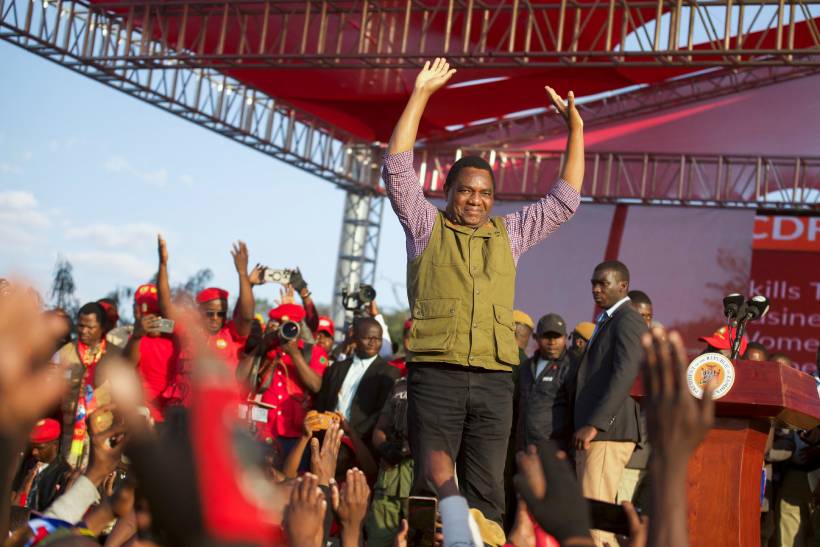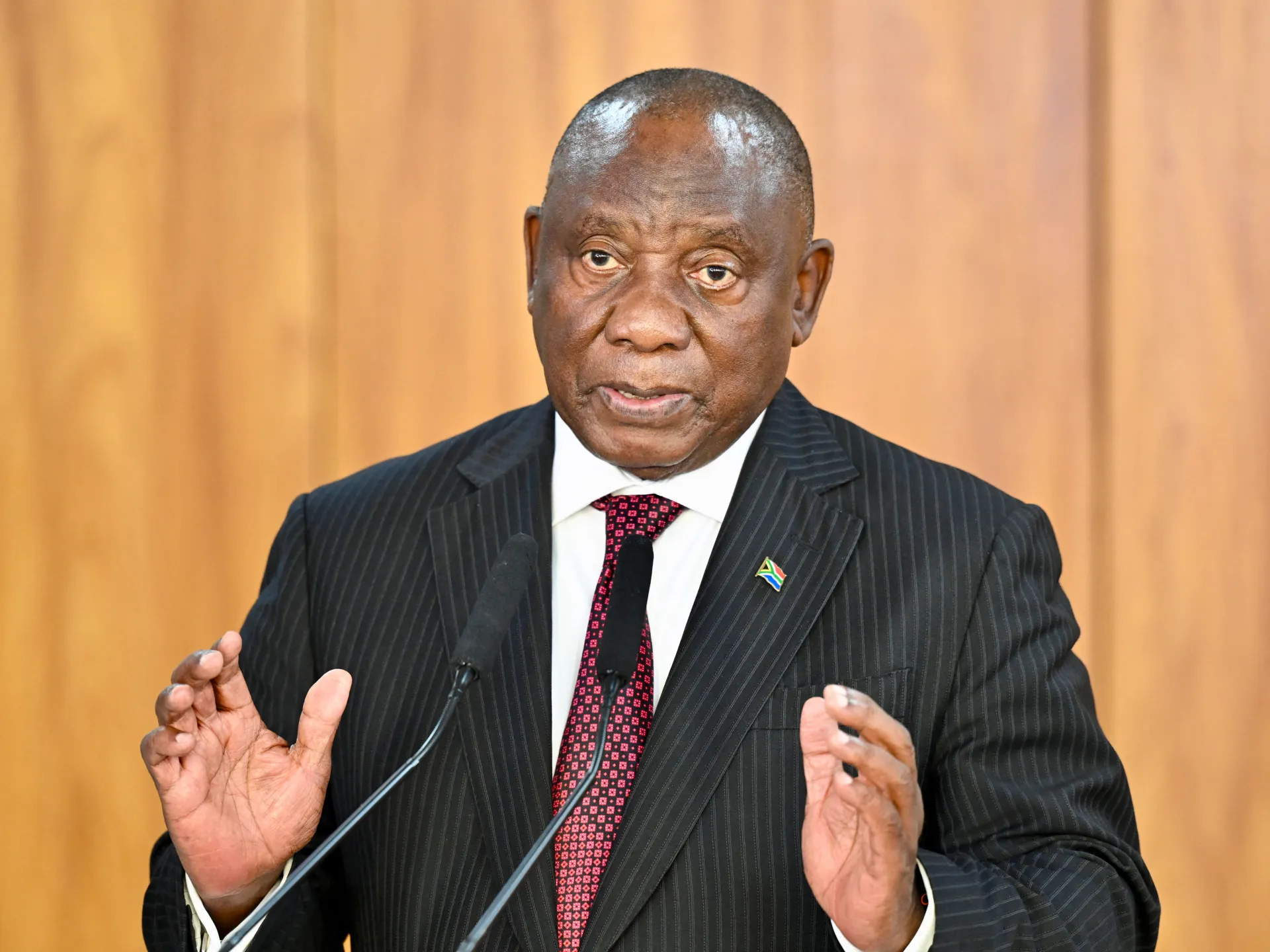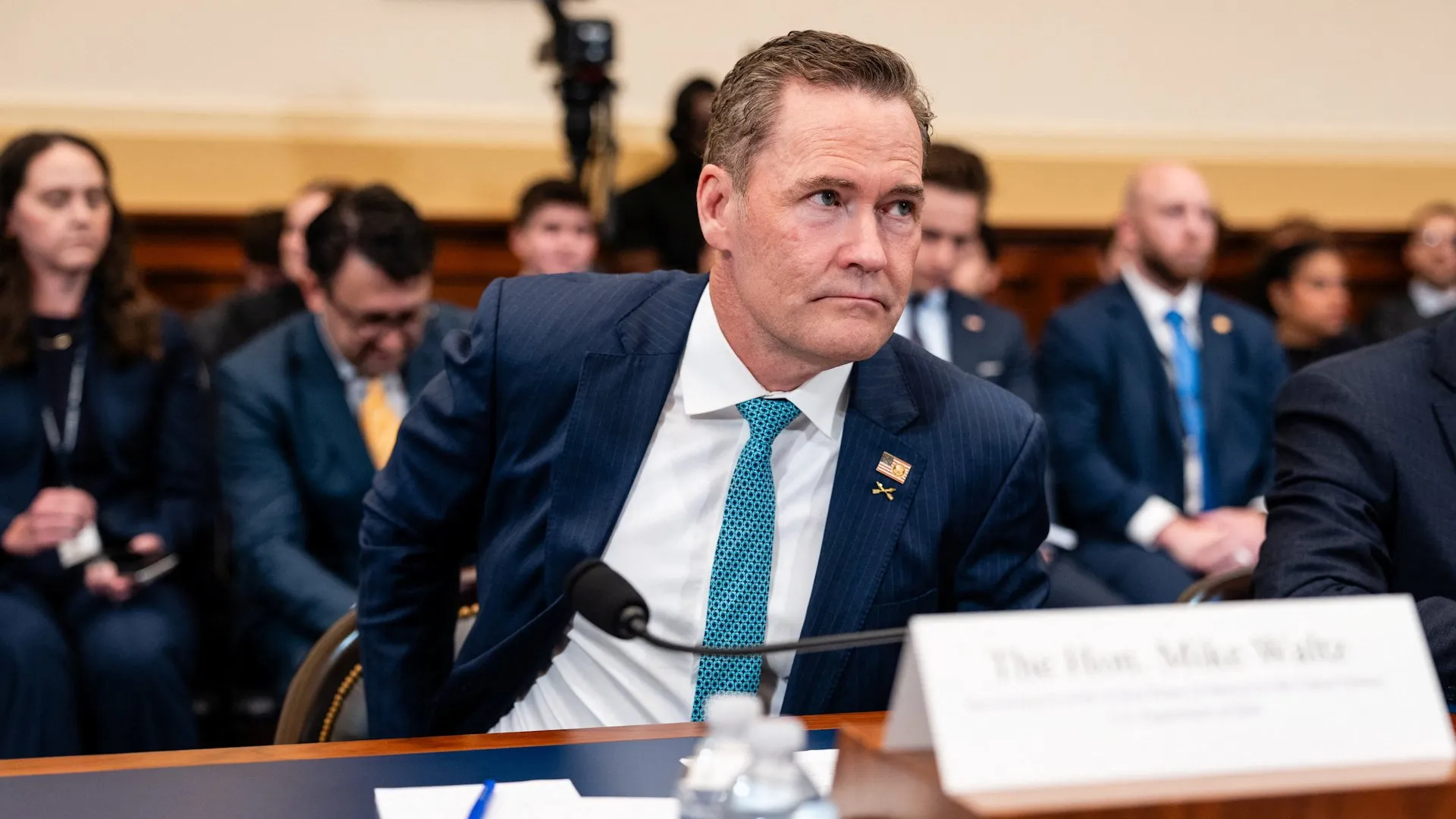
Petro was the first head of state to visit Caracas since the January 3 US attacks. (Presidential Press)
Caracas, April 24, 2026 (venezuelanalysis.com) – Venezuelan Acting President Delcy Rodríguez hosted Colombian President Gustavo Petro for bilateral talks in Caracas on Friday.
The meeting marked the first official visit by a head of state since the kidnapping of President Nicolás Maduro during a US military operation on January 3.
Following talks at Miraflores Presidential Palace, Rodríguez said both governments committed to tackling organized crime along their shared border, one of the longest in the region at over 2,200 kilometers.
“We have undertaken a very serious and concrete approach to combating criminal groups and transnational crime,” she said, announcing the development of joint military plans and “immediate” mechanisms for intelligence sharing in a new level of security cooperation.
Petro, for his part, stated that both countries would work toward the “liberation of border communities” through coordinated military, police, and social action.
“Building a fully coordinated common effort to free border populations from mafias engaged in various illegal economies,” he said, accusing irregular groups of human trafficking, drug trafficking, and illegal gold trade activities.
The leaders also agreed on economic initiatives aimed at supporting Venezuelan and Colombian populations in border regions. Petro expressed hope that these efforts would help reintegrate the two territories and boost food security.
The joint action commitments come amid escalating violence in the Catatumbo region of Colombia’s Norte de Santander department, which borders Venezuela’s Táchira state, where clashes between armed groups have displaced thousands in recent weeks.
Armed organizations operating in the area include the National Liberation Army (ELN), the Estado Mayor Central (EMC) and the Segunda Marquetalia, both descendants of the former FARC, and the Clan del Golfo, among others.
Friday’s talks also included the neighboring nations’ trade relations. Rodríguez highlighted discussions on “import substitution” between the two countries.
“It makes no sense for Colombia or Venezuela to look to other regions or hemispheres for what we can produce within our own territories,” she said, noting that bilateral trade currently stands at approximately $1.2 billion per year.
The leaders further addressed electrical interconnection projects for western Venezuela, a region heavily affected by blackouts, as well as reopening a pipeline that would allow Venezuela to export natural gas to Colombia and beyond.
Rodríguez and Petro also discussed the revival of air connectivity to boost tourism, including the development of multi-destination travel initiatives.
Present at the private meeting were Colombia’s foreign minister Rosa Villavicencio and defense minister Pedro Sánchez, alongside Venezuela’s foreign minister Yván Gil and Interior Minister Diosdado Cabello. The presidential summit followed an earlier meeting of the two countries’ Neighborhood and Integration Commission, with bilateral working groups established for a number of areas, including trade, energy and defense.
A prior meeting scheduled between Rodríguez and Petro on the border in early March was suspended due to security concerns.
Rodríguez hosts new US chargé d’affaires
Venezuelan Acting President Delcy Rodríguez also welcomed the Trump administration’s new chargé d’affaires to Venezuela John Barrett at the presidential palace on Friday.
Alongside Cabello and Gil, Rodríguez held a private meeting that reportedly focused on energy and a “long-term cooperation agenda.” For its part, the US embassy in Caracas stated that Barrett will continue implementing Washington’s “three-phase plan” for the Caribbean nation.
Barrett recently replaced Laura Dogu, who had been on the post since January. A career diplomat, he last served as chargé d’affaires in Guatemala, where he was accused of interference in magistrate elections in March.
Washington and Caracas fast-tracked a diplomatic rapprochement following the January 3 military strikes and kidnapping of Maduro. In March, the White House recognized Rodríguez as Venezuela’s sole leader, while the acting president recently thanked Trump and Secretary of State Marco Rubio for their “good disposition” in establishing “cooperation” between the two countries.
The diplomatic reengagement and US recognition have likewise led to a resumption of ties between Caracas and the International Monetary Fund (IMF).
Edited and with additional reporting by Ricardo Vaz in Caracas.
Tech firm suspended mass shooter’s ChatGPT account before attacks, but did not inform law enforcement.
Published On 25 Apr 202625 Apr 2026
OpenAI CEO Sam Altman has apologised over his company’s failure to warn authorities about the concerning online activities of a teen who went on to commit one of Canada’s worst mass shootings.
Jesse Van Rootselaar, 18, went on a shooting spree in Tumbler Ridge, British Columbia, on February 10, killing eight people.
Recommended Stories
list of 4 itemsend of list
The victims included Rootselaar’s mother and half-brother, and five students at the remote community’s secondary school.
Rootselaar, who was born male but identified as female, died of a self-inflicted gunshot wound.
OpenAI said after the attacks that Rootselaar’s ChatGPT account had been flagged internally the previous June for misuse “in furtherance of violent activities”, resulting in its suspension.
The San Francisco-based AI company said at the time that it had not informed authorities, as Rootselaar’s usage of the chatbot had not met the threshold of posing a credible or imminent threat of harm to others.
In a letter shared on Friday by the Tumbler RidgeLines news site and British Columbia Premier David Eby, Altman acknowledged that OpenAI should have alerted law enforcement to Rootselaar’s suspension.
“I am deeply sorry that we did not alert law enforcement to the account that was banned in June. While I know words can never be enough, I believe an apology is necessary to recognize the harm and irreversible loss your community has suffered,” Altman wrote.
“I reaffirm the commitment I made to the Mayor and the Premier to find ways to prevent tragedies like this in the future,” Altman added.
“Going forward, our focus will continue to be on working with all levels of government to help ensure something like this never happens again.”
Altman’s statement of regret came after Eby said last month that the tech CEO had agreed to apologise to the Tumbler Ridge community over OpenAI’s failure to flag Rootselaar as a threat.
In his letter, Altman said Eby and Tumbler Ridge Mayor Darryl Krakowka had conveyed “the anger, sadness, and concern” being felt in the community in their discussions.
“We agreed a public apology was necessary, but that time was also needed to respect the community as you grieved. I share this letter with the understanding that everyone grieves in their own way and in their own time,” Altman wrote.
“I want to express my deepest condolences to the entire community. No one should ever have to endure a tragedy like this. I cannot imagine anything worse in this world than losing a child.”
Hamas says the Israeli escalation represents the failure of the international community to uphold the truce in Gaza.
Israeli forces have killed 12 Palestinians in attacks throughout Gaza, medical sources in the enclave tell Al Jazeera, as Israel continues its daily violations of the ceasefire struck last year.
An Israeli attack on a police vehicle on Friday killed at least eight people, including three civilian bystanders, in Khan Younis. A separate attack in Gaza City also killed two police officers.
Recommended Stories
list of 3 itemsend of list
Two other people were killed in the bombing of a house in Beit Lahiya in northern Gaza.
Gaza’s Ministry of Interior called on the international community on Friday to intervene and end the Israeli targeting of local police forces working to restore security in civilian areas.
It said the attack in Khan Younis came after security forces intervened to break up a fight in the area.
“The continued silence of international organisations … regarding the targeting of civilian police officers constitutes complicity with the Israeli occupation, encouraging it to commit further crimes against a civilian institution protected under international law,” the ministry said.
“We emphasise that the police force provides services to citizens in the Gaza Strip across various aspects of daily life. There is absolutely no justification for targeting it or killing its personnel.”
Israel has been systemically killing police officers in Gaza, as it allies itself with criminal gangs in the occupied territory.
During its genocidal war on Gaza, which started in October 2023, the Israeli military regularly targeted officers securing aid convoys, which led to intensified looting. That, in turn, deepened the hunger crisis that Israel imposed on the territory.
A ceasefire, brokered by United States President Donald Trump, came into effect in October of last year. That decreased the intensity of the Israeli bombardment.
But Israel has nevertheless continued its attacks on the territory, killing at least 984 people and injuring 2,235 others since the truce was announced, according to health authorities.
Just this week, Israeli strikes killed five people, including three children, on Wednesday.
The overall death toll in the war has surpassed 72,500, with more than 172,000 others injured. Thousands of missing people are believed to be dead and buried under the destroyed buildings.
The number of confirmed casualties represents more than 7 percent of the enclave’s population of two million people. The Israeli assault also turned most of Gaza’s structures into piles of rubble.
Leading rights groups and United Nations investigators have concluded that the Israeli military campaign amounts to genocide: an effort to destroy the Palestinian people.
Under the far-right government of Prime Minister Benjamin Netanyahu, Israel has continued to bomb Gaza as it simultaneously attacks south Lebanon, in violation of a separate truce with Hezbollah.
Hamas on Friday called the deadly attacks in Gaza part of the Israeli government’s “unprecedented bloody, fascist approach”.
“This escalation … by the government of the war criminal Netanyahu represents a clear failure of the role of the mediators and guarantors [of the ceasefire] and the international community to quell the barbaric Zionist killing machine,” it said.
More than six months into the ceasefire, Trump has struggled to implement the 12-point plan on which the truce was based.
Israel continues to occupy most of Gaza. Reconstruction in the territory has not begun. An international security force envisioned by the agreement has not been formed.
In February, Trump convened his so-called Board of Peace that is supposed to govern Gaza through a council of Palestinian technocrats, but it is not clear when or how these forces will take over government agencies in the territory.
Anticorruption police gathered material from the homes of election officials including former office leader Piero Corvetto.
By Reuters and The Associated Press
Published On 24 Apr 202624 Apr 2026
Police in the Peruvian capital of Lima have raided a home belonging to the former head of its national election agency, amid growing frustration in the aftermath of the country’s presidential election.
As of Friday, results still had not been finalised for the presidential race, which took place on April 12.
Recommended Stories
list of 3 itemsend of list
Delays in ballot deliveries forced the voting in some areas to be extended by an extra day, and the slow vote count has led to accusations of wrongdoing. But the European Union’s election mission to Peru found no indication of fraud.
Law enforcement was seen entering the home of Piero Corvetto, the former head of Peru’s National Office of Electoral Processes (ONPE), on Friday as part of a judicial warrant.
The officers with the local anticorruption police unit were tasked with removing mobile phones, laptops and documents, according to local broadcaster RPP.
The homes of five other officials were also targeted by police raids, as were offices belonging to Galaga, a private company that transports election ballots.
Corvetto resigned on Tuesday, though he denied any wrongdoing or irregularities in the election process. In a statement, he said he hoped his departure would boost public confidence.
On Friday, his lawyer, Ricardo Sanchez Carranza, told the news agency Reuters that a judge authorised the raid but denied prosecutors’ request to put Corvetto in preliminary detention.
But one of the leading presidential candidates, Lima’s former far-right mayor, Rafael Lopez Aliaga, has accused Corvetto of being a “criminal” and pledging to pursue him “until he dies”.
Lopez Aliaga is currently in a narrow race for second place in the presidential election.
With 95 percent of the ballots tallied, right-wing candidate and former First Lady Keiko Fujimori is in first place with 17 percent of the vote. She is all but assured of proceeding to the run-off on June 7.
Lopez Aliaga, meanwhile, is in third place with 11.9 percent, behind left-wing Congress member Roberto Sanchez at 12.03 percent.
Roughly 20,000 votes separate Sanchez from Lopez Aliaga, who has increasingly denounced the election as illegitimate, though he has yet to provide evidence to support that claim. Still, he has called the vote tally an “electoral fraud unique in the world”.
While the US president is a self-avowed fan of the royals, he regularly criticises the UK Prime Minister, Sir Keir Starmer, and dismissed UK aircraft carriers as “toys” compared with US equivalents. The King is, of course, the head of the British Armed Forces. And the political relations between the US and the UK, and other Nato allies, are at a perilously low ebb.
Weekly insights and analysis on the latest developments in military technology, strategy, and foreign policy.
Welcome to Bunker Talk. This is a weekend open discussion post for the best commenting crew on the net, in which we can chat about all the stuff that went on this week that we didn’t cover. We can also talk about the stuff we did or whatever else grabs your interest. In other words, it’s an off-topic thread.
Airmen from the 386th Air Expeditionary Wing sit inside of a bunker during a base-wide exercise at an undisclosed location within the U.S. Central Command area of responsibility, May 24, 2024. The exercise assessed the responsiveness of Airmen and first responders during a simulated attack. (U.S. Air Force photo)
Also, a reminder:
Prime Directives!
If you want to talk politics, do so respectfully and know that there’s always somebody that isn’t going to agree with you.
If you have political differences, hash it out respectfully, stick to the facts, and no childish name-calling or personal attacks of any kind. If you can’t handle yourself in that manner, then please, discuss virtually anything else.
No drive-by garbage political memes. No conspiracy theory rants. Links to crackpot sites will be axed, too. Trolling and shitposting will not be tolerated. No obsessive behavior about other users. Just don’t interact with folks you don’t like.
Do not be a sucker and feed trolls! That’s as much on you as on them. Use the mute button if you don’t like what you see.
So unless you have something of quality to say, know how to treat people with respect, understand that everyone isn’t going to subscribe to your exact same worldview, and have come to terms with the reality that there is no perfect solution when it comes to moderation of a community like this, it’s probably best to just move on.
Finally, as always, report offenders, please. This doesn’t mean reporting people who don’t share your political views, but we really need your help in this regard.
Iranian Foreign Minister Abbas Araghchi arrives in Islamabad, but Tehran yet to commit to more talks with US delegation.
United States President Donald Trump is sending envoys Steve Witkoff and Jared Kushner to Pakistan as Iran’s foreign minister arrived in the country, raising hopes of new talks on ending the US-Israeli war on Iran amid a fragile ceasefire and growing tensions over control of the Hormuz Strait.
White House press secretary Karoline Leavitt said on Friday that US envoys would sit down with Abbas Araghchi, expressing hope that parties would “move the ball forward to a deal”, but it remained unclear whether the Iranian delegation had agreed to hold talks.
Recommended Stories
list of 3 itemsend of list
Writing on X on Friday, Iran’s top diplomat had said he was off on a “timely tour of Islamabad, Muscat, and Moscow”, to coordinate on “bilateral matters”, with no specific mention of any intention to meet with US negotiators.
Trump expressed optimism over a potential deal, telling the news agency Reuters that Iran was “making an offer” aimed at satisfying US demands, which include ending its nuclear programme.
Earlier, US Defense Secretary Pete Hegseth said Iran had a chance to make a “good deal”. “Iran knows that they still have an open window to choose wisely … at the negotiating table,” he said, adding that all they had to do was “abandon a nuclear weapon in meaningful and verifiable ways”.
But two Pakistani government sources told Reuters that the Iranian foreign minister’s visit would be brief, focusing on Iran’s proposals for talks with the US, which mediator Pakistan would then convey to Washington.
Reporting from Tehran, Al Jazeera’s Ali Hashem said a “senior official” had “made it clear” to him that there would not be any US-Iran talks in Pakistan.
“These regional partners all have their own ideas on how to solve this deadlock, but for the moment, Iran has said it would not meet for a new round of talks,” he said.
Top negotiators from last round absent
Reports on Araghchi’s trip in Iranian state media made no mention of Mohammad Baqer Ghalibaf, the speaker of Iran’s parliament, who was the head of its delegation at talks with a US delegation earlier this month that ended with no breakthrough.
The Iranian parliament’s media office denied a report that Ghalibaf had resigned as head of Iran’s negotiating team, adding that there was no new round of talks scheduled yet, according to Reuters.
US Vice President JD Vance also participated in the first round of talks, but is not travelling to Pakistan on this occasion, though Leavitt said he remained “deeply involved” and was on “standby” to join if needed.
She said Trump decided to send Witkoff and Kushner to Pakistan “to hear the Iranians out”. “We’ve certainly seen some progress from the Iranian side in the last couple of days,” she maintained, without offering any further details.
Reporting from Washington, Al Jazeera’s Mike Hanna said there appeared to be a “graded process” in place, describing it as “an initial exploratory phase” that could lead to “higher-level engagement if negotiations deepen”.
A new round of talks had been expected to start on Tuesday but did not materialise, with Iran saying it was not yet ready to commit to attending.
Trump had unilaterally extended a two-week ceasefire on Tuesday to allow more time to reconvene the negotiators as the US continued its blockade on Iranian ports.
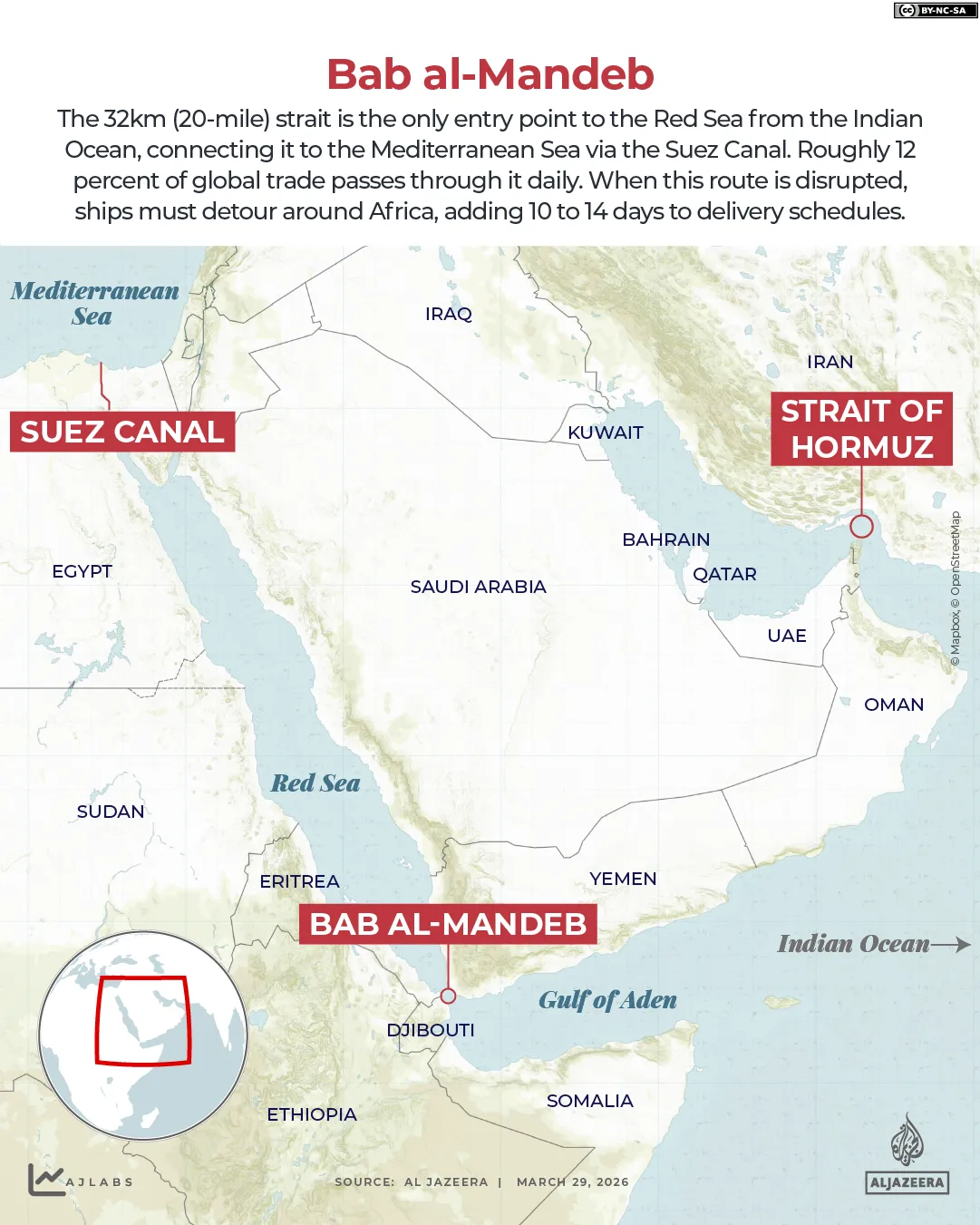
Iran says it will not stop blocking the Strait of Hormuz, a crucial maritime trade chokepoint, until Trump lifts his blockade. On Friday, the US applied more pressure on Tehran by freezing $344m in cryptocurrency assets in a bid to “systematically degrade Tehran’s ability to generate, move, and repatriate funds”.
Judge had previously blocked move to end temporary legal status for those who entered US via Biden-era application.
Published On 24 Apr 202624 Apr 2026
The administration of President Donald Trump plans to again end the temporary legal status of hundreds of thousands of people who applied for asylum in the United States via the CBP One app.
The plan was detailed in a court filing in Boston, Massachusetts, and comes after a judge ruled that Trump’s earlier effort to terminate the legal status of those individuals was unlawful.
Recommended Stories
list of 3 itemsend of list
Under US President Joe Biden, individuals who registered for an appointment with US Customs and Border Protection (CBP) were preliminarily vetted and granted temporary legal status in the US as their asylum cases were adjudicated.
About 900,000 people were granted so-called humanitarian parole under the programme.
But in April of last year, just months after Trump took office for a second term, many of those individuals received emails saying their status had been terminated.
The message told its recipients it was “time for you to leave the United States”.
Federal Judge Allison Burroughs subsequently ruled that the Department of Homeland Security did not follow the proper procedures in terminating the legal status immigration status of CBP One users.
The US Department of Justice, in the new filings, told Burroughs that the Trump administration was complying with her order.
However, the department said the administration would begin issuing new parole termination notices, pursuant to a Tuesday memo from CBP’s head, Rodney Scott.
The memo is not public, but according to the Justice Department, Scott provided an explanation for why, in his opinion, “parole is no longer appropriate for those aliens”.
Lawyers for Democracy Forward and Massachusetts Law Reform Institute, which represent the individuals whose status faces termination, urged Burroughs in a subsequent filing to prevent what they called a “deliberate attempt to evade compliance with the court’s order”.
The next hearing was set for May 6.
During his second term, Trump has pursued a hardline immigration policy that has included staunching nearly all asylum claims at the southern border.
Shortly after taking office, Trump’s officials also dissolved the CBP One app and relaunched it as CBP Home, a tool for self-deportation.
His administration has claimed there was an “invasion” at the border that constituted a “national emergency”, thereby allowing Trump to bypass legal requirements to allow individuals seeking asylum into the country.
Asylum, however, is a right enshrined both in domestic and international law, to protect people fleeing persecution on the basis of race, religion, nationality, political opinion or membership in a particular social group.
Separately, on Friday, a federal appeals court ruled against the Trump administration’s ban on asylum at the southern US border, potentially clearing the way for applications to once again be processed.
The administration is expected to appeal the decision.
Al Jazeera’s Rory Challands reports from the EU summit in Cyprus, where the leaders of Egypt, Syria, Lebanon and Jordan met with European leaders to discuss the regional crisis caused by the US-Israeli war on Iran.
Judges say Trump’s order for swift removal at the border ‘cast aside federal laws affording’ right to seek asylum.
Published On 24 Apr 202624 Apr 2026
An appeals court has ruled that President Donald Trump’s ban on asylum applications in the United States is unlawful, dealing a setback to the administration’s immigration crackdown.
In a decision released on Friday, a three-judge panel from the US Court of Appeals in Washington, DC, found that existing laws — namely the Immigration and Nationality Act (INA) — give people the right to apply for asylum at the border.
Recommended Stories
list of 3 itemsend of list
Trump had issued the asylum ban in a proclamation on January 20, 2025, on the first day of his second term.
But the appeals court questioned whether suspending asylum unilaterally was within the president’s power.
“Congress did not intend to grant the Executive the expansive removal authority it asserts,” the ruling said.
“The Proclamation and Guidance are thus unlawful to the extent that they circumvent the INA’s removal procedures and cast aside federal laws affording individuals the right to apply and be considered for asylum or withholding of removal protections.”
The decision validated a ruling by a lower court. While the judges blocked Trump’s order, it is unclear what its immediate impact will be. Already, the White House has signalled it plans to appeal.
Trump made immigration a major pillar of his 2024 re-election campaign, pledging to repel what he describes as an “invasion” of migrants by shutting down the southern border of the US.
Asylum in the US can be granted to people facing “persecution based on race, religion, nationality, political opinion, or membership in a particular social group”. Such protections have been recognised as a fundamental human right under international law.
But unauthorised border crossings reached record levels during the administration of President Joe Biden, which had itself imposed asylum restrictions.
Millions of migrants — many suffering from gang violence and political persecution in Central and South America — have claimed asylum upon reaching the US.
Nearly 945,000 filed for asylum in 2023, according to the Department of Homeland Security.
In his January 2025 decree, Trump suspended “the physical entry of aliens involved in an invasion into the United States across the southern border”.
The proclamation was quickly challenged in court, as other measures in Trump’s immigration crackdown have been.
But the appeals court panel concluded that the INA does not authorise the president to remove the plaintiffs under “procedures of his own making”.
Nor does it allow him to suspend the plaintiffs’ right to apply for asylum or curtail procedures for adjudicating claims of torture and persecution.
“The power by proclamation to temporarily suspend the entry of specified foreign individuals into the United States does not contain implicit authority to override the INA’s mandatory process to summarily remove foreign individuals,” wrote Judge J Michelle Childs, a Biden appointee.
The Trump administration will likely appeal the ruling to the full appellate court and subsequently to the Supreme Court.
The White House stressed after the court’s decision that banning asylum is part of Trump’s constitutional powers as commander-in-chief.
“We have liberal judges across the country who are acting against this president for political purposes. They are not acting as true litigators of the law. They are looking at these cases from a political lens,” White House spokesperson Karoline Leavitt told reporters.
As tensions ramp up amid fragile truce, US military says it ‘redirected’ 34 vessels as part of blockade on Iran’s ports.
Published On 24 Apr 202624 Apr 2026
The United States has three aircraft carriers in the Middle East for the first time in 23 years with the arrival of the USS George HW Bush, the US military has said, amid a fragile ceasefire with Iran.
The Middle East-based Central Command (CENTCOM) of the US military said on Friday that the carriers include 12 accompanying ships, more than 200 aircraft, and 15,000 soldiers.
Recommended Stories
list of 3 itemsend of list
“For the first time in decades, three aircraft carriers are operating in the Middle East at the same time,” CENTCOM said.
The last time the US amassed that amount of military assets in the region’s waters was in the lead up to the US-led invasion of Iraq in 2003.
The other two US aircraft carriers in the region are USS Abraham Lincoln and USS Gerald R Ford, which is the largest in the world.
The show of force signals that the US is preparing to return to fighting should the fragile ceasefire between the US, Israel and Iran unravel.
Diplomacy between the two countries has been in limbo, with Iran setting the lifting of the US naval blockade against its ports as a condition for resuming the talks.
US President Donald Trump announced extending the truce on Wednesday, but he said the naval siege would persist.
For its part, Iran has reblocked the Strait of Hormuz in response to the US blockade after declaring the waterway completely open last week when the regional ceasefire was extended to Lebanon.
Trump has not set a deadline for the extended ceasefire and suggested that he is comfortable with the status quo, which he argues is depleting the Iranian economy at a low cost for the US.
“I have all the time in the World, but Iran doesn’t,” he wrote in a social media post on Thursday.
The US president was later asked how long he would be willing to wait before receiving a proposed deal from Iran. He said: “Don’t rush me.”
Iran has described the blockade – which has seen US forces seize at least two Iranian oil ships – as an “act of war”.
Iranian forces have also captured foreign commercial ships in the Hormuz Strait, accusing them of violating maritime regulations.
With negotiations on hold, Trump has shown no signs of willingness to lift the siege in order to facilitate talks.
On Friday, the US military said it has “redirected” 34 vessels in the region. “The blockade against ships entering or exiting Iranian ports continues,” CENTCOM said.
Trump has previously threatened to destroy Iran’s civilian infrastructure, including bridges, power and water stations.
Israeli Defense Minister Israel Katz said on Thursday that his country is awaiting the green light from Trump to return Iran to the “age of darkness”.
“Israel is prepared to renew the war against Iran. The [Israeli military] is ready in defence and offence, and the targets are marked,” Katz said, according to The Times of Israel newspaper.
The announcement on Friday is expected to clear the path for the confirmation of his successor, Kevin Warsh.
Published On 24 Apr 202624 Apr 2026
The United States Department of Justice has ended its probe into US Federal Reserve chair Jerome Powell, clearing a major roadblock to the confirmation of his successor, Kevin Warsh.
US Attorney for the District of Columbia Jeannine Pirro said on X on Friday that her office was ending its probe into the Fed’s extensive building renovations because the Fed’s inspector general would scrutinise them instead.
Recommended Stories
list of 4 itemsend of list
Pirro, a Trump ally and the top federal prosecutor in Washington, DC, said she had instead asked the Fed’s internal watchdog, the Office of Inspector General, to examine cost overruns in renovations of the central bank’s Washington headquarters.
“The IG has the authority to hold the Federal Reserve accountable to American taxpayers,” Pirro said in a social media post. “I expect a comprehensive report in short order and am confident the outcome will assist in resolving, once and for all, the questions that led this office to issue subpoenas.”
The move could lead to a swift confirmation vote by the Senate for Warsh, a former top Fed official whom US President Donald Trump, a Republican, nominated in January to replace Powell. Powell’s term as chair ends May 15.
Senator Thom Tillis, a North Carolina Republican, had said he would oppose Warsh until the investigation was resolved, effectively blocking his confirmation.
The leadership transition at the world’s leading central bank could now proceed quickly.
Republicans praised Warsh during a Tuesday hearing even as Democrats questioned his independence from Trump, the lack of transparency around some of his financial holdings, and what they said was his flip-flopping on interest rates. Senator Elizabeth Warren of Massachusetts, the ranking Democrat on the committee, questioned if Warsh will be a “sock puppet“.
Still, Trump’s previous appointment to the Fed’s board of governors, Stephen Miran, was approved by the full Senate just 13 days after his nomination.
No evidence
The investigation was among several undertaken by the Department of Justice into Trump’s perceived adversaries. For months, it had failed to gain traction as prosecutors struggled to articulate a basis to suspect criminal conduct.
A prosecutor handling the case conceded at a closed-door court hearing in March that the government had not yet found any evidence of a crime, and a judge subsequently quashed subpoenas issued to the Federal Reserve.
The judge, James Boasberg, said prosecutors had produced “essentially zero evidence” to suspect Powell of a crime. Boasberg branded prosecutors’ justification for the subpoenas as “thin and unsubstantiated”.
More recently, prosecutors made an unannounced visit to a construction site at the Fed’s headquarters but were turned away, drawing a rebuke from a defence lawyer in the case who called the manoeuvre “not appropriate”.
Warsh said during the Senate hearing on Tuesday that he never promised the White House that he would cut interest rates, even as the president renewed his calls for the central bank to do so.
“The president never once asked me to commit to any particular interest rate decision, period,” Warsh said during the hearing. “Nor would I ever agree to do so if he had … I will be an independent actor if confirmed as chair of the Federal Reserve.”
Warsh’s comments came just hours after Trump, in an interview on CNBC, was asked if he would be disappointed if Warsh did not immediately cut rates and responded, “I would.”
The decision to abandon the investigation represents a rare pullback for a Department of Justice that over the last year has moved aggressively, albeit unsuccessfully, to prosecute public figures the president does not like.
Robert Hur, an lawyer for the Federal Reserve Board of Governors, did not immediately respond on Friday to an email seeking comment.
More than 130 public figures express support for the proscribed group as the UK prepares for another legal fight.
Published On 24 Apr 202624 Apr 2026
More than 130 public figures have written to the UK’s Court of Appeal expressing support for Palestine Action, days before a hearing to decide on the lawfulness of the government’s ban on the direct action group.
A letter released Friday, bearing 132 signatures and addressed to the UK’s Court of Appeal, read: “We oppose genocide, we support Palestine Action.”
Recommended Stories
list of 4 itemsend of list
The declaration came in advance of hearings scheduled for April 28 and 29, during which the court is slated to hear the government’s appeal to uphold its proscription of Palestine Action.
Internationally known figures, including the writer Sally Rooney, climate campaigner Greta Thunberg and American scholar Judith Butler are among those who signed the declaration.
Others include British musicians Nadine Shah and Brian Eno, writers China Mieville, Lina Meruane and Tariq Ali, along with dozens of professors at leading universities such as Cambridge, Oxford, Yale, Columbia and the London School of Economics.
The letter’s singular sentence has become a well-known slogan used to express support for Palestine Action, which the UK government proscribed as a “terrorist organisation” in July 2025.
That designation – which placed Palestine Action in the same category as Hezbollah and al-Qaeda – makes it illegal to be a member of or express support for the group, offences punishable by up to 14 years in prison.
In February, the UK’s High Court ruled that the government’s ban was unlawful and disproportionate, prompting London’s Metropolitan Police to say it would refrain from arresting demonstrators rallying in support of the group.
But with the government appeal pending, the Met reversed course, and officers arrested more than 500 people at a protest earlier this month.
Defend Our Juries, an activist group that has organised rallies and called for the government to drop its proscription, said in a statement accompanying Friday’s letter that the signatories were vulnerable to “terrorism charges”.
“If the police proceed to arrest these scholars on terrorism charges, the authoritarian nature of the ban will be further exposed,” the group wrote. “But if they don’t, the more than 3,000 previous arrests of people for saying precisely the same thing will be shown to be not just unlawful but arbitrary and discriminatory.”
In their own statements, several signatories expressed solidarity with Palestine Action and called on the government to halt its appeal.
The UK government is “silencing the messenger”, said Neve Gordon, an international law professor at Queen Mary University of London.
“The decision to appeal the ruling rendering the proscription unlawful is yet another sign of the government’s moral bankruptcy,” he added.
On April 20, the United States fired at and then seized an Iranian-flagged container ship close to the Strait of Hormuz in the northern Arabian Sea, amid its blockade of Iranian ports.
It was similar to a scene which played out in the 1980s during the so-called Tanker War between Iran and Iraq, during which both countries fired on each other’s tankers in the Strait of Hormuz, seeking to cripple each other’s economies.
Recommended Stories
list of 3 itemsend of list
As naval tensions rise again in the Strait of Hormuz – this time between Iran and the US – we break down what happened in the 1980s and examine the parallels and differences between the situations then and now:
The ‘Pivot’ tanker in flames in the Strait of Hormuz in 1987 during the Iran-Iraq war [File: Francoise De Mulder/Roger Viollet via Getty Images]
How the 1980s Tanker War played out – a timeline
The war between Iran and Iraq began in 1980 when then-Iraqi President Saddam Hussein launched a full-scale invasion of Iran following Iran’s 1979 Islamic revolution.
In 1984, this war reached the Gulf when Iraq attacked Iranian oil tankers, seeking to cripple its oil-revenue-dependent economy. Iran retaliated by firing at oil tankers belonging to Iraq and its allies in the Gulf.
According to a report by the University of Texas’s Robert Strauss Center for International Security and Law, Iran also threatened to close the Strait of Hormuz then, but did not do so since its own economy, already crippled by the war, was dependent on exporting oil to the rest of the world through it.
In November 1986, when Iran struck Kuwait’s ships, Kuwait asked for foreign help. The former Soviet Union was the first to respond and helped escort the nation’s ships in the Gulf.
The US, led by then-president Ronald Reagan, launched Operation Earnest Will in July 1987, also seeking to protect tankers in the Gulf and render more assistance than Moscow. The operation involved reflagging Kuwaiti tankers with the US flag so they could legally sail under US protection.
According to an article by the Veterans Breakfast Club, a US-based website which shares experiences of former US military veterans, during Washington’s very first escort mission in July 1987, a reflagged tanker hit an Iranian mine in the Gulf.
“The convoy continued, but the incident made clear that the United States had entered a shadow war with Iran at sea,” the article said.
“Over the next fourteen months, dozens of US warships rotated through the region escorting tankers and protecting shipping lanes. US forces also conducted special operations to hunt Iranian mine-layers at night and conducted strikes against Iranian military positions and ships. The mission wasn’t a small one, consuming 30 US Navy ships at one time,” the article added.
Then in April 1988, the US frigate USS Samuel B Roberts was damaged by an Iranian mine in the Strait of Hormuz. Historian Samuel Cox, writing for the US Naval History and Heritage Command (NHHC), noted in 2018 that by the end of 1987 that vessel was so badly damaged, that “the only thing actually holding the ship together was the main deck”.
So, the US launched Operation Praying Mantis, seeking to destroy Iranian vessels.
The tanker war eventually ended in August 1988, following a United Nations-brokered ceasefire agreement between Iran and Iraq.
Cox noted that by the end of 1987, “Iraq had conducted 283 attacks on shipping, while Iran attacked 168 times. Combined, the attacks had killed 116 merchant sailors, with 37 missing and 167 wounded, from a wide variety of nationalities.”
“Initially, there was great concern that the attacks would cut off the vital flow of oil from the Arabian Gulf, but all they really did was drive up insurance rates. The world’s need for oil was so great, that over 100 dead merchant seamen was apparently an acceptable price,” he wrote.
A tanker in flames in the Strait of Hormuz in December 1987 during the Iran-Iraq war [File: Francoise De Mulder/Roger Viollet via Getty Images]
What is happening in the Strait of Hormuz now?
The current hostilities between the US and Iran in the Strait of Hormuz began when Tehran, whose territorial waters extend into the strait, closed passage to all vessels after the US and Israel began bombing the country. On March 4, the Islamic Revolutionary Guard Corps (IRGC) declared that it was in full control of the strait, and ships would need to get clearance from them to pass through it.
Shipping through the strait collapsed by 95 percent, sending the price of oil – 20 percent of global supplies of which are shipped this way – soaring above $100 a barrel.
Iran, through its imposition of control over who passes through Hormuz, has for almost eight weeks now, determined which vessels can exit the strait from the Gulf into the Gulf of Oman.
At first, Iran indicated that it would allow “friendly” ships to pass if they paid a toll. On March 26, Iran’s Foreign Minister Abbas Araghchi told Iran’s state TV: “The Strait of Hormuz, from our perspective, is not completely closed. It is closed only to enemies. There is no reason to allow the ships of our enemies and their allies to pass.”
Vessels from Malaysia, China, Egypt, South Korea, India and Pakistan passed through the strait through most of March and early April.
Iran’s Islamic Revolutionary Guard Corps (IRGC) provided these vessels with an alternative route through the Strait of Hormuz to avoid potential sea mines. US officials, including Donald Trump, have said mines have been placed there by Iran, although it has not officially confirmed or denied this.
(Al Jazeera)
But on April 13, alarmed that Iran was continuing to ship its own oil out of the strait, the US imposed a naval blockade of all Iranian ports. Since then, US Central Command has said US forces have directed 33 Iran-linked vessels to turn around or return to an Iranian port.
On Monday, the US military fired on and then captured the Iranian-flagged container ship Touska close to the Strait of Hormuz in the northern Arabian Sea, and, a day later, detained another oil tanker sanctioned for transporting Iranian crude oil as it sailed in the Bay of Bengal, which links India and Southeast Asia.
In a post on social media after detaining the Touska, the Pentagon wrote: “As we have made clear, we will pursue global maritime enforcement efforts to disrupt illicit networks and interdict sanctioned vessels providing material support to Iran – anywhere they operate. International waters are not a refuge for sanctioned vessels.”
Since the US naval blockade of Iranian ports began, Tehran, which was earlier allowing vessels from “friendly” nations to pass through the Strait of Hormuz, has further tightened its grip on the strait.
Justifying the decision not to allow any foreign ships to pass until the US ends its naval blockade on April 19, Iran’s First Vice President Mohammad Reza Aref said the “security of the Strait of Hormuz is not free”.
“One cannot restrict Iran’s oil exports while expecting free security for others,” he wrote in a post on X.
Last Saturday, Iran reportedly fired at two Indian-flagged merchant vessels in the strait. The IRGC said the two ships were attacked because they were “operating without authorisation”, according to state media reports.
Then, on April 22, Iran captured two container ships seeking to exit the Gulf via the Strait of Hormuz after firing on them and another vessel.
What are the parallels between the two wars?
Just like during the Tanker War of the 1980s, shipping has been severely disrupted by the US-Israel war on Iran, upending global oil and gas prices.
According to an April 17 article by the World Economic Forum, from the mid-1980s when the Tanker War took place, to the start of the new millennium, a barrel of crude oil averaged $20.
On Friday, while a ceasefire between the US and Iran was in effect, a naval battle was still playing out in the Strait of Hormuz, and Brent crude, the international benchmark, topped $106 per barrel. During open warfare between the US, Israel and Iran in March and early April, oil rose as high as $119 per barrel.
Mines in the sea are another problem common to both time periods.
While vessels were damaged by mines during the 1980s Tanker War, there has so far been no report of vessels being damaged by mines in the current war. However, the risk is the same.
US President Donald Trump has said the US will ramp up efforts to remove mines from the Strait of Hormuz. This has not begun yet, however.
According to CNN, there are only a few US minesweeping ships in the Gulf. The US Navy also told the broadcaster that four dedicated minesweepers stationed in the Gulf region were decommissioned last year.
John Phillips, a British safety, security and risk adviser and former military instructor, told Al Jazeera: “There are some clear parallels between the current situation in Hormuz and the Tanker War of the 1980s. In both cases, the basic idea is the same: pressure at sea can have effects far beyond the water itself.
“A relatively small amount of naval disruption, whether that means mining, harassment of shipping, missile threats, or attacks on tankers, can create real strategic and economic consequences, especially in a chokepoint like the Strait of Hormuz. So in that sense, the original Tanker War is a useful reminder of how vulnerable global trade can be when the maritime domain becomes part of a wider political or military confrontation.”
What are the differences between the two wars?
During the Tanker War, the US escorted ships to protect them from Iranian attacks and also deployed vessels to remove mines. NATO countries like the United Kingdom, Belgium, the Netherlands, France and Italy also joined.
But in the current standoff in the Strait of Hormuz, US allies like the UK and other NATO nations have refused to join Washington in reopening the Strait of Hormuz, or begin minesweeping operations, fearing they will be dragged into the war.
In a post on Truth Social in early April, the US president took aim at allies, “like the United Kingdom”, which, he said, have “refused to get involved in the decapitation of Iran”, telling them to either buy US fuel or get involved in the rapidly escalating war.
“You’ll have to start learning how to fight for yourself, the U.S.A. won’t be there to help you anymore, just like you weren’t there for us. Iran has been, essentially, decimated. The hard part is done. Go get your own oil!” Trump wrote.
The framework of the US-Israel war on Iran is different from that of the war between Iraq and Iran in the 1980s, experts say.
“In the 1980s, the Tanker War was part of the broader Iran-Iraq War, so the shipping attacks were tied to a much larger land conflict between two regional armies. Today, the situation is more about Iran’s standoff with the United States and its allies, and the maritime activity is less about asymmetrical war at sea and more about deterrence, signalling and the threat of escalation,” said Phillips.
“The military lesson, really, is that Hormuz is still one of those places where limited actions can have outsized effects, but the modern setting is more fast-moving, more technologically advanced and potentially more volatile than the original Tanker War,” he added.
Analysts have also pointed out that, unlike in the 1980s, Iran is currently stronger when it comes to withstanding attacks and naval blockades by the US.
In the Tanker War, Iraq was militarily supported by Western allies, while Iran was under a US arms embargo imposed in 1979 after the Iranian revolution. While this gave Iraq a military advantage, Iran’s IRGC used asymmetric warfare tactics by striking Iraq’s allies’ ships and oil tankers.
Experts also say that since the 12-day war between Iran and Israel last year, Tehran has shifted its military doctrine from one that is primarily about defensive containment to an explicitly offensive asymmetric posture.
“Iran today appears more structurally aggressive in doctrine where it is formally embracing earlier and more extensive use of regional missiles, drones, cyberattacks and energy coercion [when energy resources and infrastructure are targeted or cut off], but is operationally constrained by battle damage, sanctions and internal instability,” Phillips, the risk adviser and a former military chief instructor, told Al Jazeera in an interview on March 2.
A former US ambassador to Bahrain, Adam Ereli, also told Al Jazeera that Iran and the IRGC have “revolutionary fervour”, which means they can “survive”.
“They can tolerate pain for a lot longer than I think most American decision-makers and planners calculate,” he said.
Prestianni suspended for homophobic discriminatory conduct in Champions League match against Real Madrid in February.
Published On 24 Apr 202624 Apr 2026
Benfica’s Gianluca Prestianni has been handed a six-match suspension for discriminatory conduct that was deemed homophobic in a Champions League match against Real Madrid, UEFA announced.
Prestianni will be banned for two more matches after UEFA said on Friday that a further three-match suspension would be “subject to a probationary period of two years, starting from the date of the present decision”. He has already served a one-match provisional suspension.
Recommended Stories
list of 4 itemsend of list
The Argentinian winger was accused of directing a racist slur at Real Madrid forward Vinicius Jr during the Spanish side’s 1-0 Champions League playoff first-leg win in February.
The first leg was suspended for 11 minutes shortly after Vinicius gave Real the lead early in the second half.
Television footage showed Prestianni covering his mouth with his shirt repeatedly before making comments that Vinicius and nearby teammates interpreted as a racial slur against the 25-year-old.
Prestianni had denied the accusation that he had made a racist comment, saying Vinicius had misheard him. Real’s Aurelien Tchouameni said the Argentinian told him he did not call Vinicius a “monkey” but directed a homophobic comment at him.
UEFA also said they would request FIFA to extend the suspension worldwide.
The suspension includes the one-match provisional suspension Prestianni served during the second leg of their knockout playoff on February 25, which Real Madrid won 2-1 to advance.
Benfica said they had been notified about the sanction imposed on Prestianni.
“Of the three-match effective ban, one has already been served and the remaining two must be served in UEFA matches or Argentina national team matches in a FIFA context,” Benfica said.
Prestianni has played for Argentina only once, making his debut as a late substitute in a friendly game against Angola in November.
A United States mediated ceasefire between Israel and Lebanon has come under strain after Hezbollah dismissed the agreement as ineffective. The truce, which took effect on April 16, was recently extended by three weeks following talks hosted by Donald Trump at the White House with Israeli and Lebanese representatives.
The ceasefire was intended to reduce hostilities that reignited on March 2, when Hezbollah launched attacks in support of Iran amid a broader regional conflict. While the agreement led to a noticeable drop in violence, clashes have not fully stopped. Israeli forces have continued operations in southern Lebanon, maintaining a self declared buffer zone, while Hezbollah has accused Israel of carrying out strikes, assassinations, and destruction of towns.
Hezbollah lawmaker Ali Fayyad stated that the continued attacks render the ceasefire meaningless and reaffirmed the group’s position that it reserves the right to respond to any Israeli action.
Why it matters The fragile ceasefire highlights the difficulty of de escalating conflicts in the Middle East, especially when multiple fronts and actors are involved. Continued violations risk collapsing the agreement entirely, which could lead to a wider confrontation between Israel and Hezbollah.
The situation is further complicated by its connection to broader regional tensions involving Iran, making the ceasefire not just a bilateral issue but part of a larger geopolitical struggle. A breakdown could escalate into a more sustained and destructive conflict along the Lebanon Israel border.
Stakeholders Hezbollah remains a central actor, positioning itself as a resistance force while balancing domestic and regional pressures. Israel is focused on security concerns and maintaining its buffer zone in southern Lebanon.
The United States is playing a mediating role, attempting to prevent escalation and maintain stability. Iran, as a key ally of Hezbollah, continues to influence the group’s strategic decisions and has pushed for Lebanon to be included in wider ceasefire discussions.
The Lebanese government is also a stakeholder, as continued conflict threatens its sovereignty, infrastructure, and already fragile economy.
What’s next The extended ceasefire will be tested in the coming weeks as both sides continue limited engagements. If violations persist, the agreement could unravel, leading to intensified clashes.
Diplomatic efforts led by Washington may continue, but their success will depend on whether both Israel and Hezbollah show restraint on the ground. Without a broader regional understanding that includes Iran, the chances of a lasting ceasefire remain uncertain.
Ex-intelligence officer Amjad Youssef was seen shooting blindfolded civilians in a leaked video.
Published On 24 Apr 202624 Apr 2026
Syrian authorities have arrested the main suspect accused of the 2013 Tadamon massacre in Damascus, during which at least 41 people were killed.
Amjad Youssef was arrested following a “tightly executed security operation”, the interior ministry said, adding that surveillance and tracking operations were employed for days across the Al-Ghab Plain in Hama.
Recommended Stories
list of 4 itemsend of list
Footage circulating on social media showed the moment Youssef was arrested. He is seen handcuffed on the floor and then in a vehicle surrounded by security forces, with traces of blood on his face.
An intelligence officer during the leadership of former Syrian leader Bashar al-Assad, Youssef was responsible for security operations in southern Damascus during the Syrian uprising. He has been accused of numerous crimes against civilians.
In 2022, a leaked video appeared to show evidence of crimes committed by Syrian forces. Youssef, whose face appeared clearly in the footage, was seen shooting civilians who had been detained and blindfolded, with their hands bound.
A military recruit filmed the incident and leaked the video, date-stamped on the day of the Tadamon massacre – April 16, 2013, after fleeing war-torn Syria.
The release of the video footage triggered an outcry, with some families recognising their relatives being killed in the video.
Youssef went into hiding after the fall of Assad in December 2024.
The Tadamon district was a battlefront between Syrian government forces and opposition forces at that time.
Youssef was trained in military intelligence and rose through the ranks to become an investigator.
Accountability following the massacre
In August 2023, German police arrested Ahmed al-Harmouni, a friend of Youssef, also accused of taking part in the Tadamon massacre, after a three-year investigation in cooperation with the Syrian Centre for Justice and Accountability.
Syria’s new government began a security campaign to pursue figures of the former leadership, while citizens launched a public fundraising campaign to offer a reward to anyone who could find those accused of atrocities, primarily Youssef.
Since then, several suspects of the Tadamon tragedy have been arrested and confessed to the killings.
Human Rights Watch visited the southern Damascus neighbourhood in December 2024, where it found human remains that showed signs consistent with execution and called on the transitional authorities to preserve evidence of war crimes.
United States President Donald Trump has claimed Iran is “collapsing financially” and said the country is losing millions of dollars a day due to Washington’s naval blockade of Iranian ports.
In a post on his Truth Social platform on Tuesday night, Trump wrote: “Iran is collapsing financially! They want the Strait of Hormuz opened immediately – Starving for cash! Losing 500 Million Dollars a day. Military and Police complaining that they are not getting paid. SOS!!!”
Recommended Stories
list of 3 itemsend of list
The US blockade of Iranian ports began at 14:00 GMT on April 13. Since then, the US has fired on and seized an Iranian-flagged tanker near the Strait of Hormuz, and redirected ships in the open seas carrying cargo to or from Iran. Iran’s armed forces have called this “an illegal act” that “amounts to piracy”.
In response to the US naval blockade, Iran has closed the Strait of Hormuz to all foreign shipping and has captured several foreign-flagged ships. Previously, it had allowed some ships deemed “friendly” to Iran to pass.
On April 19, Iran’s First Vice President Mohammad Reza Aref said the “security of the Strait of Hormuz is not free”.
“One cannot restrict Iran’s oil exports while expecting free security for others,” he wrote in a post on X.
“The choice is clear: either a free oil market for all, or the risk of significant costs for everyone,” he added. “Stability in global fuel prices depends on a guaranteed and lasting end to the economic and military pressure against Iran and its allies.”
In a statement on social media on Thursday, Iran’s parliamentary speaker and lead negotiator in the ceasefire talks, Mohammad Bagher Ghalibaf, said a full ceasefire could only work if the US naval blockade is lifted.
Analysts say the blockade is hurting Iran but believe the country has the economic and political will to sustain it.
How long can Iran survive the naval blockade?
Here’s what we know:
How is the naval blockade hurting Iran?
Iran exports oil, gas and other goods including petrochemicals, plastics and agricultural products by sea. Analysts say the US naval blockade of its ports, including in the Strait of Hormuz, could therefore affect this trade.
Soon after the start of the US-Israel war on Iran on February 28, authorities in Tehran implemented the effective closure of the Strait of Hormuz, the only waterway out of the Gulf, through which 20 percent of the world’s oil and liquefied natural gas (LNG) supplies were shipped from Gulf producers in peacetime.
The near-shutdown of the vital chokepoint sent global oil and gas prices soaring, and since then, Iran has controlled the strait. However, it has continued to export its own energy products through the waterway.
Iran’s oil exports through the Strait of Hormuz account for about 80 percent of its total oil exports. According to Kpler, a trade intelligence firm, Iran exported 1.84 million barrels per day (bpd) of crude oil in March and has shipped 1.71 million bpd so far in April, compared with an average of 1.68 million bpd in 2025.
From March 15 to April 14, it exported 55.22 million barrels of oil. The price per barrel of Iranian oil – across its three major variants, known as Iranian light, Iranian heavy and Forozan blend – has not fallen below $90 per barrel over the past month. On many days, the price has surpassed $100 a barrel.
Even at the conservative estimate of $90 a barrel, Iran has earned at least $4.97bn over the past month from its ongoing oil exports.
By contrast, in early February before the war started, Iran was earning about $115m a day from its crude oil exports, or $3.45bn in a month.
Simply put, Iran has earned 40 percent more from oil exports in the past month than it did before the war.
Stopping this is a key motivation behind the US naval blockade of Iranian ports.
In an interview with Al Jazeera on April 14, Frederic Schneider, a nonresident senior fellow at the Middle East Council on Global Affairs, told Al Jazeera that the previous six weeks had been a boon for Iran in terms of oil revenues, but with the US blockade, that will change.
“Iran has some buffer in the form of crude oil reserves in floating tanks – basically parked tankers – which was estimated at about 127 million barrels in February. But that doesn’t mean that the blockade wouldn’t hurt Iran,” he said.
On Friday, Schneider told Al Jazeera that Iran, however, seems to be “playing the longer game” and has anticipated and prepared for this sort of conflict to some degree.
“The naval blockade has added economic strain, as several civilian ships have been captured in international waters. But it remains unclear how tight the blockade is, how many ships manage to pass given the considerable amount of floating Iranian oil, and how long Trump can maintain the blockade,” he said.
(Al Jazeera)
Can the US keep the blockade going for long?
Schneider noted that Trump will face a legislative challenge by May 1, when the 60 days he can maintain a foreign offensive without congressional approval come to an end.
Dire conditions have been reported on the ships that are upholding the blockade, he said, and it remains to be seen how China will react to the continuing seizure of ships that carry any of its cargo.
“China has already said it sees the blockade of Chinese trade with Iran as unacceptable. Further, the closure of Hormuz by Iran in retaliation is hurting, if not the US itself that much, American allies in the region and globally, raising the pressure on Trump,” he said.
“If we can glean anything from the behaviour of the two sides, it is Iran that is signalling patience and Trump showing impatience,” he added.
Adam Ereli, a former US ambassador to Bahrain, told Al Jazeera’s This is America programme that while the US blockade of Iranian ports and seizure of vessels transporting Iranian oil “makes sense” as a policy, it may not work as intended due to domestic political considerations in the US.
“The Iranians have prepared for this, for this eventuality. They have their own plans. They’ve got alternative means of storing their oil or selling their oil,” Ereli told Al Jazeera.
“Even if they ran out of oil, they have ways to survive a very tough blockade and sanctions regime that, frankly, I think will outlast Trump’s patience and the patience of the American people,” he said.
“Remember, this isn’t just about moving soldiers and ships and planes around on a map. There’s politics involved here in the United States,” he added.
“Trump is nothing if not attuned to the political winds. And for that reason, I think that you’ve got this Iran strategy on the one hand that runs up against an electoral strategy on another hand, and therefore, the question is, which one is going to give?”
Can Iran store the oil the US is blockading in the meantime?
Iran’s domestic refineries have a capacity of 2.6 million bpd, according to consultancy FGE Energy. Its oil and gas production facilities are concentrated in southwestern provinces: Khuzestan for oil and Bushehr for gas and condensate from the South Pars gasfield.
Iran is also the third-largest oil producer in the Organization of the Petroleum Exporting Countries (OPEC) and exports 90 percent of its crude oil via Kharg Island for shipping through the Strait of Hormuz.
The US naval blockade has begun affecting the country’s storage capacity, according to TankerTrackers, the maritime intelligence agency. The blockade means Iran has to store more oil, and space could become tight.
TankerTrackers said that on Kharg Island, to prepare for the possibility of running out of oil storage space, Iran has brought an old tanker named NASHA (9079107) out of retirement.
“She’s a 30yo [year old] VLCC [Very Large Crude Carrier] that’s been anchored empty for the past few years; currently spending 4 days on a trip that should take 1.5-2 days,” TankerTrackers said in a post on X, suggesting that the tanker is being used to store oil. It is unclear if the ship has a heading or course.
Can Iran continue to earn revenues from oil?
Yes, analysts say that for a few months, Iran can continue to earn revenue from oil which is already in transit at sea.
Kenneth Katzman, former Iran analyst at the Congressional Research Service in Washington, DC, said Iran is not exporting new oil amid the US blockade of Iranian ports, but Tehran has between 160 million and 170 million barrels of oil “afloat” on ships around the world currently.
Those supplies, which transited the Strait of Hormuz before the US blockade was imposed, are on board hundreds of tankers and “waiting to be delivered”, Katzman told Al Jazeera.
Katzman said he had been informed by an Iranian professor that, based on those supplies, Tehran could have revenue flows that can last until August despite the US naval blockade.
“Which is a long time. Does President Trump have until August? Probably not,” he said.
“He’s probably going to have to look at kinetic escalation if he wants to bring this to the conclusion that he wants, or he’s going to have to accept less than the deal he ideally wants,” he said.
Iranian ships will still have to avoid US naval ships on the open ocean, as the US Navy has also recently intercepted ships carrying Iranian cargoes.
On Wednesday this week, for example, the US military intercepted at least three Iranian-flagged tankers in Asian waters, Reuters reported, and was said to be redirecting them away from their positions near India, Malaysia and Sri Lanka.
How else can Iran earn revenue?
Besides oil revenue, Iran is also currently receiving revenue from a “toll booth” system that the country imposed on the Strait of Hormuz in March.
On Thursday, Iran’s deputy parliament speaker Hamidreza Haji-Babaei said Tehran’s central bank had received the first revenues from tolls imposed since the start of the war, according to the semiofficial Tasnim news agency. It is unclear how much that toll revenue is.
Iranian politician Alaeddin Boroujerdi told the United Kingdom-based, Farsi-language satellite TV channel Iran International in March that the country has been charging some vessels as much as $2m each to pass through the strait.
According to Lloyd’s List, the shipping news outlet, at least two vessels that have transited the strait so far have paid fees in yuan, China’s currency. Lloyd’s List reported that one “transit was brokered by a Chinese maritime services company acting as an intermediary, which also handled the payment to Iranian authorities”. It is, however, not clear how much the vessels paid.
How resilient is Iran’s leadership?
In recent days, while pressuring Iran to negotiate a ceasefire deal, US President Donald Trump has claimed that Iranians are “having a very hard time figuring out who their leader is”, alleging that there is “crazy” infighting between “moderates” and “hardliners” in Tehran.
But the country’s officials have insisted that Iran’s government is united.
Mohammad Reza Aref, Iran’s first vice president, said on Thursday: “Our political diversity is our democracy, yet in times of peril, we are a ‘Single Hand’ under one flag. To protect our soil and dignity, we transcend all labels. We are one soul, one nation.”
Foreign Minister Abbas Araghchi also dismissed allegations that the Iranian military may be at odds with the political leadership.
“The failure of Israel’s terrorist killings is reflected in how Iran’s state institutions continue to act with unity, purpose, and discipline,” he wrote on X, referring to the assassinations of Iranian political and military figures Israel has carried out in recent weeks.
“The battlefield and diplomacy are fully coordinated fronts in the same war. Iranians are all united, more than ever before.”
One of the strongest messages of unity came from Iran’s President Masoud Pezeshkian.
“In Iran, there are no radicals or moderates,” he said on X.
“We are all Iranians and revolutionaries. With ironclad unity of nation and state and obedience to the Supreme Leader, we will make the aggressor regret.”
How strong is Iran militarily?
Iran has demonstrated considerable military resilience in the face of weeks of US-Israeli strikes through its use of asymmetric warfare.
This includes the use of guerrilla tactics, cyberattacks, arming and supporting proxy armed groups and other indirect tools.
During its war with the US and Israel, Iran has targeted energy infrastructure in Israel and across the Gulf, threatened to target banking institutions and targeted US data centres of technology companies such as Amazon in the United Arab Emirates and Bahrain.
Iran has also blocked the Strait of Hormuz and reportedly placed mines in the strait to disrupt shipping, sending global oil prices soaring.
Since the US began its naval blockade of Iranian ports in mid-April, Iranian officials have repeatedly promised that their country will defend itself and respond to any US attack.
Earlier this week, after the US military said it had seized an Iranian vessel and ordered dozens of others to turn around, Iran also retaliated by capturing foreign commercial vessels around the Hormuz Strait, which it said violated naval regulations.
Ereli, the former US ambassador, told Al Jazeera that Iran and the IRGC have “revolutionary fervour”, which means they can “survive”. “They can tolerate pain for a lot longer than I think most American decision makers and planners calculate,” Ereli said.
Ereli said it was unknown how long Tehran could last under “siege conditions” imposed by the US, but probably a lot longer than the US anticipates.
“I think they can go a lot longer, especially than most people imagine, and especially when it comes to kneeling to the Americans,” Ereli said.
“There’s a level of pride and survival. They’re at war with us, and for them it’s a war of necessity. They’ve got to survive,” he added.
From Gary Klein: The Rams have a roster that is Super Bowl ready.
So on Thursday, with the 13th pick in the NFL draft, the Rams looked beyond the Matthew Stafford era to the future.
The Rams selected Alabama quarterback Ty Simpson, making him the heir apparent to the reigning NFL most valuable player.
“I was just super blessed and super excited,” Simpson told reporters during a videoconference. “The fact that an organization like the Los Angeles Rams believed in me, took a chance on me, it’s just something that I’m so grateful for.”
With Stafford, star receivers Puka Nacua and Davante Adams and a defense featuring star edge rusher Jared Verse and the recently acquired cornerback Trent McDuffie, the Rams are regarded among the favorites to play in Super Bowl LXI at SoFi Stadium in February.
Rather than adding a player that could potentially help them immediately, the Rams opted to select Simpson, making him the first quarterback chosen in the first round by the Rams since 2016, when they traded up a record 14 spots to pick Jared Goff No. 1 overall.
Get the latest on L.A.’s teams in the daily Sports Report newsletter.
By continuing, you agree to our Terms of Service, which include arbitration and a class action waiver. You agree that we and our third-party vendors may collect and use your information, including through cookies, pixels and similar technologies, for the purposes set forth in our Privacy Policy such as personalizing your experience and ads.
Chargers take an edge rusher
From Austin Knoblauch: It was no secret the Chargers were searching for a pass rusher in the first round of the NFL draft on Thursday night — and they found one.
The Chargers selected former Miami edge rusher Akheem Mesidor at No. 22 overall, making him the heir apparent for Khalil Mack in a pass-rushing unit that was hit hard by Odafe Oweh leaving in free agency.
“I finally know where I’m going and I can’t wait to get there and move all my stuff out to the West Coast,” Mesidor said in a conference call with reporters. “I want people to look at me like, man, this guy came to work.
“I am ready to play right now. I have the motor and relentless effort.”
The 6-foot-3, 259-pound Mesidor should provide immediate depth to a edge rushing unit that needs to recoup some of the production Oweh took to Washington. And with Mack’s career being renewed on a year-to-year basis, Mesidor will get the chance to learn from Mack, Tuli Tuipulotu and Bud Dupree before seeing a likely starting role in the seasons ahead.
From Kevin Baxter: The Colorado Avalanche rode swagger, poise and the league’s stingiest goaltender to the best record in the NHL this season. And nothing about that formula has changed in the postseason, with goals from Gabriel Landeskog, Cale Makar, Artturi Lehkonen and Brock Nelson giving Colorado a 4-2 win Thursday over the Kings and a commanding 3-0 lead in their best-of-seven first-round playoff series.
The Kings, who have lost their last six first-round playoff series, need a victory at home Sunday to extend their season. Their goals in Game 3 came from Trevor Moore in the second period and Adrian Kempe on a third-period power play.
“They’re best team in the league for a reason. But we’re right there,” forward Quinton Byfield said. “We’re a confident group.”
“One game at home. Must-win game,” defenseman Drew Doughty added. “Everyone’s going to give everything they’ve got. We’ve got to win that one, and then hopefully get to go back to Denver.”
The difference in the series has been Avalanche goalie Scott Wedgewood, who was nearly perfect again Thursday, making 24 saves to leave the Kings 60 minutes away from summer.
Anton Forsberg, playing in the postseason for the first time, has been almost as good in goal for the Kings, though he was victimized by two fluke goals and an empty-netter.
at Colorado 2, Kings 1 (summary) at Colorado 2, Kings 1 (OT) (summary) Colorado 4, at Kings 2 (summary) Sunday: Colorado at Kings, 1:30 p.m., TNT, truTV, HBO Max *Wednesday: Kings at Colorado, TBD *Friday, May 1: Colorado at Kings, TBD *Sunday, May 3: Kings at Colorado, TBD
*- If necessary
Ducks playoffs schedule
All times Pacific
at Edmonton 4, Ducks 3 (summary) Ducks 6, at Edmonton 4 (summary) Friday: Edmonton at Ducks, 7 p.m., TNT, truTV, HBO Max) Sunday: Edmonton at Ducks, 6:30 p.m., ESPN Tuesday: Ducks at Edmonton, TBD *Thursday, April 30: Edmonton at Ducks, TBD *Saturday, May 2: Ducks at Edmonton, TBD
But the pitcher who delivered the best start of this series against the San Francisco Giants, and the one that stood tall between the Giants and what would have been a humiliating sweep, was Tyler Glasnow.
That was one storyline from an eventful afternoon at the ballpark and, for the Dodgers, a sorely needed 3-0 victory on a day they found themselves a new cleanup hitter, a new closer — and on a day a Giants player blasted a Dodgers player for making a “dirty” play.
at Lakers 107, Houston 98 (box score) at Lakers 101, Houston 94 (box score) Friday: Lakers at Houston, 5:30 p.m., Amazon Prime Video Sunday: Lakers at Houston, 6:30 p.m., NBC *Wednesday: Houston at Lakers, TBD *Friday: Lakers at Houston, TBD *Sunday, May 3: Houston at Lakers, TBD
LA28 announced Thursday that it sold more than 4 million Olympic tickets during the first ticket drop. The private organizing committee will have a second ticket drop in August with “refreshed inventory across all Olympic sports at a range of price points.”
But after the popularity of the first purchasing period, many of the lower-priced tickets have already been scooped up.
LA28 said roughly half of the total 1 million $28 tickets were sold during the locals presale, which was limited to people living near venue cities in Southern California and Oklahoma City.
Drop 2, which will begin in August, will have additional tickets across all Olympic sports, including those that may have sold out during the first purchasing windows. The registration period for Drop 2 opened Thursday at tickets.la28.org and will continue until July 22. Fans who registered for the first drop of tickets but did not receive a time slot and fans who did not buy their maximum 12 general ticket allotment will automatically be entered into the random lottery Drop 2. The new registration period is only required for anybody who did not sign up for the initial drop.
From Marisa Ingemi: UCLA women’s basketball team has added some star power as its revamped roster begins to take shape.
Former Iowa State forward Addy Brown announced Thursday she is committing to UCLA, giving the Bruins one of the top players in the portal.
Brown averaged 11.9 points, 8.8 rebounds and 5.3 assists per game while shooting 43.1% from the floor and 33.8% from three-point distance with the Cyclones last season. She played just 21 games due to injury, but she is one of the better two-way players in the nation on the transfer market.
The 6-foot-2 forward co-starred with Audi Crooks for Iowa State the past few seasons and was a part of the mass exodus from the Cyclones’ program.
From Ryan Kartje: Earlier this month, days after Connecticut lost to Michigan in the national title game, Eric Reibe said Huskies coach Dan Hurley came to him with an offer. Hurley wanted the 7-foot-1 German big man to stay in Storrs and anchor the Connecticut frontcourt next fall.
It was a tempting offer at such a prestigious hoops powerhouse. Especially after spending his entire freshman season scrapping for minutes behind All-Big East big man Tarris Reed Jr.
But Reibe turned Hurley down.
“I just decided to explore a better fit, for me and my game,” Reibe told The Times.
That exploration ultimately led him to USC, where Eric Musselman and his staff view the 7-footer as a centerpiece of their third portal haul in L.A. Reibe is joined so far by Georgetown transfer KJ Lewis and former Colgate point guard Jalen Cox in a class that’s sought to directly address the misses of Musselman’s first two forays into the transfer portal.
From Eduard Cauich: Angel City Football Club announced on Thursday the expansion of its “Immigrant City Football Club” campaign, unveiling a limited-edition apparel collection featuring the slogan “Los Angeles is for Everyone” written in 13 languages representing the city’s diverse communities.
The T-shirt and cap, available in the club’s colors, feature languages such as Spanish, Mandarin, Tagalog, Vietnamese, Korean, Armenian, Farsi, Arabic, Japanese, Hebrew, Yoruba, and Zapotec — the latter representing one of the city’s largest indigenous migrant communities, originating from Oaxaca, Mexico.
“Los Angeles is one of the most diverse cities in the world, and that diversity is our strength,” said Chris Fajardo, Angel City FC’s vice president of community relations, in a statement. “This campaign is more than a t-shirt. It’s about showing up for our community, celebrating our differences, and making it clear that everyone belongs here.”
1963 — Bob Cousy ends his 13-year career by scoring 18 points as the Boston Celtics win their fifth consecutive NBA championship, beating the Lakers 112-109 in Game 6.
1967 — The Philadelphia 76ers win the NBA championship in six games with 125-122 comeback victory over the San Francisco Warriors. Billy Cunningham scores 13 points in the final 12 minutes as the 76ers overcome a five-point deficit entering the fourth quarter.
1974 — Tampa, Fla. is awarded the NFL’s 27th franchise.
1981 — San Antonio blocks 20 Golden State shots to set NBA regular season game record.
1988 — NFL Draft: Auburn tight end Aundray Bruce first pick by Atlanta Falcons.
1993 — George Branham III becomes the first Black bowler to win a PBA Triple Crown event when he beats Parker Bohn III 227-214 in the Tournament of Champions.
1994 — David Robinson scores 71 points to win the NBA scoring title as the San Antonio Spurs end the regular season with a 112-97 victory over the Clippers. Robinson, the fourth NBA player to score more than 70 points in a game, edges Orlando’s Shaquille O’Neal for the scoring title.
1994 — NFL Draft: Ohio State defensive tackle Dan Wilkinson first pick by Cincinnati Bengals.
1996 — Petr Nedved scores a power-play goal with 44.6 seconds left in the fourth overtime, ending the longest NHL game in 60 years and giving the Pittsburgh Penguins a 3-2 victory over the Washington Capitals.
2003 — Petr Sykora scores 48 seconds into the fifth overtime as the Ducks outlasts Dallas 4-3 to win the opener of the Western Conference semifinal series. The game is the fourth-longest in NHL history.
2004 — NFL Draft: Ole Miss quarterback Eli Manning first pick by San Diego Chargers.
2010 — Jamaican Usain Bolt dazzles a capacity crowd with a lightning-fast final leg, overtaking USA Blue’s Ivory Williams to win the 4×100-meter relay at the Penn Relays. A quartet of Mario Forsythe, Yohan Blake, Marvin Anderson and Bolt finishes in 37.90 seconds for Jamaica Gold, setting a Penn Relays record. Trailing entering the final leg, Bolt takes the handoff and finishes the final 100 meters in an unofficial time of 8.79 seconds.
2016 — Klay Thompson scores 23 points and the Golden State Warriors set an NBA playoff record with 21 three-pointers to overcome another injury to Stephen Curry and beat the Houston Rockets 121-94 for a 3-1 series lead. The Warriors made eight threes in the third quarter alone to set a franchise playoff record for three-pointers in a period. Thompson led the way from long range, going 7 of 11, and Draymond Green made four.
Compiled by the Associated Press
This day in baseball history
1901 — Chicago defeated Cleveland 8-2 in the first American League game. Three other scheduled games were rained out. The game lasted 1 hour, 30 minutes in front of a reported crowd of 14,000 at the Chicago Cricket Club.
1911 — Battle Creek of the South Michigan League turned two triple plays in the first two innings against Grand Rapids.
1917 — George Mogridge of the New York Yankees pitched a no-hitter against the Red Sox in Boston, winning 2-1.
1947 — Johnny Mize of the New York Giants hit three consecutive homers in a 14-5 loss in Boston. It was a major league-record fifth time in his career that Mize hit three home runs in one game.
1957 — The Chicago Cubs set a National League record by walking nine batters in the 5th inning of a 9-5 loss to the Cincinnati Redlegs.
1962 — Sandy Koufax struck out 18 Chicago Cubs and pitched the Dodgers to a 10-2 victory at Wrigley Field.
1965 — Casey Stengel recorded his 3,000th victory as a manager as the Mets beat the San Francisco Giants 7-6.
1978 — Nolan Ryan of the Angels strikes out 15 batters for the 20th time in his career.
1994 — Julio Franco and Robin Ventura twice hit back-to-back homers in Chicago’s 7-6 loss to Detroit.
1996 — Greg Myers and Paul Molitor each had five RBIs as the Minnesota Twins set a team record for runs and routed the Detroit Tigers 24-11. It was the highest run total against the Tigers in 84 years, matching the mark set in a 24-2 loss to the Philadelphia Athletics on May 18, 1912.
1998 — Dodgers catcher Mike Piazza ties a major league record hitting his third grand slam of the month.
1998 — Moises Alou drove in five runs and Carl Everett homered from each side of the plate to lead Houston to an 8-4 win over Montreal.
2001 — The American League celebrates its 100th anniversary as a major league.
2007 — Oakland set a major league record in a 4-2 win over Baltimore, keeping the Orioles off the scoreboard in the first inning. It was the 20th straight game in which the A’s did not allow a first-inning run, a record for the start of the season.
2009 — Zack Greinke continues to dominate opposing hitters as he pitches a second straight complete game for the Kansas City Royals.
2012 — Chipper Jones homers on his 40th birthday as the Braves beat the Dodgers, 4-3. He becomes the fifth player in major league history to do this, following Bob Thurman, Joe Morgan, Wade Boggs and Tony Phillips.
2014 — Pitcher Michael Pineda of the Yankees is handed a ten-game suspension after being caught using pine tar on the mound in the previous day’s game.
Compiled by the Associated Press
Until next time…
That concludes today’s newsletter. If you have any feedback, ideas for improvement or things you’d like to see, email me at houston.mitchell@latimes.com. To get this newsletter in your inbox, click here.