news

Irish footballers and celebrities urge boycott of Israel matches | Football News

Irish Sport for Palestine accuses Israel of engaging ⁠in ‘genocide’ in war on Gaza ahead of UEFA Nations League game.

Leading Irish footballers have joined celebrities in a campaign urging ⁠the Republic of Ireland to boycott a UEFA Nations League match against Israel later this year.

An open letter sent to the Football Association of Ireland (FAI) from campaign group Irish Sport for Palestine accuses Israel of engaging ⁠in “genocide” in the war in Gaza and of breaching UEFA and FIFA statutes by allowing teams to play on occupied Palestinian land.

Recommended Stories

list of 4 itemsend of list

In November 2025, 93 percent of FAI members voted for its leadership to press UEFA to suspend Israel under those statutes, a mandate campaigners say the Irish governing body should “respect and represent”.

Israel has denied that its forces have ‌committed genocide during the war in Gaza.

The letter, entitled “Stop the Game”, was signed by League of Ireland players, former men’s coach Brian Kerr and twice women’s player of the year Louise Quinn.

Irish rock band Fontaines D C, hip-hop trio Kneecap and singer-songwriter Christy Moore were among the other signatories, along with Oscar-nominated actor Stephen Rea.

Ireland are set to host Israel at Dublin’s Aviva Stadium on October 4, while a September 27 fixture designated as an Israeli home ⁠match is expected to be staged at a neutral venue.

The letter includes a statement ⁠from Shamrock Rovers captain and Professional Footballers’ Association of Ireland chair Roberto Lopes.

“We can’t ignore the humanitarian catastrophe in Palestine; the sheer loss of life there has to take precedence over any sporting consideration,” said Dublin-born Lopes, who is set to play at the ⁠World Cup for Cape Verde in June.

“Ireland has an opportunity here to lead and do what others won’t.”

Israel have played in UEFA competitions since the early 1980s after ⁠being excluded from Asian Football Confederation (AFC) competitions in the 1970s when ⁠several countries refused to play against them.

Ireland’s prime minister Micheal Martin said the two matches against Israel should go ahead.

“We have been critics and have opposed very strongly Israeli government policy within Gaza in particular. We condemned the Hamas attack on Israel which was absolutely horrific,” ‌the taoiseach told The Irish Times.

“I think sport is an area that can be challenging when it crosses into the realm of politics.”

In February, FAI Chief Executive David Courell said the national team had no choice but ‌to ‌fulfil its obligations or risk harming the long-term sporting interests of Irish football, including potential disqualification from future competitions.

A poll by the Irish Football Supporters Partnership found 76 percent of respondents opposed the fixture being played.

Source link

What are US proposals to end war, and will Iran agree to them? | US-Israel war on Iran News

Iran said on Wednesday that it was reviewing a United States peace proposal that sources said would formally end the war, while leaving unresolved the key US demands that Iran suspend its nuclear programme and reopen the Strait of Hormuz.

An Iranian Foreign Ministry spokesperson quoted by Iran’s ISNA news agency said on Wednesday that Tehran would convey its response. US President Donald Trump said he believed Iran wanted an agreement.

“They want to make a deal. We’ve had very good talks over the last 24 hours, and it’s very possible that we’ll make a deal,” Trump told reporters in the Oval Office on Wednesday.

A day before, Trump paused “Project Freedom” to reopen the blockaded strait, citing progress in peace talks. The de facto blockade of the waterway threatens to cause a global recession. Iran has been pressing to keep Hormuz under its control, through which a fifth of global oil and gas supply passes.

Here is more about the US proposal to end the war, and how experts think Iran would respond.

What is the latest US proposal to end the Iran war?

US media outlet Axios said the two sides were “getting close” to an agreement on a 14-point document. Under the memorandum, Iran would agree not to develop a nuclear weapon and halt enrichment of uranium for at least 12 years, it said.

The US would lift sanctions and release billions of dollars in frozen Iranian assets, and both sides, which have imposed competing blockades in the Strait of Hormuz, would reopen the critical waterway within 30 days of signing.

Iran has been under US sanctions for decades, and the lifting of some sanctions under the 2015 nuclear agreement was reversed after Trump walked out of the landmark deal signed under his predecessor, President Barack Obama. Billions of dollars of Iranian assets remain frozen in foreign banks due to the sanctions.

It is unclear how this memorandum differs from a 14-point plan proposed by Iran last week.

The Reuters news agency reported on Thursday, citing a source briefed on the mediation, that the US negotiations were being led by Trump’s envoy Steve Witkoff and son-in-law Jared Kushner. If both sides agreed on the preliminary deal, that would start the clock on 30 days of detailed negotiations to reach a full agreement.

The full agreement would end the competing US and Iranian blockades on the strait, lift US sanctions and release frozen Iranian funds. It would also include certain curbs on Iran’s nuclear programme, which was allowed by the United Nations nuclear watchdog.

While the sources said the memorandum would not initially require concessions from either side, they did not mention several key demands Washington has made in the past, which Iran has rejected, such as curbs on Iran’s missile programme and an end to its support for armed proxy groups in the Middle East.

The sources also made no mention of Iran’s existing stockpile of more than 400kg (900lb) of near-weapons-grade uranium.

Israeli Prime Minister Benjamin Netanyahu, Trump’s ally, said on Wednesday the two leaders agreed that all enriched uranium must be removed from Iran to prevent it from developing a nuclear bomb.

The US and Israel bombed Iranian nuclear sites last June during the 12-day war, after which Trump claimed that Tehran’s nuclear programme was obliterated. A significant portion of Iran’s enriched uranium stockpile remains buried inside the bombed nuclear sites.

Tehran denies wanting to acquire a nuclear weapon. It insists its programme is for civilian purposes as allowed within its position as a signatory to the non-proliferation treaty.

ISFAHAN, IRAN - MARCH 30: A worker walks inside of an uranium conversion facility March 30, 2005 just outside the city of Isfahan, about 254 miles (410 kilometers), south of capital Tehran, Iran. The cities of Isfahan and Natanz in central Iran are home to the heart of Iran's nuclear program. The facility in Isfahan makes hexaflouride gas, which is then enriched by feeding it into centrifuges at a facility in Natanz, Iran. Iran's President Mohammad Khatami and the head of Iran's Atomic Energy Organisation Gholamreza Aghazadeh is scheduled to visit the facilities. (Photo by Getty Images)
A worker walks inside of an uranium conversion facility on March 30, 2005 just outside the city of Isfahan, about 254 miles (410 kilometers), south of capital Tehran, Iran. President wants Iran to end its nuclear programme [File: Getty Images]

Could Iran agree to this proposal?

Iran has yet to formally respond to the latest US proposal. However, Iranian leaders have pushed back against it.

Iranian lawmaker Ebrahim Rezaee, a spokesperson for the parliament’s powerful foreign policy and national security committee, described the text as “more of an American wish-list than a reality”.

Iran’s Parliament Speaker Mohammad Bagher Ghalibaf appeared to mock reports that the two sides were close, writing on social media in English that “Operation Trust Me Bro failed.”

Al Jazeera’s Resul Serdar Atas, reporting from Tehran, said on Thursday that Iran is still reviewing the US proposal, after which a response is expected to be given to the Pakistani mediators later today.

The Pakistani Ministry of Foreign Affairs said on Thursday that it welcomes the news of a potential agreement between Iran and the US, adding that it will not disclose additional information at this stage.

“As mediators, we will not lose the trust of both parties by revealing details,” it said in a statement quoted by Al Jazeera Arabic.

Atas said, “Iranians are saying that, at this stage, they’re not negotiating their nuclear programme; it’s only about ending the war on all fronts.”

He added that Tehran wants direct guarantees from the UN Security Council, a lifting of sanctions and the reopening of the Strait of Hormuz.

“If that is achieved, in a second phase, they’re ready to discuss their nuclear programme.”

Al Jazeera’s Almigdad Alruhaid reported from Tehran on Tuesday that Iran has set “a very firm red line” on the nuclear file. “The nuclear enrichment programme is non-negotiable,” he said.

According to former US Assistant Secretary of State Mark Kimmitt, Trump’s reported demand that Iran halt all uranium enrichment is unrealistic and unlikely to be accepted by Tehran.

“If there is anything the Iranians are going to insist upon in these negotiations, it is their right to enrich uranium to the 3.67 percent level, which is allowed under nuclear non-proliferation treaties,” he told Al Jazeera.

Kimmitt added that even the 2015 nuclear deal permitted Iran to continue enrichment. Iran boosted its enrichment up to 60 percent after Trump withdrew from the deal in 2018, during his first term.

However, Kimmitt postulated that Trump might want Iran’s existing stockpile of enriched uranium outside of Iran. He added that Iran might either agree to move the enriched uranium outside the country or dilute it down to a non-enriched state.

Alruhaid, the Al Jazeera correspondent, however, said Iran is resisting handing over its existing stockpile of enriched uranium.

Iran is believed to have about 440kg (970lb) of uranium enriched to 60 percent. A 90 percent threshold of enriched uranium is needed to produce a nuclear weapon.

Al Jazeera’s Alruhaid said “the sovereignty on the Strait of Hormuz is becoming one of the main issues on the negotiating table.

“We are seeing the Iranians are tightening their control. They are setting new protocol, new mechanism for controlling that strategic chokepoint for each vessel that is to pass through.”

The US allies in the Gulf, who faced the brunt of Iranian retaliatory strikes, have been pushing for the restoration of navigation in the strait without any conditions. Iran carried out attacks on the Gulf nations, mainly targeting US military assets, after the US and Israel launched attacks on it on February 28.

Trump has repeatedly played up the prospect of an agreement that would end the war, so far without success. The two sides remain at odds over a variety of difficult issues, such as Iran’s nuclear ambitions and its control of the Strait of Hormuz.

A Pakistani source and another source briefed on the mediation told Reuters that an agreement was close on a one-page memorandum that would formally end the conflict, the agency reported on Thursday.

This agreement would kick off discussions to unblock shipping through the strait, lift US sanctions on Iran and set curbs on Iran’s nuclear programme, the sources said.

Al Jazeera, however, could not confirm the veracity of the reports.

Source link

Passenger from Hantavirus-hit ship speaks to Al Jazeera from isolation | Newsfeed

NewsFeed

A passenger from the cruise ship hit with a Hantavirus outbreak has spoken to Al Jazeera from isolation about what took place on board. Three passengers died from respiratory illness on the MV Hondius as it travelled from Argentina to West Africa.

Source link

Madrid captain Carvajal in race against time for Spain’s World Cup squad | World Cup 2026

Spain international Dani ⁠Carvajal injured his right foot during a training session for Real Madrid last week.

Spain manager ‌Luis de la Fuente says ⁠Dani ⁠Carvajal could still make his World Cup squad but the right back must prove his ⁠fitness and form after suffering a foot injury in training ⁠with his club Real Madrid last week.

“Carvajal is a very important figure in our dressing room,” de la Fuente said on Wednesday.

“I actually spoke with him yesterday, so I’m aware ‌of what’s going on. He doesn’t have a specific injury, nothing serious, but he needs time to get back to his usual level.

“We’ll see in the remaining matches whether he truly gets the opportunity and delivers the performances.”

De ⁠la Fuente added that Carvajal, ⁠who made just one appearance for Spain in 2025, would understand if he is left out of the squad for the ⁠World Cup, which is being held in the United States, Canada ⁠and Mexico from June 11 to ⁠July 19.

He joins a list of players who have sustained injuries in the weeks before the World Cup with Spanish teammate Lamine Yamal among them.

Carvajal, 34, is approaching the final weeks of his contract with Real and has struggled for game time this season ‌amid competition from Trent Alexander-Arnold.

Spain begin their World Cup campaign against Cape Verde on June 15 ‌and ‌also face Saudi Arabia and Uruguay in Group H.

INTERACTIVE-Football FIFA How teams are group World Cup 2026-1776670778
(Al Jazeera)

Source link

Aid cuts, drought and conflict leave Somalis desperate | Drought News

Maryam watched her goats starve and her crops fail. She buried two of her children before she finally gave up hope and sought help from international aid agencies in southern Somalia.

She left her village with her remaining six children, making the long journey along the Jubba River to one of a clutch of makeshift settlements on the outskirts of Kismayo, the capital of Somalia’s Jubbaland state.

Three consecutive seasons of failed rains have doubled Somalia’s malnutrition rate. Maryam, 46, is among more than 300,000 Somalis forced to leave their homes since January alone.

Several international organisations have stopped operations in the Kismayo camp for internally displaced people (IDPs), largely due to aid cuts ordered by United States President Donald Trump last year.

“We are hungry. We need care and help,” said Maryam.

Haunted by the memory of her dead children’s swollen bellies, she says she will not return to her village, which is under the control of the al-Qaeda-linked armed group al-Shabab. Fighters there have started seizing the limited food supplies available.

Somali internally displaced children
Children play near their makeshift shelters at an IDP camp in Ceel Cad, Kismayo town [Simon Maina/AFP]

But the camp is hardly better. In March alone, five children died of malnutrition, its manager says.

Since the early 1990s, Somalia has endured near-constant civil war, armed rebellions, floods and droughts. The war-torn country ranks among the world’s most vulnerable to climate change, which scientists say is leading to more frequent and more intense episodes of extreme weather such as droughts and floods.

Africa, which contributes the least to global warming, bears the brunt.

The recent cuts in foreign aid have not helped. They have had “a huge impact on our work”, said Mohamud Mohamed Hassan, Somalia director for NGO Save the Children.

More than 200 health centres and 400 schools have closed since last year.

Farmers, whose herds and crops have been decimated, describe one of the worst droughts ever recorded in a country where a third of the population already lacked regular meals. Even if the forthcoming rainy season is normal, it will take months for affected populations to recover.

“We cannot afford to actually address all the needs of these people,” said Ali Adan Ali, a Jubbaland official managing the displaced.

At a mobile health clinic supported by Save the Children, the only one still operating for multiple camps in the area around Kismayo, a woman named Khadija tried to feed a high-calorie solution to her severely malnourished one-year-old daughter.

She came to the camp after last year’s drought killed her livestock, but here also “we have nothing to eat”, the 45-year-old said.

A newly displaced Somali woman holds her severely malnourished baby in a stabilization centre for children suffering severe accute malnutrition in Kismayo,
A displaced woman holds her malnourished baby in a stabilisation centre for children suffering severe acute malnutrition in Kismayo [Simon Maina/AFP]

A hospital in Kismayo is the only facility in the region capable of treating the most severe cases of malnutrition. But it is turning patients away due to a lack of space and staff.

Every bed is occupied by starving babies, some on ventilators with intravenous drips in their fragile arms. Cases have tripled since last year, and things are only getting worse.

The US-Israel war on Iran has increased fuel prices, affecting food and water supplies.

Those in the camp seek work in construction or cleaning jobs in Kismayo or sell firewood, but the options are limited.

Meanwhile, the United Nations Office for the Coordination of Humanitarian Affairs (OCHA) has had to steadily reduce its Somalia programme from $2.6bn in 2023 to $852m this year, especially since Washington slashed its donations. So far, only 13 percent of this year’s target has been raised.

“It’s a toxic cocktail of factors … Things are really, really desperate,” Tom Fletcher, head of OCHA, told the AFP news agency in an interview last week.

“Often we’re having to choose which lives to save and which lives not to save.”

Source link

What’s the full match schedule, groups and format for World Cup 2026? | World Cup 2026 News

The 23rd edition of the FIFA World Cup — the biggest ever — will see 48 nations compete for the prize in a 39-day tournament in Canada, Mexico, and the United States.

Sixteen venues across the three nations will host 104 matches as the tournament returns to North America after 32 years.

Recommended Stories

list of 4 itemsend of list

Argentina will look to defend the trophy they lifted under their iconic captain, Lionel Messi, at Qatar 2022, while Cape Verde, Curacao, Jordan, and Uzbekistan will make their debut at the finals.

The tournament will begin in Mexico and conclude in the US.

Here’s everything you need to know about its teams, groups, format and schedule.

What are the groups and teams for the FIFA World Cup 2026?

Group A: Mexico, South Africa, Korea Republic, Czechia
Group B: Canada, Bosnia and Herzegovina, Qatar, Switzerland
Group C: Brazil, Morocco, Haiti, Scotland
Group D: United States, Paraguay, Australia, Turkiye
Group E: Germany, Curacao, Ivory Coast, Ecuador
Group F: Netherlands, Japan, Sweden, Tunisia
Group G: Belgium, Egypt, Iran, New Zealand
Group H: Spain, Cape Verde, Saudi Arabia, Uruguay
Group I: France, Senegal, Iraq, Norway
Group J: Argentina, Algeria, Austria, Jordan
Group K: Portugal, DR Congo, Uzbekistan, Colombia
Group L: England, Croatia, Ghana, Panama

When and where is the opening match of the FIFA World Cup 2026?

The tournament will open on June 11 at 3pm (21:00 GMT) at the Mexico City Stadium in Mexico.

When and where is the final of the FIFA World Cup 2026?

The MetLife Stadium, which will be called the New York New Jersey Stadium during the tournament, will host the final on July 19 at 3pm (20:00 GMT).

Why has FIFA changed the names of the stadiums hosting World Cup matches?

In a move to restrict ambush marketing for brands not associated with FIFA, the governing body has changed stadium names for all venues to match the host city.

Therefore, the MetLife Stadium in New Jersey has been rebranded as the New York New Jersey Stadium, and the SoFi Stadium in Los Angeles has been renamed the Los Angeles Stadium for the tournament.

What’s the format of the FIFA World Cup 2026?

The tournament will consist of one group-stage round and four knockout rounds before the final.

Unlike previous editions, the knockouts will begin with the round of 32, followed by the round of 16, the four quarterfinals and two semifinals.

The stage-wise breakdown of the tournament’s schedule is:

  • Group stage: June 11 June 27
  • Round of 32: June 28 to July 3
  • Round of 16: July 4-7
  • Quarterfinals: July 9-11
  • Semifinals: July 14-15
  • Bronze medal match: July 18
  • Final: July 19

What’s the full match schedule of the World Cup?

Group stage

Thursday, June 11

Mexico vs South Africa at 3pm (21:00 GMT) – Mexico City Stadium, Mexico City, Mexico

South Korea vs Czechia at 10pm (04:00 GMT on Friday) – Estadio Guadalajara, Zapopan, Mexico

Friday, June 12

Canada vs Bosnia at 3pm (20:00 GMT) – Toronto Stadium, Toronto, Canada

USA vs Paraguay at 9pm (05:00 GMT on Saturday) – Los Angeles Stadium, Los Angeles, US

Saturday, June 13

Qatar vs Switzerland at 3pm (23:00 GMT) – San Francisco Bay Area Stadium, San Francisco, US

Brazil vs Morocco at 6pm (23:00 GMT) – New York New Jersey Stadium, New Jersey, US

Haiti vs Scotland at 9pm (02:00 GMT on Sunday) – Boston Stadium, Boston, US

Australia vs Turkiye at midnight (08:00 GMT on Sunday) – BC Place, Vancouver, Canada

Sunday, June 14

Germany vs Curacao at 1pm (19:00 GMT) – Houston Stadium, Houston, US

Netherlands vs Japan at 4pm (22:00 GMT) – Dallas Stadium, Dallas, US

Ivory Coast vs Ecuador at 7pm (00:00 GMT on Monday) – Philadelphia Stadium, Philadelphia, US

Sweden vs Tunisia at 10pm (04:00 GMT on Monday) – Estadio Monterrey, Guadalupe, Mexico

Monday, June 15

Spain vs Cape Verde at 12pm (17:00 GMT) – Atlanta Stadium, Atlanta, US

Belgium vs Egypt at 3pm (23:00 GMT) – BC Place, Vancouver, Canada

Saudi Arabia vs Uruguay at 6pm (23:00 GMT) – Miami Stadium, Miami, US

Iran vs New Zealand at 9pm (05:00 GMT on Tuesday) – Los Angeles Stadium, Los Angeles, US

Tuesday, June 16

France vs Senegal at 3pm (20:00 GMT) – New York New Jersey Stadium, New Jersey, US

Iraq vs Norway at 6pm (23:00 GMT) – Boston Stadium, Boston, US

Argentina vs Algeria at 9pm (03:00 GMT on Wednesday) – Kansas City Stadium, Kansas City, US

Austria vs Jordan at midnight (08:00 GMT on Wednesday) – San Francisco Bay Area Stadium, San Francisco, US

Wednesday, June 17

Portugal vs DRC at 1pm (19:00 GMT) – Houston Stadium, Houston, US

England vs Croatia at 4pm (22:00 GMT) – Dallas Stadium, Dallas, US

Ghana vs Panama at 7pm (00:00 GMT on Thursday) – Toronto Stadium, Toronto, Canada

Uzbekistan vs Colombia at 10pm (04:00 GMT on Thursday) – Mexico City Stadium, Mexico City, Mexico

Thursday, June 18

Czechia vs South Africa at 12pm (17:00 GMT) – Atlanta Stadium, Atlanta, US

Switzerland vs Bosnia at 3pm (23:00 GMT) – Los Angeles Stadium, Los Angeles, US

Canada vs Qatar at 6pm (02:00 GMT on Friday) – BC Place, Vancouver, Canada

Mexico vs South Korea at 9pm (03:00 GMT on Friday) – Estadio Guadalajara, Zapopan, Mexico

Friday, June 19

Scotland vs Morocco at 6pm (23:00 GMT) – Boston Stadium, Boston, US

USA vs Australia at 3pm (23:00 GMT) – Seattle Stadium, Seattle, US

Brazil vs Haiti at 9pm (02:00 GMT on Saturday) – Philadelphia Stadium, Philadelphia, US

Turkiye vs Paraguay at midnight (08:00 GMT on Saturday) – San Francisco Bay Area Stadium, San Francisco, US

Saturday, June 20

Netherlands vs Sweden at 1pm (19:00 GMT) – Houston Stadium, Houston, US

Germany vs Ivory Coast at 4pm (21:00 GMT) – Toronto Stadium, Toronto, Canada

Ecuador vs Curacao at 8pm (04:00 GMT on Sunday) – Kansas City Stadium, Kansas City, US

Tunisia vs Japan at midnight (06:00 GMT on Sunday) – Estadio Monterrey, Guadalupe, Mexico

Sunday, June 21

Spain vs Saudi Arabia at 12pm (17:00 GMT) – Atlanta Stadium, Atlanta, US

Belgium vs Iran at 3pm (23:00 GMT) – Los Angeles Stadium, Los Angeles, US

Uruguay vs Cape Verde at 6pm (23:00 GMT) – Miami Stadium, Miami, US

New Zealand vs Egypt at 9pm (05:00 GMT on Monday) – BC Place, Vancouver, Canada

Monday, June 22

Argentina vs Austria at 1pm (19:00 GMT) – Dallas Stadium, Dallas, US

France vs Iraq at 5pm (22:00 GMT) – Philadelphia Stadium, Philadelphia, US

Norway vs Senegal at 8pm (01:00 GMT on Tuesday) – New York New Jersey Stadium, New Jersey, US

Jordan vs Algeria at 11pm (07:00 GMT on Tuesday) – San Francisco Bay Area Stadium, San Francisco, US

Tuesday, June 23

Portugal vs Uzbekistan at 1pm (19:00 GMT) – Houston Stadium, Houston, US

England vs Ghana at 4pm (21:00 GMT) – Boston Stadium, Boston, US

Panama vs Croatia at 7pm (00:00 GMT on Wednesday) – Toronto Stadium, Toronto, Canada

Colombia vs DRC at 10pm (04:00 GMT on Wednesday) – Estadio Guadalajara, Zapopan, Mexico

Wednesday, June 24

Switzerland vs Canada at 3pm (23:00 GMT) – BC Place, Vancouver, Canada

Bosnia vs Qatar at 3pm (23:00 GMT) – Seattle Stadium, Seattle, US

Scotland vs Brazil at 6pm (23:00 GMT) – Miami Stadium, Miami, US

Morocco vs Haiti at 6pm (23:00 GMT) – Atlanta Stadium, Atlanta, US

Czechia vs Mexico at 9pm (03:00 GMT on Thursday) – Mexico City Stadium, Mexico City, Mexico

South Africa vs South Korea at 9pm (03:00 GMT on Thursday) – Estadio Monterrey, Guadalupe, Mexico

Thursday, June 25

Ecuador vs Germany at 4pm (21:00 GMT) – New York New Jersey Stadium, New Jersey, US

Curacao vs Ivory Coast at 4pm (21:00 GMT) – Philadelphia Stadium, Philadelphia, US

Japan vs Sweden at 7pm (01:00 GMT on Friday) – Dallas Stadium, Dallas, US

Tunisia vs Netherlands at 7pm (01:00 GMT on Friday) – Kansas City Stadium, Kansas City, US,

Turkiye vs USA at 10pm (06:00 GMT on Friday) – Los Angeles Stadium, Los Angeles, US

Paraguay vs Australia at 10pm (06:00 GMT on Friday) – San Francisco Bay Area Stadium, San Francisco, US

Friday, June 26

Norway vs France at 3pm (20:00 GMT) – Boston Stadium, Boston, US

Senegal vs Iraq at 3pm (20:00 GMT) – Toronto Stadium, Toronto, Canada

Cape Verde vs Saudi Arabia at 8pm (02:00 GMT on Saturday) – Houston Stadium, Houston, US

Uruguay vs Spain at 8pm (02:00 GMT on Saturday) – Estadio Guadalajara, Zapopan, Mexico

Egypt vs Iran at 11pm (07:00 GMT on Saturday) – Seattle Stadium, Seattle, US

New Zealand vs Belgium at 11pm (07:00 GMT on Saturday) – BC Place, Vancouver, Canada

Saturday, June 27

Panama vs England at 5pm (22:00 GMT) – New York New Jersey Stadium, New Jersey, US

Croatia vs Ghana at 5pm (22:00 GMT) – Philadelphia Stadium, Philadelphia, US

Colombia vs Portugal at 7:30pm (02:30 GMT on Sunday) – Miami Stadium, Miami, US

DRC vs Uzbekistan at 7:30pm (02:30 GMT on Sunday) – Atlanta Stadium, Atlanta, US

Algeria vs Austria at 10pm (04:00 GMT on Sunday) – Kansas City Stadium, Kansas City, US

Jordan vs Argentina at 10pm (04:00 GMT on Sunday) – Dallas Stadium, Dallas, US

Knockout stage

Sunday, June 28

Round of 32 match at 3pm (23:00 GMT) – Los Angeles Stadium, Los Angeles, US

Monday, June 29

Round of 32 match at 1pm (19:00 GMT) – Houston Stadium, Houston, US

Round of 32 match at 4:30pm (22:30 GMT) – Boston Stadium, Boston, US

Round of 32 match at 9pm (03:00 GMT on Tuesday) – Estadio Monterrey, Guadalupe, Mexico

Tuesday, June 30

Round of 32 match at 1pm (19:00 GMT) – Dallas Stadium, Dallas, US

Round of 32 match at 5pm (22:00 GMT) – New York New Jersey Stadium, New Jersey, US

Round of 32 match at 9pm (03:00 GMT on Wednesday) – Mexico City Stadium, Mexico City, Mexico

Wednesday, July 1

Round of 32 match at 12pm (17:00 GMT) – Atlanta Stadium, Atlanta, US

Round of 32 match at 4pm (00:00 GMT on Thursday) – Seattle Stadium, Seattle, US

Round of 32 match at 8pm (04:00 GMT on Thursday) – San Francisco Bay Area Stadium, San Francisco, US

Thursday, July 2

Round of 32 match at 3pm (23:00 GMT) – Los Angeles Stadium, Los Angeles, US

Round of 32 match at 7pm (00:00 GMT on Friday) – Toronto Stadium, Toronto, Canada

Round of 32 match at 11pm (07:00 GMT on Friday) – BC Place, Vancouver, Canada

Friday, July 3

Round of 32 match at 2pm (21:00 GMT) – Dallas Stadium, Dallas, US

Round of 32 match at 6pm (23:00 GMT) – Miami Stadium, Miami, US

Round of 32 match at 9:30pm (03:30 GMT on Saturday) – Kansas City Stadium, Kansas City, US

Saturday, July 4

Round of 16 match at 1pm (19:00 GMT) – Houston Stadium, Houston, US

Round of 16 match at 5pm (22:00 GMT) – Philadelphia Stadium, Philadelphia, US

Sunday, July 5

Round of 16 match at 4pm (21:00 GMT) – New York New Jersey Stadium, New Jersey, US

Round of 16 match at 8pm (02:00 GMT on Monday) – Mexico City Stadium, Mexico City, Mexico

Monday, July 6

Round of 16 match at 3pm (21:00 GMT) – Dallas Stadium, Dallas, US

Round of 16 match at 8pm (04:00 GMT on Tuesday) – Seattle Stadium, Seattle, US

Tuesday, July 7

Round of 16 match at 12pm (17:00 GMT) – Atlanta Stadium, Atlanta, US

Round of 16 match at 4pm (00:00 GMT on Wednesday) – BC Place, Vancouver, Canada

Thursday, 9 July

First quarterfinal at 4pm (21:00 GMT) – Boston Stadium, Boston, US

Friday, 10 July

Second quarterfinal at 3pm (23:00 GMT) – Los Angeles Stadium, Los Angeles, US

Saturday, July 11

Third quarterfinal at 5pm (22:00 GMT) –  Miami Stadium, Miami, US

Fourth quarterfinal at 9pm (03:00 GMT on Sunday) – Kansas City Stadium, Kansas City, US

Tuesday, July 14

First semifinal at 3pm (21:00 GMT) – Dallas Stadium, Dallas, US

Wednesday, July 15

Second semifinal at 3pm (20:00 GMT) – Atlanta Stadium, Atlanta, US

Saturday, July 18

Bronze medal match at 5pm (22:00 GMT) – Miami Stadium, Miami, US

Sunday, July 19

Final at 3pm (20:00 GMT) – New York New Jersey Stadium, New Jersey, US.

Source link

‘Africa Forward Summit’ Envisions Sustainable, Balanced Partnerships

For decades, France and all of Europe have been key partners, providing diverse development support for Africa. But the time has indeed changed. With the heightening of geopolitical threats and tensions, France struggles to sustain its presence in Africa, targeting to increase its business profile by leveraging the Anglophone community of potential investors in the forthcoming investment conference in Nairobi, the capital of Kenya, located in East Africa. The France-backed and organized conference marks a distinctive commitment to expanding financing across the continent.

According to authentic reports, Kenya and France will co-host the ‘Africa Forward Summit’ in Nairobi on May 11–12, under the theme ‘Africa-France Partnerships for Innovation and Growth,’ marking the first time this summit is held in an English-speaking African country. President Emmanuel Macron and President William Ruto will lead the summit, focusing on economic partnerships, digital innovation, green industrialization, and global financial reform.

Details of the summit are listed as follows:

Significance: The move signals a shift in France’s Africa strategy beyond Francophone regions. It highlights Kenya’s role as a major diplomatic and regional hub.

Key Topics: Discussions will cover sustainable finance, energy transition, health, agriculture, and AI, aiming for an action-oriented approach to economic growth.

Attendees: Over 30 heads of state and 2,000 CEOs/business leaders from France and Africa are expected to attend.

Structure: The event includes high-level state meetings, a business forum to explore investment, and a sports segment.

Objective: To strengthen the Africa-France partnership and reform global financial architecture to ensure better access to capital and signify a new, balanced economic relationship between the two regions.

French corporate executives are also stepping up their engagement in Africa’s innovation economy, eyeing the wide investment landscape through a new ‘Global Gateway Strategy’ with the EU allocating €300 billion ($340 billion), signaling a deepening of financial ties with Africa. Ready-made funds are a contributing capital to support early- and growth-stage startups, which reflects a broader shift in how European investors view long-term business with Africa today. 

While France indicates a long-term potential driven by demographics, digital adoption, and expanding urban markets, African entrepreneurs are increasingly positioning themselves to take advantage, teaming up for development priorities, innovation expertise, financial support, and France’s investment strengths. What is important here is that the May conference would offer insights into the growing appetite for Link-Up Africa and signal the involvement of French financial institutions and the expected roles in supporting economic diversification across Africa’s emerging markets.

Malawian President Lazarus Chakwera has acknowledged the drastic changes, proposing a shift from an aid-driven relationship, at least, to win-win investments that are more purposeful, describing it as a new level kind of partnership. “We are saying economic integration on the continent should be prioritized as much as we have bilateral agreements with external nations outside the continent,” Chakwera said. “We need also to find mutual ways of facilitating the implementation of development projects, progressive ways of trading, and attractive policy approaches with the involvement of European investors in economic sectors in Africa.” 

President William Ruto and French President Emmanuel Macron both acknowledged the strategic pathway with a focus on unlocking Africa’s development potential, driving sustainable industrialization, and targeting economic growth across Africa. Harnessing the untapped resources and utilizing the huge human resources is France’s priority in consolidating the existing bilateral engagement and collaboration.

In a statement, President Ruto underlined the summit reflects a shared commitment to strengthening bilateral ties and deepening multilateral cooperation to advance global goals. Ruto further described the summit as part of the renewal of relations between France and Africa, emphasizing genuine partnerships and shared progress. The agenda will focus on key areas including reform of the international financial architecture, energy transition, green industrialization, the blue economy and connectivity, artificial intelligence, sustainable agriculture, and health. It will spotlight the role of young entrepreneurs, civil society, and international organizations in shaping solutions to pressing global and regional challenges.

In addition, the European Union countries are increasingly strong economic partners for many African countries. It therefore behooves African leaders and business people to necessarily explore available possibilities and windows that have been opened. The EU has unveiled a €300 billion ($340 billion) alternative to China’s Belt and Road Initiative—an investment program the bloc claims will create links, not dependencies.

In an official document, it said the European Commission is broadly examining the following:

– Support AfCFTA implementation and the green transition;

– Improve the trade and investment climate between the EU and Africa;

– Reinforce high-level public-private dialogue;

– Enhance long-term dialogue structures between EU and Africa business associations;

– Unlock new business and investment opportunities, including in the areas of manufacturing and agro-processing as well as regional and continental value chain development.

It is further included in the joint communication of the European Commission (EC) entitled “Toward a Comprehensive Strategy with Africa,” which sets forth what the EU plans with Africa. The Joint EU-Africa Strategy takes into cognizance the most common interests, such as climate change, global security, and the achievement of the United Nations Sustainable Development Goals (SDGs).

Just as China, India, and the United States do, so also France and other European countries are exploring emerging opportunities offered by the African Continental Free Trade Area (AfCFTA), which provides unique and valuable access to an integrated African market of 1.4 billion people. In practical reality, it aims at creating a continental market for goods and services, with free movement of business people and investments in Africa.

Analysts, however, say deepening economic partnership and investment ties between Europe and Africa could rapidly change the landscape in Africa. But challenges significantly remain, particularly the official state bureaucracy combined with infrastructure and security in the continent. France has currently broadened its scope, moving more toward Anglophone African countries and courting them with trade and investment. According to source EU data 2024, aggregate trade was €355 billion between Europe and Africa.

According to Isabelle Herbert-Collet, a customer insights and market expert, a new approach must factor in what she referred to as “local exchange” in the new relationship. “It’s not only about investment; it is about imagining the right products and services and simply facilitating the intercultural exchange,” she said.

Looking ahead, France intends to capitalize on Africa’s most transformative economic sectors and make strategic moves by collaborating, as mutual partnership remains dynamic and adaptable. Despite growing geopolitical tensions, France’s approach and its long-standing ties still offer an alternative partnership model that many African leaders find very appealing. 

The challenge for the future will be to ensure these ties evolve in ways that serve Africa’s development needs while navigating the increasing complexity of global politics. As Africa is indiscriminately open for business, on May 11-12, African and French heads of state and government meet together to chart a new path for innovation, growth, and mutual cooperation. Kenya will hold this investment summit for France to position Africa as a key partner in innovation and economic development while strengthening bilateral ties with France and advancing further Africa’s collective agenda on the international stage.

Source link

South Korean court reduces Han Duck-soo’s prison term in martial law case | News

Seoul appeals court cuts ex-prime minister’s prison sentence from 23 years to 15.

A South Korean appeals court has reduced the sentence of former Prime Minister Han Duck-soo by eight years for crimes relating to ex-President Yoon Suk Yeol’s declaration of martial law.

The verdict was issued in the South Korean capital, Seoul, on Thursday.

Recommended Stories

list of 4 itemsend of list

Yoon’s decree in December 2024 briefly suspended civilian government and plunged South Korea into chaos, but it only lasted about six hours as opposition lawmakers moved quickly to overturn it in a vote.

A lower court had sentenced Han in January to a heavier-than-expected jail term of 23 years for engaging in the insurrection, as well as on related charges of perjury and falsifying an official document.

But the appeals court in Seoul cut that by eight years on Thursday, with the presiding judge announcing: “We sentence the defendant to 15 years in prison.”

The court still maintained most of Han’s convictions but lessened the penalties after taking into account his “more than 50 years as a public official prior to the martial law declaration”.

“The records also make it difficult to find evidence showing that the defendant participated more actively in the insurrection, such as by conspiring in advance or systematically leading the operation,” the judge said.

However, he said Han had “abandoned the grave responsibilities arising from the authority and position entrusted to him and instead sided with those participating in the acts of insurrection”.

Han, wearing a white shirt and a dark suit with no tie, listened to the verdict without showing much emotion.

The 76-year-old has been imprisoned since his original sentence in January.

Han had denied wrongdoing on all charges except perjury, saying in November that while he regretted not being able to stop Yoon from declaring martial law, he “never agreed to it or tried to help”.

Han is an experienced technocrat, who served in senior posts under five presidents.

He became the acting president after Yoon was impeached, before his own impeachment on accusations of having aided Yoon in the martial law declaration.

The Constitutional Court overturned Han’s impeachment, restoring his powers to serve as leader before he resigned from the post to run in a snap election in June.

He ended his bid for the presidency following rifts among conservatives.

Yoon, who faces eight separate trials, was handed a life sentence in February on charges of “masterminding an insurrection”.

Yoon, a former career prosecutor, denied the charges, arguing he had presidential authority to declare martial law and that his action was aimed at sounding the alarm over opposition parties’ obstruction of government.

He has apologised for the “frustration and hardship” brought upon the people by his martial law decree, but said in a statement after the sentencing that he stood behind the “sincerity and purpose” behind his actions.

Source link

F/A-18 Super Hornet Blasts Blockade-Running Iranian Ship’s Rudder With 20mm Cannon (Updated)

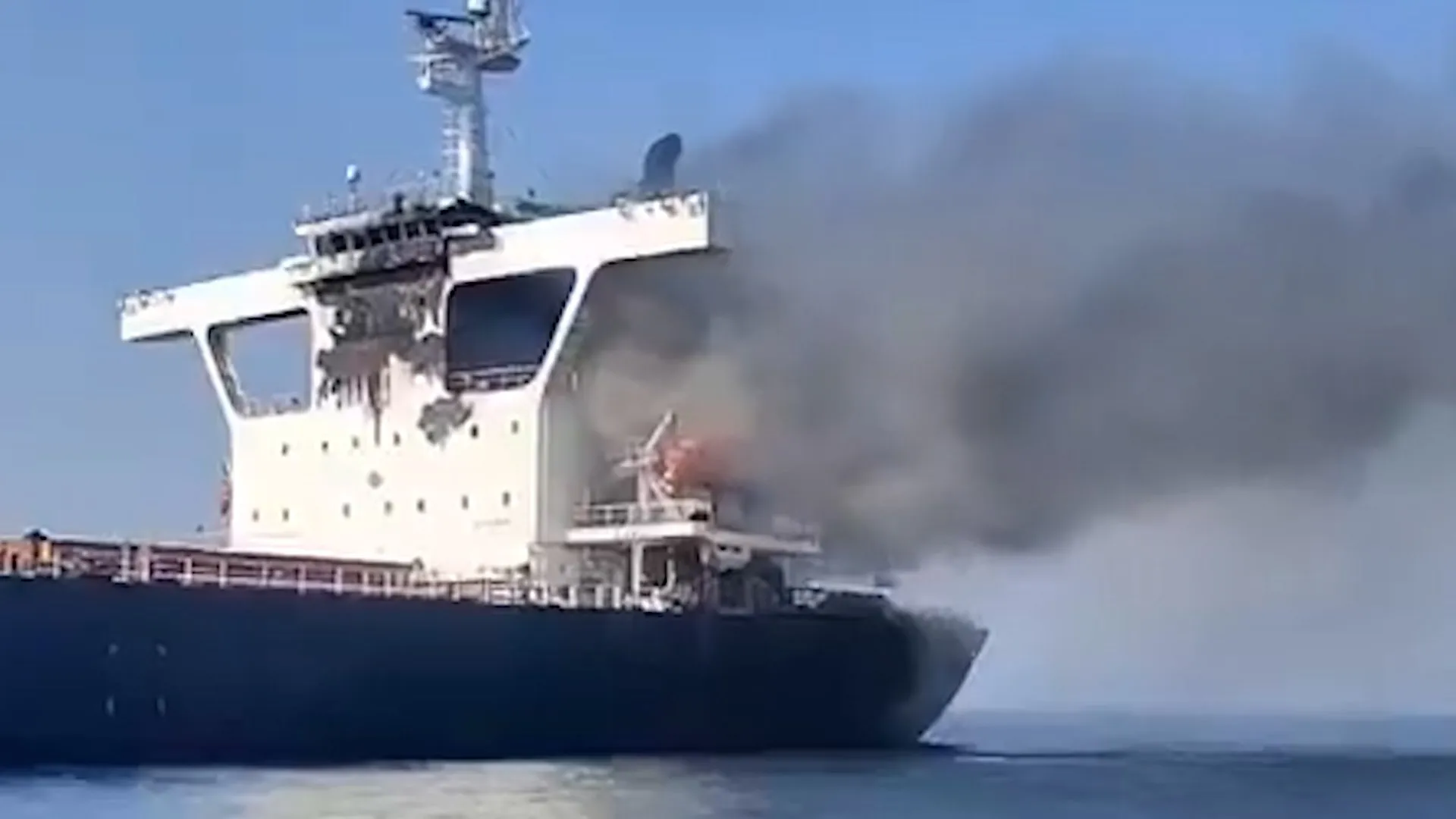
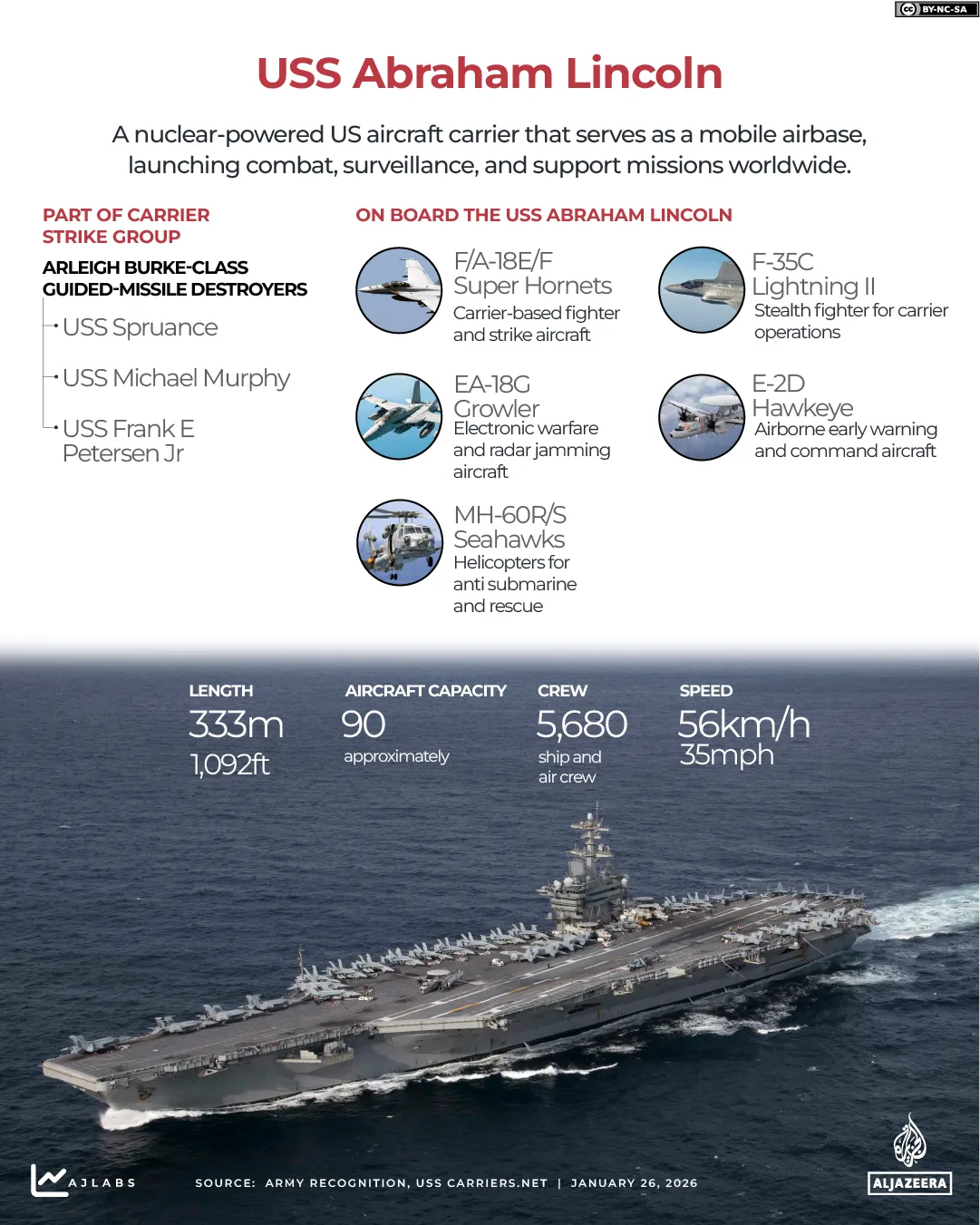
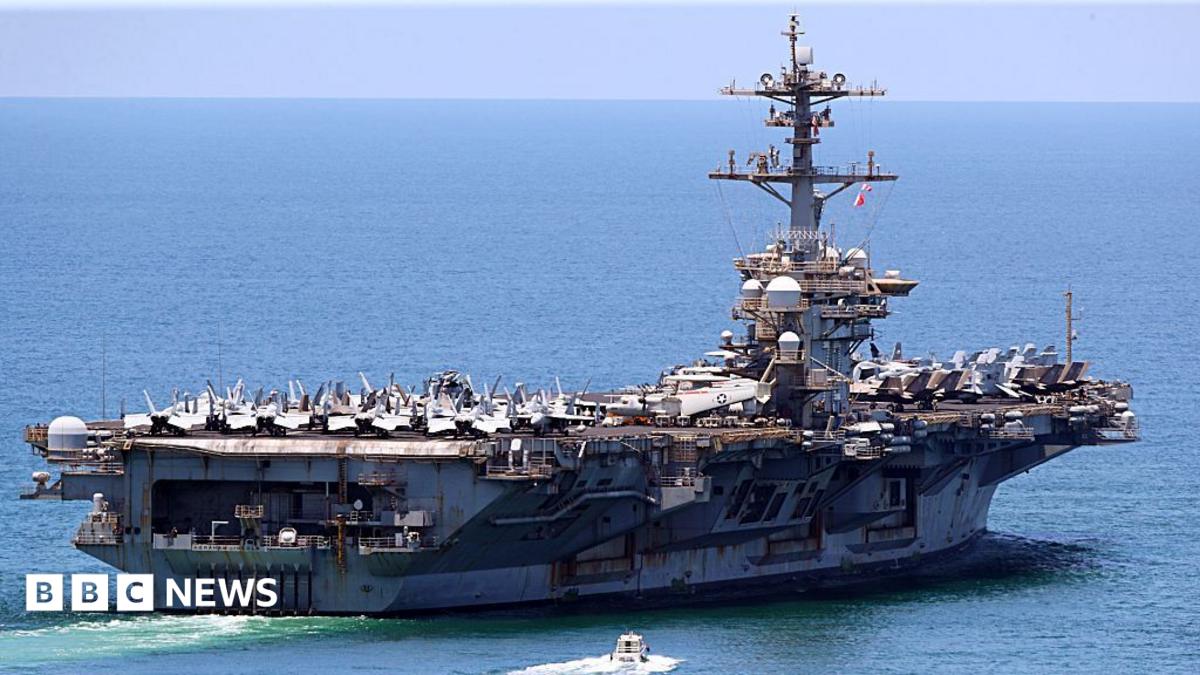
U.S. forces operating in the Gulf of Oman disabled an Iranian-flagged ship trying to run the ongoing blockade of Iranian ports by blasting its rudder with several rounds from the 20mm cannon of an F/A-18 Super Hornet , U.S. Central Command stated on X. The jet was launched from aircraft carrier USS Abraham Lincoln.

The incident occurred at 9 a.m. EDT, according to the command. It came as a new peace initiative between the U.S. and Iran is being floated and a day after President Trump paused the short-lived Project Freedom operation to protect commercial shipping trying to escape the Persian Gulf through the Strait of Hormuz.

CENTCOM forces “observed M/T Hasna as it transited international waters enroute to an Iranian port on the Gulf of Oman,” the command added. “American forces issued multiple warnings and informed the Iranian-flagged vessel it was in violation of the U.S. blockade.”

When it ignored the warnings, the Super Hornet opened fire. After being fired upon, the ship is no longer traveling to Iran, CENTCOM explained.

Sailors assigned to the Tophatters of Strike Fighter Squadron 14 remove a M-61A2 Vulcan 20mm Gattling gun from an F/A-18E Super Hornet aboard the aircraft carrier USS Nimitz. Nimitz is deployed with the U.S. 7th Fleet operating in the western Pacific and Indian oceans.
Sailors assigned to the Tophatters of Strike Fighter Squadron 14 remove a M-61A2 Vulcan 20mm Gattling gun from an F/A-18E Super Hornet aboard the aircraft carrier USS Nimitz. (MC3 EDUARDO ZARAGOZA, USN) MC3 EDUARDO ZARAGOZA, USN

“The U.S. blockade against ships attempting to enter or depart Iranian ports remains in full effect,” the command continued. “CENTCOM forces continue to act deliberately and professionally to ensure compliance.”

The Iranian-flagged oil tanker M/T Hasna had its rudder fired upon by an F/A-18E/F Super Hornet. (CENTCOM)

The Hasna incident is the second known time the U.S. has fired on an Iranian-linked large commercial ship running the blockade. The Arleigh Burke class guided missile destroyer USS Spruance struck the Iranian cargo ship Touska on April 19th with its 5-inch MK 45 gun. The destroyer fired nine inert rounds into the cargo ship’s engine room after the vessel failed to comply with warnings while transiting the north Arabian Sea, Joint Chiefs Chairman Gen. Dan Caine said last month. The Super Hornet used its own method to disable but not sink the ship via taking out its rudder control.

You can see him explain the incident in the following video.

.@thejointstaff Chairman Gen. Dan Caine: As of this morning, 34 ships have met the U.S. blockade and made the wise choice to turn around. One ship did not. Over several hours this past Sunday, the U.S. conducted maritime interdiction operations against the Touska, whose crew… pic.twitter.com/GG5UxxDACa

— Rapid Response 47 (@RapidResponse47) April 24, 2026

Meanwhile, a French-owned ship is “currently drifting without power” after being “struck by an Iranian drone” yesterday, a maritime security official told TWZ.

The container vessel, CMA CGM San Antonio, was damaged and eight people were injured in the attack, the U.N.’s International Maritime Organization (IMO) told us. The attack was reported about two hours before Trump paused Project Freedom, pending further negotiations with Iran.

A U.S. military official told us that it is “aware of the reports” about the attack on the San Antonio, but had no further details about how it happened.

“The transit in question was not coordinated” through Project Freedom, said the official, adding that the crew did not seek U.S. assistance.

Since the war began on Feb. 28, UKMTO “has received 46 reports of incidents affecting vessels operating in and around the Arabian Gulf, Strait of Hormuz (SOH), and Gulf of Oman,” the organization states. There were 26 reported ship attacks, including the San Antonio, 18 suspicious activity reports and two ships hijacked.

Vessel Attacked In Strait Of Hormuz As US Pauses Operation To Guide Ships | US Iran Update thumbnail

Vessel Attacked In Strait Of Hormuz As US Pauses Operation To Guide Ships | US Iran Update


In the wake of Trump’s decision to pause Project Freedom, the IMO and shipping companies say the short-lived effort did not changed the level of danger for ships trapped in the Persian Gulf.

“The situation remains the same,” IMO told us Wednesday morning. “IMO has been consistent in its messaging that the Strait of Hormuz is not safe at present for ships to transit, and ships should exercise maximum caution. Things have not materially changed over the past few weeks.”

“Our risk assessment goes on continuously and it is still valid, that the Strait of Hormuz remains closed for Hapag-Lloyd transits until further notice,” a spokesperson for the German shipping giant told us

“We don’t have a comment specifically addressing the decision to pause,” a spokesperson for Maersk told us. We are following the guidance of our security partners in the region, and it is currently recommended to avoid transiting the strait.

A U.S. official declined comment on how the pause is affecting CENTCOM operations. However, “U.S. forces are currently focused on enforcing the U.S. naval blockade against Iran,” the official told us.

As we reported yesterday, Trump paused Project Freedom after little more than a day, pending negotiations with Iran. 

The move came after Iran fired on U.S. warships and commercial vessels being protected under Project Freedom.  Trump said he made that decision at the behest of Pakistan, which has been mediating peace talks. The president claimed the goal was to give Iran time to respond to U.S. proposals.

Given the circumstances, it seems probable that tactical considerations also drove this decision.

UPDATE: 6:57 PM EDT –

NBC News is reporting that Trump’s abrupt pause on Project Freedom “came after a key Gulf ally suspended the U.S. military’s ability to use its bases and airspace to carry out the operation. The network cited two U.S. officials.

“Trump surprised Gulf allies by announcing ‘Project Freedom’ on social media Sunday afternoon, the officials said, angering leadership in Saudi Arabia,” NBC added. “In response, the Kingdom informed the U.S. it would not allow the U.S. military to fly aircraft from Prince Sultan Airbase southeast of Riyadh or fly through Saudi airspace to support the effort, the officials said.”

A call between Trump and Saudi Crown Prince Mohammed bin Salman “did not resolve the issue, the two U.S. officials said, forcing the president to pause Project Freedom in order to restore U.S. military access to the critical airspace,” NBC continued.

Other close Gulf allies were also caught off guard, the outlet noted, pointing out that “the president spoke with leaders in Qatar after the effort had already begun.”

UPDATE: 5:56 PM EDT –

Israel carried out its first strike in Beirut since before the ceasefire in Lebanon entered into effect on April 16, the Times of Israel reported. Prime Minister Benjamin Netanyahu and Defense Minister Israel Katz said it targeted the commander of Hezbollah’s elite Radwan Force.

Netanyahu and Katz say Radwan Force operatives “were responsible for firing [rockets] at Israeli communities and harming IDF soldiers.”

Israel carries out its first strike in Beirut since before the ceasefire in Lebanon entered into effect on April 16, with Prime Minister Benjamin Netanyahu and Defense Minister Israel Katz saying it targeted the commander of #Hezbollah’s elite Radwan Force Malek Balut.

The… pic.twitter.com/VVtZ4fAwig

— Jason Brodsky (@JasonMBrodsky) May 6, 2026

UPDATE: 5:41 PM EDT –

As we have previously reported, Trump is mulling over sending a ground force into Iran to capture its highly enriched uranium. Now, Spencer Faragasso, a senior fellow Institute for Science and International Security, says new satellite imagery shows Iran is preparing for such an event.

“We just observed new developments at the Pickaxe Mountain complex, just south of the Natanz Nuclear Complex,” he stated on X. “The two eastern tunnel portals have been partially blocked with dirt/rock material that would prevent ground vehicle access from entering those tunnel portals. This is not the result of a landslide, but a deliberate effort to prevent ground vehicle access into the portals. Dirt could have been easily taken from the nearby large spoil piles. No changes to the western tunnel portals can be seen. The Natanz nuclear complex hasn’t seen any new activity either.”

We just observed new developments at the Pickaxe Mountain complex, just south of the Natanz Nuclear Complex. The two eastern tunnel portals have been partially blocked with dirt/rock material that would prevent ground vehicle access from entering those tunnel portals. This is not… pic.twitter.com/P81ZOxIwSM

— Spencer Faragasso (@SFnuclear) May 6, 2026

During an afternoon press conference, Trump was about facing “an opponent in Iran that has refused to submit.
“Why do you say they refuse to submit?” the president responded. “You don’t know that.”

“They fired at U.S. ships a few days ago, the reporter retorted. 

“A few days ago is a long time ago,” Trump proffered. “They want to make a deal badly.”

Reporter: You are facing an opponent in Iran that has refused to submit.

Trump: Why do you say they refuse to submit? You don’t know that.

Reporter: They fired at U.S. ships a few days ago.

Trump: A few days ago is a long time ago. They want to make a deal badly. pic.twitter.com/PaHGJQ6hbo

— Open Source Intel (@Osint613) May 6, 2026

Speaking to reporters in China, Araghchi claimed Iran has “attained an elevated international standing” during the war with the US and Israel.”

Iranian Foreign Minister Abbas Araghchi said Iran has ‘attained an elevated international standing’ during the war with the US and Israel. Araghchi was speaking in Beijing where he met China’s Foreign Minister, Wang Yi, who urged Iran and the US to reopen the Strait of Hormuz. pic.twitter.com/NpLqXAuJys

— Al Jazeera Breaking News (@AJENews) May 6, 2026

UPDATE: 5:27 PM EDT –

ran issued a message to commercial vessels in the Strait of Hormuz saying its ports were fully prepared to provide general maritime services and support to those ships, the official Iranian IRNA news agency reported. Reuters’ Phil Stewart noted that the announcement came just hours after CENTCOM said it disabled the Hansa.

Iran’s message come just hours after CENTCOM said it disabled an Iranian-flagged unladen oil tanker attempting to sail toward an Iranian port https://t.co/5gJfozCxfH

— Phil Stewart (@phildstewart) May 6, 2026

UPDATES

With the U.S. and Iran reportedly moving closer to a peace deal, President Trump on Wednesday repeated his contention that U.S. will resume attacks at a more intense level should no deal be reached.

“Assuming Iran agrees to give what has been agreed to, which is, perhaps, a big assumption, the already legendary Epic Fury will be at an end, and the highly effective Blockade will allow the Hormuz Strait to be OPEN TO ALL, including Iran,” Trump proclaimed on Truth Social. “If they don’t agree, the bombing starts, and it will be, sadly, at a much higher level and intensity than it was before.”

There are swirling claims about the state of peace negotiations with Iran, which have been moving ahead despite recent incidents. As we reported yesterday, officials in the UAE and Oman say Iran has attacked their countries with missiles and drones in addition to the Iranian attacks on shipping we mentioned earlier in this story. 

Wednesday morning, Axios claimed that the White House “believes it’s getting close to an agreement with Iran on a one-page memorandum of understanding to end the war and set a framework for more detailed nuclear negotiations.” 

The U.S. expects Iranian responses on several key points “in the next 48 hours,” the outlet stated, adding that “[n]othing has been agreed yet, but the sources said this was the closest the parties had been to an agreement since the war began.”

The deal would involve Iran committing to a moratorium on nuclear enrichment, the U.S. agreeing to lift its sanctions and release billions in frozen Iranian funds, and both sides lifting restrictions around transit through the Strait of Hormuz.

“Many of the terms laid out in the memo would be contingent on a final agreement being reached, leaving the possibility of renewed war or an extended limbo in which the hot war has stopped but nothing is truly resolved,” Axios noted.

We reached out to the White House for additional information.

SCOOP: The White House believes it’s getting close to an agreement with Iran on a one-page memorandum of understanding to end the war and set a framework for more detailed nuclear negotiations. My story on @axioshttps://t.co/Tyse6wWTSj

— Barak Ravid (@BarakRavid) May 6, 2026

Trump expressed optimism about striking a deal with Iran, which could include Iran exporting its highly enriched uranium to the United States, in a phone call Wednesday morning with PBS News.

Trump told the network he feels the U.S. is closing in on a deal, “but I felt that way before with them, so we’ll see what happens.”

He added that sending special envoys Steve Witkoff and Jared Kushner, his son-in-law, to talks is “unlikely.”

The president suggested it’s possible a deal could be struck to end the war before his trip to China next week.

“I think it’s got a very good chance of ending, and if it doesn’t end, we have to go back to bombing the hell out of them,” Trump told PBS White House correspondent Liz Landers.

“Do you think that– Some of the reporting says that Iran– part of the deal would include that #Iran would export its highly enriched uranium, perhaps, to the United States? Is that part of the deal?

President Donald Trump: No, not perhaps. It goes to the United States.”

“Liz…

— Jason Brodsky (@JasonMBrodsky) May 6, 2026

In addition to sticking points remaining over Iran’s nuclear program, its closure of the Strait and ballistic missile arsenal, finding officials in Tehran who can respond remains a challenge. As we have noted before, there are fractures in the government between the Islamic Revolutionary Guard Corps (IRGC) and more moderate elements, making it hard for the U.S. to gain a consensus on its offers. Difficulty reaching Ayatollah Mojtaba Khamenei, who is reportedly injured and in hiding, is also slowing down negotiations.

In response to Trump’s latest message, one element of the Iranian government expressed skepticism.

“The concept of ‘negotiations’ requires, at the very least, a genuine attempt to engage in discussions with a view to resolving the dispute,” Iranian Foreign Ministry spokesman Esmaeil Baqaei stated on X. “It needs ‘good faith’, then, meaning that ‘negotiations’ is not ‘disputation’; nor is it ‘dictation’, ‘deception’, ‘extortion’ or ‘coercion.’”

Iran has reportedly not yet responded to the latest U.S. proposal aimed at ending the more than two-month war, Iran’s Tasnim news agency said on Wednesday, citing an unnamed source who added that the draft contained some unacceptable provisions.

May 6 (Reuters) – Iran has not yet responded to the latest U.S. proposal aimed at ending the more than two-month war, Iran’s Tasnim news agency said on Wednesday, citing an unnamed source who added that the draft contained some unacceptable provisions.

— Idrees Ali (@idreesali114) May 6, 2026

Israeli Prime Minister Benjamin Netanyahu said on Wednesday that he was not surprised by the recent developments in the negotiations between the US and Iran and that there is “full coordination” between the US and Israel, according to the Jerusalem Post.

“We are maintaining continuous contact with our friends in the US. I speak with President Trump on an almost daily basis. My people and his people speak daily, including today. And I will speak again with President Trump later tonight,” Netanyahu said.

“We share common goals, and the most important objective is the removal of all enriched material from Iran and the dismantling of Iran’s enrichment capabilities,” he added. “However, we are prepared for any scenario, and this is the directive I have given to the IDF and our security agencies. Israel is stronger than ever; Iran and its proxies are weaker than ever.”

In recent hours, the Prime Minister Netanyahu has been holding consultations following developments on the Iranian front and is in contact with senior government officials.

Israeli official to @Jerusalem_Post: We were not surprised by the latest developments.

— Amichai Stein (@AmichaiStein1) May 6, 2026

Meanwhile, Iranian Foreign Minister Abbas Araghchi was meeting with his Chinese counterpart in Beijing. As we have previously reported, China relies heavily on Iranian oil and is also suspected of aiding its war efforts.

“I held constructive talks in Beijing with Chinese Foreign Minister Wang Yi,” Araghchi claimed on X. “Both sides reaffirmed Iran’s right to safeguard national sovereignty and national dignity.”

Iran “appreciates the four-point proposal put forward by the Chinese side on upholding and promoting regional peace and stability,” he added. “The Iranian side trusts the Chinese side and expects the Chinese side to continue playing a positive role in promoting peace and stopping war, and supports the establishment of a new post-war regional architecture that can coordinate development and security.”

我在北京同中国外长王毅进行了富有建设性的会谈。双方重申伊朗有权维护国家主权和民族尊严,伊方赞赏中方提出的关于维护和促进地区和平稳定的四点主张。伊方信任中方,期待中方为促和止战继续发挥积极作用,并支持建立能够统筹发展与安全的战后地区新架构。 pic.twitter.com/esQRcapEGx

— Seyed Abbas Araghchi (@araghchi) May 6, 2026

For its part, the Chinese Foreign Ministry said Beijing “will continue to work for deescalation in the Strait of Hormuz, and keep Chinese vessels and crew members there safe. Hope parties will avoid further escalation, resolve disputes through dialogue and restore peace to the Strait soon.”

China will continue to work for deescalation in the Strait of Hormuz, and keep Chinese vessels and crew members there safe. Hope parties will avoid further escalation, resolve disputes through dialogue and restore peace to the Strait soon. pic.twitter.com/AAlNkXjTBv

— CHINA MFA Spokesperson 中国外交部发言人 (@MFA_China) May 6, 2026

Iranian airstrikes “have damaged or destroyed at least 228 structures or pieces of equipment at U.S. military sites across the Middle East since the war began, hitting hangars, barracks,fuel depots, aircraft and key radar, communications and air defense equipment,” according to a Washington Post analysis of satellite imagery. “The amount of destruction is far larger than what has been publicly acknowledged by the U.S. government or previously reported.”

We have previously noted that Iran has destroyed a E-3 Sentry. KC-135 Stratotankers and Black Hawk helicopters on the ground, as well as radar sights across the region, have also been damaged.

Exclusive: Iranian airstrikes have damaged or destroyed at least 228 structures or pieces of equipment at U.S. military sites since the war began, according to a Post analysis.

The amount of destruction is far larger than what was previously reported. https://t.co/qcDG06Dwa8

— The Washington Post (@washingtonpost) May 6, 2026

A Chinese truck-mounted anti-drone laser system was reportedly spotted at an airport in the UAE, which has been repeatedly attacked by Iran over the course of the war and ensuing ceasefire.

As we have previously reported, a similar system has appeared in Iran.

We cannot independently confirm the location or date of the following video, which appears to have been taken by a passenger on a plane.

A Chinese combat laser system (most likely the Guangjian-21A / 光箭-21A) designed for counter-UAV operations has been spotted at an airport in the UAE. pic.twitter.com/7pLNcp7vyk

— 𝔗𝔥𝔢 𝕯𝔢𝔞𝔡 𝕯𝔦𝔰𝔱𝔯𝔦𝔠𝔱△ 🇬🇪🇺🇦🇺🇲🇬🇷 (@TheDeadDistrict) May 6, 2026

The French aircraft carrier Charles de Gaulle entered the Red Sea on Wednesday.

“The reason why ​we must make a renewed effort today is simply that the blockade of Hormuz continues, the damage to the world’s economy ​is therefore becoming more and more pronounced, and the risk of a prolongation of hostilities is too serious for ⁠us to accept it,” a French presidency official told reporters in a briefing after the army announced the strike group’s deployment.

The Charles de Gaulle aircraft carrier has transited southbound through the Suez Canal to deploy to the Red Sea and Gulf of Aden in preparation for the previously announced UK-France Strait of Hormuz mission, per the French Defense Ministry. pic.twitter.com/fwFeZ7fMLg

— OSINTdefender (@sentdefender) May 6, 2026

Meanwhile, the U.S. Navy aircraft carrier USS Gerald R. Ford was spotted transiting west through the Strait of Gibraltar, heading back toward America after taking part in Epic Fury during its record breaking deployment.

The Ford, which set a post-Vietnam-era record for the longest deployment, suffered through a fire and plumbing problems. Its departure leaves two carriers, the USS Abraham Lincoln and USS George H.W. Bush, in the CENTCOM region.

🇺🇸Norfolk revs…

USS Gerald R. Ford heads west through the Strait of Gibraltar today. Finally on her way home after an epic deployment – currently 316 days since she left the US.

Via @Gibdan1 pic.twitter.com/0nnCzYohxJ

— Navy Lookout (@NavyLookout) May 6, 2026

A video emerging online purports to show the remains of a U.S. Air Force MQ-9 Reaper drone reportedly shot down over Iran last night. The video shows what appears to be the fuel tank of the drone peppered with shrapnel.

We cannot independently verify the provenance of the video or when or where it was taken. We have reached out to CENTCOM for more details.

The U.S. has reportedly lost more than two dozen of these drones since the war began.

Contact the author: howard@thewarzone.com

Howard is a Senior Staff Writer for The War Zone, and a former Senior Managing Editor for Military Times. Prior to this, he covered military affairs for the Tampa Bay Times as a Senior Writer. Howard’s work has appeared in various publications including Yahoo News, RealClearDefense, and Air Force Times.


Source link

US says Hezbollah is ‘trying to derail talks’ with Israel | Israel attacks Lebanon

NewsFeed

US State Department spokesperson Tommy Piggott tells Al Jazeera that the United States is working to create conditions for “good faith conversations” between Lebanon and Israel, while accusing Hezbollah of trying to derail diplomacy through attacks and threats.

Source link

North Korea says it is not bound by any treaty on nuclear non-proliferation | Nuclear Weapons News

Pyongyang says its status as nuclear-armed state ‘will not change based on external rhetorical claims’.

North Korea’s envoy to the United Nations has declared that Pyongyang will not be bound by any treaty on atomic weapons and that no external pressure will change its status as a nuclear-armed state.

Ambassador Kim Song’s statement – carried by state media on Thursday – came as the United States and other countries criticised North Korea’s nuclear programme at the ongoing UN conference reviewing the Nuclear Non-Proliferation Treaty (NPT).

Recommended Stories

list of 4 itemsend of list

Pyongyang withdrew from the NPT in 2003 and has since conducted six nuclear tests, promoting multiple UN Security Council sanctions.

The country is believed to hold dozens of nuclear warheads.

“At the 11th NPT Review Conference currently under way at UN headquarters, the United States and certain countries following its lead are groundlessly calling into question the current status and exercise of sovereign rights,” Kim said, according to the official Korean Central News Agency.

“The status of the Democratic People’s Republic of Korea as a nuclear-armed state will not change based on external rhetorical claims or unilateral desires,” he added.

“To make it clear once again, the Democratic People’s Republic of Korea will not be bound by the Non-Proliferation Treaty under any circumstances whatsoever.”

He continued that the country’s status as a nuclear-armed state has been “enshrined in the constitution, transparently declaring the principles of nuclear weapons use”.

North Korea has long insisted that it will not give up its nuclear arsenal, describing its path as “irreversible” and pledging to strengthen its capabilities.

It has sent ground troops and artillery shells to support Russia’s invasion of Ukraine, and observers say Pyongyang is receiving military technology assistance from Moscow in return.

The nine nuclear-armed states – Russia, the US, France, the United Kingdom, China, India, Pakistan, Israel and North Korea – possessed 12,241 nuclear warheads in January 2025, the Stockholm International Peace Research Institute (SIPRI) reported.

The US and Russia hold nearly 90 percent of nuclear weapons globally and have carried out major programmes to modernise them in recent years, according to SIPRI.

The nuclear issue has been at the heart of the US and Israel’s war on Iran, with US President Donald Trump saying that Tehran – a signatory to the NPT – can never have a nuclear weapon.

Iran denies seeking an atomic weapon and has long demanded Washington acknowledge its right to enrich uranium.

Source link

Pakistan announces shooting down 77 Israeli-made Indian drones – Middle East Monitor

Pakistan announced on Friday that it had shot down 77 Israeli-made attack drones launched by India, in the latest escalation between the two sides following exchanged attacks.

This was announced by Military spokesman Ahmed Sharif Chaudhry during a press conference addressing developments in the military situation in the region, according to the local newspaper Dawn.

Chaudhry confirmed that the death toll from Indian attacks had risen to 33, while the number of injured had reached 62. He accused India of “deliberate attacks and targeting civilian areas.”

Responding to Indian allegations that Pakistani aircraft had been shot down or that Pakistan had carried out attacks inside India, Chaudhry said, “India should present the wreckage of at least one aircraft if its claims are credible.”

He revealed that the Pakistani army had not lost any of its people in the clashes between the two countries, despite the casualties among its ranks.

READ: US President Trump claims India, Pakistan have fought over Kashmir for 1,500 years

Chaudhry sent a message to India, saying, “If you enjoy our response, we will meet your requests at a time, place, and means of our choosing.”

He continued, “We are prepared for all eventualities. If they decide to continue escalation, let them know that we are the ones who will finish what they started.”

On Thursday, Indian media reported that Pakistan had carried out strikes targeting ammunition depots on the Indian side of Jammu and Kashmir. The Pakistani Foreign Ministry later denied this, asserting that allegations of attacks in the Pathankot and Srinagar areas were “baseless.”

It is worth noting that on 6 May, India launched missile strikes targeting what it described as ‘terrorist hideouts” inside Pakistani territory, in retaliation for a deadly attack on 22 April in the Pahalgam district that killed 26 people.

According to New Delhi, its strikes targeted nine militant sites, while Islamabad said the strikes hit six civilian sites, killing 33 people and wounding 62 others.

Pakistan also announced that it shot down 5 Indian warplanes during the attack, a claim that has yet to be confirmed by Indian authorities.

OPINION: The Indo-Pak war: recklessness and diversion in the service of pharaohs 

Source link

Sabuwar Rayuwa Bayan Yaki – HumAngle

Saurara a: Apple Podcast | Spotify | RSS


Christie Garba mace ce mai shekaru 38, uwa ga yara bakwai, wadda ke zaune a Billiri, Jihar Gombe, a yankin Arewa maso Gabashin Najeriya. Ta kasance tana zaune a Jihar Yobe tare da iyalinta kafin rikicin Boko Haram ya addabi yankin. A wancan lokacin, hare-hare sun riga sun faru a wasu wurare kusa da su, amma ba su kai ga al’ummarsu kai tsaye ba.

Christie da iyalinta sun zauna kimanin watanni huɗu bayan hare-haren sun fara, amma yayin da rikicin ya ƙaru, sojoji suka gargadi mazauna yankin cewa lamarin ya yi tsanani sosai, ba zai yiwu su ci gaba da zama ba. Dokokin hana fita (curfew) da suka biyo baya sun sa rayuwar yau da kullum ta zama mai matuƙar wahala.

A wannan shirin na #BirbishinRikici mun ba da labarin yadda Christie da iyalinta suka koma Jihar Gombe da kuma yadda ta yi rayuwa ta hanyar fara sabon kasuwanci.


Mai Gabatarwa: Rukayya Saeed

Marubuciya: Sabiqah Bello

Muryoyin Shiri: Sabiqah Bello

Fassara: Rukayya Saeed

Edita: Aliyu Dahiru

Furodusa: Mu’azu Muhammad

Babban Furodusa: Anthony Asemota

Babban Mashiryi: Ahmad Salkida

Source link

What’s behind the secessionist movement in the Canadian province Alberta? | Politics News

Secessionists in the western Canadian province of Alberta recently announced that they have gathered enough signatures to launch a referendum on independence from the rest of the country.

Leading secessionists said that they formally submitted about 300,000 signatures to election authorities earlier this week, far more than the 178,000 required for the province to consider a referendum.

Recommended Stories

list of 3 itemsend of list

“This day is historic in Alberta history,” secessionist leader Mitch Sylvestre said.

“It’s the first step to the next step — we’ve gotten by Round 3, and now we’re in the Stanley Cup final,” he added, referring to a hockey championship tournament.

Even if a vote were in favour of independence, an uncertain and protracted process would follow, including possible legal challenges and negotiations with the federal government.

But the possibility of a referendum has brought renewed attention to Alberta’s longstanding frustrations with federal power in Canada and calls for greater autonomy.

What is driving Alberta’s secessionist movement? What are the prospects of success for the referendum, and what could it mean for Canadian politics? Here’s what you need to know.

Separatist leader Mitch Sylvestre speaks to reporters as he leads a rally in front of the Elections Alberta headquarters in Edmonton, Canada, on May 4, 2026, as they submit boxes of signatures in the hope of triggering an independence referendum.
Secessionist leader Mitch Sylvestre speaks to reporters as he leads a rally in front of the Elections Alberta headquarters in Edmonton, Canada, on May 4, 2026 [Henry Marken/AFP]

How many signatures were collected?

Alberta secessionists said on Monday that they had submitted nearly 302,000 signatures, more than the 178,000 required to qualify for referendum consideration.

Alberta Premier Danielle Smith has said she would move forward with the vote if the petition gathered enough signatures, although she does not support independence from Canada herself.

What would the referendum ask voters?

If the proposed measure makes it to the ballot, it would ask voters: “Do you agree that the Province of Alberta should cease to be a part of Canada to become an independent state?”

Does this guarantee a referendum, and could Alberta actually separate from Canada?

Meeting the signature requirement does not in itself guarantee that a referendum will take place.

Elections Alberta, the province’s electoral authority, still needs to verify the petitioners’ names, a process that has been stalled by a court ruling.

Indigenous groups have also filed a legal challenge, stating that separation would be a violation of their treaty rights.

There are also questions about whether the referendum will gather sufficient support among voters to pass. Polls have shown that about 30 percent of residents would support such a measure.

What’s behind Alberta’s bid for separatism?

While secession has never been so close to a vote in Alberta, pro-independence sentiment has been part of the province’s political culture — home to about 5 million people — for decades.

That sentiment is driven largely by the feeling of many in Alberta that the province is distinct — culturally, economically, and politically — from the rest of Canada.

The oil-rich western province has long expressed frustration with political decision-making in Ottawa, the Canadian capital, despite what it sees as its outsized economic contribution to the national economy through its massive fossil fuel industry.

Environmental regulations and efforts to address climate change have become another flashpoint, with secessionist leaders depicting Alberta’s primary industry as hamstrung by regulatory decisions made by bureaucrats with little understanding of the province.

“We’re not like the rest of Canada,” secessionist leader Sylvestre told the news service AFP. “We’re 100 percent conservative. We’re being ruled by Liberals who don’t think like us.”

“They’re trying to shut down our industry,” he added.

FILE PHOTO: Oil pumpjacks operating in a farmer’s field near Calgary, Alberta, Canada, November 26, 2025. REUTERS/Todd Korol/File Photo
Oil pumpjacks operating in a farmer’s field near Calgary, Alberta, Canada, on November 26, 2025 [File: Todd Korol/Reuters]

Have any other provinces considered separating from Canada?

Alberta is not the only region with a complicated relationship with the rest of Canada.

The French-speaking province of Quebec is home to a decades-old nationalist movement that has pushed to separate from Canada, rooted in a desire to recognise Quebec’s distinct linguistic and cultural identity.

The popularity of that movement has ebbed, with a March poll finding Quebecois secessionism at its lowest level of support since voters narrowly rejected a referendum in 1995. Still, the secessionist Parti Quebecois political party is polling high in advance of a provincial election set for later this year.

Has the push for independence attracted criticism?

As with all independence movements, the province’s bid for separation from the rest of Canada has become a source of passionate disagreement.

“It stands for something that most of us Albertans and Canadians don’t stand for,” Thomas Lukaszuk, the province’s former deputy premier and a strong supporter of federalist identity, told AFP. “It’s a form of treason.”

Expressions of support from the administration of United States President Donald Trump, who has angered Canadians by suggesting that the country should become a US state, have also sparked criticism that the secessionist movement is undermining Canadian unity.

Asked about the possibility of independence in January, US Treasury Secretary Scott Bessent said that Alberta would be a “natural partner” for the US.

“Alberta has a wealth of natural resources, but they won’t let them build a pipeline to the Pacific,” Bessent told a US right-wing commentator. “I think we should let them come down into the US, and Alberta is a natural partner for the US. They have great resources. The Albertans are very independent people.”

“The separatists are not elected members. They’re just citizens of Canada residing in Alberta, and they actually formed delegations and are received by the highest levels of US administration,” Lukaszuk said. “That must be very empowering to them.”

Regardless of whether the proposed ballot measure succeeds, the development is likely to serve as a shot in the arm for the province’s secessionist forces.

“I think this is going to be a permanent change in our political culture,” independent historian and supporter of independence Michael Wagner told AFP, adding that the movement “is not going to just disappear”.

What happens next?

A provincewide ballot could take place as soon as October, as part of a larger referendum on several questions relating to constitutional issues and other matters, such as immigration, scheduled for October 19.

Justice Shaina Leonard issued a monthlong stay on the certification of the independence petition on April 10, following a legal challenge from several First Nations groups who say separation would violate treaty rights.

That ruling did not bar the gathering of signatures, and a decision on legal challenges from Alberta First Nations is expected later this week. A decision in favour of the First Nations challengers could render the process academic.

Source link

Al-Qaeda-linked fighters storm Mali prison, block food supplies to Bamako | Conflict News

Fighters attack ‘Africa’s Alcatraz’, which detains high-value prisoners, and disrupt crucial supply chains to the capital.

In a new wave of attacks in Mali, an al-Qaeda-linked group has stormed a main prison housing fighters from the armed group and set fire to trucks with food supplies heading to the capital Bamako.

Fighters from the Jama’at Nusrat al-Islam wal-Muslimin (JNIM) group stormed the Kenieroba Central Prison, a recently built complex dubbed “Africa’s Alcatraz”, located about 60km (37 miles) southwest of Bamako, Al Jazeera’s Nicolas Haque reported on Wednesday.

Recommended Stories

list of 4 itemsend of list

The detention centre houses 2,500 prisoners, including at least 72 inmates considered “high value” by the Malian state, Haque said, adding that Malian armed forces were repelling the attack.

Among the prisoners are JNIM fighters and a number of people arrested following large-scale attacks last month by the group’s fighters and Tuareg separatists, the Azawad Liberation Front (FLA).

The fighters attacked several military bases across multiple cities, including areas where senior government officials live, and took control of the northern city of Kidal in a coordinated offensive on April 25 and April 26, which struck at the heart of the West African country’s military government.

One of those attacks killed Malian Defence Minister Sadio Camara and his family in their home in Kati, a garrison town near the capital. On Monday, the leader of the country’s military government, Assimi Goita, took on the role of defence minister. At least 23 others were also killed in the attacks.

Since then, “there has been a wave of arrests of former and current military officers, members of civil society, lawyers, members of the political opposition – all accused of colluding with al-Qaeda fighters,” said Haque, who has been reporting for years on and in Mali. He added that fighters linked to the armed group were also arrested.

Security sources told AFP news agency that opposition figures Mountaga Tall, Youssouf Daba Diawara, and Moussa Djire are among those “abducted”.

According to family members and security sources who spoke to the agency, Tall, a lawyer, was taken on May 2 in Bamako by hooded men on charges of plotting with opposition figures in the Senegalese capital, Dakar, to overthrow the military government. Since his arrest, Tall has been questioned at least once for “attempted destabilisation”.

The security sources said Diawara and Djire were suspected of links with, respectively, the influential imam Mahmoud Dicko and Oumar Mariko, two opposition figures in exile. At least two other civilians who are close to Mariko were also arrested following the attacks, a judicial source told AFP, without giving further details.

The military prosecutor’s office said on May 1 that it had “solid evidence” of the “complicity” of certain military personnel, accusing them of helping with the “planning, coordination and execution” of the attacks.

In a report published on Tuesday, the Office of the United Nations High Commissioner for Human Rights (OHCHR) said there have also been “gravely concerning reports of extrajudicial killings and abductions, allegedly carried out by members of the security forces” following the attacks.

The violence has set off fighting across Mali’s vast desert north, raising the prospect of significant gains by armed groups that have shown an increasing willingness to strike neighbouring countries.

JNIM has called on Malians to rise up against the government and transition to Islamic law. The group has also pledged to besiege Bamako, and on Friday, it had reportedly set up checkpoints around the city of four million.

Haque said the blockade has the potential to cause a humanitarian disaster.

“These are al-Qaeda fighters that have pointed 12.7mm machine guns on their motorbikes, stopping any outgoing or incoming traffic,” the correspondent said. “We have seen on social media these fighters stopping food trucks trying to enter the area. This blockade is not just affecting people living in Bamako; it’s affecting people throughout Mali.”

On May 3, the mayor of Diafarabe village, in the Mopti region, called on the authorities to act before people started dying of hunger, as the village had run out of food.

Source link

Why was Joao Neves handball against Bayern Munich not a penalty?

Bayern Munich players, coaching staff and fans at the Allianz Arena were in disbelief after they were denied a penalty for a handball by Joao Neves in their Champions League semi-final second leg against Paris St-Germain.

Trailing the holders 1-0 on the night and 6-4 on aggregate, the German side’s players surrounded referee Joao Pedro Silva Pinheiro at the half-hour mark when Vitinha rifled a clearance against his own team-mate Neves’ arm inside the box.

But Pinheiro waved away the Bayern protests with the video assistant referee (VAR) also not intervening, leaving social media wondering why a spot-kick was not given.

According to BBC Sport’s football issues correspondent Dale Johnson, it was because of a little-known exemption within the handball law.

According to the laws of the game, it is not a handball if “hit on the hand/arm by the ball which has been played by a team-mate (unless the ball goes directly into the opponents’ goal or the player scores immediately afterwards, in which case a direct free-kick is awarded to the other team)”.

“It covers when the ball is unexpectedly hit at you by a team-mate, even if your arm is away from your body – the law says you should not give away a penalty,” said Johnson.

“When Vitinha blasts the ball clear, could Joao Neves think the ball would be hit straight at him?

“Of course, this could be overridden by deliberate handball, but in the context of this situation, a penalty would not be expected to be awarded.”

Source link

Indiana, Ohio primaries draw midterm battle lines, reinforce Trump’s pull | US Midterm Elections 2026 News

Latest votes set up key Senate race, underscore Trump’s continued influence over Republican Party.

Primary elections in Indiana and Ohio have drawn the latest battle lines for the United States midterm elections in November, while underscoring Trump’s continued sway over Republican voters.

In Ohio, voters on Tuesday picked the candidates who will face off in the consequential election, with Democrats picking former Senator Sherrod Brown to take on Republican Jon Husted. Husted replaced Vice President JD Vance when he left his Senate seat for the White House.

Recommended Stories

list of 3 itemsend of list

The race is considered one of the most consequential, as Democrats face an uphill battle to retake control of the Senate, which currently has a 53-47 Republican majority. Brown has long styled himself as an economic populist, able to cut across party lines, while Republican groups have pledged to spend heavily to defend Husted.

Also in the “Buckeye State”, Trump ally Vivek Ramaswamy won the Republican gubernatorial nomination. Ramaswamy, who had a short tenure co-running Trump’s Department of Government Efficiency (DOGE) panel, will face off with Democrat Amy Acton, who led the state’s Department of Health during the COVID-19 pandemic.

In Indiana, meanwhile, Trump’s continued influence over the Republican Party was apparent, even as polls have seen his overall approval rating tank in recent weeks amid economic uncertainty and the US-Israeli war in Iran.

The US president had promised to target Republicans who pushed back on his calls for Indiana to redraw its congressional districts in advance of the midterms. Indiana was one of the few Republican-controlled state legislatures to reject the president’s pressure amid a wider flurry of state redistricting.

Five of the state-level candidates Trump targeted subsequently lost their primary elections on Tuesday. One candidate won, and one race remained too close to call.

State Senator Linda Rogers, one of the ousted Republicans, said Trump’s successful attempt to scuttle her race sent a clear message to others in the party considering opposing the president.

“If someone is going to ask you to take a tough vote, you may think twice about your conscience and what’s best for your community and instead what’s best for you and your career,” she said.

The primary comes shortly before US Representative Thomas Massie in Kentucky and US Senator Bill Cassidy in Louisiana, both Republicans, face punishing primary challenges. Trump is opposing both incumbents.

Massie has been one of the most outspoken critics of the administration, particularly when it comes to the US-Israeli war in Iran and the Department of Justice’s handling of documents related to disgraced financier Jeffrey Epstein.

Cassidy had voted to impeach Trump in 2021 for his role in the January 6, 2021, riot at the US Capitol and remained a critic throughout Trump’s 2024 re-election campaign.

While Trump’s influence remained strong in the Indiana primary, it does not necessarily spell Republican success in the general elections.

Recent polls have shown tanking support for Trump among independents, who are unaffiliated with either party and often serve as key deciding factors in close races.

For example, a recent NPR/PBS News/Marist Poll found that 63 percent of US residents nationally place a “great deal or good amount of blame” on Trump for high petrol prices. That rate was the same – 63 percent – for independents.

Source link

Project Freedom and the UAE Attack: What It Means for the Iran Ceasefire Now

The ceasefire between the US and Iran has been in place for nearly four weeks. The Strait of Hormuz has not been at peace for a single day.

This week pushed that contradiction to its most dangerous point yet. The United States launched Project Freedom, a naval escort operation designed to guide roughly 2,000 ships stranded on either side of the Strait through to open water. Iran said any ship attempting passage without IRGC permission would be fired on. Within hours, both sides were claiming to have hit the other, the UAE was scrambling missile alerts for the first time since the ceasefire began, an oil refinery in Fujairah was on fire, and commercial aircraft bound for Dubai were turning around mid-air.

As of Tuesday evening, Trump announced Project Freedom would be paused “for a short period of time” to see if an agreement with Iran could be reached. Secretary of State Rubio told reporters the US was now in a “defensive” posture. Twenty-four hours earlier, both sides had been shooting and denying it simultaneously.

Here is what we know, what is contested, and what it means.

What Is Project Freedom and Why Did the US Launch It?

Trump announced the operation on Sunday, framing it in humanitarian terms, an effort to free the seafarers and cargo companies that had done nothing wrong and were caught between two governments fighting a war neither had formally ended. About 2,000 ships have been stranded on either side of the Strait since late February, unable to move without IRGC permission, which Iran began requiring and charging for after the ceasefire took effect.

The US had already begun a naval blockade of Iranian ports on April 13. Project Freedom was the next escalation — a direct challenge to Iran’s assertion that the Strait was now under its operational control. Trump described it as a “humanitarian gesture.” Iran described it as a violation of the ceasefire and an act of military aggression in a sensitive oil region that affects the economies of countries around the world.

Two American-flagged merchant ships successfully transited the Strait on Monday with US Navy escort. A Danish shipping company confirmed one of its vessels crossed with US military protection. But the transit did not go smoothly.

Did Iran Attack a US Warship? What the Claims Say

By Monday afternoon, the competing narratives had become almost impossible to untangle, which is itself part of the story.

Iran’s Fars News Agency reported a US warship had been hit by two Iranian drones after refusing to turn back from the Strait. CENTCOM denied any warship had been hit. US Admiral Brad Cooper said CENTCOM forces had sunk six IRGC vessels that tried to interfere with Project Freedom. Trump later said seven. Iran’s state broadcaster then reported that Tehran had launched an investigation and its preliminary conclusion was that the vessels the US claimed to have sunk were not IRGC boats at all, they were two small civilian craft carrying passengers from Oman to the Iranian coast, and five civilian passengers had been killed. The US has not commented on that claim and it has not been independently verified.

Why Iran Attacked the UAE in 2026: The Fujairah Strike Explained

The UAE’s Ministry of Defense said its air defenses engaged 15 ballistic missiles, three cruise missiles, and four drones launched from Iran on Monday, the first Iranian attacks on the UAE since the ceasefire took effect on April 8. One drone struck an oil refinery in Fujairah, wounding three Indian nationals and setting the facility ablaze. Four missile alerts were issued across the country, sending residents to shelter. Commercial aircraft bound for Dubai and Abu Dhabi turned around in mid-flight.

Iran’s position was that the Fujairah attack was not a premeditated strike on the UAE but a consequence of what it called US military adventurism in the Strait. An Iranian military official said the Islamic Republic had no preplanned programme to attack UAE facilities, and that what happened resulted from the US attempt to create an illegal passage through restricted waters. The UAE’s Foreign Ministry rejected that framing entirely, condemning what it called renewed terrorist and unprovoked Iranian attacks on civilian sites, and warning it reserves the full right to respond.

Why the Attack Claims Cannot Be Independently Verified

One detail worth noting is the shifting count of Iranian vessels supposedly sunk. Admiral Cooper said six. Trump said seven. No independent observer has confirmed either figure, and Iran has denied any IRGC boats were hit at all. This pattern: each side claiming damage inflicted while denying damage received, with no neutral verification , has run throughout the conflict and is not unique to this week’s exchange. What is different now is that the Strait is supposed to be under a ceasefire, and the exchanges are happening in a waterway where 2,000 civilian ships are anchored and waiting to see who wins the argument.

How the Hormuz Escalation Is Threatening Iran Ceasefire Talks in 2026

Trump’s decision to pause Project Freedom on Tuesday is significant precisely because of how quickly it followed the launch. The operation began Sunday. By Tuesday, with the UAE under attack, Iranian drones targeting ships in the Strait, and competing claims circulating with no resolution, the White House stepped back. Rubio reframed the entire mission as defensive rather than offensive, and a new UN Security Council resolution on freedom of navigation was announced, co-authored by Bahrain, Saudi Arabia, the UAE, Kuwait, and Qatar. A previous similar resolution was vetoed by China and Russia, and the outlook for this one is no clearer.

The pause does not resolve the underlying problem. The Strait remains contested. Iran still insists ships must seek IRGC permission and pay for transit. The US still insists the Strait is international water under international law. Two thousand ships are still stranded. And the ceasefire that is supposed to govern all of this is being tested in ways its text was never designed to handle.

The attacks this week did not happen in isolation from the negotiations still technically underway. Pakistan has been trying to bring the US and Iran back to a second round of talks after the Islamabad discussions collapsed on the nuclear question in April. Every exchange of fire, every competing claim, every missile alert in Abu Dhabi makes that second round harder to convene and harder to trust once convened.

As Shahram Akbarzadeh, a professor in Middle East and Central Asian politics at Deakin University, told Al Jazeera: “We see escalation after escalation against the backdrop of shuttle diplomacy. Such attacks, even if they are aimed to be contained, risk exploding into another major combat.” Neither the Americans nor the Iranians want a return to full-scale war, Akbarzadeh said, but neither is prepared to show weakness. “This dynamic has locked them in a perpetual conflict and in desperate need of a circuit breaker.”

The circuit breaker Pakistan offered in April produced a ceasefire. That ceasefire is now generating its own escalation cycle, in twenty-one miles of water, over a question neither side has answered: who controls the Strait of Hormuz, and on what terms does the world’s most important waterway reopen.

Two thousand ships are waiting for the answer.

Source link

Trump Administration Issues License Facilitating Venezuelan Debt Restructuring

Venezuela’s foreign debt is estimated to stand as high as US $170 billion. (Archive)

Caracas, May 6, 2026 (venezuelanalysis.com) – The US Treasury Department has issued a sanctions waiver allowing the provision of services related to the restructuring of Venezuelan debt.

General License 58 (GL58), issued on Tuesday, authorizes the provision of “legal, financial advisory, and consulting services” to the Venezuelan government and state oil company PDVSA in relation to “potential restructuring of debt” owed by the Venezuelan state, PDVSA, and PDVSA affiliates.

The license does not allow creditors to transfer or settle debt, nor directly engage with Venezuelan authorities. It additionally forbids any payment to consultants using cryptocurrencies or gold.

The Trump administration’s latest move is a necessary step to locate creditors and assess the size of Venezuela’s foreign debt, estimated to be as high as US $170 billion, split between defaulted bonds, unpaid loans, and international arbitration awards.

Venezuelan bonds, which have steadily increased in value in recent months, rallied again on Tuesday as investor confidence in a restructuring deal grows. Bonds that fell below 10 cents on the dollar are currently trading between 40 and 60 cents on the dollar. Creditor groups have also held meetings with the Trump administration as they seek to engage Caracas.

Though the Nicolás Maduro government prioritized debt service after the Venezuelan economy fell into deep recession after 2014, US economic sanctions beginning in 2017 accelerated the economic tailspin and shut Venezuela out of financial markets, making debt payments impossible. The defaulted state and PDVSA bonds, estimated at around $66 billion, have been accruing interest ever since.

The Venezuelan government, led by Acting President Delcy Rodríguez, has not publicly disclosed plans regarding the country’s external debt. In March, the Trump administration recognized Rodríguez as Venezuela’s “sole leader,” clearing another hurdle for creditors. 

Rodríguez, who previously served as vice president, took over the presidency following the US kidnapping of Maduro on January 3. In the four months since, the acting administration has fast-tracked a diplomatic rapprochement with Washington. Trump officials have made multiple visits to Caracas and have been hosted at the presidential palace.

In parallel, Venezuelan authorities have advanced multiple pro-business legislative reforms in a bid to attract foreign investment in sectors such as energy and mining. Projects to change the Caribbean nation’s labor, tax, and housing laws are currently underway. 

In parallel, Rodríguez has installed a commission to assess the “strategic” value of Venezuelan state assets and their possible privatization. The Cisneros Group, one of the country’s largest private sector conglomerates, has announced plans to raise funds ahead of potential sell-offs of state assets.

Caracas also reestablished ties with the International Monetary Fund (IMF) and the World Bank in April. Economy Vice President Calixto Ortega was recently appointed as the country’s representative before the IMF. Venezuelan leaders have stated that their priority is to access around $5 billion in IMF-issued Special Drawing Rights to address urgent needs in public services and infrastructure.

Rodríguez has stated that there are “no plans” to contract an IMF loan, though a debt-restructuring agreement would place a significant burden on Venezuelan finances. The government’s budget for 2026 was estimated at around $20 billion.

For her part, IMF Managing Director Kristalina Georgieva stated that the Washington-based institution is willing to support a loan program for Venezuela but that clarity on economic data and external debt is a necessary prior step.

Edited by Lucas Koerner in Caracas.

Source link