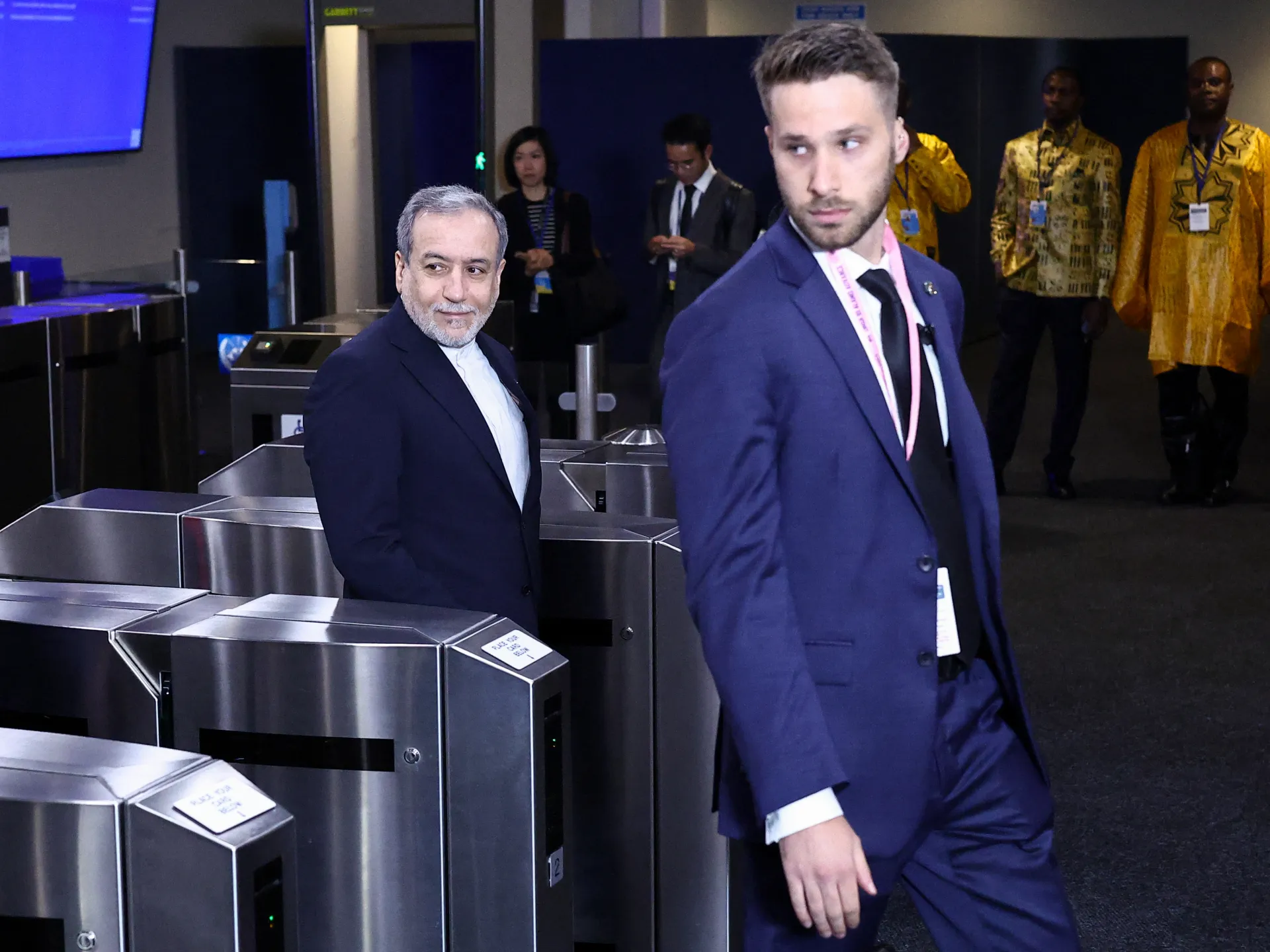
The heads of several major AI firms told the United Nations Security Council (UNSC) their industry urgently needed global oversight to avoid dangers that could threaten the whole world.
“If managed poorly, I even believe AI could be a risk to humanity as a whole,” Dario Amodei, the chief executive officer of Anthropic, told members of the body on Wednesday.
Recommended Stories
list of 3 itemsend of list
Sam Altman, the head of rival company OpenAI, echoed his concerns, telling the 15-member council tasked with tackling major crises globally that humanity could “lose control of the future of AI”.
The meeting, which coincides with the UN General Assembly (UNGA) gathering in New York City, was convened by France and comes at a time when experts are increasingly warning that the rapid development of AI needs more human oversight to ensure it does not slip out of control and cause a global catastrophe.
Altman and Amodei called on world leaders to take action.
“If AI is to be democratic, the most important decisions cannot be made by labs in San Francisco alone,” Altman told members. “They must be shaped through democratic processes and by governments accountable to the people they serve.”
Their concerns were shared by several representatives on the council, including the foreign ministers of France and the United Kingdom, who said the international community needed to step in and create common frameworks for how the technology should be controlled.
Hugging Face CEO Clement Delangue, whose company has come under attack by out-of-control AI models in recent months – incidents used by the other companies as evidence of the need for more safety measures – told the UNSC his company had relied on the technology to defend itself in those same incidents.
Delangue said Hugging Face had relied on a Chinese AI model to help defend against the attack by OpenAI’s AI agents, because it faced fewer restrictions than comparable US tools.
“We were attacked by AI, but more importantly, we defended ourselves with AI,” he told the council.
US and China reluctant to impose restrictions
In the United States, though, where the largest and most influential companies developing AI are based, the administration of US President Donald Trump has baulked at imposing new guardrails on the industry.
The administration’s representative at the UNSC meeting, Michael Kratsios, told members, “We totally reject all efforts by international bodies to assert centralised control and global governance of AI.”
Chinese President Xi Jinping is expected to discuss whether and how to regulate AI during a visit to Washington, DC, this week. The two countries are locked in a technological race to develop more powerful AI tools, a competition that experts say makes it less likely that either country would want to impose any major new restrictions on their efforts right away.
Yet there is a growing recognition at the UN of the danger AI potentially poses to the world, said Daniel Forti, head of UN Affairs at the International Crisis Group. Member states understand that “there will be much more of a need for international cooperation, setting some rules of AI, even if the biggest players are more focused on growth opportunities than on some sort of collaboration,” Forti said.
For several years, the UN has been participating in multilateral meetings to shape everything from protections for workers from AI in emerging economies and ensuring open access to this technology, to following how AI is used in military conflicts. In 2024, the UNGA unanimously passed its first resolution on AI, a nonbinding statement that called on member states to protect personal data, monitor AI for risks and safeguard human rights.
The adoption of AI has taken off dramatically since then, and with it have come dire warnings from environmental groups, human rights advocates, and even the tech moguls whose companies are developing the tech.
The future of AI “cannot be decided by a handful of countries or left to the whims of a few billionaires”, UN Secretary-General Antonio Guterres said at a global summit held earlier this year.
Last year, the UNGA formed two new bodies to deal with AI: the Independent International Scientific Panel on AI that brings together experts to provide governments with independent assessments, and the Global Dialogue on AI Governance, which provides a regular forum for discussing approaches to AI governance.
“The dangers are real and imminent,” Yoshua Bengio, a Canadian expert on AI and co-chair of the Independent International Scientific Panel, told the UNSC on Wednesday. “This council faces an unprecedented threat, one that none of its members would choose, that none can contain alone, and that does not respect the borders we defend.”
An artificial intelligence agent developed by OpenAI “infiltrated” an Australian government website in June, Prime Minister Anthony Albanese has said.
The agent hacked a statistics portal containing “non-sensitive” data from Australia’s universal healthcare scheme Medicare, Albanese said in New York on Wednesday, local time.
He had a “very frank discussion” with OpenAI CEO Sam Altman for taking “too long” to tell them about the breach, believed to be one of the world’s first publicly reported AI-led hacks of a government website.
OpenAI said it only became aware of the incident in August “during an ongoing review” of “misaligned model activity”, and told Australian officials on 10 September.
While the review is ongoing, a spokesperson for the AI firm said that it is not believed that any patient records were accessed.
Albanese said the breach occurred in June this year, but OpenAI only informed government officials via email on 10 September.
The prime minister said he had also expressed “Australia’s extreme concern about this incident” when he spoke to Altman and there will “obviously be legal consequences on it”.
Albanese said the agent accessed both public and non-public files and a “forensic investigation” is under way to find out if other government systems were affected.
The investigation will be led by the Australian Signals Directorate, the country’s cybersecurity agency.
The public-facing Medicare Statistics Reporting Service portal is administered by Services Australia, the main hub to redirect users to government services.
He told reporters: “No personal information is believed to have been accessed at this stage, but investigations are ongoing.
“Evidence currently available is there is no broader compromise to the Services Australia network. Nonetheless this situation is obviously unacceptable.”
Trump takes rare step of meeting foreign leader at the airport, underscoring significance of US-China relationship.
Published On 23 Sep 202623 Sep 2026
United States President Donald Trump has welcomed Chinese President Xi Jinping as he arrived in the US for a three-day trip focused on issues such as security, trade and technology.
Trump took the rare step of meeting the Chinese leader in person at Joint Base Andrews in the state of Maryland on Wednesday, the first president to do so in recent memory.
The US president and First Lady Melania Trump greeted Xi and his wife on the tarmac during a welcoming ceremony, where a red carpet was rolled out and the couples exchanged handshakes. Trump and Xi then walked side by side, flanked by US soldiers, before standing for a gunfire salute and the US national anthem.
The in-person greeting is a sign of the significance that Washington ascribes to its relationship with Beijing, whose meteoric economic rise over the last several decades has transformed it into a global superpower capable of rivalling the United States.
Despite tense relations that worsened after the Trump administration placed high tariffs on Chinese goods – a move that was met with retaliatory measures from Beijing – Trump has expressed personal affinity for Xi and his desire for strong ties with China.
The Chinese president’s trip to the US will include a state dinner, attended by leaders of the country’s powerful tech industry, a military ceremony at the White House, and a visit to the National Archives, home to documents of historical and cultural significance such as the US Constitution and the Declaration of Independence.
But both countries remain wary of the other as they compete for political and economic influence. The trip is likely to include discussion of issues such as the US war on Iran, trade, technology, rare-earth minerals and US ties to Taiwan, the self-governing island that China claims as part of its territory.
An 11-month deal that offered temporary relief from punishing tariffs between the two countries is set to expire on November 10.
The Kremlin has signalled that Russia’s position on potential peace talks with Ukraine remains unchanged, despite a planned meeting between US Secretary of State Marco Rubio and Russian Foreign Minister Sergey Lavrov in New York.
Kremlin spokesman Dmitry Peskov said there were still no conditions for formal Ukraine peace talks to begin, while insisting that Moscow remained open to negotiations.
His comments came ahead of the Rubio Lavrov meeting, which is expected to provide an opportunity for Washington and Moscow to discuss the prospects for ending the war.
However, Peskov said there were no concrete plans for further high level meetings involving either the United States or Ukraine to discuss a potential peace agreement.
Stay ahead of the geopolitical week.
MD Briefing delivers expert analysis across five global fronts — the Indo-Pacific, energy, geoeconomics, European security, and the Middle East — every Monday morning. Free.
Moscow Maintains Its Position
The Kremlin also said there had been no change in its position regarding a possible direct meeting between Russian President Vladimir Putin and Ukrainian President Volodymyr Zelenskiy.
Peskov reiterated that Zelenskiy could travel to Moscow for such a meeting and said Russia would provide the necessary security guarantees.
He also said the Ukrainian president was aware of the decisions that Moscow believes would be necessary before meaningful progress could be made.
The comments underline the continuing gap between the two sides over the conditions for direct negotiations.
Ukraine has repeatedly rejected the possibility of holding talks in Moscow and has instead proposed a neutral location for any direct meeting between the two presidents.
US Diplomacy Faces a Difficult Path
The Rubio Lavrov meeting comes as Washington continues to engage both Moscow and Kyiv over the possibility of a diplomatic settlement.
The meeting itself does not necessarily indicate that formal peace negotiations are imminent. Russia continues to say that the conditions for talks have not been established, while Ukraine has maintained its own requirements for any negotiations with Moscow.
That leaves the United States attempting to maintain communication with both sides while the basic framework for potential negotiations remains unresolved.
The disagreement over the location of a Putin Zelenskiy meeting is also significant because it reflects broader differences over the political conditions surrounding any future negotiations.
For Moscow, the latest statements reinforce its existing position that Ukraine must address Russian demands before a presidential meeting can produce meaningful progress. Kyiv, meanwhile, has rejected Moscow’s proposed setting and continues to favour a neutral venue.
What Comes Next
The Rubio Lavrov meeting could provide an indication of whether Washington and Moscow can narrow some of their differences, but the Kremlin’s latest statements suggest that Russia is not currently changing its stated position on the conditions for peace talks.
The immediate diplomatic focus will therefore be on whether the US Russian dialogue can establish enough common ground for further discussions involving Ukraine.
Until the disagreement over the conditions and format of negotiations is addressed, the prospect of a direct Putin Zelenskiy meeting remains uncertain. The New York meeting may keep diplomatic channels open, but it does not by itself resolve the fundamental differences separating Moscow and Kyiv.
Hacker group ShinyHunters claims to have detailed data on thousands of FBI employees.
Published On 23 Sep 202623 Sep 2026
The United States Federal Bureau of Investigation says it is investigating a breach of its jobs website by a hacking group that claims to have obtained sensitive data on thousands of employees.
“The FBI is aware of a cybercriminal enterprise group claiming a compromise of the fbijobs.gov portal and alleged impact to FBI employee personally identifiable information,” the agency said in a statement on Wednesday.
Recommended Stories
list of 3 itemsend of list
“While the point of breach is still undetermined — whether a third -party or the FBI’s enterprise — we are actively and aggressively investigating this matter and working closely with those third-party providers that support fbijobs.gov to mitigate any and all risk.”
Several news outlets, including Reuters news agency, reported they had seen parts of the data, claimed to be part of a larger trove between two and three terabytes by ShinyHunters, a hacking group claiming responsibility for the breach. According to Reuters, the data includes granular detail about scores of bureau officials’s job assignments, including sensitive work against Chinese spies, Russian intelligence, drug cartels and more.
ShinyHunters said on Tuesday that it had breached the FBI and stolen data on a huge number of current and former FBI employees. It said it is holding the data hostage until the bureau rescinds an unflattering statement about the group issued in May. On Wednesday, the group said it was trying to keep the personnel information from circulating widely in the meantime.
An FBI statement in May characterised ShinyHunters as “threat actors” who often harass or threaten victims, using “their real or exaggerated claims of access to sensitive or personal information to prompt payment from victims”.
The group “may falsely claim to have sensitive or compromising information, including embarrassing photographs or videos of victims, which frequently do not exist,” the FBI said.
The FBI has been a common hacking target.
In March, the FBI disclosed that it was investigating “suspicious activities” on an internal system that contains sensitive information related to surveillance operations and investigations. Also that month, a pro-Iranian hacking group claimed to have hacked an account of FBI Director Kash Patel and posted online what appear to be years-old photographs of him, along with a work resume and other personal documents dating back more than a decade.
The jobs portal was still offline Wednesday afternoon.
Tehran, Iran – Travel is becoming increasingly difficult for Iranian civilians as United States sanctions shut domestic airlines out of much of the world’s airspace and international carriers continue to avoid the country.
The US Department of the Treasury designated 27 airlines on September 8, covering the remaining Iranian carriers that had not previously been sanctioned by Washington. Major names like Iran Air and Mahan are among those already heavily sanctioned, but have continued limited operations.
Recommended Stories
list of 3 itemsend of list
Recent designations have also targeted individuals and entities linked to aviation support and procurement in the United Arab Emirates, Turkiye, China, India, the United Kingdom, Malaysia and elsewhere.
Airports and companies that provide Iranian-operated aeroplanes with fuel, landing services, or ticket sales risk secondary US sanctions that could cut them off from the US financial system, Treasury Secretary Scott Bessent said on Monday. It is the latest attempt to squeeze Iran and force it to make concessions amid the US-Israel war on Iran.
Wednesday marked the expiry of a short wind-down period allowing countries to stop servicing Iranian carriers, leading to the cancellation of all but a handful of Iranian flights to Turkiye, UAE and China.
Aviation authorities in several neighbouring countries that had continued to allow Iranian airlines to use their airspace and airport services would no longer be providing them, including Oman, Azerbaijan, and Georgia. In Iraq, Baghdad Airport was declared off-limits to Iranian carriers, but flights to Najaf Airport were still operating on Wednesday.
Many flights between Iran and major transit hubs in Turkiye and the UAE had already been suspended because of the war and sanctions. International airlines have also largely stopped flying to Iran, with Turkish Airlines suspending flights until at least March 2027, and Qatar Airways, Emirates, and Lufthansa’s operations also suspended.
‘A new level’ of sanctions
Iran-based aviation and transit expert Mohammadreza Ebrahimpour said years of US sanctions had already forced Iranian airlines to rely on third countries and work with smaller firms to get fuel or services. Obtaining spare parts needed to keep Iran’s ageing aircraft flying has also become increasingly difficult.
But the decision by aviation authorities in neighbouring countries to formally refuse services to Iranian airlines constituted “a new level of sanctions in action” that could have longer-lasting consequences, he told Al Jazeera.
Ebrahimpour said the US had also effectively prohibited international airlines from flying through Iranian airspace by suspending authorisations for some US-origin aircraft to fly to Iran and limiting US-linked overflight payments.
“This is a big blow because payments for overflights were one of the most lucrative parts of [Iran’s] aviation industry, which could act as a support for developing infrastructure and the overall industry,” Ebrahimpour said, adding that Iran earned more than $300m a year from this.
Beyond the effect on civilian passengers and the import of some goods, the measures could put tens of thousands of jobs at risk across the aviation sector and related industries, including tourism and hospitality.
Ebrahimpour pointed out that the International Civil Aviation Agency and other organisations have failed to offer any tangible protection to Iran’s aviation industry during years of sanctions. Iranian authorities, he said, would likely consider China and Russia among the few countries potentially able to provide assistance.
The two countries have rejected US sanctions against Iran, although some of their more globally connected financial networks and companies have, at times, distanced themselves from Iran to avoid secondary sanctions.
Under pressure from all fronts
The flight cancellations have pushed thousands of travellers towards land crossings, particularly those with Turkiye and Armenia, where onward international flights remain available for Iranians. Heavy congestion has been reported in recent days at the Bazargan and Razi border crossings with Turkiye and along land routes to the Armenian capital Yerevan.
But everyday passenger travel overland into Azerbaijan remains restricted, with Azerbaijan’s government citing internal security and COVID-19 restrictions. As a result, Iranians cannot cross overland into Azerbaijan to catch a flight there.
The Shalamcheh and Chazabeh border crossings with Iraq were also temporarily closed earlier this month, leaving travellers stranded, before reopening to passengers on September 13.
For thousands of Iranians attempting to travel, the flight suspensions mean significantly longer journeys. Some members of the Iranian diaspora have expressed concern online that the lingering effects of war and sanctions could potentially prevent them from visiting parents and other family members in Iran.
Bus tickets from Iran to Turkiye have reportedly sold for quadruple their normal price on the black market amid surging demand.
Iranian academics have also expressed concern about growing isolation from the international academic community. Numerous universities across the globe, including in Norway, Australia, Singapore, Estonia and elsewhere, have in recent weeks rejected postgraduate and research applications from Iranians as a result of US education sanctions.
At the same time, many of Iran’s roughly 90 million people are currently unable to afford international travel – or even domestic flights – as the country’s economic conditions worsen.
The Trump administration has portrayed the war and sanctions as measures directed at the Iranian authorities.
The US Treasury has said its aviation restrictions are intended to disrupt the use of Iranian commercial aviation for weapons procurement and transportation, including activities linked to the Islamic Revolutionary Guard Corps (IRGC). But the designation of entire airlines under “Operation Economic Outcast”, after nearly seven months of war, has also had sweeping consequences for affected civilians.
Iran’s international aviation network was already badly damaged prior to the latest package of sanctions. Aviation analytics company Cirium reported that international capacity in August 2026 was 49 percent lower than in August 2025, despite a modest recovery from July.
The latest flight cancellations are also expected to further disrupt imports by air at a time when the US naval blockade of Iran’s southern ports in the Strait of Hormuz has constrained maritime trade routes, while war and sanctions have caused disruptions and delays to road and rail cargo routes.
Some of Iran’s medical imports enter the country by air, raising concerns that the latest aviation restrictions could place more pressure on an already struggling healthcare sector. A domestic pharmaceutical company executive told Al Jazeera earlier this month that the cost of some imported supplies, some of which arrived by air, had risen as much as 10-fold as a result of sanctions, wider economic pressure, and war damage.
Addressing the United Nations General Assembly in New York on Wednesday, Iranian President Masoud Pezeshkian accused the Trump administration of “bullying”.
“They have tested Iran’s resilience, and now they know full well that Iran cannot be forced to surrender through war,” Pezeshkian said.
US Secretary of State Marco Rubio says summit would be opportunity for Russian president to engage with global leaders.
Published On 23 Sep 202623 Sep 2026
United States President Donald Trump has invited his Russian counterpart Vladimir Putin to the upcoming G20 summit in Miami, Florida, the latest step meant to build ties between the two countries amid Russia’s ongoing invasion of Ukraine.
US Secretary of State Marco Rubio told reporters on Wednesday that Putin had been invited to travel to the summit in December, saying that he hopes the Russian leader will take the opportunity to meet with global leaders.
Recommended Stories
list of 3 itemsend of list
“In order to solve problems, you have to meet with the people that you disagree with or the people that you might have some issues with,” Rubio said. “So we’ve invited President Putin to the G20.”
“We think it’s an opportunity for him to engage not just with the president, but with other world leaders. We hope that’s an invitation he’ll accept,” Rubio said.
Rubio’s remarks followed a meeting with Russian Foreign Minister Sergey Lavrov on the sidelines of the United Nations General Assembly (UNGA), currently convening in New York City.
During a speech to the UNGA on Wednesday, Ukrainian President Volodymyr Zelenskyy called on the world to place more financial pressure on Russia.
“When someone gives Russia more money through trade, they give this war more time. And that is exactly why we insist on limiting trade with the aggressor, and why we are burning Russia’s revenues ourselves,” he said, adding that he is sceptical that Russia is sincerely interested in taking steps that could end the war.
Trump has searched in vain for an agreement between Russia and Ukraine to end the war sparked by Russia’s full-scale invasion in 2022.
Ukrainian officials have called for a pause on strikes targeting energy infrastructure and for steps to facilitate shipping for the Black Sea. Russia has given little sign that it is interested in such an arrangement.
“We are not going to have a pause in our special military operation,” Lavrov told the UN Security Council on Wednesday, accusing Europe of wanting to pause the fighting in order to “pump the Kyiv regime with weapons”.
Rubio, however, continued to express optimism about the possibility of a temporary ceasefire.
“I think both sides have expressed an interest in some limited ceasefire that involves grain and energy,” he said. “Obviously, you know, that won’t be easy, either.”
Zelenskyy told reporters that Kyiv remains open to a maritime truce in the Black Sea.
“We are waiting for Russia’s response,” he said, adding that his country is ready “to ensure safe shipping and food security in the Black Sea if Russia is ready to take real steps towards de-escalation, too”.
“We have to start somewhere,” he added.
The International Criminal Court (ICC) issued an arrest warrant for Putin in 2023 for the alleged war crime of deportation of Ukrainian children to Russian territory. The arrest warrant obliges member states to arrest Putin if he travels to their countries, but the court has no enforcement mechanism for this. The US is not a member of the ICC.
The ruling seals six years of legal battles after Weinstein’s initial conviction for sexually assaulting TV assistant.
Published On 23 Sep 202623 Sep 2026
Harvey Weinstein, the disgraced movie mogul, has been sentenced in Manhattan to 15 years in prison for a felony sex crime in another #MeToo reckoning.
Weinstein’s sentencing on Wednesday for sexually assaulting one-time TV production assistant Miriam Haley followed a legal odyssey spanning more than six years, when New York’s highest court overturned his 2020 conviction. A second jury found Weinstein guilty again at a retrial last year.
Once among the most powerful figures in the entertainment industry, Weinstein was an Oscar-winning producer whose hits included “Shakespeare in Love,” “Pulp Fiction” and “Chocolat.” But his downfall came quickly after sexual assault allegations in 2017 set off the #MeToo movement.
Weinstein, 74, is expected to appeal and maintains that he never raped or sexually assaulted anyone. He is now likely to remain behind bars well into his 80s. Seated in a wheelchair, he was quickly moved out of the courtroom after the sentencing, while some of his accusers hugged and brushed away tears.
Haley, 49, appeared in court on Wednesday morning and delivered a victim impact statement in which she talked about enduring seven years of public smear campaigns and humiliation orchestrated by Weinstein, his legal team and allegedly paid podcasters aiming to sour her image.
Haley added that her experience following the assault had “already been a life sentence” for her, and implored the judge to take all of this into consideration.
Owing to a cycle of retrials, appeals and judicial proceedings, Weinstein has remained incarcerated since his 2018 arrest and is now serving time in a prison medical ward.
Weinstein, first publicly accused of wrongdoing in 2017, was detained a year later. In 2024, New York’s highest court overturned the original 2020 conviction that had sentenced the former Hollywood producer to 23 years in prison, ruling that the inclusion of extraneous, non-indicted testimony had compromised the equity of the trial.
Prosecutors attempted to retry the case last June, but it ended in a split verdict after the jury foreperson refused to return to deliberate amid a jury room feud. Weinstein was convicted of a first-degree criminal sex act on a separate count at the time, again.
Weinstein is also awaiting resentencing in a separate rape case in Los Angeles.
Who: Ivory Coast vs Ghana What: CAF Africa Cup of Nations qualifier Where: Stade de Bouake, in Bouake, Ivory Coast When: Thursday, September 24, at 7pm (19:00 GMT) How to follow: Al Jazeera Sport will have live build-up from 16:00 GMT before our text commentary stream.
The qualification process for the 2027 Africa Cup of Nations kicks off with a match befitting the final itself as Ivory Coast play Ghana.
Recommended Stories
list of 4 itemsend of list
Both nations are packed with high-profile players and are led by names that have managed at the highest levels of the game.
Al Jazeera takes a look at the mouth-watering opener on the path to the finals in Kenya, Uganda, and Tanzania.
Who else is in Ivory Coast and Ghana’s AFCON qualifying group?
The Gambia and Somalia complete Group C of the Africa Cup of Nations qualifiers.
In the next round of matches in the group, Ghana will entertain The Gambia on Tuesday, while Ivory Coast will travel to Somalia.
What are the expectations on Ivory Coast’s AFCON campaign?
Despite their round-of-32 exit in the FIFA World Cup 2026 at the hands of Norway, Ivory Coast’s task ahead is quite clear: win AFCON 2027.
The Elephants are led by Herve Renard, who is taking charge of the West African giants for the second time and replaced Emerse Fae following the World Cup.
The Frenchman previously managed Ivory Coast from 2014 to 2015, leading them to the AFCON title before joining French Ligue 1 club Lille immediately after the final.
Renard is a two-time AFCON winner, having also led Zambia to their historic win in 2012. The 57-year-old has also managed Morocco, Tunisia – in a last-minute call-up at World Cup 2026 – and Saudi Arabia, who he famously led to victory against Argentina in their group-stage match at Qatar 2022.
Who are the star names in the Ivory Coast side?
Although not blessed with the superstar-level talents like Didier Drogba from their 2015 victory, Ivory Coast are still a force to be reckoned with.
Yan Diomande is the shining light of African football following his $161m move to Spanish giants Real Madrid from RB Leipzig in Germany.
Former Barcelona midfielder, now with Atalanta in Italy’s Serie A, Franck Kessie is arguably the next biggest name in the current side.
Former Arsenal forward, Nicolas Pepe is resurrecting his career at Villarreal in Spain after a failed $92m transfer to the Gunners from French club Lille.
Ibrahim Sangare has been a standout performer in the English Premier League with Nottingham Forest, while Amad Diallo of Manchester United is the starlet of Ivory Coast football.
What is Ivory Coast’s AFCON record?
The Elephants are three-time AFCON winners and beat Ghana on penalties in the 1992 final for their first continental crown.
Renard’s 2015 victory also saw Ghana defeated, and once again it was by penalties.
Their most recent win came at the 2023 edition when they defeated Nigeria 2-1 on home soil.
What are the expectations on Ghana’s AFCON campaign?
Ghana, like Ivory Coast, were also eliminated at the round of 32 at the World Cup 2026 as they lost 1-0 to Colombia.
The Black Stars also lost their final group stage match to Croatia, but achieved a respectable 0-0 draw with eventual semifinalists England, while beating Panama to secure their progress to the knockouts.
Led by former Real Madrid manager Carlos Queiroz, Ghana will also have their sights set on the final of AFCON 2027.
Queiroz, who rose to prominence as assistant to Alex Ferguson at Manchester United, has the record of Iran’s longest-serving manager with a run between 2011 and 2019. The Portuguese also returned to manage the side at Qatar 2022.
Alongside his two-year stint as Real manager, the 73-year-old has also managed South Africa, Egypt, Colombia, Qatar and his native Portugal.
With his wealth of experience, the West Africans will hope to rise from a nation that failed to reach the last AFCON – finishing bottom of their qualifying group – to winners of the 2027 edition.
Who are the star names in the Ghana side?
Where Ivory Coast have more strength across the board, Ghana have a longer list of star attractions.
Manchester City forward Antoine Semenyo is undoubtedly Ghana’s key player, but is ably assisted in attack by Mohammed Kudus, who made his name in the English Premier League with West Ham before a big-money move to Tottenham.
Jordan Ayew is a long-established spearhead of attacks in European football, as well as for Ghana, for whom he remains the national team captain.
Former Arsenal midfielder Thomas Partey is still a pivotal player for his new club Villarreal, while Athletic Bilbao’s Inaki Williams remains one of the hottest talents in La Liga, with a host of top clubs across Europe vying for his signature.
What is Ghana’s AFCON record?
Ghana are four-time winners of AFCON, but have not lifted the trophy since 1982.
Alongside their 1992 and 2015 defeats by Ivory Coast, they lost the 2010 edition to Egypt.
What happened the last time Ivory Coast played Ghana?
The last meeting between the sides came in a friendly in 2021 and, much like the 2015 AFCON final, it ended in a 0-0 draw.
The previous competitive meeting between the sides saw Ivory Coast win 3-1 in their round-of-16 match at AFCON 2010.
Head-to-head
This will be the 38th meeting between the border-sharing nations, with Ghana winning 15 of the encounters and Ivory Coast winning 10.
Ivory Coast team news
Diallo is the prominent absentee from the match for Ivory Coast as the forward recovers from injury.
Evann Guessand and Omar Diakite are notable omissions from Renard’s 25-man squad selection.
Ivory Coast predicted starting lineup
Fofana; Doue, Koussounou, O Diomande, Konan; Kessie, Sangare, Inao; Pepe, Bonny, Y Diomande
Ghana team news
Injuries have stripped the Ghana squad of a number of their leading names, including their captain Ayew.
The losses of Semenyo and Kudus are even greater blows, the latter having missed the 2026 World Cup with a hamstring injury.
In a defiant speech at the United Nations General Assembly, Iran’s President Masoud Pezeshkian has delivered a sharp rebuke to a threat by US President Donald Trump from the same rostrum the previous day to annihilate the country, but left the door open for diplomacy to end nearly seven months of war.
“The US president called us terrorists but we are the victims of terrorists,” Pezeshkian said on Wednesday.
During his speech, Pezeshkian held up a picture of former Supreme Leader Ayatollah Ali Khamenei – assassinated in a joint US-Israeli strike at the start of the war in February – as well as photos of schoolgirls killed in an alleged US air attack on their school in the southern city of Minab.
“They hit us, but we did not bow our heads or bend the knee,” Pezeshkian added.
As the Iranian president began his speech, an official from the US delegation walked out of the vast hall. The Israeli delegation also boycotted the address.
“[Trump] must know that the resistance of the Iranian people will only grow in the face of sanctions and increased pressure and bullying,” Pezeshkian said.
Iran’s President Masoud Pezeshkian holds up a picture of former Supreme Leader Ayatollah Ali Khamenei, who was assassinated in a US-Israeli attack in February, as he addresses the United Nations General Assembly on Wednesday [Caitlin Ochs/Reuters]
But Pezeshkian, a relative centrist in the Iranian ruling system, also left the door open for negotiations, saying, “Iran extends its hands towards the world.”
“We invite the world and call to it, not out of weakness, but out of a deep belief in our own power and steadfastness to cooperate and collaborate out of a deep understanding that no one in this region will have security alone,” he said.
‘Very good meeting’
On Tuesday, Trump said his son-in-law Jared Kushner and Steve Witkoff, who are both leading negotiations with Tehran, had held a three-hour meeting with Iranian officials.
“They had a very good meeting, a very productive meeting,” Trump told reporters at the UN, adding that he believed there was “a lot of momentum” towards an agreement. Trump later said talks were continuing and that he believed a settlement would eventually be reached.
The remarks came after Trump used his speech before UN delegates to again threaten Iran’s destruction.
“Will a deal be made with Iran that lets them rebuild and create a far greater country than it ever was before?” Trump said. “Or do I annihilate the Islamic Republic and do it quickly, never giving them a chance to kill and destroy people and countries again?”
Strait of Hormuz
Addressing the US naval blockade of Iran and Tehran’s campaign to choke off trade in the Strait of Hormuz, Pezeshkian said Iran would resist what he called US efforts to use the critical sea lane to expand its war on the country.
“In the Strait of Hormuz, we cannot have some free access and gain their independence from that waterway while at the same time use that waterway to impose their aggressions upon us and to impose insecurity upon us; to forbid us access to our own waterways,” he said.
Negar Mortazavi, a senior fellow at the US-based Center for International Policy, said the Iranian president’s speech showed usual flashes of defiance, but notably signalled an appetite for a diplomatic off-ramp.
“Iran wants a way out of this war. They’ve kept the door to diplomacy open,” she told Al Jazeera.
“Reading between the lines of the Iranian president’s speech, it seems Iran may even show some flexibility as far as a return to some sort of agreement that may not be exactly along the lines of the June Memorandum of Understanding that US President Trump doesn’t seem interested in returning to,” she said. The memorandum, which has expired, called for a halt to fighting, lifting the US naval blockade and opening the Strait of Hormuz to maritime traffic.
Compromise still a possibility
Drawing parallels between the US and Israel bombing of Iran and Israel’s attacks in Gaza, Pezeskhian said Israel’s genocide in Gaza “revealed the double standards to which Iran is held by the international community”.
“They kill and we are sanctioned and we are punished,” Pezeshkian added.
Joey Hood, a former US diplomat and ambassador to Tunisia, said the speech leaned heavily into familiar Iranian official rhetoric and represented a lost opportunity to seek compromise.
“Instead of coming to the United Nations with something new and bold, we heard the same things that we’ve heard before,” Hood said, adding that a concrete peace offer or proposal posed to the US in the speech might have focused Washington’s attention.
“That would actually put Donald Trump on the backfoot, and he would have to respond. The Iranian president didn’t do any of that,” Hood said.
NASA Administrator Jared Isaacman has left something of a mystery hanging in the air after showing the silhouette of an aircraft that immediately drew comparisons to the famed SR-71 Blackbird during a recent speech. Isaacman pushed back on a direct link to the SR-71, but said his agency is working hard to get “back in the business of flying high and fast again.”
The silhouette, accompanied by the tagline “Rebuilding our X-plane portfolio,” was among the backdrops for Isaacman’s remarks at the annual All-In Summit in Los Angeles, California, last week.
The SR-71’s iconic shape is defined by its long, sword-like profile, pronounced chines, and deeply swept wings, and huge spiked engine nacelles with canted fins on top. Its distinctive geometry is reflected in the silhouette, which shows a broad, highly blended aircraft from an unusual head-on angle.
NASA Administrator Jared Isaacman talks at the All-In Summit about new high- and fast-flying X-planes with the eye-catching aircraft silhouette in the background. All-In Summit/YouTube screencap
“In the service of the first A [aeronautics] in NASA, we are rebuilding our X-plane fleet. The X-59 is researching quiet supersonic flight, but it’s just the beginning,” the head of NASA told attendees. “As NASA recommits to flight test and works alongside industry to push the boundaries of airframe and propulsion design, it will not be long before NASA once again is flying as high and as fast as we had in decades past, and then even more.”
Isaacman’s full speech at the All-In Summit, as well as his remarks during a live interview that followed immediately afterward, are contained in the video below. The high-speed aircraft silhouette is first seen at around the 12:40-mark in the runtime, and is then further discussed at around the 28:39-mark.
Jared Isaacman: A New Era for NASA and American Space Exploration
Chamath Palihapitiya, co-host of the All-In Podcast and one of the hosts of the summit, asked Isaacman directly about the silhouette during the fireside chat after his speech.
“You showed a picture of the [SR-71] Blackbird up there,” Palihapitiya said at one point, before Isaacman interjected.
“You sure that’s a Blackbird?” Isaacman said.
“Well, ok. What was that picture you showed up there?” Palihapitiya asked.
“Like I said, NASA is getting back in the business of flying high and fast again,” Isaacman said in response, and declined to further elaborate.
Whether or not the silhouette reflects a real design that is in development now is unclear. TWZ has reached out to NASA for more information.
Exactly where Lockheed’s SR-72 ambitions sit today is unclear. After talking constantly about the potential program for a number of years, it went silent, which could indicate the program had moved forward deep in classification.
Tom Cruise trolls Ed Harris and goes Mach 10 | Top Gun 2 | CLIP
NASA has worked with other supersonic and hypersonic X-planes in the past, as well. This includes reusable space planes, as well as aircraft designed to fly within the Earth’s atmosphere.
“I mean, that doesn’t seem like a space vehicle. It seems like an Earth-air vehicle,” All-In’s Palihapitiya noted during his chat with Isaacman about the silhouette he showed.
“Yeah. The first ‘A’ in NASA is our aeronautics portfolio,” Isaacman said in response, before highlighting a host of contributions his agency has made to advanced military and commercial developments over the years. “You know what I want to do? I want to get back to the radical airframe and engine designs like we were always supposed to do.”
As mentioned, Isaacman also highlighted the X-59 Quiet Supersonic Technology experimental test aircraft, or QueSST, at the summit, but made clear the goal is to go well beyond that design. The QueSST jet is the centerpiece of a program now to investigate technologies that could eventually enable commercial supersonic flight over land with a substantially reduced sonic boom.
The X-59 conducted its first supersonic test flight, reaching Mach 1.1, in June. NASA’s test program aims to eventually push the aircraft up to a speed of Mach 1.4. This is significantly below the record-breaking mark of approximately Mach 3.3 that the SR-71 clocked back in the mid-1970s, but it was never designed for extreme speed as testing its sonic signature was its primary goal.
NASA’s X-59 flies above the Mojave Desert in California on August 18, 2026. NASA/Jim Ross
As for bringing a Blackbird back into operation for high-speed testing, which is now at the forefront of military aeronautics (and civilian to a lesser degree) after decades of being sidelined, that would be a very challenging operation. The SR-71s are long retired and have been placed in museums and other display areas. While the Pentagon could technically claw some of them back from their ‘on loan’ status, reconstituting even one of them would be a major undertaking as the entire support ecosystem that once sustained them has been gone for decades. Still, having a Mach 3+ capable jet for testing would be a highly relevant tool in a new age of high-speed flight exploration.
On the other hand, building a new test aircraft that aims higher and faster than the SR-71, but may be based on its ‘DNA,’ is certainly possible. Such an aircraft could leverage material science, avionics, flight controls, and engines that are seven decades more modern than its progenitor. Technology demonstrators in this class could also already exist in the classified domain. NASA could possibly assume ownership of one after the Pentagon declassifies it, as well.
Regardless of how such an exotic aircraft is obtained, one of the biggest differentiating factors could be that a NASA aircraft is piloted by a human onboard, instead of it being a drone, but an uncrewed aircraft is possible too.
A NASA SR-71 taxis at Dryden Flight Research Center during its late operational phase. NASA
Isaacman has been very open about its interest in and support for new X-plane developments. On only his second day on the job, in December of last year, he called for revamping the agency’s aeronautics program and stated that “I’d love to see an expanded X-plane portfolio” during a town hall with NASA staff.
“If NASA has a healthy X-plane portfolio, we should be flying experimental aircraft so routinely that the second flight of a single X-plane is not newsworthy,” he wrote in a post on X in March of this year. “For example, the two NASA X-29 aircraft flew 422 flights between 1984 and 1991. That period also overlapped with the development of two X-31 aircraft, which together flew about 580 times.”
One of the X-29 X-planes, at left, and the X-31, at right. NASA/DARPA
NASA’s proposed FY2027 budget also spelled out rapid, cost-effective flight experimentation as an explicit priority. Budget documents specifically highlight work toward new advances in supersonic and hypersonic flight technologies “that will revolutionize air transportation, strengthen national security capabilities, and position America to lead the future of high-speed flight,” as well.
Furthermore, in April, NASA outlined a new Aeronautics Flight Accelerator (AFA) initiative. At that time, the agency put out a call for “input on technologies, concepts, and flight test campaigns suitable for cost shared maturation leading to flight within the next three years.” Stated areas of interest included “subsonic (including vertical lift), supersonic, and hypersonic flight technologies.”
It is important to reiterate that we still do not know whether the silhouette Isaacman showed at the All-In Summit represents an active development effort and, if so, how mature it might be. Government agencies and contractors routinely use concept art to illustrate an area of research or communicate a future vision. Such artwork does not necessarily correspond to a funded aircraft, an active prototype, or even a specific configuration.
At the same time, under Isaacman, NASA is clearly pushing toward new X-planes. NASA’s X-plane programs have historically served as a way to investigate technologies that conventional aircraft programs were not prepared to risk. The resulting aircraft have explored everything from supersonic and hypersonic flight to unconventional configurations and new propulsion concepts.
At the very least, evoking the visual legacy of the SR-71 Blackbird, coupled with Isaacman’s comments, provides a clear indication that NASA is interested in returning to the high-speed flight regime as part of its future plans.
Update: 2:04 PM ET –
NASA has now provided TWZ with the following statement in response to our queries for more information:
“NASA has a long history of building and flying experimental aircraft that push the boundaries of what is possible. As Administrator Isaacman has said, we want to see more X-planes flying in the years ahead, developing the technologies that will allow us to fly higher, farther, and faster than we have in decades. We look forward to sharing more as those efforts progress.“
The move comes after the EU lifts sanctions on oligarchs following what diplomats described as pressure from Baku.
Published On 23 Sep 202623 Sep 2026
Azerbaijan’s President Ilham Aliyev has pardoned Martin Ryan, a French national who was serving a 10-year prison sentence on spying charges.
The move on Wednesday came a day after the European Union lifted sanctions on Russian billionaire Alisher Usmanov following what diplomats described as pressure exerted by Baku.
Recommended Stories
list of 3 itemsend of list
Ryan, who was arrested in 2023 and sentenced in March, was among 20 people pardoned by Aliyev’s office, alongside Azerbaijani, Turkish, Russian-Israeli and Pakistani nationals, Reuters news agency reported.
Aliyev’s website said the president took into account their “personalities, state of health, family circumstances” and other reasons in deciding to grant pardons.
France welcomed “with relief the decision to grant clemency” to Ryan, calling it “a humanitarian gesture”, according to a French Ministry of Foreign Affairs statement. “This decision is the result of patient and exacting dialogue with the Azerbaijani authorities.”
It remained unclear whether Ryan had been released.
Spying charges
Prosecutors alleged Ryan gathered information on Azerbaijan’s military ties with Turkiye, Iran and Pakistan, as well as on companies linked to Russia and China.
Ryan, who also holds British citizenship, denied the charges. France said the allegations against him were false and had called for his immediate release, arguing he had been caught in the crossfire of diplomatic tensions.
The delisting of Usmanov and fellow Russian billionaire Mikhail Fridman was the first time the EU removed sanctions on the wealthiest members of Russia’s billionaire elite who had not publicly condemned the war on Ukraine.
Usmanov, who once held a minority stake in Arsenal football club, graduated from the same prestigious diplomatic school in Moscow as the presidents of Azerbaijan and Kazakhstan and knows them personally.
Diplomatic response
European diplomats told Reuters and AFP news agencies that France had privately indicated Baku was using Usmanov’s sanctions status to pressure Paris over its detained citizens.
A second Frenchman, Anass Derraz, an employee of the French water company Saur who was sentenced to 12 years on corruption charges, was not included in the pardons.
An Azerbaijani diplomat rejected suggestions of a pressure campaign as “categorically unfounded”.
French national Martin Ryan (centre) during a January 6, 2025 court hearing in Baku, where he received a 10-year sentence for spying before being pardoned [AFP]
Ukrainian President Volodymyr Zelenskyy said the move reflected Russian efforts “to break the West’s unity”, while his Foreign Minister, Andrii Sybiha, said Moscow was “celebrating, because it got what it wanted: a sense of impunity, the humiliation of the EU, and division among Europeans”.
Latvia abstained from the vote and said it would impose its own sanctions on the two men, with Foreign Minister Baiba Braze calling the EU decision “dangerous”.
Slovakia initially called for Usmanov’s removal, with France later backing the move.
Relations between Baku and Paris have long been strained by France’s support for Armenia, even as ties between Moscow and Baku have also deteriorated since the accidental downing of an Azerbaijani passenger jet by Russian forces in December 2024.
The family of a mother and three children who died in a house fire have said they are experiencing an “unimaginable” loss.
Elisha Brabin, 36, and her children, Leo, 16, Ellis, 8, and Prudence, 7, died after a blaze “spread rapidly” inside a house on Stone Square in Bootle in the early hours of Tuesday.
Paying tribute, their relatives said they had been left “heartbroken” and the loss would be “felt forever”.
The statement added that “Elisha was a devoted and loving mother” and “our beautiful babies, Leo, Ellis and Prudence, were loved beyond measure”.
The family said: “Our whole family is devastated by the loss of Elisha, Leo, Ellis and Prudence.
“Elisha was our beloved daughter, wife, mother, sister, aunty, niece and cousin.
“She was a devoted and loving mother who lived for her children. They were her whole world, and she meant everything to us.”
Billy Bush, the veteran on-air host whose career was derailed by a crude off-camera conversation he had with President Trump in 2005, has signed on as a contributor to Fox News.
Bush will comment on cultural issues across Fox News Media platforms. He made his first appearance Tuesday on Fox News Channel’s “Jesse Watters Primetime.”
“I’m excited to join Fox News Media and its loyal audience to share my perspective on the people, ideas and moments shaping today’s culture as well as the ones trying to undo it!” Bush, 54, said Tuesday in a statement.
The longtime media personality is the nephew of former President George H.W. Bush and cousin to the 43rd president George W. Bush. He made his own mark on political history when audio of a 2005 conversation he had with Trump, then host of the NBC reality series “The Apprentice,” surfaced during the 2016 presidential campaign.
In the tape, made while Bush was co-host of NBC’s syndicated entertainment news show “Access Hollywood,” Trump boasted about his ability to kiss women and grope their genitals with impunity because he is a celebrity. Bush is heard chuckling and encouraging Trump’s coarse chatter as the future president crudely talked about how he tried to have sex with Nancy O’Dell, then a co-host on “Access.”
Bush is also seen on camera telling “Days of Our Lives” soap opera actress Arianne Zucker to embrace Trump just after the exchange.
Trump’s presidential campaign survived the scandal as he went on to defeat Hillary Clinton that November. Bush did not fare as well.
Bush’s career was on the ascent at the time that the tape made news, having been named co-host of the third hour of NBC’s “Today” in August 2016. He was part of the network’s coverage of the 2016 Summer Olympics coverage in Rio and Prince William’s wedding to Kate Middleton.
But the tape drew outrage from Bush’s female colleagues at NBC News. He apologized for his role in the conversation, saying he “was younger, less mature, and acted foolishly in playing along.” He was suspended from “Today” in October 2016 and did not return to the program as the network chose to pay out his contract.
Bush landed at the syndicated show “Extra” in 2019 and hosted for five seasons. He currently hosts a digital show, “Hot Mics with Billy Bush,” that covers sports, politics, entertainment, tech and pop culture.
Israeli forces have destroyed homes and infrastructure across occupied villages in southern Lebanon, leaving displaced residents questioning whether there will be anything left to return to.
A U.K. Royal Air Force Hawk T2 training jet crashed in the Pencarnisiog area of Anglesey, North Wales, on Wednesday after both pilots ejected from the aircraft.
Videos captured of the incident show the aircraft porpoising at a slow speed and high angle of attack, before the pair ejected. The Hawk appears to narrowly miss homes before impacting the countryside and bursting into flames, with thick black smoke visible afterward.
Local police said the two pilots were being treated for minor injuries and that there were no reports of wider damage or additional casualties. Emergency services, including Coastguard and Wales Air Ambulance helicopters, responded to the scene.
The crash occurred near RAF Valley, where the RAF operates its Hawk T2 advanced jet trainers as part of fast-jet pilot training. The station is home to No. 4 Flying Training School. The Telegraphreports the incident happening “shortly after takeoff.”
The Royal Air Force confirmed that the incident involved one of its Hawk T2s flying out of RAF Valley.
“An investigation is under way and we will not comment further at this time,” the RAF said.
Wreckage from the aircraft has been located at the crash site. Police have asked the public to avoid the area while emergency services remain at the scene.
The circumstances surrounding the crash, including what caused the aircraft to go down and the nature of the flight, have not yet been established.
The Hawk fleet has experienced previous technical issues.
In 2022, engines were removed from service amid concerns over potential in-flight failures, while the 28-aircraft RAF Hawk T2 fleet was temporarily grounded in January 2023 following an engine-related incident at RAF Valley.
In 2024, then-Chief of the Air Staff Air Chief Marshal Sir Richard Knighton said he wanted to replace the Hawk T2, citing problems with its engines and support and concerns about the reliability of the training capacity it provided. The Hawk T2 is due to be retired by 2040.
Those previous issues are not known to be connected to Wednesday’s crash.
The Justice Minister, Naomi Long, is due to meet the family later this week.
Anderson failed to return to prison on 14 September and was last seen in the Eastway area of Derry.
Det Insp Gareth Lavery of the Police Service of Northern Ireland (PSNI) thanked “everyone who assisted with our enquiries since our public appeal last Monday”.
He added that officers “conducted extensive enquiries during this investigation to locate Gary Anderson”.
Lavery also thanked An Garda Síochána officers “who arrested Gary Anderson today and for all of their help with this investigation over the last week”.
“PSNI is now working with relevant authorities in order to return Gary Anderson to custody, and we will provide an update in due course.”
An Garda Síochána asid they arrested a man, aged in his 20s, in Donegal as “part of a planned operation”.
“He is being detained under the provisions of Section 4 of the Criminal Justice Act, 1984, at a station in the Garda North Western Region.”
Buncrana is about a 30-minute drive from the Irish border.
The town is popular with visitors from the north-west of Northern Ireland.
Two days after seven Ethiopian armed groups announced the formation of the Ethiopian Peoples’ Forces Alliance for Survival and pledged to remove Prime Minister Abiy Ahmed, a senior official of the Tigray People’s Liberation Front (TPLF) was asked whether the statement amounted to a declaration of war.
He hesitated, then answered with a question of his own.
“We are at war now, aren’t we?”
He was speaking to Kjetil Tronvoll, professor of peace and conflict studies at Oslo New University College, who told Al Jazeera that the answer captured what the new rebel alliance had changed.
It has not created a single, coherent military force capable of marching on Addis Ababa. It has brought several of Ethiopia’s separate conflicts into the same political framework and, potentially, into the same military calculation.
The question now is how much further that can spread and whether seven movements with different enemies, territorial claims and histories can actually fight as one.
On Tuesday, drones struck two schools in Alamata, in southern Tigray, and the town’s mayor said 14 civilians were killed and 22 wounded. The account could not be independently verified, and the federal government did not immediately comment.
By Wednesday, Tigrayan forces had seized Alula Aba Nega International Airport in Mekelle, AFP reported, citing an airport employee and a Western embassy security source. The airport employee said staff had been told there were no flights.
The alliance, whose founding statement Fano commander Zemene Kassie read on Tigrai TV on Sunday, brings together the Amhara Fano National Movement, the TPLF and the Oromo Liberation Army (OLA), along with the Ogaden National Liberation Front (ONLF), the Afar Revolutionary Democratic Unity Front, the Benishangul Peoples’ Liberation Movement and the Gumuz Peoples’ Democratic Movement.
It promises a transitional administration once Abiy is gone.
Abiy’s spokesperson, Billene Seyoum, told Reuters that the members had been collaborating for some time with Eritrean financial backing, an accusation Asmara has repeatedly denied.
The war that never really ended
The TPLF dominated Ethiopia for 27 years, until Abiy took power in 2018 and pushed it to the margins.
In November 2020, the federal army, backed by Eritrean troops and Amhara forces, went to war with it. The conflict became one of the deadliest in Ethiopia’s modern history. African Union mediator Olusegun Obasanjo believes that about 600,000 people died, though estimates of the toll have varied.
Map showing Ethiopia’s Tigray region, where tensions between the federal government and the Tigray People’s Liberation Front (TPLF) have escalated [Al Jazeera]
That war ended in November 2022 with an agreement signed in Pretoria, South Africa.
It was a permanent cessation of hostilities. It silenced the guns and set terms for Tigray’s disarmament, but left critical questions for later, above all Western Tigray, the fertile territory claimed by both sides and administered by Amhara forces since the war.
Only Addis Ababa and the TPLF signed. Neither Eritrea nor the Amhara forces had a seat.
Jawar Mohammed, the Oromo politician who was once an ally of Abiy and later spent time in prison, told Al Jazeera that shutting them out gave them every reason to wreck the deal.
The new alliance brings together forces that were excluded from the Pretoria negotiations with one of the agreement’s signatories.
The quiet it created ended in May, when the TPLF restored the legislative council that existed before the war and installed its chairman, Debretsion Gebremichael, as regional president, effectively setting up a rival political authority to the interim administration established under the Pretoria agreement. The TPLF accused the federal government of failing to honour its side of the deal.
Federal and Tigrayan forces then clashed at Shererina, near the Sudanese border, on August 1. Heavy artillery and drones were used in the fighting, and hundreds of Tigrayans, including wounded fighters, fled into Sudan.
Then came the drones.
On August 20, two drones struck homes in Mekelle, wounding 13 people, according to the TPLF. Al Jazeera could not independently verify the account.
On September 20, a drone destroyed a truck carrying 41 tonnes of food aid near Adi Daero, according to the TPLF. Addis Ababa has acknowledged none of the reported strikes.
“We signed the Pretoria Agreement, but the regime used the agreement to kill the people of Tigray systematically,” the TPLF’s spokesperson, Michael Asgedom, told Al Jazeera.
Two scripts
Asgedom tells it two ways.
The alliance “was created to bring peace and democracy to Ethiopia”, he said.
He also said it would build a new order “over the ruins of Abiy Ahmed’s system” and that this was “the right time to eradicate the regime”.
If war comes, he said, “it will be for survival.”
One script is for diplomats, the other for fighters.
Tronvoll calls it constructive ambiguity, a phrase that fits the alliance.
Ethiopian Prime Minister Abiy Ahmed Ali faces a new armed alliance that includes the Tigray People’s Liberation Front (TPLF) and six other groups [File: Sergei Bulkin/Sputnik/Kremlin Pool Photo via AP]
That the alliance claims to speak for seven peoples can delegitimise Abiy abroad and raise the price of any settlement, whether or not it fires a shot.
The first test is Eritrea, the neighbour whose name appears nowhere in the founding statement.
Over the past two years, Eritrea has reconciled with the TPLF, the enemy its troops helped to crush in 2020, as Abiy began demanding access to the Red Sea, which Asmara interpreted as a claim on its coast.
Jawar argues that Eritrea’s minimum aim is to keep any conflict on the Ethiopian side of the border.
The International Crisis Group has similarly assessed that Eritrea wants to establish a buffer zone on its southern border.
Asgedom has denied any Eritrean military presence in Tigray, but left the door ajar.
“If Eritrea can take action because of a potential danger to its survival, it is the Eritreans who should answer that question.”
Tronvoll says Eritrean troops are in Tigray now, a claim Al Jazeera could not independently verify. Magnus Taylor, deputy director of the International Crisis Group’s Horn of Africa project, told Al Jazeera that he was more cautious.
“This is substantially a domestic Ethiopian phenomenon,” he said.
Seven commands, one war?
The second test is whether seven commands can fight as one.
Zemene chairs the alliance, but the founding statement names no commander for a joint campaign.
If the line ever advances on Addis Ababa, Tronvoll asks, whose soldiers go first?
“If it is a Tigrayan general commanding Amharas to be sacrificed first to save the Tigrayan soldiers, that will split it immediately.”
Western Tigray is not mentioned in the statement either.
Taylor says the Fano are themselves divided over it: Commanders in Gojjam and Wollo can contemplate an alliance with Tigray, while those nearer the disputed land cannot.
“All these groups have their own different beef with the federal government,” Taylor said, and much of it dates from Abiy’s first year.
In 2018, Abiy invited exiled rebels home, and the OLA and the ONLF returned from Asmara.
But the OLA broke away to keep fighting, and talks with it in Tanzania collapsed in 2023.
The ONLF then split in 2025 after its then-chairman called for a return to armed struggle amid a dispute over a Chinese natural-gas concession in the Somali region.
The Amharan Fano rebelled against the government in 2023 after Abiy ordered the regional special forces to be folded into the federal army, a move many Amhara believed was tantamount to disarmament.
In June, Abiy’s Prosperity Party won 438 of 486 contested parliamentary seats. Voting did not take place in Tigray and was disrupted by insecurity in parts of Amhara and Oromia.
But their grievances are not only with Abiy’s government.
Referring to the news of the alliance, Jawar said he had “not seen anything as unpopular among the Oromos”, after years of accusations that Fano fighters have killed Oromo civilians in Wollega.
The OLA calls its participation a “procedural consensus” and has demanded that Fano disown a faction in Wollega that it says the government armed.
“There is no shared political objective,” Jawar said. “They don’t even have a shared tactical objective.”
And Tronvoll goes further: “If the members ever reached the palace, immediately a new war will start between them.”
The people being asked to fight
Then, there are the people being asked to fight.
Tigrayans are being mobilised alongside forces they remember from four years ago, when, in Tronvoll’s characterisation, “both the Eritreans and the Fano Amharas were perpetrating genocide on them.”
The charred remains of a tank lie on a road near Gereb Agew, southern Tigray, after clashes between the Ethiopian National Defence Force (ENDF) and the Tigray People’s Liberation Front (TPLF), on March 3, 2026 [File: Abel Gerezgiher/AFP]
Friends in Tigray have told Tronvoll of coercive recruitment. He estimates that tens of thousands have left the region in advance of a possible war and the draft.
“People are voting with their feet,” he said. “They are on their knees already. So what are the alternatives for them than to fight?”
Beyond the border
Abiy, for now, appears unmoved.
“As long as they don’t threaten the palace at Arat Kilo, he can live with that,” Tronvoll said. “I don’t think he skips lunch because of this.”
Taylor struggles for a word.
“Is it a headache? Is it an irritant? Is it a blow? It’s a combination of those things.”
In his assessment, the TPLF, which lost most of its heavy weapons in 2022, has come off worse in recent clashes against federal air power. The likelier course, he says, is a slow deterioration, with southern Tigray the flashpoint.
Jawar views Abiy’s approach as containment: Keep flights into Tigray running so that those who want to leave can do so, and let a war that few want sour public opinion.
With Tigrayan forces having seized Mekelle’s airport, that exit has closed.
Tom Gardner, author of The Abiy Project, said, “For months Abiy’s strategy has been to maintain a low-level conflict largely conducted via drones, proxies, and siege tactics. This could be the moment that strategy breaks down and a full-scale war erupts.”
The regional dimension is becoming harder to separate from the conflict inside Ethiopia.
The International Crisis Group says several thousand Tigrayans, mostly from Western Tigray/Welkait, have fought alongside the Sudanese army against the Rapid Support Forces.
Khartoum has also accused Addis Ababa of allowing drones to strike Sudan from Ethiopian soil, which Ethiopia denies.
Eritrea has aligned itself with Sudan’s army and established ties with Egypt, an opponent of Addis Ababa in the dispute surrounding Nile water resources.
The International Crisis Group has described Egypt as a close wartime ally of the Sudanese army.
Those alignments do not necessarily make the new Ethiopian alliance a regional military bloc. But they make it harder to treat Ethiopia’s conflicts as entirely domestic.
In Mekelle, the calculation is narrower.
“It is better to live than to die,” Asgedom said, “and the regime doesn’t allow us to live.”
A journalist in Mekelle, who spoke to Al Jazeera on condition of anonymity, said people had lived for months in a state of no-war-no-peace, and many now wanted it decided either way.
The alliance offers a path to war without making clear what that war would cost.
“We need peace,” residents told the journalist in Mekelle, after months without salaries or medicine.
In the city, there is an old belief that an unexpectedly windy and sunny day foretells fighting. Tuesday was both.
Millions of voters went to polls in Morocco on Wednesday to determine the makeup of the House of Representatives, the parliament’s lower house.
Twenty-seven political parties are competing for 395 seats in the country’s 12th legislative election since independence in 1956.
Almost 16 million people are able to vote, with 55 percent residing in urban areas and 45 percent in rural regions, seeing a mix of concerns among voters.
Economic frustrations
While King Mohammed VI will maintain most executive powers, the new government will manage many public affairs for the coming years.
Once the votes are counted, the king will appoint the head of government from the leading party, but they will still need the support of 198 deputies – an absolute majority – to gain parliamentary confidence.
The election comes at a time of mounting challenges for the country, with the economic situation creating discontent and frustration, Mohammed Masbah, head of the Moroccan Institute for Policy Analysis, told Al Jazeera.
“The upcoming elections will have special importance because they come in a context tied to a social and economic crisis, especially high prices and the cost of living on one hand,” Masbah told Al Jazeera.
“On the other hand, there is a state of frustration among broad segments of society, especially the youth. The Gen Z protests last year, as well as the attempt to cross towards Ceuta a few weeks ago, demonstrate this crisis.”
The introduction of a new financial system designed to support candidates aged 35 could encourage more youth participation. But the nearly six million Moroccans residing overseas, many of them younger citizens, will have to appoint a proxy in Morocco to cast their vote.
There is also an upcoming key milestone for the country with the 2030 World Cup, which requires huge investments. What will remain in the minds of most voters is the state of the economy and inflation, which have impacted the living standards of many Moroccans.
“I believe the upcoming elections will produce a government majority whose primary function will be to address these imbalances, especially the economic ones related to the high cost of living in Morocco,” Masbah said.
“Regarding the issues that were raised and discussed by the majority of political parties, whether represented in the government or the opposition, they are the issue of employment and high prices.”
Two of the main parties competing in the election, the National Rally of Independents and the Authenticity and Modernity Party, have put these issues at the front of their campaigns in what has been a heated election.
“Of course, this is the main topic, but in the public debate, we also noticed conflicts, especially between the top two parties currently running the government,” Masbah said. “We noticed mudslinging and accusations of squandering funds and stealing candidates, which may increase voter alienation from voting today.”
A woman prepares to cast her ballot to vote in Morocco’s legislative elections at a polling station inside a school at the Udayas neighbourhood, Rabat, on September 23, 2026 [AFP]
Despite the tense conditions, Morocco’s Public Prosecution has recorded a significant drop in election-related complaints compared with the 2021 vote.
But legal amendments that criminalise digital offences for the first time – including the dissemination of fake news and false allegations intended to defame candidates or voters – have been introduced. The digital space became the primary arena for violations this year, accounting for 22 complaints.
Masbah said that despite a mood of frustration in Morocco over the government’s inability to manage key economic and social issues, turnout is expected to remain steady, as it has been over the past 20 years, due to structural factors.
“Electoral and voting behaviour in Morocco is not primarily linked to electoral programmes and promises [of parties], as much as it is linked to the stable bloc formed by Moroccan deserts and villages, which relies primarily on a network of notables who have influence and the ability to win voters’ voices through utilitarian voting,” Masbah said.
“I expect that if there is a decline in the voting rate – and this is likely – it will not be catastrophic or a sharp decline, given the consideration I mentioned earlier, which is the focus on notables and traditional elites in winning over voters.”
At the colloquium established shortly after the second world war to prevent future wars, United States President Donald Trump did just the inverse: He platformed his unceasing threats against Iran, suggesting almost casually on Tuesday that he could “annihilate” the country he has waged war against since February 28.
But behind closed doors on the sidelines of the United Nations General Assembly (UNGA), a flurry of diplomatic activity concerning the ongoing US-Iran war has also been unfolding, as world leaders gather in New York.
Recommended Stories
list of 4 itemsend of list
The US and Iran held indirect talks for three hours on Tuesday. US special envoys Steve Witkoff and Jared Kushner met Iranian Foreign Minister Abbas Araghchi, with Trump calling it a “very good” and “very productive” meeting. Trump also met Gulf Cooperation Council (GCC) leaders that day, with senior officials from the region mulling a Qatari proposal for a common security framework involving Iran and the Gulf states.
Meanwhile, Iranian President Masoud Pezeshkian arrived in New York early on Wednesday – the first time a leader whose country is at war with the US has set foot on US soil to address the gathering. And Chinese President Xi Jinping will skirt New York to instead meet Trump one-on-one in Washington, DC – his first state visit to the US in just less than a decade. Xi lands on Wednesday evening.
All these separate diplomatic initiatives, analysts tell Al Jazeera, are parts of a push to bring Iran and the US back to the negotiating table. According to Al Jazeera’s correspondent in Tehran, Tohid Asadi, Araghchi’s meeting with Witkoff and Kushner was to convey Tehran’s latest set of conditions to end the war, following the collapse of the June 60-day memorandum of understanding (MoU) finalised in Islamabad, Pakistan.
But analysts say expecting an actual deal to emerge this week from the diplomatic meetings in the US would be unrealistic. Multiple actors and mediators in the conflict are testing possible off-ramps, but core disagreements between Washington and Tehran remain unresolved.
“I am sceptical that a breakthrough deal can emerge this week, but a series of understandings can build confidence for renewed diplomacy,” Sanam Vakil, the director of the Middle East and North Africa Programme at Chatham House, told Al Jazeera.
Too early for a breakthrough
Vakil is hesitant to call the current moment ripe for a diplomatic breakthrough – it is far too early, and there is a history of negotiations failing, she said.
“Both sides have been negotiating for over two years and on two occasions, that ended with military conflict and these negotiations continue amid persistent military threats,” she said.
Iran has long pointed to its previous rounds of diplomatic talks with the US – in 2025 and again this year – as evidence that Washington can veer from negotiations to military action. It has cited the 12-day war last June, and the current conflict, which began with joint US-Israeli strikes on Tehran at a time Washington and Tehran were engaged in Oman-mediated dialogue.
Adel Abdel Ghafar, a senior fellow focusing on the Middle East at the Australian Strategic Policy Institute, said that there appears to be “genuine” movement towards reigniting negotiations – but also “a fair amount of posturing”. He referenced Trump’s praise for Tuesday’s indirect Iran-US talks and his pugnacious UNGA speech the same day.
A breakthrough hinges on whether Iran’s diplomats in New York can actually deliver, he said.
“Araghchi and Pezeshkian can negotiate, but any deal will need the consent of the [Islamic Revolutionary Guard Corps] and the hardliners in charge of the war back home,” Abdel Ghafar told Al Jazeera.
There are specific indicators to watch for another round of US-Iran contact, the analysts said.
“The signs to watch for are another confirmed round of US-Iran talks, agreement on sequencing or reciprocal steps, and language from both sides becoming more specific about implementation rather than simply repeating maximalist demands,” said Vakil.
Abdel Ghafar added that, against the backdrop of UNGA, signs could include Araghchi or Pezeshkian meeting directly with US officials, in addition to supportive statements from more hardline elements of the Iranian administration back home.
The appearance of such indicators could lead to a stronger push for such talks when Trump meets Xi, as well as an easing of fighting between the Iran-backed Houthi group and the Saudi-led coalition in Yemen, which has escalated in recent weeks, the analyst added.
The limits of Gulf and Chinese diplomacy
The analysts agreed that the Gulf states remain crucial in brokering a return to talks because they have channels to both warring sides, as well as a very strong interest in preventing further escalation, having absorbed the cost of the fighting since February. Qatar, Oman and other Gulf states have been involved in mediation efforts throughout the conflict.
“Qatar and Oman, in particular, can help translate broad political messages into workable arrangements on issues such as Hormuz and regional security,” said Vakil.
China, meanwhile, has less capacity or interest to mediate, she argued.
Beijing, however, could use its economic and political leverage with Tehran “to encourage compromise and give Iran greater confidence that any agreement will not leave it completely isolated”, said Vakil.
Abdel Ghafar pointed out that China remains Iran’s main customer for its oil, explaining why Beijing has pushed for a return to the June interim deal and the reopening of the Strait of Hormuz.
“Still, I think neither can impose a settlement – it ultimately comes down to Washington and Tehran,” he said.
Hostilities and Hormuz
The tit-for-tat rhetoric has resulted in continued deadlock in the conflict, with each side unwilling to relinquish to the other’s demands and appear to admit defeat.
On Tuesday, following Trump’s remarks on annihilating Iran, Iran’s military warned that it is ready to respond with “crushing” attacks more severe than earlier in the war.
“The main challenge is finding a formula that both governments can present domestically as a negotiated compromise rather than capitulation,” said Vakil.
The Strait of Hormuz remains a key obstacle.
“It’s Iran’s strongest card and the thing Washington most wants back, with oil prices high and midterms approaching,” said Abdel Ghafar.
“Tehran will be reluctant to give it up without firm guarantees in return.”
Still, he warned that even if Washington and Tehran de-escalate, that does not automatically extend to the Red Sea.
The wider landscape of regional instability and conflict has created new conditions for Yemen’s unresolved war to flare up once again. The Bab al-Mandeb, now under effective Houthi control, has gained greater significance amid Iran’s effective closure of the Strait of Hormuz, a vital artery for global oil and gas supplies.
“Calm in Hormuz won’t necessarily mean calm in Bab al-Mandab,” said Abdel Ghafar.
Syria’s President Ahmed al-Sharaa says Donald Trump should give New Jersey to Israel, instead of the Golan Heights. During an interview on the sidelines of UNGA, he criticised Israel’s policy of attacking and occupying Syria since October 7.
Manager Dave Roberts confirmed Tuesday that Shohei Ohtani (right biceps, left knee) was set to be reinstated from the 15-day injured list on Wednesday. Ohtani is feeling “considerably” better than he was before the IL stint, according to Roberts.
“I would say if he was a five, he’s probably an eight or a nine right now,” Roberts said before eight pitchers led the Dodgers’ 7-0 win against the San Diego Padres in the series opener.
On Tuesday, the Dodgers trimmed their magic number to clinch a first-round bye to one. And before the game, they returned two other important postseason pieces, reinstating center fielder Andy Pages (fractured left hand) and right-hander Roki Sasaki (right middle finger blister) from the injured list.
In corresponding moves, the Dodgers optioned right-hander Emmet Sheehan and catcher Eliézer Alfonzo to triple-A Oklahoma City.
Get the latest on L.A.’s teams in the daily Sports Report newsletter.
By continuing, you agree to our Terms of Service, which include arbitration and a class action waiver. You agree that we and our third-party vendors may collect and use your information, including through cookies, pixels and similar technologies, for the purposes set forth in our Privacy Policy such as personalizing your experience and ads.
Angels lose to Athletics
Carlos Cortes and Zack Gelof each hit a two-run homer in the eighth inning as the Athletics rallied past the Angels9-7 on Tuesday night.
Cortes launched a drive to right-center off Sam Bachman (1-3) to give the A’s a 7-6 lead, and Gelof cemented the comeback from a 6-0 deficit they faced just two innings before.
Cortes came off the bench as a pinch-hitter in the seventh and finished two for two with a triple and three RBIs. He also scored twice.
Why has it been so hard for USC football to compete for a national title after setting the standard in college football during Pete Carroll’s tenure?
Times USC beat reporter Ryan Kartje spent the past four years conducting more than 100 interviews, gaining new insight into the football program’s dramatic rise, fall and difficult push to return to national relevance.
Today, we begin sharing that story with you in “House of Troy,” a new narrative podcast from L.A. Times Studios available now on Spotify and Apple.
Check out Episode 1: “Win Now.”
In the late 1990s, USC football was in desperate need of a revival. The school turned to an unpopular choice: Pete Carroll, a former NFL coach. What happened next would transform USC into a college football powerhouse and Carroll into the face of a modern dynasty. In the first episode of “House of Troy,” Kartje takes us back to the beginning of the Carroll era and the drama that unfolded on and off the field.
Listen to “House of Troy” now on Spotify and Apple.
Why now? Why leave the WNBA when she still leads the Sparks in scoring and rebounding, has played a central role in helping the league negotiate a transformative new collective bargaining agreement and returned to the city where her pro career began?
Ogwumike is at peace with her decision. And when she steps onto the court in a Sparks jersey for the last time Thursday, she will do it without regrets.
“I’m mostly grateful,” Ogwumike said. “I haven’t really been thinking much else besides just being grateful for the opportunity to have had a 15-year career in the WNBA and also to finish in a Sparks jersey.”
Four-time MVP A’ja Wilson scored 18 points and grabbed 10 rebounds to lead the Aces to an 89-79 victory over the Sparks on Tuesday night and clinch at least a No. 3 playoff seed for Las Vegas.
The Aces (30-13), on a six-game winning streak, will get home-court advantage in the first round of the playoffs, which begin Sunday. If the standings hold, they would face No. 6 seed Washington (27-16) in the best-of-three series.
Chelsea Gray scored 17 points of for the Aces, Stephanie Talbot had 14 points and Jackie Young totaled 14 points and 11 assists.
From Gary Klein: The Rams aim to ride the momentum gained from Monday night’s victory over the New York Giants into Sunday’s game against the Denver Broncos in Denver.
But it remains to be seen whether star receiver Puka Nacua will be available.
Nacua sat out against the Giants because of groin soreness.
“I’m not sure what his status is as far as this next coming week,” coach Sean McVay said Tuesday during a video conference with reporters. “I’m hopeful that he’ll play. … If he’s ready to go, great. If not, then we’ll continue to roll.”
From Kevin Baxter: The U.S. bowed out of this summer’s World Cup with an uninspired loss to Belgium in the round of 16, the same place it has exited the three previous World Cups in which it has played. For U.S. Soccer’s much ballyhooed “golden generation,” it was a performance that hardly shone and a sign that whatever progress the federation has made over the past two decades hasn’t gone as far as hoped.
That leaves Mauricio Pochettino, coach of the national team, in a bit of a quandary heading into the new four-year World Cup cycle. Should he continue building on a foundation that has proven to be structurally weak? Or should he raze that foundation and start anew?
Turns out the answer to both those questions is yes. Because the 28-man roster Pochettino called up for the first training camp of the new cycle is a little bit of both, featuring 13 players from the World Cup squad and 12 others making their first appearance with the senior national team.
1926 — Gene Tunney beats Jack Dempsey with a 10-round decision to retain the world heavyweight title.
1952 — Rocky Marciano knocks out Jersey Joe Walcott in the 13th round to retain the world heavyweight title.
1979 — The Houston Oilers overcome a 24-0 deficit to beat the Cincinnati Bengals 30-27 in overtime.
1983 — Gerry Coetzee knocks out Michael Dokes in the 10th round to win the WBA heavyweight title in Richfield, Ohio.
1992 — Manon Rheaume becomes the first woman to play in one of the four major pro sports leagues when she takes the ice in the first period for the NHL expansion Tampa Bay Lightning in an exhibition game. The 20-year-old goalie faces nine shots and allows two goals in St. Louis’ 6-4 victory.
2000 — Ben Matthews ties an NCAA record with five interceptions as Bethel beat Gustavus 14-13. Matthews ties the all-division record shared by eight players.
2007 — For the first time in NFL history, two players have 200-plus yards receiving in the same game — whether they were opponents or teammates — in Philadelphia’s 56-21 rout of Detroit. Philadelphia’s Kevin Curtis has 11 receptions for 221 yards and Detroit’s Roy Williams catches 9 passes for 204. Detroit’s Jon Kitna sets a franchise record with 446 yards passing.
2012 — The Tennessee Titans become the first team in NFL history to score five touchdowns of at least 60 yards in a game in their 44-41 overtime win over Detroit. The scorers are Tommie Campbell with a 65-yard punt-return; Jared Cook’s 61-yard reception from Jake Locker; Darius Reynaud’s 105-yard kick-return; Nate Washington’s 71-yard reception from Locker; and Alterraun Verner’s 72-yard fumble-return. The Lions also become the first team in NFL history to score two touchdowns in the final 18 seconds of regulation to either take the lead or force overtime.
2012 — Kansas City’s Jamaal Charles rushes for 233 yards, including a 91-yard TD run in the Chiefs’ 27-24 overtime win over New Orleans. Ryan Succop kicks six field goals, one to force overtime in the final seconds and a 31-yarder in overtime for the Chiefs.
2017 — The St. John’s-St. Thomas rivalry game obliterates the NCAA Division III attendance record with a crowd of 37,355. The Tommies use a stingy defense to hang on for a 20-17 win over the Johnnies at Target Field, the home of the Minnesota Twins. The previous mark was set on Oct. 8, 2016, with 17,535 fans watching Wisconsin-Oshkosh play at Wisconsin-Whitewater.
2017 — Juwan Johnson catches a seven-yard TD pass as time expires and fourth-ranked Penn State rallies to stun Iowa 21-19 in the Big Ten opener for both teams. Saquon Barkley has 211 yards rushing and 94 yards receiving for the Nittany Lions, who outgain Iowa 579-273 but nearly blew the game. With the Hawkeyes leading 19-15, Penn State goes 80 yards on 12 plays to close out the game, and Trace McSorley finds Johnson in a crowded end zone on fourth down.
2018 — Tiger Woods caps off one of the most remarkable comebacks in golf history. Woods ends his comeback season with a dominant victory at the Tour Championship. He taps in for par and a 1-over 71 for a two-shot victory over Billy Horschel. It’s the 80th victory of his PGA Tour career and his first in more than five years.
2018 — Drew Brees sets the NFL record for career completions while passing for 396 yards and three touchdowns and running for two scores to lift New Orleans past Atlanta 43-37 in overtime. Brees breaks the record of 6,300 career completions set by Brett Favre.
2022 — Tennis great Roger Federer plays his final pro match during Laver Cup in London; teams with friend and rival Rafael Nadal but loses to Americans Jack Sock and Frances Tiafoe.
Compiled by the Associated Press
This day in baseball history
1908 — In a crucial game with the Chicago Cubs, Fred Merkle of the New York Giants failed to touch second base as the apparent winning run crossed home plate. This resulted in a great dispute and the game was eventually declared a tie and played over on Oct. 8 when the Cubs and Giants ended the season in a tie.
1939 — Brooklyn’s Cookie Lavagetto went 6-for-6 to lead the Dodgers’ 27-hit attack in a 22-4 rout of the Philadelphia Phillies. Lovagetto had four singles, a double and a triple and scored four runs. He was the only Dodger without an RBI. Dixie Walker, Gene Moore and Johnny Hudson each drive in three runs.
1952 — The Brooklyn Dodgers clinched the NL title, the first time since 1948 that the pennant wasn’t decided in the season’s final game.
1957 — Hank Aaron’s 11th-inning homer gave the Milwaukee Braves a 4-2 victory over the St. Louis Cardinals and the NL pennant. It was the first time since 1950 that a New York team hadn’t finished first.
1979 — Lou Brock stole base No. 938, breaking Billy Hamilton’s record, as the St. Louis Cardinals beat the Mets 7-4 in 10 innings.
1983 — Steve Carlton of Philadelphia recorded his 300th victory with a 6-2 win over the St. Louis Cardinals at Busch Stadium.
1984 — The Detroit Tigers beat the New York Yankees 4-1, making Sparky Anderson the first manager to win more than 100 games in each league.
1986 — Rookie left-hander Jim Deshaies set a major league record by striking out eight batters to start the game and finished with a two-hitter and 10 strikeouts to lead the Houston Astros past of the Dodgers 4-0.
1987 — Albert Hall of the Atlanta Braves hit for the cycle in 5-4 win over the Houston Astros.
1988 — Jose Canseco became the first major leaguer to hit 40 homers and steal 40 bases in one season as the Oakland Athletics beat the Milwaukee Brewers 9-8 in 14 innings.
1992 — Bip Roberts tied the NL record with his 10th consecutive hit, then grounded out against Pedro Astacio to end his streak in the Cincinnati Reds’ game against the Dodgers.
1998 — Houston’s Craig Biggio became the second player this century to have 50 steals and 50 doubles in a season, joining Hall of Famer Tris Speaker.
2001 — Sammy Sosa became the first player to hit three home runs in a game three times in a season, but Moises Alou’s two-run shot rallied Houston to a 7-6 victory over the Chicago Cubs.
2008 — The New York Yankees’ streak of postseason appearances ended. Boston beat Cleveland 5-4, minutes before the Yankees’ win. The Red Sox victory clinched at least the AL wild card and eliminated New York, which had made 13 straight postseason appearances.
2013 — Alex Rios of Texas hit for the cycle in a 12-0 rout of Houston. Rios finished off the cycle with a triple to right-center field in the sixth inning.
2016 — David Ortiz hit a two-run homer in the first inning to set the RBIs record for a player in his final season, and the AL East-leading Boston beat Tampa Bay 2-1 for its ninth straight victory. Ortiz’s 37th homer came off Chris Archer and raised his RBIs total to 124, one more than Shoeless Joe Jackson in 1920. The 40-year-old’s 540th homer, his 300th on the road, struck an overhanging catwalk above the right-field seats.
2022 — Albert Pujols, who has announced his retirement at the end of the season no matter what happened, becomes the fourth player to reach the 700-home run mark — after Babe Ruth, Hank Aaron and Barry Bonds. He does so by going deep twice, first off Andrew Heaney in the third inning and then off Phil Bickford in the fourth for No. 700. The Cardinals win handily, 11-0, over the Dodgers at Dodger Stadium.
Compiled by the Associated Press
Until next time…
That concludes today’s newsletter. If you have any feedback, ideas for improvement or things you’d like to see, email me at houston.mitchell@latimes.com. To get this newsletter in your inbox, click here.
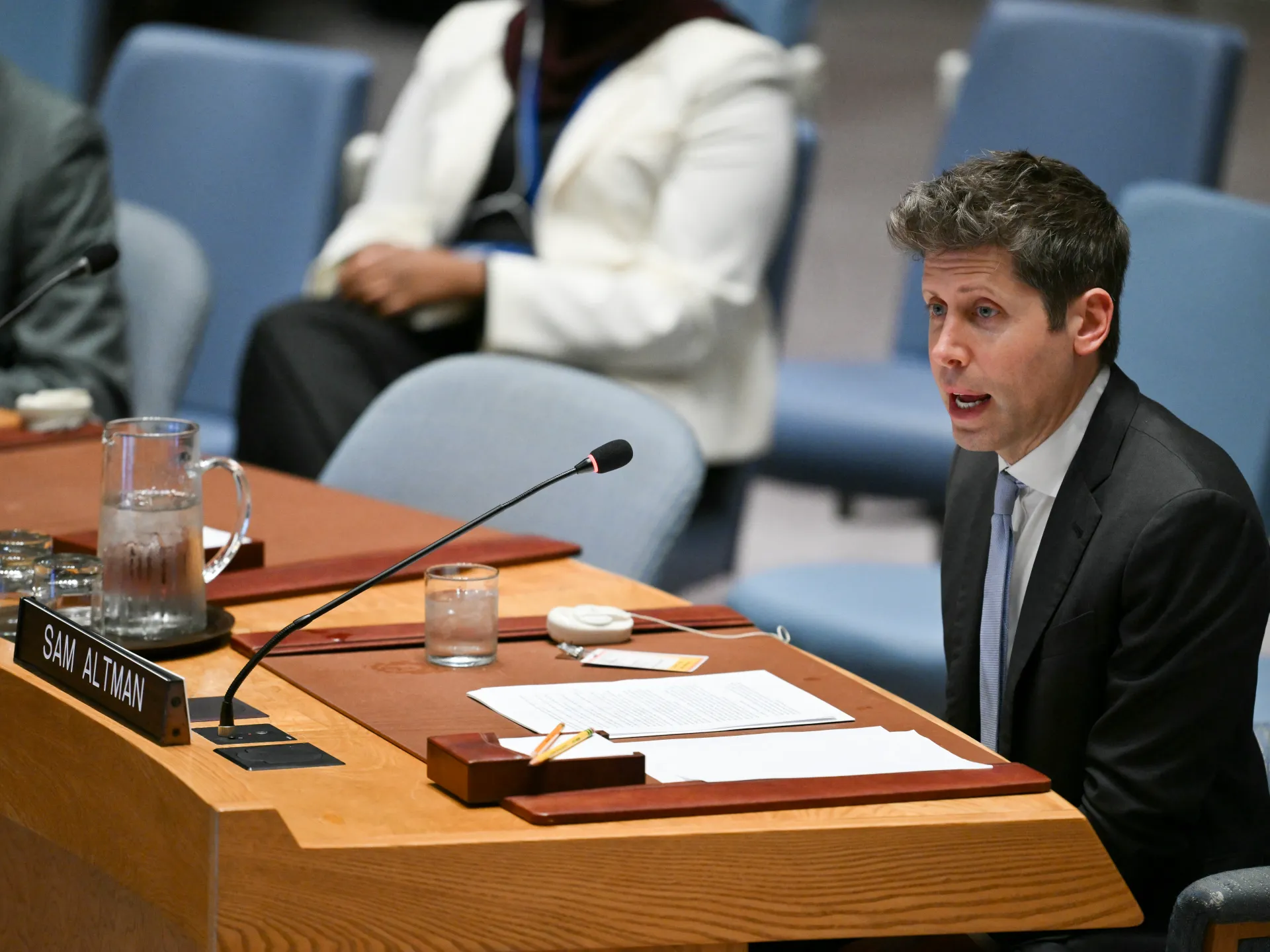
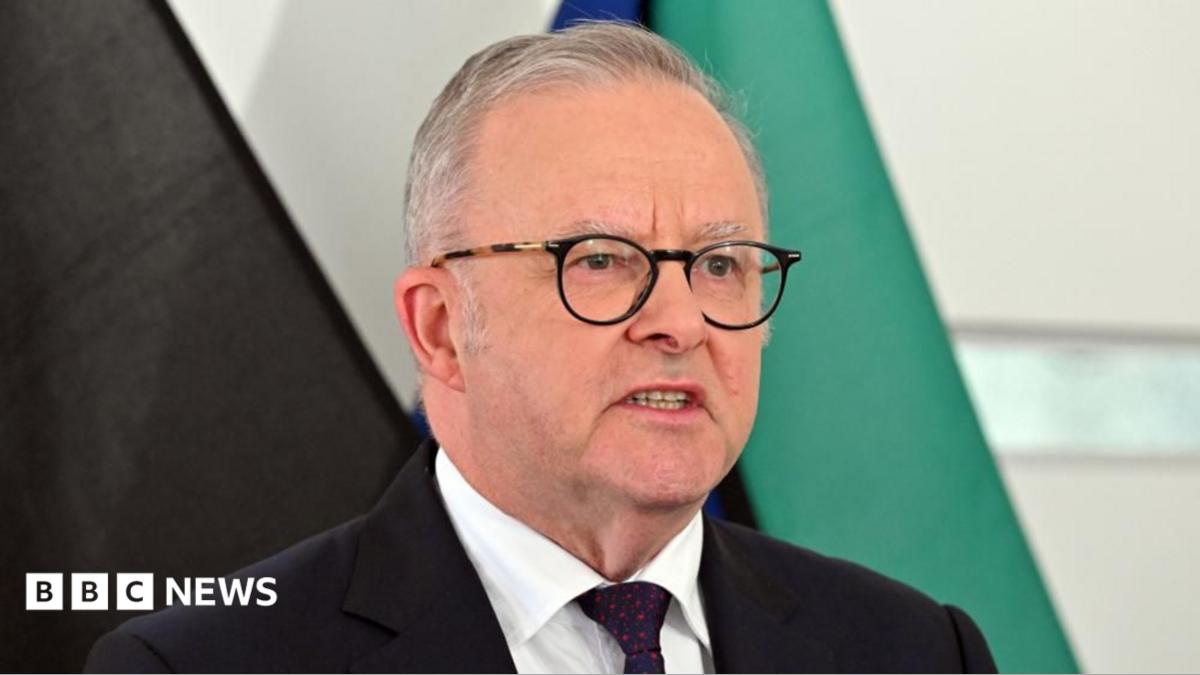

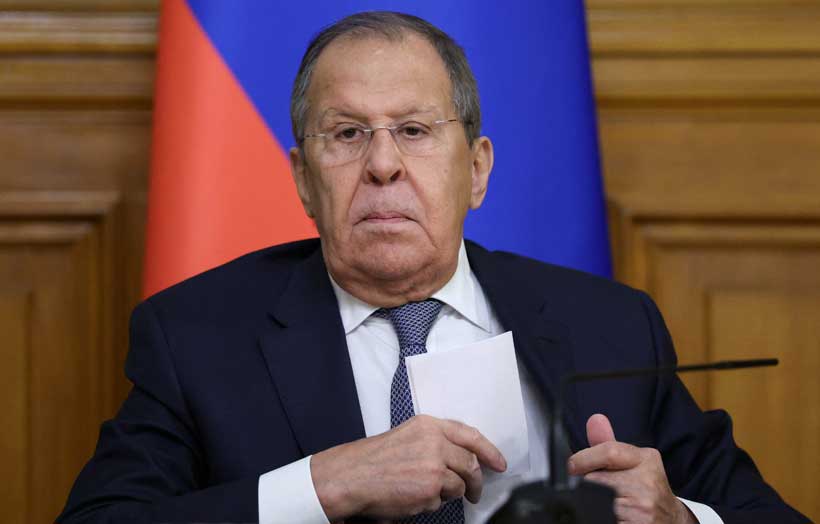
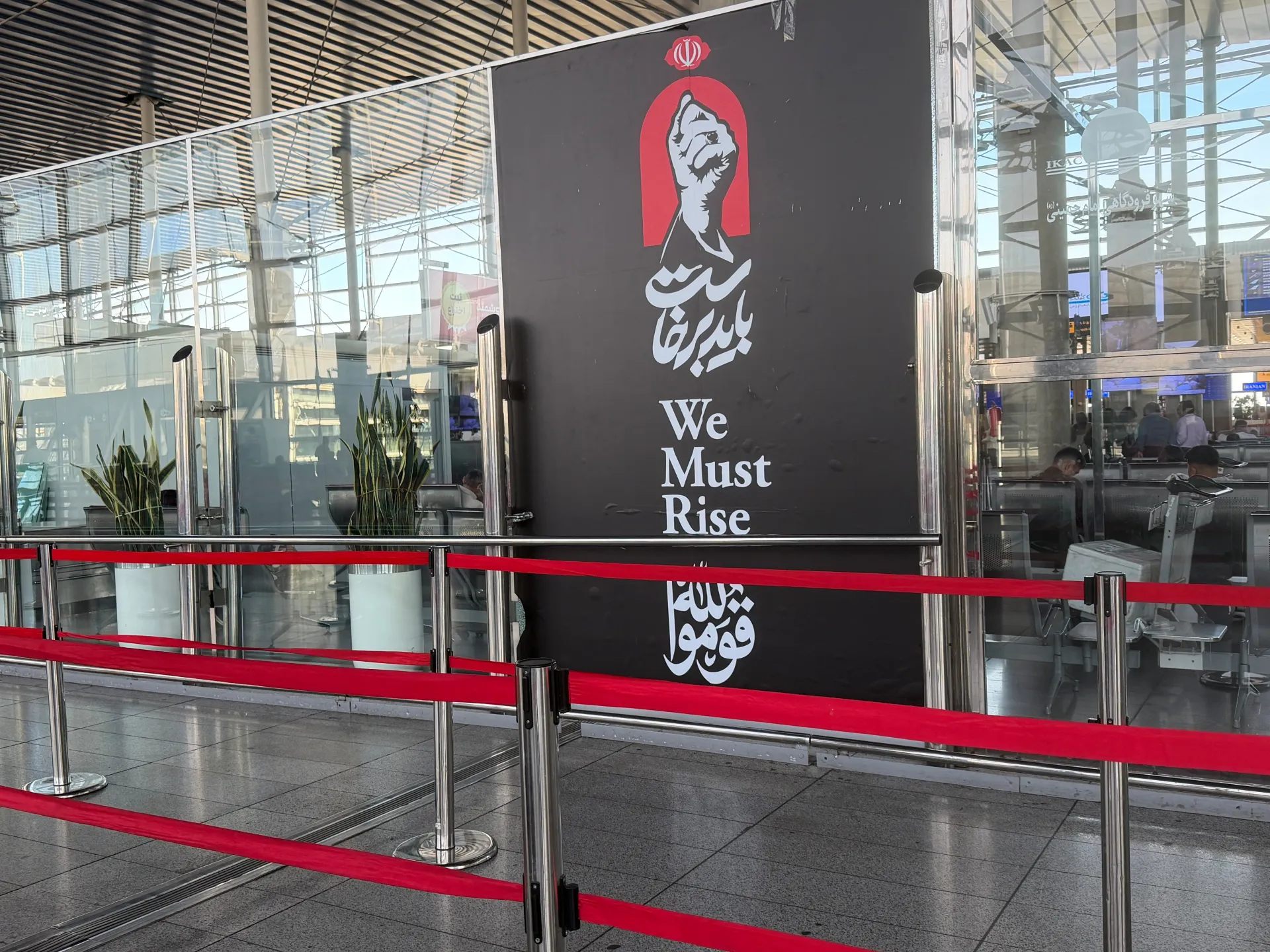

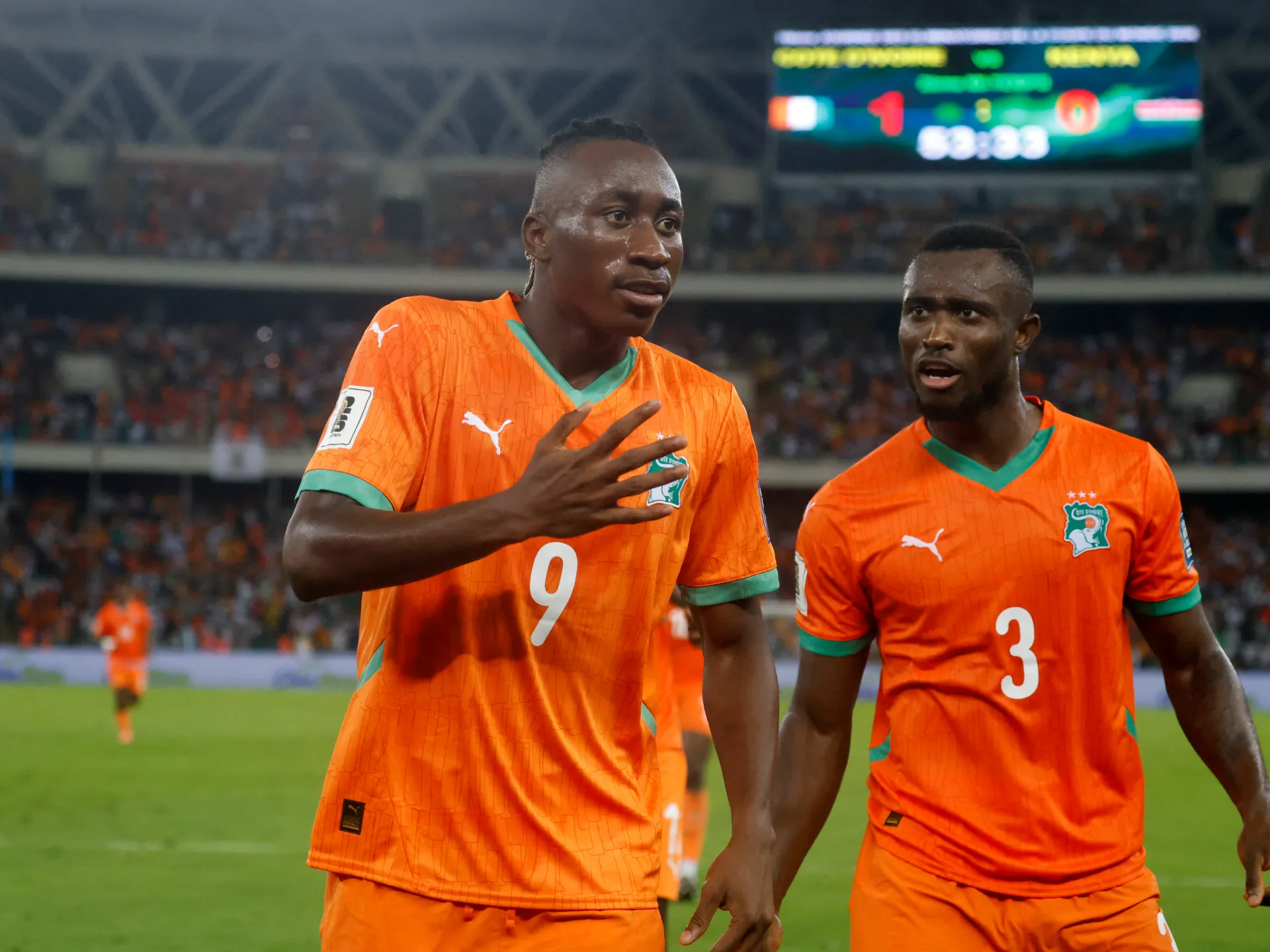
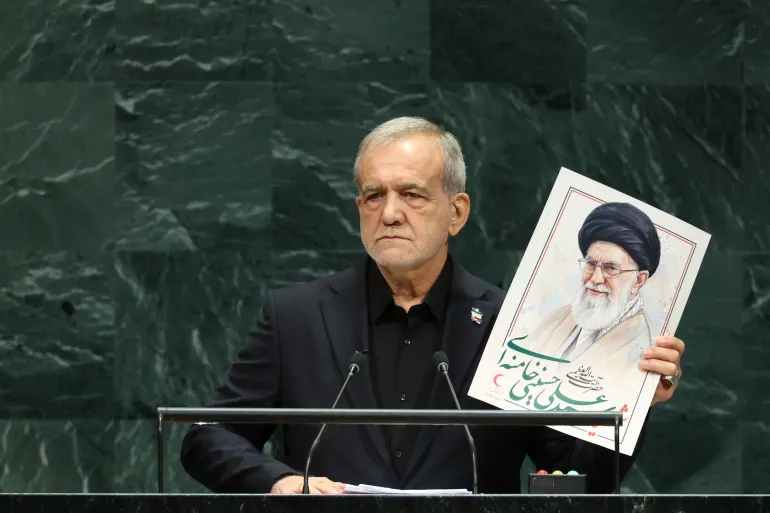






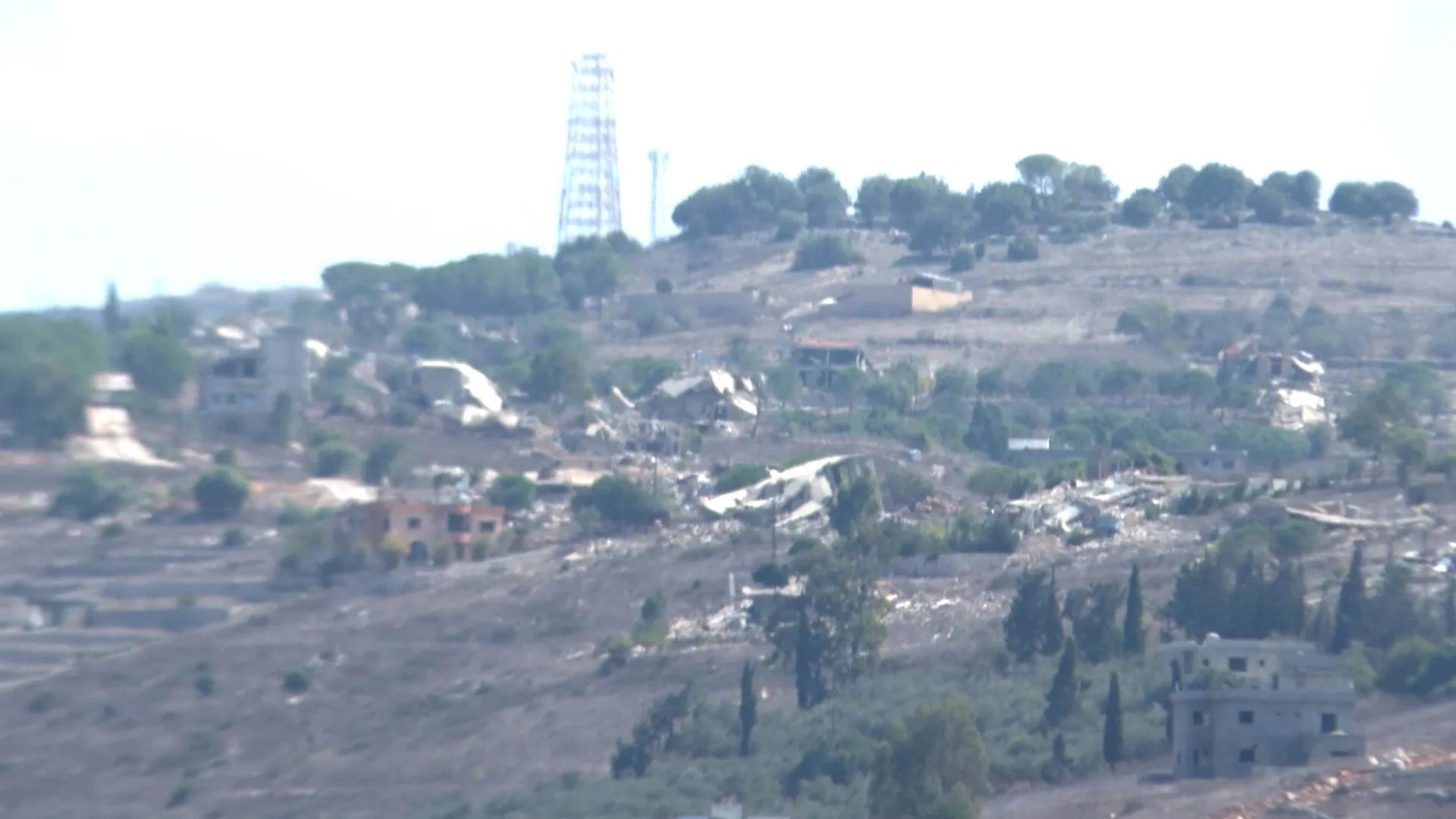
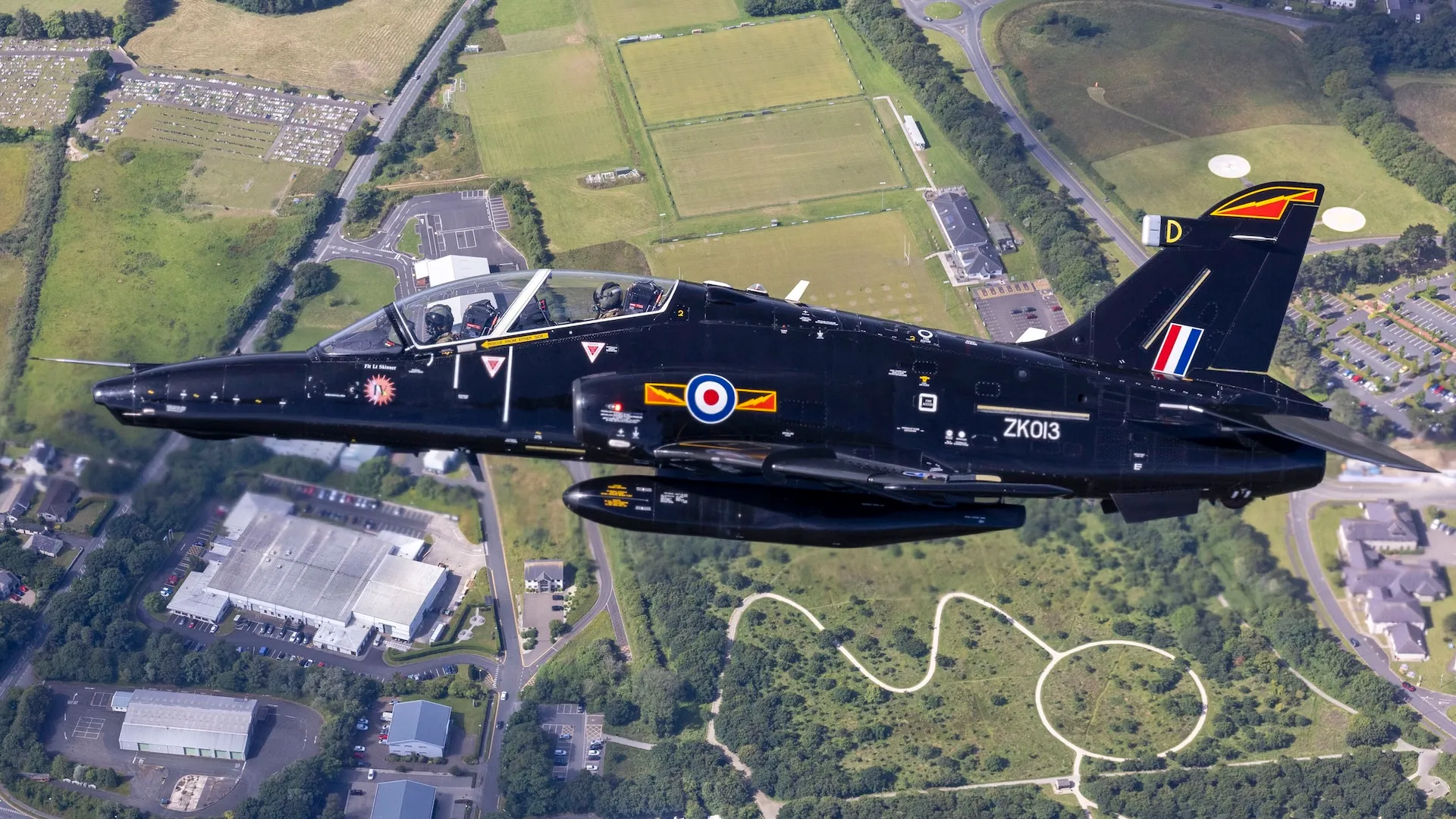


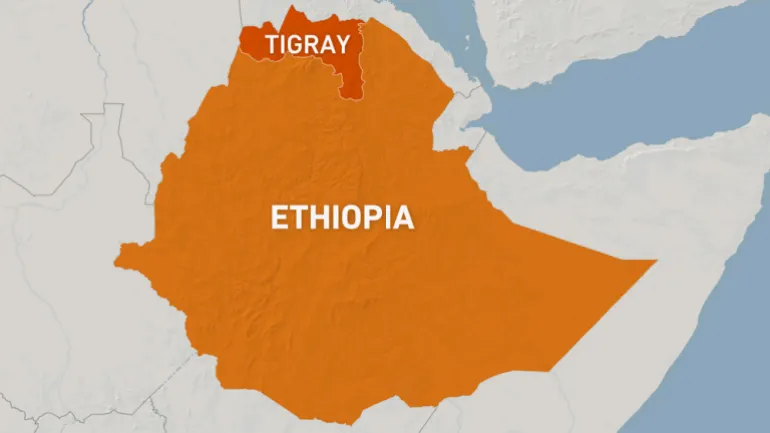
![Map showing Ethiopia’s Tigray region, where tensions between the federal government and the Tigray People’s Liberation Front (TPLF) have escalated [Graphic: Al Jazeera]](https://i0.wp.com/occasionaldigest.com/wp-content/uploads/2026/09/WEB-1000x562-ETHIOPIA-TIGRAY-1785610774.jpg?w=640&ssl=1)
![Ethiopian Prime Minister Abiy Ahmed Ali faces a new armed alliance that includes the Tigray People’s Liberation Front (TPLF) and six other groups [File: Sergei Bulkin, Sputnik, Kremlin Pool Photo via AP]](https://i0.wp.com/occasionaldigest.com/wp-content/uploads/2026/09/AP26264469792656-1790168591.jpg?w=640&ssl=1)
![The charred remains of a tank lie on a road near Gereb Agew, southern Tigray, after clashes between the Ethiopian National Defence Force (ENDF) and the Tigray People’s Liberation Front (TPLF), on March 3, 2026 [File: Abel Gerezgiher/AFP]](https://i0.wp.com/occasionaldigest.com/wp-content/uploads/2026/09/AFP__20260923__C93W39E__v1__HighRes__FilesEthiopiaTigrayConflict-1790167123.jpg?w=640&ssl=1)
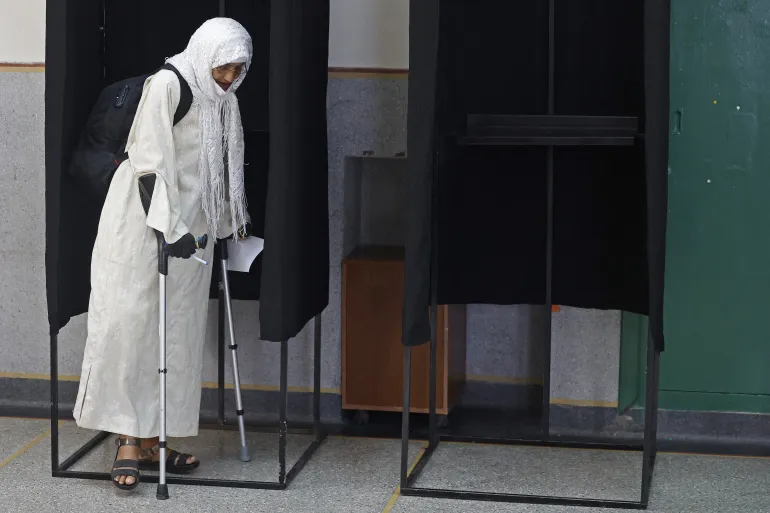
![A woman prepares to cast her ballot to vote in Morocco’s legislative elections at a polling station inside a school at the Udayas neighbourhood, Rabat, on September 23, 2026 [AFP]](https://i0.wp.com/www.aljazeera.com/wp-content/uploads/2026/09/afp_6ab3c71f1ac5-1790166815.jpg?w=640&ssl=1)