The head office of Mirae Asset Securities in Seoul. The brokerage house reported record earnings for 2025. Photo courtesy of Mirae Asset Securities
SEOUL, Feb. 10 (UPI) — South Korea’s Mirae Asset Securities said it posted a record bottom line last year, based on solid performances across its business sectors, including brokerage, wealth management and trading.
The Seoul-based company said Monday it netted $1.1 billion in the 2025 profit, up 72% from a year earlier, as assets under management rose 25% to $410 billion. Among them, 14% was operated in the global markets.
The pretax profit from its brokerage business jumped 43% year-on-year thanks to a bullish stock market, which saw the country’s benchmark KOSPI surge more than 75% last year.
Those from its wealth management and trading divisions rose 21% and 14%, respectively.
Another key contributor to the results was its global business, of which pretax profit doubled to $342 million. Mirae Asset Securities noted that its investments in such innovative companies as SpaceX and xAI boosted profitability.
“Since our founding, we have strategically reinvested capital secured through globally diversified investments, building a virtuous circle that has led to meaningful achievements,” Mirae Asset Securities said in a statement.
The share price of Mirae Asset Securities climbed 11.25% on the Seoul bourse Monday before dipping 2.43% Tuesday.
The largest brokerage house of South Korea is a representative subsidiary of Mirae Asset Group, one of the country’s leading financial conglomerates.
A day after airlines were warned that there would be no jet fuel for them to refuel in Havana, Air Canada announced Monday that it was suspending flights to Cuba. File photo by Graham Hughes/EPA
Feb. 10 (UPI) — Air Canada became the first scheduled airline to withdraw services to Cuba due to shortages of jet fuel as the United States tightened its energy embargo on the Caribbean island.
Canada’s Montreal-headquartered flag-carrier announced Monday it was suspending its 16 weekly flights serving Havana and three other cities, effectively immediately, but said it would send aircraft to bring home 3,000 customers already in Cuba.
“For remaining flights, Air Canada will tanker in extra fuel and make technical stops as necessary to refuel on the return journey, if necessary,” the airline said.
Airlines in Russia, where Cuba is also a top holiday destination, said they had no plans to change their schedules, but Russian media reported at least one Rossiya Airlines flight was canceled with the carrier instead dispatching an empty aircraft to collect Russian tourists.
As many as 4,700 Russians on package holidays were thought to be on the island currently, according to the Association of Tour Operators of Russia.
Spain’s Iberia and Air Europa said flights from Madrid to Havana would now stopover in the Dominican Republic to refuel but would otherwise continue as normal.
American Airlines, Delta Air Lines and Aeromexico said they would continue flying the route, with American telling CNN that the aircraft it used on the route could carry enough fuel for the round trip without refueling.
On Sunday, an international NOTAM system notice confirmed that no A-1 jet fuel, the standard for commercial aviation, would be available at Havana’s Jose Marti International Airport for one month between Tuesday and March 11.
The aviation fuel shortage and its knock-on effect on tourism was the most visible economic casualty of additional measures imposed 10 days ago by U.S. President Donald Trump aimed at shutting off all oil shipments to the island.
Accusing Cuba of harboring terrorist groups, Trump threatened any country supplying oil to Cuba with tariffs in a move principally aimed at Mexico, one of the only remaining points of supply since the United States severed the economic lifeline provided by Venezuela in January.
Venezuela was the source of most of Cuba’s oil imports until the United States’ Jan. 3 military operation to remove President Nicolas Maduro, seize control of the country’s oil and turn off the tap to Cuba.
The move was in line with the Trump administration’s efforts to ratchet up a six-decade-long U.S. trade embargo with the energy blockade exacerbating rolling blackouts and forcing the communist government to ration health and transport, shorten hours in schools and state-owned workplaces, and close some hotels as it scrambles to conserve fuel.
Official Cuban government data shows Canada was the number one source of tourists to the island with more than 754,000 Canadians traveled there in 2025, compared with 110,000 from the United States, 56,000 from Mexico and 46,000 from Spain.
Attorney General Pam Bondi speaks during a press conference at the Department of Justice Headquarters on Friday. Justice Department officials have announced that the FBI has arrested Zubayr al-Bakoush, a suspect in the 2012 attack on the U.S. Embassy in Benghazi, Libya, that killed four Americans. Photo by Bonnie Cash/UPI | License Photo
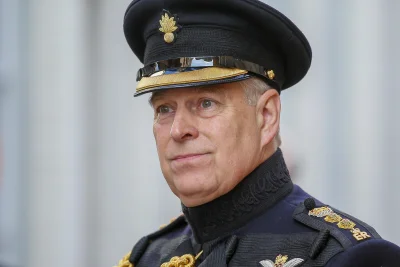
1 of 5 | The former Prince Andrew has been shown many times in the latest release of the Epstein files. Prince William and Princess Catherine released a statement Monday about the latest release of Epstein files. File Photo by Julien Warnand/EPA
Feb. 9 (UPI) —Prince William and Princess Catherine have said they are “deeply concerned” by the latest information coming out of the Epstein files in their first public statement about the scandal.
A Kensington Palace spokesperson said the Prince and Princess of Wales were “focused on the victims” after new information released showed an increased number of mentions of William’s uncle Andrew Mountbatten-Windsor, formerly known as Prince Andrew, and his ex-wife Sarah Ferguson.
The spokesperson said: “I can confirm The Prince and Princess have been deeply concerned by the continuing revelations. Their thoughts remain focused on the victims.”
William is in Saudi Arabia on the first day of an official three-day visit.
Charles faced hecklers Monday during a visit to Clitheroe train station in Lancashire. One person shouted, “How long have you known about Andrew and Epstein?” the BBC reported.
The Justice Department’s Epstein files drop on Jan. 30 included many from a suit against Mountbatten-Windsor that he settled with Epstein victim Virginia Giuffre in 2022.
Giuffre, in a lawsuit, accused the then-prince of sexually assaulting her when she was a teenager and employed by Epstein. Mountbatten-Windsor has denied the allegation.
The release included photos of Mountbatten-Windsor, including one showing him leaning over the body of a woman who was lying on the ground and another of him on all fours while next to the same woman, whose face was redacted.
Welcome to the Sports Report, our weekday morning newsletter covering L.A. sports. To sign up to receive it via email (it’s free), go here.
From Broderick Turner: In the eyes of Lakers coach JJ Redick, every team his group faces is a test. Still, many wondered if the Lakers’ litmus test would come from facing the defending champion Oklahoma City Thunder on Monday night.
Even with All-Star and league most valuable player Shai Gilgeous-Alexander out with a strained abdominal, the Thunder are still a problem for most of the league. And the Lakers had to play OKC with their own MVP candidate, Luka Doncic, sitting out for the second straight game with a left hamstring strain.
In the end, it came down to the Lakers not being able to hold off the champion Thunder in the decisive fourth quarter of a 119-110 loss at Crypto.com Arena.
The Lakers (32-19) had six players score in double figures, but the Thunder had seven.
The Lakers shot 50% from the field, but the Thunder shot 48.3% from the field and 42.4% from three-point range.
“I think when you play the best teams, and Oklahoma City is clearly, you know they’re the best team, you have to have a really high level of effort, and you have to have a really high level of execution,” Redick said.
From Steve Galluzzo: The NBA All-Star Game at Intuit Dome is days away, and no one is looking forward to it more than Barbara Bush, daughter of former President George W. Bush and the NBA’s vice president of social impact. She found her “dream job” and is loving every minute of it.
“I played basketball until fifth grade. I grew up in Dallas and everyone watched the Mavericks. Then when I moved to Austin it was all about UT,” she said, referring to the University of Texas. “I never thought I’d work in basketball. For most of my career I’ve worked in global health with nonprofits. During COVID, I started paying more attention to the NBA as it utilized its arenas for vaccination sites and voting centers since you could be socially distanced and compliant by using them.”
While representing the foundation for which she worked, Bush attended meetings with NBA executives and sought ways to work together.
1908 — Tommy Burns knocks out Jack Palmer in the fourth round to defend his world heavyweight title in London.
1949 — Joe Fulks of Philadelphia scores 63 points in a 108-87 win over Indianapolis to set an NBA scoring record which would last for nearly a decade.
1952 — The Baltimore Bullets play the 48-minute game without making a substitution and beat the Fort Wayne Pistons 82-77.
1962 — Jim Beatty becomes the first American to break the 4-minute mile indoors with a 3:58.9 in Los Angeles.
1968 — Peggy Fleming wins the women’s Olympic figure skating gold medal in Grenoble, France.
1969 — LSU’s Pete Maravich scores 66 points in a 110-94 loss to Tulane.
1971 — Former first baseman Bill White becomes the first Black announcer in major baseball league history, signing to join the New York Yankees WPIX broadcast team.
1972 — Guy Lafleur becomes the first rookie in the NHL’s modern era to have three hat tricks in a season. Lafleur scores three goals and adds an assist in the Canadiens’ 7-1 win against the Chicago Blackhawks.
1989 — K.C. Jones of the Boston Celtics and Lenny Wilkens of the Cleveland Cavaliers are elected to the Basketball Hall of Fame. Also elected is William “Pop” Gates, who played during the game’s barnstorming years in the 1930s and 1940s.
1991 — Charles Barkley of the Philadelphia 76ers, playing with a stress fracture in his left foot, becomes the NBA All-Star MVP with 17 points and 22 rebounds after leading the East to a 116-114 victory.
1992 — Bonnie Blair becomes the first woman to successfully defend an Olympic gold medal in 500-meter speed skating and the first American woman in any sport to win gold medals in consecutive Olympics.
1998 — Picabo Street, Alpine skiing’s comeback kid, overcomes a mistake about midway through her run and charges to an Olympic gold by one-hundredth of a second in the women’s super-G — the games’ first Alpine medal after three days of snow-related postponements.
2003 — Detroit’s Brett Hull becomes the sixth NHL player to score 700 regular-season goals. Hull beats San Jose’s Evgeni Nabokov with a wrist shot in a 5-4 win over the Sharks.
2007 — Jaromir Jagr has three assists in the New York Rangers’ 5-2 win over Washington and becomes the 12th player in NHL history to score 1,500 points.
2017 — Golden State’s Draymond Green becomes the first player in NBA history to record a triple-double with fewer than 10 points scored. Green had 12 rebounds, 10 assists, 10 steals and 4 points in a 122-107 win over Memphis. Green also had five blocks, which made him the first player to record 10 steals and five blocks in a game since steals and blocks were first tracked in 1973-74.
2018 — Sweden’s Charlotte Kalla wins the first gold medal of the Pyeongchang Games and Norwegian cross-country skier Marit Bjoergen takes silver in the women’s 15-kilometer skiathlon to become the most decorated female Winter Olympian ever. Bjoergen captures her 11th career medal, breaking a three-way tie with Russian Raisa Smetanina and Italian Stefania Belmondo.
Compiled by the Associated Press
Until next time…
That concludes today’s newsletter. If you have any feedback, ideas for improvement or things you’d like to see, email me at houston.mitchell@latimes.com. To get this newsletter in your inbox, click here.
Feb. 10 (UPI) —Buckingham Palace said the royal household stood ready to fully cooperate with police weighing an investigation into links between the former Prince Andrew, now known as Andrew Mountbatten-Windsor, and the late Jeffrey Epstein.
“The King has made clear, in words and through unprecedented actions, his profound concern at allegations which continue to come to light in respect of Mr Mountbatten-Windsor’s conduct,” a spokesman for the palace said late Monday.
“While the specific claims in question are for Mr. Mountbatten-Windsor to address, if we are approached by Thames Valley Police we stand ready to support them as you would expect,” he said.
King Charles’ intervention came hours after Thames Valley Police said it was determining whether to act on a complaint by Republic, a group that campaigns for the abolition of the monarchy, accusing Andrew of misconduct in public office and breach of official secrets laws while he was serving as Britain’s trade envoy in 2010.
Republic lodged the complaint on Monday after emails from the latest tranche of Epstein files to be released appeared to show Andrew forwarding Epstein official reports possibly containing commercially privileged information from an October 2010 trip to Singapore, Hong Kong and Vietnam, including confidential information about investment opportunities.
Andrew emailed the reports to Epstein less than five minutes after receiving them himself from his assistant on Nov. 30 with the subject line “South East Asia Visit Reports,” U.S. Department of Justice files obtained by the BBC show.
“We can confirm receipt of this report and are assessing the information in line with our established procedures,” said a Thames Valley police department spokesman.
The alleged incident was just before Andrew has claimed he broke off his relationship with Epstein in early December 2010 but the emails appear to indicate this was not the case as he forwarded Epstein another confidential email on Dec. 24 detailing business opportunities in the rebuilding of Afghanistan‘s war-torn Helmand Province, the region for which Britain was responsible during the war.
The terms under which trade envoys are appointed state that the envoy must not share sensitive, commercial, or political information they are party to with unauthorized persons, that they are bound by the Official Secrets Act and have a duty to keep sensitive documents secure.
“The role of a Trade Envoy carries with it a duty of confidentiality in relation to information received. This may include sensitive, commercial, or political information shared about relevant markets/visits. This duty of confidentiality will continue to apply after the expiry of their term of office. In addition, the Official Secrets Acts 1911 and 1989 will apply,” the document states.
“Trade Envoys are responsible for the protection of any documents they have been provided which might contain sensitive data and ensuring that they are carried, stored, and disposed of in an appropriate manner,” it adds.
Andrew has long denied any wrongdoing in relation to Epstein, including allegations made by the late Virginia Giuffre, but has remained silent over the most recent slew of allegations.
in 2022, he settled a lawsuit alleging sexual assault brought by Guiffre out of court with an undisclosed payment believed to run to eight figures.
Earlier Monday, Prince William and Princess Catherine broke their silence on the scandal, issuing a statement expressing “deep concern” over the latest revelations being unearthed from the Epstein files.
However, the statement stressed that they “focused on the victims” and made no mention of Andrew, who is William’s uncle.
The King has been heckled by members of the public about his brother twice in recent days as he goes about his official duties, most recently on a trip to Lancashire on Monday.
Attorney General Pam Bondi speaks during a press conference at the Department of Justice Headquarters on Friday. Justice Department officials have announced that the FBI has arrested Zubayr al-Bakoush, a suspect in the 2012 attack on the U.S. Embassy in Benghazi, Libya, that killed four Americans. Photo by Bonnie Cash/UPI | License Photo
United Kingdom Prime Minister Keir Starmer has emerged rattled but ultimately unscathed after a day and night of drama during which a key member of his Labour Party called for him to resign over revelations about a former ambassador to the US, Peter Mandelson, in the Jeffrey Epstein files.
Starmer has faced more than a week of mounting pressure since the release of the latest tranche of documents from the US Department of Justice relating to the criminal cases against the late sex offender. They revealed that Mandelson had maintained a close friendship with the disgraced financier even after Epstein had pleaded guilty to solicitation of sex with a minor and was jailed in 2008.
They include documents and emails that suggest Mandelson may have received payments from Epstein and passed sensitive information to him during the 2008-2009 financial crisis.
Since then, Starmer has admitted that he knew of the pair’s friendship when he appointed Mandelson as ambassador but said the peer had lied about the extent of it. The affair has caused outrage in parliament. Two key members of Starmer’s inner circle have resigned and a third is under pressure to go. On Monday, Scottish Labour leader Anas Sarwar called for the prime minister to do the same.
While Starmer’s position has been shored up for now by a rally of support from his cabinet on Monday night, just how badly has this affair shaken his government?
‘The distraction needs to end,’ Scottish Labour leader Anas Sarwar says at a news conference in Glasgow on February 9, 2026, at which he called for Starmer to step down [Andy Buchanan/AFP]
Why did Anas Sarwar call for Starmer to resign?
Sarwar said at a news conference early on Monday afternoon that he had called Starmer and told him it was time for him to resign. “I spoke to the prime minister earlier today, and I think it’s safe to say he and I disagreed,” Sarwar said.
He said “too many mistakes” had been made in relation to the appointment of Mandelson.
“The distraction needs to end, and the leadership in Downing Street has to change,” Sarwar said as he became the first Labour heavyweight to stand against the prime minister.
While Sarwar said he believed Starmer to be a “decent man”, the fury over the Epstein files had severely damaged the government’s support and wrecked its chances in the upcoming Scottish parliament elections. Opinion polls put Scottish Labour some distance behind the Scottish National Party, followed by the far-right Reform party, led by Nigel Farage.
But cabinet members came out in support of Starmer, ultimately ending the coup that never was. Angela Rayner, former deputy prime minister and a senior member of the Labour Party, was the first to show him support. She said in a post on X that while she did not defend Starmer’s judgement, “the worst possible response [to the scandal] would be to play party politics or factional games.”
“I urge all my colleagues to come together, remember our values and put them into practice as a team,” she wrote on X. “The Prime Minister has my full support in leading us to that end.”
Within hours, nearly every minister had followed suit. Wes Streeting, the health secretary, urged people to “give Keir a chance”. Pat McFadden, the work and pensions secretary, said he hoped the prime minister would stay on, and Douglas Alexander, Scotland secretary, said he “respected” Sarwar’s stance but backed the prime minister.
On Monday night, Starmer addressed more than 400 MPs and peers at a Labour Party meeting. “I have won every fight I’ve ever been in. I fought to change the Labour Party to allow us to win an election again,” he told them.
“But I’ll tell you this, after having fought so hard for the chance to change our country, I’m not prepared to walk away from my mandate and my responsibility to my country or to plunge us into chaos as others have done.”
Journalists gather outside 10 Downing Street, the official residence of Britain’s prime minister, on February 9, 2026, as Starmer was ‘getting on with the job of delivering change across the country’, a spokesman told them. [Henry Nicholls/AFP]
Who has resigned from Starmer’s team and why?
Two key figures have already resigned, and a third is under pressure to do so, UK media has reported.
Amid growing outrage over the new revelations about Mandelson and Epstein, Starmer’s chief of staff, Morgan McSweeney, resigned on Sunday, taking “full responsibility” for advising the prime minister to appoint Mandelson to the ambassadorship, which he took up in 2025, despite the risks.
“The decision to appoint Mandelson was wrong,” McSweeney said. “He has damaged our party. … I advised the prime minister to make that appointment and I take full responsibility for that.”
Mandelson was dismissed from the post in September after serving seven months after the UK daily The Sun obtained other emails between him and Epstein that showed the depth of their friendship.
After the release of the latest tranche of Epstein documents on January 30, Mandelson resigned from the Labour Party and the House of Lords.
Tim Allan, Starmer’s communications chief, resigned on Monday, saying he was leaving to pave the way for a “new No 10 team” to be built as Starmer tries to reset his government.
Allan, who founded the Portland Communications firm specialising in reputation management, had been in the job for only five months, and Starmer is now looking to hire his fifth communications chief since taking office in 2024.
Chris Wormald, the cabinet secretary and senior-most civil servant in Downing Street, is also reportedly under pressure to resign and is said to be currently negotiating his exit from the role, which he has been in for less than a year.
The UK’s Guardian newspaper reported that some people close to Starmer view him as a “disastrous” appointment.
UK Ambassador Peter Mandelson, shown standing just right of US President Donald Trump, seated, talks with UK Prime Minister Keir Starmer by speaker phone in the Oval Office of the White House on May 8, 2025, in Washington, DC [Anna Moneymaker/Getty Images via AFP]
What did the Epstein files reveal about Mandelson?
The latest release of files showed Mandelson maintained his relationship with Epstein after the latter was jailed in 2008.
They also suggested Mandelson received payments from the late financier and may have shared market-sensitive information with him that was of financial interest to Epstein.
Leaks of sensitive information by Mandelson allegedly took place in 2009 while he was serving as the UK’s business secretary.
The UK police have launched a criminal investigation over suspected misconduct in public office linked to Mandelson’s relationship with Epstein.
In one of the emails revealed in the most recent tranche of documents released from the US Justice Department, Mandelson told Epstein to “fight for early release” shortly before he was sentenced in 2008.
“I think the world of you,” Mandelson told Epstein, adding about his prosecution: “I can still barely understand it. It just could not happen in Britain. You have to be incredibly resilient, fight for early release and be philosophical about it as much as you can.”
Prime Minister Keir Starmer, right, talks with then-Ambassador to the US Peter Mandelson at a welcome reception at the ambassador’s residence in Washington, DC [File: Carl Court/pool/AFP]
How damaging has this all been for Starmer?
Starmer has apologised publicly for appointing Mandelson as ambassador to the US despite knowing of his ties – but not the extent of them, he said – to the disgraced financier.
“None of us knew the depth and the darkness of that relationship,” Starmer said on Thursday as he apologised to Epstein’s victims.
“I am sorry – sorry for what was done to you, sorry that so many people with power failed you, sorry for having believed Mandelson’s lies and appointing him.”
But this has not been enough to let him off the hook entirely, experts said.
Tim Bale, a professor of politics at Queen Mary University of London, said the scandal has been hugely damaging for Starmer. “A more popular PM might have been able to ride it out, but he was already facing a good deal of hostility from voters before it blew up,” Bale told Al Jazeera. “He’s managed so far to hold on to his cabinet, but he’s completely lost the trust of the electorate – and that’s hard to get back.”
Bale said “people are disgusted by” Starmer’s decision to appoint Mandelson “despite knowing that he’d stayed friends with Epstein after he’d been convicted”.
Then-UK Foreign Secretary David Lammy and Deputy Prime Minister Angela Rayner greet each other as they arrive for a cabinet meeting at Downing Street in London on September 2, 2025 [Toby Melville/Reuters]
Can Starmer’s leadership still be challenged?
While Starmer has survived Monday night, his position is still weak with low approval ratings, experts said.
Labour is expected to suffer losses in crucial Scottish elections in May. A parliamentary by-election is also due on February 26.
“The immediate danger [to Starmer] is that [Labour] suffers catastrophic losses in a by-election and then a big set of elections in May,” Bale said. “That will reignite calls for Starmer to resign and, if he doesn’t, a challenge from one or more of his colleagues.”
Among the top runners to replace Starmer are Rayner, his former deputy prime minister who resigned from the cabinet last year over a tax scandal.
A website pitching Rayner as leader, angelaforleader.co.uk, went live in January briefly, The Guardian newspaper reported. Rayner has denied any links to the website.
Another politician gearing up to replace Starmer is Wes Streeting, the health secretary.
Streeting, 43, has also been called out for his ties with Mandelson. In a bid to distance himself from the former ambassador, Streeting this week shared private chats he had with Mandelson that questioned the government’s growth plan.
Home Secretary Shabana Mahmood, 45, is another possible successor to Starmer. She has grown popular among several right-aligned leaders of the Labour Party with her moves to tighten border controls and crack down on unauthorised immigration.
British Prime Minister Keir Starmer has survived calls for him to step down, but his approval ratings are low, and he remains vulnerable [File: Andy Rain/EPA]
What other issues has Labour faced under Starmer?
The Labour Party swept to power in July 2024, ending nearly 14 years of Conservative rule. However, the prime minister has since had a difficult time in Downing Street.
In the 2024 elections, Reform UK, the right-wing, populist, anti-immigration party led by Farage, won just five of the 650 seats in parliament. However, it has gone on to become one of the best polling British parties. In July, a YouGov poll put Reform in the lead, predicting it could win 271 seats if elections were held then.
In his speech on Monday, Starmer called the challenge posed by the rise of the Reform party, which has won over a number of high-profile defectors from the Conservative Party in recent weeks, “a fight for our lives”.
Starmer is also facing domestic pressure to put a stop to undocumented immigration to the UK. More than 32,000 people tried to cross the English Channel from France in small boats last year. These crossings are dangerous and have resulted in many deaths.
The UK and France have laid the blame on each other for the rising numbers. This led to a “one-in-one-out” migrant deal signed between the UK and France last year, under which the UK returns one migrant to France for each accepted refugee. The scheme has had little success, however, with only a handful of migrants returned.
Starmer himself has dropped in popularity by 20 percentage points from July 2024 to January this year, according to YouGov.
“Reform has obviously spooked some in the Labour Party,” Bale said, adding, however, that Reform is eating into the Conservatives’ base more. “And Labour probably needs to worry more about the Greens and the Liberal Democrats at this stage.”
“The break-up of the two-party duopoly that has dominated British politics for a century is no longer simply an aspiration among challenger parties but an ongoing reality,” Bale said.
Sustained gunshots have been heard near the central prison in Guinea’s capital, Conakry, according to media reports.
It was unclear who was shooting or what triggered the gunfire on Tuesday. There was no immediate comment by the authorities.
A witness reported seeing several military pickup trucks carrying armed security forces and a machine gun-mounted armoured carrier deployed around the central administrative district of Kaloum, Reuters news agency reported. The presidential palace is also located in Kaloum.
A security detail made up of police officers and special forces blocked access to the road leading to the prison on Tuesday morning, an AFP news agency journalist reported. An armoured vehicle belonging to the special forces was also visible in front of the prison.
“I heard the sound of vehicles speeding by, I rushed to the window and heard automatic gunfire,” Thierno Balde, an accountant who works in the neighbourhood, told AFP, confirming similar statements by other witnesses.
The shooting reportedly began shortly before 9am local time (09:00 GMT) and lasted just more than half an hour, with rapid gunfire ringing out.
Abdouramane Doukoure, a retired civil servant, said he was heading past the prison in a car when he “heard the gunshots. Since there was a traffic jam, we all rushed in different directions to escape.”
Another resident whose home is next to the prison reported hearing gunfire inside the facility but “as we speak, things have calmed down”.
But “we don’t know for how long”, the resident added.
Transparency International says the average global score in its report is at its lowest level in more than a decade.
An anticorruption watchdog has warned in its latest report of worsening corruption in democracies around the world, with the score of the United States slipping to its lowest, raising concerns about developments in the US and the impact of its funding cuts around the world.
Berlin-based Transparency International (TI) said on Tuesday that the average global score in its 2025 Corruption Perceptions Index (CPI) had hit 42 on a scale of zero to 100, its lowest level in more than a decade.
Recommended Stories
list of 3 itemsend of list
The group’s index assigns a score between zero (highly corrupt) and 100 (very clean), based on data reflecting the assessments of experts and business executives.
US President Donald Trump, since returning to the White House early last year, has upended domestic and foreign politics while ramping up pressure on institutions ranging from universities to the Federal Reserve – the US central bank.
Fed Chairman Jerome Powell is currently under investigation by the Department of Justice (DOJ) after resisting pressure from Trump to reduce interest rates.
TI raised concerns over “actions targeting independent voices and undermining judicial independence” in the US.
“The temporary freeze and weakening of enforcement of the Foreign Corrupt Practices Act signal tolerance for corrupt business practices,” it said.
US ranking drops
The Trump administration’s gutting of overseas aid has also “weakened global anticorruption efforts”, it said.
The US’s CPI score has dropped to 64 from 65 in 2024, with the report noting that its “political climate has been deteriorating for more than a decade”. In the past 10 years, it has seen a drop of 10 points.
The report also said “the vast majority of countries are failing to keep corruption under control”, with 122 countries out of 180 posting scores less than 50.
However, it said 31 countries have improved significantly, highlighting Estonia (76 points), the Seychelles (68) and South Korea (63).
The US case illustrates a trend in democracies experiencing a “decline in performance” in battling corruption, according to the report, a phenomenon it also said was apparent in the United Kingdom and France.
While such countries are still near the top of the index, “corruption risks have increased” due to weakening independent checks, gaps in legislation and inadequate enforcement.
“Several have also experienced strains to their democracies, including political polarisation and the growing influence of private money on decision-making,” the report noted.
The worst-performing EU nations
The worst-performing countries in the European Union were Bulgaria and Hungary, both scoring just 40.
The report said the government of Hungary’s nationalist leader Viktor Orban, in power since 2010 and facing a tough battle for re-election in April, “has systematically weakened the rule of law, civic space and electoral integrity for over 10 years”.
“This has enabled impunity for channelling billions – including from European Union funds – to groups of cronies through dirty public contracting and other methods,” the report said.
The highest-ranked nation in the index for the eighth year running was Denmark with a score of 89, followed by Finland and Singapore. At the bottom were South Sudan and Somalia with nine points apiece, followed by Venezuela.
Among the more positive stories of progress in the report was Ukraine, which scored 36.
President Volodymyr Zelenskyy’s government has faced widespread public anger over corruption allegations against those close to him, even as the country has been at war with Russia for nearly four years.
However, the watchdog noted that “the fact that these and many other scandals are being uncovered … shows that Ukraine’s new anticorruption architecture is making a difference”.
It hailed the “civil society mobilisation” last year, which prompted Zelenskyy to backtrack in an attempt to curb the independence of anticorruption bodies.
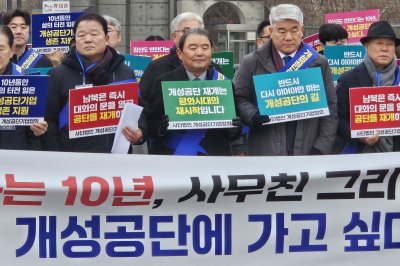
Members of the Corporate Association of Gaeseong Industrial Complex held a press conference Friday at the customers, immigration and quota (CIQ) office in Paju on Friday, calling for the government to help business owners access the shuttered complex. Photo by Yonhap
An association of South Korean companies that previously operated at an inter-Korean factory zone in North Korea on Tuesday called on the government to make efforts to allow business owners to visit the now-shuttered complex.
About 80 representatives from 38 member companies of the Corporate Association of Gaeseong Industrial Complex (CAGIC) made the request at a press conference held at the customers, immigration and quota (CIQ) office at Dorasan Station in Paju, just north of Seoul.
The association said its members hope to present the Kaesong Industrial Complex, which has been closed for the past decade, to inspect their business assets there.
“Ten years after the closure of the Kaesong Industrial Complex, companies that operated there are facing a threat to their survival. We want to return to Kaesong,” CAGIC Chairman Cho Kyung-joo told reporters.
The Park Geun-hye administration shut down the industrial complex on Feb. 10, 2016, in response to North Korea’s nuclear test and long-range missile launches.
Launched in 2004 as a flagship project symbolizing inter-Korean economic cooperation and reconciliation, the complex once employed about 55,000 North Korean workers at 120 South Korean firms.
Cho also urged the U.S. government to play a responsible role in approving visits by South Korean business owners aimed at protecting their assets in Kaesong.
“Just as the United States recently granted sanctions exceptions for humanitarian assistance in several global cases discussed at United Nations meetings, it should make clear that business owners’ visits to inspect their assets in Kaesong do not fall under sanctions”, he said.
Appealing to North Korea, Cho said companies operating at the complex had conducted business in good faith based on inter-Korean agreements and called on Pyongyang to cooperate in allowing business owners to visit the industrial zone.
Copyright (c) Yonhap News Agency prohibits its content from being redistributed or reprinted without consent, and forbids the content from being learned and used by artificial intelligence systems.
Humanitarian operations have been impeded by attacks, looting and restrictions on movement.
Ajok Ding Duot crouches on the dusty floor of a displacement camp in South Sudan’s Lakes state, cracking nuts open one by one.
She and her family of 10 arrived here about two weeks ago, fleeing intensifying fighting between government and opposition forces in neighbouring Jonglei state.
Recommended Stories
list of 3 itemsend of list
While they have found temporary shelter, Duot said there was hardly anything to eat at the camp. To survive, they rely on these nuts and wild fruits.
“We don’t know anything about what the government is doing. They’re fighting, but we don’t know what the problem is,” she told Al Jazeera.
“We’re in darkness. It’s only ever the humanitarian organisations who help.”
South Sudan has seen renewed fighting in recent weeks between government soldiers and fighters loyal to the Sudan People’s Liberation Army-in-Opposition (SPLA-IO).
The United Nations says an estimated 280,000 people have been displaced by the fighting and air attacks since late December, including more than 235,000 across Jonglei alone.
The UN’s children agency UNICEF also warned last week that more than 450,000 children are at risk of acute malnutrition due to mass displacement and the halting of critical medical services in Jonglei.
Nearly 10 million people need life-saving humanitarian assistance across South Sudan, a country still reeling from a ruinous civil war that killed nearly 400,000 people and displaced millions between 2013 and 2018.
Humanitarian operations, however, have been crippled by attacks and looting, with observers saying both sides in the conflict have prevented assistance from reaching areas where they believe civilians support their opponents.
The UN’s World Food Programme (WFP) suspended its activities last week in Baliet county, in Upper Nile state, following repeated attacks on a convoy carrying humanitarian assistance.
The WFP said the suspension would remain in place until the safety of its staff could be guaranteed and authorities take immediate action to recover the stolen supplies.
Separately, medical humanitarian NGO Doctors Without Borders, known by its French initials MSF, said last week a hospital in Jonglei was hit by a government air attack, marking the 10th attack in 12 months on an MSF-run medical facility in the country.
In addition, the MSF health facility in Pieri, also in Jonglei, was looted by unknown assailants, forcing staff to flee. The organisation said the violence had left some 250,000 people without healthcare, as the NGO had been the only medical provider in the area.
MSF said the targeted attacks on its facilities have forced the closure of two hospitals in the Greater Upper Nile and the suspension of general healthcare activities in Jonglei, Upper Nile and Central Equatoria states.
On Sunday, UN chief Antonio Guterres “strongly” condemned the escalating violence in the country and warned that civilians continue to bear the brunt of the conflict.
In a statement, the secretary-general called on all parties “to immediately and decisively halt all military operations, de-escalate tensions through dialogue, uphold international law, protect civilians, and ensure safe and sustained humanitarian access and the security of aid workers and United Nations peacekeeping personnel and their assets”.
Parade participants ride on a float during the LoveLaban Pride March in Quezon City, Metro Manila, Philippines, on June 28, 2025. Manila’s Supreme Court on Tuesday ruled that same-sex partners can co-own property. File Photo by Rolex Dela Pena/EPA
Feb. 10 (UPI) — Same-sex partners can legally co-own property in the Philippines, the nation’s Supreme Court announced Tuesday, a landmark decision for LGBTQ rights in the overwhelmingly Christian nation.
The ruling, which was dated Thursday but released Tuesday, states for the first time that same-sex partners can jointly own property under Article 148 of the Family Code, the country’s primary law governing marriage, family and property relations.
“Our laws should be read from more contemporary lenses. We must bear in mind how the lived realities of many couples in the Philippines are now far from heteronormative standards,” Senior Associate Justice Marvic Leonen said in a concurring opinion.
“To be different is not to be abnormal. A same-sex relationship is a normal relationship and therefore should be covered by Article 148 of the Family Code. Otherwise, we render legally invisible some forms of legitimate intimate relationships.”
The ruling comes in litigation over ownership of a Quezon City house once inhabited by same-sex couple Jennifer Josef and Evalyn Ursua.
They purchased the property in 2006, agreeing to register it under Ursua’s name for ease of bank transactions. According to court documents, when they separated, they agreed to sell the house and divide the proceeds equally.
However, Josef filed a complaint for partition of the property and damages after Ursua refused to sell it, recognize Josef as a co-owner or give her half of the property.
Same-sex unions are illegal in the conservative Christian nation where public support of such relations was only about 22%, according to a 2018 survey by the nonprofit social research institute Social Weather Stations.
Shared property is governed under two provisions of the Philippine Family Code: Article 147, which applies to legally married couples; and Article 148, which concerns couples who cannot legally marry, such as so-called adulterous heterosexual relationships, incestuous or otherwise prohibited relationships and bigamous or polygamous marriages.
This effectively left same-sex couples without a clear legal basis to assert shared property claims.
The case made its way to the Supreme Court after a lower court and then an appeals court ruled against Josef.
In its ruling, the Supreme Court reversed the previous orders, citing a 2007 document signed by Ursua that recognized Josef as co-owner of the property into which she paid 50% of the expenses for its acquisition and renovation.
With its ruling, the high court clarified the provisions of the Family Code to state that same-sex couples fall under Article 148 since marriage is only permitted between a man and a woman.
The justices also stated that without a law recognizing same-sex marriage, Congress and local governments must work to address issues affecting the rights of same-sex couples.
“This Court does not have the monopoly to assure the freedom and rights of homosexual couples,” the Second Division of the Supreme Court said.
“With the political, moral and cultural questions that surround the issue concerning the rights of same-sex couples, political departments, especially the Congress, must be involved to quest for solutions, which balance interests while maintaining fealty to fundamental freedoms. The process of legislation exposes the experiences of homosexuals who have been oppressed, ensuring that they are understood by those stand with the majority.”
Kyiv, Ukraine – A heavy Russian Geran drone struck a fast-moving train in northern Ukraine on January 27, killing five, wounding two and starting a fire that disfigured the railway carriage.
Such an attack was impossible back in 2022, when Russia started dispatching roaring swarms of Shaheds, the Geran-2’s Iranian prototypes.
Recommended Stories
list of 4 itemsend of list
Ukrainian servicemen ridiculed them for their slow speed and low effectiveness – and shot them down with their assault rifles and machineguns.
But the Geran kamikaze drones have undergone countless modifications, becoming faster and deadlier – and some were equipped with Starlink satellite internet terminals.
The terminals made them immune to Ukrainian jamming and even allowed their Russian operators to navigate their movement in real time.
Western sanctions prohibit the import of the notebook-sized terminals operated by Elon Musk’s SpaceX company to Russia.
But Moscow has allegedly smuggled thousands of them via ex-Soviet republics and the Middle East, notably Dubai, using falsified documents and activation in nations where the use of Starlink is legal, according to Russian war correspondents and media reports.
Russian forces were able to counter the use of Starlink by Ukrainian forces as the terminals linked to SpaceX’s satellite armada orbiting the Earth allowed faster communication and data exchange, as well as greater precision.
In early February, SpaceX blocked the use of every Starlink geolocated on Ukrainian territory, including the ones used by Ukrainian forces.
Only after a verification and inclusion into “white lists” that are updated every 24 hours can they be back online.
But any terminal will be shut down if moving faster than 90km/h (56mph) to prevent drone attacks.
“Looks like the steps we took to stop the unauthorized use of Starlink by Russia have worked,” Musk wrote on X on February 1.
The step is ascribed to Ukraine’s new defence minister, Mykhailo Fedorov, a 35-year-old who had served as the minister of digital transformation. He introduced dozens of innovations that simplified bureaucracy and business, according to a four-star general.
“Fedorov managed to sort it out with Musk – somehow, because we couldn’t do it earlier,” Lieutenant General Ihor Romanenko, a former deputy head of Ukrainian armed forces, told Al Jazeera.
He said the shut-off “significantly lowered” the effectiveness of Russia’s drone attacks and disrupted the communication of small groups of Russian soldiers trying to infiltrate Ukrainian positions.
The effect was so devastating that it made Russian forces “howl” with despair, said Andriy Pronin, one of the pioneers of military drone use in Ukraine.
“They’re like blind kittens now,” he told Al Jazeera.
Russian servicemen in places like the contested eastern town of Kupiansk are now “deprived of any way of getting in touch with mainland”, one of them complained on Telegram on February 4.
Other servicemen and war correspondents decried the shortsightedness of Russian generals who built communications around Starlink and did not create an alternative based on Russian technologies and devices.
However, the shutdown affected Ukrainian users of Starlink that were not supplied to the Defence Ministry but were procured by civilians and charities.
“The communications were down for two days until we figured out the white list procedure,” Kyrylo, a serviceman in the northern Kharkiv region, told Al Jazeera. He withheld his last name in accordance with the wartime protocol.
The effect, however, is short-term and is unlikely to turn the tables in the conflict that is about to enter another year.
“It’s not a panacea, it’s not like we’re winning the war,” Pronin said. “It will be hard [for Russians], but they will restore their communications.”
According to Romanenko, “it’ll take them several weeks to switch to older” communication devices such as radio, wi-fi, fibre optic or mobile phone internet.
Ghislaine Maxwell, Jeffrey Epstein’s convicted associate and former girlfriend, invoked her Fifth Amendment right and refused to testify before a US congressional committee, with her lawyers saying she would only answer questions if granted clemency.
Despite undergoing surgery for a fractured left leg, ski icon Lindsey Vonn defended her decision to compete at Games.
Published On 10 Feb 202610 Feb 2026
Share
American ski athlete Lindsey Vonn said on Monday she had suffered a “complex tibia fracture” when she crashed in the Winter Olympics downhill and would need “multiple surgeries”.
“While yesterday did not end the way I had hoped, and despite the intense physical pain it caused, I have no regrets,” Vonn said on her social media, from the hospital in Italy where she is being treated.
Recommended Stories
list of 3 itemsend of list
Vonn, 41, insisted that the ruptured anterior cruciate ligament she suffered in a crash in a World Cup race before the Milan-Cortina Games “had nothing to do with my crash whatsoever”.
“I was simply 5 inches too tight on my line when my right arm hooked inside of the gate, twisting me and resulted in my crash,” she added.
“I sustained a complex tibia fracture that is currently stable but will require multiple surgeries to fix properly.”
In her first statement since the crash, Vonn said: “My Olympic dream did not finish the way I dreamt it would. It wasn’t a story book ending or a fairy tale, it was just life. I dared to dream and had worked so hard to achieve it.
“Because in Downhill ski racing the difference between a strategic line and a catastrophic injury can be as small as 5 inches.”
Vonn crashed heavily just 13 seconds after starting her run. She was winched off the piste by a rescue helicopter and is being treated in a hospital in Treviso.
She had resumed her career in late 2024 after nearly six years in retirement and was considered a strong favourite for the downhill at these Olympics after recording seven World Cup podium finishes, including two wins, before her pre-Olympics crash in Crans-Montana, Switzerland.
Vonn’s crash during the Olympic Women’s Downhill on Sunday is likely to be career-ending for the American Alpine ski athlete [Screengrab by IOC via Getty Images]
Megan Grant laughs after hearing that at one point during her basketball career, she was shooting .500 from field-goal range, better than her career .348 batting average.
The two-time NFCA All-American utility player has made softball look easy during her time with UCLA. She holds a career .727 slugging percentage, .978 fielding percentage and hit 26 home runs during the 2025 season, a Big Ten single-season record.
Is basketball just that much easier for her?
“I wouldn’t say easy but I would always say fun,” Grant said. “It’s something where I can just easily lose myself in the competitive nature and just the process of things.”
Sign up for UCLA Unlocked
A weekly newsletter offering big game takeaways, recruiting buzz and everything you need to know about UCLA sports.
Grant has been a member of the Bruins’ women’s basketball team this season, an opportunity brought to her by her softball coach. When coach Kelly Inouye-Perez asked her if she would be interested in joining the team for the Bruins’ current season, she felt like she couldn’t turn down the opportunity.
Training with the basketball team would allow her to add new skills to her game. While developing, she would be doing it at a high level of college basketball competitiveness — it was a win-win situation.
“Just being able to say I played basketball at such a high level collegiately, it’s always an honor to say,” Grant said.
UCLA forward Megan Grant (43) is surrounded by teammates while celebrating after a win over North Carolina on Nov. 13 in Las Vegas.
(Steve Marcus / Associated Press)
Throughout the season, Grant has played 33 minutes off the bench and made three of nine field goal attempts. The No. 2 UCLA women’s basketball team is 22-1 and undefeated in Big Ten play.
Softball season began Friday, so her time on the court has come to an end. As she transitions to the diamond, Grant is entering her senior season with ambition, gratitude and a new sense of leadership.
“I feel like all programs all throughout our campus, we just have this competitive greatness about all of us that we know we will do whatever it takes to win,” she said. “It’s really refreshing to even see that from [women’s basketball] coach Cori [Close’s] side and just to get to learn her little nuggets.”
No. 7 UCLA softball is 5-0 after the opening weekend, including a record-setting 17-0 rout of UC Riverside.
The Bruins were the runner up in last year’s Big Ten tournament after falling 2-0 to Michigan in the championship game. In the Women’s College World Series, after Grant hit a two-run home run to tie a game against Tennessee, UCLA lost in extra innings.
The Bruins begin the season with a versatile and close-knit roster, Grant said. The team spent the fall getting to know each other, on and off the field.
“I feel like almost every single player is playing both infield and outfield and that kind of depth that we have is something that we haven’t had in a while,” she said.
Grant says even during her stint with the women’s basketball, her goal remained the same — winning softball Big Ten and national championships. Ultimately, she just wants to have the best time with her teammates along the way.
“If that moment were to come, I know in my heart, I have the confidence to just be able to say, ‘Yup, I worked on this and I’m ready,’” Grant said.
Rose Bowl scores a court win
A Los Angeles County Superior Court judge denied a request from UCLA last week seeking to move its dispute with the Rose Bowl Operating Co. and the city of Pasadena to arbitration as it stated was required by their lease contract.
Officials who operate the Rose Bowl filed a lawsuit against UCLA after it learned the Bruins were heavily considering ending their lease early and instead playing home football games at SoFi Stadium. The Rose Bowl is seeking to enforce terms of a lease that runs through 2044, arguing taxpayers are backing costly renovations at UCLA’s request and the Bruins’ departure would cause irreparable harm.
Arbitration proceedings would limit the Rose Bowl’s right to obtain records related to the stadium lease and would be closed to the public. City of Pasadena and Rose Bowl attorneys argued public funds were at stake and the dispute should play out in court proceedings open to the public.
Judge Joseph Lipner ruled the contract’s arbitration clause contains “unusual and exceeding narrow language,” with evidence to suggest both sides did not want to use arbitration to settle disputes over termination of the agreement.
The next case hearing is scheduled for Feb. 27.
The streak continues
Lauren Betts pulls a rebound away from two Michigan players Sunday.
(Lon Horwedel / Associated Press)
No. 2 UCLA faced its toughest test of Big Ten play so far this season, earning a 69-66 win at No. 8 Michigan and extending its win streak to 17 games.
“What I’m proud of is, … our team in the midst of situations we haven’t been in very much this season, we found ways to win,” UCLA coach Cori Close said. “To go into a hostile environment, and really in the second half, do it with our defense.”
The Bruins close out a tough trip at No. 12 Michigan State on Wednesday at 5 p.m. PST. The game will be streamed on Peacock.
A Prince tribute
Jordan Chiles earlier this season.
(Jesus Ramirez / UCLA Athletics)
UCLA gymnast Jordan Chiles dusted off last season’s floor routine set to Prince’s music in honor of the team’s meet at Minnesota on Saturday. Chiles nailed the routine, scoring a perfect 10 for the fourth consecutive week. After the meet, Chiles addressed the crowd, saying that the Prince routine was a tribute to the Minnesota fans who have endured immigration raids.
“I know it has been a lot of tough weeks going on here and I just want to say we stand with you,” Chiles told the crowd. “The Prince routine was meant for you guys and I wanted to bring that energy here and so I hope it uplifted you guys in this very dark time and that the Bruins will always be by your side.”
UCLA won the meet 197.550-197.275, with Chiles winning her fourth consecutive individual all-around title.
Do you have a comment or something you’d like to see in a future UCLA newsletter? Email newsletters editor Houston Mitchell at houston.mitchell@latimes.com. To get this newsletter in your inbox, click here.
Feb. 10 (UPI) — A federal appeals court has sided with the Trump administration’s effort to end deportation protections for Honduras, Nicaragua and Nepal, a decision that could lead to the removal of tens of thousands of people living in the United States, some of whom have called the country home for up to two decades.
The U.S. Court of Appeals for the Ninth Circuit issued a stay pending appeal on Monday, granting Homeland Security Secretary Kristi Noem’s emergency request to lift a lower court’s order blocking the Trump administration from ending Temporary Protected Status for nationals of those three countries.
“A win for the rule of law and vindication for the U.S. Constitution,” Noem said in a social media statement following the ruling on Monday. “TPS was never designed to be permanent, yet previous administrations have used it as a de facto amnesty program for decades.
“Given the improved situation in each of these countries, we are wisely concluding what was intended to be a temporary designation.”
The ruling comes in a protracted case pitting the Trump administration against immigration advocates, who filed the class action lawsuit in July against the federal government’s effort to end TPS for the three countries.
Jhony Silva, a Honduran TPS holder, nursing assistant, father and a plaintiff in the case, said in a statement that he is upset with the ruling but will not stop “fighting for justice.”
“I cannot bear the thought of being separated from my family. I have lived in this country since I was a toddler and I belong here,” he said. “My child does, too.”
Established by Congress in 1990, TPS is a mechanism to shield migrants in the United States from being deported to countries experiencing war, conflict or famine, ultimately preventing Washington from deporting people into a harmful environment.
Honduras and Nicaragua were granted TPS designations in January 1999, a year after the countries were devastated by Hurricane Mitch. Nepal was granted TPS in 2015, after it was hit by a destructive earthquake.
An estimated 60,000 people from the three countries currently in the United States are protected from being deported to those three countries.
Ending TPS designations has been a prong of the Trump administration’s crackdown on immigration and effort to deport hundreds of thousands of immigrants.
In canceling TPS protections for Nepal in June and Honduras and Nicaragua in July, Trump administration officials argued that the designation was only meant to be temporary and that conditions in the three nations have improved significantly enough that they are no longer warranted.
On July 7, the National TPS Alliance filed a class action lawsuit against the federal government, arguing the terminations were unconstitutional, arbitrary and capricious and conducted without following the necessary review process.
The National TPS Alliance argued the Trump administration’s decision to rescind TPS for the three countries was not based on a review of the conditions on the ground but on a predetermined political decision to dismantle the program, in violation of the Administrative Procedure Act.
Within that month, a district judge granted the immigration advocates a postponement of the termination, followed by the three-judge panel of the U.S. Court of Appeals approving the Trump administration’s request for a stay pending appeal in mid-August.
In October, the plaintiffs filed a motion for summary judgment. On Dec. 31, a district judge granted the immigration advocates partial summary judgment on two of their three claims, staying the termination of the TPS designations — prompting the Trump administration to file for another emergency request with the appeals court.
In its six-page ruling, the appeals court said Monday that the federal government was likely to succeed on the merits of its appeal by either showing that the district court lacked jurisdiction to impose the stay or by prevailing on the argument that the federal government was not in violation of the APA.
“TPS holders deserve better than this,” Jessica Bansal, an attorney with the National Day Laborer Organizing Network, said in a statement.
“Today’s decision allows mothers, fathers, students and workers who have lived lawfully in this country for decades to be stripped of status without even acknowledging the devastation caused to them and their families or the contributions they have made to their communities.”
Attorney General Pam Bondi speaks during a press conference at the Department of Justice Headquarters on Friday. Justice Department officials have announced that the FBI has arrested Zubayr al-Bakoush, a suspect in the 2012 attack on the U.S. Embassy in Benghazi, Libya, that killed four Americans. Photo by Bonnie Cash/UPI | License Photo
Lawyers say immigration judge found that the Department of Homeland Security failed to prove the Tufts student should be removed from the US.
A judge in the United States has blocked the deportation of Rumeysa Ozturk, a Turkish Tufts University student who was arrested last year as part of a crackdown on pro-Palestinian activists, according to her lawyers.
Ozturk’s lawyers detailed the decision in a letter filed at the 2nd US Circuit Court of Appeals on Monday.
Recommended Stories
list of 4 itemsend of list
They said the immigration judge concluded on January 29 that the US Department of Homeland Security had not met its burden of proving she was removable and terminated the proceedings against her.
Ozturk, a PhD student studying children’s relationship to social media, was arrested last March while walking down a street as the administration of US President Donald Trump began targeting foreign-born students and activists involved in pro-Palestinian advocacy.
Video showed masked agents handcuffing her and putting her into an unmarked vehicle.
The sole basis authorities provided for revoking her visa was an editorial she co-authored in Tufts’ student newspaper a year earlier, criticising her university’s response to Israel’s genocidal war on Gaza.
A petition to release her was first filed in federal court in Boston, where Tufts is located, and then moved to the city of Burlington in Vermont. In May of last year, a federal judge ordered her immediate release after finding she raised a substantial claim that her detention constituted unlawful retaliation in violation of her free speech rights.
Ozturk, who spent 45 days in a detention centre in southern Louisiana, has been back on the Tufts campus since.
The federal government appealed her release to the 2nd US Circuit Court of Appeals.
The January 29 decision, however, ends those proceedings for now.
Ozturk said it was heartening to know that some justice can prevail.
“Today, I breathe a sigh of relief knowing that despite the justice system’s flaws, my case may give hope to those who have also been wronged by the US government,” she said in a statement released by her lawyers.
Ozturk’s immigration lawyer, Mahsa Khanbabai, said the decision was issued by Immigration Judge Roopal Patel in Boston.
Patel’s decision is not itself public, and the Trump administration could challenge it before the Board of Immigration Appeals, which is part of the US Department of Justice.
Khanbabai hailed Patel’s decision, while slamming what she called the Trump administration’s weaponisation of the US immigration system to target “valued members of our society”.
“It has manipulated immigration laws to silence people who advocate for Palestinian human rights and the ongoing humanitarian crisis in Gaza,” she said. “With this ruling, Judge Patel has delivered justice for Rumeysa; now, I hope that other immigration judges will follow her lead and decline to rubber-stamp the president’s cruel deportation agenda.”
The Department of Homeland Security, which oversees US Immigration and Customs Enforcement, said in a statement that Judge Patel’s decision reflected “judicial activism”.
Homeland Security Secretary Kristi Noem “has made it clear that anyone who thinks they can come to America and hide behind the First Amendment to advocate for anti-American and anti-Semitic violence and terrorism – think again”.
The video of Ozturk’s arrest in the Boston suburb of Somerville was widely shared, turning her case into one of the highest-profile instances of the effort by Trump’s administration to deport non-citizen students with pro-Palestinian views.
Separately, a federal judge in Boston last month ruled that Noem and Secretary of State Marco Rubio had adopted an unlawful policy of detaining and deporting scholars like Ozturk that chilled the free speech of non-citizen academics at universities.
The Justice Department on Monday moved to appeal that decision.
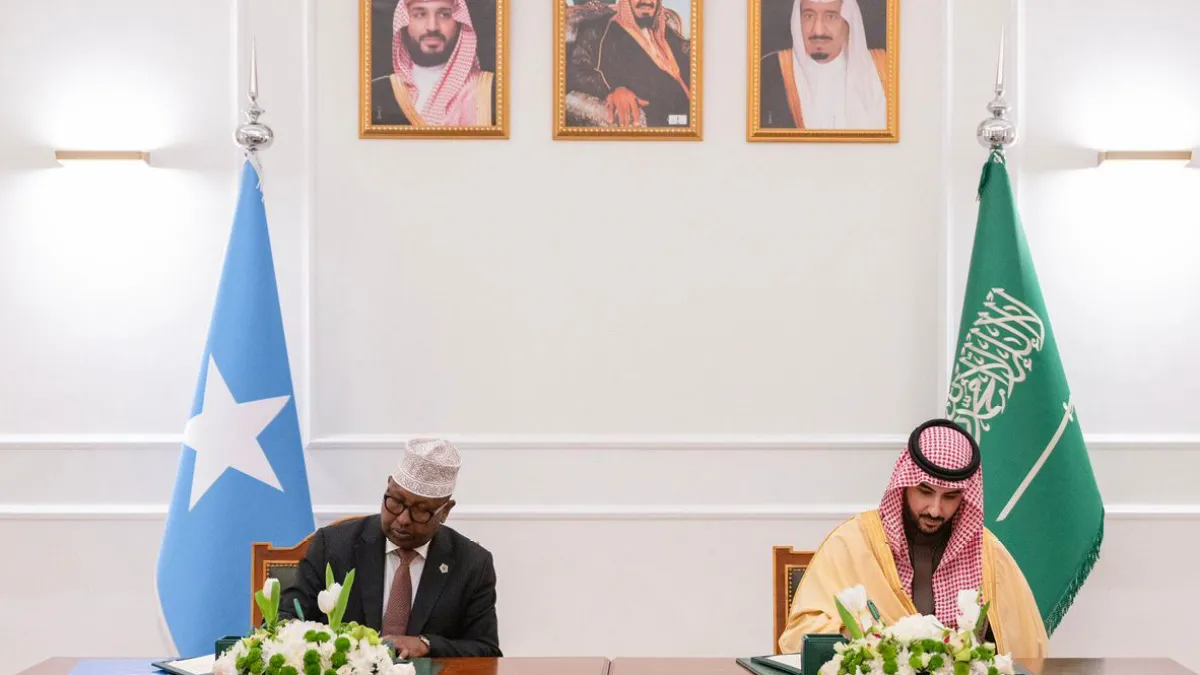
Somalia has signed a “military cooperation” agreement with Saudi Arabia, weeks after inking a similar deal with Qatar, as Mogadishu seeks regional support against Israel’s recognition of the breakaway region of Somaliland.
The memorandum of understanding was signed on Monday between Somali Minister of Defence Ahmed Moallim Fiqi and his Saudi counterpart, Prince Khalid bin Salman bin Abdulaziz, in Riyadh.
Recommended Stories
list of 4 itemsend of list
The agreement “aims to strengthen the frameworks of defense and military cooperation between the two countries, and includes multiple areas of common interest, serving the strategic interests of both parties”, Somalia’s Ministry of Defence said.
Prince Khalid confirmed the agreement in a post on X.
But neither country provided further details.
Last month, Somalia signed a defence pact with Qatar, aimed at “strengthening military ties and security collaboration”, according to the Somali state news agency.
The pact with Qatar “focuses on military training, the exchange of expertise, the development of defence capabilities, and enhanced security cooperation, in support of efforts to promote regional security and stability”, it said.
Doha said the agreement was “aimed at strengthening areas of joint cooperation in a way that serves mutual interests and enhances defense partnerships”.
The diplomatic offensive by Somalia comes amid growing tensions in the Horn of Africa region following Israel’s world-first recognition of Somaliland in December. Mogadishu has warned that Israel plans to set up a military base in the breakaway region, which could be used to launch attacks on neighbouring countries.
Somali President Hassan Sheikh Mohamud told Al Jazeera last week that Mogadishu “will never allow” the establishment of an Israeli base in Somaliland and will “confront” any such move.
“We will fight in our capacity. Of course, we will defend ourselves,” he said. “And that means that we will confront any Israeli forces coming in, because we are against that and we will never allow that.”
A Somaliland official told Israel’s Channel 12 in January that an Israeli military base is “on the table”, though terms were still being negotiated.
Separately, Somalia also cancelled all agreements with the United Arab Emirates last month – including port operations, security and defence deals – citing “harmful actions” that undermine its “national unity and political independence”.
The move came amid reports that the UAE had facilitated Israel’s recognition of Somaliland’s independence.
The Gulf state, which normalised ties with Israel in 2020 under the Abraham Accords, has cultivated deep economic and security ties with Somaliland. These include a 30-year concession at the strategic Berbera port held by the UAE company DP World.
The UAE declined to sign a joint Arab-Islamic statement condemning Israel’s recognition of Somaliland, but it released a joint statement with the African Union in January pledging “support for Somalia’s sovereignty, territorial integrity, security and stability”.
Somalia’s break with the UAE coincided with a deterioration in Saudi Arabian-Emirati relations.
Tensions erupted in December when Saudi forces bombed what Riyadh described as a UAE weapons shipment to the separatist Southern Transitional Council in Yemen. Saudi Arabia also backed a call by Yemen’s internationally recognised government for Emirati forces in the country to withdraw.
The UAE denied the allegations.
Separately, Abu Dhabi has also been accused of supporting the paramilitary Rapid Support Forces (RSF) in Sudan, which has been battling the Sudanese Armed Forces for nearly three years.
Saudi Arabia, an ally of Khartoum, condemned the RSF on Saturday over attacks in Sudan’s Kordofan region, which have killed dozens of people, including women and children.
Riyadh also denounced “foreign interference” by unspecified parties in Sudan, saying the “continued influx of illegal weapons, mercenaries and foreign fighters” was prolonging the continuation of the nearly three-year-old war.
It did not name the parties.
Sudan, meanwhile, filed a case against the UAE at the International Court of Justice last year, accusing it of “complicity in genocide” allegedly committed by the RSF against the Masalit community in West Darfur state.
The UAE slammed the move as “nothing more than a cynical publicity stunt” and said it would seek the “immediate dismissal” of the case.
Hi, and welcome to another edition of Prep Rally. I’m Eric Sondheimer. Playoff pairings have been announced for high school basketball. There’s only one unbeaten team left and what an intriguing story.
Get our high school sports newsletter
Prep Rally is devoted to the SoCal high school sports experience, bringing you scores, stories and a behind-the-scenes look at what makes prep sports so popular.
There’s only one unbeaten team in the Southern Section basketball playoffs. And what an intriguing story regarding 28-0 Elsinore.
Back in 1974, when Elsinore when 27-0 until losing at the L.A. Sports Arena in the Division 1-A final, Peter Rettinger rode to the game as a middle school student on the rooter bus and Rick Wolter played in the game as a sophomore.
They’ve been co-head coaches at Elsinore for 32 years. This season, they have a top junior guard in Kamrynn Nathan, averaging 25.2 points. “He’s fun to watch because he’s really creative,” Rettinger said.
Elsinore won the Mountain Pass League and has wins over Chino Hills, Murrieta Valley and Murrieta Mesa. Elsinore was placed in the Division 2 playoffs and opens at home Wednesday against Sonora.
Much has changed since Rettinger was a student at Elsinore, which used to be the only high school in the “Valley” from Corona to Temecula. Now there’s two new high schools in Elsinore, three in Temecula and three in Murrieta.
Wolter retired from teaching and Rettinger is still teaching.
“We’ve always had a positive experience,” Rettinger said. “The parents realized we are the product of the valley and tried to do the best we can with whatever we team have.”
They’re a true neighborhood team supported by loyal neighborhood families.
Boys basketball
The Southern Section playoff pairings released Saturday includes Sierra Canyon as the No. 1 seed for the Open Division. There are 12 teams and four divisions for pool play. Here’s a look.
Kaiden Bailey of Santa Margarita had zero points against St. John Bosco but contributed eight assists.
(Dylan Stewart / 1550 Sports)
The McDonald’s All-America Game revealed its rosters for the boys and girls games. Here’s the report.
Santa Margarita won the first Trinity League tournament with a 57-56 win over St. John Bosco. Here’s the report.
St. Bernard won the Del Rey League title behind junior guard Brandon Granger. Here’s the report.
Thousand Oaks’ Dylan McCord has had a great senior year shooting threes. He had 43 points and 10 threes in a win over Newbury Park. Here’s a report.
Palisades won its first Western League title in 30 years and gained the No. 1 seed for the City Section Open Division playoffs. Here’s the City playoff seedings.
Sun Valley Poly coach Joe Wyatt guided his team to a 12-0 record in the East Valley League and 28 consecutive league wins. Here’s the report.
Sophomore forward Kiara Wakabi helped Birmingham win its 32nd West League game in a row.
(Steve Galluzzo / For The Times)
Birmingham won the West Valley League title in a close game over Granada Hills and is seeded No. 2 for the City Section Open Division playoffs behind Westchester. Here’s a look at the Patriots’ win over Granada Hills.
Andrea Antonio, a freshman at Hamilton, scored 54 points in her team’s 85-83 overtime win over Palisades.
The Southern Section Open Division pairings were released, and the top three seeds are Ontario Christian, Etiwanda and Sierra Canyon.
Darby Dunn | Canyon HS 28’ | 5’7” PG
Regular season: 26 Points Per Game 7.4 Rebounds 4.4 Assists 3.6 Steals
CIF SS Rankings: #3 Free Throws #4 Field Goals #7 Points Per Game
Reggie Morris Jr., in 2013. He has a collection of bow ties he brings out for the playoffs.
(Nick Koza)
It’s time to break out the bow ties for Reggie Morris Jr., the head basketball coach at Redondo Union. He has won Southern Section titles coaching at Redondo, Leuzinger and St. Bernard. He won a City title at Fairfax.
Here’s what Morris has to say about preparing to challenge Sierra Canyon and others in the Open Division playoffs.
Super Bowl connections
Patriots special teams player Brenden Schooler during his high school days at Mission Viejo.
(Los Angeles Times)
Southern California was well represented in Sunday’s Super Bowl, with former local high school players on the rosters of the Seahawks and Patriots.
During Super Bowl week, the two NFL rookies of the year announced were from Southern California. Receiver Tetairoa McMillan from Servite and the Carolina Panthers and linebacker Carson Schwesinger from Oaks Christian, UCLA and the Cleveland Browns.
Wrestling
The City Section boys and girls wrestling championships will be held Saturday night at Roybal. Admission is $12. There’s a $5 parking charge.
The Southern Section individual championships will have six divisional finals Friday and Saturday at Westminster, Fountain Valley, Canyon Springs, Great Oak, Moorpark and Glenn. It will help determine qualifiers for the Masters Meet at Sonora on Feb. 20. Admission is $14.
Redondo Union won its first Southern Section Division 6 boys wrestling championship. El Modena won Division 5. Corona took Division 4. South Torrance took Division 3. Temecula Valley won Division 2. St. John Bosco won Division 1.
Santa Ana won the Diviison 1 girls title. Chaparral won Division 2. Oxnard Pacifica took Division 3. Sonora won Division 4.
Soccer
Palos Verdes is seeded No. 1 for the Open Division boys competition. Mater Dei is seeded No. 2.
The City Section playoff pairings will be announced Monday.
Notes . . .
Orange Lutheran coach Rod Sherman.
(Nick Koza)
There will be three new head football coaches in the Trinity League this fall after Orange Lutheran announced that Rod Sherman was no longer the football coach and Chris Reinert resigned at Servite. JSerra hired Hardy Nickerson as its new coach. Here’s the report on Sherman’s departure. Here’s the report on Reinert’s departure and the many changes happening in the nation’s toughest football league. . . .
The National Federation of State High School Assn. football rules committee has clarified and strengthened a rule that prohibits slapping the head of any player on offense or defense. Here are the rule changes for 2026. . . .
High school volleyball teams will now be permitted to designate up to two libero players during each set, creating additional participation opportunities without needing to use a substitution. Effective next season.
Noah Thayer, who was one of the best kickers in the Southland until suffering an injury at JSerra, has committed to Cal Poly. . . .
Junior receiver Michael Farinas of Chaparral has committed to UCLA. . . .
Junior linebacker Mike Davis Jr. of Mater Dei has committed to UCLA. . . .
At the winter track championships at Arcadia, Servite’s Jaelen Hunter ran the 300 in 33.02. Rosary girls had a big day sweeping the 60 and 150. Maliyah Collins won the 60 in 6.38 and 150 in 17.59.
Jaslene Massey of Aliso Niguel had the seventh-best girls shot put effort in state history at the winter championships at Arcadia High with a mark of 52-10 1/4,
Junior receiver Tycen Johnson of Chaparral has committed to Arizona State. . . .
Sophomore all-league linebacker Allen Kennett V has transferred from Servite to Santa Margarita. . . .
Spud O’Neil, the baseball coach at Lakewood since 1984, has announced 2026 will be his final season. He has 970 victories over 52 seasons that includes stints at St. Anthony and Colton. . . .
RIP to former Lakewood basketball coach Tim Sweeney Sr., who died on Wednesday. The school gym is named after him. He was 241-140 at Lakewood and won a CIF title. His son, Tim Jr., was head coach at Riverside King for many years.
The Coliseum League is getting a change for football in the fall. Moving out are Dymally and Fremont, which will be switching to the Metro and Exposition leagues. Moving in is Marquez, which will join Crenshaw, Dorsey, King/Drew and Washington Prep. . . .
Lorenzo Hernandez, who was football coach at Garfield from 1999 through 2024, is the leading candidate to become head coach at Whittier, which has Garfield’s former principal. Hernandez served as athletic director at Garfield since the fall. He’d be taking over a program that is headed to a new league if they select him. . . .
Eddie Ficklin has resigned as football coach at Cantwell Sacred-Heart. . . .
Matt Casey is the new football coach at Arlington. . . .
Eric Carnohan is the new director of aquatics at Servite. . . .
Chace Holley from Bay League champion Redondo Union has committed to Pepperdine.
From the archives: Robert Garcia
Former San Fernando football coach Robert Garcia is now an assistant coach at Bishop Alemany.
(Robert Garcia)
Former San Fernando football coach Robert Garcia has joined Dennis Keyes’ staff as an assistant coach at Bishop Alemany.
He was head coach at San Fernando from 2011 until the summer of 2021, winning two City Section Division II titles and a Division I title. He left to run a family restaurant business. He has helped coach with Keyes before since both have sons playing youth football.
From the Daily Breeze, a story on new Bishop Montgomery coach Oscar McBride.
From The562.org, a story on Lakewood baseball coach Spud O’Neil announcing this will be his final season after 52 years coaching baseball.
From the Oklahoman, a story on the governor supporting open transfers in high school sports.
Tweets you might have missed
A month shy of his 91st birthday, Harold Mulhern is still coaching high school basketball at Wisconsin’s Osseo-Fairchild High School. Asked when he’ll know it’s time to stop, Harold said wryly, “When I’m dead.” #land10kstoriespic.twitter.com/hZ0eN3NxEU
Emotional scene tonight in Colfax as beloved boys basketball head coach Reece Jenkin, battling stage 4 cancer, returned to the gym not to coach, but to support son Adrik on Senior Night. Colfax capped an undefeated regular season and Adrik led the way with 38 points in the win. pic.twitter.com/XdS8FNyrik
Class of 2026 Signing Day ✍️🐾 Jakob McKindley – NAU Ben Tameifuna – EWU Tyler George – Penn Caleb Rye – Air Force Boogie Williams – Wyoming Keawe Browne – Boise St. JD McKinley – Cal Lucky Schirmer – Cal Fifita Moore – Princeton Zander Lewis – VMI #Cen10Division1
Dennis Keyes, new Alemany football coach, is guest tonight at 5 on Friday Night Live. Here’s an excerpt and great lesson for high school athletes how important it is to not just rely on your sport for life. He became artist and teacher. pic.twitter.com/kLj168UXna
Seahawks QB Sam Darnold on his hoops background: “Playing multiple sports was huge for me growing up. I was always in the moment. Whenever I was playing football, football was my favorite sport … and right when I transitioned into basketball, basketball was the main thing.”
The next generation of Clausen boys are in first and second grade. Casey and Jett. The dads are going to have sore arms by the time the boys reach high school. pic.twitter.com/PZra58o1T2
Have a question, comment or something you’d like to see in a future Prep Rally newsletter? Email me at eric.sondheimer@latimes.com, and follow me on Twitter at @latsondheimer.
Did you get this newsletter forwarded to you? To sign up and get it in your inbox, click here.
On a recent trip from Germany, where he lives, to his hometown of Aleppo, Alhakam Shaar made a decision. He would not stay at a hotel or with friends. Instead, he would stay at what used to be his father’s office in Aleppo’s Old City.
There was only one problem.
Recommended Stories
list of 3 itemsend of list
“Not a single room had a closable window or door,” Shaar, who had been away from the city for a decade, told Al Jazeera. Aleppo’s winters are brutally cold, with temperatures reaching well below zero degrees Celsius.
Still, he bought a sleeping bag that had been advertised as capable of withstanding extreme weather.
“That didn’t turn out to be true, and I still woke up with cold toes many nights,” he said. But despite the cold, he did not regret the decision.
Although his trip to Syria was short – about two weeks, in part due to flight cancellations after armed clashes in Aleppo – Shaar started renovating his old family home, also in the Old City, that had been looted and damaged during the war.
The roof was collapsing, and the door to the street had been removed. Two weeks did not seem to be enough time to make a dent in the extensive renovation work required.
But he got the job done, and placed a metal door on the house to signal that it was no longer an abandoned property.
“I was happy. I was truly, truly happy to be in Aleppo, not as a guest or as a tourist, but as an Aleppan,” he said. “As someone who is home. And I felt at home.”
Thousands of Syrians are returning to Aleppo, a great city damaged by years of neglect and war. Much of it, however, is plagued by infrastructure damage, requiring significant reconstruction efforts.
The new Syrian government – in power since December 2024 – has already started some of the work to rebuild Aleppo. But residents wonder if this will be enough to bring the city back to its past glory.
Years of damage
Aleppo was Syria’s most populous city until the war heavily reduced its population.
Its geographical position made it an important stop on the Silk Road trade route, as well as for travellers who passed through Anatolia – a large peninsula in Turkiye – eastwards into Iraq or further south towards Damascus.
While the emergence of Egypt’s Suez Canal in international shipping diminished Aleppo’s regional role, it still maintained an importance in Syria for being the country’s capital of industry.
Its prominence lasted throughout the rule of President Hafez al-Assad, who took control of Syria in 1970. The Assad regime’s massacre in the town of Hama in the early 1980s also spread to Aleppo, where thousands of opponents were killed. Still, the city held on.
However, by the time the 2011 Syrian uprising came around, Aleppo had already faced a lack of state investment and neglect.
The city deteriorated further as Bashar al-Assad, who took over the presidency when Hafez, his father, died in 2000, violently cracked down, and Syria deteriorated into war. Aleppo soon became divided, with regime forces controlling the west and the opposition controlling the east.
Then, in 2016, the Assad regime, with the help of Lebanon’s Hezbollah, Iran and Russia, violently took the eastern part of the city, which had become the capital of the Syrian revolution. In the process, they destroyed vast swaths of east Aleppo, expelling thousands.
As the Assad regime fell a little more than eight years later, some of Aleppo’s children returned as its liberators. But they found that the regime had not rebuilt the city during their absence. Many of Aleppo’s suburbs, where Syrian production had flourished in the pre-war years, were now ghost towns, after the regime had cut off water and electricity services.
Aleppo is still struggling. Informal settlements and overcrowded schools are common in the city and the rest of northern Syria, where a European Union report in January said that “2.3 million people reside in camps and informal settlements, of which 80 [percent] are women and children”.
Locals say they fear Aleppo may never be the same again.
“There is nothing that will return to the same as it was,” Roger Asfar, an Aleppo-native and the Syrian country director for the Adyan Foundation, an independent organisation focused on citizenship, diversity management and community engagement, told Al Jazeera.
Asfar said that Aleppo’s needs are the same as all parts of Syria devastated by more than a decade of war. Reconstruction is among the top priorities, but it will require heavy investment, particularly if the city’s historic character is to be protected.
Reconstruction
The Syrian government has worked with organisations like the Aga Khan Trust for Culture (AKTC) to restore parts of Aleppo’s Old City, including its historic souk – a 13km-long (8 miles) covered marketplace.
The government also installed water pipes and new lighting around the city’s historic citadel, its crown jewel and a tourist attraction for both Syrians and foreigners. The municipality of Aleppo has also collaborated with the Directorate-General for Antiquities and Museums to rehabilitate parts of the citadel, as well as the Old City’s Grand Umayyad Mosque.
Still, the effort to rebuild Aleppo is Herculean and will require more investment.
Asfar said the challenge starts with governance. This requires that Damascus, instead of merely imposing its decisions on the city, consults with locals. “Aleppo doesn’t need an authority that decides on its own and ignores all other voices,” he said.
The Aleppo governorate, which includes the city and eight districts in northern Syria, is Syria’s most densely populated region, according to UNICEF. Its 4.2 million population is forced to live with the problems facing much of Syria, including infrastructural issues and long power cuts.
Shaar, the Aleppan native who recently visited his hometown, is also a founding scholar on the Aleppo Project, a Central European University project that aims to address the key issues facing the city’s eventual reconstruction.
He said he expects infrastructural issues to “improve in the coming years”, particularly as Syria’s oil and gas revenues increase. But he warns that expectations should be tempered.
Shaar is one Aleppan who holds out hope that the city may bounce back. He pointed out that a silver lining of Assad’s neglect is that the city had not become gentrified by the former government’s economic and political elites, unlike Homs or Damascus.
To return or not to return?
Aleppo has always been a city defined by its culture and diversity. Some Aleppans hope this of its character will return.
Musician Bassel Hariri is an Aleppo native, now based in London, who learned to play instruments from his father. He remembers the rich and diverse tradition of his native city, which has been passed on from one generation to the next.
“Music, art, cooking, whatever – everything is carried directly from the community,” Hariri said. “And this richness and this cultural access and the diversity of Aleppo makes it one of the most wonderful cities in Syria.”
While the city may not return to its past glory, thousands of Syrians are still coming back to their homes in Aleppo and its countryside. Others simply have nowhere else to go.
For Shaar, Aleppo is still calling. Two things are keeping him away: his wife’s full-time job as a lecturer in Germany, and the lack of a stable salary in Syria.
“Not much more than this,” he said. “It wouldn’t take much to bring me back to Aleppo, personally.”
Prime Minister Anthony Albanese, who is to meet Herzog later on Tuesday, said he was “devastated” by the scenes, saying they “shouldn’t be taking place,” but defended the invitation to Herzog and said protesters “undermined” their cause at the protest.