Commentators within Israel have described a sense of business as usual in the wake of the country’s joint attack with the United States against Iran.
“It’s Saturday, so the streets are naturally quiet,” political analyst Ori Goldberg said from outside Tel Aviv, as he returned from his shelter for the second time.
“I think, politically, there’s a sense of triumphalism, of having attacked an enemy regime. Not really because we’re greatly invested in the future of the Iranian people, but because, through the genocide on Gaza, we’ve devalued human life,” he said, referring to the Israeli attacks on the besieged territory since October 2023.
Returning to shelters around the country is now the stuff of everyday life for most Israelis, he said.
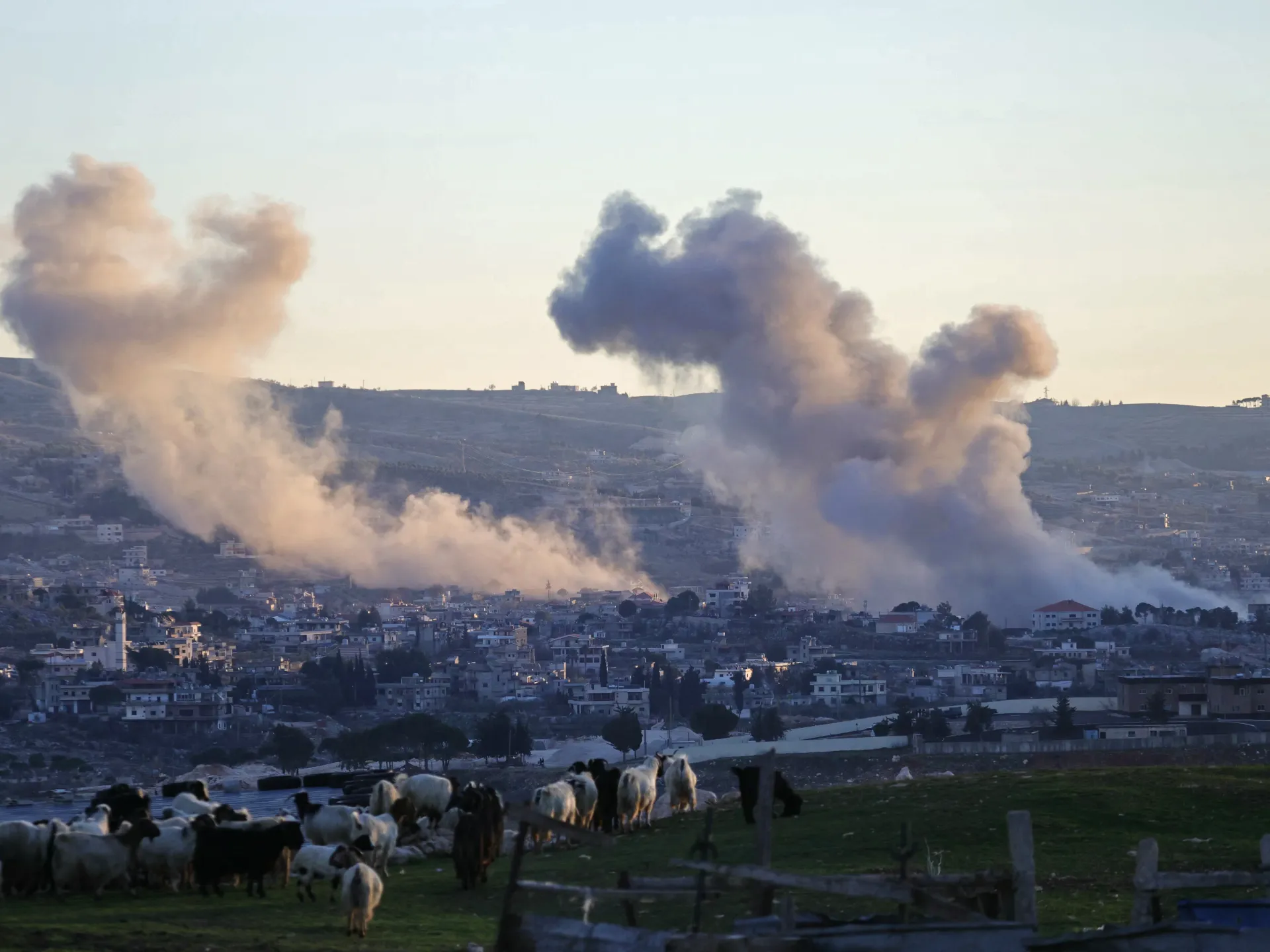
Israel has been on high alert since it launched a wave of attacks on Iran, the country that its leaders have consistently portrayed as its nemesis for decades.
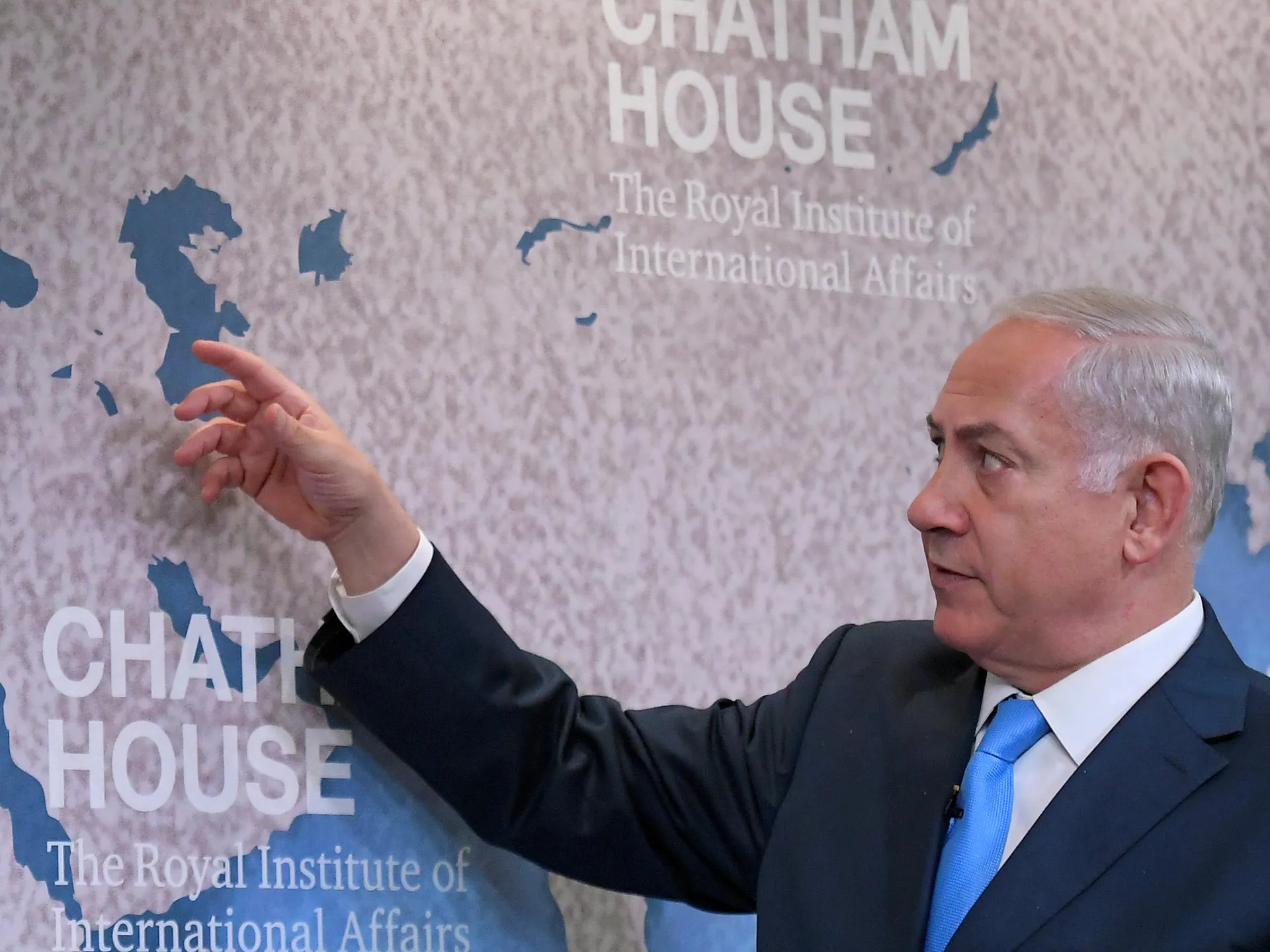
Announcing the attack through a video post on X, Israeli Prime Minister Benjamin Netanyahu framed the attack in characteristically apocalyptic terms, saying Israel and the US had launched attacks to “remove the existential threat posed [to Israel] by the terror regime in Iran”, and going on to call upon the Iranian people to rise against their own leaders in response to the US and Israeli unprovoked strikes upon their cities.
Iran has retaliated with its own waves of missiles and drones against Israel and US assets in the region. At least one person was reported wounded in northern Israel.
But the latest strikes against Iran were met warmly by Israel’s political elite.
“I want to remind us all: The people of Israel are strong. The IDF [Israeli army] and the Air Force are strong. The strongest power in the world stands with us,” opposition leader Yair Lapid wrote on social media, referring to the US.
“In moments like these we stand together – and we win together. There is no coalition and no opposition, only one people and one IDF, with all of us behind them.”
In a subsequent post written in Farsi, he echoed the prime minister’s calls for Iran to enact regime change from within, a longstanding Israeli policy.
‘It’s crazy’
Accounts of the relative calm in Israel stand in sharp contrast to previous escalations, when sources described panic and bulk buying before an anticipated Iranian response to the wave of strikes Israel launched against targets in Iran.
“People here are well trained,” Aida Touma-Suleiman, a Palestinian member of the Israeli parliament representing the left-wing Hadash-Ta’al faction, which is almost alone in opposing the strikes, said from her apartment near Haifa, where she had just returned from her shelter.
“This is what they’re saying all the time in the media: How well-trained and ready we are. It’s crazy. I don’t think any country in the world has experienced more war than we have, so this is what they mean by ‘trained’,” she said, referencing the wars on Iran, Lebanon, Yemen and Gaza that Israel has waged since the Hamas-led attack of October 2023.
As Touma-Suleiman spoke, she was interrupted by an alarm on her phone. “That’s not the alert. That’s a warning on my phone telling me there’s going to be an alert and then I’ll have to return to the shelter,” she explained, laughing drily. “You see what I mean about being well trained?”
Texting from Israel, Ahron Bregman, a senior teaching fellow at the Department for War Studies at King’s College London, described the relative calm and almost relief felt by many within the country that the uncertainty over war with Iran was at an end.
“Both Israel and the US are after the Iranian leadership. They hope to weaken it substantially, though I doubt they could topple it from the air,” he said, raising the possibility of a prolonged conflict.
However, how ready Israel might be for a lengthy war, and to what degree that might be Israel’s choice, was far from certain, Touma-Suleiman said.
“It will be the United States that determines how long the war will be. They’ll continue until they’ve achieved whatever it is they want,” she said.
“I don’t think Israel is ready for that. People are exhausted. The army is exhausted. I don’t know if they even have the reserves to manage a long war, and this is what Netanyahu is willing to gamble with, just so he can say to the public before elections: ‘Here is at least one victory.’”
Embassy staffers and dependents evacuating, airlines suspending service, eyes in Iran warily turning skyward for signs of an attack.
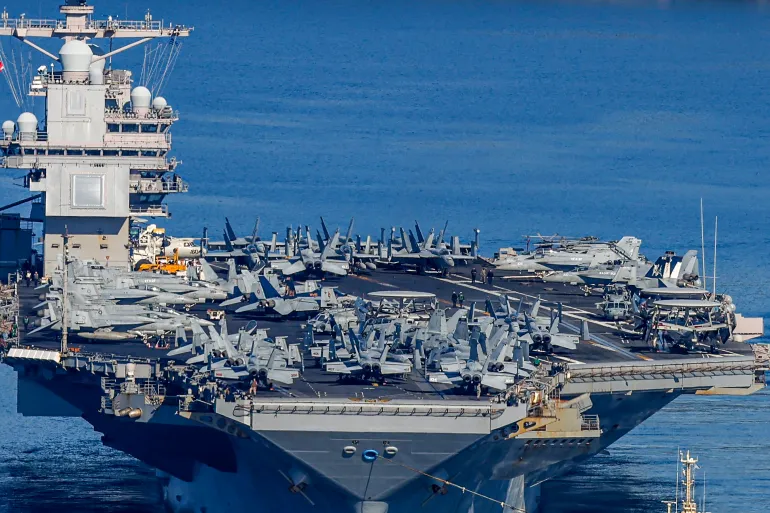
The prospects of a showdown between the U.S. and Iran loom ever higher, as massive American naval and air power lies in wait off Iran’s shores and land borders.
Yet little of that urgency is felt in Iran’s government. Rather than quickly acquiescing to President Trump’s demands, Iranian diplomats persist in the kind of torturously slow diplomatic dance that marked previous discussions with the U.S., a pace that prompted Trump to declare on Friday that the Iranians were not negotiating in “good faith.”
But For Iran’s leadership, Iranian experts say, concessions of the sort Trump are asking for about nuclear power and the country’s role in the Middle East undermine the very ethos of the Islamic Republic and the decades-old project it has created.
“As an Islamic theocracy, Iran serves as a role model for the Islamic world. And as a role model, we cannot capitulate,” said Hamid Reza Taraghi, who heads international affairs for Iran’s Islamic Coalition Party, or Hezb-e Motalefeh Eslami.
Besides, he added, “militarily we are strong enough to fight back and make any enemy regret attacking us.”
Even as another round of negotiations ended with no resolution this week, the U.S. has completed a buildup involving more than 150 aircraft into the region, along with roughly a third of all active U.S. ships.
Observers say those forces remain insufficient for anything beyond a short campaign of a few weeks or a high-intensity kinetic strike.
Iran would be sure to retaliate, perhaps against an aircraft carrier or the many U.S. military bases arrayed in the region. Though such an attack is unlikely to destroy its target, it could damage or at least disrupt operations, demonstrating that “American power is not untouchable,” said Hooshang Talé, a former Iranian parliamentarian.
Tehran could also mobilize paramilitary groups it cultivated in the region, including Iraqi militias and Yemen’s Houthis, Talé added. Other U.S. rivals, such as Russia and China, may seize the opportunity to launch their own campaigns elsewhere in the world while the U.S. remains preoccupied in the Middle East, he said.
“From this perspective, Iran would not be acting entirely alone,” Tale said. “Indirect alignment among U.S. adversaries — even without a formal alliance — would create a cascading effect.”
We’re not exactly happy with the way they’re negotiating and, again, they cannot have nuclear weapons
— President Trump
The U.S. demands Iran give up all nuclear enrichment and relinquish existing stockpiles of enriched uranium so as to stop any path to developing a bomb. Iran has repeatedly stated it does not want to build a nuclear weapon and that nuclear enrichment would be for exclusively peaceful purposes.
The Trump administration has also talked about curtailing Iran’s ballistic missile program and its support to proxy groups, such as Hezbollah, in the region, though those have not been consistent demands. Tehran insists the talks should be limited to the nuclear issue.
After indirect negotiations on Thursday, Oman’s Foreign Minister Badr al-Busaidi — the mediator for the talks in Geneva — lauded what he said was “significant progress.” Iranian Foreign Ministry spokesman Esmail Baghaei said there had been “constructive proposals.”
Trump, however, struck a frustrated tone when speaking to reporters on Friday.
“We’re not exactly happy with the way they’re negotiating and, again, they cannot have nuclear weapons,” he said.
Trump also downplayed concerns that an attack could escalate into a longer conflict.
This frame grab from footage circulating on social media shows protesters dancing and cheering around a bonfire during an anti-government protest in Tehran, Iran, on Jan. 9.
(Uncredited / Associated Press)
“I guess you could say there’s always a risk. You know, when there’s war, there’s a risk in anything, both good and bad,” Trump said.
Three days earlier, in his State of the Union address Tuesday, said, “My preference is to solve this problem through diplomacy. But one thing is certain, I will never allow the world’s number one sponsor of terror, which they are by far, to have a nuclear weapon — can’t let that happen.”
There are other signs an attack could be imminent.
On Friday, the U.S. Embassy in Israel allowed staff to leave the country if they wished. That followed an earlier move this week to evacuate dependents in the embassy in Lebanon. Other countries have followed suit, including the U.K, which pulled its embassy staff in Tehran. Meanwhile, several airlines have suspended service to Israel and Iran.
A U.S. military campaign would come at a sensitive time for Iran’s leadership.
The country’s armed forces are still recovering from the June war with Israel and the U.S, which left more than 1,200 people dead and more than 6,000 injured in Iran. In Israel, 28 people were killed and dozens injured.
Unrest in January — when security forces killed anywhere from 3,000 to 30,000 protesters (estimates range wildly) — means the government has no shortage of domestic enemies. Meanwhile, long-term sanctions have hobbled Iran’s economy and left most Iranians desperately poor.
Despite those vulnerabilities, observers say the U.S. buildup is likely to make Iran dig in its heels, especially because it would not want to set the precedent of giving up positions at the barrel of a U.S. gun.
Other U.S. demands would constitute red lines. Its missile arsenal, for example, counts as its main counter to the U.S. and Israel, said Rose Kelanic, Director of the Middle East Program at the Defense Priorities think tank.
“Iran’s deterrence policy is defense by attrition. They act like a porcupine so the bear will drop them… The missiles are the quills,” she said, adding that the strategy means Iran cannot fully defend against the U.S., but could inflict pain.
At the same time, although mechanisms to monitor nuclear enrichment exist, reining in Tehran’s support for proxy groups would be a much harder matter to verify.
But the larger issue is that Iran doesn’t trust Trump to follow through on whatever the negotiations reach.
After all, it was Trump who withdrew from an Obama-era deal designed to curb Iran’s nuclear ambitions, despite widespread consensus Iran was in compliance.
Trump and numerous other critics complained Iran was not constrained in its other “malign activities,” such as support for militant groups in the Middle East and development of ballistic missiles. The Trump administration embarked on a policy of “maximum pressure” hoping to bring Iran to its knees, but it was met with what Iran watchers called maximum resistance.
In June, he joined Israel in attacking Iran’s nuclear facilities, a move that didn’t result in the Islamic Republic returning to negotiations and accepting Trump’s terms. And he has waxed wistfully about regime change.
“Trump has worked very hard to make U.S. threats credible by amassing this huge military force offshore, and they’re extremely credible at this point,” Kelanic said.
“But he also has to make his assurances credible that if Iran agrees to U.S. demands, that the U.S. won’t attack Iran anyway.”
Talé, the former parliamentarian, put it differently.
“If Iranian diplomats demonstrate flexibility, Trump will be more emboldened,” he said. “That’s why Iran, as a sovereign nation, must not capitulate to any foreign power, including America.”
The United States and Israel have launched strikes on Iran despite ongoing talks between Washington and Tehran over Iran’s nuclear programme.
Iran responded to Saturday’s attacks with missile and air strikes across the region, including in Israel, Bahrain, Saudi Arabia, Qatar, the United Arab Emirates and Iraq.
Recommended Stories
list of 3 itemsend of list
Israeli officials said their strikes targeted Iran’s military and nuclear-related infrastructure, while airspace across Israel was closed and emergency measures imposed. Several other countries in the region also announced the closure of their airspace.
Meanwhile, President Donald Trump said Washington has begun a “major combat operation” in Iran, aimed at “eliminating threats from the Iranian regime”.
“This regime will soon learn that no one should challenge the strength and might of the United States Armed Forces,” he said.
The strikes came just two days after high-stakes US–Iran nuclear negotiations in Geneva, mediated by Oman, ended without a breakthrough. The US-Israel attack marks the most serious escalation since the brief but intense June 2025 war.
Here is a timeline of the events, including attacks and diplomatic overtures leading up to Saturday’s strikes by the US and Israel, and Iran’s fierce response.
June 13, 2025 — Israel launches major air strikes against Iranian nuclear and military facilities, amid ongoing talks between the US and Tehran. Iran responds within hours with large-scale missile and drone attacks on Israeli cities.
June 22 – The US strikes Iranian nuclear facilities at Natanz, Fordow and Isfahan, with Trump claiming the attacks degraded Tehran’s nuclear programme. Iranian officials said their programme was set back but not destroyed.
June 23 – In retaliation, Iran fires missiles towards Al Udeid airbase in Qatar, housing US soldiers. The missiles are intercepted, and no casualties are reported.
June 24 – After 12 days of fighting, a US-brokered ceasefire takes effect between Iran and Israel, ending all hostilities. Iran says at least 610 of its citizens were killed in the war, while Israel claimed 28 were killed on its side.
July 2 – Iranian President Masoud Pezeshkian signs legislation halting cooperation with the International Atomic Energy Agency (IAEA), barring its inspectors from accessing Iran’s nuclear facilities unless specifically authorised by the country’s Supreme National Security Council.
July 22 – Abbas Araghchi, Iran’s foreign minister, says Tehran will not give up its uranium enrichment programme, despite a temporary halt due to “serious and severe” damages.
August 12 – Iranian police arrest as many as 21,000 people related to the 12-day war with Israel, according to state media.
August 22 – Iran agrees to resume nuclear talks later in the month with the United Kingdom, France and Germany, despite the threat of revived sanctions.
August 28 – The three European countries trigger a mechanism reinstating the United Nations’ sanctions on the Islamic republic for the first time in a decade.
November 1 – Oman urges both the US and Iran to go back to the negotiating table as Iran reiterates it will not stop enriching uranium.
November 7 – Trump says Iran has requested that Washington remove its crippling sanctions on Tehran, and that he is willing to talk about the issue.
December 28 – Protests break out in major cities, including Tehran, over soaring prices after the rial plunges against the US dollar.
January 8, 2026 – The internet is shut down across Iran following the outbreak of antigovernment protests, which have now spread beyond cities. The blackout lasts for more than two weeks.
January 13 – Trump tells Iranians to “keep protesting” , claiming that “help is on the way”, and that the US may be preparing for military intervention against Tehran. The US begins to bolster its military presence off Iran.
February 6 – Iran and the US begin indirect nuclear negotiations in Geneva, mediated by Oman, with the aim of reaching a deal to curb Tehran’s nuclear programme.
February 17 – High-level US–Iran nuclear talks resume in Geneva, again with Omani mediation.
(Al Jazeera)
February 22 – Oman confirms another round of discussions in Geneva, describing a “positive push” but admits that significant differences remain.
February 26 – A third round of nuclear talks concludes in Geneva, with mediator Oman saying “significant progress” was made and more discussions would be held the following week in Vienna.
February 27 – Oman’s foreign minister says Iran has agreed to degrade its current stockpiles of nuclear material to “the lowest level possible” — effectively to unrefined levels. US President Donald Trump says he prefers diplomacy but warns that “all options” remain available if diplomacy fails.
February 28 – Israel launches coordinated strikes on Iranian targets, including sites in and around Tehran. Iran retaliates by launching air and missile strikes across the region, including Qatar, United Arab Emirates, Saudi Arabia, Bahrain and Kuwait.
Video shows plumes of smoke rising after Iran targeted a United States military base in Bahrain, following Israel–US attacks across Iran. Two missiles were intercepted over Qatar and explosions were reportedly heard in Abu Dhabi, Kuwait and Saudi Arabia.
Israel’s Prime Minister Benjamin Netanyahu says the joint US‑Israel strikes on Iran aim to remove an ‘existential threat.’ He hailed the joint action as empowering the Iranian people to shape their own future and praised US President Donald Trump for his leadership.
US President Donald Trump says American forces have begun “major combat operations” in Iran alongside Israel, aiming to eliminate what he described as imminent threats from the Iranian regime and defend the American people.
Aden, Yemen – Abu Amjad was shopping with his two children last week, finally able to take them out and buy them new clothes – a cherished Ramadan tradition in Yemen.
The 35-year-old is a teacher, and he had just received his salary. That payment was a sign things are improving in Aden – the salaries are funded by Saudi Arabia as a way of backing the Yemeni government, which has recently arrived to take control of Aden after the defeat of secessionist forces.
Recommended Stories
list of 3 itemsend of list
But problems and instability are never far away in Yemen.
Just as soon as the children, Amjad, 10, and Mona, 7, began trying on their outfits, the sound of gunfire erupted. Shoppers froze. Amjad and Mona clutched their father, asking to leave.
About 3km (2 miles) away, security forces had opened fire on protesters who attempted to breach the gates of al-Maashiq Palace, where members of the Yemeni government have been based since they arrived from Riyadh a week ago.
The gunfire shattered the family’s moment of joy.
“It ruins your joy when you see a person bleed and robs you of peace when you hear prolonged gunfire,” Abu Amjad told Al Jazeera.
After years of operating from exile, Yemen’s Saudi-backed, UN-recognised cabinet is spending Ramadan in Aden, a move that has coincided with improvements in basic services and a renewed sense of relief. Yet that relief was overshadowed by the deadly confrontation between security forces and antigovernment protesters, in which at least one person was killed.
“That was the first clash after the return of the government to Aden. Our concern is that it may not be the last,” said Abu Amjad.
Government wins
Yemen’s new Prime Minister Shaya al-Zindani has said that stabilising Aden and other areas under government control was among the new government’s main priorities.
The Yemeni government is currently in its strongest position for years. An advance by the separatist Southern Transitional Council (STC) at the end of last year in eastern Yemen ultimately was a step too far for the United Arab Emirates-backed group.
Saudi Arabia considered the STC advance the crossing of a red line, and lent its full military backing to the Yemeni government, allowing it to take territory it had not controlled for years.
Now, the Yemeni government and Saudi Arabia are focused on attempting to improve conditions in the southern and eastern areas of Yemen under government control, to attract more public support. That would in turn weaken support for both the STC and the Houthi rebels, who have controlled northwestern Yemen, including the capital, Sanaa, since the country’s war began in 2014.
Lit city and busy markets
Abdulrahman Mansour, a bus driver and resident of Khormaksar in Aden, said Ramadan this year feels different.
“When I see the lights on and the markets busy on Ramadan nights in Aden, it feels like a different city. The improvement is undeniable,” Mansour, 42, told Al Jazeera.
He noted that one distinct difference this Ramadan is the stable provision of electricity. “This reminds me of the pre-war time. We used to take that service for granted,” said Mansour.
“When the city is dark at night, it appears gloomy, and families prefer to stay home. The movement of people brings life to the city and helps small businesses keep afloat, especially in Ramadan,” Mansour added.
Yemeni Electricity Minister Adnan al-Kaf said last week that efforts to improve electricity services in Aden and other provinces continue, noting that Saudi support had contributed to improved service over the past two months.
Wafiq Saleh, a Yemeni economic researcher, said the improvement in the living standards of citizens in Aden and southern Yemen, in general, was obvious, particularly after Saudi Arabia’s payment of public sector salaries and the supply of basic services such as water and electricity.
Saleh told Al Jazeera, “The recent Saudi financial support has been very generous, and it can help the government during this period by enabling it to work on reactivating dormant resources, resuming oil exports, combating corruption, and improving the efficiency of revenue collection with transparency and good governance.”
But Saleh emphasised that the progress achieved so far is not the result of economic reforms by the Yemeni government, but rather because of Saudi support.
Therefore, according to the economist, the improvement in the living situation and the currency’s value may not be sustainable, even if it is a positive indicator and may be the first step towards promised economic reforms in the country.
“There must be a comprehensive vision for developing revenue collection so that the government can implement sustainable economic reforms,” Saleh said.
Search for cooking gas
While the distribution of electricity has improved in Aden, other essential services remain strained. Cooking gas shortages remain a major concern. The search for it remains a daily struggle for families in the port city, and the crisis has intensified in Ramadan.
Lines of vehicles queue at stations, while residents wait with cylinders for a few litres (quarts) of gas.
“Going from one station to another in search of cooking gas while fasting is exhausting,” said Fawaz Ahmed, a 42-year resident of Khormaksar district.
Fawaz describes the shortage of cooking gas as a cause of hunger in the city. “If I stay in [my home] village, I would resort to firewood. But in the city, that option is not available, and if we find firewood in the market, it is expensive.”
Gas distributors say the quantity of cooking gas supplied to them is not adequate, citing this as the root cause of the crisis. Supplies are transported from Marib province in northern Yemen.
Tensions to continue
The cooking gas shortage is a sign that it will not be plain sailing for the Yemeni government in Aden.
And opponents will likely seize on any ongoing problems to foment more unrest.
Majed al-Daari, editor-in-chief of the independent Yemeni news site Maraqiboun Press, described the situation in Aden as “very worrying”.
“What happened to the demonstrators at the start of Ramadan underscores the fragility of the political and security situation. Tensions are set to continue,” al-Daari said.
“The STC will continue mobilising its supporters against the government. This is its last card that it will use to restore lost political interests,” al-Daari added.
The STC said in a statement last week that raids and arbitrary arrests had targeted people who had participated in the recent protests. These attacks, the statement emphasised, would only increase the determination of the southerner secessionists.
For Abu Amjad, demonstrations in Aden give space to chaos, which he resents.
“At least, Ramadan should pass without protests. Political actors should spare us this month so we can fast and share some joy with our children,” he said.
Oman’s Foreign Minister says most recent indirect talks between US, Iran ‘really advanced, substantially’ and diplomacy must be allowed do its work.
Iran agreed during indirect talks with the United States never to stockpile enriched uranium, said Oman’s top diplomat, who described the development as a major breakthrough.
Oman’s Foreign Minister Badr bin Hamad Al Busaidi also said on Friday that he believed all issues in a deal between Iran and the US could be resolved “amicably and comprehensively” within a few months.
Recommended Stories
list of 4 itemsend of list
“A peace deal is within our reach … if we just allow diplomacy the space it needs to get there,” Al Busaidi said in an interview with CBS News in Washington, DC, after Oman brokered the third round of indirect talks between the US and Iran in Geneva on Thursday.
“If the ultimate objective is to ensure forever that Iran cannot have a nuclear bomb, I think we have cracked that problem through these negotiations by agreeing [on] a very important breakthrough that has never been achieved any time before,” Al Busaidi said.
“The single most important achievement, I believe, is the agreement that Iran will never ever have nuclear material that will create a bomb,” he said.
“Now we are talking about zero stockpiling, and that is very, very important because if you cannot stockpile material that is enriched, then there is no way that you can actually create a bomb,” he added.
There would also be “full and comprehensive verification by the IAEA [International Atomic Energy Agency]”, he said, referring to the UN’s nuclear watchdog.
Oman’s top diplomat also said Iran would degrade its current stockpiles of nuclear material to “the lowest level possible” so that it is “converted into fuel, and that fuel will be irreversible”.
“This is something completely new. It really makes the enrichment argument less relevant, because now we are talking about zero stockpiling,” Al Busaidi said.
Regarding recent US demands regarding Iran’s missile programme, Al Busaidi said: “I believe Iran is open to discuss everything”.
Asked if he thought enough ground was covered in the most recent talks in Geneva to hold off a US attack on Iran, the minister said, “I hope so.”
“We have really advanced substantially, and I think, obviously, there remains various details to be ironed out, and this is why we need a little bit more time to really try and accomplish the ultimate goal of having a comprehensive package of the deal,” he said.
“But the big picture is that a deal is in our hands,” he added.
The foreign minister’s comment followed after he met earlier on Friday with US Vice President JD Vance and as US President Donald Trump continued to sabre-rattle while at the same time declaring he favoured a diplomatic solution with Tehran.
Trump said on Friday that he was not happy with the recent talks that concluded in Geneva.
“We’re not exactly happy with the way they’re negotiating,” Trump told reporters in Washington, adding that Iran “should make a deal”.
“They’d be smart if they made a deal,” he said.
Trump later said that he would prefer it if the US did not have to use military force, “but sometimes you have to do it”.
The US and Iranian sides are expected to meet again on Monday in Vienna, Austria, for more indirect negotiations.
As Washington escalates threats of military action against Iran, negotiations over Tehran’s nuclear programme continue behind the scenes. But while the Trump administration insists that the standoff is about security, Iran’s state media are pushing a very different narrative: that the crisis is a deliberate distraction from the Epstein scandal that continues to implicate the US president.
Contributors: Dina Esfandiary – Middle East Lead, Bloomberg Economics Fereshteh Sadeghi – Iranian journalist Jamal Abdi – President, National Iranian American Council Sina Toossi – Senior Fellow, Centre for International Policy
On our radar:
Indian Prime Minister Narendra Modi travelled to Israel this past week in a carefully choreographed display of solidarity. While Modi’s trip was celebrated in the Israeli media, criticism by Indian journalists was blocked back home. Leaving the two leaders to sign arms deals that will boost an already significant military partnership.
The Rise of Digital Micro-Bolsonaros
Nearly two years after Jair Bolsonaro’s fall from power in Brazil, the movement he built is searching for a new figurehead. A rising generation of young, evangelical, and hyper-online politicians is stepping in.
They are leveraging a sophisticated, decades-old religious media machine that evolved from radio and television into a powerful force on social media. Brazil’s political right is being reshaped for the digital age.
Featuring: Anna Virginia Balloussier – Journalist, Folha de Sao Paulo Caro Evangelista – Executive Director, ISER Magali Cunha – Editor-in-Chief, Berreia Project
Iraq is in a political deadlock. It still has no government, though general elections were held in November.
At the heart of the crisis is the former prime minister, Nouri al-Maliki, who was picked by the majority coalition in parliament as its candidate to take over the role again.
But that choice has been met with strong opposition from United States President Donald Trump.
And that warning has further polarised the political landscape in the country.
So, what’s really behind Washington’s strong stance against al-Maliki? And what role does the US still play in Iraq?
Presenter: James Bays
Guests
Muhanad Seloom – Assistant professor of international politics at the Doha Institute for Graduate Studies
Ahmed Rushdi – President of the House of Iraqi Expertise Foundation, and a former foreign policy adviser in the Iraqi parliament.
Kenneth Katzman – Senior Fellow at The Soufan Center
Dr Hussam Abu Safiya has been held in an Israeli prison for more than a year without charges or trial. Recently, he’s been subject to a smear campaign claiming he is a Hamas colonel. Al Jazeera’s Yasmeen Aboujabal looks at how such campaigns are being used to discredit Palestinian health workers.
Thousands of worshippers attend prayers at Al-Aqsa Mosque, with others turned away despite carrying required permits.
Published On 27 Feb 202627 Feb 2026
Share
About 100,000 Palestinian worshippers have prayed at the Al-Aqsa Mosque compound in occupied East Jerusalem for the second Friday of the Muslim holy month of Ramadan, despite Israel imposing severe restrictions on access to the holy site.
Worshippers were subjected to thorough security screening on Friday as they made their way through the Qalandiya checkpoint in the occupied West Bank north of Jerusalem to pray, an Al Jazeera team reported, amid a heavy deployment of Israeli forces around the city.
Recommended Stories
list of 4 itemsend of list
Israeli authorities imposed rules at the start of Ramadan to limit entry for Friday prayers to just 10,000 Palestinian worshippers with daily permits – a small fraction of the hundreds of thousands who would attend in normal years.
Under the Israeli rules, only men over 55, women 50 years or older, and children under 12, accompanied by a relative, are permitted to enter.
Visitors are also required to complete digital verification procedures at crossings when returning to the West Bank.
Muslim worshippers make their way to the Al-Aqsa Mosque to attend the second Friday noon prayers of the holy month of Ramadan [Hazem Bader/AFP]
Bans on individuals
As well as the restrictions, Israeli authorities recently announced bans on 280 Jerusalem residents, including religious figures, journalists, and released prisoners, from attending prayers at Al-Aqsa Mosque.
The push to limit Palestinians’ access to the holy site during Ramadan is widely seen as part of an effort to pressure Palestinian communities and erase the Palestinian cultural identity of occupied East Jerusalem, which Palestinians view as the capital of their future state.
The restrictions have further increased since the genocidal war on Gaza began in October 2023.
Muslims perform Friday noon prayers at the Al-Aqsa Mosque compound [Ahmad Gharabli/AFP]
Turned away despite permits
Despite the restrictions, attendance at the mosque was considerably higher than the supposed cap of 10,000 visitors, as it was the previous week, when Jerusalem’s Islamic Waqf, the religious authority that administers the compound, said 80,000 people attended the first Friday prayers of Ramadan.
Yet many Palestinians who attempted to attend, including some who said they had the necessary permits, found themselves turned away by Israeli authorities.
Najati Oweida, who travelled from Hebron, told Anadolu that Israeli soldiers turned him back despite presenting a permit.
“The occupation claims it has provided facilitation, but the procedures are strict,” he said. “I only want to pray at Al-Aqsa. Why am I being prevented?”
Another man, Ali Nawas, 58, told the news agency that he and his wife had travelled for more than an hour from Nablus in the occupied West Bank, only for his wife to be turned back at the Qalandiya checkpoint, despite her having a permit.
“I was forced to return with her. How could she go back to Nablus alone?” he said.
The latest tranche of documents released by the United States Department of Justice on the convicted sex offender and financier Jeffrey Epstein has caused an uproar and a slew of resignations by senior officials and businesspeople across the US and Europe.
In Africa, the more than three million emails, photos, and videos released on January 23 are also causing some aftershocks as they reveal the extent of Epstein’s connections with prominent African figures, though appearing in the Epstein files does not automatically indicate a crime or wrongdoing.
Recommended Stories
list of 3 itemsend of list
According to the documents, Epstein had ties with former South African President Jacob Zuma; Karim Wade, a politician and son of Senegal’s ex-president Abdoulaye Wade; and deceased Zimbabwean President Robert Mugabe.
The new files also shed more light on Epstein’s connections to a relative of Ivory Coast President Alassane Ouattara, who appeared to connect the two men. This connection reportedly opened the door for a friend of Epstein’s, Israeli Prime Minister Ehud Barak, to propose a mass surveillance system to Ouattara that would work in the West African country. It is unclear if such a system is in place now.
Epstein’s possible fixing role culminated in a formal 2014 security deal between the two countries, although the details of it are scant.
The revelations, in general, underscore the range of Epstein’s influence on powerful figures across continents.
Epstein, who was first convicted in 2008 on charges of sex trafficking, was found dead by suicide in his prison cell in 2019 while awaiting a trial on sex trafficking charges. His ex-girlfriend and co-conspirator, Ghislaine Maxwell, was convicted and sentenced in 2021.
Here’s what we know about the Ivory Coast deal and his ties to Africa’s political elite:
A balloon bearing the image of President Alassane Ouattara floats above supporters during a campaign rally in Koumassi, Abidjan, Ivory Coast, before the 2025 election [File: Misper Apawu/AP]
Israel and Ivory Coast: The context
Discussions between Ouattara and Barak appeared to start in mid-2012, after the Ivorian president travelled to Jerusalem for talks with Israeli leaders, presumably in hopes of striking a security agreement. Ouattara met Barak, who was then the Israeli defence minister, and Prime Minister Benjamin Netanyahu.
Five days before the trip, on June 12, 2012, exiled military officials linked to the Ivory Coast’s former president had attempted to overthrow Ouattara’s government.
Ouattara’s predecessor, Laurent Gbagbo, had refused to hand over power to Ouattara, and a civil war that killed at least 3,000 people ensued. The fighting had only ended about a year before when UN and French forces intervened and arrested Gbagbo.
Ouattara’s son, Dramane, and niece, Nina Keita, also met Epstein in New York on the same day, according to the Epstein files. It’s unclear what the parties discussed.
Keita, a former model, was friends with Epstein and travelled regularly on his private jet, according to the documents. She appeared to have connected Epstein with her uncle, as well as other highly placed Ivorian politicians, according to the documents.
The files showed that on September 12, three months after Epstein met Ouattara’s son, he again met Keita in New York.
He met Barak immediately after in a private meeting at the Regency Hotel in New York, according to a schedule published in the files. It’s not known what was discussed.
In November, Drop Site News reported that Epstein referred to a trip to the Ivory Coast, Angola and Senegal in a note to his assistant, but that there are no flight records to confirm the travels.
What did Israel propose to Ouattara?
A month after Ouattara’s travel to Jerusalem, an Israeli delegation visited Abidjan.
At the meetings, Ouattara reportedly asked about Israeli defence systems to overhaul security in his country, according to reporting by Calcalist, an Israeli publication that covered the exchanges at the time.
In late 2012, Ivorian Interior Minister Hamed Bakayoko travelled to Tel Aviv for a meeting with Barak, where they discussed a cybersecurity deal, Drop Site News found.
Then, in spring 2013, Barak, who had now left office as defence minister, travelled to Abidjan himself to converse with Ouattara in what would be their second meeting.
Barak presented an expensive security defence plan to the president, Calcalist reported. The $150m proposal encompassed border security, army training, and strategic military consulting, the publication said.
Drop Site News, in an investigation in November, added that the proposal included a mobile and internet surveillance centre, as well as a video monitoring centre.
The publication cited two sets of documents: an archive of leaked emails released by the Handala hacking group and hosted by nonprofit whistleblower site, Distributed Denial of Secrets, as well as earlier Epstein-linked documents released by the US House Oversight Committee in October 2025.
Barak’s surveillance centre was to be developed by the French-Israeli private security company, MF-Group, which specialises in surveillance systems, and was to be located in Abidjan, Drop Site News reported.
Email logs showed Epstein introduced Barak to Ouattara’s chief of staff later in September 2013, and planned a meeting in New York where the two men met.
Although Ouattara was pleased with the plan, he ultimately did not sign the deal because of the price tag, Calcalist reported.
Barak, in a response to Calcalist at the time, denied that he offered to build the Ivory Coast an intelligence apparatus. “The claims about establishing an intelligence apparatus and price offers are incorrect. These are private conversations, and the public has no interest in them,” he was quoted as saying.
Ivory Coast’s President Ouattara being sworn in for another term at the Presidential Palace in Abidjan on December 8, 2025 [File: Sia Kambou/ Reuters]
What was the final agreement?
Although the plan appeared to be rejected, both countries continued to forge friendly ties.
In June 2014, then-Israeli Foreign Minister Avigdor Liberman was welcomed in Abidjan on a state visit.
Liberman had travelled to the country along with 50 Israeli businesspeople who were interested in investing in the Ivory Coast.
In a news release at the time, the Ivorian government said two agreements were signed: “One concerning regular consultations between the two countries and the other on defence and internal security.”
No details were provided. It is not known if Abidjan is using Israeli surveillance security systems.
Nevertheless, the Israeli-Ivorian security relationship has continued, with the latter buying military vessels, aircraft, and armoured tanks from Israeli weapons companies.
In 2016, a United Nations report found that Israeli firm Troya Tech Defence had sold weapons and night vision goggles to Ivory Coast in 2015, violating a UN arms embargo that was in place at the time.
In 2018, an investigation into Israeli spyware Pegasus, developed by the NSO Group, revealed that the malware had targeted journalists’ phones in the Ivory Coast. Pegasus, believed to be used by governments, was found to be operating in 45 countries.
In March 2023, privately owned Israel Shipyards, which builds naval vessels, delivered two offshore patrol vessels (OPVs) to Abidjan.
Critics of President Ouattara say the Ivory Coast has slid further from democracy under his rule and point to incidents like the Pegasus scandal, among other issues.
Former Israeli Prime Minister Ehud Barak in 2019 [Corinna Kern/Reuters]
Did Epstein and Barak strategise about other African countries?
Barak also tried to leverage the Boko Haram crisis in Nigeria for a security deal, according to Drop Site News, citing the new documents.
Epstein was aware of Barak’s business deals and advised him on doing business in Nigeria between 2013 and 2020, according to email exchanges.
Both saw the escalating violence in the West African nation not as a humanitarian crisis, but as a business opportunity, the publication found.
In June 2013, Barak attended a cybersecurity conference in Abuja, which organisers said privately was a pretext to meet Nigeria’s then-President Goodluck Jonathan.
It came after Nigeria awarded Israeli firm, Elbit Systems, a controversial contract to surveil digital communications in the country. Public outrage caused Jonathan to consider cancelling the project, but the government never announced that it was withdrawn.
Barak continued leveraging his access in Nigeria to promote Israeli products and services. In 2015, he facilitated the sale of Israeli biometric surveillance equipment to a private Christian university in Nigeria, Drop Site News found. The university, in a statement, denied the sale.
In 2020, the World Bank selected Barak’s intelligence firm, Toka, and the Israeli National Cyber Directorate to advise Nigeria on designing its national cyber-infrastructure.
Epstein, meanwhile, also facilitated high-level access for Sultan Ahmed bin Sulayem, ex-chairman of the Emirati firm DP World. In 2018, Epstein connected bin Sulayem with Jide Zeitlin, then-chair of Nigeria’s sovereign investment fund, for discussions on securing port ownerships in Lagos and Badagry.
Bin Sulayem, last March, visited Nigeria and proposed that DP World establish industrial parks at Nigerian ports. The proposal has not been approved.
Former South African President Jacob Zuma in 2025 [File: Rogan Ward/Reuters]
Which other African leaders had links to Epstein?
Jacob Zuma
The new files revealed that Epstein had some relations with former South African President Jacob Zuma, who led the country from 2009 until 2018.
Epstein appeared to arrange a “small dinner” on behalf of Zuma in March 2010 at the Ritz Hotel in London.
It’s unclear what the purpose of the dinner was, but emails released as part of the Epstein files seemed to show that a Russian model was invited. The model was told her presence would “add some real glamour to the occasion”, according to emails sent by Epstein’s planner, whose name was redacted in the files.
In a different email, Epstein appeared to share that information with British politician Peter Mandelson, who is now under investigation for his links to Epstein. A host, whose name was redacted “is having dinner for zuma tomorrow night at the ritz„ i have invited a beautiful russina named (redacted) to attend,” he wrote.
It’s unclear if Mandelson responded.
After the dinner appeared to have taken place, one email sender whose name was redacted wrote to Epstein: “(Redacted name) was a delight last night and enchanted all those she met…By the way, Jacob Zuma was much more impressive and engaging than I thought he would be!”
Karim Wade
Politician and son of Senegal’s ex-President Abdoulaye Wade, Karim Wade’s name appeared 504 times in the released files.
Wade, under his father, was a minister with an open-ended portfolio, and was so powerful that he was nicknamed “minister of heaven and earth”.
His relationship with Epstein began in 2010, according to an investigation by the Organised Crime and Corruption Reporting Project (OCCRP), which cited the newly released files.
In an email to an unnamed contact in November of that year, Epstein wrote: “the President of Senegal is sending his son to see me in paris,” the publication noted. Over the years, they planned trips in Africa along with Emirati businessman, bin Sulayem. They also discussed business ideas, the files showed.
In 2015, after Wade was convicted on corruption charges by a new administration, records show Epstein approaching Norwegian leader of the Council of Europe, Thorborn Jagland, to ask about possibly filing an appeal at the European Court of Human Rights. Wade’s lawyers regularly updated Epstein on efforts to free him, according to OCCRP.
Senegal pardoned Wade in 2016, after which he went into exile in Qatar. Keita, niece to Ivory Coast’s President Ouattara, who appeared to play some role in the efforts to free Wade, texted Epstein: “Thank you for everything you have done for him!!!!”
Robert Mugabe
The Epstein documents revealed that the sex trafficker planned to meet then-President Mugabe to propose a new currency for Zimbabwe amid that country’s hyperinflation crisis.
In email exchanges back in 2015, Japanese financier Joi Ito recommended to Epstein that they both approach Mugabe to discuss the currency after the Zimbabwean dollar lost its value. It’s unclear if the meeting ever took place.
Released along with the emails were FBI documents from 2017, which appeared to show unverified testimony from a “confidential source” who said Epstein was a wealth manager for Russian President Vladimir Putin, as well as Mugabe.
Hamas says latest attacks show Israel’s ‘blatant disregard for the efforts of mediators, and its complete disregard for the Peace Council and its role’.
Published On 27 Feb 202627 Feb 2026
Share
At least five Palestinians have been killed in Israeli drone attacks targeting two police posts in the Bureij refugee camp in the central Gaza Strip and the al-Mawasi area in Khan Younis in the south, as Israel presses on with its more than two-year genocidal war on the devastated enclave.
The attacks overnight into Friday were condemned by Hamas as undermining mediator efforts during a “ceasefire” phase that Israel has violated almost daily since October 10.
Recommended Stories
list of 4 itemsend of list
Medical sources at Nasser Medical Complex in Khan Younis reported the arrival of three bodies and several wounded individuals following an Israeli military strike on a police checkpoint at the al-Maslakh intersection in al-Mawasi. The sources said that the strike occurred in an area outside the Israeli military’s control, and described the condition of some of the wounded as critical.
In the central Gaza Strip, two Palestinians were killed and others were injured in a similar Israeli drone strike that targeted a police post at the entrance to the Bureij refugee camp.
Hamas spokesperson Hazem Qassem said that the rising number of deaths as a result of the ongoing Israeli bombardment across the Gaza Strip reflects “the Zionist occupation’s blatant disregard for the efforts of mediators, and its complete disregard for the Peace Council and its role”.
Qassem added, in a statement, that Israel is continuing its war of extermination against the Palestinian people, despite some changes to form and method, indicating that “the talk of the guarantor states about stopping the war lacks any real substance on the ground”.
Gaza City – Amid the buzz of customers in the Remal neighbourhood in Gaza City, Samar Abu Harbied stops at a small, makeshift roadside stall to buy groceries to prepare an Iftar meal for her family, to break their fast during the Muslim holy month of Ramadan.
With no cash in her purse, the 45-year-old housewife asks the grocer if she could put the bill on credit, until her husband or son could wire the money to him.
“I have not touched a paper note for months. I don’t even have money to pay for a taxi. Now we walk a lot, for long distances,” Abu Harbied said.
Najlaa Sukkar, 48, was trying to catch her breath at the same stall, which is run by her son Abdallah, after a failed journey on foot to see a doctor for a post-surgery check-up and to buy medication.
Najlaa said she did not have enough money to pay the 30 shekel (US$9.5) check-up fees, and the only banknote she had, a 20-shekel bill, was so worn out that the pharmacist turned it down.
“I returned without receiving medical care,” she told Al Jazeera.
“At the pharmacy, they didn’t accept the banknotes as they were frayed. The taxi driver didn’t accept a banknote, only small change, which I don’t have. It is very difficult to get by. What a mess, we don’t know what to do!”
Palestinians in the Gaza Strip are struggling to conduct their daily lives amid a severe cash flow problem imposed by Israel immediately after it embarked on its genocidal war on Gaza in October 2023.
A US-brokered ceasefire that went into effect in October has brought little reprieve to Palestinians, who are still using worn-out currency they had from before the war, or must rely on a new system of electronic payments conducted through smart telephones amid limited internet coverage.
Palestinians in Gaza use the Israeli currency, the shekel, in their daily transactions, and depend on Israel to supply banks with new banknotes and coins.
A customer pays for groceries using bank account transactions [Ola al-Asi/Al Jazeera]
Electronic payments
Palestinians were forced to turn to a digital payment system as a way to get around a severe shortage of Israeli shekel banknotes, a problem that has been exacerbated by the destruction of an estimated 90 percent of bank branches and cash machines.
The Palestinian Monetary Authority, working with internet service providers, has pushed for mobile-based electronic payments, including PalPay and Jawwal Pay, to help Palestinians overcome the liquidity problem.
Abu Harbeid said her son switched to electronic payments after he faced many problems using the 50 shekels per shift he was receiving while working as a night guard.
“My son, Shady, was receiving his daily wage in cash, which was worn and torn. We could hardly break it into smaller change or buy anything, as sellers don’t accept overused paper bills,” she told Al Jazeera.
“Moreover, the seller doesn’t accept it unless I spend it all, as they don’t have change. Now, as he is paid into his bank account, we buy everything through bank apps,” she added.
But digital payments have added another layer of hardship to a large segment of the population.
Most Palestinians still do not receive bank-transferred salaries, many lack access to smartphones, and those who have phones struggle to keep them charged in an area where electricity services are in severe crisis.
To add to that, there is still the problem of finding a good internet connection for the transfer process.
Abu Harbeid said a proper trip to the market requires her to have her husband or son with her to pay for goods. But neither can leave work to join her.
“I prefer cash in my hand; I could buy anything on the go,” Abu Harbied said.
Abdallah Sukkar, owner of a street grocery stall, recording the details of a customer buying goods on credit [Ola al-Asi/Al Jazeera]
Not only a liquidity shortage issue
Analysts say Gaza’s current economic reality started as a liquidity crisis, but has become an issue of transition from a regulated financial system to a fragmented survival economy shaped by scarcity, informality, and political constraints.
“However, as the months passed, the crisis evolved into something far more structural,” Ahmed Abu Qamar, member of the board of directors of the Palestinian Economists Association, told Al Jazeera.
“The black market now plays a dominant role in determining liquidity conditions. A small group of traders effectively manages cash circulation through high-commission cashing operations.”
He said that when money itself becomes a traded commodity, it signals severe distortion in the monetary system. “Cash, like any commodity, becomes subject to supply and demand dynamics. When it becomes scarce, its value increases beyond its nominal worth. From an economic perspective, this represents a structural disruption of the monetary system.
“The formal banking sector and the Palestinian Monetary Authority were sidelined. What we are seeing is the neutralisation of the formal monetary system,” he said.
Abu Qamar said the deeper issue was confidence – not just in cash, but in the financial system as a whole. “Cash is inherently difficult to track, whereas electronic payments are traceable and can be frozen or restricted. Implementing such a transition abruptly produces severe economic and social distortions,” he warned.
“Widespread selling on credit is not a sign of market stability – it is an indicator of declining incomes and weakened purchasing power. When debt expands rapidly without a parallel increase in income, the result is social fragmentation. Approximately 95 percent of households in Gaza depend on aid,” he added.
People shopping for goods at a grocery store in az-Zawya market [Ola al-Asi/Al Jazeera]
Profiteering from Gaza’s woes
The war has paved the way for middlemen to cash in illegally on the financial woes of Gaza, residents said.
Sukkar said that when her husband or sons needed cash, they were often forced to deal with brokers who charge a hefty commission that could reach 50 percent.
“We lose our money to them for nothing; they steal from us under our full consent,” she said.
Many residents, like Abu Harbeid, also do not trust bank transfers, saying they prefer physical cash in hand.
“I ask my sons, where does that money in the account appear?” said Sukkar.
“Who holds our money in their hands? I used to see money and count it, the banknotes and the change. On some days, when there are technical problems with the bank applications, we get nervous about the possibility of losing the money in their accounts,” she added.
Abdallah Sukkar, whose family ran a well-known family store in the Shujayea area in eastern Gaza before the war, said families who receive direct deposit salaries often buy with bank transfers.
“But I don’t like this method; I prefer cash,” he said.
He said he accepts all banknotes, whether new or worn-out ones, and allows people to buy on credit, but admitted that all of that affects his ability to make improvements to the roadside stall he now runs in place of his family’s old business.
He also complained of unpaid debts, adding that debts had soared by more than 500 percent during the war, while his profits barely reach 2 percent. He said he had given out 20,000 shekels’ worth of goods to new customers, “all of [whom] have become customers during the war”.
“People don’t have money; I can’t turn them away when they come to buy food on credit. It’s already catastrophic in Gaza,” he said.
“From the beginning of Ramadan till now, I haven’t had banknotes and change, which affects the sales. I don’t have small change to give to people who have cash, so they turn to other stalls or shops.
“Yesterday, when the bank application stopped, we were terrified that we might lose our money in the bank,” he said.
One killed and 29 others wounded in latest Israeli attack in violation of ceasefire.
Published On 26 Feb 202626 Feb 2026
Share
Israeli strikes on Lebanon’s Bekaa Valley have killed one person and wounded 29 others, the latest in a series of ceasefire violations.
Lebanon’s Ministry of Health announced that a “16-year-old Syrian boy was killed”, the National News Agency (NNA) reported on Thursday. He was named as Hussein Mohsen al-Khalaf and was killed in a strike on Kfar Dan near Baalbek, the L’Orient news outlet reported.
Recommended Stories
list of 3 itemsend of list
At least 13 air strikes were recorded, four in Shmestar, five in Boudai, two in Harbata and two in the Hermel and Nabi Chit mountains, according to NNA. Several shops were damaged in the Baalbek Souk in Tallet al-Ajami.
The Israeli military said it targeted eight camps belonging to Hezbollah’s special operations unit, the Radwan Force. It said weapons and missiles were stored there and training was conducted “as part of preparations for emergency situations, and to plan and execute terrorist plots”. It said this activity was a “violation of the understandings between Israel and Lebanon”.
Ceasefire violations
Israel’s military has continued to carry out attacks in Lebanon, despite a November 2024 ceasefire with the Lebanese armed group Hezbollah that sought to bring an end to more than a year of fighting. More than 300 people have been killed since then, including 127 civilians, according to the United Nations.
Last week, at least 12 people were killed in Israeli strikes on the Bekaa Valley and the Ein el-Hilweh Palestinian refugee camp near the city of Sidon. Israel said it was targeting Hezbollah and Hamas command centres.
Lebanon filed a complaint with the UN in January, detailing a total of 2,036 Israeli violations between October and December 2025 alone. It called on the UN Security Council to compel Israel to end these actions and to fully withdraw from its borders.
Israel continues to occupy parts of Lebanon, blocking the reconstruction of border villages and preventing people from returning to their homes.
Lebanon’s government has said it has almost completed its ceasefire commitment to disarm Hezbollah south of the Litani River. It said it will need four months to complete the second phase.
However, Hezbollah has rejected this, saying it believes the disarmament in the ceasefire agreement only applies to areas south of the river.
Tehran, Iran – Another round of indirect talks between Iranian and United States officials ended with a mediator claiming “significant progress” but still no clear evidence that either side was willing to concede enough on their positions to avoid war.
After the conclusion of the talks in Geneva on Thursday, Iranian Foreign Minister Abbas Araghchi said further technical talks would be held next week in Vienna and progress had been “good”.
Recommended Stories
list of 3 itemsend of list
“These were the most serious and longest talks,” Araghchi said.
Omani Foreign Minister Badr bin Hamad Al Busaidi, who mediated the talks, said Iranian and US diplomats would consult with their governments before the Vienna talks.
Few details have emerged about the discussions, but Araghchi was reported to have met US envoy Steve Witkoff – if only briefly, according to Iran’s Tasnim news agency.
The Iranian team, led by Araghchi, handed over on Wednesday night Tehran’s written proposals to Al Busaidi, who also mediated previous rounds of talks in Geneva and Muscat.
The Omani diplomat then met with the US delegation on Thursday, led by Witkoff and US President Donald Trump’s son-in-law Jared Kushner. Al Busaidi mediated between the two teams throughout the day, and the US delegation also held separate talks over Ukraine.
Also taking part in the talks was Rafael Grossi, the director general of the International Atomic Energy Agency (IAEA), which will have to undertake nuclear monitoring and verification duties in Iran in case of any agreement.
The UN watchdog will hold several days of board meetings starting on March 6, which is around the 10- to 15-day deadline floated by Trump last week for Iran to reach a deal.
Western media outlets have suggested the board could once again consider a move to censure Iran depending on the results of the Geneva talks. Iran has accused Grossi of taking politicised action and criticised the IAEA after Israel attacked Iran in June, one day after the agency passed a resolution saying Tehran was not complying with its commitment to nuclear safeguards.
The US Navy aircraft carrier USS Gerald R Ford departs Souda Bay on the island of Crete on February 26, 2026, for the coast of Israel, leading a second US carrier strike group to take up positions against Iran [Costas Metaxakis/AFP]
Fundamental differences
The two sides have been at odds over key issues, including uranium enrichment and missiles.
Washington has repeatedly emphasised, in lockstep with Israel, that it will not accept any nuclear enrichment taking place on Iranian soil, even at civilian-use levels agreed during the 2015 nuclear deal that Iran agreed with world powers. Trump unilaterally abandoned that deal in 2018.
In the days leading up to the Geneva talks, US officials increasingly focused on Iran’s ballistic missile programme, saying the missiles threaten US military bases across the Middle East as well as Israel. Iran has refused to entertain any talks on its conventional weapons. Iranian officials, including President Masoud Pezeshkian, have repeatedly said they will never develop nuclear weapons.
Speaking to local officials during a provincial visit, Pezeshkian also shot back at Trump’s assertion during a lengthy State of the Union speech that Iran was “the world’s number one sponsor of terror”.
Pezeshkian said numerous Iranian officials and nuclear scientists have been assassinated over the decades, particularly in the immediate aftermath of the country’s 1979 Islamic revolution.
“If the realities are seen fairly, it will become clear that Iran is not only not a supporter of terrorism, but one of the main victims of terror in the region and across the world,” he said.
The Iranian government’s IRNA news agency said Tehran’s proposal was expected to gauge US “seriousness” in the talks because it contained “win-win” offers.
Iranian officials have not publicly discussed all the details of their proposals, but they are believed to include diluting part of the country’s 60-percent enriched uranium and keeping the uranium inside the country. Iranian authorities envisage that could be paired with economic opportunities for the US related to Iranian oil and gas and the purchase of airplanes.
People shop at Tajrish bazar in Tehran on February 21, 2026 [Majid Saeedi/Getty Images]
Supreme Leader Ali Khamenei has maintained his tough rhetoric against the US as well, casting doubt on the chances of any agreement. He also said Trump would be unable to overthrow Iran’s government after the US president said regime change would be “the best thing that could happen” in Iran.
Araghchi said during an interview on Wednesday that even if Khamenei is killed, the theocratic establishment in Iran would carry on because it has legal procedures in place to appoint a successor. Pezeshkian added on Thursday: “They can eliminate me, eliminate anyone. If they hit us, a hundred more like us will come up to run the country.”
Double-digit inflation as Iran braces for war
Iranian and US officials have been hailing supposed “progress” in the indirect talks this month, but many Iranians continue to prepare for war.
In Tehran and across the country, people are buying bottled water, biscuits, canned foods and other essentials in case of a war.
“A few days ago, I bought a power bank to keep the electronics charged. Now I’m looking for a short-wave radio so we can hear the news if the state shuts down the internet and electricity infrastructure is bombed,” said a 28-year-old resident of the capital who asked not to be named.
As bombs fell during the 12-day war with Israel in June, Iranian authorities cut off almost all internet access for several days, followed in January by an unprecedented 20-day total blackout imposed on about 92 million people as thousands of people were killed during nationwide protests.
The Iranian government, which blames “terrorists” armed and funded by the US and Israel for the protests, has rejected Trump’s claim that 32,000 Iranians were killed during the demonstrations. It said more than 3,000 people were killed, and rejects documentation by the United Nations and international human rights organisations that its security forces were behind the killings.
As the threat of war intensifies, not all Iranians are capable of stocking up on food and other necessities due to rising inflation that has gripped the country for more than a decade as a result of a mix of chronic local mismanagement and US and UN sanctions.
According to separate reports by the Statistical Centre of Iran and the Central Bank of Iran released on Thursday, inflation has now shot beyond 60 percent.
The Statistical Centre put annual inflation in the Iranian month of Bahman, which ended on February 19, at 68.1 percent, while the Central Bank said it was 62.2 percent.
Food inflation was by far the strongest driver at a whopping 105 percent. That included a 207-percent inflation rate for cooking oil, 117 percent for red meat, 108 percent for eggs and dairy products, 113 percent for fruit and 142 percent for bread and corn.
Iran’s national currency, the rial, stood at about 1.66 million rials to the US dollar on Thursday, near an all-time low.
Narendra Modi’s visit to Israel has drawn criticism at home amid tensions over Israel’s genocidal war on Gaza.
Published On 26 Feb 202626 Feb 2026
Share
Prime Minister Narendra Modi says India and Israel will collaborate more closely on defence technology while pursuing a free trade agreement, as he wrapped up a controversial two-day visit.
Modi and his Israeli counterpart Benjamin Netanyahu said at a joint news conference in Jerusalem on Thursday that they would also foster collaboration on technologies, such as artificial intelligence and cybersecurity, as their countries concluded more than a dozen bilateral agreements.
Recommended Stories
list of 3 itemsend of list
“The future belongs to those who innovate and Israel and India are bent on innovation,” said Netanyahu. “We’re proud ancient civilisations, very proud of our past. But absolutely determined to seize the future, and we can do it better together.”
A joint statement highlighted cooperation in the field of “horizon scanning”, describing it as a mechanism that “helps identify emerging global trends in areas like technology, economy and society, by leveraging data”.
Israel also agreed to allow 50,000 more Indian nationals into the country, where tens of thousands of South Asians have filled construction and caregiving jobs since new restrictions were placed on Palestinian workers at the start of its war on Gaza.
Strategic embrace
Modi’s visit, his second since he took office in 2014, has drawn criticism at home, signalling an ongoing expansion of India’s strategic embrace of Israel amid ongoing tensions over Israel’s genocidal war against Palestinians in Gaza, which has killed more than 72,000 people.
Confirming their growing ties, the leaders’ joint statement referenced the Hamas-led attack on Israel on October 7, 2023, and an April 2025 attack on tourists and civilians in Pahalgam, in Indian-controlled Kashmir.
“Terrorism cannot be accepted in any form or expression,” said Modi, who has historically supported the establishment of a Palestinian state yet has sometimes abstained from criticism of Israel in international forums, including the United Nations.
Earlier this month, India was among the countries that condemned Israeli measures to effectively deepen its control over the occupied West Bank.
Both countries also lauded United States President Donald Trump’s plan to advance the “ceasefire” in the Gaza Strip.
The United Kingdom’s government is investing in spyware developed and tested on Palestinians in Gaza and the occupied West Bank despite its public criticism of Israeli action there.
In addition to the Corsight facial recognition technology used to track, trace and detain thousands of Palestinian civilians passing through checkpoints in Gaza and the West Bank, the UK government has disregarded its own public concerns over Israel’s war on Gaza and de facto annexation of the West Bank and has purchased spyware from at least two other Israeli-linked manufacturers: Cellebrite and BriefCam.
Recommended Stories
list of 4 itemsend of list
Cellebrite
Cellebrite is an Israeli company closely linked to that country’s military. It has developed software that can bypass passwords and security protocols on smartphones and computers and access data from them.
That software has been used extensively by the Israeli military on Palestinians across Gaza and the West Bank, including to harvest data from the phones of thousands of detained Palestinians, many of whom have been subjected to systematic torture, a report by the American Friends Service Committee said.
Cellebrite is also reported to have received support from the United States Department of Defense to work on technology designed to map underground tunnels in the Gaza Strip.
Despite its stated public concerns over Israeli action in Gaza and the West Bank, records show the UK has entered into several agreements to take advantage of the technology used by Israel in Palestinian territory.
According to public records, a number of UK police forces have purchased access to Cellebrite software, including the City of London Police, which renewed its one-year contract with the Israeli company for more than 95,000 pounds ($128,600) in June. Leicestershire Police also renewed its contract with the Israeli spyware company in March for 328,688 pounds ($445,300). The British Transport Police, the UK’s Serious Fraud Office, Kent and Essex police, and Northumbria Police have also entered into contracts with Cellebrite.
Inquiries from Al Jazeera to the UK Home Office, Home Secretary Shabana Mahmood and the UK Police’s commercial agent, Blue Light Services, have all gone unanswered.
However, while declining to comment on “specific customer relationships or contracts”, Victor Cooper, Cellebrite’s senior director of corporate communication, rejected the characterisation of the company’s activities as “hacking”, instead saying, “Cellebrite’s solutions are forensic tools used in legally sanctioned investigations and require physical possession of the device. They do not enable remote access.”
Rights groups have raised concerns over Cellebrite exporting its technology to hardline states worldwide, including Myanmar, Serbia and Belarus, where it has been used to extract information from the phones of opposition figures, journalists and activists.
BriefCam
The Israeli-founded company BriefCam, which was acquired by Canon in 2018 and then by the Danish company Milestone Systems last year, has been providing the UK’s Cumbria Police with surveillance software since at least 2022.
A further disclosure by Police Scotland in June confirms that Scotland’s police service is also considering using the service.
BriefCam was founded in 2007 by Shmuel Peleg, Gideon Ben-Zvi and Yaron Caspi based on technology developed at Israel’s Hebrew University.
The company provides video synopsis programmes to law enforcement agencies, governments and companies. Police forces and private firms can use BriefCam’s Protect & Insights platform to sift through and condense hours of CCTV and home-surveillance footage, making it easily searchable.
The system includes facial-recognition and licence-plate search tools and allows police to build “watch lists” of specific faces or vehicle plates.
The technology has been used in East Jerusalem, Palestinian territory illegally occupied by Israel.
According to undated files accessed by the research centre Who Profits, a tender document published by the Israeli Ministry of Housing and Construction inviting companies to bid for maintenance contracts for 98 security systems within East Jerusalem specified that the successful bidder must be able to maintain BriefCam’s software. Israeli public records also show that in 2021, Israeli police committed to a contract valued at $1m for BriefCam’s video analysis systems.
A May 2023 report by the rights group Amnesty International documented how surveillance technology, such as that provided by BriefCam, was instrumental in maintaining Israel’s subjugation of Palestinians.
According to the report, the use of surveillance software is critical in maintaining the “continued domination and oppression of Palestinians … [w]ith a record of discriminatory and inhuman acts that maintain a system of apartheid”.
While not mentioning BriefCam by name, the report continued: “The Israeli authorities are able to use facial recognition software – in particular at checkpoints – to consolidate existing practices of discriminatory policing, segregation, and curbing freedom of movement, violating Palestinians’ basic rights.”
According to the company, the software can also filter footage by a wide range of characteristics, including gender, age group, clothing, movement patterns and time spent in a given location.
And that, despite the technology’s links to the oppression of Palestinians, is what makes it attractive to UK police forces.
Cumbria Police has said it does not currently use the facial recognition capabilities of BriefCam’s technology.
A spokesperson for Cumbria Police also clarified that the force has been using BriefCam for “several years” and, before introducing the technology, it had “consulted Cumbria’s independent Ethics and Integrity Panel and Strategic Independent Advisory Group”.
A request for a copy of those findings went unanswered.
Police officers are deployed in occupied East Jerusalem, where, records show, technology supplied to the UK has been used extensively [File: Atef Safadi/EPA]
Corsight
As previously reported by Al Jazeera, the Israeli company Corsight, through a subcontract with UK company Digital Barriers, has also been selected by the UK Home Office to play a key role in its expansion of facial recognition vans.
In March 2024, long before the UK government chose to include Corsight within its rollout of facial recognition technology, The New York Times revealed that misgivings over Corsight’s facial-recognition technology in Gaza had led to various members of the Israeli military voicing objections to its use by Unit 8200, Israel’s cyberintelligence branch.
The expansion of systems such as those marketed by Corsight, Cellebrite and BriefCam is part of a global trade in Israeli spyware, developed and refined through prolonged surveillance of Palestinians, that is now being exported worldwide.
Rights groups warned that techniques pioneered in Israel are being used by governments to target activists, journalists and political opponents as concerns deepen over the spread of unregulated cyberwarfare tools.
“The government and police should not be awarding contracts to Israeli spyware firms under any circumstances,” Palestine Solidarity Campaign Deputy Director Ryvka Barnard told Al Jazeera. “These companies develop and test their products through Israel’s regime of military occupation and apartheid against Palestinians. It is unacceptable for public money to be given to these companies, allowing them to profit from and develop new products used to surveil and harm Palestinians.”
Recent comments by United States and Israeli officials supporting the concept of a “Greater Israel” have raised alarm bells across the region and shed light on a vision once only rarely publicly spoken about.
An interview aired last week by the American right-wing podcaster Tucker Carlson with US ambassador to Israel Mike Huckabee started the current furore. Carlson, an influential figure who has been vocally critical of Israel over the past year, repeatedly asked Huckabee whether he supported Israel controlling all the land between the Nile River in Egypt and the Euphrates River in Iraq.
Recommended Stories
list of 3 itemsend of list
Huckabee, a Christian Zionist, would not disavow the belief that the Bible promised that land to Israel – even though it now encompasses all or part of Egypt, Iraq, Jordan, Lebanon, Saudi Arabia and Syria.
“It would be fine if they took it all,” Huckabee said, leading to anger from those countries and others in the region, many of which are close US allies.
Then, speaking on Monday, Israeli opposition leader Yair Lapid said that he would support “anything that will allow the Jews a large, broad, strong land and a safe haven for us”.
“Zionism is based on the Bible. Our mandate over the land of Israel is biblical, [and] the biblical borders of the land of Israel are clear … Therefore, the borders are the borders of the Bible,” the apparently secular Israeli politician said.
So what is Greater Israel exactly? And is it really an ultimate goal for some Israeli politicians?
Defining Greater Israel
The most expansionist claim for a Greater Israel is based on a biblical verse (Genesis 15:18-21), which narrates God making a covenant with Abraham that promises his descendants the land between the Nile and the Euphrates.
That would include the Jewish people, with the tribes of Israel believed to be descended through Abraham’s son, Isaac. But it would also include the children of another of Abraham’s sons, Ishmael (Ismail), regarded as the forefather of the Arabs.
Other definitions based on different biblical verses are narrower in their territorial scope and specify that the land of Israel would be promised to the tribes of Israel descended from Isaac.
How has Israel worked to achieve expansion?
The current state of Israel emerged from the British Mandate for Palestine in 1948. The mandate, created by the League of Nations in the wake of World War I and the occupation of Palestine by the British, geographically limited Israel upon its creation.
The 1948 war that followed the end of the mandate led to Israel taking control of all of Mandatory Palestine, with the exception of the West Bank and the Gaza Strip.
But Israel soon expanded by force – in 1967 it defeated Arab forces and took control of the West Bank and Gaza, as well as Egypt’s Sinai Peninsula, and Syria’s occupied Golan Heights. Israel continues to occupy all of those regions, with the exception of the Sinai, which it returned to Egypt in 1982.
Since then, Israel has ignored international law and continued occupying Palestinian and Syrian land, and has shown little respect for its neighbours’ sovereignty, occupying more land in Syria, as well as in Lebanon.
How popular is the idea of Greater Israel?
This needs to be broken down into two separate concepts – the expansion of Israel into the territory that immediately borders it, and the most extreme definition of Greater Israel: between the Nile and the Euphrates.
In terms of expansion into its immediate surroundings, Israeli Jews by and large support the annexation of East Jerusalem, which is occupied Palestinian territory, and the Golan Heights.
The Israeli government continues to move towards the de facto annexation of the occupied West Bank. Israeli politicians vary in how open they are in their support for the formal annexation of the West Bank, but most mainstream Israeli politicians are supportive of the illegal Israeli settlements in the territory.
An expansion of Israeli settlements into Gaza is not as popular, but is supported by far-right Israeli parties.
A Greater Israel, including parts of Jordan, or the most irredentist definition between the Euphrates and the Nile, is more controversial. Pre-1948, many Zionists sought not just Palestine but also Jordan for their future state – one of the most important Zionist armed groups at the time, the Irgun, even included the map of both Palestine and Jordan in its emblem.
But after the foundation of Israel this took a back seat, and open calls for a vastly expanded Israel were largely restricted to the fringes. But those fringes – far-right figures like Bezalel Smotrich and Itamar Ben-Gvir – are now in government, reflecting a wider radicalisation within Israeli society itself.
That means the Israeli ‘mainstream’, politicians such as Prime Minister Benjamin Netanyahu and centrists like Lapid, are either more open in their support for some form of Greater Israel beyond the West Bank, or less willing to publicly oppose it.
How threatened do regional countries feel?
Regional states have said that the annexation of the West Bank would be a red line, but have been unable to reverse Israel’s occupation.
Hints at a wider expansion have led to an angry reaction from Arab countries. This goes further back than Huckabee’s recent comments. For example, Jordan condemned Smotrich – Israel’s finance minister – when he gave a speech in 2023 at a podium that displayed a map that showed Jordan as part of Israel.
And Huckabee’s support for Greater Israel was roundly condemned by more than a dozen states, including Saudi Arabia, Egypt and Turkiye.
For Arab and Muslim states, the anger at the comments partially emanates from the sense of a lack of respect towards the sovereignty of regional states by a US official. But it also highlights fears that the balance of power in the region is weighted towards an Israel that is increasingly willing to attack across the Middle East, and has little interest in peace.
Even if the takeover of the land between the Nile and the Euphrates is not feasible, a region where Israel is the primary hegemon will likely lead to more attacks, more wars, and, if Israel determines it necessary, more occupation of land.
A Palestinian mother from Gaza says she recognised her missing son, Mohammed Sharab, when he was shown shackled, blindfolded and listed as ‘for sale’ in a post shared by Israeli soldiers.
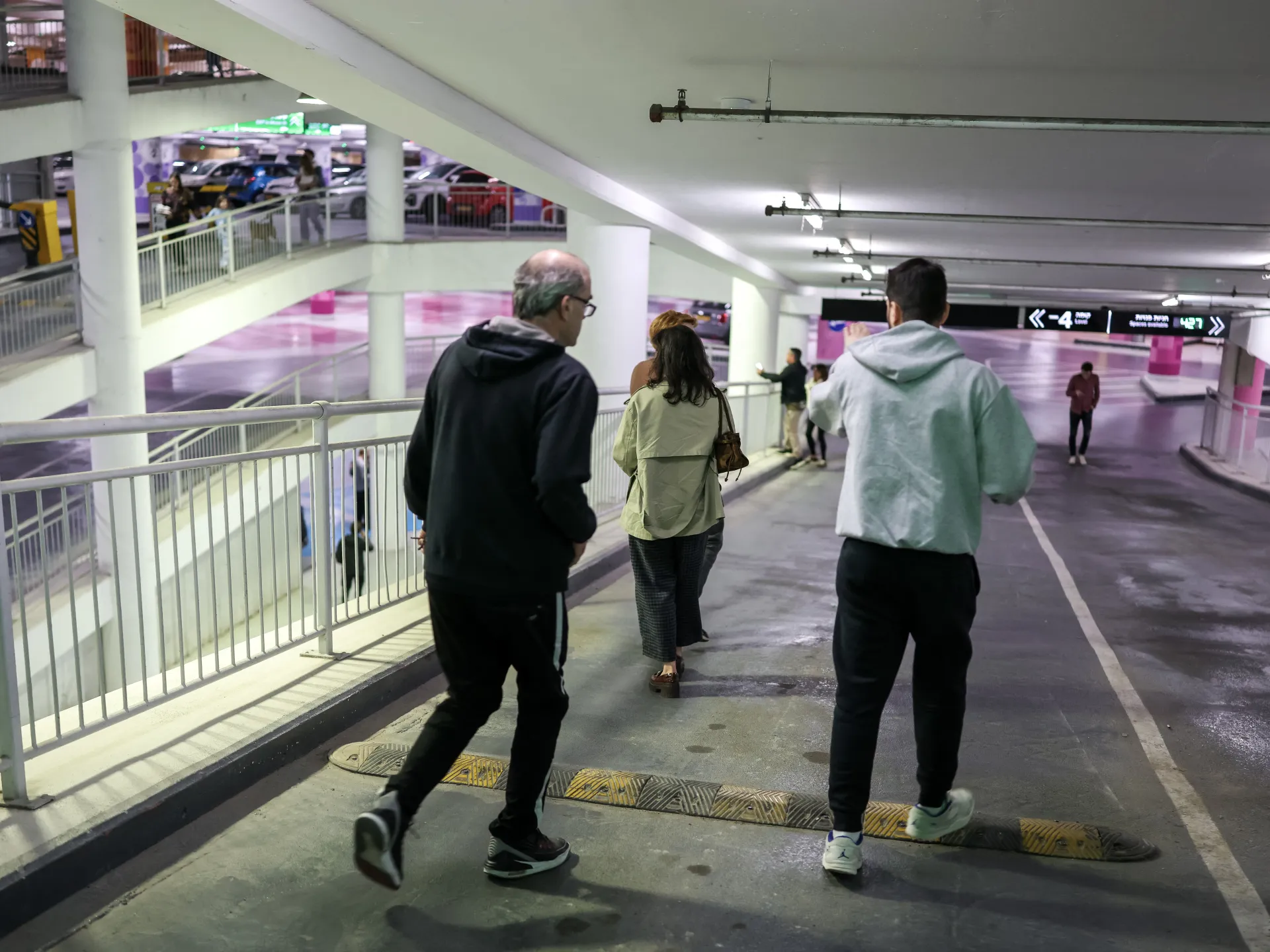
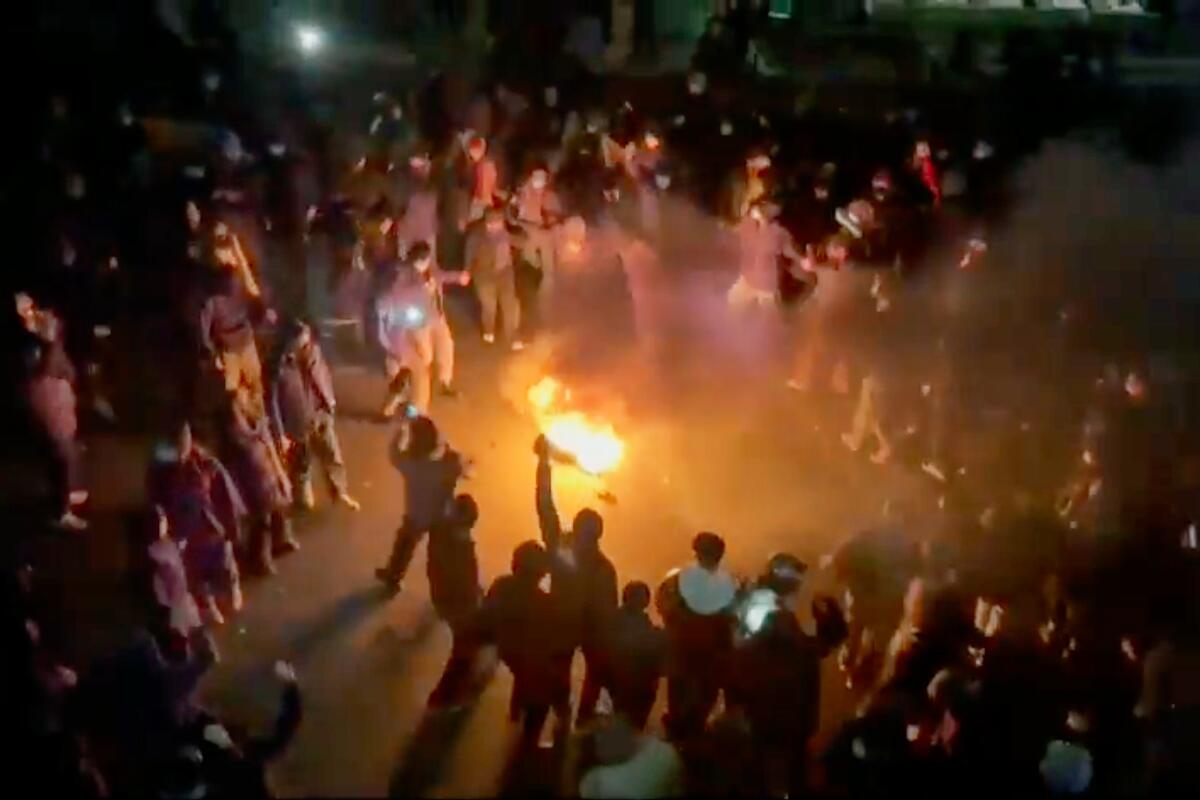

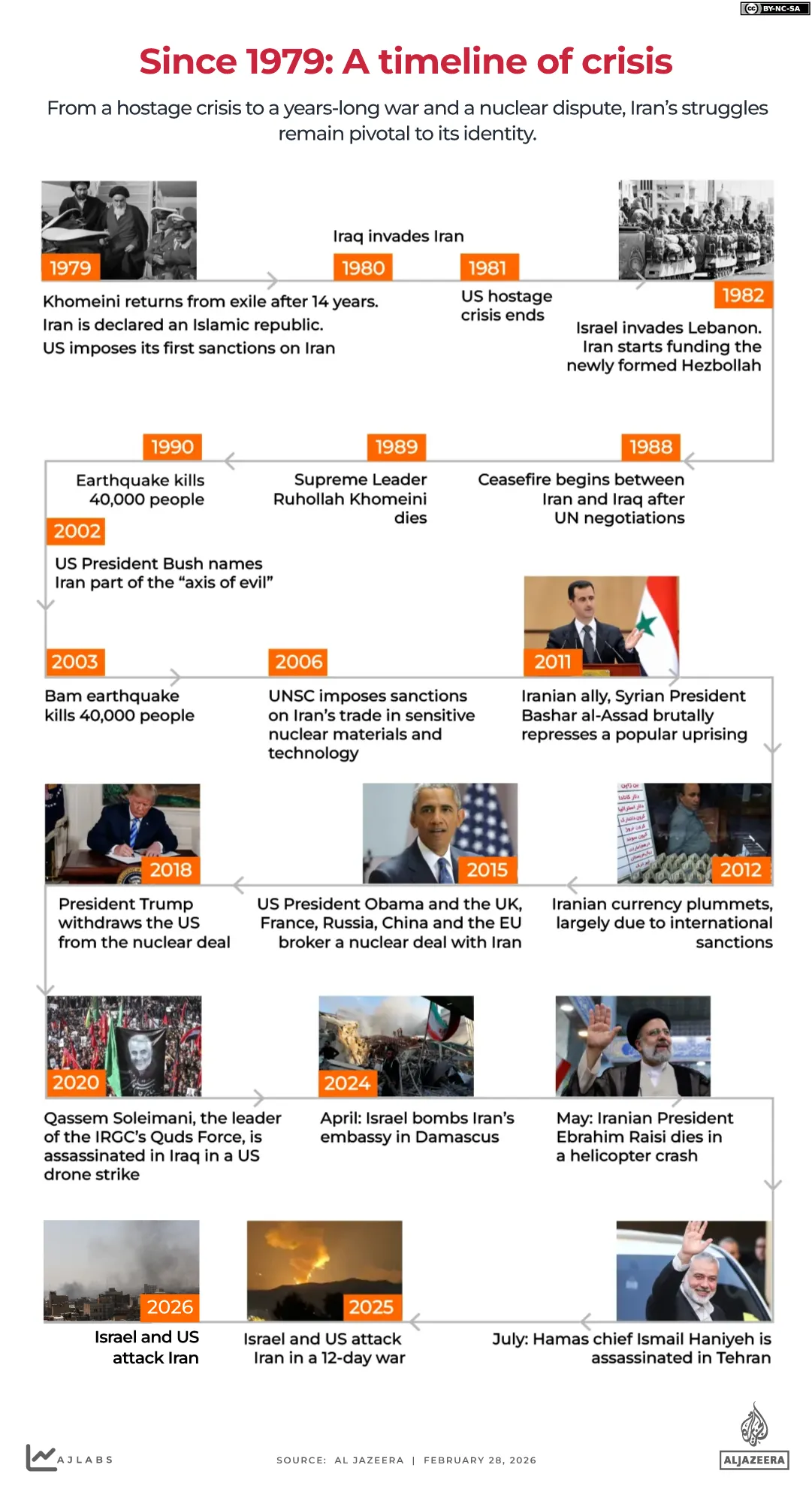


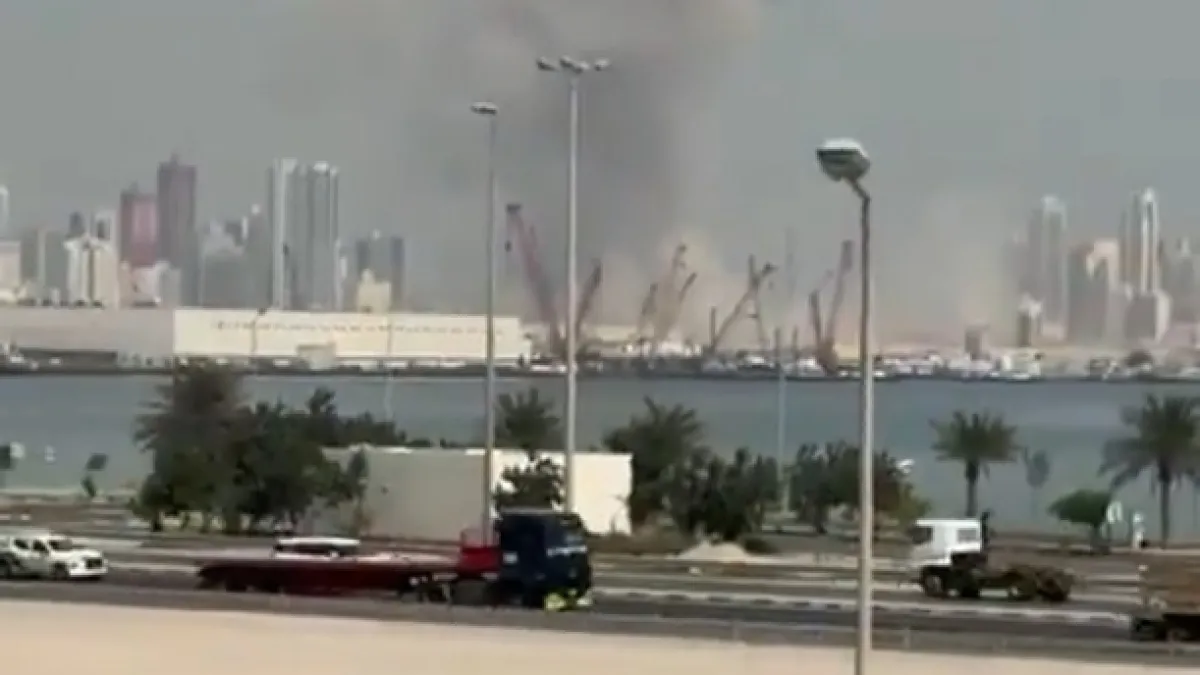
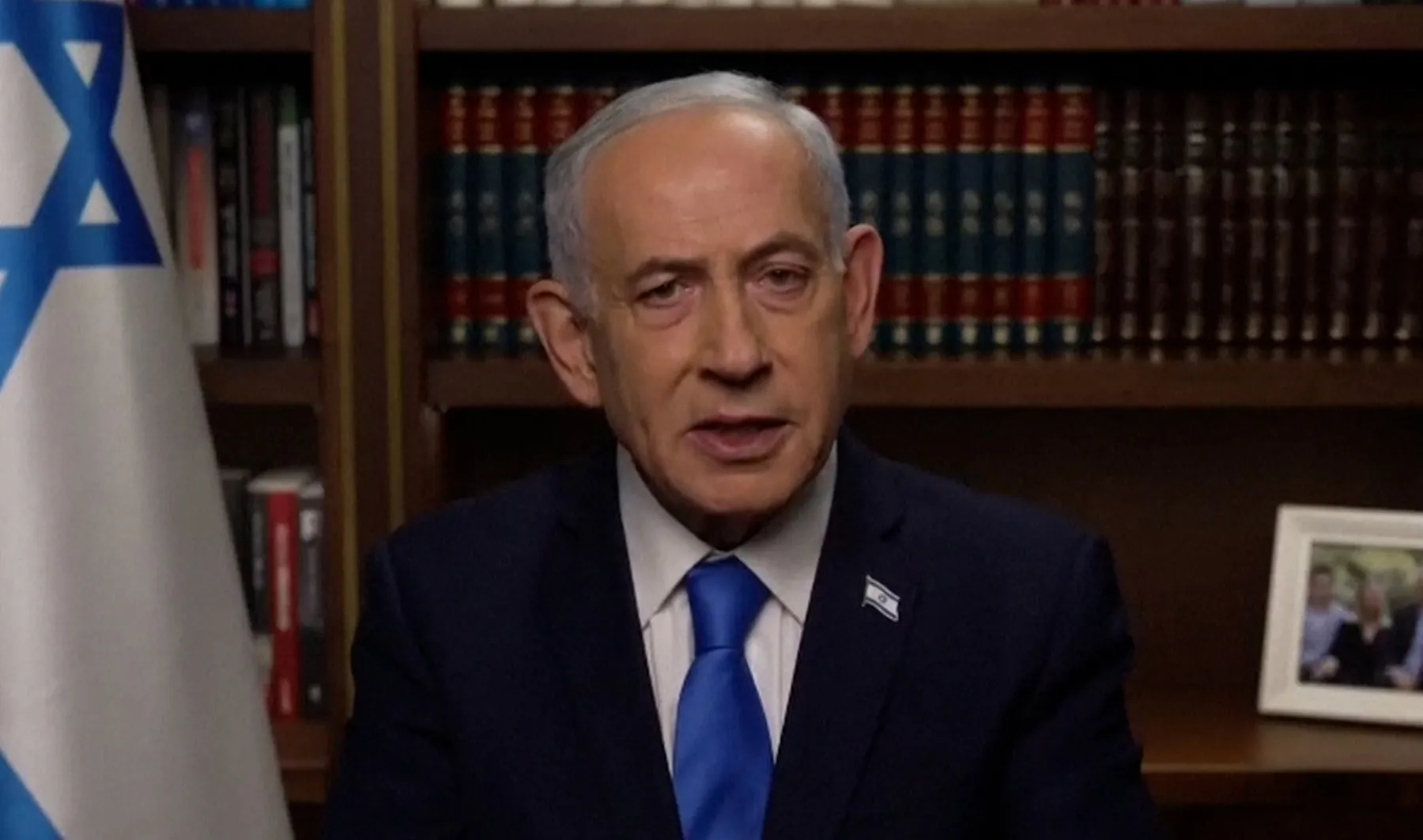
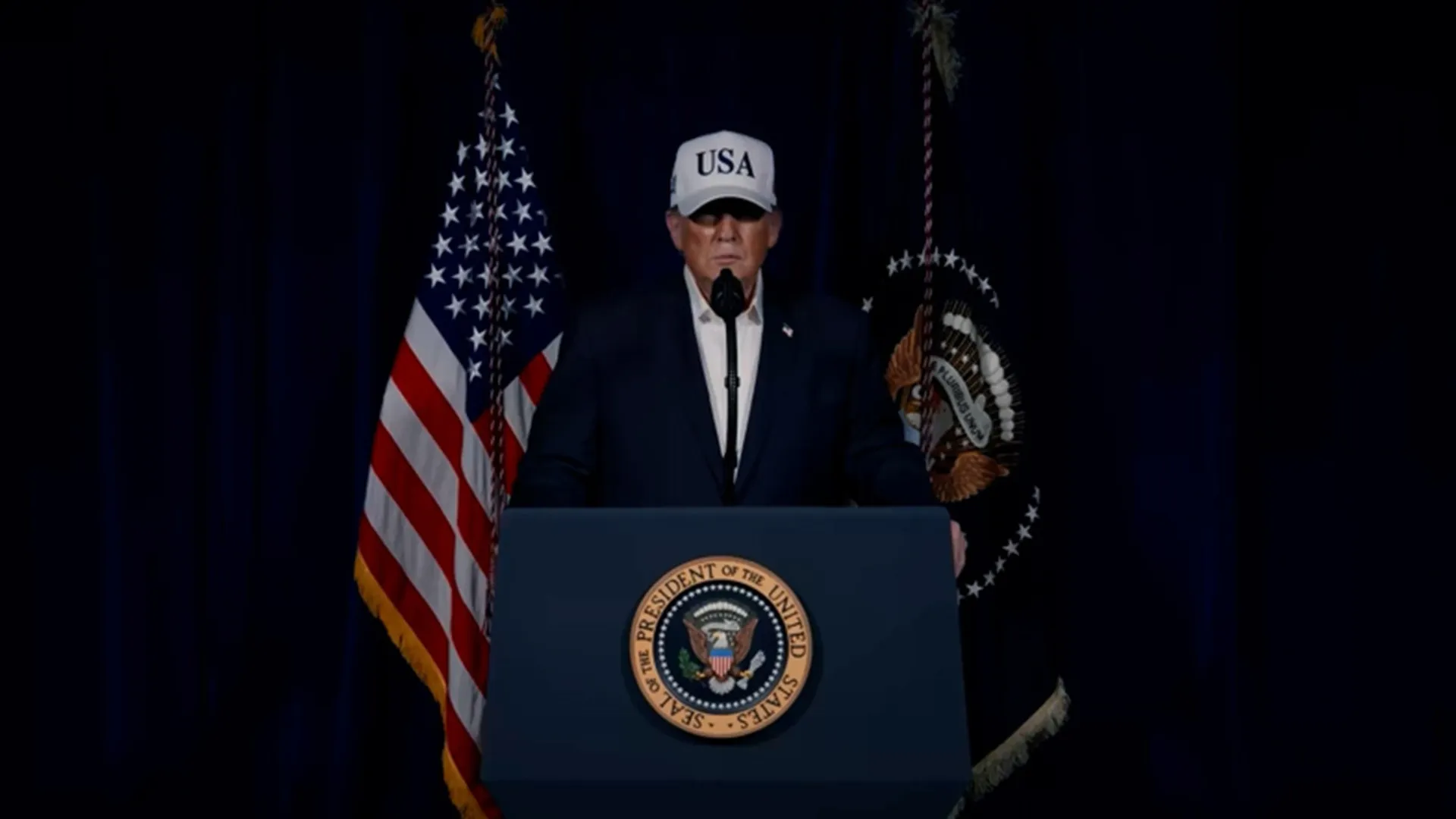
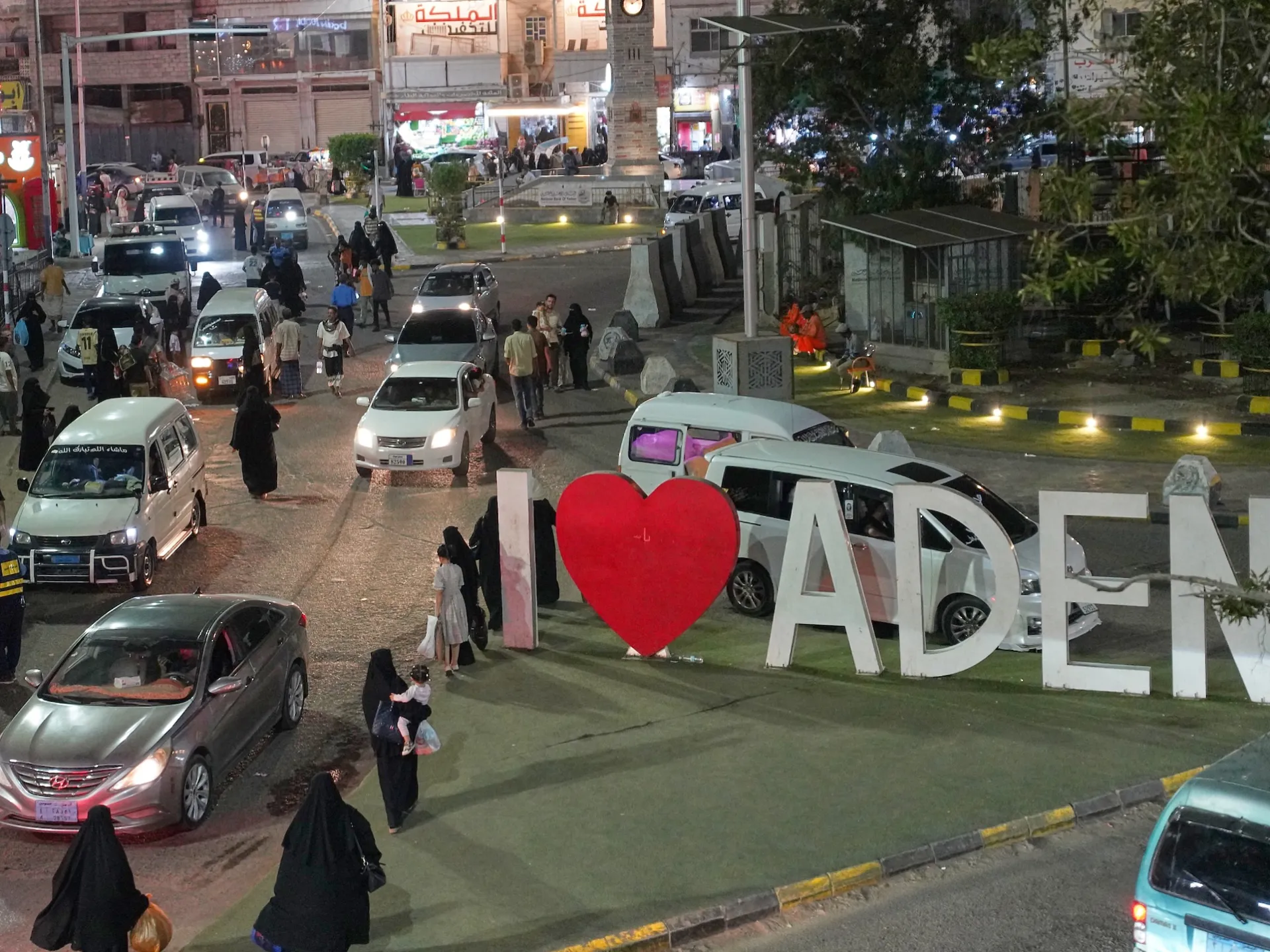

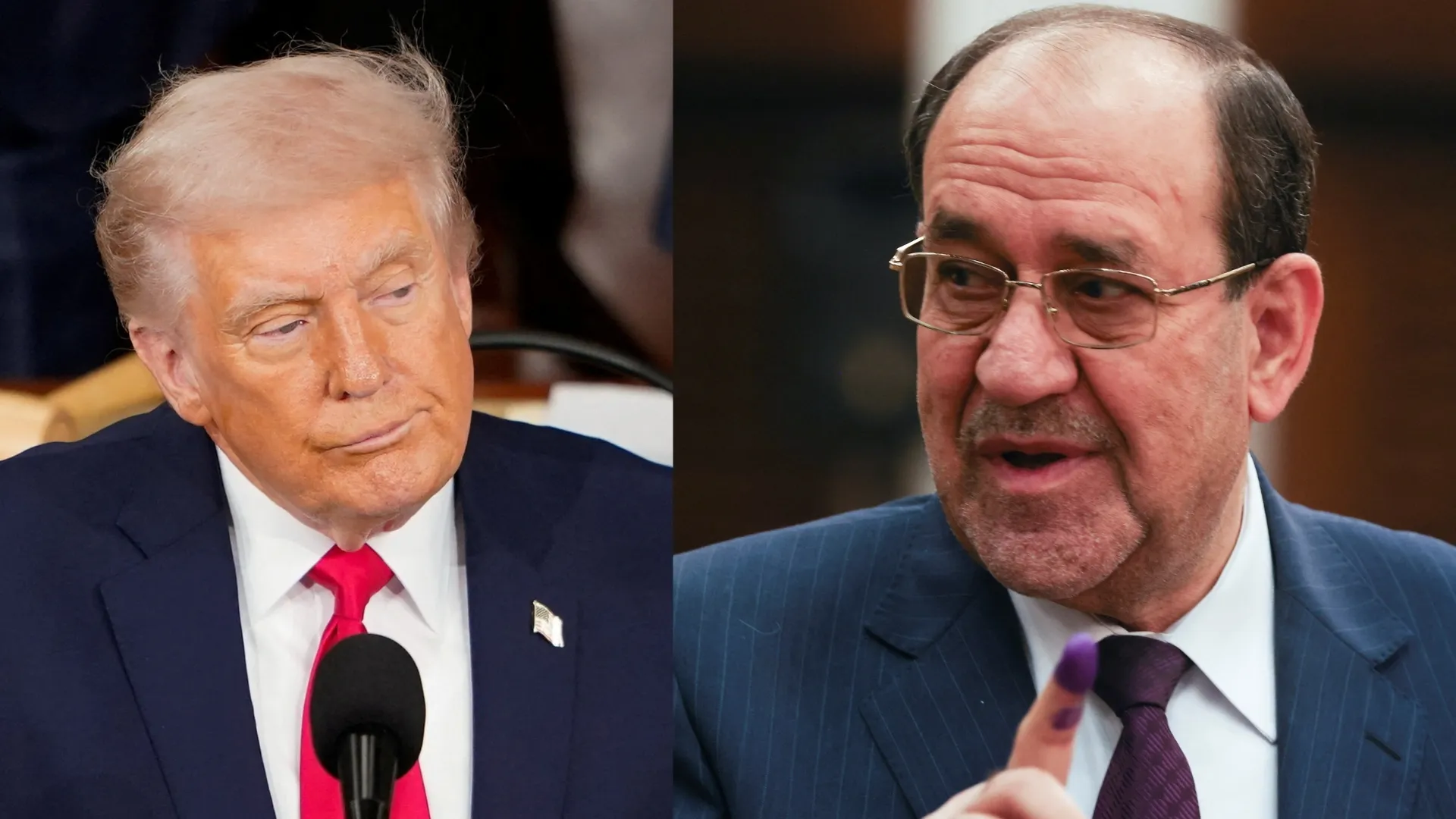




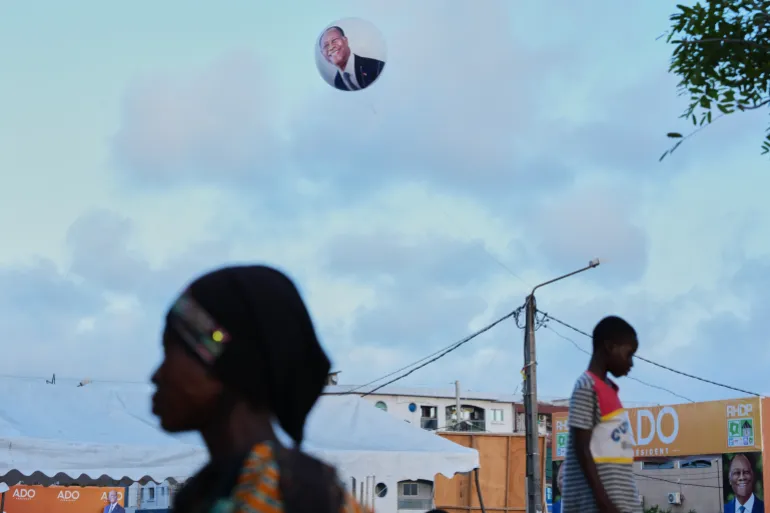


![Former Israeli Prime Minister Ehud Barak gestures after delivering a statement in Tel Aviv, Israel June 26, 2019. [Corinna Kern/Reuters]](https://i0.wp.com/www.aljazeera.com/wp-content/uploads/2026/02/2019-06-26T153913Z_1424687355_RC17C8B80DA0_RTRMADP_3_ISRAEL-POLITICS-BARAK_cropped-1770216915.jpg?w=640&ssl=1)

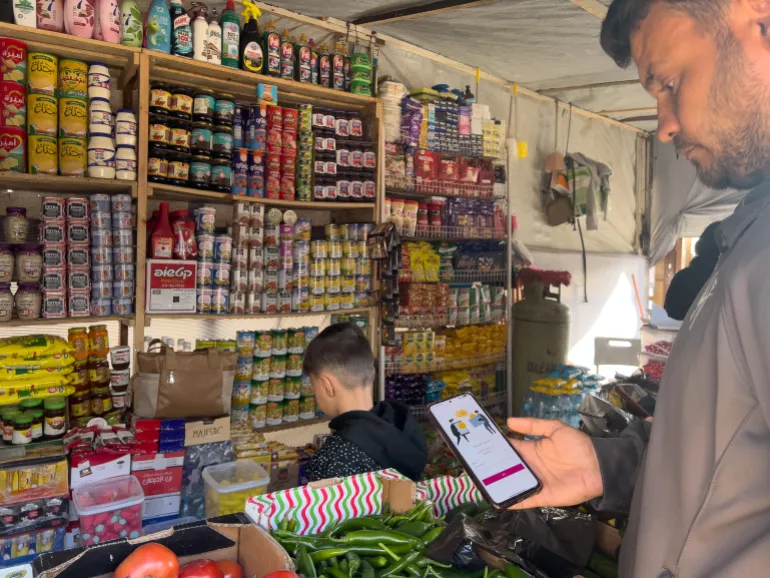
![A customer pays for groceries using bank account transactions [Ola al-Asi/ Al Jazeera]](https://i0.wp.com/www.aljazeera.com/wp-content/uploads/2026/02/When-money-is-scarce-every-choice-counts-bank-cash-or-on-credit.-1772105832.jpg?w=640&ssl=1)
![Abdallah Sukkar, owner of a street grocery stall, writing down customers' details in a notebook [Ola al-Asi/ Al Jazeera]](https://i0.wp.com/www.aljazeera.com/wp-content/uploads/2026/02/When-money-is-scarce-every-choice-counts-bank-cash-or-on-credit-2-1772105835.jpg?w=640&ssl=1)
![People purchasing goods at a grocery shop at Al-Zawya market [Ola al-Asi/ Al Jazeera]](https://i0.wp.com/www.aljazeera.com/wp-content/uploads/2026/02/When-money-is-scarce-every-choice-counts-bank-cash-or-on-credit.-1772105810.jpg?w=640&ssl=1)