

Middle East

How Iran defied Trump threats to emerge as Strait of Hormuz gatekeeper | US-Israel war on Iran News

As United States President Donald Trump tries to build a coalition of navies willing to open the Strait of Hormuz, some countries are negotiating safe passage directly with Iran, underscoring a new de facto reality, analysts say: Regardless of military results, Tehran is calling the shots on who gets to use the world’s most important energy waterway.

After US-Israeli strikes on Iran began on February 28 and killed Supreme Leader Ali Khamenei, the Iranian military leadership responded by focusing on its most potent form of leverage – Iran’s geography. The country controls the northern shore of the Strait of Hormuz, through which 20 percent of global crude oil and natural gas supplies pass. It is 33km (20 miles) wide at its narrowest point, so any naval force that wants to cross it becomes easy prey for Iranian attacks coming from the mainland.

Recommended Stories

list of 3 itemsend of list

Considering insurance companies’ low appetite for risk, it took relatively few attacks on vessels in the strait – or just the threat of them – to undermine market confidence and send insurance premiums shooting up, causing a near paralysis in maritime traffic. About 20 vessels have been attacked since the start of the war.

“Iran has effectively proven that it dictates the terms of passage through the strait. They have now shown they are the gatekeeper of this important chokepoint. This will elevate the status of Iran in the geography of the Gulf,” said Andreas Krieg, an associate professor in Security Studies at King’s College London and a fellow at King’s Institute of Middle Eastern Studies. This will be the new reality for the foreseeable future, he added.

Meanwhile, crude prices have risen above $100 a barrel, more than 20 percent higher than pre-war prices, forcing countries to make the biggest releases of emergency reserves in history. Gas prices have risen by more than 40 percent since the war began.

Trump initially floated the idea of ordering the US Navy to escort vessels through the waterway. He then appealed to some countries to send warships and warned NATO members they would face “a very bad” future if these allies failed to help in opening the strait. But the appeal was either turned down or received noncommittal responses. Japan said it had no plans to deploy naval vessels. Australia ruled out sending ships. The United Kingdom said it would not be drawn into the wider war. Germany sent a clear message: “This is not our war”.

Others decided to take action – but not of the kind that Trump asked for. On Saturday, two India-flagged gas tankers passed through the strait after days of negotiations between New Delhi and Tehran, including a phone call between Indian Prime Minister Narendra Modi and Iranian President Masoud Pezeshkian. Ships from Pakistan, Turkiye and China also have transited through the Strait of Hormuz. The Financial Times has reported that Italy and France have also reached out to Iran for deals although Italian authorities have rejected making such an overture.

Meanwhile, Windward, a maritime intelligence tracking group, said that while traffic in the strait on Tuesday remained 97 percent below average, a growing number of ships have been passing through Iran’s territorial waters, suggesting that Tehran is allowing “permission-based transit”.

‘It is up to us to decide’

There is a precedent for US naval forces to escort convoys through the strait dating back to the Iran-Iraq War in the 1980s. But today’s scenario is different, experts said. Back then, the US, while it was backing Iraqi leader Saddam Hussein, was not a direct party to the conflict. Iran was still in a post-revolutionary process of consolidating power, and its Islamic Revolutionary Guard Corps was nowhere near as organised as it is today.

Today, Iran has drones that its factories are capable of producing on a large scale and has been using them. Iranian forces could also use small boats to assault tankers, deploy mines and engage in other guerrilla-style tactics. While there are conflicting reports on whether Iran has placed mines in the strait, experts said it would be a counterproductive move for Tehran because it would disrupt the passage for any ships – Iranian vessels included – and it would take away from Tehran the power to choose who may pass.

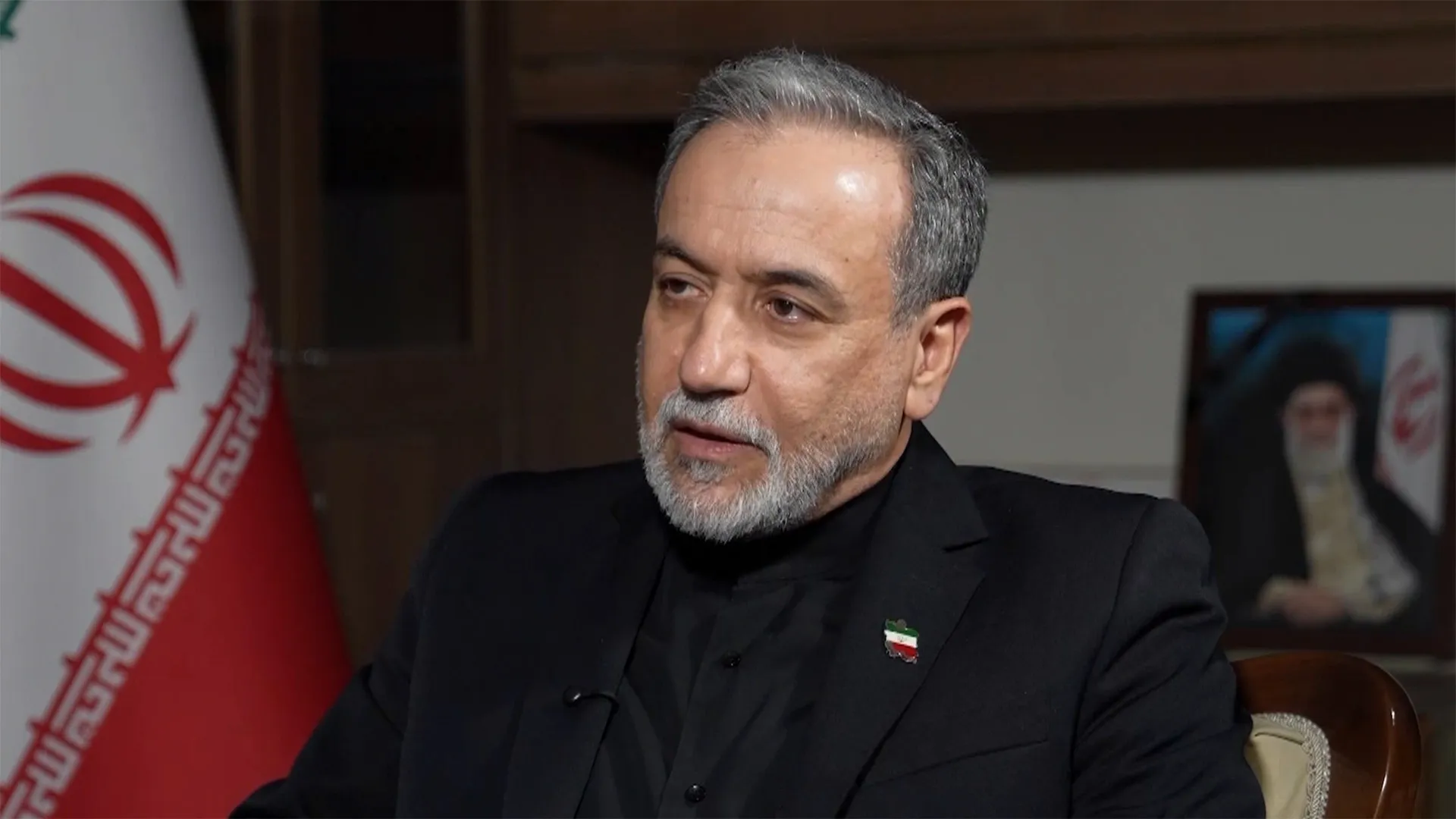
Iranian officials are aware of their geographic advantage. “This is up to our military to decide,” Iranian Foreign Minister Abbas Araghchi said on Sunday, referring to who will be allowed to use the strait.

Pro-government figures increasingly frame the Strait of Hormuz as a strategic bargaining tool beyond the war itself, suggesting the waterway could be used to extract compensation, sanctions relief or broader economic concessions after the war, Hamidreza Azizi, an expert on Iran and visiting fellow with the German Institute for International and Security Affairs, commented on X.

Recent attacks seem to suggest that Iran wants to increase its pressure on the energy market.

On Tuesday, a drone attack caused a fire at the port of Fujairah, the United Arab Emirates’s only crude export terminal. It is located outside the eastern entrance of the Strait of Hormuz, allowing its exports to circumvent it. The Iran-backed Houthis in Yemen could also further squeeze oil prices by disrupting the Bab al-Mandeb strait. That would force the US to operate across multiple maritime theatres. So far, the Houthis have not carried out such attacks, but this month, they said they were ready to strike at any ‌moment.

Still, the US is focused on applying maximum pressure on Tehran and forcing it to open the Strait of Hormuz. The US Central Command, the US military’s combat command responsible for operations in the Middle East, said early on Wednesday that its forces had used 2,270kg (5,000lb) bunker-busting munitions against antiship missile sites along Iran’s coastline near the Strait of Hormuz.

Trump has also ordered amphibious ships carrying thousands of US Marines to move to the Middle East, and some experts believe the US might try to seize Kharg Island, a tiny piece of land in the northern Gulf where 90 percent of Iranian crude oil is exported from. The US has already bombed what it said were military sites on the island.

Such an operation, however, might do little to force Iran into opening the Strait of Hormuz, Krieg said. The island is 500km 310 miles) from the strait, and should the US take control of it, it would expose US Marines to Iranian fire. Should Iran see its key terminal being seized, it could also opt to mine the strait outright, having fewer reasons to allow some vessels to pass through.

“The issue with the Strait of Hormuz is really not a military one. … It’s a market issue, and confidence cannot be restored by the military. Confidence can be restored through diplomacy only,” Krieg said.

Source link

Senegal to appeal decision to award AFCON title to Morocco | Africa Cup of Nations News

Morocco were awarded the 2025 AFCON title following an appeal to CAF regarding Senegal’s walk-off protest in final.

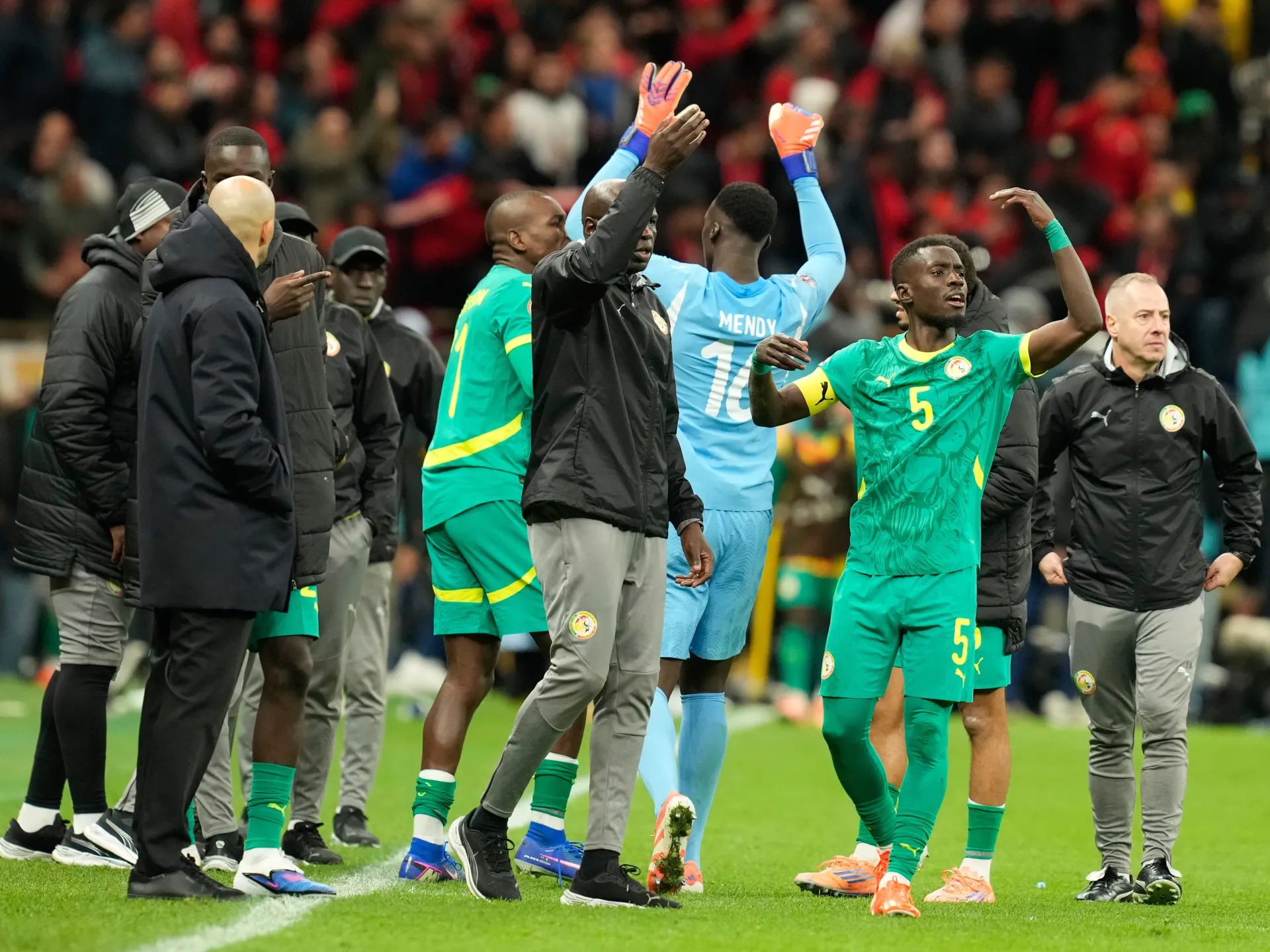
Senegal ‌have condemned the decision to strip them of the Africa Cup of Nations (AFCON) title, labelling ⁠it “unfair, unprecedented, and unacceptable”, ⁠and saying it casts a shadow over African football.

“The Senegalese Football Federation denounces this unfair, unprecedented, and unacceptable decision, which casts a shadow over African football,” it said ⁠in a statement on Wednesday.

Recommended Stories

list of 4 itemsend of list

“To defend its rights and the interests of ⁠Senegalese football, the federation will initiate an appeal as soon as possible before the Court of Arbitration for Sport in Lausanne,” it said.

Morocco were declared African champions on Tuesday after the Confederation of African Football’s (CAF’s) Appeals Board upheld their protest and ⁠found Senegal’s walk-off protest during the final on January 18 were grounds for them to be disqualified and the match result declared 3-0 in favour of the hosts.

Senegal won the final 1-0 in Rabat ⁠with an extra-time goal, but not before staging a 14-minute walk-off after a penalty was awarded against them in stoppage time at the end of the regulation 90 minutes.

The protest was instigated by coach Papa Bouna Thiaw, subsequently handed a lengthy ban, and saw Senegal’s veteran striker Sadio Mane emerge as a hero ‌as he attempted to get his teammates back onto the field.

Once Senegal returned to the pitch, the referee allowed play to continue with Morocco squandering the last-gasp penalty, and the encounter then went to extra time, with midfielder Pape Gueye netting the 94th-minute winner.

However, the Appeals Board said that by walking off, Senegal contravened tournament regulations and forfeited the game.

The Swiss-based Court of Arbitration for Sport (CAS) had to intervene in 2019 when Moroccan club Wydad Casablanca walked off in the second leg of ⁠the African Champions League final, also protesting against VAR.

In that case, they refused to play on, and the referee declared opponents Esperance winners, ⁠but CAF’s executive committee then surprisingly ordered a replay. Esperance took ⁠the matter to CAS and were declared champions, with CAF embarrassingly rebuked for attempting to override the referee’s decision.

The decision by Congolese referee Jean-Jacques Ndala to continue with the AFCON final in January, rather than stop it and declare Morocco ‌winners after Senegal’s walk-off, will likely feature strongly in any arguments for a reinstatement of Senegal as champions.

The Laws of the Game state the referee’s decision is final.

“No one could have imagined such ‌a ‌statement two months after the final,” said veteran coach Claude Le Roy, who managed Senegal between 1988 and 1992.

“For years, all the refereeing decisions have been flouted by the CAF,” he said on French television.

Source link

Why Israel targets Beirut’s Dahiyeh and what the suburb means to Lebanon | Israel attacks Lebanon

For years, Beirut’s southern suburb has been spoken about as though it were a world apart: A Hezbollah bastion, a target, a warning, or a battlefield. But in Arabic, the word “dahiyeh” simply means “the suburb”.

The word itself is ordinary. What makes it extraordinary in Lebanon is its history.

Recommended Stories

list of 4 itemsend of list

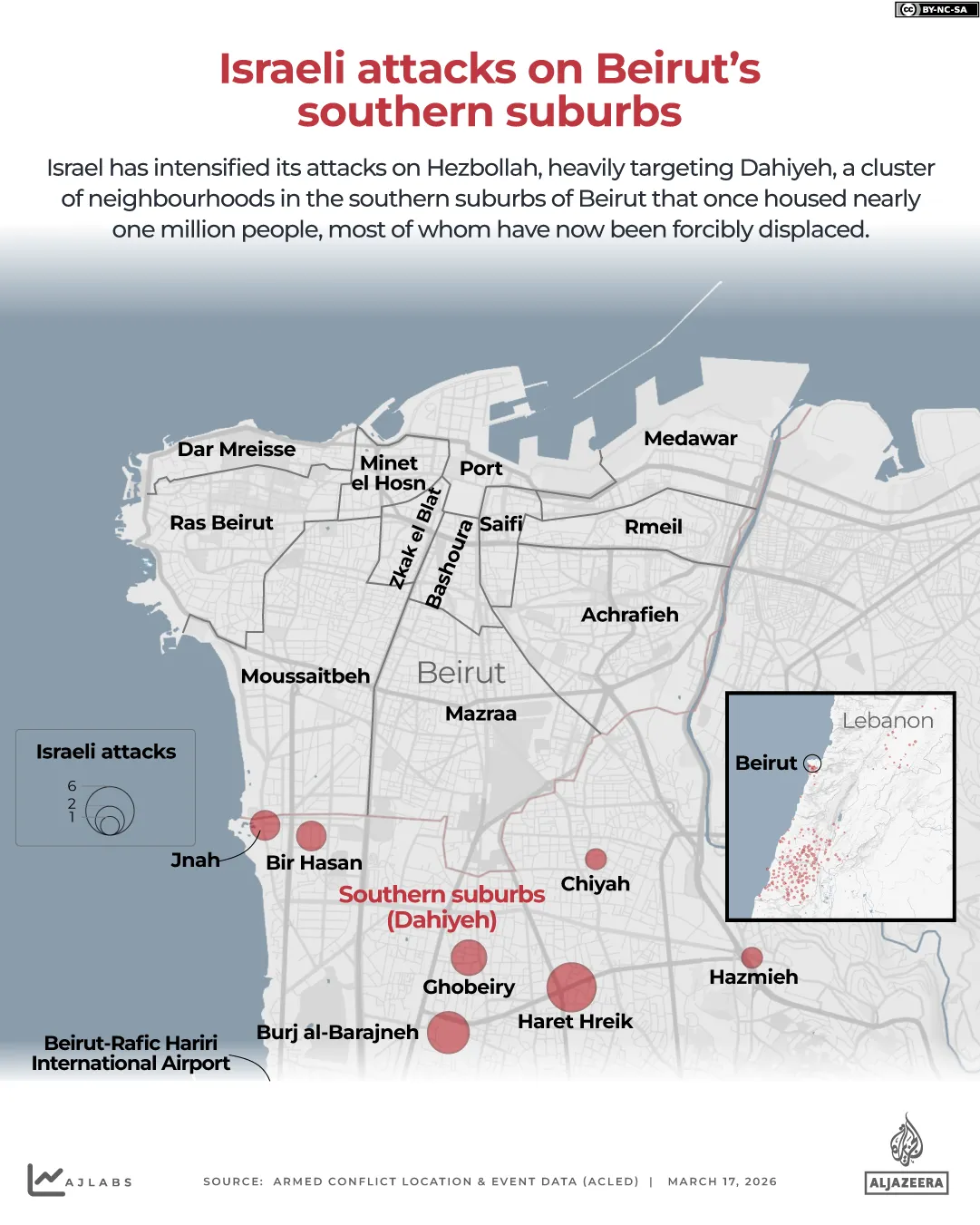
When the Lebanese speak of Dahiyeh, they do not mean any suburb of their capital city. They mean southern Beirut in particular – a dense belt of neighbourhoods that grew from villages, fields, informal housing and municipal edges into a major extension of the city.

Dahiyeh – in size nearly as big as municipal Beirut – has been shaped by migration and displacement in the past 50 years. While many moved there in search of work or housing, most of the others were pushed there by wars, political unrest, evictions and a general sense of being neglected by the Lebanese state.

INTERACTIVE Dahiyeh southern suburbs Beirut Lebanon Iran war Israel-1773737951

The social geography of Lebanon, which gained independence from French colonisers in 1943, began to be transformed in 1948 when Israel’s establishment saw the expulsion of more than 700,000 Palestinians from their land in what is commonly referred to as the Nakba. After Israel’s further occupation of Palestinian lands in 1967 and the expulsion of Palestinian fighters from Jordan in 1970, southern Lebanon and parts of Beirut became increasingly bound up with the Palestinian national movement.

Beirut’s ‘belt of misery’

Dahiyeh’s growth, however, accelerated after 1975, when the Lebanese civil war broke out. People displaced from other parts of Beirut moved south. The subsequent Israeli attacks and invasions in 1978 and 1982 drove more people to the edge of the capital. In that sense, Dahiyeh was not just a destination for “migrants”. It was also a refuge for the uprooted, the poor, and those repeatedly forced to start over.

Studies by scholars such as Mona Harb, professor of urban studies and politics at the American University of Beirut (AUB), show how a common noun – Dahiyeh – gradually evolved into a distinct political space: A stigmatised periphery marked in the Lebanese imagination as Beirut’s “belt of misery” that hardened into a territory with its own social and political significance. Today, it is part of Greater Beirut, woven into the capital geographically, economically and socially, even if the country’s politics may have treated the area as an outlier.

Harb’s work explicitly frames the southern suburb as a politically produced urban territory rather than just a space outside Beirut. To understand how that happened, one has to begin with the making of modern Lebanon.

Under the French Mandate, and later through the political order consolidated at independence in 1943, power in Lebanon was distributed through a sectarian system that heavily favoured the established elites, especially the Maronite Christians, who dominated the presidency and other key positions. The system not only created inequality, but also formalised and reproduced it.

Rural Lebanon, especially the south and the Bekaa Valley, remained underdeveloped and politically neglected for decades. Among those most affected were Lebanon’s Shia community, who were disproportionately concentrated in the poorer agricultural regions and had less access to state investments, infrastructure and patronage than the more privileged urban and mountainous centres. Scholars say it was not simply a temporary developmental gap, but a long history of marginalisation that defined the country’s politics.

Lebanon
A man photographs the rubble of buildings destroyed by Israel in Dahiyeh [Hassan Ammar/AP]

Israeli attacks on Palestinian positions inside Lebanon repeatedly hit the surrounding Lebanese communities as well, mainly in the south. For the Shia in southern Lebanon, these attacks sharpened a bitter awareness: They were living on the front lines of a bitter regional conflict, while they were also being denied equal economic rights and meaningful political inclusion in Lebanon itself.

Out of that reality emerged a new form of Shia political mobilisation centred not only on identity, but also on deprivation, dignity and state neglect. That mobilisation found its earliest expression in Harakat al-Mahroumin, the Movement of the Deprived, founded by Imam Musa al-Sadr in the 1970s. Al-Sadr became a towering figure of modern Lebanese Shia politics because he gave social, religious and political forms to grievances building up for decades. That movement later grew an armed wing: Amal.

Al-Sadr’s mysterious disappearance during a 1978 trip to Libya remains unresolved and politically contested to this day. What is not contested is his historical importance. He helped turn the Shia of Lebanon from a neglected rural underclass into an organised political constituency demanding equal rights, representation, and a defining national presence.

The rise of Hezbollah

The 1982 Israeli invasion of Lebanon changed the Shia political landscape yet again. Israel’s siege of Beirut, the departure of Palestinian icon Yasser Arafat and his Palestine Liberation Organization forces, and Syria’s desire to dominate Lebanon all intensified divisions within Lebanese society.

Amal, which meanwhile had grown closer to Damascus to get weapons, money and political backing, remained a major force. But new Islamist movements emerged from within and around it, shaped by the Israeli occupation, disillusionment with older leaderships, and increasing support from Iran’s Islamic Revolutionary Guard Corps, especially in the Bekaa region.

Over time, these currents crystallised into Hezbollah. The split within the Shia movement was less theological and more about political strategy, defined by questions over aligning more closely with Syria, solidarity with the Palestinians, and general resistance against the Israeli occupation. Differences between Amal and Hezbollah over these questions turned violent in the 1980s, an intra-Shia fighting that Lebanese often recall as “a war among brothers”.

As Hezbollah grew stronger, Dahiyeh became much more than a residential belt. It turned into an urban heartland of a social and political force. Hezbollah built institutions there: Offices, schools, clinics, welfare networks and media infrastructure. Amal also had a presence, but the common shorthand that reduces Dahiyeh to a “Hezbollah stronghold” always conceals more than it reveals.

Today, Dahiyeh hosts a Shia majority, but also has a small minority of Palestinians and other Lebanese communities, including Christians. It bleeds physically into what is known as Greater Beirut, including its Christian and mixed areas. So when the suburb is bombed, it is not some isolated military island that is hit, but a deeply inhabited part of urban Beirut.

That is precisely why Dahiyeh is so central to the Israeli military’s thinking. During the 2006 war, large sections of the southern suburb, especially Haret Hreik, were devastated by Israel. The destruction became so emblematic that Israeli military strategists came up with what came to be known as the Dahiyeh Doctrine: Use of overwhelming force and large-scale destruction of areas associated with an armed group, with the aim of generating deterrence and putting pressure on residents supporting the group. Rights activists and legal scholars say the doctrine violates international humanitarian law, as civilian neighbourhoods and infrastructure do not become legitimate targets simply because an armed group is embedded among the population.

That Israeli pattern, however, has intensified since October 2023, when a genocidal war on Gaza and attacks on Lebanon began. Meanwhile, the killing of Hezbollah leader Hassan Nasrallah in an Israeli strike in late 2024 eroded Dahiyeh’s resistance. That erosion is more visible in the ongoing Israeli attacks on Beirut and southern Lebanon, where more than a million people have registered as displaced since March 2. The old formula – that Dahiyeh was the principal red line and that any strikes there could be deterred by Hezbollah’s threats of retaliatory strikes on several Israeli cities – no longer holds.

Once again, Dahiyeh has become a focal point of the war, with repeated bombardment sending plumes of smoke over a place that many outsiders still describe as a world apart, but which is in fact woven into Beirut’s daily life. Built over decades by the poor, the migrants and the repeatedly uprooted – and shaped by the politics of marginalisation against those whom al‑Sadr once named “the deprived” – Dahiyeh has long served as both a refuge and a front line. Today, it is again being made to carry the costs of a conflict larger than itself.

Source link

Israel bombs central Beirut, killing 6, strafes south, east Lebanon | US-Israel war on Iran News

Wave of Israeli air attacks launched as ground offensive widens in south where Hezbollah are fighting Israeli forces.

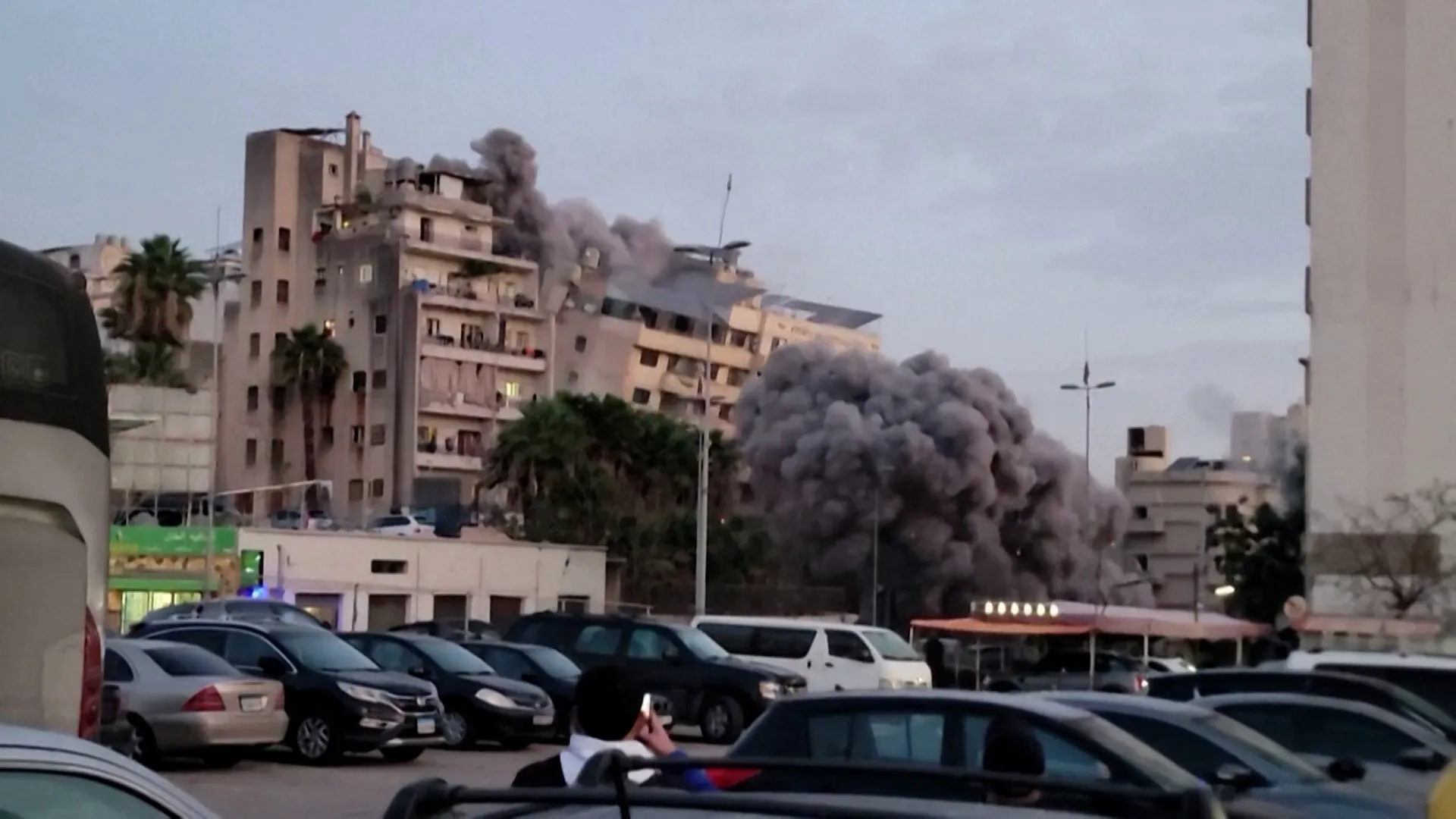
Israel has attacked a building in Bashoura, a neighbourhood in the heart of Beirut, Lebanon’s National News Agency (NNA) reported, with a blast and smoke rising over the area shortly after Israel issued an evacuation threat for the site.

The attack was part of a deadly wave of Israeli strikes across Lebanon that killed at least 20 people and wounded 24 on Wednesday, according to the country’s Ministry of Public Health, with raids stretching from the capital through southern and eastern parts of the country, a devastating front in the wider United States-Israel war against Iran embroiling the region.

Recommended Stories

list of 2 itemsend of list

At least six people were killed in the air strikes in Beirut, with dozens injured.

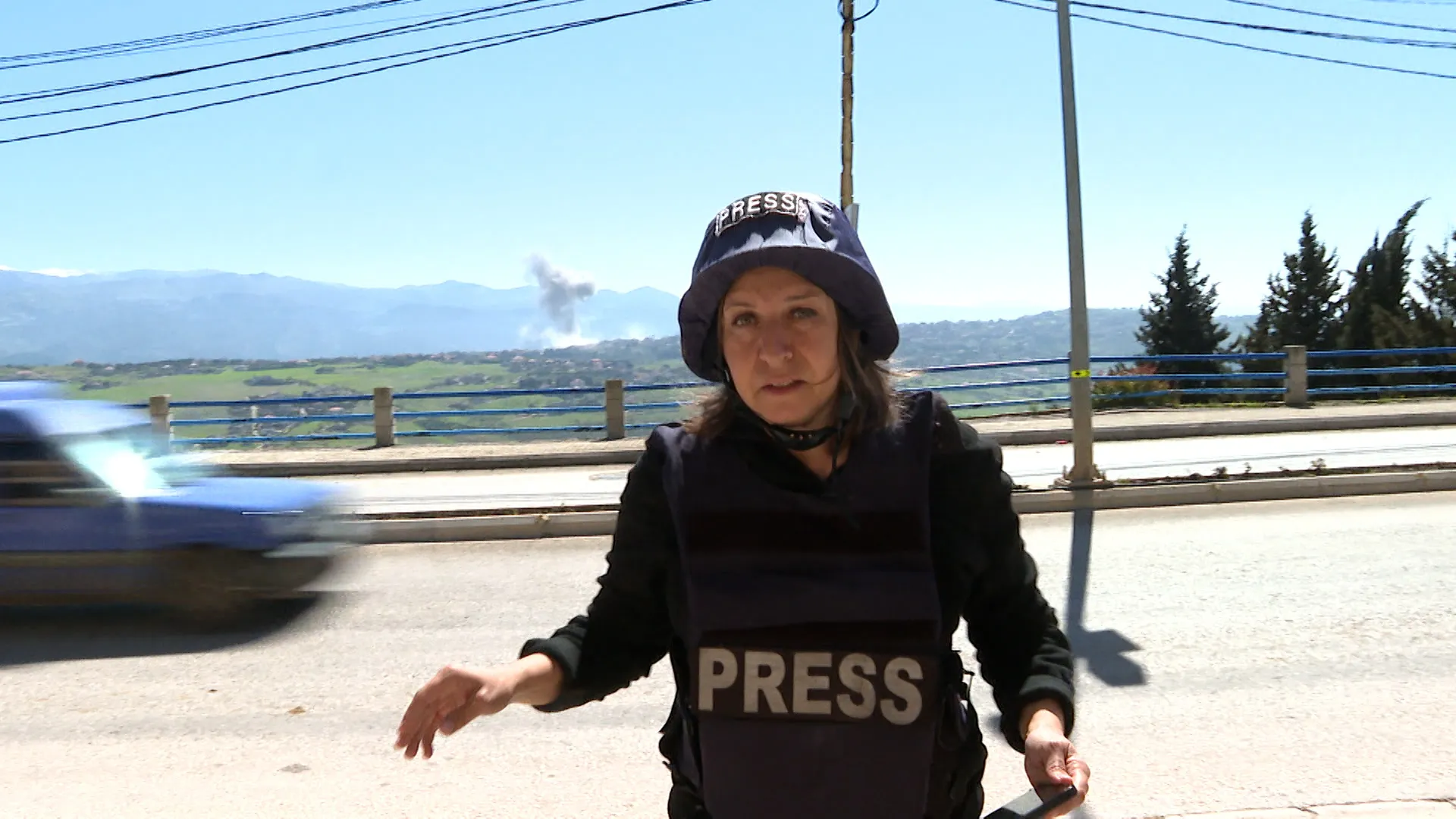
Al Jazeera’s correspondent in Beirut, Zeina Khodr, reported that intense Israeli attacks hit multiple regions across Lebanon, including central Beirut, overnight.

Speaking from in front of a 15-storey building struck in one of the attacks, Khodr said its lower floors had been targeted a week earlier. In the early hours, however, the structure was completely demolished, with the Israeli army claiming Hezbollah had stored cash there.

“You can see the widespread damage across this whole neighbourhood,” Khodr said.

Israel’s military said it had launched what it described as limited ground operations in southern Lebanon, issuing evacuation threats for residents of four towns near the Zahrani River and the Tyre area, warning them to head north immediately.

Lebanon’s NNA also reported strikes on Tyre and the nearby area of Al-Burj Al-Shamali in the pre-dawn hours.

At least four people were killed in an Israeli attack that targeted four houses in the town of Sahmar in eastern Lebanon’s Bekaa Valley.

The intensifying assault has now killed at least 912 people in Lebanon, including 111 children, and wounded more than 2,200 since Israel launched its offensive on March 2, according to Lebanese Health Ministry figures.

More than one million people have been forced from their homes. The United Nations warned on Tuesday that Israeli attacks on residential buildings and civilian infrastructure may constitute war crimes under international humanitarian law.

A spokesperson for the UN human rights office said that deliberately targeting civilians or civilian objects “amounts to a war crime”, adding that Israel’s sweeping displacement orders for southern Lebanon may themselves violate international law.

Khodr said that Hezbollah’s secretary general, Naim Qassem, last night laid down conditions for the war to end, including Israel stopping attacks, displaced people being permitted to return to their homes, those detained over the last two years by Israel being released and the Israeli army withdrawing.

Across southern Lebanon, Khodr said Hezbollah was “still present in the area, trying to repel the Israeli army’s advance”, adding that Hezbollah’s aim was not just territorial control of the region, but preventing Israel from gaining new positions in the country.

The conflict was ignited on February 28 when US and Israeli forces assassinated Iranian Supreme Leader Ali Khamenei in Tehran, prompting Hezbollah to launch rockets into northern Israel on March 2.

Israel has since killed more than 2,000 people across Iran and Lebanon in its attacks.

German Chancellor Friedrich Merz, a staunch Israeli ally, added his voice to growing international concern, warning that Israel’s ground offensive in Lebanon was an “error” that risked worsening what he described as an already dire humanitarian situation.

Source link

Full list of all 69 countries the Foreign Office warns against travelling to

The Foreign Office has updated travel advice for countries including UAE and Pakistan over the weekend, with 69 nations now carrying various levels of travel warnings

The UK Foreign Office has recently updated travel advice for countries including the United Arab Emirates (UAE) and Pakistan over the weekend. The Foreign Office (officially known as the UK Foreign, Commonwealth and Development Office (FCDO)) regularly updates travel guidance for the nation’s citizens and states that “with commercial flights resuming to the UK from United Arab Emirates (UAE), we are pausing our ‘register your interest in flights from UAE’ scheme”.

However, the UAE is still among the countries that the UK Government advises people should only travel to if essential. It is one of 69 countries with a travel warning attached to it for UK citizens, reports the Liverpool Echo.

Typically, the Foreign Office categorises its warnings into three classifications:

  • The Foreign Office advises against all travel to a country: this is its highest warning level
  • The Foreign Office advises against all travel to parts of a country.
  • The Foreign Office advises against all but essential travel to a country or parts of a country.

Countries where the Foreign Office recommends against all travel

This is the Foreign Office’s highest warning level, effectively telling UK citizens not to travel to these countries under any circumstances. There are 14 countries where the Foreign Office recommends against all travel.

You can see more detail on these countries here. They are:

  1. Afghanistan, where British nationals face an elevated risk of detention.
  2. Belarus, where “you face a significant risk of arrest if you have at any time engaged in any activity now considered illegal by the Belarusian regime”.
  3. Burkina Faso, owing to “the threat of terrorist attacks and terrorist kidnap, and the unstable political situation in the country”.
  4. Haiti, owing to a volatile security situation.
  5. Iran, because of the ongoing Iran War. The FCDO warns: “If you are a British national already in Iran, either resident or visitor, carefully consider your presence there and the risks you take by staying. British and British-Iranian dual nationals are at significant risk of arrest, questioning or detention. Having a British passport or connections to the UK can be reason enough for the Iranian authorities to detain you.”
  6. Iraq, due to recent escalation in regional conflict. The FCDO warns: “There is significant risk of further escalation, and events are fast-moving and unpredictable.”
  7. Israel, due to the escalation in conflict in the region which poses significant security risks and has led to travel disruption.
  8. Mali, owing to unpredictable security conditions.
  9. Niger, owing to the increase in reported terrorist and criminal kidnappings of foreign nationals.
  10. Palestine, owing to the ongoing conflict between Israel and Hamas.
  11. Russia, owing to a heightened risk of British nationals being detained in Russia and the dangers and threats stemming from its continued invasion of Ukraine.
  12. South Sudan, owing to the danger of armed conflict and criminal activity.
  13. Syria, owing to uncertain security circumstances and the risk of terrorist incidents.
  14. Yemen, owing to the devastation caused by an ongoing civil war and humanitarian catastrophes.

Countries to which the Foreign Office advises against all travel to certain areas

The 36 countries to which the Foreign Office advises against all travel to certain areas are:

  • Algeria: FCDO advises against travel to within 30km of Algeria’s borders with Libya, Mauritania, Mali, Niger and Tunisia.
  • Armenia: FCDO advises against all travel to within 5km of the entire eastern border between Armenia and Azerbaijan, owing to tensions between the two countries Azerbaijan: The FCDO advises against all travel within 5km of the border with Armenia.
  • Benin: The FCDO advises against all travel to border regions near Niger and Burkina Faso.
  • Burundi: The FCDO advises against all travel to a region where there is a rebel group and the risk of possible armed incursions from the Democratic Republic of the Congo (DRC).
  • Cameroon: The FCDO advises against travel to borders with Nigeria, Chad and the CAR.
  • Central African Republic: The FCDO advises against all travel to the entirety of the Central African Republic, excluding the capital, Bangui.
  • Chad: The FCDO advises against all travel to the northern provinces of Chad, among other regions.
  • Congo: The FCDO advises against all travel within 50km of the Republic of Congo-Central African Republic border.
  • Côte d’Ivoire: The FCDO advises against all travel within 40km of the borders with Burkina Faso and Mali.
  • Democratic Republic of the Congo: The FCDO advises against all travel within 50km of most of its northern and eastern border.
  • Djibouti: The FCDO advises against all travel to the Djibouti-Eritrea border.
  • Egypt: The FCDO advises against all travel within 20km of the Egypt-Libya border and the border with Israel and Gaza.
  • Eritrea: The FCDO advises against all travel within 25km of all of Eritrea’s land borders.
  • Ethiopia: The FCDO advises against all travel to anywhere near borders with Eritrea, Somalia, South Sudan, Kenya and Somalia.
  • Georgia: FCDO recommends against all travel to the Russian occupied territories of South Ossetia and Abkhazia.
  • India: FCDO recommends against all travel within 10km of the India-Pakistan border and the Union Territory of Jammu and Kashmir.
  • Indonesia: FCDO recommends against all travel to a number of volcanoes in Indonesia.
  • Jordan: FCDO recommends against all travel to within 3km of the border with Syria.
  • Kenya: FCDO recommends against all travel to the Kenya-Somalia border and northern parts of the east coast.
  • Lebanon: FCDO recommends against all travel to the vast majority of Lebanon.
  • Libya: FCDO recommends against all travel to Libya except for the cities of Benghazi and Misrata.
  • Mauritania: FCDO recommends against all travel to the eastern half of the country.
  • Moldova: FCDO recommends against all travel to Transnistria, a region bordering Ukraine.
  • Myanmar (Burma): FCDO recommends against all travel to most of Myanmar.
  • Nigeria: FCDO recommends against all travel to large parts of north-west and north-east Nigeria.
  • Pakistan: FCDO recommends against all travel to within 10 miles of the border between Pakistan and Afghanistan and some other areas.
  • Philippines: FCDO recommends against all travel to western and central Mindanao and the Sulu archipelago.
  • Saudi Arabia: FCDO recommends against all travel to within 10km of the border with Yemen.
  • Somalia: FCDO recommends against all travel to the vast majority of Somalia.
  • Sudan: FCDO recommends against all travel to the vast majority of Sudan Togo: The FCDO advises against all travel within 30km of the border with Burkina Faso.
  • Tunisia: The FCDO advises against all travel to parts of its border with Libya and Algeria.
  • Turkey: The FCDO advises against all travel within 10km of the border with Syria.
  • Ukraine: The FCDO advises against all travel to the vast majority of Ukraine.
  • Venezuela: The FCDO advises against all travel within 80km (50 miles) of the border with Colombia, within 40km (25 miles) of the border with Brazil and within 40km (25 miles) of the border with Guyana as well as some central areas.

Countries to which the Foreign Office advises against all but essential travel

The 19 nations to which the FCDO recommends against all but essential travel are listed below. The advisories may apply to either the entire country or specific regions within a country.

  • Cambodia: FCDO advises against all but essential travel to within 20km from the land border with Thailand.
  • Colombia: FCDO advises against all but essential travel to several parts of Colombia including the borders with Venezuela, Panama and Ecuador, and central Colombia.
  • Cuba: FCDO advises against all but essential travel to Cuba.
  • Ecuador: FCDO advises against all but essential travel to several parts of Ecuador, where a 30-day state of emergency was renewed on February 28 due to internal disturbance and armed violence.
  • Ghana: FCDO advises against all but essential travel to the Upper East region of Ghana.
  • Guatemala: FCDO advises against all but essential travel to within 5km of the Mexican border from the Pacific Coast up to and including the Gracias a Dios crossing, as well as to to the towns of Santa Ana Huista, San Antonio Huista and La Democracia.
  • Kosovo: FCDO advises against all but essential travel to a section of northern Kosovo.
  • Kuwait: FCDO advises against all but essential travel to Kuwait because of the escalating conflict in the Middle East.
  • Laos: FCDO advises against all but essential travel to Xaisomboun Province, where there are intermittent attacks on infrastructure and armed clashes with anti-government groups.
  • Malaysia: FCDO advises against all but essential travel to all islands and dive sites off the coast of eastern Sabah from Sandakan to Tawau, including Lankayan Island, due to the threat of kidnapping.
  • Mexico: FCDO advises against all but essential travel to multiple cities and regions in Mexico because of escalating violence due to conflict between drug cartels and government forces.
  • North Korea: FCDO advises against all but essential travel to North Korea, because “the level of tension on the Korean Peninsula remains high” even if “daily life in the capital city, Pyongyang, may appear calm”.
  • Papua New Guinea: FCDO advises against all but essential travel to certain provinces due to the high risk of tribal fighting.
  • Peru: FCDO advises against all but essential travel to areas near the border Colombia and elsewhere. There is a state of emergency in Peru.
  • Qatar: FCDO advises against all but essential travel to Qatar because of the conflict in the Middle East.
  • Rwanda: FCDO advises against all but essential travel to a section of the border with the Democratic Republic of Congo (DRC).
  • Tanzania: FCDO advises against all but essential travel to a section of the Tanzanian border with Mozambique, due to attacks by groups linked with Islamic extremism.
  • Thailand: FCDO advises against all but essential travel to parts of the south near the Thailand-Malaysia border and all but essential travel to within 20km of the land border with Cambodia.
  • United Arab Emirates: FCDO advises against all but essential travel to the UAE, which includes Dubai and Abu Dhabi, because of the conflict in the Middle East.
Source link

Iran fires missiles, drones across Gulf, region remains in war crosshairs | US-Israel war on Iran News

Qatar, UAE, Kuwait and Saudi Arabia report new blasts, interceptions, with war edging to 3-week mark.

Iran has fired missiles and drones at several Gulf Arab nations, which have sought to intercept them, in a now-daily fallout from the United States-Israel war launched on Iran nearly three weeks ago that has engulfed the Middle East with deaths, destruction, assassinations, and an energy crisis spreading far beyond the region.

Early Tuesday, Qatar’s Ministry of Defence said its armed forces intercepted a missile attack against the country.

Recommended Stories

list of 4 itemsend of list

The Kuwait National Guard said it shot down an unmanned aircraft at dawn. The statement came hours after the Kuwaiti army said it was intercepting hostile missile and drone attacks.

The UAE, Saudi Arabia and Bahrain have also reported intercepting missiles and drones in recent hours.

Saudi Arabia’s Ministry of Defense reported the interception and destruction of a drone in the Eastern Region.

Earlier Tuesday, the UAE Ministry of Defence said the country’s air defences were “currently responding to incoming missile and drone threats from Iran”. The announcement came four hours after another reported attack from Iran. Later, a loud bang was heard in Dubai as authorities said air defences were dealing with a missile threat.

Al Jazeera’s Zein Basravi, reporting from Dubai, said, “The UAE has been the hardest hit by Iran’s retaliation. For instance, there have been 3000 different projectiles – missiles and drones – fired at GCC countries by Iran in terms of its retaliation. More than half, well over half, have targeted places in the UAE. Overnight was no different … Multiple explosions heard throughout the city.

“That glow of defensive weapons and interceptions in the night skies, something that has become all too familiar, not just in Dubai, but in cities across the GCC. Once again seen over the skies here.

“Dubai’s media office confirming that they were the result of air defence interception operations,” he added.

There have been several deaths in the Gulf nations, where an economic effect is also being acutely felt since the war began.

Gulf economies bear brunt of Iran war

The economies of the Gulf are suffering some of the worst damage.

Iran has launched continuous attacks on Gulf states since the onset of the conflict on February 28, arguing that it is attacking military bases used by the US for the war. Gulf nations have rejected Tehran’s claims, insisting the attacks on them are unjustified.

The Iranian strikes have upended energy production and inflicted major disruption to tourism and travel, putting the region at risk of some of the most severe economic harm since the 1990-1991 Gulf War.

After nearly three weeks of war, the economic effect on the region has already been substantial.

Middle Eastern oil producers’ daily output declined from 21 million barrels to 14 million barrels after a little more than a week of conflict as they deal with the closure of the Strait of Hormuz, according to Rystad Energy.

Source link

Araghchi: Iran’s system holds despite targeted leaders | US-Israel war on Iran

NewsFeed

Iran’s foreign minister is pushing back after the killings of top officials Ali Larijani and Basij commander Gholamreza Soleimani. Abbas Araghchi says the Islamic Republic is built to withstand shocks, insisting that no single figure, no matter how powerful, can destabilise the system.

Source link

Over 200 Ukrainian military experts in Gulf region to counter Iran’s drones | US-Israel war on Iran News

Ukrainian President Zelenskyy says Moscow and Tehran are ‘brothers in hatred’; claims Iran’s drones ‘contain Russian components’.

More than 200 Ukrainian military experts are in the Gulf region and wider Middle East helping governments in their defence against Iran’s drone attacks, Ukraine’s President Volodymyr Zelenskyy has said.

In an address to dozens of members of the United Kingdom Parliament in London on Tuesday, the Ukrainian leader said 201 Ukrainian anti-drone experts are in the region and another 34 “are ready to deploy”.

Recommended Stories

list of 4 itemsend of list

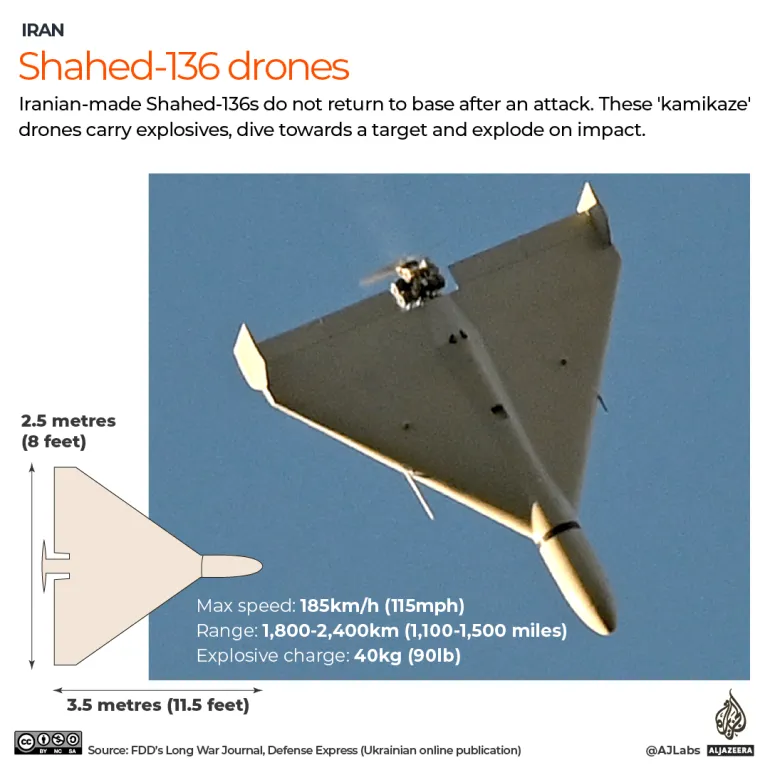
“These are military experts, experts who know how to help, how to defend against Shahed drones,” Zelenskyy said in his speech, referring to the Iranian-designed “kamikaze” drones that Russia has been using in its war against Ukraine since 2022.

“Our teams are already in the Emirates, Qatar, Saudi Arabia, and on the way to Kuwait,” the Ukrainian leader said.

“We are working with several other countries – agreements are already in place. We do not want this terror of the Iranian regime against its neighbours to succeed,” he said.

Last week, the Ukrainian leader said military teams had been sent to several Gulf states and Jordan.

Zelenskyy, who met with UK Prime Minister Keir Starmer and NATO chief Mark Rutte earlier on Tuesday, said Russia had received the Shahed-136 drones from the Iranians, who had “taught Russia how to launch them and gave it the technology to produce them”.

INTERACTIVE - SHAHED 136 drone


“Russia then upgraded them. And now we have clear evidence that Iranian Shaheds used in the region contain Russian components,” Zelenskyy said, describing the drones as designed for “low-cost destruction of expensive critical infrastructure”.

“So what is happening around Iran today is not a faraway war for us, because of the cooperation between Russia and Iran,” he said.

“The regimes in Russia and Iran are brothers in hatred, and that is why they are brothers in weapons. And we want regimes built on hatred to never win – in anything,” he added.

The Ukrainian leader then addressed his country’s newly developed prowess in drone warfare and manufacturing, claiming that 90 percent of Russian losses on the front lines in Ukraine are being “caused by our drones”.

Ukraine has moved on from making sea and aerial drones to producing interceptors that target drones, he said, adding that Ukraine is capable of producing at least 2,000 interceptors per day – half of which are required for its own defence and the remainder available for use by Kyiv’s allies.

“If a Shahed needs to be stopped in the Emirates – we can do it. If it needs to be stopped in Europe or the United Kingdom – we can do it. It is a matter of technology, investment, and cooperation,” he said.

While Ukraine has become one of the world’s leading producers of sophisticated, battlefield-proven drone interceptors, US President Donald Trump has said he does not need Ukraine’s help with countering Tehran’s drones targeting military targets in the Middle East.

After meeting with Zelenskyy at 10 Downing Street, Starmer said Russian President Vladimir Putin “can’t be the one who benefits from the conflict in Iran, whether that’s oil prices or the dropping of sanctions”.

During Zelenskyy’s visit on Tuesday, London and Kyiv signed a deal on a “defence partnership”, which is said to combine “Ukraine’s expertise and the UK’s industrial base to manufacture and supply drones and innovative capabilities”.

Source link

CAF strips Senegal of AFCON title, Morocco declared African champions | Football News

Governing body’s appeal board rules Senegal forfeited January final after players walked off pitch to protest referring decision.

African football’s governing body has stripped Senegal of the Africa Cup of Nations (AFCON) title they won in a chaotic final two months ago and declared Morocco the champions.

In a stunning decision, the Confederation of African Football (CAF) said on Tuesday that its appeals board ruled that Senegal is “declared to have forfeited” the match, a 1-0 victory. The result, it said, was now “being officially recorded as 3-0” ‌in favour of host nation Morocco.

At the January 18 final in Rabat, Senegal’s players walked off the pitch, led by coach Pape Thiaw, in protest against a penalty awarded late in regulation time to Morocco.

When play resumed after a delay of about 15 minutes, Morocco forward Brahim Diaz’s penalty was saved. In extra time, Pape Gueye scored the decisive goal that saw Senegal become champions of Africa for the second time.

The heated final also saw supporters trying to storm the field, players scuffling on the sidelines, reporters from the two countries fighting in media areas, and a bizarre sequence in which Moroccan ball boys tried to seize a towel being used by Senegalese goalkeeper Edouard Mendy – in an apparent bid to distract him and help their team win the continental title.

At a disciplinary hearing in January, CAF imposed fines of more than $1m as well as bans for Senegal and Morocco players and officials, but it had left the result untouched.

The case could go to a further appeal at the Court of Arbitration for Sport.

Source link

FIFA rejects Iran’s request to move World Cup matches from US to Mexico | World Cup 2026 News

The 2026 World Cup matches will be played as per schedule announced last year, the football organisation says.

The world’s top football organisation, FIFA, has said the 2026 World Cup matches will take place per the schedule announced last year, shutting down Iran’s hopes of having its matches moved from the United States to Mexico due to the ongoing US-Israeli war on Iran.

“FIFA is in regular contact with all participating member associations, including Iran, to discuss planning for the FIFA World Cup 2026,” the organisation’s statement said. “FIFA is looking forward to all participating teams competing as per the match schedule announced on 6 December 2025.”

Recommended Stories

list of 3 itemsend of list

Following the outbreak of the war on February 28, Iran’s participation in the games has been cast in doubt.

Last week, US President Donald Trump said Iran was welcome to come to his country for its matches, but added: “I really don’t believe it is appropriate that they be there, for their own life and safety.”

In response to Trump’s comments, Iran’s football team said in a post on social media that “no one can exclude Iran’s national team from the World Cup”.

More recently, on Monday, Iranian football chief Mehdi Taj said on social media that “when Trump has explicitly stated that he cannot ensure the security of the Iranian national team, we will certainly not travel to America”.

“We are currently negotiating with FIFA to hold Iran’s matches in the World Cup in Mexico,” Taj said.

Iran’s Ambassador to Mexico Abolfazl Pasandideh also condemned on Monday Washington’s “lack of cooperation regarding visa issuance and the provisions of logistical support” for the Iranian delegation.

The 2026 World Cup is set to be played in three countries for the first time ever: the US, Mexico and Canada.

The first game is scheduled for June 11, and will be played between South Africa and Mexico.

But when asked if Mexico could host Iran’s games, Mexican President Claudia Sheinbaum said on Tuesday that the country was prepared to host its first-round matches.

“Mexico maintains diplomatic relations with every country in the world, therefore, we will wait to see what FIFA decides,” Sheinbaum said.

Iran was the second Asian team, after Japan, to qualify for the World Cup, securing its place almost a year ago after topping its qualifying group.

They are currently scheduled to play New Zealand and Belgium in Los Angeles, and Egypt in Seattle.

Source link

Trump says it’s a ‘good thing’ counterterrorism director resigned over Iran | Nuclear Energy

NewsFeed

US President Donald Trump has reacted to the resignation of the US National Counterterrorism Centre’s director, Joe Kent, saying that he couldn’t work with somebody who didn’t believe Iran was a threat. Trump also said his decision to bomb Iran avoided a ‘nuclear holocaust’.

Source link

Video: What we know about Israel’s assault on southern Lebanon | Hezbollah

NewsFeed

The Israeli military has launched waves of air raids across southern Lebanon after announcing “limited and targeted ground operations” against Hezbollah positions. Al Jazeera’s Zeina Khodr is in Marjayoun, which has been turned into an active war zone following clashes.

Source link

US envoys meet Hamas in Cairo to salvage fragile Gaza truce | Donald Trump

In a devastated enclave where more than two million Palestinians remain crammed into a shrinking strip of land under the overwhelming shadow of Israeli military occupation and bombardment, daily survival is tethered to a fragile October “ceasefire”.

But as Israeli and US bombs rain down on Iran, and Tehran retaliates across the region, that battered truce faces a breaking point, prompting an unprecedented diplomatic manoeuvre: direct talks between United States President Donald Trump’s “Board of Peace” and Hamas.

Recommended Stories

list of 4 itemsend of list

Envoys from the new body, personally headed by Trump to oversee post-war Gaza, but with more far-reaching designs, met with Hamas representatives in the Egyptian capital over the weekend, according to the Reuters news agency.

The meetings aimed to safeguard the “ceasefire”, which has been under even more severe strain since the regional war began on February 28.

Following the talks, Israel announced it would partially reopen the Rafah border crossing between Gaza and Egypt on Wednesday. The crossing, Gaza’s sole pedestrian lifeline outside direct Israeli control, was shut when the Iran offensive began.

Despite the diplomatic push, violence in the enclave persists. Israeli strikes on Sunday killed at least 13 Palestinians including two boys, a pregnant woman, and nine police officers, serving as a stark reminder of Israel’s all-encompassing military grip on the territory.

A pragmatic shift or tactical ploy?

While the talks mark a notable engagement by Washington, analysts view the move not as a legitimisation of the Palestinian group, but as a calculated tactic underpinned by the threat of renewed violence.

Abdullah Aqrabawi, a Palestinian political analyst, noted that Washington’s willingness to meet Hamas reflects a stark reality on the ground. “There is a comprehensive, realistic acknowledgement that the main military, political, and social actor in the Gaza Strip is Hamas,” Aqrabawi told Al Jazeera.

However, he warned against viewing the meetings as a fundamental shift in US policy. In the era of the Trump administration, diplomatic meetings do not equate with political recognition. Instead, Aqrabawi argued, the approach is framed by the constant threat of a return to a “war of extermination”.

The ultimate goal of these talks, he explained, is to empower a newly formed technocratic committee in Gaza to build a social base capable of challenging the armed group.

The illusion of ‘reverse blackmail’

Initial reports suggested that Hamas had threatened to abandon the “ceasefire” if Gaza border restrictions continued, purportedly using the regional chaos of the Iran war to force Israel’s hand.

Aqrabawi dismissed this assessment, noting that Hamas has consistently expressed a desire to avoid a return to full-scale war. Rather than a successful Palestinian pressure campaign, he said the reopening of the Rafah crossing serves a different strategic purpose for Washington and Tel Aviv.

“Any facilities, whether the Rafah crossing or allowing aid entry, come through the “Board of Peace” and the new technocratic committee formed in the Gaza Strip,” Aqrabawi said. “It is not a response to negotiations or Palestinian pressure, but rather in the context of allowing this committee to penetrate Palestinian society.”

He added that this aims to establish a security foundation that allows for the disarmament of the resistance, even if it leads to internal Palestinian civil conflict.

Disarmament and the 20-point plan

Prior to the regional escalation, Trump’s flagship Middle East initiative – a 20-point plan for Gaza – had partially halted the mass killings and secured the release of Israeli military captives and some Palestinian prisoners. In exchange, Hamas accepted a ceasefire that left the Israeli military occupying more than half of the enclave.

But the second phase of Trump’s plan, which hinges on Hamas laying down its weapons in exchange for amnesty and reconstruction, remains deadlocked. While some might assume the regional conflict gives Hamas leverage to scrap the disarmament clause entirely, Aqrabawi suggested the opposite is unfolding.

The US and Israel, heavily engaged in Iran, are likely intensifying pressure on the Palestinian group to secure a swift, enforceable victory in Gaza. “The pressure happening today on the occupation government and the American perspective of the war with Iran may push them to pressure Hamas to accomplish this task as quickly as possible,” Aqrabawi said.

Yet, Hamas remains resolute. The group views its weapons as essential for resisting the occupation and forming the foundation of future Palestinian security institutions.

As Washington and Tel Aviv attempt to use the spectre of renewed genocide to engineer Gaza’s political future, the reality for the Palestinians trapped inside the enclave remains unchanged. For them, the partial reopening of a single border crossing is not a diplomatic breakthrough, but a fleeting gasp of air in a besieged Gaza Strip where daily survival is held hostage to the demands of the military occupation.

Source link

UN warns of record hunger, 45 million more at risk, if Iran war continues | US-Israel war on Iran News

The Middle East conflict risks adding a staggering 45 million to acute hunger levels, warns the UN’s World Food Programme.

Tens of millions more people will face acute hunger if the United States-Israel war on Iran, and its reverberations through Iran’s retaliation, continue through to June, the United Nations warned.

“If the Middle East conflict continues through June, an additional 45 million people could be pushed into acute hunger by price rises,” Carl Skau, the deputy executive director of the UN’s World Food Programme (WFP), said on Tuesday.

Recommended Stories

list of 4 itemsend of list

“This would take global hunger levels to an all-time record, and it’s a terrible, terrible prospect,” Skau said, with 319 million people, already a historic high, currently acutely food insecure.

The US-Israeli attacks on Iran that began on February 28 have choked up key humanitarian aid routes, delaying life-saving shipments to some of the world’s worst crises.

Skau said shipping costs are up 18 percent since the war began and that some have had to be rerouted.

The extra costs come on top of deep spending cuts by the WFP, as donors focus more on defence, he added.

Hunger crises in Gaza, Sudan

In Gaza, residents are rushing to stockpile dwindling goods as border closures and the Iran war further strain already fragile supplies, with shortages worsening across the besieged enclave as Israel presses on with its genocidal war there.

Israel is set to partially reopen Gaza’s Rafah crossing with Egypt on Wednesday, ending a two-week shutdown that has deepened an already catastrophic humanitarian crisis in the decimated territory.

Israel shut the crossing the same day it and the US launched strikes on Iran, citing “security” reasons.

The World Health Organization’s regional director for the Eastern Mediterranean warned last week that only about 200 trucks a day were entering Gaza, far short of the estimated daily requirement of 600.

Meanwhile, more than 21 million people in Sudan, nearly half of the population, face acute hunger. Famine has been confirmed in areas where months of fighting have made access for aid workers largely impossible.

In January, the UN warned that aid to Sudan could run out within months unless hundreds of millions of additional dollars are pledged.

Three years of brutal war between the military government and paramilitary Rapid Support Forces have killed tens of thousands of people and displaced 14 million.

Source link

Travel expert issues cost-of-fligying ‘rise’ warning as jet fuel price surges 70 per cent

Tourism consultant David Evans has warned that the cost of flying is likely to rise sharply

A travel expert has advised folks to snap up flights now in anticipation of a predicted ‘surge’ in airfare costs. Tourism consultant David Evans revealed that aviation fuel prices have rocketed by 70 per cent in the wake of the US-Israeli strikes on Iran.

Speaking on BBC Radio 5 Live, he suggested that this could soon make flying considerably pricier. This situation is likely to be compounded by the financial strain many airlines are under due to the cancellation of numerous flights amid the unrest in the Middle East.

When asked by host Rachel Burden whether people should book now before flight prices soar, Mr Evans responded: “If you can get a flight that you feel is offering you a really good value-for-money price and it is via somewhere like Singapore (then yes).

“It’s also worth bearing in mind that, once all this blows over, which hopefully won’t be too far off, the Middle Eastern airlines will undoubtedly be introducing some attractive fares into the market to try and recoup the demand they’ve lost over the past few weeks.

“According to the data we’ve seen, the cost of jet fuel has risen by about 70 per cent. Fuel accounts for roughly a quarter of an airline’s operating cost, so the maths are pretty straightforward – if the fuel price is climbing that much, it won’t be long before air fares start to rise. If this carries on for many more weeks, travelling is likely to become more expensive.”

READ MORE: Simon Calder issues update for anyone flying with Emirates, Etihad or Qatar AirwaysREAD MORE: Foreign Office issues fresh travel guidance for anyone heading to the US

Mr Evans’ remarks follow revelations that holiday-goers are eschewing Easter trips to traditionally favoured destinations such as Cyprus, Turkey, and Dubai, opting instead for western locations like Spain, Italy, and Portugal, as well as the Caribbean and Mauritius. According to Thomas Cook, bookings to Portugal saw a 42 per cent surge in the fortnight leading up to 13 March.

British Airways has axed some Middle East flight routes until June due to ‘airspace instability’, whilst the UAE and Dubai have been compelled to repeatedly shut down both airports and airspace following retaliatory Iranian strikes. Iraqi officials reported that Iranian strikes over the country on Monday (March 16) were the most intense they had seen throughout the entire war.

Content cannot be displayed without consent

“I think the announcement from BA is probably good news in that it gives those people who would otherwise have been in complete limbo thinking, ‘crikey, is this situation going to improve or not over the next few months’ – now they know their flight is cancelled, they can either rebook on a different route or they can get a refund and use the money to either holiday domestically or to go to a different destination, so at least it provides certainty,” Mr Evans added.

“I guess we could say that the 2020s have been a bingo card of doom and this is the square for 2026, but it is also worth saying that the tourism industry and indeed tourists are incredibly resilient.

“Yes, clearly many people are being disrupted if they had either to or from the UK to or via the Middle East, but there are lots of other destinations that are still open for business and lots of other visitors able to get to the UK very easily.”

Source link

Brits swapping Dubai for sun-kissed island with Tui flights and 30C April weather

Jamaica has seen a spike in demand from UK holidaymakers seeking sunshine destinations, with TUI offering direct flights from the UK and temperatures reaching 30C in April

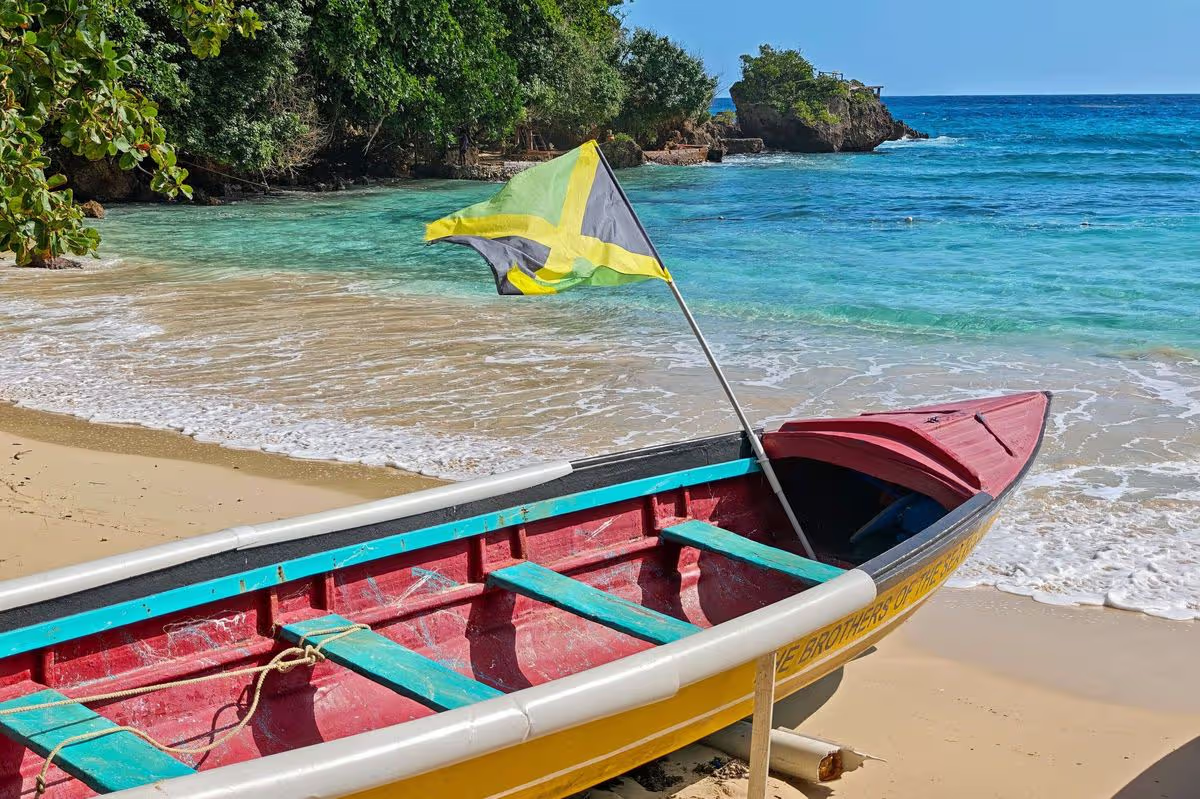
Brits are trading Dubai for a sun-drenched island offering direct flights and balmy 30C temperatures in April. This shift comes as holidaymakers begin to seek out travel destinations that bypass the Middle East.

Travellers bound for the region have faced disruption due to ongoing instability and conflict in Iran. British Airways has already confirmed that flights to Dubai, Bahrain, Tel Aviv and Amman in Jordan have been suspended until at least 31 May. This has triggered a surge in bookings for locations such as Portugal, Spain, France and certain US states.

However, one Caribbean island has seen a notable increase in interest. Alongside destinations like the Dominican Republic, Phuket in Thailand and Goa in India, Jamaica has experienced a boom in demand, according to Neil Swanson, managing director of TUI UK and Ireland, who spoke to the BBC.

The airline provides direct flights from Manchester to this sunny isle. However, passengers should brace themselves for a journey expected to exceed 10 hours, reports the Express.

Once they’ve landed on this petite island, home to approximately 2.8 million inhabitants, Brits can bask in the sunshine and immerse themselves in the local culture. The average daytime temperature in Jamaica for April fluctuates between 25 to 30C, dipping to around 22 to 24C at night.

Travel expert Mark Wolters reckons visitors to Jamaica rarely need to pack a jacket. In a YouTube video on his Wolter’s World channel, he explained: “You’re going to be fine with shorts and a t-shirt all-year round, that’s not going to be a problem.

“The busy season here starts January, December and it goes through March. The time when you don’t want to come here is July/August because it is insanely hot.”

According to Visit Jamaica, tourists “feel the vibe” the moment they arrive on the island, becoming absorbed in the music, nightlife, and cuisine. It states: “Tasting your way through the island is a great way to connect with the history of Jamaica as you learn more about what makes our food so special with each dish you try.

“Savour every delicious bite and come back to ‘Mmmmm!’ Jamaicans celebrate life with food, so you know it is made with love.”

Jamaica features an impressive selection of stunning beaches that extend for miles. Negril’s Seven Mile Beach is celebrated for its spectacular sunsets and lively atmosphere whilst Montego Bay Marine Park is favoured by holidaymakers keen to discover the underwater realm showcasing vibrant wildlife.

The Blue Mountains rise majestically above Jamaica and consistently draw outdoor enthusiasts. Those visiting the mountains can even taste the world-famous Jamaican Blue Mountain Coffee.

The island also boasts captivating waterfalls and verdant rainforests. In April, it plays host to a unique carnival that parades through the streets of Kingston.

The carnival season is accompanied by a week of breakfast parties, soca cruises, Jamaican music and extravagant costumes. Besides being reachable by plane, Jamaica is a favoured destination for cruise holidays.

Source link