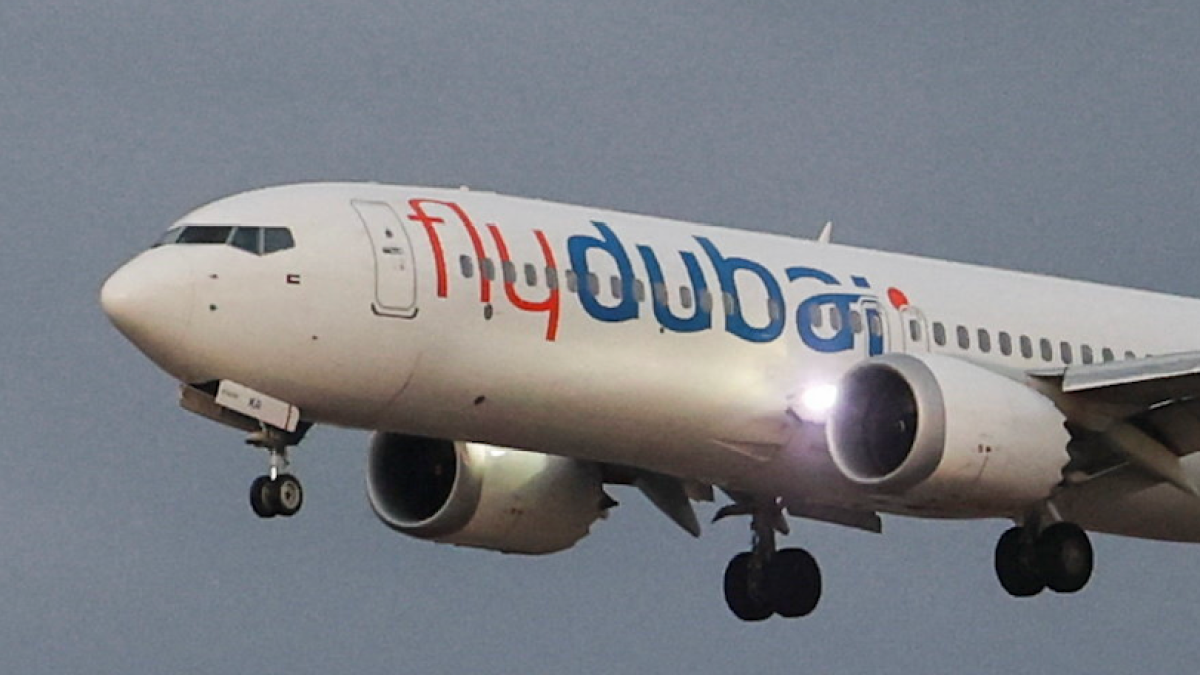
Investigators are examining what happened inside the cockpit of Flydubai flight FZ1073 to Israel after the co-pilot stabbed Captain Smit Machchhar and attempted to take control of the aircraft.
Fighting in Sudan’s Kordofan region has intensified since late 2025, turning it into one of the main battlegrounds in the war between the Sudanese Armed Forces (SAF) and the paramilitary Rapid Support Forces (RSF), now in its fourth year.
The vast region, which comprises North, West and South Kordofan states, lies where the two sides’ areas of control meet, between the army-held central region and the RSF-controlled Darfur in the West. In recent months, the SAF has pushed the RSF out of much of North Kordofan.
The battle is increasingly being fought from the air. Drone strikes on towns in North Kordofan are growing more frequent and deadly, and civilian infrastructure has been hit across the region.
Since the war began in April 2023, one in five recorded attacks in Sudan has taken place in Kordofan.
Al Jazeera maps where the fighting is concentrated in Kordofan and across Sudan, and the displacement that has followed.
Who controls what on the ground?
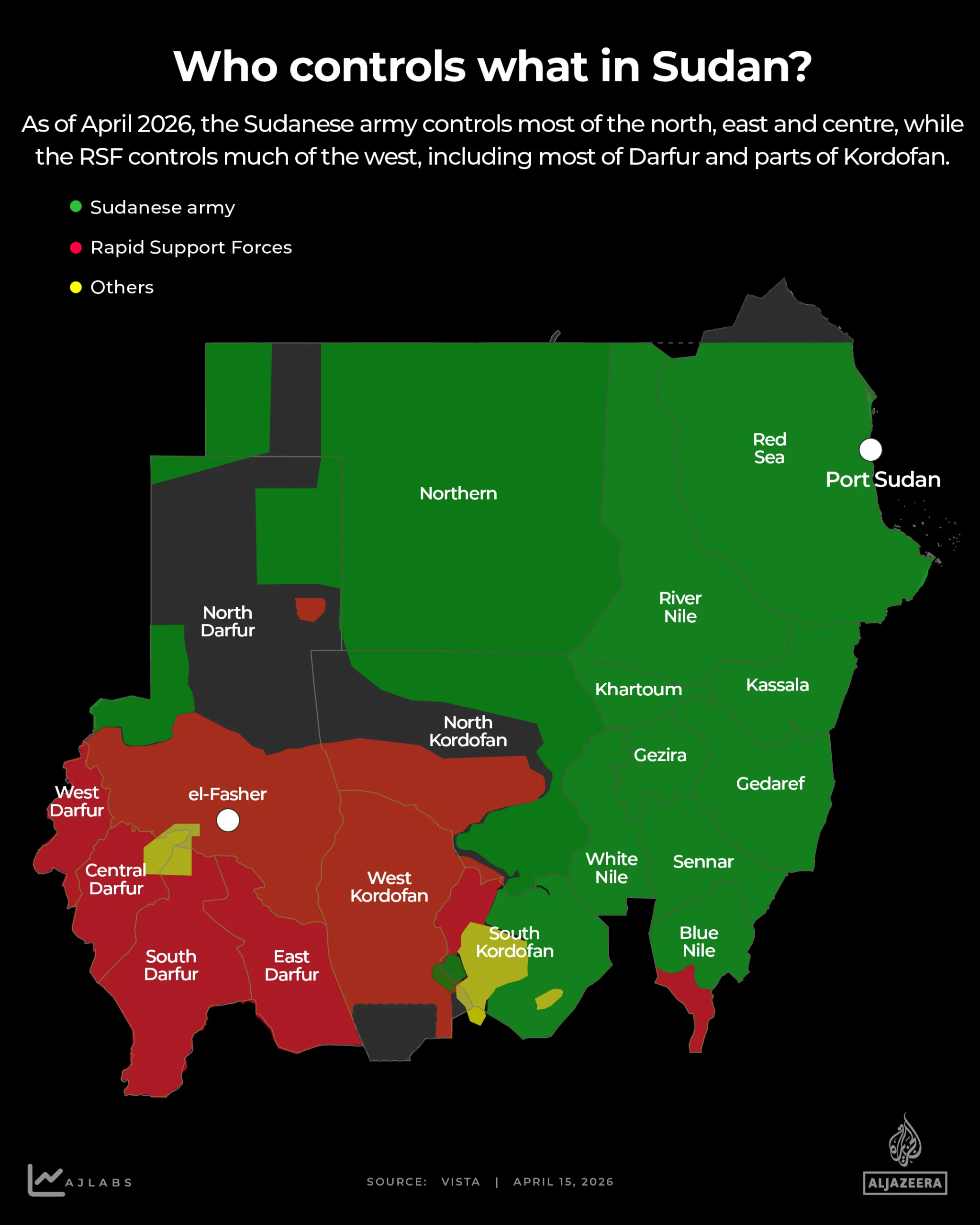
Sudan is broadly divided between the two sides. The SAF controls the capital, Khartoum, and most of the north, east and centre, while the RSF controls the west, including almost all of Darfur and parts of Kordofan. Smaller armed groups, including the RSF-allied Sudan People’s Liberation Movement-North (SPLM-N), hold pockets of territory in the south.
The army has the upper hand in the north, the RSF in the west, and South Kordofan remains contested.
Where have most attacks occurred?
According to an Al Jazeera analysis of data from the Armed Conflict Location and Event Data (ACLED), an independent conflict monitor, there were 14,648 recorded attacks between the start of the war on April 15, 2023, and September 19, 2026.
The four most affected states include:
Khartoum: The capital region has seen the most, with 5,719 attacks, or 39 percent of the total, almost three times as many as North Darfur, the second-highest
North Darfur has witnessed 1,999 attacks (13.7 percent)
Gezira state has seen 1,435 attacks (9.8 percent)
Kordofan emerged as a major centre for fighting. North, South and West Kordofan together recorded 2,876 attacks, or about 19.7 percent of all recorded attacks, putting the region behind only Khartoum when considered collectively.
Who has carried out the most attacks?
The SAF is associated with the largest share of recorded attacks between April 15, 2023 and September 19, 2026, accounting for just over half (52 percent), compared with just over a third (34.7 percent) for the RSF and 13.3 percent for other actors.
Smoke billows after drone strikes by the paramilitary Rapid Support Forces (RSF) targeted the northern port in the Red Sea city of Port Sudan, Sudan, on May 6, 2025 [AP Photo]
The balance of attacks has shifted over time. The SAF was associated with more recorded attacks than the RSF in the first year and a half of the war, before the RSF overtook it in number of attacks from late 2024 to mid-2025.
Since August 2025, the two sides’ monthly attack counts have been closer, with the SAF generally recording slightly more, even as the overall number of attacks has fallen sharply.
Where have attacks in Kordofan occurred?
After the fall of el-Fasher, the last major Darfur city held by the army and its allies, in October 2025, attention shifted to Kordofan. The region sits between RSF-held Darfur and the army-held centre, north and east, forming a corridor between the two sides’ heartlands.
Kordofan’s three states recorded 2,717 attacks: North Kordofan had 1,205 (44 percent), South Kordofan 789 and West Kordofan 723. Adding Abyei, a disputed oil-rich area on the Sudan-South Sudan border that was historically part of Kordofan, brings the total to 2,878.
Soldiers arrive at the Allafah market, in an area recently recaptured by Sudan’s army from the Rapid Support Forces paramilitary group, in the al-Kalalah district, south of Khartoum, Sudan, on March 27, 2025 [AP Photo]
The concentration of attacks differs from state to state. In North Kordofan, Sheikan locality alone accounted for 497 attacks, or 41 percent of the state’s total. Sheikan is home to the state capital, el-Obeid, a commercial and administrative hub linking central Sudan with the west. Taking the city would open a route east towards Khartoum for the RSF.
On September 9, a drone strike on a college in el-Obeid tore the roof off the building and killed a security guard, the college’s dean, Abdel Aziz al-Sheikh, told Reuters.
“As you can see, the entire faculty is destroyed and we feel that our dreams are destroyed, our future is destroyed,” Omnia Aboul Gassim, a student who had sat her exams at the el-Obeid college just one day before the attack, told Reuters.
In South Kordofan, Dilling locality was the main hotspot, with 242 attacks (31 percent), followed by Kadugli with 107 (14 percent) and Al Quoz with 94 (12 percent).
Attacks in West Kordofan were spread more evenly across localities. Babnusa recorded the most, with 142, followed by En Nuhud (119), Al Khiwai (112) and Abu Zabad (111).
ACLED has recorded at least 12,314 reported fatalities in Kordofan since April 2023.
The SAF was associated with 1,323 attacks (46 percent) across all three states in Kordofan, compared with 920 (32 percent) for the RSF and 633 (22 percent) for other actors.
How many people are displaced?
About 8.6 million people remain internally displaced across Sudan, according to the latest United Nations figures, down from a peak of 11.6 million in January 2025 as millions returned home to areas retaken by the army. New displacement continues in Kordofan, Darfur and Blue Nile.
Darfur hosts the largest concentrations of internally displaced people (IDPs), particularly South and North Darfur.
Returns have steadily increased since 2025, reaching about 5.1 million by August 2026. Khartoum has seen a major return of displaced people, with about 2.7 million returnees.
A displaced woman from Dalanj braids her grandmother’s hair at a displacement registration centre in El Obeid, North Kordofan State, Sudan, on January 15, 2026 [El Tayeb Siddig/Reuters]
Despite the decline, millions remain displaced more than three years into the war. The International Organization for Migration (IOM) says the number of people newly displaced in Kordofan since fighting escalated in October 2025 has risen 65 percent in four months, from more than 132,000 in February to at least 219,000 by late June.
The agency has warned that el-Obeid, which shelters about 500,000 people, including more than 83,000 displaced, faces a looming threat of a full-scale invasion.
“The warning signs are impossible to ignore,” said IOM Director General Amy Pope earlier this month. “Across Sudan, families are fleeing violence, losing access to water, electricity and healthcare, and now facing the added burden of destructive floods.”
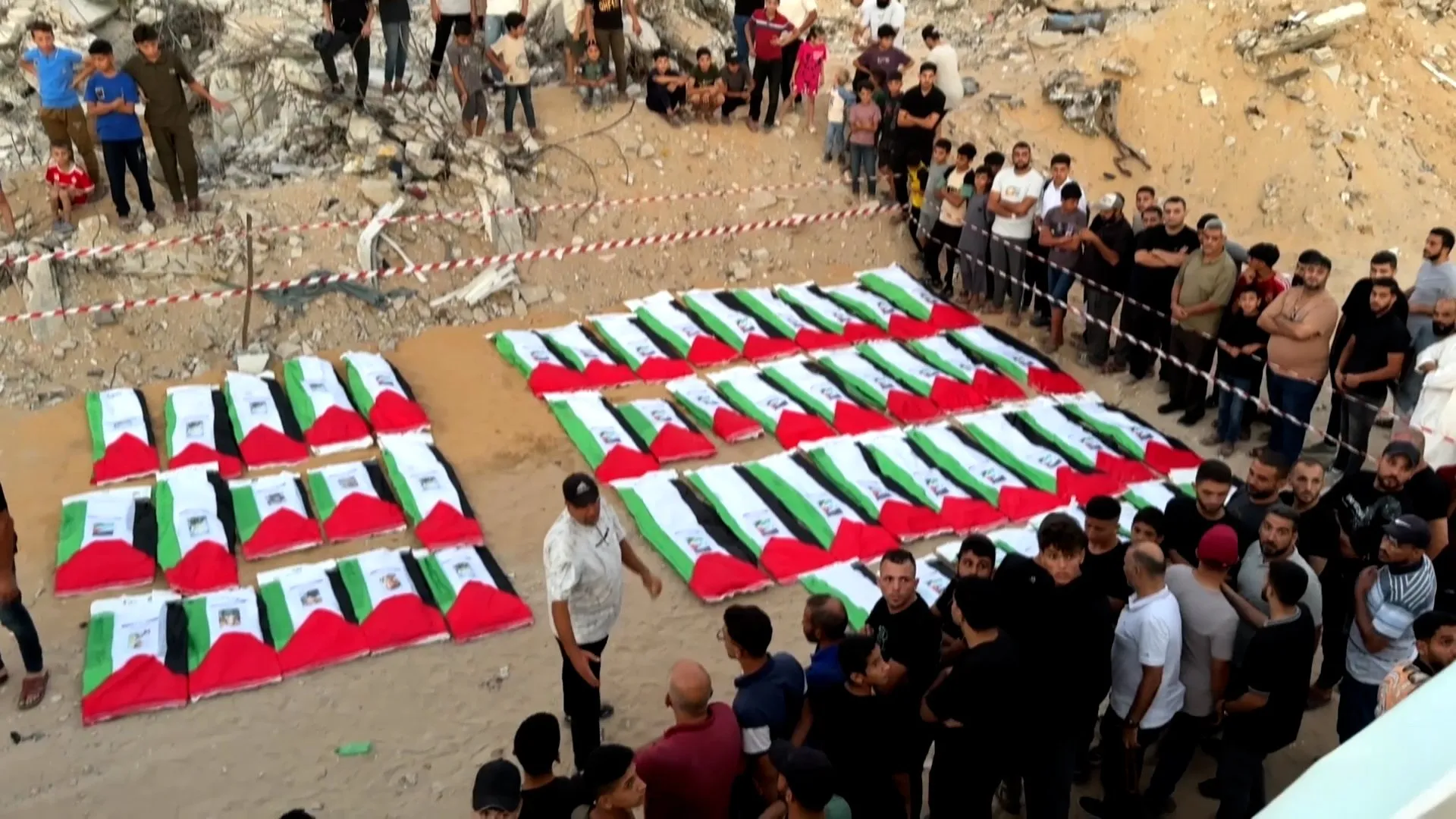
Coffins containing the remains of those killed will be carried in a funeral procession involving family members.
Published On 1 Oct 20261 Oct 2026
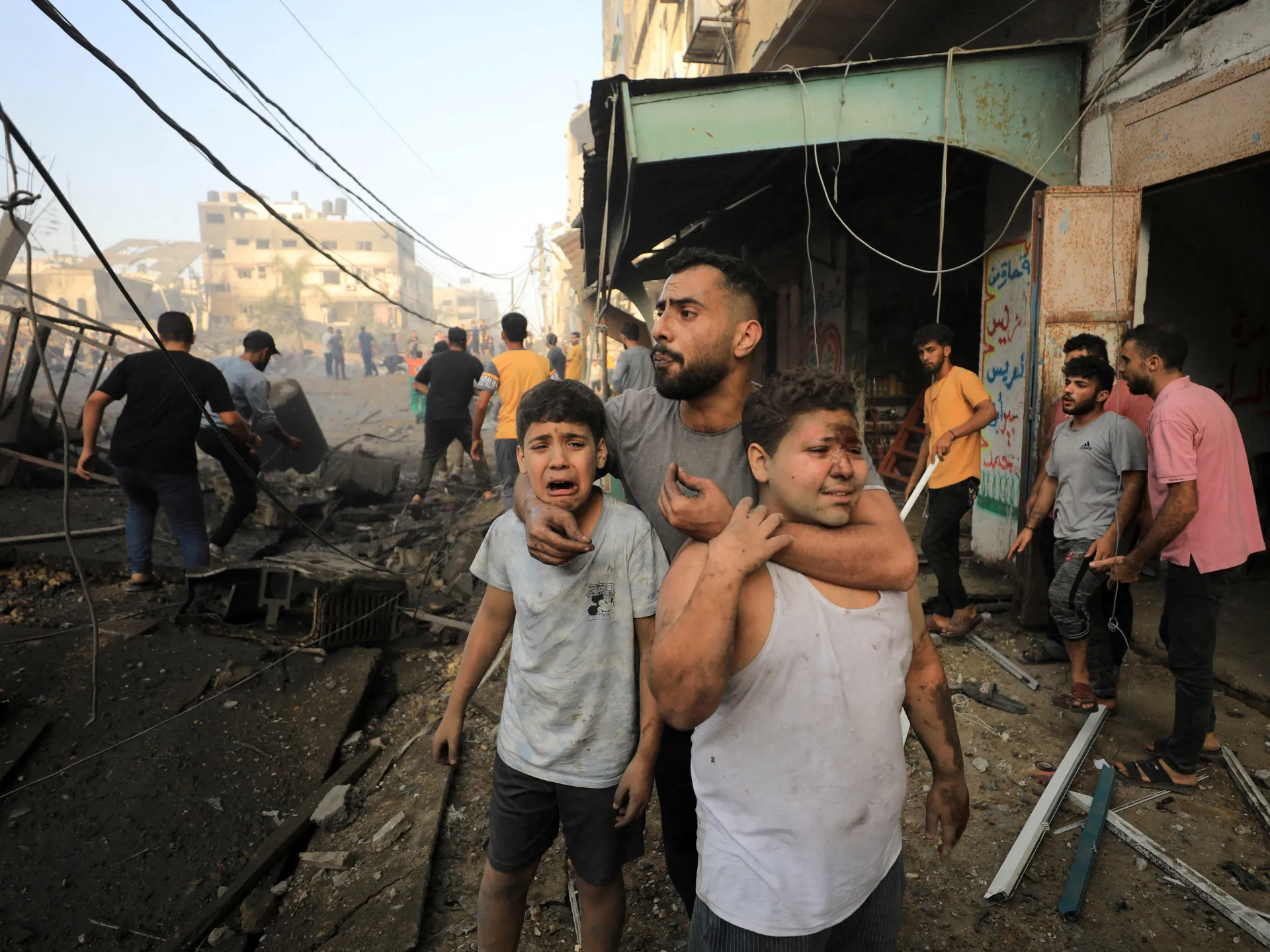
Palestinians are preparing to bury the remains of 105 people killed in a devastating Israeli attack on Gaza City in October 2023.
The victims were killed in a series of Israeli air strikes involving at least 20 bombs that levelled the seven-storey Al Taj 3 building and destroyed several other residential buildings in the Yarmouk Square neighbourhood on the afternoon of October 25, 2023.
Recommended Stories
list of 3 itemsend of list
Coffins containing the remains of those killed will be carried in a funeral procession involving family members on Thursday, the General Directorate of Civil Defence said.
The remains will be buried in the Sheikh Radwan cemetery, northwest of Gaza City.
Gaza’s civil defence said the recovery operation was carried out in coordination with an Egyptian committee.
Al Jazeera correspondent Ibrahim Khalili, reporting from Gaza City, said the recovery operation was the fifth largest of its kind since Israel launched its genocidal war against Palestinians in Gaza in October 2023, in terms of the number of bodies recovered.
Civil defence operations director Abdul al-Majdalawi said it had been “impossible” to reach the bodies at the time of the attack.
“Bulldozers, excavators and other heavy machinery used by civil defence teams in Gaza were directly and deliberately targeted,” he said.
Osama Sharaf said 37 members of his family were killed in the attack.
“We recovered some of them at the beginning of the war, and today [Wednesday] 16 more were recovered, including my father, my mother, and all of my siblings. My sister’s son was also there with them,” he said.
The bodies of 105 Palestinians have been recovered from the rubble of a residential block destroyed by Israel in the early part of its genocide on Gaza. The victims are being prepared for burial almost three years since the war began.
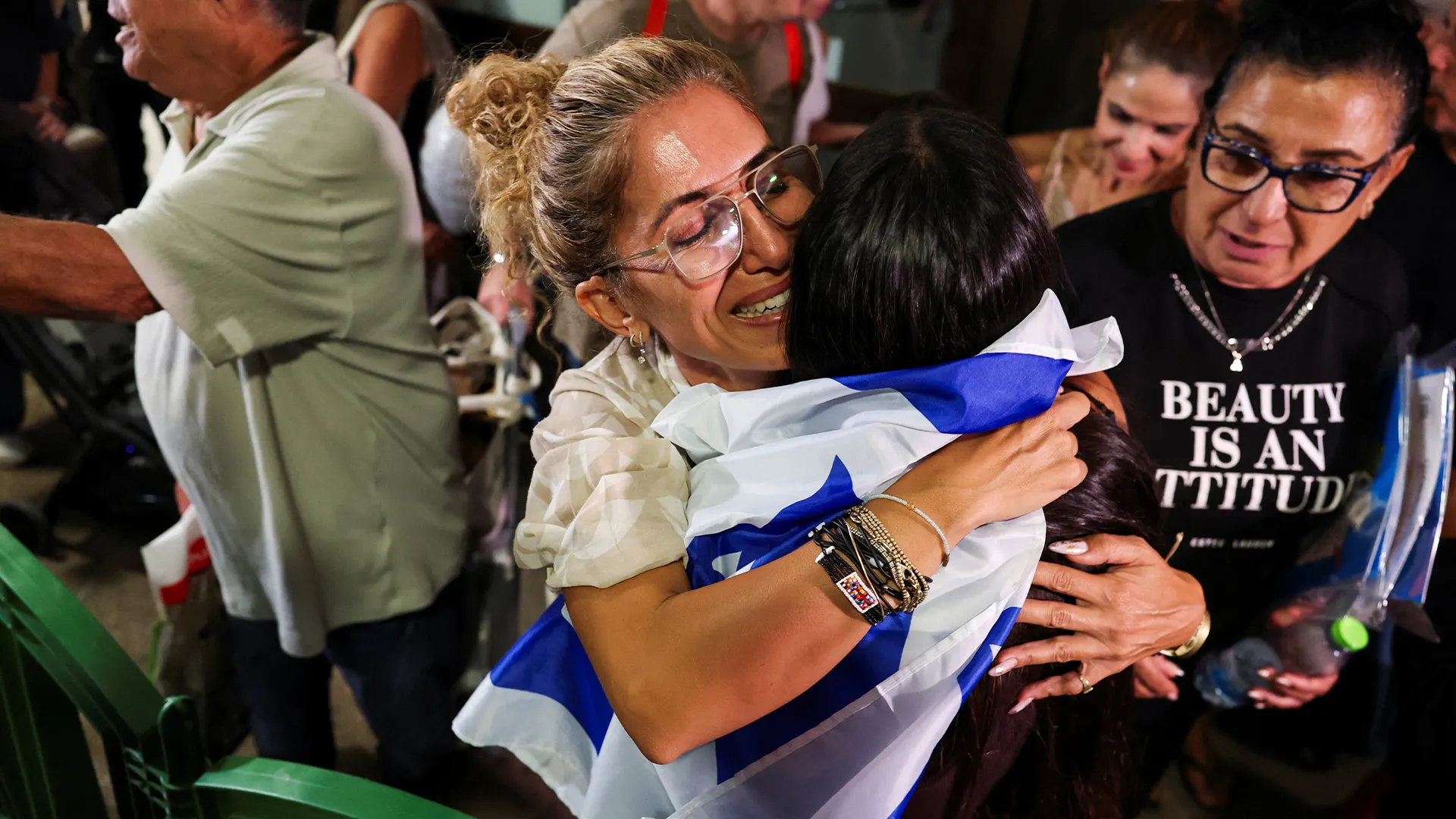
Israeli passengers tell of the horror onboard the Flydubai flight that was diverted after the pilot stabbed his co-pilot in the cockpit. The plane dropped 17,000 feet during the fight from Dubai to Tel Aviv, but landed safely after being diverted to land in Saudi Arabia.
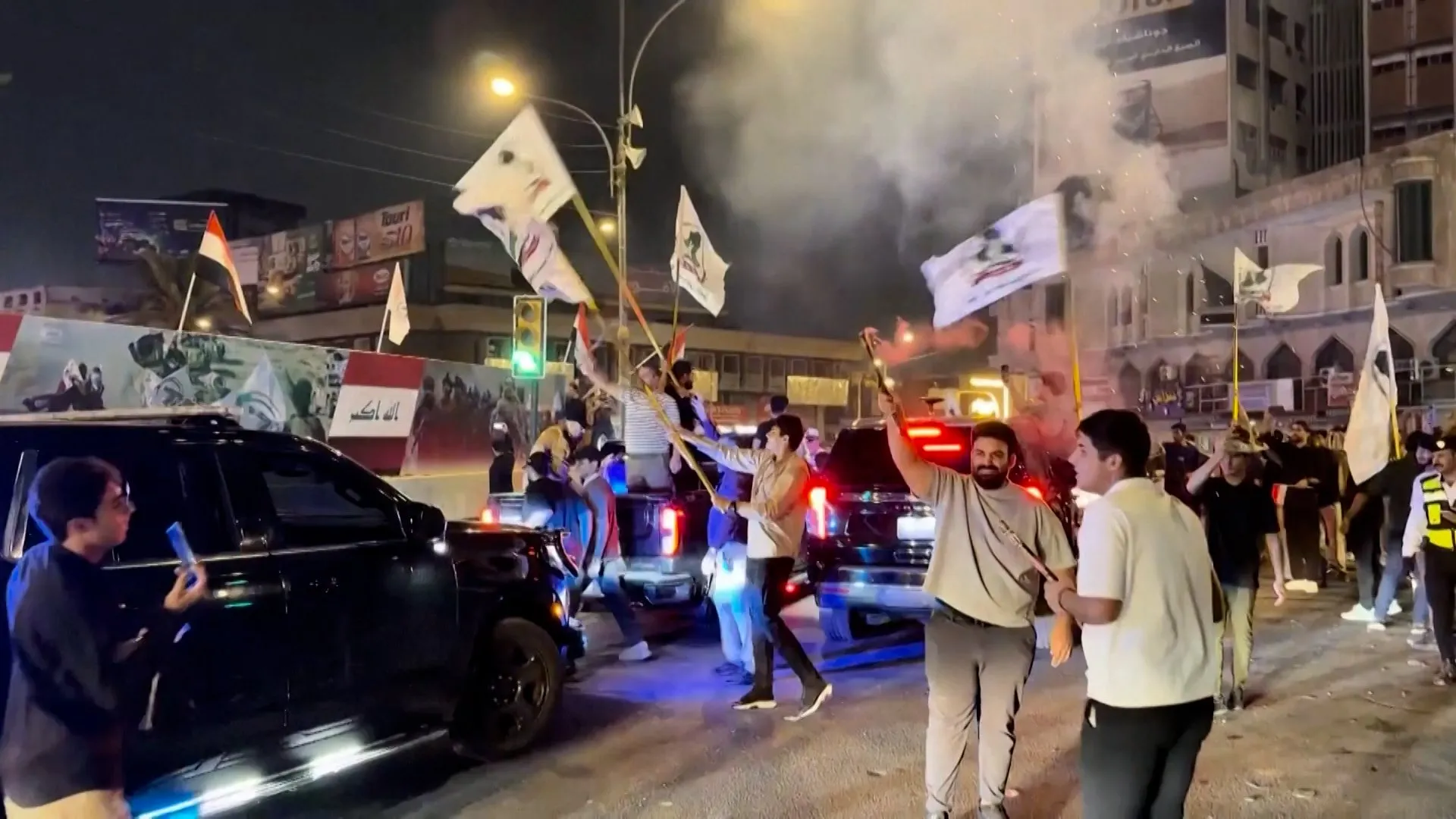
Night time celebrations filled the air as Iraqis observed the start of a four-day holiday to mark the withdrawal of US troops and international forces after more than a decade in the country fighting ISIL.
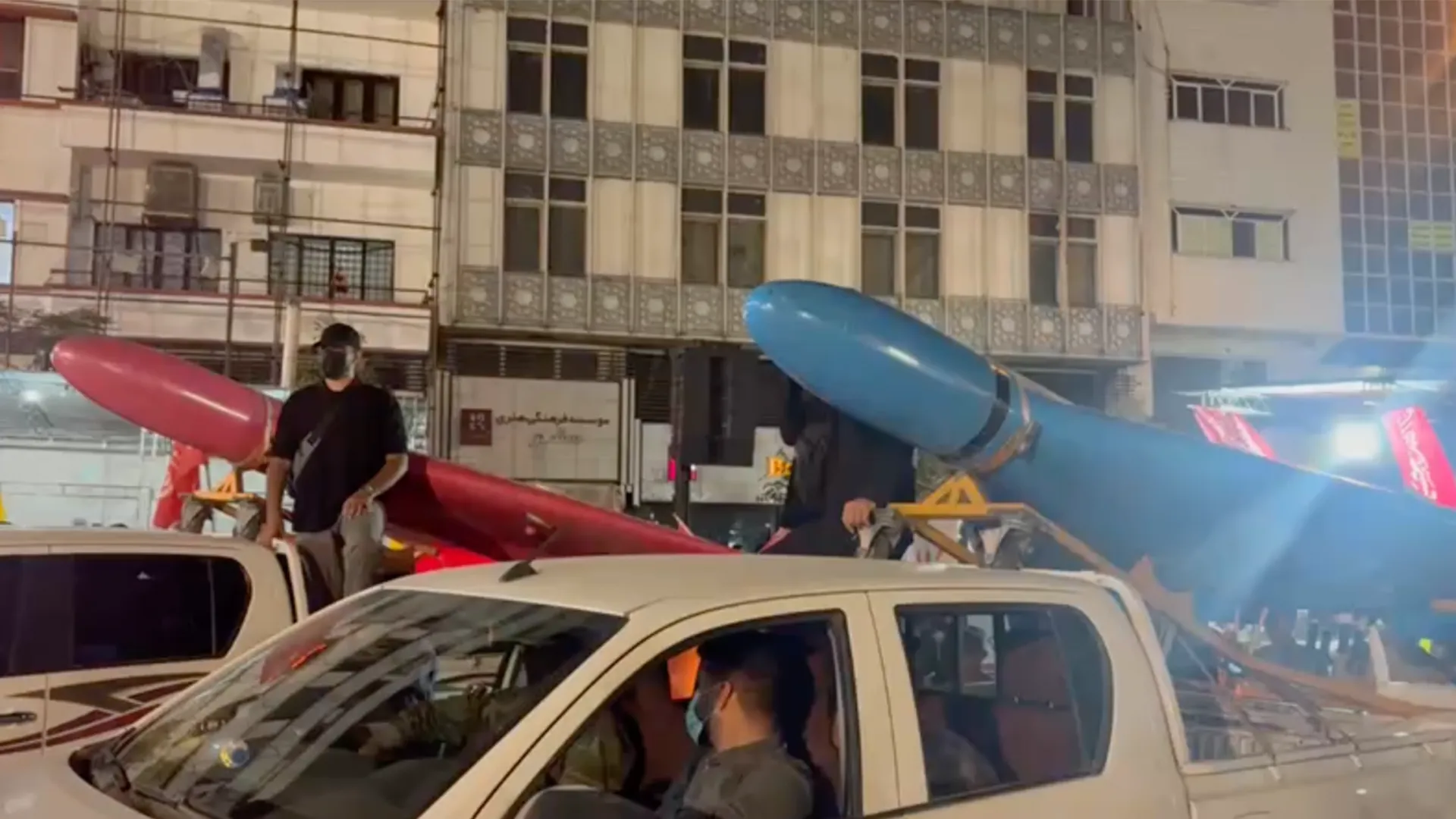
Crowds cheered and waved national flags as two Shahed drones were paraded through Tehran. Iranian-made, low-cost Shahed drones have become a major feature of modern warfare, used in attacks across the Gulf and extensively by Russia in its war in Ukraine.
Crown Prince Mohammed bin Salman says the kingdom ‘will not hesitate to respond firmly to any threat’.
Published On 30 Sep 202630 Sep 2026
Saudi Arabia’s Crown Prince Mohammed bin Salman (MBS) has promised not to compromise on the kingdom’s security in the face of attacks by the Houthi armed group, saying the Yemeni rebels chose “chaos and destruction, threatening the Yemeni people and the region”.
In a speech delivered Wednesday on behalf of King Salman bin Abdulaziz Al Saud during the opening of the third year of the ninth session of Saudi Arabia’s Shura Council, Prince Mohammed said the country “will not hesitate to respond firmly to any threat or attack aimed at undermining” its security.
He pointed to the trilateral Mecca Joint Defence Agreement with Turkiye and Pakistan that was formalised in August, saying the alliance shows the Saudi leadership’s intent “to strengthen regional stability, shield it from the repercussions of tensions and conflicts and coordinate efforts”.
At the same time, the crown prince said, Saudi Arabia is making “every possible effort to de-escalate tensions and support diplomatic solutions without the slightest compromise on preserving our security”.
Maritime coalition to defend Red Sea
MBS also addressed the targeting of vessels by the Houthis in the Red Sea along the Bab al-Mandeb strait, rejecting the use of international waterways as a tool for political or economic pressure.
He said a “multinational defensive maritime coalition” was set up to ensure “common interests” are protected in international waterways.
In recent weeks, the Houthis have ramped up attacks on Saudi Arabia, as they fight Yemen’s internationally recognised, Saudi-backed government forces.
Last week, Riyadh said it intercepted six ballistic missiles aimed at Taif in western Saudi Arabia and the Yanbu port area on the Red Sea.
The Houthis also said they attacked “a sensitive target” in the Saudi capital, Riyadh, and Saudi Aramco facilities in Yanbu.
On Tuesday, Pakistan’s Defence Minister Khawaja Muhammad Asif said Islamabad will make “whatever means” available to Saudi Arabia under the mutual defence pact if the Houthi attacks on the kingdom continue.
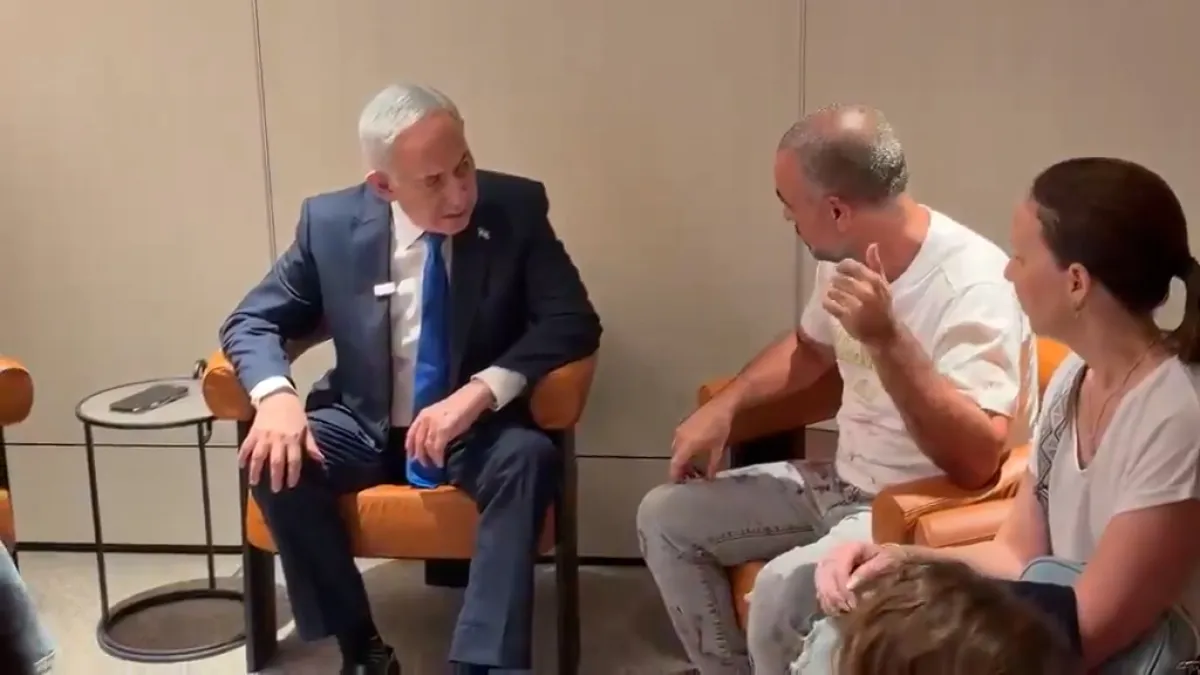
Israeli Prime Minister Benjamin Netanyahu has met Yaniv Hayun, the Flydubai passenger that helped restrain a pilot who stabbed a colleague. Netanyahu called the passenger a ‘hero’ during a meeting at Ben Gurion Airport in Tel Aviv shortly after the flight landed.
Israeli raids at Al-Aqsa Mosque compound have intensified during the Jewish holiday season.
Published On 30 Sep 202630 Sep 2026
Hundreds of Israelis have stormed the Al-Aqsa Mosque compound in occupied East Jerusalem on the fifth day of Sukkot, a Jewish holiday.
While Israelis performed Jewish religious rituals and sang in violation of the status quo at the compound on Wednesday, Israeli restrictions on the entry of Palestinian Muslims continued, Palestine’s Wafa news agency reported, citing the Jerusalem governorate.
Recommended Stories
list of 3 itemsend of list
Jerusalem’s Islamic Waqf Department reported that about 700 Israelis, including former lawmaker Moshe Feiglin, stormed the compound under the protection of Israeli police.
The historical status quo stipulates that the waqf department has exclusive responsibility for administering the compound, also known as al-Haram al-Sharif, or the Noble Sanctuary, by Muslims, and as the Temple Mount by Jews, as a place of worship exclusively for Muslims.
The Jerusalem governorate said Israeli authorities closed the road leading to the Lions’ Gate area, as well as the entrance to al-Turba Road leading to the town of Silwan, to ease Israelis’ access to the Western Wall.
Israelis have stormed the Al-Aqsa compound regularly since the start of the Jewish holidays earlier this month. On Tuesday, 966 Israelis entered the compound through the Moroccan Gate alongside Israeli police, performing Talmudic rituals and singing together in the mosque’s courtyards.
The holidays began with the Jewish New Year on September 12 and 13, followed by Yom Kippur, or the Day of Atonement, on the 21st and the 22nd. Sukkot runs from September 26 to October 2, after which Simchat Torah, marking the conclusion of the annual cycle of public Torah readings, will be celebrated on October 3.
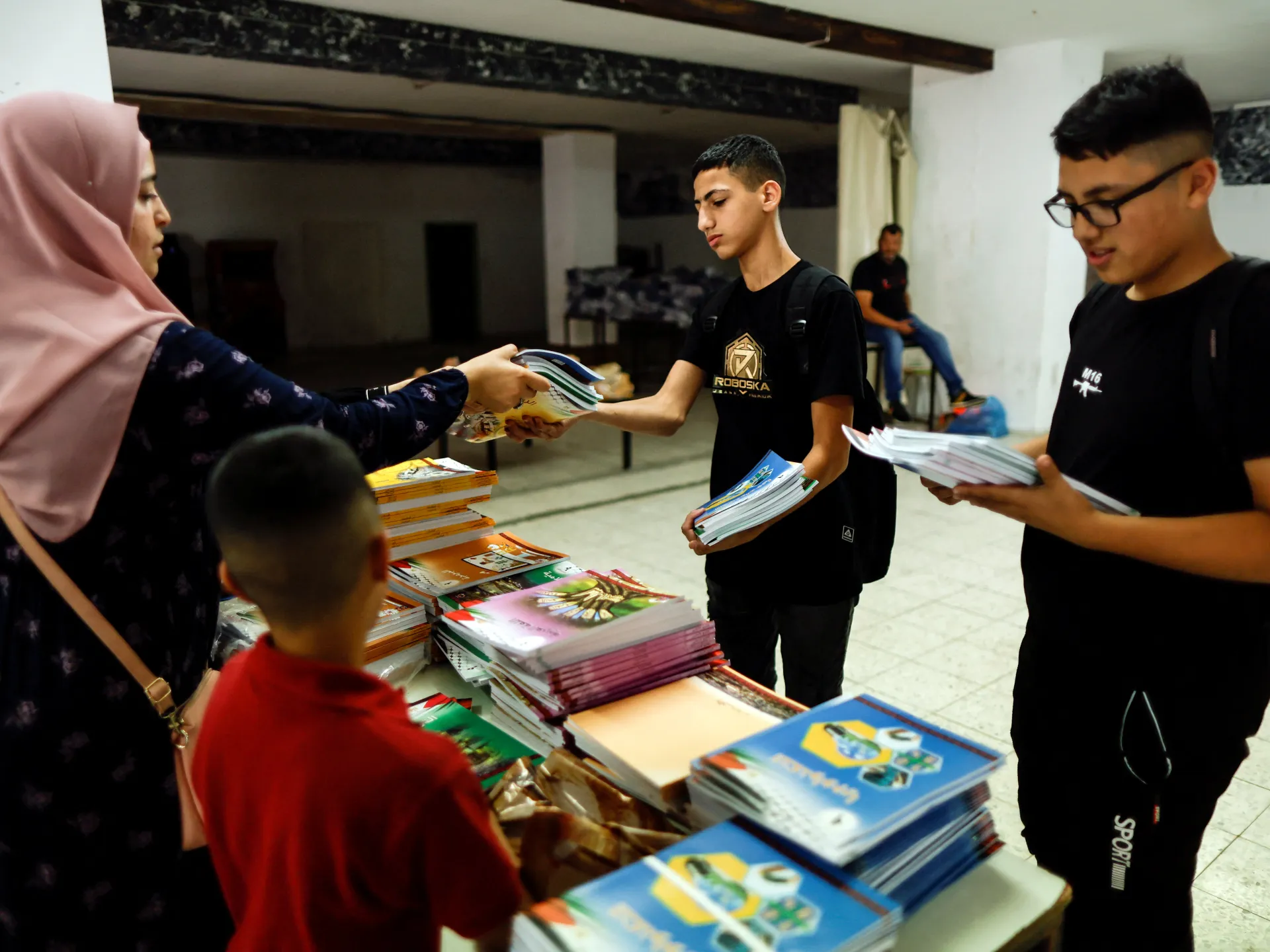
The school year started in occupied East Jerusalem with the news that 45,000 Palestinian children are now studying a curriculum put together by the Israeli authorities. That is more than a third of the Palestinian students in the occupied territory and almost double the number from the previous year.
Meanwhile, Christian schools started the school year with a strike, as many of their teachers who live in the occupied West Bank were not granted permits to enter the city.
For the Palestinian population of occupied East Jerusalem, this is yet another form of encroachment on their national rights by the occupation authorities. For Israel, this is a justified intervention because Palestinian textbooks produced by the Palestinian Ministry of Education and Palestinian teachers trained in Palestinian Authority (PA) institutions “teach hate”.
According to international humanitarian law, an occupying power must facilitate the normal operation of educational institutions and avoid interference in their affairs. Recently updated commentary by the International Committee of the Red Cross, the institution tasked with overseeing the application of the Geneva Convention, says an occupying power must not replace the existing education system with its own structures or impose new curricula.
Yet Israeli interference in Palestinian education is extensive and reaches well beyond occupied East Jerusalem – into the occupied West Bank and, more recently, the Gaza Strip. For years, successive Israeli governments have demanded that the United States and European governments pressure the PA to revise its textbooks by conditioning aid. Meanwhile, the devastation of Gaza’s education system has allowed NGOs funded by Western donors to introduce curriculums approved by Israel.
The Israeli argument that all this is necessary to prevent Palestinian children from learning “to hate” in school does not stand up to scrutiny.
Academic research, including a study funded by the US Department of State and prepared by both Palestinian and Israeli scholars, found that Palestinian textbooks do not promote hate and dehumanisation of Israelis.
So what is Israel actually looking to revise in Palestinian textbooks?
Studies comparing Palestinian textbooks with the Israeli-edited versions used in occupied East Jerusalem have documented the removal or alteration of references to Palestinian national symbols, such as the national flag and anthem, Palestinian sovereignty and history.
A 2025 study of primary-school textbooks found that Israeli modifications included replacing “Palestine” with “Israel” in some contexts and removing passages about the realities of occupation.
Israel wants references to the occupation, Palestinian history and self-determination erased from Palestinian textbooks not because they “teach hate”, but because they teach Palestinian children national consciousness – something Israel has fought against since its own creation, claiming “there is no such thing as a Palestinian people”.
This is why Palestinian resistance to curriculum changes in East Jerusalem should not be understood only as resistance to an Israeli textbook. For many parents, teachers and schools, the fear is that accepting the Israeli curriculum also means accepting the Israeli annexation of Jerusalem and its erasure of Palestinian identity inside it.
Removing concepts such as the occupation, the Nakba, refugees, the right of return, Palestinian sovereignty and national symbols from education materials can gradually detach Palestinian political identity from the historical narrative that gives those claims meaning.
While Israel gets to censor and shape Palestinian curriculums, there is little scrutiny by its Western allies of what Israeli curriculums teach Israeli children.
For her book Palestine in Israeli School Books, Israeli philologist Nurit Peled-Elhanan studied Israeli history and geography textbooks published in the post-Oslo years and discovered the extensive use of racist tropes and erasure of Palestinians. In the conclusion, she expressed concern that Israeli students graduate from Israeli schools and enter mandatory military service having “been taught to resent and fear” Palestinians and having no knowledge of their “life-world”.
Another more recent study of 123 textbooks used in Jewish Israeli schools by Israeli scholar Yael Teff-Seker found strong ethnocentric framing, a persistent sense of Jewish victimhood and relatively little space for Palestinian narratives. The author notes that while the concept of peace with Arab nations is described positively, the occupation is “described impartially, without judgement”, while the occupied Palestinian territory is sometimes referred to with Israeli names, for example, Judea and Samaria instead of the occupied West Bank.
A research paper coauthored by another Israeli academic, Roy Weintraub, explores how Israeli state curricula cover the Nakba, one of the central events that shapes Palestinian identity and political realities. The term is “partially present” in Israeli textbooks and teaching materials and “most teaching materials justify the actions taken by Israeli forces during the 1948 War”. The paper concludes: “Inclusion of difficult histories in the curriculum does not necessarily encourage a critical understanding of the suffering and injustices experienced.”
The issue with the curricula in Israel-Palestine is larger than education. It is about power. When one side controls land, movement, permits, budgets and institutions, and can also influence the language through which the other side describes that reality to its children, the classroom becomes another arena of the conflict itself.
The struggle over Palestinian textbooks is not only about what children should learn. It is also about who has the authority to decide what counts as legitimate history in the first place.
The views expressed in this article are the author’s own and do not necessarily reflect Al Jazeera’s editorial stance.
At least six people killed in drone attack on passenger van and one person killed in strike on residential apartment.
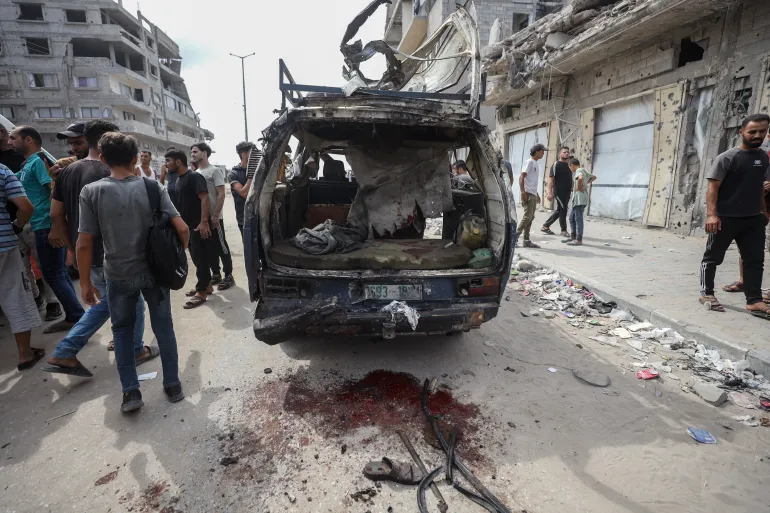
At least seven Palestinians have been killed and more than 10 wounded in Israeli attacks on the Gaza Strip as Israel continues to violate a nearly year-old “ceasefire”.
Six of the victims were killed in an Israeli drone attack on a passenger van in Tal al-Hawa, in southwest Gaza City, on Wednesday, according to witnesses and medical sources.
Recommended Stories
list of 2 itemsend of list
The Palestine Red Crescent Society, a humanitarian group that runs ambulance and emergency services, said its crews took 13 wounded people to al-Quds Hospital.
Medical sources told Al Jazeera the injuries sustained by the victims of the attack are “critical”.
“Doctors say it’s difficult to save the lives of the wounded because the health system is decimated by years of Israeli attacks and the blockade,” said Al Jazeera’s Hind Khoudary, reporting from Gaza City. “The number of dead in the strike could rise in the coming hours.”
Earlier, the official Palestinian Wafa news agency reported that an Israeli attack on a residential apartment near al-Shifa Hospital in Gaza City killed at least one woman.
Elsewhere, four Palestinians, including two children, were wounded when an Israeli drone hit a shelter for displaced people in southern Gaza, according to local sources cited by Wafa.
Two other Palestinians were seriously wounded by Israeli forces southeast of Deir el-Balah in central Gaza, while Israeli tank fire was also reported in southern Khan Younis, in the southern part of the Strip.
The attacks came as the Ministry of Health in Gaza, which compiles casualty figures from hospitals across the territory, said in its latest daily update early on Wednesday that the bodies of at least nine people had arrived at hospitals during the last 24 hours.
While eight people were killed around the reporting period, one woman had died from earlier wounds, bringing the number of people killed since the start of the “ceasefire” between Israel and the Palestinian group Hamas in October last year to at least 1,431.
An Israeli strike targeted a vehicle in Tal al-Hawa, in southwest Gaza City [Khames Alrefi/Anadolu]
At least 5,026 have been wounded over the same period, including 31 in the past 24 hours, the ministry said.
“There is supposed to be a ceasefire in Gaza, but the Israeli army’s violence is endless. Every day, Palestinians are killed, injured, and the humanitarian situation is deteriorating,” said Khoudary, describing “terrifying” conditions for Gaza’s residents.
“Everyone inside the Strip is afraid to go to the supermarket, to take their children to school, and to live their everyday lives,” she added.
Overall, Israel’s genocidal war against Palestinians in Gaza has killed at least 74,032 people since October 2023, with another 175,142 wounded, according to health officials.
In August, an analysis by the United Nations Satellite Centre found that the number of destroyed structures across Gaza has increased by 9 percent since the “ceasefire” took effect.
Overall, about 82 percent of structures in Gaza, roughly 200,000 buildings, have been damaged, and about two-thirds of those have been destroyed since the start of the war, according to the UN.
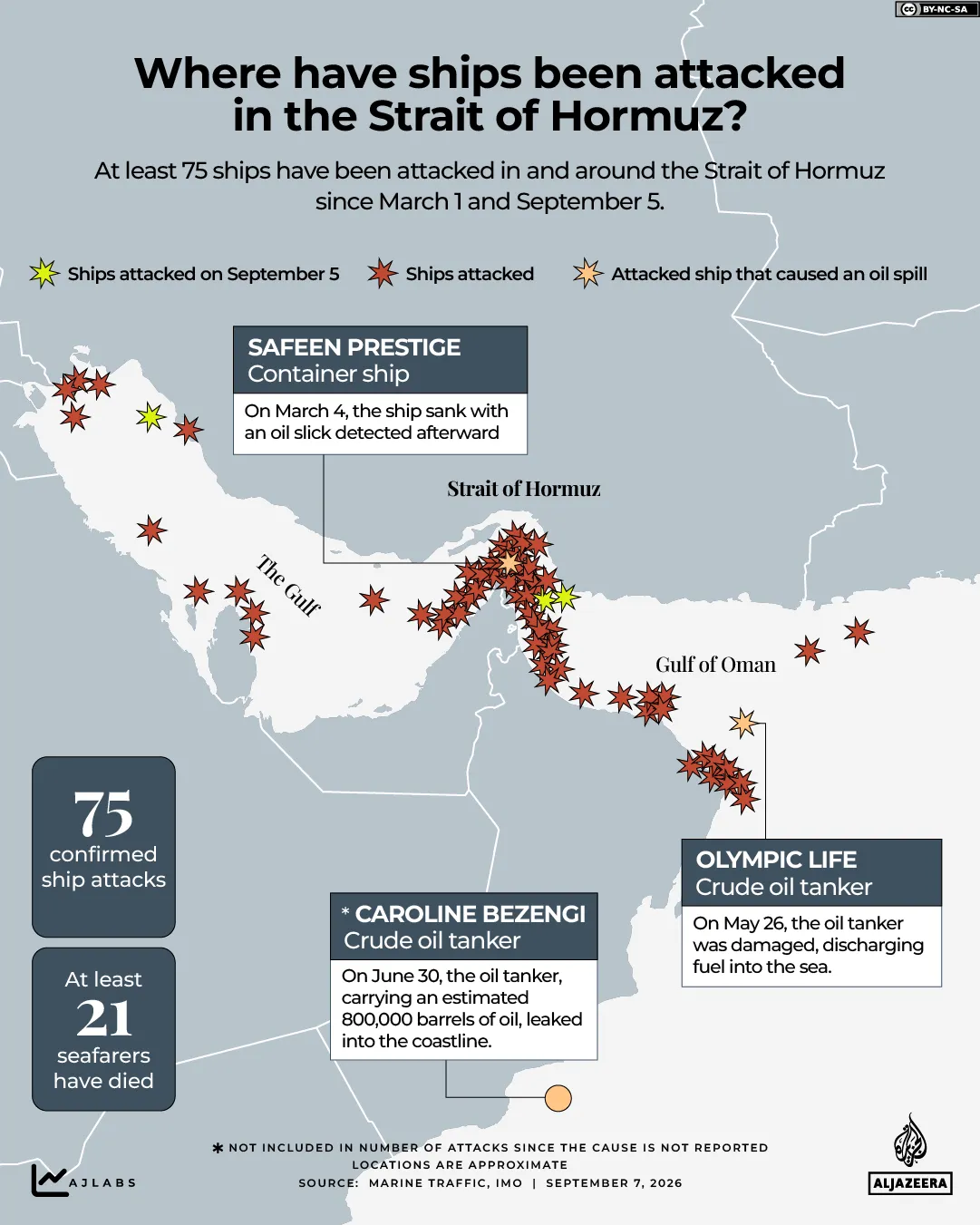
As Iran and the United States work with mediators to end seven months of hostilities, the reality in the Strait of Hormuz is shifting in ways that could prove to be a game-changer in ongoing negotiations.
According to the latest data from tanker-tracker websites, traffic through the key waterway has been steadily increasing, with some estimates putting oil and petroleum flow through the Strait of Hormuz at nearly 80 percent of what it was before the US-Israeli war on Iran began on February 28.
Recommended Stories
list of 3 itemsend of list
This could dent Iran’s leverage in reaching a favourable deal for itself in its attempts to end the fighting, which has seriously hampered its already heavily sanctioned economy, amid the US blockade of Iranian ships and ports.
Despite that, experts believe it would be a mistake to think normality in the Strait of Hormuz is imminent, or that Iran will fold easily despite growing economic hardship.
“The fact that oil is getting through the Strait of Hormuz is encouraging, but flows are not yet regarded as completely secure or guaranteed, particularly while the wider conflict remains unresolved,” Susannah Streeter, chief investment strategist at Wealth Club, told Al Jazeera.
Moreover, oil prices remain high globally, including in the US, where President Donald Trump faces a crucial midterm election that could see his party swept away in both houses of Congress.
Tanker insurance costs also remain elevated and energy flows through Hormuz are still far from secure, suggesting Iran’s leverage may be weakening rather than disappearing.
Oil flows through Hormuz recovering
The latest data from commodity analytics firm Kpler points to a significant recovery in oil exports from the Middle East.
Crude exports reached an estimated 16.328 million barrels per day (bpd) in September – their highest level since the war began in late February, the firm reported this week.
Flows through the Strait of Hormuz itself were expected to reach about 9.719 million bpd during the month. Saudi Arabia has driven much of the increase, with its exports rebounding from 2.446 million bpd in August to about 5.4 million bpd in September.
Kpler said Middle East crude exports have recovered to just under 80 percent of their pre-war level. But the figures remain about 3.2 million bpd below the 19.513 million bpd exported in February.
The data also does not include ships crossing Hormuz with their tracking systems switched off, meaning actual traffic could be higher.
Prior to the war, an estimated 120-140 vessels crossed through the waterway daily, roughly half of them oil tankers moving approximately 20 million barrels per day. At the height of the fighting, traffic through the waterway collapsed to as few as two tankers a day after Iran in effect closed the strait in retaliation for US-Israeli attacks.
Is Iran losing leverage?
The rebound in oil flow presents a challenge for Tehran. Iran has sought to use its ability to disrupt the Strait of Hormuz – one of the world’s most important energy chokepoints – as leverage against Washington’s military and economic pressure.
But if large volumes of oil can continue moving through the strait while Iran itself remains under a US naval blockade, Tehran’s bargaining power could diminish.
Iran, however, rejects any assessment that its control over the strait is slipping.
Islamic Revolutionary Guard Corps spokesperson Hossein Mohebbi on Tuesday said the ability of vessels to transit the waterway with US assistance did not mean Hormuz had returned to normal.
Oil prices are another indication that Iran has not lost all of its leverage.
Villagers stand near plastic containers at a fuel station to fill their water pumps, as India faces rising oil prices, in Halvad, Gujarat, India [File: Amit Dave/Reuters]
Brent crude fell 2.6 percent to $102.59 a barrel on Tuesday as traders focused on recovering Middle East exports. But it was still heading for a roughly 13 percent gain in September.
Chris Beauchamp, an analyst at IG, said markets were beginning to incorporate evidence of recovering flows but remained wary about how durable that recovery would be.
“It takes time for evidence to filter through to markets,” Beauchamp said. “Oil prices came off yesterday as the narrative began to take hold, and should continue to fall.”
But he said concerns persisted over whether the US protection system could withstand a renewed barrage of Iranian missiles and drones.
Streeter of Wealth Club said the market still had a geopolitical risk premium built into crude prices, despite the improving flows.
“Insurance costs for tankers also remain elevated because of the perceived risks of operating in the region, adding to the cost of transporting crude even as more ships make it through the waterway,” she said.
Moreover, Streeter warned that crude figures tell only part of the story. Flows of refined fuels, particularly diesel and gasoline, remain constrained, while damage to infrastructure has placed additional pressure on energy supply chains, she added.
There is another vulnerability, the investment strategist pointed out. Countries including the US have relied heavily on strategic oil reserves to cushion the impact of the disruption and help contain prices.
“With those stockpiles now significantly depleted, there is a thinner buffer if there is another disruption, which is helping to keep a floor under crude prices,” Streeter added.
‘Economic war’ on Iran
There is little doubt that economic pressure on Iran is intensifying, potentially increasing Tehran’s incentive to reach an agreement.
Official data from the Statistical Center of Iran earlier this month showed gross domestic product (GDP) contracting 10.1 percent year on year between March 21 and June 20, while the crucial oil and gas sector shrank 26.4 percent.
Iran has also been battling high inflation and a plunging currency as the US blockade constrains oil exports and foreign currency earnings.
Twelve-month average inflation reached 69.9 percent earlier in September, while the rial had fallen beyond 2.2 million to the US dollar in early September.
People shop at Tajrish Bazaar in northern Tehran, Iran [File: Abedin Taherkenareh/EPA]
In August, the US announced a fresh economic pressure campaign against Iran, promising to target Tehran’s financial interests across the world.
Mohammad Eslami, a research fellow at the University of Tehran, told Al Jazeera that Iran was facing an “economic war” alongside the military conflict.
“There is a US blockade of the Strait of Hormuz, which affects Iran’s revenues from oil exports and other products such as petrochemicals, which are important to Iran’s economy,” Eslami said. “As a result, Iran’s dollar revenues have been affected by the blockade.”
But he cautioned against judging Iran’s economy solely through the value of its currency.
“The exchange rate is a very important indicator, but it is not the only measure for explaining what is happening or the difficulties and challenges facing Iran’s economy,” Eslami said, adding that Iran has faced US economic pressure for “five decades”.
Can a deal be reached?
Despite the military and economic pressure, negotiations have not collapsed.
At the United Nations General Assembly last week, Tehran and Washington engaged in three hours of indirect talks, as US special envoys Steve Witkoff and Jared Kushner met with Iranian Foreign Minister Abbas Araghchi.
President Trump later described the encounter as “very good” and “very productive.”
Iran also proposed a seven-day roadmap under which the Strait of Hormuz could be reopened and normal maritime traffic restored if Washington meets Tehran’s conditions, a plan Trump categorically rejected.
Those conditions included ending the naval blockade on Iran, easing sanctions and releasing frozen Iranian funds.
However, on Wednesday, Reuters news agency reported that Araghchi had received US feedback on the proposal through Qatari mediators.
An official briefed on the talks said the main disagreement now centred on the sequencing of measures rather than the components of the plan.
The medical condition of dozens of prisoners has deteriorated as inmates protest against suspension of amnesty law.
Published On 30 Sep 202630 Sep 2026
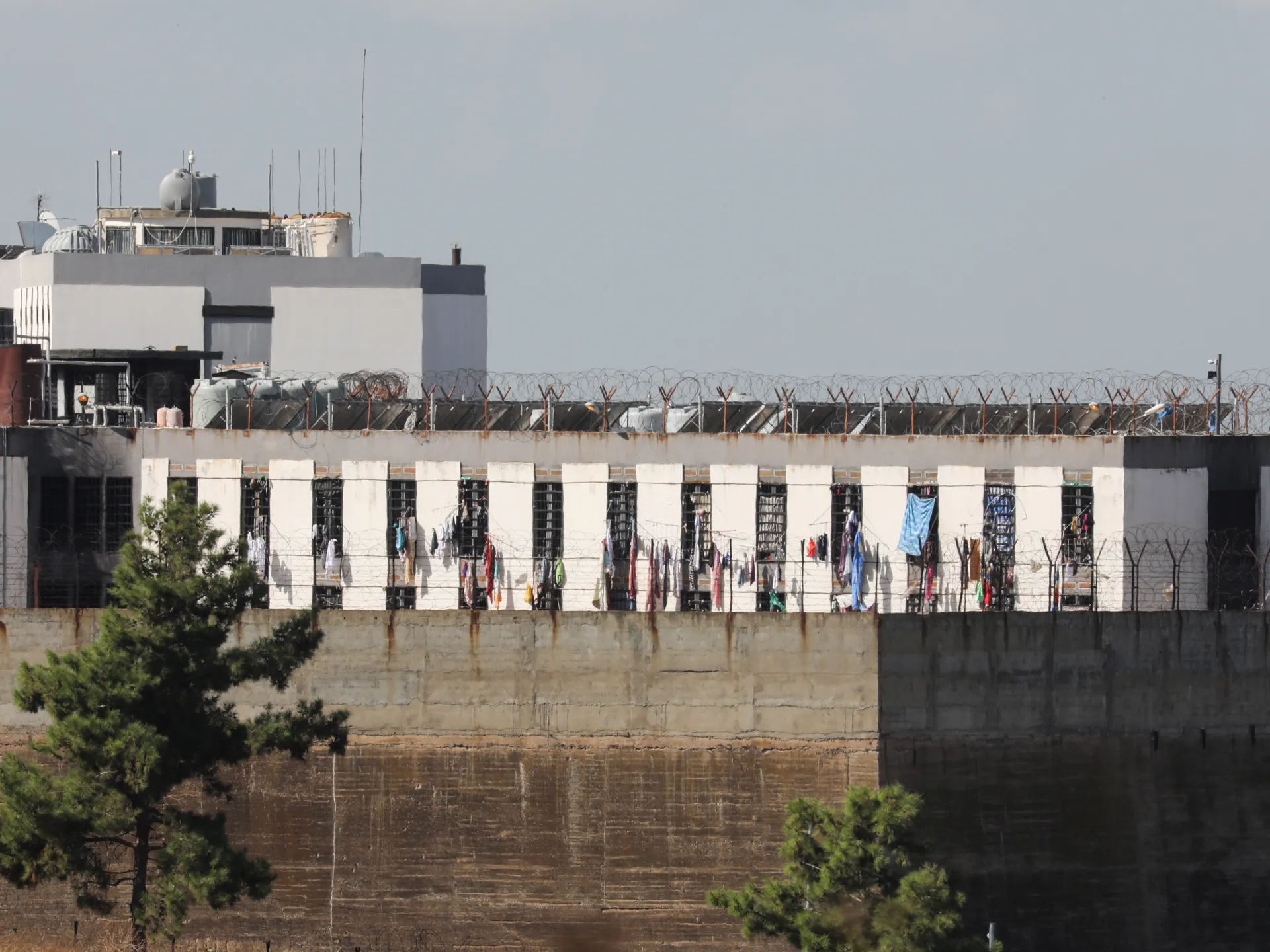
The medical condition of dozens of inmates on a hunger strike for more than two weeks inside Lebanon’s largest prison has become “dire”, according to a legal campaigner.
“About 400 prisoners are on a hunger strike for more than two weeks. Ambulances enter daily to take [dozens of] them away because their condition is dire,” Mohammed Sablouh, a Lebanese lawyer, told Al Jazeera.
Recommended Stories
list of 3 itemsend of list
“The prisoners are refusing medication, food and water,” Sablouh, who is also the director of the Prisoners’ Rights Center at the Tripoli Bar Association, said on Wednesday.
The inmates at Roumieh prison went on a hunger strike on September 12 in protest against the suspension of a general amnesty law, which could have granted an immediate release or reduced their sentences.
Protests have also been staged in Lebanon’s second city of Tripoli against the suspension of the law, which has a provision to release inmates jailed for petty crimes.
Many of the prisoners on hunger strike were arrested for their solidarity with the Syrian revolution against President Bashar al-Assad, who was toppled in December 2024 after more than 10 years of bloody war.
The Free Patriotic Movement, one of the country’s largest parties, filed an appeal before the Constitutional Council over concerns that some of the inmates were charged with “terrorism”.
The Constitutional Council is expected to issue its verdict next month.
Overcrowded prisons
Lebanese prisons are notorious for being overcrowded and thousands of inmates spend years behind bars without trial. Lebanon’s current prison population stands at about 8,500, nearly double its capacity.
The law passed on August 12 aimed to address overcrowded prison conditions in the country.
“Prison overcrowding exceeds 330 percent of the facilities’ actual capacity,” Sablouh said.
“The situation in Lebanon’s prisons is truly tragic, it can no longer withstand any … shock or any overturning of the amnesty law.”
More than 40 prisoners died in 2025. “Some died due to medical neglect, others under torture. Some died by suicide due to prolonged trials and repeated postponements,” Sablouh said.
The Lebanese lawyer blamed judicial delays for the large number of inmates, many of them arrested for petty crimes.
He pointed out the failure of the judiciary “to adhere to Article 108 of the Code of Criminal Procedure, which sets a limit for pre-trial detention: two months for misdemeanours, renewable for an equal period, and six months for felonies, renewable for an equal period [up to a maximum of one year].”
US president’s comments came after he was asked why North Korea can have nuclear weapons when Iran cannot.
Published On 30 Sep 202630 Sep 2026
United States President Donald Trump has described North Korean leader Kim Jong Un as “a friend” and played down concerns about Pyongyang’s nuclear arsenal, saying, “as long as I’m around, he’s going to be fine”.
Trump made the remarks in Washington, DC, on Tuesday after a reporter asked him why North Korea could have nuclear weapons but Iran could not.
Recommended Stories
list of 3 itemsend of list
“That’s interesting. You know why? Because you had a different president, and they could have stopped him,” he said, referring to previous US administrations.
“He happens to be a friend of mine, Kim Jong Un, he’s a friend of mine. He likes Trump, doesn’t like a lot of other people. I’m about the only person in the entire world that he likes, and I like him,” he said.
He said North Korea’s nuclear capacity was “pretty large” but “not like us”.
“You know what, as long as I’m around, he’s going to be fine,” he added. “You know why? Because he respects me and he likes me.”
South Korea’s Defence Minister Ahn Gyu-back said last week that its northern neighbour possessed between 80 and 120 nuclear warheads. The figure is significantly higher than Trump’s recent assertion that Pyongyang has 57 nuclear weapons.
Trump is seeking to re-engage with Kim and secure a win on the international stage as the US and Israel’s war on Iran enters its eighth month.
The US president launched the war along with Israel on February 28, saying Iran could not have a nuclear weapon. Iran has denied seeking a weapon, noting it had signed an agreement with world powers in 2015 that curbed its nuclear programme in exchange for sanctions relief. But Trump abandoned the agreement during his first term in 2018.
The US-Israel war on Iran has disrupted global energy supplies, raised fuel costs and hurt Trump’s popularity ahead of the November midterm elections.
Trump held summits with North Korea’s Kim in 2018 and 2019, but diplomacy broke down over US demands that Pyongyang give up its nuclear weapons. Since then, Kim has expanded his arsenal of nuclear-capable missiles and strengthened his diplomatic footprint by aligning with Russia over its war in Ukraine and tightening relations with China.
Trump had earlier said he planned to hold in-person talks with Kim before the end of the year.
Opposition leader dismisses Netanyahu’s warning of possible attacks during next month’s general election.
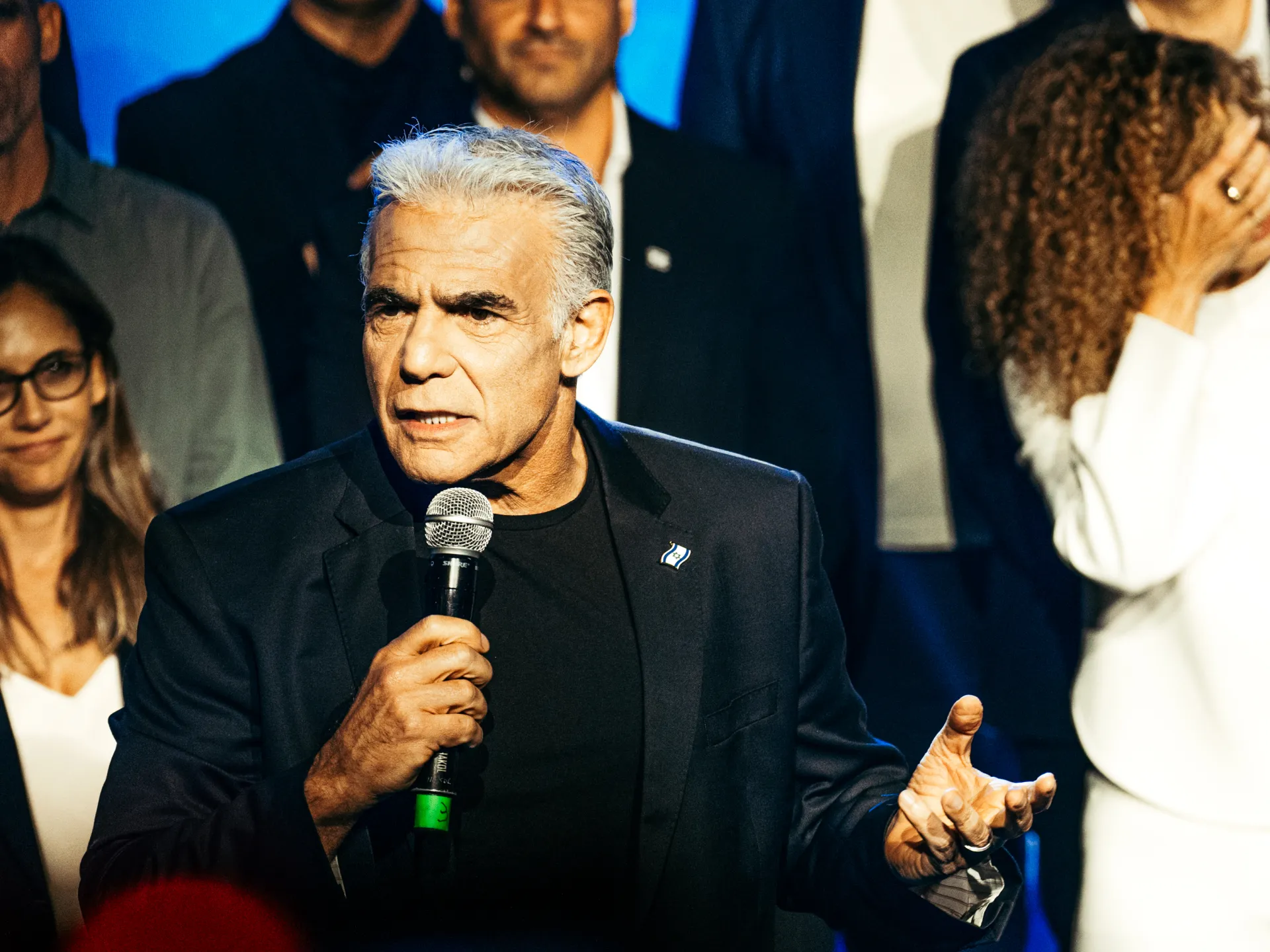
Israel’s opposition leader Yair Lapid has accused Prime Minister Benjamin Netanyahu of “fear-mongering” after the incumbent leader warned that the country’s enemies may attack before next month’s general election.
Lapid, who heads the Yesh Atid party, dismissed the warning after meeting the prime minister on Tuesday.
Recommended Stories
list of 3 itemsend of list
Earlier in the day, Netanyahu posted an online video that showed him posing in front of a fighter jet at a military base and saying there were “indications that, ahead of the elections, our enemies will try to attack us”.
He did not specify which enemy he had in mind. But in recent weeks, he has issued warnings to Iran, Hamas, Hezbollah and the Palestinian Authority, promising retaliation in the event of an attack.
Lapid requested an urgent security briefing after the warning, and in an online post afterwards, he said he was certain the election would take place on time and that “there is no reason to panic the public”.
“The elections will take place on time, and no one has an excuse to disrupt them,” he said.
He accused Netanyahu of using military bases as “props for election campaign videos” and of failing to heed warnings before the Hamas-led attacks of October 7, 2023, which set off Israel’s genocidal war on Gaza. More than 76,000 Palestinians have been killed in the war.
“Netanyahu ignored every warning before October 7, and now, 28 days before the election, he’s suddenly busy fear-mongering,” Lapid said. He added: “I of course will not violate the confidentiality of the security briefing but it must be said — security threats must be handled professionally and responsibly.”
The election, scheduled for October 7, is Israel’s first vote since the Hamas-led attacks, which plunged the Middle East into turmoil as Israel went to war in Gaza, Lebanon and Iran. The election could determine whether Netanyahu remains in power after one of the most consequential periods in Israel’s history, or is defeated by centrist rivals promising to usher in a new era.
Netanyahu, Israel’s longest-serving leader, was first elected prime minister in 1996. In recent weeks, he has had to deny media reports that his partners in the Middle East warned him of a potential Hamas attack, an allegation his political rivals have seized on.
Polls show him in a close race to stay in power.
According to a Reuters polling average, no candidate has a clear path to power. The average shows Yashar, the party of Gadi Eisenkot, a former military chief who has emerged as Netanyahu’s most formidable rival, leading the prime minister’s right-wing Likud party by 2 points.
Based on the average, parties opposed to Netanyahu would hold 64 seats in the 120-member Knesset, 15 more than the parties that back him, but they may be unable to form a coalition.
Lapid is one of several opposition figures in the race. He, Eisenkot and other opposition leaders have agreed to coordinate to remove Netanyahu’s government. Under the agreement announced last week, each leader pledged to work in their constituencies to increase turnout and attract support from various sectors of society to secure a majority and form a new government.
The prime minister said in a separate post on Tuesday that he has held a security briefing with Lapid in which he raised alerts about possible attacks “on the various fronts ahead of the elections”.
He stressed that he holds regular briefings with the opposition leader.
The resolution cites a ‘lack of accountability’ by Israel’s government and an ‘inability to secure justice’ by the US.
The United States Senate has blocked a resolution that would have required President Donald Trump’s administration to report on the killing of nine Americans in the occupied West Bank and on Israel’s treatment of Palestinian children in military detention.
The resolution failed 47-53 on Tuesday, with senators voting largely along party lines.
Recommended Stories
list of 4 itemsend of list
It was brought to the floor by Senator Chris Van Hollen, a Democrat from Maryland, and cited a “lack of accountability” from the government of Israeli Prime Minister Benjamin Netanyahu and an “inability to secure justice” from the US government.
Senator John Fetterman of Pennsylvania was the only Democrat to vote against advancing the resolution, while Senator Rand Paul, a Republican from Kentucky, joined Democrats in supporting it.
Van Hollen forced the vote under the Foreign Assistance Act of 1961, which allows individual members of Congress to demand a formal State Department report on the human rights practices of any country that receives US security assistance.
“Violence is raging in the West Bank, & despite the deaths of nine Americans, the wrongful detention of even more, & the daily torment of Palestinians, we have no accountability from the U.S. or Israeli govt”, Van Hollen wrote on X before the resolution was brought to a vote.
Nine Americans killed
The resolution called for an unclassified report within 30 days of adoption. It would have detailed investigations into the deaths of the Americans, the treatment of US citizens held in Israeli prisons, and the conditions facing Palestinian children in Israeli military detention.
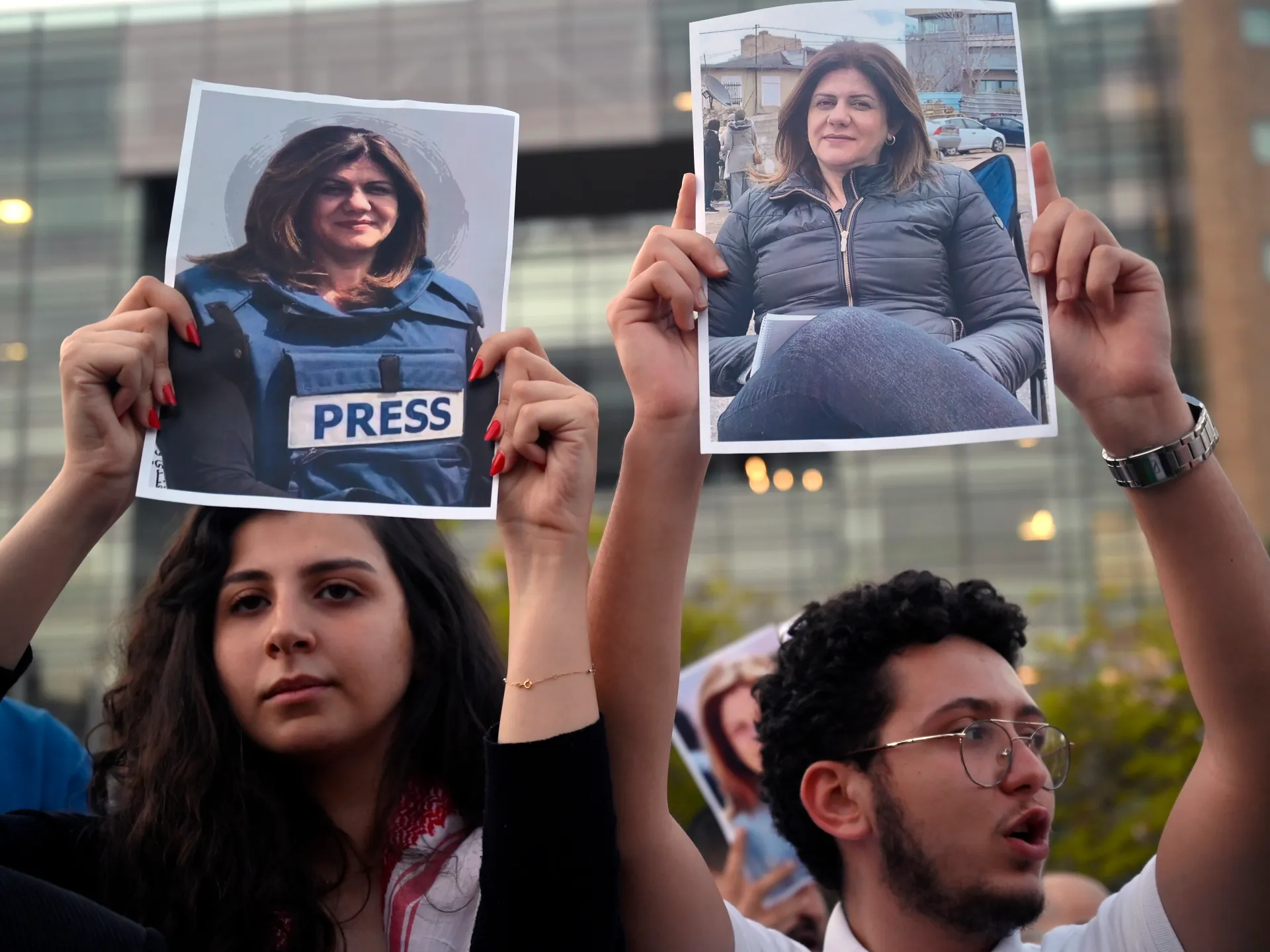
The measure cited the deaths of nine American citizens in the occupied West Bank since January 2022, including Shireen Abu Akleh, a Palestinian-American journalist and Al Jazeera correspondent who was shot in the head and killed in May 2022 while reporting in the city of Jenin.
It also included Aysenur Ezgi Eygi, who was shot in the head and killed by an Israeli soldier in September 2024, and Sayfollah Kamel Musallet, who was beaten to death by Israeli settlers in July 2025.
The others were Amer Mohammad Saada Rabee, who was 14; Tawfic Abdel Jabbar and Mohamed Ahmad Alkhdour, both 17; Omar Assad; Khamid Ayyad; Nasrallah Abu Siyam; and Khamis Rabee Jabara.
The resolution also noted the arrests of several Palestinian-American children by Israeli forces.
Among them was Mohammed Ibrahim, a 16-year-old from Florida, who was arrested in February 2025 and held in pretrial detention for nine months without contact with his family. It noted that US embassy officials and lawyers who met him told his family that he had lost nearly a quarter of his body weight, contracted scabies, and was beaten and tortured.
Other Palestinian Americans who remain in custody include Adam Wajeh Abdelfattah Karakrah, 16, and Sama Safi, 20, a student detained in June in raids targeting students at Birzeit University.
The resolution cited rights groups that have documented the deaths of at least 44 Palestinians in Israeli military camps since the Hamas-led attacks of October 7, 2023. Those groups, it said, have documented widespread abuses, including beatings, sexual violence, harassment and threats, “pointing to systemic and deliberate mistreatment”.
It also went on to note a sharp escalation in Israeli settler pogroms in the occupied West Bank, and stressed that there have been no convictions for the killings of Palestinian civilians by Israeli settlers since 2020.
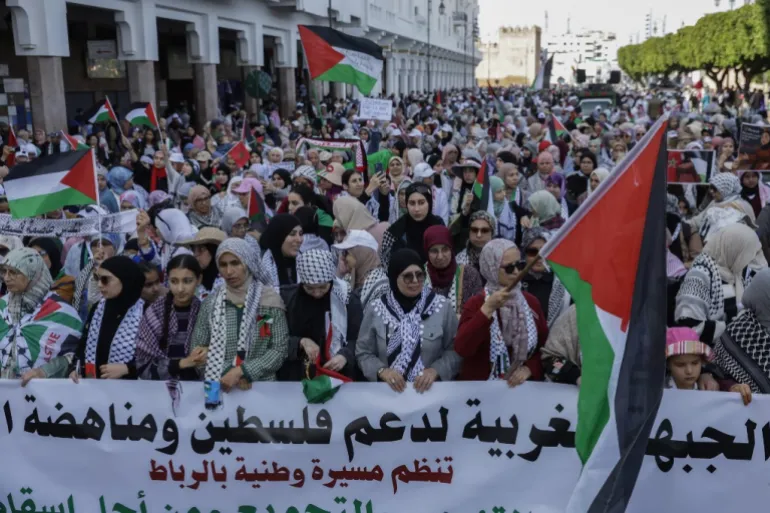
Pro-Palestine protests have spread across several Moroccan cities, with demonstrators demanding an end to diplomatic normalisation with Israel as Rabat deepens ties with Tel Aviv.
The latest mobilisation took place on September 27, at the end of three days of action called by the Moroccan Front for Supporting Palestine and Against Normalisation.
They followed a September 16 announcement that Morocco and Israel would elevate their diplomatic missions to full embassies and appoint ambassadors.
On September 25, the Moroccan Committee for Supporting the Nation’s Causes said it had organised 76 events in 45 cities under the slogan “Friday for Al-Aqsa and against normalisation”.
Moroccan media reported gatherings in cities including Rabat, Casablanca, Marrakesh, Tangier, Fez, Agadir, Oujda, Tetouan, Kenitra and Sale. The 76-event figure was the committee’s own count, with no independent national tally of participants.
In Rabat, protesters gathered outside Parliament, while a demonstration in Marrakesh developed into a march through several main streets, according to Lakome. Moroccan media also reported restrictions and arrests in some cities.
Restrictions and arrests
The mobilisation faced restrictions in some cities.
In Tangier, local authorities issued a decision banning a planned demonstration on September 27. Achkayen later reported that security forces dispersed hundreds of participants and that more than 12 people were detained, citing its own sources.
Lakome reported that authorities also prevented demonstrations in M’diq, while security forces surrounded a gathering in Agadir to prevent it from becoming a march.
Pro-Palestine protesters take part in a demonstration against Morocco’s diplomatic ties with Israel [Abdel Majid Bziouat/AFP]
The Moroccan Committee for Supporting the Nation’s Causes subsequently condemned what it described as bans, restrictions and arrests.
The response underscored another dimension of the dispute: Opposition to the relationship with Israel has remained visible on the streets, even as the government has continued to develop official ties.
A relationship under public pressure
Morocco restored diplomatic relations with Israel in December 2020 as part of the US-brokered Abraham Accords framework, alongside Washington’s recognition of Moroccan sovereignty over Western Sahara.
On September 16, Moroccan Foreign Minister Nasser Bourita and Israeli Foreign Minister Gideon Saar met in New York at a trilateral summit hosted by US Ambassador to the United Nations Mike Waltz.
The three countries confirmed plans to elevate the Moroccan and Israeli diplomatic missions to full embassies and exchange ambassadors.
Morocco and Israel also agreed to conclude agreements on investment protection and avoiding double taxation, expand direct flights and organise high-level reciprocal visits.
The move therefore goes beyond maintaining diplomatic relations established in 2020. It sets out a broader programme of institutional, economic and transport links between the two countries.
For opponents of the relationship, the embassy agreement represents another step in a policy they have rejected since 2020.
Public opinion and state policy
Morocco has maintained diplomatic relations with Israel while continuing to publicly support the Palestinian cause and the establishment of a Palestinian state.
For opponents of normalisation, however, the two positions are incompatible, particularly amid Israel’s genocidal war on Gaza.
“What has changed is the political context: Normalisation is being consolidated at a time when the war in Gaza has generated unprecedented public anger and intense images of Palestinian suffering,” Kathya K Berrada, senior programmes manager at the Arab Center for Research, told Al Jazeera.
“What we are seeing in Morocco is a growing disconnect between official diplomacy and public sentiment,” Moroccan activist Mouna Rahiani said, citing the latest Arab Opinion Index, which found that 89 percent of Moroccans surveyed opposed their country recognising Israel, while six percent supported it.
“While the state is moving towards deeper and more formal relations with Israel, Moroccans are still taking to the streets to say that Palestine cannot be treated as separate from our political and moral responsibilities,” she said.
The September agreement has brought an existing tension into sharper focus: public mobilisation against normalisation continues while the state pursues closer institutional ties with Israel.
Berrada said there was an important distinction between official policy and popular opinion, arguing that there is not enough reliable public data to establish how many Moroccans support or oppose normalisation.
Western Sahara adds another layer
The timing also matters for Morocco’s Western Sahara policy. The United Nations Security Council is due to consider the mandate of the UN Mission for the Referendum in Western Sahara (MINURSO) in October. Its current mandate runs until October 31, 2026.
The September 16 trilateral statement came against the backdrop of US recognition of Moroccan sovereignty over Western Sahara and Israel’s support for Morocco’s position on the territory.
For Rabat, the relationship with Israel sits within a wider foreign-policy framework in which ties with Washington and international support for its position on Western Sahara remain important.
For opponents of normalisation, however, that strategic calculation does not resolve their objection to closer ties with Israel, particularly while the Palestinian issue remains highly salient.
Ahmed, a Moroccan sociologist who asked to be identified by one name, said the September 16 move was “a continuation of the trilateral agreement of December 10, 2020”, but that Morocco should make the relationship “comprehensive, not selective or partial”.
The election changes the political backdrop
The protests came days after Morocco held parliamentary elections on September 23.
The final results gave the Authenticity and Modernity Party 97 of the 395 seats, followed by the National Rally of Independents with 66, the Istiqlal Party with 65 and the Party of Justice and Development (PJD) with 54.
The PJD had won 13 seats in 2021. Turnout was 38.08 percent, compared with 50.86 percent in 2021 and 42.27 percent in 2016, according to Morocco’s Ministry of Interior.
It was the PJD in power when Morocco restored relations with Israel in 2020. Then-Prime Minister Saadeddine el-Othmani signed the Morocco-US-Israel joint declaration that December.
The PJD has maintained that opposition to normalisation was a longstanding party position. The party subsequently reaffirmed its rejection of normalisation and relations with Israel, while el-Othmani defended the 2020 decision as a state-level decision.
On September 17, following the announcement of the planned diplomatic upgrade, the PJD’s general secretariat reiterated its opposition to normalisation and to relations and agreements with Israel.
After the election, the PJD’s national council unanimously decided to remain in parliamentary opposition and not participate in the next government.
Pro-Palestine protesters demonstrate against normalisation with Israel, as Morocco moves to deepen diplomatic ties with Tel Aviv [Mosa’ab Elshamy/AP]
The PJD’s position has illustrated the limits of using party politics to measure the effect of opposition to normalisation. The party opposed the policy while in government, yet its prime minister signed the 2020 declaration.
Its larger parliamentary presence in 2026 gives the issue a stronger political platform, but does not by itself alter Morocco’s foreign policy.
It has not been established that the Palestine issue or opposition to normalisation was a decisive factor in voting, and neither do the PJD’s gains demonstrate that its position on Israel directly drove its increased representation.
From the streets to politics?
The September demonstrations show that organisations opposed to normalisation retain the ability to mobilise across a wide geographic area. But their effect on government policy is less clear.
“There is an important distinction between state policy and popular opinion. Normalisation is an official state decision, but there is limited reliable public data allowing us to measure the level of popular support for it,” Berrada said.
Moroccan protesters display signs supporting Palestinians during a mobilisation against diplomatic ties with Israel [Abdel Majid Bziout/AFP]
“It would therefore be difficult to claim that either a majority or a minority of Moroccans endorse the policy.”
That distinction is important when assessing the significance of the protests. Demonstrations can show the strength and persistence of organised opposition, but they do not by themselves establish the views of the wider population or show that government policy will change.
The PJD now has a larger parliamentary presence than it did after the 2021 election, but it remains in opposition. It will be able to voice its opposition to normalisation in Parliament, but will not have a place in government.
At the same time, the September 16 agreement remains part of a broader Moroccan foreign-policy framework involving the United States, Israel and Western Sahara. The Security Council’s consideration of MINURSO in October will provide another diplomatic setting in which Morocco’s position on the territory is under discussion.
For now, the protests demonstrate that opposition to normalisation remains capable of sustained mobilisation, while the government continues to deepen the relationship. Whether that public opposition translates into sustained political pressure remains less clear.









![Pro-Palestine protesters demonstrate against normalisation with Israel, as Morocco moves to deepen diplomatic ties with Tel Aviv [Mosa'ab Elshamy/AP]](https://i0.wp.com/occasionaldigest.com/wp-content/uploads/2026/09/AP24280440675597-1728311115.jpg?w=640&ssl=1)
![Moroccan protesters display signs supporting Palestinians during a mobilisation against diplomatic ties with Israel [Abdel Majid BZIOUAT / AFP]](https://i0.wp.com/occasionaldigest.com/wp-content/uploads/2026/09/000_A8BU6GK-1776617989.jpg?w=640&ssl=1)