Sheikh Tamim bin Hamad Al Thani says Qatar has demonstrated its strength and cohesion.
Published On 13 Oct 202613 Oct 2026
Qatar’s Emir Sheikh Tamim bin Hamad Al Thani has told the Shura Council that the region has faced “exceptional events”, following months of instability amid the United States-Israeli war on Iran.
Speaking in the Qatari capital, Doha, on Tuesday morning, Sheikh Tamim said the events had demonstrated the strength and cohesion of the country’s state institutions.
“Our country and the region have faced exceptional events that have once again proven the cohesion of state institutions,” the Emir said.
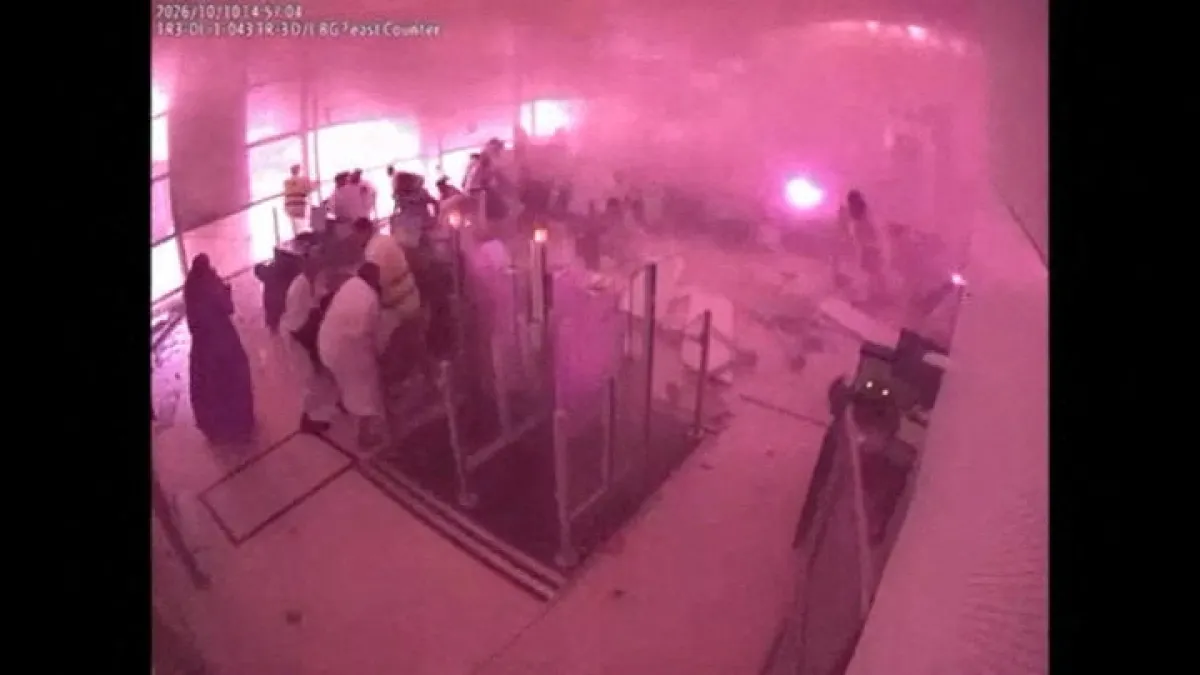
Qatar has found itself caught up in the war, which began on February 28 and has triggered a global energy crisis. The Gulf state has been directly attacked by Iran on several occasions, including in March, when Tehran struck Qatar’s Ras Laffan gas facility, the world’s largest liquefied natural gas (LNG) production site.
Sheikh Tamim said Qatar had been able to absorb the consequences of the regional instability due to policies implemented before the war, stressing that Doha’s preference was to resolve conflicts through peaceful means and dialogue. However, the Emir maintained that the Gulf Cooperation Council’s (GCC) security was non-negotiable.
“The security of the Gulf Cooperation Council states and the preservation of their sovereignty is a matter that cannot be compromised on,” he said.
The war on Iran has disrupted global supply routes, particularly the Strait of Hormuz, which Tehran has effectively blocked since the start of the conflict.
Sheikh Tamim said efforts to safeguard maritime routes must be increased.
“Efforts must be doubled to secure navigation in the Gulf and the Strait of Hormuz and to protect energy facilities and civilian infrastructure.”
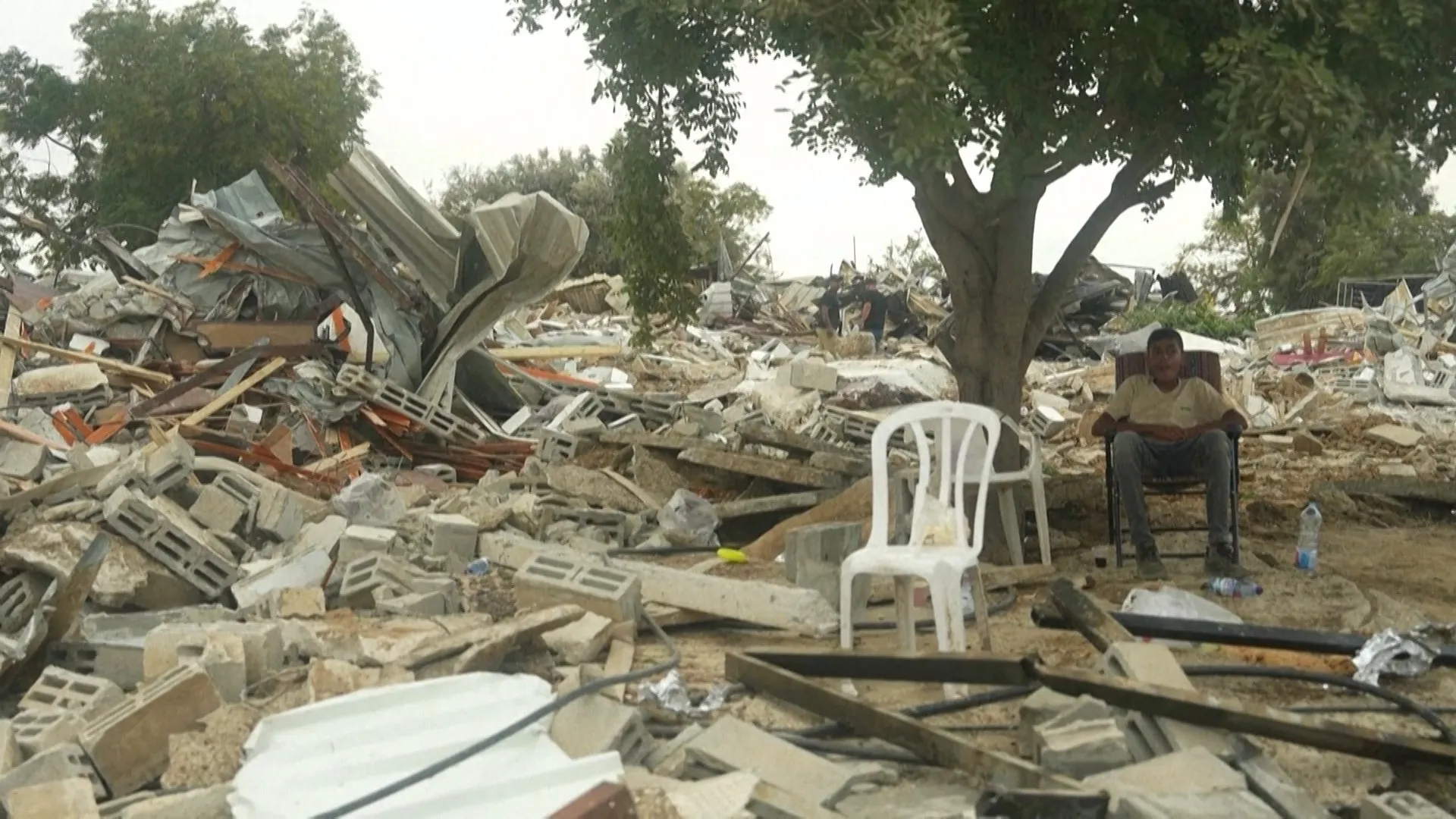
Israeli authorities have demolished 80 structures in Al-Dahiya village in Israel’s Negev Desert, claiming they were built without permits. Rahat’s mayor says the demolitions have displaced around 400 Palestinians, leaving families facing uncertainty over where to find shelter.
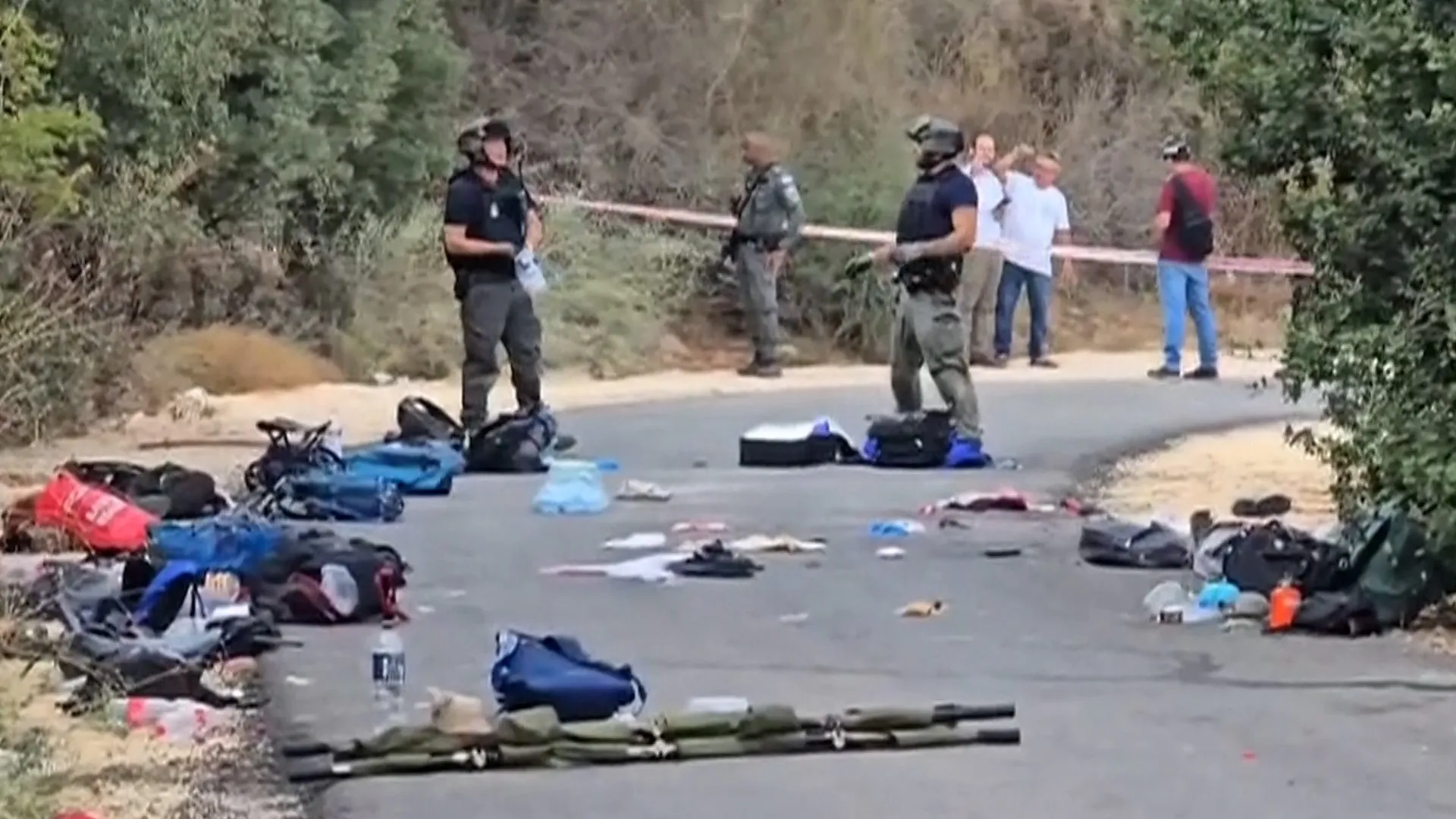
A 15-year-old was killed and around 20 people injured when unexploded ordnance detonated during a school trip in northern Israel. The army is investigating whether the munition came from Hezbollah or Israeli forces, amid recent fighting near the Lebanon border.
Documentary draws on 24 anonymous Israeli sources accusing military of killing Palestinians in Gaza using AI systems.
Published On 12 Oct 202612 Oct 2026
Israeli Prime Minister Benjamin Netanyahu has called for an investigation into the anonymous sources featured in a documentary alleging that Israel’s military killed civilians in Gaza using AI-powered targeting systems.
The award-winning film, NAZA, draws on testimony from 24 unnamed Israeli military whistleblowers accusing the army of using the systems to kill numerous civilians in the besieged territory.
Recommended Stories
list of 3 itemsend of list
“I demand that the chief of general staff, the head of the Shin Bet, and the attorney general launch a comprehensive investigation into the participants in the film ‘Naza’ and prosecute them for serious information security violations, criminal libel, and harm to Israel’s diplomatic and security interests,” Netanyahu said on X on Saturday evening.
“The film presents a false, misleading, and biased narrative that defames the State of Israel and the [Israeli military] internationally, severely damaging Israel’s standing,” he added.
In a statement last month, the Israeli military said it “categorically” rejected the whistleblowers’ allegations, calling some of their assertions “absurd’ and contradictory.
It insisted that the selection and approval of strikes “are made by human personnel only”, in line with the military’s guidelines.
Israeli army Chief of Staff Eyal Zamir has called for legal action against the participants to be considered and ordered an investigation into suspected leaks of classified military information used in the film’s production.
NAZA takes its name from the Israeli military term for civilian casualties expected in air strikes, an abbreviated form of the Hebrew phrase for “collateral damage”.
The film was awarded a special jury prize at the Venice International Film Festival and received a historic 25-minute standing ovation.
It has also triggered a political storm in Israel.
The film’s directors, Yuval Abraham and Rachel Szor, have been accused of “treason”. Netanyahu and Culture Minister Miki Zohar have threatened to revoke their Israeli citizenship.
Last week, the head of Israel’s National Public Diplomacy Directorate, Tzipi Hotovely, awarded the creators of another film, NAZA: The Real Story, certificates of recognition for countering the “blood libels” made in the original NAZA film.
According to a statement from the Prime Minister’s Office, NAZA: The Real Story features testimony from soldiers refuting the original claims.
In contrast, 43 Israeli rights groups defended the filmmakers of NAZA and denounced the threats being directed at them, according to Israel’s Channel 12 news.
Israel’s genocidal war on Gaza began on October 7, 2023, after Hamas’s armed wing, the Qassam Brigades, and other Palestinian groups attacked southern Israel, killing 1,139 people and taking about 240 captive.
Since then, Israel has killed at least 74,000 Palestinians, including at least 21,000 children, according to Gaza’s Ministry of Health.
Despite a ceasefire agreement reached between Israel and Lebanon in June, Israeli attacks continue.
Published On 11 Oct 202611 Oct 2026
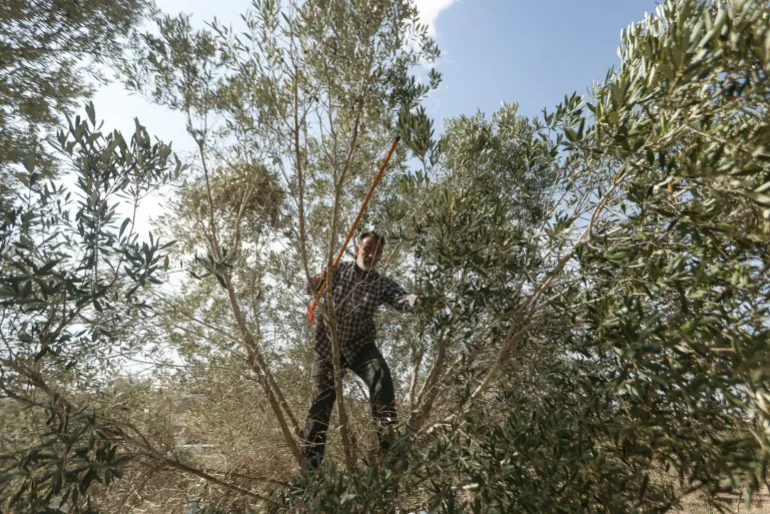
Two men have been killed in southern Lebanon’s Bint Jbeil district while taking part in an annual olive harvest, according to Lebanese state media and local authorities, as attacks by Israel continue.
One of the men died Sunday in the village of Froun from a munition left behind by recent fighting and the other in Yater as a result of Israeli shelling that “targeted the outskirts of the town while he was inspecting his land and olive harvest”, according to the official National News Agency (NNA).
Recommended Stories
list of 3 itemsend of list
The Lebanese army blamed Israeli tank fire and called the ongoing attacks “a flagrant breach of existing agreements”.
Afterwards, the Yater municipality urged residents “to avoid the outskirts of the town and refrain from crossing the earthen barrier separating some unsafe neighbourhoods” for fear of Israeli attacks.
In Froun, the NNA reported that “a foreign object” left over from previous Israeli operations exploded and killed the man, who was an engineer, as he and others tended their trees.
The engineer had come down from Beirut, where he lives, for the harvest, Froun mayor Hassan Bazzi told AFP.
The incident prompted local residents to call off the harvest and wait for “the Lebanese army to complete the decontamination of the village”, Bazzi said.
Displaced people
Since an agreement between Lebanon and Israel was struck in June, violence in the south has lessened, but not stopped.
Lebanon was pulled into conflict on March 2, when Hezbollah struck Israel in support of Tehran during the US-Israel war on Iran. Subsequently, Israel launched a bombing campaign and a ground invasion that authorities say have killed more than 4,300.
In August, Lebanon’s Prime Minister Nawaf Salam accused Israel of intentionally targeting homes and civilian infrastructure across the country. The International Organization for Migration (IOM) recorded nearly 350,000 internally displaced people in late August, a sign of the worsening displacement crisis.
One of the volunteers from Lebanon’s northernmost province of Akkar and the city of Sidon takes part in an olive-picking initiative in the southern Lebanese village of Jebchit near Nabatieh on October 11, 2026 [AFP]
Volunteers from the nearby town of Jebchit and locals came to help their southern neighbours with the harvest in an act of solidarity.
“From north to south, one people and one land,” said organiser Ahmad Chahhal.
Zack Polanski calls for internal rule reforms to give party leaders greater control over policy after Zionism vote.
Published On 11 Oct 202611 Oct 2026
Zack Polanski, the leader of the United Kingdom’s Green Party, has proposed a potential overhaul of his party’s democratic mechanisms, calling for the leader to have larger control over strategic direction.
The appeal came in an article published in The Guardian on Sunday after party members passed a motion declaring that Zionism is racism at their annual conference on October 4 in a divisive vote.
Recommended Stories
list of 4 itemsend of list
Polanski also failed to grab a parliamentary seat in the wake of the row with Israel in a by-election.
The Labour Party won the election for the parliamentary seat vacated by former leader Keir Starmer in Holborn and St Pancras on Friday, fending off a strong challenge from the left-wing Green Party in a boost for British Prime Minister Andy Burnham.
“Our party democracy must now evolve to meet that – creating wider engagement for members, giving leaders more responsibility to set the party’s strategic direction, and making our processes as robust and accessible as possible,” he wrote.
“Above all, that unity must be deployed in the service of changing this country for the better,” the Green Party leader added.
Criticism over vote on motion
Polanski also replied to the criticisms of him for not participating in the vote on the motion on Zionism.
“I have been asked why I was not present for the vote. The answer is that my priority was fighting a hugely consequential by-election for our party,” he said, adding that he put all his “energy into the race in Holborn and St Pancras”.
He admitted that some members feel “let down” by his decision not to make an appearance there.
The Green Party’s motion, which called for “Palestinian liberation, the right of return, Boycott, Divestment and Sanctions (BDS), and a full arms embargo against Israel” was criticised by Jewish groups, other parties and most Green Party MPs.
After conceding defeat in the fiercely contested by-election, Polanski answered his critics, saying he would stay on as leader.
He was barred from entering Israel after his party backed a motion to define Zionism as racism.
Palestinians have reacted to President Mahmoud Abbas’ decision to postpone the Palestinian legislative elections to September 2027, citing Israeli restrictions and conditions in Gaza and the occupied West Bank.
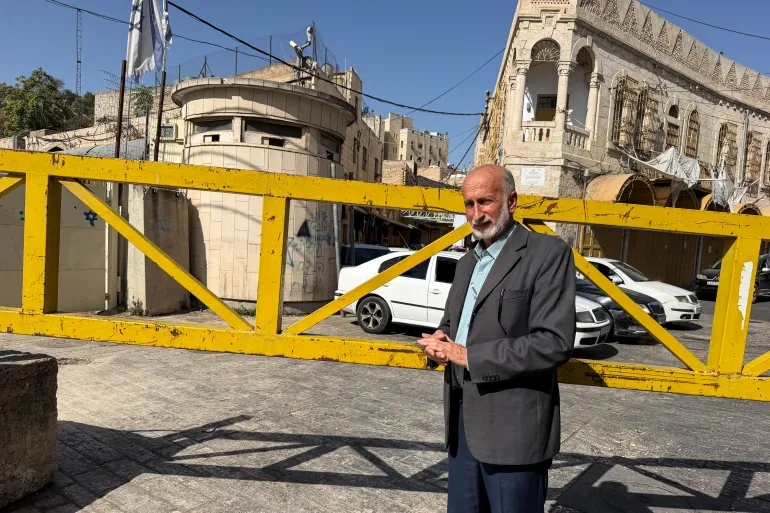
Hebron, occupied West Bank – Badr al-Tamimi, 60, lives in Hebron’s Old City, where Israeli checkpoints, iron gates and road closures turn the simplest tasks into a dispiriting daily ordeal for Palestinian residents.
The situation goes beyond mere restrictions on movement. Israel has created a ghost town in parts of Hebron, where residents feel they are being driven out. This is most pronounced in an area known as H2, where Israel has complete control and Palestinians are subject to the dictates of the military.
Recommended Stories
list of 3 itemsend of list
A few days ago, Israeli authorities installed three iron gates across a 200-metre (656-foot) stretch of Hebron’s Old City – amounting to just 0.2 dunams (200 square metres) – as part of Israel’s apparent attempts to restrict Palestinians’ freedom to move around the city.
Hebron Mayor Yousef al-Jabari told Al Jazeera that one gate was erected on al-Zahid Road, the only route accessible to vehicles reaching the Old City entrance. A second was placed at the start of al-Shalala Street, which leads to shops connecting to the Bab al-Zawiya area in the city centre. A third towers over another section of al-Shalala Street, a thoroughfare used by pedestrians to access the shopping area.
They are part of a wider web of travel restrictions across the occupied West Bank, but Hebron, which has a strong settler presence, has suffered more than most Palestinian cities.
Approximately 40 percent of the 89 checkpoints in the West Bank and 11 percent of all 925 movement obstacles are located in the H2 area of Hebron, which is under tight Israeli control, according to the United Nations Office for the Coordination of Humanitarian Affairs (OCHA).
About 7,000 Palestinians in an area of Hebron where hundreds of settlers live are affected by the latest travel restrictions. Since October 2023, when the genocidal war on Gaza began, only Palestinians with specific identification numbers could enter this area. Checkpoints at the entrance to this zone are generally only open from 7am to 8pm.
Badr al-Tamimi is forced to move between iron gates to reach other parts of the Old City where he lived his whole life [Sari Jaradat/Al Jazeera]
Al-Tamimi, who lives in the al-Sheikh neighbourhood adjacent to the city’s famed Ibrahimi Mosque, owns a shop in the Old City.
Palestinians can be kept waiting for hours at the checkpoints, and the mood of a soldier manning one can decide the commute time of a Palestinian. Worshippers attempting to enter the Ibrahimi Mosque can be held up for hours by soldiers.
“They might allow a limited number of people to enter while others are forced to wait, whereas resident movement comes to a halt during incursions, Jewish holidays, and the associated security measures,” he added.
Repeated closures have paralysed economic activity in Hebron, making it increasingly difficult for shops and companies to do business.
“Our presence in the Old City is a matter of steadfastness, not the availability of the elements needed for economic life,” al-Tamimi said.
Even after Israel’s occupation of the city in 1967, Hebron was once a bustling city with lively shops and markets. Residents could move more freely between neighbourhoods, which helped with economic life in the city.
From that point, the Old City’s geography changed, becoming isolated from its surroundings, al-Tamimi said.
He points to Shuhada Street, once a vital artery for transport and commerce in the city before road closures and restrictions transformed the area’s reality.
“They committed the crime, yet they continue to punish us for it,” he said.
In 1997, the Hebron Protocol was signed between the Palestine Liberation Organization (PLO) and Israel, dividing the city into two zones: H1, which was under relative Palestinian jurisdiction, and H2 – an area which includes the Old City, the Ibrahimi Mosque, and illegal settlements – remained under Israeli security control.
Issa Amro, coordinator of the Youth Against Settlements group, said Israeli prohibitions intensified with the outbreak of the second Intifada in 2000 when Hebron became a centre of the uprising.
During this period, vast areas of the city were sealed off, shops were forced to close, and residents often remained confined to their homes or neighbourhoods.
Since Israel’s genocidal war on Gaza began on October 7, 2023, the number of checkpoints has risen to 32, while other obstacles impeding Palestinian movement now exceed 130.
Israel installed new iron gates in Hebron’s Old City to restrict the movement of Palestinians [Sari Jaradat/Al Jazeera]
The “closed zones”, designated by Israeli authorities as areas of military activity with restricted access to Palestinians, have expanded around the Ibrahimi Mosque and the illegal settlements that lie in the heart of the city.
“The movement restrictions are effectively holding residents as hostages,” Amro said.
Mayor al-Jabari said approximately 10,000 Palestinians in the Old City and the surrounding closed zones are affected by these measures.
Some parts of Hebron are inaccessible to vehicles, and Palestinian residents are subject to curfews two or three days a week, usually over the weekend.
He believes these restrictions are aimed at hindering Palestinians’ ability to return home and stifle life in parts of Hebron.
Meanwhile, Israeli authorities have helped settlers expand in the area, imposing a new suffocating reality for Palestinians in the city.
Al-Jabari said Israel’s current government could be doing this to curry favour with settlers ahead of this month’s election.
Control of Hebron, its Old City, and the Ibrahimi Mosque is a key issue for settlers, and politicians in this group occupy key posts in the Israeli government.
This has coincided with a concerted effort by Israeli authorities to cement the settler presence in and around the city.
“The seizure of buildings and land, along with the installation of gates, is a continuation of Israeli policies that have been in place for decades,” al-Jabari said.
“These include the closure of Shuhada Street and the shutting down of over 500 shops, as well as the establishment of settlement outposts and military positions within the Old City.”
He has seen more restrictions on Palestinians’ freedom of movement over the past month, measures that will undoubtedly appease settlers.
Hebron municipality has responded to this by filing lawsuits in Israeli courts, despite its scepticism about the impartiality of the judiciary.
With these measures continuing, life for Palestinians is getting worse, making work, life and education a daily struggle.
Israel cites the security situation as a pretext for erecting more checkpoints and iron gates in Hebron, but there are no such restrictions on settlers.
Since 2015, Israel has limited the number of Palestinian residents of closed zones who can pass through these checkpoints. Students and teachers frequently have their bags searched by Israeli soldiers or are detained.
Ayat al-Jabari, a 40-year-old science teacher, worked for a year at Qurtuba School, located near the closed Shuhada Street, before transferring to her current position at Al-Fayha School, near the Ibrahimi Mosque.
Although reaching Qurtuba School from her home should have been a five-minute journey, it often took an hour.
On her unsettling morning route through a nearby cemetery, often in darkness during the winter months, settlers and soldiers often appear in the graveyard to block the path of Palestinians or abuse them.
“Every day, I was forced to take a long route and walk through a cemetery to avoid passing the checkpoint, as I don’t hold a [special identification card] number. Even those who do hold numbers are sometimes forced to take this path to escape the soldiers’ moods,” she said.
After moving to Al-Fayha School, al-Jabari hoped her commute would improve, but the situation is no better than before.
“Whenever Jewish holidays arrive, these schools are closed because all the students live in areas subjected to a total lockdown, to the point where residents are even forbidden from opening their front doors,” she said.
You’re reading the Essential California newsletter
L.A. Times reporters guide you through the most important news, features and recommendations of the morning.
By continuing, you agree to our Terms of Service, which include arbitration and a class action waiver. You agree that we and our third-party vendors may collect and use your information, including through cookies, pixels and similar technologies, for the purposes set forth in our Privacy Policy such as personalizing your experience and ads.
Sunday morning, Oct. 9, 2022, around 8 a.m., I was about to take a shower when I decided to check my cellphone one more time. Thank God I did: If I hadn’t, I would’ve been half an hour late on assisting in one of the most explosive stories ever to hit L.A. politics.
Via Slack, Times assistant managing editor Steve Clow asked if I could serve as a second set of ears on audio that my colleagues had unearthed involving four of the most powerful L.A. políticos at the time: City Council President Nury Martinez, Councilmembers Gil Cedillo and Kevin de León, and L.A. County Federation of Labor President Ron Herrera. I was still in my birthday suit (sorry for the visual, gentle readers, but I’m sworn to report the facts on this job) when I played the snippet Clow shared: Martinez describing the Black son of then-Councilmember Mike Bonin as “su negrito” — his darky.
I put on my shorts and told my wife I wouldn’t be helping at her restaurant that day.
Clow sent me more clips over the next hour, each crasser than the other — I remember gasping audibly at the part when the four were laughing as Martinez referred to Oaxacans as “ugly.” That morning, my colleagues Benjamin Oreskes, Dakota Smith, Julia Wick and David Zahniser published their first story on the fiasco, which turned out to be a secretly recorded conversation from a year earlier that someone had posted on Reddit just the day before.
The scandal quickly became a national sensation, with even then-President Joe Biden weighing in. L.A. wretched in collective disgust and demanded action, which definitely came: Martinez and Herrera quickly resigned, while Cedillo — who had already lost his reelection bid — would stay on until his bitter end, and De León wouldn’t leave until challenger Ysabel Jurado destroyed him in his 2024 reelection bid. The electoral repercussions of the audio leak can still be felt four years later in this election, as Nithya Raman stages a strong challenge against incumbent Karen Bass — a sentence no one would’ve believed in the fall of 2022, when Bass was on the cusp of winning her first term, and Raman was the lone democratic socialist on the council.
I would’ve figured the anniversary of something as titanic as all of the above would’ve sparked more commemorations than just my columna this week. Nope! L.A. has moved on to the point that Cedillo wasn’t booted from a group photo that included current District 9 council candidate Jose Ugarte, former Assemblymember Wendy Carrillo, former Mayor Antonio Villaraigosa and current Assemblymember Mark Gonzalez — because even Chicanosauruses can survive a political asteroid, I guess?
Having political leaders spew racist, homophobic nonsense now seems like the good ol’ days in an era where infernos destroy or stink up swaths of L.A., immigration agents terrorize immigrants from Westwood to the Eastside, and a spokesperson for a sitting American president denies that the commander in chief suggested Iran bomb the City of Angels, even though he said it during a campaign rally.
I shouldn’t really be surprised, I guess: L.A. infamously loves to forget its own history. But I would urge all you readers to read the great, Pulitzer Prize-winning coverage my colleagues did in the aftermath of the audio leak scandal, because it captured the city at its worst — but also its finest as residents fought back and demanded politicians do better.
Four years later, we can only hope this upcoming election shows more of the same.
The week’s biggest stories
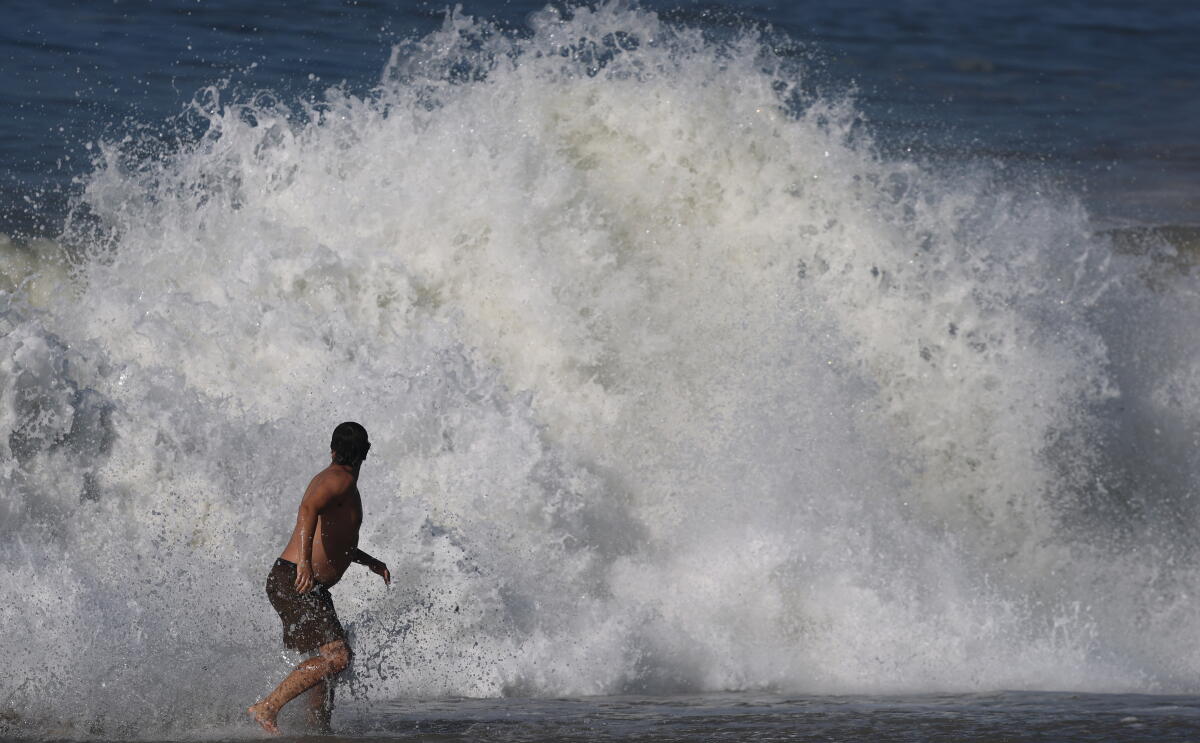
Domenic Hix looks back as a large wave crashes on the shoreline in Laguna Beach on Friday.
(Allen J. Schaben / Los Angeles Times)
Tropical Storm Rachel in SoCal
California real estate
California crime
In memoriam
More news
Editor’s pick
More picks
Things to do
(Illustrations by Lindsey Made This; photograph by Charles Phoenix)
Today’s recipe
(Rebecca Peloquin / For The Times)
This recipe makes apple butter that is less sweet than most; use more sugar if you like, but don’t use less or there won’t be enough to properly preserve the pureed apples.
Have a great day, from the Essential California team
Jack Dolan, investigative reporter Hugo Martín, assistant editor, fast break desk Kevinisha Walker, multiplatform editor Andrew Campa, weekend writer Karim Doumar, head of newsletters
As Israel entered the final month before its October 27 election, Prime Minister Benjamin Netanyahu had a chilling warning to share.
Israel’s enemies, he said on September 29, were plotting an attack on the country before the vote. Without providing any evidence, he then quickly referred to continuing attacks by Israeli troops in the Gaza Strip, where he said they had killed more than 100 “terrorists” in recent weeks.
That link drawn by Netanyahu – between the genocidal war on Gaza that began after the Hamas-led October 7, 2023 attacks, the upcoming elections, and Israel’s national security – was not coincidental, say analysts.
Netanyahu’s insistence that he alone can secure Israelis from a range of threats they face from across the country’s borders, they say, lies at the heart of his re-election campaign, even as his alleged failures during the attack three years ago and in securing the quick release of captives have offered his opponents ammunition.
When a Flydubai flight packed with Israeli passengers on their way from Dubai to Tel Aviv a day after his recent warning nearly crashed after a co-pilot attacked his pilot with an axe in the cockpit, Netanyahu was quick to seize on the incident to argue that he is still man for the country’s top job.
Polls suggest that he faces a stiff test in what is the first general vote since the 2023 attacks, which led to the killing of 1,139 people in Israel and triggered the genocidal war on the Gaza Strip, where Israeli have attacks have since killed more than 74,000 Palestinians.
Three years later, the war has become inseparable from the domestic debate over Israel’s direction while also accelerating a political shift to the right – with once-fringe positions on Palestinians now very much the mainstream view.
Few embody this transformation more than Israel’s far-right financial Minister Bezalel Smotrich, sanctioned by a number of Western countries and known for his incendiary and racist language and policies towards Palestinians.
In one of his characteristically inflammatory statements, Smotrich told Israeli outlet Ynet late last month that the Israeli army should “go to war” in the occupied West Bank and “do there what we did in Gaza”.
Less than two weeks later, Smotrich’s electoral ally Moshe Feiglin added fuel to the fire.
“The enemy is Gaza, not Hamas”, he told the Jerusalem Post, calling for the annexation of the besieged territory after the election. “The baby that will be born tomorrow in Gaza will do exactly the same,” he said, in reference to the 2023 attacks.
Palestinian political analyst Ahmed Najar said these are not “stray comments” from marginal figures but an electoral message from power-seeking politicians aimed at portraying Palestinians as “not a people with rights, but a demographic and security problem to be expelled, conquered or destroyed”.
He added: “The frightening reality is that the coming election risks becoming a competition not over whether Palestinian life should be protected, but over who can promise to erase it most aggressively.”
‘This is madness’
Following October 7, the younger generation in particular slid rightwards, said Ahron Bregman, an Israeli security analyst and senior teaching fellow at King’s College London.
He said the forces driving Israel to the right had been gathering for decades.
“The trend toward the right began after the Yom Kippur War in 1973, but it has intensified dramatically since October 7,” Bregman told Al Jazeera, referring to the bloody 19-day October War, or the 1973 Arab-Israeli War – a conflict between Israel and a coalition of Arab states led by Egypt and Syria.
More recently, the far right has been emboldened through electoral politics as part of Netanyahu’s government since 2022 – the most right-wing government in Israeli history.
Another outspoken cabinet member alongside Smotrich is Minister of National Security Itamar Ben-Gvir, a far-right provocateur who has previously been convicted of inciting racism and of supporting a terrorist organisation.
“Netanyahu’s greatest mistake – among many – was bringing figures like Ben-Gvir and Smotrich into his coalition,” said Bergman. “By doing so, he legitimised them as influential forces in Israeli politics.”
Ben-Gvir has been so cemented into Israel’s political system, he has hopes pinned on becoming the next Israeli defence minister, the analyst pointed out.
“This is madness. But that’s contemporary Israel,” said Bergman.
Attendees listen and applaud during an election campaign meeting on October 5, 2026 in Tel Aviv, Israel [Erik Marmor/Getty Images]
Analysts also pointed out that several parties running, including ones that are currently in power and a number that are challenging the current coalition, all advocate for the expulsion of Palestinians from Gaza, as one of the examples of the shift to the right.
Omar Baddar, director of Palthink for Strategic Studies, said the messaging from across the Israeli political and military spectrum in the lead-up to the election shows that there is “a consensus” to continue the attacks on Gaza, where nearly 1,500 have been killed since a “ceasefire” last year.
“They’re using the threats to get more votes,” he said, pointing out to what he described as the radicalisation of the society.
With the election approaching, added Baddar, Israeli leaders are seeking to undo one another: “Who[ever]’s more radical is more likely to get more votes.”
As Ehab Jabareen, a Palestinian political analyst and researcher from inside Israel, writes, “what it means to be ‘right-wing’ in Israel today is above all to take a harder line on Palestinian national claims, security and territorial control.”
He adds: “On security and the Palestinians, a large part of Jewish Israeli politics already works from assumptions that would have been treated as right-wing a generation ago: Deep suspicion of a sovereign Palestinian state, a high tolerance for prolonged military control, and a stronger insistence on Jewish sovereignty as the starting point rather than one value among others.”
Observers and rights groups say the disparity is even evident in the electoral process. A prominent politician and Palestinian citizen of Israel, Sami Abu Shehadeh, has been forced to withdraw from the election over his remarks about the Gaza war, while Israeli far-right leaders have remained untouched despite their violent rhetoric against Palestinians.
Netanyahu’s security credentials endure
Recent polling indicates that the events of October 7 are top of mind for Israelis, who also have questions about who was responsible for the security failures of that day.
Just last month, reports surfaced indicating that Netanyahu had received two separate warnings about an imminent Hamas attack in 2023, from Egypt’s intelligence chief, Abbas Kamel, and United Arab Emirates President Sheikh Mohamed bin Zayed Al Nahyan.
Netanyahu’s two main rivals in the race for prime minister have cited the alleged warnings to call the prime minister “unfit” to remain at the helm of the country.
But Netanyahu has denied suggestions that he had been forewarned about the attack, and the reports do not appear to have had a significant effect on opinion polls.
While October 7 represents a profound rupture in Israelis’ sense of security, public trust in the Netanyahu government had already been badly shaken by its controversial judicial overhaul, introduced when the prime minister’s current coalition first came to power, said Mairav Zonszein, an Israel-Palestine analyst at the International Crisis Group based in Tel Aviv.
Despite these breaches of trust, the Israeli leader retains support.
“Israelis in general still see Netanyahu as kind of the guy on security. And more to the point, they don’t really see an alternative,” Zonszein told Al Jazeera.
A June survey by Mitvim – the Israeli Institute for Regional Foreign Policies found that the Israeli public supports its government’s military and security solutions, and rejects resolving the Palestinian issue and ending the Israeli occupation of Palestinian territory. This is the case even while it has been concerned about international isolation and the decline of Israel’s international standing since the beginning of the genocidal war on Gaza, the survey reported.
Yet Israelis are also increasingly war-weary, even as they back the use of more force. Its troops – stretched between six fronts of war in the last few years – are bearing the brunt of this fatigue in Israeli society.
Israel’s Ministry of Defence said on Tuesday that nearly 30,000 soldiers and security personnel are facing psychological trauma since the war.
The ministry said its rehabilitation department’s budget has increased by 88 percent over the past three years to 10 billion shekels ($3.3m), with the majority supporting treatment for mental health conditions and post-traumatic stress disorder.
As Israel expands, the two-state solution fades
Still, Israel in recent months has been more and more vocal about its expansionist vision, with officials brazenly stating the goal of “Greater Israel”. The claim for the conquest is based on a biblical verse (Genesis 15:18-21).
For decades, Israel has ignored international law in its continuous occupation of Palestinian and Syrian land, and has shown little respect for its neighbours’ sovereignty, occupying more land in Syria, as well as in Lebanon in more recent years.
According to Najar, the political economist, the “complete dehumanisation” of Palestinians as evidenced during the campaign reveal that Gaza “is being presented to Israeli voters not as a catastrophe or a crime for which there must be accountability, but as a blueprint to be repeated elsewhere”.
In southern Lebanon, where Israel has been carrying out near daily attacks and and has occupied large swathes of land, residents have told Al Jazeera they expect little to change even if Netanyahu is defeated in the election.
Netanyahu’s main political challenger, Gadi Eisenkot – head of the Yashar party and former army chief of staff – is the father of the so-called Dahiyeh Doctrine, and is just as hawkish about expansion. That doctrine, since Israel’s war with the Lebanese group Hezbollah in 2006, calls for the use of huge force, even against civilian infrastructure, as a deterrent against enemies and was deployed in Israel’s recent wars, particularly in Beirut’s southern suburbs.
If it were up to Eisenkot, the Lebanon front of war would have never scaled down: He has accused Netanyahu of bowing to US pressure to halt operations in Beirut, and has insisted that the military should be able to attack Hezbollah anywhere in Lebanon.
For Israelis still reeling from the events of October 7, Eisenkot could fill the security void many are feeling, said Zonszein.
“They really … see the world as kind of very hostile towards them, the world not understanding what they went through on October 7, and [therefore why] the need to have these security buffer zones in Lebanon, in Syria, and Gaza,” she said.
A two-state solution to the Israel-Palestine conflict is therefore out of the question, said the analysts – and has not even made a blip of an appearance in campaigning before the election.
The idea first emerged during the Oslo Accords more than 30 years ago, which set out a negotiating process aimed at resolving the Israeli-Palestinian conflict, predicated on the belief that the creation of a Palestinian state alongside Israel was imperative to forge peace.
But since the Oslo process began in 1993, the number of Israeli settlers in the West Bank has ballooned from about 260,000 to more than 700,000, embedded deep inside West Bank areas that would be needed for a contiguous Palestinian state.
“The concept of a two-state solution is currently irrelevant and likely will remain so for another decade or two, if not longer,” said Bergman. “It is unlikely to become a reality in the foreseeable future, as no Israeli leader can propose it to the Israeli public after the events of October 7.”
The only way it could regain prominence is if there is substantial international pressure, including severe sanctions on Israel, and a non-violent intifada, or an uprising by Palestinians, he said.
The outright rejection of Palestinian statehood has simply become much more “acceptable”, said Zonszein.
“There’s several parties who advocate these views, whereas there isn’t a single Jewish Zionist Party that puts the need for a two-state solution or a Palestinian political process at the forefront,” she said.
Taken all together, Israel’s election appears less a demand for change than a further entrenchment of the jingoism that surged after October 7, 2023.
“[There’s] more and more movement towards more military force, more need for pushing the borders … out of a lot of fear that another October 7 could happen,” said Zonszein.
US military jet strikes stern of commercial cargo ship in the Gulf of Oman ‘without harming the crew’, CENTCOM says.
Published On 11 Oct 202611 Oct 2026
United States forces have disabled a commercial cargo vessel in the Gulf of Oman after its crew “ignored repeated warnings and attempted to run the ongoing naval blockade against Iran”, according to US Central Command (CENTCOM).
A US military fighter jet struck the stern of the Panama-flagged M/V Ocean Molica, also known as the Arika Sun, with a precision munition on Saturday, “fully disabling the ship’s propulsion without harming the crew”, CENTCOM said in a statement. The vessel was attempting to transit regional waters after “having previously departed an Iranian port”.
Recommended Stories
list of 3 itemsend of list
CENTCOM said its forces resumed their blockade against all ships “entering or departing Iranian ports on July 14”, disabling four commercial vessels and turning around 135 ships during “three months of strict enforcement”.
US forces also destroyed 10 tankers linked to the Islamic Revolutionary Guard Corps’ (IRGC’s) “multibillion-dollar shadow network” over the same period, CENTCOM said.
Meanwhile, Iran’s IRGC said it struck a vessel in the Strait of Hormuz for attempting to take an “illegal route”, as Tehran seeks to enforce its own blockade on the vital waterway.
In a statement carried by official Iranian media, the IRGC claimed Iranian forces “have taken control of the administration of the strait”.
“In carrying out this mission, a few hours ago, a giant LPG carrier named NV Sunshine, owned by NatWit, which was attempting to transit via the illegal route south of the Strait of Hormuz, was struck,” the statement said.
Vessels in the Strait of Hormuz near the beach of Bandar Abbas, Iran, October 6, 2026 [Amirhosein Khorgooi/ISNA via WANA/Reuters]
The United Kingdom Maritime Trade Operations (UKMTO) agency said on Sunday that an outbound tanker in the strait was struck on the port side by an unknown projectile, causing a fire on board. The UK agency said crew members were reported safe, while the damage and environmental impact remained unknown at the time of the report.
Tehran has attempted to enforce control over the Strait of Hormuz during the US-Israel war on Iran, insisting that ships obtain permission to cross via its preferred routes. However, vessels have increasingly risked taking an alternative route hugging the strait’s southern coast.
The UKMTO said on Thursday that a vessel sailing 94km (58 miles) north of Madinat ash Shamal, off the north coast of Qatar, was struck by multiple projectiles, resulting in a number of casualties.
The agency did not specify the origin of the ship or the number of people killed or injured, adding that authorities were investigating the incident amid a recent rise in attacks on vessels near the Strait of Hormuz.
Ships in the Gulf attempting to cross the strait, which is the sole maritime route in or out of the oil-rich region, have faced repeated attacks since the US and Israel began the war in late February.
The Strait of Hormuz remains vital to the global economy, with about a fifth of the world’s oil and liquefied natural gas passing through the passage before the war began.
Physicians accuse Israeli Medical Association of remaining silent as Palestinian healthcare is systematically destroyed.
Hundreds of doctors have gathered outside the World Medical Association (WMA) summit in the Netherlands, calling for the suspension of the Israeli Medical Association (IMA) from the grouping of physicians.
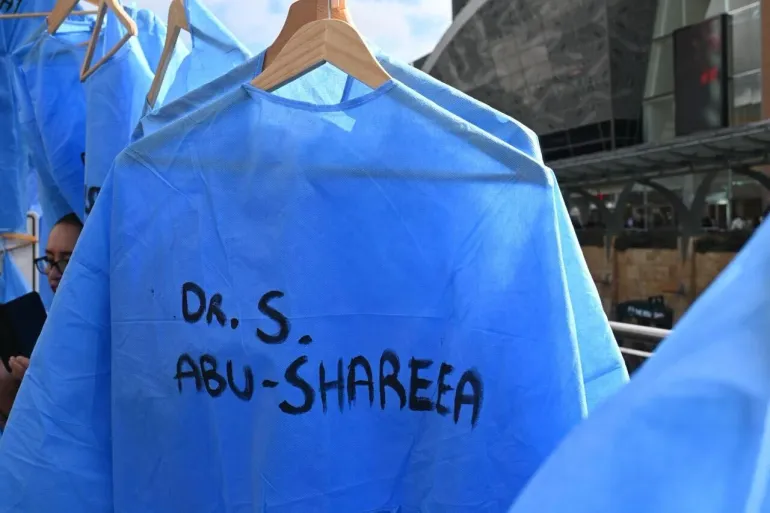
On Saturday, 81 healthcare workers removed their scrubs and hung them in a line facing the WMA assembly in Rotterdam, each bearing the name of a Palestinian healthcare worker currently held in illegal Israeli detention.
Recommended Stories
list of 3 itemsend of list
It was part of a protest against the continued membership of the Israeli association in the WMA, “despite them breaching almost every ethical principle in the WMA’s Code of Medical Ethics”, the IMA Out! coalition that organised the demonstration said in a statement.
“These scrubs should not be empty. Our colleagues belong with their patients, not in Israeli prisons. Today, we literally placed their names at the WMA’s doorstep,” said Mejrem Ahmetaj, a general practitioner and member of IMA Out!.
Since October 2023, Israel’s genocidal war on Gaza has killed more than 1,700 Palestinian healthcare workers and destroyed nearly all the hospitals and healthcare facilities in the enclave.
The campaign accused the Israeli medical association of remaining silent as Palestinian healthcare has been systematically destroyed.
“The IMA is not a bystander. It defends these attacks and blocks international condemnation while Palestinian healthcare is being destroyed. That is not medical neutrality. That is complicity,” added Ahmetaj.
Empty scrubs containing names of detained Palestinian healthcare workers hang outside the WMA summit [Courtesy of IMA OUT! campaign]
At a meeting of international doctors, medical leaders and human rights activists during the WMA summit on Thursday, the destruction of Palestinian healthcare and the responsibility of the international medical community were discussed, the campaign said.
“Our Palestinian colleagues are being killed and imprisoned, where they are starved and tortured. Their hospitals have been destroyed and patients driven out or murdered. The IMA has said and done nothing about these war crimes against health workers, patients and hospitals,” said a statement by Jonathan Fluxman on behalf of IMA OUT!.
“Thirty years of WMA dialogue with the IMA has done nothing but give the IMA a sense of impunity … It is time for national medical associations and the WMA to speak out and take action. Break your ties with the IMA and suspend the IMA from the WMA now,” he added.
The IMA OUT! campaign said it delivered a petition calling for the IMA’s suspension, signed by more than 6,500 health workers from around the world.
They also demanded accountability for the complicity of Israeli doctors in the starvation, torture and medical neglect of Palestinian prisoners.
Among those held by Israel is Dr Hussam Abu Safia, head of Gaza’s Kamal Adwan Hospital, whose unlawful detention has prompted an international outcry.
He was briefly held at the notorious Sde Teiman detention camp and has been subject to torture and medical neglect. Doctors protesting in Rotterdam held up placards demanding his release.
Abu Safia’s son Elyas, addressing a meeting organised by the campaign, said, “My father and all Palestinian detainees must be treated in accordance with medical ethics, and doctors must abide by the Hippocratic oath they have taken. Care cannot be given based on whose life is deemed worthy.”
November 2026 vote delayed and joint presidential and legislative elections set for next year, president says in decree.
Published On 10 Oct 202610 Oct 2026
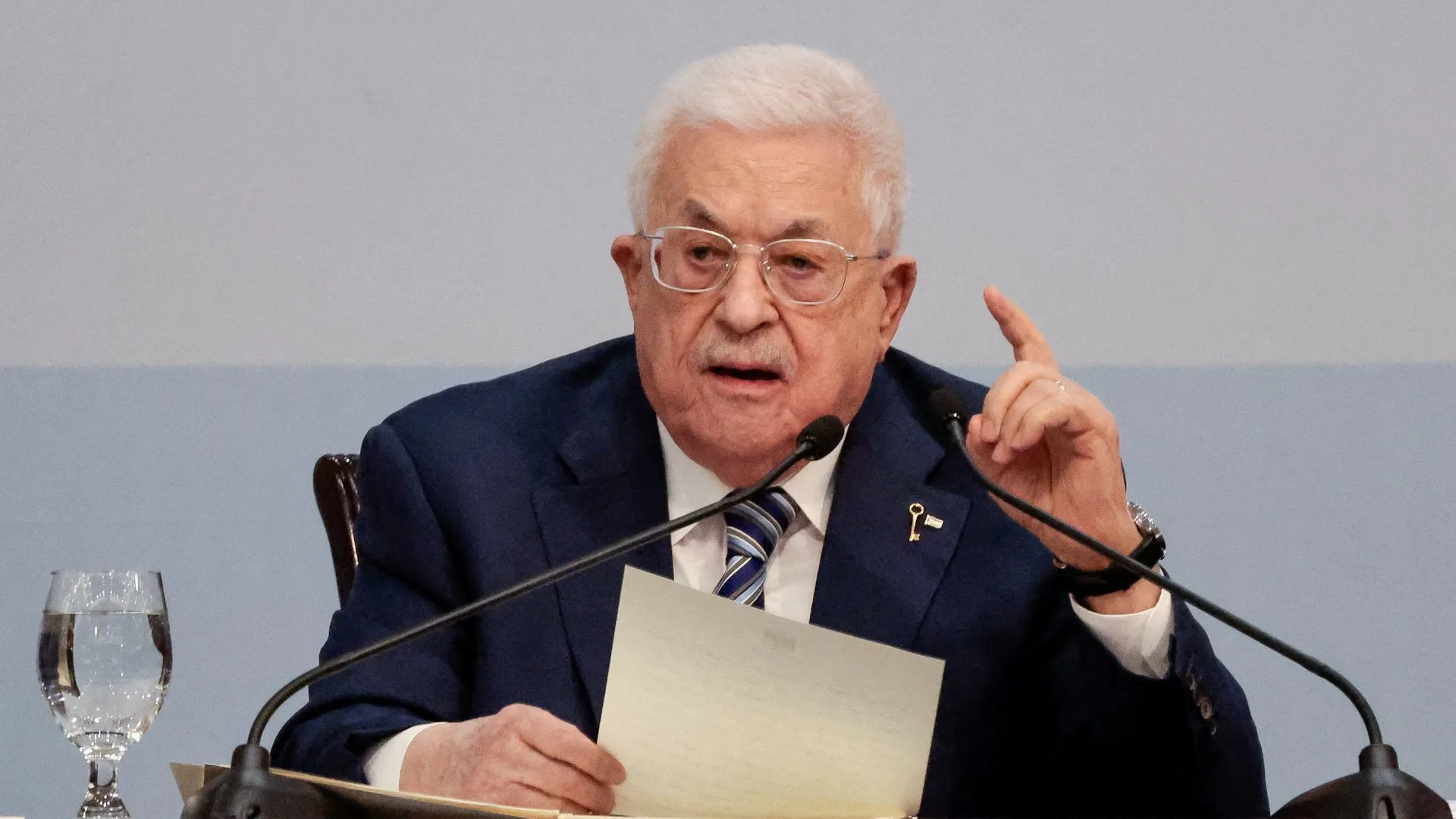
President Mahmoud Abbas has postponed what would have been the first Palestinian elections in nearly 20 years, issuing a decree to further delay voting for the Palestinian Legislative Council for almost another year.
According to the decree, legislative elections planned for next month will be combined with a presidential vote and set for September 11, 2027, Wafa, the official Palestinian news agency, said on Saturday.
Recommended Stories
list of 4 itemsend of list
The long-awaited parliamentary vote was originally set for November 28, with a presidential election expected in early 2027.
The decree came after a committee of top Palestinian officials met on Saturday morning to discuss postponing the vote.
The Palestine Liberation Organization’s (PLO) Executive Committee, which Abbas heads, said in a statement that conditions in occupied East Jerusalem, the West Bank and the Gaza Strip were not conducive to holding elections, noting that Israel had not allowed election materials or international observers to enter Gaza.
Israeli interference, including military raids, settlement expansion and settler violence in the occupied West Bank, has made a fair vote in November impossible, Wafa reported.
The agency also cited Israel’s systemic withholding of Palestinian tax revenues and its restrictions on electoral candidates and international observers entering Gaza and occupied East Jerusalem, as reasons.
As for Gaza, it said that the lack of progress on reconstruction and on deploying an international stabilisation force factored into the decision as well.
The postponement leaves entrenched Palestinian leaders unchallenged and threatens to further erode the Palestinian Authority’s (PA) credibility among Palestinians and donor countries who fund it.
On Friday, the Israeli Minister of Foreign Affairs, Gideon Saar, accused Abbas of “fooling the international community” by planning to cancel promised elections.
A source told the AFP news agency on Thursday that Palestinian factions, including Abbas’s Palestinian National Liberation Movement – also known as the Fatah party – had agreed to hold a “national dialogue” before legislative elections and that they wanted to postpone the vote.
The last parliamentary elections held in the Palestinian territories were in 2006, when Hamas defeated Fatah, which dominates the PA. The split led to factional fighting and Hamas later seized control of Gaza.
Ninety-year-old Abbas won the last presidential election in 2005. His term should have ended in 2009, but he has ruled by decree since then. In June, he signed a decree calling for the presidential election to be held in early 2027.
Iran’s IRGC says it struck a “giant LPG gas carrier named NV Sunshine” that was “attempting to pass through the illegal route” south of the Strait of Hormuz.
Five Syrians and one Lebanese wounded in latest Israeli attack, officials say.
Published On 10 Oct 202610 Oct 2026
An Israeli drone attack has wounded six people in Lebanon’s Hermel district, close to the Syrian border, according to the Lebanese health ministry.
The ministry said on Friday that the six wounded included five Syrian nationals, two of them women, and one Lebanese.
Recommended Stories
list of 3 itemsend of list
Lebanon’s state-run National News Agency (NNA) reported that the drone attack targeted a car.
It added the area has largely been spared such attacks since an Israel-Hezbollah ceasefire was agreed in June.
Israel’s military claimed it struck “a Syrian terrorist” who “operated under the direction of the Iranian regime”, alleging that the man “planned and advanced attacks” against Israeli forces in Syria’s southern territory.
Since the ouster of longtime Syrian ruler Bashar al-Assad in December 2024, Israel has carried out hundreds of strikes against Syria. It has sent troops into a UN-patrolled buffer zone that had separated Israeli and Syrian forces in the Golan since 1974, and has carried out repeated incursions deeper into Syrian territory, sometimes seizing residents.
Israel has also continued to attack Lebanon since a ceasefire with Hezbollah was agreed in June.
It has vowed to keep troops in so-called security zones along its border in both Syria and Lebanon.
Syria’s President Ahmed al-Sharaa told the UN General Assembly last month: “We reject Israeli attempts to impose a fait accompli. We reject their aggressions, which undermine peace and security.”
He said Israel had carried out “500 air strikes, more than 1,200 incursions and 300 detentions” in Syria.
He also called for Israeli withdrawal from Syrian territory and for the international community to commit to a 1974 agreement that created a UN-supervised separation zone between Israeli and Syrian forces.
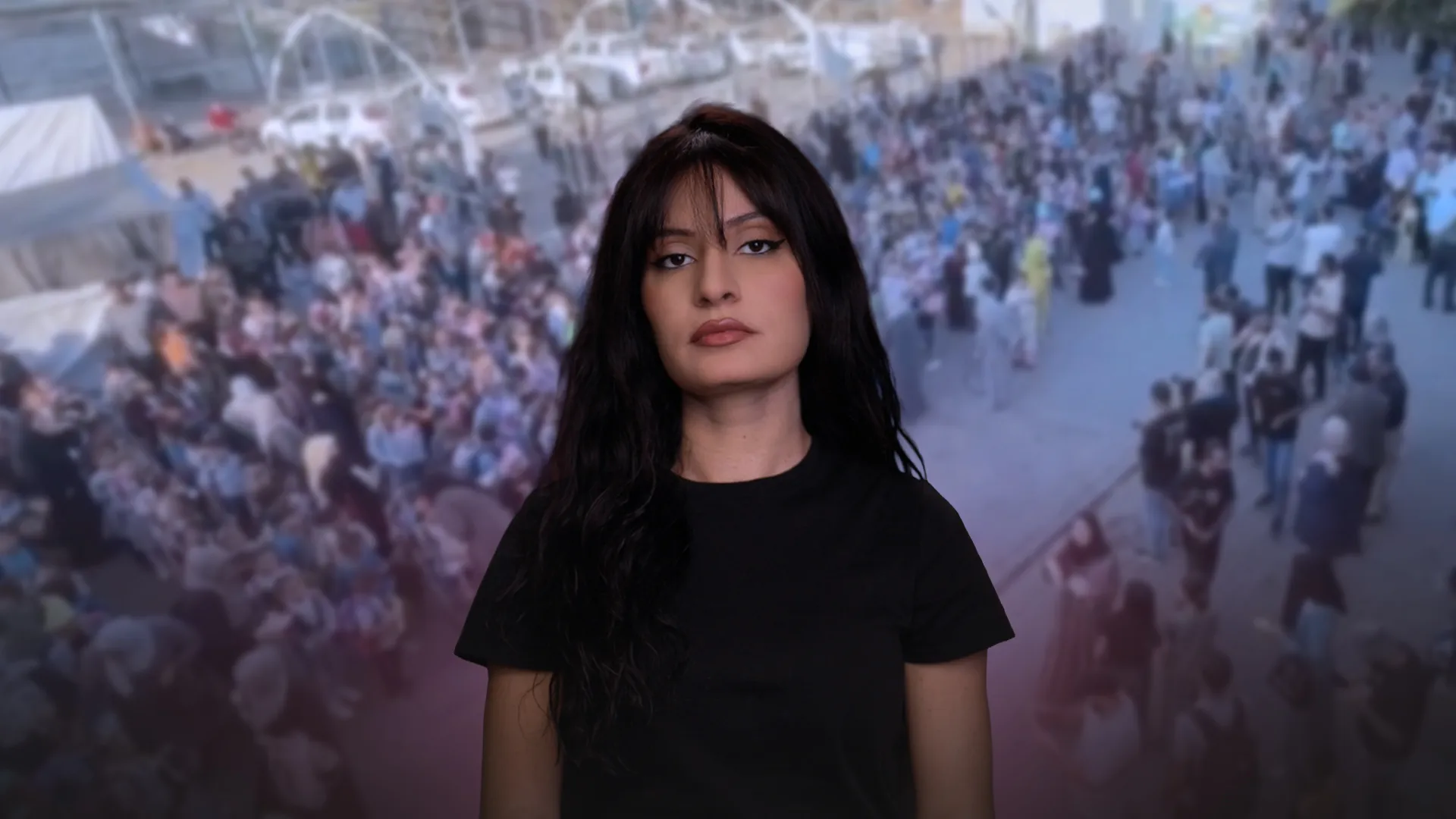
A US charity announced it will use an AI-software to monitor Gaza classrooms for ‘anti-Semitism’ and ‘hate speech’, while Israel airstrikes kill Palestinians across the strip.
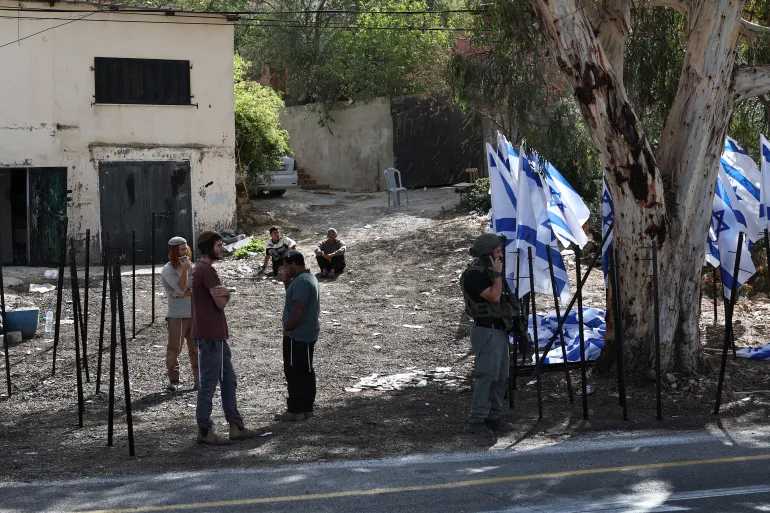
Israeli settlers have carried out attacks and pogroms disrupting the Palestinian olive harvest in the West Bank, while Israeli forces separately detained several Palestinians across the occupied territory.
At least 19 settler attacks were recorded on Friday by the Palestinian Colonization and Wall Resistance Commission, a Palestinian government body operating under the Palestine Liberation Organization (PLO).
Recommended Stories
list of 3 itemsend of list
The commission said the incidents included attacks on Palestinian olive harvesters, the burning and uprooting of olive trees, and the theft of crops and livestock. Other Palestinians and their vehicles were also targeted.
Settlers set fire to Palestinian-owned groves and stole olives in what is considered the most important season for harvesting the single-seeded stone fruit.
More than 50 olive trees were uprooted by settlers in Qusra, the commission said.
Settlers also assaulted and injured Palestinian farmers involved in the harvest in the Tal, where a Palestinian-owned vehicle was set on fire, it added.
Additionally, olive harvesters were attacked in Jorish, Beita, Naqoura, Birzeit, Deir Bzeih and Farata.
An Israeli security personnel member and Israeli settlers stand near Mou’ayad Mahmoud’s shop in al-Lubban Asharqiya, near Nablus in the West Bank, October 8, 2026 [Atef Safadi/EPA]
A farmer was injured in reported gunfire in Kafr ad-Dik, and the use of live ammunition was reported during a settler pogrom, backed by Israeli forces, in Deir Ballut.
Elsewhere, an elderly Palestinian woman in Berin, east of Hebron, was injured after settlers set their dogs on farmers while sheep were stolen in Ein Qinya.
A Palestinian man and his child were attacked and their vehicle stolen by settlers in Yabrud. Settler attacks on Palestinian-owned vehicles were also reported in the towns of Sarda and al-Rihan.
Brazen attacks against Palestinians
Al Jazeera’s Nida Ibrahim reporting from Ramallah in the occupied West Bank said settlers, backed Israeli forces, have grown more brazen in their attacks against Palestinians during the olive harvest despite the presence of foreign activists and observers.
“Palestinians have to go about the harvest in large groups, that include international solidarity activists, to try to stop settler intimidation and attacks,” Ibrahim said, adding that the settlers wait for the groups to start leaving at the end of the harvest, before springing into action.
“It has become a very difficult journey, as the Palestinians try to leave the harvesting areas, Israeli settlers continue to intimidate them under the protection of the Israeli army,” she said.
As Ibrahim reported, a Palestinian family was under attack by Israeli settlers who recently started building an illegal settlement outpost near Ramallah, “using it as a base to attack Palestinians”, she said.
“No one is being spared,” said Ibrahim.
For Palestinians, the olive harvest is supposed to be a joyous season, but instead, they fear settler attacks and intimidation backed by the Israeli forces.
Sixteen Palestinians arrested
As settler attacks and pogroms continue, the Israeli army arrested 16 Palestinians in raids across the occupied West Bank on Friday, according to the Palestinian Wafa news agency and local sources speaking to the Anadolu news agency.
In Hebron, southern West Bank, Israeli forces arrested nine Palestinians after raiding and searching their homes, including Ibrahimi Mosque Director Moataz Abu Sneineh and Hammam Abu Markhiya, an official responsible for the mosque’s custodians, Wafa reported.
In the city of Qalqilya, Israeli forces arrested five Palestinians during a raid, local sources said.
Two other Palestinians were arrested after Israeli forces raided and searched several homes in Beita, south of Nablus, the sources said.
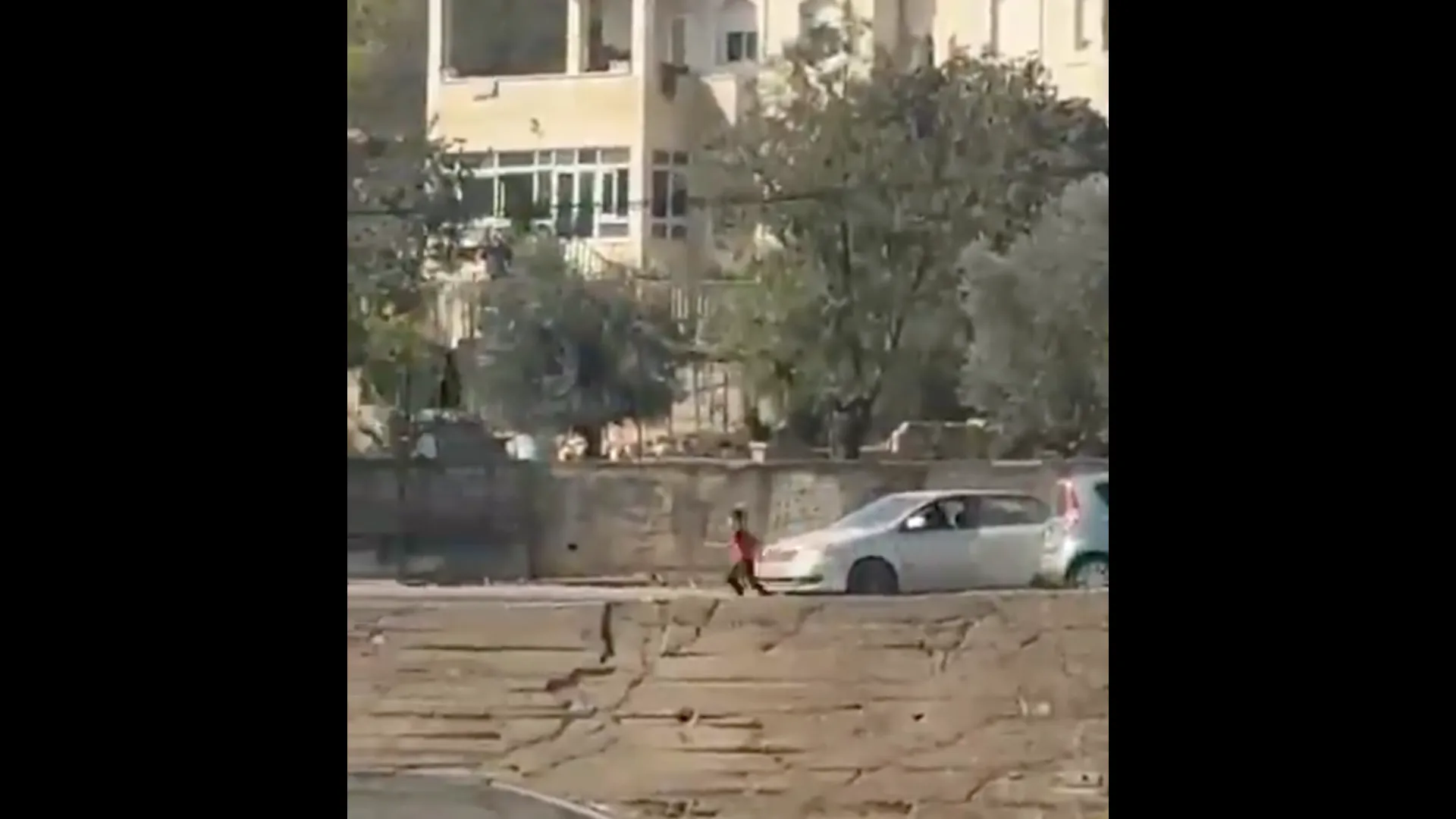
A Palestinian boy was seen fleeing after Israeli settlers attacked his father and stole their car in Ramallah. At least 19 pogroms by Israeli forces and settlers were reported across the occupied West Bank on Friday morning.
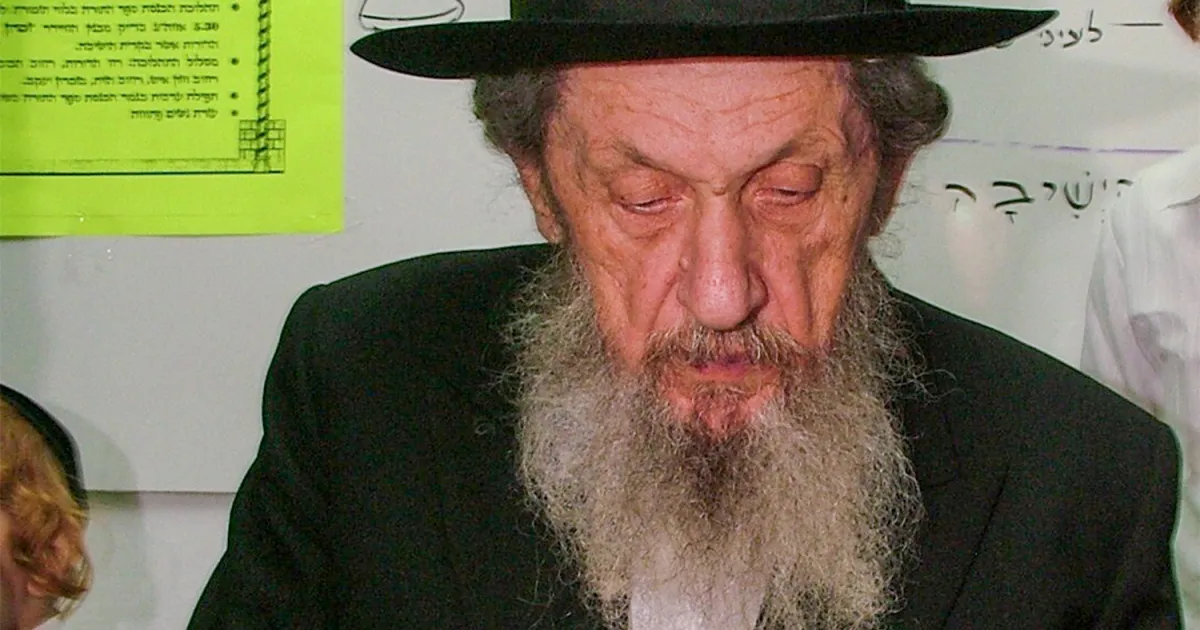
One of Israel’s top ultra-Orthodox rabbis, Dov Lando, has become the centre of controversy in Israel after comments emerged in which he denigrated Zionism.
In a recently released video recording, the 96-year-old rabbi is heard saying the ideology of Zionism caused the Jewish people to suffer “disasters”, and that Jewish Israelis may have been better off without a state.
Recommended Stories
list of 3 itemsend of list
The remarks have drawn rebukes from Israeli politicians weeks before landmark legislative elections, in which the role of the country’s growing ultra-Orthodox community – particularly over military service – is a major issue. The political alignment of ultra-Orthodox parties could also prove crucial to the formation of the next government.
So, who is Lando and why are his comments significant?
Who is Dov Lando?
Dov Lando is a 96-year-old rabbi regarded as the leader of Israel’s Lithuanian ultra-Orthodox community. Born in Poland and raised in the Lithuanian-style ultra-Orthodox tradition, Lando heads a yeshiva – a traditional Jewish academy – in the Israeli city of Bnei Brak.
He is a member of Moetzes Gedolei HaTorah, a council of senior ultra-Orthodox rabbis that offer religious guidance to the community, as well as the spiritual leader of Israel’s Degel HaTorah party. That party is part of the United Torah Judaism (UTJ) alliance, which is a member of Prime Minister Benjamin Netanyahu’s coalition.
What has Lando said about Zionism?
Earlier this week, Israeli media released a video of Lando making year-old comments that harshly criticise Zionism, military service and secular Israelis.
Lando, who has made similarly critical remarks before, is heard in the video saying that Zionism “caused the Arabs to hate us” and brought physical as well as spiritual “disasters” on the Jewish people.
“It is possible to live well with the Arabs without a state,” Lando said, adding that international or Palestinian rule would have been “the best situation” for Jews.
Lando went on to castigate soldiers who adhere to Religious Zionism – a strand of Orthodox Judaism that upholds Zionism – saying “they are killed because their rabbis teach them a distorted Torah.” Many military operations, he said, are carried out “not for saving lives, but for the honour of the state”.
The veteran rabbi also had harsh words for secular Israelis, who he said have “no connection to Judaism at all”. He described them as having built “a state of apostasy and heresy”.
What has been the reaction in Israel?
Lando’s remarks have drawn fierce criticism from numerous Israeli politicians, including all major figures that have joined an opposition alliance challenging Netanyahu.
Gadi Eisenkot, head of the Yashar party who is viewed as the opposition bloc’s most likely candidate for prime minister, said Lando’s “outrageous statements” were “the embodiment of anti-Zionism”.
Yair Lapid, the head of Israel’s opposition in the Knesset, called the comments “a disgrace to every Jew”.
Former Prime Minister Naftali Bennett, who leads the Together alliance co-founded with Lapid, said Lando’s remarks are “anti-Semitic, anti-Zionist” and against the Israeli military.
Netanyahu has not commented on Lando’s latest reported remarks, but he publicly condemned earlier statements by the rabbi in July, when Lando accused the Religious Zionism movement of “incitement to murder” for its support for drafting religious seminary students into the military.
Could the controversy impact Israel’s upcoming elections?
Potentially.
Members of the anti-Netanyahu opposition bloc have called for the UTJ, which Lando’s party is part of, to be cast out of any future government, and criticised Netanyahu for staying aligned with the group.
Yair Golan, head of the Democrats party, said Netanyahu is “silent because without Rabbi Lando and his emissaries, he has no government”.
Netanyahu’s “political survival is more important to him than Zionism, more than equality in service, and more than the blood of our soldiers”, Golan said.
But breaking with the UTJ would come at a huge political cost to Netanyahu, whose coalition is already in for a tough election battle on October 27 and is polling well below the 61-seat threshold needed for a majority.
UTJ is projected to win 8 seats in parliament, according to an October 5 poll by Israel’s Channel 12.
“If Netanyahu attacks Lando forcefully, he pays a price with the Haredim (ultra-Orthodox) he needs to form a government,” said Ehab Jabareen, a researcher on Israeli affairs. “If he stays silent, he hands his rivals material to tell right-wing voters that the man who speaks of Zionism and security depends on a religious leadership that doubts Zionism itself.”
Islamic Relief calls for international action as Gaza endures deadly Israeli attacks and worsening humanitarian conditions.
Published On 8 Oct 20268 Oct 2026
Israeli attacks have killed or wounded a Palestinian in Gaza every 90 minutes on average since the ceasefire was announced in October last year, the aid group Islamic Relief says.
Islamic Relief, a United Kingdom-based charity, said on Thursday that at least 1,454 Palestinians were killed and more than 5,000 wounded over the year. At least 320 of those killed were children, close to one a day.
Recommended Stories
list of 3 itemsend of list
Gaza’s Health Ministry reported that 1,471 Palestinians have been killed and 5,189 wounded since the ceasefire, including four killed and 28 wounded in the past 24 hours.
Israel has killed at least 74,254 people since October 2023, the ministry added.
On Thursday, Israeli forces killed a Palestinian southeast of Deir el-Balah, in central Gaza, and an Israeli air strike on a house in central Khan Younis wounded several people, the Palestinian news agency Wafa reported.
In the occupied West Bank, a 13-year-old boy was shot in the foot during an Israeli raid on Yamoun, west of Jenin, the Palestinian Red Crescent said.
Islamic Relief said Israel has used the so-called Yellow Line, which marks the area under Israeli military control, to push Palestinians out of 65 percent of Gaza, crowding its nearly 2.1 million people into the remaining 35 percent.
According to the report, an Islamic Relief aid worker in Gaza whose name is withheld for their safety said: “There is no ceasefire in reality. They target displacement camps and crowded areas, so there is still a lot of fear.”
Israel continues to block shelter materials, fuel and medical supplies, the group said.
About 82 percent of Gaza’s structures are damaged or destroyed, more than half of health services have shut down and more than 20,000 severely ill patients are denied permission to leave for treatment.
The charity urged world leaders to increase pressure to protect civilians and uphold international law.
“A ceasefire in name only cannot be an excuse for international inaction,” it said.












![Empty scrubs containing names of detained Palestinian healthcare workers hang outside the WMA summit [Courtesy of IMA OUT! campaign]](https://i0.wp.com/occasionaldigest.com/wp-content/uploads/2026/10/3c28041b-ba64-4a61-a62b-bb02868f9e39-1-1791663288.jpg?w=640&ssl=1)